& TRIED TRUE HEREFORDS
Today’s progressive beef producers know the value of Hereford genetics in their breeding program. For maximum hybrid vigour, superior maternal ability, time-tested longevity, and easy to manage characteristics. Hereford’s unique value is critical for long term success. It’s time to better your beef, and better your business, with the tried and true benefit of Hereford.
HIDDEN-VIEW POLLED HEREFORDS
Joe and Karen Paszternak NORWOOD, ON 705-9573739 or 705-957-7470 karen.paszternak@gmail.com Bulls & Females for sale
JDL CATTLE CO. & D&S LIVESTOCK
David & Shirley Lasby
Josh Lasby, Justin & Jaimie Lasby & Family, Jessica Lasby & Travis Fulford & Family MULMUR, ON 519-943-4147 or 519-278-6819
jessica.lasby@hotmail.com
Good-looking, Sound, Functional Cattle!
LIAN MOR POLLED HEREFORD
Wally & Fern Pugh MONO, ON
Wally & Fern Pugh lianmor48@gmail.com · 519-941-8515
Trevor & Amy tpugh27@yahoo.com · 519-939-7489
Breeding Stock Available
MEDONTE HIGHLANDS POLLED HEREFORDS
3055 Universal Dr. Mississauga, Ontario (905) 625-3151
maria@standardmechanical.com
“6 Star Breeder”
O’SHEA FARMS
Jamie and Mel O’Shea DENFIELD, ON 519-477-1238
osheafarms@hotmail.com Bulls and Females for sale
WHISKEY LANE LIVESTOCK Herford and Angus Scott, Paula, Jason and Shelby Cornish INDIAN RIVER, ON 705-295-2925
705-878-3248 (Scott’s Cell) 705-341-3220 (Paula’s Cell) wll@nexicom.net
Visitors Always Welcome
BEEF
ON THE COVER:
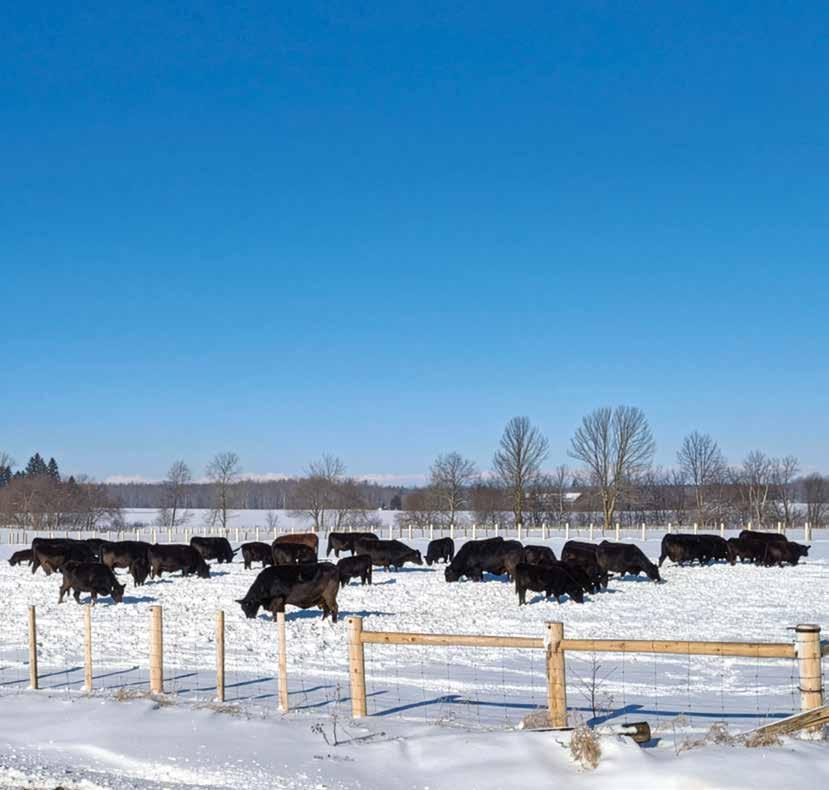
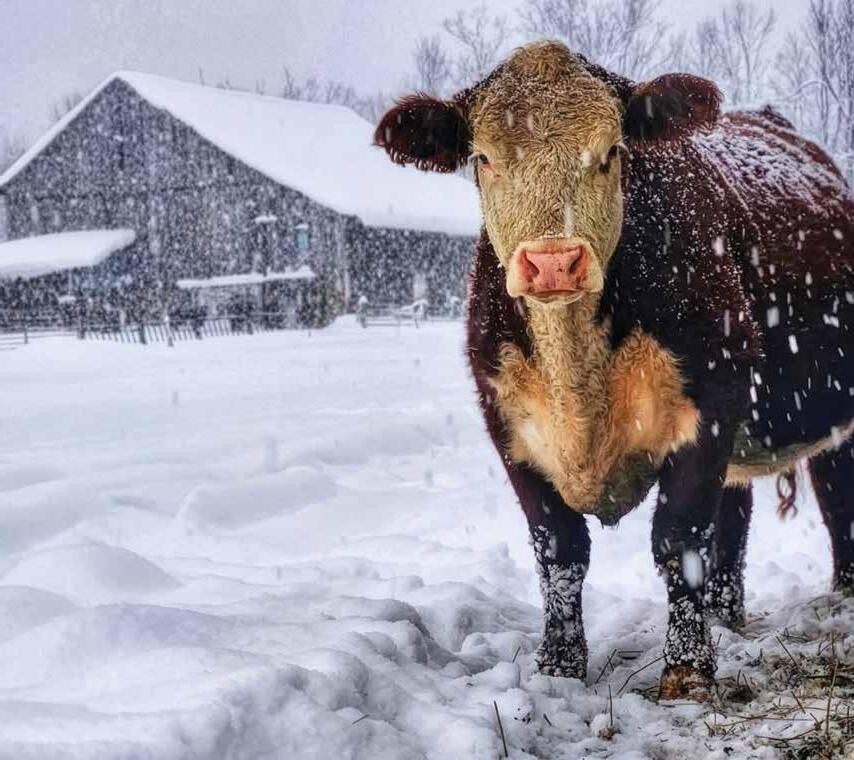
Thank you to Melvin Steckle from Wellington County for sharing this cover photo! In this issue, you can learn about winter feeding tips for easy calving, and find information on the pause of the traceability regulations. Discover how Canadians feel about beef; how BFO’s consumer engagement performed in 2025; and how AgScape has been working in collaboration with BFO and other partners for 35 years to improve agriculture and food literacy. There are also great articles on manure management, getting the most out of your breeding bulls, and how to cope when off-farm stressors add pressure. There is something for everyone in this edition!
Don’t miss out on submitting your photos for our May issue. Please send your spring-inspired photos by April 15th to be considered for the cover. Digital photos in portrait orientation that are at least 300dpi are preferred, and can be emailed to
ONTARIO BEEF • Beef Farmers of Ontario 130 Malcolm Road, Guelph, ON N1K 1B1 • Phone: 519-824-0334 • Toll Free (for Ontario callers only) 1-866-370-BEEF (2333) Fax: 519-824-9101 • info@ontariobeef.com
EDITOR
LeaAnne Wurmli
CIRCULATION COORDINATOR
Charlene Yungblut
ADVERTISING MANAGER
Cathy Lasby, Preferred Agri-Marketing Services Guelph, ON Phone: 519-763-8833 • Fax: 519-763-8833 pams@sentex.net
DESIGN and LAYOUT
Prism Studios Advertising and Design Inc. Guelph, ON
PRODUCTION and PRINTING
Beck’s Printing Services, Brantford, ON
PROVIDING A FORUM FOR THE ONTARIO BEEF INDUSTRY
Ontario Beef is the official publication of the Beef Farmers of Ontario. Contents of this publication may be reproduced only by permission of the Editor and with credit acknowledged.
Opinions expressed herein are those of the author and/or editor and do not necessarily reflect the opinion of the Beef Farmers of Ontario. Publication of advertisements does not constitute endorsement or approval by Ontario Beef or the Beef Farmers of Ontario of products or services advertised.
Advertising deadlines are January 10, April 15, July 15, September 15 and November 15. The publisher reserves the right to refuse or cancel any advertising, including advertising that is inconsistent with BFO’s Sponsorship Policy, available at www.ontariobeef.com. Every effort is made to ensure the accuracy of material published, however no responsibility can be assumed for advertising not received in clear, type-written form.
Canadian Publications Mail Product Sales Agreement Number 0040007029
POSTMASTER: Return undeliverable Canadian addresses to: Beef Farmers of Ontario, 130 Malcolm Road, Guelph, ON N1K 1B1

AsTrade, Traceability, and the Road Ahead AHEAD OF THE HEARD
By Craig McLaughlin, BFO President info@ontariobeef.com • www.ontariobeef.com
I write this, I’m preparing to travel to the National Cattlemen’s Beef Association Convention in the U.S., an event that allows us to connect with our counterparts south of the border to talk about common issues. With the imminent review of CUSMA on the line, coupled with tense U.S.-Canada political relations, these discussions and connections will be critical to ensure our two-way trade system and its benefits are understood. Here at home, we’ve just wrapped up another year of local association annual general meetings. It was nice to see many producers out at these meeting and we do appreciate the participation of our members and the active discussion on a number of files like traceability, trade, quality assurance, market development, and producer education opportunities.
Speaking of traceability, it’s a topic that has moved front and centre across the country and is top of mind for many producers who are considering its potential impact on their own operations. For years, we’ve been told these changes were coming, and as we approached the end of 2025, indications suggested the regulations would advance to Canada Gazette II this spring.
While concerns about how traceability may affect individual operations are understandable and valid, it’s also important to step back and consider the evolution of traceability discussions over the past decade, as well as the broader benefits of movement reporting for the entire sector. At its core, traceability
BFO BOARD OF DIRECTORS 2025
Craig McLaughlin (Eastern Director) – President Phone: 613-504-1863 • Email: cmblackhorse@gmail.com
Jason Leblond (Northern Director) – Vice President
Email: jacres5@gmail.com
Don Badour (Cow-Calf Director)
Email: don.badour@gmail.com
Don Hargrave (Cow-Calf Director)
Email: dchargrave@gmail.com
Jim Whitley (Cow-Calf Director)
Email: modelaranch@hotmail.com
Joost van der Heiden (Background Director)
Email: jcvdheiden@hotmail.com
Nick Martin (Feedlot Director)
Email: nickolas@pureislandbeef.com
Jairus Maus (Feedlot Director)
Email: ellengowanfarms@gmail.com
Tom Kroesbergen (Feedlot Director)
Email: tomkroes50@hotmail.com
Denise Byers (Southern Director)
Email: byersdimmick@yahoo.com
Ralph Eyre (Director-At-Large)
Email: ralph@eyrefarms.ca
Kim Jo Bliss (Director-At-Large)
Email: kimjobliss@gmail.com
Emily Bromley (Youth Director)
Email: fondoak@live.ca
BFO STAFF
Executive Director
is intended to strengthen Canada’s ability to respond quickly to animal disease outbreaks and food safety incidents, while safeguarding access to both domestic and international markets.
Canada exports more than 40 per cent of its beef cattle production each year, making traceability a critical asset when negotiating and maintaining trade agreements. Our reliance on export markets differs significantly from countries such as the United States. The more quickly a disease investigation can be completed, the sooner normal trade and exports can resume.
The BSE crisis clearly demonstrated the profound impact that the loss of export markets can have on the beef sector and on the livelihoods of those who depend on it.
While many producers understand and appreciate the intent of traceability, significant questions and concerns remain regarding its implementation, requirements and associated costs - concerns that were voiced particularly strongly on social media. In response, BFO joined the Canadian Cattle Association (CCA) and our provincial counterparts in calling for a delay in the implementation of the regulations, to allow time for outstanding industry questions and concerns to be addressed.
One day later, on January 10, 2026, the Canadian Food Inspection Agency (CFIA) announced a pause in the publication of the proposed amendments, citing the need for the proposed changes to be more broadly understood and for producer concerns to be heard and taken into consideration.
Richard Horne • richard@ontariobeef.com
Manager of Policy and Issues
Thomas Brandstetter • thomas@ontariobeef.com
Senior Policy Advisor
Evan Chaffe • evan@ontariobeef.com
Policy Advisor
Aynur Izzettin • aynur@ontariobeef.com
Director of Communications
LeaAnne Wurmli • leaanne@ontariobeef.com
Manager of Public Engagement and Digital Strategy
Jennifer Kyle • jennifer@ontariobeef.com
Engagement Coordinator
Charlene Yungblut • charlene@ontariobeef.com
Member Information Coordinator
Jamie Gamble • jamie@ontariobeef.com
Accountant
Amber McIntyre • amber@ontariobeef.com
Office Manager
Lisandra Lima • lisandra@ontariobeef.com
Manager of Producer Relations & Director of the Ontario Beef Youth Alliance
Jaclyn Horenberg • jaclyn@ontariobeef.com
Senior Producer Relations Advisor
Dan Ferguson • dan@ontariobeef.com
Producer Relations Specialist
Robert McKinlay • robert@ontariobeef.com
Manager of Compliance
Chris Millar • chrism@ontariobeef.com
Supervisor of Provincial Programs
Barb Caswell • barb@ontariobeef.com
So, what happens next? Since then, we’ve been working closely with the Canadian Cattle Association, our fellow provincial beef and cattle associations, and our local advisory council to listen to concerns and gather feedback from members on the proposed amendments. This input will be compiled and shared as an industry with CFIA for further review.
I encourage you to turn to page 26 to learn more about the proposed amendments, review common questions, and explore ways you can begin preparing your own operation ahead of implementation.
Alongside this ongoing work, it’s also encouraging to highlight positive opportunities that support producer leadership and engagement. One program I’m particularly pleased to see return is the BUILD Leadership Program, which will be held in April. As a graduate of the program in 2024, I gained a stronger understanding of good governance, effective meetings, and the importance and value of effective lobbying and advocacy work. I would strongly encourage anyone considering a future leadership role with BFO to apply. It will be open to a limited number of applicants so register early to avoid disappointment. To apply, visit the BFO website or contact the office.
As I close my column, this month marks the end of a chapter for me, as I complete nine years with BFO and prepare to pass the torch to a new president at our annual meeting. I’m very grateful for the opportunity to represent Ontario beef farmers over seven years as a director and two years as president.
My journey started out on a cold January night 14 years ago when a neighbour called my name to be the advisory councillor for Renfrew County. Reluctantly, I accepted the position and
along the way people would urge me to do more. Today, I reflect back on five years as advisory councillor, eight years at the Canadian Cattle Association and nine years as a BFO director.
During my term as president, we faced a number of challenges, including the temporary closure of eastern Canada’s largest processing facility, several contentious bills in Parliament, and growing trade tensions with our U.S. neighbours. We were also forced to have some tough conversations and debates about the future of our association and what was needed to ensure we have a healthy and vibrant beef sector in the province.
Fortunately, we had some really positive progress too on a number of critical files like Ontario’s Risk Management Program, the Ontario Feeder Cattle Loan Guarantee Program, our Ontario Beef Market Development Program and increased investments by our members in support of the National Beef Strategy through the most recent increase in check-off. I’m also really proud of some of the educational programming we’ve offered over the last couple of years, and some exciting ones we have planned for this year. With a growing emphasis on engaging more youth and women to our industry, I would say the future’s so bright, we gotta wear shades!
In closing, I hope to see some of you at our AGM this month in Toronto, and a reminder that our Cattle Academy program and meeting on February 18-19th is livestreamed for observers to watch the proceedings. Visit ontariobeefagm.com to catch us on the big stage.
Wishing you all the best in the year ahead. It’s been a pleasure to have served you as president.
Beef farming: Only for the brave. OB

OFFERING FULL FRENCH AND POLLED BULLS BY PRIVATE TREATY



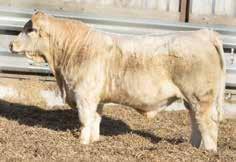
DOUBLE B CHAROLAIS, Oro - Medonte, ON Cory, Earl & Ryan Briggs Ryan Briggs (705) 718-9005

AtResolutions Update THE BEEF BEAT
By Thomas Brandstetter, BFO Manager of Policy & Issues thomas@ontariobeef.com • www.ontariobeef.com
BFO’s Annual General Meeting last year, a number of resolutions were put forward and efforts to address the 2025 BFO resolutions are now complete. An overview of the resolution responses and associated actions can be found below. If you are interested in reading more about a particular resolution, all BFO resolution responses can be found on BFO’s website or by contacting the BFO office. Resolutions carried at BFO’s 2026 Annual General Meeting this month will also be posted on the website by the end of the month.
25-01 Protection of Livestock from Dogs Act & 25-05 OWDCP
The Protection of Livestock and Poultry from Dogs Act has maximum values associated with each species of livestock and has further sub-categories within it for both registered and nonregistered cattle. With the current market prices of beef cattle, these maximum compensation limits are going to become very restrictive on the compensation producers receive. BFO would like to see the maximum compensation values align with the CFIA destruction rate values. As of June 2025, they are $16,500 for registered cattle and $10,000 for non-registered cattle. To address the maximum compensation value limits for both the Protection of Livestock and Poultry from Dogs Act and the OWDCP, BFO alongside Ontario Sheep and the Ontario Federation of Agriculture sent a letter to Minister Jones of the Ministry of Agriculture, Food and Agribusiness (OMAFA) regarding the need to increase the maximum compensation as the current market prices have surpassed the current maximum prices set by the ministry. We also recommended streamlining the process of wildlife predation claims. BFO is a member of OMAFA’s Ontario Wildlife Conflict Working Group and will continue to push for change within the program so it can be timelier and more predictable for producers.
25-02 Large Animal Vet Access
At the Queen’s Park BBQ and lobby day last May, we asked elected officials to address the large animal veterinary shortage by enhancing incentive programs, increasing investment in the Veterinary Assistance Program (VAP), and ensuring the successful launch of the new collaborative Doctor of Veterinary Medicine (DVM) Program with Lakehead University and the University of Guelph. Enhanced incentives to existing programs (i.e., Veterinary Incentive Program), BFO scholarships to Ontario Veterinary College students pursuing large animal health and welfare, and sending a letter of support to the Northern Ontario Farm Innovation Alliance (NOFIA) regarding its Vet Capacity Pilot Project proposal are additional ways BFO has committed to advocating for both short-term and long-term solutions to help address and improve access to veterinary services throughout the whole province.
25-03 PAWS Act
BFO continues to raise with elected officials and ministry staff the serious concerns we have regarding the PAWS Act. These include the internal decision-making process and standard operating procedures used to make decisions about whether animals should be removed from a farm or not, how that is then executed, and what happens after animals have been removed. We continue to ask for the creation of a distinct and tailored system of enforcement and regulatory framework for livestock, similar to what is done in other jurisdictions. BFO and many of our farm organization counterparts remain concerned with components of the current system and will continue to collaborate and lobby for changes to address industry’s concerns.
25-04 Yield Based Insurance Program
We acknowledge forage production faces multiple yield-affecting risks beyond rainfall alone and localized weather variability can make area-based rainfall programs an imprecise reflection of individual farm experiences. BFO recognizes forages are the primary feed source for Ontario’s cow herd, and that strengthening forage risk management tools supports herd growth and long-term sector sustainability. BFO has discussed this issue with the Cow-Calf Committee and established a dedicated working group to explore potential improvements to forage insurance. BFO has engaged with Agricorp to discuss the feasibility of a self-reporting, yield-based hay insurance model. This issue has also been added to BFO’s provincial priorities list, underscoring its importance to the organization and its members. We continue to work with Agricorp and partner stakeholders to explore alternative approaches to the current rainfallbased program, with the goal of improving risk management tools for forage and pasture producers while balancing accuracy, cost and practicality.
25-06 CFIA Transparency and Accountability
BFO has increased communication with CFIA and meets with them twice a year, which allows us to bring forward concerns from our members to ensure they are addressed. Through these meetings, CFIA has asked BFO to capture more relevant information from our members during the filing of complaints, as specific and relevant information is key to finding actionable solutions to these concerns. BFO is in the process of finalizing a form producers can fill out to provide more context to their complaint and concerns. The form will be accessible by our members on the BFO website. Through this form, BFO will be able to track the problem areas within the province. The form will provide BFO areas of concern and allow for practical

solutions and items we can discuss with CFIA during our meetings. If there are any ongoing concerns from your area, BFO staff are more than willing to discuss those issues provided specific information is brought forward allowing for actionable solutions.
25-07 RMP Priority
The RMP request has been our top lobby priority for a number of years and discussed routinely at meetings with MPPs. BFO understands the need to continue to ensure the government maintains its promise outlined in their increased funding announcement from early last year and showcases to the government why there is value within RMP for taxpayers, government and Ontario farmers. BFO has recommended the provincial government consider several program enhancements to be used as a vehicle to respond to the current trade war and risks in the market. BFO will continue to make the Ontario government aware of the necessity of RMP, the benefits it provides to the Ontario economy, and the value the program has to producers across the province when it comes to risk mitigation.
25-08 RMP Program Guidelines and OTM
This issue was reviewed and discussed by the BFO Feedlot Committee and the RMP Beef Cattle Reference Committee. The committees agreed the weight limits within the program categories under RMP could be reviewed and updated to reflect current industry practices. However, the committees did not recommend the OTM prohibition be removed to allow OTM cattle to be covered under the program. The primary justification was the RMP program was designed to reflect best management practices and allowing inclusion of OTM cattle would represent a deviation from that principle. It was also noted that the Ontario Corn Fed Beef Program does not qualify OTMs for program inclusion. BFO submitted a formal request to OMAFA last summer to conduct an analysis on the programming requirements, cost of production adjustments, and administrative costs of increasing the weight coverages by 50 pounds within each respective category to better reflect current industry practices. BFO will continue to work with OMAFA on this proposal and will assess the benefits and costs of proceeding with a potential adjustment to coverage weights.
25-09 Ontario Building Code
Given building codes affect the broader agricultural community BFO has forwarded this resolution to the Ontario Federation of Agriculture (OFA) and asked that they take action to respond to the issue, and to report back on progress made. BFO is supportive of assisting OFA through advocacy efforts. BFO will be sure to keep the local associations apprised of any developments and progress regarding this issue.
25-10 Provincial Abattoir Capacity & Wait Times
Improving access to meat processing capacity remains a top advocacy priority for BFO and was a key issue raised during meetings with MPPs at Queen’s Park in May and again in November. BFO has consistently raised concerns with elected officials that current
cost-share funding models are often inaccessible to small businesses that provide essential services within the beef supply chain, due to limited cash flow and upfront capital requirements. From a producer perspective, BFO continues to recommend targeted government investments aligned with the provincial agri-food strategy, Grow Ontario, that would strengthen processing capacity and improve producer market access including adjustments to tax classifications impacting small and medium-sized facilities. In collaboration with the CCA, BFO met with MPs and Senators in Ottawa this past October to highlight the urgent need to reopen the Joyceville Institution abattoir. BFO formally requested the Correctional Service of Canada proceed with a full Request for Proposals (RFP) following an Expressions of Interest process that demonstrated industry interest in operating the facility. BFO will continue to advocate on behalf of beef producers for improved access to processing capacity and will keep members informed of any developments related to the Joyceville facility and government programs that may support expanded beef processing in Ontario.
25-11 Overweight Carcass Discounts
We understand the frustration producers feel when they receive discounts for carcasses that exceed the weight thresholds set by processors. To better understand this issue, BFO did engage in direct conversation with processors across the province. Through these discussions, three consistent concerns emerged regarding the challenges that heavier cattle present to processing operations. First, as carcass weights increase, the physical infrastructure of processing plants comes under greater stress. The second concern revolved around equipment and worker safety as larger animals accelerate wear and tear on equipment and increase physical strain on employees. Lastly, marketability and consumer preferences have changed and the larger carcass can lead to beef cuts that exceed consumer and retailer preferences. These realities point to the need for greater alignment between how we finish cattle on-farm and what processors are looking for. BFO has continued its discussions with a number of processors noting this business practice is burdensome to our feedlot operators as beef demand is high and overall cattle numbers are down. We also indicated that feedlot margins are tight and need all the returns they can get to continue their operations. BFO will update its members on any further developments regarding this resolution including any potential solutions that result in an equitable approach that benefits both producers and processors.
25-12 Condemnations at Provincial Abattoirs
The issue of carcass condemnations at provincially inspected abattoirs remains one of significant and growing concern for Ontario beef producers, and BFO shares the frustration expressed by members across the province. BFO is extremely concerned with the outcomes of the current provincial inspection and condemnation system, particularly the proportion of condemnations at provincially inspected abattoirs compared to federal facilities, the absence of a meaningful or formal appeals process, inconsistencies in interpretation and application of inspection standards, and the substantial and immediate financial consequences borne by producers and processors when an animal is condemned. These concerns have been clearly and repeatedly raised by BFO with senior officials at OMAFA, as well as directly with its current and previous Ministers. While food safety remains paramount, BFO has consistently emphasized the current system lacks transparency, consistency and
producer confidence, and meaningful reform is required. BFO is actively participating a working group, which includes representation from auction markets, veterinarians, producer organizations, academics, OMAFA meat inspection and food safety staff, and provincial processors. BFO is also developing additional tools, including a producer reporting mechanism, to better document condemnation outcomes and support evidence-based discussions with OMAFA. Given the importance of this issue, BFO strongly encourages local county and regional beef farmer associations to engage directly with their local MPP. BFO will continue to push for improvements to the provincial inspection and condemnation system. We remain committed to advocating on behalf of producers for a system that upholds food safety while delivering fairness, consistency, transparency and confidence for those raising cattle in Ontario.
25-13 Canadian & USA Carcass Weight Differences
While we share and appreciate the concerns raised, we do not believe pursuing regulatory changes at this time would be in the best interests of cattle producers. Specifically, we believe any change to the current practices may prompt packers to begin enforcing yield grade 4 and 5 standards, which are not currently applied in Ontario. Introducing those standards could result in new carcass discounts without providing meaningful benefits to producers. In our view, the current marketplace is functioning effectively in terms of pricing, and there is no clear evidence adjusting carcass weight regulations would improve outcomes or prices for Ontario cattle producers. In all likelihood, any changes to carcass weight standards would simply be reflected in the prices paid by packers. While we do not intend to take this issue forward at this time, we will continue to monitor the situation closely to ensure Ontario producers remain competitive in the marketplace.
25-14 OMAFA Regulation 950
In reviewing what the ministry proposed and what CFIA enforces, we were reassured there would be no duplication when it comes to what OMAFA would enforce and with what CFIA currently enforces. At this time, the ministry has indicated they continue to await a decision from the government as to whether or not any of the proposed amendments to Regulation 950 might move forward. We will continue to reach out to the ministry and let the associations know once a decision has been made to proceed or not proceed with any of the proposed amendments.
25-15 Crown Land Access
Agricultural access to Crown land and promoting policies that improve the Crown land disposition and access process remains a key priority for BFO. A guide has been developed for applicants interested in accessing Crown land by the Ministry of Natural Resources. An internal staff guide has also been developed by the ministry to ensure applications are being reviewed in a consistent manner and to provide the different tenure options to applicants when inquiring, which include access via Land Use Permit, Lease and Patent. We are working with the ministry on ways this information can be passed along to our members and we will keep the local associations apprised of our progress. We will continue to engage the provincial government to improve the process for accessing Crown land for agriculture and ensuring it is defined and transparent.
25-16 Breeder Finance Program Enhancement
Establishing a government guarantee for the Ontario Beef Breeder Co-operative Program would result in more competitive financing from lenders, help farmers purchase breeder cattle, support expansion of Ontario’s cow herd, and attract new, young beef farmers who see the opportunities for profitability and sustainability in Ontario’s beef sector. We have submitted our formal proposal to government to support a $10 million government guarantee under the program. This would unlock approximately $40 million in affordable financing for breeder cattle across the province. We have been encouraged by the support received for our request from OMAFA’s Minister, MPPs and ministry staff. Establishing a government guarantee for a program takes time. We are hopeful we will see movement on this file this year.
25-17 First Year Residence Guarantee at University of Guelph
We can understand the uncertainty and frustration with applying to a post-secondary institution, being accepted, but residence not being guaranteed for first-year students. Based on the feedback received by the university with students beginning their studies during the 2024/25 academic year, the University of Guelph did make changes for the 2025/26 academic year. While their changes were not an outright guarantee of residence for all first-year students, it did provide incoming students, and their parents, with a little more certainty regarding on-campus student housing. The University of Guelph’s Board of Governors recently approved the Real Estate Land Use Vision and Strategy that will create new housing, public spaces, research and commercialization on university-owned land. This includes the addition of more than 4,000 new student housing beds by 2035. Hopefully this will allow the university to once again guarantee residence for not just first-year students enrolled in the Ontario Agricultural College, but all first-year students wanting to live on-campus. OB
Reporting Boilers & Pressure Vessels What Ontario’s Beef Farmers Need to Know
By Technical Standards and Safety Authority Staff
Ontariobeef farms that use boilers and pressure vessels (BPVs) for agricultural operations must report their pressure equipment to the Technical Standards and Safety Authority (TSSA).
With the lifting of the agricultural BPV exemption in July 2021, installations of BPVs, fittings and piping must comply with Ontario Regulation 220/01: Boilers and Pressure Vessels under the Technical Standards and Safety Act, 2000, and the Canadian Standards Association (CSA) B51 Boiler, Pressure Vessel and Pressure Piping Code.
TSSA continues to work with agricultural associations across Ontario to ensure owners and operators understand that agricultural BPV installations are regulated. Key requirements for BPVs used on beef farms for heating, sterilizing and feed processing include:
• Having a Canadian Registration Number (CRN) issued by TSSA confirming the BPV design meets safety standards
• Obtaining a Certificate of Inspection (COI) for regulated equipment
• Undergoing periodic inspections by a qualified inspector. Before a COI expires, owners must request an inspection from their insurer (if insured) or from TSSA (for uninsured equipment)
• Ensuring any company hired to repair or alter BPVs holds a TSSA Certificate of Authorization
Once BPVs are reported, TSSA will provide 30 days’ notice before a scheduled site assessment. During the assessment, an inspector evaluates BPVs for safety compliance. Tony Gabriele, BPV
Project Lead and Regional Supervisor with TSSA, emphasizes that protecting Ontarians remains the priority. “Site assessments provide an opportunity for TSSA inspectors to educate agricultural owners and operators using regulated BPVs and ensure they understand and comply with provincial regulations,” he said.
Operators can prepare by reviewing the inspection checklist and ensuring equipment is accessible. Sites should notify TSSA in advance of any biosecurity protocols or bio-outbreaks that could affect the assessment.
Move Towards Compliance
Lifting the exemption aligned Ontario with other Canadian jurisdictions; previously, it was the only province where agricultural BPVs were exempt from safety laws. Although TSSA registered and certified new BPV manufacturing designs before sale, installed agricultural BPVs did not fall under its jurisdiction until July 1, 2021.
“If you have not yet reported your boiler or pressure vessel equipment to TSSA, please visit TSSA’s website and complete the self-reporting form. This is a critical step to ensure BPVs are operating safely,” says Gabriele.
For more information on preparing for inspection and complying with legislation, review the infographic and Boiler and Pressure Vessel Equipment for Agricultural Use resources on TSSA’s website. OB

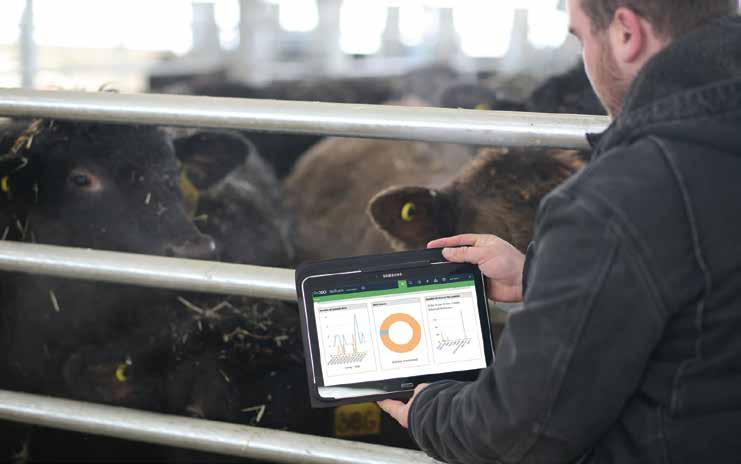
We help convert paper to digital so you can get more insight from the records you keep.






RURAL RAMBLE
By Jaclyn Horenberg, Manager of Producer Relations jaclyn@ontariobeef.com • www.ontariobeef.com
Direct Marketing Workshop Helps Producers Grow Beef Sales
Consumers are hungry for information, and they want it from farmers. According to the Canadian Centre for Food Integrity, 70 per cent of Canadians want to know more about agriculture, and they want farmers to be the ones telling. As the demand for direct to consumers sales grow, Beef Farmers of Ontario hosted an event at the University of Guelph along with Beef@Guelph and OMAFA called Carcass 101: Direct Beef Sales Workshop. This workshop was focused on sharing tools, resources and experiences in direct marketing beef to consumers. The 70 producers that attended ranged from butchers and experienced beef producers, to those just thinking of marketing beef.
The morning kicked off with a welcome from the organizing committee of OMAFA representatives, James Byrne and Chad Mader, University of Guelph representative Dr. Katie Wood, and BFO representatives Charlene Yungblut and Jaclyn Horenberg.
John Baker, Director of the Ontario Beef Market Development Program, shared his knowledge on cuts of beef in relation to where they come from on the carcass, and the impact that the muscle structure has on the eating experience. John emphasized the importance in sharing that knowledge with customers in order to ensure they are using the proper cooking method for the cut they are purchasing. When directing marketing, a challenge can be selling the whole carcass. It is helpful to understand how less popular cuts can be utilized and cooked in a way that make it a valuable product.
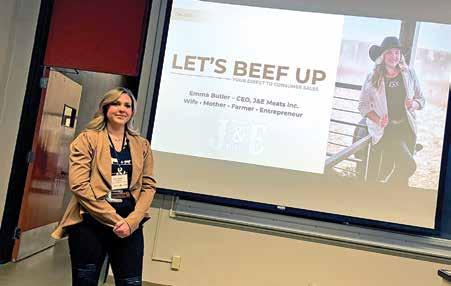
Emma Butler, who owns and operates J&E Meats with her husband Josh, captured the audience with her candid stories of their journey from beef producers to business owners. J & E Meats
raise beef, lamb, and chicken which is cut on-site with their own butchers to be sold in their on-farm store. Emma shared how they strive for their store to be where local food, honest farming, and good conversation come together. They want to empower their customers with knowledge and transparency of what they do, and how they do it. Encouraging the audience to understand their own customers, Emma said she has always valued collaboration over competition. Their business is operated with the mindset that they are only ever in competition with themselves which pushes them to focus on continuous improvement to build on their own brand.
To tie in with the importance of creating your own brand, John Baker spoke about differentiating yourself from the commodity beef industry. He shared the value in understanding what your customers want and creating value in what you have to offer.
John shared the value of marketing your product, but cautioned against using marketing claims that infer that your products are “safer, healthier, better…” than others. He encouraged the audience to focus on the positive outcomes and earn the trust of their customers.
Abbey Taylor, owner of Dawn Farms in Elgin County, shared her story from cash crop farmer to beef producer. Today, Dawn Farms purchases yearlings in the spring, grazes them from May to October with daily moves on pasture, and producing a grass-finished product sold directly to her customers. Abbey shared her journey to developing her business with the consistent goal of providing delicious, ecological, pastured meats with a personal connection. The hard work and dedication Abbey put into expanding her knowledge in raising beef cattle and marketing her product brought her from giving people steaks to sample to a loyal customer base that comes back year after year. She is genuine in her desire to personally hand her customers the meat that will nourish them and their family. Citing a regular newsletter and involvement in local business markets, Abbey feels that being personable and willing to talk to anyone is what has helped her establish her business. Robert Huber and his daughter, Lee-Anne, spoke next about their journey in direct marketing through Huber Farms. Lee-Anne Huber is an Associate Professor in the Department of Animal Biosciences at the University of Guelph, where she leads research in swine nutrition. Huber Farms have been in business since 1956 in Wellington County, with their direct sales business initiated
Continued on page 14.



in 2004. The cattle at Huber Farms consistent of British breeds that are known for their feed efficiency and quality marbled product. Robert explained how their approach to connecting with consumers has changed over the years to evolve to a delivery method to urban areas that work well for them and their customer base. Robert shared about cost of production and calculating market prices, and the skills needed to develop a successful business.
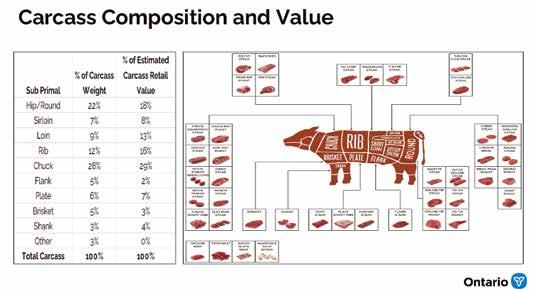
To bring the economics of the direct market business, Steve Duff, Chief Economist with OMAFA presented to the group. Steve not only is an economist, but also brings credibility and understanding to the conversation with his own direct marketing beef business. Steve emphasized that while direct to consumer sales can offer reduced price risk, it is still crucial to understand your cost of production and areas of risk exposure. Understanding the fundamentals, like the correlation between the live weight of an animal to the predicted pounds that will be taken home from the butcher, is an important piece to pricing. Steve shared an example of calculating the breakeven carcass price, and showed how even a slight change in dressing percentage can have a drastic impact on the breakeven price. Acknowledging how difficult it can be to determine pricing for individual cuts, Steve shared a breakdown of the carcass composition and estimated percentage of carcass retail value for each cut.
Creating your brand and telling your story to attract customers is important, but you also need to produce a highquality product that is going to keep bringing customers back. To share tips on producing a quality consistent carcass, Brad Gilchrist, who owns The Beefway, a provincially inspected abattoir, joined us. Along with the abattoir, Brad and his wife Kristie, also market Angus breeding stock,
and Brad is the Global Beef Supply Chain Manager with Semex. Brad encouraged participants to understand their management style and skills, and use that to make selections on the type of cattle they are raising, and the end product they are marketing. For example, if your land base is best suited to pasture finishing your cattle, then keep that in mind in your genetic selection to ensure the cattle can finish well on grass. Having a clear understanding of your goals will help pave your path in genetic selection, nutrition programs, and herd health management. Brad encouraged the audience to get as much data back as they can to continue to drive progress in their own business and ensure they are producing a consistent product for their customer base. Success can come from surrounding yourself with a great team of people, and seeking out resources to continue to improve.
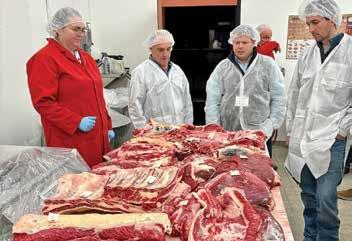
The final portion of the day was spent rotating through three modules. In the University of Guelph meat lab, participants viewed a carcass as Brian MacDougall, with the Canadian Beef Grading Agency, explained how carcasses are graded. Factors impacting carcass quality and grade were discussed as participants viewed labelled cuts of beef. Master students, Megan St. Martin shared an update on her the feedlot benchmarking project, and Breno Moreira shared an update on the dairy-beef project. Maddie MacLean demonstrated sheer force testing and how it is used to determine meat tenderness in relation to her Masters research.
The day concluded with providing resources for producers to take home. Participants were encouraged to sign up for the Ontario Beef Store Locator here https://ontbeef.ca/store-locator/; and to contact Derek Boudreau derek@ontariobeef.com if they would like any point of sale materials for the farm store. Throughout the day, producers were encouraged to utilize resources from Canada Beef and the Beef Cattle Research Council, and to reach out to Beef Farmers of Ontario for materials.

On behalf of the organizing committee of the University of Guelph, Beef @ Guelph, OMAFA and BFO, we would like to thank the producers for taking the time to participate. We appreciate everyone who is connecting directly with consumers to share the story of how beef cattle are raised in Ontario. Thank you for the commitment to the beef sector and for connecting people with where their food comes from. OB
Think Shorthorn Bulls This Spring
TIBS SHORTHORNS
Pat Thibodeau Georgetown, ON 416-319-1901 tibsshorthorns@gmail.com
COLDSTREAM FARM
Flesherton, ON
Don Jack: 519-924-1540
Shea O’Neill: 519-373-6599
Heifer, Bulls, Show Prospects Breed Leading EPDs

TRAILVIEW SHORTHORNS
Shannon Kingston & Ross Laycock 1327 6th Av West, Owen Sound, ON 519 477-1526 or 519 372-5414 hockeymama@live.ca
RED ROSE FARM
Martin & Liz Mason & Sons
747710 Twp Rd 4,Drumbo, ON
Cell: 519-771-7066
John Mason: 519-636-6634 martin.mason@redrosefarm.com
GLENROTHES FARM
Beaverton, ON
Doug Brown: 905-431-8496
Nancy Brown Andison: 416-817-0369
LOCUSTVIEW SHORTHORNS
Steve, Joyce & Dan Bartlett
Almonte, ON 613-256-3042 locustviewshorts@outlook.com
HILL HAVEN FARM
Duntroon, ON
Dale Asser: 705-444-9403
Matt (herdsman): 519-378-5508 hillhavenshorthorns1@gmail.com www.hillhavenshorthorns
MARTIN FARMS
Gore Bay, ON
Jim: 705-348-1294
Nick: 705-348-1022
Alex: 705-782-4725
Bulls, Females, Commercial Cattle
CRAWFDOWN FARMS
Glencoe, ON
Gord & Sally Crawford 519-870-2396
Reed & Jane,Shelby&Josie 519-857-7333
FLIGHTPATH
Caledon, ON
David&Joanne Currie& Family
David: 647-400-2844
Jessica: 519-400-3160 farm.flightpath@gmail.com

Ontario
By Jennifer Kyle, Manager of Public Engagement and Digital Strategy jennifer@ontariobeef.com • www.ontbeef.com
Keeping Ontario Beef Visible Consumer engagement in action in 2025 CONNECTING WITH CONSUMERS
beef farmers work hard every day to raise a highquality product. But in today’s food marketplace, producing great beef is only part of the equation. Consumers also want to understand where their food comes from, how it’s raised and why they should choose Ontario beef. That’s where consumer engagement plays an important role.
Consumer engagement helps protect and strengthen demand for Ontario beef by keeping consumers informed, confident and connected to the people behind the product. With most Ontarians now several generations removed from farming, this work ensures farmers’ voices remain part of the conversation and that accurate, Ontario-based information reaches shoppers when it matters most.

• 1.8 million engagements, including likes, comments, shares and video views
Even with a reduced budget in 2025, consumer engagement remained one of Beef Farmers of Ontario’s (BFO) largest program areas. By staying focused and practical, the program delivered strong results and kept Ontario beef visible in a competitive food environment.
A Year-Round, Practical Strategy
Ontario Beef takes a steady, year-round approach to consumer engagement rather than relying on short, one-off campaigns. This ensures Ontario beef stays top of mind throughout the year and allows messages to build gradually with consumers.
Much of this work happens online, where most consumers spend their time. Digital outreach allows Ontario Beef to reach large audiences efficiently and track what’s working. At the same time, in-person events remain a critical part of the program, creating opportunities for real conversations, honest questions and direct connection.
2025 Results at a Glance
Across all consumer engagement activities in 2025, Ontario Beef achieved strong, measurable results:
• 48.5 million impressions, meaning Ontario Beef messaging was seen nearly 50 million times
• 33,222 clicks to the Ontario Beef website
These numbers reflect activity across paid advertising, influencer partnerships and organic social media. They do not include the thousands of face-to-face conversations that took place at public events across the province. Together, these results show consumers are not only seeing Ontario Beef messaging, but actively engaging with it and looking for more information.
Reaching Consumers Through Awareness Campaigns
General awareness campaigns remain a key tool for reminding shoppers to look for and ask for Ontario beef. In 2025, Ontario Beef ran both summer and winter campaigns targeting folks across the province.
Together, these campaigns reached more than 5.5 million Ontarians, delivered over 26 million impressions and generated nearly 3.7 million video views. Messaging focused on simple, relatable ideas that encourage shoppers to buy local and feel confident in their beef choices.
One consistent takeaway from 2025 was that simple works best. Ads featuring real people, everyday situations and familiar beef cuts consistently outperformed more technical or complicated creative.
These insights continue to guide how Ontario Beef develops future campaigns, keeping messaging grounded and relatable for consumers.
Building Trust Online
Influencer partnerships continued to play a role in reaching audiences who may not actively follow agriculture-related content. Influencers shared content focused on everyday meals, family-friendly recipes and value-based messaging, often highlighting affordable cuts of beef. This helped reinforce the message that Ontario beef fits into regular, everyday meals, and not just special occasions.
Organic social media also remained a powerful tool for connection. Posts featuring Ontario beef farmers, butcher shops and local beef businesses generated the strongest engagement. The Meat Your Neighbours series continued to perform well by putting real faces to the industry and showing consumers exactly who is behind the beef they buy.
These stories help build familiarity and trust, reminding consumers Ontario beef comes from real people in their communities.
In-Person Engagement: Where Conversations Happen
While digital outreach reaches large audiences, in-person events remain one of the most effective ways to build trust. In 2025, Ontario Beef participated in several major public events across the province.
Ontario Beef attended all Breakfast on the Farm events hosted by Farm & Food Care Ontario, giving families the chance to ask questions and learn directly from those connected to agriculture.
Ontario Beef also returned to the Canadian National Exhibition as part of The Farm Building. Thousands of visitors passed through the space to see cattle, ask questions and learn more about beef farming. For many, it was their first direct interaction with agriculture.
New opportunities were also explored. Ontario Beef participated in the inaugural Smoked BBQ event at STACKT Market in Toronto, connecting with a foodie audience interested in quality, flavour and local sourcing.
At the Royal Agricultural Winter Fair, Ontario Beef’s booth moved to a more central location alongside other agricultural education displays and directly across from the cattle. While fewer farmers stopped by due to the distance from the barns, engagement with general fair visitors increased, helping reach new audiences.
Value for Ontario Beef Farmers
Consumer engagement continues to deliver value for producers by maintaining demand, reinforcing consumer confidence and ensuring accurate information about beef production is widely available.
Even in a year with fewer dollars to spend, the 2025 program showed a focused, practical approach can deliver strong results. When consumers are standing at the meat counter making choices, this work helps ensure Ontario beef remains visible, recognizable and trusted.
Looking ahead to 2026, Ontario Beef will continue to focus on clear, straightforward messaging reflective of real farms and real farmers, which keeps producers at the centre of the story and supports the long-term strength of Ontario’s beef industry. OB

OMAFA UPDATE A Detection of Theileria orientalis Ikeda in Ontario
What Beef Farmers Need to Know
By Dr. Lisa Sharko, Lead Veterinarian, Animal Health & Welfare, OMAFA
InOctober of last year, Theileria orientalis Ikeda was detected in Ontario for the first time. The case involved a dairy cow imported from the United States (U.S.) that developed clinical signs after arrival. The cow has since recovered and returned to production. Theileria are microscopic parasites that affect the blood cells of a wide range of animals and wildlife globally, with many different types specific to different animal species. While most Theileria do not cause disease in cattle, the Ikeda genotype can cause illness in a small proportion of infected animals. Theileria is an immediately notifiable disease in Canada. Importantly, there is no risk to human health or food safety.
Theileria orientalis Ikeda is most commonly reported in U.S. states such as Virginia, North Carolina, Missouri and Arkansas, but detections have expanded to additional states across the U.S, including in a beef herd as far north as New York State. These areas also have high populations of Asian longhorned tick (ALHT), which is a very effective vector for Theileria transmission between cattle. Although the ALHT has been detected along the northeastern portion of the U.S. near the Canadian border, it has not yet been detected in Canada.
While most types of Theileria do not cause disease in cattle, Theileria orientalis Ikeda causes clinical signs in a small portion of infected cattle. Once infected, animals stay positive for life and there is no curative treatment. Positive animals in a herd act as a reservoir for disease, allowing potential spread to their herdmates. In symptomatic cattle, the parasite destroys red blood cells, causing anemia. Anemic animals may have pale mucous membranes, be dull or lethargic and can die suddenly. Additional signs may include fever, muscle weakness, difficulty breathing and abortion. Stressors such as heat, late pregnancy and transportation increase the risk of illness.
If you have an animal showing signs of anemia, consult with your veterinarian. While the overall risk of Theileria is low, it increases if cattle were imported from outside of Canada or if other cattle in the herd originated from the U.S. Your veterinarian may see additional signs of disease during a postmortem examination. A diagnosis can

be confirmed by a clinical pathologist visualizing the parasite in a blood sample under a microscope or through a new test available at the Animal Health Laboratory in Guelph. Additionally, there are other diseases that cause anemia that your herd veterinarian should rule out, such as anaplasmosis.
Theileria is a blood parasite that is spread by blood transmission. Herds with animals from high-risk areas could unknowingly introduce a recovered positive cow and should implement best management practices now to prevent transmission of blood between animals. This includes single use of needles and rectal sleeves, especially changing between U.S. origin and Canadian cattle at the minimum. Theileria is most effectively spread by the ALHT but biting flies and lice can also mechanically transmit it. Treating imported cattle for ticks should also be considered to prevent the introduction of the ALHT and reduce the spread of Theileria into a herd. Currently, testing for Theileria is not required for cattle imported into Canada, but you should ask your cattle supplier about the animal’s origin and work with your herd veterinarian to assess the risk to your herd before introducing new animals. Veterinarians can help implement any biosecurity or best management practice protocols needed to secure your herd. Screening new cattle from endemic areas in the U.S., should be adopted as a best management practice as Theileria and the ALHT spread through the U.S. and closer to the Canadian border.
While the risk to Ontario beef cattle remains low, ongoing surveillance will continue to monitor the situation. If your herd includes imported cattle, especially from high-risk regions in the U.S. now or in the future, it is important to work with your veterinarian to assess risks for Theileria and other imported diseases. Also, be sure to inform your herd veterinarian if you have an animal showing clinical signs consistent with anemia and/or Theileria. Early recognition of suspect cases will help ensure swift action and minimize the risk of disease spread. OB

BUILD Leadership Program Returns in April
By BFO Staff
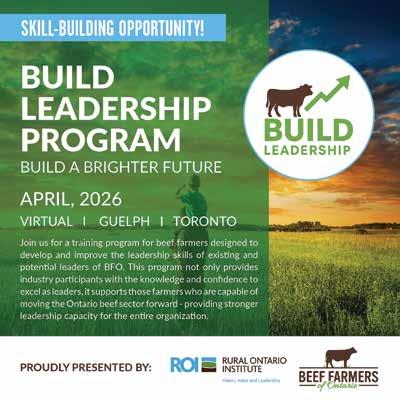
Between 2012 and 2024, Beef Farmers of Ontario (BFO) delivered six iterations of its BUILD Leadership Program in partnership with the Rural Ontario Institute (ROI), graduating 110 leaders and emerging leaders from across the beef sector. Designed to strengthen the leadership skills of both current and future BFO contributors, the program has helped equip farmers with the tools and confidence needed to advance Ontario’s beef industry.
In 2026, the BUILD Leadership Program will return with a refreshed three-session format, with each session building on the skills developed in the previous one. The program will begin with a virtual kick-off evening on April 8, introducing participants to the curriculum, encouraging meaningful selfreflection, and helping them articulate their motivations for becoming stronger leaders.
The second session - Leadership and Governance Excellence - will take place April 13-15, in Guelph. Over three days, facilitators will lead participants through a wide range of topics, including personality types, conflict management, effective communication, financial literacy, governance best practices and strategies for managing personal burnout.
The program will conclude in Toronto on April 26-27, with the Leadership in Action session. This two-day experience will highlight advocacy, government relations, political processes and media engagement, and will include a visit to Queen’s Park.

While the program emphasizes personal growth and leadership development for its participants, our broader goal is to strengthen leadership capacity across the entire BFO organization.
Spaces in the 2026 program are limited. If you, or someone you know, would be an excellent candidate for this unique learning and growth opportunity, the application process is now open. Please contact Charlene Yungblut at the BFO office for more information or complete the application form available on the BFO website.
As with previous offerings, there is a $150 deposit required to reserve a spot. This fee will be fully refunded upon completion of the program, provided the participant attends all sessions.
Spotlight on Our Graduates
“I’ve gained a great deal of respect and a deeper appreciation for everything our guest speakers have accomplished in their leadership roles. Listening to the lessons and stories that were shared will help guide my path in current and future leadership roles. Great course packed with great leadership training and skills.”
~ Geordie MacLaren
“The program starts with a focus on understanding who you are and how your personality shapes your approach to leadership. From there, it shows you how your strengths can truly benefit a team. I’d recommend this program to anyone - it really opens your eyes to everything that happens behind the scenes and gives you a new appreciation for the people working tirelessly for our industry.”
~ Micha Gerber
TheOMAFA UPDATE Winter Feeding Tips for Easy Calving
By James Byrne, Beef Cattle Specialist, OMAFA
way beef cows and bred heifers are fed over the winter-feeding period can have a significant impact on the productive capacity of the beef herd throughout the year. Beef cows that receive proper nutrition over the winter-feeding period usually calf easily, which means they can rebreed within 80 to 85 days of calving to deliver the target of a calf per cow per year to leave more dollars in producers’ pockets. In addition, cows fed appropriately in the months leading up to calving usually milk well, have calves that grow well and achieve good weaning weights
This requires an understanding of:
• the energy and protein requirements of the different animals in your herd,
• the effect of cold weather on animals’ energy and protein requirements,
• the effect of body condition on those requirements,
• the available energy and protein from saved forage on the farm and
• the need for additional energy or protein, if required.
The energy and protein requirements of the herd are influenced by the stage of pregnancy. Energy and protein requirements gradually increase over the course of pregnancy but to make things easy we can separate the stages of pregnancy into two broad stages – months four through six, (second trimester), and months seven through nine, (third trimester).
The energy and protein requirements for pregnant mature cows for these two stages is shown in Table 1.
Adjustments to energy and protein requirement values shown above will need to be made where weights are greater or lessor than those shown in the table above.
An understanding of forage quality available on the farm is necessary to know if saved forage alone is enough to meet the nutrient requirements of the herd. On most farms, saved forages do not come from one single cut or field but from several cuts taken at different times of the year and from different fields often with very different forage mixes. This means that different batches of saved
Source: Developed from Nutrient Requirements of Beef Cattle, 8th edition, 2016 and Cowbytes Ration Balancing Software V4.51
forages have different quality characteristics. Without forage testing it is impossible to know if the forage being fed is meeting the cows’ nutritional needs. The other challenge is that with several batches of forage available, without testing, it’s impossible to know if you are feeding the correct batch of forage at the correct stage of pregnancy. Feeding blind is not a recipe for success.
OMAFA has a list of Ontario forage testing laboratories on its website. Most cow-calf producers deal with a feed supplier at some point, even if this is only to buy mineral. Feed suppliers are happy to help with forage testing, results analysis and advising on any changes to the feeding regime, if needed.
An example of the importance of forage testing can be seen the Table 2.
Table 2 shows that first cut hay is sufficient to supply the energy needs of a mature beef cow in months four to six of pregnancy but is inadequate for months seven through nine. On the other hand, the second cut hay, being of higher quality, is sufficient to supply enough energy for the whole of the animals’ pregnancy.
Where a producer has these two types of forages on the farm, the ideal approach will be to feed the first cut hay to cows that are between four and six months pregnant and then switch to second cut hay for cows that are between seven and nine months pregnant.
on page 24.
Table 1: Energy and Protein Requirements of Pregnant Beef Cows in the 2nd and 3rd trimester.
Photo courtesy of Christine O’Reilly, OMAFA Forage and Grazing Specialist
Table 2: The effect of different quality forages on energy supply to mature beef cows at different stages of pregnancy.
15TH ANNUAL CHAROLAIS BULL SALE

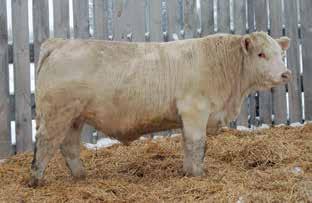
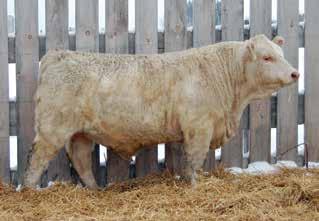
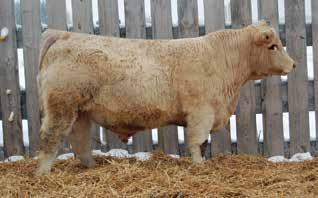
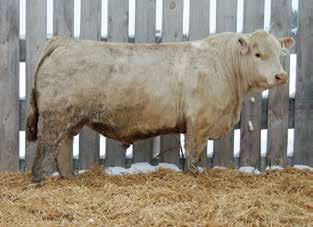
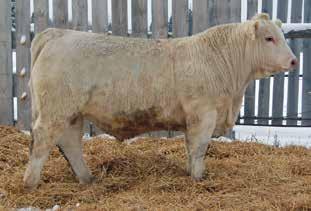
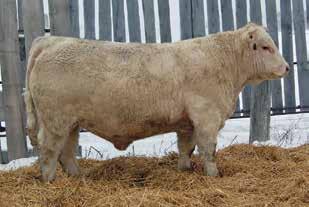




If the first cut hay is the only forage available on the farm, additional energy from a grain source will be required. In this case, the producer will need to feed about one pound of dry corn per day.
In the absence of testing, there is no way of knowing if the forages available on the farm is sufficient to meet the nutrient requirement of the livestock, what order forages should be fed or what extra grain may be needed to meet that requirement.
Protein Supply
The protein requirements of pregnant beef cattle are modest. Mature beef cows are no longer growing and bred heifers grow at a slower rate compared to fed cattle. On most farms, forage alone is usually enough to meet protein requirements unless forages test very low for protein, (e.g., less than 10% CP). Low protein is more common with all grass forages. Both example forages shown here meet the requirements for both stages of pregnancy.
The Effect of Cold Weather
Beef cattle adapt well to cold weather by growing a thick coat of hair and putting a layer of fat layer just beneath the skin. This happens gradually as the weather cools down in the fall. Provided cattle are sheltered from the wind and kept dry, their energy requirements don’t change much down to about minus 15º C. Below this, dry matter intake and energy demand increase. At minus 20º C, the energy requirement at nine-months pregnant increases from 17 Mcal/day to 22 Mcal/day and dry matter intake increases from 28 lb per day to 32 lb per day. In this case, even the high-quality second cut hay shown
above is not sufficient to meet requirements and about one pound of grain corn per day would need to be fed.

Body Condition Scoring
Body condition scoring is a critical part of managing pregnant beef cows over the winter-feeding period. The target body condition score at calving is three and there is a large body of research that shows cows that calf in a body condition score of three are much more likely to calf easily and rebreed within 80 to 85 days of calving. The ideal times to body condition score is at weaning, the start of the winter-feeding period and at a point six to eight weeks out from calving. However, body condition scoring at any point in time is a valuable exercise. Cows identified as thin should be separated out from the main herd and fed as a single group. On many farms, the creation of several groups of cattle can create challenges. If separating thin mature cows into their own group is not possible, they should be grouped with the bred heifer group.
Changing the body condition score of beef cows takes time and is easier and cheaper to achieve in mid pregnancy, (second trimester), versus later in pregnancy, (third trimester). A beef cow with a body condition score of two and a half will require an additional 294 Mcals of extra energy to change to a BCS of three. It will take 50 days, (seven weeks) to achieve this where cows are fed the good second cut hay in our example.
In Summary
Cows that calf easy usually go on to breed within 80 to 85 days of calving, which will maintain a calf per cow per year. To achieve this requires a knowledge of the energy and protein requirements of beef cattle in the second and third trimester. Forage testing is the only way to know if the forage available on the farm is sufficient to meet these requirements and, if not, what changes need to be made to the feeding regime.
Winter weather can also influence these requirements. Cattle are well adapted to the cold but below minis 15ºC, energy and dry matter intake requirements increase, which depending on the quality of forage available, may necessitate the feeding of some grain.
Body condition scoring is a critical management practice that needs to be carried out to ensure beef cattle calf in a body condition score of three. Changing body condition score takes time and will require the feeding of higher quality forages and/or additional grain. OB
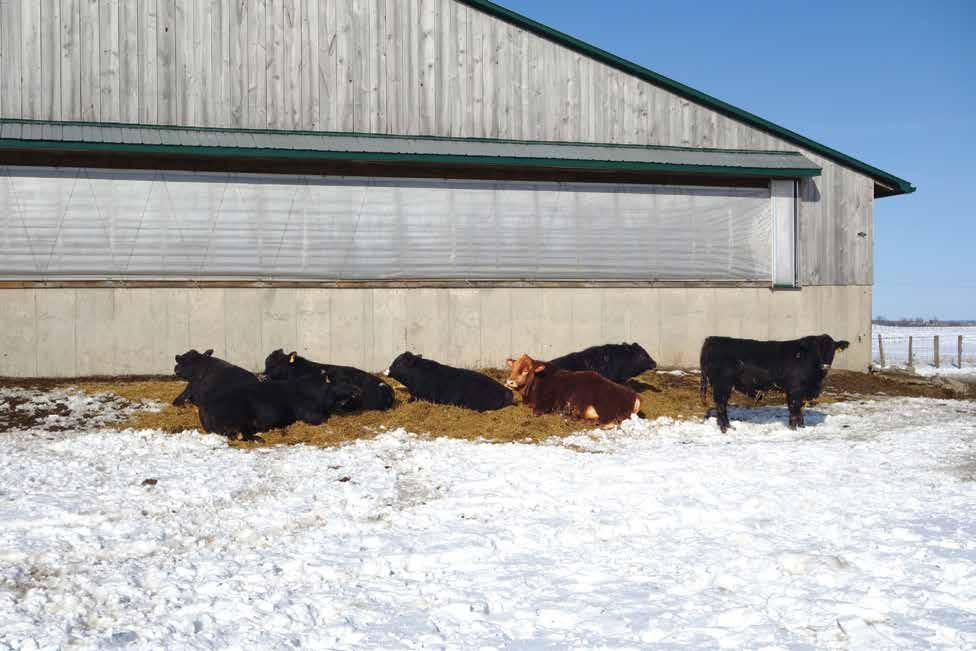
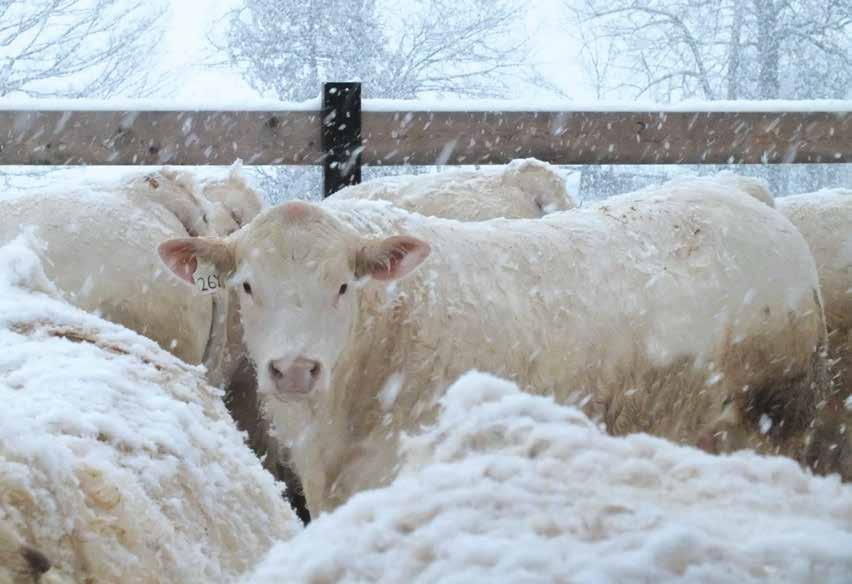
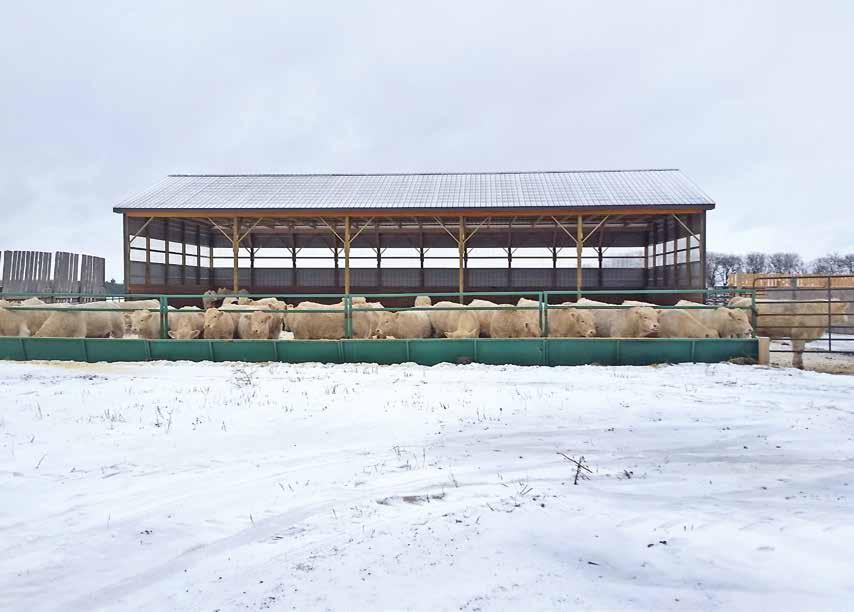
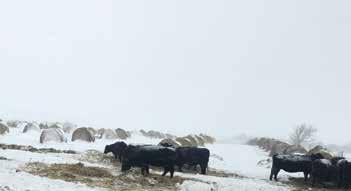
Beef cows outdoors at minus 30ºC. Photo courtesy of James Byrne, OMAFA Beef Cattle Specialist

CFIA Announces Pause on the Publication of Livestock Traceability Regulations
Formore than a decade, BFO, along with national industry partners has been actively engaged in consultations on proposed changes to Canada’s livestock traceability regulations. The goal of these federal changes is to strengthen our traceability system so we can respond faster to animal disease outbreaks and food safety issues, while also helping protect the domestic and international markets our industry relies on.
While the intent of these changes is clear, how traceability is implemented matters just as much. BFO’s position is supportive of regulated traceability in principle, but conditional on cost-sharing, practicality, and producer-feasible implementation. Specifically:
BFO supports strengthened, regulated traceability in principle
BFO agrees that enhanced traceability regulations are important to improve disease response, food safety, and surveillance, and explicitly supports regulatory amendments aimed at faster and more effective responses to animal health threats
BFO supports specific regulatory tools (e.g., PIDs, expanded species coverage)
BFO supports requiring Premises Identification Numbers (PIDs) for livestock movement reporting and supports expanding traceability requirements to additional species (e.g., cervids and goats) where disease risk overlaps
BFO remains concerned about disproportionate costs and operational burden on farmers
While supportive of the regulation, BFO strongly objects to the assumption that industry can absorb implementation costs (readers, reporting, labour, technology), noting costs are disproportionately high for the cattle sector and likely to be passed on to producers
BFO supports regulation only if accompanied by flexibility, funding, and transition time
BFO calls for government funding and grants to offset infrastructure, technology, and training costs, and requests a twoyear grace period to allow producers time to learn and comply with new regulatory requirements
BFO supports outcomes of traceability but seeks practical, Ontario-specific implementation
BFO supports movement reporting and improved traceability outcomes, but recommends more practical reporting timelines (e.g., 14 days instead of 7) and role clarity to reflect Ontario’s production realities and avoid unintended harm to speed of commerce
On January 10, the Canadian Food Inspection Agency (CFIA) announced a pause on the publication of the proposed amendments to Part XV (Traceability) of the Health of Animals Regulations until the proposed changes are more widely understood and concerns are heard and taken into consideration. The announcement further clarified that these amendments are not currently in place and have not been finalized.
The day prior to this announcement, BFO joined the Canadian Cattle Association (CCA) and our provincial counterparts in calling for a delay in the implementation of the proposed changes, to allow time for outstanding industry questions and concerns to be addressed.
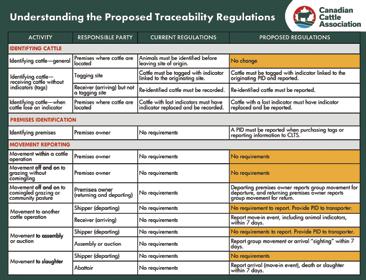
What Is Being Proposed?
The proposed regulatory changes largely align with the Cattle Implementation Plan, that was developed by industry and was updated in 2016.
Key proposed changes for producers include:
• Requirement to obtain or keep a current premises identification (PID) number
• Requirement to include your PID number when:
- Purchasing approved indicators (tags)
- Reporting information related to identification of cattle and their movement
• Report the arrival of cattle (i.e. move-in reporting) within seven days
How Beef Farmers Can Prepare?
• Obtain a premises identification (PID) number and/or update your information
- To obtain a number in Ontario, visit www.ontariopid.com, or to register by phone, call 1-888-247-4999. The line is available Monday through Friday, 7:00 a.m. – 5:00 p.m.
• Begin reporting move-in events
- The Canadian Cattle Identification Agency has information and resources available
- Familiarize yourself with the Canadian Livestock Tracking System (CLTS) or the CLTS MOBO app which allows for online reporting
- Private tools, apps and programs which integrate reporting with CLTS are also available
• Participate in information sessions, webinars and meetings to learn more about the details or ask questions as they are announced.
Frequently Asked Questions
The publication of the proposed amendments to Part XV (Traceability) of the Health of Animals Regulations is paused until the proposed changes are more widely understood and concerns are heard and taken into consideration.
Q1: Why is traceability important?
Traceability supports market access and allows the livestock industry to respond quickly to animal disease events or emergencies, including natural disasters. A key element of this system is the timely reporting of animal movements.
Canada exports over 40 per cent of our beef cattle production every year. Traceability is a valuable asset when negotiating ongoing trade agreements. Our reliance on export markets is much different than other countries such as the United States. The faster a disease investigation can be fully investigated, the faster regular trade (exports) with other countries will resume. BSE illustrated what lack of exports can do to the beef sector.
Q2: Did the new traceability regulations come into effect January 1, 2026?
No. The Canadian Food Inspection Agency (CFIA) has paused the
Continued on page 27.
publication of the proposed amendments to Part XV (Traceability) of the Health of Animals Regulations until the proposed changes are more widely understood and concerns are heard and taken into consideration. The amendments are not currently in place and have not been finalized.
Q3: Why am I just learning about this now?
In 2016, the Cattle Implementation Plan (CIP), a traceability roadmap developed by the cattle industry for government consideration, was endorsed by 19 organizations. Since then, industry and government have continued discussions on traceability, with a common goal of a world-class system that is effective in supporting trade relationships and emergency preparedness, while also respecting on-the-ground practicalities.
Q4: What is CCA and BFO doing about concerns producers have expressed regarding the draft regulations?
Additional outreach and consultation with producers and the broader cattle sector will be conducted by CCA and provincial cattle associations, including BFO, in the coming weeks during the current regulatory pause period. This will occur before any regulatory changes move ahead.
In general, concerns have been and continue to be communicated to CFIA and the federal government, and have been incorporated into our formal comment submissions for more than 10 years. Recent concerns expressed by producers across the country have led to many organizations, including BFO, asking for a delay in implementation until outstanding industry questions and concerns can be addressed.
Q5: Are CCA and BFO requesting regulated traceability for producers?
No. CCA and BFO support traceability in principle, but the Canadian Food Inspection Agency (CFIA) is the regulator responsible for traceability regulations.
Q6: Will I have to change when I tag cattle?
There is no required time to tag cattle. The proposed requirement is that all cattle must be identified with a CCIA tag before leaving the farm of origin, unless they are being taken to an approved identification site (like an auction market or feedlot) to be tagged. This is not different from how things are today.
If they are taken to an approved identification site and don’t already have a CCIA tag, you will have to supply that site with tags assigned to your PID to apply on your behalf.
Q7: Will calves need to be reported within hours of birth?
No. The proposed requirement is that all cattle must be identified with a CCIA tag before leaving the farm of origin, unless they are being taken to an approved identification site (like an auction market or feedlot) to be tagged. This is not different from how things are today.
Q8: Will I have to report when I move an animal within my own operation?
No. You will not be required to report the movement of cattle if they are moved within the same farm (land, and all building and other structures on that land, that is used under one management for breeding or raising animals).
The updated reporting requirement will be applied to new animals that are moved onto an operation (move-in).
You will not be required to report the departure of cattle from your site, unless you are taking them to a community pasture, veterinary clinic, or an event like a cattle show.
You will not have to report movements to pasture leases, unless cattle from different owners are commingled on that lease.
Q9: What move-in information will I have to provide?
Move-in information proposed:
• PID of departure site (provided by transporter)
• PID of your site
• Date cattle departed and arrived (provided by transporter)
• Individual tag numbers of the cattle arriving at your site
• License plate number, including province/territory state, of the truck that delivered the cattle (provided by transporter)
Q10: What if my cattle go to a community pasture?
Producers using community pastures will have to report both the departure and return of their animals with the following information:
• PID of each site
• Date cattle departed and arrived
• The number of cattle
• License plate number, including province/territory/state, of the truck that delivered the cattle
Q11: Will I have to have a separate PID for each pasture or feedlot?
Yes, each registered parcel of land or premises will receive a unique PID, and a certificate will be issued displaying this number. Unlike farm business registration numbers (FBR), each PID is linked to a specific parcel of land, not to a business. For example, if you have cattle on your home farm and own 50 acres down the concession where you grass cattle, each property will have its own unique PID.
Q12: What if an animal is missing a tag when it arrives on my operation?
You will have to apply a new tag associated with your PID to that animal as soon as practical after arrival and report the tag number of the new tag and your PID within 7 days after application. If known, you should also report the previous tag number, the PID of where that animal previously came from, and the license plate number, including province/territory/state of the truck that delivered the animal.
Q13: What if my RFID reader fails to read a tag on arrival?
If you’re using an approved RFID reader that meets the required standard, and a tag doesn’t scan properly the first time, you won’t be required to report that animal’s ID number.
Q14: I custom feed cattle, do I need to report movements?
Our current understanding is that individuals who custom feed cattle will need to report when new animals are moved onto an operation (move-in), but we are currently seeking clarification.
Based on CFIA’s What We Heard document, there were still elements of the regulatory text that required clarification or adjustment.
Q15: What happens when my cattle go to an auction market?
When you deliver cattle to an auction market, the auction will need to report the arrival of your cattle and the information below. They are not going to be required to report individual tag numbers.
• PID of departure site (provided by transporter)
• PID of auction site
• Date cattle departed and arrived (provided by transporter)
• The number of cattle
• License plate number, including province/territory/state, of the truck that delivered the cattle (provided by transporter)
If you are delivering your own cattle, you would provide your PID, the date you loaded and delivered, and your license plate information to the auction. In Ontario, you can already include this information on the Animal Transport Record.
Q16: What happens if exhibit my cattle at a show or fall fair?
The requirements regarding who reports movements to cattle shows and fairs has been adjusted based on feedback received during the consultation. Producers will be required to report animal departures to fairs, rodeos, cattle shows, and veterinary clinics, as well as when the animals return home. However, both departure and returning movements can be reported at the same time (e.g., within seven days of the show concluding).
Q17: What if an animal dies on my operation?
Movement requirements will apply to carcasses as well.
• If a carcass leaves the farm for disposal, such as by a deadstock removal service, this will need to be reported with the tag number by the disposal site operator.
• If the carcass is disposed of on-farm, the tag will need to be retired.
• If the animal that died had not been tagged and died on the farm of origin, no reporting is expected to be required.
No reporting is proposed for carcasses from animals less than three months of age.
Q18: Who has access to my information stored in the Canadian Livestock Tracking System (CLTS)?
You, as the CLTS account holder, are the only one that can access your data, unless you grant a third-party access to your account. CLTS is managed by CCIA and is not a government database.
Authorized CFIA/provincial government personnel can only access CLTS data in the event of an investigation, including reportable disease outbreaks, disease surveillance, or another emergency. During an investigation, business information is kept strictly confidential. OB
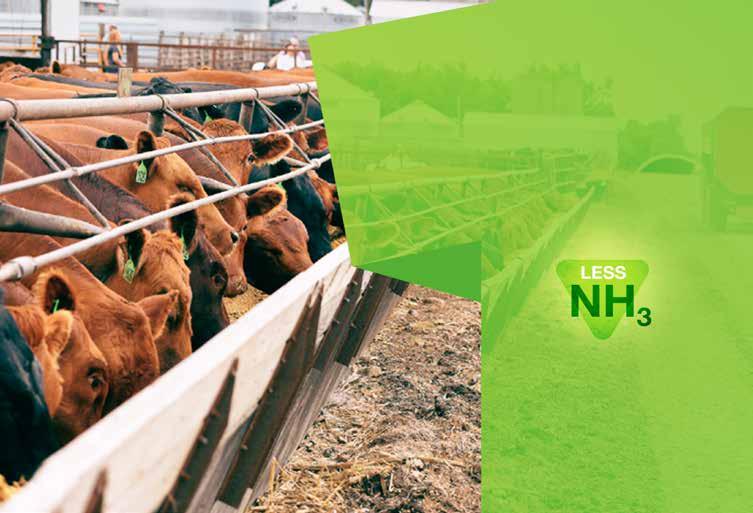
First in feedlot sustainability
the movement alongside feedlots across Canada who are improving air and water quality by reducing ammonia gas emissions in more than 1 million head of cattle*.
Calving Smarter with Cameras
By Jeanine Moyer
Theglare of a cell phone in the middle of the night is a small price to pay for Jason Desrochers, who can check his maternity pen from the comfort of his bed instead of pulling on winter boots and trudging to the barn on a cold night.
That’s just one of the advantages Desrochers enjoys since installing calving cameras in his barn in 2015. “The cameras have helped me save a lot – save calves, cows, and especially on my sleep,” he admits. With better rural wireless service and more affordable options on the market, calving cameras are gaining traction on beef farms across the province. Three Ontario beef farms share their experiences with calving cameras – why they made the investment, how the cameras support their herd management, and what they’ve learned.
The Farms in Focus
Desrochers farms in Val Gagné, in northern Ontario, where he manages a 240-cow herd and backgrounds his calves for a year. Most cows calve on pasture in May and June, but select purebred Simmental cows calve in the barn in March, followed by heifers in April. He has four cameras that cover three calving pens. The cameras require Wi-Fi, are hardwired into a main combiner and are static, facing face each other to eliminate blind spots within the pens. Desrochers can access the live feed from an app on his phone, or from a screen that’s set up in his house.
Samantha Kennedy farms alongside her parents and siblings at Crown Hill Acres in Omemee, Ont., managing 35 purebred Limousin cows, as well as replacement heifers and bulls. The majority of their calving takes place in January and February. The Kennedys invested in cameras in 2021, starting with four Toucan cameras, and have since added three Lorex cameras. Both brands of cameras are wireless, rely on Wi-Fi for video transmission, have built in lights that can be turned on remotely and a two-way talk feature. The cameras each have an app that all family members can access to view and monitor livestock from their own devices.
The Scott family raises purebred Limousin cattle on their farm, Spare Time Livestock, outside of Kemptville, Ont. They have 40 cows that calve in two groups – winter (January and February) and fall (September) and raise Limousin heifers and bulls. The family purchased their first four cameras in 2018 and added two more the following year. The family can all monitor their cattle from the app on their phones. Connected to Wi-Fi and strategically positioned, the wireless cameras capture multiple angles in each pen, and the outside barnyard. “You can never have too many camera angles,” they say, noting the additional cameras were added to reduce blind spots.
Why Calving Cameras Made Sense
All three farms initially invested in calving cameras to monitor cows more closely during calving season and reduce nighttime barn checks. But in reality, they’ve all discovered the technology to be an invaluable part of their farm management.
“The cameras have changed the way we approach calving,” says Desrochers. With fewer
trips to the barn at night, he’s gained more sleep, and by watching animals without disturbing them, he’s developed a better understanding of their behaviour. He adds that the cameras have also helped prevent losses during calving season. Desrochers estimates that an investment in calving cameras would easily pay for itself within one year, no matter the size of a herd. “You can put a price on saving a calf, and on catching a difficult situation early before it gets worse, so why invest in peace of mind by adding a camera to your calving set up?”
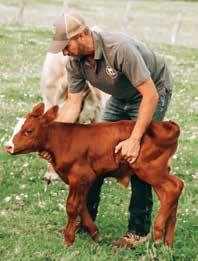
For the Scott family, the decision to install cameras came when the children left for school, leaving only a couple of family members to handle calving and night checks. The cameras not only eased the workload but also allowed one of the daughters, who was living out west at the time, to take on the midnight calving checks, with the time difference working in their favour.
As their investment in herd genetics grew, the Kennedy family upgraded their farm technology by installing cameras. Kennedy said they were keen to explore the technology and believed the added monitoring would help improve their overall calving management.
More Than Expected
“While the cameras are useful for monitoring calving progress, we rely on them most to know whether a calf has nursed or not,” the Scott family says. “They allow us to watch as calves get up and start moving, and to keep an eye on them as they figure everything out.”
All three beef farmers agree – the ability to monitor cows and calves after birth is just as valuable as watching for signs of labour. Both the Scott’s and Kennedy often use the playback option to check on progress, noting the time stamps on the footage to be especially helpful to determine when a calf began to nurse, or how long it’s gone without nursing. The Scott family also points out that without the cameras they might spend hours in the barn monitoring calves to make sure they’ve received that first important feeding, and their presence can sometimes bother the cows or make them restless. “This way, we can monitor them without disturbing their behaviour,” they note.
Desrochers says he’s been surprised by how much watching the cattle remotely has taught him about animal behaviour. Echoing the Scott family, he notes that cows behave differently in their own environment when he isn’t in the barn. In particular, he’s learned to better recognize the cues heifers show as they approach calving.
Catching Problems Earlier
Kennedy says some of the biggest differences the cameras have made are the ability to detect signs of labour earlier and a reduction in difficult births, as the family can monitor and assist in challenging situations sooner. The ability to review footage and confirm whether calves have nursed has also supported calf health on their farm, helping the family make informed management decisions to determine if intervention is necessary.
“In one situation, we knew the cow had calved successfully, but noticed the cow wasn’t getting up right away to clean off the calf. That’s when we knew something was wrong,” says Kennedy. “The birth sack was still over the calf’s head, and if we hadn’t been able to monitor the situation with the cameras, we might have otherwise lost the calf.”
Desrochers also credits the cameras with saving numerous animals on his farm, particularly during difficult births. In several instances, close calls were prevented from escalating because he was able to monitor situations remotely. He recalls one experience when after assisting a heifer through a hard calving, Desrochers returned to the house once everything appeared to be under control. An hour later, however, he noticed the animal had prolapsed – something he says he would not have caught in time without the technology. In another instance, he happened to glance at the monitor and noticed a calf had fallen into a water tub. Once again, he was able to intervene and save the animal thanks to the cameras.
Labour, Sleep and Stress Levels
“The calving cameras have helped save my sanity and have allowed me to get more sleep,” says Desrochers, noting that he considers the cameras to be an important risk management tool for his farm.
The Scott family says the cameras have made a huge difference on their farm, allowing the family to divide the workload, take turns with overnight barn checks, and monitor cows and calves remotely without adding stress to the animals.
For the Kennedy family, the ability to monitor livestock from anywhere, whether on or off the farm, has given them peace of mind and added freedom. Kennedy notes they even move their cameras around and use them for farm security surveillance outside of calving season.
Make it Work for Your Farm
For anyone considering investing in calving cameras, Desrochers says you can’t afford not to. He also reminds fellow beef farmers that no herd is too small to benefit from this technology.
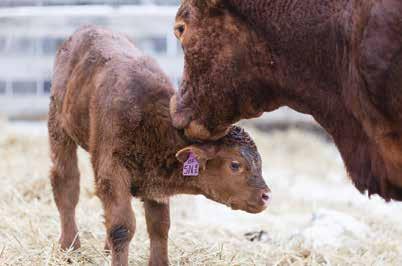
When researching the right camera for your farm, the Scott family recommends farmers do their homework. Before making the investment, they suggest farmers understand their internet capabilities and be willing to upgrade if necessary, know what kind of coverage they want inside and outside their barn, and consider camera placement and possible weather exposure. “Whatever you think you need, buy two extra cameras, you can never have enough to capture all the angles in your pens,” they advise.
Kennedy also recommends farmers do their own research, noting that cameras come with a lot of features to consider, including battery life, pan-tilt-zoom options, image resolution, built in lights that can be turned on remotely, two-way voice, the ability to record and playback footage, and most importantly, ease of use.
Desrochers believes the right calving camera shouldn’t be selected based on price, it should be based on what is required, or what works best in each barn set up. He also considers technical service as a non-negotiable in his camera selection, and relies on a local provider, Barncameras.ca for support. He reminds farmers that while new technology can be overwhelming at first, anyone can easily adapt to find a system that works for their farm.
Taking Herd Management to the Next Level
“Calving cameras have been a game changer for us – for night checks, day checks and monitoring calves that are getting started,” says the Scott family.
This technology is now an essential tool for many beef farmers, but as Kennedy point out, technology will never replace effective herd management practices.
“Good management still comes from being present, knowing your cattle and understanding when and where new tools, like calving cameras, can help you take your management to the next level.” OB
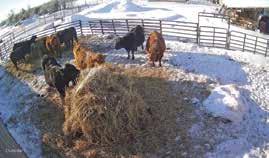






































Collaborating to Advance Agriculture Literacy
By Amanda Robertson, Interim Executive Director, AgScape
2026
marks an important milestone as AgScape (formerly Ontario Agri-Food Education) celebrates 35 years of advancing agriculture and food literacy in Ontario. As we start this year of celebration, we’re reflecting on how far this work has come, where agriculture and food literacy education needs to go next and thanking those partners who have made our efforts possible.
Over the last 35 years, we have grown into the province’s leading agriculture and food literacy education organization, guided by a clear and enduring mission: to inspire students and educators through curriculum-aligned, interactive, and engaging learning experiences that connect them to the agri-food system. Work that is only possible with the support of the agriculture sector as we strive to develop and deliver programming that goes beyond awareness to build meaningful, long-lasting food literacy.
The Beef Farmers of Ontario (BFO) has collaborated with AgScape for over two decades, helping connect students, teachers and communities with the realities of beef farming in Ontario. BFO’s contribution to our work has allowed us to dig into the challenges and opportunities within your sector, equipping students and educators to have deeper conversations about how the beef industry both impacts and is impacted by decision-making in our communities.
With BFO’s support, we’ve delivered meaningful learning through our Teacher Ambassador Program (TAP), thinkAG Career
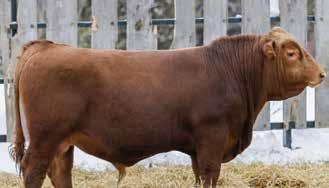
SILVER SPRINGS FARMS
Offering Red Angus, Simmental, Crossbred
Silver Springs Farms is offering yearling performance tested bulls through private treaty. All bulls are out of calving ease sires and strong maternal cow families. All performance data on Ag Sights bull test.
James, Joan, Robert and Emily McKinlay
James & Joan: 519-599-6236 • jmckinlay@bmts.com
Robert: 226-668-0775

Competitions and Virtual Field Trips; programs that bring agriculture to students in practical, accessible ways. Programs whose demand is growing within the education sector. In 2025, TAP delivered a record-breaking 935 workshops, more than 400 above the previous year, reaching students across the province with curriculum-aligned, interactive and engaging agriculture & food literacy lessons.
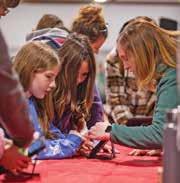
Through these programs, students explored topics such as beef farming, farm biodiversity, food waste reduction, the business of agriculture and career pathways across the agri-food sector. These sessions don’t shy away from complexity; instead, they encourage balanced discussion and help young people better understand modern agriculture and its role in their lives. The record-breaking growth in this program highlights the need for, and is a testament to, the success of partnerships within the agriculture sector.
BFO’s involvement in 29 of our thinkAG Career Competition sessions last year alone helped students see agriculture as a field full of opportunity, from hands-on production to science, technology, and business roles. Resources like An Exploration of Beef Farming in Ontario, created in collaboration with BFO, supported over 6,000 educational experiences, while Virtual Field Trips allowed students to hear directly from farmers and agri-food professionals, especially in communities where farm visits aren’t always possible.
As a registered charity, AgScape relies on industry support to continue this work. Memberships and donations help ensure farmers’ voices remain part of how agriculture is taught to the next generation. Individual BFO members can support this effort directly through membership and charitable contributions.

Looking ahead to the 2026–27 school year, demand for agriculture education continues to grow. With BFO’s continued partnership and support, we see real opportunity to further strengthen agriculture and food literacy across Ontario.
To the Beef Farmers of Ontario and its members, thank you. Your commitment over the past decades has helped ensure students gain a clearer, more balanced understanding of agriculture, today and into the future.
To learn more about what we do and how you can be part of Agri-Food Literacy building in Ontario, follow us on Facebook, Instagram, X, LinkedIn and YouTube. OB

RESEARCH UPDATE Opportunities in Manure Management
By Lilian Schaer for Livestock Research Innovation Corporation (LRIC)
Manure is arguably one of agriculture’s most under-appreciated resources. Far from being just a waste product, it carries significant nutrient and economic value when managed well, supporting soil health, reducing input costs, and contributing to more sustainable production systems.
The topic was part of a recent Getting Research Into Practice (GRIP) roundtable hosted by Livestock Research Innovation Corporation (LRIC) that brought together researchers, industry representatives, and farmers to explore practical ways of turning livestock research into real-world results.
Mel Luymes of the Ontario Professional Agri-Contractors Association (OPACA) was among the featured speakers at the event, highlighting both the challenges and the untapped opportunities in how Ontario’s livestock sector handles manure.
“Every species has manure, and every farm system manages it differently,” said Luymes. “But across the board, manure is one of the most important parts of renewable, sustainable, and regenerative agriculture. How we handle it will determine our ability to protect the environment, manage nutrients efficiently, and remain economically competitive.”
Lessons from Past Crises
History has shown that significant change in manure management often comes in response to crisis. Luymes pointed to the Walkerton Water Crisis in 2000 as a turning point, when the town’s water supply became contaminated with E. coli from manure.
That led to the development of Ontario’s Nutrient Management Act, as well as the Clean Water Act and new approaches to source water protection. This included new requirements for farmers, such as mandatory nutrient management plans for larger farms, a minimum 240 day on-farm storage capacity for liquid manure, and restrictions on spreading nutrients between December 1 and March 31.
Government stewardship funding made available through various programs helped farmers adapt to the new rules, noted Luymes.
Similarly, concerns over phosphorus loading into Lake Erie, highlighted by Toledo’s drinking water crisis in 2014, resulted in the Lake Erie Action Plan under the Great Lakes Water Quality Agreement.
To date, Ontario’s approach has focused largely on voluntary action, such as through 4R Nutrient Stewardship programs that use the principles of the Right Source, Right Rate, Right Time, and Right Place for applying fertilizers and other nutrients to crops, along with incentive funding and extension activities, she added.
Timing Matters, an initiative between farm organizations and the Ontario Ministry of Agriculture, Food and Agribusiness to promote best timing of manure application throughout the year, has also played a key role in promoting a better understanding of manure’s value, manure storage options, application equipment, and timing.
“The goal has always been simple: keep manure and nutrients out of water,” Luymes noted. “We need proactive, practical pathways to get research into practice so that we’re ready before the next crisis hits and not reacting to it after the fact.”
A major shift is underway in how manure is perceived. Instead of viewing it as waste to be disposed of, farmers are increasingly recognizing its fertilizer value.
OPACA is encouraging conversations between farmers about buying and selling manure to better balance nutrient distribution and avoid overapplication, winter spreading or storage challenges.
Contractors at the Front Line
OPACA represents professional contractors who perform fieldwork including manure application for livestock farms across Ontario. In Europe, Luymes pointed out, 70 to 80 per cent of livestock farmers outsource this work. While Ontario isn’t at that level, contracting is a growing trend as farms become larger, equipment becomes more expensive, and labour becomes tighter.
Innovation and New Opportunities
Emerging innovations with potential to transform manure management include:
• Value-added application – blending fertilizer with manure for one-pass efficiency, already being done in Europe.
• On-the-go nutrient sensing – manure systems that measure nutrients in real time for precision application.
• Separation and water recycling – technologies that can return water from manure streams for reuse in livestock systems.
• Aeration retrofits – cost-effective upgrades for existing pits.
• Dribble booms – applying manure at low pressure to reduce odour and nutrient losses.
• In-crop applications – extending the season by applying manure into corn up to the V3 stage or beyond.
“These are things we could be doing, places we could be going,” Luymes said. “The hope is that it won’t take another crisis to push us there.”
Looking Ahead
For LRIC, manure management represents both a challenge and an opportunity. The challenge is to protect water, reduce emissions, and ensure animal health. The opportunity lies in unlocking manure’s true value – as a nutrient resource, a tool for regenerative agriculture, and even a source of renewable energy.
“It’s not just about developing the science. It’s about ensuring research makes its way into practice in a way that farmers can adopt, afford, and trust,” said LRIC CEO Kelly Somerville.
Ontario will have the opportunity to showcase its leadership when it hosts the annual North American Manure Expo in 2027. The event will bring contractors, researchers, and extension specialists together to share the latest innovations and practical tools.
“Manure may not be glamorous, but it’s the foundation of sustainable agriculture. If we get it right, it will support our farms, our environment, and our future prosperity,” added Luymes.
LRIC is funded in part by the Sustainable Canadian Agricultural Partnership (Sustainable CAP), a five-year, federal-provincialterritorial initiative.
Livestock Tax Deferral
By BFO Staff
InOctober 2025, BFO submitted a request to Agriculture and Agri-Food Canada (AAFC) to expand the eligible drought zones eligible for the Livestock Tax Deferral (LTD) provision to better reflect drought conditions experienced by Ontario producers in 2025. We are pleased to share that AAFC has now updated the 2025 list of prescribed regions eligible for the LTD provision, effective for the 2025 taxation year.
What is the Livestock Tax Deferral Provision?
The Livestock Tax Deferral provision is a federal tax measure that allows farmers in prescribed drought, excess moisture or flood-affected regions to defer a portion of their income from the sale of breeding livestock to the following tax year. This can provide meaningful tax relief for producers forced to liquidate breeding stock due to extreme weather conditions.
Key points of the program:
• The provision applies when a breeding herd has been reduced due to adverse weather conditions such as drought, excess moisture or flooding.
• To qualify:
- The farm must be located in a prescribed region as identified by AAFC.
- The breeding herd must be reduced by at least 15%.
• Deferral amounts:
- If the herd reduction is 15%–29.9%, up to 30% of income from net sales may be deferred.
- If the reduction is 30% or more, up to 90% of income may be deferred.
• Once a region is prescribed, it is considered eligible for the taxation year—even if conditions change later in the season.
AAFC continues to monitor weather, climate and forage data through the growing season and may add regions that meet eligibility criteria. Adjacent buffer zones are also now included to support producers on the periphery of impacted areas.
Updated 2025 Prescribed Regions — Ontario
The full list of prescribed regions now includes the Ontario census subdivisions (as defined by Statistics Canada) found here: These areas are eligible for the Livestock Tax Deferral for the 2025 taxation year. For ease, BFO has grouped the subdivision list by county and district.
Ontario Designated Regions (2025):
Many of these have a buffered designation (shown on the map in purple), meaning adjacent areas impacted by conditions are included.
Need Assistance?
If you have questions about the Livestock Tax Deferral provision, eligibility criteria, or how to apply this to your tax planning, please contact:
Thomas Brandstetter, Manager of Policy and Issues
We encourage producers in affected regions to review this list and consult with their accountants or tax advisors to determine how the LTD provision can support their 2025 tax filing.
Simmental Association Ontario
HADDIE SIMMENTALS –COMMERCIAL PRODUCER OF THE YEAR!
Brandon Ernest and Ashley Fairminer and family of Walkerton, ON.
They run a Simmental Influenced herd of 100 cows plus 30 registered Simmental cows. Each fall they market their calves in the successful Calf-O-Rama Pre-sort sales in Keady. They market bred heifers in the annual Top Cut Bred Heifer Sale in Hanover. They have repeat customers that come to purchase their heifers each fall from the sale. They truly believe in the value of Simmental genetics in a commercial setting. They like the maternal strength of Simmentals while not giving up performance traits at the same time.
Congratulations Brandon and Ashley!
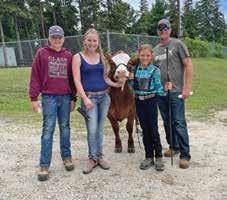
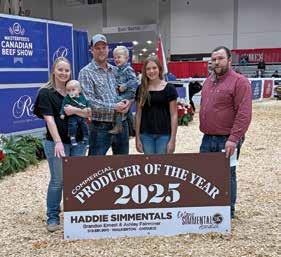

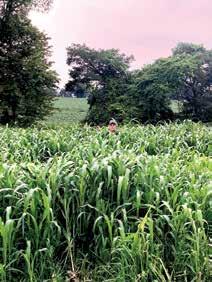
2026 Spring Sales
March 14- Source for Quality- Indian River, ON.
March 27- Clarke Family Farms Bull & Female Sale- Blenheim, ON. Check out our website for a listing of members with bulls for sale privately
OSA AGM March 7 in Kanata, ON.

TheRESEARCH ROUNDUP
Canadian Beef Industry Statement on AAFC Research Cuts
By Beef Cattle Research Council and Canadian Cattle Association
Canadian Cattle Association (CCA) and the Beef Cattle Research Council (BCRC) are concerned about Agriculture and Agri-Food Canada (AAFC) reductions affecting research farms, facilities, programs and research expertise at Nappan (Nova Scotia), Quebec City (Quebec) and Lacombe (Alberta). We recognize the fiscal pressures facing the federal government; however, the cuts will have far-reaching impacts for cattle producers, the beef industry, consumers and Canada’s efforts to grow the economy and diversify export markets.
In the past decade, Canada’s beef producers increased their own research contributions by over 600%, viewing research as an investment in future economic growth and competitiveness. Public-good research remains essential where market incentives are limited, or independent expertise is required for regulatory, trade and consumer confidence. AAFC’s national capacity is particularly important to maintain in the areas of food safety, carcass quality and grading, and forage breeding and management.
“Canada’s beef producers rely on a stable, high performing public research network to deliver the tools, evidence and innovations that keep farms resilient, food safe and our sector
competitive,” explained CCA President Tyler Fulton. “When research capacity is lost, it isn’t quickly rebuilt. Cattle producers and the public pay the price for years and even decades.”
Negative Consequences for Beef and Forage Research
Forage is the foundation of the beef industry. Canada cannot have a competitive beef industry or efficiently respond to industry priorities without abundant and productive forages. The capacity to continue building in these vital programs has been lost through the closure of the Lacombe, Nappan and Quebec research stations.

EARLEY LIVESTOCK CIRCLE K SIMMENTALS
PRIVATE TREATY OFFERING
Red & Black Simmentals, Angus, SimmAngus Bulls
Also a select few Purebred Simmental females FOR SALE off the farm.
Follow us on Facebook, Earley Livestock &

Extensive work conducted at the Lacombe Research and Development Centre exploring extended grazing practices allowed producers to cut winter-feeding costs and survive through the BSE crisis. While a small number of beef producers had begun attempting this practice, clear guidance by Dr. Vern Baron at AAFC Lacombe allowed other producers to begin implementation when it was needed most. In recent years, Dr. Baron began collaborating with AAFC researchers in Quebec led by Dr. Annie Claessens and Dr. Annick Bertrand, to develop higher-yielding, winter hardy alfalfa varieties. At AAFC Nappan, Dr. Yousef Papadopoulos, John Duynisveld and Dr. Kathleen Glover have been focused on forage and grazing strategies for Atlantic Canada’s unique climate and acidic soils. Among multiple accomplishments, they have developed grazing management programs for Eastern and Atlantic Canada and bred improved trefoil, red clover and alfalfa (e.g., AAFC Trueman) varieties that have been adopted across the country. This research program has developed more productive and economical pasture mixes for Eastern Canada and low-cost methods to rejuvenate pasture stands that would also improve forage germination and establishment. Critically, collaborations between these AAFC sites and agricultural universities led to a highly productive network that benefits forage and beef producers across the entire nation. The effectiveness of this network and the benefits it provides to Canadian beef producers are compromised by the loss of these facilities.

Beef grading is fundamentally important to pricing beef carcasses. With the closure of AAFC Lacombe, Canada has lost its only robust meat science program and
will not have the scientific expertise needed to address questions of grade equivalency in any of the foreign export markets the Canadian beef sector is hoping to diversify into. The team of beef grading researchers at Lacombe developed the instrument grading technology that is currently in use worldwide. Dr. Oscar Lopez-Campos at Lacombe has been responsible for upgrades to Canada’s beef grading system for several years, working to harmonize it with the U.S. system. He has examined methods to go beyond simple “yield grade” estimations and has developed ways to fabricate individual beef carcasses to optimize the value of the cuts in each carcass. His accomplishments also include developing a methodology to translate Canadian beef carcass quality grades into Japanese equivalents to bolster Canadian beef marketing efforts.
The Lacombe research station was also home to the food safety team led by Dr. Xianqin Yang. Food safety research solves problems before they reach Canadian or international consumers. This program developed and validated procedures that packing plants use to wash hide-on carcasses, carcass rinses and pasteurization methods and improved methods to clean conveyor belts, knives and other equipment. These advances have contributed to significant decreases in E. coli O157:H7 related food safety recalls in Canada. After a major E. coli outbreak in 2012, Dr. Yang determined how to safely cook needle-tenderized beef so that Health Canada could label it appropriately. Food safety is a common “non-tariff trade barrier.”
We fully recognize the fiscal pressures facing the federal government and understand that spending reductions are necessary given the unprecedented situation Canada is facing. In anticipation, we engaged AAFC, requesting and trusting that industry priorities be considered. Elimination of critical expertise in forage breeding, carcass grading and food safety seems shortsighted and may have long-term impacts on ensuring the stability and longevity of Canada’s beef industry.





• The potential loss of Canada’s ability to respond to food safety concerns and crises with science-based evidence and action plans.
Where Do We Go from Here?
Research is an investment, not a discretionary expense. The BCRC believes the decision to close the Nappan, Quebec and Lacombe research stations may result in long-term, debilitating consequences for our industry including:
• The potential loss of unbiased, independent expertise in Canada in critical areas including forage breeding and management, beef quality, carcass grading and food safety.
• The potential loss of innovative and effective forage breeding and management solutions that can respond to adverse conditions including cold, drought, flooding and poor-quality agricultural soil.
• The potential loss of Canada’s ability to modernize our beef carcass grading system in response to changing genetics, management practices, consumer preferences and international market demands.
When considering the loss of critical capacity in these research areas, BCRC Chair Dean Manning noted, “Efficiency should mean smarter coordination of a national network, not the erosion of irreplaceable expertise. While the intent may be efficiency, the reality is that Canada loses the capacity to generate the learnings and innovations that maintain and improve sustainable and safe food production.” He added, “I believe that Canada’s beef producers are
ready to partner on solutions rather than the elimination of critical research capacity.”
The CCA has requested that if the closure of these facilities stands, critical capacity and programs be transferred as outlined below.
• Maintaining a national carcass quality and grading research program is critical. The CCA requests that Dr. Oscar LopezCampos’ program be transferred to another institution such as the University of Guelph, which has a federally inspected research abattoir.
• We understand that Dr. Xianqin Yang’s position may be transferred to Lethbridge Research and Development Centre. The CCA requests that this be confirmed to ensure adequate support is available to maintain the critical food safety research being conducted.
• The CCA requests that the Nappan and Quebec City forage breeding programs be maintained or transferred with researchers maintaining access to forage breeding plots and support.
• If AAFC chooses to cancel projects midway through their

completion, the CCA requests that the investments industry has made be refunded.
The CCA and the BCRC remain committed to constructive engagement with Minister MacDonald and AAFC officials to ensure critical research capacity is preserved, transitions are well managed and producer funded projects deliver the intended outcomes. OB
Feed Regulations Update: What Beef Producers Should Know
By BFO Staff

WAYDAMAR SIMMENTALS
Bulls is our Business & Information to support Production Decisions

Red, Black & Blazed Face Yearling & coming 2 Simmental Bulls Performance, Ultrasound, Thermal Index & Semen Tested
Calving Ease • Temperament • Customer Service
Dave, Gayle & Grant Milliner
225641 Southgate Road #22 • Dundalk, ON N0C 1B0
Phone: 519-923-9188 • Cell: 519-377-9188
Email: milliner.dg@gmail.com
Follow us on: www.facebook.com/WaydamarFarms & Agsights/Services/Genetic Evaluations/Waydamar Report
Marywood Breeders Group Bull Test
Bred Heifers Available for Sale
Contact: Dave: 519-375-0122
Josh: 519-362-5373 • Grant: 519-387-0429
Thenext phase of Canada’s updated Feeds Regulations took effect on June 17, 2025. These changes are part of a broader federal effort to modernize feed regulations, with requirements being phased in through early 2026.
For Ontario beef producers, the key change applies to operations that use medicated feed ingredients and then mix those ingredients with other feeds on-farm. This includes situations where a producer uses a premix or mineral containing a medicating ingredient, such as monensin, and mixes it with corn silage, grain, distillers’ grains, hay or other feed ingredients.
As of June 17, 2025, these producers are required to have a Preventive Control Plan (PCP) in place. A PCP includes identifying potential hazards related to feed mixing, having preventive controls to manage those risks, and maintaining basic procedures for traceability, complaints and recalls.
It’s important to note these requirements do not apply to producers who only feed non-medicated feed ingredients and do not sell feed off the farm. Producers who are not using medicated feed ingredients remain exempt under the Feeds Act.
The Canadian Food Inspection Agency has been clear their approach to the new rules is focused on education and working with industry. Enforcement related to Preventive Control Plans is expected to begin on April 1, 2026.
Beef Farmers of Ontario has been working closely with national cattle organizations, veterinarians and the feed industry to help support producers through this transition. Verified Beef Production Plus (VBP+) has taken the lead in developing practical tools, including templates and guidance, to help producers determine whether they need a PCP and how to build one that fits their operation.
Producers with questions about how these feed regulation changes apply to their farm are encouraged to contact Jaclyn Horenberg at jaclyn@ontariobeef.com. OB
CHECK-OFF DEDUCTION REMITTANCE FORM
Every cattle seller (including sales by private treaty) is required under Regulation 54 of the Beef Cattle Marketing Act to pay a $4.50 per head Ontario license fee and a $2.50 per head national levy, for a total of a $7.00 per head check-off. Breeding stock, cull dairy cows, and beef calves are included. Exemptions exist only for cattle sold for the production of milk and veal (which is governed by separate marketing regulations specific to the veal and dairy sectors). Fees are payable by the 15th of the month following deduction. Licenced Livestock Dealers who sell cattle within seven business days of having purchased them may apply for a rebate with proper documentation.
Firm or Individual Producer Reporting
HST Registration No:
Period Covered by this Report:
a) Number of Head Sold: Finished: Stocker:
Breeding Stock Females: Culls:
Breeding Stock Bulls: Calves:
b) Total BFO Check-off ($7.00xa)
c) HST on BFO Check-off (bx13%)
d) Total Amount Owing (b+c)
Submit form and payment to:
Cheque, e-transfers and payment by credit card are all accepted. Please contact the office to arrange payment by e-transfer or credit card. Please retain one copy of this form for your files.
I declare that this information represents a true and accurate statement of check-off deductions required to be made under Regulation 54 of the BCMA and the Canadian Beef Cattle Research Market Development and Promotion Agency.
Date:
Signature:
Print Name:
Address:
Beef Farmers of Ontario 130 Malcolm Road Guelph, Ontario N1K 1B1 amber@ontariobeef.com 1.866.370.2333 HST# R107797128



VANCISE CATTLE COMPANY
TREATY
matriarch of the Simmental
Remington Miss Knight 63U. She was a longtime donor at Earley Livestock.



How Canadians Feel About Beef
By Public and Stakeholder Engagement Staff
Theway Canadians feel about beef matters, as it influences what they buy at the grocery store, what they talk about with their peers, what they share on social media and even the policies that shape agriculture. For beef producers, this isn’t just background noise; it’s a real factor that affects demand, market opportunities and the future of the industry. The good news is Canadian beef has a positive story, and the message is being received. The latest consumer research shows a strong majority of Canadians have positive perceptions about beef farmers and ranchers, and feel beef is a healthy and sustainable food choice.
Each year, consumer research is conducted by Public and Stakeholder Engagement (PSE), which is a check-off funded program that works to build public trust in the way Canadian beef cattle are raised. In 2025, perceptions were highly favourable and saw large increases across the country, especially in some key target demographics.
Beef as a Food
While farmers think about the work that goes into raising cattle first, consumers relate to the beef on their plates first. Confidence in the healthfulness and safety of Canadian beef is exceptional and remains strong year after year among all demographics, with 90 per cent agreeing beef is a safe food and 86 per cent agreeing it is a healthy food. Demand is strong, and Canadians seek out beef for its taste, quality and versatility.
JPD

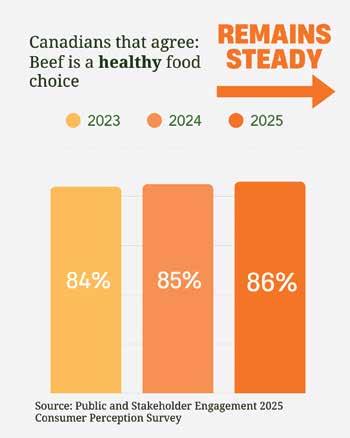
ANGUS Breeding for Cow Families


J P D 8 Mile 8M
This stylish young herdsire is an excellent representation of what we strive for at JPD. Clean in his lines, adequate muscle shape, and sits in the top 10% of the breed for Calving Ease, Docility, Claw and Angle. Brothers to him available in the bull pen this season! Bulls for sale by private treaty, please contact us to arrange a visit.

Michaela’s cell: 705-720-0085
michaela.jpdangus@gmail.com
Lori’s cell: 705-720-0829 lorijchalmers@gmail.com
This year’s research also revealed younger demographics are after more of the benefits of beef on their plates. Amongst all consumers surveyed, beef ranked as the second most nutritious protein just behind chicken. Younger Canadians (18-29 years old), however, ranked beef as the most nutritious protein. In addition, respondents aged 18-44 indicated an increased desire to eat more beef, while older Canadians were content with the amount they eat. For years, industry outreach has focused on increasing trust in beef amongst the next generation of Canadians, and these results indicate progress in this key demographic.
Beef Farmers and Ranchers and Animal Welfare
There is a common outlook amongst producers that the public has some negative perceptions about beef production, but research has indicated for several years that the majority of Canadians feel positively about beef producers. This year, 70 per cent of Canadians reported positive perceptions of beef farmers and ranchers, continuing a majority trend. Of those that didn’t fall into the positive category, 25 per cent rated themselves as “neutral” and only a very small percentage (five per cent) expressed negative perceptions. Positive perceptions from Ontarian respondents increased by 15 per cent in the past year. Producers can rest assured they have widespread support amongst the Canadian public.
When it comes to how Canadians feel about beef cattle welfare, 79 per cent rate the beef industry as humanely treating their animals. Positive responses in this category have increased by five per cent in the past year, suggesting consumers are responding to positive
Located just north of Barrie off of Hwy 400 in Oro-Medonte.
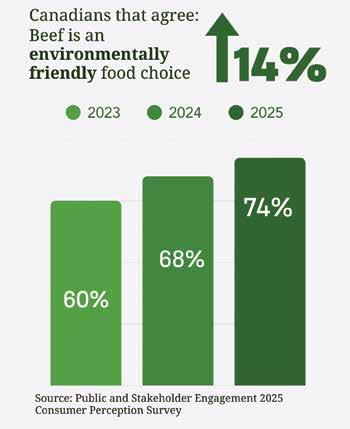
stories about the time and effort Canadian beef producers put into caring for their livestock.
Environmental Sustainability
One of the most impressive increases seen over the past two years lies in the number of Canadians who agree beef is an environmentally friendly food choice. From 2023 to 2025, this metric saw a 14 per cent jump, with 74 per cent now in agreement. Ontarians’ perceptions specifically saw a 13 per cent increase, with an even greater 16 per cent increase amongst females in the province. Despite what producers might see in the media, Canadians trust producers as caretakers of the environment and see beef as part of an eco-friendly diet. Further adding to positive views of beef’s role in environmental sustainability are 80 per cent of Canadians who rate the beef industry as good stewards of the land and water, and 79 per cent of Canadians who say the industry is making a sincere effort to limit its environmental impact.
What is especially encouraging about these environmental categories is who is driving the change. In general, across research questions, older Canadians tend to respond more positively. The increases in positive perceptions over the past few years, however, have been driven by younger Canadians and urban residents. These demographics have long been key target audiences for the Public and Stakeholder Engagement Program’s outreach. Seeing movement in these key target audiences suggests that public trust work is paying off.
Trust and Pride in Canadian Beef
Over the past year, there has been a surge in pride for all things Canadian, and with beef there is no exception. While beef supply has been tight and retail cost has been high, demand has remained strong and perceptions have grown remarkably high for Canadian beef and the people who raise it.
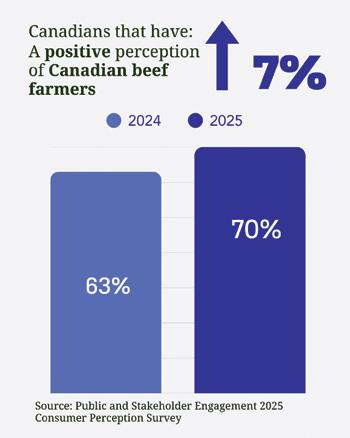
Producers can feel good about the support they have from the Canadian public. Canadians love the beef on their plates and the farmers and ranchers behind it. Keep up the good work! OB

CanadaCANADA BEEF UPDATE
Canada Beef Builds Momentum at Home and Abroad
By Gina Teel, Director, Stakeholder Communications, Canada Beef

Beef’s fiscal fourth quarter sees the team actively engage with industry at producer association annual general meetings across the country, ensuring beef farmers and ranchers have the opportunity to hear first-hand the latest updates from across our organization. Canada Beef was pleased to attend the Beef Farmers of Ontario Annual General Meeting in February and provide an activity update.
Canada Beef’s Investment Plan for fiscal 2026-2027 was approved by the Market Development and Promotion Committee in January. Later that month, Prime Minister Mark Carney visited Beijing to meet with the President of China Xi Jinping to discuss a wide range of economic and trade issues resulting is a number of new agreements in the agriculture area.
On January 19, Agriculture and Agri-Food Minister, Heath MacDonald, announced on social media that China had restored market access for Canadian beef, lifting the suspension that had been
BULLS & HEIFERS FOR SALE
An outstanding group of bulls, open heifers and bred heifers are on offer from the Limousin industry’s leading sires.
Don’t be disappointed – call today to arrange a private viewing or discuss the sale offering.


in place since 2021. In addition, the Minister announced a pet food safety and sanitation requirements protocol was signed to accelerate resumption of exports of Canadian pet food to China.
Now that market access for Canadian beef has been announced, Canada Beef looks forward to working with all its partners to develop and implement marketing initiatives to enhance and create value for our producers and ranchers.
Canada Beef deployed bold marketing approaches to strengthen demand, maintain consumer loyalty and reinforce the Canadian beef brand promise during the 2025-2026 fiscal year. This includes TV commercials to build awareness of Canadian beef quality grades featuring professional athletes, Canadian farm families who produce beef and the value chain that helps bring beef to the family dinner table.
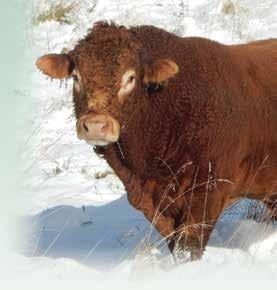
The ability to access the online grocery delivery service Instacart from the Canadian Beef Information Gateway (Gateway) platform ensures consumers can have all the necessary ingredients on hand to prep and cook beef recipes found on the Gateway. In addition to viewing beef recipes, ingredients and preparation methods on the Gateway, consumers can also order the ingredients online and have Instacart deliver them directly to their doorstep.
Market diversification remained a driving force as Canada Beef actively pursued opportunities for Canadian beef. Canada Beef President, Eric Bienvenue, travelled to Thailand in December. At the Canadian Embassy in Bangkok, he met with Christophe Rouleau, ViceConsul and Second Secretary (Commercial), Embassy of Canada to the Kingdom of Thailand, to discuss market opportunities, access and competitiveness, along with future marketing initiatives and broader strategic priorities. Ping Kitnikone, Ambassador of Canada to Thailand, Laos and Cambodia, conveyed her recognition
of the importance of a strong Canadian beef industry as well as its commitments to the region and market diversification.
Canada Beef participated in Gulfood 2026 in Dubai, United Arab Emirates in January, and hosted a demand-building event on the sidelines of the trade show. The team will pursue opportunities for Canadian beef in the upcoming Supermarket Trade Show in Tokyo, Japan, later in February, and Food and Hospitality Vietnam in Ho Chi Minh City, Vietnam, in March.
Canada Beef’s Export Market Development (EMD) program successfully completed 16 projects between October and December 2025. These included six incoming buyer missions, participation in five trade shows, and five marketing and promotional campaigns.
The program supported activities in five export markets, benefiting six Canadian beef packers through financial support provided either directly to exporters or their importer/distributor clients.
The Canadian Beef Centre of Excellence (CBCE) regularly collaborates with the Canadian Culinary Federation (CF) and the Canadian Professional Meat Cutters Association (CPMCA) to support industry training and foster the professional development of students and trade professionals.
The partnerships aim to advance industry standards, develop professional competencies and ensure new and experienced professionals have access to effective, credible training tools.
CF and CPMCA websites now host and distribute Canada Beef training tools, encouraging members to take advantage of these highquality programs.
Canada’s beef producers work hard to feed the world, and women are leading the way. The Meet the Farmer campaign is a nod to the United Nations declaring 2026 the International Year of the Woman Farmer (IYWF) while also acknowledging the shifts in women owner-
operators in Canada as tracked by the Census of Agriculture.
Launched in the January 2026 edition of Canada Beef Performs, the Meet the Farmer: IYWF 2026 campaign spotlights women owner/operators across the Canadian beef industry. The initial Meet the Farmer: IYWF post featured Cherie
Copithorne-Barnes – a true trailblazer who credits being mentored by notable women in Canadian agriculture with spurring the industry involvement and leadership she is recognized for today.
After more than 30 years of ranch management, Copithorne-Barnes has earned her position through hard work, leading by example and gaining perspective from managing ranches in Canada and Uruguay. Follow along on producer Facebook [CanadaBeefInc] and X [@ CanadaBeefInc] as we share the leadership, sustainability efforts and impact of Canadian women across the beef supply chain.
The Burger It Forward 2026 campaign launched February 1 with more than 340 participating restaurants – surpassing its engagement goal – and a first ever expansion into Quebec.
Now in its fourth year, the annual Burger It Forward campaign supports local restaurants and Canadian ground beef producers while raising funds for food banks at every level. Canada Beef streamlines participation by offering the program free of charge. Canada Beef and provincial cattle associations handle food bank donations on behalf of participating restaurants, eliminating financial and administrative barriers. In 2025, the campaign raised more than $61,399 for food banks and sold over 62,431 burgers at the 260-plus participating restaurants nationwide.
Burger it Forward 2026 runs February 1-28. Why not do your part to fight food insecurity and grab a burger today? Visit burgeritforward.ca to find participating restaurants near you. OB
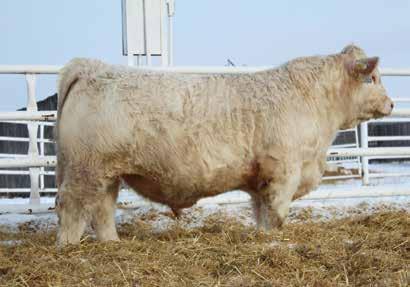

FARM & FOOD CARE ONTARIO Strengthening the Link Between Farmers and Consumers Farm &
Food Care Ontario year in review
By Jessica McCann, Farm & Food Care Ontario Communications Coordinator
In2025, through its Platinum Partnership with Farm & Food Care Ontario (FFCO), BFO helped reach millions of Ontarians by connecting them with beef farmers through events, outreach campaigns, and online engagement and digital storytelling.
Throughout the year, FFCO and BFO partnered on numerous initiatives that brought together farming and non-farming communities, answered consumer questions about cattle farming in Ontario, and created meaningful opportunities for the public to connect directly with farmers and food producers. BFO Director Joost van der Heiden further strengthens this valued partnership through his service on the FFCO Board of Directors.
Faces Behind Food
Starting in March 2025, the Faces Behind Food project took to the GO Transit system in the Greater Toronto Area with a poster that prominently features a Canadian beef farmer, alongside other farmers and food producers. The campaign connected with an estimated 5.8 million people amplifying the real people and stories behind the food they eat.
Building on this success, the Faces Behind Food project expanded to the TTC, launching posters inside subway cars and in high-traffic TTC stations, this phase of the campaign is estimated to generate 9 million impressions.
BFO and FFCO further collaborated to highlight Ontario beef farming through Faces Behind Food, with a week-long feature showcasing Brad Gilchrist, beef farmer and owner of Gilchrist Farms. Additionally, in November, FFCO attended the Royal Agricultural Winter Fair, where several beef farmers were interviewed as part of the Faces Behind Food initiative, their stories will be shared over the coming months.
Breakfast on the Farm
Shared outreach and collaboration continued with three successful Breakfast on the Farm events in 2025. Starting on June 14 at Hoenhorst Farms in Innerkip, this event welcomed 2,200 visitors from across Ontario, including many from Toronto. Guests had the opportunity to interact with a livestock display of cattle provided by Sarah Pletsch and her family, alongside local beef farmers and Beef Farmers of Ontario staff who engaged visitors in conversations about raising cattle in Ontario.

Ontario’s beef farmers were also showcased in August, at Breakfast on the Farm hosted across two locations in Norfolk County. The Krakar family’s beef cattle were on site at the Norfolk County Fairgrounds. Beef farmer volunteers throughout the event were eager to share their passion with attendees.
Later in the year, FFCO partnered with Kitchener-Waterloo Oktoberfest to bring the farm to the city through FARMtoberfest — an opportunity to connect with a large urban audience in a highprofile, downtown setting. The event featured a highly popular beef display showcasing JC Cattle Co.’s Speckle Park cattle and drew thousands of curious attendees eager to learn more about beef farming. Together, these three events offered thousands of Ontarians the chance to experience live cattle displays firsthand and engage in meaningful conversations about how beef is raised in Ontario.
Farm Tours
2025 was a strong year for partnering on outreach tours that highlighted Ontario’s beef farms and the families behind them. FFCO worked with producers to feature beef operations on two student tours, giving participants a genuine, hands-on look at life on the farm. The first tour brought students from Georgian College’s Food and Nutrition Management Program to JPD Angus in Oro-Medonte, where they explored the family farm and spoke with motherdaughter beef farmers Lori and Michaela.
To assess the impact of these tours, FFCO surveys culinary students before and after each tour. The results revealed a significant shift in perceptions of Ontario agriculture, with positive impressions increasing from 59% before the tour to 95% after the tour.
Another farm tour took Lambton College students on the opposite end of the province to visit Anderson Farms & Full Circle Stock Farms in Mooretown. During this visit, Kendyl Anderson and her dad, Chad, spoke about their family’s commitment to sustainability and their upcycling feeding program which including bakery waste and brewer’s grain.
FFCO asked students about their confidence in answering questions regarding how the food they use is produced before and after the tour.
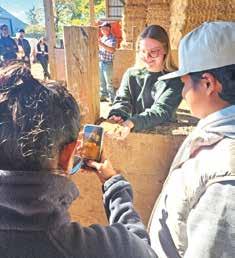
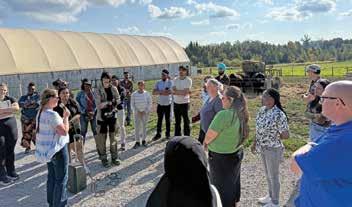
The student’s confidence rose from 43% to 88%, indicating that they were very confident in answering those questions, demonstrating a significant impact from seeing food production and farming firsthand.
A third farm tour in 2025 brought Agriculture and Agri-Food Canada (AAFC) staff to Fosters Custom Farming, where participants experienced a drive-through tour of a modern beef feedlot. Members of the Foster family, along with their herd manager, joined the group on the bus to share insights and answer questions. Following the tour, FFCO surveyed attendees—100% of whom agreed the experience was valuable and relevant to their professional roles.
Events and Outreach
FFCO participated in several key events in 2025, further extending the reach of its programs. In August, FFCO, alongside members including BFO, spent 15 days at the Canadian National Exhibition (CNE), showcasing FarmFood360 videos. This interactive exhibit enabled visitors to experience a real Ontario beef farm through virtual reality, attracting a large number of visitors. The same experience
was offered at the Royal Agricultural Winter Fair (RAWF), engaging additional attendees.
Training and Workshops
In addition to the many projects and events that took place in 2025, FFCO also hosted communications professionals to participate in an Ontario Agricultural Communicators’ Forum. The full-day professional development session brought together 25 communications specialists from 17 different organizations, including BFO, to build skills, share insights, and foster collaboration.
FFCO also had the opportunity to facilitate two livestock emergency response workshops for Toronto Animal Welfare Services, attended by more than 50 of their staff members. These workshops focused on livestock trailer designs, safe animal extrication, and regulations on animal transportation.
Opportunities for Engagement
FFCO remains committed to fostering opportunities for members to connect. FFCO is already hard at work organizing events that will take place in early 2026. In January, FFCO, alongside industry partners, will proudly present the Farm & Food Care Ontario 2026 Men’s and Women’s Curling Championships, hosted by the Elmira & District Curling Club and Curling Ontario. With 10,000 fans expected and broad support from agri-food commodity groups and agribusinesses, this high-profile event presents a unique opportunity to connect Ontarians with their food and the farmers who grow it. This outreach campaign and partnership will also serve as a key fundraising initiative in support of the next edition of The Real Dirt on Farming OB
WORKSHOP ALERT!
Darling Insurance is a full service brokerage with a dedicated Agribusiness Team capable of servicing your insurance needs regardless of size or location.
Drop by and say hello at the East Central Farm Show in the West Wawanosh Mutual Insurance booth. UNDERSTANDING FARM INSURANCE - WORKSHOPS
We are hosting 2 workshops in late March. Nestleton ~ March 24 Codrington ~ March 31
We like talking Insurance to farmers. If you would like a specific presentation to your group, give us a call to discuss details. To register for one of the workshops or to request a presentation to your group, please contact Dave Cavanagh.
CCA UPDATE
Andrea Brocklebank Announced as New CEO
By Tyler Fulton, CCA President www.cattle.ca

Andrea Brocklebank will become the Canadian Cattle Association’s Chief Executive Officer in early March. Andrea has served as Executive Director for Beef Cattle Research Council (BCRC), a division of the CCA, since 2009.
Almost a year ago, CCA Executive Vice President Dennis Laycraft informed the board of his decision to retire. We took time to discuss if and how we wanted the role to evolve to ensure our organization is prepared for future challenges. We determined that the description of CEO more accurately reflects the role of our senior staff member.
An executive recruitment firm conducted an extensive recruitment process and CCA’s directors enthusiastically accepted their recommendation. We are excited to welcome Andrea to the role. She has a proven track record of strategic decisions and collaboration, critical skills that will ease the senior leadership transition and help ensure CCA is well positioned for the future.
At BCRC, Andrea managed the delivery of research through the BCRC and Beef Science Cluster to fund research in areas of importance to the industry. She oversaw the administration of funding received through the Canadian Beef Cattle Check-Off, Agriculture and AgriFood Canada, and other sources to deliver research programming,
Will Stoneman 587.873.7257
Brian Whitwell 905.768.5148 k.whitwell@hotmail.com
First Line First Line ANGUS ANGUS
knowledge mobilization activities, and the Verified Beef Production Plus program. She was also responsible for leading the development and implementation of the Canadian Beef Research and Knowledge Mobilization Strategy and advancing collaborative funding partnerships aligned with the strategy.
We are confident that with Andrea leading us, CCA is well positioned to navigate continued global market uncertainty as we work towards renewing the Canada-United States-Mexico Agreement (CUSMA) and other priorities.
As we look ahead, trade and market access will be priorities for CCA this year, especially trade and market access with our largest trading partner and closest neighbour. Canada is an agri-food exporting nation, and a strong trade policy is essential for opening and maintaining market access.
CCA ended 2025 working with other industry stakeholders to provide input before the Canada-United States-Mexico Agreement (CUSMA) review deadline. We continue to support a tariff-free integrated North American beef and cattle trading market.
Volatility continues with US trade, and while CCA continues to focus much of our energy behind the scenes on US market access, there are also other areas of focus for our staff and elected officials such as tariffs and non-tariff trade barriers, trade and market access, regulatory burdens, and the need for regulatory alignment with the USA and other international trade partners.
Our provincial member associations are having conversations with the goal of reaching a new funding agreement with commitments from all provinces past June 30. After Alberta Beef Producers served CCA with notice of withdrawal, I committed not to negotiate through the media, and I will uphold that commitment, but I do think it’s important to share an update on the progress that has been made. The provincial members have created a working group and are moving forward in a direction that will ensure a strong national organization that will advocate on behalf of producers. I am optimistic about the discussions that have taken place and the progress we have made, and I look forward to sharing more when we have more concrete updates.
When it comes to producers, CCA supports reduced regulatory burdens for producers, and while progress has been made with a commitment to reducing interprovincial trade barriers and harmonization of Canada’s BSE enhanced feed ban with US requirements, there is always room for improvement.
Offering Registered Yearling Angus bulls; AgSight Performance Tested Select Registered & Commercial Replacement Heifers available Growth, Carcass Merit, Calving Ease and Maternal Performance are the foundations of our program. Visitors always welcome!
Raisin’ the for over 35 years!
CCA continually advocates with the Canadian Food Inspection Agency, both operations in the field and with Ottawa management. CFIA is important to market access, animal health, disease management, animal transport and of course food safety. CCA puts a lot of effort directly with CFIA on all these fronts. This type of work does not show publicly; we don’t work via the media. Rest assured we are direct in communicating needs, shortcomings and appreciation when it is warranted, but directly to decision makers and leaders, rarely publicly. Ongoing advocacy to CFIA on behalf of producers remains a priority this year.
CCA would also welcome improvements to business risk management programs for producers, and faster implementation and response times when those programs are needed.
Finally, we are concerned about funding cuts impacting research. CCA will be advocating for investments in long-term research and research capacity that support improvements in producers’ economic sustainability and productivity. Key areas of focus include animal health and welfare, antimicrobial resistance, forage and feed production and utilization, and environment and climate change. OB
Changes to Ontario Licensed Dealers List
No Longer Licenced
Abattoir
L’orignal Packing Ltd.
L’orignal
Country Dealer
Hank Dekoning Limited
Port Dover
The Ontario Beef Cattle Financial Protection Program is administered by Agricorp. The listing of licensed dealers is updated regularly and the complete listing can be found on the Agricorp website. OB
ONTARIO BEEF FARMERS: WE NEED YOU
Raising beef is vital to your family, your farm, your community, and Ontario as a whole. The product you raise deserves to reach appreciative family tables close to home, ensuring you receive the best value for your hard work. At VG Meats, we’ve partnered with small beef farmers across Ontario who share our commitment to quality, sustainability, and continuous improvement. Now, we’d like to work with you.
We’re looking to purchase your finished cattle and provide you with valuable data on each animal’s tenderness, yield, quality, and weight. This information not only helps you secure a premium for your beef but also supports better management and genetic decisions for generations to come. By working together, we can help regenerate the lives, profits, and land of Ontario’s beef farming families.
Over the years, we’ve also expanded our connections across Ontario’s retail landscape, creating more opportunities for locally raised beef to reach appreciative consumers. You can learn more about this exciting initiative and how it benefits Ontario farmers at harvesttogather.ca
If your family finishes cattle and you’re ready to explore this opportunity, reach out to me, Cory Van Groningen, at cory@vgmeats.ca, and I’ll share the details of our program. Let’s schedule a time to discuss how VG Meats can help bring your beef to market while supporting your farm’s growth. We look forward to hearing from you soon.





Purchasing
FOCUS ON HERD HEALTH
By Daniel Pecoskie, DVM, Metzger Veterinary Services
Putting Your Bull to the Test: Getting the Most from Your Breeding Bull
a bull and replacement breeding stock can be a big expense, so it is important to maintain the health of your bulls and ensure they remain in good condition for breeding season. Bulls contribute half of the genetic material to your calves, and while you may have done the research to buy a bull with good genetic characteristics, it is important to manage him properly during the year to ensure he is fit to breed.
Your veterinarian can help to assess if your bull is fit for breeding by performing a bull breeding soundness exam on farm before you turn him out with your cows or heifers. This annual check can help assess sperm quality and identify potential problems in your breeding bull, giving you time to make management changes or find a replacement option if needed.
Do You Have More Open Cows than Expected?
Increased rates of open (non-pregnant) cows in your herd can be affected by several variables. Decreased pregnancy rates may be due to:
• Heat stress
• Extremes in body condition of the cattle or bull
• Too many cows for one bull to breed
• Injury or infertility of the bull
• Sexually transmitted disease, infection or abortion
- Viruses – BVD and IBR
- Bacterial – Leptospirosis, Vibriosis and others
- Protozoan – Trichomoniasis
When working through issues with pregnancy rate, your veterinarian has several tools available to investigate potential causes, including examination of the bull. Because one bull may service many cows, even subtle fertility issues can have a significant impact on herd pregnancy rates.
Bull Breeding Soundness Exam
A bull breeding soundness exam is a standardized test performed by a veterinarian that includes the following steps:
• Physical examination of the bull
• Measurement of scrotal circumference
• Collection of a semen sample to assess sperm motility and morphology
The physical exam ensures that the bull is sound on all four feet. He
should have good vision, in addition to a functional sense of smell, to ensure he can identify cows in heat. The bull should have no physical limitations or illness that would prevent him from performing his duties.
The bull is rectally palpated to assess the accessory sex glands, such as the prostate and seminal vesicles. Body condition is also evaluated, where an ideal score is 3-3.5 out of 5. Issues arise when a bull is under- or over-conditioned. Thin bulls may lack the stamina required for breeding, while overweight bulls may struggle with mounting and experience reduced fertility due to impaired temperature regulation of the testicles and reduced sperm production.
The scrotum is palpated to assess testicular size, symmetry between testicles, and to rule out signs of infections in the epididymis or testicular atrophy (shrinking of the testicles with age). Scrotal circumference is measured using a tape placed around the widest portion of the scrotum. Scrotal circumference is directly related to fertility, and there is a minimal circumference required to pass the exam, which varies slightly based on the age and breed of the bull.
A semen sample is then collected from the bull. On farm, this is commonly achieved using an electro-ejaculator, though manual stimulation may also be used. During collection, the veterinarian evaluates whether the bull achieves an erection, protrudes his penis from the sheath, and successfully produces a sample. At this time, the penis is examined to ensure there is no scarring or fibrosis, warts, hematoma, penile fracture, or hair rings wrapped around the penis.
Once collected, the semen sample is examined under a microscope to assess motility, or the quality of sperm movement. A second exam is performed using stained sperm cells to evaluate morphology, or sperm shape, to determine whether the sperm would be viable for breeding. To pass a breeding soundness exam, a bull must have a minimum of 30% progressively motile sperm and 70% normal sperm morphology.
Common Reasons for Bulls to Fail the Exam
Your bull may fail a breeding soundness exam for several reasons, including:
• Failure to produce a semen sample:
- Poor response to electro-ejaculator
- Cold weather
- Stress or agitation
• Poor sperm motility or morphology
• Penile injury, warts, fibrosis, or scarring
• Lameness or injury
• Extremes in body condition
• Small scrotal circumference
Depending on the reason for failure, your veterinarian may recommend a recheck exam in approximately 60 days, which corresponds to the time required for a bull to produce an entirely new population of sperm cells. This is particularly common and often successful in young or yearling bulls.
Managing Your Bull During the Breeding Season
• A recommended bull-to-cow ratio on pasture is 1:20 to 1:30, to ensure that one bull can adequately service all those cows.
• Bulls should be checked regularly to ensure they are actively mounting cows and are not becoming lame or injured.
• One method of maintaining a tight calving window is to run the bull with the cow herd for 63 days (approximately three estrus cycles) before removing him.
• On shared pastures, consider other herds that your bull may come in contact with and the risk of disease transmission through mingling or breeding activity.
Managing Your Bull Outside of the Breeding Season
• House bulls separately from the cow herd with adequate shelter, bedding, and windbreaks.
- Provide dry flooring to reduce the risk for foot rot or other lameness.
- Protect bulls from extreme weather to reduce the risk of frostbite, including frostbite of the scrotum.
- Allow 4-8 months of post-breeding recovery.
• Vaccinate bulls alongside the cow herd.
- Prioritize prevention against BVD and IBR viruses, as well as bacterial diseases such as leptospirosis and vibriosis.
- Vaccinate bulls at least 4 weeks before turnout with cows.
• Provide proper nutrition year-round.
- Feed bulls to maintain an ideal body condition score heading into the next breeding season.
• When buying new bulls:
- Purchase from reputable sellers who are transparent about treatments, vaccine history, and disease testing.
- Quarantine new bulls on farm for 2 weeks, housed separately from the resident herd, to monitor for disease symptoms.
• Perform a bull breeding soundness exam 2-3 months before turnout with cows or heifers.
Final Considerations
Proper management of your bull can help optimize pregnancy rates, protect genetic investment, and support overall herd profitability. Annual examination of your bull by a veterinarian is a practical risk-management tool that helps ensure your bull is fit to perform his duties during the upcoming breeding season. OB



PRICES
MARKET INFORMATION UPDATE
By Jamie Kerr, Market Analyst for Canfax and BFO markets@ontariobeef.com • www.ontariobeef.com
Markets exploded higher in 2025! Cow-calf producers were the largest beneficiary of record-high prices as the beef industry screamed for expansion to begin. At the same time, other factors pushed back, including drought in the eastern half of the country and interest rates notably higher than the previous expansion period. Markets were also impacted by a steady stream of news headlines, both positive and negative in 2025. This introduced additional volatility to markets.
FED CATTLE
Ontario direct to slaughter steer and heifer prices established a new all-time high for the fifth consecutive year in 2025. Steer prices climbed over $300/cwt for the first time on record averaging $300.27/ cwt, with heifers less than $3/cwt back at $297.24/cwt. Average steer prices were up $58/cwt (+24%) from 2024. Heifers largely kept pace, climbing $55/cwt (+23%).
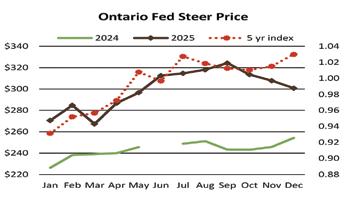
Prices eased lower in the fourth quarter, moving counter seasonal to the five-year index. There was speculation the U.S. was considering re-opening the border to Mexican cattle sometime in the first quarter of 2026. This pushed both the live cattle futures and cash fed cattle prices lower. However, the discovery of New World screwworm parasite at the end of December within the 400-mile buffer zone from the Southern US border, ended those discussions for the time being.
As of time of writing, there is no revised timeline for the re-opening to begin, as more cases are found within the buffer zone.
Since putting in its low the second half of November, the February live cattle contract has rallied $28/cwt, clawing back 66% of midOctober to second half of November losses, and is within $14/cwt of its October peak.
Stronger feeder prices continue to push projected breakeven prices higher. Breakevens for steers placed in 2025, averaged $311/ cwt, with the highest breakevens occurring during the second half of the year.
Projected breakevens for the spring of 2026 are estimated to be over $344/cwt. Requiring a higher peak to cover those elevated breakevens.
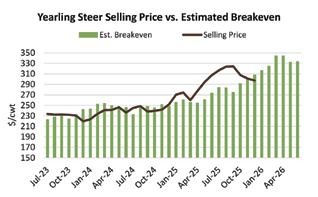
Estimated actual cash margins for yearling steers marketed in 2025 turned negative in December (for steers placed in June) for the first time since May 2024. For steers marketed in 2025, margins averaged $21/cwt in the black. Assuming a 1,600 lb animal, that puts cash margins at +$336/head.
In 2025, the Ontario-to-Nebraska cash basis was 16, -3 from 2024 and -2 from the three-year average.
By the fourth quarter, the Ontario cash basis was at its strongest point of the year; stronger than last year and the three-year average. A stronger cash basis in the fourth quarter compared to last year may limit fed exports.
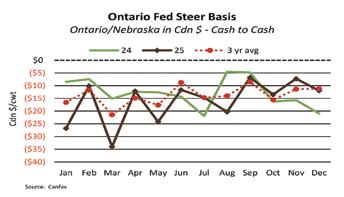

































The only way to describe the feeder market in 2025 was on fire! In 2025, steer prices climbed $118/cwt on average from 2024, with heifers increasing $121/cwt. Ontario 500-599 lb steer calves averaged $551/cwt, up $139/cwt from 2024. Their heifer herd mates averaged $490/cwt, notching a $135/cwt increase from the year prior.
Following the meltdown on the live and feeder cattle futures through most of November, steer calf prices put in a small rebound in December, while heifer calf prices moved sideways.
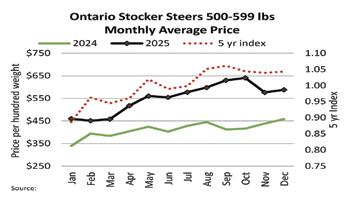
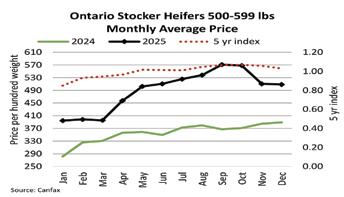
Ontario 600-699 lb feeder steers averaged $511/cwt, with their heifer counterparts around $542/cwt. Prices are $121-127/cwt stronger than last year. A similar market tone was noted on these light feeder cattle, with steer prices slightly stronger and heifer prices steady with the previous month.
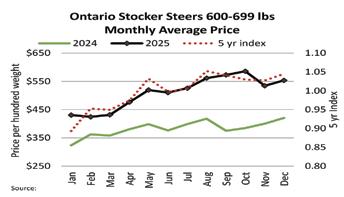

Heavy feeder cattle, from 900-1,000 lbs were up $96/cwt for steers and up $76/cwt for heifers than last year with steer over 1,000 climbing $87/cwt.
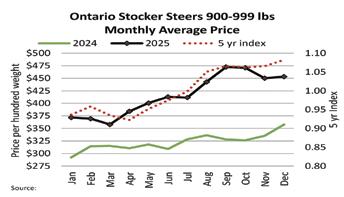

A steady to softer tone was noted on heavier-weight cattle, despite the rally in the live cattle futures. Feedlots may have been working to readjust breakeven levels.
Ontario auction volumes totaled 435,000 head in 2025, down a modest 1% from 2024. Auction volumes were down in both November (-1%) and December (-13%). In comparison, western Canadian auction volumes (including electronic/forward delivery) were down 7% from 2024.
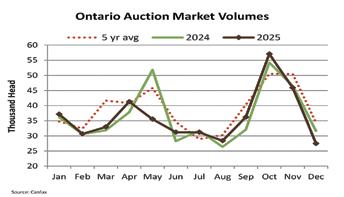
CULL COWS
Ontario D2 cows averaged $193/cwt in 2025, up $38/cwt from 2024; D3 cows averaged $161/cwt, up $31/cwt from the previous year. Cull cows followed seasonal trends, with a summer peak followed by softening into the fall run.
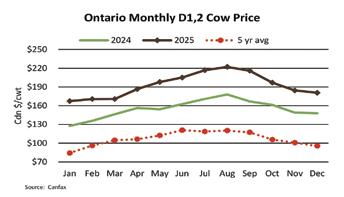
Ontario D2 cows averaged a $31/cwt discount to Alberta D2 cows in the fourth quarter, widening from a $3/cwt discount in the third quarter. And the widest spread for any quarter going back to 2007. The removal of the 40% tariff on Brazil in November, appeared to have little market impact.
Cull cow auction volumes totaled just over 98,000 head in 2025, down a slight 1% from 2024. Beef cow volumes were down 7%; while dairy cows were steady with the previous year. In the fourth quarter, total cull cow auction volumes were up 5% from the fourth quarter of 2024. Beef cow volumes were down 7% from the same period in 2024, while dairy cow volumes were up 8%.
BEEF PRODUCTION
Ontario processing (FI only) was up 7% in 2025, though the impact of the Cargill Guelph plant shutdown skewed annual comparisons. Total processing was down 8% from 2023, driven by a 19% reduction in non-fed processing with fed processing down a more moderate 5%.
In the fourth quarter, processing was up 4% from last year. The increase was driven by non-fed processing, up 12% with fed processing up 2%.
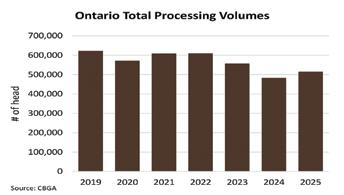
Carcass weights have generally been trending heavier since 2019. In 2025, Ontario steer carcass weights averaged 979 lb, down 7 lb from 2024. Similar to processing, carcass weight comparisons were skewed in 2024. Steer carcass weights were 18 lb heavier than 2023.
Insert 15 – Carcass Weights
In the fourth quarter, steer carcass weights averaged 993 lb, 9 lb heavier than the same period in 2024. Leverage shifts between feedlots and packers continued to play out in the fourth quarter. Eastern Canadian domestic beef production in 2025 was 533 million pounds, down 5% from 2023. Fed production was down
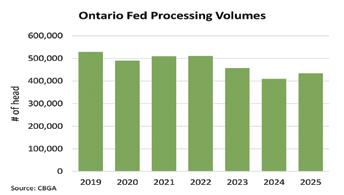

3% with non-fed production down 18% as the impacts of smaller processing were felt on the wholesale volumes.
However, domestic beef production in eastern Canada increased 5% from 2024. Fed production was up 4% with non-fed production up 10%.
BEEF PRODUCTION
Source: CBGA
QUALITY GRADING
Quality grading has been on a steady upward trend since 2019, putting in small gains almost every year. On average, quality grading has improved around two percentage points per year, as feedlots responded to market signals.
In 2025, Canadian AAA and Prime carcasses accounted for 79% of all A grade carcasses, up from 78.25% in 2024.
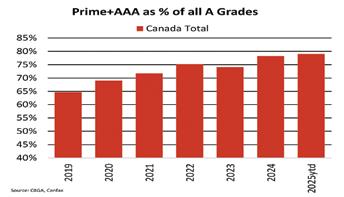
In the east, quality grading has largely been steady on either side of 74% since 2021 (with the exception of 2023, when it jumped to over 76%). In the west, quality grading increased every year, except for 2023.
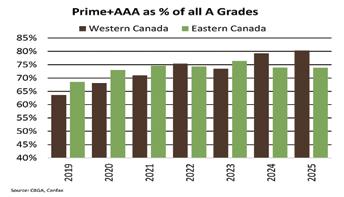
U.S. BOXED BEEF
US Choice cutouts averaged US$359/cwt (C$502/cwt) in 2025, up C$80/cwt (+19%) from 2024. Solid support was noted throughout the carcass, with middle meats 15-16% stronger than a year ago and end meats 15-19% stronger.
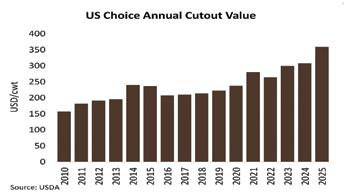
There was a notable transition in the fourth quarter of 2025. USDA Prime grading accounted for just over 13% of youthful animals, with Select near 11.75%. In the fourth quarter of 2024, Prime grading was near 10.75% with Select above 14%. This shift in quality grading has kept the Choice-to-Select spread historically narrow through the final quarter of 2025 and into the first quarter of 2026. In 2025, the Choiceto-Select spread was US$15/cwt compared to the five-year average of $24/cwt.
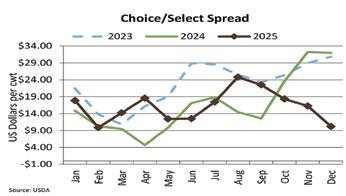

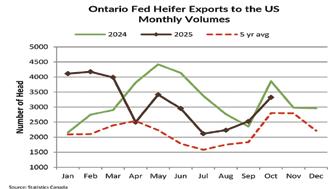
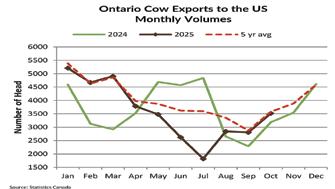
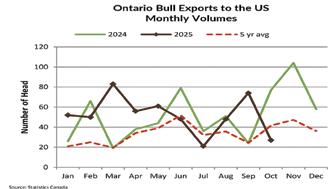
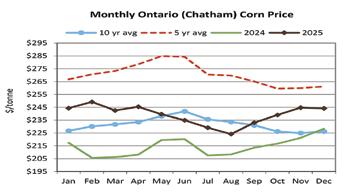
BEEF EXPORTS – CANADA (AAFC) Jan 1- Oct 31/2025
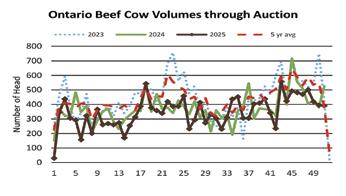
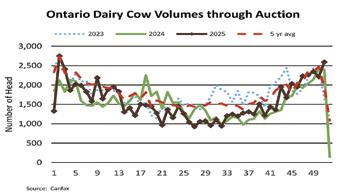
BEEF IMPORTS – CANADA (AAFC)
Disclaimer: Canfax does their best to provide quality information, but make no claims, promises, or guarantees about the accuracy, completeness, or adequacy of the information. Canfax Research Services does not guarantee, and accepts no legal liability arising from or connected to, the accuracy, reliability, or completeness of any material contained in our publications.
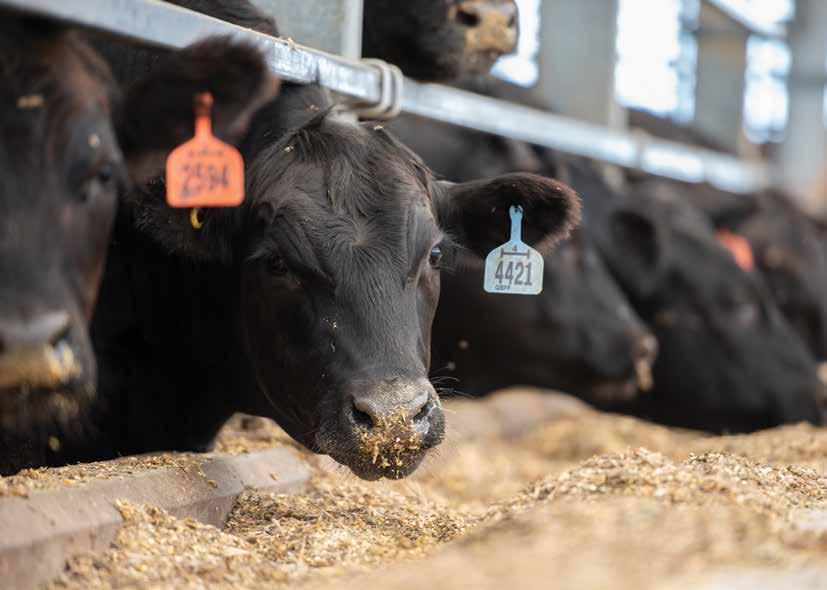
CALENDAR Ontario Beef Industry Events
March 5 – StrongHER in Beef, Elora, Ontario. Visit www.ontariobeef.com to learn more
April – BUILD Leadership Program, Virtual, Guelph and Toronto.Visit www.ontariobeef. com to learn more
March 7 – Harprey Angus Farms Bull and Female Sale, Proton Station
March 7 – Fully Loaded Limousin Bull Sale (online: dlms)
March 7 – Ontario Simmental Association Annual Meeting, Kanata
March 7 – Ontario Angus Association Annual Meeting, Kanata
March 14 – Indian River Cattle Company’s Source for Quality Bull and Female Sale, Indian River
March 14 – Blackbern and Whitewater 15th Annual Charolais Bull Sale, Cobden
March 22 – Darling Farms Limousin Bull and Female Sale, Colborne
March 24 – Darling Insurance Workshop, Peterborough
March 27 – Clarke Family Farms Inc Angus and Simmental Bull and Female Sale, Volume V, Blenheim
March 28 – Posthaven Limousin Open House, Alma
March 28 – Cornerview Charolais 11th Annual Bull Sale, Cobden
March 28 – DanG and Friends Charolais Bull and Charolais-influenced Female Sale, Cobden
March 31 – Darling Insurance Workshop, Peterborough
April 4 – Saunder Charolais 21st Annual Bull Sale, Keady
April 4 – Smart Limousin Open House and Private Treaty Sale, Meaford
April 4 – O’Shea Farms Hereford Tag Sale, Denfield
April 6 – BeeZee Acres Limousin Private Treaty Sale, Glencoe
PRIVATE
TREATY SALES
Boomer Creek Simmentals, Wallenstein
Cedardale Charolais, Nestleton
Double B Charolais, Medonte
Earley Livestock, Kerwood
EMB Charolais, Oro-Medonte
First Line Angus, Hagersville
Glen Islay Angus, Nottawa
JPD Angus, Oro-Medonte
Miller Land and Livestock, Jarvis
Silver Springs Farms, Ravenna
Sunrise Charolais, Stayner
Vancise Cattle Company, Stayner
Waydamar Simmentals, Dundalk
Daryl and Connie Clarke and Family 342 Chatham Street South, Blenheim, Ontario N0P 1A0
Herdsman and Marketing Manager Hugh M. Ross: 519-365-4026 hugh.clarkeffi@gmail.com



Weekly Beef News You Can Use
Timely information is essential for making informed decisions on the farm.
That’s why Beef Farmers of Ontario (BFO) delivers the Bull-etin Board e-newsletter straight to subscribers’ inboxes each week.
Issued weekly, the Bull-etin Board keeps producers up to date on the latest headlines affecting Ontario’s beef sector. From important news releases and industry developments to upcoming events and key meetings, the e-newsletter provides a convenient snapshot of what matters most to beef farmers.
In addition to sector news, each edition includes weekly market information, helping producers stay informed about pricing trends and market conditions. Having this information readily available allows farmers to better plan, evaluate opportunities, and respond to changes in the marketplace.
The Bull-etin Board is designed to be concise, timely, and relevantdelivering need-to-know information without adding to your workload. Whether it’s updates on advocacy efforts, program announcements, or industry initiatives, the e-newsletter ensures you remain connected to the broader beef community across the province.
If you’re not already receiving the Bull-etin Board, signing up is easy. Simply visit the homepage of BFO’s website and subscribe to have it delivered directly to your inbox each week, or contact the BFO office to request being added to the list. OB
SILVERTIP






BEEF FARMERS OF ONTARIO PRIVACY STATEMENT
The Beef Farmers of Ontario (BFO) is committed to protecting the privacy and security of producers’ personal information in compliance with the Personal Information Protection and Electronic Documents Act (PIPEDA).
Subscribers to Ontario Beef magazine, the official publication of the Beef Farmers of Ontario, do so on a voluntary basis. By subscribing, subscribers are consenting to have their contact information used for the purposes of receiving the magazine and developing an BFO mailing list. This mailing list will be used for the distribution of the BFO magazine.
The BFO will not sell, trade or otherwise share its Ontario Beef mailing list under any circumstances. A service may be provided whereby items are submitted to the BFO and mailed internally with the magazine but all materials must be approved by and acceptable to the BFO. In rare instances where external, non-commercial organizations, like the provincial or federal government, wish to use the Ontario Beef mailing list to distribute information, the government must provide their mailing materials in a finished format to BFO and/or its mailing house. BFO will then coordinate the mailing, at the requesting organization’s cost, thus maintaining confidentiality of the list. In cases where the BFO may commission a mailing, the company providing the service is required to sign a mandatory confidentiality agreement.
Subscribers to the Ontario Beef mailing list who wish to have their names removed, should call 519-824-0334 or email info@ontariobeef.com. Please allow 15 business days to allow us to update our records accordingly.
BFO’s complete privacy statement, covering areas of information including the electronic update system, Website, membership list and market information can be viewed on its Website at http://www.ontariobeef.com/privacy.asp


WELLNESS ON THE FARM
By Lesley Kelly Farmer and Co-Founder of The Do More Agriculture Foundation
How to Cope When Off-Farm Stressors Add Pressure
From a Farm Credit Canada AgriSuccess article by Myrna Stark Leader
Farmers
know the rollercoaster of uncertainty – but lately, the ride’s gotten wilder.
Life has moved from global pandemic recovery – no small feat – to changes in long-term, relatively stable trading relationships. As markets swing, costs climb and AI ramps up, it’s no wonder stress levels are rising.
Of course, some stress can be positive. It stirs action and fosters innovation. But too much can leave you feeling stuck and take a health toll – physically, through high blood pressure, heart disease or stroke, and mentally, through anxiety, worry or a sense of hopelessness.
Stress doesn’t discriminate by age or job. How and when it appears is unique to each person.
Recognize the Signs
Just like you check the daily forecast, monitoring and understanding your stress and tolerance levels is important. Signs are typically physical, behavioural, emotional or intellectual. Someone might experience stress in their body – tension, headaches, stomach issues – while another’s mind races with recurring thoughts. Still, someone else may feel increased unease or experience greater mood shifts. Often, stress accumulates due to the combined effects of various factors, such as work, family, finances or world events.
Be Your Own Barometer
“Be really honest with yourself about your well-being and notice changes,” says Ontario-based psychotherapist Bonnie Taylor, MSW, RSW.
What’s your internal dashboard reading? Green and good? Yellow –caution, or red – danger?
“Think about your body daily so you can recognize an average stress day, the green zone, not stress-free, but a day when you manage most things. In the yellow zone, stress consumes more of your thoughts and your body reacts more intensely. You still do what you need to, but maybe you’re more tired, irritable or reaching for coffees to keep ramped up,” Taylor says.
“In the red zone, your ability to handle stress or solve problems is limited. The body is using reserves just to manage. It might feel like everything is overwhelming and you can’t perform.”
Recognizing when your stress is growing, in your yellow zone, is the best time to act. Since you can’t control things outside your control, like geopolitical situations, it’s important to focus on what you can do.
Use Positive Strategies to Help Cope
Since there’s no one-size-fits-all for stress reduction, Taylor offers several stress management tools.
“Get your to-do list out of your head and onto paper. That alone is sometimes enough to ease stress because it’s a way to look at what’s consuming your thoughts, time and body’s reactions,” Taylor says.
Setting boundaries is another approach. “Consider saying no and look at how much you take on. Ask if others could take over, recognizing that you are absolutely capable, but there may be others capable as well, freeing you for other priorities or time to de-stress.”
You may find watching the news or social media informative, helpful with decision-making or a de-stressor. However, Taylor advises setting a timer to remind yourself to consider your physical and mental state. Do you feel better or worse after watching? Taking a break is OK.
Other strategies might be a daily ritual, such as enjoying morning coffee without distractions. Or naming things you’re grateful for, taking short daytime rests and deep breathing to gain calm.
“Practicing mindfulness is essential,” Taylor says. “It can be as easy as pausing to check your five senses. Name five things you hear, four things you see, three things you smell, two you can touch and one you taste right now.”
In stressful times, it’s easy to forget to do things that bring joy or boost endorphins, such as spending time in nature, biking, walking, dancing or quality time with family.
Remember, Support is Around You
“Farmers tend to be isolated in their workday, but we’re social creatures. It’s so important to connect with others, particularly off-farm. Call somebody to see how they’re doing. And don’t ignore someone who reaches out to you. Maybe it’s asking others how they’re dealing with these external things. Just raising the topic is an opportunity to start helpful conversations,” Taylor says.
Doctors, therapists, accountants, financial planners and others can also be supportive. Friends, mentors or leaders from community clubs, faith groups or volunteer organizations may also provide valuable support.
“Mental health and wellness are really enhanced by our community. It’s somewhat of a community responsibility to be there for each other, but only the individual knows what works for them,” Taylor says. OB
KNOW THE SIGNALS
BODY: Notice headaches, digestive trouble, sweating, tingling, muscle tension, aches, breathlessness or frequent illness.
BEHAVIOUR: Watch for changes in activity or sleep and be mindful of behaviour shifts like outbursts, complaining, isolation, crying, grinding teeth or taking dangerous risks.
EMOTION: Monitor for mood swings, nightmares, loss of interest, feeling overwhelmed, frustration, intolerance, fear of failure, low confidence, apathy or comparing yourself to others.
HEADSPACE: Pay attention to memory lapses, poor focus, racing thoughts, poor judgment, confusion, loss of objectivity or urges to escape.
(Adapted from University of Suffolk, Boston)

Canadian Angus Bulls –The Genetic Advantage
Because of their balanced profile of calving ease, growth and carcass quality, Canadian Angus cattle work well in both purebred and commercial operations. Use Angus bulls to make top performing feedlot steers and beautiful replacement females.
Visit the Ontario Angus Association website for more information: www.cdnangus.ca/ontario-angus-association
Contact any of the breeders below to arrange for your private viewing of cattle for sale.
Cairnlee Acres
Victor, Yvonne & Andrew Richardson 6193 Walkers Dr, Strathroy, ON Vic Cell: (519) 871-4240
Cambray Livestock Company
Luke, Matt, Joe and Carl Jewell 1153 The Glen Road, Woodville ON 705-934-2853
Fallis Land and Cattle
Mike, Lisa and Cole Fallis 1273 6th Line, Selwyn, ON K9J 6X5 705-740-4878 | sunsetacres@nexicom.net

Gilchrist Farms
Brad & Kristie Gilchrist 1269 Grey Ox Ave RR#5 Lucknow, ON N0G 2H0 519-440-6720 | brad@gilchristfarms.com
Glen Islay Angus
Don Currie
2234 Conc 11, Nottawa, ON L0M1P0 705-715-2234 | doncurrie@glenislay.com
Loval Farms
Scott & Sandra Honey 127 Honey Road, Warkworth, ON K0K 3K0 705-931-3810 | lovalfarms@gmail.com
Harprey Farms
Allan Hargrave/Don Hargrave 307483 Centre Line A Proton Station, ON N0C 1L0 Allan 519-375-5541 | Don 519-375-1500 harprey@gmail.com
Maple Line Farm
Ian & Tim Rudkin 3320 Bradburn Road, Blackstock, On L0B 1B0 Ian 905-718-5331 | Tim 905-213-6518 maplelinefarm@hotmail.ca
Meadow Bridge Angus JJ Deslippe 922580 Rd 92 RR # 4, St Mary’s, ON N4X 1C7 519-275-1739 | deslippe@quadro.net
Rob Roy Angus
Don & Betty McNalty 634514 Road 63 RR#2 Singhampton, ON N0C 1M0 705-446-4740 | robroyangus@gmail.com
SCOMAC Livestock
Scott & Elizabeth MacDonald 4169 Highway # 6
Hagersville, ON N0A 1H0 Scott 519-820-1272 | Elizabeth 226-971-0015 scomaclivestock@gmail.com
Silver Springs Farm
James, Joan, Robert and Emily McKinlay 609027 12th Sideroad RR#1 Ravenna, ON N0H 2E0 519-599-6236 | jmckinlay@bmts.com
Tullamore Farms
Bill & Sylvia Jackson 260 Regional RD 39 Zephyr, ON L0E 1T0 Cell 647-990-2697 tullamore.angus@gmail.com
Whiskey Lane Livestock
Scott, Paula, Jason & Shelby Cornish 2295 Hwy 7, Indian River, ON K0L 2B0 705-341-3220 | wll@nexicom.net
Windcroft Farms
Darcy & Courtney McMorris
573333 Boot Jack Ranch Road
Priceville, ON N0C 1K0
226-203-4506 | windcroftfarms@gmail.com
Worth-Mor Cattle
Kyle, Rachel, Jordyn and Mason Petherick 950 County Rd 8
Campbellford, ON K0L 1L0 705-768-3560 | worth-mor@hotmail.com