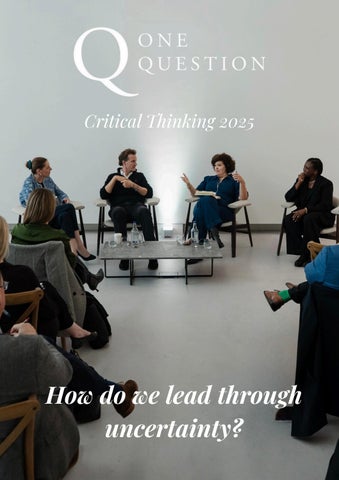
Critical Thinking 2025
How do we lead through uncertainty?
Fiona
Tej
Sadia
67 — Chapter Seven Trust, Coherence, and the Burden of Meaning
Sarada Peri, Communication Strategist and former Senior Speechwriter to President Barack Obama
76 — Chapter Eight Regulation, Ambiguity, and the Architecture of Constraint
Jessica Zucker, Director of Online Safety, Ofcom
80 — Chapter Nine Narrative, Power, and the Stories that Hold a Nation Together
Ros Wynne-Jones, Real Britain columnist, The Mirror
84 — Conclusion
The Shape of Leadership in Uncertainty
Marshall Manson, One Question Advisor
87 — Many Answers
Many Answers to our annual question
Written by Sarah Parsonage
92 Mapping Uncertainty: What UK Audiences Actually Care About Research Partner, Signify Joe Harrod, Co-founder, Signify
95 Leadership as Collaborative Advantage
An Answer from Headland
Carley Sparrow, Headland
Introduction: How do we Lead Through ?
Sarah Parsonage, Founder,
One Question
If there is one thing that has been reinforced over the last twelve months, it is that our search for certainty is a fruitless endeavour There is no such thing Certainty might be what we seek, but uncertainty is our constant and our reality, and that is why the answer to our 2025 question, "How do we lead through uncertainty?" is not to manage it, but to understand how we accept it and lead through it.
2025 has been shaped by a particular type of uncertainty, the acceleration of AI, the global consequences of Donald Trumps decisions on the United States and as they ricochet across the globe, the first year of a Labour government, continuing geopolitical devastation, the cultural shifts reshaping how we understand truth, power, and authority, and the growing sense that our faith in people is replacing our trust in facts.
This year has felt like a stripping, or perhaps a final fracturing, of what many assumed were the fundamental pillars of society, and a tension between the desire of some leaders to stay in the status quo or perhaps even return to an old model of power versus the need to step into a new type of leadership, and what that means for our businesses, communities, regulation, reputation, relationships, technology, and more
This is the liminal space, the space in between, and it has appeared throughout the year in our conversations about trust, behaviour, profit, technology, power, leadership, fatigue, innovation, relationships, and inequity. Each conversation asked a different question, yet kept arriving at the same answers
Many of us are operating within systems that are no longer fit for purpose—systems designed for stability, predictability, and control that now struggle to adapt at the pace the world demands. Meanwhile, we are working with values that are spoken but not yet felt, asking for trust without earning it, and finding that fear shapes decisions more than intent does. Leadership is being reduced to reaction rather than direction.
But in 2026, we do not lack information or innovation; we are overwhelmed by it. What we lack is coherence, a shared way of making sense of what we already know and the confidence to act on it. This is not a crisis to weather, but a permanent condition to design for.
The question, then, is not how to escape this liminal space, but how to lead within it. How do we build businesses, institutions, and communities for a future that looks fundamentally different from the past, whilst operating in systems designed for a world that no longer exists?
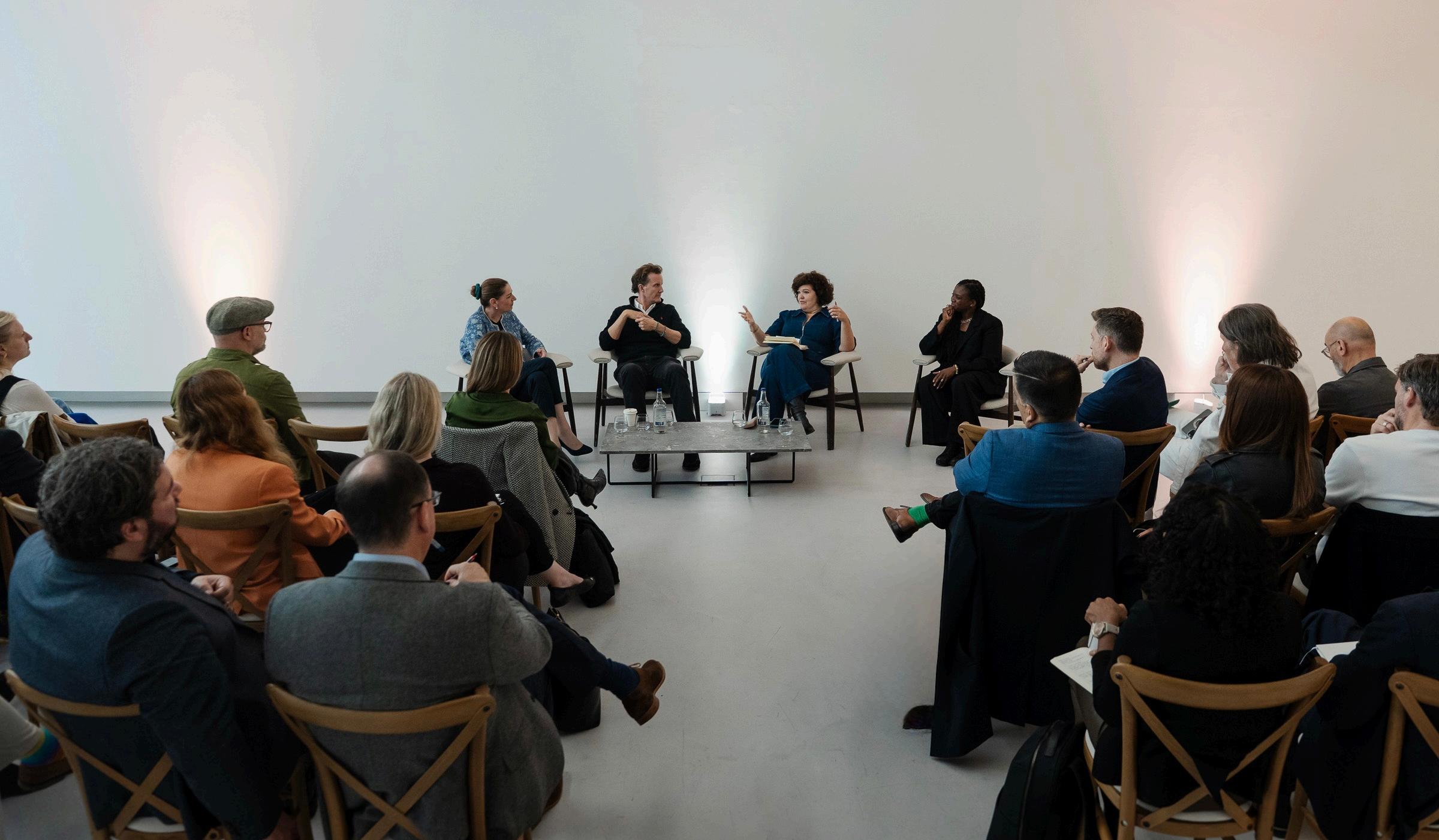
On the 7th of October, our annual conversation was not curated to answer uncertainty, but to understand how we build organisations, institutions, and communities that are resilient within it. As is synonymous with One Question, we brought together guests and members from across different markets, industries, experiences, and perspectives: those who build businesses, protect journalists, finance fragile economies, regulate public safety, shape culture, design technology, and work with communities in an increasingly zero-sum world.
What follows is our annual critical thinking, our reflection on this year's conversations, surfacing hypotheses, themes, and, of course, our Many Answers to this one question.
This is a blueprint for how we lead in 2026, how we build more profitable businesses for the long term rather than chasing short-term reassurance How we develop trust in ourselves and take responsibility for the impact ofAI on our people and institutions?
How we are more honest in our values as a roadmap to profitability, and how we learn to question rather than perform, in the knowledge that leadership today and tomorrow is asking not whether we lead, but why we lead and how.
This is our most substantial piece of thinking to date. Treat it as a book, divided into chapters to be read at your own pace, interpreted within your organisation, and applied to your own challenges It is tied together with our Many Answers—answers you can take into your organisations, your industries, and your own leadership, however you define it, to solve your challenges, ask better questions, and find clarity that may not have felt obvious when you first began reading.
The outcome of One Question is new answers we cannot find on our own within our organisations or industries Answers that bring greater clarity to leadership and, in doing so, save money, create opportunity, and sustain long-term growth. The input is something rarer: space to think, to be curious, and to build relationships outside of our everyday lives. As we move into a world that can automate and replicate so much, our capacity to think critically is becoming our most valuable asset.
By the end of this document, you will not have certainty; no one can give it to us. But I hope you will have coherence a foundation for making decisions when the ground is unstable, and practical answers that create long-term value rather than short-term reassurance.
I want to thank every guest who ignited a conversation with me this year, every member who continues to fall in love with One Question, every partner who values the way we work, and everyone watching from the sidelines.
I am excited about what our 2026 question will bring and about celebrating ten years of asking better questions with you
"We've arguably outsourced our personal agency to other people to solve our biggest challenges. Mental health is the NHS's responsibility. democracy is Westminster's, the economy is businesses'. Responsibility is fearful, so we hand it over. Have we become so fearful that we're rabbits in the headlights? Everything feels so uncertain that we've created, and are now living inside, that paralysis."
Sarah Parsonage, Founder, One Question
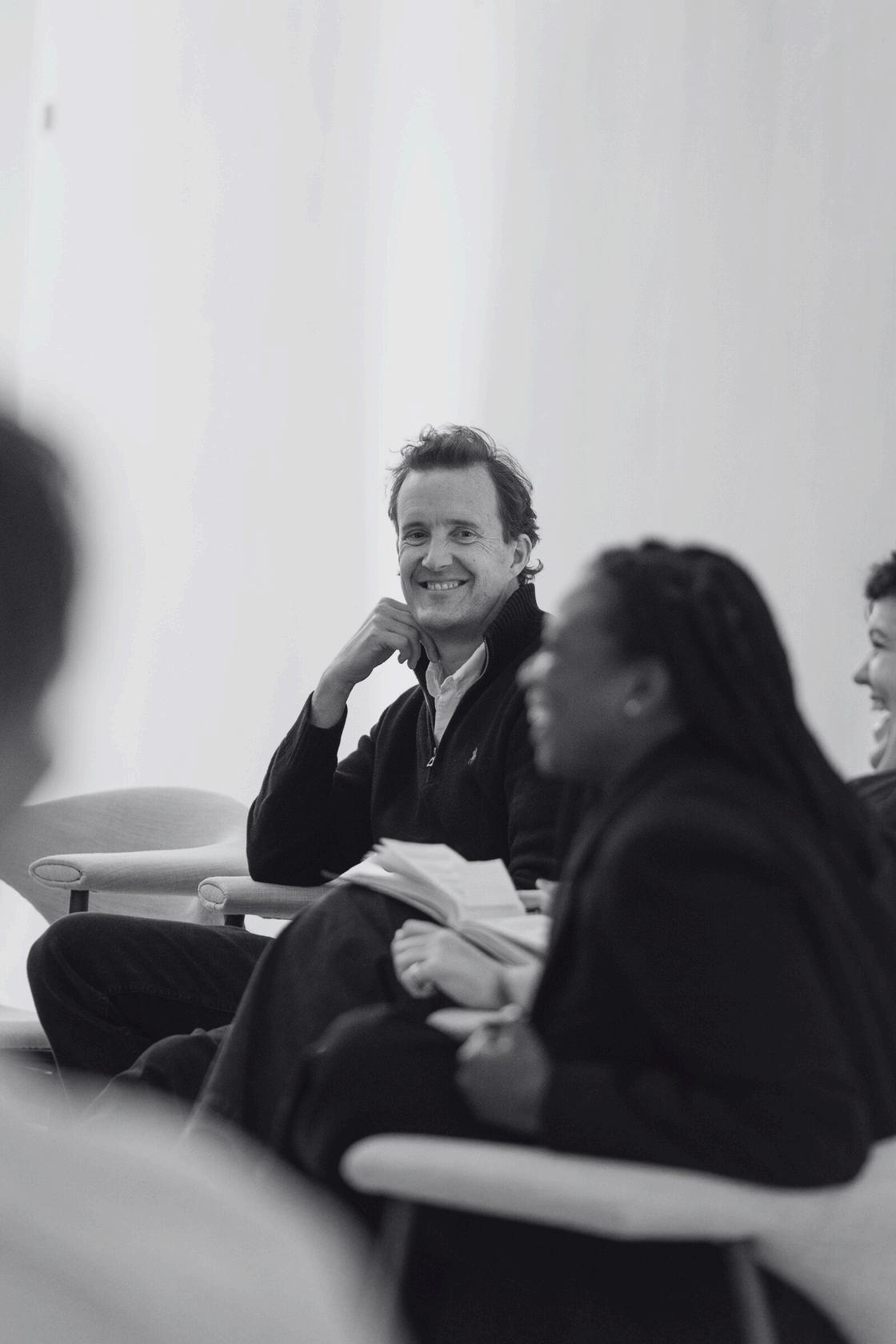

Chapter One: Values as an Operating System
Simon Rogerson, CEO, Octopus Group
Simon Rogerson, CEO of Octopus Group, the umbrella organisation and investment arm behind Octopus Money and Octopus Energy, opened the conversation by grounding leadership in behaviour.
“Not all human and financial capital sits inside companies.”
If that is true, then leadership cannot be reduced to scale, efficiency, or quarterly performance; it has to begin with values and, more importantly, behaviour.
After twenty-five years of building businesses, Rogerson has his own One Question: “How does your organisation make people feel?”And how can you scale that?”
It is this that makes a company memorable. How people feel builds trust, loyalty, recognition, and recommendation, but feeling cannot be manufactured; it emerges from leadership behaviour, from how and whom organisations recruit and retain, from what leaders say and what they do, and from the stories that employees and customers tell about what is rewarded and what is tolerated.
British Airways may insist it cares about customer service; Lloyds Bank may speak of trust and reliability, but if their behaviour tells a different story, customers instead experience frustration, anger, and confusion, and those experiences are organisational systems made visible, eroding trust, loyalty, and reputation.
This is where values stop being mere language and become a competitive advantage.
Values as Hollow Words
“Values are not binary. They are not boxes to tick or statements to complete, they are directional, a path you commit to walking, imperfectly.”
Words like values, purpose, and authenticity, Rogerson acknowledged, have been overused to the point that their meaning has been diminished across boardrooms, policy, and culture. He compared it to parenting.
“You cannot tell a child never to do something and expect perfection, but you can set expectations that shape behaviour over time Values operate in the same way, particularly in established organisations where legacy decisions cannot simply be undone.”
What matters today is whether the values of any organisation or institution inform leadership behaviour and whether that behaviour is enacted across the business:Are values intrinsically aligned to profit, and do they hold when the business is under pressure? Because values build trust, and trust, in Rogerson’s mind, is a trifecta:
1.Do you tell me the truth?
2.Do you have my best interests at heart?
3 Are you an expert?
Too many companies satisfy one or two, but rarely all three.
“John Lewis, you tell me the truth, you probably have my best interests at heart, but you’re no longer the expert. Amazon is thinking about how to drone something into my garden, and John Lewis is telling me to go and pick it up from click and collect.”
When a company no longer appears to understand the world in which it operates, its values begin to sound nostalgic rather than credible, and in that context, trust erodes. By contrast, Ryanair was offered as an uncomfortable counterexample; it makes no claim to warmth or care, but promises low cost and convenience and delivers on them, so customers know what they are buying and why.
“The transaction is clear, and that clarity is a form of respect. You may not like the experience, but you are not misled by it.”
The lesson Rogerson drew was blunt: “Do not pretend to be something you are not.”
Values such as integrity, honesty, or customer excellence mean nothing if daily decisions contradict them For example, an organisation that claims customer care while outsourcing customer service is not simply making a cost decision; it is creating a structural disconnection. When those making decisions no longer experience the consequences of their choices, the organisation stops learning.
“Outsourcing customer service is like outsourcing the central nervous system. You no longer feel pain when your customers do.”
Systems that cannot change
This tension between declared intent and embedded systems became a central theme of the conversation
Rogerson agreed with Sarah's provocation that much of the backlash against diversity, equity, and purpose-led initiatives is a symptom of businesses campaigning on the back of a change without building the systems required to sustain it Under political pressure, those initiatives were easily removed because they were never fully embedded The reason, Rogerson argued, is deeply human.
"People hate change, and organisations dislike it even more."
The faster the world moves, the more internal systems conspire to slow things down Risk departments, compliance structures, and legacy incentives are designed to protect what already exists rather than to innovate or adapt.
When Octopus wants to create something genuinely new, it does not attempt to force that change through the existing system; instead, new ventures are built outside it, and founders are given access to capital, customers, and the brand's credibility, but crucially, the mothership is not allowed to interfere; the existing organisation cannot impose its processes or assumptions.
Rogerson's point was unforgiving: change cannot emerge if the old system is allowed to rewrite the rules Established organisations are structurally incapable of reinventing themselves from the inside at the speed that the world now demands.
"If you want different behaviour, you have to create a different environment in which that behaviour is allowed and protected."
He cited Volkswagen’s 2015 emissions scandal as an example of how organisations behave when beholden to the systems in which they operate. What failed inside Volkswagen was not intelligence or awareness, but the organisation’s capacity to accept what change would actually require of it. Instead of restructuring or redesigning the business to innovate, adapt, and respond to the opportunity, the system worked to protect itself
Rogerson’s point was behavioural rather than moral. Inside large companies, responsibility rarely disappears overnight, but it thins out over time and decisions that might once have felt ethical are reframed as technical: a systems issue, a regulatory interpretation, or a competitive necessity
Each step is small enough to justify in isolation, but once the organisation cannot admit that its existing model no longer works, every decision becomes easier to defend than change itself.
Through Simon’s lens, Volkswagen was not unique; the environment leaders were operating in made it almost impossible to tell the truth without threatening the business, and when the cost of honesty appears higher than the cost of deception, behaviour often follows.
Apattern in times of uncertainty.
“In the last eighteen months, I’ve seen a lot more of the high performers with terrible values being retained because they still bring in money, and money is needed. A few years ago, when times were better, they’d have been called out. Now it feels like, ‘Well, it’s the first time, we’ll let it go.”
One Question Guest.
Rogerson was unequivocal
“Businesses that act in the interests of employees, customers, shareholders, and the environment do not sacrifice value; they build more of it.”
But value accumulates slowly; it depends on trust, consistency, and longterm judgment. In a short-termist landscape, time is a luxury most managers are not afforded. When leadership is rewarded for quarterly performance rather than long-term, sustainable outcomes, and incentives favour protection over progress, doing the right thing becomes harder to justify, not because it is wrong, but because it yields long-term results in opposition to short-term demands.
“If this is what good leadership looks like, how many leaders of the top organisations, PLCs, private equity, and charities actually operate this way? Because CEOs talk about values in the town hall and behave differently in the C-suite. If we can’t change the CEO, how does anything change?” Ali Jones, Communications Lead.
Rogerson’s answer was blunt: “Teeny weeny.” Not because most leaders lack intent, but because their incentives make such leadership structurally rare In public markets and private equity, CEOs are measured on two-, three-, or five-year cycles and are driven by the bottom line in isolation; capital markets have an outsized impact, so leadership behaviour mirrors it.
Doing the Right Thing When No one is Watching
Rogerson described his own leadership as rooted in doing the right thing, but today, the challenge is how we define the right thing
“If an old person fell in the street, would you help them? You should not need a value statement to decide.”
When asked whether it is easier to do the right thing in times of prosperity, Rogerson reframed the question
“This is not about economic cycles. It is about power.”
He traced a line from the Middle Ages to the present day; before industrialisation, the relationship between companies and the people they served was direct If you were a baker or a blacksmith, your reputation depended on the experience of the people in front of you, but industrialisation severed that relationship. Scale created the space that advertising filled, allowing brands to present one version of themselves to the world while behaving differently behind the scenes.
Paradoxically, the systems that created scale have now made behaviour visible again Customers and employees can see not only what an organisation says, but how it actually acts, and those experiences are shared quickly, publicly, and collectively. Power, in that sense, has shifted back, and with it, accountability.
“Industrialisation built a wall between companies and customers. You could behave one way behind the wall and spend a fortune on advertising to present something different.”
The same distortion is playing out in politics: electoral cycles today reward visibility and responsiveness over depth or long-term change, turning governing into a zero-sum game and creating policies that plaster over symptoms rather than address the root cause.
In both cases, the result is the same: systems drift away from long-term responsibility towards short-term reassurance, even when that reassurance ultimately weakens the institutions they are meant to sustain.
The risk of markets' obsession with short-term performance is that it produces businesses that appear strong until economic or cultural conditions change and a smaller, faster competitor steps in, unencumbered by legacy systems and incentives. Octopus Energy's growth at British Gas's expense was offered as a case in point.
Trust, Rogerson argued, accumulates slowly, but once it exists, it accelerates everything else: customers stop checking whether they are being exploited, which allows organisations to propose new behaviours, tariffs, and technologies without much resistance.
“Trust is a compounding asset, and like all such assets, it can be destroyed very quickly.”
Simon Rogerson, Octopus Group
Technology, Friction, and the Human need to Belong
As the conversation moved into technology and AI, Rogerson refused a binary framing
“Technology must remove friction; that is its job. No one has time or patience for complexity, particularly when companies make life harder rather than easier. Humans also crave connection. It is not either or. It is both.”
Around three-quarters of customer queries at Octopus are handled automatically, but this efficiency is not a substitute for human presence. Certain moments in life managing energy bills, dealing with death, handling inheritance carry emotional weight and require judgment and care.Technical capability alone is not enough.
The risk, he suggested, is that technology creates the illusion of closeness; we might feel more connected because responses are instant or apps are personalised, but in reality, we are often more isolated, and organisations compound this when they use automation to distance themselves from consequences rather than to build or support customer relationships.
“Technology removes friction, but it should not remove responsibility.”
The conversation closed where it started, on the human need to belong. Historically, belonging came from churches, clubs, unions, and shared civic institutions, but many no longer play the role they once did. Rogerson’s provocation was that companies could fill part of that void to their advantage, but only if they are willing to accept what belonging actually means and therefore demands of itself and its relationships: not branding or rhetoric, but care, consistency, and accountability over time, in other words, behaviour.
Sarah posed an existential question:
“If leadership is a constant negotiation between what we know, what we fear, and what we believe, where does certainty come from?”
Rogerson was clear
“Certainty is fleeting, often overvalued, and frequently fictional. The pace of change makes it impossible to be sure for long, and leaders who believe themselves to be consistently right become dangerous precisely because they stop listening.”
The task leaders face today is not to eliminate uncertainty but to build organisations that can operate within it That means acting, learning, and changing course when necessary; accepting that decisions will sometimes be wrong; and designing systems that allow for correction rather than collapse. In that sense, risk-taking is not recklessness; it is humility, the refusal to confuse confidence with certainty.
In a world that rewards rules, predictability, and control, that capacity may become the rarest form of leadership.
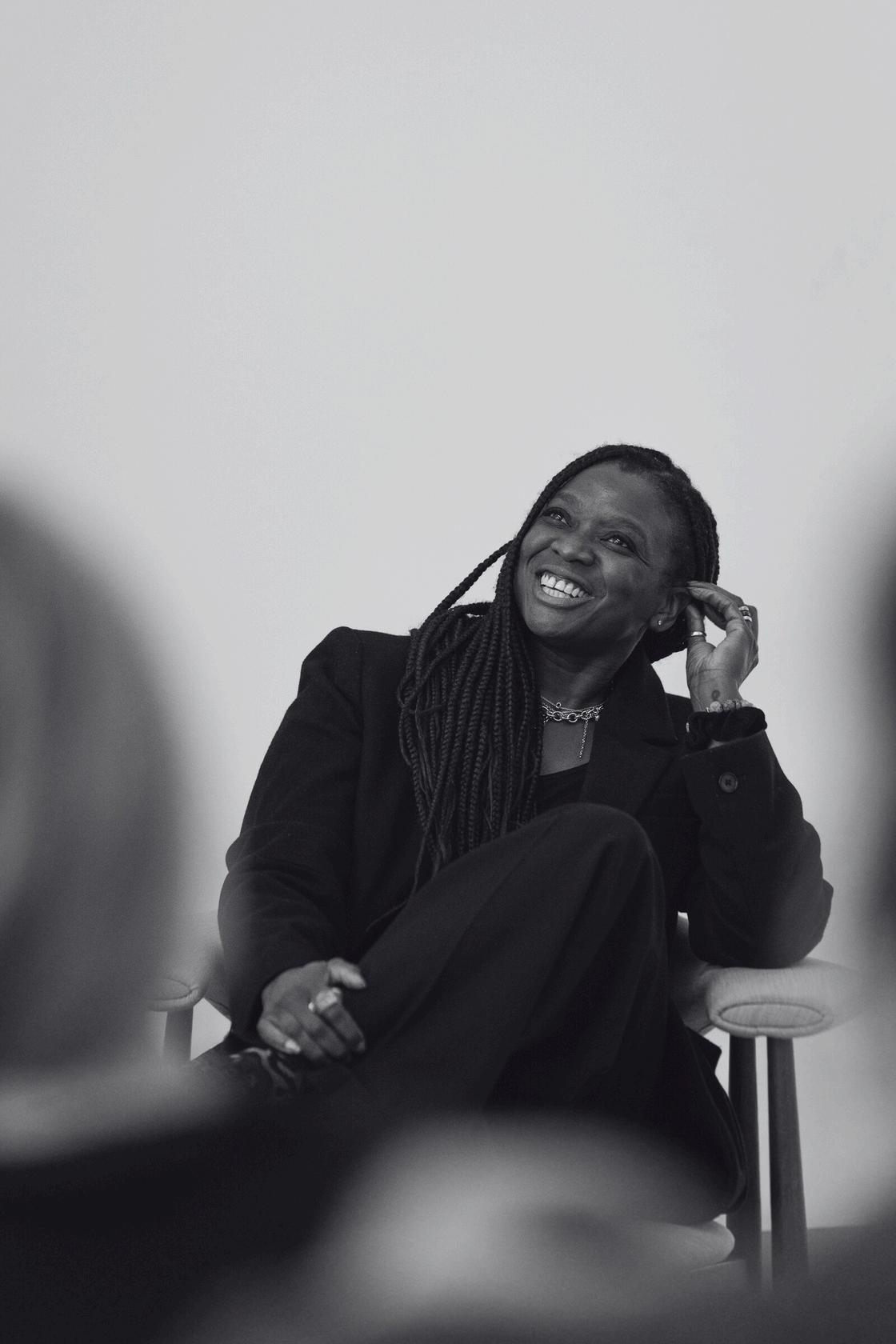
Chapter Two: Uncertainty as opportunity.
Stephanie Ankrah, VP Brand Management, EMEA Women, Nike.
Stephanie did not begin with women’s sport as a moral obligation or a commercial argument, but as a form of infrastructure.
Her parents moved separately from Ghana to the UK in the 1970s, her father to the unfamiliar city of Cardiff in search of opportunity. Football grounded her father, offering community, a sense of self, and belonging Had he stayed in Ghana, he might have played professionally, earning the nickname “Black Pelé”.
That experience later threaded through the family; sport supported Stephanie in navigating bullying, finding confidence, and building a sense of agency; it was not entertainment; it was a stabilising force, something that held them when the environment around them did not
Stephanie later joined Nike through an engineering career, “Engineering is a discipline that does not seek certainty but assumes malfunction.” Leadership shaped by engineering does not wait for the perfect moment; it acts with incomplete information, learns quickly, and moves again. It is this mindset that systems never behave perfectly and that progress comes through work rather than prediction — that shaped her approach to her twenty-year career at Nike.
When Nike won the England football sponsorship in 2012, there was no goodwill to inherit. Umbro was a British brand, woven into football’s national memory Nike, an American brand replacing a domestic one, was seen by many as an intrusion rather than an investment, and football does not easily forgive perceived outsiders. The scrutiny was immediate and intense, leaving little room for error.
For many brands, this might have been a moment to minimise risk rather than innovate Leadership under uncertainty often defaults to the instinct that the safest option is the most honest one
Reframing the England kit
When Nike took over the England kit in 2012, the team proposed that women should appear in the launch wearing the England kit, not as an accompaniment, but as England players At that time, women’s football was still treated as secondary within the industry, often framed as a moral commitment rather than an integral part of the sport.
“We launched our first England kit and simply said, Why wouldn’t we put women in it? The response was, ‘But we’ve never done that.’ Yet women play for England just as men do, so we did it. That moment became the beginning of Nike’s women’s football journey.”
From that point on, momentum built; this visibility did not transform women’s football overnight, but it changed the horizon against which decisions were made. During the same period, Stephanie’s team replaced the lion on the Dutch women’s shirt with a lioness, a reminder that some of the most significant creative interventions are instinctive
How we Lead is Determined by how we are Led.
When Stephanie described those early years, the scale of what she was trying to do is easy to underestimate. Women’s sport, and women’s football in particular, did not carry commercial weight within the industry, but Stephanie developed a long-term strategy for the category without any certainty of return.
How we lead is often shaped by how we are led; here, her manager was decisive: he trusted, believed in, and endorsed her strategy.
That backing changed the timeframe for building toward cultural and commercial outcomes that would take years to achieve. The system did not suddenly become supportive; one leader enabled operating differently within it, which returns to the central question of the day: how do we lead through uncertainty?
In most organisations, uncertainty collapses ambition, it shortens plans, narrows decisions, and forces people into the safety of what can be defended immediately, but what Stephanie shared, and what her manager made possible, is that leadership is about creating enough trust, belief, and protection for long-term thinking to survive in a short-term environment. How we are led sometimes determines whether we can lead at all.
Rethinking Risk
"Let's talk about the risk that you feel like you have consistently had to take when it comes to building women's sport." Sarah Parsonage
"I never actually felt it was a risk, because I was a woman who played sport. The way you frame risk matters: what if you do it, what if you don't, and what is the delta between those two things? If the delta is surmountable, then it's not a risk. And you're talking to fifty percent of the population. And the product is good, women's football is good."
Women's sport is often described as "risky" only after success has rendered the risk noble, but Stephanie rejected that retrospective narrative, calling it a misinterpretation of the problem. The issue was not the value of women's football; it was its visibility The real question was the difference between action and inaction
If the downside of not acting is stagnation, exclusion, or cultural erosion, then "risk" is the wrong word, and treating women's sport as a niche was a fundamental misreading of the market. Leadership in uncertainty requires leaders to interrogate the assumptions disguised as data; in this instance, the belief that demand did not exist had never been proven because it had never been tested.
Part of Stephanie's conviction is drawn from a quote from a sports coach that she often returns to: "The standards you walk past are the standards you are willing to accept " If women's sport was treated as peripheral, Stephanie wasn't prepared to accept that standard, not culturally, not commercially, and not inside Nike.
The barrier to women's football was not the quality of the sport but its exposure. Fans had not been invited to see it, but when they were, they found something familiar presented in a different emotional register. It was not better or worse than men's football; it was different in kind
In times of uncertainty, leaders often default to imitating what already exists and expecting audiences to follow, but Stephanie’s approach showed commitment before evidence. You do not hedge your way into cultural change; you either invest in it or you don’t.
This is why her strategy was ten years, not two. Systems that have excluded people for generations do not respond to quarterly logic; they change through repetition, accumulation, infrastructure, and belief The conversation both endorsed Simon’s earlier analysis of the short-term danger posed by the behaviour of heritage organisations and, in contrast, demonstrated that some organisations, such as Nike, can shift internal systems to create opportunities and invite the industry to move with them.
Nike might be the exception to the rule, but many organisations say they want transformation and then measure success on timelines too short to allow it. Uncertainty becomes the justification for hesitation rather than the reason to act. Stephanie’s manager's early endorsement mattered because he did not remove uncertainty; he carried enough of it for the work to begin.
Leadership at its best is not a grand gesture, but the redistribution of risk
“The standards you walk past are the standards you are willing to accept.”
Stephanie Ankrah , Nike, (quoting a former sports coach.)
The Matrix
Nike does not operate as a collection of siloed specialists or heroic individual decision-makers; it works as a matrix, a structure defined by interdependence rather than hierarchy, and its progress depends on understanding relationships, lines of influence, and where authority actually sits.
Matrix systems are often criticised for being slow. Still, Stephanie argued the opposite, noting that with trust, the matrix becomes a source of resilience because knowledge travels across the organisation, allowing decisions to be stress-tested across disciplines and ensuring responsibility does not evaporate as it moves upward.
Leadership in that environment is not command-and-control, nor is it endless consensus-seeking; rather, it enables the organisation to move at the fastest pace it can sustain without breaking itself In Stephanie’s framing, this is what makes leadership scalable: not direction alone, but coherence across the system.
Curiosity, Control, and the Changing Shape of Leadership
The conversation shifted to something more difficult to navigate than any strategy: how people behave in uncertainty Curiosity, which once helped teams move, now often slows them down, but is this wolf dressed in sheep's clothing, not curiosity but insecurity? Stephanie described a noticeable change in how people ask "why" and what that reveals about the psychology of modern organisations.
For many of the leaders in the room, earlier stages of their careers were defined by vertical learning: you learned by doing, built judgment by acting before the picture was complete, and allowed curiosity to deepen understanding rather than precede every step. Now, the "why" sits differently: sometimes it is a genuine inquiry seeking context, sharpening decisions, and improving outcomes, but often it arises from uncertainty. It is an attempt to secure reassurance that the system cannot provide in advance
This creates a difficult tension for leaders who are expected to move quickly in environments that demand explanation at every turn action stalls when the search for certainty is endless.
"I need you to move with me, because I've made the mistakes already."
Hesitation does not just slow teams; it changes them. It creates the conditions in which organisations gradually lose the people who push them forward, the ones Simon later referred to as the 'wild ducks', drawing from IBM's history: Wild Ducks were individuals who operated slightly outside the system, who challenged process, noticed friction, and acted before the organisation knew it needed them The Wild Ducks were protected by leadership because they drove progress.
Most modern systems, Simon acknowledged, do the opposite: they smooth out challenges, reward predictability, and privilege consensus With AI now learning from past behaviour and reproducing it at scale, the pressure to conform only intensifies. Variance, the phenomenon that the “wild ducks” introduce, becomes increasingly difficult for organisations to tolerate, even though it is often the only source of adaptation.
Stephanie and Simon were describing different worlds, but the same tension When uncertainty increases, people seek safety, but when safety is sought through explanation rather than action, teams begin to contract around what already feels familiar. Curiosity is replaced by insecurity, and the people who would normally move first, who would see the work differently, question an assumption, or shift the pace of a decision, feel out of place
Leadership, in this context, is not about providing perfect answers but about trusting people to act without perfect clarity and granting permission for individuals to be awkward and unconventional. Without those people, systems drift towards stasis or inertia, and in some environments, that becomes the most expensive risk of all
Women’s football was never going to transform within a quarterly cycle. Stephanie’s ten-year strategy was not romantic; it was realistic. Her courage lies in her ability to hold uncertainty long enough for progress and commercial returns to take root. This echoes Simon’s insistence that leaders cannot wait for perfect conditions, unanimous agreement, or regulatory permission, but must be willing to move with incomplete information, and to say: this is where we are going, and this is why it matters.
Uncertainty cannot be eliminated; it can only be navigated, and leadership, as this conversation made clear, becomes visible not in any one decision but in the work that follows. Organisations reveal what they truly value over time through the systems they have built what they choose to support, what they defend, and what they quietly allow to decay. Leadership under uncertainty does not sit outside that system; it shapes it.
“The journey that we've been on in women's football started in 2012. 2022 is 100 years. And the strategy that I built, I pitched a 10-year strategy."
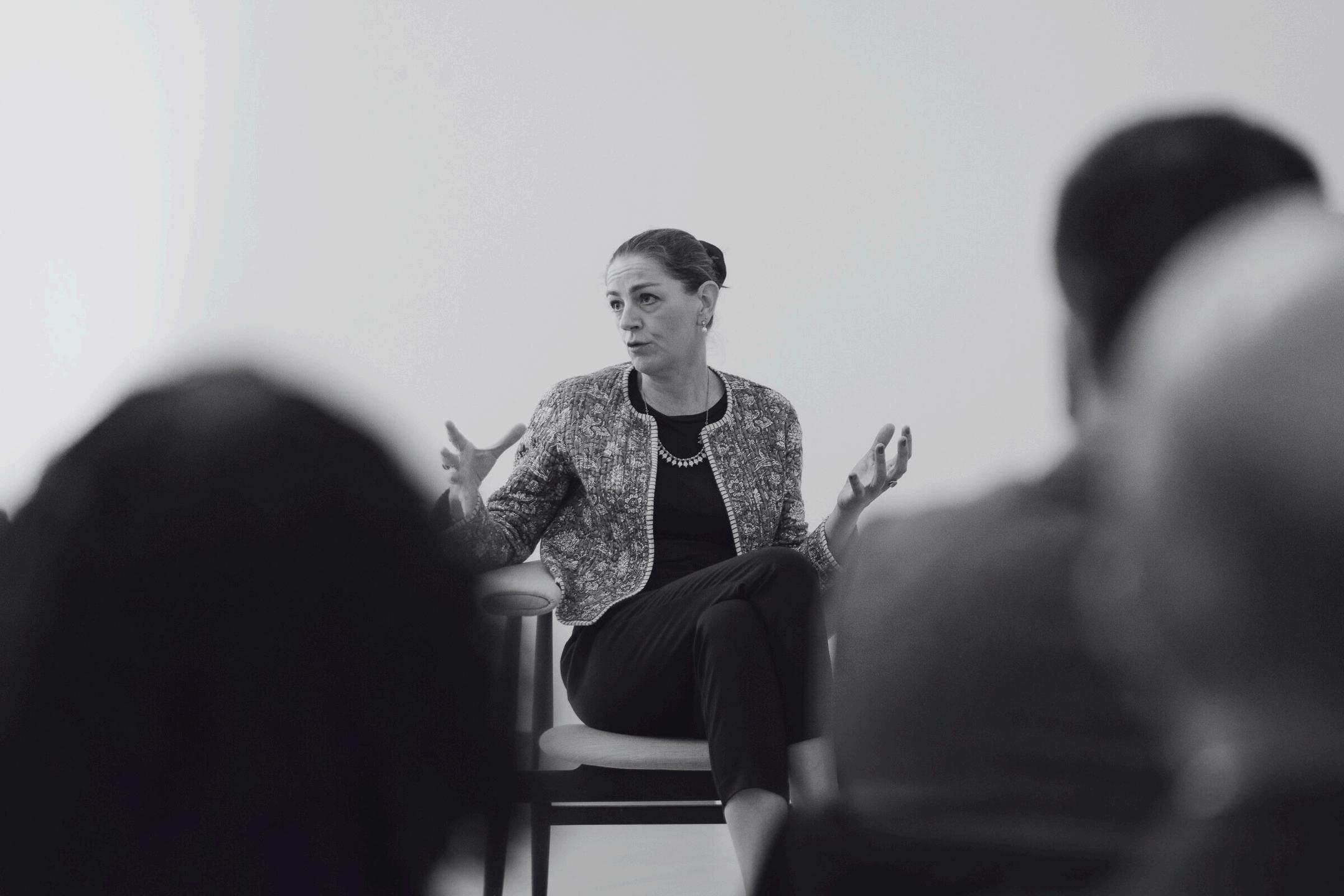
Chapter Three: Information as a Weapon, Journalism as Infrastructure
Fiona O Brien, Director, Reporters without Borders. .
If Simon explored the One Question through a lens of belonging and values, and Stephanie positioned risk as an environment for opportunity, Fiona O’Brien, UK Director of Reporters Without Borders, shifted the conversation to the information that shapes, validates or informs value systems despite uncertainty
Fiona’s work does not begin with journalists as professionals, but with citizens as recipients. The point of protecting press freedom, she argued, is not to preserve an industry for its own sake, but to protect everyone’s right to receive reliable, independent information they can trust Without that, the structure of society, politics, markets and communities fractures
“We’re not trying to protect journalists for the sake of journalists. What we’re really trying to protect is everybody’s right to receive reliable, independent information that they can trust.”
That argument feels different in 2025 than it might have in 2015 In Gaza and Ukraine, information has become one of the primary weapons of war: deliberate, structured propaganda, and the line between news and manipulation is no longer a technical problem of “fake news”; it is a strategic choice by actors who understand that controlling perception controls our reality and is as powerful as controlling territory
Against that backdrop, the uncertainty we discussed all morning becomes more than a question of economic volatility or shifting expectations; it becomes epistemic: what, and whom, do we trust to tell us what is happening?
From Vertical Authority to Horizontal Noise
Drawing on work that echoed a One Question conversation earlier in the year with the Financial Times, journalist Gillian Tett explored the shift from a vertical to a horizontal information landscape. For an older generation, there was a relatively clear societal hierarchy formed by institutions: government, media, or the NHS, but in the last decade, influence has shifted to our peers, local communities, and algorithms, and authority has become flatter, more democratised, more distributed, and often less visible
Fiona described this from within the industry, having started her career there. The traditional role of political journalism was to speak with people in power, understand what they were doing, and share this information with the public, holding them to account. Now, those same actors speak directly to narrow slices of the population via social platforms and targeted channels, often bypassing scrutiny altogether Journalism is no longer the primary conduit; it is one voice among many in a saturated space.
At the same time, the business model that sustained factual news has been hollowed out, advertising spend has migrated to platforms whose algorithms optimise for engagement, not veracity, and regional papers have closed or been folded into national titles, surviving only by chasing scale or niche subscriptions. There is, as one guest put it, “far too much content and far too little capacity to make sense of it.”
The result is not just more information; it is greater fragmentation, as Fiona’s example of her 15-year-old daughter illustrates: sitting in the same house as her mother, she is being fed a completely different world, curated by a social media algorithm tuned to her interests.
Both are seeing the news, but neither is seeing the same thing.
“The way we access information is increasingly determined not by us, but by other people’s decisions, by algorithms and systems we didn’t design and don’t understand.”
Fiona O’ Brien, Reporters Without Boarders
Trust, leadership and the distribution of responsibility
The question of trust cannot be answered by journalism alone.
It is evident that technology has also permitted journalists to scrutinise power in new and innovative ways, harnessing open-source intelligence and analysing data in ways which, by her own admission, were not yet possible when Fiona started as a correspondent. If you know where to look, the function of holding power to account is still being carried out, but is it commonplace and trusted?
Over time, against a backdrop of this innovation and a shift in the relationship between journalism and its public, trust has been eroded not only by failures within the media but by a profound shift in political rhetoric that treats scrutiny as hostility. Fiona cited the World Press Freedom Index, an annual assessment by Reporters Without Borders that ranks countries based on the safety, independence, plurality, and legal protections of their media Only seven countries currently fall into the “green” category, indicating a high level of press freedom
“If we don’t know who to trust, people don’t become more open-minded; they become more siloed. You end
up with different versions
of reality, when in fact there aren’t different truths.”
In those places, when a newspaper reports wrongdoing, the public looks first at the behaviour being exposed
But increasingly, in democracies that consider themselves immune, the reaction is inverted: instead of interrogating the issue, political leaders attack the journalism itself, framing factual reporting as bias, a threat, or fake.
A recent example from Nottingham showed how quickly this dynamic can take hold. After the Nottingham Post published coverage he disliked, the leader of Nottinghamshire County Council, Mick Barton, barred the paper from accessing councillors, interviews, and official information; the paper eventually sought legal intervention to reverse the ban
The incident, indicative of a wider pattern across UK political parties, revealed how those in power today are increasingly trying to control who is allowed to tell the story, preferring favourable coverage to independent news. If journalists are not permitted to do their jobs without fear or favour, facts can easily be distorted, and assumptions, grievances, or political positioning can be presented as truth
When that behaviour is modelled on the political stage, it creates a permissive environment for individuals, institutions, and platforms to do the same, and that is where the ground shifts from disagreement to distortion.
If leadership is, as Simon Rogerson argued, the alignment of values, behaviour, and the length of time you’re willing to invest in it, then political leadership on press freedom is failing on all three. The incentives reward short-term self-protection rather than long-term institutional health.
Yet Fiona resisted the idea that regulation alone would solve the problem; governments are rarely ahead of either technology or behaviour Therefore, responsibility is distributed across governments, technology companies that design and profit from the distribution of information, citizens and businesses who choose where to invest their attention and money.
This is where the conversation came full circle, and the practical distinction between freedom of speech and freedom of reach became clear The former is a right that must be protected, and the latter is being quietly auctioned off to whoever can best game an engagement algorithm.
Reinvesting in truth, rather than reach, is not just a journalistic concern; it is a strategic choice for businesses, platforms, and individuals deciding what kind of environment they want to operate in and what future they want to create.
“We are caught between freedom of speech and freedom of reach.”
Sarah Parsonage, One Question.
Media Literacy and the Next Generation
Is education the answer? If uncertainty is our constant, then one of the few levers we still have is how people learn to understand and navigate it
Fiona’s assessment of media literacy in the UK was blunt: “It is poor.”
The expectation that an already under-resourced and under-funded education system can teach “fact-checking” is no match for the complexity of generative AI, manipulated video, and highly targeted disinformation In comparison, Fiona cited Finland, widely recognised (including by the EU, UNESCO, and the OECD) as the global leader in media literacy education, from early play to primary school, helping children understand sources, bias, influence, and the difference between fact and opinion.
It was a reminder that different choices are possible when a society treats information quality as a civic skill rather than an optional extra. Finland’s relatively high levels of trust in media, public institutions, and civic structures support the effectiveness of media-literacy education, showing that when citizens grow up with both the skills and a context in which media are generally reliable, the combination mitigates the reach and impact of misinformation
When media literacy is weak, emotion replaces evaluation, and outrage becomes the most effective business model, whilst citing freedom of speech to protect anonymity. Female journalists often report on the very issues that polarise the most
The threats Fiona described were not critical comments but graphic rape and death threats; one in five women journalists in the UK is considering leaving the profession, and that loss is not simply economic attrition; it removes precisely the diversity journalism has fought to build, and weakens the very capacity to hold power to account.
The power to change that sits uneasily between platforms and publics; technology companies are the only actors with the capacity to redesign the systems that enable such abuse to scale, but, as Fiona noted, they routinely fail to attend the tables convened to address it.
“The UK is a massive outlier on paying for journalism. If we sit here in London thinking ‘of course content should be free’, we need to recognise we’re the anomaly.”
Marshall Manson, Fleishman Hillard.
At the same time, every person in the room could point to their own complicity: the time spent on platforms that “hate” the nuance and context that we increasingly demand, but still win our attention; combined with the expectation that news should be free and the relative willingness to pay for entertainment over reporting, as evidenced from the Reuters Institute that the UK is an outlier in its reluctance to pay for news
The paradox is that many of the experiments that do work, local, communityfunded titles like Social Spider in East and South London, or regional ventures like The Mill who report on local issues, covering councils, planning decisions, and the everyday fabric of local life., ensuring that communicates across the country are not just better informed, but that residents feel a renewed sense of agency: the feeling that you can still save a youth centre, change a decision, or at least know who to hold to account, building trust in local relationships whilst national trust fractures.
Freedom of Speech is the Body of the Octopus
Towards the end of the hour, Fiona’s argument linked directly back to Sarah’s earlier metaphor of mental health as the body of the octopus, with everything else as limbs. If mental health shapes how individuals move, then freedom of speech and access to reliable information play a similar role for organisations and institutions.
“Freedom of speech is the body of the octopus. If we only ever look at the symptoms and never go back to the cause, we miss the thing everything else depends on.”
Sarah Parsonage, One Question
Without them, everything else becomes reactive rather than proactive, and we fight to address symptoms rather than causes Policy becomes crisis management, businesses communicate in a fog of distrust, and communities fragment into parallel realities.
This returned us to where the morning began: the need to think in decades, not quarters, if we want systems to change Journalism, however, lives in the immediate Press-freedom work must operate in both timeframes at once: the urgent crisis of an imprisoned reporter, an election, a war, and the slower erosion of norms that only reveals their cost when it is almost too late to restore them.
Leadership through uncertainty, from this perspective, looks less like the search for a definitive answer and more like protecting truth-telling, investing in the infrastructure that allows people to know what is real, and refusing to accept what is corrosive simply because it is convenient.
The question, then, is not whether we can eliminate uncertainty but whether we can sustain enough shared reality to navigate it together.
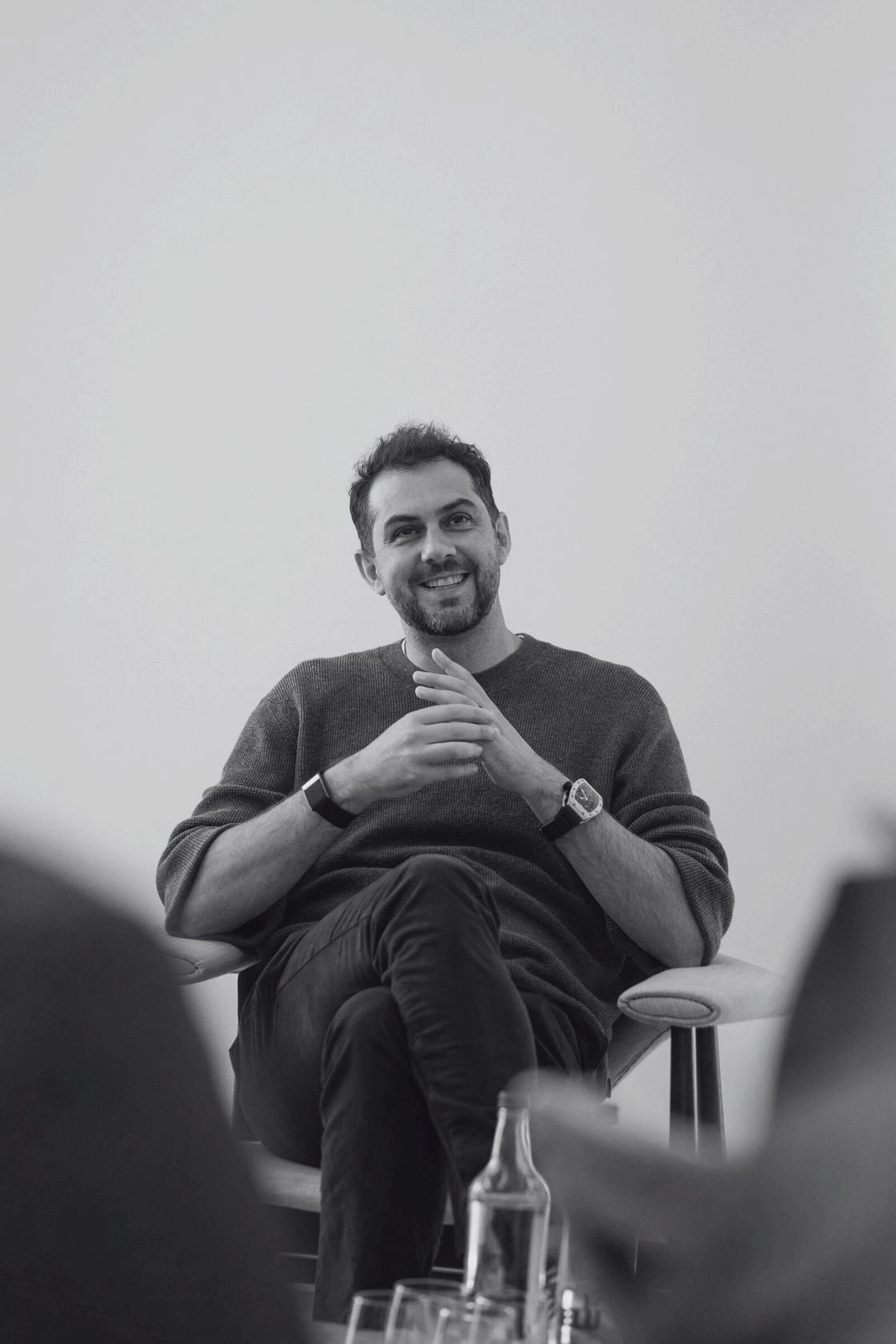
Chapter Four: AI and the Idea of Abundance
Daniel Hulme, Chief AI Officer, WPP.
Daniel Hulme joined the conversation with a provocation that carried both optimism and unease.AI, he argued, has the potential to remove the friction that drives up the price of essential goods. “If you remove friction,” he said, “you can create abundance”, a world in which everyone has access to healthcare, education, nutrition, energy, and transport for free If human labour, inefficiency, and processes are no longer the main drivers of cost, the systems that sustain society become substantially cheaper to operate.
“When I build solutions, there are three questions I ask.
Firstly, is the intent appropriate? AIs don’t have intent. Human beings have intent, and it’s the intent that needs to be scrutinised.
Secondly: Are my algorithms explainable?”
Thirdly: what happens if my AI goes wrong, what happens if my AI goes very right?”
But the systems we rely on do not exist only to deliver outcomes; they also hold identity, trust, care, meaning, and social cohesion. A school is not merely a place to receive information; a hospital is not simply a site of treatment; a workplace is not merely a producer of value; it is where many people find status, routine, community, and self-worth. The friction within these systems is often what makes them human
This is where the promise of abundance meets the fear of technological unemployment. If AI removes the need for human labour in the creation and distribution of goods, what happens to the workforce whose value has been defined by that labour? What happens when the work that gives people identity is no longer the work they are paid to do? Daniel posed a question to the room:
“If you did not need paid work to survive, and everything you needed was free, what would you do with your time?”
The first answers, Daniel noted, are usually surface-level: travel, hobbies, deferred pleasures But ultimately, most people describe some form of contribution, doing something that “makes the world a little bit better.” For Daniel, this is the promise of AI at its best: freeing people from economic constraints so they can devote their time and creativity to serving others, rather than out of necessity.
The room was less sure “Free education,” a guest observed, “is not always good education.” Access may achieve equality, but it does not guarantee quality, and even when AI lowers costs or increases scale, it rarely accounts for the parts of a system that confer dignity or connection.
Efficiency is never neutral; it reshapes what it touches
If abundance, as Daniel defined it, is possible, does it strengthen society or dilute it? One guest argued that humans are built to do difficult things and that, without friction, we lose direction. Another countered that most unnecessary suffering is structural, not existential; that freeing people from economic constraint enables contribution rather than apathy.
What was shared across the debate was the recognition that abundance is not a purely economic question. It is psychological and cultural, and our systems are not designed to absorb it without consequence.
“People are meant to do difficult things. Otherwise, we end up with a deeply depressed society. We are biologically meant to overcome challenges. That’s where confidence and motivation come from. “If you eradicate all friction, where does achievement come from?”
Sadia Sajjad, IFC, World Bank.
This returned us to a thread that ran throughout the day: the gap between what is technologically possible and what society, in practice, culture, governance, and identity, can bear.
AI and Human Agency
Beneath the system-level discussion was a more personal anxiety: what happens to agency when AI becomes a quiet presence in people’s daily decisions?
Daniel noted the most common uses of AI are “therapy, organising your life, and finding purpose” For some, AI is already filling gaps in support left by existing systems
Ross Sleight emphasised the risk in that.
“Models are very good prediction machines, with no intelligence, no empathy, no ability to have taste or value. To apply them to one of the most complex human tasks, therapy, is not a neutral experiment.”
He referenced recent cases where people have taken their own lives after interacting with AI tools, arguing that this is not an abstract ethical concern but a lived consequence of deploying systems without the capacity for care.
This raised the same question that had surfaced earlier in Fiona O’Brien’s discussion of misinformation and trust: our vulnerability to the first narrative we hear. As Sarah reflected, when she spoke with the leader of a national newspaper, the difficulty was not assessing facts but recognising how powerfully humans hold on to the stories they want to believe. AI risks reinforcing this need; a system that mirrors and validates our assumptions is more comfortable than one that challenges them
“You trust it by showing value, and you trust it by having the right intent, and by being open and explicit about your intent.”
Critical thinking is not automatic merely because tools exist to challenge us. People need to learn how to ask for alternative perspectives; without that instinct, AI reinforces existing beliefs rather than acting as a catalyst for different or better ones
Daniel insisted on one central distinction:
“AI doesn’t have intentions. Humans do.”
The fundamental ethical question is not the technology itself but the human choices around its use Intent, explainability, and foresight are the levers of responsibility for business, policy, and institutions, but these levers operate within global markets, systems that reward speed, adoption, and scale, not restraint. As Daniel noted, the risk is that regulation historically emerges only after harm has occurred. By the time we understand the consequences of AI, it will have already reshaped behaviour
A guest raised the concern that a handful of dominant companies is setting the direction of AI the “Magnificent Seven” whose economic incentives risk narrowing the space for collective decision-making. If the entities building the systems are also those monetising them, then society absorbs the outcomes long before it has agreed the terms
For leaders, this is not theoretical; it shapes procurement decisions, risk frameworks, workforce planning, and how they communicate AI to the people who must adopt it in their work.
The introduction of AI is often presented as progress, but for many, it is experienced as uncertainty AI can create,” Daniel said, “but it can’t have taste.” It can generate thousands of variations, remix styles, and produce combinations that look original, but taste, the ability to discern what matters, to feel context and to locate meaning, remains distinctively human.
Emotional resonance, cultural nuance, timing, contradiction, and ambiguity are aspects of creativity that AI cannot capture because they are not data points; they arise from lived experience If AI widens the field of possibility, does it enhance human creativity or dilute it? Does a world of infinite variation strengthen originality or overwhelm it?
I can increase possibilities, but possibility is not the same as insight. In many fields, including creative work, education, and leadership, value arises from exploration rather than optimisation, from the friction of trying.
This connected back to a deeper existential question: what remains uniquely human if AI becomes a default collaborator? Several guests noted that humans need challenge because it is core to meaning, motivation, and identity. Even an abundant world would not eliminate difficulty.
As Daniel pointed out, scarcity appears wherever humans gather: time, attention, love, opportunity The challenge is not whether AI removes all friction, but whether we choose the right friction to preserve
The Future we Choose
As earlier conversations with Simon and Fiona made clear, the question ofAI is ultimately a question of systems: economic, political, organisational, cultural. Technology does not arrive in a vacuum; it comes in structures built for a different pace and logic, and it amplifies whatever those structures already reward.
Daniel sketched one possible path through this: using AI to authenticate information before it circulates, and to score content across representative “councils” of perspectives to reduce harm and restore trust.
It linked directly back to Sarah’s warning that freedom of speech has quietly become freedom of reach. That trust is eroding not only because people disagree, but also because our systems were never designed to handle the volume, velocity, and level of contestation that information now carries Whether Daniel’s idea is feasible or desirable remains uncertain, but it reflects the scale of the problem: misinformation will not be mitigated by human moderation alone.
When Tej Parikh, an economic writer at The Financial Times, joined the conversation, he added another layer of unease Historically, every major technology, from steam to electricity to the internet, has augmented human capability; it has sat alongside us, extending reach, speed, or scale. AI challenges that pattern by encroaching not on physical labour but on cognitive work: creativity, reasoning, interpretation.
Between Daniel’s vision of abundance and Tej’s warning about preservation, a more profound concern emerged regarding the direction in which technology has been allowed to develop.
Tej reflected on a conversation with anAI economist shortly after the release of ChatGPT, who offered a striking reframing of the Turing Test. Initially conceived by Alan Turing as a thought experiment to explore whether machines could be indistinguishable from humans, the test has quietly become something else: a destination
What began as a philosophical provocation has been absorbed by technologists as an objective to pursue.
That shift, Tej suggested, matters more than it first appears. When indistinguishability becomes the goal, technology stops asking how it might support human capability and starts asking how it might replicate it
The consequence is not theoretical; recent headlines announcing thatAI has “replaced” creative roles prompted a more fundamental question:
To what end?
This is where the distinction between augmentation and replacement becomes critical. Many of the applications discussed throughout the day sit firmly on the side of augmentation. AI identifying diseases earlier than clinicians does not replace doctors; it accelerates diagnosis and improves outcomes
When used well, technology extends human judgement rather than supplants it, but the risk arises when those who build the algorithms also control how they are deployed and monetised, and when decisions that shape entire labour markets, professions, and social expectations are absorbed into commercial logic long before society has agreed on the terms.
Unlike previous general-purpose technologies railways, electricity, the internet which largely complemented human physical effort, AI presses directly into cognitive territory: creativity, interpretation, judgement.
That collapse of boundaries is what makes the moment qualitatively different.Tej’s concern was not alarmist, but structural:
“How do we establish limits, safeguards, and shared direction when the technology is advancing faster than our institutions’ capacity to govern it?”
His answer was cautious rather than prescriptive: targeted testbeds, deliberate sequencing, and public decision-making about whereAI should and should not go before scale make those choices irreversible, ensuring that innovation remains aligned with human purpose rather than substituting for it
Seen this way, the question is not whetherAI is pro- or anti-human but whether we are still consciously choosing what it is for.
The room returned to a recurring question: who decides what “good” looks like? If abundance is defined as universal access to essential systems, who defines quality inside that abundance? Who defines value?And who determines the thresholds at which technology supports human flourishing rather than slowly undermines it?
This is where leadership sits.
Leaders today are being asked to make decisions that will shape futures none of us can fully see, while operating inside systems built for a different era.The speed of technological development is not matched by the speed of organisational change, cultural adaptation, or governance, and the result is a widening gap between what is technically possible and what our institutions, and the people inside them, can responsibly absorb.
Daniel ended on a grounding truth: “AI isn’t going to decide the future we are.”
“AI isn’t going to decide the future, we are.”
Daniel Hulme, WPP
The uncertainty in that framing does not come from the tools themselves but from how quickly we adopt them and how rarely we pause to ask what problem they are actually being used to solve.
When organisations start with the tool and retrofit it to whatever challenge is closest to hand, they amplify uncertainty; when they begin with the question and then decide whether AI is needed at all, they create at least the possibility of coherence.
Below this is a challenging yet straightforward demand on leadership. Longterm thinking is not a luxury; it is the only way to meet a technology whose effects will play out over decades rather than quarters If leaders design only for the present, they will be unprepared for disruption. If they design for the emerging system one in which AI sits within every process, decision, and interaction they can create the conditions for a different kind of stability, in which human judgement, not just technical capacity, still sets the direction.
Technology will not restore trust on its own; only coherence between intent, behaviour, and communication can do that.
The question is whether leaders are willing to challenge their own incentives and assumptions, or whether we will absorb whatever future arrives simply because we were too distracted, too impatient, or too afraid to ask better questions while we still could
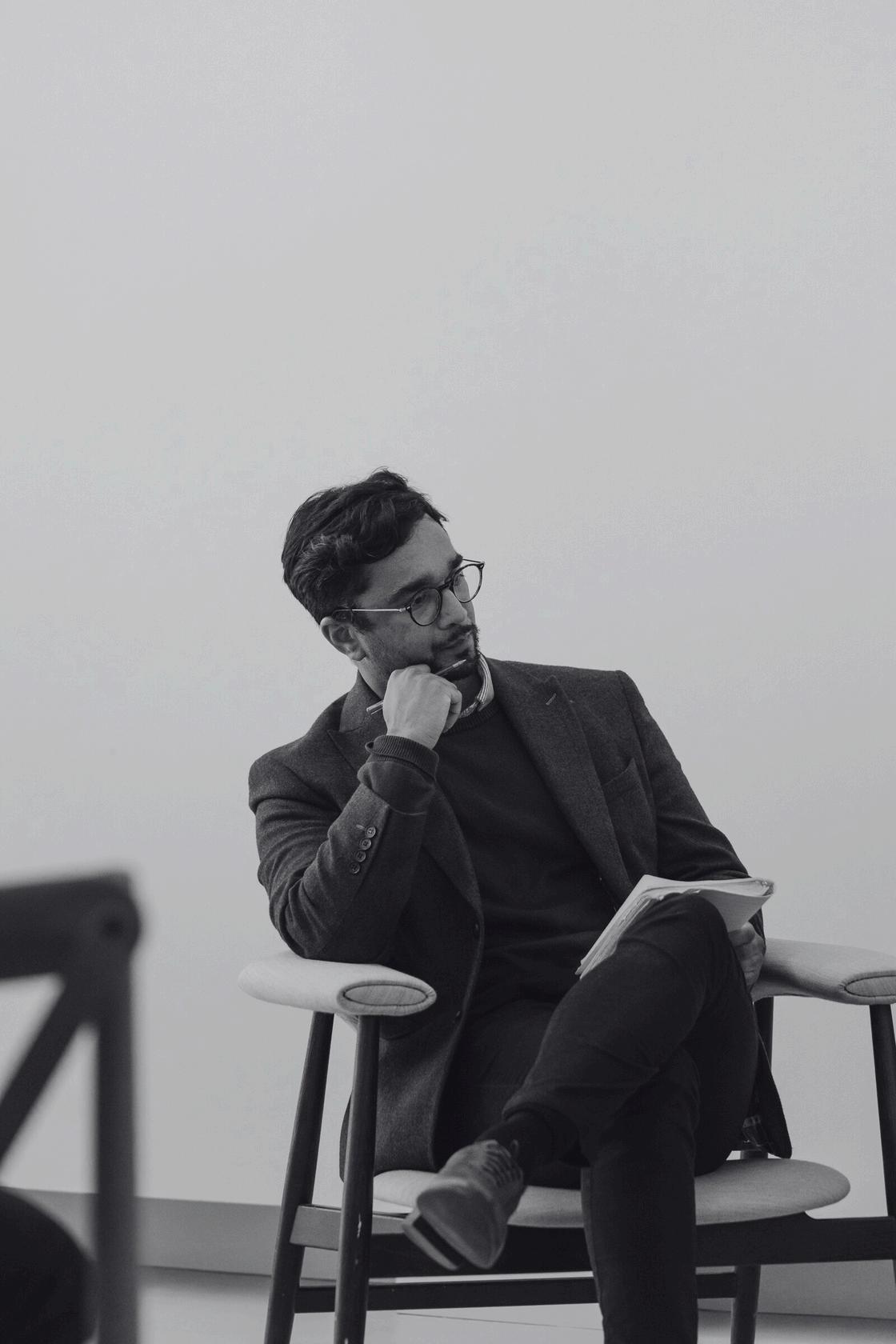
Chapter Five: Creative Destruction and the Weight of Preservation
Tej Parikh, Economics Writer, The Financial Times.
The next turn came through an economic lens. Tej Parikh, economics writer at The Financial Times, reframed uncertainty not as a temporary shock but as a structural tension between creation, destruction, and preservation. Creative destruction, through Tej’s lens, is the underlying rhythm of markets, institutions, and public life: new ideas displace old uses of capital, labour, and attention.That is how growth occurs.
His concern was not that creation has stalled, but that preservation has become more burdensome.
“As we become richer, we become more risk-averse.”
The instinct to protect what exists is entirely human, but when it dominates, it begins to block necessary change.
He pointed to places where this is already visible In housing, communities resist new buildings even when the need is clear In sectors where underperforming firms no longer exit because shocks are absorbed or delayed. In markets where dominant players narrow the routes for new entrants. The data suggest that economic dynamism has slowed. The culture,Tej argued, confirms it.
To make sense of this, he reframed Schumpeter’s idea of creative destruction in simpler terms: creation, destruction, and preservation. Each is necessary, but none works alone. Too much preservation suffocates creation; too much destruction corrodes trust. A functioning system depends on balance.
For leaders, this is not abstract theory; change rarely succeeds on courage alone but works only when it is designed: when there is clear reasoning for why change is needed, when those who lose in the short term are acknowledged or compensated, and when the trade-offs are stated honestly. Without that discipline, preservation wins by default, not because it is right, but because it feels safer
Tej used the housing crisis to illustrate the point: the country has known for more than two decades what needs to be built, and hasn’t built it; the constraint is not data, expertise, or even capital but a clear visions and clarity; honest timelines, compensation for those who lose in the short term, and the truth about what is gained and what is lost, rather than reassurances that everything will be painless.
Without that clarity and a clear vision, people default to preservation.
The Preservation Trap: When Protection Becomes Paralysis
The same pattern appeared in his example of AI adoption in hospitals. Technologies that could improve patient outcomes are often delayed not by technical limits but by cultural resistance Clinicians fear the erosion of professional judgement; administrators fear new forms of accountability; patients fear systems they cannot see or question.
In those environments, communication cannot be a press release or a training module; it must be an architecture of trust—a system that explains why change is happening, who bears the risk, and how harm will be mitigated if things go wrong.
This was Tej’s central point: creative destruction does not fail just because people dislike change; it fails because change is introduced without structure Too often, leaders ask communities to absorb loss today for benefits tomorrow, benefits that remain abstract, distant, or unevenly shared, and preservation naturally becomes the rational choice.
Fear will remain the most potent deterrent until leaders show, not tell, how rewards will be shared. Leadership in uncertainty depends on that proof; without it, preservation prevails, and systems built for stability become unable to adapt
For Tej, the lesson was that change must be designed with humility. Creative destruction that ignores lived context risks destroying the very things that allow systems to function. Ultimately, progress imposed without understanding can become extraction by another name
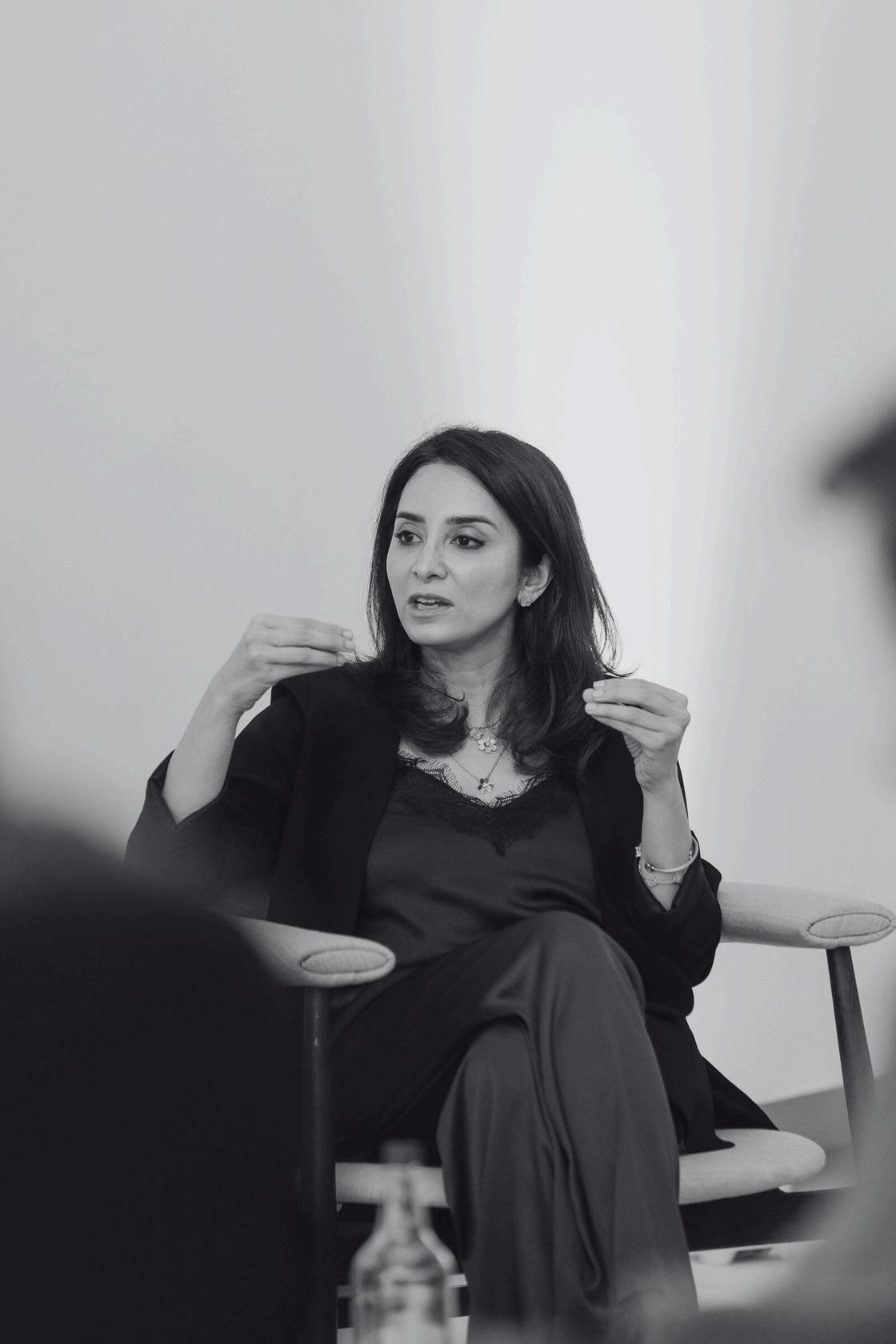
Chapter Six: Risk mitigation, and the Risk we Choose
Sadia Sajjad, International Finance Corporation (World Bank)
Sadia Sajjad broadened the conversation from economics to risk, but from a perspective in which risk is not abstract. She works at the International Finance Corporation, the private-sector arm of the World Bank, financing companies and projects in emerging markets with a clear mandate: growth, but growth that can withstand scrutiny
Debt and equity are only part of the equation; the more complex work is understanding the environmental, social, and governance consequences before they manifest as instability, backlash, or failure. Much of her career has been spent working with local communities and, more recently, with UK and European governments, translating what “development” actually means when capital meets politics and strategy meets lived reality, but risk has changed shape.
In earlier systems, risk was primarily technical and largely predictable: market, operational, and legal risks could be modelled and insured against, and compliance worked because the environment was relatively stable or predictable.
Today, the risks most likely to destabilise organisations are social and relational: populism, fragile supply chains, workforce disengagement, local backlash, and the collapse of trust The issue is not that businesses are failing to comply; rather, compliance no longer protects them As Sadia noted, many companies are fully compliant yet still lack social licence to operate.
Social Licence: The Unpriced Asset
Social licence is an unpriced asset, slow to build and quick to lose, and it determines what happens when something goes wrong, when tolerance runs out, or when external conditions shift. It also explains why the “S” in ESG has always been the most difficult to understand for both the community and regulators.
It cannot be reduced to a metric or a campaign because it resides within relationships, histories, power dynamics, and perceptions It is dynamic rather than static, and it resists standardisation.
From that perspective, Sadia was clear that the only severe form of risk mitigation available to organisations now is connection, not communication or purpose statements But the sustained work of building trust with the people and places on which an organisation depends In her framing, risk mitigation is no longer primarily a governance function; it is a leadership capability.
That distinction exposes a pattern she has seen repeatedly: when organisations engage with the “S” in ESG, they often treat it as intention rather than impact, or as optics rather than outcomes, and social risk is managed around communities rather than with them, which is precisely why it later reappears as disruption.
In sectors such as oil, gas, and mining, she has observed companies that were “compliant across every aspect” yet still failed to operate sustainably because they had not invested in the communities around them The firms that succeeded did so by embedding community into their operating model: localising supply chains, developing relationships with local suppliers, and investing in skills and capacity. This approach reduced costs, lowered emissions, built trust, and made communities the first line of defence when issues arose.
She pointed to RioTinto in Mongolia, where significant investment in local communities was made not out of goodwill but as a deliberate social risk mitigation. When communities are economically entangled with operations, they protect them.The same reasoning underpinned the decision of a British company operating in Macedonia to decline World Bank support altogether, explaining that the community in which they operated already provided that protection. “They’ll protect us,” was how Sadia described it, because the relationship had been built long before it was tested.
Community investment is not a poster or a programme, it is infrastructure.
“Community investment is not a poster or a programme. It is infrastructure.”
Sadia Sajjad, IFC
When Solutions Ignore Context
Against this framing,Tej offered a case study that sharpened the point by showing what happens when social risk mitigation is applied to a community rather than within it.
Following the Western intervention inAfghanistan in the early 2000s, an aid agency arrived in Helmand Province to support women who were walking up to an hour each day to collect water from the river Instead, wells could be built within the village, reducing physical burden and freeing up their time However, when the agency returned months later, every well had been destroyed.
On investigation, it emerged that the wells had been blown up by the women themselves, using unexploded ordnance left behind from the war The daily walk to the river was the only time women could leave the village together, away from men, to speak freely, share concerns, and maintain social bonds. An informal social infrastructure had been dismantled in the name of efficiency.
The project failed not because progress was rejected, but because the challenge was assumed
Jazz Singh joined the conversation to explore this insight further.As a former returning citizen who spent three years in prison, he now works with businesses, governments, and organisations on reintegration, employability, and community-led investment. His work sits inside the systems being discussed, not alongside them
WhileTej’s example highlighted the cost of bypassing community insight, Jazz addressed the risk of failing to invest in community at all, not as a moral appeal, but as a structural reality. Communities, he argued, are often the first line of defence when systems fail, economically, socially, or politically. When people are marginalised, excluded, or treated as downstream recipients of decisions made elsewhere, risk does not disappear; it accumulates
Taken together, this conversation reached a shared conclusion: in a world defined by uncertainty, mitigation is no longer about control; it is about relationships. Organisations that continue to treat the “S” in ESG as reputation management will remain exposed, but those that understand it as infrastructure — slow, relational, and foundational — will be better placed to navigate disruption, not by avoiding it, but by designing change that people can carry.
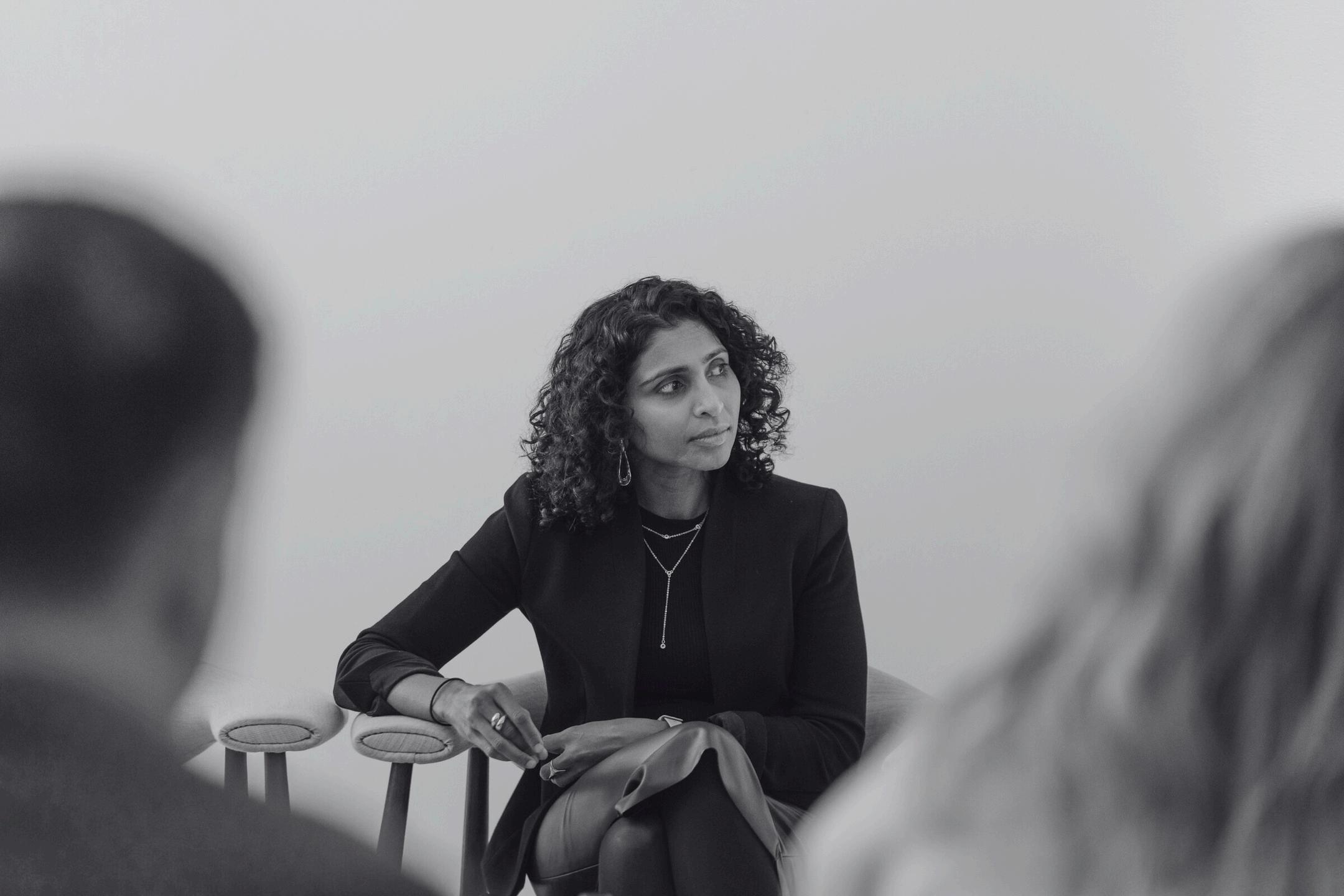
Chapter Seven: Trust, Coherence, and the Burden of Meaning
Sarada Peri, Communication Strategist and former Speechwriter to President Barack Obama.
If the morning wrestled with courage, the afternoon turned to trust, not as an output or a sentiment, but as a condition: something embedded in systems that determines risks and decisions.
Sarada Peri, former speechwriter for President Obama and communication strategist, joined the room from Washington, D C , speaking from inside a country still shaped by the symbolic weight placed on its presidents
In the United States, she argued, leadership has increasingly functioned as a container for meaning; voters do not simply choose policies; they attach identity, hope, and moral direction to their votes, a universal feature of democratic change
The Weight of Symbolic Leadership
Obama's presidency carried an extraordinary weight of that expectation "People didn't just vote for him; they attached their meaning to him " He became a vessel for progress, dignity, and the storyAmerica wanted to believe about itself.
That meaning-making was powerful, but it was also fragile, and when the realities of governing collided with it, what fractured was not only confidence in his government's policies but in emotional trust: the sense that ideology and reality could still coexist.
This reveals something critical about leadership in volatile times: when people invest their identity in a leader, every compromise becomes personal, and the gap between promise and governing reality doesn't just disappoint, it fractures belief This is why inspirational leadership carries particular risk; the greater the aspiration, the more devastating the inevitable gap between vision and execution.
Sarada contrasted this withTrump; however corrosive his politics may be, his relationship with his base rests on a different mechanism.
"They believe he is exactly who he says he is, and that he is speaking for them, not to them."
Trust here is not built through accuracy or shared values, but through consistency, and this coherence matters more than the content.
The point was not endorsement; trust operates emotionally before it operates rationally, and in polarised conditions, coherence can be as powerful as credibility. Something echoed in the same conversation Sarah referenced earlier with GillianTett: faith has replaced fact, and who we believe in is more important than what we believe to be true.
What sat beneath this comparison was not ideology, but assumption. President Obama led on the belief that shared values could still be activated, that if the moral case were articulated clearly enough, people would converge.
That belief was not naïve, but it was contingent on a level of common ground that no longer reliably exists; when that assumption failed, and policies could not sustain it, trust fractured.
Trump made no such assumption; his leadership does not ask people to become something else, nor to recognise values they do not feel they share Instead, he mirrors either who people already believe themselves to be or whom they think they are permitted to become.
Authenticity, Sarada implied, is not the same as virtue; people may reject what he stands for yet still believe that he means it. In times of uncertainty, that coherence, however destabilising, can feel more trustworthy than an aspiration not experienced in daily life
The uncomfortable lesson learned is that coherence can exist independently of morality.Aleader can be consistently self-serving and still be experienced as trustworthy by those who have stopped expecting anything else.
This is why "authentic leadership" is insufficient; what matters is not just coherence, but what that coherence serves.
Trust as a behaviour, not a Message
From politics to business, Sarada challenged the instinct to treat trust as a communications problem, something that can be managed through explanation, reassurance, or narrative control, but through a system built into the DNAof the business.
“You can’t communicate your way into trust; you have to behave your way there.”
This challenges decades of practice in reputation management. When organisations face trust moments of crisis, their instinctive response is to improve the messaging and reassert their values, but this may address the symptom, but it does not solve the cause because trust is not what people think about you, trust is what people expect from you
“You can’t communicate your way into trust; you have to behave your way there.”
Sarada Peri, Communication Strategist
The Questions that Matter
Trust does not begin with consensus or vision statements, but a deeper challenge to how leaders understand themselves, the ability to know who they are, why they are leading and what they stand for, and to act in alignment with that knowledge over time.
Why am I leading? What do I want to achieve? What am I unwilling to compromise?These are not philosophical indulgences but structural questions, because when leaders cannot answer them honestly, organisations feel it, and communication becomes performative, asking people to trust them rather than giving them reason to.
In volatile conditions, Sarada argued, people are not looking for leaders who promise unity or certainty; they are seeking leaders whose internal alignment is strong enough to withstand disagreement It is not about agreement but about legibility: the ability to see how decisions are made, even when those decisions are contested.
Trust is not built in moments, but in patterns, until they can anticipate how power will be used; this is why the environments matter.Trust, as Simon said at the beginning of this conversation, is an asset that compounds when people can speak honestly without fear, when disagreement does not carry personal cost, and when scrutiny is tolerated rather than managed away. This has critical implications for uncertainty; in stable conditions, trust can be built incrementally, but in volatile conditions, trust must already exist for people to follow leaders through it.
Organisations that discover this too late face an impossible choice: move decisively and lose people who don't trust the direction, or build consensus and move too slowly to address the challenge.
Environments that suppress dissent are particularly dangerous. When people learn that challenge carries consequences, they stop providing the information leaders need, and the organisation becomes progressively less intelligent. By the time a crisis arrives, leaders are surrounded by people who have learned not to tell them the truth
Sarada closed by reframing the entire afternoon. “Trust is not the reward for certainty,” she said. “It’s the foundation for navigating uncertainty.” In unstable conditions, people do not need leaders who have all the answers; they need leaders whose behaviour is coherent enough to follow. It is not a consequence of stability but the condition that allows us to navigate it
“Trust is not the reward for certainty.” It’s the foundation for navigating uncertainty.”
Sarada Peri, Communication Strategist
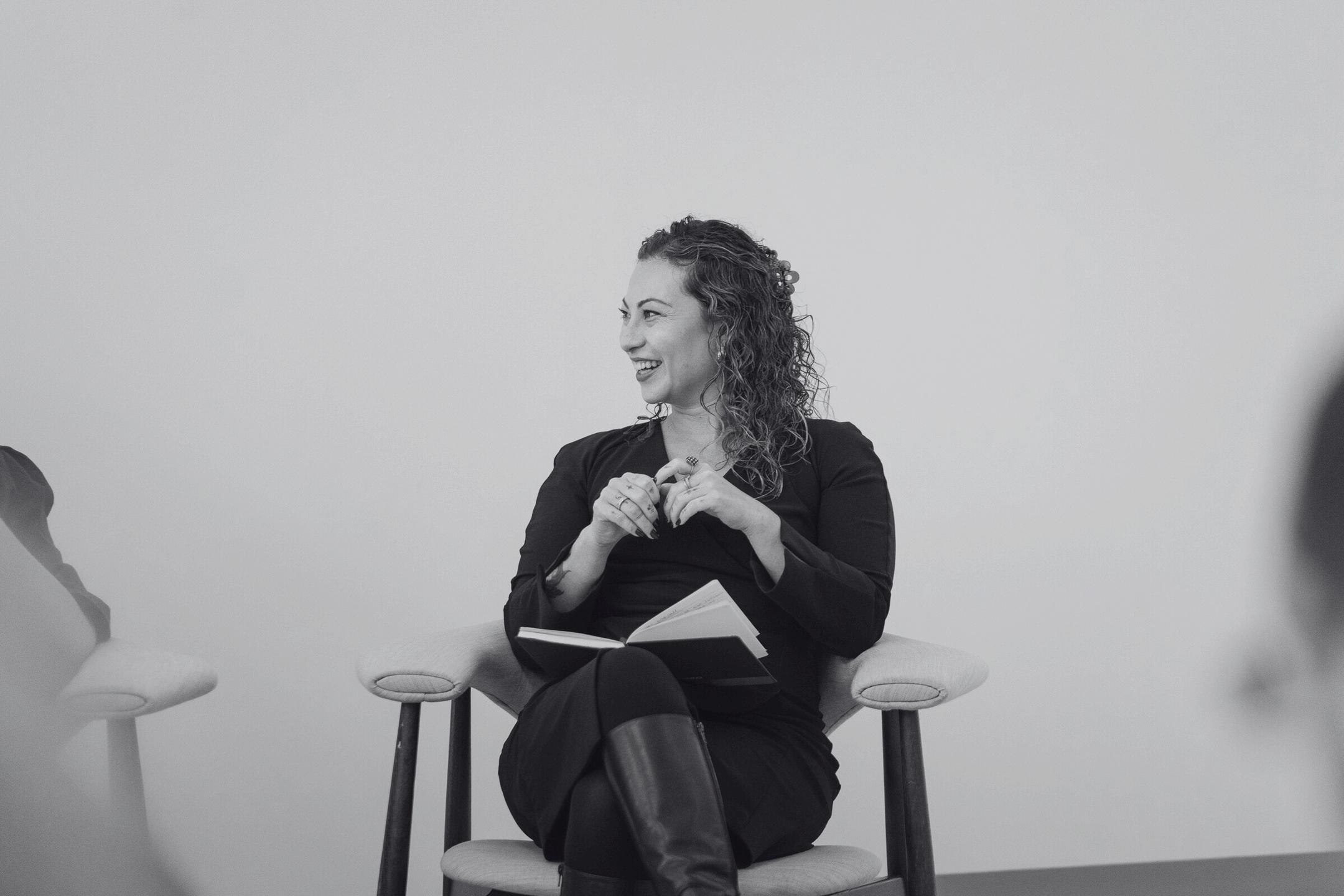
Chapter Eight: Regulation, Ambiguity, and the Architecture of Constraint
Jessica Zucker, Director of Online Safety, Ofcom
If trust, as Sarada argued, must live inside a system, then regulation is the system’s conscience, the structure designed to prevent individual actions from becoming collective harm. Jessica Zucker, speaking in her role at Ofcom, joined the conversation with Sarah to explore whether we place unrealistic expectations on it
“We often look to regulation to provide certainty, but is that ever a realistic expectation?”
A thread that has run through the four hours of conversations is the outsourcing of personal agency to solve or regulate, much like technology companies and freedom of reach, but the sheer scale of information now makes regulation almost impossible.
Jessica’s work lies at the intersection of technology, governance, and public safety, a space where progress outpaces policy cycles and where risks are both immediate and evolving The question, as she framed it, is not how to control change but how to design frameworks strong enough to adapt to it. “You have to provide stability while accepting that you might need to change course.” In this lens, regulation must be both firm and flexible: outcomesbased rather than prescriptive, and systems built for iteration.
The room recognised the parallel challenge for leadership more broadly How do leaders make consequential decisions while simultaneously constructing the framework through which those decisions must be judged? How do you guide teams through work that is changing even as you define it?
Building Systems That Can Hold Ambiguity
Jessica grounded this in her own organisation’s trajectory Ofcom’s online safety function expanded from 20 people to more than 250 in two years. That pace brought structural and ethical questions. “You have to hire for the work you need now,” she said, “while preparing people for work you can’t yet define.”The task is to give people room to grow while still meeting the demands of a system that cannot slow down
Her reflections on the Online SafetyAct captured the tension between urgency and care.The risks were real long before the bill was passed, so the work began early. Moving fast carried risk, but waiting would have carried more.
The aim was not to deliver perfection but to build something stable enough to protect the public and open enough to evolve as understanding improved In this framing, regulation is not a brake on innovation but a scaffold for responsible progress.
The conversation turned to public trust.
“In spaces where perfect solutions don’t exist, you have to be honest about the trade-offs.” Freedom of expression, safety, and privacy do not always align.
The task is not to pretend they can be reconciled without friction but to make those tensions visible and to show how judgment is exercised rather than hiding behind technical language or political defensiveness
Her conclusion returned the day’s opening question to the surface. How do we lead through uncertainty? Not by promising stability that cannot be delivered, nor by outsourcing judgment to process, but by designing systems capable of holding ambiguity, transparent enough to earn trust, and courageous enough to admit what cannot yet be known
“In spaces where perfect solutions don’t exist, you have to be honest about the trade-offs. Freedom of expression, safety, and privacy do not always align.”
Jessica Zucker, Ofcom
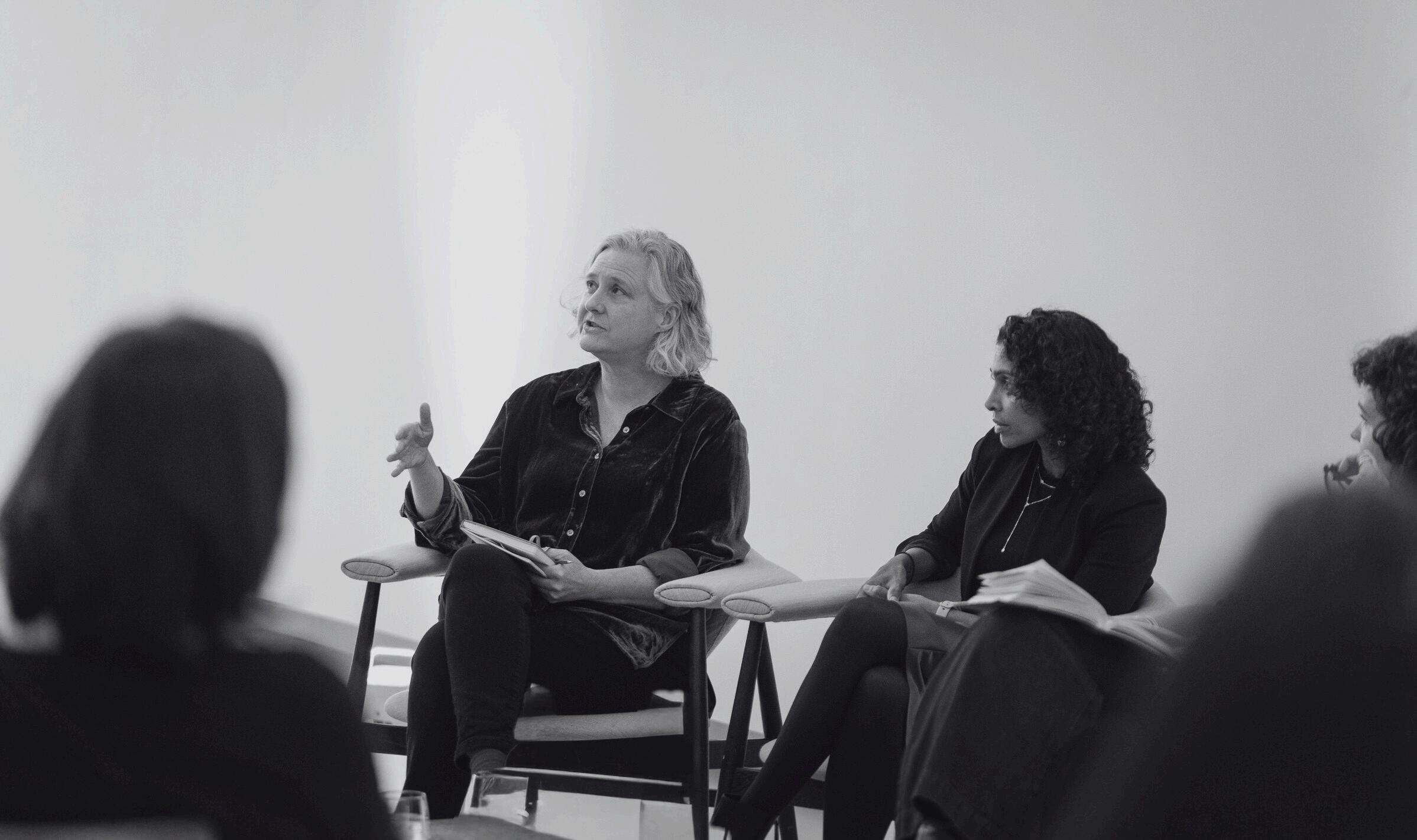
Chapter Nine: Narrative, Power, and the Stories that Hold a Nation Together
Ros Wynne-Jones, Real Britain Columnist, The Mirror.
“The story of Britain depends on who gets to tell it.”
Ros Wynne-Jones opened with that line, reframing the conversation from technological systems and regulatory design to the narratives that give societies coherence.As a journalist and filmmaker whose Island of Strangers series has taken her into communities across the country, she works in the space between perception and reality: between the stories told about Britain and the ones people actually live
She began with a question that carried both simplicity and weight: what happens when a nation stops recognising itself in the stories told about it? For decades, national narratives have been constructed from the centre, political, polarised, and increasingly detached from daily life
“We talk about Britain as though it’s one thing, but the truth is that it’s many places, many versions of itself, and most of them go unseen.”
The decline of local media has widened that distance. Without local reporting, the connective tissue between people and place begins to thin, and public conversation becomes abstracted, dominated by national commentary that rarely reflects daily experience. “When you only see a place through a national lens,” she said, “you lose the texture of real life, the humour, the care, the quiet leadership that keeps things going.”
Her own work is not nostalgia but participation “When reporting is done with people rather than about them,” she noted, “it becomes a civic act ” In this sense, journalism is a form of leadership, not leadership that announces or instructs, but leadership that listens, convenes, and reflects a community back to itself.
Narrative as Power
The conversation turned to power and portrayal: who decides which stories are told, and to what end? Narrative becomes a form of control because it shapes what people believe is possible.
“If national narratives no longer unite us, then perhaps leadership now lives in fragments, in acts of care, persistence, and everyday solidarity, rather than in institutions or titles.”
This resurfaced a more complex question running beneath the day: in a period of uncertainty and institutional fatigue, have we outsourced too much responsibility for meaning and cohesion?
Ros suggested that waiting to be represented accurately is itself a form of passivity
“We can’t wait to be part of the story; we are the story.”
The hour closed on the human scale, amid inequality, fatigue, and political division, she described the quiet forms of hope she encounters across the country: the people who show up; who keep services running; who make life livable in the margins These acts, she argued, are not peripheral; they are foundational stories that hold a nation together the ones that rarely make headlines but shape the lived experience of the country far more than any national narrative.
In this framing, leadership through uncertainty is not only institutional but also emerges in fragments across relationships, care, and the everyday decisions that maintain the fabric of community.
Narrative, like trust and regulation, becomes a system condition; the stories told, who tells them, and how they are carried determine whether a society recognises itself, and whether it believes it can endure and change
“We can’t wait to be part of the story; we are the story.”
Ros Wynne-Jones, Daily Mirror
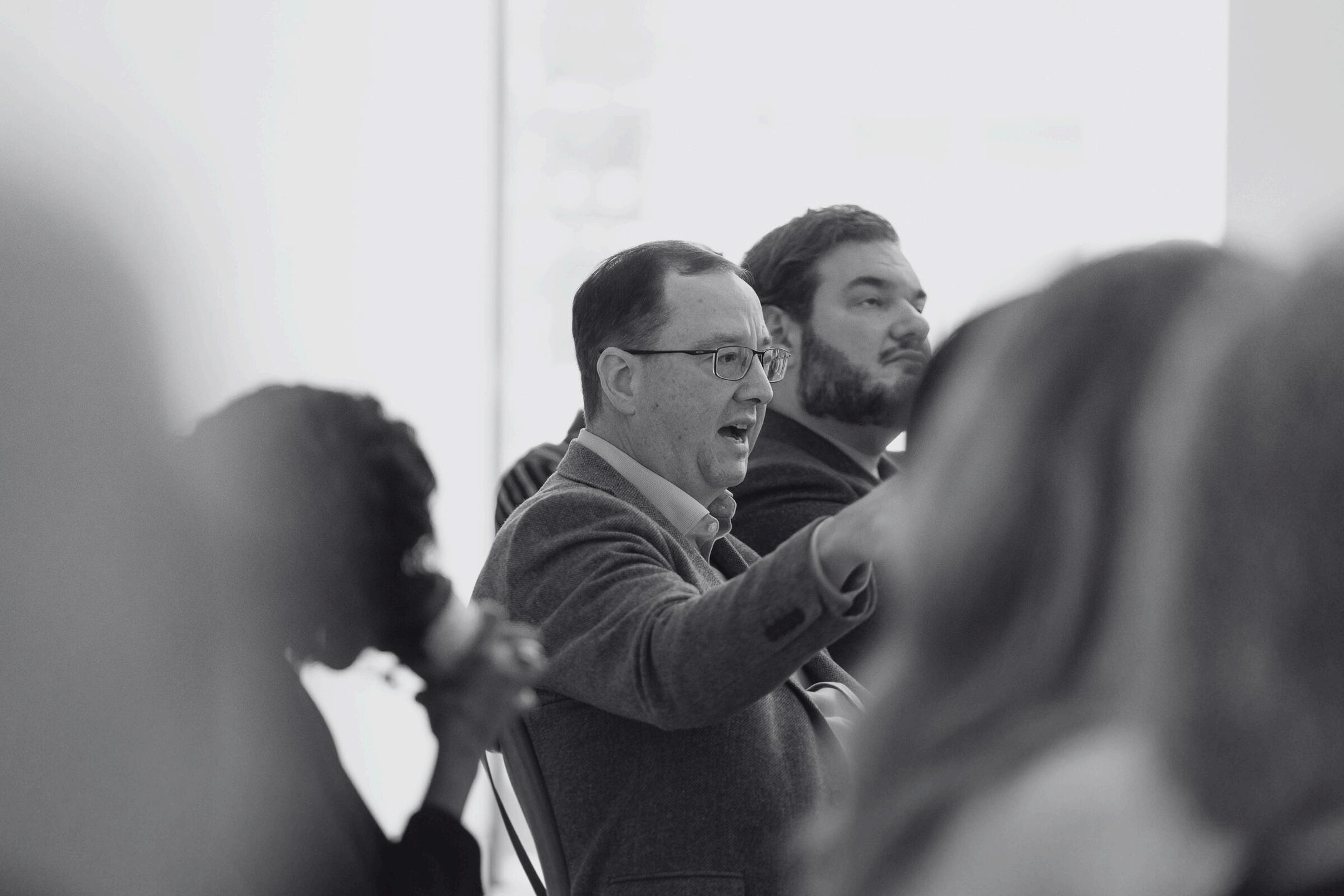
Conclusion: The Shape of Leadership in Uncertainty
Marshall Manson, One Question Board Member
What struck me as we reached the end of the day was that the One Question, “How do we lead through uncertainty?” did not narrow as the conversation unfolded, it widened What began as a leadership question became a systems question, and then a question about the conditions we create for others to act at all.
What the room surfaced was not a set of techniques or answers, but a pattern of conditions.
Simon insisted that trust is not a message to be delivered but a behavioural system that accumulates over time.
From Stephanie, the reminder that long-term work only survives when someone is willing to carry uncertainty on behalf of others, long enough for movement to follow.
From Daniel, the challenge that abundance is possible, but destabilising, and that progress forces us to decide what friction we are prepared to preserve
From Tej, the warning that preservation, when left unchecked, becomes a drag on collective dynamism rather than a source of stability.
From Sadia, the insistence that meaning cannot be engineered out in the pursuit of performance without creating new forms of risk.
And from Ros, the observation that a country’s coherence depends on whether people can still recognise themselves in the stories being told about them.
Across it all, one truth remained: uncertainty is not the interruption; it is the environment.
I believe leading within it requires a different quality of attention, a closeness to the work, because that is where fragility and possibility first surface. Close to the people affected, because trust is negotiated through relationships, not intentions. Close to consequence, because systems reveal themselves in outcomes long before they are acknowledged in strategy And close to the truth, even when that truth is uncomfortable or still forming
There was also a shared honesty about limitations, limits of systems designed for a slower, more linear world, but limits did not produce paralysis; they clarified where leadership actually begins.
The leaders who moved most clearly through this conversation were not those claiming certainty, but those practising coherence: aligning belief with behaviour, intent with impact, and decision with responsibility. They understood that courage is rarely theatrical; more often, it is the discipline to act without complete clarity and to hold direction long enough for learning to catch up
What Sarah and One Question have curated here deserves naming. This was not simply a conversation, but an architecture: a room designed to hold a question long enough for people to think beyond their roles and resist the urge to perform.
That is a form of leadership in itself It is also an act of trust: the belief that if you gather the right people and remove incentives for certainty, the intelligence in the room will surface something larger than any single perspective.
If there is an answer to the question, it is not a neat one, but there is a discernible pattern
Leadership in uncertainty is a practice of alignment, attention, and stewardship. Alignment between what we say and what we do. Attention to the systems in which our decisions land. Stewardship of the futures our choices quietly make possible.
The most critical shift across the day, in business, in government, in community, is that leadership is no longer held solely at the top; it is distributed and emerges in behaviour long before it is formalised in structure.
This means that uncertainty is not only a constraint; it is an invitation: to design more carefully, to listen more closely, and to act with grounded courage that does not depend on prediction.
We will not resolve uncertainty, but we can shape the conditions under which better decisions, better systems, and better stories emerge.
And that, I think, is the work ahead
MANYANSWERS
MANYANSWERS
What follows are five answers drawn from this year's conversations, though many more emerged throughout the year. Solving challenges or preparing organisations for long-term growth is rarely straightforward, particularly for heritage businesses or publicly traded companies But what the conversation revealed is that uncertainty is not only a constraint, it is an invitation
An invitation to design more carefully, to lead less fearfully, and to build organisations capable of adapting without breaking. These answers are offered not as solutions, but as a starting point, practical provocations to inform your leadership and shape the conditions for better decisions, ideas and opportunities to emerge It is how we move towards a different kind of leadership.
If you'd like to explore the many answers with us, or bring a One Question briefing into your organisation to share how we lead through uncertainty in 2026, please email the team or me
1. TRUST ISN'T EARNED THROUGH COMMUNICATION—IT'S LOST IN THE GAP BETWEEN WHAT WE SAY AND WHAT WE REWARD.
Organisations lose trust not because they lack values, but because their systems contradict them. The question isn't what you claim to prioritise, it's what your incentives, decision-making processes, and proximity to consequencesactuallyreinforce.
When trust is built as infrastructure rather than narrative, it doesn't just speedupwhatyou'realreadydoing;itcreatesnewpossibilities.
2. SHORT-TERM PRESSURE DOESN'T DELAY LONG-TERM INNOVATION; ITMAKES ITSTRUCTURALLYDIFFICULT.
Quarterly metrics, electoral cycles, and immediate returns don't slow innovation; they prevent it. Publicly traded companies face a choice: create structures that protect long-term work from short-term demands (separate governance, founder control, explicit investor communication) oracceptthatinnovation,sustainedchange,and,inturn,adaptingtonew opportunitieswillremaindifficult.
Organisationsthatfosterlong-termthinkingdon'tjuststrengthenthrough uncertainty;theybuildhopeforthefuture.
3. COMMUNITY ISN'T A STAKEHOLDER TO MANAGE, IT'S THE INFRASTRUCTUREWE DEPEND ON.
Organisations engage communities after decisions are made, through consultation or CSR, and then face social risk as disruption because the relationship was never real. Embed community into operations as actual risk mitigation: strengthen suppliers, give advisory boards real power, recruitlocally,andco-designwithusers.
The"S"inESGisrelational,nottransactional.
When community becomes infrastructure, it doesn't just reduce risk; it createsagenuinecompetitiveadvantage.
4.AIACCELERATESWHATALREADYEXISTS.
Organisations adopt AI without asking whether their systems are worth amplifying or whether their culture aligns with the outcomes they aim to achieve.Technologydoesn'tfixbrokenprocesses;itscalesthem.UseAI toextendjudgement,notreplaceit,andonlyafterasking"towhatend?"
CreateconditionswherecriticalthinkingenhancesAI'soutputratherthan AI replacing human input, seeing technology as an opportunity, not just efficiency.
5. COHERENCE MATTERS MORE THAN CONSENSUS, BUT ONLYIFOUR BEHAVIOUR IS CONSISTENT
People don't trust leaders who promise perfection; they trust leaders whosebehaviourtheycanpredictorunderstand.Coherence,theabilityto see how power will be used, matters more than agreement in uncertain times. Align what you believe, how you behave, and what you communicate and close the feedback loop. Be consistent enough to follow,evenwhenpeopledisagree.
Coherence creates the conditions where people choose to follow you throughuncertainty.
Mapping Uncertainty: What UK Audiences Actually Care About
Joe Harrod, Co founder, Signify.
In 2025, One Question and Signify developed a data partnership to explore how the questions asked across the year are understood more broadly by the country, and in particular, the annual conversation about how uncertainty manifests in UK media and social behaviour.
Our analysts used AI-enhanced research to examine all viral coverage of doubt and uncertainty in UK media over the previous twelve months and how this news was shared on social media The study period preceded the ceasefire in Gaza, so headlines were naturally dominated by Israel and Ukraine, but volatility from the USA and trade tariffs were already visible factors.
The results were quintessentially British: over a third of uncertainty and doubt from UK residents related to sport, especially football Perennial topics like house prices were also clearly visible. However, by focusing on stories and issues that drove readers to reshare on social, analysts identified what was causing the most concern for UK web users:
Trump diplomacy, tariffs, and wars in Israel and Ukraine dominated media reaction in the year to October 2025
UK audiences were very worried about immigration and crime two areas where levels of coverage and anxiety bear no relation to statistical data.
Environmental concern was significant, but focused on farming
UK consumers were not significantly engaged with worries about the coming impact ofAI
This kind of issue triage is one of the benefits ofAI for researchers, allowing rapid assessment of issues that matter at a population level. However, it necessarily skews towards topics most dwelt upon by the UK media and politicians.
In the context of the One Question Annual Conversation, geopolitical factors especially tariffs and climate change remain salient, but business leaders and investors were rightly focused on economic viability and the impact of technology. Throughout the day, two models for leadership emerged, both designed to inspire confidence in teams, investors, and consumers: protective leadership and distributed leadership
Protective leadership, as exemplified by Simon Rogerson and Daniel Hulme, focuses on shielding teams and inspiring innovation by providing space and time to work. The approach was memorably compared to Gandalf protecting the hobbits on their quest. Leaders carve out freedom and budgets for teams despite economic headwinds and external challenges, protecting staff, investors, and brand value by anticipating and acting on macro trends whilst teams focus on their mission.
Distributed leadership is less focused on the visionary leader and more based on clear objectives and devolved responsibility. Faced with uncertainty, management sets direction, but security for staff comes from knowing they have a role to play Confidence for investors and consumers rests on clear statements and vision. This approach was further evident in Stephanie's commitment to a 10-year strategy to support women's football.
Of course, the two models are not exclusive. Effective leadership combines both: protecting teams and taking work off their plates, whilst giving them agency and setting clear goals However, the dimension of trust and accountability feels increasingly vital in uncertain moments For instance, it feels healthier to have a team think about howAI can increase automation in their roles and free them up for other tasks, rather than doing that thinking in a separate silo unless, of course, identifying redundancy is the goal.
Clear objectives internalised by teams also help brands be pragmatic. Consultancy firms and corporates ditching commitments to diversity and sustainability abounded in the second half of 2025. This dismayed many onlookers, but in fact, these values were only superficially held and less critical than retaining staff By contrast, businesses with strong core beliefs and a good grasp of their own customer data were less likely to change course under external pressure.
Whether setting goals, assigning responsibilities, or deciding how to respond to externalities, it helps to be in command of two data sets: what matters to your brand and what matters to your customers The first is available from sales data and years of experience The second is determined by customer values, their media consumption, and a range of external factors. Staying in touch with customer needs so you can respond to uncertainty in ways they appreciate can turn uncertainty from a disruptor to a growth driver.
The best way to leverage change is to base strategy, response, and tactics on a core set of values or beliefs shared by leadership and staff and recognisable to investors and the market.
However, to turn insight into action, you also need to ask the right questions. When you take away all the externalities and noise, what are you trying to do?
Leadership as Collaborative Advantage
Carley Sparrow, Partner, Headland.
Leadership has never felt more challenging or more exposed.
The breakneck pace of AI adoption, geopolitical instability, climate-driven emergencies, the rise of misinformation and disinformation and deepening culture wars, the list could go on. Navigating these paradigm shifts is even more difficult for leaders as the boundaries between business, politics and society have become increasingly blurred, and decisions that once sat quietly in boardrooms now play out in public.
As the One Question annual conversation explored across nine different perspectives in business, policy and community, values and behaviours become the constants in a world awash with uncertainty and the exposure it brings When institutional norms are disrupted or, frankly, thrown out, these can be the anchors that enable leaders and organisations to chart a path through. Those with clearly defined and deeply embedded values will undoubtedly have an advantage.
One behaviour essential in a sea of uncertainty is collaboration It’s not a silver bullet, but it certainly holds some of the answers to how organisations can navigate this increasingly volatile, fast-moving landscape, where trust is becoming more fragile. For any organisation, it builds resilience, sharpens judgement, accelerates innovation, and derisks decisions. It brings together perspectives that no single institution can hold, allowing leaders to navigate trade-offs with greater confidence and legitimacy
This value is what we at Headland call “Collaborative Advantage”, and we believe it should be a defining feature of modern leadership.
But too often, leaders fail to connect collaboration to tangible outcomes, which makes the word feel like table stakes; a cliché rather than a strategy for commercial opportunity.
The opportunity, then, is not to eliminate uncertainty but to work with it deliberately Leaders who recognise personal agency and institutional power as mutually reinforcing, rather than competing forces, are better placed to act with the legitimacy required for meaningful collaboration.
This guides decision-making that stands up to scrutiny and endures under pressure In uncertain conditions, that is not simply good leadership It is the difference between reacting to events and shaping the environment in which trust, value and progress are created.
Carley