No part of this publication may be reproduced without prior permission of the publisher
This includes all text and Images, authors and contributors work, being photography, graphic art or editorial copy, and cannot be reproduced or used without prior consent
As we are a digital only publication we welcome you sharing the link to other readers to enjoy
Views expressed by the authors and contributors are not neccesarily those of the publisher
For full terms and conditions - Visit https://onecreate co
For Advertising, Editorial & Production Enquiries
Please Contact:
Our Team.
Editor in Chief Murray 'Buzz' Russell Langton
Senior Editors Curt Hugo Wurlitzer / Darren Richardson
Executive Art Directors Buzz Langton / Anna Leapman
Columnists Buzz Langton, Curt Hugo Wurlitzer, Isabella Hoare
Researcher Nutty Tanawat
Photography / Video / Editors Buzz Langton / Darren Richardson
Production Assistant Anna Leapman / John T
Interviews
Simon Woodroffe OBE
Dr Kanika
Peter Baines
Claire Baines
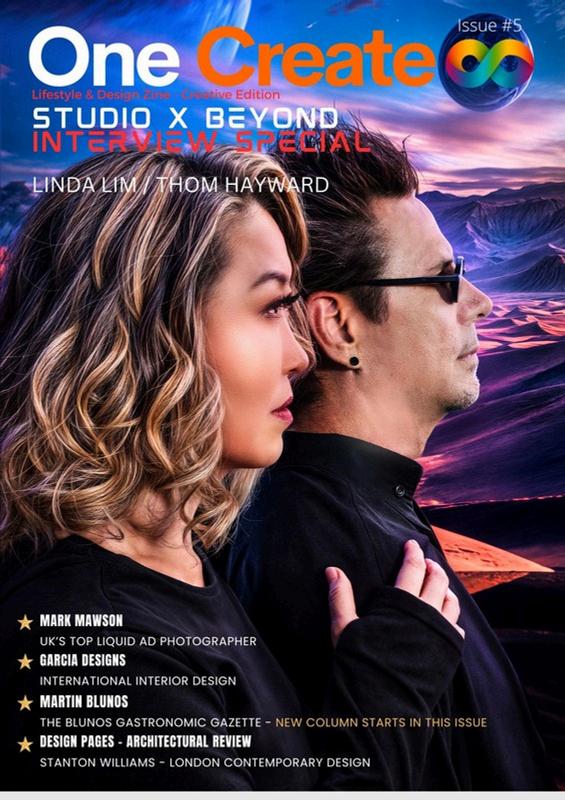
Linda Lim & Thom Hayward
Martin Blunos
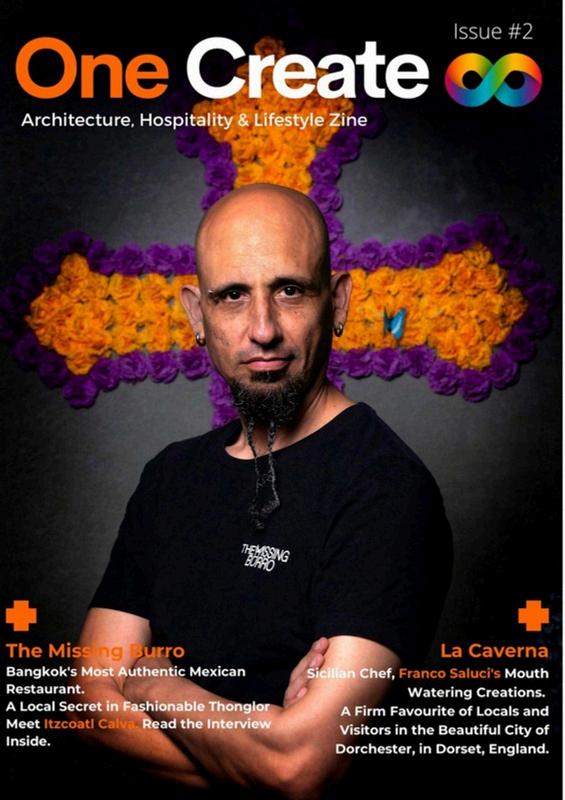
Itzcoatl Calva
Mark Mawson
Photography Contributors
Buzz Langton
greggormanphoto
[All rights reserved]
EDITORIAL OFFICES + POST PRODUCTION
Bangkok - London
EDITORIAL / ADVERTISING INTEREST CONTACT US AT: INFO@ONECREATE CO
One Create Magazine is published by One Create Agency Ltd , ONECREATE CO info@onecreate co
One Create.
Contents.
Editor's Letter
Murray 'Buzz' Russell Langton
The Liminal Desk
Introducing One Create's new YouTube channel
Twenty Years Running
Peter & Claire Baines on legacy, purpose, and the long game
The Bangkok Job
Clive Saunders on the city, the work, and the life between
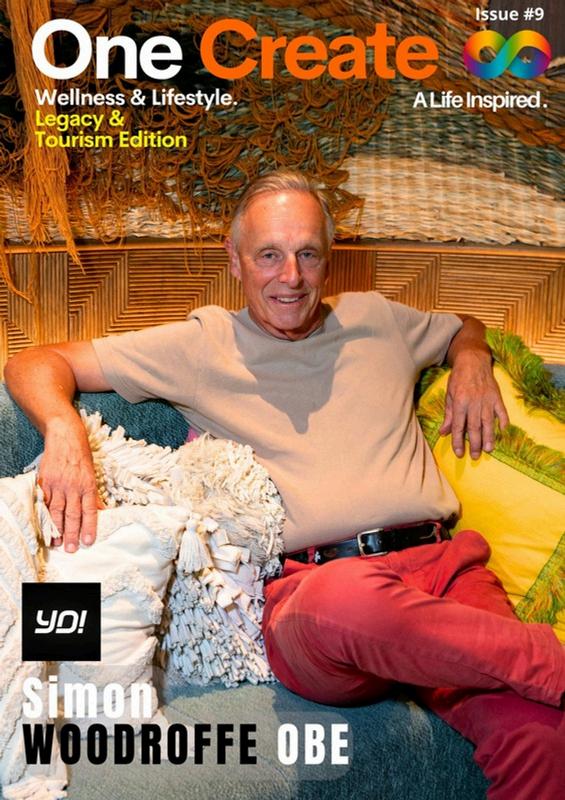
Simon Woodroffe OBE
The man who built Yo! Sushi on instinct, nerve, and taste
Full Throttle Executive
Speed, precision, and the business of performance
Iron Clad. Iron Chef.
Martin Blunos Michelin stars, Bangkok, and what endures
The Missing Burro
Itzcoatl Calva food, memory, and the journey back
Liquid Elegance
Mark Mawson underwater photography at the edge of beauty
From San Francisco to Studio X Beyond
Linda Lim & Thom Hayward on reinvention and creative space
Osaka Mono
80km on foot photography and haiku by Buzz Langton
Homes and More
Premium property and intelligent living across markets
Hospitality Focus
The spaces and people shaping Southeast Asia's hospitality
Bangkok Micro Guide
Bangkok and surrounds through a considered lens
Supplements Yes or No?
Science-based, balanced, and free of agenda
TRT with Dr Kanika
Testosterone replacement therapy the truth behind the treatment
H AT ' S N E W
AI and You
The loop, the dream, and the pub in Cornwall
Myth Busting
The health advice everyone repeats and what the full picture looks like B O O K R E V I E W S
Yo! Man — Simon Woodroffe OBE
White Fox Publishing June 2026
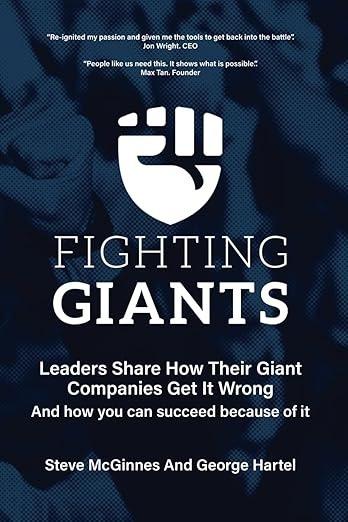
Fighting Giants
Steve McGinnes & George Hartel outmanoeuvring the big players
Editor-in-Chief's Letter.
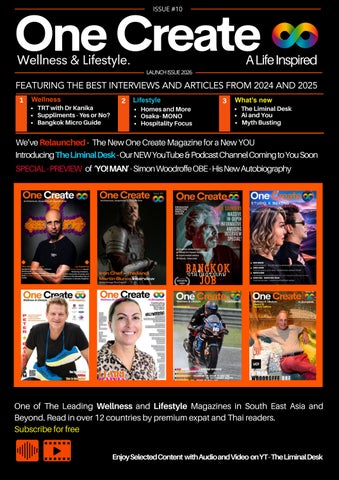
Welcome to Issue 10 of One Create Magazine
Ten editions Twelve countries Two years of conversations with people who actually have something to say Rather than simply pressing forward, we wanted to look back, take stock, and celebrate the work that got us here
This issue is part greatest hits, part fresh ground We've pulled the best interviews from every edition, abridged for quick reads or audio narration But this isn't a nostalgia trip
Dr Kanika cuts through the noise on TRT with clarity that's long overdue. Our Bangkok Micro Guide delivers local knowledge that simply doesn't exist on Google Maps Homes and More takes a fresh look at how we live and what we surround ourselves with Riding The Blue Jasmine takes us aboard one of Thailand's most storied railway journeys And Hospitality Focus puts the spotlight on the people and places shaping how Bangkok eats, drinks and gathers
We also officially introduce The Liminal Desk our new YouTube channel and podcast exploring health, longevity and modern living. Think of it as One Create's curious, slightly restless younger sibling.
And we have something special Simon Woodroffe OBE, one of Britain's most original entrepreneurial minds and a man I am proud to call a close collaborator, has a book coming Yo! Man is the story behind YO! Sushi, YOTEL, Dragons' Den, and three decades of reinvention told with the kind of honesty that most people in his position would never allow It is out in June Read our preview inside
We're publishing in the Year of the Fire Horse Restless, creative, unafraid of burning things down to build something better That energy runs through everything here
Thank you for reading Thank you for listening Here's to the next ten
EDITOR-IN-CHIEF
Buzz Langton
One Create Magazine - Issue 10 - 2026
The Liminal Desk
A channel for people in
The liminal is the thresh interesting conversations tend to happen with people who are mid transition, mid reinvention, or simply thinking carefully about something that does not have an easy answer yet.
The Liminal Desk is a channel for those conversations Not defined by a single subject, but by a quality of attention Business, creativity, health, identity, place, purpose whatever the topic, the standard is the same: honest, considered, free of performance The guests are people with something real to say, and the format gives them the space to say it properly
New conversations weekly Pull up a chair
THE LIMINAL DESK
YouTube new videos weekly youtube com/@TheLiminalDesk
ALSO FROM ONE CREATE
One Create Magazine Issue 10 onecreate co
Twenty Years Running
A story of purpose, endurance and hope
E D I T O R ' S N O T E
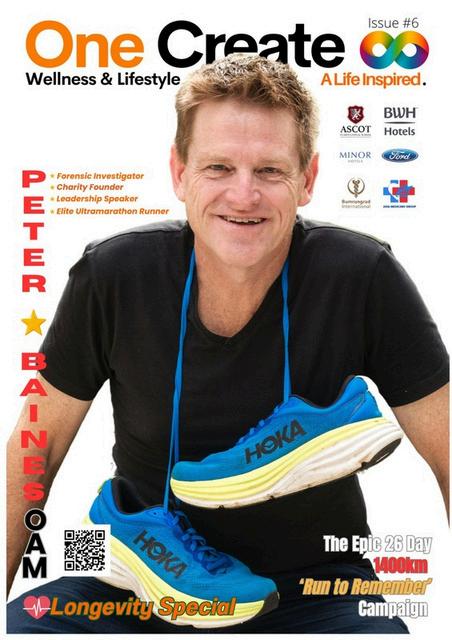
Some stories find you rather than the other way around Peter Baines walked into a Four Seasons meeting room in Bangkok with the quiet composure of someone who has seen things most of us will never see and chosen, deliberately, to do something about it I interviewed him for Issue 6, ahead of his extraordinary Run to Remember a 1,400 kilometre run across Thailand to mark twenty years since the 2004 Boxing Day tsunami It was one of the finest conversations I have had in ten years of interviewing people
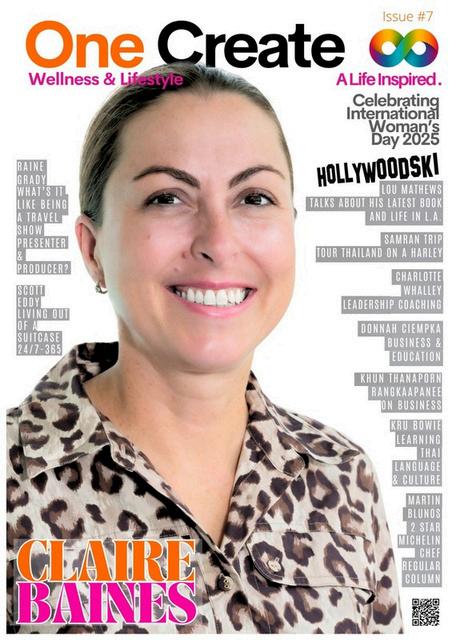
Claire Baines came in Issue 7 As CEO of Hands Across the Water she was already carrying one of the most demanding roles in Thailand's charitable sector During the Run to Remember she carried something more the operational weight of a 26 day ultramarathon and the emotional weight of watching her husband push himself to the very edge of what a human body can sustain She made decisions others simply could not have made That takes grit, warmth, and a rare kind of balance
One Create doesn't write cheques. What we do is give space to stories that matter. This is one of them.
BUZZ LANGTON EDITOR-IN-CHIEF
On a sweltering Sunday afternoon in Bangkok, Peter Baines settles into a chair in one of the Four Seasons meeting rooms, his composure belying the frenetic pace of his day Just an hour earlier he had addressed a rapt audience of fifty business leaders, his words a blend of hard-earned wisdom and compassionate insight.
Our meeting, squeezed into a brief window of calm, stands in stark contrast to the gruelling regimen that awaits him five days of intense training in the Thai countryside, each day a punishing forty kilometres The air conditioning hums softly, offering a stark contrast to the tropical heat outside, and an even starker one to the challenge Peter Baines is preparing to undertake
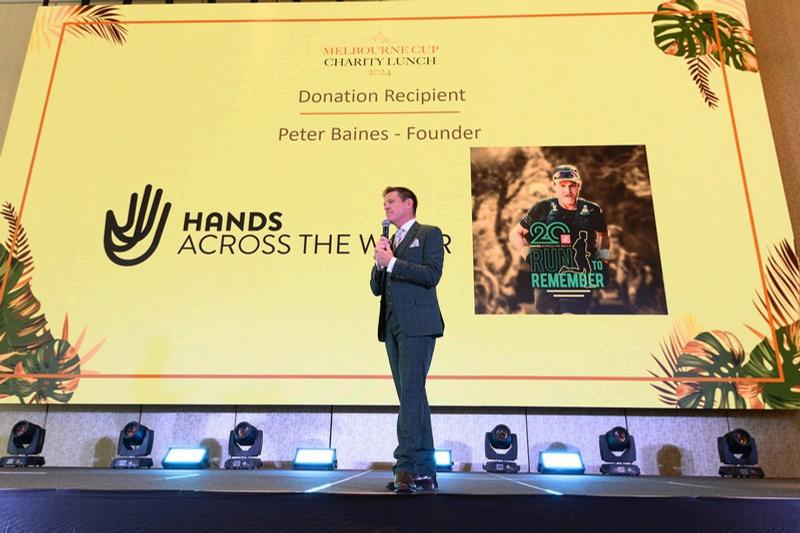
This former forensic investigator turned humanitarian sits across from me, his lean frame and weathered hands bearing testament to a life spent in service of others In December, Peter Baines will embark on a 1,400 kilometre run down through Thailand, a journey that seems to mirror his life's trajectory long, arduous, and driven by an unwavering sense of purpose As he sips water from a nondescript bottle, a habit ingrained by years of ultra-marathon training, Peter reflects on the path that led him from crime scenes in Sydney to tsunami-ravaged shores in Phuket, and ultimately to the helm of one of the largest Australasian charities in Thailand
He transitioned into forensics while simultaneously pursuing a law degree, driven by an insatiable curiosity and a desire to ensure legal compliance in his cases This dual pursuit of practical experience and academic knowledge formed Peter Baines into a detail-oriented and meticulous professional, qualities that would serve him well in the complex world of international disaster response
The 2002 Bali bombings marked Peter's first foray into international crisis response, positioning his team as key players in Southeast Asia's forensic landscape But it was the 2004 Asian Tsunami that would prove to be the crucible in which Peter Baines' future would be forged
"We faced an unprecedented challenge," Peter recalls, his voice dropping to a near whisper, as if the weight of the memories demands reverence "Identifying over 5,395 victims among nearly 300,000 who died across the region The scale was staggering, surpassing even 9/11 in its devastation "
As he speaks of those harrowing days bodies exposed to water and heat, the race against decomposition, the sheer logistical nightmare one can almost feel the oppressive weight of what he carried It is a testament to his resilience that he can revisit these memories without visible distress Instead there is a quiet determination in his eyes, a look that suggests that from this catastrophe, purpose was born
It was in this crucible of crisis that Hands Across the Water was conceived During his third rotation in Thailand, Peter met a group of children who had lost their families and lost their homes He couldn't walk away "Just ten months after the tsunami," Peter notes, a hint of wonder in his voice "I was still serving as a forensic investigator when we founded the charity "
"We aim to create a life of choice for these children rather than one of chance "
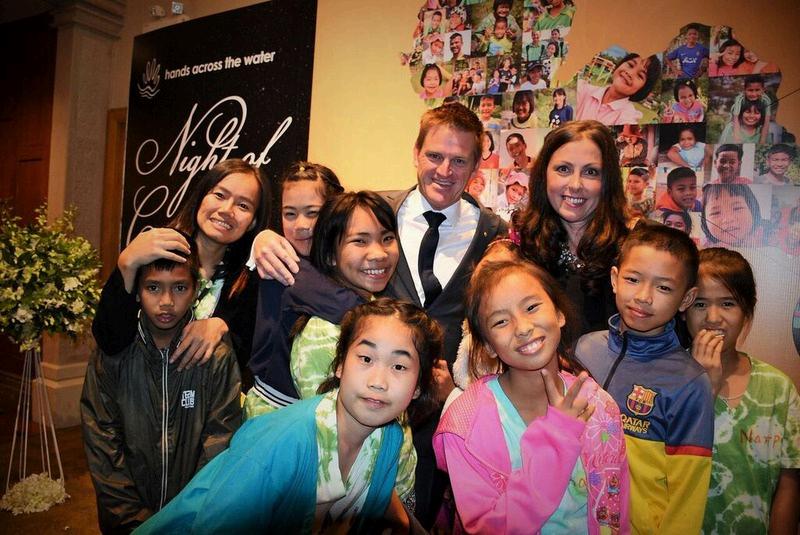
Today Hands Across the Water stands as one of the most significant Australasian charities operating in Thailand, having channelled over 750 million baht into the country This philosophy of empowerment rather than mere assistance permeates every aspect of the charity's work From education to vocational training, from hospitality training centres in Khao Lak to digital skills hubs in the Isaan region, the goal is consistent and clear to nurture self-sufficiency, to transform victims into victors
Four major initiatives are currently in development a digital skills centre in Baan Home Hug, a hospitality training centre in Khao Lak close to obtaining its licensing, an agricultural learning centre on land recently donated by the Phang Nga government, and a registered training organisation to provide pathways for young people who choose not to pursue university Each one designed not to provide immediate aid alone, but to create sustainable futures
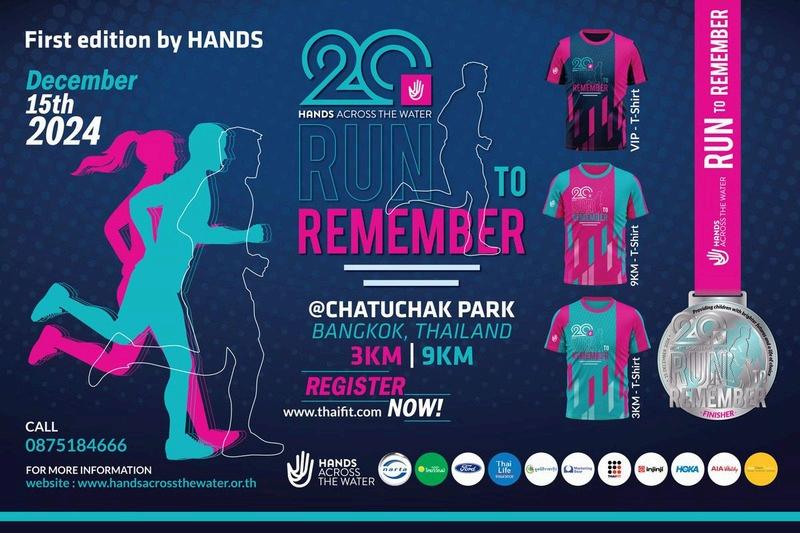
As our conversation turns to the monumental task looming on Peter Baines' horizon, his eyes light up with a mixture of anticipation and resolve Starting December 1st 2024, Peter Baines and his long-time friend and supporter of Hands, Greg Wallace, will embark on a 1,400 kilometre run across Thailand, from the northeastern town of Yasothon to Takua Pa in the south The run will conclude on December 26th, coinciding with the twentieth anniversary of the tsunami that forever altered the course of Baines' life
"Sixty kilometres a day for twenty-six days," Peter states matter-of-factly, as if reciting a grocery list rather than describing a feat of near-superhuman endurance "To the best of our knowledge we'll be the first to run this specific 1,400 kilometre route And certainly the first Australians to do so "
Heat management is a serious concern Thailand's tropical environment adds a layer of difficulty that no training programme can fully prepare you for Peter's nutritional strategy is a blend of science and intuition l
attempts No targets beyond each day that I've previously run "
This embrace of discomfort, this willingness to push beyond perceived limits, is the thread that connects Peter Baines' past life as a forensic investigator with his current role as a humanitarian Both require a steely resolve A capacity to face the darkest aspects of human existence and emerge not broken, but galvanised
The Run to Remember is not just about the physical act of running It is a campaign designed to raise awareness and funds for Hands Across the Water's ongoing work, with an ambitious goal of raising one million U S D A c
Ambassador and the Bangkok Governor, a testament to the bridges Baines has built between Australia and Thailand, all in service of children in need
As our time together draws to a close, I ask Peter for one piece of advice he would like to leave with our readers His response is immediate and profound "Feed your soul," he says, his eyes alight with conviction "When we do work that feeds our soul, there are immeasurable returns that come to us in many different ways "
As I step out of the air-conditioned sanctuary of the Four Seasons into Bangkok's sweltering heat, I cannot help but feel a sense of awe In a world often defined by short-term thinking and quick fixes, Peter Baines stands as a testament to the power of playing the long game His run may be measured in kilometres But the true distance he has covered from forensic investigator to humanitarian leader is immeasurable
"It feels like it was such a privilege to be part of that event," Claire Baines says, reflecting on the Run to Remember with the quiet authority of someone who lived every single kilometre of it, just not always on foot
Claire Baines is the CEO of Hands Across the Water That title alone carries enormous weight She oversees one of the most significant Australasian charities operating in Thailand, managing homes, staff, fundraising, strategy, and the long-term vision of an organisation that has channelled over 750 million baht into the c f o r t y
Her journey to this point began in journalism After graduating she worked for a magazine company before finding herself drawn to the energy and impact of events "I went from wanting to be a journalist but after experiencing the behind the scenes of events, I was drawn to their energy and impact And that inspired me to be part of that world and would launch me into the next fifteen years of my career " Those skills in creating experiences and managing the moving parts of large-scale operations would prove invaluable when she eventually stepped into the CEO role at Hands
The charity's fundraising model had been built largely around signature charity bike rides, raising over two and a half million dollars through seven events alone Then COVID hit, wiping out seventy-five percent of their fundraising events overnight The crisis forced a strategic pivot "We needed to get our foundation established in Thailand In the long term, we will look at relocating HQ, employing a local Thai CEO " This isn't an exit strategy It is a longevity plan, ensuring the charity will outlive its founders
"It's not for us Australians to come over and say, this is how you should raise your children "
It is a philosophy that permeates everything Hands does working with Thai staff to raise Thai children rather than imposing Western methodologies "It's not for us Australians to come over and say, this is how you should raise your children," Claire says firmly
It was against this background of strategic evolution that Peter's Run to Remember emerged. The idea came to him in September 2022 He approached Claire with a characteristically audacious proposal to commemorate t a d e c
The scale of what that actually meant bears emphasising Running 1,400 kilometres over twenty-six days means completing an ultramarathon every single day At fifty-eight years old, in Thailand's punishing humidity with temperatures approaching forty degrees celsius, Peter Baines placed himself in the top one percent of ultramarathon runners globally Perhaps even unfinishable But Peter finished it, on time, twenty years to the day of the 2004 tsunami anniversary on December 26th 2024
The logistics of supporting such an endeavour proved equally daunting Claire assembled a core support team of ten people, each with specialised roles Her father became Peter's decision-maker for medical emergencies, specifically to remove the emotional toll those calls would take on her While Claire herself juggled CEO responsibilities with providing direct support to her husband, she also ran her own cumulative marathon throughout the entire event "I made a decision to run cumulative kilometres, working my way up to twenty-six kilometres a day So day one, a kilometre, day two, two kilometres, and then I finished with twenty-six kilometres at the end " By the final day she had completed 351 kilometres an extraordinary achievement that existed entirely in the shadow of everything else she was managing.
"I'm
empty. I have nothing left."
Mornings she ran alongside Peter Midday she handled fundraising and operational matters Afternoons she cycled alongside him through the most punishing heat of the day The team developed a meticulous daily routine, breaking each day into three blocks of twenty kilometres Up at four-thirty Peter awake at five Breakfast on the road by five-thirty Structure was everything Consistency was the difference between finishing and not finishing
Despite careful planning there were inevitable crises On December 14th, Peter developed excruciating shin splints that felt, in his own words, like a screwdriver being dug into his leg The team managed the distance carefully, adjusting the back end of the day to keep him moving forward without breaking him entirely
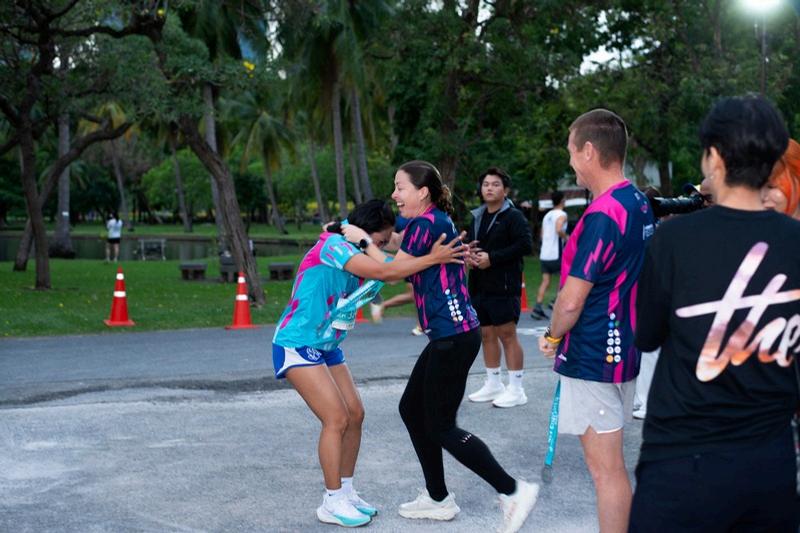
That evening, Peter finished his kilometres, pulled out a spray can, and marked the road at the exact point where he stopped Then the team drove back to Bangkok The following morning, December 15th, Peter appeared at Chatuchak Park in the pre-dawn darkness for a mini-marathon event attended by 390 people the
On Christmas Day, the second to last day of the journey, the team strategically split the final fifty-one kilometres over two days so that Claire could complete her own cumulative challenge alongside him Twentyfive kilometres on Christmas Day Twenty-six on Boxing Day, the final day of Run to Remember Peter's adult children flew in from Australia to join them for these last legs, making the final stretch even more meaningful
"That was his true target, the moment that carried the most weight That was where the emotion set in "
The culmination at Wat Yan Yao temple in Khao Lak held a significance that no finish line tape could capture "I remember turning onto the main road and seeing the top of Wat Yan Yao," Claire recalls "Such a significant moment for us and for Pete's journey That place holds deep meaning because it is where Pete spent his rotations in the aftermath of the tsunami, so this is where his story would come full circle " While the official finish line was at Baan Tharn Namchai, in Peter's mind the Run to Remember ended the moment he ran into Wat Yan Yao
Beyond the extraordinary physical achievement, the Run to Remember served the charity's greater mission in ways that will be felt for years Claire shares the story of Am, a young woman who grew up in one of the Hands homes after losing her parents Am went to university, completed a Business English degree, received training as a tour guide through the charity's social enterprise Hands Experiences Thailand, and is now an official guide, having relocated from the northeast to the south of Thailand to build her own life "She's a remarkable woman who has been through a lot," Claire says with evident pride "Seeing her journey unfold is a reminder of the impact we can have, and it inspires me to do even more "
As CEO of Hands Across the Water, Claire Baines is not simply leading an organisation She is shaping a legacy One built on the conviction that the most effective leadership often happens quietly, behind the scenes, making the hard calls, holding the structure, enabling others to cross their own finish lines "The charity goes beyond our lifespans," she says simply
Twenty years after the tsunami that set this all in motion, Claire and Peter Baines have transformed personal tragedy into communal opportunity Each kilometre of that extraordinary run represents not just physical endurance, but two decades of purpose, patience, and an unshakeable belief that every child deserves a life of choice rather than chance
One Create is proud to tell their story
SUPPORT HANDS ACROSS THE WATER handsacrossthewater org au Instagram: @handsacrossthewaterth Instagram: @handsacrossthewater anz
WORDS
Buzz Langton Editor-in-Chief,
One Create Magazine
Clive Saunders
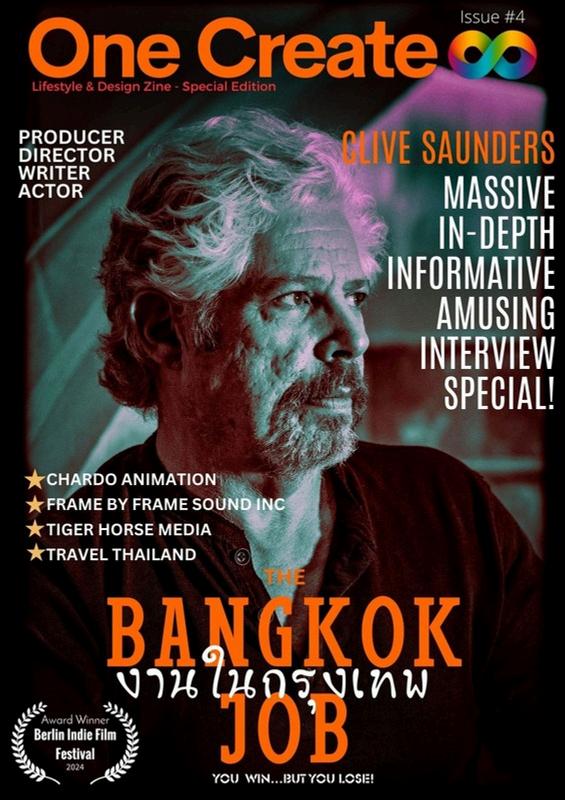
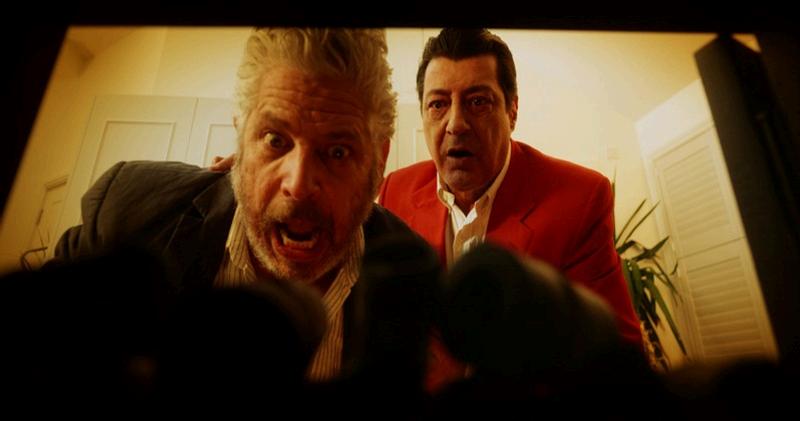
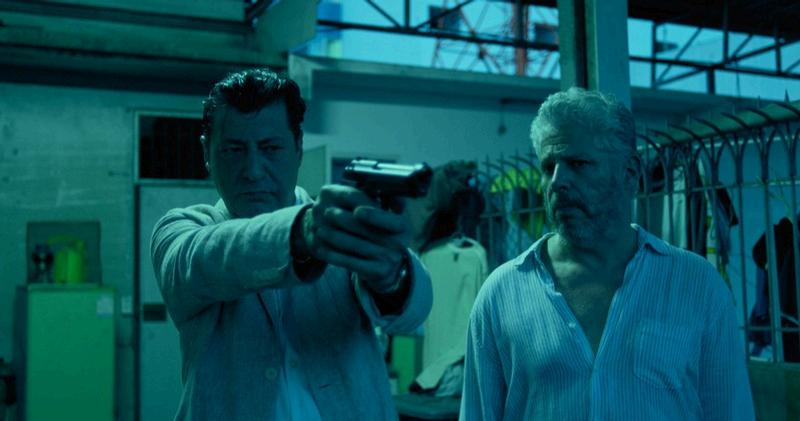
Maverick director, actor and writer / The Bangkok Job
Q What were the toughest production challenges?
A Getting bumped from location to location constantly We had a proper guerrilla mindset: keep shooting until you're physically stopped Thais were curious, not hostile The real key was our first AD, Top Tarasin Thai-American, one foot in both camps As farangs, you're dead in the water without a Thai face who can smooth things out We came home with only about 60 per cent of the script shot That forced a dual
Digital filmmaking lets you keep rolling past the point when people think the scene is done and discover something more."
Q You capture Bangkok in a very particular way. Was that deliberate?
A The film only exists because of the edit Enter Andrius Dringelis selling popcorn at a picture house on Shaftesbury Avenue, teaching himself editing from YouTube videos He wasn't trained on Avid, but he had instinct I gave him the keys to my Soho office Week after week he improved, working insane hours, and eventually locked into it A good editor isn't just an assembler you need someone who says, "You've missed this point," and suddenly the film breathes in a way you were too snow-blind to see
"I gave him the keys to my Soho office 'Live here if you have to, just don't trash the place.'"
Q What's next?
A My next film, Bolt A man who walks out of his family home on his 50th birthday loosely based on my father and the fallout when he eventually comes back It's really about abandonment My father went to Hong Kong I can't shoot there, so Bangkok will double Bangkok's Chinatown is calling
FOLLOW
Facebook: Clive Saunders
Instagram: @clive saunders
THE BANGKOK JOB
In post-production
Produced in Bangkok, London and Chiang Mai
Simon Woodroffe OBE
ntional path from roadie to restaurant royalty and why at 73, he's stil l dreami ng up fl ying airships, floating islands, and broadcast producti on ideas from his base in Thailand
Buzz Langton
Q You left Marlborough College at 16 with two O-levels. How did that shape you?
A I never had the imagination educated out of me I was thrown into the world and had to use it I didn't have the fear My advice to aspiring entrepreneurs: if you want to be a brain surgeon, please go to university But if you want to be an entrepreneur, don't You're going to learn from the School of Hard Knocks
Q You spent three decades in entertainment before YO! Sushi How did the music business lead to restaurants?
A Lighting rigs for the Jeff Beck Group, the Moody Blues, early rock shows I saw spectacle where others saw gigs The bands resisted "No, man, this is rock and roll " Of course, after a while they said, "You know, I could appear out of a trap in the stage " And that is how I became a stage designer Rod Stewart gave me my break. He wanted a big wide stage. I got my scale rule, drew it up, presented it. He said, "If it travels, it's exactly what I want." Someone asked what I did afterwards. I said, "I'm a stage designer" and in that moment I'd become that person because I'd said yes and done it.
"I never had the imagination educated out of me I was thrown into the world and had to use it I didn't have the fear "
Q And then you launched YO! Sushi at 45. That's a late start by most measures.
A YO! Sushi married showbiz with business sense I had the creativity to do something that was a breed of show business, but also the knowledge to get Sony and airlines as sponsors Business is very simple: don't run out of money
Q Delegation nearly broke YO! Sushi early on. What happened?
A My operations director told me straight: "You're an inspiration to work with but you change your mind all
Q What brought you to Asia — and Thailand specifically?
A About ten years ago, I was in Bali, up in the rice fields in Ubud The smells, the feeling It was my childhood A proper deja vu moment That's why I'm here talking to you from Thailand
Q What are you working on now?
A A 250-bedroom YOTEL at Bangkok's Cloud 11 and "Yo and No" a platform for business idea validation I describe this phase as walking a ridge On one side is stress and anxiety, on the other side is boredom I've retired from stress but not from ideas
Q You've distilled decades into three rules. What are they?
A Don't try and change anybody ever Everything works out, always And don't take anything personally, ever The reason I know these rules is that I did the opposite most of my life
"I've retired from stress but not from ideas "
Q What does the next chapter look like?
A Walking that ridge On one side stress and anxiety, on the other boredom The YOTEL at Cloud 11 is a serious project "Yo and No" is something I believe in And there are ideas airships, floating islands, broadcast concepts that are probably mad, but then so was a conveyor belt carrying sushi around a restaurant in 1997
FIND OUT MORE yo co uk linktr ee/yosimonwoodroffe
ALSO IN THIS ISSUE
See the full review of Simon's autobiography YO! Man in the Book Shelf section
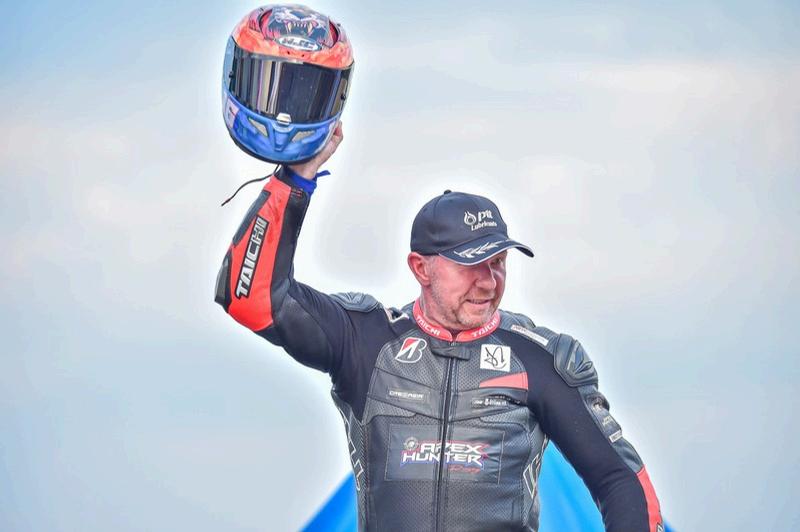
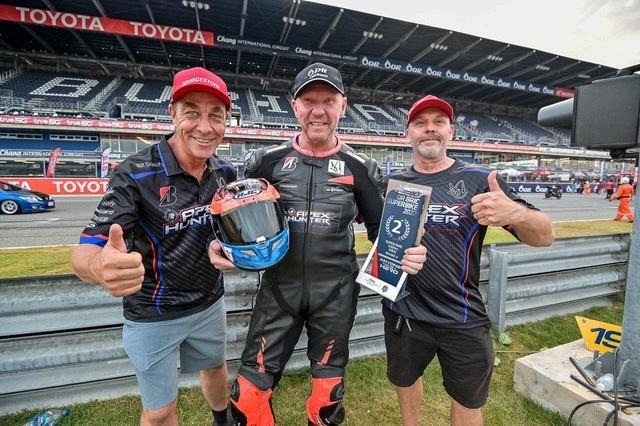
Full Throttle Executive
Rod Simpson is explaining the therapeutic properties of hot asphalt when his phone chimes with what sounds like another successful property opening across his Asia-Pacific portfolio We're sitting in his office in Gaysorn Tower, one of Bangkok's most upmarket developments in the heart of Chit Lom
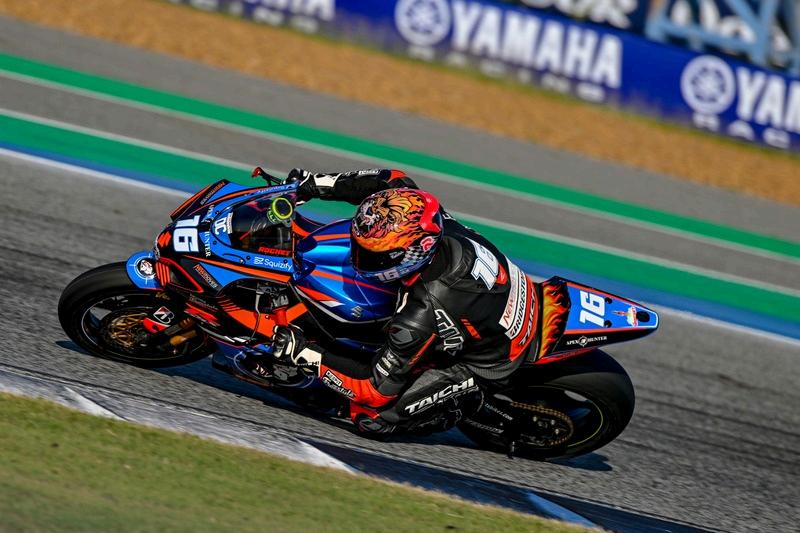
"The smell," he says, momentarily ignoring his buzzing phone "Hot engines, warm tyres, the track heating up That's when you know your soul is home " It's an odd confession from a man who oversees more than a hundred properties across the Asia-Pacific region A job that would reduce most mortals to pharmaceutical dependency Simpson, however, has found a different form of therapy: strapping himself to a race-tuned Honda CBR 1000 RR at Chang International Circuit, Buriram
The Australian expatriate has been chasing speed since 1976, when a six-year-old Rod Simpson begged his parents for a Yamaha GT80 "Twenty bucks," he remembers "That was two or three weeks' wages back then " An expensive gateway drug What followed was a motorsport legacy from dirt bike racing through his teens and a dozen state titles then a decade-plus hiatus for hotel management and marriage But motorcycles, like certain forms of madness, have a lifelong grip It is after all a form of spiritual freedom
"The only place in my life I get one hundred per cent peace is once I put those earplugs in, pull that helmet on, and head out to the track."
The
Return
Simpson's return to racing in his forties came from an unlikely motivation: responsible parenthood With a young son at home, Bangkok traffic suddenly felt more dangerous than a professional racetrack "Once I had the boy, I thought what's the safest thing to do is go back to the track That's what you know best " Within a year he had progressed from weekend track days to competitive B-grade racing, where he now runs at the front of the field
The Accident
On 28th May last year, coming up the hill into Turn 4 at 260 km/h, Simpson's bike electronics failed "The electronics went off, I hit a false neutral," he explains "No engine brake, nothing to help me slow down All this h
Four months after the crash, he was on his couch with a piece of PVC pipe, rope, and a one-kilogram weight, c g
Ask Rod Simpson why he continues to race and he'll give you the practical answer: fitness, stress relief, the meditation of speed But watch him describe the moment when he first smelled the pits again after his recovery "that nostalgic smell of hot engines, hot tyres, the bikes warming up, the hot asphalt" and you realise you're talking to someone who has found something approaching transcendence in the most unlikely place
"If I never rode again, I'd be happy" which is almost certainly a half-hearted truth, but that kind of thought reveals a deeper honesty.
While professional riders chase championships, Rocket is chasing something more elusive: those twenty minutes of absolute focus when a hotel portfolio and all its attendant crises simply cease to exist He's found a way to remain fully alive in a world that increasingly demands we exist at half-speed
At fifty-four, with titanium plates and twelve screws, Rod Simpson has solved a problem that eludes most of us. His solution involves the occasional high-speed departure from consciousness but it's working. And if that doesn't qualify as a particularly Australian form of enlightenment, it's at least a hell of a way to spend a weekend
Keep an eye out for Rocket next time you visit Chang Circuit He'll be there, going faster than is strictly advisable for a man with his responsibilities But he wouldn't have it any other way
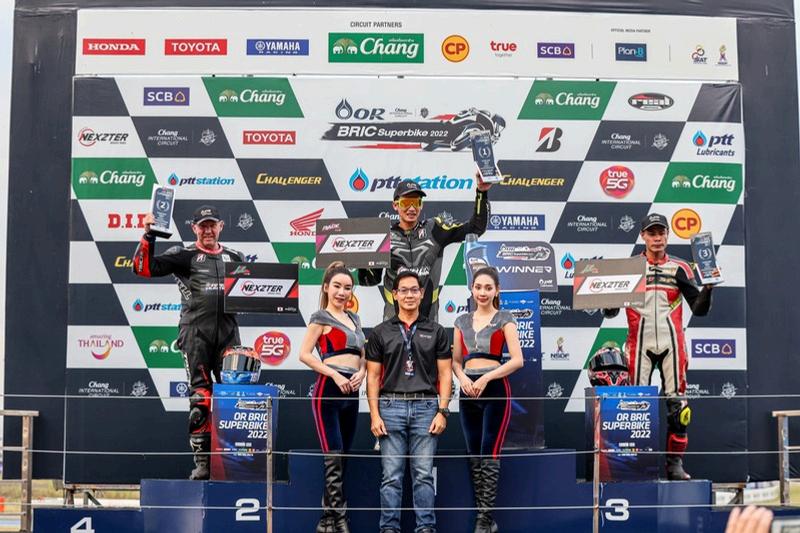
CHANG INTERNATIONAL CIRCUIT
Buriram, Thailand
MotoGP host venue 2025 & 2026
ROD SIMPSON Asia-Pacific Hotel Portfolio Director Gaysorn Tower, Bangkok
From San Francisco
t St di X B d
They met through Match com The irony is not lost on Thom, who helped brand and launch the platform twenty-five years before he ever used it He had been on the site for a month Linda's profile caught his eye not because of how she looked, but because of where she was sitting in the best Thai restaurant in San Francisco, a place so under the radar you had to be truly in the know to find it He knew it immediately That told him everything
What neither of them knew yet was how deep their shared connection to Thailand ran Thom had been travelling there for nearly forty years, drawn to the Buddhist philosophy and the quiet spirit of the Thai people. Linda's path was more physical. She had trained competitively at the first Muay Thai gym on the west coast.. three hours a day, six days a week. Her trainers were Thai. The fighters became her brothers. After training she would walk next door to that restaurant, sit in her little chair, and wait for one of the fighters to bring her a glass of wine Thailand was already in her bones before she ever booked a flight
When they finally met in person, the simpatico was immediate So was the ambition
Linda came from the corporate world and had climbed high enough to know it wasn't where she belonged Too direct Too impatient with the politics It took meeting Thom, a serial entrepreneur who had built and sold agencies in San Francisco, to give her the permission to leap The risk was double not just the jump from corporate to entrepreneurial life, but the question every couple asks when they decide to work together What happens to us if this doesn't work? They asked it, talked it through, and jumped anyway They haven't looked back since
Their first venture together began with an object Thom had invented years earlier and never launched a patented bottle holder designed to extract every last drop by storing bottles inverted Linda found it while they were packing to move in together, saw the market gap immediately, and pushed it into production Their first design sold into the San Francisco Museum of Modern Art Eventually the product line landed in Target, appeared on Good Morning America and in Oprah Magazine Thirteen patents Three models A full product range Then they walked away They were designers and inventors, not logistics managers
"We said, Fuck it. We're just going to put a stake in the ground."
Asia was calling A friend suggested Myanmar, which was opening up Linda took an informational call on a Friday and by Monday she was flying to Yangon for a face-to-face interview. She signed the contract 48 hours later. Three weeks after that, they packed everything and moved. Thom had no plan. His father asked what he w
e
Then COVID arrived and wiped out seventy-five percent of their work overnight Where others contracted, Linda and Thom made a decision they are both proud of They would not lay anyone off Instead they levelled up Graphic designers became motion designers Editors learned 3D The team expanded into post-production, VFX, and extended reality The COVID period turned out to be one of their most successful in terms of growth
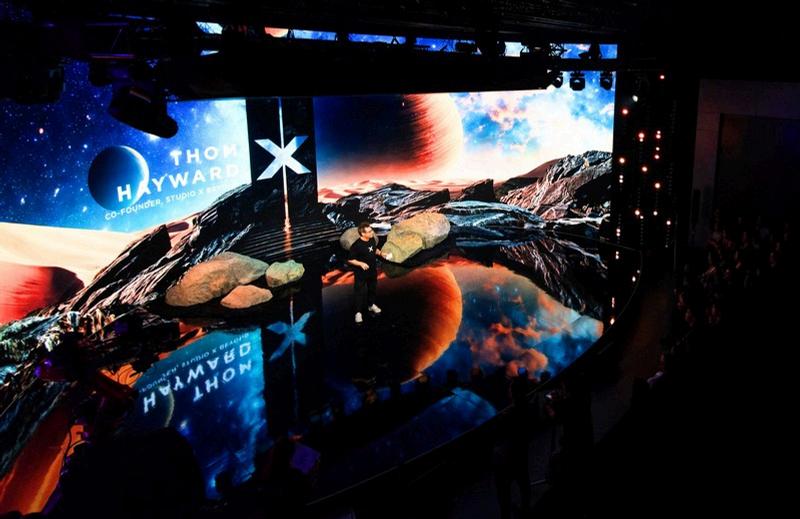
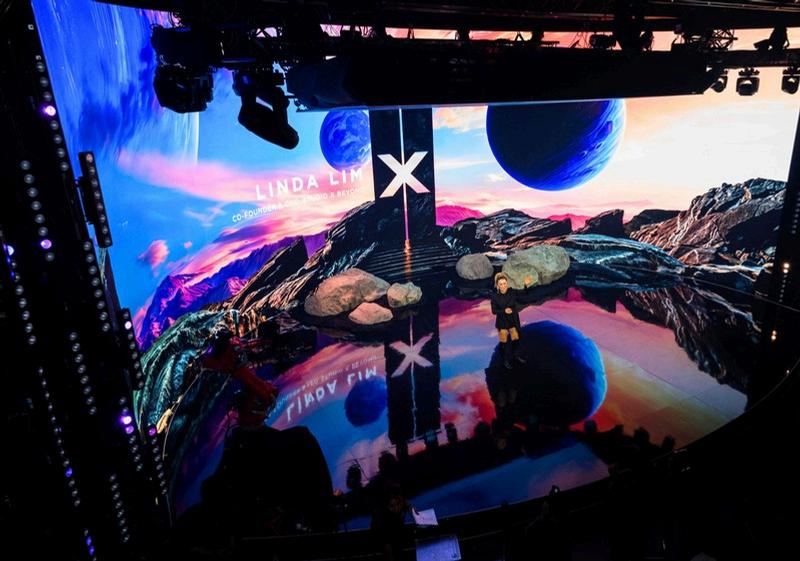
That foundation led directly to Studio X Beyond a state of the art LED virtual production stage in Bangkok, built in partnership with Arocha Kittivittayakul from L&E Beyond, one of Southeast Asia's most respected live production and LED specialists The stage runs 22 5 metres wide and 6 metres high with a movable wall and ceiling LED array, built to international film and television standards Thom's cousin, who designed George Lucas's theatre and stages at Skywalker Ranch, helped oversee the build
"She's small, but she's mighty "
Virtual production is still new territory for many clients across Asia Linda and Thom have built education into the model from the start running workshops, working closely with creatives and filmmakers, showing them when VP is the right tool and when live shooting still makes more sense The key insight is simple: bring them in early
Away from the studio, both train hard Thom is a powerlifter and gives skateboard lessons Linda moved from Muay Thai to western boxing years ago and trains one-on-one with a French coach in Bangkok The 80-20 rule governs everything work out, eat well, sleep properly, and you have the clarity and energy to build what they have built They are, as Thom puts it with a grin, complementary Hand in glove Together more powerful than apart
A dating app, a Thai restaurant, and forty years of roads leading to the same place
CONNECT WITH STUDIO X BEYOND hello@studioxbeyond com www studioxbeyond com Instagram: @studioxbeyond LinkedIn: Studio X Beyond
PHOTOGRAPHY & INTERVIEW
Buzz Langton Editor-in-Chief, One Create Magazine
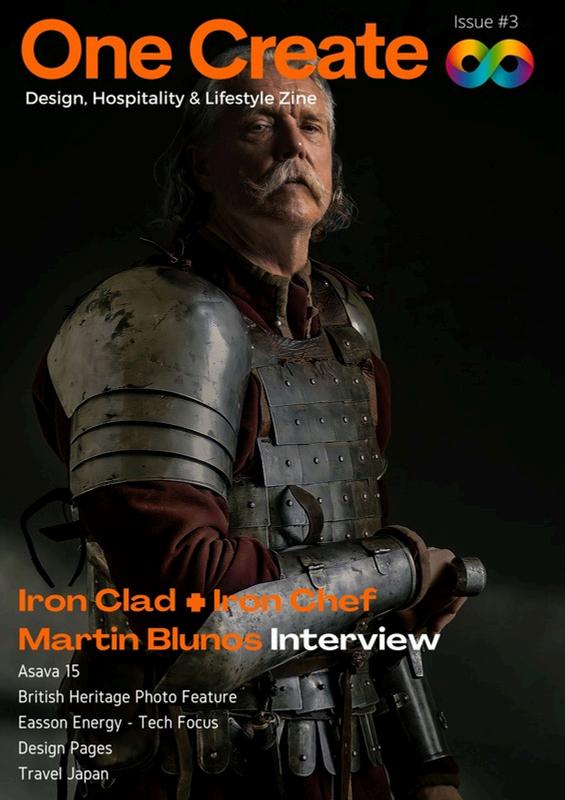
Iron Clad. Iron Chef.
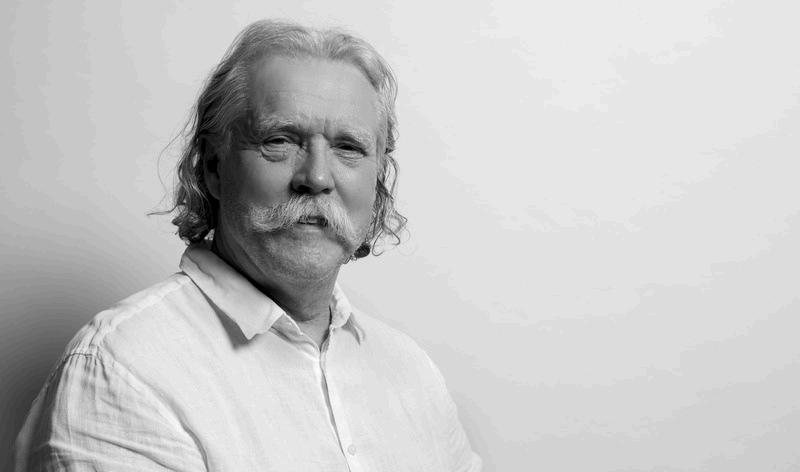
Born near Bath and Bristol to Latvian parents, Martin Blunos carries his heritage with quiet pride The Baltic roots run deep, the West Country accent runs deeper, and between the two sits one of the most distinctive culinary voices Britain has produced in a generation
Two Michelin stars at Lettonie Multiple Iron Chef titles on two continents A face now as familiar on Thai television as it once was on British screens. He is, as he would be the first to tell you, a soft Southerner. And he is absolutely fine with that.
Television celebrity chef, Iron Chef winner and Michelin 2 star restaurateur Interview by Buzz Langton
His first culinary mentor was his mother He says this without hesitation, in the way that most chefs do when asked But then he goes further than most She cooked for the family because she loved them Not for fun Not for business Because she loved them You sense that as a child You feel it at the table And for Martin, that feeling never left the kitchen
The kitchen itself he compares to theatre, and it is one of those observations that lands immediately as true Two services a day Matinee and evening show Preparation is rehearsal The restaurant opening is the curtain going up When a cook cuts his hand and passes out, the show does not stop The customer paying the bill should never know An actor who fluffs his lines does not walk off stage The director shouts from the wings, they ad lib, they get through it Once the curtains close you debrief, you shout, you scream, you order tomorrow's deliveries, and then you do it all again Every day is different But you repeat, you repeat, you repeat
The aggression of that environment he speaks about without sentimentality He has taken a fingernail off before Wrapped it in cling film, collateral damage, and carried on Not a case of get me to hospital Just carry on It is an environment that demands training above everything else When things go wrong you can blame
"The restaurants need the guides The guides need the restaurants It's a two-way street."
The Michelin years at Lettonie carry a particular tension Two stars As hard as it is to get an award, he says, it is even harder to keep it Every year in the run-up to the announcement, the anxiety builds If you have done nothing, and you lose a star, that plays on your mind in a very different way Because someone else has that power The restaurants need the guides The guides need the restaurants If people start noticing that accolades are going to places that do not deserve them, they stop trusting the guide And a guide nobody trusts is worth nothing
Inspiration he finds everywhere Life inspires food Having children changed his perspective, shifted his focus, made him notice what was happening around him Like Picasso in his blue period, applying darkness into his art, food reflects how you feel His mother's one pot everything in, two or three hours in the oven, the whole house filling with it taught him the logic of contrast Vinegar in a stew sounds wrong but it cuts through the fat, the acidity cooks off, and suddenly two things that seemed incompatible are completing each other
His comfort food requires no such philosophy White doorstop bread Lashings of butter Streaky bacon, not back, because you need that bit of fat Crispy but not too crispy Ketchup Not brown sauce He is from the and won four
Iron Chef UK came first Thailand followed He is the only farang the only foreign chef to have represented the Thai side of Iron Chef as a western cook He went on as a competitor four times and won three As an Iron Chef he has done five battles and won four He lost once to Iron Chef Vietnam He learned a lesson there There will be another chance
The guilty pleasure he shares without much prompting Doritos A family bag, entire, on his own He crushes them until they are almost powder, tilts the bag into his mouth in front of the television, and does not stop until it is finished It must be the flavouring, he says That is his guilty secret
Music is how he unwinds. Reggae phases, dubstep phases, drum and bass. Massive Attack are from Bristol and used to eat at Lettonie, all of them together at a table He is, he confesses, a former member of the Slade fan club Noddy Holder was his hero His son took up heavy metal drumming and Martin went and sat in the studio with him as a kid, and thought this is technically extraordinary There is no bad music Only music you do not like
The taste memory that stays with him is a roast chicken Sunday Chicken was a luxury when he was a child A family roast meant everyone sitting at the table together, the only time in the week when that happened You found out what everyone had been doing Food is a great leveller It does not matter if you are old, young, rich or poor You sit at the same table A roast chicken dinner is a roast chicken dinner
"Stay junior for as long as you can The wider your repertoire will be "
His advice to young chefs is to stay junior for as long as possible From four kitchens in London he collected four recipes for choux pastry All similar, all slightly different in temperature or method From those four he found the one that worked for him That became his recipe That would not have happened if he had climbed too quickly
There is a book in the works Not a cookbook Something about life and the stories behind the recipes and behind the life. The magic floor at his mother's house where dirty clothes disappeared and came back two days later ironed. The moment that floor disappears when you leave home at twenty and nobody replaces it. More to come on that another day.
FIND MARTIN
Instagram: @martin blunos chef
PHOTOGRAPHY & INTERVIEW
Buzz Langton
Editor-in-Chief, One Create Magazine
The Missing Burro
It tl C l M i Cit t Th l I t i b B L t
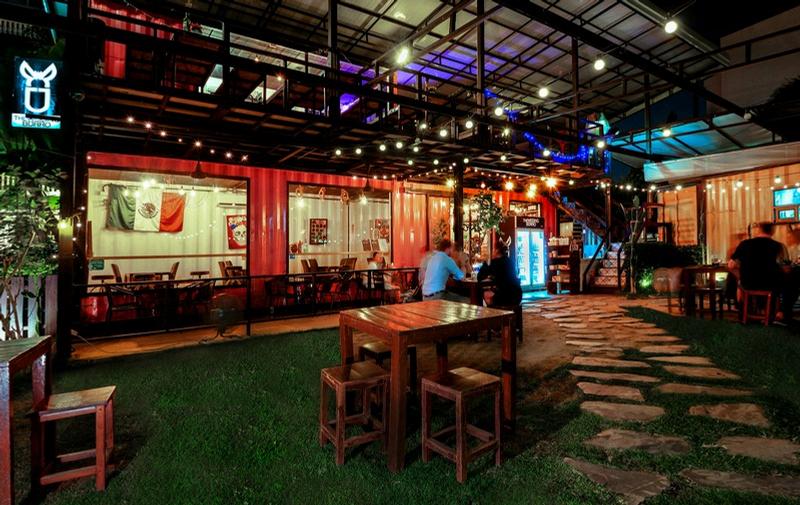
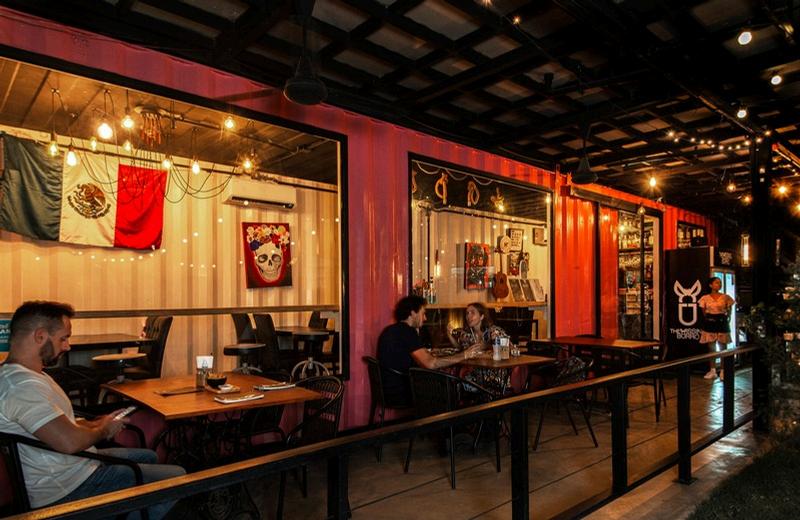
Thonglor is Bangkok's Chelsea Stylish, expensive, self-aware, and packed with restaurants competing for the attention of Thai movie stars, expats with money, and people who take their food seriously
It is exactly the kind of neighbourhood where a Mexican restaurant could easily go wrong softening the edges, chasing the crowd, serving burritos to people who have never been within a thousand miles of Mexico City Itzcoatl Calva decided early on that was not the restaurant he was going to run
Born and bred in Mexico City, Itzco has been in Bangkok since the end of 2006 Nearly two decades in a city that adopted him after a year travelling Southeast Asia made going home feel impossible Mexico is an adorable place, he says, but after experiencing the relative ease and safety of life here, the insecurity and fear of everyday life back home was hard to return to Bangkok kept him And eventually Bangkok got his restaurant
The name came from a lunch Itzco sat down with his friend Eric, a UX designer, with a list of Bangkok restaurant names he admired They brainstormed Around the eighth suggestion Eric landed on The Missing Donkey Itzco loved it but needed a small twist He swapped Donkey for Burro Not stereotypical, cool, memorable, and full of what he calls Mexican-ity It also carried a quiet joke about not having a burro, signalling immediately that this is not a Tex-Mex operation A friend named Mai designed the logo on the spot Itzco gave her useless feedback until he realised the original was better He shut up and went back to it
The location found him as much as he found it He had been walking the stretch between Asok and Ekamai looking for spaces when he spotted a garden with shipping containers that had been a place called Yolo A few weeks later Yolo was up for sale He sat in the garden with the owners and knew The containers were already
"Hotness is one percent of the story of a chilli "
One day before the soft opening, his friend Eric asked him a question that has stayed with him ever since What is your definition of success? Would you sell burritos and Tex-Mex if things went wrong? Itzco's answer has been the lighthouse To show people real Mexican food To share the things he finds outrageously delicious If people did not like real Mexican food and he had to change, he would rather close That is not a position That is a conviction
The chillies are where that conviction gets most technical Thai chillies are plentiful but they provide primarily heat Mexican chillies function like a vegetable, like a tomato in Italian cooking Removing chipotles, ancho or guajillo from Mexican cuisine is as unthinkable as removing the tomato from Italian food They provide a depth of taste that nothing else can replicate Hotness is one percent of the story of a chilli The people who think it is about heat have simply never tasted the rich universe of what a Mexican chilli actually is
The tortillas are made using the full Nixtamalization process, working with local corn rather than relying on exported flour that loses quality and nutrition in transit Nothing at The Missing Burro is swapped out to be cheap or to appeal to the masses Everything is made from scratch The beef, the lamb, the avocados, the Tequila, the Mezcal all chosen because they are what Itzco and his chef Tomas actually love They spent hours before opening not just listing dishes but naming the precise places and flavours they were trying to recreate Every dish has a reference point, a memory, a standard it has to meet
Tacos, he observes, have become the new burger in Bangkok Everyone serves them Most have no particular reason to The Missing Burro's reason is simply that it is what they know, what they grew up with, and what they are not willing to compromise In a city full of restaurants playing it safe, that is rarer than it sounds
VISIT THE MISSING BURRO
Thonglor, Bangkok 090 913 2131 www themissingburro com
INTERVIEW
Buzz
Langton
Editor-in-Chief,
One Create Magazine
Liquid Elegance
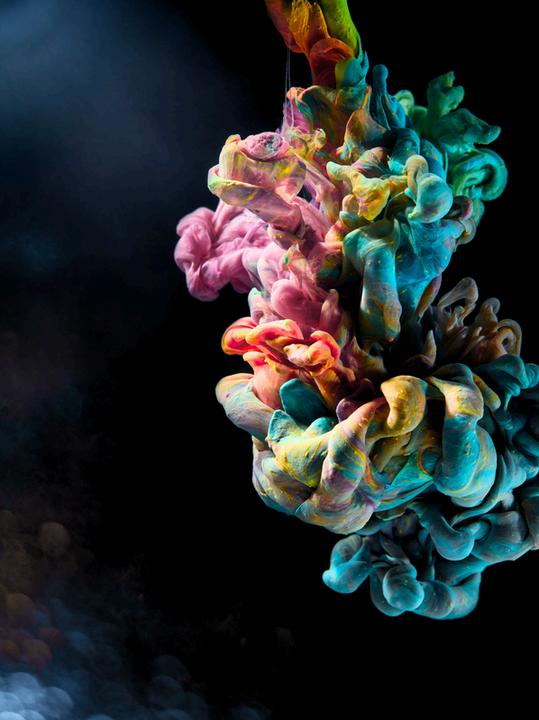
Mark Mawson Advertising photographer and master of liquid photography
intentional, something that could not have been planned It was not planned That is precisely the point
Nottinghamshire, he picked up his family's camera as a child and was immediately undone by the mechanics of it The focus ring turning The lens moving The sound of the shutter All of it felt magical By thirteen he had his first analogue SLR, a Petri, and was already chasing light and shadow The camera was not a hobby It was a language he had been waiting to find
Professional photography began in photojournalism He was shooting for the local paper at sixteen, and after studying in Sheffield he moved to London and into the thick of national newspaper work He covered royal events during the famous lead-up to the Diana and Charles divorce High-profile court cases The full spectrum of news photography, which teaches you everything about reading a moment and nothing about having one of your own The repetition eventually pushed him toward something more considered By the mid-nineties he
In 2004, living in Australia, Mark began experimenting with liquid photography almost as a side project The Australian market was not interested They wanted sun-soaked happy images, he says, and that was not his style But online, the images were finding an audience They gained press One made the cover of an art magazine The work was informed during this period by Annie Leibovitz and Gregory Crewdson, photographers who approached the frame with the deliberateness of film directors, for whom every element of the image was a decision
When Mark returned to London in 2011 the work began to flourish The city suited him The greyness, the history, the particular quality of northern European light He drew inspiration from Edward Hopper's lonely interiors and from Caravaggio's mastery of shadow Lighting is everything, he says It is what creates the mood and the atmosphere in an image It is the thing that makes a photograph feel rather than simply show
The liquid work demands extraordinary patience and an appetite for failure Setting up a shot can take hours
Sometimes he works in small fish tanks Sometimes in large ones that require hours to fill, calibrate, shoot, and clean For one series the brief required smashed glasses to be glued back together so that liquid could be poured through the cracks, then composited in post Each image that looks effortless represents a considerable accumulation of effort The trial and error is not incidental to the process It is the process
His commercial clients read like a shortlist of the world's most recognised brands The liquid aesthetic, that quality of suspended movement and accidental beauty, translates with remarkable flexibility A Coca-Cola campaign. A perfume bottle releasing its contents into still water. An ink cloud forming shapes that the eye w a n t s
Nottinghamshire.. look carefully, light it properly, and wait for the moment the chaos decides to become something worth keeping
Lighting is everything It always has been
VIEW MARK'S PORTFOLIO markmawson com
FEATURE
Buzz Langton Editor-in-Chief, One Create Magazine
Homes and More
you feel at seven in the morning and eleven at night The One Create reader understands this better than most They have lived in more than one city, across more than one time zone, and developed a sharp instinct for what works and what is simply expensive.
Homes and More is where those instincts find a home of their own Each issue we look at a different aspect of how our readership lives and invests Interiors, architecture, design thinking, and the property markets that matter to an internationally minded audience Bangkok, London, Singapore, Dubai Wherever the One Create reader has skin in the game Developers, designers, agents, and residents with a considered point of view are welcome in these pages The conversation is open
HOMES AND MORE
An ongoing series
One Create Magazine - Issue 10
GET INVOLVED info@onecreate co onecreate co
Hospitality Focus
The spaces, the people, and the thinking behind Southeast Asia's most interesting hospitality
The best hospitality does not announce itself It is felt in the quality of a room, the instinct of the people running it, and the sense that someone has thought carefully about what the experience should feel like from beginning to end. Southeast Asia has more of this than it is given credit for and it tends to exist slightly off the path that most coverage follows.
Hospitality Focus is One Create's ongoing conversation with the operators, designers, and thinkers who are shaping how the region eats, drinks, stays, and gathers Not a list, not a ranking an editorial eye on what is being built at the more considered end of the market, and why it matters Each issue we go deeper into one corner of that world If you are creating something worth the attention, we would like to know about it
HOSPITALITY FOCUS
An ongoing series
One Create Magazine - Issue 10
GET INVOLVED info@onecreate co onecreate co
Bangkok Micro Guide
Bangkok and surrounds through a considered lens for the reader who lives here and wants to look closer
Bangkok and its surrounds reward the patient observer Not the version sold on arrival though that has its pleasures but the city and everything within reach of it that reveals itself slowly, to the people who have decided to stay. The ancient capital an hour and a half north. The neighbourhood that changes character between six and eight in the morning. The practitioner operating out of a shophouse that nobody has written about yet The detail that only makes sense once you have been here long enough to notice it
The Bangkok Micro Guide is One Create's attempt to document that world for the reader who already lives here and wants to go deeper, and for the one who visits often enough to want something more than the standard itinerary Curated by the same editorial instincts that run through the rest of this magazine Each issue, a different corner of the city and beyond If you know something worth knowing, the door is open
BANGKOK MICRO GUIDE
An ongoing series
One Create Magazine - Issue 10
GET INVOLVED info@onecreate co onecreate co
Photography: Buzz Langton Bangkok and Surrounds
Supplements, Yes or No?
A science-based guide to what works, what doesn't, and how to know the difference
annually So the question is a fair one Does any of it actually work?
The answer, as with most things in health, is it depends The honest starting point is this If you eat a genuinely varied, whole food diet, sleep well, exercise regularly, manage stress, and avoid the obvious vices, your need for supplementation is relatively limited The problem is that most people do not do all of those things consistently And even those who do may still have specific deficiencies driven by geography, genetics, age, or lifestyle That is where supplements become worth considering
Vitamin D is the clearest case Large portions of the global population are deficient, particularly those living in northern latitudes or spending significant time indoors In Southeast Asia the equation is less obvious sun exposure should theoretically handle it, but office culture, air conditioning, and sunscreen use mean deficiency is more common than expected Low vitamin D is associated with compromised immune function, low mood, poor bone density, and disrupted sleep A simple blood test will tell you where you stand If you are deficient, supplementing is not optional, it is sensible
Magnesium is involved in over 300 enzymatic processes in the body, including sleep regulation, muscle function, and stress response Modern diets, particularly those high in processed food, are frequently low in it Alcohol depletes it further If you are sleeping poorly, experiencing muscle cramps, or feeling chronically tense, magnesium glycinate or magnesium malate are well-tolerated forms worth trying
Omega-3 fatty acids, specifically EPA and DHA from fish oil or algae-based sources, have a substantial body of evidence behind them for cardiovascular health, inflammation reduction, and cognitive function If you are not eating oily fish two to three times per week, a quality omega-3 supplement is a reasonable addition
"Test, don't guess. A blood panel gives you actual data to work with rather than expensive guesswork "
Creatine monohydrate is perhaps the most researched supplement in existence The evidence for its role in
Multivitamins are complicated The idea is appealing one capsule covers everything The reality is that the bioavailability of nutrients in multivitamins varies enormously, some nutrients compete for absorption, and the doses are often either too low to matter or formulated for general populations rather than individuals They are not harmful, but they are also not a substitute for understanding what you specifically need
Collagen supplements have grown enormously in popularity The evidence for skin elasticity and joint health is promising but not yet definitive What is clear is that the body needs adequate protein, vitamin C, and zinc to synthesise collagen naturally Addressing those foundations first makes more sense than going straight to collagen powder
Probiotics are another area where the science is evolving rapidly The gut microbiome is genuinely important to overall health, immunity, and mood A diet high in fermented foods yoghurt, kefir, kimchi, miso remains the most evidence-based way to support gut health Probiotic supplements can be useful in specific contexts, particularly after antibiotic use, but the evidence for general supplementation is less compelling
Supplements are not a replacement for the fundamentals Sleep, movement, diet, and stress management do more for long-term health than any capsule on the market But used intelligently, targeted to genuine deficiencies, and chosen for quality over marketing, some supplements genuinely earn their place
The answer to supplements, yes or no, is not yes or no It is yes, but know why
THE LIMINAL DESK
More on health, longevity and modern living at The Liminal Desk our new YouTube channel and podcast Coming soon
ONE CREATE onecreate co Issue 10 - 2026
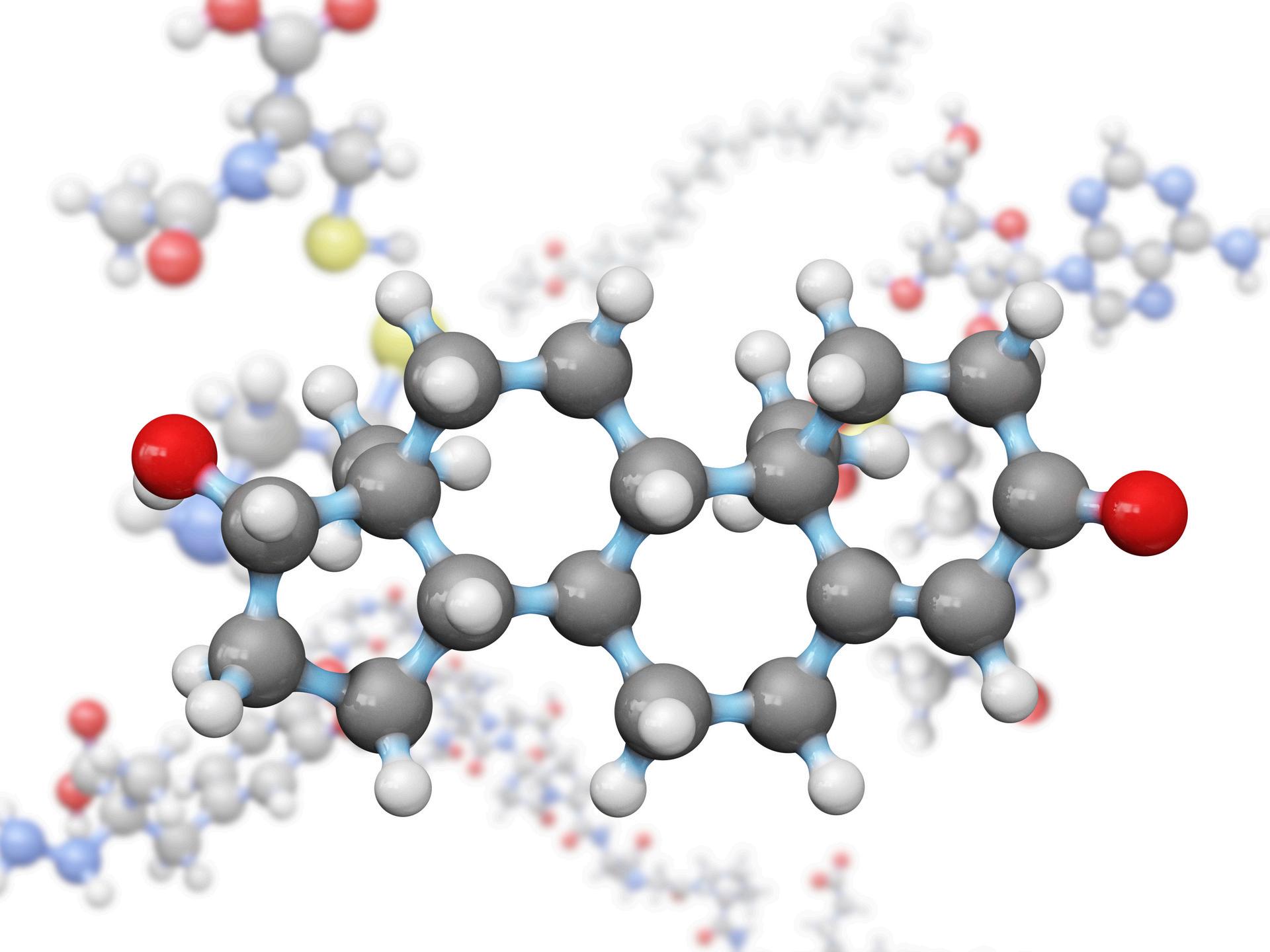
TRT with Dr. Kanika
you feel good, you don t need it Everything else follows from there
The waiting rooms of men's health clinics are full of people who have done their research YouTube, TikTok, Reddit threads that run to hundreds of posts the information is everywhere, and so is the misinformation Dr Kanika, who specialises in hormone replacement therapy and weight management at TRT Bangkok clinic, has seen what happens when men act on the wrong kind of confidence She is measured, precise, and notably free of the evangelical enthusiasm that tends to surround this subject
"If you feel good already, you don't need it," she says early in our conversation "No matter what your levels are If you feel good, your body is still good Keep your body producing naturally Why would you need medication if everything's working well?"
It is a disarmingly honest position for someone whose practice is built around hormone therapy But it sets the tone for everything that follows Dr Kanika is not interested in prescribing to numbers She is interested in the person sitting in front of her
Before she considers any treatment, she wants a complete picture not just testosterone levels but a full blood panel covering kidney and liver function, lipid profile, thyroid, PSA, and several hormonal markers including estradiol, LH, FSH, and DHEA Family history matters Past medical history matters Traumatic brain injury, she notes, is an underappreciated cause of low testosterone "The blood panel isn't going to give enough data," she says "The most important is the symptoms, the underlying diseases, all the details "
Testing, she explains, involves both total and free testosterone and the distinction matters Free testosterone is the active form, determined by levels of SHBG, the sex hormone binding globulin But even free testosterone is not the deciding factor Two men with identical readings can feel entirely different One is thriving The other is not sleeping, losing muscle, running low on energy and drive. The numbers are context, not conclusion.
"You need to go the middle way of everything In life, in diet, not too much, not too little If you're doing it the middle way, you're good "
On the question of injection versus gel, Dr Kanika is direct "From my point of view the injection is so much better With injection you can determine very accurately how much you inject and how much you'll have in your blood You can fine-tune it " Gel absorption varies by individual and is harder to monitor precisely though she will work with either, and notes that gel offers its own advantages for men where libido is the primary concern, as the skin's enzymes aid conversion to DHT
The cardiovascular risk question is where the conversation sharpens Testosterone can lower HDL the protective cholesterol and raise LDL In the small vessels of the heart and brain, the consequences can be severe There is a second mechanism: testosterone binds to muscle receptors, and the heart is a muscle Sustained misuse causes it to enlarge She reaches, naturally, for a Buddhist frame "You need to go the middle way of everything In life, in diet, not too much, not too little " In a clinical setting with regular blood panels, these risks are manageable The problem is the men who self-medicate and push the dose because more feels like better
On cancer: it will not cause it in a man who doesn't have it But in a man who does, it will accelerate it Prostate screening via blood test is standard and non-negotiable
The question men worry about most will I be on this for life? has a more nuanced answer than they expect Stopping is possible, but the process takes a minimum of two and a half months and cannot be rushed Whether TRT becomes lifelong depends largely on where a man started A higher baseline, combined with genuine lifestyle commitment during treatment, gives the body a better chance of sustaining itself once "Your natural levels can even increase," she says, of men in that position
Her advice to younger men is equally practical: get tested early, establish a baseline, track how it changes. And her clinic, she says, is a place where men can arrive without feeling judged bodybuilders, self-medicators, men who are simply curious. "You don't need to worry that I'm going to judge you." For a subject that carries more psychological weight than most men admit, that openness is not a small thing
DR. KANIKA
TRT Bangkok Clinic
Practising in Pattaya and Bangkok
Specialising in hormone replacement therapy and weight management
CONTACT
info@trtbangkok com Laboratory collaboration: N Health Bangkok appointments available on request
Myth Busting
The health advice everyone repeats and what the full picture actually looks like
Here is how health myths work Someone conducts a study with real parameters a specific group, specific conditions, specific duration The results are sound Then they leave the study and enter the world, and every qualification gets left behind What arrives at your breakfast table is a conclusion without its context And a conclusion without context is just another thing to feel guilty about
immediately qualified by: "Most of this quantity is contained in prepared foods " That sentence vanished The eight glasses stayed Flooding your system beyond actual thirst does not hydrate you better it dilutes the gut microbiome, flushes electrolytes, and stresses the kidneys Drink when you are thirsty More than that is not virtue, it is volume
A conclusion without its context is not advice. It is just noise with good intentions behind it
Sardines tell the same story from the other direction Extraordinary food omega-3, vitamin D, B12, calcium, CoQ10 Close to perfect for most people But high in purines, which metabolise into uric acid For anyone managing gout, kidney stones, or a compromised gut, eating them daily is a flare-up waiting to happen The advice was right for someone The problem is it was handed to everyone
This column puts the context back in Because the One Create reader is not a generic human on a generic protocol and the myth was never really the problem The missing detail was
MYTH BUSTING
A regular column
One Create Magazine Issue 10
GET INVOLVED
Practitioners and researchers welcome info@onecreate co
AI and You
The loop nobody told you about, a film you have already seen, and why a pub in Cornwall matters more than you think
Let me tell you what I call synthetic confetti for the brain You ask an AI to write something It produces gorgeous, fluent, confident prose You read it and think: that's pretty good You publish it Someone else's AI reads it while scraping the web for training data That text, your published AI output, now becomes part of what the next model learns from Which then produces more fluent, confident prose for someone else to publish And round it goes This is not a hypothetical This is happening right now, at scale
Researchers at Oxford, Cambridge, and Toronto published a paper on this in 2023 They called it model collapse, which is a suitably dramatic name for what is, at its core, a photocopying problem. Each copy degrades slightly. The rare stuff goes first minority languages, edge-case knowledge, anything that only existed in a handful of documents to begin with. The model does not know it has lost these things. It keeps producing text with the same confidence, the same fluency, the same authoritative tone It just gets a little more average with every generation A little more like everything else The hall of mirrors gets longer and the reflections get murkier, and nobody in the room notices because everything still looks like a reflection
The model does not know it is dreaming It just keeps writing, very confidently, about things it has quietly forgotten.
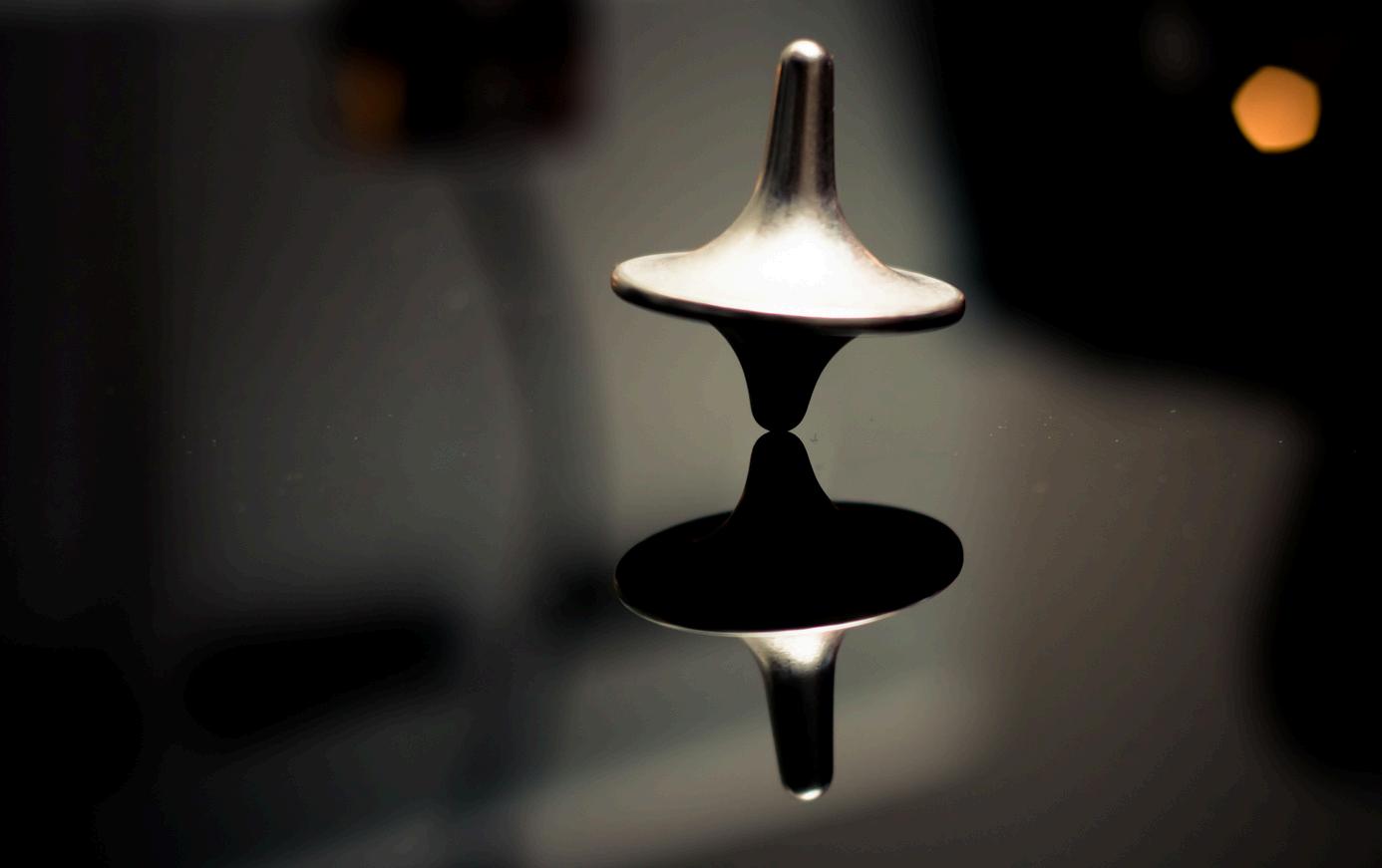
Christopher Nolan explained all of this in 2010, without meaning to In Inception, the dream feels completely real from the inside The architecture holds, the people talk, the coffee tastes like coffee You only know you have gone too deep when you check the totem AI hallucination is the same thing The output sounds right The grammar is clean The facts are delivered with the quiet assurance of someone who has absolutely done their research They have not They are dreaming, and they do not have a totem That is your job now
So The Cornish pub My colleagues needed a translator English into Cornish, the old Celtic language spoken by roughly three hundred people on earth, most of them in a small county at the bottom of England They tried LinkedIn They tried language agencies They tried AI, which gave them something that looked plausible and read, on back-translation, like a contract proposal for a secondhand fridge Nobody could find anyone They called me I found the answer in about twenty minutes Dying language, preservation society, social meetups, pub in Cornwall on a Tuesday Done That is the thinking AI cannot do Not because it lacks processing power Because it has never been to a pub, does not understand why people go to pubs, and has no concept of the human chain that connects a dying language to a Tuesday night in southwest England
This matters in Bangkok too, and in every market across this region Thai indirectness does not translate literally Japanese honourifics are not just formal language, they are a social operating system Chinese facesaving in business is not politeness, it is strategy Vietnamese formality shifts with age and relationship in ways that are felt rather than explained AI will confidently get all of these wrong while sounding completely authoritative. Your instinct for what lands here and what falls flat is not a soft skill. It is the thing that keeps you in the room when the machine gets it wrong.
Be inspired, be connected But don't be a slave to AI and definitely don't publish it without reading it out loud first
The workflow is straightforward once you accept what AI actually is It is a very fast, very well-read first-draft machine with a confidence problem Start with your own thinking Use AI for structure and ideas, never for final copy Edit hard Kill every cliche you find and you will find them, because they travel in packs Read it aloud If you blush, the robot is still in there Fact-check anything that sounds like it came from a press release And if you are working across cultures, trust your gut over the output every time
Be inspired Be connected Just don't hand over the keys
AI AND YOU
A regular column by Buzz Langton One Create Magazine Issue 10
FURTHER READING
The 1 Hour 7 Platform Method Buzz Langton available on Amazon Godel, Escher, Bach Douglas Hofstadter
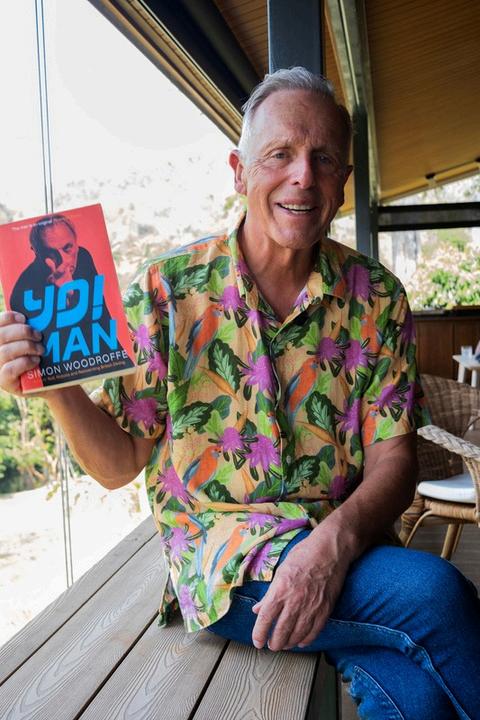
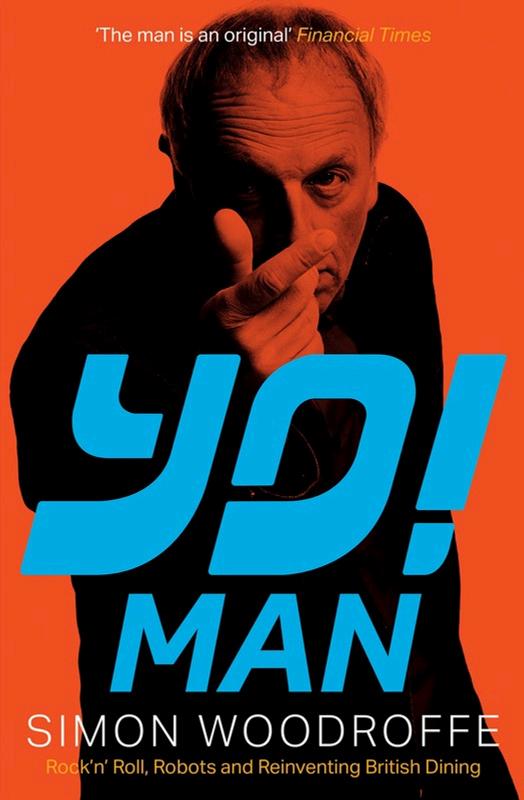
Yo! Man
Simon Woodroffe Rock'n' Roll, Robots and Reinventing British Dining White Fox Publishing
Simon Woodroffe opened YO! Sushi on Poland Street in Soho in 1997 with £200,000, a vision, and a hundredmetre conveyor belt For the first two weeks nobody came By week three there was a queue around the block that lasted three years A British icon was born, and the man who built it spent the next three decades doing what most people only talk about taking the kind of risks that keep you awake at night and trusting that the morning will make sense of them
Yo! Man is the memoir of that journey, and it is a long way from the sanitised success stories that fill the business section of airport bookshops This is brutally honest YO! Sushi, YOTEL, the YO! brand itself Dragons' Den Bankruptcy scares Difficult partnerships Celebrity relationships Mental health struggles written about with the same directness that built the businesses The Financial Times called him an original Duncan Bannatyne called him his favourite dragon Neither of them is wrong
"The most unlikely journeys often lead to the most extraordinary destinations "
One Create has had the privilege of working closely with Simon over the past year I have sat with him in Bangkok, watched him command a room of people who had no idea they were about to be changed by the experience, and listened to him talk about this book with the particular excitement of someone who has finally f o u n d t
wondering if it is too late, or nineteen and wondering if it is possible at all, Yo! Man has something direct to say to you.
Out 4 June 2026. Get it.
'The man is an original' Financial Times
'Simon was my favourite dragon' Duncan Bannatyne
'Inspirational tremendous example of risk taking, strategy and tactics' Robin Ryde, The Cabinet Office
PUBLICATION DETAILS
White Fox Publishing Royal Hardback 320pp £22.99
Publication date: 4 June 2026
Publicity: Julie Holman, Collective Wisdom julie@collective-wisdom co uk +44 (0) 7545 759367
REVIEW
Buzz Langton
Editor-in-Chief, One Create Magazine
Fighting Giants
Steve McGinnes & George Hartel Paperback, 103pp
they are still growing. But size, the authors argue, creates fragility. This is the playbook that proves it.
There is a particular kind of frustration that anyone who has ever worked inside a large organisation will recognise instantly The meetings that produce nothing The decisions that take months and arrive wrong The sense that somewhere between the founding idea and the current reality, something essential got lost Steve McGinnes and George Hartel have built an entire book around that frustration, and the result is more useful than most business titles ten times its length
The premise is disarmingly simple The world's two thousand biggest companies account for roughly seventy percent of global GDP, and they are still growing But size, the authors argue, creates fragility Through one hundred C-suite interviews across multiple sectors and geographies, McGinnes and Hartel mapped the common vulnerabilities that giants share, weaknesses that are structural, cultural, and surprisingly consistent The book does not celebrate disruption for its own sake It is more precise than that
The giant across the table is not as solid as it looks McGinnes and Hartel prove it,
interview by interview
It identifies exactly where the cracks appear, and shows how smaller, faster operators can exploit them without gambling everything on a single move The research behind this is genuinely substantial One hundred C-suite conversations across multiple industries and geographies is not a sample, it is a pattern And the patterns the authors surface are uncomfortably familiar to anyone who has spent time inside a corporation that has mistaken its own scale for invincibility
At 103 pages it is short by design No padding, no case studies stretched past their usefulness, no motivational filler The writing is direct and the conclusions are actionable, which is rarer than it should be in this genre Worth your afternoon
FIGHTING GIANTS
Steve McGinnes & George Hartel
Paperback 103 pages
Published December 2024
AVAILABLE
Amazon and selected bookshops
Category: Management & Leadership
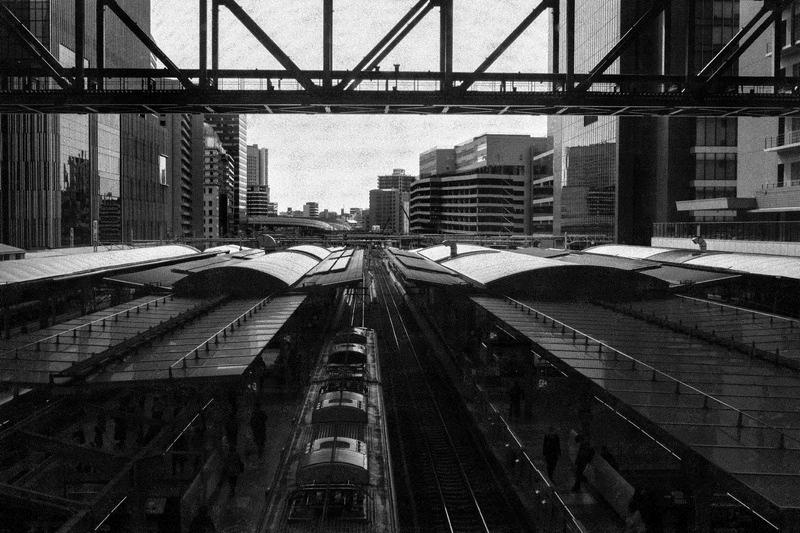
Osaka Mono
Steel veins converge here
A million journeys begin
No one looks up twice
鉄の血管がここに集まる
百万の旅がここから始まる
誰も二度は見上げない
80 kilometres on foot across four days Black and white photography paired with haiku the Japanese form of seventeen syllables across three line
Extract
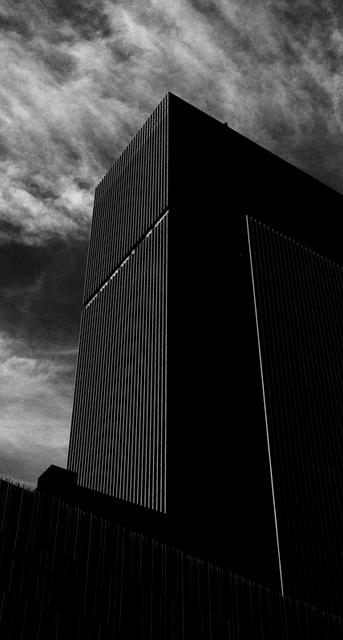
Day one I stood under this thing for longer than made sense It does not invite you to look at it It tolerates your looking There is a difference, and the camera knew it
B L A C K M O N O L I T H
Black glass, no welcome I was here before your name Power needs no door
黒いガラス、歓迎はない
お前の名前の前から私はここにいた 力に扉は要らない
The walk continued Osaka was not done with me yet
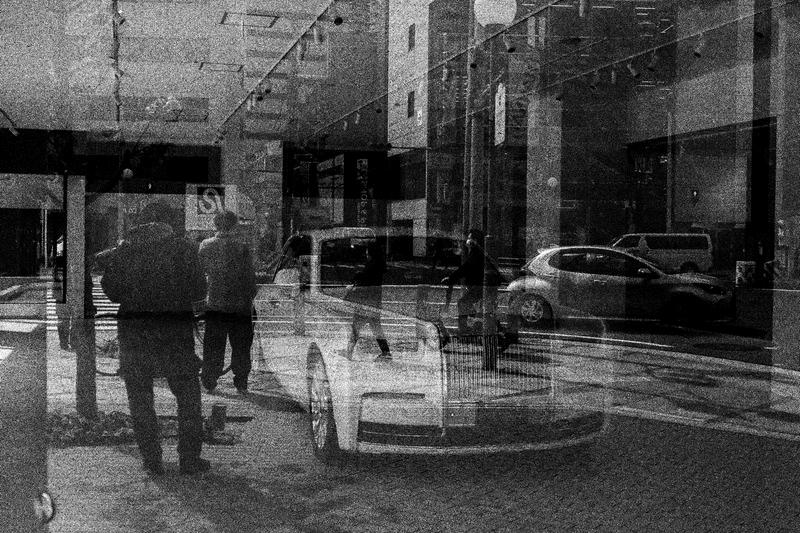
The city folds into itself here One car behind plate glass, still, expensive, untouchable Outside, Osaka moves reflected in the same glass, layered over the car like a conversation it isn't having The showroom does not see the street The street does not stop for the showroom The camera caught them in the same frame
R E F L E C T I O N S
Still car, moving street
Glass keeps them apart, almost Both caught in the same frame
静かな車、動く街 ガラスがほぼ、二つを分ける 同じ枠に、共に捉えられて
More to come from the walk The book is fifty images deep This is just the beginning
Photography and words by Buzz Langton 50 images 50 haiku English & Japanese ONE CREATE onecreate co info@onecreate co
To read previous editions of One Create Magazine please visit: onecreate co/magazine
For advertising, editorial, and production enquiries please contact us at: info@onecreate co
No part of this publication may be reproduced without prior permission of the publisher This includes all text and images, authors and contributors' work, photography, graphic art, and editorial copy
As a digital publication we welcome you sharing this magazine with other readers to enjoy Views expressed by authors and contributors are not necessarily those of the publisher For full terms and conditions visit onecreate co