






New Certified
Heather Fallis
Bryan Ratel
New License
Lauren Hoanzl
Upgrade to License
Shirdora Brown

Jose “Angel” Rios Zachary Rodriguez
Jennifer Nettles Krysta Wheeler
Jeremiah Shaffer Hunter Doiron
Reinstated
Sherrie Norman Joseph Paul Capehart Jeremiah Piercy
Transfers Out Transfers In
Seth Batten, Stephen Williams, Karla Melendez-Sae, Diana Rackow, Jeffrey Edmondson, Jeffrey Sander
Jason “Chase” Curry – TO: Indiana
Derek Johnsen – TO: Southern Missouri
Rachel Johnsen – TO: Southern Missouri
New Pastors
Glad Tidings – Texas City - Jeffrey Edmondson Plum Grove A/G – Splendora – Corey Spencer
General Council Affiliated
Alexa MacDonald, Jason Di Lissio
Daniel Garza – TO: Texas Gulf Hispanic
Jeb Dotson – TO: North Texas
Thomas Yohannan – TO: North Texas
Motion Church – San Antonio – LEAD PASTOR: Nolan McLaughlin





It’s easy to say, “well, missions is for other people, the pastors, and the called”! But the reality is that it’s not just for others; in fact, all of us are called to be a part of moving people in one way or another to respond to God’s call for salvation.
We believe that God’s heart beats for missions, so as we align ourselves with his heart, others have the opportunity to find hope in Christ.
This is a call for all, period. Some are called to GO—to other cultures and across the oceans to plant themselves among the reached, and still others to the unreached people groups. Others are called to mobilize and train the next generation of workers. And across the US, some are called to share the gospel in overlooked places, such as the neighborhoods we live in and work in, the universities where questions abound, and the inner cities where hope is lost. Still others resource the movement through giving and prayer.
Every PART matters,s because everyone is looking for hope in one way or another…and we have the answer…Jesus. So, the question remains: Which part has He called you to do?
How beautiful are the feet of those who bring good news!” (Romans 10:15).
Roger
&
Debbi
Audorff, STMN Missions Directors raudorff.stxag@gmail.com
Save the date for “Missions Cup”, Resource Connect, and find other opportunities for missions and our missionaries on our website: https://stxagmissions.org
My wife and I have served in Southeast Asia for the past ten years, and three years ago we relocated to a coastal city in the center of the country. As the first Assembly of God missionaries in this city, we felt called from the beginning to reach university students and young professionals, many from Buddhist backgrounds. Soon after arriving, we learned that as foreigners we were not permitted to step onto university campuses, and we sought the Lord for a way to reach students we could not physically access. In God’s perfect timing, He connected us with another missionary who had been given the opportunity to teach English on several university campuses. While he could not openly share the gospel, he had been praying for believers who could walk alongside his students spiritually. Through this partnership, God opened the door for us to connect with university students.
We began our first English club with one student. Over time, it grew to more than thirty students meeting regularly. For three years, the English club became a place where relationships were built and trust was formed. As we prepared to return to the U.S. for furlough, we sensed it was time to gently introduce our faith. Our team began using the Alpha Youth course, creating a safe space for conversations about life, purpose, and God. Twelve students committed to the ten-week course. Although we have been in the U.S. for the past eight months, our local team has continued leading English clubs and Alpha courses. This past Christmas, three of the original twelve students surrendered their lives to Jesus, and we are believing these three are just the first of many who will be added to the Kingdom of God.





I am reminded of the pastor who told of the missionary from China who came to visit America. For 2 weeks this pastor took the Chinese missionary to some mega churches as well as Christian universities. When it came time for the missionary to leave back to China, the Pastor asked him what he thought of his visit to America. The Chinese missionary responded saying, I am suprised how much can be accomplished without the Holy Spirit. Now I can't confirm whether this is a true account or an annecdote, but what I have come to know is, if man can accomplish something by himself he usually will.When I chose to become ordained with the AG, I looked at the 16 Fundamental Truths and noticed two things. They showed a very balanced, healthy perspective of what we ought to be. Secondly, I noticed #8, the baptism in the Holy Spirit. Number 8 is what distinguishes us from soo many other streams of religion and, as someone who travels and is always crossing denominational lines to share the Gospel in churches, I am with the AG because we believe and put into practice the baptism in the Holy Spirit.. but do we really? When is the last time your church taught the biblical truth and importance of number 8? When is the last time our churches preached number 8 accompanied with an invitation to receive along with time to linger in the altars?
If we are honest, it's not happening in many places. An obvious reason for that is with many churches running multiple services, they are typically pressing to get the parking lot emptied out before the next service arrives. Then there is always the concern of keeping those who serve longer than expected and risk burning them out. Planning Center was implemented years ago as a tool to help with these challenges but has utilizing such a strict system for time management unintentionally pushed the Holy Spirit out of many of our services? Add to all of that the stresses our Pastors are feeling since 2020. The pressures social media has created. Cancel culture has caused some pastors to hold back for fear that preaching boldly God's word and His perspective on the issues of the day will cause people to leave the church. It all can, at times feel soo overwhelming and dry. And that, friends, is exactly why we need a return to an emphasis on the baptism in the Holy Spirit. It's interesting that Jesus said in John 3:3 "You must be born again." In Matt 28:19 He commands us to be water baptized. We hold true to these instructions and emphasize them regularly and yet why aren't we handling the baptism in the Holy Spirit with the same reverance and urgency?
For the baptism in the Holy Spirit is also a command to the believer. Luke 24:49 “And now I will send the Holy Spirit, just as my Father promised. But stay here in the city until the Holy Spirit comes and fills you with power from heaven.”
As someone who has a passion for this experience and has felt the immense warfare that surrounds it, I can tell you satan hates that we invite believers into this encounter because, as the bible tells us, they will receive the power to be a witness. They will shakeoff their lukewarmness and begin going out and telling others about the goodness of God. It will also unlock the spiritual gifts to reveal, to the world, the reality of Christ. Satan wants us convinced that having tight, clean, nonabrasive services where everybody feels good and nobody leaves offended is the Godly goal. That is a lie. We were warned in 2 Tim 3:4-5, "they would love pleasure rather than God. They will act religious, but they will reject the power that could make them godly. Stay away from people like that!"
We need to preach God's word with power. We want to provoke the nominal believer to change and become a contributer. And we expect signs, wonders and miracles to follow. When these things happen the church will explode! Will some leave? Of course they will. But don't we know that God will reward our obedience to preaching His word 100 fold?
So as you read this today, I pray we as STXAG are inspired to shake off the opinions of others and regularly incorporate the teaching and preaching of this matter to see Christians realize the importance of walking in God's power! I pray that we see a return of Sunday night services where there is more flexibility to watch the Holy Spirit move. And if you may not be as familiar with this subject or how to preach the baptism to usher in these encounters in a healthy, reverant way, I would love to connect with you. I would love to be a resource to reignite this side of your ministry in you. And, as always, I would love to partner with your church for special services and equipping.
Dean Johnson Director of Evangelism
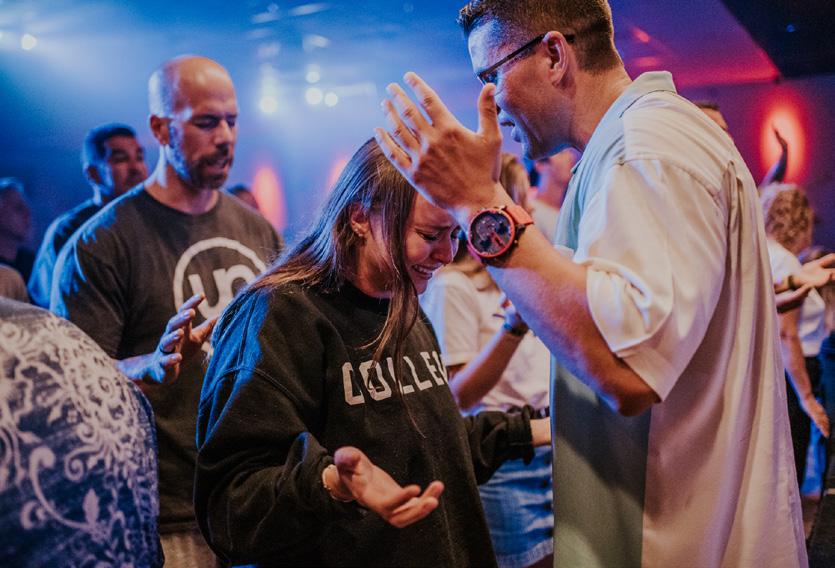
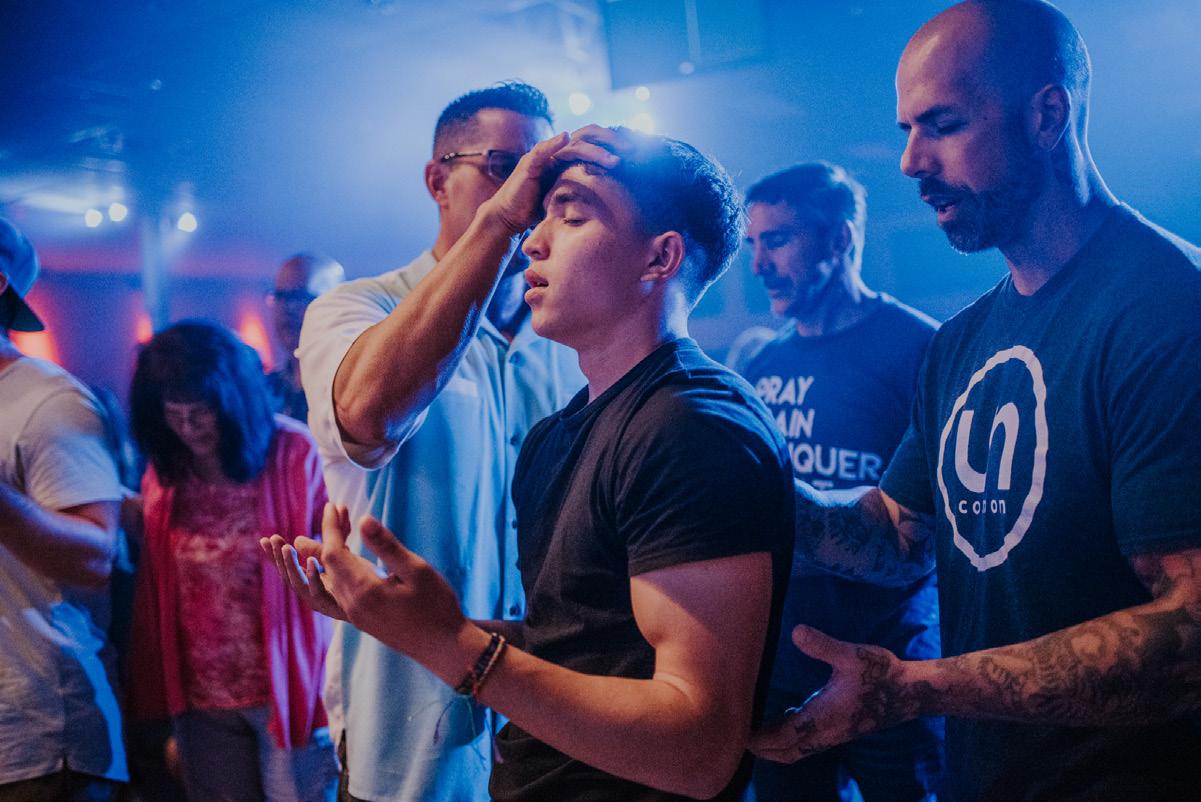



Our Assemblies of God churches, and many others, will be gathering around the country for one hour of prayer and intercession beginning at 9:00am on July 4th, in each time zone beginning on the East Coast and concluding in Hawaii. Intercessors will gather for one hour of prayer in different locations, agreeing on specific prayer points. Our goal is to mobilize 300,000 people in prayer at 1,000 host sites nationwide on this historic day. We have secured locations in each of our 18 sections in South Texas. PLEASE PRAY WITH ME as I assist churches and ministries organize for this historic nationwide prayer gathering. WE want AT LEAST 2 people from every church to meet together, by phone, or on a zoom call... to take the prayer list and agreeing in prayer on July 4th. We have had tremendous success in leading more believers to read the word (Biblical Literacy), and now we need to encourage and mobilize believers to connect with God in prayer daily, to know Him more through prayer and see His hand at work. AMERICA PRAYS 250 is about mobilizing believers to pray for our nation to have a spiritual Awakening, Repentance and Revival. July 4, 2026 is a day to agree in prayer that hope will awaken believers to see the powerful benefit of daily prayer and continue it in their daily walk. Information for this prayer event can be found at website : prayercenter.ag.org If you need more information about the America Prays 250 and how to mobilize your Church or Section please message or email me! The specific prayer list will be available closer to the event and I will share it with you.
Beth A Wiehe ~ STMN Prayer Force Director WieheFlute@yahoo.com
(ADOPTED BY THE GENERAL PRESBYTERY IN SESSION AUGUST 5-6, 2024)
In the United States, lifelong marriages are no longer the norm for families. One twenty-first-century study shows that about one-third of Americans who are or have been married have also been divorced at least once. Among self-professed evangelical Christian believers, 25 percent reportedly have experienced divorce.1 Vast segments of the general population live in families headed by single parents, either divorced or never married. Many others live in transient relationships marked by convenience or fear of legal entanglements. In short, many people today live contrary to God’s design for the family, sexual relationships, and child rearing.
The Church must speak to the issues of divorce and remarriage, which occur all too often. Christians can struggle with how their commitment to Christ should shape their views of marriage, divorce, and remarriage.
Marriage joins two sexes, male and female, who share in the divine image. Both males and females are biologically needed to be “fruitful and multiply” so that humanity can reflect God’s authority over the earth (Genesis 1:27–28).
Marriage between two sexes should be a mutual relationship. After God placed man in the Garden to work it, He noted that man should not be alone. God created man’s equal to work alongside him as an ezer kenegdo, or “ally in front of” (Genesis 2:18). Ezer is a Hebrew term that can mean “helper,” “ally,” or “rescuer.” The Old Testament uses the term most often to describe God. Kenegdo is a Hebrew word that can mean “in front of” or “in sight of.” It describes standing face-to-face or eye-to-eye. In this context, ezer kenegdo does not mean “junior partner” but “corresponding ally.” Man immediately recognized his equal in woman compared to other living beings (Genesis 2:19–23).
Marriage is a lifetime union between two sexes. The story of woman’s creation explains marriage as the moment man leaves his family of origin to become “one flesh” with his wife (Genesis 2:24). Jesus said of this union, “What God has joined together, let no one separate”2 (Matthew 19:6).
Marriage is a covenant. It is a solemn, binding agreement made before God and among people in society. The marriage order of Genesis 2:24 strongly implies the nature of marriage. But Malachi 2:14 describes it as a covenant. Ezekiel 16:8 then extends the idea of marriage to the covenant relationship between God and Israel.
Marriage is a covenant between one man and one woman. While different roles exist for males and females in different cultures, the most significant difference between men and women is biological and is related to procreation. Only women can say, “With the help of the LORD I have brought forth” another human being (Genesis 4:1). The physical differences that exist between men and women do not negate the equal responsibility they share for their marriage.
The sexual consummation of marriage is for procreation, bonding, and
mutual pleasure in a safe and loving relationship. Paul taught spouses to faithfully respect each other sexually (1 Corinthians 7:3–5).
Biblical marriage begins and ends with monogamy. The first story of the family focuses on one man and one woman. Some practiced polygamy later, but the resulting family experience was never ideal (e.g., Genesis 21:9–10; 37:2–36; 1 Samuel 1:1–8). Comparing Israel’s “one-God people” relationship with the institution of marriage (e.g., Isaiah 54:5, Hosea 3:1) led to an insistence on “one-spouse marriage” by the New Testament era.
Within the Church, Paul proscribed monogamy for leaders by his references to a “one-woman man” (1 Timothy 3:2, 12; Titus 1:6). Paul saw marriage as analogous to the relationship between Christ and the Church (Ephesians 5:21–33). Spouses’ faithfulness to each other’s well-being reflects the reconciled community Christ died for and for whom Christ will return.
God judged divorce as harmful (Malachi 2:14–16). Divorce was not a part of God’s original intention for humanity. Deliberately breaking the marital covenant hinders God’s purposes in marriage.
God’s Law regulated divorce. The Law acknowledged that divorce was already taking place in Israel. In those times, women were under the authority of men. A husband could abandon his wife, without legal recourse, to starvation or prostitution on a mere whim. The Old Testament divorce law was a necessary hedge against mistreatment. The Law offered the possibility of divorce only under carefully prescribed circumstances (Deuteronomy 24:1–4; cf. 22:13–19, 28–29).
Jesus spoke against divorce (Matthew 19:5–6; Mark 10:6–9). In the conflict between Jesus and the Pharisees over divorce, the question concerned what qualified as “indecency” in Deuteronomy 24:1. Can a man divorce his wife for any cause or only for adultery? Jesus pointed out that Moses only permitted (epitrepo) them to divorce their wives—but even then, not for “every cause” (Matthew 19:3, 7–8). Jesus interpreted Deuteronomy 24:1–4 as a description of divorce happening in certain instances, not a command to divorce.
In the case of “marital unfaithfulness,” Jesus permitted divorce (Matthew 5:32; see also Matthew 19:9). The Greek word translated “marital unfaithfulness” in these passages is porneia, which would undoubtedly include adultery but is also a broader term for sexual immorality of various kinds, often habitual, both before and after marriage (Mark 7:21; Acts 15:20; 1 Corinthians 5:1; 6:18; Galatians 5:19; Ephesians 5:3; 1 Thessalonians 4:3).
When Jesus spoke against divorce, the concern was people finding any excuse to divorce one spouse to marry another. Divorce for the sake of remarriage constituted adultery in God's eyes unless porneia had already broken the marriage covenant.
Paul forbade Christian couples to divorce (1 Corinthians 7:10–11). Christian couples are to remain unmarried if they divorce unless they are reconciled
to their believing spouse. Paul also forbade Christians from initiating divorce simply because their partner was an unbeliever. Suppose an unbelieving spouse wants to stay in the marriage to a believer. For Paul, the believer sanctifies (sets apart) their marriage and family by their presence as a follower of Jesus (1 Corinthians 7:12–14). In fact, the believing spouse’s witness could lead to the salvation of the unbelieving spouse (1 Corinthians 7:16).
Paul allowed for divorce when an unbelieving spouse was unwilling to continue in marriage to a believer. In that case, the believer must let them go “to live in peace” (1 Corinthians 7:15). Just as marriage to an unbeliever can lead a family to Christ if the unbeliever wants to stay, forcing marriage on an unbeliever who wants to leave can disrupt the peace that the gospel promises to bring. In these cases, abandonment, by implication, provides grounds for divorce and remarriage.
In summary, marriage is a covenant between two partners, male and female, that God intends to last a lifetime. Marriages also create the potential for the birth and rearing of children. Two parents can better partner for the good of the children and the good of each other. There is no closer human relationship than marriage, so there is no better analogy for the relationship between God and His people or Christ and His Church. Marriage should reflect the loving community God intends for His people. God hates divorce among His people. It violates the covenant between wives and husbands as bearers of the divine image in their union. At the same time, God protected wives from mistreatment in cultures where husbands had more power to initiate divorce by prescribing narrow conditions in which divorce is allowable.
Jesus also offered protection from spouses looking to divorce for any reason. Jesus did allow for (though He did not command) divorce for marital unfaithfulness because one spouse has already broken the marriage covenant.
Paul also forbade divorce for Christians but provided for unbelievers who were bound in marriage with believers. If an unbeliever wants out, the believer must let the spouse go. As an implied abandonment, the marriage covenant is already broken again, so divorce must be permitted.
Jesus interpreted the Law by looking to the heart of the Law and not just the wording. Paul interpreted Jesus by looking to the heart of the gospel and not just the one exception Jesus discussed. Both Jesus and Paul allowed divorce when the marriage covenant was already broken. They also considered what protected members from mistreatment in their discussions of divorce. While it takes two to marry, it may only take one to force a divorce. Christians are not responsible for divorces outside of their control.
The Assemblies of God recognizes exceptions for divorce and remarriage based on the above: adultery, abandonment of a believer by an unbeliever, domestic violence, and ecclesiastical annulment. The Assemblies of God also does not count preconversion divorce against the possibility of remarriage.3 Whatever has happened before conversion belongs to the old way of life. Preconversion divorce does not count as the failure of a Christian marriage.
Domestic abuse, whether of the spouse, children, or both, can also constitute a breaking of the marriage covenant.4 Spouses are to love and mutually submit to one another. Parents are to care for their children by the very act of becoming parents. No spouse should stay in an unsafe environment any more than a parent can disregard the suffering of their children. God’s calling on us as stewards of our children and bodies is no less meaningful than God’s calling on us as spouses. Based on Scripture, the Assemblies of God holds the abuser responsible for breaking the marriage covenant and not the one who may divorce to protect themselves or their children.
An ecclesiastical annulment is also a biblical exception, allowing for remarriage when the first marriage was not entered freely or honestly. If by force, fraud, or lack of consummation, a marriage may be annulled in recognition that there was no covenant between two willing parties with which to begin. At the same time, the person so defrauded is an innocent party to the failure of the marriage.
To Read more on the Assemblies of Gods position of Divorce and Remarriage, please visit AG.org