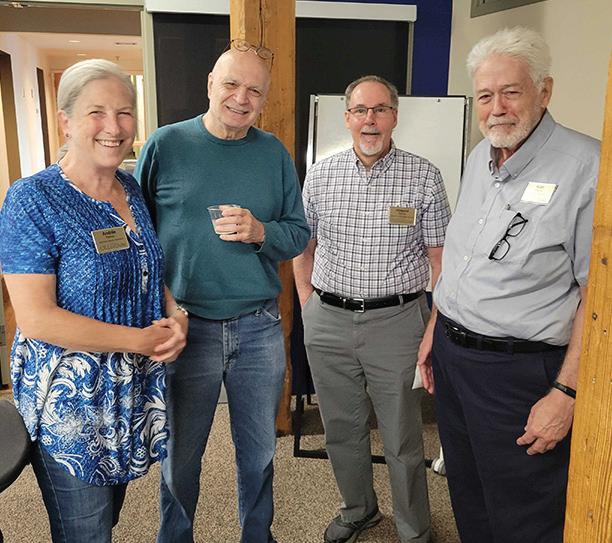
Jonathan Bitner, Beth Bowling, Alease Davis, Annette Gooch, Jay Starks, Annie Taft, Mary Thompson, Beverly Thorpe
Advisory Council, 2025–26
Ellen Luken, Chair
Frank Brown, Sue Dennison, Ben Edwards, Sandi Fitts, Carol Hamilton, Diane Hundley, Greg Jacobs, Howard Koslow, Andree Reeves, Sylvia Robinson, Marc Shapiro, Alan Teasley, Donna West
Area Chairs
Lavonne Adams, Joyce Blackwell, Margaret Brill, Cheryl Fenner Brown, Frank Brown, Doug Dickerson, Beverly Dowdy, Lu Howard, Susan Simone, Mark Spano, Richard Weintraub
Welcome!
As winter settles in and we look ahead to the promise of spring, OLLI at Duke invites you to a new season of learning, connection, and growth. These colder months are the perfect time to plan what’s next — to imagine the ideas you’ll explore, the conversations you’ll share, and the discoveries that await when the days grow longer.
In these pages, you’ll find an inspiring range of courses designed to spark curiosity and foster community. Whether you’re diving deeper into a familiar subject or venturing into new territory, each class offers the chance to stretch your mind and engage with others who share your passion for learning.
Together, let’s welcome the coming season with open minds and renewed curiosity.
Here’s to a bright and enriching Spring 2026 with OLLI at Duke.
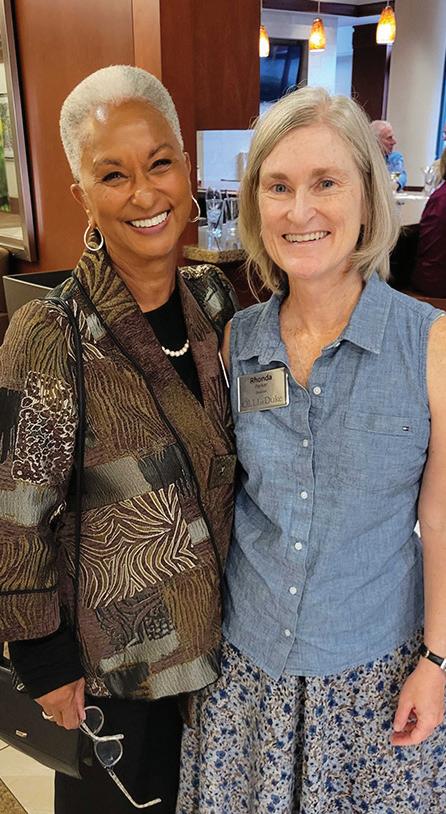
For the love of learning, Rhonda Parker Ellen Luken Director Advisory Council Chair
Becoming a Member
Membership: $60
Membership is a requirement for enrollment in all OLLI courses or events. Membership enables you to register for courses and activities as well as members-only special events.
To become an OLLI member and create an account, go to learnmore.duke.edu/olli and click “Join OLLI.” We recommend joining in advance of registration. This login information is also used to access your online class sessions.
Questions?
For general questions: olli@duke.edu, (919) 660-5882
Registration for Spring 2026 opens on Tuesday, January 6, at 9 a.m. ET for Monday and Tuesday courses and on Wednesday, January 7, at 9 a.m. ET for Wednesday and Thursday courses.
To register for a course, visit the course description page and click “Add to Cart.” Click here for more information, tips on registration and a step-by-step video.
This helpful video provides tips and strategies for successful online registration.
In-Person Learning
Our in-person courses are hosted at the Education Building at Judea Reform Congregation (JRC), located at 1933 W. Cornwallis Road in Durham; Erwin Mill (EM), located at 2024 W. Main Street in Durham; and at a few off-site locations. These courses are marked with the school icon shown above. If you plan to enroll in an in-person course, please see the In-Person Guidelines before registering.
Online Learning
Taking courses online is both convenient and accessible — no need to worry about parking or traffic. With Zoom, you have a front-row seat for all your courses. These courses are marked with the online icon shown above. Check out our Online Guide for more information about online courses.
Many online courses are recorded so enrollees can watch them later. You can even enroll in a course to only watch recordings. These are marked with the recording
Find Your Course Links
The Zoom links for your online courses can be found in your Student Portal. Go to learnmore.duke.edu/olli and click “Student Login.” You will need to log in to access your course every week for class.
Technology Needed for Zoom Courses
Here is the basic technology you’ll need to take an OLLI online course via Zoom:
• Laptop, desktop computer, tablet or smartphone
• Microphone (if speaking in class)
• Speakers or headphones
• Webcam (if showing your own video)
• Reliable internet connection (minimum 20 Mbps download speed recommended; connection speed can be checked at www.speedtest.net)
Join us for Zoom Basics & Refresher session on Thursday, January 8, at 10 a.m. ET. The link will be provided in a member newsletter closer to the event.
Contact Information
To join, learn more or register for a course: learnmore.duke.edu/olli
General and member support: olli@duke.edu or (919) 660-8552
Director: Rhonda.Parker@duke.edu
Curriculum: Jenny.Levine@duke.edu
Virtual programs and instructor relations: Betina.Huntwork@duke.edu
Registration inquiries: learnmore@duke.edu
Join OLLI at Duke
Becoming a member is easy. Our annual membership fee of $60 entitles members to enroll in courses and workshops, participate in special interest groups, attend social events, and participate in educational travel. To join, go to learnmore.duke.edu/olli.
Access & Accommodation
Duke University has policies in place to ensure people with a wide range of abilities have equal access to its programs and activities. If you anticipate needing any type of accommodation or have questions about access at any course location, please contact the OLLI office by email at olli@duke.edu before your course begins.
Scholarship Support
We want OLLI at Duke courses to be accessible to all who have a passion for lifelong learning. For information, please email olli@duke.edu and ask about our Community Membership. All requests are confidential.
Other Questions?
We have much more information about OLLI at Duke on our website! You can find out about our policies, FAQs, how to get involved and more. Visit learnmore.duke.edu/olli.
OLLI on YouTube
Did you know OLLI at Duke has a YouTube Channel? We’ve captured numerous special speakers and events, Community Reads discussions and historical moments from over 48 years of OLLI at Duke. Check out the channel, and join the community by liking or commenting on a video. You can even subscribe to the channel and click the bell to be notified when the next video is released.
Opportunities Beyond the Classroom
OLLI at Duke is a cooperative venture. Dozens of volunteers are involved in making the magic happen for OLLI members. Getting involved is a great way to make new connections and build community. Members serve as course moderators, class assistants, lead small group discussions and serve on the Advisory Council to ensure the excellence of OLLI at Duke.
Course Support
Instructors are passionate about their course topics and enjoy sharing their knowledge and experience with their peers.
Course Moderators support online courses and their instructors, and ensure a positive, inclusive, and respectful online learning environment for all participants.
Class Assistants support in-person courses by helping instructors, taking attendance, and making necessary announcements.
Member Leadership
The Advisory Council consists of the chair, vice chair, immediate past chair, recording secretary, chairs of the standing committees, and at-large advisors. This council provides guidance and insight to support program growth and development and ensure a positive member experience. See page 2
Committees are made up of current, active OLLI members who provide guidance and support in specific program areas. Current committees are: Canvas, Curriculum, Events Planning & Excursions, Instructor Relations, Member & Community Engagement, Partnerships, and Volunteer & Leadership Development.
Members interested in pursuing a leadership position can reach out via email to olli@duke.edu.
Special Interest Groups
Special Interest Groups (SIGs) provide opportunities for members to connect with their peers outside the classroom based on shared interests. Members guide the SIGs, and new groups may start at any time. For the most up-to-date information and a complete list of OLLI’s SIGs, visit learnmore.duke.edu/olli/special-interest-groups.
Important Dates
Tuesday & Wednesday, Janurary 6 & 7
9 a.m. ET — Registration opens for spring courses
Monday, January 5
11 a.m. ET — Vivo Information Session
Thursday, Januray 8
10 a.m. ET — Zoom Basics & Refresher
Thursday, January 22
10 a.m. ET — In-person New Member Welcome Event
Friday, January 23
9:30 a.m. ET — Spring 2026 Kickoff Speaker and Social
Monday, January 26
Spring courses begin Friday, April 3
Last day of spring term Monday-Friday, April 6-9 Makeup week
Sunday, May 3
Last day to view recordings
Courses by Day ● Time [ET], Course Title (No. of Sessions) (Location), Page [linked to description]
11-12:15 ..... Inside Plays (5) ........................................ 42
1:30-2:45 ... The Animal Kingdom (5) ......................... 55
6-7:15......... Masters of Dark Fiction (3) ..................... 35
In Person
9-10:30 Tax Smart Retirement Strategies (6) (JRC) 21 9-10:30 The American Colonies 1607-1776 (10) (JRC) ............................ 34
9-10:30 ...... The Plays of George Bernard Shaw (10) (JRC) 38
11-12:30 Literacy in Action (10) (OTH) 16
11-12:30 From Russia With Love (6) (JRC) 43 11-12:30 ..... Writing Short Fiction (10) (JRC) .............. 68 11-12:30 ..... Your Life as a Hero’s Journey (8) (JRC).... 66
11-1 Intermediate Zentangle (10) 28
11-1 Making a Mosaic Butterfly (5) (JRC) 28 1:30-3 Limits of Presidential Power? (8) (JRC) 23 1:30-3 Restorative Yoga, Mudra & Sound (10) (JRC) 64
1:30-3:30 NC Symphony Live (2) (JRC) 44
Tuesdays Online (Zoom)
11-12:15 Complex Systems and Conflicts (6) 57 11-12:15 Incarceration Nation (10) 61
11-1 Creating a Crown of Essays (8) 70 11-1 Painting With Colored Pencils (10) 25
1:30-2:45 George Sand and George Eliot (6) 36
1:30-3 Create 3-D Mosaic Garden Art (6) 29
1:30-3:30 Create Your Children’s Book (10) 70
3:30-4:45 Weather Unlocked (3) 53
In Person
9-10:30 The Journey of Racism (8) (JRC) 32
9-12/10-1 Stay Put or Move On (SPOMO) (10) (JRC) ............................. 22
11-12:30 ..... Chinese Brush Painting (10) (JRC) .......... 27 11-12:30 ..... Empire of Tea (8) (JRC) ........................... 30
11-12:30 ..... Opera Unmasked (6) (JRC) ..................... 45
11-12:30 ..... Topics in Astrophysics (5) (JRC) ............ 54
1:30-2:45 ... Symposia (10) (CV) ................................. 58 1:30-3 Bread, Beer & World History (5) (JRC) 30 1:30-3 Chekhov’s Russia Revealed (5) (JRC) 38 1:30-3 Chinese Calligraphy & Painting (10) (JRC) .............................. 27 1:30-3 ........ Intro to iPhone Photography (8) (JRC) ... 48
1:30-3 ........ Thanks to Hanks (6) (JRC) .....................
Wednesdays
....... The Search for an American Sound (6)
In Person
Page numbers link to course descriptions • All classes are Eastern Time
Courses by Day ● Time [ET], Course Title (No. of Sessions) (Location), Page [linked to description]
Brems, Susan Deconstructing the Global South ................ 24 Brill, Margaret ........... Empire of Tea .......................... 30 Brown, Cheryl Injury Prevention in Yoga 65 Restorative Yoga, Mudra & Sound 64 Brown, Frank ............ The Mathematics of Voting..... 56 * Brown, Grey Poetry Forum 69 Brown, Harry Robert Frost and W.C. Williams 36
Caccavale, Ruth Art at the Nasher Museum 19 Castillo, Jefferson .... iPhone Intro to Filmmaking ..... 49 * Copenhaver, Christine Chekhov’s Russia Revealed 38 Cox, Edwin ............... Symposia ................................ 58 Darer, Stanley Thanks to
Courses by Instructor
●
Epstein, Matt ............ Alzheimer’s Disease ............... 51
Fortner, Brand .......... The Vera C. Rubin Observatory 53
Fynn, Carol Paint Watercolor Cards 26
Gabriel, Lisa Tax Smart Retirement Strategies ........................... 21
Gray, Virginia ............ The World Today..................... 22
Ingebretsen, Edward Magic Jesus and the Forgetting ..................... 50
Johnson, Eric ........... The American Colonies 1607-1776 34
Jolly, Anju Making a Mosaic Butterfly 28
Kelly, Julie 30 Years Without a Paycheck ......................... 21
Klein, Steven ............ Complex Systems and Conflicts 57
Koff, Bernice Paint and Collage Workshop 25
Koslow, Howard Exploring Practical Uses of AI 52
Longman, Douglas ... The World Today..................... 22
Martin, Preston......... Robert Frost and W.C. Williams 36
Maytan, Margaret Opera Unmasked 45
McIntyre, Edison Reluctant Confederates 33
McLeod, Melissa Symposia 58
Meguid, Henry Introduction to Bridge 67
Melanson, Richard Exit From American Hegemony? ........................ 34
Meyer, Marvin........... David Crosby’s Musical Journey 42
Mitzner, Susan Yoga and the Wisdom of the Body ......................... 64
Oliphant, Ashley ....... Ernest Hemingway.................. 37
Overgaard, Wade ..... The World Today..................... 22 Palmer, Chris
Name, Course Title, Page [linked to course description]
Raymond, P.M.
Special Events
Spring 2026 Kickoff Speaker & Social: Moral AI and How We Get There
Friday, January 23 • 9:30-11:45 a.m. (ET)
Levin Social Hall, Judea Reform Congregation
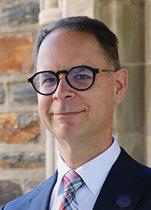
Featuring Walter Sinnott-Armstrong, Ph.D., Chauncey Stillman Distinguished Professor of Practical Ethics, and Joe Salem, Rita DiGiallonardo Holloway University Librarian
Artificial intelligence is reshaping nearly every corner of our lives — from medicine and law to education and the arts. Yet these innovations raise pressing ethical questions: How can AI reflect human values? What safeguards can ensure it serves society responsibly?
Join us for OLLI at Duke’s Spring 2026
Kickoff Speaker & Social, featuring Duke philosopher Walter Sinnott-Armstrong (left), co-author of “Moral AI and How We Get There,” and Joe Salem (right), Duke University Librarian and Vice Provost for Library Affairs. Together, they’ll explore the intersection of ethics, technology, and community — offering both a university-wide and human-centered view of how we might create “moral AI.”
Attendees are encouraged to read “Moral AI and How We Get There” in advance, especially Chapter 6, which introduces key ideas that will shape the conversation. You can pick up a signed bookplate for your copy at the event.
Before the conversation, enjoy coffee, refreshments, and lively discussion with fellow OLLI members as we celebrate the start of a new term.
New to OLLI at Duke? We invite you to join us for an in-person New Member Welcome Event hosted by OLLI leadership and volunteers. New members will have an opportunity to meet other new members, OLLI Advisory Council members and the OLLI team. More information will be available in an upcoming member newsletter. Maximum: 50; No fee; Course ID: 3524-014
Special Events
Post-Holiday Reset: A Wellness Gathering for OLLI Members
Join fellow OLLI members for a gentle, restorative afternoon to help you reset and renew after the holiday season. Guided by integrative health consultant and OLLI member Linda Rapuano, and Deborah Dixon, Reiki Master teacher (Duke Health and Wellness Programs), this session offers a peaceful space to experience wellness practices designed to help you unwind, enter into a state of calm, and cultivate a sense of balance as the new year begins.
Enjoy soothing herbal teas and light refreshments, participate in simple breathing and relaxation techniques, including Reiki and Ear Seeds for Peace, and take home a small card with a healing practice you can continue on your own. Practitioners will be available to offer further information.
Maximum: 50; Fee: $15; Course ID: 4175
Walking Tours of Durham
Public Mural Walking Tour of Durham
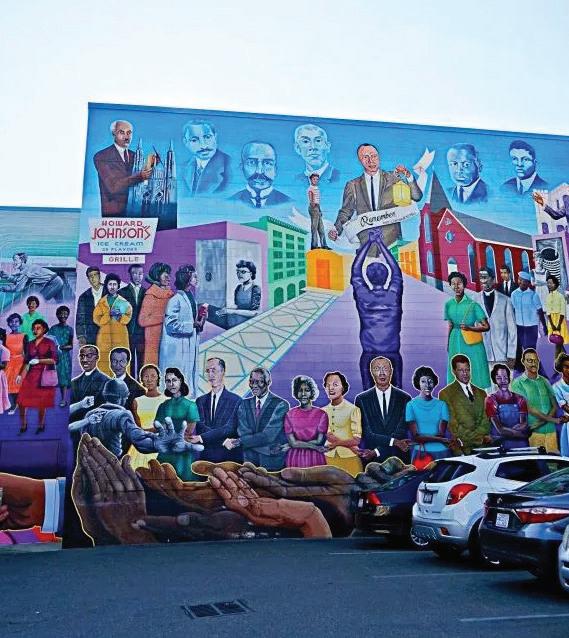
IN PERSON: A wall isn’t just a wall in downtown Durham — it’s often an interesting and beautiful mural with a story to tell. Join Duke alumna Sue Behringer, who has led mural walks for many years, for a guided tour showcasing some of Durham’s most compelling public art. The walk begins at 10 a.m. and lasts about an hour and a half. Comfortable walking shoes recommended. Optional lunch with the group afterwards.
• Sat, Jan 24, 10-11:30 a.m.
• In person in Durham
• Maximum: 16; Fee: $15; Course ID: 4171
Walking Tour of Durham with Taste Carolina
Taste Carolina will guide us through downtown Dunham’s innovative cuisine!
In addition to enjoying fantastic food, we’ll also explore the city’s cutting edge culture, historic roots, and renovated buildings. This social and fun walking tour will serve as dinner and drinks as we discover Durham’s flavors together. Dress for the weather and for walking.
• Fri, Feb 20, 2:30-5:30 p.m.
• In person in Durham
• Maximum: 16; Fee: $130; Course ID: 4093-002
Special Events
Duke Women’s Basketball Game v. SMU: Exclusive Courtside Experience
IN PERSON: Join fellow OLLI members for an unforgettable afternoon at Cameron Indoor Stadium with exclusive access to the Brass Bar Club— an intimate courtside event space reserved entirely for our group. Enjoy food and non-alcoholic beverages, relax in private seating just steps from the court, and take in the game under the leadership of Duke Head Coach Kara Lawson, recently named head coach of the U.S. Women’s National Basketball Team and a former Olympic gold-medalist herself. Registration closes Thursday, January 22.
• Sun, Feb 8, 2-5 p.m.
• In person at Cameron Indoor Stadium, Duke West Campus, 115 Whitford Drive, Durham
• Maximum: 50; Fee: $50. Watch for registration for this event in the member newsletter!
OLLI at the Durham Bulls: March 31
Save the date and make plans now to join your OLLI friends for an unforgettable evening as we kick off the Durham Bulls’ first home game of the season! Stick around after the game for a spectacular fireworks show lighting up the Durham sky. Watch for registration for this event in the member newsletter!
Woodworking with Bull City Woodshop
Woodworking with Bull City Woodshop
IN PERSON: Ever wanted to try your hand at woodworking? Here’s your chance! OLLI at Duke is partnering with Bull City Woodshop in Durham to offer small-group, beginnerfriendly workshops this spring. You’ll work with skilled instructors in a fully equipped shop and head home with something beautiful, useful, and made entirely by you.
Workshops run from 9 a.m. to 12 p.m. and are limited to five participants to ensure plenty of hands-on guidance. All tools and materials are provided; just wear closed-toe shoes and bring your curiosity!
• In person at Bull City Woodshop, 1912 E. Pettigrew Street, Durham
Keepsake Box
• Fri, Feb 6, 9 a.m.-12 p.m.
• Maximum: 5; Fee: $85; Course ID: 4104-003
Toolbox Project
• Fri, Mar 6, 9 a.m.-12 p.m.
• Maximum: 5; Fee: $85; Course ID: 4104-004
Butterfly House
• Fri, Apr 3, 9 a.m.-12 p.m.
• Maximum: 5; Fee: $85; Course ID: 4104-005
Special Events
Civil Rights Tour
OLLI Travels: Civil Rights Tour — Montgomery & Selma
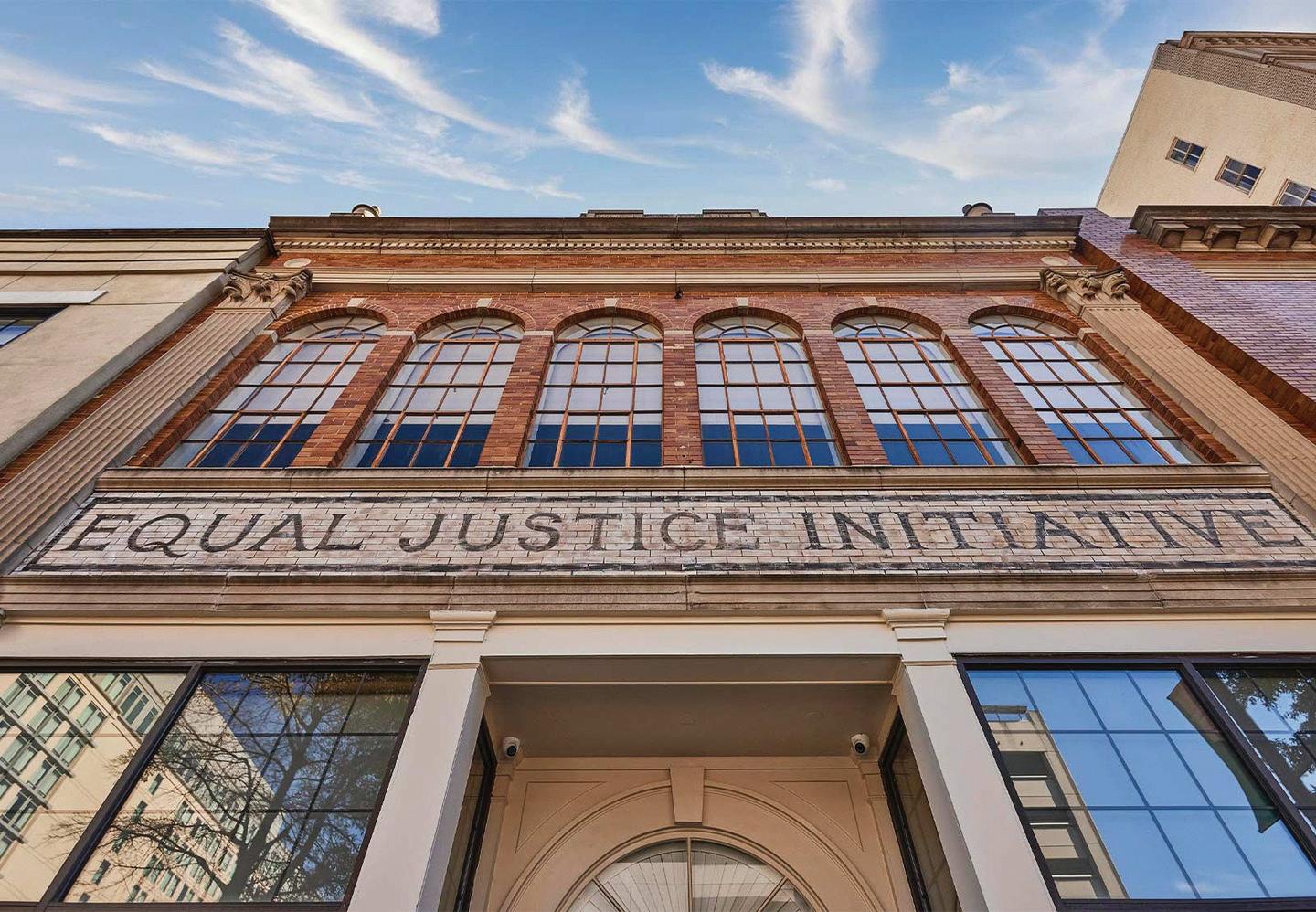
IN PERSON: Join fellow OLLI members for an unforgettable three-night journey through the heart of the Civil Rights Movement. Traveling with Fora Travel, we’ll explore landmarks that shaped our nation’s pursuit of justice — from the Freedom Rides Museum and Legacy Museum: From Enslavement to Mass Incarceration to the National Memorial for Peace and Justice in Montgomery. The trip concludes in Selma, participants will walk together across the historic Edmund Pettus Bridge.
This immersive experience includes guided tours, select meals, and opportunities for reflection and fellowship. Space is limited.
• Wed-Sat, Mar 11-14
• $1,575 single / $1,135 per person double. Deposit of 50% to reserve (fully refundable before Jan 15); balance due Jan 15.
For more information, see the brochure here. To register, request a spot here.
“Madama Butterfly” with the NC Opera
IN PERSON: Join fellow OLLI members for a moving afternoon at the North Carolina Opera with Puccini’s “Madama Butterfly,” one of the most beloved works in the operatic canon. This timeless story follows Cio-Cio-San, a young Japanese geisha whose devotion to the American naval officer Pinkerton sets the stage for a powerful exploration of love, betrayal, and cultural collision. Registration closes Wednesday, January 7.
ONLINE: As a special bonus, participants can deepen the experience with an online preview led by opera educator Margie Satinsky. In this engaging session, Satinsky will illuminate the life of composer Giacomo Puccini, the historical and cultural backdrop of “Madama Butterfly,” and the complex dynamics between its central characters — insights that will enrich your appreciation of the performance. Satinsky has been teaching opera appreciation courses since 2012 for OLLI and other lifelong learning programs, and she serves as President and co-founder of the Triangle Wagner Society.
Opera Performance
• Sun, Feb 1, 2 p.m.
• In person at the North Carolina Opera, Raleigh Memorial Auditorium, 2 E South Street, Raleigh
• Maximum: 40; Fee: $50; Course ID: 4174
Optional Online Preview
• Tue, Jan 21, 11-12:30 p.m.
• Online via Zoom
Montgomery & Selma March 11-14, 2026
Photograph courtesy of Fora Travel
Special Events
Musical
Theater in Raleigh:
“Don’t Bother Me, I Can’t Cope”
IN PERSON: “Don’t Bother Me, I Can’t Cope” is an all-singing, all-dancing revue that centers the African American experience through a vibrant blend of gospel, jazz, funk, soul, calypso, and soft rock. First performed in 1971, its themes remain as resonant today as ever, offering a spirited and thought-provoking exploration of community, resilience, and joy. Participants can choose to gather afterwards for dinner at a nearby restaurant.
Registration closes Friday, February 20.
• Sun, Mar 22, 3-5:30 p.m.
• In person at North Raleigh Arts and Creative Theater, 7713 Lead Mine Road #51, Raleigh
• Maximum: 40; Fee: $35; Course ID: 4173
OLLI Code of Conduct
Curiosity + Connection + Kindness + Compassion = Community
OLLI at Duke endeavors to create a positive and affirming environment that fosters learning and social connection. Members, instructors and staff are expected to demonstrate mutual respect, personal and academic integrity, kindness and a commitment to civil discourse. Ensuring OLLI at Duke is a welcoming, inclusive and affirming learning community is a responsibility we all share. These principles apply to all OLLI courses, whether they are in person or online.
We welcome a lively and passionate exchange of ideas and perspectives. Opposing viewpoints are welcomed and appreciated. Instructors are responsible for leading and moderating classroom discussions. Instructors have the prerogative of inviting/allowing questions throughout the class or asking members to hold their questions until the end of the class or another designated time.
Members, instructors and staff of the OLLI at Duke community are encouraged to contact OLLI staff (olli@duke.edu) if they observe behavior that is a significant violation of this code of conduct. The director will investigate, and, if there is a problem, the director will address it with the alleged violator and determine the consequences. Violations of the code of conduct may result in consequences up to and including dismissal from the program.
Community Engagement
Literacy in Action: Tutoring for Community Impact
IN PERSON: Join us for a 10-week journey that blends learning, service and community engagement. In Literacy in Action, you will explore proven strategies for supporting young readers, then apply them directly by tutoring in a local school or center. For the first two weeks, we'll dive into core literacy approaches, including phonics, fluency, vocabulary development and reading comprehension. We'll also examine the broader context: how poverty, language, trauma and race intersect with literacy development. Sessions will include hands-on activities, guest speakers and opportunities to observe lessons in action. Students are then invited to participate in literacy training with Duke students. Weeks 3 through 10 shift the focus from theory to practice. You'll be placed in a small tutoring team and work in a public school, charter school or community-based program. You'll have the option to partner with a Duke undergraduate student for a cross-generational teaching experience that
supports both you and your learners. The class will continue to meet Weeks 3 through 10 for support during the tutoring.
David Stein partners with eight public schools to mobilize Duke’s ed tech resources and co-leads projects through the PepsiCo-endowed Duke ed tech fellows program. He also directs outreach efforts like School Days and the John Hope Franklin Young Scholars program. A licensed social studies teacher, David joined Duke in 2000 after roles at North Carolina School of Science and Mathematics, at Harvard University and in urban planning. He holds a degree from Antioch College and studied city planning at UC Berkeley.
Andrea Underwood Petifer (B.A. and M.S.A. from NC Central University) is a Durham educator, author and advocate for care in learning. With over 15 years of experience, she’s served as a teacher, administrator and president of the Durham Association of Educators. She was named Durham Public Schools’ Assistant Principal of the Year in 2018 and is now assistant director of education outreach at Duke. Her debut children’s book, “The Juneteenth Alphabet,” was released this spring.
• 10 Mon, Jan 26-Mar 30, 11 a.m.-12:30 p.m.
• In person at NC Mutual Life, 411 W. Chapel Hill Street, Durham
• Maximum: 12; Fee: $40; Course ID: 4050
Registration FAQs
To make your registration experience as smooth as possible, we have put together a frequently asked questions guide. At OLLI at Duke FAQs you will find answers to questions on membership, courses, Zoom and technology and registration.
Art & Architecture
Icons of Architecture: Eight Great Works
From the Dawn of History to Today
ONLINE: Journey through time as we examine eight extraordinary works of architecture — from the Great Pyramid of Giza and the Parthenon to the Eiffel Tower, the Sagrada Família and the Sydney Opera House — that have shaped human history and our imagination. This course delves into who created these masterpieces, the innovations that made them possible and the enduring influence they continue to have on our world. We’ll uncover the stories behind their creation — whether it was driven by kings, spiritual visionaries, political figures, entrepreneurs or bold designers. Some of these structures inspired awe and myth, giving rise to conspiracies about how they were built; others represent the pinnacle of modern technology and digital design. Together, we’ll explore how architecture, across millennia, reflects the aspirations, beliefs and ingenuity of humankind. • Lecture + Q&A.
Peter Blaufeux, AIA, is an emeritus member of the American Institute of Architects with a B.F.A. in design from Temple University and a B.Arch. from City University. He was a licensed architect in multiple states, the principal of his own architectural firm for 20 years and the director of health care design for the New York region of a multinational architecture, engineering and construction corporation. He has taught OLLI courses and was a committee chair of the OLLI Board of Advisors.
• 8 Wed, Jan 28-Mar 18, 1:30-2:45 p.m.
• Online via Zoom; Sessions are recorded
• Maximum: 80; Fee: $120; Course ID: 4130
How Buildings Speak: Discovering the Language of Architecture
IN PERSON: Why do some buildings captivate us while others leave us feeling uninspired? This course invites students to explore how architecture communicates — through its form, space, materials and context. By learning how to “read” the language of architectural design, participants will deepen their ability to understand, experience and appreciate the built environment. One or two class-time field trips will provide firsthand opportunities to experience and discuss architecture in context.
• Lecture + Q&A.
Brian Peterson is a licensed architect with over 30 years of experience as a consulting design firm principal, project manager and design architect. He received a Master of Architecture degree at the University of Wisconsin-Milwaukee School of Architecture and has taught as an adjunct professor of architecture and landscape architecture at the University of Wisconsin-Madison and the University of Wisconsin-Milwaukee. He currently serves as the urban designer for the Town of Chapel Hill.
• 10 Tue, Jan 27-Mar 31, 3:30-5 p.m.
• In person at Judea Reform Congregation
• Maximum: 35; Fee: $125; Course ID: 4127
If enrolling in a course that meets In person, please review the In-Person Guidelines before registering. Visit our Online Learning website for helpful hints and tips for Zoom.
Art & Architecture
The Sublime and the Surreal: Deepening Our Appreciation of Art
IN PERSON: This course explores how two powerful aesthetic forces — the sublime and the surreal — expand our experience and understanding of art. The sublime transports us beyond the ordinary, evoking awe and transcendence; the surreal draws us inward, revealing the hidden landscapes of the unconscious. One lifts us above ourselves, the other exposes what lies beneath — but both make our encounters with art extraordinary. Over 10 sessions, we’ll view and discuss images and video excerpts that show how these two dimensions manifest across 10 art forms: painting, photography, sculpture, architecture, music, opera, dance, theater, film and multimedia. Together, we’ll deepen our appreciation for how the sublime and the surreal enrich our personal responses to great works of art and nourish our sense of ourselves. • Lecture + Q&A.
Robert Vance received his Ph.D. in philosophy from Duke in 1966, and then taught philosophy at UNC for the next 35 years. Along the way, he acquired an MFA in studio art, after which his professional interests focused increasingly on the philosophy of art. With his aging, photographic pursuits replaced the physical demands of metal sculpture. And since retiring, Robert has taught a variety of lifelong learning courses relating somehow to the wide world of art.
• 10 Wed, Jan 28-Apr 1, 1:30-3 p.m.
• In person at Judea Reform Congregation
• Maximum: 30; Fee: $125; Course ID: 4162
Art at the Nasher Museum: Call and Response
IN PERSON: Recent studies show that the average visitor to a museum looks at an art piece for 17 seconds. In this course, we will sit comfortably in the Nasher Museum of Art galleries (on chairs with backs!) spending time with one or two pairs of artworks each session. This will allow time for contemplation, exploration and deeper collaborative discussion of each work of art. We will discuss formal elements, the artist’s background and other issues that might be relevant to the work: its artistic, political, historical, religious context as well as its provenance. We will compare the two works of art and consider how the works impact and respond to one another. We will see how new meaning is created through visual dialogue. • Facilitated discussion.
Required supplies/fee: The Nasher parking lot is metered (parking is controlled by Duke, not by the Nasher). Have your license plate number handy to pay for parking ($2 per hour). A Nasher Museum of Art membership is required for this course and is being offered at half price for OLLI members.
Ruth Caccavale has a passion for discussing art with people. She has worked in a number of museums and education positions. Since her move to North Carolina in 2011, she has taught over 30 OLLI courses. Ruth also works in the education department of Duke’s Nasher Museum of Art. For 10 years prior to this, she taught a variety of art history classes at Rutgers University in New Jersey. Ruth has an undergraduate degree from Duke and a graduate degree from Rutgers.
See page 7 for venue addresses.
• 8 Wed, Jan 28-Mar 25 (no class Feb 11), 3:15-4:45 p.m.
• In person at Nasher Museum of Art
• Maximum: 15; Fee: $120; Course ID: 4109
Art & Architecture
European Art and the Avant-Garde: Art Between the Wars
IN PERSON and ONLINE: In the two decades following World War I, many artists sought approaches that countered the brutality of the war. Dada and surrealist artists employed irrationality and psychology as a rejection of the war’s emphasis on impersonal technology. In contrast, other artists, many associated with the sociopolitical experiment of the Russian Revolution, pushed highly rational and materialistic styles that were intended to create a new, egalitarian order of universal values. By the 1930s, however, antipathy toward the radicalism of the new art led to work that reflected conservative traditionalism while bolstering the rise of autocratic regimes. This course will look at these contradictory forces from which European art rose to an apex of avant-garde investigation, only to collapse into reactionary bathos.
• Lecture + Q&A.
James Boyles is a retired professor from North Carolina State University, where he taught the history of art. He has an M.A. and a Ph.D. in art history. His teaching and research have focused on American, modern and contemporary art, with the occasional venture into the medieval period and the 18th century.
Section 1
• 10 Thu, Jan 29-Apr 2, 1:30-3 p.m.
• In person at Erwin Mill; Sessions are recorded
• Maximum: 50; Fee: $125; Course ID: 4118-01
Section 2 • Livestream
• 10 Thu, Jan 29-Apr 2, 1:30-3 p.m.
• Online via Zoom; Sessions are recorded
• Maximum: 50; Fee: $125; Course ID: 4118-02
Economics & Public Policy
Infrastructure: Holdin’ It Together
IN PERSON: Building infrastructure has provoked deep differences in the U.S. Hamilton and Jefferson’s arguments over infrastructure echo loudly in U.S. politics today. We discuss why infrastructure continues to score poorly and examine how the obstacles of age, use, the role of government, money and implementation inhibit its performance. We review trends and public response to infrastructure issues. In an era of changing technology, we face a crisis of infrastructure for the 21st century. Our competition with China, history’s best infrastructure builder since Rome, is between “a country of engineers and a country of lawyers.” Failure to rebuild our national infrastructure could result in our global capacity being sharply diminished. The aim of the course is to provide an understanding of infrastructure’s role in our history, and how different perceptions have shaped a key element of our politics. It focuses on reasons for failing to move forward and gaining an understanding of future options. • Lecture + Q&A.
Stephen Blank has enjoyed a career in academia, business and nonprofits. Blank taught at Harvard University, the University of Pittsburgh and Pace University, and was a visiting professor at universities in Canada, Japan, Germany and the U.S. Blank was managing director of the American Transportation Research Institute, which dealt with an efficient and secure freight transportation system. He participated in studies of North American railways, highways and ports and greening freight trucks.
• 8 Thu, Feb 5-Mar 26, 3:30-5 p.m.
• In person at Judea Reform Congregation
• Maximum: 35; Fee: $120; Course ID: 4132
Economics & Public Policy
30 Years Without a Paycheck: Navigating Your Way Through Retirement
ONLINE: Each individual’s retirement requires many financial steps. The decisions you face can feel overwhelming, but they are extremely important as you plan for 30 years without a paycheck. It starts when you leave your employer and culminates with your legacy. This online course will take you through the major stages of retirement, providing clear guidance on the investments and strategies needed to maximize your retirement. We will explore portfolio management topics, including: how to position your portfolio for various economic environments, how to build a retirement income strategy that weathers the full economic cycle and how to navigate different rate environments. We will dive into other financial issues faced throughout retirement, such as: how to stress test your plan, how to protect yourself against health care costs, how to navigate Medicare and Social Security, and how to position your estate in a tax-efficient manner both for yourself and for future generations. • Lecture + Q&A.
Guest Speaker:
• Dori J. Dixon is the founder of Southpoint Estate Planning and adjunct associate professor of law at the UNC School of Law, where she teaches elder law, estate planning and special needs planning. Dori served as president of the North Carolina Chapter of the National Academy of Elder Law Attorneys and chair of the Elder and Special Needs Law Section of the North Carolina Bar Association.
Edward Jones principal Julie Kelly is a financial adviser in the Raleigh-Durham area. Julie began her career with Edward Jones as a financial
adviser in 2010. A native of Massachusetts, Julie graduated from Colgate University with a bachelor’s degree in international relations and a minor in German. She holds the CRPC and CFP professional designations. Before joining Edward Jones, she worked as a vice president, regional manager for AllianceBernstein and Lord Abbett.
• 9 Wed, Jan 28-Apr 1 (no class Mar 4), 9-10:15 a.m.
• Online via Zoom
• Maximum: 200; Fee: $120; Course ID: 0547
Tax Smart Retirement Strategies
IN PERSON: Do you know how the OBBB (One Big Beautiful Bill) Act impacts you? Most retirees are surprised by the impact of taxes on retirement cash flows and investments, as well as legacy and charitable planning. Are you making tax-smart decisions, or leaving the IRS a “tip”? Students will gain a functional understanding of how your financial and investment decisions impact your taxes in retirement and how to minimize your tax burden through taxsmart retirement and investment strategies, as well as estate strategies to benefit you and your heirs. • Lecture + Q&A.
Lisa Gabriel has over 35 years of investment experience designing strategic wealth management solutions for high-net-worth individuals and families as well as institutional investors such as Duke Management Company. Taxes are one of Lisa’s favorite puzzles. Lisa is a certified financial planner (CFP) professional and has been an OLLI instructor for 10 years.
• 6 Mon, Jan 26-Mar 2, 9-10:30 a.m.
• In person at Judea Reform Congregation
• Maximum: 24; Fee: $90; Course ID: 1057
Economics & Public Policy
Stay Put or Move On (SPOMO)
IN PERSON: Did you know that Triangle continuing care retirement communities (CCRCs) have waitlists that span from four to 15 years? With the influx of retired people into the Triangle, the demand for CCRC spots has grown, leading to long wait times. Likewise, competition to hire competent in-home care for those who choose to age in place is fierce. Through expert speakers and class lectures, we will explore options for continued independence as aging progresses and life-care needs change. We’ll consider the suitability of your home and your community for aging in place, and various options for home care services. Finally, we’ll visit a number of CCRCs to learn about the services they provide, their contract models, their entrance and monthly fees, and the nature of their waiting lists. Our focus will be on aging in place and retirement communities. • Lecture + Q&A.
Please note: Class schedule changes weekly after week 4. Classes in weeks 5 through 10 meet from 10 a.m. until 1 p.m.
Rae Dawson relocated from Silicon Valley to the Triangle in 2005. She retired from Cisco Systems Inc. in 2017. During her career, she held a variety of information technology management positions at several Fortune 500 companies, including IBM, Apple, Xerox and Cisco Systems Inc. She holds a B.A. in business administration from the University of North Texas. She has been teaching the OLLI Stay Put or Move On course since 2018.
Andrée Reeves worked for the federal government at the now defunct U.S. Advisory Commission on Intergovernmental Relations (ACIR). She spent most of her career as a faculty member in the Political Science Department at the University of Alabama n Huntsville, teaching many courses on American government. She retired in 2019 and came back to the Triangle area in 2020. She has been happily taking, and now teaching, OLLI courses ever since, including SPOMO.
• 10 Tue, Jan 27-Feb 17, 9 a.m.-12 p.m., and Feb 24-Mar 31, 10 a.m.-1 p.m.
• In person at Judea Reform Congregation
• Maximum: 25; Fee: $175; Course ID: 0997
The Mathematics of Voting
IN PERSON: See listing on page 56.
The World Today
ONLINE: Do you enjoy following and discussing current events? Each week, we will look at news and issues from around the world and at home. The instructor will provide an agenda with notes and links, and members of the class are encouraged to propose additional discussion topics. Active participation is encouraged, but not mandatory. Discussions are enriched by the diversity of class members’ backgrounds, expertise and viewpoints. Topics are discussed knowledgeably, respectfully and sometimes with passion, but we always end with humor. Students will gain a better understanding of the social and political issues of the world today. Each instructor is an avid news and politics junkie and has experience leading these types of discussions. Each brings his or her own distinctive style and background to the course, and, most importantly, each will encourage a wide selection of views from class members. Students who bring unique or underrepresented points of view are especially welcome. • Facilitated discussion.
Please note: We recommend that attendees use a device with the largest screen available in order to see everyone.
Economics & Public Policy
Henry Blinder served as city attorney for the City of Durham for many years prior to retirement. He is past president of the North Carolina Association of Municipal Attorneys and a former deputy attorney general for the State of New Jersey. He has a J.D. from Duke University Law School, and lived in Durham for more than 35 years. He now resides near Washington.
Doug Longman spent 25 years in marketing management at Fortune 100 firms. He holds a Ph.D. in business administration and taught at the University of Texas and the University of Chicago. Over the past 25 years, he has taught more than 50 OLLI courses in international political economy, public policy, economics and politics/political science. Doug has led this course for over 20 years.
Virginia Gray, Ph.D., taught political science at the universities of Kentucky, Minnesota and North Carolina. She participated in election night survey analysis for NBC News in the 1980s. She is an expert on state politics; public policy, including health care reform and criminal justice; and interest groups. Gray has published widely on these and other topics and is a fellow of the National Academy of Arts and Sciences.
Wade Overgaard worked as a senior-level actuary for a Fortune 500 insurer. He received a B.A. in economics and mathematics from Duke. A native Chicagoan, he has lived in the Hartford, Connecticut, area since the early 1980s.
Bruce Stevens is a native Texan who spent his teen years abroad and returned to get his bachelor’s at Duke, majoring in economics, then his MBA from Harvard University. He worked for 12 years with the Boston Consulting Group in Boston and Chicago, then moved into private equity investing and independent consulting. He lived in the Chicago area for 40 years before moving to Virginia in 2020.
• 10 Wed, Jan 28-Apr 1, 11 a.m.-12:30 p.m.
• Online via Zoom
• Maximum: 25; Fee: $125; Course ID: 0393
Limits of Presidential Power?
IN PERSON: Explore the evolving power of the presidency and the checks designed to restrain it. How did the founders structure the government the way they did? Why? How has executive power expanded? At what cost? This course examines constitutional powers, including key mechanisms of redress, such as separation of powers, federalism and democracy. We’ll discuss the role of the military in domestic affairs, presidential control of the bureaucracy, freedom of the press and the influence of parties and interest groups on private interests. Additional topics may include immigration, regulation, intelligence agencies and the Federal Reserve. Students will gain a deeper understanding of the Constitution’s safeguards as well as the ongoing struggle to maintain balance in government. Topics may vary depending on developments. While the format of the course will be primarily lecture, there will be time for questions and discussion as well. • Lecture + Q&A, Facilitated discussion.
Andrée Reeves holds a Ph.D. in political science from Rice University. She was an analyst at the U.S. Advisory Commission on Intergovernmental Relations and faculty at the University of Alabama in Huntsville. She taught courses on: American government, the presidency, Congress, political parties, state and local governments, federalism, intergovernmental relations and public policy. She wrote “Congressional Committee Chairmen: Three Who Made an Evolution” (The University Press of Kentucky).
• 8 Mon, Jan 26-Mar 16, 1:30-3 p.m.
• In person at Judea Reform Congregation
• Maximum: 40; Fee: $120; Course ID: 3977
Economics & Public Policy
Deconstructing the Global South
IN PERSON: The U.S. is reducing its international presence in multiple areas, importantly in foreign assistance and international organizations. Citizens committed to a world view may wish to: 1) heighten their knowledge of countries in which the U.S. was formerly quite active, and 2) understand the extent to which other actors are filling the vacuum. The course will first review the current status of U.S. foreign assistance and diplomatic affairs. The instructor and students will then explore the diversity and complexity of the so-called “Global South,” some 130 countries in Africa, Asia, Latin America and the Pacific that are typically lumped together as “developing countries.” Participants will delve into the development status, history, economy, politics, culture and foreign relations of the Global South collectively and of particular countries that are emerging as leaders on the world stage. The selection of countries explored will draw in part from the sugges-
tions of class members. • Lecture + Q&A, Facilitated discussion.
Guest Speaker:
• Andrew Sisson, Ph.D., is a retired USAID senior foreign service officer who currently teaches at Duke and UNC. He was the USAID mission director in Indonesia for several years.
Recommended Text:
• Susan K. Brems and Fred G. Brems, “Another Brazil Heard From” (9781804392768)
Susan Brems’ career in global development spans 40 years, 25 of them in the foreign service of the U.S. Agency for International Development (USAID). As a researcher and then foreign service officer, she lived long term in seven countries in the Global South and managed development programs in many more. Her experience spans Latin America, Africa, Asia and the Pacific. She has a double Ph.D. from Johns Hopkins University and speaks Spanish and Portuguese.
• 8 Thu, Jan 29-Mar 19, 1:30-3 p.m.
• In person at Judea Reform Congregation
• Maximum: 25; Fee: $120; Course ID: 4116
Literacy in Action:
Tutoring for Community Impact
A 10-week journey that blends learning, service and community engagement
Explore proven strategies for supporting young readers, then apply them directly by tutoring in a local school or center. Dive into core literacy approaches, including phonics, fluency, vocabulary development and reading comprehension, and examine the broader context: how poverty, language, trauma and race intersect with literacy development. See Community Engagement on page 16
Hands-On Art
Painting With Colored Pencils:
How to Use Colored Pencils to Achieve a Painterly Effect
ONLINE: This 10-week course is designed for students who want to deepen their colored pencil skills and explore advanced techniques to create painterly effects with this versatile medium. As the title states, the course focuses on teaching how to achieve brilliant color and smooth surfaces that resemble traditional painting. Participants will learn how to use colored pencils in combination with blending solvents to enhance color vibrancy and achieve seamless transitions. The course is ideal for those who already have some experience with colored pencils and wish to elevate their work to a more polished level. By the end of the course, participants will have gained a deeper understanding of color layering, blending techniques and surface management that will enable them to create rich, smooth and luminous artworks using colored pencils.
• Active Skill Learning.
Required supplies/fee: Students will purchase materials independently for an estimated cost of $75. For additional information on supplies, please see the course details at learnmore.duke.edu/olli
Cathy Boytos has spent years drawing botanical images and pet portraits with pen and ink as well as colored pencils. She has an extensive portfolio of colored pencil animal and floral illustrations and has won many awards for her colored pencil artwork. An award-winning graphic designer, a CZT (certified Zentangle teacher) and a very popular OLLI instructor, Cathy has spent her life in the art field.
• 10 Tue, Jan 27-Mar 31, 11 a.m.-1 p.m.
• Online via Zoom; Sessions are recorded
• Maximum: 50; Fee: $150; Course ID: 4147
Paint and Collage Workshop
IN PERSON: In this course, aimed at intermediate-level students, students will build their skills in abstract painting and collage techniques. Class time will be spent on personal work, critique and descriptions of interesting processes, such as monoprinting and altering papers to create unique patterns and backgrounds. Conversations about modern art and artists will be encouraged. Beginning students who are open to abstraction will be comfortable in the course, as the emphasis is on one-on-one interaction with the instructor. Students will bring their own art supplies, though the instructor will also share many unique papers and collage supplies of her own. Students will be challenged and encouraged to find their own unique art style as they work. • Active Skill Learning.
Required supplies/fee: Students will purchase materials independently for an estimated cost of $75. For additional information on supplies, please see the course details at learnmore.duke.edu/olli.
Bernice Koff took a watercolor class over 30 years ago that unleashed her dormant passion for painting. She enrolled in art school, studied privately, attended workshops and quickly began exhibiting her work. Moving to the Triangle area led to her membership in the Orange County Artists Guild and teaching art through the OLLI program and the Durham Arts Council.
• 8 Thu, Jan 29-Apr 2 (no class Feb 19 & 26), 10 a.m.-12 p.m.
• In person at the Art Room, The Forest at Duke
• Maximum: 10; Fee: $120; Course ID: 2691
See page 7 for venue addresses.
Hands-On Art
Botanical Painting in Watercolor
IN PERSON: Following traditional methods of applying watercolor to hot press watercolor paper, students will learn how to depict an accurate and beautiful representation of a blooming flower. During the 10-week course, students will develop skills in drawing, mixing color, creating depth and composition through a series of weekly concentrations on a particular area. Some prior knowledge of watercolor is preferred. Materials used in class will be provided by the student. A list of required materials will be shared by email upon registration. • Active Skill Learning.
Required supplies/fee: Students will purchase materials independently for an estimated cost of $50. A list of supplies will be shared after registration.
Following a 31-year career at the North Carolina Botanical Garden, Dot Wilbur-Brooks has taught many popular hands-on illustration courses at OLLI since 2006. She has been teaching for over 25 years and drawing illustrations of plants for 50 years.
• 10 Thu, Jan 29-Apr 2, 11 a.m.-1 p.m.
• In person at Judea Reform Congregation
• Maximum: 12; Fee: $150; Course ID: 4110
Paint Watercolor Cards: An Array of Whimsical Animals
IN PERSON: Discover the joy of watercolor painting as you create a delightful collection of greeting cards featuring whimsical animals. In this fun and relaxed course, you’ll paint seven charming designs — cats, giraffes, dogs, raccoons, birds, fish and rabbits — while exploring a variety of watercolor techniques and a touch of mixed media. The instructor will supply any nontraditional materials at no additional cost, and you’ll receive a list of suggested captions to complement your paintings. These one-of-a-kind cards are perfect for mailing, copying or framing. No drawing skills are required — the instructor will guide you through transferring each design. Beginners are welcome. Come unwind, experiment and enjoy an engaging, creative experience! • Active Skill Learning.
Required supplies/fee: Students can rent materials for in-class use from the instructor for $35 or purchase their own materials for an estimated cost of $350. For additional information on supplies, please see the course details at learnmore.duke.edu/olli.
Carol Fynn is a certified master teacher and a professional watercolor artist who conducts demonstrations, sells paintings and teaches workshops across the U.S. and Europe. The winner of the Golden Artist Colors Award of North Carolina for 2024, she is known for her clear hands-on instruction and encouraging humor.
If enrolling in a course that meets In person, please review the In-Person Guidelines before registering.
Section 1
• 5 Wed, Jan 28-Feb 25, 9 a.m.-12 p.m.
• In person at Judea Reform Congregation
• Maximum: 12; Fee: $100; Course ID: 4146-01
Section 2
• 5 Wed, Mar 4-Apr 1, 9 a.m.-12 p.m.
• In person at Judea Reform Congregation
• Maximum: 12; Fee: $100; Course ID: 4146-02
Hands-On Art
Chinese Brush Painting: Landscape
IN PERSON: Chinese brush painting attempts to capture the essence or spirit of its subject. In this hands-on art course, we will focus on landscapes. Students will learn how to paint various aspects of landscapes including mountains, rivers, trees, and figures. Each person will complete a beautiful painting in one or two classes, while practicing basic brush painting techniques. This course is for both experienced and beginning students. • Active Skill Learning.
Required supplies/fee: Students will purchase materials from the instructor and/or independently for an estimated cost of $40. For additional information on supplies, please see the course details at learnmore@duke.edu/olli.
Jinxiu Zhao (Alice) is a professional artist who specializes in the teaching of Chinese brush painting and calligraphy to both children and adults. She has been teaching in North Carolina for 28 years at all levels of the public schools, at teacher training programs and in private classes.
• 10 Tue, Jan 27-Mar 31, 11 a.m.-12:30 p.m.
• In person at Judea Reform Congregation
• Maximum: 12; Fee: $150; Course ID: 0440
Chinese Calligraphy & Painting: An Introduction to Traditional Techniques
IN PERSON: Explore the beauty and tradition of Chinese calligraphy and its close connection to brush painting. In this course, you’ll learn the fundamental brush strokes and basic characters commonly used in painting titles, poems and inscriptions. You’ll also have the opportunity to practice Chinese brush painting techniques, or you can focus solely on calligraphy if you prefer. No prior experience is needed — just a curiosity about these timeless art forms. • Active Skill Learning.
Required supplies/fee: Students will purchase materials from the instructor and/or independently for an estimated cost of $30. For additional information on supplies, please see the course details at learnmore@duke.edu/olli
Jinxiu Zhao (Alice) is a professional artist who specializes in the teaching of Chinese brush painting and calligraphy to both children and adults. She has been teaching in North Carolina for 25 years at all levels of the public schools, at teacher training programs and in private classes.
• 10 Tue, Jan 27-Mar 31, 1:30-3 p.m.
• In person at Judea Reform Congregation
• Maximum: 12; Fee: $150; Course ID: 4023
OLLI Hands-On Workshops
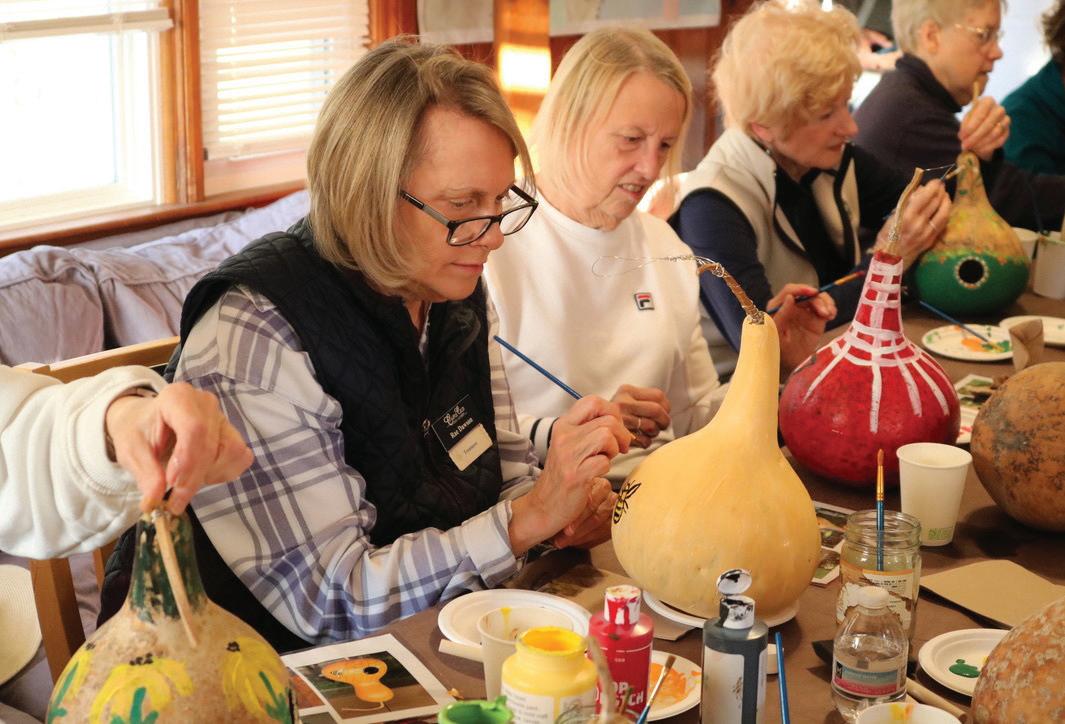
Fall 2025 Birdhouse Gourd Painting (left) at the Duke Campus Farm.
Spring 2026 Woodworking with Bull City Woodshop: Keepsake Box, Toolbox Project, and Butterfly House. See page 13
Hands-On Art
Intermediate Zentangle: Lines and Tangles and Colors, Oh My!
ONLINE: This course is designed for students who have already mastered the basics of the Zentangle art method and are ready to expand their skills. Participants will explore the use of color combined with traditional Zentangle patterns, enhancing their artwork with colorful effects. Materials required for the course include paper, pens, colored pencils and watercolors, which will enable students to practice and apply various techniques introduced during the sessions. This course is ideal for those who wish to elevate their Zentangle practice by incorporating color and exploring more advanced artistic possibilities. Whether students want to develop their personal style or enhance their portfolio, they can expect to leave the course with new skills and inspiration. • Active Skill Learning.
Required supplies/fee: Students will purchase materials independently for an estimated cost of $50. For additional information on supplies, please see the course details at learnmore.duke.edu/olli.
Cathy Boytos is an artist, graphic designer, photographer and certified Zentangle teacher (CZT). She has taught Zentangle art classes in various places in the Triangle area. She is a patient and creative instructor. Her wish is to be your guide on a journey toward enjoying an art method that is easy to learn, simple to comprehend and fulfilling beyond expectations.
• 10 Mon, Jan 26-Mar 30, 11 a.m.-1 p.m.
• Online via Zoom; Sessions are recorded
• Maximum: 50; Fee: $150; Course ID: 4136
Making a Mosaic Butterfly
IN PERSON: In this hands-on course, participants will make a mosaic art piece from beginning to end using the direct method. The instructor will provide an 11-inch butterfly-shaped wooden piece, sealed and with a pattern. The mosaic will be made using glass tiles, beads, stones and found objects. The knowledge and skills provided are as follows: various types of mosaic substrates, and how to prepare them; safety measures related to the types of glue; shaping glass tesserae with a wheeled glass-cutting tool to create the design; gluing tesserae, keeping in mind the spaces for grout and the edges of the substrate.
• Active Skill Learning.
Required supplies/fee: There is a $45 fee, payable to the instructor at the first class. For additional information on supplies, please see the course details at learnmore.duke.edu/olli.
Anju Jolly, Ed.D. (Indiana University of Pennsylvania ’98), is a retired teaching professor of education from The Pennsylvania State University. She is a professional mosaic artist who has been creating mosaics for the past 20 years. Her work includes large commissions, art shows and international projects in Jamaica and Costa Rica. For the last 12 years, Anju has taught mosaic art to adults, high school students and children with projects such as murals, birdbaths, mirrors and picture frames.
• 5 Mon, Jan 26-Feb 23, 11 a.m.-1 p.m.
• In person at Judea Reform Congregation
• Maximum: 10; Fee: $100; Course ID: 4139
Hands-On Art
Create 3-D Mosaic Garden Art
ONLINE: In this online hands-on course, students will design and create a stunning 3D mosaic gazing ball — an eye-catching work of art for any garden. We’ll begin with a look at the rich history of mosaic art, from ancient masterpieces to contemporary works worldwide. Students will learn essential techniques, tools and design principles, focusing on color, shape, pattern and texture. Over six weeks, students will work with durable materials, including multi-size and -shape glass and ceramic tiles, beads, gems, mirror tiles and found objects — all suitable for indoor or outdoor display. Each session will begin with a presentation featuring inspiring mosaic artists from around the world. The course also covers the best adhesives and methods to ensure these pieces remain weather-resistant and beautiful for years to come. This course welcomes students at all levels, whether they are new to mosaic art or experienced mosaicists.
• Active Skill Learning.
Please note: Students will need a table or workspace where they can comfortably view their computer (or other device) while working. A wheeled tile nipper is also recommended; one can be purchased at nearly any large home improvement store or online. If preferred, the instructor can include a wheeled tile nipper in the required supply kit ($65) for an additional $25. The instructor will prepare each student’s orb with Pal Tiya sculpting material so that it is ready to mosaic. Students should notify the instructor no later than seven days before the first class if they wish to have a wheeled tile nipper included in their kit.
Required supplies/fee: All materials needed to complete your project are included in the $65 supply kit provided by the instructor, including stained glass and ceramics tiles in different sizes and shapes, beads, slate, found objects, mirror tiles, round 8” form to apply “pal tiya” sculpting material, adhesive, nitrile gloves, grout and grout sponge, and recyclable tools, will be provided in supply kits. Supply kits will be available for student pick-up on Thursday, January 22nd, at JRC (OLLI’s onsite location in Durham) from 11 a.m. to 2 p.m. Out-of-state student kits will be mailed by the instructor for receipt prior to class beginning (shipping paid by student). The supply fee is payable to the instructor at or before supply pick-up. For additional information on supplies, please see the course details at learnmore.duke.edu/olli
Gabrielle Rousso was the executive director of The Art Center Highland Park, a community art center and fine art school in Illinois. Prior to that, she was the CEO and lead designer for Designs Within, Chicago, completing over 100 commercial and residential interior design projects. A graduate of the State University of New Jersey and Harrington Institute of Interior Design, she is on the board of Frank Gallery, Carrboro, and is an educator, artist, philanthropist and avid art collector.
• 6 Tue, Jan 27-Mar 3, 1:30-3 p.m.
• Online via Zoom; Sessions are recorded
• Maximum: 15; Fee: $100; Course ID: 4113
Zoom Basics & Refresher Thursday, January 8, at 10 a.m. ET. See page 3.
History: Past & Present
Bread, Beer & World History: Agriculture’s Imprint on the Rise and Fall of Societies
IN PERSON: For most of human history, the daily caloric needs of nearly all populations were met through two cereal grain products: bread and beer. Rich in carbohydrates and ideal for fermentation, these staples played a foundational role in shaping early civilizations. This course examines how grain-based agriculture was central to the development, expansion and eventual decline of 10 major societies, from ancient Sumer to the modern era. We will explore how the management of soil nutrients and water influenced agricultural productivity and, by extension, societal power. Conversely, we will consider how environmental degradation and reduced crop yields contributed to political and economic collapse. Historical analysis will be complemented with optional tastings of bread and beer to illuminate their enduring cultural significance. • Facilitated discussion.
Please note: Optional bread and beer tastings will be offered in class.
Recommended Text:
• Thomas Sinclair and Carol Janas Sinclair, “Bread, Beer and The Seeds of Change” (9781845937041)
Tom Sinclair grew up on a farm and has been involved in field crop research for more than 50 years at locations around the world. He is a member of the faculty of NC State University. His wife, Carol, also grew up in a rural area and was a “foodie.” Their combined interests led them to explore the significant impact of human sustenance on world history. Tom will lead the course.
• 5 Tue, Mar 3-Mar 31, 1:30-3 p.m.
• In person at Judea Reform Congregation
• Maximum: 12; Fee: $75; Course ID: 4020
Empire of Tea: History of the World’s Favorite Beverage
IN PERSON: In this course, we will trace the story of tea from its earliest use to the place it holds today as the world’s most popular beverage, using lectures, slides and videos. We’ll learn how tea spread from China to Japan, across Asia to the Middle East, and later by sea to Northern Europe, and how the tea trade led to the growth of slavery in the Caribbean due to the demand for sugar in Europe. We’ll discuss how the tax on tea caused widespread smuggling and the Boston Tea Party, one of the key events leading to the American Revolution. And how demand for tea caused the Opium Wars between China and Britain in the 19th century, the British espionage that led to tea cultivation in India and the U.S.-U.K. clipper ship sailing races. We’ll also explore tea’s social history in Britain and the U.S., from the early debates about its healthgiving properties to the rise of the tea bag and industrial production, and learn about the traditions surrounding the consumption of tea around the world. • Lecture + Q&A. Margaret Brill was the British history librarian at Duke, as well as head of the Reference Department. She grew up in the London area, and has a bachelor’s in history from the University of London, a master’s in library science from North Carolina Central University and a master’s in liberal studies from Duke. Her primary interests are social and world history.
• 8 Tue, Jan 27-Mar 24 (no class Feb 17), 11 a.m.-12:30 p.m.
• In person at Judea Reform Congregation
• Maximum: 35; Fee: $120; Course ID: 3695
History: Past & Present
Great Empires & Kingdoms: Unplugged
ONLINE: Many lesser-known empires and kingdoms throughout history soared high but flamed out fast, leaving their many achievements in ruins. We will recount the heights they climbed to and the remnants left behind from their destruction for people in modern times to ponder. This course offers a broad introduction to their cultural legacies, focusing on a history overview, then inventions, architecture, art and religion, rather than on dense historical detail. The lost great empires and kingdoms to be explored include: India’s Harappa and Maurya; Latin America’s Teotihuacan, Maya, Aztec Inca; Africa’s Great Zimbabwe, Mali, Songhai, Aksum, Swahili coastal city-states; and the Mongols. The course will be primarily lecture-based, enhanced with images, examples and short videos. Questions are welcome throughout. Students will also have access to recordings and a website with downloadable notes, so active note taking won’t be necessary.
• Lecture + Q&A.
Sally Purath earned a B.A. in social sciences and an M.Ed. at Colorado State University. She taught history, religions and humanities for 26 years to 12th graders, specializing in the humanities of Europe, the U.S., India, China, Japan, Africa, the Middle East and Latin America. She also taught world, U.S. and Russian history and philosophy in the International Baccalaureate program. Sally has been teaching courses yearly for OLLI since 2009 at Colorado State and at Duke.
• 10 Thu, Jan 29-Apr 2, 11 a.m.-12:15 p.m.
• Online via Zoom; Sessions are recorded
• Maximum: 200; Fee: $125; Course ID: 4126
The European Union: System, Structures and Policies
ONLINE: This lecture-based course will treat the philosophical and political-economic thought of: the European Union establishment, the major institutions of the EU and the landmark policy developments in the EU’s history since 1957. Our focus will be on the structural authority and development of its four foundational institutions: the European Commission, the Council of the European Union, the European Parliament and the Court of Justice of the European Union. Beyond covering the economic processes and economic power of its current 27-country membership, special emphasis will be directed toward the present peacekeeping function of the Common Foreign and Security Policy, especially in light of a current strain of American reserve within the framework of NATO. Finally, we will examine the further expansion of the European Union since the British exit, known as Brexit. • Lecture + Q&A.
William Davidshofer, Ph.D., studied the institutions and functioning of the European Union at a special program in Luxembourg. He then taught numerous classes on the EU at the University of Maine at Presque Isle for most of his professional career. He has taught OLLI courses on the EU since his retirement from regular teaching duties at UMPI. He resides in Durham, and is the author of two works in the Duke University Library.
• 10 Wed, Jan 28-Apr 1, 1:30-2:45 p.m.
• Online via Zoom; Sessions are recorded
• Maximum: 25; Fee: $125; Course ID: 4157
Visit our Online Learning website for helpful hints and tips for Zoom.
History: Past & Present
The Journey of Racism: From Jamestown to Jim Crow to Justice?
IN PERSON: This course will show how the concepts of race and racism have been built into the fabric of our country from the very beginning. As we go through the history, students will learn many of the unknown narratives of individuals who have tried to stand against racism, as well as much of the little-known backstory that created the history known today. How the first laws regarding “race” came into being and what the Founding Fathers really intended with those formulating documents will be discussed. The course will separate the facts from the myths we learned growing up. We hope to have two of the “foot soldiers” from the 1960s Alabama Civil Rights Movement address the class. The course material will lead up to and include a discussion of the wealth gap, the education gap, the incarceration gap, the health gap and the voting gap. Having two co-teachers presenting who come from different backgrounds, one Black and one white, will enrich the discussion. • Lecture + Q&A.
Guest Speaker:
• Joann Logan, foot soldier in the Children’s Crusade, 1963, Birmingham, Alabama
Recommended Texts:
• James Oliver & Lois E. Horton, “Slavery and the Making of America” (9780195304510)
• Douglas A. Blackmon, “Slavery By Another Name” (9780385506250)
For the past 12 years, Rosalie Turner and her husband have led groups on civil rights history tours in Alabama and Mississippi, places they have lived. They presented the McDonald Lecture Series in New Mexico in 2021 on the subject of racism history. Rosalie is an award-winning author of historical fiction on civil rights history events. She
has lectured at Texas A&M University-Commerce, Texas Tech University, Mercer University and UNC-Chapel Hill. She has also spoken at schools, churches, libraries, service clubs and women’s groups.
Linda Royal is an avid researcher with a B.A. in history from Fayetteville State University, an MBA from the University of the District of Columbia and a master’s certificate in government contracts and grants from the George Washington University. She in an experienced professional in program and project management, and her top secret clearance level working for the federal government gives her much background knowledge on important legislative actions.
• 8 Tue, Jan 27-Mar 17, 9-10:30 a.m.
• In person at Judea Reform Congregation
• Maximum: 30; Fee: $120; Course ID: 4159
Red, Purple and Blue: North Carolina’s Confounding Politics
IN PERSON: How can a state be represented by Jesse Helms and John Edwards at the same time? How can that state elect Donald Trump and Josh Stein in the same year? How does it rank 43rd in K-12 education and first as a place to do business? And why is one street a city-maintained road while the next street over belongs to the state? In this course, we will address questions like these by delving into North Carolina’s political and governmental history. We will look at how the state’s political DNA makes it one of the nation’s foremost purple swing states. And we’ll look into our crystal balls to see where this growing, changing state is headed, especially after the historic 2024 election. The course will be presented in 10 lecture-style sessions, with plenty of opportunity for discussion and questions. • Lecture + Q&A.
History: Past & Present
Recommended Texts:
• Rob Christensen, “The Paradox of Tar Heel Politics” (9780807871515)
• Christopher A. Cooper, “Anatomy of a Purple State” (9781469681719)
• Paul Luebke, “Tar Heel Politics 2000” (9780807847565)
Mike Woodard has been a student of and participant in North Carolina politics and government for 50 years, working for campaigns before he was a teenager. He served in the state Senate for 12 years and on the Durham City Council for seven years. He has held leadership roles on issues related to health care, transportation, energy and the environment, and was honored with Legislator of the Year awards by 19 different organizations. He holds degrees from Duke in economics and political science.
• 10 Thu, Jan 29-Apr 2, 9-10:30 a.m.
• In person at Judea Reform Congregation
• Maximum: 50; Fee: $125; Course ID: 3922
Reluctant Confederates: North Carolina in the Civil War
IN PERSON: One hundred and sixty years later, North Carolinians continue to contemplate the “late unpleasantness” that divided their state and their nation between 1861 and 1865. North Carolina was one of the last Southern states to join the Confederacy, and thousands of citizens continued to support the U.S. government — some openly serving in the blue uniform of the Union, others quietly resisting the Confederate cause. Still, out of a population of almost 1 million, the state contributed at least 125,000 soldiers to the armies of the Confederacy. This course examines North Carolina’s role in the war, including the experiences of the state’s
enslaved people (roughly one-third of the population), the war on the homefront, the post-war “Reconstruction” era and the legacy of the war today. While dealing with military matters, this course will focus mainly on the social and political effects of the war and surrounding events. Suggested readings, guest speakers and field trips will be involved. • Lecture + Q&A, Facilitated discussion.
Recommended Text:
• Michael C. Hardy, “North Carolina in the Civil War” (9781609491062)
Edison McIntyre is a longtime Durham resident and a former journalist who studied American history at the University of Florida and UNCChapel Hill. A longtime Civil War buff, he has taught previous OLLI courses on motion picture music, classic war films and movies about North Carolina.
After retiring from Duke in 2009, Rondy Elliott was a volunteer at the Bennett Place state historic site in Durham, serving for more than 10 years as a tour guide and host of special events. Long a history fan, her interest in the Civil War and extensive research on the conflict and surrounding events has led her to visit many battlefields in North Carolina and other states, and she has given several private presentations of “The Civil War Comes to the Triangle.”
• 10 Wed, Jan 28-Apr 1, 11 a.m.-12:30 p.m.
• In person at Judea Reform Congregation
• Maximum: 30; Fee: $125; Course ID: 4149
The Vera C. Rubin Observatory: Big Sky!
IN PERSON or ONLINE: See listing on page 53.
History: Past & Present
Exit From American Hegemony?
IN PERSON: The American liberal hegemonic order is under siege: China and Russia have targeted the order; weaker states are hollowing out the order by seeking patronage and security from authoritarian states; and illiberalism, nationalism and unilateralism from both within and without America are challenging the survival of this order. This discussion-based course will analyze and evaluate the erosion of the current international system as the U.S. apparently exits from the hegemony it has exercised since World War II. Students are expected to read approximately 25 pages each week and actively participate in class discussions. • Facilitated discussion.
Required Text:
• Alexander Cooley and Daniel H. Nexon, “Exit From Hegemony: The Unraveling of the American Global Order” (9780190916473)
Richard Melanson enjoyed a 38-year academic career at UCLA, Kenyon College, Brown University and the National War College. He holds a Ph.D. from Johns Hopkins University in international relations and has published numerous books and articles on post-World War II American foreign policy. He has been an instructor at OLLI at Duke since 2016.
• 8 Wed, Jan 28-Mar 25 (no class Mar 11), 11 a.m.-12:30 p.m.
• In person at Judea Reform Congregation
• Maximum: 15; Fee: $120; Course ID: 4119
The American Colonies 1607-1776
IN PERSON: How did the original colonists come to decide that they could govern themselves without the aid or interference of Great Britain, its king and its parliament? This course traces the development of the British American colonies from their earliest settlements in 1607 to the Declaration of Independence in 1776. We will explore how the colonies evolved politically, economically and socially, and how their relationships with Britain shaped the unique identity that would come to define “America.” Beginning with early European exploration and England’s entry into New World colonization, we’ll examine the challenges settlers faced, the influence of British governance and the ways colonists built new systems of trade, community and self-rule. Each colony’s contributions to emerging ideas of representative government and personal liberty will be discussed, providing insight into how the views in 13 distinct colonies grew into one movement for independence. • Lecture + Q&A, Facilitated discussion.
Eric Johnson is a veteran OLLI instructor, having offered courses since 2015. He is a retired high school history teacher who has taught in New Hampshire public schools, international schools in Italy and Belgium, and one small private school in North Carolina. Eric’s teaching specialty is U.S. history with an emphasis on American Colonial history. He has extensive experience teaching U.S. and European history at the Advanced Placement and International Baccalaureate levels.
• 10 Mon, Jan 26-Mar 30, 9-10:30 a.m.
• In person at Judea Reform Congregation
• Maximum: 25; Fee: $125; Course ID: 2131
Literature & Languages
Masters of Dark Fiction: Understanding Horror, Mystery, Crime & Thriller Stories
ONLINE: This course is designed to be an engaging literary exploration of how master storytellers blend elements of horror, mystery, crime, thriller and suspense to create unforgettable narratives. Through discussion, analysis and appreciation, participants will discover the sophisticated techniques behind their favorite page-turners and develop deeper critical reading skills. Class time will be supplemented with engaging conversations with award-winning authors who have career experience in writing and teaching literary fundamentals, including former rare books librarian Susan Hammerman; Edgar Awardwinning and “Best American Mystery and Suspense” contributor Art Taylor; and the publisher of Uncomfortably Dark Horror. These voices will provide an insider’s view of the trajectory of dark genres and add life to your reading list. Students should read “Rosemary’s Baby” before the first class meeting. • Lecture + Q&A.
Guest Speakers:
• Susan Hammerman, former rare book librarian, B.A. from the University of Michigan and M.L.I.S. from Dominican University
• Art Taylor, professor of English at George Mason University, Edgar Award-winning author of two short story collections
• Candace Nola, award-winning author, publisher of Uncomfortably Dark Horror
Please note: Students may acquire any edition of the required books. Before the term begins, the instructor will tell students how they can acquire, if they choose, the recommended book written by the instructor, which will be available to order at the end of 2025.
Required Texts:
• Ira Levin, “Rosemary’s Baby” (9798212642453)
• Don Winslow; Steph Cha, “The Best American Mystery and Suspense 2025” (9780063422292)
• Candace Nola, “Bishop” (9798441808392)
• Meagan Lucas, “Here in the Dark” (9781956957204)
• Gabino Iglesias, “The Devil Takes You Home” (9780316426718)
P. M. Raymond’s work has appeared in Ellery Queen’s Mystery Magazine, Writer’s Digest, Punk Noir, Flash Fiction Magazine and Dark Yonder. Her story collection, “Things Are As They Should Be,” was a finalist for the Claymore Award. She received a B.S. and an MBA from Maryville University. She is a Sisters in Crime Eleanor Taylor Bland award winner, a Killer Shorts finalist and Horror2Comic quarterfinalist. She was a guest speaker in Sara Johnson’s Fall 2025 Exploring Mysteries course.
• 3 Mon, Feb 23-Mar 9, 6-7:15 p.m.
• Online via Zoom; Sessions are recorded
• Maximum: 40; Fee: $45; Course ID: 4141
Finding Course Links in the Student Portal
OLLI members who register for online courses will find the Zoom links for their courses in their Student Portal at learnmore.duke.edu/olli.
See Finding Course Links for step-by-step instructions and a demonstration video.
Literature & Languages
George Sand and George Eliot
ONLINE: This course will compare George Sand and George Eliot, two eminent 19thentury female novelists. It will examine their concepts of the novel but will also study their ideas on religion, social change and politics, and their understanding of the role of women, all of which will be in the context of their time. The course will also investigate the various influences that Sand exercised on other Victorian female novelists and especially on Eliot. In 1906, an unknown 24-year-old woman named Virginia Woolf declared in a letter to her friend Madge Vaughan that Sand’s autobiography had been written by “an immense, lucid kind of mind, something like a natural force, with no effort or consciousness about it ... I sink into her and I am engulphed.” The first three lectures will be devoted to Sand and the following three to Eliot. The lectures will investigate the following points: their lives, the art of the novel, and their ideas concerning education, love, politics and the role of women. • Lecture + Q&A.
Daniel Vitaglione, Ph.D., is a graduate in English and psychology from the University of Aix-Marseille and has a master’s in comparative philosophy from the University of Hawaii and a Ph.D. in English from the University of St Andrews, U.K. He is the author of several books, including “George Eliot and George Sand” and “A Literary Guide to Provence.” He has taught literature and philosophy at Miami Dade College since 2014 and has been an instructor at OLLI at Duke and at several other OLLIs.
• 6 Tue, Feb 3-Mar 10, 1:30-2:45 p.m.
• Online via Zoom
• Maximum: 24; Fee: $90; Course ID: 4124
Robert Frost and W.C. Williams: Selected Poems
ONLINE: Come read and discuss the poems of two of the most important American poets of the last 100-plus years. Robert Frost had four Pulitzer Prizes among his awards, while William Carlos Williams won the first National Book Award for poetry in 1950 and a posthumous Pulitzer in 1963. The poets had striking differences in their work, but both influenced generations of writers in America and abroad. Frost used traditional forms and styles in his often-deceiving pictures of “simple” rural American people and landscapes. His rural poems speak to larger metaphysical questions and his views on nature allow for romantic idealism and stark reality. Williams, with his use of modernist free verse, irregular lineation and elevation of “ordinary objects” into subjects of art broke new ground. Williams wanted to create an “American voice,” and break from the British pastoral tradition. The course will explore the differences in approach and vision of these two pillars of 20th-century American literature. • Facilitated discussion.
Please note: Students should acquire the specified editions of the books.
Required Texts:
• Robert Frost, “The Poetry of Robert Frost: The Collected Poems, Complete and Unabridged (9780805005028)
• William Carlos Williams, “Selected Poems” (9780811209588)
Harry Brown holds degrees in English from Davidson College, Appalachian State University and Ohio University. After teaching for 43 years at Eastern Kentucky University, he returned to
Literature & Languages
North Carolina and has taught or co-taught 17 literature courses for OLLI. He has published six poetry collections and co-edited an anthology of Kentucky writing.
Preston Martin received his undergraduate degree from Ohio University and a Master of Arts in Teaching from the College of Charleston. He retired from both business and education and has published poems in numerous journals and anthologies. He has been a student or instructor at OLLI for over a dozen years.
• 10 Thu, Jan 29-Apr 2, 3:30-5 p.m.
• Online via Zoom
• Maximum: 15; Fee: $125; Course ID: 4151
reflects in literary terms the challenges and demands of the sport before technology changed the angler’s landscape. • Facilitated discussion.
Please note: Students should read Ernest Hemingway’s book “The Old Man and the Sea” before the second class meeting. In the first class meeting, the instructor will provide a list of themes that students should follow throughout the text as they read. Students may acquire any edition of the book.
Required Text:
• Ernest Hemingway, “The Old Man and the Sea” (9798307455791)
Ernest Hemingway: The Fiction and the Fishing
IN PERSON: Join longtime Ernest Hemingway specialist Ashley Oliphant for a fresh look at the author’s iconic career. We will discuss his role as a big-game fisherman, his contributions to the formation of the International Game Fish Association and his crafting of the Pulitzer Prize-winning novel “The Old Man and the Sea,” which helped him win the Nobel Prize for literature. The course will go back in time to examine the people, places and events that helped shape Hemingway’s evolution as a big-game fisherman and his ultimate ascent to the pinnacle of the sport he helped to establish. Students will consider his surprising position as one of the first fishing conservationists and one of the earliest sportsmen to recognize female anglers as equal competitors and essential to a healthy sport. Class discussion will include group analysis and debate of “The Old Man and the Sea” as it
Ashley Oliphant is a retired professor of English with 20 years of college teaching experience. She holds a doctorate in 20th-century American literature from the University of North Carolina at Greensboro. She is the author of the book “Hemingway and Bimini: The Birth of Sport Fishing at ‘The End of the World’” as well as a dissertation about Hemingway and alcohol, in addition to five other books. In the Fall 2025 term, she taught the OLLI course Shelling and Shark Tooth Hunting.
• 3 Thu, Jan 29-Feb 12, 11 a.m.-12:30 p.m.
• In person at Judea Reform Congregation
• Maximum: 15; Fee: $45; Course ID: 4117
If enrolling in a course that meets In person, please review the In-Person Guidelines before registering.
Visit our Online Learning website for helpful hints and tips for Zoom.
Literature & Languages
Chekhov’s Russia Revealed: Exploring “Uncle Vanya” Through the World That Shaped It
IN PERSON: Anton Chekhov wrote the play “Uncle Vanya” at the end of the 19th century, when Russia was undergoing profound social and environmental change. Art reflects the artist’s experience, knowledge and culture — and audiences interpret art through their own. This course asks: What shaped Chekhov’s world and the expectations of his 1898 Moscow audience? Might we view the play differently if we shared their perspective? Cued by references in the text, we’ll explore Russia’s 19th-century historical and cultural landscape. Topics include: effects of serf emancipation and industrialization on the economy and environment; deforestation; discord between enlightenment ideals and autocracy; medical practice; the rise of the middle class; ethnography; and the changing role of women. By reconstructing Chekhov’s world, we’ll uncover the play’s layers of irony and humor often missed today. Reading includes selections from Chekhov’s stories and letters, relevant essays and a medical lecture from the era. • Facilitated discussion.
Please note: Students should acquire the specified edition of the book and should read the play before the first class meeting. Except for the play, all readings will be posted on the class website.
Required Text:
• Anton Chekhov, “Five Plays” (9780804769662)
Recommended Texts:
• Jane T. Costlow, “Heart-Pine Russia: Walking and Writing the Nineteenth-Century Forest” (9780801450594)
• Anton Chekhov, “A Journey to the End of the Russian Empire” (9780141032108)
Christine Copenhaver has a B.F.A. in theater arts and a Ph.D. in ecology and evolutionary biology. As an avid lifetime Chekhov fan who had a career doing research as an environmental consultant, she has found delving into Chekhov’s world to be a delightful postretirement project. Having access to Chekhov scholars at Duke and UNC has been a plus. She looks forward to sharing what she has learned with other Chekhov/Russian lit enthusiasts.
• 5 Tue, Jan 27-Feb 24, 1:30-3 p.m.
• In person at Judea Reform Congregation
• Maximum: 16; Fee: $75; Course ID: 4111
The Plays of George Bernard Shaw: Genre, Gender, Politics, and Prophecy from “Mrs Warren’s Profession” to “Saint Joan”
IN PERSON: Widely considered the greatest English-language playwright since Shakespeare, George Bernard Shaw (1856-1950) revolutionized the stage, and his influence can be observed in contemporary playwrights as diverse as Tony Kushner, Caryl Churchill and David Hare. Over the course of a career that spanned more than half a century, he wrote masterpieces such as “Major Barbara,” “Pygmalion” (the basis of the musical “My Fair Lady”) and “Heartbreak House” that are performed worldwide to this day. Students in this course will read one major play per week (with two weeks spent on “Man and Superman”). While some attention will be paid to historical, philosophical, literary and theatrical contexts, class discussions will focus on the themes at the heart of Shavian drama and Shaw’s engagement with the world: genre (Shaw’s valorization of
Literature & Languages
comedy), gender (Shaw’s feminism and concern with sexual equality), politics (Shaw’s Fabian socialism) and prophecy (Shaw’s notion of “Creative Evolution”). • Lecture + Q&A, Facilitated discussion.
Please note: Please check the online catalog for a complete list of all eight required books. Occasional film screenings may be arranged, depending on students’ interest and the availability of a suitable space.
Required Texts (all by Bernard Shaw):
• “Mrs Warren’s Profession” (9780713679946)
• “Candida” (9780143039785)
• “Caesar and Cleopatra” (9780143039778)
• “Man and Superman” (9780140439778)
Charles Joseph Del Dotto received his undergraduate education at Princeton University and holds master’s and doctoral degrees in English from Duke University; the longest chapter of his dissertation was on Shaw. He has presented papers on Shaw at conferences nationwide, with the International Shaw Society, and at symposia at the Shaw Festival in Niagara-on-the-Lake, Ontario. His long-term academic project is the first monograph on Shaw’s late style. This is his 25th course for OLLI at Duke.
• 10 Mon, Jan 26-Mar 30, 9-10:30 a.m.
• In person at Judea Reform Congregation
• Maximum: 18; Fee: $125; Course ID: 4160 Villages français
ONLINE: What happened to French villages deserted by the rural exodus in the first half of the 20th century? In Provence, a few villagers refused to leave, and sometimes were successful in bringing back inhabitants, as described in “Regain,” a novel by Jean
Giono. Later on, artists, discovering the charm of hilltop villages and the luminosity of the area, settled there and brought fame to them. During the recent pandemic as many people began working remotely, some families left the big cities to settle in villages, looking for a slower pace of life and a healthy environment, creating the beginning of an urban exodus. Aware of this movement, some mayors are attracting newcomers by providing internet, coworking spaces, cultural activities and a sense of community. Throughout the course, we will discuss whether villages and small towns in the United States are experiencing the same problems, and whether the solutions provided by the French can be applied here. The course is taught in French. • Facilitated discussion.
Please note: A high-intermediate French level is required to be able to participate in the course. All material that students will read at home, including from “Regain,” will be provided on the class website. A reliable computer with a camera, audio and a good internet connection are required for participation.
A native of France, Claire Davidshofer holds a master’s degree in English and American literature from L’Université d’Aix-en-Provence. Before moving to the United States, she lived in Toulon, and visited charming villages in the area. Soon, she became aware that many struggled to survive, because villagers were leaving, lured by big cities, especially Paris, and that beautiful villages were falling into ruins. Now, she is heartened that, over the years, some have been experiencing a rebirth.
• 10 Thu, Jan 29-Apr 2, 1:30-2:45 p.m.
• Online via Zoom; Sessions are recorded
• Maximum: 12; Fee: $125; Course ID: 4164
Performing Arts
The Best of MGM’s Movie Musicals
ONLINE: According to theater historian Miles Kreuger, “No studio even begins to approach MGM for its flagrant mangling ... of Broadway musicals.” He goes on to say that “MGM’s best musicals are those created expressly for the screen.” We will begin the course with a brief history of Hollywood musicals from the 1920s to the 1940s, focusing on the films of choreographer Busby Berkeley and those of Fred Astaire and Ginger Rogers. We will then dive into several classic MGM movie musicals that did not begin their life on stage: “The Wizard of Oz,” “Meet Me in Saint Louis,” “An American in Paris,” “Singin’ in the Rain,” “The Band Wagon” and “Seven Brides for Seven Brothers.” In the final class, we’ll look at several musicals released since 1960 and discuss how these films compare to those of MGM’s golden age. The course is primarily lecture with video and audio clips. Students will be able to ask questions and make comments during each class. • Lecture + Q&A.
Alan Teasley began his teaching career as a high school English and drama teacher and served as An administrator in the Durham Public Schools for over 20 years. He also taught in Duke’s Master of Arts in teaching program for 25 years. He is an avid theatergoer with a particular interest in American musicals. He has taught 18 courses on musicals for OLLI.
• 10 Thu, Jan 29-Apr 2, 9-10:15 a.m.
• Online via Zoom; Sessions are recorded
• Maximum: 200; Fee: $125; Course ID: 4156 Music of the Circle:
IN PERSON: See listing on page 67
Five Films From 1950: Unexpected Social Impact
IN PERSON: The year 1950 is believed to have been during a period of social conformity. But Hollywood was making films that, in their own way, were stepping up to address issues of poverty, crime, women’s rights and even gay rights. This 10-session course examines the social commentary and essential filmmaking elements in five culturally significant films from 1950: “Sunset Boulevard,” “All About Eve,” “Harvey,” “Born Yesterday” and “The Asphalt Jungle.” Each session explores the featured film’s compelling subject matter, authenticity, storytelling, emotional resonance and audience impact. Through guided analysis and discussion, participants will gain a deeper understanding of the factors behind the enduring effectiveness of these classic works. Class meetings will alternate between screenings (weeks 1, 3, 5, 7, 9) and discussions (weeks 2, 4, 6, 8, 10). • Facilitated discussion.
Mark Spano is a writer, filmmaker, television producer and lecturer. His documentary “Sicily: Land of Love and Strife” was released in the U.S. and Canada, was presented at the Toronto Italian Film Festival and aired in the U.S. and Europe. He has produced documentaries and television series for public television. Mark has been a visiting lecturer at East Carolina University and NC State University. He has lectured around the U.S. and Canada and for several OLLIs.
• 10 Thu, Jan 29-Apr 2, 11 a.m.-12:30 p.m.
• In person at Judea Reform Congregation
• Maximum: 40; Fee: $125; Course ID: 4122
Performing Arts
More of the Best of Hitchcock: From Personal to Global
ONLINE: In these two online “bonus" sessions — a follow-up to last summer’s Best of Hitchcock course — we'll discuss four films from the early 1940s that demonstrate Alfred Hitchcock’s remarkable ability to portray both domestic drama and international intrigue. These two sessions will build on the Best of Hitchcock course, but that course is not a prerequisite. Each session includes a pair of films that share a common theme; we'll watch brief film clips and discuss the writing, casting and production of the films, with time for questions and comments. By closely examining four more of Hitchcock's best films, students will gain insights that allow them to watch other classic films with a greater appreciation for their artistry. • Lecture + Q&A.
Please note: A list of films will be distributed in advance. Students are encouraged to watch the films on their own. All the films are available to rent inexpensively online.
Jay Sherwin is a writer and consultant who has been watching, studying and enjoying Hitchcock’s films for decades. He created a walking tour of Alfred Hitchcock’s San Francisco that attracts Hitchcock fans from around the world, and he loves to share his Hitchcock obsession with fellow film lovers everywhere. He has taught courses on Hitchcock for OLLI programs and other adult learning programs nationwide.
• 2 Wed, Jan 28 & Feb 4, 1:30-3 p.m.
• Online via Zoom
• Maximum: 200; Fee: $30; Course ID: 4155
The Search for an American Sound: An Amazing Musical Journey
ONLINE: Since the 1890s, when Americans were beginning to develop their own traditions in classical music, composers have recognized the dilemma of creating the American sound. This course will explore how not only classical musicians but also Broadway and Hollywood composers of different origins and ethnicities alternated in creating a sound that has been defined as evocative of these lands and its people. This amazing process, which began more than a century ago, still continues today, probably with more strength than ever. Aaron Copland, George Gershwin, William Grant Still, Florence Price, Alex North, Elmer Bernstein, Jon Batiste and others will be the protagonists of this lecture, supported with audiovisuals, plenty of musical examples and anecdotes. • Lecture + Q&A.
Emanuel Abramovits has been a concert promoter since 2000, directly involved in many international artists’ events. He designed and staged many original orchestral events, including an Event of the Year winner, and several world premieres. He served as the cultural director at Union Israelita de Caracas from 2008 to 2019, releasing books and organizing concerts and art exhibits. He has been teaching online and in person across the U.S. since 2020, including teaching many classes on film music.
• 6 Wed, Jan 28-Mar 4, 9-10:15 a.m.
• Online via Zoom; Sessions are recorded
• Maximum: 99; Fee: $90; Course ID: 4161
Visit our Online Learning website for helpful hints and tips for Zoom.
Performing Arts
David Crosby’s Musical Journey: A Relentless Search for Harmony
IN PERSON: David Crosby was one of the most creative, distinctive and complex musicians of the past 75 years. From his early days with The Byrds to his groundbreaking work with Stephen Stills, Graham Nash and Neil Young, and in his solo projects as well as his collaborations, Crosby created music that was by turns political, beautiful, challenging and always honest. Known for his strong opinions and turbulent personal life — including struggles with addiction and time in a Texas jail — Crosby never lost his drive to explore, innovate and push musical boundaries. His lifelong quest for melody, harmony and storytelling defined his remarkable career. In this course, we will trace the major periods of Crosby’s journey, exploring his creative evolution and how his collaborators brought out both his best and worst instincts. Through his songs, videos and interviews and the reflections of those who knew him, we’ll gain deeper insight into the man behind the music and his relentless search for harmony. • Lecture + Q&A.
Recommended Text:
• Carl Gottlieb & David Crosby, “Long Time Gone: The Autobiography of David Crosby” (9780385245302)
Marv Meyer came of age in the 1960s, and his passion for music during the ’60s and ’70s included folk, blues, rock and jazz genres. Marv’s college years in New York City were spent near Greenwich Village, where every style of music was being played. His childhood musical training led to him learning to play the bass guitar and joining a band during the ’70s. He’s since continued to attend dozens of concerts and amassed a vast collection of vinyl and CDs in a relentless search for the lost chord.
• 6 Wed, Jan 28-Mar 4, 1:30-3 p.m.
• In person at Judea Reform Congregation
• Maximum: 24; Fee: $90; Course ID: 4115
Inside Plays: A Series With the American Shakespeare Center
ONLINE: This course invites participants to explore the plays featured in the American Shakespeare Center’s 2026 spring and summer seasons — “Twelfth Night,” “The Hound of the Baskervilles,” “A Bold Stroke for a Husband,” “As You Like It” and “Our Town.” Each session will provide historical and contemporary context for one of these productions, offering a richer understanding of its origins and relevance today. Through lively, discussion-based meetings, students will delve into the history of each play and its author, trace its performance legacy and
Special Events
OLLI Spring 2026 Kickoff & Social; New Members Welcome Event; Post-Holiday Reset Wellness Gathering; workshops at Bull City Woodshop; Duke Women's Basketball and the the Durham Bulls; a civil right tour of Montgomery and Selma; opera and musical theater in Raleigh. See pages 11-15
Performing Arts
gain behind-the-scenes insights into the ASC’s current interpretations. Along the way, we’ll consider how each work connects to current events, cultural conversations and timeless human themes. Guest speakers — including members of the cast, directors and others — will join some sessions. By the end of the series, participants will come away with a deeper knowledge of both the plays themselves and the creative artists bringing them to life. • Lecture + Q&A, Facilitated discussion.
Please note: Students will receive access to an exclusive discount code for tickets to a performance at the Blackfriars Playhouse in Staunton, Virginia.
Aubrey Whitlock is the director of education programs at the American Shakespeare Center. She holds a B.A. in theater arts from UC Santa Cruz, an M.A. in teaching from Chapman University and an M.Litt. and MFA in Shakespeare and performance from Mary Baldwin University. A former English and drama teacher, she has also worked as an actor, stage manager, director and dramaturg. She has been teaching the Inside Plays series in her capacity as education director for the past two years.
• 5 Mon, Mar 2-Mar 30, 11 a.m.-12:15 p.m.
• Online via Zoom
• Maximum: 30; Fee: $75; Course ID: 4135
From Russia With Love: The Genesis of Modern American Acting
IN PERSON: This course explores the artistic revolution that transformed modern Western acting. During the first four weeks, we’ll meet in a seminar format, combining lecture, discussion and “watching time” (for
film clips and performances). In the final two weeks, classes will shift into an acting studio format, with practical exercises that lead to understanding the actor’s process including repetition, Open Scenes, improvisation, script analysis, and rehearsal techniques. Our main text will be Tom Stoppard’s adaptation of Anton Chekhov’s “The Seagull” (available online). Please be sure to use this specific version, as many others exist. In the last week, participants will share short scenes or monologues from the play. The course’s primary goal is to understand how the Moscow Art Theatre and Konstantin Stanislavski’s groundbreaking system reshaped acting in the West — and how American actors, directors and teachers adapted his ideas, each leaving a unique mark on the craft. • Lecture + Q&A, Facilitated discussion, Active Skill Learning.
Required supplies/fee: There will be a $5 fee, payable to the instructor by cash or check, for printing handouts.
Required Text:
• Tom Stoppard, “Anton Chekhov’s The Seagull” (9780802127716)
Jeffery West is an actor, director, narrator and retired professor of dramatic arts. He has taught for over 40 years at several institutions, including UNC-Chapel Hill and Duke, and appeared on stage, in film and on television. He was the artistic director of the Raleigh Ensemble Players. He holds a B.A. from William & Mary and an MFA from the University of Virginia. He is a proud member of Actors’ Equity Association and Screen Actors Guild-American Federation of Television and Radio Artists.
• 6 Mon, Jan 26-Mar 2, 11 a.m.-12:30 p.m.
• In person at Judea Reform Congregation
• Maximum: 14; Fee: $90; Course ID: 4123
Performing Arts
NC Symphony Live: An Orchestra of Life Experience
IN PERSON: Get ready to be swept away by the world of the symphony orchestra in this engaging and unique perspective on a threepart Orchestra of Life experience. Whether you’re a seasoned concertgoer or new to classical music, this course will expand your awareness of the world of a symphony orchestra. In this course, you’ll dive into the North Carolina Symphony’s March 5-7, 2026, performances. Session 1, in class, will introduce you to the program and the experience of listening awareness. Session 2 is the main event, the North Carolina Symphony live. In Session 3, back in the classroom, we’ll share our reactions, insights and stories. Don’t miss this chance to feel the pulse of the orchestra, connect with fellow music lovers and be part of a musical journey that will resonate long after the final note. Performance features include: Rossini’s Overture to “La Cenerentola,” Chopin’s Piano Concerto No. 1 and Mendelssohn’s Symphony No. 3 “Scottish.” • Lecture + Q&A, Facilitated discussion.
Please note: Participants will need a ticket to one of the North Carolina Symphony’s March 5-7, 2026, performances: March 5 at Memorial Hall in Chapel Hill (208 E. Cameron Avenue), or March 6 or 7 at Meymandi Concert Hall in Raleigh (Martin Marietta Center for the Performing Arts, 2 E. South Street; note the travel alert on the website). Season ticket holders are welcome, or you can secure individual tickets for all dates through the North Carolina Symphony website (www.ncsymphony.org). You’ll attend the concert on your own, joining fellow participants for a lively discussion afterward at the final class session.
Ben Wechsler studied horn, piano and pipe organ from an early age. He served as choir director and pipe organist for 22 congregations over 47 years. Ben holds three degrees: a B.S. in music education from the University of Illinois, a Master of Music Education from Indiana University and a Master of Music in opera and musical theater accompanying from Southern Illinois University Carbondale. He has a horn studio in Chapel Hill and is an active member of the Duke University Chapel Choir.
• 2 Mon, Feb 23 & Mar 9, 1:30-3:30 p.m.; plus symphony performance (on your own), Mar 5-7
• In person at Judea Reform Congregation; plus concert in Chapel Hill or Raleigh
• Maximum: 20; Fee: $30; Course ID: 4061
Orchestra of Life II: Taking It to the Next Level
IN PERSON: The Orchestra of Life II goes to the next level with a deeper exploration into self-awareness with orchestral music. This course provides a more immersive experience of the masterpieces of the symphony orchestra and the artists who perform them. Select guest speakers will be featured. Together, we will embrace a unique perspective on the composers, performers and conductors of symphony orchestras. Using the same activities as those used in the original Orchestra of Life course, students will discover new opportunities for personal awareness. Each class offers a unique listening experience. Participation in an earlier Orchestra of Life course is not required or necessary. All are welcome. Find out why previous attendees of this course have described it as “life-changing.” • Lecture + Q&A, Facilitated discussion.
Ben Wechsler studied horn, piano and pipe organ from an early age. He served as choir director and
Performing Arts
pipe organist for 22 congregations over 47 years. Ben holds three degrees: a B.S. in music education from the University of Illinois, a Master of Music Education from Indiana University and a Master of Music in opera and musical theater accompanying from Southern Illinois University Carbondale. He has a horn studio in Chapel Hill and is an active member of the Duke University Chapel Choir.
• 10 Thu, Jan 29-Apr 2, 9-10:30 a.m.
• In person at Judea Reform Congregation
• Maximum: 40; Fee: $125; Course ID: 4145
Opera Unmasked: An Immersive Journey Into Five Masterpieces
IN PERSON: No prior knowledge of music or opera is needed for this engaging exploration of five beloved operas: “The Barber of Seville,” “Tosca,” “Don Giovanni,” “Il Trovatore,” and “Rigoletto.” Taught by an instructor with firsthand experience performing in each of these works, the course aims to spark joy and curiosity while preparing students to experience opera more deeply — whether they are attending live performances or watching them from home. Through guided listening, video excerpts, open discussion and behind-the-scenes insights into opera rehearsal and production, participants will gain a richer understanding of the art form.
With a small group format, the course encourages reflection, conversation and plenty of room for personal engagement. Students who were part of the fall opera class are welcome, as the spring class will cover different material. • Facilitated discussion.
Please note: Please bring a notebook for note taking and logistics information. This class relies on discussion and interaction. Masks are required for those who are symptomatic.
Required Text:
• David Pogue and Scott Speck, “Opera for Dummies” (9780764550102)
Recommended Text:
• Fred Plotkin, “Opera 101” (9780786880256)
Margaret Maytan is passionate about opera and has been a member of the North Carolina Opera chorus for 16 years and in two companies before that. Her background includes: a combined B.A. in music and M.A. in musicology; lecturing in music history at high school and university levels; training and experience in guiding learning in a small group setting; performance experience, professionally and at an amateur level, in voice, piano, viola. She is a graduate of a Duke medical specialty residency.
• 6 Tue, Jan 27-Mar 17 (no class Feb 17 or Mar 3), 11 a.m.-12:30 p.m.
• In person at Judea Reform Congregation
• Maximum: 14; Fee: $90; Course ID: 4063
Staying in Touch
When you join the OLLI at Duke mailing list, you’ll receive the OLLI Newsletter with up-to-date information on upcoming events, special activities and course registration details.
Sign up here; you can unsubscribe at any time.
Performing Arts
Violinist-Composers: Exploring Music
From the Player’s Pen
ONLINE: This engaging course celebrates violinists who didn’t just perform music — they also composed it. These creators tailored their music to match their expressive and technical strengths, often transforming the violin repertoire. We’ll explore how these figures — from Baroque masters like Vivaldi, Corelli and Tartini to modern innovators like Jessie Montgomery and Daniel Bernard Roumain — shaped music history by merging performance with composition. Each session will blend historical context, multimedia examples and rich listening selections to deepen participants’ appreciation for these artist-composers. Ideal for music lovers, curious listeners and performers alike, this course invites you to hear violin music from the inside out.
• Lecture + Q&A, Facilitated discussion.
Required supplies/fee: The $20 materials fee can be paid to the instructor. Payment
options (electronic only) will be shared after registration. See learnmore.duke.edu/olli for what is included with the fee.
Recommended Texts:
• Leopold Auer, “Violin Playing As I Teach It” (9780486239170)
• Kenneth Hamilton, “After the Golden Age: Romantic Pianism and Modern Performance” (9780195178265)
Fourth-generation violinist, educator and multidisciplinary artist Ilana Zaks served as first violinist with the Seattle Symphony and Opera. A graduate of the New England Conservatory of Music and Yale School of Music, she teaches at Boston University Tanglewood Institute. Zaks studied with Donald Weilerstein and Itzhak Perlman, has performed nationally for major Jewish cultural organizations and created Sound Worlds, a multimedia project blending narrative, technology and performance.
• 5 Wed, Feb 4-Mar 4, 11 a.m.-12 p.m.
• Online via Zoom; Sessions are recorded
• Maximum: 200; Fee: $75; Course ID: 4165
Registration FAQs
To make your registration experience as smooth as possible, we have put together a frequently asked questions guide. At OLLI at Duke FAQs you will find answers to questions on membership, courses, Zoom and technology and registration.
Spring 2026 Registration
Registration opens on Tuesday, January 6, at 9 a.m. ET for Monday and Tuesday courses and on Wednesday, January 7, at 9 a.m. ET for Wednesday and Thursday courses.
Photography
Exploring the Digital Darkroom: Photoshop Q&A
ONLINE: This interactive course is designed for anyone using Adobe Photoshop who wants to explore the creative possibilities of the digital darkroom. Rather than following set lessons, our sessions will evolve from the interests and questions of class members, providing an open forum for discovery and problem solving. We’ll begin with an introduction to Camera Raw — an area not covered in the Fall 2025 Introduction to Photoshop course — and include discussion of how Photoshop works alongside Lightroom Classic. Participants will be encouraged to share images via screen-share, troubleshoot challenges together and learn through demonstration and discussion. Whether you’re new to Photoshop or have years of experience, this course offers a supportive space to refine your skills, gain insight from your peers and enjoy the shared adventure of ongoing learning in the ever-changing world of digital image editing.
• Facilitated discussion.
Please note: This forum is not intended as a course in using Photoshop. Students must have a subscription to Adobe Creative Cloud and have some familiarity with using Photoshop.
Required supplies/fee: Students should be familiar with Adobe Photoshop and have the program installed on their computer. A subscription to Adobe Creative Cloud (Lightroom Classic, Adobe Bridge & Photoshop) is approximately $25/month.
Susan Simone is the area chair for photography for OLLI. She has been teaching courses on photography since 2021. Her focus is on documentary work and photo collage. Since moving to North Carolina in 1992, she has completed a series of community documentary projects working with photography and oral history. She is also the co-author of “Prison From the Inside Out,” an oral history that follows the story of William Elmore who served 24 1/2 years in the North Carolina prison system.
Join fellow OLLI members for a gentle, restorative afternoon to help you reset and renew after the holiday season. Guided by health professionals, this session offers a peaceful space to experience wellness practices. See page 12.
Photography
Inside Lightroom Classic: Questions, Answers and Inspiration
ONLINE: Digital photography offers the potential for creative expression to anyone with a camera. Adobe Lightroom Classic is today’s standard for cataloging and editing digital images, but its growing complexities often stand as a barrier to its use. This course offers an open forum for students to ask questions and to discuss any challenges standing between them and the creation of beautiful photographs and digital art. Students are encouraged to submit questions and challenges beforehand, but can also raise them during class sessions. Each week will also feature how-to tips, creative ideas and insights into using Lightroom to its greatest potential. Since Adobe Lightroom Classic is commonly used in conjunction with Photoshop, this forum will also offer insights into using the two products together seamlessly. • Facilitated discussion, Active Skill Learning.
Please note: This forum is not intended as a course in using Lightroom. Students must have a subscription to Adobe Creative Cloud and have some familiarity with using Lightroom, Lightroom Classic or Photoshop.
Dennis Szerszen is a self-taught photographer in digital and analog photographic media. He is regularly expanding his work, often combining traditional photographic processes and digital photography. His work includes the use of film cameras and historic, alternative photographic processes including silver, cyanotype and platinum/palladium. His work has been displayed widely throughout the U.S.
• 4 Mon, Jan 26-Feb 16, 11 a.m.-12:15 p.m.
• Online via Zoom; Sessions are recorded
• Maximum: 25; Fee: $60; Course ID: 4134
Intro to iPhone Photography
IN PERSON: The iPhone has become the predominant camera in use today, and its portability and incredible imaging capabilities have a lot to do with that. This course will help iPhone photographers understand, and master, the use of their feature-rich iPhone camera and its associated apps. Course topics will include: accessing and using the built-in camera app; editing to improve images using Apple and third-party apps; storing image files through Apple and other cloud providers; sharing images on social media including Instagram, email and messaging; and in-class practice using the iPhone for travel, portrait and abstract photography. Students will have opportunities to make and share images in an open, noncritical environment. Whether you are new to iPhone photography or have attended a previous course, there is lots to share and learn. • Lecture + Q&A, Facilitated discussion, Active Skill Learning.
Please note: Participants should have an iPhone 15 or later with adequate storage available to add one or two apps. Familiarity with the use of the internet and email is required. Image sharing in class is not required but strongly encouraged as a way of developing skills and community. All skill levels are welcome.
Dennis Szerszen is a self-taught photographer in digital and analog photographic media. He is regularly expanding his work, often combining traditional photographic processes with digital photography. His work includes the use of film cameras and historic, alternative photographic processes including silver, VanDyke, silver salt, cyanotype and platinum/ palladium. His work has been displayed widely throughout the U.S.
• 8 Tue, Jan 27-Mar 17, 1:30-3 p.m.
• In person at Judea Reform Congregation
• Maximum: 16; Fee: $120; Course ID: 2478
Photography
iPhone Intro to Filmmaking: Crafting Your Short Film
IN PERSON: This course will start with basic video skills and carry you forward to cinematic storytelling. We’ll explore the complete filmmaking process utilizing your iPhone and the CapCut app. The course will be mixed level, providing an initial introduction to iPhone video and the CapCut app for new users and a brushup for those with prior experience. Once we’ve gone over the basics, you will learn more about using CapCut for editing, color and audio synchronization. We’ll cover narrative design and preproduction planning, script writing, storyboarding and shot lists. You’ll see how to use intentional lighting and composition to improve your filmmaking, and explore strategies for capturing professional audio and doing advanced postproduction work. In addition to work on your own, there will be time to bring your iPhone, iPad or laptop to class; share your progress and problems with your class-
mates; and get one-on-one help. The course culminates in a final screening and critique.
• Lecture + Q&A, Facilitated discussion, Active Skill Learning.
Guest Speaker:
• Filmmakers James Desir, Josh Covert, Daisy Torres
Please note: Students will need an Apple iPhone, iPad or Macbook with the CapCut app installed for editing videos, as well as a tripod.
Jefferson Castillo is a filmmaker and fine art photographer with 17-plus years of experience. He holds a B.A. in photography and filmmaking from Montclair State University. Since 2007, he’s directed festival-selected short films and produced TV segments for networks such as Fox Business and A&E. His curated photography has shown in New York City galleries. Now based in the Triad, Jefferson is passionate about visual storytelling and helping students find their creative voice.
• 8 Thu, Jan 29-Mar 19, 3:30-5:30 p.m.
• In person at Judea Reform Congregation
• Maximum: 12; Fee: $120; Course ID: 4137
Spring 2026 Kickoff Speaker & Social:
Moral AI and How We Get There
Friday, January 23 • 9:30-11:45 a.m. (ET) • Levin Social Hall, JRC
Walter Sinnott-Armstrong, Ph.D., Chauncey Stillman Distinguished Professor of Practical Ethics, and Joe Salem, Rita DiGiallonardo Holloway University Librarian, explore the intersection of ethics, technology, and community — offering both a university-wide and human-centered view of how we might create “moral AI.”
Before the conversation, enjoy coffee, refreshments, and lively discussion with fellow OLLI members as we celebrate the start of a new term. See page 11.
Religion & Philosophy
Magic Jesus and the Forgetting
ONLINE: At its core, this course is an exercise in exegesis — learning how to read texts rather than extract doctrine from them. Too often, readers of the Hebrew and Christian Bibles are seeking confirmation of belief instead of attending to a text’s multiple voices. Our aim is to listen to what the text says, not what we expect to hear. Why, for instance, is Yeshua so often depicted in early art with a magician’s wand? And why have most religious traditions forgotten the ancient intertwined histories of natural philosophy and magick — the lineage that gave us the Magi themselves? This course unfolds in five sessions, tracing the spiritual power and political danger surrounding Yeshua of Nazareth. Sessions will cover: 1) Words of Magic; 2-3) Signs, Silence and Sorcery; 4) Orthodoxy and Forgetting; and 5) Seeing With New Eyes. • Lecture + Q&A.
Reverend Edward Ingebretsen, Ph.D., holds advanced degrees in theology and ethics (Jesuit School of Theology at Berkeley ‘82) and a doctorate in American studies/theology (Duke ‘86). His publications (books, journals) consider the intersection of gender, race, theology and popular cultures. He specializes in nonhuman animal ethics, and currently is continuing work in the varieties of spiritual and magical experiences.
• 5 Wed, Jan 28-Feb 25, 11 a.m.-12:15 p.m.
• Online via Zoom
• Maximum: 50; Fee: $75; Course ID: 4138
The Sublime and the Surreal: Deepening Our Appreciation of Art
IN PERSON: See listing on page 19.
The I Ching: A Guide to Living With Change
IN PERSON: Change is constantly at work in the world around us, vibrating in and between all things, creating the future. Can we discern the patterns, avoid the pitfalls, go with the flow and actually bring about positive outcomes? The Book of Changes (I Ching/Yìjīng 易經 ) has served as an enduring guide to action for 3,000 years. Prized as both text and oracle, its 64 images whisper to our inner ears. Approach it as you would a wise counselor who sees the fabric of the present leading to possible futures, and who cares that we “get it right.” Divination, after all, is simply the art of knowing where we are, what might come next and how best to get there. Participants will formulate personally relevant questions, employ various divinatory methods to derive responses from the living text and explore interpretations of the often dreamlike answers offered by “the little old sage in the yellow coat.” We will share insights and deepen our understanding through small
Registration FAQs
To make your registration experience as smooth as possible, we have put together a frequently asked questions guide. At OLLI at Duke FAQs you will find answers to questions on membership, courses, Zoom and technology and registration.
Religion & Philosophy Science & Technology
group and class discussion. • Facilitated discussion, Active Skill Learning.
Please note: Please bring a personal copy of the Wilhelm/Baynes I Ching to each class, as it will be our primary text. Other versions, however, will be useful for perspective. Please also bring to each class a cloth place mat, a notebook and a pen.
Optional supplies/fee: There is a $10 fee, payable to the instructor at the first class to purchase the divinatory tools (bead bracelets, dice), or the instructor will loan them to students.
Required Text:
• Richard Wilhelm, “The I Ching or Book of Changes” (9780691097503)
Recommended Text:
• Carol K. Anthony, “A Guide to the I Ching” (9780960383245)
Jay Dunbar (M.A., Duke, English literature; Ph.D. UNC-Chapel Hill, education) has been a student of the I Ching for over 50 years, and has taught its practical use in seminars at Duke, the Southern Dharma Retreat Center, the New York Open Center, T’ai Chi Farm, the Omega Institute and other venues. His teacher, Master Jou Tsung Hwa, is the author of “The Tao of I Ching: Way to Divination.” Jay is director of the Magic Tortoise Taijiquan School, and has offered over 75 courses at OLLI since 2003.
• 8 Wed, Jan 28-Mar 18, 1:30-3 p.m.
• In person at Judea Reform Congregation
• Maximum: 12; Fee: $120; Course ID: 4158
Alzheimer’s Disease: Current Research on Prevention
IN PERSON: Alzheimer’s disease (AD) and other dementias remain devastating conditions with no effective treatments or cures. This course reviews current research to understand why progress has been limited and explores practical lifestyle approaches shown to help prevent or slow cognitive decline. While our discussions will cover cognitive decline broadly, most research focuses on AD due to its prevalence. Studies suggest that 40% to 50% of cases may be preventable, and even small lifestyle changes later in life can make a meaningful difference. Students will learn which interventions show promise, the science supporting them and ways to apply these insights in daily life. Classes will include presentations, open discussions and weekly posted slides. • Lecture + Q&A.
Please note: This course is an academic review and not a source of personal medical advice. Students should consult healthcare professionals for individualized guidance. Matt Epstein has held multiple roles in law, academia, government and business. He has served as director of university-based centers focused on childhood trauma, forensic sciences and global health. Matt has taught at high schools, colleges, law schools and medical schools. His degrees include a B.A. in psychology from Yale University, a J.D. from the University of New Hampshire and an L.L.M. from Boston University, and he also holds various teaching certifications.
• 10 Thu, Jan 29-Apr 2, 1:30-3 p.m.
If enrolling in a course that meets In person, please review the In-Person Guidelines before registering.
• In person at Judea Reform Congregation
• Maximum: 50; Fee: $125; Course ID: 4108
Science & Technology
Exploring Practical Uses of AI
IN PERSON: Have you been wondering how artificial intelligence can help you in your everyday life? Using a free ChatGPT account, you’ll learn how to craft clear, effective questions using text and voice prompts, and how to verify the AI’s responses. With demos and hands-on practice in class, students will explore a wide range of applications, such as summarizing documents, planning trips, cooking, researching hobbies, comparing products to purchase and creating images. We’ll also touch on the different AI models and tools, such as Gemini and Claude, and discuss ethical, safe ways to use AI. Students will create a free ChatGPT account for hands-on AI prompting practice during and between classes. No technical experience is required — just your curiosity!
• Lecture + Q&A, Active Skill Learning.
Please note: For the best experience, students should bring a Windows or Mac laptop or tablet (e.g., an iPad) and be comfortable using a web browser such as Chrome.
Howard Koslow spent over 30 years as a software engineer with IBM. Now retired, he continues to explore technology for creative and practical uses and enjoys helping others do the same. He has taught numerous OLLI courses, including Beyond Cable and Mastering Gmail, and he is an early adopter of AI chatbots.
• 4 Thu, Jan 29-Feb 19, 11 a.m.-12:30 p.m.
• In person at Erwin Mill
• Maximum: 24; Fee: $60; Course ID: 4120
AI and Robotics Today: Understanding a Rapidly Changing Frontier
IN PERSON: Artificial intelligence (AI) and robotics are evolving at astonishing speed, reshaping many aspects of everyday life. This course begins with a brief overview of how AI developed and what has led to today’s breakthroughs. We will explore current examples of advanced systems — such as chatbots like ChatGPT and tools that generate images and videos — and examine how their capabilities have expanded in just the past couple of years. We’ll also discuss the growing societal impact of these technologies, including their influence on education, the job market, law and efforts to regulate them. In addition, we’ll look at the surprising progress of prototype robots designed for use in households, sports and other areas. Participants will gain a clear understanding of where AI and robotics stand today, the major questions they raise and what changes we can expect in the near future. This is an overview and discussion course, not a technical “how to” program. • Lecture + Q&A.
John Prager, Ph.D., recently retired from a career in AI research at IBM. John has built many intelligent systems over the last 50 years, including the Watson system that won on “Jeopardy!” in 2011. He has known many of the pioneers of the field. John has degrees in AI, computer science and mathematics from the University of Cambridge and the University of Massachusetts, and has about 100 publications, including books, research papers and patents. John has taught eight prior courses at OLLI.
• 4 Wed, Feb 4-Feb 25, 3:30-5 p.m.
• In person at Judea Reform Congregation
• Maximum: 50; Fee: $60; Course ID: 4107
Science & Technology
The Vera C. Rubin Observatory: Big Sky!
IN PERSON and ONLINE: Classical astronomers imagined a static sky that changed only over millions of years. How wrong they were! The cosmos bursts with exploding stars, colliding black holes and neutron stars spinning thousands of times each second. Everywhere we look, we see a universe evolving on every timescale, down to nanoseconds. The Vera C. Rubin Observatory is built to capture this transient cosmos. Located in Chile on Cerro Pachón, the first images from its telescope were transmitted to Earth in June of this year. With its giant 8.4-meter mirror and revolutionary wide-field camera, it will scan the sky nightly, catching millions of fleeting events. This course explores Rubin’s history, design and ambitious goals — mixing big science with human stories to show how this “cosmic time-lapse” will transform astronomy, and maybe even ourselves. • Lecture + Q&A.
Brand Fortner is a teaching professor at NC State University, where he teaches astronomy, astrophysics and physics, and is an adjunct professor of physics at UNC. He earned a Ph.D. from the University of Illinois in high-energy astrophysics. Brand founded two scientific software companies, and previously held positions at NASA and Johns Hopkins University. Brand has written books on color vision and technical data, and is in high demand for his public lectures on all things astronomical.
Section 1
• 5 Thu, Mar 5-Apr 2, 3:30-5 p.m.
• In person at Erwin Mill; Sessions are recorded
• Maximum: 50; Fee: $75; Course ID: 4163-01
Section 2 • Livestream
• 5 Thu, Mar 5-Apr 2, 3:30-5 p.m.
• Online via Zoom; Sessions are recorded
• Maximum: 50; Fee: $75; Course ID: 4163-02
Weather Unlocked: How to Interpret Weather Maps and Atmospheric Clues
ONLINE: Curious about what shapes the weather you see each day? This course explores how temperature, pressure, wind and moisture work together to create the weather patterns we experience across seasons. Through visuals, interactive discussions and simple hands-on activities, students will discover how weather systems form, develop and move. Participants will learn to read weather maps, recognize atmospheric patterns and interpret forecasts with confidence. By the end of the course, students will have a deeper understanding of the science behind the skies and practical tools to make sense of changing weather. The course also introduces citizen science projects that encourage participants to observe and record their local weather, connecting their personal observations to broader climate studies and global data networks.
• Lecture + Q&A.
Neeti Bathala is a seasoned professor in ecology and environmental sciences. She studied conservation biology at Duke and completed postdoctoral training in tropical ecosystems, gaining expertise in how weather and seasonal patterns shape natural ecosystems. Beyond academia, she is the author of a children’s book on citizen science and coastal conservation. A Duke alumna with a master’s from the Nicholas School of the Environment, Neeti serves on the Board of Advisors for Sarah P. Duke Gardens.
• 3 Tue, Jan 27-Feb 10, 3:30-4:45 p.m.
• Online via Zoom; Sessions are recorded
• Maximum: 24; Fee: $45; Course ID: 4166
Science & Technology
Going Viral:
What It Really Means — A Beginner’s Guide to Virology
• 6 Wed, Jan 28-Mar 4, 1:30-3 p.m.
• In person at Judea Reform Congregation
IN PERSON: Pathogens, including viruses, are ubiquitous and can profoundly impact both our individual health and society’s quality of life, in the short and long term. This six-session introductory virology course provides an overview of key concepts in the field. In weeks 1 to 3, microbial pathogens will be introduced, with a focus on the unique characteristics of viruses. We will cover how viruses are classified, their replication and evolution, and the types of viral infections and their potential outcomes. In weeks 4 to 6, we will dive deeper into specific viruses. Week 4 will focus on long-standing respiratory viruses, including influenza (flu) and measles. Week 5 will cover SARS-CoV-2, the novel coronavirus responsible for the COVID-19 pandemic, and HIV, a retrovirus. Finally, in week 6, we will explore HPV, a cancer-causing virus, and investigate the role of viruses as potential therapeutic agents. Much of the information referenced in the course will be from the recommended book. • Lecture + Q&A.
Recommended Text:
• Jane Flint; Vincent R. Racaniello; Glenn F. Rall; Theodora Hatziioannou; and Anna Marie Skalka, “Principles of Virology, Multi-Volume” (9781683670322)
Margaret Quinlan has a Ph.D. in microbiology and molecular genetics from Harvard Medical School, where she did her thesis work on herpes simplex virus. She conducted her postdoctoral research in DNA tumor viruses at Cold Spring Harbor Laboratory. She has done research in virology, cell and cancer biology, and therapeutics for 30 years in academia and biotechnology. She has taught virology to medical, dental, pharmacy, nursing and graduate students, and cell biology to graduate students.
• Maximum: 40; Fee: $90; Course ID: 4125
Topics in Astrophysics
IN PERSON: Astrophysics quite literally covers the entire universe. In this course, we’ll explore some of its most fascinating questions and discoveries, including: 1) When Einstein Changed the World: the remarkable story of 1905, Einstein’s “miracle year”; 2) Einstein’s Biggest Blunder: the tale of the cosmological constant and how it transformed our understanding of the universe; 3) The Origin of the Elements: how the atoms that make up our bodies were forged in stars, and why we are truly made of stardust; 4) Dark Matter and Dark Energy: evidence that nearly 95% of the universe is composed of mysterious substances unlike anything we know, along with current ideas about their nature; 5) Space Travel: what the future may hold for humans beyond Earth. Each lecture stands on its own, and no prior background in physics or astronomy is required. Participants will gain essential scientific context and an appreciation for some of the most intriguing and puzzling problems in modern astrophysics.
• Lecture + Q&A.
Don Ellison is a professor emeritus in physics at NC State University and has taught OLLI courses since 2019. He received a Ph.D. from The Catholic University of America in 1982. His first postdoctoral position was at the Service d’Astrophysique, CEA France, followed by postdocs at the University of Maryland and NASA/Goddard Space Flight Center. He moved to NCSU in 1987. His research has concentrated on the theory of cosmic rays, high-energy astrophysics and supernova remnants.
• 5 Tue, Jan 27-Feb 24, 11 a.m.-12:30 p.m.
• In person at Judea Reform Congregation
• Maximum: 25; Fee: $75; Course ID: 3260
Science & Technology
Hypercarnivore: A Natural History of Meat-Eaters
ONLINE: Predatory behavior is fascinating. Documentaries build entire stories around the hunt and kill. Museums put sharp-toothed skulls at the center of exhibits. Humans have elaborate rituals around hunting and eating meat. But why does it happen? In a world where most plants make their own food and many animals eat plants, why be a carnivore? We will take carnivory back to its singlecelled source, then travel through time as lineages adapt to a changing world and changing prey. We will discuss the challenges facing the first jawed fishes and the challenges facing Tyrannosaurus rex as she feeds her chicks. Focusing on the top of the food chain through time, we will explore the history of life — and the history of our ancestors — through this violent but fascinating lens. We will end by contemplating the future of meateating for our species and the planet. • Lecture + Q&A.
Please note: Students who are able to visit the Duke Lemur Center Museum of Natural History and the North Carolina Museum of Natural Sciences will be welcome to participate in class field trips to those institutions.
Matthew Borths is a paleontologist and the curator of fossils at the Duke Lemur Center Museum of Natural History. He conducts independent and collaborative research on early primates, carnivorous mammals, rodents and marsupials.
He studied geology and anthropology at Ohio State University before getting his Ph.D. in anatomical sciences at Stony Brook University. He has named several carnivores, including the giant Simbakubwa, and leads fossil expeditions to Wyoming, Utah, Madagascar and Kenya.
• 10 Wed, Jan 28-Apr 1, 1:30-2:45 p.m.
• Online via Zoom; Sessions are recorded
• Maximum: 200; Fee: $125; Course ID: 4129
The Animal Kingdom: Well, Some of It Anyway!
ONLINE: The many types of animals on our planet are too numerous to cover in one course. So we shall explore the six types of habitats in which animals hunt, live or rest. These habitats are: in the air, in the trees, underground, on land, in fresh water and in sea water. We’ll study some of the animals that use each habitat, learning about their anatomy, adaptations and lifestyle, and any of their unusual habitats. • Lecture + Q&A.
Stephenie Slahor, Ph.D., is a returning OLLI at Duke instructor. She is retired from university and law school teaching and now creates informative and enjoyable OLLI courses for universities around the nation. Her main topic areas are the natural sciences and history.
• 5 Mon, Jan 26-Feb 23, 1:30-2:45 p.m.
• Online via Zoom; Sessions are recorded
• Maximum: 200; Fee: $75; Course ID: 4154
Finding Course Links in the Student Portal
OLLI members who register for online courses will find the Zoom links for their courses in their Student Portal at learnmore.duke.edu/olli.
See Finding Course Links for step-by-step instructions and a demonstration video.
Science & Technology
North Carolina Hydrogeology
ONLINE: Water is essential to all life. Protecting surface water, aquifers and reliable supplies is critical to individuals, communities and natural habitats. This course introduces the fundamentals of hydrogeology, exploring how water moves through surface and subsurface systems. Topics include: aquifer structure, well construction, water resource development and the chemistry of natural and contaminated waters. Related subjects such as induced seismicity and formation stimulation (“fracking”) are also discussed. Because water quality is strictly regulated, the course reviews key federal, state and local frameworks, with special attention paid to North Carolina’s standards and compliance goals. PowerPoint presentations with real-world North Carolina examples bring these concepts to life. Lecture slides, references and geology website links will be available for further study. • Lecture + Q&A.
Please note: While not required, general knowledge of geology and chemistry may be helpful. Simple equations used to map subsurface ground movement will be solved in class and are reviewed in the class textbook. Advanced mathematics knowledge is not required.
Chris Palmer has over 40 years of professional practice experience in general geology, engineering geology and hydrogeology studies. He has performed or supervised numerous surface and subsurface exploration investigations emphasizing groundwater contaminant assessments. His projects have involved water supply wells, on-site wastewater disposal, and geo-hazard and geotechnical work. He authored “Principles of Contaminant Hydrogeology” (2024) and “Outline of Chatham County NC Geology” (2021).
• 10 Wed, Jan 28-Apr 1, 9-10:15 a.m.
• Online via Zoom
• Maximum: 50; Fee: $125; Course ID: 4144
The Mathematics of Voting
IN PERSON: Have you ever wondered if your vote really counts? Elections and voting are crucial to the proper functioning of a democracy, and underpinning them is mathematics. In this lecture-based course, we explore various voting systems from the perspective of mathematicians. We investigate the origins and histories of various systems, as we look to understand whether there is a “perfect” voting system. History and mathematics undergird two election issues of vital importance to our time: apportionment and the electoral college. We consider the history and mathematics behind these issues, why they exist, how they have evolved over time and how we might consider reforming them. We examine how mathematics is used to gerrymander voting districts and how mathematics can be used to quantify gerrymandering. As we cover all these topics, we consider how our voting and election systems impact our choice of leaders in our political systems. • Lecture + Q&A.
Please note: Some facility with high-schoollevel algebra and basic number skills is required. Some knowledge of spreadsheets is especially useful.
Recommended Text:
• Jonathan K. Hodge and Richard E. Klima, “The Mathematics of Voting and Elections: A Hands-On Approach” (9781470442873)
Frank Brown graduated from Duke with a B.S. in chemistry. He then obtained his Ph.D. in organic chemistry from the California Institute of Technology. He worked as a research chemist at a polyester plant and then transitioned into the world of computers, where he spent most of his career. Following his retirement, he earned an M.A. in mathematics from East Carolina University.
• 10 Wed, Jan 28-Apr 1, 11 a.m.-12:30 p.m.
• In person at Judea Reform Congregation
• Maximum: 30; Fee: $125; Course ID: 3859
Society & Culture
Complex Systems and Conflicts: A Navigation Guide
ONLINE: Social and political conflict in the United States seems to have increased significantly in recent years. However, this phenomenon isn’t limited to the U.S.; it is plaguing societies across several continents. Many of us are left pondering the reasons for this disturbing trend and what can be done to reverse it. Trying to find a handful of causes can become a fool’s errand, because societies are complex systems driven by intertwining relationships. This course offers a view of these conflicts looking through the lens of complexity science, a theory of life that posits that the world we live in is relational rather than atomistic. It will take participants through the rules that guide complex systems, applying this lens to better grasp the uncertainty and nonlinear nature of complex systems and how they play out in social conflict. It will also offer insights into how we can approach social, political and even personal conflicts in a healthier manner. • Lecture + Q&A.
Recommended Text:
• Neil Theise, “Notes on Complexity” (9781954118256)
Steven Klein is an educator and journalist with a Ph.D. in conflict management from Bar-Ilan University, as well as a B.A. from Duke (1990). An instructor at Tel Aviv University and a senior editor at Haaretz English Edition, he writes on issues regarding Israeli society and social or political conflict. He has also taught for the Brandeis OLLI, the Scolnic Adult Institute and Case Western Reserve University’s Siegal lifetime learning program. He lives with his beloved family in Israel.
• 6 Tue, Feb 24-Mar 31, 11 a.m.-12:15 p.m.
• Online via Zoom; Sessions are recorded
• Maximum: 24; Fee: $90; Course ID: 4112
Thanks to Hanks: Celebrating Tom Hanks
IN PERSON: This course celebrates the life, the filmography and the accomplishments of Tom Hanks, Hollywood’s “most decent guy.” We will learn about his childhood, his early acting roles both on TV and on the stage, and his path to being one of the most recognized actors over the last 45 years. We will also take a look into the Hanks family. We will discuss some of the greatest films that starred one of America’s favorite actors. We will watch some clips from Hanks’ films in class. Some familiarity with the films will enhance participants’ experience in the course. • Lecture + Q&A.
Stan Darer earned a degree in economics from Lehman College. After a 38-year career with Graybar Electric Company, Stan moved to Raleigh in 2004 to be close to family. Stan serves as Vice President of Membership at Temple Beth Or. Stan is an active member, volunteer and instructor at OLLI at NCSU. In 2017, Stan was the recipient of the Volunteer of the Year Award at OLLI at NC State. Stan has been teaching at OLLI at Duke since 2022. Stan presents programs at senior communities in the Triangle.
• 6 Tue, Jan 27-Mar 3, 1:30-3 p.m.
• In person at Judea Reform Congregation
• Maximum: 40; Fee: $90; Course ID: 4153
Spring 2026 Registration
Registration opens on Tuesday, January 6, at 9 a.m. ET for Monday and Tuesday courses and on Wednesday, January 7, at 9 a.m. ET for Wednesday and Thursday courses.
Society & Culture
Symposia: Mind-Expanding Diversions and Excursions
IN PERSON: Symposia returns with in-person presentations by people in our community who are making a positive impact. Each week, a different speaker will offer you valuable new insights into an important subject that may not have caught your attention otherwise. The opportunity to pose questions to these experts is a key feature of Symposia. • Lecture + Q&A.
Guest Speakers:
Jan 27 • Doug Dickerson, M.B.A., M.A., C.F.P.
BREACHED! A Guide to Protecting Your Information and Defending Against Identity Theft
This presentation will cover the scope of security breaches into personal information, their consequences, and how to protect and defend yourself. Dickerson shares insights gleaned from government sources and financial firms, federal investigative agencies, and law enforcement agencies. He will discuss specific strategies obtained from technology experts for protecting your valuable information.
Feb 3 • Brand Fortner, Ph.D.
Are
We
Alone?
Thoughts on the Fermi Paradox
Does the Cosmos teem with intelligence, or are we alone? This existential issue eats at our soul. Fortner, a Teaching Professor of Physics at NCSU, will use the Fermi Paradox, the Drake equation, the Rare Earth hypothesis, the Weak Anthropic principle, the Doomsday calculation, and the Great Filter to provide potential answers to this intriguing question.
Feb 10 • Marc Silling, Ph.D.
Helping Older Men Find Romance After Loss
Widowed men sometimes want to find a romantic partner, yet lack the confidence and skills. Silling is a retired psychologist whose interest in this subject started when his wife died in 2013 and he successfully navigated the dating landscape. He has counseled a number of men as a volunteer, guiding them to online dating and improved social skills. He is assisted by his wife Susan Hayman, a retired counselor and “dress consultant”. He has shared in the joy these men found when they returned to having a romantic partner. Complicating issues around grief will be discussed.
Feb 17 • Nick Faulkner, C.F.P.
Financial Literacy: The Roadmap to Reaching One’s Financial Goals
Financial literacy is essential for achieving financial well-being and avoiding pitfalls like incurring bad debt, fraud, trying to time the market, or being the victim of costly investment products sold by financial professionals. A new program for students at UNC, Carolina Financial Well-Being Center, works to enhance financial literacy at a formative stage. Faulkner, who volunteers at the Center, will discuss resources for those of all ages to improve their financial literacy in order to best achieve their financial goals and avoid common pitfalls he’s witnessed during his career as a Financial Planner
Feb 24 • Ron Monti
The Last Ice Age in America
A mere 20,000 years ago, the Wisconsin Glaciation covered most of our continent. It was as massive as today’s Antarctic ice
Society & Culture
sheet. It caused ocean levels to fall and created a land bridge to Siberia, over which the first humans traveled to the Americas. As the ice advanced and receded, it formed the Great Lakes, Long Island, Cape Cod and many other major geographical features. Yet just a short distance from the southern edge of the ice, megafauna such as mastodons and saber tooth tigers flourished. Monti will provide an overview of that amazing period of North America’s geologic history.
Mar 3 • Edward Balleisen, Ph.D.
Fraud: An American History from Barnum to Madoff
The United States has always proved an inviting home for boosters, sharp dealers, and outright swindlers. Worship of entrepreneurial freedom has complicated the task of distinguishing aggressive salesmanship from unacceptable deceit, especially on the frontiers of innovation. At the same time, competitive pressures have often nudged respectable firms to embrace deception. As a result, fraud has been a key feature of American business since its beginnings. Balleisen offers a comprehensive history of fraud in America, from the early 19th century to the subprime mortgage crisis of 2007-10.
Mar 10 • Dave Finucane
Jazz: A Listener’s Guide from Sharp 9 Gallery
Ever wonder how improvisations work? How does the band know when to come back in for the melody after a drum solo? What’s the difference between jazz & blues? How can jazz players who have never played together before perform and make it work? These and other audience
questions will be clarified by Finucane, who will also talk about the Durham Jazz Workshop/Sharp 9 Gallery, an educational & performance venue since 2013.
Mar 17 • Bill Sandifer
The Future of RDU Airport: The 2040 Vision Plan
Raleigh-Durham International Airport serves central and eastern North Carolina and southern Virginia with passenger service to 80 destinations, including 15 international destinations in 11 countries, and nearly 600 daily aircraft operations, including general aviation and package services. Thus, RDU is vital to the businesses, governmental agencies, and universities of the region, as well as its residents. Planning for its future is a key responsibility of Sandifer, the Executive Vice President and Chief Development Officer at the RDU Airport Authority. He will describe RDU’s Vision 2040 plan, which includes facility planning, design, construction, and environmental sustainability initiatives.
Mar 24 • Diana McNeill, M.D.
The Latest Updates on Type 2
Diabetes
Diabetes mellitus type 2 is a condition with elevated blood glucose levels that afflicts a growing segment of the US population. Its emergence as a major health hazard parallels the rise in obesity associated with suboptimal diet and physical activity. Type 2 diabetes can lead to many serious complications, especially those from blood vessel damage leading to heart disease, stroke, and kidney damage. McNeill, a Duke endocrinologist, will discuss the benefits of timely recognition of its earliest signs and describe new modalities of treatment, including the GLP-1 agonists that simulta-
Society & Culture
neously improve metabolic function and correct the underlying problem of excess fat storage.
Mar 31 • Ernest Dollar, B.F.A.,
M.A.
Blood of the Nation: The American Revolution in Orange County
Orange County was the center of Backcountry life in colonial North Carolina. With the coming of war in 1776, the area and its main town, Hillsborough, witnessed exciting and important events that ultimately led to the founding of a new nation. Historian Dollar, who is director of museums for Raleigh, explores the rich history of Orange County’s people, places, and events that were central to the struggle for freedom and independence during the American Revolution.
Ed Cox, M.D., Duke ’71, is a retired oncologist. His current interests include ecology, climate change, renewable energy and the influence of food on health and longevity. He has taught OLLI courses on these subjects.
Mike Smith is a retired marketing executive. He organized the OLLI at Duke Wine Society and has been an OLLI instructor. He serves on the Duke Medical Institutional Review Board.
Melissa McLeod is a retired pediatric anesthesiologist. She has researched and presented on senior residential options, especially continuing care retirement communities (CCRCs).
• 10 Tue, Jan 27-Mar 31, 1:30-2:45 p.m.
• In person at Fassett Auditorium, Croasdaile Village, Durham
• Maximum: 200; Fee: $125; Course ID: 3661
Can We Still Find Hope? Help for Troubled Times
IN PERSON: In a world of misinformation and inequality, feelings of mistrust and cynicism naturally arise. They can burden our hearts, impact our relationships and disrupt society’s unity. What we seek is hope — a beacon encouraging us to embrace the goodness around us. The central questions of this course are: Can we discover hope in tough times? And, if so, how and where? Over nine engaging sessions, we’ll explore answers for ourselves and our community. Topics include the wisdom of hope, fostering trust, the spirit of activism and our collective destiny. Join in vibrant discussions about best-selling author and psychologist Jamil Zaki’s book as he shares research and a practical guide filled with suggestions for overcoming cynicism. Expect laughter and fresh insights. Optional preparation will take about one to three hours weekly.
• Facilitated discussion.
Please note: Participants will need to be able to watch online videos that augment our readings. Additional resources will be available on a website for those who want to dig deeper.
Required Text:
• Jamil Zaki, “Hope for Cynics” (9781538743065)
Gates Vrooman, M.Div., D.Min., is a retired pastor and an open and progressive thinker. Many of the 17 OLLI courses he has taught were in positive psychology. At age 83, he is an active volunteer in prison ministry and an author. His book, “Like a Mountain Stream,” was published in 2022. He and his wife, Nancy, have two married daughters and three grandsons. As a lifelong learner, he enjoys walking in the woods, writing, reading, thinking and, especially, having conversations.
See page 7 for venue addresses.
• 9 Thu, Jan 29-Mar 26, 11 a.m.-12:30 p.m.
• In person at Judea Reform Congregation
• Maximum: 15; Fee: $120; Course ID: 4021
Society & Culture
Incarceration Nation: Dismantling the Carceral State
ONLINE: Despite growing calls for reform, the U.S. continues to incarcerate the highest percentage of its population of any independent democracy on Earth. But how did we get here, and how do we make real and lasting change? Through engagement with selections from the anthology “Dismantling Mass Incarceration” plus curated articles, films and guest speakers, we will explore multiple aspects of this deeply entrenched system with a special focus on: 1) the vastly disproportionate impact of incarceration on Black, Indigenous and Latino communities; 2) unique considerations of justice involvement for women, girls and LGBTQ+ individuals; 3) the school-to-prison pipeline; 4) the interconnecting systems of mass incarceration and immigration enforcement; and 5) the prison-industrial complex. Following the leadership of our justice-involved neighbors, we also will identify bold but practical strategies for confronting, disrupting and ultimately ending the scourge of mass incarceration in America. • Facilitated discussion.
Please note: Students will be assigned selections from the required text to read prior to each class session, with additional (optional) recommended resources posted on the course website. Some class sessions will feature small group discussions in breakout rooms.
Required Text:
• Premal Dharia, James Forman Jr., Maria Hawilo, “Dismantling Mass Incarceration: A Handbook for Change” (9780374614485)
Cathy Rimer-Surles, J.D., M.L.S. (she/they), a graduate of Duke and NC Central University School of Law, is an attorney, educator and passionate community advocate. A longtime resident of Durham deeply influenced by her experiences growing up as a queer, gender nonconforming white woman in the South, she organizes, educates and agitates for equity, justice and liberation with multiple community and faith-based organizations in this city she loves.
• 10 Tue, Jan 27-Mar 31, 11 a.m.-12:15 p.m.
• Online via Zoom
• Maximum: 30; Fee: $125; Course ID: 4131
Literacy in Action: Tutoring for Community Impact
A 10-week journey that blends learning, service and community engagement
Explore proven strategies for supporting young readers, then apply them directly by tutoring in a local school or center. See Community Engagement on page 16.
Society & Culture
Tasting Tour of Italy
IN PERSON: Embark on a delicious journey through Italy’s celebrated vineyards. Together we’ll explore renowned wine regions such as Tuscany, Piedmont and Sicily, tasting four to five wines that showcase the character of each area while discussing the foods that best complement them. As we sip, we’ll discover how history, geography and climate have shaped each region’s wine-making traditions. We’ll trace the evolution of wine styles over time and consider how cultural influences continue to define Italian wines today. Whether you’re a wine enthusiast or simply curious to learn more, this course offers a relaxed and engaging way to deepen your appreciation for Italy’s rich winemaking heritage. Come taste, learn and enjoy — cin cin! • Lecture + Q&A.
Required supplies/fee: There is a $32 tasting fee for 16 wines over four weeks. Please be prepared to pay the instructor’s assistant by cash or check on the first day of class.
Thomas Thorne has been a professional sommelier for 30 years. He owns Wine Fifty Five, a local wine consulting company focused on education, sales and sommelier services. He has headed wine programs at The Fearrington House, The Carolina Inn and The Siena Hotel. He was the owner of Hope Valley Bottle Shop. He is accredited through the Court of Master Sommeliers.
Section 1
• 4 Tue, Jan 27-Feb 17, 3:30-5 p.m.
• In person at Judea Reform Congregation
• Maximum: 30; Fee: $80; Course ID: 4152-01
Section 2
• 4 Wed, Jan 28-Feb 18, 3:30-5 p.m.
• In person at Judea Reform Congregation
• Maximum: 30; Fee: $80; Course ID: 4152-02
Wines of Andalucía: Jerez & Málaga
IN PERSON: Join us for a flavorful journey through the vineyards of southern Spain as we explore two of Andalucía’s most storied wine regions — Jerez and Málaga. We’ll taste four to five wines that highlight the unique character of each area and discuss the foods that pair beautifully with them. Along the way, we’ll uncover the fascinating history that shaped these regions’ winemaking traditions, from ancient influences to modern innovations. We’ll consider how geography and climate affect the grapes, learn about signature styles such as sherry and Málaga’s sweet wines, and trace how these styles have evolved over time. Whether you’re already a fan of Andalucían wines, planning a trip to the region or simply curious to learn more, this session offers an engaging way to deepen your appreciation for two of Spain’s most distinctive wine regions. • Lecture + Q&A.
Required supplies/fee: There is an $8 fee for wines tasted in class. Please be prepared to pay the instructor’s assistant on the first day of class; cash or check is accepted.
Thomas Thorne has been a professional sommelier for 30 years. He owns Wine Fifty Five, a local wine consulting company focused on education, sales and sommelier services. He has headed wine programs at The Fearrington House, The Carolina Inn and The Siena Hotel. He was the owner of Hope Valley Bottle Shop. He is accredited through the Court of Master Sommeliers.
• 1 Tue, Mar 31, 3:30-5 p.m.
• In person at Judea Reform Congregation
• Maximum: 30; Fee: $20; Course ID: 4167
Wellness Activities
Build Your Strength With Vivo
Muscle strength and balance are critical to maintaining health and independence throughout life. Without regular strength training, most older adults experience a loss of muscle mass and strength that can negatively impact balance, mobility, and overall wellness. Vivo is a live, interactive smallgroup fitness program designed specifically for older adults that can done from the comfort of home. Each session is customized to the individual’s fitness level and helps build strength, balance, and a sense of community. Classes incorporate cognitive, balance, and strength exercises informed by the latest science and research. All classes are led by certified personal trainers who specialize in working with older adults and offer modifications to meet each participant’s needs. Classes meet online twice per week for 45 minutes. Every participant receives a oneon-one personal assessment before beginning classes to establish a baseline. After the course ends, a final assessment helps measure progress and results. Whether you're new to exercise or already active, Vivo helps improve fitness, mobility, and strength.
Note: Vivo classes meet 2x a week. When you complete your Vivo registration form, you will be able to select from a wide range of options that fit your schedule. Registration for this course will close on January 14. Upon registration, you will receive an email with
steps to take to schedule your personal assessment and complete your Vivo registration. A computer or mobile device with a camera is required, and participants should expect to have their camera and microphone on during workouts.
Personal assessments: Jan 26-30
Exercise classes: Feb 2-Mar 27; 2x/week, 45 minutes each
Final personal assessments: Mar 30-Apr 3
Equipment: You'll need a sturdy chair. Exercise bands will be mailed to all new participants. No additional exercise equipment is required.
All Vivo trainers are certified and led by our head trainer, Kevin Snodgrass. Kevin is responsible for creating the weekly programming and management of all trainers. This includes trainer onboarding, auditing and development. Kevin has been a personal trainer for more than 10 years and has multiple certifications (NASM-CPT, CES, FNS, SFS, ACE-CES) and specializations in physical training and corrective exercise.
• Upon registration, you will be able to select from a range of days and times that fit your schedule
• Online via Zoom
• Maximum: 10; Fee: $255; Course ID: 3634-026
Interested in Vivo? Check out this previously recorded information session: https://youtu.be/ZLSaUTDaCjk
Finding Course Links in the Student Portal
OLLI members who register for online courses will find the Zoom links for their courses in their Student Portal at learnmore.duke.edu/olli
See Finding Course Links for step-by-step instructions and a demonstration video.
Wellness Activities
Restorative Yoga, Mudra & Sound
IN PERSON: Restorative yoga provides a peaceful way to connect with your body. You recline over soft props, such as bolsters, blankets and pillows, in gentle backbends, side bends, twists and forward folds that promote deep relaxation. This course offers profound calm and renewal through gentle warmups, restorative poses, mindful breathing, mudras and sound therapy. Students will develop practical skills to reduce their stress, improve their posture and cultivate a greater sense of well-being. By the end, participants will have a tool kit of restorative techniques to incorporate into their daily lives, thereby enhancing both their physical and mental health. No prior yoga experience is required, but you should be able to get down on the floor (and back up again) and maintain a still position for up to 15 minutes at a time. Modifications will be offered to accommodate varying levels of mobility, ensuring a safe and supportive environment for all participants. • Active Skill Learning.
Please note: Plan to wear comfortable clothing and have a yoga mat, two 4-inch yoga blocks, an 8-foot yoga strap, two blankets and a pillow.
Cheryl Fenner Brown, C-IAYT, E-RYT 500, is an integrative yoga therapist. She discovered yoga in 2001 and was captivated by the way the breath, body, mind and emotions are intricately connected. Students value her approach to education and her expertise in anatomy, philosophy, asana, mudra, chanting, pranayama and yoga nidra, all delivered with compassion and humor.
• 10 Mon, Jan 26-Mar 30, 1:30-3 p.m.
• In person at Judea Reform Congregation
• Maximum: 12; Fee: $125; Course ID: 4150
Yoga and the Wisdom of the Body
IN PERSON: This course invites participants to explore the body’s innate intelligence — the deep, intuitive awareness that guides our movement, breath and stillness. Through gentle practice, students will learn to feel at home in their bodies, both on and off the mat, discovering that yoga is not a mental effort but a responsive flow with the natural energy of prana — the life force that animates us. As practice deepens, participants will begin to move instinctively and intuitively, sensing how body and mind work together as a single, integrated whole. This wisdom of the body becomes a source of personal insight, awakening what has always been within and fostering confidence, balance and self-awareness. By attuning to this inner knowledge, students will refine their yoga practice and cultivate a greater sense of connection among their body, mind and spirit — an experience that will support their well-being and lifelong learning.
• Active Skill Learning.
Please note: Students will need a mat, two yoga blocks, a yoga belt (even an old tie will do) and two blankets (they do not need to be “yoga” blankets, one should be very thin). Plan to wear comfortable clothing.
Recommended Texts:
• B.K.S. Iyengar, “Light on Yoga” (9780805203530)
• Juan Mascaro, “Bhagavad-gita” (9780877070146)
• Georg Feuerstein, “The Yoga-Sutra of Patanjali” (9780892812622)
Susan Mitzner has over 45 years of experience teaching and studying yoga. She is Iyengar and Kripalu certified; is a member of the Yoga Alliance;
Wellness Activities
and holds Pilates, cycling, personal training and senior fitness certifications. She danced professionally with the Alvin Ailey dance company, and taught at many Triangle area YMCAs, senior centers and fitness gyms in Durham. While residing in New York City, she taught at the Iyengar Yoga Center, Molly Fox Studio and various Crunch Fitness gyms.
• 10 Wed, Jan 28-Apr 1, 11 a.m.-12:30 p.m.
• In person at Judea Reform Congregation
• Maximum: 12; Fee: $125; Course ID: 4169
Injury Prevention in Yoga
IN PERSON: As we age, we often cannot do the same stretches and poses we did in our youth. Whether you’re dealing with an old injury or looking to customize your yoga practice to your body as it is today, this course provides practical guidance and supportive tips to help you progress safely and confidently on your yoga journey for years to come. You will learn how to practice yoga asanas safely and comfortably with proper alignment, so your mat time leaves you feeling strong and aligned, not tired and achy. Each week, we focus on a different area, from the feet and ankles to the knees,
hips, core, spine and shoulders. Discover the common pose misalignments and learn how to correct them for your individual needs. Also, gain insight into moving with your breath to help you stay mindful while on your mat, even during pose transitions. Some prior yoga experience is recommended; you will need to sit cross-legged on the floor, bear weight on your hands and be able to get into and out of a low lunge.
• Active Skill Learning.
Please note: Participants should be able to get down to the floor and back up again independently. Please wear comfortable clothing and bring a yoga mat, two 4-inch yoga blocks, an 8-foot yoga strap, a blanket and a pillow.
Cheryl Fenner Brown, C-IAYT, E-RYT 500, is an integrative yoga therapist. She discovered yoga in 2001 and was captivated by the way the breath, body, mind and emotions are intricately connected. Students value her approach to education and her expertise in anatomy, philosophy, asana, mudra, chanting, pranayama and yoga nidra, all delivered with compassion and humor.
• 10 Thu, Jan 29-Apr 2, 1:30-3 p.m.
• In person at Judea Reform Congregation
• Maximum: 12; Fee: $125; Course ID: 4133
Registration FAQs
To make your registration experience as smooth as possible, we have put together a frequently asked questions guide. At OLLI at Duke FAQs you will find answers to questions on membership, courses, Zoom and technology and registration.
Spring 2026 Registration
Registration opens on Tuesday, January 6, at 9 a.m. ET for Monday and Tuesday courses and on Wednesday, January 7, at 9 a.m. ET for Wednesday and Thursday courses.
Wellness Activities
Moonlight Tai Chi: Mindfulness in Motion
ONLINE: Tai chi (taijiquan) is an ancient Chinese practice that combines moving meditation, gentle martial arts and healthful exercise. Through slow, continuous, wholebody movements, it cultivates energy, mindfulness and a sense of balance — physically, mentally and emotionally. Research has confirmed its many benefits, and medical professionals often recommend it for conditions such as arthritis, osteoporosis, balance challenges, Parkinson’s disease and fibromyalgia. In this experiential course, students will learn the graceful Moonlight routine — 30 flowing movements drawn from the traditional Wu Hao style of tai chi. The instructor teaches with playful humor, clear descriptions and demonstrations from multiple angles to guide both beginners and experienced practitioners. He focuses on both details and overall form, with time for questions and discussion throughout. Handouts and video resources will be provided to support learning and practice between classes. • Active Skill Learning.
Recommended Text:
• Tsung Hwa Jou, “The Dao of Taijiquan: Way to Rejuvenation” (9780692034057)
Jay Dunbar (M.A. English literature, Duke; Ph.D. education, UNC-Chapel Hill) is director of the Magic Tortoise Taijiquan School (magictortoise. com). An “indoor” student of Grandmaster Jou Tsung Hwa, he has studied taijiquan and qigong with many teachers since 1975 and has taught in the Triangle since 1979. He has offered over 75 courses through OLLI since 2003, and for the Fall 2020 term successfully transitioned to Zoom.
• 10 Thu, Jan 29-Apr 2, 9-10:15 a.m.
• Online via Zoom; Sessions are recorded
• Maximum: 200; Fee: $125; Course ID: 4142
Your Life as a Hero’s Journey: From Experience to Purpose and Joy
IN PERSON: How we tell the story of our life shapes how we live it. Emerging academic research demonstrates that crafting our personal narrative through the lens of the hero’s journey helps us gain greater meaning, purpose, well-being and joy. This course invites us to look at our own life not simply as a series of events but as a meaningful story that continues. Along the way, we each have been challenged and transformed. We will trace the steps of the hero’s journey, identifying the major turning points in our life, the face of our challenges, the obstacles in our path and, finally, the character of our heroic transformations when we overcame our challenges. This engaging course offers a path to insight, joy and flourishing. It is particularly apt for memoirists and those looking back to resolve their greatest challenges. Join us for a journey from life’s hard knocks to the joy of meaning and purpose. • Facilitated discussion.
Recommended Texts:
• Samantha Shad, “The Write To Happiness” (9781733865227)
• Joseph Campbell, “The Hero’s Journey” (9781608681891)
Samantha Shad spent 25 years as a successful Hollywood writer, applying the hero’s journey in every script. She has written for Hollywood greats, including Ridley Scott and Steven Bochco. After reflecting on the transformations in her own life, she researched the neurological bases for personal change and growth and wrote the award-winning book “The Write to Happiness.” She has taught at the American Film Institute, UCLA, Pierce College, as well as at many conferences.
• 8 Mon, Jan 26-Mar 16, 11 a.m.-12:30 p.m.
• In person at Judea Reform Congregation
• Maximum: 35; Fee: $120; Course ID: 4040
Wellness Activities
Music of the Circle: Reclaiming Our Voices
IN PERSON: When you dream about the world you want to live in, what music is there? Do you long to raise your voice in community? Have you been told at some point in your life you can’t sing? Are you ready to have fun with music in a safe, nonjudgmental space? Then this is the course for you. We will joyfully blend voices, body percussion and simple rhythmic movement in a way that heals, brings joy and builds community. Classes will be a balanced mix of structured activities and free-flowing fun, with time set aside for reflection. Wellness benefits of this course may include: increased confidence, reduced stress and anxiety, improved respiratory health, enhanced social connection and mood elevation. Based on the work of Bobby McFerrin and Brazil’s Música do Círculo Institute, this course will make you feel good. No experience is needed. Those with musical experience looking for something new and fun are welcome. • Active Skill Learning.
Please note: Plan to wear comfortable clothing and bring a water bottle.
Eric Bannan is a vocal explorer, songwriter and storyteller with over 40 years of experience. He has been called to heal, bring joy and build community. He travels the world to learn from different cultures and has studied with Bobby McFerrin and Brazil’s Música do Círculo Institute. He regularly teaches in arts centers, libraries, worship communities, festivals and parks.
• 6 Thu, Jan 29-Mar 5, 11 a.m.-12:30 p.m.
• In person at Judea Reform Congregation
• Maximum: 15; Fee: $90; Course ID: 4143
See page 7 for venue addresses.
Introduction to Bridge
IN PERSON: Join us to explore the exciting world of bridge, the ultimate card game. This course is ideal for newcomers as well as those who have previously dabbled in bridge. You will learn the game’s mechanics while meeting new friends, improving your reasoning skills, enhancing both your long-term and short-term memory, and keeping your mind sharp. You will learn about trick-taking techniques and strategies, planning the play of no-trump and suit contracts, basic opening leads and fundamental modern bidding techniques. Classes will feature a minilecture, instructional videos, exercises and hands-on practice. You’ll have the opportunity to reinforce your learning after each class by playing bridge hands online using Shark Bridge, a state-of-the-art platform. Additionally, you will complete homework assignments and take quizzes. This interactive course will provide a welcoming environment, allowing you to enjoy learning while having fun! • Active Skill Learning.
Required supplies/fee: The supplies include a student manual and access to Shark Bridge for online practice.
Recommended Text:
• Jeff Bayone, “A Taste of Bridge” (9781771400343)
Henry Meguid is the past president of the American Bridge Teachers’ Association (ABTA) and the recipient of the 2018 ABTA Teacher of the Year Award. He holds the accredited master teacher credential, the highest bridge teacher accreditation in North America. He has been an OLLI instructor for the past five years.
• 10 Fri, Jan 30-Apr 3, 9:30-11:30 a.m.
• In person at the Triangle Bridge Academy, Durham
• Maximum: 36; Fee: $125; Course ID: 2740
Writing
How to Craft the Short Play
IN PERSON: Discover the art of writing for the stage in this hands-on introduction to the short play. Beginning with the spark of an idea, you’ll learn how to structure a play, build a story arc and develop believable dialogue and characters. The course also covers proper script formatting, effective rewriting techniques and how to give and receive constructive feedback. You’ll explore opportunities to workshop your play and find venues for submission. The course culminates in a table reading of each student’s short play, with professional actors bringing your words to life. A laptop or tablet is required. Participants should be proficient in Microsoft Word to be able to properly format, edit and revise their scripts. Expect to do some writing outside of class as you refine your play from concept to finished piece. Playwriting experience is not required, but prior creative writing experience is a plus. • Facilitated discussion, Active Skill Learning.
Please note: A laptop or tablet is required. Participants should be proficient in Word so they can properly format their plays, edit them and do rewrites easily.
Recommended Text:
• Stuart Spencer, “The Playwright’s Guidebook” (9781429934213)
Annie Taft ’s short plays have been produced locally, regionally, nationally and internationally. She has won many short play competitions. A founding member of Triangle Playwrights, the Playwrights’ Round Table and Playwrights Lab, she is a current contributor to Sips & Scripts, a play development group. A graduate of UCLA and LACC Theatre Academy, an acting conservatory, Annie is the former artistic director of OdysseyStage. She has worked as a playwright, director and producer.
• 4 Thu, Mar 12-Apr 2, 11 a.m.-12:30 p.m.
• In person at Judea Reform Congregation
• Maximum: 12; Fee: $60; Course ID: 4128
Writing Short Fiction
IN PERSON: In this engaging and supportive course, we will explore the art and craft of writing short fiction through a mix of brief lectures, in-class writing exercises and thoughtful peer workshops. Each session will also include a discussion of a classic short story by a celebrated author — such as Mark Twain, James Joyce, Virginia Woolf, Marcel Proust, Ernest Hemingway, Eudora Welty, Christopher Isherwood, James Baldwin, Tennessee Williams, Toni Morrison or Italo Calvino — read aloud to inspire our own writing. Participants will be encouraged to write weekly, sharing their work in a collaborative environment where we read, reflect on what we’ve read and offer constructive feedback to one another. The instructor will also provide detailed responses to each student’s writing. Whether you’re just beginning or looking to sharpen your skills, this course offers a welcoming space to grow as a writer and deepen your appreciation of the short story form. • Facilitated discussion, Active Skill Learning.
Mark Spano is a prolific writer, filmmaker, television producer and lecturer. He has published fiction, poetry and book reviews over his entire career. He holds an M.A. in literature with a focus on creative writing. He has taught writing at Northern Virginia Community College and has been a visiting lecturer at East Carolina University and NC State University. He has lectured around the U.S. and Canada and for several OLLIs.
• 10 Mon, Jan 26-Mar 30, 11 a.m.-12:30 p.m.
• In person at Judea Reform Congregation
• Maximum: 12; Fee: $125; Course ID: 4168
Writing
Poetry Forum: A Supportive Group for Beginning and Established Poets
IN PERSON: Are you ready to share your poems in an encouraging writing community? Poetry Forum will help new and established writers sharpen their work while providing inspiration for new poems as well as guidelines for publishing. Participants will bring copies of their poems each week to share around the table. We will take turns reading, offering feedback and receiving feedback. We will discuss, craft and hone our skills of critique while deepening our understanding of the elements of poetry. Participants will be invited to reach out to the instructor between sessions with questions and ideas for additional topics. Sessions will include prompts for in-class freewriting time to generate new ideas. Participants will also receive a prompt for work between sessions. Bring your favorite pen and a notebook! • Facilitated discussion, Active Skill Learning.
Grey Brown, author of “Staying In,” “When They Tell Me” and “What it Takes,” holds a master’s in creative writing from New York University. She has taught poetry workshops at Duke and NC Central University. She has published in Tar River Poetry, The Greensboro Review, Atlanta Review, Cave Wall and other publications. She has been a member of the Black Socks critique group for 39 years and is working on her fourth collection.
• 10 Thu, Jan 29-Apr 2, 9-11 a.m.
• In person at Judea Reform Congregation
• Maximum: 12; Fee: $125; Course ID: 4148
Your Life as a Hero’s Journey: From Experience to Purpose and Joy
IN PERSON: See listing on page 66
Making Your Poem Memorable
ONLINE: What gives a poem lasting impact? In this course, we’ll explore how intimate, well-crafted poems can move both writer and reader — emotionally as well as cognitively. Using selections from Edward Hirsch’s anthology “100 Poems to Break Your Heart,” we’ll study a range of poetic strategies that can help you deepen your voice and expand your creative tools. Each week, you’ll be invited to write a new poem inspired by the readings and class discussion. Poems will be submitted to the instructor by Tuesday and shared with the class in advance to allow for thoughtful reading. In-class conversations will highlight each poem’s strengths and offer suggestions for revision. The instructor will also provide brief written feedback after each session. Prior poetry experience is a plus. Basic computer skills, including proficiency with email and document sharing, are necessary for participation. • Facilitated discussion.
Required Text:
• Edward Hirsch, “100 Poems To Break Your Heart” (9780544931886)
Jane Seitel has taught over 25 courses at OLLI. She is an expressive arts therapist, a teacher and an award-winning writer. She received a Master of Education from Lesley University and an MFA from Drew University. Jane teaches poetry, prose craft and literature. She encourages curiosity and creativity, and delights in the diversity of expressive voices.
• 8 Thu, Jan 29-Mar 19, 11 a.m.-1 p.m.
• Online via Zoom
• Maximum: 10; Fee: $120; Course ID: 4140
Creating a Crown of Essays
ONLINE: Inspired by the poetic “crown of sonnets,” this course invites you to craft a series of linked essays — each under a page long — that together form a unified whole. Using prose rather than poetry, each essay connects to the next. This is often achieved by using the last line of one essay as the first line of the following one. Subjects can range widely: a person, an idea, a place or a passion. The focus is on compression, clarity and creativity — how a brief piece can carry emotional or intellectual weight. We’ll begin by exploring the form and its possibilities, then we’ll write one short essay per week. Essays will be shared in advance for discussion in class, where we’ll offer supportive feedback and explore ways to sharpen each piece. Prior writing experience is recommended, and participants should be comfortable reading and responding to each other’s work. Basic computer skills, including proficiency with email and document sharing, are necessary for participation. • Facilitated discussion.
Jane Seitel has taught over 25 courses at OLLI. She is an expressive arts therapist, a teacher and an award-winning writer. She received a Master of Education from Lesley University and an MFA from Drew University. Jane teaches poetry, prose craft and literature. She encourages curiosity and creativity, and delights in the diversity of expressive voices.
• 8 Tue, Jan 27-Mar 17, 11 a.m.-1 p.m.
• Online via Zoom
• Maximum: 9; Fee: $120; Course ID: 4114
Create Your Children’s Book
ONLINE: This 10-week course offers an engaging introduction to writing children’s books. Each session will include: group discussion of children’s books shared virtually between classes; a weekly presentation focus; a close study of a recently published book that illustrates the week’s theme; opportunities for students to share their own writing and ideas with fellow students. The first half of the course focuses on exploring story structure, character development, motivation, conflict and resolution. Through discussion and hands-on experimentation, students will learn the essential building blocks of a compelling children’s story. The second half of the course shifts to style, emphasizing imagery, dialogue and vivid verbs to help students craft stories that sing. Throughout, the instructor will provide curated links to contemporary online children’s books and original materials to support students’ learning and creative exploration. • Facilitated discussion.
Susie Wilde, M.Ed., has a deep love for children’s book that began when she wrote and published a picture book, “Extraordinary Chester.” For 40 years, she wrote print reviews for newspapers and magazines countrywide, including monthly columns in the Raleigh News & Observer, Herald Sun and BookPage magazine. Passionate about captivating readers and writers of all ages, she has been teaching about children’s books for almost two decades.
• 10 Tue, Jan 27-Mar 31, 1:30-3:30 p.m.
• Online via Zoom; Sessions are recorded
• Maximum: 12; Fee: $150; Course ID: 3693
Zoom Basics & Refresher
Thursday, January 8, at 10 a.m. ET.
See page 3
About OLLI at Duke
We are a learning community. OLLI members have wide ranging interests in history, literature, the natural and social sciences, wellness, the fine arts and current events. Most of our course offerings are based on members’ requests and the expertise and interests of our instructors. Our curriculum is developed by the Curriculum Committee, which is composed of 12 member volunteers who recruit instructors and carefully curate courses.
We embrace “learning for the love of it.” Both our members and our instructors appreciate that OLLI courses have no tests or grades. While our courses rarely require homework, active participation is encouraged.
Our instructors teach for the love of learning. No tests or grades means that instructors can focus on what is most important to them — teaching. If you find a course inspiring or meaningful, please share your gratitude directly with the instructor.
Our Mission
OLLI at Duke fosters a dynamic community of lifelong learners by providing diverse educational programs, social engagement, and volunteer opportunities that inspire curiosity, connection, and personal growth.
Our Vision
OLLI at Duke envisions a world where lifelong learning fuels curiosity, deepens connections, and empowers individuals to thrive at every stage of life.
Our History
OLLI at Duke is one of the oldest and largest institutes within the Osher Lifelong Learning Institute network. Established in 1977 as the Duke Institute for Learning in Retirement (DILR), the program was renamed the Osher Lifelong Learning Institute (OLLI) at Duke in 2006 in honor of the Bernard Osher Foundation. Membership has grown from the original 42 to one of the largest OLLI programs in the country. Current membership is 1,707 and growing.
Spring 2026 Registration
Registration opens on Tuesday, January 6, at 9 a.m. ET for Monday and Tuesday courses and on Wednesday, January 7, at 9 a.m. ET for Wednesday and Thursday courses.
Registration FAQs
To make your registration experience as smooth as possible, we have put together a frequently asked questions guide. At OLLI at Duke FAQs you will find answers to questions on membership, courses, Zoom and technology and registration.