







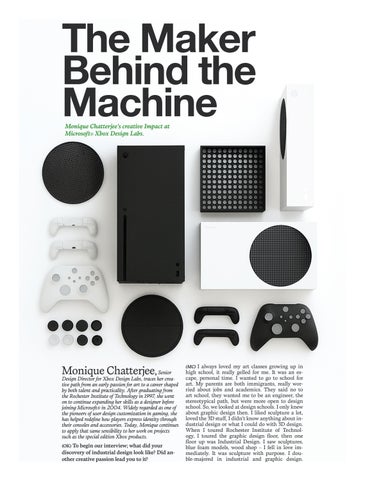




Monique Chatterjee’s creative Impact at Microsoft® Xbox Design Labs.



Monique Chatterjee, Senior
Design Director for Xbox Design Labs, traces her creative path from an early passion for art to a career shaped by both talent and practicality. After graduating from the Rochester Institute of Technology in 1997, she went on to continue expanding her skills as a designer before joining Microsoft® in 2004. Widely regarded as one of the pioneers of user design customization in gaming, she has helped rede ne how players express identity through their consoles and accessories. Today, Monique continues to apply that same sensibility to her work on projects such as the special edition Xbox products.


(OK) To begin our interview; what did your discovery of industrial design look like? Did another creative passion lead you to it?


(MC) I always loved my art classes growing up in high school, it really gelled for me. It was an escape, personal time. I wanted to go to school for art. My parents are both immigrants, really worried about jobs and academics. They said no to art school, they wanted me to be an engineer, the stereotypical path, but were more open to design school. So, we looked at design schools. I only knew about graphic design then. I liked sculpture a lot, loved the 3D stu , I didn’t know anything about industrial design or what I could do with 3D design. When I toured Rochester Institute of Technology, I toured the graphic design oor, then one oor up was Industrial Design. I saw sculptures, blue foam models, wood shop — I fell in love immediately. It was sculpture with purpose. I double-majored in industrial and graphic design.




(OK) You graduated in 1997 and were a senior UX designer at Microsoft by 2003. Could you talk about that transition period?
(MC) I started at Microsoft® six or seven years after graduating. When I graduated, I started working three days later. There wasn’t much placement that year; the job market was competitive. I got an o er from Altitude. They needed me right away — I wanted time o , but that wasn’t an option. Looking back, maybe I regret not taking time o , but I probably would have traveled and met people.I was a workhard, play-hard person. I was into remixing clothes, sewing — might have explored fashion if I’d had time o . I moved from Rochester to Boston within those three days after graduation. Lived a few blocks from the o ce. My world got small.
(OK) As someone who entered the industry just three days after graduation, do you regret not taking a moment to breathe? Do you think you would be where you are today if you had?
(MC) I probably wouldnt have ended up exactly where I’m at now, maybe not even at Microsoft®. I think my feelings are mixed — I loved what I was doing, had college friends in Boston, it was a positive experience overall. Looking back though, I missed that introspective time younger generations take. I was learning on the job every day, working with amazing designers. Lots of hand drawing, sketching, marker rendering. You know, at the time, I wasn’t upset about it. It’s just now, the older me looking back a at like a younger generation that has that, like, takes time for stu , you know, more introspection, more time to learn about myself and understand what I wanted to do with my career.
(OK) What did the process of working your way up the Microsoft® ladder look like?
(MC) I started with one project at a time under a lead designer, eventually I started managing multiple projects, then took over product lines when people left. I worked with vendors, partnered with design rms in China, and built up a vendor team. It wasn’t a career plan of mine to run product lines — it evolved naturally. Over time, focus shifted from comfort and performance to strategy — right products, right price points, designing products with an emphasis.
(OK) Products with an emphasis?
(MC) Products designed for speci c lifestyles, like portability and neatness. The at mouse was inspired by stacking — creating a neat, organized feel. The arc mouse inspired by clipping onto bags — for people on the go. From this point on I generally shifted focus from pure ergonomics to lifestyle design.Microsoft® gave me creative freedom to pursue these projects and pitch them directly, it was really empowering — if I had conviction, I could make it happen.
(OK) A bit of advice for all the scared design students out there.
(MC) It’s going to sound totally cliché — but I think just doing what you’re excited to do and not being afraid of that. Just guring out how to make something of it. The best advice is to follow your passion and nd a way to make that work no mater what. There are so many directions you can take , anything is achievable if you’re vigilant about looking for those opportunities and applying yourself.
My graphic design background helped me visualize roadmaps and features for marketing teams, I created visual playbooks, product tiers, and line drawings. One day I heard an NPR story about students and laptops — it inspired ideas for smaller, stylish laptop mice. From that I ended up working on designing the Arc Mouse and Flat Mouse, and an Arc Keyboard.
(OK) Any advice on, well, taking advice?
(MC) Everybody gives you advice based on where they’re at, and you’re going to receive that advice based on where you’re at. A lot of advice that you might think is bad might be good at a certain moment in your life. What you think is bad advice in one moment, you might pull out a year later, and it might be the best advice.
(OK) So, you were able to use what you learned in previous works to develop and pioneer this part of the industry?
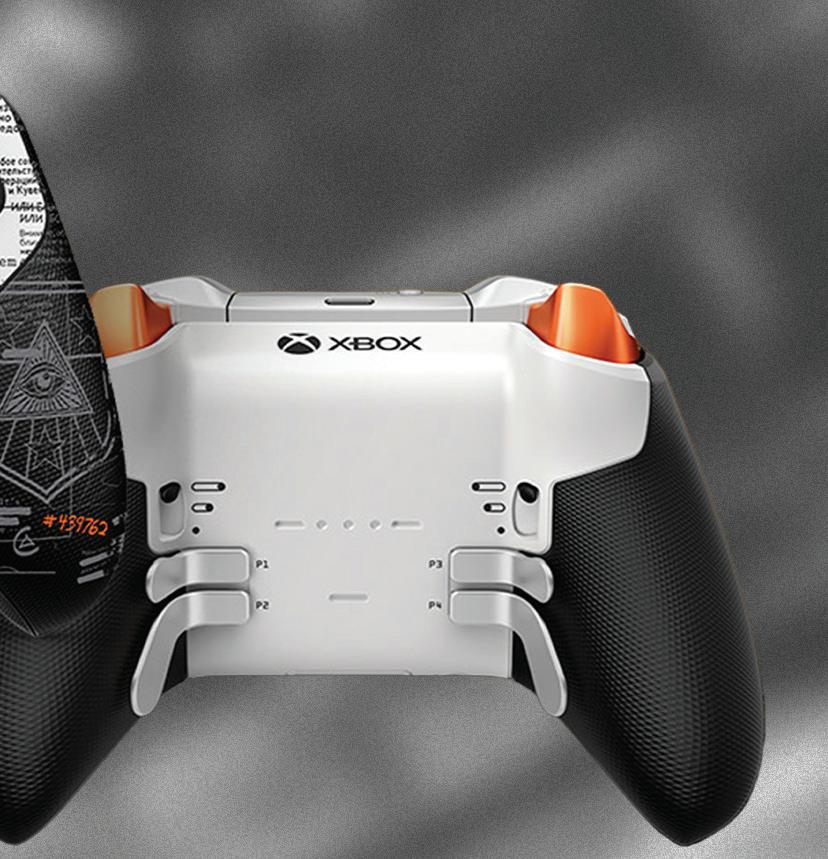
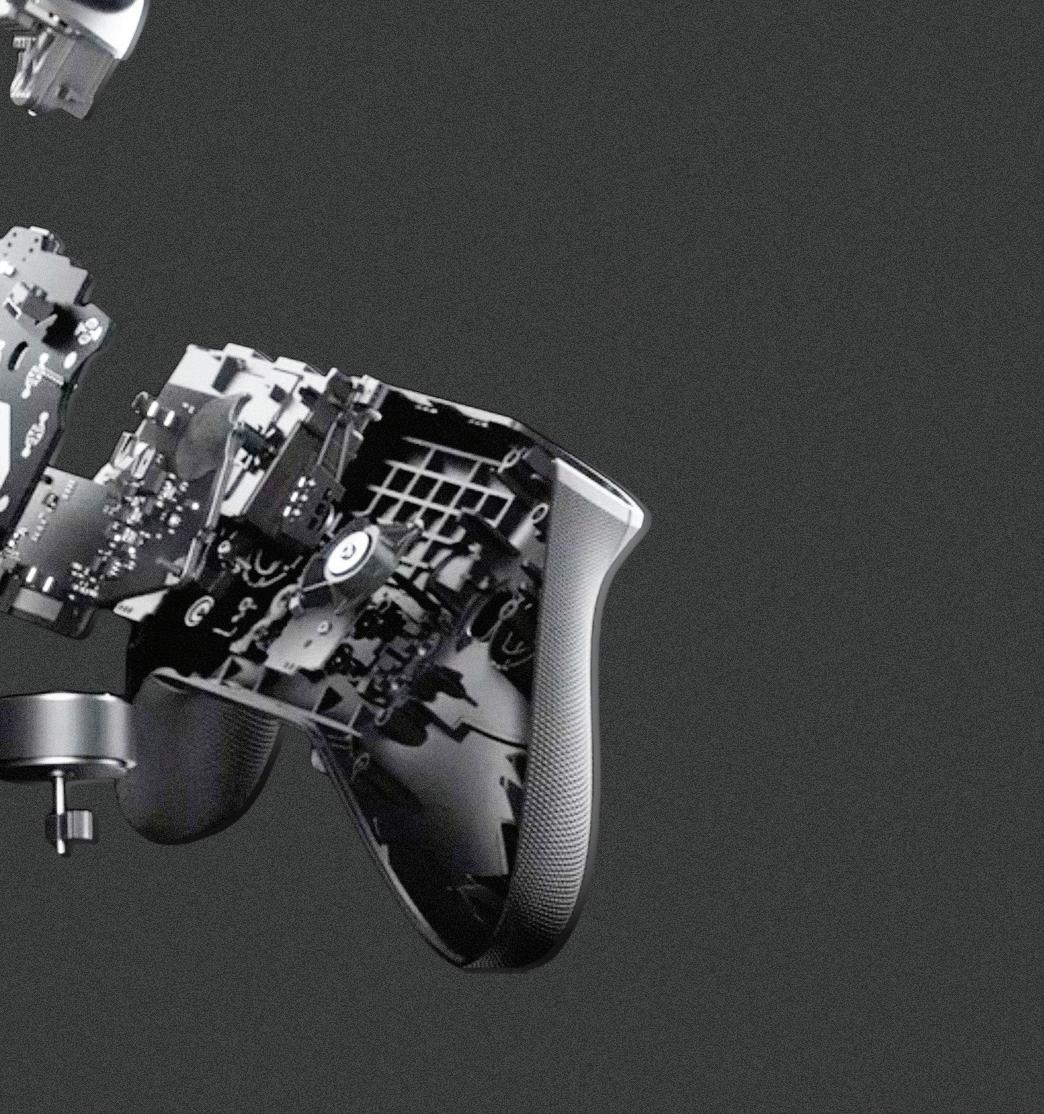
(MC) Yeah, for sure. It kind of wasn’t a thing. There were a couple of products like that—they’d put out a couple a year—and they were awesome, but nobody had built a category around it as a steady business. I used everything that I learned on mice and keyboards and brought it into this category. It’s super fun.
How would you describe the workplace culture at Microsoft®?
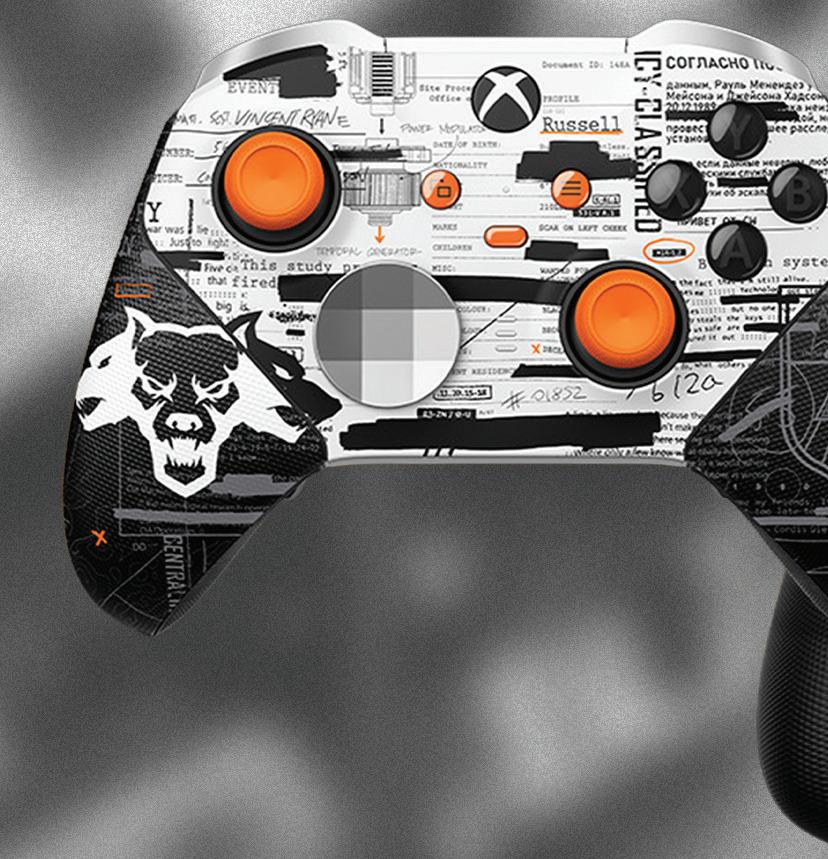
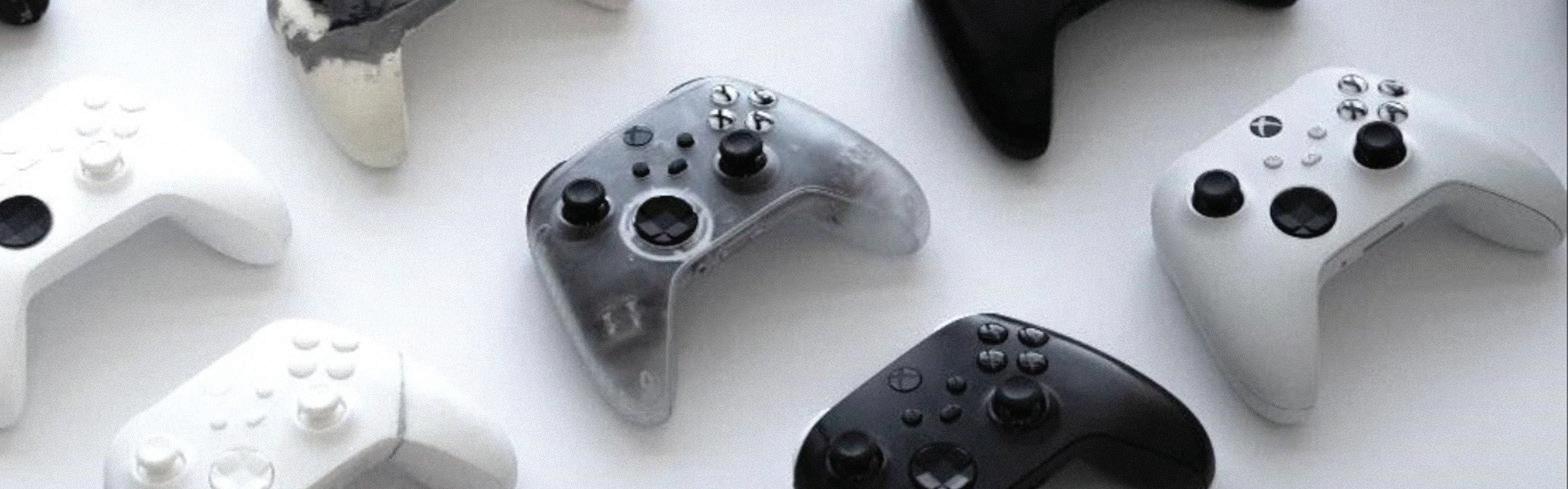
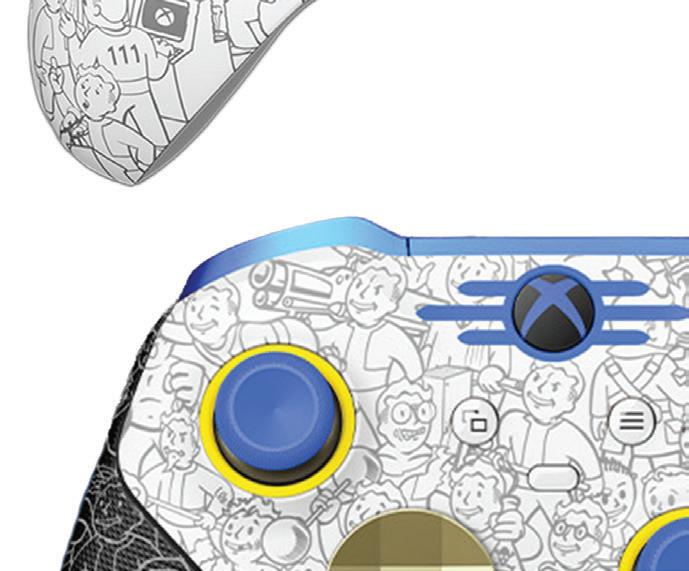
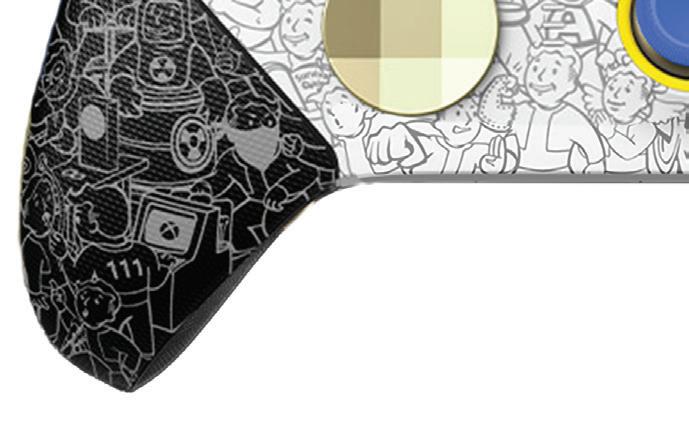
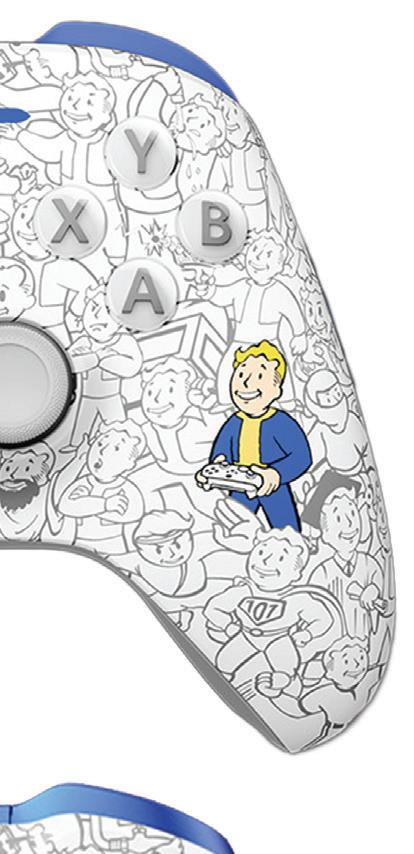
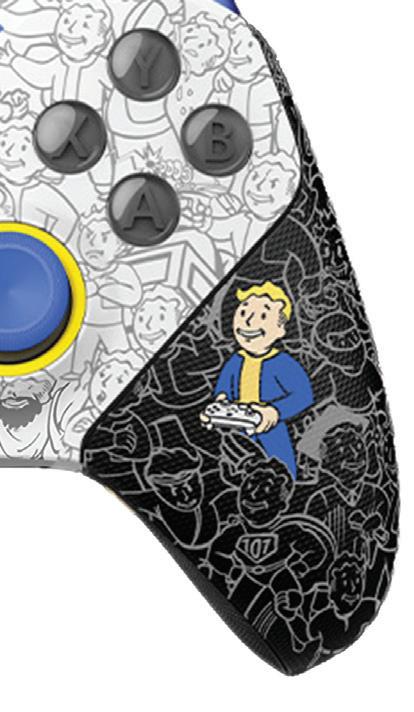
(MC) What I really liked about Microsoft®, and working in the game studio, was that nobody was looking over my shoulder at all. It was this thing on the side; there wasn’t a big product line of limited and special editions. It’s a huge business now, but when I got that rst project, there was really nobody working on that stu . There were a couple oneo s, but it wasn’t a category. I got to do the whole thing all over again—pitching what the product line should look like to the marketing people. I said, “We should have this color stu that we’re doing; we could get the shelf slots.” It was really leveraging what I learned in PC hardware, but doing it for the special and limited editions. I got to really help create the category and make the roadmaps, and it’s a big job now.
(OK) We’ve gained an understanding of your passion for building and working with your hands, but what does your mental process look like going into a project?
(MC) I go into these projects, into the studios, to work with the studio leads and the lead art directors and creative designers, and I go in with a blank slate. I really think that’s been a strength. You know how you learn in design school to set your own opinions aside and listen to people, to design for them and not for you? It’s kind of like that with these worlds that these creative directors are setting up. I’ve heard feedback from people in and out of our group who might be the hardest-core fan of that particular franchise that I’m working on. They have so many ideas of what it should be like based on their deep knowledge of everything about that game, but I really have no bias. When I go to work with the creative directors, and they’re telling me their stories, they’re always trying to make it fresh. They’re putting their own particular spin on the game. They’ve got to make the game fresh, so there’s only so much they carry over. When they’re telling me their stories, I’m really listening to it like it’s the rst time I’m hearing about it. I think I can really understand and pick out the details that are important because I don’t have my own bias.
(OK) What have been some your favorite projects so far?
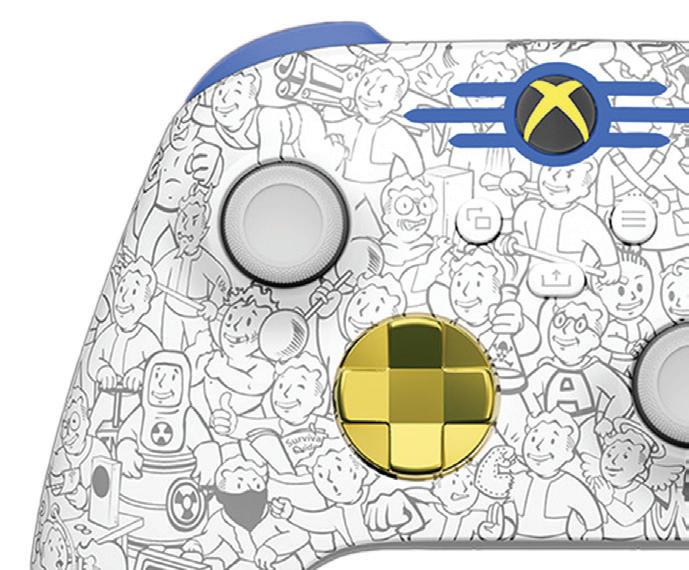
(MC) I mean, it’s going to sound really generic, but I feel like I enjoy every one of our limited editions. When we do something that I’m unsure if it can be done, or how it’s really going to work out. We have an idea of what we want to do, but every single one of them requires us to learn something new, and we have to use our materials in di erent ways. I really like—this is going to sound really weird too—I really like that there are these strict price points that I have to hit, and there’s a certain cost of goods target that I have for each product.
That’s the challenge for me: how do you make it the best product possible? the most surprising, unique, and bespoke?
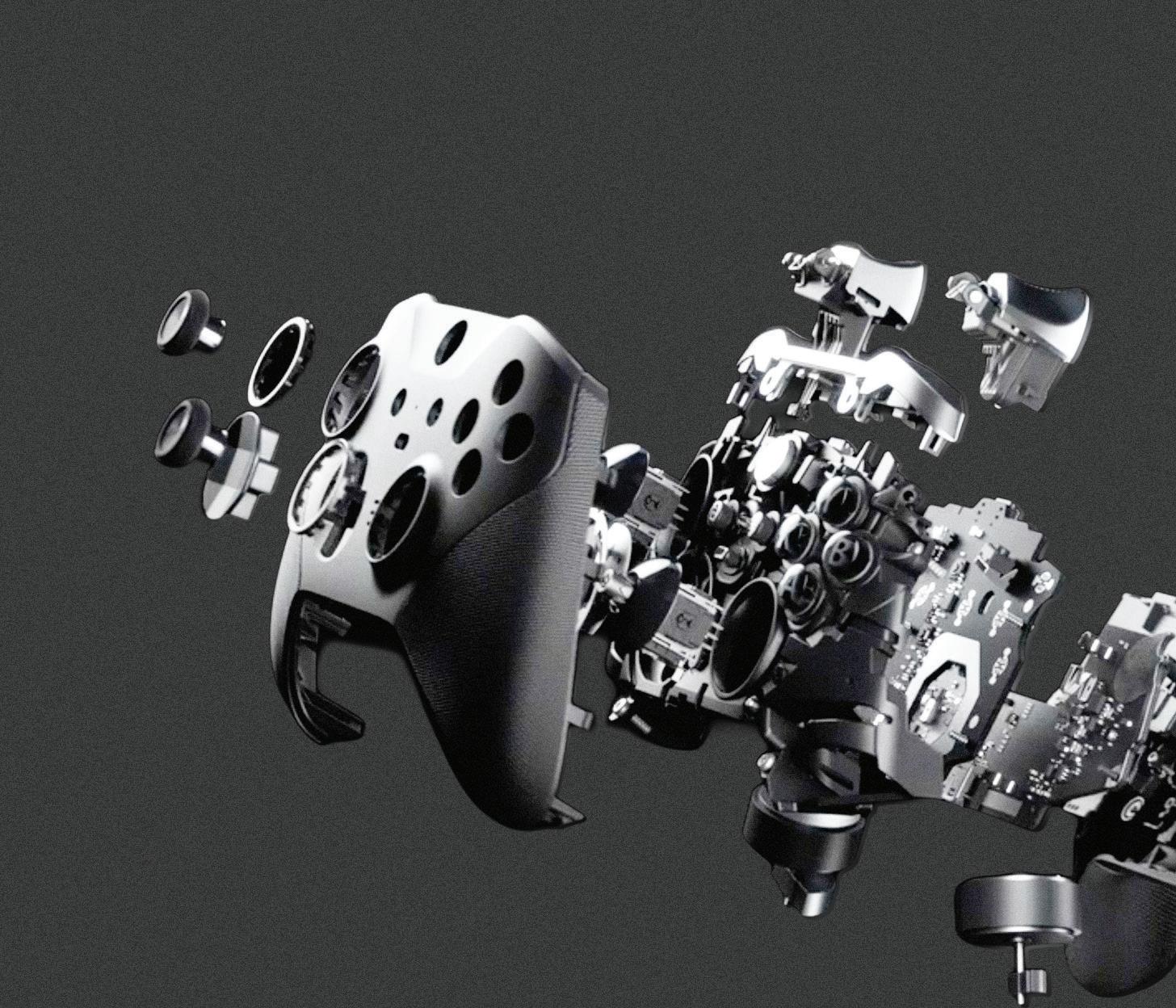
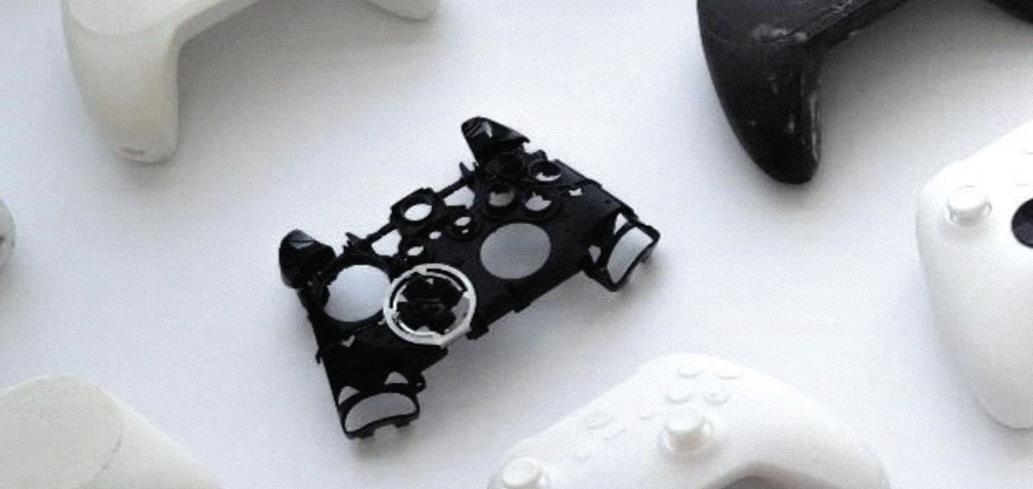
I’m in this world where I get to design this super bespoke stu . How do you make it the most special, but still hit that cost target? What are all the trade-o s you make to tell that story? That’s kind of where I’m at right now in my career—constantly learning about manufacturing and using it in really creative ways. I love all those limited edition projects. I’m just really into physical stu . I feel at home with physical stu . I love manufacturing processes and making things. I love the art and the games. I love the stories and the art, I’ll play the games that I’m working on and try to ramp up on them.
Thinking ahead /
What were your biggest takeaways from your rst few projects at Microsoft®?
I learned deeply about ergonomics. Microsoft’s® studies were incredibly precise — millimeter adjustments. We studied hand stress, comfort, performance — combining art and science, it was exactly what I loved about industrial design — it really ingrained in me how to conceptualize and build products with purpose.
About the Author
Olive Kornfeld is a Seattlebased visual communication design student at the University of Washington driven by a passion for thoughtful, creative problem-solving.
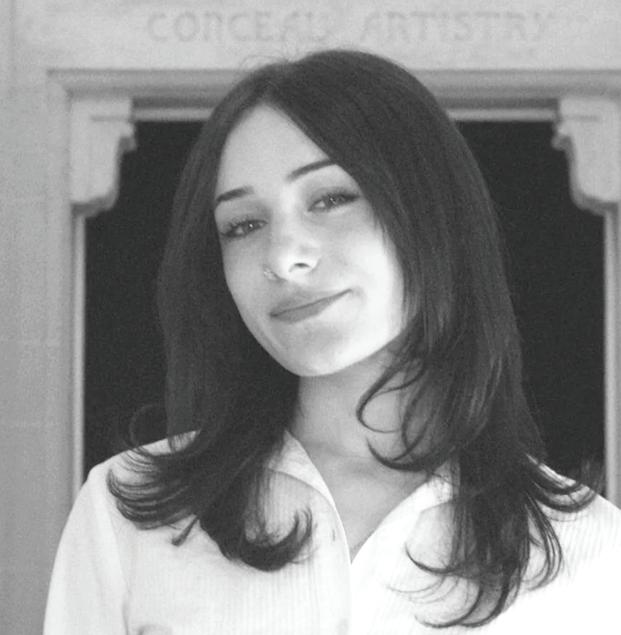
I never stopped learning at Microsoft®. Thought I’d stay two years—Now its been 21.
Monique Chatterjee
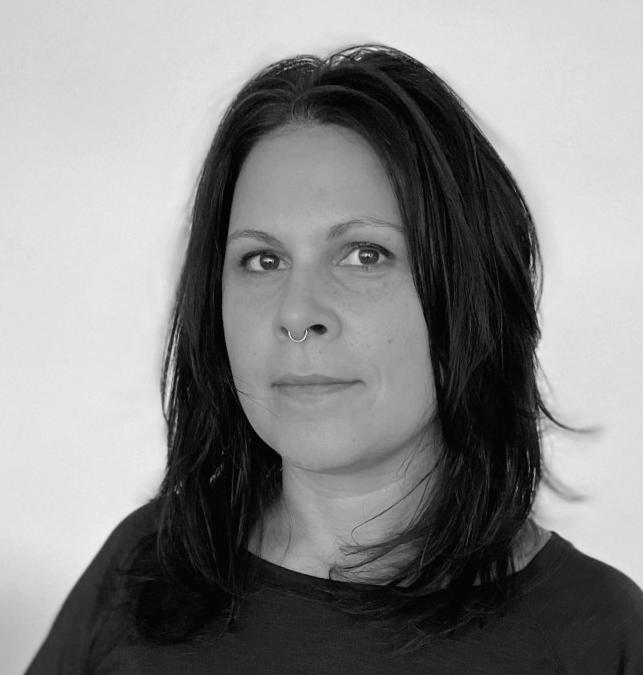
I had the best time, like I really did those rst few years, when I rst started at Microsoft, it was just amazing for me, like, mind blowing, really. Getting to be in the studio, learning how to use all these machines, getting in on the research, and having access to all these resources, it was a really great time. It was kind of like I was in studio classes all over again, but it was just me in the shop, and that was my favorite part, you know? I was really all in it then, it was an amazing start to my work there.