05

10 Understanding
Vol. 45, No. 1 | Spring 2024 LifelineLetter Connecting the nutrition support community, line by line The Oley Foundation is a home nutrition therapy community and advocacy group. Learn more: Oley.org
symposium discusses “p-value,” where p stands for patient Plus, announcing the winner of the Lyn Howard advocacy award.
Oley
heartfelt plea from a medically complex 23-year-old facing enteral formula discontinuation and its consequences.
Redefining “Significance” A
Insightful tips on finding and interpreting results of the latest healthcare research, from Dr. David Mercer.
06 Letter to the Editor
Clinical
Research
table of contents

Our Mission: To enrich the lives of those living with home IV nutrition or tube feeding through advocacy, education, community and innovation.
The Oley Foundation provides its 28,000+ members with critical information on topics such as medical advances, research, and health insurance. The foundation is also a source of support, helping consumers on home IV nutrition and tube feeding overcome challenges, such as their inability to eat and altered body image.
All Oley programs are offered free of charge to consumers and their families.
Our Vision: Oley envisions a world where patients are united, supported and empowered to thrive on home nutition support.
How to Support Oley: Donations are tax deductible and are accepted at oley.org/donations or at the street address listed below. We appreciate your support.
Please note: Oley members share their stories for the benefit of others in similar circumstances. Please do not contact them for solicitation, marketing or research.
Email: info@oley.org oley.org
Publisher:
The Oley Foundation
Albany Medical Center, MC-28
43 New Scotland Avenue
Albany, NY 12208
page 2 03 From the Desk of the Editor 04 Tube Talk 05 Redefining “Significance” 06 Letter to the Editor 07 Celebrating Rare Disease Day 10 Understanding Clinical Research 13 A New Guide to Short Bowel Syndrome 13 Research Announcement 17 2024 Calendar & Oley Events 18 Corporate Partners Register Today for Oley 2024: Connected 08 Behind the Scenes: The Making of a Conference 14 In Photos: Digestive Disease National Coalition 16 A quarterly publication of the Oley Foundation @the_oley_foundation @theoleyfoundation @the-oley-foundation @TheOleyFoundation Lifeline Letter Executive Director: Beth Gore, PhD Editor, LifelineLetter; Director of Advocacy: Lisa Crosby Metzger Director of Development & Communications: Alaina McCormick Manager of Education & Innovation: Maisy Cyr, MSW Manager of National Advocacy: Andrea Taylor, RD, CNSC Operations Manager: Cathy Harrington Science & Medicine Advisor: Manpreet Mundi, MD, FASPEN
of Trustees: Kelly Tappenden, PhD, RD, FASPEN, President ; David Mercer, MD, PhD, FRSCS, FACS, President Elect ; Steve Atkinson, Treasurer ; John Mahalchak, Secretary ; Lisa Epp, RDN, CNSC, LD; Roy George; Shirley Huang,
Sivan Kinberg,
MS,
Vanessa Kumpf, PharmD, BCNSP, FASPEN LifelineLetter
2024 • Volume 45, No. 1 Phone: (518) 262-5079
Board
MD;
MD,
MA;
Spring
From the Desk of the Editor
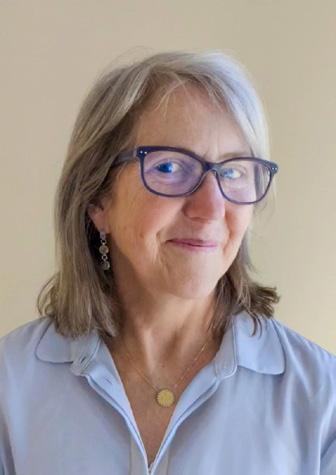
Lisa Crosby Metzger | LifelineLetter Editor & Director of Advocacy
Dear Reader,
Having just celebrated the 40th anniversary of the Oley Foundation, we have been discussing the organization’s direction and ways to better meet the needs of our diverse stakeholders.
As you might have noticed, we have made some visual changes to the LifelineLetter to give it a cleaner, more modern, and engaging appearance, helping to mark Oley’s future (we’re working hard to modernize more than just the newsletter). We want the articles to be more accessible with photos and voices that reflect our community’s interests. In this issue, we introduce new departments, such as “Behind the Scenes,” which will run regularly.
As a member of the nutrition support community, we encourage you to contribute articles and ideas to the newsletter and welcome your feedback on the new look and content. Please email your articles and feedback to us at info@oley.org. I’m excited to help shape some of these changes and welcome your input.
Happy reading,
Coram®*

LifelineLetter, Spring 2024 page 3
you. At Coram, our dedicated team of clinicians and pharmacy staff provide personalized support and ongoing care to our enteral consumers across the country and home parenteral consumers in many markets. Visit CoramHC.com to learn more. Want to get started with Coram? Talk to your doctor or call us at 1-800-423-1411 *Coram® CVS Specialty® Infusion Services (Coram) ©2023 CVS Health and/or its affiliates. All rights reserved. 75-58850A 050423
is here for
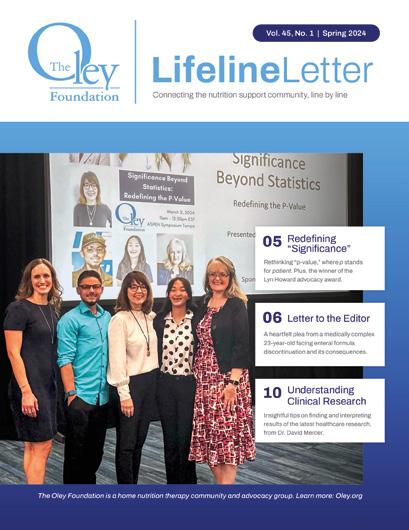
ON THE COVER (left to right): Symposium speakers Andrea Taylor, RD, CNSC; Vince Rosche; Vanessa Kumpf, PharmD, BCNSP, FASPEN; Zoe Gore; and Beth Gore, PhD
Feeding Tube Awareness Week a Great Success
Thank you to the many Oley members and supporters who contributed to making Feeding Tube Awareness Week a great success.
Social media was abuzz in early February with people sharing their stories and information about feeding tubes and tube feeding. Here are some indicators of the amount of engagement with Oley that week of February:
Facebook: Reached 10,021, with 206 clicks
Instagram: Reached 4,868, with 431 interactions
LinkedIn: Reached 2,360, with 133 likes
Oley.org: Views 2,300, with 346 downloads
We also sent out 254 Feeding Tube Awareness Week Buttons ▶
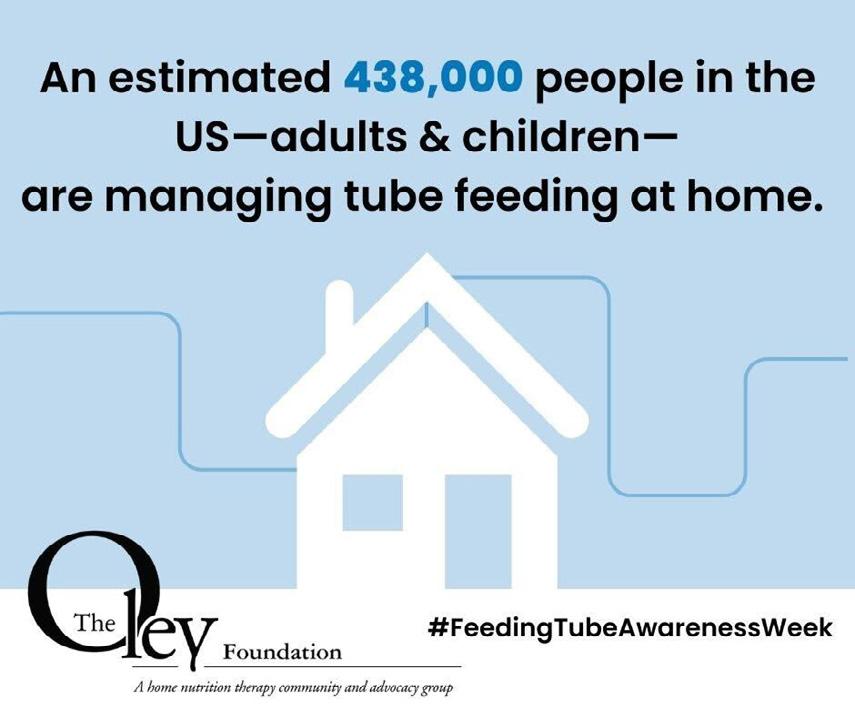
◀ Oley developed a toolkit featuring informative graphics for social media, each highlighting a fact or message about tube feeding. These were shared across Oley’s social media channels throughout the week.
“As someone who has navigated and understands the journey with having a feeding tube, I cherish and find immense value in Feeding Tube Awareness Week. It’s a priceless opportunity to break down misconceptions, build connections, bring awareness and empower others by sharing the unique experience that shapes us.” —Jessika Buehne
Our thanks, too, to Real Food Blends for sponsoring a social hour for the tube feeding community, and a webinar titled “Myth Busters: Real Tips for Incorporating Real Food to Your Tube Feeding.” A recording of the webinar is available on the Oley YouTube channel. ■
We want to hear from you!
Send your tips, questions, and thoughts about home tube feeding (enteral nutrition or HEN) to info@oley.org (subject line: Tube Talk). The information shared represents individual experiences. While it undergoes medical review, it does not imply endorsement by the Oley Foundation. Always consult your clinician before making any changes to your care plan.
page 4 tube
talk
Redefining “Significance”
Andrea Taylor, RD, CNSC | Manager of National Advocacy
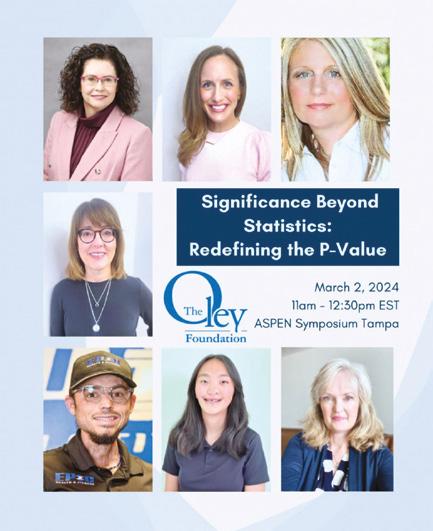
Beth Gore, Alaina McCormick and I attended the American Society for Parenteral & Enteral Nutrition) (ASPEN) Nutrition Science & Practice Conference in early March in Tampa, Florida, on behalf of the Oley Foundation.
For the third year in a row, Oley presented the opening symposium, generously funded by an education grant from one of our corporate partners, Takeda. This year’s presentation was entitled “Significance Beyond Statistics: Redefining the P-Value.” The p-value is often referenced in research as a marker of whether results are significant (as Dr. Mercer notes in his article, which begins on page 10). But who gets to decide what is significant to a patient? We wanted to get clinicians to rethink the p-value, where “p” stands for patient. We intentionally chose speakers with real-life experience and over half of the speakers were patients or caregivers. Based on the feedback we received, and the number of tissues used, the presentation was a success.
Since it was near Beth’s hometown, her husband and five of her six children were able to attend. Her youngest daughter, Zoe, gave an impactful presentation during the symposium on the sibling perspective. Her youngest son, Manny, who lives on home parenteral (IV) support, was also in attendance. His favorite part was wheeling through the exhibit hall meeting attendees.
While we were there, we also had the honor of witnessing long-time Oley member Michael Medwar being awarded the Lyn Howard Nutrition Support Consumer Advocate Award. Michael’s personal experience on home parenteral nutrition, as well as his professional experience supporting and empowering home enteral and parenteral patients, made him the perfect candidate for the award, which was named in honor of Oley cofounder Dr. Lyn Howard.

Next year, ASPEN will be held in Columbus, Ohio, March 22–25. We’re already planning how we can top this year! ■
Watch on YouTube
A recording of the presentations from “Significance Beyond Statistics: Redefining the P-Value” will be available for viewing on the Oley YouTube channel. Watch oley.org for an announcement.
LifelineLetter, Spring 2024 page 5
Dr. Phil Ayers & Michael Medwar
to the editor
The Reality of Formula Discontinuations
To the Editor,
I am twenty-three years old. I am medically complex; I am used to hearing unfortunate news. A medication I need is completely out of stock. A new diagnosis. A new surgery or procedure. A new doctor. A new appointment. Another test. I handle it all with grace. With patience, with understanding, with cold calculation. What are my next steps? How soon can we schedule? What do I have to do to ensure I can continue to maintain my health?
I have waited for hours on hold to speak to a doctor or pharmacist, continuing on my day with the elevator music playing in the background, notebook at the ready for whenever my call is answered. I have driven to different cities to see certain physicians, my favorite playlist playing through the car speakers as if I were just running errands. I show up to the hospital at five in the morning, on an empty stomach, a file folder with my medical history, diagnoses and medication schedule at the ready for the surgeons and anesthesiologists. They all say I’m very mature for my age. I’m well-prepared. They wish all their patients were as proactive as me. I tell them all the same thing: that my prep work makes my life easier, too.
I am twenty-three. With level-headed acceptance, I take news that might send a fifty-year-old spiraling. I can count on one hand the number of times a medical situation has made me emotional. Standing in my living room, the early-winter sun having long since gone down, on the phone with my mother, I add one more tally to the list.
“They don’t care about us,” I say, my voice rising in pitch. “They are condemning people to malnutrition, or even death. And they don’t care.”
I have been an enteral formula consumer my entire life. Though I no longer have a feeding tube, to maintain my health, I still require the extra calories and nutrients that only enteral formula can supply. I’ve just received a letter that my enteral formula is being discontinued. There are no appropriate alternatives provided. This is the second time I’ve faced this issue in a year and a half. My options are dwindling, and the panic is setting in.
My homecare company has no answers. My prescribing physician has no answers. The manufacturer listed no reason. “The following formulas are being discontinued as of December 2023. Here is an alternative formula we recommend.”
For nearly my entire life, I had been on the same enteral formula, let’s call it Formula A, manufactured by Company A. In the spring of 2022, it was discontinued. In its place, Formula B, from Company B, was recommended, so I made the switch. Now, Formula B is being discontinued. Company B recommends Formula A as a substitute. A formula that has not been manufactured for a year and a half. A part of me wants to laugh over it. How can such huge names in enteral formula as Company A and Company B not have any communication with one another? How can such enormous companies, marketing themselves on the health of their customers, make such a dire mistake? I want to laugh, but at this point, it’s no longer funny. Even I can’t make light of the situation.

I present the letter to my prescribing physician, asking for her input. She has none to give, no alternative formula recommendations. Her only advice? To visit my surgeon, three hours away, for a recommendation.
“If he can’t find a substitution for you, you might end up back on PN [IV nutrition].”
Back on PN, after five years without it. Back on PN, after my health had stabilized enough to no longer need a g-tube for enteral feeds. All because a manufacturing company decided they weren’t profiting enough off of my formula? The words send me spiraling.
“Will I die? No, definitely not,” I tell my mom over the phone. “But I’m one of the lucky ones. I’m healthy enough to survive. Will it make my life much more
Continued on next page >
page 6 letter
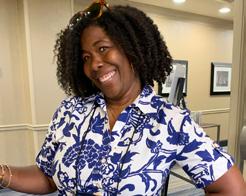
Julie Andolina
We are here. We are real people. Our lives, our health is real.
difficult? Absolutely. But others will die. Because we’re faceless to them. We’re a pay check to corporations that cash millions of them every day.”
So, with this letter, I say, “Hear me. Hear us.”
We are here. We are real people. Our lives, our health is real. With these mass formula discontinuations, you are condemning us to malnutrition, to increased
symptoms, to a reliance on PN that we would not otherwise need. We in the enteral feeding community already face an overwhelming amount of stress day in and day out, just trying to keep ourselves alive. We do not need the added burden of wondering where our next meal is coming from.
—Julie Andolina ■
We want to hear from you!
Are you experiencing formula shortages or discontinuations? If so, how are you handling it? Send your feedback, experiences and ideas to info@oley.org (subject line: Letter to the Editor).
Celebrating Rare Disease Day
How did you celebrate Rare Disease Day?
Rare Disease Day is always the last day of February. This year it was February 29, the rarest day of the year.
Oley marked the day with one of our Community Connection events. Hosted by Oley’s Manager of Education Maisy Cyr, MSW, consumers and family members joined in the discussion, titled “It’s Not All Black and White: Barriers to Access for Rare and Complex Patients.” This was a conversation about specific obstacles we experience in trying to access needed care (and a nod to the zebra, the official mascot of rare disease patients). Oley is not naive to the numerous challenges rare and medically complex patients face. We know how difficult it can be navigating healthcare when we don’t necessarily fit into any of the existing boxes.
Both individual and systemic challenges were identified. As consumers voiced barriers they have faced, themes emerged, highlighting urgent needs:
• Provider Related:
• The need for more providers closer or virtual options to see providers
• Providers with expertise—people who know more than we do
• Providers willing to collaborate
• The need for champions in the field
• Communication
Related:
• Cohesive care, not piecemeal
• Medical record access to care team communication options
• Discharge with Education and Proper / Adequate Supplies
• Better Insurance and Reimbursement Coverage
• Mental Health Support
Rare Disease Day has passed, but this is just the beginning of the conversation. We want to assure our members they are not left “screaming into the void.” Know that you are heard.
Please join us on March 22 for our next conversation, “Personal Perspective to National Narratives: Using Your Story as a Catalyst for Change,” where we’ll discuss how we can use our voices to create change. Our Community Connection events are online, virtual discussions at 6:00 PM and again at 9:00 PM Eastern to accommodate our West Coast members. Register today!
Questions? Email info@oley.org ■
LifelineLetter, Spring 2024 page 7
continued
The Reality of Formula Discontinuations,
Register Today for Oley 2024: Connected
Registration is NOW OPEN for Consumers & Caregivers!
About Oley 2024: Connected
Oley 2024 Annual Conference: CONNECTED
Are you on long-term nutrition support (tube feeds or TPN) or care for someone who is? Have you ever wanted to be in a room full of people who “get it”? Join people of all ages, from all walks of life, with diverse backgrounds and experiences, to share information, learn about available resources, gain support and get connected at Oley 2024: Connected!
Whether this is your first or 40th conference, there’s always something new to learn, new products and services to explore, and the chance to connect with new people.
Registration Details
Consumer/Caregiver Registration: Please visit Oley2024.vfairs.com, where you can explore all the details. (Some pieces are still under construction; thank you for your patience.) We anticipate filling our maximum of 500 attendees AND selling out the conference hotel.
Healthcare Providers: Registration opens now, but the hotel block will open for professionals on April 1st. Our priority is to preserve hotel space and the lowest room rates for our consumer attendees. Oley Industry Partners and Exhibitors, please contact Alaina McCormick directly for registration details.
Conference Cost: We strongly believe in making the conference as accessible as possible for consumers and their families, and we charge them no admission to attend. We charge a nominal fee for all other attendees.
Hotel Cost: We’ve secured a location with a $125/ night rate ($139 with taxes). Consumers and caregivers, register now to get the discounted hotel price link.
Tell Others: Remember to tell a friend or other groups you’re in. You or your children could be like ShayLee and Jessika, who were best friends virtually for five years, before finally meeting in person for the first time at the 2023 Annual Conference. ▶
Conference Highlights


Keynote Speaker: Erin Nance, MD
“How to Become the CEO of Your Own Health”
Dr. Nance will share her insights from creating medical content that has been viewed over 100 million times and shared with over one million people. She will speak about the challenges of not feeling seen or heard in a patient/doctor interaction.
Welcome Reception
Join us Saturday, June 29, at 6:30 PM as we kick off the conference with a “Winter Wonderland” themed reception with interactive activities and light refreshments.
Experience Expo
Interact with exhibitors showcasing the latest products, resources and innovations in home nutrition support.
Continued on next page >
page 8 conference news
TEMPE,
JUNE 29–JULY 2, 2024 •
ARIZONA
You must register with Oley first to get the Oley hotel room rate. Your conference registration confirmation email will contain the link to make room reservations directly with Omni Tempe ASU. Please Note...
Wear Your Pump Fashion Show
Sunday, June 30th. A fashion show for HEN and HPN patients living their best life! Show off how you wear your pump and take it wherever you go. Show us how you have adapted your nutrition delivery to fit your lifestyle. Show off adaptive clothing, or just show off your favorite outfits! (Pre-registration is required.)
Kidz Klub
Kidz Klub is a unique space at our conference for our younger members between the ages of 5 and 12 to spend time with other kids on nutrition support and participate in safe, inclusive, and educational activities. (Pre-registration is required as space is limited.)
Jammin’ Jammies
Monday, July 1st. Grab your pillows and blankets and hop into those jammies! Join us for a PJ party and a movie! This will be a chaperoned event for kids of all ages where we will be showing a PG movie.
Karaoke
Monday, July 1st. Warm up those vocal cords! While the kids are at their PJ party, we’ll be singing our hearts out with the help of a professional karaoke DJ!
2025 Kick Off Lunch
Tuesday, July 2nd. Before we wrap up and head home, please join us for lunch where we’ll be sharing pictures from the week, and announcing the location of the Oley 2025 Annual Conference! You won’t want to miss it!
If you need help, please contact us!
For any inquiries or assistance with registration, hotel accommodations, or exhibitor information, email us at info@oley.org (subject line: Oley 2024). Our dedicated team is here to help make your conference experience as smooth as possible.
We look forward to seeing you at the conference! –The Oley Staff
and always happy to answer any concerns.”
LifelineLetter, Spring 2024 page 9
Oley 2024: Connected, continued Nutrishare 9850 Kent Street, Elk Grove, CA 95624 (916) 685-5034 Phone (888) 626-3344 Fax © 2024 Nutrishare, LLC | MKT-005-RevA HELPING PEOPLE THRIVE ON HOME TPN… IT’S ALL WE DO! • One-to-one 24-hr support from a dedicated clinician • Choice of supplies & nonrestrictive formulary • Accommodation for travel nationwide • Lab monitoring & progress updates • Board-certified multi-disciplinary home TPN specialists • Educational resources and webinars • Assistance from insurance specialists “Extremely pleased with the switch to Nutrishare! Their nurses and dietitians are extremely helpful, knowledgeable,
MaryAnn
Consumer nutrishare.com 1-800-HOME-TPN DON ’ T WAIT — REGISTER TODAY!
Neblock, TPN
Understanding Clinical Research
David Mercer, MD, PhD, FRSCS, FACS

We all want to be as healthy as possible, and in this day and age, part of that can be working to be as educated as we can be about our own healthcare decisions. The problem is that suddenly we are faced with SO MANY decisions
and issues that it can be quite overwhelming. Trying to understand the results of new healthcare research is a daunting task for anyone.
If you are dealing with home nutrition, either by IV (“parenteral”) or through your gut (“enteral”), then you are already launched into a world filled with tubes, lines, pumps and fluids. It is likely that you didn’t even know this world existed prior to your current situation either as a patient or as a caregiver. Just understanding all the medication you or your loved one are on right now is plenty hard enough without then trying to keep up-to-date on what is coming in the future.
Trying to understand the results of new healthcare research is a daunting task for anyone.
Let me start by first giving you complete permission to not worry about current medical research if you don’t want to. You are not a bad patient, nor are you being lazy or harmful to yourself or your loved one if this just seems too much for you. Let’s be honest—it can be hard enough to just find a doctor who understands your condition or is interested in treating you. It should be the role of your treatment team (doctors, nurses, dietitians, pharmacists, etc.) to keep abreast of current research and present you with the best option for your situation, or a limited number of options with an explanation to help you choose. If you have a team you trust, you may rely on them if you wish to.
However, it is also quite possible you don’t have the luxury of a well-informed team and you feel the role of learning about best current treatments is falling on you. This is much more common than you may think. Or you may just want to be truly informed about the “latest and greatest” medical research as it pertains to you, to help you feel comfortable with the choices being made about your health. If this seems like you, then perhaps I can give you just a little framework for investigating clinical trials and research.
I’m going to proceed on the assumption that you are reading about things because they pertain directly to you and your own health decisions, or to someone close to you. (If you’re studying the outcomes of clinical trials for the sake of general knowledge, well… that’s unusual, but good for you!).
Step One
I think the first step in reading about clinical trials is to get your own philosophy straight. With your eyes wide open, take stock of all the elements of your current situation—your schedules, medications, what you are happy with, what isn’t good, etc. Then close your eyes and imagine what your life would look like in a best possible situation. Keep this realistic (we would all likely choose to be 100 percent well and have NONE of this…), but also don’t be afraid to dream well beyond your present circumstances.
Why does this matter as a first step? Because if you are already very happy with how things are going, then you are unlikely to want to take much risk to gain an improvement—and clinical trials are all about benefit versus risk. If you are trying to decide whether a new intervention is a good idea for you, you have to have some idea of your risk tolerance. So, once you have this figured out for yourself, proceed to the next step.
Step Two
Where do you go for the information you need? Well, let me just say this is also super complicated. Many people are going to turn to the internet or social media as a starting point. Fair enough—but be aware that this is the WILD WEST OF MEDICAL INFORMATION. Everyone on TikTok is “an expert,” you can pretty much claim whatever you want to without responsibility, and almost none of it is verifiable.
page 10 feature
Continued on next page >
My best advice here is to take a Ronald Reagan approach to what you hear: “trust but verify.” The wilder the claim of “success” or “breakthrough,” the more skeptical you should be. This is not to say that important information cannot be found in these sources. Indeed, major breakthroughs such as blenderized tube feeds have been driven largely by the community of patients and caregivers. Heck, my own research is based on a community-driven approach to defining quality of life in short bowel syndrome. I would just urge you to be cautious, and check with your most trusted healthcare providers before making any significant changes.

At the highest level, in a search for information one would go directly to published manuscripts using something like PubMed, an online database maintained by the National Institutes of Health (NIH) that contains millions of citations for biomedical literature. Almost no one, including the majority of physicians, is capable of doing this well. There is so much published medical research that if you look hard enough, you can find a research paper to support whatever you want to say.
To do this properly requires a broad knowledge of a field, a comprehensive search of published papers, and the knowledge of how to interpret complex data. There are organizations such as the Cochrane collaborative that do this very well, but in the home nutrition world, most of the things you care about won’t have been addressed by Cochrane, and Cochrane doesn’t always put out results in a way that is easy for the layperson to understand.
Information put out by the US Food and Drug Administration (FDA) is generally of the highest level. It’s fully vetted and verified. Pharmaceutical and device companies are highly regulated as to what they can say about their products. They cannot say anything that has not been approved by the FDA. They can certainly put a spin on their data and outcomes—after all, they are in the business of selling treatments—but at least everything they say, to the best medical probability, is generally true.
The same is not true in many industries not regulated by the FDA, and this includes many nutritional, nutraceutical and naturopathic companies. Their statements are not vetted by the FDA, and they will
rarely volunteer this fact. They will talk about “study results,” but unless those results are available publicly in the form of a published manuscript, you should be very skeptical. If they have nothing to hide, then they should hide nothing. You should be able to find out where their studies are and look at them.
Terminology
As you begin to read, you will likely come across the word “significance.” This will generally refer to either “statistical significance” or “clinical significance.” If something is said to be significantly different statistically, it means two (or more) things are likely to be truly different (for example, a drug versus placebo), meaning the difference seen in the study isn’t just due to chance.
Researchers set the measure of true difference using something called a “p-value,” which is generally set at 5% and written as “p<0.05.” In effect, what they are saying is, “using the test we have, there is a 5% chance that when we say things are different, they really are not.” Somewhat arbitrarily, everyone agrees that a 5% chance of being wrong is acceptable. If the p-value is lower, say for example 0.001, this would mean there is only a 1 in 1000 chance of being “wrong.”
“Clinical significance” on the other hand is a bit easier to understand, because effectively that is determined by you the patient. Basically, it is saying that the effect of the treatment has meaning to you. This can be tricky at times, because things can be written to make a rather boring outcome look exciting.
LifelineLetter, Spring 2024 page 11
Understanding Clinical Research, continued Continued on next page >
If you saw a study that said, “This drug reduces the rate of cancer recurrence by 50%, a statistically significant finding,” you might say, “Wow, that’s really impressive!” But if the cancer in question only recurs 2 per 1000 times and now it recurs 1 per 1000 times, you might possibly conclude that isn’t clinically all that meaningful to you, perhaps when taking into account side effects, cost, length of treatment, etc. This is why I earlier made the point that you have to get your own philosophy about your clinical care figured out and understand your own risk tolerance. Because when you look at study results that might pertain to you, they are always interpreted in the context of your own situation.
Conclusion
When you look at study results that might pertain to you, they are always interpreted in the context of your own situation.
If your team is unfamiliar with the data you are looking at, let them know the sources you are using, or even provide a copy of what you are reading. If someone is unwilling to even consider it, or quite reasonably finds it outside their expertise, they should be comfortable in sending you to an expert center where you can get help answering your questions.
Interpreting clinical data is challenging, but for some patients and caregivers, it can provide a sense of security in the knowledge that you are an active participant in advancing your own care. ■
Easy, right? Not at all. Keeping abreast of all the new developments is probably not realistic for the majority of patients. But where there are specific issues that relate to your own care, you can feel empowered to look at the data yourself. Understanding clinical data is difficult, and the best thing to do is ask questions, and discuss with your care team.

Annual Appeal
Thank you to everyone who responded to our annual appeal with a donation. We couldn’t continue to offer programs free of charge to consumers, caregivers and families without your support. If you missed it, there’s still time to donate! Please visit oley.org/donations/ donate.asp?id=23383.
Dr. Mercer is Professor of Surgery and Director of the Intestinal Rehabilitation Program at the University of Nebraska Medical Center in Omaha, Nebraska, and President Elect of the Oley Foundation Board of Trustees.


USE UNDER MEDICAL SUPERVISION The Blenderized Diet Recipe Calculator was created by Robin Cook, MS, RD, CSP, LDN, and is reproduced with permission under a licensefrom Children’s Hospital of Philadelphia. No endorsement by Children’s Hospital of Philadelphia or by Robin Cook, MS, RD, CSP, LDN, of any Nestlé Health Science brand or product is implied or intended. Build your own blenderized tube feeding recipes at home! All trademarks are owned by Société des Produits Nestlé S.A., Vevey, Switzerland or used with permission. ©2023 Nestlé. Take the guesswork out of creating blenderized tube feedings with our simple online tool that allows you to customize recipes from scratch tailored to your nutritional needs and preferences. Driven by recipes developed by Robin Cook, MS, RD, CSP, LDN, Pediatric Surgical/ Trauma Dietitian at Children’s Hospital of Philadelphia Introducing the BLENDERIZED TUBE FEEDING RECIPE BUILDER Create your free account at and start blending at home today! .com/ blend-at-home page 12 feature
Understanding Clinical Research, continued
A New Guide to Short Bowel Syndrome
Navigating the challenges of life with a rare and complex condition like short bowel syndrome (SBS) can be daunting. That’s why the Oley Foundation has collaborated with SBS patients, other community organizations and healthcare professionals to produce a guide that highlights a range of patient group services, useful resources, and ways to connect with those who understand and share your experiences.
Developed with the support of Ironwood Pharmaceuticals, the guide can be accessed via the Oley website at oley.org/shortbowelsyndrome (see “SBS Patient Fact Sheet” under “Resources”).
As a community, we recognize the need to come together to help everyone with SBS access the tailored support and education they need to manage their journey with hope. As well as highlighting key patient group services for those with SBS in the US and Europe, the guide also provides links to relevant social media communities and professional society resources.
Connecting with peers and organizations who have firsthand experience of SBS can make a real difference

to how you feel about the condition. They know what the journey involves and can help you find expert care, advocate for yourself, and get through the tough times.
Please feel free to share the SBS guide with anyone you think would benefit. We want everyone with SBS to feel heard and understood and to know they are never alone. ■
Research Announcement
The following research study has been deemed appropriate for home parenteral and/or enteral nutrition consumers by the Oley Clinical Advisory Committee. However, the Oley Foundation strongly encourages anyone considering participating in medical research to discuss the issue with their managing physician before signing up.
Survey for Parents of Children with Intestinal Failure
A University of Iowa Nursing Practice Leader/PhD student is interested in conducting a study with members of the Oley Foundation related to her program of research “The Experience of Caregivers of Children with Intestinal Failure Managing a Central Venous Catheter in the Home.”
In working with families of children with intestinal failure and short bowel syndrome, she has been aware of the tremendous responsibility and complexities families encounter in caring for their child who manages a central line in the home setting. With an overall goal to
improve the training and support provided by nurses to families who care for children with intestinal failure, she is conducting an anonymous online survey with a series of questions for the caregiver to answer. Participation in this study is completely voluntary and any questions may be skipped at any time.
If you are the primary caregiver of a child with intestinal failure, please take this voluntary 15-minute survey.
If you have additional questions, please email marybeth-davis@uiowa.edu or call (319) 467-5386.
Access the survey here: Redcap.link/CaregiverExperience
LifelineLetter, Spring 2024 page 13
behind the scenes
The Making of a Conference
Beth Gore, PhD | Executive Director
The DREAM Team
Have you ever wondered how we select our sessions for the Oley Annual Conference? Here’s a behind the scenes look at that process.
First, some historical perspective. For years, Oley had a selection process based on needs of the community, and the staff was primarily responsible for seeking qualified speakers on a needed topic. That worked for many years.
The Oley Board and staff decided we wanted to move into a new direction for selection. This year, we formed the DREAM Team, where “DREAM” stands for “Designing a Relevant and Engaging Annual Meeting.” The team is comprised of patients, caregivers, clinicians and members of industry. One of the team’s responsibilities is to select the conference sessions. Other responsibilities include advising on all things conference. Team members will also serve as volunteers during the conference. Overall, their primary job is to make sure the annual meeting is relevant and engaging.
Session Selection
This year, Oley sent out requests for session topic proposals. We sent the submission request to our entire email list, posted it on our social media platforms, and shared it with various partner groups, such as the American Society for Parenteral and Enteral Nutrition (ASPEN), National Home Infusion Association (NHIA), Association for Vascular Access (AVA), and more.
We are proud to say that Oley had submissions from patients/consumers, family members, clinicians, healthcare providers and members of industry. The DREAM Team was presented with every submission. Each submission was completely blinded so
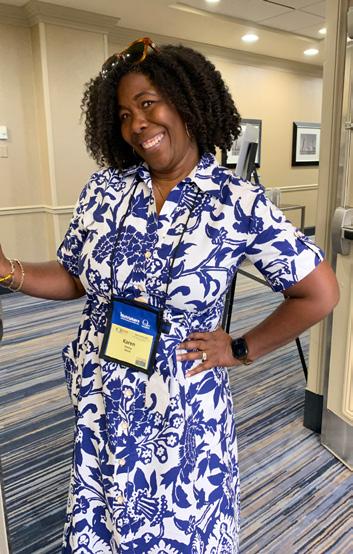
the decision for inclusion or exclusion could be made based on content alone. This means the entire team had zero identifiers by which to know anything about the submitter. The team carefully reviewed each submission and deliberated.
We had many more qualified submissions than available slots. What a great “problem” to have. Our challenge became deciding which to include and balancing why. For those we could not accept at this time, we discussed other ways we could use the topic or submission for Oley—after all, our needs are yearlong, not just conference week.
Emily, one of our DREAM Team members said, “We worked to choose the topics that are relevant right now in our community. But with so many great topics, the planning extended beyond this conference. We looked at the submissions and asked how to have it all. We discussed which topics were best addressed in person, which would work better online, and which would make great written articles. The goal wasn’t to leave topics out, but to find ways to share as much of the excellent information offered in the most accessible ways possible. One weekend just isn’t enough.”
“This team lives day-to-day with nutrition support and supports others doing the same. Therefore, the conversation isn’t about ‘them.’ It’s about ‘us.’” —Emily
page 14
Continued on page 19 >
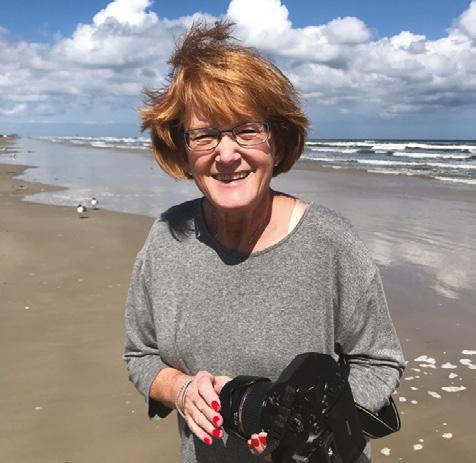
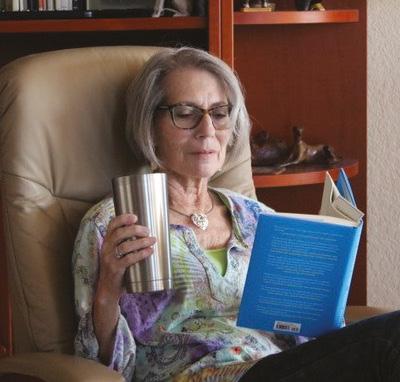
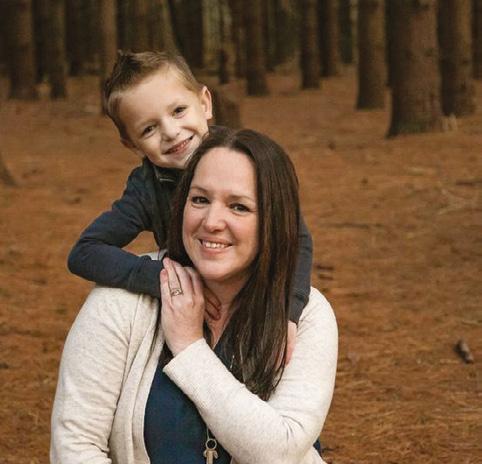
Snapshots from Oley 2023

CLICK HERE OR SCAN THE QR CODE TO TALK TO AN SBS MENTOR LEARN ABOUT HEAR STORIES ASK QUESTIONS personal experiences with SBS and a potential treatment option
NOT ALONE IN THIS JOURNEY TALK DIRECTLY TO SOMEONE
WITH SBS about the SBS journey on how caregivers can provide support SPEAK ONE-ON-ONE ABOUT SBS TO A PATIENT OR CAREGIVER WHO UNDERSTANDS RETA, LIVING WITH SBS SINCE 2012 KAT, LIVING WITH SBS SINCE 1972 US-NON-10113v1.0 08/23 ©2023 Takeda Pharmaceuticals U.S.A., Inc. Not intended for medical advice. Always consult a physician.
YOU’RE
ELSE
PEGGY, LIVING WITH SBS SINCE 2013
REID, LIVING WITH SBS SINCE 2019, WITH HIS MOM, JODI
Digestive Disease National Coalition
Digestive Disease National Coalition
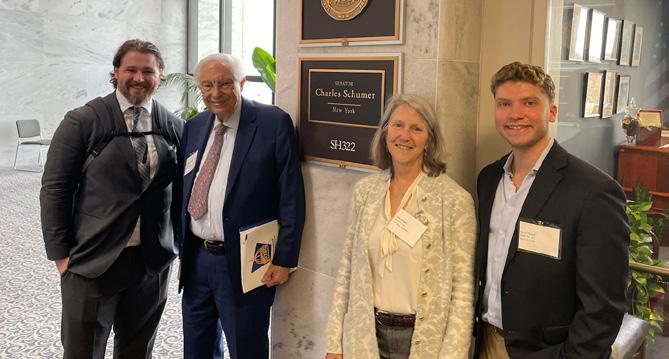
Advocates from across the US joined in Washington, DC, in early March to learn about issues of importance to our community one day, and to visit their state representatives and senators the next, all as part of the Digestive Disease National Coalition (DDNC) Public Policy Forum. On their visits, patients, healthcare professionals, and staff and volunteers from different patient organizations including several Oley Foundation members and Oley staff raised awareness of the barriers to care that patients face, the importance of funding for research, and other issues of interest to the Oley community. ■
page 16 in photos
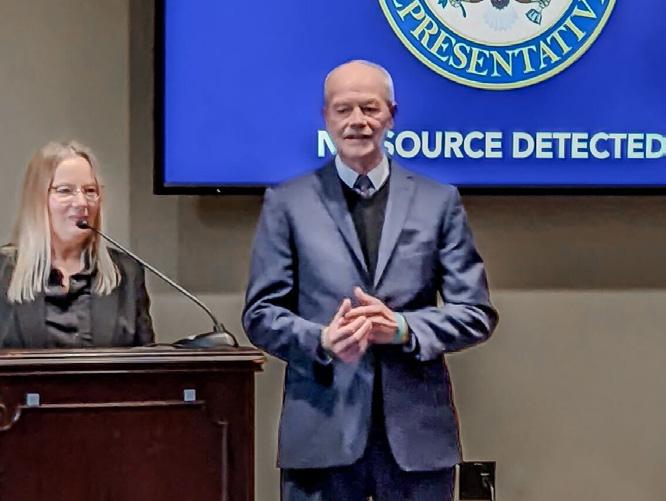
Dale Dirks, longtime executive director of the DDNC who recently retired, was honored with the Lifetime Achievement Award. Dale has been a wonderful mentor to many advocates in his time with the DDNC.
The award was well deserved!
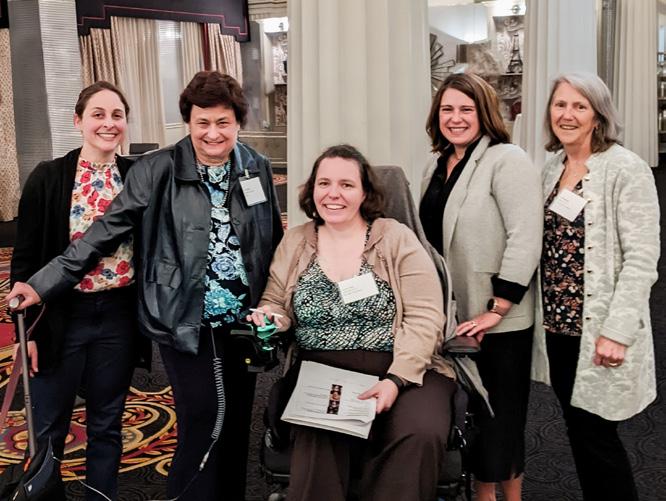
Oley members gathered for a photo after a day of learning about some of the bills before Congress of interest to this community bills that could improve patient access to care and medications, including the Safe Step Act, Medical Nutrition Therapy Act, HELP Copays Act, Medical Nutrition Equity Act as well as research funding. Left to right: Dr. Sharon Wolfson, Lynn Wolfson, Crystal Killian, Jessica Richards, and Lisa Metzger.
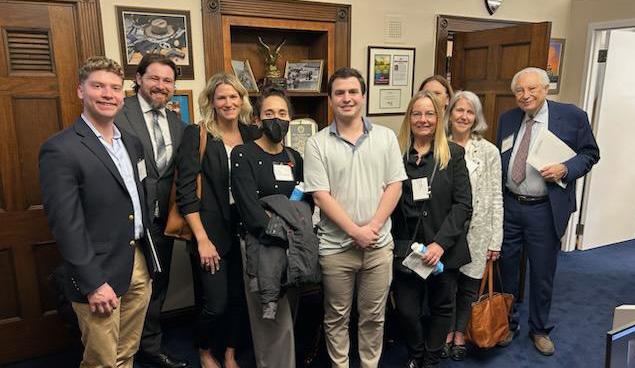
Advocates representing the Oley Foundation, WOCN Society, Global Healthy Living Foundation, United Ostomy Associations of America, National Pancreas Association, Mission: Cure, and Connecting Pieces with Sean McCabe, Legislative Director for Congressman Anthony D’Esposito.
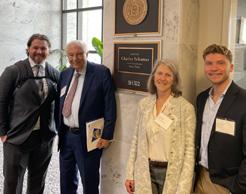
The last visit of the day for advocates from New York was to Senator Charles Schumer’s office. Left to right: Corey Greenblatt of Global Healthy Living Foundation, Dr. Maurice Cerulli, Lisa Metzger from the Oley Foundation, and Daniel Morgan from Mission: Cure.
IN PHOTOS:
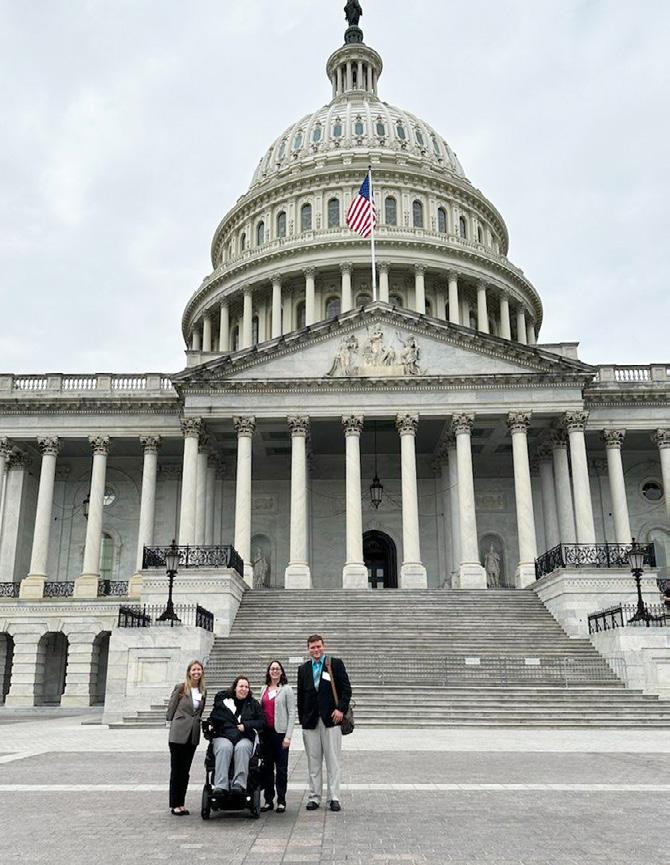
Advocates representing a DDNC team from Maryland, Pennsylvania, and Connecticut took a moment to catch a photo in front of the Capitol. Left to right: Meaghan Petersack, Oley Ambassador Crystal Killian, Dr. Sharon Wolfson, and Jackson Rau.
Oley Events 2024 Calendar
Check Oley.org or other appropriate websites for the most upto-date information on the events listed below.
Ongoing: Applications are being accepted for Oley Tim Weaver Camp Scholarship
March 22: Oley Community Connection: Using Your Story as a Catalyst for Change
March 23–27: Oley participating in National Home Infusion Association conference, Austin, TX
March 26: Oley Webinar, Advocacy 101: Making Your Voice Heard from the Doctor’s Office to Capitol Hill
April 26: Oley Community Connection: Tips, Tricks, Policies and Protocols for Traveling with Nutrition Support
June 29–July 2: Oley 2024 Connected, Tempe, AZ
September 28–October 1: Oley exhibiting at Association for Vascular Access (AVA) conference, Denver, CO
For more information, visit oley.org, email info@oley.org or call (518) 262-5079.
Additional Meetings of Interest:
March 23: Live Your Best Life with GP, G-Pact’s first annual virtual conference
July 25–27: Equity in GI, Color of Gastrointestinal Illnesses (COGI) annual meeting, Atlanta, GA
October 15–17: National Organization for Rare Disorders (NORD) Rare Diseases and Orphan Products Breakthrough Summit, Washington, DC
Don’t Forget to Register!
Learn more about Oley events—including how to register—at oley.org/events. Community Connections and Webinars are offered free of charge.
Community Connections
Using Your Story as a Catalyst for Change
MARCH 22, 2024 • 6:00 PM / 9:00 PM
We recognize that each patient carries a unique narrative of resilience, strength, and triumph over adversity. The goal of this interactive workshop is to empower patients to articulate their stories in a way that has the potential to have a significant impact on a systemic level. By emphasizing the shortcomings in the healthcare system and illustrating the personal implications, we will work together to create narratives that contribute to the larger discussion around changing that system.
Tips, Tricks, Policies & Protocols for Traveling with Nutrition Support
APRIL 26, 2024 • 6:00 PM / 9:00 PM
Travel is a topic we’ve covered a number of times, and that is because we have such a diverse membership population, some of whom have traveled the world and some of whom might be traveling with a tube for the first time.
We’ll use part of the time to share some basic tips and tricks we’ve gathered along the way, but also dive deeper into the difference between domestic and international travel, driving versus flying, pharmacy policies, and other things that may be helpful to know, especially with the 2024 Oley Annual Conference less than two months away!
Webinars
Advocacy 101: Making Your Voice Heard from the Doctor’s Office to Capitol Hill
MARCH 26, 2024 • 11:00 AM
Join Amelia Williams from Young Adult Rare Representatives in a webinar packed with advocacy tools. Learn how to amplify your voice in healthcare settings and influence policy decisions at state and federal levels. Discover different advocacy avenues, hear Amelia’s journey firsthand, and gain practical advice to kickstart your advocacy journey. Don’t miss your chance to ask questions and take the first step towards impactful advocacy.
LifelineLetter, Spring 2024 page 17
thank you
Thank You Corporate Partners!
Please join Oley in thanking the companies that provide unrestricted grants to support the foundation year-round. Learn about our most recent corporate contributors in their own words below. For a complete list of corporate partners, visit Oley.org/PartnerShowcase.
Baxter
Baxter’s parenteral nutrition (PN) solutions, additives, and compounding options give clinicians many opportunities to meet diverse needs. We created our portfolio of products to help address the unique nutrition requirements of each patient. Only Baxter provides an extensive portfolio of devices and solutions that help to overcome PN complexity.

Nutrishare
Nutrishare is the nation’s only home infusion pharmacy specializing exclusively in home TPN (total parenteral nutrition). With over 30 years’ experience, Nutrishare provides one-to-one 24-hour clinical support from a dedicated clinician, nationwide travel accommodation, personalized TPN solutions and educational resources and expertise from our board-certified multidisciplinary nutrition & home TPN specialists.
Notable Individual Contributions
Among the contributions we receive, there are always several dedicated to those who have inspired the donor. We share the list of honorees below. We are grateful for the following gifts received from November 18, 2023, to February 16, 2024.
Memorials
In Memory of Nancy Backinger; Buddy Bond; Patricia Ann Bratica; Gail Brenenstuhl; Judge Joseph C. Bruno; Davria Cohen; Alison Daubert; Ann DeBarbieri; Charlie Eidem; Lauren Freeman; Irmagail Gordon; Linda Gravenstein; Bruce Groeber; Ruth Gyurko; Marjorie and Arthur Harshbarger; Alicia Hoelle; Joyce Hydorn; Kerry Jackson Joice; Larry Joyner; Dr. Darlene Kelly; Jack Leibee; Janet Lewis; Ansley McCormick; Peter Jospeh Michalski; Jonathan Miller; Francis J. Murray; Clarence Oldenberg; Eleanor Orkis; Outstanding Home Nutrition Support Dietitians: Gisela Barnadas, Melinda Parker and Pat Anthony; Mary Patnode; Gary Rieck; Kenneth Rosenhek; Bobbiejo Winfrey
Tributes
In Honor of Mandy Allen; Rebecca Appel, Marro and Daniel Appel; Joan Bishop; Ray Cimms; Cincinnati SBS Group; Tiffany Dodd; Janelle Flaherty; Allison Hillen’s birthday; Lyn Howard, MD; Swapna Kakani; Alicia Kearns; Phil Kellerman; Barb Klingler; Aidan Koncius; Phillip Lindensmith; Alexander Mackay; John Mahalchak; Kate and Jack Marschilok’s birthdays; Dr. Ann Michalek; Jeff Nemeth; the Oley Foundation, “for all you do to support us in our daughter’s journey”; Joanne Platt; Aidan Rafe; Luke Vohsing; Tim Weaver; Lynn Wolfson
Matching Gifts
Cisco FM Global
Thank you for all gifts and the kind comments we receive throughout the year. Your support overwhelms us and continues to be a source of inspiration.
page 18
LumaClean Emerging Innovator Partnership
One of the priorities outlined in the Oley Foundation’s 2023–2025 Strategic Initiatives is to support the patient-centered evolution of nutrition therapy to improve care and enable patients to live their best life possible. Toward that goal, in 2023 we launched the Emerging Innovator level. To learn more about the Emerging Innovator level, email info@oley.org.
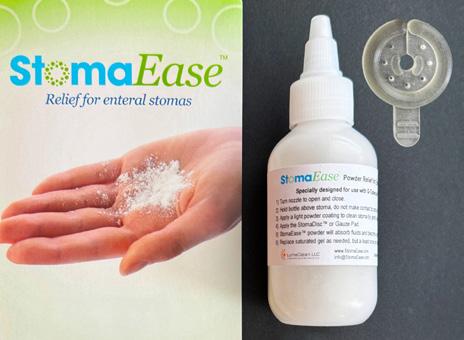
Meet our newest Emerging Innovator partner, LumaClean LumaClean, LLC is an innovative solution company looking for new product ideas and collaboration opportunities with others in a mutually rewarding manner. If you have an idea or simply a “pain point” where you wish someone could come up with a solution, or a “better-way,” you can contact them at info@encleantube.com.
As I listened to the careful deliberation of each submission and topic, I was in awe of our community. One of the younger members, for example, was asking if we felt like we’d included enough for those of our community who are on the older side, and it made us reevaluate that. He was truly looking out for the community as a whole.
While we cannot ever accommodate everything and everyone, at the end, the DREAM Team believes we have selected a well-balanced program that takes into account those who are new to therapy and the more experienced, those on enteral and parenteral nutrition across the lifespan, and a variety of learning styles.
This year we are also trying something new. Through a separate process, we have offered sponsored sessions

on a first-come, first-served basis to our corporate partners. We recognize our partners are a vital part of the community and have valuable knowledge, resources and expertise to share with us. Therefore, we are happy to share we will have six sponsored sessions.
We look forward to sharing the entire program with you soon. If you would like to submit topics or ideas or submit to speak, keep an eye out for the next round of submissions. We would love to consider your proposal for Oley 2025.
All of our spots for the 2025 DREAM Team have been filled. We will share the criteria and volunteer application as spots become available. We hope you will consider applying at that time! ■
Oley Annual Conference: CONNECTED JUNE 29–JULY 2, 2024 • TEMPE, ARIZONA
The Making of a Conference, continued from page 14
Corporate Partners
 A home nutrition therapy community and advocacy group
