2026 Nominee Bios
Cindy Braden
Dr.Vincent “Skip” Ross
Bill Stone
Carl Sawyer
Justin Sportsmedicine Team
Cindy Braden
Dr.Vincent “Skip” Ross
Bill Stone
Carl Sawyer
Justin Sportsmedicine Team
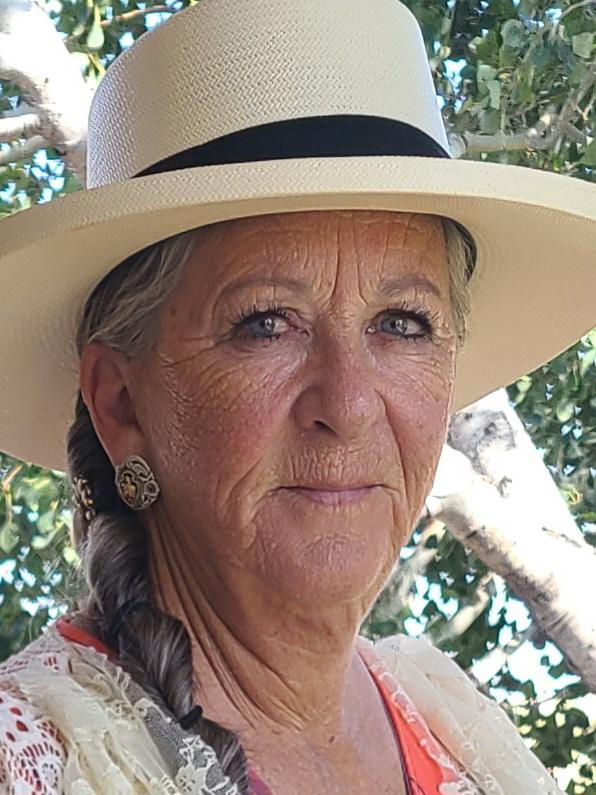
Cindy’s connection to Cheyenne Frontier Days™ runs deep, with family roots in the celebration dating back to the early 1930s. Since beginning her own volunteer journey in 1982, Cindy has dedicated decades of service to CFD, contributing thousands of volunteer hours across numerous committees while helping pave the way for women in leadership roles.
Historic Milestones
1998: Contract Acts First Female Volunteer of the Year
2009: First female elected to the HEELS from the Rodeo Committee
2016: First female officer of the HEELS
2019: First female President of the HEELS
Cindy began her CFD involvement as a member of the Contract Acts Committee and was recognized as Contract Acts’ First Female Volunteer of the Year in 1998. Over the years, Cindy embraced a wide range of hands-on roles driven by her love of the arena and her commitment to safety and excellence. She opened gates for Chuck Wagon races, assisted with Junior Barrel Racing, and rode horseback to help rescue competitors when needed. Her skill, calm leadership, and dedication earned her a position on the Mounted Rescue Team, where she played a critical role
clearing loose horses from the track during the Chuck Wagon races and assisting fellow teammates.
In 1998, when the Racing Committee transitioned into the Rodeo Committee, Cindy was appointed Junior Barrel Racing Crew Chief, a position she held with distinction until 2015. Each year following the final day of Junior Barrel Racing, she coordinated an awards presentation led by the Rodeo Chairman, ensuring every young competitor received a participation buckle and well-deserved recognition.
From 2016 to the present, Cindy has continued to make history as a member of the HEELs. She became the first woman elected as an officer, serving successively as Rundown HEEL (Secretary/Treasurer), Rubber HEEL (Vice President), and Leather HEEL (President). In 2019, Cindy was elected the first female President of the HEELs, leading the organization through the unprecedented challenges of the COVID pandemic with steady leadership and vision.
During her tenure as Leather HEEL, Cindy oversaw workday projects supporting new HEELs classes and led impactful fundraising efforts. Under her leadership, the HEELs
completed washed the east side grandstand during COVID and sold raffle tickets for a limited-edition CFD belt buckle, raising $7,000 in donations benefiting the CFD Foundation for the Chris LeDoux bronze.
In 2021, Cindy was appointed Co-Director of the CFD Youth Volunteer Program. Under her leadership, the program grew from 11 youth participants to more than 70 and continues to expand, creating meaningful opportunities for the next generation to engage with Cheyenne Frontier Days™.
Today, Cindy, along with current Leather HEEL Craig Fitzkee, is working with the CFD Old West Museum to collect historic HEEL badges in order to create a future exhibit honoring the HEELs and their legacy.
Throughout her career, Cindy has volunteered with numerous CFD committees, including the CFD Golf Committee, Rodeo Steering Committee, RRR Committee, CFD Hall of Fame Steering Committee, Carriage Coordination Committee, and CFD Workdays Committee.
In addition to her volunteer service, Cindy brings her creative talents to CFD through the creation of custom cowboy boot handbags. Each year, she donates multiple purses to nonprofit organizations such as the CFD Crisis Fund and the CFD Old West Museum to help raise critical funds.
Cindy’s story is one of service, leadership, and unwavering dedication an enduring example of the spirit, tradition, and volunteer excellence that define Cheyenne Frontier Days™.
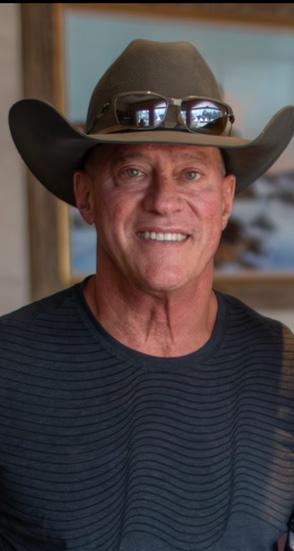
Dr. Ross has been a trusted member of Cheyenne Frontier Days™ since 1986, beginning his service as an Arena Physician and later assuming the role of CFD Medical Director in 2018. For nearly four decades, he has served at the intersection of medicine, athletics, and western heritage, providing exceptional care in one of the most demanding medical environments in sports.
His father was a member of the Cheyenne Sheriff Posse, and Dr. Ross remembers, as a child, riding in the rodeo and watching from the fence. He has also been a member of the Grounds Committee for 35 years and became a HEEL in 2005.
Unlike traditional clinical settings, the rodeo arena presents constant unpredictable highspeed events: powerful animals, extreme weather conditions, and athletes who routinely test the limits of human endurance. Dr. Ross embraced these challenges fully, understanding that his preparation, judgment, and presence were critical not only in moments of injury, but in fostering confidence and trust among contestants, organizers, and spectators alike.
Dr. Ross has worked tirelessly to improve the medical care and response from 1989 in treating Lane Frost, culminating to the miraculous survival of Dylan Terro last summer with a similar catastrophic injury.
Throughout his nearly forty years of service, Dr. Ross worked seamlessly with emergency medical teams, athletic trainers, event officials, and rodeo personnel to ensure care was immediate, coordinated, and of the highest quality. His ability to assess injuries quickly, make sound medical decisions under pressure, and balance athlete safety with competitive integrity earned him respect throughout the rodeo community.
Dr. Ross’s contributions extended far beyond injury response. As both Arena Physician and Medical Director, he played a vital role in pre-event planning, safety protocols, and overall medical readiness. His leadership helped ensure that CFD consistently met and often exceeded the expectations of professional rodeo organizations and the elite contestants who traveled across the nation and around the world to compete in Cheyenne.
Recognizing the toughness and determination inherent in rodeo athletes, he approached each competitor with respect, empathy, and honesty, earning their trust while never compromising long-term health or safety. His decisions are guided by sound medical judgment and an unwavering senseof responsibility.
Dr. Ross’s calm demeanor in high-stress situations became a hallmark of his service. In moments when injuries commanded the attention of the crowd and the intensity of emotions peaked, he remained composed and focused. By fostering collaboration and mutual respect among emergency responders, nurses, athletic trainers, and support staff, he elevated the entire medical operation in the arena and strengthened the safety net protecting everyone involved in the event.
Under his guidance, CFD remained aligned with modern medical standards while continuing to honor the rugged traditions that define rodeo.
Dr. Ross earned his medical degree from Creighton University in Omaha and completed his residency training at the University of Wyoming. He has been board-certified by the American Board of Family Medicine and holds a Certificate of Added Qualifications in Sports Medicine. In 1992, he founded the Smart Sports Medicine Center in Cheyenne, through which he continues to care for patients across northern Colorado, Wyoming, and western Nebraska, including the cowboys and cowgirls of CFD and numerous other rodeo events. Since 2008, he has also served as a sports medicine physician with Orthopedic & Spine Center of the Rockies.
In addition to his CFD service, Dr. Ross currently serves as a team physician for the Colorado Eagles and as an associate team physician for Professional Bull Riders. He is also one of the Justin Sportsmedicine team physicians. He served as Team Physician for the Professional Rough Stock Series from 2014 to 2017, was Medical Director and Team Physician for Bull Riders Only where he was one of the six founding members and served as Team Physician for the U.S. Wrestling Team in Cali, Colombia, in 1992. He was also one of the Team Physicians for the ASP Pro Surfing Series from 1999 to 2003. Locally, he served as Team Physician for East High School from 1986 to 2018 and South High School from 2012 to 2018.
Dr. Ross has been married to his wife, Sasha, for 30 years. They have two daughters, Kylie and Macy. Kylie and her husband, Michael, have a seven-month-old son, Stetson.
Dr. Ross’s legacy is one of professionalism, leadership, and unwavering dedication—an enduring contribution to the safety, integrity, and tradition of CFD.
Bill Stone began his lifelong association with Cheyenne Frontier Days™ in 1956, when he worked as a concessionaire selling popcorn and soda pop. He would eventually embark on a journey of service that would span more than six decades. From hands-on volunteer work to influential leadership roles, Bill’s legacy is defined by dedication, integrity, and lasting relationships that helped shape the spirit of CFD.
Bill has lived in Cheyenne since 1949. At the age of 14, he joined the Ki-Ann Club, a local children’s organization that emphasized the appreciation of American Indian culture. He fell in love with the Sioux and other nations, a passion that has endured his entire life.
Bill has been involved with iconic Pancake Breakfast since 1965, where he flipped hotcakes alongside his father in-law, Richard “Hutch” Hutchison the designer and creator of the portable batter-mixing machine, an innovative piece of equipment still in use at the breakfasts today. It was while he was working the breakfasts that Bill met members of the Indians Committee and respected their role from the very start. He was asked to join the Indians Committee in 1970 and threw himself wholeheartedly into his new role.
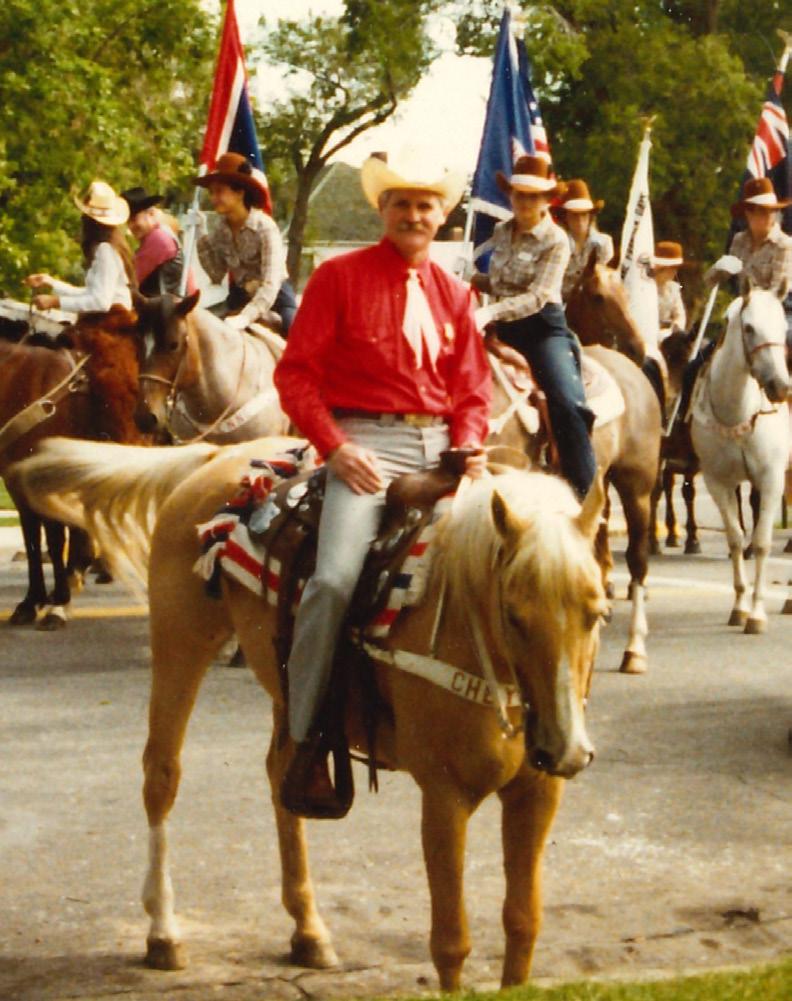
Deeply committed to honoring American Indian culture and traditions, Bill believed the Indian Village should be a place of respect, authenticity, education, and cultural pride for both participants and visitors. His dedication went far beyond volunteer hours—it was personal, purposeful, and unwavering. He was recognized for this dedication when he was inducted into the HEELs in 1975.
Known for his reliability, integrity, and genuine respect for Native traditions, Bill helped foster a welcoming, organized environment that truly reflected the values of CFD. In 1979, Bill was selected as Indians Committee Chair. During this time, he worked tirelessly to strengthen relationships between CFD and Native American families, artisans, performers, and educators. Bill recognized a troubling issue: spectators often left their seats during Indian dancing performances to get concessions or go to the restroom. He found this deeply embarrassing—not only for the performers, but for what it suggested about CFD’s understanding and respect for Native cultures. Additionally, he was upset about the long-term tradition of having the performers appear downtown and dance for donations. Determined to create change, Bill led efforts to return Indian dancing performances to a
place of honor and visibility on the Frontier Days grounds where they belonged. The Indian Village, at that time, was limited to a vast unkempt dirt lot surrounded by a wooden stockade. To help improve the situation, Bill planted and watered grass where the performers would dance and built log bleachers. Hutch helped him put in the first sound system for the performances.
In 1980, Bill formally requested greater inclusion and engagement with regional American Indian leaders, yet received no response. Alarmed that no nation in the area was willing to send dancers to CFD that year, he was at a loss on how to proceed. In December, Bill expressed his concerns to his close friend Gene Love while they were enroute to the Denver National Stock Show. Gene fortuitously had a flyer about Indian powwows in his back seat featuring chiefs who led groups of tribal dancers. Gene strongly recommended one man, Billy Evans Hunting Horse of Oklahoma, a Kiowa chief. This chance moment opened the door to meaningful connections.
Soon after, Bill connected with Billy Evans Hunting Horse and invited him to Cheyenne. The two men formed a quick bond and Hunting Horse agreed to take the contract if Bill could promise that the deep snow in the Indian Village would be gone by Frontier Days. It was not a hard promise to keep and together, the men laid the foundation for respectful, collaborative relationships that would grow into lifelong friendships. These partnerships significantly elevated the representation of American Indians at CFD and marked a turning point for the Indian Village.
Under Bill’s leadership, and through direct collaboration with Southern Plains tribes, the Indian Village expanded to include American Indian food and craft vendors, flute players, improved landscaping, enhanced ambiance, and the addition of bleachers. Attendance soared, and the Indian Village became a centerpiece of cultural pride and education at CFD.
When Bill Stone concluded his Indians Committee Chairmanship in 1981, he continued his extensive contributions to CFD. He served on the CFD Old West Museum Board of Directors from 1981 to 1983, became the host for the USAF Thunderbirds in 1982 and later served for 25 years as the sponsor host for Frontier Oil. Concurrently, he became a Parade Announcer in the 1980s—a role he proudly continues today alongside Alan Johnson.
Bill’s commitment to service extends beyond Cheyenne Frontier Days™. He has given back to the broader community as an active member of the Elks, Kiwanis, and the Ki-Ann Indian Club.
Through more than 60 years of unwavering service, Bill Stone has left an indelible mark on CFD. His leadership, vision, and deep respect for people and culture have helped shape CFD into a more inclusive, authentic, and meaningful celebration.
Carl Sawyer’s journey to Cheyenne began by chance, but would become a lifetime of dedication to Cheyenne Frontier Days™ and the Western way of life. As a young man working as a taxi driver in Oklahoma City, Carl picked up a passenger named C.B. Irwin. Fate intervened when Irwin realized he knew Carl’s family, and on the final day of the trip he invited Carl to head west with him. Carl accepted.
Carl traveled by cattle car from Oklahoma City to Minneapolis, where Irwin was producing one of his Wild West shows, and eventually made his way to Wyoming and the Y6 Ranch. There, Carl worked for Irwin as a cowboy and, most importantly, as his driver. The Y6 cowboys stayed in the upper floor of the Y6 barn on Randall Avenue during CFD and were often called upon to fill events at CFD when entries were short. Carl recalled working every event at CFD over his career except bull riding. When a Y6 cowboy placed, the reward was often nothing more than a plate of beans.
While at the Y6, Carl regularly hauled Native American performers and their belongings from South Dakota to Frontier Park for CFD and returned them home after the celebration. Through this work, he formed lasting friendships with several Native American families that he valued throughout his life.
After leaving the Y6 Ranch, Carl competed regularly at CFD in saddle bronc riding, calf roping, bulldogging, and steer roping through the mid-1970s. During those years, Carl and his wife Wilda often found their young daughter, Carlene, had wandered off during CFD, but they always knew she could be safely found at the
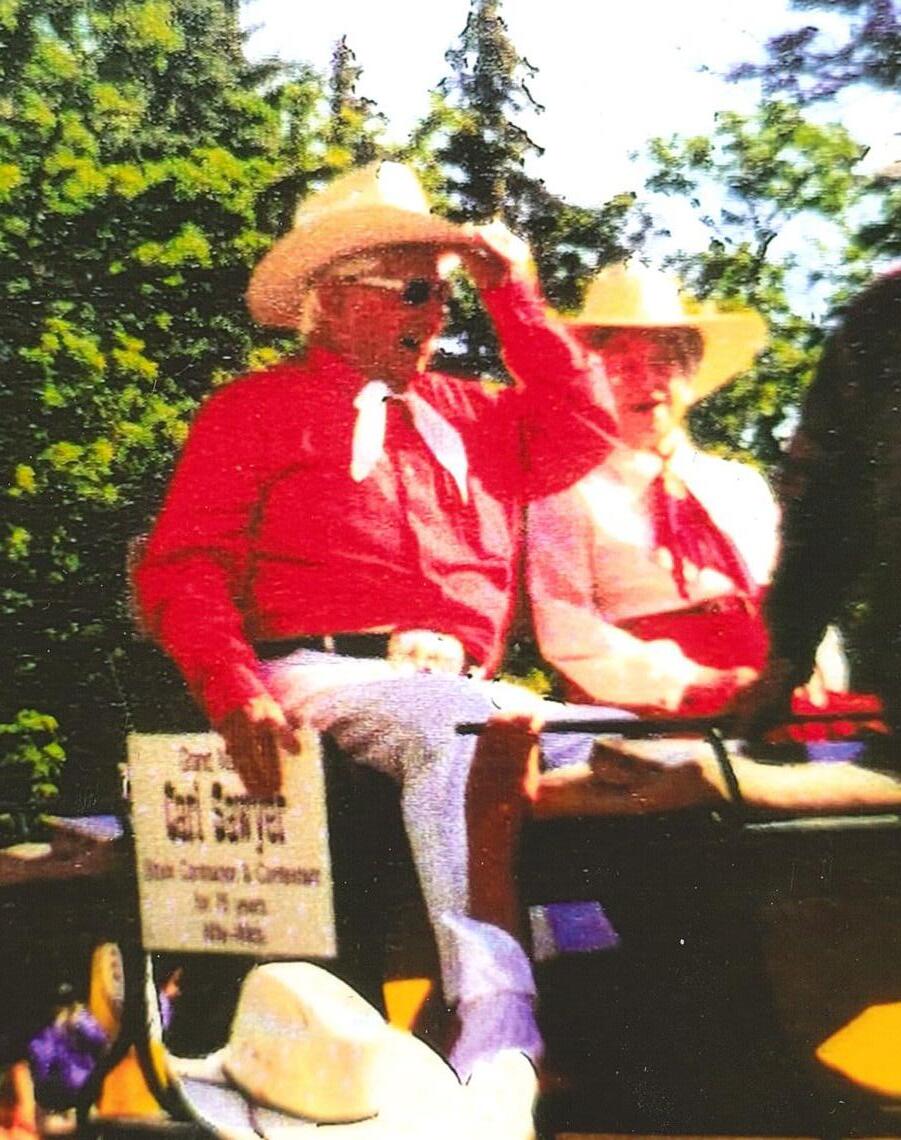
Indian Village, in the company of Princess Blue Water, who would even make Carlene beaded moccasins.
In the early 1950s, late 1960s, and early 1970s, Carl was selected as stock contractor for the steers used at CFD. He often shared stories of driving stock into Cheyenne for CFD. One memorable year in the early 1970s, the steers arrived by truck, were unloaded north of town off Horse Creek Road, and then driven down Yellowstone Road into Frontier Park.
In the late 1960s, Carl invited a good friend from Oklahoma, Dan Taylor, to help as chute boss at Chute 9, drawing and sorting steers for competition. This marked the beginning of Dan Taylor’s long and meaningful association with CFD. Carl even stepped in to flag the steer roping one year when Everette Shaw was forced to step away due to health issues.
Well into the late 1980s, Carl occasionally drove carriages in the CFD parades for George and Paul Bruegman. He and Wilda also proudly served as the 2000 Grand Marshals of the CFD Parade.
For many years, Carl was a familiar presence at Chute 9, seated beside Dan Taylor. He never missed a final Sunday performance and proudly claimed to have attended every Cheyenne Frontier Days™ from 1924 through 2003. The only final he missed was in 2004, when injuries from an ATV accident left him hospitalized. Carl passed away on July 30, 2004 at the age of 96, watching that year’s finals, as his family said, with a bird’s-eye view.
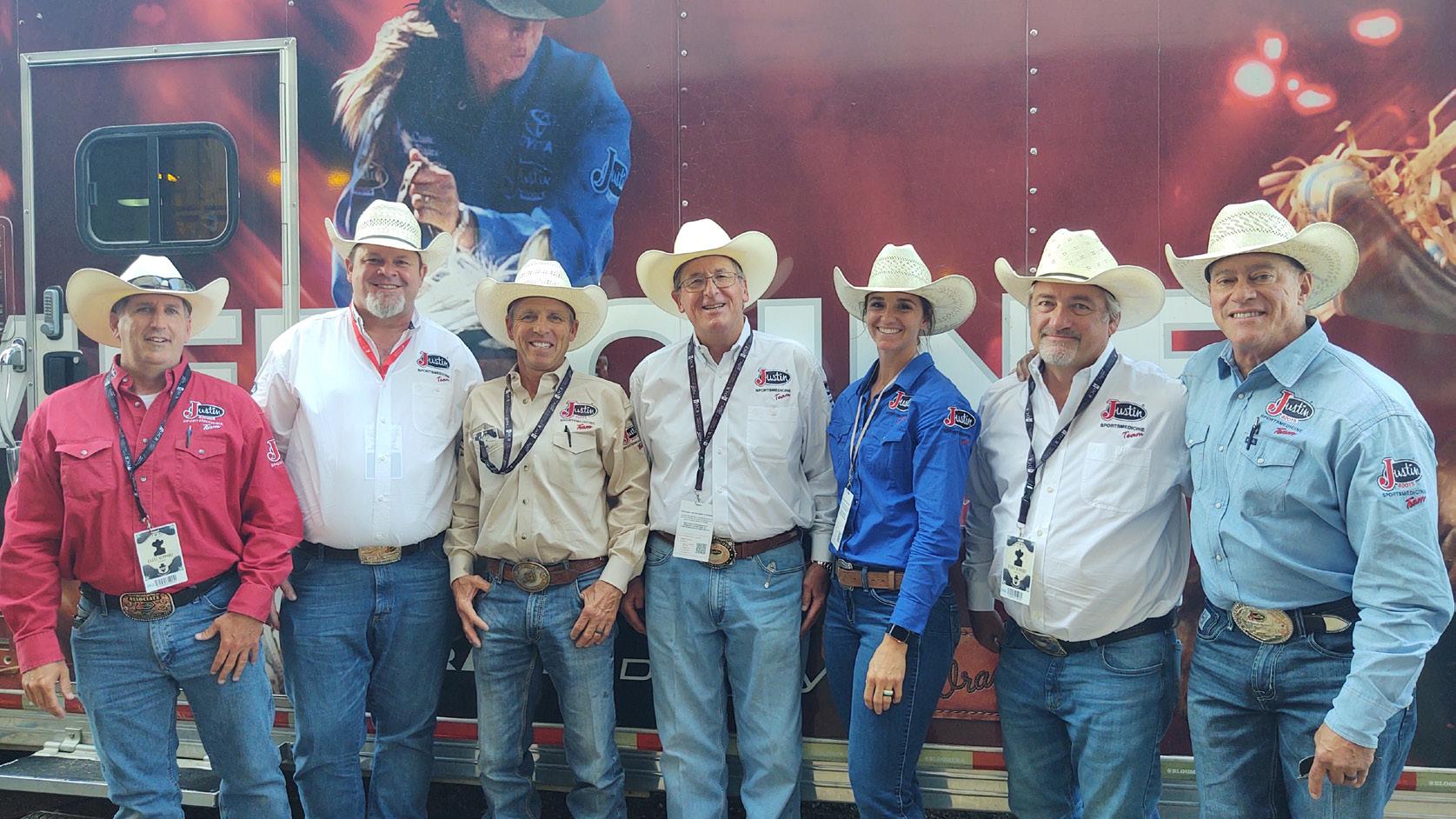
Since 1981, the Justin Sportsmedicine Team (JST) has been an indispensable part of Cheyenne Frontier Days™ (CFD). Funded by Justin Boot Company, JST provides professional rodeo athletes with immediate medical care, injury prevention, rehabilitation, and logistical support. For more than four decades, their custom-built medical trailers equipped with modern technology and supplies have been a steady and reassuring presence behind the bucking chutes.
The impact of JST extends far beyond routine care. They are often the first responders when injuries occur in the arena, delivering critical assistance at a moment’s notice. Their expertise and dedication enable cowboys and cowgirls to manage injuries and continue competing at the highest level. This is an invaluable service in a sport where many athletes lack adequate insurance coverage. The comfort, confidence, and security their presence provides to both contestants and CFD cannot be overstated.
The partnership between CFD and JST began in the early 1980s, as the program was establishing itself within professional rodeo. From the onset, the team focused on providing immediate on-site care, treating chronic injuries that limited full participation, and collecting data that led to innovations in athlete safety. These efforts have helped keep competitors healthier,
safer, and able to perform at an elite level. Many athletes arrive in Cheyenne carrying injuries from previous rodeos; without the care and expertise of JST and its staff, many would be unable to compete or succeed.
In addition to injury treatment and research, the team is deeply committed to education and injury prevention, positively impacting the sport of rodeo by fostering a safer and more supportive environment. The program relies heavily on volunteer athletic trainers, physical therapists, and physicians who are passionate about rodeo and devoted to the athletes. While in Cheyenne, they also mentor local sports therapy students, further extending their influence and commitment to the future of sports medicine and rodeo care.
Over the years, JST has worked diligently to build lasting relationships with CFD committees and staff, ensuring their services align with and support the ideals and storied history of CFD. Their commitment has been unwavering, serving more than 45 years.
The contributions of JST extend far beyond the arena. Their partnership with CFD exemplifies a shared dedication to preserving the legacy and spirit of rodeo while prioritizing the health and longevity of its competitors.
The legacy of JST’s care, innovation, and partnership has left an enduring mark on CFD and the rodeo community.
Reminder: Ballots must be received by March 18, 2026
Ballots received after this date WILL NOT BE COUNTED