THE PEOPLE’S CONTROL ROOM Disrupting the Digital Panopticon In Summary. 218028982 Olasumbo Temitope Olaniyi U14. M2 Final Portfolio

MODE 2: FOCUS ‘‘stay focused on the mission’’ - Naveen Jain This entails the documentation of new ways of seeing, interpreting and analysing issues of risk that make up the phenomena of surveillance to create clear definitions.
UNIT FRAMING STATEMENT: ROGUE ECONOMIES: Concerning Risk Housed within two year-long modules, MAAP19X and MAMD19X, this combined first and second year Master’s level course supports original and critical thinking in the field of architecture and urbanism. It seeks to cultivate a high degree of professionalism, independent research and creative speculation.“The term ‘post-traumatic’ refers to the evidence of the aftermath – the remains of an event that are missing. The spaces around this blind spot record the impression of the event like a scar. How does the system make sense of an experience that exceeds its capacity for integration? Since recognition is only ever retroactive, the process of reintegrating the event, of sense-making, begins when we start to sift through the evidence, to build a plausible story, to construct a narrative and develop the coordinates of a new experiential landscape. Slowly repetition returns to weave its supportive tissue, and new futures come to replace old ones”.
- Lahoud, 2010: 5 Rogue Economies are subversive economic practices, tactics and transactions that shape contemporary cities and, by extension, architectural practice. We believe these practices are a rich and, as yet, untapped source of material for radical and responsive architectural speculation.
Final Year Portfolio Summary Document October Olasumbo2019Temitope Olaniyi Supervisor:218028982 Thiresh Govender Co-Supervisor: Sarah de Villiers & Adam Osman Unit Graduate14 School of Architecture Faculty of Art, Design and Architecture University of Johannesburg Final Portfolio Review - Summary Docket THE PEOPLE’S CONTROL ROOM; Disrupting the digital pan-opticon 32
In Unit 14, we are interested in architecture’s capacity to transform risk towards more favorable odds, and we seek to uncover what the architecture of risk could be in a context of great uncertainty and flux. The Unit’s mission is to investigate wide-ranging situations of social, spatial, financial, environmental and digital risk in order to draw out the operations and tactics that define it, at times pairing it with a suitable architectural proposition that can map and mine the danger-filled dialectic of risk and opportunity.
MODE 1: SCAN ‘‘the more you search, the more you find’’ - Blue Balliett This is a translation and documentation of the act of scanning to discover issues concerning risk in the context of Johannesburg
MODE 5: AMBUSH ‘‘design is a response’’ - George Nelson This documents studied architectural archetypes of surveillance as a response (design intervention) that can adopt a technique of surprise in its manifestation seeking to consolidate the ‘observer’ and the ‘observed’.
MODE 3: OBSERVE ‘‘to acquire wisdom, one must observe’’- Marilyn von Savant This documents the knowledge and information gathered from all inquiries embarked on in the context of the broader Johannesburg that registered the significance, prevalence and presence of (digital) surveillance.
‘Post-traumatic’ urban conditions (such as Johannesburg) are fertile ground for investigating these emergent ‘rogue economies’, full of visceral and raw conditions that test the traditional limits of architecture. Unit 14 is interested in revealing the inner workings and spatial effects of economic practices that are, by their very nature, clandestine and shadowy, often difficult to identify. Innovative ways of seeing and documenting are required. In Unit 14, we co-construct spatial literacy through forensic drawing methods. We use maps, catalogues and cartographies to divine and tap into the logics at play. Out of these messy, emergent configurations, uncertainties proliferate – legal, sustainable and ethical. Here, risk is not simply a consequence of emergent, post-traumatic urbanism, but also the inevitable by-product of our deliberate intercourse with uncertainty. We see possibilities in uncertainty; we thrive on unpredictable and uncontrollable outcomes, and we encourage students to embrace risk-taking as an inevitable consequence of action. Architecture plays an invigorating role in reading, informing and manipulating the nature of risk, where risk is embraced as a productive mechanism for exploring and inventing a cacophony of architectural languages.
CONTENTS
MODE 4: BL ND-SP T ‘‘there is always a blind-spot’’ - Blind-spot Season 3 This documents the openings in the boundaries of surveillance drawn from the control room which is a typology of pan-opticism to gather intelligence; the agents, architecture and ecosystem being the originators of the blind-spots.
ABSTRACT: THE PEOPLE’S CONTROL ROOM;
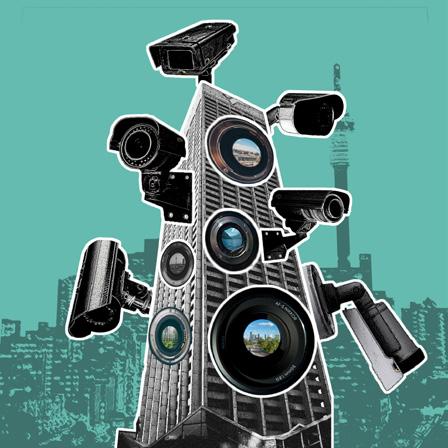
SURVEILLANCE SOCIETY => ‘‘carlton center as gauteng’s digital pan-opticon’’ THE PEOPLE’S CONTROL ROOM; Disrupting the digital pan-opticon
happened in 2017, the system fails and gives way to private initiatives of control – where there is more compromised legislation guiding its
Disrupting the digital pan-opticon ‘‘He who is subjected to a field of visibility and who knows it, assumes responsibility for the constraints of power; he makes them play spontaneously upon himself; he inscribes in himself the power relation in which he simultaneously plays both roles; he becomes the principle of his own subjection’’ - Michel Foucault
In a city like Johannesburg – characterised by fortified enclaves and increased privatisation of the public realm, an everyday journey by default becomes an apparatus for great control (Foucault:1975). In many cases, one is often surveyed and made suspect without consent or review. This imposition of scrutiny and judgment is seen as an infringement and at odds with the aspirational freedoms of South Africa’s Constitution, yet is relative to the extreme levels of public fear and insecurity on the streets. This has caused imbalance in the state of security as suburbs, streets and systems have become enclaves with controlled access and exit as ‘’there is really no decision-making involved, you have no freedom to vary the route and no real control other than to stop or to go’’ (Bartlett: 2018).
Looking is an everyday activity common to most of us, but seeing becomes a function of the generic biological piece(the eye which is transformed into a mobile object in the sense that it essentially takes the visible world on a journey as wherever it works (Berger: 1972). The contemporary city has distorted this notion of looking through the coupling of this phenomena with surveillance. The introduction of surveillance CCTV to combat rampant crime becomes a powerful proxy for the human being. It creates a unidirectional relationship allowing the viewer to be removed from the site, swooping flat data to be analyzed and stored for eternity. However, these technological advancements may be shown to be somewhat blind to nuance – that of sound, body language, facial expression, space and human relations remains partly inaccessible to this gaze. What are the consequences of these gaps and nuances when it comes to security, safety and power? What kind of power relations are created? What are the spatial gains and losses that come with such powerful gazes? How are power and rights granted in this complex system of control and paranoia? The research will focus on analogue and digital means of surveillance, resultant control and social contract manifestations in space. This will take the form of ethnographic drawings and forensic investigations into communications and spatial consequences. Through the drawings a series of socio-spatial contracts will be developed, in the form of a lexicon, through which new architectural formations that disturb, disorientate, re-organize and recalibrate the power imbalance in volatile Thespaces.centralized CCTV Control room is the contemporary digital pan-opticon. It is the invisible all-seeing room through which we control and manage our risk. It is a system of surveillance that infringes on fundamental rights of privacy and left to without a robust social contract is prone to abuse. The Control Room has established architectural convention but its power is dependent on who controls it. In Johannesburg a private company is contracted to administer the CCTV control room. However, when the City cannot sustain this contract as
Final Portfolio Review - Summary Docket
Project aims to speculate a set of architectural strategies and for the siting, programming and operations of a People’s Control Room. This is a new form of control center that takes cognisance of privacy, access, rights, accountability, contemporary technologies and social contracts when it comes to managing risk – and disrupts the normative conception of a pan-opticon. The proposed typologies of control room, aims to infiltrate the system, replicate, gather information, conceal itself and adjust to the host systems. Thus, these transformative architectures are viewed as a political machine rather than as a building, designed to be collapsible in the sense that it can be removed and placed elsewhere, as political boxes traveling in and around the city. It is offered that the normal ‘custodians of sight’ are democratised allowing the layman transparency and access to the inner working of spaces in which political decisions are made by a powerful few. Through extension, the design of these archetypes of People’s Control Room aims to create new forms of public spaces based on a more democratised surveillance system.
54
Theoperation.MajorDesign

Final Portfolio Review - Summary Docket 6
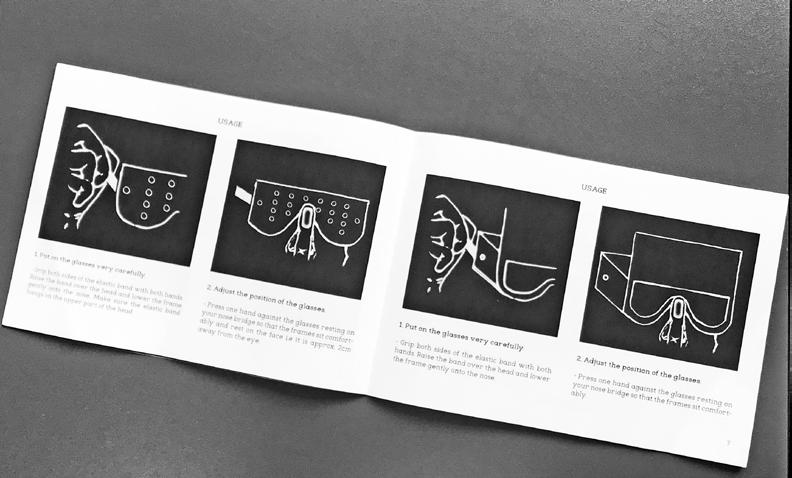
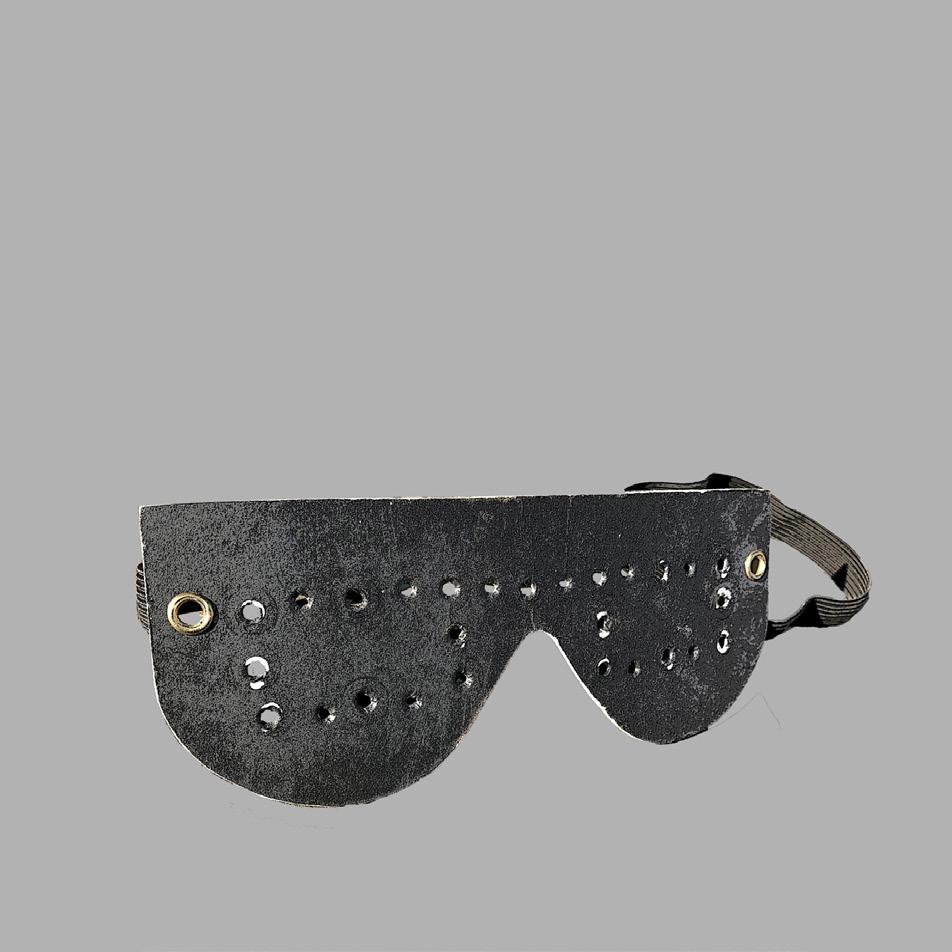
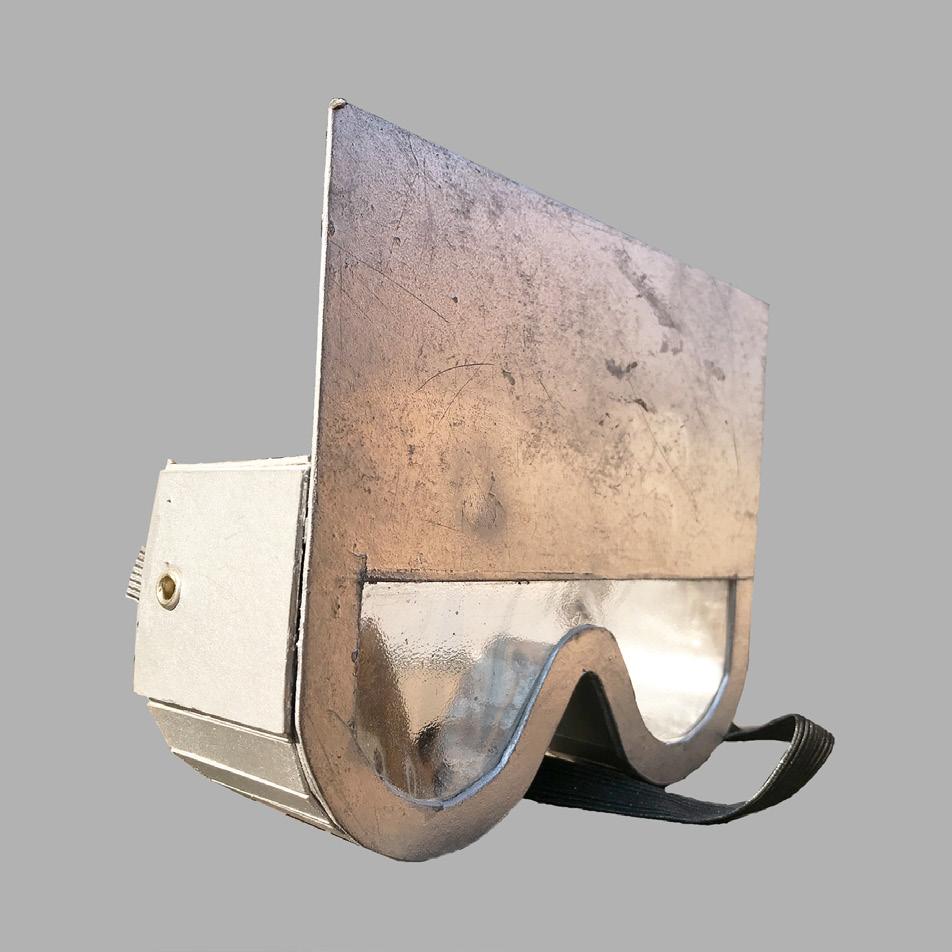
MODE 2 => FOCUS THE VISUAL AID Captures and unravels visual space in the presence of varying mediums and advantages The visual aid is a handmade instrument that acts as a calibrator to capture and unravel visual politics in the presence of varying mediums, subjects and locations(John Berger, 1972). This experimentation thus breeds thoughts such as ‘what is the possibility of going into an architecture that allows one or affords one the opportunity to see both ways in all ramifications?’ NB; Visual aid construction and use compiled into a handbook VISUAL AID => ‘‘pin-hole visual aid’’ VISUAL AID HAND-BOOK => ‘‘documents the construction and use of the visual aid’’ Final Portfolio Review - Summary Docket THE PEOPLE’S CONTROL ROOM; Disrupting the digital pan-opticon 98 VISUAL AID => ‘‘blinker visual aid’’
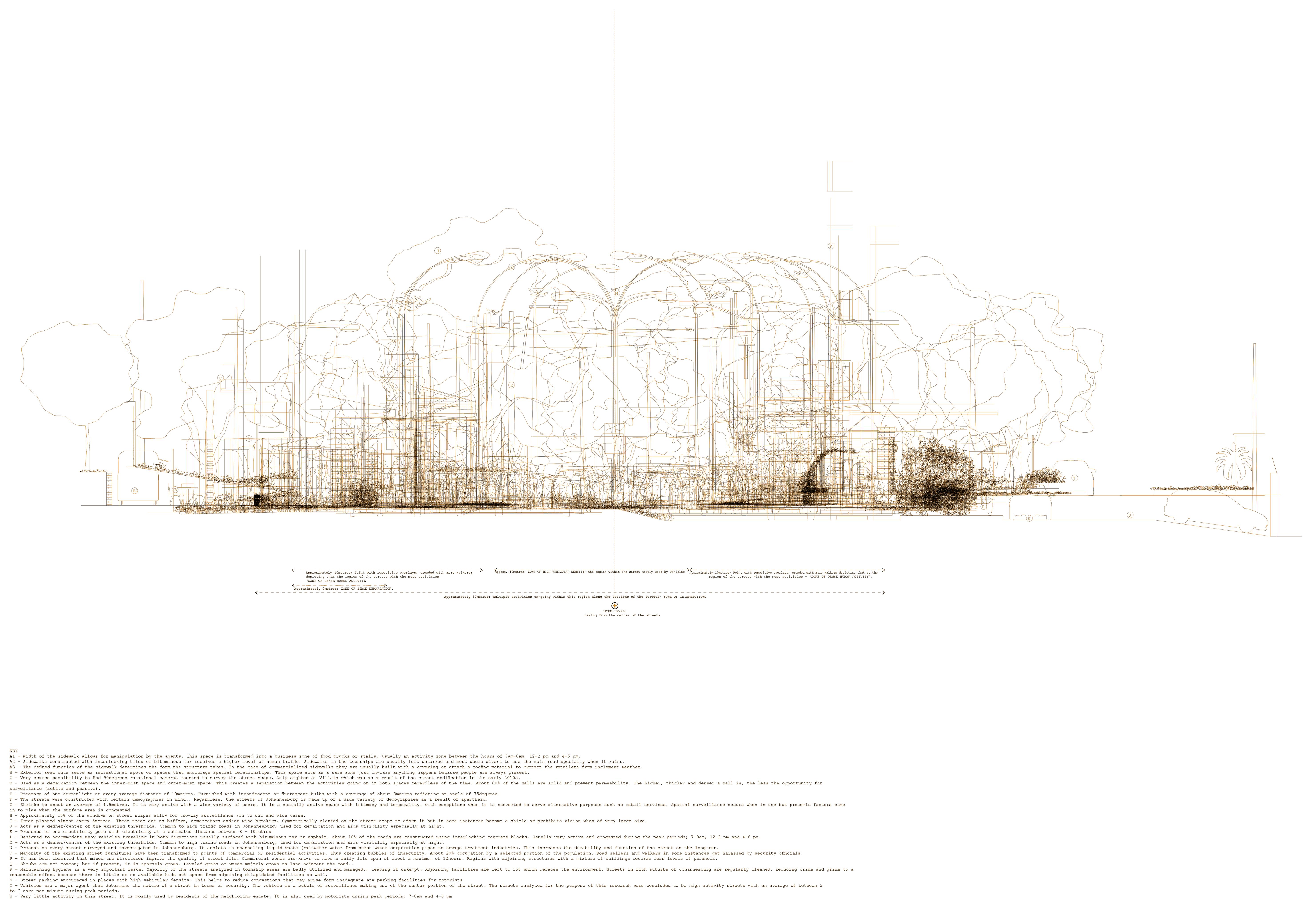
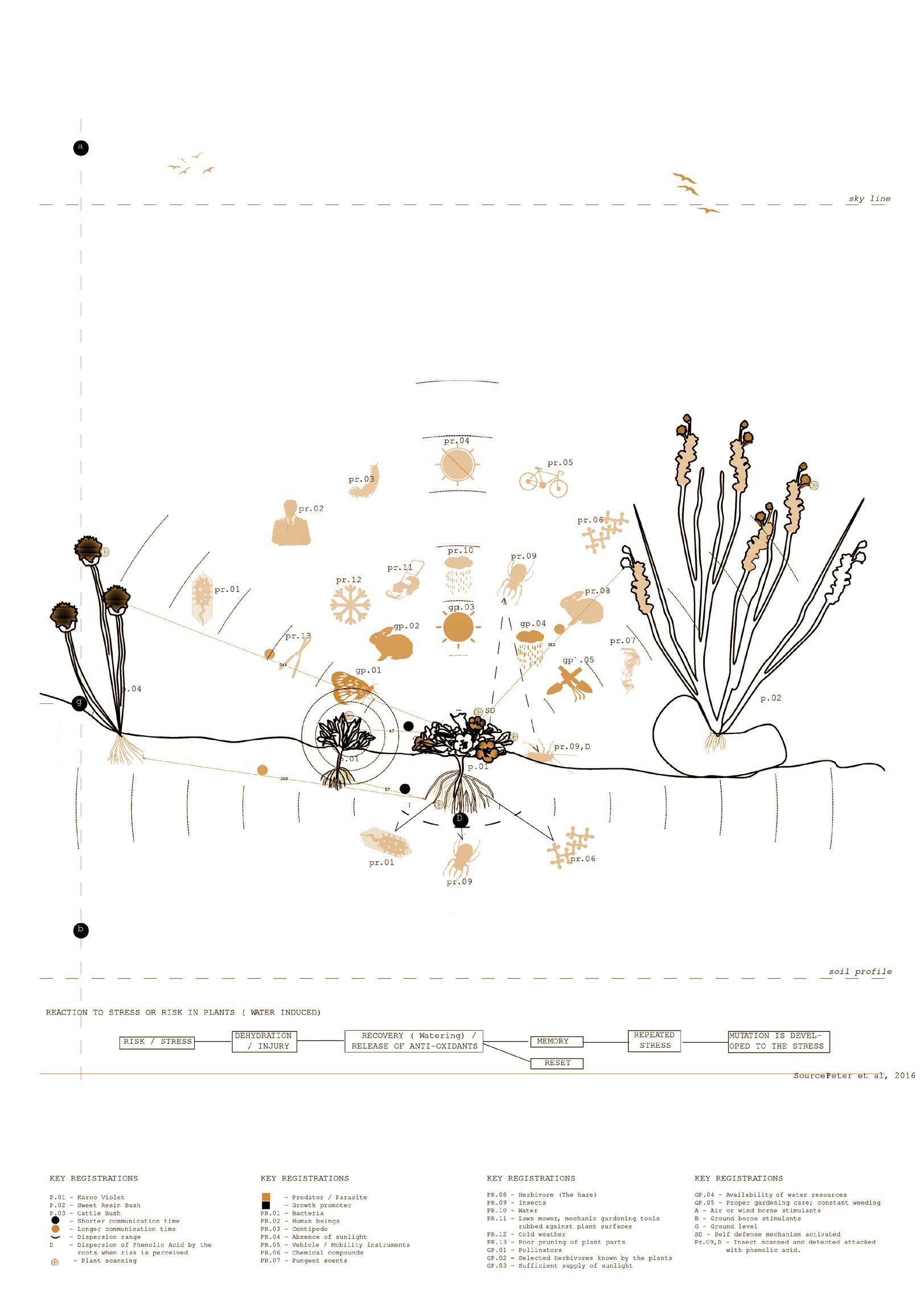
MODE 2 => FOCUS PLANT ECOSYSTEM OF SURVEILLANCE Understanding plant symbiotic relationships, communication and information exchange within the plant and with other organisms “A tree’s most important means of staying connected to other trees and very observant is a “wood wide web” of soil fungi and photo-receptors that connects vegetation in an intimate network that allows the sharing of an enormous amount of information and goods for the sake of protection in most of its instances.”-Tim Flannery, 2014 PLANT COMMUNICATION => ‘‘mapping of surveillance techniques adopted by plant ecosystem’’ Final Portfolio Review - Summary Docket 1110 THE PEOPLE’S CONTROL ROOM; Disrupting the digital pan-opticon
TACTICS OF NEGOTIATING CONTROLLED SPACE => ‘‘navigating through unseen threshold’’THE METRO
MODE 3 => OBSERVE OCULAR PRESENCE Understanding the
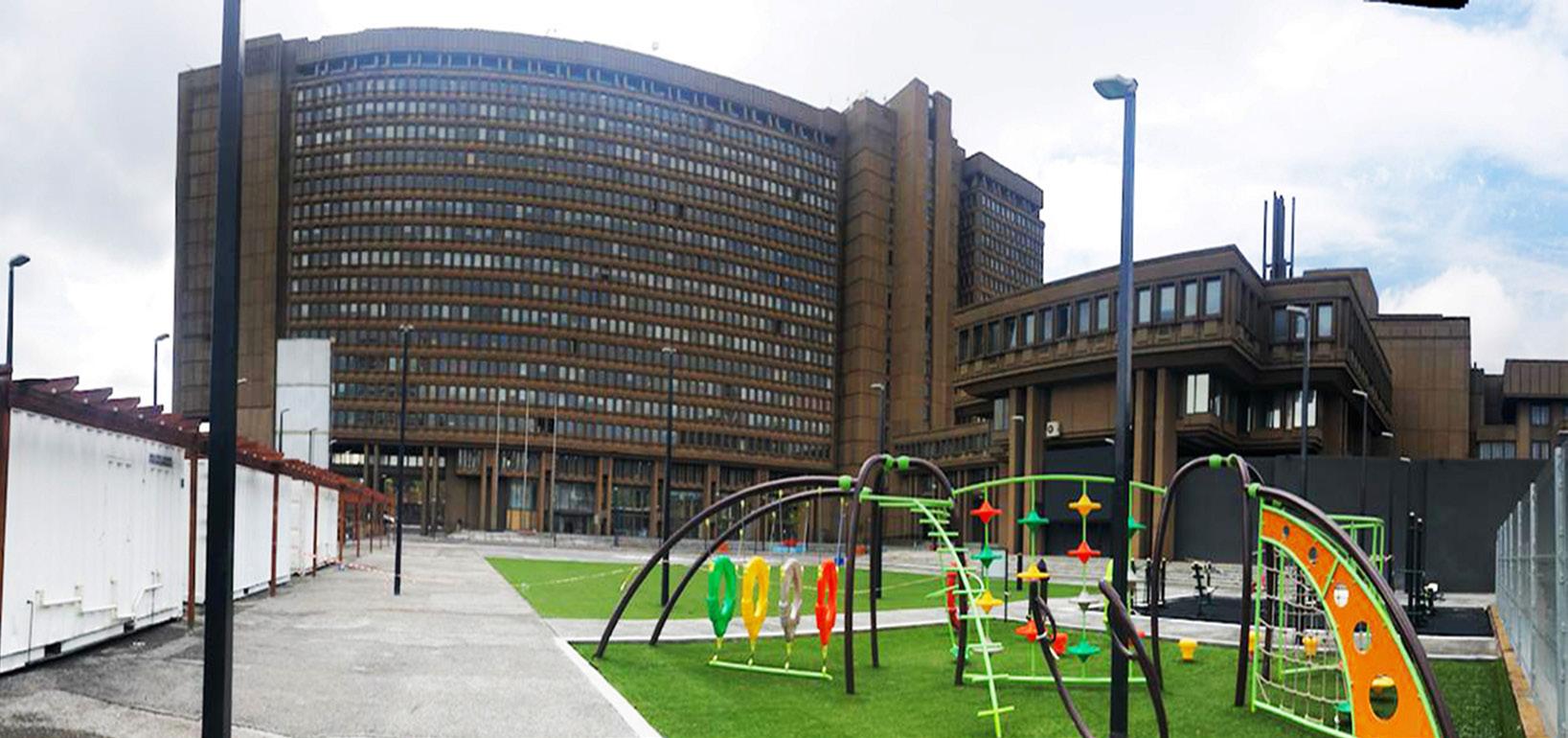
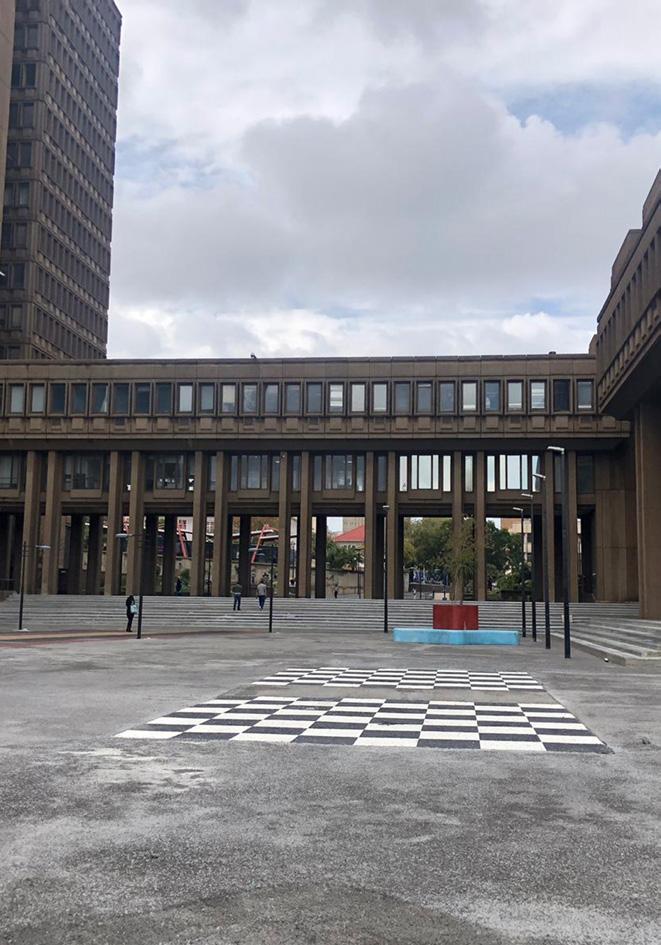
- BLOCK A => ‘‘panoramic view of the building and adjoining features’’ Final Portfolio Review - Summary Docket THE PEOPLE’S CONTROL ROOM; Disrupting the digital pan-opticon 1312 LINK BALCONY => ‘‘the link between the old and new controls’’
Surveillance is said to exist everywhere, as a foreigner, the presence of such huge brutalist pan-opticon like buildings was in complete tension with personal experiences, even beyond my country. The exploration at the Metro-Center of the Johannesburg City Center thus became necessary. It was a confirmation that Johannesburg post-traumatic experiences re-shaped the city and still in Thisprocess.project helps in the understanding of the timeless strength and potency which lies in architecture to be a driver of the institutions of power and control exhibited within space and/or place by dissecting its physical attributes and advantages of observation provided as a result of functional components. Thus, at what points does architecture begin to question the biasness of surveillance; power and control? Can surveillance become a two-way system enhanced by architecture or architectural strategies? Is it necessary to have permanent or fixed architectures? timeless strength and potency which lies within architecture Center
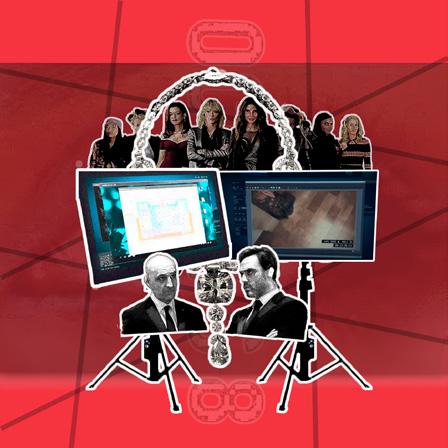
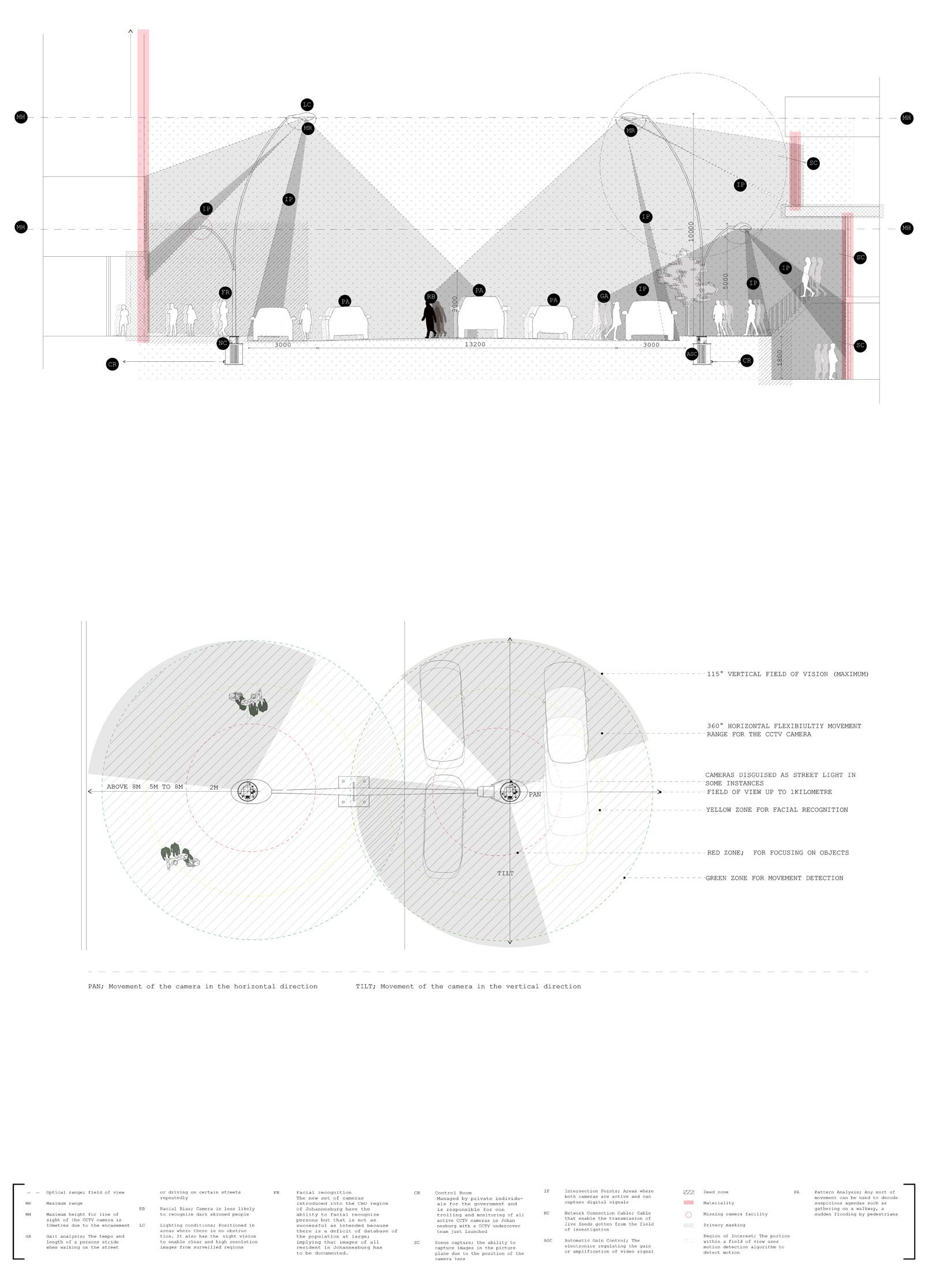
1. Caught on tape 2. CCTV Footage 3. Classified 4. Deep Packet Inspection 5. Espionage 6. Partnership 7. Secret State 8. Shared Information 9. Surveillance Society 10. The Heist 11. Exploitable 12. Vitriol to a core termed the ‘‘control room’’ The level of privatization and global Constant observation, to reduce crime? What was the origin of this insertion? MODE 3 => OBSERVE The origin, adoption, usage and impact of the digital gaze in the GALLERY OF REVELATION => ‘‘uncovering the unseen impacts of surveillance’’STREET CAMERA IMPLICATIONS => ‘‘investigation on Pretoria street’’ MHMH 1514Final Portfolio Review - Summary Docket THE PEOPLE’S CONTROL ROOM; Disrupting the digital pan-opticon 1 2 3 4 5 6 7 8 9 10 11 12



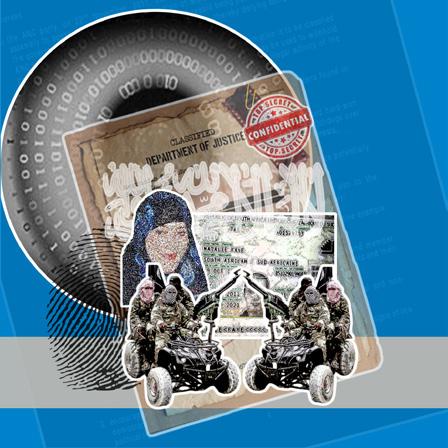
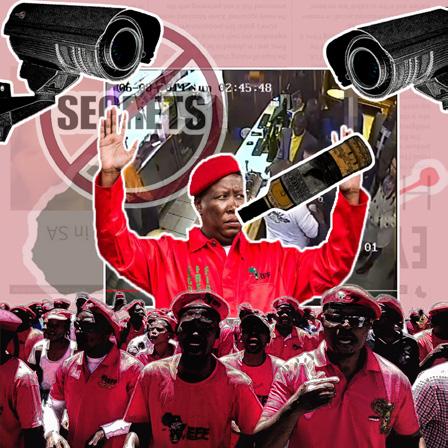

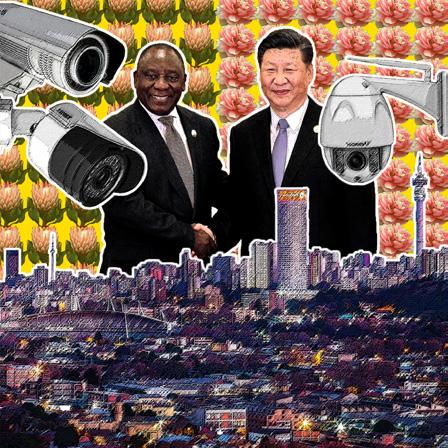
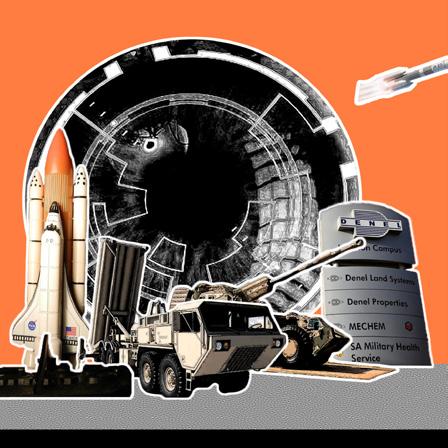
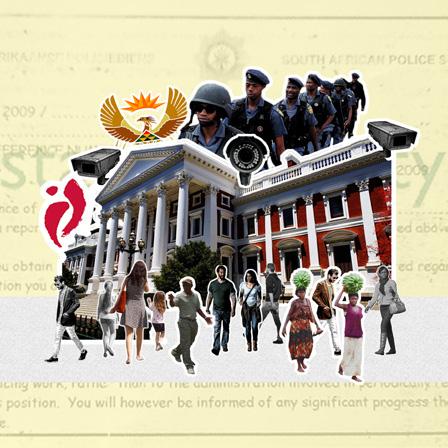
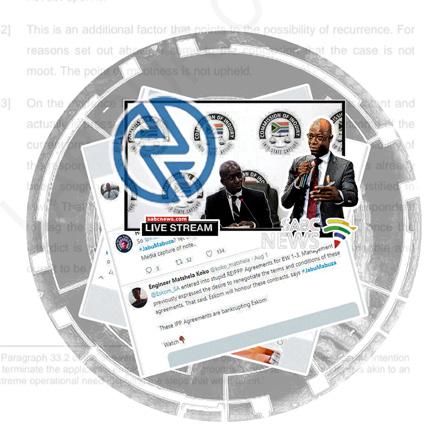
FACILITATING AGENTS / ASPECT CREATION - Control;Social restriction in level of Incrementfreedom in the level of evidence provided by the Johannesburg Metro Police Department to charge criminals to court. However, crime rate has reduced by about 7% Privacy; very little privacy on the street as we are all being watched. 24 hours a day, 7 days a week in 365days a year except on managerial problem occurrences - PowerPoliticaldynamics; on what basis do you get to control this system? Based on experience? Connections? or
14 14 R114 M47 R78R24 R41R558AdcockStreet M5 M77 R41N1WesternBypass M2 R29 3 R24 12 R25 M90 M9 M39R55 2 M85 M31 M1 M1 CC BypassWesternN1 Francois Oberholzer Freeway M47 M5 M77 R24 CC R24 R41R558AdcockStreet M77 R41N1WesternBypass M2 R29 3 R24 12 R25 M31 M1 CC Bypass 1 = 10 number of CCTV Cameras Dormant CCTV Camera Active CCTV Camera Control Centre located at Carlton Centre (6th floor) Optical range of about 5metres to 1kilometre 360 degree movement Network interconnection Major Transportation Routes Suburbs in Johannesburg FACILITATING AGENTS / ASPECT CREATION - Geography;Technical Johannesburg especially crime ridden areas Temperature; 19 - 30 degrees max. Distance; between 5metres to Density;Range;1kilometerThe higher the number of cameras in suburbs with a high crime rate documentation - Cost;Economic2- 3million for monthly Opportunitymaintenance (Agents / Users); used as advertisement boards Gaze; we are all being watched, who is responsible for the watching?
M47M77
This drawing documents the state of paranoia and invasion soon to be experienced in the city of Johannesburg by its residents due to the implementation of a total of 15,000 CCTV cameras to monitor all road users; 24/7.
Final Portfolio Review - Summary Docket THE PEOPLE’S
But how is this even possible? What does this new control measure bring about? A digital Whopanopticon?thenis the subject? How much can truly be seen? Can this network or system be or become bias? N R24 CCTV BLANKET => ‘‘cctv insertions into the city of Johannesburg’’ CONTROL ROOM; Disrupting the digital
pan-opticon 1716
The implementation is said to be hinged in new technology (artificial intelligence; facial recognition, movement pattern etc) that reduces reliance on humans who monitor the existing network of systems simultaneously.
Francoisreferrals?Oberholzer Freeway
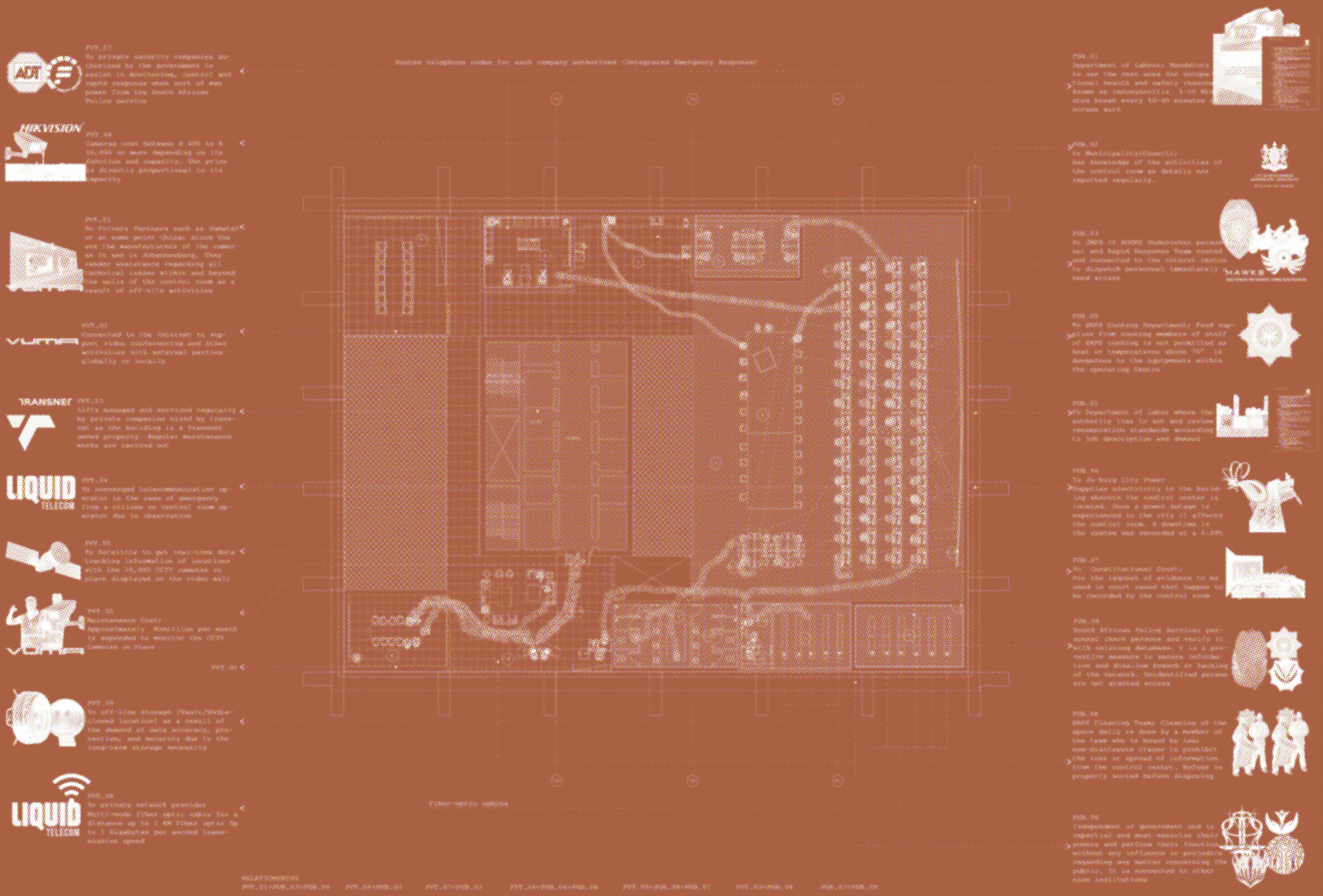
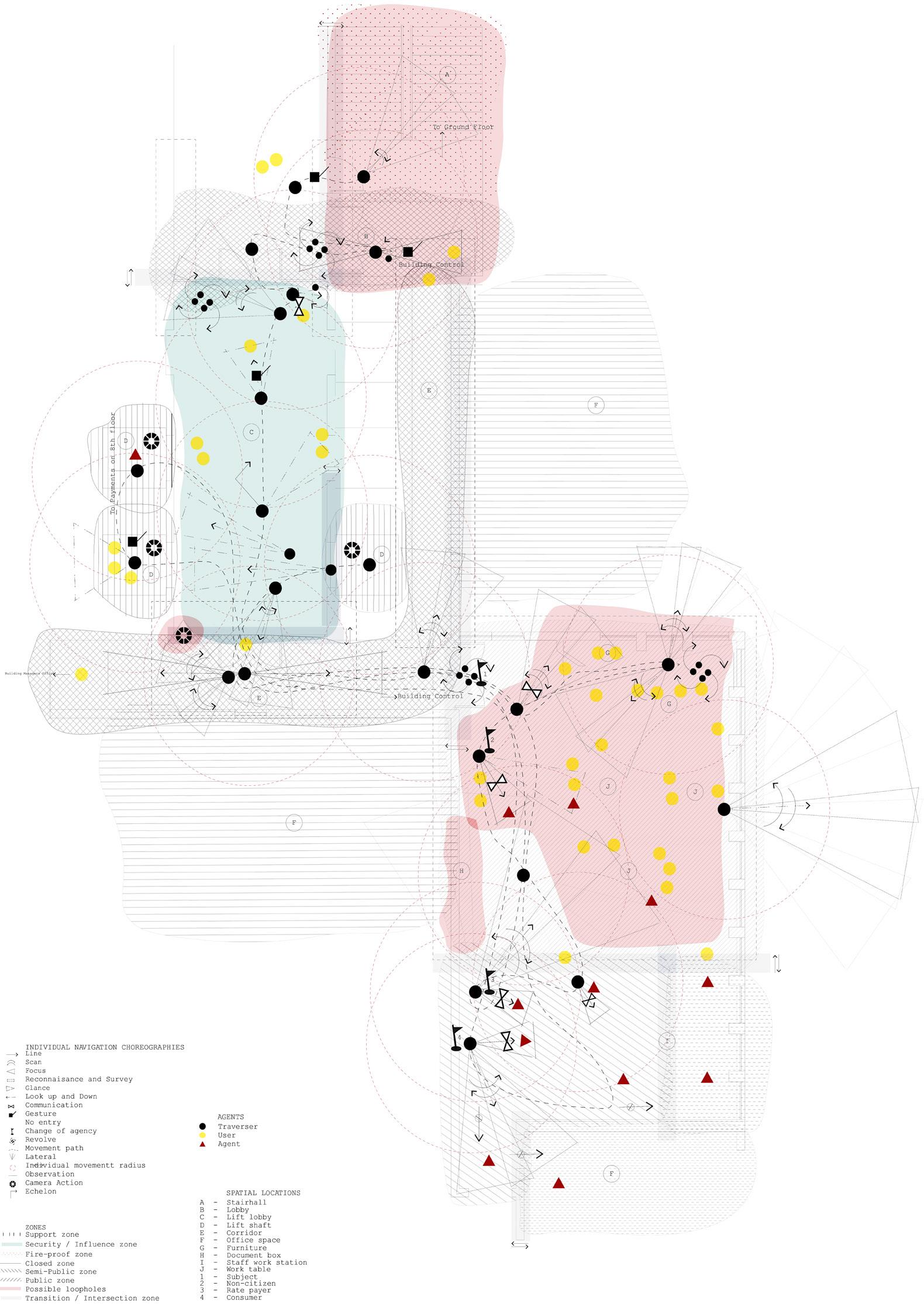
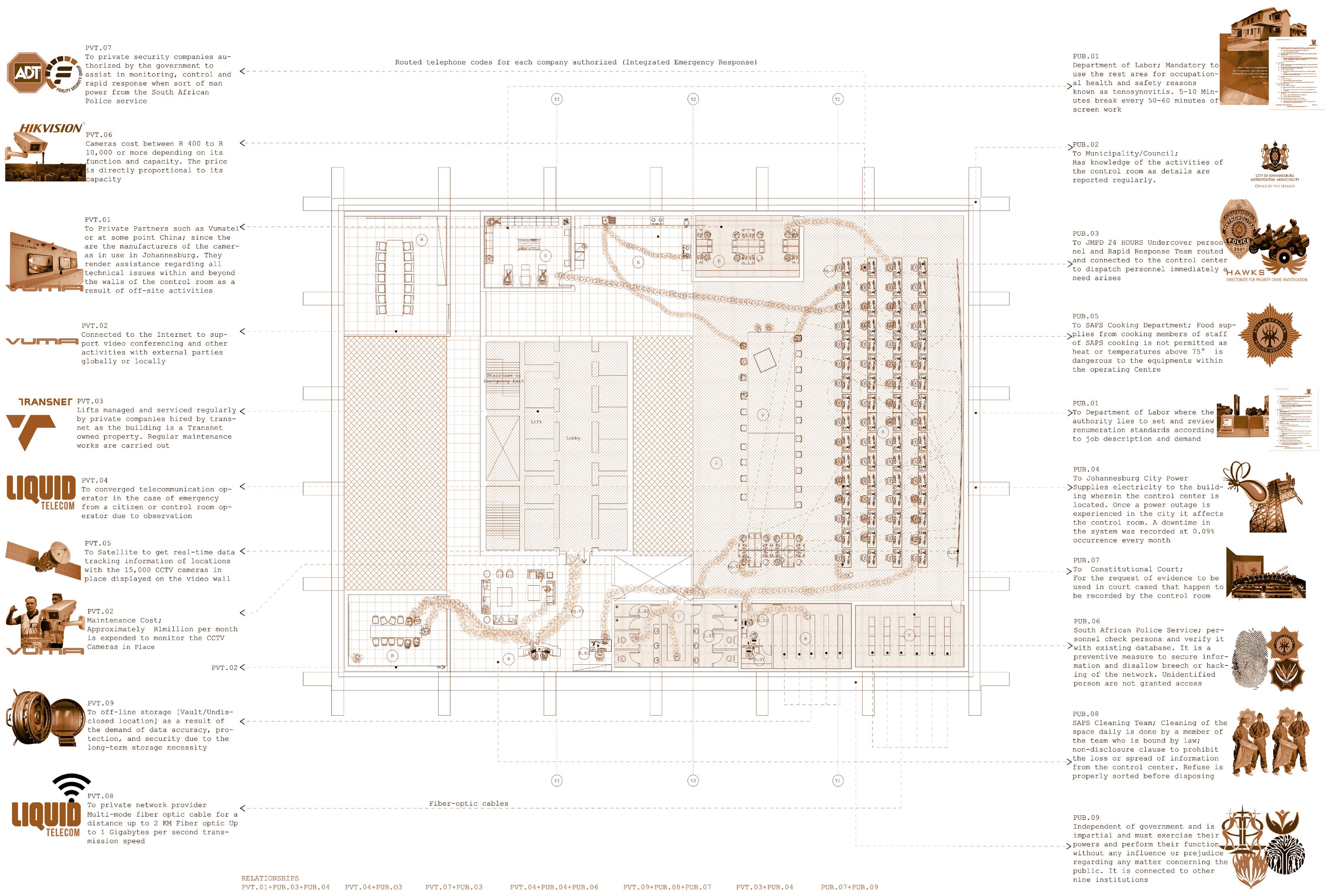
RECONSTRUCTED CONTROL ROOM FLOOR PLAN => ‘‘mapping invisible authorities that ensure the stability of the existing system (institutionalized power)’’ MODE 4 => BL ND SP T OPENINGS IN THRESHOLDS Final Portfolio Review - Summary Docket THE PEOPLE’S CONTROL ROOM; Disrupting the digital pan-opticon 1918
The intention of this project to disrupt this digital pan-opticon as a form of counter-surveillance, to create a system that is automatically triggered and feeds back into itself; the gaze of surveillance, transformed into the sequential political margin between power and control. This becomes a political tool to disrupt the existing nature of the operation of pan-opticism and reveal governmental dealings to the people by operating as a malware to infiltrate the system. It is designed to replicate itself, camouflage or conceal and adjust to all changes the system encounters. Inspired by the Trojan horse and symbiotic relationships, this transformative architecture proposed is viewed as a political flexible control room for the people rather than as a building and as such it takes different shapes and pieces. Its design, set up and movement is designed to be collapsible in the sense that this architecture can be removed and placed elsewhere as a democratic box traveling in and out of the city.
MODE 5 => ARCHITECTURESAMBUSHOF SURPRISE Disrupting the digital pan-opticon by of surprise
POP-UP MONOLITHIC ARCHITECTURE => ‘‘an ambush typology that can be reconfigured based on its host program and location in site to counter surveillance’’
inserting architectures
8m 2.1m Configuration 2 Planetarium / Cinema Configuration 1 Parliament / Conference room 0.6m Entrance A1 A1 A1 A1 A1 A1A2 A3 A4 A2 A2 A3 A3 A3 Configuration 3 Social Space 2120Final Portfolio Review - Summary Docket THE PEOPLE’S CONTROL ROOM; Disrupting the digital pan-opticon TM1 Inflation Level 1 Inflation Level 2 Monolithic inflatable dome Security scanning point at entrance EntranceLobby Hose for passing air into the dome 8m 4m 2.1m 0.6m Entrance 3m Constant air pressure of 10101020hPa (South Africa) to enable the structure maintain its form. The environment to host it de termines the air pressure ConnectiontoHost A1 A1A1 A1 A1 A1A2 A3 A2 A3 A4 A3 A2 A2A4A4 A4 Inflation Level 3 Inflated with a constant pressure of 10-15psi. Inflation Level 4 Approximately 10minutes to get to this level A1 A1 A1 A1 A2 A3 A4 A2 A2 A3 A3 Host Portal Architectural Form
‘‘He who is subjected to a field of visibility and who knows it, assumes responsibility for the constraints of power; he makes them play spontaneously upon himself; he inscribes in himself the power relation in which he simultaneously plays both roles; he becomes the principle of his own -subjection’’MichelFoucault
Final Portfolio Review - Summary Docket THE PEOPLE’S CONTROL ROOM; Disrupting the digital pan-opticon 2322