Cover photo and feature graphics: Deposit Photos & Jena Barber
Stories and layout by Jena Barber (unless otherwise noted)
If you have story ideas, please reach out! Send them to Jena Barber at editor@okumc.org.
The Contact, a publication of the OKUMC Connection (USPS 954-500) is published monthly by The Oklahoma Conference of The United Methodist Church, 1501 NW 24th St., Oklahoma City, OK 73106. Periodical postage paid at Oklahoma City, OK.
POSTMASTER: Send address changes to “The Contact OKUMC”, 1501 NW 24th St., Oklahoma City, OK 73106.
from the editor
This is the time of year for rushing to beat shipping deadlines, cramming in extra work so we can take a few days off, grabbing last-minute baking ingredients, and just generally hurrying. It’s ironic that Advent is all about waiting, while most of us are sprinting.
A friend and I were talking about two similar phrases that mean very different things: getting ready to wait and waiting to get ready.
When you’re getting ready to wait, you’re on the clock. You’re anticipating being needed, and your time isn’t fully your own. Even if the main task hasn’t started, you’re lending your time to whatever comes next. I picture troops stationed abroad — playing cards, reading books, killing time — yet never fully free. They’re ready. They’re waiting. Something is going to happen.
When you’re waiting to get ready, your time is your own. You know something is coming, but you’re free until it’s time to return. For those same troops, this is leave: visiting loved ones, resting, doing the ordinary things that restore them.
Advent holds both kinds of waiting. There’s the practical work of getting things in order, and there’s the quieter work of staying open, steady, and paying attention — the kind of readiness that doesn’t come from hurrying.
Sometimes the hardest part of Advent is giving ourselves permission to slow down long enough to notice anything at all. The season moves quickly, and so do we. But a small pause — even a few minutes
in the car before going inside, or a quiet moment after the house finally settles at night — can shift the whole feel of the month. Those tiny pauses remind us that waiting isn’t wasted time; it’s part of how we steady ourselves for what comes next.
In the United Methodist tradition, we talk a lot about preparation, reflection, and noticing the small movements that shape us over time. Advent gives us space to do exactly that. It invites us to slow down just enough to recognize what’s unfolding in and around us, even in the middle of a busy season.
And maybe this is the year we let ourselves be a little gentler — with our schedules, our expectations, and each other. Advent doesn’t ask us to have everything figured out. It just asks us to stay open to growth, to possibility, to the small signs of change that show up when we’re paying attention. Sometimes those signs look like big moments, but just as often they’re simple: a good conversation, an unexpected kindness, a sense of clarity that sneaks up on us.
Maybe this year we try a different approach to readiness — not frantic, not passive, but intentional. A way of waiting that leaves room for hope, renewal, and a little breathing space.
In Advent, we get ready to wait, and we wait to get ready. And both matter.
Christmas Traditions
As the year draws to a close, we often find ourselves returning to the rituals that ground us. Some are inherited, some improvised, and some discovered by accident along the way. But each one holds a story — a moment where memory, meaning, and a little holiday magic intersect.
For this December issue of the Contact, we pulled back the curtain on the people who help bring the work of the Oklahoma Conference of the UMC to life all year long. We asked our non-clergy staff to share a favorite holiday tradition, whether sacred or simply sentimental. The result is a collection of stories that are playful, heartfelt, and unmistakably human.
And, let’s be honest, this is also the time of year when normally reasonable people become fiercely loyal to specific cookie recipes, search the entire house for “that one” ornament, or decide that watching Elf for the 15th time is an essential spiritual practice. These traditions — sometimes sweet, sometimes chaotic — have a way of revealing who we are and what we hold dear.
You’ll read about kitchens warmed by generations-old recipes, ornaments that carry family histories, movie nights that mark the official start of the season, and quiet rituals that make space for peace in a busy month. These aren’t grand theological reflections — just honest snapshots of what makes this time of year meaningful for the people behind the scenes.
Beyond the delight of the traditions themselves, there’s something grounding about sharing them with one another. In
a year when our staff have worked across ministries, meetings, and more than a few unexpected challenges, taking a moment to name these small rituals reminds us that we each carry our own histories and hopes into the work we do. These glimpses into one another’s lives create space for connection — the kind that doesn’t depend on job titles or deadlines, but on simple human warmth.
It’s also a reminder that joy doesn’t have to be grand to be meaningful. A well-worn mixing bowl, a movie quoted so often it’s practically liturgy, a yearly debate about when it’s “officially” time to decorate the tree — these are the moments that stitch a year together. They help us breathe. They help us laugh. They help us remember that holiness often hides in the margins of our most ordinary days.
And maybe that’s why this collection feels like such a fitting way to close the year. After months spent telling the stories of churches, leaders, missions, and ministries, we’re ending with something beautifully simple: the traditions that shape the people who shape this conference. It’s a small act of celebration, a recognition that the work of the church is carried by whole human beings with memories, quirks, and holiday habits all their own.
As you move through these pages, we hope you’ll feel the same sense of delight we felt in gathering them. Think of this as a gentle pause before the new year begins — a chance to savor the small joys, close out another season of ministry, and step into 2026 with hearts a little lighter.
A season filled with sweet traditions
by Kaitlyn Cantrell
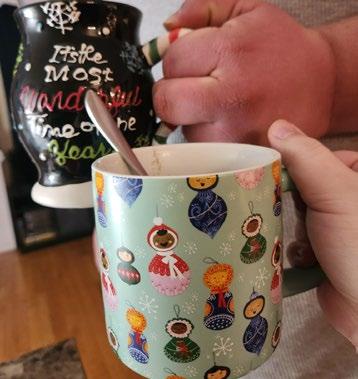
One of my favorite family traditions happens every Christmas morning. After our own little family opens gifts at home, my siblings, parents, and grandparents all gather together to exchange gifts and share breakfast. Everyone pitches in by bringing a casserole, and while the menu changes a bit each year, there are a few staples we can always count on—Mom’s blueberry French toast casserole and my savory, veggie-packed casserole. Other favorites often make an appearance too, like biscuit and gravy casserole, hash brown casserole, and a plain French toast casserole… because, as it turns out, not everyone appreciates blueberries the way they should.
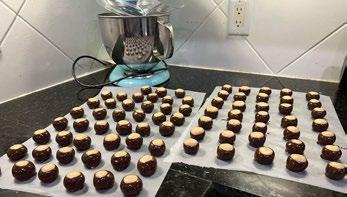
Another tradition we look forward to each year is our annual baking day. Every December, my mom and I spend a day baking treats and assembling gift boxes for friends and family. Our lineup usually includes peanut butter fudge, chocolate fudge, buckeyes (a beloved recipe passed down from my great-grandmother), peppermint bark, toffee bark, and whatever new ideas we decide to try. It’s a day filled with lots of laughter and the joy of sharing something homemade with the people we love.
In addition to these treasured traditions, we enjoy seeing the Christmas lights,
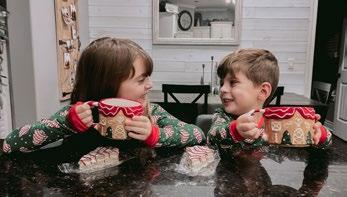
taking the kids to see Santa, and cozying up together for a Christmas movie and hot chocolate.
Kaitlyn Cantrell is the administrative coordinator for Connectional Ministries.
Photos by Kaitlyn Cantrell.
Ten years of traditions, one ornament at a time
by Andrew Himes
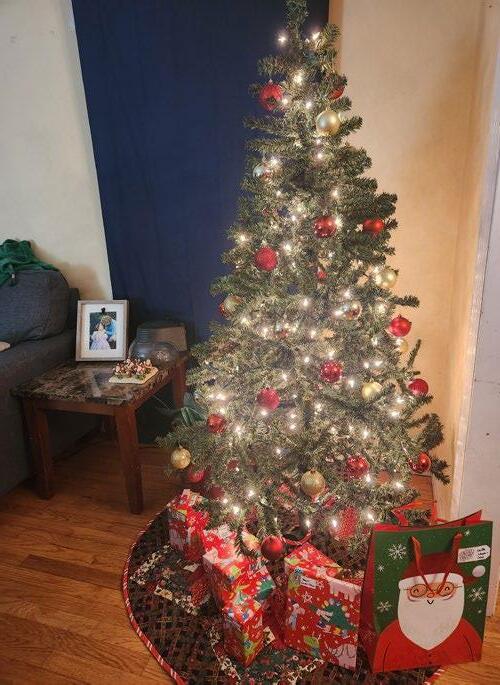
My wife and I always buy an ornament for each other that represents something that we did or that happened during the year.
We have ornaments that represent trips we took, pets we’ve lost, and things we accomplished. We have silly ones that have no meaning other than humor, and humorous ones that make us grateful to have passed through hard times.
It wasn’t an organically created tradition; we consciously started it and proclaimed “This is our tradition,” but now in our tenth year together, we still look forward to what the other thought of for the year, and are reaching the point that we’ll either need to be more selective on which ones we display, or add another tree to the seasonal decor.
Andrew Himes is the Assistant Director of Communications.
Photo by Depositphotos.
The tree that tells our story
by Rev. Marla Lobo
“When do you put your Christmas tree up?” is a question that comes up often this time of year.
My seven-year-old grandson, Parker, will tell anyone who is listening that we put our tree up on the day after Thanksgiving (no HallowThanksMas at our house!).
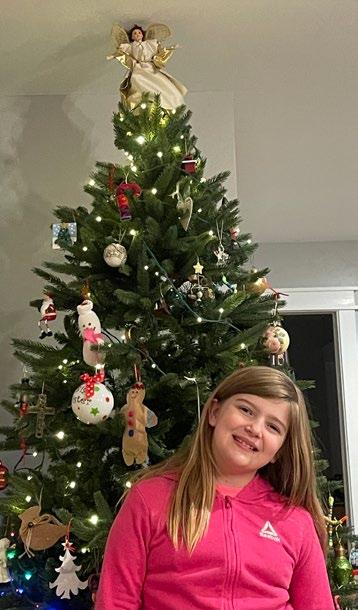
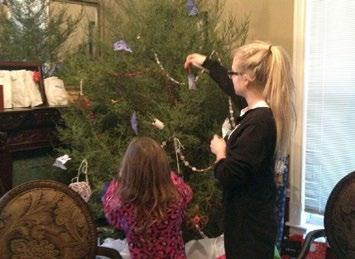
Over the years, our three grandchildren have taken bigger roles decorating our tree with ornaments. Our tree is filled with memories — ornaments collected over a lifetime, each with an “origin” story.
Our grandchildren get a collection of ornaments to put on their assigned part of the tree. Assigning sections to decorate helps us avoid expressions of sibling rivalry, with four or five ornaments on a single branch! Perhaps the most amusing ornament we have is the tree topper — an angel that originally belonged to my mom. A couple of years ago, it took a nose dive off the top of the tree and the head shattered on the tile floor. I was devastated and couldn’t imagine any other topper.
Enter my granddaughter Olivia’s Barbie doll, which was already missing some limbs. Basically, I took the head from her Barbie and glued it on the angel body. Problem solved! Of course, Olivia reminds
me every year that the angel’s head came from her Barbie.
Marla Lobo is the director of Project Transformation Oklahoma.
Photo by Marla Lobo.
Honoring the past, building the present
by Tyler Brown
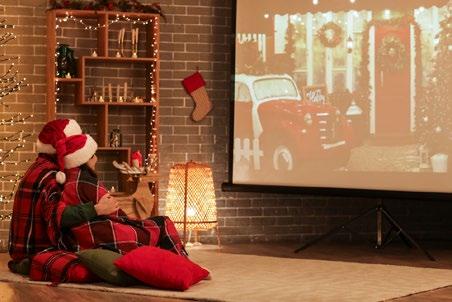
Every Christmas Eve growing up, my entire family would come together at a relative’s house to watch Christmas movies before exchanging gifts. Christmas Vacation struck in a way that the classics never really could with my family and was always top billing. Now, have we all seen it a thousand times? Yes, but that doesn’t stop us from finding another new detail every year.
Once gifts were exchanged, we would head into the city for Christmas Mass, which was always beautifully done, before spending our Christmas Day at home.
Some years, the gathering felt loud and chaotic, with cousins packed onto couches and someone quoting lines from the movie before they even happened. Other years were quieter, but the routine was the same — food, laughter, familiar scenes on the TV, and then the shift into the calm and reverence of Christmas Mass. It created a rhythm that made the whole holiday feel complete.
We lost a bit of this tradition after my grandfather passed away, but my wife and I have started to bring it back with our own style for our small family. It has been beyond
meaningful to recreate those moments and build new memories while honoring the past.
There’s something special about watching a tradition evolve instead of disappear. Ours looks different now — fewer people, fewer presents, and usually a small child climbing over us during the movie — but the heart of it is the same. We still laugh at the same scenes, still pause the night long enough to breathe in the meaning of Christmas, and still feel connected to the people who shaped the holiday for us.
Tyler Brown is the Director of Accounting.
Photo by Depositphotos.
Waking to the smell of Christmas
by Kathryn Witzel
There are many signs that the Christmas season is upon us, but in our house growing up, it looked like fudge.
Sometime in early December, Dad would start gathering the ingredients for his homemade fudge. The counter section between the sink and the refrigerator was the holding place where a large can of Hershey’s cocoa would appear, along with sugar, salt, vanilla, measuring cups, and a candy thermometer.
We never knew when the inspiration would hit for him to make his famous creation. One night, usually after we had gone to bed for the night, he would undertake the task of creation. Then we would wake to the chocolatey smell. That fudge tasted like home.
Later, he might make peanut brittle, Mom would make her version of Texas trash (what most people call Chex mix) and eventually those delights would be divided up along with some Hershey’s kisses and other store-bought candy and placed on a decorative paper plate, wrapped in cellophane to deliver to the neighbors. In return, we would receive fruit cake or divinity to round out our Christmas treats.
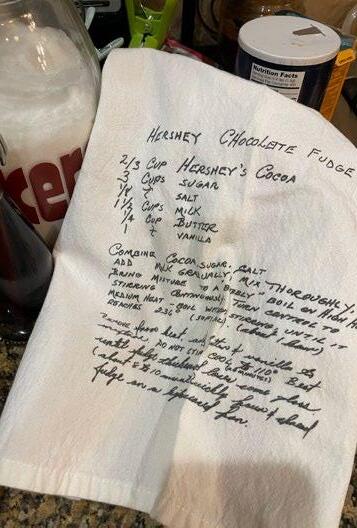
After our Dad passed away, my sister found the recipe he used for fudge
written in his handwriting. She made the towel pictured to allow us to remember Dad and have a record of his fudge. We talk about making it every year, but have not tackled it yet. Maybe this year!
Kathryn Witzel is the administrator for Transformation Oklahoma.
Photo by Kathryn Witzel.
An accidental Christmas Eve tradition
by Keith Howard
We aren’t a big “tradition” family, but seven years ago we accidentally started one. I’ve always loved Indian tacos, and my aunt makes the best. One Christmas Eve, my cousin from Kansas texted me a picture, bragging about how they were enjoying Indian tacos. My wife saw it and said, “Your aunt taught me — I can have dinner ready by 7.”
Sure enough, she did. And at 7:03 p.m., I sent my cousin a picture of our Indian tacos. We laughed, ate too much, and without planning it, a tradition was born.
What surprised us most was how quickly it stuck. The next year, without even talking about it, we found ourselves gathering ingredients again on Christmas Eve, almost out of muscle memory. By the third year, family members started asking, “Are we doing the tacos again?” and just like that, the expectation — and the excitement — had taken root.
Now every Christmas Eve, our home is filled with family, stories, and a whole lot of fry bread. The kitchen gets loud, everyone has an opinion on how crispy the bread should be, and someone inevitably steals a piece before dinner is
officially served. It’s become one of those traditions that feels both brand-new and as if it’s always been there.
Now every Christmas Eve, our home is filled with family and a whole lot of fry bread. It’s become one of my favorite reminders that traditions don’t have to be old to be meaningful, and they just have to bring people together.
Keith Howard is the CEO of Circle of Care.
Photo by Keith Howard.
A taste of home — and memory
by Tyler Lippe
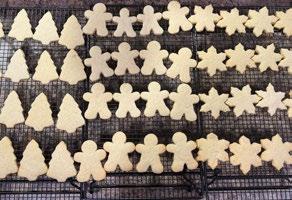
One of my favorite Christmas traditions has always been Grandma Karen’s sugar cookies. Going over to her house and seeing a large stack of Santas, gingerbread men, Christmas trees, and snowflakes all laid out on wax paper was pure joy.
Hers were not fancy or decorated, just plain ol’ cookies that still had a dusting of flour on them; but my gosh, they were the best cookies in the world. She only made these cookies at the holidays, so they were a true treat when we did get to eat them.
And no matter how many dozen she made, they always seemed to go so quickly. Audrey and I would take them home with us to Colorado when we were in college and they were the best reminder of family.
Grandma went to her heavenly
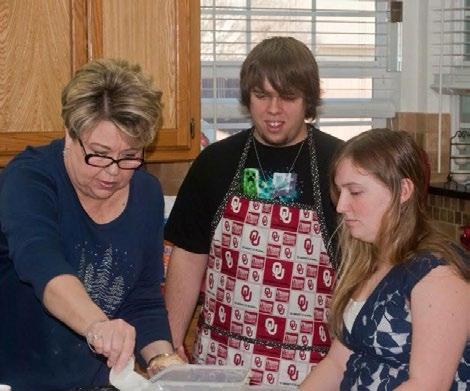
home in the spring of 2024, which meant that the mantle of making sugar cookies would need to be taken up by someone else in the family; I volunteered to carry on the tradition by baking her sugar cookies.
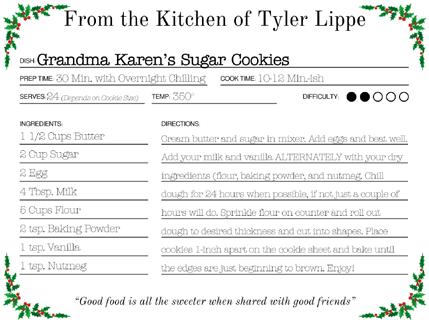
Now I would like to tell you that the first batch I made was perfect and just like hers, alas, I cannot. I completely forgot a key ingredient, the nutmeg. They tasted okay but just weren’t the same for obvious reasons. However, upon paying closer attention to the recipe and ensuring all ingredients made it into the cookies, the second batch tasted just like Grandma made. I have made several dozen of Grandma Karen’s sugar cookies now and will continue the tradition in her memory.
Photos by Tyler Lippe.
Every time I take a bite of one of the little snowflakes or Christmas tree shaped cookies, I will remember Grandma and all the love and memories made with her in the kitchen at Christmas time.
Tyler Lippe is the administrator for the Southeast District.
The Cousins’ Talent Show
by Dana Parker
My mother’s family was large and musical. Growing up, the entire group of aunts, uncles, grandparents, and cousins would meet at our house on Christmas Eve.
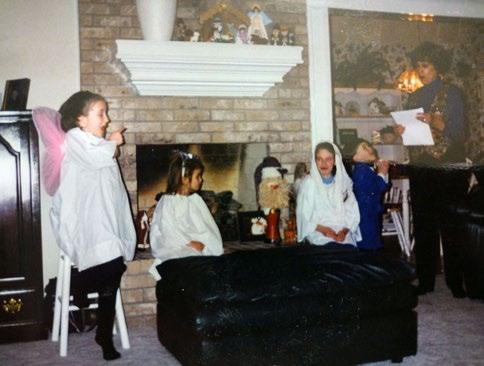
The highlight of the evening was always the Cousins’ Talent Show. We had everything from solo music — vocal, piano, guitar, trumpet, and violin — to silly skits put together that day. I remember my sister and I actually practicing days beforehand on for monologues we had each chosen from our new Free to Be... You and Me album to pantomime for our family audience one year.
The evening would end with the biblical Christmas story and a Christmas carol sing-along before heading out to our church’s Christmas Eve service.
This tradition continued with the next generation. The new set of cousins again shared piano solos and dance routines from The Nutcracker, and a reenactment of the nativity complete with costumes of the human and animal kind.
We are now in a limbo time of adult children, no longer willing to be so silly. We’re no longer able to meet on Christmas Eve. But any
time our family gets together, my sister and I stumble and laugh while playing the four-hand piano duet of “Sleigh Ride” and “March of the Toys.” I guess you just can’t take the performance out of our celebration!
Dana Parker is the associate director of Connectional Ministry for Community Engagement and Disaster Response.
Photo by Dana Parker.
The magic of being together
by Rebekah Hasty
Family Christmas traditions have a way of weaving warmth into the coldest winter nights, and in our home, Christmas Eve is the heart of the season. Every year, the Hasty family begins the evening by attending church, gathering with others to hear the familiar story of Christ’s birth and to reflect on the hope and peace it brings. The soft glow of candlelight and the sound of carols set the tone for a night filled with gratitude and joy. It is a powerful reminder of what the Christmas season is all about.
After the service, we return home for dinner, sharing a meal that feels both comforting and celebratory. But the evening’s traditions are just getting started. Once the table is cleared, we bundle up, load into the car, and head to Nichols Hills to look at Christmas lights. Driving slowly through glowing streets, we admire the creativity and beauty of each display. The lights sparkle against the dark sky, and for a moment, everything feels wonderfully still and bright.
When we return home, another beloved tradition awaits. We make hot chocolate—rich, warm, and topped with marshmallows—before settling in to watch The Polar Express. We have followed this tradition since our children were small. No matter how many times we’ve seen it, the story still captures our
imagination. Wrapped in blankets with mugs in hand, we savor the quiet magic of being together. This magical time always reminds me of the Christmases past and moves me to tears.
These traditions may seem simple, but they create a tapestry of memories that define the season. They remind us that the true joy of Christmas is found not in the gifts under the tree, but in faith, togetherness, and the moments shared with the ones we love.
Rebekah Hasty is the associate director of Connectional Ministry for Program and Development.
Photo by Depositphotos.
Hidden joys and bright traditions
by Wanda Coder
Where is Jesus?
Growing up, one of my favorite memories of Christmas was putting together the nativity on our entry table. My mother, sister, and I would unwrap all the characters: the animals, shepherds, wise men (plus a little boy carrying apples to replace the one wise man we had lost), Mary, Joseph, an angel, and, of course, Jesus. We would pull out the barn that my grandfather had made and get to work. Most of the animals went into the barn, while Mary and Joseph stood beside the manger under the watchful eye of the angel. The shepherds and their flock gathered on one side, and the wise men and their camels made their slow journey from the other. But there was one figure missing: Jesus.
We knew that Jesus was not supposed to be in the manger before Christmas. We decided that he had to be hidden until Christmas Eve, so why not make it into a game? Every year, even still, my sister and I take turns hiding baby Jesus, and then when we get together on Christmas Eve, the other must search the entire house to find him and lay him in the manger where he belongs. It was always so much fun to search through all of the nooks and crannies of the house to see where my sister hid it or to get to watch her search
to find my hiding place. But no matter what, every Christmas Eve, Jesus is always found and placed where he is meant to be, in the manger next to Mary and Joseph.
What about Rudolph?
The night before Christmas, I remember baking some store-bought sugar cookies with my mom to lay out for Santa. We would get our plate, fill it with cookies, and find a glass for milk. But we couldn’t forget the reindeer! We would make sure they had some carrots for the road. They
Photos by Wanda Coder.
are doing such hard work, they deserve a treat! I remember one year, I realized that Rudolph didn’t need carrots; he needed something special to help his nose stay red enough to guide them through the night! From that year on, we made sure to put out milk and cookies for Santa, carrots for the reindeer, and, of course, cherry tomatoes for Rudolph to keep his nose shining bright.
Time Together
My husband and I are blessed to both have families with a strong love of Christmas. This leads to Christmas Eve and Christmas Day being booked completely full every year! A few years ago, we decided that we needed traditions of our own; thus, Christmas Eve Eve was born.
The night before Christmas Eve is our time where our only obligation is to each other. In this season of our lives, that means driving around to see Christmas lights, coming home to make a nice cozy meal, warming up our favorite hot chocolate (snickerdoodle white chocolate for me and dark chocolate for him), getting our PJs on, and snuggling up to watch Christmas movies. Some of our favorite movies so far have been
Polar Express (a classic!) and Jingle Jangle (so fun!). I love that we already have this time set aside, so that as our family grows, there is room for new traditions to grow on Christmas Eve Eve.
Wanda Coder is the administrative coordinator for Camps and Retreat Ministries.
The story I saved for last
by Jena Barber
Our family has welcomed many traditions over the years, and I’m nostalgic for every single one — even the ones that lasted only a season. Looking back, I can see how each tradition marked a moment in time, a little chapter in the story of who we were then and who we were becoming.
When I was growing up, Christmas Eve was the main event. Christmas Day was pleasant enough, but it didn’t carry the same weight. Strangely — or maybe not strangely at all — that held true even though my family wasn’t religious. And somehow that pattern has stuck, even after I married a guy who eventually became a pastor.
Christmas Eve for a clergy family is a bit of a controlled circus. Some churches have multiple worship services, some have staff gatherings, and most involve a rotating menu of snacks to keep everyone upright as the evening unfolds. Our contribution usually involves keeping people fed and silently praying no one accidentally ignites someone else during the candlelighting portion of worship. (Every year, the fear is real.)
But Christmas Day? That is ours. Sacred, quiet, and gloriously pajama-clad. We do not leave the house. Sometimes we make a full Christmas feast. Sometimes we graze on finger foods. Most years, there’s a breakfast casserole because some things
remain holy. We once had a Christmas tree, but our cats and dogs have persuaded us to scale down to a small ceramic village, which feels like a fair compromise. And while we briefly enjoyed the era of handmade ornaments — pipe-cleaner angels, pony-bead stars, all the classics — that season faded the moment our kids discovered that teenagers do not, in fact, craft on command.
Through it all, the traditions have shifted, stretched, and adapted to life as it is. Some lasted decades, some weeks. But one thing in our house has never wavered, never faltered, and never been up for debate. And that, dear reader, is why I insisted on closing this section with my own story:
In our family, Die Hard has always been — and will always remain — a Christmas movie.
Jena Barber is the editor of publications.
CANDIDACY SUMMIT
A time for discerning and certified candidates to spend time exploring their call, alongside other candidates and leaders in our Annual Conference
NEW CANDIDATES
JAN. 23, 1:00-5:30PM
ALL CANDIDATES & LOCAL PASTORS
JAN. 24, 8:30AM-5:00PM
Curing the Blank Page Blues: A Strategy for Sustainable Sermon Planning
by Rev. Jinx Barber
I know many pastors are likely “Type A” planners who have their worship calendar color-coded well into the new year. But for those who are currently staring at another blank slate, watching the cursor blink mockingly on their screen, I want to offer a lifeline.
I want to share a system that has not only helped me spend less time writing sermons each week but has also revolutionized how I plan in advance. It turns the anxiety of “What am I going to say Sunday?” into a creative, collaborative process.
First, I use the Lectionary as my guide. Before you judge or worry about being boxed in, I challenge you to try it for a year. It isn’t restrictive; it’s freeing. (But that is a topic for a whole different article!). You aren’t required to use it, however.
Using the Cokesbury planner, I sit down and pick every scripture for the upcoming year in advance. I assign a tentative title and, most importantly, a theme.
The Theme: The Linchpin of the Entire Operation
The theme is the linchpin of this entire
operation. It describes the direction of the service or encapsulates what you are really trying to say in just a word or two.
Once I have this data, I input it into a spreadsheet. This isn’t just for me; I give access to anyone on the church staff who needs it for their own planning. When I meet with staff or the worship team, we aren’t starting from zero. We use that spreadsheet to craft overarching themes, decide on sanctuary decorations, and plan liturgical responses. It gets everyone on the same page long before Sunday arrives.
The Data: What Makes the System Work
Here is the part that is central to making this system work: Everything you read or watch is potential sermon material. We live in an age where almost everything, from news clips to podcasts, has a transcript. I am constantly gathering data. If I see a compelling story in an article, a powerful line in a commercial, or a concept on television, I capture it. I email myself articles and notes constantly.
I take all those transcripts and notes and
save them into a specific folder in my Google Drive. Each file gets tagged with a theme. Over time, this folder will get full. When it does, you can subdivide it further into “buckets” — subfolders for Grace, Stewardship, Theodicy, Advent, Lent, and so on.
About a month ahead of time, I look at the schedule. I make sure the theme I chose a year ago is still the direction I want to go. Then, I open the appropriate folder in my drive (or do a quick keyword search).
Suddenly, I’m not staring at a blank page. I have several stories, articles, notes, and illustrations ready to go. I make a specific folder for that week’s sermon, drop copies of the research in there, and let it simmer. I let the ideas marinate in the back of my mind.
About two weeks out, I pick the main
“We are grateful and glad.”
stories or metaphors I intend to use.
The Timing: Flexibility in Planning
Before 2020, this system was so efficient that I usually had a good, solid sermon finished by Tuesday. However, the pandemic changed my rhythm. Now, I intentionally wait until later in the week to finalize the manuscript.
I leave that buffer in case there is a relevant current event that needs to be addressed. You would be surprised how often a breaking news story fits perfectly with the Lectionary text you picked twelve months prior — proof that the Holy Spirit is often the best planner of all.
If you are tired of the weekly scramble, give this method a try. Build your buckets, share your spreadsheet, and let the prep work give you the freedom to preach with confidence.
Epworth Villa: Where Faith and Community Flourish
We offer many opportunities for spiritual growth through worship, enrichment, and community:
• Vibrant Spiritual Life, diverse worship services, study groups, and prayer opportunities.
• Meaningful Connections, mission and service projects that connect you to the wider community.
• Ecumenical and Inclusive, all faiths and denominations welcome.
• Compassionate Pastoral Care, dedicated chaplains and staff.
• Enriching Experiences that deepen your faith.
Nurture Your Faith at Epworth Villa
Contact us today to inquire about our special discounts for clergy and their spouses.
Pastor Laura Glover Epworth Villa Sr. Chaplain
Tradition: A Bridge Between Past and Present
by Rev. Carlos Ramirez
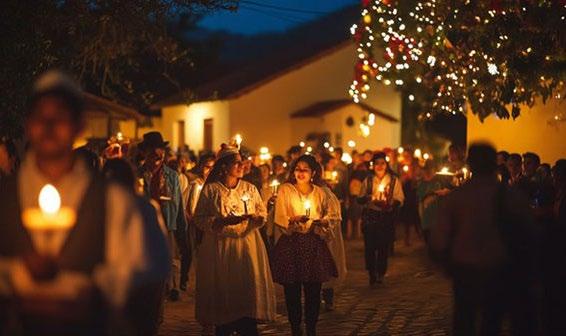
By now, most likely you know that I was not born or raised in the USA. I was born and raised in Puebla, Mexico, which is located in the southeast part of the country (south of Mexico City). Growing up, these were my Christmas traditions:
1. Christmas Eve is actually when the celebration happens. We would visit my aunts’ and uncles’ houses asking for “posada.” Posada is the recreation of Mary and Joseph wandering through Bethlehem asking for a place to stay. At the end of each posada, we all received a bag filled with candy. It represents the sweet blessings baby Jesus brings to the world.
2. We would end up at my grandparents’ house doing the same thing. Once the religious part was over (posadas are a religious ritual), we would sit at the table and eat to our hearts’ content.
3. Then we would party until our bodies gave up!
For us, New Year’s is also a religious and family-oriented celebration. That night, one goes to church. In the Roman Catholic tradition, one brings twelve candles and sets them at the altar. At the end of Mass, the priest blesses the candles and even pours holy water on them. The idea is to use one candle each month as a sign of God’s presence in our homes.
After church, we would gather at my grandparents’ house to pray the Rosary and to give thanks for the year that had just ended. New Year’s is similar in spirit to Thanksgiving here in the USA. Once all the family members had given thanks and awaited midnight, dinner would begin. After dinner, there was much celebration as well.
I share with you the traditions I grew up with because I think tradition is important.
Tradition — not simply something we do over and over again, but the actions, words, and symbols passed down either in church or through our families — is a powerful vehicle to:
1. Connect us with the past. Tradition reminds us of those who have gone before us and entrusts us with carrying it forward to the next generation.
2. Create connections. Tradition helps us create space to experience God. The smells, the motions, the songs, the words, even the candy can be (and I believe they are!) instruments that help us connect with God. In the context of the church, tradition links us with the saints who have gone before us. In the context of our families, it connects us with loved ones we may know only through these practices.
3. Create space. I am not talking about a physical space at home or at church
(although it could be). I mean the space in our hearts and minds that allows our spirits to rest, to be comforted, and to be renewed. Life moves very fast, yet tradition can help us slow down, remember, celebrate, breathe, and gather strength (and even wisdom) from the past.
My traditions have changed in the USA: gift giving and receiving, casseroles, football (and now even basketball!). What has not changed is that my traditions still revolve around my family. Tradition helps me stay thankful and mindful of the blessings in my life. I pray I can pass on these traditions to my children and within the church as well.
What is your tradition? I would really like to know!
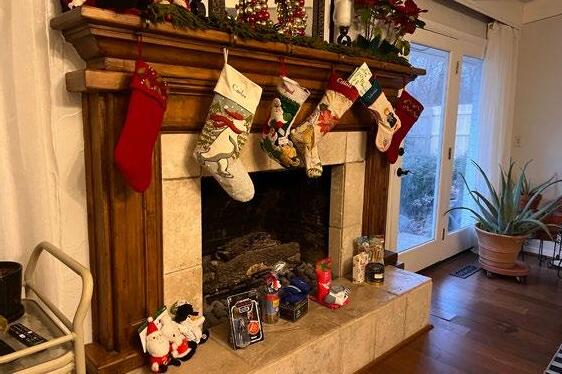
Hanging stockings is a great example of a family tradition. Photo by Carlos Ramirez.