
The Wesley Foundation’s at the University of Oklahoma’s Centennial Celebration Gathering at 5:30 p.m. Get more information.
Boston Avenue UMC is hosting CJAMM Spring Melodies Benefit Concert starring internationally acclaimed violinist Kyle Dillingham at 4 p.m. Click here for tickets.
Special guest speaker and British Methodist David Worthington will present “Wisdom from the Past, Hope for the Future: A Methodist Heritage Story.” at 6 pm. at Lost Creek’s Oak Park Retreat Center in Perkins, Okla. Learn more.
Skyline’s Bridging the Gaps Luncheon at 11:45 a.m. - 1:00 p.m. at St. Luke’s Methodist Church. Get tickets or sponsorship information here.
Miracle Sunday: a global UMC initiative focused on radical generosity, culminating in a special offering to fund theological education for pastors in Africa, Europe and the Philippines.
The 183rd Oklahoma Annual Conference is taking place at Church of the Servant in Oklahoma City. May 28-30

Click here to read more about what to expect


Click here to register here by May 13
Click here to preview the agenda

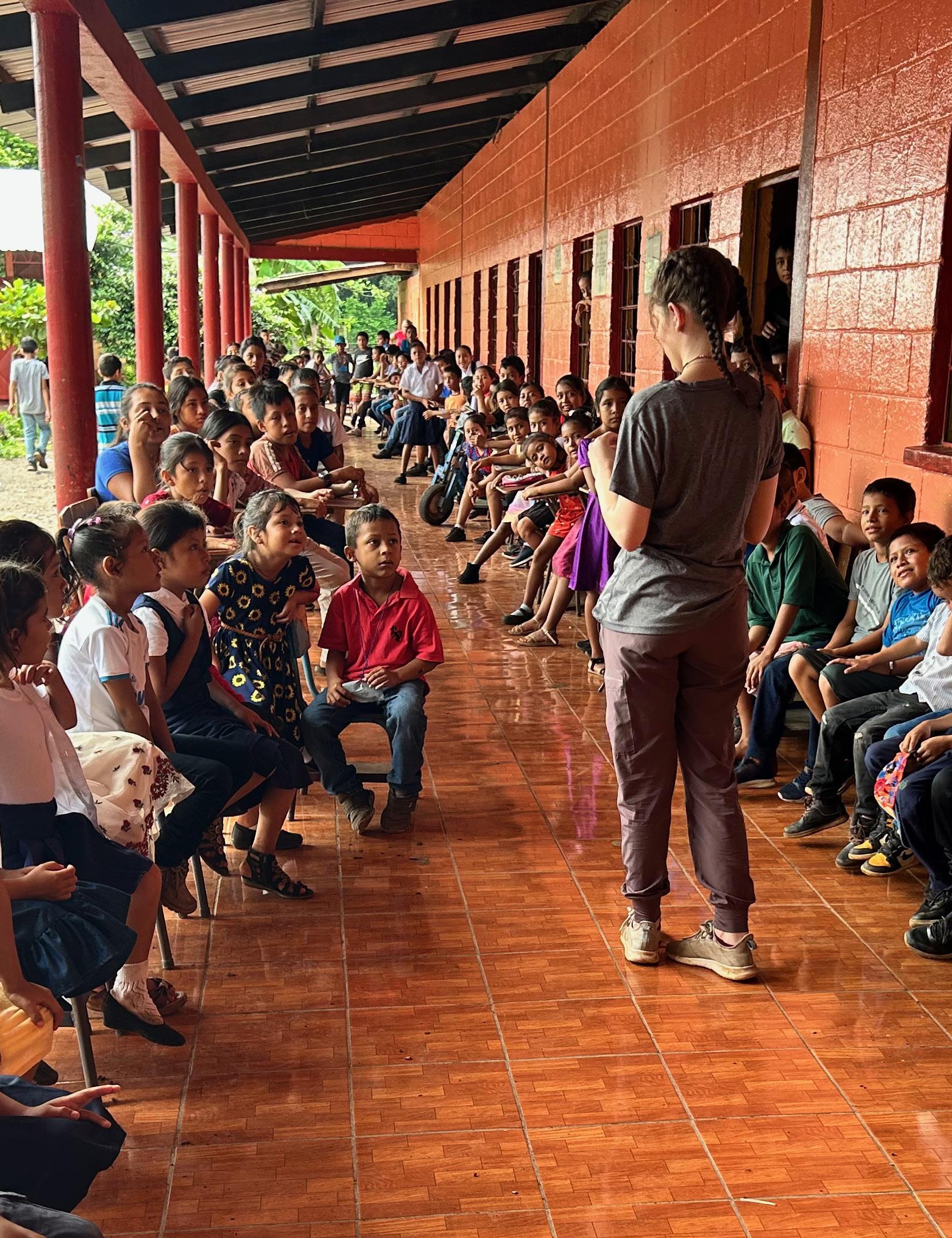
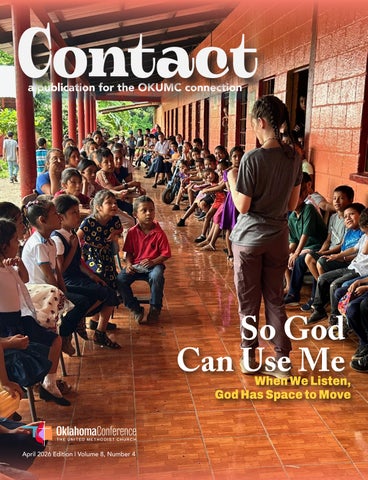
The cover of this issue of Contact is personal.
The young woman you see, standing before a group of children in Guatemala, is my daughter. That photo was taken on one of our many water well trips together with Acts 2 UMC. In June, we will go again. It will be her fourth trip and my seventh.
On her first trip, watching her power through the nervousness of stepping into something completely unfamiliar and uncomfortable to do what God had called us to do was one of the greatest gifts I have ever witnessed as a parent.
What I have come to understand, and what I think she discovered too, is that these trips are never just about what we bring. In the villages we have visited, we have seen what it looks like to live with deep faith, love and a sense of community that most of us in the United States are still searching for. They teach us something about what it means to hope. About what it means to trust. About what it means to belong to one another.
That’s the thing about saying yes to God. You think you are going to give something. And you do. But you come home changed in ways you never anticipated. God was using them for you just as much as God was using you for them.
I was not raised in church. In junior high, a friend invited me to go on a mission trip with St. Paul’s United Methodist Church in Fort Smith, Arkansas. I went on two trips – one to help with cleanup after a major tornado in Alabama and one after Hurricane Andrew.
I didn’t just learn about God on those trips. I learned what it looks like to live out God’s love through action. That was a seed planted in me that has never stopped growing. It shaped my faith, my spiritual journey and eventually led me to find a church that doesn’t just talk about what it believes, but puts action to those words.
That is exactly what this issue is about.
When we listen ... really listen ... God has space to move. And when God moves, nobody walks away unchanged. Not the people being served. Not the people doing the serving.
It matters. You matter. And God can use you exactly as you are.
In this issue, you will hear from Rev. Tim McHugh, Associate Pastor of Congregational Care at Grace UMC, who is leading a team to the Lydia Patterson Institute in El Paso, Texas. Tim writes with honesty about humility, transformation and what happens when willing, not perfect, people say yes.
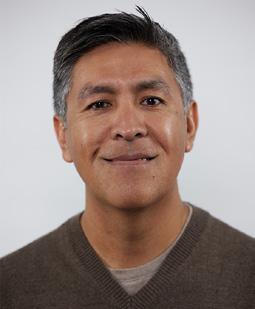
You will also hear from Carlos Ramirez, our own Director of Communications and Strategy here at the Oklahoma Conference. Carlos’ journey to ordained ministry winds from Puebla, Mexico through a law firm, a two-man band and, yes, a bullfighting ring — before landing exactly where God intended. Funny, moving and deeply honest.
Rev. Susan Whitley of Poteau UMC writes about the itinerant life and the complexity of being a clergy couple when appointments change — with grace and vulnerability that will resonate with anyone who has loved a pastor or been one. If your church is receiving a new pastor this year, please read it.
Rev. Josue Araujo, Senior Pastor of First United Methodist Church in downtown Oklahoma City, reminds us that being used by God sometimes looks like keeping your doors open when a storm rolls in — quite literally. His reflection on First Church’s role after the 1995 bombing, and again at last year’s 30th anniversary ceremony, is a testament to faithful, steady presence over decades.
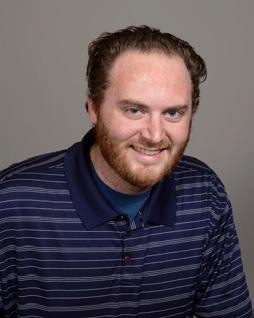
And finally, Rev. Trey Witzel, Associate Pastor at McFarlin UMC, takes us to Baton Rouge, where 96 children, youth and adults spent spring break reroofing homes, hanging drywall and restoring yards. What he witnessed on the last night is a powerful reminder that young people are not just the future of the church. They are already leading it.
These writers gave me something to think about. I hope they do the same for you.
When we listen, God has space to move.
May we all keep listening.
Jenny Herzberger Interim Editor
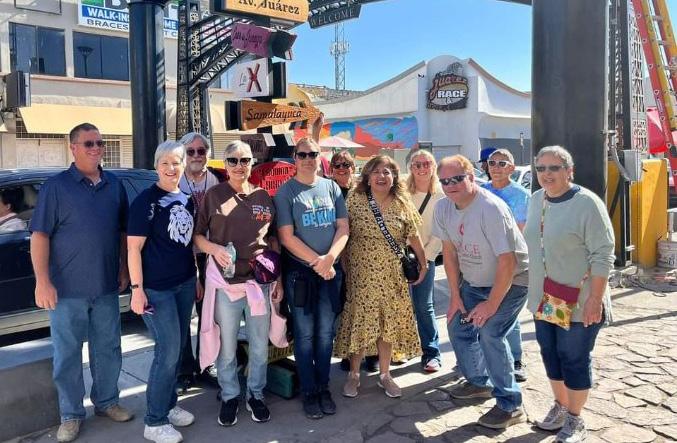
Members from Grace UMC, Inola UMC, Bartlesville UMC, Oak Park UMC and Ochelata UMC were led by Carla and Dena of LPI over the bridge into Juarez. All teams are given the opportunity to “walk in their shoes” and experience a portion of what 95% of LPI students travel to get to school, sometimes for hours in either direction. Photo courtesy of Tim McHugh
Mission work opens the door to transformation – you just have to be willing to walk through it
by Tim McHugh | Associate Pastor of Congregational Care at Grace UMC
There’s a quiet question many people carry, whether they say it out loud or not, “Can God really use me?” Not the perfect version of me, but the real one. The one who is still learning, still growing, still trying to figure things out.
From a Wesleyan perspective, the answer begins with grace.
Long before we ever think about serving, God is already at work in our lives. John Wesley spoke of this as prevenient grace, the grace that goes
before us, drawing us in, preparing our hearts, and reminding us that God is always close. And it’s that grace, not our ability, that makes us usable.
From April 12th to April 19th, members of Grace United Methodist Church, Inola United Methodist Church, Edmond United Methodist Church and one individual who has not yet found a church home will travel to the Lydia Patterson Institute in El Paso, Texas, for a mission experience that is as much about
transformation as it is about service.
Lydia Patterson Institute is a unique ministry of the United Methodist Church, serving students – many of whom cross the U.S.-Mexico border daily – to receive a Christ-centered education and pursue opportunities that might otherwise be out of reach.
For those going on this trip, it is not just about what we will do, but about how we will be changed. Among those going, six individuals have never been on a mission trip before. Many are still new in their faith walk. And that makes this journey even more meaningful.
Some will go looking forward to the work ahead. Some will go with a sense of uncertainty. But all are going with a willingness to say yes, and that willingness is where God begins. For those going on this trip, it is not just about what we will do, but about how we will be changed. As team leader, I will go, not as someone who has it all figured out, but anticipating transformation and a humbling of my own heart.
The truth is, no matter how many times we serve, God always has more to teach us. One of the greatest joys I have in ministry is watching people experience mission for the first time. There’s something powerful that happens when someone moves from hearing about serving to actually living it. You begin to see it in their eyes, hear it in their conversations and witness it as they begin to realize that God isn’t just working through others, He can work through me, too.
Most of what we hear about the border comes through headlines and soundbites, and while there are real challenges, those snapshots rarely tell the full story. Ministry at the border is not an easy issue or something that can be captured in a 30-second clip. It is deeply personal. It is about students, families, educators and communities navigating life with resilience and faith.
When we go to places like El Paso, we don’t encounter a problem to fix, we encounter people to be known. And what we often find is something the news rarely captures – hope, hospitality and a deep sense of community. The reality on the ground is more human and more hopeful than many expect.
One day, after experiencing a chapel service led by the students, we will walk the same route many of them take each morning, crossing the bridge from Juarez, Mexico into El Paso. For some that journey can take hours, especially when public transportation is inconsistent. It is a humbling experience that reminds us how much we often take for granted and how resilient these students truly are.
It changes the way you see the world and yourself. It reminds us that when we move beyond assumptions and into relationships, we begin to see all people through the lens of Jesus.
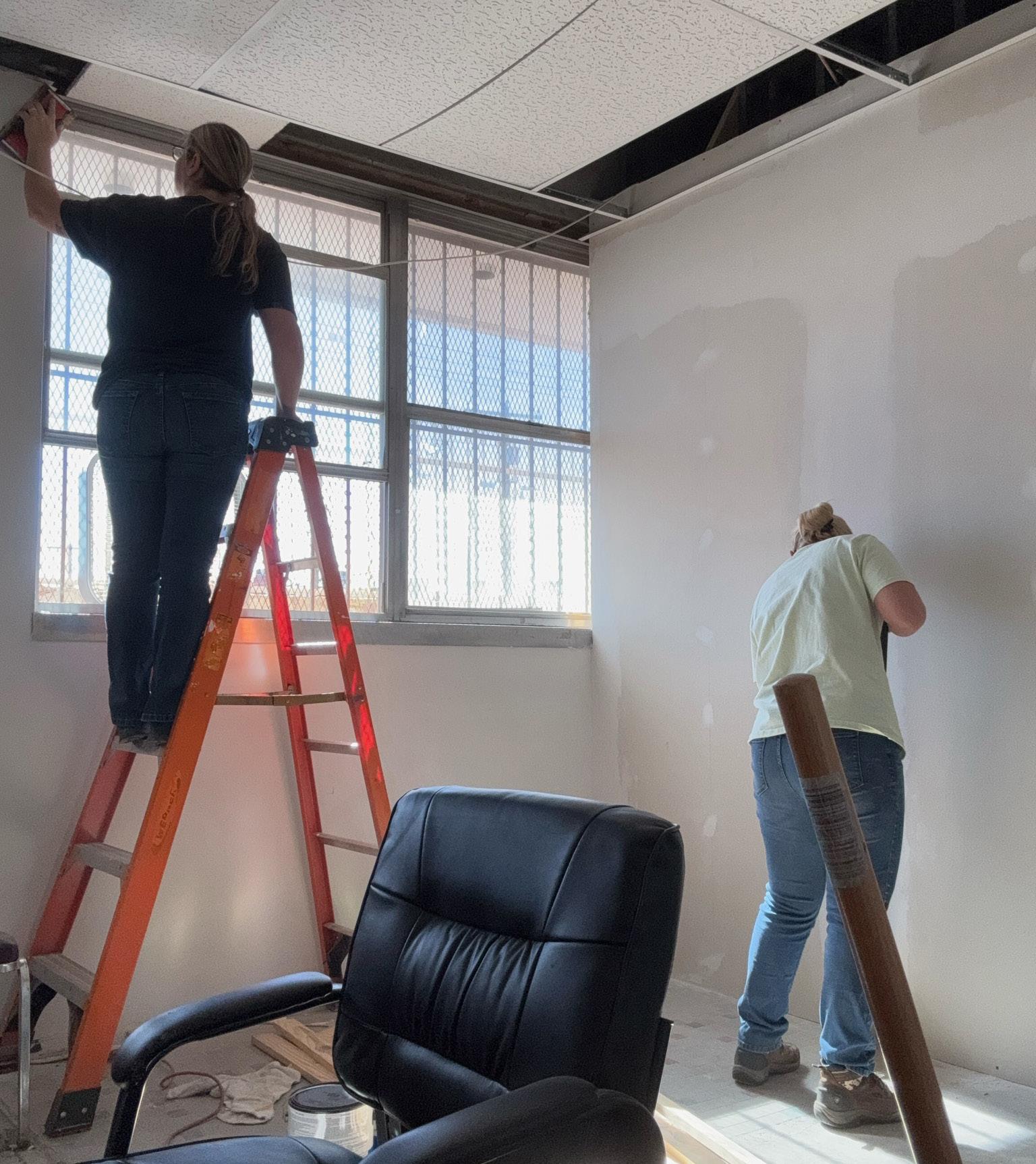
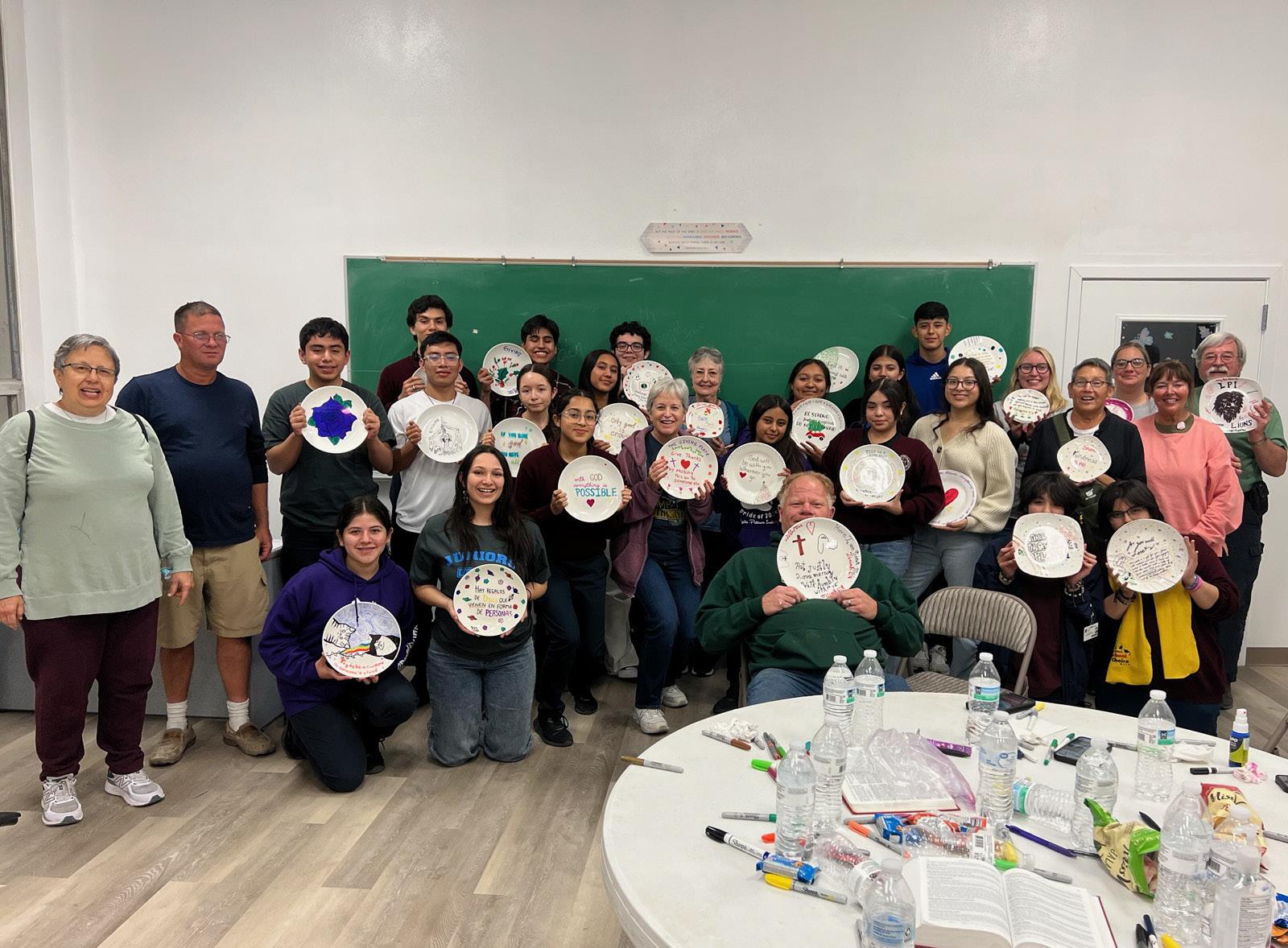
Even within the United States, places like El Paso offer a rich and distinct cultural experience. The language, the traditions, the expressions of faith and even the murals on the sides of buildings all carry meanings and emotions that feel unfamiliar.
But in that unfamiliarity, there is a gift.
Wesley believed that our faith is shaped not only by Scripture, but also by experience. When we step into a different cultural setting, our understanding of God gets bigger. We begin to see that the body of Christ is not confined to one way of worship, one language or one perspective. It is beautifully diverse. It is in that diversity, we are invited not to compare, but to learn.
If there is one posture that makes mission meaningful, it is humility.
Humility reminds us that we are not bringing God to a place where God is absent. God is
already there. We are just invited to meet God at work somewhere else, and in that encounter, we realize God is so much bigger than we imagine. We’ve just been trying to keep Him in our box.
That shift changes everything. It moves us from a mindset of “helping others” to one of walking alongside others. It opens us up to receiving as much as we give, sometimes more. It allows God to shape us in ways we never expected.
In the Wesleyan tradition, faith is never meant to stay still. It is lived out through acts of love, mercy and justice. It is a faith that moves beyond walls, beyond comfort zones and into the world.
Mission experiences like this remind us that God doesn’t call perfect people.
God calls willing people.
People who are open to being shaped. People who are willing to listen. People who are ready to discover that God can use them right where they are.
That movement doesn’t always require a passport. In the Wesleyan tradition, mission begins wherever grace meets need, whether across the border or across the street. Serving within our own churches and communities is no less sacred and often just as transformative.
As our team prepares to travel to El Paso, we pray that we would go humbly, we would see clearly and that we would return changed. Because in the end, the question is not just, ‘Can God use me?’ It is, “Am I willing to say yes?
From bullfighter to pastor, one man’s call to ministry was anything but linear
By Carlos Ramirez, Director of Communications & Strategy at OKUMC
This month’s theme is “So God Can Use Me.” The stories you will read (or have already read), are all about service. I was asked to write about my own story as to how I came to answer God’s calling to ordained ministry.
I think my story is no different than many of your own stories: it is not a straight line from A to B; but a series of turns and twists that has taken me to where I am today in my service to God and the Church.
Like all good stories, mine begins a long time ago, in a country not that far away … Mexico. To be precise, I was born and raised in Puebla Mexico, the 4th largest city in Mexico. My city is located in the center of the country, about a couple of hours southeast of Mexico City.
I was raised also in a peculiar household: my father a Roman Catholic and my mother a third generation Methodist. I was baptized in the Methodist Church, but raised Roman Catholic. I completed catechism and did my first communion. I became an altar boy, and I was even part of a charismatic movement within the Roman Catholic Church called: “Renewal through the Holy Spirit.”
I attended Mass regularly. At one point I remember the priest of my parish asking me if I thought I could be a priest. Now, I was no older than 9 or 10 years old when I was asked this question. However, I remember answering, “maybe.” I stopped my participation with the Roman Catholic Church during my preteen to early teen days. While my mother and I never discussed theological matters, it was clear to me
that I did not agree with certain Roman Catholic doctrines. Primarily, I did not agree with the worship of Mary and/or saints.
For a few years, my presence at church was minimal. During this time, many things happened. I was part of a soccer development team for a major team in Mexico. I was a drummer in a made up two man band. I was a bullfighter –I have pictures to prove it!
However, my maternal grandfather was the VIM coordinator for half of Mexico. Since I knew English, I was asked to help work as an interpreter. These interactions with VIM groups and Methodism, reaffirmed my belief as a protestant.
Needless to say, when I was a teenager, I started to attend my maternal grandparent’s Methodist Church. By the time I was getting close to deciding about college education, I decided that I wanted to be a lawyer. I started to work at a law firm doing odd jobs mostly to be around to learn and earn a place.
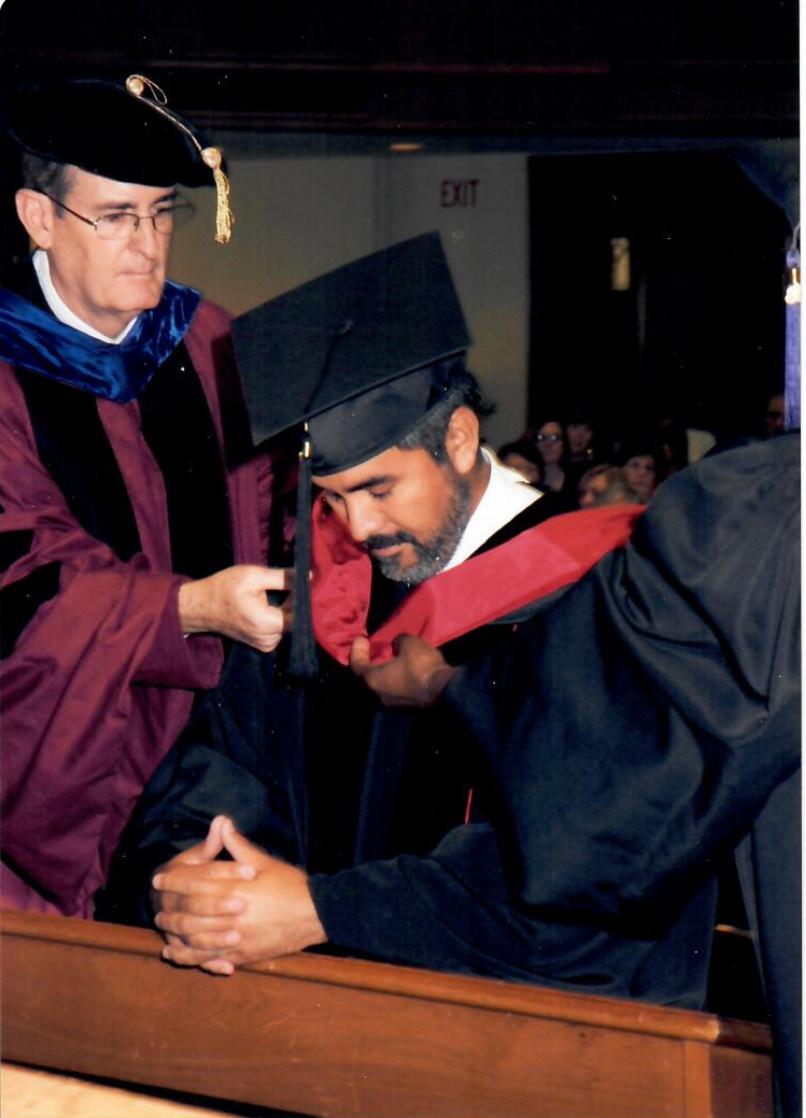
I got a scholarship to attend Law School which I did for a couple of years. My experience, overall, was good. I was learning a lot about the trade. For the most part, I enjoyed my classes at school. Yet, part of me started to be very lonely … as if something was missing.
I did not know what it was. I felt out of place, going through the motions, dreading the future where all I would do is what I was doing then.
Close to that time, I was invited to the Walk to Emmaus. While I was not old enough for the walk, I was invited anyway. That weekend, I asked God to help me clarify my thoughts. I asked for guidance.
I would lie to you if I would say that I heard a voice. All I felt was peace … as if a compass was trying to show me a path ahead.
So, after the weekend retreat, I continued digging into what I had felt. By this time, I was active in the youth group and praise band. Some of the youth, leaders in the church and my pastor started to ask me: have you thought about being a pastor? The question was not a crazy thought, but a continuation of the peace that I felt on the Emmaus retreat.
Consequently, I decided not enroll in Law school and to go to seminary. In August 2000, I arrived at the Methodist Seminary (Dr. Gonzalo Baez Camargo) in Mexico City.
I was very afraid of what the future would hold for me. I was definitely stretching myself beyond what I thought I could.
While I was part of the church the “real church world” was still very foreign to me. Yet, even in my first class I knew I was in the right place.
Three years later, during some workshops done with Perkins School of Theology students, I met Wendi Neal. By the end of 2004, I moved to the United States to marry Wendi, and I started my service at the Oklahoma Annual Conference.
Today, I have served eight different churches –from rural Mexico to rural USA. I have served a church in a county seat and in urban settings. I have also served as a Conference staff in different capacities. Currently I am the Director of Communications and Strategy.
Starting with my first two-point charge appointment in seminary in 2001, I have been in active ministry for 25 years.
God has blessed me and my family with wonderful congregations that have loved (and continue to do so) on all of us. I have not only meaningful memories of all the places I have served, but friendships and relationships that continue until this day.
The turns and the twists have not stopped. I think that is just part of life. The constant throughout my life is God’s presence and guidance. At times the path was not clear. I think I walked the wrong
paths many times. Yet, the lessons learned and the experiences gained have proven to be a blessing.
Let me ask you this question: have you felt that something may be missing in your life? Have you felt you may be missing a higher purpose to serve?
Maybe you are jaded by the routine of life. Have you thought about answering God’s calling?
I am not just referring to ordained ministry. How can you answer that higher calling … the calling to be a hope producer, a peacemaker and love embodied?
It may be that God is calling you to ordained ministry, but maybe God is calling you to be Jesus’ hands and feet right where you already are: in the office, in the school, in the construction site, with your friends or family. I hope you can allow yourself to be guided by God’s Spirit to answer your calling fully.
“Have you felt you may be missing a higher purpose to serve?”
- Carlos Ramirez
The mission field doesn’t require a passport. Right here in Oklahoma, there are people who are hungry, homeless, hurting and hoping someone will show up. The Oklahoma United Methodist Conference is connected to a network of organizations doing transformative work across our state — and every one of them needs willing hands and open hearts.

Focuses on preventing homelessness and providing financial assistance to families in crisis.

Food, clothing and eye care for neighbors in need in Oklahoma City.


Christian healing and hope for children and families through foster care. Neighborhood
Services such as food assistance, early childhood education & support for seniors.
God is already at work in each of these places. Are you ready to join Him?
By Susan Whitley, Poteau UMC Pastor
In the life of a United Methodist pastor, few experiences shape us as deeply or as complexly as moving from one church to another.
The itinerant system, a hallmark of our polity and is rooted in a conviction I have come to know personally: that ministry within the local church is not something I own but rather is entrusted to me for a period of time.
Being sent where my gifts are needed has meant several transitions over the years, and with each move I have encountered both deep joy and real challenge.
Each new appointment has come with gratitude, opportunities and a bittersweet feeling of leaving a congregation with ministries and people I have come to love. Being one half of a clergy couple also meant one of us may move to a different church, while the other remains at the current church. And we may or may not have to move into a new home. It is actually a very complex time.
For me, the hardest part of moving is always the leaving.
I do not just leave a building or a role – I leave people I have come to love deeply. We walked together through baptisms and funerals, celebrations and heartbreaks. Those shared moments create lasting bonds, and saying goodbye carries a real sense of grief.
Often, there is a feeling of leaving things undone. Yet, each transition asks me to trust that God will continue the work we began together. I trust that the Holy Spirit is leading me. When people
express disappointment or dismay at the change, I remind them – and myself – that the same “yes” I said to the new appointment, is the same “yes” that brought me to them some years ago.
However, after 20 years of ministry, I have relationships all over the state with people I love. I have a wonderful ministry colleague who was in the youth group of my very first appointment. There are threads of grace that will always bind us together!
One of the greatest joys in moving to a new church is the opportunity to build new relationships.
Every congregation has its own story, personality and rhythm of life. I find myself learning names, listening to testimonies and being welcomed into sacred moments – hospital rooms, family tables, and everyday conversations.
There is something profoundly meaningful about watching trust grow over time and slowly becoming “their pastor.” Each appointment reminds me that the church is far bigger than any one place I have served. Together, we discover new ways to worship, serve and grow as disciples.
These transitions also affect the pastor’s family in significant ways. If there are children in the home, moving means new schools, new routines and starting over in many areas of life. These changes can be difficult.
Our daughter moved with us once in middle school, and again in high school. We were aware of the loss and uncertainty she carried, and it wasn’t easy either time. While she was resilient, it reminds me that this calling, while meaningful, asks something of all of us.
And yet, through all of it, I have come to see how deeply this way of life has shaped my faith.
Each move becomes part of a larger story—one not centered on my own comfort, but on faithful obedience. I can look back and see how God
has been present in every appointment, in every congregation and in every community.
In the end, moving from church to church within the United Methodist tradition has been both a joy and a sacrifice.
It continually reminds me that I am part of something larger than myself. And through every transition, I hold onto the truth that God goes before me, remains with me and continues to call all of us forward in love and service.
As Whitley said, a new appointment is a time full of both joy and grief. Here are some meaningful and practical ways a congregation can be welcoming and supportive to an incoming pastor and their family:
Offer a warm, personal welcome
Simple gestures – cards, introductions, a welcome reception – help the family feel seen and valued right away. A congregation wearing name tags for a few weeks is so helpful as well.
Respect their transition time
Allow space for the pastor and family to settle in, unpack and adjust before expecting full engagement in every activity.
Assist with practical needs
Provide help with moving in, meals during the first week or guidance on local resources like schools, doctors and grocery stores. Gift cards to local restaurants and fast food places are helpful.
Be mindful of expectations
Avoid comparisons to previous pastors. Give the new pastor freedom to lead in his/her own way.
Pray intentionally
Commit to praying for the pastor and their family as they begin this new chapter.
Support pastors’ children thoughtfully
Help connect them with peers, be sensitive to the challenges of transition and avoid placing unrealistic expectations on them.
Communicate openly and kindly
Share important information about the church’s traditions and rhythms, and approach concerns with grace and patience.
Extend hospitality beyond Sunday
Invitations to meals, community events or casual gatherings can help build relationships more naturally.
Healthy relationships take time. Offering understanding during the early months sets a strong foundation for shared ministry.
Every pastor arrives hoping to find what every person hopes to find –a place to belong.
By Josue Araujo, Senior Pastor at First UMC – OKC
When we hear the phrase “So God can use me,” most of us imagine a big, clear calling – maybe a mission trip across the world or a major career change. We think of the moments where we feel strong, prepared and ready for a challenge.
But if my time at First United Methodist Church in downtown Oklahoma City (First Church) has taught me anything, it’s that being “used by God” often looks a lot more like being open and available for things that are simple, unexpected or even a little uncomfortable.
Sometimes, being used by God is as simple as being the house that stays standing when the storm rolls in.
The events of April 19, 1995, changed our city forever, and they changed our church, too.
On that day, our sanctuary became more than just a place of worship; it became holy ground in a way we never could have planned for. Our buildings sustained heavy damage in the blast, but the physical repairs were only part of the story.
In those moments of unspeakable grief, the church did what it has always been called to do when we tell God we are available: it stood in the gap.
Families walked through our doors carrying an unbearable weight, searching for loved ones who had died in the bombing. In the middle of that darkness, the people of First Church chose to offer refuge, comfort and a steady presence.
Being used by God in 1995 wasn’t about having
all the answers. It was about being there. The same hands that once built this church became hands that comforted, served and eventually helped a city begin to heal.
It was a difficult, heavy season, but it showed us that God uses our presence as much as He uses our words.
That lesson of availability stayed with us. Fast forward thirty years to April 19, 2025. We were honored to serve as the host site for the 30th Anniversary Remembrance Ceremony. The plan was for the ceremony to take place on the sacred grounds of the National Memorial, but severe weather made that impossible at the last minute.
Suddenly, we were asked to move the entire ceremony indoors to our sanctuary. We didn’t have days to prepare for 1,700 guests – we just had a few hours. It was one of those “unexpected and uncomfortable” moments where the only real requirement was to be available.
What unfolded that day was truly sacred. Through every name read and every moment of silence, you could feel the weight of memory and the beauty of our city’s resilience.
By simply being ready to open our doors when the plans changed, we were able to stand beside the Oklahoma City National Memorial & Museum in their incredible work of honoring history. It was a reminder that when we remain faithfully present, God can use us to provide
shelter for others when they need it most.
This year, the calendar brings us to a special milestone. April 19, 2026, marks the 31st anniversary of the bombing, and it happens to fall on a Sunday. Because of that, we are having a community-wide remembrance service at 10:45 am.
It will be a morning where memory and hope sit side-by-side. We are honored to have the Oklahoma Chamber Symphony and The Oklahoma City Chorus performing. Bishop Laura Merrill will be our guest speaker.
Perhaps the most moving part of the service will be the sound of the hand-bells. They will chime 168 times – one for every person who died that day.
It is a slow, steady rhythm that honors their legacy and reminds us that their stories are still being told.
We don’t tell these stories with despair, but with a hope that refuses to be shaken. It is another
way we make ourselves available’ to remember, to honor, and to proclaim that love always has the final word.
Our presence downtown is a testimony to that hope. We are still here. We are still standing, still serving and still shining our light into the world.
If there is anything our story tells, it is this: suffering does not have the final word. Healing through Christ’s love does.
When we pray “So God can use me,” we are essentially asking for the grace to stay put when things get hard and to keep our hearts open when life gets unpredictable.
You don’t have to do something “big” to be used by God this month. You might just need to be a consistent neighbor or a steady friend.
At First Church, we’ve learned that one hour of darkness can lead to years of light. We are honored to keep walking that path with our city, ready for whatever God has for us next.
By Trey Witzel, Associate Pastor at McFarlin UMC
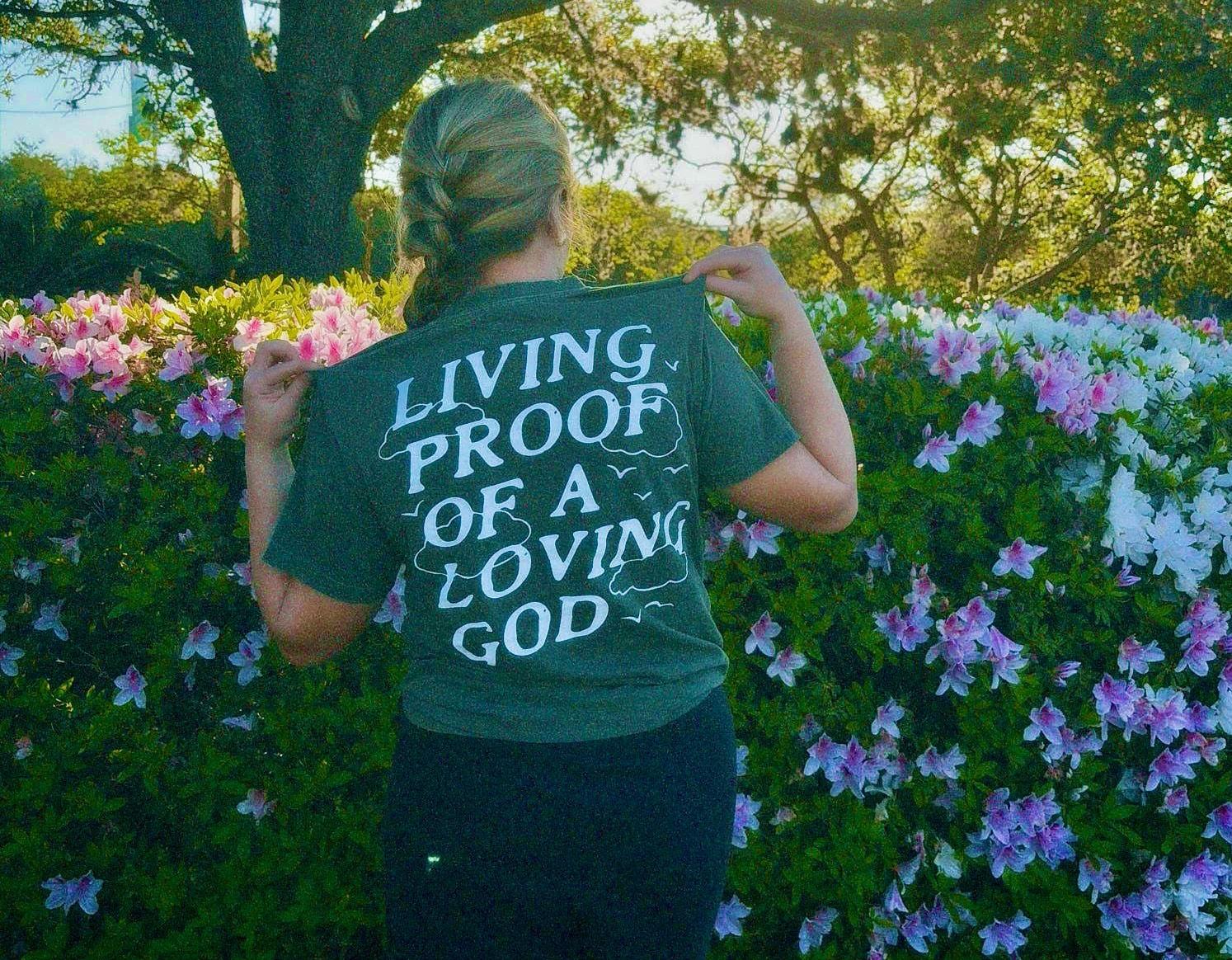
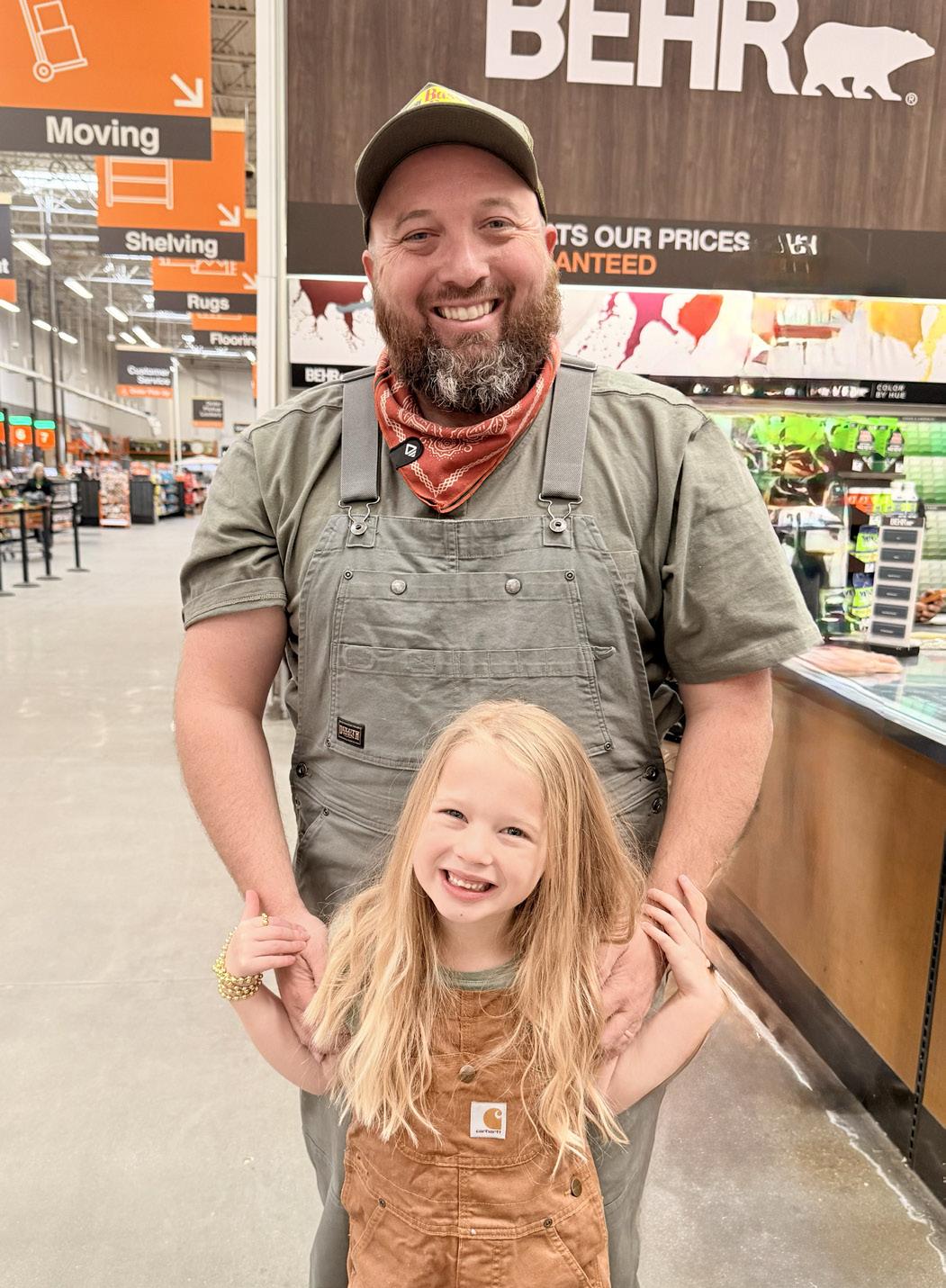
A smile crept across my face as I stood behind a mom and her two kids, reading the back of her trendy Christian sweatshirt.
She had no idea that behind her stood 96 children, youth and adults from Norman, Oklahoma, all quietly pointing and nudging each other because the words on her shirt matched the words on the back of our dark green mission trip shirts.
After spending our entire spring break in Baton Rouge re-roofing and siding homes, hanging drywall and lights, painting and restoring yards, it felt like the perfect “God-wink” to begin the drive home.
There’s no way to name every moment that felt like living proof of a loving God that week.
First United Methodist Church in Baton Rouge opened their doors and helped connect us with homeowners at the last minute. Our teams loved their homeowners, and the homeowners loved them right back. It reminded me of how Paul writes to his churches – his friends in the faith – and tells them that when they care for him, encourage him, pray for him and show up, the weight he carries gets a little lighter.
That’s what loving community does. That kind of refreshment that only comes from serving is a strange kind of truth.
Getting up at 5:30 in the morning to be at Lowe’s when it opens, working until midnight or later, hauling shingles and sheets of OSB and cases of Jarritos all day long – that’s not refreshing on its own. But being with people, and seeing God’s love lived out right in front of you, somehow brings your soul back to life.
Proverbs says it plainly. Those who refresh others will themselves be refreshed. That kind of refreshment isn’t something you can manufacture on your own.
Part of what made this trip hit deeper was that it was my sixth with McFarlin. I’ve known our seniors since before they were confirmed. Watching them grow – not just in what they can do, but in who they are becoming – reminded me that the work of the church still matters.
On the final night of every trip, we have a hand washing service. It’s our way of honoring hands that have worked hard all week, hands that have become prayers through hammers and paintbrushes. One of my great honors is I get to wash the hands of our senior team leaders alongside our High School Youth Director before
they go and wash the hands of their teams.
As the last work team was finishing and the band stood up to lead our closing song, I saw one of our fifth graders walk up to a senior and ask her to pray.
In recent years, we’ve brought an elementary team along. They build dog houses, do yard work, fix bikes. They bring this kind of joy that only kids can bring, and it lets whole families serve together. My first-grade daughter got to be part of it this year, and it’s something I’ll never forget.
That fifth grader and the senior knew each other from children’s choir. One had been led, the other had led.
As they bowed their heads, I realized we had a problem. The senior was our lead singer. The band needed her on stage, but this kid needed her right there on the floor. I caught the eye of a freshman and told her, “She needs to stay. You’re up.”
The band started to play “Gratitude,” and I looked out to see the senior with her arm around that fifth grader, singing and praying together. You could see it on her face. She knew what was happening. Passing something on. Letting someone else step in.
And I remember thinking, that’s it.
That’s living proof of a loving God.