Introducing to market a stunning architectural gem at 2826 Guilford Lane, which offers the perfect blend of luxury, livability and location. Beyond the gorgeous façade of mixed materials including brick, stone and iron, is a grand foyer, showcasing a temperaturecontrolled wine room with floor-to-ceiling glass and an elegant mahogany and iron staircase. The soaring main living area is anchored by a dramatic double-height fireplace, striking designer lighting, and 22-foot ceilings. As the glass walls glide away, the home spills into an expansive 880 sq. ft. MOL of outdoor living equipped with Mirage retractable screens, massive fireplace and an outdoor kitchen.
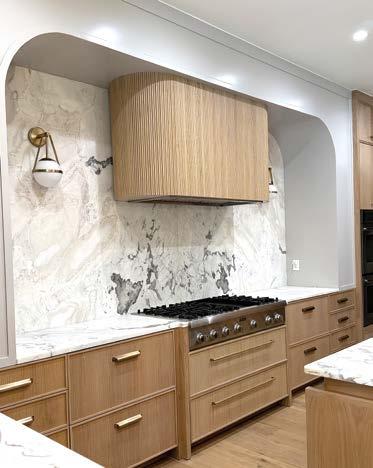
The masterfully designed kitchen elevates your daily routines into an inspiring experience. The kitchen is outfitted with concealed Thermador refrigerator and freezer, double ovens, two dishwashers, built-in Scotsman ice maker (Sonic ice), dual Ruvati workstation sinks, a 60-inch Thermador range, thoughtful lighting, ample and purposeful storage, waterfall island with seating, and dual oversized pantries with endless storage. An additional living area located in the back of the home features bifold doors opening to the patio, speakers, fireplace and safe room. The elegant primary suite blends luxury finishes and functionality, featuring a glass-enclosed shower with separate soaking tub and a customized closet. The 4 bedrooms all have dedicated bathrooms and feature oversized closets, sitting rooms and all hardwood floors.
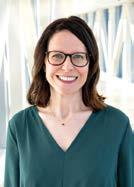
. Executive Dean University of Oklahoma College of Medicine
Ideas and opinions expressed in editorials and feature articles are those of the authors and do not necessarily express the official opinion of the Oklahoma County Medical Society.
President’s Page
ABradley J. Margo, MD
rtificial Intelligence has rapidly emerged as a transformative force in healthcare, reshaping how physicians diagnose, treat, and manage patient care. From predictive analytics to personalized medicine, AI’s integration into healthcare systems is poised to enhance efficiency, accuracy, and accessibility, while addressing some of the industry’s most pressing challenges.
This emergence in healthcare comes from advancements in machine learning, natural language processing, and data analytics. These technologies enable AI models to process vast amounts of medical data. These include electronic health records, imaging scans, lab values, and other relevant data. This all happens faster and more accurately than humans. Health systems and physician practices will also benefit from efficiencies in billings, collections, and claims management. AI algorithms excel at identifying patterns. This is particularly helpful in medical imaging,
such as detecting early-stage cancers or other anomalies with a precision rivaling that of human experts. Physicians will learn to use these models as an adjunct, not as a replacement. Predictive modeling will also aid in forecasting disease outbreaks, patient deterioration, and determining potential interventions.
From an administrative perspective, AI automates repetitive tasks, thereby reducing the need for entry-level redundancies. These tasks include scheduling, billing, coding, and documentation. This helps free
Continues on page
up healthcare professionals to focus on patient care. Imagine a time when we can walk out of a room and our clinic note is transcribed, coded, and already sent off for billing. I believe that day is soon.
Despite the astronomical promises, AI in healthcare faces hurdles. We, the providers, must ensure that data is secure, diagnoses are reliable, and regulations are adhered to. There must be collaboration with tech developers, entrepreneurs, and policymakers. We must be mindful of a wide range of possibilities that force us to think outside the box and accept a future that, believe it or not, could be deflationary. Marc Andreessen, a technology venture capitalist, has described the healthcare sector as one that has resisted deflationary forces of technology due to heavy
regulation and entrenched interests. He strongly believes AI has the potential to lower costs, but only if regulatory and structural barriers are overcome. If the technology sector can innovate freely, prices tend to collapse over time as productivity rises (consider the pricing of your flat-screen TV).
The emergence of AI offers a new era in healthcare. It will provide tools for precision and efficiency, enabling cost-effective possibilities that were previously unavailable. As this technology evolves, physicians will not be replaced; instead, they will be enhanced. These capabilities will create a more personalized and effective patient experience. While this journey is just beginning, AI’s impact will promise to be revolutionary.
Early hospice referrals provide patients and families with more time for comfort, dignity and support.
INTEGRIS Health Hospice enhances the quality of life for those facing terminal illness, whether at home or in our dedicated Hospice House for inpatient care.
Discover the benefits of hospice and palliative care with INTEGRIS Health Hospice. Scan the QR code to learn more.
ON THE COVER
The Bulletin Editorial Team asked our Officers and Board of Directors a few questions so you can get to know the physicians guiding OCMS this year. From professional passions to family, here’s a snapshot of the people leading the way in 2025!
OFFICERS
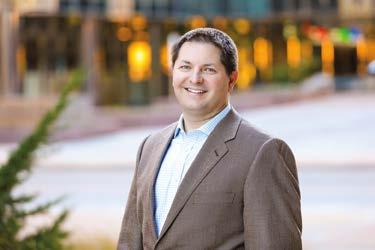
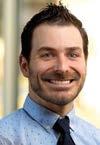
Bradley J. Margo, MD
PRESIDENT
I was exposed to medicine at a young age and was fascinated. Once I realized I enjoyed science, I was sold and never looked back.
Medical Education: University of Oklahoma College of Medicine/2003
Current Practice: Orthopedic Surgeon. Partner at McBride Clinic
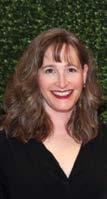
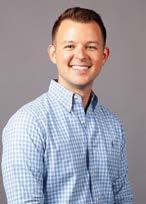
Family: I have been married to my wife Debbie for 25 years. Jake, my oldest, recently graduated from college and works in commercial real estate. Will just started his senior year at OU in economics. Sam is finishing high school at Bishop McGuinness.
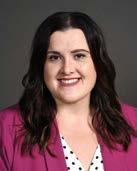
Arielle M. Allen, DO PRESIDENT-ELECT
I went to medical school because that is always what I wanted to do; ever since I was a little girl, I would tell everyone “I’m going to be a doctor someday.” It was just what I was meant to do. I never considered any other possible career.
Medical Education: Oklahoma State University College of Osteopathic Medicine in Tulsa/2005
Current Practice:I own my own privage practice, Urogynecology of Oklahoma.
Family: I am married to the smartest person I know. He is also a physician. We met in medical school and were friends for a long time but didn’t start dating until residency. We have two kids who are awesome and keep us entertained daily.
Pooja Singhal, MD VICE PRESIDENT
I went to medical school to continue nurturing my intellectual curiosity about the human body and using that knowledge to help others, which I believe is my calling. I was also inspired by my father and my grandfather, who made a big difference in their communities serving as Physicians.
Medical Education: University of Oklahoma College of Medicine/2008
Current Practice: I have been practicing Gastroenterology for 13 years and have performed over 13,000 endoscopic procedures. After practicing at one of the largest community hospitals for 8 years,
I founded the Oklahoma Gastro Health and Wellness Center, a physician run medical practice in Oklahoma City.
Family: I met my husband in medical school and have been married for 13 years. We are blessed with a 5 year old boy, Kiaan and an 8 year old pitbull rescue Baloo. We love traveling and are big Thunder fans.
David Korber, MD SECRETARY-TREASURER
I wanted to be an Ophthalmologist since I was 10 years old. I had a great Aunt that worked for an Ophthalmologist and gave me an eye model that started my interest. Unusual start for kid raised on a farm in Kansas.
Medical Education: University of Kansas Medical School /1993
Current Practice: Ophthalmology solo practice - KorberEyecare
Family: I've been married to my wife Lisa for 34 years. We met at University of Kansas and went to Pharmacy School together. My son just began Internal Medicine residency program in Tampa Florida, and my daughter is a 3rd year dental student at OU Dental School.
Matthew Jared, MD
IMMEDIATE PAST PRESIDENT
I actually fought going to medical school for two years in undergrad. I knew I wanted to but tried to convince myself I didn’t want to do all that schooling. Ultimately, I realized that if I was going to work in healthcare, I wanted to be prepared for anything and needed to be trained for it all.
Medical Education: OU Health Sciences Center/2009
Current Practice: I manage a large group of primary care physicians/hospitalists in private practice.
Family: I’ve been married to my high school sweetheart, Katie, for 22 years. She has backed me in everything I do. I owe her a lot, so I play Mahjong with her now. We have 3 kids and our first one moved to college this year. We’re blessed to have our parents living nearby and love having large family celebrations with everyone together.
BOARD OF DIRECTORS
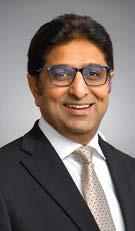
Tauseef Ali, MD
I chose medicine because I wanted to dedicate my career to improving lives through healing, discovery, and compassionate care. The blessing you receive by healing someone is unmatched. The combination of science, service, and leadership in healthcare has always inspired me.
Medical Education: King Edward Medical University, Pakistan/2001
Current Practice: I am a gastroenterologist and Medical Executive Director of SSM Health Digestive Care in St. Anthony Hospital, Oklahoma City, where I also direct the Crohn’s and Colitis Center of Excellence.
Family: I’m grateful for a beautiful and caring wife, three amazing kids, and even our cat who thinks he runs the house. We love traveling, spending time outdoors, and watching movies together.
Alisa Cross, MD
I was drawn in through multiple surgeries as a child, and I loved my doctors.
Medical Education: University of Oklahoma College of Medicine/2006
Current Practice: Trauma Surgeon, OU Health Family: Married to my husband, a Urologic Oncologist, for 12 years. We have two boys 6 and 9. A two-surgeon family, we are thankful we moved to Oklahoma as my parents are retired and watch the boys, plus my only sister lives in Moore.
Betsy Jett, MD
I was looking for a career that would provide a lifetime of intellectual stimulation and learning where I could have a positive impact.
Medical Education: University of Oklahoma College of Medicine/1999
Current Practice: Partner, Oklahoma Radiology Group -- Breast Imaging and Medical Director SSM St. Anthony’s Breast Center.
Family: I have 2 sons, ages 17 and 20. Coulter is currently a junior at OU studying meteorology. Landon is a senior at Heritage Hall planning to study marine biology.
Randal Juengel, MD
I went to medical school because I knew I was wanting to be a doctor since I was 5 years old.
Medical Education: Oral Roberts University SOM/1987
Current Practice: Pathology. Private group contracting to two different healthcare systems. The Pathology Group, LLC
Family: Married for 40+ years. Three children. Soon to be a first-time grandfather.
Robert Leonard, MD
I went to medical school to help other people and increase my understanding of how the human body works.
Medical Education: University of Oklahoma College of Medicine/1992
Current Practice: Private Practice— Retinal Associates of Oklahoma
Family: I have been married for 39 years to my wife, Adrienne. We have two adult daughters.
Amanda Levine, MD
Originally med school was a back-up plan in case I couldn’t find something else that called to me. The pre-med classes were so cutthroat at my university that I realized very quickly I had better be serious about it because that was too much stress for a back-up plan! I thought I would become a pediatrician, but I realized that obstetrics and gynecology was my true calling. I still love delivering babies and doing surgeries!
Medical Education: University of Oklahoma College of Medicine/2001
Current Practice: Mercy Clinic Ob/Gyn.
Family: I have been with my partner Warren for 19 years and have three fantastic kids. The oldest is now in Canada and the two teens are both at Edmond Memorial High School.
Adam McConnell, MD
After learning at a young age that I could no longer pursue my dream of becoming an astronaut due to poor eyesight, I set my sights on becoming a physician. As cliché as it may sound, I wanted a profession that carried meaning and allowed me to help others. This commitment was affirmed when I helped save a youth pastor following a serious trauma during a retreat.
Medical Education: OUHSC/2014
Current Practice: Community-based Family Medicine Practice (SSM Family Medicine Residency)
Family: I reside with my wife, a psychiatrist, along with our two elementary-aged children and the best dog in the world.
Ryan Morgan, DO
My parents bought an Encyclopedia Britannica set from a traveling door-to-door salesman when I was a child. I thumbed through it and became mesmerized by the transparent pages on the muscles. I learned every single muscle that was labeled. Gradually, that built into other medical interests, and the rest is all she wrote.
Medical Education: Oklahoma State University College of Osteopathic Medicine in Tulsa/2012
Current Practice: Co-own and practice at Vitalis Metabolic Health, a metabolic health clinic. Also work part-time as an Internal Medicine Hospitalist.
Family: I’m married to my husband, Bryan Luff, for 5 years. We have two cats and we enjoy traveling. Our favorite non-profit is Positive Tomorrows, and we love volunteering there if we get the chance.
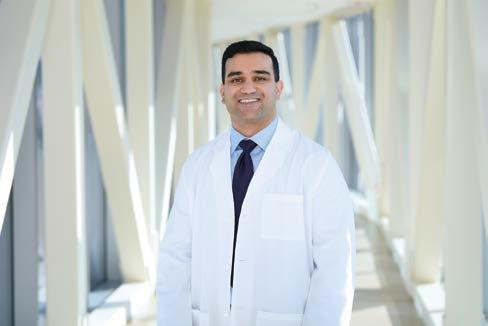
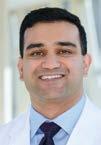
Hakeem Shakir, MD
I went to medical school because I wanted to make a real difference in people's lives when they needed it most. I've always been driven by curiosity and a desire to innovate, which now fuels my work in patient care, research, and program development. At my core, I chose this path to heal, to lead, and to inspire the next generation of physicians.
Medical Education: University of Oklahoma College of Medicine/2011
Current Practice: Endovascular Neurosurgeon at OU Health
Family: My wife, Nabeela, who is the rock of our family, is an endocrinologist at OU. We stay quite busy with our three beautiful children aged 5, 4, and 3. When we are not on call, you will find us trying out a new brunch spot or exploring the science museum.
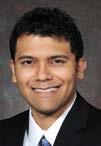
Nigam Sheth MD, FASA
When I was young, I found myself drawn to the biological sciences, to answer the question of what we are and how we function. Medical school gave me the opportunity to explore this curiosity at the highest level. Medicine allowed me to challenge myself, help patients, and serve my community using my knowledge and skills.
Medical Education: University of OklahomaCollege of Medicine/2008
Current Practice: Cardiothoracic Anesthesiologist at Anesthesia Scheduling Services, providing care at multiple major hospitals around Oklahoma for 10 years.
Family: I have been married to my wife, Dr. Pooja Singhal, for over 12 years. Having known each other since medical school, we have been fortunate to go on this journey together. We have a very active 5-year-old son and a lazy rescue dog. We are blessed to be able to share this experience with both of our parents who live close to us.
Mark Shreve, MD
I had an interest in science as an adolescent and desired to pursue a career that would allow me to explore the sciences. I then became highly interested in a career in medicine while studying chemical engineering in college and working in a tissue engineering lab. After volunteering at a local emergency room at the time and interacting with patients and helping any way I could, I then knew being a doctor was definitely what I wanted to do.
Medical Education: University of Oklahoma College of Medicine/2009
Current Practice: Orthopedic hand surgeon at McBride Clinic Orthopedic Hospital
Family: I am married with two children. I enjoy cycling, running, camping and playing the cello.
Irim Yasin, M.D.
I chose the medical profession after watching my dad serve the community as a cardiologist. His depth of knowledge of science always intrigued me. I wanted to help people live better and healthier lives.
Medical Education: University of Oklahoma College of Medicine/2003
Current Practice: Oncology, Integris Cancer Institute of Oklahoma
Family: I am married and have a 9-year-old boy. We enjoy traveling, hiking, skiing and spending time at the lake with friends.
Annual Membership Meeting
33rd Alliance Kitchen Tour Coming In October
2025
Fundraiser Celebrates
The Oklahoma County Medical Society Alliance is pleased to present its 33rd annual Alliance Kitchen Tour on Sunday, October 19, from 11 a.m. to 4 p.m. This wonderful fall event raises funds for organizations that make the OKC community a healthier one.
All tour proceeds are divided and donated to three local nonprofit beneficiaries. This year’s tour benefits HALO Project, Health Alliance for the Uninsured, and OCMS Alliance Community Service.
HALO Project believes there is hope for every child and family to experience healing through connection. They equip families and community partners with proven methods to work toward individual healing and disrupt the cycle of hurt in our community.
Health Alliance for the Uninsured provides access to healthcare services for those who otherwise would be unable to obtain them. They make quality health care available to our vulnerable, under and uninsured.
Alliance Community Service – made possible by OCMS Alliance volunteers – donates funds, goods and service hours to nonprofits located in Oklahoma County. They schedule and complete projects throughout the year.
OCMS Alliance’s 100th
The OCMS Alliance is celebrating their 100-year anniversary and, to commemorate the occasion, Mood Party Rentals has set a beautiful dining room table on the tour, partnering with Beauregard Florals.
“For 100 years, the Alliance has placed community service at the heart of its mission,” said Kristine Palmer, 2025 Alliance Kitchen Tour chairperson. “As we celebrate this milestone anniversary, we also honor the impact our Kitchen Tour fundraiser has made in supporting local nonprofits. We invite the community to join us, celebrate with us, and continue making a difference together by attending this year’s Kitchen Tour. Let’s make this milestone year one to remember.”
The Alliance Kitchen Tour will feature more than five beautiful kitchens. Also, attendees can also enjoy a pop-up shop by Thomas Blonde and a jewelry raffle sponsored by Valerie Naifeh Fine Jewelry inside the homes. In addition, Culinary Kitchen will be offering food demonstrations, tasty samples and all of their kitchen and tabletop goods for sale.
Tickets are available at Culinary Kitchen, located at 7222 N. Western Ave., and online at www.ocmsAlliance.org
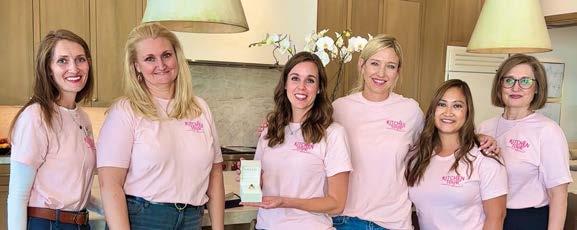
OCMS Alliance members Natasha Neumann, Kristine Palmer, Margo Ward and Misty Peck with representatives (on the two ends) from Peaceful Family Oklahoma, beneficiary of the 2024 Kitchen Tour. (Inset: Jewelry Raffle ring by Valerie Naifeh Fine Jewelry)
Alliance
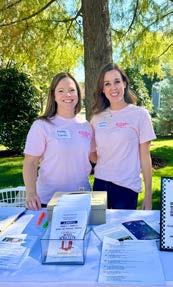
Members Ashley Farrow (2026 Kitchen Tour chair) and Kristine Palmer (2025 Kitchen Tour chair)
TO LOBBY OR NOT TO LOBBY?
By Matthew J. Jared, MD
TThat is the Question.
he last few years we have seen the politics in our country take a significant turn. Everyone has an opinion about President Trump, President Biden or the number of ways international politics affects our country to name a few issues. My daughter is taking Civics this year in high school and already asked me questions about the formation of our government and the two-party system that was initiated over 200 years ago. Having grown up in the U.S., minoring in humanities and government in college and voting in elections regularly due to a sense of civic duty, I sometimes find myself wondering why I am voting for this judge, that County Commissioner or even this Presidential candidate. It’s hard to feel confident in politicians and it’s easy to feel the system is broken. I see physicians frequently fighting against each other on topics in public that would be best discussed in the physicians’ lounge. The divide in our profession over the political issues of our day can be felt in just a few conversations with legislators and lobbyists at the state and national
capitols. But, for all the disenchantment that comes with politics, I hope we also see the potential for us as physicians to be more aligned in our efforts. There are many things lawyers disagree about, but there are several issues they lobby together to change. There are many areas bankers and economists would argue about the country’s debt or job growth, but they frequently lobby as one. Physicians will never agree on everything, even many issues that seem straight forward like prior authorization reform or pharmacy benefit manager reform, each of which will create angst with some. But disagreeing isn’t a reason not to be involved. It’s a reason to be more involved. So then, why don’t we engage a process that often designs the framework of the healthcare system?
Practically, it’s a lot of things. But mostly, it’s that we don’t feel there is enough value in spending our time and money to lobby. I want to take a moment and encourage you to rethink that and look for the value. The value is relationships you will build. Relationships with people who can answer the call when the practice isn’t big enough, the hospital system isn’t big enough or our time isn’t long enough for what healthcare needs. Building relationships takes time and money. Not a lot all at once, but little by little over months and years. Invest some time and a little money as well in
getting to know your elected officials and those running for office. Drop a short note for ideas you know will be important and get together with all physicians to shout the message when the big issues arise. But, don’t stand on the side-line and duck into the hospital without looking around at these things. If you do look around, you’ll see that hospital nurses are lobbying, the hospital executives are lobbying, the personal injury lawyers are lobbying, and the
advanced practice providers are lobbying. Why aren’t you lobbying too? Why do we think people will just accept what two or three vocal physicians say, if we don’t back them up as a group? Support other physicians in their efforts toward change. Step up. Schedule a meeting with government officials and send some money to their campaign. We don’t have to bankroll the whole thing ourselves but show them that their time and their work matter. We wouldn’t go to our favorite restaurant and ask for free samples without ever buying something from them. We don’t cancel Netflix just because the free subscription isn’t permanent. And, we won’t get our legislators’ engagement and support for the issues if all we ever do is tell them to listen but never respond to their request for help. Let’s turn the tide of physician involvement, step out of our comfort zone and give voice to physicians and patient needs the way only we can.
We’re bringing the best of PLICO and MedPro to provide you unparalleled defense, expertise and service. Protect your business, assets and reputation with Oklahoma’s most dynamic healthcare liability solution. Call or visit us online to learn more.
| PLICO.COM
OCMS’s Executive Director Named to AAMSE Board
The American Association of Medical Society Executives, an organization dedicated to educating and supporting medical society professionals, has announced its 2025-26 board.
Among the new board members is Alison Williams, Executive Director of the Oklahoma County Medical Society. With the OCMS, Williams leads a growing physician community in Oklahoma City. With more than 10 years of association management experience, she is committed to the impact of organized medicine on patient care and community health.
A graduate of the AAMSE Leadership Academy, Williams serves on both the AAMSE Annual Meeting Planning Committee and the County CEO Annual Meeting Planning Committee. Originally from rural Oklahoma, she is passionate about creating meaningful member experiences that foster unity and collaboration among physicians.
The American Association of Medical Society Executives is a professional association for more than 1,500 medical society professionals throughout the country. The membership base
of AAMSE is comprised of local, state, and national medical specialty associations. AAMSE has forged a path for medical society professionals to take a leadership role in the field of medical society management and the community of medicine at large through collaboration and sharing of information, tools, and resources.
Touchstone Medical Imaging offers fast and convenient diagnostic imaging at 5 locations in Oklahoma County and surrounding areas, supporting both your practice and patient care.
• In-network with 99% of health insurance plans
• Up to 60% less than hospital imaging
• Same-day and next-day appointment options with extended and weekend hours
• Fast insurance prior authorization assistance for easy scheduling
• Subspecialized radiologists are available for consultation
Edmond 902 S. Bryant Ave. Edmond, OK 73034 p. 405.348.1900
Oklahoma City 4901 N. May Ave., Suite 100 Oklahoma City, OK 73112 p. 405.943.0055
Midwest City 1201 S. Douglas Blvd., Suite E Midwest City, OK 73130 p. 405.736.9222
1751 Garth Brooks Blvd., Suite 105 Yukon, OK 73099 p. 405.350.6860
Norman 2901 Adams Rd. Norman, OK 73069 p. 405.579.1505
Dr. Sanaullah Appointed To State Medical Board
Congratulations to Dr. Muhammad Sanaullah on his appointment by Governor Kevin Stitt to the Oklahoma State Medical Board of Licensure and Supervision. The appointment became effective August 2, 2025.
Dr. Sanaullah becomes the first internationally trained physician to serve on this distinguished board — a groundbreaking achievement that reflects his unwavering dedication to medicine and healthcare advocacy. As CEO of Optimum Care Medical Group, one of Oklahoma’s largest multispecialty physician groups, Dr. Sanaullah is a respected leader, entrepreneur, and champion for patient-centered care across the region.
He served on the Board of Trustees for the Oklahoma State Medical Association representing Oklahoma County and is Secretary of APPNA, continuing to push for progress, equity, and excellence in organized medicine. We are proud to celebrate this milestone and the positive impact Dr. Sanaullah will continue to make on Oklahoma’s healthcare landscape.
Alison Williams BULLETIN
DIRECTOR’S DIALOGUE
Small, Meaningful Actions Add Up To Powerful Change
Microvolunteering is an approach to community action that allows people to contribute quickly and conveniently. Whether you have just a minute or an hour, you can support meaningful activities that build lasting impact. The idea is simple: people can create big change in small increments.
In our office, Rebecca Carr is studying microvolunteering activities that may work best for our member physicians this fall. Something as simple as sharing a post, signing a petition or raising awareness online can make a real difference in the lives of people right here in Oklahoma County. This is the power of microvolunteering—small, meaningful actions that add up to powerful change.
When you share our posts, you’re helping amplify physician voices or advocate for better health policies. This tiny little share strengthens support for our community. Every click, every share, every signature is a way of standing beside local physicians and patients. It might feel small, but to us and to the people we serve, that share is huge. Sometimes, a “small” step can also be a single day of service.
Found a post about our Physician Wellness Program, which offers free, confidential counseling to physicians? Sharing that post is the equivalent of holding a billboard about the importance of mental health for physicians outside a metro hospital.
Each February, physicians from Oklahoma County have a unique chance to make a big impact with just one day of volunteering—as a Doctor of the Day at the Oklahoma State Capitol. In this role, you’ll provide basic, on-site care to legislators and staff, but more importantly, you’ll represent the Oklahoma State Medical Association and OCMS and speak directly with elected officials about issues that affect medicine and patient care across the state. A “small” step with a big impact. February is Oklahoma County Medical Society’s month to shine and we need your help. To volunteer, contact Rebecca Carr at OCMS (rcarr@okcountymed.org).
Big change often begins with small steps. Whether it’s a quick online action or a day at the Capitol, every effort matters and together, we can continue building a stronger, healthier Oklahoma.
TheHSorses& Humans addlement of
By Hanna Saadah, MD
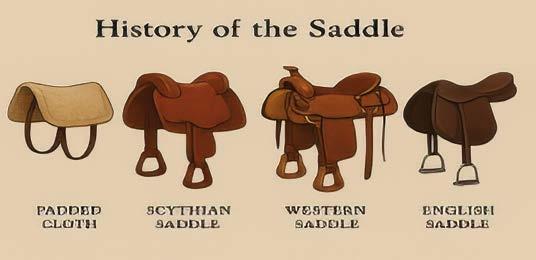
Scythians-Sarmatians developed the first recognizable saddles about 200 BCE. Stirrups revolutionized cavalry tactics about 600 CE. Specialized saddles emerged for jousting, racing, and packing about 1200–1300 CE.
Human saddlement with socialized-language brains occurred about 200,000 years ago and reached large-scale complexity with agriculture and cities about 10,000 years ago.
Sophiastan is a holy Asian region that sprawls atop a mountain between Kazakhstan and Uzbekistan. A foot road spirals around the mountain from base to peak. The climb to the top takes three days. Temples along the spiral road provide food, water, and shelter for pilgrims, at no cost. Hospitality to pilgrims seeking Enlightenment from High Priest Hikmaton, is the main duty of the monks that tend the temples along the spiral road. At the entrance of each temple, the following lines are etched on the massive wooden doors in several languages: Pilgrims, befriend all travelers on the road; They are as good and as bad as you are.
I learned about Sophiastan from a sudden auditory hallucination that awakened me with a siren song, a song that kept re-playing the following three lines in my mind:
Weightless treasures abound in Sophiastan You have been Priest Hikmaton’s chosen man Chosen to visit him in Sophiastan. I could not stop the song from playing. It played relentlessly, regardless of what was happening around me. It intruded upon my sleep and appropriated my attention. I could not find Sophiastan in the world atlas. I was even willing to visit Sophiastan just to stop the song from playing, but I had no idea if Sophiastan was real or virtual.
My dreams never stopped churning. I beheld Sophiastan on the mountaintop and beheld the spiral road. I labored climbing for three days and slept in three temples along the way. When I arrived, I was not exhausted.
In Sophiastan’s midtown plaza, there was a little temple with an open door. I walked in and was overtaken by the profound absence of sound. The abrupt quietude, like sudden darkness when the electricity goes out, frightened me. The hollow silence made me feel deaf. I tried to walk out but the door had closed.
The light that came through the windows did not temper the dreary darkness that permeated my soul. I began feeling short of breath, lost my voice, felt helpless, and believed that I had grown deaf and blind. When my legs could no longer sustain me, I collapsed. As I lay quivering in this eerie state, an inside door opened and a priest, wearing a white hood, approached and sat down next to me on the floor.
“Welcome to Enlightenment,” whispered the priest with a knowing smile. “I am High Priest Hikmaton.”
I was too afraid to respond. My anxious words came out as panting breaths.
“Only the unenlightened few, who know that they are unenlightened, spend the effort to climb up to Sophiastan,” smiled the priest again.
“Oh,” came my astonished response.
“You must be highly educated,” he encouraged.
“I’m a physician,” I nodded.
“The educated confuse education with Enlightenment. You must be humble and
perceptive to realize that, despite your education, you lack Enlightenment.
“The seven pillars of Enlightenment are: a) Humility, b) Compassion, c) Kindness, d) Increasing human joy, e) Reducing human suffering, f) Assessing self-worth while ignoring the opinions of others, and g) Fearlessly confronting unkind, dogmatic beliefs.
“What was it that motivated you, dear traveler, to seek Enlightenment? Were you not at peace?” asked the priest.
Since I had not been at peace, I had trouble holding back my tears but not my words.
“Could you explain Enlightenment?” I stuttered. He paused, peering into my eyes as if to discern if I could endure the answer.
Shakespeare’s Gonzalo in The Tempest emboldened me during that suspenseful moment. I quoted: “My lord Sebastian, the truth you speak doth lack some gentleness and time to speak it in,”
“You are correct, dear traveler. Enlightenment is frightening.”
“Could you explain Enlightenment?” I pled.
After a pensive pause, High Priest Hikmaton replied. “Enlightenment is the abiding love of truth.”
“What truth?” I asked.
“The truth that we, Homo sapiens (Latin for wise Humans), have been saddled with unwise-impatient brains. Humans, astride thousands of years, have behaved as Homo non-sapiens (Latin for unwise Humans). We all belong to an unwise-impatient race. All the other earthly races thrive with species-specific wisdom and patience. We, on the other hand, kill, destroy, pollute, deceive, and damage with our species-specific, unwise-impatient brains. The history of Humanity is a history of unwise impatience.”
“So, understanding that we have been saddled with unwise-impatient brains is where Enlightenment should begin?” I asked.
“Not that simple, dear traveler. Understanding that we cannot abdicate our race, as Walt Whitman had wished he could in his poem, Animals, ‘I think I could turn and live with the animals; they are so placid and self-contained.’
“Our race is our kingdom, and we cannot abdicate our troubled kingdom. The history of Humanity abounds with suffering, poverty, disease, cruelty, aggression, and deceit. Humanity’s unwise-impatient brains have been the conductors of our lamentable history. But let us not forget that poor humanity was excluded from nature; it was denied claws, wings, feathers, gills, fins, hides, hoofs, and tails. With its bare hands, disempowered Humanity had to struggle for survival, and it still does.”
“So, what can we do about our unwise-impatient brains?” I asked.
“We can begin by feeling sorry for our unfortunate-suffering Humanity. Feeling sorry begets compassion. Compassion invites understanding. Understanding tempers blame. Tempering blame diminishes hate. Diminishing hate invites peace.”
I paused and rehearsed what High Priest Hikmaton had just listed. Detecting my hesitation, he asked, “Are you thinking that Enlightenment should not be that simple?”
“Did I travel all the way to Sophiastan just to learn that we are an impatient-unwise-disempowered race—that the seekers of Enlightenment should start by feeling sorry for unfortunate-suffering Humanity that feeling sorry for unfortunate-suffering Humanity begets compassion—that compassion invites understanding—that understanding tempers blame— that tempering blame erases hate—and that erasing hate invites peace?”
“It all sounds simple and beautiful, doesn’t it?” smiled High Priest Hikmaton with gleaming eyes.
“It does.” I agreed. “How come it’s not widely taught?”
“Because Homo sapiens are not saddled with wise-simplifying brains; they are saddled with unwise-complicating brains.”
“Why are we like that?”
“Our lack of wisdom is what causes our lack of understanding—our lack of understanding causes our lack of compassion—and our lack of compassion causes us to blame one another. Blaming is an unhealthy feature of Homo sapiens; a lamentable feature un-shared by the other races; an inauspicious feature that corrupts by promoting hate, anger, aggression, falsehood, and cruelty.”
“Since I cannot change the world, what can I do to help myself?” I inquired.
“You can help yourself by helping your fellow humans—by increasing their joy and reducing their suffering. There is greater joy in giving than in receiving. Insist on joy in everything you do and adopt the arts as your spiritual avocation. Spend time with yourself. Teach yourself to repudiate what others think of you. Your self-worth should be independent of the opinions of others.”
“These measures are very difficult to implement,” I protested.
“Indeed, they are, but they are worth the struggle.”
“Anything else I should learn?” I asked, preparing to leave.
“Yes. Clear your mind of the dogmas of unkind beliefs. Unkind beliefs are ruthless, brain dictators.
Continues on page 26 …
They reject contrary evidence, adopt supportive evidence, disallow debate, clutter your fair thinking, and enslave your mind.”
“Enslave my mind?” I protested.
“Dogmatic, unkind beliefs have enslaved Humanity for millennia and continue to enslave it. Set your mind free by shaking off the shackles of unkind dogmas and unkind beliefs. As the poet John Keats said: ‘The only means of strengthening one’s intelligence is to make up one’s mind about nothing— to let the mind be a thoroughfare for all thoughts.’ ”
“Could you grant me one last, life-changing precept, before I leave?” I pled.
“Indeed, dear traveler. The universe is vast and expanding in an infinitely spreading space. Planet Earth is a mere speck in an unconcerned universe. You are an ephemeral speck on yet another speck. An ephemeral speck upon a speck cannot be important. Your only importance derives from how you impact your fellow humans. Increasing their joy and reducing their suffering is the measure of your worth on Planet Earth.
I waited in silence, hoping for yet another pearl from High Priest Hikmaton’s wisdom.
“One more pearl,” he said, as if he could read my thoughts.
I gasped in surprise, which did not surprise him.
“The necklace of pearls that you have been wishing to wear has to do with your inner self. Always doubt your judgment when you harbor negative thoughts about others. Negative thoughts mean that you have failed to fully understand the suffering of unfortunate others and failed to understand that their suffering is what provokes their unruly behaviors. Profound understanding would replace your negative thoughts with positive compassion. Moreover, profound understanding tempers anger—the electrifying insanity of Humanity, the electric shock that incinerates wisdom and extinguishes kindness. Most angry decisions hit our brains as missiles. Avoid anger as you would avoid electrocution. Outfit
your soul with nonconductive wear that insulates it from anger’s electricity.
“Finally, I will hand you the epitome of life’s virtues, the eleventh commandment from Mount Sophiastan.”
I froze with anticipation.
He gazed into my eyes and whispered: “Be kind; always be kind; know that you’re always wrong when you’re unkind.
“Meister Eckhardt of the thirteenth century taught, ‘For you will have peace to the extent that you have God. Anything that is at peace has God in it to the extent that it is at peace. Thus, you may measure your progress with God by measuring your peace or the lack of it.’
“In Sophiastan my eleventh commandment exchanges Meister Eckhardt’s peace for kindness because kindness begets peace, whereas peace cannot beget kindness.
“To paraphrase Meister Eckhardt: ‘For you will have kindness to the extent that you have God. Anything that is kind has God in it to the extent that it is kind. Thus, you may measure your progress with God by measuring your kindness or the lack of it.’ ”
I thanked High Priest Hikmaton and left Sophiastan feeling uplifted and sky minded. I understood that Enlightenment begins with feeling sorry for our unfortunate-suffering-struggling Humanity. That Enlightenment grows by feeling compassion for our unfortunate-suffering-struggling Humanity and further grows by feeling indiscriminate compassion for all life on Planet Earth.
I understood that Enlightenment entails: deriving more joy from giving than from receiving, not allowing dogmatic unkind beliefs to enslave my mind, not caring about what others think of me, not letting others define my worth, understanding instead of blaming, dedicating time for artistic avocations, believing that other people are as good and as bad as I am, and setting my life’s course to increase joy and reduce suffering of fellow humans and animals.
I also understood Enlightenment as a spiritual elevation that: enhances my brain’s wisdom,
washes off my brain’s unwisdom, and conducts my life with understanding, humility, compassion, reverence for life, and fearless confrontation of unkind, dogmatic beliefs.
High Priest Hikmaton’s eleventh commandment: “Be kind; always be kind; know that you’re always wrong when you’re unkind,” taught me everything that I needed to know about life. I realized that wisdom is kind and patient, that wisdom will not be unkind and impatient. I also realized that kindness is spiritual wisdom.
Whereas Meister Eckhardt preached peace, High Priest Hikmaton exchanged kindness for peace and preached spiritual elevation through kindness;
Back home, I did my research on wisdom. According to High Priest Hikmaton, wisdom is life’s kind energy.
Modhi Gude, MD, MRCP, FACP, FACE
(Former Clinical Professor of Medicine, OUHSC) Access Endocrine, Diabetes & Thyroid Center
(Where Molecular Endocrinology is applied and practiced clinically)
Locations: North 6001 NW 120th Court, Suite 6 Oklahoma City, OK 73162 Phone: 405-728-7329
South 1552 SW 44th Street Oklahoma City, OK 73119 Phone: 405-681-1100
New Patients: Referrals are welcome, by appointment only
Comprehensive Diabetes Care | Obesity, Metabolic and Insulin Resistance Syndromes
Hypoglycemic Syndromes notably Post-Bariatric Surgery and Insulinomas
Thyroid Disorders, mostly Graves’ Disease, Hashimoto’s Disease, Thyroid Cancer and Thyroid Hormone Resistance Syndromes
UG Guided FNA Biopsies of Thyroid Nodules
Pituitary Diseases, notably Incidentalomas, Growth Hormone Deficiency and Hypopituitarism
Adrenal Incidentalomas | Addison’s Disease and Cushing Disease
Rare Endocrine Disorders such as Pituitary Tumors MEN1, MEN2, Acromegaly
Open Monday-Friday 8:30 AM-5:30 PM
I discovered this poignant quotation by William Cowper (1731–1800). The quotation examines the differences between wisdom and knowledge: Knowledge and wisdom, far from being one Have oft-times no connection. Knowledge dwells In heads replete with thoughts of other men; Wisdom in minds attentive to their own.
Knowledge is proud that he has learned so much; Wisdom is humble that he knows no more.
On further contemplation, I realized that wisdom explores the obvious, and that without wisdom the obvious will remain unexplored. “What we think is obvious is so far beyond our comprehension,” said Mirza Ghalib.
Saddled with unwise-impatient brains is perhaps the reason why disempowered Humanity has been unkind, impatient, blind to the obvious, and unable to learn from its lamentable history.
Woe betide the verdicts of our saddlement.
Unexpectedly better urgent care.
Welcome to the exclusive concierge care approach that’s more personalized for true ease and convenience. Now opening locations throughout the metro.
You’re good to go. allseturgentcare.org
STUDENT PERSPECTIVES
The Wee Hours of Deception
BRRING!
I shoot up in bed, my eyes flying open as my heart sinks to my stomach.
My first Friday quiz of the semester! How did I oversleep?! My mind is racing like my feet as I rush to my closet, already thinking of excuses and apologies for my professor.
Weary, I look down at the scrubs I have clutched in my hands. My eyes strain under the harsh lights and my eyebags feel as heavy as they look.
I pause. The blinking green light of my microwave catches my eye–3:43. I turn my head to the window and the glow of the streetlights filter through–the night still reigns. My heartbeat steadies and my breathing slows down.
It’s only Wednesday.
I slowly trudge back to my bed. But the warmth of my slumber has already dissipated, and my pillow looks cold and uninviting.
I chance a glance at my Nespresso machine with its sweet promise of caffeine and my laptop half open from the night before. Resigned, I settle into my desk chair and pull up the paradoxically soothing sound of a heart valve murmur.
Sleep has forsaken me so I shall forsake it.
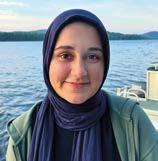
Laiba
Akhtar, MS2
The Difference A Year Makes
As an MS2, things are going better than imagined
We were warned that cardiovascular would hit us like a storm
Fast, relentless, demanding
They were right, but it doesn’t seem so bad
I have learned to move with the wind and the speed of things.
Studying used to be a mountain
Climbing a little bit higher everyday until reaching test day
But now the path is clearer
Clin-med used to be intimidating
But now I talk to patients with ease.
I’m an MS2 mentor now
The MS1s struggle with anatomy
It feels good to guide someone down a path I once stumbled on
The year begins with hope I don’t know what’s ahead, but I am ready to meet it?
Mason Stearman, MS2
The View from Year 2
The transition from our first to second year of medical school has brought its share of challenges, but it has also been a period of remarkable growth. On one hand, we face a new set of expectations. We’re no longer the most junior members of the medical training pipeline, and with that shift comes greater responsibility. On the other hand, we now have a full year to look back on. A year that not only gives us a sense of accomplishment but also allows us to appreciate just how far we’ve come.
PER SPEC TIVES
One of the greatest joys of this stage in training is seeing the pieces start to come together. Concepts that once felt isolated in our first year are now connected to real clinical cases, helping us understand the “why” behind so many decisions physicians make. And just as meaningful has been the community we’ve built. Having people to lean on during a period of such rapid growth and being able to share the highs and lows has been one of the most rewarding parts of medical school so far.
Of course, growth also brings uncertainty. It’s both exhilarating and intimidating to realize that in just two short years, we’ll be making decisions about our future in this field. Yet that uncertainty also opens the door for self-discovery—an opportunity to reflect on what we truly value and to seek purpose in our work. Although each specialty attracts a breath of personality types, I’m realizing there is some truth to the ‘find your people’ adage in medicine.
Sara Menon, MS2
Oklahoma County Medical Society 313 N.E. 50th St., Suite 2
Oklahoma City, OK 73105-1830
Address Service Requested
Serving Physicians Since 1987
At Oklahoma Financial Center, we help physicians safeguard income and assets against malpractice, create tax-efficient strategies, build long-term wealth and retirement security, and protect their family and legacy. From just starting out to nearing retirement, we provide guidance tailored to your stage of practice.