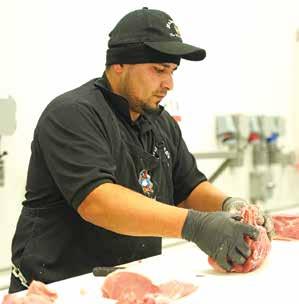
Labour continues to be one of the most pressing challenges facing meat processors across Ontario. Whether you operate a small family-run shop or a larger provincially inspected plant, the struggle to attract, train, and retain skilled people is shaping nearly every decision we make as business owners.
Across the province, promising developments are emerging that support our industry’s labour needs in practical, meaningful ways. The “CareersNOW!” program, delivered in partnership with Food and Beverage Ontario, is helping introduce new entrants to the sector. Through jobmatching, microcredentials, and hands-on learning opportunities, this initiative is giving processors a wider pool of people who are ready and eager to build careers in meat processing.
At the same time, Meat & Poultry Ontario continues to invest in building skills and professionalism through the Centre for Meat Innovation and Technology (CMIT). With short courses in butchery, sanitation, food safety, meat tasting, and plant operations, CMIT is providing operators with training options that are accessible, industry-specific, and immediately applicable on the plant floor.
We are also seeing encouraging momentum from the next generation. MPO’s presence at the Skills Ontario Competition, with live butchery demonstrations and our immersive VR functionality, which continue to spark interest in young people who may have never imagined the meat industry as a career pathway. The growth of Butchery Team Canada, now recognized nationally, is further elevating our trade and inspiring pride in the craft.
There are many reasons to be optimistic. We are building a resilient workforce that supports growth, innovation, and long-term sustainability for Ontario’s meat processing sector.
LVISION
A sustainable, respectful and diverse food system that celebrates the nutritional and economic value of meat and poultry.
MISSION
We strengthen the meat and poultry industry in Ontario by connecting people, influencing change and empowering our members.
MPO LIFETIME MEMBERS
• Scott McQuay (2025)
• Steve Young (2025)
• Carlos Domingos (2023)
• Richard Halenda (2021)
• Doris Valade (2019)
• Laurie Nicol (2018)
• Joe Abate (2017)
• Brian Quinn (2016)
• Graham Dalziel (2015)
Gerhard Metzger Chair
abour is often framed as a shortage of people, but in reality, it is a challenge of alignment. As an industry, we are being asked to adapt faster than ever to new technologies, changing customer expectations, evolving food safety requirements, and shifting demographics; redefining what workplaces must look like to attract and retain talent. The meat sector has always been built on skill, pride, and craftsmanship. Today, it must also be built on clarity, communication, and culture.
Strong workforce development begins in-house. Employees want to understand why their work matters, how their role connects to the bigger picture, and what opportunities exist for them to grow. Leaders who create that clarity through consistent expectations, better onboarding, and day-today coaching see the greatest results.
We need to rethink what modern meat workplaces look like. This includes investing in safer workflows, cleaner environments, more flexible management approaches, and small innovations that reduce fatigue and improve efficiency. These changes are proven recruitment and retention strategies.
As you read this edition, I encourage you to consider one question: What kind of workplace are you building for the people who will carry our industry forward?
At MPO, we want to be an active partner in that process. Whether you’re exploring new HR practices, looking for guidance on employee engagement, or wanting a sounding board as you rethink your labour strategy, we are here to support you. The future of our workforce is something we shape together.
Franco Naccarato, Executive Director
• Tony Facciolo (2011)
• Pat Johnson (2005)
• Gerry Houtzager (2003)
• Leo Rocheleau (2001)
• Jim Vidoczy (2000)
• Nancy Ackert (1997)
• Dr. Ron Usborne (1996)
• Ron Deeth (1995)
MPO LONG TIME MEMBERS
Ontario Pork - 1980
Gord’s Abattoir Inc. - 1982
L’Orignal Packing Ltd. - 1986
Walnut Hill Farm - 1986
MMIS / Mondo Inc. - 1986
VG Meats - 1987
Stemmler Meats - 1988
Darling International Canada Inc. - 1988
Schinkels’ Gourmet Meats
- 1989
Springer’s Meats Inc. - 1989
Chicken Farmers of Ontario
- 1989
Jetnet Norstar Corp. - 1989
Brenner Packers Ltd. - 1991
Norwich Packers Ltd. - 1991
Weston Abattoir Ltd. - 1991
Hay’s Custom Cutting - 1992
Hoffman’s Meats & European Deli - 1992
Newmarket Meat Packers Ltd. - 1992
Handtmann Canada Ltd.1992
Metzger Meat Products1993
Schinkel’s Legacy - 1993
Yes Group Inc. - 1993
Malabar Ingredients - 1994
R Denninger’s Ltd. - 1995
Abate Packers Ltd. - 1996
Domingos Meat Packers Ltd.
- 1996
Sargent Farms Ltd. - 1996
Townsend Butchers Inc.1996
Conestoga Meat Packers Ltd.
- 1997
Pemberton & Associates Inc. - 1998 Mallot Creek (1999)
Canada Compound Company (2000)
CP Industries (2000)
Hela Spice Canada Inc. (2000) Elora Road Meats (2000)
MEAT INDUSTRY ACHIEVEMENT (MIA) AWARD RECIPIENTS
• Neil Weston, Weston’s Abattoir (2025)
• Abate Packers Ltd. (2024)
• King Cole Duck (2021)
• Hayter’s Farm, Dashwood (2016)
• Schinkel’s Legacy, Chatham (2014)
• Conestoga Meat Packers, Breslau (2013)
• In Memory of Dave Tiller (2012)
• Halenda’s Fine Foods, Oshawa (2011)
• Springer’s Meats, Hamilton (2010)
• VG Meats, Simcoe (2009)
• Stemmler’s Meat & Cheese, Heidelberg (2008)
• Leo Rocheleau, Maidstone (2007)
ASSOCIATE MEMBER RECOGNITION AWARD (AMRA) RECIPIENTS
• Klever Equipped Inc. (2025)
• The Yes Group (2024)
• Pemberton & Associates Inc. (2023)
• Farm Credit Canada (2022)
• Viscofan (2021)
• Multivac Canada Inc., Brampton (2020)
• Nick Van Lankveld, OMAFRA (2024)
• Natasha Barlett, OMAFRA (2022)
• Reiser Canada, Burlington (2019)
• VC999, Saint-Germain-deGrantham (2018)
• Handtmann Canada, Waterloo (2017)
• Malabar Super Spice, Burlington (2016)
• Kelly McAslan, OMAFRA (2022)
PAT JOHNSON AWARD THE JOE ABATE COMMUNITY HERO AWARD
• Richard and Ola Halenda of Halenda’s Fine Foods (2025)
• In memoriam to Joe Abate (2024)
Welcome to the Association MPO
Building an informed and engaged membership representing a diverse Ontario meat and poultry industry.
Digistaff
1268 Concession Rd 7 Palgrave, ON L0N1P0
Yashpal Dhaliwal
647-298-4625
lucky@digistaff.ca or yash@digistaff.ca Digistaff.ca
Mosur Machine Co Ltd.
2470 Torbram Road, Unit #7 Mississauga, ON L4T 3Z4
Rafal Rusiniak
416-557-8789
rafal.rusiniak@mosur.com www.mosur.com
Second Harvest
120 The East Mall Etobicoke, ON M8Z5V5
Maureen Kirkpatrick
437-424-3103
maureenk@secondharvest.ca www.secondharvest.ca
BlockTalk is the official publication of the MPO, distributed to over 250 MPO members, commodity groups, and others throughout the industry, providing excellent advertising opportunities for suppliers of the meat and poultry industry to promote their newest, most innovative, supplies, equipment, and technology.
ADMINISTRATION BOARD LISTING
EXECUTIVE DIRECTOR
Franco Naccarato franco@MeatPoultryON.ca
TECHNICAL DIRECTOR
Daphne Nuys-Hall technical@MeatPoultryON.ca
MEMBERSHIP & EVENTS SPECIALIST
Laura Shantz member@MeatPoultryON.ca
EDITOR, BLOCKTALK MAGAZINE
Stacey Newman editor@MeatPoultryON.ca
FOOD SAFETY SYSTEMS SPECIALIST
Baljit Kheeva foodsafety@meatpoultryon.ca
DIRECTOR CMIT
Jim Reynolds cmit@meatpoultryon.ca
MARKET DEVELOPMENT
SPECIALIST
Rob Viveiros connect@meatpoultryon.ca
MARKETING & COMMUNICATIONS SPECIALIST
Hang Nguyen engagement@meatpoultryon.ca
BlockTalk encourages Associate Members and supporters of the industry to submit articles which would be beneficial to our members.
ADVERTISING DEADLINES 2026
Spring January 25
Summer May 3
Fall July 26
Winter October 25
CHAIR | Gerhard Metzger
Metzger Meats, Hensall
VICE-CHAIR | Doug Alexander
Leadbetter Foods Inc., Orillia
PAST CHAIR | Carol Goriup
Florence Meats, Oakville
SECRETARY/TREASURER | Adam Hayward
Nesbitt’s Meat Market, Lindsay
DIRECTOR | Dale Schefter Schefter Poultry Processing Ltd., Gorrie
DIRECTOR | Christine BonneauO’Neill
L’Orignal Packing, L’Orignal
DIRECTOR | Shannon Desborough
Finest Sausage & Meats, Kitchener
DIRECTOR | Rafal Rusiniak
Mosur Machine Co. Ltd., Mississauga
DIRECTOR | Darren Telepanich Domingos Meat Packers Inc., Arthur
DIRECTOR | Mihir Mukherjee Unipac Packaging Products Ltd., Toronto
DIRECTOR | Peter Sanagan Sanagan’s Meat Locker, Toronto
The information published in BlockTalk is compiled from a variety of sources, which we believe to be reliable; however, MPO does not guarantee, and assumes no responsibility for the correctness of the information.
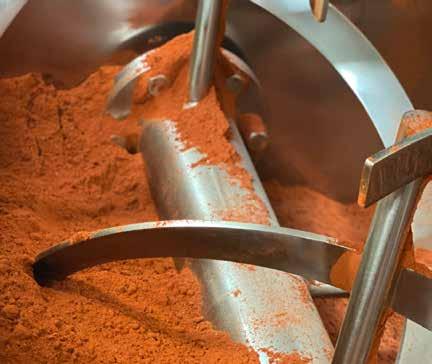
& Seasoning Blends Rubs & Decor Seasonings Brine Injection Units Curing Salt Sausage Seasonings
Sausage Binder Units
Functional Food Ingredients
Custom Blending
CASE STUDY: Conestoga Meats’ Shift from Manual Records to Integrated Digital Operations
By CSB-System Inc.
Conestoga Meats operates out of Breslau, Ontario, where it has grown from a small abattoir into a farmer-owned, vertically integrated pork processor handling more than 9,000 hogs a day. The business began in 1982, processing about 500 hogs daily. In 2001, a group of land-based pork farmers, organized as Progressive Pork Producers Cooperative Inc., purchased the plant to secure control over processing their own animals and the value chain that went with it. Today, the company runs a BRCcertified facility with about 1,400 employees, producing roughly 225 million kilograms of pork annually for grocery retailers, secondary processors, and export markets, including chilled products developed for Asia.
When the cooperative took over, Conestoga’s digital infrastructure was minimal. The plant relied on a single DOS-based accounting system that was near failure, and most processes, such as planning, sales, and production tracking, were done manually. Key tasks depended on individual knowledge rather than standardized systems, limiting Conestoga’s ability to scale and creating exposure to errors and inefficiencies. The cooperative recognized that reliable operational data would be necessary for growth.
Beginning in late 2002, Conestoga searched for a full ERP and MES platform. Many available software options did not support meat-industry fundamentals such as disassembly workflows, livestock payment structures, yield tracking, or catch-weight handling, all of which were essential to Conestoga’s operations. Conestoga selected the CSBSystem because it met these needs and offered modular expansion as the plant grew. Required system features included capturing catch and fixed weights, using cut process trees to calculate yields and product contribution margins, integrating financials, collecting livestock data, and supporting producer payments. Conestoga has continued to expand its use of the system over two decades.
As the company increased its processing volumes, it developed a new, higher-capacity harvest facility. The goal was to automate data capture as much as possible, tracking factors such as hog leanness, pH measurements, deviations, multiple scale weights, and cooler shrink at the individual animal level. After observing similar systems in Europe, Conestoga implemented a process using QRcoded gambrels. Once a hog is hung and its tattoo number is entered at receiving, the system assigns a unique
identifier. QR scanners and integrated hardware capture data throughout the harvest floor, reducing manual entry and input errors. The digital record continues through dressing until the carcass leaves the holding cooler before cutting. These records generate performance feedback for producers, enabling adjustments in genetics, feed, and management based on measurable results.
Conestoga’s IT team uses the ERP as the central operational system. The platform consolidates data streams from hardware and software across the plant into a single source of truth. The company built internal reporting tools by connecting directly to the system database, producing dashboards for sales, production, and finance based on realtime data. It now uses CSB’s Data Warehouse outputs for more customizable reporting across departments.
Quality and traceability requirements are significant for Conestoga’s markets, particularly export customers in Asia. The harvest-floor data program allows the company and its producers to link farm practices to carcass quality using empirical data. Serialization enables case-level inventory control, which is essential for maintaining BRC certification. Conestoga can perform mock recalls in seconds by tracing product from procurement and harvest through serialized cases and combos to the final customer.
With better data, Conestoga uses operational information to support decision-making. The company reviews sales figures, break-even points, contribution margins, and market trends to guide pricing. Cut-tree-based cost calculations
help identify strong and weak products at the item level. Automated sales order entry through EDI connections with major grocery customers reduces manual work and errors. A clearer understanding of costs across the process helps the cooperative remain competitive.
Conestoga plans to continue expanding its digital integration. Potential cut-floor changes may involve directing products to specific lines using automation tools. The company aims to increase visualization and data collection within production. In the near term, Conestoga is transitioning to MERP Android for mobile inventory and picking activities to improve distribution efficiency. After more than 20 years on the platform, the cooperative continues to invest in both the system and the internal capability needed to support it.
For other Ontario meat and poultry processors, several lessons emerge from Conestoga’s experience. Operating at modern volumes is difficult without integrated digital systems, and industry-specific ERP capabilities such as catch-weight handling, livestock payment functions, and disassembly-oriented production logic are critical. Carcass-level data capture, serialization, and centralized reporting support both quality management and audit readiness. Treating the ERP as core plant infrastructure, rather than an accounting tool, enables real-time analysis that guides pricing, product mix, and operational decisions. Conestoga’s approach shows the importance of building a comprehensive data trail from incoming livestock to finished goods and maintaining it as the operation evolves.
INTRODUCING THE NEW FOOD SAFETY EXCELLENCE TOOL
Food Safety Builds Trust
Practical guidance to help processors strengthen compliance, credibility, and confidence.
Provincially licensed processors in Ontario can receive up to $30K in Implementation Support to bring improvements to life.
MPO AWARDS GALA 2025
Meat & Poultry Ontario (MPO) proudly marked a remarkable milestone this year, 45 years of serving and supporting Ontario’s meat and poultry sector. The celebration reached its peak on October 25, when MPO members, and friends gathered at Blue Mountain for the annual MPO Awards Gala.
The Awards Gala brings together the people and families who make up the heart of our association. It’s a night dedicated to recognizing those whose leadership, innovation, and commitment continue to shape the future of our industry.
This year’s celebration was especially meaningful, honouring both our proud history and the individuals and companies who have helped build the strong foundation MPO stands on today.
Congratulations to this year’s award recipients.
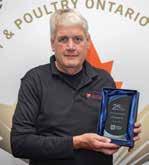
Lifetime Achievement Award – Steve Young (The Yes Group) and Scott McQuay (Viscofan)
Meat Industry Achievement Award –Neil Weston (Weston Abattoir Ltd.)
Associate Member Recognition Award –Klever Equipped Inc.
In addition to these honours, MPO recognized several long-standing members for their continued dedication.
From the MPO team, a heartfelt thank-you to everyone who joined us to celebrate this milestone year. Your support, collaboration, and commitment make MPO the strong, vibrant community it is today, and we look forward to many more years of growing together.
Klever Equipped Inc., Viscofan, and Foodcon
Joe Abate Community Hero Award – Richard and Ola Halenda (Halenda’s Fine Foods)
Canada Compound Company, CP Industries, Elora Road Meats, and Hela Spice Canada Inc.
AT MEATING PLACE 2025
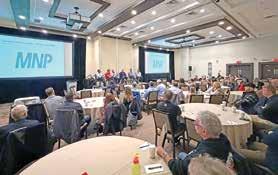
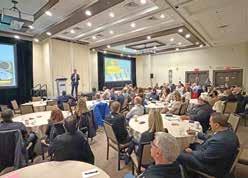
October 24-25, 2025, was more than just a date on the calendar - it was a celebration of 45 remarkable years of Meat & Poultry Ontario’s commitment to innovation, community, and excellence. Over two dynamic days, Meat & Poultry Ontario (MPO) and more than 250 entrepreneurs, leaders, and innovators from across the province came together to connect, learn, and celebrate the future of Ontario’s meat and poultry sector.
The Meating Place Conference 2025 was a great success, showcasing the vibrant TableTalk with more than 30 companies exhibiting, and the lively Handtmann Networking Reception, where attendees not only forged new connections but also tuned in to cheer on the Blue Jays!
Participants also had the opportunity to take part in insightful educational sessions featuring keynote speaker Dr. Sylvain Charlebois, Visiting Professor at McGill University, along with John Galbraith of The Data Integrators, Trevor MacLean and the Koskamp family of MNP, and a Food Safety Project update from ACER Consulting.
A highlight of the event was witnessing the thrilling finale of Ontario’s Finest Butcher Competition, followed by the celebration of excellence at the highly anticipated MPO Awards Gala.
MPO extends sincere thanks to our members, sponsors and speakers for their passion and support in making this milestone event a success. Together, we continue to strengthen and advance Ontario’s meat and poultry industry.
Thank you to our Diamond and Platinum Supporters
ONTARIO SHEEP FARMERS PRESENTS
LAMB CARCASS GRADING WORKSHOP
Turn knowledge into profit!
For processors and butchers wanting to learn gradin g standards and how to grade lambs to confidently deliver the product customers expect.
Limited seats. Register on our website by January 1 6.
Free grading knife with every registration.
JANUARY 29, 2026 | UNIVERSITY OF GUELPH | $300
10 AM - 2 PM
LUNCH AND COFFEE BREAK INCLUDED
Ontario’s Ultimate
THE BEST OF ONTARIO’S BURGERS SHINE AT THE
2025 ULTIMATE BURGER COMPETITION
Meat & Poultry Ontario (MPO) revealed the champions of its Ontario’s Ultimate Burger Competition on Saturday, October 25, at the Awards Gala in Blue Mountain.
This year’s contest brought together some of the most creative and flavourful burger innovations from across the province. Each entry showcased the remarkable skill, passion, and imagination thriving within Ontario’s meat and poultry industry.
A panel of culinary experts and industry judged the entries based on taste, aroma, texture, uniqueness, and visual appeal, resulting in a line-up of truly mouth-watering winners.
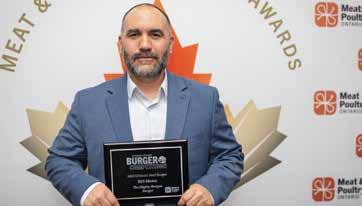
The prestigious title of Ontario’s Ultimate Burger 2025 was awarded to R. Denninger’s Ltd. for their outstanding Lamb Burger, which earned the highest overall score among all entries. With its bold flavour profile and expert execution, R. Denninger’s creation stood out as a perfect balance of craftsmanship and creativity.
Ontario’s Ultimate Burger
Lamb Burger R. Denninger’s Ltd.
This year’s competition was proudly supported by ERB Transport Ltd. and Fanshawe College. Thank you for your continued commitment to advancing Ontario’s meat and poultry industry.
Ultimate Beef Burger
The Mighty Bengus Burger
B.J.S Meats
Ultimate Poultry Burger
Jalapeño Cheddar Turkey Burger Hayter’s Farm
Ultimate Anything Goes
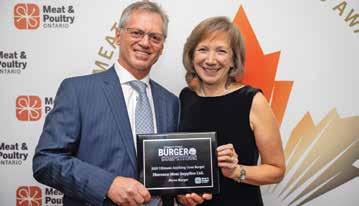
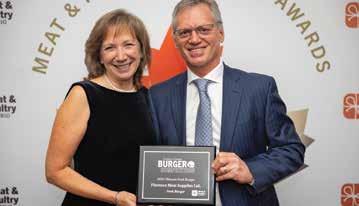
Ferra Burger
Florence Meats
A Taste of Ontario’s Excellence
Ultimate Pork Burger Pork Burger
Ultimate Lamb Burger
Lamb Burger
R. Denninger’s Ltd.
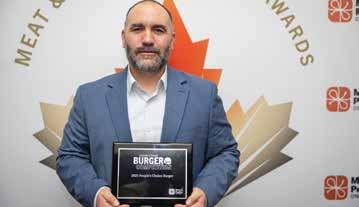
Ultimate People’s Choice
The Mighty Lamb Burger
B.J.S Meats
Every other year, the Ontario’s Ultimate Burger Competition challenges butchers, processors, and producers to push the boundaries of flavour and creativity. The event not only showcases the best burgers in Ontario but also celebrates the dedication and ingenuity that define our industry.
We extend our sincere thanks to the distinguished panel of judges whose expertise and passion elevated this year’s competition: Ted Reader, Alexa Clark, Nithya Caleb, Emily Richards, Chef Maurice Desharnais, Sabrina Falone, and Chef Tina Marar.
Florence Meats
ONTARIO’S FINEST BUTCHER COMPETITION
CROWNS ITS 2025 WINNER
Ontario’s Finest Butcher Competition brings together the province’s most skilled butchers to showcase their artistry, precision, and dedication to the craft. This year’s final round crowned a new champion who embodies the very best of Ontario’s butchery talent.
The grand finale, held at Blue Mountain Conference Centre during the Meating Place Conference 2025, shone a spotlight on the exceptional skill, creativity, and professionalism that define Ontario’s butchery craft.
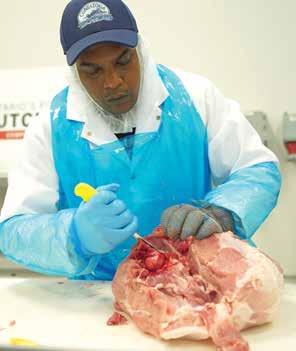
This year’s competition brought together 13 of Ontario’s most skilled butchers in a thrilling elimination round earlier in the year. Through multiple demanding challenges testing speed, technique, and artistry, the field was narrowed down to three outstanding finalists:
• Sulaiman Hakimi – Halenda’s Fine Foods
• Rakesh Khadoo – Conestoga Meat Packers Ltd.
• Dylan Miedema – Townsend Butchers Inc.
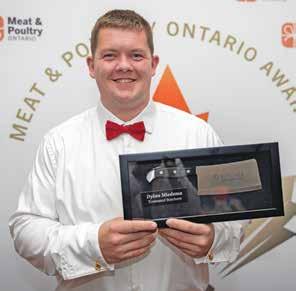
After an intense final round, Dylan Miedema of Townsend Butchers Inc. has been crowned Ontario’s Finest Butcher for 2025.
WINNER
Dylan Miedema, Townsend Butchers Inc.
Rakesh Khadoo Conestoga Meat Packers Ltd.
Sulaiman Hakimi Halenda’s Fine Foods
A Decade in the Making
With over a decade of hands-on experience at Townsend Butchers in Simcoe, Ontario, Miedema’s journey began at just 16 years old. His passion and dedication also took him abroad as one of three young Canadian butchers representing Junior Team Canada at the World Butcher Challenge in Paris, France. This experience further honed his skill and confidence, shaping him into the craftsman he is today.
Skill, Focus, and Creativity
The final challenge tested not only technical ability but also creativity under pressure. Each finalist was tasked with transforming three surprise proteins into a “Festive Family Feast” display, all within 45 minutes.
Judges evaluated contestants on presentation, precision, and innovation, and Miedema’s calm focus and methodical approach stood out to the panel.
The products for the final round were generously donated by Norwich Packers Ltd., Newmarket Meat Packers Ltd., and Hayter’s Farm, with pantry items supplied by Malabar Ingredients.
Honouring Ontario’s Butchery Excellence
Now in its 12th year, the Ontario’s Finest Butcher Competition continues to celebrate the artistry, skill, and pride that define the province’s meat industry. It’s more than a contest. It’s a platform to showcase craftsmanship, foster mentorship, and inspire the next generation of Ontario butchers.
COMPETITION PARTNERS
A special thank-you goes to this year’s judges: John Baker of Ontario’s Corn Fed Beef, Steivan Canclini of Reiser Canada, Stefan Seher of Handtmann Ltd., Troy Spicer of Fanshawe College, and Damian Goriup of Florence Meats, for their time, expertise, and commitment to upholding the highest standards of butchery excellence.
Couldn’t make it to the finale?
Watch the full livestream on MPO Facebook page:
Consumers are Returning to Traditional Proteins, says 2026 Trends Report
By Stacey Newman
Anew national trend report says consumers across North America are turning away from engineered protein substitutes and moving decisively back toward traditional meat. For Canada’s meat and poultry sector, the findings reinforce what many processors have seen firsthand: plant-based momentum has stalled, and demand for real protein is strengthening. The Return of Real: 2026 Trend Report from Nourish Food Marketing argues that consumers are rejecting ultra-processed alternatives that were marketed as improvements but failed to deliver on taste, texture or nutritional performance. Plant-based meat analogues are described as “overly engineered products” that did not meet expectations, and the report states that the return to “real ingredients and traditional proteins” is underway.
The data points to a clear directional shift. Consumer interest in protein is growing three times faster in the meat category than in plant-based options. Projections for rising American meat consumption further signal where demand is heading in the region. For Canadian processors selling into an integrated North American market, these signals matter.
The report places this protein shift within a broader consumer move toward authenticity. Shoppers are favouring foods that show natural variation and visible human involvement, and they are responding negatively to products that look overly polished or manipulated. That preference benefits conventional meat and poultry, where irregularities are normal, and ingredient lists tend to be short and familiar.
The analysis also notes eroding trust in the food system. Research cited in the report shows Canadians now trust food imported from other countries more than food imported from the United States, a reversal from just two years ago. The report ties this to rising concern about transparency and the politicization of food issues. For meat and poultry processors, it’s a warning: trust is fragile, and transparency is no longer optional.
The report documents a growing appreciation for imperfect food, the kind that looks like it came from a farm rather than a design studio. Retailers and brands are already capitalizing on this by elevating “imperfect” produce and meat cut irregularities. For meat processors, the trend could support better carcass utilization and help normalize variability in appearance.
Consumers are pushing back against artificial perfection, engineered substitutes and ultra-processed claims. They are choosing real ingredients, traditional proteins and straightforward production practices.
For Canada’s meat and poultry industry, that’s a favourable landscape. The report’s bottom line is blunt: reality is winning, and traditional meat aligns with what consumers now value most.
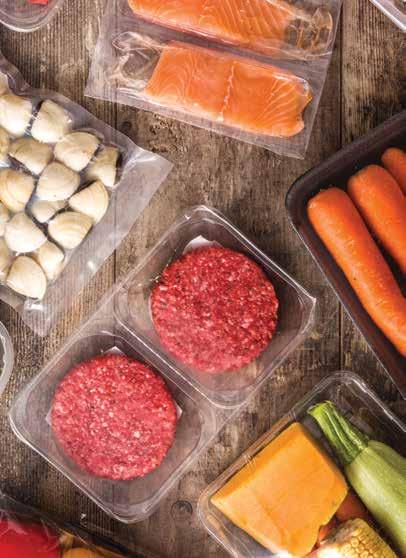
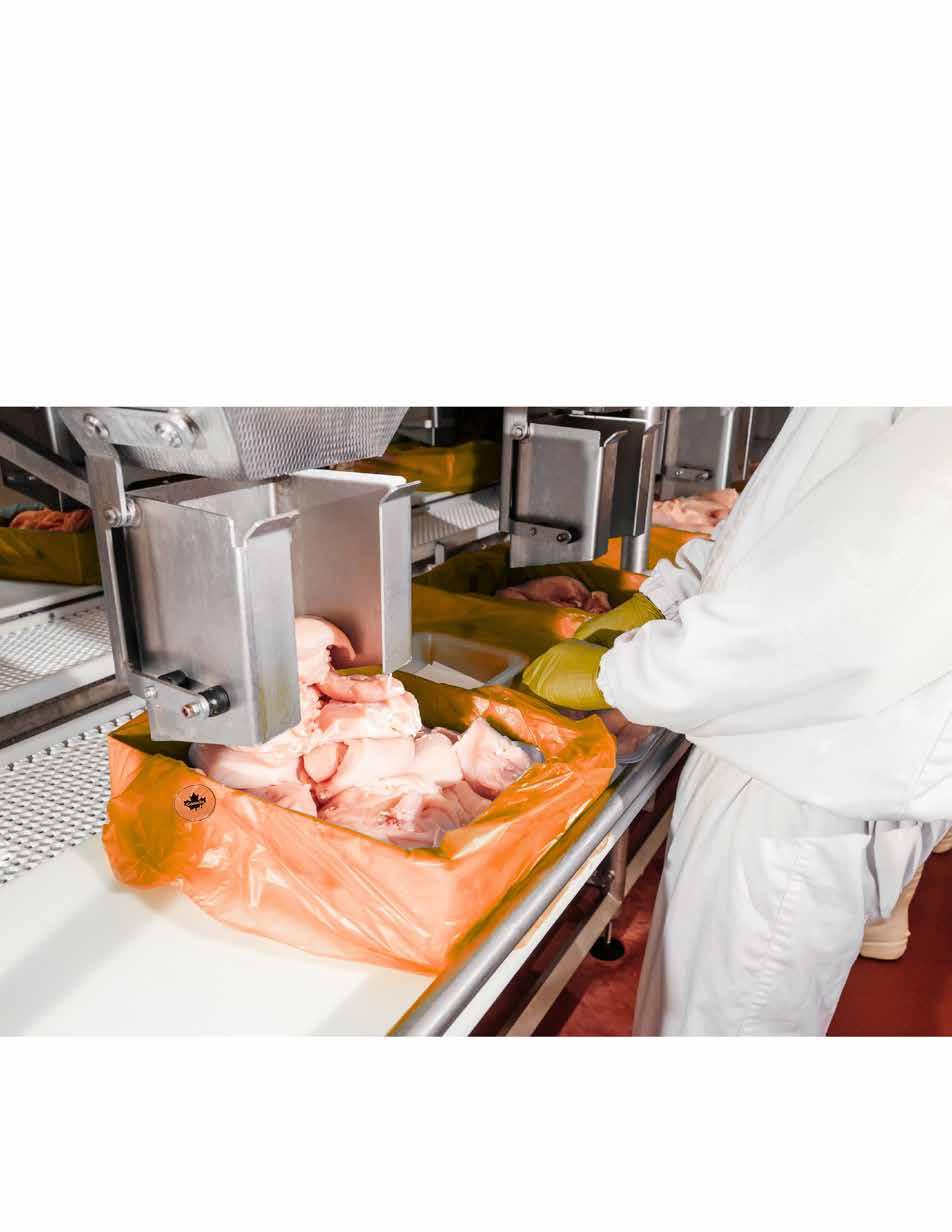
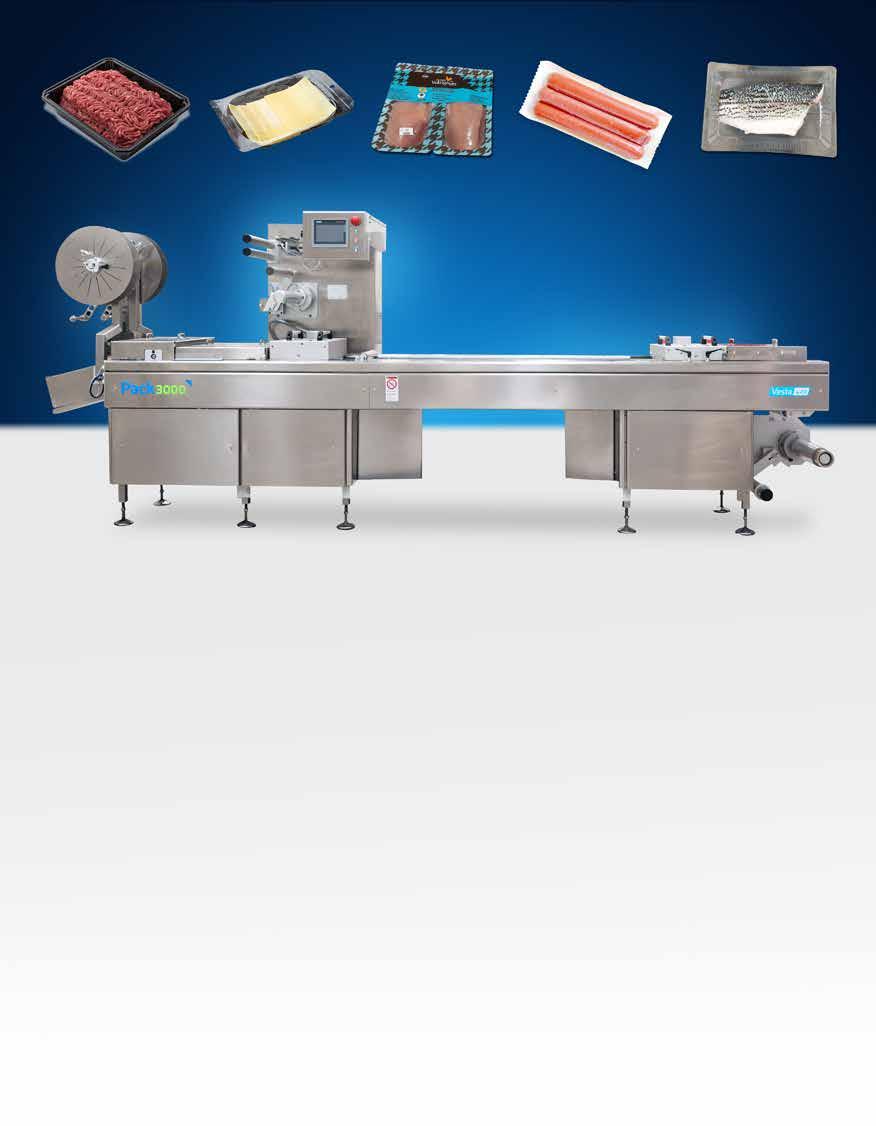
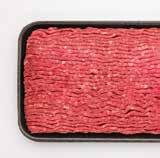
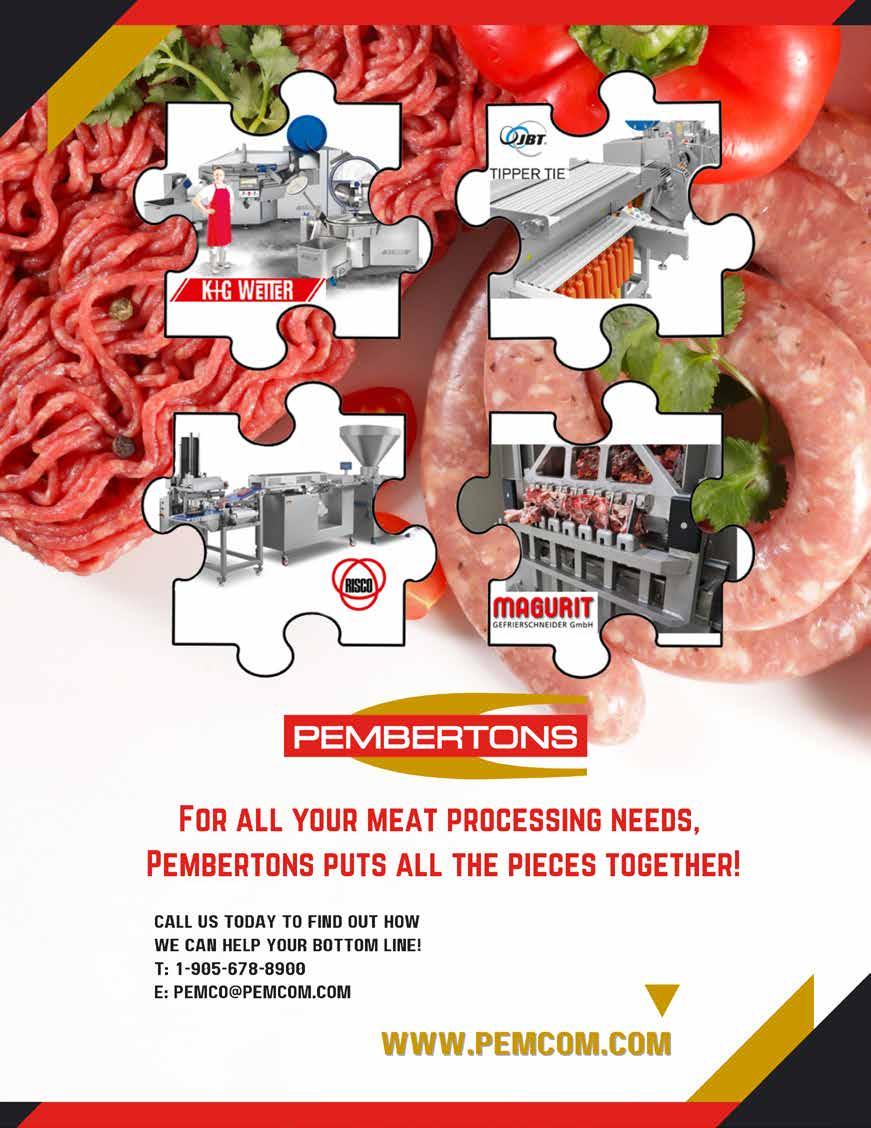
RISCO Ground Beef Systems are designed for producing ground meat from various sources such as beef, pork, chicken, and turkey, ensuring uniform portions for further processing.
One of the key features is the ability to portion and deposit the ground meat directly into trays without manual intervention by the operator. Tray loaders automate the loading of trays, reduce manual labor and speed up the production line. Combining these components creates a streamlined ground meat production system that meets quality standards and enhances productivity. RISCO’s commitment to innovation and efficiency makes them a reliable choice for industrial meat processing. Scan
Building Stability in a Tightening Labour Market
How Immigration Consultant Daria Grabchuk Helps Ontario Processors Turn Workers into Permanent Residents
By Stacey Newman
Ontario’s meat and poultry processors, butcher shops and further-processing facilities continue to face persistent labour shortages. Plants rely heavily on temporary foreign workers, but temporary status creates turnover, recurring Labour Market Impact Assessment (LMIA) cycles and workforce instability. This creates a constant strain on production, food safety and shift continuity.
Immigration consultant Daria Grabchuk, founder of Welcome to Canada Immigration Consulting Inc., has built her practice around solving that problem. She launched her firm in December 2020 and began practising in January 2021, focusing on helping processors retain the workers they already have by guiding them toward permanent residency.
Grabchuk’s value to the sector is shaped by where she started. After arriving in Canada in 2008 from Kherson, Ukraine, she worked at Richard & Sons and Halenda’s Fine Foods, experiences that gave her a practical understanding of how production plants operate, what managers are up against and how disruptive worker turnover can be.
Because she understands the environment firsthand, her work centres on designing immigration strategies that match real operational demands. She specializes in employer-supported immigration pathways, particularly the Ontario Immigrant Nominee Program (OINP), the Canadian Experience Class (CEC) through the federal Express Entry system and LMIA planning paired with permanent-residency transitions. She also supports employers with Rural Community Immigration Pilot (RCIP) applications and monitors developments around future agri-food immigration pathways.
Her emphasis is on building structured, realistic workto-permanent-residency roadmaps that reduce turnover and improve stability. These pathways include aligning National Occupational Classification (NOC) codes, duties, wages and job offers with both employer needs and federal requirements. For many plants, especially small and midsized ones that cannot absorb constant turnover, the impact
is immediate. Workers who see a clear path to staying in Canada are more likely to remain with the employer long term.
Grabchuk notes that processing facilities have an advantage in Ontario that many employers overlook: the OINP Employer Job Offer streams do not require employers to pay a provincial fee. As long as eligibility requirements are met, the worker pays their own nomination fee. This makes permanent-residency support financially accessible for processors that assume the opposite.
Retention benefits are built into these programs. When an employer supports a worker through OINP or CEC, the employee typically commits to remaining in their role for the duration of the process, giving plants two to four years of workforce predictability while reducing the need for multiple LMIA extensions.
This stability flows through the operation: improved safety, stronger quality assurance, more consistent attendance and less pressure on recruitment. As Grabchuk describes it, when employers invest in helping a worker stay in Canada, the worker invests back in the workplace.
Federal Priorities Are Shifting
But while the pathways exist, the environment around them is becoming more difficult. Permanent-resident admission levels are holding steady, not expanding, and federal priorities now include reducing the overall temporary
population. Programs fill quickly, pilots close and provincial criteria change with little notice. For processors that plan labour years at a time, this unpredictability creates risk.
From Grabchuk’s perspective, one of the system’s ongoing weaknesses is that many immigration pathways still reward perfect documentation over demonstrated Canadian work experience—an issue that especially affects long-serving plant workers. She argues that more predictable, practical pathways for in-Canada workers would reduce turnover across the sector.
When asked what change would most help processors, she points to the need for a trusted-employer model for the agri-food and processing sector. This would include multi-year approvals, streamlined steps between LMIA and provincial nominations, and a clearly defined path to permanent residency for priority production roles. Her view is that such measures would reward compliant employers, reduce worker churn and help stabilize plant operations.
Compliance is a central part of Grabchuk’s practice. As a licensed Regulated Canadian Immigration Consultant –Immigration and Refugee Board (RCIC-IRB), she stresses that accurate, audit-ready documentation protects both employers and workers. She supports processors by preparing employer forms, job offers, consistency checks and document packages that meet Immigration, Refugees and Citizenship Canada (IRCC) and Employment and Social Development Canada (ESDC) expectations. Her role, as she describes it, is to lighten the administrative load without compromising accuracy.
She puts it plainly: “Integrity is the only strategy that lasts.”
Her clients include Ontario processors, especially small and mid-sized operations, that want a compliant and repeatable way to hire and retain staff, as well as individuals and families in Canada ready to convert their Canadian work experience into permanent residency. She stresses that the strongest results happen when employer and worker are supported in tandem from the start.
For Grabchuk, being an associate member of Meat & Poultry Ontario (MPO) is directly tied to supporting the sector’s workforce needs. As she puts it, membership “connects processors with trusted partners and practical solutions, so we can close labour gaps, stay compliant, and turn great workers into permanent Ontarians who help keep safe food on Canadian tables.”
For processors, butchers and retail operators balancing labour shortages with production demands, her work offers something increasingly rare: a path to stability.
Daria Grabchuk
Welcome to Canada Immigration Consulting Inc.
416-877-1871
info@dariagrabchuk.com dariagrabchuk.com
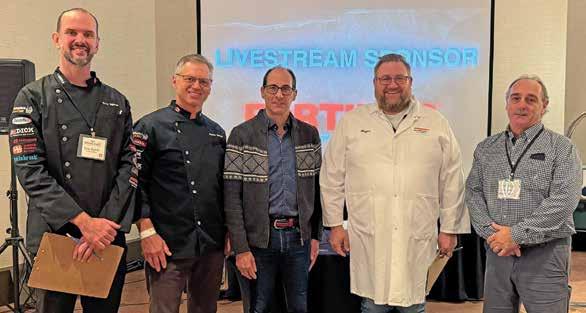
Fortinos Shows us that the Art of Butchery Can Survive in Larger-Scale Retail
By Stacey Newman
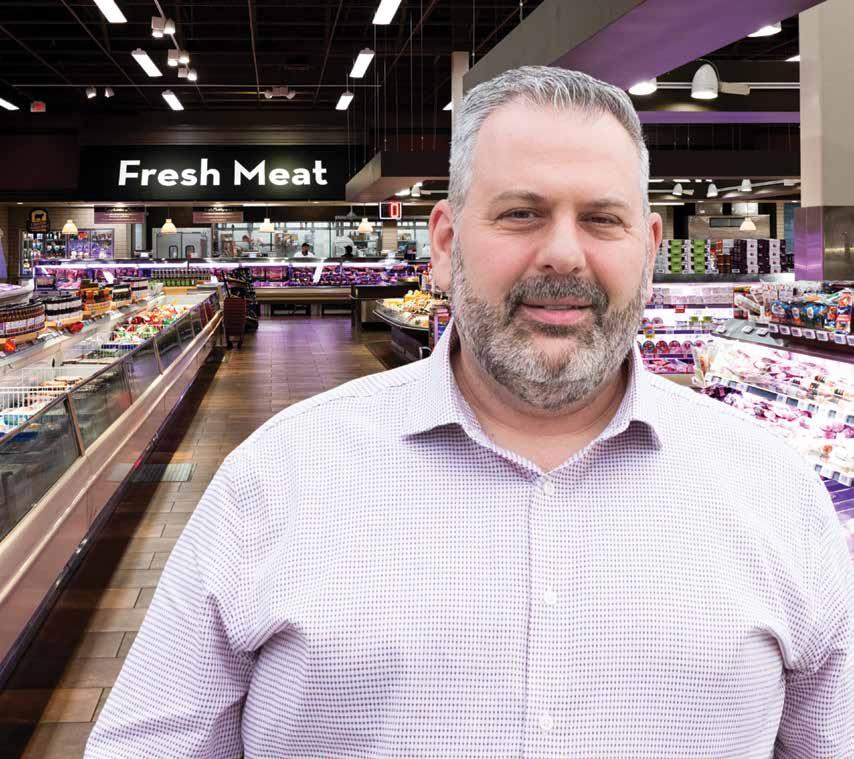
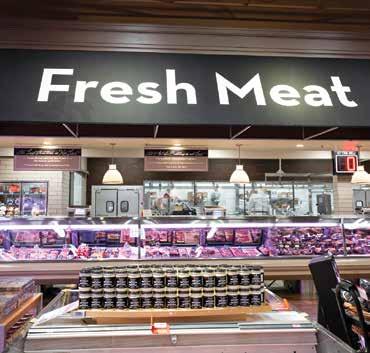
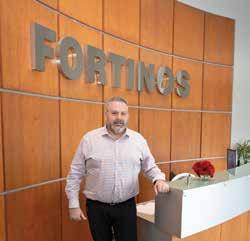
Fortinos continues to stand out in the grocery sector for its commitment to real butchery at a time when the industry faces a serious shortage of skilled cutters. Fortinos has become an important example for the meat sector, including members of Meat and Poultry Ontario, because the company understands the importance of butchery and the value of this craft.
Steven Gigis, senior director of meat & seafood, joined Fortinos earlier in 2025 after nearly thirty years in the grocery business. He began his career servicing meat counters, cleaning departments and stocking shelves before becoming a meat cutter. He later moved into management roles, including meat manager, assistant store manager, store manager and director of operations, before returning to meat and seafood at Fortinos. But he says the early days on the counter have positively influenced his approach.
“I always had a passion for the meat department and the craft and skill it involved,” he says. “Ultimately, putting a smile on a customer’s face when I handed them a custom cut still resonates with me.”
Gigis says Fortinos treats butchery as a longterm skill, not a task. The company’s apprenticeship program reflects that view. “At Fortinos, our meat-cutting training program
ensures the success of the apprentice. It is a full year, full time, forty-houra-week program that provides the apprentice with the proper amount of training to build the skills needed to become very successful,” he says. And this is important. It allows us to assess progress at each stage and offer the coaching and guidance needed to keep standards intact.
Fortinos refuses to shorten the process even if some apprentices become productive early on. He adds that some apprentices may be capable in six to eight months, but the company will not compromise on the training.
Mentorship is fundamental. “All of our apprentices are partnered with experienced meat cutters that are best suited to teach, coach and support them along the way,” he says. Our Meat Specialists monitor the program and assess progress. Apprentices move through a sequence that includes health and safety, food safety, practical knife and machinery training, muscle identification, utilization of each cut, and Fortinos’ cut standards, followed by hands-on work with mentors.
Retention is built into the structure. The program is run centrally. Apprentices are placed in geographically practical stores to avoid long commutes that would discourage participation. Internal candidates are encouraged. Gigis says this consistency protects the quality of the work and the stability of the workforce.
Fortinos also supports external training when it exists. The company has hired graduates of the Fanshawe College meat program and continues to work with training centres to understand what support is needed. Gigis believes this type of involvement strengthens the industry overall. He says it is important to help maintain meat cutting as a viable craft and career.
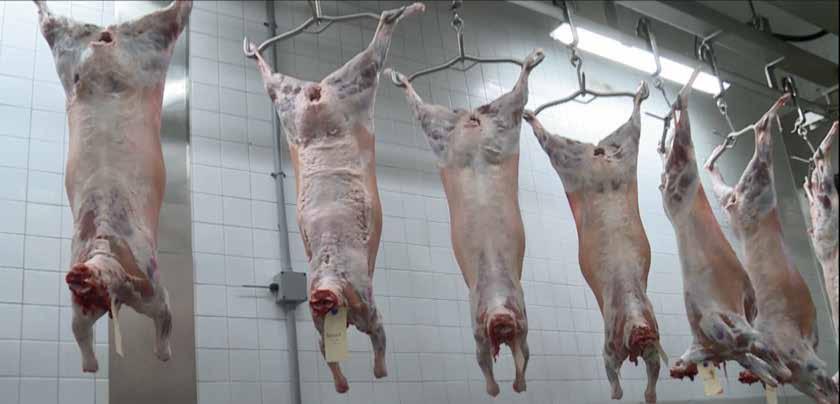
The company’s commitment to traditional skills extends to its whole carcass program. Fortinos continues to cut beef, veal and lamb from the rail in all 24 stores. “We are committed to providing our customers with the best quality, assortment and freshness, and we feel we can best achieve that with our rail program,” Gigis says.
their skills and handle whole carcasses. Gigis says Fortinos has seen experienced cutters join specifically to work in that program.
The onsite cutting is intentional. “Our advantages to using rail is freshness and quality. The product is cut on site. No shortcuts,” he says. The program provides a broader assortment, builds trust and allows customers to request custom cuts that boxed programs cannot provide. “When they visually see our whole carcass program, they see our commitment to freshness and quality,” he says.
He also links the rail program to Fortinos’ values. “Value is at the intersection of price, quality, assortment and service. Our rail program delivers on every one of these avenues, reinforcing our commitment to our customers,” he says.
The investment in skill development has resulted in repeated success in the Ontario Finest Butcher competition. “With our very robust training program, elevated standards, best-in-class merchandising and sharing best practices, this fosters an environment for our team to continue to raise the bar with their skills and be the best in retail,” Gigis says. That environment provides the conditions for our staff to perform well in competition.
The company takes a similar approach to its sausage program. “We take great pride in providing our customers with an exceptional product. We make our sausage the old-fashioned way from our original recipes, which are over 60 years old,” he says. The sausage is made from fresh Ontario pork shoulders with simple, pure ingredients and no additives or preservatives.
Like the rest of the industry, Fortinos feels the pressure of labour shortages. “Our challenges are likely the same that affect the entire industry. Getting people interested and engaged in retail meat cutting,” Gigis says. The company is working to counter the decline in interest. The apprenticeship program is part of that strategy. The rail program is another. It attracts cutters who want to expand
Customer expectations are shifting as well. “We are seeing a heightened increase in customers looking for local, antibiotic-free, organic and humanely raised products,” he says. Fortinos continues to partner with local vendors and prioritizes Ontario and Canadian products. “We do not change our specifications,” he says. “We offer the same spec and quality when we have promotions.”
Gigis also points to the company’s Artisan Meat Cutter program, where an artisan acts as the ambassador of the butcher block. They take pride in their work and focus on strong customer service. He says that combining the apprenticeship program with the artisan program and Fortinos’ culture gives him confidence that the company will preserve its model.
Gigis values his involvement with Meat and Poultry Ontario and continues to learn more about its work. He sees the association as an important support for the industry, especially in areas that affect labour, training and the overall health of the trade.
For a sector under pressure, the Fortinos model demonstrates what sustained commitment to the craft looks like. The company invests in training, preserves traditional skills, supports local supply and keeps real butchery at the centre of its operations. It shows that skilled butchery can survive in larger-scale retail when a retailer chooses to protect it.
Fortinos Steve Gigis Senior Director, Meat and Seafood at Fortinos
(416) 727-2364
steve.gigis@loblaw.ca
Front-of-Package Labelling (FOP): Information Sheet
By Baljit Kheeva, Food Safety Systems Specialist, Meat & Poultry Ontario
What It Is
Front-of-Package (FOP) Nutrition Labelling is a requirement introduced by Health Canada in July 2022 to help consumers quickly identify foods high in saturated fat, sugars, and/or sodium. A standardized “high in” nutrition symbol must appear on the front of prepackaged foods if they exceed set nutrient thresholds. The label is mandatory for most packaged foods sold in Canada. The symbol must be displayed on the principal Display panel.
Example of the Symbols
Nutrient Bar Appearance
The order of the nutrient bars in the symbol is always:
• Sat fat
• Sugars
• Sodium
In symbol formats with three bars, the top bar is always and only for saturated fat, the middle bar is always and only for sugars, and the bottom bar is always and only for sodium. The order doesn’t change because of blank bars.
How to Determine if It Applies to Your Product
1. Identify the Food Type: Applies to most prepackaged foods intended for retail sale..
2. Check the Nutrient Thresholds: Saturated fat, sugars, and sodium are the focus. Thresholds vary depending on food category:
• General prepackage foods < 30g/ml (15% DV)
• Food with a small reference amount < 30 g /ml (10% DV)
• Main dishes with reference amount < 200 g (30%DV)
3. Exemptions: Whole, single-ingredient foods (e.g., raw meat, fresh vegetables), milk, eggs, sweeteners, and certain technical exemptions.
4. Step-by-Step: Review the Nutrition Facts table, compare values against thresholds. If above and not exempt, FOP symbol required.
*DV stands for the Daily Value
Continued on page 34
A versatile combination
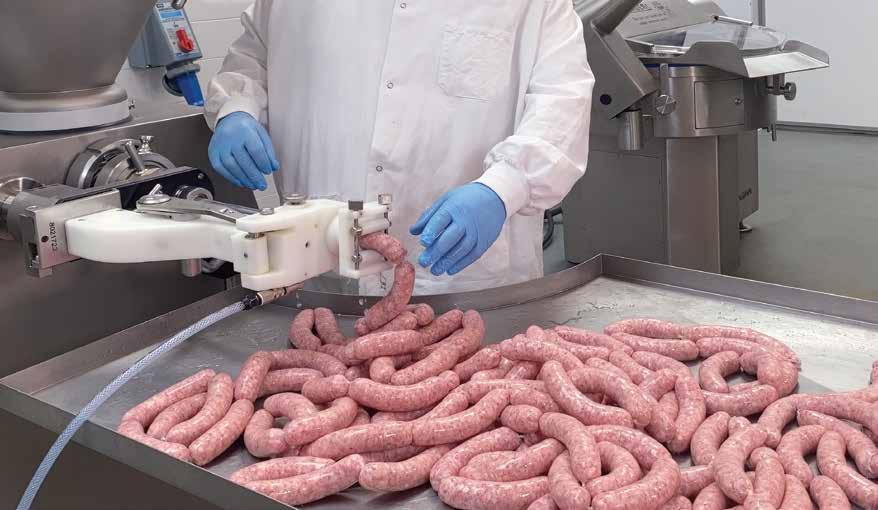
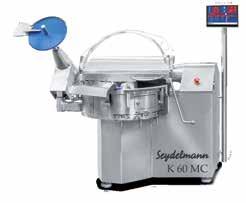
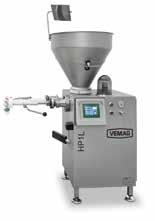
Cut, mix, portion, and link a wide range of high-quality products with the Seydelmann K60 MC Ultra Cutter and Vemag HP1L
n Short batch times – pre-cut and mix in less than one minute!
n Gentle stuffing and filling with in-line grinding
n 24 customizable recipes – repeatable quality
n Sausages with all casing types
n Burgers, bricks, chubs, even pulled pork
n Favorable financing
n Arrange a test today!
Why It Matters
Provides consumers with quick, easy-to-understand nutrition information. Helps Canadians make informed food choices. Ensures compliance with federal regulations to avoid enforcement action after January 1, 2026.
Action for Processors
Begin reviewing products now to determine which require symbols. Update packaging and artwork well before the January 1, 2026, deadline.
Deadline
Effective Date: July 20, 2022
Compliance Date: January 1, 2026 (3.5-year transition period)
All regulated products must display the FOP symbol, if applicable, by January 1, 2026.
Resources
• Health Canada – Front-of-Package Nutrition Labelling
• Industry Guidance Document
• Nutrition Facts Table and Daily Values
CCC Custom Blending Solutions
CANADA COMPOUND
PLATINUM
GOLD
SILVER
easier said than done. Multibillion-dollar tax incentives offered by the American government are difficult for any country to compete against in the race to attract foreign capital. A sinking Canadian dollar can also be a deterrent for foreign investors seeking stability, while also making imported machinery and equipment more expensive.
If You Build It, They Will Come
That’s not to say Canada should just give up in the competition for foreign capital. The country can leverage its strength in other areas to attract capital, e.g., a world-class education and highly trained professionals, the abundance of natural resources, free trade with more than 50 countries, a trade agreement (i.e., CUSMA) and proximity to the world’s largest economy.
Such high multipliers are possible due to positive spillovers of those expenditures into the private sector, and they can be even higher if the spending occurs during periods of economic weakness. For example, defence capital spending, such as research and development, often leads to technological innovations that spur other investments and boost productivity across the entire economy. And spending on infrastructure such as roads, railways, ports and pipelines can open up new markets for exporters and, as a result, increase private sector investments in sectors like agriculture, manufacturing, mining, oil and gas.
Raising business investment should help boost productivity and the economy’s potential in the process.
Modernizing Canada’s infrastructure can also entice foreign investors. That is why the federal government’s plans to boost expenditures on defence and infrastructure (via the Building Canada Act) are welcome news. Such outlays can lead to larger changes in real GDP, with one dollar spent generating more than one dollar of output, i.e., a “fiscal multiplier” larger than one.
The nation-building plan, however, may take some time to yield shovel-ready projects and stimulate economic activity. As such, the burden of rekindling Canadian growth over the short term arguably falls on the Bank of Canada.
The Bank of Canada can Provide Near-Term Support
The central bank will be comforted not just by the recent moderation of inflation but also by an increased likelihood that the latter remains under wraps. Indeed, the deteriorating labour market has led to a moderation of wage growth, reducing the need for businesses to pass on those costs to consumers via prices. That, coupled with the removal of retaliatory tariffs and a widening economic slack or output gap (courtesy of below-potential GDP growth), suggests to us that core inflation will continue to soften into 2026. As such, the Bank of Canada will likely offer additional stimulus over the coming months as it works to prevent the ongoing slowdown from turning into recession.
While short rates have room to fall further, longer-term rates could remain elevated and sticky due to dynamics in the U.S. bond market. In other words, the yield curve could steepen over the next year. This means borrowers tapping into variable rate products will see lower debt servicing costs. But for those households renewing their fixedrate mortgages, whose rates are often tied to the 5-year Canadian bond yield, there may not be much relief from here.
For more information on this topic and others, go to fcc-fac. ca/en/knowledge/economics.
UNDERSTANDING PROCESS CONTROLS What They Are & What to Include
By Daphne Nuys-Hall, Technical Director, Meat & Poultry Ontario
When you run a meat plant, you already know that consistency, safety, and quality don’t happen by chance. They come from solid systems, and at the heart of those systems are process controls.
Under Ontario’s Meat Regulation (O. Reg. 31/05), every provincially licensed meat plant that makes meat products must have process controls in place. These aren’t just forms to satisfy an inspector. They’re the practical, day-to-day guides that help make sure your products turn out the same every time — safe, delicious, and compliant.
So, what exactly is a process control? And what should you include when you write or update yours? Let’s break it down.
What Is a Process Control?
A process control is simply a written description of how you make a product—from start to finish—and how you make
sure that every batch meets the right standards for safety and quality.
Think of it as your “recipe with guardrails.” It doesn’t just list ingredients; it lays out the exact steps, time, temperature, and checks that keep your product safe. It tells your team, and any inspector who asks, that you know your process, monitor it, and can prove it works.
A good process control helps you:
• Keep every batch consistent.
• Catch and correct problems before they become costly.
• Show due diligence if you’re ever questioned about a product.
• Train new employees quickly and confidently.
Why Process Controls Matter
Besides being required by O. Reg. 31/05, process controls are your best protection against recalls and rework. They keep everyone on the same page and your products within spec, whether you’re making pepperettes, smoked turkey, or dry-cured bacon.
In short, process controls aren’t red tape, they’re your insurance policy for quality, safety, and peace of mind.
What Should a Process Control Include?
No two products are exactly alike, but most well-written process controls cover the same main pieces. Here’s what to include.
1. Product Description
Start by describing the product you’re making:
• What is it (e.g., fully cooked sausage, fresh burger, dry-cured ham)?
• What meat is used?
• Is it ready-to-eat or does it need cooking?
• How is it stored — frozen, refrigerated, or shelf-stable?
This helps define the rest of your control. A smoked, shelfstable snack stick will obviously need different parameters than a fresh ground beef patty.
2. Step-by-Step Process Flow
List the steps in the order they happen—receiving, grinding, mixing, stuffing, cooking, cooling, packaging, storage— whatever applies to your product.
A simple flow diagram helps your team (and your inspector) see the big picture at a glance.
3.
Critical Steps and Control Limits
Here’s the meat of your process control—the parts that protect food safety. For each key step, identify:
• The target value — for example, an internal cook temperature of 71 °C.
• The acceptable limit — what’s considered “in spec.”
• How you monitor it — thermometer, data logger, pH meter, etc.
4. Hazards and How You Control Them
Every process step has potential risks—bacterial growth, contamination, undercooking, etc. Your document should show how those risks are prevented or reduced.
For example:
• Cooking destroys harmful bacteria.
• Drying and curing lower Aw to control spoilage.
• Metal detection removes physical hazards.
You don’t need to overcomplicate it, just show that you’ve thought about the risks and have a control in place.
5. Corrective Actions
Things don’t always go perfectly, and that’s okay, as long as you have a plan.
6. Verification and Validation
Verification means checking that the process is followed— reviewing logs, signing off on records, or double-checking temperatures.
Validation means proving that your process actually works to make safe food, for example, sending a product to a lab to confirm pH and water-activity targets are met.
These steps don’t need to be complicated or expensive, but they do need to be done and documented.
7. Record-Keeping
Every time you run production, you should have a batch record that shows:
• The date and lot number.
• The actual times and temperatures reached.
• Who did the monitoring.
• Any issues and what was done about them.
Keep these records for at least one year after the product’s last date of sale (longer if it has a long shelf life).
Making It Work in Your Plant
Process controls don’t need to be fancy. A clear, practical form your team can actually use is far better than a 10-page document that sits in a binder.
Consider keeping a master process-control sheet for each product and daily batch records that operators fill out as they go. Electronic logs can be handy, but paper works just fine too, as long as it’s complete and legible.
Most importantly, make sure your staff understand why process controls matter. When people see how these steps protect both the product and the business, they’re far more likely to take them seriously.
The Bottom Line
A good process control tells the story of your product—how it’s made, why it’s safe, and how you know every batch meets your standards.
Under Ontario’s Meat Regulation 31/05, it’s a legal requirement, but beyond that, it’s just good business. Clear, simple documentation helps you train staff, maintain consistency, and build trust with both regulators and customers.
Strong process controls don’t just check boxes, they keep your plant running smoothly, your products safe, and your customers coming back.
INTRODUCING THE NEW FOOD SAFETY EXCELLENCE TOOL
Stronger Systems. Safer Food.
Your roadmap to food safety excellence:
✓ Assess food-safety programs with clarity
✓ Confidently elevate your standards
✓ Get clear, actionable recommendations
✓ Explore FSE Learning Modules
✓ Build continual trust and credibility
EXPLORE THE TOOL
Get Started: Provincially licensed processors in Ontario can receive up to $30K in Implementation Support to bring improvements to life.
Advertiser Index
Agsights pg. 8, 48 agsights.com
AKR pg. 24 akrconsulting.com
BrokerLink Insurance pg. 23, 34 brokerlink.ca
Canada Compound pg. 35 canadacompound.com
Christian Farmers Federation of Ontario pg. 40 christianfarmers.org
Word on the Block, our bi-weekly email delivered Monday morning, highlights the latest events and opportunities within the industry. Technical eBulletins are distributed as needed with information such as regulatory challenges and animal rights activist events. This important industry information is often time sensitive. Please make sure your spam list includes news@meatpoultryon.ca , technical@meatpoultryon.ca and member@meatpoultryon.ca. If there are other people within your company that should be receiving information contact us at (519) 763-4558 or member@MeatPoultryON.ca to have them added to our lists.