Bakersfield



By McKenzie Jackson California Black Media
A growing number of mineral owners in California, investors with oil interests in the state, and their advocates in the Legislature are warning that state government in Sacramento is creating an economic climate that is inconducive for their businesses.
Government overregulation is ripping into earnings and making it hard to do business in the state, they say. And many of the high costs being imposed on them by the state’s Democratic leadership are being passed on to consumers in the form of higher prices at the gas pump.
Republican Assembly Minority Leader James Gallagher (R-East Nicolaus) cited the possible closure of two major refineries in California owned by Chevron, Valero, and Philips 66.
“The real-world consequences of Gavin Newsom’s war on California energy producers are becoming clearer by the day, with today’s announcement that Valero intends to shut down its Benicia refinery within a year. The closure will reduce California’s gasoline production capacity by nearly 9% and cost more than 400 jobs,” read a press release issued by California State Assembly Republicans on April 16.
Similarly, Chevron announced last year that it has plans to relocate its headquarters from San Ramon to Texas. Phillips 66 also announced that it will close its Los Angeles area refinery by the end of 2025.
In another statement Gallagher released on April 23, he predicted the crisis will “only get worse” if California’s energy policies stay the same.
“Our millionaire governor might not worry about gas prices while he’s chauffeured from his mansion in Marin to his podcast studio, but working people are getting crushed by the cost of his outof-touch agenda,” Gallagher said, citing two laws passed by Democrats that he says are contributing to the higher cost of gas: SB X1-2 and AB X2-1, anti-price-gouging laws that took effect in 2023.
“Once again, Californians are paying the price for Newsom’s incompetence and self-serving attacks on energy producers. As fuel producers shut down and flee the state, California drivers are left to foot the bill - with gas prices an astounding $1.70 higher than the national average,” he added.
Last week, Newsom wrote a letter to California Energy Commission Vice Chair Siva Gunda instructing him to intervene to ensure that oil producers not leave the state.
In the letter, the Governor asked Gunda “to reinforce the State’s openness to a collaborative relationship and our firm belief that Californians can be protected from price spikes and refiners can profitably operate in California -- a market where demand for gasoline will still exist for years to come.”
Smaller mineral owners in the state are also fed up with California’s environmental policies that they say have no scientific justification.
A pair of Southern California mineral owners hit the California state government with a lawsuit on April 16 challenging the constitutionality of a law that bans new drilling and well maintenance within 3,200 feet of sensitive sites such as hospitals, homes, parks, and schools.
Siblings Monte Beard Sr. and Merry Vanderwaal, the property rights owners of subsurface oil and gas hydrocarbon reserves in Long Beach, allege in their 22-page lawsuit that Senate Bill 1137, which took effect in June 2024, threatens the livelihoods of royalty and mineral rights owners throughout the Golden State, lowers property values, and pushes the state toward more reliance on oil from foreign countries, where there are sometimes substandard environmental and labor protections and well-known human rights abuses.
Beard said in a statement that his family has owned mineral rights since 1929, and the royalties he receives helped him pay for his kids’ college education.
“I’d like them to be around as a legacy for my grandchildren,” Beard said of the royalties. “State officials can’t simply take those royalties away from people at their political whim.”
The lawsuit was filed in Los Angeles Superior Court by attorney John Fogarty of the Los Angeles firm Maynard Nexsen LLP. The respondents and defendants in the claim are the State of California, California Department of Conservation, and Geologic Energy Management Division.
When California Black Media contacted the California Department of Conservation, the agency’s Assistant Director of Communications Jacob Roper said the state does not comment on pending litigation. According to court records, there is a trial setting conference scheduled for July 24.
SB 1137, signed into law in 2022, also stops maintenance and redrilling at mineral sites, keeping old wells closed. The legislation was championed by environmental advocates, who said the law is needed to phase out planet-warming fossil fuels

and protect residents who live near the toxic fumes dispersed by drill sites.
California has over 100,000 unplugged oil and gas wells and close to one-third are within 3,200 feet of sensitive areas. That proximity exposes millions to cancer-causing pollutants, according to opponents of the legislation. The U.S.’s largest urban oilfield, the Inglewood oilfield, is located close to Baldwin Hills, Culver City, Inglewood, and Ladera Heights – L.A. County neighborhoods with significant Black populations.
“Among other things, SB 1137 includes a wholly arbitrary 3,200-foot setback, which effectively eliminates the possibility that any oil well can be utilized to its full potential because it is within 3,200 feet of a ‘sensitive receptor.’ There is no credible scientific report or analysis to support this arbitrary 3,200-foot setback,” the claim reads.
Beard and Vanderwaal’s property inside the Long Beach Unit (LBU) of Wilmington Field, an oil field, includes 867 active or idle wells. The city of Long Beach took the surface via eminent domain in the 1950s, but the family maintained the mineral rights, which allow them to generate the royalty income.
Beard and Vanderwaal each receive $3,600 annually in royalties from the oil field on the property, which is leased to THUMS Long Beach to extract the hydrocarbons.
Another royalty owner, Kevin Ivey, said in a statement that the lawsuit is a moral imperative.
“Royalty and mineral rights owners refuse to stand by as Sacramento legislators rob us of our property rights, destroy our livelihoods, and hand over our energy future to hostile foreign adversaries,” he said. “We think California consumers agree.”
LAS VEGAS (AP) — A young woman who says she was raped and threatened by retired NFL player Shannon Sharpe during a “rocky consensual relationship” has filed a civil lawsuit against him seeking $50 million in damages.
Attorneys filed the lawsuit Sunday in Clark County, Nevada, for a woman listed in court documents as Jane Doe. The lawsuit also accuses Sharpe of using physical force on her and inflicting emotional distress.
The woman first met Sharpe at a gym in Los Angeles in 2023 when she was 20 and a nearly two-year relationship followed, according to court documents. Sharpe, 56, is accused of raping the woman in October 2024 and again in January, court documents said.
Sharpe on Monday posted a statement from his lawyer on X saying the relationship was consensual and calling the lawsuit a “blatant and cynical attempt to shake down” Sharpe for millions of dollars.
“It is filled with lies, distortions, and misrepresentations — and it will not succeed,” Lanny J. Davis said in the statement posted by Sharpe. Sharpe is accused of becoming increasingly verbally abusive, controlling and violent over time, once threatening to kill her and recording their sexual encounters without consent, according to the complaint.
“Sharpe flew into fits of anger when Plaintiff noted his infidelity to their relationship, or called him out about his extraneous activities,” the lawsuit said. “Sharpe even figured out how to get into Doe’s apartment complex without her permission.”
Sharpe was a four-time All-Pro tight end who played on two Super Bowl champions with Denver and another with Baltimore over 14 seasons from 1990 to 2003. He was voted into the Hall of Fame in 2011.
Sharpe retired as the NFL’s all-time leader among tight ends in receptions (815), yards receiving (10,060) and touchdowns (62). Those records have since been broken.
By Stacy M. Brown BlackPressUSA.com Senior National Correspondent
Rev. Jamal Bryant is urging Black Americans to keep the pressure on Target by continuing the national boycott that began as a 40-day economic “fast.” The move, sparked by the retail giant’s decision to end its diversity, equity, and inclusion (DEI) initiatives, has already cost the company an estimated $12 billion, Bryant said. “Because of your fast, Target has lost $12 billion,” Bryant told his congregation. “I am so grateful that there is power in unity, and we know the strength of Black economics.” Since the fast began, Target’s stock has plummeted from $138 to $94 per share, and in-store foot traffic is down by 7.9%. The boycott gained traction after Target announced it would wind down racial equity programs it introduced following the 2020 police killing of George Floyd. The company, which operates nearly 2,000 stores and employs over 400,000 people, said it had always planned to sunset the programs after three years. However, many saw the decision as a retreat from commitments made to Black communities. After meeting with Target executives, Bryant confirmed that the company agreed to just one of the boycott’s four major demands: fulfilling its $2 billion pledge to support Black businesses through product placement, services, and investments in Black-owned media. The company has yet to meet demands to deposit $250 million into Black-owned banks, reinstate DEI programs, or fund community pipeline centers at 10 HBCUs focused on teaching retail business. Bryant said Target’s response wasn’t enough. “Target cannot selectively decide which parts of our dignity they’re willing to honor,” he said. A growing coalition of African American leaders and organizations—including the National Newspaper Publishers Association (NNPA)—has continued meeting to strategize further action. At the center of the discussion is the role of the Black Press, which Target has yet to acknowledge in a meaningful way, despite more than a year of outreach by the NNPA under President Dr. Benjamin F. Chavis Jr., with assistance from former U.S. Sen. Laphonza Butler. Chavis stressed that any agreement with Target must include investment in Black-owned media, including outlets like BlackPressUSA.com, The Washington Informer, Philadelphia Tribune, and Chicago Defender. “The dissemination of this message and narrative is only accurately done by the Black Press in 2025 and beyond,” Chavis said. For nearly 200 years, the Black Press has played a pivotal role in American life, particularly for African Americans. From its inception in 1827 with Freedom’s Journal, the Black Press has informed, educated, and empowered Black communities while countering the negative portrayals that dominate mainstream media. As documented by the Oxford Bibliographies, the Black Press has served as “agents of social change” and “defenders of shared values and interests.” During Reconstruction and Jim Crow, Black journalists like Ida B. Wells used the press to expose racial violence and injustice. Wells’ work documenting lynchings and countering white supremacist propaganda laid the foundation for the Black Press to serve as a vital corrective force in American media. That legacy remains just as urgent today. Modern studies show that negative portrayals of Black people in media lead to harmful outcomes, from over-criminalization and over-sexualization to negative health effects and social exclusion. The Black Press continues to challenge that narrative.


Cheryl Smith, publisher of Texas Metro News and Garland Journal, said the importance of the Black Press cannot be overstated. “If we look back at every period in our lives since its inception, we can see how significant the Black Press was,” Smith said. “We need to see it and believe it every day we get up, and I promise you, we will be stronger, more vibrant, and more powerful people.” The NNPA currently represents more than 200 Black-owned newspapers across the country, continuing a legacy that is nearly as old as the United States itself. As America nears its 249th birthday, the Black Press marks 198 years of continuous service. “The largest Black population in American history are now openly and unapologetically demanding freedom, justice, equality, democracy, and equity,” Chavis said. “And the only media institutions that have always stood with us are our own.” As Bryant calls for continued boycott efforts, he and Chavis are reminding Black America that real leverage comes not only from what it refuses to accept—but also from what it insists on valuing. “We’ve seen what happens when we stand together,” Bryant said. “Now we keep standing.”
Sharpe has been a staple on TV and social media since retiring. He left FS1’s sports debate show “Undisputed” in 2023 and joined ESPN soon afterward.
JACKSON, Miss. (AP) — The U.S. Supreme Court on Monday declined to review a Mississippi death row inmate’s convictions for the slayings of eight people, including his mother-inlaw and a deputy sheriff, over one night in 2017. Willie Cory Godbolt had filed a handwritten petition in August seeking the high court’s review of a decision by the Mississippi Supreme Court affirming his convictions and death sentences. In his petition to the
By April Ryan
A new executive order focuses on Historically Black Colleges and Universities (HBCUs), bringing the initiative back to the White House. During the first Trump administration, the HBCU Initiative was removed from the Department of Education and housed within the White House itself.This latest executive order from the Trump administration prioritizes private sector partnerships, institutional development, workforce preparation in technology, and more.By contrast, the Joe Biden administration had previously partnered federal government agencies with HBCUs, working through the Departments of Defense, Transportation, and Energy.Prior to this executive order, several HBCU presidents had already been developing proposals aimed at strengthening federal cooperation with their institutions.Now, Trump’s Executive Order aims to enhance the capabilities of HBCUs by supporting the implementation of the HBCU Partners Act and promoting research and program excellence. According to sources close to the HBCU
community, the Act could yield significant research grants and infrastructure funding for the hundredplus HBCUs across the country.Additionally, a portion of the order calls for building “pipelines” to help more students attend HBCUs.In his first term, President Trump had promised to increase funding for these predominantly Black institutions. However, then-senior advisor Steve Bannon told HBCU presidents it would be unconstitutional to allocate that funding directly. That year, Congress— holding the purse strings—ultimately increased HBCU funding.On Wednesday, President Trump also signed several other executive orders in the Oval Office addressing artificial intelligence and diversity, equity, and inclusion (DEI).As he signed the DEIrelated order, a staffer presenting the document referred to DEI as a “Diversity, Equity, and Inclusion cult.” Trump responded, “We are getting out of that, huh, after being in that jungle a long time.President Trump signed the orders in front of disabled veterans, who were the very definition of DEI when it existed.

By Stacy M. Brown BlackPressUSA.com
The Food and Drug Administration has suspended a key quality-control program for testing milk and other dairy products, citing a diminished workforce and lab capacity following sweeping federal cuts under President Donald Trump’s initiative to slash the government payroll. An internal FDA email obtained by Reuters revealed that the agency has paused its proficiency testing program for “Grade A” milk—the highest sanitary standard for fluid milk products—effective immediately. The move comes on the heels of the shuttering of the FDA’s Moffett Center Proficiency Testing Laboratory, which had overseen food safety data analysis for dairy products nationwide. The suspension is the latest in a wave of disruptions to federal food safety systems, following the mass termination of 20,000 Department of Health and Human Services employees. It also includes shelving programs that monitor avian flu in dairy and pathogens like Cyclospora, which pose risks to public health. While an HHS spokesperson claimed the decommissioning of the lab had been planned before the Trump-imposed staffing cuts, the timing has raised red flags for food safety experts and civil rights advocates alike—particularly regarding the impact on Black communities, who already face elevated health risks and nutritional disparities.A
Adjudicated a Newspaper of General Circulation August 11, 1980, Kern County Superior Court Decree, Case No. 16964, Government Code 6023.
Bulk Mailing Permit 724 Bakersfield, CA 93385
Published By Observer Group Newspapers of Southern California, Inc. Corporate Office 1219 20th St. Bakersfield, CA 93301 (661) 324-9466.
Member of The National Newspapers Publishers Association, Associated Press, and The Better Business Bureau
President: Ellen Coley
CEO: Jon Coley
Publisher/ Editor: James Luckey Jr. Operations Manager: James Luckey Intern: William Clark Coley
Credo-The Black Press believes that America can best lead the world away from racial and national antagonisms when it accounts to every person, regardless of race, color, or creed full human and legal rights. Hating no person, fearing no person, the Black Press strives to help every person in the firm belief that all are hurt as long as any one is held back. The Observer Group Newspapers reserves the right to publish views an opinions that may not necessarily reflect those of the staff and management and are solely the product of the responsible individuals who submit commentaries published in these newspapers. Letters, articles and comments appearing in the Observer Newspapers reflect the opinions of the contributor and do not constitute the opinion or endorsement by The Observer Newspapers or its staff. The Observer Group Newspapers assumes no responsibility for photographs, articles, letters, press releases and unsolicited materials. Decisions as to the editing and publishing of materials are at the discretion of the Publisher and Editors. All rights are reserved on materials accepted for publication unless otherwise specified.
Bakersfield News Observer Los Angeles News Observer
The Valley’s News Observer
1219 20th St. Bakersfield, Ca 93301 Mailing Address P.O. Box 2341 Bakersfield, CA 93303 Phone (661) 324-9466 Fax (661) 324-9472 Emails and general info: observernews@gmail. com, Advertising: observeradvertising@gmail. com Available online: www.ognsc.com
2024 review published in the Journal of the National Medical Association concluded that Black adults continue to carry a disproportionate burden of chronic illnesses like obesity, hypertension, diabetes, and chronic kidney disease. The review noted that one of the most consistent modifiable risk factors for improving health outcomes is better dietary quality—including increased dairy consumption. Dairy products such as milk, cheese, and yogurt provide essential nutrients like calcium, potassium, vitamin D, and high-quality protein— nutrients that Black Americans are statistically less likely to consume in recommended amounts. Yet barriers like lactose intolerance, food insecurity, and deep-rooted mistrust of healthcare systems have kept dairy consumption below national averages among Black adults. In a 2024 brief titled “Fortifying Our Health: The Role of Dairy in Black Americans’ Diets,” the Student National Medical Association (SNMA) warned that long-standing myths about lactose intolerance and systemic misinformation have discouraged dairy intake in Black communities. The group emphasized that dairy—particularly fermented and lactose-free products like yogurt and hard cheese—can still be a viable option for many lactose-intolerant people. “Lactose intolerance does not require the complete elimination of dairy,” the SNMA wrote. “These foods provide essential nutrients and, when consumed appropriately, can play a crucial role in addressing health disparities, including those related to bone health, cardiovascular health, and diabetes prevention.”Now, with the FDA’s testing program suspended, food safety advocates fear that inconsistent testing across dairy producers could lead to contamination risks that hit vulnerable populations hardest. Accredited labs nationwide relied on the FDA’s proficiency tests to ensure accuracy and safety in the dairy supply chain—a breakdown in that system could disproportionately affect communities already burdened by inequities
in healthcare and nutrition. In its communication to labs, the FDA said it is “actively evaluating alternative approaches” and would update participating laboratories “as new information becomes available.” Still, many in public health say any pause in testing is dangerous—especially given recent discoveries of avian influenza traces in milk and concerns about pathogen exposure in dairy products. Research cited by the NIH affirmed the connection between regular dairy intake and improved health outcomes, particularly when consumed in forms that mitigate intolerance symptoms. For African Americans, increasing dairy consumption—especially of fermented and vitamin
D-fortified products—could lead to reduced rates of chronic disease and improved quality of life. With the FDA program shelved indefinitely, experts now fear a regression in progress made toward health equity, especially in communities that can least afford another setback. “Educating ourselves about the importance of dairy can empower us to make informed dietary choices and advocate for better health within our communities,” the SNMA concluded. “As future doctors, we have the power to drive change and promote a balanced, nutrient-rich diet that includes dairy, contributing to healthier, more vibrant communities.”
By Stacy M. Brown BlackPressUSA.com
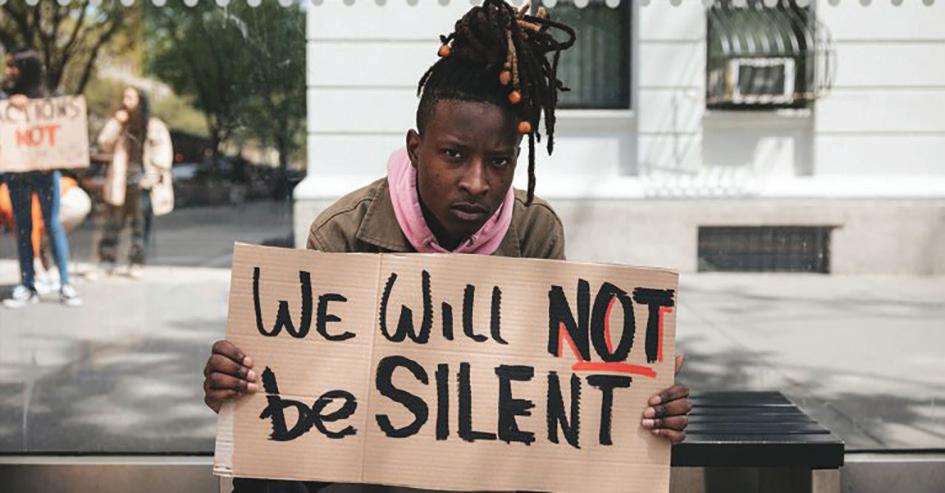
Senior National CorrespondentThe Leadership Conference on Civil and Human Rights has launched “The Pact: A Civil Rights Coalition Unity Commitment,” a declaration of mutual support among dozens of major nonprofit organizations representing millions of people nationwide. The coalition said it’s responding directly to escalating threats and retaliatory actions by the White House and federal agencies targeting groups engaged in public service, advocacy, and civil rights work. The Leadership Conference said that for 75 years, it has helped secure every major federal civil rights law enacted in the United States. It warned that the same government systems used to advance justice are being weaponized to suppress it. “Today we face a campaign by the government to interrupt and intimidate the ability of those who represent the vulnerable, ensure people know their rights, have a voice to make demands of their government, organize unions and speak freely and have their rights protected,” the Pact states. “We will not be silent, divided, or stop serving the public or allow the people we serve to be harmed.”The coalition cited
specific government actions that it says are designed to dismantle public services, eliminate oversight, and undermine nonprofit organizations. These actions include the termination of grants without cause, politically motivated investigations into climate and civil rights groups, threats to tax-exempt status, and a chilling effect on pro bono legal support out of fear of retribution. “The administration has made clear it will attack organizations that speak truth to power, defend the vulnerable, petition and sue the government, preserve and share knowledge, and fight for our freedoms,” the Pact continues. “They want us to fight alone, hoping we’ll stay silent as others are targeted. Not us.” The Pact outlines a series of commitments among the signatories. If any organization is unjustly targeted, the others have pledged to stand with it. They will share knowledge and resources, refuse to censor their missions, and continue advocating for the communities they serve—regardless of political pressure.The coalition includes organizations representing people who are Black, Latino, White, Asian, Indigenous, LGBTQ+, disabled, immigrant, working-class, and of all faiths and backgrounds. Together, they
reaffirm their support for basic rights and services, including access to healthcare, quality education, legal representation, clean air and water, the right to vote, and protection from discrimination.The Leadership Conference said the government’s current actions seek to isolate and silence advocates while concentrating wealth and power in the hands of a few. “We will not be divided,” the Pact declares. “We will not be intimidated into silence or abandoning our communities.” More than 70 civil rights, labor, faith-based, and public interest organizations signed the Pact. Among them are the ACLU, National Urban League, Asian Americans Advancing Justice, UnidosUS, National Organization for Women, People for the American Way, and the League of Women Voters. “We have the right to assemble—and we will continue to do just that, and we will encourage and support people and allied organizations to do the same, uniting across communities, sectors, issue areas, and identities,” the coalition said. “We will not be silenced. We will continue to do the work that puts people over power.”
By MICHAEL R. SISAK
Associated Press
NEW YORK (AP) — Prosecutors at Sean “Diddy” Combs ' upcoming federal sex trafficking trial can show jurors video of the hip-hop mogul hitting and kicking one of his accusers in a Los Angeles hotel hallway, a judge ruled at a hearing Friday.
U.S. District Judge Arun Subramanian said Combs' lawyers failed to convince him that the explosive security camera footage should be excluded. Its relevance to the case outweighs any potential prejudice to the 55-year-old defendant, the judge said.
Subramanian ruled on the video as he set ground rules for the May 5 trial in New York City. Combs sat between his lawyers in a yellow jail suit, his formerly jet black hair now almost fully gray because dye isn’t allowed at the Brooklyn federal lockup where he's been held since his arrest last September. Prosecutors disclosed that Combs was offered a plea deal, which he rejected.
The video shows Combs — wearing only a white towel — punching, shoving and dragging his former protege and girlfriend, R&B singer Cassie, and throwing a vase in her direction on March 5, 2016, at the InterContinental Hotel in Los Angeles’ Century City district.
The video wasn’t public until CNN obtained and aired it in May 2024. The network turned the footage over to prosecutors in response to a subpoena.
Prosecutors say it's “critical to the case.”
Combs' indictment alleges he tried to bribe a hotel security staffer to stay mum about the video. Cassie, in a since-settled November 2023 lawsuit alleging years of abuse, claimed he paid $50,000 for the footage.

silencing victims through blackmail and violence, including kidnapping, arson and physical beatings.
Federal prosecutors allege the Bad Boy Records founder used his “power and prestige” as a music star to induce female victims into drugged-up, elaborately produced sexual performances with male sex workers in events dubbed “freak offs.”
Earlier this month, prosecutors obtained a new indictment that added two charges to Combs’ case and accused him of using force, fraud or coercion to compel a woman to engage in commercial sex acts from at least 2021 to 2024.
Prosecutors say they expect four accusers to testify against Combs. They contend the assault on Cassie depicted in the 2016 video happened during a “freak off.” Combs' lawyers have argued that the footage was nothing more than a “glimpse into a complex but decade-long consensual relationship.”
Combs apologized after CNN aired the footage, saying in a social media video statement that he was “truly sorry” and that his actions were “inexcusable.”
“I take full responsibility for my actions," Combs said, adding that he “was disgusted then when I did it. I’m disgusted now.” In seeking to exclude the video from the trial, Combs' lawyer Marc Agnifilo argued that the footage was “deceptive and not in accordance with the actions that took place.” Agnifilo said certain portions of the video were sped up by as much as 50% or taken out of order, making it a “misleading piece of evidence.”
Prosecutors told Subramanian that they were working with Combs' lawyers to come up with a suitable version that can be shown by jurors. They said that includes having a video expert review the footage and slow down the clips to reflect the speed at which the event shown actually transpired.
By GARY GERARD HAMILTON
NEW YORK (AP) — Many of Tina Knowles’ fondest childhood memories are of sitting under a pecan tree as her mother recited the history of their family, stretching back generations. Now, the mother of Beyoncé and Solange has given her own story to the world with “Matriarch: A Memoir,” out this week.
“Beyoncé and Solange have been busy since they were little kids working, and Kelly (Rowland). … I’ve told them stories, but I don’t even know if they really listened,” said the 71-year-old Knowles. “When you’re young, it’s very few people that want to hear those stories about old times.”
At 59, Knowles began recording voice notes of that history — adding in her contributions — after contemplating her mortality following her divorce from Mathew Knowles after a three-decade marriage. The recordings were meant only for her grandkids and future great-grandchildren, before eventually becoming the book's foundation.
The 432-page Oprah’s Book Club selection explores a vast range of topics, including her enslaved great-grandmothers, her entrepreneurial spirit, the Houston childhoods of Beyoncé and Solange, her infidelity-plagued first marriage, Destiny’s Child's struggle to get a record deal, and the blatant racism her family experienced navigating a segregated United States. (She was once allowed to briefly sit in the front of a whites-only bus as a child, disguised by her fair skin tone.)
But you won’t find juicy details from the protective mother; there’s no mention of the infamous 2014 Met Gala elevator incident between Jay-Z and Solange, or of Kanye West taking the mic from Taylor Swift at the 2009 MTV VMAs in his attempted defense of Beyoncé. This is Celestine Beyoncé's story — not her children's — still
intriguing and very personal, revealing she was diagnosed with Stage 1 breast cancer last year. She had initially left it out of the book.
“I just wanted to keep it to myself … as I went through that process of getting the surgery and all of that, there were things that I felt that I needed to share,” said Knowles, who is now cancer-free after surgery and treatment, and urges women to make mammogram appointments and get second opinions.
Knowles, who next month will launch a ninecity book tour that will include conversations with famous friends like former first lady Michelle Obama and Tyler Perry (she also hints at “family” joining her at some stops), spoke with The Associated Press about receiving due credit, regrets as a parent and finding happiness. Answers have been edited for clarity and brevity.
AP: Some may have thought of you as only Destiny’s Child's stylist or Beyoncé’s mom. Is there a desire to get due credit?
KNOWLES: I gave a lot of people credit for things — and I’m fine with that — but this is all about my truth.
I definitely feel like I was a driving force, and I can say that now without feeling like — I was taught as a kid to just be super humble and to not ever brag. … I think I’ve dimmed my light for so long, I don’t want to do it anymore.
AP: There are events involving Beyoncé or Solange that you barely mentioned — if you mentioned them at all — like the reasons surrounding Destiny’s Child's breakup. Why exclude your perspective?
KNOWLES: I don’t think that’s important, because from that time, everyone has flourished and just moved on from that. And I just choose to focus on the positives in life. … I don’t feel like it’s a need to harp on those things. I don't want to talk about
them.
AP: In highlighting the differences between Solange and Beyoncé, you describe how Solange loved school and craved structure, and you weren't always able to provide that as Destiny's Child began to take off. Why be so vulnerable with your parenting mishaps? (Solange, not wanting to travel or leave friends, eventually stayed with a family friend for a period of time for consistency.)
KNOWLES: Solange has been a speaker of truth since she was little … she was the one that was in my case all the time. ’Cause she’s like, “Mom, you’re just so irresponsible when it comes to school.”
I just felt like that was healing for me to talk about it. Because people think ... you're trying to be the perfect mother, and definitely, I was screwing up just like everybody else. And so, I was really wanting to be honest about my shortcomings.
AP: Why did you mention the importance of teachers, negatively affecting your own confidence attending Catholic school, as well their impact on your daughters?
KNOWLES: Some of them can be detrimental, and I go into detail about that because I realize that a teacher telling me that Beyoncé was slow in kindergarten and that she needs to repeat the grade and it’s December — that woman could have messed up my child’s life. We wouldn’t even have a Beyoncé today if I had listened to her.
You gotta fight for your kids. I hope that lesson came through loud and clear. … That was important to me because I see a lot of parents that don’t, and my mom didn’t protect me.
AP: Have Beyoncé and Solange read the book yet?
KNOWLES: By the time I finished the book and I was ready to share it with them, both of them were on these really crazy schedules and I just didn’t want them to feel, “Oh, I got to stop and go read a

Tina Knowels
book.” So, I sent them all of their parts and they approved the parts.
AP: Did they asked you to cut anything after they read their parts?
KNOWLES: No. They were in agreement with everything.
AP: What do you hope readers will take away from “Matriarch”?
KNOWLES: Your life, whatever it is, cannot just center around everyone else but you. And it took me a long time — I had to be 59 years old before I realized I deserve to be happy. And I deserve to have the things that I deserve, and not feel bad about it, not feel guilty about it. I’m going to live my life — live my best life, as the kids say.
By GARY GERARD HAMILTON Associated Press
NEW YORK (AP) — What music would you create if there weren’t any outside influences or selfimposed creative restraints? That’s what singer-actor Coco Jones contemplated.
“What would I do if I didn’t have any fear of comparing myself to ‘ICU’ and my EP? Or if I thought there was some formula that people wanted from me?” Jones wondered. “That was kind of the mood: just be fearless.” The R&B star attempted to answer herself on her debut album — “Why Not More?," — releasing Friday. It follows her 2022 breakout EP “What I Didn’t Tell You.”
“I’m just proud of every version of myself that I’ve been, and who I’ll become after this album,” said Jones, who took home her first Grammy earlier this year with “ICU” winning best R&B performance. “And really proud of putting together a project that I feel confident in.” The 14-track album from the “Bel-Air” actor traverses through a spectrum of R&B sonics and vibes, from introspective to seductive, Pop&B to Trap&B. Writing on every song, Jones secured production from StarGate, London on Da Track and Jasper Harris and features from Future and YG Marley.
One of the faces of the new generation of R&B, she doesn’t shy away from the pressure that can come with attempting to replicate the success of a song like “ICU.”
“There was a pressure to outdo myself. But I also have to remind myself that I wasn’t trying to win anything … I was just doing me,” explained Jones, who said for the first time, she was patient with herself during studio sessions for her debut, not focused on leaving with a completed song each time. “I was just doing what felt right. I was being honest, I was just being vulnerable.”
“Why Not More?” highlights Jones’ vast range of melodic styles. Four singles have been released including “Here We Go (Uh Oh),” which earned Jones her first No. 1 on Billboard’s Adult R&B
Airplay chart, and “Taste,” which contains an interpolation of Britney Spears’ hit song “Toxic” and is currently at No. 15. In the ballad “Other Side of Love,” Jones finds herself at a crossroads in a relationship, singing “I don’t know why I can’t get your love outta my mind / It’s like I try but you come back around every time.”
“It’s probably the oldest song on the album … It was always a song that I knew was on the back burner whenever I was ready, I had something right there ready for them. But it was kind of just not time yet,” said the 27-year-old Tennessee native. “I might drop a song like ‘Taste,’ but I’m always gonna have a song like ‘Other Side of Love’ because I can’t deny that version of myself either.”
Empowerment is also a theme, rejecting codependence and embracing self-love on “By Myself.”
“The song that defines me the most is ‘By Myself.’ I wrote that one literally because I was going through a situation verbatim, and I was like I don’t wanna feel like anybody else is so crucial for me to be the best version of me — I can’t live like that,” she said. “All of the answers can’t come from anyone else … I’m so big on the inner work and therapy and growing emotionally.”
Jones, who stars as Hilary Banks on the drama series “Bel-Air,” is prepping for the fourth and final season which hasn’t started production. She’ll balance filming with her upcoming tour, launching May 6 in Philadelphia. A self-described overachiever, the former Disney Channel actor says there are many goals she wants to reach, but she’s traveling in the right direction.
“My childhood dreams, I still have yet to fully achieve them all. I definitely see them materializing, but the way I thought of myself as a kid was huge, like larger than life,” said Jones, who first signed a record deal at 14. “I have a lot of ways to go to really be what childhood Coco saw for me. And I hope I do, because I was shooting for the galaxy.”

By Stacy M. Brown BlackPressUSA.com Senior National Correspondent
A new report from the Joint Center for Political and Economic Studies urges lawmakers to put Black voices at the forefront of efforts to reform Section 230 of the Communications Decency Act—a law that has helped fuel online innovation but also allowed unchecked harm against Black communities. The report is the first in a three-part series and marks the first time Section 230 has been examined solely through a Black lens. It highlights how the same protections that allow Black communities to mobilize, build businesses, and express themselves online have also created a legal loophole that permits anti-Black harassment, white supremacist organizing, and digital discrimination in areas like housing, credit, and employment. Danielle A. Davis, Esq., director of technology policy at the Joint Center and author of the brief, said the law’s broad immunity
shields tech companies from accountability while exposing Black users to real-world harm. “For Black communities, [social media] has been a powerful tool — supporting entrepreneurship, amplifying activism, and fostering connection,” Davis said. “But the same legal protections that enable this empowerment can also shield platforms from accountability when discriminatory or harmful content is posted.”
Section 230, enacted in 1996, includes two key provisions. The first subsection protects platforms like Facebook, YouTube, and X (formerly Twitter) from being treated as publishers of user content. That means they can’t be held legally responsible for what users say or share. While this has helped nurture digital spaces where Black creators, small businesses, and activists thrive, the report shows how it also lets racism, extremism, and economic bias spread unchecked. Spencer Overton, former president of the Joint Center and co-author of the
underlying research with legal scholar Catherine Powell, said Black perspectives are routinely ignored in major tech policy debates. “The perspectives and concerns of Black social media users have been consistently overlooked and underrepresented within the tech policy space,” Overton said. “To address the harmful and discriminatory effects that disproportionately affect Black platform users, our voices and experiences must be amplified in reform discussions.” The brief points to real-world examples, including the Buffalo mass shooting in 2022, where an 18-year-old gunman radicalized online, targeted a Black neighborhood, and live-streamed his attack. Despite public pressure, footage of the massacre remained on mainstream platforms like Facebook and X for days. Section 230 protections shielded those platforms from liability.
The report also cites Vargas v. Facebook, where the Ninth Circuit ruled Meta could not rely on Section 230 to avoid accountability for designing
algorithms that allegedly discriminated against Black users. That ruling challenged the long-held assumption that platforms are mere bystanders when discrimination happens on their watch. Joint Center President Dedrick Asante-Muhammad said the report seeks to make the complex topic of Section 230 more accessible while making clear that Black communities must be protected as reforms move forward. The next brief will examine how platforms moderate content and whether automated systems unfairly silence Black users. The final report in the series will discuss proposed reforms to Section 230 and their potential consequences for Black communities. “These briefs explain, in accessible language, how Section 230 protects platforms that provide many benefits to Black communities but also perpetuate harms,” Asante-Muhammad said. “As reforms are debated, we must ensure they do not further negatively impact communities who are often ignored in policy spaces.”
By Stacy M. Brown BlackPressUSA.com Senior National Correspondent
Three of the original organizers behind the national Target boycott say they won’t be sidelined, erased, or co-opted—especially not by corporate maneuvers or high-profile figures with no ties to their movement. On the Black Press of America’s Let It Be Known News show, Nekima Levy Armstrong, civil rights attorney and founder of the Racial Justice Network; Jaylani Hussein, executive director of CAIR-Minnesota; and Monique Cullars-Doty, co-founder of Black Lives Matter Minnesota, spoke candidly about how their effort to hold Target accountable has been misrepresented, overshadowed, and—most recently—dismissed by the very company they’re boycotting. “This movement started here, in the Twin Cities,” said Levy Armstrong. “We launched the boycott on February 1, the first day of Black History Month, after Target rolled back its diversity, equity, and inclusion programs. That announcement came just days after Donald Trump returned to power and launched his renewed attack on DEI.”According to Levy Armstrong, Target made a $2 billion pledge in 2021 to support Black-owned businesses, improve the Black shopper experience, and invest in Black employees. “They said it with their chest, and now they want to quietly walk it back? Not on our watch,” she said. “And then instead of speaking to us—the people who live and organize three miles from where George Floyd was murdered—they reached out to someone who admitted he wasn’t even participating in the boycott — Rev. Al Sharpton.” Sharpton has confirmed that he was not part of the boycott, yet Target reportedly initiated discussions with him, omitting the local leaders who originally launched and sustained the movement. “They made a Hail Mary pass,” said Cullars-Doty. “They were hoping Sharpton would catch it and run it into the end zone for them. But we’re the ones who’ve been doing the work, and they know it. That’s why this boycott was always meant to be indefinite—not 40 days, not a fast, but until Target makes good on its promises and accounts for its role in fueling systemic harm.”Hussein said the company’s move to engage Sharpton and ignore the grassroots leaders is a classic case of corporate divide and conquer. “They are trying to fracture our unity, plain and simple. But this boycott is working,” Hussein stated. “Foot traffic is down. Stock is down. And our community has proven that we don’t need to invest in companies that invest in our oppression.” Cullars-Doty and Levy Armstrong also pointed

to Target’s historical funding of the Hennepin County Attorney’s Office under Amy Klobuchar and Mike Freeman—an office that oversaw a 600% rise in Black male incarceration, they said, and worked together with law enforcement, often using surveillance technology supported by Target. “They didn’t just walk away from DEI,” Cullars-Doty said. “They’ve been fueling injustice from behind the scenes for years. Our community suffered the brunt of that. We lived through the uprising. We buried our people. We fought in the streets. And now they want to pretend this is just about shelf space? No, it’s about justice.”Levy Armstrong was firm, responding to Roland Martin of the Black Star Network’s warning that he would call out anyone “cutting side deals” with Target rather than working through a unified coalition. “I know he’s not talking about us,” she said. “We haven’t cut any side deals,
and we never will. We haven’t heard a word from Target. And if they did reach out, they know we’re not budging on our demands. Our community here in Minnesota—and our national allies—know who we are and what we stand for.” She declined a recent invitation to join a new “organizing committee” alongside Nina Turner, Tamika Mallory, and Pastor Jamal Bryant. “I’ve already been down that road,” Levy Armstrong said. “My trust was violated once. I’m not signing on to anything that sidelines the people who laid the foundation for this movement.” The trio said they’ve been working side-by-side with the Minnesota Spokesman Recorder newspaper, and attributed some of their early success to the newspaper’s publisher, Tracey Williams-Dillard, and the late journalist and activist Mel Reeves. Hussein said the controversy surrounding the boycott has only reinforced the importance of
staying the course. “Target is scared to engage us directly,” Hussein asserted. “They know we’ll hold them accountable to their own words. They want to rewrite history and paint this as a short-term PR issue. But we’re here for the long haul.” Cullars-Doty added that the boycott has revealed deeper, systemic truths that many in the public didn’t previously know. “This is bigger than DEI. It’s about criminal justice, mass incarceration, racial surveillance, and police partnerships. The boycott pulled back the curtain—and now Target’s trying to close it again,” she said. And the organizers made it clear: this fight is far from over. “We’ve been consistent. We’re grounded. And we’re not going anywhere,” said Levy Armstrong. “We’re doing this for our people. And we’re not letting anyone take that from us.”
By RAPID Survey Project
The RAPID Survey Project, based in the Stanford Center on Early Childhood, is a program of ongoing national and place-based surveys designed to gather essential information on the needs, healthpromoting behaviors, and well-being of young children and their caregivers. Our objective is to make timely and actionable data on the experiences of parents, caregivers, and young children available in an ongoing manner to support parent- and data-informed decision-making. RAPID recently measured caregiver material hardship as difficulty in affording basic needs, such as food, housing, utilities, child care, healthcare, and activities that support well-being. Consistent access to basic needs is key to a stable home environment that supports healthy development of young children and their families. In December 2024, one in three (32%) families with young children experienced material hardship in one or more areas of basic need, and one in five (19%) families specifically had difficulty affording food. Food pantries are important community support that relies on donations and funding from individuals, businesses, and government agencies to distribute food to hungry families.One in four parents of children under age 6 look to food pantries for supportRAPID data show that many caregivers of young children count on food pantries to help feed their children and families. A quarter (24%) of families with children under age 6 used food pantries one or more times in the past year, with lower-income families (43%) significantly more likely to use food pantries than middle-income (19%) and higher-income families (7%). Of families who use food pantries, the largest proportion do so three or fewer times a year, and the smallest proportion is families who
use food pantries once a month or more. This shows that most caregivers who use food pantries do so intermittently when they are having trouble affording food. In caregivers’ responses to openended questions, they talk about how important food pantries are in helping them meet their families’ needs.In addition to food, families tell us they use food pantries to access things like soap, diapers, and wipes. This shows that there is a need for assistance in meeting the basic family and caregiver needs that support the health, well-being, and development of young children. We asked parents what specific things their family needed when they used food pantries, allowing them to select more than one thing from a list of options. Parents most frequently reported going to food pantries for fresh fruits and vegetables (62%), followed by proteins (49%), dairy (47%), whole grains (46%), canned goods (44%), personal care items (29%), diapers/ wipes (25%), and baby food/formula (6%).Types of things parents of young children need from food pantries, overallWe also asked childcare providers of children under age 6 about their experiences using food pantries for children in their care and found that one in two (48%) providers used a food pantry one or more times in the past year to access food or other items for children in their care. Providers told us which items children in their care needed from food pantries and were given the chance to select more than one type from a list of options. Providers most frequently looked for dairy (28%) and baby food/formula (28%) from food pantries, followed closely by whole grains (26%), fresh fruits and vegetables (25%), proteins (24%), diapers/wipes (22%), personal care items (18%), and canned goods (15%).Caregivers of young children express concerns about some of the offerings at food pantries.
Consistent access to nutritious food supports the healthy development of children and the positive well-being of families and caregivers. We asked parents about their experiences using food pantries to meet their families’ needs. One in three parents (29%) who used food pantries said food pantries did not improve their ability to provide nutritious meals for their family, and 15% of parents who used food pantries said food pantries did not help them meet their family’s needs. Caregivers’ responses to openended questions help make sense of these findings. Parents say they are worried about the quality of food pantry offerings, which may include nearly expired or expired foods. They also report that the lack of choice and limited variety of food available in food pantries do not meet their family’s dietary needs and restrictions. Some families report eating foods from food pantries that could be harmful to them, with implications for the health, well-being, and development of young children.Similarly, 44% of providers who used food pantries for children in their care said food pantries did not improve their ability to provide nutritious meals. In open-ended questions, providers also talked about the low quality of items they received from food pantries. Parents know best what their children and families need. While many families are seeking and relying on food pantry assistance to feed their children and families, we hear from parents that, along with more and higher quality options, it would be better if they were able to choose items directly from the food pantries, based on their families’ needs. Many food pantries distribute pre-filled bags of food to caregivers. Research shows that giving caregivers the choice to directly pick the items they need and will use is an effective approach for both families accessing food and food pantries providing support.
These data can inform policies and programs that support families with young children in accessing what they need from food pantries.Access to food pantries is a barrier for many caregivers of young children.To understand the challenges families face accessing food pantries, we asked parents of young children who considered using food pantries but didn’t, what prevented them from doing so. We gave the option to select more than one reason in their response. Responses from the survey show the top reasons families do not use food pantries, in order of frequency, are:
The belief that others need it more
Feeling embarrassed or ashamed
Lack of information about available food pantries
Concern about food quality or selection
Inconvenient hours of operation
Transportation issues
Additionally, as indicated by the quotes in this fact sheet, parents detailed specific challenges they experienced accessing food pantries, like inconvenient hours and locations, and suggested that expanded food pantry hours, different and additional locations, and information about food pantries in other community spaces could help. Among providers, the most frequent reason for not using food pantries was “lack of information about available food pantries.” In their open-ended responses, providers told us about challenges they experienced accessing food pantries, like hours that are hard to get to when providers are working and in locations that are hard for them to reach. These insights highlight the barriers caregivers face in meeting children’s needs and can guide policies and programs aimed at supporting children, caregivers, and families.

By Bo Tefu California Black Media
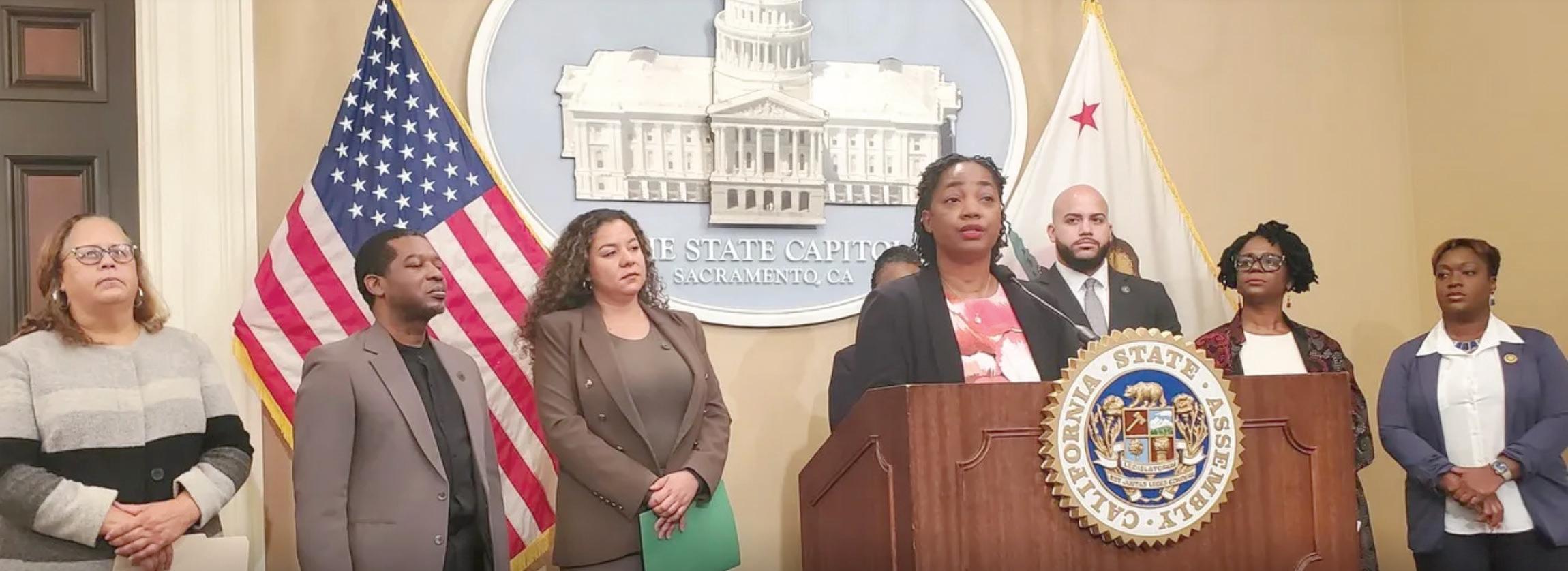
On April 23, California Secretary of State Shirley Weber addressed Black staffers during a reception at the State Capitol.
Weber joined leaders and members of the California Legislative Black Caucus (CLBC) and the California Legislative Black Staff Association for the annual Black Staff Appreciation Event. Weber told guests that she is committed to uplifting Black professionals in government.
“During the conversation, Secretary Weber underscored the importance of creating space for Black staff to connect with elected leaders and ensure they are heard and seen at the highest levels,” Weber’s office posted on Facebook.
Weber also thanked the CLBC and CLBSA for providing her the opportunity to inspire others.
“Thank you for creating these platforms and uplifting the next generation of Black leaders in government,” she wrote.
Republicans: California’s Capitol Makeover Has Cost Taxpayers $1.1 Billion -- With Secrets and No Oversight
The costs of California’s Capitol makeover -pitched as a necessary infrastructure upgrade by supporters -- have ballooned into a billion-dollar controversy, drawing fire for its growing price tag, lack of transparency, and allegations of special treatment under state regulations.
Critics, led by Republicans in the California Assembly, say what began as a $543 million renovation has now exceeded $1.1 billion, which is more than double the cost of Sacramento’s Golden 1 Center. They also accuse state officials of providing
few public updates or justifications for the dramatic rise in spending.
Assemblymember Josh Hoover (R-Folsom) also criticized the project’s costs and secrecy around ongoing communication about it, emphasizing a lack of accountability in the renovation of a publicly funded government facility.
“I think this is the height of hypocrisy,” Hoover said. “You are using taxpayer dollars for a taxpayerfunded facility, and yet you are going to design it in a way that shields you from the public and shields you from accountability.”
Among the most controversial expenditures are $5.2 million spent on imported Italian granite and design elements like hidden hallways, allegedly intended to allow lawmakers to bypass public and media interaction. Despite these upgrades, plans for a public visitor center have reportedly been eliminated, even as the project’s budget continues to expand.
Hoover and other Legislative Republicans say over 2,000 nondisclosure agreements (NDAs) have been signed in connection with the project, raising questions about transparency and oversight. No formal updates have been provided by the oversight committee since April 2021, further fueling criticism that taxpayers have been deliberately kept in the dark.
Critics also point to an apparent double standard in environmental regulation. While most Californians must adhere strictly to the California Environmental Quality Act (CEQA), the Capitol Annex Project was quietly granted an exemption, drawing further scrutiny from lawmakers and watchdog groups.
California’s economy has reached a historic milestone, officially becoming the fourth largest in the world. According to newly released data from the International Monetary Fund (IMF) and the U.S. Bureau of Economic Analysis (BEA), the Golden State’s nominal GDP rose to $4.1 trillion, positioning it just behind the United States, China, and Germany in global economic rankings.
“California isn’t just keeping pace with the world, we’re setting the pace,” Governor Gavin Newsom said. “Our economy is thriving because we
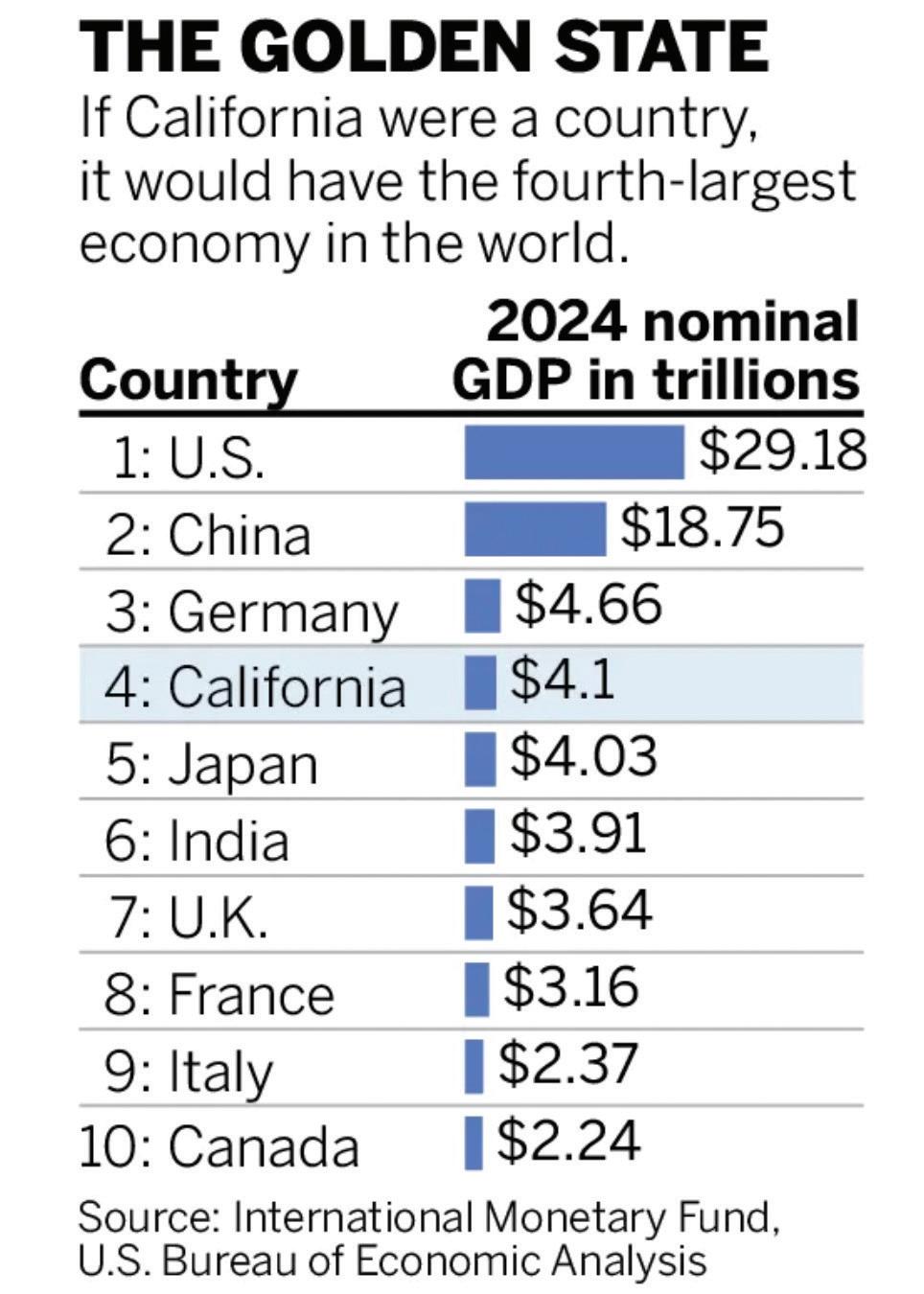
invest in people, prioritize sustainability, and believe in the power of innovation.”
In 2024, California outpaced the world’s top three economies in growth, posting a 6% GDP increase compared to the U.S. (5.3%), China (2.6%), and Germany (2.9%). The state’s economy has grown steadily over the past four years, averaging 7.5% annual growth although projections suggest that India may move ahead of California by 2026.
The news underscores California’s role as the economic engine of the United States. With leadership in sectors such as technology, agriculture, clean energy, and manufacturing, the state leads in new business formation and venture capital investment.
Events like Coachella and Stagecoach continue to boost local economies, generating nearly $700 million annually.
Facing a nearly $1 billion budget shortfall, Los Angeles Mayor Karen Bass has proposed laying off 1,600 city workers in the 2025–26 fiscal year, a move she described as a last resort during her State of the City address on Monday.
“You are the city’s greatest asset,” Bass told municipal employees last week. “But I want to be straight with you. My proposed budgetunfortunately - includes layoffs, which is a decision of absolute last resort.”
While police and fire departments will be shielded from the cuts, civilian positions across other departments are expected to be impacted.
The proposed $13.95 billion budget comes amid mounting fiscal pressures, including liability payouts, rising labor costs, and weaker-thanexpected tax revenues. The city’s general fund is projected at $8 billion, falling short of the $8.14 billion estimate. Liability settlements tripled to $300 million this year, while labor contract increases added $259 million to city expenses.
Bass’ proposal also calls for eliminating 1,074 vacant positions, deferring capital projects, consolidating four city departments, and reducing the mayor’s own office budget. Although slightly reduced, spending on homelessness remains a priority.
SEIU Local 721 President David Green, whose
union represents 10,000 city workers, pushed back strongly.
“Show us the money, we want to look at the numbers and look at every single dollar, this shouldn’t be the first-place people go, to lay off city workers, providing valuable city services,” he said. In response to the crisis, Bass plans to lobby the California Legislature in Sacramento for additional funding to help close the gap.
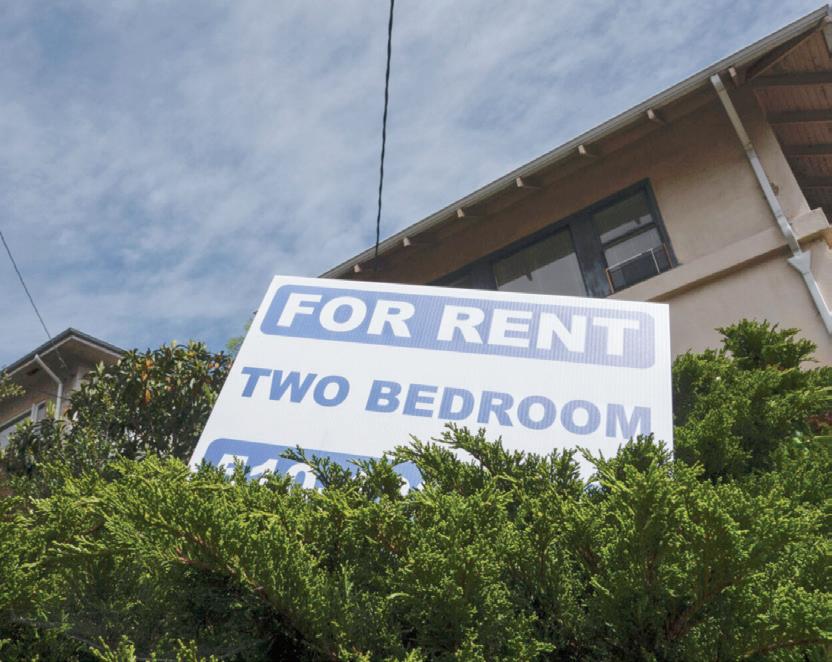
California Senate Democrats have unveiled a new package of legislation aimed at reducing the financial strain on residents facing high rent
costs and rising energy bills. The package includes three bills, spearheaded
and
as part of a broader effort to tackle the state’s affordability crisis.
“Our plan delivers real, lasting solutions to make our state more affordable -- from housing and utility costs to expanding career opportunities across California,” McGuire said in a statement.
“These three impactful bills should be considered an opening salvo; we know there’s much more work to do.”
One of the bills, Senate Bill (SB) 681, authored by Wahab, seeks to reduce the financial burden on renters by restricting landlords from charging fees not explicitly outlined in lease agreements. It also prohibits landlords from imposing late payment fees until after a one-week grace period and bans additional charges for parking spaces. While the bill aims to protect tenants, it has drawn criticism from the California Apartment Association (CAA). Vice President of the CAA Debra Carlton argued that the measure could lead to higher rent prices for all tenants.
“These fees charged by landlords are not punitive, instead they illustrate the costs associated with operating rental housing and can give tenants the ability to manage and reduce certain expenses, such as utility and water costs,” Carlton stated in a letter. “Mandating that all fees be folded into rent will not reduce the overall cost of housing.”
Another key proposal, SB 254, authored by Becker, seeks to address the state’s high utility rates. California’s energy rates are among the highest in the nation, primarily due to wildfire mitigation costs and infrastructure improvements. Becker’s bill would provide ratepayers with financial relief by expanding subsidies for low-income residents, offering summer energy credits, and increasing oversight of utility companies. The bill aims to curb excessive rate hikes and improve transparency surrounding utility profits.
By Edward Henderson California Black Media
“Senate Bill (SB) 437 utilizes the California State University to explore options to determine how to confirm if an individual is a descendant of a person who was a victim of American chattel slavery,” said Sen. Akilah Weber Pierson (D-San Diego).
“The bill seeks to determine a clear, concise and evidence-based process for individuals to verify genealogical ties and claims to potential benefits or rights associated with their ancestral heritage” continued Weber Pierson, who is also Chair of the California Legislative Black Caucus (CLBC).
Weber Pierson was speaking during a Senate Judiciary Committee hearing for her bill, SB 437, which was held on April 22.
This article is the third in a series by California Black Media (CBM) providing details on the 16 bills in the Black Caucus’s 2025 “Road to Repair” package, including SB 437. Each article focuses on four pieces of legislation. Here are summaries of this week’s four bills with information about their authors, and updates on where each one is in the legislative process.
SB 437
SB 437, introduced by Weber Pierson, would require the California State University to study and report on scientific methods for verifying whether someone is a descendant of an enslaved person in the U.S. In 2020, California enacted AB 3121, establishing the Reparations Task Force to study and develop proposals for addressing the lasting impacts of slavery and systemic discrimination against African Americans. The task force emphasized the need for improved documentation and recognition of genealogical and descendancy claims to ensure access to reparative programs.
“SB 437 builds on these findings by requiring
the CSU to develop an accurate and evidencebased eligibility standard for reparative claims,” said Weber Pierson. “By developing such standards, it aids AB 7 by providing a clear and concise process for determining who is a descendant of American chattel slavery.”
On April 22, the Senate Judiciary Committee voted 11-2 to advance the bill. It now heads to the Senate Appropriations Committee for review.
SB 503
SB 503, also introduced by Weber Pierson, seeks to regulate the use of artificial intelligence in critical healthcare applications to mitigate racial biases present in commercial algorithms or common in Large Language Model (LLM) data sets.
“As A.I. becomes more prevalent in healthcare, we must be vigilant about how biases in these technologies can perpetuate existing racial disparities,” said Weber Pierson. “If A.I. models are trained on biased data, it can lead to misdiagnoses of Black patients or provide inadequate treatment recommendations, which could ultimately deepen health inequalities.”
Weber Pierson believes that addressing A.I. bias is vital for creating a healthcare system that serves everyone equally, ensuring that Black patients and other minority groups are not left behind or harmed by technological advancements.
AB 935
AB 935, introduced by Assemblymember Rhodesia Ransom (D-Stockton), would require the Civil Rights Department and the Department of Education to collect anonymized data including gender and marital status to determine how complaints are handled.
“This bill brings transparency, exposes patterns of injustice, and empowers California to take
meaningful action,” said Ransom. “For too long, systemic disparities have gone unaddressed and unchallenged. Without data, we cannot measure the full scope of discrimination or craft effective policies to combat it.”
Existing law prohibits the inclusion of any question relative to an applicant’s race in any application form required to be filled in and submitted by an applicant to any department, board, commission, officer, agent, or employee of this state.
Existing law also states that any person who violates this provision is guilty of a misdemeanor.
The Assembly Education Committee is currently reviewing AB 935 after the Judiciary Committee voted 9-1 on April 8 to move it forward.
AB 785
AB 785, introduced by Assemblymember LaShae Sharp-Collins (D-La Mesa) would create the Community Violence Interdiction Grant Program, which would fund community-driven solutions to
decrease violence in neighborhoods and schools.
“For too long we have been told that there is not enough money to fund programs that invest in youth and end the pipeline into incarceration,” said Sharp-Collins. “AB 785 rejects that and would allocate savings from prison closures to evidencebased programs like diversion and school-based health to reduce community violence.”
Applicants for grant funding must show how they will focus on students most affected by trauma, especially those who struggle to access traditional services, such as low-income or homeless students, those with PTSD or severe trauma, immigrant and refugee students, students with special needs, and those involved with child protective services or the juvenile justice system.
On April 23, the Assembly Committee on Health voted 13-0 in favor of AB 785. It is currently under review by the Senate Appropriations Committee.
By Stacy M. Brown BlackPressUSA.com Senior National Correspondent
Reverend Shavon Arline-Bradley, president and CEO of the National Council of Negro Women (NCNW), is mobilizing a national response to what she called a deliberate effort by the Trump administration to erase Black history and dismantle long-standing institutions. “Our ancestors have seen racism before,” Bradley said on Black Press USA’s Let It Be Known news program. “But they haven’t seen this level of foolishness in the White House that is outright anti-law. What we’re seeing now is lawlessness.” NCNW has adopted a “Three C Strategy”—consumer action, constituent engagement, and commitment—aimed at protecting Black institutions and advancing economic power. That includes defending NCNW’s historic headquarters, the Mary McLeod Bethune Council House in Washington, which Bradley warned could be targeted by the Department of the Interior.Across the city, civil rights veteran Dr. Frank Smith is fighting to complete the expansion of the African American Civil War Memorial Museum. Budget freezes have stalled progress. “We survived slavery, Jim Crow, and the Ku Klux Klan. We’ll survive this,” Smith said. “African-American soldiers helped Lincoln save this union. Now, we need to finish what we started.” Meanwhile, Black Press USA has confirmed that the Trump administration has begun dismantling exhibits at the National Museum of African American History and Culture. Journalist April Ryan reported the removal of the iconic Woolworth’s lunch counter sit-in exhibit. The display honors four North Carolina A&T students who sparked a national wave of protests in 1960. “This president is a master of distraction and is destroying what it took 250 years to build,” said Rep. Alma Adams of North Carolina. “You can take down exhibits, close buildings, ban books, and try to change history, but we will never forget.”Officials also notified Rev. Dr. Amos Brown, pastor of San Francisco’s Third Baptist Church, that his loaned
Bible and a historic volume by George W. Williams would be returned. Emails dated April 10 and 15 confirmed the transfer. Bradley said a national mobilization is set for May 3 in Washington, D.C., urging people to join the Smithsonian and support endangered cultural institutions. “This is not random,” she said. “This is consistent. This is deliberate.” NCNW is also countering recent
executive orders eliminating civil rights protections and gutting diversity programs. “We’re issuing a newsletter to respond to every executive order so that Black women understand what this water hose is all about,” Bradley said.She also called out Target’s retreat from its 2020 diversity pledges. “They were the leaders in DEI. But now they’re scared. We need to push them to do the right thing anyway,
even if the words change.” With $1.7 trillion in annual Black consumer spending—half from Black women—Bradley said economic power must be leveraged. “That kind of economic power should never be underestimated.” She concluded, “The Black Press is our Underground Railroad. If we don’t invest in the Black Press, we lose our Underground Railroad—period.”
By Edward Henderson California Black Media
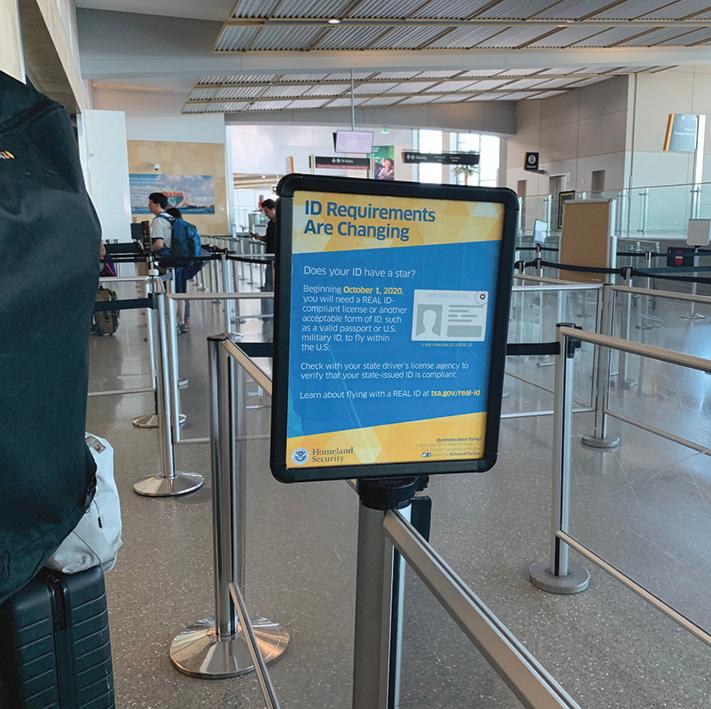
On May 7, the federal government will start enforcing Real ID requirements at U.S. airports and some federal facilities.
From this date forward, travelers will need a Real ID compliant license or other accepted form of identification like a passport to pass security checks before boarding a domestic flight.
However, just over 55% of Californians (18 million people) have updated their driver’s licenses or ID cards to be Real ID compliant, according to the California Department of Motor Vehicles (DMV).
If you are among those who have not, here is what you need to do to complete the process. Schedule your appointment through a California DMV office and obtain your Real ID application code (issued when you schedule your appointment online). Be prepared to pay a $35 fee.
“Congress passed the REAL ID Act in 2005 to enhance security standards for identification, directly in response to the security vulnerabilities highlighted by the 9/11 attacks,” said former Transportation Security Administration (TSA) Administrator David Pekoske in a release.
“Identity verification is foundational to security. I urge those who use a driver’s license or state-issued identity card as their primary form of identification to access federal facilities or board commercial passenger aircraft, to ensure these credentials are REAL ID-compliant,” Pekoske added. “We are committed to engaging with the public, licensing jurisdictions and states to facilitate a smooth transition to REAL ID enforcement beginning May 7, 2025, which this rule supports.”
The national Real ID policy was originally supposed to go into effect in 2008, but has been repeatedly postponed, including during the pandemic.
Updated California licenses will be marked by a golden bear in the upper right-hand corner of the card. Travelers 18 or over need the ID for U.S domestic flights. The ID cannot be used to travel internationally, with an exception for land or water border crossings into Mexico and Canada.
To apply for a REAL ID, you must present several documents, including ONE proof of identity document. This document must include your date of birth and your full name. Examples of acceptable documentation include:
· Valid U.S. passport or passport card
· Original or certified copy of U.S birth certificate issued by a city, county or state office.
(Abbreviated or abstract certificates are not accepted.
· Valid Permanent Resident Card
· Foreign passport with valid U.S. Visa and approved I-94 form
· Certificate of Naturalization or Certificate of U.S. Citizenship
· Certified copy of birth certificate from a U.S. Territory
· Valid Employment Authorization Document Card or valid/expired EAD card with Notice of Action
· Valid U.S. Certificate of Birth Abroad or Consular Report of Birth Abroad of U.S. Citizen
· Valid foreign passport stamped ‘Processed for I-551
· Documents reflecting TPS benefit eligibility
Additionally, applicants will need to provide TWO different proofs of California residency. Both documents must show your first and last name with the same mailing address that is listed on your application.
Utility or cell phone bills are preferred document types. Medical, employment or insurance documents are also acceptable.
If you use a P.O. Box, one document must show both your P.O. Box address and physical address. The second document must only bear the P.O. Box address.
The TSA says the May 7 deadline will be enforced, and that travelers without a Real ID or other accepted document could experience delays when going through security because it will take longer to verify their identity. They could face “additional screening and the possibility of not being permitted into the security checkpoint,” the TSA said in a news release.
The agency recommends travelers arrive at least three hours before domestic flights if they don’t have Real ID or an alternative.