OEM - A leading technology trading group
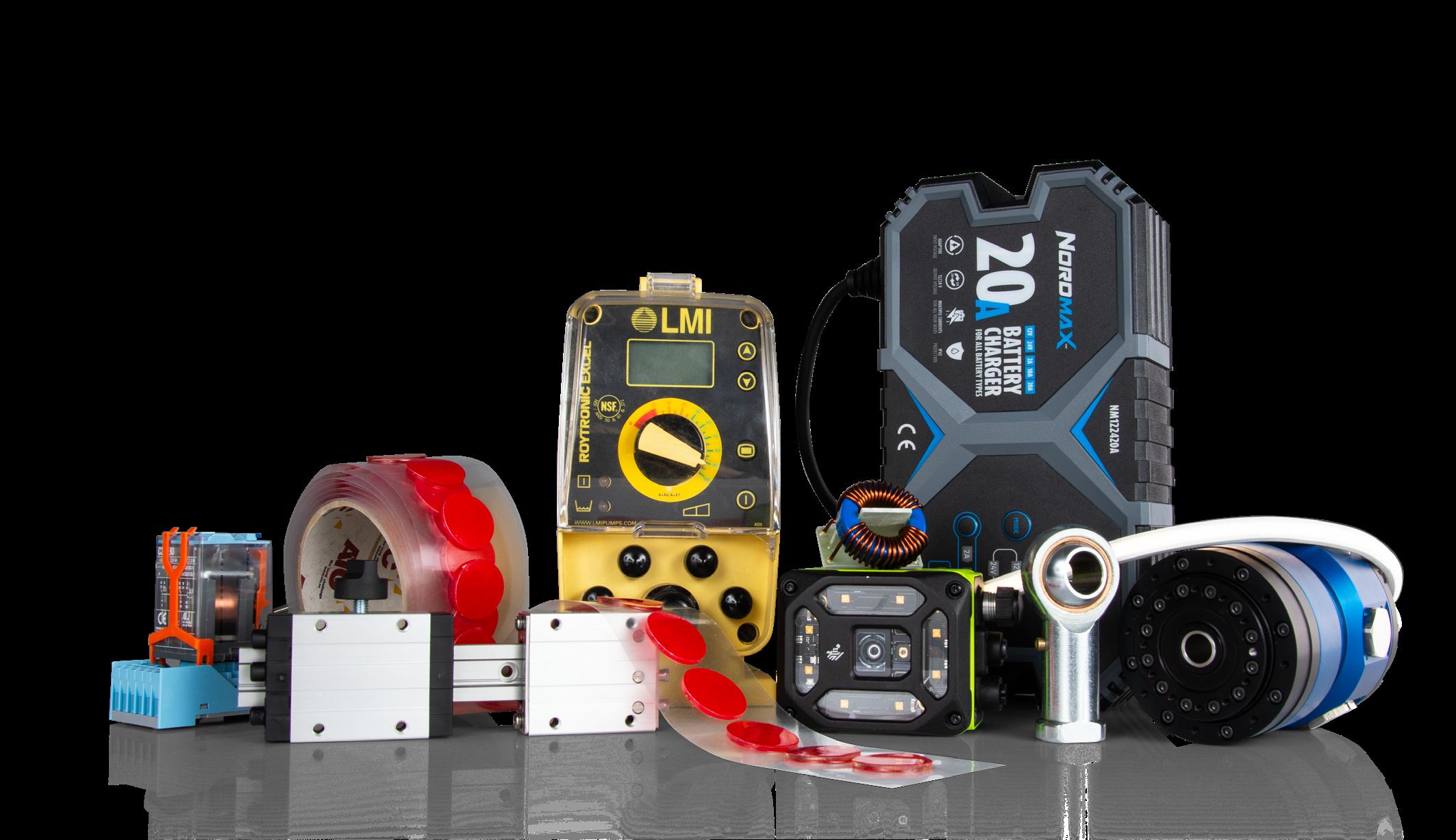
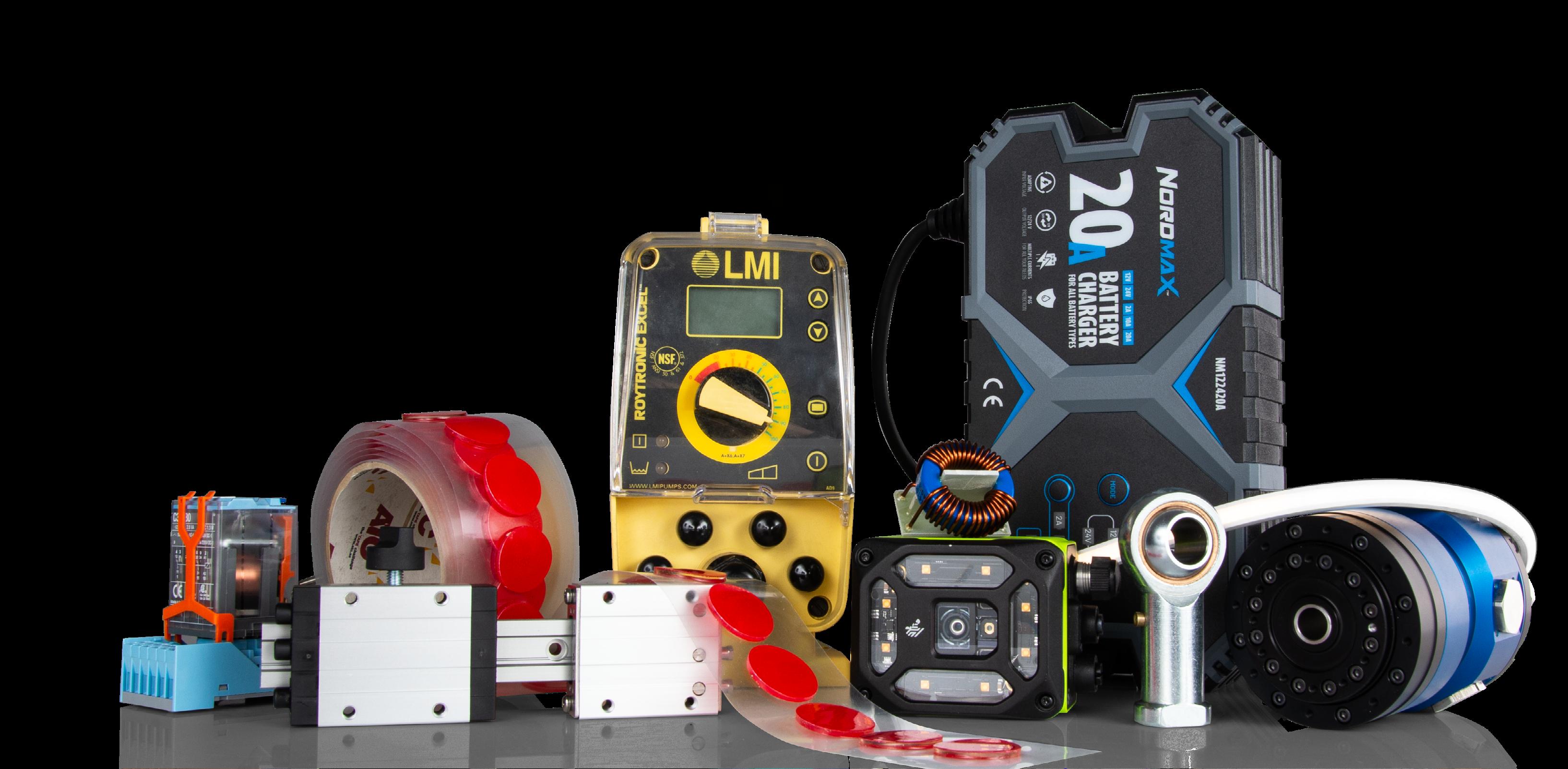
OEM is one of Europe’s leading technology trading groups. The foundation for the business model is to create value for customers and suppliers by continually broadening the customer offering, raising service levels and enhancing technical expertise. With a strong local presence, OEM cultivates the market effectively and reaches customers that its suppliers have found difficult to reach on their own.
Continued growth with strong cash flow
Despite continued weak growth in the industrial sector, the OEM Group’s incoming orders increased by 3 per cent and sales by 1 per cent in 2025, of which organic growth amounted to 3 per cent.
Demand varied between both sectors and geographies. Finland, which has experienced a few weaker years, delivered the strongest growth. In Sweden, several operations were adversely affected by the stronger krona, which in some cases resulted in negative growth figures despite strengthened market positions.
Region Rest of Europe recorded the weakest overall organic growth, with the strongest demand being seen in Poland and Norway.
Cash flow was strengthened further and amounted to SEK 763 million (692), reflecting the Group’s continued strong financial position. EBITA amounted to SEK 795 million (800), and the EBITA margin remained high at 15.0 per cent (15.3).
Acquisitions
Vierpool was acquired in April and Multicomponent Nordic AB was added in December. Together, these two businesses account for approximately SEK 240 million in annual sales.
A further three acquisitions were completed in February 2026: Motion29 Ltd, Cre8 Systems AS and Ronnie Bergdahls Försäljnings AB. In March 2026, Weingrill Srl was acquired. The efforts to identify and implement new acquisitions have been intensified during the year.
Dividends
The Board is proposing an unchanged dividend of SEK 1.75 per share, corresponding to SEK 243 million. Since being listed on the stock exchange in 1983, OEM has either maintained or increased its dividend, with the exception of 2009 and 2020.
Value-adding technology trading group
OEM creates value by combining a wide-ranging and deep product range with a high level of service. Through its employees’ product and application knowledge, customers receive guidance when selecting components, contributing to strong technical solutions and cost effectiveness. The products are sourced from leading manufacturers of industrial components and systems for industrial applications. OEM acts as an extension of its suppliers in each market and, thanks to its strong marketing and sales organisation, it aims to develop its suppliers into leading players within their respective niches. All in all, this is positioning OEM as an important distribution channel in the Group’s markets and as one of Europe’s leading technical trading groups.
Product portfolio
OEM supplies more than 60,000 products from over 400 suppliers. Many of these suppliers represent established brands and are market leaders in their segments. OEM’s combined experience and expertise enable it to support customers throughout their entire value chain, from product development and design to procurement and production. In addition to the standard range, OEM also supplies customised solutions, components and assembled units, which can streamline customers’ processes and improve efficiency in the supply chain.
Market
OEM has 37 units operating in 16 countries, with a presence in Northern and Central Europe, East Central Europe, the British Isles and China. Sweden is OEM’s domestic market and also its largest market, where the company holds a
strong position in the majority of its product areas. In other regions, the market position varies over time between countries and segments, but the long-term focus is to gradually strengthen the Group’s presence and be one of the major players in the markets in which OEM has chosen to operate. Acquisitions represent an important part of OEM’s growth strategy and are primarily financed through a strong cash flow and a solid liquidity position.
Customers
A large proportion of customers are original equipment manufacturers (OEMs), principally in the manufacturing industry. These develop and build machinery and equipment that incorporate components and systems. In addition, the Group works with installation companies, wholesalers and retailers that serve both professional customers and the consumer market.

































Pärnu
Riga
Warszawa
Trnava
Maarssen
Nässjö Göteborg
Allerød
Björneborg Åbo
Vilnius Rauma Jönköping
Jyväskylä
Dungannon
Vellinge
Continued growth in both sales and incoming orders
During 2025, the market continued to be characterised by geopolitical tensions and a generally weak industrial cycle. For OEM, sales increased by 1 per cent and incoming orders by 3 per cent.
Organic sales growth was stable at 3 per cent, while the stronger Swedish krona had a negative impact on sales, amounting to 3 per cent. Acquisitions contributed positively by 1 per cent.
The more challenging market situation has meant that efficiency initiatives continued during the year, focusing on improving the cost structure.
A slightly lower gross margin, mainly driven by currency fluctuations and a higher cost base, primarily due to completed acquisitions, resulted in EBITA decreasing by 1 per cent. The EBITA margin stood at 15.0 per cent (15.3).
Demand has varied between sectors and geographies. Finland, which has experienced a few weaker years, delivered the best growth. In Sweden, many operations have been negatively affected by the stronger Swedish krona, which in several cases led to negative growth figures, even though the companies strengthened their market positions. In the third region, Rest of Europe, the trend has varied, with operations in Poland and Norway reporting the strongest demand.
Cash flow was strong during the year, amounting to SEK 763 million compared with SEK 692 million in the previous year.
Growth across the regions
Region Sweden and Region Finland, the Baltic states and China recorded the strongest performance, with organic growth of 3 and 6 per cent respectively. Rest of Europe generally saw weaker demand and reported negative organic growth of 1 per cent. However, profitability only improved in Region Finland, the Baltic states and China.
In Sweden, the Group’s largest region, sales increased by 1 per cent and incoming orders by 3 per cent. This was despite the fact that the stronger Swedish krona had a negative impact on both sales and margins for several operations. Higher costs contributed to EBITA decreasing by 3 per cent, and the EBITA margin fell by 0.7 percentage points to 16.3 per cent.
Region Finland, the Baltic states and China, which achieved a record year, increased both sales and incoming orders, by 2 per cent and 6 per cent respectively. Operating profit (EBITA) rose by 9 per cent due to higher sales and strong cost control, resulting in an EBITA margin of 12.2 per cent (11.5).
In Region Rest of Europe, sales and incoming orders both increased by 2 per cent. Acquisitions contributed 6 per cent. A
weaker gross margin, combined with higher costs, led to an 8 per cent reduction in EBITA, resulting in an EBITA margin of 12.9 per cent (14.3).
New principal owner, updated strategy
After more than 50 years with the founding families as the principal owners, EQT assumed ownership in March 2025. With a new Board in place and a clear ambition to accelerate growth, work has begun on renewing and strengthening OEM’s long-term strategy. The new strategy is based on further developing what has made OEM successful, while at the same time accelerating the pace of acquisitions.
The increased focus on acquisitions has prompted the management, together with newly added resources, to develop a strong pipeline of potential acquisitions. Two acquisitions were completed in 2025, with further three companies being added in February 2026 and another one in March.
Whereas OEM has historically primarily acquired technical trading companies, the decision has been made to broaden the acquisition mandate to also encompass product-owning companies in selected niches. This is enhancing opportunities for complementary growth and increased value creation.
Dividends
For the 2025 financial year, the Board is proposing an unchanged dividend of SEK 1.75 per share, corresponding to SEK 243 million. This constitutes 41 per cent of earnings per share after tax and gives a direct return of 1.3 per cent based on OEM’s year-end share price. Since being listed on the stock exchange in 1983, OEM has increased its dividend every year, with the exception of six years when the dividend was unchanged, as well as 2009 when it was reduced by 33 per cent and the pandemic year 2020 when no dividend was paid. The Group’s strong balance sheet, with cash on hand including an approved and unutilised overdraft facility of SEK 1,413 million and unmortgaged properties, is providing a solid basis for combining continued acquisition-driven growth with a gradually rising dividend over time.
OEM is well positioned for the future
The market is currently challenging, and substantial efforts are being made to increase sales and continue improving efficiency. Despite this, confidence in the future remains strong. This confidence is founded on something far more long-term than business cycles and quarterly results: it is rooted in our organisational culture. Our commitment, curiosity and continuous drive to develop are among OEM’s greatest strengths and have been crucial to the company’s
long-term success. OEM is now entering an exciting and expansive phase, with a continued focus on creating value for our customers, suppliers and employees.
With the creativity and commitment that exists throughout the organisation, I am convinced that OEM will continue to create value and opportunities well into the future.
Tranås, March 2026
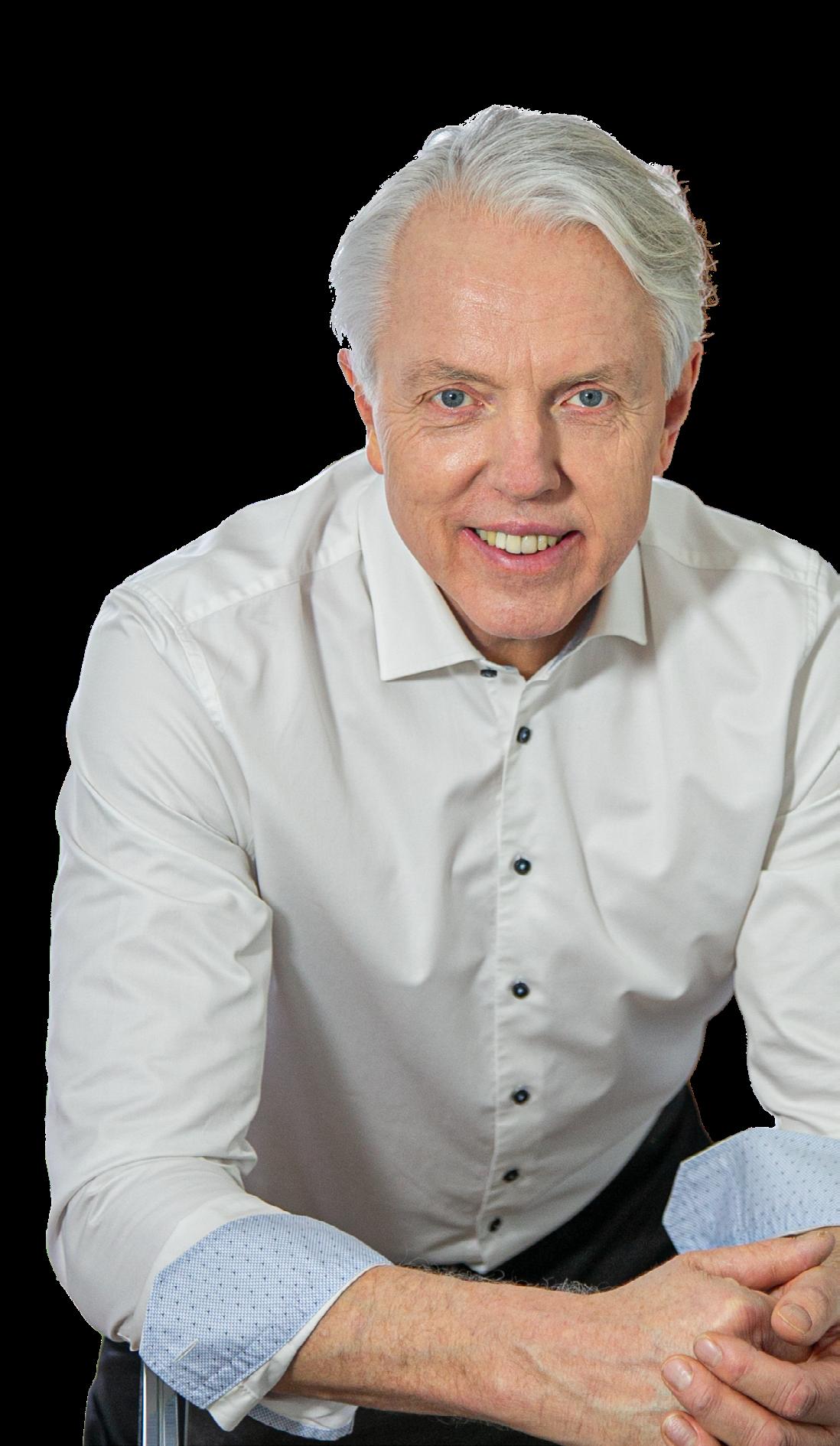
Jörgen Zahlin Managing Director and CEO, OEM International AB
Vision, business concept, goals and strategies
Financial targets
OEM aims to be a leading technology group in the field of components and systems that enable sustainable development.
Business concept
OEM creates sustainable and profitable growth through a decentralised model in which entrepreneur-led companies market components and systems within selected niches. By acquiring and developing companies, the Group generates stable cash flows and sustainable growth. The business model is based on local accountability and decision-making authority, combined with the Group’s economies of scale, networks and longterm perspective.
Goals and objectives
OEM’s overarching objective is for each business to be a leader in its respective niche, both in terms of growth and profitability.
OEM shall maintain sustainable profitable growth together with a good return on equity and with limited financial risk.
• Minimum sales growth of 10% per annum through a business cycle.
• A minimum EBITA margin of 12% per annum through a business cycle.
• A minimum return on equity of 25% per annum through a business cycle.
• OEM will prioritise a strong financial position to ensure operational stability and enable acquisitions, regardless of the economic climate.
• The debt/equity ratio shall be below 100 per cent.
Strategy
The Group has defined five strategic areas that are critical when it comes to continuing to develop successfully and achieving financial targets.
Growth
OEM will drive growth through organic development, acquisitions and geographic expansion.
1) Organic growth
Organic growth is a priority and is generated by increasing market share and broadening the customer offering. In markets where OEM is established, growth will exceed the underlying market growth. In markets where OEM is not yet one of the five largest players, our ambition is to achieve considerably higher growth.
2) Acquisitions
Corporate acquisitions are a key element of OEM’s growth strategy and enable faster expansion. OEM acquires companies and product portfolios that enhance its position in existing product areas and markets, as well as leading companies that provide new products (including proprietary products) or open the door to new geographic markets.
3) Geographic expansion
Expansion into new geographic markets takes place when conditions are favourable for OEM to become a significant player within the specific niche in which it intends to establish operations.
Customer
offering
OEM offers components and systems within selected niches, tailored to local market needs. Continuous product and product range development is key and takes place in close collaboration with both existing and new suppliers.
Each local organisation is responsible for identifying and developing new products that strengthen the customer offering and gradually increase competitiveness.
Marketing
OEM aims to have an effective and modern marketing approach, combining face-to-face selling with digital solutions that serve as the hub of the sales process.
Face-to-face meetings are crucial when it comes to understanding customer needs and translating these into the right technical solutions, while also providing an opportunity to highlight OEM’s experience and expertise.
Digital services complement face-to-face selling and enhance the customer experience, alongside digital and printed marketing communication.
Logistics
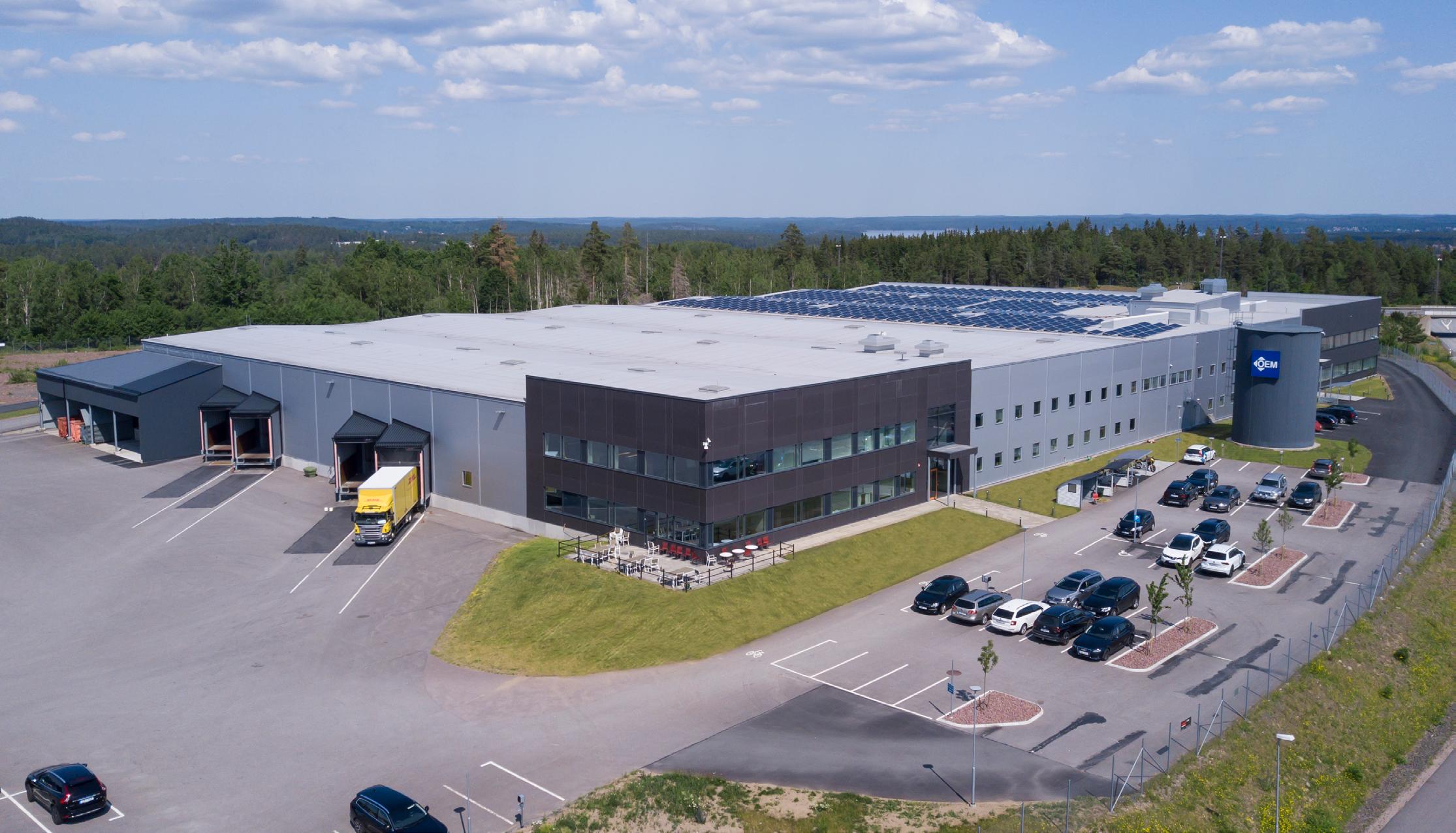
OEM will offer logistics solutions that deliver high levels of customer service, quality and cost-effectiveness. The Group has 15 logistics units, most of which are owned by OEM. Each unit adapts its range to its operations and works actively to coordinate warehousing with other units. Many of the logistics units are supported by processing units that effectively provide unique adaptations and installation for specific customers.
Employees and management
All activities should be permeated by an informal culture with a business-oriented focus. OEM will provide employees with good opportunities to develop within the company, in line with the business’s goals and strategies as well as the employees’ own ambitions. Recruitment and employee strategies will ensure that a significant proportion of management positions are filled internally.
Link to double materiality assessment
The double materiality assessment has identified material impacts, risks and opportunities in areas such as resource and energy use, supplier management and the company’s own workforce. The results are now providing a basis for continued efforts to strengthen strategic priorities and decision-making processes.
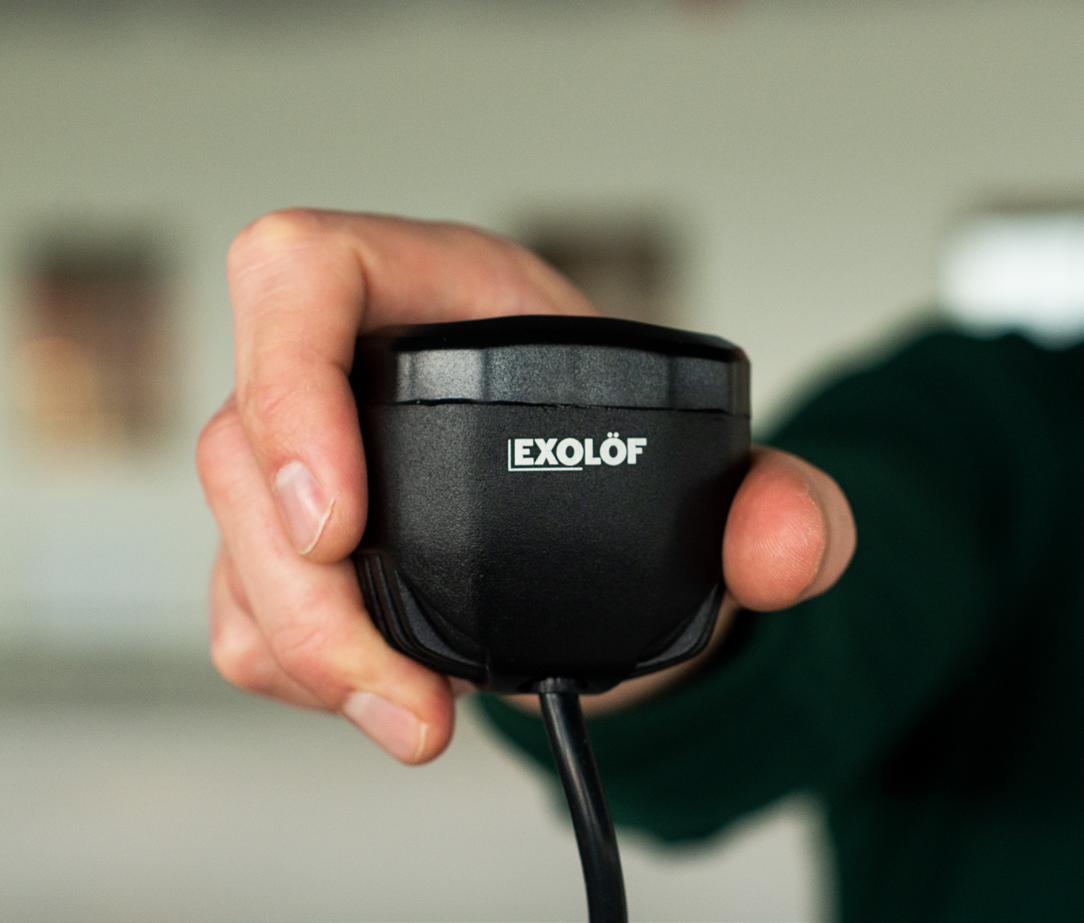
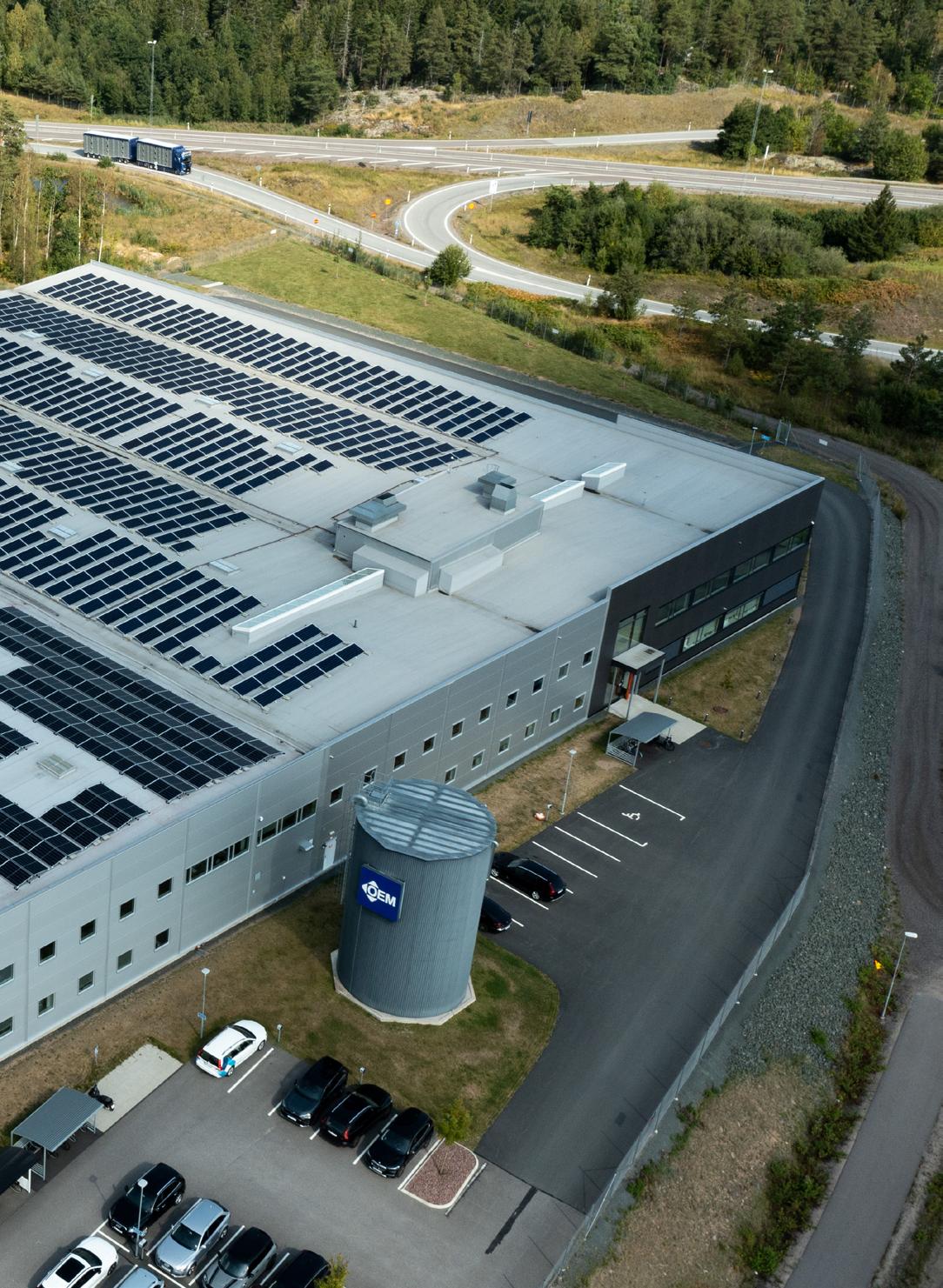
OEM’s logistics units are a core part of the Group’s offering, focusing on efficient warehousing and a high level of delivery service – exemplified here by the logistics centre at Höganloft in Tranås.
OEM creates value for customers and suppliers
OEM is one of Europe’s leading technology trading groups. The foundation for the business model is to create value for customers and suppliers by continually broadening the customer offering, raising service levels and enhancing technical expertise. With a strong local presence, OEM cultivates the market effectively and reaches customers that its suppliers have found difficult to reach on their own.
Customer value
One of the cornerstones of OEM’s business model is to offer customers a comprehensive range of quality products from leading suppliers, combined with the ability to tailor solutions according to customers’ specific needs. In operations where OEM is the product owner, both the product range and individual products are developed. Dedicated development teams work to continually cultivate the customer offering and ensure long-term competitiveness.
A common feature across all of OEM’s operations is its employees’ in-depth product and application knowledge, which supports customers in their selection of products and contributes to both technical improvements and financial benefits. Close collaboration with customers and suppliers creates an effective dialogue, centred on technical understanding and creative problem-solving. Products are supplied in standard versions or in customer-specific variants, depending on the customer’s needs. This makes it possible to tailor solutions to the customer’s end product and application. Adaptations are made either to the processing environments in OEM’s own operations, or in close collaboration with manufacturers when larger volumes are required. For example, this may involve pre-assembled component solutions or products with adapted details, such as cable length and connections. As the collaboration is extended over time, many customers choose to consolidate a larger share of their purchases with OEM, where the company’s core values – focusing on expertise, service, efficiency and quality – shape the relationships.
Value for the suppliers
OEM’s operations are underpinned by strong market development and well-functioning logistics flows. This creates the conditions to represent leading suppliers and
build long-term trust. By acting as the manufacturers’ local representative, OEM assumes overall responsibility for customer relationships and ongoing market development. The objective is to be suppliers’ primary sales channel in each market and to contribute to strengthening their position within selected niches.
The cooperation with suppliers is characterised by close dialogue, loyalty and a long-term approach. Over time, the organisation has built up in-depth expertise regarding suppliers’ products and their applications. This enables dialogue on product development, with OEM contributing market insights and application knowledge. In this way, suppliers can develop offerings that meet customers’ needs and strengthen their competitiveness.
OEM’s market position and local presence make it possible for suppliers to reach customers that they would otherwise have difficulty accessing on their own. In addition, OEM refrains from marketing competing products.
During 2025, the Group has initiated work to adapt the business to increased sustainability requirements in the supply chain.
This work includes, for example, monitoring working conditions, health and safety, corporate governance and the suppliers’ compliance with the Group’s Code of Conduct.
The adaptation entails a broadening of the Group’s requirements and enhanced monitoring throughout the supply chain.
Digital portals as the hub of customer communication
The digital infrastructure employed by OEM’s companies forms the basis for customer communication and consolidates all relevant information about the offering.
The product range is presented in a structured and easily accessible manner, with a focus on combining product data with inspiration and knowledge. This creates the conditions for the companies’ digital portals to function as working tools in customers’ day-to-day operations, and to support both the selection and purchasing processes.
In 2025, the digital solutions have been further developed through increased digitalisation and improved information quality, while the harmonisation of underlying back-office processes is creating more efficient flows and better scalability across the organisation. The e-commerce
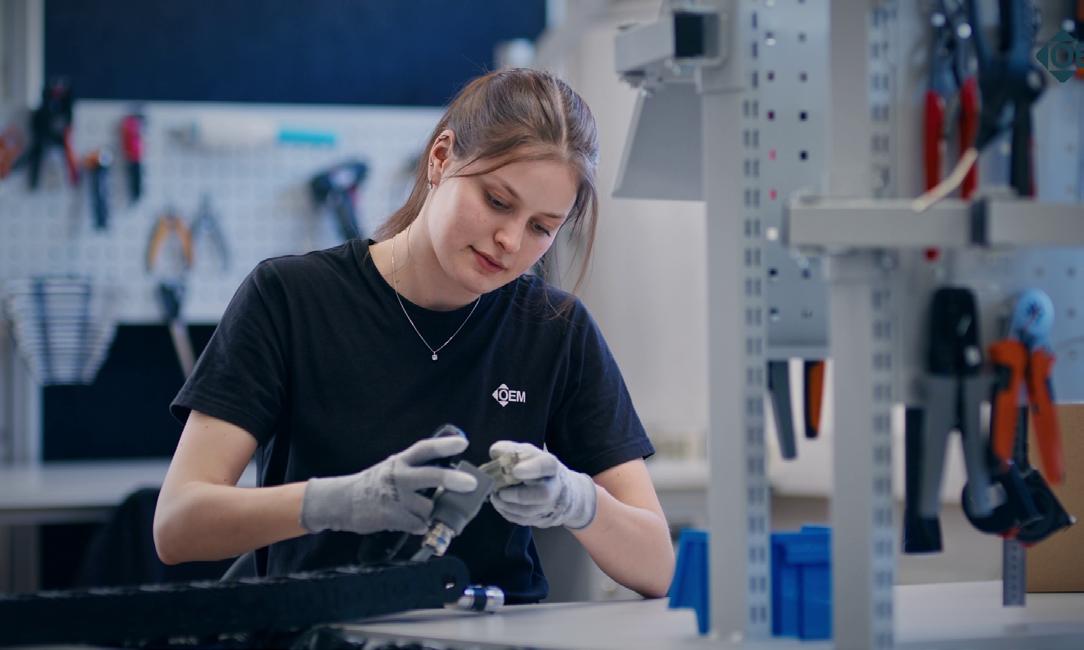
functions contribute to a more cohesive way of working and streamline customers’ purchasing processes, reinforcing the portals as an integral part of OEM’s business model.
Efficient logistics flows
OEM’s logistics are based on the interaction between local warehouses and larger logistics centres, creating efficient product flows characterised by high quality and strong cost control. This structure contributes to a high level of service and strong delivery precision. For larger customers, the logistics are tailored to specific requirements and needs –including delivery methods, packaging solutions and delivery frequency – generating clear customer benefits. In 2025, efforts to further develop logistics have been strengthened through the harmonisation of working methods and underlying processes, which in turn is creating better conditions for scalability across the organisation. Continuous improvement measures ensure that availability, quality and service levels are progressively enhanced in line with increasing volumes and changing customer requirements.
OEM creates customer value through a broad product range, in-depth product and application expertise, and tailored processing – from standard products to customer-specific solutions.
Acquisitions that strengthen existing positions and open up new ones
OEM is undergoing in a phase of accelerated growth, with acquisitions forming a central part of the strategy. The focus is both on enhancing existing positions and establishing OEM in new technological areas and geographic markets. A common factor among the companies that OEM wants to acquire is their perceived ability to continue developing with OEM as a long-term, committed owner.
Structured acquisition work
OEM has established dedicated acquisition team during the year that, together with the Group’s CEOs and business area managers, is actively identifying and evaluating potential acquisitions. The work is wide-ranging and systematic, focusing on companies that complement existing offerings, provide access to new markets, or add new technology, expertise and customer bases. The objective is for acquisitions to contribute to the Group’s earnings and long-term value creation, in line with OEM’s financial targets.
2026 Weingrill Srl Italy
2026 Ronnie Bergdahls Försäljnings AB Sweden
2026 CRE8 Systems AS Norway
2026 Motion29 Ltd United Kingdom
2025 Multicomponent Norden AB Sweden
2025 Vierpool BV The Netherlands
2023 Ingemar Liljenberg AB Sweden
2023 Unit-Pump A/S Denmark
2023 Lagermetall AB Sweden
2022 Demesne Electrical Sales Ltd Ireland
2021 Norwegian Exp. Imp. AS (part of) Norway
2020 Zoedale Ltd United Kingdom
2019 Finisterra AS (part of) Norway
2019 Cabavo AB Sweden
2018 ATB Drivtech AB Sweden
2017 Rauheat OY Finland
OEM’s acquisition strategy
OEM focuses primarily on three types of acquisitions:
1. Complementary products in a market where OEM already operates.
2. New geographic markets for existing product areas.
3. Product-owning companies in markets where OEM is present or intends to establish operations.
Acquired companies are typically leading trading or productowning businesses with sales in the range of SEK 30–250 million.
Focus on the business
OEM attaches great importance to the business’s quality –organisation, culture, offering and long-term development potential are all crucial factors. At the same time, the acquisition is assessed in terms of how it can strengthen the Group as a whole through coordination, the exchange of
experiences and common customer and supplier structures. The acquisition process follows a well-defined model, with clear roles and responsibilities. Acquisitions can be completed either in the form of share purchases (with or without the former owners remaining) or as asset acquisitions.
Development of acquired companies
OEM operates as an active and long-term owner. A tangible development plan is prepared for each acquisition, focusing on prioritised initiatives and value realisation. The future operating model is tailored according to what creates the greatest value – the company may continue as an independent unit or be integrated into an existing business. In both cases, OEM’s market presence, the experience of sister companies and established supplier networks can be leveraged to drive growth and strengthen the offering.
Completed acquisitions up to and including March 2026 – totalling just over SEK 500 million in annual sales

A Dutch distributor of automation components, with operations in Maarssen. The acquisition means that OEM is establishing itself in a new geographic market and creating the opportunity to gradually strengthen its offering and grow the customer base. The impact on profit for the year is considered to be marginal.
• Sales: approx. SEK 120 million
• Founded: 1975
• Market: Well established in the industrial and logistics sectors
• Offering: Products from leading European manufacturers, several of which already collaborate with OEM.
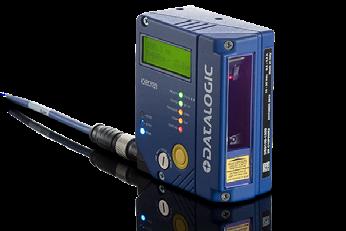


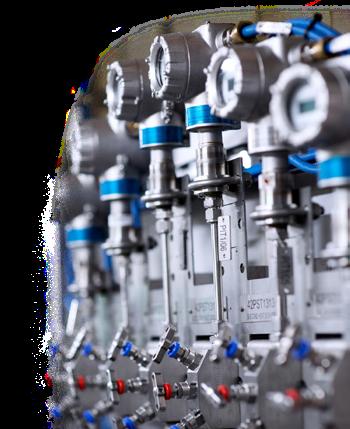
The company develops and produces hydraulic power units and chemical injection systems for the oil, gas and energy sectors. The acquisition marks OEM’s entry into the offshore industry, broadening its market presence in Norway, and it is expected to generate additional business opportunities in the future.
• Sales: approx. SEK 160 million
• Founded: 2010
• Market: The Norwegian oil, gas and energy sector.
• Offering: Develops and produces hydraulic power units and chemical injection systems
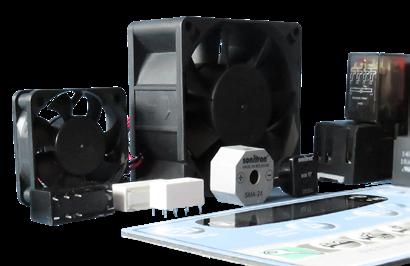
The head office and warehouse are located in Mölndal, complementing OEM Electronics’ product range well. The acquisition is creating clear synergies in terms of product range development, market development and supplier coordination.
• Sales: approx. SEK 120 million
• Founded: 1998
• Market: Strong position in the Swedish electronics market
• Offering: Standardised and customer-specific electronic components, mainly from Asian manufacturers

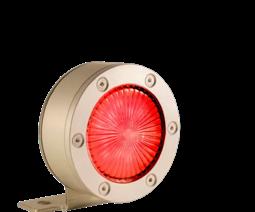
Bergdahls is a well-known distributor of lighting and emergency lighting products in the Nordic market. Together with the Group’s other lighting companies, it is further expanding OEM’s product range.
• Sales: approx. SEK 50 million
• Founded: 1992
• Market: Well-known lighting company in the Nordic market
• Offering: Distributor of lighting and emergency lighting products

The company has a strong product range in the field of safety and signalling solutions, complementing OEM Automatic UK’s existing portfolio within the Sensor and Safety business area.
• Sales: approx. SEK 13 million
• Founded: 2006
• Market: Distributor of industrial automation products in the UK market
• Offering: Strong product range, particularly within safety and signalling solutions


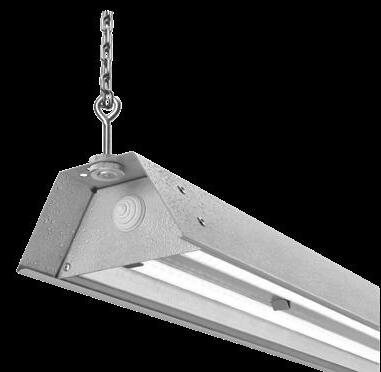
Weingrill is renowned for its innovative design, cost-effective manufacturing and high product quality, based on an in-depth understanding of its customers’ specific needs. The acquisition marks OEM’s entry into Italy and the paper industry, broadens OEM’s market presence and creates opportunities for further business development.
• Sales: approx. SEK 80 million

• Founded: 1952
• Market: Based in Italy, although more than half of its sales are generated outside Italy.
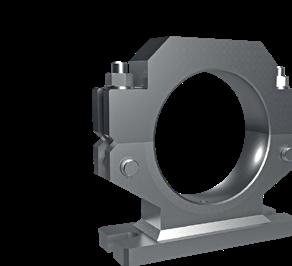
• Offering: Develops and manufactures screw jacks as well as components such as cleaning systems, stretchers and guides for the paper industry.
Customer offering
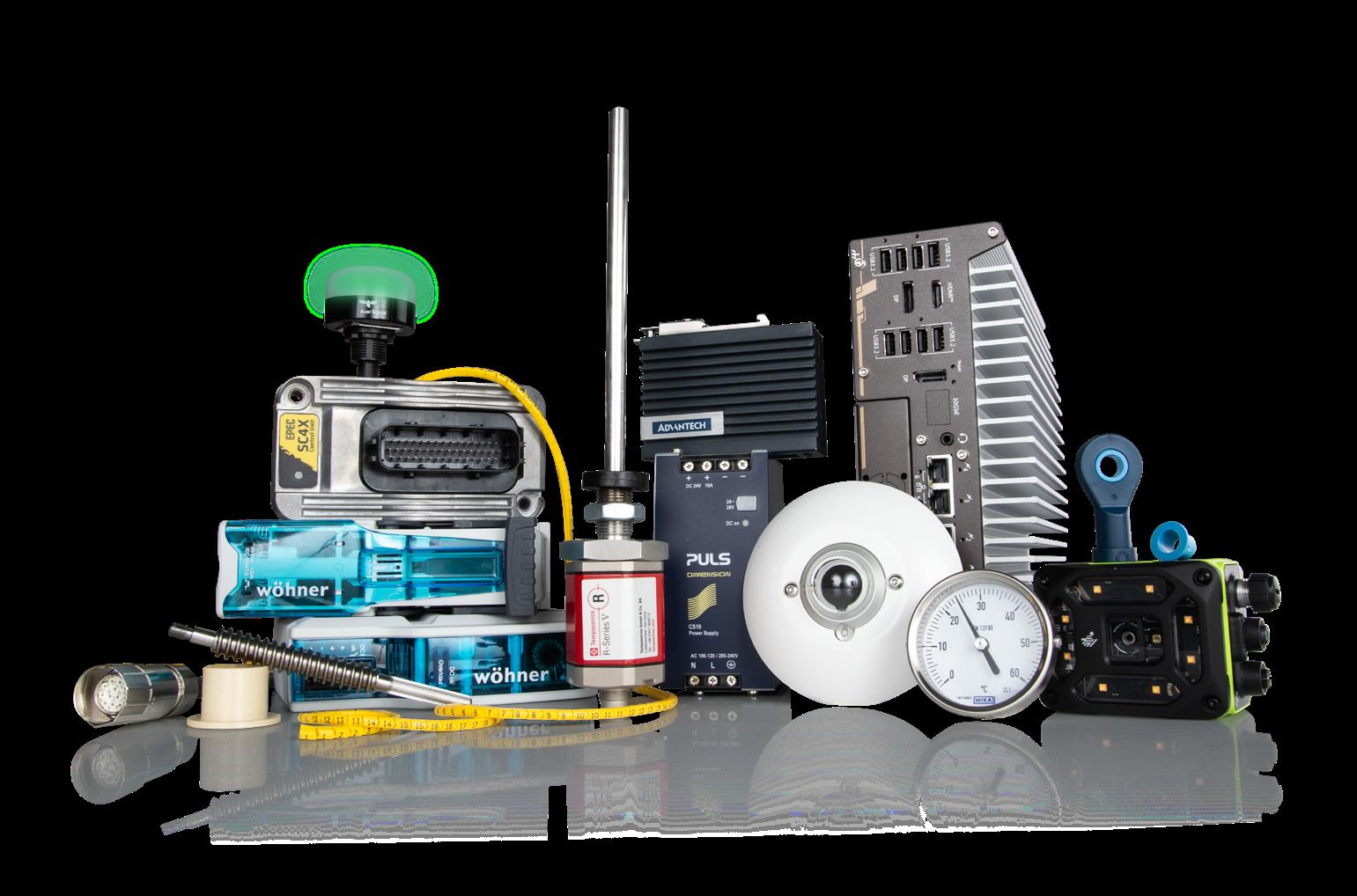
OEM’s operations offer a broad and varied range of products and systems, combined with in-depth product and application expertise. This provides customers with access to high-quality solutions and expert support when selecting the right product for each application.
Product range from leading suppliers and proprietary brands
OEM’s original business concept was to combine products from leading suppliers to form an attractive and unique offering for each market. As the Group has grown and companies have been acquired, the share of products under proprietary brands has increased significantly.
Examples include:
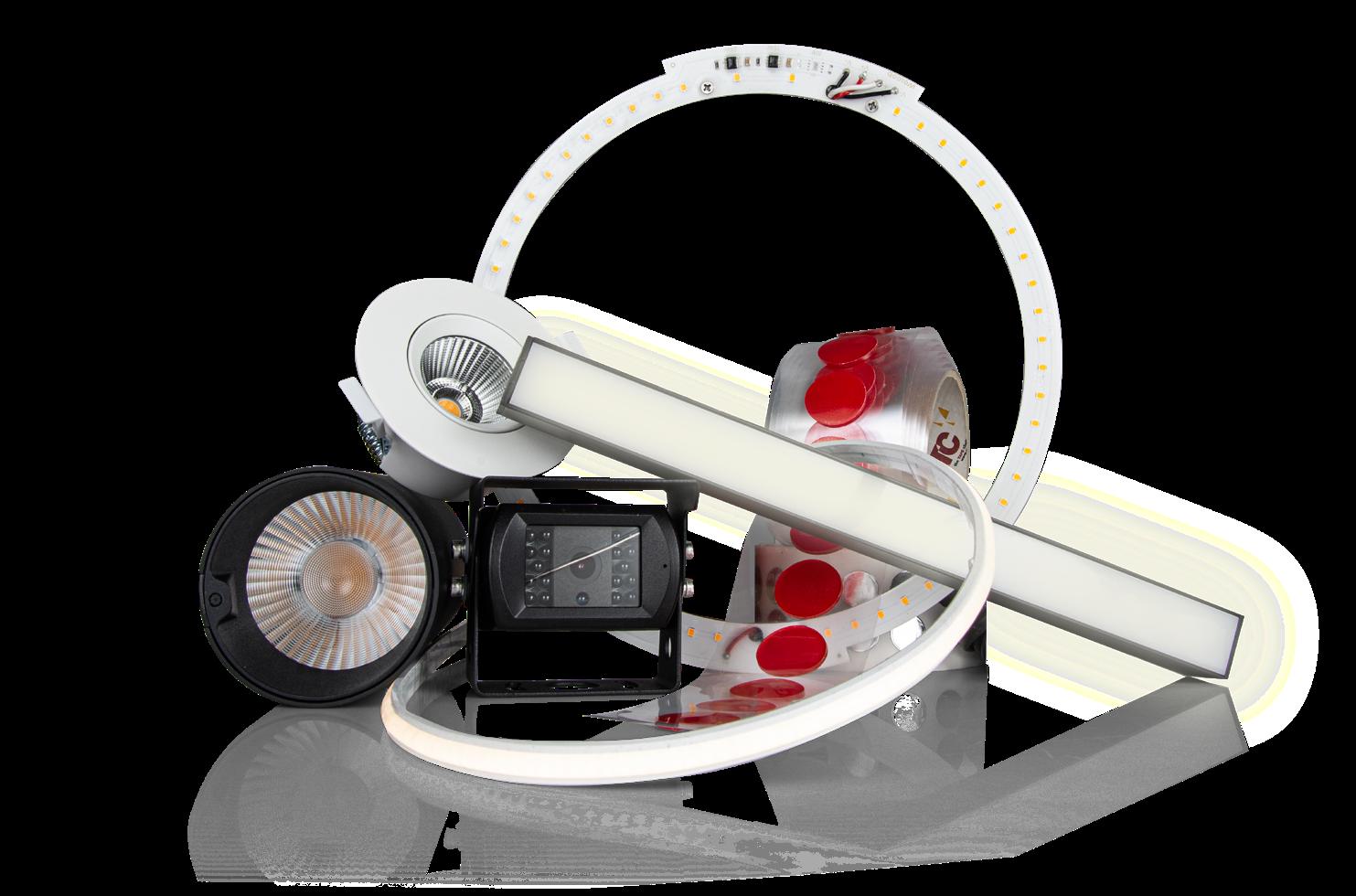
• Elektro Elco, which sells lighting under the Hide-a-lite brand.
• ATC Tape Converting, which manufactures and sells tape under the ATC brand.
This means that OEM’s companies now operate in both traditional trading as well as assembly and light manufacturing.
Continuous development of the customer offering
All operations work continuously to develop the product range.
• In the trading companies, this takes place in close collaboration with suppliers, primarily in Europe, the United States and Asia.
• In companies that own their products, there are dedicated resources for product development that ensure competitiveness, quality and relevance.
A key aspect of the development work – regardless of whether the company is a product owner or a trading company – is close customer collaboration. Through ongoing dialogue, a clear picture is formed regarding customer satisfaction, the use of the existing product range and future needs.
The Group’s overall structure for the customer offering At Group level, the offering is divided into two main categories:
1. Ranges in which OEM represents external suppliers.
2. Ranges where the companies themselves are the product owners.
This structure makes it possible to combine the breadth of a global supplier network with the strength of proprietary, well-established brands.
A new record year
Incoming orders increased by 3 per cent and sales by 1 per cent, resulting in yet another record year for the region.
Some operations delivered strong growth, while the majority achieved sales on a par with the previous year or slightly lower. Higher costs contributed to EBITA decreasing by 3 per cent, and the EBITA margin fell from 17.0 to 16.3 per cent.
Offering
Sweden accounts for 58 per cent of the Group’s total revenue and is thus the largest region. The 13 companies included in the region are all specialised in their respective areas of expertise and possess in-depth knowledge of both products and applications.
Together, these units offer more than 60,000 products in the field of industrial components and systems to the Swedish market. The product range is marketed both as individual components and as customer-specific, integrated solutions for various applications in machinery and equipment manufacturing.
The operations are characterised by a long tradition of close collaboration with customers, and OEM is often involved at an early stage in customers’ development work. The extensive product and application expertise of the sales staff and product specialists is a key part of the offering and helps optimise customers’ products and manufacturing processes. High delivery capacity, a good level of service and flexible logistics solutions are additional areas where OEM creates significant value for its customers.
Market
The market in 2025 has been characterised by weaker growth in the industrial sector, partly as a result of a stronger Swedish krona that has worsened the competitive situation for Swedish export companies. The construction sector
has also been weak. As a result, the larger operations with a broad customer base have generally experienced lower demand, while more niche companies in several cases have enjoyed solid growth.
OEM holds a leading position in Sweden in a number of segments and enjoys a generally strong market position. The Swedish market is mature and is characterised by underlying growth of a few per cent per year, with developments in the export industry being of great importance. The customer base consists mainly of machinery and equipment manufacturers as well as manufacturing industrial companies, for example in the automotive, forestry, telecoms, IT and medical technology sectors. In certain segments, the customer base also includes wholesalers, builders’ merchants and DIY stores.
Developments in 2025
Sales grew by 1 per cent for the full year. Organic growth amounted to 3 per cent, and the stronger currency had a negative impact on revenue of 2 per cent. Incoming orders increased by 3 per cent compared with the previous year, and were therefore 1 per cent higher than revenue.
Operating profit (EBITA) decreased by 3 per cent, mainly as a result of higher costs. The EBITA margin amounted to 16.3 per cent, which is slightly lower than the previous year’s level of 17.0 per cent.
Examples of customers
Epiroc, Toyota Material Handling Manufacturing, Tetra Pak, ABB, Husqvarna, Delaval International AB, Rexel, Elektroskandia and Ahlsell.
Examples of competitors
Subsidiaries of trading companies like Addtech and Indutrade, subsidiaries of manufacturers like Schneider and Omron and lighting companies like Fagerhult.
The operations are carried out through the companies
Automatic AB, Elektro Elco AB,
Electronics AB,
Motor AB, Internordic Bearings AB, Ingemer Lijenberg AB, Rydahl Industry AB, Rydahls Reservdelar AB, Nexa Trading AB, Svenska Batteripoolen AB, Telfa AB, Agolux AB and ATC Tape Converting AB.
Good growth and improved earnings
After a couple of years of weaker growth, 2025 was characterised by increased demand. Sales for the full year rose by 2 per cent and incoming orders increased by 6 per cent. However, performance varied significantly between different sectors and regions. EBITA increased by 9 per cent and the EBITA margin improved to 12.2 per cent (compared with 11.5 per cent in the previous year).
Offering
The region comprises the operations in Finland, the Baltic states of Estonia, Latvia and Lithuania, and China. Together, the region accounts for 19 per cent of OEM’s total revenue. Finland was the first country in which OEM established operations outside of Sweden, and is now the Group’s second-largest market. The Finnish organisation consists of eight units, each with in-depth expertise in their respective product areas and applications. The offering comprises a wide range of industrial components and systems, with all six of the Group’s product areas represented. The product range includes both standard products and customer-specific solutions. The product offering has been progressively developed based on local demand and available ranges, with the result that it differs somewhat from the Swedish offering.
OEM’s operations in the Baltic states and China were established to follow Swedish and Finnish customers who moved their production to these markets. The majority of revenue in these countries still comes from customers with Scandinavian origins. The product range comprises essentially all of OEM’s offering, although a larger share of sales is generated in the areas of electrical components and appliance components.
Market 2025
OEM has a strong position in several segments in Finland, and demand during 2025 was generally good from industrial customers. However, the construction sector continues to be characterised by weaker demand. The Group’s Finnish companies have a broad product offering and a well-developed sales organisation, which has created strong partnerships with customers. Close co-operation with both customers and suppliers has provided the conditions for successfully developing the product offering. OEM's customers in Finland include major machinery and equipment manufacturers as well as industrial manufacturing companies in sectors such as forestry and construction equipment, mining machinery, lifts and energy solutions. Electrical and Heating, Ventilation and Sanitation wholesalers and the building trade are also important customer segments.
The operations in the Baltic states and China recorded weaker demand. These customers are primarily Nordic customers that have established operations there, as well as contract manufacturers. However, marketing and sales are also directed at local customers. Demand is largely influenced by the strategic decisions of contract manufacturers and Nordic customers rather than by general market developments.
Development 2025
Sales increased by 2 per cent and incoming orders by 6 per cent during the year. Organic growth amounted to 6 per cent, while currency fluctuations had a negative impact on growth of 3 per cent. Stronger incoming orders compared with sales reinforce the picture of continued positive market momentum.
Higher sales, combined good cost control, contributed to a 9 per cent increase in earnings. The EBITA margin improved from 11.5 per cent to 12.2 per cent.
In particular, the region’s two largest operations performed strongly. OEM Electronics increased its sales by 27 per cent, driven both by growth among existing customers as well as a number of new customer relationships. OEM Automatic increased its sales by 9 per cent, mainly thanks to long-term collaborations with machinery manufacturers. Growth was particularly strong in cables, PLC and drive systems, as well as safety products. RauHeat, which operates in the HVAC sector, continued to be affected by the weak construction market, although it delivered positive earnings despite reduced sales. Operations in the Baltic states and China recorded a reduction in sales of 6 per cent and 7 per cent respectively.
Finland, the Baltic states and China
Examples of customers
Arnon, Sandvik Mining, Onninen, Ponsse, Raute, Valmet.
Examples of competitors
Subsidiaries of trading companies such as Addtech and Indutrade, as well as Lapp Automaatio, SKS and Wexon.
The operations are carried out through the companies
OEM Automatic, OEM Electronics, Akkupojat/Battery Finland, Motor & Bearings Finland and Hide-a-lite Finland, RauHeat, as well as OEM Automatic in China, Estonia and Lithuania.

Region Finland, the Baltic states and China
New record for sales and incoming orders
Sales and incoming orders increased by 2% during the year. The Polish and Hungarian companies reported good growth, while the other operations posted revenue on a par with the previous year or a slight decline. EBITA decreased by 8 per cent and the EBITA margin fell from 14.3 per cent to 12.9 per cent.
Product portfolio
The region comprises operations in nine countries, including seven OEM Automatic companies as well as the Irish company Demesne and the newly acquired Vierpool in the Netherlands. OEM Electronics is established in Poland, the Czech Republic, Slovakia and Denmark, and in Denmark and Norway, lighting products are also marketed under the Hide-a-lite brand.
The operations have evolved in line with demand in their respective markets and the availability of relevant product ranges. There are a number of country-specific customers in the region that are unique to the Group, which in some cases has led to locally adapted offerings. The region accounts for 23% of OEM’s total sales.
The offering mainly consists of standard products, although customised products and systems are also available. Over the years, the companies have gradually broadened and developed their product ranges. In Denmark, the UK, Norway, Poland and the Czech Republic, a comprehensive product offering is available. The Slovak and Hungarian company receives logistics and product support from the Czech company. The Irish business primarily markets electrical components and holds a strong market position in this area.
Market
OEM’s markets in the region differ according to each country’s history and economic development. The region’s largest business, in Ireland, primarily serves wholesalers and contract builders of data centres. In the UK, there is a broad customer base encompassing OEM customers, end-users and local distributors that supply manufacturing companies with components.
In Denmark, important customer groups include the food, chemical and wind turbines industries. In Norway, the customer base mainly consists of small industrial companies and developments in the electrification of vehicles have created new partnerships. In the Netherlands, OEM customers, wholesalers and end-users are important customer groups.
The railway industry is generally an important customer group for eastern Central Europe. In Poland, there are important customers in the domestic mining and mineral industries, while the Czech Republic, Slovakia and Hungary a significant customer segment is made up of subcontractors to the automotive industry.
Developments in 2025
Net sales increased by 2 per cent for the region. Acquisitions contributed positively by 6 per cent. Currency fluctuations had a negative impact on growth of 3 per cent, while organic growth was -1 per cent.
Incoming orders also increased by 2 per cent compared with the previous year, but were 1 per cent below sales. EBITA decreased by 8 per cent. Earnings were impacted by higher sales, a lower gross margin and higher acquisition-
related costs. The EBITA margin fell from 14.3 per cent to 12.9 per cent.
Market conditions varied significantly between the region’s countries, which is clearly reflected in the companies’ growth during the year. The Hungarian and Polish companies reported strong growth, up 19 per cent and 9 per cent respectively, driven by growing demand from both existing and new customers.
The largest company in the region, the Irish business Demesne, which has delivered very strong performance over the past three years, faced a weaker market and experienced a reduction in sales. The newly acquired company Vierpool in the Netherlands contributed positively to the region’s growth, although the market conditions in the country have been challenging.
Examples of customers
RS Components, Turf Tank, Westcontrol, Stadler Polska.
Examples of competitors
Suppliers’ own subsidiaries, such as Sick, Omron and Festo. Technology trading companies such as Dacpol and Asta. Multidistributors such as TME.
TheNetherlands
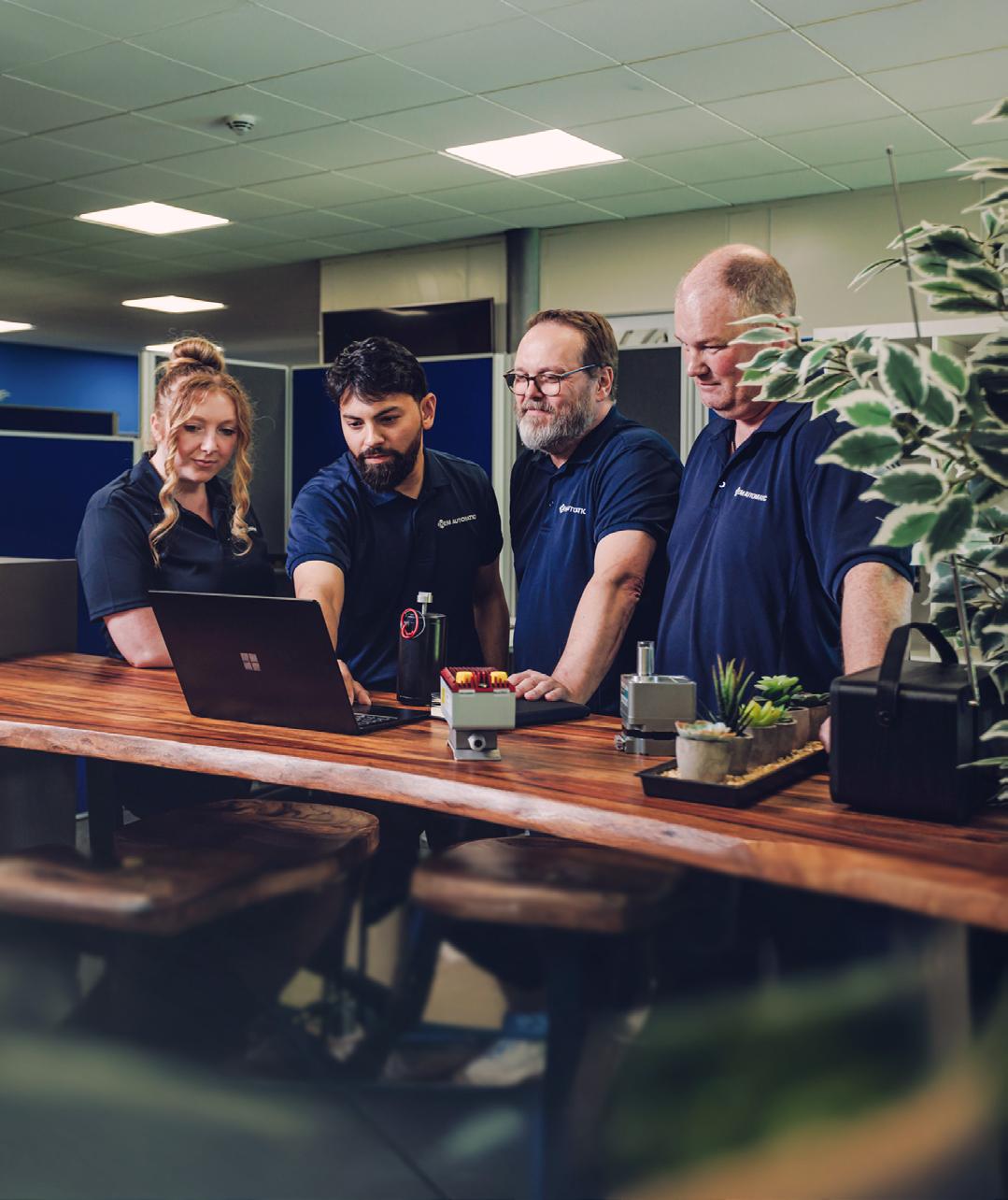
Our employees’ expertise and commitment – the foundation of OEM’s success
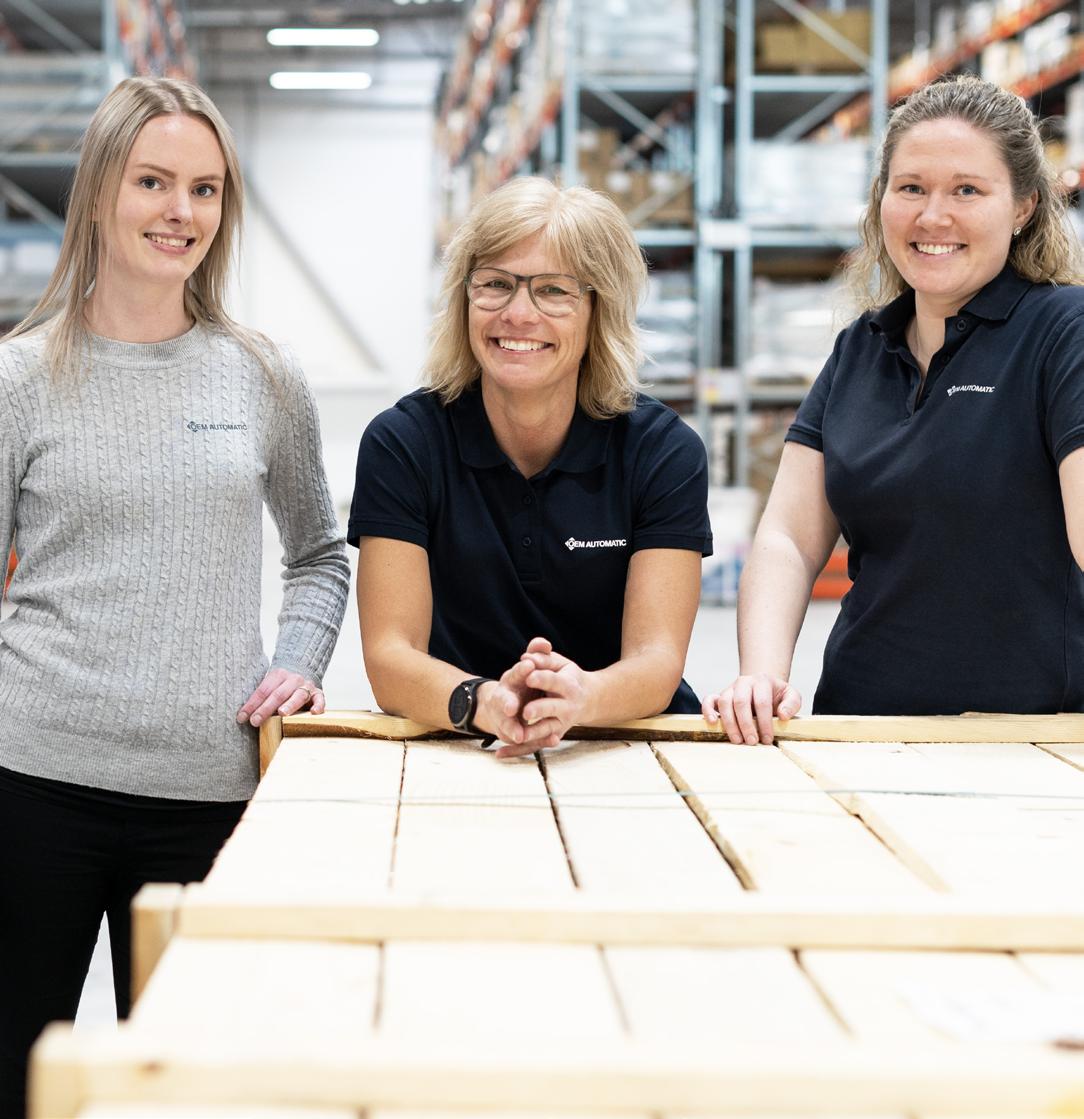
OEM’s long-term competitiveness is built on continuous skills development and a steady inflow of new talent. The experience, specialist expertise and commitment of employees are crucial when it comes to the company’s continued growth. As a result, priority is being given to skills development, a sustainable corporate culture and a safe, stimulating working environment. This is also helping to ensure that OEM is perceived as an attractive employer – for both current and future employees.
Sales and product organisations play a key role
The sales and product organisations are key to the development of OEM’s offering and, consequently, to the Group’s long-term growth and profitability. Well-functioning teams enable the company to meet increasing demands for technical expertise, application understanding and business acumen. This is also creating clear development pathways and attractive career opportunities within the Group.
A strong corporate culture as a competitive advantage
Since being launched more than five decades ago, OEM has worked purposefully to develop and nurture a shared corporate culture. This is characterised by a positive attitude, commitment, openness, humility, longterm thinking and a strong focus on goals. The culture contributes to competitive organisations, while also making OEM an attractive employer.
Development
of individuals and teams
OEM’s leadership is founded on strong teams and clear goals. Managers are responsible for developing employees and identifying future talent. As the majority of the Group’s managers are recruited internally, considerable emphasis is placed on long-term, systematic talent development.
Each company is responsible for its own skills development, supplemented by Group-wide programmes that strengthen both expertise and internal collaboration. OEM encourages curiosity, creativity and a clear sense of purpose – benefiting individual career development while simultaneously strengthening the Group as a whole. Experience from sales and product-related roles is highly
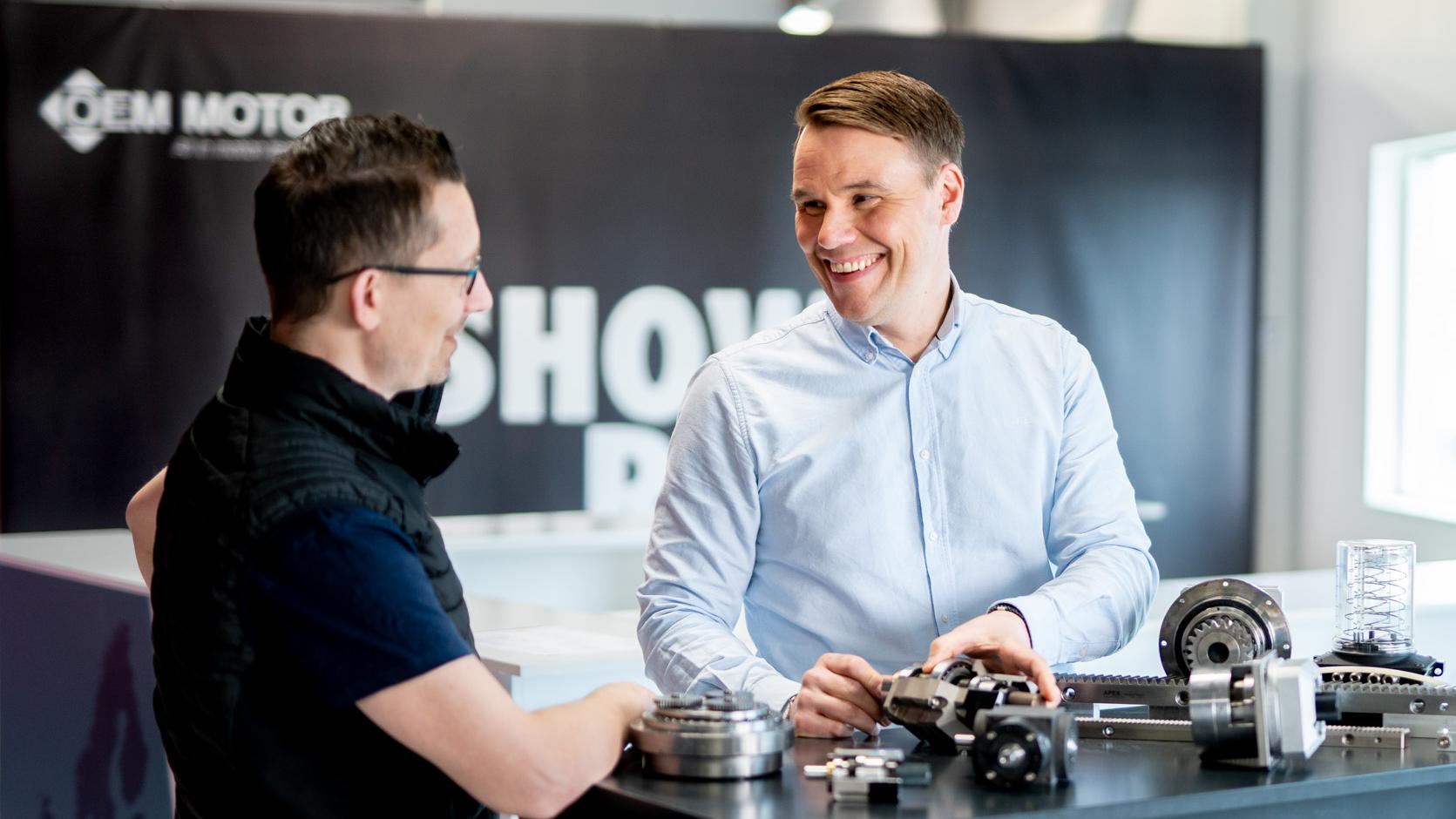
valued, and internal mobility between companies and geographies is viewed as an important part of building perspectives and future competitiveness.
New young talents strengthening the organisation
In order to develop competitive organisations, OEM works actively to attract and recruit young employees. A strong interest in technology and sales is greatly valued, and contributes to momentum and energy in the organisation. Structured onboarding processes enable new employees
to quickly feel confident and become productive. Personal development plans and clear targets foster long-term learning and enable employees to gradually take on greater responsibility.
OEM also collaborates with educational institutions in the form of internships, degree projects and trainee programmes in fields of engineering and finance – an important element in securing future skills and building long-term relationships with talented individuals.
Our employees’ expertise and commitment are the foundation of OEM’s success. Strong sales and product organisations, combined with a long-term commitment to skills development, create the conditions for sustainable growth and profitability.
Long-term relationships with customers and suppliers
Strong relationships with customers and suppliers are a core part of OEM’s business model. The ambition is to consistently deliver high quality and create added value that exceeds expectations.
The sales organisation works closely with customers, focusing on service, business understanding and a longterm approach. Structured sales processes and individual development plans create favourable conditions for developing new business opportunities.
The product organisations maintain close relationships with suppliers, with face-to-face meetings a natural part of the collaboration. In major customer projects, suppliers often participate alongside OEM’s staff, enabling competitive and cost-effective solutions.
Skills development as a long-term investment
Skills development is essential for employees to thrive and develop. Many employees have long careers within OEM, which is in line with the ambition of stability and a
long-term approach. Annual performance appraisals and individual development plans ensure that development is aligned with both the employees’ ambitions and the needs of the business. This also helps to identify future leaders.
Increased proportion of women – a strategic target
One of OEM’s overarching sustainable development goals is to increase the proportion of women in the organisation in order, over time, to strengthen representation in leading positions. Since many managers are recruited internally, this target is particularly important in sales and product-related functions. The engineering sector is maledominated, which places demands for proactive measures in recruitment efforts. As a result, OEM is working in a structured way to increase the number of female applicants, both through clearer requirements in the recruitment process and a more gender-equal approach.
Health, well-being and the working environment
A
safe, secure and pleasant working environment
is a basic prerequisite for long-term performance. OEM actively promotes good health through exercise subsidies, Group-wide activities and regular initiatives to strengthen collaboration and team dynamics. The working environment is continuously evaluated and improved as necessary.
Increased number of employees
The number of employees totalled 1,057 at year-end, compared with 1,048 in the previous year.
CSRD – from reporting requirements to business development
OEM conducts its sustainability work on the basis of its business model, focusing on long-term growth and profitability by strengthening its offering of products and solutions with improved sustainability attributes. In 2025, the work has focused on structuring and further developing
the Group’s sustainability reporting in line with the CSRD and ESRS, as implemented in Swedish law, thereby clarifying processes, responsibilities and monitoring. The skills and engagement of employees are crucial when it comes to integrating sustainability into day-to-day operations. This
work is coordinated through a Group-wide Sustainability Council and is integrated into strategies and business planning – from the Product to the Person and the Planet.
The implementation of the CSRD (Corporate Sustainability Reporting Directive) and the ESRS (European Sustainability Reporting Standards) has resulted in stricter requirements for structure, transparency and internal coordination in the Group’s sustainability work. The work has clarified roles and responsibilities, strengthened governance and established more systematic processes for data collection, monitoring
and internal control. CSRD has therefore not only influenced reporting, but also contributed to greater awareness and enhanced expertise within the organisation.
The next step is to further develop established working methods to ensure efficiency, quality and long-term scalability. The data that is generated will, to an increased extent, be used as a basis for decision-making. It will be translated into
tangible, business-oriented activities that strengthen competitiveness and create value for both the business and its stakeholders.
Comprehensive reporting in accordance with the CSRD and ESRS is set out in the Sustainability Report on page 35.
For OEM, sustainability efforts start with the product. It is through products and solutions that we create customer benefit and have the greatest opportunity to influence resource use and environmental impact. A more sustainable product combines technical performance with more efficient use over time – for example through energy efficiency, connected solutions that optimise operations and maintenance, or a longer service life that reduces resource consumption.
Through technical expertise, a broad product range and close collaboration with suppliers, OEM supports customers in making well-informed choices, benefiting both the business and the planet.
Data-driven solutions that streamline logistics and resource use
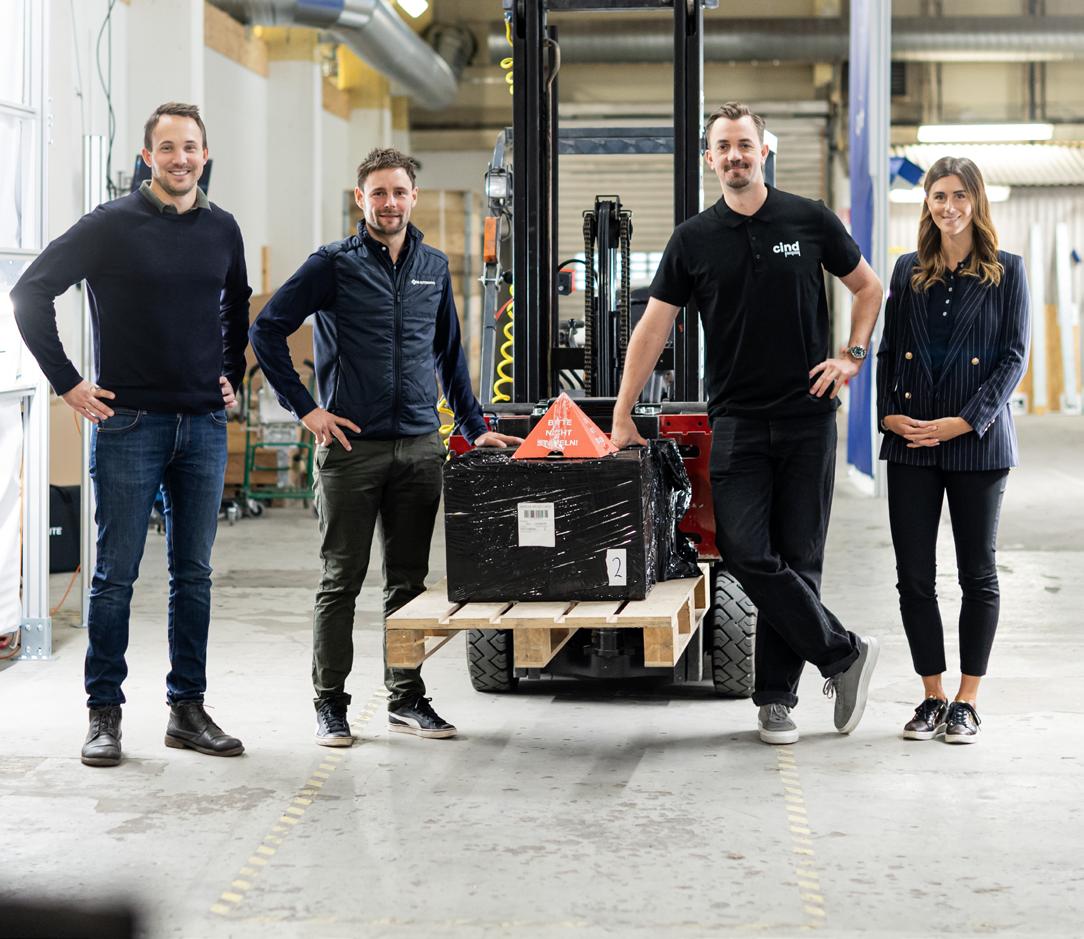
By making smart use of technology, logistics and transport processes can become both more effective and more resource-efficient. A good example of this is Cind, a Swedish technology company that develops data-driven solutions based on advanced stereo vision and AI. By automating the measurement of volumes and dimensions in motion, as well
as collecting other key freight attributes, the conditions are created for improved flows, greater accuracy and reduced use of resources across the logistics chain.
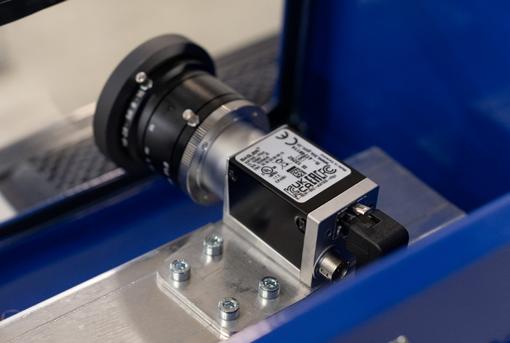
In the collaboration with OEM Automatic, technical components such as cameras and related equipment have constituted key building blocks in Cind’s solutions. OEM’s role has been to supply products with the right performance, quality and long-term durability for applications where reliability and data quality are critical. The solutions can be further developed over time in line with increasing demands for capacity and functionality. Automated data collection reduces the risk of manual errors, revisions and inefficient use of resources. More accurate data enables better planning, more efficient utilisation of transport capacity and reduced climate impact. The customer case shows how technological innovation, combined with the right product choice and application know-how, can contribute both to business benefit as well as more sustainable, future-proof transport and logistics processes.
Examples within the Product focus area
CSRD – from reporting to value creation
Sustainability work starts with the product. Here through the collaboration with Cind, where OEM Automatic supplies components with the right performance and quality for solutions that
chain.
Examples of activities within the Person focus area
OEM’s work within the Person focus area is based on respect for human rights, good working conditions and responsibility throughout the value chain. During the year, the Group has strengthened this work by investing in a new Group-wide tool for supplier assessments. The tool provides improved oversight of the suppliers’ work in relation to working conditions, health and safety, corporate governance and compliance with the Code of Conduct. The coordinated model is improving data quality and strengthening transparency in the value chain.
Efforts to ensure that suppliers sign up to the Group’s Code of Conduct, based on the UN Global Compact, are continuing and are being supplemented in parts of the Group with audits and structured monitoring. The focus area also includes internal work. Skills development, a safe working environment, as well as gender-equal and inclusive organisations are central to being an attractive employer and creating long-term value.

OEM’s work within the Planet focus area is intended to reduce climate impact and increase resource efficiency in its own operations and across the value chain. Transport and business travel account for a significant share of the Group’s climate footprint and are therefore priority areas. Monitoring is conducted in accordance with the GHG Protocol, with the aim of gradually reducing emissions over time.
As regards transport, priority is given to measures that reduce actual emissions, such as improved planning, higher
Systematic quality and environmental management
OEM works in a structured manner to continuously improve quality and efficiency. Several of the Group’s companies are certified in accordance with ISO 14001 and ISO 9001 – international standards for environmental and quality management respectively. These certifications ensure a systematic approach to reducing environmental impact and maintaining high product and service quality, which strengthens both competitiveness and customer confidence.
The Group also has its own management system, OQD (OEM Quality Development), based on Toyota’s principles. The system includes the structured monitoring of nonconformities, visualisation of results in relation to established targets, as well as employee-driven improvement initiatives. OQD has been developed by OEM Automatic in Sweden
load factors and reduced reliance on air freight. Sea freight is prioritised where possible, and is complemented by the use of sustainable fuels through Geodis. The focus is primarily on reducing emissions at source before considering offsetting solutions. Business travel and the vehicle fleet are also covered by the transition. A gradual transition to electric company cars is in progress, and digital meetings are increasingly used as an alternative to travel when this is commercially justified.
In parallel with this, systematic efforts are being conducted
to improve energy efficiency in properties and increase the share of renewable energy, including through solar panel installations and agreements regarding 100 per cent renewable electricity. This work also includes gradually improving knowledge about the climate impact of sold products and emissions across the value chain, in order to identify priority measures.
As a next step, OEM intends to initiate a project regarding joining the Science Based Targets initiative (SBTi), with the ambition of doing so during 2027 at the latest.
and is used to varying degrees across the Group’s other companies.
The following companies are environmentally certified according to ISO 14001 and quality certified according to ISO 9001:
• OEM Automatic
• Elektro Elco
• OEM Electronics
• OEM Motor
• Svenska Batteripoolen
• Internordic Bearings
• Telfa
• ATC Tape Converting
• Agolux
• Rydahls Reservdelar
• Rydahls Industry
• Multicomponent
• OEM Finland
• Akkupojat
• RauHeat
OEM Automatic in Poland and Ingemar Liljenberg in Sweden are quality certified according to ISO 9001.
Sustainability Report
OEM’s full Sustainability Report can be found on page 35.
Examples of activities within the Planet focus area
Through a new Group-wide tool for supplier assessments, OEM is strengthening its knowledge about its suppliers, increasing transparency and data quality in the value chain, and creating the conditions for more in-depth, long-term partnerships.
Sustainability goals and focus areas
OEM’s products and solutions are intended to contribute to a more circular economy and, in turn, sustainable development.

The Product
Goals and objectives
1) Communicate products’ sustainability aspects in marketing communications and sales processes
OUTCOME: This is already a natural part of the sales process and marketing communications in large parts of the Group.
2) Training the organisation in sustainability
OUTCOME: During the year, the majority of the Group’s companies have carried out activities aimed at strengthening expertise within sustainability.
3) Conduct supplier assessments of strategic suppliers
OUTCOME: During the year, OEM has invested in a new Group-wide tool for supplier assessments. Assessments have been sent to approximately 200 of the Group’s most strategic suppliers, which together represent 82 per cent of the purchasing volume.
4) Reduce the amount of electronic waste
OUTCOME: The amount of electronic waste is reduced through an increased focus on product lifespan, circular management and the responsible phasing-out of IT equipment. Overall, these efforts indicate a more circular approach to electronics over time, although maturity levels vary from company to company.
5) Increase the share of recycled purchased packaging material
OUTCOME: The work focuses on gradually increasing the share of recycled purchased packaging material. During the year, this share amounted to approximately 40 per cent.
Sustainable solutions for the future
Supporting customers in selecting the right components is a core element of OEM’s sustainability efforts. The focus is on products and solutions that reduce environmental impact and enhance resource efficiency – for example, through high levels of efficiency, optimised processes and reduced travel requirements. Products with a long service life, strong repairability and recyclability are a natural part of the offering and contribute to a more circular economy.
With extensive product and application expertise as well as a broad product range, OEM offers a holistic perspective. Through close customer collaboration, components are combined to create tailored solutions that improve operations, productivity and overall economy. When necessary, this is carried out in cooperation with specialists to ensure solutions that are optimal from both a technical and commercial perspective.
OEM’s sustainability efforts represent both a responsibility and a strategic opportunity. An offering with clear sustainability benefits strengthens competitiveness and creates new business opportunities. By integrating sustainability into sales processes, training and supplier collaborations, OEM is continuing to develop its offering and contribute to long-term value creation.
OEM shall have an inclusive working environment where everyone has equal opportunities based on their qualifications regardless of gender, as well as promote decent working conditions at OEM and its suppliers.
Goals and objectives
OEM
1) The ambition is for the Employee Satisfaction Index to exceed 4.0 in the completed ESI survey. In 2025, the companies should implement ESIraising initiatives linked to the 2024 survey.

OUTCOME: The ambition is to conduct employee surveys every other year. Between the surveys, improvement initiatives are carried out based on the results and the lessons learned. During 2025, the majority of the companies have carried out such initiatives, mainly related to day-to-day communication, dialogue and monitoring. The next employee survey is planned to be carried out in 2026.
2) At least 20% women in recruitment for sales and product services, with the aim of increasing the number of women in management positions over time
RESULT: 9%
3) Zero vision regarding workplace accidents
During 2025, all companies must work to reduce the risk of accidents.
OUTCOME: Continuous, preventive work in relation to the working environment is being carried out through risk assessments, safety procedures and training initiatives, tailored to each operation. Overall, these efforts are helping to reduce the risk of accidents and supporting the Group’s zero vision regarding workplace accidents.
4) External employee turnover below 10%
OUTCOME: 13%
5) 96% attendance rate OUTCOME: 97%
Suppliers
OEM will work to ensure that suppliers provide a good working environment and meet requirements relating to human rights.
6) Signing of the OEM Supplier Code of Conduct in the supply chain S2 In 2025, the ambition is for all the companies’ strategic suppliers to comply with and sign the OEM Supplier Code of Conduct. OUTCOME: Approx. 50%
Inclusive workplaces with engaged personnel
A safe and well-functioning working environment, both internally and at suppliers, is a precondition for sustainable growth and long-term profitability. There is a clear link between employees’ well-being and the company’s development. OEM therefore works systematically on working environment issues and structured monitoring of both physical and psychosocial factors.
The Group also sets clear requirements for suppliers regarding sustainability work and compliance with codes of conduct, in order to ensure responsible conditions throughout the value chain. Gender equality is a priority area, with the aim of gradually increasing the proportion of women during new recruitment and, over time, strengthening representation in managerial positions. Through inclusive communication and extended recruitment initiatives, OEM is also contributing to a more gender-equal sector.
OEM will contribute to climate change mitigation by reducing CO₂ emissions, which is critical to slowing down climate change. Our objective is to reduce emissions in line with the Paris Agreement.
All targets are set for 2030, with the base year 2020 unless otherwise indicated.

The Planet
Goals and objectives
1) 50% reduction in emissions from properties by 2030 (Scope 1 and 2) E1
1a) 100% renewable purchased energy
OUTCOME: 74.5%
1b) Increase the share of self-generated energy OUTCOME: 803 MWh (501 MWh)
2) 50% reduction in emissions from company cars by 2030 (Scope 1) E1
2a) 100% fossil-free vehicle fleet
OUTCOME: Through an updated vehicle policy, the Group is driving a gradual transition of the vehicle fleet, prioritising electric cars and plug-in hybrids when acquiring new vehicles across a growing number of companies.
3) 50% reduction in emissions from freight transport by 2030
OUTCOME: During 2025, the companies have reduced emissions from freight transport through transport optimisation, an increased proportion of sea freight and the implementation of fossil-free alternatives in collaboration with logistics partners.
4) 50% reduction in emissions from business travel by 2030
OUTCOME: During 2025, emissions from business travel have been reduced, for example through electrification of the vehicle fleet, the use of SAF fuel for air travel and digital meetings.
5) 20% reduction in emissions from purchased products by 2030 (base year 2024) E1
In 2025, the ambition is for the companies, through supplier assessments, to map the energy consumption of strategic suppliers as well as the proportion of fossil-free energy.
OEM’s environmental impact is largely linked to freight transport, business travel and energy consumption in properties. The Group’s target is to reduce CO₂ emissions by 50 per cent by 2030, using 2020 as the base year. In order to achieve this target, OEM is working systematically to improve the efficiency of its own operations and to influence customers and suppliers to make more sustainable choices.
Reporting is continually being developed, particularly within Scope 3 in accordance with the GHG Protocol. More in-depth data collection and more accurate calculation methods are strengthening transparency, although this may affect year-on-year comparability as the scope of the
reporting is expanding and data quality is improving. For a logistics-intensive company, transport is a key challenge. Since 2023, sustainable marine fuel has been used in collaboration with Geodis in order to reduce emissions from sea transport. The transition to a fossil-free vehicle fleet has been accelerated during 2025, with increased investments in charging infrastructure at the Group’s own properties. Pool cars are partially powered by HVO100, and electrically powered freight vehicles are used for timecritical transport, contributing to lower emissions.
All companies are working towards common sustainability targets, while also having the mandate to develop local priorities. This work also includes GHG reporting and supplier assessments.
GHG Protocol
The GHG Protocol (Greenhouse Gas Protocol) is a global standard that helps companies measure and report their greenhouse gas emissions. Historically, OEM has reported emissions under Scope 1 and Scope 2, as well as certain Scope 3 categories, such as transport, business travel and leased premises.
Emissions reporting is now more detailed and comprehensive, supported by several initiatives to ensure more complete reporting within Scope 3. This improvement is an important step towards meeting the requirements under the ESRS and preparing the company for future alignment with the Science Based Targets initiative (SBTi). More complete reporting not only increases transparency, but also provides a basis for setting science-based climate targets and strengthening sustainability efforts.
Scope 1 Direct greenhouse gas emissions, i.e. emissions that the organisation itself is responsible for and can influence.
Scope 2 Indirect emissions in the form of purchased energy from external suppliers. The operations can influence Scope 2 emissions by choosing climate-friendly energy suppliers.
Scope 3 Indirect emissions beyond purchased energy, such as materials, transport and other external suppliers.
Annual Accounts 2025
KPIs for the last five years
Share-related key performance indicators can be found on page 132.
Definitions can be found on page 106.
The Board of Directors and the Managing Director of OEM International AB (publ.), CRN 556184-6691, with its headquarters in Tranås, Sweden, hereby present the Annual Report and the consolidated financial statements for the 2025 financial year. The Annual Report and the consolidated financial statements, including the Auditor’s Report and the Audit Report on the Sustainability Report, cover pages 26-130. Figures for 2024 are given in brackets.
THE Group
Business review
OEM is a leading technology trading group operating in 15 selected markets in northern Europe, East Central Europe, the British Isles and China. Operations are conducted in subsidiaries in the Nordic countries, the UK, Ireland, Poland, the Czech Republic, Slovakia, the Netherlands, Hungary, Estonia, Latvia, Lithuania and China.
OEM is a value-adding link between its customers and leading manufacturers of products and systems for industrial applications. As one of Europe's leading technology trading groups, OEM brings value to its customers by offering an extensive range of products coupled with considerable technical product and applications expertise. With a strong marketing and sales organisation, OEM serves as the extended arm of the suppliers in each market and aims to make them a leading player in their niche. This makes OEM the best distribution channel for its suppliers in OEM's markets.
Its extensive range of industrial components comprises products in the areas of electrical components, flow technology, installation components, ball bearings and seals, motors, transmissions, brakes and appliance components. The range is constantly evolving with the addition of new products and the replacement or discontinuation of unprofitable products.
The clearly-defined product range that is marketed in each region and the added values created by the organisation form a distinct brand concept. The brand concepts are launched on new geographic markets as they grow in strength. The Group is structured and primarily managed as three market regions;
• Sweden,
• Finland, the Baltic states and China,
• Rest of Europe.
The objective of this organisation is to consolidate OEM’s long-term competitive edge and increase growth outside of Sweden.
OEM's Class B share is listed on NASDAQ Nordic Large Cap in Stockholm.
Incoming orders, net sales and profit
Incoming orders increased by 3% to SEK 5,338 million (5,166) during the year. At SEK 940 million, the order book was 10% up on the corresponding date of the previous year.
Net sales reached SEK 5,317 million (5,239), which is a 1% rise on the prior year. Acquisitions have impacted sales positively by 1% and there has been an organic growth of 3%. Currency fluctuations have had a negative impact of 3% over the whole of 2025. Sales in 2025 once again reached new record highs. Among the Swedish operations, ATC Tape Converting and Telfa achieved the best performance. Out of the Finnish operations, OEM Electronics and OEM Automatic achieved the highest percentage
growth. Operations in Hungary and Poland also reported good growth figures during the year.
EBITA for the year amounted to SEK 795 million (800), which is a decrease of 1%. The EBITA margin stood at 15.0% (15.3). Profit before tax was SEK 745 million (768) and profit after tax was SEK 593 million (606).
The year’s profit corresponds to SEK 4.27 (4.37) per share outstanding.
Region Sweden
Sales are conducted under the names OEM Automatic, OEM Electronics, OEM Motor, Internordic Bearings, Telfa, Elektro Elco, Nexa Trading, Svenska Batteripoolen, Agolux, E. Rydahls Reservdelar AB, Rydahls Industry AB, ATC Tape Converting, Lagermetall and Ingemar Liljenberg.
In 2025, net sales rose 1% to SEK 3,102 million (3,074). Organic growth has impacted net sales by 3% in 2025, and currency fluctuations have had a negative impact of 2%. The companies reporting strongest growth are ATC Tape Converting and Telfa, whose sales rose 27% and 15% respectively.
Incoming orders increased by 3% to SEK 3,125 million (3,040). In 2025, incoming orders were 1% higher than net sales.
EBITA decreased by 3% to SEK 507 million (522), due to a slightly lower gross margin with currency effects having a temporary impact.
Region Finland, the Baltic states and China
Sales are conducted under the names of OEM Automatic, Akkupojat, Hidea-lite, OEM Electronics, Motor/Bearings and Rauheat.
In 2025, net sales rose 2% to SEK 978 million (955). Organic growth was strong, amounting to 6%. Exchange rate fluctuations have had a negative impact on net sales of just over 3%. The operations reporting strongest growth are OEM Electronics and OEM Automatic, whose sales increased by 27% and 9% respectively.
In 2025, incoming orders for the region rose 6% to SEK 982 million (923). Incoming orders were marginally higher than net sales.
EBITA increased by 9% to SEK 119 million (110) in 2025, due to the higher sales.
Region Rest of Europe
Sales are conducted under the names of OEM Automatic, OEM Automatic Klitsø, OEM Electronics, Demesne Electrical and Vierpool. In 2025, net sales rose 2% to SEK 1,238 million (1,210). Net sales have been positively impacted by the acquisition of Vierpool, in the amount of 6%. Net sales have been negatively impacted by an organic decline of 1% and exchange rate fluctuations of 3% in 2025. The operations that delivered the strongest performance compared with the previous year are OEM Automatic in Hungary and OEM Automatic in Poland, with increases of 19% and 9% respectively.
Incoming orders rose 2% to SEK 1,231 million (1,203) in 2025. Incoming orders were 1% lower than net sales.
EBITA fell by 8% to SEK 159 million (173) in 2025, due to a weaker gross margin and higher costs.
Profitability and financial position
Return on capital employed was 30.7% (35.3%). Return on equity was 23.4% (27.7%) which is below the Group’s financial target of 25% through a business cycle. The Group’s equity/assets ratio at year-end was 74.6% (71.7%). Shareholders’ equity per share calculated on the aggregate number of shares was SEK 19.30 (17.19). Cash and cash equivalents, comprising cash and bank balances, amounted to SEK 812 million (557). The Group’s cash and cash equivalents, together with committed undrawn credit facilities, amounted to SEK 1,413 million at year-end. (1,132).
Risks and risk management
Operating cash flow was SEK 763 million (692). After net investments of SEK -171 million (-68) and amortisation, new loans and paid dividends for a total of SEK -319 million (-307), the year’s cash flow was SEK 272 million (317).
During the year, gross investments in the Group, excluding business combinations, amounted to SEK 16 million (22) in machinery and equipment, SEK 42 million (8) in buildings and land and SEK 7 million (5) in other intangible fixed assets consisting of software and customer relationships.
Group changes
On 23 April 2025, Vierpool BV in the Netherlands was acquired. The company was acquired through the transfer of all shares in the parent company Vierpool Holding BV. Vierpool BV is a distributor of automation components to machine and panel builders, installers and system integrators in the Dutch industrial and logistics sector. The customer offering consists of products based on long-term collaborations with leading European manufacturers, a number of which have previously collaborated with OEM. The company has annual sales of approximately SEK 120 million and 24 employees. The company’s head office is located in Maarssen and it is part of Region Rest of Europe as of 1 April 2025.
The Group is continuously working to identify acquisitions and to have a clear legal Group structure that is achieved through mergers and voluntary liquidations.
Employees
At year-end, the number of employees was 1,057 (1048), an increase of 9 employees. The average number of employees during the year was 1,060, compared with 1,054 in the previous financial year. 24% (24%) of the employees are women. Absence due to illness stands, on average, at 7 days per person, which is on a par with last year. OEM encourages a healthy lifestyle through various forms of exercise and preventive healthcare. The average cost of training per employee is SEK 4,000 (4,000). Further information is provided in Note 6.
OEM’s results, financial position and strategic position are affected by a number of internal factors over which OEM has control and a number of external factors where the opportunity to influence the chain of events is limited. The most important risk factors include the economic situation in combination with structural changes, the competitive situation and the dependence on suppliers and customers. The main financial risks are currency risk in purchase transactions and translation risk in net investment in foreign operations. A description of the financial instruments and explanation of how OEM manages the financial risks are given in Note 22.
Economy
OEM is affected by the general development of the economy, which is usually measured in terms of GDP growth. The Group operates in a wide range of sectors and geographic areas, which evens out the impact of economic fluctuations in specific industries and geographic markets on its business.
Structural changes
OEM is affected by structural changes in the market, for example where customers want fewer suppliers, rapid developments in technology or competition from lower-cost countries.
OEM works actively to increase the value of its product offering, regardless of customer group. This has clearly contributed to the Group's performance and to the fact that it continues to be a priority supplier for many customers. By working alongside the customers, it is possible to capture trends and know when it is commercially justifiable to enter a new product area in order to keep abreast of advances in technology. OEM offers a high level of service and expert technical advice to offset the effects of competition from lower-cost countries. OEM also strives to establish close links with customers by becoming involved during planning and development stages when OEM's employees are able to help customers by providing expert input for different processes.
Dependence on suppliers and customers
Its dependence on individual suppliers is one of the key operational risks to which a single subsidiary can be exposed. In order to minimise this risk, the subsidiaries work close to their suppliers in order to create strong relationships on several levels. Furthermore, the majority of the suppliers are represented on several markets, which strengthens the relationships. The relationships are based on long-term, close collaborative partnerships. The Group has more than 400 suppliers in total.
No supplier accounts for more than 3% of total Group sales. The expiration and addition of a number of supplier agreements each year is a normal part of the business.
OEM has a broad customer structure, with approximately 30,000 customers spread across several industrial segments and geographic markets. No customer accounts for more than 4% of total Group sales, which is 1 percentage point lower compared to last year.
Competitive situation
Restructuring and consolidations in the industrial trading sector are continuously changing the competitive situation. Economies of scale can lead to a price squeeze, but OEM’s strategy includes reaching market-leading positions with a portfolio of products and services where the price is not the decisive factor.
Events after the close of the reporting period
On 4 March, OEM International acquired the majority of the shares in Weingrill Srl. Weingrill develops and manufactures screw jacks as well as components such as cleaning systems, stretchers and guides for the paper industry. The company has annual sales of approximately EUR 7.7 million, of which more than half is generated outside Italy.
On 27 February, OEM International acquired all the shares in Ronnie Bergdahls Försäljnings AB. Bergdahls is a distributor of lighting and emergency lighting products in the Nordic market, with annual sales of approximately SEK 50 million.
On 16 February, OEM International completed the acquisition of Multicomponent Norden AB. The company has annual sales of approximately SEK 120 million and is a distributor of electronic components to electronics & appliance manufacturers in a number of sectors. The acquisition is expected to have a marginal positive impact on OEM’s profit in 2026.
On 12 February, OEM International acquired the majority of the shares in Cre8 System AS. The company develops and produces hydraulic power units and chemical injection systems for the oil, gas and energy sectors, and has annual sales of approximately SEK 160 million. OEM has an option to acquire 100% of the shares in CRE8 System AS.
On 2 February, OEM International’s subsidiary, OEM Automatic Ltd., acquired all the shares in Motion29 Ltd. The company is a distributor within industrial automation and has annual sales of approximately SEK 13 million. The acquisition is expected to have a marginal positive impact on OEM’s profit in 2026.
On 30 January, OEM divested all its shares in the property company Bankerydsbackens Fastighetsbolag AB. The subsidiary Elektro Elco AB will continue to conduct its operations in the premises until the construction of the new property in Jönköping is completed in 2027.
Expectations regarding future development
The most important tasks for the Group remain to focus on growth and to continue improving the profitability of existing operations. Added to this are the sales and earnings resulting from successful acquisitions. By acquiring and developing companies, the Group generates stable cash flows and sustainable growth.
The Group continues with the aim to increase its sales share outside of Sweden.
OEM will maintain sustained, profitable growth with a good return on capital and limited financial risk. Added to this are the sales and earnings resulting from successful acquisitions.
The targets for one business cycle are:
• at least 10% annual sales growth
• a minimum EBITA margin of 12%
• at least 25% return on equity
• the debt-to-equity ratio must not exceed 100%
With its strong market position, financial performance and organisation, OEM is well placed for further expansion. The geopolitical situation is continuing to create general uncertainty about the changes in the economy. No forecast for 2026 is provided.
Research and development
OEM conducts research and development activities of its own on a limited scale. Development is mainly conducted by the suppliers themselves using market demand data provided by the companies.
Environmental impact
In 2025, OEM had one Swedish subsidiary whose operations require licensing or registration under the Swedish Environmental Code.
The operations requiring registration represent an insignificant portion of the company’s total operations. None of the Group's companies are involved in any environment-related disputes. OEM's focus on trade means that the greatest environmental impact comes from transportation, environmentally harmful substances, printed materials, packaging materials and heating. OEM takes a structured approach in all of these areas to find the best environmental solutions and support development initiatives in these areas.
The OEM Group's environmental policy dictates continuous efforts to minimise its external environmental impact in the short term and long term.
Sustainability Report according to the CSRD
The company is subject to the requirements for sustainability reporting according to Directive (EU) 2022/2464 of the European Parliament and of the Council (CSRD) as implemented in Swedish law. The 2025 financial year is the first year that the company is preparing a Sustainability Report in accordance with the CSRD. The Sustainability Report has been prepared as an integral part of the Annual Report in accordance with the European Sustainability Reporting Standards (ESRS) and can be found on pages 35-68.
Parent Company
The Parent Company is to be an active owner and develop the subsidiaries.
In addition to clear management-by-objectives, this means contributing expertise and resources in the fields of IT, financial control, HR administration, market communication, and quality and environmental control.
The Parent Company’s net sales amounted to SEK 116 million (104). Net sales relate entirely to inter-company transactions. Profit before year-end appropriations and tax amounted to SEK 234 million (255).
With regard to non-financial information, the Group's information also includes the Parent Company, where applicable. The financial position of the Parent Company is dependent on the financial position and growth of the subsidiaries.
The Parent Company is therefore indirectly affected by the risks that are described in the section Risks and Risk Management.
Guidelines for remuneration of senior executives
The policies for remuneration of senior executives adopted at the 2025 Annual General Meeting are presented in Note 6.
The remuneration of the Chairman and Members of the Board of Directors is paid in accordance with the resolution of the Annual General Meeting. The chairperson of the Audit Committee will receive remuneration of SEK 100,000. No other special fees are paid for work on committees.
The Board proposes that the 2026 Annual General Meeting adopts the following guidelines for remuneration of senior executives within the OEM Group. The guidelines cover remuneration of the Managing Director, Group management and other managers who report directly to the Managing Director.
OEM’s vision is that the company shall be a leading technology trading group in industrial components and systems in selected markets in Northern,
Central and East Central Europe. To realise this vision, the company has defined five strategic areas: growth, product range, marketing activities, logistics, and employees and leaders. These are important to the company’s future development and success and to the achievement of its financial targets. It is important that OEM has senior executives with a focus on business acumen, a strong commitment to the company, and a sustainable leadership that promotes the long-term interests of the company. The level of remuneration of senior executives shall enable the company to retain qualified leaders within the organisation in the long term and also ensure it is able to recruit qualified leaders both externally and internally.
For senior executives, market-based remuneration shall be applied and may consist of the following components: Fixed cash salary, variable remuneration, pension benefits and other benefits. Share-based compensation, known as incentive schemes, shall be presented for approval at the Annual General Meeting.
Variable remuneration shall constitute a meaningful part of the annual remuneration, with a target bonus of up to 100 per cent of the annual fixed cash salary; however, it may amount to a maximum of 200 per cent of the annual fixed cash salary. Fulfilment of criteria for the payment of variable remuneration shall be measurable over a period of one year.
Senior executives shall have premium-based pension schemes, capped at 30% of fixed pay.
The period of notice on the company’s part may not exceed 24 months and involves the obligation to work during the period of notice. Employment agreements shall not contain provisions for severance pay.
The Board of Directors may waive these guidelines in individual instances should there be special reasons for doing so. Any deviation from the guidelines by the Board of Directors shall be reported in the remuneration report for the next Annual General Meeting.
Shares etc.
OEM shares
The company’s 139,015,854 shares are divided into 27,864,176 Class A shares and 111,151,678 Class B shares. One Class A share entitles its holder to ten voting rights and one Class B share to one voting right. The par value per share is SEK 0.28.
During February 2025, OEM International AB has, at the request of shareholders, reclassified 598,000 Class A shares to the corresponding number of Class B shares in the company. After reclassification, the number of Class A shares amounts to 27,864,176 and the number of Class B shares amounts to 111,151,678; and the number of votes amounts to 389,793,438 compared to 395,168,982 before reclassification.
Repurchase of own shares
With the objective to improve the Group's return on shareholder's equity and earnings per share, the Board of Directors obtains shareholder approval at the Annual General Meeting to grant OEM International AB the authority to repurchase its own shares. The repurchase mandate granted by the General Meeting is restricted to a maximum of 10% of the shares, which is 13,901,585 shares.
In 2011, the company repurchased 185,541 shares at an average price of SEK 17.75. No shares were repurchased in the 2012–2024 period. The company’s total shareholding was 276,739 shares on 31 December 2025, which is equivalent to 0.2% of the aggregate number of shares.
The 2026 Annual General Meeting will propose that shareholders resolve to renew the mandate for the repurchase of up to 10% of the number of shares.
Option scheme
At the General Meeting on 24 April 2025, shareholders voted in favour of issuing 200,000 call options that entitle the holder to acquire one repurchased Class B share during the period 1 March 2028 to 15 June 2028, both dates inclusive. A total of 95,000 call options were subscribed for, of which 2,500 are held by senior executives of the Group. The call price of the subscribed option is SEK 166.70. Further information is provided in Note 24.
Other information
The Board of Directors is appointed by the Annual General Meeting. The Articles of Association contain a pre-emption clause and a conversion provision. If the company decides to issue new shares of Class A and B, through cash issue or set-off, owners of Class A and B shares shall have preferential rights to subscribe for new shares of the same type.
Proposed allocation of profits
After the balance sheet date, the Board has proposed a dividend of SEK 1.75 (1.75) per share. The Board aims to propose a reasonable dividend of profits to the shareholders, by taking into account the financial position, the tax situation and any need for acquisitions or investments in the operation. Retained earnings in the Parent Company total SEK 1,413.0 million. The Board recommends a SEK 243.3 million dividend and that SEK 1,169.7 million be carried forward.
Corporate Governance Statement
Introduction
OEM International AB (the company) applies the Swedish Code of Corporate Governance (the Code) in accordance with the NASDAQ Stockholm's rules for issuers. The Code is aimed at creating good prerequisites for an active and conscientious owner role and constitutes an element in the self-regulation of Swedish enterprise. It is based on the "comply or explain" rule, which means that non-compliance with a term of the Code is not a breach provided there is an acceptable reason that can be explained. OEM International has noted a non-conformance with the rules of the Code concerning the Nomination Committee. The non-conformance is explained in detail under the heading Nomination Committee.
Division of responsibilities
The purpose of corporate governance is to create a clear division of roles and responsibilities between the owners, the Board of Directors and the executive management. Corporate governance in OEM is based on the Swedish Companies Act and other legislation and regulations, the rules applicable to companies listed on the stock exchange, the Articles of Association of the company, the internal governing instruments of the Board of Directors, the Swedish Code of Corporate Governance and other internal guidelines and regulations.
Shareholders
OEM International AB is a public company and was listed on the Stockholm Stock Exchange in December 1983. OEM International AB had 8,249 shareholders at the end of 2025. The ten largest shareholders controlled 67% of the share capital and 88% of the voting rights at year-end. EQT had a direct shareholding representing 73.7% of the voting rights of all shares in the company.
Articles of Association
The Articles of Association stipulate that OEM International AB is a public company whose business is to “engage in sales of automatic components and carry on any and all activities compatible therewith”.
The total share capital is SEK 38,615,515 and the number of shares is 139,015,854 divided into 27,864,176 Class A shares with 10 voting rights each and 111,151,678 Class B shares with one voting right each.
The company’s Board of Directors is to comprise not less than four and not more than seven members, with a maximum of an equal number of deputy members. The company is to have at least one auditor appointed by the Annual General Meeting and a deputy auditor if the elected auditor is not an auditing firm.
Notice of annual general meetings and extraordinary general meetings convened for the purpose of amending Articles of Association must be issued between six and four weeks before the meeting and resolutions must be supported by shareholders with at least two-thirds of both the voting rights and the shares represented at the meeting. Notice of an extraordinary general meeting convened for other purposes shall be issued no later than three weeks prior to the meeting. Notice of an annual general meeting shall be published in the "Post- och Inrikes Tidningar" newspaper and on the company's website. It must be announced in Svenska Dagbladet that notice has been issued.
No limitation to the number of voting rights for represented shares applies to voting at the general meeting.
There is a pre-emptive clause regarding the A Class shares and a priority clause in connection with a cash or set-off issue. The current Articles of Association were adopted at the 2025 Annual General Meeting and can be viewed on the company’s website, www.oem.se (see under Investors/Corporate Governance/Articles of Association).
Annual General Meeting
The Annual General Meeting is the highest decision-making body in OEM International AB where the shareholders exercise their voting rights. The Annual General Meeting passes resolutions concerning the adoption of the Statement of Income for the Group, the Statement of Comprehensive Income for the Group, the Statement of Financial Position for the Group and the Income Statement and Balance Sheet for the Parent Company, distribution of dividends, election of Board of Directors and, where applicable, election of auditors, remuneration of Board Members and other senior executives, remuneration of auditors and other business in accordance with the Swedish Companies Act and the Articles of Association of the Company. The Annual General Meeting is to be held in the municipality of Tranås within six months of the end of the financial year. All shareholders entered in the share register prior to the meeting who have registered their participation are entitled to participate and vote for their total shareholding.
In order to be able to exercise their voting rights at the Annual General Meeting, shareholders who have registered their shares in the name of an authorised agent must temporarily re-register their shares in their own name in accordance with what follows from the notice to the Annual General Meeting. Shareholders can be represented by agents. Meeting minutes are published on the company’s website, www.oem.se (see under Investors/Corporate Governance/Annual General Meeting). Shareholders who represented 74.3% of the total number of shares and 90.8% of the voting rights attended the 2025 Annual General Meeting held on 24 April 2025. Petter Stillström was appointed to chair the Annual General Meeting. The annual report and the Auditor’s Report were presented at the Meeting. In connection therewith, the Chairman of the Board Petter
Stillström submitted information about the work of the Board. Petter Stillström, member of the Audit Committee, reported on the work of the Audit Committee and its cooperation with the auditors. The company’s Managing Director and Chief Executive Officer, Jörgen Zahlin, presented comments on the Group's operations, the 2024 financial year and developments during the first quarter of 2025.
The 2025 Annual General Meeting decided:
• to approve a dividend of SEK 1.75 per share.
• to elect Christopher Norbye, Thijs Bakker, Martin Gaarn Thomsen, Albert Gustafsson, Jörgen Rosengren and Matthias Wittkowski as members of the Board of Directors.
• to elect Christopher Norbye as Chairman of the Board
• to adopt the proposal of the Nomination Committee that the Nomination Committee
should be made up of representatives of not less than three and no more than four of the largest shareholders and that the Chairman of the Board should act as Chairman of the Nomination Committee.
• to adopt the proposal of the Board of Directors that remuneration received by senior executives from OEM International AB is mainly comprised of fixed and variable components. The remuneration must be market-based and variable remuneration shall constitute a meaningful part of the annual remuneration, with a target bonus of up to 100 per cent of the annual fixed cash salary; however, it may amount to a maximum of 200 per cent of the annual fixed cash salary. The company’s management shall have market-competitive, premium-based pension schemes, capped at 30% of fixed pay.
• to be allowed to issue new Class B shares in connection with business combinations, in line with the proposal of the Board of Directors, where the dilution effect will be a maximum of per cent of the total number of shares.
• to adopt the proposal of the Board of Directors to repurchase a maximum of 10% of the company’s shares.
• to adopt the proposal of the Board of Directors to issue call options on repurchased shares and the transfer of repurchased shares to executives. The 2026 Annual General Meeting will be held on 21 April 2026 in Tranås.
Nomination Committee
At the AGM on 24 April 2025, it was decided that the Nomination Committee should consist of a representative for each of the four largest shareholders in the company, based on the ownership in the company as of 31 August each year. If a shareholder does not exercise his/her right to appoint a member, the next largest shareholder in terms of voting rights is entitled to appoint a member in the Nomination Committee. The names of the members and the names of the shareholders they represent shall be published at least six months before the 2026 Annual General Meeting and shall be based on the known number of votes immediately before publication. The term of office of the Nomination Committee shall run until a new Nomination Committee is appointed. The member appointed by the largest shareholder shall be appointed Chairman of the Nomination Committee, unless the Nomination Committee unanimously appoints someone else. The Chairman of the Nomination Committee shall not be a member of the company’s Board of Directors.
If one or more of the shareholders who have appointed a member to the Nomination Committee earlier than three months prior to the Annual General Meeting are no longer among the four largest shareholders, the members appointed by these shareholders shall resign, and the shareholders who
thereafter belong to the four largest shareholders may appoint a member. Shareholders who appointed a representative to be a member of the Nomination Committee shall be entitled to dismiss such a member and appoint a new one and also appoint a new representative if the member appointed by the shareholder chooses to withdraw from the Nomination Committee. If a member resigns from the Nomination Committee before the Nomination Committee’s work has been completed, and the Nomination Committee deems it necessary to replace him or her, such a remuneration representative shall be appointed by the same shareholder or, if the shareholder is no longer one of the largest shareholders, the largest shareholder in order of priority.
Shareholders who have appointed a member of the Nomination Committee are entitled to dismiss said member and appoint a new member of the Nomination Committee. Changes in the composition of the Nomination Committee must be notified immediately.
The composition of the Nomination Committee was notified on 15 October 2025. The composition of the Nomination Committee is available for viewing on OEM’s website, www.oem.se, under Investors/Corporate Governance/ Nomination Committee. The Nomination Committee shall prepare proposals for the following items of business to be presented for resolution at the 2026 Annual General Meeting:
• proposal for a Chairman for the Meeting
• proposal for the number of Board members
• proposal for members of the Board of Directors
• proposal for Chairman of the Board of Directors
• proposal for remuneration of the Board of Directors
• proposal for remuneration for any committee work
• proposal for auditors
• proposal for remuneration of the company’s auditors
• to the extent deemed necessary, a proposal for amendments to the current instructions for the Nomination Committee.
In connection with its assignment, the Nomination Committee shall otherwise perform the tasks that are incumbent on the Nomination Committee in accordance with the Swedish Code of Corporate Governance. No remuneration shall be paid to the representatives in the Nomination Committee. The company shall reimburse any costs incurred by the Nomination Committee in its work, such as costs for external consultants that the Nomination Committee deems necessary for the Nomination Committee to be able to fulfil its assignment. The term of office of the Nomination Committee ends when the composition of the subsequent Nomination Committee has been appointed.
The Nomination Committee for the 2026 Annual General Meeting is composed of:
• Simon Tillmo, EQT
• Erik Durhan, Lannebo Fonder
• Christian Lindström Lage, SEB Asset Management
• Richard Torgerson, Nordea Funds
Ongoing dialogue is conducted within the Nomination Committee, which held two minuted meetings where it acquainted itself with the assessment of the work of the Board of Directors during the past year and discussed the composition of the Board of Directors.
The Nomination Committee's proposals to the Annual General Meeting will be presented in the notice of the Annual General Meeting and on the company's website.
Board of Directors
Composition of the Board of Directors
The Articles of Association require that the Board of Directors shall comprise not less than four and not more than seven members elected by the Annual General Meeting for the period until the end of the next Annual General Meeting. Since the 2025 Annual General Meeting, the Board has consisted of the following members, all elected by the Annual General Meeting: Christopher Norbye (Chairman), Thijs Bakker, Martin Gaarn Thomsen, Albert Gustafsson, Jörgen Rosengren and Matthias Wittkowski.
All Board Members are independent with regard to the company and the company’s management. Of the members who are independent with regard to the company and the company’s management, Christopher Norbye, Thijs Bakker, Martin Gaarn Thomsen and Jörgen Rosengren are also independent in relation to the company’s major shareholders. Additional information about the members of the Board elected by the General Meeting is given in the section about the Board of Directors on page 69 in this Annual Report and on the company’s website, under For Investors/Corporate Governance/Board of Directors.
The Nomination Committee takes age, gender, education, professional background and other aspects of diversity into consideration when nominating candidates to fill Board vacancies. The composition of the Board should be appropriate for the company’s business operations, stage of development and conditions in general, characterised by diversity and a breadth of skills, experience and backgrounds among its members. The above provides the Nomination Committee with a good basis on which to appraise whether the composition of the Board is satisfactory and whether the requirement for skills, breadth and experience has been met.
Chairman of the Board
It is the duty of the Chairman of the Board, Christopher Norbye, who was elected as Chairman at the 2025 Annual General Meeting, to ensure that the work of the Board is conducted efficiently and that the Board discharges its duties as required by the Swedish Companies Act, other legislation and regulations, rules applicable to companies listed on the stock exchange (including the Code) and the Board’s internal governing instruments. It is the Chairman’s task to ensure that the Board continuously updates and deepens its knowledge about the company and receives satisfactory data and decision-making information for its work, to establish the agenda for the meetings of the Board in consultation with the Managing Director, to verify that the decisions of the Board are implemented and ensure that the work of the Board is assessed annually. The Chairman of the Board represents the company in ownership issues.
Duties of the Board
Each year, the Board establishes written rules of procedure that regulate the Board’s work and its mutual division of responsibilities, including its committees, the decision-making procedure in the Board, the Board’s meeting procedure and the Chairman’s duties. The Board has also issued an instruction for the Managing Director, which regulates his duties and reporting obligation to the Board of Directors. As necessary, the Board also reviews and approves policies concerning the Group, such as the treasury policy. The Board monitors the work of the Managing Director by regularly reviewing operations during the year. It is responsible for purposefully structuring the organisation, and the procedures and guidelines for the management of the company’s business. It is also responsible for ensuring that there is a satisfactory system of internal control. The Board is also responsible for the development and
follow-up of the company’s strategies, decisions concerning acquisition and sale of operations, major investments, appointments and remuneration of the Managing Director and other senior executives as stated in the guidelines adopted by the Annual General Meeting. The Board of Directors and the Managing Director present the annual report to the Annual General Meeting.
Work of the Board
In accordance with the adopted rules of procedure, the Board of Directors holds at least six ordinary meetings per year plus an inaugural meeting after the Annual General Meeting and whenever necessitated by the situation.
During 2025, the Board had a total of 10 meetings, including the inaugural meeting.
The Board members attended all Board meetings with the exception of Richard Pantzar on one occasion and Martin Gaarn Thomsen on one occasion. When unable to attend, the member has presented opinions and views on items of business to the Chairman of the Board prior to the meeting. All resolutions have been passed unanimously by the Board of Directors.
The secretary of the Board is the company’s CFO. Other company employees take part in the meetings of the Board in connection with the presentation of specific issues or when otherwise deemed appropriate.
The work of the Board during the year has covered a range of matters, including issues concerning the strategic development of the Group, operating activities, trends in earnings and profits, business combinations, purchase of properties, organisation, the Group’s financial position and funding of the Group’s capital structure.
The work of the Board is subject to an annual assessment. This is done by each Board member rating a number of relevant issues with the opportunity to provide comments. The results are compiled and presented to the Nomination Committee.
Remuneration of the Board
The remuneration of the members of the Board elected by the Annual General Meeting is decided by the Meeting in accordance with the proposal of the Nomination Committee. The 2025 Annual General Meeting approved the proposal that fees of SEK 750,000 be paid to the Chairman of the Board and SEK 400,000 to each of the Board members elected at the Meeting, for the period until the 2026 Annual General Meeting. The total remuneration of Board members, in accordance with the approval of the Annual General Meeting, is thus SEK 2,750,000. The chairperson of the Audit Committee will receive remuneration of SEK 100,000. No additional remuneration has been paid to any Board Member.
Remuneration Committee
The Board of Directors has appointed a Remuneration Committee consisting of the Chairman of the Board, Christopher Norbye, and Board member Matthias Wittkowski. The Remuneration Committee prepares “the Board’s proposals for policies for senior executives’ remuneration” and the application of these. The proposal is discussed by the Board and is subsequently presented to the Annual General Meeting for adoption.
Based on the resolution of the Annual General Meeting, the Board decides on the remuneration of the Managing Director. Based on the proposal of the Managing Director, the Remuneration Committee passes a resolution on the remuneration of other members of the Group management. The Board is informed of the decisions of the Remuneration Committee.
Salaries and other terms of appointment for the Group management shall be set at competitive levels. In addition to a fixed base pay, the Group Management may also receive variable remuneration. The variable remuneration
shall constitute a meaningful part of the annual remuneration, with a target bonus of up to 100 per cent of the annual fixed cash salary; however, it may amount to a maximum of 200 per cent of the annual fixed cash salary. Fulfilment of criteria for the payment of variable remuneration shall be measurable over a period of one year. Senior executives in the OEM Group shall have market-competitive, premium-based pension schemes, capped at 30% of fixed remuneration. The pension scheme level is the same as for 2024. All share-related incentive schemes are to be decided by the Annual General Meeting. The maximum term of notice is 24 months and shall also include the obligation to work during the term of notice.
The Remuneration Committee met once during the year to review and approve the above policy proposals.
Guidelines for the remuneration of senior executives will be proposed for approval and adoption at the 2026 Annual General Meeting and are presented on page 31 of this report.
Audit Committee
During the year, the Board has had a special Audit Committee which, until the 2025 Annual General Meeting, consisted of Chairman Ulf Barkman and Petter Stillström. Following the Annual General Meeting, the Audit Committee has consisted of Chairman Thijs Bakker and Matthias Wittkowski.
The Audit Committee shall, without it otherwise affecting the Board’s responsibilities and duties, oversee the company’s financial reporting and the efficiency of the company’s internal control activities and risk management relating to the financial reporting, keep itself informed about the audit of the Annual Report and consolidated financial statements, examine and monitor the objectivity and independence of the auditor and specifically pre-approve any services that the auditor provides the company with other than audit-related services. The Audit Committee evaluates the audit work that has been carried out and informs the company’s Nomination Committee of the results of the evaluation and assists the Nomination Committee in preparing proposals for auditors and remuneration of the auditors’ work.
The Audit Committee has convened on four occasions and has met with an external auditor on three of them. The Board and the Audit Committee have held a review meeting with and received a report from the company’s external auditor in connection with the Board meeting in February 2026 at which the Board approved the annual financial statements.
CEO and other members of Group Management
The Managing Director, Jörgen Zahlin, manages the operations in accordance with the Swedish Companies Act, other acts and regulations, the rules applicable to companies listed on the stock exchange, the Articles of Association of the Company, the internal governing instruments of the Board of Directors and the goals and strategies set by the Board.
The Managing Director prepares the necessary information and basis for decisions prior to the Board meetings, in consultation with the Chairman of the Board, presents the items and justifies proposals for resolutions. The Managing Director leads the work of the Group’s executive team and makes decisions in consultation with the members of the executive team. In 2025, the members were Jörgen Zahlin, Andreas Andersson, Jens Kjellsson, Urban Malm, Carl Reuthammar, Marko Salovaara and Rikard Tingvall. Urban Malm left the management team as of 30 June 2025.
The Group’s executive team holds regular business reviews under the leadership of the Managing Director. The Managing Director and members of the Group’s executive team are presented on page 70 of this Annual Report and on the company’s website (under About OEM/Senior Executives).
Auditors
As required by the Articles of Association, the company must have at least one auditor appointed by the Annual General Meeting and, if the auditor is not an auditing firm, it must also have a deputy auditor. The company’s auditors work according to an audit plan and report their observations to company management teams, the Group’s executive team, the Audit Committee and the Board of Directors both during the course of the audit and in connection with the adoption of the annual financial statements. Internal procedures and control systems are reviewed as and when required. A final review of the annual financial statements and the Annual Report is carried out in January and February. A review is conducted in the interim report for the third quarter. An account of the remuneration of the auditors, including the fees for consulting services, is presented in Note 7. The auditors are required to continually assess their independence before deciding whether to undertake an engagement to provide consulting services.
An account of the audit is reported to the shareholders in the form of an auditor’s report and other opinions, which constitute a recommendation to the shareholders on various items of business for resolution at the annual general meeting. The Auditor’s Report contains proposals for adoption of the Income Statement and Balance Sheet for the Parent Company and the Statement of Comprehensive Income and the Statement of Financial Position for the Group, the appropriation of the company’s profit and the discharge of the members of the Board and the Managing Director from liability.
The scope of the audit includes assessing compliance with the Articles of Association, the Swedish Companies Act, the Swedish Annual Accounts Act and International Financial Reporting Standards (IFRS), issues related to measurement of items recognised in the Statement of Financial Position/Balance Sheet for the Group/the Parent Company.
The company’s auditors meet with the Audit Committee three times a year and once a year with the Board. The company’s auditors also attend the Annual General Meeting to explain and give opinions on the audit work.
At the 2025 Annual General Meeting, KPMG AB was appointed as auditors of the company until the conclusion of the 2026 Annual General Meeting. Authorised Public Accountant Olle Nilsson was elected as the principal auditor. KPMG AB performs the audit of OEM International AB and most of the subsidiaries.
Internal control and risk management regarding financial reporting for the 2025 financial year
As required by the Swedish Annual Accounts Act, the Board of Directors must annually submit a presentation of the most important elements of the company’s system for internal control and risk management with regard to its financial reporting. Pursuant to the Swedish Companies Act, the Board of Directors is responsible for internal control. This responsibility includes
an annual assessment of the financial reporting submitted to the Board and placement of requirements to its contents and presentation in order to ensure the quality of the reporting. This requirement means that the financial reporting must be fit for its purpose and appropriate and apply the applicable accounting rules, acts and regulations and any other requirements placed on listed companies. The Board of Directors is responsible for ensuring that there is an adequate system for internal control, which covers all essential risks of errors in financial reporting. OEM’s system for internal control comprises the control environment, risk assessment, control activities, information, communication and follow-up.
Control environment
OEM builds and organises its operations on decentralised profit and budget responsibilities. The basis for internal control in a decentralised organisation is a firmly-established process, aimed at defining goals and strategies for each organisation. Defined decision-making channels, powers and responsibilities are communicated through internal instructions and through guidelines and policies adopted by the Board of Directors. These documents set out the division of responsibilities and duties between the Board of Directors and the Managing Director and within the operational activities. They also include a financial policy, a manual of accounting for financial reporting and statements, and instructions on preparation of final accounts. A Group-wide reporting system is used for the Group’s year-end procedures.
Risk assessment
OEM has established procedures for handling risks that are deemed by the Board and the company’s management to be essential for the internal control regarding financial reporting. The Group’s exposure to a number of different market and customer segments and the division of its operations into some 30 companies ensures a significant spread of risk. The risk assessment is carried out based on the Group’s Statement of Financial Position and Statement of Comprehensive Income in order to identify the risk for significant errors. The greatest risks for the OEM Group as a whole are related to inventories and trade receivables.
Control
activities
OEM has established a number of control activities based on risk assessments that have been carried out. The activities are both preventive and ascertaining and include transaction-related checks, such as rules regarding authorisations and investments, and clear payment procedures, as well as analytical checks performed by the Group’s controller organisation and central financial function. In addition, there are various control activities linked to the management of the purchasing, logistics and sales processes. Controllers and financial managers on all levels in the Group have a
key role with regard to integrity, competence and ability to create the environment that is required to achieve transparent and fair financial reporting. An important overall control activity is the monthly performance follow-up, which is carried out via the internal reporting system and which the Board of Directors analyses and comments on as part of its internal work. This involves comparing performance against set targets and previous results and reviewing a number of key ratios. Each company in the Group has an active Board where the majority of the companies have someone from the Group’s management team as chairperson. The Group management makes regular visits to the subsidiaries that are subject to financial follow-up.
Information, communication and follow-up
Internal information and external communications are regulated at an overall level.
Relevant steering documents and instructions are available on the Group’s intranet.
The Group has a whistleblowing procedure. Employees can anonymously contact an independent third party and report any actual or suspected breaches of the law, company policies, etc. All reports are logged and a summary of the concerns and the actions taken are regularly reported to the Board of Directors.
The Board of Directors receives comments from the Managing Director concerning the state of the business and the development of the operations on a monthly basis. The Board of Directors also deals with all quarterly financial statements, as well as the annual report prior to their publication.
The financial situation is discussed at each Board meeting. The members of the Board then have an opportunity to pose questions to the company’s management.
The company’s auditors attend Audit Committee meetings three times a year and Board meetings once a year and present their observations. The members of the Board then have an opportunity to pose questions. Every year, the Board takes a position on significant risk areas and assesses the internal control.
Furthermore, OEM’s management continuously assesses the internal control regarding financial reporting, above all, through own analysis, by asking questions and taking part in the work of the control function.
Internal audit
The company and the Group have a relatively simple legal and operating structure and working steering and internal control systems. The Board continuously follows up the different Group companies’ assessments of internal control, among other things, through contacts with the company’s auditors. The Board has therefore decided not to have a separate internal audit.
About the Sustainability Report
General principles for the preparation of the Sustainability Report (BP-1)
The Sustainability Report covers the entire OEM Group and is prepared at Group level, with the same scope of consolidation as the financial reporting. It includes the company’s own operations as well as those parts of the value chain, upstream and downstream, that have been identified as material in the double materiality assessment. Only areas with significant impact, financial risk or opportunity are included in the reporting according to the European Sustainability Reporting Standards (ESRS).
Policies, targets and actions apply to the company’s own operations and relevant parts of the value chain. When reporting indicators, value chain data is used when reliable data or qualified estimates are available. The data quality is monitored on an ongoing basis and the work to improve coverage and accuracy is continuing.
Disclosures relating to specific circumstances (BP-2)
OEM has applied the phase-in provisions set out in Appendix C to ESRS 1 in preparing the Sustainability Report. In accordance with these provisions, OEM has opted to temporarily omit certain disclosures during the first reporting year under ESRS.
The sustainability topics covered by the phase-ins have been included in OEM’s double materiality assessment. Where such a topic has been deemed material, information on the business model’s links, overall policy focus and identified impacts, risks and opportunities will be presented, while more detailed disclosures, for example regarding actions, targets and metrics, will be reported in accordance with applicable phase-in rules in future reporting periods.
Incorporation by reference
OEM has applied incorporation by reference to the disclosure requirements listed below:
ESRS2 SBM-1 OEM’s business model, value chain and strategy Page 29
ESRS2 GOV-1 Composition and diversity of the company’s Board of Directors and management bodies Page 32
ESRS2 GOV-4 Due diligence statement Appendix 1, page 64
ESRS2 IRO-2 Disclosure requirements in ESRS covered by OEM’s Sustainability Report Appendix 2, page 65
ESRS2 IRO-2 Data points from other EU legislation Appendix 3, page 65
OEM’s business model, value chain and strategy
Our business (SBM-1)
For information about OEM’s corporate strategy and for a description of the
markets and customer groups that the OEM Group operates in and serves, please refer to the Directors’ Report, in the Group section, on page 29 in the 2025 Annual Report.
Sustainability strategy (SBM-1)
OEM’s sustainability targets are integrated throughout the Group and guide how OEM develops its offering, works with stakeholders and manages environmental impact. Sustainability work is conducted in all companies and in all geographic markets where OEM operates. The work is a key part of the longterm business strategy.
OEM’s sustainability targets steer both product development and the company’s offering towards more energy-efficient, resource-efficient and recyclable solutions. The company is working actively to reduce climate impact by halving emissions by 2030 (base year 2020), increasing the share of fossil-free vehicles and using 100% renewable electricity.
Social issues permeate OEM’s corporate culture and supplier relationships. The company promotes a safe and inclusive working environment with goals for safety, engagement and equality. All first-tier suppliers must carry out a supplier assessment and sign the Supplier Code of Conduct.
At present, no analysis has been performed of which product or customer segments are most relevant from a sustainability perspective, but this is under development. From a business perspective, sustainability criteria are integrated into risk assessments, investments, product selection and supplier collaborations. Sustainability is viewed as a strategic opportunity that strengthens OEM’s competitiveness, customer relationships and long-term profitability. OEM’s value chain is divided into three areas: suppliers, own operations and customers. Upstream, the company has suppliers who manufacture products that OEM then sells on. The company enjoys a close collaboration with its suppliers, based on close dialogue, loyalty and a long-term approach. The suppliers operate globally and primarily manufacture products within technology trading. In OEM’s own operations, the company works primarily with the marketing of components and systems in selected niches. The company currently conducts no extensive in-house production, although this is an area that is likely to increase in the future. Other important areas are marketing and logistics. OEM operates in Northern Europe, East Central Europe, the British Isles and China, with Sweden as its largest market. Downstream, OEM’s primary focus area is customers, where OEM guards customer relationships and works to ensure an effective dialogue. To read more about OEM’s business model, the geographic areas in which OEM operates and for information about OEM’s sales, see the Group sections of the Directors’ Report, on page 29 of the 2025 Annual Report. For information on the number of employees per region, see page 51 in the table “S1-6: Number of employees per country.
Material impacts, risks and opportunities in relation to business model and strategy (SBM-3
& SBM-3 48f)
During the reporting year, an analysis of OEM’s resilience was conducted to highlight how OEM’s business model and strategy are affected by current and future sustainability-related risks and opportunities. The work was carried out in close collaboration with key individuals within the company. All material areas were reviewed per thematic area and evaluated in relation to OEM’s business model, strategy and value chain. For each area, resilience was assessed on the basis of three time perspectives: short term (0–1 year), medium term (1–5 years) and long term (more than 5 years).
The analysis took into account OEM’s entire value chain. The assessment was based on internal strengths and vulnerabilities, changes in regulations, market development, ongoing initiatives and the strategic direction in each area. The analysis resulted in the resilience in each thematic area being classified as low, medium or high, as well as providing recommendations for how resilience can be strengthened going forward.
A description of the resilience of each thematic area can be found in the relevant topic standard.
Sustainability governance (GOV-1 and GOV-2)
The Board of Directors of OEM has overall responsibility for the Group’s sustainability work and determines the overall sustainability strategy, including targets and priorities. Operational responsibility lies with the subsidiaries, with support from the parent company and the Group’s functions.
OEM ensures that the Board of Directors and Group Management are regularly notified about material impacts, risks and opportunities, as well as about the status of due diligence, policies, actions, indicators and targets through reporting by the Head of Sustainability and the Group-wide Sustainability Council. The Sustainability Council and the sustainability steering group coordinate the Group’s work. The Board of Directors and Group Management have the overall responsibility for setting targets related to material impacts, risks and opportunities, as well as for following up progress towards these. The Group’s Board approves the Sustainability Report annually and follows up strategic priorities through regular reporting by the Group Management, as well as through ongoing reporting by the Head of Sustainability. During the reporting year, the Board addressed a number of key sustainability issues as an integral part of the day-to-day management of the business. These included, for example, following up the Group’s preparedness for reporting in accordance with the Swedish Annual Accounts Act and ESRS, including delimiting the scope of reporting and the choice of material sustainability issues. During the year, there have been no strategic decisions or transactions in which the Board of Directors has struck a balance between sustainability impacts, risks or opportunities.
The operational responsibility for managing material impacts, risks and opportunities is governed by the Head of Sustainability at Group level and the sustainability managers or CEOs of the subsidiaries, who exercise this within the framework of certified management systems, the internal OQD (OEM Quality Development) framework and the Group’s Code of Conduct and whistleblower function. Developments are reported in a structured manner to Group Management and the Board of Directors through monthly, quarterly and annual updates, ensuring clear reporting lines and the integration of sustainability issues into governance, risk management and decisions. The responsibilities of the Board of Directors and the management to monitor impacts, risks and opportunities are set out in their mandates and policy documents. They are also taken into account in particular in strategic decisions, resource allocation and the updating of the materiality assessment.
Sustainability expertise of the Board of Directors and the management [GOV-1 23]
Expertise regarding sustainability is primarily held by the Head of Sustainability and the Sustainability Council, who possess experience and particular skills in relation to environmental management, reporting and regulatory require-
ments. Where necessary, internal expertise is supplemented with external experts and advisors on specific issues, such as climate data, ESRS reporting and supply chain due diligence. The Sustainability Council possesses collective expertise in environmental management, sustainability and ESRS reporting, regulatory requirements and supplier-related due diligence, and provides support to the Board of Directors, Group Management and subsidiaries on sustainability issues.
Composition and diversity of the company’s board of directors and management bodies [GOV-1 21]
The Group’s Board consists of 6 people, none of whom are women, giving a gender distribution of 0%. OEM does not currently monitor any other diversity aspects for its Board of Directors. Four of the six Board members are independent of the Group’s principal owners. More information about the composition and experience of the Board of Directors can be found in the Directors’ Report, under the heading Board of Directors on page 32.
Sustainability-related remuneration (GOV-3)
OEM currently has no incentive schemes that include sustainability-related performance targets for senior executives or Group Management. However, sustainability-related targets are included in the variable remuneration for certain key functions at Parent Company level.
Risk management and internal control of sustainability reporting (GOV-5)
There is a risk of material misstatement in the OEM Sustainability Report as a result of human error or incomplete data. This risk is increased slightly because OEM is made up of multiple subsidiaries that report sustainability data at different levels within the Group. OEM has established internal processes to reduce the risk of inaccurate sustainability reporting. The identified risks are assessed with regard to their likelihood and potential impact on the reliability of the reporting.
To manage these risks, OEM applies internal controls related to data collection, consolidation and reporting. All sustainability data is reported in a software system for sustainability data, which enables transparency and traceability in reported data points. Calculations, definitions and units are secured through standardised methods, and the calculation methods used for compiling data are reported openly. The Head of Sustainability has overall responsibility for the accuracy and completeness of the consolidated sustainability data for the Group’s reporting.
OEM monitors identified deficiencies in data quality and internal controls, and takes corrective action as necessary. The Head of Sustainability is also responsible for this aspect of the work. OEM’s external auditors conduct a limited assurance engagement of the information presented in the Sustainability Report. For further information on the scope and conclusions of this review, please refer to the auditor’s assurance.
Sustainability policies (MDR-P)
OEM’s policy framework guides the Group’s work on long-term sustainable and responsible business operations, and includes environmental, social and business conduct aspects in line with ESRS. The policy framework consists of three Group-wide policy documents:
• Environmental policy, covering areas linked to climate change (E1), pollution (E2) and circular economy (E5)
• Code of Conduct, covering areas linked to its own workforce (S1) and responsible business conduct (G1)
• Supplier Code of Conduct, which covers areas related to
workers in the value chain (S2) and other issues in the value chain
The policy documents apply to the entire Group and cover both our own operations and the value chain. They are established by OEM’s Managing Director and Group Management, and are available to stakeholders via OEM’s website and internally on the Group’s intranet.
Environmental policy
OEM’s environmental policy sets out guidelines for managing material areas related to climate change, pollution, resource use and circular economy. The policy is closely linked to the Group’s sustainability strategy and focuses on the product, the person and the planet.
The policy is based on internationally recognised principles, where the Group is inspired by and strives to achieve increased alignment with the UN Global Compact, the UN Guiding Principles (UNGP), the Paris Agreement as well as scientific recommendations on climate and the environment.
The Head of Sustainability is responsible for the policy and ensures that it is applied throughout the Group. The CEO of each subsidiary is responsible for implementation in their particular company. The environmental work and compliance with the environmental policy are followed up annually through the Group’s processes for sustainability reporting and internal control, where the operations report status, deviations and the need for improvement. Follow-ups and reviews are used to assess compliance with the policy and whether the work is progressing in line with established goals, as well as to decide on corrective actions and updates to the policy if necessary.
Code of Conduct
OEM’s Code of Conduct guides the work in relation to human rights, working conditions, corporate culture, business ethics and anti-corruption, and addresses material areas related to the company’s own workforce, as well as corporate governance. The Code of Conduct applies to all companies within the Group as well as to employees, representatives and other parties acting on behalf of OEM.
OEM’s Code of Conduct is based on the principles of the UN Global Compact and takes into account the international guidelines in the UN Guiding Principles on Business and Human Rights (UNGP), the ILO Declaration on Fundamental Principles and Rights at Work (ILO Core Principles) and the OECD Guidelines for Multinational Enterprises (OECD Guidelines), as well as the objectives of the UN Convention against Corruption.
The Head of Sustainability is the policy owner and is responsible for implementation, training and annual follow-up, while each company is responsible for putting the Code into practice. Compliance is monitored through internal controls, whistleblower reports and audit reviews as necessary. The Code will be applied in the day-to-day work and integrated into decisions, relationships and processes.
Supplier Code of Conduct
OEM’s Supplier Code of Conduct sets out the requirements imposed on suppliers with regard to human rights, working conditions, the environment and business conduct. Suppliers are expected to comply with all applicable laws and to fulfil requirements related to areas such as labour law, non-discrimination, environmental protection, chemicals management and measures to reduce their direct and indirect emissions. The requirements cover suppliers’ entire operations and also have to be applied in their own supply chains.
The Code is based on internationally recognised principles, such as the UN Guiding Principles on Business and Human Rights (UNGP), the ILO Declaration on Fundamental Principles and Rights at Work (ILO Core Principles) and the
OECD Guidelines for Multinational Enterprises (OECD Guidelines)
OEM’s Managing Director has overall responsibility for the Code, while the sales organisation is responsible for ensuring that the Code is communicated and distributed to relevant suppliers. Compliance is ensured through regular checks and evaluations via suppliers’ own self-assessments or through third-party audits. Suppliers must also have procedures in place for reporting deviations, and OEM provides an anonymous whistleblower service to enable the reporting of violations. OEM will take appropriate action in the event of any deviations from the Code, which may include termination of the business relationship.
Double materiality assessment
Processes for identifying and assessing material impacts, risks and opportunities (IRO-1 and IRO-2)
In the spring of 2025, OEM conducted a double materiality assessment to identify the company’s material impacts, risks and opportunities. This is OEM’s first year of reporting in line with ESRS, and therefore also OEM’s first full double materiality assessment.
OEM’s impacts, risks and opportunities were identified from an overall list based on previous analyses, and were further defined through document analysis, external business intelligence and dialogues with internal and external stakeholders. Interviews with relevant stakeholders were conducted in 2023 and included in the process. Through the combined interviews with internal and external key individuals, the company gained an insight into how the business affects stakeholders throughout the value chain, as well as what impacts, risks and opportunities are relevant to the company. Expert representatives of OEM’s stakeholder groups were not consulted during the process. Impacts, risks and opportunities were analysed over the short, medium and long term and linked to relevant parts of the company’s own operations or value chain. When an impact, risk or opportunity was assessed as already in progress, this was noted, and the probability of this impact, risk or opportunity occurring was assessed as 100%. The analysis was carried out taking OEM’s entire value chain into account, and consideration was given to specific geographic risk areas. More details about OEM’s value chain are described on page 35 in the section “Sustainability Strategy (SBM-1)”.
Impacts, risks and opportunities were assessed on the basis of the methodology described below. The results of the analysis were validated by representatives from OEM’s management functions. Sustainability-related risks are not currently prioritised through a formalised or integrated risk assessment process in comparison with other risk categories. An assessment of sustainability-related risks takes place at an early stage, and is primarily handled qualitatively and on an ad hoc basis within the framework of relevant management discussions.
The processes for identifying, assessing and managing sustainability-related impacts, risks and opportunities are not currently integrated into the company’s overall risk management process or used to evaluate the company’s overall risk profile. The work of integrating sustainability-related risks into overall risk management is at an early stage. The methodology and results will be followed up and, if necessary, adjusted ahead of future reporting cycles, as data availability in the value chain is strengthened and the maturity of the reporting increases. OEM currently has no established process for comparing and prioritising sustainability-related risks in relation to other risks. Tools or methods for this will be developed in the coming years. OEM does not currently have a due diligence process.
Sustainability Report and data points from other EU legislation can be found in Appendices 2 & 3 on pages 65-68. OEM has not identified any company-specific areas.
Methodology for assessing impact [ESRS 2 IRO-1 53.b.iv] [ESRS 2 IRO-1 53.a]
For each impact, the degree of severity was assessed, calculated as an average of scale, scope and recoverability (for adverse impact), which is multiplied by probability. All matters that end up above the threshold value were deemed to be material, while the matters that ended up below the threshold value were considered non-material. For negative human rights issues, severity was prioritised ahead of probability according to the ESRS requirements.
Methodology for assessing risks and opportunities
For risks and opportunities, a similar method is used as for impacts, where the estimated economic impact is multiplied by a probability factor. All matters that end up above the threshold value are considered material.
Our stakeholders (SBM-2)
OEM operates in a business where people and relationships are key. Perspectives from both internal and external stakeholders constitute important input values for strategy, risk management and priorities in the sustainability work. OEM’s stakeholders are important in the development of the sustainability work. Information on sustainability-related issues, including the perspectives and interests of relevant stakeholders, is made available to the Board of
Results of double materiality assessment linked to environmental areas
Directors, management and any supervisory bodies as part of management reporting and ongoing dialogue. Under the heading “Processes for identifying and assessing material impacts, risks and opportunities” on page 36, there is more information about how stakeholders’ interests and opinions have been linked to the due diligence process and materiality process.
Investors and owners
OEM has both private and institutional owners, whose primary interests are financial stability, transparency in corporate governance and long-term and responsible growth. Investors expect sustainable profitability, regulatory compliance and clear integration of ESG aspects into strategy and risk management. The dialogue takes place through annual and sustainability reports, as well as capital markets presentations.
Employees
Employees are a key stakeholder group in OEM’s business model. Employees value a safe work environment, development opportunities and inclusion, and employee engagement is measured on an ongoing basis. Gender equality and skills development are also priority areas. These interests are met through training initiatives, work environment schemes and active communication within each subsidiary.
Customers
OEM’s customers are industrial companies in the fields of automation, electronics and infrastructure, primarily in the European market. They expect reliable, energy-efficient and regulatory-compliant products, where sustainability
criteria are increasingly gaining in importance. This means that customer requirements are driving OEM’s supplier and product development forward. OEM maintains an ongoing dialogue with customers through technical consultations, joint development projects and customer surveys in order to manage customers’ sustainability expectations.
Suppliers
The supply chain consists of manufacturing partners, logistics operators and service providers. Their main interests relate to long-term cooperation, clear requirements and fair commercial terms. Risks associated with working conditions, emissions and hazardous substances are managed through supplier evaluations, self-inspections and continuous dialogue about improvements.
Authorities and regulatory bodies
OEM cooperates with EU institutions and national agencies in areas such as sustainability, taxes and labour law. These actors expect full compliance with the Swedish Annual Accounts Act and ESRS, the EU Taxonomy and applicable environmental standards. Regular dialogue ensures that reporting and governance are in line with these frameworks.
Trade associations and non-profit organisations (NGOs)
OEM participates in relevant industry initiatives and collaborations with NGOs in order to contribute to common sustainability targets. These parties drive standards in the fields of climate, circular economy and responsible logistics. OEM gets involved selectively in industry forums, with the aim of promoting cooperation and strengthening confidence in the company’s sustainability work.
Results of the double materiality assessment (SBM-3)
The materiality assessment has ascertained which standards and subtopics are material and non-material for OEM to report on.
The material impacts, risks and opportunities identified in the analysis are described in more detail in the sections on the environment, social issues and governance in connection with the thematic standards ESRS E1 Climate Change, E2 Pollution, E5 Resource Use and Circular Economy, S1 Own Workforce, S2 Value Chain Workers, S4 Consumers and End-Users and G1 Responsible Business Conduct in this report.
GOV-4 Statement on due diligence
OEM does not currently have a fully established due diligence process. A summary of how the company’s due diligence work is integrated into governance, strategy and the business model can be found in Appendix 1 on page 64.
For each core element, a reference is provided to relevant sections and pages of the Sustainability Report, as well as whether the disclosure relates to the impact on people, the environment or both.
Sustainability Report – E1 Climate Change
Climate change affects both OEM’s operations and the communities in which OEM operates. OEM has a responsibility to contribute to the transition and to reduce its own climate footprint. This section describes the most important climate activities and their impacts, risks and opportunities, as well as the targets and actions that will drive OEM’s climate reduction.
Transition plan (E1-1)
OEM does not yet have a transition plan in place, but is actively working to implement activities to achieve its sustainability targets. The company intends to adopt an overall transition plan covering the entire OEM Group in 2027. The transition plan will be developed by establishing targets, actions and follow-up procedures in line with the Group’s climate strategy and relevant ESRS
requirements. This will then be integrated into the organisation’s day-to-day operations to ensure uniform application within the Group.
Impacts, risks and opportunities (SBM-3)
The following sections describe the impacts, risks and opportunities that have been assessed as material for OEM in the climate and energy transition as well as within climate adaptation. The analysis is based on OEM’s double materiality assessment and explains how these issues affect the business, value chain and developments in the short, medium and long term. OEM has conducted an analysis of its resilience, focusing on how the company’s strategy and business model relate to two key themes: “Climate adaptation and resilience” and “Climate and energy transition”. The purpose of the assessment is to ensure
Below is a summary of the climate-related impacts, risks and opportunities that OEM has identified as material.
OEM demonstrates average short-term resilience in the climate and energy transition, where investments balance cost and market risks. Electricity price volatility and increased demands for emissions data linked to products are giving rise to some pressure on margins and the potential risk of lost business if data quality is not strengthened. At the same time, energy efficiency improvements, renewable energy and advanced supplier dialogue are providing a solid foundation. The level of ambition is high, but a lack of emissions data at product level and uneven supplier control are limiting resilience. When it comes to strengthening long-term competitiveness, it may be necessary
to develop full life cycle transparency, consistent customer communication and scaling of supplier management in order to realise the full potential. This shows that OEM has a moderately strong ability to adapt its strategy and business model to climate change.
Climate
OEM is working step-by-step to strengthen the company’s resilience to climate change. By mapping and monitoring climate-related risks in the value chain, OEM is gradually building a better understanding of where vulnerabil-
the company’s long-term competitiveness. More information on the methodology and implementation can be found under ESRS 2 on page 36.
Climate and energy transition
OEM is driving the climate and energy transition with a clear focus and a high tempo. By concentrating on the most significant impacts, risks and opportunities, OEM can work proactively, prioritise the right efforts and at the same time create business benefits. OEM’s dedicated work on energy efficiency, renewable energy and sustainable purchasing means that OEM is not only reducing its climate impact, but also strengthening competitiveness and contributing to a more resilient value chain.
Below is a summary of the climate-related impacts, risks and opportunities that OEM has identified as material.
ities exist and how they can be managed. In this way, OEM is strengthening both its operational reliability and its ability to adapt operations in line with changing conditions. This work is under development and will be extended as analysis methodology, data and follow-up processes continue to improve. OEM is working in the long-term to create a business that is more stable in the face of the climate-related challenges of the future.
The following page summarises the impacts, risks and opportunities that
has identified as material within this topic.
[IRO 20.a]
Extreme weather affecting both the supply chain and own facilities (Physical climate risk)
Increased demand for climate-adapted products (Transition opportunity)
Extreme weather that prevents or delays the transport of products to the customer (Physical climate risk)
OEM demonstrates high short-term resilience, as the company’s broad supplier base and a strong financial position partially offset the sensitivity to extreme weather and the lack of a comprehensive climate risk analysis. Exposure to disruptions in facilities and logistics gives rise to cost and delivery risks, while growing markets for climate-adapted products are opening up the possibility of long-term growth. Long-term supplier relationships, established supplier management and sustainable transport agreements constitute strengths, but the lack of physical climate risk mapping and limited transparency in the value chain indicate areas for improvement. Going forward, the focus may be on systematic climate risk analyses, strengthened resilience within logistics and positioning to realise the competitive advantages. OEM is at an early stage when it comes to identifying and assessing climate-related impacts, risks and opportunities. At present, this assessment is primarily conducted through the overall risk management process and the ongoing monitoring of suppliers, energy costs and customer requirements, although without a full quantitative scenario-based analysis. The impact assessment is based on emission data according to ESRS E1-6, to the extent this is available. Physical and transition risks are currently managed qualitatively, through expert assessments of exposure to disruptions in logistics, electricity price volatility and stricter requirements for product emissions. During future reporting periods and in connection with the preparations for joining the Science Based Targets initiative (SBTi) by the spring of 2027, OEM intends to gradually develop a structured methodology for climate scenarios and the systematic mapping of climate-related risks and opportunities throughout the value chain.
Policies related to climate change (E1-2 & MDR-P)
OEM’s work on climate change is guided by the Group’s environmental policy, which covers emission reductions, energy efficiency and the management of climate-related risks both in its own operations and in the value chain. For climate issues linked to suppliers, OEM’s Supplier Code of Conduct is also applied, which stipulates requirements for reduced environmental and climate impact. General information about OEM’s policies can be found in the policy sections under ESRS 2 on page 36.
Climate and energy transition
OEM’s environmental policy states that the Group must work to reduce climate impact in all material areas through emission reductions in internal operations and the value chain, energy efficiency improvements and an increased share of renewable energy. The policy sets out that OEM must work with measures that reduce energy consumption, implement energy efficien-
cy improvements and gradually switch to renewable energy sources. A key aspect of the policy is that OEM must work to reduce emissions through the phasing-out of fossil transport, which includes both in-house transport and requirements for transport-related environmental performance at suppliers.
The policy also emphasises the importance of including the value chain, especially in the procurement of goods and services, where climate impact and the sustainability work of suppliers are central. This is an element that OEM’s Supplier Code of Conduct reinforces, by requiring them to actively take steps to reduce their direct and indirect emissions and to strive to use renewable and fossil-free energy sources. Compliance is ensured through OEM supplier monitoring, where the Code forms the basis and includes the following-up of climate-related measures through self-assessments, supplier audits and third-party audits.
OEM’s policy also states that the Group must monitor the development of regulations and transition requirements linked to climate change and take these into account in processes for risk management, environmental management and business planning.
Climate adaptation and resilience
OEM’s environmental policy states that the Group must identify and manage climate-related physical risks that may affect the supply chain, its own facilities, logistics flows, as well as the products and technical solutions the Group supplies. This work focuses primarily on risks linked to extreme weather events and potential operational disruptions.
Climate risks are managed within the framework of OEM’s environmental work, where certified companies within the Group apply ISO 14001 and other companies are encouraged to apply corresponding procedures. OEM’s environmental policy states that the Group must take into account the transition risks resulting from the climate transition, such as new legal requirements, changing customer expectations and technological developments, and integrate these into its continued climate work.
OEM’s products and technical solutions can contribute to increased resilience for customers and operations, including through energy-efficient or reliable solutions. The policy states that OEM follows the development of climate-adapted industrial solutions to support customers’ needs for resilience to climate change.
Activities related to climate change (E1-3 & MDR-A)
OEM is working to develop a Group-wide transition plan, with associated activities, to be adopted in 2027. The activities that are currently implemented take place within the various companies based on local conditions, and are
organised around three emission reduction areas: fossil-free transport, energy efficiency improvements and renewable energy, as well as sustainable supplier work. The work is based on the goal of halving greenhouse gas emissions every ten years, with 2020 as the base year.
Fossil-free transport
During 2025, OEM continued to work in a structured manner to reduce emissions from the vehicle fleet. This included continuing to phase out fossil fuel vehicles and the increased use of electric and hybrid vehicles. Surveys of vehicle use, mileage and fuel consumption were carried out during the year to identify which vehicles should be replaced first. OEM also worked to promote climate-smart travel by implementing the guidelines to prioritise digital meetings where appropriate, and to encourage employees to choose rail travel over air travel.
In order to reduce the climate impact in the logistics chain, OEM continued its efforts to increase the use of sea transport and reduce air freight. At the same time, dialogues were conducted with logistics partners regarding opportunities to use bio-based fuels (SMF/SAF) on relevant routes. Climate performance was integrated into the procurement of freight transport operators, and criteria were developed to assess operators based on emission performance and transition work.
Emissions from transport decreased from 3,297 tonnes of CO e in 2024 to 3,139 tonnes of CO₂e in 2025, equivalent to a 5% reduction from the previous year.
Energy efficiency and renewable energy
OEM implemented a number of energy efficiency measures in its own and leased premises in 2025. This work included switching to LED lighting, the optimisation of heating and cooling systems, the modernisation of ventilation control and improved operational optimisation in properties. In dialogue with landlords, improvements were made to premises, especially in respect of lighting and energy-efficient installations. At Group level, work also continued to increase the share of renewable electricity. In 2025, electricity contracts were renewed in several business units to cover a higher share of renewable origin, and OEM evaluated opportunities to install solar panels on its own properties. The share of renewable electricity was 74.5% in 2025.
Despite this work, total energy consumption increased by 19%, from 8,510 MWh in 2024 to 10,134 MWh in 2025, while the share of purchased renewable energy for premises and properties accounted for 56%. The increase in energy consumption is mainly due to the fact that OEM improved its input data in 2025 and that the company has achieved strong growth.
Sustainable supplier work
In 2025, OEM continued its work on reducing the climate impact associated with the purchase of goods and services (Scope 3, Category 1). This work focused on creating greater transparency in respect of suppliers’ energy use and climate work, as well as integrating climate-related criteria in dialogues and procurements with strategic suppliers.
During the year, surveys were carried out with priority suppliers in respect of energy consumption, the use of renewable energy and ongoing emission reduction initiatives. OEM also continued to develop its supplier follow-up tool, with the aim of improving the collection of climate data and enabling more uniform monitoring between the companies.
In total, the evaluation was sent to 200 strategic suppliers, corresponding to 82% of the purchase volume.
Follow-up and expected impacts in 2025
All in all, the activities in 2025 contributed to a 15% reduction in the Group’s total greenhouse gas emissions, from 91,533 tonnes of CO e in 2024 to 77,402
tonnes of CO e in 2025. The work is being evaluated within the framework of the follow-up framework developed by OEM to strengthen systematics, data quality and impact measurement regarding climate actions. The actions cover OEM’s own operations as well as parts of the value chain, in particular transport and the purchase of goods and services. The initiatives address relevant Scope 1, 2 and 3 emissions and involve employees, logistics partners and priority suppliers. Most measures will be implemented gradually until 2030, with the work being intensified between 2025–2028. Timetables and priorities are being refined in connection with the development of the Group-wide transition plan.
Financial aspects
The measures are expected to result in increased investments in fossil-free transport, energy efficiency improvements, renewable energy and climate control in the supply chain. In the short term, the costs can be accommodated within the current budget framework. Major investments include the expansion of solar panels.
OEM has not yet quantified the operational (OpEx) or capital (CapEx) expenditure associated with these activities. Mapping and methodology development will take place in connection with the development of the Group-wide transition plan.
Objectives related to climate change (E1-4 & MDR-T)
OEM has adopted an overall climate target of halving its greenhouse gas emissions every ten years, with 2020 as the base year. As part of this target, OEM aims to reach 100% renewable purchased energy by 2030 and to have a completely fossil-free vehicle fleet in the same year. These targets support both reduced climate impact and increased energy efficiency, and are directly linked to the company’s climate policy, which governs how the targets are to be met.
[E1-4 34.a] [E1-4
1 Base year emissions include all relevant greenhouse gases and are distributed as follows: 25% Scope
2 Emissions have increased between 2020 and 2025, due to OEM having improved access to data and included more categories in its emissions calculations.
Emissions have increased between 2020 and 2025, due to the fact that 2020 was a pandemic year and that OEM has improved access to data and included more categories in its emissions calculations. The base year is therefore not representative and new climate targets will be set in 2026. Since the target was set, OEM has worked to increase the share of renewable energy and worked towards the transition to a fossil-free vehicle fleet. The effects of these measures are currently being monitored, along with the measurement of OEM’s climate emissions and energy consumption. See the section “Follow-up and expected impacts in 2025” for further information on activities.
Methodology, scope and boundaries
The methodology and following-up of the targets are based on annual measurements of the Group’s greenhouse gas emissions and energy use. The progress is monitored by the Sustainability Council and integrated into the Group-wide climate governance. The Sustainability Council has established OEM’s climate targets by applying internal climate principles that are consistent with OEM’s level of ambition according to applicable requirements in the standard. The climate target has been set within the company, and both the management and the steering group have been informed about and approved
the target. No direct dialogue has been conducted with stakeholders, but the targets have been designed to meet the expectations and requirements of external stakeholders.
The emissions for Scope 1 and 2 were the same in the base year as in 2025, and adhere to the same system boundaries as presented in E1-6. For Scope 3, upstream transport, business travel and energy in leased premises are included in the base year, while purchased goods and services, capital goods, waste and downstream leased assets are also included in the calculations for 2025. This leads to an increase in reported emissions based on the expanded reporting scope. The base year will be reviewed and reassessed in connection with OEM setting science-based climate targets in 2026, as 2020 is not considered representative due to the effects of the COVID-19 pandemic.
OEM’s current climate actions are the primary areas for emission reductions that support the achievement of the target. An assessment of the significance of new technologies has not been evaluated. OEM has not yet carried out a climate-related scenario assessment, including a scenario in line with 1.5°C, and such scenarios have therefore not been taken into account when formulating the targets.
OEM’s emission targets are currently not science-based and have not been
validated against an external framework. The targets are based on internal climate principles and historical emission trends. OEM is planning to start work aimed at developing science-based targets, and intends to apply for SBTi validation in 2027.
Energy consumption (E1-5)
OEM’s energy consumption includes the electricity, heating and cooling used in the Group’s offices, warehouses and other business premises. It also includes energy from stationary and mobile combustion. Energy consumption is monitored annually at Group level and is linked to OEM’s work on energy efficiency improvements, reduced climate impact and the transition to renewable energy sources. Total energy consumption has increased by 19%, with OEM reporting a consumption of 8,510 MWh in 2024 and 10,134 MWh in 2025. The table below shows the energy consumption by energy type for the reporting period.
Total GHG emissions (E1-6)
OEM reports its greenhouse gas emissions according to the GHG Protocol.
The reporting includes gross emissions for Scope 1, Scope 2 (location-based and market-based) and the Scope 3 categories where OEM currently has data.
OEM does not have emission calculations for the Scope 3 categories 7, 9, 10,
11 and 12, which are material for the company, but these will be added during the work of setting science-based climate targets. The total GHG emissions are the sum of Scope 1, Scope 2 (location-based and market-based) and the included Scope 3 categories.
OEM’s total emissions have decreased by 15% between 2024 and 2025, with the largest reduction in absolute terms being reported in Scope 3, followed by Scope 1. In Scope 1, company cars account for the largest reduction, due to
a larger proportion of the cars being electric. The largest decrease in Scope 3 can be seen in Category 1, Purchased goods and services, and the highest increase in Scope 3 can be found in Category 2, capital goods.
OEM also reports GHG intensity per revenue in accordance with ESRS. Net sales that are used to calculate GHG intensity are based on OEM’s financial reporting for the period.
1 OEM is not covered by any regulated emissions trading system, and the share of Scope 1 emissions covered by such systems therefore amounts to 0%. [E1-6 48.b]
2 OEM has a total of 11 tCO2 biogenic emissions in Scope 1 [E1-6 AR 43.c]
3 Categories 7, 9, 10, 11, 12 are material for OEM, and calculations will be developed in 2026. Categories 8, 14 and 15 are not
4 The target refers to a percentage reduction in emissions in relation to the base year 2020.
5 Emissions have increased between 2020 and 2025, due to OEM having improved access to data and included more categories in its emissions calculations.
6 The comparative figure for Scope 2 for 2024 has been corrected in the 2025 Annual Report, as the previously reported outcome in the 2024 Annual Report was incorrect
Accounting policies
OEM calculates its Scope 3 emissions in line with the GHG Protocol Corporate Value Chain (Scope 3) Accounting and Reporting Standard. A screening of all 15 Scope 3 categories has been carried out to identify which categories are relevant based on OEM’s operations and value chain.
Based on this screening, some categories have been included in the current reporting, while others have been assessed as not yet possible to report in a reliable manner or as irrelevant to OEM’s business model. Categories 7 (employee commuting), 9 (downstream transportation and distribution), 10 (processing of sold products), 11 (use of sold products) and 12 (waste from sold products) have been identified as potentially relevant, but require further methodology development and data collection and are therefore planned to be included in the future.
Categories 8, 14 and 15 have been assessed as irrelevant to OEM’s business due to the absence of such activities in the value chain. OEM will continually review the relevance of all Scope 3 categories in line with developed data quality and changes in the business.
Every year, OEM collects data for Scope 1, Scope 2 (location-based and market-based), relevant Scope 3 categories and energy data. The data collection is centralised and covers all companies in the Group that report activity data to the sustainability function. OEM has no part-owned subsidiaries, which means that all subsidiaries are included in the reporting. The emissions include all relevant greenhouse gases. OEM applies operational control as a limit for which units are included in the GHG calculations.
All reporting is handled in Position Green Software, which is used for collecting, structuring and calculating both emissions and energy data. The system includes automatic validation thresholds that identify anomalous values, missing data points and major deviations from the previous year. In addition to system validation, OEM carries out manual reviews of reported data through plausibility checks, deviation analysis and supplementary follow-up with reporting companies. The metrics have not been validated by an external party. There have been no significant changes in methodology, delimitation or emission factors compared to the previous year.
Calculations are based on primary data where this is available, and are supplemented with secondary data and emission factors from recognised sources. Estimates are only used when primary data is missing, and are documented transparently. OEM works continuously to improve the data quality of its GHG data. The distribution of different types of energy for E1-5 has been calculated based on supplier-specific information and regional averages. A conservative assumption has been made, where renewable origin has only been specified
when it is confirmed from the supplier. For other consumption where energy types have not been confirmed, fossil origin has been stated.
Calculation methods for relevant emission sources and categories
This section describes the methodology used for calculations within each emission category. For information about emission factors and share of primary data, see the table under “Total GHG emissions (E1-6)” on page 43.
Scope 1
Business travel by car: A distance-based method is used, where emissions are calculated by multiplying the number of kilometres driven in service by emission factors for different types of cars and fuel.
Stationary combustion: A fuel-based method is used to calculate emissions from stationary combustion, where activity data is obtained from invoices. Volatile emissions (refrigerants):To calculate volatile emissions, data for the amount of recharged refrigerants is used. This data is obtained from OEM’s refrigerant report. The data has a one-year lag, which means that the 2024 data is used for the 2025 climate accounts.
Self-generated energy: Actual energy generated from solar panels in kWh is used in the reporting of self-generated electricity.
Scope 2
Purchased electricity: Primary data from electricity suppliers is used as the main data source for calculating emissions from purchased electricity. Where primary data is not available, such as for smaller offices where electricity is included in the rent, electricity usage is estimated based on the size of OEM’s office.
In cases where OEM has access to supplier-specific emission factors, these are used. In cases where the electricity is renewable, EACs are used. In all, 74.5% of purchased electricity was covered by these in this year’s reporting. In cases where information about the origin of the electricity is missing, the residual mix is used for market-based calculations. For location-based calculations, country average factors for each country are used.
Purchased district heating: To calculate emissions from district heating, primary data from heating suppliers is used. The emission factors are based on local district heating networks or the supplier’s own emission factor.
Scope 3
Category 1. Purchased goods and services: OEM uses a cost-based method to calculate emissions from purchased goods and services. The services purchased include the maintenance of premises, IT services and consultancy services.
In certain cases where activity data is available, such as for purchased phones and computers, an average method is used. In this method, emissions are calculated by multiplying the number of products purchased by an emission factor.
The products that OEM purchases account for the largest share of emissions in this category.
Category 2. Capital goods: OEM uses a cost-based method to calculate emissions from capital goods. Examples of capital goods include renovations, cars and purchased machinery.
Category 4. Upstream transportation and distribution: For emissions from upstream transport, OEM receives emission reports from primary transport suppliers. In exceptional cases, an estimate is made based on the amount of goods transported to calculate the emissions.
Category 5. Waste from own operations: A waste-specific method is used to calculate emissions from waste from own operations. For each site, a report is received from the waste management contractor, which is used in the calculations. Estimates are made for some countries and for smaller offices.
Category 6. Business travel: OEM uses pre-calculated emissions from its travel agency to calculate emissions from business travel. For travel that is booked outside the travel agency, a distance-based method is used. Data is collected from each employee, after which the distances for the different modes of transport are added up. The distance is divided into regional, continental and intercontinental. Data on the number of hotel nights broken down by country is reported manually. Rental cars of various fuel types are reported manually.
Category 13. Downstream leased assets: OEM uses actual energy consumed from leased premises and location-based emission factors to calculate emissions from downstream leased assets.
Financial effects of climate change (E1-9)
OEM applies the phase-in provision. Quantitative estimates and monetary assessments will be developed in future reporting cycles as data quality, methodology and analytical capabilities improve. OEM also intends to gradually develop a more detailed analysis to support future financial assessments. [E1-9 phase-in]
Sustainability Report – E2 Pollution
OEM can contribute to various types of pollution linked to products, manufacturing processes and transport, and the company is working actively to manage these in accordance with applicable laws and regulations. In addition, by working closely with its supply chain regarding product requirements, product development and modes of transport, OEM is aiming to further reduce the pollution-related impact of its operations. Phase-in is being applied to the value chain, as data for these disclosures is not yet fully available at Group level.
Impacts, risks and opportunities (SBM-3)
OEM’s operations generate pollution in the value chain, especially upstream and to a more limited extent downstream, through emissions of microplastics as well as impacts on air, soil and water from both manufacturing processes and transport. In addition, there is some risk of the presence of substances of concern in products and materials, which can further contribute to OEM’s impact on pollution. Within the company’s own operations, air pollution linked to transport has been assessed as material. The company uses road transport to a large extent, which contributes to emissions of nitrogen oxides and particulate matter.
The impacts, risks and opportunities linked to pollutants that OEM has identified as material are summarised to the right.
OEM demonstrates good resilience as regards pollution and the handling of substances of concern, where certified quality and environmental processes
permeate the work and support robust following-up. Risks are prevented through regulatory compliance and mandatory reporting, which enables structured following-up and continuous improvements.
Despite this, there are areas of development, such as limited material mapping and incomplete access to supplier data. There is a risk of increased costs as a result of exposure to PFAS and requirements under REACH, as well as responsibilities linked to decontamination and incident management that require strengthened traceability in the value chain. There are also gaps in chemical and content data that limit the substitution of substances of concern in the relevant products.
In order to strengthen competitiveness and reduce regulatory risks in the long term, OEM may need to further develop digital traceability, clarify requirements for suppliers and work more systematically with substitution plans. This may contribute to a more circular and transparent value chain over time. More information on methodology and implementation can be found under ESRS 2 on page 35.
Policies related to pollution (E2-1 & MDR-P)
OEM’s work related to pollution is governed by its environmental policy and its Supplier Code of Conduct. General information about OEM’s policies can be found in the policy sections under ESRS 2 on page 36.
OEM’s environmental policy states that the Group must work systematically to prevent and minimise its impact from pollution throughout the value chain. This includes the commitment to reduce the risk of microplastic emissions by selecting materials, components and packaging that are less likely to break down into microplastic particles. The policy also states that OEM must comply with applicable environmental legislation and continuously work to reduce emissions to air, water and soil that arise in the value chain, including through
risk or opportunity
Microplastic emissions in the manufacture, use and
Air pollution linked to the transport of products and personnel
Soil contamination linked to the
efficient energy use, sustainable transport and responsible material handling, and that procedures for correct waste management must be in place at all warehouses and offices.
OEM also undertakes to replace and minimise the use of substances of concern and to phase out of substances of very high concern where applicable, to promote safer alternatives and ensure responsible chemicals management, in particular for non-essential uses in society and in consumer products. Furthermore, the environmental policy states that OEM’s environmental work must be in line with internationally recognised initiatives, such as the EU’s work for a non-toxic and circular economy and the UNs global environmental goals.
OEM’s Supplier Code of Conduct reinforces these requirements by requiring suppliers to comply with environmental legislation, handle chemicals safely, monitor air and water pollution, and operate on the basis of sustainable and circular principles to reduce both direct and indirect environmental impact.
Activities, targets and indicators related to pollution (E2-2 & MDR-A, E2-3 & MDR-T E2-4, E2-5 & MDR-M)
OEM does not conduct its own production and consequently has no direct business activities that generate pollution, rather the main impact is found in the value chain. When purchasing products, the company complies with applicable laws and regulations, including requirements related to chemicals, product safety and energy labelling, and works actively with chemical substitution and compliance with regulations such as REACH. Through clear product requirements, checklists and processes, including the management of substances of concern, OEM can control which products are put on the market and what is purchased. OEM works systematically with regulatory compliance through mandatory reporting according to applicable chemical
and waste regulations (including SCIP reporting), as well as voluntary initiatives such as the work with ISO certifications and more sustainable transport solutions. The work of clearly defining and safeguarding these aspects has begun in the organisation, which is helping to limit future pollution in the value chain.
OEM has not set any targets linked to pollution, but has an overall guideline to gradually strengthen its work on pollution in the value chain by improving the traceability of materials and chemicals in purchased products as well as increasing the proportion of products that meet more stringent environmental and safety requirements. The company aims to gradually phase out substances with a high risk profile, including substances of concern, and to ensure that all suppliers comply with requirements under relevant regulations such as REACH.
During the reporting year, OEM has not measured any quantitative pollution-related indicators according to ESRS E2. In its own operations, there is some impact from transport, but since OEM does not conduct its own production, the significant pollution occurs in the supply chain, both upstream during the manufacture of the products and downstream during end-of-life waste management, as well as during transport of the products by third parties. Over the next three years, OEM will begin the work of collecting relevant metrics from the value chain in order to develop targets and evaluate them. At present, OEM has emission data in these areas but lacks calculations for pollution based on the E-PRTR regulation. In line with this work, appropriate goals and activities will be defined.
Sustainability report – E5 Resource use and circular economy
Resource use and circular economy are strongly linked to OEM’s products and are particularly important for the Group, because despite the fact that production takes place in the value chain, the products form a central part of the business model. OEM works closely with its suppliers in product development processes, for example regarding material selection, design for disassembly and other solutions aimed at reducing environmental impact throughout the product’s life cycle. By promoting sustainable product design and material choices that enable a longer service life and more efficient use of resources, OEM contributes to a more circular and resource-efficient value chain. This work not only creates environmental benefits, but also opens up business opportunities through increased customer relevance, cost savings and the potential to offer more sustainable product solutions.
Impacts, risks and opportunities (SBM-3)
OEM’s purchasing and selling of components and products contribute to a
significant impact linked to resource extraction and waste, both upstream and downstream in the value chain. Product development is key to OEM, and inadequate circular design can lead to an impact on resource inflow through increased resource use as well as more waste in both manufacturing and final disposal. There are also financial opportunities linked to improved product design, for example through cost savings in production and increased customer relevance.
The product is one of the most important aspects of OEM’s business model, where resource and waste management are driven by both regulatory requirements and customers’ environmental requirements. This, combined with the fact that OEM views the product as an important area of impact, means that the company is striving to be at the forefront in its work. As regards the level of ambition, OEM has identified that resilience in this area is at an average level. OEM’s strengths lie in ongoing initiatives in design for disassembly, repairability and substance control, providing a solid foundation to lean on.
Areas for improvement include increased traceability in the upstream supply chain, especially with regard to material use and circular product design. The lack of full transparency in the supply chain leads to difficulties in implementing improvement measures and working actively to limit material waste, phase out hazardous waste and minimise waste from the end-user.
In order to strengthen its resilience in this area, the company needs to focus on increasing transparency in its value chain by scaling up life cycle assessments and introducing digital product passports. OEM also intends to investigate how it can work together with its suppliers to effectively enable the reuse, repair and recycling of sold products and continue to have circularity as a central part of the business model. More information about the methodology and implementation of the analysis of OEM’s resilience can be found under ESRS 2 on page 35.
Policies related to resource use and circular economy (E5-1 & MDR-P)
Resource use and circular economy are essential in OEM’s value chain. As a result, one focus area for OEM is to set strong guidelines for how the company should work with its suppliers, both through its environmental policy and its Supplier Code of Conduct.
Waste generated during the manufacture, use and disposal of OEM’s products
Reduced costs and increased customer relevance through product design that reduces waste
OEM’s environmental policy states that the Group must work to ensure a transition from the use of new resources and to increase the proportion of recycled or renewable materials in products and packaging. Suppliers are encouraged to use resource-efficient materials and solutions that reduce the environmental impact in the value chain. This policy also emphasises that OEM must promote products and solutions with a long service life, high quality and the possibility of repair or reuse, which contributes to a more circular use of resources. Furthermore, the policy expresses the ambition to gradually increase the proportion of products and offerings that support the transition to a more circular society.
When it comes to waste, the environmental policy states that OEM must work to reduce waste volumes and ensure that materials are managed in accordance with the EU’s waste hierarchy (prevention, reuse, recycling, energy recovery and ultimately landfill).
OEM’s Supplier Code of Conduct reinforces these principles by encouraging suppliers to develop and apply sustainable and circular solutions, work with resource-efficient material choices and employ a life cycle perspective in their processes, further contributing to a more circular use of resources in the value chain.
General information about OEM’s policies can be found in the policy sections under ESRS 2 on page 36.
Activities related to resource use and circular economy (E5-2 & MDR-A)
OEM works on a Group-wide basis to promote a more circular and resourceefficient value chain, even though the company does not conduct its own production. This work is based on close collaboration with suppliers, where the focus is on improving product design, reducing resource extraction and waste, as well as strengthening data collection and expertise regarding circular solutions. During the year, several companies within the Group have initiated or further developed activities that support these ambitions, with gradually increasing coordination at Group level.
Circular product design and collaboration in the value chain
During the year, OEM has initiated a Group-wide dialogue with suppliers regarding circular product design, where the focus is on reducing unwanted
chemical content, increasing recyclability and enabling longer product lifetimes. This work is being driven through joint supplier dialogues and internal forums, where circular economy is highlighted as a strategic area.
As part of the Group effort, OEM has taken the initiative to build up expertise and capacity for life cycle assessments (LCA), including time set aside and a budget for training in LCA and circular design. These initiatives aim to create a common foundation that operating companies, such as OEM Electronics AB and OEM Finland Oy, can use to develop their own action plans with a focus on circular material choices and extended product life through repair and reuse. Another initiative is the work to highlight products with a long lifetime and smart design in customer communication, in order to increase awareness of sustainable alternatives.
More efficient use of packaging materials
OEM is driving the Group’s efforts to increase the proportion of recycled materials in both products and packaging. One key activity is the coordination and development of the mapping of recycled content through supplier evaluations, which several companies have already started. These common methods aim to strengthen the Group’s data quality and create the conditions for setting more precise goals going forward.
At Group level, initiatives have also been established to increase the use of recycled materials in packaging. Several companies, including OEM Automatic AB, OEM Motor AB, Svenska Batteripoolen AB and Telfa AB, are striving to achieve 100 per cent recycled content. OEM supports this work by developing common processes for monitoring and by encouraging companies to identify additional areas where recycled or more resource-efficient materials can be used.
Waste management, recycling and life cycle perspective
OEM has initiated Group-wide efforts to reduce the amount of waste, especially electronic waste, through reuse and recycling. This includes the fact that several companies are now working on goals to reduce waste, as well as the development of action plans with a focus on establishing procedures for reuse and repair options.
Within the framework of these activities, OEM has arranged internal workshops to raise awareness of the circular economy and to strengthen expertise in the Group’s companies. This work is being supplemented by
Summary of the impacts, risks and opportunities within the standard that OEM has identified as material
several companies committing to external recycling solutions, for example through the take-back of batteries or the refurbishment of components such as brake calipers. At the same time, the Group is working to develop monitoring systems that support data collection regarding waste and resource flows, with the aim of strengthening the Group’s ability to drive circular initiatives forward in the long term.
Follow-up and expected impacts in 2025
Reporting structures and follow-up linked to resource use and circular economy are still being developed, and are covered by the objectives presented under “Objectives related to resource use and circular economy” on page 47. The initiatives during the year are expected to reduce OEM’s resource use and environmental impact through increased circularity, more efficient material flows and improved compliance in the value chain. In the long term, this is expected to contribute to reduced waste generation and a more resource-efficient offering. In future years, OEM will further develop systems and processes to more effectively monitor the effects of the Group’s activities as well as measure progress towards related goals. This work includes both internal activities, such as training and skills development, as well as efforts in the value chain where the greatest impact occurs. The structures for the work on the circular economy are intended to be refined during the period 2025–2028, and then implemented more systematically in the medium and long term. The measures that OEM is currently working on fall within the current budget framework. During the structural development efforts, OEM will also define the need for financial resources in the long and medium term.
Objectives related to resource use and circular economy (E5-3 & MDR-T)
OEM has two Group-wide targets linked to resource use and circular economy. The objectives aim to strengthen monitoring in the supply chain and thereby improve data collection and data quality. The targets are not driven by regulations, but are considered to be relevant for all companies in the Group. Several companies have also formulated their own, more detailed interim targets in line with the OEM Group’s policies. No direct dialogue has been conducted with stakeholders, but the targets have been designed to meet the expectations and requirements of external stakeholders.
The first Group-wide target is to investigate and implement measures to reduce electronic waste as well as systematically report these activities. This objective is linked to resource outflows and the reduction of hazardous waste, and contributes to reducing OEM’s material impact by increasing circular material use, minimising the use of primary raw materials and improving waste management, including preparations for correct waste management. The target has been designed to support the upper steps in the waste hierarchy –prevention, reuse and recycling.
OEM intends to develop the monitoring of resource outflows and waste in the value chain in the coming years, in order to enable quantification of the targets and to develop timeframes for these. Some companies within the Group have already adopted more ambitious interim targets. For example, Electro Elco AB has set a target of reusing 15% of its electronic waste that would otherwise be recycled, and for 100% of new products to have a circular design with replaceable LED modules and drivers.
The second Group-wide target relates to the recycling of purchased packaging materials. The ambition is to map the current proportion of recycled materials, and then work to gradually increase this share. For this target, too, OEM is planning to quantify the development more clearly over time. First, however, a system is required to measure the proportion of recycled material. The target is linked to increased circular material use, reduced use of primary raw materials and increased recycling in waste management, with a particular link to the prevention and recycling steps in the waste hierarchy.
Several companies have set more detailed targets than the Group’s general level of ambition. For example, OEM Motor AB and OEM Automatic AB have set a target whereby 100% of purchased packaging material should comprise recycled material.
OEM is also planning to develop clearer goals for the upstream value chain and circular product design. Several companies in the Group have already started implementing such objectives. For example, OEM Electronics AB’s aim is to carry out life cycle assessments for 800 items and for 50% of their suppliers to meet the company’s sustainability standard. OEM Automatic AS is working to increase suppliers’ and customers’ awareness of sustainable product choices by highlighting products with a long service life, efficient installation and smart design. These initiatives are intended to support circular product design, increased circular material use, more sustainable sourcing and streamlined waste management.
There is currently no formalised or systematic structure for following up
or evaluating the effectiveness of policies and measures linked to material sustainability-related impacts, risks and opportunities. Where targets have been set, these are followed up, and issues related to efficiency can also be handled on an ad hoc basis within the framework of the regular management structure.
Indicators related to resource use and circular economy (E5-4, E5-5 & MDR-M)
OEM conducts no production of its own, rather it purchases finished products and components from its value chain. The company therefore applies ESRS transitional provisions linked to data collection in the value chain for E5-4 and E5-5. Over the next three years, materials, products and waste in the value chain will be mapped to enable the measurement of impacts in accordance with ESRS. OEM will focus on its material impact areas and opportunities, as well as further develop the monitoring of targets and activities based on the collected data.
Within ESRS E5-4 Resource inflows, OEM will collect data on the total weight of materials used in the manufacture of purchased products, the proportion of biological materials included and the amount of reused or recycled products, components and materials used in the manufacturing process. For ESRS E5-5 Resource outflows, OEM will collect information on the expected shelf life of the products sold, the reparability of the products, as well as the proportion of recyclable materials in both products and packaging. OEM has already initiated work to measure the proportion of recyclable material in its packaging and will continue to develop and refine this process. OEM will also investigate how the monitoring of waste generated during the manufacture, use and final disposal of the company’s products should be carried out, and will develop appropriate indicators for this area as well.
Financial effects of resource use and circular economy (E5-6)
OEM applies the relevant phase-in provision. Quantitative estimates and monetary assessments are intended to be developed in future reporting cycles in line with improvements in data quality, methodology and analytical capabilities. OEM intends to gradually develop a more detailed analysis as a basis for future financial assessments. [E5-6 phase-in]
Sustainability report – S1 Own workforce
The work covering its own workforce describes how the Group manages the working environment, well-being, diversity, equality, inclusion, skills development and workers’ rights. This reporting includes governance and policies, as well as processes for dialogue and participation, measures to prevent negative consequences and relevant key performance indicators and goals.
OEM is applying phase-in of S1-7, S1-11, S1-12 and S1-15, which are not mandatory during the current reporting period. The company is also applying phase-in for parts of S1-8, where information about collective agreements for own employees in countries outside the EEA has been omitted, and for parts of S1-14, where cases of work-related ill health have been omitted, in accordance with ESRS. Phase-in is being applied as data for these disclosures is not yet fully available at Group level.
Impacts, risks and opportunities (SBM-3)
OEM has analysed its strategy and business model from a resilience perspective, with a focus on the working environment, well-being and
diversity, equity and inclusion (DEI), all of which fall under OEM’s strategic work area The Person. The analysis is based on an assessment of strengths, risks and opportunities in these areas. For more information on how the analysis of OEM’s resilience has been conducted, see ESRS 2, SBM-3 on page 35.
Working environment, well-being and diversity, equity and inclusion (DEI)
A safe, inclusive and stimulating workplace is a key aspect of OEM’s responsibility as an employer. OEM is constantly working to identify and manage risks linked to the working environment, health, well-being and equal opportunities throughout the organisation. The analysis shows that the material areas relate to physical and mental working environment risks, as well as issues linked to diversity, inclusion and representation in management. OEM has included all employees in its materiality assessment, including impacts from the value chain, such as through products, services and business relationships. Both employees and hired staff have been taken into account when identifying impacts, risks and opportunities. For more information about the workforce, see S1-6 on page 51.
The assessment does not indicate any part of the business or any geographic area where there is a material risk of forced labour or child labour in the operation’s own workforce, based on the current business structure and geographic areas. The work has provided a more in-depth understanding of how different groups within the workforce can be more vulnerable, depending on the working environment, work duties or individual circumstances. For example, there may be greater risks linked to work-related injuries for specific occupational groups, such as employees in warehouse, logistics or customerrelated functions.
At present, the climate and energy transition is considered to primarily affect the skills requirements within the organisation, where changed work duties may require retraining and further training. The risk of major restructuring or job losses is currently considered to be low. A continuous dialogue about the products’ climate and environmental impact is conducted at the larger companies, primarily with the sales organisation, where discussions take place during sales processes with customers. Below is a summary of the impacts, risks and opportunities linked to OEM’s own workforce that the company has identified as material.
OEM demonstrates high resilience within occupational health and safety and DEI, with stable short-term capabilities, but a need for more in-depth governance to ensure long-term competitiveness. OEM’s risk landscape highlights potential sick leave, incidents and limited representation of women, which can drive costs and affect the brand. Investments in leadership, safety and an inclusive culture can reduce employee turnover and strengthen operational stability, but areas for improvement in relation to ongoing followup and leadership diversity still remain. In order to increase resilience, OEM can focus on goals, reporting and the integration of DEI into governance and career paths.
Policies related to own workforce (S1-1 & -MDR-P)
OEM’s Code of Conduct contains guidelines for work related to its own workforce. OEM’s Code of Conduct has been updated in 2025 to strengthen the governance of OEM’s material areas. General information about OEM’s policies can be found in the section “Policy commitments and follow-up” under ESRS 2.
Working environment and well-being
OEM strives to create a safe, secure and healthy working environment, and works systematically to prevent risks and accidents. OEM works on the basis of the Group’s Code of Conduct to achieve this, with particular focus on managing the material negative impact that has been identified in the business. This includes work linked to proactively counteracting physical injuries within the logistics and sales organisation, as well as mental ill health related to stress and victimisation.
The companies that are certified adhere to the principles of ISO 45001, while other companies apply corresponding procedures to prevent risks and accidents. To ensure a reasonable workload, OEM works with ongoing work environment rounds, deviation management, dialogue with employees and established processes. OEM’s Code of Conduct explicitly prohibits forced labour, child labour and slave labour, and sets out requirements to ensure that the privacy and rights of employees are respected.
Diversity, equity and inclusion (DEI)
OEM’s work with diversity, equity and inclusion focuses on creating a working environment where all employees are given equal rights, opportunities and
room for development. This policy area addresses the material areas linked to potential negative impacts on inclusion and development opportunities, as well as the financial risk that can arise in the event of a lack of equal treatment and representation in leadership roles.
OEM counteracts discrimination through clear guidelines, and has policies and practices in place that aim to eliminate harassment, promote equal opportunities and support diversity and inclusion throughout the organisation. The Code of Conduct covers discrimination based on gender, age, ethnicity, religion, disability, sexual orientation, political opinion or other similar grounds. OEM’s work is based on compliance with applicable national legislation in the countries in which the Group operates. OEM has no specific policy commitments aimed at particularly vulnerable groups, but promotes inclusion for all employees through its general principles and working methods. The work with DEI is integrated into central processes for recruitment, leadership development and ongoing employee dialogue, and is followed up through Group-wide employee surveys and local improvement plans. The stakeholder dialogue is deeply embedded in OEM’s work processes, and no additional resources have been allocated to foster engagement.
Process for stakeholder dialogue and management of negative effects (S1-2
& S1-3)
OEM works continuously to ensure an inclusive and transparent dialogue with all employees. These dialogue processes are also used to ascertain employees’ perspectives on material areas relating to employees’ working environment, working conditions and rights. This dialogue also helps to identify areas for improvement in work environment management, and is used to highlight working environment issues, possible risks and suggestions for improvements, where feedback is integrated into relevant processes and decision-making.
The dialogue takes place through annual performance appraisals, recurring employee surveys and ongoing dialogue in workplace meetings, departmental meetings and other forums relevant to the local operations. These forums are conducted with a clear structure and on a recurring basis to ensure continuity. In addition, employees are given the opportunity to put forward views that affect their work through a number of established channels, such as management dialogue, HR, internal meetings and digital touchpoints. Feedback from employees is collected via established dialogue forums and taken into account in relevant management decisions. General decisions and changes are communicated to employees via regular internal communication channels.
OEM’s dialogue mainly takes place directly with the employees, but where representative structures exist, these can be included in the dialogue. This principally relates to safety representatives, union representatives and, where applicable, trade unions. Responsibility for the dialogue processes lies with the CEO of each company, who has the operational responsibility for ensuring that the dialogue is conducted and used in decision-making. Employee engagement mainly takes place at the company level, where implementation, monitoring and responsibility lie with the respective companies. At Group level, a joint employee survey is administered every two years, while follow-up and actions are handled locally.
OEM evaluates the effectiveness of the dialogue processes through the Group’s established follow-up metrics, including the response rate in the Group-wide employee survey, as well as results from performance appraisals. The results are followed up after the survey has been completed. In addition, areas for improvement are identified within companies and departments, which are used to drive continuous improvements in the business.
OEM has processes in place that enable employees to raise concerns or highlight incidents or negative consequences, and there is an established whistleblower mechanism where employees can report incidents or submit complaints. This system and related follow-up processes are described in the Whistleblowing section on page 60.
Activities related to own workforce (S1-4
& MDR-A)
OEM carries out a number of activities to address its material impacts, risks and opportunities related to its own workforce, to comply with the guidelines established in the Code of Conduct and to meet its targets. Each company is responsible for establishing appropriate activities and for working actively with these to minimise negative impact. The activities presented below have been worked on during the year, and the work with these activities will continue in the future.
Systematic work environment management and risk management
OEM works with structured and continuous work environment management and complies with the national legislation in the countries where it operates. Several companies work with regular safety rounds, risk assessments, working environment inspections and monitoring of incidents. These activities serve as key measures for identifying risks early, ensuring a safe working climate and implementing continuous improvements in the working environment, with the aim of reducing the number of accidents at work.
Policy review and governance
During the year, several companies have worked to review and strengthen company-specific policies linked to working environment policies, safety procedures and internal processes, in order to comply with both legal requirements and the Group’s own standards. This is helping to create clarity in roles, responsibilities and working methods, and to ensure consistent management of working environment risks. The activity aims to reduce physical risks and stress.
Training regarding working environment and safety
OEM works with training to prevent accidents in the workplace. Many of the companies work with mandatory or recurring training initiatives regarding the working environment, health and safety. These training courses comply with local legal requirements and are intended to ensure that all employees possess the right knowledge to work safely, be aware of risks and handle equipment correctly. The training courses are used as a tool for both preventive work and to strengthen expertise in the organisation.
Corporate culture and well-being
OEM works actively with its corporate culture to promote well-being and reduce work-related stress. The companies carry out initiatives to enhance well-being, engagement and a good social working environment. This involves creating an inclusive and engaging workplace where employees feel involved. OEM includes issues related to the green transition in the Group-wide employee survey, in order to ensure that employees’ perspectives are taken into account in this work.
Gender-equal recruitment
In order to promote gender-equal recruitment, OEM works to ensure inclusive and gender-neutral job advertisements, uses recruitment channels that reach more female candidates, and ensures that the recruitment processes are structured and free from unconscious bias. In parallel with this, efforts are being conducted to strengthen OEM’s attractiveness as an employer, such as clear career paths, mentoring and developed working conditions that support the work-life balance. Through these measures, OEM aims to gradually increase the proportion of female employees, especially in sales and productrelated roles, and thereby strengthen the representation of women in senior positions in the long term.
Follow-up and expected impacts in 2025
OEM identifies which measures are appropriate to implement, by means of each company analysing the results of the ESI survey and other relevant working environment indicators, as well as designing activities in accordance with the Group’s policy documents. See the follow-up of these goals under the heading “Targets related to own workforce”. Actions and working methods are further developed through the exchange of experiences between the companies, including through knowledge sharing between the companies’ boards where they swap insights and lessons learned. OEM follows up the development of actions through qualitative and quantitative indicators, such as employee surveys, working environment statistics and management follow-up. Most actions are implemented continuously during the year, although some are multi-year development initiatives linked to the improvement of working environment processes, for example.
In the event of identified negative consequences, OEM conducts investigations and actions in accordance with established working environment and HR processes, and ensures that affected employees receive support and that the actions are followed up. In situations where there is risk of business requirements being in conflict with actions to protect employee well-being, OEM prioritises preventing and mitigating negative impacts, allowing these considerations to guide decision-making and resource use.
Financial aspects
The actions are primarily implemented through internal resources such as HR skills, training, working environment initiatives and operational management support, and this is not considered to require any significant external financing arrangements or separate investment programmes.
Targets related to own workforce (S1-5 & MDR-T)
OEM has set targets to minimise adverse impacts, enhance positive effects and manage material risks to its own workforce. OEM’s Code of Conduct provides guidance on how the company should work with physical and mental safety, security and health. In order to reduce negative impacts in respect of the working environment and well-being, OEM has set a target linked to the Employee Satisfaction Index (NMI) and a target linked to workplace accidents.
For the ESI survey, OEM is aiming to achieve a result higher than 4.0. The company conducts an ESI survey every two years, and for this reason the 2024 result is being used, i.e. 4.2. With this value, OEM is meeting its goal. The next ESI survey will be conducted in 2026, and will be presented in the following report.
When it comes to workplace accidents, OEM has a zero vision. The number of workplace accidents stood at 15 in 2025, compared with 19 accidents in 2024. Most accidents occur in warehouses and in processing, and are usually minor in nature, such as minor cuts.
The Code of Conduct also describes how OEM should counteract discrimination and promote diversity in the company. In order to reduce negative impacts and manage risks related to diversity, equity and inclusion, OEM has set a target of at least 20% women in recruitment for sales and product services, with the aim of increasing the number of women in management positions over time. In 2025, the proportion of women in recruitment for sales and product services decreased from 29% in 2024 to 9% in 2025, which means that OEM did not achieve its target.
OEM monitors and measures progress towards these goals annually by analysing recruitment statistics, ESI results and work environment incidents.
The ESI is measured in connection with the Group-wide employee survey, which is conducted every two years. This survey is handled by an external party and responses are submitted anonymously. The ESI metric is the average of five questions relating to the employee’s attitude to their working situation. The targets are evaluated compared to the previous year’s results and updated as necessary.
The process for formulating these targets is managed by the Sustainability Council and is based on the material risks and opportunities for the workforce that have been identified, including based on the results of employee dialogues. Performance appraisals and employee surveys contribute to the objective, and are used to identify areas for improvement in the monitoring of the targets. The results are presented to the Board, which is involved in the evaluation and continued work. The targets cover OEM’s entire workforce and all employees.
Information about the workforce (S1-6)
The total number of employees at OEM has been stable between 2024 and 2025. Employee turnover was slightly higher in 2025 compared to the previous year, with the main reason being the change of workplace. The numbers of employees presented below refer to the average number of
employees during the year, which is calculated as the number of employees per working day converted to full-time positions. The number of employees at OEM can also be found on page 30.
* OEM has a low proportion of temporary and on-call employees and is currently not able to follow up this number.
* Number of employees who have left less internal recruitment divided by average number of employees.
Diversity, fair wages and wage differences (S1-9, S1-10 & S1-16)
One of OEM’s overall sustainable development goals is to increase the proportion of female employees, with the ultimate aim of increasing the number of women in senior positions. Since the majority of executive recruitments take place internally and many managers are recruited from sales and product-related functions, the focus is particularly on increasing
the proportion of women in these areas. The technology sector is maledominated, which stipulates demands for active recruitment efforts. OEM is therefore working deliberately to increase the proportion of female applicants, including through clearer requirements for the recruitment process and more equal treatment in selection and interviews.
* Senior management refers to the Group’s management team.
The pay gap for OEM’s own workforce was 14% in the 2025 reporting period. This means that, on average, men received slightly higher total remuneration than women. This metric has been calculated as the percentage difference between the average total remuneration for female and male employees, expressed as a proportion of the average total remuneration.
The workforce has a broad age distribution, with the majority of employees in the age range 30–50 years. The proportion of employees below the age of 30 amounts to 17%, which indicates an influx of younger talents into the organisation. Employees above the age of 50 make up 24% of the workforce, which provides experience and business continuity.
The annual total remuneration ratio for 2025 amounts to 11.5 and has been calculated as the ratio between the highest annual total remuneration to an individual in the company (see Note 6, page 87) and the median of the annual total remuneration for all employees (excluding the highest paid individual). Remuneration is affected by differences in responsibilities, position level, skills requirements and market conditions for senior positions. This is the first year that OEM is reporting the gender pay gap and the remuneration ratio, and these figures therefore constitute the baseline for OEM. In Sweden, 232 people are covered by collective bargaining agreements, which corresponds to 22% of the employees. For OEM’s companies in countries other than Sweden, there is currently no reliable data regarding the proportion who are covered by collective bargaining agreements. All employees receive salaries that are deemed reasonable. The remuneration complies with applicable legal requirements and is determined with regard to position, responsibility, skills and local market conditions. OEM thereby ensures that the remuneration levels provide the conditions for a reasonable standard of living for employees in the countries where operations are conducted.
S1-9:
Education, skills and skills development (S1-13)
In 2025, 93% of employees participated in performance appraisals. The participation rate was 95% for women and 92% for men. All employees at OEM must have one performance appraisal a year. The reason why 100% did not have an appraisal may be due to the fact that some employees have joined during the year and consequently not had time to have an appraisal.
S1-13: Performance appraisals (S1-13 83.a & AR 77)
A performance appraisal refers to a structured, documented and annually followed up appraisal between employees and their immediate manager. The appraisal covers topics such as following up work input, goal fulfilment, wellbeing and development needs, as well as planning goals and priorities going forward.
Agreed
S1-13: Training hours (S1-13, 83.b and AR 78)
In 2025, the average number of training hours per employee stood at 15.8 hours. On average, male employees completed 17.7 hours of training, while female employees completed 11.4 hours of training. The training that is carried out at OEM is largely linked to sales and product-related functions, which are male-dominated. This explains why men on average complete more training hours.
The metrics for S1-13 are based on data from the Group’s personnel reporting system. The proportion of employees who have had performance appraisals is calculated in relation to the total number of employees, and training hours are reported as the average number of registered training hours per employee during the year.
Working environment and safety (S1-14)
All employees at OEM are
management systems. The number of workplace accidents has decreased during the year compared to the previous year, and the frequency of accidents has decreased over the same period. The reduction in the number of accidents is considered to be
linked to structured work environment management activities, as described in the chapter “Activities related to own workforce“. During the year, there was a tragic fatal accident in which an employee died in a car accident.
Complaint handling and serious incidents (S1-17)
No incidents of discrimination or harassment were reported in 2025. This is the first year that OEM is reporting on incidents and complaints according to ESRS, and there is therefore no reference year.
of complaints submitted through channels for people in the company’s own workforce to draw attention to problems (including complaint mechanisms)
Number of complaints received through channels for the company’s own workforce to express concerns or views (including complaint mechanisms) to national touchpoints for multinational companies within the OECD
Total amount of fines, sanctions and damages resulting from incidents and complaints [SEK]
Number of cases of non-compliance with the UN Guiding Principles on Business and Human Rights, the ILO Declaration on Fundamental Principles and Rights at Work or the OECD Guidelines for
Accounting policies
(MDR-M)
OEM uses several internal systems to collect and compile quantitative measurement points related to its own workforce. Salaries, number of employees and employment data are retrieved from each company’s payroll system, while training data and training hours are compiled via separate business systems, as well as through monitoring in financial systems and Position Green’s reporting tool for sustainability data. Data collection takes place in a decentralised manner at company level and is then consolidated centrally. OEM applies consistent definitions and controls to ensure comparability and data quality. This methodology is based on established internal procedures, but may be affected by the fact that the Group does not have a common HR master data system.
Definition of metrics
An employee is a person with a valid employment contract with one of the OEM Group’s companies at the time of reporting, regardless of the form of employment, in accordance with applied internal definitions. OEM generally does not use staffing agencies and does not have any employees who fall within the definition of non-employees.
Sustainability Report – S2 Workers in the Value Chain
OEM relies heavily on its value chain, as all products and components sold by the company are manufactured by external players. This means that workers in the value chain are a key part of OEM’s sustainability work. The company works to ensure that work-related rights, good working conditions, as well as diversity and equality are in focus for all workers who are affected by the business. This reporting process includes governance and policies, as well as processes for dialogue and participation, actions to prevent negative consequences and relevant key performance indicators and targets.
OEM is applying phase-in of the following disclosure requirements that are not mandatory during the current reporting period: S2-2.
Impacts, risks and opportunities (SBM3)
OEM’s purchases of components and products have a potential impact on working conditions within manufacturing and warehouse work over a medium-term time horizon. Risks can include low wages, long shifts, and monotonous or physically strenuous tasks, and since this impact mainly occurs in the upstream value chain, OEM’s potential for direct monitoring is limited to some extent. Impacts are deemed to be greatest in geographic areas where working conditions are systematically challenged, such as some parts of Asia,
where risks of violations of work-related rights have also been identified. OEM has also taken into account discrimination against various groups in these areas. In addition, shortcomings in suppliers’ work in relation to gender equality and diversity can affect both social sustainability in the value chain and OEM’s long-term confidence in the market.
OEM considers workers in the value chain to be a key part of the company’s business model, as the manufacture of products and components is directly dependent on this aspect. The company is striving to be a leader in this area and, based on this level of ambition, is demonstrating a medium to high degree of resilience in the supply chain. Established governance structures, diversified supplier relationships and systematic follow-up processes contribute to a stable and robust value chain. Resilience is further strengthened by the fact that a large proportion of the purchases take place within Europe, which generally entails lower risk exposure linked to working conditions, regulatory compliance and supplier management. All suppliers, regardless of their geographic location, are also covered by OEM’s Supplier Code of Conduct.
At the same time, challenges remain. The main challenges and vulnerabilities relate to working conditions in high-risk regions, potential production stoppages, price fluctuations and future regulatory requirements. There are also development needs linked to traceability and social responsibility in the early stages of the value chain. To further strengthen long-term resilience, OEM intends to extend its risk analysis, increase transparency and ensure a stronger impact for social requirements throughout the value chain. More information about the methodology and implementation of the analysis of OEM’s resilience can be found under ESRS 2 on page 36.
Policies related to workers in the value chain (S2-1 & MDR-P)
In its Supplier Code of Conduct, OEM has defined clear requirements and expectations for suppliers as well as the form that working conditions should take for workers in the value chain, in order to address the material potential
negative impact that has been identified in OEM’s value chain. This includes in particular risks related to child labour and forced labour at upstream suppliers in Asia, as well as poor working conditions in manufacturing operations and warehouses.
The Code requires suppliers to respect human rights, including the right to freedom of association, collective bargaining, as well as safe and fair working conditions, and is based on the UN Guiding Principles on Business and Human Rights, the ILO Declaration on Fundamental Principles and Rights at Work, and the OECD Guidelines for Multinational Enterprises. Suppliers are explicitly prohibited from using child labour, forced labour or any form of modern slavery, and must ensure that employees work voluntarily, have reasonable working hours and remuneration, and are not prevented from terminating their employment in accordance with local legislation. During the reporting year, no cases of non-compliance with the above framework have been identified in OEM’s upstream or downstream value chain.
OEM’s Supplier Code of Conduct also includes equal treatment and nondiscrimination requirements, addressing the potential negative impact identified in relation to gender inequality and diversity at suppliers. The policy prohibits discrimination based on gender, age, ethnicity, religion, disability, sexual orientation, political opinion, national origin or any other similar grounds. All forms of harassment, either physical or psychological, are expressly prohibited. The work on gender equality and inclusion in the value chain is thus founded on the general principles in the Supplier Code of Conduct, which are expected to be applied and implemented in suppliers’ own HR processes and work procedures.
General information on OEM’s policies can be found in the “Sustainability policies” section under ESRS 2 on page 36.
Process for stakeholder dialogue and management of negative effects (S2-2 and S2-3 and SBM-2)
There is currently no formalised process for stakeholder dialogue with workers in the value chain, and for this reason the reporting of S2-2 is being phased in. For more information on how the interests, views and rights of workers in the value chain are balanced, as well as the impact of OEM’s strategy and business model, see ESRS 2 SBM-3 on page 35.
OEM has an established whistleblowing mechanism that is available both internally and externally, thereby providing the primary channel for value chain workers to be able report misconduct, negative consequences or concerns. Reporting takes place anonymously and is handled by an external party in accordance with applicable legislation. At present, there are no specific measures to ensure that workers in the value chain are aware of the channel or
Summary of the impacts, risks and opportunities within the standard that OEM has identified as material
have confidence in using it. OEM does not conduct any systematic followup, such as surveys or dialogues, to assess the channel’s effectiveness in the value chain. In the event of incidents or reports linked to the value chain, OEM assesses the type of action that is appropriate and proportionate, as well as a subsequent follow-up with stakeholders to ensure that the actions are perceived as sufficient. The effectiveness of the actions taken is assessed qualitatively through the closure of cases and by using identified lessons learned to prevent future incidents. There is currently no separate quantitative monitoring. During the reporting year, no incidents have been reported from workers in the value chain. More information about OEM’s whistleblowing mechanism can be found under G1 “Whistleblowing” on page 60.
Activities related to workers in the value chain (S2-4 & MDR-A)
During the year, OEM has worked to strengthen its management of material impacts, risks and opportunities relating to workers in the value chain. The work is in the development phase and OEM has not yet adopted a formal action programme specifically aimed at value chain workers. The activities include both general governance measures and initial efforts to identify, follow up and manage risks in those parts of the value chain where the impact is deemed to be greatest. Below is a summary of the measures that OEM has implemented or initiated in order to address issues related to working conditions, human rights, as well as health and safety in the value chain.
Updated governance and requirements for suppliers
During the year, OEM has introduced an updated Supplier Code of Conduct containing stricter requirements regarding working conditions, human rights, as well as health and safety. The aim is to prevent and reduce negative impacts on workers in the value chain, and the action is expected to contribute to better compliance and greater transparency in the supply chain. The implementation is planned to have a gradual effect over the coming reporting cycles as more suppliers are covered by the requirements. This year, 94% of OEM’s strategic suppliers have signed the Code of Conduct.
Supplier assessments and monitoring of working conditions
During the year, OEM has conducted supplier evaluations in which workforce-related aspects are included as a key assessment area. These evaluations are used to identify risks linked, for example, to poor working
conditions, child labour, forced labour and an inadequate working environment. The action is intended to strengthen risk identification and enable targeted dialogue with suppliers. This work will gradually be strengthened over the next few years as OEM develops more standardised processes for evaluation and follow-up. The assessment revealed that no serious incidents have been identified during the year.
OEM has also started developing processes to assess how suppliers comply with the requirements in the Supplier Code of Conduct, with a focus on workrelated rights. This includes planning to determine how OEM will be able to assess the effectiveness of its actions in future and ensure improvements over time. The work is aimed at contributing to a reduced risk of issues such as child labour, a poor working environment and discrimination. A good example is Electro Elco AB, which conducts factory audits (where social aspects are also taken into account) at all first-tier suppliers to ensure that they comply with applicable regulations and legislation. These processes will be expanded throughout the OEM Group over time, to enable more a systematic assessment of the effectiveness of the measures.
Actions in the early development phase and management of remediation
OEM has not yet put in place formalised measures such as supplier audits, capacity-building programmes or specific follow-up mechanisms for value chain workers at Group level. During the year, the work has focused on implementing the updated Code of Conduct and laying the foundations for future monitoring processes. Going forward, OEM will, if necessary, allocate resources to develop activities linked to identified impacts, risks and opportunities.
OEM is striving to ensure that all cases requiring remediation are dealt with correctly and fairly.
Targets related to workers in the value chain (S2-5 & MDR-T)
OEM has established a target for 100% of the company’s strategic suppliers to sign OEM’s Supplier Code of Conduct. This target is set in absolute terms and is linked to the company’s policy of ensuring good working conditions, work-related rights, as well as principles of gender equality and diversity in the value chain. Strategic suppliers refer to the 200 largest suppliers based on purchasing volume, with the addition of smaller suppliers of particular importance.
The target covers OEM’s strategic purchases and is followed up annually through supplier assessments where suppliers confirm compliance with their signature. At present, around 50% of OEM’s strategic suppliers have signed the Code of Conduct via OEM’s supplier system. This is the first year that supplier assessments are being carried out in this way, which is why there are no comparative figures from previous years. The outcome constitutes a baseline for future monitoring.
At this stage, OEM has not conducted a direct dialogue with workers in the value chain when developing the target, but sees this as a first step in establishing a system for targets, monitoring and improvements linked to the value chain. The focus has been on strengthening compliance with OEM’s Code of Conduct, which lays the foundations for continued development of indicators and follow-up procedures.
Indicators related to workers in the value chain (MDR-M)
As part of OEM’s long-term work to strengthen sustainability in the value chain, the company is developing a more structured framework for measuring and following up the impact on workers in the value chain. OEM is currently working on the development of metrics for workers in the value chain, in order to enable a more systematic monitoring of potential negative impacts. Over the next three years, relevant indicators will be developed to measure impact in accordance with the ESRS, with a focus on OEM’s material impact areas and opportunities. OEM is also intending to gradually develop the following-up of targets and activities based on this data.
Sustainability Report – S4 Consumers and end-users
Consumers and end-users are taken into account in OEM’s work, primarily through the aspects related to the use and safety of the products. This reporting provides an overall picture of the material impacts, risks and opportunities, as well as how OEM intends to gradually develop its work in the area.
OEM is applying phase-in of ESRS S4 during the current reporting period.
This means that detailed disclosures are not provided, and that the materiality assessment, overall governance and the focus of work with consumers and end-users are described at a general level.
Impacts, risks and opportunities
In the double materiality assessment, OEM has identified that insufficient labelling and safety information in respect of products can lead to a negative impact on consumers and end-users. During the period in question, OEM is therefore focusing on clarifying responsibilities, mapping existing working methods and creating a foundation for future targets, actions and monitoring.
Consumers and end-users are an important area for OEM. Since the company does not manufacture the products itself, product liability is somewhat limited. In addition, since OEM mainly sells components that form part of finished products, consumers and end-users are normally not exposed to direct risk. Despite this, OEM considers the area to be material and views taking responsibility for the products and actively working for customer safety as key tasks.
OEM demonstrates high resilience in this area, built on strong regulatory compliance, extensive technical documentation and structured training, which combine to reduce the risk of incidents and limit short-term disruptions. The company’s extensive product knowledge is an important strength and contributes to significant customer value.
The main risks relate to potential shortcomings in product labelling, increased costs for warranties and recalls, as well as future traceability requirements. There are also remaining gaps in the verification of supplier data and in the systematic control of product-related information. In the longer term, OEM can further strengthen its work through a more cohesive approach to product liability and a clear strategy for differentiating itself into safety-critical segments.
Governance and dialogue related to consumers and end-users
OEM does not yet have a standalone policy specifically aimed at consumers and end-users. Issues related to product information, safety and responsibility towards the end customer are addressed to some extent through existing policy documents and working methods. The perspectives of consumers and/ or end-users are currently taken into account at a general level, but the Group still lacks an overall structure for when dialogue should take place, which channels should be used and how the results should be systematically handled.
Responsibility for such dialogue and for managing the impact on consumers and end-users principally lies with the subsidiaries, within the framework of their customer and marketing work. No centrally defined function or senior role with overall operational responsibility for consumers and end-users has yet been determined.
Activities, targets and indicators related to consumers and end-users
During the current reporting period, OEM is in an initial stage and has no formalised Group-wide action programmes specifically targeted at consumers and end-users. The focus is on creating an overview of existing working methods and responsibilities, as well as identifying where the risk of insufficient product and safety information is greatest.
OEM currently has no set goals or KPIs linked to consumers and end-users. The Group initially intends to improve the factual basis regarding impacts and risks, and to develop working methods before quantitative or time-bound targets and metrics are developed.
Impact, risk or opportunity
Inadequate
Summary of the impacts, risks and opportunities within the standard that OEM has identified as material
Sustainability Report – G1 Corporate governance
OEM operates in a complex and international business environment, where business ethics, regulatory compliance and responsible business conduct are crucial for long-term competitiveness and trust. Governance, ethics and corporate culture are therefore key aspects of OEM’s sustainability work, covering the entire Group as well as relevant parts of the value chain. The company works to ensure ethical, transparent and responsible conduct through common principles for business ethics, anti-corruption and compliance. Reporting covers governance and policies, processes for risk identification and monitoring, available reporting channels, as well as actions to prevent and manage irregularities.
Impacts, risks and opportunities (SBM-3)
Governance, ethics and corporate culture
OEM conducts Group-wide work aimed at ensuring ethical, transparent and
responsible conduct throughout the business and value chain. This includes clear principles for business ethics, corporate culture, anti-corruption and compliance, as well as procedures for identifying, preventing and dealing with irregularities. Through clear governance, regular monitoring and accessible reporting channels, OEM ensures that integrity and compliance are part of its day-to-day operations.
As part of its sustainability work, OEM has conducted an analysis of its resilience in relation to governance, ethics and corporate culture, in order to clarify the organisation’s resilience and development areas. For more information about how the analysis of OEM’s resilience has been conducted, see ESRS 2 SBM-3 on page 35.
OEM demonstrates high resilience in relation to governance, ethics and corporate culture. The exposure in high-risk jurisdictions and the reliance on key suppliers create potential corruption and compliance risks, which could affect procurement, valuation and access to capital. Existing work,
such as employee surveys, leadership training, core values work and the whistleblowing channel, provides a solid foundation for compliance. At the same time, decentralised governance within the Group is a risk area. To strengthen long-term resilience, OEM should focus on strengthening due diligence to avoid corruption, create more unified governance of our culture and maintain a high level of ambition as regards ethical leadership in order to meet increased regulatory requirements, stakeholder expectations and ensure competitiveness over time.
Impacts, risks and opportunities
The material impact that OEM faces is linked to the decentralised Group structure as well as variations in culture, leadership and internal control environments. In addition, the risk of corruption and bribery in supply chains and business flows represents a significant financial and reputational vulnerability, particularly in procurement and international markets.
Managing impacts, risks and opportunities (G1-1 and MDR-P)
Corporate culture
OEM’s corporate culture is based on the Group’s shared values of respect, responsibility and a long-term approach. The culture is established through a combination of leadership, continuous communication, and training in respect of ethics and sustainability. When onboarding new employees, the Group’s values and expectations regarding conduct at work are introduced. OEM works actively to promote an inclusive and trusting environment.
The Group monitors compliance with the corporate culture through employee surveys, as well as analysis of whistleblower cases and ethics reporting. These insights are reported to Group Management, the Executive Board and the Audit Committee to ensure that the company’s culture supports OEM’s business conduct ambitions. The results are used as a basis for improvement measures at company level. OEM’s objective is for each and every subsidiary, regardless of their geographic location, to experience and contribute to the same common culture characterised by responsibility, transparency and respect.
Corruption and bribery
OEM operates in a number of geographic areas and business areas, where the
risk of corruption and undue influence varies depending on the business flow and contact with external parties. Internal risk mapping has identified the following functions and processes as particularly vulnerable:
• Purchasing and procurement, where direct contact with suppliers and intermediaries entails a risk of undue influence in the selection of suppliers and in contract negotiations.
• Sales and marketing, especially in connection with public procurements and projects in high-risk countries, where gifts, hospitality or commission can be used to influence business decisions.
• Business development and partnerships, where local agency and distribution agreements can create a risk of unintentional participation in corrupt actions.
• Finance and payment functions, which handle major transactions and where abnormal payment flows may indicate improper payments.
• Subsidiaries in new markets, where governance, training and control procedures are not yet fully implemented.
These risk areas are followed up through risk assessments, internal monitoring and reporting within the framework of the Group’s governance and internal control processes, and are reported to Group management and the Board of Directors as necessary.
The Code of Conduct
OEM’s Code of Conduct is described in ESRS 2 on page 36. The policy states:
• the Group’s fundamental values and expectations of leadership and cooperation,
• responsibility for maintaining an open, safe and respectful working environment,
• principles for ethical decision-making and acting in accordance with the Code of Conduct,
• requirements for regular dialogue, employee surveys and feed-back as a basis for cultural development, as well as the link between corporate culture, sustainability and long-term business success.
The policy applies to all employees of OEM’s subsidiaries, regardless of function or geographic location. It also includes consultants and representatives acting on OEM’s behalf. Implementation is supported by local action plans and cultural initiatives that are adapted to the context of the business, but that follow common Group principles. Implementation and monitoring of the Code of Conduct are led by the Head of Sustainability. Compliance is monitored through internal controls, a whistleblower function and, if necessary, independent auditing.
The Code of Conduct is available to all employees via the intranet,
Impact, risk or opportunity
Type Place in the value chain Time horizon
Summary of the impacts, risks and opportunities within the standard that OEM has identified as material
onboarding materials and internal information channels. OEM does not currently conduct any separate recurring training on the Code of Conduct or on corruption and bribery. However, anti-corruption is often included in training courses aimed at management and sales training.
Whistleblowing
OEM has introduced a Group-wide whistleblower function provided by a third party, in order to enable suspected violations of the law, Code of Conduct or other internal rules to be identified quickly and dealt with in a structured manner. Possible deviations can be detected through a number of sources, such as internal control, management reviews or indications from employees and external stakeholders. Observations are recorded in the whistleblower system, which enables traceability and uniform follow-up.
OEM has a whistleblower mechanism that is available on OEM’s website. All incidents are reported via a third party, and this can be performed anonymously. The availability of these channels is ensured through information during onboarding, recurring management communication, internal websites and HR support materials. OEM works to ensure that all employees are aware of how reporting works and where they should turn in the event of different types of cases.
Depending on the nature of the whistleblowing case, the investigation may be conducted by an internal review function that is organisationally independent of the business concerned, or by external specialists to ensure independence and impartiality. OEM follows a clearly defined process that includes:
• Immediate assessment of the severity and relevance of the report,
• Clear division of responsibilities between investigative functions and line organisation,
• Documentation and confidentiality throughout the investigation,
• Reporting of conclusions to Group Management and, if necessary, to the Audit Committee and the Board of Directors.
OEM always endeavours to take advantage of lessons learned from completed investigations in order to prevent future incidents. OEM provides protection against retaliation for whistleblowers and anyone involved in an investigation, in accordance with the EU Whistleblower Directive. OEM takes violations of this Code seriously, and deviations are treated as serious violations of the Group’s values. Reporting takes place to Group Management and, if necessary, to the Audit Committee and the Board of Directors in accordance with existing governance structures. OEM’s work against corruption and bribery is governed by the Group’s Code of Conduct.
Prevention and detection of bribery and corruption (G1-3)
OEM has zero tolerance for corruption and bribery in its own operations and in the value chain, and has therefore established Group-wide procedures to prevent, detect and manage risks, accusations and incidents linked to
corruption and bribery. Corruption refers to the misuse of entrusted power or position for private gain or other improper advantage. This includes, but is not limited to, bribery, extortion, fraud, conflicts of interest, undue influence and other acts that are in violation of applicable law, good business practices and principles of integrity and transparency. Bribery refers to a form of corruption and involves offering, promising, giving, requesting or receiving an improper advantage, directly or indirectly, with the aim of influencing a decision, act or behaviour in the performance of services or business relationships. The results of investigations related to corruption, bribery or other violations of the Code of Conduct are reported in a structured manner to the Group’s governing bodies. After the investigation is completed, a report is compiled setting out conclusions, actions taken and identified areas for improvement. Aggregate reporting takes place at least twice a year, while serious cases are escalated immediately to the Committee’s chair.
G1-4 Incidents of corruption and bribery
During the reporting year, OEM has not identified any confirmed incidents of bribery or corruption within its own operations, among employees in positions with particular exposure to corruption risks, or in the value chain where OEM or its employees have been directly involved. As no confirmed incidents of bribery or corruption have been identified during the reporting year, OEM has not taken any disciplinary action, legal process or other formal action related to such incidents.
Sustainability report – EU Taxonomy
Introduction
OEM presents the share of Group sales, capital expenditure and operating expenses for the 2025 reporting period that are associated with taxonomy-eligible economic activities related to all six environmental objectives.
In this year’s reporting according to the EU Sustainability Taxonomy, the company has applied the simplification rules available under current regulations. This is a change compared to the previous year, when these simplification rules were not applied.
Furthermore, the company has applied a materiality threshold of 10 per cent, which means that only economic activities that cumulatively generate more than 10 per cent of the company’s total sales, investments (CapEx) or operating expenditure (OpEx) have been included in the Taxonomy reporting.
Definitions
Taxonomy-eligible economic activity means an economic activity that is described in the delegated acts supplementing the taxonomy regulation, irrespective of whether that economic activity meets any or all of the technical screening criteria that have been laid down.
Taxonomy-non-eligible economic activity means any economic activity that is not described in the delegated acts supplementing the taxonomy regulation.
Taxonomy
We have examined the relevant taxonomy-eligible economic activities based on our activities as a technology trading company that also has property
holdings, and have identified the following in accordance with delegated acts supplementing the taxonomy regulation.
Assessment of our taxonomy-eligible activities
The company has conducted a survey of its business activities in accordance with the EU Taxonomy Regulation. The Company has identified relevant Taxonomy-eligible economic activities based on our operations as a technology trading company that also has its own property portfolio. The following economic activities have been identified as being eligible under the Taxonomy for OEM:
7.7
For the economic activities that have been assessed as material and that are eligible under the EU Taxonomy, OEM has conducted an analysis of whether these also meet the requirements to be classified as Taxonomy-aligned. OEM assesses that the identified material activities, despite being eligible under the Taxonomy, do not meet all the requirements for Taxonomy alignment, primarily due to the nature of the business. Against this background, the activities are reported as Taxonomy-eligible, but no material activities are reported as aligned.
For environmental objectives 1 to 6, an assessment has been made that the following activities are applicable to OEM’s operations: OEM’s operations are linked to the climate objectives Climate Change Mitigation (CCM) and Climate Change Adaptation (CCA), primarily through investments in and operation of its own property portfolio, activity 7.7. There are still external tenants in two of our properties in 2025, and activity 7.7 therefore continues to be relevant. Furthermore, needs-based refurbishment is carried out on an ongoing basis, with the focus on renewability and
circularity, and we are therefore subject to activity 7.2 as well as activity 3.2 in environmental objective 4. These activities contribute to reduced energy consumption, electrification and increased use of renewable energy sources. Several activities within the vehicle fleet, activity 6.5, are also eligible under the Taxonomy and can enable emission reductions. The vast majority of vehicles in the OEM fleet consist of leased cars, which our sales professionals present at customer visits. For 2025, this means that activity 6.5 is still eligible for reporting.
OEM sells large volumes of components that can be used as spare parts or replacement components. However, it is not possible to quantify with certainty an actual proportion of sold components that are used by the end customer as a spare part or as a subcomponent of a larger application. Thus, the assumption is made that activity 5.2 is not considered to apply to OEM’s operations.
When mapping the company’s operations, economic activities have been identified that are covered by the reporting according to the EU Taxonomy,
but that have been assessed as being non-material through the application of a cumulative materiality threshold of 10 per cent. This threshold has been used to limit the assessment to those activities that are deemed to be material to the business, based on relevant Taxonomy ratios such as turnover, investments (CapEx) and operating expenditure (OpEx).
Activities below the cumulative threshold of 10 per cent have been excluded from the continued Taxonomy analysis, as they are not considered to have a material impact on the overall Taxonomy reporting. This application aims to ensure proportionate, relevant and transparent reporting in line with the requirements of the Annual Accounts Act and the ESRS.
The identified non-material activities make up a marginal portion of the company’s total sales, investments (CapEx) and operating expenditure (OpEx). In light of this, the company judges that these activities do not have a material impact on the company’s Taxonomy-related ratios and are therefore not included in the quantitative reporting.
Key performance indicators
To ensure that values that affect the key performance indicators are only reported once in the Taxonomy reporting, all relevant accounts in the financial statements have been mapped and, from there, linked to specific economic activity under the Taxonomy. This approach prevents the same accounting item being included in multiple activities or KPIs.
Sales
The proportion of taxonomy-eligible economic activities of our total sales has been calculated as the portion of taxonomy-eligible net sales divided by total net sales. Since the company has applied the materiality threshold, no portion is taxonomy-eligible in 2025.
Total net sales is defined in accordance with IAS 1.82(a). and can be found in the Consolidated Statement of Income in the Annual Report as Net sales.
Capital expenditure
The share of economic activities during the year relating to taxonomy-eligible capital expenditure out of OEM’s total capital expenditure has been broken down by economic activity.
The proportion that is taxonomy-eligible is defined as follows:
- Activity 6.5 is defined as being the proportion to which OEM provides right of use.
- Activity 7.7 is defined as the proportion of owned properties that also have external tenants.
Total capital expenditure consists of tangible and intangible assets acquired during the financial year. Acquired tangible assets refer to new and extended fixed assets through rights of use, such as buildings and cars, property, plant and equipment through business combinations, new construction and renovation of properties, as well as the purchase of equipment, tools, installations and cars. Acquired intangible assets refer to customer relationships and software through business combinations and new software acquisitions. Total capital expenditure refers to cost before depreciation, revaluations, including impairment, and excluding changes in fair value. Goodwill is not included in total capital expenditure. The year’s acquired assets, tangible and intangible, can be seen in Notes 13 and 14 of the Annual Report.
Operating expenditure
The economic activities that are deemed to be eligible under the Taxonomy out of our total operating expenditure have been calculated. Only those parts
of the business where these activities generate ongoing maintenance and operating costs have been included in the calculation.
Operating expenditure that is covered comprises ongoing maintenance and repairs not capitalised by buildings, inventory, tools and installations, and short-term leases of cars.
The proportion that is taxonomy-eligible is defined as follows:
- Activity 6.5 is defined as being the proportion to which OEM provides right of use.
- Activity 7.6 is defined as the proportion of owned properties where OEM provides the service.
- Activity 3.2/7.7 is defined as the proportion of owned properties that also have external tenants.
Total operating expenses refer to direct costs that have not been capitalised as fixed assets attributable to the renovation of buildings, short-term leases, maintenance and repair of buildings and other intangible assets carried out by the company or a third party engaged for this purpose, and which are necessary to ensure the continuous and appropriate functioning of those assets.
Breakdown by environmental objectives for activities that are aligned with the Taxonomy requirements
Reported indicators Operating expenditure
Key performance indicators that are eligible under the Taxonomy requirements
(share(s) of Taxonomy-eligible capital expenditure)
Key performance indicators that are aligned with the Taxonomy requirements (monetary value of capital expenditure)
Key performance indicators that are aligned with the Taxonomy requirements (share(s) of Taxonomy-aligned capital expenditure)
Key performance indicators that are eligible under the Taxonomy requirements (share(s) of Taxonomy-eligible operating expenditure)
Environmental objectives for activities that are aligned with the Taxonomy requirements
Key performance indicators that are aligned with the Taxonomy requirements (monetary value of operating expenditure)
Key performance indicators that are aligned with the Taxonomy requirements (share(s) of Taxonomy-aligned operating expenditure)
Proportion that are aligned with the Taxonomy requirements of the proportion that are eligible under the Taxonomy requirements
Key elements of due diligence
a) Incorporating due diligence into governance, strategy and business model
b) Cooperating with relevant stakeholders in all key steps of due diligence
Sections in the Sustainability Report
ESRS 2 GOV-2
ESRS 2 GOV-3
ESRS 2 SBM-3
ESRS 2 SBM-3-E1
ESRS 2 SBM-3-E2
ESRS 2 SBM-3-E5
ESRS 2 SBM-3
ESRS 2 SBM-3-S1
ESRS 2 SBM-3-S2
ESRS 2 SBM-3-S4
ESRS 2 SBM-3
ESRS 2 SBM-3-G1
ESRS 2 GOV-2
ESRS 2 SBM-2
ESRS 2 IRO-1
E1-2
E2-1
E5-1
S1-1
S2-1 S4 Policy
G1-1
S1-2 S2-2 S3-2
c) Identifying and assessing negative impacts
ESRS 2 IRO-1
ESRS 2 SBM-3
ESRS 2 SBM-3-E1
ESRS 2 SBM-3-E2
ESRS 2 SBM-3-E5
ESRS 2 SBM-3
ESRS 2 SBM-3-S1
ESRS 2 SBM-3-S2
ESRS 2 SBM-3-S4
ESRS 2 SBM-3
ESRS 2 SBM-3-G1
Key elements of due diligence
d) Taking action to address these negative impacts
e) Following up the appropriateness of these actions and communicating this
Sections in the Sustainability Report
E1-3
E2-2
E5-2
S1-4
S2-4 S4 Actions
E1-1
G1-1
G1-2
G1-3
E1-5
E1-6
E2-5
E5-4
E5-5
S1-8
S1-9
S1-10
S1-11
S1-12
S1-13
S1-14
S1-15
S1-16
S1-17
G1-4
G1-5
G1-6
E1-4
E2-3
E5-3
S1-5
S2-5
Content index
Below is a content index that shows a list of disclosure requirements that are presented in the Sustainability Report, including data points derived from other EU legislation.
requirement and related data point
ESRS 2 - General disclosures
BP-1 General basis for preparation of sustainability statements Page 35
BP-2 Disclosures with regard to special circumstances Page 35
GOV-1 The role of administrative, management and supervisory bodies Page 35
ESRS 2 GOV-1 More even gender diversity on Boards, paragraph 21 (d) Page 35 X X
ESRS GOV-1 Percentage of Board members who are independent, paragraph 21 (e) Page 35 X
GOV-2 Information provided to and sustainability matters addressed by the undertaking’s administrative, management and supervisory bodies Page 35
GOV-3 Integration of sustainability-related performance in incentive schemes Page 36
GOV-4 Statement on due diligence Page 38
ESRS 2 GOV-4 Statement on due diligence, paragraph 30 Page 38 X
GOV-5 Risk management and internal controls over sustainability reporting Page 36
SBM-1 Strategy, business model and value chain Page 35
ESRS 2 SBM-1 Involvement in activities related to fossil fuel activities, paragraph 40 (d) i Not material
ESRS 2 SBM-1 Involvement in activities related to chemical products, paragraph 40 (d) ii Not material
ESRS 2 SBM-1 Involvement in activities related to controversial weapons, paragraph 40 (d) iii Not material
ESRS 2 SBM-1 Involvement in activities related to cultivation and production of tobacco, paragraph 40 (d) iv Not material
SBM-2 Interests and views of stakeholders Page 36
SBM-3 Material impacts, risks and opportunities and their interaction with strategy and business model Page 37
IRO-1 Description of the processes to identify and assess material impacts, risks and opportunities Page 36
IRO-2 Disclosure requirements in ESRS covered by the undertaking’s sustainability report Page 65
requirement and related data point
E1 - Climate change
ESRS 2 GOV-3-E1 Integration of sustainabilityrelated performance in incentive schemes Page 36
E1-1 Transition plan for climate change mitigation Page 39
ESRS E1-1 Transition plan to reach climate neutrality by 2050, paragraph 14 Page 39 X
ESRS E1-1 Undertakings excluded from Paris-aligned Benchmarks paragraph, paragraph 16 (g) Page 39 X X
ESRS 2 SBM-3 Material impacts, risks and opportunities and their interaction with strategy and business model Page 39
ESRS 2 IRO-1-E1 Description of the processes to identify and assess material climate-related impacts, risks and opportunities Page 36
E1-2 Policies related to climate change mitigation and adaptation Page 40
E1-3 Actions and resources in relation to climate change policies Page 40
E1-4 Targets related to climate change mitigation and adaptation Page 41
ESRS E1-4 GHG emission reduction targets, paragraph 34 Page 41 X X X
E1-5 Energy consumption and mix Page 42
ESRS E1-5: Energy consumption from fossil sources disaggregated by sources (only high climate impact sectors), paragraph 38 Not material X
ESRS E1-5 Energy consumption and mix, paragraph 37 Page 42 X
ESRS E1-5 Energy intensity associated with activities in high climate impact sectors, paragraphs 40-43 Not material X
E1-6 Gross scope 1, 2, 3 and total GHG emissions Page 43
ESRS E1-6 Gross scope 1, 2, 3 and total GHG emissions, paragraph 44 Page 43 X X X
ESRS E1-6 Gross GHG emissions intensity, paragraphs 53-55 Page 44 X X X
ESRS E1-7 GHG removals and carbon credits, paragraph 56 Not material X
E1-9 Expected financial effects through material physical and transition risks and potential climate-related opportunities Application of phase-in
ESRS E1-9 Exposure of the benchmark portfolio to climate-related physical risks, paragraph 66 Application of phase-in X
ESRS E1-9 Disaggregation of monetary amounts by acute and chronic physical risk, paragraph 66 (a);
ESRS E1-9 Location of significant assets at material physical risk, paragraph 66 (c). Application of phase-in X
ESRS E1-9 Breakdown of the carrying value of its real estate assets by energy-efficiency classes, paragraph 67 (c).
Application of phase-in X
ESRS E1-9 Degree of exposure of the portfolio to climate-related opportunities, paragraph 69 Application of phase-in X
E2 – Environmental pollution
ESRS 2 SBM-3 Material impacts, risks and opportunities and their interaction with strategy and business model Page 45
ESRS 2 IRO-1-E2 Description of the processes to identify and assess material impacts, risks and opportunities in connection with environmental pollution Page 36
E2-1 Policies related to environmental pollution Page 45
E2-2 Actions and resources related to environmental pollution Page 45
E2-3 Targets related to environmental pollution Page 45
ESRS E2-4 Amount of each pollutant listed in Annex II of the E-PRTR Regulation (European Pollutant Release and Transfer Register) emitted to air, water and soil, paragraph 28 Not material X
E2-5 Substances of concern and substances of very high concern Page 45
ESRS E3-1 Water and marine resources, paragraph 9 Not material X
ESRS E3-1 Dedicated policy, paragraph 13 Not material X
ESRS E3-1 Sustainable oceans and seas, paragraph 14 Not material X
ESRS E3-4 Total water recycled and reused, paragraph 28 (c) Not material X
ESRS E3-4 Total water consumption in m3 per net revenue from own operations, paragraph 29 Not material X
ESRS 2 - SBM-3 - E4 paragraph 16 (a) i Not material X
ESRS 2 - SBM-3 - E4 paragraph 16 (b) Not material X
Disclosure requirement and related data point
ESRS 2 - SBM-3 - E4 paragraph 16 (c) Not material X
ESRS E4-2 Sustainable land/agriculture practices/ policies, paragraph 24 (b) Not material X
ESRS E4-2 Sustainable oceans/seas practices or policies, paragraph 24 (c) Not material X
ESRS E4-2 Policies to address deforestation, paragraph 24 (d) Not material X
E5 - Resource use and circular economy
ESRS 2 SBM-3 Material impacts, risks and opportunities and their interaction with strategy and business model Page 46
ESRS 2 IRO-1-E5 Description of the processes to identify and assess material impacts, risks and opportunities related to resource use and circular economy Page 36
E5-1 Policies related to resource use and circular economy Page 46
E5-2 Actions and resources related to resource use and circular economy Page 46
E5-3 Targets related to resource use and circular economy Page 47
E5-4 Resource inflows Page 47
E5-5 Resource outflows Page 47
ESRS E5-5 Non-recycled waste, paragraph 37 (d) Not material X
ESRS E5-5 Hazardous waste and radioactive waste, paragraph 39 Not material X
E5-6 Expected financial effects of material risks and opportunities related to resource use and circular economy Application of phase-in
S1- Own workforce
ESRS 2 SBM-2-S1 - Interests and views of stakeholders Page 49
ESRS 2 SBM-3-S1 - Material impacts, risks and opportunities and their interaction with strategy and business model Page 48
ESRS 2 - SBM3 - S1 Risk of incidents of forced labour, paragraph 14 (f) Page 48 X
ESRS 2 - SBM3 - S1 Risk of incidents of child labour, paragraph 14 (g) Page 48 X
S1-1 Policies for own workforce Page 48
ESRS S1-1 Human rights policy commitments, paragraph 20 Page 48 X
ESRS S1-1 Due diligence policies on issues addressed by the fundamental International Labor Organisation (ILO) Conventions 1 to 8, paragraph 21 Page 36 X
ESRS S1-1 Processes and measures for preventing trafficking in human beings, paragraph 22 Page 48 X
ESRS S1-1 Workplace accident prevention policy or management system, paragraph 23 Page 48 X
S1-2 Processes for engaging with own workers and workers’ representatives about impacts Page 49
S1-3 Processes to remediate negative impacts and channels for own workforce to raise concerns Page 49
ESRS S1-3 Grievance/complaints handling mechanisms, paragraph 32 (c) Page 49 X
S1-4 Taking action on material impacts and approaches to managing material risks and pursuing material opportunities related to own workforce, and the effectiveness of these actions Page 49
S1-5 Targets related to managing material negative impacts, advancing positive impacts, and managing material risks and opportunities Page 50
S1-6 Characteristics of the undertaking’s employees Page 51
S1-7 Information on non-employees in the company’s own workforce Application of phase-in
S1-8 Collective bargaining coverage and social dialogue Page 52
S1-9 Diversity metrics Page 52
S1-10 Adequate wages Page 52
S1-11 Social protection Application of phase-in
S1-12 Persons with disabilities Application of phase-in
S1-13 Training and skills development metrics Page 53
S1-14 Health and safety metrics Page 54
ESRS S1-14 Number of fatalities and number and rate of work-related accidents, paragraphs 88 (b) and (c) Page 54 x x
ESRS S1-14 Number of days lost to injuries, accidents, fatalities or illness, paragraph 88 (e) Application of phase-in x
S1-15 Work-life balance metrics Application of phase-in
S1-16 Compensation metrics (pay gaps and total compensation) Page 52
ESRS S1-16 Unadjusted gender pay gap, paragraph 97 (a) Page 52 x x
ESRS S1-16 Excessive CEO pay ratio, paragraph 97 (b) Page 52 x
S1-17 Incidents, complaints and severe human rights impacts Page 55
ESRS S1-17 Incidents of discrimination, paragraph 103 (a) Page 55 x
ESRS S1-17 Non-respect of UNGPs on Business and Human Rights and OECD guidelines, paragraph 104 (a) Page 55 x x
requirement and related data point
S2 - Workers in the value chain
ESRS 2 SBM-2-S2 - Interests and views of stakeholders Page 56
ESRS 2 SBM-3-S2 Material impacts, risks and opportunities and their interaction with strategy and business model Page 56
ESRS 2 - SBM-3 - S2 Significant risk of child labour or forced labour in the value chain, paragraph 11 (b) Page 56 x
S2-1 Policies related to value chain workers Page 56
ESRS S2-1 Commitment to human rights policy, paragraph 17 Page 56 x
ESRS S2-1 Policies related to value chain workers, paragraph 18 Page 56 x
ESRS S2-1 Non-respect of UNGPs on Business and Human Rights principles and OECD guidelines, paragraph 19 Page 56 x x
ESRS S2-1 Due diligence policies on issues addressed by ILO fundamental conventions 1–8, paragraph 19 Page 56 x
S2-2 Processes for engaging with value chain workers about impacts Application of phase-in
S2-3 Processes to remediate negative impacts and channels for value chain workers to raise concerns Pages 56-57
S2-4 Taking action on material impacts and approaches to managing material risks and pursuing material opportunities related to workers in the value chain, and the effectiveness of these actions Page 57
ESRS S2-4 Human rights issues and incidents connected to the undertaking’s upstream and downstream value chain, paragraph 36 Page 57 x
S2-5 Targets related to managing material negative impacts, advancing positive impacts, and managing material risks and opportunities Page 57
ESRS S3-1 Human rights policy commitments, paragraph 16 Not material x
ESRS S3-1 Non-respect of UNGPs on Business and Human Rights, ILO Principles or OECD Guidelines, paragraph 17 Not material x x
ESRS S3-4 Human rights issues and incidents, paragraph 36 Not material x
S4 - Consumers and end-users
ESRS 2 SBM-2-S4 - Interests and views of stakeholders Page 58
ESRS 2 SBM-3-S4 - Material impacts, risks and opportunities and their interaction with strategy and business model Page 58
S4-1 Policies related to consumers and end-users Application of phase-in
ESRS S4-1 Policies related to consumers and end-users, paragraph 16 Not material x
ESRS S4-1 Non-respect of UNGPs on Business and Human Rights and OECD Guidelines, paragraph 17 Not material x x
S4-2 Processes for engaging with consumers and end-users about impacts Application of phase-in
S4-3 Processes to remediate negative impacts and channels for consumers and end-users to raise concerns Application of phase-in
S4-4 Taking action on material impacts and approaches to managing material risks and pursuing material opportunities related to consumers and end-users, and effectiveness of these actions Application of phase-in
ESRS S4-4 Human rights issues and incidents, paragraph 35 Not material x
S4-5 Targets related to managing material negative impacts, advancing positive impacts, and managing material risks and opportunities Application of phase-in Disclosure requirement and related data point
G1 - Business conduct
Sustainability Report
ESRS 2 SBM-3-G1 Material impacts, risks and opportunities and their interaction with strategy and business model Page 59
ESRS 2 GOV-1-G1 Responsibilities of administrative, management and supervisory bodies Page 35
ESRS 2 IRO-1-G1 Description of the processes to identify and assess material impacts, risks and opportunities Page 59
G1-1 - Corporate culture and business conduct policies Page 59
ESRS G1-1 United Nations Convention against Corruption, paragraph 10 (b) Page 36 x
ESRS G1-1 Whistleblower protection, paragraph 10 (d) Page 60 x
G1-3 F Prevention and detection of corruption and bribery Page 60
G1-4 Confirmed incidents of corruption and bribery Page 60
ESRS G1-4 Fines for violation of anti-corruption and anti-bribery laws, paragraph 24 (a) Page 60 x x
ESRS G1-4 Standards of anti-corruption and anti-bribery, paragraph 24 (b) Page 60 x
Born in: 1973.
Board Chairman and Board member since 2025.
MBA from the University of Miami. Not employed by OEM.
Other appointments: President and CEO of Beijer Ref.
Independence: Independent of OEM International and the company’s management, as well as in relation to major shareholders. Number
Born in: 1974.
Board member since 2025.
MBA from Erasmus University Rotterdam and a postgraduate Master of Finance and Control (RC) from Rotterdam School of Management.
Not employed by OEM.
Other appointments: CFO of the Azelis Group and Board member of Oterra.
Independence: Independent of OEM International and the company’s management, as well as in relation to major shareholders.
Number of shares: 0 OEM Class B
EQT Management Participation Programme: 46,780.45
Class A and OEM Class B (indirect exposure through EQT’s Management Participation Programme).

Born in: 1983.
Board member since 2025.
Degree in Business Administration from the European Business School in Oestrich-Winkel.
Not employed by OEM.
Other appointments: Partner and Global Co-Head in the Services sector at EQT
Independence: Independent of OEM International and the company’s management, but not independent of major shareholders.
Number

Born in: 1977.
Board member since 2025.
Bachelor’s degree in Business Administration from the School of Business, Economics and Law at the University of Gothenburg.
Not employed by OEM.
Other appointments: Partner at EQT and COO of Private Capital Europe & North America.
Independence: Independent of OEM International and the company’s management, but not independent of major shareholders.
Number of shares: 0 OEM Class B
Other
(indirect exposure through EQT’s Management Participation Programme).
Born in: 1967.
Board member since 2017.
M.Sc. Engineering.
Not employed by OEM.
Other appointments: Managing Director of Gränges.
Independence: Independent of OEM International and the company’s management, as well
Born in: 1970.
Board member since 2025. Master’s degree in economics from Copenhagen Business School.
Christopher Norbye
Matthias Wittkowski
Thijs Bakker
Albert Gustafsson
Martin Gaarn Thomsen
Jörgen Rosengren
Born in 1964. Engineer.
Managing Director of OEM International AB since 1 March 2000.
Managing Director and CEO since 1 January 2002.
Group employee since 1985.
Other appointments: Further appointments within the OEM Group.
Number of shares: 183,645 OEM Class B
Number of call options: 24,000
Managing Director of OEM Automatic AB.
Group employee since 1990. Other appointments: Further appointments within the OEM Group.
Number of call options: 0
EQT Management Participation Programme: 24,621.29
Class A and OEM Class B (indirect exposure through EQT’s Management Participation Programme).
Born 1984.
Finance Director
Group employee since 2022.
Other appointments: Further appointments within the OEM Group.
Number of shares: 2,200 OEM Class B (incl. related parties)
Number of call options: 4,500
EQT Management Participation Programme: 9,232.98 OEM Class A and OEM Class B (indirect exposure through EQT’s Management Participation Programme).

Born in 1977.
Managing Director of Elektro Elco AB.
Group employee since 2018.
Other appointments: Board Chairman of Johpomek Aktiebolag and several appointments within the OEM Group.
Number of shares: 2,308 OEM Class B (incl. related parties)
Number of call options: 9,000
EQT Management Participation Programme: 17,234.90 OEM Class A and OEM Class B (indirect exposure through EQT’s Management Participation Programme).
Other appointments: Further appointments within the
Number of shares: 10,536 OEM Class B (incl. related parties)
Number of call options: 7,500
EQT Management Participation Programme: 16,003.84 OEM Class
A and OEM Class B (indirect exposure through EQT’s Management Participation Programme).
Born in 1977.
Business Director.
Group employee since 1997.
OEM Group.
Marko Salovaara
Jens Kjellsson
Carl Reuthammar
Jörgen Zhalin
Rikard Tingvall
Andreas Andersson
Accounting Policies and Notes to the Financial Statements
Amounts presented in SEK million unless otherwise stated
1 Accounting Policies
Compliance with standards and legislation
The consolidated financial statements of the OEM Group and its subsidiaries have been prepared in accordance with the International Financial Reporting Standards (IFRS Accounting Standards) issued by the International Accounting Standards Board (IASB), as approved by the European Union (EU). This Annual Report has been prepared in accordance with IAS 1 Presentation of Financial Statements and the Swedish Annual Accounts Act. Furthermore, RFR 1 Supplementary Accounting Regulations for Groups, published by the Swedish Council for Sustainability and Financial Reporting, has been applied.
The accounting policies adopted for the Parent Company are the same as those used for the Group, except in the cases specified in the section “Accounting Policies of the Parent Company”.
Requirements for preparing Parent Company and Group financial statements
The Parent Company's functional currency is the Swedish krona (SEK), which is also the official reporting currency for the Parent Company and the Group. This means that the financial statements are presented in Swedish krona. All amounts are rounded off to the nearest million with one decimal, unless otherwise stated, and amounts in brackets refer to the previous year.
Fixed assets and non-current liabilities consist of amounts that can be expected to be recovered or paid more than twelve months after the balance sheet date. Current assets and current liabilities consist of amounts expected to be recovered or paid within twelve months from the balance sheet date.
The consolidated accounting policies outlined below have been applied consistently throughout the periods reported in the Group's financial statements, unless otherwise stipulated below.
New and amended standards applied by the Group
None of the amendments to standards that are effective from 1 January 2025 have had any material impact on the Group’s financial statements.
New standards and interpretations not yet applied by the Group
A number of new standards and interpretations become effective for the financial year commencing 1 January 2026 and have not been applied in the preparation of these financial statements. None of these are expected to have any material impact on the Group’s financial statements, except IFRS 18.
The IASB has published IFRS 18 Presentation and Disclosure in Financial Statements with an implementation date of 1 January 2027. The standard has been is approved by the EU. IFRS 18 will replace IAS 1 Presentation of Financial Statements. IFRS 18 primarily concerns three key areas for presentation and disclosures in the financial statements, with a focus on the income statement and reporting of financial performance. The management is currently evaluating the precise implications of applying the new standard to the consolidated financial statements.
Principles of consolidation for subsidiaries
Subsidiaries are entities in which OEM International AB has the power to exercise control, either directly or indirectly. Control exists when the Parent Company has power over the investee, either directly or indirectly, when it is exposed, or has rights, to variable returns from its involvement with the investee and has the ability to affect those returns through its power over the investee.
Business combinations are recognised in accordance with the acquisition method. The method means that the acquisition of a subsidiary is regarded as a transaction through which the Group indirectly acquires the subsidiary's assets and assumes its liabilities.
Goodwill in business combinations is calculated as the sum total of the consideration transferred minus the fair value of the subsidiary's identifiable assets and assumed liabilities. Transaction costs in connection with business combinations are expensed at the time of acquisition.
Contingent consideration is measured at fair value both at the acquisition date and continuously afterwards; any and all changes in value are recognised in profit or loss.
Subsidiaries’ financial statements are consolidated from the date of acquisition until the date on which control ceases.
Foreign currency
Transactions
in foreign currencies
Transactions in foreign currencies are translated to the functional currency at the exchange rate prevailing on the date of the transaction. Functional currency is the currency that applies in the primary economic environments in which the Group companies operate. Monetary assets and liabilities denominated in foreign currencies are retranslated to the functional currency at the exchange rate prevailing on balance sheet date. Exchange rate differences resulting from translations are reported in the profit or loss for the year. Non-monetary assets and liabilities reported at their historical acquisition costs are translated at the exchange rate prevailing on the date of the transaction.
Financial statements of foreign operations
Assets and liabilities in foreign operations, including goodwill and other fair value adjustments, are translated from the functional currency of the foreign operation to the Group's reporting currency, Swedish kronor (SEK), at the closing rate on the reporting date. Income and expense in foreign entities are translated to Swedish kronor (SEK) at an average rate that represents an approximation of the rates that applied when each transaction took place.
Exchange differences arising are recognised in other comprehensive income and are accumulated in a separate component of shareholders’ equity that is referred to as a translation reserve. When a foreign entity is divested, the accumulated translation differences attributable to the entity are realised and reclassified from the translation reserve of the shareholders' equity to the profit or loss for the year.
Income
Performance obligations and revenue recognition
The Group's revenues come from the sale of goods for resale, which is recognised when control of the goods is passed to the buyer. The revenue is recognised based on the amount specified in the contract with the customer and the sold quantity. The outcome of agreed volume discounts/rebates and market contributions is estimated and reduces the revenue at the time of sale and is included in accrued expenses. The performance obligations of the Group are considered to be satisfied when control of the good is transferred to the customer.
When contracts allow customers to return goods, revenue is recognised only when it is highly probable that there will not be a significant reversal in the cumulative amount of revenue. Assessments of expected returns are based on past data for specific customers and goods. Expected returns are recognised as a reduction in revenue and as a refund liability, and the cost of goods associated with the returns is reduced and an asset equivalent to the right to recover the goods returned is recognised.
The characteristics of and the point in time for satisfaction of the performance obligations including significant payment terms
Control of the goods is usually transferred to the customer when the goods are sent from the Group's warehouses or when the goods have been delivered, depending on the terms of the contract. Invoices are generated at this point in time. The due date is normally 30 to 60 days from the invoice date.
Operating costs and finance income and expense
Leases
The lease fees are allocated as interest expense and amortisation for the outstanding liability. The interest expense is spread over the term of the lease, so that each accounting period is charged with an amount corresponding to a fixed rate of interest for the liability recognised in the respective period.
Variable payments are expensed on the income statement for the year in the periods in which they occur.
Finance income and expense
Finance income and expense include interest income from bank assets, receivables and interest-bearing securities, dividend income, interest expenses related to loans, exchange rate differences attributable to financial investments and financing activities and derivative instruments used in the financial operating activities.
Interest income from receivables and interest expense related to liabilities are calculated using the effective interest method. The effective interest rate is the rate that exactly discounts estimated future cash payments or receipts through the expected life of the financial asset or financial liability to the gross carrying amount of a financial asset or to the amortised cost of a financial
Interest income and interest expenses respectively include periodic amounts of financing costs and discounts where applicable, premiums and other differences between the originally recognised value of the receivable and of the liability respectively and the amount that is settled at maturity and the estimated future receipts and payments through the term of the agreement.
Dividend income is recognised when the right to retain payment has been established.
Exchange gains/losses are recognised net.
Taxes
Income tax consists of current tax and deferred tax. Income tax is reported in the income statement for the year unless the underlying transaction is charged to other comprehensive income or directly to equity, in which case any related tax effect is charged to other comprehensive income or to equity.
Current tax is the tax that is to be paid or received for the current year. This includes adjustments of current tax attributable to prior periods. Current and deferred tax are calculated with application of the tax rates and regulations in effect or in practice at the balance sheet date.
Deferred tax is calculated using the balance sheet method on the basis of temporary differences between the carrying amounts and tax values of assets and liabilities. Temporary differences are not considered in consolidated goodwill.
Measurement of deferred tax is based on how the carrying amount of assets or liabilities is expected to be recovered or settled.
Deferred tax assets, relating to deductible temporary differences and loss carry-forwards, are only recognised to the extent that it is probable that these can be utilised. The value of deferred tax assets is reduced when it is no longer deemed likely that they can be utilised.
Financial instruments
Financial instruments reported in the statement of financial position as assets consist primarily of cash and cash equivalents, loan receivables and trade receivables. Trade payables, loan liabilities, contingent considerations and overdrafts are recognised as liabilities.
Initial recognition
Financial instruments are recognised initially at fair value plus/less transaction costs, with the exception of instruments that are continuously recognised at fair value through profit or loss. These transaction costs are instead recognised as an expense as they occur. Trade receivables are measured initially at their transaction price as stated in accordance with IFRS 15.
Classification and subsequent measurement of financial assets
Financial assets are classified initially either as measured at amortised cost, fair value through other comprehensive income (liability instrument investment), fair value through other comprehensive income (equity investment), or fair value through profit or loss. The Group’s various holdings of financial assets have been classified as described below:
– Other financial assets
All other financial assets are measured at amortised cost. This is because the
objective of the business model is to hold these assets to collect their contractual cash flows, and that the cash flows from the assets are solely payments of principal and interest.
– Cash and cash equivalents
Cash and cash equivalents comprise cash in hand, deposits available on demand held with banks and similar institutions.
Impairment
of financial assets
OEM recognises a loss allowance for expected credit losses on financial assets measured at amortised cost. The loss allowance for trade receivables is measured at an amount equal to the expected losses for the remaining time to maturity. The loss allowance for other receivables is measured at an amount equal to 12 months’ expected credit losses, provided that the credit risk of the receivable has not increased significantly since initial recognition. If the credit risk of the receivable has increased significantly since initial recognition, the loss risk allowance is instead measured at an amount equal to the expected credit losses during the remaining time to maturity.
The loss risk allowance is calculated as the present value of all cash shortfalls (i.e. the difference between the cash flows as stated in the contract and the Group’s expected cash flows). Receivables with a short term to maturity are not discounted. Assets are reported in the balance sheet net of any impairment losses. Impairment losses are recognised in the income statement.
The gross carrying amount of a financial asset is written off when the Group has no reasonable expectations of recovering the financial asset in its entirety or a portion thereof.
Classification and subsequent measurement of financial liabilities
Financial liabilities are classified either as measured at amortised cost or measured at fair value through profit or loss.
– Contingent considerations
Contingent considerations assumed in a business combination are recognised at fair value through profit or loss. Changes in fair value are recognised in “Other Operating Costs” or “Other Operating Income”.
– Other financial liabilities
All other financial liabilities are measured at amortised cost using the effective interest rate method.
Call options
The holder is entitled to acquire one repurchased Class B share in the company for each call option within a predetermined period in each respective option scheme. If the option holder is still an employee of the Group and still owns options, the premium paid will be recognised as distributable equity and repaid as salary after 24 months. The subsidy is recognised as a liability and an expense during the earnings period. The premium is recognised as income if an issued option expires without being exercised. When an issued option is exercised, the premium increases the exercise price upon the sale of shares or reduces the exercise price upon the purchase of shares. The fair value of issued options is determined on the balance sheet date and the difference between the fair value and the premiums received as liability is recognised in the income statement under net financial items.
Property, plant and equipment
Owned assets
Property, plant and equipment are stated at cost less accumulated depreciation and any impairment losses.
The reported value of tangible fixed assets is removed from the statement of financial position on the disposal or retirement of the asset, or when no future economic benefits are expected from its use or disposal/retirement. Gains or losses arising on the disposal or retirement of an asset is determined as the difference between the sales proceeds and the carrying amount of the asset, less direct selling costs. The gain or loss is recognised in other operating income/cost.
Right-of-use assets
The Group mainly has leases for property, machinery, equipment and vehicles. As a lessee, the Group recognises the leases as a right-of-use asset and associated liability at the date on which the leased asset is available for use by the Group. Each lease payment is allocated between the liability and finance cost (interest). The finance cost is to be spread over the lease term so as to produce a constant rate of interest on the remaining balance for the liability for each period.
Right-of-use assets are depreciated using the straight-line method to the earlier of the end of their estimated useful life or the end of the lease term, which is usually between 3 and 15 years. The leases are normally for a fixed period with an option to renew.
Assets and liabilities arising from leases are initially measured on a present value basis. The lease liabilities include the present value of the following lease payments:
• fixed payments
• variable lease payments that are based on an index
• the exercise price of a purchase option if the Group is reasonably certain to exercise that option.
The lease payments are discounted using the interest rate implicit in the lease. Otherwise, if this rate cannot be determined, using the incremental borrowing rate.
The right-of-use assets are measured at cost and include:
• the initial measurement of the lease liability, and
• payments made at or before the date on which the leased asset becomes available to the lessee.
Leases of low-value underlying assets or leases with a term of 12 months or less are recognised as an expense on a straight-line basis over the lease term. Leases of low-value underlying assets generally comprise office equipment.
Depreciation policies for owned property, plant and equipment
Straight-line depreciation is applied over the estimated utilisation period of the assets. Land is not depreciated.
The Group applies component depreciation, meaning that the estimated useful life of components forms the basis for depreciation.
Estimates of useful life:
• buildings, business property, see below
•
• plant and machinery ......................................................... 5–10 years
• fixtures, fittings, tools and equipment 3–10 years
Business property comprises a number of components with different useful lives. The main group is buildings and land. Land is not depreciated as its useful life is considered to be indefinite. The buildings consist of a number of components with different useful lives. The following main groups of components have been identified and form the basis for depreciation of buildings:
Frame ............................................................................................ 100 years
Frame extensions, interior walls, etc. 30 years
Installations and inner surfaces; heating, electricity, plumbing, ventilation, etc. 20–32 years
External surfaces, walls, roof, etc. ..................................... 20–50 years
The depreciation methods applied and the residual values of the assets and their useful lives are reviewed at the close of every year.
Intangible
Goodwill
fixed assets
Goodwill is carried at cost less any accumulated impairment. Goodwill is allocated to cash-generating units (Group operating segments) and is tested for impairment annually.
Other intangible fixed assets
Acquired supplier relationships with an indeterminable useful life are carried at cost less any accumulated impairment.
Supplier relationships with an indeterminable useful life are deemed to exist in terms of certain acquisitions of agents or comparable relationships with individual suppliers who have historically exhibited a very long-term agent relationship. Circumstances are reviewed annually to determine if they still indicate that the useful life is indeterminable. Impairment tests are performed annually and when there is any indication of impairment. Other acquired supplier relationships are carried at cost less accumulated amortisation and impairment.
Other intangible assets include software, trademarks and customer relationships. These have a determinable useful life and are recognised at cost less accumulated amortisation and impairment.
Expenditures for internally generated goodwill and internally generated brand names are not capitalised as assets but are expensed in the income statement as incurred.
Methods of amortisation
Amortisation is recognised in the income statement on a straight-line basis over the estimated life of the intangible asset, provided it has a definite useful life. Goodwill and supplier relations have an indefinite useful life and are tested for impairment each year or whenever there is an indication that the tangible asset may be impaired. The useful life of the assets are reviewed annually at least, refer also to Note 13.
Estimates of useful life:
• IT software ..................................................................................
Capitalisation of borrowing costs
Borrowing costs that are directly attributable to the construction of qualifying assets are capitalised as part of the cost of that asset. A qualifying asset is an asset that necessarily takes a substantial period of time to get ready for its intended use or sale. Firstly, borrowing costs arising on loans, which are specific to the qualifying asset are capitalised. Secondly, borrowing costs arising on general loans, which are not specific to any other qualifying asset are capitalised. For the Group, the capitalisation of borrowing costs is mainly relevant in the construction of storage and production facilities using its own direct labour.
Inventories
Inventories are stated at the lower of cost and net realisable value. The cost of inventories is calculated by applying the first-in, first-out method (FIFO) and includes expenditure arising on acquisition of the inventory assets and transportation thereof to their current location and state.
Net realisable value is based on the estimated selling price in the operating activities less further costs expected to be incurred for realising a sale. For further information, see Note 15.
Impairments
The section below explains the impairment test for property, plant and equipment and intangible assets and investments in subsidiaries. Assets for sale and disposal groups, inventories and deferred tax assets are exempt. The recognised value of the exempt assets is assessed in accordance with the respective accounting standards.
Impairment tests for property, plant and equipment and intangible fixed assets
and interests in subsidiary undertakings
If there is any indication of impairment, then the asset’s recoverable amount is calculated, see below). The recoverable amount is also calculated annually for goodwill and other intangible assets with indefinite useful lives. If essentially independent cash flow cannot be isolated for individual assets, then the assets are grouped at the lowest levels where essentially independent cash flows can be identified – a so-called cash-generating unit.
An impairment loss is recognised when the carrying amount of an asset or cash-generating unit, or pool of units, exceeds its recoverable amount. An impairment loss is recognised as an expense in the income statement for the year. Impairment losses attributable to a cash-generating unit, or pool of units, are mainly allocated to goodwill. They are thereafter divided proportionately among other assets in the unit (pool of units).
The recoverable amount is the highest of the fair value minus selling costs and value in use. Value in use is measured by discounting future cash flows using a discounting rate before tax that takes into account the risk-free rate of interest and the risk associated with the specific asset.
Impairment losses on assets are reversed if there is an indication that impairment has ceased and there is a change in the assumptions that formed the basis of calculating the recoverable amount. Impairment losses on goodwill are never reversed. A reversal only occurs to the extent that the asset’s carrying amount after reversal does not exceed the carrying amount that would
have been recognised (less depreciation or amortisation, where applicable), had no impairment loss been recognised.
Capital payments to shareholders
Repurchase of own shares
Acquisitions of own shares are recognised as a deductible item from equity. Payment from sales of repurchased shares is recognised as an increase in equity. Any transaction costs are recognised directly in equity.
Dividends paid
Dividends are recognised as a liability after the Annual General Meeting has approved the dividend.
Earnings per share
Earnings per share are calculated by dividing the Group’s profit for the year attributable to the Parent Company’s shareholders by the weighted average number of shares outstanding during the year. When calculating after dilution, the number of shares is adjusted for the effects of diluting potential ordinary shares, e.g. options issued to employees.
Employee benefits
Defined-contribution pension schemes
Defined-contribution pension schemes are classified as those schemes for which the company’s obligation extends only to the contributions the company has committed to pay. In such cases, the size of the employee’s pension is determined by the contributions the company pays to the plan or to an insurance company and the return on capital yielded by the contributions. Consequently, it is the employee that carries the actuarial risk (that compensation is lower than expected) and the investment risk (that the invested assets will be insufficient to cover the expected compensation). The entity’s obligations concerning contributions to defined-contribution schemes are recognised as an expense in profit or loss for the year at the rate they are earned through services performed by the employees for the entity.
Defined-benefit pension schemes
The Group’s obligation regarding defined-benefit pension schemes is calculated separately for each scheme by estimating the future compensation that the employees have earned through their employment; this compensation is discounted to present value. The discount rate used is the interest rate on high-quality corporate bonds on the reporting date, extrapolated to match the terms of maturity for the Group’s retirement benefit obligations. If there is no active market for such corporate bonds, the market interest rate on government bonds is used instead. The retirement benefit obligation is recognised net, less the fair value of the plan assets.
Pension rights earned are recognised in the operating profit, with the exception of impacts of revaluation and interest rate as per below. The interest expense/income net on the defined-benefit obligation/asset is recognised in the income statement under net financial items. The net interest income is based on the interest rate in effect at the time of discounting the net obligation, i.e. interest on the obligation, plan assets and interest on the effect of any asset ceiling. Other components are recognised in operating profit.
Effects of revaluation comprise actuarial gains and losses and the difference between actual return on plan assets and the interest rate included in the net interest income. The effects of revaluation are recognised in other comprehensive income.
Termination benefits
An entity shall recognise an expense for termination benefits at the earlier of either when the entity can no longer withdraw the offer of those benefits to the employees, or when the entity recognises costs for a restructuring. Where an offer of benefits is made to encourage voluntary redundancy, an entity shall recognise an expense at the earlier of either when the employee accepts the offer, or when the entity can no longer withdraw the offer of those benefits. The calculation of the expense is based on the probability of the offer being accepted, the number of employees expected to accept the offer and the
length of time for which payment is expected to be made. Benefits that are settled after twelve months are discounted to their present values.
Short-term benefits to employees
Short-term benefits to employees are calculated without discounting and recognised as costs when the related services are received. The Group recognises a provision for the expected cost of bonus payments when it has a legal or constructive obligation to make such payments as a result of services received from employees.
Provisions
Provisions are different from other liabilities because the time of payment and the amount of the payment are uncertain. A provision is reported in the statement of financial position when the Group has a legal or informal obligation
owing to a past event and it is likely that an outflow of economic resources will be required to settle the obligation and a reliable estimate of the amount can be made.
Provisions are measured at the best estimate of the amount required to settle the obligation at the reporting date. If the effect is material, provisions are determined by discounting the expected future cash flows.
Contingent liabilities
A contingent liability is reported when there is a possible obligation that arises from past events whose existence will be confirmed only by the occurrence or non-occurrence of one or more uncertain future events not wholly within the control of the entity, or when there is an obligation that is not recognised as a liability or provision because it is not possible that an outflow of resources will be required or cannot be measured reliably.
2 Significant estimates and judgements
The company's management and the Audit Committee have discussed the developments, choices and disclosures regarding the Group's significant accounting policies and estimates, as well as the application of these policies and estimates. The recognised values for certain assets and liabilities are based in part on assessments and estimates.
Goodwill impairment testing
Assumptions about future conditions and estimates of parameters were made when calculating the values in use of cash-generating units for the company’s goodwill impairment testing.
An account of these is given in Note 13. The company’s management believes no reasonably possible change in the key assumptions would cause the carrying values of the units to exceed the estimated values in use.
Measurement of other intangible assets
Other intangible fixed assets are mainly the values arising on acquisition, comprising SEK 41.2 million for supplier relationships and SEK 40.9 million for customer relationships. Some supplier relationships have indeterminable useful lives. Those with determinable lives, amounting to SEK 32.4 million, are
amortised over a period of five years. A maximum of 34 months remain of the amortisation period. Customer relationships consist of establishments on new markets and it is deemed is that these will be written down over a five-year period. A maximum of 51 months remain of the amortisation period.
Inventory valuation
In connection with determining the value of inventories, the risk of impairment at the acquisition cost or the net sales value is taken into account, whichever is lower. To determine impairment of stock, the Group uses set obsolescence models and individual assessment of each item of inventory. These are described in Note 15. An assessment of the impairment requirement takes into account the turnover rate of the individual items and forecast future sales volumes.
Valuation of earnouts
In connection with a business acquisition, OEM agrees on an earnout, an additional amount of purchase price. As at 31 December 2025, incurred earnouts of SEK 9.8 million were recognised on the balance sheet. These are conditional on the acquired companies achieving pre-specified growth
in earnings over a period of time. The liability for earnouts recorded on the balance sheet reflects the management's best assessment of performance. Future instalments of the purchase price may need to be adjusted if the company performs better or worse than projected and the difference recognised in the income statement. See Note 4 and Note 22 for further information about the Group’s earnouts.
Extension and termination options regarding right-of-use assets
Some leases contain extension or early termination options. The terms are used to create maximum flexibility in the management of leases. Options to extend or terminate a lease are included in the asset and the liability as it is reasonably certain that they will be exercised.
The Group’s operations are divided into operating segments based on the business areas for which the company’s chief operating decision maker, the Group’s executive team, monitors the profit, returns and cash flows. The operating segments, in the form of market regions, have five managers in Sweden, six managers in Finland, the Baltic states and China, and two managers in Region Rest of Europe. They are responsible for the day-today operations and provide Group management with regular reports on the performance of the segment and resource requirements. The Group's internal reporting system is designed to allow the Group management to monitor the performance and results of each of the market regions. The Group’s segments have been identified using data from the internal reporting system. This means that segments have been aggregated if market regions share similar economic characteristics, such as long-term gross margins, and have similar product areas, customer categories and methods of distribution.
The segments’ profit, assets and liabilities include directly attributable items and items that can be distributed to the segment in a reasonable and reliable manner. Non-distributed items consist of interest and dividend income, interest expenses, tax expenses and general administration expenses. Assets and liabilities not distributed to the segments are deferred tax assets, deferred tax liabilities, interest-bearing assets and liabilities. The segment's investments in property, plant and equipment and intangible fixed assets include all investments except for investments in expendable equipment and minor value assets. Internal prices between the Group's different segments are set using the "arm's-length principle", i.e. between parties who are independent of each other, well informed and with an interest in completing the transactions.
Basically all income comes from product sales, consisting of components mainly for industrial automation in the product areas of electrical
components, flow technology, motors, transmissions and brakes, appliance components, installation components, and bearing solutions and seals. Customers include machinery and appliance manufacturing industries, wholesalers, electrical contractors, catalogue distributors, strategic end users and electronics manufacturers and strategic contract manufacturers in northern Europe.
Internal sales have elements of services, both at the Parent Company and subsidiaries.
Other Group-wide operations include the Parent Company, owning the shares in underlying companies, and property companies owning business properties in the locations where the Group conducts its business activities.
The revenue relates to the sale of goods where control is transferred upon
No customer accounts for more than 5% of sales.
* External sales are broken down by location of sales point. ** Relates to intangible fixed assets and property, plant and equipment.
4 Other operating income
2025
On 23 April 2025, Vierpool BV in the Netherlands was acquired. The company was acquired through the transfer of all shares in the parent company Vierpool Holding BV. Vierpool BV is a distributor of automation components to machine and panel builders, installers and system integrators in the Dutch industrial and logistics sector. The customer offering consists of products based on long-term collaborations with leading European manufacturers, a number of which have previously collaborated with OEM. The company has annual sales of approximately SEK 120 million and 24 employees. The company’s head office is in Maarssen. The company is part of Region Denmark, Norway, the British Isles and East Central Europe as of 1 April 2025. The consideration amounted to SEK 83.2 million and consists of a paid consideration of SEK 73.7 million, a withheld consideration of SEK 3.8 million and a contingent consideration, which was based on the development of the business during 2025 and calculated at the time of acquisition at SEK 5.7 million, which corresponds to 51% of the maximum contingent consideration. The acquisition increased intangible fixed assets by SEK 23.9 million, relating to customer relationships that are amortised over 5 years. Goodwill is attributable to expected future sales development and profitability, staff skills and synergies, and amounts to SEK 25.9 million. The acquisition has a marginal impact on OEM’s profit in the current year.
2024
No business combinations
Goodwill is justified by expected future sales development and profitability, as well as the personnel included in the acquired companies.
Acquisition-related expenses
Acquisition-related expenses amount to SEK 0.7 million (-) and relate to consultancy fees for due diligence. These expenses have been recognised as other operating expenses in the Statement of Income.
Contingent consideration
It is stated in the acquisition agreements for acquisitions made in 2025 that contingent consideration is payable to the vendors based on the development of the contribution margin ratio or earnings performance. Contingent consideration is capped at SEK 11.0 million (-) for these and is estimated at SEK 5.7 million (-) in the acquisition cost analysis. The contingent considerations have been calculated using weighted probability techniques.
Remeasurement of contingent consideration
Developments in implemented acquisitions have resulted in a revaluation of contingent considerations recognised as a liability, which have decreased by SEK 6.2 million. This has been recognised in other operating income and has had a positive impact on operating profit in 2025 of SEK 6.2 million (5.2). Remaining liabilities for contingent considerations relating to acquisitions on 31 December 2025 was SEK 9.8 million (46).
Further information about intangible assets is presented in Note 13.
Thomsen,
* Of the other senior executives, three (three) people receive remuneration from subsidiaries. This remuneration is included at an amount of SEK 6.8 million (6.2). Pension expenses were SEK
GENDER DISTRIBUTION
CEO/Managing Director
Pension expenses are defined contribution. There are no other pension obligations. As in previous years, variable remuneration is based on the performance levels attained. SEK 2.6 million was paid in variable remuneration in 2025. Variable remuneration payment totalled SEK 3.1 million in 2024. The outcome for variable remuneration was 68% for 2025, and for 2024 the outcome was 87%. Jörgen Zahlin’s employment contract as Managing Director extends until 31 December 2026 at the latest. When Jörgen Zahlin steps down as Managing Director, he will move to another role for a further 6 months.
Senior executives
Pension expenses are defined contribution. There are no other pension obligations. Variable remuneration payment totalled SEK 0.4 million in 2025. Variable remuneration payment totalled SEK 1.1 million in 2024. The variable remuneration will include a meaningful part of the annual remuneration, with a target bonus of 100 per cent of the annual fixed cash salary; however, it may amount to a maximum of 200 per cent of the annual fixed cash salary. The period of notice for other members of Group management is maximum 12 months, upon termination by the company, with the obligation to work, and maximum 6 months upon termination by the employee. If the company serves notice after the age of 55 years, the period of notice is increased by an additional six monthly salaries. Retirement age for the other members of Group management is between 60 and 65 years.
Guidelines for remuneration and other terms of appointment of senior executives
Guidelines for senior executives, approved by the 2025 Annual General Meeting, state that the Managing Director, Group management and other managers who report directly to the Managing Director shall have market-competitive salaries and other remuneration terms. Share-based compensation, so-called incentive schemes, shall be presented for approval at the Annual General Meeting. In addition to the fixed base salary, management may also receive variable remuneration, with a target bonus of 100 per cent of the annual fixed cash salary; however, it may amount to a maximum of 200 per cent. The period of notice on the company’s part may not exceed 24 months and involves the obligation to work during the period of notice. Employment agreements shall not contain provisions for severance pay.
Of the remuneration to auditors in 2025, the following has been paid to KPMG AB in Sweden: Audit assignments SEK 3.5 million (-), other statutory services SEK 1.0 million (-), tax counselling SEK - million (-) and other services SEK - million (-).
Audit assignments refer to the auditing of the Annual Report, the consolidated financial statements, the accounting records and the administration by the Board of Directors and the Managing Director, other tasks that are the duty of the company’s auditors, as well as advice and other assistance resulting from observations made during such audits or the performance of other such duties. Tax counselling refers to all consultations in the area of tax. “Other assignments” refers to advice on accounting matters and advice on processes and internal control.
10 Finance expense/interest expense and similar charges
BETWEEN TAX EXPENSES FOR THE YEAR AND INCOME BEFORE TAX
13 Intangible fixed assets
IMPAIRMENTS
13 Intangible fixed assets cont.
13 Intangible fixed assets cont.
GOODWILL AND INTANGIBLE ASSETS WITH AN INDETERMINABLE USEFUL LIFE
with an indeterminable useful
The above amounts relate to goodwill amounting to SEK 275.8 million (260.3) and acquired supplier relationships for Telfa AB amounting to SEK 8.8 million (8.8).
These are long-standing supplier relationships with an indefinite useful life that are appraised as stable over the foreseeable future.
The values in use are based on estimated future cash flows with the starting point in existing business plans for the next year. The amounts are calculated using the value-in-use methodology. The principal assumptions for the measurement for all cash-generating units are assumptions about margins and volume growth. The business plans are based on experience from previous years, but take the companies' forecasts for anticipated future growth into consideration. Current market shares are expected to increase marginally in the forecast period. The growth in sales and earnings in the operations is expected to be in line with the business plans. Net cash flow growth is expected to come in at 2% for other years after the forecast period of 5 years.
The gross profit margins are expected to reach the same level as at the end of 2025. The forecast cash flows have been converted to a present value using a discount rate per segment before tax of 11.0% for Sweden, 11.5% for Finland, the Baltic states and China and 12.7% for Rest of Europe. The values in use of the units exceed their carrying amounts. The company’s management believes no reasonably possible change in the key assumptions would cause the carrying values of the units to exceed the estimated values in use.
Impairment test for intangible assets
Impairment tests have been performed at segment level on cash-generating units containing goodwill and intangible assets with indefinite useful lives, which is considered to be the smallest cash-generating unit, based on the value in use of the units.
Corporate management has performed alternative impairment test calculations based on reasonably possible changes in the key assumptions on discount rates and growth. An increase in the discount rate to 15% across all operating segments would not give rise to an impairment loss. Nor would an assumption of 2% negative growth in year 1 and thereafter 2% growth give rise to an impairment loss.
RECOGNISED AMOUNTS OWNED PROPERTY, PLANT AND EQUIPMENT
15 Inventories
Group impairment of inventories at the close of 2025 was SEK 59.1 million (60.1), which represents approximately 6% (6%) of the cost of the stock. The impairment requirement is assessed at the lowest value of the acquisition cost and the net sales value by determined obsolescence scales and by individual assessment at the item level based on the turnover rate of the items and estimated future sales volumes. Impairment has been conducted to a value of SEK 0.5 million (5.7), which is included in the Group’s total impairment loss. Costs to scrap items and change in impairment reserve are included in goods for resale in the consolidated Statement of Income.
16 Prepaid expenses and accrued income
17 Liabilities to credit institutions and lessors
Liabilities that fall due for payment later than five years after the balance sheet date amount to SEK 8.4 million (4.6).
liabilities
*The overdraft has a covenant that is fulfilled.
See Note 22 for additional information about bank loans and overdrafts. See Note 20 for information about pledged assets for own liabilities.
ASSUMPTIONS
The principal assumptions used for the purpose of the actuarial valuations were
In Norway, all employees are covered by defined-benefit pension schemes. SEK 0.5 million is expected to be paid in contributions for the schemes during 2026. In other countries, except for Sweden, all employees are covered by defined-contribution schemes. The company pays defined contributions to a separate legal entity and has no obligation to pay additional amounts. Costs are expensed on the consolidated income statement as the benefits are earned. Pension obligations related to the defined-benefit ITP 2 scheme for retirement and family pensions for salaried employees in Sweden are underwritten with insurance provided by Alecta. According to statement UFR 10 Reporting for Pension Scheme ITP 2, issued by the Swedish Financial Reporting Board, the ITP 2 scheme, which is underwritten by the Alecta insurance company, is a defined-benefit multi-employer scheme. For the 2025 financial year, the company did not have access to information that would enable it to report its proportionate share of the scheme’s obligations, plan assets and costs. Consequently, it has not been possible to report the scheme as a defined-benefit pension scheme. The ITP 2 pension scheme, which is provided for by means of insurance with Alecta, is therefore reported as a defined-contribution pension scheme. The premium for the defined-benefit retirement and family pension is calculated individually and is based on such factors as the salary, previously earned pension and expected remaining length of service. Expected contributions in the next reporting period for ITP 2 insurance with Alecta amount to SEK 0.9 million (1.5). The Group’s share of the total contributions to the pension scheme is 0.006% (0.009%), while its share of the total number
of active members in the scheme is 0.008% (0.013%).
The collective consolidation level comprises the market value of Alecta's assets as a percentage of the insurance commitments calculated according to Alecta's actuarial methods and assumptions, which are not consistent with IAS 19. The collective consolidation level is normally allowed to vary between 125 and 175 per cent. If Alecta’s consolidation level falls below 125 per cent or rises above 175 per cent, measures must be taken to enable the consolidation level to return to the normal range. If the consolidation level is low, an appropriate measure might be to introduce premium reductions. At the end of 2025, Alecta’s surplus, in the form of the collective consolidation level, was 167 per cent (162). The premiums to Alecta are determined by assumptions regarding interest rates, life expectancy, operating costs and tax on returns, and are calculated in order that the payment of a consistent amount of premium up to the date of retirement is sufficient to ensure that the entire, targeted benefit, based on the insured’s current pensionable salary, is, in fact, earned. There is no agreed framework to guide the process of managing any deficit that may arise.
In the first instance, losses will be covered by Alecta's collective consolidation capital and will thus not lead to increased costs through higher contractual premiums. Nor are there guidelines on how any surpluses or deficits should be allocated in the event of dissolution of the scheme or a company's withdrawal from the scheme. Most of the employees in Sweden are covered by defined-contribution pension schemes. The total cost of the Group’s defined-contribution schemes is SEK 46.1 million (39.6). The Parent Company’s cost for definedcontribution schemes is SEK 4.3 million (4.0).
Pledged assets and contingent liabilities
Accrued expenses and prepaid income
22 Financial risks and risk management
The most significant financial risks for the OEM Group are currency and customer credit risks. However the currency risks have been more or less been eliminated through matching. An elimination of risks that helps the Group achieve a relatively stable coverage ratio over time. In addition to the named risks, the Group has a limited interest rate risk in the form of a cash flow risk. The OEM Group's financial activities and management of financial risks is primarily performed in the Parent Company. This is carried out in accordance with the financial policy approved by the Board of Directors.
There are frameworks for how risk management is to be conducted and for how risks are to be limited. These frameworks are characterised by a low risk level. The basis is the structured and efficient management of the financial risks that arise in the business.
OEM is of the opinion that the carrying values of financial assets and liabilities approximate their fair values. The Group's holdings of such financial assets that represent fixed assets are fairly limited. Other non-current receivables were valued at SEK 2.5 million (2.0) at the close of 2025. At yearend, the Group’s holding of such financial assets that represent current assets amounted to SEK 777 million (796) and accrued income to SEK 2.6 million (3.2) and other receivables to SEK 20 million (26). As shown above, more than 99% of the Group’s financial assets are measured at amortised cost. The financial liabilities are measured at amortised cost, except for derivatives and contingent considerations which are measured at their fair values. The Group does not have any liabilities with fixed interest. The risk of a shift in the interest
rate causing a significant change in fair value for the Group is thus nonexistent. The fair values of interest-bearing liabilities are based on estimates of future cash flows of capital and interest, discounted at market interest rate on the balance sheet date. Derivatives are classified within Level 2. The fair values of derivatives are based on the exchange rates and interest rates on the balance sheet date. At the close of 2025, the Group had derivative assets of SEK 0.8 million (-). Contingent considerations are classified within Level 3. The company’s contingent considerations were valued at SEK 9.8 million (46.0) at the close of 2025. Refer to Note 4 for further information about contingent considerations.
The item cash and bank balance SEK 812 million (557), the overdraft item SEK 8.8 million (38) and other interest-bearing liabilities SEK 113 million (103) have variable interest rates and are thus exposed to cash flow risk. Overdrafts apply for one (1) year and the requirement is that the equity/assets ratio of the Group does not fall below 35%.
The majority of the Swedish companies and companies in the UK are part of a cash pool arrangement with a total limit of SEK 416 million (416), which is the Parent Company’s limit. The drawn amount is SEK 0 million (0) and the Parent Company has a receivable at the bank corresponding to SEK 679 million. The subsidiaries' balance/liability in the central accounting system is reported in the Parent Company, either as a receivable from, or a liability to, the subsidiaries. The total limit in the Group is SEK 610 million (613). The drawn amount is SEK 8.8 million (38). FINANCIAL ASSETS AND LIABILITIES
22 Financial risks and risk management cont.
CONTINGENT CONSIDERATIONS
LIQUIDITY RISKS
Liquidity risk relates to the risk that the Group will not be able to fulfil its obligations associated with financial liabilities. This is offset, as far as possible, by establishing a maturity profile that makes it possible to take necessary alternative actions to secure capital if necessary.
Cash and bank balance at the end of the year was SEK 812 million (557) and financial current assets were SEK 777 million (796). At the close of the year, the Group’s financial liabilities were SEK 704 million (756). The maturity profile is presented in the table below. The table shows both capital payments and interest payments.
* Overdraft runs for one (1) year at a time.
22 Financial risks and risk management cont.
Interest rate risks
The interest rate risk is low and essentially consists of the cash flow risk that arises when the items cash and bank balance, overdraft and other interestbearing liabilities have variable interest rates. A one percentage point change in interest on the balance sheet date would entail a change of SEK -7.0 million (-4.2) in the income statement.
Currency risks
The currency risks are primarily due to purchases being made in foreign currencies. The risks are managed by the customer contract often prescribing that the price must be adjusted in relation to any currency changes. Alternatively, the sale is carried out in the same currency as the purchase. A detailed report is given in connection with the below table.
The currency flow of the Group is attributable to imports from Europe, Asia and North America.
As long as it is possible, the Group eliminates the effects of exchange rate fluctuations by using currency clauses in the customer contract and by purchasing and selling in the same currency. On the whole, purchasing is carried out in the supplier's functional currency. The table shows that 59% (57%) of purchases in 2025 were in EUR, 21% (22%) USD, 2% (3%) GBP, 10% (9%) SEK and 8% (9%) in other currencies. The OEM Group manages the effects of changing exchange rates by currency clauses in the sales contract and by invoicing in the same currency as the corresponding purchase.
OEM sells goods to Swedish and foreign customers and either invoices in the purchasing currency or in another currency with currency clauses with regard to the purchase currency. The currency clauses adjust 80–100% of the changes in the exchange rate from the sales order to the date of invoicing, depending on whether OEM receives currency compensation for the profit margin or not. There is often a threshold value, which means that exchange rate changes below 2.25% are not taken into account. Currency adjustments are made symmetrically for rising and falling currency rates. Currency clauses and sales in the purchasing currency make up about 68% (71%) of all sales contracts. Where purchasing is based on sales orders, economic hedging of currency risks is achieved in sales and purchasing. However, in many cases there is a mismatch in timing between purchase orders and sales orders. Purchase orders normally run 7-60 days prior to delivery. The trade credit period is approximately 30 (30) days. The currency adjustment clauses means that only currency changes between the time of sale and the time of invoicing affect the amount reported in Swedish Kronor. Since invoicing, in accordance with currency adjustment clauses, is carried out in SEK, there is no exchange rate difference after the date of invoicing. OEM applies the same terms and conditions for adjusting currencies and prices for its Swedish and overseas customers. The changes in values related to the currency clauses are therefore treated consistently from the points of view of risk and accounting. A ten per cent change in exchange rates for the EUR and USD would, using a simplified model, mean about SEK 362 million in change in turnover. With regard to currency risk, it can be determined that OEM also has balance exposures in the form of net investment in independent foreign operations. At present, these currency risks are not hedged. Purchases
Exchange rate changes, significant currencies:
The sensitivity of the translation exposure to changes in the exchange rate is explained below:
22 Financial risks and risk management cont.
Customer and credit risks
Defined customer limits are carefully decided and strictly applied. Customer limits are assessed at company level. Customer limits and credit risk are set for all new customers via third party credit reference agencies. The credit limits for existing customer are continually updated. These are also assessed with the help of third party credit reference agencies and using internal knowledge about the customer. Short credit periods and absence of risk concentrations for individual customers, segments or geographic areas contribute to a good risk picture, one that is confirmed by the small historical customer losses.
AGE ANALYSIS, TRADE RECEIVABLES NOT WRITTEN DOWN
Recognised receivables are measured based on the low level of risk. The Group has approximately 30,000 purchasing customers in total. The largest individual customer accounted for approximately 4% (5%) of sales. The five largest customers accounted for 15% (15%) of sales and the ten largest customers accounted for 21% (22%) of sales. The distribution of risk is thus very good. Confirmed bad debts for the year have seen a reduction in the bad debt reserve by SEK 0.1 million (0.9), which represents 0.01% (0.01%) of sales. The bad debt risk is assessed as low. The average credit period was approximately 47 (46) days.
EXPECTED CREDIT LOSSES
23 Cash Flow Statement
COMPANIES
24 Option scheme
Incentive schemes 2025-2028
A long-term share-related incentive scheme, based on call options for the Managing Director, senior executives and certain other key individuals in the Group, was approved at the Annual General Meeting on 24 April 2025. A maximum of 200,000 call options are available under the incentive scheme, equivalent to approximately 0.1% of the total number of shares in the company. The Black-Scholes option pricing model was used to set the price for the call options at SEK 17.30, which is equal to the market value of the options on the acquisition date. Each call option entitles the holder to acquire one OEM International share during the period 1 March 2028 to 15 June 2028, both dates inclusive. The purchase price per share is SEK 166.70, equivalent to 120% of the average price of the company’s share on the Nasdaq Stockholm during the period 5 May 2025 to 16 May 2025, both dates inclusive. The estimated volatility of the stock price is 28% and the risk free rate of interest is 1.88%. A total of 95,000 options have been acquired in the scheme during this period. To encourage interest in the scheme, the Board of Directors has resolved that participants who are still Group employees on 1 June 2027 will be paid a stay-on bonus in the form of supplemental gross salary, capped at the amount equivalent to the price paid for the call options. No new shares have been issued or repurchased for the purpose.
Incentive schemes 2024-2027
A long-term share-related incentive scheme, based on call options for the
Managing Director, senior executives and certain other key individuals in the Group, was approved at the Annual General Meeting on 23 April 2024. A maximum of 200,000 call options are available under the incentive scheme, equivalent to approximately 0.1% of the total number of shares in the company. The Black-Scholes option pricing model was used to set the price for the call options at SEK 13.40, which is equal to the market value of the options on the acquisition date. Each call option entitles the holder to acquire one OEM International share during the period 1 March 2027 to 15 June 2027, both dates inclusive. The purchase price per share is SEK 135.10, equivalent to 120% of the average price of the company’s share on the Nasdaq Stockholm during the period 6 May 2024 to 17 May 2024, both dates inclusive. The estimated volatility of the stock price is 28% and the risk free rate of interest is 2.58%. A total of 102,000 options have been acquired in the scheme during this period. To encourage interest in the scheme, the Board of Directors has resolved that participants who are still Group employees on 1 June 2026 will be paid a stay-on bonus in the form of supplemental gross salary, capped at the amount equivalent to the price paid for the call options. No new shares have been issued or repurchased for the purpose.
Incentive schemes 2023-2026
A long-term share-related incentive scheme, based on call options for the Managing Director, senior executives and certain other key individuals in the Group, was approved at the Annual General Meeting on 18 April 2023. A
maximum of 200,000 call options are available under the incentive scheme, equivalent to approximately 0.1% of the total number of shares in the company. The Black-Scholes option pricing model was used to set the price for the call options at SEK 12.77, which is equal to the market value of the options on the acquisition date. Each call option entitles the holder to acquire one OEM International share during the period 2 March 2026 to 15 June 2026, both dates inclusive. The purchase price per share is SEK 122, equivalent to 120% of the average price of the company's share on the Nasdaq Stockholm during the period 8 May 2023 to 19 May 2023, both dates inclusive. The estimated volatility of the stock price is 28% and the risk free rate of interest is 2.73%. A total of 153,500 options have been acquired in the scheme during this period. To encourage interest in the scheme, the Board of Directors has resolved that participants who are still Group employees on 1 June 2025 will be paid a stay-on bonus in the form of supplemental gross salary, capped at the amount equivalent to the price paid for the call options. No new shares have been issued or repurchased for the purpose.
Incentive schemes 2022-2025
In 2022, the call options were transferred at a price of SEK 6.64 per option and the exercise price for the call options was SEK 86.60, corresponding to 120% of the average share price in the period 9 to 20 May 2022. During the exercise period, 1 March to 15 June 2025, all options have been exercised.
On 4 March, OEM International acquired the majority of the shares in Weingrill Srl. Weingrill develops and manufactures screw jacks as well as components such as cleaning systems, stretchers and guides for the paper industry. The company has annual sales of approximately EUR 7.7 million, of which more than half is generated outside Italy. OEM has the option to acquire the remaining shares up to 100%. The company is part of Region Rest of Europe.
On 27 February, OEM International acquired all the shares in Ronnie Bergdahls Försäljnings AB. Bergdahls is a distributor of lighting and emergency lighting products in the Nordic market with annual sales of approximately SEK 50 million. The company is part of Region Sweden.
On 16 February, OEM International completed the acquisition of Multicomponent Norden AB. The company has annual sales of approximately SEK 120 million and is a distributor of electronic components to electronics & appliance manufacturers in a number of sectors. The acquisition is expected
to have a marginal positive impact on OEM’s profit in 2026. The company is part of Region Sweden.
On 12 February, OEM International acquired the majority of the shares in Cre8 System AS. The company develops and produces hydraulic power units and chemical injection systems for the oil, gas and energy sectors, and has annual sales of approximately SEK 160 million. OEM has an option to acquire the remaining shares up to 100% of the shares in CRE8 System AS. The company is part of Region Rest of Europe.
On 2 February, OEM International’s subsidiary, OEM Automatic Ltd., acquired all the shares in Motion29 Ltd. The company is a distributor within industrial automation and has annual sales of approximately SEK 13 million. The acquisition is expected to have a marginal positive impact on OEM’s profit in 2026. The company is part of Region Rest of Europe.
OEM has divested all its shares in the property company Bankerydsbackens
26 Related party disclosures
The OEM Group’s related parties consist primarily of senior executives (Note 6), other senior executives (Note 6) and major shareholders. Other than Board fees, salaries and other remuneration, no additional remuneration has been paid to related parties. The Parent Company and its subsidiaries are related parties. See pages 121-122. The sale of services to the Parent Company's subsidiaries accounts for 100% of its net sales. Related party transactions are priced at market-rate terms and conditions.
Fastighetsbolag AB. The subsidiary Elektro Elco AB will continue to conduct its operations in the premises until the construction of the new property in Jönköping is completed in 2027.
The Group has completed acquisitions of operations after the end of the reporting period. The acquisition analyses for these acquisitions have not been completed at the time of completion of this financial report, and the Group has therefore not been able to determine with an adequate level of certainty the fair values of all identifiable assets and liabilities as well as any goodwill arising in connection with the acquisitions.
The fixed consideration for completed acquisitions amounts to a total of SEK 342 million. In addition to the fixed consideration, an additional contingent consideration may be paid. The contingent consideration is dependent on the acquired companies’ future financial performance and results in relation to predetermined performance targets.
Definitions
Return on equity
Profit for the year divided by average shareholders' equity. This KPI is a measure of profitability that shows how efficiently the company achieves a return on the capital that the shareholders have made available. The KPI is important because it gives a direct indication of the return that accrues to the shareholders and thereby reflects the company’s value creation.
Return on capital employed
EBITA plus finance income as a percentage of average capital employed. This KPI provides a better understanding of the company’s ability to achieve a return on the capital made available by shareholders and lenders.
Total capital return
EBITA plus finance income as a percentage of average total capital. This KPI provides a better understanding of the company’s ability to achieve a return on the total capital that the company has at its disposal.
Direct return
Dividend per share divided by the quoted price at end of year.
EBIT multiple
Enterprise value divided by operating profit after depreciation/amortisation.
EBITA
EBITA is operating profit before amortisation and impairment of acquisitionrelated intangible fixed assets. This KPI shows the companies’ operational activities in terms of profit and margin, excluding depreciation and amortisation incurred in connection with acquisitions.
EBITA margin
EBITA as a percentage of net sales. The EBITA margin is used to show the profitability of operating activities.
EBITDA
EBITDA is the operating profit before depreciation and amortisation, and is used to analyse the profitability of operating activities.
Shareholders’ equity per share
Shareholders' equity divided by the average number of shares.
EV/Sales
Enterprise values (market value + net debt) divided by net sales.
Capital turnover rate
Net sales divided by total assets.
Cash flow per share
Operating cash flows divided by the average number of shares.
Cash conversion
Operational free cash flow/EBITDA
Quick ratio
Current assets less inventories divided by current liabilities.
Price/Shareholders’ equity
Quoted price divided by shareholders' equity per share.
Net sales per share
Net sales divided by the number of shares on the market at end of year.
Net sales per employee
Net sales divided by average number of employees.
Net sales increase per share
Increase of the net sales per share.
Net debt
Interest-bearing liabilities less cash and cash equivalents.
Net debt/EBITDA
Net interest-bearing debt (interest-bearing financial liabilities less interestbearing financial assets) divided by EBITDA. Net debt in relation to EBITDA provides a KPI that shows net debt in relation to cash-generating results in operations, and provides an indication of the company’s ability to pay its debts.
Rate of turnover for shares
The number of shares sold during the year divided by the number of outstanding shares at year-end.
Operational free cash flow
EBITDA plus movements in working capital.
Organic growth
The change in total revenue in the period, adjusted for acquisitions, sales and currency movements, measured against the total revenue in the comparative period. Organic growth shows how the operation has developed without the impact of acquisitions and currency effects.
P/E ratio
Quoted price as per 31 December divided by earnings per share.
P/S ratio
Stock market value in relation to net sales.
Interest coverage ratio
Operating profit for the year plus finance income in relation to interest expense.
Working capital
12 months average current assets less 12 months average current liabilities.
Operating margin
Operating profit as a percentage of net sales.
Debt/equity ratio
Interest-bearing liabilities divided by shareholders' equity.
Equity/assets ratio
Shareholders' equity as a percentage of total capital.
Capital employed
Total assets less non-interest-bearing liabilities (including deferred tax). Capital employed is a measure of the total capital that the Group borrows from its shareholders and credit institutions, which are usually remunerated in the form of dividends or interest.
Dividend/Shareholders’ equity
Dividends in relation to the Group's shareholders' equity.
Dividend/Profit payout ratio
Dividends in relation to profit/loss for the year.
Earnings per share
The profit or loss for the year divided by the average number of shares.
Profit margin
Profit/loss before tax as a percentage of sales.
Alternative performance measures
OEM International on the stock exchange OEM presents certain financial key performance indicators in the Annual Report that are not defined in accordance with IFRS. OEM considers that these alternative performance measures provide valuable information to the company’s stakeholders.
Definitions can be found on page 106
Reconciliation tables alternative performance measures
Comprehensive income for the year corresponds with the profit for the year.
Parent Company cash flow statement
Parent Company Accounting Policies and Notes to the Financial Statements
Amounts presented in SEK million unless otherwise stated
The Parent Company has prepared its Annual Report according to the Annual Accounts Act (1995:1554) and the Swedish Financial Accounting Council’s recommendation RFR 2, Accounting for Legal Entities. In addition, the Swedish Financial Accounting Council’s pronouncements for listed companies are applied. RFR 2 means that the Parent Company in the annual accounts for the legal entity must apply all IFRS and interpretations adopted by the EU as far as this is possible within the framework of the Swedish Annual Accounts Act, the Swedish Pension Obligations Vesting Act and taking into account the relationship between accounting and taxation. The recommendation specifies exemptions and additions relative to IFRS.
Amended accounting policies
The Parent Company’s accounting policies for 2025 are the same as for 2024.
Classification and presentation
Where the Group uses the terms statement of financial position and statement of cash flows, the Parent uses balance sheet and cash flow statement.
The income statement and balance sheet for the Parent Company are prepared in accordance with the schedule of the Swedish Annual Accounts Act, whereas the statement of comprehensive income, statement of changes in equity and cash flow statement are based on IAS 1
Presentation of Financial Statements and IAS 7 Statement of Cash Flows.
The Parent's income statement and balance sheet differ to the Group's mainly with regard to reporting of finance income and expense, non-current assets, equity, untaxed reserves and the occurrence of provisions as a separate heading in the balance sheet.
Subsidiaries
Interests in subsidiary undertakings are recognised in the Parent Company using the cost method. This means that transaction costs are included in the carrying amount for interests in subsidiary undertakings. In the consolidated financial statements, transaction costs are recognised directly in profit for the year as they are incurred. Contingent consideration is measured using probabilities of payment. Any changes to the liability are added to or deducted from the cost.
Financial assets and liabilities
The Parent Company has decided not to apply IFRS 9 for financial instruments.
Non-current financial assets in the Parent Company are valued at cost less any impairment losses and financial current assets are valued at the lower of cost and net realisable value.
The rules for impairment according to IFRS 9 are applied for financial assets
Financial guarantee contracts
The Parent Company’s financial guarantee contracts consist of guarantee commitments to support subsidiaries. The Parent Company recognises financial guarantee contracts as provision in the balance sheet when the company has an obligation for which payment will probably be required to settle the obligation.
Anticipated dividends
Anticipated dividends from subsidiaries are reported when the Parent Company has sole right to determine the size of the dividend and the Parent Company has decided on the size of the dividend before the Parent Company has published its financial statements.
Property, plant and equipment
- Owned assets
Property, plant and equipment in the Parent Company is stated at cost less accumulated depreciation and any impairment, on the same basis as for the Group, but with additions for any increases arising on revaluation.
- Leased assets
The Parent Company recognises all leases in accordance with the regulations for operating leases.
Borrowing costs
Borrowing costs in the Parent Company are charged to the income statement in the period in which they arise. No borrowing costs are capitalised on assets.
Taxes
The Parent Company reports untaxed reserves including deferred tax liability. In the consolidated financial statements, however, untaxed reserves are divided between deferred tax liability and shareholders’ equity.
Shareholders’ contributions
Shareholders’ contributions are charged directly to equity for the receiver and are capitalised in shares and contributor participations, to the extent that impairment is not required.
Group contributions
The Parent Company recognises issued and received Group contributions as year-end appropriations.
2 Fees and reimbursement of expenses to auditors
Of the remuneration to auditors in 2025, the following has been paid to KPMG AB in Sweden: Audit assignments SEK 0.9 million (-), other statutory services SEK 0.9 million (-), tax counselling SEK - million (-) and other services SEK - million (-).
Audit assignments refer to the auditing of the Annual Report, the consolidated financial statements, the accounting records and the
administration by the Board of Directors and the Managing Director, other tasks that are the duty of the company’s auditors, as well as advice and other assistance resulting from observations made during such audits or the performance of other such duties. Tax counselling refers to all consultations in the area of tax. “Other assignments” refers to advice on accounting matters and advice on processes and internal control.
4 Depreciation/amortisation and impairment of property, plant and equipment and intangible fixed assets
LINK BETWEEN TAX EXPENSES FOR THE YEAR AND INCOME BEFORE TAX
9 Intangible fixed assets
PARENT COMPANY
Expenses brought forward for software are written off during its estimated useful life of five years.
11 Interests in Group companies
SPECIFICATION OF THE PARENT COMPANY’S DIRECT AND INDIRECT SHAREHOLDINGS IN SUBSIDIARIES
Dynamics Sweden AB, Sweden
Svenska Batteripoolen AB, Sweden
Tranås
Elektro Elco AB, Sweden 556564-2716 Jönköping
OEM Electronics AB, Sweden
Internordic Bearings AB, Sweden
Tranås
Nässjö
Svenska Helag AB, Sweden 556225-9639 Borås
Agolux AB, Sweden
Tranås
Nexa Trading AB, Sweden 556327-6319 Jönköping
ATC Tape Converting AB, Sweden
Ibec Bearings B.V., Netherlands
E.Rydahls Reservdelar AB, Sweden
Rydahls Industry AB, Sweden
Lagermetall AB, Sweden
JiaShan OuRui Bronze Bearing Company Co., Ltd., China
Ingemar Liljenberg AB, Sweden
556242-6121 Järfälla
Maasdijk
556535-6556 Karlstad
559488-4545 Karlstad
556213-0657 Örebro
91330421560981200 Jiashan 100%
556171-2596 Vellinge
SPECIFICATION OF THE PARENT COMPANY’S DIRECT AND
IN SUBSIDIARIES
Finland, the Baltic states and China
Finland Oy, Finland
Oy, Finland
Oy Ab, Finland
Oy, Finland
Oy, Finland
Eesti
Automatic (Shanghai) Ltd, China
Denmark, Norway, UK and East Central Europe OEM Automatic Klitsö AS, Denmark
Automatic AS, Norway
Automatic Sp.z.o.o., Poland
Automatic spol.s.r.o. , Czech
Slovakia
Automatic Kft, Hungary
Demesne Electrical Sales Ltd, Ireland
Holding B.V., Netherlands
Vierpool B.V, Netherlands
Other business units
Internordic Förvaltning AB, Sweden
OEM Logistics AB, Sweden
Intermate Electronics AB, Sweden
OEM Fastighetsbolag Ab, Finland
OEM Property Ltd, UK
Nässjö
Brake Components i Tranås AB, Sweden 559000-6499 Tranås
Bankerydsbackens Fastighetsbolag AB, Sweden
OEM Fiskarinkatu 6 Ab, Finland
Lerbacken Fastighetsbolag AB, Sweden
Elektro Elco Fastighets AB, Sweden 559428-8242 Jönköping
12 Prepaid expenses and accrued income
Parent company’s restricted funds
Restricted funds may not be reduced through the payment of dividends.
Reserve fund
The purpose of a reserve fund has been to save a proportion of the net earnings not required to cover retained losses. The amount which before 1 January 2006 went to the share premium account has been transferred to the reserve fund.
Development
fund
When internally generated intangible assets are capitalised, a corresponding amount is transferred to a development fund classed as restricted equity. The fund is wound up at the same rate as the capitalised item is amortised.
Parent company’s distributable equity
The following funds and profit for the year together constitute a distributable reserve, i.e. the amount available for distribution to shareholders as a dividend.
14 Other non-current liabilities
Retained earnings
Retained earnings consist of the previous year’s retained earnings and income that remain from the previous year after paying dividends.
Allocation of profits
After the balance sheet date, the Board has proposed a dividend of SEK 1.75 (1.75) per share. The Board aims to propose a reasonable dividend of profits to the shareholders, by taking into account the financial position, the tax situation and any need for acquisitions or investments in the operation. Retained earnings in the Parent Company total SEK 1,413.0 million. The Board recommends a SEK 243.3 million dividend and that SEK 1,169.7 million be carried forward.
Accrued expenses and prepaid income
18 Cash Flow Statement
19 Information about the Parent Company
OEM International AB (publ) is a Swedish-registered public limited company with its headquarters in Tranås, Sweden. The Parent Company shares are listed on NASDAQ Nordic Large Cap in Stockholm. The Head Office address is Förrådsvägen 2, Box 1009,
20 Proposed allocation of profits
PARENT COMPANY
The following profits are at the disposal of the Annual General Meeting
for the year
SE-573 28 Tranås, Sweden. The consolidated financial statements for 2025 incorporate the financial statements of the Parent Company and its subsidiaries, jointly referred to as the Group.
1,413,008,807
The Board of Directors proposes that a dividend of SEK 1.75 per share be paid to the shareholders * 243,277,745 and that the following be carried forward 1,169,731,063 1,413,008,807
The Board of Director's comments on the dividend proposal may be viewed on the company's website, www.oem.se or is available upon request.
The Board of Directors recommends Thursday 23 April 2026 as the record date.
The Board of Directors and the Managing Director declare that the Annual Report has been prepared in accordance with generally accepted accounting practice in Sweden and that the consolidated financial statements have been prepared in accordance with IFRS accounting standards approved by the EU, and that the Annual Report and consolidated financial statements have been prepared in accordance with adopted standards (ESRS) for sustainability reporting and the specifications adopted pursuant to the Taxonomy Regulation (EU) 2020/852. The Annual Report and the consolidated financial statements give a true and fair view of the Parent Company and the Group’s financial
Christopher Norbye
Chairman
of the Board
position and results.
The Directors' Report for the Parent Company and the Group, respectively, gives a true and fair summary of the Group's and Parent Company's business operations, financial position and results and describes significant risks and uncertainties faced by the Parent Company and companies included in the Group.
The Annual Report and the consolidated financial statements were approved for publication by the Board of Directors on 19 March 2026. The Group’s Statement of Income, Statement of Comprehensive Income and Statement of Financial Position and the Parent Company’s Income Statement and Balance Sheet will be matters for approval at the Annual General Meeting on 21 April 2026.
Tranås, 19 March 2026
Thijs Bakker
Chairman
of the Board
Matthias Wittkowski
Chairman
of the Board
Martin Gaarn Thomsen
Chairman of the
Board
Jörgen Rosengren
Chairman
of the Board
Albert Gustafsson
Chairman
Jörgen Zahlin
Managing Director and CEO
of the Board
Auditor’s Report
To the Annual General Meeting of OEM International AB (publ), Corp. ID no. 556184-6691
Statement on the Annual Report and consolidated financial statements
Opinion
We have audited the annual accounts and consolidated accounts of OEM International AB (publ) for the year 2025, except for the corporate governance statement on pages 31-34 and the sustainability report on pages 35-68. The annual accounts and consolidated accounts of the company are included on pages 26-127 in this document.
In our opinion, the annual accounts have been prepared in accordance with the Annual Accounts Act, and present fairly, in all material respects, the financial position of the parent company as of 31 December 2025 and its financial performance and cash flow for the year then ended in accordance with the Annual Accounts Act. The consolidated accounts have been prepared in accordance with the Annual Accounts Act and present fairly, in all material respects, the financial position of the group as of 31 December 2025 and their financial performance and cash flow for the year then ended in accordance with IFRS Accounting Standards, as adopted by the EU, and the Annual Accounts Act. Our opinions do not cover the corporate governance statement on pages 31-34 and sustainability report on pages 35-68. The statutory administration report is consistent with the other parts of the annual accounts and consolidated accounts.
We therefore recommend that the general meeting of shareholders adopts the income statement and balance sheet for the parent company and the statement of comprehensive income and statement of financial position for the group.
Our opinions in this report on the the annual accounts and consolidated accounts are consistent with the content of the additional report that has been submitted to the parent company’s audit committee in accordance with the Audit Regulation (537/2014) Article 11.
Basis for opinion
We conducted our audit in accordance with International Standards on Auditing (ISA) and generally accepted auditing standards in Sweden. Our responsibilities under those standards are further described in the Auditor’s Responsibilities section. We are independent of the parent company and the group in accordance with professional ethics for accountants in Sweden and have otherwise fulfilled our ethical responsibilities in accordance with these requirements.This includes that, based on the best of our knowledge and belief, no prohibited services referred to in the Audit Regulation (537/2014)
Article 5.1 have been provided to the audited company or, where applicable, its parent company or its controlled companies within the EU.
We believe that the audit evidence we have obtained is sufficient and appropriate to provide a basis for our opinions.
Other Matter
The audit of the annual accounts for year 2024 was performed by another auditor who submitted an auditor´s report dated 20 March 2025, with unmodified opinions in the Report on the annual accounts and consolidated accounts.
Key Audit Matters
Key audit matters of the audit are those matters that, in our professional judgment, were of most significance in our audit of the annual accounts and consolidated accounts of the current period. These matters were addressed in the context of our audit of, and in forming our opinion thereon, the annual accounts and consolidated accounts as a whole, but we do not provide a separate opinion on these matters.
Valuation of inventaries
See disclosure 15 and accounting principles on page 74 in the annual account and consolidated accounts for detailed information and description of the matter.
Description of key audit matter
As of 31 December 2025 the Group reports inventories of SEK 1 070 million (1 101) and these represent 30% (33%) of the Group’s total assets. The inventory consists of merchandise, which is measured at the lower of cost and net realizable value.
In order to meet customer demand, larger quantities may need to be held in stock, which in turn negatively affects stock turnover and thereby increases the risk of slow moving goods and obsolescence. The assessment of obsolescence reserves is largely based on management’s estimates of future market conditions, price developments and customer demand. There is a risk that the fair value of the inventory is below the carrying amount, and that changes in judgments could affect reported profit. The valuation of inventories involves significant judgments and includes various calculation models. Given that the balance sheet item is material to the Group and that changes in management’s assumptions could have a material impact on profit, we have concluded that the valuation of inventories is a key audit matter in our audit.
Response in the audit
We have obtained an understanding of the Group’s processes related to inventory accounting and the assessment of obsolescence. We have evaluated and tested the Group’s models used to identify slow moving items.
We have further analysed the criteria the Group applies to calculate the need for obsolescence provisions and have also reviewed the application of these criteria.
We have also checked the completeness of the disclosures in the annual report and assessed whether they are consistent with the accounting policies applied.
Other Information than the annual accounts and consolidated accounts
This document also contains other information than the annual accounts and consolidated accounts and is found on pages 1-25, 35-68 and 131-136. The other information comprises also of the remuneration report which we obtained prior to the date of this auditor’s report. The Board of Directors and the Managing Director are responsible for this other information. Our opinion on the annual accounts and consolidated accounts does not cover this other information and we do not express any form of assurance conclusion regarding this other information.
In connection with our audit of the annual accounts and consolidated accounts, our responsibility is to read the information identified above and consider whether the information is materially inconsistent with the annual accounts and consolidated accounts. In this procedure we also take into account our knowledge otherwise obtained in the audit and assess whether the information otherwise appears to be materially misstated.
If we, based on the work performed concerning this information, conclude that there is a material misstatement of this other information, we are required to report that fact. We have nothing to report in this regard.
Responsibilities of the Board of Directors and the Managing Director
The Board of Directors and the Managing Director are responsible for the preparation of the annual accounts and consolidated accounts and that they give a fair presentation in accordance with the Annual Accounts Act and, concerning the consolidated accounts, in accordance with IFRS Accounting Standards as adopted by the EU. The Board of Directors and the Managing Director are also responsible for such internal control as they determine is necessary to enable the preparation of annual accounts and consolidated accounts that are free from material misstatement, whether due to fraud or error.
In preparing the annual accounts and consolidated accounts The Board of Directors and the Managing Director are responsible for the assessment of the company’s and the group’s ability to continue as a going concern. They disclose, as applicable, matters related to going concern and using the going concern basis of accounting. The going concern basis of accounting is however not applied if the Board of Directors and the Managing Director
intend to liquidate the company, to cease operations, or has no realistic alternative but to do so.
The Audit Committee shall, without prejudice to the Board of Director’s responsibilities and tasks in general, among other things oversee the company’s financial reporting process.
Auditor’s responsibility
Our objectives are to obtain reasonable assurance about whether the annual accounts and consolidated accounts as a whole are free from material misstatement, whether due to fraud or error, and to issue an auditor’s report that includes our opinions. Reasonable assurance is a high level of assurance, but is not a guarantee that an audit conducted in accordance with ISAs and generally accepted auditing standards in Sweden will always detect a material misstatement when it exists. Misstatements can arise from fraud or error and are considered material if, individually or in the aggregate, they could reasonably be expected to influence the economic decisions of users taken on the basis of these annual accounts and consolidated accounts.
As part of an audit in accordance with ISAs, we exercise professional judgment and maintain professional scepticism throughout the audit. We also:
• Identify and assess the risks of material misstatement of the annual accounts and consolidated accounts, whether due to fraud or error, design and perform audit procedures responsive to those risks, and obtain audit evidence that is sufficient and appropriate to provide a basis for our opinions. The risk of not detecting a material misstatement resulting from fraud is higher than for one resulting from error, as fraud may involve collusion, forgery, intentional omissions, misrepresentations, or the override of internal control.
• Obtain an understanding of the company’s internal control relevant to our audit in order to design audit procedures that are appropriate in the circumstances, but not for the purpose of expressing an opinion on the effectiveness of the company’s internal control.
• Evaluate the appropriateness of accounting policies used and the reasonableness of accounting estimates and related disclosures made by the Board of Directors and the Managing Director.
• Conclude on the appropriateness of the Board of Directors’ and the Managing Director’s, use of the going concern basis of accounting in preparing the annual accounts and consolidated accounts. We also draw a conclusion, based on the audit evidence obtained, as to whether any material uncertainty exists related to events or conditions that may cast significant doubt on the company’s and the group’s ability to continue as a going concern. If we conclude that a material uncertainty exists, we are required to draw attention in our auditor’s report to the related disclosures in the annual accounts and consolidated accounts or, if such disclosures are inadequate, to modify our opinion about the annual accounts and consolidated accounts. Our conclusions are based on the audit evidence obtained up to the date of our auditor’s report. However, future events or conditions may cause a company and a group to cease to continue as a going concern.
• Evaluate the overall presentation, structure and content of the annual accounts and consolidated accounts, including the disclosures, and whether the annual accounts and consolidated accounts represent the underlying transactions and events in a manner that achieves fair presentation.
• Plan and perform the group audit to obtain sufficient and appropriate audit evidence regarding the financial information of the entities or business units within the group as a basis for forming an opinion on the consolidated accounts. We are responsible for the direction, supervision and review of the audit work performed for purposes of the group audit. We remain solely responsible for our opinions.
We must inform the Board of Directors of, among other matters, the planned scope and timing of the audit. We must also inform of significant audit findings during our audit, including any significant deficiencies in internal control that we identified.
We must also provide the Board of Directors with a statement that we
have complied with relevant ethical requirements regarding independence, and to communicate with them all relationships and other matters that may reasonably be thought to bear on our independence, and where applicable, measures that have been taken to eliminate the threats or related safeguards. From the matters communicated with the Board of Directors, we determine those matters that were of most significance in the audit of the annual accounts and consolidated accounts, including the most important assessed risks for material misstatement, and are therefore the key audit matters.
We describe these matters in the auditor’s report unless law or regulation precludes disclosure about the matter.
Opinions
In addition to our audit of the annual accounts and consolidated accounts, we have also audited the administration of the Board of Directors and the Managing Director of OEM International AB (publ) for the year 2025 and the proposed appropriations of the company’s profit or loss.
We recommend to the general meeting of shareholders that the profit be appropriated in accordance with the proposal in the statutory administration report and that the members of the Board of Directors and the Managing Director be discharged from liability for the financial year.
Basis for Opinions
We conducted the audit in accordance with generally accepted auditing standards in Sweden. Our responsibilities under those standards are further described in the Auditor’s Responsibilities section. We are independent of the parent company and the group in accordance with professional ethics for accountants in Sweden and have otherwise fulfilled our ethical responsibilities in accordance with these requirements.
We believe that the audit evidence we have obtained is sufficient and appropriate to provide a basis for our opinions.
Responsibilities of the Board of Directors and the Managing Director
The Board of Directors is responsible for the proposal for appropriations of the company’s profit or loss. At the proposal of a dividend, this includes an assessment of whether the dividend is justifiable considering the requirements which the company’s and the group’s type of operations, size and risks place on the size of the parent company’s and the group’s equity, consolidation requirements, liquidity and position in general.
The Board of Directors is responsible for the company’s organization and the administration of the company’s affairs. This includes among other things continuous assessment of the company’s and the group’s financial situation and ensuring that the company’s organization is designed so that the accounting, management of assets and the company’s financial affairs otherwise are controlled in a reassuring manner.
The Managing Director shall manage the ongoing administration according to the Board of Directors’ guidelines and instructions and among other matters take measures that are necessary to fulfill the company’s accounting in accordance with law and handle the management of assets in a reassuring manner.
Auditor’s responsibility
Our objective concerning the audit of the administration, and thereby our opinion about discharge from liability, is to obtain audit evidence to assess with a reasonable degree of assurance whether any member of the Board of Directors or the Managing Director in any material respect:
• has undertaken any action or been guilty of any omission which can give rise to liability to the company, or • in any other way has acted in contravention of the Companies Act, the Annual Accounts Act or the Articles of Association.
Our objective concerning the audit of the proposed appropriations of the company’s profit or loss, and thereby our opinion about this, is to assess with reasonable degree of assurance whether the proposal is in accordance with the Companies Act.
Reasonable assurance is a high level of assurance, but is not a guarantee that
an audit conducted in accordance with generally accepted auditing standards in Sweden will always detect actions or omissions that can give rise to liability to the company, or that the proposed appropriations of the company’s profit or loss are not in accordance with the Companies Act.
As part of an audit in accordance with generally accepted auditing standards in Sweden, we exercise professional judgment and maintain professional scepticism throughout the audit. The examination of the administration and the proposed appropriations of the company’s profit or loss is based primarily on the audit of the accounts. Additional audit procedures performed are based on our professional judgment with starting point in risk and materiality. This means that we focus the examination on such actions, areas and relationships that are material for the operations and where deviations and violations would have particular importance for the company’s situation. We examine and test decisions undertaken, support for decisions, actions taken and other circumstances that are relevant to our opinion concerning discharge from liability. As a basis for our opinion on the Board of Directors’ proposed appropriations of the company’s profit or loss we examined the Board of Directors’ reasoned statement and a selection of supporting evidence in order to be able to assess whether the proposal is in accordance with the Companies Act.
Opinion
In addition to our audit of the annual accounts and consolidated accounts, we have also examined that the Board of Directors and the Managing Director have prepared the annual accounts and consolidated accounts in a format that enables uniform electronic reporting (the Esef report) pursuant to Chapter 16, Section 4(a) of the Swedish Securities Market Act (2007:528) for OEM International AB (publ) for year 2025.
Our examination and our opinion relate only to the statutory requirements. In our opinion, the Esef report has been prepared in a format that, in all material respects, enables uniform electronic reporting.
Basis for opinion
We have performed the examination in accordance with FAR’s recommendation RevR 18 Examination of the Esef report. Our responsibility under this recommendation is described in more detail in the Auditors’ responsibility section. We are independent of OEM International AB (publ) in accordance with professional ethics for accountants in Sweden and have otherwise fulfilled our ethical responsibilities in accordance with these requirements.
We believe that the evidence we have obtained is sufficient and appropriate to provide a basis for our opinion.
Responsibilities of the Board of Directors and the Managing Director
The Board of Directors and the Managing Director are responsible for the preparation of the Esef report in accordance with the Chapter 16, Section 4(a) of the Swedish Securities Market Act (2007:528), and for such internal control that the Board of Directors and the Managing Director determine is necessary to prepare the Esef report without material misstatements, whether due to fraud or error.
Auditor’s responsibility
Our responsibility is to obtain reasonable assurance whether the Esef report is in all material respects prepared in a format that meets the requirements of Chapter 16, Section 4(a) of the Swedish Securities Market Act (2007:528), based on the procedures performed.
RevR 18 requires us to plan and execute procedures to achieve reasonable assurance that the Esef report is prepared in a format that meets these requirements.
Reasonable assurance is a high level of assurance, but it is not a guarantee that an engagement carried out according to RevR 18 and generally accepted auditing standards in Sweden will always detect a material misstatement when it exists. Misstatements can arise from fraud or error and are considered material if, individually or in aggregate, they could reasonably be expected to influence the economic decisions of users taken on the basis of the Esef report.
The audit firm applies International Standard on Quality Management 1, which requires the firm to design, implement and operate a system of quality management including policies or procedures regarding compliance with ethical requirements, professional standards and applicable legal and regulatory requirements.
The examination involves obtaining evidence, through various procedures, that the Esef report has been prepared in a format that enables uniform electronic reporting of the annual accounts and consolidated accounts. The procedures selected depend on the auditor’s judgment, including the assessment of the risks of material misstatement in the report, whether due to fraud or error. In carrying out this risk assessment, and in order to design procedures that are appropriate in the circumstances, the auditor considers those elements of internal control that are relevant to the preparation of the Esef report by the Board of Directors and the Managing Director, but not for the purpose of expressing an opinion on the effectiveness of those internal controls. The examination also includes an evaluation of the appropriateness and reasonableness of the assumptions made by the Board of Directors and the Managing Director.
The procedures mainly include a validation that the Esef report has been prepared in a valid XHTML format and a reconciliation of the Esef report with the audited annual accounts and consolidated accounts.
Furthermore, the procedures also include an assessment of whether the consolidated statement of financial performance, financial position, changes in equity, cash flow and disclosures in the Esef report have been marked with iXBRL in accordance with what follows from the Esef regulation.
The auditor’s examination of the corporate governance statement
The Board of Directors is responsible for that the corporate governance statement on pages 31-34 has been prepared in accordance with the Annual Accounts Act.
Our examination of the corporate governance statement is conducted in accordance with FAR´s standard RevR 16 The auditor´s examination of the corporate governance statement. This means that our examination of the corporate governance statement is different and substantially less in scope than an audit conducted in accordance with International Standards on Auditing and generally accepted auditing standards in Sweden. We believe that the examination has provided us with sufficient basis for our opinions. A corporate governance statement has been prepared. Disclosures in accordance with chapter 6 section 6 the second paragraph points 2-6 of the Annual Accounts Act and chapter 7 section 31 the second paragraph the same law are consistent with the other parts of the annual accounts and consolidated accounts and are in accordance with the Annual Accounts Act.
KPMG AB KPMG AB KPMG AB, Box 214, 551 14, Jönköping, was appointed auditor of OEM International AB (publ) by the general meeting of the shareholders on the 25 April 2025. KPMG AB or auditors operating at KPMG AB have been the company’s auditor since 25 April 2025.
Jönköping, 20 March 2026
Authorized Public Accountant Principal auditor
Authorized Public Accountant
Olle Nilsson
Lisa Tenggren
Auditor’s limited assurance report of OEM International AB (publ):s sustainability statement
To the general meeting of the shareholders of OEM International AB (publ), corporate identity 556184-6691
Conclusion
We have conducted a limited assurance engagement of the sustainability statement for OEM International AB (publ) (the “company”) for the financial year 2025. The sustainability statement is included on pages 35-68 this document.
Based on our limited assurance engagement as described in the section Auditor’s responsibility, nothing has come to our attention that causes us to believe that the sustainability statement does not, in all material respects, meet the requirements of the Swedish Annual Accounts Act which includes,
• whether the sustainability statement meets the requirements of ESRS,
• whether the process the company has carried out to identify reported sustainability information has been conducted as described in the sustainability statement, and
• compliance with the reporting requirements of the EU:s Green Taxonomy Regulation Article 8.
Basis for conclusion
We have conducted the assurance engagement in accordance with FAR’s recommendation RevR 19 The auditor’s limited assurance regarding the statutory sustainability statement. Our responsibility according to this recommendation is further described in the section Auditor’s responsibility.
We believe that the evidence we have obtained is sufficient and appropriate to provide a basis for our conclusion.
Other
matters
The sustainability information for the prior year has not been subject to any assurance, and consequently no assurance of the comparative information in the sustainability statement for 2025 has been performed.
Information other than the sustainability statement
This document also contains information other than the sustainability statement and is found on pages 1-34, 69-127 and 131-136. The Board of Directors and the Managing Director are responsible for this other information. Our conclusion on the sustainability statement does not cover this other information and we do not express any form of assurance conclusion regarding this other information.
In connection with our limited assurance engagement on the sustainability statement, our responsibility is to read the information identified above and consider whether the information is materially inconsistent with the sustainability statement. In this procedure we also take into account our knowledge otherwise obtained in the limited assurance engagement and assess whether the information otherwise appears to be materially misstated.
If we, based on the work performed concerning this information, conclude that there is a material misstatement of this other information, We are required to report that fact. We have nothing to report in this regard.
Responsibilities of the Board of Directors and the Managing Director
The Board of Directors and the Managing Director are responsible for the preparation of sustainability statement in accordance with Chapter 6, Sections 12–12f of the Swedish Annual Accounts Act, and for such internal control as they determine is necessary to enable the preparation of the sustainability statement that is free from material misstatements, whether due to fraud or error.
Auditor’s responsibility
Our responsibility is to express a conclusion with limited assurance on whether the sustainability statement has been prepared in accordance with Chapter 6, Sections 12–12f of the Swedish Annual Accounts Act based on our review. The limited assurance engagement has been conducted in accordance with FAR’s recommendation RevR 19 The auditor’s limited assurance regarding the statutory sustainability statement. This recommendation requires that we plan and perform our procedures to obtain limited assurance that the sustainability statement is prepared in accordance with these requirements.
The procedures in a limited assurance engagement vary in nature and timing from, and are less in extent than for, a reasonable assurance engagement. Consequently, the level of assurance obtained in a limited assurance engagement is substantially lower than the assurance that would have been obtained had a reasonable assurance engagement been performed. This means that it is not possible for us to obtain such assurance that we become aware of all significant matters that could have been identified if a reasonable assurance engagement had been performed.
Our firm applies ISQM 1 (International Standard on Quality Management), which requires the firm to design, implement and operate a system of quality management, including policies and procedures regarding compliance with ethical requirements, professional standards, and applicable legal and regulatory requirements.
We are independent of OEM International AB (publ) in accordance with professional ethics for accountants in Sweden and have otherwise fulfilled our ethical responsibilities in accordance with these requirements.
A limited assurance engagement involves performing procedures to obtain evidence to support the sustainability statement. The auditor selects the procedures to be performed, including assessing the risks of material misstatements in the sustainability statement, whether due to fraud or error. In this risk assessment, the auditor considers the parts of the internal control that are relevant to how the Board of Directors and the Managing Director prepare the sustainability statement, in order to design procedures that are appropriate under the circumstances, but not for the purpose of providing a conclusion on the effectiveness of the company’s internal control. The review consists of making inquiries, primarily of persons responsible for the preparation of the sustainability statement, performing analytical review, and conducting other limited review procedures.
In conducting our limited assurance engagement, with respect to the process undertaken to identify the sustainability information to be reported, we have:
• Obtained an understanding of the Process by:
• performing inquiries to understand the sources of the information used by management; and
• reviewing the company’s internal documentation of its Process; and
• Evaluated whether the evidence obtained from our review procedures regarding the Process implemented by the company was consistent with the description of the Process set out in the sustainability statement.
In conducting our limited assurance engagement, with respect to the sustainability statement, we have performed, but were not limited to, the following:
• Through inquiries, obtained a general understanding of the company’s reporting and consolidation processes, including the company’s internal control environment and information systems, relevant to the preparation of information in the sustainability statement.
• Evaluated whether information identified as material through the process the company has carried out is also included in the sustainability statement.
• Evaluated whether the structure and the presentation of the sustainability statement is in accordance with the requirements of the ESRS.
• Performed inquiries with relevant personnel and analytical procedures on selected disclosures in the sustainability statement.
• Performed substantive procedures through sample testing on selected disclosures in the sustainability statement.
• Through inquiries, obtained understanding of the methods used to develop material estimates and how these methods were applied.
• Through inquiries, obtained a general understanding of the process to identify economic activities which are eligible and aligned with the EU Green Taxonomy, and the corresponding disclosures in the sustainability statement.
• Performed substantive procedures through sample testing on selected disclosures in the sustainability statement related to the EU Green Taxonomy.
Inherent limitations in preparing the sustainability statement
In reporting forward-looking information in accordance with ESRS, the Board of Directors and the Managing Director of OEM International AB (publ) are required to prepare the forward-looking information on the basis of disclosed assumptions about events that may occur in the future and possible future actions by OEM International AB (publ). Actual outcomes are likely to be different since anticipated events frequently do not occur as expected.
Jönköping, 20 March 2026
KPMG AB KPMG AB Olle Nilsson
Authorized Public Accountant
Principal auditor
Lisa Tenggren
Authorized Public Accountant
OEM Shares
OEM International on the stock exchange
OEM's shares were launched on the Stockholm Stock Exchange's OTC List in December 1983 and the growth in the share price has been good since then.
An investor who purchased 100 shares in OEM for SEK 12,500 at the initial public offering would have a holding of 43,200 shares worth SEK 6,281,280 on 31 December 2025.
OEM's shares were transferred to the O List in 2000 and its shares have been trading on the NASDAQ Nordic Small Cap market since 2006. The shares were transferred to the NASDAQ Nordic Mid Cap market in 2014. From 1 January 2025, the OEM share is being transferred to NASDAQ Nordic Large Cap.
Share price development
The price of OEM International shares rose 30% during the year, from SEK 111.80 to a closing price of SEK 145.40. During the year, the Stock Exchange’s index for Nasdaq Stockholm_PI rose 12%. The highest closing price during the year, SEK 161.80, was recorded on 28 November. The lowest closing price during the year, SEK 110.40, was recorded on 13 January. OEM’s market value at the close of 2025 was SEK 20,213 million.
Sales
In 2025, 24,329,711 Class B shares (16,029,667) were sold, corresponding to a turnover rate of 18% (12%). The average shareholder in OEM therefore retains shares for about 5 (7) years.
OEM’s Class B shares were sold on 100% (100%) of the trading days. The average daily turnover in 2025 was 97,710 shares (63,863). As at 30 December
* Corrected with regard to previously implemented share splits.
2025, OEM International had 8,248 shareholders (8,363). Institutional ownership is about 72% (47%) and foreign ownership amounts to 18% (14%).
Share buybacks
The repurchase programme for shares, which was adopted for the first time by the Annual General Meeting in 2000, is intended to improve the company's capital structure and contribute positively to return on shareholders' equity and earnings per share. After implemented reductions the previous year, there are 139,015,854 shares in the company at year-end. In 2011, the company repurchased 371,082 shares at an average price of SEK 8.88*. The company’s own holdings of treasury shares has decreased by 94,343 in 2025, which is due to the exercise of call options in option schemes for 2022. The company had a holding of 276,739 shares at the end of the year. The Board has been authorised by the Annual General Meeting to repurchase up to 10% of the total number of shares, i.e. 13,015,585 shares. The objective is to continue the repurchases up to 10% of the total number of shares wherever the Board considers the conditions to be attractive. The acquired shares will be retained, deregistered or used as payment in corporate acquisitions. The disadvantage that this can entail, that the number of shareholders decreases and the liquidity of the share declines, has been minimised by mainly making repurchases of large blocks of shares.
Liquidity boosting measures
OEM International has signed an agreement with ABG Sundal Collier ASA regarding liquidity guarantees for company shares. The aim is to reduce the difference between purchase and sales prices. The goal is to achieve a lower
investment cost and to lower the share trading risk for present and future shareholders. Commitments fall within the scope of the NASDAQ Nordic Stock Exchange system with liquidity guarantees and started on 1 December 2004.
Dividend policy
The Board of OEM International aims to propose a reasonable dividend of profits to the shareholders, by considering the financial position and any need for acquisitions or investments in the operations.
Dividends
The Board proposes a dividend of SEK 1.75 per share (1.75).
Financial information
OEM aims to maintain high quality as regards information to the market and the media. The goal is for the information to facilitate an accurate valuation and liquid trading of the shares. The dates for the Annual General Meeting, interim reports and annual report for the 2025 financial year are shown on page 135 of this Annual Report.
Financial information is also published on the Group’s website (www.oem.se).
The Company offers shareholders the opportunity to receive interim reports and other press releases by e-mail, at the same time as they are made public to the market. These can be requested through application via the Group's website (www.oem.se).
Shareholding structure
EQT
Lannebo Kapitalförvaltning
SEB Funds
Nordea Funds
Cliens Fonder
Siv Franzén
Vinterfors Holdings AB
Swedbank Robur Fonder
Johan Atmer
The company’s holding of 276,739 Class B shares is not included in the above break-down. The purpose is to provide a clear overview of the various shareholders’ interests in the company.
Calculated on total number of shares.
The total number of shareholders in OEM is 8,248.
*) Source: Monitor av Modular Finance AB. Data compiled and processed from Euroclear, Morningstar, the Swedish Financial Supervisory Authority and others.
Ownership data shown in the table may be a combination of several entries with the purpose of illustrating the total ownership in OEM of an institution or private individual.
Long-term property ownership that creates stability and room for manoeuvre
property strategy is based on long-term ownership and the continuous development of properties in locations where the Group conducts stable and growing operations. By combining functionality, energy efficiency and flexibility, premises are being created that support the companies’ business dealings and provide good conditions for continued expansion. The properties are designed to enable efficient operations today and at the same time manage future needs and growth.
Ownership is primarily through the Group’s own real estate companies, which lease premises to OEM’s subsidiaries. Where possible, surplus space is also leased out externally to optimise capital use and create a stable ongoing return. OEM owns properties in Sweden, Finland, Denmark, the United Kingdom, the Netherlands and Ireland. During the year, the property portfolio has been strengthened through
acquisitions in the Netherlands and Ireland, contributing to a stable platform for continued development in these markets. In parallel with this, a major project is underway in Jönköping, where a new warehouse and office property measuring approximately 15,000 m² is being built for Elektro Elco. The property is expected to be completed in February 2027 with occupancy during the spring, and represents an important investment for future expansion and more efficient logistics.
Systematic work to reduce energy consumption
The property portfolio is being developed with a clear focus on energy efficiency and reduced climate impact. In 2025, solar panels were installed on the property in Rauma, Finland, and further investments are planned in the UK and Ireland. Through analyses of energy flows and the optimisation of heating, cooling and lighting, energy consumption is being reduced while
the indoor environment is being improved.
The ongoing efficiency work includes modernisation of ventilation systems, the installation of heat pumps and the expansion of boreholes for geoenergy. Older lighting is gradually being replaced with LED luminaires, including from the company’s own Hide-a-lite brand. In rented premises, corresponding measures are being implemented in collaboration with the landlord in order to reduce the energy demand and enhance the working environment.
The work is long-term in nature and is integrated into the day-to-day management, with the goal of combining cost-effective operations with reduced environmental impact and high functionality for the operations.
Annual General Meeting
Tuesday 21 April 2026, at 4.00 pm, at Badhotellets Konferenscentrum,
Ågatan 16, Tranås, Sweden.
Requirements for participation
Shareholders wishing to attend the Meeting must:
• be listed in the share register held by Euroclear Sweden AB no later than 13 April 2026. If the shares are registered with a nominee, the shareholder must request that the nominee registers the shares for voting no later than 15 April 2026, and
• notify the company no later than on 15 April 2026, under the address:
• OEM International AB, Box 1009, 573 28 TRANÅS, Sweden Phone: +46 (0)75-242 45 57 or by e-mail: ir@oem.se
When notifying OEM of their attendance, shareholders should state their name, personal identity number (corporate ID number), address, phone number, their shareholding and the names of any proxies.
Shareholders who have registered their shares in the name of an authorised agent must temporarily register the shares in their own name with Euroclear Sweden AB by Monday 13 April 2026 to be entitled to attend and vote at the Annual General Meeting.
If participation is by proxy with power of attorney, the original power of attorney document and any authorisation documents must be sent to the company in good time before the Annual General Meeting. A representative of a legal entity must also submit a signed copy of a registration certificate or equivalent authorisation document to show that they may represent the legal entity. Shareholders who wish to be represented by proxy may obtain a power of attorney form from the company’s head office or its website www. oem.se no later than 20 March 2026.
Dividends
The Board of Directors is proposing a dividend of SEK 1.75 per share for the 2026 financial year and Thursday 23 April 2026 as the record date, for approval by shareholders at the Annual General Meeting. The dividend, if approved at the Annual General Meeting, will be paid on Tuesday 28 April 2026 to shareholders on the share register on the record date.
Business
A notice stating the agenda and business of the Annual General Meeting will be published in the daily press and will be available on OEM’s website, (www.oem.se). The agenda can also be obtained from the company when registering to attend the Meeting.
Future reports
Interim report – January - March
Interim report – January - June
Interim report – January - September
Financial Statement 2026
21 April 2026
13 July 2026
15 October 2026
18 February 2027
Addresses
OEM Automatic AB
Box 1011, Dalagatan 4 573 28 TRANÅS, Sweden
Tel +46-75-242 41 00
E-mail info@ranatec.com Website: www.oemautomatic.se
OEM Motor AB
Box 1011, Fredriksbergsgatan 2 573 28 TRANÅS, Sweden
Tel +46-75-242 44 00 E-mail info@oemmotor.se Website: www.oemmotor.se
Telfa AB
Box 1011, Fredriksbergsgatan 2 573 28 TRANÅS, Sweden
Tel +46-75-24 24 450 E-mail info@telfa.se Website: www.telfa.se
Svenska Batteripoolen AB Box 1011, Fredriksbergsgatan 2 573 28 TRANÅS, Sweden
Tel +46-75-24 24 300
E-mail kundsupport@batteripoolen.se Website: www.batteripoolen.se
Elektro Elco AB Tallvägen 5 564 35 BANKERYD, Sweden
Tel +46-36-290 60 00 E-mail elektro@elco.se Website: www.elco.se
Nexa Trading AB Datavägen 37 B
436 32 ASKIM, Sweden
Tel +46-31-14 13 80
E-mail info@nexa.se Website: www.nexa.se
Ingemar Liljenberg AB Mobilgatan 6 235 39 Vellinge, Sweden
Tel +46-40-59 22 90
E-mail info@liljenberg.se Website:www.liljenberg.se
OEM Electronics AB
Box 1025, Förrådsvägen 2 573 29 TRANÅS, Sweden
Tel +46-75-242 45 00
E-mail: info@oemelectronics.se Website: www.oemelectronics.se
Internordic Bearings AB
Box 105, Lerbacksgatan 3 571 22 NÄSSJÖ, Sweden
Tel +46-75-242 49 40
E-mail info@internordic.com Website: www.internordic.com
Multicomponent Norden AB Bergfotsgatan 6 431 37 MÖNDAL, Sweden
E-mail info@multicomponent.se Website: www.multicomponent.se
Agolux AB
Box 6, Dalagatan 4 573 21 TRANÅS, Sweden
Tel +46-75-242 45 50
E-mail: kundsupport@agolux.se Website: www.agolux.se
ATC Tape Converting AB Box 575, Veddestavägen 17 175 26 JÄRFÄLLA, Sweden
Tel +46-8-564 708 80
E-mail info@atc.se
Website: www.atc.se
Rydahls Reservdelar AB
Box 12, Brisgatan 19 651 02 KARLSTAD, Sweden
Tel +46-10-550 94 00
E-mail info@rydahls.se
Website: www.rydahlsreservdelar.se
Rydahls Industry AB
Box 12, Brisgatan 19 651 02 KARLSTAD, Sweden
Tel +46-10-550 94 00
E-mail sales@rydahls.se
Website: www.rydahlsindustry.com
Ronnie Bergdahls Försäljnings AB Åsbjörnsgatan 1 582 78 LINKÖPING, Sweden
Tel +46-13-36 44 60
E-mail kundsupport@bergdahls.com
Website: www.bergdahls.com
OEM Automatic AS Postboks 2144 STRØMSØ Bjørnstjerne Bjørnsonsgate 110 3003 DRAMMEN, Norway
Tel +47-32 21 05 05
E-mail post@oem.no Website: www.oem.no
OEM Automatic Klitsø A/S Engholm Parkvej 4 3450 ALLERØD, Denmark
Tel +45-70 10 64 00
E-mail info@oemklitso.dk Website: www.oemklitso.dk
OEM Automatic Ltd Whiteacres Cambridge Road Whetstone LEICESTER LE8 6ZG
UK
Tel +44-116 284 99 00
E-mail information@uk.oem.se Website: www.oem.co.uk
Zoedale Ltd Priory Business Park, Stannard Way Bedford MK44 3 WG, UK
Tel +44-1234 83 28 32
E-mail enquiries@zoedale.co.uk
Website: www.zoedale.co.uk
Demesne Electrical Sales
The Square Industrial Complex Tallaght, Dublin 24, D24 ED71, Ireland
Tel +353 1-4047777
E-mail sales@demesne.ie Website: www.demesne.ie
OEM Automatic Sp. z o.o. ul. Działkowa 121A
02-234 WARSAW, Poland
Tel +48-22-863 27 22
E-mail info@pl.oem.se Website: www.oemautomatic.pl
OEM Electronics PL ul. Działkowa 121A, 02-234 WARSAW, Poland
Tel +48-22-863 27 22
E-mail info@pl.oem.se Website: www.oemelectronics.pl
OEM Automatic spol. s r.o. Prazska 239, 250 66 ZDIBY, Czech Republic Tel +42-0-241 484 940
E-mail info@oem-automatic.cz Website: www.oemautomatic.cz
OEM Automatic, s.r.o. Bratislavska 8356, 917 01 TRNAVA, Slovakia
Tel +421-33-2400-160
E-mail info@oem-automatic.sk Website: www.oemautomatic.sk
OEM Automatic Kft. P.O. Box: 111, Gyár u. 2 2058 BUDAÖRS, Hungary
Tel +36-23-880 895
E-mail info@oemautomatic.hu Website: www.oemautomatic.hu
Cre8 Systems AS Røynebergsletta 27 4033 STAVANGER, Norway Website: www.cre8.no
Vierpool BV
Postbus 1501, Industrieweg 2 NL-3600 BM MAARSSEN, Netherlands Tel +31-346 594 511
E-mail info@vierpool.nl Website www.vierpool.nl
OEM Automatic (Shanghai) Co., Ltd
Room 117, Building 8
Shanghai Zhongtian Science & Technology Business Park, 787 KangQiao Rd SHANGHAI 201315, P.R. of China
Tel +86-21-3331 1200
E-mail info@oemautomatic.cn Website: www.oemautomatic.cn
OEM Automatic FI
Box 9, 20101 TURKU
Fiskarsinkatu 3, 20750 TURKU, Finland
Tel +358-207 499 499
E-mail info@oem.fi Website:www.oem.fi
Akkupojat Oy
Satakunnankatu 38 28130 PORI, Finland
Tel +358-2 631 8600
E-mail akkupojat@akkupojat.fi
Website: www.akkupojat.fi
OEM Electronics FI
Box 9, 20101 TURKU
Fiskarsinkatu 3, 20750 TURKU, Finland
Tel : +358-207 499 499
E-mail info@oem.fi Website: www.oemelectronics.fi
Rauheat Oy Kirvestie 1 26510 Rauma, Finland
Tel +358-2 54 90 400
E-mail .... rauheat@rauheat.fi
Website: www.rauheat.fi
OEM Automatic Oü
Aia 8
80010 PÄRNU, Estonia
Tel +372-5059 849
E-mail info@oem.ee
Website: www.oem.ee
OEM Automatic SIA Vilandes 3-3
1010 RIGA, Latvia
Tel +372-5295 114
E-mail info@oemautomatic.lv
Website: www.oemautomatic.lv
OEM Automatic UAB
Raudondvario str. 101, 47184 KAUNAS, Lithuania
Tel +370-64015 878
E-mail info@oem.lt Website: www.oem.lt
Box 1009, Förrådsvägen 2 SE-573 28 TRANÅS, Sweden Tel +46-75-242 40 00 E-mail info@oem.se Website www.oem.se
www.oem.se
Region Sweden
Region Finland, the Baltic states and China
Region Rest of Europe
OEM International