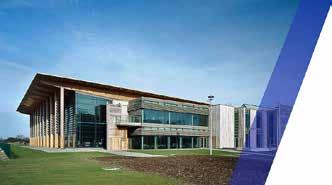
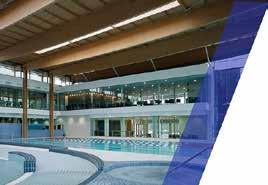
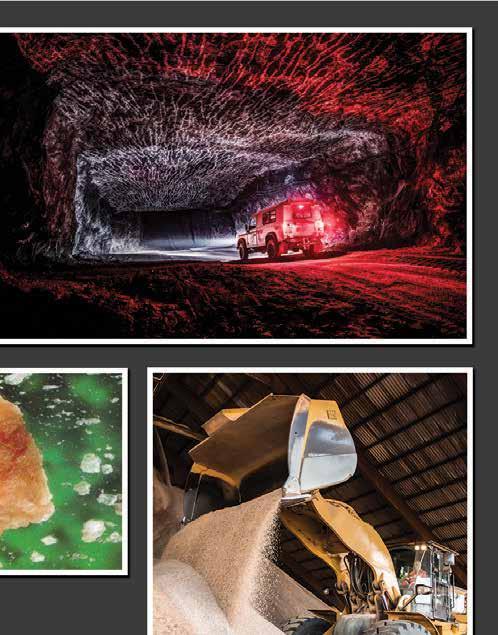
From advancing gene-editing technologies and discovering unique ways to treat the most challenging diseases to enabling the intelligence of devices – Merck is everywhere.
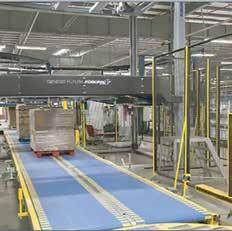
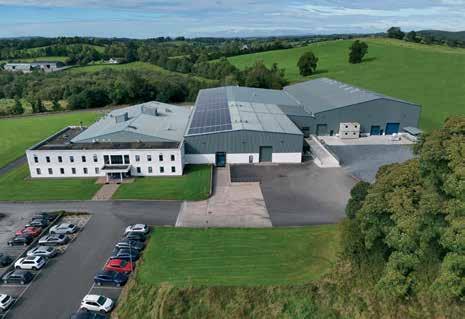
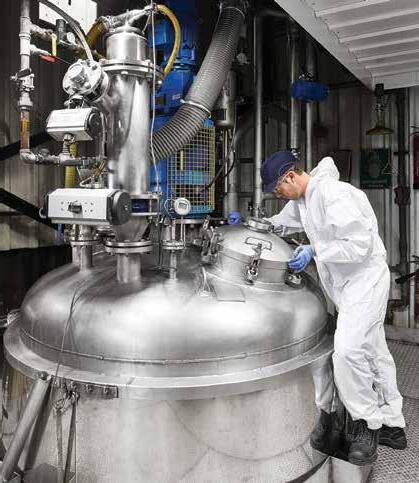
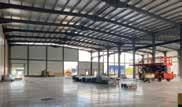
• The site in Carrigtwohill, Cork is the global ‘Membrane Centre of Excellence’ for Merck and produces millions of feet of all types of membrane on an annual basis. The membrane is also a key component in the rapid antigen tests for COVID-19.
• The site in Carrigtwohill, Cork is the global ‘Membrane Centre of Excellence’ for Merck and produces millions of feet of all types of membrane on an annual basis. Our membranes are incorporated into filtration devices to remove harmful bacteria and viruses from life-saving medicines.
• We specialise in the manufacture of filtration and medical devices.
• We specialise in the manufacture of filtration and medical devices.
• We manage an extensive Biotools operation, making 120m units annually.
• We manage an extensive Biotools operation, making 120m units annually.
• We are a world leader in affinity chromatography resin manufacture.
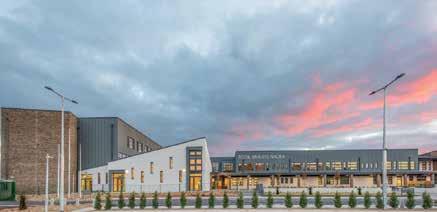
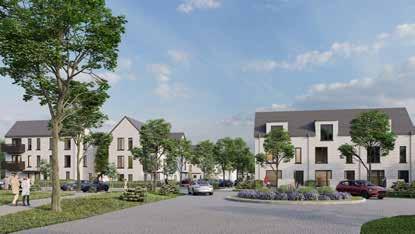
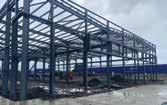
• Our new site in Blarney will manufacture filtration devices that ensure the sterility and safety of final treatments and therapeutics.
Merck also focuses on Sustainable Operations, Greener Products & Solutions, and Employee and Community Engagement.
Merck Millipore Ltd, Tullagreen, Carrigtwohill, County Cork, T45 KD29 www.merckgroup.com
18 PLANNING AWARDS 2025
Uisce Éireann scooped the overall President’s Award for its work on the Arklow Wastewater Treatment Plant, while projects from Dublin, Cork, Belfast, Carlow, Wicklow, Kildare, Offaly and Tipperary were among the 13 category winners of the 2025 Planning Awards.
22 AILG PRESIDENT
Mary Hanna Hourigan – the first Tipperary County Councillor to hold the position of President of the Association of Irish Local Government (AILG) –outlines the main items on the agenda during her 2025-26 term of office.
29 BUDGET 2026
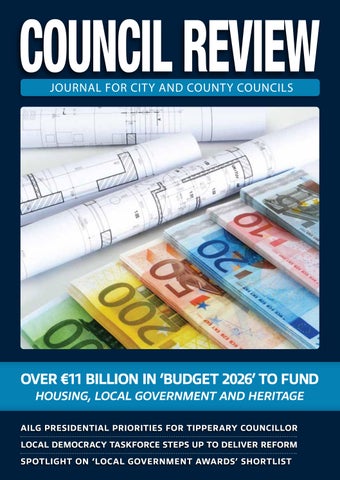
The recent Budget allocation of over €11.25 billion to the Department of Housing, Local Government and Heritage represents a 20% funding increase for 2026 to boost housing supply, and accelerate home construction to meet national targets.
35
PLANNING REFORMS
Ireland’s planning reform agenda has reached a major milestone with the opening of the latest chapters of the Planning and Development Act 2024, providing the statutory basis for the National Planning Framework and Regional Spatial and Economic Strategies under the new Act.
37
LAMA AWARDS 2026
Nominations remain open until the end of November for the LAMA Awards, which will be presented next year at the Dublin Royal Convention Centre on Saturday 28 February, which will also mark the 20th anniversary of the ‘All-Ireland Community & Council Awards’ programme.
39
LOCAL GOVERNMENT AWARDS
COUNCIL REVIEW
14 Upper Fitzwilliam Street, Dublin 2.
Tel: 01-6785165
Email: admin@councilreview.ie
Editor Grace Heneghan
Managing Director Patrick Aylward
Graphic Design Niall McHugh
Advertisement Co-ordinator Audrey Fitzgerald
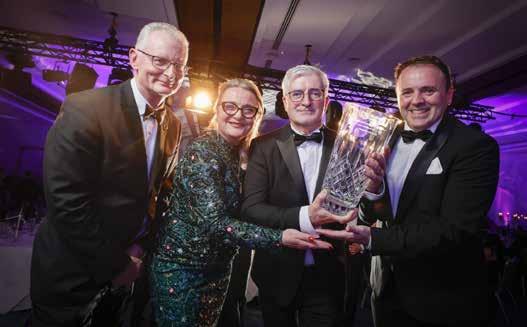
A total of 98 projects has been shortlisted for the Excellence in Local Government Awards 2025. The overall 16 category winners and the ‘Local Authority of the Year’ will be announced at the Chambers Ireland awards ceremony in Dublin on 27 November.
43
NATIONAL DEVELOPMENT PLAN
The National Development Plan includes a total investment of €275.4 billion from 2026 to 2035 to unlock housing, upgrade water and energy infrastructure, deliver more roads, and provide better public transport
49
BIODIVERSITY ACTION PLAN
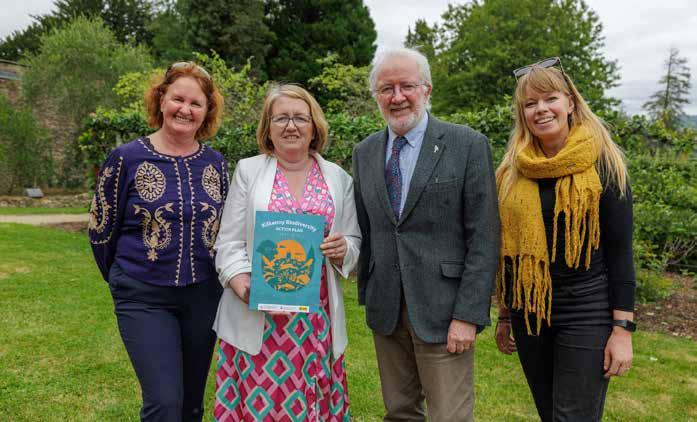
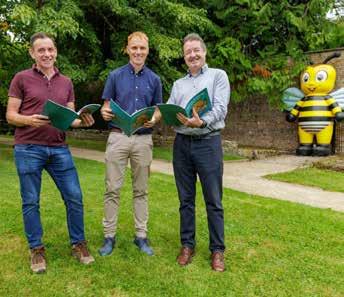
Nature-inclusive parks and open spaces are the key objectives under the new five-year Kilkenny Biodiversity Action Plan, and it has given Kilkenny County Council an opportunity to examine its own work practices, in terms of conserving and restoring natural habitats.
54
CLIMATE ACTION REPORT
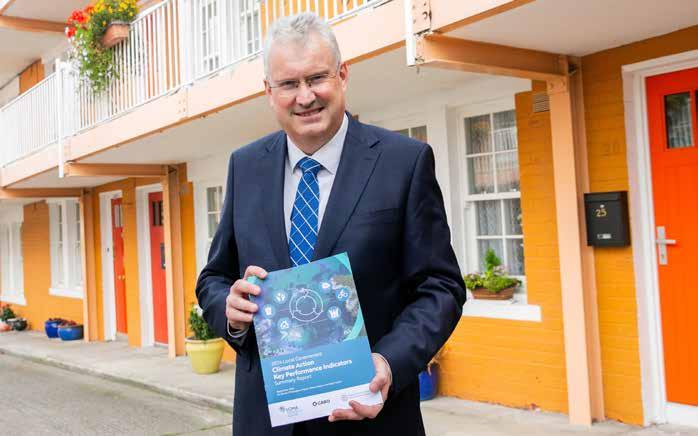
Ireland’s local authorities retrofitted more than 7,300 social homes since 2022, saving enough energy to power more than 6,000 households annually, according to the ‘2024 Local Government Climate Action Key Performance Indicators’ report.
65
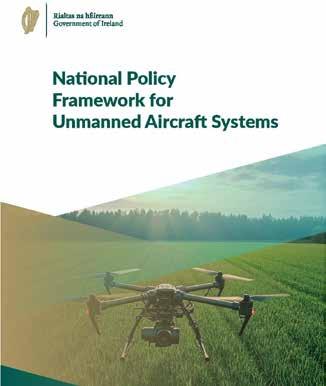
DRONES POLICY FRAMEWORK
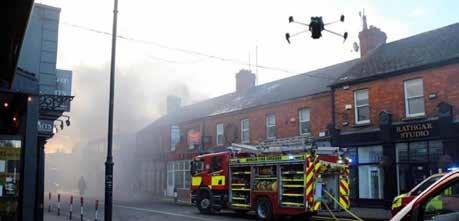
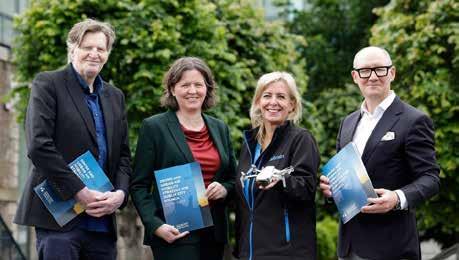
Under the terms of a national policy framework for drones, a collaborative approach will be fostered between local authorities, the Irish Aviation Authority and the Unmanned Aircraft (UAS) sector on education, training, awareness and compliance campaigns.
69
LOCAL DEMOCRACY TASKFORCE
The structure, functions, governance and funding of local authorities, in addition to enhancing the role and powers of elected councillors are due to be examined by the Local Democracy Taskforce, with recommendations due to be made over the next nine months.
75 EUROPEAN SUMMIT OF MAYORS 2026
Cork City is getting ready to host the European Summit of Mayors in Autumn 2026, which will see mayors, political leaders and public health professionals from across the WHO European Region come together to strengthen political leadership and cross-sector collaboration on climate and health.
Whilst every effort has been made to ensure that the information included is correct, the publisher cannot accept responsibility for errors,omissions or discrepancies. The views expressed are not necessarily those of the publisher.
Cork City Council has electrified more of its fleet compared to any other local authority across Ireland, with 80 of its 321 fleet of vehicles now electrified, according to recent research findings by Geotab, a global leader in connected transportation solutions.
81 GREEN HYDROGEN CONFERENCE
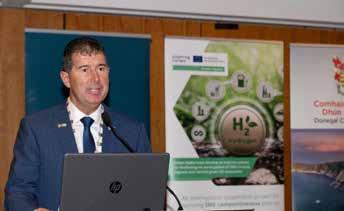
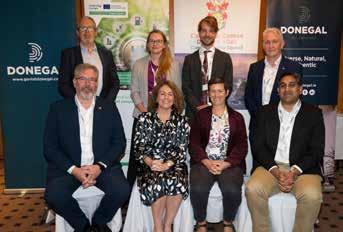
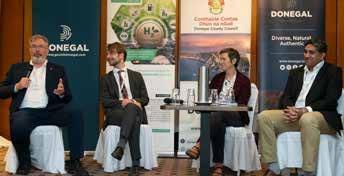
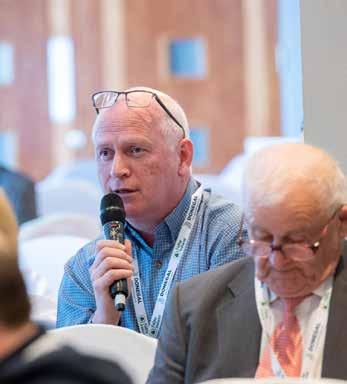
Delegates from 10 European countries visited Donegal Town in July for the Interreg Europe Green Hydra Conference, held in association with Donegal County Council, to focus on ways to support the development of green hydrogen in Europe and how to ensure SMEs are part of the green hydrogen value chain.
85 OMBUDSMAN’S HAP REPORT
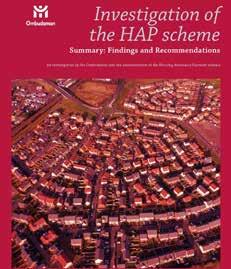
An investigation by the Ombudsman has found inconsistencies in how the HAP scheme is operated by local authorities, in addition to delays in some applications being processed and the inequities between how HAP tenants and social housing tenants are treated.
87 THRIVE HERITAGE REVIVAL
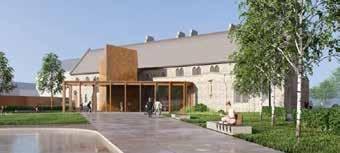
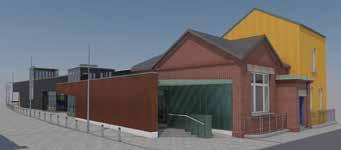
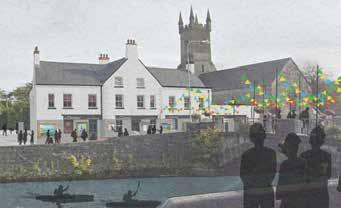
Fourteen local authorities nationwide are set to benefit from over €90 million in funding, which has been awarded through the second strand of THRIVE – the Town Centre First Heritage Revival scheme – to restore derelict heritage buildings in urban areas.
99 HOUSING ACQUISITIONS FUNDING
Eight city and county councils are due to be allocated an extra €50m in housing acquisitions funding, to support larger families with children and Housing First clients, to move from long-term homeless emergency accommodation into permanent homes.
101 THE HOUSING ALLIANCE
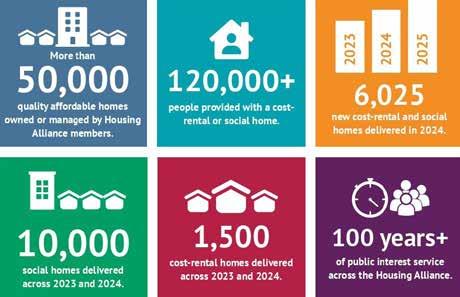
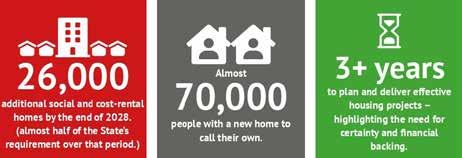
The Housing Alliance is calling on the Government to set a clear and consistent policy and to commit to long-term funding. In its latest report, the Alliance claims the ‘Housing for All 2.0’ plan needs to be the roadmap of how the State will deliver the committed 300,000 homes by 2030.
109
DUBLIN CITY WORLD FESTIVAL AWARD
Dublin City Council, in partnership with Fáilte Ireland, is one of ten cities around the globe to have won the ‘World Festival & Event City Award’ at the 70th International Festivals & Events Association’s Convention & Expo California in September.
113
LAND DEVELOPMENT AGENCY
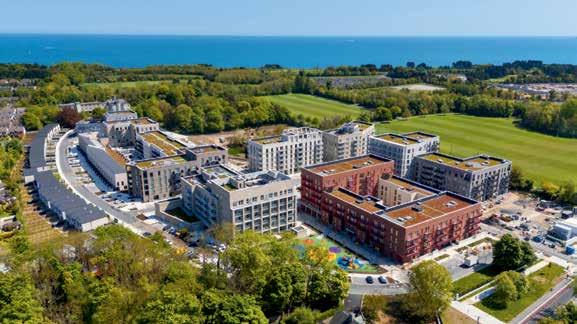
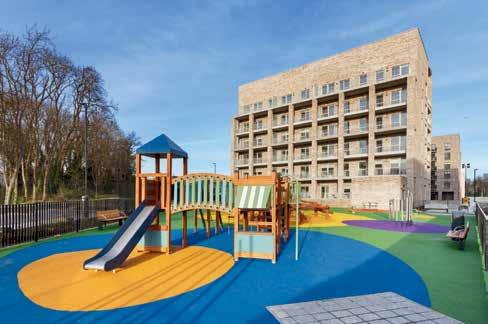
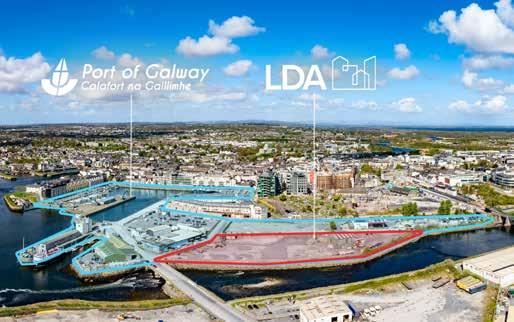
The Land Development Agency (LDA) has lodged a planning application for 356 cost rental and social homes at Galway Port, to be developed on land transferred by Galway Harbour Company. Subject to planning approval, construction is scheduled to commence in the fourth quarter of 2027.
123
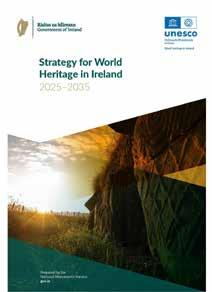
WORLD HERITAGE STRATEGY
Ireland’s first national strategy for UNESCO World Heritage for 2025-2035’ sets out the Government’s ambitions to increase the number of these heritage properties in Ireland to support tourism and economic growth.
129 AGE FRIENDLY IRELAND
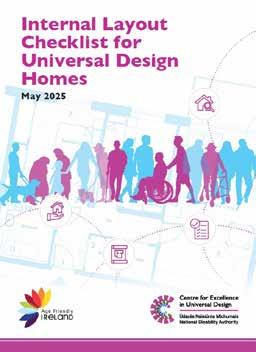
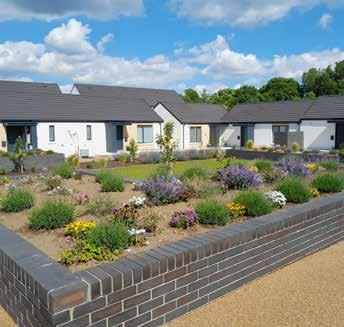
By investing in age friendly housing and embracing universal design principles, local authorities can ensure that older adults live longer and live better, writes Declan Gaffney, National Technical Programme Manager at Age Friendly Ireland.
147 ONLINE SAFETY SURVEY
Almost 60% of General Election and nearly half of Local Election candidates reported experiencing negative online behaviour during the 2024 General and Local Elections, according to the findings of a research report published by Coimisiún na Meán.
155
EUROPEAN FOCUS
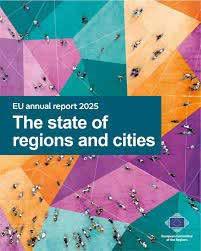
Current challenges facing Europe’s territories, alongside local solutions that inform policy decisions for the EU’s future, are outlined in the European Committee of the Regions’ sixth edition of its EU Annual Report on the State of Regions and Cities.
EAGLE STREET
Eagle Street is a fully integrated asset management platform, primarily focused on value-add, platform creation strategies in the UK and Ireland which accord with our investment themes.
Founded in 2020 by Justin Bickle and Shane Scully, the combined management team has extensive experience investing and building businesses across the cycle.
Unique combination of entrepreneurial ethos and access to off -market opportunities with a private equity mindset, institutional management pedigree and ESG focus.
Targeted approach to four high conviction strategies: Residential, Life Sciences, Commercial Offices and Credit.
Excellent track record of deployment and value creation over the past 10 years. Eagle Street partners with institutional investors and asset managers across each of the sectors in which it is active.
Eagle Street has assembled a value add office portfolio in Ireland and the UK, with blue chip tenants including Accenture, Santander and GSK.
•
RESIDENT SPACE
Resident Space launched in November 2021 with the acquisition of a 702unit PRS development in Dublin, backed by pension funds and institutional capital
In May 2022, Eagle Street acquired a 554 unit PRS development with Harrison Street Real Estate.
Development works are underway on the active sites, while pipeline sites are being appraised.
Upon completion in 2025, the East Road and Castleforbes sites will create one of the largest BTR platforms in Dublin.
Resident Space continues to seek both opportunities with full planning permission and subject to planning opportunities as part of its growth strategy.
Resident Space aims to create one of Ireland’s leading Residential Platforms, with a target portfolio of 5,000 Units – located in areas of high employment and close to mass transit
East Road – 554 Units Castleforbes – 702 Units
NEWS UPDATE
3 DECEMBER D-DAY TO ENTER NATIONAL PROPERTY AWARDS 2026
Entries for the National Property Awards 2026 remain open until 3 December, and the winners will be announced at the awards ceremony on 5 March 2026 in Dublin.
The National Property Awards acknowledge achievements, accomplishments and advances made by both individuals and organisations across the property industry. The 17 award categories identifies the highest level of achievement across residential and commercial sectors, as follows:
• ESG/Sustainability Initiative of the Year
• Commercial Development of the Year
• Developer of the Year
• Social Housing Development of the Year
• Marketing Team of the Year
• Social Media Campaign of the Year
• Placemaking Initiative of the Year
The National Property Awards 2026 will complement the 12th National Property Summit on Wednesday 26 November in Dublin.
The summit will bring together developers, investors, agents, policymakers, and financial institutions to Dublin to debate and analyse housing delivery, development finance, planning, ESG and the market outlook.
Topics will include:
• Economic outlook and Budget 2026: Implications for property development and investment.
• Housing policy one year into a new government: Progress, roadblocks and what’s still missing.
• Rebalancing the rental market: Regulation, affordability and investor sentiment.
• Build-to-Rent and PRS.
• Property Management Company of the Year
• Proptech Company of the Year
• Emerging Proptech Company of the Year
• Irish Agency of the Year
• Corporate Social Responsibility (CSR) Initiative Project of the Year
• Modern Methods of Construction (MMC): Scaling innovation to meet housing targets, infrastructure and delivery.
• Stranded assets and the climate transition
• Decarbonisation and ESG.
• Planning reform: Assessing the impact of new processes on timelines and certainty.
• Fund & Asset Management Company of the Year
• Buyer's Agent of the Year
• Future Leader in Property
• Outstanding Property Leader (Judge's Choice)
• Lifetime Achievement Award (Judge's Choice)
• Alternative asset classes: Opportunities in logistics, healthcare and later living.
• Emerging demand models: Coliving, downsizing and multifamily living in urban centres.
• The evolution of estate agency.
• Smart capital flows: Where domestic and global investors are placing bets in 2026.
• Vacancy and dereliction: Strategies to unlock supply through urban regeneration. For further information visit https://propertysummit.ie
Buy-to-Let Purchase and Refinance
• Up to 70% Loan to value
• Release Equity
• Flexible Terms: 35-Year Capital & Interest, 15-Year Interest-Only, or Flexi Mortgage Housing Bridging Loans
• Fast, Flexible Finance
• Perfect for BTL Renovation or Auction Purchases
Buy-to-Let via Pension Union Trust (PUT)
• Up to 50% loan to value
• Terms up to 15 years on Capital and Interest
NEWS UPDATE
GOVERNMENT
FUNDING TO LOCAL AUTHORITIES UP 28% TO €8.6 BILLION
A report from the Comptroller & Auditor General reveals that funding from central government to local authorities more than doubled since 2019, with a 28% increase in funding to €8.6 billion last year.
The main sources of funding have come from the Department of Housing, Local Government and Heritage, the Local Government Fund, and the Department of Transport. The delivery of social and affordable housing, along with other housing supports were the main reasons for which funding was provided in 2024. Other main purposes included transport investment, business supports, and support for environmental initiatives.
The 2024 report, released on 30 September by the State’s spending watchdog, shows that funding for housing and regeneration increased by around €1.3 billion (34%) last year to €4.9 billion. There was a slight drop for transport investment to €1.6 billion, from €1.61 billion in 2023.
Social and affordable housing delivery was a main reason for provision of funding.
When it comes to Ireland's road network, €445 million was allocated to local authorities for the improvement of national roads, down from €526 million in 2023. However, funding for the improvement of regional and local roads increased from €685 million to €733 million.
Local authority funding for public transport and active travel also increased – up €23 million in 2024 to €423 million. Meanwhile, funding for environmental initiatives increased, in addition to investment in employment and business schemes which jumped from €108 million in 2023 to €534 in 2024.
LDA PUTS PLANS IN PIPELINE FOR 285 AFFORDABLE HOMES IN LIMERICK
The Land Development Agency (LDA) is lodging plans for 285 new affordable homes at The Gasworks on Limerick’s Dock Road, with the homes to be developed on land acquired by the Agency from Gas Networks Ireland (GNI).
Subject to approval, construction could begin in 2027, and the proposed development will deliver cost rental and social housing in Limerick city, including 142 one-bed, 127 two-bed
and 16 three-bed apartments across three blocks ranging from one to eight storeys.
The plans also include the provision for a new public plaza, landscaped gardens, communal spaces, play areas, retail units and a childcare facility. Existing heritage artefacts, including a freestanding limestone wall that faces onto Dock Road, will be retained and incorporated into the design.
The proposed development is located beside the Dock Clock and is less than a 15-minute walk from Limerick city centre. It is serviced through existing bus links that connect to primary and secondary schools, the University of Limerick, University Hospital Limerick and the Crescent Shopping Centre. The proposal also includes a provision for both bicycle and car park spaces at surface level.
John Coleman, LDA’s Chief Executive, said: “Having worked extensively on the design process for this site, we’re confident that this project, located near the city centre, has the capacity to revitalise the area through the delivery of 285 much-needed affordable homes and amenities.”
Ronan Galwey, Acting CEO of GNI, added that the Limerick site is “a prime example of how state bodies can work in partnership with the LDA to unlock the potential of public land for the benefit of communities”.
LDA has plans for new affordable housing at The Gasworks in Limerick.
NEWS UPDATE
OVER €155M IN REFURBISHMENT GRANTS RESTORES UP TO 2,900 VACANT AND DERELICT HOMES
Over €155 million has been paid to Vacant Property Refurbishment Grant applicants, bringing 2,856 homes back into residential use from vacancy nationwide.
The grant scheme has had a growing nationwide impact since it was launched in July 2022 –13,737 grant applications have been received, and of the 9,979 applications approved up to the end of June this year, €155.2m has paid out to 2,856 applicants.
The number of grants being paid out continues to rise significantly each quarter, as works on properties are completed. More than 700 grants were paid out in the second quarter of this year, on completion of works, according to the new figures, released by Minister for Housing, Local Government and Heritage, James Browne TD. This represents a significant increase on the same period last year when 226 grants were paid out in Q2 2024.
Minister Browne said that the increase in payments reflects the fact that more vacant and derelict properties are being brought back into use across the country.
“As well as delivering new homes for people and families, this grant genuinely marks a key intervention when it comes to the liveability, accessibility and indeed safety of our cities, towns, villages and rural areas as well as helping to revitalise communities.”
By the end of June 2025, Donegal Council had the highest number of applications received – 1,247 – of which 922 have been approved and 226 paid out. Cork County Council had the second highest number received – 1,164 applications, 904 approvals and the highest number of grants paid out - 213. Mayo County Council is in third place with 818 applications received and 128 grants paid out on completion of works.
SPOTLIGHT ON ‘UNRUSHED. UNSPOILED. DONEGAL’ TOURISM CAMPAIGN
Tourism providers in Donegal are being encouraged to participate in a new marketing campaign after hundreds of international travel writers and content creators recently visited Donegal for the international ‘TBEX Europe 2025’ conference.
Delivered by Donegal County Council's Donegal Tourism team in collaboration with Donegal branch of the Irish Hotels Federation (IHF), the campaign has been shaped by recent industry engagement focused on identifying supports needed for the shoulder season.
Targeting the domestic market the aim is to put Donegal to the forefront of the minds of potential visitors as they plan their autumn and winter breaks.
The ‘Unrushed. Unspoiled. Donegal’ campaign will showcase the best of Donegal through a targeted digital marketing campaign, video content, and a dedicated offers page on GoVisitDonegal.com, where visitors can explore a range of experiences, plus seasonal hotel packages.
Donegal’s Cathaoirleach Cllr Paul Canning said the council has been responding to the needs of the tourism industry by backing this campaign that drives off-peak visitation, supports employment, and strengthens Donegal’s appeal as a yearround destination.
John McLaughlin, Chief Executive of Donegal County
Council and Chair of Donegal Tourism, has described the campaign as “a great example of local collaboration to support the tourism sector”.
Y O U H E L P U S O P E R A T E
MSF surgical teams perform tens of thousands of life-saving operations each year - and we can only do it because of you As an MSF donor, you’ll fund our vital surgical and medical work in countries in crisis all over the world including: conflict zones; epidemics; and natural disasters. Your donation will save lives. Thank you for your support.
A L L O V E R T H E W O R L D 2 8 5 6
could provide a sterilised surgical kit to an MSF surgical team
146 could provide an emergency kit to dress 15 wounds
4 7 6 could provide antibiotics to prevent infections in 2 patients after surgery
could provide an oxygen kit with concentrated cylinders, masks and tubing
NEWS UPDATE
DUBLINERS VOICE CONCERNS IN NEW TOURISM SURVEY
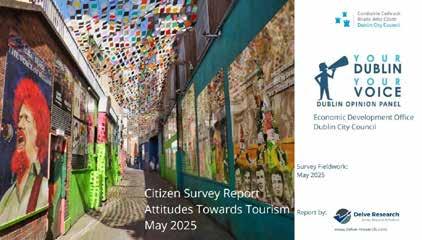
Dublin's latest tourism survey has revealed a multifaceted relationship between Dubliners and tourism in the capital. The findings of Dublin City Council’s ‘Your Dublin, Your Voice’ panel reflected strong support for visitors but also highlighted concerns about the pressure tourism places on the city.
More than 1,000 residents who participated in the two-week online survey (20 May to 1 June) offered a detailed snapshot of public sentiment – over 90% agreed that both international and domestic tourism is good for Dublin.
Compared to the norms in mainland Europe, Dublin residents rate tourism more positively when it comes to boosting the local economy (91%), preserving Dublin’s historical heritage (80%), enhancing cultural activities (76%) and contributing to a lively atmosphere in the city (72%).
While 81% of those surveyed reported positive interactions with tourists, they aired their concerns around the strain on Dublin’s infrastructure and resources. Key issues included the environment, cleanliness and quality of life for residents.
Respondents also cited technology gaps – only 28%
believe technology is used effectively to enhance the tourist experience. Suggestions for improvement focused on public transport (including easier payment options like contactless bank card tapping) and better information. A Dublin tourism app was a popular suggestion.
There was strong support for a proposed tourist bed tax with 64% of respondents suggesting the use of revenue to fund improvements in public transport, safety and the public realm.
GALWAY SHOWS EUROPE THE WAY ON SLOWING DOWN TOURISM!
Galway County Council and the BIA Innovator Campus joined forces to promote slow tourism in the county, by hosting European partners from the Interreg Europe Slowdown project at the end of September.
The week-long programme brought together delegates from eight countries to explore how slow tourism can support sustainable local and regional development, boost the local economy and foster responsible travel.
The delegation toured East Galway to meet local food
producers and explore heritage sites, before traveling to Connemara to visit Killary Fjord, Renvyle, and Clifden, and engage with regional stakeholders. The programme concluded with an Interregional Steering Group meeting at Kylemore Abbey, and a visit to Spiddal Village.
Cllr David Collins, Cathaoirleach of Galway County Council, said the project showcased Galway’s unique assets and strengthened international collaboration on responsible tourism. He said that he fully supports the efforts to encourage visitors to experience the county at a slower, more meaningful pace, fostering environmental sustainability and cultural engagement.
Galway County Council’s Tourism Officer John Neary highlighted that slow tourism is a central theme of the county’s first ever tourism strategy for 2023–2031, launched last year.
Nagy Péter, Lead Partner for the Interreg Europe Slowdown project, noted that Ireland is one of nine countries working to improve slow tourism policies through territorial co-operation. “Tourism accounts for 10.3% of the EU’s GDP and provides 27 million jobs, though challenges such as overtourism and underdeveloped regions remain,” he noted.
The project unites nine partners from EU countries, including Hungary, Spain, France, Italy, Latvia, and Romania, alongside Galway County Council and the BIA Innovator Campus.
For more information visit www.interregeurope.eu/slowdown & www.biainnovatorcampus.ie
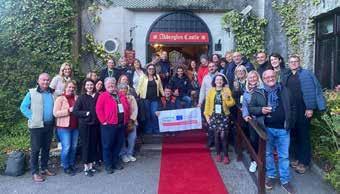
Project delegates pictured during a trip to Clifden’s Abbeyglen Castle Hotel.
NEWS UPDATE
BOYNE COMMUNITY FORUM TO FOCUS ON WATER QUALITY IN EAST MIDLANDS
Boyne Catchment Community Forum – a new consultative group around water quality in the East Midlands – will host an information evening on Wednesday 5 November in Navan’s Newgrange Hotel.
The forum will act as a conduit to regional/national decision making around the management of Ireland’s natural waters. The forum will also allow for local community deliberation on water quality data, support local community action, and influence Local Catchment Management Plans linked to the local environment.
The Boyne Catchment Community Forum is one of five pilots across Ireland proposed under the National Water Action Plan (a River Basin Management Plan for Ireland), to explore avenues to include community perspectives into catchment management work plans. Public Participation in Water Management is a key element of the protection and restoration of water quality across the country.
For more information visit https://lawaters.ie
The Local Authority Waters Programme (LAWPRO) works on behalf of Ireland’s 31 local authorities to protect and restore good water quality in all rivers, lakes, estuaries, ground and coastal water through catchment science and local community engagement.
Established to fulfil requirements under the EU Water Framework Directive and funded by the Dept of Housing, Local Government and Heritage, LAWPRO co-ordinates the efforts of local authorities and other public bodies in implementing the River Basin Management Plan.
CONFERENCE HIGHLIGHTS IMPACT OF GROUP WATER SCHEMES ON RURAL COMMUNITIES
Minister of State for Nature, Heritage and Biodiversity, Christopher O’Sullivan TD, has reaffirmed the Government’s commitment to the group water scheme sector in supporting rural communities.
His remarks follow the announcement of €166m in funding under the multi-annual Rural Water Programme 2024-2026, allocated by the Department to support 550 projects across the country.
At the opening of the Rural Water Conference, organised by the National Federation of Group Water Schemes (NFGWS) in Galway on 11 September, Minister O’Sullivan said that the group water scheme movement has shown itself to be “innovative, efficient, and deeply community-
NFGWS represents community group water schemes in Ireland. For more information visit https://nfgws.ie/
rooted – qualities that make it one of the best examples in Irish public life of what can be achieved when communities come together to solve shared challenges”.
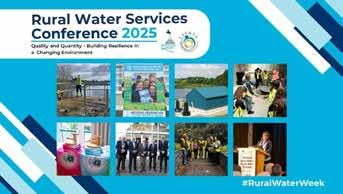
The 2025 Rural Water Conference brought together the National Federation of Group Water Schemes, local authorities, members, and volunteers who sustain group water schemes around the country. Several schemes were recognised with awards acknowledging their commitment to protecting water quality and managing schemes effectively.
“The real credit goes to the volunteers, staff, and managers of group water schemes who ensure rural communities receive water that meets the highest standards,” Minister O’Sullivan commented.
With a changing climate, increasingly severe weather events, and growing pressures on land use, he said that resilience is also essential: “Resilience is built by the volunteers, NFGWS and local authorities – working in partnership with government. By working together, we can ensure that our rural water systems are ready to meet the challenges of the future, whether that is extreme weather, new regulations, or rising demand.”
The 2025 Rural Water Conference was also addressed by representatives of the NFGWS, Rural Water Unit of the Department of Housing, Local Government and Heritage, An Fóram Uisce, Environmental Protection Agency, West Limerick Group Water Scheme, Dublin City University, Galway County Council, and Glinsk Creggs Group Water Scheme.
T: +353 (21) 496 5950
M: +353 863 798 231
Address: Lehenaghmore, Togher, Cork, T12 C953.
Conferencing
Dining Private Events
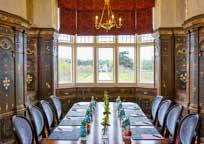
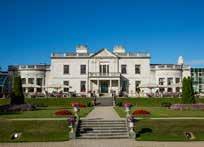
Just minutes from Dublin city, St. Helen’s combines historic charm with modern comfort across four acres of manicured gardens. From boardroom meetings to multi-day conferences, our dedicated team delivers seamless service in a setting that leaves a lasting impression.
Complimentary parking and a variety of unique dining options, rooms and suites ensure every detail is taken care of for you and your guests.
St. Helen’s, Stillorgan Rd, Booterstown, Dublin, A94 V6W3
NEWS UPDATE
GALWAY, LIMERICK AND WATERFORD DESIGNATED AS ‘EUROPEAN HEALTHY CITIES’
The cities of Limerick, Galway and Waterford have been awarded accreditation to the WHO European Healthy Cities and Counties Network and now join other cities across Europe recognised for their commitment to placing health, equity and sustainability at the centre of local governance and development.
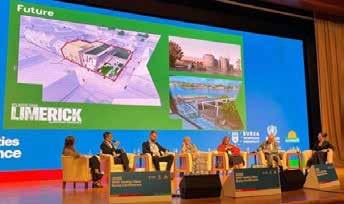
Following his city’s accreditation, Limerick’s Lord Mayor John Moran (second from left) took part in a panel discussion at the WHO European Healthy Cities Annual Conference in Bursa, Türkiye in June.
Accreditation as WHO European Healthy Cities has been “testament to collaboration of the HSE, local authorities, community-voluntary sectors, academic institutions and other key stakeholders, according to Minister for Public Health, Wellbeing and National Drug Strategy, Jennifer Murnane O’Connor TD.
This accreditation, granted at the WHO European Healthy Cities Annual Conference in June in Bursa, Türkiye, asserts the cities leadership in implementing innovative, crosssectoral policies that promote public health, social inclusion, and sustainable urban living.
Accreditation to the WHO Healthy Cities and Counties Programme will bring significant benefits to Galway, Limerick and Waterford, aligning directly with the Local Community Development Committees (LCDCs) mandate for local development.
The designation allows for access to international expertise and best practices through engagement with the WHO network of over 100-member cities. It also integrates of health considerations across all local government policies and plans, including the Local Economic & Community Plan (LECP); in addition to collaboration between the local authorities, HSE, community and voluntary groups, statutory agencies and local communities.
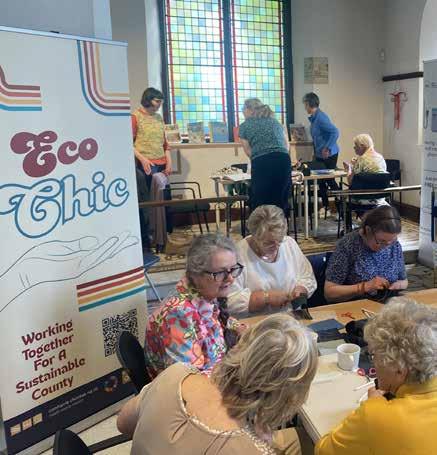
THE IMPACT AND COST OF WASTE FROM FAST FASHION IS OFF THE RAILS
Dublin’s four local authorities have collaborated on a new short documentary, to focus on the environmental impact of fast fashion and ways to reduce textile waste in the capital and across the country.
Supported by the Department of Climate, Energy and the Environment and the Regional Waste Planning Offices, the documentary ‘Losing the Thread: The Cost of Fast Fashion’ delves into the local and global consequences of fast fashion.
The film, which is now available on MyWaste.ie website, examines the environmental impact, the ethical dilemmas and shares the opinions of shoppers on Dublin’s shop streets. The film showcases positive and practical steps to be taken, and features opinions from some people within Ireland’s circular economy.
In a joint statement, An Cathaoirleach of Dún LaoghaireRathdown County Council, Mayors of Fingal County Council and South Dublin County Council, and Lord Mayor of Dublin City Council said that the short film shines a light on the “pervasive issue of throwaway culture and grounds it at a local level”.
The launch of the film at Dublin’s Lighthouse Cinema in Smithfield in early October also included a clothes
swap shop (where over 200 items were traded), upcycling workshops, expert advice and an interactive panel discussion with experts in the circular economy.
Dublin’s four local authorities collaborated on a new documentary on the environmental impact of fast fashion.
Bígí linn ag an bhFleadh
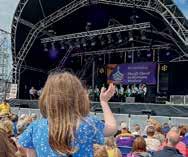
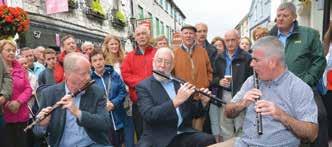
Comhaltas Ceoltóirí Éireann acknowledges its partnership with the Local Authorities in hosting Ireland’s largest Cultural Festival, in different venues throughout Ireland
2024 Wexford 2025
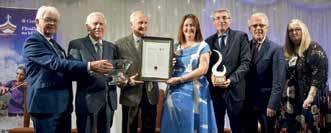
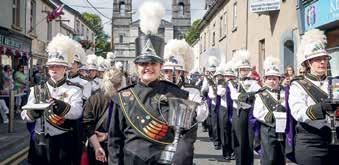
Wexford County Council was honoured to host the Comhaltas Fleadh Cheoil na hÉireann in 2024 and we look forward to welcoming visitors from across the globe to this prestigious cultural event again in 2025.
Fleadh Cheoil na hÉireann
2025 Wexford
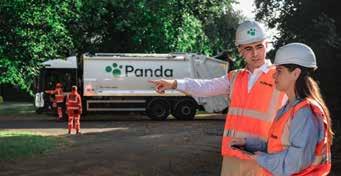
PANDA: TRANSFORMING WASTE, EMPOWERING PEOPLE
At Panda, people often assume we are simply in the waste business, collecting, transporting, and disposing of unwanted materials. However, that’s only part of the story. Every day, we look beyond what most consider waste. To us, nothing should be discarded: another use can always be found, another value recovered.
Our purpose is clear: to optimise the recovery of resources in ways that make life more sustainable for people, businesses, and communities. By doing this, we protect the places that matter most, where people live and work, while shaping a greener tomorrow. For us, waste is not the end of a story; it is the beginning of transformation.
What We Do: Panda is Ireland’s leading waste management and recycling company, serving over 440,000 households and businesses nationwide, with operations across Ireland and the UK. Each year, we handle 4.4 million tonnes of discarded resources through our collection, recovery, and energy facilities.
Our services include:
• Household waste and recycling collections
• Commercial and industrial solutions
• Recovery of plastics, metals, glass, paper, and cardboard
• Construction & Demolition (C&D) and Incinerator Bottom Ash (IBA) recycling
• Bio-drying of municipal waste to recover plastics
• Composting and brown bin treatment
• Renewable electricity from landfill gas, biomass, and solar PV
• Confidential shredding and specialist services
By combining operational excellence with innovation, we are helping drive Ireland’s transition from waste disposal to resource recovery.
Powered by People: With over 3,000 colleagues across Ireland and the UK, our people are at the heart of everything we do, including drivers, mechanics, engineers, customer care teams, apprentices, graduates, and experts working together to keep services reliable and community focused.
We invest heavily in our people. Through the Panda Academy, SHEQ Campus, and wellbeing initiatives, we are building a safer, more skilled, and resilient workforce. Our people aren’t just
employees – they are leaders, innovators and community ambassadors. Together, they bring our purpose to life.
Investing in the Future: Panda is driving Ireland’s transition to a low-carbon, circular economy through targeted investments in technologies and infrastructure.
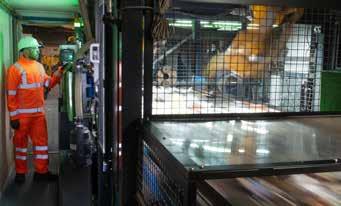
• In 2025, we commissioned a €5 million metals and plastics recovery system at Millennium Park, Finglas, the State’s largest recycling depot, capturing resources that would otherwise be lost.
• Through our Bioverda operations we generated 71,000 MWh of renewable electricity in 2024, capturing methane from landfill gas and displacing fossil fuels.
• At Littleton, Co. Tipperary, our bio-drying facility reduces waste moisture, recovers plastics, and boosts national recycling rates.
• Across the group, rooftop solar PV delivered almost 1,000 MWh of renewable power in 2024, with further expansion planned.
Together, these systems keep materials in use, cut emissions and strengthen Ireland’s recycling market. Over the past five years, Panda has invested €80 million in infrastructure, with a further €100 million committed to implementing our Circular Economy Strategy, which is aligned with Ireland’s Climate Action Plan and the EU Green Deal.
Shaping a Greener Tomorrow: Panda’s story is built on decades of expertise, but it is also about the connections we create today and the opportunities we build for tomorrow. This is who we are. We value waste, not because it is easy or convenient, but because it matters. And when we do it together, the impact is far greater than any one of us could achieve alone.
At Panda, we take pride in the role we play. More importantly, we are excited about the role we can play in the future: a future where 100% resource recovery is possible, where waste is never wasted, and where we all leave a greener footprint, today and tomorrow.
SPOTLIGHT ON IRISH PLANNING AWARD WINNERS FOR 2025
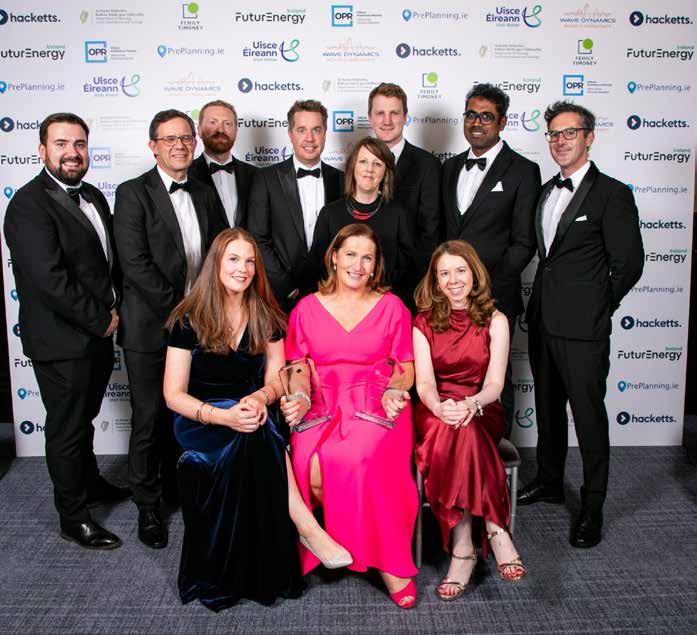
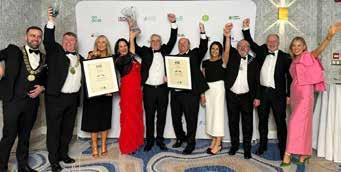
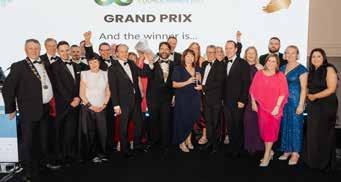
The Uisce Éireann Arklow Wastewater Treatment Plant team –winners of the Infrastructure Category award and the overall President’s Awards – pictured at the Irish Planning Institute 2025 Planning Awards ceremony on 25 September in Dublin.
Thirteen winners were announced at the 2025 Planning Awards, with project submissions from Dublin, Cork, Belfast, Carlow, Wicklow, Kildare, Offaly and Tipperary, with international work in Lesotho recognised by the judging panel, while Uisce Éireann took home the overall President’s Award for its work on the Arklow Wastewater Treatment Plant.
The Irish Planning Institute (IPI), presented the winners of the 2025 Planning Awards at an awards ceremony on 25 September in Dublin. With 80 entries submitted from around the country, the judges selected the 13 category award winners, while an additional five entries were also highly commended.
Projects from Dublin, Cork, Belfast, Carlow, Kildare, Offaly, Tipperary, South Dublin County Council, and international work in Lesotho, were some of the award winners.
Uisce Éireann took home the overall President’s Award for its Arklow Wastewater Treatment Plant – a €139m project that was also the winner of the ‘Infrastructure Category’.
Congratulating the winners and the nominees, Gavin Lawlor, IPI President, said the quality of entries to the 2025 Planning Awards was a powerful reminder of the innovation, knowledge and expertise of IPI members.
“Every year they strive to deliver high quality and sustainable development projects. The award entries reflect a deep commitment to creating liveable, inclusive places supported by essential services and infrastructure,” he noted.
EXCELLENCE IN PLANNING
The biennial Irish Planning Awards celebrate outstanding achievements in the planning profession, including projects and plans at a local, county, regional and national level.
2025 PLANNING AWARD WINNERS
• Plan-Making: Community Places – Tullycarnet Place Shaping Plan 2025-2035
• Commercial Project: South Dublin County Council –Work IQ Innovation Centre
• Urban Regeneration – State Led: Tipperary County Council and the Department of Housing, Local Government and Heritage – Kickham Barracks Regeneration, Clonmel, Co. Tipperary
• Urban Regeneration – Private Led: Tom Phillips + Associates – Kennedy Quay Mixed Use Development, Cork South Docklands
• Heritage and Culture: Kildare County Council – Revival of Naas Town Centre – Reimagining the Potato Market
• Climate Action: Land Development Agency –Sustainable Development Strategy 2024-2028
• Biodiversity: SLR Consulting, Studio Aula and Haller Clarke – Derryounce Lakes & Trails 10 Year Plan 20242034
• Housing or Community: Land Development Agency –Bluebell Waterways
• Research and Innovation: Carlow County Council –Carlow Pre-Planning Enquiry Service: A Research-Led Digital Innovation Supporting Early Career Planners and Improving Service Delivery
• Diversity and Inclusion: Action Ireland Trust in conjunction with Fingal County Council, Portmarnock Community School and the Lesotho Town and Regional Planning Institute – Planning for Diversity and Inclusion in Ireland and Lesotho
• Planning Consultancy and In-House Planning Teams: Brock McClure – We Are Brock McClure
For full details of category winners and highly commended projects visit www.ipi.ie
The awards aim to promote excellence in the field of planning, encourage sustainable development, foster positive engagement between communities and projects, support economic development through thoughtful planning. They also serve to recognise those projects and practices that enhance the environment, conserve architectural heritage or create cultural venues.
The Irish Planning Awards are designed to inspire innovation throughout the planning sector and reflect the level of planning achievement across the island of Ireland. With 80 entries from all around the country submitted for this year’s awards, the judging panel selected the 13 category winners from the shortlist of 55 nominees.
JUDGING PANEL AND SPONSORS
This year’s judging panel comprised Gavin Lawlor MIPI (IPI President), Brian McCarthy MIPI (IPI Vice President and Senior Planner, Clare County Council), David O’Connor MIPI (Head of Environment and Planning, TU Dublin), Laura Brock MIPI (Founding Partner, Brock McClure), Robert Keran MIPI (IPI Council Member and Foundation Management Consultants), Deirdre Scully FIPI (Former City Planner, Dublin City Council), Carol Tallon (CEO, Property District) and Claragh Mulhern MIPI (Principal Planning Adviser, Department of Housing, Local Government and Heritage).
The 2025 Planning Awards were sponsored by the Department of Housing, Local Government and Heritage, FuturEnergy Ireland, Uisce Éireann, Office of the Planning Regulator, Hacketts, Fehily Timoney and Company, and Wave Dynamics Acoustic Consultants.
The Climate Action Award was sponsored by FuturEnergy Ireland, the Biodiversity Award was sponsored by Uisce Éireann, while the Research and Innovation Award was sponsored by the Office of the Planning Regulator.
PLANNING INSTITUTE CELEBRATES 50 th ANNIVERSARY
Celebrating its 50 th anniversary this year, the Irish Planning Institute represents over 1,000 planners in the public and private sectors, across Ireland, including those who work in local authorities, the academic sector, the Planning Commission, central government, regional assemblies, private practice consultancies, property developers and semi-state organisations.
LOUTH DEPLOYS NEW FLEET OF ELECTRIC VEHICLES
To
Drive Climate Action Strategy
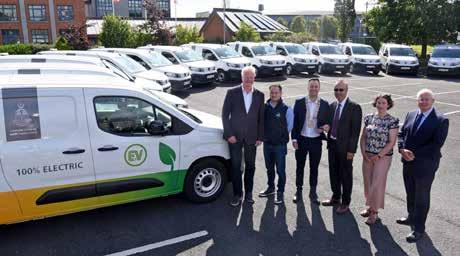
Louth County Council has rolled out 22 new electric vehicles (EVs), as part of a major step to drive forward its climate action strategy. The addition of the fully electric Peugeot e-Partner vans now brings the local authority’s total EV fleet to 27 vehicles, achieving an electrification rate of nearly 21%.
This initiative underscores Louth County Council’s commitment to sustainability, innovation, and leadership in public sector decarbonisation.
Supplied by Lynn Motors (Peugeot), the EVs were procured through the Office of Government Procurement (OGP) Framework, to ensure both compliance and value for money.
The €746,068.40 investment – net of Sustainable Energy Authority of Ireland (SEAI) grants – was funded through the council’s own resources, with further opportunities to recover costs via national grant schemes supporting service delivery and climate action.
Developed by the council’s fleet management section in consultation with the SEAI, the project includes the installation of five 22kW dual socket charging pedestals across four council depot locations, delivered in partnership with ePower.
The vehicles have been branded by Universal Graphics, enhancing visibility and public engagement with the council’s sustainability efforts.
COMMITMENT TO A GREENER LOUTH
This transition aligns with the Government’s National Climate Action Plan and supports key objectives in Louth County Council’s Climate Action Plan 2024–2029. This includes the development of a fleet usage policy aimed at reducing emissions while maintaining high-quality service delivery.
Once fully deployed, Louth County
Council will decommission its remaining high-usage diesel vans, further reducing its carbon footprint and operational emissions.
Cllr Seán Kelly, Cathaoirleach of Louth County Council, described the EV investment as “a clear demonstration of a commitment to a cleaner, greener Louth”.
He added that by leading the way in fleet electrification, Louth County Council is both reducing emissions and setting an example for other local authorities and communities.
David Conway, Louth County Council’s Chief Executive, noted that the transition to EVs represents “a significant step towards achieving the council’s climate goals, including a 51% reduction in emissions by 2030 and net zero by 2050”. He added that by investing in cleaner transport solutions, the local authority is lowering its environmental impact and supporting innovation in the green economy.
David Hanratty, Acting Director of Services of Louth County Council, said the local authority has a responsibility to lead by example. “We will continue to
proactively integrate sustainability into all aspects of our service delivery and are proud to take this important step forward in leading the way for our communities.”
EV TRAINING FOR COUNCIL STAFF
The project also highlights the importance of collaboration between public and private sectors. Sean Weir, National Fleet Sales Manager at Gowan Auto (Peugeot), noted: "It’s encouraging to see a local authority leading by example in fleet electrification. Our EV training programme ensures that council staff are equipped to manage and operate these vehicles effectively."
Hugh Hall, Co-Founder and Director of ePower, added that they are proud to support Louth County Council with tailored EV charging solutions that help power a greener future.
“Louth’s EV fleet expansion demonstrates how local authorities can drive meaningful change in climate action, service innovation, and public sector leadership – setting a benchmark for others across Ireland,” he pointed out.
Pictured at the launch of the new EV fleet outside County Hall in Dundalk (l-r): Hugh Hall, Director of ePower, Thomas Murray, Universal Graphics, Cllr Seán Kelly, Cathaoirleach of Louth County Council, Sean Weir, National Fleet Sales Manager, Gowan Motors, Sorcha Brophy, SEAI Programme Executive of EV Infrastructure & Policy, and David Conway, Louth County Council’s Chief Executive.
TIPPERARY COUNCILLOR’S PRESIDENTIAL PRIORITIES FOR 2025-2026
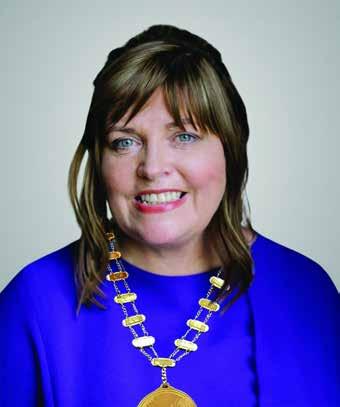
Councillor Mary Hanna Hourigan is the first elected member from Tipperary County Council to hold the position of President of the Association of Irish Local Government (the representative body for 950 city and county councillors). In this special Q&A with ‘Council Review’ she outlines the main items on the AILG agenda during her 2025-2026 term of office.
LOCAL DEMOCRACY TASKFORCE: The Cabinet’s formal approval to establish a Local Democracy Taskforce represents a landmark development for local government reform in Ireland. Five councillors have been appointed to ensure the voices of elected representatives are central to the deliberations and outcomes of the Taskforce, due to report within the next nine months.
Q: In what way will the AILG highlight a growing democratic deficit in the local government sector, to give councillors greater powers in the decision-making process within their communities?
A: The establishment of the Local Democracy Taskforce is a landmark opportunity to address what councillors across the country have long identified – a growing democratic deficit in our local government system. Ireland remains one of the most centralised states in Europe, with too many key decisions still being taken at national or agency level, far removed from the communities they affect.
The AILG’s core objective is to ensure that councillors are recognised and empowered as the democratic policy leaders of local government. This means rebalancing the relationship between the executive and the elected council, so that policy primacy rests firmly with councillors. As envisaged under Section 130 of the Local Government Act 2001, councillors must not simply oversee administration but must lead on policymaking, budget-setting, and strategic development.
Our key recommendations include:
• Embedding subsidiarity in practice – decisions made at the level closest to citizens, with meaningful devolution of functions such as housing, transport, climate action, community safety, and local enterprise to councils.
• Strengthening reserved functions – expanding councillors’ statutory powers so that all new strategies and policies require democratic approval before implementation.
• Reinforcing scrutiny and oversight – ensuring councillors have the resources, information, and statutory rights to hold the executive accountable for service delivery.
• Recognising AILG as a statutory policy stakeholder –placing the Association on a formal footing in all national–local consultations and reforms, so the collective voice of elected members informs policy at the earliest stage.
• Supporting councillor professionalism – investing incontinuous professional development, technical advice, and capacity building so that elected members are equipped to fulfil their increasingly complex role.
Ultimately, this is about restoring trust in local democracy by ensuring that decisions affecting people’s everyday lives are made by those elected to represent them – their local councillors.
Mary Hanna Hourigan, AILG President (2025-2026)
Q: As AILG President how will you advocate for meaningful reforms through the work of the Local Democracy Taskforce to ensure that your Association remains a strong advocate for local government?
A: As President of the AILG, I see it as my responsibility to ensure that the Taskforce delivers reforms which make a real and lasting difference for councillors and the communities they represent.
My focus will be on advocating for a genuine programme of subsidiarity and devolution, so that decisions are taken closer to the people and councils are given the authority and resources to lead in key areas such as housing, climate action, transport, and community development.
I will also make the case for a fundamental rebalancing of the relationship between the executive and the elected council, ensuring that councillors have primacy in setting policy and that the executive is fully accountable to the democratic mandate of elected members. At the same time, I want to ensure that councillors are properly supported to carry out this demanding role – through continuous professional development, access to technical expertise, and the recognition of AILG as the statutory body representing councillors in all national-local consultations. By combining principled advocacy with robust evidence from our research and international best practice, I will work to make sure the Taskforce produces reforms that strengthen democracy, empower councillors, and enhance the capacity of local government to deliver for communities.
PRESIDENTIAL NOMINATIONS: With just two candidates in the race to the Áras to become the 10 th President of Ireland, there have been calls to change the overall nomination process and to give councillors greater freedom to nominate candidates for the next election.
Q: What’s your opinion on giving councillors greater freedom in the nomination process, to open the arena for more potential candidates to enter future presidential elections?
A: The AILG fully supports the provisions of Article 12 of the Constitution, which rightly gives local authorities a route to nominate candidates for the highest office in the State. This reflects the important democratic role of local government and ensures that councillors, as directly elected public representatives, have a voice in the process.
That said, AILG is very mindful that many of our members are affiliated to political parties. As an Association, it would not be our role to interfere with or comment on the internal decisions or instructions of political parties regarding presidential nominations.
What I do support is an open and balanced debate about how councillors can best contribute to ensuring the widest possible democratic choice for the electorate. Councillors are closest to the communities they represent, and their role in shaping and supporting the democratic process – including presidential nominations – is a vital one.
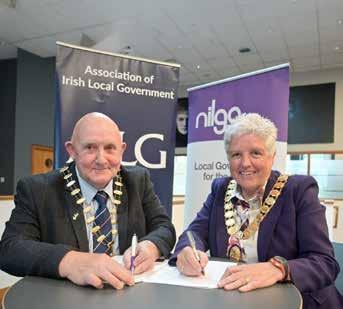
NORTH-SOUTH COLLABORATION: The AILG and NILGA (Northern Ireland Local Government Association) have signed a Memorandum of Collaboration (MoC), to demonstrate a commitment to foster innovation, equity, and sustainability in partnership with local government over the next three years.
Q: Since the MoC came into effect in June, what plans are in the pipeline during your presidency to host joint events for councillors on both sides of the border, such as training seminars, conferences, or workshops?
A: The signing of the MoC with NILGA has created a clear roadmap for how we will strengthen north–south co-operation over the next three years; joint events are at the very heart of this plan. The first year of the MoC will commence during my presidency, where we’ll host several cross-border training and learning events designed to bring councillors together, share best practice and develop common approaches to shared challenges.
Both organisations are proactively seeking opportunities to share and learn from each other where, by organising joint workshops and webinars, we can focus on key policy areas.
Our first major initiative will be a landmark all-island conference – ‘Safe Communities, Shared Futures’ – focused on ending violence against women and girls.
This event will speak to the UN’s International Elimination of Violence Against Women and the ‘16 Days of Activism’ campaign, and will gather councillors from across the island, alongside community groups, NGOs, and statutory agencies, to share learning, promote co-ordinated local responses, and equip councillors with practical resources such as a VAWG (Violence Against Women and Girls) Toolkit and training in trauma-informed practice.
We’re very proud to continue our deepened partnership with NILGA. These joint initiatives are about building trust, creating shared solutions and ensuring that local government has a strong, unified voice across this island. By coming together in this way, AILG and NILGA are not only supporting councillors in their professional development, but also demonstrating the leadership role that local government can play in tackling some of the most pressing issues facing our communities.
The three-year Memorandum of Collaboration was signed on 27 May 2025 by Cllr Kieran O’Hanlon, then the AILG President, and Cllr Alison Bennington, then the NILGA President, at the Game of Thrones Studio in Banbridge.
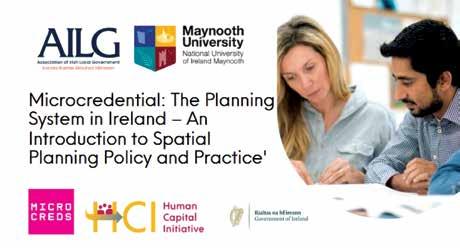
TRAINING COURSES: The AILG is set to introduce a new 12-week training course on spatial planning for councillors, due to start on 15 November, in collaboration with Maynooth University.
Q: Has the course been developed due to feedback from your members with a view to gaining a greater insight and training on the overall planning system and policies?
A: Yes, this is the first accredited, university-level programme in Ireland on the planning system designed specifically for councillors, and it represents a very significant step forward in professional development for elected members. Planning is one of the most complex and technical areas of local government. Councillors carry a huge responsibility in adopting county and city development plans, making decisions that shape housing, transport, climate action, and sustainable development for generations. The Planning and Development Act 2024 and the new Section 28 Guidelines only underline how essential it is for councillors to have the knowledge and confidence to navigate this system effectively.
This new AILG–Maynooth University 12-week course is our direct response to member feedback. Through our training needs analysis and joint research with Maynooth University, councillors expressed a clear appetite for short, CPD-style opportunities that provide depth, flexibility, and academic recognition.
This ‘Planning System in Ireland – An Introduction to Spatial Planning Policy and Practice’ course is an NFQ Level 8, credit-bearing micro-credential. It will provide a structured foundation in
planning – from the hierarchy of plans to housing, balanced regional development, transport and environmental planning – and will give members the tools to engage confidently in one of their most important statutory responsibilities.
In short, this new spatial planning course marks the beginning of a more ambitious and structured training offer – one that reflects both the complexity of the councillor role and the strong demand among members for enhanced professional development.
Q: What other training seminars are in the pipeline for 2026?
A: Looking ahead, the Association has ambitious plans to expand the range of training available as part of our Training Plan 2026–2030. This plan was developed following one of the most extensive consultations we’ve ever undertaken with our members and is built around three pillars:
• Information & Awareness – short, CPD-style sessions to keep members up to date with policy and statutory changes.
• Applied Skills Development –practical training in areas like planning, housing, finance, ethics, and compliance, using clinics, case studies, and technical workshops.
• Leadership Development – advanced training modules, forums, and masterclasses designed to strengthen leadership, communication, and governance capacity.
Among the priorities for 2026 are expanded modules on housing, ethics and governance finance and grant oversight, and digital
engagement, alongside initiatives to support greater gender balance and diversity in local government.
The Association will also invest in new staffing and a learning management system to ensure training is more accessible, flexible, and impactful for all councillors. While these developments will take time, our plans are ambitious and firmly focused on delivering for our members.
WOMEN IN POLITICS: Despite a greater number of female candidates in the 2024 Local Election, Ireland continues to lag behind many other European countries in terms of gender balance in politics, especially at local government level.
Q: Do you have plans to collaborate even further with the likes of ‘See Her Elected’ and ‘Women for Election’ in the run up to the 2029 Local Election?
A: Absolutely – addressing this gender imbalance remains a key priority for AILG. The Association has already taken a leadership role through the development of the Regional Women’s Caucus Network, building on the successful 2021–2024 pilot with ‘See Her Elected’, which engaged 47 female councillors across 13 counties.
An independent review confirmed the caucus as a proven and replicable model for strengthening women’s participation in local government.
The caucus provides a supportive, cross-party forum for female councillors to build confidence, visibility, and leadership skills. With Government support, we are preparing for the national rollout from 2026, aligned to the three Regional Assembly areas.
A dedicated National Leadership Programme and mentoring scheme will be central to this, ensuring women councillors are supported to remain in political life and to take on leadership roles.
We are currently finalising the rollout details and are greatly encouraged by the strong commitment shown by Government – as outlined in the Programme for Government – and by the Department of Housing, Local Government and Heritage (DHLGH).
It is only right that this support be extended to all 247 female councillors currently serving across the country. It is also vital that incoming female councillors – whether through co-option during this Council term or newly elected in 2029 and beyond – have access to a strong, regional support structure from
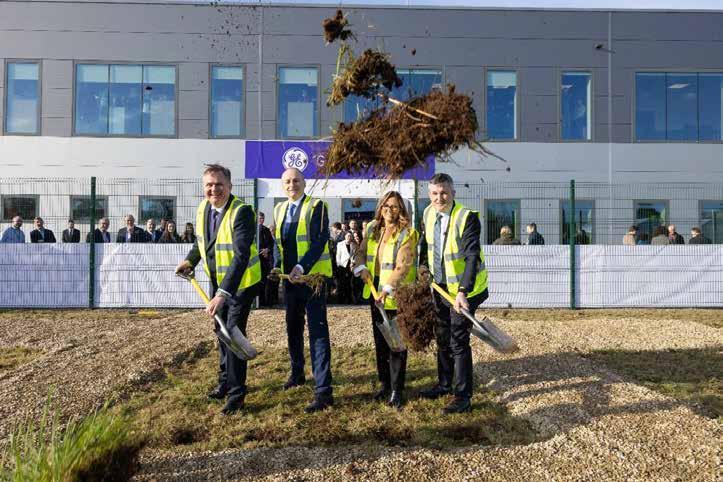
On 31st of January 2025, GE HealthCare, Cork announced a €132 million investment to expand their fill and finish production site. Global demand for contrast media, injectable pharmaceuticals used every day around the world to enhance and enable medical imaging procedures, is expected to double over the next ten years.
This investment will allow the Cork site to produce an additional 25 million patient doses of contrast media annually. An Taoiseach Micheál Martin, Kevin O’Neill, President & CEO, Pharmaceutical diagnostics (PDx) and Michael Lohan, Chief Executive Officer, IDA, helped turn the sod ahead of the new facility construction.
Eugene Barrett, Site Leader and Managing Director, GE HealthCare Ireland, said: “This expansion strengthens our longstanding presence in Cork, where we have a highly skilled team, access to leading talent in the pharmaceutical industry, strong distribution links around the world and a great partnership with IDA Ireland. First doses from our new facility are expected by the end of 2027 and we are proud of the impact our site will continue to make for patients around the world.”
the outset. This will ensure they can benefit from mentoring, peer support, and the practical guidance needed to thrive in local government.
We will continue our close working partnership with See Her Elected, with whom we collaborated on the initial pilot project, and will work alongside other important equality-focused partners such as Women for Election. Their expertise will be vital in creating a joined-up approach that tackles structural barriers, promotes family-friendly practices, and increases visibility for women in politics.
In addition, I believe there is real potential for north–south collaboration – bringing together female councillors from both Northern Ireland and the Republic of Ireland during my term in office. Such co-operation would allow us to share learning, strengthen solidarity, and highlight the common challenges faced by women in local government across the island.
Change will not happen overnight, but there’s a clear drive and commitment from ourselves and all the stakeholders to deliver lasting progress.
BUDGET 2026
Q: What major difference will the increased funding announced in Budget 2026 have on the local government sector?
A: The announcement of a record €801.7m allocation for local government and €400m for planning in Budget 2026 is welcome recognition of the central role local authorities play in delivering services that directly impact people’s daily lives.
This increase of €117.65m on last year will help support essential initiatives such as reform and digitisation projects, upgrading of fire services, improvements to the electoral registration process, and measures to strengthen diversity and gender balance in local government.
It is also positive to see dedicated funding for the Local Democracy Taskforce, which is advancing important reforms to strengthen the role of elected members, enhance governance, and improve citizen engagement.
At the same time, challenges remain. Councils continue to face pressures around multi-annual funding certainty and the rising costs of meeting our climate and housing obligations.
As the national representative body for councillors, AILG will continue to engage closely with Government and the Department to ensure that this investment translates into real, tangible improvements for local communities across Ireland.
NATIONAL COMMUNICATIONS ROADSHOW
Q: What are your plans to strengthen the lines of communications between the AILG and its members, and their communities?
A: Alongside our training and policy priorities, I’m also very keen to focus on how we communicate as an Association and with our members. Following on from my predecessor (Cllr Kieran O’Hanlon), during my term of office the AILG will be completing a national communications roadshow across the 31 local authorities.
This initiative will give councillors in every region the chance to engage directly with us, share their views, and shape how we strengthen communication both within the Association and with the public.
The roadshow will be a practical opportunity to listen, to showcase best practice in how local democracy is explained and promoted, and to ensure that councillors are equipped with the tools they need to highlight the work they do every day on behalf of their communities.
FACTFILE – CLLR MARY HANNA HOURIGAN
The Tipperary Cahir Cashel Municipal District member, who resides in Cappawhite, was elected President at the Association’s AGM in Mullingar on 24 July for the 20252026 term.
With 16 years’ experience as a councillor on Tipperary County Council and over a decade of active involvement with AILG, she has contributed to the AILG through key roles, including Vice President, member of the Executive, and delegate to the Congress of Local and Regional Authorities of the Council of Europe (CLRAE).
“These roles have strengthened my belief in the vital role that councillors play in their communities and in the importance of strong, well-resourced local government. I’m committed to building on the achievements of Cllr Kieran O’Hanlon, working collaboratively with AILG Vice President, Cllr Paddy O’Rourke, the incoming Executive and AILG members to shape a bold and ambitious future for local government in Ireland,” Mary noted.
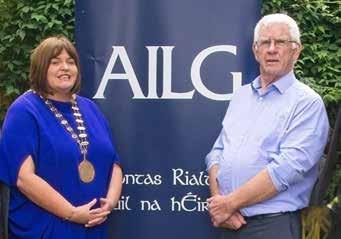
Cllr Mary Hanna Hourigan, AILG President 2025-2026, pictured with Vice President Cllr Paddy O’Rourke following their election at the AGM on 24 July.
The Land Development Agency
The LDA is the State’s affordable housing delivery body. The Agency is working with Local Authority partners to deliver thousands of new homes across Ireland. building vibrant, sustainable communities
OVER €11 BILLION BUDGET FOR HOUSING, LOCAL GOVERNMENT AND HERITAGE
The Department of Housing, Local Government and Heritage has been allocated
€11.275 billion in Budget 2026, representing a 20% overall increase in funding for next year to boost housing supply, with a record-level funding package alongside tax measures to accelerate nationwide home construction to meet national targets.
Under the Budget’s programme, total Exchequer funding available next year will be €7.21bn, comprising capital €5.19bn and current €2.02bn. The capital provision of €5.19bn will be complemented by investment through the Land Development Agency, with lending from the Housing Finance Agency, bringing the total capital funding for housing in 2026 to over €9bn.
A central focus of Budget 2026 had to ensure that individuals and families have access to a home whether to purchase or rent – at an affordable price, according to Minister for Housing, Local Government and Heritage, James Browne TD.
He has also made it clear that tackling homelessness and providing supports for those experiencing homelessness has been a priority for Budget 2026, adding that “homelessness and those in precarious living situations remain our most pressing challenge. It must be our top priority”. As part of the Budget package, Minister Browne has allocated additional funding of €563.5m to support the provision of homeless services, up from €328m last year.
This includes emergency accommodation, homelessness prevention initiatives, tenancy sustainment supports, and transitional accommodation for individuals experiencing homelessness. “I’ve been determined to ensure this is a
budget for housing. We intend to further scale-up the delivery of social housing and build more social homes than we ever have. An increased capital allocation of €2.9bn has been provided to support local authorities and Approved Housing Bodies in the delivery of 10,200 newly built social homes.”
The Minister said that this funding will also ensure the continuation of the second-hand social housing acquisitions programme, targeting those who are most vulnerable and in the most precarious housing situations.”
"The affordable purchase and cost rental schemes have already delivered long-term, secure housing at below market rates for thousands of individuals and families across the country. To build on this progress, an increased capital allocation of €1.2bn will support the delivery of 7,500 affordable purchase and cost rental homes in 2026.
“In 2026, we are committing over €570m to support households in the private rented sector through the Housing Assistance Payment and the Rental Accommodation Scheme. This investment will enable over 8,700 new households to access secure accommodation, while continuing support for over 61,000 existing tenancies. In additional support to renters, we are extending the rent tax credit for a further three years.”
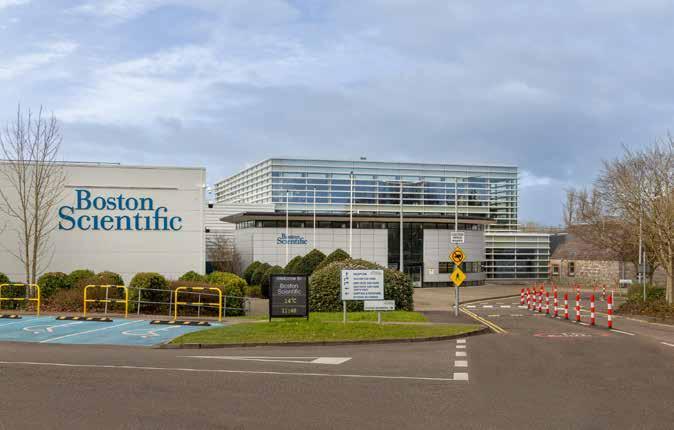
Boston Scientific is dedicated to transforming lives through innovative medical solutions that improve the health of patients around the world.
TO ALL READERS OF COUNCIL REVIEW
A huge thank you to Cork City Council for supporting us in continued campus development making our new state-of-the-art Administration and Canteen building a reality.
The new three-storey block is integrated to the existing building in the centre of the site on Cork’s Model Farm Road where Boston Scientific has operated since 1997.
We now look forward to working with the Council on the Upgrade of our Building 02 for additional Manufacturing space.
From everyone at Boston Scientific www.bsci.com
Initiatives in tackling vacancy and dereliction:
* €165m for the Vacant Property Refurbishment Grant to support the refurbishment of vacant and derelict properties in cities, towns and rural areas, ensuring the efficient re-use of existing stock,
* Living City Initiative extended and expanded to support urban regeneration. The Living City Initiative has been extended to 2030, reinforcing the Government’s commitment to tackling dereliction and supporting regeneration in our cities and regional centres,
* A new Derelict Property Tax will be introduced to incentivise the reuse of vacant and neglected properties. This tax will be administered by the Revenue Commissioners, replacing the current Derelict Sites Levy, which is managed by local authorities.
Uisce Éireann and Water Services:
Uisce Éireann is to receive an extra €496m in funding, a 29% increase on Budget 2025, bringing the total
allocation to €2.2bn to accelerate delivery of water infrastructure and support the development of new homes across the country.
Overall, almost €2.5bn has been secured for the delivery of water services – an increase of €612m on the 2025 allocation. This funding will support improved water supplies across Ireland, including rural Ireland, and support a range of programmes delivering improved water quality in Ireland’s rivers, lakes and marine area.
In addition to vetoed funding as previously announced under the National Development Plan, there will be an equity investment of €2bn up to 2030 for Uisce Éireann to support the delivery of housing development plus an additional €2.5bn for major projects such as the Water Supply Project and the Greater Dublin Drainage project.
Planning Programme: More than €400m to be provided for the Department’s planning programme. The 2026 allocation will enable the Department to deliver a co-ordinated and responsive funding programme
under the Urban Regeneration and Development Fund (URDF), supporting the revitalisation of towns and cities.
With an allocation of €300m – an increase of €114m from 2025 – the programme will advance sustainable urban development in line with national planning objectives. This budget aims to further support the implementation of the Ministerial Action Plan on Planning Resources and the introduction of the Planning and Development Act 2024.
Local Government: Funding of €801.7m to be provided for local government and electoral reform, which represents an increase of over €117m, will allow the Department to provide funding towards increased local authority pay/pensions costs arising from the implementation of national pay agreements.
Equalisation payments will be made to local authorities with lower Local Property Tax (LPT) income, based on revised baselines, which were updated last year and further increased for 2026 to ensure councils benefit directly from higher LPT yields following the upcoming revaluation.
Funding of €801.7m to be provided for local government and electoral reform, which represents an increase of over €117m, will allow the Department to provide funding towards increased local authority pay/pensions costs arising from the implementation of national pay agreements.
The funding will also support important local government initiatives across the country, including reform and digitisation projects, in addition to the building of new fire service infrastructure, the renovation of older facilities, and the upgrading of essential firefighting equipment.
Further support will be provided to increase public awareness and local authority activity to maximise public engagement with the newly modernised electoral registration process. There will also be support initiatives provided to improve gender balance and increase diversity in local government decision-making processes.
Nature,
Heritage & Biodiversity:
A record allocation of €256m in Budget 2026 represents a 15% increase on the previous year. Within this figure the Budget allocation for the National Parks and Wildlife Service (NPWS) will increase by 20%, bringing the core NPWS budget to above €100 million for the first time.
The further implementation of Ireland’s national heritage plan – Heritage Ireland 2030 – and a range of related Programme for Government commitments will see a 10% increase for the National Monuments Service and National Built Heritage Service to continue to expand their work to record, conserve, and promote our archaeological and built heritage.
There will also be an investment increase in Ireland’s archaeological and built heritage through the Community Monuments Fund, Built Heritage Investment Scheme, and Historic Structures Fund capital grant schemes.
The Heritage Council will also receive an increase in its funding to continue to expand its work in supporting community heritage projects and capacity building across the heritage sector, including in relation to the National Biodiversity Data Centre.
Additional highlights for housing sector include:
* €293m provided in 2026 for the remediation of homes affected by defects, including pyrite, apartment defects and defective concrete blocks.
* €250m available for lending under the Local Authority Home Loan which provides a route to home ownership for those who cannot secure the necessary commercial loan.
* €205m allocated to housing infrastructure in 2026 to support the work of the Housing Activation Office in addressing infrastructure blockages and accelerate housing delivery and to support the delivery of affordable and social housing on state-owned lands.
* €140m to support the retrofitting of 3,500 social homes to a Building Energy Rating of B2 in line with the Programme for Government commitment to retrofit 36,500 local authority homes by 2030.
* €130m for grants to adapt homes of older people and disabled people with a disability and to support the provision of around 17,000 grant claims and continued
implementation of the revised scheme recommendations of the review of the grants, while a further €28.5m will support adaptation works to 1,800 existing social homes.
* €80m in Exchequer funding for the First Home Scheme which, with additional funding from participating banks, will support approval for eligible buyers to purchase 2,000 homes.
* €55 million provided for the Croí Cónaithe Cities Scheme to support building of apartments for sale to owner-occupiers by activating planning permissions in place for such homes.
* The Residential Tenancies Board and other advocacy services will receive funding of €24m to support the rental sector. In addition, €10.5m will be provided for local authority inspection activity in the rental sector to ensure compliance with rental standards.
* €34m to support the Traveller Community, including the delivery of new accommodation and repair/ maintenance work.
Safeguarding Ireland’s Horses, Supporting Our Community
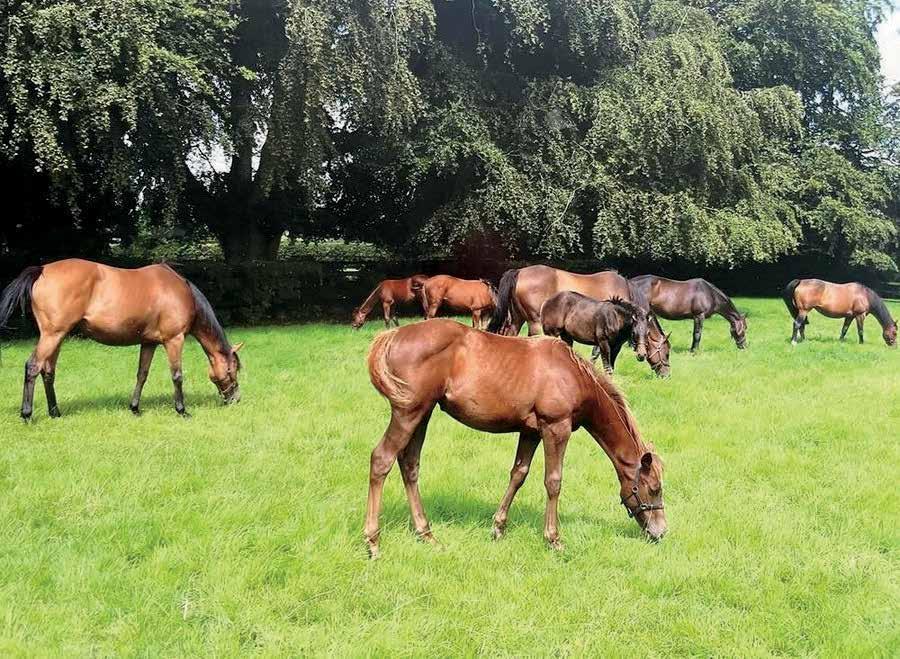
Based in Johnstown, Naas, the Irish Equine Centre (IEC) is one of the world’s leading veterinary diagnostic laboratories, and we’re proud to call Kildare our home.
For over 40 years, we’ve been at the heart of Ireland’s equine industry, protecting the health and welfare of horses from foals to racehorses and beyond. Our scientists and vets work behind the scenes every day to:
• Detect and prevent disease before it spreads.
• Support breeders, trainers, and vets with fast, accurate testing.
• Carry out vital research that protects Ireland’s reputation on the global stage.
• Promote biosecurity and healthy environments for animals and people.
Whether it’s helping a family vet care for a pony, ensuring the wellbeing of champion racehorses, or supporting farmers with environmental testing of soil, grass and water – the IEC is here to serve the whole community.
From Kildare to the world, our work keeps Ireland’s horses healthy, our land sustainable, and our equine industry thriving.
Irish Equine Centre, Johnstown, Naas, Co. Kildare
NEW CHAPTERS MARK MAJOR MILESTONE IN PLANNING REFORMS
Ireland’s planning reform agenda has reached a major milestone with the opening of the latest chapters of the Planning and Development Act 2024, providing the statutory basis for the National Planning Framework and Regional Spatial and Economic Strategies under the new Act, and National Planning Statements to replace current Ministerial Guidelines.
The councillor-led Regional Assemblies are now set to review their Regional Spatial and Economic Strategies (RSESs) to reflect the revised National Planning Framework (NPF).
This will strengthen planning alignment with national objectives, in relation to priority areas such as housing, infrastructure and renewable energy, according to the Minister for Housing, Local Government and Heritage, James Browne TD.
National Planning Statements, to be approved by Government, will provide clear, consistent national planning policies that all regional and local authorities must follow. This will ensure better alignment with Government priorities and more effective delivery of housing and infrastructure nationwide.
A review of existing Ministerial Guidelines is now underway, with plans to replace them with National Planning Statements. These commencements will drive a more co-ordinated approach between Regional Assemblies and local authorities, to accelerate housing delivery, optimise the use of zoned land, and strongly align infrastructure investment with housing needs.
MOVING DIAL ON HOUSING DELIVERY
“Planning reform is essential for us to move the dial on the delivery of much-needed homes. There are challenges in this space, and I’ve been driving the reform agenda forward since I started as Minister earlier this year. This is another key measure as part of my work,” noted Minister Browne.
He added that a robust, transparent process, leading to quality homes being built, will align Government priorities and what is planned for, on the ground, across each local authority from Dublin to Wexford to Clare.
“As a government, we are responding to a nationwide housing crisis, and that is the same priority I expect from our regional and local authorities. National Planning Statements will now be issued, so that there’s far greater certainty, coordination, and delivery of homes.
“I want all levels to act in line with this urgent need and joined-up approaches, with better use of the land we have already zoned and the land we are about to zone, so that homes are delivered at pace and at the scale urgently needed. Infrastructure is at the heart of housing delivery – it must be linked locally, regionally and nationally.”
REFORMS TO PROVIDE GREATER CLARITY
John Cummins TD, Minister of State for Local Government and Planning, described these reforms as “a significant step forward”. He said that this will enable regional assemblies to update their strategies and give Government the means to provide further clarity and direction on key sectors like housing and renewable energy.
“This will unlock delivery and support infrastructure coordination. These reforms provide the clarity and certainty needed to support sustainable growth, attract investment, and deliver better outcomes for communities across Ireland.”
Minister Cummins said he is keen that the remaining parts of this new legislation are implemented as fast as possible, adding that it marks another milestone towards that objective.
Chapters 1-4 of Part 3 of the Planning and Development Act 2024 – which pave the way for the new changes – were commenced on 2 October 2025.
Ag cruthú Contae forásach, bríomhar atá tarraing teach, ionchuimsitheach agus inrochtana do gach duine
Halla an Chontae, Dún Laoghaire, Co. Bhaile Átha Cliath
Fón: 01 205 4700
Ríomhphost: info@dlrcoco.ie
Gréasán: w w w.dlrcoco.ie
20TH ANNIVERSARY OF ALL-IRELAND COMMUNITY & COUNCIL AWARDS
Next year marks the 20th anniversary of the All-Ireland Community & Council Awards programme. Nominations will remain open until the end of November for the LAMA Awards, which will return to the Dublin Royal Convention Centre on Saturday 28 February 2026.
Donegal County Council won the 'Council of the Year' award for 2025 – Cathaoirleach Cllr Niamh Kennedy and Chief Executive John McLaughlin (centre) hold aloft the award, surrounded by council officials and councillors at the awards ceremony in the Rochestown Park Hotel, Cork on 22 February 2025.
The 2026 All-Ireland Community & Council Awards, taking place on Saturday 28 February, will once again be hosted by the Local Authorities Members Association (LAMA) to recognise and celebrate communities and councils working together.
The LAMA Awards programme, now celebrating its 20 th anniversary, is a unique opportunity to highlight and celebrate the work undertaken by the local authorities and their communities across Ireland.
Three special milestones will be celebrated during next year’s All-Ireland Community & Council Awards – the 20 th anniversary of the LAMA awards programme, 40 years of the LAMA Executive and 100 years of IPB Insurance (the main LAMA Awards sponsor).
The awards ceremony will feature a red-carpet prosecco reception upon arrival, the awards ceremony, live music and extra special surprises throughout the night to make it the most memorable ceremony of the last 20 years. The MC for the event will be Ivan Yeats, Entrepreneur & Broadcaster.
AWARD CATEGORIES FOR 2026
COMMUNITY INITIATIVES
• Best Irish Festival
• Best Green Sustainable Initiative
• Best Mental Health Initiative
• Community Volunteer of the Year
• Best Community Transport Initiative
ECONOMIC DEVELOPMENT INITIATIVES
• Best Business Working with the Community
• Best Enterprise & Start-Up Hub
• Best Micro Start-Up
• Best Irish Language Initiative
FACILITY/INFRASTRUCTURE INITIATIVES
• Best Trail/Waterway in Ireland
• Best Housing Regeneration & Urban Planning
• Most Inclusive Project
• Reimagining Public Places
COLLABORATION AND LEADERSHIP INITIATIVES
• Best Use of Technology and Innovation in Local Government
• Best Tourism Initiative
• Best Energy Smart Initiative
• Best Community Wellbeing Initiative
• Best CSR Project in a Community
• Best Social Enterprise of the Year
ENVIRONMENTAL INITIATIVES
• Best Environmental/Ecological Project/Initiative
• Best Local Authority Energy Decarbonisation Award
OVERALL AWARD
• National Impact Award
• Council of the Year
• Lifetime Achievement Award 2024
• Grand Prix Award
For further information visit https://lamaawards.ie/
Mayor of Fingal Cllr Brian McDonagh, and Chief Executive AnnMarie Farrelly led the Fingal County Council delegation in Cork last year, after winning five LAMA awards, including Grand Prix (for the second year running).
SHORTLIST FOR LOCAL GOVERNMENT AWARDS 2025
A total of 98 projects has been shortlisted for the Excellence in Local Government Awards 2025. The overall 16 category winners will be presented along with the overall ‘Local Authority of the Year’ at the Chambers Ireland awards ceremony in Dublin on 27 November.
Arecord 259 submissions were received from 26 local authorities, with 98 projects shortlisted across 16 categories. This year sees the addition of a new category – Celebrating Irish Language and Culture – to honour initiatives that preserve and promote Ireland’s linguistic and cultural heritage.
Now in the 22nd year, the awards are held in conjunction with the Department of Housing, Local Government and Heritage. At the announcement of the shortlisted projects, Minister of State for Local Government and Planning, John Cummins TD, said that local authority projects contribute to life in Ireland's communities in a multitude of ways.
Ian Talbot, Chief Executive of Chambers Ireland, said that the awards showcase the inventiveness and innovation delivered by local authorities, adding “their efforts not only enhance community life but also demonstrate the everexpanding scope and impact of local government today”.
TJ Hunter, Vice President Onshore Ireland & UK, Ørsted (headline awards sponsor), added, “The
Onshore Ireland team once again recognises the incredible ongoing work at community level across the local authorities. The teams play a crucial role in our daily lives and it’s so important to ensure that this hard work doesn’t go unrecognised.”
The winners will be announced at the annual awards ceremony on Thursday 27 November at the Crowne Plaza
Donegal won 'Local Authority of the Year for 2024' - pictured (l-r): Chambers Ireland Chief Executive Ian Talbot and President Margaret Considine, with John McLaughlin, Donegal's Chief Executive; and Brian Harrington, Head of Project Development, Onshore, Ireland and UK at Ørsted.
Hotel, Santry, Dublin.
Redefine Your Space with NorDan
Delivering windows and doors that are crafted to last generations.
Redefining quality and luxury for almost a century. Our windows and doors are not just built to last, but crafted to inspire.
For more information visit nordan.ie
Alu-Clad Windows
NorDan’s Timber/Alu-Clad Windows combine the classic warmth and beauty of timber on the inside with a tough weather-resistant aluminium cladding on the outside.
Alu-Clad Doors
Merging timeless elegance and enduring strength, NorDan’s Timber/Alu-Clad Doors are perfect for those seeking stylish yet practical modern living solutions.
Aluminium Windows
The ideal solution for modern homes and commercial properties, offering a huge range of design possibilities, enhanced energy efficiency, and premium performance.
Aluminium Door
The perfect solution for the contemporary needs of residential and commercial properties that highlight energy efficiency, low maintenance, and versatile design options.
Entrance Doors
NorDan’s Entrance Doors have been designed with durability and energy efficiency at the core. With contemporary and traditional designs available, there is a perfect match available for your perfect welcome home.
AGE FRIENDLY INITIATIVE
• Cavan County Council – Art of Life - Death Positive Libraries
• Cork City Council – EnergyCloud Age Friendly Pilot Project: Cork City
• Dublin City Council – Community Wellness Programme
• Fingal County Council – Sheltered Housing at Monastery Court, Lusk
• Kildare County Council – Ireland’s first Age Friendly Racecourse
• Kilkenny County Council – Information & Activities Programme for Older People
• Meath County Council – Meath Befriending Network
• South Dublin County Council – Ballyroan: A Dementia-Inclusive, Age Friendly Community
CELEBRATING IRISH LANGUAGE & CULTURE
• Cavan County Council – Glangevlin Gaeltacht Prayer Book Revival
• Cork City Council – Ar Scáth a Chéile: Clár Teanga agus Cultúir Ghaelach i Leabharlanna Cathrach Chorcaí -Scéalta, Ceol, Cultúr, Pobail
• Donegal County Council – Ceiliúradh teanga í a léamh
• Dublin City Council – Gaeilge365 - Coordinating Irish Language Innovation Regional Roll-Out
• Kerry County Council – Blas Beo, North Kerry Irish Language initiative
• Louth County Council – Lú Festival of Light
• Meath County Council – Siamsa Glas Festival
CLIMATE CHANGE
• Kildare County Council – Grass to Gas Project
• Kilkenny City Council – Championing Community Climate Action, Kilkenny
• Laois County Council – Portlaoise: Ireland’s First Low Carbon Town
• Louth County Council – Louth Urban Food Sanctuary
• Monaghan County Council - Empowering SMEs for Climate Action: Ireland’s First ESG Cluster
• Waterford City and County Council – The Business Pledge for a Cleaner, Greener Waterford COMMUNICATIONS
• Clare County Council – Clare County Council Election 2024
• Fingal County Council – Promotion of Affordable Housing scheme
• Meath County Council – ‘Local Lens’ – A podcast from Meath County Council
• Monaghan County Council – Personal & Community Resilience Booklet
• South Dublin County Council – International Protection: Fact or Fiction
• Wicklow County Council – Wicklow Welcomes: Multilingual Conversation Circles
DIVERSITY & INCLUSION
• Dublin City Council - Consultation & Participation Process Co-Designed with Disabled Person’s Organisations
• Kerry County Council – Refurbishment of former Moyvane Garda Station for community use
• Kildare County Council – Barrow Blueway Inclusive Initiative
• Meath County Council – Empowering Futures: Entrepreneurship Programme for People with Disabilities
• South Dublin County Council – Reaching for Gender Equality in Local Government
• Wicklow County Council – Wicklow Travellers Urban Outdoor Initiative
FESTIVAL OF THE YEAR
• Clare County Council – Scoil Samhraidh Willie Clancy (Willie Clancy Traditional Music Summer School)
• Dublin City Council – Dublin City Council Sensoria Festival
• Fingal County Council – Howth Maritime & Seafood Festival
• Galway City Council – Galway Climate Inspirations Festival-Communities in Action
• Kildare County – Brigid, Spirit of Kildare Festival
• Kilkenny County Council – Kilkenny’s Toil and Trouble – Discover the spells cast on society during the Kilkenny Witch Trials
HEALTH & WELLBEING
• Cork County Council – Teen Talk
• Fingal County Council – Fingal Sports Festival
• Kilkenny County Council – The UcanACT Project
• Laois County Council – Live Well Health and Wellbeing Expo Event (Live Well)
• Meath County Council – Boyne Valley to Lakelands Greenway
• South Dublin County Council - South Dublin County Council Junior Safety Forum
• Waterford City and County Council – Good Grief
HERITAGE AND BUILT ENVIRONMENT
• Cavan County Council – Bailieborough Bridewell
• Kilkenny County Council – Restoration and conservation of Victorian Woodstock House, Gardens & Arboretum
• Meath County Council – Heritage Led Regeneration Project in Market Square, Navan
• South Dublin County Council – Ely Arch: Heritage Conservation Through Public Realm Design
LOCAL AUTHORITY INNOVATION
• Carlow County Council – Innovation in Fire Appliance Vehicle to Vehicle Digital Alerting
• Longford County Council – Driving STEM in the Midlands
• Laois County Council – MyPay Robotic Processs Automation - Superannuation Starters project
• Limerick City & County Council – Co-Plan: Keeping Limerick On Track
• South Dublin County Council – Clonburris Delivery Model – Strategic Innovation for Sustainable Growth
MUNICIPAL DISTRICTS INITIATIVE
• Cavan County Council – The Voyage HomeReturn of Relics of St Kilian
• Carlow County Council – Community Roots Programme
• Cork County Council – Conversation Cafe
• Kilkenny County Council – Creative Connections: Coote’s Lane to Ring Road
• Laois County Council – Refurbishment of The People’s Park in Portarlington
• Meath County Council – Live Streaming of the 2024 Local Elections
• Meath County Council – Meath Community Amenity Project Scheme
PROMOTING ECONOMIC DEVELOPMENT
• Donegal County Council – ALPHA Innovation, a hotbed of innovation in the heart of Donegal
• Galway City Council - CREW: Creative Enterprise and Innovation Hub Galway
• Kildare County Council – The K-Hub Strategy: Driving Cluster-Led Economic Growth in Partnership
• Limerick City & County Council – Northside Skills Fair
• Meath County Council – Empowering Entrepreneurs: The Lunch and Learn Roadshow Initiative
• South Dublin County Council – Work IQ, Innovation Centre for Technology and Enterprise Growth
SUPPORTING SUSTAINABLE COMMUNITIES
• Carlow County Council – Applied Learning Programme for Landscape Communities within the Blackstairs Mountains
• Cork City Council – Transforming Kerrypike: the transformation of Ballycannon Park
• Fingal County Council – Meakstown Community Centre and Bloom Community Garden
• Kildare County Council – The DemoHouse
• Limerick City & County Council – Limerick Going for Gold – Environment Improvement Grant & Competition
• Monaghan County Council – Protecting the Scotstown River: A Community-Led Blue Dot Waterbody Initiative
• South Dublin County Council – Connecting Communities Through the Regeneration of West Tallaght Parks
• Wexford County Council – The Great New Ross Riverside Walk
SUPPORTING TOURISM
• Cavan County Council – Cuilcagh Lakelands Geopark – Regenerative Tourism Business Network – Climate Change
• Cork County Council – Explore Cork app
• Dublin City Council – The Dublin Portal
• Kilkenny County Council – The Barrow Valley Activities
• Limerick City & County Council – Limerick Greenway – Embrace the Unexpected
• Wicklow County Council – Wicklow Passport
SUSTAINABLE ENVIRONMENT & BIODIVERSITY
• Carlow County Council – Carlow County Fire Service - ECO Class Fire Appliance
• Clare County Council – Knocknahila Bog Peatland Rewetting Project
• Cork County Council – Cobh Nature Based Solution-Raingarden Demonstrator, National Pilot Scheme
• Kildare County Council – Kerdiffstown Park Project
• South Dublin County Council – Balancing Green and Growth: Delivering Sustainable Development and Protecting Biodiversity
SUSTAINING THE ARTS
• Cork City Council – Knocknaheeny Per Cent for Art: ‘I Can Colour Between The Lines But I Choose Not To’
• Dún Laoghaire-Rathdown County Council –Children and Young People’s Edition, dlr Arts Development Plan 2024-30
• Galway City Council – Youth Lates
• Kilkenny County Council – Art of Change
• Wicklow County Council – Creative Places Baltinglass
URBAN REVIVAL
• Galway City Council – Ireland’s first city-centre School Street – Scoil Iognáid, Galway
• Kerry County Council – Island of Geese - New Urban Quarter – Tralee
• Kildare County Council – Naas Library & Cultural Centre
• Kilkenny County Council – Mayfair Library and Public Realm
• Meath County Council – East Meath Civic Centre – Bettystown Library
• Monaghan County Council – Church Square – A Vibrant Performance Area & Community Space
€275.4 BILLION BONANZA INVESTMENT IN NATIONAL DEVELOPMENT PLAN
The Government’s National Development Plan has set out public capital investment of over €275 billion from 2026 to 2035, sectoral capital allocations of more than €102 billion from 2026 to 2030; with an additional €100 billion from 2030 to 2035, to unlock housing, upgrade water and energy infrastructure, deliver more roads, and provide better public transport.
The National Development Plan (NDP) Review 2025 encompasses total public investment of €275.4bn from Exchequer and non-Exchequer funding, and the release of once-off funds, including the ECJ Escrow Fund, proceeds from the sale of bank shares, and broader State funds such as the Infrastructure, Climate and the Nature Fund.
The review includes an additional €34bn, relative to the previous 2021-2030 NDP, including equity funding of €10bn to 2030 to fund large strategic projects in energy, water and transport.
This largest ever capital investment plan by the government in the history of the State aims to support the delivery of thousands of new homes, provide additional childcare and school places, invest in children’s disability services and ensure better healthcare for everyone.
The NDP outlines how the government will invest in the
country's infrastructure and development. Against a changing and uncertain global economic backdrop, this plan outlines how to grow the Irish economy, protect jobs and enhance Ireland’s competitiveness to secure future prosperity.
The review sets out departmental capital ceilings to 2030 and overall expenditure ceilings to 2035 to provide the necessary investment to:
• Deliver transformative, critical and growth-enhancing infrastructure.
• Scale up and strengthen our water, energy and transport systems.
• Unlock housing supply.
• Improve the living standards of the people of Ireland; and
• A total of €3.5bn in equity earmarked for energy projects with ESB Networks and Eirgrid to meet the growth to deliver on the housing target of 300,000 new homes.
• €12.2bn for water sector for water and wastewater services.
• €24.3bn for transport sector including low carbon transport projects such as Metrolink.
SECTORAL INVESTMENT PLANS
Government departments will now progress development of sectoral investment plans that will provide specific details on the projects, to be delivered between 2026 and 2030. These plans are due to be published later this year.
Taoiseach Micheál Martin described the NDP Review as “a landmark moment” for Ireland’s future. “With a record €275.4 billion in public capital investment, we’ll deliver the infrastructure that will help us meet the economic and social needs of the Irish people for generations to come.
“This plan is about building homes, connecting communities, and creating opportunities. It reflects our ambition to support a growing population, meet our climate goals, and ensure that every part of Ireland can thrive. We are laying the foundations for a stronger, more resilient Ireland with strategic and focused investment.”
Tánaiste Simon Harris said that the review was “a critical step in delivering national priorities”, adding that “against the backdrop of global uncertainty, this plan presents a once-in-a-generation opportunity to transform Ireland’s infrastructure and secure the country’s future”.
The Tánaiste said that prioritising investment in water, energy, and transport lays the groundwork for 300,000 new homes by 2030. “Quicker approval processes and less red tape will be critical to delivering a plan that will enable the delivery of not just new homes, but more schools and childcare places, and improved disability services and health outcomes.
“This is a whole-of-government effort to ensure that Ireland remains a great
place to live, work, and raise a family. Our focus is on delivering for people living in Ireland, now and into the future.”
TRANSPORT INFRASTRUCTURE
Minister of State at the Department of Transport Seán Canney described the review as a strategic response to current and future challenges, noting: “Investment in transport plays a vital role in enhancing economic performance and regional development. With significant investment in low-carbon transport solutions, we are not only improving mobility but also supporting our climate commitments.
“The NDP ensures that transport infrastructure keeps pace with housing and economic development, enabling people to live and work in wellconnected, sustainable communities across all areas of our country.”
Minister for Public Expenditure, Infrastructure, Public Service Reform and Digitalisation Jack Chambers said that the review has “considered some of the most important challenges facing Ireland: the need to provide for a growing and changing population, supporting Ireland’s competitiveness, ensuring balanced regional development and meeting our climate obligations”.
The Minister noted that the Government is prioritising and delivering investment in critical infrastructure across the country, focused on future development for the next decade and beyond.
“Our plan to invest in our capital infrastructure; addressing the deficit in infrastructure is the best way to safeguard our economy, drive growth, protect jobs, increase competitiveness and ensure prosperity for our people and communities at a time of growing international uncertainty,” Minister Chambers added.
Minister for Finance Paschal Donohoe emphasised the review's value to strengthen capital investment planning, stating: “The NDP review represents a fiscally responsible and forward-looking investment in Ireland’s future.
“With €275.4bn in planned capital expenditure, this plan balances ambition with sustainability, ensuring that our infrastructure keeps pace with population growth, housing demand, and climate commitments.
“The use of non-Exchequer funding sources – such as proceeds from asset sales – demonstrates our commitment to prudent financial management while delivering transformative outcomes. This is a strategic investment in our economy, our communities, and our long-term prosperity.”
KEY TRANSPORT PROGRAMMES
The allocation of €24.33 billion to the transport sector under the NDP Review 2025 has been welcomed by Transport Minister Darragh O’Brien, Minister of State with responsibility for International and Road Transport, Logistics, Rail and Ports, Seán Canney, and Minister of State with responsibility for Rural Transport, Jerry Buttimer.
Transport infrastructure is a strategic enabler of economic growth, delivering broad benefits to communities and businesses. It underpins enhanced productivity, supports balanced regional development, and strengthens the overall competitiveness of the economy.
Investment funding provided under the Nat ional Development Plan to date has supported transport infrastructure improvements across the country, including BusConnects Dublin Network
In early October An Coimisiún Pleanála granted permission for the construction of Metrolink – Dublin’s long-awaited rail link between the city centre and Swords as part of the €24.3bn transport investment under the NDP.
Redesign, Connecting Ireland, the purchase of a new DART fleet, and significant grant and infrastructural support for the move towards electric vehicles.
The revised NDP Transport investment levels will support further expansions of key transport programmes over the next five years, such as:
• Public Transport, including the commencement of Metrolink construction.
• Road Networks and Road Safety, to protect and expand the road network.
• Active Travel and Greenways, to support sustainable transport and climate goals; and
• Support the electrification of road transport to meet climate goals.
Minister O’Brien said that the allocation under the National Development Plan reflects the Government’s commitment to delivering a modern, safe, and sustainable transport network, as well as protecting and expanding the road network.
“This funding will enable us to progress
transformative projects like MetroLink, DART+, and BusConnects, while also strengthening regional connectivity and supporting rural mobility through initiatives such as Connecting Ireland. These investments are not just about infrastructure – they are about supporting communities, reducing emissions, and building a transport system that serves every corner of our country.”
Minister Canney added that the €24.33bn investment is about building a transport system that serves the entire country.
“Investment in roads, ports, and rail underpins economic resilience, regional opportunity, and climate action. The All-Island Strategic Rail Review has the potential to reshape connectivity across the island and provide our regions with the long-term transport links they need to thrive.”
Minister Buttimer said: “Investment in this key infrastructure makes daily life easier for everyone by boosting connectivity, making daily commutes or school and sports runs safer and easier and, of course, supporting small businesses.”
Almost 100 Years in Business
Delivering quality and reliability across generations.
Irelands Leading Educational Furniture Manufacturer/Supplier
Delivering high-quality, durable furniture solutions to schools and colleges nationwide.
Proudly Supporting Irish Manufacturing Jobs
By sourcing locally, par tnering with Irish suppliers, and investing in homegrown talent.
Recognised for our Sustainable Practices
Honoured to be chosen as one of four case studies for the Kilkenny Going Green initiative, showcasing our commitment to sustainability.
Family Owned and Run
Family-owned and operated for four generations, combining tradition, exper tise, and a personal touch in ever y thing we do
(056) 776 7622
info@pwalshandsons.com
www.pwalshandsons.com
KILKENNY LAUNCHES BIODIVERSITY ACTION PLAN (2025-2030)
Nature-inclusive parks and open spaces are the key objectives under the new five-year Kilkenny Biodiversity Action Plan, which will provide Kilkenny County Council with an opportunity to examine its own work practices, in terms of committing to record, conserve and restore habitats, protect and restore ecological corridors.
Community groups, landowners, statutory agencies, elected members and council officials all worked together with biodiversity specialists over a period of 18 months on the five-year action plan, recently unveiled at Woodstock Gardens & Arboretum, Inistioge in Kilkenny.
The plan builds on work completed over the past 20 years by Kilkenny’s Heritage Officer, and more recently by the Biodiversity Officer, Bernadette Moloney. It showcases how Kilkenny is leading the way by designing nature-inclusive housing estates, parks and open spaces. It also commits to improving water quality and habitat diversity on public grounds.
A structured approach has now been provided
to biodiversity restoration, outlining objectives and actions needed to protect and enhance biodiversity developed in the context of both national and international biodiversity commitments, as well as regional and local policies, priorities and local consultation.
Offaly, Galway County and Limerick are just the three other counties to have so far published Biodiversity Action Plans under Heritage Council guidelines.
The development of the Action Plan was assisted by the newly established Biodiversity Working Group. It identified a demand for and ran a community biodiversity course over the summer with Kilkenny Carlow Education Training Board. The course is just one example
Kilkenny kids keeps a close eye on biodiversity in their area: John (5) and Andrew (2) Cavanagh from Galmoy, Kilkenny pictured in Woodstock Gardens and Arboretum in Inistioge at the launch of the plan.
of possible opportunities when stakeholders collaborate effectively, according to those behind the Action Plan.
COMMUNITIES CONNECT WITH NATURE
Cllr Mary Hilda Cavanagh, Cathaoirleach of Kilkenny County Council, said that by completing biodiversity best practice, the council will improve ecological connectivity and empower local communities to connect with nature.
“Biodiversity policy is being embedded in all aspects of council operations. Through educational and outreach initiatives, appropriate biodiversity actions will be encouraged, with skills developed to contribute towards biodiversity recording and restoration well beyond the duration of this Action Plan.”
Lar Power, Chief Executive of Kilkenny County Council, said that it is a strategic plan to protect and restore the county’s biodiversity. “This plan underscores our commitment to preserving biodiversity, as well as addressing the impacts of climate change. Our vision is to foster a climateresilient, natural environment in Kilkenny, where biodiversity flourishes, ecosystems are restored, enhanced and protected.”
Dr Martina Moloney, Chairperson of The
Heritage Council, described the Action Plan as a milestone initiative that brings national biodiversity to life at a local level, rooted in Kilkenny’s unique landscapes, ecological richness and unrivalled community spirit.
“The Local Authority Biodiversity Officer Programme, initiated by the Heritage Council in collaboration with the City and County Management Association, has been instrumental in ensuring that biodiversity becomes a central consideration in local governance,” Dr Maloney noted.
Kilkenny Biodiversity Action Plan objectives:
• Provide Biodiversity leadership at local level.
• Strengthen local biodiversity policy and integrate biodiversity procedures into council operations.
• Manage public open spaces for biodiversity.
• Conduct habitat mapping and monitoring to support data-driven management decisions.
• Record and monitor protected species or species of conservation concern.
• Foster engagement, education and promotion of best practice biodiversity action.
Our vision is to foster a climateresilient, natural environment in Kilkenny, where biodiversity flourishes, ecosystems are restored, enhanced and protected.
Lar Power, Chief Executive of Kilkenny County Council
Pictured at the launch of Kilkenny’s Biodiversity Action Plan in Woodstock Gardens in Inistiogue (l-r): Cllr Maria Dollard, Cllr Stephanie Doheny, Natasha Newsome Drennan TD, Cllr Eugene McGuinness, Cllr Michael McCarthy, Peter 'Chap' Cleere TD, Dr Martina Moloney, Heritage Council; Ann Marie Shorthall, Kilkenny County Council; Cllr Mary Hilda Cavanagh, Cathaoirleach of Kilkenny County Council, Bernadette Moloney, Biodiversity Officer, Kilkenny County Council; Catherine Callaghan TD, Cllr Fidelis Doherty and Cllr Thomas Breathnach.
Kilkenny now joins Offaly, Galway County and Limerick to have published their Biodiversity Action Plans under Heritage Council guidelines.
Invasive species control works have been taking place at Woodstock Gardens and Arboretum in the run-up to the launch of the plan. A Grassland Ecology Kit, the first of its kind in Ireland, has also been developed to assist community groups and secondary school groups to monitor their biodiversity actions under the National Parks and Wildlife Services Local Biodiversity Action Fund.
Other initiatives already underway include a hedgerow campaign, a collaboration between Kilkenny and Carlow local authorities, The Heritage Council and Nore Vision.
Kilkenny now joins Offaly, Galway County and Limerick to have published their Biodiversity Action Plans under Heritage Council guidelines. Six other plans were published previous to the guidelines in Kerry, Fingal, Carlow, Cork City, Dublin City and Dun Laoghaire Rathdown.
Local Authority Biodiversity Officers work at city and county level collecting data on biodiversity, carrying out conservation projects, developing policy, providing advice and information and raising awareness.
City and County Biodiversity Officers are employed by local authorities in collaboration with the Heritage Council and supported by the Department of Housing, Local Government and Heritage.
The Heritage Council provides financial subsidisation of employment costs to local authorities to employ biodiversity officers. Additionally, it provides grant assistance annually to local authorities for projects that support the implementation of their County Biodiversity Plans through a designated grant scheme.
Senator Malcolm Noonan pictured with biodiversity officers Claire Goodwin (Wexford), Bernadette Moloney (Kilkenny) and Marina Mulligan (Waterford), at the launch of the Kilkenny Biodiversity Action Plan.
Paul Moran, Thomas Moore and Frank Stafford from Kilkenny County Council’s Parks Department pictured at the launch in Woodstock Gardens, Inistioge.
OVER 7,300 SOCIAL HOMES
RETROFITTED BY
LOCAL AUTHORITIES SINCE 2022
Ireland’s local authorities retrofitted more than 7,300 social homes since 2022, saving enough energy to power more than 6,000 households annually, according to the findings of the ‘2024 Local Government Climate Action Key Performance Indicators’ report, which has outlined the key responses of the 31 local authorities to climate change.
The report has tracked how county and city councils in Ireland are successfully implementing climate action measures across housing, transport, business, community engagement and emergency response.
The data reveals that last year alone, 2,634 social homes were retrofitted, bringing the three-year total to 7,362, cutting 29,336 tonnes of CO2 emissions. Most of those completed last year (93%) achieved a BER rating of B2 or higher,
“The
retrofitting of more than 7,300 social homes since 2022 is a powerful example of local authorities leading on climate action,” noted Frank Curran, Chair of the CCMA’s Environment, Climate and Circular Economy Committe e.
and 91% were fitted with heat pumps.
It also shows that 1,012 active travel projects were active or completed in 2024, including 181km of cycling and pedestrian infrastructure, while councils activated 133 Severe Weather Emergency Response Plans last year, with wind (56%) and rain (27%) accounting for most alerts.
Frank Curran, Chair of the County and City Management Association’s Environment, Climate and Circular Economy Committee, said that the
retrofitting of more than 7,300 social homes since 2022 is a powerful example of local authorities leading on climate action.
“These upgrades have delivered significant benefits – cutting greenhouse gas emissions, lowering energy bills and improving living conditions. The report illustrates the broad range of activities being carried out by the local government sector and the positive impact these actions are having on addressing this critical issue.”
Data highlights that local authorities reduced their CO2 emissions by 34% last year, according to Dr Bernie O’Donoghue Hynes, LGMA’s Head of Research and lead author of the report.
He noted that using KPIs to monitor progress “helps to track positive impacts and also holds the sector to account as they highlight areas where it is not performing well”.
CLIMATE ACTION OFFICERS
In responding to storms such as Ashley, Bert, Conall and Darragh, which swept across Ireland last year, local authorities are being confronted with more intense weather, according to Frank Curran, who is also Chief Executive of Dun LaoghaireRathdown. “Summers are getting warmer, and last year was the world’s hottest on record,” he added.
The report also reveals that all 31 local authorities had Climate Action Officers and Community Climate Action Officers in place by the end of 2024. Dr Bernie O’Donoghue Hynes, Head of Research at the Local Government Management Agency (LGMA) and lead author of the report, said that the data highlights that local authorities reduced their CO2 emissions by 34% last year.
“These officials are ensuring climate actions are integrated within local authorities practice and are driving climate action initiatives across county and city council services. Almost 4,000 climate-related actions have been identified across the 31 authorities.
“By the end of 2024, 178 (5%) were fully completed, 1,152 (29%) were completed but were recurring so commenced again, 1,779 (45%) were in progress, and 842 (21%) had not started.”
CASE STUDY: MEATH’S SUSTAINABLE FASHION DRIVE
Several initiatives and projects have already been rolled out by a number of councils across the country, to coincide with the publication of this climate report.
These include a sustainable fashion drive spearheaded by Meath County Council, which has successfully prevented 1,500 items of clothing going to landfill, and found new wearers during the council-run ‘EcoChic’ initiative.
Green fashion hubs, repair cafés, and community-driven clothing swaps are all now envisaged as part of the council’s strategy to reduce textile waste and promote mindful consumption.
“The production and disposal of this amount of clothes would require 889,000 litres of water and result in 10.5kg of carbon dioxide emissions,” said Marc Cahill of Meath’s Climate
Action and Environment Department.
Launched in April 2025, EcoChic equipped 150 people – from primary school pupils to senior citizens – with sewing skills to mend and extend the life of clothes. It aimed to reduce textile waste and raise awareness of the impact of fast fashion through clothing swaps, upcycling workshops and information events. “Long term, it would be wonderful to see green fashion hubs or repair cafés established in disused buildings,” noted Marc Cahill.
The EcoChic project, run with assistance from local community groups, concluded in June. Now more sustainable fashion projects are in the pipeline as the council endeavours to meet its Climate Action Plan goals.
Meath County Council’s ‘Eco-Chic’ project provided a sustainable alternative to fast fashion.
CASE STUDY: DONEGAL’S COASTAL RESILIENCE
Donegal County Council is empowering communities across the county to take meaningful climate action, by backing a growing network of initiatives to strengthen coastal resilience. On Fanad Peninsula, Transition Year students from Loreto Community School, Milford and volunteers from Fanad Coastal Group are restoring sand dunes and protecting fragile ecosystems at Ballyhiernan Bay, a sandy beach along a rural stretch of northeast Donegal.
A five-year plan is now in place to extend Donegal’s coastal resilience initiative to other beaches in the northeast of the county.
The proactive approach is now laying foundations for long-term environmental stewardship of Donegal’s coastline. To protect the dunes, the authority has supported trained volunteers to plant marram grass and install chestnut fencing for the past two summers, with help from the transition year pupils. Before the project got underway volunteers attended a two-day Beach and Dunes for Climate Adaptation training course in 2024.
With the support of Donegal County Council, a five-year plan is now in place to extend these actions to other beaches in the area. The council is helping shape a sustainable future through strategic funding, education, and hands-on support.
Fiona Kelly, Community Climate Action Officer at Donegal County Council, said the course, funded by Pobal and the Department of Rural and Community Development, was about empowering communities to safeguard coastal environments.
“Community groups have been doing so much work, bringing manpower and local contacts. They are very passionate because it is on their doorstep. When they go to these stunning beaches, they can see the fruits of their work,” she noted.
CASE STUDY: WESTMEATH’S REGENERATIVE TOURISM
Swapping high-emission activities like peat production to become a leading regenerative tourism destination, Westmeath County Council aims to enhance biodiversity and reduce the negative impact of tourism.
With projects ranging from heritage site upgrades to eco-friendly transport and infrastructure, the council is leading the way, to demonstrate how tourism can benefit both communities and the climate.
Westmeath is one of the Midlands counties to benefit from Fáilte Ireland’s €68m Regenerative Tourism and Placemaking Scheme, to protect the region’s natural environment, and benefit and enhance its tourism and trails.
Council officials are now working to support local tourist businesses that have received a funding boost for their eco-friendly plans and upgrades ahead of the completion deadline in August 2026.
Fáilte Ireland has also granted financial support to ambitious regenerative tourism projects in Westmeath. These include €3.2m improvements to Athlone Castle, a boardwalk and swimming pool design for Athlone, and the development of a visitor experience masterplan for Belvedere House near Mullingar.
The three-year Regenerative Tourism and Placemaking Scheme, co-funded by the Government and the EU’s Just Transition Fund, will help the Midlands become a lowcarbon economy after the move from peat production and electricity generation from peat.
Westmeath County Council’s Tourism Officer, Una Doris, said the scheme is part of a long-term vision for the county and region to become one of the leading regenerative tourism destinations.
“All the work that we're doing to develop our region for tourism will have a benefit for the natural environment. Years ago, it was all about increasing numbers of visitors. Now, it's about creating this unique destination: how it will benefit local communities, create job opportunities and give people a sense of place and pride in where they live,” Una Doris pointed out.
Fáilte Ireland's financial support to regenerative tourism projects in Westmeath, includes the €3.2m improvements to Athlone Castle.
CASE STUDY: TIPPERARY’S NEW ‘MINI FOREST’
In Tipperary, a new ‘mini forest’ of more than 5,000 trees capable of capturing 65 tonnes of carbon every year, is starting to flourish on a local housing estate, just months after the trees were planted.
Tipperary County Council teamed up with volunteers from Thurles, as part of the council’s aim to transform unused public land into thriving green spaces. The group participated in a tree-planting session of over 5,500 saplings on a 2,300 square metre patch of disused public land, supplied by the council.
Part of a nationwide project to plant 100 million native trees, they used the Japanese ‘Miyawaki method’, where trees are planted close together to encourage rapid growth in small areas. Each tree captures an estimated 10-14kg of carbon per year, which means the native forest of 5,500 trees is expected to capture up to 65 tons of carbon per year.
Sharon Scully, District Administrator for the Thurles Municipal District at Tipperary County Council, said the trunks are already acting as a “carbon sink”, absorbing carbon dioxide from the atmosphere.
She first learned of the not-for-profit ‘100 million Trees Project’ scheme, when it featured on an episode of RTÉ’s ‘Nationwide’ show. The local authority supplied an area of waste ground next to the recently built Dun Muileann Housing Estate in Thurles.
Tipperary’s new ‘Mini Forest’ will be capable of capturing 65 tonnes of carbon every year.
Local Authorities activated 133 Severe Weather Emergency Response Plans last year, in response to several storms which swept across Ireland.
IDA Business Park, Navan C15 E8KV
THRIVE
Centre of Business Excellence
A collaborative space providing entrepreneurs, start-ups and SMEs with access to mentorship, resources, workshops, and networking opportunities.
MEATH SET TO THRIVE WITH NEW ‘ONE-STOP SHOP’ FOR BUSINESS
Meath County Council has strengthened the county’s reputation as a leader in economic development and job creation with the official opening of a new ‘one-stop shop’ for business. The Thrive Centre of Business Excellence – a new state-of-the art 21,000 square foot facility – is located beside the council's head office in the IDA Business Park in Navan.
The new centre, which is located next to Meath County Council’s headquarters in Buvinda House in Navan, was officially opened on 26 September by Meath Cathaoirleach Cllr Wayne Harding and the Minister for Enterprise, Tourism and Employment, Peter Burke TD.
In addition to serving to strengthen the Royal County’s reputation as a leader in economic development and job creation, the Thrive Centre for Business Excellence will also be a central hub for supporting and attracting foreign direct investment businesses to the county and fostering entrepreneurship and innovation at a local level.
The official opening also included a panel discussion, which was moderated by TV presenter Darragh McCullough, and featured Minister Peter Burke, Kieran Kehoe, Chief Executive of Meath County Council, and Brigid Manley, Marketing Manager from Turmec.
The panel explored the benefits of the new Thrive Centre in detail, which will aim to empower businesses to start, grow and succeed.
Pictured at the unveiling of the plaque outside the centre (l-r): Dara McGowan, Director of Services for Enterprise and Economic Development, Kieran Kehoe, Chief Executive, Minister Peter Burke TD, Cathaoirleach Cllr Wayne Harding, Minister Helen McEntee TD, and Minister Thomas Byrne TD.
Pictured (l-r): Meath’s Councillors Eugene Cassidy, Joe Fox and Maria Murphy, Aisling Dempsey TD, Dara McGowan, Director of Services for Economic Development and Enterprise, Minister Helen McEntee TD, Chief Executive Kieran Kehoe, Cathaoirleach Cllr Wayne Harding, Minister Peter Burke TD, Minister Thomas Byrne TD, Cllr Sharon Tolan and Nina Carberry MEP.
CENTRE FOR COLLABORATION
These benefits include improved supports as businesses from start-ups and small SMEs to larger indigenous companies operating on a global scale can access the supports available across Economic Development, the Local Enterprise Office, Tourism, Food Business Development, Broadband Provision and Climate Action, all under the one roof.
It is envisioned that the Thrive Centre of Business Excellence will create a centre for collaboration within Meath, empowering entrepreneurs and start-ups by delivering focused programmes and by providing easy access to resources, mentorship, networks and workshops to aid in the development of vital skills.
The new facility will encourage networking and the sharing of ideas and innovations through regular meetings of sector-specific industry focus
Michael Slattery Associates provide fire safety engineering and event safety management services on projects and events throughout Ireland.
The Dublin headquartered practice, established in 1988, is the largest of its kind in Ireland, employing a team of skilled and experienced fire safety engineers. We are dedicated to meeting the architectural, functional and budgetary requirements of our clients while also achieving the legal and professional fire safety standards necessary.
The principal services offered to clients undertaking a building or engineering project, or an appraisal of existing buildings, plant or installations are:
Building Design & Construction Stage
Fire Engineering Design
Event Safety Management
Building Fire Safety Management
Access Consultancy
Computer Modelling
Inspection Services
Forensic Analysis
Research
Smoke Modelling
groups. The launch was addressed by An Cathaoirleach Cllr Wayne Harding, Minister for Education and Youth, Helen McEntee, TD, Minister of State for European Affairs and Defence, Thomas Byrne, TD, with Director of Services for Economic Development and Enterprise, Dara McGowan, serving as MC.
Meath’s Cathaoirleach Cllr Harding described the Thrive Centre as “yet another example of Meath County Council’s dedication to elevating this county to unprecedented heights”. Noting that the council is committed to creating an economically vibrant and sustainable county, he said the building signifies “our staunch and unwavering belief that Meath is the ultimate choice for people working and conducting business in”.
SPACE TO ACCESS ALL SUPPORTS
Minister for Enterprise, Tourism and Employment, Peter Burke, said that the centre is a prime example of regional innovation, “which aligns closely with our Regional Enterprise Plans and our SMART Specialisation objectives, where all local business stakeholders have a voice in shaping future investment and opportunities”.
The Minister added that the building will both ensure that local businesses have a space to access all the supports they may
require (whatever stage of their journey) and will actively promote the development of the entrepreneurs and innovators of tomorrow, through focused programmes.
Meath’s Chief Executive Kieran Kehoe pointed out that the council has been very transparent in recent years, stating that a key aim of the council is to become a leader in job creation and economic development, enabling the people and businesses of Meath to thrive.
“Meath County Council encourages innovation, ambition and determination to succeed and this building embodies all these vital pillars necessary to drive our economic growth into the future.
“Our message is clear – whether you are part of a large multinational organisation seeking a location that matches all your infrastructural requirements, or a small start-up searching for business ideas, solutions, and a place to collaborate, County Meath is open for business.”
REGIONAL ENTERPRISE PLANNING
Meath County Council has appointed the country’s first permanent Regional Enterprise Plan Programme Manager; Michelle Goodwin will be responsible for developing and delivering the Department of Enterprise, Tourism and Employment initiative for the mid-east region.
Operating from the centre, Goodwin will focus on collaborative initiatives to deliver enterprise growth for Meath, Wicklow and Kildare.
In addition to the new business centre, Meath County Council is continuing to regularly liaise with both IDA Ireland and Enterprise Ireland to ensure that Meath is considered among potential locations when pitching to investors.
Furthermore, a new Strategic Employment Sites brochure, outlining large areas of zoned land ring-fenced for economic development, has been produced and circulated by the council.
A new brochure for Foreign Direct Investment marketing and a series of videos have also been produced, showcasing Meath’s infrastructure, workforce, quality of life, and pro-business eco-system.
Meanwhile, filming has recently been wrapped on a six-part television series, produced by Meath County Council. The series, to be hosted by Darragh McCullough, will highlight Meath as a prime location for tourism, craft, enterprise and food culture.
It’s envisioned this series will air on PBS in the USA in 2026, and it is also being pitched to broadcasters in other regions of economic importance.
For further details visit www.meath.ie
“Our
message is clear – whether you are part of a large multinational organisation seeking a location that matches all your infrastructural requirements, or a small startup searching for business ideas, solutions, and a place to collaborate, County Meath is open for business.”
– Kieran Kehoe, MCC Chief Executive
Kieran Kehoe, Cllr Wayne Harding and Minister Peter Burke TD, pictured outside the centre.
WATER IS OUR PASSION for Pharma & Biotech
BWT Pharma & Biotech Ltd
BWT is the perfect partner for critical ultra- pure media for more than five decades. lf the end product and production depends on safe generation of sufficient water of the required quality, BWT units and services are the right choice. All over the world, sales, consulting, service and after sales are always close to customers to ensure their satisfaction. For this purpose BWT has three own production sites in Switzerland, United States and China, a great organisation with many experienced specialists and a strong global network.
The comprehensive range extends from the potable water inlet to the point of use. Generators for Purified Water, Water for Injection, and Pure Steam in line with the European Pharmacopoeia, United States Pharmacopoeia, and Chinese Pharmacopoeia are the heart of our business. lt is rounded off with systems for monitoring, storing, and distributing the media as well as periodic or continuous sanitization of storage and distribution system. Suitable units are available for pretreatment through filtration for maximum reliability in difficult feed
NATIONAL POLICY FRAMEWORK FOR DRONES READY FOR TAKE-OFF!
Under the terms of a national policy framework for drones, a collaborative approach will be fostered between local authorities, the Irish Aviation Authority and the Unmanned Aircraft (UAS) sector on education, training, awareness and compliance campaigns, with the existing comprehensive UAS European safety regulations that are directly applicable here in Ireland.
The National Policy Framework for Unmanned Aircraft System, commonly known as drones, recently launched by Minister for Transport Darragh O’Brien, aims to bring clarity to the future of the drone sector, by facilitating collaborative engagement and enabling innovation.
Drones are used as daily tools in areas such as inspections (pipeline, rail, wind turbine maintenance), agriculture, mapping, architecture, construction, real estate, energy, environment, meteorological applications and public safety.
In Ireland, drones are now being utilised by local authorities such as Dublin City Council for dangerous building and site inspections, environmental monitoring by the Environmental Protection Agency, the emergency services such as Dublin Fire Brigade for assessing risks and managing responses to risks, in addition to goods and medical delivery.
Since 2017, Dublin City Council (DCC) has been using drones to monitor large scale capital projects for asset management, inspections and condition surveys. DCC uses drones to inspect historical buildings such as the Camden and Iveagh Markets, speeding up site inspections and reducing staff exposure to potentially hazardous conditions.
Local authorities are set to play an important role in the development of an external ecosystem, which will see how innovation in unmanned aircraft systems (drones) may benefit society. Dublin City Council has taken the lead by launching its ‘Drone and Urban Mobility Strategy for Dublin City Council 2024-2029’ in May 2024.
The strategy was developed through the Dublin Smart City programme which supports the council in futureproofing the city for the application of new and emerging technologies. The strategy recognises the importance of
collaboration and engagement of a wide range of stakeholders, such as the Irish Aviation Authority; local government; central government; the UAS sector; the academic world, and the public, to provide for future principles for how drones will operate in urban areas.
DRONE INNOVATION CREATES CHALLENGES
Drones are now accessible to a broad range of users across both commercial and public domains. However, as drone technology continues to evolve and innovate, the rapid pace of this
Dublin Fire Brigade utilises drones to assess the risks and manage the response to risks during emergency callouts.
For over 30 years, ABM Contractors has delivered comprehensive Main Contractor Services to clients throughout Ireland. We provide a full range of building solutions, encompassing traditional build, design and build, modular construction, and expert project management. Our diverse client base includes government agencies, private developers, major retailers, and manufacturers.
innovation and commercialisation has also created challenges.
In response to these challenges and with the impact of a growing UAS sector needing further consideration, the Government included a commitment in its latest Programme for Government to guide high-level strategic planning and development of this sector in Ireland.
Minister O’Brien said: “Drones present exciting opportunities for business and the public sector to boost productivity and improve service provision. In my own department, for example, the Irish Coast Guard use drones to support search and rescue operations. They can also create high-tech jobs and boost the economy across Ireland. At the same time, I’m aware that the rapid pace of expansion of UAS operations has resulted in challenges and generated real concerns and uncertainty among communities.”
The Minister said that the policy framework, therefore, recognises the importance of collaboration and engagement of a wide range of stakeholders. “The framework was developed through cross-government engagement structures and is informed by public and industry consultation. It aims to facilitate consideration of how matters such as planning and environmental issues will be addressed by the appropriate authorities, including
Pictured at the launch of Dublin City Council’s Drone and Urban Air Mobility Strategy in May 2024 (l-r): Philip Butterworth-Hayes, international aerospace consultant at PMI Media Ltd; Eileen Quinlivan, DCC Assistant Chief Executive and Chair of the Drones High Level Steering Group; Julie Garland, Founder and CEO of Avtrain (provider of instructor-led live training and certification for drone pilots and operators) and Jim Gavin, IAA’s Chief Operations Officer.
in the context of the expansion of commercial drone delivery services.”
Commenting on the implementation of the policy framework, Minister O’Brien said that it relies on cross-government structures and the continuation of engagement and support from departments, agencies, the UAS sector and the general public.
“Given the rapid pace of evolution of the UAS sector internationally, the framework must continue to evolve to keep pace with these developments. A UAS Enterprise and Innovation Leadership Group will be established to foster the development of an ongoing policy on innovation and commercialisation,” the Minister noted.
Actions in the Policy Framework include:
• The establishment of a National Working Group on UAS Geographical Zones to develop processes and procedures for the designation of these zones, safe management of the integration of UAS into Ireland’s airspace and the impact on society and the environment.
• The establishment of a National U-space Steering Group to develop a National Plan for the Implementation of U-space (specific services and procedures designed to ensure safe and efficient access to, and coexistence in, airspace for a high volume of UAS).
• The Department of Transport will introduce fixed charge offences for infringement of UAS regulations to augment the already extensive enforcement provisions in aviation, civil and criminal law already on the statute book.
• The Irish Aviation Authority, An Garda Síochána and the Data Protection Commission will continue to work together to establish an operative interagency mechanism to enhance the collaboration and coordination of appropriate investigation of offences related to UAS.
Sportslink was formed in 1993 following the merger of the Public Services Sports and Recreation Complex limited (PSSRC) and the Telecom Eireann Staff Sports Club Limited (Telesport), in association with the Civil Service Football League. Our swimming pool area can be enjoyed by all and our indoor adventure area can facilitate the children while members relax in our cafe, work out, take part in fitness classes or enjoy a peaceful swim.
LOCAL DEMOCRACY TASKFORCE STEPS UP TO DELIVER REFORM
The structure, functions, governance and funding of local authorities, in addition to enhancing the role and powers of elected councillors will be examined by the Local Democracy Taskforce. The Taskforce is due to make its recommendations to reform and strengthen local government in Ireland over the coming months.
Minister for Housing, Local Government and Heritage, James Browne TD and Minister of State for Local Government and Planning, John Cummins TD, are to examine how improvements may be made to the local government sector over the next nine months.
On announcing the formation of the Taskforce, Minister for Housing, Local Government and Heritage, James Browne TD: “Local government is essential to our democracy as a country. It must be robust, must be supported, and it should be representative of our communities. It’s essential that the structures of our local government are strengthened.
“The establishment of the Taskforce is a significant step along the path to delivering important reform in the local government sector. The Terms of Reference for the Taskforce, agreed by Government, has set out an ambitious programme.”
Minister John Cummins noted:
“We recognise the importance of strengthening and reforming our democracy at local level to ensure councillors have the powers and resources needed to and deliver for the people who have elected them.
“While the Taskforce will benefit from the work that has already been undertaken by Association of Irish Local Government, Local Authorities Members’ Association, the Seanad Consultation Committee and EU Monitoring Group, there is a significant body of work to be undertaken.”
The Minister noted that this includes examining the rebalancing of power between elected councillors and the Executive, devolving more decisionmaking powers to councillors; as well as providing councillors with enhanced data and greater input over the local authority budget, among many other things.
DIVERSITY OF REPRESENTATION
The work of the Taskforce will be organised into four key pillars – structure, finance, functions and governance/accountability –with councillors’ powers to be considered under each pillar.
The Taskforce will consider the principle of subsidiarity and examine the possibility of devolving more decisionmaking powers to councillors. It will also examine how to strengthen the framework and powers of Municipal Districts and Area Committees.
The Terms of Reference have set out that the Taskforce will also consider the proportion of local authority members to population and examine how to deliver greater diversity of representation.
With a strong input from the local government sector, the Taskforce will be comprised of local authority elected member representative bodies (such as the AILG), local authority executive representatives, the National Oversight and Audit Commission (NOAC), the Local Government Management Agency (LGMA), the Local Government Audit Service (LGAS), the Department of Housing Local Government and Heritage, in addition to several independent experts.
The agreed Terms of Reference are available on the Local Democracy Taskforce webpage.
Members of the Local Democracy Taskforce
• Jim Breslin, Taskforce Chairperson
• Cllr Kieran O’Hanlon (Limerick City and County Council)
• Cllr Jimmy McClearn (Galway County Council)
• Cllr Anne Colgan (Dun Laoghaire Rathdown County Council)
• Cllr Damien Ryan (LAMA Chairperson) (Mayo County Council)
• Cllr Brian Lawlor (LAMA General Secretary) (South Dublin County Council)
• Niamh Larkin/Daragh McMahon, Local Government Audit Service
• Fiona Quinn, Assistant Secretary, Dept of Housing, Local Government and Heritage
• Michael McCarthy, National Oversight and Audit Commission Chairperson (NOAC)
• Paddy Mahon, Chief Executive, Longford County Council, (CCMA)
• AnnMarie Farrelly, Chief Executive, Fingal County Council, (CCMA)
• Pauline Mulligan, Chief Executive, LGMA
• Dr Bríd Quinn, Ireland’s representative on the Council of Europe’s CLRAE Group of Independent Experts and ex-lecturer at UL Department of Politics & Public Administration
• Dr Philip Byrne, ex-IPA, Chair of Cork County Council and Wicklow County Council Audit Committees
Chairperson and members of the Local Democracy Taskforce pictured outside the Custom House, following their first meeting.
CARLOW AND KILKENNY LET ‘SPARKS’ FLY ON FACEBOOK
New Vlog for Entrepreneurs and Small Businesses
Local Enterprise Offices (LEOs) from Carlow County Council and Kilkenny County Council have jointly launched the ‘Spark Series’ – a new vlog initiative on Facebook – to offer entrepreneurs and small business owners with valuable insights, practical tips and inspiring stories from some of the most successful business leaders in both regions.
Launching every Tuesday and Thursday on Facebook throughout the remainder of 2025, the Spark Series features in-depth conversations with entrepreneurs such as David Walsh, co-founder of Halocare and former executive at Netwatch, who brings invaluable expertise in security innovation and tech-driven business growth.
The series also highlights Rachel Doyle, founder of Arboretum, a pioneering enterprise blending nature and wellness, and Mags Kirwan, MD of Goatsbridge Trout Farm, one of Ireland’s most sustainable and renowned aquaculture businesses.
Featured also is Blaise Brosnan, business strategist, author and director of the Management Resource Institute, whose decades of experience advising Irish small to medium-sized enterprises (SMEs) has empowered countless entrepreneurs to scale with purpose and resilience.
Seamus Doran, Assistant Head of Economic Development at Carlow County
Council, added, “By showcasing the journeys and expertise of established entrepreneurs like David, Rachel, Mags and Blaise, we hope to spark new ideas and confidence among those starting or scaling their businesses. This initiative reinforces our commitment to accessible learning and peer support.”
SUPPORTING BUSINESS DEVELOPMENT
Catherine Hennessey, Carlow’s Senior Enterprise Development Officer, said, “Providing educational content tailored to the needs of entrepreneurs is key to supporting business development.
“The Spark Series delivers practical knowledge and motivation in a format that is easy to access and engage with, helping to build stronger, more resilient businesses across Carlow and Kilkenny.”
Cllr Ken Murnane, Cathaoirleach of Carlow County Council, highlighted the importance of community collaboration, saying, “Strong business communities thrive on sharing knowledge and networking.
The Spark Series fosters these essential connections, helping entrepreneurs learn from each other and grow together.”
The vlog covers a broad range of topics including innovation, marketing, funding opportunities, and leadership – all tailored to the needs of small and medium enterprises in the region. With its twice-weekly schedule, the Spark Series aims to ensure consistent and timely content to help entrepreneurs stay motivated and informed.
The host of the Spark Series and KCLR presenter, John Purcell, said he was delighted to work alongside the Local Enterprise Offices (LEOs) and the group of entrepreneurs. “Together, we’re capturing the energy and innovation that drive our local economy forward, engaging the next generation of business leaders,” he added.
Follow the #SparkSeries on the Local Enterprise Office Facebook pages for Carlow and Kilkenny and join the conversation every Tuesday and Thursday.
With over 200 courses from our 7 campuses in and around Cork City and County, your future’s looking bright.
1 COLLEGE
200+ COURSES
1 COUNTY
4,000+ ONE STUDENTS VISION
Depending on the course you choose, there may be certain eligibility criteria, contact your course provider or ETB for more information.
• No CAO points needed
• Level 5 & 6 Qualifications
• SUSI, Vocational Training Opportunities Scheme, Back to Education Allowance
• Night College
• Crèches
• Excellent progression opportunities
• Alternate pathway to Higher Education
• Extensive range of courses
• Excellent Campus facilities
NEIGHBOURHOOD DIGITAL HUB FOR CORK
Cork City Council has launched a new and innovative digital tool aimed at neighbourhoods, communities, planners, consultants and developers. The Neighbourhood Profiles Digital Hub is an interactive version of the 2025 Neighbourhood Profile Report, based on 2022 census data, to analyse social-demographics, employment, housing and commuting patterns at a neighbourhood level.
The insight available through the ‘Digital Hub’ will enable citywide communities to have greater involvement in the strategic development of their neighbourhoods. At a launch event in City Hall hosted by the Lord Mayor, Cllr Fergal Dennehy, community groups, planners, residents' associations and City Council staff were given an overview of the report and a demonstration of the accompanying Digital Hub which is now live and available online.
The significance of the neighbourhoods for strategic planning was highlighted by the presentation from the Cork City Council Strategic Planning & Heritage team, who worked in tandem with the City Council Community team to create this report and deliver the digital tool. The researchers from AIRO, the All-Island Research Observatory at Maynooth University gave a demonstration of the digital dashboards that they developed.
The 2025 Cork City Neighbourhood Profiles Report builds on the first one, launched in 2021, providing up-to date profile of 44 city-wide neighbourhoods. The ‘Digital Hub’ has been developed to gather data in a user-friendly and engaging manner, to empower community groups, academics and all Cork residents to access rich data available for their area and to have the tools
to engage in neighbourhood planning and community development.
Valerie O’Sullivan, Chief Executive of Cork City Council said, “Cork City has a rich network of neighbourhoods where people can access local services within their own area. The strategic planning and community teams have been actively working together on this project and are now bringing the profiles to a more accessible version with this new digital hub.”
Emphasising the importance of the new tool in future planning, Director of Planning and Integrated Development at Cork City Council, Niall Ó Donnabháin, said that neighbourhoods are “the building blocks of our city, continuously changing and influencing how our city looks, feels and works”.
He said that the council has been growing the team and their ambitions around datadriven strategic planning. “This new iteration of the Cork City Neighbourhood Profiles was a great opportunity to create a digital hub that highlights the digital and analytical tools that are used for decision-making and make them available to all decision-makers in and outside the City Council, in health, education, transport. It is a public tool that everyone can use.”
According to Roy Watson, General Manager at the Glen Resource Centre, “the new digital hub will be a great tool to have a level of comparative data for neighbourhoods. In the past, we have used Pobal and CSO data, but the updated profiles provided a multi-layered data at a local level.
“So, it will be very beneficial to add this data to grant applications for Social Inclusion and Community Activation
Programme grants and programmes, climate action grants and Local Enhancement Programmes going forward.”
The Cork City Development Plan 2022-2028 focuses on fostering liveable neighbourhoods. The plan looked beyond the Census areas to understand the network of historic and emerging neighbourhoods that offer a diverse range of housing, transport, health care, education, shops and community and cultural infrastructure, based on 10-minute walking areas (800m).
Cork City's Strategic Planning and Community teams have worked with the All-Island Research Observatory (AIRO) to provide insights at neighbourhood level by compiling census data on sociodemographics, employment, housing and commuting patterns. Cork City Council now plans to run an online tutorial for community groups in the autumn.
The Neighbourhood Report, based on CSO data, was prepared by AIRO in co-operation with Cork City Council's Strategic Planning & Heritage and Community Teams.
Explore the Digital Hub here and the 2025 Neighbourhood Profiles report
Stainless
CORK SET TO HOST EUROPEAN SUMMIT Of Mayors in Autumn 2026
Cork City is getting set to host a Summit of Mayors in Autumn 2026, which will see mayors, political leaders and public health professionals from across the WHO European Region get together to strengthen political leadership and cross-sector collaboration on climate and health, with a particular focus on preparedness, equity and sustainability.
The World Health Organisation (WHO) Regional European Office issued a formal invitation to the then Lord Mayor of Cork Cllr Dan Boyle and Cork City Council’s Chief Executive Valerie O’Sullivan for the city to host a mayoral summit in Autumn 2026, which was approved at a Cork City Council meeting in June.
"As a longstanding and active member of the WHO European Healthy Cities Network and an EU Mission City, Cork City has demonstrated leadership in
health and climate action that has helped to shape regional priorities and elevate the voice of Cork within the broader European context,” noted the Lord Mayor of Cork at the National Healthy Cities & Counties meeting in Cork on 6 June.
"This further endorses our vision for the city to approach health and climate action in a holistic way to encourage innovation, new ways of working, new partnerships and new social and economic opportunities," he concluded.
Pictured at the National Healthy Cities & Counties meeting in Cork on 6 June (l-r): Rebecca Loughry Director of Services Corporate & Community Affairs Directorate at Cork City Council; Jennifer Murnane O'Connor TD, Minister of State at the Department of Health with special responsibility for Public Health, Wellbeing and the National Drugs Strategy; then Lord Mayor of Cork Cllr Dan Boyle; Denise Cahill, Cork Healthy Cities Co-ordinator, Dr Monica O'Mullane, Chair of Cork Healthy Cities; and Cllr Tony Fitzgerald.
The Summit of Mayors aligns with the broader work of the Pan-European Commission on Climate and Health, an independent advisory body convened by WHO Europe and chaired by Her Excellency Katrín Jakobsdóttir, former Prime Minister of Iceland. The Commission’s work, culminating in its final recommendations in 2026, aims to raise political awareness and catalyse stronger, integrated action on the health impacts of climate change.
The proposed two-day event in 2026 would include political dialogues, technical exchange and site visits that showcase Cork’s work in climate action, participatory governance and community resilience.
It would also serve to strengthen collaboration between local and national actors in delivering on shared objectives under both Phase VIII of the WHO European Healthy Cities Network and Ireland’s EU Presidency.
"The Mayors Summit will provide an important platform for local, national and European leaders to engage with and respond to these regional policy priorities,” noted Jennifer Murnane O’Connor TD, Minister for State at the Department of Health. "Cork is ideally placed to host this Summit of Mayors as it has demonstrated leadership in both public health and climate action at city level,” noted Deputy Murnane O’Connor.
For further information email Denise Cahill, Cork Healthy Cities Co-ordinator at Denise.Cahill@hse.ie
CORK CITY COUNCIL LEADS THE DRIVE ON ROLLOUT OF ELECTRIC VEHICLES
Cork City Council has electrified more of its fleet compared to any other local authority across Ireland, with 80 of its 321 fleet of vehicles now electrified, according to recent research findings by Geotab, a global leader in connected transportation solutions.
The third annual analysis by Geotab into the EV adoption rates by local authorities, however, reveals that most of them are making slow progress in the zero emissions transition; six out of the 31 councils included in the analysis have electrified more than 8% of their fleets.
Six local authorities stand out from the crowd in terms of their low emissions mobility strategy – Cork City Council, Fingal County Council (24% - 86 EVs out 357 vehicles), Galway City Council (24% - 20 EVs out of 83 vehicles), Dún LaoghaireRathdown County Council (12% - 33 EVs out of 268 vehicles), Offaly County Council (9% - 5 EVs out of 56 vehicles) and Dublin City Council (8% - 83 EVs out of 1,035 vehicles).
While Cork City Council has electrified the highest proportion of its fleet, Fingal County Council operates the fleet with the most EVs in the country, as a result of adopting an EV-first procurement policy since 2018, according to a spokesperson for Fingal.
Despite the growing number of EVs on Irish roads, there has been limited adoption by many local authorities, with 21 of those analysed having electrified 5% or less of their fleets. However, there are some positive signs of change with several local authorities highlighting that EV orders had been placed or that an upgrade of their fleet is planned in the near future.
Geotab’s findings make for stark reading, with analysis by the County and City Management Association (CCMA) showing that transport accounted for 21% of local authority energy use and 26% of all emissions in 2020, yet only 4% of the energy efficiency projects reported to date were in transport. This is despite the fact local authority fleet transport emissions need to get to net zero by the year 2050.
Oliver Holt, Geotab Sales Manager for Ireland & UK, said: “Cork has set the national benchmark for councils across the country and proven the viability of EV adoption at scale in the public sector.”
COST REMAINS KEY FACTOR
While cost is a key factor in slow levels of EV adoption, a separate Geotab study in 2024 ‘Taking Charge – On the road to the EV future’ reviewed how EVs can transform fleets, using data insights from over 1.3 million vehicles. According to the report, over a projected seven-year lifespan of a vehicle, the savings on switching from an internal combustion engine (ICE) vehicle to an EV could potentially save an average of €12,900 per vehicle.
While EV adoption by
councils has been limited to date, there has been significant adoption of telematics by local authorities across Ireland. Telematics allows organisations to record data about their vehicles such as fuel consumption, with the potential to reduce their carbon footprint through more strategic use of their fleet based on the insights gleaned from the technology.
County councils in Donegal, Longford, Fingal, Westmeath, Cavan, Roscommon and Wexford all recorded the highest level of usage of telematics with 100%, with their entire fleets using the technology. In contrast to the low adoption levels of EVs, 18 councils that shared details of their telematics usage had at least 60% of the fleet with devices embedded.
Commenting on the analysis, Oliver Holt, Geotab Sales Manager for Ireland & UK, said: “By electrifying one in four of its fleet vehicles, Cork has set the national benchmark for councils across the country and proven the viability of EV adoption at scale in the public sector. Fingal County Council is also to be commended for having more EVs in its fleet than any other council in Ireland.”
The Rusty Mackerel
A
Warm
Welcome At The Foot Of Sliabh Liag
You Won’t Want To Leave
Step into a world of comfort and modern elegance! We're thrilled to announce that the Tara Hotel has completed its extensive renovation, and we can't wait to welcome you.
Every detail has been thoughtfully redesigned to offer you an unparalleled stay. From stylish new rooms and suites to enhanced amenities, we've transformed our space to provide the perfect blend of luxury and relaxation.
Whether you're visiting for business or leisure, discover the fresh, new Tara Hotel experience.....The Gateway to South Donegal.
The Rusty Mackerel is a multi award winning traditional Irish Bar, restaurant, and accommodation made famous for its traditional music and warm, friendly atmosphere. Sitting at the foot of Sliabh Liag, The Rusty Mackerel hosts a vibrant mix of both locals and visitors who come together to enjoy craic, ceol and the warmest welcome in Donegal.
He added that despite these highlights, the broader picture shows a pressing need for accelerated action. “With just six out of 31 councils electrifying more than 8% of their fleets, and over two-thirds remaining below 5%, the pace of progress is not aligned with national emissions reduction targets. Given the scale of fleets operated by Ireland’s county and city councils, they have a critical role to play in decarbonising public sector transport infrastructure.”
Holt noted that while more progress should be made in terms of EV adoption, “it is positive to see the widespread usage of telematics across the local authorities. This is the crucial tool for them to reduce their carbon footprint as it enables fleet owners to reduce fuel consumption by making strategic decisions like more efficient route planning and eliminating bad practices like idling. By combining the insights from telematics with a commitment to electrification, councils can significantly cut their carbon footprint and operating costs”.
Analysis by the County and City Management Association (CCMA) has shown that transport accounted for 21% of local authority energy use and 26% of all emissions in 2020, yet only 4% of the energy efficiency projects reported to date were in transport.
With just six out of 31 councils electrifying more than 8% of their fleets, and over two-thirds remaining below 5%, the pace of progress is not aligned with national emissions reduction targets.
Oliver Holt, Geotab Sales Manager for Ireland & UK
A Geotab study in 2024 ‘Taking Charge – On the road to the EV future’ noted that the savings on switching from an internal combustion engine (ICE) vehicle to an EV could potentially save an average of €12,900 per vehicle.
Delivering Social Housing in Partnership with Donegal County Council DCE IRLBuilding Better Communities
At DCE IRL, we are proud to work in close collaboration with Donegal County Council to deliver high-quality, sustainable social housing solutions that support community development across the region.
With a strong track record in construction and project delivery, DCE IRL brings extensive experience and a deep commitment to excellence. Our partnership approach ensures each project meets the highest standards - on time and within budget - while addressing the urgent need for housing in local communities.
Tel: 042 935 1600
Email: www.dce.ie
Web: www.dce.ie
Second Floor, Avenue Road Centre, Avenue Road, Dundalk, Co. Louth, A91 FT92
DEVELOPMENT OF GREEN HYDROGEN IN EUROPE IS FOCUS OF CONFERENCE IN DONEGAL
Delegates from 10 European countries visited Donegal Town in early July for the Interreg Europe Green Hydra Conference, held in association with Donegal County Council, to focus on ways to support the development of green hydrogen in Europe and how to ensure SMEs are part of the green hydrogen value chain.
The conference on 2-3 July in Donegal Town brought together leading stakeholders from across Europe in energy, policy, academia, and enterprise including EU partners as part of the Interreg Europe Green Hydra project.
The two-day event explored how regional and local governments may better enable small and medium-sized enterprises (SMEs) to thrive in the emerging hydrogen value chain. Opening the conference, Cllr Michael Naughton, Cathaoirleach of the Donegal Municipal District, highlighted the county’s unique strengths in marine industry, innovation, and sustainability. Cllr Naughton noted that “Donegal is not only a place of natural beauty – it is a region ready to lead in the clean energy transition”.
The first seminar on the first day entitled ‘Community Acceptance’ featured presentations and a panel discussion, which explored public engagement and safety in hydrogen development. Insights were provided by Nuala Carr of Atlantic Technological University, Maarten Meijer of Hanze University, Eunan Quinn of Donegal County Council and Sundeep Reddy of Lagan Energy Engineering, among others.
The second seminar ‘Innovation in SMEs’ included speakers such as David Surplus of B9 Energy, Kevin Sexton of Alpha Innovation, and Lisa Pearce from the Department of the
Environment, Climate and Communications. Each presenter and panellist discussed how innovation ecosystems can empower SMEs to drive hydrogen solutions.
Opening the conference, Cllr Michael Naughton, Cathaoirleach of the Donegal Municipal District, highlighted the county’s unique strengths in marine industry, innovation, and sustainability. Cllr Naughton noted that “Donegal is not only a place of natural beauty – it is a region ready to lead in the clean energy transition”.
Delegates also visited Killybegs Port and Atlantic Technological University (ATU) Killybegs, meeting with local experts on infrastructure, skills, and hydrogen readiness. Presenters included Karl Bonner of the Killybegs Marine Cluster; Dr Saad Memon from the OSCAR Centre at ATU; Emmet Lagan of Lagan Energy Engineering, and Derek McBrearty of KER and the Killybegs Green Hydrogen Group.
Back Row (l-r): Kevin Sexton (Alpha Innovation), Lisa Pearce (Assistant Principal of Hydrogen Policy, Department of the Environment, Climate and Communications), Maarten Meijer (Hanze University), and David Surplus (B9 Energy).
Front Row (l-r): Eunan Quinn (Senior Planner, Donegal County Council), Anne Marie Conlon (Head of Economic Development, Donegal County Council), Nuala Carr (T-Shore, ATU) and Sundeep Reddy (Hydrogen Integration Manager, Lagan Energy).
They each outlined their workload and contributions in the field of green hydrogen and looked at the opportunities for the future, before a guided delegates tour of Killybegs Harbour.
NEXT STEPS FOR GREEN HYDRA
On the second day of the conference, a workshop provided the project partners with an opportunity to focus on the barriers and enablers they faced and the common issues to be jointly overcome. The workshop also looked at policy learning and development as well as confirming the next steps for the Green Hydra initiative.
Eunan Quinn (Senior Planner, Donegal County Council) discusses the topic of Community Acceptance.
Anne Marie Conlon, Head of Economic Development with Donegal County Council, noted that the Interreg Europefunded Green Hydra project had provided an opportunity for stakeholders in Donegal to engage with partners on a similar journey of transition across Europe.
“Over the two days our European partners had an opportunity to learn more about the clean energy transition in this country, while participants from Donegal and Ireland had an opportunity to connect with regions that are on a similar pathway, learning more about the policies and supports that could potentially accelerate the transition to clean green hydrogen,” she concluded.
For more information on the Green Hydra initiative visit https:// donegal.ie/en/green-hydra or email economicdevelopment@ donegalcoco.ie
Cathal Ó Gallchóir (Údarás na Gaeltachta) poses a question to the guest panel.
Heating
Hot water
Ventilation
Intelligent Inverter-Controlled System
Integrated with hot water heater
Proudly Supplying & Supporting NIBE in Ireland for 25 Years — now introducing the latest model S735
S735 Exhaust Air Heat Pump
• High seasonal performance and low operating costs
• Low running costs for the end-user/bill payers
• Natural refrigerant R290
• Integrated energy meter
• No outdoor box/unit
• User-friendly touch screen and integrated wireless
• A+++ Rating
• Low noise level and large hot water capacity
• Overview and control using myUplink App as part of your smart home
• Easy installation; pre-wired and pre-plumbed
• Consistently delivers on its claims, operating independently of immersion methods often necessitated by lower powered alternatives
INCONSISTENCIES IN HOUSING ASSISTANCE PAYMENT SCHEME, NOTES OMBUDSMAN
An investigation by the Ombudsman has found inconsistencies in how the Housing Assistance Payment (HAP) scheme is operated by local authorities, in addition to the delays in some applications being processed and the inequities between how HAP tenants and social housing tenants are treated.
The Ombudsman Ger Deering acknowledged that while the HAP scheme works well for many people, his report contains several recommendations to the Department of Housing, Local Government and Heritage. These recommendations aim to address certain issues with the administration of the scheme, and he said he will now follow up with the Department and will also seek progress updates on their implementation.
According to Deering, HAP provides vital support for people to access private rented accommodation. “However, some people are being disadvantaged by the current system. The recommendations in my report are designed to bring positive changes to the lives of those who are seeking homes for themselves and their families and will help ensure the administration of the HAP scheme is more customer focused,” he added.
The Ombudsman’s report identified several issues with the scheme including:
• A significant amount of duplication between the application process for social housing support and the application process for HAP, with much of the same documentation needed to apply for both. A separate application must be made for each scheme even
A summary of the Ombudsman’s report including his findings and recommendations is available at www.ombudsman.ie/en/ publication/840f4-reports/
though approval for social housing support automatically entitles a household to HAP.
• Due to delays in processing some applications for HAP, there can be a significant difference between the date the application is made, and the date it is validated, and payment starts. In the meantime, the applicant may have lost out on the property due to the delay. The Ombudsman said that where an applicant has been approved for social housing support they should be entitled to payment from the date their tenancy starts.
• Applicants are not always given clear information about the different aspects of the HAP scheme including the amount of rent the tenant will pay and the discretionary increase that may be available.
HAP is a payment made directly to a landlord on behalf of a household, deemed in need of social housing support. The maximum HAP that can be paid (HAP cap) varies depending on the size of the household and the local authority area involved.
Local authorities have discretion to increase the payment by up to 35% in certain circumstances. However, due to rising rent costs, for many people, HAP no longer covers the cost of renting, and most households in the scheme must pay the landlord the difference between the
HAP cap and the actual cost of renting, in addition to paying rent to the local authority.
Four areas of findings emerged from the Ombudsman’s investigation:
1. Administrative inefficiencies around HAP.
2. Inequities in HAP compared to other forms of social housing and inequities in how HAP is operated in different local authorities.
3. Difficulties for applicants in vulnerable situations, such as homeless applicants.
4. Overarching issues such as training and reviews/appeals of decisions related to HAP.
The Ombudsman Ger Deering published the report of his findings and recommendations in early June.
Harvesting Seed / Brush Harvesting
In the past 20 years 50% of our wild plants have decline dramatically. Non native plants now outnumber native ones. This is causing a huge decline in our birds and insects that feed on them.
EcoSeeds is a seed-based habitat restoration organisation dedicated to halting this decline. We aim to do this on a landscape scale across the island of Ireland working with farmers, landowners, governments, and NGO's to provide a full habitat restoration package.
Habitats
We restore a range of habitats including:
• Hay meadows - 98% lost in the last 50 years
• Wetlands which alleviate flooding and store carbon
• Peatlands - most degraded and can be huge carbon stores
• Heathland - degraded by increasing summer fire damage
• Coastal and Woodland areas that have also suffered damage
As well as growing our own local provenance seed crops, we also harvest seed directly from all the previously mentioned habitats by brush harvesting – a technique we pioneered in 1997. Ripe seed is gently brushed from plants before being dried, cleaned, and stored ready for sowing. Seed collected in this manner will have evolved with the lifecycle of native insects, and when sown elsewhere helps to increase their numbers.
Sowing Seed - Hydroseeding
We use this method to sow seed in challenging locations such as slopes, after fires, wind farms, quarries, and other difficult to access sites. Seed is mixed with water and specific bio-degradable additives to create optimal growing conditions. The liquid seed mix is pumped through hoses and spread with a cannon.
Sowing Seed - Drilling
We use a specially designed 2.5 metre seed drill for sowing mixtures of all sizes and shapes of seed. This machine can very accurately sow small seed at a shallow depth and simultaneously sow larger seed at a greater depth. This method is used to sow medium to large areas such as grassland restoration (eg hay meadows and solar farms). No ploughing is required so carbon losses are minimal.
Site Preparation and Maintenance
We work with experienced agricultural contractors using a range of specialised machinery to complete projects on time and to budget. We provide ongoing maintenance on larger restoration projects.
LOCAL AUTHORITY RESTORATION PROJECTS
Set to ‘Thrive’
from €90m Funding
Fourteen local authorities around the country are set to benefit from €90 million in funding, which has been awarded through the second strand of THRIVE – the Town Centre First Heritage Revival scheme – to restore derelict heritage buildings in urban areas, with work on some restoration projects expected to start later this year.
Through a competitive funding call, the local authorities demonstrated how both citizen and community engagement determined the most beneficial end use for these buildings.
Funded projects will include the transformation of disused libraries, barracks, halls, banks and more into spaces such as multi-functional community hubs, museums and event spaces, some of which even have roof gardens for the enjoyment of the general public.
The 14 successful projects include the former Bank of Ireland in Carlow, the Cloister in Ennis, Co. Clare, Butter Exchange and Weighmasters House in Shandon, Cork City, Ashe Memorial Hall in Tralee, Co. Kerry, Carnegie Library in Kilkenny, George's Place and Washhouse in Dún Laoghaire, The Fireplace Site in Limerick, Connolly Barracks in Longford, Westgate House in Drogheda, Co. Louth, St Louis’ Convent Chapel in Monaghan, Tuam Station House, Co. Galway, Rathfarnham Castle, Dublin City, the old Letterkenny Courthouse, Co. Donegal, and Sligo Gaol.
The €7m in funding awarded to Cork City Council will see Shandon’s historic Butter Market and Weighmaster’s House restored and reimagined as Shandon Exchange – an enterprise and community hub.
Weighmaster's House
Butter Market courtyard garden
THRIVE empowers local authorities to reimagine and adapt heritage buildings to create useful, vibrant and sustainable cultural and community hubs. The scheme focuses on both the restoration of buildings and nurturing a new design ethos in Irish town regeneration, combining Europe’s green vision with local energy and ambition.
THRIVE demonstrates how strategic investment can ignite local regeneration, bringing design, innovation and community vision together under the Government’s Town Centre First policy, and supporting the New European Bauhaus approach.
REVITALISING URBAN SPACES
James Brown, Minister of Housing, Local Government and Heritage said the funding is about bringing Ireland’s heritage buildings into the 21st century. “It will give local authorities the support they need to preserve and protect these important assets and ensure their sustainable re-use for future generations.
“These kinds of regeneration projects add to the vibrancy of our towns and cities – revitalising our urban spaces and making them better places to live, work and visit,” the Minister added.
Christopher O’Sullivan, Minister of State for Nature, Heritage and Biodiversity described the heritage buildings as “a vital national asset”, adding “they enrich our villages, towns and cities, and there’s no reason we can’t make use of these landmarks while protecting their historic value”.
John Cummins, Minister of State for Local Government and Planning, said the THRIVE funding will support heritageled regeneration and contribute to the fulfilment of the Government’s Town Centre First policy.
“Town Centre First is about local authorities engaging with their communities to develop new plans to transform and celebrate underused heritage buildings for the benefit of everyone in the local area – breathing new life into towns and urban centres across the country.”
BLUEPRINT FOR RESTORATION
David Kelly, Director of the Southern Regional Assembly (SRA), said: “The response to the THRIVE call has been exceptional, showing the appetite across our regions to tackle vacancy and bring heritage buildings back to life.
“THRIVE represents a turning point in how we approach regeneration in our regions. It brings together European funding, national funding and local expertise to create a blueprint for sustainable heritage restoration. This approach will not only transform
individual towns but will also shape how we think about regeneration on a national scale.”
Conall McGettigan, Director of the Northern and Western Regional Assembly (NRWA), said that the Regional Assemblies support balanced regional
Funding awarded to the following local authority projects:
•
•
Dún Laoghaire-Rathdown County Council is to receive funding of €7m to focus on the renovation of two vacant protected structures into a ‘Centre for Creative Lifelong Learning’ in Dún Laoghaire.
development and the revitalisation of towns as outlined in their Regional Spatial and Economic Strategies.
“This announcement is a positive example of using ERDF funding to assist heritage regeneration projects across some of our counties key urban centres, enabling local authorities and communities to revitalise a number of landmark heritage assets across our region,” he added.
GIVING LOCAL PEOPLE A SAY
SRA Cathaoirleach Cllr Andrew McGuinness noted that this significant investment in the Southern Region and the Eastern and Midland Region puts communities firmly at the heart of town centre regeneration. “It gives local people a say in how heritage buildings are repurposed, ensuring they meet the needs of modern life while celebrating their historic value,” he added.
County Council has been awarded €7m in funding to adapt the former Letterkenny Courthouse into a multifunctional centre for arts, education, leisure and tourism.
The St Louis Convent Chapel project in Monaghan is set to be converted into a flexible creative event and community space, including a living lab, under the €7m funding awarded to Monaghan County Council.
NWRA Cathaoirleach Cllr Michéal Frain, said the funding will empower local authorities in their region to revitalise historic buildings in town centres, blending preservation with modern needs and guaranteeing these valuable sites remain useful for generations to come. The projects will make a real difference."
The THRIVE scheme is co-funded by the Government and the European Union through the ERDF Northern and Western Regional Programme and the ERDF Southern, Eastern and Midland Regional Programme 2021-2027.
The scheme has been co-designed by Ireland’s Regional Assemblies and the Department of Housing, Local Government and Heritage to address European, national and regional policy objectives.
Further information is available at www.nwra.ie and www.southernassembly.ie
Sligo County Council has been granted €7m in funding to redevelop Sligo Gaol as a regional community and cultural tourism destination.
Donegal
Galway County Council has been awarded €7m to convert Tuam’s Station House into a multi-purpose enterprise and event hub with co-working facilities and innovation spaces.
THRIVE – The Town Centre First Heritage Revival Scheme – is set to transform derelict and underused heritage buildings into vibrant civic and cultural hubs, made possible by €120m in co-funding awarded to local authorities by the Government and the European Regional Development Fund (ERDF).
Awave of regeneration across Ireland will breathe new life into treasured sites, blending heritage preservation with community-led innovation, due in no small part to recent funding of €120m awarded by the Government and the ERDF to 14 authorities around the country.
The following projects to receive funding under the THRIVE scheme have served to showcase the ambition and creativity of local authorities in reimagining urban spaces; each project firmly rooted in the values of the New European Bauhaus: sustainability, inclusivity, and beauty.
Carlow County Council – €3.9 million
The former Bank of Ireland building, built around 1900 in Carlow’s Cultural Quarter, will be transformed into a dual-purpose civic and community hub. Restoration will conserve the building’s historic features, while a modern extension and accessible public spaces will provide meeting rooms, event areas, and cultural facilities. The project embodies Carlow’s vision: ‘Ni neart go cur le cheile – There is no strength without unity’.
Clare County Council – €6.9 million
In Ennis, the Cloister Project will see a 17th-century house reborn as ‘Teach an Phobail – the house of the people’, a multi-use community hub with artist studios, classrooms, and heritage spaces. Through reopening historic links to the adjoining friary, the project places heritage at the heart of civic life, described by Clare County Council as ‘Back to the Future – Located where Ennis was Born’.
Cork City Council – €7 million
The Weighmaster’s House and Butter Market in Shandon, once the centre of Ireland’s butter trade, will be reimagined as an ed-tech enterprise hub. Combining learning and creativity, the site will host digital innovation alongside a biodiverse courtyard open to the public. Cork City Council refers to the project as a shift from ‘Butter Exchange to Knowledge and Learning Exchange’.
Donegal County Council - €7 million
Letterkenny Courthouse will be restored and adapted into a multiuse community and cultural space. The ‘Revival of the Courthouse’ project will include a visitor centre and spaces for education, arts, leisure, and cultural activities, while also supporting the Donegal diaspora. Located in the town centre, the redevelopment will conserve the courthouse’s historic character while creating new opportunities for creativity and engagement.
Dún Laoghaire-Rathdown County Council – €7 million
George’s Place and the Washhouse will be restored as a ‘Centre for Creative Lifelong Learning’. Vacant for over a decade, the two protected structures will host studios, teaching rooms, and social spaces. A biodiverse courtyard will showcase nature-based solutions, aligning heritage preservation with sustainable design.
The Courthouse in Letterkenny, Co. Donegal.
The Butter Market Courtyard is part of the Shandon Exchange.
The Cloister Project in Ennis, Co. Clare.
The former Bank of Ireland building in Carlow's Cultural Quarter.
Looking for peaceful getaway we have 3 bedroom log cabins with private hot tub available and also glamping Pods Fully equipped, for rental enquiries please call 0667134730.
Homes FOR SALE on site Call Banna Mobile Homes 0876169927 or sales @bannamobilehomes.com or follow us on Instagram.
Sir Rogers Caravan Park Banna, Ardfert, Co. Kerry, V92 WV83
George’s Place and the Washhouse to be restored as a creative lifelong learning centre.
Galway County Council – 6.6 million
The Station House in Tuam, long vacant and derelict, will be redeveloped into a multi-purpose enterprise and event hub with co-working facilities and innovation spaces. As part of the wider Tuam Regeneration Strategy, the project will conserve the building’s historic character while transforming the space to support entrepreneurship and social cohesion. This redevelopment will secure the place of the Station House in the town’s history while reimagining it as a modern centre for collaboration.
Station House in Tuam, Co. Galway.
Kerry County Council – €7 million
Tralee’s Ashe Memorial Hall, opened in 1928 as a symbol of the Irish Free State, will be rejuvenated ahead of its centenary. A redesigned museum, immersive medieval experience, and rooftop garden, accessible to all, will strengthen its role as a cultural and civic landmark. Kerry County Council describe the project as one that ‘connects land, air and sea’ in the heart of Tralee.
Kilkenny County Council – €3.9 million
The Carnegie Library on John’s Quay will become The Stories of Kilkenny, a cultural hub with exhibitions, family history resources, and outreach programmes. A sustainable garden will enhance the site, thereby ensuring inclusivity and accessibility while celebrating Kilkenny’s literary and civic heritage.
Carnegie Library on John’s Quay.
Limerick City & County Council – €6.5 million
On Nicholas Street, the derelict Fireplace Site will transform into the Forge Design Factory, Ireland’s first Forge Design Hub. Restoring medieval walls and a preserved stone fireplace, the project will provide studios, workshops, and a dye garden, merging Viking history with future-focused design and innovation.
Longford County Council – €7 million
The historic Connolly Barracks, built in 1815, will be reimagined as a music and history museum with cultural and performance spaces. Vacant for years, this landmark will become Longford’s first museum and a new civic hub, fulfilling the vision: ‘A Stronghold Reimagined for Communities to THRIVE’.
Tralee’s Ashe Memorial Hall.
The Forge Design Factory in Limerick City.
Connolly Barracks in Longford Town.
Louth County Council – €7 million
Westgate House in Drogheda, dating back to 1790, will become a cultural and community hub featuring a theatre, rooftop garden, studios, and support services. Built on the site of the old town wall, the project transforms a ‘Symbol of Decline into a Symbol of Hope’.
House in Drogheda.
Monaghan County Council - €7 million
St Louis Convent Chapel in Monaghan will be reimagined as a creative hub within the town’s cultural landscape. Retaining its pared-back Gothic Revival design, the project will adapt the former chapel into flexible spaces for events, living labs, and community use by artists, startups, and nonprofits. Improved pedestrian links will connect the site with Monaghan Town Centre, strengthening both heritage and civic life.
Monaghan.
Sligo County Council - €7 million
Sligo Gaol, the best surviving Irish example of the Panopticon prison design, will be conserved and repurposed as a community and tourism asset. Its distinctive form carries both architectural and social significance. The project will preserve historic features while aligning with the Cranmore Regeneration Masterplan, transforming a site of confinement into one of connection.
South Dublin County Council – €7 million
The Rathfarnham Castle Stables and Courtyards, some dating back to the 16th century, will be redeveloped into a lively cultural destination with studios, event spaces, and a restaurant. With heritage buildings including Cromwell’s Fort restored for public use, the project opens a “New Doorway linking the Park, Castle and Village.”
SHARED VISION FOR THE FUTURE
Together, these projects reflect a citizen-led approach to regeneration: preserving heritage while adapting it for modern needs. From Cork to Donegal, Drogheda to Tralee, the THRIVE projects highlight the ambition of local authorities to create inclusive, sustainable, and vibrant civic and cultural spaces. In doing so, they not only conserve Ireland’s past but also lay the foundations for resilient, creative, and connected communities for generations to come.
THRIVE is co-funded by the Government of Ireland and the EU through the ERDF Northern and Western Regional Programme 202127 and the ERDF Southern, Eastern and Midland Regional Programme 21-27. The scheme has been co-designed by the Regional Assemblies and the Department of Housing, Local Government and Heritage to address European, national and regional policy objectives.
St Louis Convent Chapel in
Westgate
Rathfarnham Castle Stables and Courtyards
Sligo Gaol in Sligo Town.
COUNCILS TO RECEIVE EXTRA €50M TO HOUSE LONG-TERM HOMELESS FAMILIES
Eight city and county councils will be allocated an additional €50m in housing acquisitions funding, in a bid to support larger families with children and Housing First clients, to move from long-term homeless emergency accommodation into permanent homes.
The Minister for Housing, Local Government and Heritage, James Browne TD, intends to prioritise and target the additional €50m in funding for Cork City Council, Dublin City Council, Galway City Council, Dun Laoghaire-Rathdown County Council, Fingal County Council, Limerick City and County Council, South Dublin County Council and Waterford City and County Council.
These eight local authorities generally have the highest numbers of households in emergency accommodation – for more than 24 months in the four local authorities in Dublin region, and 12 months or more in the remaining four regional authorities. Progress will be monitored, and funding will be reallocated as needed to maximise the impact of the funding for homeless households.
The Minister has already committed €325m to support a second-hand acquisitions programme in 2025, allowing local authorities to target priority categories of housing need, and recently announced that he would be allocating a further €50 million for additional acquisitions.
Announcing the targeted measure for families in long-term homelessness, Minister Browne emphasised that it is about getting children currently in emergency accommodation for an extended period into safe, secure and permanent homes.
“It’s just one part of significant and ongoing wider work to tackle Ireland’s levels of homelessness, experienced particularly acutely in Dublin which requires decisive interventions like this.”
The Minister said that he is instructing the eight local authorities to specifically target this additional tranche of funding support, to enable those family households in emergency accommodation to exit this type of accommodation into housing.
“This targeted €50m acquisition programme will complement local authority efforts to exit families from homelessness using other delivery streams and the Housing Assistance Payment (HAP) scheme. A particular focus will be the acquisition of fourbedroom properties, which have not been available through other delivery streams.”
Local Authority
Cork City
Dublin City
Dun Laoghaire-Rathdown
Fingal
Galway City
Limerick City and County
South Dublin
Waterford City and County
Total
€2,000,000
€22,000,000
€2,500,000
€10,000,000
€4,000,000
€3,000,000
€5,000,000
€1,500,000
€50,000,000
Minister Browne emphasised that it is about getting children currently in emergency sheltered accommodation into safe, secure and permanent homes.
The €50 million in funding will be provided for acquisitions that can be contractually committed and fully recouped this year, though any funding committed but not drawn down in 2025 will be available to local authorities in 2026 to complete these acquisitions.
Minister Browne also confirmed that sufficient funding remains available from the original €325 million allocation to allow all local authorities complete whatever priority acquisitions they have on hand for delivery in 2025.
It is estimated, therefore, that local authorities may potentially complete around 850 acquisitions this year from the €325m originally allocated, including hundreds of ‘Tenant in Situ’ purchases. The Tenant-in-Situ acquisitions scheme (a temporary funding measure as part of the department’s second-hand acquisitions funding programme) has not been paused or ended at any stage.
The Minister also confirmed funding certainty for local authorities on priority acquisitions during the remainder of this year, which may not fall due for payment until 2026, This will allow the second-hand social housing acquisitions programme to remain open in all local authority areas.
HOUSING FIRST SUPPORTS: Housing First provides housing with intensive supports for rough sleepers and long-term users of emergency accommodation, who generally have complex high support needs such as mental or physical health problems, or addiction/substance issues.
The Housing First National Implementation Plan includes a target to establish 1,319 Housing First tenancies by 2026. The plan is a joint initiative of the Department of Housing, Local Government and Heritage and the Department of Health, the HSE, the Probation Service and the Irish Prison Service, and local authorities, in conjunction with NGO partners.
HOUSING ALLIANCE CALLS FOR CLEAR POLICY AND FUNDING
To Deliver 300,000 Homes by 2030
The Housing Alliance is calling on the Government to set a clear, consistent policy and to commit to long-term funding. Following the publication of its new report, it claims that the ‘Housing for All 2.0’ plan needs to be the roadmap of how the State will deliver the committed 300,000 homes by 2030.
The essential role of Approved Housing Bodies (AHBs) in delivering Ireland’s housing target is highlighted in the latest report from the Housing Alliance. However, the report warns that policy shifts or short-term funding commitments will risk undermining delivery.
The report ‘The essential impact of Ireland’s Approved Housing Bodies: Delivering homes. Securing Futures’ shows that in 2023 and 2024 alone, Housing Alliance members delivered 10,000 social homes and more than 1,500 cost rental homes.
The Housing Alliance is the collaboration of Ireland’s seven largest Approved Housing Bodies which together manage more than 50,000 homes nationwide.
The report is available on the Housing Alliance website https://housingalliance.ie/
The Housing Alliance is a collaboration of Ireland’s seven largest AHBs who together own or manage more than 50,000 homes for more than 120,000 people. Members currently deliver around half of all new social homes and a significant share of cost rental homes. They now have firm plans in place to deliver another 26,000 homes by the end of 2028, which will provide homes for almost 70,000 people.
In relation to the need for stability to deliver this ambitious pipeline, Kieron Brennan, Vice-Chair of the Housing Alliance and CEO of Co-operative Housing Ireland, said that AHBs have significantly increased their output in recent years, providing more social and cost-rental homes for people who desperately need them.
“We've ambitious pipelines, capacity and expertise, to deliver thousands more homes in the next five years. For this to happen, the Government must provide clear long-term policy and secure multi-annual funding. With that certainty, we can continue to deliver the homes and communities Ireland urgently needs,” he added.
MEETING SOCIAL HOUSING NEEDS
Approved Housing Bodies (AHBs) have a social purpose to meet people’s housing needs, working closely with Government, local authorities and relevant agencies. They have a proven track record of delivering social and affordable housing at scale to bolster the supply of social homes to help meet needs.
“As not-for-profit organisations, our members share a deep-rooted purpose and commitment to deliver social and cost-rental homes in the most efficient and cost-effective manner,” he noted.
“With over 26,000 additional homes in our pipeline to 2028, the sector is ready and able to continue delivering at scale. However, certainty and longterm support from the Government is vital if Ireland is to meet its social housing needs.”
“We have ambitious pipelines, capacity and expertise, to deliver thousands more homes in the next five years,”
Kieron Brennan, Vice-Chair of the Housing Alliance and CEO of Co-operative Housing Ireland
Housing Alliance members claim the pipeline of 26,000 homes in the next three years cannot be delivered on aspiration alone. They cite that what’s needed is “the provision of multi-annual funding certainty and policy stability to 2030, including forward allocations to support rolling pipelines, so AHBs can lock in delivery at scale and at best value for the State”.
The Greenway Dublin Port Resin Surfaces
Restoration
We supply various grades of Sharp White Silica Sand for lime mortar mix used in all types of conservation and restoration works. Examples include:
We are a Silica Sand and Beach Pebble processing plant based in Co. Wexford. We produce materials for a range of different uses.
Resin Bond Surfaces
We work in conjunction with VUBA UK, leading suppliers of Resin materials in Ireland. Some samples of this resin surface can be seen in the following places:
Other samples of resin surfaces are The Queens entrance at Ascot racecourse UK and Punchestown Racecourse Co. Kildare.
Industrial Sands
• Train Break Systems for British Rail and LUAS Tram System
• Water Filteration For Uisce Eireann and Thames Water
• Combustion Sand for Edenderry Power Station and Shotten Power Station UK
• Tile Adhesive for ARC & Bostick Products
• Synthetic Sport Sand for Ireland & UK Pitch Installers
• Anti Slip Paint addititve for International Paints
Affirmation
At Inish Pebble we maintain a high standard of pratice in relation to environment and restoration. We have facilitated research relating to The CLEAR Project (Lagoon research Project by AQUAFACT, funded by NPWS and the EPA) The project has hightlighted the lake at Inish Pebble for it’s potential for restoration and creation of Lagoonal Habitats. Dr. Geoff Oliver is employed to regularly update a survey of aquatic flora and fauna in our lagoon at Inish, Co Wexford. The lagoon at Inish Pebble will feature in Chapter 8 , The Lands Edge in Coastal Lagoons Ecology & Restoration Project by Dr. Geoff Oliver, Dr. Cillian Roden & Dr. Brendan O’Connor.
At Inish Pebble we endeavour to continue doing business in a sustainable and responsible manner with a view to leaving behind a valued Salt Water Lagoonal Habitat for the future.
We supply a range of rounded beach pebble and cobbles grades for decorative uses on driveways, walkways, gabions, waterfeatures, gardens.
Leopardstown Racecourse Resin Surface
Manchester Hospital UK Resin Surface
Decorative Beach Pebble / Cobble
Christchurch Cathedral
Dublin Castle
AFFORDABLE HOUSING PROGRAMME FOR COUNTY WEXFORD IN THE PIPELINE
In a housing market shaped by increasing demand and rising costs, Wexford County Council has plans to design and deliver a county-wide affordable housing programme with a wide range of options to meet people’s needs.
With affordability and homeownership central to the housing policy, the local authority’s ambition is to meet these objectives through engagement and collaboration to deliver affordable housing solutions.
Initially, faced with the fundamental obstacle: no affordability gap had been identified in its area, Wexford County Council was not given a target for affordable housing delivery under the Government’s National Housing Programme.
Recognising that this did not reflect the lived reality for many working households in the county, the local authority commissioned an independent report to understand affordability across the county in more detail as well as developing an online survey and hosting in-person events to determine the demand.
The findings identified a cohort of households whose income exceeded eligibility for social housing supports but fell short of what was needed to purchase a home on the open market. These households represented the ‘missing middle’ of the housing market –those in need of targeted and affordable purchase opportunities. Therefore, the Department of Housing, Local Government and Heritage committed to a case-by-case approval for affordable housing projects in the county.
PILOT HOUSING SCHEME IN GOREY
A green light was secured and with the support of the elected members,
Wexford’s pilot housing scheme in Gorey at ‘Radharc Na Beannoige’ in Ramsfort Park is a development of 20 new ‘A’ Rated Affordable Homes, a short walk from the town centre –designed especially for first-time buyers.
housing teams moved swiftly to identify a suitable location to design a pilot local authority affordable housing scheme.
Gorey was selected as the location for the pilot scheme, based on demonstrable housing demand and market pressures, ensuring the pilot would respond directly to local needs. Funding was secured for the scheme via the Affordable Housing Fund and was launched in March 2025 under the Local Authority Affordable Purchase Scheme.
This scheme makes homeownership more accessible by bridging the gap between what applicants can afford and the market price of a new home.
A development of 20 New ‘A’ Rated Affordable Homes in Gorey, Co. Wexford – Radharc Na Beannoige offers a vibrant new community designed especially for first-time buyers.
Just a short walk from the town centre and nestled next to the historic Ramsfort Woods, Radharc Na Beannoige offers family-friendly homes to eligible applicants. Wexford County Council’s Housing Team recognised that delivery
alone was not enough. Supporting applicants through the home ownership journey would be essential to success.
In response, the local authority designed a focussed launch programme – not only to promote the homes but to empower applicants with the knowledge and confidence they needed to navigate the purchase process.
EVENTS TO REACH WIDER AUDIENCE
The launch strategy included in-person and online events, designed to reach a wide audience:
* Launch Night Events: Bringing together council housing staff and approved finance teams to explain the scheme and outline next steps.
* Webinars: Offering detailed guidance on eligibility, application forms, mortgage readiness, and legal requirements.
* Drop-in Clinics: Providing one-on-one support for applicants with specific questions or circumstances, ensuring a wraparound, accessible service.
The Housing Team also worked closely with the financial sector, including local authority Home Loans teams and commercial mortgage providers, to ensure applicants could receive pre-purchase advice and mortgage readiness assessments, bridging the gap between eligibility and actual purchase power.
Pictured at the sod turning event at ‘Radharc Na Beannoige’ in Ramsfort Park, Gorey in September 2024 (l-r): Deputy Malcolm Byrne TD, Shay Howell, Senior Architect Housing, Cllr. Pip Breen, Eddie Taaffe, Wexford County Council’s Chief Executive, Cllr. Oliver Walsh, Billy Mythen, Mythen Construction, Liz Hore, Wexford County Council’s Director of Services, and Deputy Fionntán Ó Súilleabháin TD.
LAYING GROUNDWORK FOR EXPANSION
This investment proved successful with all homes allocated to eligible households, and the application process benefitting with quality, detailed information which streamlined the evaluation and approval stages, reducing administrative delays.
Wexford County Council held an information event on the new affordable housing scheme ‘Ard Uisce’ – a development of detached and semi-detached homes on Whiterock Hill, near Wexford town.
Importantly, the pilot laid the groundwork for expansion. With evidence of demand, community support, and a functioning delivery model, the local authority was able to engage with the private sector to source additional sites and bring forward more schemes.
Wexford County Council hosted dedicated information events aimed at engaging key players from the private sector. Senior council officials outlined the strategic objectives of the affordable housing programme, including priority areas for development and the mechanisms through which publicprivate collaboration could be activated.
These events served as a platform for dialogue, outlining national and local policy, funding supports, and delivery timelines. Crucially, it also encouraged potential partners to consider how they could align with the local authority to deliver viable, high-quality housing at affordable levels and to lay the groundwork for lasting partnerships that can unlock housing supply where needed most.
‘A Breakfast Briefing on Affordable Housing Delivery’ was organised by Wexford County Council in May 2024 at the Ferrycarrig Hotel, with property professionals from across the housing sector. Invited speakers outlined housing ambition for County Wexford, an overview of the AHF scheme and funding opportunities to deliver affordable homes in Wexford.
This approach identified several projects which have been approved by the Department of Housing and launched or scheduled 2025/2026 onwards. With Government support, a customer-focused approach and proactively identifying need, working with delivery partners, Wexford County Council now aims to continue to grow affordable housing supply in line with people’s needs.
INSURING IRELAND
At IPB Insurance, we are proud to be Ireland’s only indigenous mutual insurer, protecting our Local Authority and ETB Members.
From the Cliffs of Moher to the Spire in Dublin, we have been protecting our Members and their communities nationwide for over 95 years.
DUBLIN CITY WINS GLOBAL AWARD FOR FESTIVAL AND EVENT EXCELLENCE
Dublin City Council, in partnership with Fáilte Ireland, has won the ‘World Festival & Event City Award’ at the 70 th International Festivals & Events Association’s Convention & Expo, held in Palm Springs, California in September. Dublin was one of the top ten cities around the world to have won the award.
The World Festival & Event City award recognises cities that demonstrate outstanding leadership and collaboration in creating environments where festivals and events thrive.
Dublin’s recognition has reflected its commitment to delivering high-quality events that generate significant cultural, social, and economic benefits for the city and its communities. The award celebrates the strong partnerships and strategic support that underpin Dublin’s growing events landscape.
The International Festivals & Events Association (IFEA), established in 1956, is the leading global organisation supporting professionals in the festival and events industry.
The IFEA Convention brought together global industry leaders, suppliers and stakeholders to mark its 70 th anniversary.
Richard Shakespeare, Chief Executive of Dublin City Council (DCC), said that the council is continuously working to enhance the city’s event landscape, by “bringing fresh ideas and accessible entertainment to both residents and visitors”.
Referring to the “excellent collaboration” with Fáilte Ireland, he said that together they will develop new concepts for future events, “some of which will be unique to Dublin”.
GLOBAL RECOGNITION
The International Festivals & Events Association (IFEA) announced the 2025 recipients of the prestigious IFEA World Festival & Event City award, during the IFEA Annual Convention & Expo in Palm Springs, California, on 22 September.
The IFEA World Festival & Event City Award was created to encourage, support, and recognize positive local environments
TOP TEN WORLD FESTIVAL AND EVENT CITIES
This year’s IFEA World Festival & Event Cities exemplified a strong commitment to creating and supporting positive environments for festivals and events in their communities:
• Dublin, Ireland
• Dublin, Ohio, USA
• Geumsan-gun, Chungcheongnam-do, South Korea
• Kailua Village, Hawaii, USA
• McAllen, Texas, US
• Philadelphia, USA
• Pittsburgh, USA
• Rotterdam, The Netherlands
• Songkhla, Thailand
• Vaughan, Ontario, Canada
for festivals and events worldwide. Festivals and events generate tremendous cultural, social, and economic value for the communities they serve, but long-term success depends on strong partnerships and support at every level.
IFEA President & CEO Steven Wood Schmader said that the high calibre of this year’s entries” highlights the powerful role that festivals and events play in shaping vibrant, sustainable communities. The cities honoured are setting strong examples we hope others will follow.”
Each city’s submission evaluated on comprehensive range of criteria:
• Community Overview: Providing a deeper understanding of each community and the infrastructure in place to host and/or support those producing and attending festivals and events.
• Community Festivals & Events: Illustrating the diversity and success of current festivals and events serving each market’s residents and visitors.
• City/Government Support of Festivals & Events: Demonstrating the depth of support from each applicant city and other governmental bodies as it pertains to festivals and events.
• Non-Governmental Community Support of Festivals & Events: Highlighting commitment and direct support provided by individuals and community organisations.
• Market Leveraging of the ‘Community Capital’ Created by Festivals & Events: Demonstrating how the city and its partners maximise both branding and marketing opportunities provided by festivals and events to generate return in other areas.
• Extra Credit: An additional opportunity to highlight programmes, services, and event-related resources not covered in other categories (e.g. local university event management programmes, shared event-resource programmes).
Pictured (l-r): Liz Halpin and Ciara Sugrue, Failte Ireland, Lynn Daly, Dublin City Council, and Vanessa Van de Putte, IFEA World Board Chair, following the presentation of the IFEA World Festival & Event Award to DCC.
From concept to visitor experience
Epic Interpretive Design partners with councils and state agencies to shape the future of Ireland’s cultural and heritage destinations.
Interpretive Masterplanning –clear roadmaps for strategy, funding, and design
Stakeholder Engagement – building consensus and community ownership
Sustainable, Future-Ready Solutions –balancing preservation with visitor needs
Design and Project Management –award-winning design, delivered on time and on budget
Scan to visit www.epic.ie
A PARTNERSHIP APPROACH TO THE DELIVERY OF AFFORDABLE HOUSING
Shanganagh Castle Estate in Shankill, Dublin 18 – the LDA’s very first direct delivery project – was made possible through a partnership with Dún Laoghaire Rathdown County Council.
The Land Development Agency is working with local authorities to deliver the right type of homes in the right places. Fast becoming the country’s largest homebuilder by 2031, the Agency is targeting an annual output of over 5,000 homes.
The Land Development Agency’s two delivery channels are performing strongly. In total, there are now over 10,000 homes on 19 direct delivery sites in the planning or construction phase, with a further 5,000 homes scheduled for delivery on land to be acquired in the coming months and years.
The Agency’s trajectory is ambitious, and at a time of great housing need, it is exploring a range of options to enable it to do more. As the LDA grows, the importance of its local authority partners is increasingly evident.
The LDA’s very first direct delivery project at Shanganagh Castle Estate in Shankill, Dublin 18, was made possible through a partnership with Dún Laoghaire Rathdown County Council.
In February 2025, construction on over 540 new homes began at the Donore Project in Dublin 8 – a huge regeneration project that is being delivered in partnership with Dublin City Council on the former site of St. Teresa’s Gardens.
These are excellent examples of what can be achieved by the LDA when its expertise and ability to deliver to a high-
standard and at scale is combined with the local knowledge and on-the-ground experience of a city or county council.
This model is being replicated around the country, including Limerick City and County Council’s development in Mungret and Galway City Council’s Corrib Causeway project on the Dyke Road.
COMMUNITY ENGAGEMENT
The relationship between the LDA and local authorities is critical to the delivery of affordable and social homes. The Agency provides expertise across a range of areas, which complements the local knowledge of councils, in relation to individual areas and their specific needs.
Community engagement is at the heart of every LDA development, and the local authorities work with the Agency and local communities in shaping each new scheme. The LDA adopts a tailored, project specific approach to each community and stakeholder engagement process, with the local authority playing a key role.
Many of the local authority sites are substantial in size and have the potential
to not only deliver new homes and new communities, but to transform entire areas through the provision high-quality, sustainable homes and communities.
The LDA published its Sustainable Development Strategy in 2024, which embeds specific sustainability targets in all LDA projects. These targets are also a requirement of the Agency’s current housebuilder partnership framework known as ‘Project Tosaigh’.
This delivery channel sees the LDA work with private homebuilders to provide the financial impetus needed to get projects underway and ensure their completion. The homes are then either sold at affordable prices in partnership with local authorities using shared equity schemes or made available by the LDA as cost rental, with rents at least 25% below market rates for eligible households.
Through its two delivery channels and its partnerships with local authorities, the LDA is actively progressing and delivering high quality, affordable homes and creating new and vibrant communities in areas where the housing need is most acute.
LDA PLANS IN PIPELINE FOR NEW HOUSING DEVELOPMENT AT GALWAY PORT
The Land Development Agency (LDA) has lodged a planning application for 356 new cost rental and social homes at Galway Port. The homes at Amharc Atalia will be developed on land being transferred to the LDA by Galway Harbour Company, and subject to planning approval, construction is scheduled to commence in the fourth quarter of 2027.
The proposed LDA development will include 172 one-bed, 169 two-bed and 15 three-bed apartments across four blocks ranging from six to 13 storeys. The plans, which have been submitted to Galway City Council, also include a new public plaza, a landscaped coastal walking path, communal gardens, play areas, retail units and a creche.
Situated on the waterfront at Galway inner harbour, the proposed development would provide muchneeded cost rental and social housing in a location that is less than a 10-minute walk from the city centre.
The housing would be conveniently located near primary and secondary schools, the University of Galway, University Hospital Galway, and Eyre Square, all of which are accessible via existing bus routes. A provision for bicycle and car park spaces at surface level is also included in the plans.
is
transferred
A finalised masterplan for the redevelopment of the entire inner harbour lands will be submitted with the planning application and was prepared by Scott Tallon Walker Architects for the Port of Galway. It includes wider proposals to develop the area into a new sustainable and mixed-use city centre urban quarter.
The LDA’s planning application follows a public consultation process on both the wider masterplan and Amharc Atalia, which was launched by the LDA and GHC in May 2025.
TRANSFORMING GALWAY HARBOUR
Phelim O’Neill, LDA’s Director of Development, said that the submission of this planning application represents another significant milestone for LDA housing delivery in Galway.
The range of one, two and three-bed apartments, built across four blocks in the development, will face onto Galway’s Lough Atalia walkway.
Land
being
by Galway Harbour Company to the Land Development Agency for the new housing development.
“If approved, this impressive development will provide high quality, waterfront apartments in the heart of the city, in line with the LDA’s focus on delivering the right homes in the right places.”
Conor O’Dowd, Chief Executive of Galway Harbour Company, said the development underlines the progress being made in plans to transform Galway Harbour.
“We’re working to deliver a new and sustainable quarter in the city; it’s vital that this includes new housing, in addition to commercial outlets, recreational and cultural facilities along the water’s edge.”
The Amharc Atalia planning application is the LDA’s second planned Direct Delivery development in Galway.
Earlier this year, the Agency lodged plans for 219 cost rental and affordable homes at Corrib Causeway, on the Dyke Road, in partnership with Galway City Council.
The LDA is also delivering 345 apartments at Crown Square under its Project Tosaigh initiative. Constructed by JJ Rhatigan & Company the new homes will include 86 one-beds, 240 two-beds and 19 three-beds.
The Agency also has a longer-term plan to transform land surrounding Sandy Road into a new urban quarter with the potential for 750 new homes.
The proposed new and sustainable quarter in the city will include new housing, in addition to commercial outlets, recreational and cultural facilities along the water’s edge.
Creche, play areas, green open areas and retail units are among the proposed amenities.
MAHER TRACTOR SALES
Sales, Servicing & Parts
Maher Tractor Sales Ltd – McCormick & Landini Main Dealers are based in Dunsaughlin County Meath.
Maher Tractor Sales are also main dealers for Major, SIP, Twose, Fleming and Nugent ranges of agricultural machinery.
Maher Tractor Sales Ltd stock a wide range of new and used tractors and farm machinery for sale. Our stock is constantly changing so please call us regarding availability.
The service team at Maher Tractor Sales Ltd. are very experienced and service the entire range of tractors and agricultural machinery we sell.
Maher Tractor Sales Ltd. also stock parts and accessories for a wide range of tractors and farm machinery.
MAHER TRACTOR SALES – McCORMICK & LANDINI MAIN DEALERS
ADDRESS: The Bush, Dunshaughlin, Co. Meath, Ireland.
CONSTRUCTION TO BEGIN ON OVER 1,160 HOMES IN NORTH DUBLIN
The Land Development Agency (LDA) is due to begin construction on two new housing developments in Balbriggan and Skerries in North County Dublin. Collectively, both sites will deliver 1,162 new affordable homes, and upon completion, the affordable purchase homes will be made available to eligible buyers through Fingal County Council.
The sod was turned on the two new housing developments by Minister for Housing, Local Government and Heritage, James Browne TD, who was joined by representatives from the LDA, Ballymore and Lydon, in addition to Fingal County Council.
The development in Balbriggan at Hampton Demesne, being built by Ballymore, will comprise 817 affordable purchase, cost rental and social homes. They will be delivered across a range of housing options including one-, two- and three-bed apartments; two-, three-, fourbed houses; and three-bed duplexes.
Phase 1 includes 207 Affordable Purchase homes and 52 social homes as well as the new Castlelands link road which will connect Hamilton Road and the R127. It is expected to be complete by the end of 2027.
The development will be serviced by bike and car parking, in addition to amenities such as a childcare facility and outdoor play area and a local neighbourhood retail centre. It will also include a new park with recreational amenities for all age groups, including playgrounds, multi-use games areas, basketball courts, outdoor gym, and skateboard plaza.
The new link road, which bridges the Dublin-Belfast railway, will also unlock land earmarked for a new swimming pool being brought forward by Fingal County Council, as well as a future school site.
Meanwhile, the development in Skerries at Priory Fields will deliver a total of 345 affordable homes, including 101 social, 117 cost rental and 127 affordable purchase homes. The first phase of 176 homes, being built by Lydon, consists of one-, two-, and three-bed apartments, ranging in height from two to four storeys. The three-bed houses will be delivered in Phase 2.
This housing development – a 10-minute walk from Skerries train station and a short distance from the town centre – will include a crèche, community space, pedestrian and cycle routes and parking. Local road and junction upgrades will be in delivered in tandem with the new Phase 1 homes to improve safety for pedestrians and cyclists.
A nature-based drainage system will also be constructed on the northern part of the site. This will be fully landscaped, creating a linear green space that enhances the surrounding environment and provides visual and ecological benefits.
Collectively, these developments will deliver 1,162 new affordable homes, and upon completion, the affordable purchase homes will be made available to eligible buyers through Fingal County Council.
James Browne, Minister for Housing, Local Government and Heritage of Ireland, said the projects are a further sign of Government progress to deliver homes for people across the country. John Coleman,
LDA Chief Executive, added that when these developments come to fruition, the homes and amenities will foster lasting communities and generate a positive social impact for new and existing residents.
AnnMarie Farrelly, Chief Executive of Fingal County Council, said that the quality and mixed tenure of these developments is needed in both communities. “The commitment to societal impact from all partners will ensure that these new developments, including the amenities, facilities and infrastructure being developed, will integrate and add tremendously to the local communities in Skerries and Balbriggan.”
Patrick Phelan, Managing Director of Ballymore, Ireland said that Hampton Demesne will bring high-quality, affordable homes and vibrant community amenities to Balbriggan, while Conor Lydon, Director of Lydon, described the Priory Fields development as a “much needed housing project” for the people of Skerries and the wider North County Dublin region.
A legend in
CANAL BANK REPRESENTS FIRST
Direct-Build Development for SDCC
South Dublin County Council (SDCC) is nearing completion of 116 A-rated homes at Canal Bank, Clonburris. Comprising 60 affordable purchase homes and 56 social homes, this landmark development marks the council’s first direct-build delivery of social and affordable homes in many years and represents a major step forward in addressing local housing needs.
Situated between Lucan and Clondalkin, Canal Bank is part of the transformative Clonburris Strategic Development Zone (SDZ) Planning Scheme, which aims to deliver over 8,000 new homes within a sustainable, connected and inclusive urban framework. The development’s mixed-tenure model is central to the council’s vision of building diverse and integrated communities.
A total of 1,600 additional new homes will be built directly by SDCC as part of this broader vision in Clonburris, West Dublin’s newest town. The scheme sets a new benchmark for combining high-quality housing with green infrastructure, social amenities and excellent public transport connectivity.
Canal Bank also offers exceptional connectivity, located just a five-minute walk from Clondalkin Fonthill train station, providing quick access to Dublin City Centre in just 12 minutes. With major road networks, bus routes and cycleways nearby, residents can enjoy both suburban tranquillity and urban convenience.
Canal Bank enjoys an exceptional location, close to Corkagh Park, one of Dublin’s largest and most beloved green spaces. Spanning 290 acres of scenic parkland, it offers a wealth of recreational facilities, including playgrounds, a cycle racetrack, the national baseball facility, allotments and cricket grounds.
Residents of Canal Bank can immerse themselves in nature daily, making the most of this rare outdoor retreat in such a well-connected and convenient setting.
Sales are being handled by DNG New Homes and applications were accepted via the council’s online portal. The 60 homes launched under the Local Authority Affordable Purchase Scheme (LAAPS) include a mix of 1, 2, 3 and 4-bedroom apartments, duplexes and houses, designed to cater to a diverse range of
buyers. All homes are A-rated for energy efficiency and finished to a high standard of construction and finish.
Buyers will benefit from the LAAPS, which supports eligible purchasers in bridging the gap between their maximum mortgage capacity and the price of the home. Under this scheme, SDCC will take a shared equity stake, significantly reducing the initial financial burden on buyers.
This represents a significant opportunity for first-time buyers and those eligible under the Fresh Start principle. Buyers may also qualify for the Help to Buy (HTB) Scheme, which supports first-time purchasers with a rebate to help fund their deposit.
Canal Bank demonstrates the potential of local authorities to lead by example in delivering on Housing for All objectives. By utilising public land, planning certainty through the SDZ designation and cross-agency collaboration, SDCC is creating a template for how housing delivery can be accelerated at scale.
The launch of Canal Bank represents the beginning of a bold and strategic housing initiative that supports both the national Housing for All agenda and the long-term wellbeing of the local community. Buyers of these new homes will become part of Clonburris – a vibrant, growing community built with people at its core.
For further details on SDCC’s Affordable Housing and the Local Authority Affordable Purchase Scheme visit https://www.sdcc.ie/en/services/ housing/affordable-homes.
Driver testing for cars was introduced into Ireland in 1964 and with that came the demand for driver training. Alexandra School of Motoring was established in 1965 to meet this demand.
In 1972 We Introduced HGV rigid training in Ireland and followed in 1976 with the introduction of articulated driver training. Over the Years we have established ourselves as one of the most trusted organisations to educate and train learner drivers in any category of vehicle. We have worked closely with all state and semi-state bodies including FAS, Dublin City council and Local authorities, ESB, An Post to name but a few.
Our pass rate is unmatched and our aim is for our clients to achieve the highest standard of safe and competent driving to give driving success for life.
WATERFORD WELCOMES STRONG RESPONSE TO
Night-Time Economy Pilot Grant Scheme
There has been a strong response to the Night-Time Economy (NTE) Pilot Grant scheme, launched earlier this year by Waterford City and County Council to extend the city’s night-time economy beyond weekends and into mid-week programming, as well as supporting off-season cultural activity.
Applications for funding have now been reviewed and approved for the pilot scheme, which according to Waterford City and County Council has received an excellent response from local businesses, venues, and cultural organisations. There are also proposals to showcase creativity and a strong commitment to enhance the city’s evening and late-night offering.
A vibrant programme of events will to be rolled out this autumn, to bring new colour and energy to the city’s Purple Flag Zone, which represents the gold standard of the management of evening and night-time economies.
By spreading events across the quieter nights and months of September, October and November, the programme aims to help to sustain footfall, support local businesses year-round, and provide more options for people to enjoy the city by night.
SUPPORTING LOCAL BUSINESSES
Mayor of Waterford City and County, Cllr Seamus Ryan said, “It is heartening to see such imaginative, immersive and ambitious events proposed by Waterford’s arts and cultural communities.
“The events that received funding will greatly enhance the city’s nighttime atmosphere and light up the city this autumn. Additionally, the programme itself, is a great initiative to support local talent and businesses, while giving residents and visitors alike more reasons to experience Waterford after dark."
Some of the events planned to light up the city by night include immersive guided tours exploring Waterford’s history in fresh and imaginative ways; cultural and theatrical experiences, including some gothic-inspired performances in atmospheric venues.
There will also be live music events from youth showcases to innovative concert formats, inclusive events
designed to make nightlife accessible to people with sensory needs and unique entertainment experiences such as wrestling shows with an Irish storytelling twist.
SHOWCASING WATERFORD’S CREATIVITY
Michael Quinn, Director of Services with Waterford City and County Council, added that the variety and quality of events approved will show the real potential to the city’s night-time economy in ways that are inclusive and sustainable.
“Waterford City and County Council, along with our collaborative partners, is committed to making Waterford a Purple Flag exemplar, by supporting and sustaining a night-time economy that is vibrant, diverse, safe and inviting for all who live here and to all those who visit.”
He noted that Waterford’s approved events will ensure that this autumn is one to remember, showcasing the city’s creativity and making it a destination of choice for vibrant, imaginative, and safe nighttime experiences.
Waterford City is a ‘Purple Flag’ accredited destination.
TEN-YEAR STRATEGY TO INCREASE WORLD HERITAGE PROPERTIES IN IRELAND
View of the church and bee-hive huts and Sceilg Bheag on Sceilg Mhichíl (Skellig Michael) in Kerry.
The ‘Strategy for World Heritage in Ireland 2025-2035’ – the first national strategy for UNESCO World Heritage – sets out the Government’s ambitions to increase the number of these properties in a bid to support the country's tourism and economic growth.
The strategy was launched by the Minister for Housing, Local Government and Heritage James Browne TD, at UNESCO headquarters in Paris, at a meeting of the World Heritage Committee.
An increase in the number of world heritage sites is expected not alone to generate increased global recognition for Ireland’s unique heritage but to provide a transformational social and economic dividend for the regions.
Minister Browne said: “We’re fortunate in Ireland to be known globally for our rich natural and cultural heritage and our iconic sites such as Sceilg Mhichíl and Brú na Bóinne have achieved worldwide recognition as world heritage sites.
“This strategy shows that we have ambition to expand the number of world heritage sites in Ireland and to match that expansion with resources to protect and manage these nationally and globally significant sites. In doing so we aim to bring economic benefits to the regions, by creating opportunities for investment in visitor services, in conservation work and in growing a sustainable local tourist economy.”
Ireland currently has two World Heritage Properties – Brú na Bóinne in Co. Meath inscribed in 1993 and Sceilg Mhichíl in Co. Kerry inscribed in 1996.
POTENTIAL WORLD HERITAGE PROPERTIES
The tentative list of potential world heritage properties (last updated in April 2025) includes:
• Royal Sites of Ireland (Dún Ailinne, Kildare; Hill of Uisneach, Westmeath; Rock of Cashel, Tipperary; Rathcroghan, Roscommon; and Tara, Meath) – a potential all- island application to include Navan Fort, Armagh.
• Historic Astronomical Observatories of Ireland (Birr Castle, Offaly and Dunsink Observatory, Dublin) – a potential all-island application to include Armagh Observatory.
The strategy commits to undertake an extensive review of Ireland’s Tentative List by 2035, ensuring other sites have an opportunity to be added to the list. Furthermore, the Government has agreed to proceed to ratify the Convention on Underwater Cultural Heritage. The 2001 Convention aims to prevent loss of underwater cultural heritage, especially through recovery operations intentionally directed at heritage projects such as works on underwater wrecks.
SHOWCASING HERITAGE WORLDWIDE
According to Minister of State for Nature, Heritage and Biodiversity Christopher O’Sullivan TD: “Ireland cherishes the World Heritage status of two of our most beloved national icons – Brú na Bóinne and Sceilg Mhichíl.
“Through this strategy we intend to fulfil our obligations as a signatory to the World Heritage Convention and will play a part in unlocking rural Ireland’s tourism potential while showcasing our heritage internationally.”
The Minister of State with responsibility for the OPW, Kevin ‘Boxer’ Moran, TD noted that these sites play a significant part of Ireland’s culture and identity whilst promoting local economies and encouraging social ties. “The inclusion of these internationally important sites represents Ireland’s remarkable history and culture on a global stage,” Minister Moran added.
The strategy will also look to establish a National Heritage Label for sites in Ireland of national importance. World Heritage is the UNESCO designation for places that are of outstanding universal value to humanity and have been inscribed on the World Heritage List to be protected for future generations.
“Through this strategy we intend to fulfil our obligations as a signatory to the World Heritage Convention and will play a part in unlocking rural Ireland’s tourism potential while showcasing our heritage internationally”
– Minister of State for Nature, Heritage and Biodiversity Christopher O’Sullivan TD
Sunrise at Newgrange Passage Tomb, Brú na Bóinne, Co. Meath.
POTENTIAL WORLD HERITAGE PROPERTIES IN IRELAND
For further details visit https://www.worldheritageireland.ie/tentative-list
SEVEN GOALS OF TEN-YEAR WORLD HERITAGE STRATEGY
1. Increase the number of Irish sites that are inscribed on the World Heritage List (subject to approval by UNESCO World Heritage Committee) and undertake an extensive review of Ireland’s Tentative List by 2035, ensuring other sites have an opportunity to be added to the list.
2. Develop statutory and non-statutory guidance for developing and managing World Heritage in Ireland.
3. Enhance the capacity and capability of all stakeholders for protecting and managing World Heritage in Ireland.
4. Support the proper protection, conservation, management, interpretation, and presentation of Ireland’s World Heritage Properties and Tentative List sites.
5. Integrate World Heritage into the wider framework of sustainable development to demonstrate and promote the benefits of heritage management in Ireland.
6. Contribute to World Heritage initiatives, including research and international collaboration.
7. Communicate the values and benefits of World Heritage inscription effectively and widely.
To download the strategy visit www.worldheritageireland.ie/strategyfor-world-heritage-in-ireland-2025-2035/
Historic Astronomical Observations of Ireland - Armagh Planetarium & Observatory.
Historic Astronomical Observations of Ireland - Dunsink Observatory, Dublin
Whelan Plant Sales Ltd. specialises in the supply and service of new and used Mobile Plant and Equipment. We act as sole Importer and Distributor for Republic of Ireland for the full range of Hyundai Construction Equipment since 1994. We are also Importer and Distributer for Kubota Mini Excavators and Daemo Hydraulic Attachments.
We also trade extensively in used equipment on the international market. George Whelan Snr established Whelan Plant Sales in 1979, and since then we gained great experience and knowledge of this sector.
IRELAND’S AGEING POPULATION: BUILDING A FUTURE THAT SUPPORTS AGEING IN PLACE
Ireland is setting a global example on how to support an ageing population through Age Friendly Ireland. By investing in Age Friendly housing and embracing universal design principles, our local authorities can ensure that older adults live longer and live better – connected, respected and at home in the communities they helped build, writes Declan Gaffney, National Technical Programme Manager
– Age Friendly Ireland.
Ireland stands at a demographic crossroads. With the number of people aged 65 and over set to double in the coming decades, the country faces a pressing challenge and a powerful opportunity to reshape how we live, build and care for our communities.
By 2051, it is projected that over 1.6 million people in Ireland will be aged 65 and over, representing nearly a quarter of the population. As longevity increases, so too does the need for housing that supports independence, dignity and connection.
Age Friendly housing is no longer a ‘niche’ concern; it is a national imperative. The question is not whether we can afford to invest in homes that enable people to age in place, but whether we can afford not to.
INCLUSIVE POLICIES AND SERVICES
In response to this demographic trend, Ireland has become a global leader in promoting Age Friendly practices through the Age Friendly Ireland Programme. This initiative, aligned with the World Health Organisation (WHO) Age Friendly Cities and Communities framework, supports local authorities in developing inclusive policies, services, and environments that respond to the needs of older people.
Each of Ireland’s 31 local authorities has established an Age Friendly Programme, supported by a dedicated Age Friendly Technical Advisor. These advisors play a crucial role in ensuring that housing, transport, public spaces, and services are designed with older people in mind.
The programme is rooted in the belief that ageing is not a burden, but a natural part of life that should be supported through thoughtful planning and inclusive design.
FRAMEWORK FOR CITIES AND TOWNS
The WHO’s Age Friendly Communities model provides a comprehensive framework for cities and towns to become more inclusive of older people. It emphasises eight key domains:
• Outdoor Spaces and Buildings
• Housing
• Transportation
• Social Participation
• Respect and Social Inclusion
• Civic Participation and Employment
• Communication and Information
• Community Support and Health Services
Ireland’s adoption of this model has led to tangible improvements in how communities are planned and developed, ensuring that older adults can remain active, connected, and safe.
AGE FRIENDLY HOUSING
Central to the concept of creating Age Friendly Communities is the availability of Age Friendly Housing – homes that are adaptable, accessible, and integrated into the community. These homes are designed to accommodate the changing needs of individuals as they age, reducing the need for institutional care and enabling people to live independently for longer.
To further support the creation of inclusive, future-proofed housing, Age Friendly Ireland has published the guide below, entitled ‘Ten Universal Design Features’.
This resource outlines ten essential design elements that enhance the usability, safety, and comfort of homes for people of all ages and abilities:
1. Well connected to local amenities – Homes should be located near shops, services, and public transport to support independence and reduce isolation.
2. Connected to the outdoors – Easy access to outdoor spaces promotes physical activity and mental wellbeing.
3. Easy to approach and enter – Step-free entrances, level thresholds, and good lighting make homes more accessible.
Contact:
01 6108768
info@siteinvestigations.ie
Site Investigations Ltd
The Grange, 12th Lock Road
Lucan Co. Dublin
We provide a comprehensive range of geotechnical investigations, laboratory testing and technical reporting to Local Authorities, Consulting Engineers, Private Clients and other design professionals backed up by experienced engineering and technical staff.
Site Investigations Ltd undertake projects from small to large scale investigations including commercial and residential developments, school extensions and new builds, road and rail infrastructure, water and waste water services, contaminated ground and marine investigations.
At Coach Executive Ireland, we support both individual leaders and teams to build confidence, collaboration and impact.
Led by Sharon Rossignuolo, accredited Executive Coach and Licensed Insights Discovery Practitioner, we combine one-to-one coaching, psychometrics and leadership workshops to strengthen how people lead and work together.
Contact Sharon today
Phone: +353 87 6837767
EMPOWERING PEOPLE TO FEEL, WORK AND LEAD BETTER
Through our coaching and development programmes you can:
• Gain clarity, confidence and resilience through one-to-one executive coaching
• Improve communication within teams and between departments
• Build self-awareness and understanding with Insights Discovery psychometrics
• Develop practical leadership skills for today’s challenges
• Foster collaboration that drives positive results across the organisation
Sharon Rossignuolo, Owner and Principal Coach at Coach Executive Ireland
4. Easy to move about in – Wide hallways and doorways, minimal internal steps, and clear circulation space support mobility.
5. A second bedroom – Provides flexibility for carers, guests, or changing family needs.
6. Accessible and adaptable toilets and bathrooms – Wet rooms, grab rails, and reinforced walls allow for future adaptations.
7. Energy and cost efficiency – High insulation, efficient heating, and smart energy systems reduce costs and environmental impact.
8. Good technology systems – Homes should be wired for assistive technologies and digital connectivity.
9. Good security systems – Features like intercoms, secure entry, and external lighting enhance safety, incorporating Crime Prevention Through Environmental Design principles.
10. Easy-to-use fittings and fixtures – Lever taps, rocker light switches, and accessible storage improve usability for all.
These features are grounded in Universal Design principles and are applicable to both new builds and retrofits. They serve as a practical checklist for developers, architects, and homeowners, aiming to create homes that support ageing in place.
To support the implementation of Universal Design in housing, the Centre for Excellence in Universal Design (CEUD), in partnership with Age Friendly Ireland, has published the ‘Internal Layout Checklist for Universal Design Homes’.
This checklist distills key highlights from the Universal Design Guidelines for Homes in Ireland, focusing specifically on the internal layout of homes.
The checklist is designed to help architects, planners, and developers ensure that homes are flexible, adaptable, and inclusive from the earliest stages of design. It includes two tiers of guidance for UD Homes and UD+ Homes.
Design into mainstream housing development and supports the creation of homes that are truly Age Friendly and can be downloaded from the CEUD and Age Friendly Ireland websites.
The successful delivery of Age Friendly Housing in Ireland is the result of strong collaboration between Department of Housing Local Government & Heritage, Local Authorities and Approved Housing Bodies (AHBs).
Local authorities play a strategic role in identifying housing needs, securing land, and integrating Age Friendly principles into planning and development policies.
AHBs play an important role to ensure that housing developments are not only physically accessible but also socially inclusive, with communal spaces and support services that foster community engagement. They are jointly transforming communities by delivering high-quality, accessible, and inclusive housing that enables older adults to age in place.
AGE FRIENDLY CASE STUDIES
The following case studies highlight exemplary Age Friendly Housing developments making a significant difference to older people throughout Ireland.
Five example floor plans are included within the checklist to demonstrate how these principles can be applied in practice, ranging from one-bedroom apartments to two-storey houses. The checklist also complements broader planning goals, such as proximity to amenities and public transport, which are essential for ageing in place. This tool is a significant step forward in embedding Universal
Yellow Ford, Athboy, Co. Meath: Developed by Meath County Council and designed by Van Dijk Architects, the scheme integrates Universal Design features and is situated close to essential services, including healthcare, shops, and public transport.
The development consists of 28 homes for older people, designed to foster independence while also providing opportunities for social engagement. Communal gardens, shared spaces, and proximity to existing community services make Yellow Ford a vibrant and supportive environment for older residents.
Residents who have moved into the development have stated that it is a “new lease of life” for them. They have come from a variety of housing situations, including rightsizing from larger social housing stock, the private rental market and homeless services.
Yellow Ford, Athboy, Co. Meath.
The Weir, Tallaght, Dublin: This purpose-built Age Friendly housing scheme comprises 81 one- and two-bedroom apartments across four blocks, designed with accessibility, comfort, and community in mind. Located near Tallaght town centre, it offers excellent access to public transport, healthcare, and local amenities.
The development includes three communal garden areas and a spacious communal room, offering residents the perfect mix of comfort and opportunities for social connection. It was designed by Seán Harrington Architects to blend seamlessly with the surrounding urban environment.
Delivered by Clann Housing in partnership with South Dublin County Council, The Weir supports the council’s Age Friendly Housing and Rightsizing Strategy, offering flexible housing options for people aged 55 and over through a mix of social housing and rightsizing allocations.
Colette O’Donovan, one of The Weir’s first residents, describes her new home as “a safe place to live in, with spectacular scenery and so central to everything”
Cúirt an Troisc, Ballybofey, Co. Donegal: Located on Trusk Road in Ballybofey, near to existing services and amenities, Cúirt an Troisc is a 19-home development designed and delivered by Donegal County Council that exemplifies best practice in Age Friendly Housing.
Designed around a central courtyard, the development offers private open spaces, seating areas, and generous balconies that encourage outdoor connection. Each unit is universally designed and includes an interconnecting bedroom and bathroom.
Upper-floor apartments are accessible via a lift. The development also features a communal facility to promote social interaction among residents. With high energy efficiency, advanced security systems, and future-proofed wiring for assistive technology, Cúirt an Troisc is a model for sustainable, community-based living that enables older adults to age in place.
SETTING A GLOBAL EXAMPLE
Ireland’s ageing population is not a challenge to be managed, but an opportunity to build a more inclusive, compassionate, and resilient society.
Through the Age Friendly Ireland Programme, alignment with WHO frameworks, and the development of innovative housing solutions, Ireland is setting a global example on how to support ageing in place.
By investing in Age Friendly Housing, embracing Universal Design, and empowering communities, local authorities can ensure that older adults not only live longer but live better – connected, respected and at home in communities they helped build.
For more information, visit the Age Friendly Ireland website www.agefriendlyireland.ie; www.agefriendlyhomes.ie or email info@agefriendlyireland.ie
ABOUT THE AUTHOR: Declan Gaffney is the National Technical Programme Manager of Age Friendly Ireland, a national shared service, hosted by Meath County Council on behalf of the local government sector in Ireland. His role involves the management and oversight of a team-based framework of Age Friendly Technical Advisors across the local government sector. He supports the Dept. of Housing, Local Government and Heritage in accelerating the delivery of mixed tenure age friendly housing across Ireland, promoting best use of housing stock including solutions to dereliction, vacancy, and rural development.
The Weir, Tallaght, Dublin
Cúirt an Troisc, Ballybofey, Co. Donegal
TACKLING THE €100 MILLION WASTE BURDEN
A Call for Smarter, Joined-Up Enforcement
Amtivo (formerly Certification Europe) has been working with authorities and regulators for over a decade in supporting targeted enforcement, environmental monitoring and training programmes, to target illegal dumping, which continues to blight Ireland’s countryside, towns and cities, as local authorities spend an estimated €100m every year.
Despite ongoing education and awareness, the scale and complexity of waste offences can overwhelm local enforcement. While some incidents make the headlines – such as a mattress mountain on a country lane – much of the damage happens quietly and persistently, caused by the same people and businesses each month.
As waste systems grow more complex – with increased segregation, producer responsibility, and changing laws and regulations – so does the potential for confusion, loopholes and non-compliance.
However, it is not just about money as illegal dumping undermines public confidence, damages biodiversity, pollutes soil and water, and diverts scarce resources from essential services.
A disconnect from local waste policy can lead to poor segregation, presentation, or outright dumping. Others take advantage of weak enforcement to operate illegally, from rogue waste collectors to businesses disposing of waste in the cheapest way possible.
Many authorities are doing impressive work, from CCTV trials, public awareness campaigns to increased clean-up operations and investigations.
However, it’s very clear that tackling illegal dumping requires more than reactive clean-up or deterrents. It demands a co-ordinated, strategic approach that blends enforcement, data, behavioural insights and long-term community engagement.
An effective model of enforcement focuses not only on catching offenders, but understanding patterns, where and when dumping happens, the most common types of waste, and how local behaviours influence outcomes. Intelligent, evidencebased action can make a difference, by identifying high-risk zones, tailoring responses, and measuring success.
EXTERNAL SUPPORT SYSTEM
External support can quietly strengthen the system. Amtivo (formerly Certification Europe), has worked with authorities and regulators for over a decade, supporting targeted enforcement, environmental monitoring and training. Our teams are often embedded within local authorities, acting as an extension particularly in waste enforcement, producer responsibility, and compliance auditing.
Mercedes Kavanagh, Director of Inspection Services explains: “Across waste, water, and environmental compliance, the challenges facing local authorities are increasingly complex, and require more than short-term fixes.
“At Amtivo, we bring specialist expertise, embedded support, and evidence-led strategies to help councils build resilient, local solutions. Whether that’s through on-the-ground enforcement, or supporting long-term behavioural changes, our approach is always driven by environmental priorities and goals of our clients.”
She added that the goal is not to replace existing structures, but to reinforce them. “We’ve helped local authorities combine market intelligence with byelaw enforcement to address dumping and waste presentation.
“We’ve supported governmentbacked programmes to protect infrastructure and helped local authorities move from reactive to preventative strategies based on evidence and trends.”
Ireland’s circular economy ambitions depend on stronger compliance and local authorities are on the frontline, Kavanagh noted.
“Tackling illegal dumping will not happen overnight; however, with the right support, tools, and partnerships, it is possible to make measurable progress.”
If your local authority is seeking a smarter, more resilient waste enforcement strategy, Amtivo is here to help; for more details visit www.amtivo.ie
Amtivo works with local authorities and regulators to tackle illegal dumping.
NEXT GENERATION
The Grant Aerona R290
- Innovative Design
- Exceptional Performance
- Ultra-Low Noise Levels
- Outputs from 4kW – 16kW
GRANT’S IRISH-DESIGNED HEAT PUMP
Delivers Reliable, Low-Carbon Heating
Grant’s latest innovation, the award-winning Grant Aerona R290 air source heat pump, has been specifically designed with Irish weather conditions in mind, to offer local authorities and approved housing bodies a reliable, low-carbon heating solution for new build and deep retrofit projects.
As local authorities across Ireland work to meet climate targets and improve the energy efficiency of housing, choosing technology that can perform consistently in Ireland’s uniquely damp and variable climate is essential.
Designed for Irish weather conditions, the Aerona R290 (recognised for Outstanding Innovation at the Plumbing & Heating Awards in March 2025), has been developed through a €2.4 million research and development investment to perform in high-moisture environments typical to Ireland.
Commenting on the design of the heat pump, Grant’s Research & Development Manager, Peter Darcy said: “When designing this heat pump, we listened closely to installers, homeowners, and contractors. We focused on efficiency, acoustic performance, and reliability to create a system that delivers long-term value and comfort.”
The Aerona R290 delivers dependable and year-round performance even during prolonged spells of low temperature conditions that can significantly reduce the efficiency of conventional systems.
MEETING HOUSING NEEDS SUSTAINABLY
Available in outputs from 4kW to 16kW, the Grant Aerona R290 range is a suitable choice for individual homes to larger housing schemes. It uses the environmentally friendly refrigerant R290 and can achieve A+++ energy ratings at 35°C flow temperature, making it one of the most energy efficient heat pump systems on the market.
This is particularly valuable for councils and local authorities working toward NZEB (Nearly Zero Energy Building) compliance and improving BER ratings across public housing.
Long-Term Performance and Value
For local authorities seeking solutions that ensure optimum efficiency, the Aerona R290 offers several key advantages:
• Climate-Proofed Operation: Avoidance of excessive defrost cycles, common in Ireland due to frosty, cold and foggy conditions.
• Improved Affordability: High efficiency leads to lower energy bills, helping address energy poverty.
• Low Visual and Acoustic Impact: Compact, discreet and quiet – suitable for high-density housing environments.
Supporting Sustainable Housing Strategies
As efforts ramp up to decarbonise housing and to meet the required energy targets, heat pumps such as the Aerona R290 present a scalable, proven and reliable technology. Whether for new build social housing, deep retrofits, or communityled sustainable developments, this system from Grant offers a futureproofed approach that supports environmental goals.
Think Heating. Think Grant.
Visit www.grant.ie for more information on Grant’s Integrated Heating Packages for New Builds and range of innovative heating solutions. Follow Grant on Facebook @GrantIRL, X and Instagram @Grant_IRL and LinkedIn @GrantEngineeringULC.
Grant Aerona R290 air to water air source heat pump range (4kW - 16kW)
Councils Turn to HVO-ready MAXUS Deliver 9
To Reduce Emissions Without Disruption
An increasing number of Irish local authorities are adopting the HVO-compatible MAXUS Deliver 9 as a practical solution to reduce fleet emissions – without the cost and complexity of transitioning to electric infrastructure.
Karl Haughton, Head of Sales & Dealer Network at MAXUS Ireland, says authorities want to cut emissions without any disruption.
With growing pressure to decarbonise essential services, local authorities across Ireland are looking for low-emission vehicles that can be deployed immediately. The MAXUS Deliver 9 offers this flexibility, providing a route to lower CO2 emissions while using existing diesel engines, depots, and fuelling systems.
Compatible with Hydrotreated Vegetable Oil (HVO) – a renewable diesel alternative made from waste oils – Deliver 9 allows for emissions reductions of up to 90%, without modifications to the vehicle or additional investment. This makes it an ideal fit for councils managing a mix of rural, urban, and high-mileage routes where electric isn’t always viable.
Karl Haughton, Head of Sales & Dealer Network at MAXUS Ireland, says that councils are asking how to reduce emissions without causing disruption.
“The Deliver 9 offers that balance –enabling immediate impact with HVO, and the option to move toward electric when the time is right,” he told ‘Council Review’.
FULLY ELECTRIC ALTERNATIVE
For operations ready to take the next step, MAXUS also offers the eDeliver 9 – a fully electric alternative built on the same platform. Councils can, therefore, begin phasing in electric vehicles where the infrastructure and route conditions allow, while maintaining consistency across the fleet.
The Deliver 9 also supports a wide range of council-specific conversions, including tippers for road teams, welfare units for mobile crews, wheelchairaccessible vehicles for community transport, and box bodies for logistics. With chassis cab and crew cab options available in both diesel and electric, the
Maxus brand provides long-term flexibility to upgrade vehicle types based on need and readiness.
From a fleet management perspective, HVO is a straightforward solution. It acts as a direct replacement for fossil diesel, offering the same performance with significantly lower emissions.
Distributed in Ireland by the Harris Group, MAXUS offers a consultative approach to fleet upgrades – supporting everything from vehicle selection and specification to coordination of conversions and aftersales care. As environmental targets tighten and fleet demands grow, MAXUS aims to give councils across Ireland the tools they need to act now, without compromising future goals.
*For tender-related enquiries, contact Tim Connolly on 087-0368261 or email tim.connolly@harrisgroup.ie
PAYZONE PARTNERS WITH COUNCILS TO DELIVER CONNECTED MOBILITY IN IRELAND
Ireland’s local authorities are at the frontline of shaping more liveable and sustainable communities. As populations grow and climate targets tighten, the way we plan and deliver transport is under increasing scrutiny, according to Jim Deignan, CEO at Payzone. He says that Payzone is now ready to partner with councils to offer connected, citizen first solutions.
Tackling congestion, reducing emissions, and improving accessibility will require more than isolated fixes; it calls for integrated, citizen focused solutions. Payzone Ireland, the country’s largest consumer payments network, is helping local authorities take that next step.
With more than 20 years’ experience in payments innovation, Payzone is bringing together parking, tolling, shared mobility, and other services under one roof, making life easier for residents, commuters, and visitors, while giving councils the tools to plan smarter.
A PLATFORM BUILT FOR THE FUTURE
Instead of a fragmented patchwork of separate providers, Payzone’s 'one app, many services' approach unifies access to on and off-street parking, bike and car sharing, and tolling. This proven model is already streamlining operations and reducing complexity for motorists in 17 counties, including Dublin, Cork, and Galway.
Now, Payzone is ready to extend this comprehensive suite of mobility services to every local authority across Ireland, enabling seamless rollout from a single mobile application. For local authorities, Payzone delivers a streamlined operational advantage: fewer vendor relationships, less duplication and a more consistent user experience across across the country. By decisively cutting through the fragmentation of service providers, Payzone not only supports a seamless daily journey for local citizens, but also directly translates into significant cost and efficiency gains for the local authority.
DATA DRIVEN PLANNING FOR LOCAL AUTHORITIES
The Department of Transport's reports consistently highlight the economic burden of congestion, from lost productivity to increased pollution. To effectively combat this, councils need actionable intelligence. Payzone’s platform provides precisely that, capturing anonymised behavioural data from hundreds of thousands of daily mobility interactions.
This generates invaluable insights into travel patterns, peak times, dwell zones, and the adoption of alternative transport options. For councils striving to meet growth and sustainability goals, these data-driven insights are critical, empowering smarter investment and the design of infrastructure that truly responds to real-world needs, from adjusting traffic flows to enhancing cycle lanes or planning EV charging infrastructure.
SUPPORTING ACCESSIBILITY THROUGH UNIFIED DESIGN
The European Accessibility Act (EAA) places a clear obligation on service providers to ensure digital inclusion. The EAA reinforces the importance of consistent user experience, intuitive interfaces, and accessible design for individuals with disabilities or access needs.
Payzone’s application is built to support universal design. For citizens, that means a consistent, easy-to-use interface no matter where they are in the country. For councils, it removes the burden of managing multiple platforms with varying accessibility standards, instead delivering a single, compliant, all-in-one solution.
Jim Deignan CEO Payzone - Bleeper Bike.
A PROVEN, TRUSTED PARTNER FOR COUNCILS
Payzone has worked with local authorities across Ireland to modernise cashless parking systems and back-office operations for over 20 years. Enforcement teams benefit from integrated payment and reporting tools, while the public can choose to pay through Payzone’s mobile app, retail network, or website.
With in-house engineering teams, a dedicated local helpdesk, and ISO certified systems, we’re proud to be the trusted payments and mobility technology provider for Ireland’s evolving towns and cities.
As a founding member of Mobility Partnership Ireland (MPI), Payzone is also championing industry-wide collaboration to reduce fragmentation and support a coherent national strategy for shared mobility. Together with partners such as Bleeper, Moby, GoCar, and Aircoach, we’re building solutions to support Ireland’s future mobility landscape.
INNOVATION THAT SCALES
Whether you’re launching new parking facilities, preparing for expanded EV adoption, or supporting behavioural shifts away from car dependency, Payzone’s solutions are built to grow with your town or city.
Our roadmap includes greater insights for transport modelling, deeper integration with multimodal transport networks (e.g., cycling, bus, rail), and further expansion into services that align with future smart city standards.
Empowering Leap Card transactions since 2011, Payzone is now supporting Indra, the international digital transformation
and technology solutions provider and the National Transport Authority (NTA) in delivering the next generation of ticketing infrastructure, bringing seamless integration across bus, rail, and other transport services.
With a clear understanding of how public services need to function in the digital age, Payzone is delivering mobility solutions that are both progressive and pragmatic.
LOOKING AHEAD: SMARTER CITIES AND TOWNS
The future of towns and cities in Ireland is not just about building more roads or adding more transport options; it’s about creating systems that are coherent, connected, and citizen first.
It’s about harnessing data to plan better, using technology to enable inclusion, and ensuring that every step we take aligns with our national climate and infrastructure goals. With Government commitments of over €24bn in the National Development Plan for transport infrastructure including key low carbon projects such as active travel schemes, there is a clear mandate to innovate.
As the conversation continues around compact growth, 15-minute cities, and the future role of digital infrastructure, Payzone stands ready to partner with councils to deliver that vision, offering connected, citizen first solutions that makes towns and cities more liveable, accessible, and sustainable.
The importance and relevance of local history has never been more significant, and it's for these reasons that institutions such as the County Museum, Dundalk are important. Every element of its exhibition highlights and celebrates a community’s innate ability to survive and thrive, a fact readily visible in the latest addition of sporting memorabilia to its award-winning display.
Former Speaker of the House of Representatives, Tipp O’Neill famously once remarked that “all politics is local”. Similarly, it is likely that all history is local – the national story comprises all local events which form a historic tapestry reflecting the eddies and nuances of events which ultimately capture how we as a nation see ourselves.
The new display of sporting memorabilia, from some of Louth’s greatest sportsmen and sportswomen, to its permanent exhibition is so noteworthy.
The addition of jerseys and equipment to the permanent exhibition highlights not only the huge contribution that sport plays in society’s day-to-day life but also demonstrates the demands that our sporting heroes put on themselves to excel at their chosen discipline.
All of those athletes on display have trailblazed their way to glory – Israel Olatunde is Ireland’s fastest man over 100m; Steve Staunton was the first footballer from the Republic of Ireland to reach 100 international caps; whilst rugby player Rob Kearney is one of the game's most distinguished and successful players.
Significantly not all of these demands (and successes) are physical, some are society inspired – note the pushback/hostility encountered by Maeve Kyle and Deirdre Gogarty to pursue their athletic and boxing dreams. However, despite (or indeed in response to) these impediments they faced both went on to lead hugely successful and inspirational careers in their chosen sports.
It is important to note that the display is not solely testimony to sporting prowess, the inclusion of an international goalkeeper’s jersey from the Emergency period and Dundalk FC’s railway jersey are reminders of the way in which an area’s culture is affected by
a variety of influences both beyond the county boundary and, of course, over time.
The goalkeeper’s jersey bears testimony to a time when teams drawn from both the League of Ireland and Irish League played each other over the course of the ‘Emergency’ or World War 2, whilst the railway jersey is a firm reminder of how an industry now long gone continues to have a legacy and significance to the present day (e.g. Dundalk FC was founded by men working in the Great Northern Railway in the late 19th century.)
IMPORTANCE OF LOCAL HISTORY
Arguably the manner in which the past is presented is critical to one’s sense of self. Over the past number of years economic downturn, Brexit and global disputes have engendered and promoted a substantial sense of, and actual, dislocation across the world.
At the same time, it is by understanding how previous generations withstood similar travails that will inform how communities face and embrace the changes that will invariably accrue. This is the very reason why institutions such as the County Museum, Dundalk are important. Every element of its exhibition highlights and celebrates a community’s innate ability to survive and thrive.
Louth’s forebears withstood the threat of the Vikings, the arrival of Cromwell, the impact of Partition and the economic gloom of the latter part of the 20 th century. Its citizens went to explore the Arctic, build some of the most important buildings of the 20 th century, and blaze a trail in areas as diverse as the arts and sport – a fact readily visible in the Museum’s latest addition.
Landline: (01) 864 0569
Anthony Mobile: +353 87 253 0707
David Mobile: +353 87 949 2699
We provide a wide range of machinery for hire. JCB’s, Track Machines, Mini-Diggers, Teleporters, Dumpers, Tipper Trucks & Grab Trucks.
Patton Limited, Coultry, Cloghran, Co.Dublin
At Metroscan, we specialise in Ground Penetrating Radar (GPR) services throughout Ireland, providing non-invasive solutions for a variety of industries. Our advanced technology allows us to explore the subsurface, utilities, structures and geological formations with precision and accuracy.
Anthony
DONEGAL’S ENERGY EFFICIENCY MISSION
For The North West
The North West Energy Agency (NWEA) has received €2.66 million in funding to launch the Donegal Retrofit Mission, a three-to-five-year programme that aims to boost energy efficiency upgrades in Donegal.
The ‘Donegal Retrofit Mission’ project is set to boost the ongoing establishment of the North-West Energy Agency (NWEA) by Donegal County Council, to support homeowners, businesses and communities to implement building energy efficiency improvements throughout the northwest county.
Practical supports will include independent advice and information on energy efficiency measures, access to funding options like SEAI grants and low-interest loans, help with installing renewable heating and solar PV systems, and assistance with the practicalities of undertaking building retrofits. The NWEA will recruit additional staff to conduct property assessments, create detailed reports, and manage the delivery of these retrofit works.
Donegal County Council and the North-West Energy Agency (NWEA) secured the funding through the ELENA Facility under the InvestEU Advisory Hub. The NWEA aims to develop a range of retrofitting services, in peripheral areas such as the north west, which is currently underserved by other one-stop-shops.
Focus of ‘Donegal Retrofit Mission’ funding: The ‘Donegal Retrofit Mission’ funding of €2.66m will be administered in conjunction with the European Investment Bank, through the ELENA Facility under the InvestEU Advisory Hub. It will support the following elements:
• Additional staff – the project will support the employment of four additional staff into the NWEA who will be tasked with delivering an ambitious programme of work.
• Energy audits of properties – the NWEA will deploy registered auditors to carry out Building Energy Ratings (BER) for selected properties, which will provide property owners with an outline of current energy performance and recommended retrofit measures.
• Analyses of existing BER data – an anonymized BER database will be used to identify concentrations of properties which
meet agreed criteria. The project will also support the use of user-friendly retrofit reports to assist homeowner, property owners, lenders or third parties and contractors with details of specific works required, their cost, savings expected (including financial and carbon emissions).
• Marketing and communications – the project will support increased marketing opportunities, including public events; media campaigns; development of website and social media, webinars and such.
The NWEA has plans to scale-up the rollout of supporting measures over the coming years for retrofit of buildings, adding renewable heating and solar options for both domestic and non-domestic properties.
The Agency is keen to work with homeowners, business owners and owners of community buildings over the coming years, who may want to embark on their building energy efficiency improvement works.
Council; Ciaran O Brien, Director of Further Education and Training ETB; Michael McGarvey, Director of Services, Water and Environment, Donegal County Council, and Cllr Patrick McGowan,
Board member.
Pictured at the NWEA project launch in the County House, Lifford – Front Row (l-r): Con McLaughlin, Senior Engineer and Project Manager, Donegal County Council; John G. McLaughlin, Chief Executive of Donegal County Council; Assen Gasharov, Senior Expert Dept. European Investment Bank; Donal Breen, Chairman of the NWEA Board. Back Row (l-r) Richard Gibson, Director of Finance, Donegal County
NWEA
Sportsworld Netting Ltd, is an Irish owned company, established in 1998 to meet an identified need for protective netting structures. We are a leading sports netting company, stocking a wide range of netting for a range of sports, including GAA, Rugby, Soccer, Cricket, Tennis, Golf, Camogie and Basketball. Structures have been installed in the major sporting stadia in Ireland.
We also cater for the provision of safety and containment netting for Local Authorities, Schools and Colleges, County and City Councils, Construction Sites, Pest and Bird Control. Sports World Netting Aughrim, Scariff, County Clare.
Our Clients:
We provide high standard quality finished products to a wide variety of Clients wich includes steel bending and steel rolling for tube squares and rounds as well as XX and YY axis for UB, UC or IPE Sections.
To give our customers the best of service, we have over the years invested heavily in machinery and skilled tradesmen who manufacture a wide variety of products in our workshop.
Almost 60% of General Election candidates and nearly half of Local Election candidates reported experiencing negative online behaviour during the 2024 General and Local Elections, according to the findings of a research report published by Coimisiún na Meán.
The report examines the online experiences of candidates who participated in the 2024 Local and General Elections in Ireland and is based on comprehensive surveys and in-depth qualitative interviews with candidates from both elections.
John Evans, Digital Services Commissioner for Coimisiún na Meán said: “A key priority for Coimisiún na Meán is that our media landscape supports democratic processes and electoral integrity, ensuring that all participants can engage safely in political life.
“We recognise the serious issues highlighted in this research regarding the extent of online toxicity and its potential to undermine democratic participation.”
He said that under Ireland’s Online Safety Framework, Coimisiún na Meán is committed to addressing and mitigating
A key priority is that the media landscape supports democratic processes and electoral integrity, ensuring that all participants can engage safely in political life, according to John Evans, Digital Services Commissioner for Coimisiún na Meán.
harms identified through the research.
An Coimisiún actively engages with online platforms, building a robust evidence-base and maintaining clear expectations that the platforms fulfil their legal responsibilities.
“Non-compliance is a serious matter which can lead to sanctions including significant financial penalties. We will hold platforms accountable for any violations and will work closely with the European Commission to address systemic risks present on the largest platforms.” He said that they will be raising the issues identified in this research with the Commission and with counterpart regulators across the EU.
CROSS-AGENCY COLLABORATION
Coimisiún na Meán’s Media Development Commissioner, Rónán Ó Domhnaill, said that a healthy democracy
• Ecology Services
• Protected Species / Mammal Surveys
• Habitat and Botanical Surveys
• Freshwater and Q Value Surveys
• Natura Impact Statements (NIS)
• Environmental and Ecological Planning Approvals
• Invasive Species Surveys
• EIAR Biodiversity Chapters
• Urban Field Ecology Surveys
• Arboriculture Surveys
• BS5837 Tree Surveys
Freephone: 1800 719 399
Email: info@veon.ie www.veon.ie
Address: Unit 1, Block D, 1 Leopardstown Business Centre, Ballyogan Road, Dublin D18 DK64.
OFFICES NATIONWIDE
• Dublin
• Leitrim
• Limerick
• Kilkenny
• Galway
• Longford
www.gerrykearnsplanthire.com
and a healthy media landscape go hand in hand. He added that Coimisiún na Meán continues to play its part in this process.
“This includes the development and rollout of a new plurality policy for the media in Ireland, investment of up to €10 million annually on various journalism schemes, including a local democracy scheme, and various sectoral development initiatives designed to safeguard the industry into the future.”
The report findings also highlight the need for cross-agency co-operation, and Coimisiún na Meán is continuing to collaborate with other stakeholders, including political parties, representative bodies, civic society, An Garda Síochána and other state agencies.
REPORT’S KEY FINDINGS
The research report examined the online experiences of those who participated in the 2024 local and general elections in Ireland, based on comprehensive surveys and in-depth qualitative interviews with candidates from both elections.
Social media: 95% of those surveyed used social media during their 2024 campaigns. Facebook was the most utilised social media platform with 92% utilising this platform, followed by Instagram (80%) and X (57%).
Negative online experiences: There were high rates of negative online experiences among surveyed candidates who used social media – with 59% of general election candidates and 48% of local election candidates experienced one or more of the following:
* Offensive, abusive or hateful behaviour online
* Violent or intimidating behaviour online
* Behaviour that involved impersonating a candidate online
Targeting based on specific issues: The research investigated whether candidates who experienced problematic online interactions believed they were targeted due to their positions on specific issues. Immigration emerged as the most common perceived trigger.
positions on specific issues. Immigration emerged as the most common perceived trigger.
Coimisiún na Meán’s Media Development Commissioner, Rónán Ó Domhnaill, said that a healthy democracy and a healthy media landscape go hand in hand.
Impact on candidates’ wellbeing: When candidates were asked about whether the negative experiences online had a significant impact on their psychological wellbeing and campaign strategies, high rates of anxiety were reported, especially among female candidates.
Barriers to reporting negative online experiences: While the level and range of targeted online abuse was reported as being high, only a minority filed reports with the hosting platforms. A total of 42% of local election and 31% of general election candidates who experienced relevant online behaviours indicated that they, or someone on their behalf, had made a report to at least one platform.
The research investigated whether candidates who experienced online abuse believed they were targeted due to their
COMMISSION REPORTS HUGE INACCURACIES
On Local Authority Electoral Registers
The Electoral Commission is ‘deeply concerned’ over the huge number of inaccuracies on the electoral registers, managed and maintained by the 31 local authorities, and it has recommended a plan of action before the next round of electoral events in 2029.
The first oversight report by the Electoral Commission on electoral registers has highlighted the need for accuracy audits, greater priority and resources.
The Commission recommends a plan for the Department of Housing, Local Government and Heritage and the 31 local authorities to address the huge number of inaccurate entries on the registers.
There are an undefined, but potentially significant, number of duplicate or redundant entries on the 31 electoral registers that are managed and maintained by the local authorities. This issue goes back decades with people registered more than once in one or more local authority areas, people who have emigrated and people who have passed away remaining on the registers.
The report found that 11 local authorities in particular have more people on their local election register than the entire population of those areas eligible to be on the register, with Sligo, Donegal, Galway County, Cork County, Carlow, Cavan and Mayo having the lowest ‘below average accuracy’ indicators in the country.
Art O’Leary Chief Executive of the Electoral Commission, stated: “The accuracy and completeness of the electoral registers, as well as how they are managed and maintained, are fundamental to Ireland’s democratic process.”
O’Leary noted that the issue of accuracy needs resources and increased prioritisation by local authorities in the long term. “This will ensure that the management of the electoral registers is improved. Ireland’s voters deserve the strongest and most accurate electoral registers they can have.”
SIGNIFICANT DISPARITIES IN DATA
The Commission’s overview has assessed the current status of the accuracy and completeness of the electoral registers, and how they are managed and maintained by the local authorities.
The report has revealed widely varying levels of priority and resources given to the electoral registers across all local authorities, and even between those of similar sizes. While some have made significant efforts to improve their electoral registers, this is not the case for the majority.
The overview is informed by data provided by the local authorities and shows significant disparities between them. It sets out the position at a national level and includes key data for each electoral register, assessing each local authority in terms of accuracy, completeness, resourcing and activities carried out to improve the register. The report makes recommendations for each local authority.
The Commission recognises the enormous amount of work
For further information visit www.electoralcommission.ie .
carried out by local authority franchise staff in implementing the provisions of the Electoral Reform Act 2022. This provided for online registration across the country; a rolling register; and a new national Local Government Electoral Register System, which is due to come into effect in 2026.
The report individually assesses each of the 31 electoral registers based on the resources dedicated to the franchise function, the activities undertaken to improve the registers and by using ‘accuracy indicators’ – PPSNs, dates of birth and Eircodes. There are widespread disparities between local authorities.
The accuracy indicators identified by the Electoral Commission are used by local authorities to verify a person’s identity and to identify duplicate and redundant entries, the removal of which improves the accuracy of registers.
Significant modernisation of the electoral registration system and processes was introduced under the Electoral Reform Act, 2022, changing how and when people can register, and changing the nature of the work of local authority franchise staff.
However, there does not appear to have been any review undertaken of the resourcing needed to properly meet these changing requirements.
As one of Ireland’s top environmental consultants, we offer you the benefit of our expertise as well as a professional and friendly service.
Ruth Minogue been a practicing Environmental Consultant since 1999 in the fields of environmental, ecological and planning consultancy. Ruth worked at Environmental Resources Management ERM Ireland from 1999 to 2006, when she relocated to the west of Ireland and established Minogue and Associates.
Minogue and Associates have worked on a wide range of environmental studies for both public and private sector clients based in Ireland and elsewhere in the EU.
• Available in 5L
NATIONAL SUSTAINABLE MOBILITY POLICY
Third Progress Report on Action Plan (2022-2025)
The third annual progress report on the National Sustainable Mobility Policy (SMP) Action Plan (2022-2025) has shown that significant strides have been taken in public transport accessibility, for urban and rural communities, and for individuals with additional needs.
Minister for Transport Darragh O’Brien TD said that the latest progress report on the SMP Action Plan for 2022-2025 highlights the achievements that have been delivered “to create a cleaner, more connected and more inclusive transport system” for Ireland.
“Through the National Development Plan, we’ve allocated €24.33 billion to the sector up to 2030, including a ringfenced €2 billion to commence MetroLink, the most ambitious and transformational transport project ever seen in this country.
“We will build on this momentum with a new SMP Action Plan for 2026-2030. This next phase will realise the Programme for Government’s vision for sustainable mobility, helping to deliver a green, safe, affordable and reliable transport network that serves every corner of our country. It’s a challenge we’re ready to meet, and one that will benefit generations to come,” Minister O’Brien noted.
Séan Canney, Minister of State with responsibility for International and Road Transport, Logistics, Rail and Ports, said that significant strides have been made in public transport accessibility, for urban and rural communities, and those with additional needs.
“This year has seen the rollout of the new Portlaoise Town service and the enhanced Sligo Town service, with others in the planning stages for Mullingar and Ennis. The Independent Travel Support scheme, now extended to all regional cities including Galway, offers practical support to those with additional needs to travel independently,” he said.
With the development of the next Action Plan underway, stakeholder engagement on this process commenced with four National Sustainable Mobility Forum events in May 2025.
HIGHLIGHTS OF THIRD PROGRESS REPORT
The latest report since the launch of the SMP in 2022 highlights the achievement of significant milestones in the third year of the policy’s implementation, including:
• 41.3% of the Public Service Obligation (PSO) bus fleets in Cork, Galway, Limerick and Waterford are now low- and zero-emission vehicles, surpassing the 40% target; Limerick has become the first city in Ireland to have a fully electric fleet.
• The number of Wheelchair Accessible Vehicles (WAVs) in the Small Public Service Vehicle (SPSV) fleet has increased by 25.5%, above the 25% target.
• The Independent Travel Support scheme, which assists passengers with additional needs to use public transport independently, has been expanded to Galway, Limerick, Cork, and Waterford, building on its success in Dublin.
A detailed progress update on each of the 91 actions under SMP the is provided in Annex 1 of the report.
• TFI Local Link services continued to show year-on-year growth, with 4.7 million journeys completed in 2024 – an increase of almost 47% on 2023 – supported by the 45 new and enhanced services introduced under the SMP Connecting Ireland Rural Mobility Plan.
• An expansion of the TFI regional bike scheme in Limerick and Cork saw continued growth in public bike trips, with a 25% annual increase across the four regional cities in 2024, plus a 51% increase in the first five months of this year, compared with the same period last year.
• More than 1,000km of Active Travel and Greenway infrastructure was delivered between 2020 and 2025, surpassing the targets for regional cities and non-metro areas.
• 507 bus shelters have been installed for regional and rural services since 2022 – more than double the original target of 200
EUROPEAN COMMISSION PROPOSALS FOR EU BUDGET 2028-2034
The European Commission’s proposal for the next Multiannual Financial Framework (MFF) – the largest long-term EU budget in the bloc’s history amounting to just under €1.98 trillion – is to merge farming and regional policy programmes into country-specific national and regional partnership plans.
It is envisaged that these plans will be developed in collaboration with EU member states, regions and stakeholders and will promote convergence, support reforms, and reduce regional disparities. It is intended that less developed regions will be protected by minimum funding thresholds.
In terms of the Common Agricultural Policy (CAP), the Commission notes that farmers will continue to receive income support, including environmental and risk-management measures, under a simplified funding framework.
The new MFF proposal, which was launched on 16 June, also places a strong focus on social inclusion and employment. Through the European Social Fund Plus, it intends to support education, equal opportunities, strong social safety nets, and efforts to fight poverty – while respecting the rule of law and fundamental rights. Transparency will be increased through a centralised database of EU funding recipients.
It is foreseen that there will be an extension of the successful Erasmus+ programme and a merging of programmes that invest in supporting mobility, democratic values, cultural freedom, and civil society under the AgoraEU programme.
NEW COMPETITIVENESS FUND
A proposed new European Competitiveness Fund aims to drive
strategic investments in clean and digital transitions, health, biotech, defence, and space. This fund will be linked closely with the Horizon Europe research programme and will streamline access and accelerate project funding.
Another key focus of the MFF will be to enhance Europe’s resilience and preparedness for crises through a new €400 billion loan-based mechanism, greater support for health and civil protection, and an agriculture reserve.
Defence and strategic autonomy will be bolstered through expanded investments in dual-use infrastructure and cybersecurity, and a significant increase in funding for defence and space projects under the Competitiveness Fund.
In migration and internal security, the Commission proposes tripling funding to €34 billion. This will support border management, law enforcement, and implementation of the Migration and Asylum Pact.
EU ROLE AS GLOBAL ACTOR
Externally, the EU will aim to strengthen its role as a global actor through a €200 billion Global Europe Instrument and €100 billion earmarked for support to Ukraine. These funds will also be used for crisis response and to support enlargement and partnerships. CFSP actions will continue to be funded, reinforcing peace, security, and democratic values.
To finance these ambitions, the Commission proposes five new own resources to diversify revenue and reduce the burden on national budgets. These include contributions from the Emissions Trading System, the Carbon Border Adjustment Mechanism, e-waste, tobacco excise duties, and a corporate contribution from large businesses.
The proposal will now be debated by the Council and the European Parliament, with certain aspects requiring unanimous agreement and national ratification. The Commission is pushing for a swift and united agreement to deliver on shared EU priorities, but this is unlikely to be agreed until the end of 2026 or the beginning of 2027.
The next Multiannual Financial Framework (MFF) is the largest long-term EU budget in the bloc’s history amounting to just under €1.98 trillion.
EUROPEAN COMMITTEE REPORTS ON STATE OF REGIONS AND CITIES
A snapshot of some of the most urgent challenges facing Europe’s territories, alongside local solutions that inform policy decisions for the EU’s future, are outlined in the European Committee of the Regions’ sixth edition of its EU Annual Report on the State of Regions and Cities, launched at the opening of this year’s European Week of Regions and Cities.
The findings of the sixth annual report were outlined at the opening of the European Week of Regions and Cities, during which the President of the European Committee of the Regions, Kata TÜTTŐ, gave a ‘State of Regions and Cities’ address on 13 October.
In line with the new political priorities of the CoR for 2025-2030, this year’s annual report takes stock of how regions and cities perceive and respond to the climate and energy crisis, demographic transition, investment needs, their future competitiveness and preparedness for future crises. It also underscores the pivotal role of local and regional authorities in delivering Europe’s transformations and in building a more cohesive, resilient and closer Union
Housing has been cited as a growing concern this year in the annual report, among citizens and for both their cities and regions – with the housing challenge highlighted as a structural one that affects territorial cohesion, economic competitiveness, and the wellbeing of millions of European citizens.
The annual report’s publication coincided with the debate on the Multiannual Financial Framework (MFF) for 2028–34, where the CoR stands ready to advocate for a budget that empowers regions and cities and reinforces territorial solidarity.
The Committee of the Regions has also
Visit https://regions-and-cities.europa.eu/programme/2025 for information on the 23rd edition of EU Regions Week which was launched in Brussels 2003.
highlighted the risk of renationalisation and centralisation of EU policies, regarding cohesion funding and calls for an EU built from the ground up –where local and regional authorities are implementers and co-creators of Europe’s future.
EUROPEAN NETWORKING PLATFORM
The European Week of Regions and Cities, a flagship Brussels’ event on Cohesion Policy, is co-organised each year by the European Commission's Directorate-General for Regional and Urban Policy and the European Committee of the Regions.
Since its launch in 2003, when the regional offices in Brussels opened their doors to regional policy experts and practitioners, #EURegionsWeek has grown into the EU’s largest event dedicated to cohesion policy. Each year, it attracts thousands of participants, including politicians, public officials at all levels, EU, national, regional and local, private sector representatives, policymakers, academics, journalists, civil society and citizens.
Now in its 23rd year, the event serves as a communication and networking
platform fostering co-operation, exchanging knowledge and addressing regional and urban challenges.
Bringing together a diverse community, the #EURegionsWeek creates a collaborative space in Brussels and across Europe for capacity-building, learning and experience-sharing.
BMC Manufacturing has been manufacturing LV switchgear since 1991 for both home and export markets. We are now firmly established as one of the market leaders in this area.
Operating from our 20,000sq. ft production facility in Ashbourne, manufacturing Low Voltage switchgear and Motor Control Centres, BMC Manufacturing recognises the necessity to keep up with developing technology, with this in mind it utilises sophisticated computer-based estimating, design, project management.
BMC Manufacturing’s mission statement is “To give our customers what they want when they want it”
TO DELIVER ON THIS PROMISE WE ADOPT A 360˚ APPROACH TO EVERY PROJECT AND EACH CUSTOMER ENGAGEMENT, THIS INVOLVES FIVE DEFINED ELEMENTS.
1. Initial design and concept
2. Engineering the design into a fit for purpose solution
3. Manufacturing the equipment to this engineered design and modifying if required due to, changing customer requirements and or site restrictions.
4. Maintaining the equipment once operational to extend its life cycle and get best value for the end user.
5. Supporting the customer and end user to ensure the equipment delivers as per their requirements and hopefully starting the process again when they have new requirements for the products and services we offer.
Driving the future
Pioneering Commercial Vehicles across Ireland and the UK for over 60 years.
Scan the QR code to find out more about one of Ireland’s longest-established commercial vehicles import and assembly companies.