The Future of Science
Young Scientists to Watch:
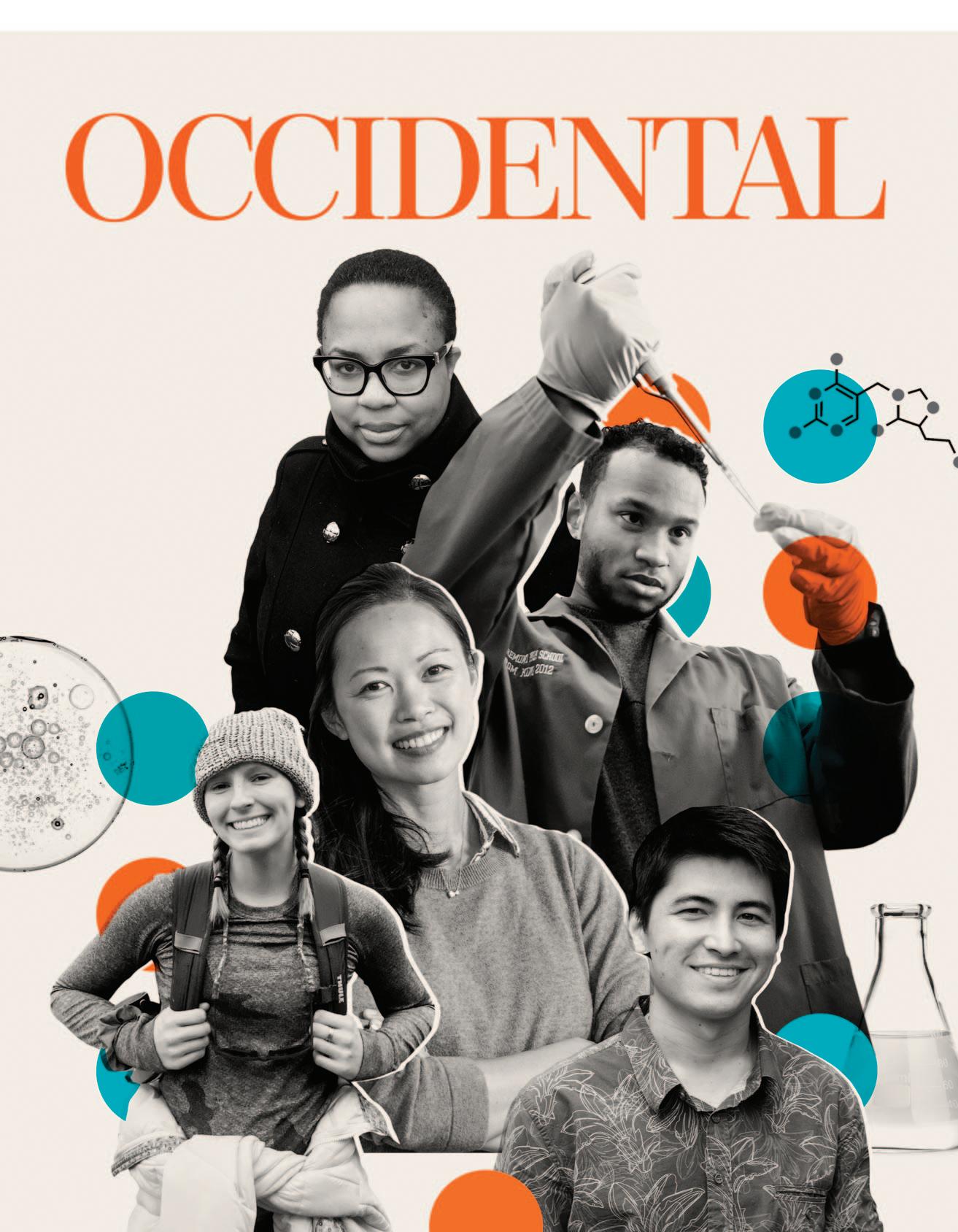
Namandjé Bumpus ’03
Will Reeves ’16
Nicole Leung ’11
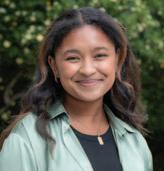
Amelia Muscott ’22
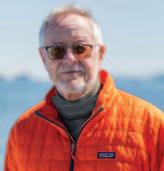
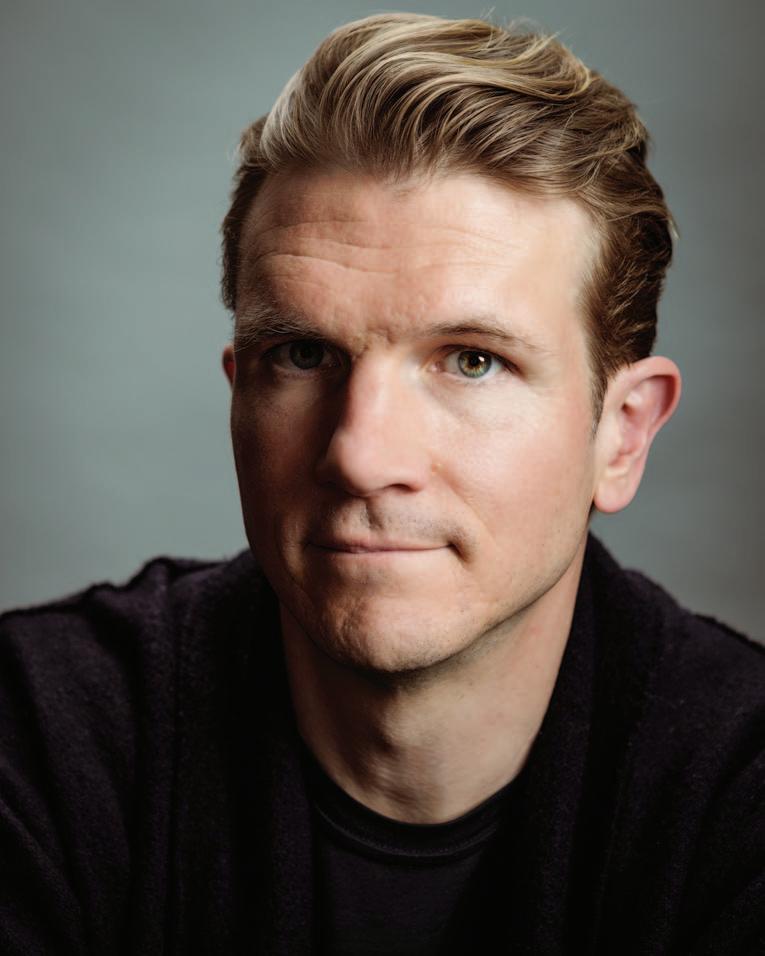
Jason Preble ’14 and 13 more inside!
Marketing Mario: Illumination’s Sam Bergen ’04 Exposing the Ills of Urban Drilling in L.A.
2023
SPRING
To order by phone: 323-259-2951
All major credit cards accepted
Volume 45, Number 2 oxy.edu/magazine
OCCIDENTAL COLLEGE
Harry J. Elam, Jr.
President
Wendy F. Sternberg
Vice President for Academic Affairs and Dean of the College
David T. Carreon Bradley
Vice President for Equity & Justice
Rob Flot
Vice President for Student Affairs and Dean of Students
Amos Himmelstein
Vice President & Chief Operating Officer
Rod Leveque
Vice President for Marketing & Communications
Maricela L. Martinez
Vice President of Enrollment
Jim Tranquada
Director of Communications
James Uhrich
Vice President & Chief Information Officer
editorial staff
Dick Anderson Editor
Marc Campos
College Photographer & Videographer
Gail (Schulman) Ginell ’79
Class Notes Editor
SanSoucie Design Design
DLS Group Printing
OCCIDENTAL MAGAZINE
Published quarterly by Occidental College
Main number: 323-259-2500
To contact Occidental magazine
By phone: 323-259-2679
By email: oxymag@oxy.edu
By mail: Occidental College
Office of Communications F-36
1600 Campus Road
Los Angeles CA 90041-3314
Letters and class notes submissions may be edited for length, content, and style.
Occidental College online
Homepage: oxy.edu
Facebook: facebook.com/occidental
Instagram: instagram.com/occidentalcollege
TikTok: occidentalcollege
Twitter: @occidental
Cover illustration by Valerie Chiang Oxy Wear photo by Marc Campos
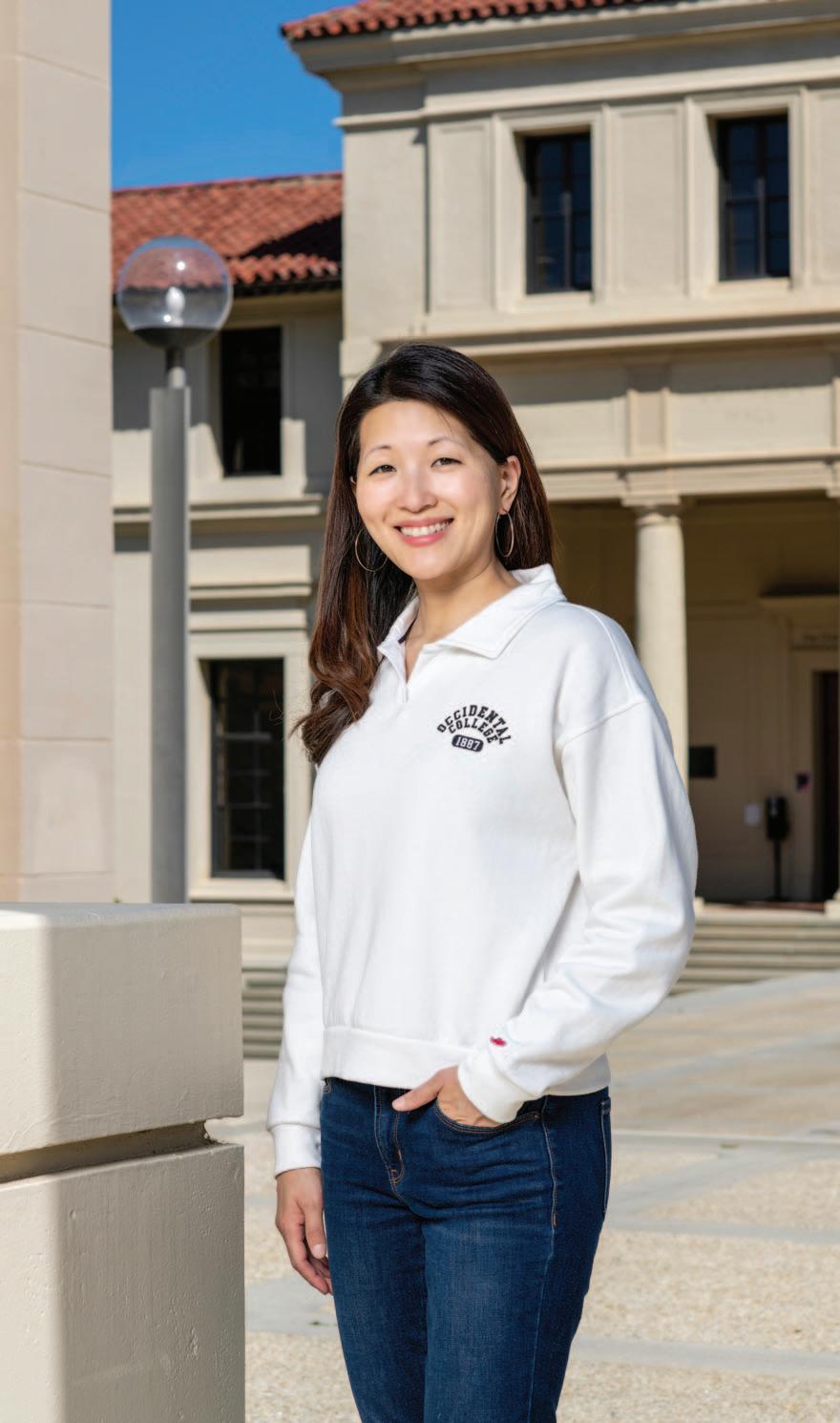
Collared V-neck pullover with left chest embroidery. Available in Heather Onyx and Heather White. Sizes S-XL. $56.95
Occidental College Bookstore oxybookstore.com
Jane Hong Associate Professor of History
2
Departments
32 OxyTalk
Ten student-athletes from the Class of 2023 discuss the rewards of sticking with their sport through the pandemic.

4
Features
8
Drilling Down
Guided by rigorous research and a moral compass, Associate Professor Bhavna Shamasunder exposes the environmental injustices affecting the health of Angelenos.
10
Three for the Ages
Retiring professors Linda Besemer, Arthur Saint-Aubin, and Nina Gelbart reflect on their time in the classroom —and eight of their best and brightest pupils celebrate their mentors’ contributions to their personal and professional development.
16
18 Young Scientists to Watch
Occidental’s labs are the launching pads for countless careers in the sciences—and here are 18 graduates of the last 20 years doing exemplary work in their chosen field.
First Word
President Elam on the history—and future— of immersive learning at Oxy. Also: U.S. Army Medical Corps veteran Richard Carlson ’60 on his Vietnam memoir, Mekong Medicine
From the Quad Meet the eight new Obama Scholars chosen for Oxy’s premier leadership training program. Also: news on integrated strategic planning, The Oxy Campaign For Good, and the solar array.
36 Tigerwire Class notes for all years.
64 Adventures in Research
Jack Griffith ’64 is still flying high after decades of medical discoveries— and retirement’s not in his DNA.
26
Powering Up
Following the record-shattering box office launch of The Super Mario Bros. Movie, Illumination Chief Marketing Officer Sam Bergen ’04 recounts his journey from Campus Road to Rainbow Road.
SPRING 2023
PHOTO CREDITS: Max S. Gerber Powering Up | Sandy Navarro/L.A. Grit Media Drilling Down | Marc Campos First Word, From the Quad | Sam Leigh OxyTalk | Jack Griffith ’64 Adventures in Research
26 8
A Closer Look at Immersive Learning
In an article this spring, the influential Chronicle of Higher Education addressed the phenomenon of college students’ postpandemic alienation and anxiety, as manifested in their disconnection from conventional curricula and pedagogical approaches. The answer to students’ alienation, anxiety, and apathy, the article suggests, is immersive learning—the kind of experiential education that gives students “a place to discuss the big questions bouncing around in their heads, learn a vocabulary to describe what’s happening around them, engage with the messiness of the world, and navigate their place in it.”

Immersive learning is in Occidental’s DNA. Lab work in chemistry and physics, field work in marine biology and geology, studio art courses, performance in the Glee Club, music classes, and theater—all of these are high-impact practices that date back a century or more. Our overseas study program began, however modestly, in 1916 with an exchange program with Hanchow Christian College (today’s Zhejiang University in Hangzhou, China). In the years since then, we have continued to build the immersive experience at Oxy through such signature initiatives as the Kahane United Nations Program, Undergraduate Research, Campaign Semester, Center for Community Based Learning, New Play Festival, and paid internships offered by the Hameetman Career Center, Oxy Arts, and Urban & Environmental Policy Institute, among others.
is hands-on, project-based, communityengaged, and interdisciplinary.
Because Occidental is one of the country’s few liberal arts colleges in an urban setting, our immersive methodology has been animated by our location in Los Angeles. The new strategic plan endorsed by the Board of Trustees renews our commitment to the city, deepening and expanding our partnerships with the Los Angeles community and civic and industry partners. The combination of our locale and our immersive approach makes it possible for us to offer students a particularly distinctive and potentially transformative educational experience.
As Tim’s example and that of many other Oxy alumni show, immersive education has a strong heritage at Occidental. Still, as the Chronicle points out, “Immersive learning has plenty of champions, but it still remains on the periphery of the college experience, for reasons large and small.” A majority of American college students have experienced just a few immersive classes by the time they graduate—or none at all.
This does not mean all courses must become immersive. Rather, in the wake of the pandemic and the massive disruption it caused, immersive education demands a closer look. Our new strategic plan, The Occidental Promise, coming at a time the Chronicle calls “a decisive moment” for higher education, will do just that. It promises to build on our strengths and undertake a more expansive liberal education that includes immersive practices. This approach offers us exciting prospects and positions Occidental well for the future.
Thus, it should come as no surprise that immersive learning is a centerpiece of Occidental’s new integrated strategic plan (page 6), which was endorsed by the Board of Trustees in April. As the Chronicle points out, immersive courses “have been shown to have a positive and often profound impact on students’ lives. They can be more absorbing, creative and self-directed than traditional courses.” Over the next decade, we plan to ensure that Oxy’s engagement with the world continues to foster excellence through an immersive education that Harry
Tim Sanford ’75, whose significant artistic achievements as the head of New York-based Playwrights Horizons were recognized with an honorary degree at Commencement on May 21, credits his singular immersive opportunities at Occidental as critical to his success. “To me, the Oxy theater program was the model for undergraduate and even graduate school programs,” he says. “I’ve been exposed to many programs, and there’s almost nothing like it. ... At Oxy I did everything. I wrote a play and put it on, directed four or five plays, acted constantly—it was a very rich experience.”
2 OCCIDENTAL MAGAZINE SPRING 2023 FIRST WORD » FROM PRESIDENT ELAM
J. Elam, Jr.
Photo by Marc Campos
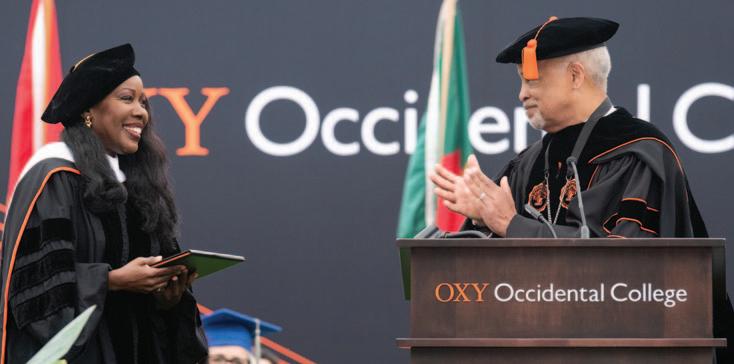
Pulitzer Prize-winning journalist and author Isabel Wilkerson receives an honorary doctorate from President Elam at Commencement on May 21. For more coverage, visit oxy.edu/commencement.
Mekong Medicine: A U.S. Doctor’s Year Treating Vietnam’s Forgotten Victims, by Richard W. Carlson ’60 (McFarland). In 1966, along with nearly half of his 1964 med school classmates, Richard Carlson was drafted into the U.S. Army Medical Corps. He applied to Vietnam’s Military Provincial Hospital Assistance Program—and as Carlson led a team in Bac Liêu province in the Mekong Delta from 1966 to 1967, he “religiously” chronicled his daily activities as well as life around him.
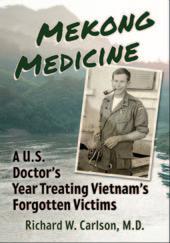
In the decades to follow, as he pursued a career in intensive care medicine, Carlson carried the yellowing typewritten pages of his Vietnam memoir from home to home. He reduced his clinical activities in 2017 and returned to the narrative at the urging of his wife, Barbara—and after her death in 2020, the task became a full-time endeavor. Mekong Medicine is a contemporaneous account of his team’s struggles with disease and war that affected nearly 600,000 Vietnam civilians.
In a Q&A for Occidental magazine with Erik Villard ’90—digital military historian and Vietnam War historian for the U.S. Army— Carlson discusses his Occidental education and the stories at the heart of his memoir.
How did your time at Occidental shape your personal and professional goals? Going to Oxy was familiar as my father’s medical office was a block away. History of Civilization made a lasting impression—a wonderful introduction to the scope of history and philosophy. I was premed and a biology major under the kindly guidance of John McMenamin ’40. Professor John Stevens became a mentor and friend and instilled in me a love of marine life, which later led to my studies of venoms. Oxy was a phenomenal grounding for academics and maturation.
What were the circumstances that led you to join the Army? I was an OB-GYN resident when I was drafted in 1966. I knew I’d soon be a general medical officer in Vietnam, so I volunteered for a new program in which medical teams worked in province hospitals. Upon being selected to command an Army
unit in the Mekong Delta, my responses were both anticipation and anxiety.
What were the most challenging aspects of working in a civilian hospital in Vietnam? Province hospitals were built by the French in the early 1900s with few subsequent improvements. Ours had a rudimentary laboratory; no nursing care at night except the ER; animals, including rats, roaming the grounds, windows without screens or glass; primitive sanitation and electricity; and two patients typically sharing a bed with a rotting mattress.
The patients were simple farmers who lived as they had for more than a century. Superstition and folk remedies were prevalent. Malnutrition, parasites, and multiple endemic diseases were the norm, including tuberculosis, cholera, typhoid, malaria, plague, and dengue fever. A simple cut could be fatal as tetanus and other immunizations were rarely available. One-half of infants would not survive to adulthood. Chronic and congenital defects went untreated. Compounding these challenges, the war escalated with daily casualties, mostly women and children. They arrived in trickles or torrents—up to 50 a day. As in all wars, civilians suffered the most.
Our team had three doctors, only one of whom was a fully trained specialist to supplement two Vietnamese physicians, as well as 12 corpsmen and four USAID nurses. We received antibiotics and other medical supplies from USAID, although many items were stolen in Saigon. We worked in fear as the Viet Cong frequently shelled our location.
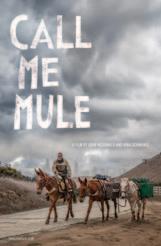
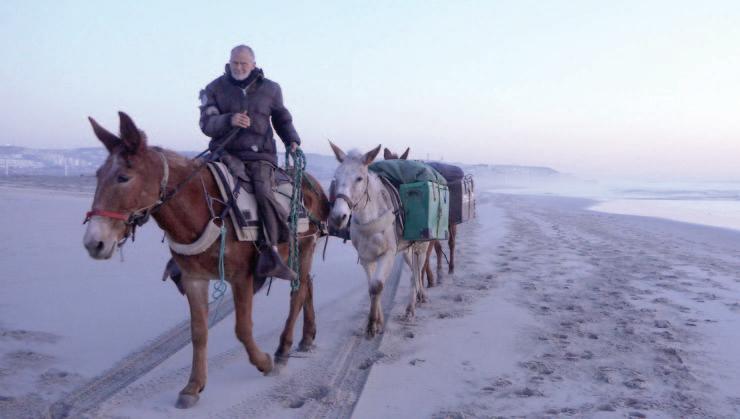
John Sears, who calls himself Mule, has been roaming the western United States with his three mules for over 30 years. The 65-year-old and his animals sleep outside, claiming the right to move freely. Despite arrests and incarcerations, he keeps on fighting to maintain his nomadic lifestyle. His story may be unusual, but it has universal appeal, celebrating the creativity, courage, and resilience to choose an extraordinary way of life and defend his place in the world. Award-winning filmmaker John McDonald teams up with his daughter, Nina Schwanse, to make this compelling 94-minute observational documentary of Mule’s 500-mile journey to deliver a message to the governor of California. In March, Call Me Mule had its world premiere at the prestigious Thessaloniki International Documentary Festival in Greece, followed by its North American premiere at the Salem Film Fest in Massachusetts.
What were some of the most rewarding experiences? Despite the chaos and horror, we were able to provide life-saving care to many. The province medicine chief, a surgeon, was an inspiration. Some of my fondest memories are of the AMA volunteer physicians who each spent two months with us. They were a remarkable group and donated their skills to aid strangers in a remote, wartorn land.
How did your time in Vietnam influence your career and personal life after returning home? It was a life-changing experience. My medical teammate in Vietnam urged me to pursue a career of academics and research in public hospitals and medical schools while caring for the underserved. Following a Ph.D., I participated in the dawn of a new field— intensive care medicine. Teaching and mentoring physicians, nurses, and other healthcare providers are my proudest achievements.
FIRST WORD » MIXED MEDIA SPRING 2023 OCCIDENTAL MAGAZINE 3
Call Me Mule, directed by John McDonald ’71 and Nina Schwanse (3MulesMovie.com).
The Next Obama Scholars
Eight sophomores and juniors selected for premier leadership training program
Eight Occidental sophomores and juniors, including four first-generation college students, have been selected as Occidental’s 2023-24 cohort of Barack Obama Scholars. The prestigious leadership training program seeks to empower exceptional students committed to the public good.
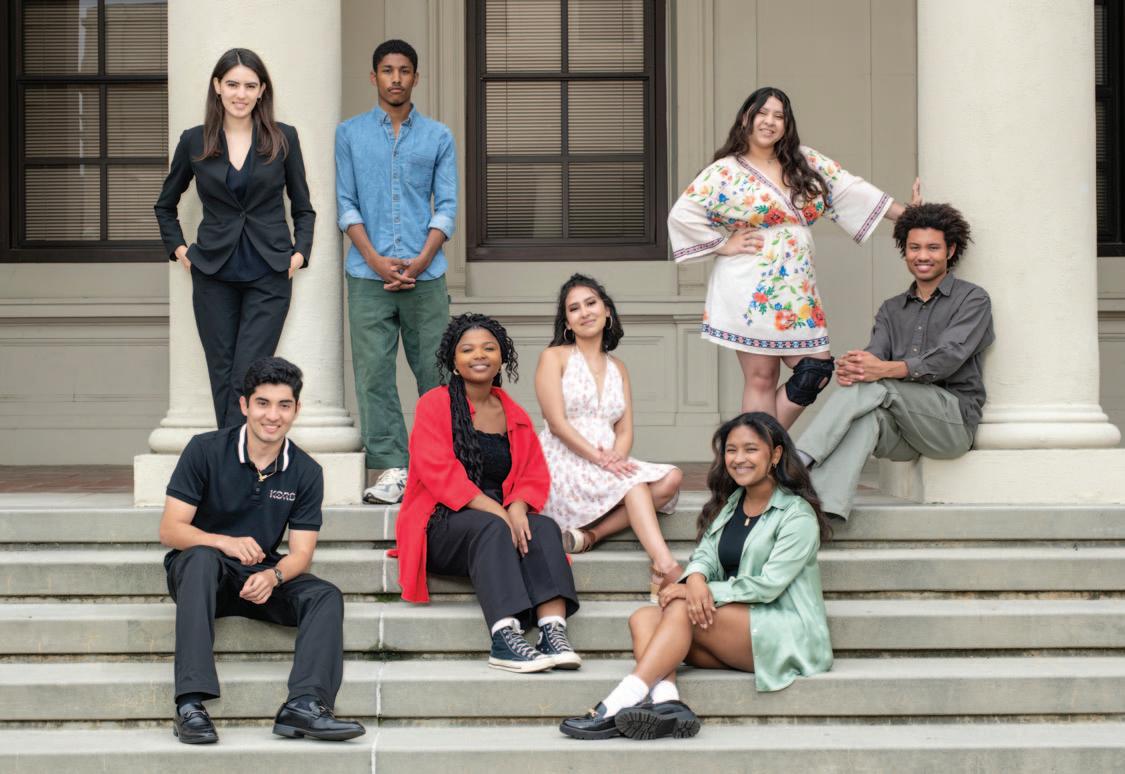
Obama Scholars, who can pursue any field of study at the College, are selected on the basis of a strong record of academic achievement and a demonstrated commitment to the public good, with an emphasis on first-generation students, veterans, and community college transfers. The 2023-24
cohort represents a wide range of majors, from history and geology to diplomacy and world affairs and psychology.
The 2023-24 Barack Obama Scholars are: Melany Bennett ’24, a diplomacy and world affairs major from Los Angeles. A nontraditional transfer student, Bennett transferred to Occidental from Los Angeles City College as the recipient of the Jack Kent Cooke Undergraduate Transfer Scholarship in 2022. Raised in Tampico, Mexico, she founded the nonprofit Tampico Project to help create pathways for students in her hometown to access educational opportunities and cultural enrichment programs in the liberal arts. At Occidental, she serves as the student representative of the Board of Trustees' Institutional Advancement and Communications Committee and has joined
the Young Initiative on the Global Political Economy team. After graduation, she plans to get a master’s degree and pursue a career in the U.S. State Department in public diplomacy, specializing in Latin America.
Raul Cruz Robinson ’25, a psychology and Spanish double major from Brooklyn. Cruz Robinson is committed to empowering younger generations to fight gentrification in metropolitan cities and improve the quality of life in underserved communities. Through his work with New York City FC, a professional soccer team, Cruz Robinson contributed to several community initiatives, including writing monthly newsletters to spread awareness about political issues and serving as a soccer coach who combined the sport with education about the importance of voting. Cruz Robinson hopes to be a men-
4 OCCIDENTAL MAGAZINE SPRING 2023
FROM
THE QUAD
Photo by Marc Campos
ABOVE: Standing, l-r: Melany Bennett, Raul Cruz Robinson, Francesca Romero, and Matthew Vickers. Seated: Jessie Salinas, Joy Mopeli, Yenni Gonzalez Salinas, and Raja Bella Hicks.
tor and role model for those who aspire to create meaningful social change. After graduation, he plans to continue assisting and advocating for underserved communities in Los Angeles as well as in Brooklyn.
Yenni Guadalupe Gonzalez Salinas ’25, a first-generation college student from Nashville, majoring in history with a minor in Latino/a and Latin American studies. As a daughter of immigrants, Salinas is committed to dismantling the systems that perpetuate worker exploitation. As an intern in the Nashville District Attorney’s Office, she empowered Spanish-speaking victims and witnesses through the criminal court system and connected them to victim compensation and mental health resources. On campus, Salinas is a Comparte coordinator who assists Occidental’s cleaning staff with improving their English speaking and writing skills through weekly classes and serves as an equity ambassador at the Intercultural Community Center. After graduation, she plans to attend law school.
Raja Bella Hicks ’25, a diplomacy and world affairs major from Salt Lake City. Coming from a multicultural background, she is deeply interested in creating more equitable communities—specifically for immigrants and refugees. In her hometown, Hicks served as the diversity, equity, and inclusion intern at Zions Bancorp and as her high school’s Rotary International Service director. On campus, she teaches community art classes at OxyArts and is an Upward Bound mentor. Off campus, she has volunteered on Los Angeles Mayor Karen Bass’ campaign to elect the first female mayor of Los Angeles. After Oxy, Hicks plans to attend law school or earn a master’s degree in international affairs.
Joy Mopeli ’25, a diplomacy and world affairs major with a double minor in urban and environmental policy and public health from Lesotho. Mopeli is committed to advancing anti-poverty efforts in Africa and the African diaspora by working in international development and promoting intercultural knowledge exchanges. She has researched indigenous African agricultural practices, campaigned for climate protection policy, tutored at the Baylor Clinic in Eswatini, and interned for Sentebale, which provides medical and social welfare support for vulnerable children and young people in southern Africa. At Oxy, Mopeli currently holds a leadership position in the Black Students Al-
liance and is serving as a resident adviser, an Intercultural Community Center equity ambassador, and a program assistant with the Young Initiative. She hopes to pursue a career in global health.
Francesca Romero ’25, a first-generation diplomacy and world affairs major with minors in politics and Latino/a and Latin American studies from Walnut Creek. She is committed to making the legal system more equitable for under-represented and lowincome communities. Romero is an LEDA Career Fellow, a Jose F. Silva ’84 Memorial Scholarship recipient, and a mentor in Oxy’s Upward Bound program. She has served as a housing intern for the Legal Aid Foundation of Los Angeles, is currently secretary of the College’s National Society of Leadership and Success, and is a member of the Latinx Student Union and Oxy Law Society. After graduation, she plans to attend law school and work with community-based organizations.
Jessie Salinas ’25, a first-generation geology major from Phoenix. Salinas is passionate about improving the representation of the Hispanic community in policy decisions as well as conserving the natural environment for future generations. An Eagle Scout, he has held leadership positions in various student organizations on campus, including YorkConnection, Oxy Club Soccer, COSMOS Scholars, and Oxy Fishing Club. Salinas plans on interning for the Urban and Environmental Policy program on campus
this summer. He hopes to pursue a master’s in geology after graduation and aspires to be an archeologist and activist.
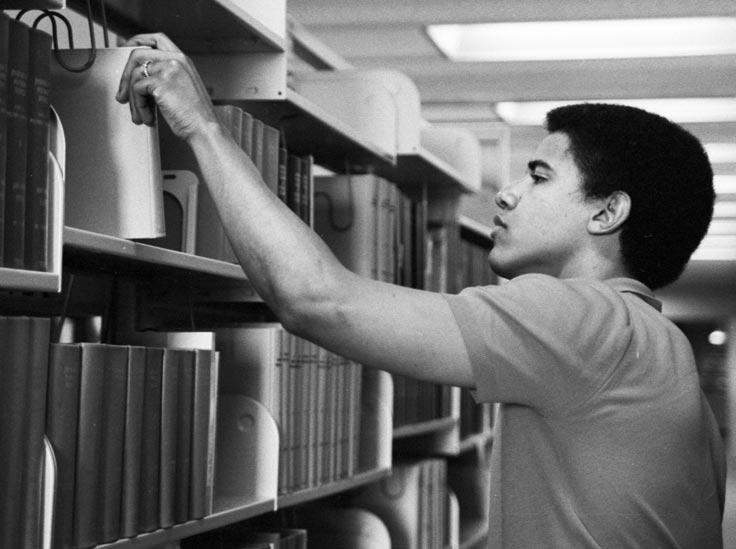
Matthew Vickers ’25, a diplomacy and world affairs major and English minor from Kōloa, Hawai‘i. As a student researcher, Vickers studied the works of Trinidadian thinker C.L.R. James (1901-1989) and his influence on 20th-century Marxist movements, the historiography of the Haitian Revolution, and Caribbean politics. He is chair of Oxy’s Young Democratic Socialists of America, writes for The Occidental newspaper, and is a member of Oxy’s cross country and track and field teams. Vickers is committed to improving housing access and equity and plans to pursue a Ph.D. in political science.
During the academic year, participants are enrolled in the Obama Scholars Seminar in addition to their regular class schedule. All are mentored by faculty advisers and members of the Advisory Council, and participate in networking and leadership development opportunities with partner organizations.
All Scholars will participate in a fully funded 10-week summer program of experiential learning and leadership training. Scholars who enter as sophomores also will receive a second summer of funding for an independent internship, research project, or community service opportunity. Each Obama Scholar will receive up to $10,000 in postgraduate funding to launch their career in support of the public good.
SPRING 2023 OCCIDENTAL MAGAZINE 5 FROM THE QUAD
Since its launch in 2017 during the “quiet phase” of The Oxy Campaign For Good, the Barack Obama Scholars Program has received more than $10 million in gifts and commitments.
Photo by Tom Grauman ’83
Making Good on Occidental’s Promise
As The Oxy Campaign For Good sprints to a successful conclusion, the Board of Trustees endorses an integrated strategic plan for 2030
Occidental aims to be the country’s principal destination for a distinctive urban liberal arts experience by 2030, according to the College’s new integrated strategic plan unanimously endorsed by the Board of Trustees at its April 21 meeting.
“It’s a bold vision rooted in the College’s historic mission,” says President Harry J. Elam, Jr., the principal author of the plan that is the culmination of an 18-month collaborative planning process involving faculty, students, staff, alumni, parents, and trustees. “We’re excited about the future and enthusiastic about the prospect of building on our institutional strengths and realizing Occidental’s full potential.”
The Board’s endorsement came just two months before The Oxy Campaign For Good is slated to officially draw to a close, having reached its original $225 million goal one year early. With the total raised now exceeding $250 million, “The success of the campaign raises the bar and gives us a solid fiscal foundation on which to build our future,” Elam says.
At the heart of the 50-page plan, known as “The Occidental Promise,” is the vision statement that will guide Occidental through 2030:
“Occidental College will be the principal destination for a distinctive urban liberal arts experience, one that engages the full po-


tential of global Los Angeles at its doorstep. With a commitment to academic excellence, equity and justice, immersive student learning, and an innovative pedagogy that creates meaningful opportunities for hands-on research and practical experience, Occidental prepares our graduates to lead fulfilling lives of impact.”
To realize that vision, the plan calls on Occidental to focus on three interdependent strategic initiatives based on the College’s existing strengths:
Fostering academic excellence through an immersive education that is hands-on, project-based, and community-engaged.
Deepening and expanding College partnerships with Los Angeles community, civic, and industry organizations, creating distinctive learning opportunities for students and faculty. This will include the creation of a Center for Los Angeles.
Educating the whole student, attending to well-being, resilience, and community, ever mindful of the significance of equity and inclusion in addressing their needs.
Because of their pervasive importance, equity, inclusion, sustainability, and climate resilience will inform and infuse each of these initiatives, the plan emphasizes.
“The Occidental Promise points to the College’s distinctiveness as well as its exciting potential,” Elam says. “It seeks to further our mission of delivering an exceptional liberal arts education by strategically creating new harmonies between academic training, real-world experience, and social impact.”
Launched in October 2021 under the leadership of a campuswide steering committee, the planning process began with an environmental scan that included internal data reviews, assessment of broader trends in higher education, and numerous community input sessions. More than 600 students, faculty, staff, alumni, and parents offered important perspectives through group forums (in person and virtual) and online submissions.
“By building on our strengths and leveraging our history, Occidental will do more than simply address change,” Elam says. “We will define our own singular direction and in so doing, lead change. In the certainty of uncertainty, Occidental will continue to grow and thrive as an institution.”
To learn more about The Occidental Promise, the complete plan can be found at oxy.edu/integrated-strategic-planning.


6 OCCIDENTAL MAGAZINE SPRING 2023
FROM THE
QUAD
97%98%78%105% ForDistinction Endowed Funds for Academics and Student Experience ForAccess Financial Aid Endowment Goal:$50million GiftstoDate:$49.2million Goal:$100million GiftstoDate:$96.9million ForToday The Oxy Fund ForCampus Capital Projects Goal:$40million GiftstoDate:$31million Goal:$35million GiftstoDate:$36.9million 111.1% 0501001502002575125175225 Undesignated $36million Designated $214million TotalGiftstoDate:$250million OverallCampaignGoal:$225million Campaign totals through May 31, 2023 THEOXYCAMPAIGNFORGOOD
worth noting
A Decade of Sun Days
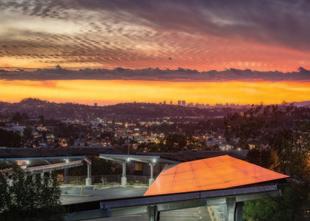
On March 4, Occidental’s 1-megawatt solar array turned 10 years old. Since “first light” on March 4, 2013, the array has produced 17.85 gigawatts of electrical energy—12 percent of the College’s usage over the same time period.
In the decade since it became part of the campus landscape in a marriage of aesthetic design and energy efficiency, the solar array has saved the College $3.25 million—97 percent of Oxy’s initial outlay of $3.35 million. Accounting for lost endowment investment opportunities, the predicted payback period for the array is about 14 years—two years longer than original projections, according to Physics Professor Dan Snowden-Ifft, who has overseen the project since its genesis more than a decade ago. (The project was approved by the Board of Trustees in 2010 and was completed nearly three years later.) As he sees it, the array “highlights Oxy’s desire to see positive change in our world, our willingness to work together on hard projects, and the value of a liberal arts education and approach to life.”

“In the last year the array produced 1.61 gigawatts of electrical energy, about 10 percent below our average,” says Snowden-Ifft. “This was largely due to a breakdown of our main inverter for about a month and a half in the middle of the summer, during what is normally a period of peak production. The cause of the problem was a broken motherboard, and the length of the shutdown was due to the fact that these inverters are no
longer manufactured and we had to get a custom board built.” Throw in an unusually cloudy winter, and the array underperformed during year 10.
Looking at a decade of data, Snowden-Ifft notes, “When all the inverters are working and right after a big rain—i.e., likely clean—I find that the efficiency of the system (actual energy produced divided by predicted energy) has always been better than 98.8 percent. The hardware is good and doesn’t seem to be aging at all.”
The biggest ongoing challenge, he adds, has been optimizing the cleaning of the array. Yearly efficiencies (actual over expected) have varied from 85 percent to 96 percent and depend on rainfall and cleaning. A student effort called ARRCS (short for A Rainwater Capture and Cleaning System) is in the works that will drastically lower the cost of cleaning and bring these efficiencies up closer to 100 percent. Another maintenance item is to keep the big bushes trimmed down on the hillside, which keeps the panels from being shaded and allows wildflowers to flourish.
Created by Lettuce of Highland Park in collaboration with Occidental art faculty, the array has served as a backdrop for mayoral press conferences and drawn significant attention as a creative model for future ground-mounted urban infill projects. Perhaps more remarkably, as Snowden-Ifft noted in a presentation about the array’s circuitous journey to first light, “No one has complained about it.”
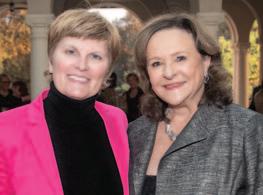
Lynn Mehl, professor emerita of kinesiology and psychology, was honored by the Southern California Intercollegiate Athletic Conference (SCIAC) with its 2022 Distinguished Service Award at a March 16 ceremony. Mehl served Oxy and the SCIAC in many roles, overseeing 18 varsity sports as director of athletics and leading the Tigers women’s tennis team to the Division III national championship in 1982. Mehl (above right, with Athletic Director Shanda Ness) is the third recipient with ties to Oxy to earn the honor since its inception in 1985, joining Grant Dunlap ’46 in 1993 and Richard C. Gilman in 1988.
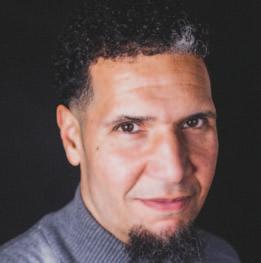
Will Power, assistant professor of theater and performance studies, will be making his Center Theatre Group debut in June with his acclaimed play Fetch Clay, Make Man, directed by Debbie Allen. First staged in 2013, the play is set in 1965 and examines the unlikely friendship between heavyweight boxing champion Cassius Clay and controversial Hollywood actor Stepin Fetchit. The play runs from June 18 to July 16.
SPRING 2023 OCCIDENTAL MAGAZINE 7 FROM THE QUAD
Students in Assistant Professor Aleem Hossain’s 360 video class gather footage using 360-degree video cameras at the solar array on Fiji Hill on Oct. 21, 2019. INSET: A colorful sunset from 2014.
Ten years after its installation, Occidental’s solar array produces 12 percent of the College’s energy usage
Photos by Marc Campos (solar array, Mehl)
Drilling Down
By ANDY FAUGHT
unshine and show business have always fueled the Los Angeles mystique. But the city’s earliest impressions gushed from an altogether different source, one whose hazardous legacy is felt more than a century later in some of the region’s more vulnerable neighborhoods.
Even now, there are 500 working oil wells in the city—5,000 total throughout Los Angeles County—whose benzene emissions, among other irritants, contribute to headaches, asthma, and diminished lung function among residents who sometimes live mere yards from the wells.


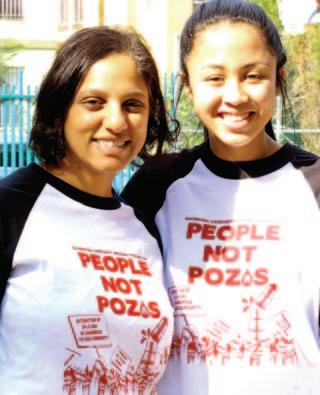
Capping the sites and safeguarding communities, many of them residents of color and limited means, has been a more than decadelong mission for Bhavna Shamasunder, associate professor and chair of Occidental’s Urban and Environmental Policy program.
“These are neighborhoods that are also burdened by freeways, other industrial sites, linguistic isolation, and poverty,” says Shamasunder, who has provided community members with a potent tool that has helped to
force policy changes while working to reverse negative health trends. “We are partnering with communities to collect data. They gain resources and data to support their advocacy, and it’s a way to build power.”
This year, after collaborating with community groups that include STAND-L.A., an environmental justice coalition of grassroots organizations committed to ending drilling and protecting the health of Angelenos, Shamasunder’s persistence paid off. In January, the Los Angeles County Board of Supervisors voted unanimously to ban new oil wells and phase out existing ones, though it didn’t provide a timetable. The decision followed a similar move a month earlier by the Los Angeles City Council, which will ban all pumping over 20 years.
“When we started this work 10 years ago, no one was talking about it,” Shamasunder says. “For a long time, L.A. did nothing, and the government facilitated drilling in plain sight. Wells would get fenced in by landscapes or a tall wall, and some of them are disguised as office buildings. L.A. forgot they were there, and it was kind of intentional.”
Shamasunder may take issue with the length of the phase-out period—an amortization period that’s currently under study— but it’s nonetheless one of her proudest professional accomplishments. Her 2017 study “Community-Based Health and Exposure Study Around Urban Oil Developments in South Los Angeles” (published in the International Journal of Environmental Research and Public Health) was the first published research to demonstrate the health perils of oil extraction to surrounding neighborhoods.
In a survey of South Los Angeles communities, three-quarters of active oil wells are 500 meters from “sensitive land uses” that include homes, schools, parks, childcare businesses, or senior housing, Shamasunder found. Los Angeles has never required a buffer zone between oil fields and sensitive areas. In surveys, she also discovered that asthma is more common among residents living near South L.A. oil wells than in the rest of the county.
In collaboration with USC’s Keck School of Medicine, researchers discovered that lung capacity, or the amount of air a person
8 OCCIDENTAL MAGAZINE SPRING 2023
Guided by rigorous research and a moral compass, Associate Professor Bhavna Shamasunder exposes the environmental injustices affecting the health of Angelenos
far left: Oil derricks dot a suburban California neighborhood in an undated photo. left: Oil wells pump next to the Willow Springs Wetlands preserve in Long Beach in May 2017.
Shamasunder and her research team: (standing) Francisca Castro ’21, Leela Cullity Younger ’23, Shamasunder, and Emma Silber ’23; (kneeling) Joaquín Madrid Larrañaga ’23 and Audrey Sohn ’24.
Photo credits: Marc Campos (Shamasunder); Adobe Stock (derricks, wetlands)
can exhale, is diminished the closer they live to a well. Aiding Shamasunder in her research was her Oxy colleague James Sadd, professor of environmental science, who teaches geographic information systems. Using spatial analysis and statistical tools, Sadd created maps using CalEnviroScreen that showed environmental hazards throughout the city. He combined environmental pollution data with economic and social data to come up with scores that identified neighborhoods at greatest risk from industrial pollution.
“Bhavna combines her training and expertise as a scientist with an unusually focused sense of morality,” says Sadd, who has collaborated with Shamasunder on coursework since she arrived at Occidental in 2011. “She is methodical and careful in her analytical work to ensure objectivity and rigor, and she avoids allowing social justice advocacy to overtake her research.”
The environmental impact of oil extraction in urban neighborhoods is only one facet of Shamasunder’s influential research. In a journal article published in 2017, she considers the racial and ethnic differences in beauty product use—such as skin lighteners, hair straighteners, and feminine hygiene products —and the potential chemical exposures and health risks associated with those products.
Small amounts of chemicals have been linked with fibroids, breast cancer, and preterm birth, and a body of research has shown that women of color have higher levels of beauty-related chemicals in their bodies, independent of socioeconomic status. Shamasunder’s paper “The environmental injustice of beauty: Framing chemical exposures from beauty products as a health disparities concern” was published in the American Journal of Obstetrics & Gynecology.
Women of color are “overexposed and unprotected” when it comes to beauty products, says Astrid Williams, manager of the environmental justice program for South L.A.-based Black Women for Wellness. Eurocentric beauty standards, poor government regulation, and systemic racism have allowed Black women to be sold cosmetics with ingredients that are harmful not only to reproductive health but also respiratory health, she claims. Shamasunder was one of the first to draw attention to the dangers. “Bhavna is really connected, and she’s passionate, which shows,” Williams says.
Born in Chicago, Shamasunder is the child of Indian immigrants: Her father, HK Shamasunder, came to the United States because of the need for physicians in underserved areas, and the family moved to the Antelope Valley north of Los Angeles when Bhavna was 1. Palmdale, it seemed to her, didn’t embody the American Dream. “It was pretty racially segregated growing up,” she recalls. “In my formative years, I didn’t have words for it.”
Shamasunder developed her social justice sensibilities as an undergraduate at UC San Diego, where she took courses in biology and ethnic studies. One class considered the discriminatory practice of redlining—lending and selling practices that shunted people of color into unsafe and undesirable neighborhoods. The experience helped her to see racial links between the hard and social sciences.
As a graduate student at Yale, Shamasunder heard a talk by environmental justice lawyer Luke Cole, who gained renown filing lawsuits on behalf of indigenous communities suffering the health effects of corporate polluters.
“That’s when I started piecing together racial justice and environmental change,” she says. “I felt inspired that there was a movement of people making these connections. There was this group thinking about the environment and social justice at the same time—that they’re not disconnected. I felt excited and less isolated.”
Prior to her Ph.D. studies at UC Berkeley, Shamasunder was coordinator of the Environmental Health and Justice Program at Urban Habitat. She worked with low-income communities and communities of color in the Bay Area to address the disproportionate negative effects of social, environmental, and economic policies through community outreach, strategic research, regional coalition-building, policy, and advocacy.
At Occidental, Shamasunder has incorporated many of her community experiences into her coursework, including UEP 101 (Environment and Society), which considers how U.S. government policies have shaped access to outdoor environments and how racial justice movements intersect with climate justice. “Climate is a deep concern for our students,” she adds—an interdisciplinary challenge that touches on everything from homelessness to the push for green energy.
Emma Silber ’23, an urban and environmental policy major from Seattle, learned
about L.A.’s oil history in UEP 101. The class moved her to become part of the solution through an internship with STAND-L.A.
“Not being from Southern California, it was astounding to me that this is happening all around, and a lot of people aren’t aware of how pervasive it is,” says Silber, who is an environmental health and justice research assistant to Shamasunder. “From my first year, I found this to be an intriguing topic.”
Silber—who presented her senior comp titled “What Comes Next? Envisioning the Future of Oil Sites in Los Angeles” in April— is considering seeking work in climate justice, in which she hopes to advocate for clean energy sources “with an equity lens.” Just because the Los Angeles oil wells ultimately will cease operations doesn’t mean the battles are over, she says.
Further conversations will center on ensuring the well cleanups are aligned to environmental standards, and making sure they are redeveloped to prioritize community uses. “This is not the time to stop doing this work,” Silber says.
In all, five students from various majors are helping Shamasunder with her research. Their tactics aren’t always greeted with enthusiasm. In her latest work, Shamasunder and USC researchers tested the surface soil of the now-closed Exide battery plant in southeast Los Angeles County. They found that 73 nearby homes registered lead concentrations that exceeded state thresholds. Their findings were reported on the front page of the Los Angeles Times and prompted local and national agencies as well as elected officials to examine the ongoing cleanup. There’s a larger dynamic at play, she says: “This is a power-building strategy. Research is powerful; data is powerful. Residents have data about their communities so they can go to a public meeting and be in it together. They’re not isolated.”
SPRING 2023 OCCIDENTAL MAGAZINE 9
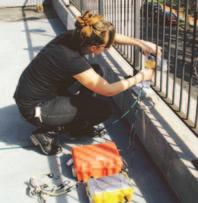
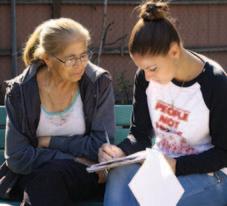
left: Sofia Polo ’16 completes a survey with a South L.A. resident. right: A research assistant uses an air quality monitoring device developed by the University of Colorado Boulder.
Photos by Sandy Navarro/L.A. Grit Media
THREE FOR THE AGES
Edited by DICK ANDERSON
Linda Besemer
James Irvine Distinguished Professor, Art and Art History Years at Occidental: 36
In 2022, you became the eighth Oxy faculty member to receive the prestigious Guggenheim Fellowship. What impact has the fellowship had on your work? Just to have been a recipient of the fellowship is a tremendous honor. To be acknowledged by and earn the respect of the top professionals working across the country in the same field is truly empowering. The fellowship has given me time and money to research ideas and experiment with new techniques that are helping me in the development of a new body of paintings. I’ve also been able to buy tools, machines, and materials I could not otherwise afford.
What will you miss about being in the classroom? In two words: the students. Since I began at Occidental in 1987, I have had the great privilege of working with thousands of brilliant and extraordinary students. I loved sitting one-on-one with a beginning student working on their first painting—struggling to transform inchoate blobs of colored goo on their palette into a recognizable image on the canvas. I would make observations and suggestions, and perhaps even paint a problem bit for them, and then watch their paintings take on a life of their own. They may not have all majored in art, but they all brought their perspectives to making art and visual expression.
What I like best about Oxy students is their varied interdisciplinarity. Students bring their academic interests, political and social justice consciousness, and critical thinking skills from all their other experiences into their paintings’ themes and processes. For
example, the same assignment prompt could inspire an image of microbial symbiosis, a critique of latent lesbian imagery in Bollywood films, or a philosophical discussion on phenomenology and affect in non-representational abstraction. It was always surprising, and I was able to learn so much from them.
Fortunately, I have stayed in touch with many of my graduating students. I am happy to say some are now art world peers with successful teaching and exhibition careers.
What are your plans for retirement? I am retiring from teaching but not from painting. Instead, it is shifting from one emphasis to another. I had to juggle teaching and making art for most of my life. I now have the opportunity to paint all day—every day! In other words, become a full-time, allthe-time artist. However, I will continue to
exhibit and guest lecture at other schools, museums, and art institutions, so not entirely out of academia. During my Guggenheim sabbatical this year, I discovered I have time to read for pleasure, research, and to think. I have the space to process an idea, let it sink in, form, and reform it. This luxury is almost impossible while fulfilling the many roles of a full-time faculty member.
My partner and I also plan to travel with our golden retriever, Jackson (named after Jackson Pollock), and our Great Pyrenees, Emma (named after Emma Goldman, the anarchist, and she lives up to her name).
Anything else you would like to add?
I moved from New York City to teach at Occidental. There, I taught as an adjunct at multiple schools and painted houses to make ends meet. I lived in a fourth-floor walk-up railroad flat with five other people and had a tiny studio in a very sketchy neighborhood. Occidental gave me newly renovated studios to teach in, a private studio to do my work, time to do research, travel funds, housing (pre-tenure), and helped me mortgage my first home. Occidental gave me more than a job—a life where I could thrive.
Lastly, and by no means least, I will miss my colleagues at Occidental. Like my students, I also benefited from being at an institution that encourages interdisciplinarity. Having colleagues within my department and across the college who supported my teaching and advancements at Oxy and generously shared their research and intellectual interests with me was a tremendous gift. I wholeheartedly believe I would not have done the work I did, nor achieved my successes, had I not been at Occidental surrounded by a vibrant community of vital scholars, scientists, poets, artists, and musicians.
10 OCCIDENTAL MAGAZINE SPRING 2023
Retiring professors Linda Besemer, Arthur Saint-Aubin, and Nina Gelbart reflect on their time in the classroom—and eight of their brightest pupils celebrate their mentors’ contributions to their personal and professional development
A self-portrait of Besemer from 2022.
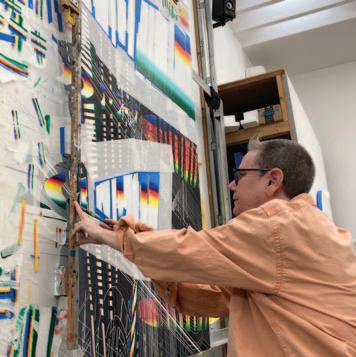
Tucker Neel ’03: During my first month at Occidental, I had the honor of being asked by Linda Besemer to be their teaching assistant. We were in their campus studio and Linda was wearing sneakers caked with so much paint they were practically clogs. Without hesitation, I said yes to Linda’s offer, and it turned out to be one of the best decisions I ever made. I was quickly put to work filing papers, pulling slides, and learning how to help Linda make their fascinating paintings. This involved me applying masking tape in hundreds of parallel lines to layers of acrylic paint Linda would eventually free from the wall to create pieces that boggled the mind and challenged the patriarchal legacy of Greenbergian abstraction. It was repetitive work, but I loved it, especially because it meant I got to hang out with Professor Besemer, listen to their albums, pet their dogs, and get a peek at what it was like to be a real teaching artist.
Linda is direct, asks tough questions, and demands honest answers in and out of the classroom, yet their teaching philosophy is rooted in love and compassion. I still remember one overcast day Linda surprised our drawing class by filling the center of the room with hundreds of fragrant, gorgeous flowers, saying, “If you have to spend all this time drawing, it might as well make you happy.” I’ve seen their contagious passion for art turn clueless frat boys into feminist abstract painters and war veterans into committed watercolorists. At the end of my first year at Oxy, after seeing their commitment to their students and their art, I realized I wanted to be a professor just like Linda.
A year or so later Linda gave me one of their paintings, a floppily rainbow-striped rectangle of pure acrylic paint punctured by metal grommets. Slightly damaged from an installation experiment gone awry, the painting wasn’t fit for gallery exhibition, but it quickly became one of the most important objects in my life and has hung over my bed ever since. Every time I look at it, I think about how much Linda has meant to me and countless other artists.
Linda’s impact on my life extends beyond my time at Oxy. They helped me get into grad school, lent their work to exhibitions I’ve curated, and showed me how to find my way in the art world. Their advice about how to navigate academia has routinely saved my sanity and my job. Almost a quarter-century after that first meeting in their studio, I am now a full-time associate professor at Otis College of Art and Design, and I could have never done it if not for my teacher, mentor, and friend Linda Besemer.
Neel is an artist, writer, curator, and educator living and working in Los Angeles. He completed his MFA from the Otis College of Art and Design in 2007 and has taught at the college since 2010.
Zoe Walsh: In spring 2009, I took my first course with Linda Besemer—Intermediate Painting. Linda provided a rigorous, unique, and accessible lens into contemporary debates around form and politics in painting. Personally, as a queer student, Linda’s presence and teaching were formative in my own coming into self and understanding how my political subjectivity could be applied to my
work. I can’t recall what I believed painting could be prior to 2009, but I know that it has never been the same since.

I sought out Linda’s instruction frequently and unabashedly throughout the rest of my time at Occidental, and Linda was always available as a guide into my own work and next steps beyond school. After graduating, I worked as Linda’s assistant and was able to witness firsthand their devotion to the practice of painting, willingness to restart and revise, and brilliant experimental making. In both the practice of teaching and the practice of painting, Linda always maintains a sense of embodied playfulness.
Linda’s guidance has continued through my graduate school education and early career as an artist and teacher. I have been the beneficiary of Linda’s support in the form of endless recommendation letters, advice about potential exhibitions, and even production assistance when I began using new technology in my work. Linda is a model of dedication to a lifelong art practice and ethical commitment to opening doors for future generations.
Linda, I am so immensely grateful for all that you have taught me, your patience over the years as I showed up to work perpetually 10 minutes late, your drive, your reading recommendations, your long view of art history, and your prescient interventions in painting today. Thank you for the immeasurable impact you have made in my life.
Walsh has an MFA from Yale University. They have held solo exhibitions at the Fondation des Etats-Unis in Paris as well as M+B Gallery and Pieter in Los Angeles.
SPRING 2023 OCCIDENTAL MAGAZINE 11
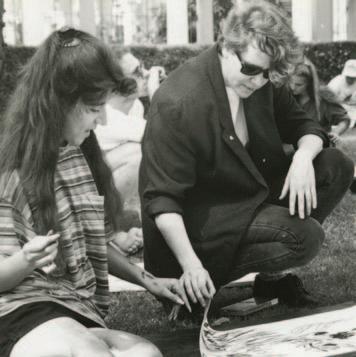
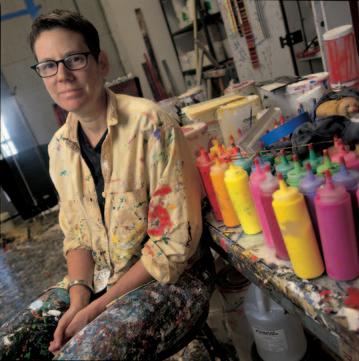
left: Besemer reviews a student’s work during an art class on the front lawn of Weingart in April 1992. center: Photographed for the Fall 2000 magazine by Max S. Gerber. right: Working with a straight edge on a lift at their studio in 2022.
Arthur F. Saint-Aubin Professor of Spanish and French studies
Years at Occidental: 44
What’s been your favorite class to teach and why? I teach three different categories of courses, and I have a favorite in each: firstyear courses that target principally language acquisition; second-year courses that further develop students’ language skills with an increasing emphasis on exploring the diversity of Francophone cultures; and advanced seminars in literature and culture—courses aimed principally at majors, minors, and native speakers.
The courses I enjoy teaching the most are also the ones that present the most challenges for me to teach successfully. Among the advanced seminars, I find teaching translation to be the most exacting but also the most rewarding. One reward in teaching the course is observing how students come to discover the same joy of translation that I myself experience with each publication. Over the years, my students have produced professional-level translations of works by J.K. Rowling, Maya Angelou, John Lennon, and Nina Simone, among many others.
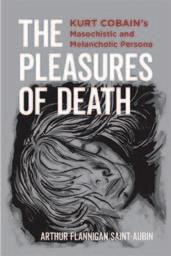
Looking at your two most recent books, is there a common thread between Kurt Cobain [and the Seattle grunge scene] and Toussaint and Isaac Louverture [the leaders of the Haitian Revolution]? For several years, I have been researching and writing about grief, melancholy, and cultural practices of mourning. I have been especially interested in how experiences of masculinity can inform and shape expressions of sadness, depression, and suicide. From this perspective, Toussaint Louverture and Kurt Cobain have much in common. Both men wrote compelling, personal narratives of despair.
The formerly enslaved Toussaint Louverture—who attained the rank of general in the French army but who would later become Napoleon’s aggrieved prisoner of war—wrote his 1802 memoir while isolated in a dungeon in France, just months before his death. Kurt Cobain wrote some of his journals in the 1990s while in isolation and suffering from a seemingly ineffable despondency, prior to committing suicide. Although the two men lived during different times and had vastly different experiences, their narratives, nev-
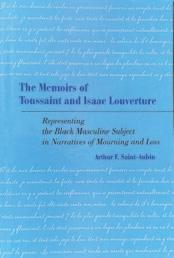
ertheless, can be read in tandem. Together, their writings tell us something provocative about death and despair.
What are you working on right now?
Currently, I am working on two other topics that are, ostensibly, unrelated. First, I am pursuing research on the rock ’n’ roll memoir by developing into a book some short essays from 2015-17 on Chuck Berry and the socalled fathers of rock ’n’ roll. Second, I am pursuing a project on Maxime Du Camp, considered a minor French novelist from the 19th century, one whose fiction anticipates some of the major tenets of psychoanalysis, including Freud’s theory on mourning and melancholy. Because I have a relatively short
12 OCCIDENTAL MAGAZINE SPRING 2023
Photos (pages 12, 14) by Kevin Burke
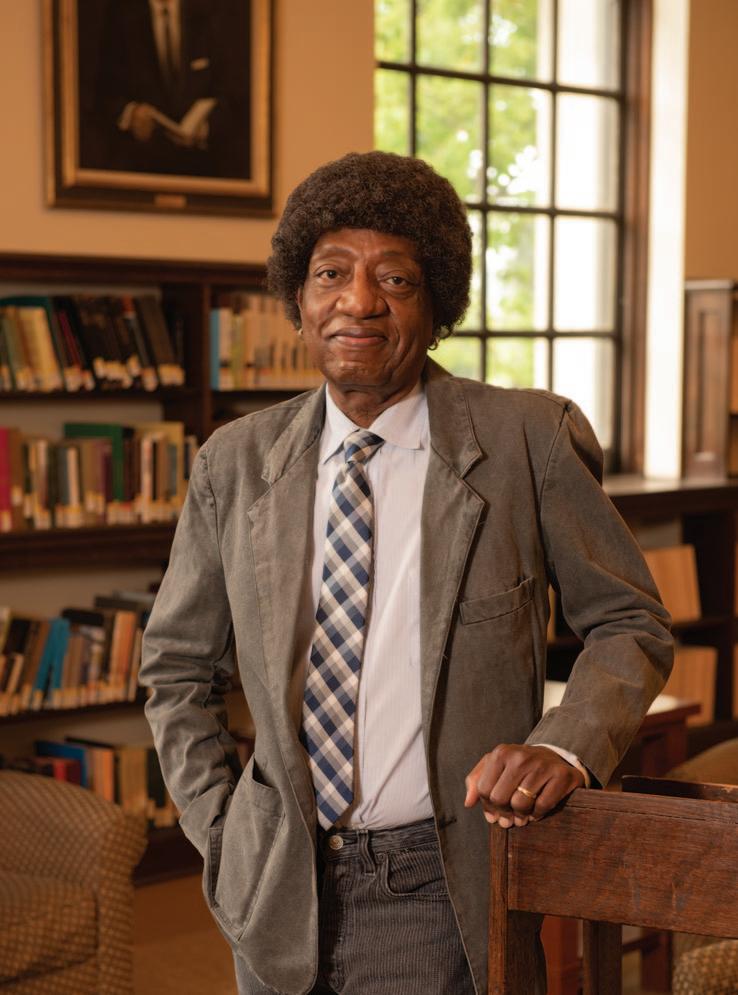
above: Saint-Aubin, photographed in the Academic Commons in April. His books include The Pleasures of Death: Kurt Cobain’s Masochistic and Melancholic Persona (2020) and The Memoirs of Toussaint and Isaac Louverture: Representing the Black Masculine Subject in Narratives of Mourning and Loss (2015).
attention span, I am more successful when I can alternate between working on two or more different projects at the same time!
What are you looking forward to most in retirement? Spending extended periods of time in the French-speaking Caribbean. I have accepted an invitation to serve for at least one year as a visiting professor of languages and cultural studies at the State University of Haiti. With the increasingly violent political and social disruptions that continue to afflict the country, it is very likely that my courses for the 2023-24 academic year will be online. Nevertheless, I hope to be able to return to Haiti and to visit Martinique on a regular basis. I also look forward to making progress in learning Baoulé, a language spoken in West Africa that I first studied in graduate school.
Narbé Mansourian ’97: I first met Arthur Saint-Aubin as a freshman nearly 30 years ago when I took his French Translation class. During that semester, he pushed and challenged me in craftily interpreting French and English literary and poetic works. He showed me how to find the essence of a text, and ways to preserve the significance of each excerpt, without the beauty of the language being lost in translation.
My frequent trips to his office turned from conversations about interpreting Rimbaud and Césaire to seeking his guidance about navigating through life in general. Arthur had become not only my academic adviser but a mentor during difficult times. He stood patiently by me when I was struggling through some personal issues that made it nearly impossible for me to finish my senior comprehensive exams on time. This required me to make a journal of dozens of French novels that I had read over the course of a year, then use that knowledge to write a dissertation on a common theme that these literary works shared.
When I was ready to give in and throw in the towel at the prospect of such a daunting task, Arthur sat with me and encouraged me on countless occasions. He gave me honest feedback on my work, until I was able to successfully write an excellent dissertation on the intertextuality of all the novels in question. Beyond being ecstatic to receive my B.A. in French literature, I was touched by Arthur’s unwavering belief in me.
Over the years, Arthur and I kept in correspondence, and our Socratic relationship
turned into a lifelong friendship. We now often converse about different stages in our lives and our families. I am now in my 22nd year of teaching, and my love for educating others was sparked in part by Arthur’s interest in me as a scholar.
While our shared love of linguistics and French literature brought us together, it was the human connection that he made with me that etched an impression in my heart. Thank you, Arthur, for sticking by me academically, for helping me find my voice as a leader, and for allowing me to rediscover that joie de vivre. Merci, mon cher ami!
Mansourian majored in French literature at Occidental and has taught at Hollywood Schoolhouse since 2001.
Thomas Robertson ’20: When I entered Professor Saint-Aubin’s Advanced Grammar and Comprehension class, I was coming off of a less-than-ideal semester academically. French was a subject I formerly had so much excitement for, but it was fleeting fast. Professor Saint-Aubin supported me as a person and a student to pursue my passions for French translation. As a distinguished mind in French studies, Black studies, psychoanalysis, and gender studies, he exposed me to the vast interdisciplinary approaches of creative, stimulating scholarship.
It is because of him that I was encouraged to pursue a Fulbright grant and strengthen my French translation skills beyond Oxy. I am beyond humbled to have such an expert in French as an academic mentor. Whether by living in a French-speaking country or by doing volunteer translation work, I am constantly reminded of the joy that French language and translation gives me, and the person who recultivated my relationship to French language and translation. Merci du fond du cœur.
A diplomacy and world affairs and group language double major at Occidental, Robertson used his Fulbright award to study how violence in rural Burkina Faso has impacted politics and interethnic community relations in Ouagadougou, the West African country’s capital.
Dylan Ryan ’21: My first class at Occidental was French 201 with Professor Saint-Aubin. I was nervous because I didn’t know what to expect from any college course, let alone an advanced one. The class was indeed challenging, but Professor Saint-Aubin kept us en-
gaged, enticing us on bit by bit with creative projects while expanding our knowledge and developing a love for French culture.
“How interesting could a class on French grammar really be?” you might wonder, and though I might add that his courses were not structured for those just in it for the credits, he managed to take courses that seem rather black-and-white on paper and transform them into immersive glimpses of French culture, all while never leaving campus.
His remarks would point out areas you could improve, but he would equally praise where it was deserved, encouraging me not only to strive for high marks in the class but also pursue and cultivate my French skills as a whole. His course on the Theory and Practice of Translation remains one of my favorite classes post-graduation, and I continue to use those skills on a regular basis. His theories on the practice of translation gave me a greater appreciation for all languages and their nuances, leading me to pursue a double minor in linguistics and French and focus my senior thesis on the intersection of language and thought.
The study of the many facets of language has been a major focus in my studies and career choices, a pathway that was heavily influenced by Professor Saint-Aubin’s theories and kind remarks. I feel so honored and grateful to have had such a wonderful French experience at Occidental and can only hope that others find a teacher as invested and inspiring as Professor Saint-Aubin. Merci, Professeur, for giving me a lifelong appreciation for a language other than my own and for a wonderful start to my career at Occidental.
Ryan majored in cognitive science at Occidental and works as an electroencephalographic (EEG) technician at Kern Medical.
SPRING 2023 OCCIDENTAL MAGAZINE 13
Photo courtesy Occidental College Special Collections
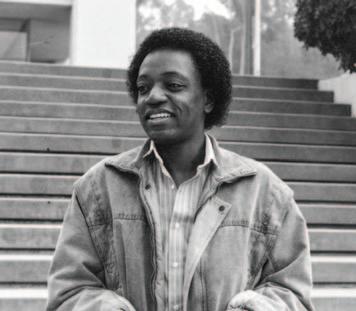
Saint-Aubin on the steps next to Johnson Hall in a 1986 photo.
Nina Gelbart
Professor of History and Anita Johnson Wand Professor of Women’s Studies Years
at Occidental: 48
How did you wind up at Occidental? My husband [William Gelbart] and I were living in Berkeley at the time, where he was teaching, and he was basically poached by UCLA. He came in as a full professor at some absurdly young age. I had finished my Ph.D. just a couple years before, and I had just had our first child, so I thought an adjunct position of some kind would be perfect.
I had heard that Occidental was this wonderful, small liberal arts college. So I wrote and asked whether they ever hired a part-time person, and I might have sent a CV or something. [Professors] Basil Busacca and Tim Sanders were in charge of the Core program at the time, and before I had told them any more about myself, they wrote this unbelievably welcoming note saying, “We have a course on literature and science, and we are trying to find another person to teach this course.” Well, I had just done a thesis on the image of science in utopian literature in
18th-century France. So, I came out and met them, but it all felt perfunctory because the fit was just so clear.
Among all currently active faculty, your tenure at Oxy is the longest. My really dear buddies have been gone for a long time. These were the folks I had team-taught with, who had the same institutional memory I had. Each year more of them retired. Roger Boesche [Arthur G. Coons Professor in the History of Ideas, who died in 2017] was my best friend at Oxy. We team-taught together for 40 years. Working with Roger was a very important part of my life here. We bounced ideas off each other all the time.
You taught your final course at Occidental last semester. What was it? History of Medicine and Disease in Western Society [which she introduced into the curriculum about 25 years ago]. My field is French history, but I’ve always been interested in both the history of science and of women. My books are where my interests intersect.
How do you choose your book subjects? I’m fascinated by the women of 18th-century France. So the way I choose a subject has to do with my passion for resurrecting some of these forgotten stories. These are people
who were forces to be reckoned with in their day, and they were erased by the custodians of culture who decide what should be preserved and what shouldn’t. In researching the six scientists that I write about in my most recent book, I was fortunate to get a Guggenheim Fellowship for this project. [Minerva’s French Sisters: Women of Science in Enlightenment France was published in 2021.]
In this new book, I’ve done something rather unorthodox. The chapters are written in a scholarly style that you’d expect in a standard academic monograph—but at the end of each chapter, I write a letter to each woman because I think that their stories should be made relevant to now. I felt I had to.
Why not bring their story up into the present? Why not tell astronomer Nicole Reine Lepaute, who was important in her day and then entirely unsung for 200 years, that there’s a lunar crater, an asteroid, and a street in Paris named for her? She should know. So I write her a letter. The women don’t answer me [laughs]. I’m not that far gone.
Camille Wyss ’18: Professor Nina Gelbart has devoted her career to chronicling the strong and intelligent women who have shaped history. Like is attracted to like.
During my time at Oxy, I had the pleasure of working with and learning from Professor Gelbart in her roles as a professor, thesis adviser, and academic adviser. In the spring of my junior year, I faced significant health challenges. Professor Gelbart quickly offered assistance, but I foolishly rebuffed her.
When matters worsened, I asked Professor Gelbart for help and she sprang into action. In one office-hours session, she formulated a plan to carry me through the semester. She called my professors, coordinated accommodations, and, most important, reminded me that I was not alone. She remained by my side throughout the semester. Without her support, I would never have gotten through the term or my final year at Oxy.
In the years since I graduated, Professor Gelbart still checks in on me regularly. Her messages feel like big hugs from hundreds of miles away. She continues to embolden and encourage me. I am exceedingly grateful to have a lifelong cheerleader, mentor, and role model in Professor Gelbart.
I cannot overstate my admiration of and gratitude for Professor Gelbart. In the classroom, she helped me grow as a writer and a

14 OCCIDENTAL MAGAZINE SPRING 2023
thinker. Outside of class, she buoyed me during an immensely challenging time. She has the biggest heart and is a fierce advocate for her students and loved ones. I hope to emulate her warmth, generosity, and tenacity.
Professor Gelbart, thank you for everything that you have done for me, your other students, the History Department, and the College. Your impact stretches far beyond your scholarship and teaching. Thank you for being all that you are.
Wyss is an attorney currently working as a judicial law clerk in a federal district court.
Lindsay Parker ’04: When I first read the course description for Professor Gelbart’s Age of Enlightenment class, I thought it would be a good learning experience. It became the beginning of my career and, to my incredible good fortune, the beginning of a friendship with the most inspired, creative, and generous historian I know.
I clearly remember sitting in her class as she beamed in front of us. She knew those Enlightenment texts so well, but she delighted in the opportunity to reread them and infect us with historical inquisitiveness. We were a little shy, so she suggested we come to class with a two-page reading reflection, a starting point for conversation. She cheerfully took on that extra stack of papers to grade weekly.
Midway through the semester, I realized that I wanted to follow her example. I changed my major to history and asked her to be my adviser. Professor Gelbart said yes, even though the line for her office hours was always long. I visited her office to discuss drafts of papers and, eventually, my honors thesis, graduate school applications, and book manuscript. Despite her commitment to her highly productive research agenda, she was always so glad to see me.
She simply loves her job. “I’m researching the dodo bird!” she told me over a stack of books once. She is so curious, so joyful, and so eager to help. She is a women’s historian to the core: respectful of her subjects, sincere in her pursuit of the truth, earnest in her desire to collaborate and mentor. What is unusual about Professor Gelbart is that she also is welcoming. She uses her success to help others achieve
theirs, all in the interest of the vitality of the academy and the usefulness of history to everyday life.
I have come to learn that it is unusual for someone so accomplished to be also so open and well-rounded. These days, we talk not just about history but about the future of academia, about ranking priorities together with a Ph.D.-holding spouse, and about balancing work with motherhood.
I don’t dare compare myself to her. Her mark on 18th-century studies is illustrious. But I do bask in my friendship with her and reflect warmly on the fact that just like my mentor, I, too, wrote a book about a fascinating 18th-century French woman. When I teach, I think about cultivating the sense of wonder and ambition she gifted us.

To me, Nina is Oxy. The College won’t be the same without her. I am, however, grateful that I don’t have to let her go now, just as I didn’t 20 years ago.
Parker holds a Ph.D. in early modern French history. She is the author of Writing the Revolution: A French Woman’s History in Letters (Oxford University Press, 2013).
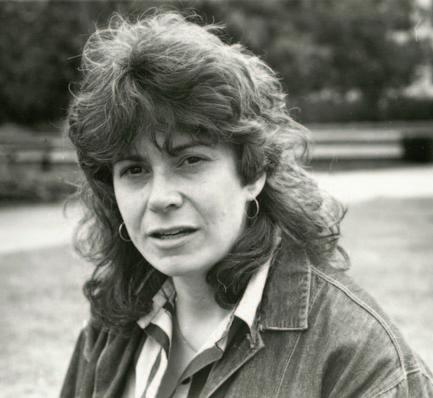
Linnea Propp-Pearson ’17: Professor Gelbart became an anchor in my life soon after I arrived at Oxy. My first year, I enrolled in her class on the French and Haitian revolutions and decided to major in history with Nina as my adviser. I took as many of her classes as my schedule would allow—from history of philosophy and religion to history of medicine. I eagerly consumed the readings and listened, enraptured, to her lectures. She did not use flashy technology to get students’ attention—in fact, she occasionally insisted that a slide projector be wheeled into class. She captured us through storytelling, wit, engaging discussions, and commitment to lifting up voices in history that are not often heard. Nina’s courses brought me so much joy and fed my excitement for learning that endures now.
Like the remarkable women in history she writes about, Nina is a polymath. Although her expertise is in history, she has studied music and science and has a great appreciation for art, and understands how those topics intersect. She models a love of learning
that helped me to think critically and holistically about a diversity of issues.
I often visited Nina’s office in Swan Hall seeking guidance. She always listened closely, took my concerns seriously, and offered thoughtful advice. She encouraged me to study abroad. When I burst into her office senior year after returning from Argentina and anxiously explained my newfound passion for environmental justice, she celebrated my curiosity and all that I had learned, assuring me that it was not incompatible with my history studies. My interest in this subject ultimately brought me to work for my dream organization today, of course with the help of a letter of recommendation from Professor Gelbart.
Nina continues to be there for me during my existential crises and to encourage my many interests. Just a few months ago in L.A., I wrote to her after a professional development coaching program had left me distraught. I was soon sitting in her backyard as she insisted upon feeding me lunch. After her usual careful listening and prudent advice, I felt a renewed confidence in myself and my work. Nina’s brilliance, enthusiasm for learning, and true care for her students made her an exceptional professor and I am so deeply grateful to continue to experience her light as a mentor. I will be sending her an email soon to ask how retirement is treating her and when we can catch up next over lunch.
Propp-Pearson is an executive assistant and programs specialist with Earthjustice.
SPRING 2023 OCCIDENTAL MAGAZINE 15
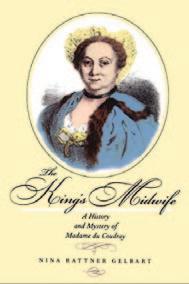
above: Gelbart on the Occidental campus in 1988. opposite page: Photographed in her Swan hall office in April. below left: The King’s Midwife (1998) crossed over into the literary mainstream after a rave in The New York Times Book Review
Photos (pages 11, 15) by Frances Hill
18YOUNG SCIENTISTS TO WATCH
By DICK ANDERSON
Occidental’s labs are the launching pads for countless careers in the sciences—and here are 18 graduates of the last 20 years, nominated by their former faculty mentors, doing exemplary work in their field
Amelia Muscott ’22
“Growing up in Washington state, I always wondered about the history of the Cascade Range and its precipitous peaks, the rugged topography of the channeled scablands, and the formation of columnar basalt,” says Amelia Muscott. At the beginning of her sophomore year at Oxy, she began working in Associate Professor of Geology Darren Larsen’s paleoclimate and sedimentology lab having taken only a few geology classes.
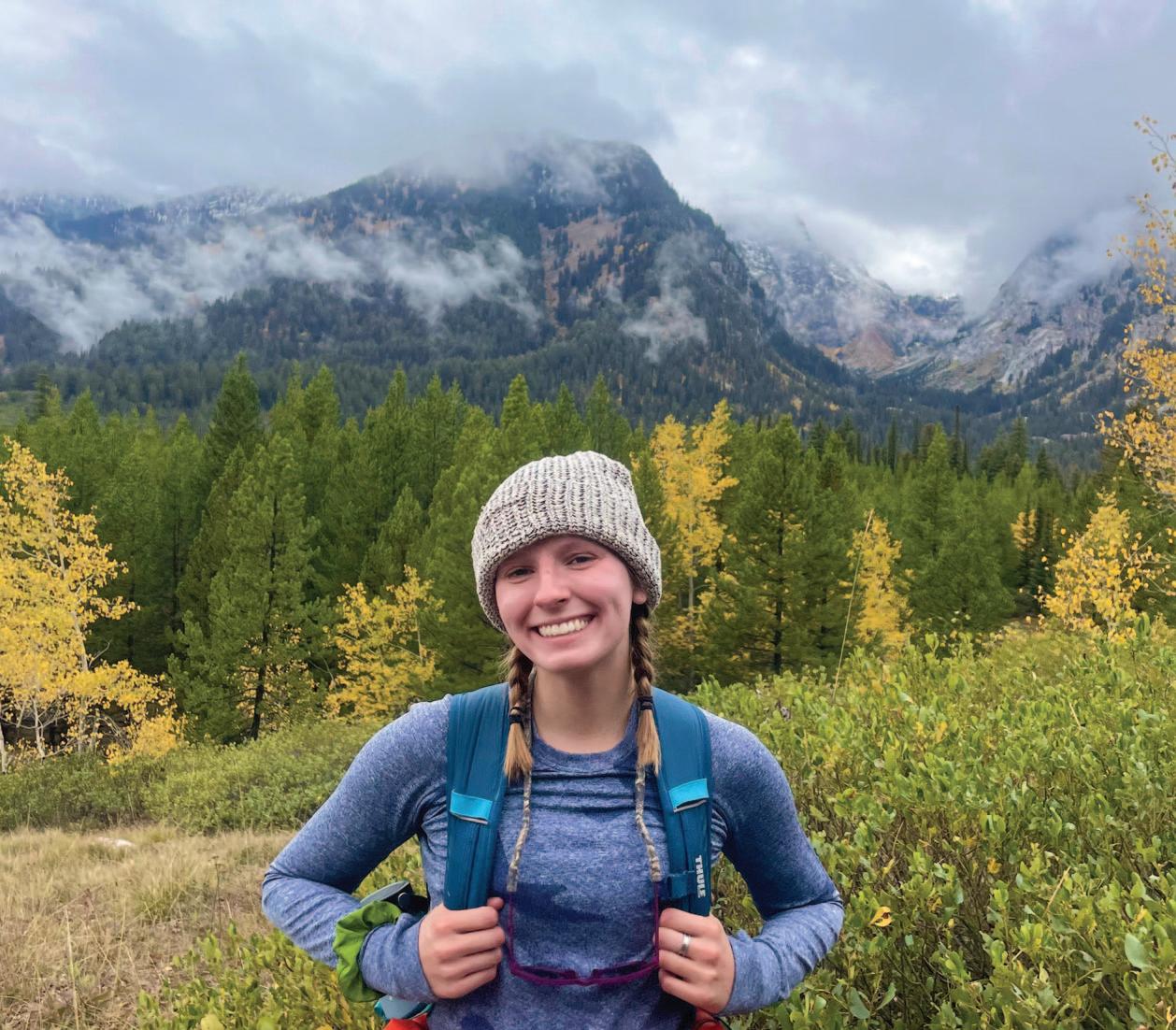
Over the next three years, she learned how to formulate “big research questions,” write proposals, collect data in an orderly
way, interpret results, “and perhaps most importantly, how to problem-solve when things go wrong,” says Muscott, an NSF Graduate Research Scholar and Ph.D. student at the University of Utah. “Research with Dr. Larsen developed the lab, field, and interpersonal skills I needed to pursue a graduate degree.”
Muscott’s research focuses on reconstructing drought events in the Holocene era (the last 11,700 years of the Earth’s history) and assessing the corresponding ecological responses by analyzing ancient DNA in lake sediments collected from Summit Lake, Nev. She got involved in this project as an undergraduate, collecting sediment cores and performing preliminary sedimentary analyses.
“Some days I camp beneath a glacier while collecting sediment cores from frozen lakes, touch 13,000-year-old volcanic ash, or study 200-million-year-old rock formations,” says Muscott, who sees herself staying in the research world “for as long as possible” and continuing to pursue questions about Holocene climate change as a research scientist at the U.S. Geological Survey or as a professor at a small liberal arts school like Oxy.
“To me, a successful career looks like learning more about the world around me every day, contributing to the rich body of climate change research, inspiring future generations of geoscientists, and continuing to advocate for women in STEM.”
16 OCCIDENTAL MAGAZINE SPRING 2023
Namandjé Bumpus ’03
On April 6, the FDA withdrew its approval of Makena, a drug used to lower the risk of premature birth in a woman who has already had one premature baby, after 12 years on the market. In issuing the decision, FDA Chief Scientist Namandjé Bumpus acknowledged the “serious problems of preterm birth” among Black women, adding, “Our hope is that this decision will help galvanize further research.” The announcement was perhaps the most visible insight into her work as the FDA’s chief scientist since Bumpus was named to the role on June 30, 2022.
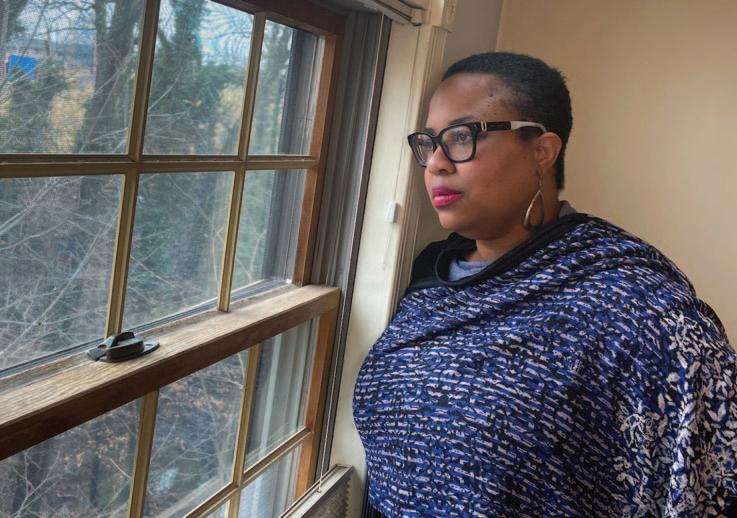
Can you talk about your path to this job? I was a biology major at Oxy and that is where my life as a researcher began. After Oxy, I earned a Ph.D. in pharmacology at the University of Michigan and completed a postdoctoral fellowship at the Scripps Research Institute. At each of those stages, my research focused on biomedical science and gaining a deeper understanding of the impact of drugs on the body. Following my training, I joined the faculty at Johns Hopkins University School of Medicine and rose through the ranks to become an endowed full professor and chair of the Department of Pharmacology and Molecular Sciences. I led a research laboratory and my research centered on understanding molecular mechanisms underlying differences between people in drug outcomes. Through this I began to learn about the work at the FDA and to build relationships with colleagues there. At Hopkins, I also developed skills in enterprise leadership through my various roles, including as department chair and as an associate dean. When I put all of that together, this job seemed like a great way to grow and to contribute to public health through leveraging my scientific expertise and leadership ability.
The FDA employs 11,000 scientists. What are the most pressing concerns of the Office of the Chief Scientist? At the top of my list is ensuring that we leverage all of our scientific knowledge, resources, and expertise to improve public health. To do so, my office is working to ensure that our scientists have the support they need to carry out important research and that our scientists have connections to one another in a way that facilitates collaboration. We also want to make sure that the public knows that
there are thousands of scientists at the FDA carrying out research that underlies our decision making and public health mission. I also have several specific priorities as chief scientist, including: implementation of the Modernization of Cosmetics Regulation Act, advancement of laboratory and in silico [computer] approaches that can be used to predict human responses to things like medical products and components of food, clinical trial diversity, gene modification science, and advisory committee optimization.
What is a typical day like for you? I attend meetings on a range of topics. I meet internally with colleagues at FDA to discuss areas and decisions that involve science. I meet with our scientists to discuss their work and especially enjoy days where I get to look at experimental data and even spend time in a lab. I hold listening sessions and meetings with external groups to learn what is important to them and the people they represent. I also meet with other government agencies to discuss coordination around science and related areas. Some days I go to Capitol Hill to provide briefings on various priority areas and topics within the scope of my role.
Is there a trust problem in public health —and if so, what can be done to address that? There are opportunities to enhance communication around science and how science is used in decision making. As FDA chief scientist, I hope to play a proactive and strategic role in providing robust and accurate information to the public regarding foundational
scientific topics as well as the science-based information they need regarding medical products and foods to maintain and improve their health. I believe that communication of science, particularly in the context of public health, is a critical long-term priority.
What is the most fulfilling part of your job? I enjoy being a public servant. Feeling that my work can have a very direct impact on public health. There is something very special about the FDA. I get to think very carefully about fundamental science and how we can generate knowledge in that space, while at the same time doing so in the context of answering specific questions that will enable us to make important decisions related to our mission. I also am greatly fulfilled by supporting scientists and doing all that I can to enable them to thrive in their research and broader career.
What are the benefits of a liberal arts education to a career in the sciences? It provides a wonderful background for a career as a scientist, including scientific leadership. The opportunity to perform research early on as an undergraduate certainly springboarded my own development as a scientist, and the relationships I built with professors provided much- needed space to grow and establish confidence in doing scientific research. A liberal arts education provides substantial opportunities to deep-dive into various topics and to learn how to be analytical in expressing scientific ideas. It’s a strong foundation for a scientific career.
SPRING 2023 OCCIDENTAL MAGAZINE 17
Photo by Marc Campos
Griffin Mead ’14
As a research chemist at the National Institute of Standards and Technology (NIST) in Boulder, Colo., Griffin Mead performs atmospheric measurements of the greenhouse gas methane using a highly accurate measurement technique called dual frequency comb spectroscopy. “Methane is released by many sources, including livestock emissions and leaks from oil and gas wells,” he explains. “I’ve tried to combine atmospheric models with the dual frequency comb technique to evaluate and improve regional methane emissions maps. I really enjoy bringing together different sets of data—time series of methane concentrations, meteorological models, historical data on well locations, etc.—into a single cohesive story that explains something about the world.”
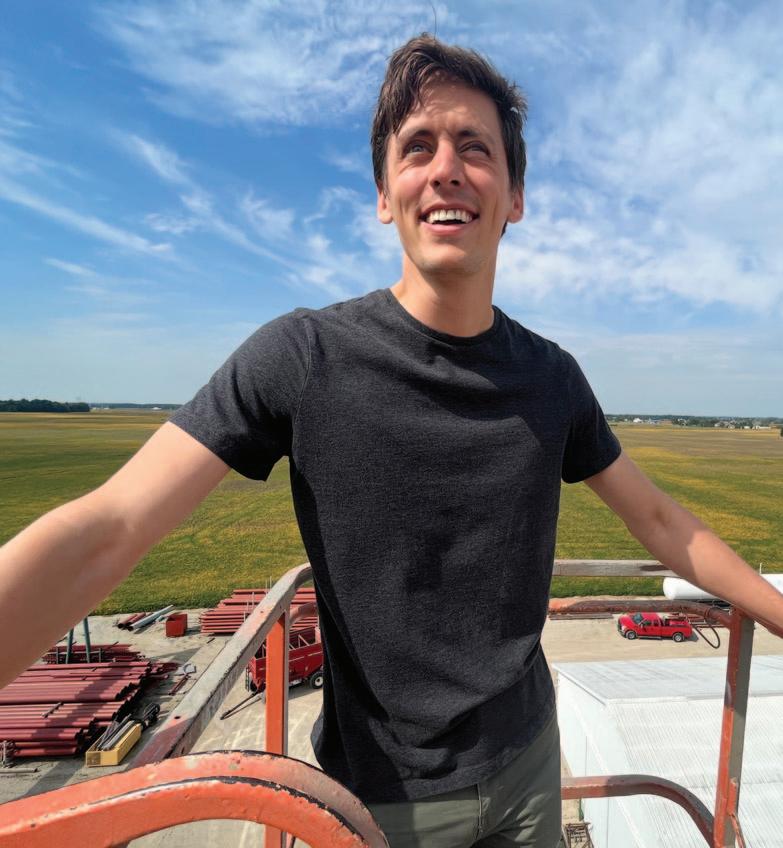
Prior to joining NIST in February 2021, Mead earned a Ph.D. in physical chemistry at Caltech. As a chemistry major at Oxy, he did all of his research with Andrew Udit. “One thing I really enjoyed about working with Andrew was how interdisciplinary his research could be,” Mead says. “There’s not a great deal of overlap between synthesizing organic molecules and blood clotting assays, but I got to explore both of these techniques—and much in between—while working with Andrew. He also made the next steps of becoming a scientist (Ph.D., postdoc) seem achievable and worthwhile.” Mead fondly recalls his time in Norris Hall of Chemistry: “You could stand for hours at a fume hood, entirely engrossed in an experiment. Friends from other labs down the hall might pop in and chat or try to find a piece of equipment. It was an exciting environment to be in, where learning became fun—if not easy.”
JP Flores ’21
Whether he’s podcasting (From where does it STEM?, with 21 episodes to date), interning with the National Institutes of Health, or pursuing a Ph.D. in bioinformatics and computational biology at the University of North Carolina at Chapel Hill, John Patrick “JP” Flores is “always keeping busy,” as Professor of Biology Joseph Schulz puts it. His research in the Phanstiel Lab involves studying the role of 3-D chromatin structure in response to environmental stress.
“If you hyperosmotically stress cells (like with salt, for example), the cells will lose most, if not all, of their chromatin architecture,” explains Flores, an NSF Graduate Research Fellow. “Through an experimental technique called Hi-C, we were able to identify a couple hundred gained chromatin loops that we think are upregulating response genes so that the cell can adapt to the stress. This gives us insight into how cells respond to different kinds of stress, which is common in tumor microenvironments.” Flores’ project investigates how stresses such as hypoxia, heat shock, hyperosmotic shock, and disease impact chromatin structure and how the cell may adapt to them through regulation of genes via dynamic nuclear architecture.
In addition to an upcoming internship at the NIH Office of Science Policy, Flores will be working with National Cancer Institute Director Tom Misteli on his dissertation work. “My long-term career goals are quite unorthodox—I don’t think people with Ph.D.s should be siloed into a specific field,” he says. “I want to become a federal scientist with their own lab who is an adjunct professor at a small liberal arts school or minority-serving institution who also is an ad hoc science policy adviser who is also collaborating with folks in industry.”
If that dream gets “too big,” Flores would like to return to Occidental as a professor and manage his own research program here. Looking at the curriculum, he adds, “I’d emphasize integration of classes that may inform the next generation of scientists why we also need to be aware of societal problems. I think a biology class developed in collaboration with the Critical Theory & Social Justice Department would be so cool.”
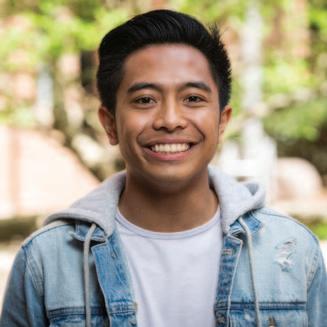
18 OCCIDENTAL MAGAZINE SPRING 2023
Emily Hawkins ’14
Emily Hawkins hadn’t given much thought to how the universe works before taking a physics class during her senior year of high school. “This course brought a new level of challenge that invigorated a curiosity in various physics phenomena within me,” says Hawkins, who majored in physics at Oxy and is now a tenure-track assistant professor of physics in the Seaver College of Science and Engineering at Loyola Marymount University.
Thanks to Alec Schramm, the Ezra Frederick Scattergood Professor of Physics at Oxy, Hawkins interned for two years with a researcher at NASA’s Jet Propulsion Laboratory who was carrying out an experimental study to characterize cryovolcanism (the eruption of water and other liquid- or vapor-phase volatiles) on planetary bodies including Titan, the largest of Saturn’s 124 moons. “The experience ignited a great passion in me to further study planetary physics and to find a way to make a career out of doing so,” she says.
Of her coursework at Oxy, a Mathematical Methods in Physics class (PHYS 310) she took
as a junior with Schramm remains particularly memorable. “Professor Schramm took special care to provide numerous problems for us to solve that motivated the beauty of taking advantage of mathematical properties to solve a variety of interesting and nonintuitive physics problems,” she says. “It undoubtedly changed my development as a physicist.”
Hawkins went on earn her M.S. and Ph.D. in geophysics and space physics at UCLA, completing her studies in 2020. In her lab at LMU, “I conduct experiments to characterize fluid motions on a variety of bodies in our solar system and beyond,” she says. “In particular, my experiments use rapidly rotating convecting fluids to better understand how the magnetic field of our planet and others are generated and maintained. The geomagnetic field controls how our compasses work and acts as our invisible shield, protecting us from harmful levels of solar radiation.”
Her latest endeavors at LMU involve constructing a new experimental device designed specifically to study the physical properties of the subsurface oceans of icy moons such as Enceladus and Europa (moons of Saturn and Jupiter, respectively). “We need to better
understand the ocean dynamics within these bodies,” says Hawkins, who is working closely with collaborators on NASA’s Europa Clipper mission—scheduled to launch in October 2024—“to help constrain the potential for observing life elsewhere in our solar system.”
Now in her third year at LMU, Hawkins has several undergrads working with her to study icy world habitability. “I greatly enjoy mentoring students,” she says. “There is nothing quite like watching a student grasp a new and challenging physics concept and seeing their ‘light-bulb moment’ occur, as clichéd as it may sound.”
Reflecting the various interests of LMU’s physics and engineering students, Hawkins supervises several smaller projects “that are equally fun and fascinating,” she says. “I am mentoring a team of students to design and construct a form-factor CubeSat to launch into space to explore the behavior of a magnetic pump in microgravity”—a new technology that could improve astronauts’ quality of life. The project grew out of conversations with a number of her students, she notes: “It is thrilling to continue to work with them outside of the classroom as we learn together.”
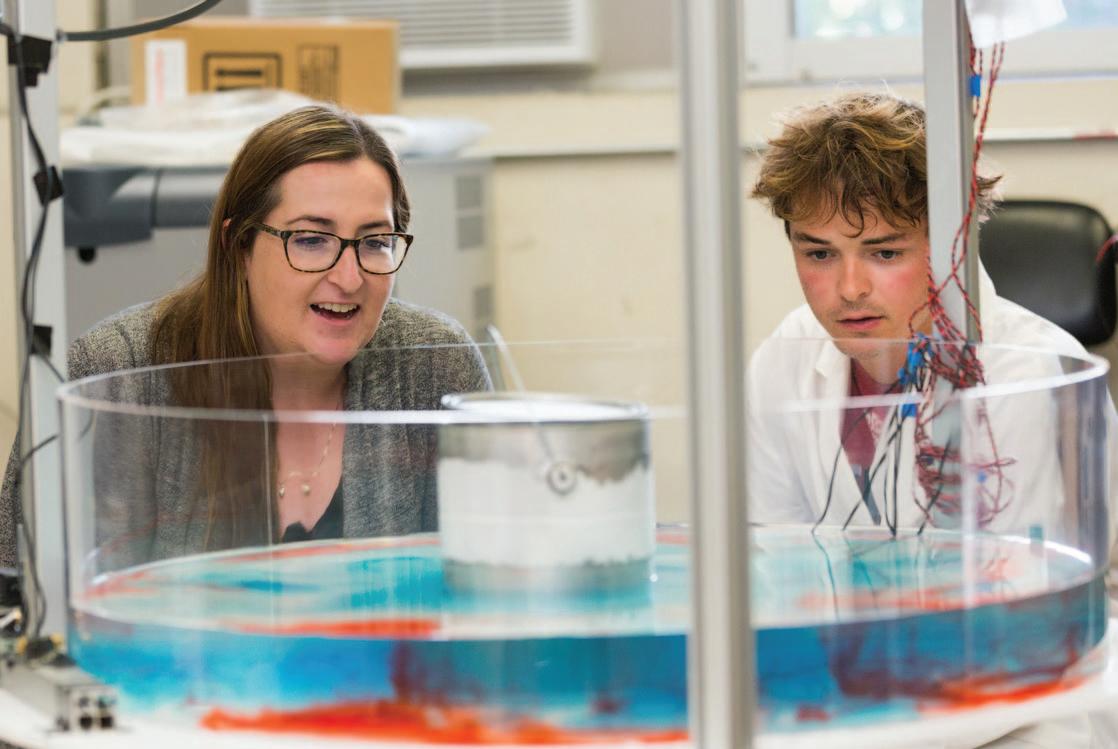
SPRING 2023 OCCIDENTAL MAGAZINE 19
Photo courtesy Loyola Marymount University
Nicole Leung ’11
Growing up in Hong Kong, Nicole Leung spent much of her childhood on the university campuses where her father was a professor of microbiology. After he left academia to start a diagnostic laboratory, she designed the lab’s logo and website. “When I was old enough to step into the lab, I was hooked,” says Leung, who majored in biochemistry at Oxy and worked in the lab of Professor of Biology Joseph Schulz.
Leung’s graduate research in the Craig Montell Lab at UC Santa Barbara focused on the functions of opsins in taste. “I made the surprising discovery that visual opsins in the fruit fly also function as bitter chemical receptors in taste,” she explains. “We suggest that opsins may have been chemical sensors first and subsequently co-opted their ability to sense light.” For her postdoctoral research in the Nirao Shah Laboratory at Stanford, Leung focused on the molecular and cellular basis of neuronal plasticity in the female mouse brain.
After welcoming daughter Maile early last year, Leung stepped away from the lab to devote more time to being “the mom that I wanted to be,” she says. In her current role as scientific grant writer for the GladstoneUCSF Institute of Genomic Immunology, she prepares research proposals that blend the latest genomics and genome-engineering technologies with immunology research to engineer the human immune system for therapeutic benefit. “I am hopeful that if I decide to return to pursuing an independent investigator role in academia, there will be opportunities and avenues of support for me,” she says. “I’m incredibly grateful for my current role at the institute and I am loving chasing after my extraordinarily active and bright 1-year-old. Motherhood has taught me that happiness—joy in work and joy in life—is the ultimate success.”
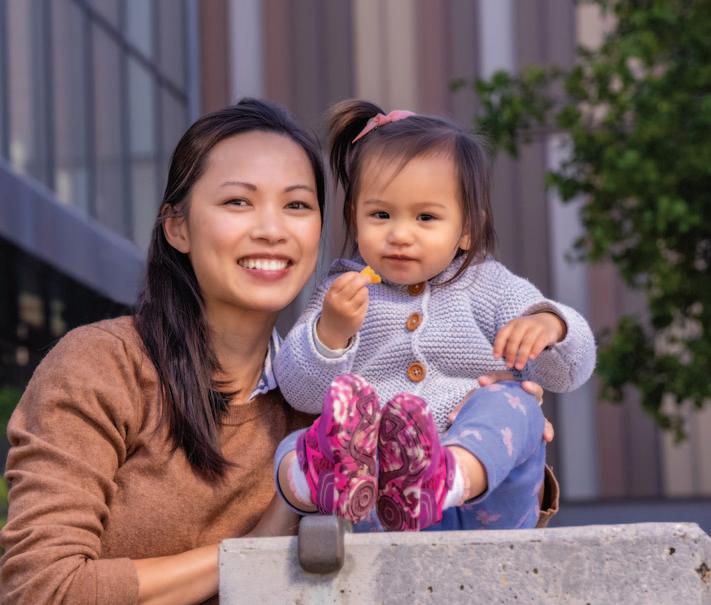
Will Reeves ’16
“As a kid I was infatuated with Lego and excelled in math, which eventually led to my enjoyment of STEM,” Will Reeves recalls. “From classic egg-drop contests to looking at cells under microscopes and creating compounds in lab, I loved all of the middle school science experiments.” On a campus visit to Oxy as a high school senior, Reeves sat in on a class taught by Professor of Kinesiology Stuart Rugg. “His energy was unmatched, which made me excited about learning from him.”
Reeves majored in kinesiology and also worked closely with Associate Professor of Chemistry Aram Nersissian. Under Nersissian’s guidance, Reeves and his fellow students discovered a novel anticoagulant, for which they were honored by the American Society of Hematology. “Professor Nersissian [who died in 2017] encouraged me to be more confident about my ability to execute in and outside of the classroom,” he says. “When I doubted myself, he inspired me to be better.”
While working toward an M.S. in physician assistant studies at Stanford University School of Medicine, Reeves gravitated toward the Stanford Byers School of Biodesign. He and a classmate, Thomas Beck, came up with a business idea based on Beck’s experience
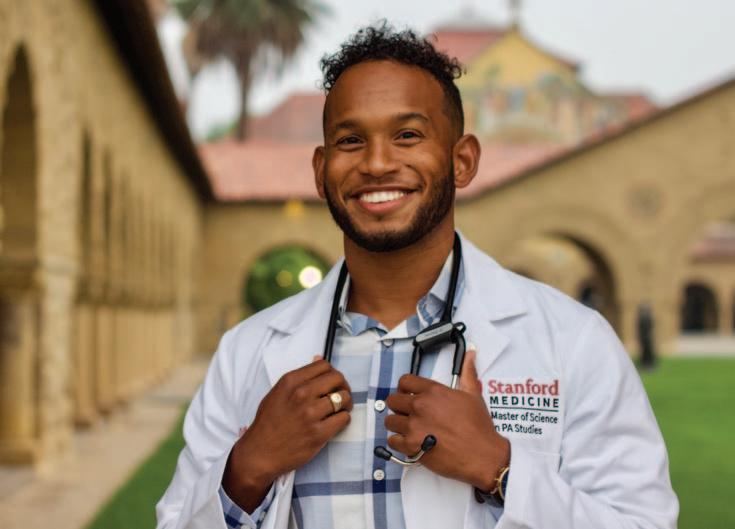
as an immunology Ph.D. “Our objective was to use thermal imaging to detect and predict flares for rheumatoid arthritis to enable patients to remotely and objectively record these episodes and further inform their subsequent treatment,” he says. It became clear that such a product could improve care and quality of life for someone with chronic illness, so Reeves, Beck, and a colleague, Ryan Kellogg, developed an app, RTHM HandScan, to rev-
olutionize at-home management of chronic conditions through AI-powered technology.
“When I think about the future of supplementing my practice with technology, I can imagine scaling the positive impact medicine will have on patients’ lives, and I could not be more excited,” he says. “My favorite part of my work is seeing a smile on a patient’s face when they have made progress or even receiving a simple ‘Thank you.’”
20 OCCIDENTAL MAGAZINE SPRING 2023
Photo by Jim Block
Cecilia Prator ’12
“When I began at Occidental, science was just one of my many interests,” Cecilia Prator says. “I loved history and languages. I loved Modernist literature and Renaissance poetry. I’d always envisioned a career spent in the humanities. It wasn’t until my time at Oxy that I really began to see a future where science took center stage.”
Under the supervision of Professor of Biology Joseph Schulz, Prator cleaned cone snail tanks and collected venom to facilitate the lab’s research. “Professor Schulz quickly showed me how exciting research could be. I’d ask questions about the cone snails, and more often than not, he would respond: ‘We don’t know. Nobody has studied that before.’” Just like the childhood summers she spent camping with her family in the Sierras, turning over rocks and crawling beneath logs searching for salamanders, her time in the Schulz lab kindled a passion for discovery—or, as Prator puts it, “Curiosity lit a fire in me.”
In the 11 years since she graduated from Occidental as a biology major, Prator’s research on viruses has taken many twists and turns. “From grapevine viruses to HIV, deep-sea extremophile viruses to working to develop an Ebola vaccine in a Biosafety Level 4 containment setting at the NIH’s Rocky Mountain Labs, I’ve tried to understand everything about different viral systems, using some of the most advanced tools we have,” says Prator, who, after a yearlong Fulbright fellowship in Brisbane, Australia, attended UC Berkeley for a Ph.D. in virology.
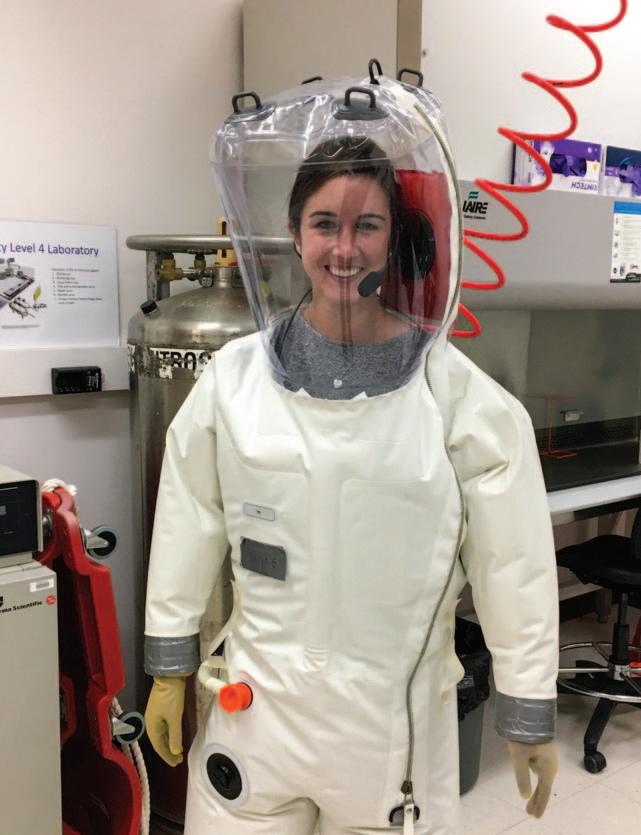
After 19 months as a postdoctoral fellow in the Laboratory of Virology at the National Institute of Allergy and Infectious Diseases, Prator took a new role as a computational biologist at Ginkgo Bioworks, a biotech company based in Boston, in February. “My work on the bioinformatics team focuses on identifying pathogens and understanding trends in the virus evolution,” she says. “We partner with the CDC and other governments and public health entities to spearhead a global pathogen monitoring network. We monitor wastewater samples from arriving aircraft and nasal swab samples, collected on a voluntary, anonymous basis from arriving international travelers, for SARS-CoV-2 and other pathogens.”
She adds: “The work we’re doing at Ginkgo sits at the frontier of biosecurity technology. We’re working to help solve real problems with real-world impacts. We’re using cutting-edge tools and doing that work across the globe. We’re striving to improve public health worldwide.”
Prator’s latest project brought her to Rwanda, where she’s supporting the growth of the government’s bioinformatics team as it develops its biosecurity programs. “Not only is it rewarding to work alongside brilliant scientists in Rwanda and beyond, but there’s a real sense of personal fulfillment that comes with helping to battle a global deadly pathogen,” she says. “After a decade-plus of training, it feels good to put my skills to use for a good cause.”
Jason Preble ’14
Of all his science professors at Oxy, Joseph Schulz made the most impact on Jason Preble’s development as a scientist. “I joined his research lab during my sophomore year because he conducted field research and his field sites were in Hawai‘i,” says the biology major, who grew up in Kaneohe.
After studying endangered birds in New Zealand as a Fulbright Scholar, Preble enrolled in a Ph.D. program in biosphere informatics at Kyoto University, publishing his research on the conservation biology of Japanese bats and completing his degree in 2022.
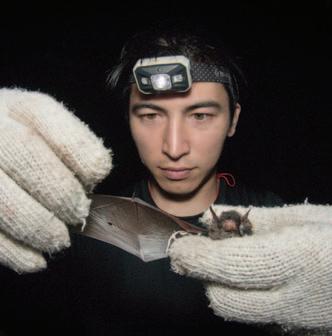
Preble’s interest in ecosystem restoration—“and the bottlenecks that keep us from doing more of it”—led to his current work as forestry partnerships lead at Terraformation, a Hawai‘i-based startup founded by former Reddit CEO Yishan Wong that is trying to help scale native biodiverse forest restoration worldwide and maximize the carbon drawdown potential of forests to combat climate change.
“I never thought I’d be working for a climate startup, but Terraformation understands how interconnected the climate and biodiversity crises are, so our work and values line up well with
my interests,” says Preble. He is responsible for identifying participants for the company’s Seed to Carbon Forest Accelerator program, which connects organizations looking to scale up their forest restoration efforts with carbon financing and other tools.
“I love that I am always learning, and my favorite part of the job is speaking with and trying to help ecosystem restoration projects from all over the world,” he says. “Even though our cultures and geographies might be totally different, it’s uplifting to work collaboratively with so many people trying to improve the health of our planet, its biodiversity, and its people.”
SPRING 2023 OCCIDENTAL MAGAZINE 21
Shawna Hollen ’05
For many years, Shawna Hollen saw her Oxy research mentor, Professor of Physics George Schmiedeshoff, at the annual American Physical Society March Meeting. “He always came to see my talks and take me out for dinner—‘Once a student, always a student, and students never pay,’ he’d say,” she recalls. Schmiedeshoff died in 2019—“a huge loss” for Hollen: “I wish I had more time to tell him what an impact he had.”
An associate professor of physics at the University of New Hampshire, Hollen leads a group that uses a scanning tunneling microscope (STM) at very low temperatures (10°K) to measure electronic properties of materials. “We are particularly interested in how disorder, defects, and the local electrostatic environment can control the electronic properties and quantum phases of 2-D materials—single atomic or molecular layers,” she explains. “In one of our current projects, we are using tools at Brook-
Jeremiah Ray ’06 & Anne Davis Ray ’06
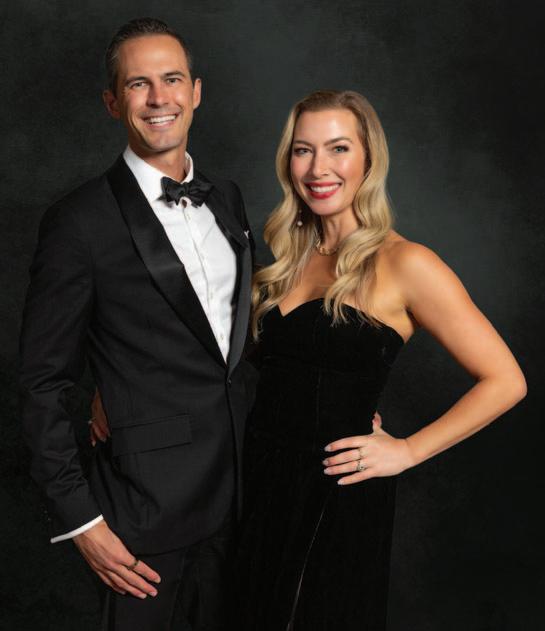
“I am confident the universe led me to Occidental,” says Anne Davis Ray. Growing up in Edgewater, Md., “The odds that I would end up at Oxy were slim, but it led me to all the best parts of my life now— my husband, my career, and our family together.” Anne arrived at college with a tentative plan to pursue history and economics, but decided to get her science requirement “out of the way” her first semester. Professor Don Deardorff’s chemistry class “proved to have the magical combination of challenge and discovery that lit up my intellectual curiosity and made me want to push further,” says Anne, who graduated from Oxy as a biochemistry major and completed her M.D. at UCSF.
Fellow biochemistry major Jeremiah Ray grew up in Jackson and fell in love with human physiology as a second-grader. “My father attended night classes at the nearest community college to earn his nursing degree,” he recalls. A babysitter was not an option, so for the next 24 months Jeremiah sat, enthralled, in many of his dad’s classes. “I could not contain my excitement and provided a voluntary lecture to my third-grade class on the flow of deoxygenated blood from the vena cava, through the right side of the heart, to the lungs, back to the left side of the heart,” says Jeremiah, who graduated from the Stanford University School of Medicine and completed his residency training in emergency medicine at the University of Utah School of Medicine.
Anne’s focus now in her career as lead physician for the Hoag On-Demand Care & Innovation Center in Newport Beach is bridging the benefits of old-fashioned, comprehensive primary care with new technologies to create patient-centered solutions for the future. “We promote wellness and a model of care that puts patients’ needs and convenience at the forefront while creating efficient models of work for physicians,” she says. “I love being able to design new and more efficient and effective systems of care, not being limited to being a ‘cog in the machine’ of traditional medicine.”
After four years as the head team physician overseeing intercollegiate athletic sports medicine at UC Davis, Jeremiah now serves
haven National Laboratory to assemble twoand three-layer stacks of tantalum disulfide with a little twist between the layers. Tantalum disulfide has a curious feature in which the electrons bunch up in a triangular pattern. We think by controlling the interaction between the layers with the twist angle, we will be able to control this triangular pattern of electrons as well as the electronic states associated with it.”
For Occidental’s Undergraduate Research Program, Hollen also did summer research with Professor Dan Snowden-Ifft building a dark matter detector and thinking that she wanted to go into astrophysics. But “the funky behavior of particles in solids drew me back into the fold in graduate school,” she says, “and I am now proudly a condensed matter physicist.”
Since Hollen arrived at UNH in 2015, she has mentored 14 undergraduate students in research projects. “Watching students develop from the phase of dipping toes in the water to fully independent research is the most rewarding experience of my career,” she says.
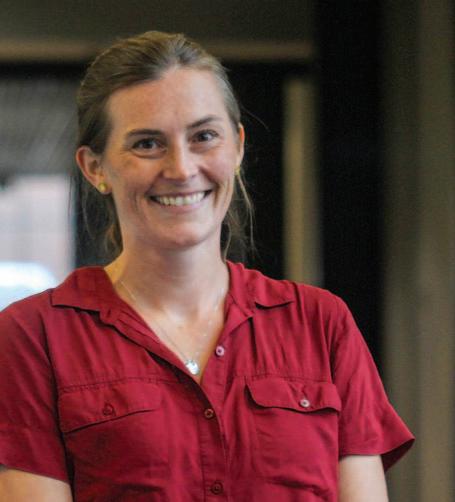
as team physician for the Los Angeles Chargers through his work at Hoag Sports Medicine. The most enjoyable part of his work is “blending a rigorous understanding of anatomy and physiology to diagnose a complex presentation and then teaching my patient the ‘why’ their injury has occurred,” he says. “The combination of diagnosing, teaching, and then intervening to make a human well again is simply wonderful.”
Retracing her own “unconventional” path to a medical career, Anne encourages Oxy students to broaden their horizons: “When you find something that lights you up, follow that, even if it feels off track. It might just be the track you’re supposed to be on in the first place.”
22 OCCIDENTAL MAGAZINE SPRING 2023
Lynn He ’19
Lynn He entered Oxy thinking she would be an economics major, but one class with Professor of Chemistry Mike Hill changed her mind. Hill offered her a summer research position, and “I had so much fun doing crazy experiments in his lab and being mentored by the older students in the lab that it made me believe that I could not only be a scientist but a good one,” He recalls. She wound up majoring in chemistry with double minors in art history and math.
As a Fulbright research grant recipient, He spent a year using spectroscopic analysis to examine an archive of Chinese paintings at Sichuan University in Chengdu, China, while also learning about traditional Chinese conservation methods. “Art historians often have to pore over thousands of works to identify visual similarities and motifs in order to propose art historical theories,” she says. “My research focused on helping automate that process.” While this technology was available for Western oil paintings, He worked with art history and computer vision experts in Sichuan to develop AI for non-Western art traditions.
In an effort to “stay fresh” on AI during the pandemic, He began working for DeepLearning.AI, an education technology company founded by Andrew Ng, a pioneer in machine learning. She developed lectures and coding exercises for the Deep Learning Specialization on Coursera and worked closely with Ng on developing Data-centric AI—the discipline of systematically engineering the data used to build an AI system. He built and ran the first Datacentric AI competition, which drew thousands of submissions, and co-authored a paper with Ng on the subject.
Last August, He enrolled in law school at UC Berkeley, after which she intends to go into tech policy. “There are so few protections for people against irresponsible AI deployment,” she says. “I am interested in raising awareness about the way AI impacts our lives and, more specifically, propagates systems of discrimination.”
AI is commonly used in tenant screening processes, He notes, and plays an ever larger role in the prison industrial complex. “There will be hardly any person who is not impacted by AI,” she adds. “It’s important that we develop the moralities and protections to go with it.”
At Berkeley, He says, “I have been so lucky to find people who share similar passions and care about the way technology is harming the people around us.” And just as at Oxy, she feels grateful to be mentored by professors “who believe in me more than I do. I feel a deep sense of meaning and purpose in my work, and I just feel incredibly lucky to be where I am.”
Natalie Dwulet ’17
“For as long as I can remember, science was my favorite subject in school,” says Natalie Dwulet. “I was interested in attending Occidental because I wanted a small liberal arts school where I could be a studentathlete [she was a starting middle for the Tigers volleyball team as a firstyear, putting away 10 kills in a 3-2 win at Chapman in the final game of the season] and retain a strong focus on my academics.”
Although she planned to major in biology when she arrived, an Organic Chemistry 1 class with Linda Lasater “changed my whole trajectory at Oxy,” Dwulet says. She became a chemistry major and started working her sophomore year in the laboratory of then-new Assistant Professor Jeff Cannon ’07. “I was one of his first research students,” says Dwulet, who was awarded an NSF Fellowship grant for graduate school.
Last July, Dwulet completed her Ph.D. in chemistry at UC Irvine, where her research focused on the total synthesis of a “challenging natural product with interesting biological activity.” Her work was recently pub-
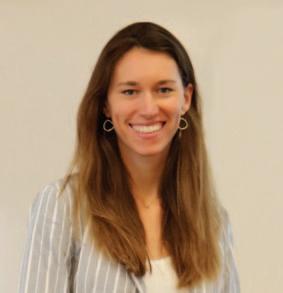
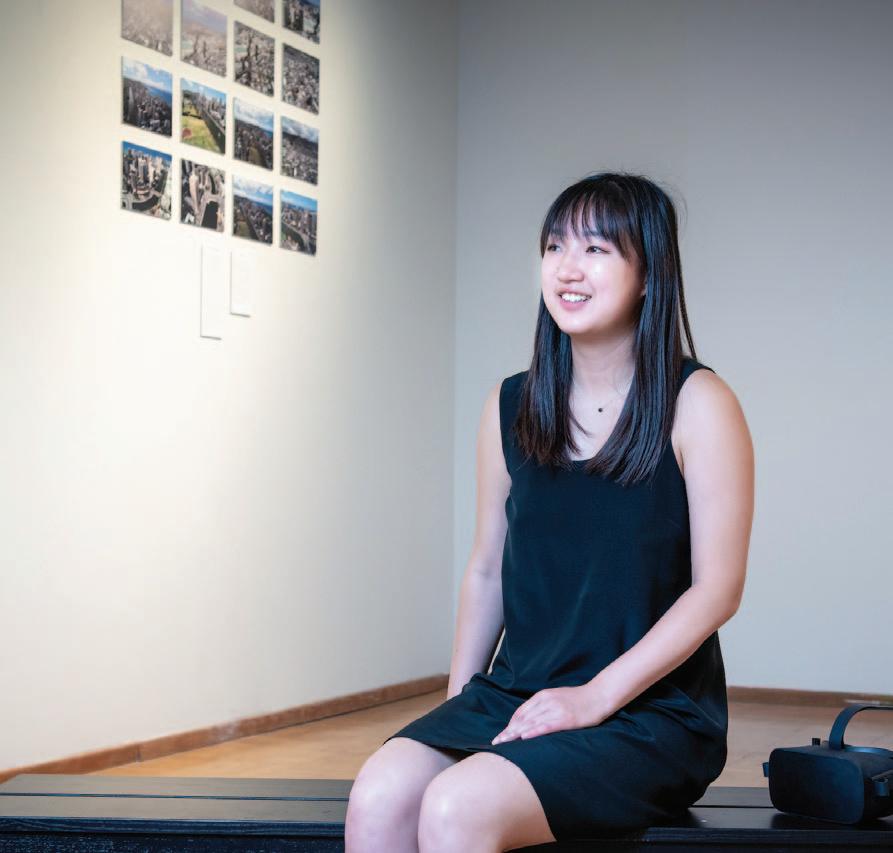
lished in the Journal of the American Chemical Society
After graduation, Dwulet took a job as a senior scientist with Pfizer in its oncology program. “Our work is focused on small molecule drug discovery, specifically on targeted therapeutics for the treatment of many different cancers,” says Dwulet, who works at Pfizer’s state-of-the-art research site in Boulder, Colo.
The most enjoyable aspect of her work, she adds, is “getting to solve challenging problems. Occidental gave me an incredibly strong foundation for graduate school and my continued development as a scientist.”
SPRING 2023 OCCIDENTAL MAGAZINE 23
Photo by Marc Campos
Ian Van Dusen ’20
“I’ve always been fascinated by puzzles and understanding complex systems,” says Ian Van Dusen, who majored in geology at Oxy. “My view of science is to determine which factors affect different pieces of the overall puzzle and get to the root of the cause”—and in the case of his research, that means using remote sensing techniques to isolate various driving factors affecting the Earth’s surface.
While Van Dusen was attracted to Oxy by the opportunity to have “intimate, intense classes while being in one of the biggest cities in the country,” he discovered that the College was a hub to study science as well. “Due to fantastic weather, we had yearround geology field trips—to the Eastern Sierra, southern Utah, and the California coast,” he says. “Oxy turned out to be a great place to learn about the natural world.”
As a sophomore, Van Dusen took Associate Professor Darren Larsen’s Introduction to Earth’s Climate class. “This was formative because we learned how Earth’s climate is understood leveraging many different historical records. I greatly valued learning how to synthesize data from multiple sources to understand and piece together climate history.” The class culminated in a field trip along the
Ian Jan ’20
Eastern Sierra, where they mapped and investigated evidence of previous glaciations.
As a graduate student in geography at the University of Oregon, Van Dusen is working with Professor Sarah Cooley on a NASA Commercial Smallsat Data Acquisition (CSDA) grant to study the accuracy of satellite-derived water maps relative to ground observations of shorelines. “In the last 10 years, there has been rapid development in remote sensing resources,” he says. Expanding remote sensing data will better assist scientists in predicting river discharge and flooding patterns.
Regarding his long-term career goals, Van Dusen wants to work in geospatial analytics. “Developments in satellite-based geospatial data give a new perspective to monitoring Earth surface processes and change,” he says. While the boom in geospatial technology has predominantly benefited large companies, he envisions many ways for smaller organizations to incorporate geolocation data to improve understanding and efficiency.
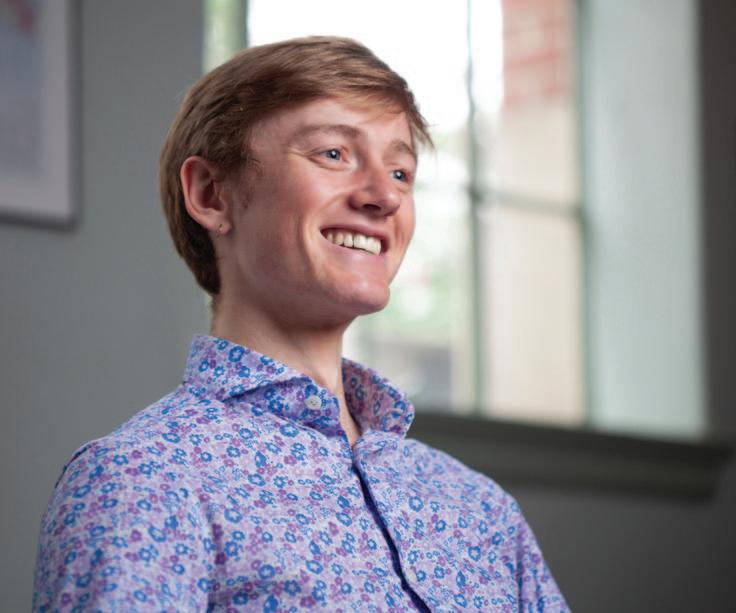
“I would love to start a company that leverages remote sensing data and analytics to aid small farms and urban planning in decision-making processes,” he adds. “Accessibility is rapidly increasing, and I have the skill set to bring the benefits of Earth observation to more people.” For someone who likes puzzles, all the pieces are falling into place.
“I didn’t see many scientists like me from disadvantaged backgrounds growing up,” says Ian Jan—a selfdescribed “bioengineer, maker, and former snail wrangler” who majored in biochemistry at Oxy. Jan is currently pursuing a Ph.D. in bioengineering in the Allbritton Lab at the University of Washington, where he’s developing a novel platform to enable large screens identifying important genes involved in early human embryo development. “Utilizing powerful automation and computational technologies such as artificial intelligence, I can visualize and assess complex developmental processes in the embryonic stem cell model that I’m using,” he says.
Like his undergraduate research, Jan’s doctoral project is multidisciplinary. “A typical day includes crafting precise cell culture devices via microfabrication, replenishing the growth media for cells, and debugging code used to analyze thousands of fluorescence images,” he says. “My discoveries can provide insights into early pregnancy losses, congenital birth defects, and tissue formation.”
After completing his Ph.D., Jan plans to work in the biotech industry. “In my Introduction to Technology Commercialization course, I became fascinated with entrepreneurship and enjoyed learning the fundamentals of building a startup,” he says. “I developed and pitched a business plan based on a startup idea to a panel of judges for my final project. Subsequently, I aim to pass on the great mentorship I received at Oxy and teach later in my career.
“I wouldn’t be here today without the amazing research experience I had with Professor Joseph Schulz,” Jan adds. “He entrusted me with a challenging project that eventually led to publication—and the front cover—in a high-impact journal, a competitive science fellowship, and a talk at a national science conference. I developed resiliency, creativity, and critical thinking skills that I apply every day. I’m the scientist that I am because of all the support from my family, friends, and mentors. By pursuing greater heights in science, I hope my story proves to others in similar situations that they can, too.”
24 OCCIDENTAL MAGAZINE SPRING 2023
Photo by Marc Campos
Photos courtesy University of Oregon (Van Dusen), University of Washington (Jan)
Kristina Chang ’16
“Being a scientist teaches you to appreciate the natural world with a certain level of depth and specificity,” observes Kristina Chang. “The simple exercise of asking a few scientific questions transforms something seemingly mundane in the physical world into something extraordinary and exciting.”
Chang’s research centers on building new laser-based tools to elucidate the behavior and properties of atoms, molecules, and materials. “In my Ph.D., I developed some of these tools to directly observe and understand some of the fastest processes in chemistry, such as electrons moving around in molecules,” says Chang, who completed her doctoral work at UC Berkeley in 2021.
As a National Research Council postdoctoral fellow at the National Institute of Standards and Technology in Boulder, Colo.,
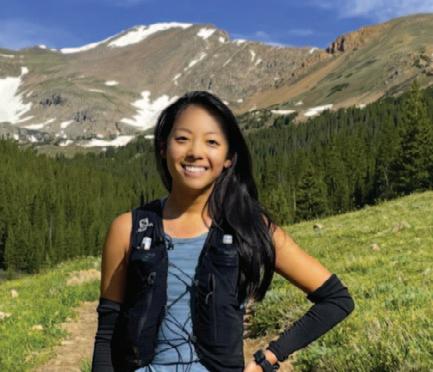
Chang is developing similar tools with the aim of measuring the arrangement of electrons in matter with extremely high precision.
“My work as a researcher challenges me constantly, and in a way that allows me to learn continuously, commit to curiosity, and grow with others,” she says. “Scientific research explores the limits of what we know and pushes those boundaries—an adventure not unlike mountain climbing. There will be bad weather, or bad luck. The path forward is painstaking, and often isn’t clear at all.”
But in science, she adds, “You never have to go it alone. The relationships you form with fellow researchers, mentors, and mentees while tackling those challenges make it all the more worthwhile. The views from the summit” —such as seeing bonds break in a molecule for the first time—“are breathtaking as well.”
As a double major in chemistry and math, “I took a majority of my classes in those departments, and I can’t thank the faculty
there enough,” Chang says. “My professors made me feel seen and supported, and they have had a lasting positive effect on my life.”
To graduating Oxy students just starting their careers, she says: “If it seems like no one in your new job, field, or area of work seems to have quite the same background as you, don’t be afraid to pave your own path. The more you see your life as an N=1 experiment, the less likely you’ll be to miss opportunities. It’ll thicken the plot in a good way!”
Katherine Forbes ’18
Associate Professor of Chemistry Jeff Cannon ’07 played an instrumental role in Katherine Forbes’ development as a scientist. “I joined Jeff’s research lab in my junior year, and I learned so much from him,” she says. “He taught me to analyze data, edited my proposals, walked through chemistry problems with us to train us how to think, and was always there when I had a question. Jeff prepared me for graduate school in innumerable ways, and he is the main reason I was able to become independent so early on in my grad school research.”
Having recently completed her Ph.D. work at Harvard University, Forbes’ research in the lab of Professor Eric Jacobsen was focused on synthetic organic chemistry, specifically using chiral hydrogenbond-donor catalysts for the enantioselective synthesis of phosphorus-based stereocenters. “One of the best parts about graduate school was that I had the opportunity to gain a greater understanding and appreciation for different fields of research that I would not have otherwise known about, such as chemical biology,” she says.
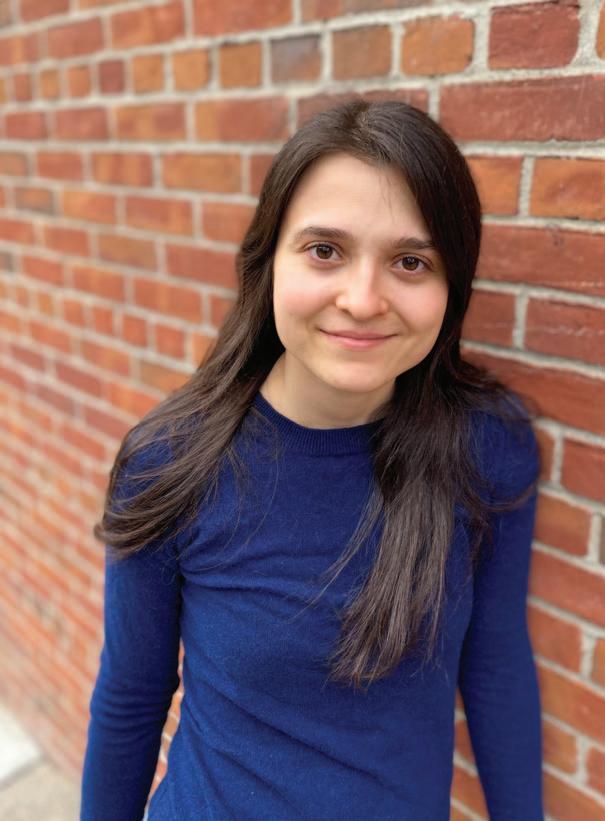
Forbes also had the opportunity to teach undergraduate and graduate-level organic chemistry courses during her time at Harvard, and served as president of the Graduate Student and Postdoc Council for the Department of Chemistry & Chemical Biology. “I am still figuring out my career aspirations,” says Forbes, who is working on a medicinal chemistry team at Vertex Pharmaceuticals.
The most enjoyable aspect of her current role, she says, is working to develop solutions to very important health problems as part of a team. Compared to grad school, “Projects move very quickly and efficiently here,” she adds, “but the problems we face are also much more complicated. Developing novel therapeutics is not a trivial task, and every day I learn more about the complexities of the drug development process.”
SPRING 2023 OCCIDENTAL MAGAZINE 25
Following the record-shattering box office launch of The Super Mario Bros. Movie , Illumination


Chief Marketing Officer Sam Bergen ’04 recounts his journey from Campus Road to Rainbow Road

Powering Up
 By DICK ANDERSON
Photo by MAX S. GERBER
By DICK ANDERSON
Photo by MAX S. GERBER
“Gamers are the most vocal audience on the internet of any scale,” says Sam Bergen ’04, who speaks from nearly 20 years’ experience as an advertising executive. “Everything you do is scrutinized to a T. You know immediately if what you did was a hit or a flop in the eyes of the audience.”
It’s a lesson that was driven home during his stint at Deutsch LA, where he worked on the PlayStation business. “Every piece of art we’d release, every ad we’d make, every experience we’d create, every joke we’d write for Kevin Butler [the fictitious PlayStation VP portrayed by actor Jerry Lambert in a long-running campaign] would be screenshotted, dissected, and debated,” Bergen says. Such scrutiny brought a level of accountability to the work that, as a gamer himself, he could appreciate: “It was transformational for how I approached marketing. I felt this responsibility not to a client nor to a boss but to honoring the fans of these properties.”
Bergen’s respect for the gaming fan base came in handy when he wrapped his head around the marketing of The Super Mario Bros. Movie as chief marketing officer of Illumination—the animation juggernaut whose first 12 features (led by the Despicable Me franchise) have collectively grossed nearly $8.1 billion worldwide. “My job is as much to lead as it is to problem solve,” says Bergen, who assumed the role in December 2020.
Given the checkered history of video game-to-movie adaptations—embodied by
the ill-fated live-action Super Mario Bros. film in 1993—Nintendo and Illumination worked in tandem to deliver a movie that would satisfy the expectations of generations of gamers. In both the film and the advertising, the Nintendo logo shares equal billing with Illumination. “The vision for the marketing campaign is to ‘Unlock the fan in everyone,’ and a critical part of that strategy was to communicate that Illumination produced this film in complete partnership with Nintendo and the creator of Mario himself, Shigeru Miyamoto,” Bergen says.
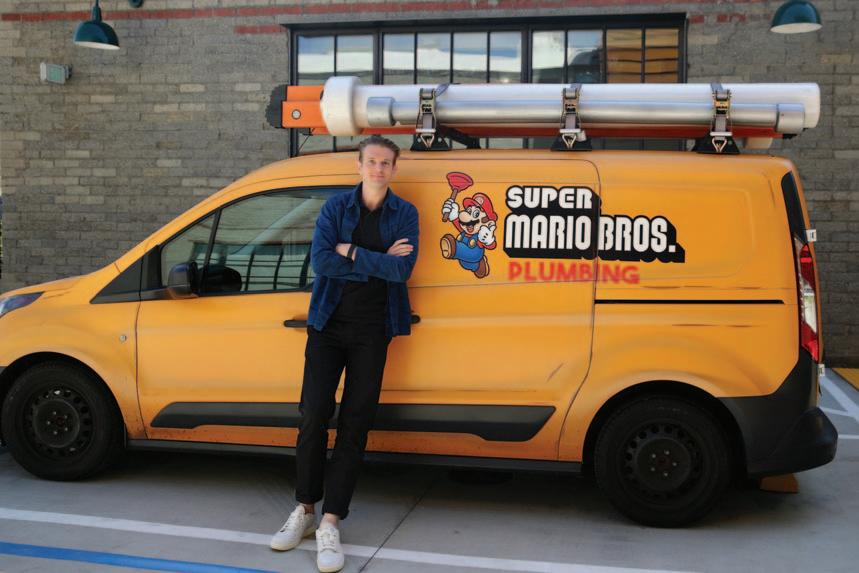
Armed with an “A” CinemaScore from opening-day audiences, Mario collected an expectations-shattering $377 million globally in its first five days in theaters. The movie defied box office gravity in the weeks to follow, eclipsing $1 billion worldwide on its 26th day of release. It’s now the biggest hit in Illumination’s 17-year history and, at $1.3 billion and still counting, the secondhighest-grossing animated film of all time.
“It’s rare that a movie overperforms to such a degree,” says Bergen, who manages a marketing team of about 50 at Illumination’s offices in Santa Monica. (The company’s animation studio is based in Paris.) “It shows that large numbers of people still want the theatrical experience.”
Prior to returning to school for a master’s degree in computer science, Bergen’s father had a vision to become the leading progres-

sive home builder in the Midwest. His parents sold off some life insurance, scrounged up whatever money they could, and bought a parcel of land in a wooded area about 40 miles south of Indianapolis, where his father would build a solar-passive home as proof of concept for the business.
“I was born and raised in that house, and it was magical to grow up in a place that my parents dreamed of and brought to life with their own hands,” says Bergen, the middle child of three. “We were surrounded by woods. There was a massive garden and a pond on the property. In the winters we would be ice skating and in the summers we’d be swimming and have endless outdoor adventures.”
They also grew up playing video games. “We had a Commodore 64 and an Atari 2600, and then we got a Nintendo,” Bergen recalls. “I would have been 4 at the time and still working on my hand-eye coordination, but my brother was old enough to actually beat the games we played. And when he was on the final level of Super Mario Bros. and about to beat the final boss, Bowser, we paused the game to wait for my dad to get home. Being altogether watching my brother beat the game for the first time is a family memory I cherish to this day.”
In 1989, the family moved to the burgeoning tech hub of Boulder, Colo., and eight years later, after Bergen’s first year of high school, they moved again to Newtown, Conn. When he was looking at colleges, “I decided to head to a place with more sunshine, so I only applied to schools on the West Coast,” Bergen says. “The moment I stepped foot on the Occidental campus, it felt like a perfect fit. The students, teachers, and ethos were exactly what I was looking for. I always appreciated the access to teachers and administrators and this feeling that the school just really wanted you to be the best version of yourself.”
During Orientation, members of the Class of 2004 filed through the President’s Office to sign the matriculation book and be welcomed by then-President Ted Mitchell. “Our group walked in, and the office was lined with chairs around the perimeter. Ted said, ‘Pick any chair in the room.’ I noticed
28 OCCIDENTAL MAGAZINE SPRING 2023
Nintendo and Illumination deployed a fleet of Super Mario Bros. plumbing trucks around the country in the leadup to the release of The Super Mario Bros. Movie in April
Photo courtesy Sam Bergen ’04
his chair was available, so of course I took it,” Bergen recalls with a laugh. (“Good choice,” Mitchell deadpanned.)
Bergen majored in cognitive science with a minor in film. (For a documentary class, he and his Norris Hall roommates, Jason Heidecker ’04 and Ed Wilson ’04, made a documentary short about the College’s fabled underground tunnels.) “When I was making short films, I would often envision creating ads,” he says. “I enjoyed the constraints of trying to make something incredibly impactful in a short amount of time.”
“Sam has always been sort of the man with the plan,” says Olly Calleja, who studied at Occidental as an exchange student during Bergen’s first year of college. (Calleja is senior vice president of global unscripted development for Raw, an award-winning film and television production company based in the U.K.) “He’s always thought longer and harder about things than other people. It’s no surprise that he is successful in his various different career moves.”
Bergen and Erik Koland ’03 shared a dream of building a student-run advertising agency sponsored by ASOC and funded by the College, and their vision was realized with the launch of The Occidental Agency (TOA) in fall 2002. “Despite our passion for it, neither Erik nor I ended up being involved in TOA after we wrote a business plan and got the agency funded,” recalls Bergen, who was studying abroad at the time. (TOA has since evolved to become what is now Oxy Design Service.)
Instead of focusing his efforts on TOA, Bergen returned home and got a marketing internship at the Odyssey Theatre Ensemble in West L.A. through the Getty Internships program, followed by an internship with Grey in direct advertising.
But the internship that left the greatest impression on him was with Kaleidoscope Films Group, a pioneering trailer house that built a business by breaking away from the decades-long practice of studios cutting the trailers for their own films in-house.
“Kaleidoscope really showed me the importance of focusing on creativity,” he says. “All of a sudden, I was working with a group of visionary film editors who had essentially cut all the trailers that had left a big impact on me when I was growing up.”
Director and editor Lee Harry, who went on to start Buddha Jones advertising and de-
sign agency, was the firm’s creative director. “It was so inspiring to sit and learn from him and to hear how he approached the creative process,” says Bergen, who spent nine months at Kaleidoscope. “Someone in town would cut a great trailer and we would all gather together, watch it, and talk about it.
“There’s artistry to this work and there’s a real commitment to the craft,” he adds. “Ultimately, editing is a rather solitary creative process—which is not a bad thing—but I needed something that was more social, more team-oriented.”
After a brief stint supporting guerrilla marketing campaigns as a researcher with A.D.D. Marketing and Advertising in Los Angeles, Bergen was hired in January 2005 as an assistant account executive at Saatchi & Saatchi in Torrance, which worked on Toyota. He was quickly promoted and was an account executive on the FJ Cruiser launch in 2006.
“Initially, I talked myself out of wanting to be an advertising creative—the person who was responsible for coming up with the ideas,” he says. “I didn’t go to art school, so I wasn’t really comfortable with the creative review process. But once I began to understand the role of creativity in driving cultural and business impact, I reversed course.”
Within nine months at Saatchi, he went back to school at night, enrolling in a portfolio program called the Bookshop. He put together a book to be a copywriter, which led
to a job offer from a small shop focusing on gaming and advertising creative.
“I went to my boss, Peter Kang, and told him I was going to leave,” Bergen says. “Peter said, ‘Stay here and we’ll make you a creative.’ Being offered my first job as a creative working on Toyota was a life-changing transition for me.”
Subsequently, Bergen was part of the creative team that showcased the 2008 Corolla with a Super Bowl spot that February. During that time, Kang left to become executive creative director at Ogilvy & Mather. After the Corolla campaign launched, he hired Bergen to help build out Ogilvy’s digital capabilities.
“Sam has always had this rigor around just how he lived his life so that he could allow the progression to happen for his career,” says Kang, who worked with Bergen at a succession of agencies for about a decade. “It’s very hard to do. When we were in our 20s, we would all be partying, but Sam would be renovating his first house that he had bought as an investment property. I don’t know any 20-somethings who do that.”
After three years at Ogilvy and another four years at Deutsch LA—where he worked on the PlayStation, Target, and Volkswagen accounts—Bergen was offered a job at Energy BBDO, the Chicago-based offshoot of BBDO Worldwide, as executive creative director for the Bud Light account. Leading the creative for the world’s largest beer brand,
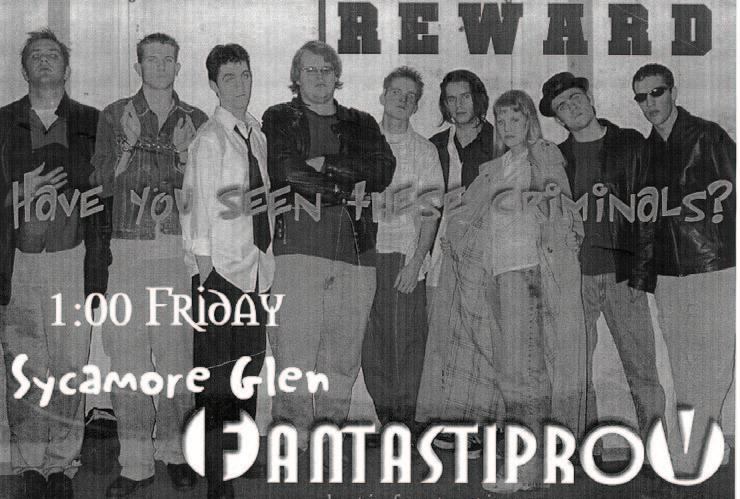
SPRING 2023 OCCIDENTAL MAGAZINE 29
As a student at Oxy, Bergen performed with the improv group Fantastiprov and remains friends with much of the troupe to this day. From left, Brad Robbins ’03, Bergen, Dan Campagna ’04, Dan Feldt ’03, Soren Bowie ’04, Aaron Feldman ’03, Meredith West ’03, Bill Schaumberg ’03, and Ben Bergman ’04.
Bergen again tapped into his love of video games and created a life-sized Pac-Man arena for Bud Light’s 2015 Super Bowl commercial. “I still have the giant quarter we created for the spot,” he says.
Bergen had spent two years in the Windy City before he decided to move back to Los Angeles to be closer to his girlfriend and future wife, Heika. But before he left, Bergen was drafted by John Wren, CEO of BBDO’s parent company, Omnicom, as the creative leader for the agency network’s pitch for the billiondollar McDonald’s account in April 2016.
Flanked by Wendy Clark on the business side and Grace Anne Bennett on strategy, Bergen ran the creative for the pitch, fielding ideas from 19 Omnicom agencies around the world. “That was the experience of a lifetime,” he says. “We had this idea to build a new type of agency—one that was suited for the modern world to answer modern marketing problems for a modern brand.” Omnicom won the account that November.
By then, Bergen was back in Los Angeles, building a West Coast agency from scratch for Vice, the New York-based multimedia company. “It was humbling going from these big ad agencies back to doing everything myself,” says Bergen, who also was finishing his MBA in creative leadership at the time.
In the course of drumming up business for Vice, Bergen met some people at Beats Electronics, aka Beats by Dre. Founded in 2006 by Dr. Dre and Jimmy Iovine, the audio products manufacturer was acquired by Apple for $3 billion in 2014. “They were hiring for a vice president of brand creative. I took the interview not expecting I’d be a good fit, so I was shocked and humbled when they offered me the job,” he says.
After joining Beats in 2018, he oversaw numerous campaigns. His last was among the biggest: In November 2020, in the wake of a series of social injustices, Beats premiered a two-minute ad titled “You Love Me” featuring tennis player Naomi Osaka, NASCAR
driver Bubba Wallace, rapper Lil Baby, activist Janaya Future Khan, and others in which musician and narrator Tobe Nwigwe asks, “You love my culture, but do you love me?” The campaign encompassed multiple videos and images and was a 2020 Clio Awards Grand Prize winner.
At Beats, “I was in a fantastic position,” Bergen says. “I was head of creative for an amazing brand. I led the website, all social channels, and every ad campaign we did. I was fortunate to be approached for other opportunities, but I would politely say ‘No’ to all of them early on.”
In March 2020—in the early days of the pandemic—Bergen got a phone call from an executive recruiter telling him that Illumination was looking for a new CMO. “Would you be interested?” they asked.
Bergen with his wife, Heika, and daughters August, 5, and Nico, 3, at their home in April.

“In the moment, I didn’t know what to say,” Bergen admits. He had seen some of the Despicable Me movies and part of Sing, as well as The Secret Life of Pets “because my wife was really interested in the concept”— but he didn’t have a strong kinship to the studio. “But one thing I’ve learned over the years is to take the call and have the conversation,” he says. “So I started speaking to the recruiter and then the chief operating officer and began to understand how amazing this opportunity was. I’d never worked in entertainment or been a CMO before. I was intrigued, but also intimidated.”
Three Zoom meetings with Chris Meledandri, Illumination’s founder and CEO, precipitated an in-person meeting with Meledandri and Illumination’s chief operating officer, Keith Feldman. The more Bergen learned about Illumination, the more it felt “like an incredibly unique and innovative company, a place led with vision,” he says. “Getting to work directly for one of the most successful producers in Hollywood felt like a once-in-a-lifetime opportunity. The deciding factor came down to Illumination’s values and culture being aligned with my own.”
It wasn’t lost on Bergen that he had two young daughters whom he knew would be “prime targets” for Illumination’s films very soon. “Even though my oldest daughter had never seen the Secret Life of Pets movies, she had a Chloe stuffed animal that she loved— seeing that connection was heartwarming. The amazing thing about film is that when you find a character that you love, it becomes a defining touchstone to who you are.”
30 OCCIDENTAL MAGAZINE SPRING 2023
Photo by Max S. Gerber
As the head of marketing at Illumination, “The biggest priority that I have is launching our movies,” Bergen says. “Early on, as we’re working to set up the entire campaign, it’s my job to guide the creation of a strategy and get everyone to agree with it—not just trailers, print, and digital but also activations on the ground and all of our partners from consumer products to theme parks.”
Even before he took the first phone call from Illumination, most of the marketing campaign for Minions: The Rise of Gru was in development. Released in July 2022 after a two-year delay, the sequel to the $1.15 billiongrossing Minions (2015) earned $939 million worldwide and inspired a viral movement on TikTok, as teenagers who called themselves #GentleMinions dressed up in suits to watch the movie in theaters all over the world. “We absolutely cannot take credit for that—it was the love of the franchise,” Bergen says. “Minions became a part of the culture last summer in a way no other film did.”
Having dipped his toe into the Illumination waters with the Sing and Minions sequels, The Super Mario Bros. Movie was the first film that Bergen marketed “from A to Z,” he says. “We developed the film logo, the strategy for the cast announcement, the alignment of the marketing with all of our partners, and then the methodical execution of the entire campaign with Nintendo and Universal Pictures” leading up to its release on April 5.
Bergen pitched the idea for the first trailer in August 2021, “and then we spent six months trying to beat it.” Opening with a battle sequence between the Bowser-fronted Koopa Troop and the penguin denizens of the Snow Kingdom, the trailer cuts to Mario landing in the Mushroom Kingdom.

On Oct. 6, 2022, the first trailer for The Super Mario Bros. Movie premiered simultaneously at New York Comic Con and on Nintendo Direct, the company’s online video platform for new product announcements. Every time Nintendo has a new product announcement, Bergen says, “They go out to Nintendo Direct first. They’re a fan-first company, and it only made sense to do that with the movie, too.”
Despite some misgivings among the fan base about the casting of Chris Pratt as the voice of Mario—a choice defended in the press by Meledandri, who is Italian American —Bergen and his team stuck to their marketing plan. When the second trailer dropped,
he reasoned, “People would be blown away by how cinematic the movie looks.”
The second trailer, released on Nintendo Direct on Nov. 29, 2022, added Princess Peach and Donkey Kong to the mix, as well as giving viewers the first look at the luminous Rainbow Road. “Our strategy was to have that ‘Holy shit!’ trailer on Avatar: The Way of Water, because we knew how big that movie was going to be,” Bergen says. “We aimed to reach all the Nintendo fans online, and then target all of the moviegoers on Avatar.”

The third and final trailer for the movie arrived on March 10, which fans have celebrated as “Mario Day” (or MAR10 Day) worldwide every year since 2015. By that point, there was little doubt that The Super Mario Bros. Movie was among the year’s most anticipated releases. “There was a groundswell among fans and we wagered that it would rub off on all audiences,” Bergen says.
Within a week of Mario’s launch, Bergen’s focus had largely shifted to the studio’s next two releases. “I would say 5 percent of what I’m doing is on Mario, 70 percent is on Migration, and 25 percent is on Despicable Me 4,” which is scheduled to open on July 3, 2024. “Migration is sooner, but DM4 is massive.”
Bergen is “incredibly excited” about Migration, which marks the Illumination debut of Oscar-nominated director Benjamin Renner (Ernest & Celestine) and Emmy awardwinning screenwriter Mike White (The White Lotus). “We’ll have a full trailer coming out this summer, and it is an amazing story that will delight audiences around the world.”
Original animated films have struggled to open strong at the box office since the pandemic. Disney’s most recent foray into original IP, Strange World , flopped last Thanksgiving, and even the Toy Story prequel Lightyear underperformed last summer. (Notably, DreamWorks’ Puss in Boots: The Last Wish overcame a soft opening last December, legging out to a final worldwide gross of nearly $481 million.) “Marketing’s job is to excite and compel people to go to the theaters the weekend a film opens, before word of mouth has even had a chance to spread—no small task in today’s world,” Bergen says. “If a movie is good, it will play long after it opens.”
Family comes first for Bergen, who calls daughters August, 5, and Nico, 3, “my best friends. My wife and I really value and prioritize getting outdoors with them, so during
the pandemic we bought a Toyota LandCruiser and a rooftop tent to go camping and explore the best of what California has to offer,” he adds. A BMW enthusiast, Bergen drives his 1970 BMW CS daily. “My daughters call it ‘Loudy’ because of the dual Weber carburetors—they love riding to school in it.
“When I was younger, I found myself very fulfilled and almost even defined by the work that I did—it has always been energizing for me,” Bergen continues. “I’m very fortunate that I can still access that passion in a sustainable way while making sure that my family comes first.
“I cook breakfast for the kids every single morning. The trick now is to have different shaped pancakes every weekend. This weekend they’re asking for unicorn pancakes and I have no idea how I’ll make them.” Knowing Bergen, he’ll figure it out.
SPRING 2023 OCCIDENTAL MAGAZINE 31
top: Clockwise from top, Bowser, Luigi, Donkey Kong, Princess Peach, Kamek, Toad, and Mario in a promotional poster for The Super Mario Bros. Movie above: A family of ducks tries to convince its overprotective father to go on the vacation of a lifetime in Migration. Illumination’s 14th feature flies into theaters on December 22.
Images courtesy Nintendo & Illumination
Senior Moments
left: After traveling around Europe this summer, Tye Hernandez ’23, an economics/politics double major from Brea, will start his career in private equity consulting in New York City this fall.
above: “Although my time as a Tiger was cut short, it shaped me to be stronger and more resilient to challenges later in life,” says Sarah Fleming ’23, a media arts and culture major from Grand Junction, Colo., an Academic All-District Team selection.
Jonathan Marshall (baseball), a biochemistry major from San Diego: I felt a plethora of emotions—mainly sadness for our seniors who had an abrupt end to their careers, and anger because I felt like I was just finding my stride on the field and I wanted to continue to develop as a player.
Because of delays, the De Mandel Aquatics Center didn’t open before COVID shut down the campus. How did you feel at the time?
Jazz Henry ’23 played his first organized soccer match as soon as he could walk. “I come from a massive soccer family, and my parents put me in the local recreational team right away,” explains Henry, an urban and environmental policy major from Laguna Niguel. “After that, I never stopped.”
It would take a pandemic to interrupt Henry’s game—and for him and hundreds of other student-athletes at Occidental, COVID19 did just that. Because soccer is a fall sport at the College, Henry missed only one season of Division III play. But for the spring sports squads—baseball, golf, lacrosse, softball, tennis, track and field, and water polo—competition ground to a halt in mid-March 2020, erasing nearly two years of activity.
As the Class of 2023 sets out in the world, we asked 10 outstanding Tigers to reflect on their experiences as student-athletes—the interruption of the pandemic, the anticipation of returning to action, and the jubilation they experienced over the last four years.
In March 2020, COVID-19 shut down the spring sports season at the College. What was your reaction at the time?
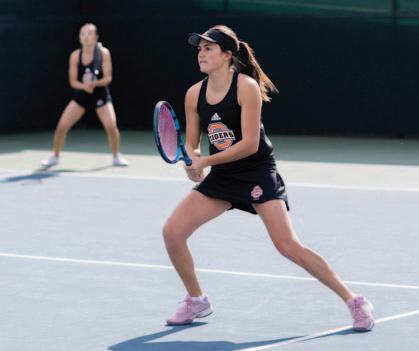
Tye Hernandez ’23 (track and field), an economics/politics double major from Brea: I was really shocked and disappointed to have my season and first-year experience on campus cut short. I vividly remember having a track meet over spring break at Whittier College and getting the unfortunate news that our season was canceled a few days later.

Chanel Ng ’23 (swimming and diving), a psychology major from Honolulu: It was frustrating to hear that we could not train or compete in the new pool. Taylor Pool (or as we called it, Taylor Pond) made it difficult for the entire team to practice together, so the team was eager to break in the new pool.
Kayla Lin ’23 (water polo), a biology major from Palo Alto: We played our last game away at Redlands, where we weren’t even allowed to shake hands before or after the game but still played full contact. It was emotional because we were hearing about schools shutting down and we knew that we were probably next.
Thomas Hoffman ’23 (swimming and diving), a philosophy major from Camarillo: I remember being very frustrated. We were all excited to utilize this new space, and I was looking forward to having more lanes for
OXYTALK 32 OCCIDENTAL MAGAZINE SPRING 2023
Photos by Sam Leigh/Sam’s Photo Services
Ten standout student-athletes from Occidental’s Class of 2023 discuss the challenges and rewards of sticking with their sport through the pandemic
practice and seeing what positive impacts the new pool would have on the team. Once we got sent home, I became unsure if and when I would get the chance to swim in it.
Keegan Klein ’23 (water polo), a biochemistry major from Bellevue, Wash.: I personally took the shutdown as another challenge because it tested my relationship with the sport due to a lot of pool closures and so much separation from my teammates.
What did you do during the remote year to stay in playing condition?
Kyle Dosa ’23 (basketball), a kinesiology major from Chatsworth: Here in Los Angeles, everything was shut down. I would go to a local park and shoot on the outdoor courts; my mom would rebound for me so I could get more reps in. My brother and I were able to set up some weights in the garage, so I lifted every week to maintain strength.
Sarah Fleming ’23 (tennis), a media arts and culture major from Grand Junction, Colo.: During the fall 2020 semester, when classes were online, Courtney Saqueton ’23, Lucy Stevenson ’23, and I lived together near a racquet club in Vail, Colo. It was surprisingly cheap because it was the off-season and not many people were traveling. We could stick to ourselves, do online classes in the condo, and go on hikes outside. Courtney, who also is on the tennis team, and I were able to practice together at the courts.
After the skiers kicked us out, we decided to follow the “off-season.” For the spring 2021 semester, we found an extended rental in Hilton Head, S.C. Courtney and I practiced at Van Der Meer Tennis Academy the whole semester. Lining up with my media arts and culture major, I did a media internship with the academy, taking photos and helping with marketing. In return, they generously allowed me to practice there at no cost.
Henry: A lot of running. My family lived in an apartment complex at the beginning of the pandemic so I would run the stairs of the building. I would also go to the top of the parking garage and pass the ball around with my brother, since no cars would be there. I liked running outside early in the mornings too. It was definitely tough but I managed.
As the pandemic eased up, I was able to live on campus and train with my teammates who were living in the area. It was great to see the guys and train with them. After we got the confirmation that we would have a season, training was all that was on our minds.
What was it like coming back to the game after the pandemic?
Marshall: It was an amazing feeling. I felt like during the pandemic I had developed into a better player and I was excited to put on the orange and black again and get back onto the field with my friends. It was a little strange, missing a lot of the familiar faces and

essentially two freshman classes, being the freshmen and sophomores (their first time on the Oxy field), but being back on my home field with my friends was a lot of fun.
Dosa: Initially, it was strange. I have been playing basketball year-round for most of my life, so I was not used to the long interruption. I then felt excited and grateful to be back practicing and seeing my teammates.
Hernandez: There was an added layer of gratitude and excitement to finally compete again. Being back in person with all my friends was so refreshing. It made training easier and enabled all the moments spent with your team eating, traveling, and lifting together.
Cara Bekas ’23 (lacrosse), a kinesiology major from Glenview, Ill.: It was definitely weird. I went from being a first-year who had never started and played maybe five games to being a junior and starting every game of the season. It was a really big adjustment trying to fit into the role I had back on campus compared to when I had left.
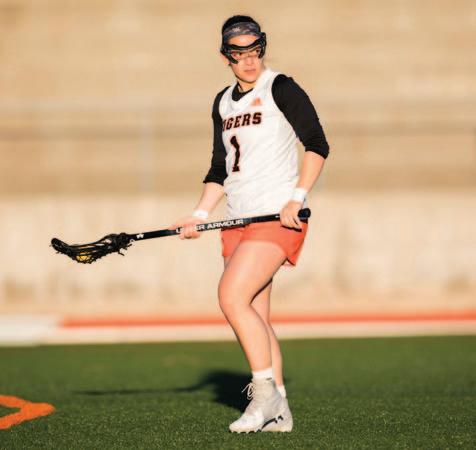
Henry: Half of the team was new and had never played in college, and my classmates and I went from being first-years to juniors so quickly. That came with a lot of expectations. A lot more leadership and responsibility was expected from the upperclassmen, but so many guys stepped up. We had a great group of senior leaders that helped cultivate a strong team culture.
above: “Oxy gave me the ability to explore a new part of the country and had the small class sizes and close-knit community that I was looking for,” says Cara Bekas ’23, a kinesiology major from Glenview, Ill. right: “The main thing I found attractive about Oxy was the ability to participate in NCAA-level baseball while also attending a prestigious school,” says Jonathan Marshall ’23, a biochemistry major from San Diego. Marshall homered in his final conference game.
OXYTALK
SPRING 2023 OCCIDENTAL MAGAZINE 33
There were a lot of different things about that season, too: COVID scares, weekly testing, and not being able to use locker rooms on away days. A lot of it was different from pre-COVID and my senior season, but being on the field and having a season again was one of the best feelings ever. It definitely helped my transition back to school as well.
Fleming: It was tough at first, because so many of us hadn’t played organized tennis for over a year. There’s something different about playing a real match with stakes! Being back with my teammates was great, although half the team (all of the underclassmen) were new faces to me. We did a lot of team bonding early on to get to know each other quickly.
How did it feel returning to competition— and the new pool?
Hoffman: Coming back was strange at first. Having so much time off and returning to a new facility, with a mostly new team, was certainly an adjustment. However, my teammates really helped make it a smooth transition, and helped me to get my bearings quickly as we geared up for the season. For all of us, the season was challenging. Results weren’t as we all would have hoped for, but I think coming back after the pandemic and competing is an accomplishment itself.
Klein: Coming back to play in the new pool with everyone I knew was one of the best choices I have ever made because it relit a new sense of competition in me. It was definitely interesting getting back into it with all the new guidelines that were being put up, and I definitely struggled with finding that sports-academic balance in my life but eventually got back into the swing of things.
Ng: I was excited to return to Oxy at the start of my junior year because I had not seen the campus or my teammates for 1½ years, so I was ready to start a new season with them in our new pool. Half of the team was new, so it was especially fun to take on a leadership position and guide them through challenges in and out of the pool. I was also nervous to return to competition because I didn’t consistently train during the lockdown, so I had no idea if I could live up to the expectations I had set for my return to swimming.
Lin: I felt like a horse gnawing at the bit. I was so excited and ready to get back into the water, especially because water polo, being a physical sport, had a lot of restrictions placed onto it. Not being able to be physically active in the way that I have for more than over half my life, being the water, it made me come to appreciate what I had a lot more. The pool was amazing; it was exciting to be able to use that facility. We went to almost every men’s team game at home, and being in those stands, seeing the game, it was just like, “OK, when’s my turn?”
Is there a game or moment that stands out in your Oxy athletics experience?
Marshall: One game that stands out to me was a first-year game at Whittier. That was the game where I recorded my first collegiate hit, a double down the line. I remember seeing my parents in the stands stand up and cheer, and my teammates fired up for me in the dugout.
Dosa: During my first year we played Pomona-Pitzer at home on Senior Night. Coming into the game, the Sagehens were undefeated in conference play and we ended
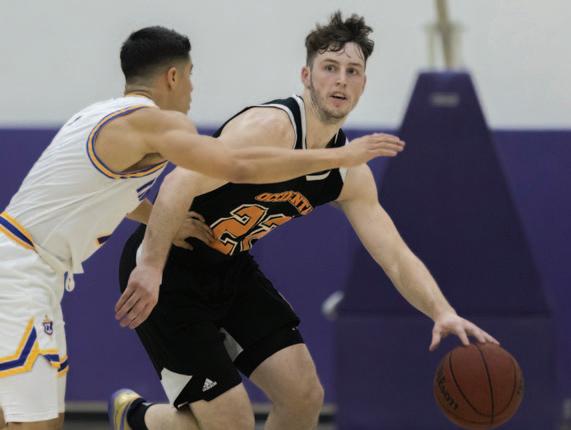
up winning in front of a packed, supportive crowd. I made some key shots in the game and provided valuable minutes as a first-year.
Hernandez: In my junior year conference finals, I competed in a couple of races, but my 400 hurdles finals was extra special. This race had five Oxy runners out of a field of eight. Our team dominated this event, and everyone finished with a personal best. Crossing the finish line and sweeping the podium alongside my teammates was a moment I will never forget.
Henry: Things like my first start and goal are moments I will always remember. For the team, though, I think about beating Pomona 2-1 for our Homecoming match in 2021. It was one of our best team performances and the fans were amazing.

In fall 2022, we had an amazing season. We made it to the conference final for only the second time in program history. Before that game, the conference semifinal against Pomona was insane. There were nearly 3,700 people in attendance, and winning in front of the home crowd to go to the final was electric. I remember getting food with some of my teammates at a local restaurant afterward and having the workers there congratulating us and saying they had gone to the game.
Bekas: The most memorable one was when I scored my first collegiate goal as a first-year. We had a night game at Redlands, and I scored off a free position shot. Second to that would probably be my first collegiate start against Claremont-Mudd-Scripps in our season and home opener in 2022.
Fleming: When Andei Fukushige ’23 and I won the doubles consolation finals at the
34 OCCIDENTAL MAGAZINE SPRING 2023
OXYTALK
left: Jazz Henry ’23 is on the move in the Tigers’ 2022 home opener vs. California Miramar. right: Kyle Dosa ’23 dribbles past a Cal Lu defender.
Fall 2022 Intercollegiate Tennis Association (ITA) Western Championships, that was a really fun moment. We had a tough draw in the main bracket and barely lost in a tiebreaker. I was proud of the four matches we went on to win in the back draw. Andei transferred to Oxy as a junior, so we had only played one season together. Eventually we started to figure each other out and I realized at this ITA we could be a really powerful team.
Ng: A particular moment that stands out for me happened at our conference championship meet during my first year. The last event of the meet was the women’s 400 freestyle relay and I was the anchor of our A team, which made me anxious. I was getting in my head too much, worrying about who was ahead and who was behind me when I swam. But once I looked up from the blocks, I saw a wave of orange on the other side of the pool, screaming our names and doing classic Oxy cheers. The support I felt from my teammates was indescribable and it is still one of my favorite memories.
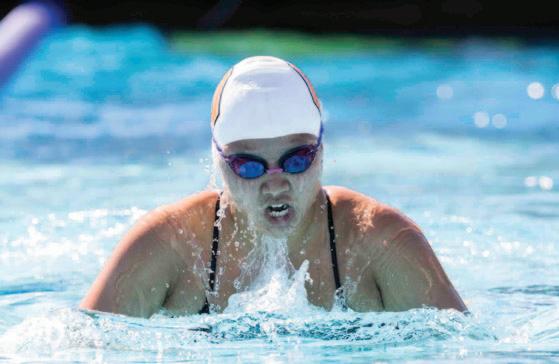

Klein: One game that stands out to me was when our team beat Redlands for the
first time in almost 50 years last year and we had a huge home crowd to help cheer us on.
Lin: I competed on the swimming and diving team my junior and senior year, and during the overlap period of both seasons, we had our senior swim meet and a water polo double-header on the same day. So essentially, I swam in a swim meet, gave two senior speeches, drove to USC, played against USC and CMS back-to-back, and then went home with the team. Playing against USC was incredible because not only were they the NCAA Division I reigning champions but they also had two Olympians competing on their team. They played their starting lineup, and didn’t give us any less than their best, which was really respectable. I also won a couple of 1-on-1 match-ups, which was quite a confidence boost. It was definitely an experience and one that I am very proud that I was able to do and accomplish fully.
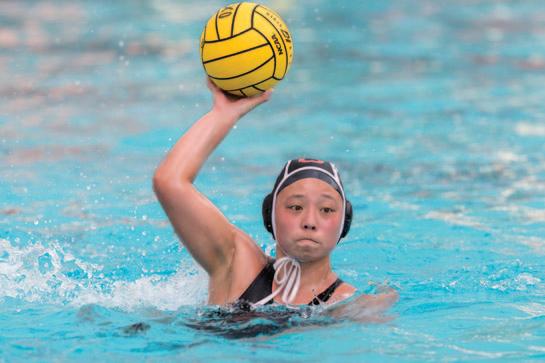
Hoffman: Our senior meet against Chapman is my favorite moment of my swimming and diving career. The team performed well and everyone supported each other throughout the meet, making it a really special envi-
200-yard medley relay at Cal Lutheran on Nov. 22, 2022. bottom left: Thomas Hoffman ’23 was a member of this year’s All-SCIAC 200 medley relay team. bottom right: “The future of Oxy’s men’s water polo program is very, very bright,” says first-team AllSCIAC pick Keegan Klein ’23.
ronment. It was the cherry on top that our men’s team ended up beating Chapman, with the result coming down to the very end to be decided. That meet was the most fun I’ve ever had competing and being on a team.
Anything else you’d like to add?
Lin: I love my team; we’ve been through a lot over the last couple years. We face the constant hardships of our sport that require a lot physically and mentally, but also face external factors and are able to handle them together. They are probably one of my biggest support systems and I couldn’t imagine myself where I am today if it wasn’t for being on this team. My coaches, the players, the sport have had a major impact on who I am, my identity, and how I can carry myself through the world and for that I am eternally grateful.
Henry: It might sound clichéd, but the moments outside of the game are just as memorable. The funny moments in practice, lift, and the team dinners have always been super special to me. When I was looking at colleges, I really wanted to play soccer, get a good education, and be in Los Angeles, and Oxy gave me all of that. Toe down, boom bang!
SPRING 2023 OCCIDENTAL MAGAZINE 35 OXYTALK
top left: Kayla Lin ’23 in women’s water polo action vs. Augustana on March 2. Lin won the 2023 All-SCIAC Character Award. top right: Chanel Ng ’23 swims the women’s
Adventures in Research
mere-produced proteins is present at higher levels in some cancer cells. Furthermore, Griffith notes that yet-unpublished work suggests the possibility that both proteins may be generated by chronic inflammation, cancer, and exposure to stress and toxic agents.
“We’ve just cracked the surface but this is a paradigm-shifting discovery,” says Griffith, a member of the UNC Lineberger Comprehensive Cancer Center and Kenan Distinguished Professor of Microbiology and Immunology. He envisions a day when people will be able to get a simple blood test to check the status of their telomeres, much like diabetics check their A1C numbers to gauge how their body is handling the disease. “The hope is that this could be a flag that would lead to early diagnosis that could be lifesaving,” he says.
In 2017, Griffith’s sister, Jana Nelson, died from ductal carcinoma breast cancer, one of the cancer types that Griffith and AlTurki’s unpublished studies suggest may contain higher amounts of the telomere proteins. “If she’d had an early test like the one we envision, the end result could’ve been really different,” he says.
Jack Griffith ’64 has always been attracted to new frontiers. He grew up on the rim of the Arctic Circle when Alaska was still a territory and started flying bush planes as a teenager. Even now, he still tries to scrape his plane’s wings on the mountainsides when he flies through narrow Alaskan valleys—a dangerous feat in less experienced hands.
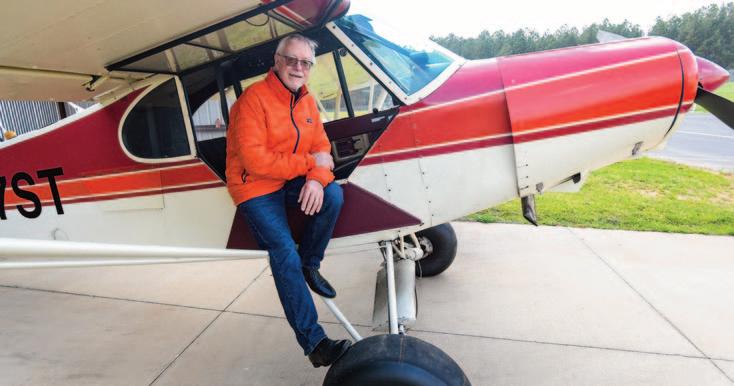
Attracted in part by the first nuclear reactor at an undergraduate school in L.A., Griffith arrived at Oxy in 1960 with his bear rifle in tow (“I never did see any in the hills behind the College”) and spent four years squirreled away in the dorms as a physics major. Graduate work at Caltech placed him at the cutting edge of biophysics research, using powerful electron microscopes to develop methodology for visualizing DNA molecules and seeing how proteins sculpt DNA. “This led to the first images of the smallest subunits of our chromosomes,” says Griffith, who went on to do a postdoctoral fellowship with Nobel Laureate Arthur Kornberg.
Over the last 35 years at the University of North Carolina at Chapel Hill, Griffith has trained his electron microscopes on the ends of our chromosomes—tiny segments called telomeres. In 1999, Griffith showed that the
ends of the telomeres are arranged into DNA loops, a giant leap in the understanding of human chromosomes.
More than two decades after that discovery, Griffith and his postdoc, Taghreed AlTurki, have upended the telomere field again by showing that, in contrast to long-standing dogma, telomeres are capable of producing their own proteins—in this case two that are small and very unusual. Their recently published study in Proceedings of the National Academy of Science shows that one of the telo-
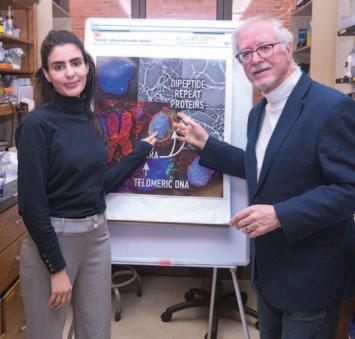
Among Griffith’s honors—including election to the American Academy of Arts and Sciences in 2005 and the National Academy of Sciences in 2018—he is especially proud of the 2020 Progress in Photography Award from the Photographic Society of America for his work using photo-microscopy with the electron microscope to reveal details of DNA mechanics and organization. Photography is a longtime interest of his, dating back to snapping pictures of Alaska’s wildlife.
Away from the lab, Griffith finds refuge on the 13-acre “farmette” outside Chapel Hill that he shares with his wife, composer Karen Allred. The couple ride their horses on the property, and Allred teaches piano and holds concerts at her custom-built studio. Both are enthusiastic supporters of Occidental’s resurgent Music Department.
With retirement out of the question— “There’s too much to do,” he says—Griffith still finds time for his other pursuit, collecting and restoring vintage 1960s Jaguars. In his undergraduate days, he frequently sped down the highways in his 1957 Jaguar Roadster. Years later, he drove a car that embodied his twin passions: a cherry red Ferrari with custom plates that read TELOMERE.
—colleen sharkey
64 OCCIDENTAL MAGAZINE SPRING 2023
PAGE 64
Jack Griffith ’64 is still flying high after decades of medical discoveries—and retirement’s not in his DNA
Jack Griffith ’64 with his 1959 Piper Super Cub.
Postdoc student Taghreed Al-Turki and Griffith in his research lab at UNC-Chapel Hill.
Photos courtesy Jack Griffith ’64
Snapshots of Oxy From Beyond the Quad
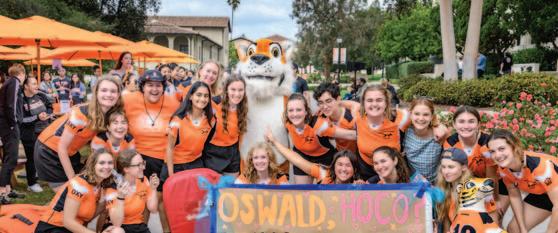
1. On April 4, the Tri-State community welcomed Professor Emeritus Woody Studenmund to New York. Studenmund led a short case study from his Managerial Economics class, followed by a conversation with Bombas CFO and COO Andrew Heath ’04 2. Following the discussion, Calli Obern ’16, Keith Jones ’16, Steve Case ’80, and Max Calbick ’77 mixed and mingled at Bombas headquarters in NYC. 3. On May 20, members of Oxy’s Santa Barbara alumni community (including Mel Malmberg ’79 and Marisa Miller ’90) gathered at the Figueroa Mountain Brewing Company to enjoy the sunshine and connect with old and new friends alike. 4. Jeffrey Chang ’18 and Simon Priest ’19 at the Santa Barbara event. 5. David Kim ’85, center, spoke with Oxy’s 2022-23 class of Obama Scholars at Occidental this spring. Kim called them an “incredibly bright and insightful group of students who will rise to leadership positions in the public sector. The future is in good hands!”
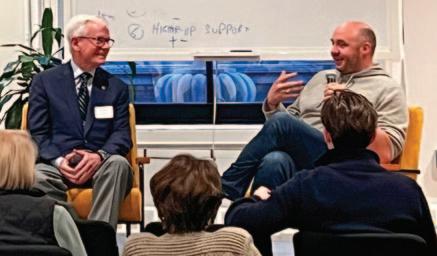
Save the Dates for Homecoming & Family Weekend: October
20-21
In case you missed it: Everything Everywhere All at Once visual effects supervisor Zak Stoltz ’10 recounts his role in bringing the Everything Bagel to cinematic life in the Winter 2023 Occidental magazine, which was posted exclusively online earlier this year. To view this and past issues, please visit oxy.edu/magazine. We’ll see you online for the Summer 2023 issue in mid-August!
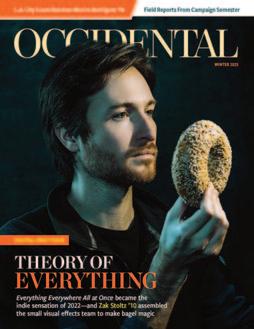
Join us on campus this fall for a community celebration of The Oxy Campaign For Good amidst the spirit and tradition of Homecoming & Family Weekend. Come experience the impact the campaign has already made on the College and hear from President Harry J. Elam, Jr. about The Occidental Promise— the vision that will propel the College into the future. Enjoy weekend traditions including the Student Spirit Parade, the annual Glee Club Homecoming Concert, a full Saturday slate of athletic contests, and much more.
When Associate Professor of Politics
Jennifer Piscopo, right, visited Professor of History Marla Stone in Rome over spring break in March, they took a photo of themselves at the Ostia Antica archeological site under the “Occidental Gate.” Stone is currently on leave from Oxy as the Andrew W. Mellon Humanities Professor at the American Academy in Rome.
Bringing back Bengal bobbleheads: Designed by Gavin Griswold ’23, public address announcer for Oxy baseball for the last two years, this Oswald bobblehead was given to attendees of the Tigers’ February 16 contest vs. Caltech.

Watch Oxy students in action in our latest video, “Learning in Los Angeles.” To see this video and more, scan the QR code at right to visit Occidental’s YouTube page.

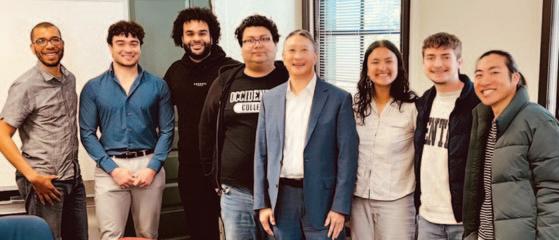
OXYFARE alumni.oxy.edu
2 1 3 4 5
Office of Communications F-36
1600 Campus Road
Los Angeles CA 90041-3314
Address Service Requested
Building Tomorrow’s Scientists
A $5 million gift from the W.M. Keck Foundation will support the launch of a multi-phase renovation of Kenneth T. Norris Hall of Chemistry, with construction expected to begin in 2024. The Keck gift will help fund the first phase of the project, which will see the underutilized basement turned into state-of-the-art teaching laboratories and the creation of the Academic Mastery Program (AMP) Center on the ground floor, a flexible indoor/outdoor space that can be used for classroom teaching, lectures, or receptions. With an estimated price tag of $22 million for the first phase of the renovation, Occidental needs to have secured 80 percent of the funding, or $17.6 million, to commence with construction on the project.

Renovation of Norris Hall of Chemistry was one of the top recommendations of Occidental’s Science Task Force, a 34-member group of alumni, parents, and faculty who assessed the current state of the sciences and science facilities at the College and issued a detailed report in October 2021. The needs are substantial on a campus where 40 percent of students are pursuing degrees in the sciences. Today, more Occidental students major and minor in the sciences—chemistry, biochemistry, biology, physics, cognitive science, computer science, geology, and kinesiology—than in the social sciences or arts and humanities. Almost two-thirds of science majors are women, and 40 percent are students of color.
Built in 1960 and renovated in 1990, Norris Hall of Chemistry received a $6 million renovation to its ventilation system in 2016, addressing long-standing concerns about the HVAC system. But the mid-century teaching and research labs—central to Occidental’s hands-on approach to teaching and research—are no longer equal to the task, science faculty say.
Once both phases are completed, the renovation of Norris will include not only expanded and redesigned teaching labs, but stateof-the-art faculty research labs and offices on the second and third floors; new spaces to encourage collaboration, creative thinking, and problem solving among students; and the entirely new AMP Center for Oxy’s peer-led program that promotes excellence in biology, physics, and math as well as chemistry.
One of the nation’s largest philanthropic organizations, the W.M. Keck Foundation supports outstanding science, engineering and medical research. For the last decade, the Foundation has been a generous supporter of the sciences at Occidental, helping to fund a new genomics center, research equipment for marine biology, and underwriting the summer research program.
The Norris renovation project is based on designs by JFAK Architects, whose work can be seen at Caltech, UCLA, and Claremont McKenna College, and GL Planning & Design, which has previously worked with UC Berkeley and Stanford, among others.

Nonprofit U.S. Postage Paid Occidental College
oxy.edu/giving
Images courtesy JFAK Architects
Architect’s renderings of the Academic Mastery Program Center, left, and a renovated teaching lab in Norris Hall of Chemistry.
