the sides,” says Jo, who uses stakes to hold the side boards in place. “Raised beds are a lot less work than tilling up a garden plot. They’re easier to weed and care for. You can also build raised beds high enough that a disabled or compromised person can sit by it and garden.” “The easiest way to get started is with a book called Square Foot Gardening by Mel Bartholomew,” she advises. Before you waste time and money planting the wrong thing, realize that March is actually too late for such veggies as broccoli and cabbage. “They’re winter garden items and very prone to insects, so if you plant them now, you’ll be fighting bugs,” Jo explains. Good things to plant now include carrots, lettuces, eggplant, tomatoes, peppers, chard, bok choy, collards and onions. When it comes to
onions, make sure to plant “short day onions,” which are sweet. Jo starts seeds in her greenhouse in early January, grows them under lights to get a good start and then plants the seedlings in her garden on February 15. When the temps drop, she protects young plants by covering them with portable cloches she makes by cutting the bottoms out of gallon plastic milk jugs. Remove the caps so air can circulate and place them over small plants to keep from freezing. If you don’t have a greenhouse, you can make your own inexpensive “grow box” with a clear plastic storage box. Just fill it with soil and cover with clear plastic for protection. Of course, you can skip the whole seed stage and just buy young plants to plant directly in the garden, but you will spend more than if you start from seeds.
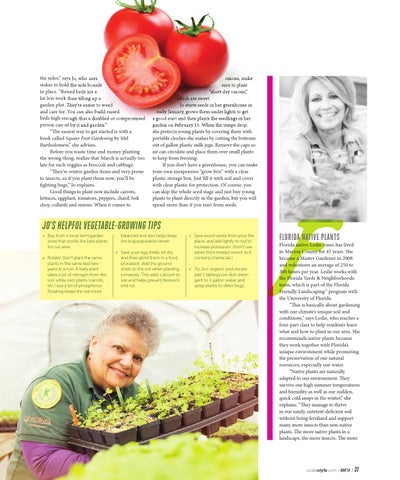
JO’S HELPFUL VEGETABLE-GROWING TIPS » Buy from a local farm/garden store that stocks the best plants for our area. » Rotate! Don’t plant the same plants in the same bed two years in a row. A leafy plant takes a lot of nitrogen from the soil, while root plants (carrots, etc.) use a lot of phosphorus. Rotating keeps the soil more
balanced and also helps keep the bug population down. » Save your egg shells, let dry and then grind them in a food processor. Add the ground shells to the soil when planting tomatoes. This adds calcium to soil and helps prevent blossom end rot.
» Save wood ashes from your fire place, and add lightly to soil to increase potassium. (Don’t use ashes from treated wood, as it contains chemicals.) » Try Jo’s organic pest recipe: add 1 tablespoon dish detergent to 1 gallon water and spray plants to deter bugs.
F
FLORIDA NATIVE PLANTS
Florida native Leslie Jones has lived in Marion County for 45 years. She became a Master Gardener in 2008 and volunteers an average of 250 to 300 hours per year. Leslie works with the Florida Yards & Neighborhoods team, which is part of the Florida Friendly Landscaping™ program with the University of Florida. “This is basically about gardening with our climate’s unique soil and conditions,” says Leslie, who teaches a four-part class to help residents learn what and how to plant in our area. She recommends native plants because they work together with Florida’s unique environment while promoting the preservation of our natural resources, especially our water. “Native plants are naturally adapted to our environment. They survive our high summer temperatures and humidity as well as our sudden, quick cold snaps in the winter,” she explains. “They manage to thrive in our sandy, nutrient-deficient soil without being fertilized and support many more insects than non-native plants. The more native plants in a landscape, the more insects. The more
ocalastyle.com MAR’14
37