Growing the scouts in Greene CTC grants give students cutting edge Greene Chamber celebrates 125
4
Cheers to 125 years!
6
Cub Scouts growing the packs
10
CTC grants shine a light on 21st-century jobs
12
Town Hill Trucking: Driving growth
13
Hummingbird clearwing moth
from the editor
Spring 2026
122 South Main Street Washington, PA 15301
724.222.2200 issuu.com/observer-reporter
EDITOR
Trista Thurston
tthurston@observer-reporter.com
ADVERTISING DIRECTOR
14
Blueprints earns top honors in Greene County at Best of the Best awards
CHOOSING JOY IN 2026
For about three years now, I’ve selected a word for the year and take a look at the word from the previous year to see if I embodied it throughout the last year. Last year’s word was momentum, but joy was on the shortlist. Joy is the winner this year. I want to choose my joy and prioritize it. Sometimes I am more focused on other people’s happiness instead of what brings me delight. So here’s to a year of looking in each corner for a pocket of joy.
Now, those who know me are well aware of my upbeat, silly, uplifting personality. Friends have compared me to sunshine, butterflies and fairies. I’m one of those people who tries to leave everyone I meet feeling a little better. But again, my focus tends to be on ensuring everyone around me is doing well, rather than turning that deserved attention to myself. I want to challenge myself to joy, but not necessarily comfort. I want to push myself to do hard things that might also spark wonder. Difficulty is not the enemy of pleasure, and the two can live in harmony, I think.
Wishing you and those you love a year filled with joy in 2026 and beyond. I hope you can find time for the things that truly light you up.
Are you someone who sets resolutions or chooses a word to guide the year ahead? If so, I’d love to hear it. Let’s encourage one another with love and kindness.
Reach out to me with your thoughts or story suggestions at 724-222-2200 ext. 2421 or tthurston@observer-reporter.com.
Take care, stay safe and here’s to a joyful 2026.
Carole DeAngelo
CONTRIBUTORS
Emily King
Rachel Morris
C.R. Nelson
Megan Phillips
Sarah Varner
Editor
C.R. Nelson
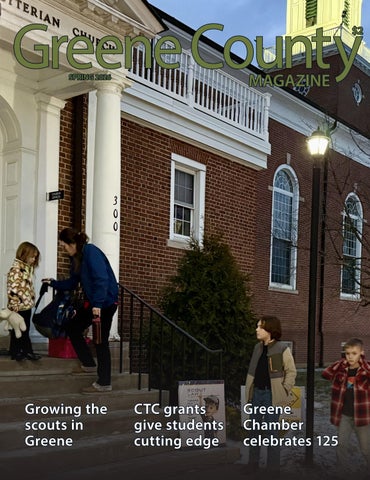
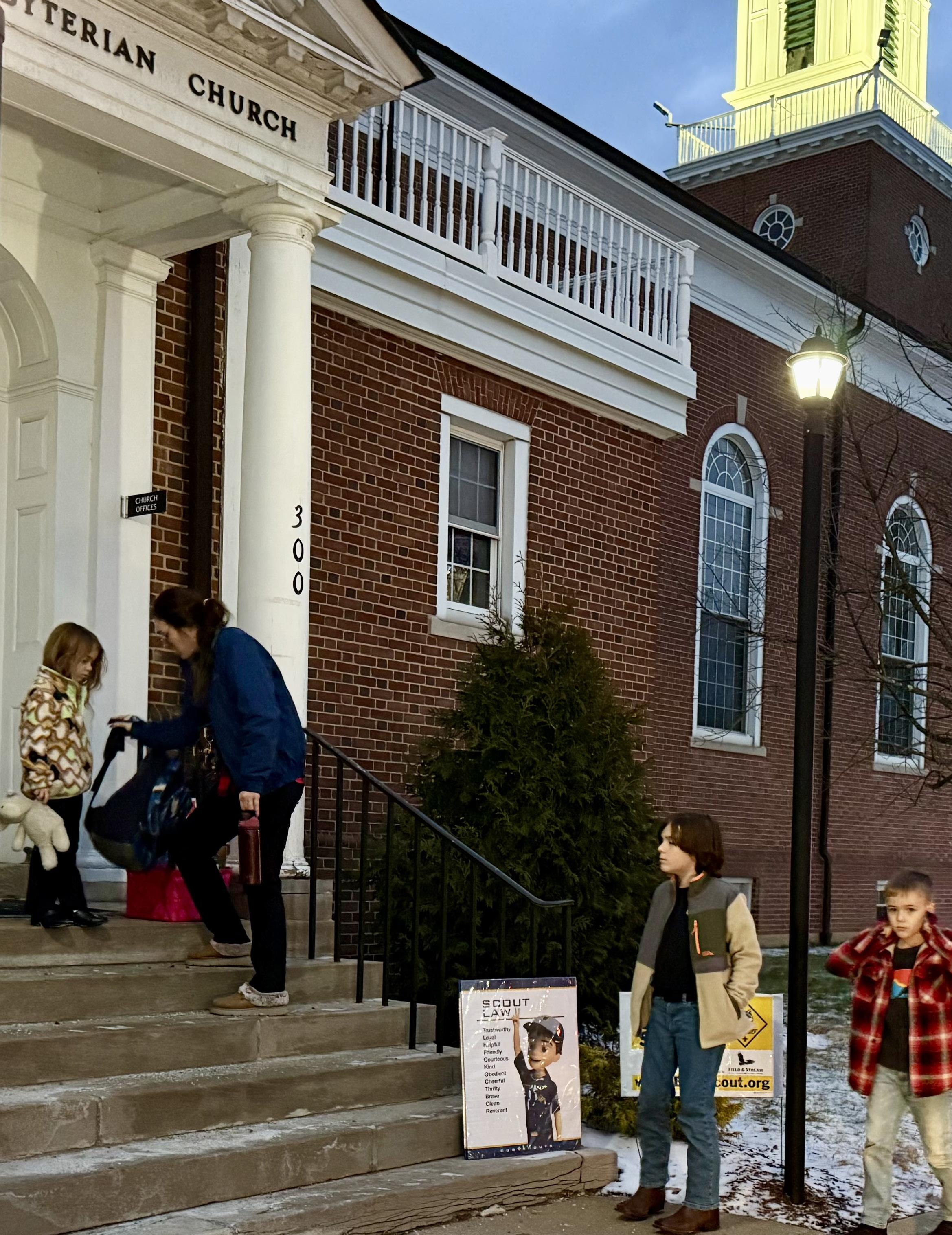
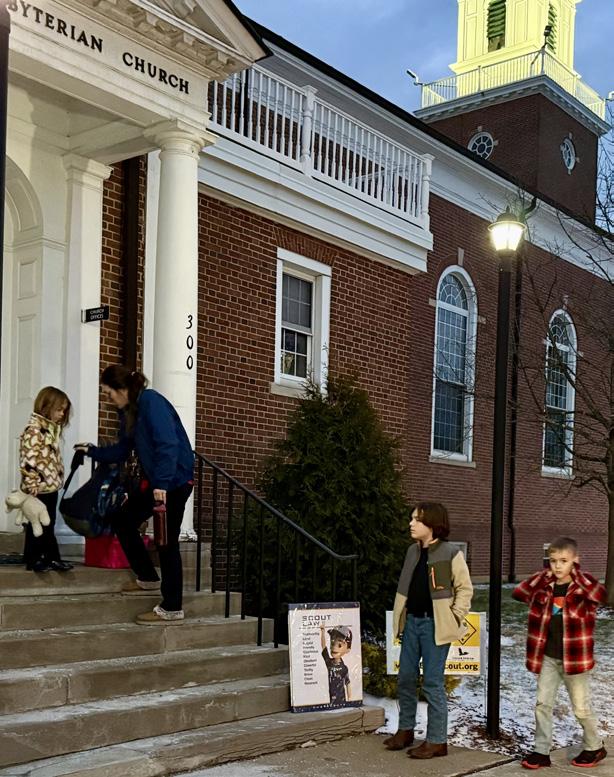
The Coffman family coming early to set up for the Friday Cub Scout meeting and Obstacle Course at First Presbyterian Church, Waynesburg.
Cheers to 125 years!
By Sarah Varner
If you know anything about the Greene County Chamber of Commerce, you’ve most likely noticed our yearly membership decals that are proudly displayed in the windows of our approximately 350 member businesses. One thing you see on said decals is the verbiage “serving our community since 1901.” This makes our organization 125 years old this year!
Interestingly, many changes have occurred in our organization in that amount of time, including our name.
The Greene County Chamber of Commerce has been a supporter of community and local businesses in Greene County, Pennsylvania, for more than a century. Its evolution reflects the changing needs and aspirations of the local business community, from early trade efforts in the 1900s to today’s broad county-wide mission.
The story begins in January 1901, when business leaders in Waynesburg organized a local chamber under the leadership of A. I. Cooke. Originally known simply as the Waynesburg Chamber of Commerce, this group sought to advocate for local business interests and foster commercial growth. By 1902, the organization was called the Waynesburg Board of Trade.
In 1905, a separate Waynesburg Merchant’s Association was formed in addition to the Waynesburg Board of Trade and met weekly, showing the community’s rising enthusiasm for coordinated business efforts. “July the Fourth observances were not as regular as Memorial Day ceremonies, mainly because there was no permanent or obvious sponsor. The Waynesburg Merchants Association sponsored the celebration in 1906” (The History of Greene County, G. Wayne Smith, pg. 587). In December 1916, the Board of Trade and Federation of Women’s Clubs placed a Christmas tree at the courthouse — an early example of community engagement beyond pure business advocacy (The History of Greene County, G. Wayne Smith, pg. 712). In 1919, there was a Great War return celebration by the board of trade (The History of Greene County, Vol. II, G. Wayne Smith, pg. 629).
The name was changed back to Waynesburg Chamber of Commerce in May 1922, replacing the Board of Trade and Waynesburg Merchant’s Association and bringing together some 220 members representing commercial
director
and industrial interests across the area (Greene County’s Leading Newspaper). Our office still has a photocopy of this reformation, with the article dated for May 19, 1922, “Waynesburg’s brand new Chamber of Commerce will hold its first annual membership banquet Monday evening at 7 o’clock in the Elks Club, when the 214 progressive men and women of the city will select the board of twelve directors to guide the destinies of this modern community effort through the initial year” (Greene County’s Leading Newspaper).
The Chamber even helped launch a “Curb Market” in August 1925, where farmers could sell produce directly to the public, an early effort to strengthen local agriculture and commerce on Church Street next to High Street (The History of Greene County, Vol. II, G. Wayne Smith, pg. 863). Today known as a farmers market, it is undocumented how long it was under the chamber’s umbrella before it left. From 2005 to 2024, it has been under the operation of Waynesburg Prosperous & Beautiful as the Waynesburg Farmer’s Market. In May 2025, the Waynesburg Farmer’s Market returned to the Greene County Chamber of Commerce.
From this re-establishment onward through the 1930s, the Chamber took on projects that shaped the region's economic and civic life. Among its early efforts were sponsoring community-wide events like “Dollar Day” and large-scale community-style shows. They are also known for supporting infrastructure improvements, including advocating for paved highways (State Route 218), the extension of the standard-gauge railroad, the development of a commercial airport, promoting industrial development and encouraging the formation of volunteer fire services.
This first incarnation of the Chamber disbanded in November 1938. Still, its mission continued under the wings of the Waynesburg Business Association, which took up community advocacy and civic celebrations, such as the first Christmas parade.
After World War II, the reorganized Waynesburg Chamber of Commerce emerged in 1945. Over the following decades, the Chamber both continued traditional business support and began sponsoring civic events that
Greene County Chamber of Commerce assistant executive
Photos courtesy of the Greene County Chamber of Commerce
would become beloved local traditions.
In 1964, the Miss Rain Day Contest was held for the first time in front of the courthouse by the Waynesburg Chamber. The chamber's long-running program was turned into the Miss Rain Day pageant in 1979, which later expanded into a scholarship program. They created Rain Day Scholarship, Inc. in 2004 to manage the event and its educational mission. Rain Day Scholarship, Inc flew the nest in the same year it was created and is now operated outside of the chamber.
The chamber broadened its impact beyond networking and marketing for member businesses. It helped found Waynesburg Prosperous and Beautiful (WP&B), originally the Downtown Revitalization Committee, in the early 1990s. Working to enhance downtown’s economic and historic character in partnership with the National and Pennsylvania Main Street USA programs, WP&B was established as its own entity that same year.
Other notable achievements included helping create county-wide tax abatement programs for new commercial and residential construction, supporting the renovation of the original Log County Courthouse, and establishing annual educational scholarships for Greene County students in 1991.
A major milestone came on July 1, 2017, when the Waynesburg Area Chamber of Commerce officially became the Greene County Chamber of Commerce to reflect its expanding role across the entire county.
Additional scholarships named in memory of Dr. Nancy I. Davis were added in 2018. Soon after, in October, the chamber achieved accreditation by the Pennsylvania Association of Chamber Professionals, the first chamber of commerce in the state to earn that distinction at the time, further affirming its commitment to excellence and effective service.
The chamber remains a business advocate and community partner, organizing ribbon cuttings, professional development programs, networking events and collaborative initiatives that support economic vitality throughout Greene County and the surrounding area. It has also been recognized annually as one of the largest chambers in Southwestern Pennsylvania. For twenty years in a row, the Pittsburgh Business Times has listed the Greene County Chamber of Commerce as one of the largest in the region. It received nominations as a top-three contender in 2022, 2023, 2024 and 2025 of the Observer-Reporter’s Best of the Best community awards. In 2024, winning the overall award.
From humble beginnings as a local board of trade to its current role as a countywide champion of business and civic life, the Greene County Chamber of Commerce has helped shape Greene County's economic and social landscape for over a century. Through advocacy, partnership and community leadership, it continues to support growth, foster connection and celebrate the spirit of enterprise that defines the region.
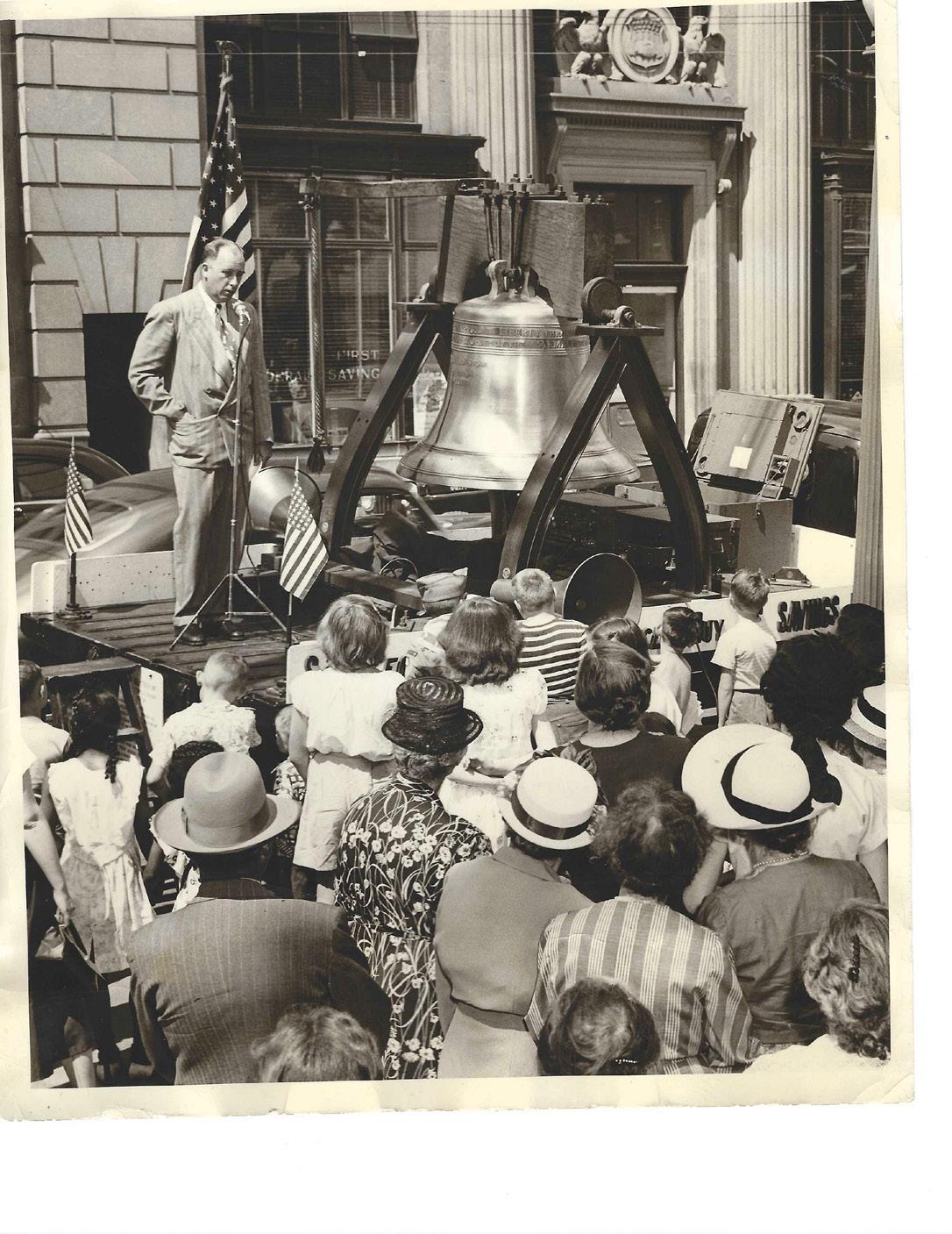
At left: On June 8, 1950, Burgess R. Wallace Maxwell speaks during the presentation of the Liberty Bell replica in front of First Federal on High Street in Waynesburg. The Waynesburg Chamber of Commerce sponsored this event.
Cub Scouts growing the packs in Greene County:
A pack for every flavor of childhood – and beyond
Story and photos by C.R. Nelson
It looks like Waynesburg Cub Scout Pack 1280 is making a comeback.
History has it that Rudyard Kipling’s 1894 “Jungle Book” inspired Robert Baden-Powell to take 20 boys camping in 1907. From that first contact with nature, a worldwide movement was born.
The wisdom that orphan Mowgli finds after being adopted by wolves and learning from other animal teachers how to be a good human is still a happening thing for kids — and their parents — when they get involved in Scouting.
Case in point — the Coffmans of Waynesburg and their two boys. The family joined Cub Scout Pack 1280 last year for the camaraderie, and are now in it for the long haul — or at least until their last Cub becomes a Scout.
“We hold our meetings at the VFW, like the older Scouts,” Maleena Coffman explained. “They are our sponsor organization. Last year we were a very small group, just our two and another two boys. There wasn’t much going on. (Scout Master) Bud Triplett did step and helped us finish out our year.” Which included Triplett encouraging the Coffmans to become Cub Scout leaders. “We made a point to let all the parents know we’re hoping to do the things that scouts do because that’s what it’s there for, we want the boys — and the girls too, because we have two girls in our pack, and my daughter is four and she tags along and does it all — to be a better part of the community. There are a whole lot of things to do. There’s the adventure loop, and you can get all the pins and badges. In the summer, we spend a lot of time at Ryerson Station State Park. Ryerson has the best nature programs. But if there are some kids and they only want to do some of the scout things, but they want to be part of the community and get the benefits of being a scout, we’re all for that too.”
When the VFW booked up for the holidays, First Presbyterian Church of Waynesburg invited the pack to finish out their meeting year in its community room, free of charge. “Next year I’ll know to book the VFW hall early!” Coffman said. “There’s a lot I don’t know, but we’re learning.” The pack meets three times a month, with one being an adventurous outing. With a nod to winter, an indoor obstacle course was planned for the January 16 meeting, and would I like to come?
Count me in!
It was 5:45 p.m. when I met up with the Coffmans as they spilled out of their SUV, arms full of supplies and trooped into the church to set up for the 6 p.m. meeting. There would be strings between chairs to be crawled through, blue tape marking territory for capture the flag, sta-
tions to learn the golden rules of scouting: “To keep myself physically strong, mentally awake and morally straight!”
“Mentally awake” was the rule tonight as this lively pack of kindergarten to sixth graders finally settled down to recite the pledge with Coffman, listen to her explain the rules, then dash off to the stations, one-room-schoolhouse style, learning from each other, slowing down to think and answer questions, then off to the next challenge. Parents manned the stations or coached from the sidelines. It was a good old-fashioned family affair.
Kindergarteners have a Jungle Book-inspired critter to call their own – Lion.
First graders are Tigers, then grow into Wolf. Third-grade Bears will learn enough to become Webelos “We Be Loyal Scouts!” and fifth-grade Arrows of Light are ready to leave the pack at age 11 to join a Scout Troop of their choice or stay with the one they grew up in.
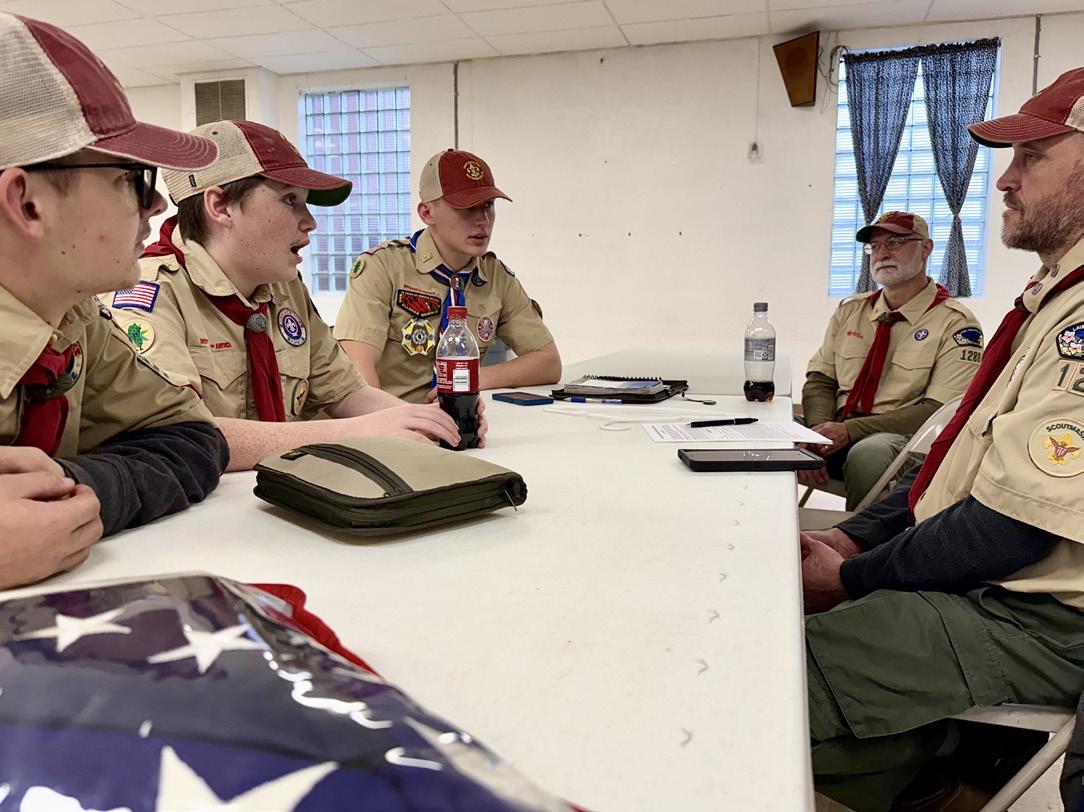
One of the big pluses of Scouting is its national and international network of packs, troops and camping adventures that build friendships for a lifetime. When I caught up with Troop 1280 at the VFW on Sunday at 4 p.m., two dads were there — Triplett and Assistant Scout Master Mark Stewart. Son Zachery, 16, started as a Cub Scout in Carmichaels and is now in Troop 1280. The meeting came to order with a flag salute and the Scout pledge, then got down to business. The Scouts were here to plan events for the next two months. Debating a winter campout or maybe snow tubing — what if it doesn’t snow? — was bringing back happy memories.
“Remember when we camped out in D.C., and the temperature went from 60 to below zero? Yeah, I think Jackson stayed out all night, but I slept in a chair in the restroom!”
Triplett’s youngest son, Cole, 15, said. Jackson Grimes grinned as he checked his smartphone for weather reports. There are only three Scouts in the troop now. When Jackson turns 18 on April 19, the ranks will shrink again. But not to worry, there are Arrows of Light getting ready to move up. And just in time, too.
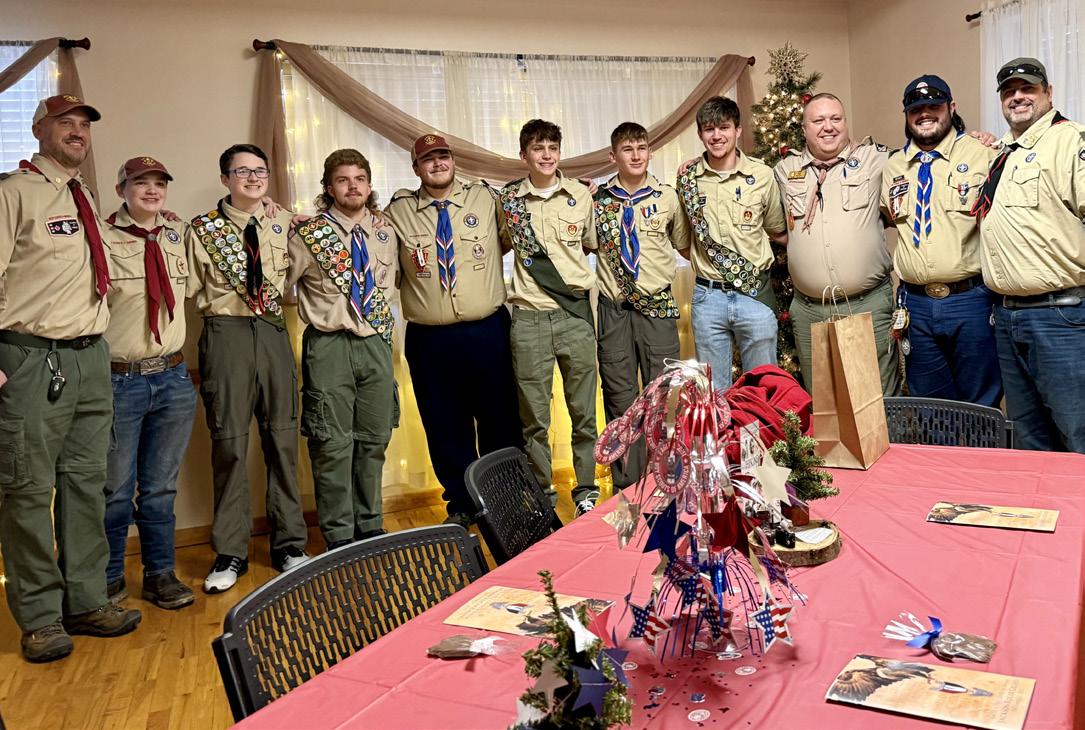
It was at Jackson’s Eagle Scout Court of Honor on December 21 when I heard about the happy reboot of Pack 1280. Those new Lions to Arrows of Light will be the Eagle Scouts of tomorrow, Triplett told me. In Scouting, “Every single youth has the experience of being a leader, and everyone gets a chance to serve in every position. There’s no bullying; it’s a safe place to fail. They learn to lead, and we’re here to guide them.”
Why such a scarcity of Scouts?
“Pre-COVID, there were at least 28 Cub Scouts in West
Greene alone, and they had their own pack. Now there are two, and they’ve joined with 1280 in Waynesburg,” Triplett said. “Carmichaels had 50 Cub Scouts. But they closed and never reopened. It’s like people forgot how to get together.”
“COVID messed up Scouts pretty bad,” retired Pack 1168 Scout Master Matt Brandsteder agreed. “Carmichaels and Jefferson had packs, and they all shuttered. Back in the day, almost every small town had scouts.” Brandsteder started as a Tiger in Pack 1168 in Rices Landing. After transferring to the now-shuttered Troop 1160 in Jefferson to be with friends, he became an Eagle Scout in 1998. Brandsteder is now a supportive dad for Scout Troop 1168, which meets at the “Scout Shack” in Pumpkin Run Park. One of their annual fundraisers is serving lunch to visitors at the Hammer In. This historic event takes place on the third Saturday in April at the WA Young and Sons Machine Shop.
“I’ve been here since my son Lincoln joined three years ago. He’ll be nine in February,” new Pack 1168 leader Lee Bryan said. We meet every other week and do something. We’ve kayaked Ten Mile Creek near Jefferson, camped out, built birdhouses. Kids learn how to use tools. We’re going to hold a workshop for cutting pine box derby cars soon.”
Camp Independence in Farmington is a regular destination, as is the nearby Greer family pond, where the pack goes to fish, build a fire and camp out. “We play math games with marbles, and last meeting, we made butter the old-fashioned way. A parent brought bread, and the kids got to eat it. They learned that if you wanted butter, you had to work for it!”
Hewitt Presbyterian Church in Rices Landing has been the sponsor for more than 50 years and is always ready to open its community hall for Scouts, Bryan added. “Our next Pancake Breakfast Fundraiser is at the church on March 22 from 9 to 10:30 a.m., and Scouts will be making the pancakes. You ought to come.”
Count me in!
When the Boy Scouts of America became Scouting America and opened its ranks in 2019, adventurous girls who love the outdoors jumped at the chance. By 2021, more than 1,000 girls had been recognized as Eagle Scouts. Some formed allgirl Troops, some became Eagle Scouts on their own.
Here is where all Scouts earn their right to shine as they age out into adulthood. Girl Scouts USA, a separate organization for girls K-12 offers the Gold Award to high school senior girls who develop and lead a sustainable, lasting solution to a community issue, either local or global. Like Eagle Scouts, Gold Award Scouts are eligible for scholarships and enter the military at a higher rank.
Girl Scout Troops and their cookie sales, which are coming right up — hello Thin Mints! — are also on the lookout for new members. Greene County has Girl Scout Troops in Rices Landing, Carmichaels, Jefferson and Waynesburg. Troop 80016 meets on Thursdays in the third-floor Student Center of Waynesburg University. Information for all these Troops can be found online.
For more information about Scouting and all its rewards: beascout.org for Cub Scouts, or mygs.girlscouts.org
Scouts conducting their meeting at Waynesburg VFW
Last three scouts standing Waynesburg Troop 1280
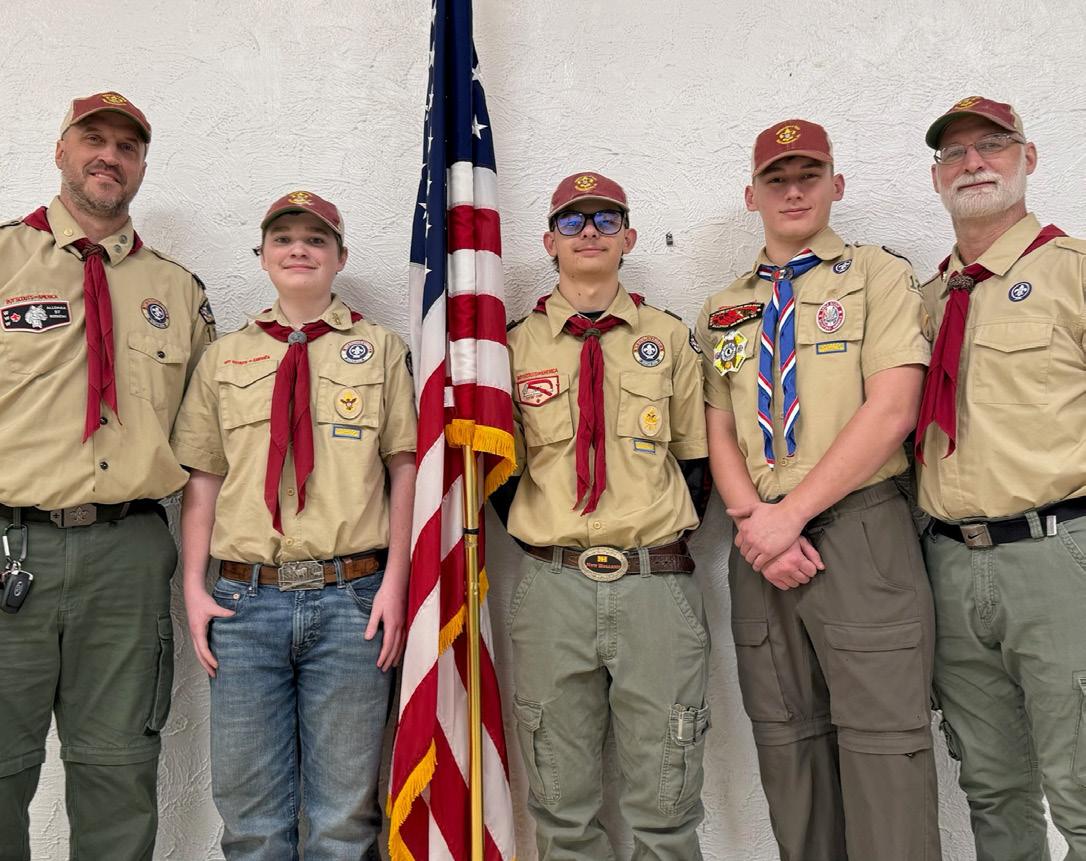
From left, Scout Master Bud Triplett, Cole Triplett, Zachary Stewart, Jackson Grimes and Assistant Scout Master Mark Stewart
From Scouts to men
Submitted photo
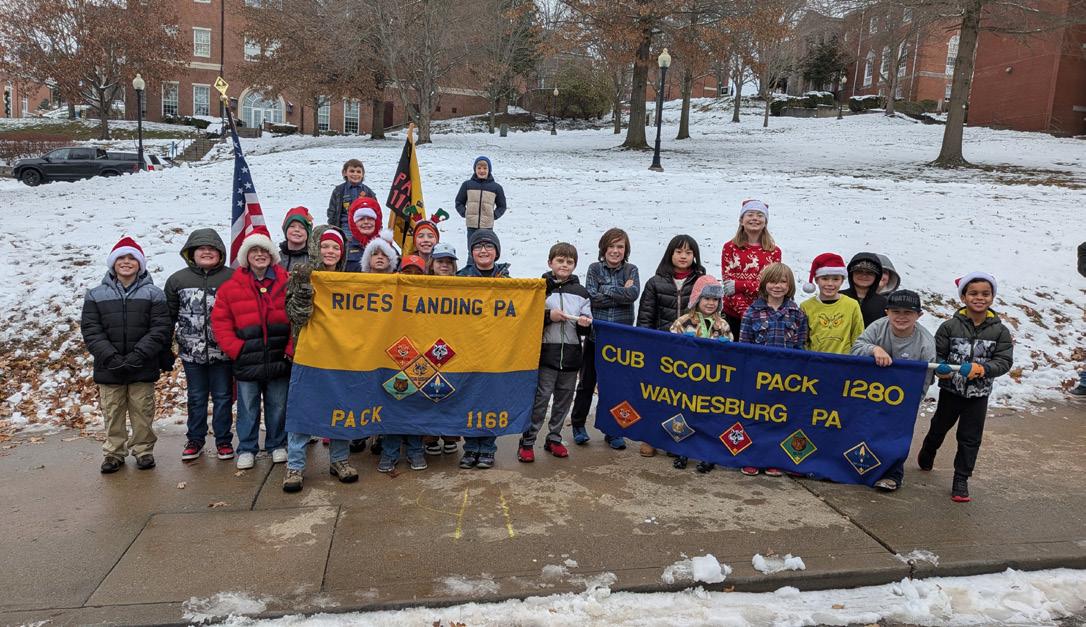
All the Cub Scouts were in the Christmas Parade in Waynesburg on Dec. 6
CTC grants shine a light on 21st-century jobs
By C.R. Nelson
Training for 21st-century jobs just got a $235,000 boost at the Greene County Career and Technology Center.
Thanks to electrifying in-kind donations and two hefty grants from the Community Foundation of Greene County, future CDL drivers, nurses and electricians are getting the opportunities they need to succeed.
The $199,000 Heinz Endowments grant through CFGC is already turbocharging two training programs offered to Greene County students and adults.
CDL Class A training classes are for students looking to get into this well-paying end of the job market, CTC Director Mark Krupa said. “These are the types of training programs students need to be career-ready when they graduate in our area.”
The Heinz grant also enables hiring additional instructors for the new part-time LPN program starting March 28, 2026. The need for more certified nurses nationwide means there’s a great, flexible job market waiting for those who train in this field. And the same goes for CDL students being trained at CTC for the many jobs that require this professional licensing. Like EMS students, CDL students can earn their certification while still in high school, Krupa noted. For job hunters post-high school, the GCCTC offers full-time and part-time LPN programs at the GCCTC Iron Synergy Training Complex, 158 Portal Road, Waynesburg.
“Our part-time LPN program will be housed at the same location, and students will be working with the new instructors we were able to hire thanks to the Heinz grant,” Krupa said.
This part-time program was created for students who want to become nurses but have difficulty attending fulltime classes due to their busy schedules. It offers classroom flexibility for those already working or responsible for childcare.
The ongoing LPN program on Portal Road offers a certified practical nursing degree on a fast-track, 12-month course: 7.5-hour days, five days a week, for adult students.
The newly funded part-time course is scheduled to start Saturday, March 28. It offers the flexibility of five-hour evening classes, Tuesday through Thursday, and five-toseven-hour classes on Saturday. This 18-month course is “the first program like this anywhere in the area,” outgo-
ing Director Judy Swauger, MSN, RN, said. “I’m retiring — again! — but I may be back as a part-time instructor. These students are my legacy. We’re here for their success, and we have a hundred percent pass ratio.”
Applicants need a high school diploma or GED along with a physical and clearances, and take the ATI TEAS VI exam based on math, science, reading and English language usage. The exam is free for those who schedule to apply, and study guides are available for those who need to brush up. A bonus for GCCTC students taking Health Assistance — their teacher, Megan Trump, was once a full-time LPN instructor and can offer all the best advice and encouragement to high school students who take the LPN course, Swauger said. “Megan is also one of the part-time ones that will teach clinical and may teach part-time in the evening for us, too.”
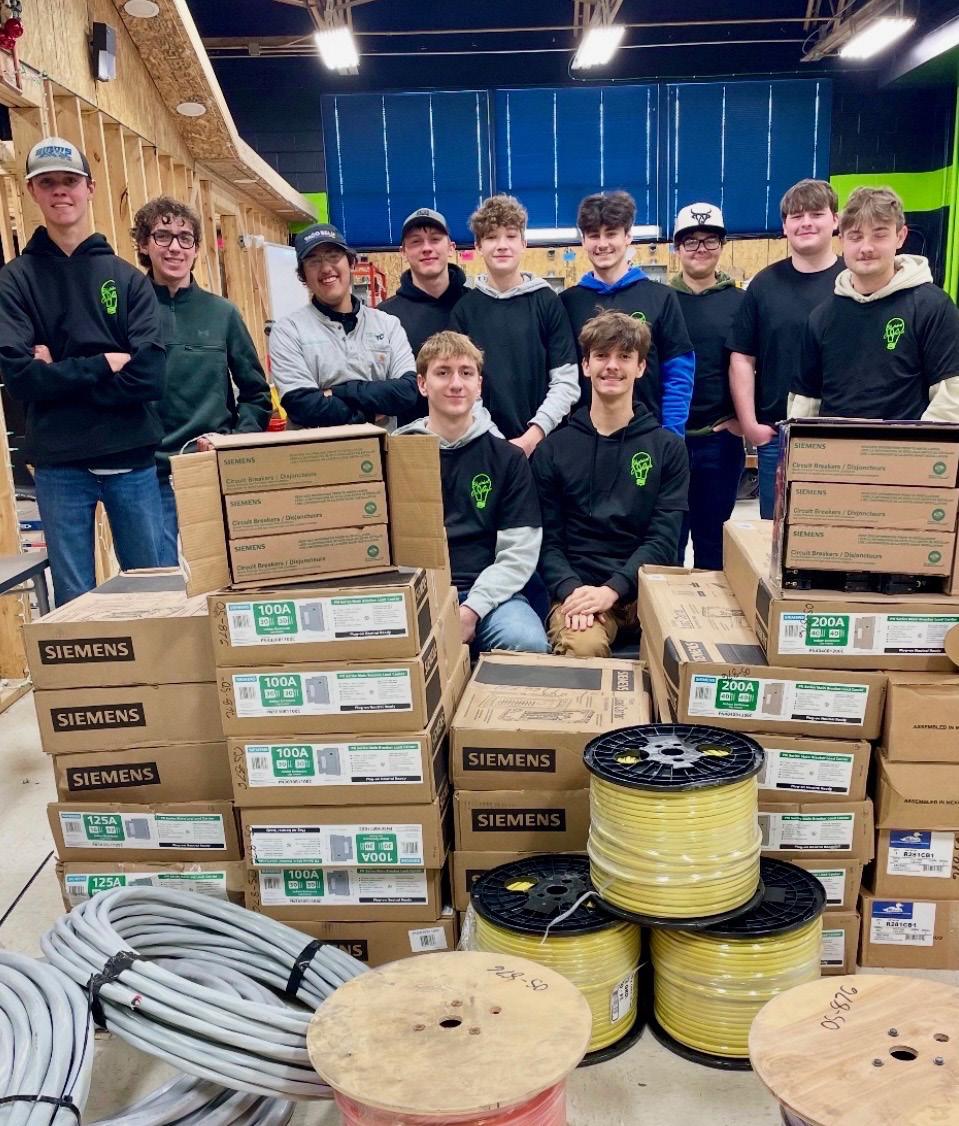
Back on the main campus, GCCTC’s Electrical Occupations program is using its recent $25,000 grant through First Energy Foundation for 21st-century electrical equipment, materials and upgrades in its program area. This allows students to use industry-standard equipment and tools, preparing them for the trades, instructor John Chapman said. Krupa added that this donation was “an incredible opportunity for our students at an optimal time. Electrical wiring and wiring components have seen a sharp increase in price over the last five years. This grant will help us for years to come.”
Another big boost — in-kind donations from the George R. Smalley Company provide more power tools, along with electrical wire and cabling for more hands-on learning. Krupa stated that the tools donated by The George R. Smalley Company will provide countless students with access to cutting-edge tools and equipment.
This family-operated Hopwood, PA, company has a long history of working with and hiring CTC graduates, owner Rusty Smalley said. “We’re proud to keep supporting this program.”
Since CFGC was founded in 2000, more than seven million dollars in grants and scholarships have been given to help meet the health, education and employment needs that “improve the lives of Greene County residents,” Director Dave Calverio said. This private non-profit is the central philanthropic organization in Greene County. Its donations and endowments now exceed $9 million in assets, which are put back into the community through 100-plus endowed and restricted funds.
To set up a new, use-specific endowment, make a potential tax-exempt gift or request a grant form for the next grant cycle (portal: April 2- May 29), contact CFGC: 724-6272010, cfgcpa@gmail.com or go online to cfgcpa.org
Adults or parents of students who wish to learn more about career opportunities offered through CTC can call the office during school hours at 724-627-3106.
Those applying for the upcoming Part Time LPN Program (24-student limit with an eight-to-one instructor ratio) call 724-627-3106 ext. 300 or email Financial Aid Administrator Eryan Coss at cosse@greenectc.org.
C.R. Nelson/for the Observer-Reporter
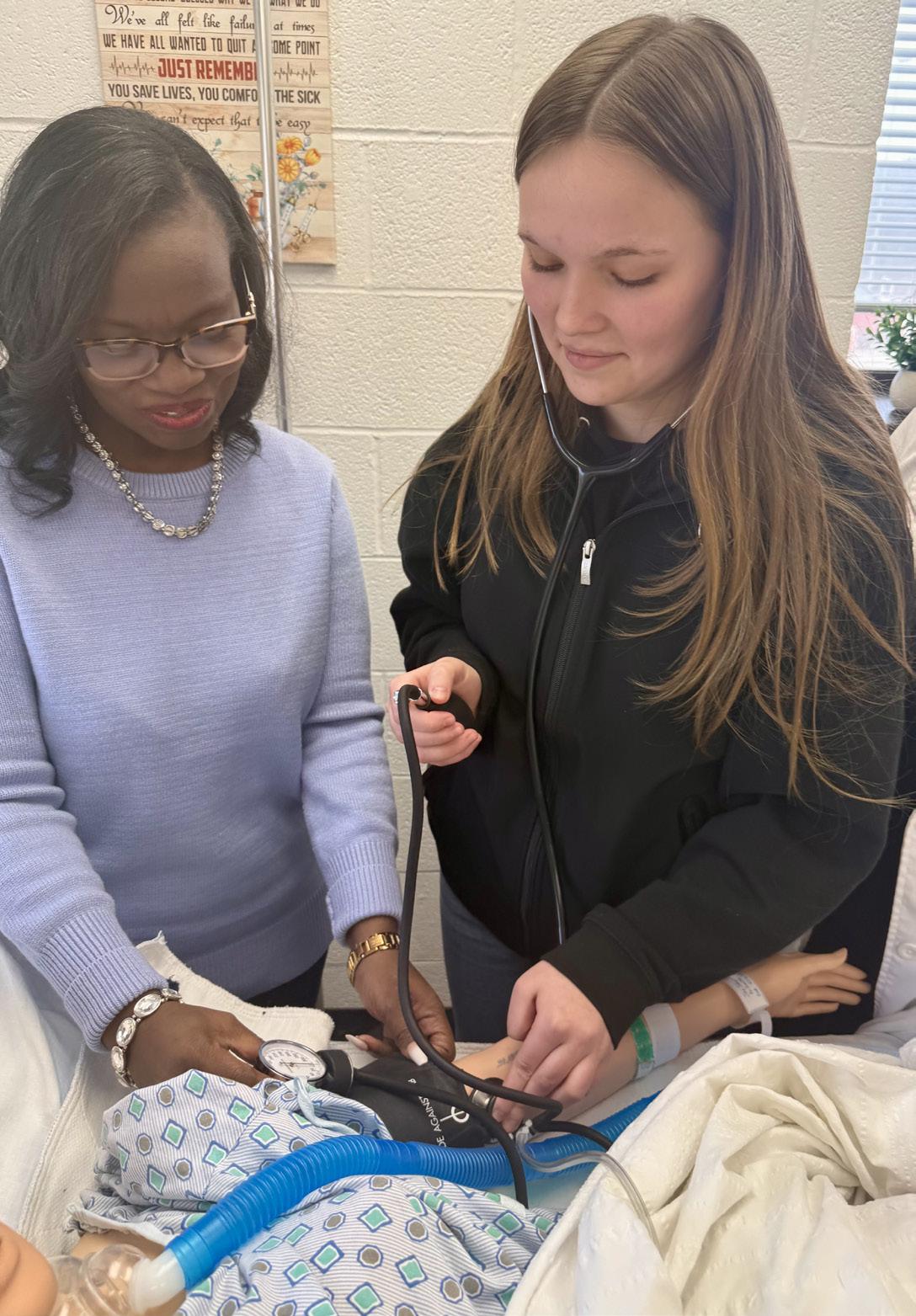
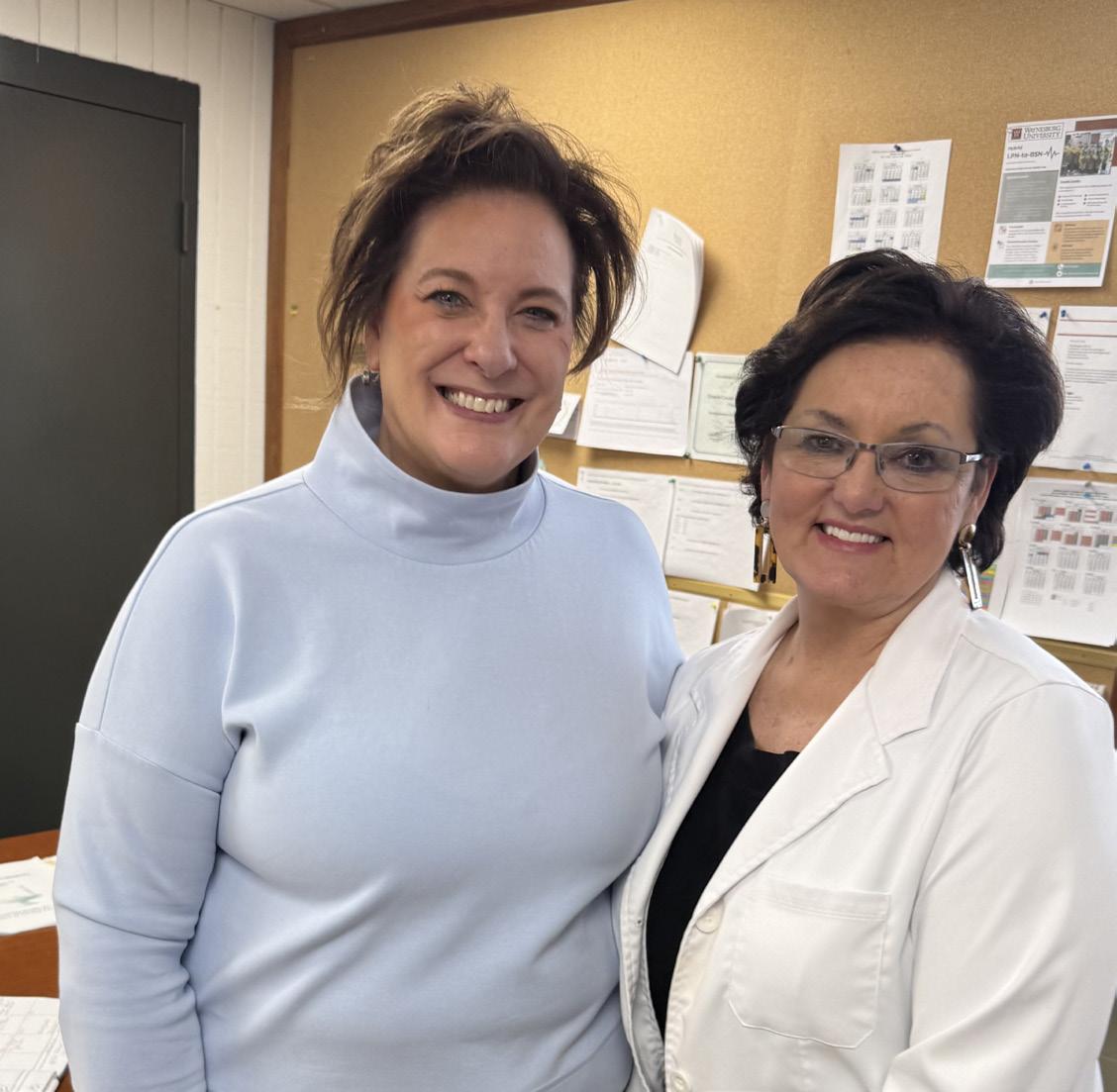
LPN Instructor and Pastor Kimberly Bates, BSN, RN, and 2025 high school grad, now LPN student Kadie Stopperich, in the teaching lab at GCCTC Iron Synergy Training Complex
Submitted photo
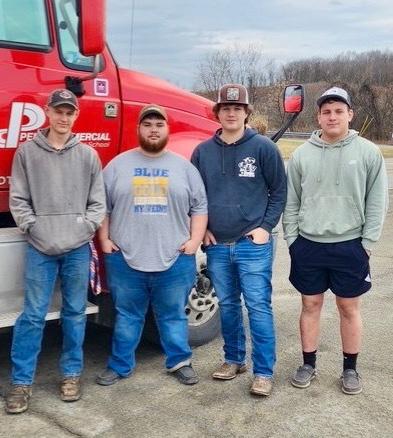
A shot of last year’s CDL students and the truck
C.R. Nelson/for the Observer-Reporter Retiring Director Judy Swauger welcomes new Director Tammy Allison, MSN, RN
Submitted photo
Electrical Occupations Program students getting ready to sort and store just some of the supplies and equipment funded through the First Energy Foundation grant
Town Hill Trucking: Driving growth in Greene County
By Megan Phillips Photos courtesy of Town Hill Trucking
Greene County has long been shaped by hardworking families, entrepreneurial spirit and industries built from dedication and grit. Today, a new local business is proudly joining that legacy. Town Hill Trucking, a start-up company based in Carmichaels, is quickly gaining momentum as it works to bring economic opportunity to the region.
Owned and operated by husband-and-wife team Nathan and Megan Phillips, Town Hill Trucking was founded with a simple but powerful vision: to build a reliable, community-focused trucking company that supports local industry while creating new pathways for growth in Greene County.
What began as one truck and a dream is steadily evolving into a company poised to make a meaningful impact on the area’s transportation needs and its economic landscape.
Nathan, a skilled operator with years of hands-on experience, oversees the hauling operations and ensures every job, big or small, meets the highest standards of professionalism and safety.
Town Hill Trucking’s presence also resonates on a personal level. For the Phillips family, Greene County is home, a place they want to see flourish. By launching and developing their business here, they hope to inspire other small business owners and demonstrate that growth and opportunity are not only possible but within reach when community members support one another.
Megan manages the business’s operations and marketing. Together, they combine practical know-how with the determination and resilience that so many Greene County families understand well.
Town Hill Trucking provides dependable hauling services for construction crews, local businesses and regional partners who rely on safe and timely transport. With the recent addition of a new Peterbilt to the fleet, the company continues to expand its capabilities, including hotshot work. Town Hill Trucking remains committed to investing in quality equipment and reliable service as demand continues to grow.
But Nathan and Megan’s goals extend far beyond building a successful company. They are committed to contributing to Greene County’s future — supporting local jobs, participating in community life, and serving as an example of the entrepreneurship that keeps rural communities thriving. As their business grows, so does their desire to hire locally, expand services within the county and participate in projects that strengthen the region’s infrastructure and economy.
Nathan and Megan look forward to expanding, upgrading equipment and continuing to build strong relationships with their customers. Their journey is just beginning, but already, Town Hill Trucking is proving that even small start-ups can make a significant impact.
In Greene County, growth often starts with a single idea and the determination to see it through.
Town Hill Trucking embodies that spirit: driving forward with purpose, commitment and a deep love for the community they call home.
Hummingbird clearwing moth
By Rachel Morris, Greene County Master Gardener
The return of ruby-throated hummingbirds to my flower garden is one of summer’s delights for me. When I went to water some hanging petunia baskets one day last year, I discovered a new little hovering wonder. At first, I thought it was some smaller species of hummingbird that I had never seen before. An internet search confirmed that it was a hummingbird moth, which I had somehow never seen or even heard of in all my flower-tending years.
“Hummingbird moth” is a nickname for several species of hawk moths. Amazingly, there are about 125 different species of hawk moths in the United States and Canada. Hawk moths are members of the family Sphingidae within the order Lepidoptera, which also includes butterflies and skippers. Hawk moths are known for their agile flight, which often leads people to mistake them for hummingbirds. All Lepidopterans are characterized by scales that cover their wings, large triangular wings and a proboscis, which is a long, tongue-like tube that enables them to siphon nectar. The colorful little creature visiting my petunias turned out to be a hummingbird clearwing moth.
Clearwing moths are typically olive green and burgundy on their backs, white or yellow and burgundy on their undersides and have six light-colored legs. Their bodies are spindle-shaped and rather “furry” looking. During the adult moth’s first flight, most of the scales will fall off its wings so they appear transparent, except for a reddish-brown border. Its wingspan can be up to 6 inches, but is usually 2 to 4.5 inches. A clearwing’s proboscis can be several inches long and is coiled against the underside of its head when not in use. The proboscis unrolls much like a party noisemaker. It allows the clearwing to access nectar in horn-shaped flowers such as morning glories, columbines and petunias that
are too deep and narrow for many other pollinators. Clearwings are not as efficient at pollinating as bees. They don’t land on the flower or brush against pollen grains. Instead, as they hover near a flower, some pollen attaches to their proboscis when it is extended inside the flower and then is carried to another flower. While many species of moths are nocturnal and feed at night, the hummingbird clearwing moth is diurnal or active during the day. Clearwings prefer flowers in pink and purple. Their peak season is from June to August.
All members of the order Lepidoptera undergo complete metamorphosis, which means they have four life stages: egg, larva, pupa and adult. Unlike hummingbirds that migrate south for the winter, the hummingbird clearwing moth overwinters in the ground in the pupal stage. Clearwing larvae are caterpillars but are often called hornworms. They have a hornlike spike on their back end to intimidate and defend against predators. There is a thin white line running horizontally along their body. The spike is bluish-red rather than black, as it is for many other moth larvae. Clearwing larvae are often mistaken for tomato hornworms, which have a bad reputation among tomato gardeners. Clearwing caterpillars are much less voracious and prefer to feed on viburnum, snowberry and honeysuckle. The tomato hornworm, common in our area, is the larval stage of a different hawk moth called the five-spotted hawk moth. It has eight sideways V-shaped white stripes on each side and a black spike (horn).
One of the most curious enemies of the hummingbird clearwing moth is a tiny parasitic wasp. Adult parasitic wasps often lay their eggs in the bodies of other insects, which eventually leads to the host's death.
Courtesy of the Penn State Extension Hummingbird clearwing moth in the field
Blueprints earns top honors in Greene County at Best of the Best awards
By Emily King
Each year, the Observer-Reporter calls on readers and community members to help recognize the best businesses, organizations and people in Southwestern Pennsylvania for the Best of the Best awards. These types of local awards can be particularly meaningful to nonprofit organizations that work tirelessly every day to support their community with limited resources and countless challenges. Being recognized by the very areas they serve is proof that their work matters and is appreciated.
One such recipient of two “Best of the Best” titles for 2025 is Blueprints, a nonprofit organization serving communities in Washington and Greene counties. Founded more than 60 years ago, Blueprints was formerly known as Community Action Southwest. For decades, it has supported families and individuals by connecting them with the tools and resources needed to reduce poverty and create stable, meaningful futures. Services span every stage of life, from early childhood education and foster care to career support and services for older adults.
Blueprints’ mission is “to support and empower individuals and families by connecting them to the opportunities, knowledge and resources that break barriers and build stronger futures.” The work is guided by a 15-member board of directors representing public, private and community sectors.
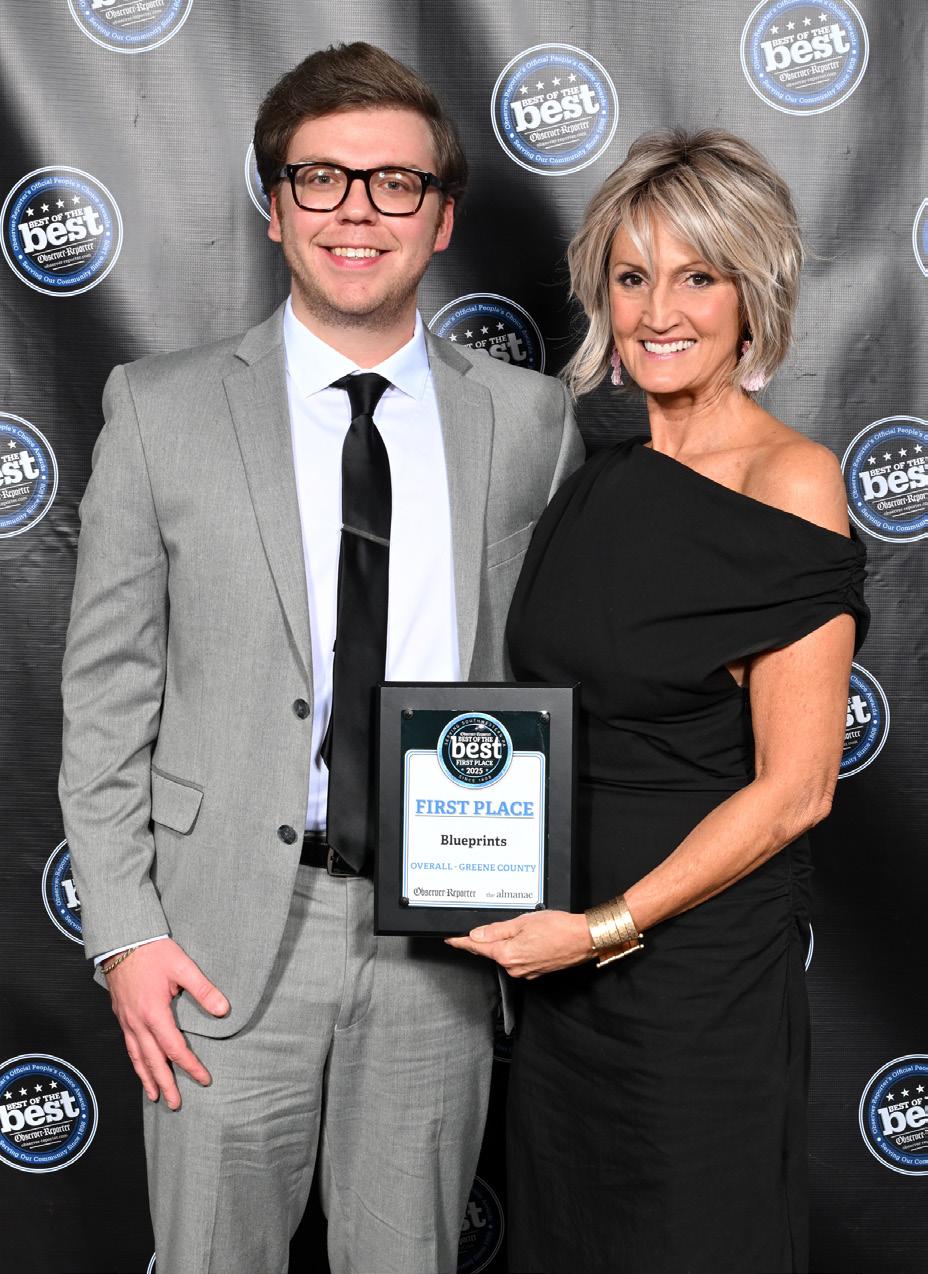
This year, Blueprints was proud to win the title of Best Overall Business in Greene County and Best Learning Center. Blueprints also placed in the top three for Best Nonprofit, Best Place to Work, Best Preschool and Best Career Development Agency. The range of categories in which Blueprints placed reflects the breadth of its services.
Blueprints provides early learning and education through partnerships with Head Start, Early Head Start and Pre-K Counts. It offers family support and community services like nutrition education, formula benefits, breastfeeding support and foster care and adoption support. Youth and
behavioral services include independent living programs designed for older youth, behavioral health services and truancy prevention. The Building Futures division helps build financial literacy, career development and housing opportunities. Blueprints also serves older adults by providing welcoming senior community centers, meal delivery, volunteer opportunities and care management.
At the helm of Blueprints’ continued growth and community impact is new CEO Trenna Passalacqua, a leader with deep ties to the organization and the region. Passalacqua may be new to the title, but she’s been with Blueprints for over forty years, dedicating her career to serving others in her own hometown.
“Winning Best Learning Center and Best Overall Business in Greene County is deeply meaningful to me both personally and professionally. Having grown up here — and having spent part of my career serving this community — this recognition feels like a powerful affirmation of the work our team pours into Blueprints every day,” she says.
Passalacqua also emphasizes the daily efforts of Blueprints’ staff across all communities and services.
“As I am proud and appreciative of Blueprints Greene County getting this recognition, I’m equally appreciative of the entire Blueprints workforce and the work we do within all communities we serve. For all of us at Blueprints, this award isn’t just a celebration; it’s a reminder of the trust our community places in us and the responsibility we carry forward.”
Blueprints’ mission to break down barriers is reflected in the day-to-day work it does in the community. Blueprints staff meet people where they are, listen to individual needs and create actionable plans and goals, connecting people in the community to the resources and services that are available to them, like social services, aging support, educational support and more. These complex systems can be difficult to navigate, but Blueprints steps in to facilitate the right connections.
“Every successful referral, every story of progress and every barrier we help someone overcome reinforces the mission of building stronger futures in a very real and tangible way,” says Passalacqua. Blueprints measures its success by the number of successful connections and the use of resources that help people get ahead and build meaningful lives.
One of the most significant assets that sets Blueprints apart and drives its success is its people, both employees and volunteers. Working together and leaning on each other’s strengths leads to greater outcomes.
“Collaboration is foundational to Blueprints’ impact.
Staff collaboration improves decision-making, reduces duplication and helps staff respond more holistically to complex needs. Volunteers don’t just add capacity; they bring lived experience, community credibility and a relational approach,” says Stacy Stroman, the Aging Well Director at Blueprints.
Partnerships within the community, both in the public and private sectors, are essential to meeting the unique and varied needs of individuals and families.
“No single organization can address the complex barriers that people face. Collaboration with community partners allows Blueprints to fill service gaps and ensures that impact is shared,” says Stroman.
Winning these Best of the Best awards reflects decades of trust built within the community it serves. In Greene County and beyond, Blueprints’ work continues to evolve alongside the needs of families and individuals across the region. As Blueprints looks forward to another year of service, there is a renewed commitment to meeting people where they are and building brighter futures.
I never expected to experience something like this. I knew I had to get to UPMC Washington.
When his heart started racing, former athlete JJ knew something was wrong, so he rushed to UPMC Washington, where he was diagnosed with atrial fibrillation and tachycardia. There, he received comprehensive care delivered by a trusted team of cardiac and vascular experts, as well as access to groundbreaking cardiovascular research and clinical trials, right in his community.
Learn more about JJ’s story at upmc.com/Washington