Taiko for Mental Health and Wellbeing. A COMMUNITY-ENGAGED RESEARCH REPORT.
Prepared for Foyle Obon by Ulster University. Authors: Dr Grainne McAnee & Dr Orla McDevitt-Petrovic
Taiko for Mental Health and Wellbeing. A community-engaged research report. Prepared for Foyle Obon by Ulster University. Authors: Dr Grainne McAnee & Dr Orla McDevitt-Petrovic
Abbreviations
Mass Index
DoH: Department of Health
HSC: Health and Social Care
UU: Ulster University
WEMWBS:
WHO: World Health Organisation
WHO-5: 5-item WHO Well-Being Index
Taiko for Mental Health and Wellbeing.
A community-engaged research report. Prepared for Foyle Obon by Ulster University.
Authors: Dr Grainne McAnee & Dr Orla McDevitt-Petrovic
そして、Arts Council of Northern Ireland、The Community Foundation for Northern Ireland、また、この研究プロジェクトの主要な資金提供者である The Department of Healthなど、長期にわたって私たちを支援してくれた主要 な資金提供者の方々に感謝の意を表したいと思います。
この10年間、私たちは、コミュニティを越えたプロジェクト、国境を越えた プロジェクト、および社会のマイノリティや疎外されたメンバーを向上させ、 活力を与えるためにデザインされた異文化プログラムを通じて、人々を結びつ けるユニークな日本のアートプログラムを提供してきました。 その中の一つである「Taiko for Wellbeing」 プログラムの呼びかけに応じ、 心を込めて参加してくださったすべての参加者の方々に深く感謝申し上げま す。
チームHimawariの皆さん、お疲れ様でした!
Foyle Obon マーシャル依子
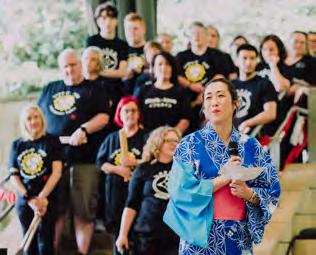
As the chairperson of Foyle Obon, it gives me great joy and pride to introduce this research report, the outcome of a collective effort by our vibrant organisation and our partners in Ulster University. At Foyle Obon we strive to create spaces where every individual, regardless of background or experience, can engage with the arts in meaningful and transformative ways. We could not do this without our volunteers, board members and our hard-working part time staff of two, Fiona and Nicola, who routinely work many more hours than they are remunerated for. The success of this project and so many others are due to their passion and dedication to carrying out the vision of our community.
I want to extend our appreciation to key funders who have supported us over the years, including the Arts Council of Northern Ireland, the Community Foundation for Northern Ireland and the principal funder for this research project, the Department of Health. For ten years now we have delivered unique Japanese arts programmes that bring people together, through cross community projects, cross border projects and intercultural programmes designed to elevate and empower minoritised and marginalised members of our society. I would like to give a very special thank you to every participant who responded to our call and wholeheartedly took part in the Taiko for Wellbeing programme. Himawari Taiko - Otsukaresama deshita!
Yoriko Marshall, Chairperson, Foyle Obon
Introduction
“Spend (slightly) less on health and more on the arts - health would probably be improved”
Editor, British Medical Journal 2002
Welcome to the research report on the “Taiko for Mental Health & Wellbeing” programme. This is a pioneering initiative aimed at exploring the transformative potential of Japanese taiko drumming in promoting mental health and overall wellbeing. In collaboration with the Foyle Obon organisation, this study investigates the effects of participating in taiko drumming classes on individuals’ physical health, psychological wellbeing, and sense of community belonging. Through qualitative analysis and evaluation, we aim to deepen our understanding of the role of the arts, particularly performing arts, in enhancing mental health outcomes.
This report presents the fndings of our research, highlighting the positive impact of taiko drumming on participants’ lives and underscoring the importance of incorporating artistic practices into holistic approaches to wellbeing.
We begin by providing a background to how this research initiative came about and introduce our lead partner, Foyle Obon. An overview of the relationship between the arts and health is presented with a focus on the performance art of drumming. Existing research is reviewed and then some context offered for how the Japanese art of Taiko drumming has spread internationally. The section on Taiko in Northern Ireland tells the story of how this very different form of drumming made its way to our shores, from an island nation in the far east all the way to an island nation on the very edge of western Europe. We look at how Taiko lends itself to community development and potentially offers everyone, a way to access a participatory artform.
We then describe the programme itself and the research methodology in detail, followed by an analysis of our fndings, through both qualitative and quantitative data. Our hope is that the information is presented in a clear manner so that anyone can enjoy reading it and fnd it an entry point to further investigation into Japanese arts/health research or simply into discovering the gift that is Taiko team drumming, Foyle Obon style.
The fnal sections contain a discussion of our fndings and some recommendations for what could come next.
Taiko for Mental Health and Wellbeing. A community-engaged research report. Prepared for Foyle Obon by Ulster University. Authors: Dr Grainne McAnee & Dr Orla McDevitt-Petrovic
Taiko for Mental Health and Wellbeing. A community-engaged research report.
Prepared for Foyle Obon by Ulster University.
Authors: Dr Grainne McAnee & Dr Orla McDevitt-Petrovic
Foyle Obon
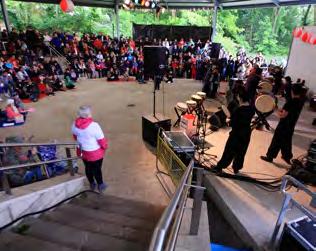
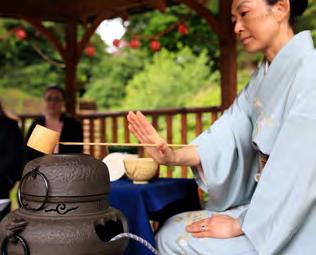
Foyle Obon is a constituted charitable Japanese arts organisation based in Derry-Londonderry. The organisation leadership is made up of a voluntary board of management and Japanese advisory group. Founded in 2014, the organisation delivers year-round extensive programmes of outreach workshops, classes and retreats to diverse groups, schools and community and corporate organisations. Additionally, regular community events give outreach programme participants the opportunity to engage either as a performer, volunteer or artist and to experience the performances and workshops of international and local practitioners of Japanese artforms. Taiko drumming is at the heart of Foyle Obon programme delivery, alongside bon odori dance, origami, storytelling, tea ceremony and more.
The group’s fagship ‘Obon’ festival, held each May at the Playtrail in Derry-Londonderry, brings people together to celebrate in a unique dynamic way. ‘Obon’ is a traditional Japanese summer festival from the Buddhist tradition. There are hundreds of Obon festivals across North and South America, commonly linked to Buddhist temples and Japanese diaspora communities.
Since the beginning, the Foyle Obon organisation has sought to develop inclusive ways of coming together in new shared community spaces. In the fractured Northern Irish society, drumming and summer festivals can be divisive and seen to belong to one group or the other. The work of Foyle Obon thus creates and holds an inclusive space for both the Protestant and Catholic communities in Northern Ireland to interact, fostering unity through the shared experience of taiko and other Japanese artforms. It also provides a platform for the Japanese community and the bi-cultural next generation to connect with and explore their cultural heritage.
The diversity, equity, inclusion and belonging work carried out through key collaborative projects continues to inform everything Foyle Obon does and will become evident in the qualitative analysis section of this report.
Despite the historical divides in the region, their initiatives aim to bridge cultural gaps and promote understanding through artistic engagement. Foyle Obon’s work highlights the potential of community based participatory arts in fostering cohesion and harmony in communities that have experienced deep-seated confict.
Background & Context
Clarendon Medical - Taiko for High BMI patients. In 2020, the staff at Foyle Obon were approached by social workers at Clarendon Medical in Derry and asked to participate in their pilot Healthy Connections programme for patients with high BMI.
Taiko had been identifed as an arts activity with excellent physical, emotional and mental health protective factors and the medical practice team wished to include it in their programme of therapies and counselling. The overall project was a huge success, as evaluated in the report ‘Healthy Connections’ (McAnee et al., 2021).
Taiko for Mental Health and Wellbeing. A community-engaged research report. Prepared for Foyle Obon by Ulster University. Authors: Dr Grainne McAnee & Dr Orla McDevitt-Petrovic
“The taiko drumming was a revelation for most of the patients who had no idea what to expect and reported it to be “mindblowing” ... “even if I had the worst week, you do the drumming and it’s all out of your system, and you come out and you’re buzzing... “
Himawari Taiko
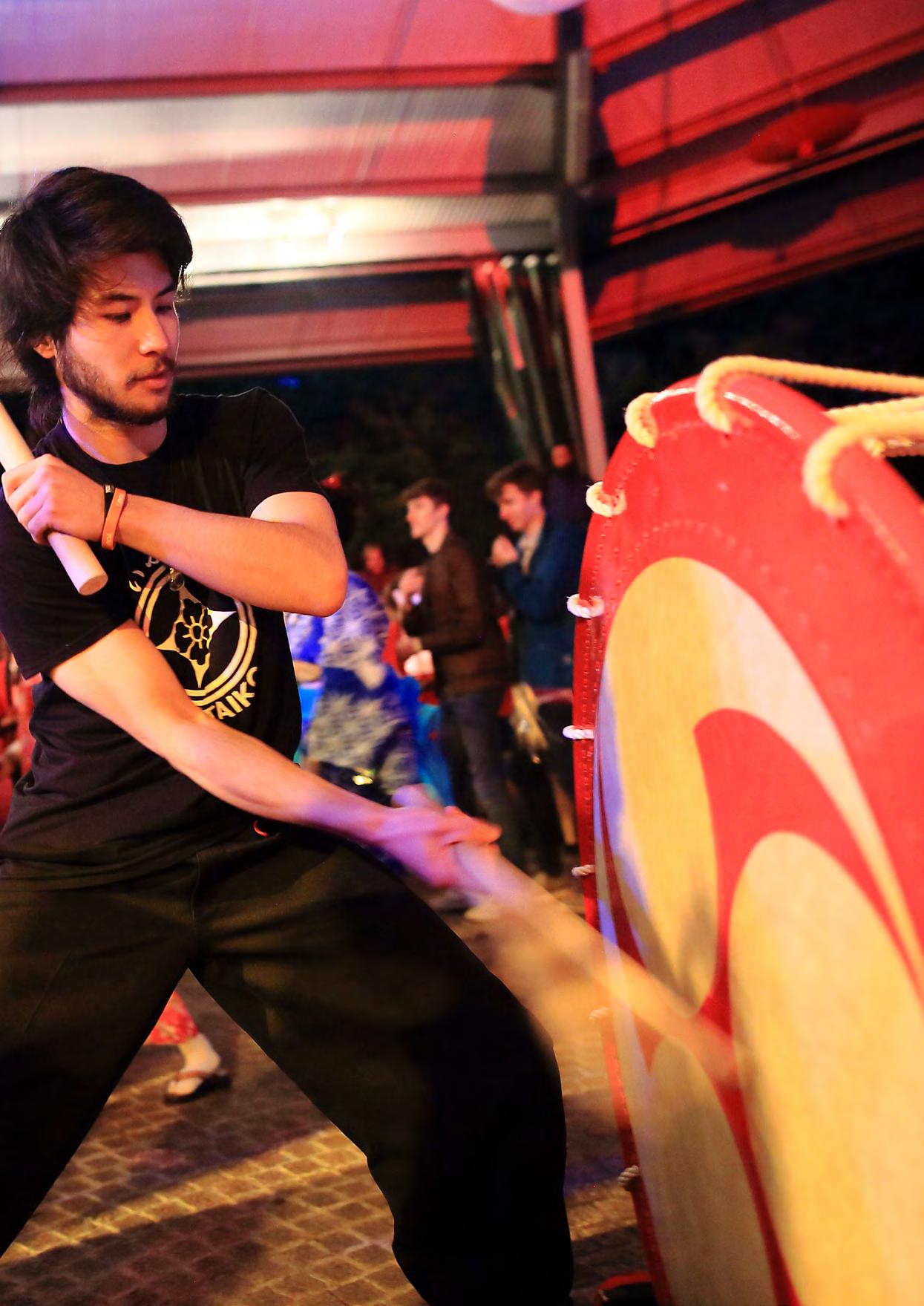
Taiko drumming is mentally and physically challenging. Participants report that it encourages a sense of fow when they are playing, they are focused on the rhythms and forget their own worries for a while:
“Taiko and the values that come with it have a host of benefts not just physically but emotionally for people with mental health problems ... it is a few hours a week where my mind literally calms.”
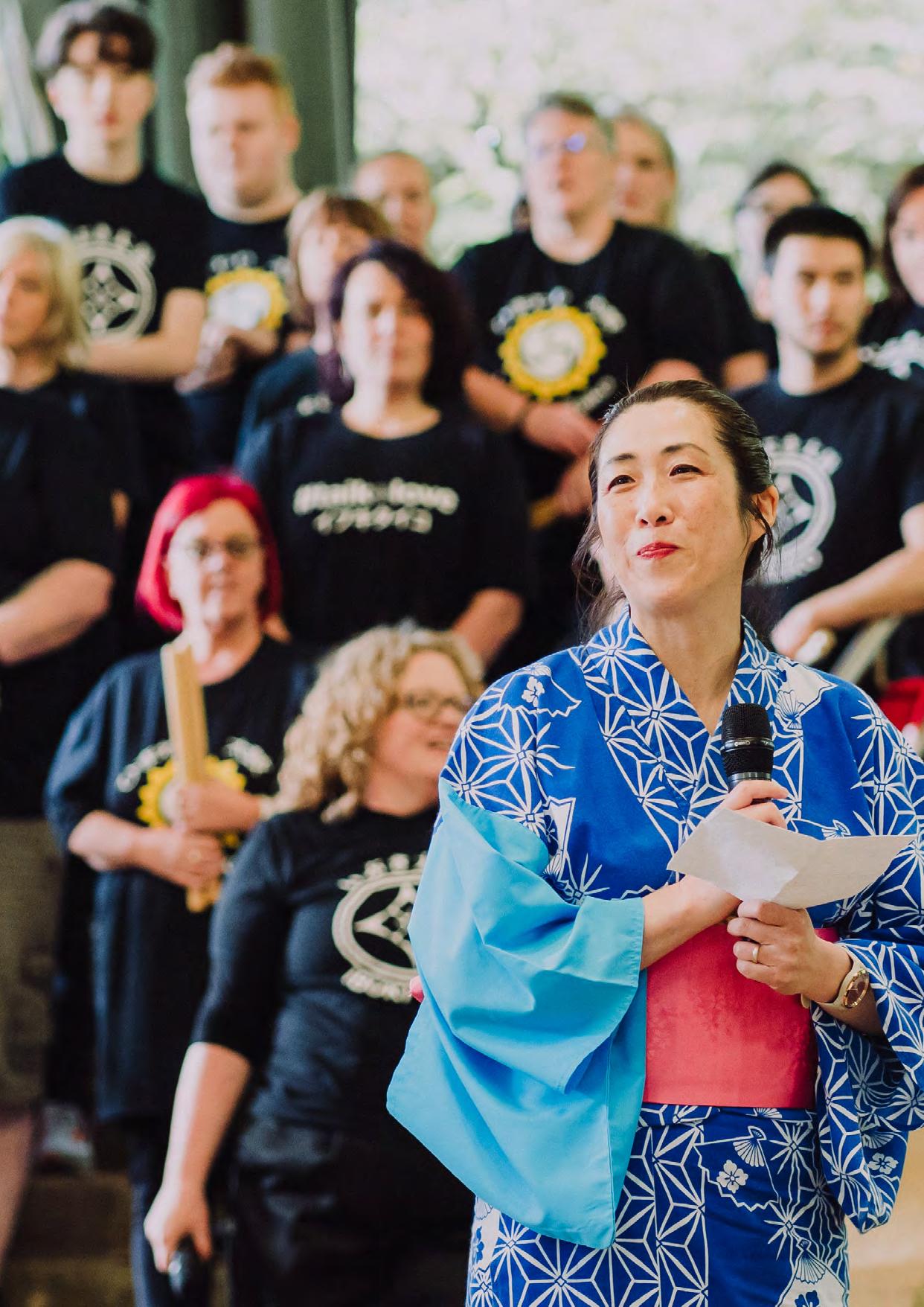
ひまわり Himawari is the Japanese word for Sunfower. The Sunfower represents happiness, joy, energy and symbolises hope and recovery in Japan. During the Healthy Connections pilot and beginning phase of this research programme development, the name ‘Himawari Taiko’ became associated with the project. The name stuck and is now frmly attached to a growing team within the Foyle Obon ‘taiko family’.
Taiko for Mental Health and Wellbeing. A community-engaged research report. Prepared for Foyle Obon by Ulster University. Authors: Dr Grainne McAnee & Dr Orla McDevitt-Petrovic
Summary
The programme designed by Foyle Obon consisted of regular taiko classes and involvement in a community festival. The Arts Council of N Ireland (ACNI) in their response to the Draft Mental Health Strategy March 2021 clearly advocated “for the arts to be taken more seriously as a form of prevention and early intervention, as part of a responsive and humane health service.” They go on to state that,
“Arts and culture play an important role in helping people to stay well, recover faster, and meet major challenges facing health and social care, including mental health.”
All research studies should be embedded in theory and the hypothesis or ideas that are being tested should be driven by evidence in the literature base that support them. A core idea at the centre of Foyle Obon community programming is that the arts, specifcally the Japanese art of taiko drumming, can be used to increase feelings of well-being and improve subjective feelings of positive mental health, while acknowledging there are a myriad of factors that contribute to well-being and positive mental health. This report now contributes to the wider body of existing research into the impact and benefts of using drumming and the arts as part of the national health service.
The evaluation for this report was conducted on completion of the Foyle Obon Taiko for Mental Health and Wellbeing programme. Funding for delivery of the programme was provided by the Northern Ireland Department of Health through the Community Foundation for Northern Ireland. Ethical approval was granted by the Ulster University School of Psychology Ethics Committee (reference number FCPSY-22049-A) on 5th July 2022.
Being Healthy
When we consider the question of if we are healthy, we often immediately think about our physical health. Physical health is important but is not the only facet of health. The World Health Organisation (WHO) defnes health not only as the absence of disease or infrmity but as “a state of complete physical, mental and social well-being” (WHO, 2006). Although it would be impossible for any human to achieve the lofty heights of “complete” physical, mental and social wellbeing, they are all equally important factors in contributing to our health.
Closely related to health is the concept of wellbeing. There is an ongoing debate concerning the topic of well-being and how to defne it, with measures proliferating over the last few decades (Vanderweele et al., 2020). The emergence of interest in well-being can arguably be said to have been born from that same WHO defnition of health as being, ‘not the mere absence of disease, but a state of well-being.’ (WHO, 2006).
Well-being is accepted as being divided into subjective well-being which is based on how a person thinks and feels about their own life, and objective well-being which are things which can be measured such as standard of living, educational attainment, income, or levels of safety (Vanderweele et al., 2020). Each type of well-being will of course also infuence the other. Despite all debates, what is agreed is that well-being is an important component of positive mental and physical health (Farnier et al, 2021).
There is growing consensus that objective measures are insuffcient to analyse and describe human well-being because it is a feel-good concept and best measured by the opinion of the person themselves (McNaught,2011). Subjective wellbeing encompasses the notion of how people cope, thrive and survive (McNaught, 2011). Well-being can also be characterised in terms of physical and mental health and again, these will infuence each other. Aspects of well-being have been defned by dimensions such as self-acceptance, positive relations with others, autonomy, environmental mastery, purpose in life and personal growth (Ryff, 1989). A framework for defning well-being is offered by McNaught (2011) which includes individual, family, community and societal elements.
Taiko for Mental Health and Wellbeing. A community-engaged research report. Prepared for Foyle Obon by Ulster University. Authors: Dr Grainne McAnee & Dr Orla McDevitt-Petrovic
Taiko for Mental Health and Wellbeing. A community-engaged research report. Prepared for Foyle Obon by Ulster University. Authors: Dr Grainne McAnee & Dr Orla McDevitt-Petrovic
The Arts
Arts activities combine multiple different components that are all known to be health promoting (Davies et al., 2014; Polley & Sabey, 2022). Davies and colleagues (2014) defne the arts as performing, visual, literature, culture and online/digital/electronic arts as shown in Figure 1 below.
PERFORMING
Music | Dance | Theatre
Singing | Film
VISUAL
Crafts | Design | Painting
Photography | Sculpture
Textiles
LITERATURE
Writing | Reading Literary Festivals
CULTURE
Museums | Galleries
Art Exhibitions | Concerts
Theatre | Community Events
Cultural Festivals & Fairs
ONLINE
Animations | Film-making
Computer Graphics
Figure 1 Categories of the arts.
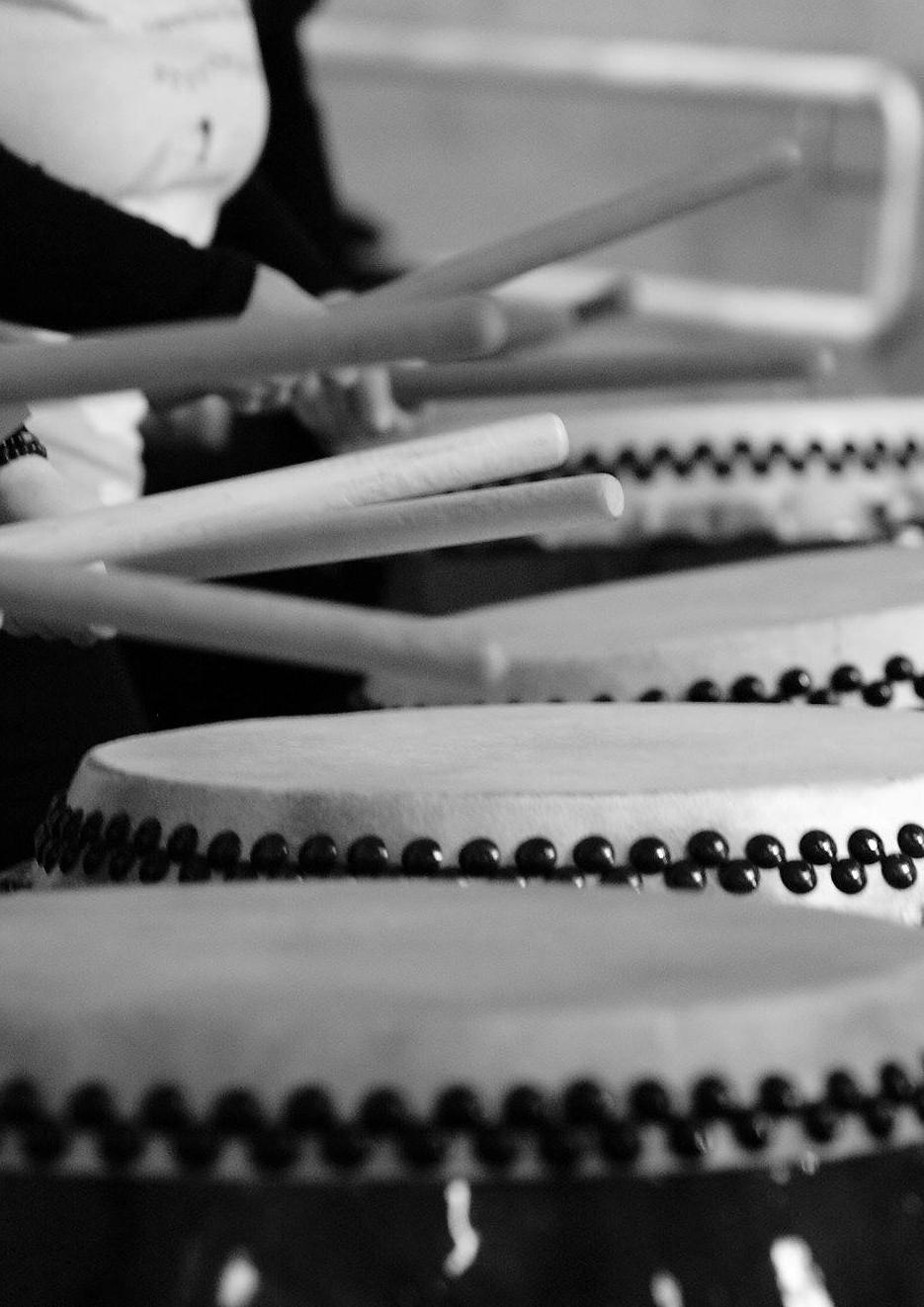
Taiko drumming fts into the category of performing arts (Fancourt & Finn, 2019) and is an energetic form of team drumming with its roots in Japan. Taiko drumming is taught through principles that incorporate Japanese culture, respect, mindfulness, rhythm, movement and mind and body awareness. Participants come together as a team to listen, perform, move and own their voices and spaces at the drum.
A series of papers in the British Medical Journal (Davies et al., 2014; Smith et al., 2002) express the opinion that we should “spend less on health and more on arts” to assert the position that engagement in the arts will improve health. When we consider the elements of taiko described above, it is clear that it has the potential to contribute to the physical, mental/emotional and social spheres of our lives.
A 2019 scoping review published by the World Health Organisation (WHO) (Fancourt & Finn, 2019) addressed the question “what is the evidence of the role of the arts in improving health and well-being?” This review synthesised results of 3000 global studies which used a range of methodologies including uncontrolled pilot studies, case studies, small scale cross-sectional surveys, nationally representative longitudinal cohort studies, community wide ethnographies and randomised controlled trials. Methods included psychological scales, biological markers, neuroimaging, physiological assessments, behavioural observations, interviews and examinations of clinical records (Fancourt & Finn, 2019). The studies drew on theories from a range of disciplines.
The review found clear support for the use of the arts for improving health and well-being. It demonstrated that the arts have the potential to impact both mental and physical health through the routes outlined in Figure 2 (Fancourt & Finn, 2019, p.2) below. Two broad themes emerged in terms of how that can be achieved. The frst of these is through prevention and promotion and the second through management and treatment. The report makes specifc policy recommendations including to support community arts programmes for mental health, to ensure culturally diverse forms of art are available and accessible, to encourage arts and cultural organisations to make health and wellbeing an integral and strategic part of their work, to actively promote public awareness of the potential benefts of arts engagement for health and to develop interventions that encourage arts engagement to support healthy lifestyles (Fancourt & Finn, 2019).
One such study by Davies and colleagues (2014) sought to address the impact of the arts on mental health in the general population when used as a hobby, in the way most people engage with the arts. They asked 702 people about how they interacted with the arts as well as questions around demographics which are things like age, gender, education,
Taiko for Mental Health and Wellbeing. A community-engaged research report. Prepared for Foyle Obon by Ulster University. Authors: Dr Grainne McAnee & Dr Orla McDevitt-Petrovic
Taiko for Mental Health and Wellbeing. A community-engaged research report. Prepared for Foyle Obon by Ulster University. Authors: Dr Grainne McAnee & Dr Orla McDevitt-Petrovic
what they worked at, if they lived with others. They then asked about other issues which can interplay with mental health. These other issues were things like general health, sports engagement, religious activities and holidays. These other issues are referred to as confounders. The reason that demographics and confounders are asked about in research studies is that they can be factored into the statistical analysis so we have the best possible chance of excluding factors which may also affect the main relationship we are looking at. In this case that main relationship was engaging with the arts as a hobby in some form and mental well-being. They used the WEMWBS to assess mental wellbeing, the same measure as we use in the current study. What they found was that there was an association between the arts and well-being and that people who engaged in the arts in some way for more than 100 hours a year had higher levels of well-being than those who did not. They concluded that the potential for arts to improve mental wellbeing was supported and supported further work in this area.
The study (Davies et al., 2014) theorised creative or arts activities may involve one or more of the components listed in Figure 2 below.
COMPONENTS
• Aesthetic engagement
• Involvement of the imagination
• Sensory activation
• Evocation of emotion
• Cognitive stimulation
• Social interaction
RESPONSES
• Physical activity
• Engagement with themes of health
• Interaction with health-care setting
• Psychological (eg. enhanced self-effcacy, coping and emotional regulation)
Figure 2 Logic model linking the arts with health.
Each component may trigger psychological, physiological, social and or behavioural responses. As an example, the aesthetic and emotional components of an arts-based activity might provide an opportunity for emotional expression, emotion regulation and stress reduction (Juslin, 2013). Emotion regulation is intrinsic to how we manage our mental health (Fancourt et al., 2019; Mennin et al., 2007), while stress is a well-known risk factor for the onset and/or progression of a range of health conditions including cardiovascular diseases (CVD) (Steptoe et al., 2012) and cancers (Chida et al., 2008).
Cognitive stimulation when engaging in the arts can provide opportunities for learning and skills development, and it is not only associated with a lower risk of developing dementias but also interrelated with mental illness such as depression (Kaser et al., 2017).
Social interaction while participating in the arts can reduce loneliness and lack of social support, factors linked to adverse physiological responses, cognitive decline, functional and motor decline, mental illness and premature mortality (Boss et al., 2015; Steptoe et al., 2013). Social interaction that brings together different groups of people can improve social capital and reduce discrimination, the latter being linked with mental illness and a range of other health conditions including CVD, respiratory conditions and indicators of illness such as pain and headaches (Pascoe & Richman, 2009).
Physical activity through participating in the arts can reduce sedentary behaviours, which are associated with conditions such as chronic pain, depression and dementia (Hamer & Stamatakis, 2014). Engagement with discussions of health or with healthcare settings through arts activities can also help to encourage health-promoting behaviours such as having a healthy diet and not smoking or drinking too much, which are all linked with a lower risk of mortality from CVD and cancer (Cayton, 2007). The report called for these and the other benefcial impacts to be harnessed further by acknowledging and acting on the growing evidence base.
Drumming has been quite widely studied in terms of its contribution to health and wellbeing. Various forms of drumming have been shown to help with a range of physical and mental health conditions.
Taiko for Mental Health and Wellbeing. A community-engaged research report. Prepared for Foyle Obon by Ulster University. Authors: Dr Grainne McAnee & Dr Orla McDevitt-Petrovic
Taiko for Mental Health and Wellbeing. A community-engaged research report. Prepared for Foyle Obon by Ulster University. Authors: Dr Grainne McAnee & Dr Orla McDevitt-Petrovic
Health benefts of drumming
There are many academic studies on the health benefts of group drumming in general. The positive effects of music on well-being have been widely investigated (MacDonald, Kreutz, & Mitchell, 2012). The potential of group drumming to enhance well-being has been documented extensively. Winkelman (2003) highlighted drumming as an effective complementary tool for addiction treatments as it demands a reduction of alienation through connected-ness with self and others. Camilleri (2002) pointed to drumming as a tool for creating a sense of community in underprivileged neighbourhoods, and Burnard and Dragovic (2014) demonstrated the potential drumming has to enhance well-being in educational contexts by facilitating a sense of empowerment, and through the embodiment inherent to music learning.
Furthermore, studies with at-risk young people, alienated from the school system (Faulkner, Wood, Ivery, & Donovan, 2012; Wood, Ivery, Donovan & Lambin, 2013) highlighted the effects of drumming on social learning outcomes, including emotional control, improved relationships and increased self- esteem, when combined with cognitive behavioural therapy. Within mental health settings, drumming has proven effective as a tool for psychosocial rehabilitation of psychiatric inpatients (Tague, 2012), in burnout reduction for staff (Newman, Maggott, & Alexander, 2015), and in alleviation of depression and anxiety while enhancing well-being and social resilience among mental health service users (Fancourt et al., 2016). There are many forms of drumming, one of which is taiko drumming.
All About Taiko
What is Taiko?
The word ‘taiko’ literally means drum in Japanese and it has evolved to refer to what one group, San Jose Taiko, calls the ‘young art form of kumidaiko – ensemble drumming featuring the Japanese drum.’ While the drums themselves are much older and have been used in Japan for centuries for many different social and cultural purposes, the art form of kumidaiko began in Japan in the early 1950s when a jazz drummer called Daihachi Oguchi serendipitously stumbled across an old piece of taiko music. Wondering why taiko were never played together, he broke with tradition by forming a taiko drum ensemble. Kumidaiko spread across Japan, eventually creating thousands of local teams and many world-famous performing groups like Kodo, Ondekoza, Yamato and Tao.
Taiko Worldwide
Now commonly referred to as Taiko, the artform went on to spread across the world as people started to use it in their own ways, both honouring the roots of taiko in Japan and creating new forms of expression; much like the expansion of South American samba and African djembe drumming across the globe. In her 2018 book ‘Drumming Asian America’ Angela Ahlgren describes taiko as,
“An artform with evolving conventions and aesthetic codes; it is a leisure activity, a form of exercise, and, for some, a spiritual practice; it is music, dance, and theatre; and it is a social practice…a ‘transnational and global practice that encompasses myriad connections between drummers in Japan, the United States and Canada, the United Kingdom, Europe, Australia and other parts of Asia.”
The artform spread to North America in the 1960s and 1970s with pioneering groups like San Francisco Taiko Dojo, San Jose Taiko and Kinnara Taiko. The latter, a Buddhist temple-based group, are responsible for the creation and proliferation of the wine barrel drum which made it more feasible for taiko playing to spread across North America. All these groups thrived in areas with large Japanese American communities. They took taiko beyond a performance experience, using Taiko as activism, as a community building tool, honouring the past and celebrating their Japanese heritage and ancestry. Alhgren describes it as
Taiko for Mental Health and Wellbeing. A community-engaged research report. Prepared for Foyle Obon by Ulster University. Authors: Dr Grainne McAnee & Dr Orla McDevitt-Petrovic
Taiko for Mental Health and Wellbeing. A community-engaged research report. Prepared for Foyle Obon by Ulster University. Authors: Dr Grainne McAnee & Dr Orla McDevitt-Petrovic
“a marker of post-war Japanese nationality and late twentiethcentury Asian American identity.”
San Jose Taiko describe their use of taiko as an artform that,
“appeals to something on the basic human level in all of us. Through taiko, we encourage cultural pluralism as a gateway to better communication, open-mindedness, and connection.”
Taiko is growing steadily across Europe despite a signifcantly smaller Japanese diaspora than exists in the USA. The 2019 European Taiko Conference had taiko leaders from 16 countries. There are more than 90 groups in Germany alone. On the island of Ireland, there are three taiko groups. Taiseiyo Taiko, Dublin was established frst, followed by Ibuki Taiko, Derry and then Experience Japan Taiko, Dublin.
“Taiko is thus much more complex than its simplest defnition as Japanese drumming might indicate. It is a global form that is often tied to local communities.” (Ahlgren 2018)
Philosophy
Many taiko groups across the world have adopted the ‘Four Principles’ of San Jose Taiko as a guide to teaching the artform. The principles are outlined in Figure 3.
Taiko for Mental Health and Wellbeing. A community-engaged research report. Prepared for Foyle Obon by Ulster University. Authors: Dr Grainne McAnee & Dr Orla McDevitt-Petrovic
MUSICAL TECHNIQUE: The part you hear
ATTITUDE: The part you think about
KATA (FORM): The part you see
KI (ENERGY): The part you feel
Though the foundational values of taiko are rather universal, San Jose Taiko was the frst to articulate this iteration of the Four Principles:
“As only the third taiko group to form outside of Japan, San Jose Taiko (SJT) founding members studied with the few ensembles who preceded them. Bringing back these valuable and varying nuggets of knowledge to San Jose, the company then established and articulated the four guiding principles in their early history, and they have since been adopted by taiko groups the world over. When applied, the group believes that these principles lead to “the ultimate expression of taiko, when the art becomes a part of our personality, a way of being and life expression.”
Fiona Umetsu, artistic director and taiko instructor at Foyle Obon, uses the four principles as the framework from which to introduce the philosophy of taiko to players and to guide them in their creative journey.
Figure 3 The Four Principles of Taiko
Taiko for Mental Health and Wellbeing. A community-engaged research report.
Prepared for Foyle Obon by Ulster University.
Authors: Dr Grainne McAnee & Dr Orla McDevitt-Petrovic
Taiko in Northern Ireland
Taiko was introduced to Northern Ireland by Fiona and Katsu Umetsu who founded the frst taiko group here. Ibuki Taiko was created in 2010 and had the simple goals of bringing people together to play and to use taiko as a force for good in a post confict Northern Ireland.
Ibuki Taiko began with one large drum, brought over from Japan, and slowly built up their instruments using ingenuity and all manner of materials; plastic pipes, tyres, bamboo, tape until they eventually had enough ‘home-made taiko’ for a team to practise on. Katsu, an artist and craftsman, made bachi (drumsticks) from dowels and drums from salvaged foorboards while Fiona taught classes and led rehearsals in cramped spaces. Fiona and Katsu were already connected into the small Japanese diaspora community and found other members equally passionate about sharing their Japanese heritage and traditions.
A central desire for many was to create ways for the next generation of bi-racial children to explore their roots. Among the diaspora were several people highly skilled in Japanese arts such as Origami, Ikebana, Manga, Flute, Tea Ceremony, Classical dance and more. As Ibuki Taiko delivered more performances and workshops across both Northern Ireland and County Donegal, participation and interest grew steadily. The appeal of this form of drumming was not limited to those who perhaps had a prior connection or sense of affnity with Japanese culture, although that was also a factor in the growing numbers attending informal community events.
Learning how to play the taiko drums appealed to many people across Northern Ireland and border areas where key members of the Japanese diaspora resided, because it offered something different and unique. Firstly, playing taiko requires no prior musical training or experience; lack of know how does not create a barrier to becoming a taiko player. Secondly, anyone of any age or ability could now access a musical instrument, free from the political, ideological and religious associations that had become so divisive in this region.
It very quickly became clear to those in the growing taiko community that something special was happening. While there had not been any grand plan to engage in the work of peace and reconciliation directly, the process of bringing people into a new shared space without ties to any dominant tradition had an immediate impact. Among the earliest classes, workshops and small events organised by Ibuki Taiko an incredibly diverse
community found themselves gathering to play, learn, watch and support each other.
By early 2014, the rapidly growing taiko community in the Northwest, in collaboration with the wider Japanese diaspora, had identifed need for a dedicated organisation that could further expand this impactful contribution to a thriving society. Foyle Obon was established and has been at the forefront of pioneering participatory arts programming ever since.
At the time of writing this report, Foyle Obon is celebrating its 10th anniversary and is a well-established organisation with charitable status. The overall aims remain unchanged from the early days when founding members recognised the potential of Japanese arts to encourage engagement in and appreciation of artistic pursuits.
From one team sharing home made drums, the Foyle Obon ‘taiko family’ has grown into a vibrant arts community that includes four taiko teams and weekly classes attended by nearly 60 people.In 2022-23 they engaged with over 700 participants in their outreach work and entertained audiences of 1840 people.
Harnessing the power of Japanese art forms to bring people together, Foyle Obon contributes to the Department of Health’s strategic objectives - ensuring we all ‘enjoy long, healthy active lives.’ Embodying the fve ways to health approach illustrated in Figure 4, participatory arts play an important role in connecting people, encouraging them to learn and be active.
Taiko for Mental Health and Wellbeing. A community-engaged research report. Prepared for Foyle Obon by Ulster University. Authors: Dr Grainne McAnee & Dr Orla McDevitt-Petrovic
What does playing Taiko in a team look like?
People watching a taiko ensemble performance for the frst time are often surprised at how much movement is involved. To the onlooker taiko seems a practice of many parts, a combination of musical expression, martial art, mindfulness, a fully embodied experience.
A taiko ensemble can be anything from 2-20+ people who come together to play choreographed repertoire using Japanese drums. Ahlgren (Drumming Asian America, 2018) describes contemporary taiko as,
Figure 4 Five ways to health.
Taiko for Mental Health and Wellbeing. A community-engaged research report. Prepared for Foyle Obon by Ulster University. Authors: Dr Grainne McAnee & Dr Orla McDevitt-Petrovic
“a physically demanding form of ensemble drumming that uses large barrel drums, as well as other rope tensioned drums and percussion accessories, in performances that employ choreographed movement.”
There is usually a base rhythm and other percussion instruments to keep the pace. The group play layered rhythms on top of this base. Shouts and calls are used to energise the players and engage the audience. Movement and form are just as important as beats and rhythms. Participation in Taiko drumming requires people to take notice, learn new skills and give through performing and supporting each other.
Community Development and Taiko
A common experience, noted both anecdotally and in recorded accounts of engagement with taiko, is of the potential for community development. In tandem with what is happening at the individual level in terms of personal growth and musical training, playing taiko as part of a team creates a unique environment where people fnd connection and belonging in an organic way.
In a 2021 study of Taiko in the UK, Kate Walker talks about the concept of ‘community musicians.’ The report describes how,
“The taiko players ... share a common trait: they ‘work with a commitment to musical expression as a crucible for social transformation, emancipation, empowerment, and cultural capital”
These musicians adopt proactive change processes which draw upon taiko to transform the lives of the marginalised – whether individuals, (taiko) communities or at large. The growth of Taiko in Northern Ireland has followed a similar trajectory. In addition to the professional Ibuki Taiko team, there are four additional community taiko groups meeting weekly in Derry-Londonderry and Co. Donegal, with teams made up of many past and present participants of Foyle Obon programmes.
In her 2021 study ‘Shaping a global art form’, Walker uses Dunphy’s (2018) work to explore the mechanisms by which participation in the arts can effect intentional social change. This is comprised of three models as described in Figure 5 below.
As recognised by the Mental Health Strategy 2021-2031, COVID19 has exacerbated the already signifcant problems with mental health in Northern Ireland and it is highly likely that we will see increased levels of need for several years due to the ongoing impact of the pandemic on our society’s mental health. Northern Ireland already has the highest prevalence of mental health problems in the UK, with a 25% higher overall prevalence of mental health problems than England.
Taiko for Mental Health and Wellbeing. A community-engaged research report. Prepared for Foyle Obon by Ulster University. Authors: Dr Grainne McAnee & Dr Orla McDevitt-Petrovic
1 3
Social/ Civic action
Change driver is through infuencing public opinion and decision making using the arts.
change driver is through community as a result of creative social interaction between arts participants.
Community Cultural Development
Therapeutic paradigm
Change driver is through individuals using the healing process of arts used therapeutically.
2
Figure 5 Change mechanisms using the arts.
Taiko for Mental Health and Wellbeing. A community-engaged research report. Prepared for Foyle Obon by Ulster University. Authors: Dr Grainne McAnee & Dr Orla McDevitt-Petrovic
Social prescribing of arts programmes as interventions is becoming recognised as a tool to help reduce the burden on GPs and the Health Service. Using arts provision as an early resource to seek solutions beyond the clinical. There is potential for the work of Foyle Obon to specifcally contribute to the vision for the HSC by working to, “tap into the innovative ideas and energies in communities themselves, and in the community and voluntary sectors.”
Projects using taiko and doing pioneering work examining the use of taiko as a therapeutic intervention around the world are shown below in Figure 6.
Rockferry Community Partnership England
Considered the health and wellbeing benefts of an outreach scheme designed to support disabled adults and children in the Wirral, Merseyside. Began as an antisocial behaviour diversionary project but proved so popular it soon expanded to schools and adult day centres ldenitifed three positive themes from involvement in the Taiko Drumming for Health initiative: socialising, mental health and wellbeing, and new skills.
(Whelen & Timpson, 2013)
San Jose Taiko Taiko for Parkinson’s USA
Used taiko as a fun, cultural activity that helps improve physical activity, stress management, cognitive engagement, and social support. The Parkinson’s class was designed by Performing Members of San Jose Taiko and Sydney Shiroyama, consulting Occupational Therapist, to address the needs of individuals with Parkinson’s Disease.
The name Exadon combines three words: “Exercise”, “Sado”, an island in the Sea of Japan and the sound of beating a taiko drum “don”. It’s an innovative ftness program centred around enjoying taiko (traditional Japanese drums), performing arts, and physical activity. Originally developed by Dr. Yoshinori Morimoto and Kodo Cultural Foundation as a personcentred dementia care program, the Exadon initiative has expanded over the years to focus on improving the wellbeing of one and all, regardless of cognitive conditions.
Figure 6 Taiko for health projects around the world.
Exadon Kodo Cultural Foundation
A Note on Fluffy Outcomes
One potential reason for the seeming reluctance of policy makers to pay attention to the use of creativity and the arts in health studies, stems from an uncomfortable relationship with qualitative evaluation (Daykin et al., 2017). Daykin and colleagues reported stakeholder fndings from a one-year knowledge exchange project completed with leading evaluators, researchers, artists and arts organisations, health professionals and health and social care commissioners. They met in a series of seminars and workshops as well as participating in oneto-one interviews. Findings reported point to the strengths of creative arts-based methods as well as to the problem that exists of a “kind of stigma – the term fuffy is often used to describe outcomes that are open to interpretation and not easily quantifable.” (Daykin et al., 2017 pp127) This leaves many funders locked into quantitative measures which can have detrimental effects in terms of more appropriate measures and the devaluation of experiences of participants. Qualitative evaluation is the natural ft for a more insightful and useful evaluation of a person’s experience.
Taiko for Mental Health and Wellbeing. A community-engaged research report. Prepared for Foyle Obon by Ulster University. Authors: Dr Grainne McAnee & Dr Orla McDevitt-Petrovic
Taiko for Mental Health and Wellbeing. A community-engaged research report. Prepared for Foyle Obon by Ulster University. Authors: Dr Grainne McAnee & Dr Orla McDevitt-Petrovic
Aims of the current study
This study aimed to evaluate the use of Foyle Obon taiko drumming as a wellbeing and mental health intervention in the community. The focus of the study was to qualitatively understand the experience of participants using the intervention to identify themes and outcomes for the group. It was predicted that people would report positive experiences and would fnd value in the programme. Several quantitative measures were also included which measured wellbeing and current mental health status. It was also predicted that wellbeing scores as measured by the WHO-5 Well-being index (WHO, 1998) and the Warwick Edinburgh Mental Wellbeing Scale Short-Form (Tennant et al., 2007) would increase because of participating in the programme. In evaluating the project, the study aimed to increase the knowledge base around the use of arts, specifcally performing arts to increase mental wellbeing. To achieve these aims the steps displayed in Figure 7 were undertaken.
Co-production with previous Foyle Obon participants to develop content Programme delivered in 8 week blocks over 3 time periods
Quantitative and qualitative data collected Analysis performed Report produced
Figure 7 Project steps
The programme
The programme was a performing arts-based programme using Foyle Obon taiko drumming. Fundamental to the art is understanding the history and principles of this form of drumming. A coproduction panel formed from previous Foyle Obon project participants decided any additions that they felt would help people who may be experiencing well-being and mental health issues, with the basic programme structure outlined in Figure 8.
Taiko for Mental Health and Wellbeing. A community-engaged research report. Prepared for Foyle Obon by Ulster University. Authors: Dr Grainne McAnee & Dr Orla McDevitt-Petrovic
WEEK 1
Introduction to Foyle Obon taiko - 4 principles, stance and warmups, frst drills
WEEK 3
Begin to learn a Foyle Obon taiko piece.
WEEK 2
Introduction to Foyle Obon taiko - taiko in Japan, kiai, concept of beginners mind.
WEEK5
Work on voice projection (kiai) and owning your voice.
WEEK6
Group work on staging of piece and introductions.
WEEK 7
Final rehearsal and planning of celebration.
WEEK 4
Continue with piece, concept of owning your space
WEEK 8
Final performance and celebration.
Figure 8 Structure of the Foyle Obon Taiko Programme
Taiko for Mental Health and Wellbeing.
A community-engaged research report.
Prepared for Foyle Obon by Ulster University.
Authors: Dr Grainne McAnee & Dr Orla McDevitt-Petrovic
Methodology
Overview
Evaluation of the Foyle Obon programme was completed using a mixed methods design which meant it had both quantitative and qualitative elements. Quantitative methods are concerned with numbers, scales and counting while qualitative methods collect people’s stories and experiences. Quantitative research provides a story of breadth of people’s experiences but does not provide depth. Qualitative research tells us in depth what an experience is like for a small group of people. Both are valid and important. The focus of this study was on qualitative methods as the depth of experience that each participant had was of the utmost importance for this study. There was also a quantitative element to the design which used measures of well-being distributed pre- and post-delivery. Findings from the quantitative measures were presented as descriptive statistics which means the report describes differences in scores before and after the programme.
Recruitment
All recruitment took place from the local community using Foyle Obon’s mailing list and social media platforms. A poster informed potential participants of the day and times of the sessions and where they would take place. It also provided both an email address and a phone number to ring Foyle Obon for more information. A core group was formed of 10-12 people. If people left, they were replaced by people on a waiting list.
When people contacted Foyle Obon for information, they were sent a Participant Information Sheet (PIS) with the details of the research project. Participants had to be over 18 years old and could not be diagnosed with a serious mental illness such as any of the psychotic illnesses.
Data Collection
Consent forms and Participant Information Sheets (PIS) were distributed to the group at each frst session of programme delivery by the researcher. The consent sheet and PIS explained the research and information related to it as well as sources of support that could be used at any point during the research.
A questionnaire collecting information on demographics and including the well-being measures (detailed in Figure 9 below) was distributed to the group at each frst session of programme delivery, again by the researcher. Once the programme was delivered a post-questionnaire containing the same measures was again distributed at the fnal session.
The 5-item WHO Well-Being Index (WHO-5) is one such measure. It was developed from the 10-item form of the scale (Bech
et al., 1996) which itself developed from a 28-item scale (Warr et al, 1985) previously used in studies by WHO. The 5-item scale is simple, non-invasive and has adequate validity as a screening tool for depression and an outcome measure in clinical trials. The items are all positively worded, aim to measure overall well-being and cover aspects of physical and mental health (Tennant et al., 2007).
The Warwick-Edinburgh Mental Well-Being Scale (WEMWBS) (Tennant et al., 2007) was developed by an expert panel who drew on the current literature at the time, qualitative research into well-being and psychometric testing of an existing scale. It was then validated on a student and representative population sample. This is a measure which also solely focuses on positive aspects of mental health. It is also short, reducing the burden on respondents.
One-to-one interviews were conducted to collect qualitative data.
Warwick Edinburgh Mental Wellbeing Scale Short Form
Number of items: 7
Source reference: Tennant et al., 2007
Properties:
Sensitive to change; extensive normative data available; sound psychometric properties
WH0-5 Wellbeing Index
Number of items: 5
Source reference: WHO, 1998
Properties:
Very brief; well normed measure of well-being; sound psychometric properties
Taiko for Mental Health and Wellbeing. A community-engaged research report. Prepared for Foyle Obon by Ulster University. Authors: Dr Grainne McAnee & Dr Orla McDevitt-Petrovic
Figure 9 Quantitative measures.
Taiko for Mental Health and Wellbeing. A community-engaged research report.
Prepared for Foyle Obon by Ulster University.
Authors: Dr Grainne McAnee & Dr Orla McDevitt-Petrovic
Analysis of the results
Quantitative
The Warwick Edinburgh Mental Well-Being Scale and the WHO5 Well-being index were used to measure well-being at the start and at the end of the programme. Findings from these were presented as descriptive statistics. These are tests which provide more meaningful information on the group, in terms of their scores before and after taking part in the programme.
Qualitative
It was vitally important the in-depth experience of each patient was explored and documented because the perceived benefcial impact of the programme was based on the individual participant’s experience of it. Therefore, the primary analysis approach was qualitative. One-to-one interviews were audio recorded and transcribed verbatim. Data transcripts were subsequently thematically analysed using refexive thematic analysis (Braun & Clarke, 2006; Braun & Clarke, 2019; Braun & Clarke, 2020). This analysis was carried out by two researchers to allow for a more robust approach and consensus. The researchers frst familiarised themselves with the transcripts and then independently generated initial codes before moving to the broader level of searching for the themes in the codes. Themes were then organised into overarching (master) and sub-themes (subordinate) as appropriate. The researchers then identifed and reviewed themes and reached consensus to defne and name them. A broad and descriptive coding framework was employed, with coding conducted on both semantic and latent levels.
Refexivity
Thematic analysis fts very well with the idea of co-production and the embedding of the researcher in the process as it recognises the role of the researchers’ own ideas and understanding in an interactive and dynamic process of making sense of participants’ subjective accounts (Langdon et al., 2007). As a qualitative analyst must make sense of the themes that emerge it is important to acknowledge that their perspectives may be infuenced by personal beliefs and opinions. Recognising this allows the researcher to be mindful that they should remain open to data being contradictory to their own preconceptions (Larkin et al., 2006). Refective practice is therefore recommended (Smith et al., 2009).
This process allowed us as researchers to be aware of previous life history and experiences. For one researcher this included an awareness that as a previous consumer of taiko she had to ensure openness to all fndings in order to present a meaningful and complete analysis. The presence of a second researcher was important in mitigating this.
One of the most rewarding outcomes noted was the opportunity to interview neurodivergent people on a one-to-one basis. These were some of the most special interviews the author has ever done. While all interviews are special and a privilege, these stood out in terms of understanding what it is like to have a brain which is neurodivergent. I also found the imagery and way neurodivergent people described their experience of the world to be very powerful.
Interviews
One-to-one interviews lasted up to forty minutes and were recorded for transcription. The interviews were conducted in an informal and conversational manner. While the schedule of questions was followed, it guided rather than dictated and the researcher also pursued related topics when these were raised by participants themselves. Probes such as “can you tell me more about that?” or “why do you think that was diffcult?” were used to ensure all relevant information was collected. A general fnal exit question was used to ensure everything had been fully explored. The group interview was recorded for transcription and included in the qualitative analysis and followed the same style and principles.
Questions asked at the interview sessions explored the following subjects:
• Motivation to do the programme.
• What was positive about the programme.
• What were favourite aspects of the programme.
• If there was anything negative about the programme.
• To what extent the programme helped people.
• To what extent the programme raised awareness and understanding of the scope of mental well-being.
• What changes people noticed in themselves.
• If the programme provided a sense of community.
• Anything else people wanted to talk about.
Taiko for Mental Health and Wellbeing. A community-engaged research report. Prepared for Foyle Obon by Ulster University. Authors: Dr Grainne McAnee & Dr Orla McDevitt-Petrovic
Taiko for Mental Health and Wellbeing. A community-engaged research report. Prepared for Foyle Obon by Ulster University. Authors: Dr Grainne McAnee & Dr Orla McDevitt-Petrovic
Master themes
(1) All the good things
Analysis
The main research questions were focused on a qualitative understanding of what the Foyle Obon taiko programme was like for the participants. Therefore, the qualitative fndings are described frst. The quantitative results are then presented.
Results of Qualitative evaluation
Twenty-two participants started the Foyle Obon programme. Of these, fourteen completed the programme. Twelve of the fourteen participants accepted the invitation to be interviewed. Table 1 below provides a summary of the master and subordinate themes identifed in the research results. Figure 10 presents them as a thematic map. Master themes and their subordinate themes are described fully in the following qualitative analysis.
Table 1. Master and subordinate themes
Subordinate themes
1. Mental health benefts
2. Physical health benefts
3. Social health benefts
(2) A masterclass in inclusivity
4. The importance of facilitation.
5. Neurodivergence
6. Everyone is welcome
7. Consider yourself one of the family
(3) Can we have some more please?
Can we have some more please?
Everyone is welcome consider yourself one of the family
Figure 10. Thematic map
Master Theme 1.
All the good things
The feedback from the programme was overwhelmingly positive and this theme covers all the ways in which participants found it to be benefcial. The master theme is divided into subordinate themes that came up around mental, physical and social health. All are related. Most benefts reported were to do with aspects of mental/emotional health. The social health benefts for participants were also striking.
Subordinate theme 1.
Mental health benefts
The participants reported that playing taiko impacted their mental health in multi-faceted ways. The word cloud presented in Figure 11 shows some of the words and phrases used in the interviews.
Many participants reported how stimulating they found the taiko to be, in terms of discoveries and learning, about both drumming and about themselves.
“…it opened new doors and new ways of thinking. And I suppose trying to be a bit less self-critical on you. And listening to other people too…it was good to just…see different people trying new things. And be part of that process with them.” [Emily]
Some participants had an interest in Japan and Japanese culture which drew them to the programme while others had
“a thirst to learn” [Peter]. Others were looking for something different to try, something just for them, away from family, “that nobody else shared in” [Michelle]. What they found was something that provided a mindful experience, something that was emotionally regulating, something that helped with their self-esteem and confdence, helped them to deal with stress and provided joy and fun.
Taiko for Mental Health and Wellbeing. A community-engaged research report. Prepared for Foyle Obon by Ulster University. Authors: Dr Grainne McAnee & Dr Orla McDevitt-Petrovic
Figure 11. Words and phrases used to describe the taiko programme
Taiko for Mental Health and Wellbeing. A community-engaged research report.
Prepared for Foyle Obon by Ulster University. Authors: Dr Grainne McAnee & Dr Orla McDevitt-Petrovic
Several participants referred to playing taiko making them “a bit more grounded, present in the moment.” [Willow]. Ash described this feeling particularly eloquently,
“With things like music specifcally, there is always this point where I stop feeling like I’m terrible at it, where I can start getting into it and having moments where I’m just playing well, and completely lose myself in the movement and the rhythm. And I was able to do that quite a lot here. So it was really nice, and kind of meditative almost.”
Michelle reported that it “clears you that bit of head space.” While Thomas reported that,
“…it does absolve you of all the sort of stressful thoughts. The intrusive ones about … and often very panicked thoughts, about things that probably won’t happen, but you’re panicking because they could happen. Because it’s… I think it’s a good escape from that kind of thing, that kind of world”.
Emotional regulation is another key skill related to good mental health that was reported often by those taking part. It allowed regulation in a number of ways. One of these was the very physical act of “banging a big drum and making noise” [John] thereby allowing frustrations a way to be processed,
“I have found that before, where you’re really annoyed about something or somebody… or you’ve fallen out with a friend or something, and then after a wee taiko practice, you’re like, I wonder why I was so worried about that? Or that felt like such a big deal an hour ago, and really they’re your friends, it’s grand. You’ll just get over it”. [Willow]
Thomas described how fnding something they enjoyed allowed them to fnd a balance for parts of their lives which made them feel unhappy,
“this year has been the worst part of my life…So deciding to do something I enjoyed was probably subconsciously a way to try and balance it.”
This aspect of the Foyle Obon taiko programme was perfectly summed up by Mark,
“it’s like an anger management thing at the same time. It’s just being able to just do it, it gets a lot of emotion out of you and everything else, I suppose, at the same time, whilst you’re playing.”
Confdence and self-esteem were increased for those taking part in the Foyle Obon programme. The main source of this feeling of empowerment was in learning a new skill. For those who took the opportunity, it was further enhanced by having the chance to perform at the regular events held within the Foyle Obon community. People described how they “defnitely felt empowered” [Emily] and the pride that they felt in performing,
“Because my daughter said to me, are you all proud of yourself? But aye, I suppose it is pride. Pride in performance and I suppose pride in seeing something through” [Peter]
There was a defnite sense of pride expressed in being part of the Foyle Obon community and also the sense that when they told people they were part of the group “it kind of teaches them a little something about me” [Amy Rose].
The taiko programme offered the participants an antidote to stress they were experiencing in their everyday life. They reported that it was collaborative, it provided positive connection to others, there was no drama and there was just “not a lot of stress about it.”
“It’s that sort of thing where like, you always panic to achieve this and that and this and that. But having something where you can slow down and sort of take your time, that isn’t rushing... it’s sort of like every Tuesday you go there, you know?” [Thomas]
The most common emotions reported by participants were joy, optimism and feelings of positivity. They had fun doing the programme which in the words of Thomas “is omitted from a lot of things”. Anne reported that “doing it gives you a lift”. The programme provided an opportunity for people to develop new skills to look after their mental health, to enhance skills they already had and to fnd ways to prevent mental ill health. All participants described in some way how taiko can protect against developing poor mental health.
“I suppose I had concerns on my mental health if I hadn’t done it, if you know what I mean.” [Peter]
“I think it’s good for your general mental health, easily. It grounds you, relaxes you, gives you a good burst of energy and adrenaline. Yeah, it generally just makes you feel better.”
[Willow]
“If that was on two nights a week, or three nights a week, I would probably go to it, because it is taking you away from that draining feeling.” [Michelle]
Taiko for Mental Health and Wellbeing. A community-engaged research report. Prepared for Foyle Obon by Ulster University. Authors: Dr Grainne McAnee & Dr Orla McDevitt-Petrovic
Taiko for Mental Health and Wellbeing. A community-engaged research report.
Prepared for Foyle Obon by Ulster University. Authors: Dr Grainne McAnee & Dr Orla McDevitt-Petrovic
“It’s a connection to other people. And it’s not stressful and it’s enjoyable. And you don’t feel a lot of pressure on it. Which I think is probably why it is so enjoyable. And I think it’s very interesting as well” [Thomas]
Subordinate theme 2
Physical health benefts
As well as mental health benefts, there was a physical beneft to the Foyle Obon taiko classes that was frequently reported by participants.
it’s quite exhilarating, actually. So [I felt] more energised. Because going there you would have felt, oh, I’m exhausted. And then got up and just did it [Anne]
Although the exercise was frequently mentioned, there is something specifc about the activity involved in playing taiko that was clarifed every time it was referenced, in terms of exercise and movement. The combination of making you physically tired while creating an ‘internal energy’ [John]
“Taiko is so flled with adrenaline, is what you feel like. But it gives you a more relaxed kind of feeling afterwards.” [Willow]
“The energy that comes out of this thing, and … it just makes you feel… it’s a release, but at the same time you feel recharged.” [Sarah]
Crucial in terms of mental health of course is the individual relationship with sleep which is one of the core requirements to maintaining good mental health.
“On a Tuesday night, I’ll be sitting thinking, I’m actually falling asleep when I’m talking. Can’t be because I’ve spent an hour drumming.” [Peter]
Subordinate theme 3
Social health benefts
The social aspect of the Foyle Obon community was commonly referred to by participants as one of the fundamental positive benefts they had found by joining the programme. The effect that Covid-19 had on social health was highlighted as one of the most signifcant detrimental impacts of the pandemic.
“… there’s a wee bit of social isolation because all through the Covid I refused to go into bars or places where there was a lot of people...it gave me a bit of an introduction back … into a group setting.” [Michelle]
Some people were motivated by the opportunity to do something sociable.
I knew this was something that would be something that would bring me out of my shell and help me meet new people and socialise and stuff like that. [John]
Anne described how the nature of her work meant she did not often get a chance to be part of a group, “and I thought it was so nice just to be in that. I thought it was great. So, it defnitely improved my happiness.”
For other people it gave them a chance to take part in a social activity which is not based around alcohol. Like sleep and exercise, alcohol is a lifestyle factor that has a strong infuence on mental health and like other lifestyle factors it is one way we can infuence our own health. Having activities that do not include alcohol while continuing to allow people to indulge in enjoyable hobbies is instrumental to a healthy relationship with alcohol.
“So if you can go out and do music and take the drink out of it, because this place has too high of a problem with everything… it helps people to be able to recover. Because a lot of people love music, so if people are going to have to take drink out of their lives, they are going to have to take the drink out of their music as well.” [Eloise]
An interesting point was raised by Thomas who described he thinks Foyle Obon taiko has a unique aspect to it related to this social perspective,
“I think if you can get any engagement in the arts, it tends to really help mental health. Taiko seems to be very good because you can have a community aspect to it. So one of the limitations when I was doing drama is that, often it’s usually framed as you have to do a play. But then if you’re doing a play, you have to put people in certain roles. But with taiko, you all do essentially the same thing. So there’s no one that gets more or less help…”
Many people in our local community feel lonely and isolated and we know this has been exacerbated by the Covid 19 pandemic. Participants suggest that taiko can be a way to help with that issue.
“see in this part of the world, winters are quite bleak and dreary. And I think having something that’s open to anybody and everybody, during those months, is … I know people who live on their own, who go home to an empty house. And something like that is really, really helpful because it gets them out, gives them something to look forward to. [Sarah]
Taiko for Mental Health and Wellbeing. A community-engaged research report. Prepared for Foyle Obon by Ulster University. Authors: Dr Grainne McAnee & Dr Orla McDevitt-Petrovic
Taiko for Mental Health and Wellbeing. A community-engaged research report.
Prepared for Foyle Obon by Ulster University.
Authors: Dr Grainne McAnee & Dr Orla McDevitt-Petrovic
Master Theme 2. A Masterclass in Inclusivity
… it’s one of the very few facilities, I think, that accommodates … like actually accommodates people with disabilities and people that would otherwise not have options to do this or that. I think it is very open. [Thomas]
The theme of inclusion was particularly striking in this evaluation. There was a surprising amount of diversity in the group who took part. Represented were several minoritised communities - neurodiverse people, people who were from the LGBTQ+ community, people with physical disabilities including wheelchair users, people who have migrated to this country.
This master theme contains several subthemes which all contribute to highlighting the role of taiko as a unifying force for many different types of people. We start with the role of the teacher-instructor-facilitator as the main driver behind how the programme is delivered. Neurodiversity has been drawn out as a subtheme to honour feedback from participants who reported that they often feel invisible when reading reports such as this and that they are not represented. The next subtheme broadens out to the multiple ways in which this specifc taiko programme welcomes diversity. Finally, we address the signifcant community that has developed around Foyle Obon as a Japanese arts organisation in the local area and beyond, and into which this group of participants also felt welcomed.
Subordinate Theme 4
The importance of facilitation.
The person who delivers any programme is obviously at the core of how the programme works and, in this case, there was a strong theme around the excellence of Fiona as a facilitator.
“You know that enthusiasm, it oozes out of every pore. So that just to me is wonderful.” [Sarah]
Artistic director at Foyle Obon and the most experienced taiko teacher in the region, Fiona Umetsu delivered this programme in its entirety. Her approach drew a plethora of commentary from participants. Her taiko skills, her passion, her ability to understand and work with people, her inclusivity skills and her warm and friendly presentation all combined to the creation of a space where people came together and took part in something that made them feel good.
“She would light up a room. When you go into a room and she’s there… nobody went through that door without her acknowledging them singly by their name. it wasn’t that she
[mumbled]. Every person that went through the door, oh come in! And she said their name.” [Michelle]
As well as her passion and warmth, it was reported that the course was well thought out and structured and that,
“…Fiona had it completely down to a T, where she knew what she was doing each week when we came in. And there was no humming and ha’ing. It was just, this is what we are doing. It was very good.” [Emily]
There were several elements of the programme that were repeatedly pointed out as bringing something extra and special to the experience. The frst of these was the opportunity to perform at both a Christmas party and a taiko concert hosted by the Foyle Obon community members.
But then once we performed, there’s a great adrenaline rush off it. You know what I mean? That was good. [Peter] Performing. Building my confdence to perform. Doing things… stepping out of my comfort zone. Doing things I didn’t think I’d be able to do. [Emily]
The second enhancement was the two-day refective workshop held at the end of the programme, during which most interviews were conducted. Participants felt this added something to the experience and allowed them space to consider all aspects of the programme and what it had given them as well as spend more time with their new “taiko friends who will probably be taiko friends for life” [Peter].
Subordinate Theme 5 Neurodiversity
The main motivating factor for making this a subtheme came when one of the interviewees was asked about the report and if they felt it was benefcial to directly address the issue of neurodiversity,
“In a lot of these sorts of reports that I read, I read through it and it will really piss me off that there’s no specifc mention of what kind of state the person’s brain is in. It’s annoying that … with this kind of thing, I’ll read the report, and I will disregard everything in it, because as far as is visible to me, all these people were neurotypical. I’m not. So, this probably doesn’t apply to me. And that’s a major problem I’ve had with a lot of things. They’ve taken being neurotypical for granted. And they’ve assumed that neurodivergent people would be able to apply it to them the same. But I can’t. So, I
Taiko for Mental Health and Wellbeing. A community-engaged research report. Prepared for Foyle Obon by Ulster University. Authors: Dr Grainne McAnee & Dr Orla McDevitt-Petrovic
Taiko for Mental Health and Wellbeing. A community-engaged research report. Prepared for Foyle Obon by Ulster University. Authors: Dr Grainne McAnee & Dr Orla McDevitt-Petrovic
end up just disregarding it and pretending I’ve never read it”. [Ash]
There was a particular way in which Foyle Obon’s approach to inclusion was perceived by those in the group. Thomas reported that it happened in a way that, “there’s not like a whole sort of show about it.” And went on to explain how it is very diffcult for organisations to get the balance right,
“It’s sort of a good balance between …some places they just ignore it and actually there’s a reason I can’t do that. .. And the sort of… every fve minutes, are you alright? It comes from a good place, but it is deeply annoying.”
Amy Rose passionately asserted that “the NHS could learn a thing or two from you guys” as she sadly feels that,
“I don’t really trust my doctor and stuff. I’ve had a lot of bad experiences. they’ve just made me feel worse, not better.”
The power of doing qualitative evaluations and having the workshop time at the end of the programme is seen in the quality of the data we were able to gather. Emily said that,
“before we did the talk [workshop] , I would have just thought it was drums. But it’s not. It’s a whole lot more. And I feel like taking that time to yourself is very important”.
Taking the time to refect allowed people to fnd the space to understand the process they had been through and conducting qualitative interviews allowed them to express their experience and provide us with insights that I hope are taken on board by those who design services for,
“People who otherwise would be neglected, and are neglected in other spaces, that are very welcomed into taiko” [Ash]
As a researcher, it was a privilege to have people share their struggles as they try to exist in the world. Ash poignantly described themselves as “a satisfed bystander who enjoys it here” and explained that,
“Maybe this sounds weird as someone who has just said they are neurodivergent, but I wish I would be spoken to more. There were times I was a little uncomfortable, or a little anxious about what we were doing. And I tried to show it as best I could, but the cocktail of whatever is going on in my
brain, stopped me from saying it out loud. So, at most I could manage was looking very worried.”
The ways in which playing taiko is good for people with neurodivergent brains were repeatedly discussed. The frst of these was by allowing people to have a vehicle through which to move and process emotions. The size of the taiko drums themselves also got mentioned. Participants felt it important to state that “those are good drums. They can withstand anything I can throw at them” [Amy Rose]. Another way was related to the rhythm inherent in drumming and was described as very profound. Ash shared that,
“it’s almost like having access to that stable foundation in a musical sense. To kind of dip into it in an emotional sense as well. Just keeping the rhythm going in my head, to keep all my thoughts in line, in rhythm. Moving in step, not staying longer than we have to. Not leaving sooner than we should. Just keeping my thoughts in rhythm as well as my movements, makes things easier to deal with”.
Offering people a safe place to socialise and work towards their social goals was a further way in which playing taiko together was of use. Ash shared his hopes and goals and spoke of how the taiko programme was helping with them, “I’ve done all the pre-race prep. I’m just now walking up to the starting line”.
Subordinate
Theme
6. Everyone is welcome.
Every participant reported the ease with which they became part of the group and the ways in which any needs they had were addressed. John refected that,
“In spite of having a disability, I was able to participate as much as anyone else”.
John said that taiko “creates a diversity among people”, Thomas also felt this and attributes this to the multicultural, or more accurately in this case, the intercultural, aspect of taiko,
“It’s Japanese culture. And I think, having that aspect does sort of broaden the appeal and the understanding of multicultural aspects in society. ...multiculturalism enriches society rather than trying to create a competing sort of narrative or ethnicity or whatever. So, I think it is sort of a good ambassador for Japanese culture and for multicultural sort of… society, really. Because it’s very appealing, both from a participatory and a viewing perspective. I think it is a very good ambassador for that sort of thing. And I think we need more of it. We do need more. I think there should be more things like taiko”.
Taiko for Mental Health and Wellbeing. A community-engaged research report. Prepared for Foyle Obon by Ulster University. Authors: Dr Grainne McAnee & Dr Orla McDevitt-Petrovic
Taiko for Mental Health and Wellbeing. A community-engaged research report.
Prepared for Foyle Obon by Ulster University.
Authors: Dr Grainne McAnee & Dr Orla McDevitt-Petrovic
Eloise felt that the Foyle Obon taiko programme would attract more people from different cultures as it is rooted in a different culture itself and that having taiko on offer in Northern Ireland makes our society feel safer for people from other cultures, a place where we exist together and interact and learn from each other,
“…a lot of people will come here and not feel exactly safe. But then when you’re doing something like taiko that’s... from halfway across the world already, when you have shown up from halfway across the world, it’s something you can bond over with other people. Because you might meet someone that’s from a country that’s close to yours, from where you are originally from. Or even just meet people that are interested in cultures far beyond their country”.
Amy Rose felt that the same intercultural element is helpful for our own community issues in Northern Ireland, “it is cross community. And it’s like even beyond that, looking towards Japan, which is an entirely different community”.
Another interesting layer of diversity was in the mix of genders who took part in the programme. It is traditionally hard to get men to join wellbeing programmes. Foyle Obon taiko showed itself to be a programme which provided the right mix of ingredients to attract men as well as women and other genders. Peter describes how taiko can help what he describes as the typical male coping mechanism,
I have the same strains as everybody else and probably like a typical male, I probably hide it a lot.
Another way in which the programme made people feel comfortable was in attracting participants who wanted to do something active but felt out of place in some of the more usual places we exercise.
I know that I could go to the gym, but I’m not in the right place to do the gym. I could go to the swimming pool, but I wouldn’t do it, because I wouldn’t like people to see me in… do you know what I mean? But I’m going to that, and you stick on a pair of leggings and a sweatshirt. [Michelle]
In this statement we can consider also that no special equipment or clothing is needed to attend a taiko class. Participants can go along in comfortable clothes and feel safe to do so. Their clothes are comfortable, the group is comfortable, the space is comfortable.
I don’t know… very safe and welcoming and everything else. And everyone that’s in there, you don’t really feel like… I don’t know… anyone is there to judge you or anything like that. And if you’re struggling… a lot of the time everyone that is in there is there to help you and stuff like that. [Mark]
Subordinate Theme 7.
Consider yourself part of the family. When someone participates in a Foyle Obon taiko programme they inherently become part of the Foyle Obon community which is referred to by participants as the Foyle Obon taiko ‘family’. The family was described on two levels, the feeling of bonding and familiarity with the group itself,
“I think, meeting new people and maybe personally for me, because we have no family, so it’s just the two of us. And for me, meeting new people … I am a people person anyway, so I love meeting new people, making friends and hearing their stories.” [Sarah]
The community was described as like the programme itself, full of warmth and “the taiko family, the taiko community, they are all really lovely people” [John]
Taiko is a community. It is very non-judgemental, which is great. And it’s sort of very… very friendly, I think. Very friendly. And I think there’s like… there’s no sort of like walls built between people. [Thomas]
Master Theme 3.
Can we have some more please?
The fnal theme relates to a universal request from all participants who fnished the programme. They would like more taiko and they would like taiko for everyone.
It needs to be out in the community. You need to get it out. It’s amazing. How many young people would beneft from this, tenfold. It’s an absolutely amazing programme, and it’s like anything else, it just needs to be more public. [Emily]
The frst way in which participants want more is to continue the funding that will allow them to help going. They have found something that works for them in a “multifaceted nature” [Thomas] and they would very much like it to continue. They report that they very much like having taiko as part of their weekly routine and in fact Michelle reported that,
Taiko for Mental Health and Wellbeing. A community-engaged research report. Prepared for Foyle Obon by Ulster University. Authors: Dr Grainne McAnee & Dr Orla McDevitt-Petrovic
Taiko for Mental Health and Wellbeing. A community-engaged research report. Prepared for Foyle Obon by Ulster University. Authors: Dr Grainne McAnee & Dr Orla McDevitt-Petrovic
“Do you see if that was on two nights a week, or three nights a week, I would probably go to it.”
The reason they would like more is because they can see what it has done for them.
“I can see the difference it has made to me. And I think there are many other people who would beneft from something like that. And making it… having more funding allows you to widen the scope of the programme. And that can only be a good thing.” [Sarah]
As well as more for themselves, participants were full of the desire for other people to experience taiko. Several participants –Willow, Emily and Eloise reported that they felt taiko would be a benefcial experience for children to learn and grow with.
“Can you imagine wee fve-year-olds …being taught this for the frst time? And then they have the confdence to do the performance...that would be brilliant. They would love it. They would thrive.” [Emily]
Results of quantitative evaluation
Of the 14 participants who completed the programme, 7 completed both pre- and post-questionnaires. Descriptive statistics are presented below showing results before and after for each of the scales used. The mean score for each scale or subscale is presented which tells us if scores went up or down overall after the programme was completed. Alongside the mean the standard deviation is also shown, this describes something about the range of scores. A higher standard deviation means there was more variability in the scores, a lower one means they are closer to each other.
Warwick Edinburgh Mental Well-being Scale
There are 14 items on the scale, and it includes questions such as: I’ve been feeling optimistic about the future; I’ve been feeling useful; I’ve been feeling relaxed; and I’ve been feeling interested in other people. Scores were on a Likert scale from 1 to 5 with 1 being an answer of ‘none of the time’, 2 being an answer of ‘rarely’, 3 being an answer of ‘some of the time’, 4 being an answer of ‘often’ and 5 being an answer of ‘all of the time’. The minimum score is 14 and the maximum score is 70. A higher score shows increased well-being.
The mean score before the programme began was 35 with a standard deviation of ± 30. The mean score after the programme was 62 with a standard deviation of ± 11. This tells us that the mean score across all participants was higher after they did the programme and there was less variability in the results. For these results the test found that the change was due to more than just chance and as we know the participants all did the programme, it supports the hypothesis that the programme may have affected the scores.
WHO-5 Well-being index
There are 5 items on the scale (WHO, 1998) and it includes questions such as: I have felt cheerful in good spirits, and I have felt calm and relaxed. Scores were on a Likert scale from 0 to 6 with 0 being an answer of ‘at no time’, 1 being an answer of ‘some of the time’, 2 being an answer of ‘less than half the time’, 3 being an answer of ‘more than half the time’’, 4 being an answer of ‘most of the time’ and 5 bring an answer of ‘all of the time’. Scores can range from 0 to 25 and are multiplied by 4 to give a percentage value. A higher score shows increased wellbeing.
The mean score before the programme began was 42 with a standard deviation of ±6. The mean score after the programme
Taiko for Mental Health and Wellbeing. A community-engaged research report. Prepared for Foyle Obon by Ulster University. Authors: Dr Grainne McAnee & Dr Orla McDevitt-Petrovic
Taiko for Mental Health and Wellbeing. A community-engaged research report.
Prepared for Foyle Obon by Ulster University. Authors: Dr Grainne McAnee & Dr Orla McDevitt-Petrovic
was 52 with a standard deviation of ± 5. This tells us that the mean score across all participants was higher after they did the programme and there was less variability in the results.
Discussion
This discussion addresses the fndings in the context of the background literature and asks has what we found been the same or different to what other people have found in their work. It looks at limitations of the study to acknowledge things we would wish were different. It covers implications for health policy, and it looks at ideas for future research. The fnal section will then list recommendations.
This study aimed to evaluate the use of taiko drumming as a wellbeing and mental health intervention in the community. The focus of the study was to qualitatively understand the experience of participants using the intervention to identify themes and outcomes for the group. In evaluating the project, the study aimed to increase the knowledge base around the use of arts, specifcally performing arts to improve mental wellbeing. The core research of the programme centres on the principle of the use of the arts, specifcally taiko drumming, to increase feelings of well-being and improve subjective feelings of positive mental health while acknowledging there are a myriad of factors that contribute to well-being and positive mental health.
The use of taiko as a tool for wellbeing and good mental health was supported by the fndings of this evaluation. In fact, this programme showcases how we can harness the arts to improve health.
This study supports the work of Fancourt and colleagues (2019), Juslin (2013) and Mennin et al. (2007) in the studies they have done to show the positive relationship between the arts and health. It adds to the body of Taiko projects around the world highlighted in Figure 6. In doing so it answers the call of Fancourt and colleagues to make community art programmes for mental health available. Further it provides a culturally diverse programme which encourages the use of arts to sustain a healthy lifestyle.
This evaluation clearly shows that taiko drumming has positive health and wellbeing implications as reported by those who took part. These include a wide range of mental and emotional health benefts but in discussions around those benefts it became clear that the benefts go beyond that. This programme helps physical, mental, emotional and social health. These are of course the elements that the WHO (2004) include in their defnition of health.
Echoing the fndings of Fancourt and Finn (2019), participants reported help with prevention as well as management and treatment of mental health symptoms. Participants report
help with managing emotional regulation which is at the core of good mental and emotional health. They report help with anger management, stress management, and management of symptoms of anxiety.
The range of mental and emotional health benefts included that taiko is an activity that is mindful, meditative, it relieves stress, and it gives people something positive to look forward to. There was a sense from the interviews that people are struggling more to fnd something positive in their lives. Respondents report that taiko brought them something to look forward to, something interesting, something that could ft into their routine and lifted them. Beyond that there were specifc references to taiko helping with anger management, stress management, management of symptoms of anxiety, feelings of isolation and for autistic people, techniques to help them be more at ease in the world.
Stress provides a mechanism to understand the link between mental and physical health. It is a well-known risk factor for the onset and/or progression of a range of physical health conditions including cardiovascular diseases (CVD) (Steptoe et al., 2012) and cancers (Chida et al., 2008). The advantages for physical health were evident in references by participants to how physically tired they felt after classes. They were surprised that they felt so tired after one hour of drumming. Taiko is in fact quite a physical activity however it seems that when physical activity is in a group setting and is fun, it doesn’t feel diffcult. Cognitive stimulation when engaging in the arts can provide opportunities for learning and skills development, and it is associated with a lower risk of developing dementias (Kaser et al., 2017). Physical activity through participating in the arts can reduce sedentary behaviours, which are associated with conditions such as chronic pain, depression and dementia (Hamer & Stamatakis, 2014).
Social health sits alongside physical, mental and emotional health in being important for overall health and is particularly relevant as we continue to understand the impact of Covid-19 and the associated lockdowns. The social benefts of taiko were evident in each of the master themes and in several of the subordinate themes. Taiko is implicitly a group activity; it happens with others however it allows the intensity to be taken out of the initial social interaction by the fact that the group has a task to perform.
The group are all learning this new skill together, taking those awkward frst steps together and they describe a gentle process of getting to know each other with a bonding process occurring based on this common learning and shared vulnerability. And importantly, it was fun.
Taiko for Mental Health and Wellbeing. A community-engaged research report. Prepared for Foyle Obon by Ulster University. Authors: Dr Grainne McAnee & Dr Orla McDevitt-Petrovic
Taiko for Mental Health and Wellbeing. A community-engaged research report.
Prepared for Foyle Obon by Ulster University.
Authors: Dr Grainne McAnee & Dr Orla McDevitt-Petrovic
All the above: mental, emotional, physical and social health impact on both our objective and subjective wellbeing. This study focused on subjective feelings of wellbeing, how we feel about ourselves and our own health. Both the qualitative and the quantitative measures show that wellbeing is indeed improved by participation in taiko. People felt better. Ryff (1989) reported that positive relationships with others, autonomy, mastery, purpose and personal growth were all aspects of interacting with the arts and we found the same. In terms of the work of McNaught (2011) we can see that individual, community and societal elements of wellbeing for participants were infuenced as indeed was the family element as some participants reported the pride they and their family felt when they came along to parties and performances organised as part of the well-established Foyle Obon community.
This study refects the fndings of Boss et al. (2015) and Steptoe et al. (2013) that social isolation was decreased by engagement with the arts with an increased sense of community and family being reported by participants. Social interaction that brings together different groups of people which we see this study did, can improve social capital and reduce discrimination, the latter being linked with mental illness and a range of other health conditions including CVD, respiratory conditions and indicators of illness such as pain and headaches (Pascoe & Richman, 2009).
Engagement with discussions of health, which this study implemented through the workshop and interview sessions, has been shown to encourage health-promoting behaviours such as having a healthy diet and not smoking or drinking too much, which are all linked with a lower risk of mortality from CVD and cancer (Cayton, 2007). All aspects of our health are infuenced by lifestyle choices we make and when we feel better and have support, we can make better choices. Important lifestyle factors which affect our health include our relationships with sleep, with alcohol, with exercise and with other people. These were specifcally mentioned by participants, with an addition from participants that taiko can help promote a sober lifestyle and even maintain recovery from alcohol dependence.
A striking feature of the programme is in how inclusive it is over a spectrum of people. This programme attracted people of different nationalities, different religions, different genders, different sexual orientations, different physical abilities and those who are neurodivergent. The use of the arts could be hypothesised as being what drew such a diverse group of people to the programme. The use of performing arts where people get to do something culturally different and get to “bang a drum” was reported as being a draw by several participants.
One aspect drawn out by participants is that the intercultural aspect of taiko allows us to develop as a society. One note on this surrounds the use of the language used by us in Northern
Ireland. ‘Multiculturalism’ is the word these participants used but what they described was more correctly termed ‘interculturalism’. The difference between the two words is important with multiculturalism referring to different cultural groups existing separately from each other whereas interculturalism refers to an interaction between groups, people sharing and learning from each other. What participants refer to here is interacting, learning, sharing and much more than just existing side by side. More and more people will migrate through the world as a result of displacement due to war or indeed, in the future, climate change. Participatory community arts organisations like Foyle Obon can help make people feel welcome when they come to live here. Programmes like this one can encourage us all to think about, learn about and interact with other cultures and its very presence shows new members of our community that we are open to that.
An important element of the inclusive nature of taiko which cannot be overlooked is in terms of gender. Suicide is one issue which highlights the mental health risks that are higher for men than women. NISRA (2022) reported that in 2021 74.3% of deaths by suicide were men. For this programme, the number of men taking part was at the same level of the other largest gender represented which was women. Men reported all the same benefts as other genders from taking part meaning they had access to all the protective elements available from doing the programme.
The issue of facilitation is critical to the success of any intervention. Fiona and her personal characteristics, her facilitation skills, her knowledge of her craft, her passion for taiko and her belief in what it can do for people were mentioned time and time again in interviews. Foyle Obon clearly has an ability to design genuinely inclusive programmes. This programme is a best practice example of such a valuable skill.
Important to note also in the design of the programme is that without the workshop scheduled at the conclusion of the programme which incorporated the qualitative interviews, many of the insights would not have been known. There would have been no space to share them. Participants reported the workshop allowed the space for refection and the interviews allowed the gathering of experiences.
Limitations of the study include that we did not have access to those who decided not to continue with the course to get the same rich qualitative feedback. A few participants left the course due to caring responsibilities or illness but for some we do not know why they did not continue. It is encouraging that of those who remained and completed the course 12 out of 14 took part in qualitative interviews.
Taiko for Mental Health and Wellbeing. A community-engaged research report. Prepared for Foyle Obon by Ulster University. Authors: Dr Grainne McAnee & Dr Orla McDevitt-Petrovic
Taiko for Mental Health and Wellbeing. A community-engaged research report.
Prepared for Foyle Obon by Ulster University. Authors: Dr Grainne McAnee & Dr Orla McDevitt-Petrovic
There is a clear implication for health policy when looking at the results of this study. To reiterate the words that opened this report, those of the editor of the British Medical Journal, if we spend just a little less on health and spend more on the arts, health would probably be improved. The results of this study support that hypothesis and support the call of the ACNI urging that, “Arts and culture play an important role in helping people to stay well, recover faster, and meet major challenges facing health and social care, including mental health”. It is hoped that this programme and this evaluation will promote use of the arts to effect positive change at all three levels of the model produced by Dunphy (2018): the therapeutic paradigm; community and cultural development and social action (see Figure 5, page 21).
There is much scope for future research using taiko and it is the natural next step from performing this evaluation. Implementing ideas suggested by participants alone would include investigating the benefts of taiko in schools and taking taiko to festivals to increase the promotion of the art form. A programme measured longitudinally over a longer period will allow us to investigate if the benefts increase or change in any way over time. Of particular interest would be, given all the benefts reported and the inclusive nature of taiko, research carried out among groups with specifc health conditions. It would be remiss to not harness the immense power of taiko and the multiple levels it works at to improve overall health.
Recommendations
1. Foyle Obon rents several premises for the delivery of programmes and storage of drums and other large-scale pieces of equipment. The group has been doing this for the last ten years. Due to the size of the drums and the noise they can create, it has been an ongoing challenge for the organisation to fnd a long-term base. This organisation should receive the full fnancial support of a signifcant capital/core costs grant making authority. A dedicated centre suitable for taiko must be secured for the community to continue growth and develop capacity.
2. Currently, the organisation is run by a voluntary board, Japanese advisory group and two part-time members of staff. This severely limits ability to meet demand for their highquality programming. A priority should be the funding of fulltime staffng in addition to an appropriate centre. Both factors will be crucial if Foyle Obon is to continue their invaluable work.
3. Related to the previous recommendations, the funding of taiko teaching apprentices should be seriously considered. It is imperative that Foyle Obon be supported to expand their reach through the provision of funding for additional taiko teachers and an associated teacher training programme.
4. This ‘Taiko for Wellbeing’ programme should be referenced as a best practice example of how to successfully promote inclusivity in arts programmes.
5. The diversity and benefts of taiko described in this report show it’s potential to be adapted for specifc groups of people. For example, those living with conditions where cognition or mobility are affected such as Parkinson’s Disease and Dementia. Support for such engagement should be sought.
6. Delivery of taiko drumming in the wider community would be of great beneft particularly in these times of austerity when people are looking for ways to look after their mental health in a post pandemic era. One recommendation from participants would be to have it delivered into primary schools. When reading the benefts described in this report it is easy to see how providing access at a young age would be advantageous for young people.
7. This evaluation has highlighted the numerous benefts of playing taiko for a wide range of people. It is highly recommended that when appraising the success of programmes, qualitative interviews are conducted, and funding is provided for that to happen. Feedback sheets are a good resource and of course more cost effective, but it is impossible to evaluate the full experience of participants unless they have the space to fully refect.
Taiko for Mental Health and Wellbeing. A community-engaged research report. Prepared for Foyle Obon by Ulster University. Authors: Dr Grainne McAnee & Dr Orla McDevitt-Petrovic