IAWATST
Interesting
And Weird At The Same Time
Foreword
The Office of Public Works (OPW) and the Department of Finance (DoF) have been collaborating on organising art exhibitions since the late 1990s. These exhibitions involve touring artworks from both public owned collections to venues throughout the island. In recent years, the exhibitions have opened up into broader partnerships with other cultural organisations that have led to the artworks in both collections being viewed by audiences in a wide variety of locations - arts centres, libraries, colleges, heritage properties and other buildings which are open to public access.
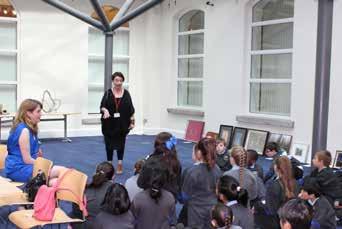
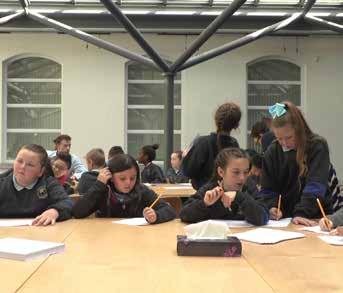
This year, the OPW and the DoF are delighted to collaborate with Dublin City Council’s the LAB Gallery in the organisation of the annual exhibition. The project has involved working with the curatorial team from the LAB Gallery and with the children and teachers from the Central Model Senior School in Dublin. The children visited the offices of the OPW in Dublin and the DoF in Belfast to select artworks for inclusion in the exhibition. Using the innovative Visual Thinking Strategies (VTS) method of teaching, the LAB team led some lively discussions with the children on their visits and also in their class rooms which resulted in the final selection of 20 artworks.
I A W A T S T is the abbreviation for ‘Interesting And Weird At The Same Time.’ It is the title of the exhibition. It is an intriguing title that reflects the children’s fresh and open responses through the VTS system to historic and contemporary works in both
collections. This catalogue provides information on the project and invites us to join the children on the journey they took in making the exhibition a reality.
The exhibition opens in The Printworks in Dublin Castle in November, then travels to the Alley Theatre and Gallery in Strabane in December. It will then be on view in the LAB Gallery in February 2017.
We would like to acknowledge the participation of Dublin City Council, the Central Model Senior School and all those involved in the various venues hosting this year’s exhibition. We also wish to especially thank all of the artists whose work lies at the heart of the exhibition.
Enjoy the exhibition.
Réamhfhocal
Tá Oifig na nOibreacha Poiblí (OPW) agus an Roinn Airgeadais ag obair le chéile ar thaispeántais ealaíne a eagrú ó dheireadh na 1990idí i leith. Baineann na taispeántais sin le saothair ealaíne ó bhailiúcháin faoi úinéireacht phoiblí a thabhairt ar chamchuairt chuig ionaid ar fud an oileáin ar fad. Le blianta beaga anuas, tá comhpháirtíochtaí níos leithne le heagraíochtaí cultúrtha eile á gcruthú de bharr na dtaispeántas, rud a fhágann go mbíonn lucht féachana ag teacht as lear mór áiteanna chun féachaint ar na saothair ealaíne i ngach aon bhailiúchán - chuig ionaid ealaíon, leabharlanna, coláistí, foirgnimh oidhreachta agus foirgnimh eile a bhfuil rochtain ag an bpobal orthu.
I mbliana, tá ríméad ar Oifig na nOibreacha Poiblí agus ar an Roinn Airgeadais obair i gcomhar leis an LAB Gallery atá á reáchtáil ag Comhairle Cathrach Bhaile Átha Cliath chun an taispeántas bliantúil a eagrú. Mar chuid den tionscadal, bhíothas ag obair le foireann choimeádaíochta an LAB Gallery agus le leanaí agus le múinteoirí ón Central Model Senior School i mBaile Átha Cliath. Thug na leanaí cuairt ar oifigí Oifig na nOibreacha Poiblí agus na Roinne Airgeadais i mBéal Feirste chun saothair ealaíne a roghnú lena gcur isteach sa taispeántas. Agus leas á bhaint aici as modh teagaisc nuálach na Straitéisí
léiríonn freagraí úra oscailte na leanaí tríd an gcóras VTS ar na saothair stairiúla agus chomhaimseartha atá le fáil i ngach bailiúchán. Sa chatalóg seo, tugtar faisnéis faoin tionscadal agus tugtar cuireadh dúinn dul i dteannta na leanaí ar an turas a thug siad chun an taispeántas a chruthú.
Osclófar an taispeántas in The Printworks i gCaisleán Bhaile Átha Cliath i mí na Samhna. Ina dhiaidh sin, tabharfar chuig an Alley Theatre and Gallery ar an Srath Bán i mí na Nollag é. Beidh sé ar taispeáint ansin in The LAB Gallery i mí Feabhra 2017.
Ba mhaith linn aitheantas a thabhairt do rannpháirtíocht Chomhairle Cathrach Bhaile Átha Cliath, an Central Model Senior School agus na ndaoine ar fad a bhí ag obair sna hionaid éagsúla ina raibh taispeántas na bliana seo á óstáil. Ba mhaith linn buíochas a ghabháil go speisialta leis na healaíontóirí go léir a bhfuil a saothar i gcroílár an taispeántais..
Bain sult as an taispeántas.
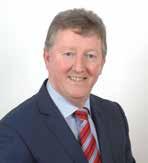
Sean Canney, TD Minister for the Office of Public Works and Flood Relief
An tAire Stáit um Oifig na nOibreacha Poiblí agus Faoiseamh Tuile
Amharc-Smaointeoireachta (VTS), bhí foireann an LAB i mbun plé an-bhríomhar leis na leanaí ar a gcuid cuairteanna agus freisin ina gcuid seomraí ranga agus ba as an obair sin a roghnaíodh 20 saothar ealaíne sa deireadh.
Is é I A W A T S T an giorrúchán le haghaidh
‘Interesting And Weird At The Same Time’. Sin é teideal an taispeántais. Is teideal spéisiúil é a
Máirtín Ó Muilleoir, MLA
Minister of Finance in the Stormont Executive
An tAire Airgeadais i bhFeidhmeannacht Stormont
Comhalta den Tionól Reachtach
Interesting And Weird At The Same Time
We are delighted to have been invited to collaborate on this important exhibition which offers an opportunity to introduce two public collections to new audiences. The OPW and DoF process of collecting has been vital in investing in the work of artists often at early stages of their careers. The possibility of developing an annual exhibition and catalogue provides an opportunity to offer fresh ways of looking at the work and invites new audience responses to contribute to the legacy of the collections.
Dublin City Council’s the LAB Gallery supports emerging artists at the beginning of their careers and more established artists taking risks in their practice. Since its establishment in 2005, it has become a critical platform for visual arts in Ireland, commissioning new work and writing and delivering an ambitious public programme with our research partners and collaborators.
At the LAB, much of the artwork shown is being seen for the very first time, coming directly from an artist’s studio. Situated in Dublin’s north inner city in the historic Monto area, we developed Project 20/20 as a targeted five-year visual literacy initiative with children living in our neighbourhood. Dublin City Council’s objective is simple - to support artists to make new work and for children to access quality artists and arts experiences that are present in their local neighbourhood. Working within the context of a local authority, and in the LAB’s neighbourhood rich in visual arts infrastructure, allows our curatorial
and pedagogical framework to build a community of practice slowly and allows flexibility around how we build relationships and resources over time.
Project 20/20 allows time and space to carve out the possibility that children are powerful and capable of being agents in their own cultural experience. Facilitating children to look … slowly … offering permission to wonder… be curious … ask ‘big questions’ … discuss these ideas as a group … accept that art can be ambiguous ... unresolved ... that every opinion is valid..that gallery spaces are for all members of the public albeit they have particular and peculiar rules and histories that are sometimes invisible. This approach is set with constructivist pedagogy, and is informed by the theoretical framework of aesthetic development formulated by Abigail Housen. We are putting the theory into practice by training with Visual Thinking Strategies (VTS) - a discussion based methodology for looking at art. This method, which emerged from the Museum of Modern Art, New York, focuses on unlocking the children’s voices by fostering a love, understanding, confidence and competence in looking at visual art and how artists make work.
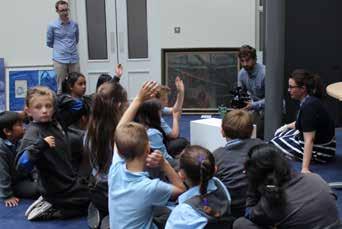
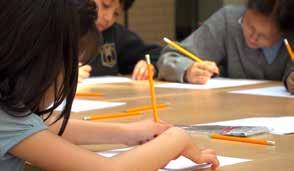
As part of the exhibition programme at the LAB, we encourage our artists to take risks. Why not encourage those living locally to the gallery to take a risk by exploring, with us, this new methodology? From the beginning, Central Model Senior School was an intrepid explorer, helping us to understand how VTS worked with the children and Irish contemporary art. The only other place in Ireland formally using VTS is University College Cork, School of Medicine
and Health Science where it has integrated VTS across the curriculum to emphasize the importance for health professionals to look at an image closely and discuss it as a group of peers in order to support future diagnostic skills.
Over the past two years, the children and teachers of Central Model Senior School have been working with Lynn McGrane, a trained VTS facilitator. In their sessions with Lynn, a core value is offering permission to wonder which allows for individual responses to be validated and multiple perspectives to be respected. Listening to each other is key. Their teachers have been telling us (anecdotally) of the children’s noticeable increase in respect and tolerance for each other’s opinions though it might be different from their own. In particular, they have stated the importance for the children to learn to articulate and stand up for what they believe in as an important life skill, while at the same time being tolerant of diverse perspectives. There are 17 different nationalities in the classroom in Central Model Senior School. Irish art history or even western art history is not their history. Together we are learning from each other. Visual Thinking Strategies has been the scaffolding which has allowed us to support the children’s perspectives to emerge, rather than us offering (or imposing) our own views and our version of our history and art history. In the course of our work together, the children’s fresh perspectives on the art has sometimes tentatively expanded their gentle call for their right to feel safe and have a ‘good life’ in their neighbourhood. We are in awe of their inner strength and our journey to Belfast reminded
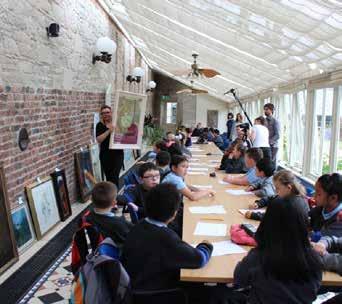
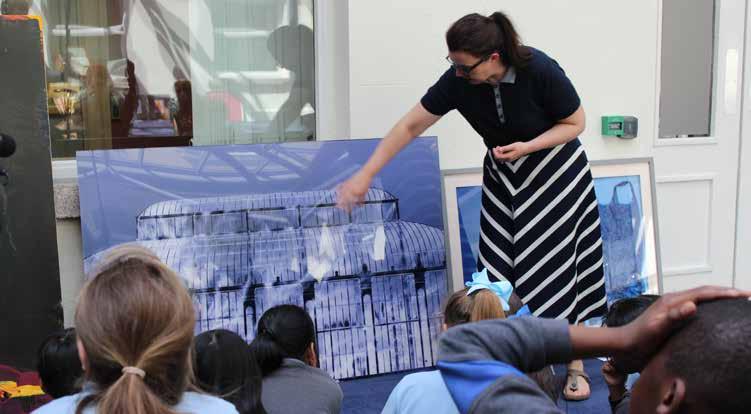
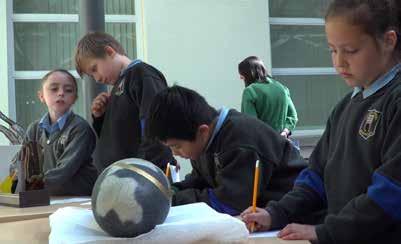
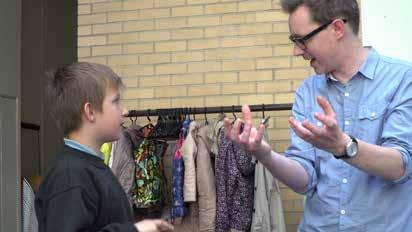
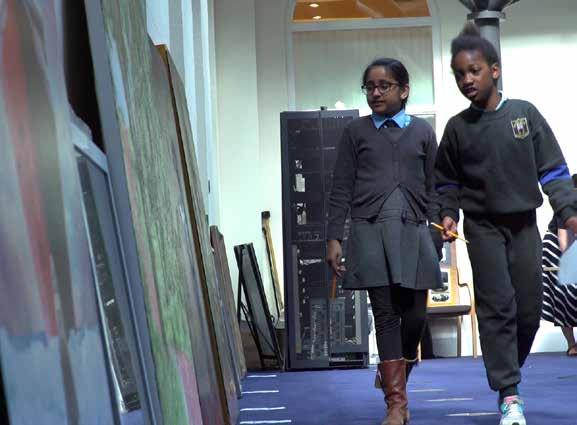
us how much we are learning from the children. This impacts how we, as arts and cultural organisations, teachers, schools, youth service workers, early childcare providers, artists and local government, make decisions.
In making this exhibition, our curators, children from the Central Model Senior School, chose from a shortlist of over one hundred works through a process of looking, personal responses and collective discussion led by Lynn McGrane. We would like to thank the OPW and DoF for creating this opportunity and the children and teachers of the Central Model Senior School for taking on the challenge. We hope you will take time, inspired by our young curators, to take a closer look at these works and give yourself permission to wonder.
The ethos of Project 20/20 requires time and space for reflection and levels of risk taking. It requires us, as adults, to be open to learning and receiving critical feedback. It requires artistic ambition. We are brave enough to try … and to fail … and to try again. In the true spirit of enquiry-led practice, the space of the LAB leads us to new discoveries as we test practical strategies for bridging the world of our children’s imaginings to build for a future that we, as adults, cannot imagine.
Sheena Barrett and Liz Coman The LAB Gallery
Children’s Comments
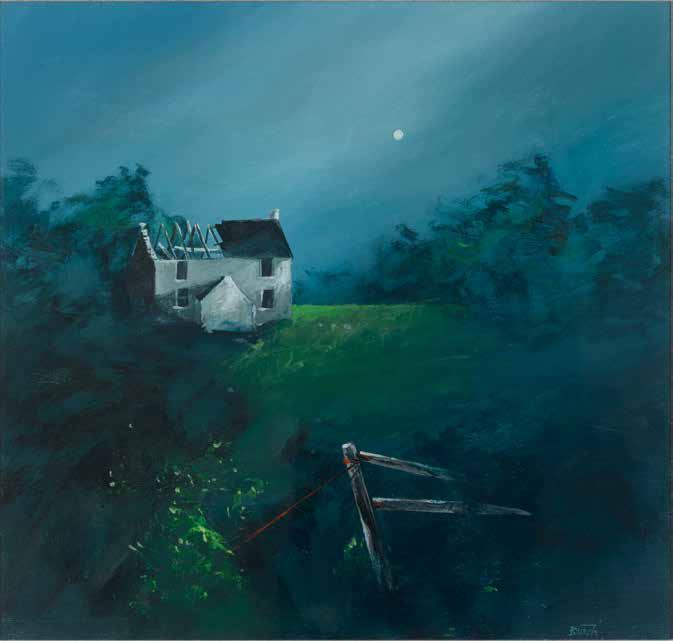
“It’s very nice and it looks like a nice house and the moon is shining and it looks like it was windy and it blew off half of the roof and it is a house all by itself and no other houses are around it and it looks like it’s in the middle of the jungle and the moon is about to go down and there are a lot of trees around it”
“I like this one because it has dark colours and it would fit in my room”
“There is peace in this” “Atlantis”
“I liked it because I liked the sky”
“I liked it because it is beautiful”
“I think the white house there is abandoned and those railings there are in the countryside, there’s loads of trees. The roof is off the house as well and that’s why I think it’s abandoned.”
“I think there was another railing beside that but someone broke it. See the way there is a reddish string going that way as well, they probably had to put that there to keep people out. It’s probably electric so if anyone touches it they get a shock.”
“I think it’s like a house that’s being built because usually there is a door there, but it’s like it’s covered in white plastic. The door will be put in at a later time when they finish building.“
“I think this is a house in the middle of the jungle because they have no neighbours, they love gardening and they have no doors and I think it is very windy because half of the roof was blown off and the moon is going down.”
“I think I see some plants there. I think they are plants they have grown themselves.”
“The other picture there has more light in it [pointing at Finnis’ by Lawson Burch], but this is a dark one, that’s kind of like a sad one. The sky, and the fence and house because of the roof give me that sad feeling.”
Lawson Burch Moonlight acrylic on board
Teacher’s Comment
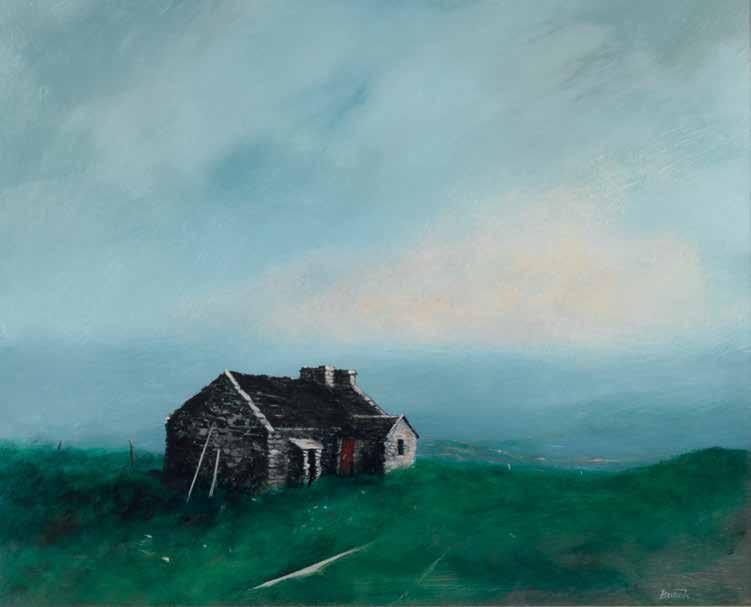
This picture reminds me of my favourite time of day. I love the way it conveys the calmness and stillness of the early morning in the countryside. I sense a feeling of isolation, but the sun is trying to burn through the fog and I think it gives a hint of optimism, it suggests the potential of a new day and all that it could bring. It makes me hope that beyond the fog there are dwellings and a sense of community that would cancel out the current feeling of isolation and possible loneliness.
Lawson Burch
Finnis
acrylic on board
DoF collection
Children’s Comments
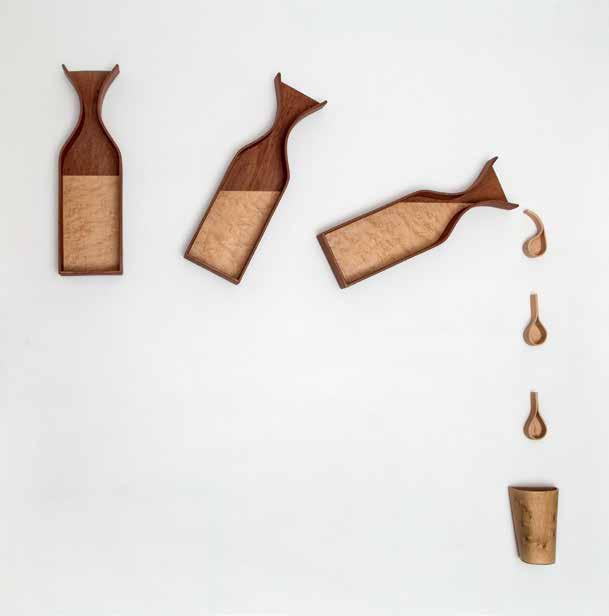
“I like this because it seems like an animation, water pouring into a cup, so nice, step by step.”
“It looks like pottery but it’s made from wood.”
“I like it because it’s made out of wood and it’s awesome”
Hugh Cummins Maternal Care mahogany and bird’s eye maple 2015 OPW collection
Children’s Comments
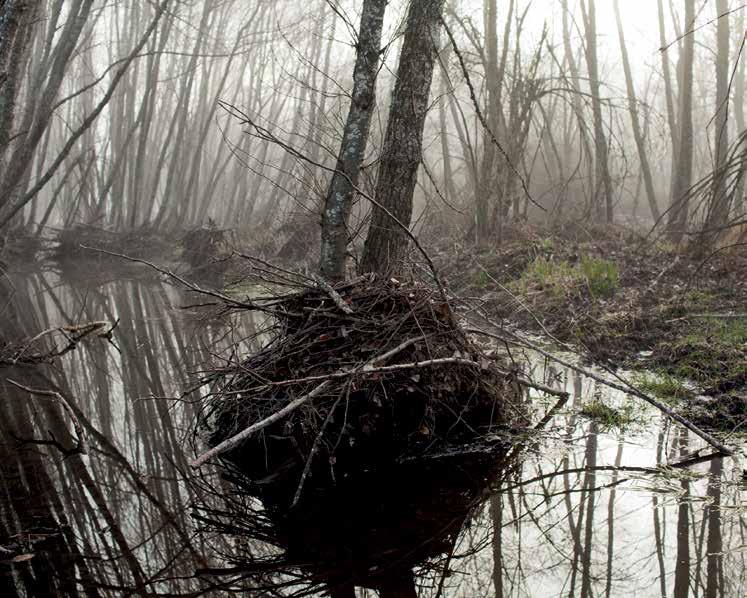
“I think it’s realistic and it feels like you can go into it and it feels like there was heavy rain and there were birds on the trees and then they went out looking for food. Then there was a big storm and the nest fell. I think there were eggs in it. The sticks and branches have fallen out into the river and it’s all been scrambled up.”
Untitled#41 – from the series We Make the Path by Walking photograph, archival pigment print
2012
OPW collection
Paul Gaffney
Children’s Comments
“I like it because it looks spooky and fun”
“I like it because I think the picture has loads of colourful dots”
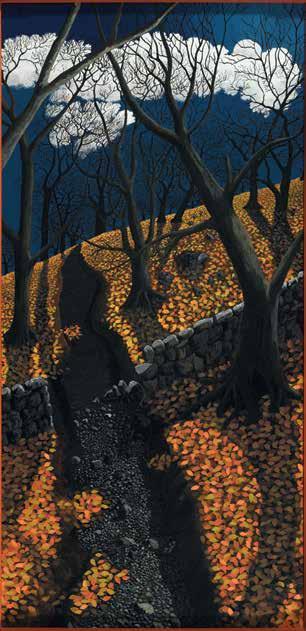
“I like it because it reminds me of Autumn”
“There’s good detail”
“The leaves are off the trees. Looking at the picture there is a shadow and I think it’s actually autumn in the picture. The leaves are orange and yellow.”
“I think it’s autumn, in the woods and there are some petals on the floor halfway to the bridge and there are stones and loads of bricks. It’s a bright day.”
“I think that it’s night time, in a park, but no one is in it. The dark leaves are shadows from the trees.”
Dennis Kelly After The Flood
Children’s Comments
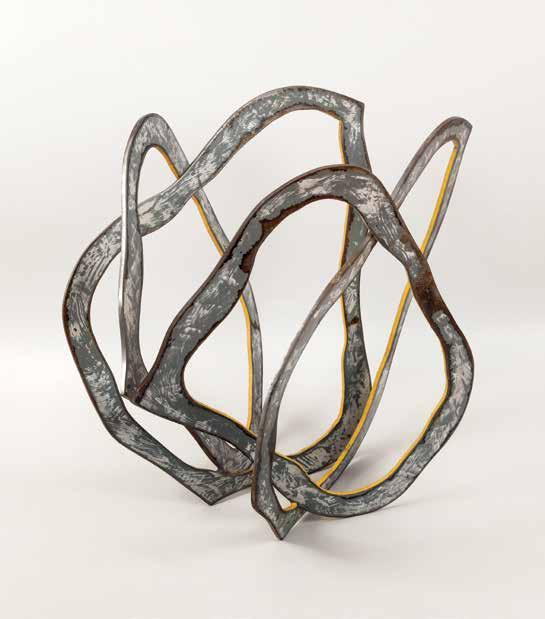
“This art is like a portal to the future”
“I.A.W.A.T.S.T. (Interesting And Weird At The Same Time)”
“I picked it because it has a cool thing on a cool thing”
“It looks like a line, but wrapped up”.
David King
Untitled oil on corten steel 2014
Teacher’s Comment
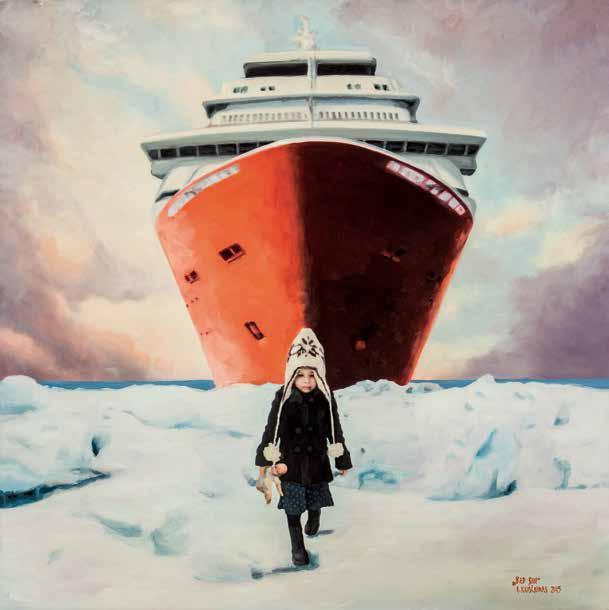
I like the way it portrays the carefree nature of a child who is happy to wander in the snow while there is a large ship stranded in the ice. The clouds in the sky give a similar affect to the snow on the ground and taken together, they convey a very attractive backdrop which I found appealing and restful. I also like the artist’s choice of colour with the contrast between the bright colours on the ship and the dark colours on the boy’s clothes. Overall there is a surreal quality to the picture.
“It’s like a big boat that’s going towards a girl on the ice and I think it’s going to crash into the ice because it’s very close to the ice.”
“I think the girl looks very sad.”
“I think the girl is sad because she had a fight with her parents and she started to leave, sadly. I think that they were going to go home, or on holiday, but actually, she and her parents got in a fight and the girl started leaving and walked away.”
“I think that the little girl and her family were going on holidays and they were just going to see Antarctica for a little while and the girl just went off the boat to go and look around.”
“I think the little girl went off the ship and got lost and that the ship is going to crash into the ice. She looks a little bit sad and there’s nobody around there.“
“She probably got thrown off the boat and it looks like her wellies are wet.”
“I think her parents were with her and her parents were looking around and she was looking around walking and her parents went somewhere else and she’s crying and sad because she got lost. She’s looking for her Mom and Dad.”
Algis Krisciunas
Children’s Comments
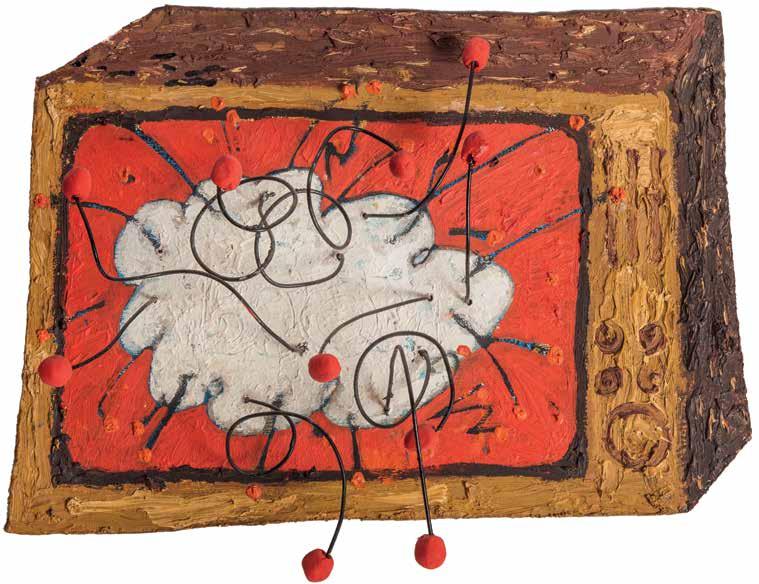
“This picture is funky”
“It looks like cloud ideas when you are teaching and then you do this” (see child’s drawing inside back cover)
“I picked this because I just love how it comes out ... it has my favourite colour, red”
Nevan Lahart
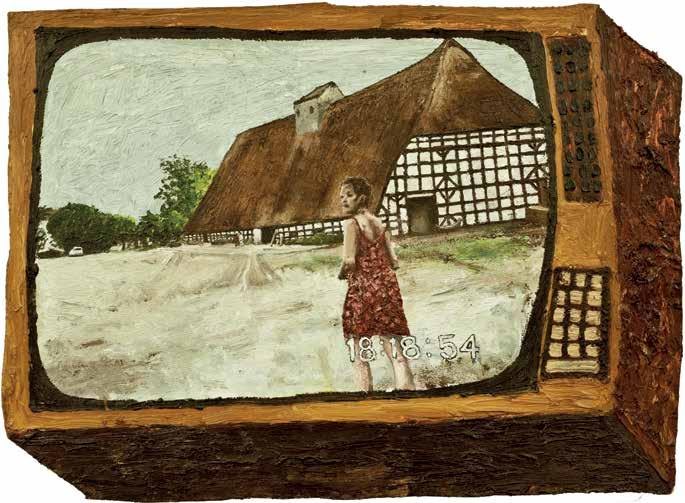
Ch. 10: Big Bang Theory, funny joke mixed media on board
“The TV’s broke. It looks like a TV because it’s a square. It has numbers at the bottom. The TV’s broken. It’s just a little joke.”
“I think it’s like someone’s watching a movie of the house. That it is a movie. The girl is –I think she’s looking for her family and that she found the place where her family lives. Her face looks like she lost her family.”
“It’s a 3D telly. It looks like the girl is lost in it. She looks like she is lost on a farm. There’s a barn there.”
“I think that it’s in South Africa because of the way she looks and the way she is dressed and she’s going to look for food or something. I think that might be a barn.”
“The girl is lost and she’s trying to find shelter and she’s spotted a house and she’s looking behind her to make sure nobody’s looking. I think she thinks that somebody’s following her and she doesn’t want anyone to follow her. She’s trying to escape. When you’re going somewhere, you look straight ahead, not behind.“
“It looks like a microwave.”
“I think it’s a Native American style. The triangle thing is a house or something. I see it as 3D because of the buttons on the side and it’s weird because it looks like it’s tilted up and the time that’s there is 18:18:54.”
Ch. 58: Very Nearly: Marie enters Bruegal Town oil on mdf
Nevan Lahart
Children’s
Comments
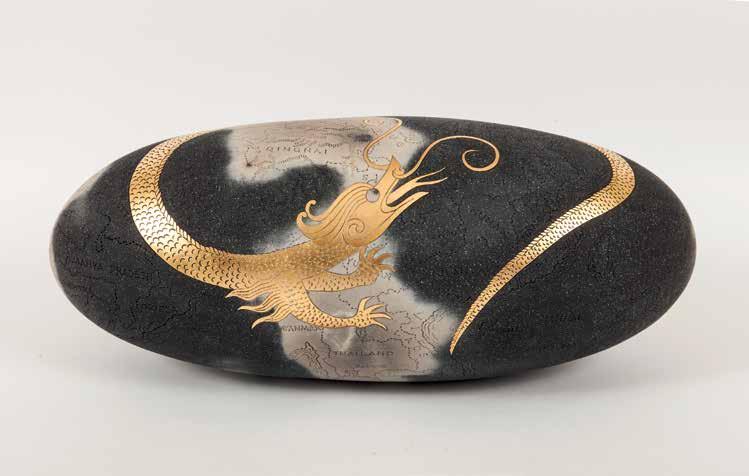
“This rock has a golden dragon and China’s map”
“It is very interesting and detailed”
“I like it because it looks cool and it looks like a big egg”
“I like it because I found my country on it and it is similar to the golden egg last week. It’s like last week the egg (earth) [Joanne Risley, Crocus, pg43] was protected with black things, and this week the egg (earth) is protected by a golden dragon.”
Frances Lambe
Fire Dragon Egg ceramic with gold leaf 2012
Children’s Comments
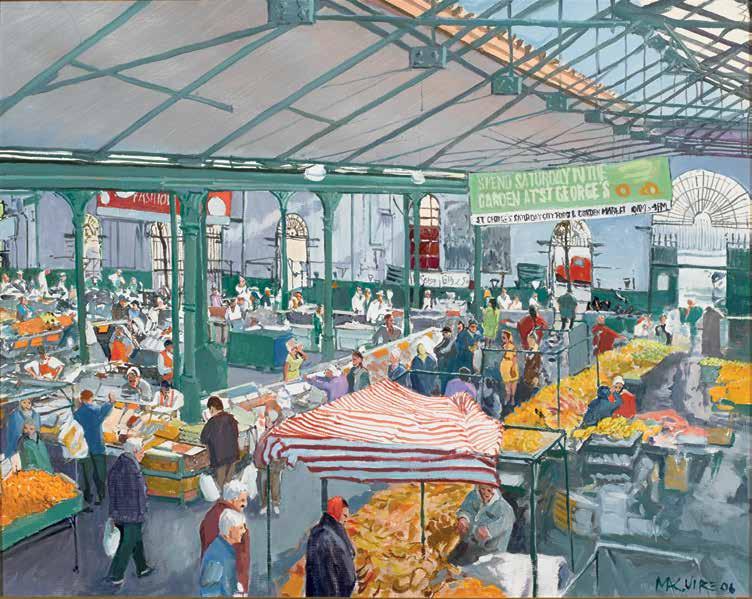
“I like it because I like shopping.”
“I love supermarkets.”
“Because it looks really interesting and colourful and I like to go shopping.”
“I think it’s like an office, no it’s a shop or something because there are lots of people and there is food and they came to buy something.”
“As you can see on the back there’s a sign that says fashion.”
“The car in the background looks kind of old.”
“This looks like a market. Sometimes in town there are markets with fruit and all that. Because it says Saturday on the poster up there. “
“I think it’s a market because shops don’t have stalls like that. That’s like every Saturday people go up by Parnell Street and sell.”
Cecil Maguire St. George’s Market oil on board
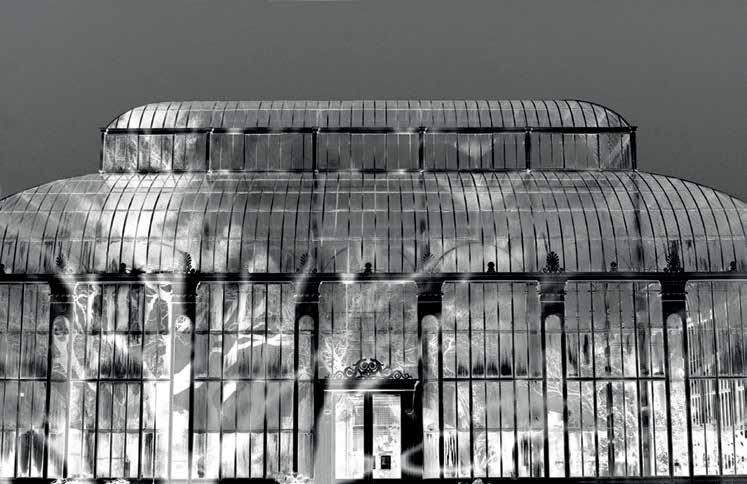
“I think that it’s an experiment because I see lots of electricity and there’s things-lots of trees and I think that’s an Arkham City because I saw it on my Lego Batman game and I saw that building.”
“I think it’s a gardening centre because it’s made out of glass and they were making an experiment and the experiment went wrong. I think there’s a monster because I can see the teeth coming out.”
“It looks like one of those little glass gardens where plants need warmness to grow better.”
“I think the building is haunted with a Category 10 ghost – the one that’s skeletal that can replenish its skin.”
“I think it’s an old or special place because everything is made out of glass and it’s an electric place because I can see lots of electric things and it’s shining.”
“I think it’s a lab made out of glass because I can see inside the building, it has stuff that looks like lightning.”
“I think the lab is haunted as well and there’s a scientist in it and something went wrong and there was electricity and then it got dark and then the ghosts came and burst out of the machine that the scientists were using.”
OPW collection VTS Discussion
Ruth McHugh
Phantasmagoria photograph, lambdachrome 2009
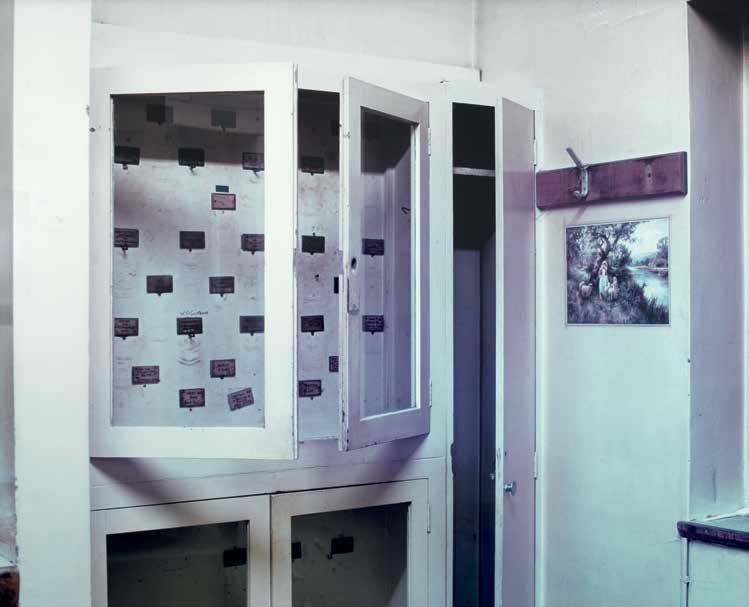
“Office Day.”
“About the names, I think those are all the people that were in the person’s family, the person who lived in the house, the house is abandoned, the people have died in the house.
It’s really dirty, I can’t really see anyone so I’m thinking it’s abandoned.”
“I think, looking at the picture on the wall, the woman lived there with her child but then they moved out. I think they left their names there, they didn’t clean the house or anything.
I think no one lives in it anymore because it’s dirty.”
“I think it’s an office and they are all the people that work there. That’s their boss in that picture. Some offices are white.”
“There’s quite a lot going on, names, the picture, the spoon down there in the corner. There’s a coat hanger missing. I agree that there’s no one in the house anymore because there’s a big chip in the door. I think that picture (on the wall) is where the house is now, but from ages ago.”
Mary McIntyre
Interior Landscape 1, 2000 photographic print 2000 DoF collection
Children’s Comments
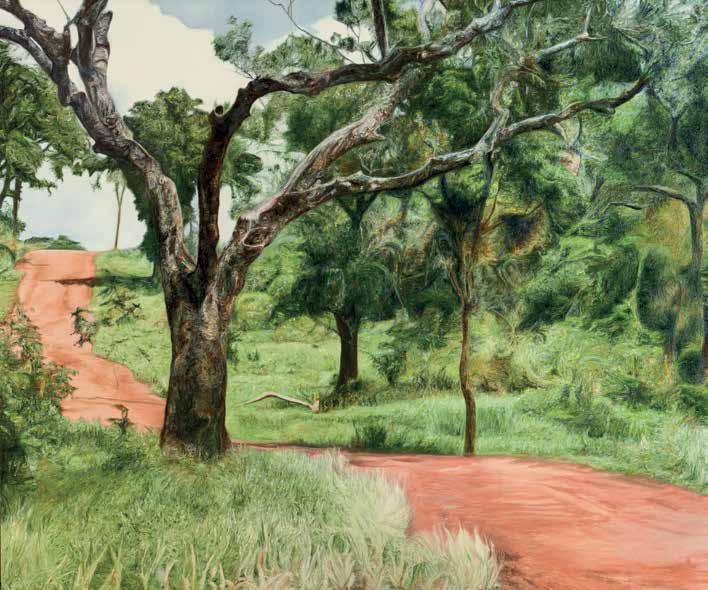
“It looks so real. I feel like I’m inside the picture, great detail and texture and colours. Reminds me of Causey Farm, where we went on our school tour last week.”
“I like it because it has a beautiful nature trail. Because it’s big and it has nature and I love nature.”
Teacher’s Comment
I was drawn to the contrasts in this picture. Initially, the contrasting colours caught my eye, the dry burnt orange path and the lush green growth that borders it. This drew my attention to the contrast between the living and non-living elements of the painting, the bare tree and the dry path surrounded by the rich green grass and the healthy trees. I like that the path is leading to a clearing and that the sky is visible.
Paul McKinley Towards Mullaitivu oil on canvas
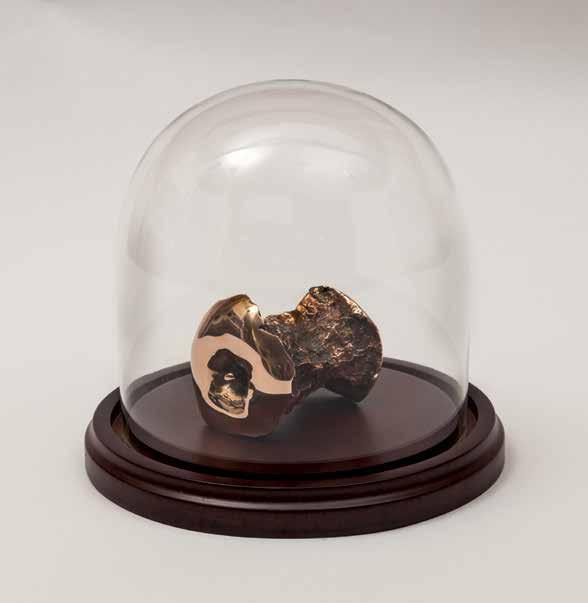
Children’s Comments
“It looks like the apple from Snow White, it’s golden because it’s so special.”
“G.I.A. (Golden Interesting Apple).”
“I think it’s an eaten apple and felt, like, very funny.”
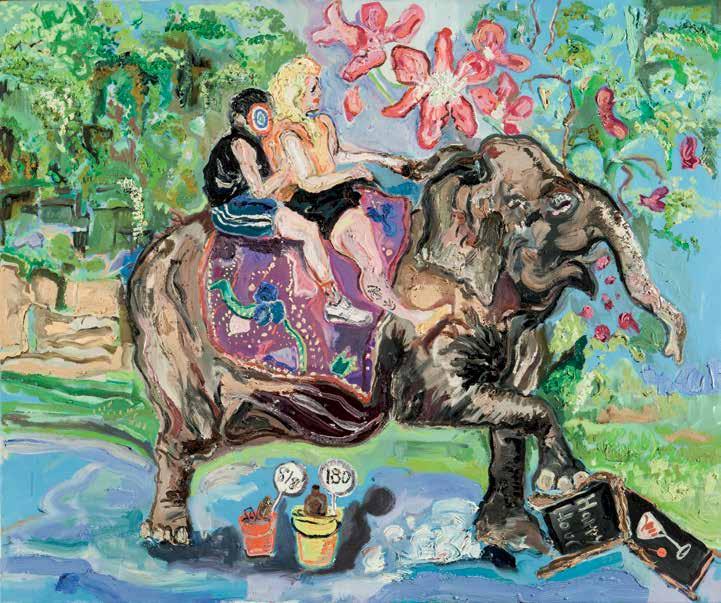
“It looks like it’s in a jungle or something because it has lots of plants and they are on an elephant. It looks like they are walking through a pond or something.”
“I think they are on a tour because if you look there [pointing], it says ‘happy tour’ on the sign and I think they went to the jungle and I think that’s sun cream in the yellow bucket and in the red bucket there’s food and drinks and then I think the people made the thing for the elephant’s back and then I see the boy, the boy has no face, it’s red, yellow and blue like a target.”
“I like this because it’s so colourful and it looks like spring time. It reminds me of the elephant I painted in Bulgaria.”
“It’s like two people are in a forest, no I mean a jungle, and this looks like it used to be a tour place but it got shut down because some of the plants cover the doors and it’s really detailed. I like the way it’s detailed because it’s really nice. It looks like there are bricks there but when some of the plants grew too big, they covered the whole place and they couldn’t get in or out because they were too strong.”
“They are trying to make money because there is, I think, a one dollar sign on the thing, or $180, I don’t know, it has drinks on it, it’s not clear but probably they made some drinks themselves.”
“I think that they were lost and they found an elephant and it’s in the jungle and the elephant is bringing them somewhere and they walked through the pond with the elephant and it says ‘happy tour’ on the sign and that was probably all standing up and the glass was standing up but the elephant stood on it and squashed it. See where it says 180 on it? I think that’s sunblock in there.”
“I think this is a zoo in India because when I watch India on TV I’ve seen those sorts of saddles before. I think that the elephant escaped from its cage and nobody noticed. I think that get refreshments there before they go around the zoo. I see that there’s water under the elephant’s feet, there’s a splash it looks like something has broken and the water has come out from it. It’s where the refreshments are that a big rush of water has burst out and gone everywhere.”
Sheila Rennick
Thai Holiday oil on canvas
Children’s Comments
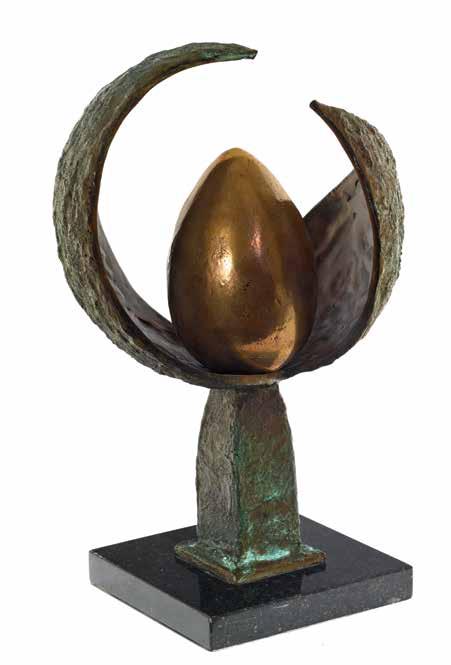
“I picked it because I liked the colour golden”
It’s got lots of detail and it’s really interesting with all the curves”
“I like it because it has a golden egg inside”
“Moon egg barrier”
“I picked this because it looks like it was hard to make”
Joanne Risley Crocus bronze cast DoF collection
Teacher’s Comment
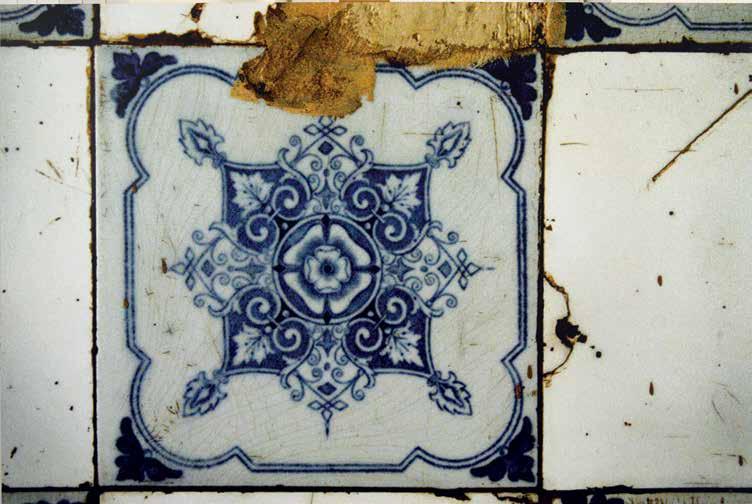
Initially the likeness to 17th century Dutch tiling drew me to look more closely at this piece. I found that looking at something small and intricate, escalated in size until every scratch that time has made on its surface can be scrutinised began a thought process which brought me down a number of different roads.
2006
DoF collection
Victor Sloan Untitled (LUXUS) lambda print on steel
Children’s Comments
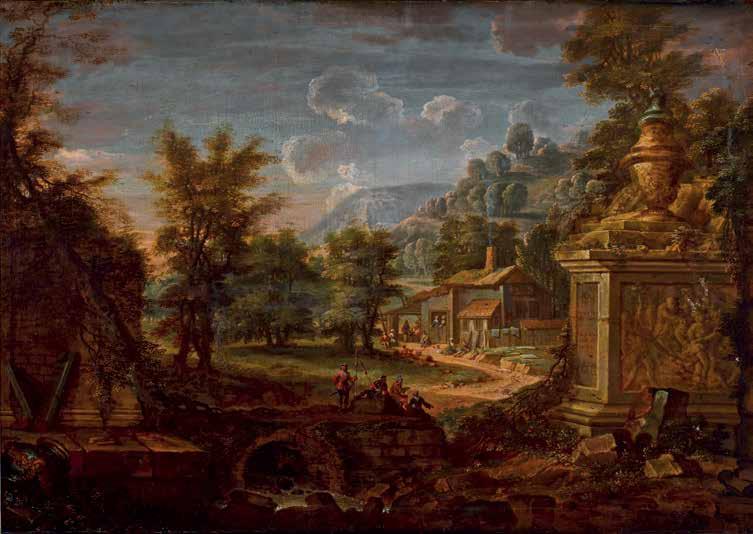
“I like this picture because it has lots of detail”
“This picture reminds me of wars and abandoned places”
“It looks so beautiful”
“I just like the idea of sunset and villages together”
“I picked it because it was so detailed. I like detailed drawing. Then again, I picked Moonlight also because it was so detailed”
“There’s people over there I think they are going fishing. I can’t really see them that well but I see they have a spear.”
“I agree that they are spears, it looks like maybe world war I or something that they are protecting the houses, the people that live in the house hired them to protect them because they got robbed a load of times. They stand really secure and they are wearing helmets to protect themselves from something.”
“See those trees on the ground, they were up but whoever they were fighting cut them down on purpose.”
“Do you see that, if you look closely on that thing [stone relief on the right], you can see people on that.”
“ I think those stones there that are falling I think it’s kind of like a grave. It looks like the weeds have fallen on them and it’s really old and nobody cares about it anymore and that’s why I can see some stones that have tipped over and I think this is like a mini village that’s been forgotten because it’s surrounded by trees and nobody knows it’s there.”
“For some reason I feel like it looks like O’khasis, a thing that I see on youtube with Minecraft, a future, when it gets destroyed and stuff.”
“I think it is a medieval age because in World War I and world war II they used guns and cavalry and this looks like the medieval age because he used spears instead and bows and stuff. I think it’s isolated because it’s like a village, with a little house, a house in the middle of nowhere and there is like a sewer thing and the rocks are over it and like a ramp there and trees are like over it and there are statues beside it and they just put it there. I see that it’s noon. There is something over here [in the foreground], I can’t see it properly but it’s something. The house has a lot of people in it, I see two girls I think at the window.”
Unattributed Landscape with figures oil on canvas 18th century DoF collection VTS Discussion
Children’s Comments
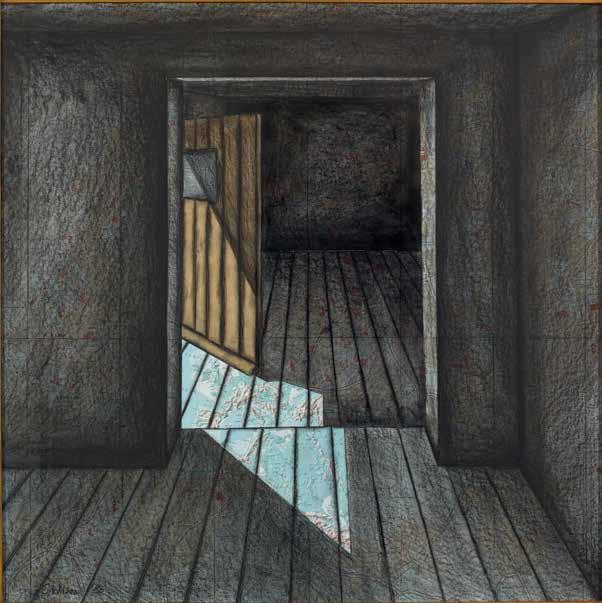
“This one is dark and creepy and I like that”
“The room is full of maps and it’s interesting”
“This reminds me of horror movies”
Teacher’s Comment
I am drawn to this piece because of the sense of confinement I feel when I view it. The vertical lines of the floor and the door remind me of a prison, and the dark environment captures this sense of constraint and unhappiness. The light from the open door leads me to ask … what lies outside? Is there freedom to leave this place? If the door was always open what guarded this captivity? Was the imprisonment enforced by others or was it self imposed? Is freedom there to take?
Chris Wilson Behind Open Doors mixed media on board
DoF collection
Lawson Burch pg 11 & 13
Lawson Burch was a landscape and figure painter born in Belfast and was educated at Grosvenor High School and then at Stranmillis College where he trained to be a teacher. He then went on to teach art at Holywood Intermediate School and then Castlederg Intermediate School in Co Tyrone. Burch first showed his piece ‘Low Tide, Annalong’ in 1965 at the Royal Ulster Academy, having been mentored by John Luke. He then held his first solo exhibition at Queen’s University and then at the Arts Council Gallery in 1974. His subject matter was mainly people in the city of Belfast who were caught up in the conflict and tension as well as Donegal landscapes. Burch exhibited six pieces of art for the first time at the Royal Hibernian Academy in 1993 and continued to do so every year up until he died suddenly in Donegal in 1999. Lawson was buried in Portnoo, Donegal and then a studio sale of his work was later held in the Bell Gallery, Belfast in 2000.
Hugh Cummins pg 15
Hugh Cummins was born in Dun Laoghaire and after a number of years working and studying in London he returned home in 2001. While working in the public sector in London, Cummins perfected his woodwork skills through his attendance at workshops in the College of Furniture and Chelsea College of Art. He is a
member of the Design and Crafts Council of Ireland and the Dun Laoghaire Artists Network.
Paul Gaffney pg 17
Paul Gaffney is currently studying at the University of Ulster, Belfast where he is undertaking a practice-based PhD in photography. As part of his degree, in 2012, Gaffney embarked on a 3,500 km walking trip across Europe. The aim of this was to take photographs along the way that would create a body of work to record the act of long distance walking which he saw as a form of reflection and personal transformation. The results of his efforts was a self-published book in 2013 entitled We Make the Path by Walking which was nominated for the Photobook Award at the 6th International Photobook Festival in Kassel, Germany. He was also shortlisted for the European Publishers Award for Photography.
Dennis Kelly pg 19
Dennis Kelly has painted for over twenty-five years, consistently using the medium of enamel paint on board. As a teenager, Dennis was an avid model maker and had accumulated a large collection of enamel paints to decorate his models. Dennis’ father was a joiner and his workshop invariably contained off-cuts of wood. With these two ingredients, Dennis began to explore his strongly personal vision of the world. Dennis Kelly signs his work in the reverse rather than on the painting itself in order not to deface the image with intrusive detail.
David King pg 21
David King was born in Dublin in 1972. He studied at the National College of Art and Design, Dublin where he graduated with a BA in Fine Art in 1995, followed by an MA in Fine Art in 1997. In 2002, he was awarded the Hennessy Craig Scholarship. He currently lives and works in Dublin.
Algis Krisciunas pg 23
Born in 1968 in Vilnius, Algis Krisciunas is a Lithuanian pop-artist, painter, photographer, book illustrator, musician and lyrics author. He graduated from Kaunas University of Technology in 1993 and since graduation he has worked as an art director in popular Lithuanian magazines. He is a fully accredited member of the Union of Art Photographers. Recently, Krisciunas has rediscovered his passion for painting and his works are symbolic, directly influenced by his personal experiences. His paintings also reflect his interest in existentialist and humanist philosophies.
Nevan Lahart pg 25 & 27
Nevan Lahart was born in Kilkenny in 1973. He studied Fine Art at Limerick School of Art and Design and at the National College of Art and Design, Dublin. He completed an MA in Virtual Realities in NCAD in 2003. Lahart produces works in a wide variety of media from painting, sculpture and installation to video animations and performance. He currently lives and works in Dublin.
Frances Lambe pg 29
Frances Lambe is a graduate of the National College of Art and Design, Dublin. For many years she taught art at secondary school level. In 1993 from her studio at home, she began creating ceramic sculpture. Three years later, she became a founding member of the Bridge Street Studios in Dundalk and worked there until 2009. Today, she lives and works in Allardstown, Knockbridge in County Louth.
Cecil Maguire pg 31
Cecil Maguire was born in Armagh in 1930. He graduated from Queens University, Belfast in 1951 and his subjects range from landscapes to figure painting. He began teaching English at Lurgan College, painting in his spare time, but retired in 1981 to focus on his artistry. Cecil Maguire began exhibiting with the Royal Ulster Academy in 1971, becoming a member in 1974, and has also shown work with the Kenny Gallery in Galway, the Oriel Gallery in Dublin and the Bell Gallery in Belfast. He has been presented with several awards including the Silver Medal twice (1964, 1967) and the Gold Medal (1974) from the RUA and the Conor Prize (1968).
Ruth McHugh pg 33
Ruth McHugh was born in Galway and educated at the National College of Art and Design in Dublin from which she graduated with a BA Degree in Fine Art. She is a founding member of Artspace in Galway and has worked in
various roles at the RHA, the Hallward Gallery, the National Gallery of Ireland and NCAD. McHugh continues to develop her artistic practice (painting, photography and film) and exhibits regularly. Most recently she exhibited a lens-based exhibition Spectres of Modernity at Galway International Arts Festival 2016. Her work features in many public and private collections.
Mary McIntyre pg 35
Mary McIntyre was born in Coleraine, Northern Ireland. She studied Fine Art at the University of Ulster where she obtained a Masters in Fine Art. Her work has been exhibited at international exhibitions such as the Venice Biennale, 2005. Between 2000 and 2004 McIntyre’s work focused on interior spaces that had been forgotten and overlooked, her images conveying the atmospheres that resonated from the institutional spaces she photographed.
Paul McKinley pg 37
Paul McKinley was born in Birmingham in 1973. He lives and works in Dublin.
In 1996 he graduated with an Honours BA in Fine Art Painting from Sheffield Hallam University. Since then he has exhibited in both solo and group shows and he has been the recipient of a number of prestigious awards. His works are currently held in many private and public collections at home and abroad.
Magnhild Opdøl pg 39
Magnhild Opdøl was born in Sunndalsøra, Norway in 1980. In 2004, she came to live in Ireland and later completed an MA in Fine Art at the National College of Art and Design, Dublin. Ever since, she has exhibited regularly in Ireland and abroad. Opdøl works in a range of media including photography and video. Her small sculptural objects, often representing decay and death, are produced with precise exactness.
Sheila Rennick pg 41
Sheila Rennick was born in County Galway, Ireland in 1983. Rennick studied Fine Art at the National College of Art and Design. She later attended the Byam Shaw School of Art at Central St Martin’s in London, where she completed an MA in Fine Art Painting and Art History. She currently lives and works in London.
Joanne Risley pg 45
Joanne Risley was born in Knutsford in 1965. She gained a BA Hons degree in Fine Art and Design, specialising in sculpture at Duncan of Jordanstone College of Art, University of Dundee in 1987. She then gained an MA in Fine Art from the University of Ulster in 1989.
Victor Sloan pg 45
Victor Sloan was born in Dungannon, Co. Tyrone and lives and works in Portadown, Co. Armagh. He studied at Belfast and Leeds Colleges of Art. In 2002 he was awarded an MBE. He is
a Fellow of the Royal Society of Arts, an Academician of the Royal Ulster Academy of Arts and a Fellow of the Royal Photographic Society. He has exhibited widely throughout Europe, North America, South America and Asia and his work can be found in numerous private and public collections worldwide.
Chris Wilson pg 49
Chris Wilson was born in 1959 in Glengormley, Co.Antrim. He went to Brighton Art College and graduated from there in 1982 with a BA (Hons) in Fine Art. In 1985 he obtained an MA in Fine Art from the University of Ulster. Words and text form a kind of material and moral land survey in Chris Wilson’s work. Maps, territory, light intrusions, images of growth and decay, mark, measure and incubate the holy ground of his collages. Wilson has exhibited widely both nationally and internationally and currently combines his creative work with managing the Glebe Gallery in Churchill, County Donegal.
Research resources
cheshiresculpture.co.uk
chriswilsonartist.com
culturenorthernireland.org
franceslambe.com
gormleysartauctions.com
hillsborofineart.com
hughcumminsdesigns.com
jonathanswiftgallery.com
kevinkavanagh.ie
krisciunas.com
magnhildopdol .com
marymcintyre .org
nevanlahart.com
oliviercornetgallery.com
paulgaffneyphotography.com
peppercanister.com
rosss.com
sheilarennick.com
thedoorwaygallery.com
victorsloan.com
Young Curators
Kimberley Capitrano
Michaela Cronin
Luciana Rodi
Patrick Yacapin
Lennon Kirov
Winnie Odigie
Andrew Ghioacá
Calum Douglas
Don Luis Torres
Irmuun Nasanbat
Kacper Samuel
Xianren Lin
Xu Huang
Cameron Fitzgerald
Evelyn Farmatu
Jessica Orlea
Libby Fitzgerald
Michaela Joy Padua
Monica McFeeley
Tori Teeling
Yi Chen Lin
Cristian Jarden
Fatima Adda
Yu Hao Chen
Michael Orosz
Preston Dowling
Samir Sowa
Daniel Osojnik
Exchaucé Dontoni-Vemba
Matas Daskevicius
Aimee Fagan
Caithlyn Mangan
Eiva Tanzina Begum
Fariha Ali
Gutjera Pukelyte
Jennifer Halligan
Jing Yan Lin
Katrina Dawn Jadia
Kyra Kinsella
Lacey Walsh
Lily Rose Boss
Tori Delamere
Xin Yi Lin
Yumiko Li
Katie Murphy
Teachers
John Caul, Principal
Deirdre Gartland, Vice Principal
Ms Coy
Ms McBride
Ms Russell
Marsha Keating, teacher
Bridget Kildee, teacher
Edward Wrynn, teacher
Acknowledgements
Thank you to the teachers and all the children who took part from 4th class, Central Model Senior School, Marlborough Street, Dublin 1 (listed pg 54).
Thank you to the venues that are hosting the exhibition.
VTS Facilitator: Lynn McGrane
DoF: Nigel Bonar, Gina Brown, Eilis Hegarty
OPW: Linda Connolly, Teresa Eddery, Caoimhe Hogan, Louise Kelly, Davey Moor, Jacquie Moore, Marian O’Brien, Marie O’Gallagher, Avril Percival, Louise Ward
Dublin City Council - Dublin City Arts Office - the LAB Gallery: Natalie Anderson, Sheena Barrett, Jenny Brady, Liz Coman, Barry Lynch, Ray Yeates
Dublin Castle: Liam Connolly, Dave Cummins, Mary Heffernan, George O’Keeffe, Stephen Tobin
The Alley Theatre and Gallery, Strabane: Jacqueline Doherty and team
A special thanks to the included artists and their galleries for their assistance with this exhibition.