
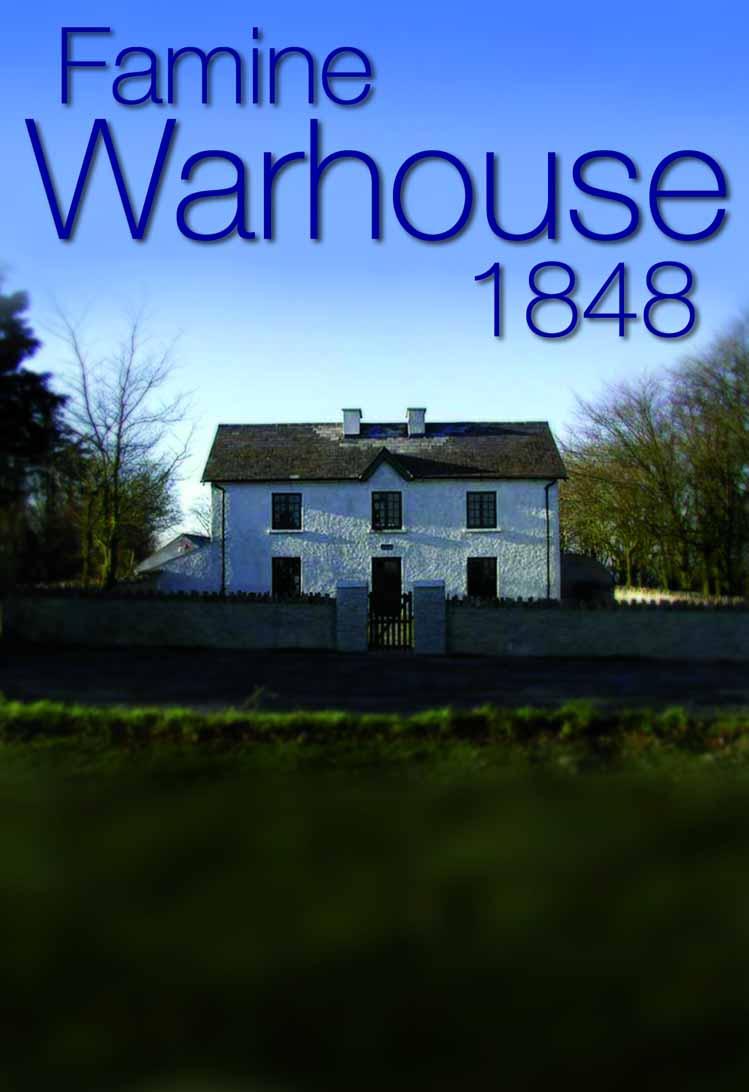
On 21 July, 2004 Mr. Tom Parlon, T.D., Minister of State at the Department of Finance with responsibility for the Office of Public Works performed the official opening of the Famine Warhouse 1848, Ballingarry, Co. Tipperary.
During the Great Famine (1845-50) the Warhouse was the scene of the 1848 Rebellion by the Young Irelanders. The new permanent State exhibition in the house tells the story of the Famine and the Rebellion, and the trial, imprisonment, and penal exile of the leaders in Van Diemen’s Land (now Tasmania, Australia). The Rebellion is one of the bestdocumented events in Irish history and eyewitness accounts from participants –police, rebels and the children who were in the house – have been used throughout the exhibition.
The Rebellion was led by the Protestant aristocrat William Smith O’Brien, who was born in Dromoland Castle and was a descendant of Brian Boru. O’Brien was MP for County Limerick and he regarded the horrors of the Famine and the deaths of a million people as justifying his resistance to the State. He hoped to use moral force to convince the State to grant
Irish self-government. He was an idealist who tried to unite landlord and tenant and to stage a bloodless revolution in 1848 but when he was met by the forces of the State at Ballingarry the limits of his moral force were reached. He was just after shaking hands with some of the fortyseven police in the house and telling them that all that he wanted was their guns and they would be free to go, when the police commander ordered his men to open fire on O’Brien’s local supporters. The attempts by John O’Mahony to re-start the Rising in September 1848 at Glenbower, Ahenny and Portlaw are covered in the exhibition, as is James Fintan Lalor and the 1849 movement.
After the failure of the Rising, O’Brien, Thomas Francis Meagher, Terence Bellew MacManus and Patrick O’Donohoe were tried for High Treason at Clonmel. They were sentenced to death, which they refused to appeal. The sentences were
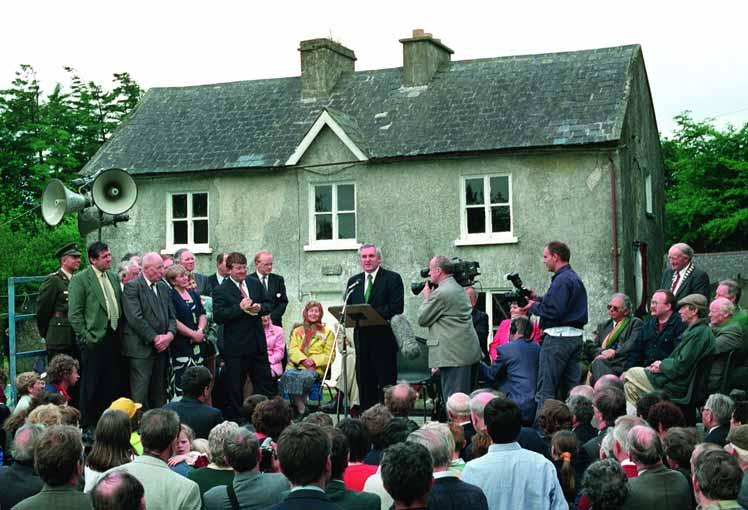
The Taoiseach, Bertie Ahern TD, described the house as ‘an important historic monument and part of our national heritage’ and acknowledged the appropriateness of it housing a permanent exhibition.
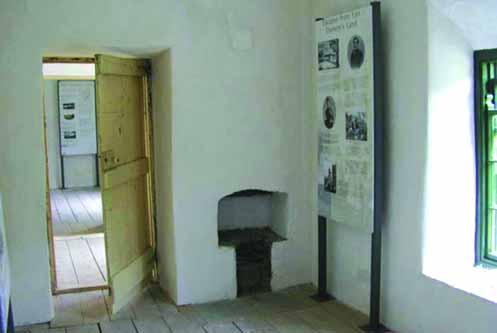
It locates the Famine Rebellion in its European context and shows how the Young Irelanders were influenced by and closely monitored the Revolutions across Europe – in France, Germany, Austria, Italy and Hungary – in 1848.
commuted to penal exile in Van Diemen’s Land where the transported were joined by John Mitchel, John Martin and Kevin Izod O’Doherty. O’Brien was deprived of his parliamentary seat as a convicted traitor. The exhibition tells how a number of the leaders escaped from Van Diemen’s Land to the United States of America where they became the leaders of the Famine Irish who had fled Ireland into exile.
Meagher who gave Ireland it’s tricolour flag in 1848 (a fact commemorated at the 1848 flag monument in The Commons) became a Brigadier General leading the Irish Brigade in some of the greatest battles of the American Civil War and died as acting governor of Montana.
The Kilkenny man, James Stephens, aidede-camp to William Smith O’Brien at the Famine Warhouse, escaped after the Rising with his 1848 colleagues John O’Mahony (from Ballycurkeen, Carrick-onSuir) and Michael Doheny (a native of Fethard who lived in Cashel) and with these men he founded the Fenian
movement. The Young Irelanders, Charles J. Kickham (from Mullinahone) and John O’Leary (from Tipperary Town), went on to become prominent Fenians. Others achieved high offices abroad that were denied to their talents in Ireland.
Charles Gavan Duffy, editor of The Nation, became premier of the state of Victoria in Australia; Thomas D’Arcy McGee became a cabinet minister and one of the founders of modern Canada. Richard O’Gorman became a judge of the superior court in New York. John Blake Dillon, who escaped to New York after the Rising, later became an MP for County Tipperary and the founder of the Dillon dynasty.
The historian Dr Thomas McGrath, a native of Ballingarry, has written the wideranging historical exhibition in the house. It locates the Famine Rebellion in its European context and shows how the Young Irelanders were influenced by and closely monitored the Revolutions across Europe – in France, Germany, Austria, Italy and Hungary – in 1848.
The Famine Warhouse 1848 was
purchased by the State in 1998 during the 150th anniversary celebrations. At the time the Taoiseach, Bertie Ahern TD, described the house as ‘an important historic monument and part of our national heritage’ and acknowledged the appropriateness of it housing a permanent exhibition. It is a substantial two-storey building dating from about 1844; it has been the subject of an extensive conservation and renovation project by the Office of Public Works. The Famine Warhouse 1848 is an historic cultural amenity and a new visitor attraction with an important educational role mid-way between Cashel and Kilkenny City.