
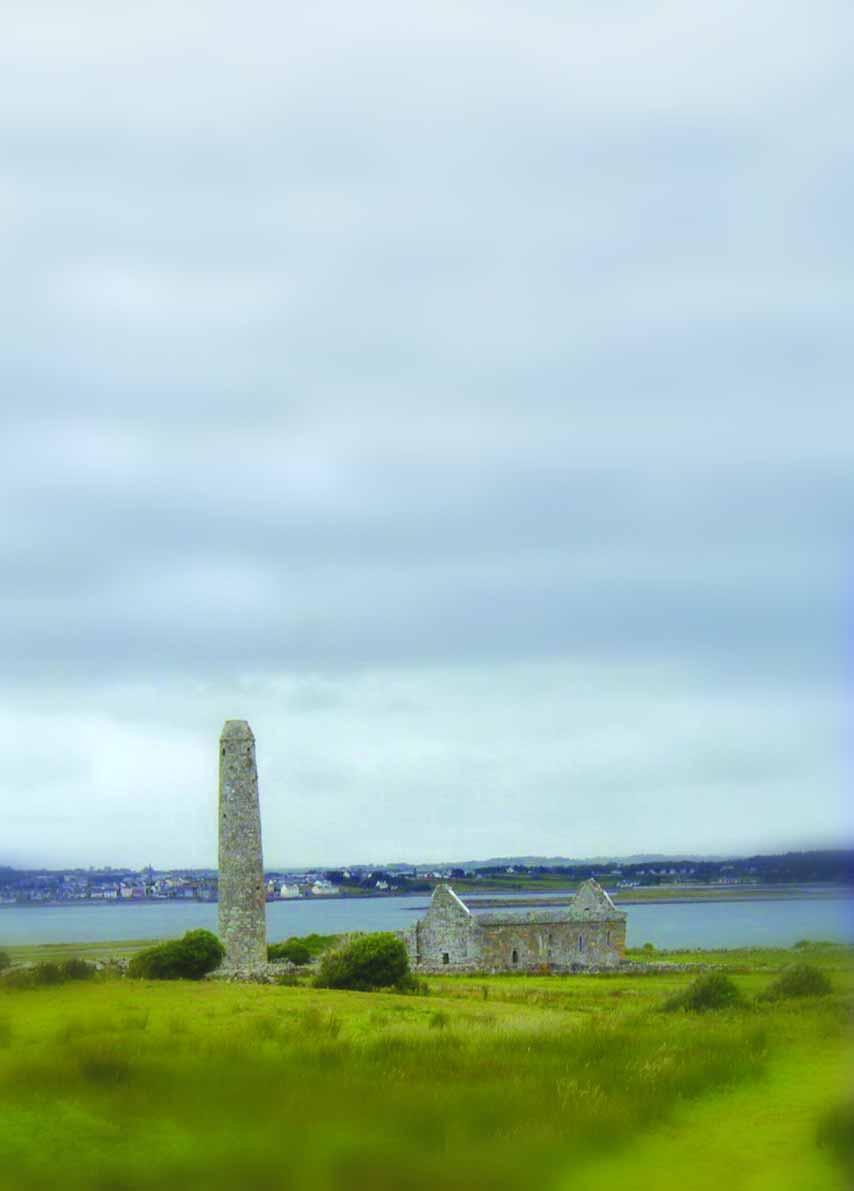
Scattery Island
Scattery Island is located on the County Clare side of the Shannon estuary about one mile from Kilrush. In Irish the island is known as Inis Cathaig, the island of a legendary monster called Cata, who is said to have devoured anyone who attempted to live on the island. The island is however more familiarly associated with St Senan who founded a monastery there and apparently banished the monster forever from Scattery. The legend may be a metaphor for the triumph of Christianity over paganism.

Scattery became an important and wealthy ecclesiastical settlement ... where it could control maritime traffic approaching Ireland's longest river.
Historically there is no reliable information about St. Senan but he is thought to have flourished around the first half of the sixth century. A thirteenth century life of the saint in Latin verse, an earlier prose life in Irish and an account of miracles associated with him survives. His feast day, recorded as early as the 9th century was March 8th.
Scattery became an important and wealthy ecclesiastical settlement as a result of its strategic location near the mouth of the Shannon estuary where it could control maritime traffic approaching Ireland's longest river. The death of many of its abbots are recorded in the annals between 797 and 1095. The monastery was plundered by the Vikings in 972, 1057 and 1101. The island appears to have
been occupied by the Vikings around the 970s and during this time it was attacked by Brian Boru in 977. It was plundered by the Anglo Normans of Limerick in 1176.
Despite these attacks the monastery continued to thrive and by the 12th century Inis Cathaig had become a diocese in its own right but after the death of Bishop Aid O'Beachain in 1188 the island came under the jurisdiction of the diocese of Killaloe. This marked the decline of the settlement and by 1280-1300 the English appointed a series of keepers to the island. During the 15th and 16th centuries the dioceses of Killaloe, Limerick and Ardfert all claimed jurisdiction over various parts of the island. In 1583, however, it was granted by Queen Elizabeth to the
mayor and citizens of Limerick.
In the post medieval period Inis Cathaig was the focus of much maritime activity as there was good shelter and a deep harbour in the Scattery Roads. In the late 16th century seven of the surviving ships of the Spanish Armada took shelter there in search of water and provisions. The Spaniards were apparently unsuccessful and left leaving one ship burning where it sank off Scattery Island. It is believed this was the Annunciada. In 1691 the Scattery area was the scene of much activity as the remnants of the French army were evacuating from Limerick by sea and a French vessel sank close to the island with the loss of 100 lives. Scattery's strategic maritime position continued to play a
The remains of six churches together with a round tower, an ogham stone and an early Christian cross slab are strong reminders of the former extent and importance of Scattery.
major role in the 18th and 19th centuries culminating in the construction of a Napoleonic Battery on the southern tip of the island. Due to its location in the Shannon estuary there have been a succession of lighthouses on the island dating from 1680 to 1872.
The remains of six churches together with a round tower, an ogham stone and an early Christian cross slab are strong reminders of the former extent and importance of Scattery. Recent archaeological investigations carried out in conjunction with the rehabilitation of the 19th century cottages for visitor services have revealed extensive evidence of early
medieval settlements extending along the shore underneath the cottages and the 16th century castle. The foundations of earlier piers, probably medieval, can be seen at low tide on the south side of the present pier and a tidal mill partly buried in the shingle spit to the north. Middens around the coastline and a burnt mound in the cathedral enclosure also testify to early occupation on the island.
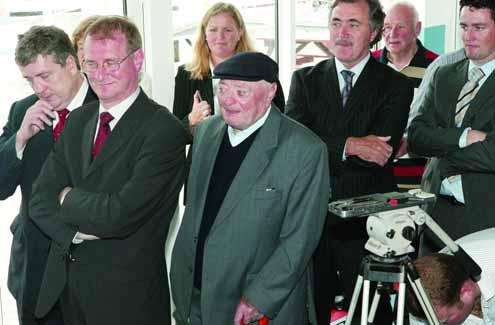
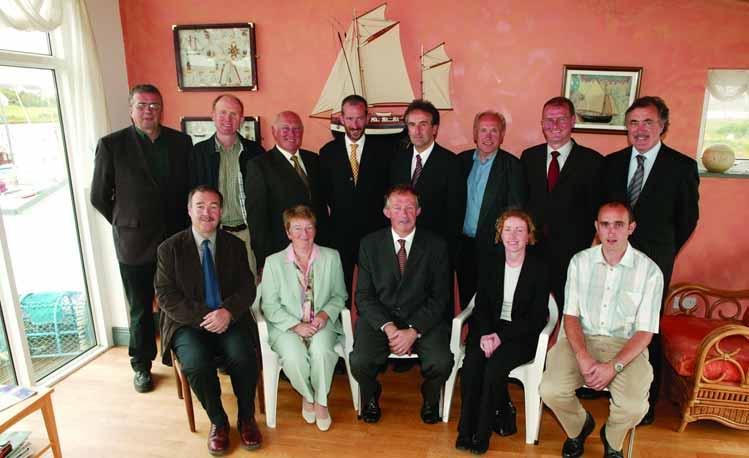
The new visitor facilities on the island, opened by Minister of State Tom Parlon TD on 13 July, 2004, mainly comprise of an existing cottage that has been converted to serve as a visitor reception area and information point. Now when visitors disembark
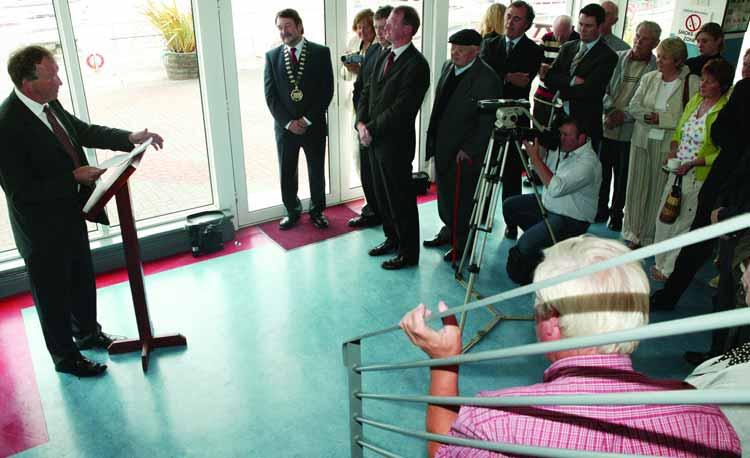
from the ferry they can make their way to the visitor reception building where they can avail of information on the history of the island, including the village. In addition to the provision of visitor facilities OPW's direct labour force has undertaken improvements to the general presentation of the island and facilities to cater for staff undertaking works on the island have also been provided. The design of the new visitor facilities on the island by National Monuments Senior Architect, Paul McMahon, and his team, was mindful of the fact that the mood and ambience of the island should not be compromised by any development
A monastic trail, a distance of 0.5km,
has also been developed. The trail will allow visitors to undertake a selfguided tour of the island with information available at each point of interest along the route. The trail takes in Temple Senan, Senan's Bed, the monastery of St. Senan, Knocknanangel and Teampall na Marbh.
Access to the island for the public is restricted to the period mid June to mid September and is dependent on tidal/weather conditions.
Martin Luby HERITAGE SERVICES
A monastic trail, a distance of 0.5km, has also been developed. The trail will allow visitors to undertake a selfguided tour of the island with information available at each point of interest along the route.