
Strategic Review 20005 Operations Review 200013 Financial Review 200051
Staff & Senior Personnel68



Strategic Review 20005 Operations Review 200013 Financial Review 200051
Staff & Senior Personnel68

For over 160 years,the Office of Public Works has provided the Government and the public sector with quality, professional and cost effective services in the areas of property,construction and procurement.
Once again in this,the first year of a new millennium,the OPW rose admirably to the challenges presented.2000 also provides us with some excellent examples of the range and scope of the OPW as it continues to drive ahead providing an excellent service to its customers.
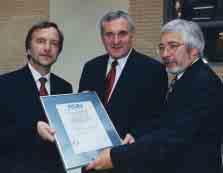
One of the highlights of the past year was the presentation by the Taoiseach of the ISO 9002:94 award to OPW Project Management Services.This award confirms that the OPW delivers project management to the highest international standards equal to the best available in the private sector.
I am pleased that the remainder of the business units within the OPW are also striving towards obtaining an ISO accreditation and I congratulate all OPW staff on their endeavours.
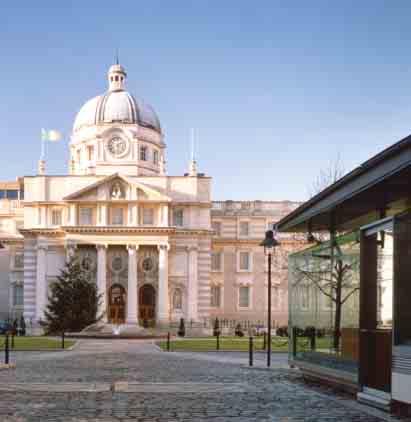
The OPW can also take credit for the new accommodation provided for members of the Oireachtas and their staff at Leinster House 2000.This hugely significant project has provided state-of-the-art accommodation and the OPW can be justifiably proud of this wonderful building.
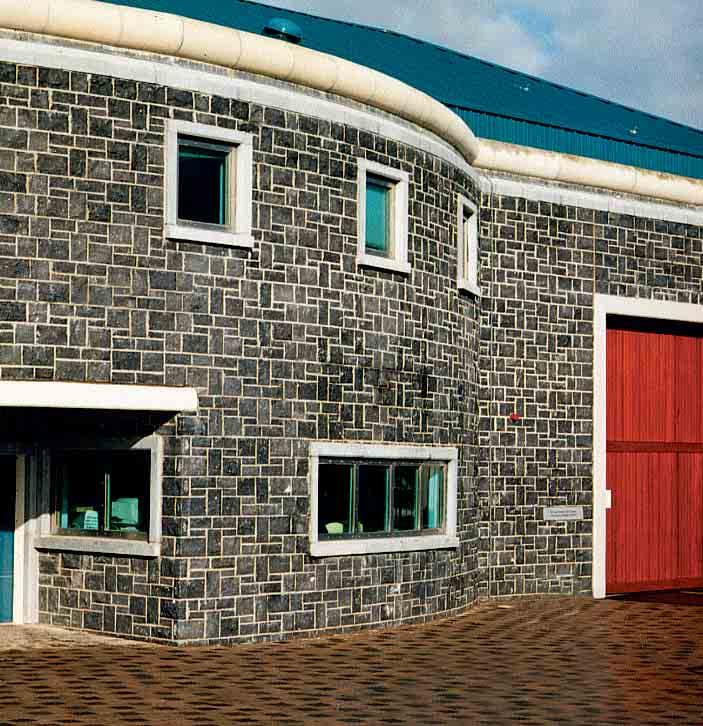
The OPW also continues its excellent work on behalf of its clients countrywide and fine examples of this can be seen at Turlough Park House in Roscommon,Sligo Abbey Visitor Centre and the Michael Davitt Museum in Mayo.
The OPW’s international portfolio of work is also developing and expanding;the Irish Pavilion at EXPO 2000 Hannover proved to be a huge success,and other projects are currently underway at the Irish College in Paris,the Island of Ireland Peace Park at Messines in Belgium and the Irish College at Leuven.The unveiling of the Irish gift,a sculpture entitled Arrival at the United Nations in New York was also certainly a high point of the year and is a lasting tribute to all Irish people who have made their home far from these shores.
Finally,I would like to pay tribute to all the staff of the Office of Public Works,who under the guidance of the Chairman and the Board provide such an invaluable service to the State.I am confident that the high standards set by the OPW in the year 2000 will continue long into the new millennium.
Le níos mó ná 160 bliain tá seirbhísí ardchaighdeáin, gairmiúla,costéifeachtacha á soláthar don Rialtas ag Oifig na nOibreacha Poiblí i réimsí na maoine,na tógála agus na fála.
Agus arís eile sa chéad bhliain seo de mhílaois nua dhéileáil
Oifig na nOibreacha Poiblí go sármhaith leis na dúshláin a bhí
ann.Tá roinnt samplaí iontacha ann sa bhliain 2000 de réimse agus de raon na hoibre a dhéanann Oifig na nOibreacha Poiblí agus í ag leanúint de shársheirbhís a sholáthar dá custaiméirí.
Ceann de na hócáidí ba thábhachtaí a bhí ann anuraidh ná bronnadh ghradam ISO 9002:94 ag an Taoiseach ar Sheirbhísí
Bainistíochta Tionscadal Oifig na nOibreacha Poiblí.Is ionann an gradam sin agus a rá go soláthraíonn Oifig na nOibreacha
Poiblí bainistíocht tionscadal de réir na gcaighdeán
idirnáisiúnta is airde atá comhionann leis na caighdeáin is fearr dá bhfuil ar fáil san earnáil phríobháideach.Is cúis
áthais dom go bhfuil na hAonaid Ghnó eile laistigh d’Oifig na nOibreacha Poiblí ag obair i dtreo creidiúnú ISO a fháil freisin agus déanaim comhghairdeas le gach duine d’fhoireann Oifig na nOibreacha Poiblí as a saothar.
Tá cúis mhaith ag Oifig na nOibreacha Poiblí freisin a bheith bródúil as an gcóiríocht nua a soláthraíodh do chomhaltaí an Oireachtais agus dá bhfoireann i dTeach Laighean 2000.Ba thionscadal tábhachtach é sin inar cuireadh cóiríocht nua-

aimseartha ar fáil agus tá cúis mhaith ag Oifig na nOibreacha Poiblí a bheith bródúil as an bhfoirgneamh iontach sin.
Tá Oifig na nOibreacha Poiblí ag leanúint dá sárobair thar ceann a cliant ar fud na tíre freisin agus tá samplaí
sármhaithe den obair sin le feiceáil i dTeach Pháirc Thurlaigh i Ros Comáin,in Ionad Cuairteora Mhainistir Shligigh agus i Músaem Michael Davitt i Maigh Eo.
Tá forbairt agus leathnú á dhéanamh freisin i dtaca le hobair idirnáisiúnta Oifig na nOibreacha Poiblí agus tá tionscadail ar siúl faoi láthair i gColáiste na nGael i bPáras,i bPáirc
Shíochána Oileán na hÉireann i Messines sa Bheilg agus i gColáiste na nGael i Louvain.Is cinnte gurbh ócáid thábhachtach de chuid na bliana nochtadh bhronntanas na hÉireann ar na Náisiúin Aontaithe dar teideal Teacht i dTír agus is ionann é sin agus buanchomhartha ómóis do na hÉireannaigh go léir a chuaigh a chónaí i bhfad ar shiúl ón tír seo.
Mar fhocal scoir,is mian liom ómós a thabhairt do gach duine d’fhoireann Oifig na nOibreacha Poiblí a dhéanann seirbhís chomh maith sin a sholáthar don Stát faoi threoir an Chathaoirligh agus an Bhoird.Tá mé cinnte,i dtaca leis na hardchaighdeáin atá leagtha síos ag Oifig na nOibreacha Poiblí le linn na bliana 2000,go leanfar díobh isteach sa mhílaois nua.

Martin Cullen TD Minister of State



In accordance with Section 4(i)(b) of the Public Service Management Act,1997,this section of the Annual Report outlines the considerable progress made during the year toward achieving the Office’s objectives as set out in the OPW Statement of Strategy 1998-2000.The key strategic objectives for the Office are to develop into a more commercially minded organisation,while at the same time ensuring that the services provided to customers are of the highest possible standard.
Many of the services which the OPW provides for its customers can be bought directly from the private sector. The rationale of the role of the OPW is the added value brought to the process while still demonstrating an efficiency comparable to that of the private sector.The main objective of the strategy is to provide quality services to the OPW’s customers.This objective will be achieved by:
• developing the OPW into a more commercially-minded organisation in the operation of its business units
• adopting best practice from the private sector
• measuring performance.
The Statement of Strategy sets out how the OPW will achieve these objectives under a number of specific headings.
The key initiatives within the OPW toward the delivery of quality service to its customers are:
• to have all business units produce individual Customer Service Action Plans.To date the GSA Building Maintenance Service and Project Management Services have produced Action Plans
• the achievement of ISO accreditation by the business units
• to initiate Service Level Agreements with client Departments and Offices
• to implement the Customer Service Training Programme for all business units.
Each business unit is required by the Statement of Strategy to put in place a programme of customer surveys and to prepare a Customer Service Action Plan.Work by the business units in this area continued during the year with Project Management Services launching their plan in March 2000.In addition,all business units continue to keep in regular contact with their customers to determine their needs and to assess their satisfaction with the services being provided.

Given the central role of the Government Supplies Agency, procurement procedures for client Departments and Offices have been streamlined and services improved following a series of consultations with client Departments.Within the GSA,monitoring programmes have been put in place on a number of drawdown contracts to continually assess the level of customer satisfaction,and it is planned to extend this monitoring to all drawdown contracts during 2001.
The Statement of Strategy requires each business unit to pursue ISO accreditation which will provide an independent assurance to our customers of the quality and professionalism of the services we provide.In addition,it will require these high standards to be maintained year after year.Project Management Services were awarded ISO 9002 accreditation in December 1999,the first unit of a Government Department or Office to attain such an award. In July 2000,the Taoiseach formally presented the ISO 9002 award to the Minister of State.Project Management Services were further audited by the National Standards Authority in September 2000,and maintained their ISO 9002 accreditation.During the year,Architectural Services and Engineering Services made considerable progress with their ISO programmes and expect to apply for ISO accreditation in 2001.
Work on the development of Service Level Agreements with client Departments and agencies continued during 2000.Such agreements are developed in consultation with the client departments and allow their individual needs to be addressed by setting out the criteria for the provision of property services,e.g.cost,timeliness,quality standards and reporting arrangements.In 2000,Project Management Services,Property Management Services and Property Maintenance made considerable progress in the development of Service Level Agreements with the Courts Service.
The purpose of this programme is to facilitate the implementation of the individual business units’ Customer Service Action Plans across the OPW.During the year 9 training sessions were held and 84 staff participated.To date Project Management Services,Accounts Branch,and the Procurement Section in the Government Supplies Agency have all successfully completed the course.It is expected that all remaining business units within the OPW will have participated in this programme by the end of 2001.
Work on developing a set of formal accounting principles for the Office,based on commercially recognised accounting standards,was completed in 2000.Under the Statement of Strategy,each business unit is required to publish detailed accounts using commercial accounting principles;the
financial accounts of the various business units,and subsections,are set out in this Report.The Statement of Strategy sets out how the OPW will measure its performance in identifying areas where it is necessary to improve efficiency and also allow comparisons with other public and private sector organisations.In comparing these accounts with those of the private sector,the different operating environments and the constraints which this brings for the OPW had to be taken into consideration. Nevertheless,the accounts have highlighted areas where it is necessary to improve efficiency and performance,as well as areas where performance is above the norms expected in the private sector.The extra value that the OPW brings for its customers falls into a number of categories:
1 Ready access to staff skilled in a variety of professional disciplines.
2Value for money because of the strength of the OPW in the markets where it operates.
3 Speedy and efficient delivery because of our understanding of customers’ requirements,our knowledge of where these can be sourced and our experience in doing so over many years.

4Integrated services - the OPW either has,or can broker from the private sector,full packages of services in the construction and supplies areas.
5Guarantee of fairness,openness,and compliance with Government and EU regulations;for example, procurement procedures,safety and health,building regulations,planning controls,etc.
6Emphasis on quality,fitness for purpose,and value for money for taxpayers’ funds.
The 1999 Annual Report contained the first publication of a set of corporate accounts for the entire Office,and this Report builds on that development.
Measures such as the production of business unit accounts, benchmarking and Service Level Agreements enable progress toward the achievement of our objectives to be monitored and corrective action to be taken where appropriate.More importantly,the various customer service initiatives provide feedback from our customers on how well the Office is performing.The Partnership Committee established under the terms of Partnership 2000 provides the means for a joint review of performance by management and staff.
The Statement of Strategy identifies the benchmarking of the Office’s operations as a key performance measurement tool. Benchmarking involves the comparison of financial and nonfinancial results and outputs between the OPW and private sector or other public sector bodies operating in similar sectors.While account must be taken of differences in operating environments,benchmarking can prove helpful as it can present opportunities to draw on best practice from the private sector where this is relevant and instructive.During 2000,Property Management Services arranged a seminar in Dublin Castle on the theme,“Public Sector Benchmarking:The Property Perspective”and the joint benchmarking exercise between the OPW and the Department of the Environment Northern Ireland in office accommodation performance measurement continued to progress.
The Office is keenly aware that the key critical success factors in implementing the changes set out in the Statement of Strategy are the support and commitment of all staff in the Office and ensuring that appropriate organisational and management structures are in place to enable the Office to effectively deliver a high quality service to its customers.
During the year,the OPW commissioned Farrell Grant Sparks Consulting Ltd to carry out an independent assessment of the Office’s structures,staffing levels,approaches to its business and workloads with a view to assisting the Board to address a number of key underlying questions.
The key conclusions and recommendations of the Final Report on Strategic Assessment were as follows:
1Demands have grown exponentially.These cannot be serviced by the current structures,approaches to doing business and numbers of staff available.
2The staffing demands internally identified are not unreasonable having regard to current and projected workloads.However,they still amount to some 25% of an increase in non-industrial staffing.It will not be possible to secure such an increase in resources by traditional means.
3The OPW’s basic business processes are soundly based.
4There is a strong case for applying an economic measure to the OPW’s staffing needs.
5There is a need for a more rigorous application of a business model based on added value brokerage,and procurement and managed solutions services.
6A new structure should be created on the property side. This should include the addition of a third Commissioner post.
7Corporate services should be integrated under a new Director post.
8 Further consideration should be given to the creation of corporatised entities as stand-alone subsidiary operations.


The Board accepted these conclusions and recommendations and,in particular,recognised that,while the resulting report endorsed current organisational structures,it also identified areas of the Office where resources needed to be strengthened.In providing these additional resources,the report highlighted the need to achieve the optimal balance between in-house resources and buying in resources from the private sector as the need arises.The OPW acknowledge the speedy consideration of the Farrell Grant Sparks Report by the Department of Finance and their subsequent approval of the posts of Commissioner and Director.
Ensuring that staff obtain the necessary training and development opportunities is a priority for the Office,and further progress was made in 2000 in providing the training identified in the Training Needs Analysis 1997.While a broad range of courses and training were provided,the following were the main training initiatives carried out during the year:
This programme,developed specifically for the OPW by the Irish Management Institute,has been running now for almost three years and to date,71 administrative,professional and technical staff have completed the course.Officials from the Department of the Environment,Northern Ireland have also participated in this programme.
Given the increasing reliance of the Office on Information Technology to deliver its services,IT training accounts for a significant proportion of the annual training budget.This year the OPW introduced the ECDL,an internationally
recognised qualification,throughout the Office.The course contains seven core modules with participants receiving an ECDL certificate on successful completion of all seven subjects.To date,58 staff have participated in-house with a further 5 studying for the ECDL in their own time.
A number of development courses for administrative grades have been run over the past year.The programme has been extended to include all administrative grades from Clerical Officer to Higher Executive Officer.
Preparation for the introduction of the PMDS began during the year and PMDS training will commence in 2001.
In addition to providing a wide range of training opportunities for staff,the Office also encourages staff to undertake courses in their own time.Applications from staff for financial contributions towards tuition fees under the Refund of Fees Scheme remained high in 2000,both in monetary terms and in participant numbers.This year the amount allocated increased to £20,000 and there were 35 applications under the Scheme.The criteria by which this Scheme operates is currently being assessed with a view to implementing best practice,from both a public and private sector perspective.
In 2000,within the OPW’s IT infrastructure,new systems were developed and expanded,as set out in the Office’s Strategic Information Technology Plan.Work on the implementation of the new Property Management System continued and the formal launch of the OPW Intranet also took place.This provides staff within the Office with access to a wide variety of information and support systems,and significantly improves the dissemination of information throughout the Office.Work began on implementing the Corepay Payroll for both civil servants and industrial employees;both these systems will be in operation early in 2001.
The Government’s policy on the Information Society requires that the electronic medium be the first choice for the delivery of services to our customers.During the year,the Office conducted a number of pilot projects with a view to developing electronic service delivery systems.One such project involved the establishment of a “virtual project room”.This provides a website that enabled all OPW staff and external consultants involved in a project to interact with each other and share drawings,specifications and other project documentation.During the year,the OPW website (www.opw.ie) was expanded to include additional publications and a wider range of information relating to the activities of the Office and services it provides.Work commenced in 2000 on the development of an e-strategy which will set out how the Office will develop toward electronic service delivery in the coming years.During the year,the GSA was involved in the development of an

e-procurement strategy for Government and will be part of the pilot project for implementing that strategy.
Since the introduction of the Freedom of Information Act in 1997 the Office has received 151 requests for information. During the period from 1 January 2000 to 31 December 2000, 85 requests for information were received in comparison with 51 requests for the same period in 1999.In keeping with the Office’s policy of providing requesters with as much information as possible,76 requests were granted/part granted or dealt with outside of the FOI Act.The following table gives a detailed breakdown of requests for information received in 2000.

Over the years the accommodation needs of the Oireachtas have grown to such an extent that a rationalisation programme became necessary in order to eliminate difficulties caused by the distances of many of the offices from the Dáil and Senate Chambers and the run-down and overcrowded conditions in which many Members had to work.
It became obvious that the primary need was for all TDs and Senators to be located as close as possible to their respective Chambers within the Leinster House precinct,and that both new and existing offices be developed to meet the needs of Members as they faced the demands of 21st century politics.With the relocation of the last elements of the National College of Art and Design,some of whose buildings adjoined Leinster House,an opportunity arose to acquire the vacated site and construct sufficient accommodation so that all Members’ offices could be brought within the environs of Leinster House.
In addition,it was decided to develop new Oireachtas Committee Rooms within the newly available site,appropriate to the importance of such Committees.These would cope with the increasing volume of work and the need to improve the capability of Committee Sessions being televised.
The project was given the go-ahead by the Government on 24 November 1997 on the basis that the building would be ready for occupation by the start of the Autumn 2000 Sessions of the Dáil and Senate.Construction of the 10,000 square metre new 2000 Block project started on site in June 1998,and the offices were occupied on 2 October 2000. The Committee Rooms were handed over and in use on 6 March 2001.
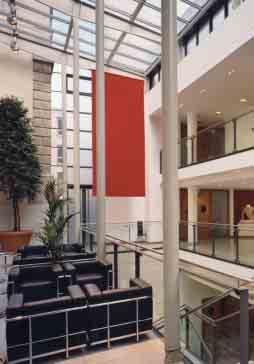
• Meeting Roomsfor the visiting public to meet Dáil Members
• 4 Committee Rooms
• Party Leader Suitesfor the 2 Opposition Parties
• Officesfor approximately 100 members and staff
• Party Assembly Rooms
• Link within old Leinster House- new historic style stairway and lift.
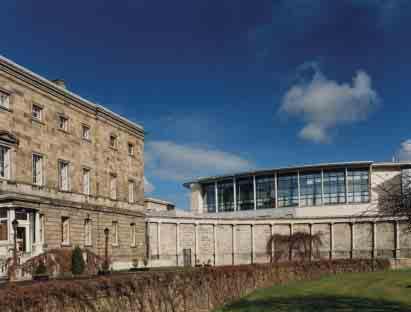
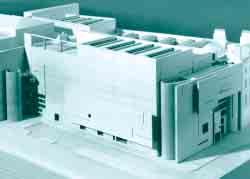
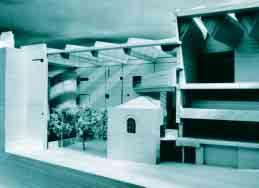
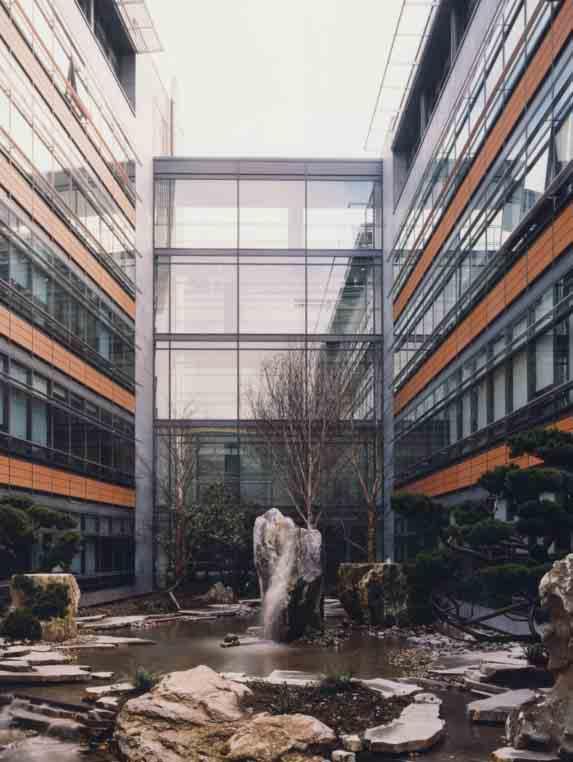
The new building at Leinster House 2000 consists of two inter-linked blocks laid out around a central pool garden and landscaped courtyards.The main public entrance to the new development is from Kildare Street,through a new loggia within a double-height classical-style screen wall,which leads to a new landscaped entrance courtyard.
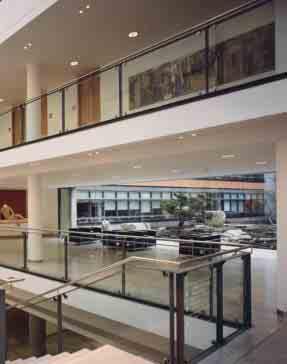
The new building is visible from Leinster Lawn and Merrion Square,as a gentle arc above the curved historic screen wall between Leinster House and the National Gallery.Only the top two floors of the new six storeys are visible.
The new building is a complex mix of flexible,fully serviced office accommodation and private and public activities.It has addressed several architectural juxtapositions with its classically designed neighbours,and connects to Leinster House in a coherent yet unobtrusive way.
The granite paved entrance from Kildare Street leads into the new reception area and principal staircase,both of which are on an axis with the spinal corridor of old Leinster House and the Dáil chamber.A new glass-roofed atrium here links the old façade of the former National College of Art and Design building of the 1830s (now an extension of the National Library facilities),with the two wings forming the new Leinster House 2000 Block.

The stairwell also allows daylight to penetrate to a lower ground floor foyer,which accommodates the Committee rooms.These rooms feature a circular seating plan,while the largest can be altered as the need arises.The proceedings are televised,and recorded from control rooms,and the lighting system has been designed to simulate the cycle of daylight.
In all,over 100 Oireachtas Members’ offices are on the floors above,planned around a central open area,a unique water garden of natural landscaping and feature stones.The visitors’ waiting area overlooks a vista of this central pool garden at ground level.
Access from old Leinster House is possible by the extension of the main Seanad staircase to basement level,where the corridor continues seamlessly into the new 2000 Block.
This project was completed within budget and on time, despite the four month industrial action by members of BATU - for reasons entirely unrelated to the OPW.
The existing office accommodation in Leinster House which included the ’66 Block,the Engineering Block and the ’32 Annex was also fully refurbished in the Dáil Summer recess of 2000,bringing that accommodation up to the same standard as provided in the new Leinster House 2000 building.This fast-track project was completed on time and within budget,at a cost of £4.65 million.The speed and quality of the refurbishment has received much praise.



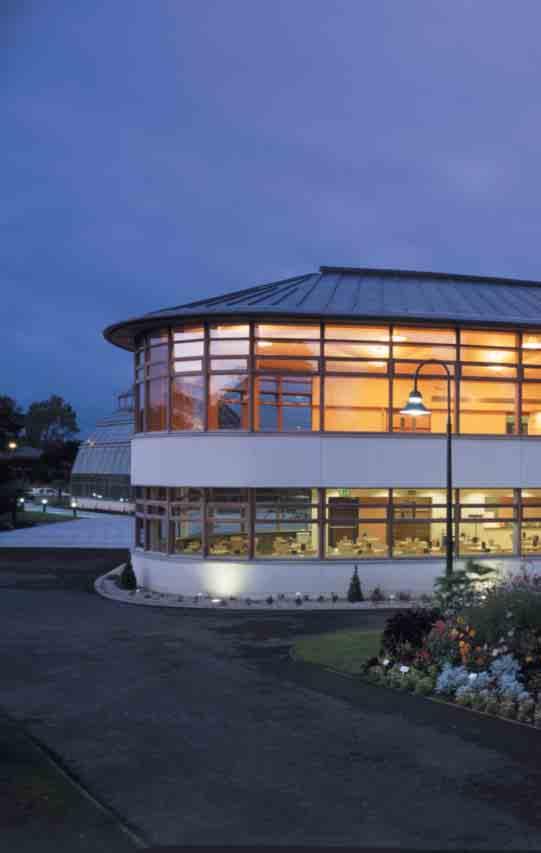

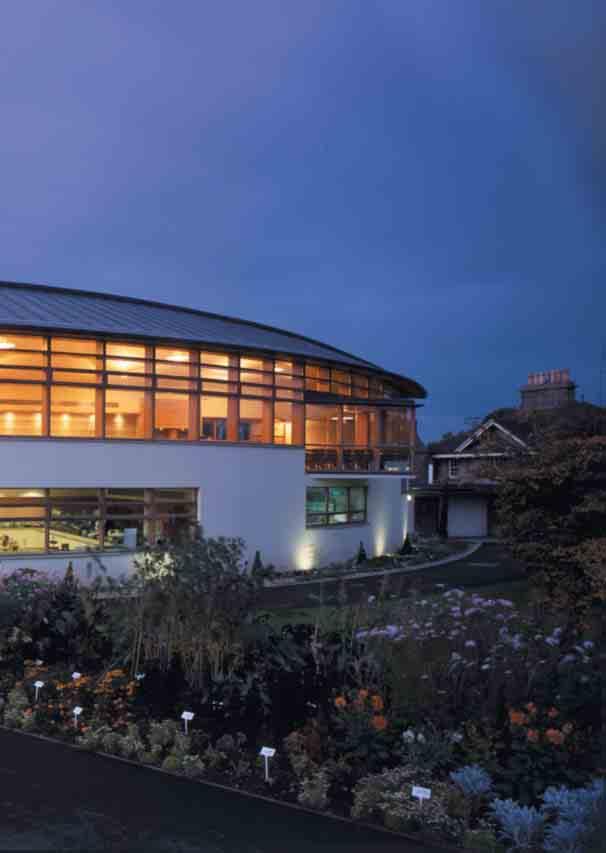

The most recent phase of work in implementing the plan for the Garden Management involved the creation of new educational,visitor and dining facilities.There are three components in the new building:
• Lecture/Performance Hall - while primarily to be used for educational and botany related events,this venue will also form part of the proposed public outreach programme of the Gardens
• Visitor Information Centre
• Dining Facilities - a restaurant and function space at first floor level and a tea-room at ground floor level. The site for the new building was flanked on two sides by existing buildings and a private courtyard area,which had to be maintained.The site strategy has placed the Lecture Hall, adjacent to the existing site buildings.Between the Lecture Hall and the Dining Facilities is the information and exhibition area,which also functions as a circulation zone between the lecture hall and the dining area.This circulation zone,or internal “street”,links the existing main entrance to the Garden’s new paved forecourt,allowing both entrances to be used either jointly or independently for Garden functions.
The ground floor tea-room has views of the Gardens and an outside seating area.On the first floor,the function space has panoramic views over the front lawns of the Gardens.The

restaurant,which is shaped like a leaf in plan form,picks-up on the line of the Garden paths and provides panoramic views of the Gardens.
The Lecture Hall and Performance Space is treated as a simply proportioned rectangle,while the leaf-shaped dining building has a vertically proportioned rhythm to its glazing. The overhanging roof of the existing Gate Lodge is picked-up in the overhanging roof of the dining-room and tea-room.
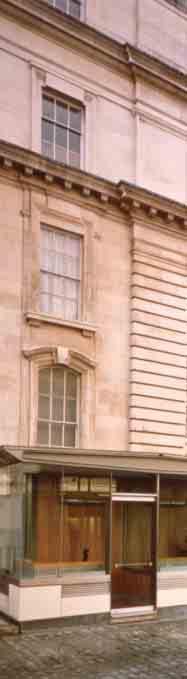
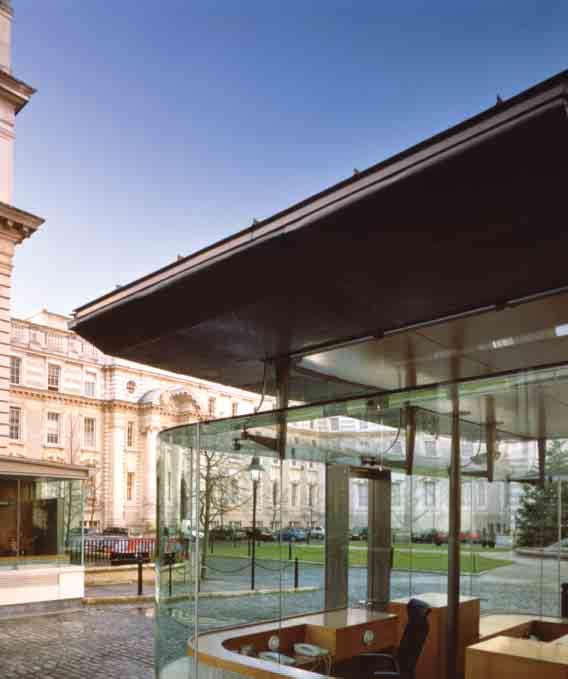
The render finish of the Gate Lodge is continued to encompass the new security kiosks,and links in with the leaf-shaped dining-room and tea-room buildings.
In contrast,the Lecture Hall and Performance Space is finished in a traditional garden brick,using a Flemish double stretcher bond pattern often used in orchard wall gardens. The brick was the original colour of the 1730s Estate House, which is now the Director’s residence,and survives on the east elevation of that house.It is fitting reference for this section of the building,and was used in the recently completed Herbarium/Library building.The wall is indented in part to allow for wall climbers to be planted adjacent to the outside dining area.
The OPW was presented in 2000 with the Construction Industry Federation Excellence Award in the specialist category for work on the restoration of the Training College at the Department of Education and Science,Marlborough Street,Dublin 1.
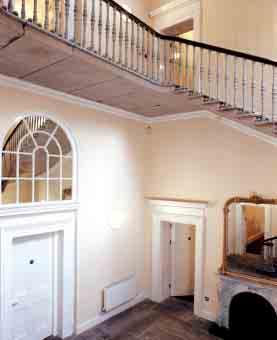
This four-storey building was designed by Jacob Owen in 1835.It matches the scale and height of Tyrone House, although a Greek revival style was adopted in contrast to the Italian style of the original Tyrone House.The building had been used as a training college for teachers in the past and more recently as offices for the Building Unit of the Department of Education.The main architectural features of the building are the barrel-vaulted ceiling in the main room on the top floor and an elegant cantilevered granite staircase with cast iron balustrade in the central half.The ceiling over the staircase is heavily ornamented as are the door and window cases.
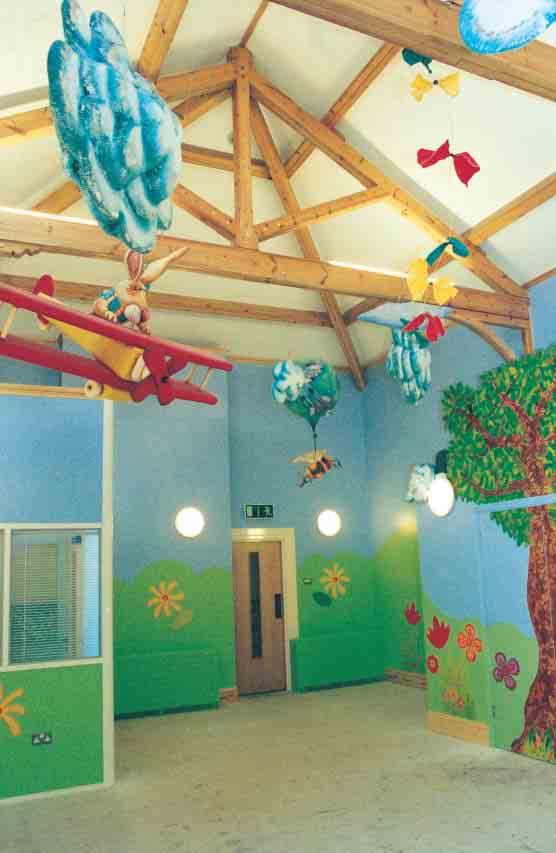
The OPW has recently completed the conversion of the building known as the Colonnade Building at the Department of Education and Science complex to the Northside Civil Service Crèche for the Department of Education and Science. The 19th century building was formerly an infant’s school,but it has not been used for this purpose for the last 25 years.
The classrooms are on the first floor with a playspace on the ground-floor open on one side,with cast iron columns
supporting the structure of the building above.There is a central stone cantilevered staircase.
The fabric of the building has been completely refurbished, and the east end has been extended and secondary glazing fitted.This end has been converted and fitted out as a crèche for the Civil Service in Dublin North City Centre,and will cater for approximately 43 children and 8 staff.The crèche is due to open early in 2001.
The total cost of the refurbishment is £1.42 million.
The OPW has agreed to provide Project Management and Architectural Services for Teagasc in respect of a programme of building projects which includes the following:
• Moorepark Joint Food and Production Biotechnology Centre
• National Food Training Centre,Dunsinea
• Plant Biotechnology Centre at Oak Park
• Refurbishment works at Johnstown Castle.

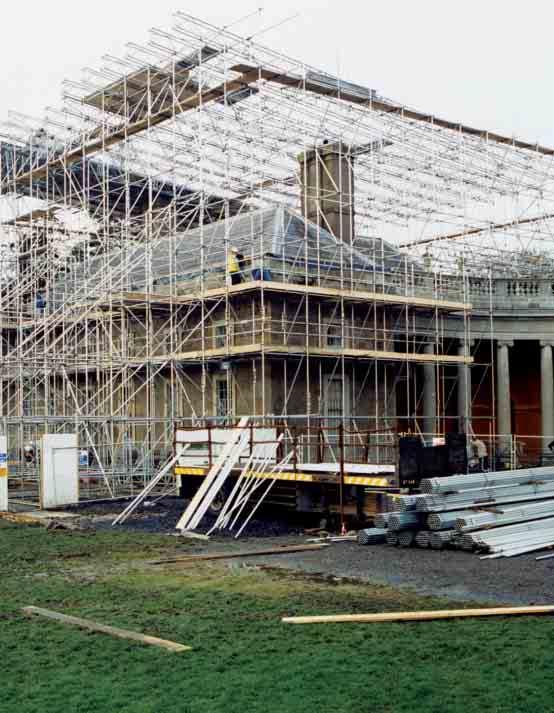
• Refurbishment of Farmleigh House,Phoenix Park,for Government use commenced in 2000 and is due to be completed in 2001
• New Visitor Centre,National Botanic Gardens,completed and opened to the public
• Final phase of work to Rathfarnham Castle completed
• Planning permission for the refurbishment of No.s 44 and 45 Merrion Square for the Irish Architectural Archives received
• Iveagh Gardens Cascade officially activated
• Restoration and fit-out of the Parade Wing at Kilkenny Castle completed
• New shop,restaurant and craft facilities at Muckross House,Killarney completed and opened to the public
• Restoration of Victorian glasshouse,at Muckross House commenced

• Re-roofing works at Doneraile House,Co.Cork completed
• Work to restore Fota House on behalf of the Fota Trust Co Ltd is presently on site
• Consolidation works and provision of visitor/staff facilities at Kilmacurragh House,Co.Wicklow commenced
• Maynooth Castle,Phase 1 works commenced
• Castletown House – work to colonnades on site
• Sligo Abbey National Monument visitor facility completed and opened to the public
• Dunmore Cave National Monument – extension of visitor facility on site
• Memorial at United Nations Plaza,New York,a gift from the Irish Nation – completed
• Irish Pavilion at EXPO 2000 World Exposition,Hannover, Germany,completed for opening of EXPO in June 2000 –Irish National day 28 June 2000

National Museum
COLLINS BARRACKS:
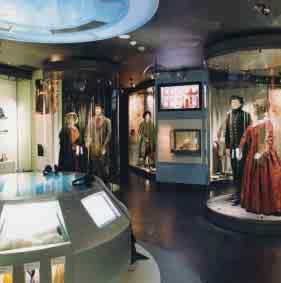
• Costume/Jewellry Exhibition “The Way We Wore”was completed and opened to the public
• Block 19,office accommodation completed
• Provision of link buildings at North-West and North-East corners of Clarke Square completed
• The renovation and extension of Block 15,Conservation Workshops commenced
• The contract was placed for new entrance steps from Benburb Street.It will be completed in 2001
KILDARE STREET,MERRION STREET AND COLLINS BARRACKS:
• The contract was placed for the enhancement of retail units in 2000
TURLOUGH PARK HOUSE, FOLK LIFE MUSEUM,MAYO:
• The building was completed and is due to open to the public with exhibitions in 2001

National Gallery
• Millennium Project on site and due for completion in 2001
National Library
• New facilities at the former National College of Art and Design are currently on site and completion due early 2001
• Warehouse fit-out at Parkwest,Dublin to take storage from the Kildare Street properties completed
• Planning permission received for NLI Archives Store/RCPI Project
• Tenders obtained for refurbishment of No.4,Kildare Street
National Concert Hall
• Ongoing upgrading works continued
• Renovation of Terrace Restaurant and extension of kitchen commenced and to be completed 2001
Irish Museum of Modern Art
• New Galleries at the former Deputy Master’s House completed and the inaugural exhibition opened to the public
• Refurbishment of the Great Hall and Chapel and the resurfacing of the Great Court Yard commenced and to be completed in 2001

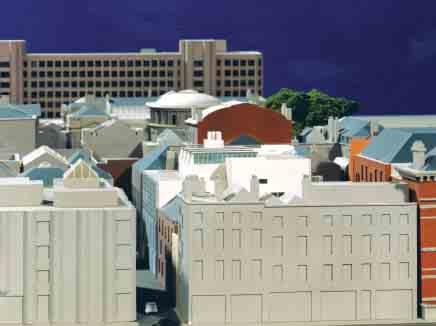
During 2000,the OPW continued to provide Project Management Services and Architectural Design Services to the Department of Justice,Equality and Law Reform.
In Castlerea,Co.Roscommon,work commenced on the building of a Courthouse outside the Prison grounds and the Grove Project within the Prison confines.
A contract was placed in December 2000 for the replacement of C Wing and conversion of E Wing for use as women’s accommodation in Limerick Prison.
The selection of the design team for the reconstruction of Mountjoy Prison was completed in November 2000.The development of a masterplan for the reconstruction is almost completed.
Consultants are currently compiling the initial phase of the Environmental Impact Study for the proposed bridge to Spike Island,Cobh,Co.Cork.
The Midland’s Prison (Portlaoise) was completed in 2000, and the Minister for Justice officially opened the Project on 9 November 2000.
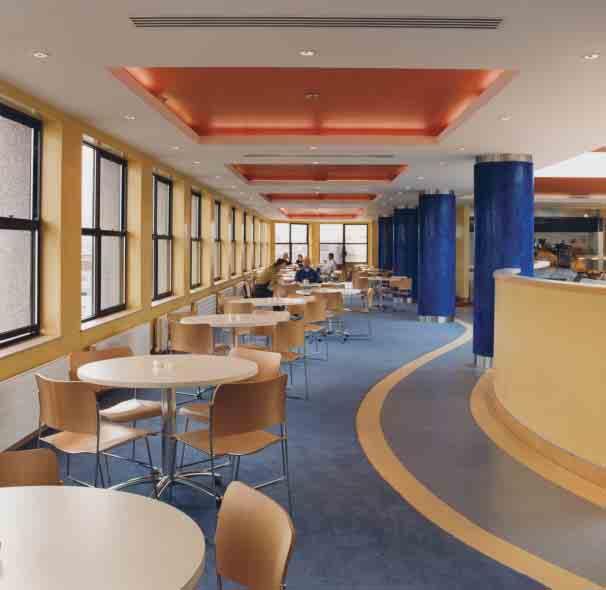
Work was completed on refurbishment of the new canteen on the 7th floor of Agriculture House,Dublin in September 2000.

The total expenditure on improving local offices in 2000 was approximately £3 million
Projects Completed: Clifden
Carrick on Shannon
Carlow
In Progress: Cahirciveen
Clondalkin
Manorhamilton
Projects in Planning: Arklow
Coolock
Goldsmith House
Castlebar
Dungloe
Blanchardstown

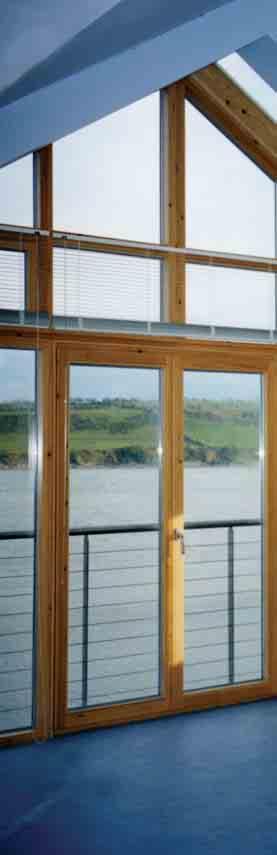
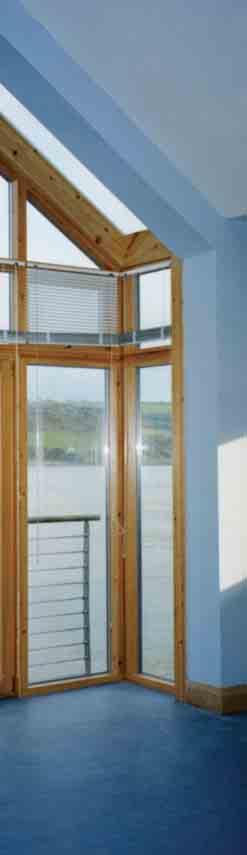

The OPW is carrying out a programme of works for the Irish Coast Guard.The work includes the development and refurbishment of Coast Guard Stations and Coastal Radio Stations.
Projects Completed: Dunmore East,Youghal (both Coastguard Stations).
Projects Commenced: Dingle,Howth,Castletownbere (all Coastguard Stations).
Projects Due to Commence in 2001: Ardmore,Waterford Regional Airport- Hangar,Oysterhaven, Bunbeg,Kilkee,Doolin,Seven Heads,Tramore,Toe Head (all Coastguard Stations).
Other Projects in Planning: Achill,Crosshaven,Greystones,Courtown,Goleen,Valentia Island (Coastal Radio Station) and Malin Head (Coastal Radio Station).
The total expenditure for works carried out in 2000 was approximately£0.5 million.
The Court Service was established on 9 November 1999,and entered into an agreement with the OPW for the provision of Project Management and Design Services for new and refurbished court building projects.
Carlow Courthouse: Phase 2 of the refurbishment programme was completed in 2000.The works included refurbishment and internal alterations to the basement and ground floor,and the cleaning and repair of the facades and podium and associated external works.

Other projects: Design teams were appointed for a number of other projects.These included Arás Uí Dálaigh (part of the Four Courts complex),Nenagh,Newcastlewest, Swinford,Thurles,Tullamore,Westport and Youghal.Work on these projects is scheduled to commence in 2001.
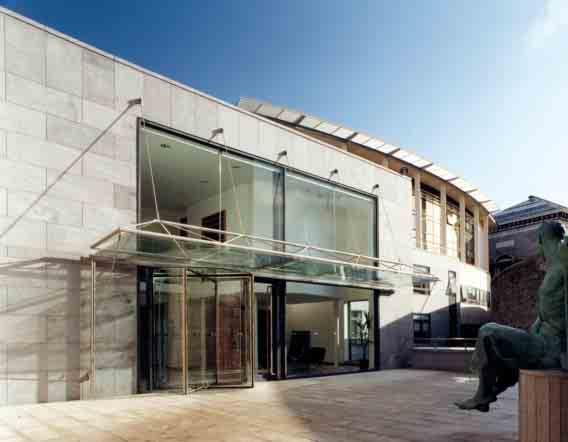

In 2000,in the region of IR£7.6 million was spent on refurbishment and improving office accommodation and the working environment of civil servants.
Some of the projects in this category included:
• Department of Finance Basement area Conference and training rooms were provided,as well as improved storage space.
• Office of Public Works No.s 51/52 St Stephen’s Green
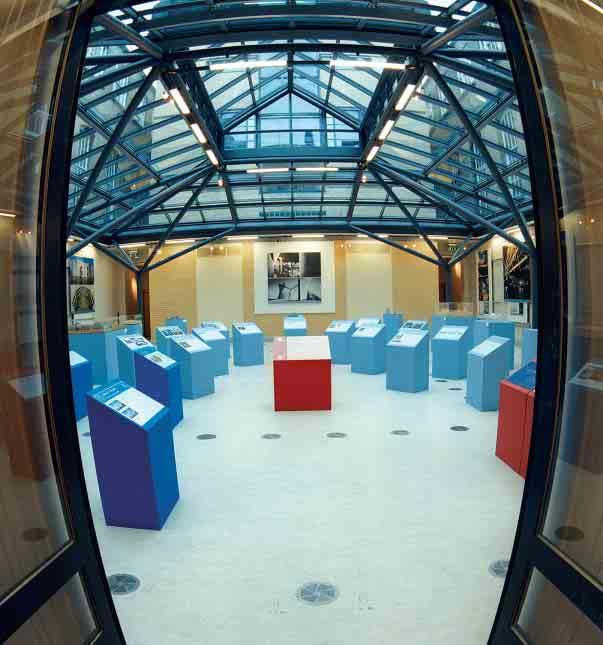
A new reception area including an Atrium,comprising some 250 square metres,was completed in 2000. Constructed in the courtyard at the centre of No.51,the Atrium has already been the venue for many functions, including the following exhibitions: Architecture of Democracy,The Silver Exhibition,Roman Lundbeck Art.
The Atrium is available for hire,for both corporate and State functions.Bookings can be made by contacting Dublin Castle Conference Centre at (01) 6793713.
• A new block is being provided to link No.s 51 (OPW Head Office) and 52 St Stephen’s Green which was purchased by the Office of Public Works in 1999.The premises had previously been held under lease and occupied by OPW staff,and staff from the Ombudsman’s Office (now moved to new premises).This new development will result in extra office space and improved access to all floors and disabled access.
• The ongoing programme of improving accommodation at No.51 continued with works to the entrance area and parts of the ground and first floors.

• Lansdowne House 3rd and 4th floors
Refurbishment works are in progress on these floors, which will accommodate the Civil Service Training Centre and Lansdowne House canteen.When work on these floors is completed all eight floors in Lansdowne House will have been refurbished.
• Davitt House,Castlebar
The Canteen was refurbished during the year 2000.This building is occupied by the Department of Agriculture and Food,Offices of the Revenue Commissioners,Coillte and Teagasc.
MAJOR PROJECTS CURRENTLY ON SITE:
• Dundalk Decentralisation Offices
This project will be completed in autumn 2001.As well as accommodating staff (Department of Social Community and Family Affairs) who will be decentralised,these new offices will also accommodate other civil service Departments currently in other centres in the town, including the Office of the Revenue Commissioners,the OPW,and the Department of Justice,Equality and Law Reform.
• Customs House Galway Phase 2
Refurbishment of existing office space is in progress.This will result in improved accommodation for the Offices of the Revenue Commissioners.

Garda Building Programme
To tal Expenditure in 2000:£9m
PROJECTS COMMENCED:
Clondalkin Garda District Headquarters,Dublin
Cobh Garda District Headquarters,Co.Cork
Ballyfermot Garda Station,Dublin
Bray Garda District Headquarters,Co.Wicklow
Tullamore Garda District Headquarters,Co.Offaly
Dunshaughlin Garda Station,Co.Meath
Castlecomer Garda Area Headquarters,Co.Kilkenny
Waterville Garda Station,Co.Cavan
PROJECTS COMPLETED:
Rathmines Garda Station,Dublin
Mayorstone Garda Station,Co.Limerick
Kealkil Garda Station,Co.Cork
Ballinskelligs Garda Station,Co.Kerry
Kilmaganny Garda Station,Co.Kilkenny
Loughrea Garda Station,Co.Galway
OTHER MAJOR PROJECTS IN PROGRESS AND DUE FOR COMPLETION IN 2001:
Templemore College,Co.Tipperary - new lecture theatres and residential accommodation
Talbot Premises,Dublin - new warehouse,stores,vehicle maintenance facilities,forensic examination facility,printing and inspection facilities
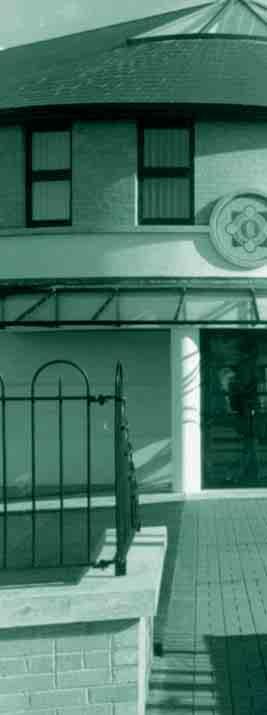

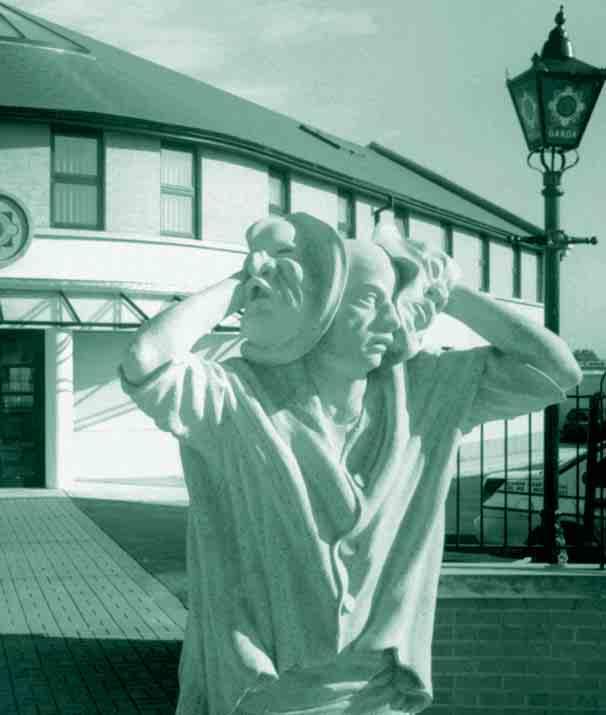

The Island of Ireland Peace Park at Messines (Mesen), Belgium was opened on 11 November 1998 by President Mary McAleese in the presence of Her Majesty Queen Elizabeth II of the UK and His Majesty King Albert II of Belgium.The Park was developed by A Journey of Reconciliation Trust with the support of the people of Messines and many public and private sponsors in Ireland, North and South,in memory of all those from the island of Ireland who fought and died in the First World War.
The development of the Park was a magnificent achievement for a voluntary trust,and this was rightly acknowledged by the attendance of three Heads of State at the official opening,and by the fact that the Park continues to attract the wholehearted support of the community of Messines.It is also attracting a significant number of visitors.
To ensure that the aims of the Journey of Reconciliation Trust continue to be met,in April 2000,the Taoiseach announced that the OPW,in conjunction with the Construction Services in Northern Ireland,would assume responsibility,on a continuing basis,for the maintenance and upkeep of the Peace Park.Both Joint Chairmen of A Journey of Reconciliation Trust (Paddy Harte and Glen Barr) indicated that the Taoiseach’s offer had been approved unanimously at a Trust meeting on 25 April,2000 and expressed their satisfaction at the Taoiseach’s decision.
A joint project team from the Office of Public Works in Dublin and the Construction Service of the Department of Finance and Personnel in Northern Ireland was formed to prepare proposals for the upgrading and ongoing maintenance of the Peace Park.The basic concept and purpose of the Park as envisaged by the Journey of Reconciliation Trust remains
unchanged.The standard of management and maintenance must not only reflect the purpose for which the Park was built,but also equal the high standard of the numerous other war sites in Flanders and Northern France.
The report and recommendations of the project team are under consideration by the relevant Ministers,North and South.Subject to the agreement of Ministers,and consultation with the Journey of Reconciliation Trust, the objective is to undertake the programme of work during 2001.
EXPO 2000,the first World Exposition of the new millennium was held in Hannover,Germany from 1 June to 31 October 2000.The theme was “Humankind - Nature - Technology” with a strong emphasis on the concept of sustainability.
The Government allocated a budget of £9.1 million to fund Ireland’s participation.The official participant was the Department of Enterprise,Trade and Employment.The Department asked the OPW to manage the Irish Pavilion project on its behalf.This involved procurement of the design, construction,and exhibition fit-out of the Pavilion building.
The building was completed well before the official opening on 1 June and proved to be a tremendous success.Total visitor numbers to the Irish Pavilion by 31 October were 2,178,149.This was 40% higher than the original target despite lower than expected numbers of visitors to EXPO as a whole.
In keeping with the theme of sustainability the building is demountable and capable of re-use at another location.At the year end the OPW was examining a number of proposals in this context on behalf of the Department.
On 3 May 2000 Minister of State Mr.Martin Cullen TD announced that the Government had decided to provide funding for the refurbishment and conservation of the Irish College in Paris.
The College was originally established in 1578,and has been at its present location in the Rue des Irlandais since 1769. The planned restoration and conservation scheme was made possible by a French Government decree in 1990,the terms of which had been agreed with the Department of Foreign Affairs.This provided that the property and affairs of the College are to be administered by the Fondation Irlandaise (equivalent to a Board of Trustees in Irish law),which has seven Irish members nominated by the Irish Ambassador to France and seven French Government nominees.
The two principal functions of the restored College will be to provide accommodation for students,and to become a major Irish cultural and educational centre.It will:
• serve as a research resource and provide a top class database on Ireland
• profile what is happening in Ireland in relation to cultural activity by providing lectures,recitals,and exhibitions
• provide teaching facilities to enlighten Irish people about France and vice-versa
• provide retraining facilities for language teachers
• provide greatly improved facilities for existing Irish community events
• provide facilities for State and Semi-State functions of Irish significance.
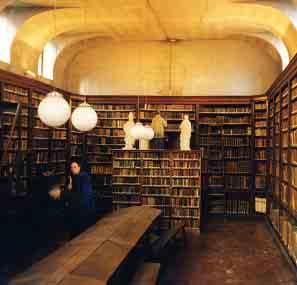
THE WORKS PROPOSED INCLUDE:
Refurbishment to incorporate en-suite facilities in the majority of residential rooms (48 rooms in total),provision of mobility-impaired accommodation including a lift,better common areas,new dining-room and service area, classrooms,offices and ancillary accommodation,exhibition and conference rooms.
Conservation to encompass works to the roof and façade of the building,the chapel and library which are of considerable architectural and historical interest,and plasterwork,stonework,windows and ironwork.
The £10 million allocated by Government is being provided by way of a grant through the Vote for the Office of Public Works.The OPW will provide project management advice and assistance to the Fondation Irlandaise,and ensure that work is carried out to the appropriate standards for a building of this significance.
It is anticipated that work will commence in February 2001, and be completed in time to allow the College to re-open in September 2002.


The College was established in 1607 by the Irish Franciscans in order to gain access to the renowned University in Leuven during Penal times.In addition to its important contribution to Ireland,resulting from the education of Friars,the College is also famous for a number of other reasons.
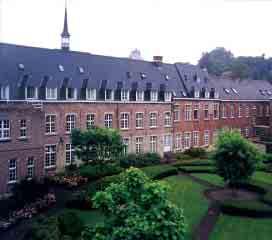
It was here that the font for the printing of Irish was developed,which set a standard for Irish printing for 350 years.The first dictionary in Irish was compiled,and Irish grammar was rationalised and simplified.The Annals of the Four Masters was compiled in the College.
The ‘Flight of the Earls’ brought the O’Neills and O’Donnells to Leuven,where they remained in the care of the Friars of the Irish College during the winter of 1607.A gravestone in the College chapel marks the burial place of Rosa O’Doherty, who was the wife of Caffer O’Donnell,one of the Earls,and
who after his death married Owen Roe O’Neill.In the early 19th century the College was sold and was subsequently bequeathed to the Brothers of Charity who built major extensions in 1852 and 1892.It was returned to the Franciscans in 1922 and major renovations were carried out.
Much of the College,excluding the Chapel and associated buildings,was leased to the Irish Institute for European Affairs in 1983.
The Institute was established as a not-for-profit NGO in 1983, and its mission statement is “to help maximise the benefits, for both Northern Ireland and the Republic of Ireland,of EU policies and programmes and to increase awareness of mainland European business practice,through the provision of high quality programmes for business,the public sector, higher education,and the voluntary sector”.
In June 2000 the OPW was requested by the Department of Finance to prepare a report for the Institute,assessing its proposals for expansion (through acquisition of adjacent properties) and refurbishment of the existing buildings.
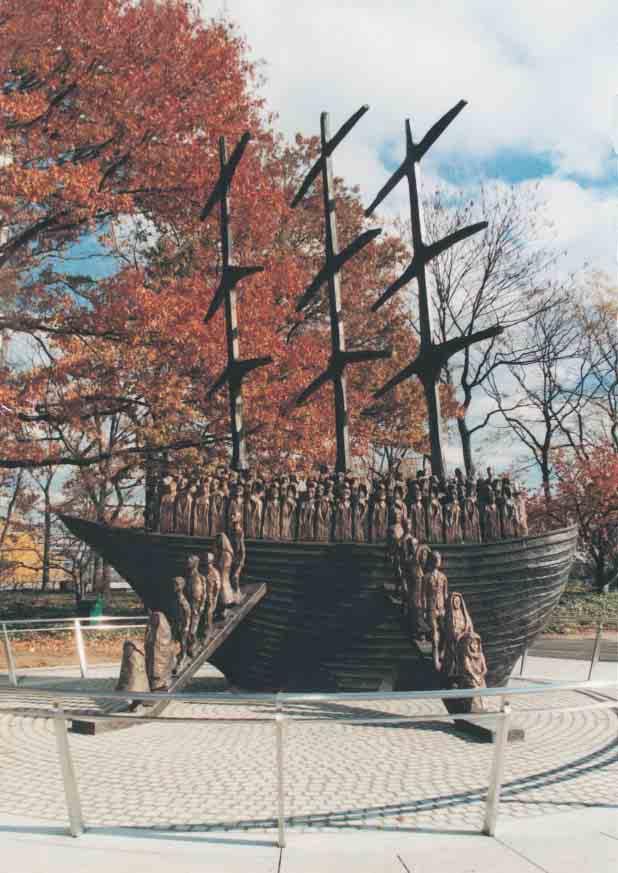
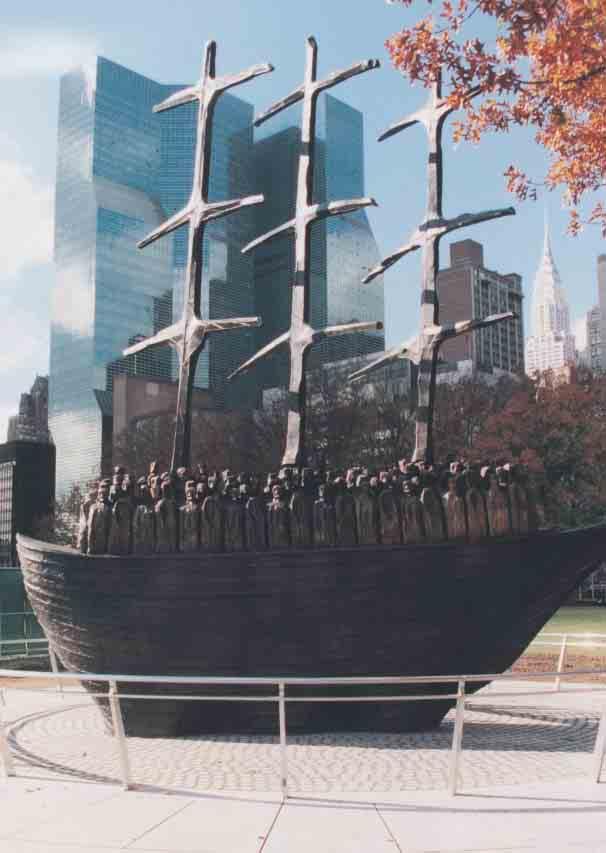
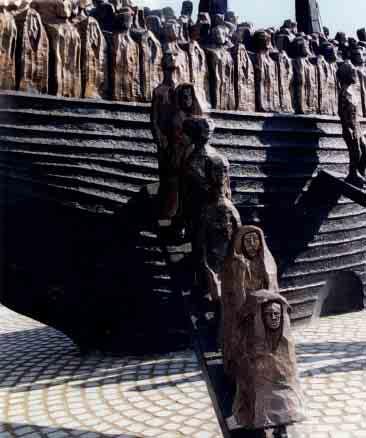
John Behan was commissioned by the OPW to execute a sculpture for the Plaza of the United Nations Building in New York.The sculpture was officially unveiled by the Taoiseach in December 2000.The sculptor created a large work titled Arrival which bears witness to the courage of Irish emigrants who travelled to the United States from Ireland in the 19th century and survived the harrowing journey to begin their new lives.This sculpture is in line with the presentation of gifts by other member states to the UN.The Ship shareness space with the work of many leading international artists, including Henry Moore and Barbara Hepworth.
The bronze sculpture,measuring some 7 metres in length and 8 metres in height,will be a variation on the National Famine Memorial at Murrisk,Co.Mayo,on the west coast of Ireland.In place of the heavily symbolic skeletal rigging at Murrisk,the human element in the UN sculpture will be represented by survivors of the trip disembarking in the United States of America.A total of some 150 figures will be cast in bronze,the majority on deck,with a small number descending the gangplanks.


Former Principal Architect,Noel de Chenu retired from the Art Management Group in 2000.One of his last tasks was to commission the portrait of President Mary McAleese from artist Joe Dunne,which will be unveiled early in 2001.The Minister of State and Commissioners of Public Works wish to acknowledge Noel’s immense contribution to the Office and wish him well in his retirement.Patrick Murphy,Chairman of the Arts Council,joined the Art Management Group in 2000 and will act as art adviser to the President.
The annual art exhibition Emerging Art II was held in cooperation with the Northern Ireland Department of Finance and Personnel.Contemporary paintings by emerging Irish or Irish based artists were sent on tour by both organisations. The exhibition travelled to Kilkenny Castle in September, Cookstown,Co.Tyrone in October,Newry Arts Centre, Co.Down in November,and ended in a wintry Cill Rialaig in Ballinskelligs,Co.Kerry in December.This is the fourth exhibition on which both Departments have worked together to bring the art works to a wider audience.A special edition of the Art of the State catalogue was also published in October to mark ten years of the annual touring exhibition. This compilation catalogue contains a copy of each of the individual exhibition catalogues from 1991 to 2000.
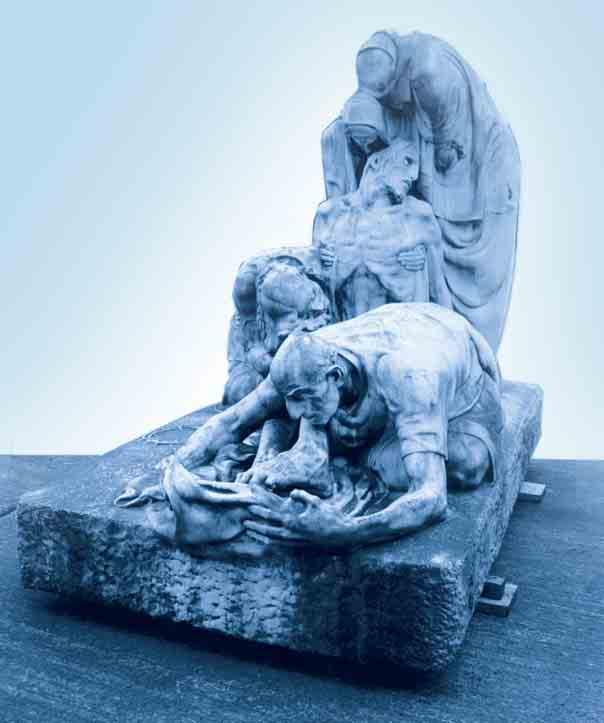
La Pietá is a Carrara marble sculpture by Ermenegildo Luppi which was presented to the Irish Government by the Italian Government in 1948.It was initially placed in the National Museum of Ireland in Kildare Street.In March 1952,the Pietà was relocated to the grounds of the Department of
Education at Marlborough Street opposite the Pro-Cathedral. The sculpture was moved in June 1999 by the OPW because extensive building work taking place on the site.It is undergoing restoration and will be placed in the gardens of Áras an Uachtaráin in the near future.A contemporary canopy has been designed by OPW architect,Rohland Van Elsen to ensure the sculpture is protected from the elements.
The Art Management Office employs graduates in History of Art during the summer months every year to assist in the annual survey of art works in Government buildings.This year a team of six graduates carried out extensive surveys throughout Ireland,and assisted with the organisation of the Art of the State exhibition.They also assisted in setting up a project to have images of all State-owned art works on the art database,which will be available to the public on the Internet in the near future.
The graduates were also given the opportunity to obtain experience in publishing an extensive art catalogue by assisting with Art in State Buildings 1922 - 1970.This catalogue is the final volume in a set of three which documents all the art works under the management of the OPW,which have been commissioned,purchased or acquired by the State.It catalogues many of the portraits and portrait busts commissioned in the early years of the State which have been previously undocumented.
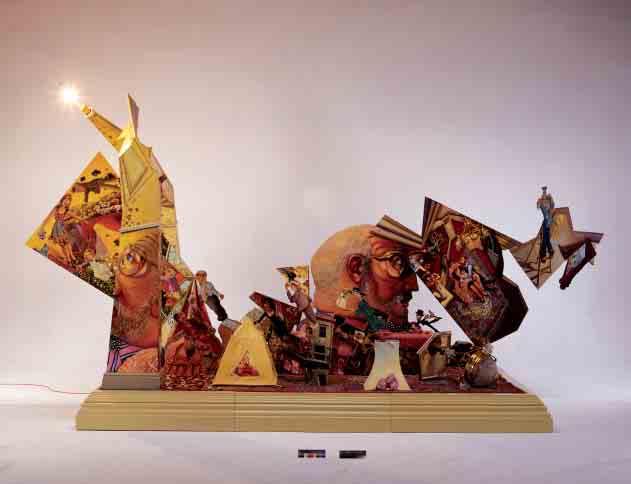
Resurrection,an autobiographical Christian pictorial sculpture created for the Millennium by artist Anthony Green RA was exhibited at the Chapel Royal,Dublin Castle in December 2000.Dominated by a huge self portrait of the artist,it depicts scenes of alcoholism,sorrow and anger counteracted by images of hope,love and joy as the Green family goes to heaven by train.

Since January 2000 the Property Management Service of the OPW has been undertaking the acquisition of sites for primary and post-primary schools all over the country.The main focus of the acquisition programme is on areas where there is increased pressure on student numbers,or where the condition of existing schools is unsatisfactory.

This work is being undertaken by the OPW on behalf of the Department of Education and Science,following a decision by that Department in 1999 to fund fully the cost of school sites. Formerly,site acquisition had been carried out mainly by local communities,who in turn bore most of the cost.The section administers the acquisition process for site requirements identified by the Department.A complete service to the Department is provided,covering site selection,technical advice,valuation,negotiation and conveyancing.The OPW’s Architectural and Valuation Services has contributed significantly in the year 2000 to the successful initiation of this new service.At the end of 2000 over four dozen site acquisitions had been advanced by the OPW.
The OPW’s Health and Safety Unit is responsible for the management of a nation-wide asbestos survey programme in State buildings.The Unit also carries out an asbestos removal programme on behalf of a number of other Government Departments including:
• the Department of Education and Science in respect of schools
• the Department of Defence in respect of military establishments
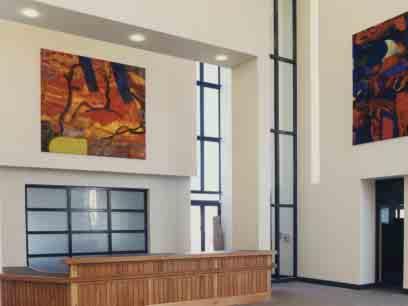

• the Department of Arts,Heritage,Gaeltacht and the Islands in respect of heritage buildings.
To date approximately 1,600 public buildings have been surveyed by the OPW to determine the location,type,form and condition of any asbestos material present and the steps necessary to manage the material safely.
During the course of the year 2000 surveys were carried out in excess of 1000,buildings and asbestos removal works were carried out in about 350 of these.
The functions of the Unit also include,where required
• the provision of an in-house service on matters relating to general health and safety and
• general guidelines and assistance in the execution of other health and safety works in OPW-maintained buildings this is in order to
• eliminate risks to the health of the occupiers and other users of these buildings and to
• promote a safe and healthy working environment for all employees.

In January 2000 a new section was established within the Property Management Services division to co-ordinate the OPW’s input into the Government’s Accommodation Programme for Asylum Seekers.This was in response to the sharp increase in the numbers seeking asylum in Ireland.This new service is built upon the experience gained in 1999 when the OPW successfully met the urgent accommodation requirements presented by the Kosovar Refugee Programme. Following the introduction of direct provision (full-board) accommodation by Government decision in April 2000,the OPW adopted a multi-faceted approach to sourcing accommodation through permanent and temporary-built solutions.
Working in conjunction with the Directorate for Asylum Support Services (DASS) of the Department of Justice, Equality and Law Reform,the OPW has made a significant contribution to meeting the considerable accommodation needs of over 11,000 applicants in Ireland in 2000.The technical resources of the OPW’s Architectural,Valuation and Engineering Services provided essential assistance and advice to DASS in its own sourcing of accommodation.
District architects and electrical and heating staff carried out nationwide inspections of potential sites and premises and advised DASS on issues of compliance and other necessary works required for the Asylum Seeker Programme.

In addition,the OPW has directly sourced accommodation solutions to meet the influx of asylum seekers (by the end of 2000,over 1,000 applications per month were being received by the Department of Justice,Equality and Law Reform).On sites provided by the Department of Defence,the OPW established three mobile home sites at Kildare,Tralee and Athlone,providing an accommodation capacity with full ancillary facilities for up to 1,000 people.Acquisitions on built properties from the hotel sector in Dublin,Wexford,Cork, Kerry and Carlow provided a further 800 to 1,000 places.The Asylum Seeker Programme enters 2001 with advanced plans to cater for additional asylum applicants in system-built accommodation.
The repatriation of the majority of the Kosovar Refugees invited here in 1999 took place in 2000.All but two of the centres acquired in 1999 by the OPW on behalf of the Refugee Agency were vacated in late 2000 and the remaining properties are being assessed for use for asylum seekers.
The OPW’s close co-operation with the Refugee Agency will continue in accommodating those Kosovars remaining,until such time as they move into private rented accommodation or return to Kosovo.The OPW has widespread assistance on both the Asylum Seeker and Refugee Accommodation Programmes from all parties involved,particularly the Department of Environment and Local Government,Local Authorities and the Health Boards.
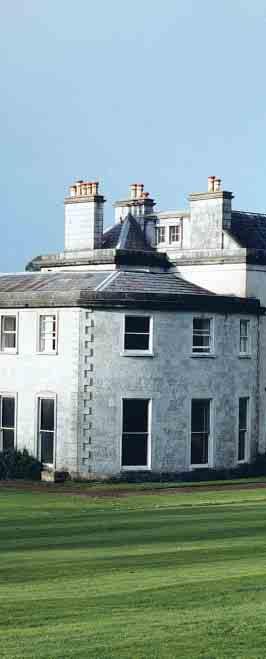

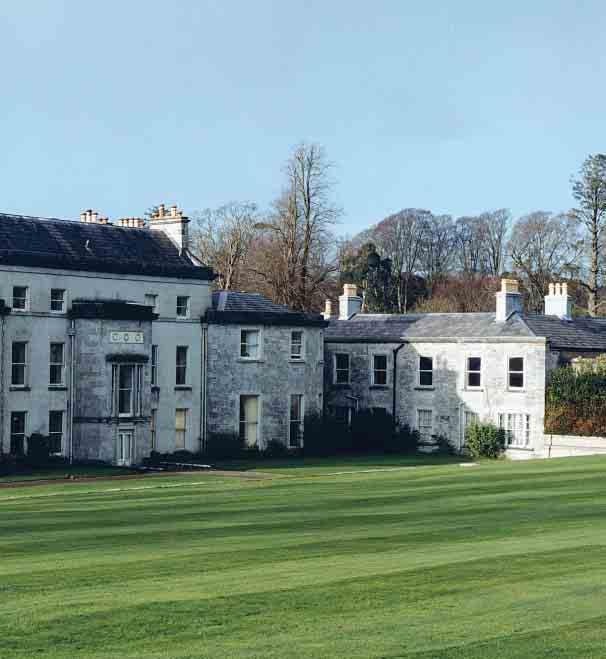
Visitor numbers to Dublin Castle remained exceptionally high during 2000.Guided tours of the State Apartments account for some 160,000 of the estimated quarter of a million people who visit the Castle.Conference delegates and guests at official functions make up a large part of the balance,but the Castle is also extremely popular as a walkthrough venue,particularly at weekends,for those wishing to enjoy its ambience.The Chester Beatty Library opened within the Castle during the year,and it is expected that,as its new location becomes more widely known,it will push visitor numbers even higher.
As in previous years,the Castle played host to a large number of events - in excess of 500.The diversity of the nature of these events is demonstrated by the following extract from the events diary.
JANUARY TO MARCH
• Major conference on the Information Society
• Official opening of the Chester Beatty Library
• Eircom Callcard Competition prize-giving ceremony
• Conference on Young People and Drugs
• Launch of Construction Sector Safety Plan
• Millennium Recognition awards.

APRIL TO JUNE
• Conference on Community Development
• Meeting of British/Irish Inter-Parliamentary Body
• Europe at School Art/Essay prize-giving
• Series of three outdoor concerts with a total attendance of 15,000 people
• State dinner for the Prime Minister of Singapore
• International conference of Forensic Scientists.
JULY TO SEPTEMBER
• Filming of TV programme on the theft of the Irish Crown Jewels from Dublin Castle
• State dinner for the President of Greece
• Conference on Racism
• Announcement of the Tidy Town Awards
• Major outdoor sculpture exhibition
• Meeting of the North/South Ministerial Council.
OCTOBER TO DECEMBER
• Conference on Waste Management and Renewable Energy
• Antiquarian Book Fair
• National Youth Council of Ireland Millennium Conference
• Gala dinner for Richard Harris' 70th birthday
• Architect's Council of Europe General Assembly
• Installation of International and Irish Press Centres for the visit of President Clinton.
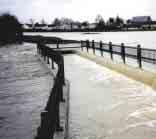
Duleek is located at the confluence of the River Nanny and its tributary,the Paramadden.Before the implementation of the Flood Relief Scheme in 1997-98,flooding of the lower areas of the town was a regular occurrence.Flooding records had been maintained from 1975 and significant flooding had occurred on eight occasions up to 1993.
In October 1993 the River Nanny burst its banks and flowed into the nearby residential development known as Millrace Estate.As levels continued to rise,flood waters reached Main Street and the central town area.A number of houses had to be evacuated and several others became inaccessible due to the flood waters.It was clear from flow measurements and hydrological analysis that this was a minor flood,with a probability of occurring as often as once in four years.
Nicholas O’ Dwyer,Consultant Engineers were engaged to design a scheme to provide flood immunity up to the 100 year flood event.A cost benefit analysis confirmed the viability of the scheme.Independent specialists assessed the environmental impact of the design and an exhibition of

the scheme was held locally as part of the statutory consultation process.Observations from the public led to some minor alterations to the design.
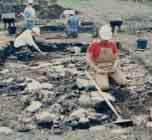
The scheme commenced in April 1997 with construction of the earthen embankments by OPW staff.A medieval village was identified at the preparatory stage by the supervising archaeologist,and this was excavated and recorded during the summer of 1997.
In September 1997,Priority Construction commenced work on the reinforced concrete flood walls,bridges,extensive work to improve the surface water system and a new flood relief weir.This work was completed in an eight month period to April 1998.Meath County Council carried out road raising work simultaneously,to complete the flood defences.
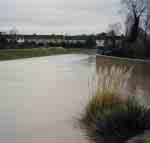
The OPW also carried out works to improve the river channel downstream of the town to Bellewstown Bridge.The OPW now maintain the entire scheme to ensure that the full level of protection provided is retained in the future.Despite two major floods and one minor flood since the scheme was completed,no flooding occurred in the protected area.

OPW Publications 1991-2000
1991Art of the State:20th Century Irish Art from the State Collection
Art of the State:Graphics
1992Art of the State:Portraits from the State Collection
1993Art of the State:Past Masters of the 20th Century
199425 Views of Dublin by James Horan
(published in association with Town House and Country House)
Guide to the Archives of the Office of Public Works
1995 Art of the State:Ulster Artists
1996 Art of the State:Emerging Art
Green Design:Sustainable Building for Ireland
(In association with Energy Research Group,UCD and RIAI)
1997 Art of the State:Landscapes North and South
Art in State Buildings 1985 - 1995 Famine
(published in association with the Famine Commemoration Fund)
1998 Art of the State:New Directions 1970 - 1985
Art in State Buildings 1970 - 1985
OPW Art Management Handbook
1999 Dublin Castle Art:The Historical and Contemporary Collection
Hughie O’Donoghue:Episodes From The Passion
2000 Building for Government
The Architecture of State Buildings
OPW:Ireland 1900 - 2000
Leinster House


The table below shows,on a programme basis,all expenditure managed by the OPW in 2000 (1999 figures are shown for comparison).This involves funds granted directly to OPW via Vote 10 and Vote 44;funds administered on behalf of the Department of Finance;and expenditure on works and services managed by the OPW and paid for by other Government Departments or Agencies.
1. Accommodation
1.1Purchase of sites and buildings76,71797,829
1.2Building Programme151,543182,511
1.3Maintenance
1.3.1Maintenance,material and supplies 28,62629,276
1.3.2Fuel,electricity,water,cleaning materials15,2478,346
1.4Rent,rates etc.36,81844,316 Programme Total308,951362,278
2. Engineering Services
2.1Drainage surveys402422
2.2Construction Works
2.2.1Construction costs of drainage and localised flood relief schemes 2,8295,657
2.3Maintenance Works
2.3.1Maintenance costs of existing completed schemes7,4258,027
2.4Services to the Department of the Marine & Natural Resources1799
2.5Purchase of Engineering plant and machinery1,008900
2.6Maintenance of Engineering plant and machinery1,2351,326
2.7Engineering Works for Department of AHGI6571,646 Programme Total13,57318,077
3. Government Supplies Agency
3.1Printing and binding5965
3.2Services including paper and publications16,73417,319
3.3Warehousing etc.00
3.4General furniture/clothing services11,79311,451
3.5Transport vehicles19,17016,011 Programme Total47,75644,846
4. President's Household Staff251432 Programme Total251432
5. Zoological Society of Ireland2,8177,494 Programme Total2,8177,494
6. Administration
6.1Salaries,wages and allowances13,32214,684
6.2Travel and subsistence8391,117
6.3Incidental expenses402587
6.4Postal and telecommunications services701761
6.5Office equipment and other office supplies2,1131,624
6.6Office premises expenses833977
6.7Consultancies143215
7. Funds Managed by the OPW
This may be reconciled with Vote 10 expenditure as follows: Deduct:Funds Managed by the OPW on behalf of the Department of Finance80,22148,600 Works funded by Government Departments101,87573,432 Supplies for Government Departments61,55751,388 Vote 44 21,400 Total228,267326,872
This is the total expenditure for the year on Vote 10.The gross allocation was £343,016,000.Appropriations-in-Aid (receipts) totalled £11,299,000 which was £649,000 in excess of the target set.This resulted in an overall saving of £16,793,000 on the net Vote.

1.

2. Work funded from the Votes of other Departments
3. Funds managed by the OPW on behalf of the Department of Finance
1.These involve minor maintenance works on State occupied accommodation.
2.This included work in Castletownbere,Dunmore East,Dun Laoghaire,Howth,Inisbofin and Killybegs.
3.Two Departments share most of the expenditure on clothing,the Departments of Defence and Justice, Equality & Law Reform.
4.These funds are managed on behalf of the Department of Finance.They involve the re-coupment of loan payments,from local authorities and individuals in Gaeltacht areas,twice yearly,and early redemption loans.
Note:It is the policy of the OPW to process invoices without delay.Since 2/1/98 this Office is operating in accordance with the Prompt Payment of Accounts Act,1997.

1.Sales are from the Government Publications Shop in Molesworth Street and the Postal Trade Section in Harcourt Road. Government Publications continues to act as an agent in respect of Government Departments.Sales in respect of all International and National Agencies were discontinued during the course of 2000.
2.Prior to 1 January 2000 Government Publications made a remittance of 60% to Government Department in respect of net sales earned.From 1 January 2000 no further remittances were made.
3.Publications sold via the Postal Trade Section were issued free of postage charges from 1/1/2000.
2.Land
3.Stock
4.Current

1.Buildings exempted from charging and OPW premises.
2.Outside services include hire of plant etc.and subcontracts.
3.Travelling expenses,energy costs,telecommunication costs,depreciation on fixed assets.
4.Notional rent to reflect opportunity cost to business.
5.Support and Head Office costs are based on staff numbers in the Building Maintenance Services Division.


1.Income
The only income in the financial year ended 31 March 2000 was interest income earned on the ACC deposit account.
2.Expenses
Under the current lease terms with the Gang Camp,all outgoings including maintenance and repairs of the Castle are the responsibility of the Gang Camp.
The legal and accounting fees relate to services provided by Ernst & Young,together with Arthur Cox in relation to services provided in 1998 and 1999.
The cost of IR£2,000 relates to eight tickets for the Gang Camp “Fantasia”Gala.
The Camper Scholarship Scheme expense in 2000 of IR£3,000 relates to an undertaking by the trust to sponsor a child at the camp for five years from 1999,at a total cost of IR£15,000.
3.Debtors19992000
Amounts falling due within one year
Accrued deposit interest206234 ESB refund
Total 359766
The ESB refund relates to payments made in respect of the electricity of the South Gate Lodge after the relocation of the O’Donoghue family in October 1998.This is refundable and is shown together with accrued deposit interest of IR£234 (1999:IR£206) resulting in a total debtors figure of IR£766 (1999:IR£359).
4.Office of Public Works – Current Account
The amount of IR£66 owing to the Office of Public Works reflects the current or “suspense”account maintained by the Office of Public Works.
5.ACC Deposit Account
The balance on the ACC bank deposit account agrees with the bank statement as at 31 March 2000.
6.Creditors (amounts falling due within one year)19992000 IR£IR£
Camper Scholarship Scheme3,000Ernst & Young1,4521,452 Relocation of O'Donoghues2,0002,000
Total6,4523,452
The Ernst & Young accrual is in respect of fees for the year ended 31 March 2000 and 31 March 1999,respectively.
The amount of IR£2,000 is in respect of costs associated with the relocation of the O’Donoghues.
1.Includes
2.Wages
3.Depreciation,equipment
4.Decoration
Income and Expenditure Account
4,5965,157 Notional Surplus62,0872,890
The Electrical & Heating Section has been excluded from all figures shown above as no data was available from that section to allow an account to be completed.
1.Notional Fee Income Notional fee income has been calculated using commercial fee scales discounted by 7.5% to reflect current market conditions.No adjustment has been made to either
(a) reflect any additional discounts which may be allowed to customers to whom long term services over a number of projects are provided;or
(b)reflect any premium which may arise on the provision of specialist services.
2.Salaries Actual pension and social welfare costs incurred have been increased to reflect rates payable by private sector organisations.No adjustment has been made to base salary levels to reflect current market pay scales or bonus and other performance related remuneration.
3.Core Support Services. Support costs have been allocated on the basis of staff numbers as a percentage of total established staff .Pension and social welfare costs incurred have been increased in line with note 2 above.
4.RentIR£000
Actual rent is allocated based on area occupied as a percentage of total space being rented.Notional rent is calculated at an average of £20 per square foot as an approximation of current market rates on similar properties. The notional charge is also allocated based on area occupied.
5.Insurance.Insurance is a notional charge to reflect professional indemnity insurance costs that would be incurred by a private sector practice and is calculated based on a percentage of notional fee income.
6.Notional Surplus. The notional surplus does not reflect a number of additional costs that may be incurred by an equivalent private sector practice but which cannot be estimated with a sufficient degree of accuracy to permit their inclusion in this income and expenditure account.These costs include,but are not limited to,legal fees,marketing costs,entertainment and working capital management.
7. All income and expenditure figures are shown net of VAT.


Provincial Acquisitions 1st January - 31st December
Roscrea,Co.Tipperary Bank House,O’Connell 10-02-004,8455
02-05-001,000-
£11,000.00 Unit 23 Tramore Road 01-09-001,5603£11,000.00 Business Park,Waterford
Balgaddy Road,Tuam, 01-01-001,3853
£10,000.00 Co.Galway DTC McHale Park,Castlebar 01-05-006008 Dept of Environ £6,900.00 Co.Mayo DTC
Elphin Street,Boyle, 01-09-00638- SCFA £6,240.00 Co.Roscommon
Drogheda Abbey Centre. 18-09-00220-
£2,600.00 Co.Louth Total:47,07839
Provincial Disposals 1st January - 31st December 2000


Purchases 2000
6/7HanoverStreetOfficeBlock20,850,000 OldbridgeEstateBattleoftheBoyneSite7,800,000 BrocHouse,NutleyLaneResidentialUnit7,200,000 7-9MerrionRowOfficeBlock5,750,000 LongtownDemesne,SallinsFarm5,650,000 CorkAirportHotelResidentialUnit3,325,000 ParnellWestHotelResidentialUnit2,934,250 LynchesLodge,MacroomResidentialUnit2,795,625
JohnstownMarinaHotel,TraleeResidentialUnit2,587,500 59DawsonStreetOfficeBlock2,400,000 DevereuxHouseHotel,RosslareResidentialUnit2,150,000 161-164aChurchStreetSite2,100,000 10/11CastleStreetSite2,043,350
IonadFollain,MyshallResidentialUnit1,050,000 Unit2A,Block1,ClonskeaghOfficeBlock754,076 CahirciveenSite574,887
SwordsSite310,000
EnnisRoad,KilrushSite150,000

Senior Personnel
ARCHITECTURAL SERVICES:
PatCooney
Assistant Principal Architect
LiamEgan
Assistant Principal Architect
MichaelHaugh
Assistant Principal Architect
LarryMcGettrick
Chief E&H Engineer
KlausUnger
Assistant Principal Architect
FinbarWall
Assistant Principal Architect
PROJECT MANAGEMENT SERVICES:
JimBlighe
Principal Officer
UnaRedmond
Principal Officer
JuneThompson
Principal Officer
SPECIAL PROJECTS UNIT
KevinConnolly
Special Projects Unit Director
PROPERTY MANAGEMENT SERVICES:
PaulMolloy
Principal Officer
TomSherlock
Principal Officer
PROPERTY MAINTENANCE SERVICES:
DavidByers
Assistant Principal Architect
FINANCIAL SERVICES AND GOVERNMENT SUPPLIES AGENCY:
JoeFarrell
Principal Officer
HEALTH AND SAFETY UNIT:
PierceKenny
Principal Officer
ENGINEERING SERVICES:
TomCostello
Principal Officer
BrianD’Arcy
Assistant Chief Engineer
CORPORATE SERVICES:
ClareMcGrath
Principal Officer
CaitrionaMeehan Press Officer
JohnSydenham
Freedom of Information Officer
OPW Staff
AS AT 31 DECEMBER,2000
Admin&Clerical305
Architectural150
Engineering65
Other47
Total 567
Industrial758
Inadditiontotheabove,approximately 50%ofprofessionalandtechnicalworkis donethroughconsultants;approximately 90%ofconstructionworkisdoneoncontract,andapproximately200seasonal workersareemployedeachyear.
InMarch2001M.DavidByerswas appointedtothepostofCommissioner intheOfficeofPublicWorksontherecommendationoftheTopLevel AppointmentsCommittee.
AsCommissioner,Davidisresponsiblefor thePropertyManagementand MaintenancefunctionsoftheOffice.The OPWhasthelargestpropertyportfolioin thecountry-over4,000propertiesincludingprestigeheritagebuildings,office accommodation,andspecialistproperties suchasGardaStations,prisons,andlaboratories.

Office of Public Works
HEAD OFFICE
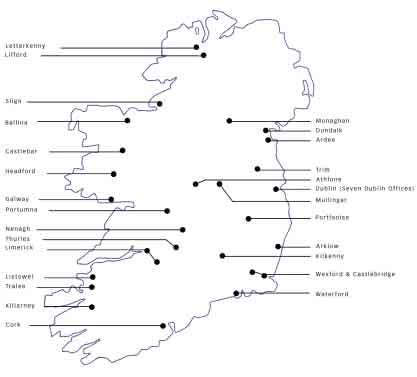
Office of the Minister of State,Office of the Chairman, Personnel and Development Services,Organisation Unit, Internal Audit Unit,Projects/Property/Maintenance Services, and Architectural and Engineering Services.
51 St.Stephen’s Green,Dublin 2Tel (01) 647 6000 Fax (01) 661 0747
LoCall 1890 213414 Email opw@iol.ie Website www.opw.ie
GOVERNMENT SUPPLIES AGENCY
4-5 Harcourt Road,Dublin 2(01) 647 6000
LoCall 1890 213434
GOVERNMENT PUBLICATIONS SALES OFFICE
Molesworth Street,Dublin 2(01) 679 3515
FURNITURE BRANCH
Mount Shannon Road,Dublin 8(01) 453 1588
BUILDING MAINTENANCE SERVICE
Pembroke Row,Baggot Street,Dublin 2(01) 676 4633
CENTRAL ENGINEERING WORKSHOPS
Jamestown Road,Inchicore,Dublin 8(01) 453 4204
ACCOUNTS BRANCH
Hebron Road,Kilkenny(056) 726 00
DUBLIN CASTLE
Conference Centre(01) 679 6433
LOCAL ARCHITECTURAL OFFICES
The Demesne,Dundalk(042) 933 4221
2 Chapel Street,Sligo(071) 422 02
Government Buildings,Letterkenny(074) 21365
13 Catherine Street,Waterford(051) 874 134
New Government Offices,Portlaoise(0502) 211 33
Government Buildings,Castlepark,Arklow(0402) 327 61
14 Old Blackrock Road,Cork(021) 296 6200
The Demesne,Killarney(064) 310 28

2 Mallow Street,Limerick(061) 313 500
Government Buildings,Thurles(0504) 215 32
Dublin Nth,Dublin Castle(01) 677 6106
Dublin Sth,Dublin Castle(01) 475 5175
16 Eyre Square,Galway(091) 563 016
Barrack Street,Athlone(0902) 920 87
Sloans Building,Cornmarket,Wexford(053) 224 70
ENGINEERING SERVICES
East Region
East region Maintenance,Newtown, Trim,Co.Meath(046) 313 52
Glyde & Dee Maintenance,Fair Green Ardee,Co.Louth(041) 685 3256
Inny & Brosna Maintenance, Robinson,Mullingar,Co.Westmeath(044) 483 22
South East Maintenance, Ballycraine,Castlebridge,Co.Wexford(053) 241 81
Monaghan Blackwater Maintenance, Drumbear,Coothill Road,Monaghan(047) 832 01
West Region
West Region Maintenance, Headford,Co.Galway(093) 354 56
Moy Maintenance,Foxford Road, Ballina,Co.Mayo(096) 220 65
Corrib Maintenance,Sluice House,Galway(091) 563 097
North West Maintenance, Gallows Brae,Lifford,Co.Donegal(074) 412 73
South West Region
South West Region Maintenance, Templemungret House,Mungret,Co.Limerick(061) 227 139
Killimor Maintenance, Council Buildings,Portumna,Co.Galway(0506) 410 86
Nenagh Maintenance, Military Barracks,Nenagh(067) 312 63
Inch Bridge,Listowel(068) 211 66
Government Buildings,Spa Road,Tralee(066) 244 79
HYDROMETRIC SECTION
Hebron Road,Kilkenny(056) 726 41
Barrack Street,Athlone,Co.Westmeath(0902) 929 18
Fair Green,Ardee,Co.Louth(041) 685 7922
Templemungret House,Mungret,Co.Limerick(061) 227 139
Foxford Road,Ballina,Co.Mayo(096) 220 65