You’ll receive six issues of the award-winning magazine each year, plus Conservationist for Kids in the February, April, and October issues.
Subscribe on our website at www.dec.ny.gov or by calling 518-402-8047
Hey Kids and Families
Contact us at: NYSDEC Conservationist for Kids 625 Broadway 4th Floor Albany, NY 12233-4502
kidsconservationist@dec.ny.gov 518-402-8047
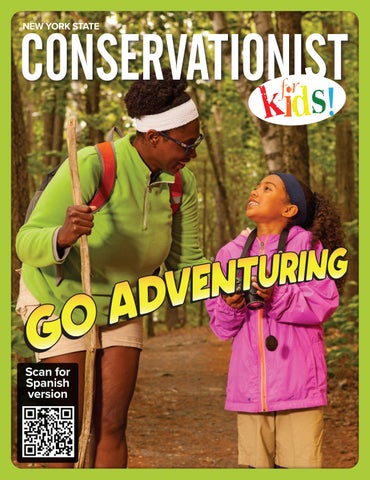
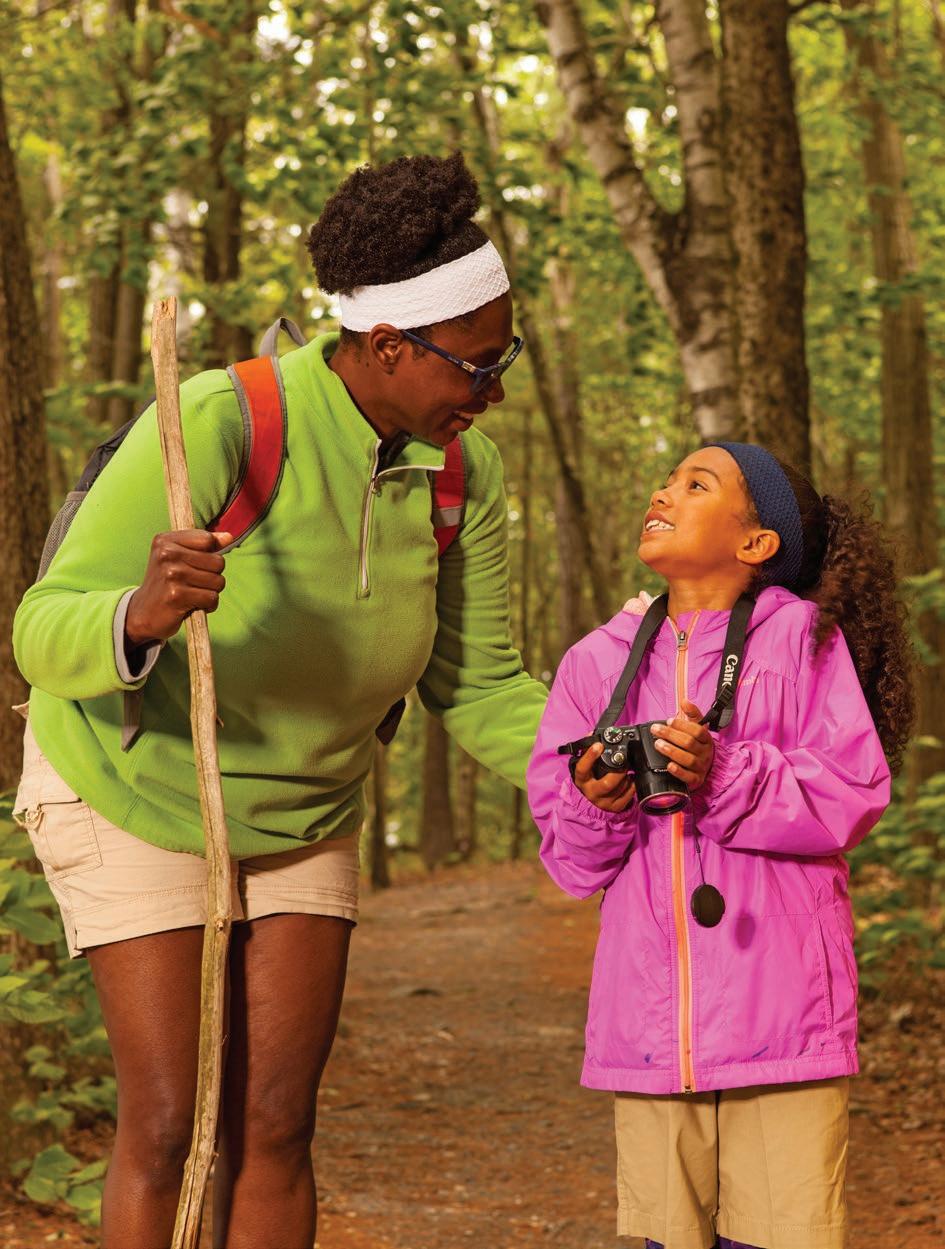
Are you finding that you’re spending more and more time indoors? Maybe getting caught up in a video game or following what others are doing on social media? Getting outdoors and being an adventurer is way more fun! This issue of Conservationist for Kids will show you how to do it and give you some tips on staying safe while you’re at it.
Get OUTSIDE
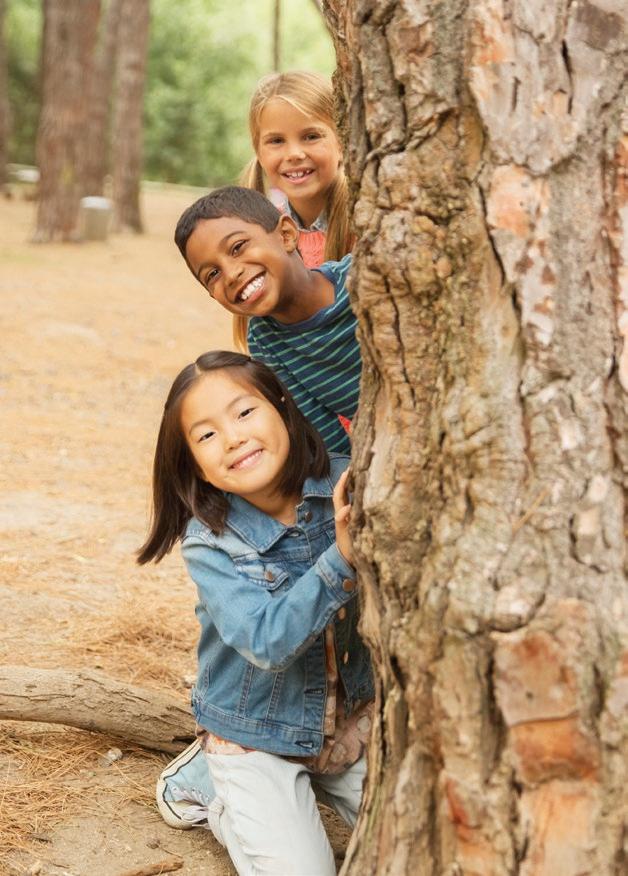
When you undertake an adventure outside, the benefits are plentiful. Outdoors, you’re physically active, adventurous, and often more social. You also get fresh air and vitamin D from the sun. Playing in nature helps you relax and improves your attitude, so you’ll be able to tackle homework and even sleep better. We know that sometimes it can be hard to motivate yourself to get outside. To make it easy, we’ve made going outside even more appealing with this challenge for active outdoor fun and frolicking. The adventures can be done anywhere, in your own backyard or a more remote location. Grab a friend or family member, get outside, and embark on the challenge.
The adventures on the next few pages are grouped by category, so you can easily find those that interest you most.
Get Inspired. Get Organized. Get Outside.
Create a plan, check out the locations you’d like to visit, invite your friends, and make it easy and fun. Take lots of pictures along the way and you’ll help share your enjoyment with others.
You are very lucky that you live in New York State and are close to an abundance of natural resources like nowhere else, and there are plenty of public properties that are open to everyone. In most cases, access is free and many are available for fun year-round. Did you know:
There are 5 MILLION ACRES of public lands managed by the Department of Environmental Conservation (DEC).
New York State has TRAIL more than 5,000 MILES of public trails.
There are 51 DEC CAMPGROUNDS and day-use areas in the Adirondacks and Catskills alone.
New York State has more than 400 BOATING AND FISHING facilities.
Everywhere
you go there are Opportunities to Discover
Try fishing, hiking, or rock climbing, go for a swim or a paddle, or simply relax in a tent under the stars.
Have Fun. Stay Safe. BE PREPARED.
We
want you to enjoy this adventure challenge, but we also want you to be safe. Make sure that you have an adult with you whenever you go out on an adventure. Staying safe when you are on an adventure means being prepared. Following the Hike Smart NY guidelines is a great idea no matter what adventure you are on.
Be Prepared
● Wear proper gear and clothing, including:
⊲ Moisture-wicking synthetic fabrics to keep your skin dry and help regulate your body temperature in both cold and warm weather—avoid cotton as it holds moisture.
⊲ Layered clothing, even for summer hikes.
⊲ Light-colored clothing to make it easier to see ticks.
⊲ Waterproof, sturdy, and comfortable shoes or boots.
⊲ A watch or other time-keeping device.
⊲ Snowshoes and traction devices in the winter.
⊲ Trekking poles to reduce leg fatigue and joint pain.
● Use maps, guides, or DEC's website to plan your trip.
● Leave your trip plans with family or friends so they can help you in an emergency.
● Be realistic about your fitness and skill level to avoid getting too tired early on.
● Check the weather forecast and current conditions.
Prepare for Survival
● Hike in a group and stay together.
● Monitor conditions and turn back if they are dangerous.
● At the trailhead or parking lot (for all hikers, young and old):
⊲ Conceal valuables and lock your vehicle.
⊲ Save the DEC Emergency Dispatch number in your phone.
⊲ Sign trail registers and indicate the time.
DON’T FORGET TO SIGN OUT WHEN YOU LEAVE!
If You Are Lost or Injured
For more information about being prepared, safety tips, and what to do if you are lost or injured, visit DEC’s website at dec.ny.gov/things-to-do/ hiking/hike-smart-ny.
Stop where you are, try to remain calm, and assess the situation. Try to determine your location using landmarks and by listening for nearby vehicles.
Choose Your ADVENTURE(S)
The next three pages offer many suggested outdoor activities you can take part in – do one or do them all! Some of these adventures are more seasonal, so if you can’t complete them right now, you can try to do them when the time of year or the weather is the best for these activities. Many of them can be completed in your own backyard or neighborhood, but some might require taking a trip to a park or other location. Visit DEC’s website at dec.ny.gov/things-to-do to find more information and resources for planning your adventures.
All About Critters
Do you like animals? Do you enjoy birding? Do you know what kinds of animals live in your neighborhood? Here are some activities to try!
☐ Find and identify eight birds—Observe them and then try to determine the species from a field guide.
☐ Hear and identify five bird calls—Listen and determine the species from its call.
☐ Go out at night and try to find/hear an owl or other nighttime bird.
☐ Find at least five insects and identify three of them.
☐ Find and identify two insects that are doing good things for the environment.
☐ Go out at night and look for bats. Observe how they fly.
☐ Go outdoors after a rainstorm and see what creatures have emerged (such as earthworms, salamanders, frogs, and red efts). Try to identify each creature you find.
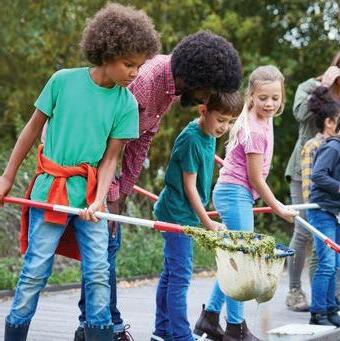
☐ Catch and release, unharmed, an aquatic creature from the water (e.g., crawdad, frog, water bug).
☐ Find three butterflies and try to identify them.
☐ Use a camera to “hunt” an animal and capture a picture of your “catch.”
☐ Identify two animals by their tracks.
Take Time to Observe What Nature Offers
Observing the natural world around you can lead to many interesting discoveries and help you get to know a location better, whether it is your backyard or neighborhood park or any other natural area. Keeping a nature journal is a great way to document your findings. You can write about what you observe and even draw pictures to help you remember your experiences.
☐ Visually observe six different rocks and try to identify them.
☐ Dig in the soil (without disturbing any vegetation) and describe it. Is it sandy or more like clay? Look up the soil type you found.
☐ Identify what you find under five rocks, and then return the rocks to their original position.
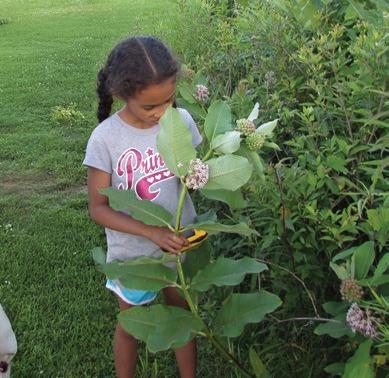
☐ Find a plant that has seeds ready to be dispersed. Identify the plant and try to determine how the seeds will be spread.
☐ Photograph or draw 10 different wildflowers and identify each.
☐ Find and identify six different kinds of trees.
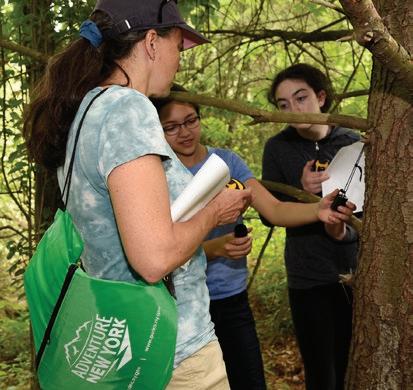
☐ Make a bark rubbing of four trees and use it to identify each tree.
☐ Find and identify five different small plants found in a natural area.
☐ Collect six fallen leaves from the ground. Identify each and then leave them where you found them.
☐ Look at the stars at night and identify three constellations.
Don't Litter, and follow the Leave No TraceTM principles. Learn more on the back page.
Adventures to Get Outdoors
Outdoor adventures can take many different formats, ranging from a short adventure in your backyard to a day-long (or longer) adventure at a campground, state or national park, or many other locations. Here are some suggested adventures, of all different kinds, for you to experience.
☐ Find a place where you can see different rock formations and exposed geological layers. Identify each of the layers.
☐ Relax in a natural setting and describe the way nature makes you feel. Have a picnic!
☐ Find a frozen waterbody that an adult has determined is safe and go ice fishing. Review the safety information at dec.ny.gov/thingsto-do/freshwater-fishing/ice-fishing before heading out.
☐ Visit a DEC campground and sleep in a tent under the stars.
☐ Identify which direction the wind is coming from on four different days of the week.
☐ Go to a DEC property or other natural area you have never visited before.
☐ Make s’mores over a campfire. If you are up for the challenge, try cooking a whole meal!
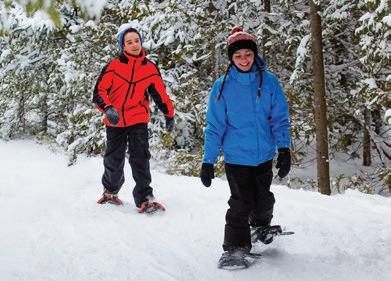
☐ Go for a winter hike or walk of at least one mile. Use snowshoes or cross-country skis if there is enough snow.
☐ Go fishing in two places you have not fished before. Take a friend who has not been!
☐ Wade in a stream and describe how it feels and what you experience.
☐ Visit a site on the New York State Birding Trail and record what you see. Go to www.ibirdny.org for more information.
☐ Find a great view to photograph. Take a selfie if you can do it safely.
☐ Go on three hikes that you have not done before, with at least one being two miles long.
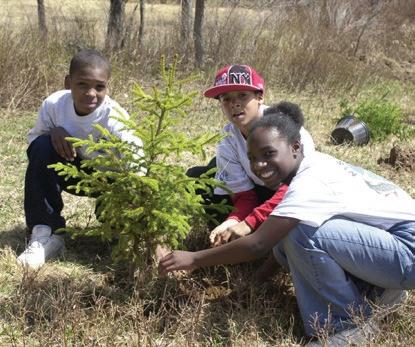
☐ Plant a tree to help meet New York State’s goal of planting 25 million trees by 2033.
☐ Find different types of clouds on two different days and identify them and the weather they bring.
☐ Go paddling in a kayak or canoe somewhere you’ve never been before.
☐ Go on a hike to a fire tower.
☐ Watch and photograph the sunrise or sunset in two different seasons.
☐ Take a hunter safety course.
Make sure to follow any specific rules and regulations for the area you are visiting. Don’t collect plants or remove rocks/fossils/etc. that you might come across. Anything that you bring in with you should be brought back out. Don’t chase or harass wildlife – take pictures, but don’t get too close to try to get the “perfect” shot. Don’t feed wildlife. Not only could this put you in danger, but it could also make them more comfortable around humans, which is not good for the wildlife.
Respect Each Other and Our Shared Environment
All New Yorkers and visitors should be able to access, enjoy, and feel welcome on State lands. These lands are shared by all New Yorkers. While enjoying these shared spaces, be respectful of other visitors. Share trails, treat people with kindness, and leave things as you found them for others to enjoy. All of us have a responsibility to protect State lands for future generations. While you’re on your adventures, be sure to practice Leave No TraceTM principles, and consider visiting trails less traveled.
Learn more at dec.ny.gov/things-to-do/love-our-new-york-lands.
PRINCIPLES OF LEAVE NO TRACETM
1. Plan Ahead and Prepare
2. Travel and Camp on Durable Surfaces
3. Dispose of Waste Properly
4. Leave What You Find
5. Minimize Campfire Impacts
6. Respect Wildlife
7. Be Considerate of Other Visitors
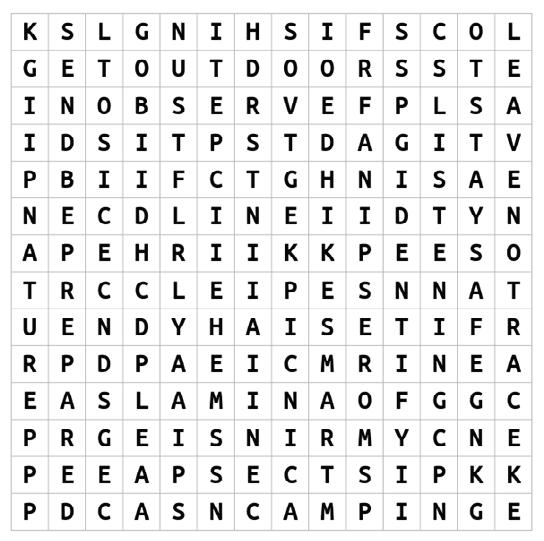
ANIMALS
BE PREPARED LEAVE NO TRACETM CAMPING
CRITTERS
FISHING
LISTENING
NATURE
OBSERVE GET OUTDOORS PADDLING
HIKE SMART PICNIC HIKING SMORES
IDENTIFY STAY SAFE
Winter
Kathy Hochul, Governor
Sean Mahar, Interim Commissioner
Maureen Wren, Deputy Commissioner for Public Afairs
DEC Division of Communication, Education, and Engagement
Harold Evans, Director
Jeremy Taylor, Editor
Mary Elizabeth Maguire, Designer
New York State Conservationist for Kids
2025, Volume 18, #2
Conservationist for Kids
LOVE OUR NEW YORK LANDS
People are drawn to New York State’s outdoors, where they can enjoy hiking, camping, paddling, biking, fishing, hunting, cross-country skiing, and more. As more people discover the benefits of an outdoor experience in New York State, it’s important that we do our part to Love Our New York Lands. The Department of Environmental Conservation’s (DEC) Love Our New York Lands campaign encourages people to enjoy the outdoors responsibly and share them with others. While you are on State lands, practice good stewardship. Conservation of our natural resources and being a good steward is not difficult; it’s simply recognizing the importance of protecting natural resources and respecting other visitors. Misuse of these natural resources can cause serious, long-term damage. Always make sure you extinguish your campfire, stick to designated trails and campsites, carry your trash out with you, and leave things as you found them. Do yourself, the land, and your fellow visitors a favor before heading out onto State lands—familiarize yourself with the rules and regulations and follow them; it will benefit you and all who enjoy these amazing places. Good stewardship isn’t limited to the trail; park in designated areas and don’t block gates, entrances, exits, or other vehicles. Having access to State lands is the first step to a great adventure. For more information on how you can Love Our New York Lands, go to: dec.ny.gov/things-to-do/ love-our-new-york-lands
LEAVE NO TRACETM
While recreating on State lands, practice good stewardship. The Seven Principles of Leave No Trace™ provide a guideline for safe and sustainable out-door activities. Follow these principles to improve your outdoor experience and minimize your impacts:
Plan Ahead and Prepare
Travel and Camp on Durable Surfaces (to prevent erosion)
Dispose of Waste Properly
Leave What You Find
Minimize Campfire Impacts (extinguish the flame when you’re done)
Respect Wildlife
Be Considerate of Other Visitors
Learn more about Leave No TraceTM at lnt.org/why
RESOURCES FOR ADVENTURING
In order to better prepare for adventures, here are some links to resources that covermany of the topics inthis issue of Conservationist for Kids
Wildlife and Nature
Getting started - dec.ny.gov/things-to-do/watchable-wildlife
Rock and ice climbing - dec.ny.gov/things-to-do/climbing-rock-and-ice
Geocaching - dec.ny.gov/things-to-do/geocaching Places to go - dec.ny.gov/places-to-go
Accessible Recreation
dec.ny.gov/places-to-go/accessible-recreation
AdventureNY
dec.ny.gov/things-to-do/adventure-ny
Conservationist for Kids and an accompanying teacher supplement are distributed free of charge to fourth grade classes throughout New York State three times per school year (fall, winter, and spring). If you would like to be added to or removed from the distribution list, need to update information, or if you have questions or comments, please e-mail the editor at KidsConservationist@dec.ny.gov or call 518-402-8047. Limited quantities of some back issues are also available on request. The full archives are online at dec.ny.gov/news/conservationist-magazine/conservationist-for-kids/issues-index