






























WES ABNEY CEO & FOUNDER wes@leafmagazines.com
MIKE RICKER OPERATING PARTNER ricker@leafmagazines.com
TOM BOWERS CHIEF OPERATING OFFICER tom@leafmagazines.com
DANIEL BERMAN CHIEF CREATIVE OFFICER daniel@leafmagazines.com
EARLY MARYLAND LEAF PUBLISHER early@leafmagazines.com
WYATT EARLY STATE DIRECTOR wyatt@leafmagazines.com (410) 961-8779
BOBBY BLACK LEAF BOWL DIRECTOR & HISTORIAN bobbyblack@leafmagazines.com
MICHELLE NARANJO & JACKIE BRYANT COPYDESK michelle@leafmagazines.com | jackie@leafmagazines.com
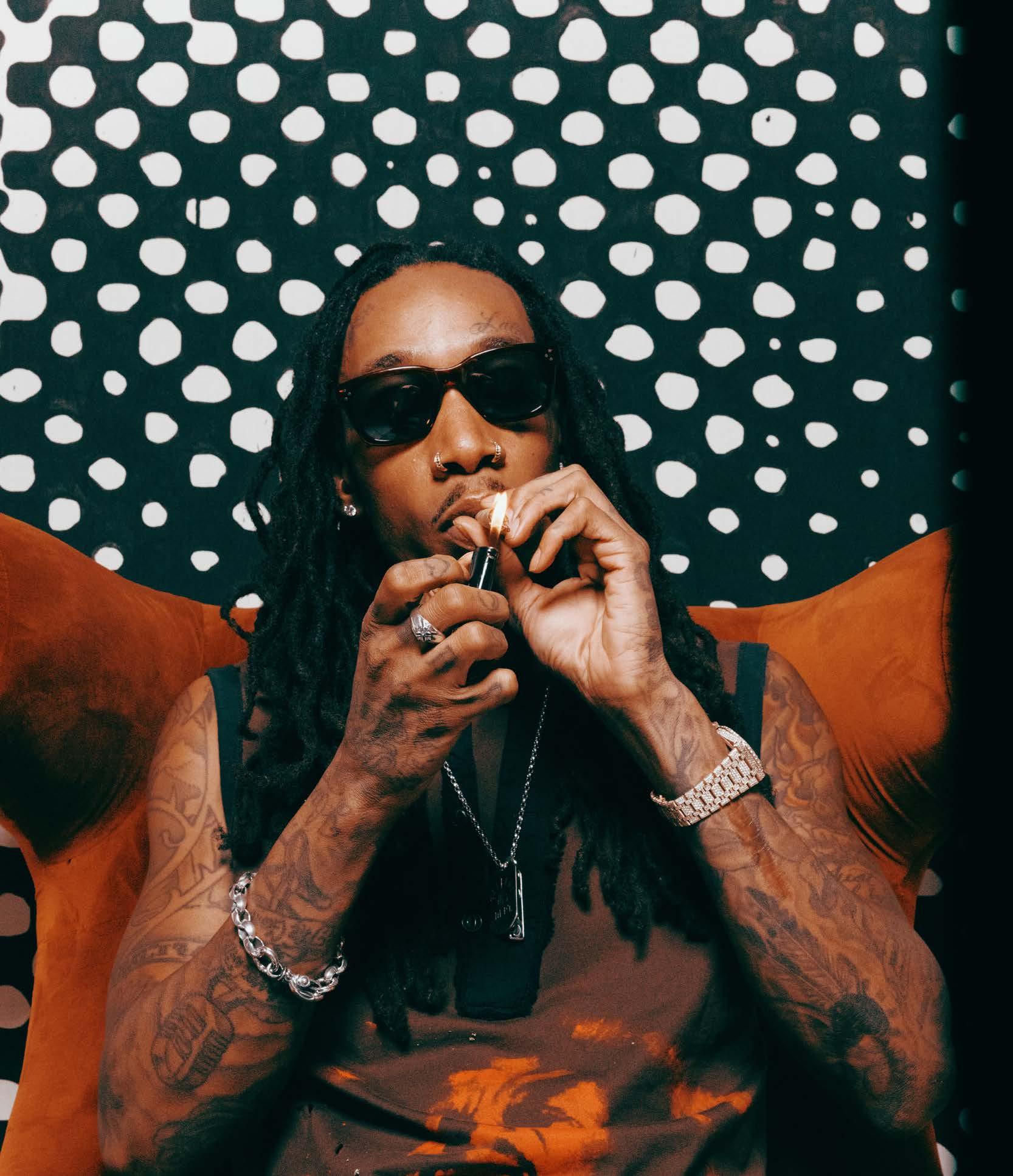
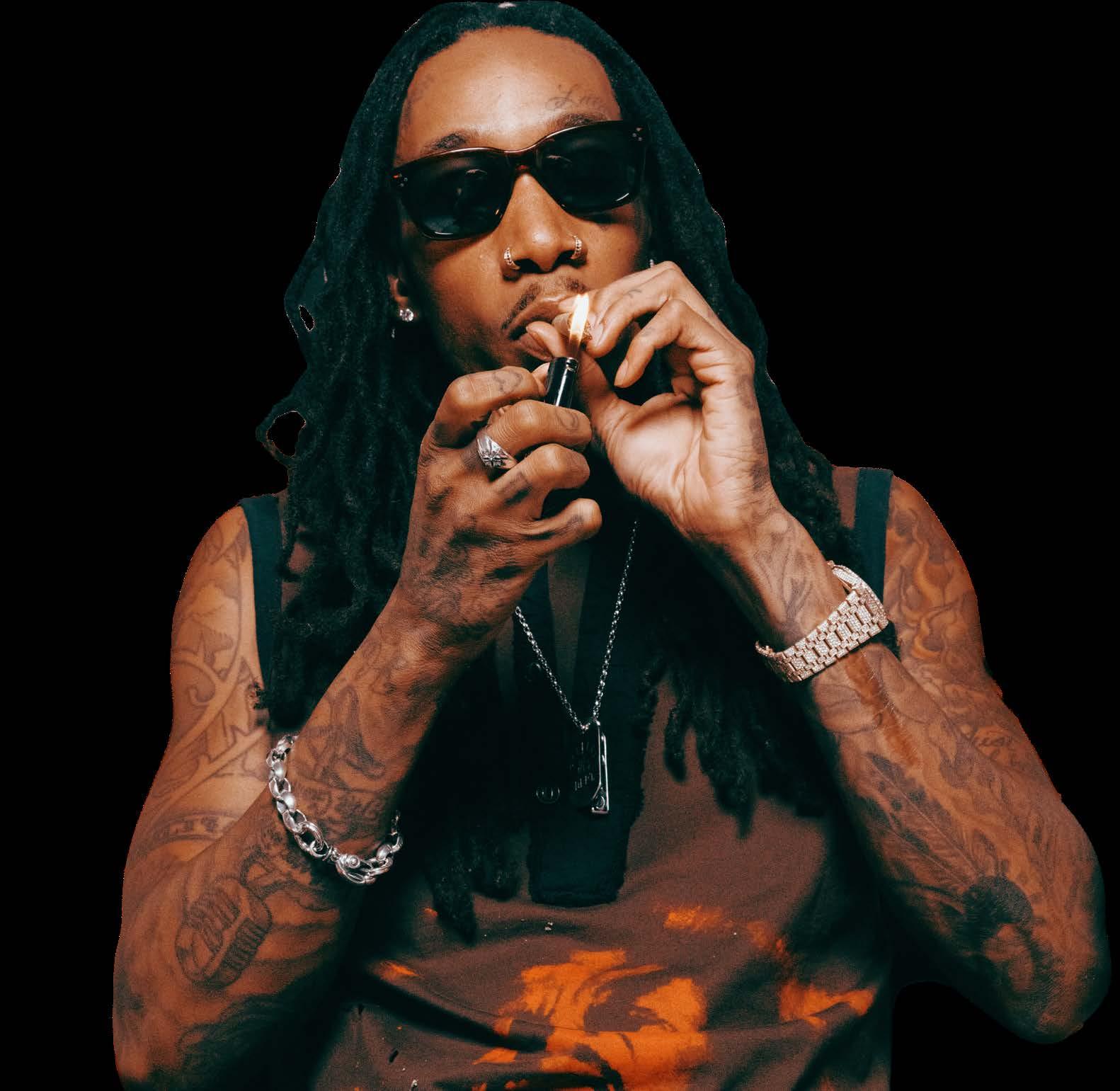
Stoner hip-hop legend Wiz Khalifa is known for his music as much as his Cannabis brand, and the Leaf's Tom Bowers was granted special access with Khalifa to learn more about his life and career. Los Angeles-based photographer Emily Eizen, whose stunning work you might remember from her smoky cover shoots with Cheech Marin and Tommy Chong for our February 2023 Culture Issues, got up close and personal with Khalifa. Visit our site, LeafMagazines.com, for more photos and exclusive content!
PHOTO BY EMILY EIZEN @EMILYEIZEN INTERVIEW BY TOM BOWERS @MEGABOMBTOM2.0
WES ABNEY, FEATURES
AJ AGUILAR, FEATURES
DANIEL BERMAN, DESIGN
JACKIE BRYANT, FEATURES
JEFF DIMARCO, PHOTOS
DAVID DOWNS, FEATURES
WYATT EARLY, FEATURES
EMILY EIZEN, PHOTOS
HAYLEY EWING, PHOTOS
MICHAEL GRATTAROTI, PHOTOS
REX HILSINGER, FEATURES
ELLEN HOLLAND, FEATURES
MATT JACKSON, FEATURES
JESSE JOHNSON, FEATURES
GREG MALCOLM, PHOTOS
TAYLOR MARTIN, FEATURES
TERPODACTYL MEDIA, FEATURES + PHOTOS
JOJO SNAPS, PHOTOS
KATHERINE WOLF, FEATURES BRUCE & LAURIE WOLF, RECIPES
We are creators of targeted, independent Cannabis journalism. Please email us to discuss advertising in the next issue of Maryland Leaf Magazine. We do not sell stories or coverage. We can offer design services and guidance on promoting your company’s medicinal, recreational, commercial or industrial Cannabis business, product or event within our magazine and on our website, leafmagazines.com. Email wyatt@leafmagazines.com to start advertising with Maryland Leaf!



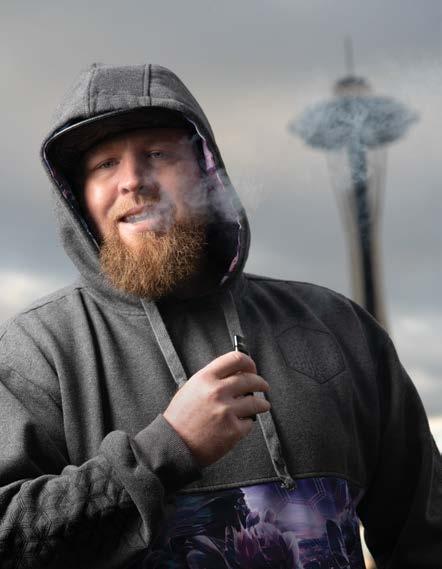
Cannabis culture has come out of the shadows and into the limel ight, like a seed bursting from the earth to reach for the sun.
What used to be the butt of jokes, the stereotype of slacking a nd the fear of many parents (including my own) has become a thriving, creative and inspirational culture. Cannabis touches all walks of life, from all ages, so it’s not a surprise to those in the know that our community is a vibrant and naturally diverse sesh that’s producing major hits across the world.
On that level, there’s no greater hit taker and maker for this generation of rap fans than Wiz Khalifa, whose story and images we are proud to share in this special issue. My favorite song will always be “Young, Wild & Free,” which came out in 2011 when Northwest Leaf was only a year old. Hearing the new school of hip-hop openly talking about weed with Bruno Mars and the OG Snoop Dogg, who always represented Cannabis, was a smoky bat signal to our culture, signaling that weed was about to go mainstream.
Cannabis went from fringe to trending within two decades, large ly because of the influence it has on artists who are open about t heir use of Cannabis. Surely weed has made great art, from Shakespeare, who was buried with his favorite pot pipe, to Wiz, whose weed taste and feats of smoking are legendary. I’ve got my Khalifa x Stündenglass Gravity Infuser in the bedroom, and it is the closest thing to zero gravity, violently high and floating away like Mr. Mackey’s head in season two, episode four of “South Park” you can possibly get.
When I met the Wiz team at the California Leaf Bowl, a few hour s before they won an award for Best Indoor Sweets & Dreams flower with Point Breeze, they shared a brand desire to be known for their unique strains — vigorously pheno hunted by Wiz — and not to be viewed as simply a celebrity brand.
"CANNABIS
WENT FROM FRINGE TO TRENDING WITHIN TWO DECADES, LARGELY BECAUSE OF THE INFLUENCE IT HAS ON ARTISTS WHO ARE OPEN ABOUT THEIR USE OF CANNABIS."
Wiz loves weed, and so do his team members, and seeing the cuts grown in California and Washington by Momma Chan Farms, it’s truly spectacular weed that reinforces the impact of Wiz’s vision on the weed market. My personal favorite? The Baby Turtle!
So, plug into your streaming platform, queue up the Wiz Khalifa greatest hits and dive into the Leaf’s Culture Issue with a hit of your favorite Cannabis, and don’t forget to pass this magazine to your stoner friends! On a final , truly personal note: Please pray for peace in America and in this world. We need it more than ever!


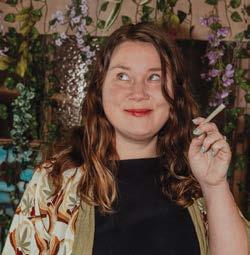
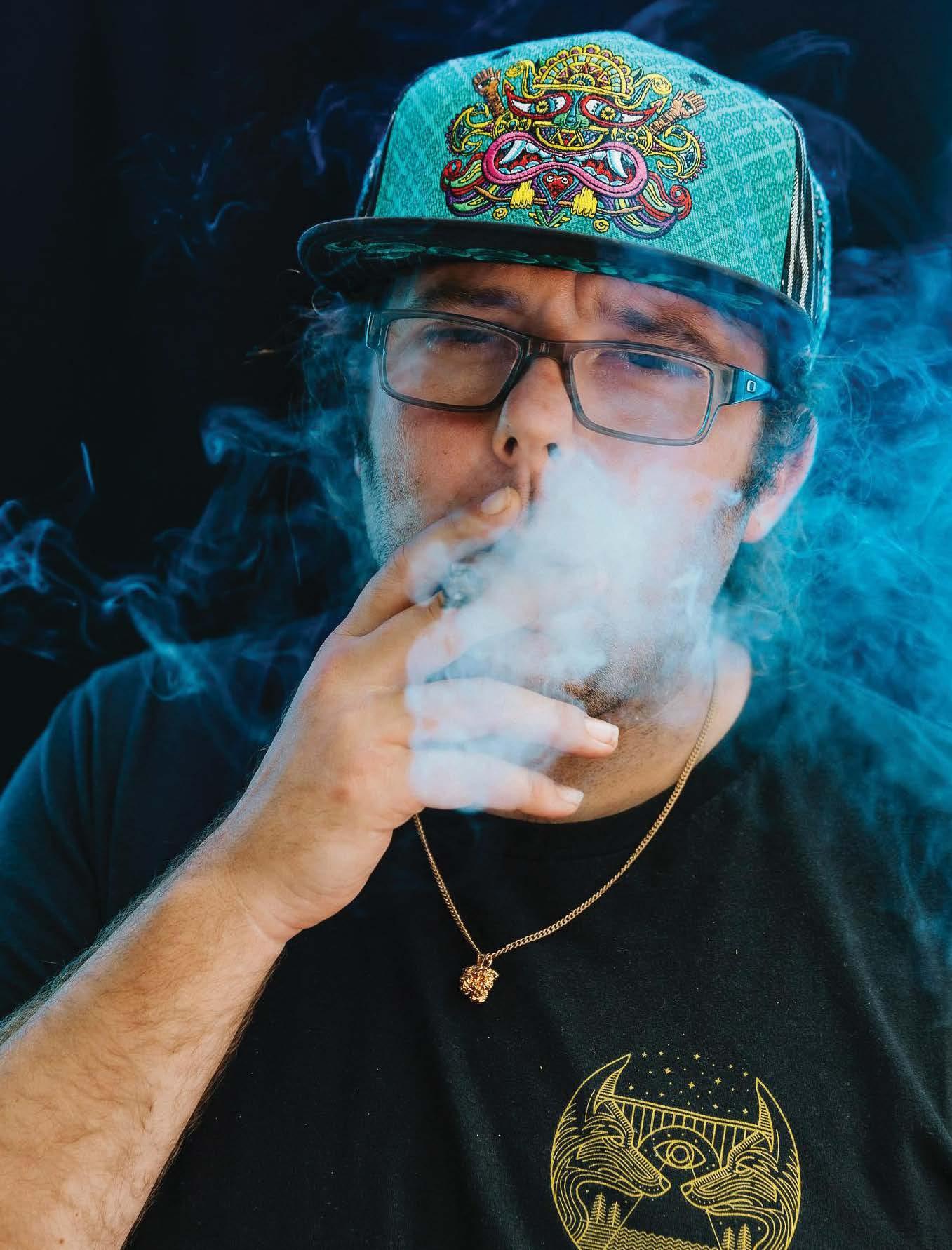


With new types of Cannabis being released by breeders at a clip that resembles the speed of artificial intelligence technology, it’s tough to keep up with the strains that will not only pop, but persevere. One person who always has his lungs in the game is esteemed Cannabis journalist Jimi Devine.
AT THIS POINT, Jimi has called more winners than the Associated Press. Often heard saying he smokes weed “in every tax bracket,” Jimi is one of the world’s most renowned experts when it comes to strains and Cannabis culture. A go-to expert for a breadth of Cannabis publications, the influential effects of his predictions for what’s hot cannot be denied. The strains Jimi brings to life on the page go on to win Cannabis competitions and shape the tastes in Cannabis worldwide.
Jimi and I first met more than a decade ago, when I was working as an editor for Cannabis Now magazine, which was based in downtown Berkeley, California. Jimi’s energy has always been infectious, and while the world has changed a lot since then, he has stayed consistent. He wears bright, bold prints, and he has a booming voice and a distinct laugh. His approachability, enthusiasm and refined palate set the foundations for his success as a bon vivant.
California remains the heartland for Cannabis culture across the globe; strains that make it in the Golden State can be found on menus of Cannabis clubs in far-off places like Barcelona, Spain. Originally from Lynn, Massachusetts, Jimi moved to the San Francisco Bay Area in 2009 with a dream of working in the Cannabis industry. Through connections he had made as a student activist, Jimi landed a job at the Cannabis Buyer’s Club of Berkeley. Founded in 1996, CBCB is the nation’s oldest active Cannabis dispensary and continues to serve as Jimi’s home base for assessing “the heat,” a mission that has taken him around the world as a judge at elite Cannabis competitions.
Since 2019, Jimi’s also been hosting his own Cannabis competitions, such as the Transbay Challenge and Heatquest. At trade shows, he invented an activity called a “weed walk,” which is more of a rapid-fire jog where he goes to each booth and smells all the jars of Cannabis on offer.
Putting in almost five years as the Cannabis columnist for LA Weekly, Jimi’s Cannabis coverage bridged the gap between the famed Northern California Cannabis-growing region of the Emerald Triangle and Los Angeles, the core of Cannabis commerce in California. Through his work selecting and featuring strains that he thinks are winners, Jimi has become one of the most trusted Cannabis chroniclers of our time.
Once only shared through oral tradition, the stories behind the creation of new Cannabis strains are often misattributed by those who don’t do the work of speaking directly to the source. Jimi’s strategy for predicting the next best thing in weed involves closely following Cannabis breeders and seeing what they’re excited about.
“Sure, anybody can pop a scene that might be their golden ticket, and it might change the game,” Jimi said. “But then in this recent era, you haven't really seen too many bag seeds change the world.”
Jimi explains that Cannabis breeding in the modern era involves advanced selection and propagation processes. The strains that stick have attributes you'd expect, like incredible flavor, but for a global takeover, strains also need commercial viability, and breeders need to be ready to scale up.
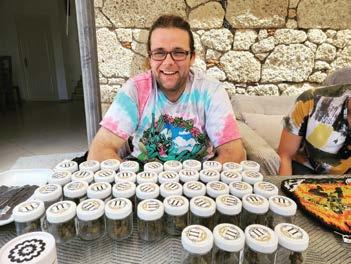
“It's not like you’ve got a four lighter in your garage anymore,” he said. “If you're investing all these resources into warehouses, crazy greenhouses, whatever, you lean a lot more on commercial viability than people did pre-Prop 64. Like, obviously, you always wanted to be making money, but also the pound price was so much higher. Commercial viability was a very different thing back then. If you knew it was going to be worth $4(K) or $5K a pound … Obviously, there's a very thin layer of exotics at the very top of the market that maybe still reach those prices.


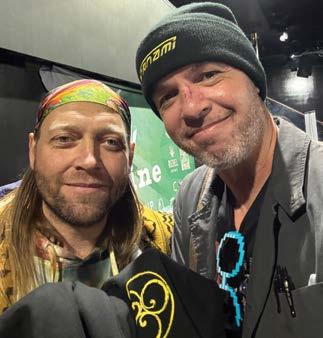
WHEN I THINK of the most cultured Cannabis breeder in 2026, I often return to the work of Jesse “Biovortex” Dodd, who is based in Trinidad, California.
Voted one of the top 50 greatest breeders of 2025 in our poll, Jesse doesn’t just make seeds or chase hype. He sees his breeding work, Biovortex, as a “living conceptual art piece” that includes film, art, music, fashion and terpenes.
Raised in a radical commune in Palo Alto, California, he eschews trends to focus on bespoke projects like his G-Nut line or the award-winning 2022 regenerative farming film “Tending the Garden,” which is available for free online.
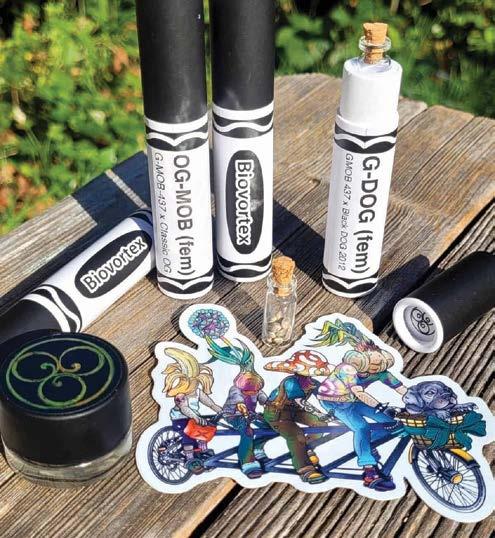
In December 2025, at our Terpnami seed show in San Francisco, Biovortex’s art came in packaging reminiscent of the big Crayola markers from childhood
Pop the marker top, and inside is a glass vial of seeds sealed with a cork. He calls them “washable” markers, as in “these strains ‘wash’ to produce amazing hash.” Few breeders offer as many creative layers.

“They were inspired by ‘Harold and the Purple Crayon’ because I believe with art, you can create your own world,” Jesse said. “And that’s how I do my genetics. That’s how I grow and do art and education in this space.”
A good chunk of Biovortex’s work descends from a 2012 strain, Black Dog, a super-blingy, fast-finishing Blackberry Kush x (California Sour Diesel x Lemon Larry OG).
That's why you'll see “Dog” in so many of his current strains listed chiefly on Alpine Seed Group.
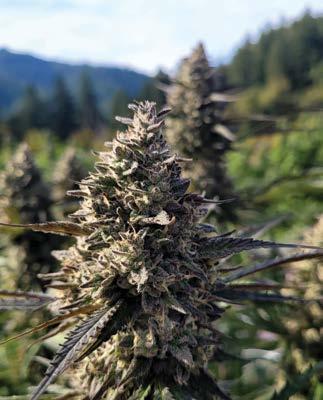
Take the current offering, G-Nut BC1, and unpack it.
You get Hazelnut Cream x (Hazelnut Cream x (G-mob 392 x G-mob bc1). Dig in further, and his G-Mob — also known as Grown Men On Bikes and Garlic Mushroom Onion Banana — is a high-yielding, full-flavor hash variety originally made by crossing Banana Valley Dog [Banana OG x (SFV OG x Black Dog BC4)] with GMO.
G-Mob is “an outstanding savory, funky mix of banana, garlic, gas and berries” that envelops “the taste buds like the first bite of a perfectly paired dessert after a rich and flavorful meal,” he wrote on the Alpine Seed Group website.
Add the Hazelnut Cream’s “creamy, nutty funky, savory gas,” per the description on the Alpine Seed Group website, to G-Mob, and you get G-Nut, which has tested at 39% THCa. Fold that back to Hazelnut Cream to get the current G-Nut BC1.
Another current standout is Mazar Dogz, which descends from seeds grown out of the grave of his beloved pet dog, Ashley, a fully blue corso pit bull mix. Deepak Chaudhary at Indian Landrace Exchange gifted Jesse some elemental indica Mazar-i-Sharif. Then, Jesse pollinated the vintage indica with his namesake Black DOG BC 6.

Award-winning journalist/author and former Leafly Senior Editor David Downs’ monthly genetics intelligence dispatch.
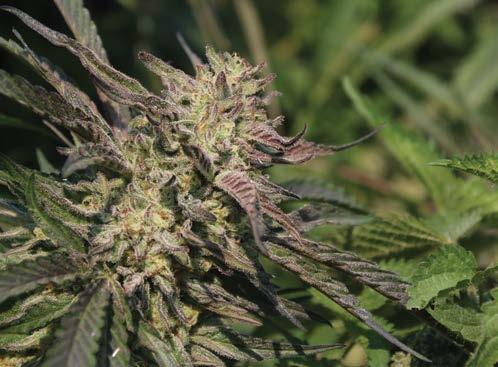
When Ashley died, Jesse planted the pollinated Mazar cross in the soil above where she was laid to rest. As noted on the Alpine Seed Group website, “‘Mazar-i-Sharif’ means ‘grave of the saint,’” a detail Jesse learned from Deepak.
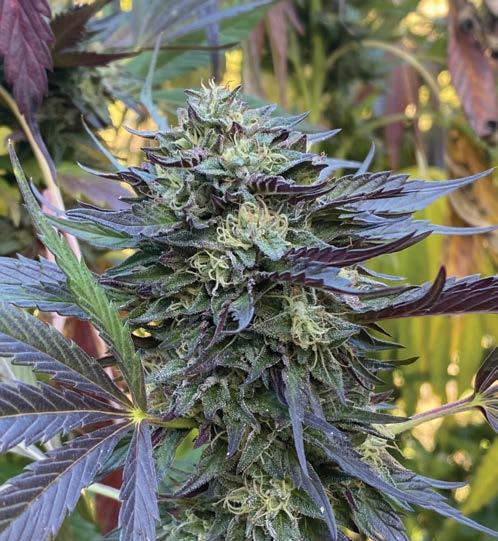
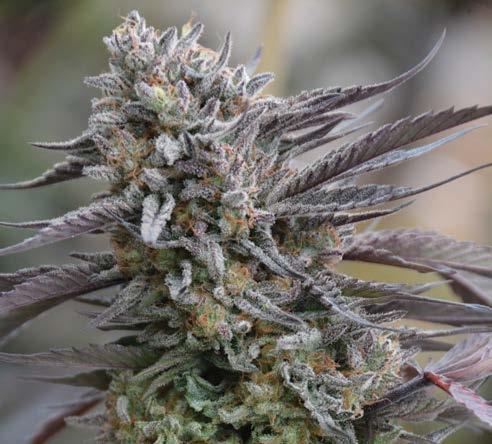
The seeds from St. Ashley became, as described on the Alpine Seed Group website, a “truly exceptional plant with big broad beautiful leaves that easily turn black purple on top and crimson purple on the underside, reminiscent of a redwood sorrel … Her flowers smell like a funky, spicy, sweet and sour sir marks a lot marker and can go quit(e) dark in low temperature. Truly one of the most unique and beautiful plants I have been blessed to connect with.”
“THEY WERE INSPIRED BY ‘HAROLD AND THE PURPLE CRAYON’ BECAUSE I BELIEVE WITH ART, YOU CAN CREATE YOUR OWN WORLD. AND THAT’S HOW I DO MY GENETICS. THAT’S HOW I GROW AND DO ART AND EDUCATION IN THIS SPACE.”
DOG) x Motor-G-nut. It’s a heavy hasher that tastes like creamy banana cake and nuts on ice cream, and it references Filipino ice cream.
Jesse, a foodie and world traveler, has so many layered, nourishing stories, including one about Banana Halo Halo, which is (Ice Cream Cake x Banana
His life is infused with meaning and connection. Just don’t expect him to retrace his steps or sell you clones — new seeds only.
“I want everyone to have something new and amazing,” he said.





this is next level flower



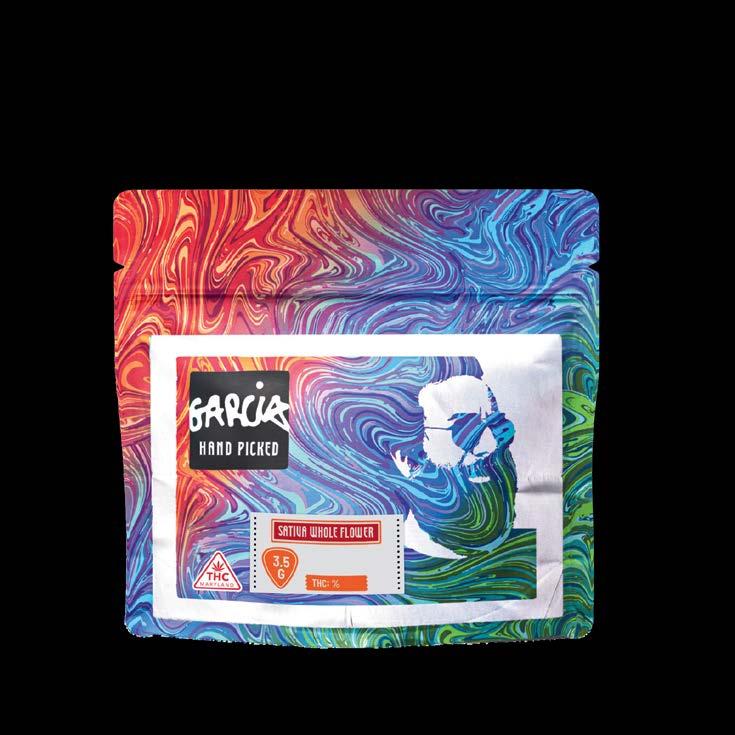
ASK YOUR BUDTENDER ABOUT OUR LATEST HIGH-TESTING HIT!




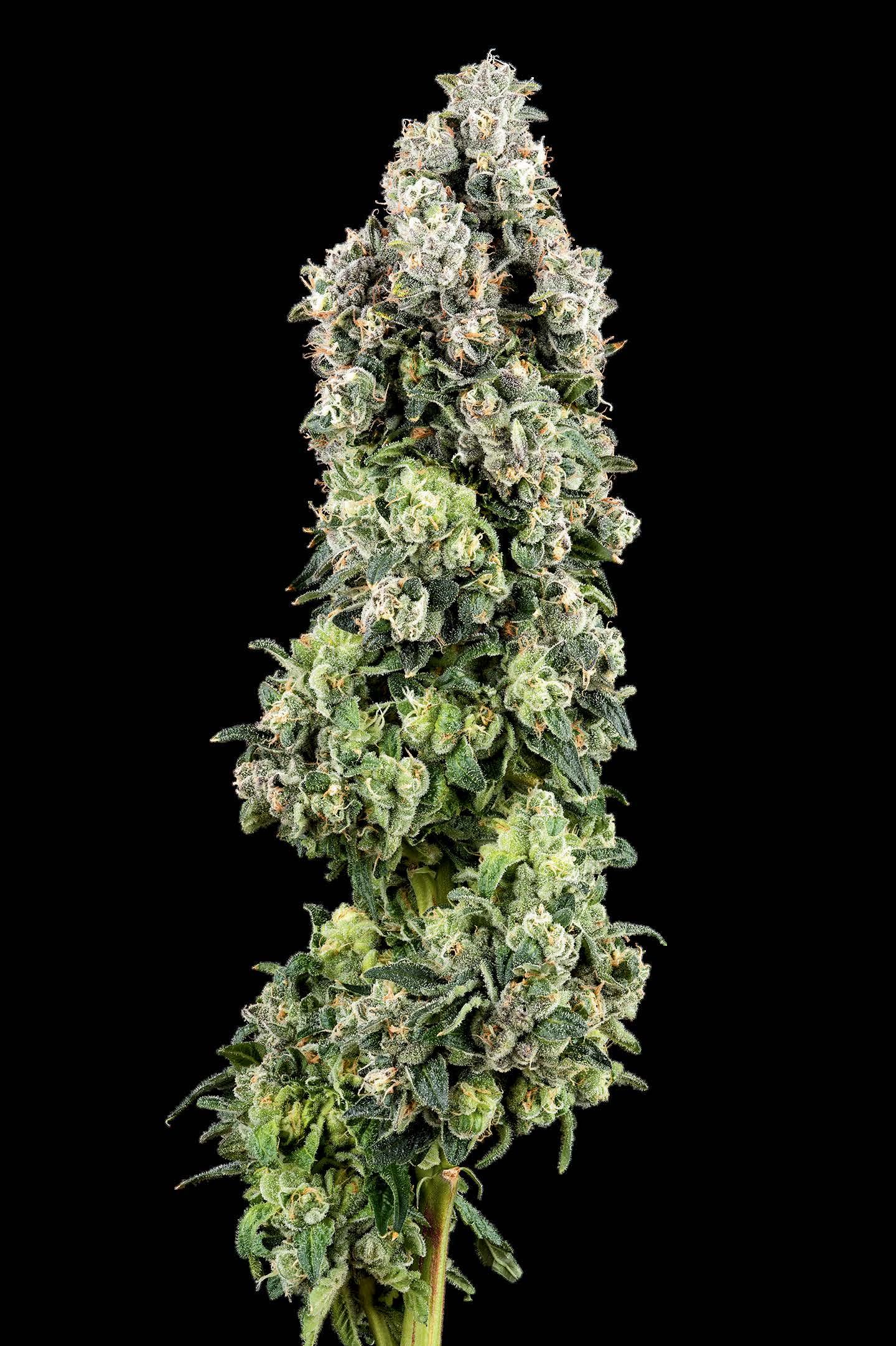





Cannabis use in the United States is ordinary now. It shows up in medicine cabinets, gym bags, nightstands and kitchen drawers. It’s used by people managing chronic pain, by people replacing alcohol, by people who smoke every day and by people who take a 5-milligram gummy once a month and call it good. That range is new, and reshaping Cannabis culture in ways we’re still catching up to.
ATIONAL SURVEYS reflect the shift:
Gallup reports that roughly one in six U.S. adults uses Cannabis regularly, with daily use climbing steadily over the past decade. Federal public health data shows especially sharp growth among adults over 50, a group that largely sat out earlier waves of legalization. Cannabis no longer belongs to a single age group, lifestyle or identity, and it no longer requires participation in a shared culture to access it.
The consequence — or the benefit, depending on how you look at it — of that is a reinterpretation of all aspects of Cannabis culture and consumption through uninfluenced eyes but with more numerous inputs than ever.
Before legalization, Cannabis knowledge traveled through people. Access was limited, so information moved socially. You learned how much to use, how to use it and with what, where to use it, how long to wait and what felt like too much (to give just a few examples) because someone else had already learned the hard way.
Even people who didn’t care about “weed culture” absorbed its norms simply by being adjacent to it.
Legal markets removed that friction; today, consumers can scroll a menu or walk into a dispensary and choose from hundreds of products without conversation or context. At the same time, the products themselves have changed. Average THC potency has increased dramatically since the 1990s. Concentrates and multidose edibles are widely available. Delayed onset is common. Dosing language is inconsistent.
Public health data suggests people are still learning how to navigate that landscape.
Hospitals in long-established legal states have reported increases in Cannabis-related emergency visits, often tied to edibles and high-dose products. Many of those cases involve consumers who underestimated potency or misunderstood timing, particularly older adults unfamiliar with modern formulations. The pattern shows up alongside rising use, not in opposition to it. Less of a reckless thing, more of a scale issue.
Cannabis is now used for many legitimate reasons, often simultaneously. Patients rely on consistent use to manage symptoms, while some consumers use it daily without issue.
Others find their tolerance changes with age, stress or health. Some people step back for a while and return later. These shifts are common, but we never built a shared language around them.
Instead, conversations about Cannabis use tend to flatten into categories: Heavy use gets labeled as excess, daily use gets labeled as dependence and light use gets labeled as responsible. Those labels miss the reality that Cannabis functions differently across bodies and over time.
For many people, it behaves less like alcohol and more like food or medicine, which is something that requires attention rather than abstinence. Legalization delivered access, but it didn’t come with a shared vocabulary for talking about long-term use. As a result, consumers often navigate those shifts privately. When Cannabis stops working the way it once did, most users recognize that something has changed. What’s missing is a shared language for understanding that change without framing it as a problem. When Cannabis use remains steady and effective, it often attracts suspicion rather than acceptance. Neither reaction leaves much room for nuance, and both reflect a culture still figuring out how to talk about use without panic or pride getting in the way.
Cannabis culture hasn’t disappeared; it’s just spread out now, and it includes people who care deeply about the plant and people who barely think about it at all. That diversity isn’t a problem but the natural result of access expanding beyond a single scene, identity or set of rituals, and it’s a good thing — the whole point of Cannabis activism in the first place. This was always about access first. Everything else was bound to follow in messier, less unified ways. The future of Cannabis won’t be defined by getting everyone back into the same room but by better conversations about how Cannabis fits into real lives and across different bodies, needs and seasons.
Cannabis culture hasn’t disappeared; it’s just spread out now, and it includes people who care deeply about the plant and people who barely think about it at all.

DO OTHER MEMBERS OF YOUR FAMILY USE CANNABIS? My mom is the only one using it medicinally, but everyone else uses it more recreationally. It was always around and a part of my life growing up, but I didn’t see how much of an impact it had until more recently. My family accepts it after seeing how much it helps my mom. She was throwing up every morning and didn’t have an appetite, on top of her constant body aches. Smoking Cannabis helps her with all of these things and helps to calm her down.
“I DIDN’T THINK THAT IT WOULD BE SO WELCOMING, AND SINCE WORKING HERE, I HAVE HAD THE OPPORTUNITY TO PASS THAT KNOWLEDGE ALONG TO CUSTOMERS.”
JOVA WELLNESS CENTER
5846 ALLENTOWN WAY, TEMPLE HILLS, MD
JOVAWELLNESS.COM
@JOVAWELLNESSCENTER
OPEN SUN. - THU.: 8 A.M. - 8 P.M. FRI. - SAT.: 9 A.M. - 9 P.M. (301) 278-5184
IS CANNABIS CULTURE A COMMON THEME IN THE HISPANIC COMMUNITY? Definitely now with Cannabis evolving how it has. It used to be frowned upon and carried the same stigma it carried among all cultures. Everyone is finally realizing all of the uses of Cannabis, and I have seen a lot more acceptance.
WHAT IS SOMETHING ABOUT CANNABIS CULTURE THAT HAS SURPRISED YOU? I’ve been smoking Cannabis for about 6 years now, and I have definitely seen some changes in the acceptance of the plant. Once I really got into the industry, I was surprised by how welcoming and willing to educate people have been. No one ever makes you feel bad about not knowing a specific product or terminology, and most are even willing to let you try it with them. I didn’t think that it would be so welcoming, and since working here, I have had the opportunity to pass that knowledge along to customers.
WHAT ADVICE WOULD YOU GIVE TO SOMEONE ENTERING THE CANNABIS INDUSTRY? Don’t be shy, and don’t be nervous. Take everything head-on. I didn’t think that I would be able to enter the industry, but I have learned that everything is teachable, and at the same time, there is always more to learn.

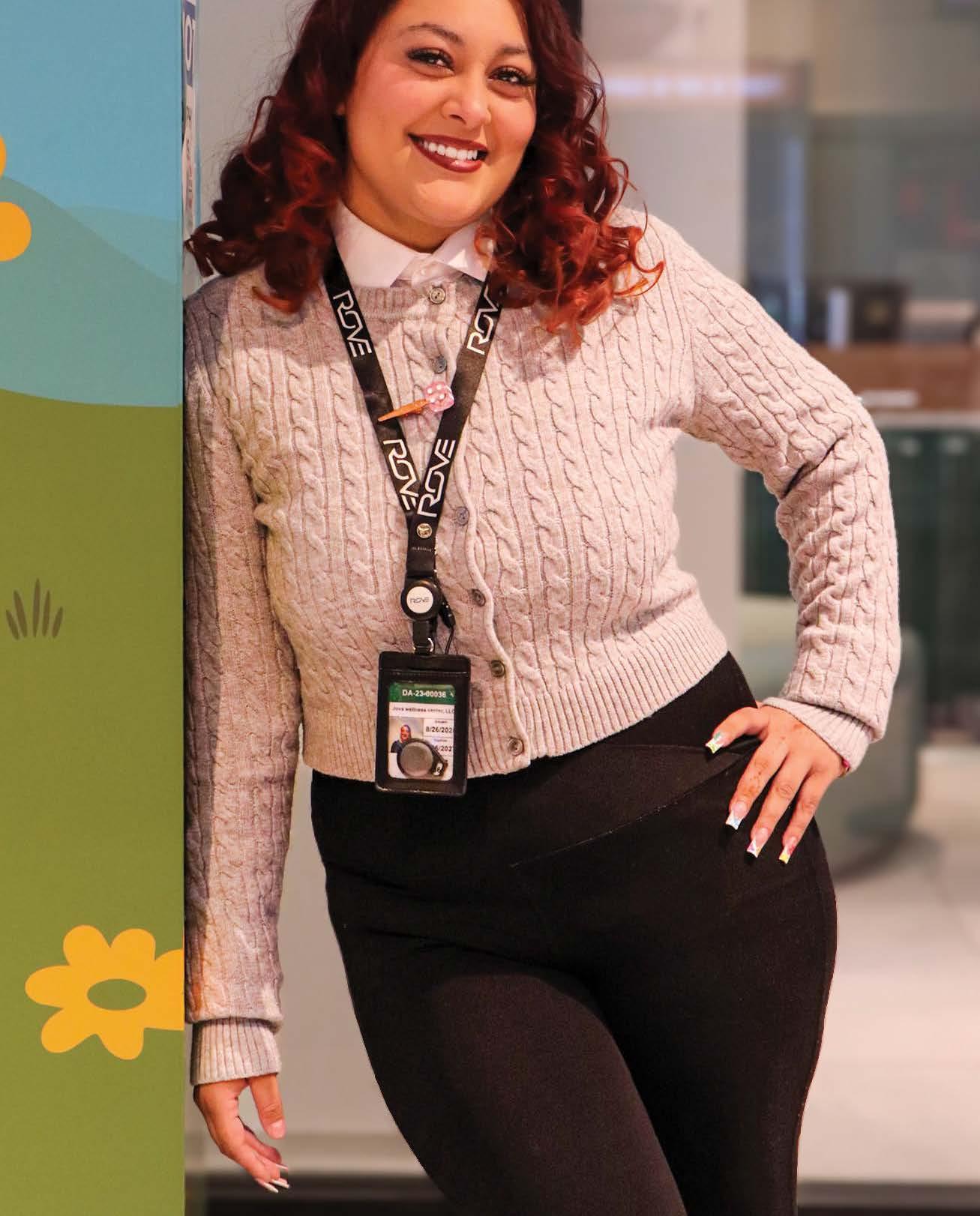

Odaly “Dolly” Hernandez entered the Cannabis industry when she wanted to do something less conventional than She has seen firsthand how Cannabis helps her mom, who suffers from lupus. She loves to hear other people's stories about how Cannabis has changed their lives, too. An avid rollerskater, she has skated since she was 4 years old and does it every weekend. A graduate of Paul Mitchell cosmetology school, Dolly has a passion for all things glamour. She is still looking for fellow glamour industry homies, so reach out to her and spark that conversation! Follow her on TikTok @classicdolly_.
Introducing Cabbage Club, our free loyalty program designed to make every visit and every purchase count. Your annual spend moves you up through the tiers automatically, bringing bigger rewards with every step.


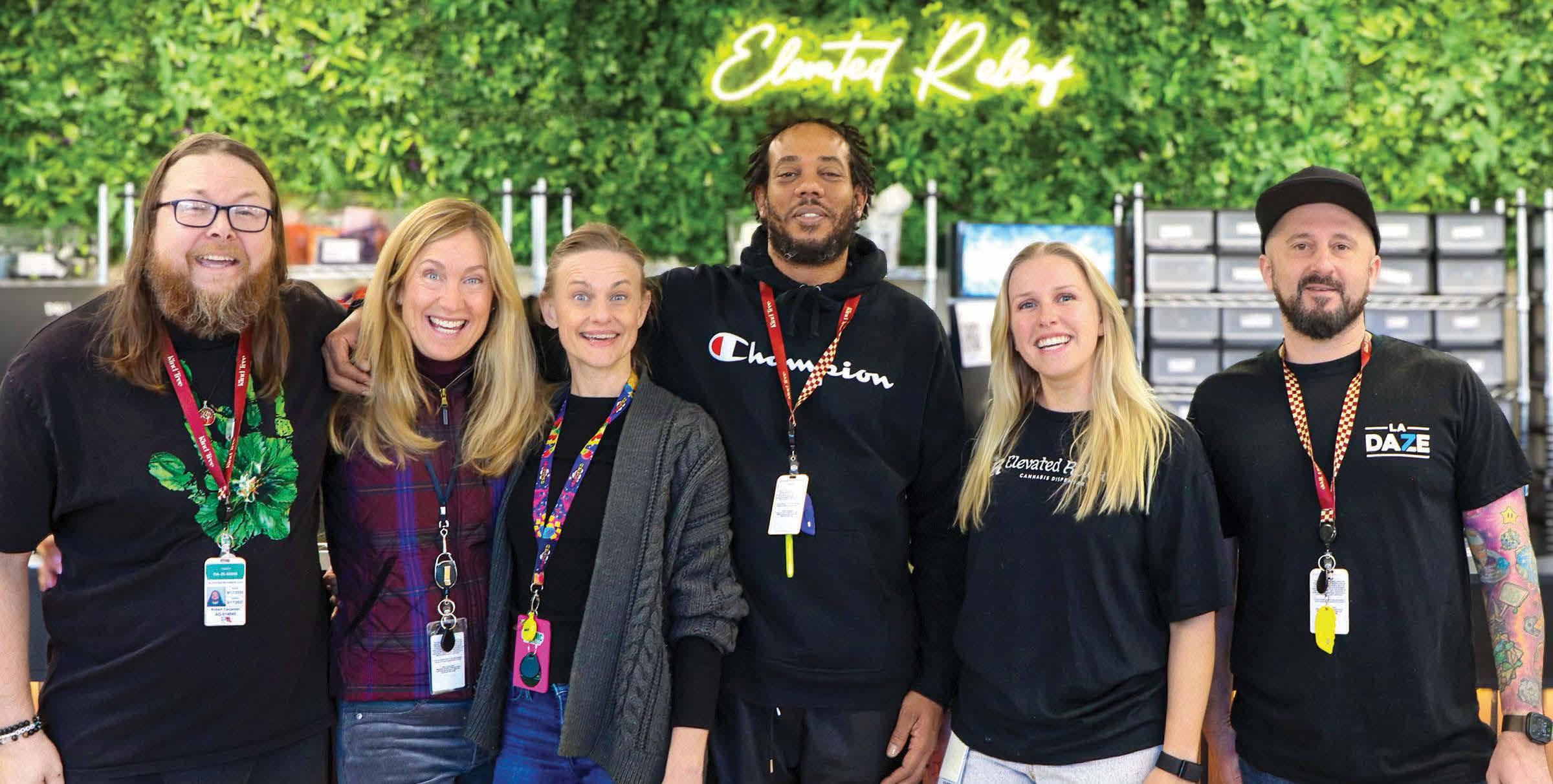
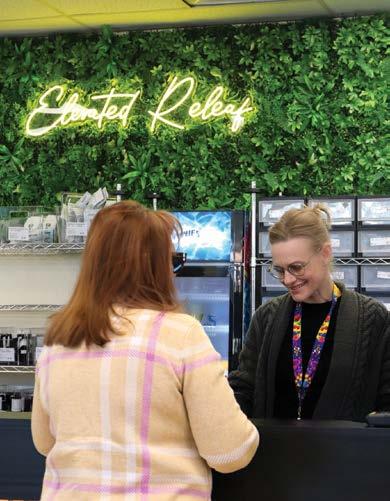


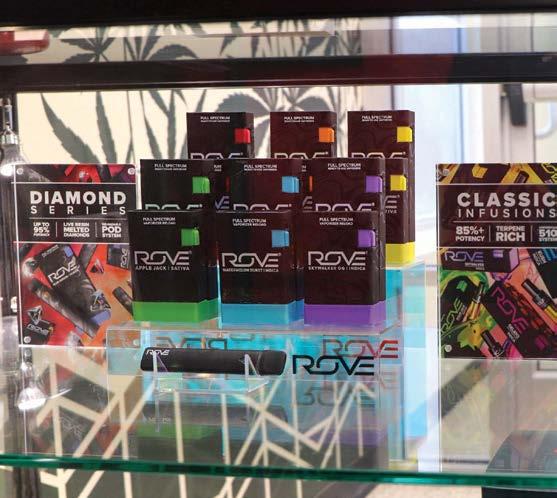
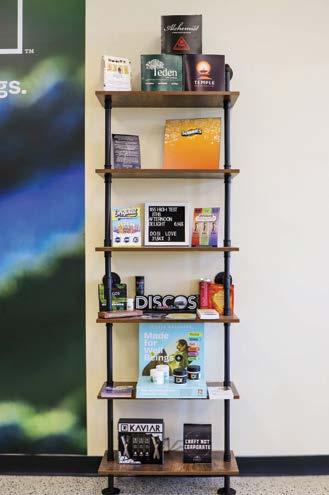
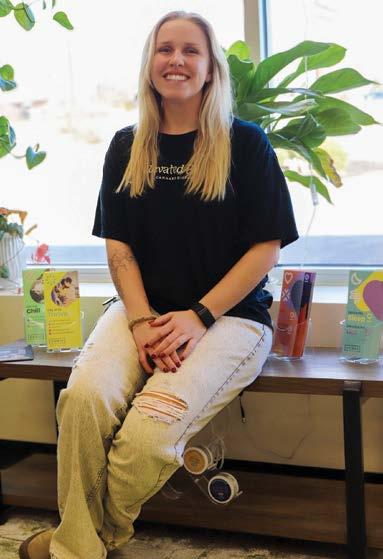
FAMILY-OWNED AND -OPERATED DISPENSARIES are something Marylanders can all get behind in our search to support local businesses. Elevated Releaf opened in late September 2025 and is owned by two local families. The friendly employees have a passion for Cannabis that shines through to the customers they serve, putting time and care into every interaction. Next time you are going for a hike at Liberty Reservoir, stop in for a visit to enhance your experience.


One of the first things you see when walking into this dispensary is a waiting area full of several varieties of plants from local houseplant boutique BotaniGal (@botanigal). There is a fridge full of nonmedicated Sunnies Socials seltzers, which customers can grab for free to stay hydrated. The walls are covered in murals from Maryland’s top Cannabis companies, adding a dose of art and culture that every dispensary needs. Whether you want a full dispensary experience or to quickly buzz through the drive-thru, they are prepared to accommodate the needs of every customer who shops at the store.
Gazing over the menu, BL^CK MRKT has a strong presence, which we love to see, considering the fire they put out consistently. For those looking to shop based on terpenes, they have a terpene chart on the counter so you never have to second-guess your purchase. They can also point you in the right direction of the high-THC strains if that is more your cup of tea. The menu is absolutely stacked with options, making this a destination dispensary for flower lovers.

During our visit, there were nearly 60 different concentrate options on the menu, with every fruit and baked good strain under the sun. The Elevated Releaf website makes it easy to shop based on desired effects, terpene or THC content, brands and even weights of each jar. Beezle and Eden Solventless both had rosins available here, in addition to more than a dozen brands with live resins, hash and RSO.
The staff at this store are very well versed in the edible options they offer, helping new patients get a bearing for what they may want to try. Baked goods, chocolates, gummies, sodas, seltzers and tablets can all be found on the menu. As new products come out, they stock them quickly and try to keep their customers’ favorites regularly on the shelves.
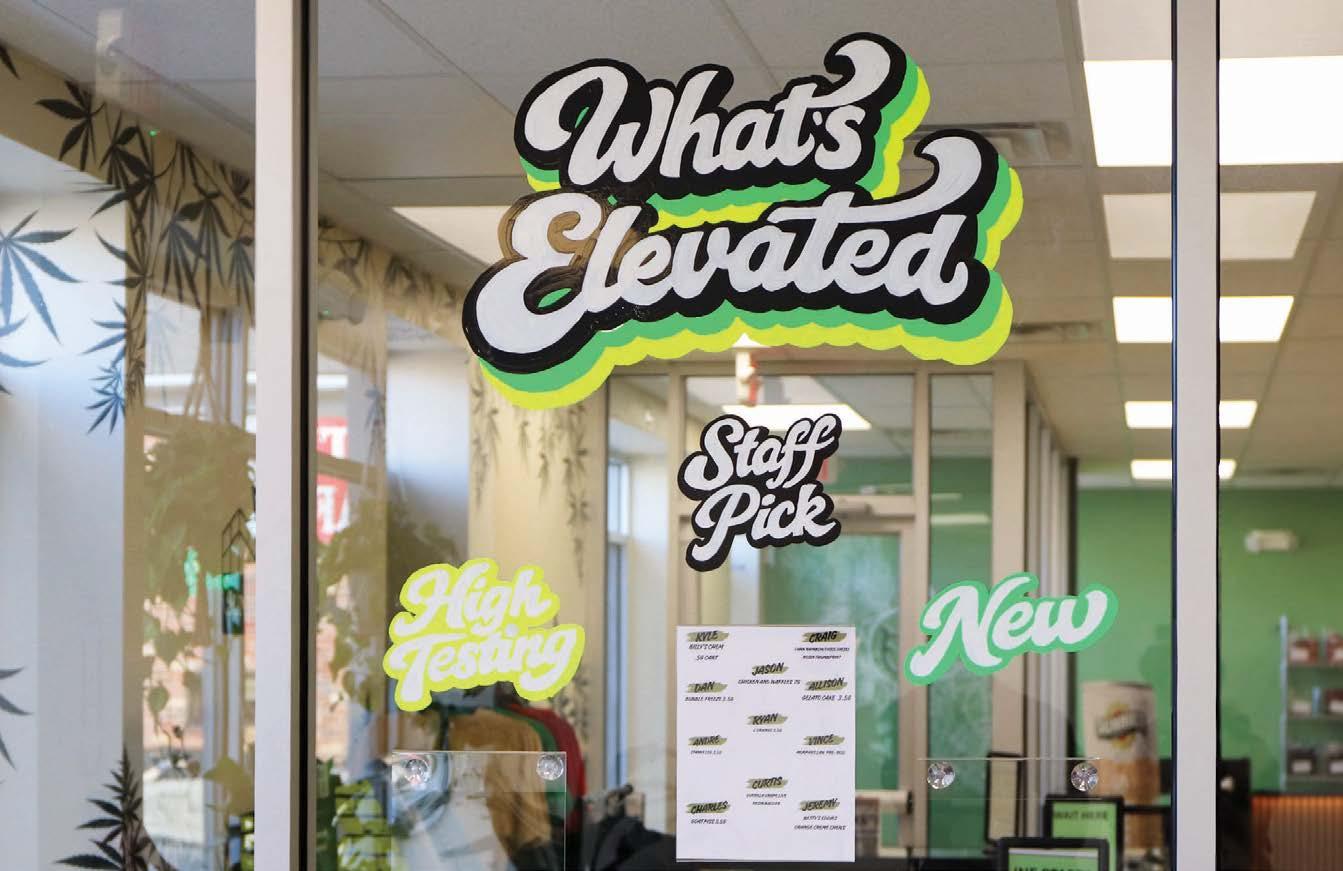
THE WALLS ARE COVERED IN MURALS FROM MARYLAND’S TOP CANNABIS COMPANIES, ADDING A DOSE OF ART AND CULTURE THAT EVERY DISPENSARY NEEDS.

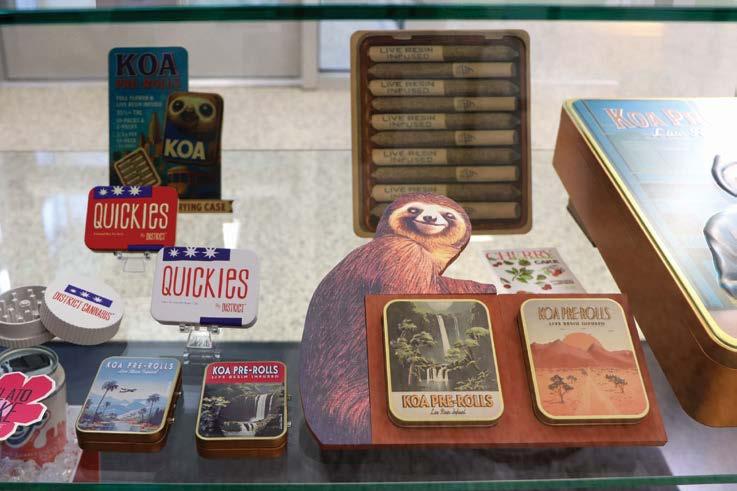
SOUR PEEL FLOWER
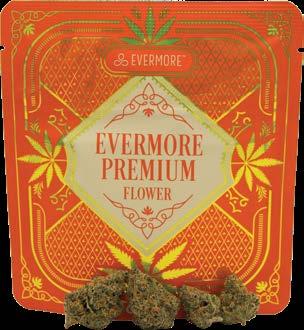
Busting open this bag, my nose was flooded with tropical terpenes dominated by a lingering citrusy aroma. These dense, frosty nugs have a slight purple hue accompanied by bright orange pistils surrounding each bud. For the citrus terpene chasers, this is a musttry. After smoking a joint, I felt energetic and mentally stimulated, making this a go-to strain for that midday smoke. 31.06%

Before Heidi Perhach graduated with her latest degree, she told a story about assuming a family member — who had no experience with Cannabis at the time — would be able to keep up with her preferred dosage. At the time, honey sticks with RSO infusions were popular, and she gave a relative about half of a stick of honey. As it turns out, she said, it was too much for them to handle. She thinks back on that story now and laughs at how much her understanding has grown since then and how important it is to start low and go slow.


“THAT MOMENT when I went to school and learned how to dose people, I’ll always remember the moment of not knowing how to do it and then learning how to apply it and take it to work,” she said.
Growing up on Kent Island, everyone knew everyone in the small communities spread across the shore, Heidi said, who still calls it home. After graduating from high school and community college, she commuted to the University of Maryland, College Park, where she earned her bachelor’s degree in English language and literature.
At the time, her career goal was to be a writer or an editor, but after learning about a class focused on Cannabis offered in Colorado, she learned about a similar degree program offered in Maryland through the University of Maryland’s School of Pharmacy.
“I just thought that was the coolest thing ever, and I wanted to go out to Colorado so bad so I can take a class,” she said. “Although I loved writing, Cannabis was always there in the background, and I would have loved to take that route. And that’s what I did.”
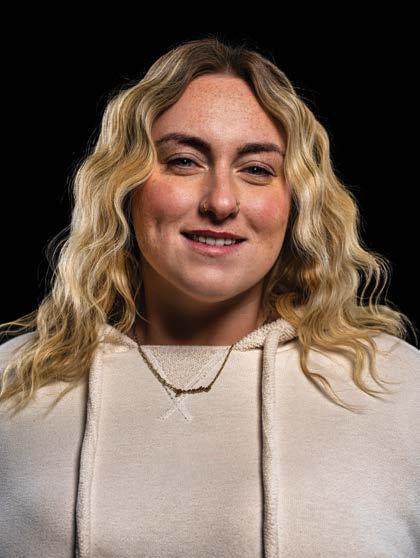
“Ihadalotofanxiety growingup,andit helpskeepitdown, notbeinyourheadas muchandjustthink happierthoughts.”
Heidi tried Cannabis for the first time when she was around 13 with some friends and realized soon after that its effects, for her, were more uplifting than intimidating.
“It was something I was going to keep doing, and it was doing something more than just make me high,” she recalled, adding that it helped her better function as a person and helped with her anxiety. “I had a lot of anxiety growing up, and it helps keep it down, not be in your head as much and just think happier thoughts.”
Once Heidi was accepted into the program, she also made the leap into working in the industry around the same time. When she turned 21, she got her medical card and began applying for jobs and landed a harvest tech job. After a year of working in the production side of the industry, Heidi started budtending at Goldleaf in Annapolis, where she became a beacon for her co-workers to pull from for knowledge and advice. “I wanted all the budtenders to be on the same level of knowledge as me,” she said. “If I learned something in school, I’d be sure to come and tell them about it.”
Heidi was also working additional parttime jobs while going to school and budtending, adding that it’s always been something she’s done and has had no effect on her educational discipline. “I thrive in stressful situations like that,” she said while expressing that she would love to go back to school and get her Ph.D. if it became more affordable.
“There’s this stigma — at least when I was in high school — that if you smoked weed, you’re lazy and you’re never gonna get a job. Well, look at me and these other people,” she said. “We all have these degrees, we all smoke weed. And I’m working two jobs on top of all that.”
Heidi graduated from the program with a Master of Science in medical Cannabis science and therapeutics. Soon after, she left Goldleaf to work as a brand representative for Curaleaf, traveling to different shops around the state and talking with patients about different products. Still in a position to flex her education, Heidi said she enjoyed getting to “spread her wings” outside of working in the same place every day. But after a year and a half of traveling, she said that it began to wear on her.
“I’ve been all over. Since I turned 21 and could be in the industry, I went for it 100%,” she said, adding that she rejoined the Goldleaf team last year in a managerial role that works closely with products. It’s a different role, she said, but at the same time, it empowers her to act more like herself and put her head down and work.
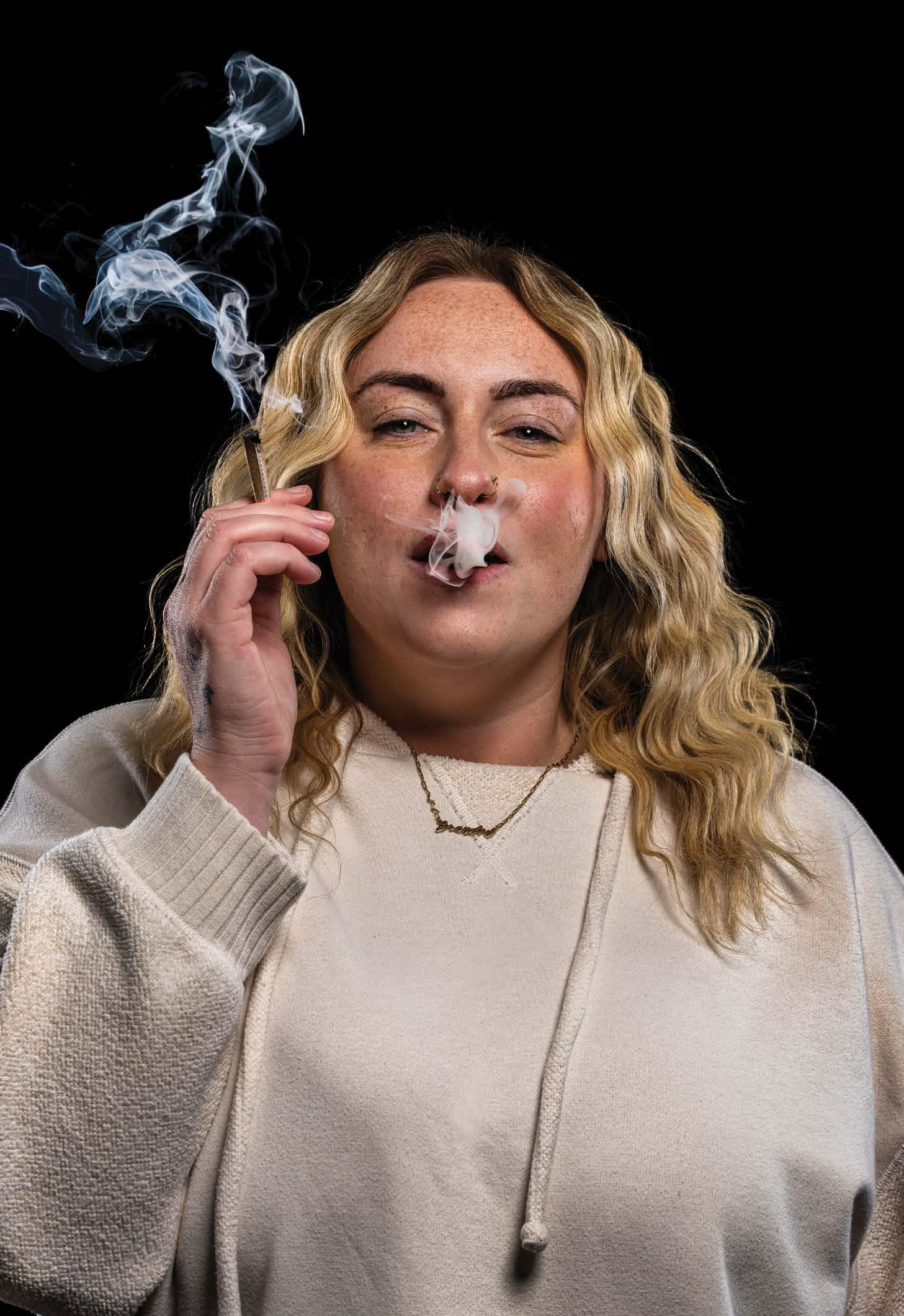

Even though she hasn’t been smoking as much recently, Heidi prefers a heavy indica rich in myrcene, caryophyllene or linalool terpenes, singling out Ray Charles from Grassroots as her favorite flower. Recently, she said edibles and RSO are what she switches between when she needs some relief. With her other degree and interest in English and writing, Heidi said she’s been working on a fiction novel inspired by her fascination with true crime, “with a little bit of a futuristic AI element to it.” She also hopes one day the opportunity will present itself to combine her interest in writing with her love of Cannabis into a job writing policy, adding the chance to eventually work with the law can help to shape things that move the industry forward.
“Education plays a big part in advocating for Cannabis, like being educated in it and knowing it’s more than just culture,” she said. “There’s science and research to back it up now.”



Unsurprisingly, Evermore Cannabis Company has put out another banger: Rainbow Push Pop #4 Live Resin Cake Badder. Folks, this is one for the records. Rainbow Push Pop steps into Evermore’s pantheon of hits as a creamy piece of candy underpinned by savory, floral and earthy notes that are as enticing as they are unique.
EVERMORE has long been a concentrate powerhouse in the Maryland market, but sometimes, they even outdo themselves. The badder is an exquisite texture that captures the perfect consistency, existing somewhere between thick cream and soft butter. The profile is a glorious example of nuanced layers of aroma and flavor that help elevate the palate and the bar for quality in the state. The nose on the jar pop is a trip to the past — when Fruit Roll-Ups and Gushers dominated the cafeteria, and the burdens of the world hadn’t yet registered in our minds. Creamy, fruit candy notes permeate the top of the nose, but a distinctive earthy/floral note underscores the whole profile in a way that is reminiscent of ’90s snacks, kicking up funky cafeteria smells and herbal, grassy notes to dance with the gelatinized fruit candies of yesteryear.
The headspace of Rainbow Push Pop is a caryophyllene-driven mosaic of worry-free notes that represent my favorite “mentalhealth” profile style of limonene and linalool, but with the far more rare and nuanced bisabolol, fenchol and terpineol turning up in not insignificant numbers. Each toke truly washes away worries and induces a carefree attitude that is perfect for recess in a world without responsibility.
Finding such a wonderful headspace with an appetizing aroma is one of the great joys of reviewing Cannabis, and Evermore never ceases to supply an abundance of delights to indulge in year-round. This month, be sure to try Rainbow Push Pop before it undoubtedly sells out.
THE PROFILE IS A GLORIOUS EXAMPLE OF NUANCED LAYERS OF AROMA AND FLAVOR THAT HELP ELEVATE THE PALATE AND THE BAR FOR QUALITY IN THE STATE.

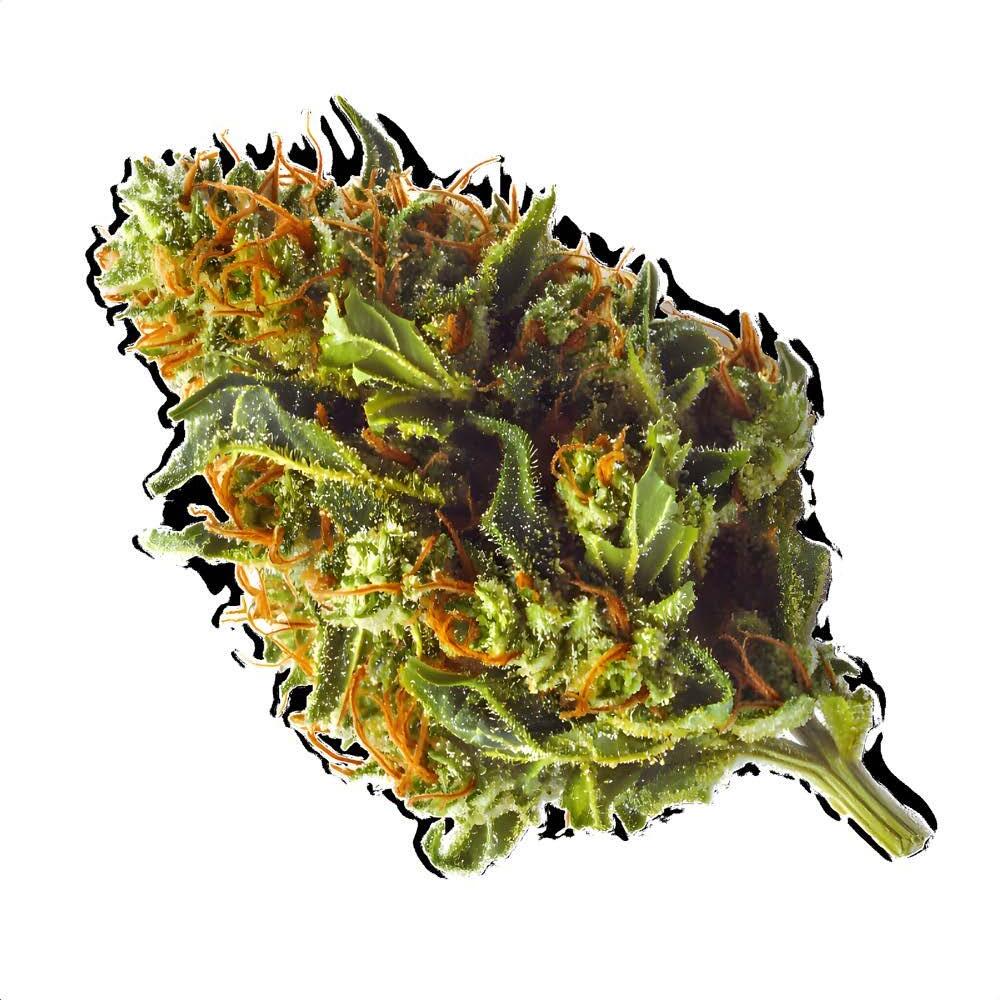


Bubba’s Peach Stand presents as a hard fuel/ gas variety that unfolds into a peach cobbleresque variety that is tantalizing and inviting.
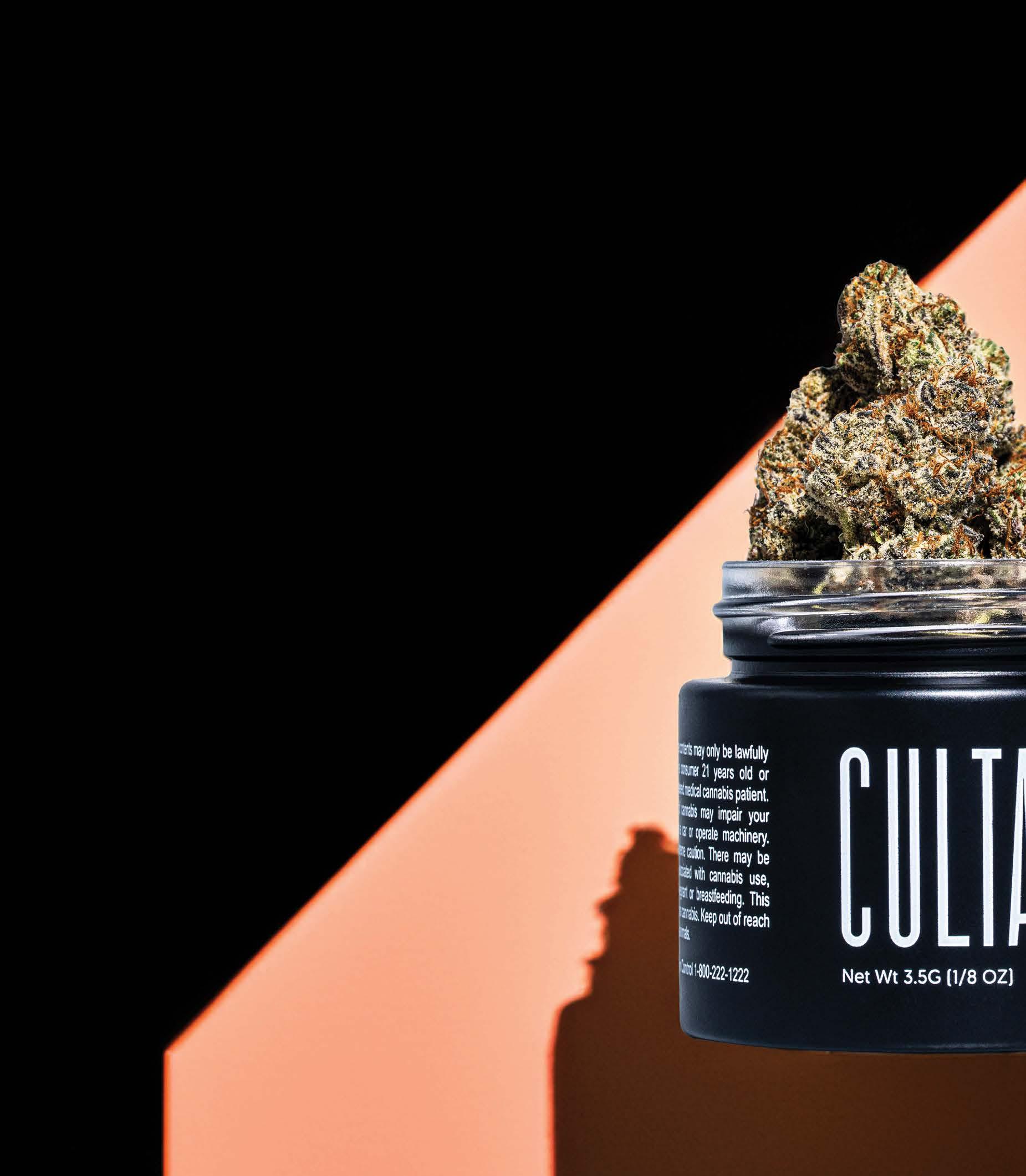
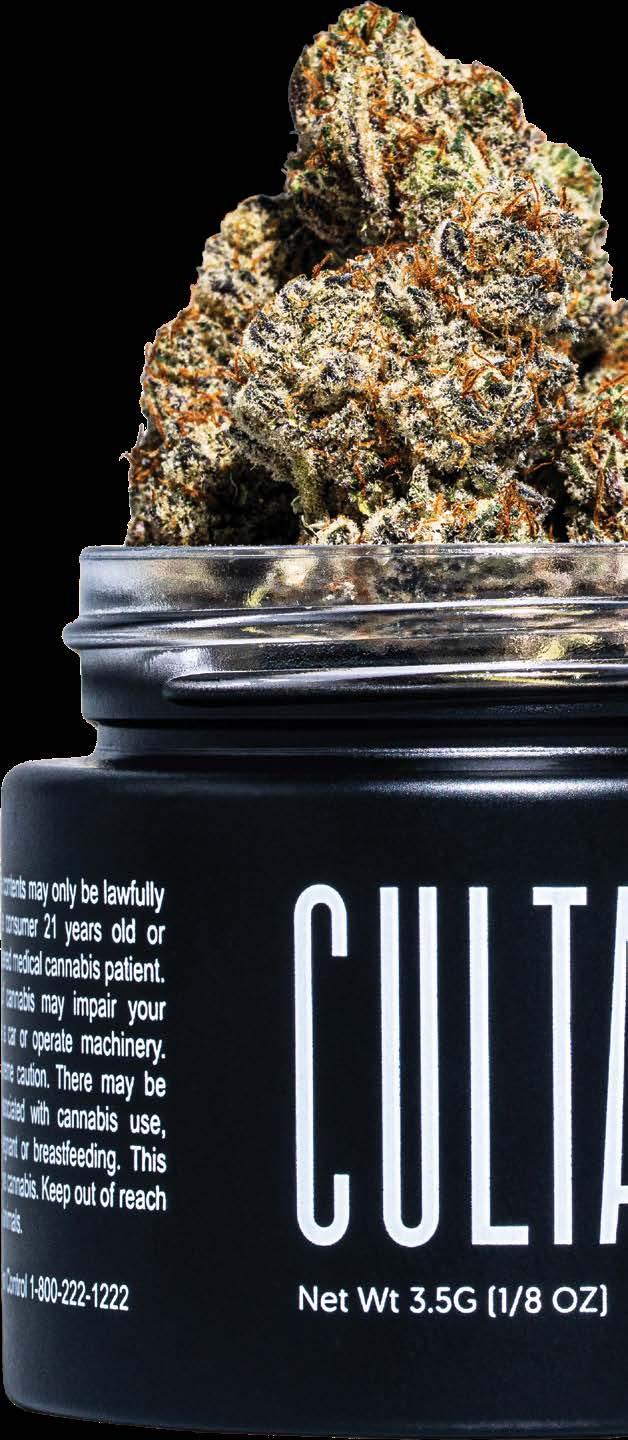


This month, we have another banger out of Culta’s genetic wheelhouse: Bubba’s Peach Stand. Our jar was packed and full of dense nugs, littered with trichomes and brimming with a gaseous, cookie-like odor.
CONTRARY to its namesake, Bubba’s Peach Stand has quite a fuel-filled scent that is complemented by that quintessential, earthy cookie aroma reminiscent of slightly burnt baked goods. It is only after the flower has been ground out that the fruity notes are released — but released they were. Beneath the compact trichome layer exists a deeply purpled leaf with fairly dense orange pistils that displays Culta’s expertise in cultivation and harvest timing.
I love when a flower’s scent evolves through the grind.
Popping a jar and smelling one thing and then grinding the flower out and smelling another is one of the core aspects of Cannabis connoisseurship that doesn’t exist in other epicurean industries. Culta — through a variety of in-house breeding projects and specialty sourcing — has several cultivars with layered aromas that evolve through the process of rolling up.
TOTAL THC: 25.18%
TOTAL TERPS: 1.91%
CARYOPHYLLENE: 0.58%
LIMONENE: 0.54%
LINALOOL: 0.27%
HUMULENE: 0.14%
Bubba’s Peach Stand presents as a hard fuel/gas variety that unfolds into a peach cobbler-esque variety that is tantalizing and inviting.
The effect profile is one of the more mellow, “hybridy” profiles available on the market, given the 1-to-1 ratio of caryophyllene and limonene that is tempered with linalool and a dollop of humulene. Interestingly, there is little to no myrcene detected, which in and of itself makes Bubba’s Peach Stand worth exploring, but in effect, limits the foggy, couchlock sensation, leaving a truly mellow but not sedative high.
For a layered aroma experience, look no further than Culta’s Bubba’s Peach Stand, and grow your own palate! CULTA.COM | @CULTAIG





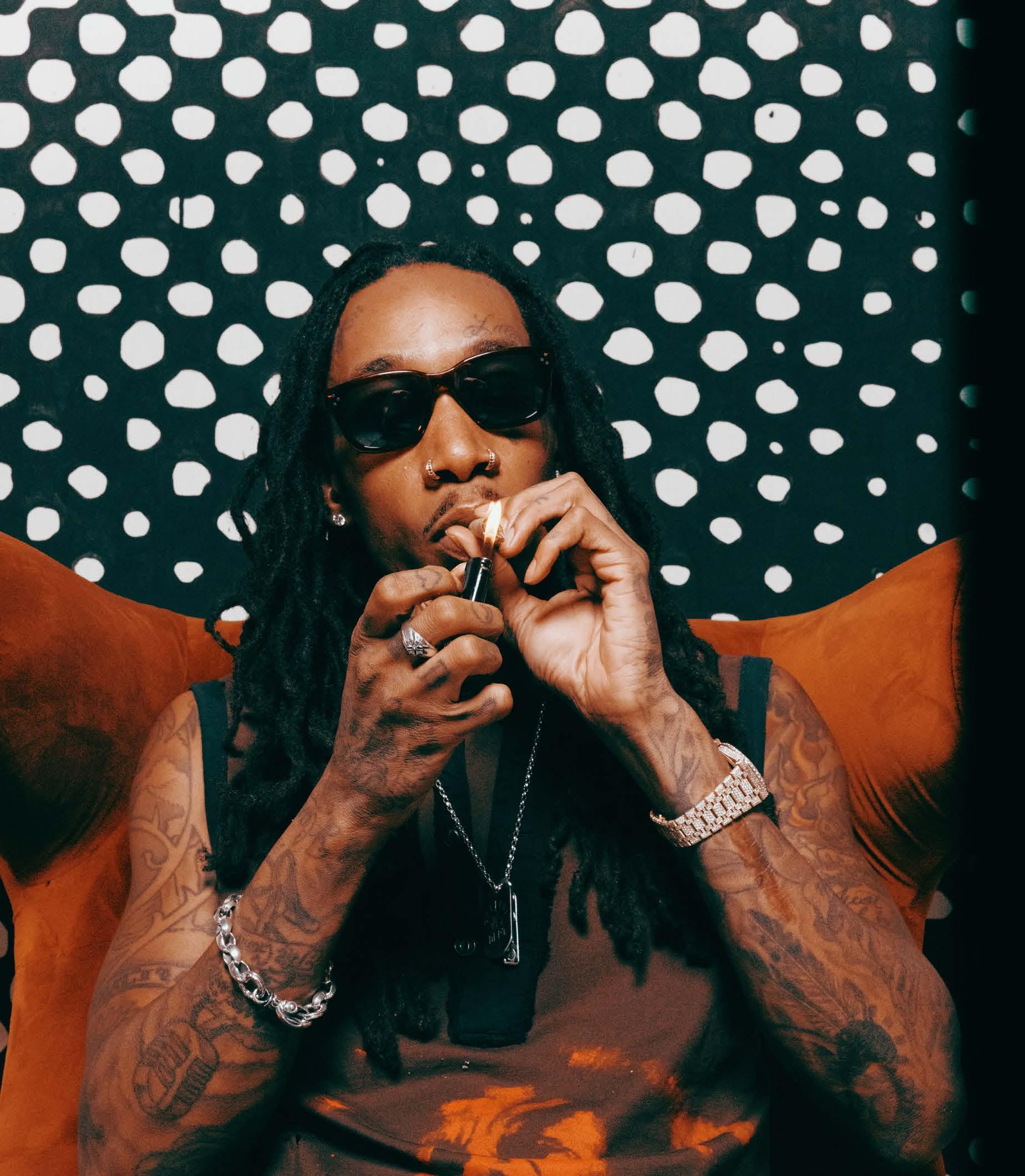
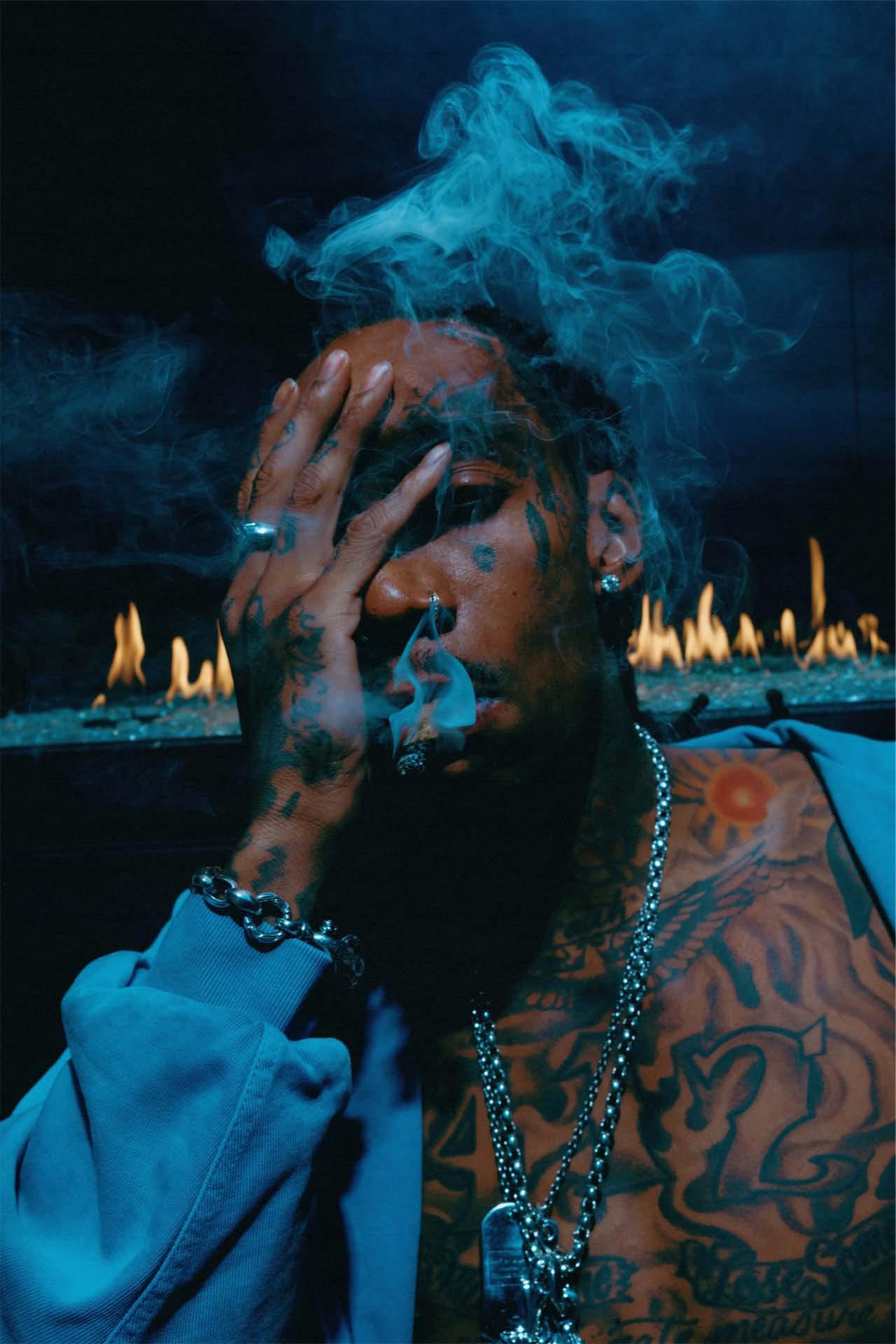
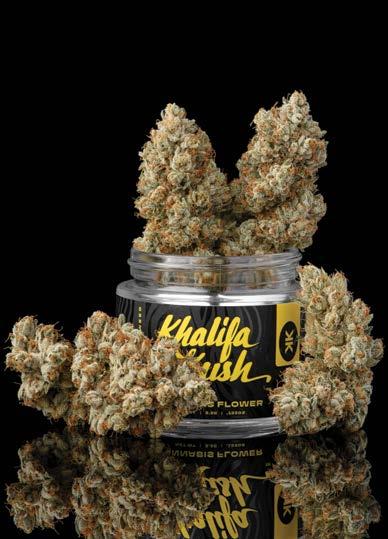
Some people exude energy. A vibe can be dead, and they glide into the room like they’re made of raw, uncut aura. Suddenly, everything’s in motion. If you’ve been in a room with Wiz Khalifa, you already know the score. The man can step into the club and have the dancers throwing money at him. If there are levels to the weed game, Wiz is at the top. After two decades of making and taking hits, he’s accomplished what so many people have tried to do and failed: He’s launched a successful celebrity weed brand, Khalifa Kush, and managed to keep it hot when so many celebrity-driven brands have cashed out or crashed out.
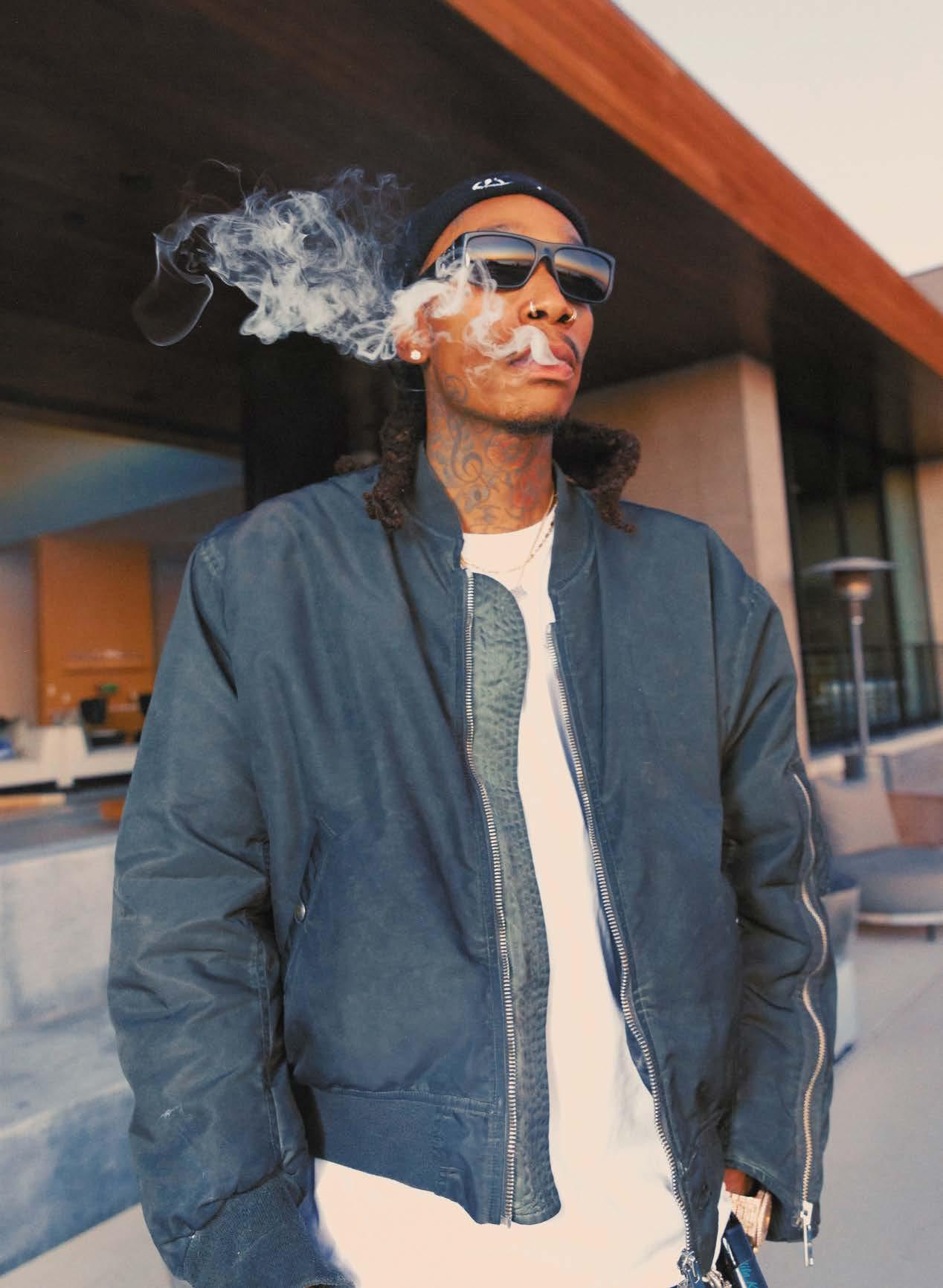

We had the chance to chop it up with Wiz oceanside in Malibu over the holidays to hear about his genesis, his world and his plans for the future.
Anyone familiar with the Pittsburgh native’s music catalog knows that Wiz has been repping the plant since day one. It’s been the calling card of his career.
Wiz knew Cannabis was going to be a major part of his life when he was a young buck. In fact, he recalls the exact moment his hobby became his lifestyle.
“It was when I heard ‘Gotta Stay High’ by Three 6 Mafia,” he said, referring to the smokers' rallying cry “Stay Fly” from the 2005 album “Most Known Unknown.”
“I was sitting in my crib. I was in like 11th grade, maybe, and I was wondering if I was smoking too much weed at the time. I heard the beat, and I was like, ‘Damn, I need to find that song.’ And then I went and I found the actual first verse and hook — because this was back in the day, before YouTube and all of that shit — so you really had to dig deep. I ended up finding it, and on the hook, they were saying, ‘I gotta stay high till I die.’ And I was like, ‘Damn, me too.’ Man, that’s when I figured it out.”
When it comes to the strain that made the biggest impact on him during those days, Wiz doesn’t hesitate. “It was Purple Haze back then,” he said.
“Yeah. Yeah. Purple Haze was like the original bomb ass weed. They used to call it Piff. Everybody wanted Purple Haze. Cam’ron made it super popular, but it was like the best weed on the East Coast. Out here on the West, they was always smoking Kush, and they was smoking Grapes. That's what I smoked first when I came out here was Grapes, in Oregon or some shit like that. I had never really smoked Bay Area weed. And then when I went to the Bay, that's when I met Berner, and that's when I started smoking Cherry Pie and real OG Kush. We had Sour Diesel and we had Headband back in the day, but it wasn't until I met Berner that the OG got as real as it is.”
As his relationship with the plant grew, so did his music career. The two were intertwined from the jump, with “Burn Sumthin” as a standout on his 2006 debut, “Show and Prove.” Then, in 2010, his career hit full flower.
First, he dropped the “Kush and Orange Juice” mixtape. Then he hit us with “Rolling Papers,” and his trademark an them “Black and Yellow.” He closed out that seminal year by teaching an entire generation of smokers how to roll a perfect joint, all while sitting in a hot tub, in a video that, as of today, has nearly 14 million views on YouTube.
In his life as an artist, Wiz sees weed as an integral tool for enhancing the creative process.
“I love music, and I work really hard at making music,” he said. “I've been working hard since before I was smoking a bunch of weed. And I think I found weed at an appropri ate time because I was able to develop my skills and my passion, and the weed never got in the way of that. It only enhanced it. … You got to be at a point where you're able to handle the weed because not everybody is as successful and functional while smoking this much pot.”
Considering how long weed has been a part of his per sonal brand, it only makes sense that Wiz would have his own actual weed brand.
That started to become a reality in 2012, when he linked up with friends from his youth, Will Dzombak and Tim Hunkele, who developed a cultivar specifically for and with Wiz. The strain? Khalifa Kush.
Described as an “indica-dominant hybrid OG,” the KK hits the gas and pine notes, and served as the bedrock for the brand, which launched to the public under the same name in 2016. Now they have a solid lineup of genetics that have all been hunted in collaboration with Wiz, with his palate in mind.
In 2020, they brought in current CEO DJ Saul, and as of this writing they’ve grown to 15 markets around the world: Domestically in Washington, Oregon, California, Arizona, Nevada, Illinois, New Mexico, Ohio, Pennsylvania, Maryland, Washington, D.C., Florida, Massachusetts, and internationally in Germany, Switzerland, United Kingdom, Thailand and Israel, with more to be announced soon.

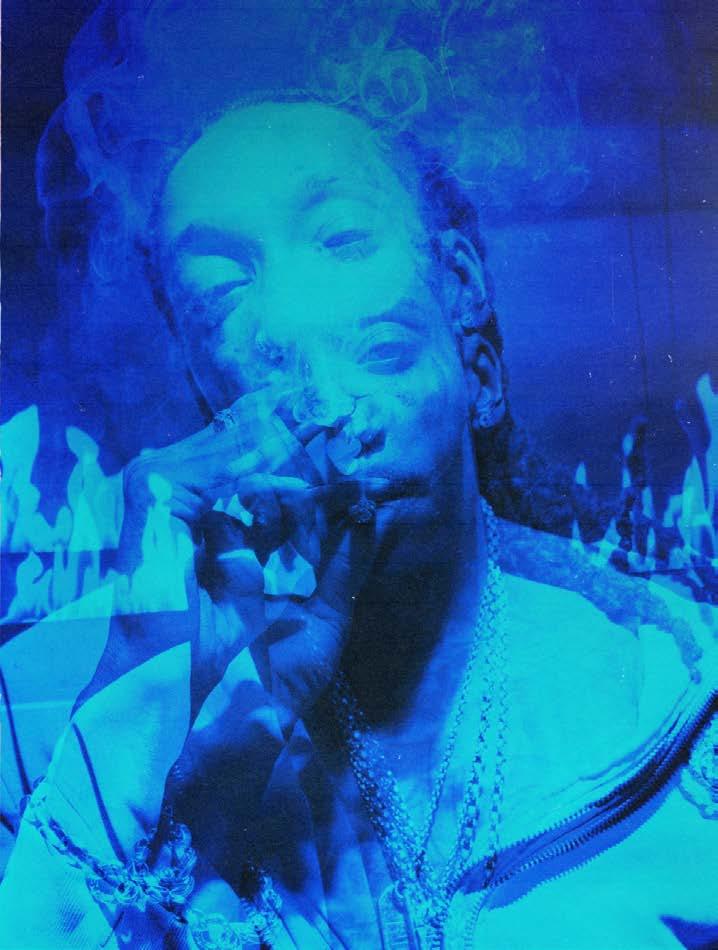
THE COLLABS
The KK team even proved its chops by winning the Leaf Bowl Award for Best Indoor Flower - Sweets & Dreams at the 2025 California Leaf Bowl with their cultivar Point Breeze, a cross of Khalifa Kush and Gastro Pop. (For those keeping score, the Leaf Bowl is judged blind by some of the preeminent expert palates in global Cannabis. You don’t often see that kind of heat from just any celebrity brand.)
“There's no disrespect to any of the other [celebrity] brands because I like some of them,” Wiz said. “But the difference between my brand is that I actually came up doing this before it was a brand of weed. So people understand that I would be doing this regardless, and they know that what it was built off of is everything that they see. … I think that we've just lived it enough to give it a good reputation. And that's something that you can't really just buy or put a face on.”
“It takes years and years in the game and knowing and making other valuable moments with the culture as well,” Wiz said, continuing. “I have the how to roll video in the hot tub that's taught people how to roll weed. And this is before content creating was a part of everybody's marketing strategy, but we've been doing that for Khalifa Kush. So that's why we're going to last longer. Because we've been working longer. We've been pushing the idea and the lifestyle since day one. It all goes hand in hand. People who smoke weed or listen to my music or just know the brand in general, they have a really good foundation to go off of before they even walk in the door.”
THE KHALIFA KUSH TEAM WON BEST INDOOR FLOWER IN THE SWEETS & DREAMS CATEGORY AT THE 2025 CALIFORNIA LEAF BOWL, WITH POINT BREEZE, A CROSS OF KHALIFA KUSH & GASTRO POP.
The hip-hop world is all about features, and Wiz has lent a verse or two to a gang of artists over the years. So it makes sense that his weed career would be all about the collabs.
One of his biggest collaborators is someone he works with in both worlds.
“Berner taught me about legal weed,” Wiz said, referring to the founder of the global San Francisco-based behemoth Cookies. The company’s Maywood store in Southern California served as the first California retailer for the Khalifa Kush brand. “I wouldn't have known anything about the whole weed game if it wasn't for Berner. Me and Bern are always collabing. He's always putting new albums out and shit. So anytime he's doing a new album, he hits me up right before it's done, and he gets me to put a verse on there. And I usually do the same with him,” he explained.
The collaboration doesn’t stop there. After playing funk legend George Clinton in the 2023 film
“Spinning Gold,” Wiz and Khalifa Kush partnered on a weed brand called The Funk, with the Godfather of Funk himself (see this month’s “Cannthropology” for more on P-Funk).
“We did an interview where we sat down and kind of just discussed some shit,” Wiz said. “We kind of just sat there and talked for like two hours, bro. It was a really cool conversation. Then after that, it made sense for us to try to partner up and do some shit with weed. I gave him some of my weed, and he really, really liked it. So based off of that, he was like, ‘Yo, I kind of want to make my own strain just like this or whatever I could do.’”
The Funk dropped in spring 2025.
>>CONTINUES NEXT PAGE
Perhaps Wiz’s biggest collab project is raising his kids. He recently had his second child, and like so many parents who consume the plant, feels like Cannabis actually helps parenthood, rather than hindering it.
“For somebody like me who enjoys smoking pot as much as I do, it definitely helps with parenting and just to be relaxed and in a good zone at any point of the day, especially dealing with a lot too,” Wiz said. “I'll forget to smoke weed sometimes. I'd be going all day or half the day, and I'd be like, ‘Damn, I need to smoke some fucking weed.’ And then everything gets cool as shit after that. But sometimes I'm with my kids so much I forget to.”
When he’s not making music, smoking weed or hanging with his kids, you can probably find Wiz in the gym. An avid trainer, he utilizes the plant to help him focus.
“Cannabis definitely helps with my training 100%,” he said. “It keeps me calm. It keeps me lighthearted. My mind-to-muscle connectivity is really, really sharp when I'm at a good stoned level, and I'm able to train. And it also makes me appreciate the weed a lot more. It's funny because when I was younger, I just thought it was all about just sitting around and getting high. Somebody had invited me to work out, and I was like, ‘Man, I don't want to work out because that's going to take two hours, and that's two hours that I could be smoking weed.’ And I'm glad that I thought like that at that time because now I can appreciate two hours to myself without smoking, and the feeling and the high that I get from exercising and sweating and breathing hard and physically coming in contact with some things.
“You get to enjoy livelying yourself up and enjoy that high,” he continued. “And then you get to bring it back down and enjoy the stoned high as well. So you get the best of both worlds, and I feel really blessed to be able to enjoy both because there are a lot of athletes who just, professionally, they're not allowed to smoke just because of the rules or whatever. But they would enjoy that so much if they got to perform at that level and smoke at a certain level too. If you could hit a bong rip, you got some good lungs, man. It's not hurting your lungs. If you can clear a fucking bong, bro. Yeah, dude. Yeah, that's champion lungs right there.”
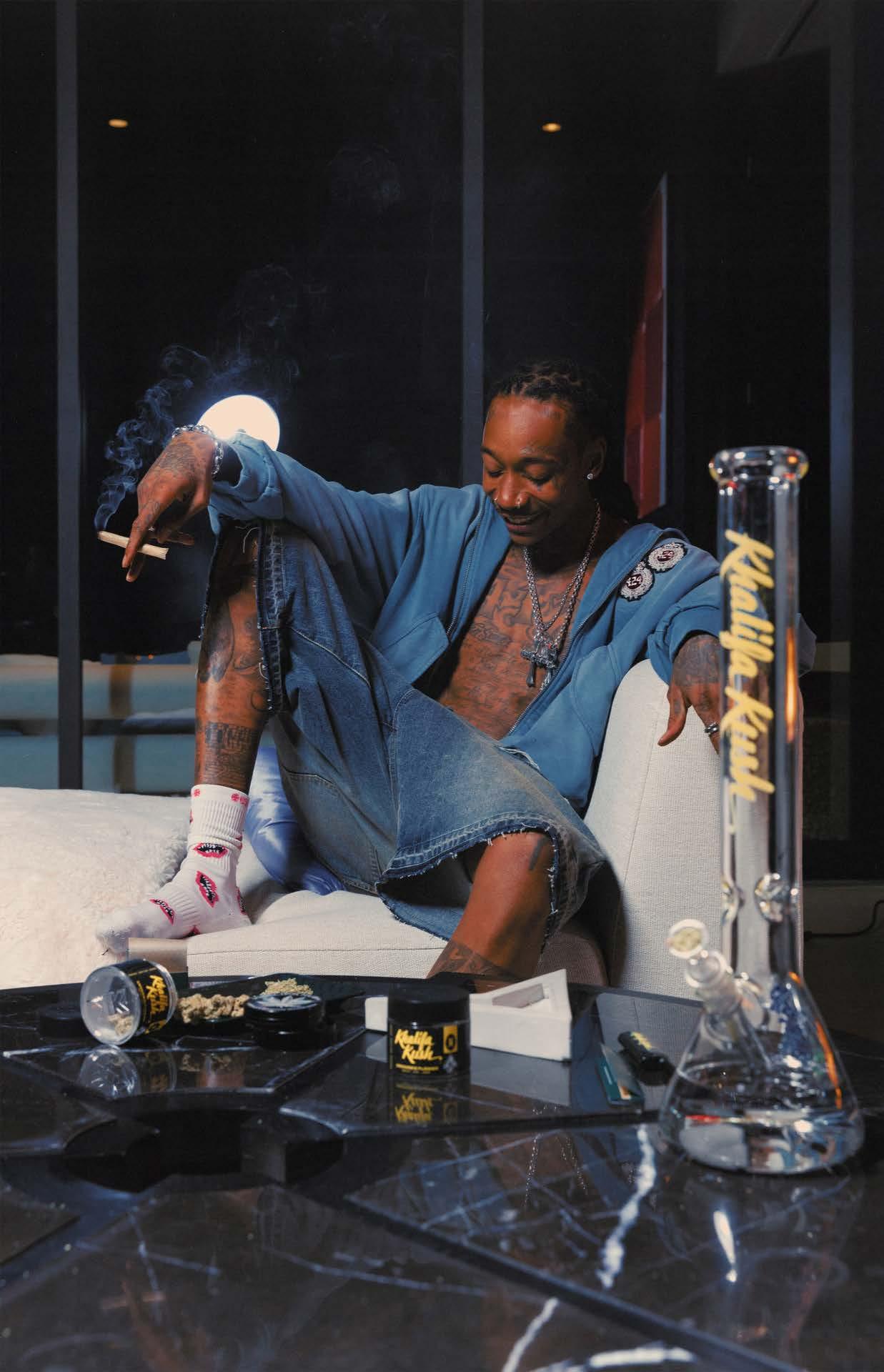
“I'LL FORGET TO SMOKE WEED SOMETIMES. I'D BE GOING ALL DAY OR HALF THE DAY, AND I'D BE LIKE, ‘DAMN, I NEED TO SMOKE SOME FUCKING WEED.’ "
Wiz came up during the dawn of the smartphone era, when streaming, social media and YouTube officially replaced MP3s and albums as the prime delivery mechanism for music and culture.
As a result, Wiz is always on. If you follow him on Twitch, you already know. He and Khalifa Kush Vice President of Marketing Stephanie Arakel (known on Instagram as @_stephaniecakes_) throw wild Twitch stream parties and get into all kinds of shenanigans on the platform.
During the Leaf Magazines photo shoot for this article, Wiz kept his Twitch audience plugged in for the majority of the time, asking “Chat” questions in between shots.
“My favorite thing so far is definitely when Nick did the handstand dab,” Wiz said, recalling memorable Twitch moments. “We did a random Steeler Sunday, and we had this dude named Nick. He came through, and we were spinning the wheel. And one of the commands on the wheel was to do a fucking handstand dab. And he did the dab, but he also ran away and was about to throw up everywhere, couldn't find a trash can, ended up in the bathroom for like 20 minutes and yeah, just had to be carried up out of there. That's rough. Yeah. It was cool. I fucked with it.”
Wiz’s Twitch channel recently surpassed 10,000 paid subscribers, and he dropped the album “Khaotic” as a gift to his fans to mark the occasion.
“The next thing that I want to do is a hundred-joint sleepover,” Wiz said. “So we’re going to smoke a hundred joints and then do a 24-hour stream. I think that would be just hella fun for people to be able to stay the night at my house or wherever we decide to do it. And then also I'm going to do something school-related, where it's like a day in class, but it's like a weed school though. So you're learning about weed, you're learning how to roll up, you’re learning all the different techniques. You know what I mean? Of course, we’re going to have lunch, we’re going to have PE and all of that. …Yeah, just incorporate weed in real life and have fun.”
THE PLAN
In May of this year, Wiz kicks off a U.S. and European tour with Machine Gun Kelly, which throws back to his collab with MGK from 2015, “Mind of a Stoner.” When asked whether they’re going to perform the track together, he plays it chill.
“We’ll see, yeah,” he said. Though he won’t confirm or deny an onstage Wiz-MGK team up, he can confirm that he has plenty in store for his fans and followers.
“I plan on releasing a lot of new music before then,” Wiz said. “So it'll be the new stuff that I drop and always, always do the hits. It just depends on the temperature and the energy of where the fan base is. I feel like, especially through streaming, it's going to attract new people and new attention, but I'm always going to have my core, so it's going to be good to see a mixture of the two when I go out there.”
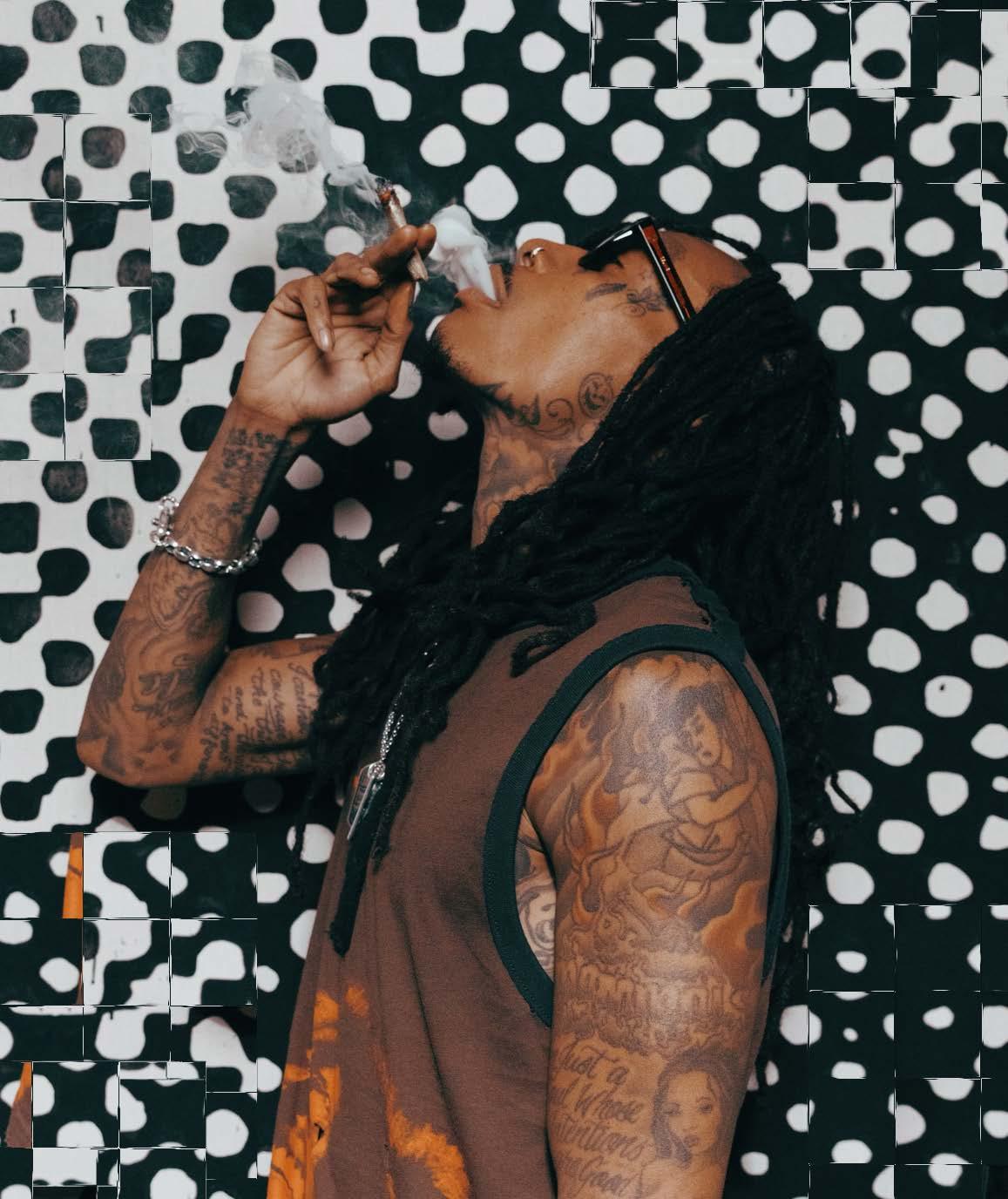
“Overseas, they have a really big appreciation for the plant. They have a really big appreciation for the knowledge, and they just want to grow their shit and expand, and be on what we're on as well. We have a lot of experience to catch them up on. So, as the laws loosen and people become more friendly overseas, that's the next wave, in my opinion — the globalization of Khalifa Kush.”
Of course, it wouldn’t be a Wiz plan if it didn’t involve collabs.
“I did a collab with YOKKAO, who's a really popular heavy sponsor in Muay Thai and combat sports overseas,” he said.
to train, we going to wrap the babies up in Khalifa Kush blankets and put them to bed at the end of the night.”
While they gear up for that global push, at home in the U.S., the team is working with Wiz on pheno hunts for their jars.
“Genetics are always advancing as time goes on,” he said. “So we try to do something new that's going to stand out, and that’s going to be groundbreaking as well as go along with the culture. There's a lot that goes into it. It's just weed intuition and knowing what's good weed and what's not. … Sometimes, you just know.”
As for the brand, Wiz and the KK team have their sights set on the global stage.
“That’s the big part, and that's the exciting part,” Wiz said, adding that a lot of innovative work is happening here in the advanced U.S. market that can be shared with other countries.
“We have Khalifa Kush in some Thailand stores because it's legal over there. We have workout gear. We got yoga stuff. Anything that goes with the lifestyle. Like I said, this is all stuff that I do as well. So, with the lifestyle and with the people who believe in the lifestyle, we're going to do it all together. We going to smoke together, we going
Of course, when asked whether there’s a favorite strain he keeps in his lineup at all times, his answer is on point. “The one I smoke the most is definitely the original Khalifa Kush,” he said. “Just the black and yellow one.”
@WIZKHALIFA | @KHALIFAKUSH






Peter Muller has been consistently innovative in the contemporary glass art scene for over 25 years. Around 2010, his main medium transferred from soft glass to borosilicate. Beginning in the hot shop with furnace work in 1999 around western Massachusetts and southern Vermont, some of his earliest inspirations were Ed Branson, Dale Chihuly, Dante Marioni and Lino Tagliapietra. These greats and their accomplishments continued to push Muller forward for over a decade to hone his skills in the hot shop, learning to create a variety of aesthetics while developing his own.

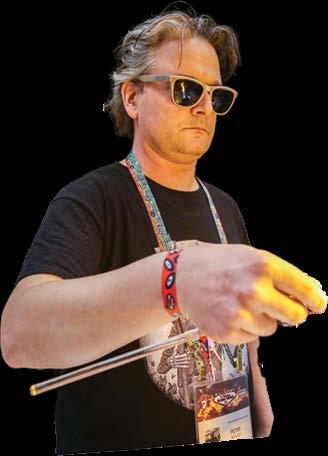

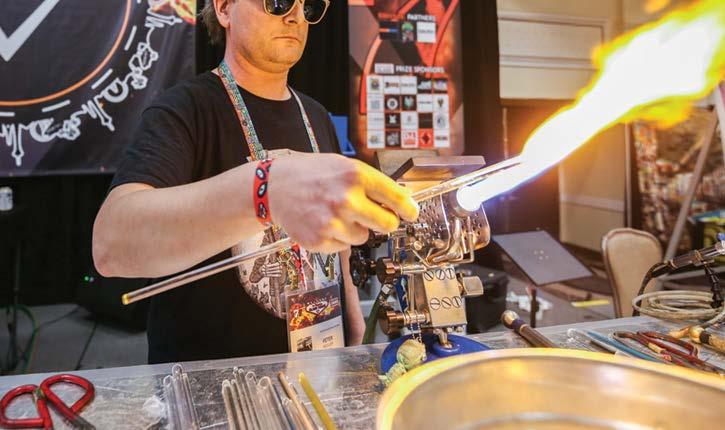
FUNCTIONAL PIECES had been on his mind since the beginning; it was during the financial crisis in ‘08 that he started to see the traditional art market transforming. Muller's shopmate, Joe Peters, couldn’t help but notice that he was working on a “major” torch and said, “Hey, give this Herbie a try.” It was then that Muller learned how to apply the heat base the Herbie provided, which solved a lot of the problematic issues that tend to come with moving molten glass from the soft glass medium to flameworking borosilicate. One of the leading galleries at the time was Chesterfield Glass Art — owner Simon Abrahams approached Muller and said, “If you can put a downstem in that piece, I can sell it.” Coyle then taught him how to do a ring seal, and the flood gates opened: In 2010, he decided to solely focus on flameworking borosilicate glass.
Known for his stitched and patchwork characters, Muller said a lot of his inspirations came from the creations dreamed up by Tim Burton, Dr. Seuss and Edward Gorey.
Known for his stitched and patchwork characters, Muller said a lot of his inspirations came from the creations dreamed up by Tim Burton, Dr. Seuss and Edward Gorey. Muller

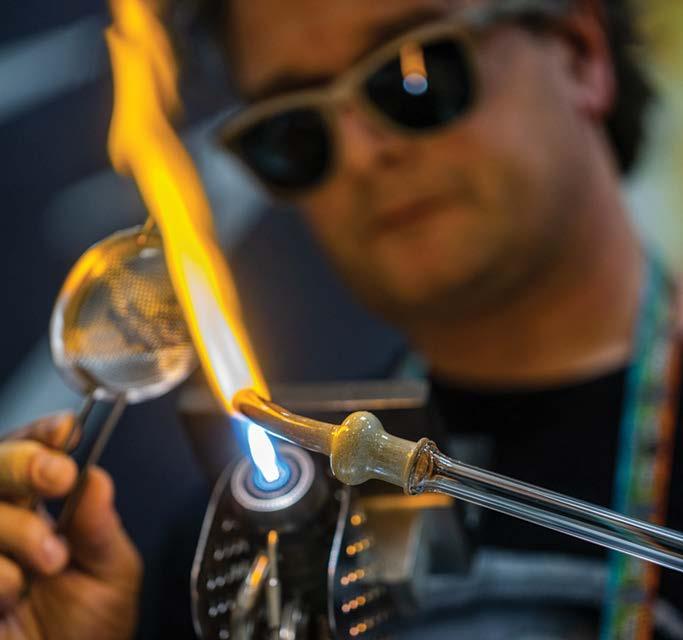
said, “I wanted to create a creepy-cute thing, something that stands alone, something that speaks without words.” And out of this line of creation, the voodoo doll aesthetic was born. Muller hopes that through his designs, “adults and children alike can effortlessly engage with the arts and be inspired by the limitless possibilities of the imagination.” Collaborations are a constant norm in his archive, and his way of fusing (pun intended) another artist’s unique aesthetics with his own is seamless.
On the technical side, Muller’s daily workhorse is a 40-millimeter torch created by the famed German company Herbert Arnold Gruppe. Muller said that his “Herbie” gives optimal core heat that allows him to apply his specific skills in melding together glass. Also integral to Muller’s process is Luken Sheafe, better known to industry folks as Salt. To this day, Muller said, “Salt is who I call when I can’t figure something out, whether it’s glass- or liferelated. He’s an amazing human who has great ideas and solutions to share.”
Today you’ll find Muller working out of his secluded home-based studio in Guilford, Vermont, in the southern Green Mountains. Also a dedicated father, Muller sounded so proud when he told us he was going to enjoy the weekend with his daughter, a musician who was on her way home to perform locally at The Stone Church in Battleboro. You can check out her work at @emily.margaret.music.
Muller’s 2026 calendar is full of amazing openings and releases — he has shows planned in Arkansas, Texas, California, Chicago, Maine and the U.K. Additionally, there are always collabs, smaller group shows and events that he participates in throughout the year.

MARCH 28 | SAN MARCOS, TEXAS CONNOISSEUR SMOKE SHOP
MID-APRIL | NEWPORT BEACH. CALIFORNIA TEMPLE TAKEOVER AT PIECE OF MIND OC
APRIL 24-26 | WILLIAMSBURG, MASSACHUSETTS WORKSHOP AT SNOW FARM
MAY 30 | ALGONQUIN, ILLINOIS WOODY'S GLASS GALLERY
MULLERGLASS.ORG | @MULLERGLASS @MULLERINFO
Tune in to his Instagram pages to get a heads-up about where his art is being released.

TRINA URRATA-WEINTRAUB COLLAB (2025)










Welcome to the Leaf’s newest column at the intersection of literature and getting lit. Check back every month for book reviews and recommendations that pair perfectly with a stoney state of mind. Because, really, is there any cozier combo than a good sesh and a great story?
Let’s get to burning and page turning …
I’M KICKING
THINGS OFF with a heavy hitter that came very highly recommended: “Wild Dark Shore” by Charlotte McConaghy. This novel quickly landed on bestseller lists from The New York Times to The Washington Post and has made waves worldwide, being named the 2025 Dymocks Book of the Year in Australia and earning a spot on the Carnegie Medal longlist, among many other accolades.

Set on a remote island near Antarctica, “Wild Dark Shore” follows a solitary researcher and his three children living in isolation at the edge of the world to safeguard our largest seed bank. As a climate disaster looms and a mysterious woman washes ashore, their carefully contained existence begins to unravel.
I was immediately immersed in the richly drawn, oddball crew of characters and a breathtaking landscape that became a character in its own right.
This eccentric family must now uncover buried truths and make impossible choices that could very well shape the future of global agriculture and humanity itself.
This novel truly has it all: romance, plot twists and thought-provoking themes of family, seed sovereignty and climate change. I was immediately immersed in the richly drawn, oddball crew of characters and a breathtaking landscape that became a character in its own right.
“Wild Dark Shore” pairs beautifully with a quiet night, a thoughtful high and nowhere else to be. Once I was a few chapters in, I genuinely couldn’t put it down. Some Sour OG rosin felt like the perfect companion for this read. Clear-headed and focus-forward, it provided a mental lift that is just expansive enough to let the emotional depth of the story fully wash over you. This is one of those books that is best enjoyed when the rest of the world fades out, and hash always helps get me there.
Until next time, readers!








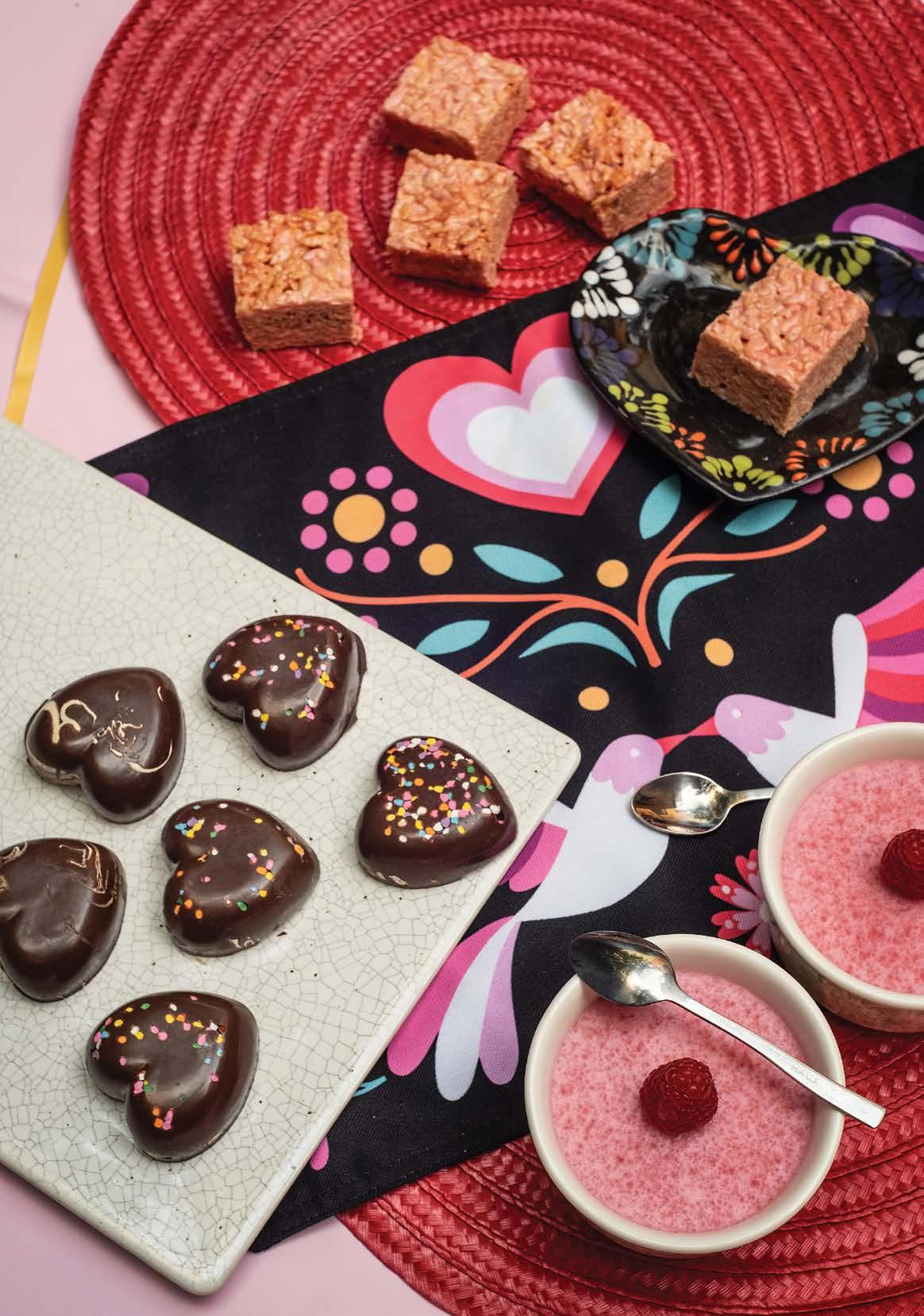

I picked up 7 grams of Pruf Cultivar’s Banana Fudge Pop from the Electric Lettuce in Oregon City, Oregon, my old stomping grounds. I was testing infused recipes for Valentine’s Day. I don’t really care about Valentine’s Day, but I do love chocolate, sweets and my husband. Banana Fudge Pop feels like a mild sativa to me. Usually, I’m not a sativa lover, but this strain is very smooth and doesn’t make me the least bit anxious. The infused butter tasted good, which is not always the case. I decarboxylate the 7 grams and infuse it into either 2 cups of coconut oil or butter, depending on the recipes I am developing. If you want more information, please email me at Laurie@Laurieandmaryjane.com
Servings: 12
3 to 4 tablespoons canna-butter
(10-ounces)
1.
or spray a 9-by-13-inch pan.
2. Add the marshmallows, and heat slowly until the marshmallows are fully melted.
3. Add the cereal, and stir until well mixed. Press into the prepared pan. Allow to set for at least a couple of hours before cutting into twelve 2-inch squares.
Servings: 4
1 cup cold plain or vanilla Greek yogurt
3 tablespoons powdered sugar
4 teaspoons canna-oil or butter, melted and cooled
1 teaspoon vanilla extract
2 cups fresh or frozen strawberries or raspberries Berries for garnish
1. Beat the yogurt with the sugar, canna infusion and vanilla until thick, about 3 to 4 minutes.
2. Puree the berries in a blender or food processor
3. Gently fold the berries into the yogurt mixture. Divide between 4 ramekins, and chill for at least an hour before serving. If desired, garnish with berries.
Servings: 12
2 cups chocolate chips
1/2 cup condensed milk (I didn’t try it, but I bet the dulce de leche condensed milk would be great)
3 tablespoons canna-butter
2 teaspoons vanilla, or 1/4 teaspoon almond extract
Peanut butter, toasted nuts, crushed malted milk balls, sprinkles (optional)
1. In the top of a double boiler, melt the chocolate chips with the condensed milk, canna-butter and the extract. Stir frequently.
2. Add peanut butter or any other optional ingredient if desired, and stir into the melted chocolate.
3. Pour the melted chocolate into silicone molds or a 10-inch baking pan lined with parchment. Divide into 9 to 12 pieces.



At this moment in time, the Americas are remembering themselves, from the high deserts of the Southwest to the rainsoaked jungles of Central America. Indigenous cultures are rising, not as relics of the past, but as living, breathing forces of reclamation. North and South America are one landmass with many names, one body with many tongues, and the movements rippling across it speak a shared truth: No one is illegal on stolen land. The border crossed us. These aren’t catchphrases; they are ancestral memories resurfacing through cultural movement.

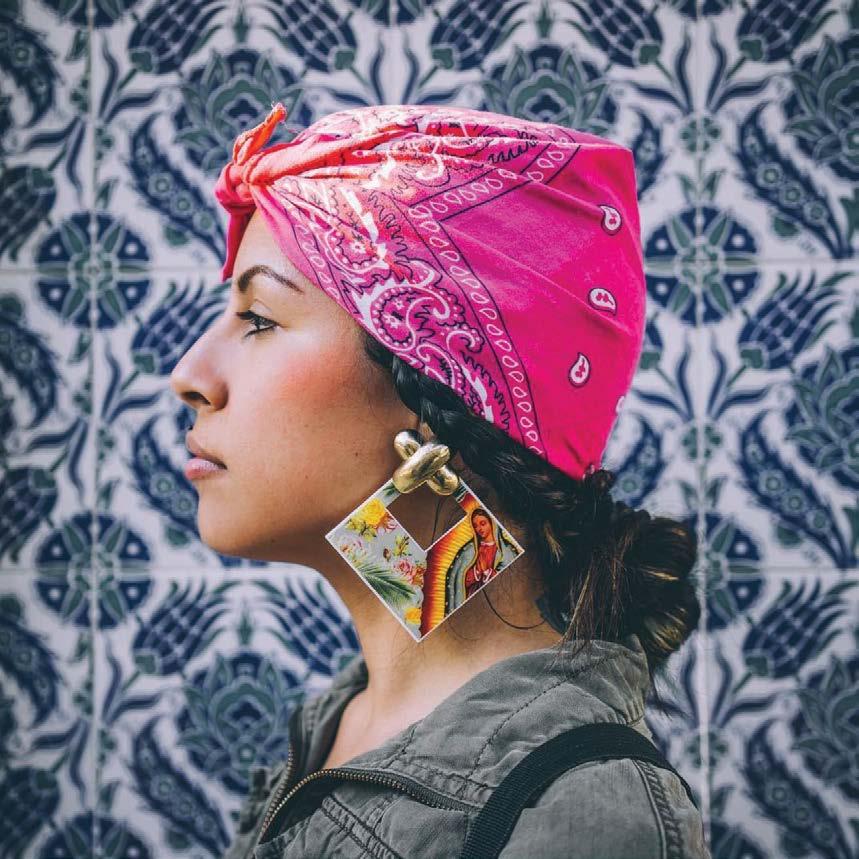
WHAT WE ARE WITNESSING isn’t a trend; it’s a correction. For generations, Indigenous and brown identities were hidden, erased or forced into silence as a means of survival. Now they are stepping forward whole and unapologetic, carried by artists, movement organizers and culture-keepers who refuse to shrink their lineage. These movements are born in family kitchens, community centers, underground art spaces and backyard stages led by people who proudly embody their roots and invite others to remember theirs.
One of the clearest voices moving through this cultural awakening is Reverie, a self-made artist whose work has helped shape West Coast Chicano culture while ushering in a bold reclamation for Indigenous Latinos from Los Angeles to the world. Reverie has performed in 28 countries and 37 U.S. states, carrying a message that dissolves borders and speaks straight to the spirit.
Her delivery is raw and commanding, and her lyrics hit like medicine: stories of struggle, rage, pride, survival and love. She speaks openly about her lineage — Mexican, Salvadorian, Native — not as labels, but as lived embodiment.
Raised in a humble, single-mother household in northeast Los Angeles, Reverie didn’t wait for permission, labels or a seat at the table — she built her own. From handcrafting her wardrobe to writing her lyrics, directing her visuals and shaping her sound, she moves with full autonomy. In a world that constantly tries to package culture, Reverie insists on sovereignty. Culture, in her world, isn’t something you borrow; it’s something you live. Her delivery is raw and commanding, and her lyrics hit like medicine: stories of struggle, rage, pride, survival and love. She speaks openly about her lineage — Mexican, Salvadorian, Native — not as labels, but as lived embodiment. Her declaration “brown is beautiful” has become more than a lyric; it’s a mantra echoed by fans who finally see themselves reflected without apology.

When Reverie took the stage in Portland, Oregon, the room snapped to attention. The moment she grabbed the mic, her voice cut through

sharp, fully charged. Reverie didn’t just perform; she commanded. Each bar landed with intention, each movement carried presence. This is what hip-hop was made for: truth amplified through rhythm, culture alive and breathing in real time. Nothing about it was polished or distant. It was intimate, gritty and fully present.
Reverie reps Los Angeles like an altar. Her city isn’t a backdrop; it’s a living family member shaped by migration, resistance and creativity. With that devotion comes courage. She has spoken boldly and taken a public stance against immigration violence. “Fuck Trump, and Fuck ICE,” she chanted into the crowd, a statement fueled by the fear, trauma and family separations inflicted by Trump-era politics on immigrant communities nationwide. In an industry that rewards conformity and palatability, Reverie chooses truth, even when it’s risky.
After her Portland performance, Reverie sat down with me to reflect on culture, wellness and the role plant medicine has had in her life and art.
When asked about Cannabis and its role in her life, Reverie doesn’t glamorize or sugarcoat. She shares that she was introduced to it too young and is clear about the dangers of misuse, especially for youth. As an adult, her relationship has shifted into something intentional and medicinal.
“Now that I’m grown, I appreciate marijuana in a healthier way,” she explained. “It helps me manage anxiety and nausea. It doesn’t make me lazy. It helps me slow down, breathe, focus and assess things clearly.”

She speaks openly about boundaries. “When I start using it to numb pain instead of for celebration or ceremony, that’s how I know I need a break,” she said. Her words echo an ancestral understanding long held in Indigenous cultures: plant medicines are allies, not escapes.
The conversation turns toward the growing Cali sober movement: stepping away from alcohol while maintaining intentional relationships with plant medicine. Reverie shares that she’s five months into that journey.
“Alcohol is really damaging for a lot of people,” she said. “I think it’s powerful that we’re finally talking openly about mental health.”
She celebrates the generational shift toward therapy and wellness. “Now it’s like everyone should be in therapy, and I’m a fan of that.” There’s no shame in her tone, only clarity. “Healing,” she emphasized, ”is not about perfection; it's about honesty.”
As the dialogue deepens, the focus turns to ancestry and diversity.
Reverie reflects on how many people with Indigenous blood are waking up. “It’s a beautiful time right now,” she said. “We’re realizing how powerful our roots are and how much we were taught to forget.”
She speaks boldly about rhetoric that treats diversity as a threat. “This country is diverse. Indigenous people were here first. To say diversity is dangerous goes against the backbone of what being American is.”
Reverie closes the conversation grounded in resolve. “We’re seeing the truth now,” she reflected. “We know where we stand — and we’re more united than ever.”
At her core, Reverie is a beacon for a generational remembering. Her voice moves like a drumbeat — steady, defiant, alive — reminding us OGs that culture survives because people choose to carry it forward courageously and unapologetically.











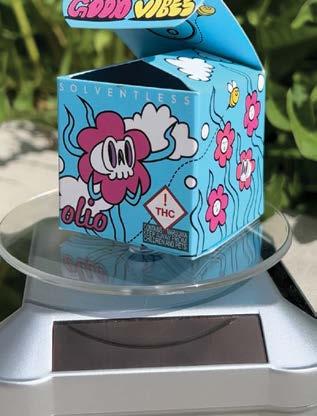

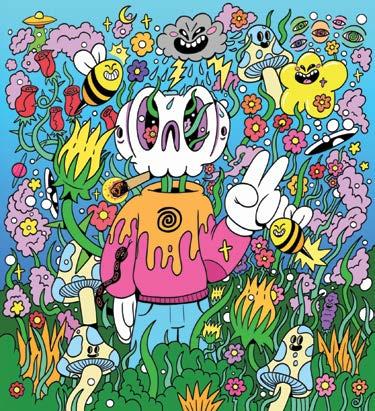
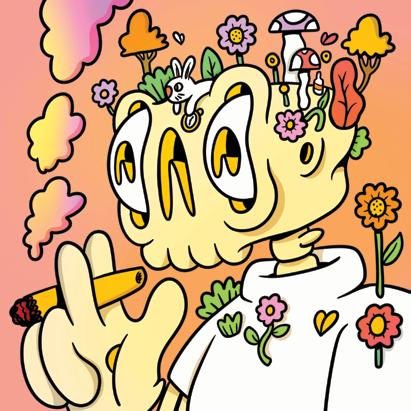

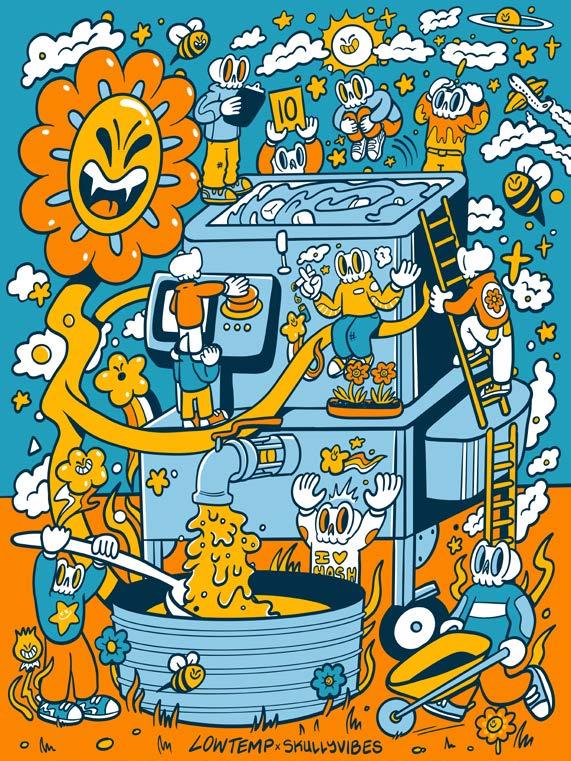
For Alex Wight, Skully Vibes isn’t just an Instagram handle or a character’s name; it’s a front-row seat to a world he’s been creating since college. Back then, a young Alex was on a career path toward becoming a biologist, but a love for Cannabis and art veered him into a lane he never dreamed existed.
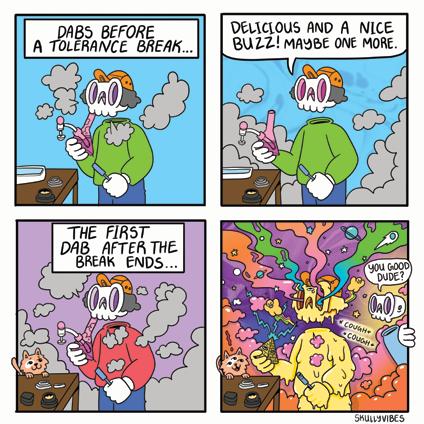
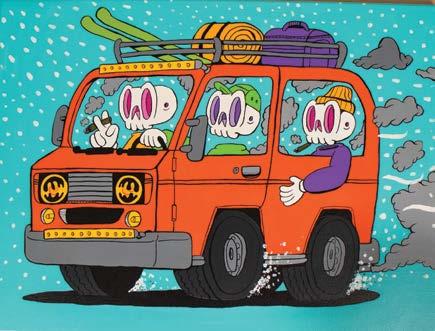
ALEX DESCRIBES his style as “Saturday morning cartoons meets scientific textbook illustrations.”
There’s always a lot of color or nature in the scenes he creates, along with his signature Skully Vibes character.
Even though Alex spent a lot of time in school taking art classes, smoking bongs and playing Super Smash Bros., he never thought he could have a career in art or weed, let alone together.
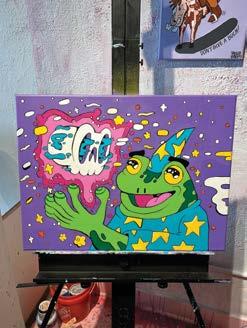
After earning a degree in biology, he flipped the script by moving to Colorado and entering the Cannabis industry. Working as the general manager for a dispensary, he fostered a deeper love for Cannabis culture while plastering his office walls with cartoons he drew.
“My boss hated them, but everyone who came in would tell me how much they loved them,” he said.
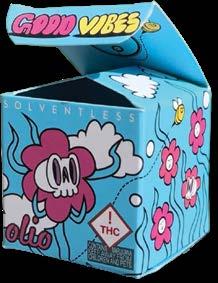
This encouragement led to Alex illustrating a series of nonfungible tokens called “Smoking Skulls” and tabling prints and stickers at Cannabis events. He eventually attracted the attention of multiple brands, beginning with Olio and its artist series of packaging.
Today, the Skully Vibes studio sits in a Denver building affectionately nicknamed “Weedworks,” a spot where powerhouse creatives — like Extracts Daily, Level Heady and Borovision — also have offices. Alex said they often meet up for breaks at a dab table outside to share ideas.
Inside the studio, he plays a constant loop of rap and hip-hop music.
“Mainly right now, “Take Me To Your Leader” by King Geedorah, Chief Keef deep cuts and Young Thug.” When the beat stops, Alex turns the vibe to
something more educational. “I’ll also go on YouTube for long-form videos — lots of historical documentaries, socioeconomic breakdowns and true crime stories.”
Alex said Cannabis plays a big part in his professional art career. Along with working for numerous industry clients, he said smoking during studio days keeps him fluid and ready to move between all the different
“AFTER EARNING A DEGREE IN BIOLOGY, HE FLIPPED THE SCRIPT BY MOVING TO COLORADO AND ENTERING THE CANNABIS INDUSTRY.”
parts that come together to create finished graphics or paintings.
“I dab pretty regularly. It’s great for getting new ideas or zoning out on repetitive tasks,” Alex said, “less so when I have super technical stuff to draw,” he added with a smile.