Upscaling Manufacturing for the Modular Revolution
Riding the resurgence of UK nuclear
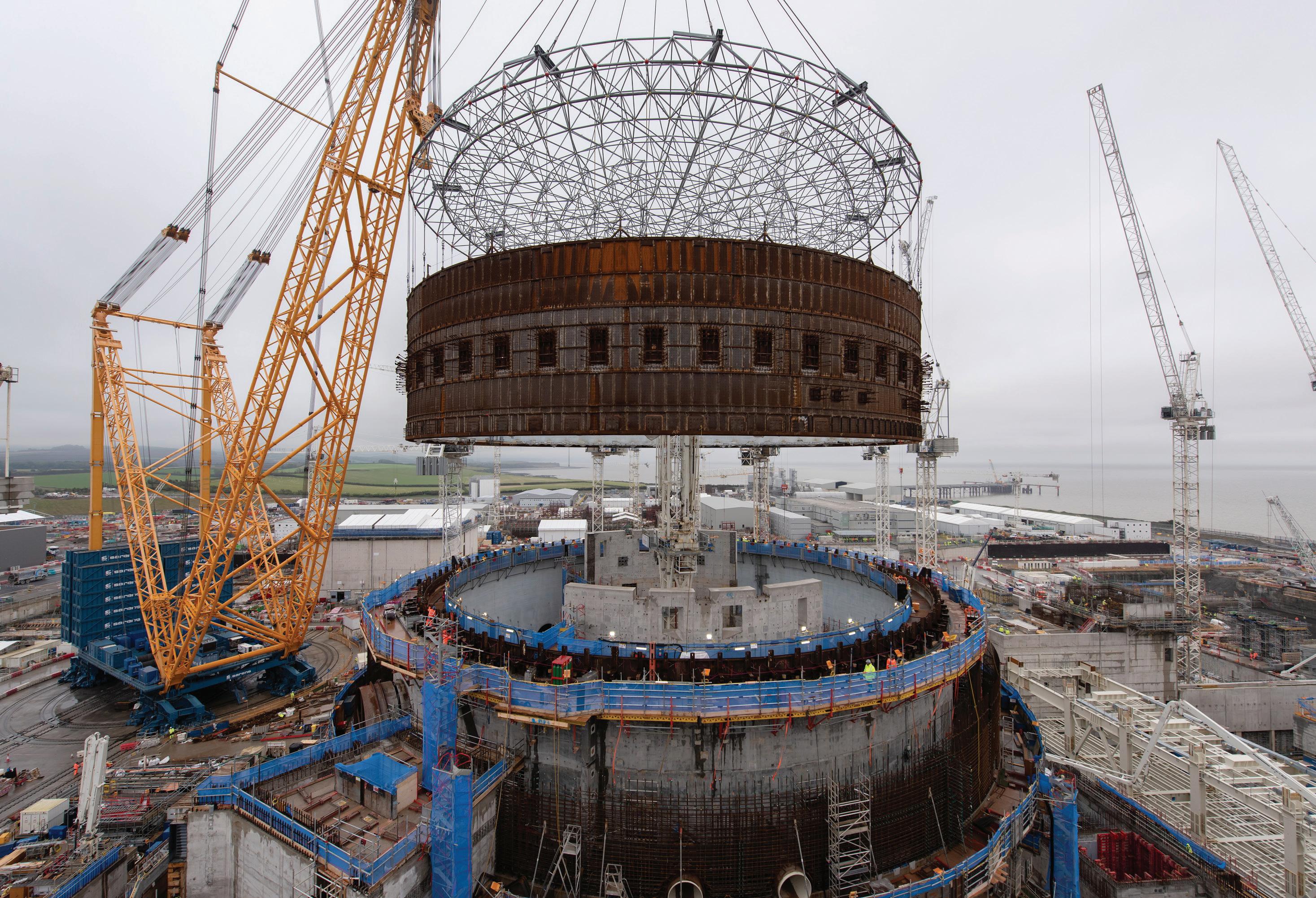
Digitalisation at Hinkley Point C
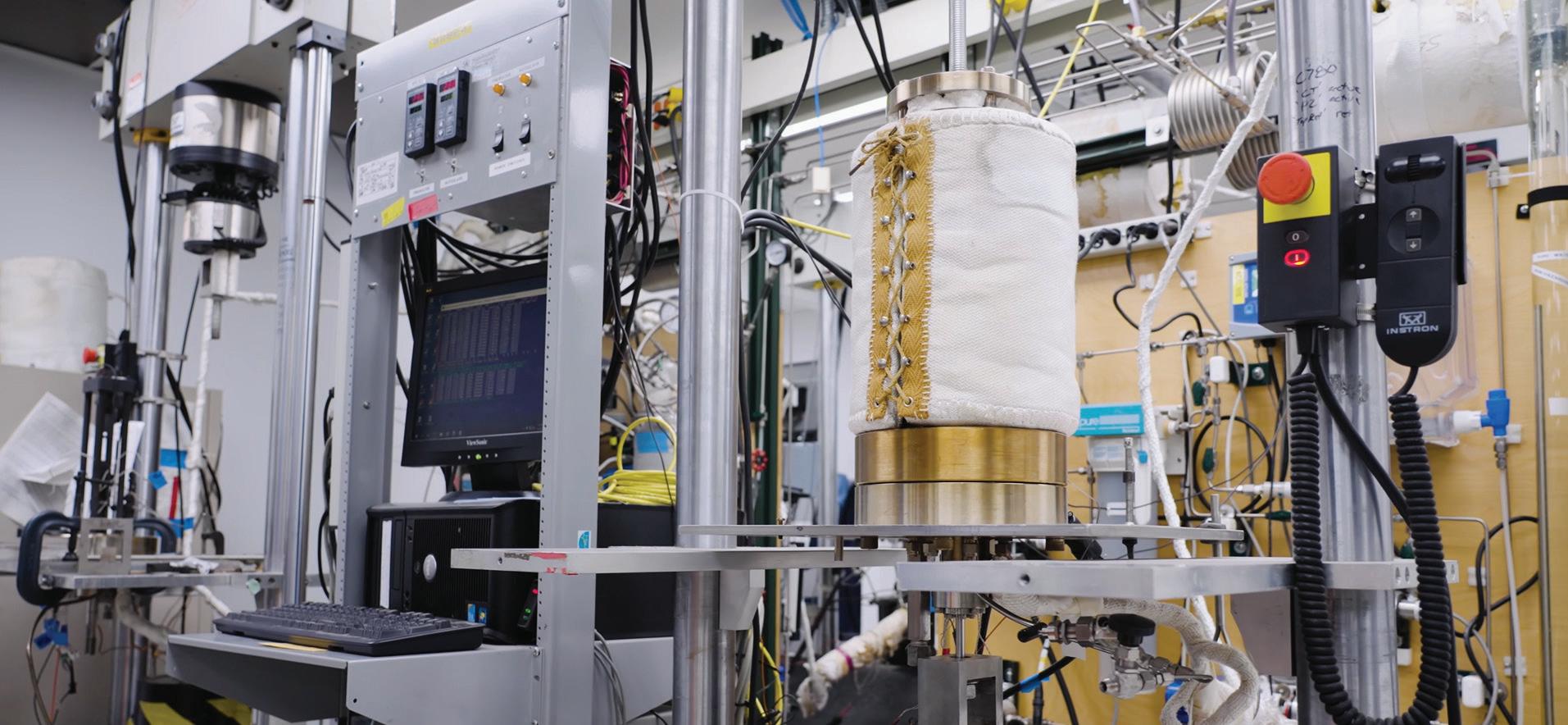
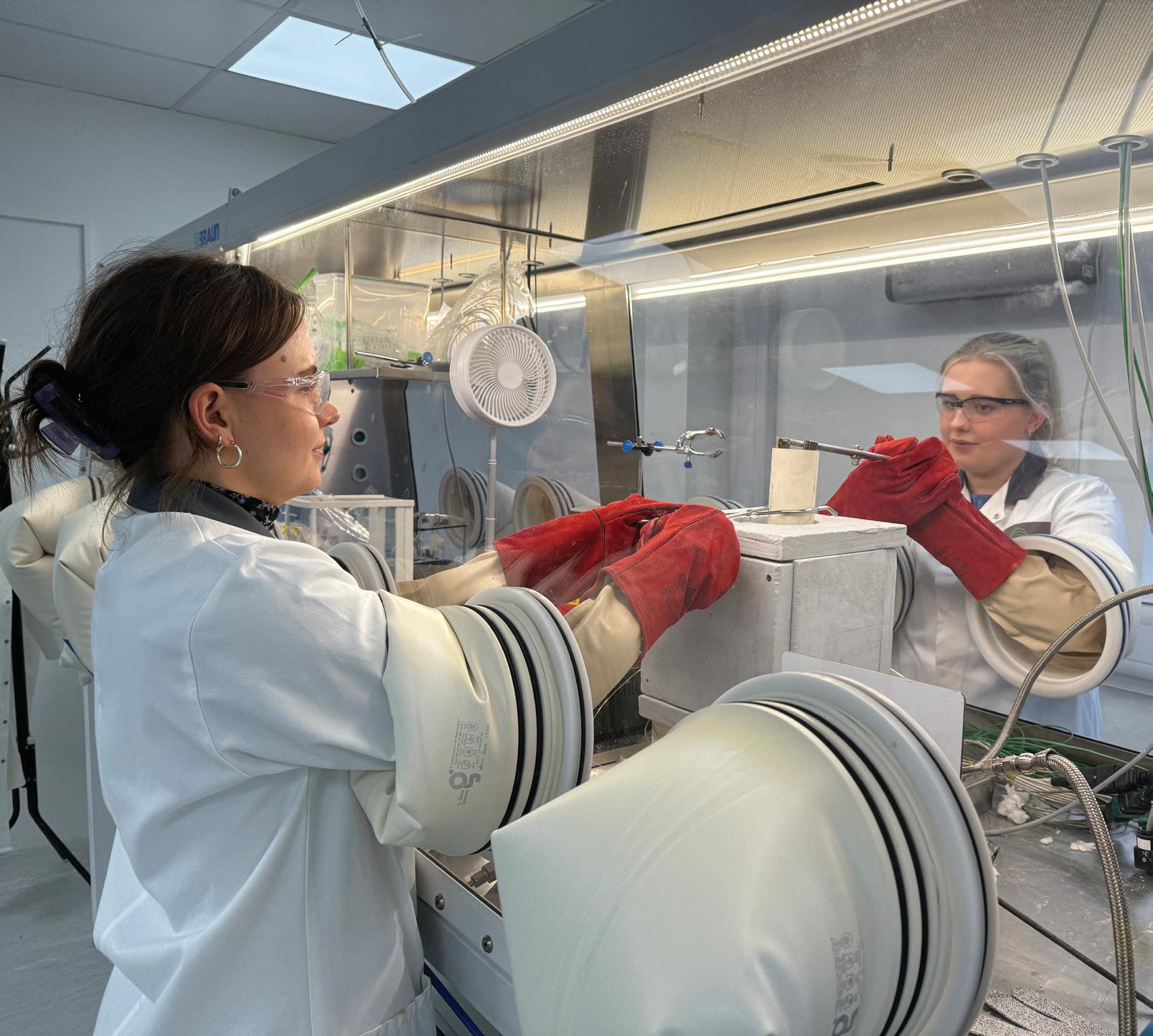
Stress Corrosion Cracking
• Largest facility in the world for SCC
• Expertise in PWR and BWR corrosion science
Permeation Testing
• Ability to complete permeation testing for PPE
Complex Mechanical Testing
• Cryogenic to high temperature
• Tensile, compression, flexural
ANALYSIS AND EVALUATION FOR THE NUCLEAR SECTOR
Advanced Alloy Characterisation
• Metallurgical and Microstructural analysis
• Grade degradation, thermal analysis
Machining
• Custom & sub-sized machining
Structural Testing
• Large structure drop testing for inactive containers
www.lucideon.com/nuclear
query@lucideon.com
www.linkedin.com/company/lucideon
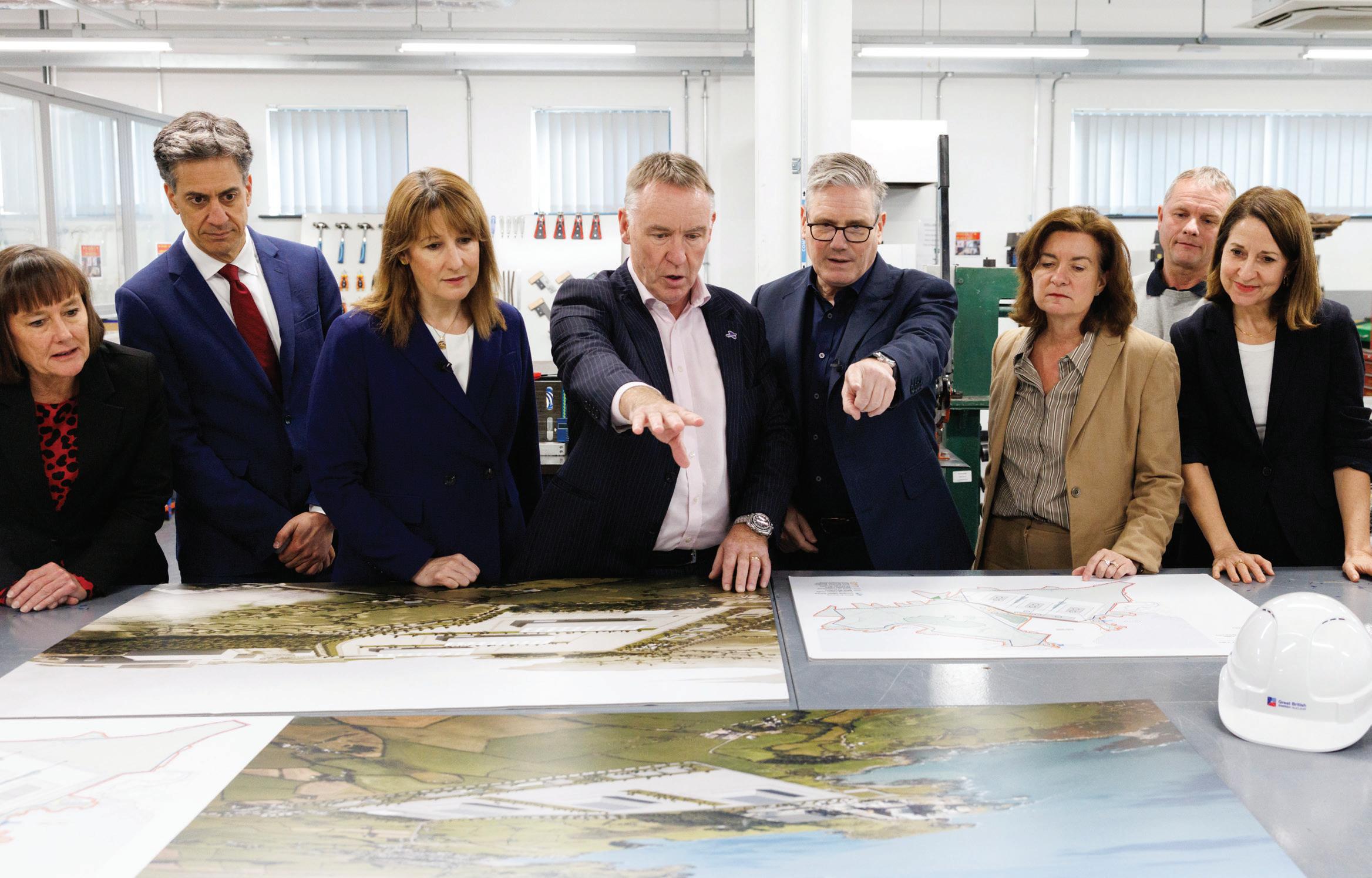
Welcome to the Winter 2025 edition of Industry Link. As we close out another defining year for our sector, it’s hard not to feel a renewed sense of momentum—especially with the announcement that Rolls-Royce SMRs are set to be deployed at Wylfa. I’ll admit to a little bias, being Welsh, but it’s genuinely exciting to see new nuclear returning to Wales after so long. In this edition, Tom Greatrex offers his insight on what this milestone means not only for Wales, but for the wider UK nuclear landscape.
We also look back at a busy party political conference season, where energy security and industrial growth once again took centre stage. Our coverage includes key takeaways for industry as we head into an important year of policy decisions.
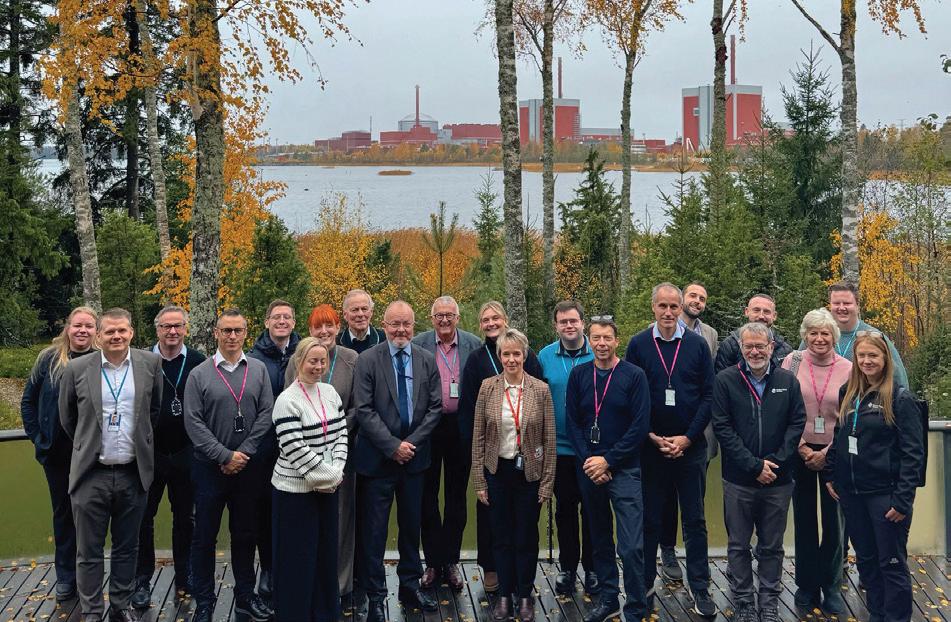
Internationally, members of the Nuclear APPG travelled to Finland, gaining first-hand perspective on their success with long-term waste management and fleet-building strategies—lessons that resonate strongly with our own ambitions.
On the technology front, Exentec Hargreaves explores how digitalisation is transforming delivery at Hinkley Point C, while Amentum discusses the opportunity for the UK to reassert itself as a global pioneer in nuclear innovation. The MTC also shares its latest thinking on scaling manufacturing for SMRs—an essential step in making small modular reactors a true industrial reality.
Finally, we spotlight what’s ahead in the NIA calendar for 2026. It promises to be a year rich with collaboration, challenge and opportunity.
Iolo James Head of Communications
Editor - Iolo James
Art Editor - Dan Powney
Press & Advertisement Enquiries - press@niauk.org
Membership Enquiries - membership@niauk.org
Contributors - Tom Greatrex • Lincoln Hill • Millie Beaver • Joseph Ridding • Stephanie McKenna • Professor Steve Jones, AMRC • Ryan O’Neil, David Lawson, and Oliver Muscat, Exentec Hargreaves • Loren Jones, Amentum • John O’Connor, Osprey • Harrison Burton, MTC • with additional thanks to World Nuclear News
Nuclear Industry Association is a company limited by guarantee registered in England No. 2804518
Registered Office - 4th Floor, York House, 23 Kingsway, London WC2B 6UJ
TEL +44(0)20 8629 4200
EMAIL info@niauk.org
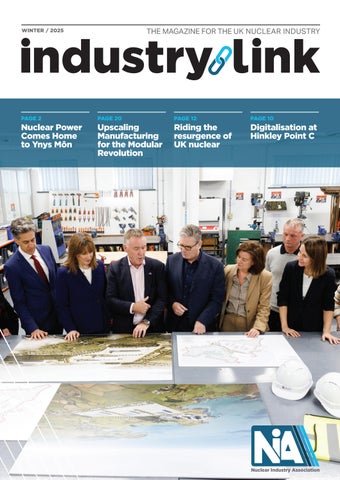
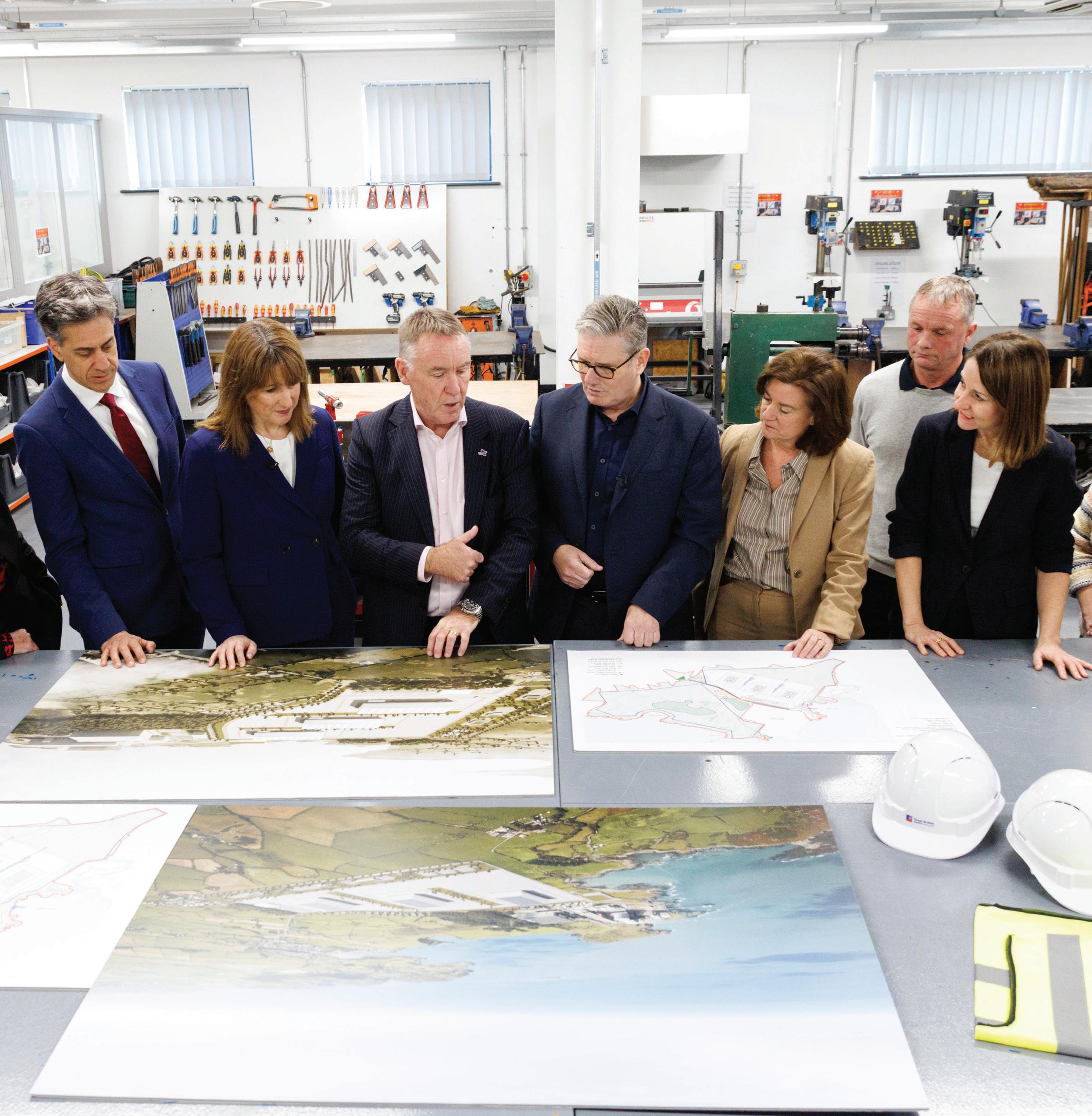
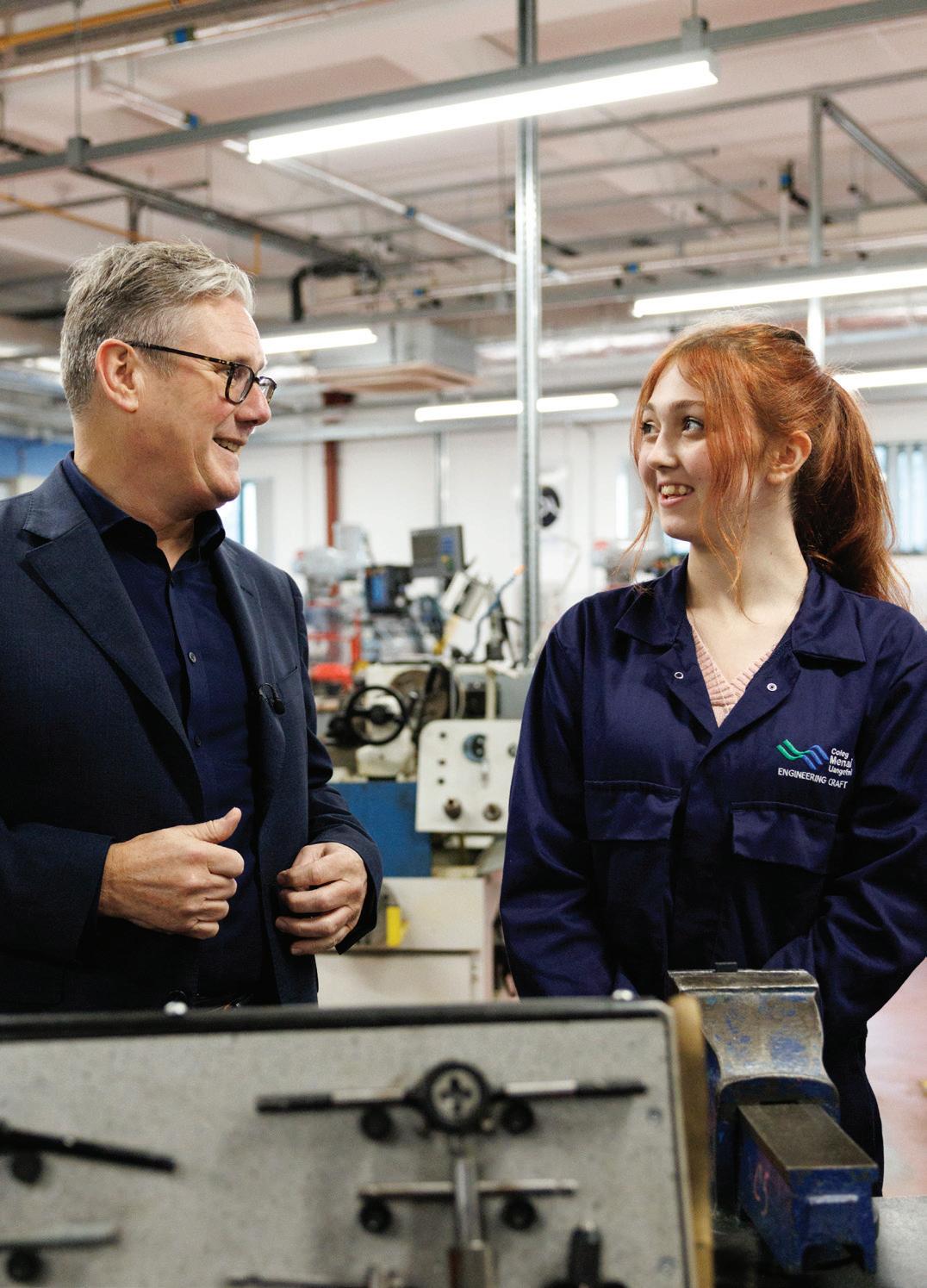
Cover image - “Prime Minister Keir Starmer visits Coleg Menai Llangefni” by Number 10, CC BYNC-ND 4.0
• CHIEF EXECUTIVE • NIA
Wylfa’s New Dawn: Nuclear Power Comes
Home to Ynys Môn
THIS IS NOT JUST ABOUT POWER GENERATION, IT IS ABOUT RESTORING CONFIDENCE, UNLOCKING POTENTIAL, AND SECURING LONG-TERM PROSPERITY FOR GENERATIONS.
“Nuclear for me means stability, opportunity for generations and a job for life.” This is why we keep on pushing for new nuclear projects. Why we want the industry to succeed. And why bringing nuclear back to Wylfa is seen as such a big deal.
Those opening words belong to Kieron Salter, a young nuclear engineer from Ynys Môn, who began his career on the Horizon project, only to be forced to leave home when the project collapsed. He now works at Hinkley Point C, but still speaks of Wylfa with a deep sense of belonging and a hope that nuclear power will one day bring him back to Wales. His story reflects the experience of many young people who trained for a future they expected to build on the island, only to watch that future fall away. All they ever wanted was to stay, to work, and to put down roots.
That is why the announcement that nuclear will now return to Wylfa as the site for the first Rolls-Royce Small Modular Reactors is such momentous news. This decision is far more than an energy policy milestone—it is the beginning of a new chapter for the island and for North Wales. After years of setbacks, false starts and missed opportunities, the commitment to bring SMRs to Wylfa marks a genuine new era for the island.
Wylfa itself has a proud legacy. The original Wylfa A station transformed a community once dependent on agriculture and tourism, providing decades of highskilled employment and stability. Its closure a decade ago left not only an energy gap, but an economic one too—a void felt deeply across the island which has seen the population fall and jobs lost.
Wylfa has always been more than a plot of land. It is a symbol of what Wales could achieve with the right investment and support. The scale of what lies ahead is extraordinary: billions of pounds in inward investment, thousands of skilled jobs, and the revival of supply chains across North Wales. For a region that has faced some of the
TOM GREATREX
toughest economic challenges in the UK, this is nothing short of transformational.
The technology matters too. Rolls-Royce SMRs offer a modern nuclear solution: flexible, costeffective, and deliverable. The initial phase will see three 470 MW reactors built on the site, totalling 1.4 GW, but eight could be accommodated on a site which has long been courted by developers. The fact that Wales will be home to the first of these next-generation reactors puts the nation at the forefront of global energy innovation.
But perhaps the greatest significance of this announcement is what it means for the people of Ynys Môn themselves. The young engineers who had to leave the island after Horizon’s collapse may now see a path home. Young people who once felt they had no choice but to move away for skilled work may soon have a reason to stay. Families who feared declining opportunities may finally feel the tide turning. That is what this project signifies. That is what nuclear offers.
This is not just about power generation, it is about restoring confidence, unlocking potential, and securing long-term prosperity for generations. It means building something lasting, something that gives people a reason to believe in the future of their community.
There is still work to do. The planning, financing, local engagement and delivery will take time and care. But for the first time in years, there is real momentum. With strong commitment from government and industry, and with local support that has endured through every setback, the foundations for success are firmly in place.
Wylfa has been called the greatest economic prize in Welsh history—and with good reason. If we get this right, the return of nuclear power to Ynys Môn will not only energise the nation, it will bring real opportunities for people who may have previously felt they had no choice but to move away.
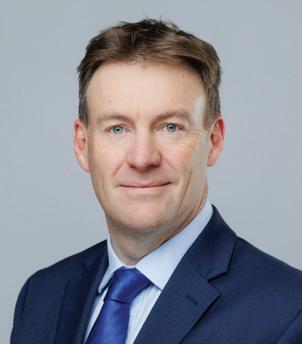
Following an extensive and transparent process that attracted strong interest from across the sector, the Nuclear Industry Association is pleased to announce its new Board. The seven incoming members bring a wealth of experience and will join Chief Executive Tom Greatrex, Chair Lord Iain McNicol, and Accountant Stephen Tustin in guiding the organisation’s future direction.
Kaa Holmes
Kaa, EDF’s Communications and Brand Director, oversees internal and external communications across nuclear operations, new build projects, renewables, and customer services, drawing on over 20 years’ experience with the company.
Ciara Middlehurst
Ciara, Co-CEO of NTS, is an experienced nuclear-sector leader with public and private expertise, a background in major projects, and strong commercial, strategic, and international networks, advocating gender balance across the industry.
Stephen Browning
With 36 years in nuclear, including 20 in senior roles, he leads TÜV SÜD Nuclear Technologies, shaping strategy, major projects and alliances across new build, decommissioning, defence and emerging technologies through extensive industry networks.
Sue Ferns
Sue Ferns is Prospect’s Senior Deputy General Secretary, leading work on energy, defence, science and environment, serving on TUC leadership, Net Zero and CCUS councils, and championing green jobs initiatives.
Nigel Houlton
Nigel is a senior nuclear leader with 40 years’ experience across the full lifecycle, spanning GBN, Magnox, EDF and RollsRoyce, with a background in major programmes, decommissioning strategy and reactor development.
Lindsay Roche
Lindsay, Business Development Director for Morgan Sindall Infrastructure’s Nuclear business, is a Chartered Engineer with 30+ years’ experience in new build, fuel cycle and defence, driving growth, collaboration and community-focused outcomes.
Dominic Kieran
Dominic, Global Managing Director of Cameco UK, is an experienced nuclear leader with roles spanning Urenco, Cavendish Nuclear and Babcock, bringing full lifecycle expertise and professional fellowship in engineering and nuclear institutes.
Party Conference Roundup
September marked the start of yet another busy party conference season for the NIA Public Affairs team. This year arguably felt like one of the most important set of conferences, with all political parties gearing up for Senedd, Holyrood and local elections next year.
First stop for the NIA was, for the first time, Reform Party Conference in Birmingham. Reform certainly had a different feel to perhaps the more ‘traditional’ party conferences, a feeling I think the Party was aiming for with party members, councillors, and MPs, the Senedd and Holyrood all pushing Reform as the vehicle for real change. Despite Reform Conference still being in its infancy, the intentions were clear: take us seriously, we are a Party that is going to win big at the elections next year. Whether that confidence will materialise is another matter, but attending the Party’s second annual conference certainly provided an insight into how Reform are looking to differentiate themselves from the political pack.
Next up the NIA team packed up our banners, copies of the All Party Parliamentary Group on Nuclear’s Recommendation Report and the NIA’s 2025 Jobs Maps and travelled to Liverpool as it was Labour’s turn to put on a show. There was a definite shift this year following a triumphant 2024 conference, with the government braced and ready to defend its various policies following a period of sustained criticism and ministerial resignations.
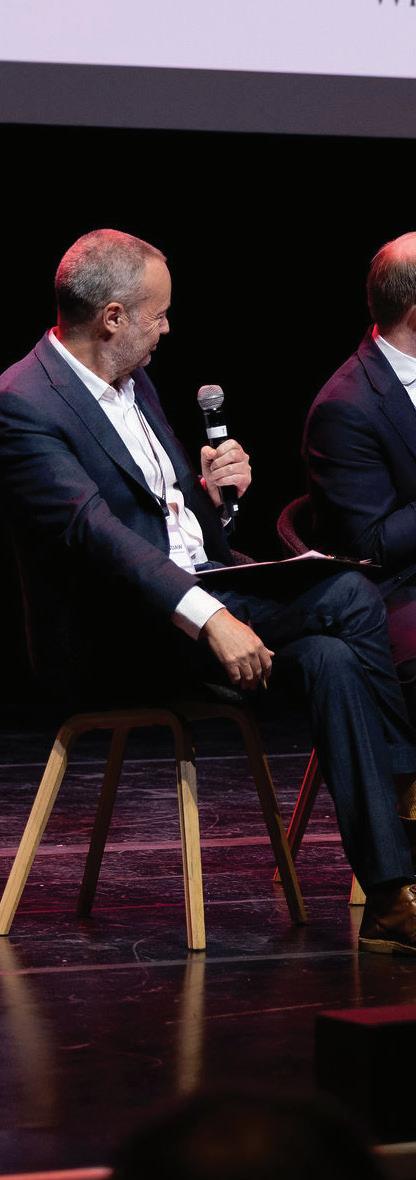
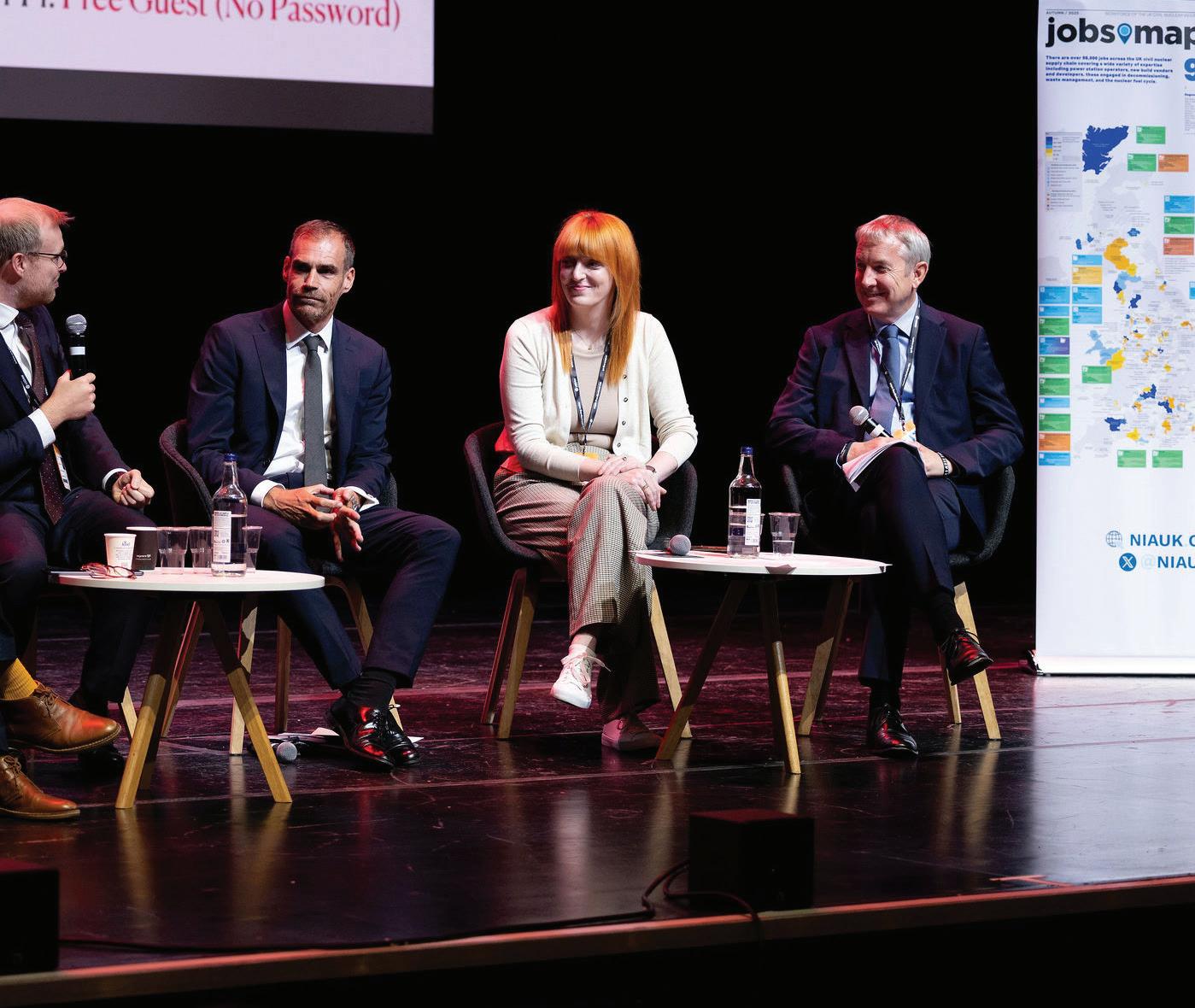
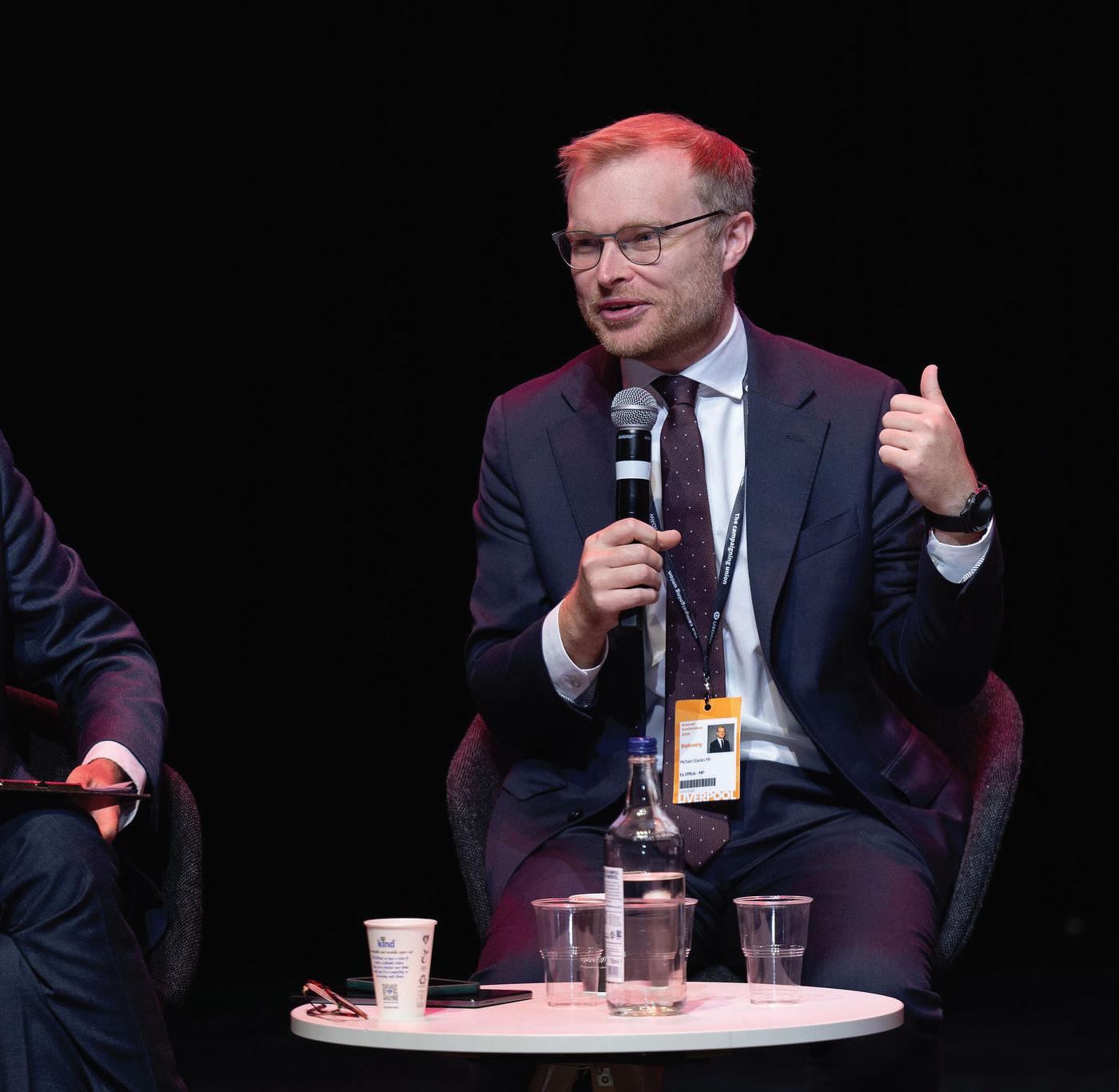
Despite a slightly quieter feel to this year’s conference, the NIA arrived full of energy, if you pardon the pun, and ready to put nuclear firmly on the agenda once again. We welcomed over 85 people to our panel People and Places: How can new nuclear development bolster Labour’s economic growth initiative? where attendees heard from NIA CEO Tom Greatrex, Minister Shanks from the Department for Energy Security and Net Zero (DESNZ), MP for Warrington North and APPG on Nuclear Energy Chair Charlotte Nichols and Peter Morton from Rolls Royce SMR.
Panellists were clear in their shared view that nuclear energy impacts far more than energy bills, with the local economy and wages drastically improved when nuclear energy is nearby. The discussion also touched on the opportunities for nuclear energy in Wales and Scotland, both hot topics within the industry currently, as Wylfa stands ready for investment and Torness due to go offline in the next 5 years.
That evening, following the Energy Trade Association Coalition Reception which we supported, we hosted our private roundtable dinner where Lizzi Collinge MP, Joani Reid MP and Charlotte Nichols MP discussed firsthand with leading industry and union representatives the importance of a fleet approach to new nuclear development. The government should grasp the opportunity to build upon the brilliant announcements it made earlier this year by pushing forward and securing further projects, to ensure jobs and skills are retained within the sector,
shorten build times and, crucially, reduce build cost.
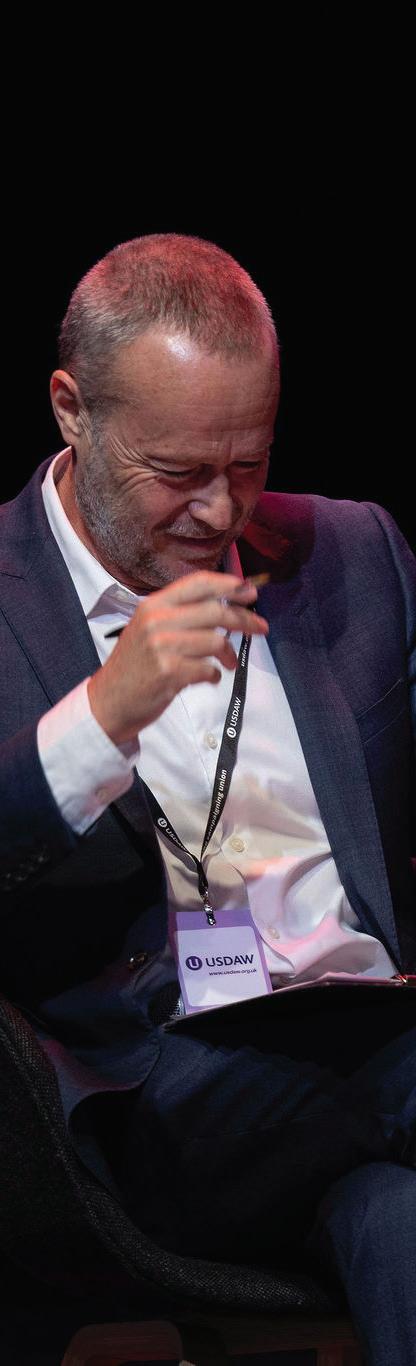
We were proud, once again, to support the Trade Union for Safe Nuclear Energy’s (TUSNE) panel Powering Industry: How will nuclear energy drive the UK’s industrial future? Joani Reid, MP for East Kilbride and Strathaven, Jonathan Brash, MP for Hartlepool, Charlotte Nichols, MP for Warrington North, and Sue Ferns of Prospect Union discussed the benefits of nuclear for traditional and emerging industries and its role in boosting post-industrial regions. Wales and Scotland once again entered the discussion, a running theme for the nuclear energy industry at present, with panellists raising how Wylfa and Torness, among others, are fantastic sites for new nuclear and should be utilised as soon as possible.
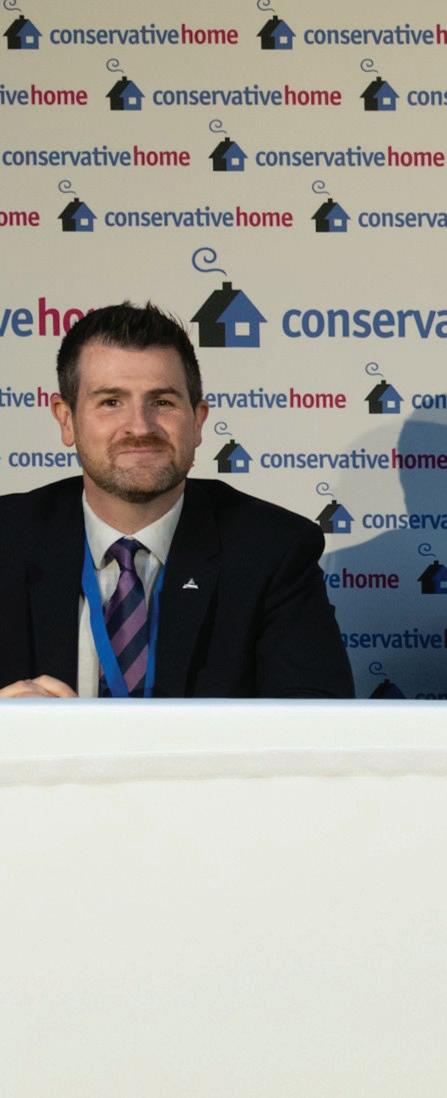
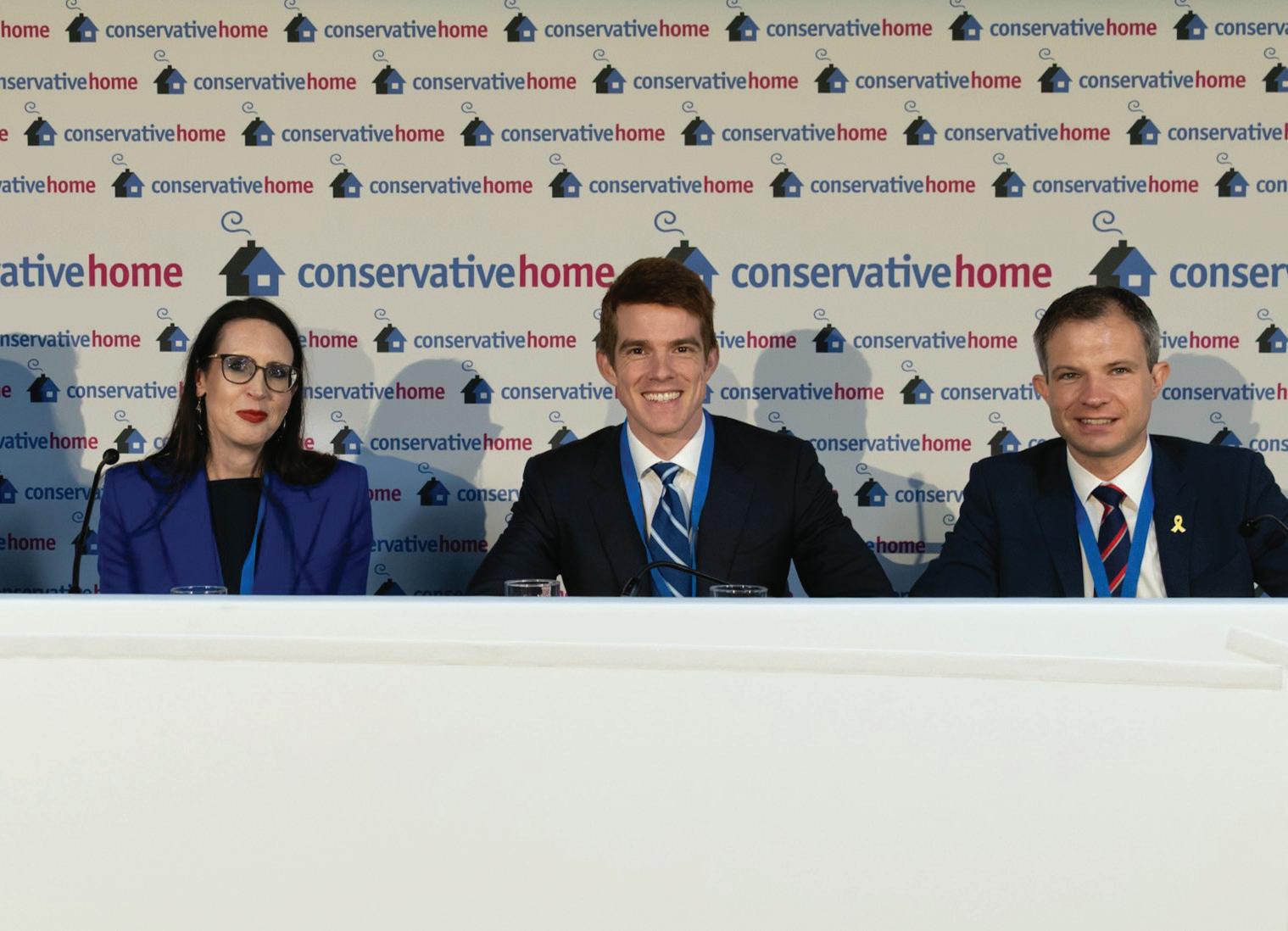
With just a weekend to recover, we packed our bags, jobs maps, banners and APPG reports once again, this time to travel to Manchester for Conservative Conference. With somewhat fewer MPs than previous years and Reform snapping at their heels, the Party needed to make this conference a success. With ministers committed to back to back speaking commitments, we were very pleased Shadow Minister for Nuclear and Shadow Secretary of State for Scotland Andrew Bowie MP could join our panel Building the workforce: To what extent is Britain ready for civil nuclear expansion? alongside Loren Jones of Amentum and Kathryn Porter of Watt Logic, chaired by our very own Lincoln Hill.
The discussion brought together voices from across the sector to explore how we can attract, train and retain the people who will power Britain’s nuclear future. From education and skills to regulation and investment, the conversation highlighted the importance of a coordinated approach to developing the next generation of nuclear talent. Wales once again featured in our discussion, with Andrew Bowie clear in his one nuclear ask throughout all of his speaking events (of which the NIA team attended many): largescale at Wylfa. Let’s see what the future holds…
With all this talk of Wales, how could we not attend Plaid Cymru conference in Swansea? That gig was reserved for our very own Iolo James, who witnessed a Party ready to pounce ahead of the upcoming Senedd election in May. And in Llinos Medi, Plaid’s MP for Ynys Môn, the Party has a strong voice in support of a new project at Wylfa with a focus on securing jobs and investment for the Island. A resounding victory in the Caerphilly Senedd by-election was to follow a few weeks later, ahead of a straight shoot-out between Plaid and Reform at the ballot box next year as Welsh Labour’s grip on the Senedd slides sway.
So there we have it, another conference season draws to close, and the sentiment on nuclear energy across all parties remains strong: our energy system needs it, constituencies want it, local economies will benefit, and local jobs will skyrocket. Until next year!
The NIA’s Iolo James appeared on BBC World News to welcome the news that Wylfa would be the site of the UK’s first Small Modular Reactors in what was a historic moment for Ynys Môn, Wales and the UK.
He explained to viewers how the decision brings with it certainty that nuclear will return to North Wales, promising jobs, investment and clean, reliable power. The NIA’s comment welcoming the news was featured in press articles, including the Guardian.
NIA CEO Tom Greatrex appeared in BBC Scot Cast to h ighlight the NIA’s Jobs Map—showing a 90% increase in nuclear jobs in England over the last decade compared to just 10% in Scotland.
A shift in Scottish Government policy could change that —unlocking jobs and boosting energy security. He also spoke about the importance of the recent UK–US nuclear deal in streamlining regulation and supporting efficient project delivery.
Reacting to the Atlantic Partnership for Advanced Nuclear Energy, the NIA’s Lincoln Hill told Sky News that the “UK-US nuclear deal will bring jobs, clean power and energy security.
We have the sites, the companies and the workforce to make a success of it.” He said that the deals announced between the US and UK would bring jobs back to industrial Britain.
Bloomberg exclusively covered NIA analysis of grid balancing data for 2025, which showed a 25% jump in payments to balance supply for the UK’s electricity grid as the country seeks to replace fossil-fuels generation with more volatile renewables.
NIA CEO Tom Greatrex said: “Every pound spent on balancing costs adds to bills, but creates no jobs, generates no power nor any long-term value: consumers are paying the price for historic underinvestment in nuclear.”
The Telegraph and The Times covered NIA analysis of electricity imports which shows that the UK is more dependent on imported power than at any point on record, with an average of 16% of supply coming from overseas this year.
In the first nine months of 2025 Britain imported a net total of 25 TWh of power—enough electricity for roughly 6 million homes—and is on course to match or surpass the record 33.3 TWh net import total for 2024.
The Scotsman ran NIA CEO Tom Greatrex’s reaction to an announcement made by the Energy Secretary’s that UK ministers will be looking at both Torness in East Lothian and Hunterston in North Ayrshire as two potential sites for new nuclear power stations.
He told the paper: “Scotland should absolutely be building new nuclear capacity, starting at Torness and Hunterston. It would bring thousands of skilled jobs and billions of pounds of investment, as well as clean, reliable power for generations to come.”
Regulator approves OPG waste facility
Canada’s nuclear regulator authorised Ontario Power Generation (OPG) to begin operating a new building, which will store used steam generators, at its Western Waste Management Facility.
OPG is the licensee of the Western Waste Management Facility, which handles low and intermediate-level waste from the Darlington, Pickering, and Bruce Power nuclear stations, as well as storing all the used fuel from Bruce Power’s operations. The new MPSB is a steel-framed structure that will store 64 steam generators from Bruce Power’s Major Component Replacement project.
EDF and Framatome feasibility study
EDF and Framatome have announced the launch of a feasibility study aimed at producing cobalt-60 for medical applications in one of EDF’s nuclear reactors
Co-60 is used to sterilise medical devices and is also used in cancer treatment. Most of the world’s supply of the isotope is produced by irradiation of naturally occurring cobalt-59 in Candu reactors, mainly
in Canada but also in Argentina, China and South Korea.
Under an agreement signed during WNE in Paris, EDF and Framatome plan to insert capsules containing cobalt-59 in a pressurised water reactor in France. This process will not affect the reactor’s operation or its primary function. Framatome will manufacture specialised irradiation devices at its European facilities.
UAE delivers first lowcarbon aluminium
Emirates Global Aluminium and the Emirates Nuclear Energy Company have delivered the UAE’s first lowcarbon aluminium produced using electricity generated by the Barakah nuclear power plant.
The low-carbon aluminium is being marketed under the product brand MinimAL. The first customer for the Emirati product is Egyptian company CANEX Aluminum, who will use it to produce advanced products for infrastructure, solar energy, transportation, and architectural applications.
Emirates Global Aluminium (EGA) said the new product positions the UAE as a reliable supplier of lowcarbon industrial materials to global markets and expands EGA’s lowcarbon metal portfolio. Generating
the electricity required for aluminium smelting and production accounts for around 60% of the global aluminium industry’s greenhouse gas emissions. Since unit 4 entered operation, the plant generates enough power to meet 25% of the UAE’s electricity demand. It has rapidly decarbonised the grid: carbon-free electricity from Barakah avoids 22.4 million tonnes of carbon emissions each year, which ENEC says is equivalent to removing 4.8 million cars from the road.
Contract win for Curtiss-Wright
Curtiss-Wright announced it has been awarded a $2.9 million contract by a commercial nuclear power facility in Japan to modernize the plant’s Recirculating Feed Water Control (RFC) systems. Curtiss-Wright will work with the facility to replace its legacy actuator and hydraulic power unit assemblies. Work on this contract is scheduled for 2026 and will be performed by Curtiss-Wright Nuclear. Kurt Mitchell, Senior Vice President and General Manager of CurtissWright Nuclear said “This order demonstrates our ability to deliver fully engineered replacements that integrate seamlessly with existing systems and support continuous safe operation of nuclear facilities.”
by
The UK supply chain has the capability to meet the demands of the government’s nuclear energy aspirations, but how does the industry make sure it’s ready?
Professor Steve Jones, professor of welding and joining engineering at the University of Sheffield and the AMRC, answers that question, and details the AMRC’s position in supporting that preparation.
As the UK’s manufacturing sector continues to evolve to meet the challenges of a low-carbon, highproductivity future, the AMRC is proud to reaffirm and strengthen its commitment to supporting the UK’s nuclear deployment strategy. This commitment directly contributes to national objectives for clean energy generation, energy security and industrial competitiveness, ensuring the UK remains at the forefront of global nuclear innovation and delivery.
By retaining and evolving core nuclear manufacturing capabilities through the creation of our Nuclear Manufacturing Group, the AMRC is building on the UK’s ambitions in nuclear new build, Small Modular Reactor and Advanced Modular Reactor deployment, fusion energy, and decommissioning and waste management, while unlocking value for adjacent high-value industries. These efforts support the broader goal of achieving a secure, net-zero energy system through a resilient and high-skilled domestic supply chain.
In parallel, we continue our close collaboration with the Office for Nuclear Regulation, the OECD Nuclear Energy Agency and the International Atomic Energy Agency, in addition to technical standards bodies such as the American Society of Mechanical Engineers. Through these relationships, the AMRC acts as a trusted voice and contributor to global safe manufacturing practices, while supporting regulatory alignment and knowledge transfer across the UK’s nuclear manufacturing landscape, helping to maintain the UK’s position as a world leader in nuclear safety, reliability and quality.
Safety and assurance run through everything we do in nuclear manufacturing, so the AMRC’s culture is focused around standards. When this culture is built into a workforce, it permeates the supply chain. Innovation requires knowledge of limitations; understanding codes, standards and regulations enables a business to find gaps, and fill them.
By harmonising standards and introducing robust commercial grade dedication processes, we are creating a framework that ensures components and systems meet nuclear-grade expectations without unnecessary duplication or cost. When combined with a metronomic approach to manufacturing and construction—one that prioritises repeatability, predictability and precision—the result is a more accessible, reliable and economically viable pathway into nuclear delivery.
Together, these practices lower the barriers for companies to engage in the sector, providing
Photo
PROFESSOR STEVE JONES
The future of nuclear: breaking the barrier to entry
the leverage needed for UK firms to break onto the primary island—which contains all of the equipment and systems involved with the nuclear reactor and its heat production—in the future.
But the solution cannot be myopic. It must take a holistic view; one that balances technical excellence with fiscal reality. The nuclear sector’s readiness depends not only on capability and compliance, but also on financial viability. By embedding process control, digital verification and right-first-time methodologies, we are helping to reduce waste, shorten lead times and minimise rework, directly addressing the cost pressures that have historically limited participation in the nuclear supply chain.
The AMRC isn’t just nuclear. It’s aerospace and defence, automotive and marine, and everything in between. We’re learning from other sectors, from agri-tech pipes and fittings, right through to the modularisation of the International Space Station. And we’re sharing that learning. We’re taking technologies established in other industries and applying them in a way that accelerates readiness across the UK supply chain, ensuring that every innovation contributes to a sustainable, valuedriven outcome.
We don’t want to just make parts faster; we want to improve productivity, increase rightfirst-time rates and understand processes better. We want a metronomic process that means the supply chain isn’t shelving parts and incurring ineffective costs. Our job isn’t always inventing new technologies, it’s making technologies that are already out there more useful. This crosssector innovation supports the broader goal of making nuclear delivery more efficient, costeffective and globally competitive.
The technologies currently residing in the UK supply chain are fit for purpose, and will be for the next generation of nuclear power plants, but can we make them smarter? Can we use data to improve on processes? We’re working to find an optimum balance between innovation and disruption—the balance of productivity. In doing so, we’re helping to futureproof the UK’s manufacturing base, enhancing its capacity to deliver major energy infrastructure while supporting economic growth and high-value employment.
There are few companies in the UK that can produce what’s needed for a nuclear power plant’s primary island. The AMRC is working to
elevate UK businesses onto that island, building on architecture within the secondary island—the conventional part of the plant that converts the steam’s thermal energy into electrical power— to help steer companies into a position where they can invest in providing nuclear power plant support. We’re working to strategically shape the thoughts and practices by which we can reduce the barrier to entry into the nuclear sector— from skills and future workforces, to language, standards and fiscal models—so that the UK can meet and deploy what we’re demanding.
From academia through to regulation, a universal language is needed for the nuclear industry. You cannot drive innovation without pulling research through with it. The industry needs to communicate effectively what the academic community should be working on, helping shape research into something that can translate effectively from concept, across the VOID—the valley of innovation death. By aligning research and industrial capability, we can accelerate the translation of ideas into impact, a vital step toward a globally competitive, sovereign nuclear capability.
That’s why collaboration, at the forefront of the AMRC’s ethos, is so important. By leveraging the scale and world-leading capabilities from across the High Value Manufacturing Catapult, of which the AMRC is a member, alongside our connections spanning industry, academia, as part of the University of Sheffield, government and international bodies, we are uniquely positioned to help UK manufacturers accelerate innovation, build resilience and lead in a competitive global market. These collaborative efforts underpin the national vision for a thriving, export-capable nuclear sector that delivers clean growth and long-term energy independence.
The AMRC is a fully interdisciplinary integrator of technology, with the capacity, culture and capabilities needed to drive the UK’s ambitions in nuclear energy, all in one facility. The new Nuclear Manufacturing Group at the AMRC is not simply a continuation, it is a strategic evolution, building on a legacy spanning South Yorkshire’s industrial history through to the former Nuclear AMRC. The UK’s capability to work on key technology themes is something that is unique across the world. We’re building the future of UK nuclear manufacturing on a strong foundation. If you want to get involved, get in touch: www.amrc.co.uk.
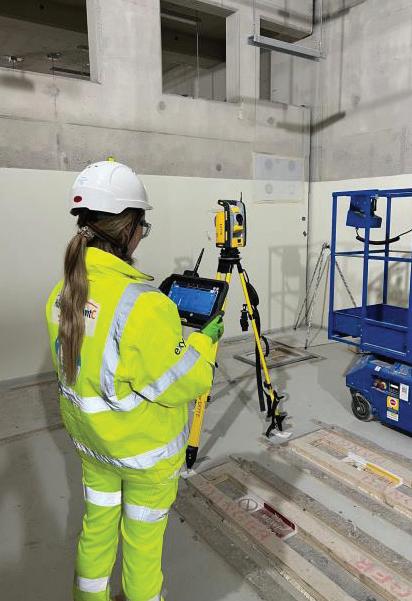
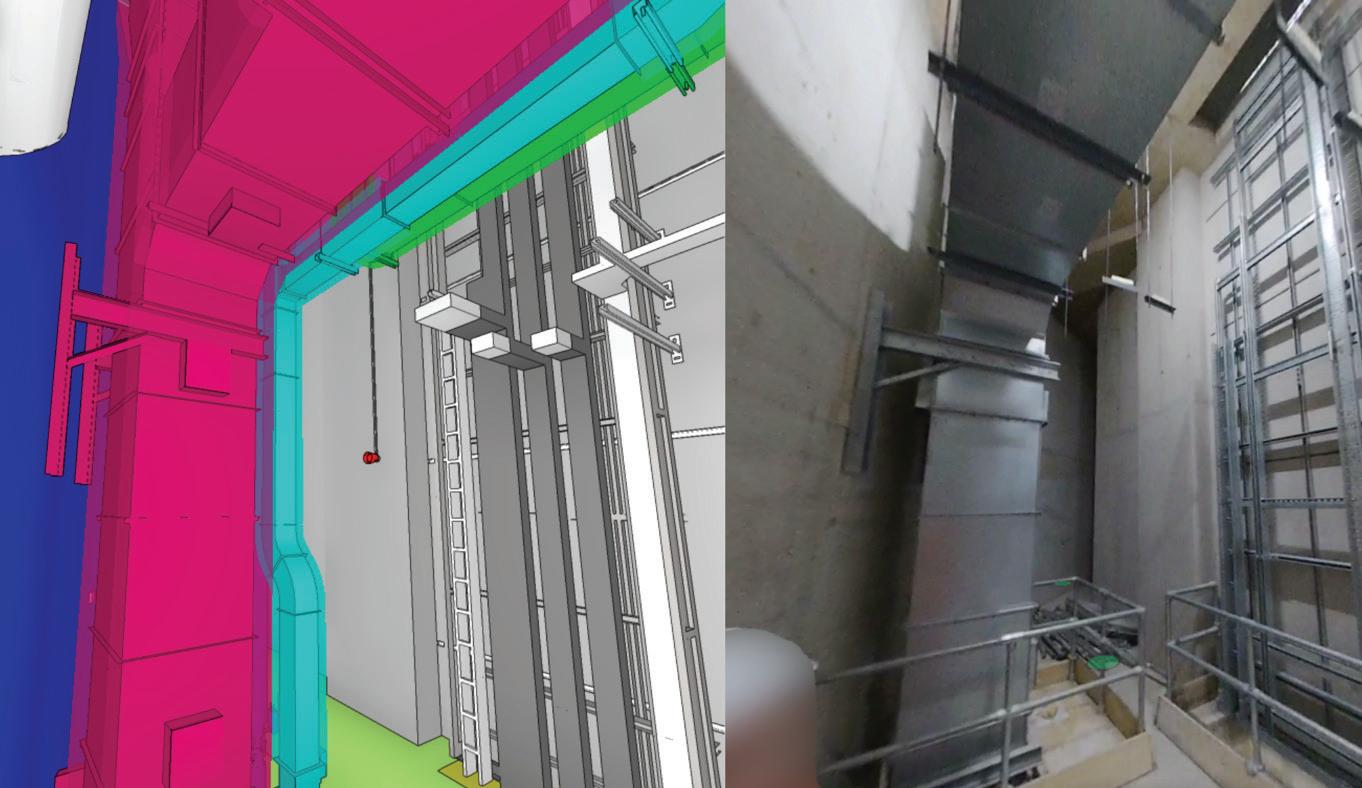
▲ Sitewalk example
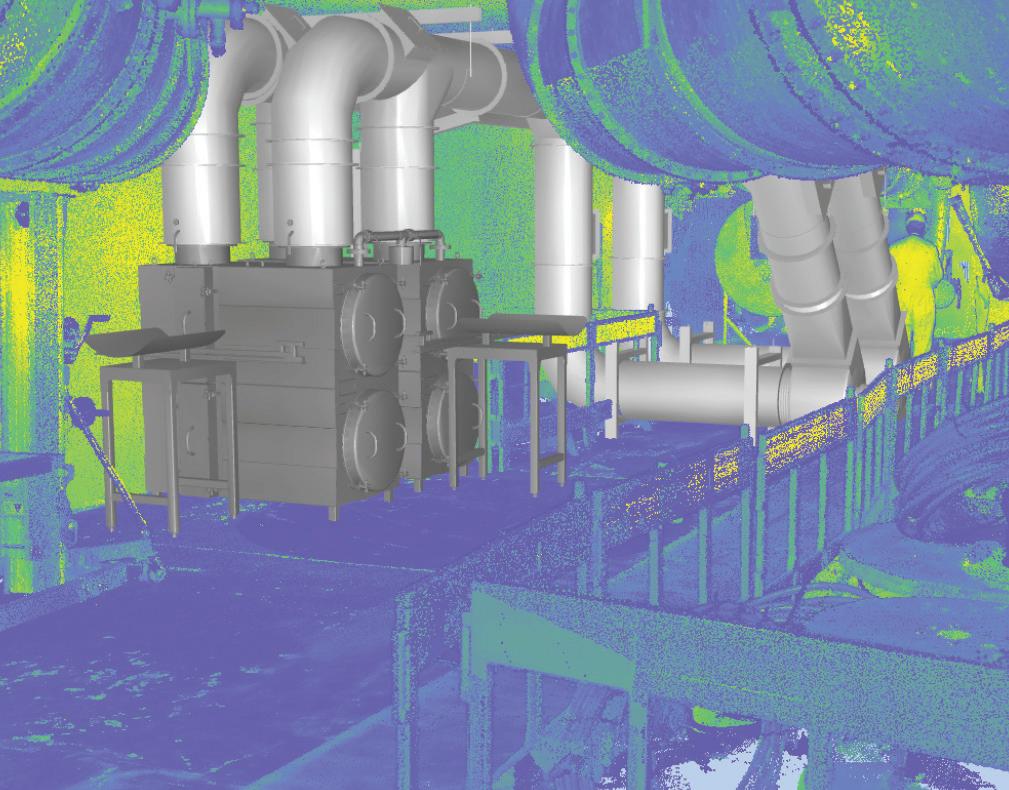
▲ Laser scan example
▲ HPC FARO 3D laser scanner
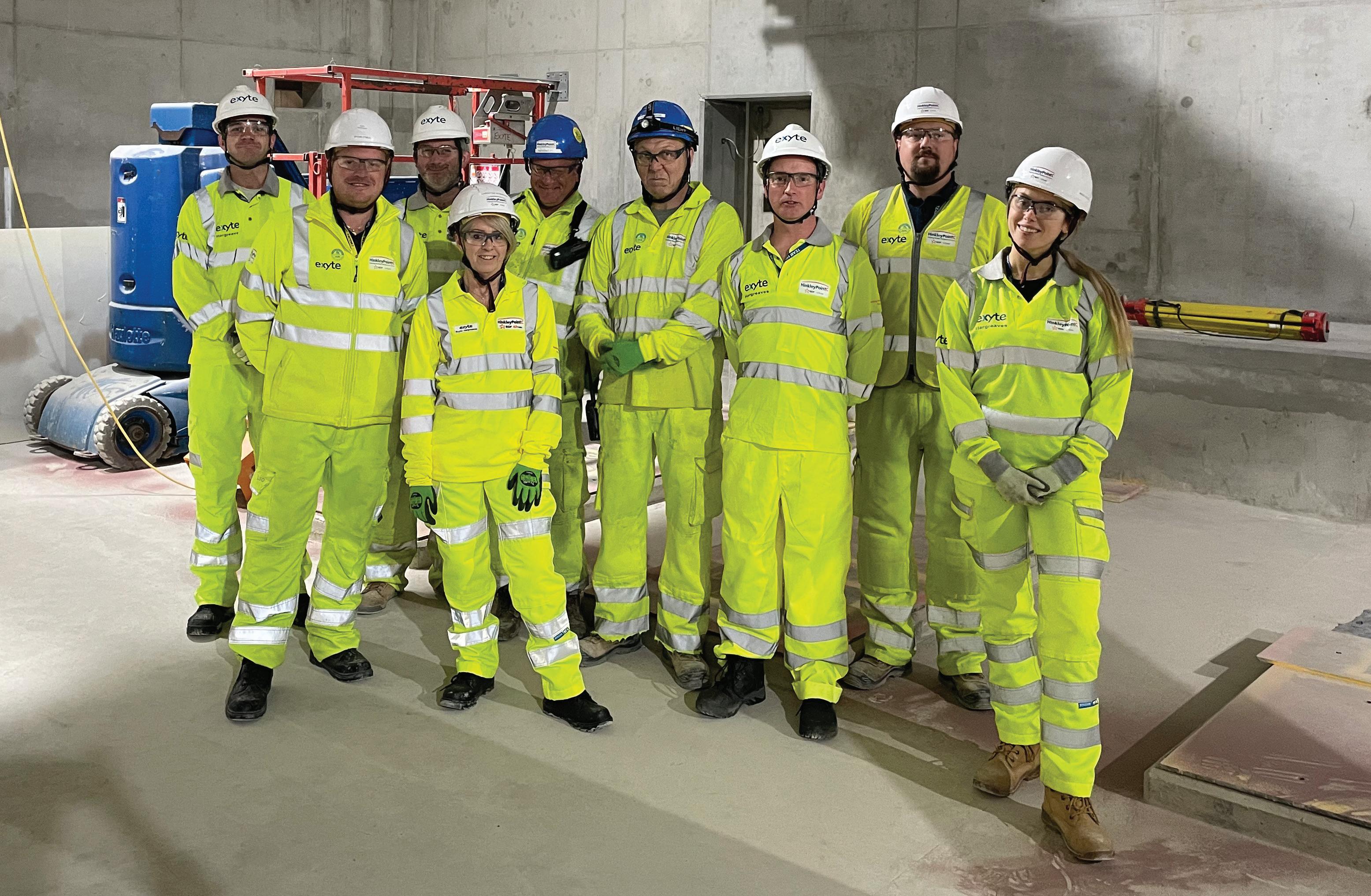
▲ The Exentec Hargreaves team
RYAN O’NEIL, OPERATIONS MANAGER • DAVID LAWSON, HEAD OF BUSINESS DEVELOPMENT
MUSCAT, MARKETING
EXENTEC HARGREAVES
Digitalisation from Design to Installation at Hinkley Point C
Leading the Digital Charge
At Hinkley Point C (HPC), one of Europe’s most complex infrastructure projects, Exentec Hargreaves is setting a new benchmark in digital delivery. As a Tier One contractor providing a turnkey solution to the ventilation needs on the Conventional Island, we’ve embraced a fully digital paperless approach, delivering a turnkey solution that spans design, verification, installation, and reporting. This is not just about adopting new tools; it’s about redefining how construction is delivered. By integrating advanced technologies into every phase of our workflow, we’re building smarter, faster, and more collaboratively, setting new standards for the nuclear industry.
Why Digital Matters
Construction remains one of the least digitalised industries globally and on a site like HPC, millions of components, thousands of decisions, and hundreds of suppliers, traditional paper-based processes are no longer in step with project objectives. They’re slow, prone to error, and inefficient whilst communication gaps between site and office teams can cause delays, and manual records struggle to keep pace with real-time progress. These inefficiencies can lead to unnecessary waste and increased energy consumption.
Recognising these challenges, Exentec Hargreaves set a bold objective in 2021: to become the first fully digital Tier One contractor at HPC. This vision has driven our innovation and shaped a delivery model that prioritises speed, accuracy, and transparency.
A Fully Digital Workflow
Our digital-first methodology touches every stage of the construction lifecycle. Design and coordination begin with intelligent modelling platforms, enabling precise planning and clash detection before components reach site. All documentation is digital and accessible from any device, reducing administrative overhead and improving traceability.
Off-site manufacturing is supported by digital drawings accessed via tablets, ensuring consistency and accelerating installation. On-site execution is driven by model-based data, allowing for “Right First Time” installation and minimising rework. Every duct section and component is digitally tagged and tracked, with real-time status updates feeding into live dashboards. These dashboards, powered by integrated reporting tools, provide clients with instant visibility of progress, installation status, and test results.
Real Benefits, Real Impact
The benefits of this approach are tangible. We’ve seen significant reductions in manual modelling time, freeing engineers to focus on higher-value
tasks. Installation accuracy has improved, leading to fewer errors and faster delivery. Collaboration between design and construction teams has been enhanced through shared digital models and visual records. Transparency for clients and stakeholders has increased, with live reporting and visual progress tracking reducing the need for frequent site visits. Sustainability has also improved, with less paper, reduced waste, and lower energy consumption across the board.
At HPC, we have introduced modular assemblies supported by automated design workflows allowing us to simplify standard tasks and respond quickly to site-specific changes. By using rule-based design automation, we ensure consistency and agility, enabling rapid adaptation without compromising quality. Our digital verification processes, including high-resolution 3D scanning and augmented reality overlays, provide accurate as-built comparisons and support better decision-making. These innovations have not only improved delivery at HPC but have created a scalable model for future projects.
Built for the Future
What we’ve achieved at Hinkley Point C is more than a technological upgrade, it is a blueprint for the future. We’re now embedding this digital method-ology into our execution strategy for upcoming work, including Sizewell C, where clients are developing their own digitalised end-to-end processes.
By partnering with Exentec Hargreaves, clients gain a digital delivery partner. One that understands how to translate complex requirements into streamlined workflows. One that brings clarity, speed, and confidence to every stage of the build. And one that’s committed to continuous innovation.
Your Digital Delivery Partner
Our approach is built on collaboration, transparency, and a shared commitment to excellence. We believe that digitalisation is not just about technology, it’s about delivering better outcomes. Whether it’s reducing risk, improving quality, or accelerating timelines, our digital strategy is designed to support our clients’ goals and exceed expectations.
As the nuclear industry embraces digital transformation, our work at HPC demonstrates how innovation can drive smarter, safer, and more sustainable construction, building not just a power station, but a more connected and resilient future.
If you’re planning a major infrastructure project and want to explore how digital delivery can transform your outcomes, we’d welcome the opportunity to start that conversation. At Exentec Hargreaves, we don’t just use digital tools, we deliver digital transformation. From design to installation, we’re bringing technology to life.
Riding the resurgence
We hear a lot about the nuclear resurgence. How real is it? And what does it mean for the UK nuclear industry?
At Amentum, we’ve recruited 2,000 people in the past two years and we’re projecting to hire another 3,000 over the next four years. The nuclear resurgence is here, driven by all the big stories in the news: global instability, the crisis around secure, sovereign sources of energy, and the need to massively increase electricity output without a corresponding increase in carbon emissions.
For the UK nuclear sector, this resurgence is nothing less than a once-in-a-generation opportunity, to regain our status as a global pioneer of nuclear energy.
Looking at the wider picture, over 70% of nuclear generation capacity is in five countries: the USA, France, China, Russia and South Korea. But in recent years the UK has been ahead of the pack on this continent in our determination to build new gigawatt reactors and to explore how small modular and advanced reactor technologies can meet evolving energy needs.
Amentum has been supporting SMR and AMR vendors since the inception of the technology, helping to solve some of their biggest challenges. There has never been a greater demand for our deep understanding of reactor science, our advanced modelling capability, and our vast amount of accumulated data on materials performance and accelerated ageing.
We’ve worked on most Generic Design Assessment applications submitted to the ONR this century. And we have played a key role in the design or construction of every UK nuclear power station, with an enduring relationship with EDF to support the
AGR reactors over their lifetime. We are also helping to build Hinkley Point C and we are the Programme Delivery Partner Sizewell C.
There is also renewed global interest in high temperature gas reactors, pioneered by the UK decades ago, which are gas cooled with graphite cores, just like our hugely successful AGRs. This is a big advantage for Amentum and other British nuclear businesses, who have worked on these reactors.
Creating commercial and funding models which enable private sector investment is absolutely key to unlocking the growth of nuclear power. The UK is leading the way, with Sizewell C becoming the first nuclear project to be financed with independent, private financial investment.
Whilst the UK no longer has a native gigawatt reactor design to sell, that is not necessarily a disadvantage. It frees the UK industry up to do what this country has always been good at—moving nimbly to sell our experience and expertise around the world supporting various technology vendors and utilities.
This is already happening. Amentum has been at the heart of the new build programme in Poland—one of Europe’s most ambitious new nuclear nation—since its inception in 2014. Our role encompasses site selection, licensing, supervision of the reactor vendor and construction contractor, start-up and testing, as well as program and commercial management functions.
Based in Warsaw, our project team is a mix of Polish staff and expatriates, who are supported by reachback to the United Kingdom, France and Slovakia. Our aim is to have 75% local staff within five years, which will help to develop an indigenous nuclear services industry with world-class skills
and experience. We’re working with leading Polish universities to attract their brightest graduates into the industry. This collaborative approach is an essential part of building long-term relationships with customers.
In the Netherlands and Norway, we’re helping their governments to get the reliable, unbiased information they need to make the right decisions about investing in nuclear power.
And in France, we have a fast growing business serving established clients like EDF, ITER and Orano and new start-up reactor developers.
Further afield in South Africa, our team in Cape Town has been a stalwart supplier to Eskom’s Koeberg Nuclear Power Station for decades. Most recently, we have worked on plant modifications to accommodate new steam generators andat—again with reach back to the UK—we have designed a hardened instrumentation monitoring system to improve resilience and operational safety.
It’s not only in the new build arena where the UK has specialist expertise that is in demand around the world. Recently, I was in Japan to attend the official opening of our new office in Futaba, about a mile from Fukushima Daiichi.
We are working with TEPCO on programme management at Fukushima but they also want to collaborate on how the huge sums being spent on decommissioning can regenerate the economy of the surrounding region. Again, the UK has some great examples of how to build a harmonious relationship between the nuclear industry and local communities that delivers immense economic and social value.
It’s clear to me that the UK nuclear industry has a pivotal role, not just in the UK, but in enabling the nuclear resurgence across the globe.
“CLEANING UP THE LEGACY OF HISTORIC OPERATIONS ON OUR SITE IS AT THE HEART OF OUR MISSION. IT IS IMPORTANT THAT WE ACHIEVE THIS SAFELY, EFFICIENTLY, AND SUSTAINABLY – OUR SUPPLY CHAIN, AND THIS PARTNERSHIP PLAYS A KEY ROLE IN THAT. WE’RE PLEASED TO WELCOME OUR NEW PARTNERS. THEIR SPECIALIST CAPABILITIES AND TEAMS, WORKING ALONGSIDE OUR SKILLED SELLAFIELD WORKFORCE, WILL HELP US DELIVER OUR MISSION AND DRIVE PROGRESS BOTH ON SITE AND ACROSS OUR WIDER COMMUNITY. JUST AS IMPORTANTLY, THESE PARTNERS SHARE OUR VALUES AND OUR COMMITMENT TO CREATING LASTING SOCIAL VALUE FOR THE COMMUNITIES WE SERVE.”
James Riddick, Chief Supply Chain Officer, Sellafield Ltd
Sellafield Ltd awards high hazard risk reduction framework contract
Sellafield Ltd has awarded a framework with a maximum value of £4.6 billion to support high hazard risk reduction programmes on the Sellafield site, through the Decommissioning and Nuclear Waste Partnership (DNWP).
The framework agreement will be in place for up to 15 years. DNWP will support activities related to retrieving waste materials from the Sellafield site’s oldest facilities as well as treating and storing those materials and decommissioning redundant assets.
The framework will work collaboratively with suppliers at every stage, from planning to delivery to ensure smooth delivery and shared success. This provides a value-for-money route to specialist supply chain capabilities and capacities needed for future decommissioning tasks and projects.
The confirmed winners of the 4 lots are:
Lot 1 (Remediation): — A2R — Amentum
Lot 2 (Retrievals): — The Decommissioning Alliance
Lot 3 (Retrievals): — Nuclear Decommissioning Solutions
Lot 4 (Integrated Nuclear Waste Partner): — A2R
The partnership will build upon the past capabilities successfully delivered through the existing Design Services Alliance (DSA) and Decommissioning Delivery Partnership (DDP) ahead of their expiry.
Positive social impact is also a key priority of the framework which includes commitments from each of the partners, aligned to Sellafield’s Social Impact Strategy SiX Multiplied.
Examples of objectives include:
● improving the sustainability and resilience of non-profit organisations
● attracting visitors to create a sustainable tourism economy
● diversifying the economy beyond the nuclear industry
● addressing industry skills gaps by developing a skilled labour pool
● internships and apprenticeships
The companies will also develop a joint sustainability plan to ensure a collaborative approach which is aligned to local priorities and delivers maximum impact and return on investment.
DNWP is a key element of Sellafield Ltd’s Overarching Acquisition Strategy.
Communication – the invisible infrastructure enabling new nuclear progress
Britain’s nuclear ambitions have shifted gear but communication is still lagging behind. Forepoint believes communication is the invisible infrastructure that determines how fast new nuclear can progress.
After years of hesitation, momentum is finally building, and real progress has been made in new nuclear over recent years. Small Modular Reactors (SMRs) are fast becoming a reality, with Rolls-Royce chosen as the preferred partner to work with Great British Energy –Nuclear on developing and building SMRs, and the recent announcement of Wylfa as the chosen SMR site. And that’s just for starters. Fusion Energy is advancing quickly too – in the June Spending Review the government committed £2.5bn of investment over the next five years. And more recently, in October, the UK’s national fusion experiment, Mega Amp Spherical Tokamak (MAST) Upgrade demonstrated multiple world-first breakthroughs during its fourth scientific campaign.
Yet amid all of this great, much needed acceleration of new nuclear, remains a familiar challenge: communication. If the UK is serious about meeting its 2050 targets, it must not only engineer new reactors but also engineer public confidence.
The need for greater pace
Across recent industry events, one message dominates: greater pace matters – whether related to siting, planning, industry and supply chain collaboration or overall decision making. But as Forepoint’s experience shows, without clear communication, acceleration stalls. Every delay rooted in misinformation or local resistance is a delay that could have been avoided through early, transparent dialogue.
The government’s recognition of the need for greater pace is evidenced in the proposed amendments to the Planning and Infrastructure Bill, enabling the fasttracking of planning and approval process for Nationally Significant Infrastructure Projects (NSIPs). These highlight the importance of more continuous and meaningful community engagement and consultation – placing a sharper focus on effective communication rather than purely fulfilling statutory requirements during the Development Consent Order (DCO) phase.
This means the nuclear industry must foster higher-quality, consistent communication and interaction through all channels – to build trust and genuinely ‘win the hearts and minds’ of the communities that will be impacted by new nuclear.
As new technologies move from concept to construction, communities are encountering nuclear as a physical reality – one that could shape their landscape, economy, and identity for generations. The challenge is not only to tell the nuclear story faster, but to tell it better.
A strong communications strategy is therefore essential to nuclear progress. As the pace of new development accelerates, early, frequent, and authentic engagement becomes ever more critical.
Building trust and support
Trust is nuclear’s most valuable currency – and the hardest to earn. Winning it demands consistent, credible engagement from the very beginning of a project’s lifecycle. And, being honest about risks as well as benefits, being transparent about timelines, and proactive in addressing local concerns.
Effective communication can also unlock the socio-economic potential that nuclear brings to host regions: high-value jobs, investment in infrastructure, and opportunities for a new generation of skilled workers – shaped by the conversations we have today.
Done well, great communication and engagement transforms communities from sceptics into partners. It turns consultation into collaboration. It creates advocates who understand not just what is being built, but why, and how it will benefit them. The benchmark of a well-executed DCO communications strategy.
Messages must land!
The time for better nuclear communications is now and is, in fact, a strategic imperative. Stakes are high, and messages must land with precision. A well-designed communication strategy aligns, unites, and accelerates.
It begins by getting the right stakeholders in the right room: industry leaders, policymakers, regulators, investors, local authorities, and communities. When vision is shared, progress follows. When opposition is heard early, understanding can be built. When complexity is explained clearly, confidence grows.
This is where Forepoint excels. It’s proven through our work with Team Barrow (a partnership between BAE Systems, Westmorland and Furness Council and the UK government) to shape strategy for a bold, transformational movement ‘Barrow Rising’, securing the town’s place at the heart of UK defence.
Forepoint helped Team Barrow unite government, industry and community through a single vision – resulting in stronger stakeholder engagement, investor confidence, and a national blueprint for place transformation.
Through alignment of investors, government, industry, and local communities around a shared vision, the town is seeing genuine engagement, clearer communications, and developing a deeper understanding of what change means locally. This is being achieved through meaningful, ongoing dialogue not just statutory consultation – in line with the intent of the Planning and Infrastructure Bill amendments.
Barrow Rising proves what’s possible when communication is treated as critical infrastructure and is a model for how the nuclear sector can build trust, pace and momentum.
The takeaway
Communication is the architecture of progress. When built into a project from day one, it accelerates delivery, trust and performance.
In a rapidly evolving nuclear landscape, pace of communication is essential. At Forepoint, we help complex industries move faster by communicating better – because communication isn’t a soft skill, it’s the hard infrastructure that makes progress possible.
We help critical industries communicate complex issues during times of significant change.
louise.w@forepoint.co.uk forepoint.co.uk Get in
+44 (0)1772 511001
Combining Simplified Logistics and Complex Installations
At Hinkley Point C, this combination of logistics and installation capability is proving positive to programme success. Osprey, working across multiple work packages, will install more than half of the project’s main components, a testament to the trust placed in its expertise and delivery record. Using the same contractor to transport key components across Europe, then deliver to site makes logical sense and reduces interfaces. Why not just finish the job and complete the complex installation?
A significant milestone in Osprey’s continuing contribution to UK nuclear delivery, is the award of the contract from Arabelle Solutions for the installation of all main turbine hall equipment. This contract award recognises both the benefits of integrated logistics and installation, and Osprey’s proven delivery legacy on complex energy infrastructure.
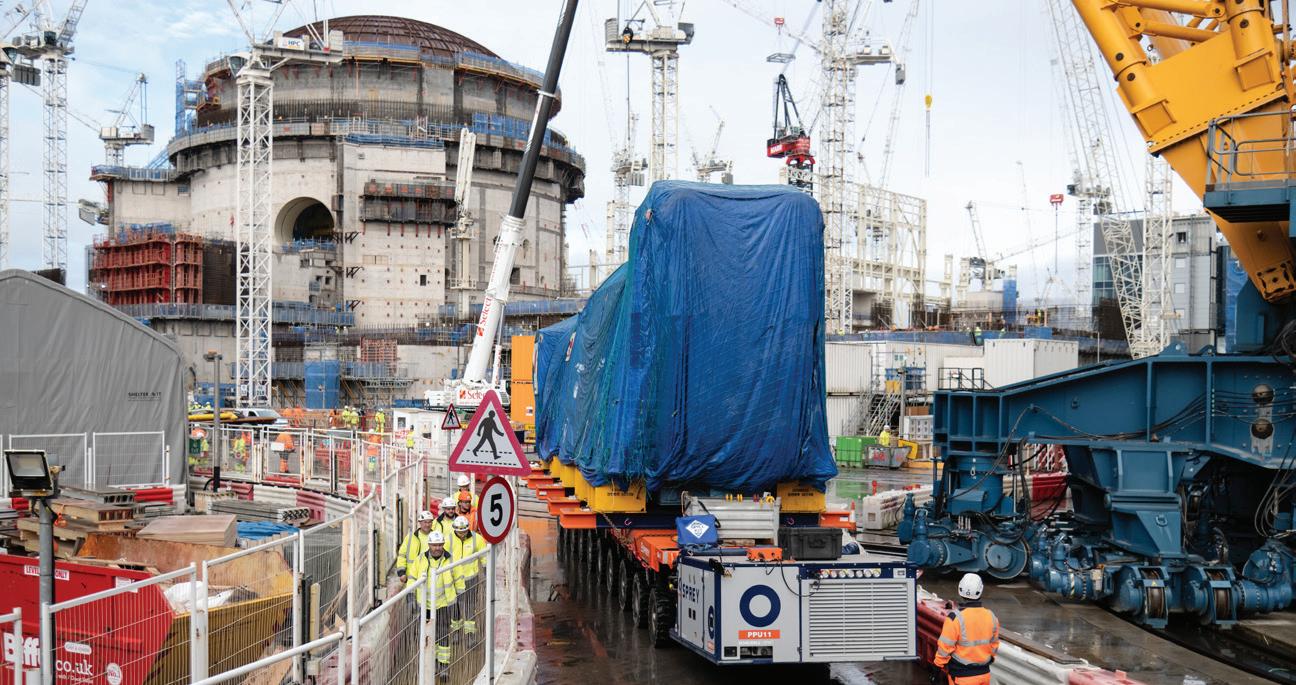
Across the UK’s new build and generation programmes, Osprey’s teams are supporting the installation of the largest nuclear assets, from turbine hall components and reactor island systems to critical backup power equipment. These assets, often weighing hundreds of tonnes, must be moved through constrained environments and installed with millimetre precision, with safety and on-time, assured delivery at the core.
Recent programmes have seen the deployment of Osprey’s self-propelled modular transporters,
hydraulic gantries and strand jack systems to deliver and position turbine hall assemblies and auxiliary equipment through temporary construction openings and limited clearances. The approach combines detailed modelling, custom lifting design and close integration with onsite construction teams to maintain the stringent safety and precision demanded on nuclear sites. Complex installation requires engaged and integrated engineering and the ability to plan operations within a multi-contractor environment.
4D BIM modelling allows effective planning and coordination between teams, helping to visualise construction sequences and mitigate interface risks. Through Early Contractor Involvement, Osprey’s engineers are embedding logistics intelligence into front-end design, carrying out feasibility studies, 3D and 4D modelling and marine logistics planning to ensure heavy modules can be moved, lifted and installed safely before construction begins.
By integrating early logistics planning with civil and structural design, Osprey is supporting modular construction strategies that will make upcoming projects more replicable, efficient and lower in carbon. Lessons learned through work on current sites are being applied to enhance constructability for future stations and small modular reactor programmes. For more information, please contact hello@osprey.group.
“OUR GOAL IS TO ENABLE THE INDUSTRY TO DELIVER NUCLEAR PROJECTS SAFELY, MORE EFFICIENTLY AND WITH GREATER CERTAINTY. EVERY INSTALLATION WE COMPLETE STRENGTHENS THE UK’S CAPABILITY TO REPLICATE AND DELIVER COMPLEX ENERGY INFRASTRUCTURE.”
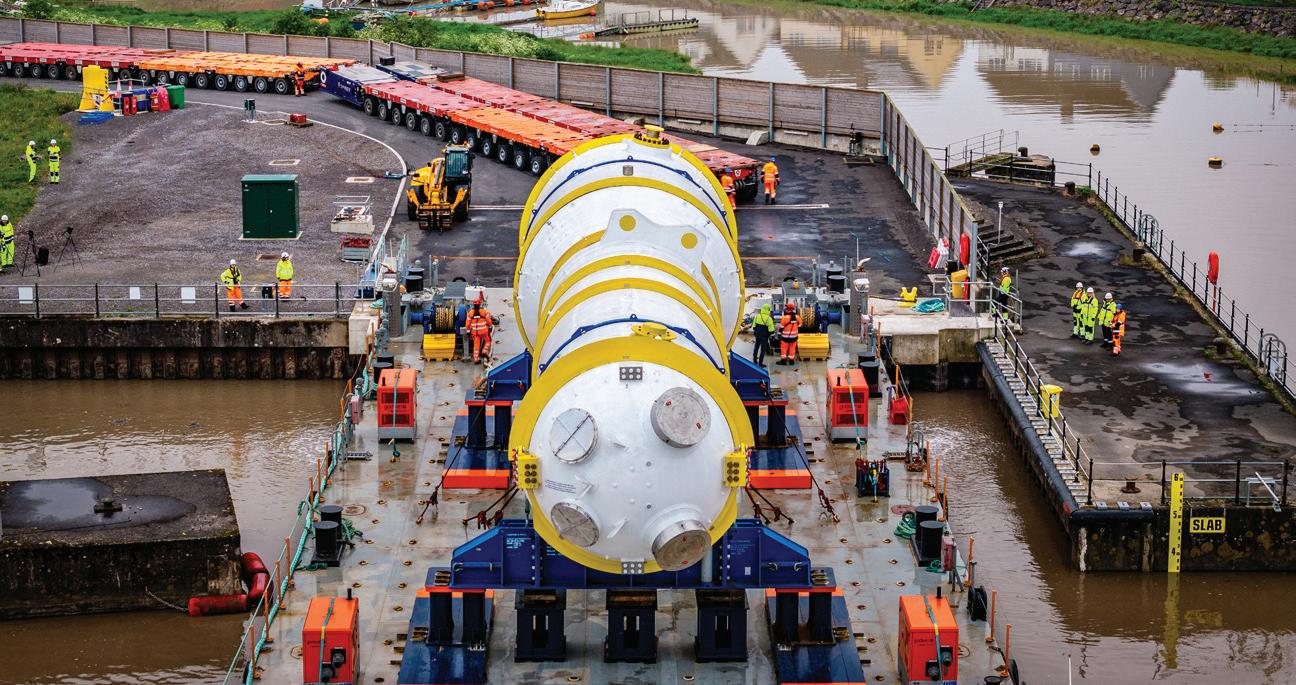
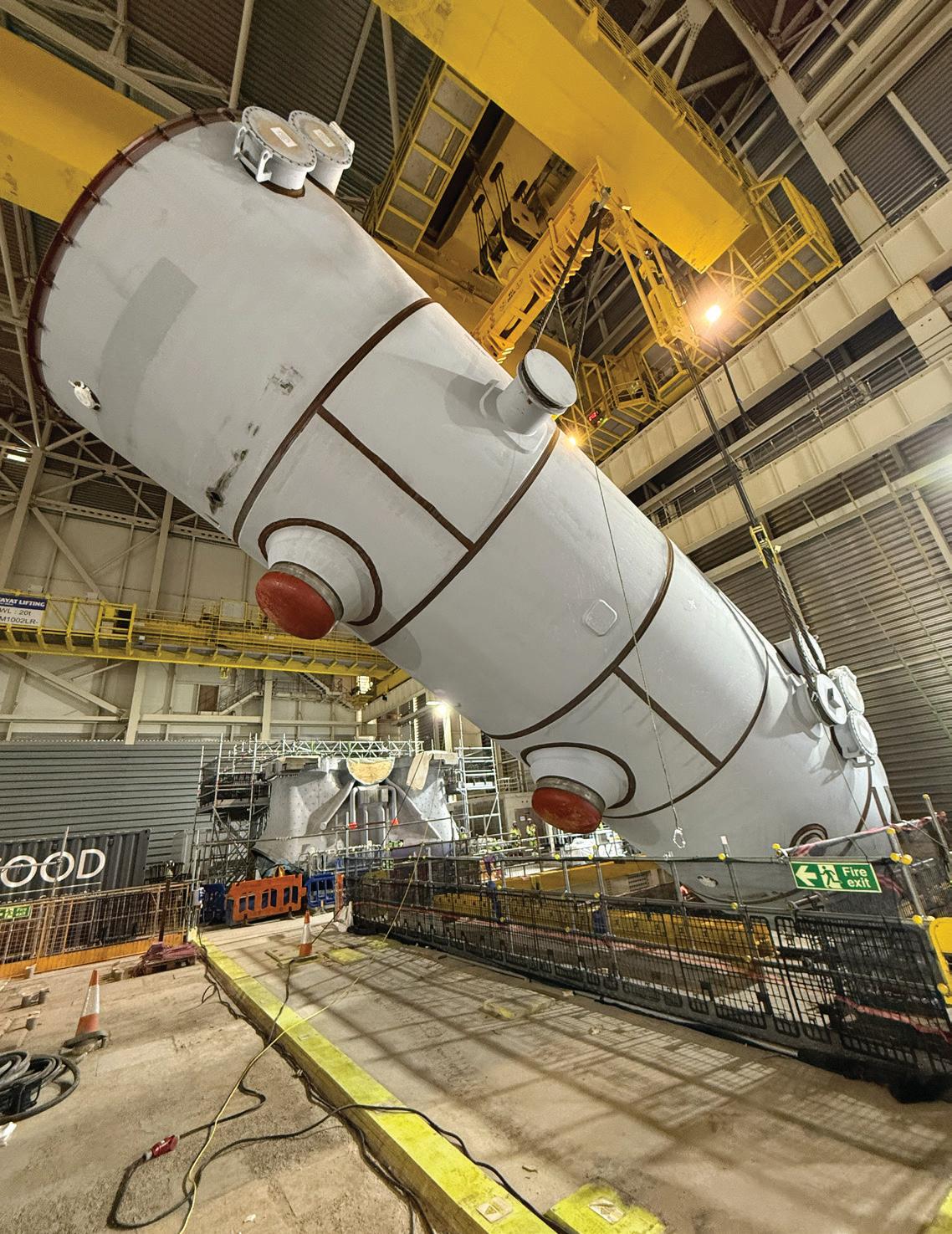
▲ The Moisture Separator Reheater Shell, arrived through hub and marine transport. SPMTs delivered the asset to site, where engineered lifting frames enabled accurate turbine hall installation and alignment.
▲ Osprey engineered, transported and skidded two Emergency Diesel Generator units into final position at HPC using specialist modular transport and jacking systems.
▲ Osprey engineered, transported and skidded two Emergency Diesel Generator units into final position at HPC using specialist modular transport and jacking systems.
Nigel Fletcher, Osprey CEO
From Project to Product: Upscaling UK Nuclear Manufacturing for the Modular Revolution
The UK’s nuclear industry is on the cusp of a renaissance driven by both small and advanced modular reactors (SMRs/ AMRs), but realising this opportunity requires a fundamental transformation in how we build nuclear plants.
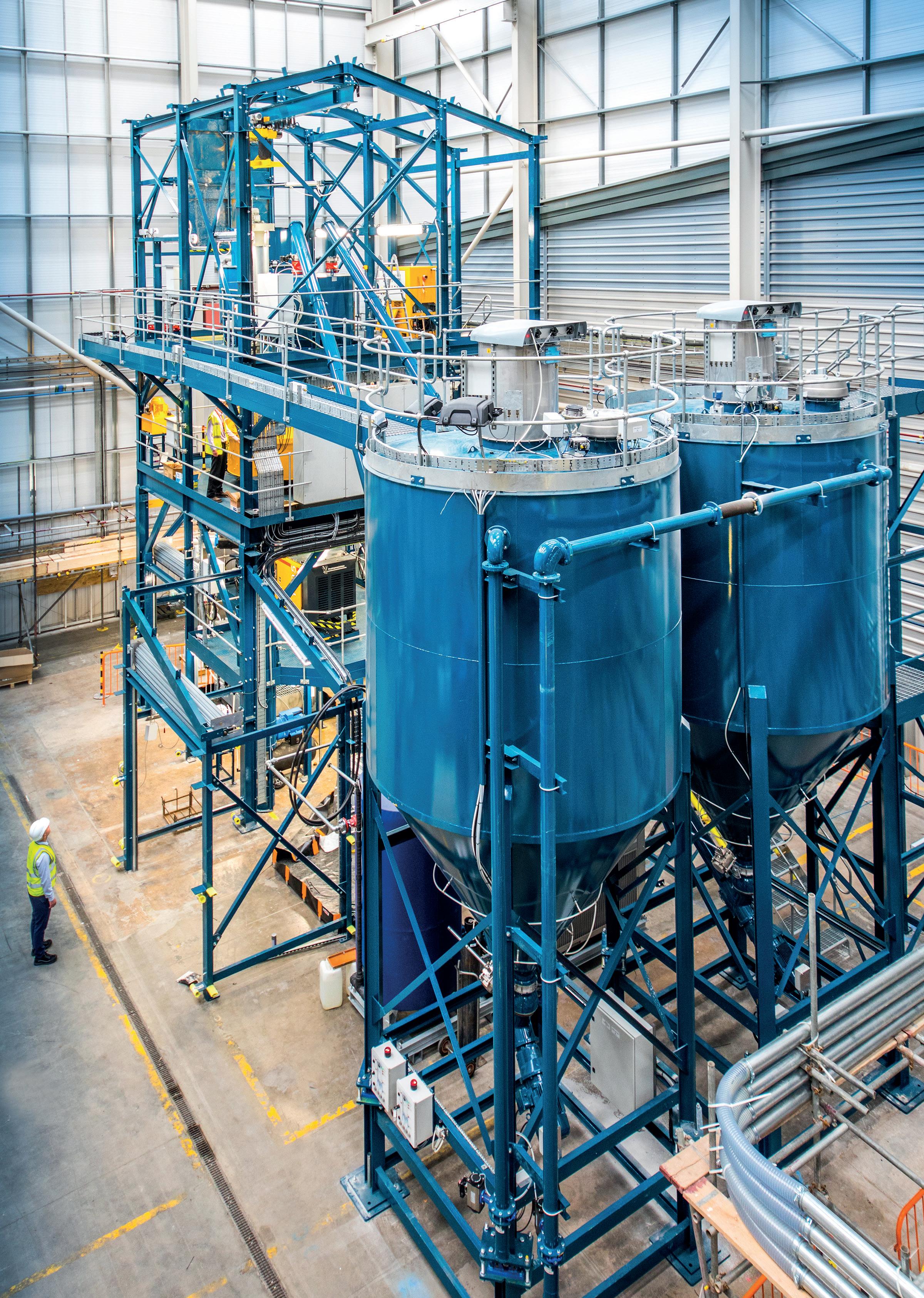
To deliver at the scale and pace required, the UK must upscale its manufacturing capacity and workforce. This means turning one-off megaprojects into standardised products, a process of productisation, while ensuring policy support, innovation, and stakeholder collaboration are better coordinated.
Achieving this will not only help secure our energy ambitions, it will create tens of thousands of skilled well-paid jobs, helping to generate economic growth while doing so, and position the UK as a leader in the global nuclear market.
Why This Matters Now
The government has set ambitious targets, aiming for nuclear to provide 25% (24 GWe compared to about 6 GWe today) of the UK’s electricity by 2050. After a long hiatus, we’re entering the biggest expansion of nuclear power for decades.
Driving this momentum is a wave of projects.
The recent Great British Energy – Nuclear (GBE-N) competition selected Rolls-Royce SMR as the preferred bidder to build Britain’s first fleet of SMRs. Each SMR is a compact plant that can be factory-fabricated and assembled on site, promising faster build times and lower costs. At the same time, a crop of reactor designs are also vying for deployment, such as Holtec, GE Hitachi, X-Energy and TerraPower. These SMRs and AMRs are attracting global investment and could supply not only domestic projects, but a worldwide market estimated at up to £500 billion by 2050.
The UK faces a critical moment for nuclear energy. Ageing reactors will retire by 2030 as electricity demand surges, requiring rapid deployment of large plants like Sizewell C and fleets of SMRs. Government backing, £2.5 billion for SMRs, streamlined planning, and the creation of GBE-N, underscores the urgency, alongside a goal for 70% of SMR supply chains to be British.
Current Landscape and Challenges
The UK nuclear sector faces three major hurdles: capacity, skills, and investment.
While the supply chain is competent, it does not yet have capacity for rapid growth. Suppliers
need to expand, adopt advanced manufacturing and collaborate to reduce overseas reliance but an uncertain pipeline stalls investment; erodes expertise and production capacity idles. The government’s new approach aims to ensure continuity through the fleet-build model, creating a steady project pipeline to justify investment and sustain skills.
Skills shortages are acute: Years of low nuclear activity led to a loss of experienced personnel and deterred new entrants. Now, the sector needs 40,000 additional workers within five years and 180,000 by 2050. Competing sectors intensify the challenge, so growing the overall talent pool through training, education and new talent outreach is essential.
Finance and investment present further challenges. Nuclear projects are capital-intensive and have historically suffered from cost overruns and delays. Stop-start government support can exacerbate this and whilst the government has taken some positive steps, investors will be watching how the first wave of new reactors progresses. Ensuring a clear, committed long-term plan, to give suppliers confidence, is necessary to unlock private investment at scale.
Finally, there are regulatory and coordination issues. Delivering advanced reactors involves multiple stakeholders and fragmentation can slow progress. Policy consistency and support need to extend to all advanced nuclear technologies, not just SMRs.
Cutting-Edge Innovation, Technology & Skills
Scaling up nuclear manufacturing will require innovation in how we design and build reactors. Many cutting-edge solutions are at hand, often adapted from other industries and include:
● Modular Construction: Major plant components can be fabricated in factories and shipped to site for assembly.
● Advanced Manufacturing: New production techniques eg digital twins and simulation are being embraced to manufacture nuclear components faster and to higher quality.
● Digital Project Delivery: Building information modelling (BIM) and integrated project management software can synchronise design, procurement, and construction, identifying clashes or delays in advance and reducing bespoke re-engineering encouraging reuse of qualified designs and processes.
● In-line Qualification: To accelerate this without compromising safety, innovation is occurring in non-destructive evaluation (NDE) techniques and better predictive modelling.
● Skills: The UK is taking active steps to address the nuclear skills gap, aiming to: double the number of apprentices by 2026, double the number of graduates entering the field, and invest in mid-career upskilling programmes.
Future Outlook
If the UK rises to this upscaling challenge, the future of nuclear energy looks bright. Successfully establishing a productised, high-capacity nuclear manufacturing sector would yield multiple longterm benefits:
● Economic Growth and Industrial Leadership
● Energy Security and Resilience
● Rapid Deployment of Clean Energy
● Regaining Global Leadership in Nuclear Innovation
If the UK cannot sufficiently scale its manufacturing and workforce, other countries, with readier industries, could capture the market and leave the UK as a client state. The next few years are thus pivotal in guaranteeing the nation stands as a builder and exporter, with all the strategic advantages that brings.
Call to Action – A National Endeavour
Delivering the vision of a revitalised, productised nuclear sector will require all stakeholders to act in concert. This is a truly national endeavour. Here’s what needs to happen now:
● Government must maintain consistent leadership and a clear roadmap for the nuclear programme.
● Industry Leaders must be at the forefront, leading by example in collaboration and innovation.
● Wider Supply Chain and Workforce: Smaller suppliers and the workforce at large (the backbone of this endeavour) are encouraged to proactively prepare—secure qualifications like ASME or ISO quality certifications, invest in automation to boost productivity, and form consortia to be able to take on larger scopes of work.
● National Collaboration: By uniting around the goal of revitalising nuclear manufacturing, the UK can achieve a coordinated push towards success.
The UK stands at a crossroads and with vision and collaboration, these challenges can become catalysts for growth, turning ambition into a resilient, world-class nuclear industry.
Just Imagine What’s Possible
Ready to move from challenge to positive outcomes? Whether you want to scale, evolve, innovate, accelerate or upskill, MTC is your partner for progress and together, we can unlock your next nuclear breakthrough.
MTC combines hands-on engineering expertise with cutting edge technology to solve manufacturing challenges for businesses of all sizes—all delivered by one independent organisation that feels like part of your team.
Discover more at https://www.the-mtc.org
All Party Parliamentary Group on Nuclear Energy Trip to Finland
Since being re-established after the 2024 General Election, the All Party Parliamentary Group (APPG) on Nuclear Energy has seen major progress across the civil nuclear sector, including advances in SMR development, the Sizewell C Final Investment Decision and new regulatory, planning and siting updates to support future projects. APPG members have played a key role in driving this momentum through their advocacy in Parliament and direct engagement with Ministers.
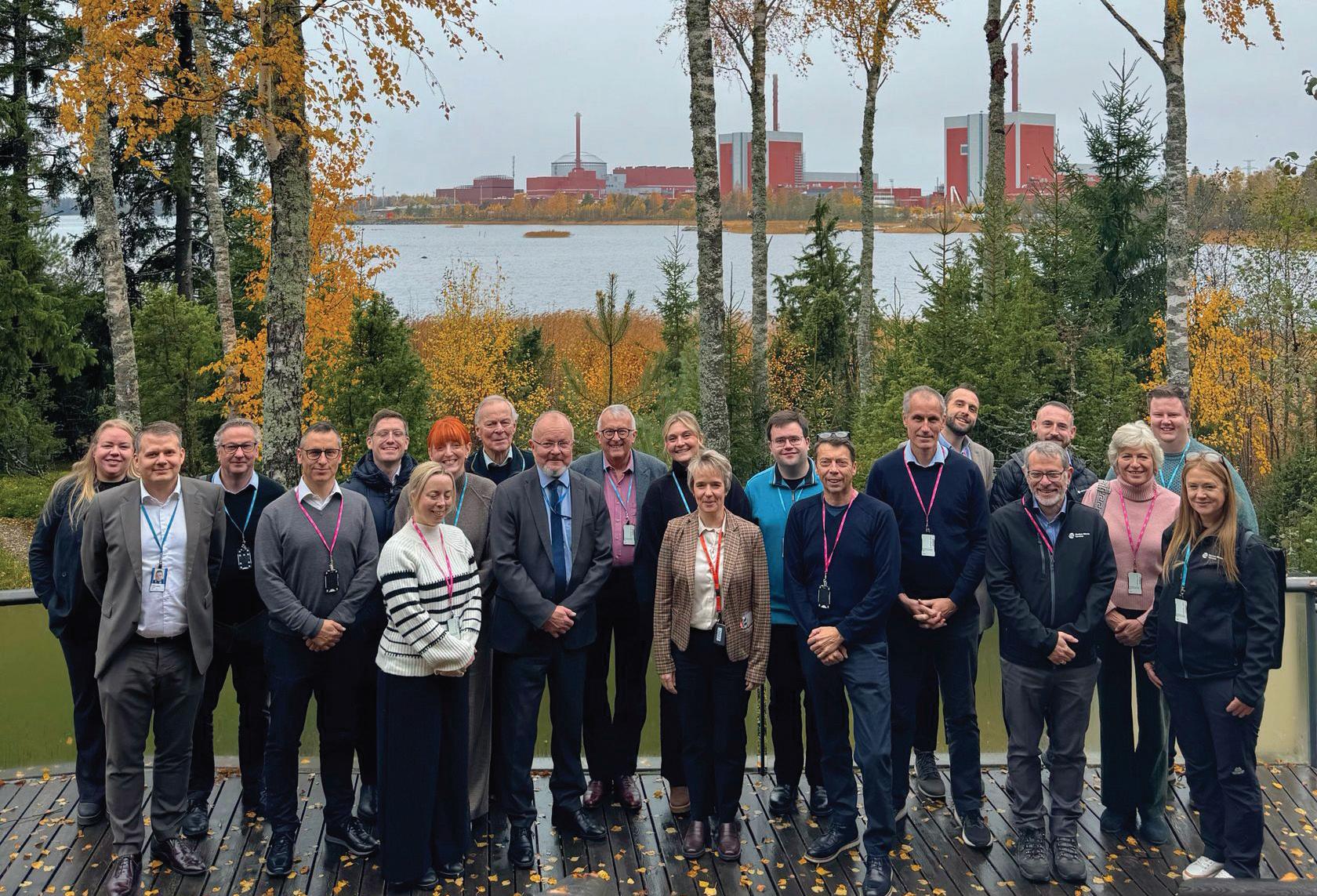
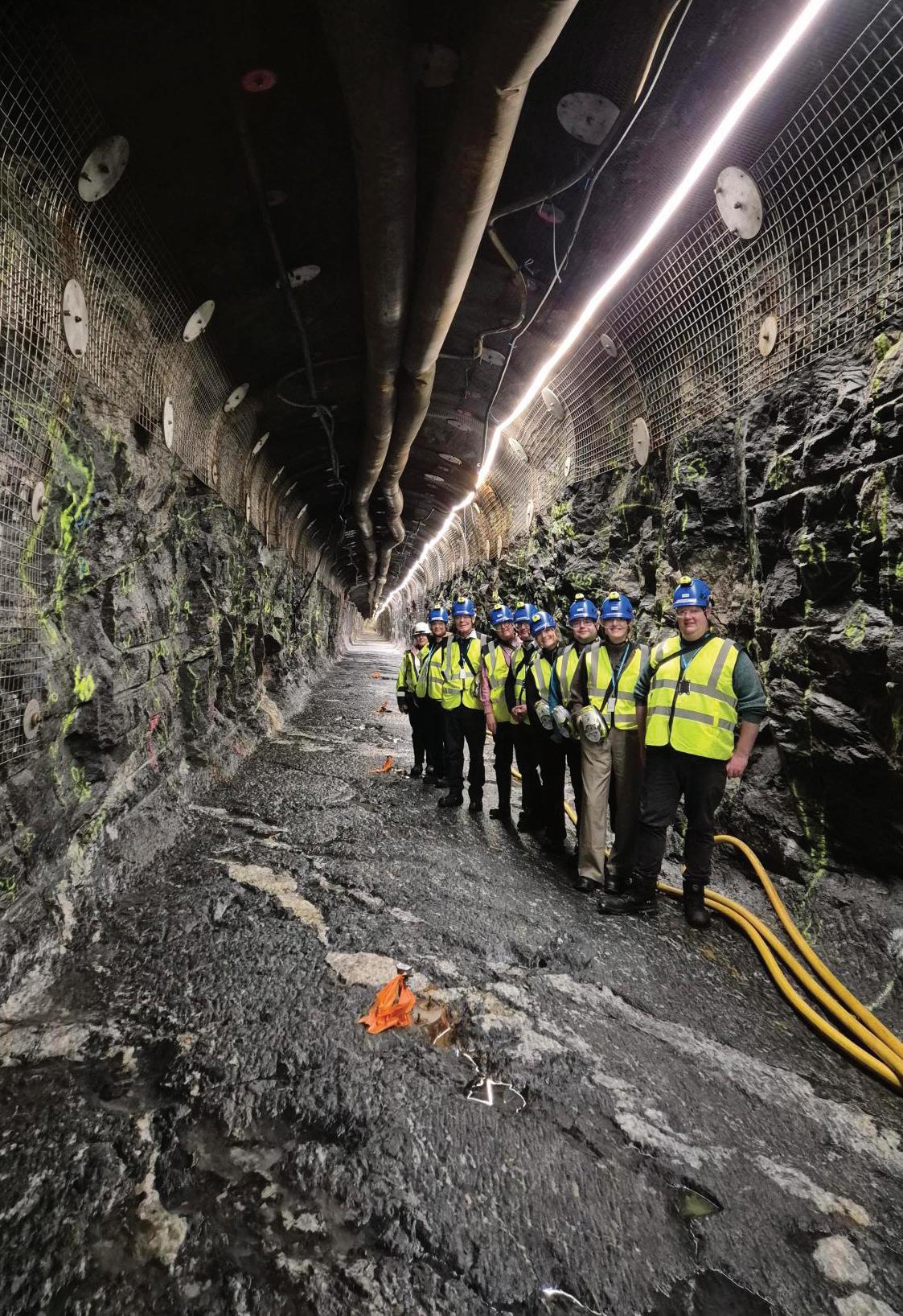
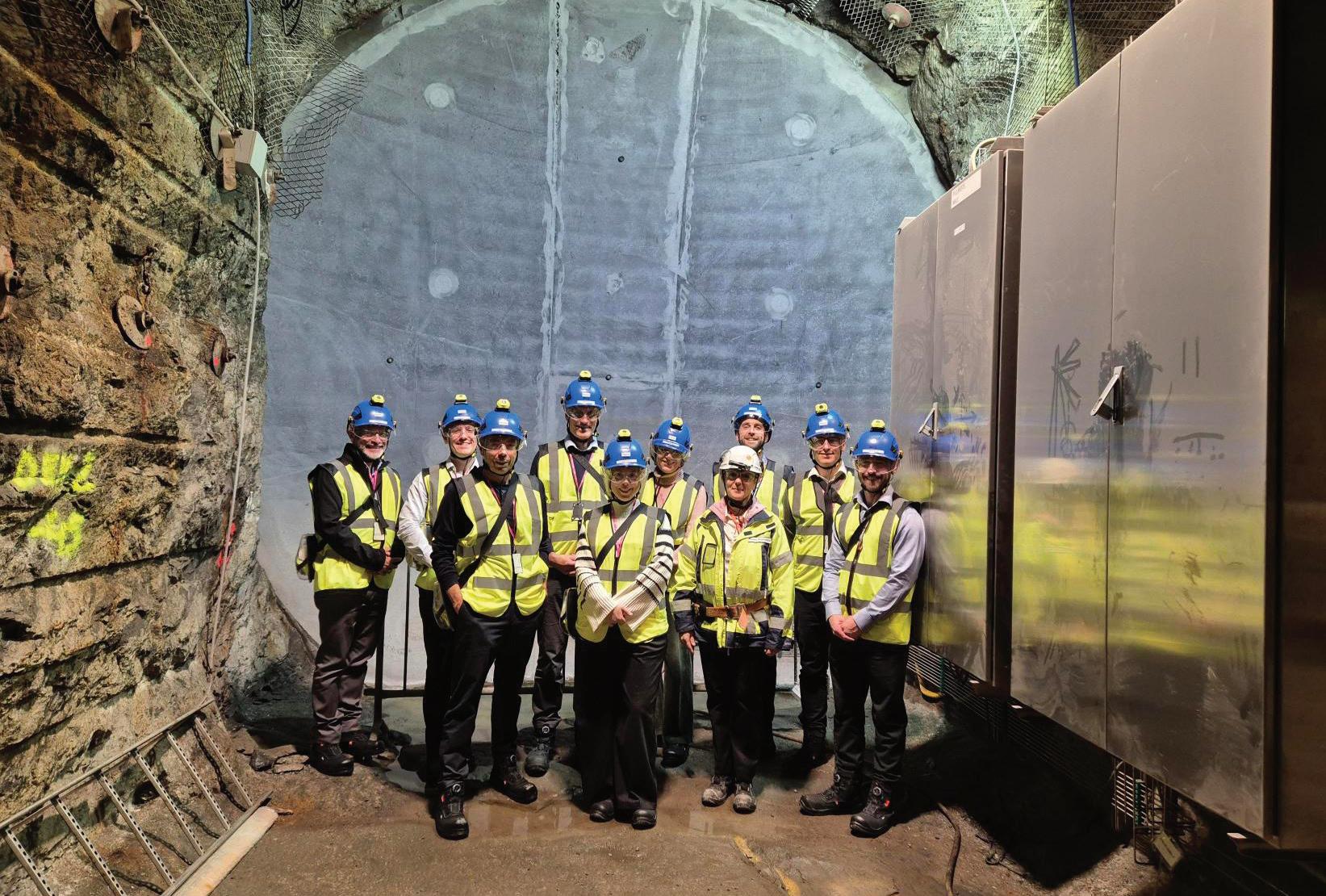
In October, APPG members had the opportunity to see the sector in action with a visit to Finland, gaining first-hand insight into the scale, innovation and potential of nuclear energy to help shape the UK’s own ambitions.
How Finland is Getting Nuclear Right
Finland offers valuable lessons for the UK as it works to strengthen its civil nuclear sector. The country is leading the way in areas where the UK is in the early stages, particularly in waste management and in new build too.
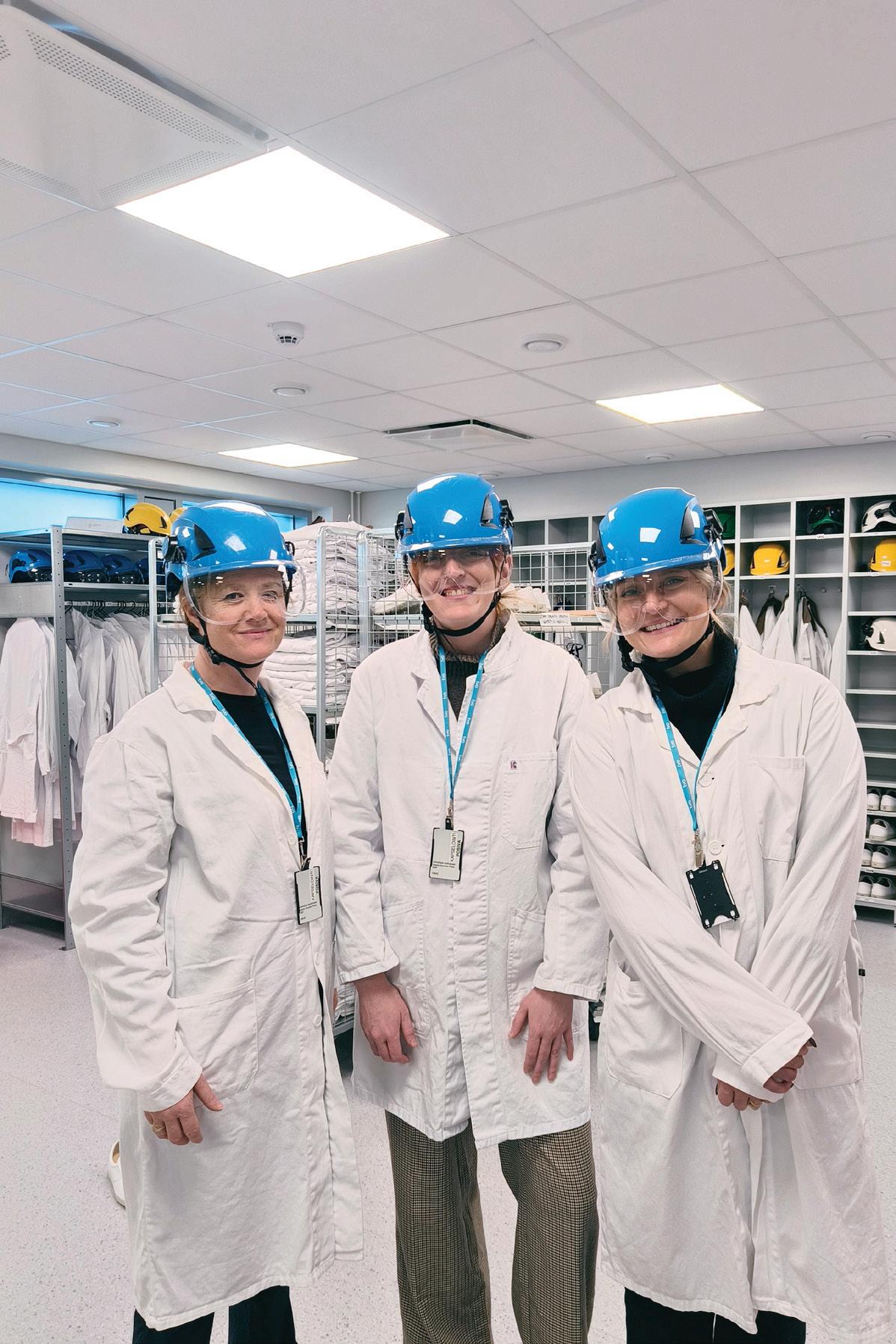
At Onkalo, Finland has built the world’s first Geological Disposal Facility (GDF), a project that provides a safe, long-term solution for storing nuclear waste deep underground. With thanks to Posiva, attendees were able to see the scale of the operation first-hand, from the encapsulation plant, where waste is sealed in copper canisters, to the vast network of tunnels some 400 metres below ground level. A key takeaway was how decades of open engagement secured public consent in the host community of Rauma, an approach the UK can learn from as it progresses its own GDF plans.
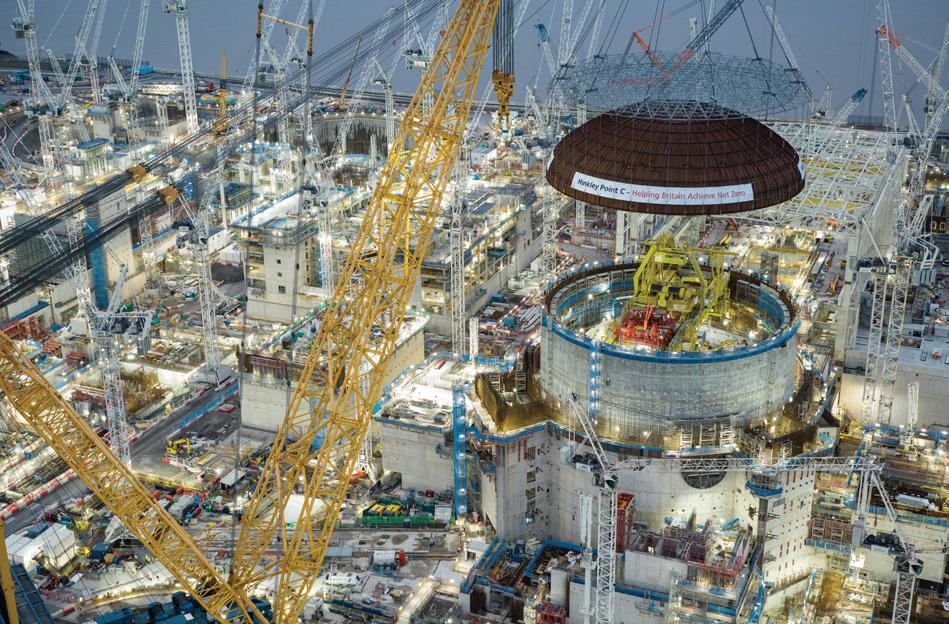
The visit also included Olkiluoto, home to Olkiluoto 3, the world’s first EPR reactor and Europe’s most powerful nuclear power station, accounting for 14% of Finland’s electricity. Seeing the engineering scale and precision required to deliver 1.6 GW of clean power provided valuable insight for the APPG, and gave them an understanding of what’s to come with Hinkley Point C and Sizewell C, which will each host two EPRs in the years to come.
Building on International Experience for UK Progress
Visits like this are invaluable for members of the APPG because they help parliamentarians understand the complex issues involved and equip them to ask the right questions of industry and government back in the UK. If the UK is to deliver on the Prime Minister’s vision of a “golden age for nuclear” it is essential to have a strong grasp of both nuclear waste management and the challenges of large-scale developments, drawing on the lessons learned from Finland.
While a GDF and new nuclear projects in the UK are still taking shape, significant progress is being made. Nuclear Waste Services is actively engaging with local communities and government on the need for a GDF, as well as its safety and economic case. Meanwhile, construction is underway at both Hinkley Point C and Sizewell C, creating thousands of well-paid jobs and providing a major boost to the UK civil nuclear supply chain.
Just as Finland has benefitted from investing in large nuclear infrastructure, the UK is now starting to see the potential benefits of its own ambitious nuclear programme.
NEWS FROM THE HUB.
ONR gives consent to decommission Hinkley Point B
The Office for Nuclear Regulation (ONR) has granted formal consent to EDF Energy’s (EDF) project to decommission Hinkley Point B nuclear power station.
This decision comes after a public consultation and a detailed assessment by ONR specialist inspectors of EDF’s environmental statement and Habitats Regulations Assessment.
The environmental statement included a detailed environmental impact assessment for the proposed decommissioning project at the Somerset site, along with mitigation measures designed to prevent or reduce any significant adverse environmental impacts.
ONR is satisfied that the environmental statement proposes adequate mitigation measures to address the adverse environmental impacts of the decommissioning project and considers the statement to be complete, of the right quality, and in line with relevant good practice.
The published project assessment report, which provides an overview of ONR’s decision, and public consultation response, is available at onr.org.uk.
In August 2022, Hinkley Point B reached the end of its operating life after nearly 46 years of generating electricity and moved into its defuelling phase. Since then, both reactors at the site have
been defueled in advance of the site moving into its decommissioning phase.
The nuclear site will transfer from EDF to Nuclear Restoration Services (NRS) in due course, a subsidiary of the Nuclear Decommissioning Authority.
NRS will decommission the site, which will involve dismantling and demolishing the plant and buildings as well site clearance and restoration. Currently, NRS is responsible for safely decommissioning 13 sites across the country, including the first generation of nuclear and research sites.
ONR’s consent was given under the Nuclear Reactors (Environmental Impact Assessment for Decommissioning) Regulations, 1999 (EIADR).
Rolls-Royce SMR signs key collaboration agreement
Rolls-Royce SMR has signed a £multi-million contract and Memorandum of Understanding (MoU) with world-leading nuclear services and technology company, BWX Technologies, Inc.
Signing the detailed design contract for the nuclear steam generators is another vital step forward in the development of the Rolls-Royce Small Modular Reactor (SMR) and further reenforces its position as Europe’s leading SMR. BWXT subsidiary, BWXT Canada Ltd based in Ontario, has been producing high-quality steam generators for the nuclear energy industry for more than 60 years and has supplied more than 315 steam generators to plants around the world.
“Sourcing these critical components from world-leading suppliers is part of our ‘designed for delivery’ approach—combining modularisation and proven nuclear technology— significantly reducing cost, construction time and removing project risk. This is undoubtedly an important milestone, and there remain a huge range of opportunities for the supply chain to become involved and contribute to this transformational programme.”
Ruth Todd, Operations and Supply Chain Director, Rolls-Royce SMR
The agreement includes development of a localisation strategy to support future manufacturing and related activities in the UK, Czech Republic and across Europe— maximising opportunities for local suppliers to engage in this work supporting jobs, growth and skills, and delivering meaningful benefits to local communities.
To enable our localisation strategy, RollsRoyce SMR will host supplier days in both the UK and Czech Republic. The UK event will take place on 13 November, followed by an event in Prague on 27 November.
These events are the latest in a series that will provide updates on the opportunities ahead across critical categories, including pumps, valves, heat exchangers, tanks, vessels, turbine island and aspects of civil engineering and construction.
Rolls-Royce SMR is the only company with multiple SMR commitments in Europe, having been selected as preferred bidder in the Great British Energy—Nuclear SMR competition, and by European utility, ČEZ, to build up to three gigawatts of new nuclear power in the Czech Republic.
ASP Isotopes’ UK subsidiary, enters engagement process
ASP Isotopes Inc., an advanced materials company focused on developing technologies and processes for the production of isotopes for multiple industries, announced a regulatory progress update in its initiative to produce HighAssay Low Enriched Uranium (“HALEU”) in the United Kingdom.
The Company’s UK subsidiary, Quantum Leap Energy Ltd (“QLE Ltd”), has formally commenced early engagement for regulatory pathways with the UK’s regulators on new nuclear projects.
Following successful completion of national security due diligence, the Department for Energy Security and Net Zero confirmed QLE Ltd’s eligibility to enter Early Engagement with the Office for Nuclear Regulation. HALEU is required to fuel most advanced modular reactor designs and this development sets ASP Isotopes’ subsidiary, Quantum Leap Energy, on the path to be the first commercial producer of HALEU in the UK.
Behind the build: KAEFER’s role in delivering excellence at Hinkley Point C
TerraPower
submits Natrium® reactor for regulatory approval
TerraPower, a nuclear innovation company, announced the official submission of the Natrium® reactor and energy storage system into the UK’s Generic Design Assessment (GDA) process. This is the company’s first regulatory step to deploying the Natrium technology in an international market.
TerraPower has been successfully working through the regulatory requirements in the US, where the first Natrium plant is being constructed. This includes the recent finalization of the Environmental Impact Statement for the US Nuclear Regulatory Commission. The UK’s GDA process will build on the company’s experience and efforts; and allow for TerraPower to establish deployment timelines for Natrium sites in the country.
The Natrium technology features a 345 MWe sodium-cooled fast reactor with a molten salt-based energy storage system. The storage technology can boost the system’s output to 500 MWe for more than five and a half hours when needed. This innovative addition allows a Natrium plant to integrate seamlessly with renewable resources and leads to faster, more cost-effective decarbonization of the electric grid while producing dispatchable carbonfree energy.
KAEFER UK & Ireland continues to play a key role in the construction of Hinkley Point C, providing critical technical industrial services that enable the safe and efficient delivery of one of the most complex construction projects in the UK.
With a workforce of over 400 personnel on site each day, KAEFER’s scope of work includes specialist protective coatings, scaffolding access, and logistics management across multiple areas of the project and Nuclear Island.
Operating within the rigorous nuclear safety and quality standards, KAEFER’s multidisciplinary teams ensure that every task, from surface protection to complex access design and installation, is excecuted with precision and control. The company’s integrated approach to safety, quality, operations excellence and planning, supports seamless coordination across the site, helping to keep the project on schedule and aligned with nuclear construction standards.
KAEFER’s delivery is underpinned by their commitment to innovation and continuous improvement, introducing digital scaffold design, robotic blasting & painting, optimised equipment and KAEFER LEAN systems to enhance operations excellence and reduce risk on site.
“The scale and complexity of Hinkley Point C demands the highest standards of safety, planning, and execution. Our teams take pride in delivering technically challenging work, 24-7. Whilst we’re often on critical path and supporting key project milestones, our priority is to deliver our services efficiently, maintaining a strong and proactive safety culture across every part of the project.”
Paul Ferrand, KAEFER UK & Ireland’s Site Lead at Hinkley Point C
KAEFER’s approach focuses equally on people development. Through their ‘Grow With Us’ strategy, the business invests in essential skills, apprenticeships, and career progression to ensure a sustainable and highly trained nuclear workforce. To learn more about career opportunities, visit https://jobs.kaeferltd.co.uk.
NIA EVENTS 2026
19-21 JANUARY
Westminster, London
Nuclear Week in Parliament
11 FEBRUARY
PA Consulting, London
Cross Industry Group - Nuclear Medical Isotopes
24 FEBRUARY
Attlee Suite, Portcullis House, London
NIA & WiN UK Parliamentary Networking Event
26 FEBRUARY
Cardiff
New Build & Existing Generation Group with WNF
26 MARCH
Delta Hotel by Marriot t, Bristol
SME Meeting 2026
23 APRIL
Chorley
Decommissioning & Waste Management Group
JUNE
North West
Advanced Nuclear Technologies Event
17 SEPTEMBER
Warrington
Business Group
3 DECEMBER
QEII Centre, London
Nuclear 2026 Conference
Grosvenor House Hotel, London
NIA & NI Annual Dinner 2026
STEPHANIE MCKENNA • HEAD OF MEMBERSHIP
Strengthening Collaboration Across the Sector: A Year of NIA Business Groups
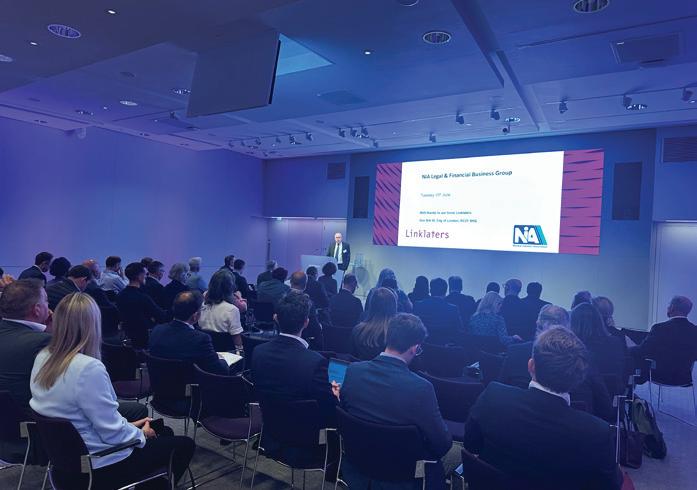
2025 has been one of our most active years for member engagement. Through our Business Group programme, the Nuclear Industry Association has continued to bring organisations together from across the UK and beyond to share knowledge, explore opportunities and support collective progress towards advancing nuclear. These groups remain a core forum for our members.
More than 1,000 delegates joined 11 meetings held in Durham, Cumbria, Sheffield, Manchester, Warrington, Coventry and London. Each session gave members the chance to hear from industry leaders, discuss emerging challenges, and gain insight into developments shaping the future of civil nuclear. The programme also helped new suppliers understand sector requirements and identify routes into the market.
This year, we introduced two new groups. The Cross-Sector Group on Space reflected growing interest in nuclear-enabled systems beyond Earth.
Our inaugural SME Group provided a space tailored to the needs of smaller organisations, helping them navigate procurement, build partnerships and identify opportunities. These additions sat alongside our existing groups in Decommissioning and Waste Management; New Build and Existing Generation; International; Fusion; and Legal and Financial.
We continued to act as secretariat for the Supply Chain Quality Group, supporting the alignment of standards and good practice across the sector. We also expanded our support to the Export Control Group, recognising the increasing importance of international collaboration and consistent regulatory understanding for companies working globally.
A key milestone of the year was our first dedicated Fuel event in Manchester. This meeting highlighted the strength of UK capability in nuclear fuel supply, research and innovation, and emphasised its strategic importance for energy security and sector resilience.
Looking Ahead to 2026
In 2026, we will continue to expand the programme with events focused on Medical Isotopes and Maritime applications. These areas reflect both member interest and national strategic priorities.
Our SME event will return in March 2026 too, and we are also pleased to confirm the second instalment of our Advanced Nuclear Technology Event in Summer 2026, with opportunities for members to speak, sponsor and exhibit.
We will continue to work with partners across the sector and will again collaborate with the Nuclear Institute to deliver the Annual Dinner on 3 December 2026, following Nuclear2026 at the QEII Conference Centre.
Thank You
We thank all members, sponsors, speakers and delegates for their continued support and contribution. Your involvement ensures these groups remain valuable and impactful.
To contribute to future sessions or learn more about the programme, please contact the Membership Team at membership@niauk.org
NEW MEMBERS
Not a member? To find out about the NIA and benefits of membership scan the QR code. To discuss membership options available to your company email membership@niauk.org
STUDLEY ENGINEERING studleyltd.com
C3 COMMUNICATIONS
c3communications.co.uk
From project concept through siting and community engagement to DCO consultation and construction, we at C3 have the experience and commitment to develop and deliver the highest quality communications to support major infrastructure projects.
RCK PARTNERS
rck.partners
RCK is a leading firm of chartered tax advisers, specialising in R&D tax credits, capital allowances, business rates, patent box relief, land remediation relief and enquiry resolution services. RCK’s consultants are specialists not generalists hired directly from industry so our consultants have a vocational understanding of the topics in which they prepare claims for and can understand the technical nuances of each project.
Studley is a multi-disciplinary contractor delivering mechanical, electrical, instrumentation, pipework, scaffolding, and steelwork services. We provide safe, high-quality engineering solutions to process industries including nuclear, energy, chemical, pharmaceutical, food, water, and oil & gas.
CO-LAB ENGINEERING LTD co-lab.solutions
Co-Lab was founded to help organisations navigate complexity and deliver meaningful outcomes, in engineering, management, and sustainability. We partner with clients to co-create solutions that are technically robust, strategically grounded, and socially relevant.
PYLETECH TECHNOLOGIES LIMITED pyletech.com
The Pyletech Group is an independent, private, multi-industry group of companies active in the shipping, energy, information technology, real estate and logistic sectors. With a strong team of professionals and strategic partners, Pyletech provides its customers with high quality services and solutions.
Cambridge Atomworks is a startup in the Cambridge innovation ecosystem specialising in nuclear engineering and reactor design services. We serve as the design authority for the ODIN microreactor. Our goal is the development of compact, efficient, and safe nuclear energy solutions for emerging energy markets.
PwC pwc.co.uk
We help solve our clients’ most important problems. Creating and protecting value, now and in the future. Our five lines of service Audit, Consulting, Deals, Risk and Tax bring together a wide range of capabilities.
ALLELYS HEAVY LIFT allelys.co.uk
Allelys provides heavy lift, specialist transport, heavy haulage and logistics solutions to our diverse and innovative customers. We face together all the unique projects with a creative solution, listening from the start and communicating at every opportunity. Our non-defeatist attitude and agile approach means you will be partnering with a team that never gives up. Even in the face of the toughest challenges we aim for joint success.
LINCOLN HILL • DIRECTOR OF POLICY
AN ANSWER FOR WYLFA
Nine general elections and nine Prime Ministers have come and gone since the Secretary of State for Energy received an application from the Central Electricity Generating Board on 18 April 1989, “to construct a PWR nuclear power station to be known as Wylfa B.”
Over the intervening 36 years, the people of Ynys Môn have seen many fallow years, many false dawns, and many missed opportunities to bring new nuclear development to the island.
In recent years, the island’s population has fallen, the number of young families and young children has fallen, the number of Welsh speakers has fallen. The northern part of the island had fewer than 2,300 jobs at last count. That is why many of us in the industry have felt that we had unfinished business at Wylfa and duty yet to discharge to the people of the island.
The announcement that the first of the RollsRoyce Small Modular Reactors will be sited at Wylfa marks a commitment to bring historic investment, new opportunity, and good jobs to the area. You will have seen the numbers: 3,000 jobs at peak construction, and hundreds of jobs for the rest of this century in operation. Each one of those jobs is a chance for someone on Ynys Môn to build a life and to build a family near the place that they call home. It is another chance to build that life on a stable foundation and to preserve the unique culture and heritage of the place.
It is, of course, also not the end of the road. We are much closer to the beginning, but in this journey we know a bit better the route we will be taking. We know the what and we know the where, and both are essential to achieve a Final Investment Decision.
More broadly, this announcement should form a key part of the revival of nuclear power, and a broader industrial revival in the UK. It is not just the island that has weathered the storm these past three decades and more. On that day in April 1989, the UK had 11.2 GW of nuclear capacity. Today, we have 5.9 GW, most of which is set to go within five years.
Rolls-Royce SMR, and the Wylfa project, will be the great proving ground of the transformative
promise of SMRs. The prospect of building more in factory conditions, with greater certainty and predictability, reducing the undoubted challenges of open-air, on-site construction is a golden. The ability to build smaller and unlock more sites for development can and should deliver a huge boost of sustainable economic growth and industrial opportunity here in Britian, and in burgeoning export markets abroad.
One of the best things Rolls-Royce SMR have been doing is embedding that ethos of modularity right from the beginning of the design. Every part is being configured to fit within road-transportable modules, to maximise the offsite fabrication efficiency and programme certainty. The Reactor Pressure Vessel design follows from the maximum diameter a cylindrical vessel can have while still being transported on UK and EU roads without requiring a special licence. The power output of 470 MWe in part follows from that. It’s that type of rigour, careful planning and forward thinking that Rolls-Royce SMR and GBE-N are going to carry through this programme.
That programme will start at Wylfa, but it cannot end there. The whole modular reactor concept works, as every good nuclear programme works, as a fleet. The project teams will naturally focus their efforts on making the Wylfa project work, and rightly so. The industry and the UK Government, however, should raise our eyes and look beyond that, to Heysham, Oldbury, Bradwell, to Torness in Scotland, and beyond, to build this fleet.
An initial three Rolls-Royce SMRs to go with Hinkley Point C, Sizewell C and Sizewell B gets us back to 9.1 GW. That was 1984. We have to have a higher ambition than that to give this country the reliable, sustainable, cheap energy to drive this economy in the 21st century.
We celebrate a historic announcement for Rolls-Royce SMRs at Wylfa, and we look forward to seeing and supporting the project developing. And we remember our duty to the communities who have stood by us for decades, to deliver on the promises we have made, and to see to their prosperity, and the children’s prosperity, for the generations to come.