




BY CAMILLIA LANHAM






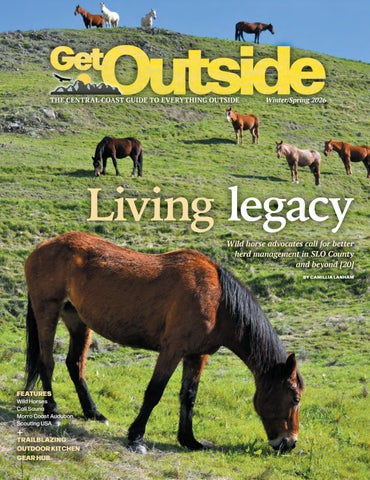
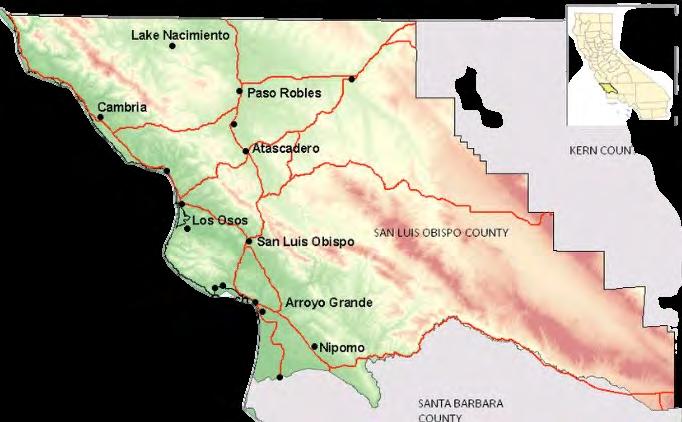
Managing federally protected species isn’t easy. Wild horses and burros are no exception. About 80,000 of them roam free on 26 million acres of public land in the American West, including a small herd of wild horses that call 13,000 acres of San Luis Obispo County home. Advocacy groups say that the Bureau of Land Management and the U.S. Forest Service can do better when it comes to the equines—for both the small herds and the large ones. That’s our main story in this winter/spring issue of Get Outside, but we’ve got other fun too. Read stories about trail-training canines, a brand-new regenerative farm, what the Audubon Society is doing for local students, Scouting on the Central Coast, and outdoor bathroom products for females.
Camillia Lanham editor
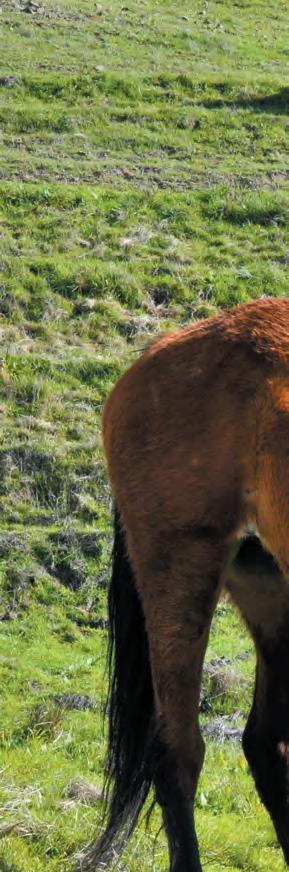
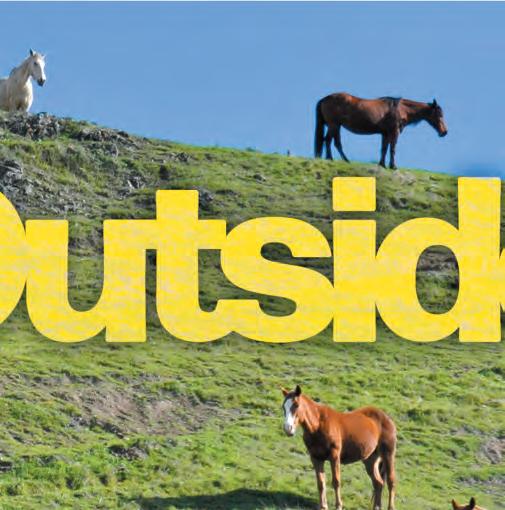
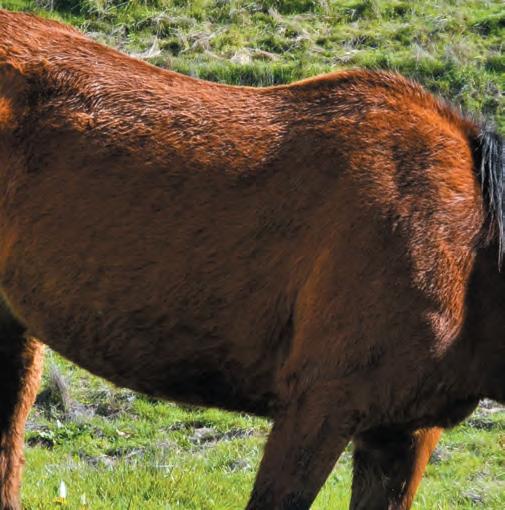
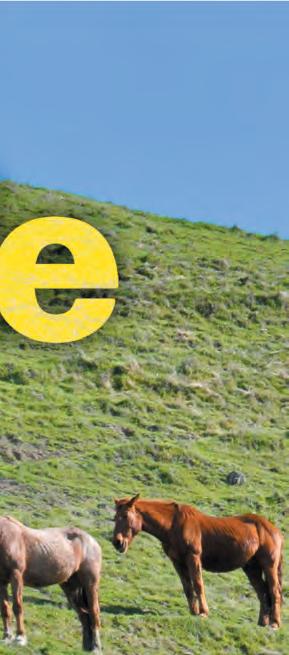
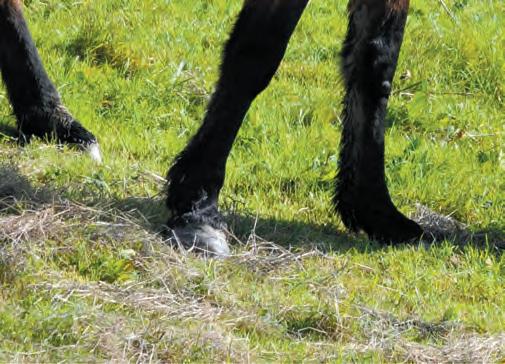
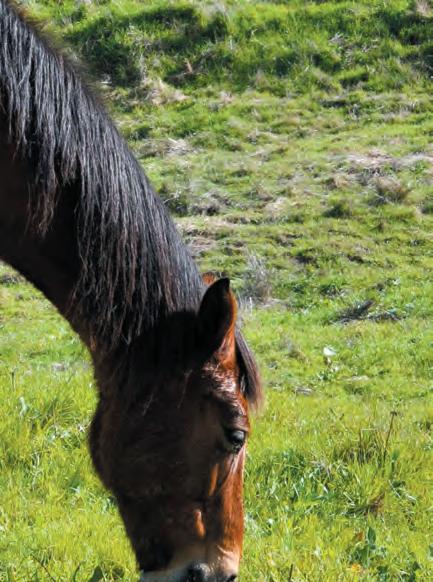
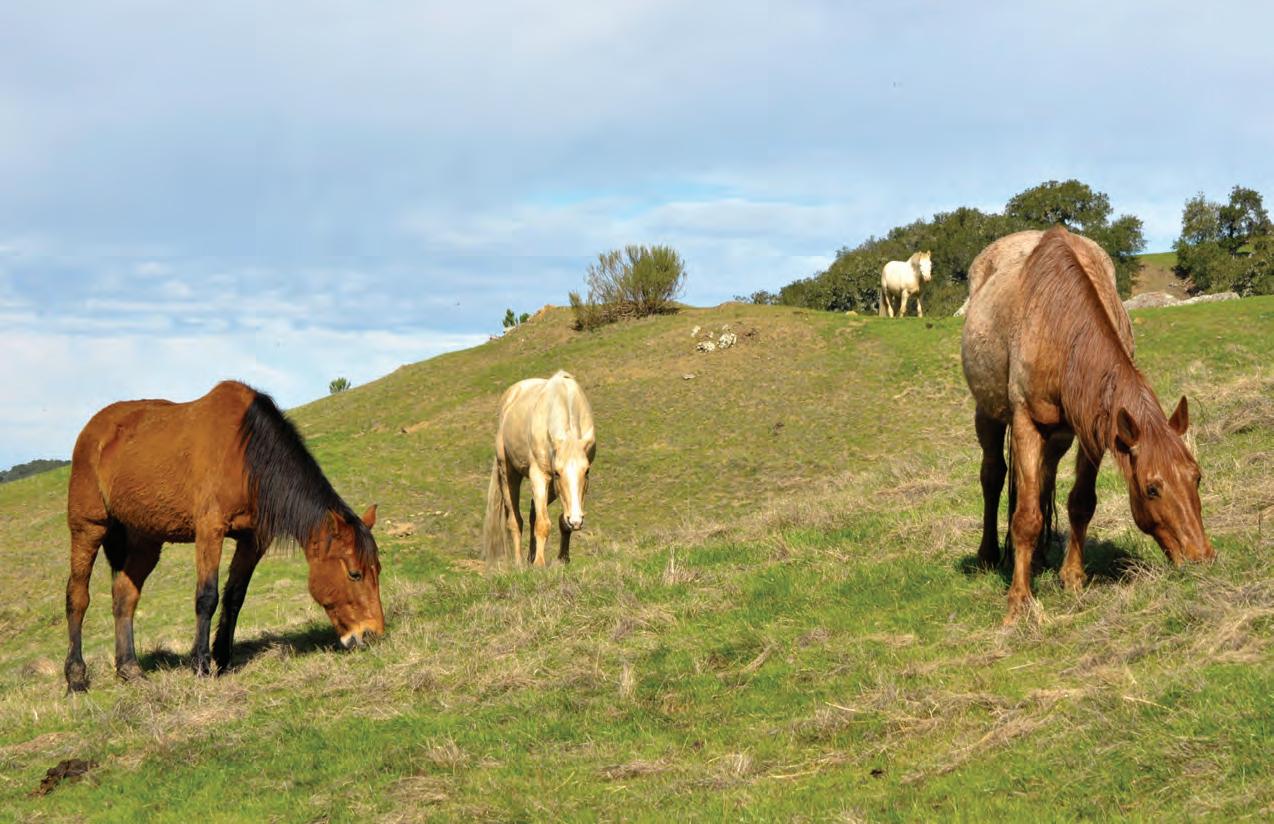
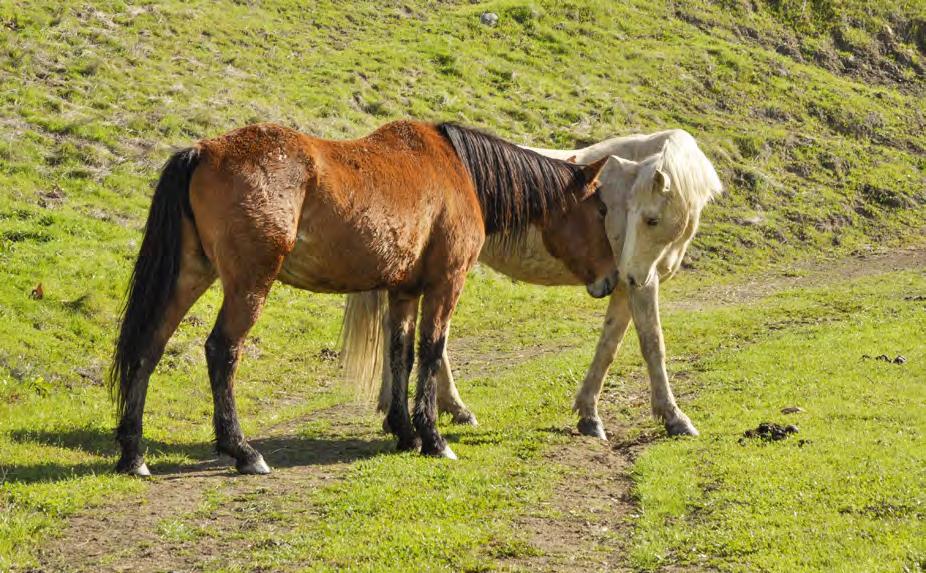
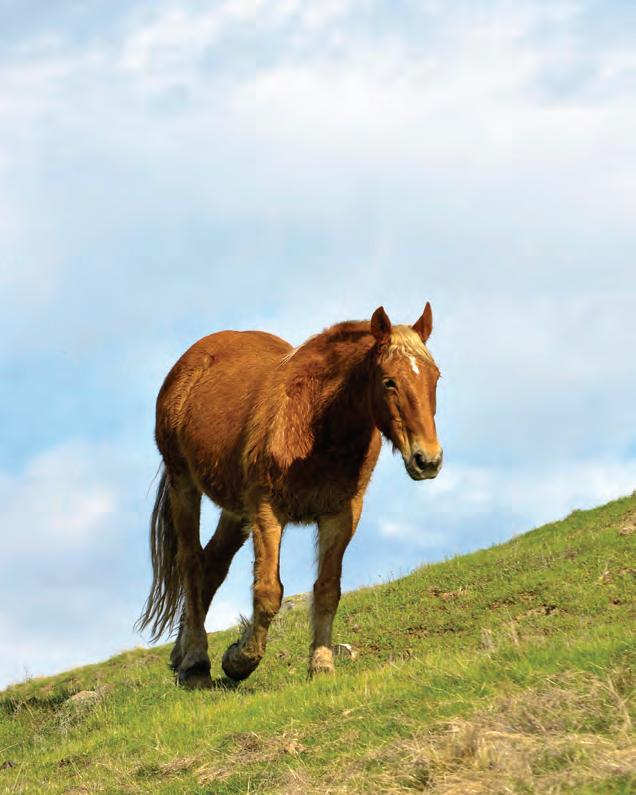
Several herds of wild horses and burros call SLO Springs Ranch home, rescued by Return to Freedom – Wild Horse Conservation as they were sold by federal agencies that rounded them up off public land.
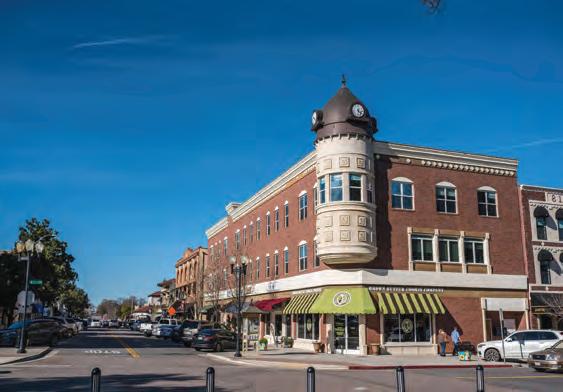



Don’t miss these events for the whole family!
DOWNTOWN FARMERS MARKET
TUESDAYS CITY PARK • 9:30am–12pm
SUNDAY FEBRUARY 15 • 7pm
VALENTINE MOVIE NIGHT
Movie: “Singing in the Rain” 1952 PARK CINEMAS (1100 Pine St), Info call 805-238-4103 (Tickets: ParkCinemas.com)
SATURDAY MARCH 28 • 11am-2pm HOP TO IT – VISIT THE EASTER BUNNY




Downtown City Park Holiday House
SATURDAY APRIL 25 • 10am-4pm VINTAGE SIDECAR RENDEZVOUS Recycled Treasures, Antique Motorcycles, British Cars, & PR Comic Book Expo Downtown City Park (Free Admission)



SATURDAY MAY 9 • 10am-4pm PASO ROBLES OLIVE & LAVENDER FESTIVAL

Olive Oil, Olive Tasting, Artists, Crafters City Park Vendors Call 805-238-4103 Free Admission
JUNE 11, 18 & 25 • 6-8pm CONCERTS IN THE PARK Thursdays (Music)
JULY 9, 16 & 20 • 6-8pm CONCERTS IN THE PARK Thursdays (Music)
JULY 15 JULY 26 CALIFORNIA MID-STATE FAIR
THURSDAY JULY 23 • 7:30-10:30am FREE PANCAKE BREAKFAST Downtown City Park (Free Admission)





BY ANNA STARKEY
Two and a half years ago, my brother hatched a scheme to visit every one of the U.S. National Parks. We’re not talking about drive-through visits—this plan involves camping in the parks whenever feasible and truly experiencing what each one has to offer. We started in California.
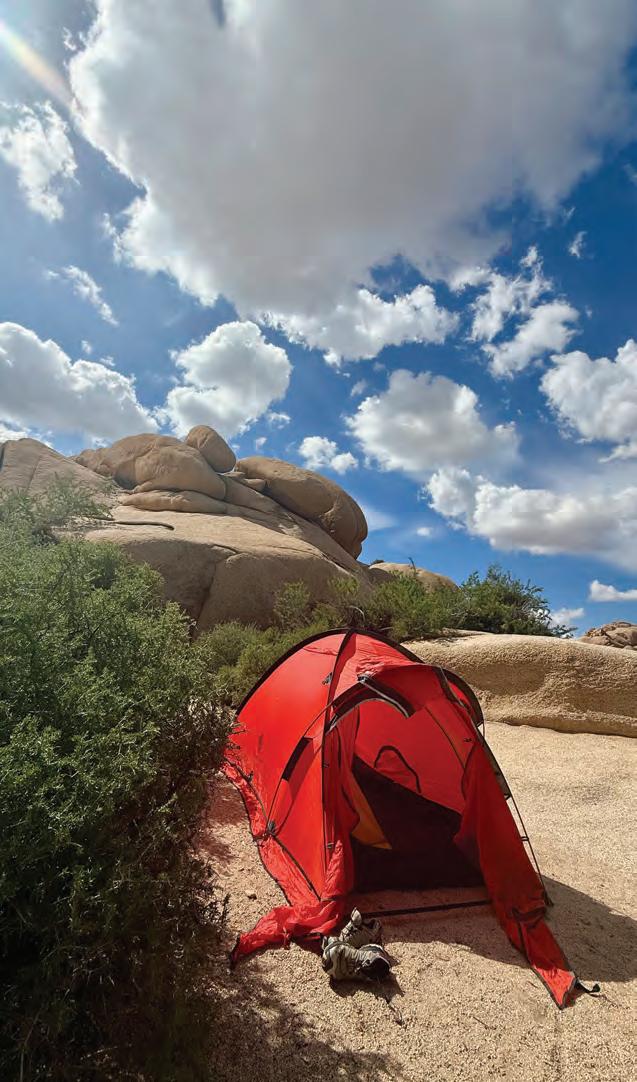
Farthest south is Joshua Tree National Park , where the Mojave and Colorado deserts meet.
Renowned for rock climbing, this stark and beautiful landscape also offers unparalleled stargazing, and the hiking—framed by surreal rock formations and iconic Joshua trees—feels serene and magical.
Heading to the coast near Ventura, we visited Channel Islands National Park . Accessible only by ferry from Ventura Harbor, this park requires thoughtful planning. We chose Santa Cruz Island, one of the fi ve that make up the island chain. With no transportation on the island, it’s a dream destination for hikers and kayakers. That remoteness is the park’s greatest asset.
Back on the eastern side of the state lies Death Valley National Park , a truly otherworldly place. Badwater Basin, the lowest elevation in North America,

stretches into vast salt fl ats and sand dunes that seem to go on forever. Because of extreme temperatures, timing your visit is essential.
Closest to California’s Central Coast is Pinnacles National Park My favorite feature here is the cave system, which you can wind your way through—headlamp required, as it gets pitch-dark inside.
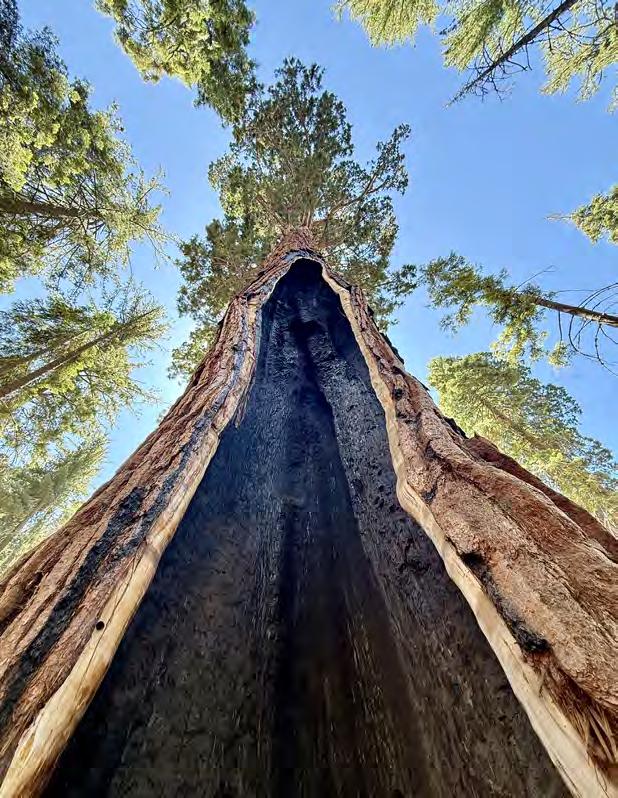
Three of California’s national parks lie within the Sierra Nevada mountain range. The southernmost is Sequoia National Park , home to some of the largest trees on Earth. With a convenient shuttle system, ranger talks, and well-maintained trails, it’s easy to explore.
Connected yet distinct is Kings Canyon National Park , often known for bear sightings. While we didn’t see any on our visit, the drive to Road’s End more than made up for it. This park feels like the wild cousin to Sequoia—and to our next stop, Yosemite, where the iconic views of El Capitan and Half Dome are breathtaking, and the developed areas of the park strike a balance between rustic charm and comfort. Because it’s consistently busy, I recommend exploring lesser-known trails during peak times. And if Half
NATIONAL PARKS continued page 6
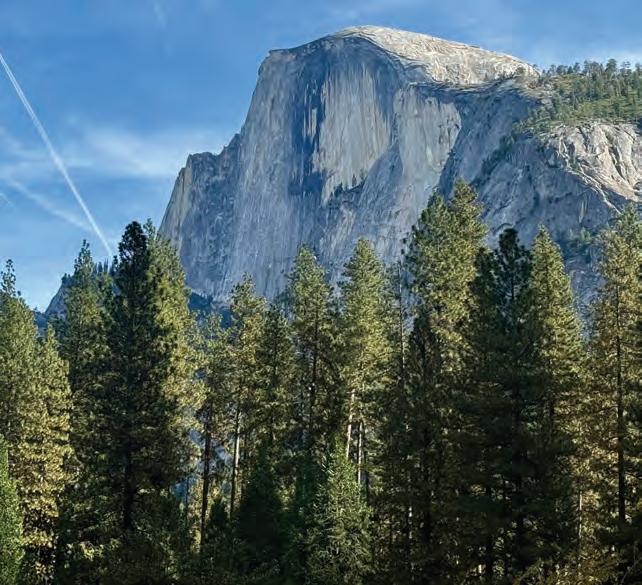








Dome is on your list, don’t forget— you’ll need to apply for a permit.
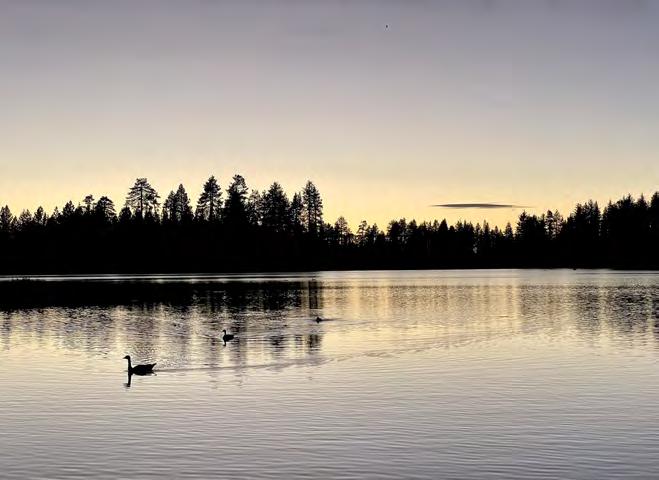
Farther north is Lassen Volcanic National Park , an incredible place to drive into. Volcanic pools, sulfur springs, and all four types of volcanoes make this park a geological feast. We stayed in cabins at Manzanita Lake, spending our days kayaking and hiking the snowlined trails of Mount Lassen.
Last on our California journey is






Redwood National Park, where towering trees create a hushed, almost cathedral-like atmosphere. The combination of rainforest, rivers, and Pacific coastline comes together to make this park unlike any other. With California nearly complete, we now turn our sights north to the parks of the Pacific Northwest before continuing east. With 63 designated National Parks in the U.S., it seems my brother and I will remain travel buddies for a long time to come.











WHO’S A GOOD BOY?
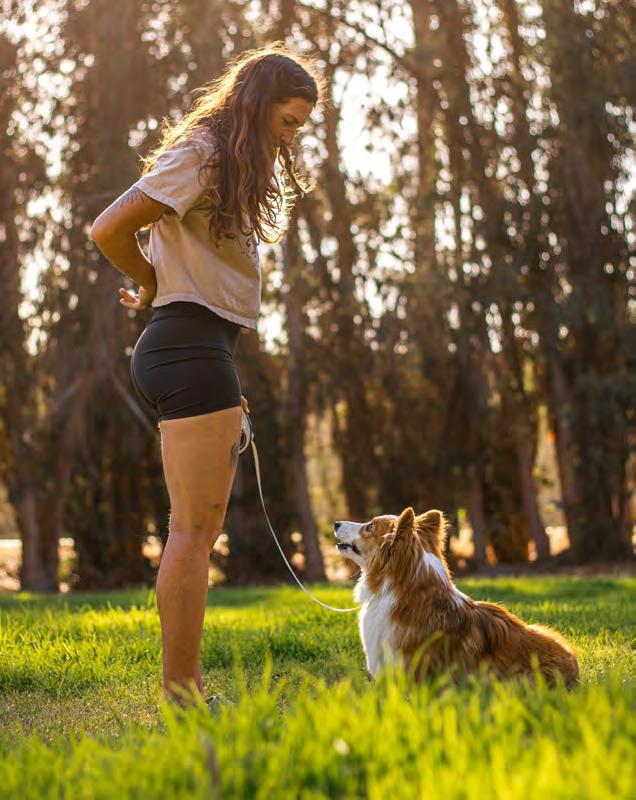
Mayhem Canine founder Alissa Loftus aims to train dogs to be good “trail citizens” who respect other dogs, passing hikers, and the surrounding wildlife.

BY BULBUL RAJAGOPAL
Think your furry companions can handle something a little more hardcore than a walk around the park?
Alissa Loftus of Mayhem Canine has your answer.
“Hiking is much more efficient, much more stimulating for the dog,” she said. “They’re not just being marched around the pavement. They get to run and jump, get dirty, and use their nose and hunt things.”
Since 2024, dog trainer Loftus through Mayhem Canine’s pack hikes has taught local pet dogs how to be a good “trail citizen” that’s respectful of people, other dogs, and wildlife.
Loftus worked in a wine cellar making wines in Paso Robles for six years. In 2022, she decided to follow her calling. She learned how to coach through a mix of workshops and earned


certifications from Scentable K9, Raven K9, Michigan-based the Dog Training Workshop Tour, and the Healing Pack in Los Angeles. Now, Loftus and her canine clientele can be found hitting the trails behind Cal Poly’s campus, in Los Osos and Cayucos, and on the ridgeline between Laguna Lake and Cerro San Luis.
“I have a few places where I feel really comfortable bringing a larger group of dogs,” she said. “I don’t ever want to bring them somewhere with super heavy traffic because I feel like that’s just kind of rude to everyone else.”
Mayhem Canine offers pickups and drop-offs where Loftus typically collects dogs between 8 and 9 a.m. every weekday.
“If they’re trained, they get to be off leash during the hike. I can trust them to stay out of the way of others, not chase a cow, not bother the person passing,” Loftus


“But if I have a client who’s newer or a younger dog or it’s not there yet, it’ll be on a long line, … a 20-foot, 30-foot, maybe even a 50-foot line.”
New dogs are never added to a well-established pack from the getgo. Loftus spends one-on-one time with each newbie to understand its skill set and temperament before any canine introductions are made.
One of Loftus’ clients came to her by way of working at SLO Dog Adventures, where she was mentored by its founder and head trainer, Bonnie Shiffrar.
San Luis Obispo County resident Krista Jeffries used to train her “half cowboy, half cop” dog Doug at SLO Dog Adventures, until Shiffrar moved away and Loftus started Mayhem Canine.
“A lot of trainers around here are purely positive, which is fine if you have a dog that responds to that kind of training,” Jeffries said. “But Doug needed a different kind of structure. So, I went
with Mayhem because [Loftus] was able to handle his drive in a way that didn’t punish him for being a normal dog but also told him when he was doing the wrong thing.”
Doug—a mix of Australian cattle dog, Belgian Malinois, and German shepherd—used to be too excitable around other dogs, always urging them to play with him. Hiking with Mayhem Canine helped him mellow out, according to Jeffries. Doug is more focused now, and he knows when to get excited and when to calm down and behave.
Pick your pack
Sign your dog up for Mayhem Canine’s dynamic outdoor services by visiting mayhemcanine.com/ mayhem-canine-services Follow Mayhem Canine on Instagram @mayhemcanine.
“She trained him on an e-collar, so he gets to live his best life and get a lot of energy out, … more than he would with just a couple of walks,” Jeffries said. “People think [an e-collar] is cruel, but it’s more like a tap on the shoulder. … It’s not painful. I’ve never seen him yelp or be upset by it. I just see him suddenly stop in the middle of something he was going to do, but then realized he wasn’t supposed to.”












BY CALEB WISEBLOOD
Working for the Central Coast State Parks Association (CCSPA) brought Executive Director Sierra Emrick closer to the bluffs, tidepools, and 7-mile shoreline she already had ocean-deep feelings for since childhood.
“I grew up in Los Osos, and Montaña de Oro was my ‘heart park.’ The park I just loved, and—I
park, and CCSPA is one of the avenues where people can be able to give back to those parks that they love, that they feel really gave them so much.”
Montaña de Oro is one of 10 California state parks in San Luis Obispo County that CCSPA regularly supports through fundraising, public awareness campaigns, restoration projects, and educational events geared toward youth and adults.
Similar to dozens of associations across California dedicated to raising funds and engagement for state parks, CCSPA operates as an independent nonprofi t without “any federal or state funding by any means,” according to Emrick.
“We’re a cooperative association of our state parks,” she explained.
“[Since] the state budget isn’t always the same, and goes up and down dramatically, … state parks [are encouraged] to go fi nd a nonprofit that can
kind of help them out in these low years and provide support when they need it.”
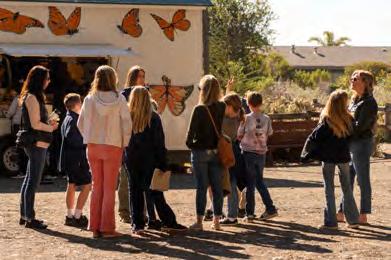
Underserved schools eligible for Title 1 funding can also benefi t from CCSPA’s support, as the nonprofi t’s Bus Bucks program reimburses transportation costs of fi eld trips for grades K through 12 to four designated destinations: Northern Chumash Education at Oceano Dunes Visitor Center, the Pismo State Beach Monarch Butterfl y Grove, Piedras Blancas Elephant Seal Rookery at Hearst San Simeon State Park, and the Morro Bay Museum of Natural History.
The latter locale is directly tied to CCSPA’s 50-year history, Emrick said. The organization
Visit centralcoastparks.org for more info on the Central Coast State Parks Association, which is celebrating its 50th anniversary this year. Founded in 1976 as the Natural History Association of San Luis Obispo Coast, the nonprofit is headquartered at 202 Tank Farm Road, suite H2, San Luis Obispo.

originated as an all-volunteer group under a different name—the Natural History Association of San Luis Obispo Coast—in 1976 with the sole purpose of supporting the Morro Bay Museum of Natural History, located inside Morro Bay State Park.
“[It’s] the only natural history museum in the state park system. I don’t think a lot of people realize that. It’s really unique,” Emrick said. “Out of the 280 state park units, only Morro Bay has a natural history museum.”
As the group’s reach expanded to support other natural history and education-based initiatives across San Luis Obispo County’s state parks, its name changed to the Central Coast Natural History Association in 1996. The nonprofit became CCSPA in 2011.
“It’s really cool to be part of its evolution,” said Emrick,
whose previous jobs include park ranger, lifeguard coordinator, and regenerative agriculturist before joining CCSPA about two years ago.
June will mark CCSPA’s official 50th anniversary, which the nonprofit plans to commemorate with a festive donor appreciation event. The same month, CCSPA will also host its annual sandcastle building competition at Pismo Beach.
Emrick hasn’t entered the contest herself because it always seems to coincide with a longtime summer commitment she can’t break.
“I always miss it because I’m at Live Oak with my dad,” she said with a laugh. “It’s his Father’s Day thing.”



Playing outdoors is important to the healthy growth and development of children. Research shows that children who play outside regularly are healthier and stronger. Taking play outside helps children connect with the natural world. It also improves coordination, encourages active imaginations and can help reverse childhood obesity rates.
Starting a child’s appreciation of nature can begin early, with walks in a stroller. As the child grows, visit playgrounds and parks, or spend time exploring the backyard.
Unstructured outdoor play can be especially beneficial because it encourages social skills, too. Children create games, take turns, make decisions together and learn about sharing as part of unstructured play.












BY ANGIE STEVENS
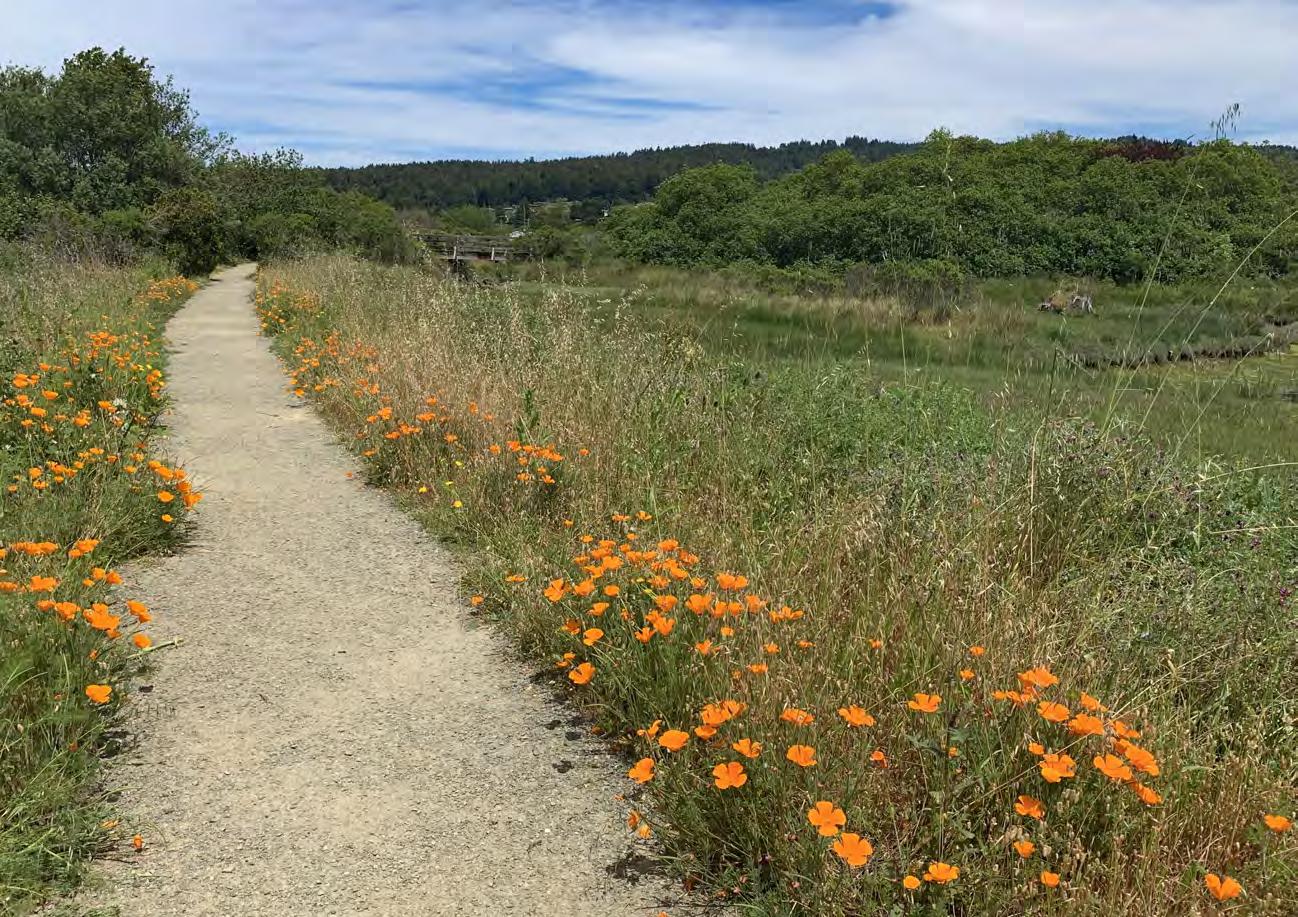
Most people don’t view their daily dog-walking route or preferred trail for running as valuable input that could directly impact the future of outdoor spaces.
But the California Trails Survey, spearheaded by the California Natural Resources Agency (CNRA) and California Department of Parks and Recreation, is calling for experiences like that from trail users statewide until Feb. 28.
Feedback and on-the-ground observations about the state of trails across California will help pinpoint possible trail access barriers and guide future investments and grant opportunities included in the 2024 Proposition 4 climate bond, according to the CNRA.
“Trails are such a critical part of enjoying the outdoors, and we want all Californians to have a say in where our path goes from here,” CNRA Secretary Wade Crowfoot
said in a press release.
The effort is part of a larger plan to make the outdoors more inclusive and accessible and help meet California’s 30-by-30 goal of protecting 30 percent of the state’s land and coastal waters by 2030.
Gov. Gavin Newsom signed an executive order in 2020 committing California to the broader global conservation effort to fight climate change and protect plant and animal life. The trails survey will aid in directing funds, expanding trail networks to improve ecosystem resilience, and increasing conserved lands that support biodiversity.
In response to community needs and priorities, future programs launched by the state will distribute climate bond funds for trail projects, which will include improvements to existing trailheads and accessibility and new trail construction. Starting in July, California will begin funding
and supporting high-priority trail projects.
The CNRA and State Parks work to create and renovate outdoor spaces “with communities and not for communities,” said Gloria Sandoval, the CNRA deputy secretary for access.
“Time in nature matters,” Sandoval said. “Outdoor spaces, including trails, support our mental, physical, and social wellbeing, while also connecting and strengthening our communities, enhancing climate resilience, protecting wildlife and biodiversity, and contributing to a strong economy. The climate bond gives us a vital opportunity to meet this moment by improving and expanding access for more people.”
Along with taking the California Trails Survey and participating in virtual public meetings, communities across the state can submit to the California
Trail Photo Contest. Participants can upload photographs in four categories: Trail Use, Trail Management, Trail Features, and Artistic Merit, until Feb. 28. Select images will be featured on CNRA and State Parks social media pages, and participants can win an annual California Explorer Vehicle Day Use Pass.
“In the short term, success means Californians actively participating in the trail survey,” Sandoval said. “In the long term, success is achieving a clear understanding of trail system needs so California can better support the economic, social, and environmental well-being of its communities–especially for disadvantaged, severely disadvantaged, and vulnerable communities.”
To fill out a survey, learn more about it, or enter a photo into the contest, head to myinput.com/ californiatrailssurvey.









BY CHLOË HODGE


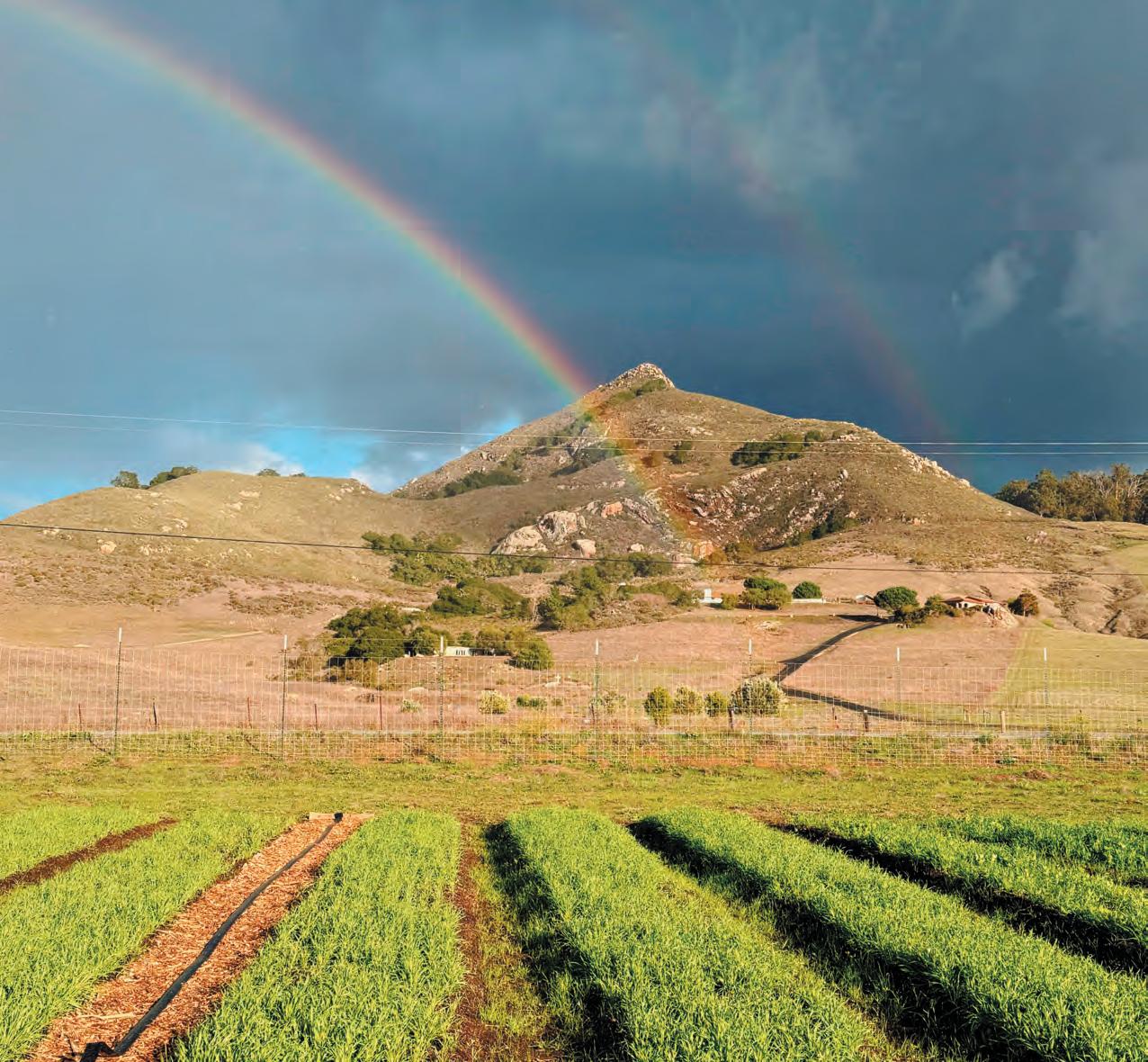
Most of us encounter food at the very end of its journey. It’s stacked neatly in grocery stores, polished and predictable, with a price tag. A red pepper, for instance, may look perfect, but you don’t know who grew it or what the land it came from looked like.
A nagging curiosity about everything missing from that story is what pulled Jesse Spaulding toward farming.
“I was looking at a very beautiful, perfect, mass-produced red pepper
at the grocery store,” she said. “And I was like, where did this come from? What led this to me? The system of growing it. I didn’t even know what a pepper plant looked like at that point.”
Today, Jesse and her partner, Jake, are trying to answer those questions at Tomorro Farm, a small regenerative farm tucked in the hills of San Luis Obispo.
The farm is just entering its fi rst real growing season. Beds are still being shaped, systems are still being tested, and ideas often arrive
faster than the hours in the day. But its purpose is clear: to make food feel human again and to take care of the land in the process.
When Jesse and Jake fi rst arrived on the property in February 2025, they didn’t rush to plant. They paused.
“Permaculture wisdom is that you don’t start anything on your land until it’s been a year of observation,” Jesse said. “And it’s been the hardest principle to listen to because you’re just so ready. You’ve been dreaming about this
moment forever. You’re fi nally here and you’ve got to be patient.”
So, they watched. Fog gathered in the mornings. In winter, the sun slipped behind the ridge early, leaving the fields in shadow by late afternoon. A creek cut through the property, its banks uneven and visibly eroded.
Instead of fi ghting those conditions, they paid attention. Over months, they tracked how water moved during heavy rains,
continued page 16













where wind hit hardest, and which areas stayed wet longest.
The intentional pause runs counter to industrial agriculture, and it says a lot about what Tomorro Farm is.
Jake and Jesse are first-generation farmers. There’s no inherited land here, no hand-medown equipment, no generational playbook. Instead, they’re curious, patient, and have a shared belief that food is a relationship, not just a product.
“We use ‘regenerative’ as a catchall,” Jesse said. “It’s not a perfect definition. For us, it’s about intention, … about not draining a system and walking away.”
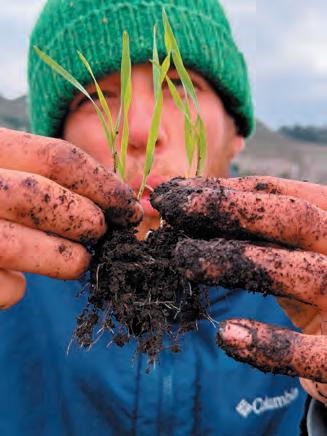
That intention shows up in small choices. Right now, about a quarter acre of the property is planted with cover crops. Legumes, oats, wheat, vetch, and phacelia blanket the beds, feeding the soil and holding moisture. Compost piles steam gently in the mornings. Native plants and herbs fill pollinator hedgerows.
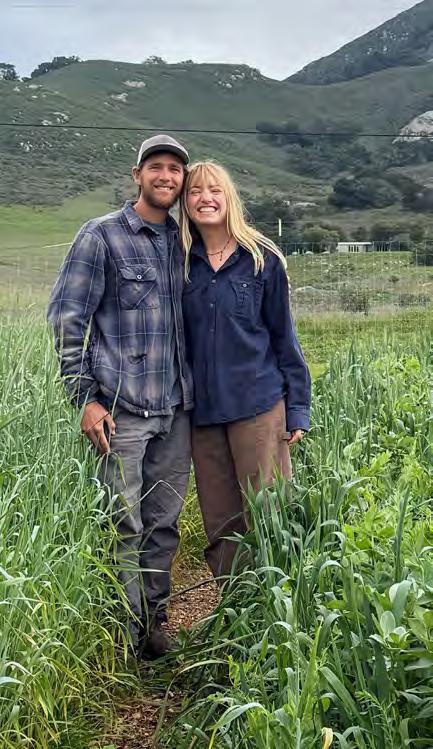
Garlic went into the ground during a community workday, planted by friends who showed up with gloves and a willingness to learn alongside the farmers.
Tomorro Farm is already plugged into the San Luis Obispo community. Jesse and Jake currently collect green waste scraps from the SLO Food Co-op and a local restaurant called The Hungry Mother, hauling bins of vegetable trimmings back to the farm to be composted. Those scraps break down into nutrient-rich soil amendments that feed the crops growing there now.
It’s a small loop, but a meaningful one. Waste from the community becomes food for the land, and the land, in turn, will produce food meant to return to that same community.
In industrial agriculture, food often moves through long, invisible chains from field to processor to distributor to shelf. Those systems feed millions—but they make it
easy to forget that food comes from land shaped by weather, water, and human hands.
“Direct-to-consumer is just sweet,” Jesse said. “I love that food system, meeting and having a relationship with the people that are eating the food I’m growing is, like, essential for me to have longevity in this.”
It’s not flashy. It’s not about maximizing yield. It’s about paying attention and nourishing both crop and land.
That mindset resonates with many young farmers, Jake explained, especially those stepping into agriculture without inherited systems or safety nets.
“It helps to not have a past experience that might bias or might just prevent you from trying a different style of agriculture that you didn’t grow up with,” Jake said.
Jake and Jesse talk about their work with joy. Jesse lights up when describing compost piles or seedsaving gatherings where stories are traded along with kernels of corn. Jake speaks about water with reverence, as something to be slowed, shared, and respected.
“This isn’t just a job,” Jesse said. “It’s a way of living in rhythm with something bigger.”



















Take a hike
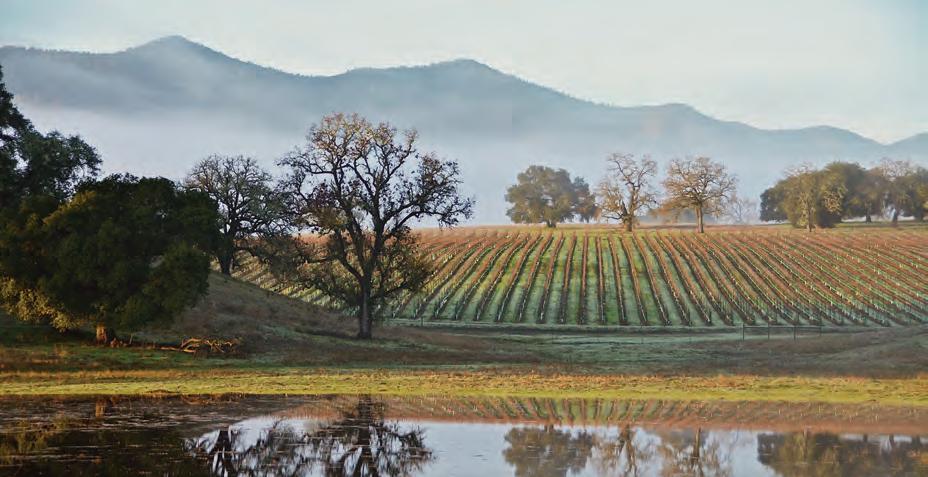
Find a map of the wineries and trails at forestwatch.org/passport, where you can also purchase up to four Wine for Wilderness Passports and learn more about Los Padres ForestWatch. Passports are valid for the entire 2026 calendar year.


BY CAMILLIA LANHAM
Six friends braved a very muddy Baron Ranch Trail in January with a goal in mind: to end up at LaFond Winery and Vineyard in the Santa Rita Hills for a glass of wine.
The hike was difficult and wet, so not everyone was able to finish, but it was fun and beautiful anyway, Kristen Hislop said. It’s just one adventure the group planned to tackle in 2026 as


part of Los Padres ForestWatch’s Wine for Wilderness Passport program.
Last year, when Hislop found out about the passport—which costs $75 for the year and enables holders to snag a free glass of wine at each of 24 participating wineries across the Central Coast—she sent it to her friends, encouraging them to purchase one as well. Each winery is paired with a hike, and the proceeds benefit the conservation, education, and advocacy work that ForestWatch does.





“It just looked like such a fun compilation of hikes and wineries, and what a fun thing to combine, right?” the Santa Barbara resident said. “A bunch of us bought the passport. You get to do a ton of wine tasting, if you’d like, at a very reasonable price, and that money goes to support the organization at the same time.”
The wineries were “carefully curated,” according to ForestWatch.
Keri Setnicka, the nonprofit’s communications director, said
WEDNESDAYS
Arroyo Grande Farmers’ Market* Smart and Final Parking Lot • 8:30 - 11:00
THURSDAYS
Morro Bay Farmers’ Market* Spencers Market Parking Lot • 2:00 - 4:30
SATURDAYS
SLO Saturday Farmers’ Market* World Market Parking Lot • 8:00 - 10:45
Arroyo Grande Farmers’ Market Village Swinging Bridge Parking Lot • 12:00 - 2:30
Farm Fresh since 1978

*We accept EBT at these markets. slofarmersmarketsgm@gmail.com
they all incorporate sustainability into their missions, such as being certified organic, being biodynamic, or operating with regenerative practices. LaFond, for instance, is Sustainability in Practice certified and is certified sustainable by the California Sustainable Winegrowing Alliance.
The wineries and hikes span the Tri-County area, from Tablas Creek Vineyard in Paso Robles, which is paired with the Madrone Trail at Three Bridges Oak Preserve, south to Native Bloom Winery in Ventura, which is paired with the Harman Canyon Loop Trail.
The collaboration reflects a strong connection between the region’s vineyards and their surrounding natural landscapes, according to ForestWatch. Solminer Wine Co. Owner Anna deLaski said her winery was “honored to be included in this meaningful initiative.”





“Solminer is rooted in the belief that great wine belongs with healthy ecosystems,” deLaski said in a press release. “Protecting the Central Coast’s public lands is not just essential for our vineyards— it’s vital for future generations to enjoy the landscapes that make this region so special.”
It’s the first year that ForestWatch has offered the passport program, which is Development Director Jessica Dias’ brainchild, Setnicka said.
“She thought it would be a really great way to tie in our mission of protecting wildlife and wilderness on the Central Coast with something that is also enjoyable for everyone,” she said. “Which is wine tasting.” Before Conservation Director Bryant Baker left last year, he matched up the wineries with trails that

were relatively close by so people can hit both in the same day if they wanted to. Each winery will bestow a stamp or signature on a passport holder after a visit, as well. Not all of the hikes are in Los Padres National Forest, and some are more difficult than others.
“People can sip great wine and help protect the wild places that make this region so special,” Setnicka said.






Fish Tales Bar & Grill open all summer long. Bar known for handmade Bloody Mary’s and Cadillac Margaritas. Full Bar, Arcade, Pool Tables, 4k TVs.

General Store for all Camping/RV Supplies/ Fishing Gear and Fishing Licenses
Fish in the lake include: Large/Smallmouth Bass, Catfish, Panfish, and Stocked Rainbow Trout.






















































For four years, Colette Kaluza’s driven across California, Nevada, Utah, Wyoming, and other states, traversing paved highways and barreling down dirt roads, picking her way across rugged terrain to fi nd hard-to-reach places with the help of her trusty GPS app.
After damaging a vehicle along the way, she purchased a Jeep Grand Cherokee with a Trailhawk package.
“I bought that car for roundups,” she said. “This car will go anywhere.”
That’s how dedicated she is to the wild horse cause. Kaluza, who splits her time between Pismo Beach and Nevada, records what happens when federal agencies conduct gathers to reduce the size of horse herds on public land, so she can share it with the public.
“You can’t imagine how bad it is,” Kaluza said. “It’s the fear, it’s the sound, it’s the duration, it’s all parts of the roundup operation. … They push the horses with a helicopter for, who knows, miles.”
An estimated 80,000 wild horses and burros gallop and graze through 29 million acres of Bureau of Land Management (BLM) and
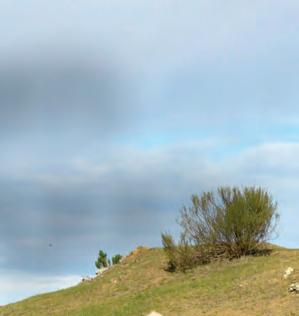


Federal agencies manage wild horses on public land across the West, including in SLO County STORY AND PHOTOS BY CAMILLIA LANHAM
U.S. Forest Service Land in 10 states across the American West. Those animals are federally protected thanks to The Wild Free-Roaming Horses and Burros Act of 1971.
It declared that “wild freeroaming horses and burros are living symbols of the historic and pioneer spirit of the West … and that these horses and burros are fast disappearing from the American scene.” The act aimed to protect wild equines from “capture, branding, harassment, or death” and specified that they are to be protected and managed as “components of the public lands.”
The public land they currently inhabit is not free and open, according to the founder of Wild Horse Freedom, the nonprofi t Kaluza volunteers with. Instead, founder Laura Leigh said, “our public lands is a series of grazing allotments that are fenced off.”
While a deer or antelope may be able to jump a fence, it’s a little more difficult for horses or burros, who also compete with cattle for food and water sources as well as access to the full breadth of their respective management areas. In most of these
areas, horses reproduce to the point where federal agencies conduct the “gathers” that Kaluza and Leigh attend and record for posterity. They don’t believe they should happen at all.
The government wants to reduce herd numbers to “appropriate management levels,” which the BLM describes as “the best way to ensure healthy horses and burros on healthy rangelands.”
“If left unmanaged, herds can double in size in just four to five years and quickly outgrow the ability of the land to support them,” the BLM states on its Herd Management website.
A wild horse herd in SLO County has a different issue. The Black Mountain Wild Horse Territory in Los Padres National Forest has a herd so small that it’s in danger of becoming extinct, Kaluza said.
The herd management plan, which hasn’t been updated since the 1980s, states that the herd’s appropriate management level is 20 horses. As far as Kaluza can tell, there are only eight horses alive and well in the 13,000-acre territory.
Los Padres counts the number of horses at 10.
“I don’t want to see these wild
horses disappear,” she said. “I’m not going to claim that the Forest Service is mismanaging this herd without all the information, so I’m comfortable in saying that they’re mismanaging the herd.”
Kaluza is comfortable saying that because she has searched through everything she can fi nd to learn more about how Los Padres said it was going to manage the herd. She can’t fi nd anything that states the herd is going to be eliminated.
Last March, she ran her Cherokee up the rutted-out Red Hill Road near the La Panza Range, through public and private property (with permission), into the wild horse territory and installed a couple of trail cameras.
Although she has never seen a Black Mountain horse in person, she peruses her camera footage every morning. She’s captured mares, but no foals and no stallions.
“What I notice from my camera is they’re out there in the middle of the night,” she said. “I’ve seen eight for sure in one frame. I’ve never seen 10—that doesn’t mean there aren’t 10.”
In May 2025, Los Padres released a draft wildfire risk reduction project that included the Black Mountain territory.
“It’s pretty obvious by looking at that plan that they have no intention of managing the horses into the future,” Leigh said. “It’s very easy to see that their intention is to have that herd die off.”
Leigh, who’s been watching the way federal agencies manage the nation’s wild herds for 18 years, said that because the proposal mentioned the horses, it gave advocates like her the ability to weigh in during the public comment process. Most of their comments focused on the project’s plan to introduce more cattle grazing to better control vegetation.
“If we can increase the number of cows, we can increase the number of horses,” she said. “All you have to do is increase the number of viable horses, and then we have something beautiful for people to see.”
Horses, she said, “always find themselves between a rock and hard place.”
“They’re the only large grazing animal in the United States that’s wild and confined in our country,” she said. “The wild ‘free-roaming’ title of the act is kind of a fallacy.”
The Black Mountain herd’s origins date back to 1907, when the Bethal brothers ran cattle and horses on national forest land, according to Los Padres’ Black Mountain territory webpage. After World War I, the horses became wild as they roamed unmanaged from Wilson Canyon to the Carrizo Plain. By 1971, the herd size was pegged at seven horses.
In April 2024, according to data Kaluza received in response to Freedom of Information Act requests, there were 10 mares in the Black Mountain herd between the ages of 10 and 27 years old.
“Spring 2024 was very wet, lake and creeks full, feed should be good for the year,” according to the April 2024 document.
Documents from 2014, 2015, and 2017 note that because of drought stressors, the size of the herd—which was around 21 before 2015—should be reduced, so the Forest Service sold off a handful of colts/foals. In 2019, the documents state, Los Padres decided to remove the stallion from the herd so he wouldn’t breed with his own daughters.
Although Los Padres didn’t return multiple requests for comment, retired Santa Lucia Ranger District Resource Officer Melody Fountain said she used to manage the herd as part of her work caring for the range, wildlife, and watersheds in the district.
“I’m very sympathetic to the wild horse cause, but when things get tough, like there’s a drought or something, someone has to step in and help because they’re fenced in,” Fountain said. “And we can’t just let them run all over because they get into people’s yards.”
During droughts, Fountain and her husband, Bob Stone, took water and feed out to the horses. Stone worked for the Santa Lucia District as well and was the district packer before he retired, taking care of the Forest Service’s pack mules. He was instrumental in establishing the herd management plan for the district, Fountain said, because he loved horses.
Stone was the herd’s champion.
“It was time intensive. Bob donated a lot of time to make that all work, and not everyone is that passionate about it,” Fountain said. “Before he died—I know he knew I was suggesting this, and we never really talked about it because it would have broken his heart—but I think in his heart he knew it was unsustainable.”
Maintaining the herd numbers was difficult and could quickly get out of hand, she said, recalling a time when the horse population ballooned to 28 and the Forest Service had to cull, giving some to the BLM. They also had to bring in horses from outside the area to
ensure genetic diversity within such a small herd.
“Even though the Black Mountain horses were kind of popular, at the very end of my career, I wanted to leave it in a good place, so we tried adopting some out, and so I went on this campaign, and I was only successful in adopting out a couple of them,” she said. “It was a lot of work without a whole lot of success.”
Fountain worked in the district for 20 years, retiring in 2019, and isn’t sure how Los Padres is managing the territory now that she’s gone.
“Frankly,” she said, “I’m recommending and hoping that the Forest Service will let the herd die out.”
Most of the herd management areas or wild horse territories are much larger than Black Mountain’s 13,000 acres. Devil’s Garden Plateau Wild Horse Territory, for instance, is about 258,000 acres of land in northeastern California. It’s jointly managed by Modoc National Forest (248,000) and the BLM’s Applegate Field Office (7,600 acres) and includes some private and tribal lands as well.
In September, Kaluza attended a roundup there.
She and five other viewers were allowed to be on site Mondays, Tuesdays, and Saturdays during the event and limited to certain areas. It was expensive to drive back and forth, but Kaluza feels that “it’s important to be there.”
“I want to see everything that’s going on for every second,” she added.
She documents waypoints and fences on her way to and from
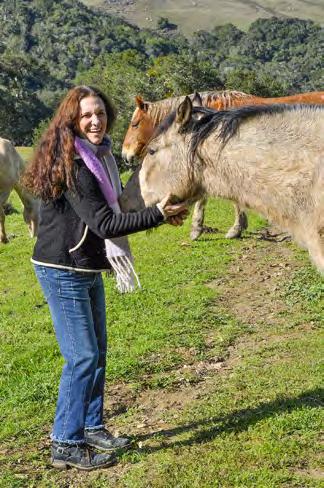
roundups, captures video of the action, takes notes, and posts it all on the Wild Horse Education page. At most of them, helicopters and bait traps help move the horses into makeshift corrals, where the animals are held before being loaded into trucks and taken to off-range holding areas. These are animals that have never been penned up before, she said. They’re wild and scared. Some break their legs, some trample others to death. Agencies do publish how many horses are collected each day, but all you know is what they tell you, Kaluza said.
Generally, the agencies will circulate a rough plan for gathers at the beginning of each fiscal year. A couple of weeks before a roundup, the respective agency puts out a press release. That’s Kaluza’s signal to get ready to head out.
The Devil’s Garden press release HORSES continued page 22


Discover the Heart of California’s Central Coast–On Horseback!
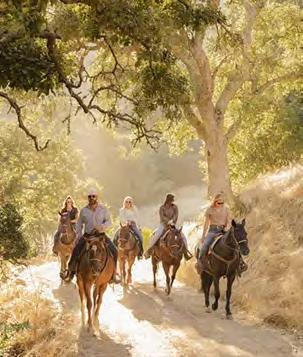
If you are seeking an unforgettable way to experience the Central Coast’s iconic vineyards, rolling hills, and timeless ranchland, saddle up with Central Coast Trailrides. Family run and operated out of the southern border of the Paso Robles wine region, this unique adventure invites riders of all experience levels to explore some of the area’s most breathtaking landscapes alongside expert wranglers and trusted horses.
CCT offers customized horseback experiences on the historic Santa Margarita Ranch and Vineyards, giving riders an authentic taste of Western Ag. life that you can’t find anywhere else on the Central Coast. Whether it is your first time on horseback or

you’re a seasoned equestrian, there is something for you.
Ready to ride? Crystal and Brian Hallett invite you to pick from various ride lengths, exploring oak studded trails that take you through dense tree canopy sections and along the ridge line well above the valley floor of the ranch. Daily sunset rides are available and you can add a “Ride & Sip” to enjoy a tasting at partner winery Ancient Peaks after your time in the saddle. Reservations are available year round, seven days a week by appointmentjust text or call (805)-610-1306 to begin your Central Coast trail ride.
came out on Aug. 15, 2025. The plan was to gather 350 of the approximately 700 wild horses “on and around the territory,” according to the Forest Service.
“The gather will continue movement toward the appropriate number of wild horses prescribed,” in the management plan (402, maximum), the press release stated. “The Modoc National Forest remains committed to managing wild freeroaming horses in a manner that is designed to achieve and maintain a thriving natural ecological balance and multiple-use condition on public lands.”
From Aug. 27 to Sept. 30, the Forest Service said it gathered 276 horses. According to the agency’s data, seven of those horses died. Over that month, Kaluza estimates that she spent two weeks total up there and she would have stayed longer, if the Forest Service had allowed it.
“When you’re an advocate, you’re an advocate,” said the retired court reporter, who once spent her free time volunteering for the Humane Society. “That’s what I always wanted to do … is to be a full-time advocate.”
A green Can-Am Defender motored over steep, muddy tire tracks close to Prefumo Canyon Road in SLO. Passage through a few gates and a slow crawl up a set of hills brought dozens of horses into view.
As Neda DeMayo put the sideby-side in park, she pointed to the right, where the Devil’s Garden dozen was standing together, their thick winter coats catching the sun.
“Those are big-boned,” DeMayo said. “They like to range.”
Devil’s Garden conducts roundups all the time, she said. These horses were adopted out for $1 a piece, although she isn’t certain of the exact year.
To the left, on the ridgeline, two family bands from the BLM’s Red Desert Horse Complex in Wyoming looked down at the vehicle and its occupants.
“They’re so bonded,” she said. “They’re always together.”
Closer, the Cold Creek band from BLM’s Wheeler Pass Herd Management Area in Nevada meandered toward horses from Oregon’s Hart Mountain National HORSES continued page 26














from page 22
Antelope Refuge—which is managed by the U.S. Fish and Wildlife Service.
In 1998, Fish and Wildlife removed all of the wild horses from the refuge, and DeMayo took 25 of them.
“That’s when I started Return to Freedom,” the president and founder said. “Some of these horses were born at the sanctuary.”
DeMayo’s nonprofit began on her Jalama Road ranch in Lompoc. It expanded in 2015 to include 2,000 acres of SLO Springs Ranch off Prefumo Canyon, and it also has horses on land in Texas. Of Return to Freedom’s almost 500 horses, 68 of them graze in SLO hills alongside 15 cows and 23 burros.
“Most of the horses that are here were together in the wild,” she said. Return to Freedom aims to let “them live as they’re designed to live.”
Return to Freedom – Wild Horse Conservation aims to preserve the freedom, diversity, and habitat of wild horses and burros by providing sanctuary, advocating on their behalf, educating the public about them, and conserving unique bloodlines.
Watching a helicopter roundup on television in the 1990s pushed DeMayo to do something about the issue. But she didn’t want a place where horses were in pens. DeMayo wanted to enable the animals to stay wild and maintain their tightknit social groups.
As she got more involved with the issue, she started to understand
the politics around public resources.
“It’s a battle, and these guys are on the front line,” she said. “We would like to see horses managed on the range … and roundups to end.”
Cory Golden, Return to Freedom’s advocacy and outreach manager, said that DeMayo didn’t set out to participate in the issue’s politics.
“Quickly, though, she discovered that sanctuary alone couldn’t save the wild horses on our public lands, because the number of horses being removed exceeds the capacity that sanctuaries can offer,” Golden said. “To help keep wild horses on the range, she had to get involved with policy.”
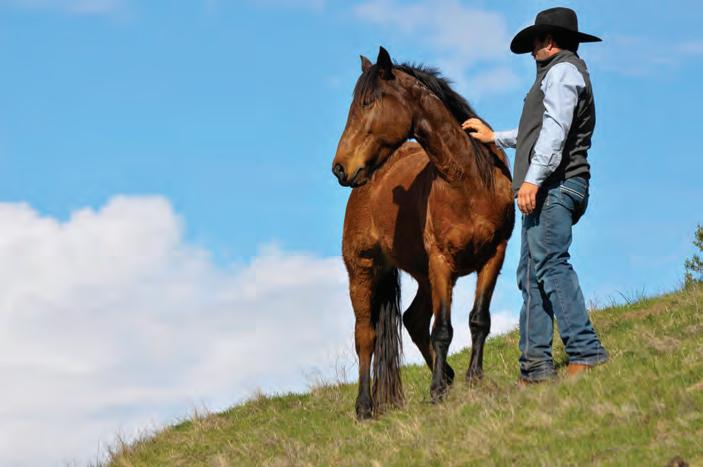
Golden lobbies on Return to Freedom’s behalf, meeting with elected officials, the public, and other advocacy organizations.
“We view proven, safe, and humane fertility control as a key tool for ending inhumane government herd management by capture and removal,” he said. “From the start, though, we have also been active in the effort to end horse slaughter, which remains a threat to domestic and wild American equines alike.”
Resource-challenged
After a roundup, most of the captured animals end up in government holding—corrals
or leased pastures—and they’re offered up for adoption or for sale, Golden said. Not all of them get adopted. While the BLM and Forest Service aren’t legally allowed to sell to kill buyers, the agencies don’t generally track what happens to horses or burros once their titles pass on to a new owner.
“They can fall through the cracks,” he said. “They can end up at auction.”
Difficulty with training a wild horse can result in its sale, as can rising costs, a divorce, or some other major change in an owner’s life. A horse could pass through several hands before ending up at an auction, where equines get sold
and sometimes shipped out of the country, potentially ending up at a slaughter factory, Golden said.
“Our goal is to get a piece of legislation passed that would place a ban on horse slaughter and also ban the export of horses [for slaughter],” he said. “There’s a lot of bipartisan support for it.”
Polling shows that 80 percent of Americans oppose horse slaughter, he added.
Conversations about how to manage horses and burros on public lands are a bit more complex. The legislation passed in 1971, for instance, didn’t come with clear management guidelines. HORSES continued page 28
Take action to support Wild Horse Education by visiting wildhorseeducation. org, where you can find more about the organization’s work, its efforts to hold the government accountable, and more.
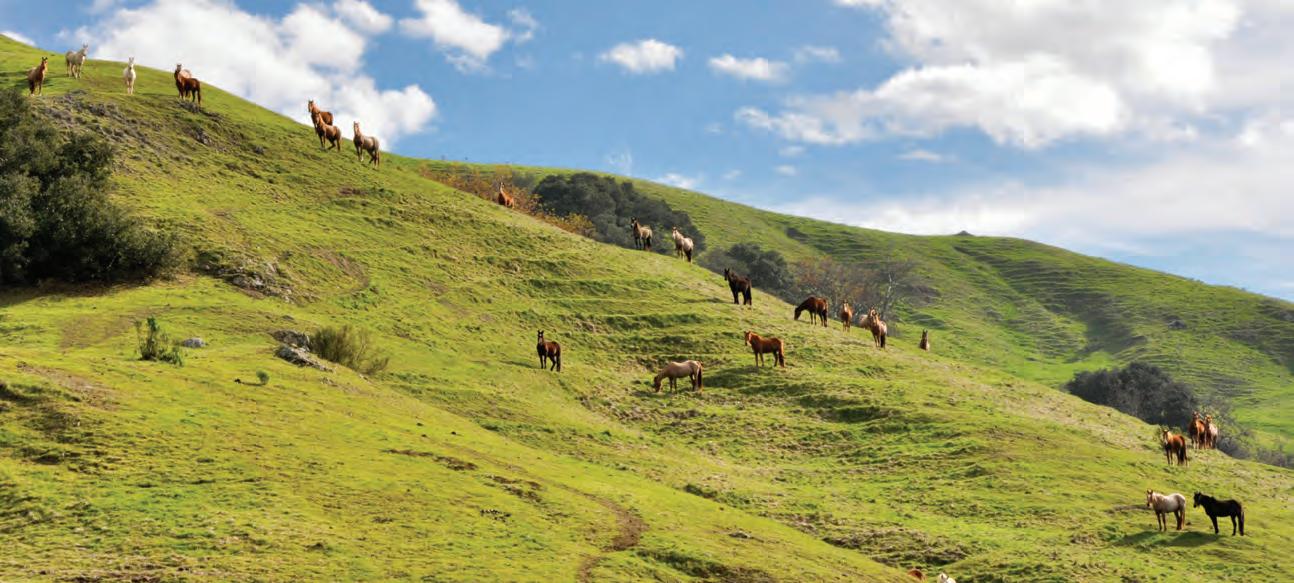
Caring for wild horses and burros, advocating on their behalf, and educating the public costs money. Return to Freedom raises the dollars needed to pay for its work through a combination of immersive tours, fundraisers, volunteers, and donations. Potential donors can sponsor a horse, burro, or herd. The sanctuary offers private tours, photo safaris, and immersive experiences by appointment. Learn more about Return to Freedom and its work by visiting returntofreedom.org.









It does require agencies to set and maintain population targets, he said, which the agencies have “tried and failed” to manage through “capture and removal.”
That 1971 act also isn’t the only law governing how wild equines get managed. Golden points to The Federal Land Policy and Management Act of 1976, which requires public lands to be managed for multiple uses. This includes livestock grazing, recreation, mining, protected species, and a litany of other things that are competing for resources and attention within federal agencies.
“All of those uses have to be balanced out by those agencies, which is obviously a difficult task,” Golden said. “They are admittedly in a difficult position, but the answer to this—we believe—is fertility control.”
The agencies can’t manage wild herds and continue to ignore reproduction, Golden said, as a herd’s population can return to preroundup numbers within a few years.
“Population modeling has shown that immediately implementing
fertility control alongside any removal that the agencies are already conducting is the only realistic way to stabilize herd growth,” he said. “If they don’t use fertility control, they’re only perpetuating a costly cycle of capture and removal that will not work.”
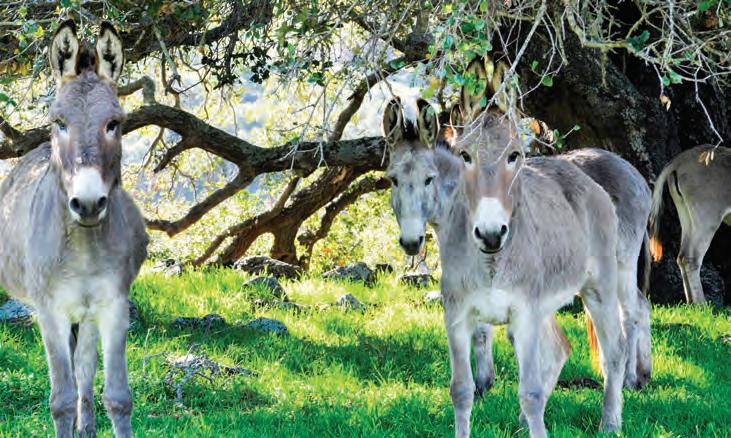
Return to Freedom uses the fertility control it advocates for on its own horses and burros. DeMayo said it’s between 91 and 98 percent effective. Since 1999, they’ve used a non-hormonal, reversible birth control vaccine.
If federal agencies used it more consistently, Return to Freedom estimates it would save more than 40 percent on herd management costs.
“One stallion can impregnate like 100 mares, so it’s just slowing it down,” DeMayo said. “It’s a tool you can utilize.”
The tool is just one that Return to Freedom uses to demonstrate
the herd management techniques it advocates for. Another is something DeMayo calls holistic regenerative grazing—using temporary fencing and enticement like hay or alfalfa, Ranch Manager Kas Bryan ensures that SLO Springs Ranch doesn’t get overgrazed or too impacted by the horses and burros.
It’s a relatively new technique for Return to Freedom, one that’s been successful and will be used on the Lompoc ranch in the near future.
DeMayo calls her work “a heart condition.”
She was surrounded by horses
on the move and knew each of them by name. They’re her people. Sophia has the black nose. She’s from Devil’s Garden. Shilo’s black and beige. The palomino close by is named Winter. Lizard, a bay, has always been a bully, she said with a laugh.
She and Bryan noticed one horse a few feet up the hill that was thinner than she should be. DeMayo asked Bryan to check her teeth.
“You fall in love with them,” she said. “I feel like when I’m with them, I’m present here.”



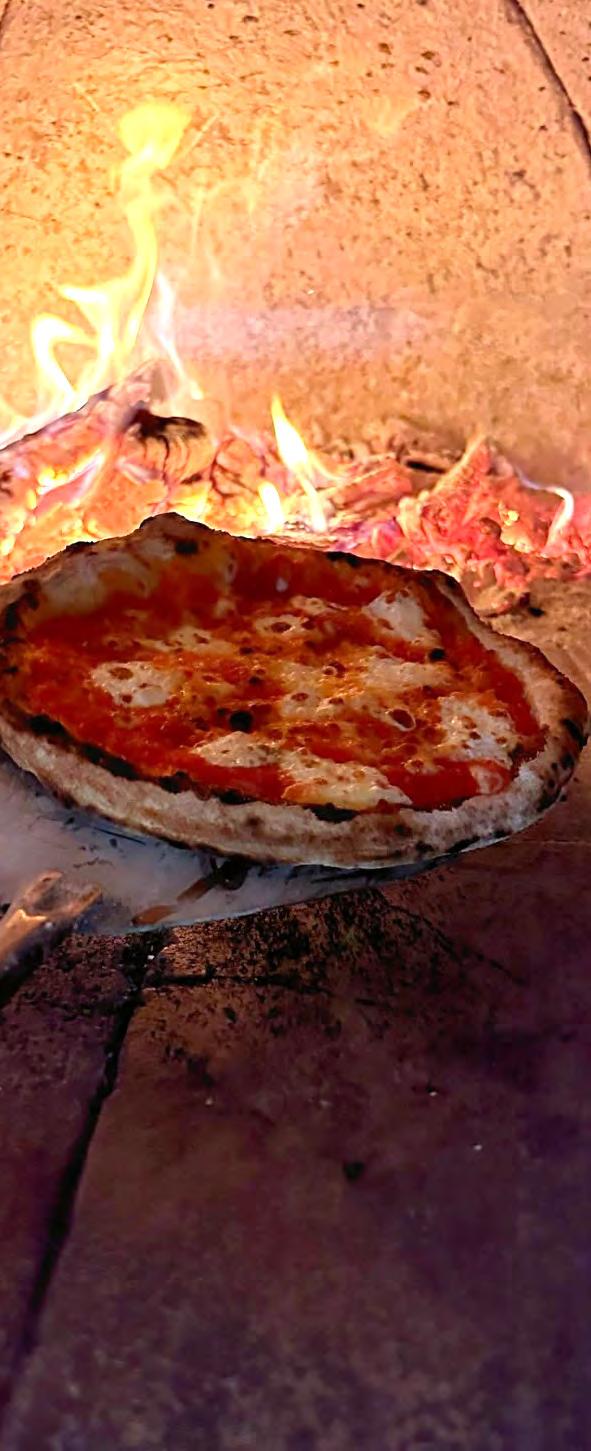

In the heart of charming Old Town Orcutt, and winner of “Best Pizza” in Northern Santa Barbara County six years in a row, Pizzeria Bello Forno is a local favorite and known for much more than creative and exceptional pizzas!
Enjoy house-made appetizers, salads, pastas, desserts, plus local and imported wine and beer.




Located in the quaint Village of Arroyo Grande, Branch Street Deli and Pizzeria features a revamped menu and fresh remodel. Dine in one of the most beautiful al fresco patios on the Central Coast, and enjoy an array of sandwiches, salads, wood-fired pizzas and more, plus local and imported wine and beer. Live, “easy listening” music on the weekends.

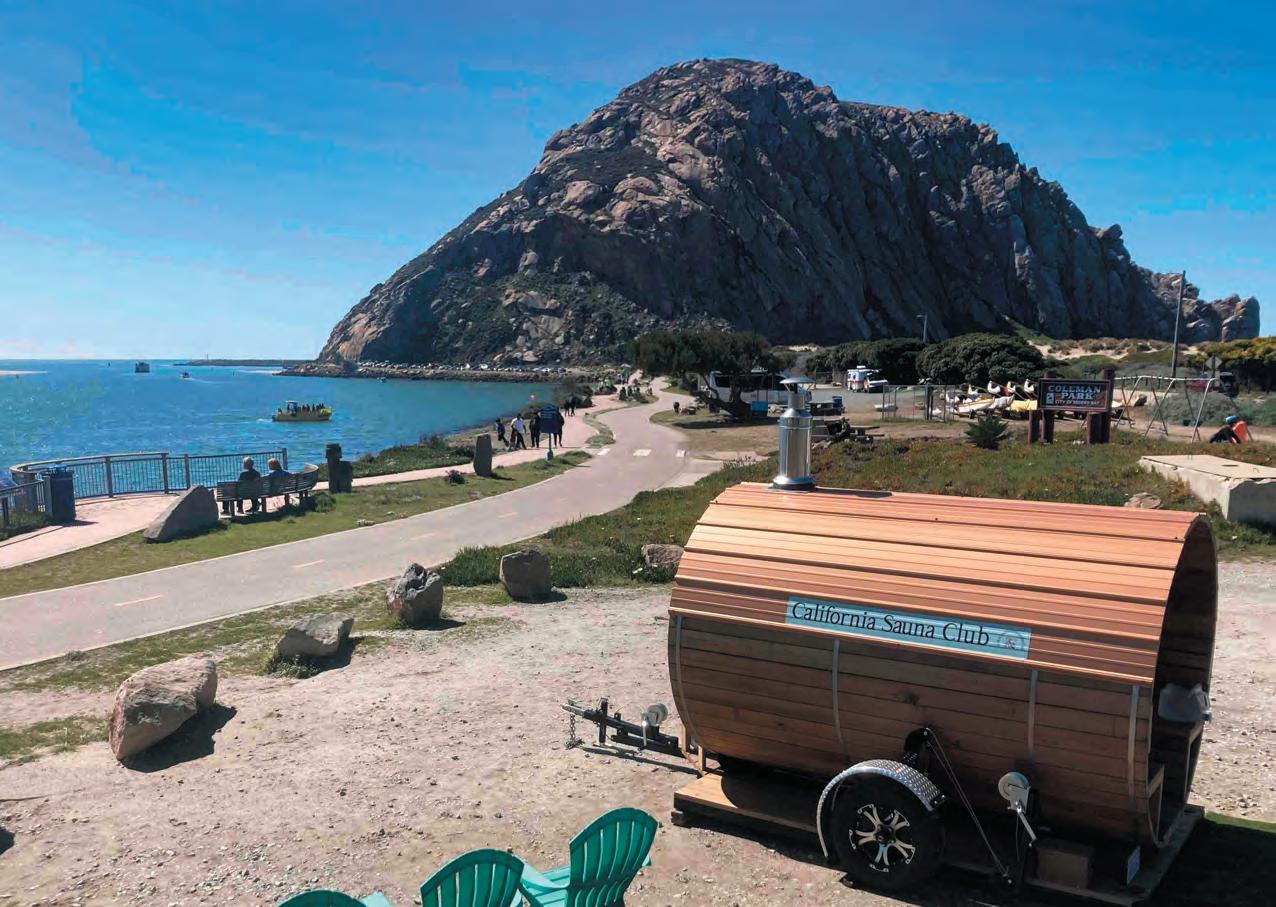



HEAT UP, COOL DOWN Book a sauna session with California Sauna Club at californiasauna.club/book-aclass. The sauna trailer is fixed at 865 Froom Ranch Way in SLO from Tuesday through Thursday, and at Coleman Park in Morro Bay from Friday through Sunday. Follow the club on Instagram @california_sauna_club.
BY BULBUL RAJAGOPAL
despise cold, overcast days, but peeping out at gray San Luis Obispo farmland through the half-moon window of California Sauna Club’s heated barrel trailer softened the gloom.
The experience, tucked behind Froom Ranch Way marketplace, is from the minds and hands of couple Darren and Arielle Leva.
The former Bay Area residents opened California Sauna Club in March 2025 after missing the Dolphin Club where people swim in the San Francisco Bay without a wetsuit and heat up in a sauna after.
“I really needed a sauna, and so I started looking around and fi guring out if I could put a sauna on a trailer,” Darren, a biotech professional, said. “I fi gured out that people had been doing this in the Midwest, building these kinds of things. I had the idea, and then
got a little bit too busy with my day job. It took about four years for us to actually do it.”
The Levas ordered a steel-cradled, wooden mobile sauna from a Midwestern company called Nomad. Darren towed it from Minneapolis to California. The Nomad sauna now shuttles between the SLO location and Morro Bay’s Coleman Park every week.
Sweat sessions cost $30 and last an hour, but no one stays in the sauna trailer for the entire 60 minutes. California Sauna Club’s temperature soars up to 190 degrees Fahrenheit.
“You’re usually staying in the sauna for about 10 to 15 minutes, depending on your body and how comfortable you are and how much you sauna,” Darren said. “When you’re in that kind of temperature and you’re sweating, you typically want to cool off.”
I arrived at the sauna club in SLO with a bathing suit, fl ip-flops, a
water bottle, and two towels. Before stepping in, Darren advised me to stay clear of the stove that heats igneous rocks, which steam up once hit with water.
“Drink more water than you think you’d need after,” he said before grabbing the sauna trailer’s antler doorknob and opening the door.
The billowing heat enveloped me. The interior, covered floor to ceiling in wood, fits eight people and two were already in the middle of a sauna session.
I took a deep breath. The heat stung my nostrils, and I quickly started breathing through my mouth. Better.
Beads of sweat had already formed all over me.
A temperature dial on the trailer wall displayed a needle inching toward 190 degrees Fahrenheit, and the humidity percentage was well past 70.
“It’s the humidity that gets you, not the heat,” I thought,
remembering a familiar cliché. Still, it was oddly comforting to be slicked in sweat in a cabin with strangers while looking out the sauna’s window at the chilly mountains and hoophouses.
“There’s this community aspect where people are meeting new people, and they’re exchanging numbers and fi nding babysitters,” Darren said. “All sorts of connections happen in the sauna. It’s really a third space that is unique and doesn’t involve alcohol. It’s very healthy.”
Conversations during my sauna session ebbed and flowed as more people entered and left the trailer over the hour.
They wove a tapestry of dialogue: Kiko’s Peruvian Kitchen in downtown SLO; the perks of Restaurant Month; life in small town Mystic, Connecticut; the benefits of wearing earplugs while swimming in cold water, and how
SAUNA continued page 32



















SAUNA from page 30
sauna caps help keep heads cool.
“I’ve put ice cubes under my hat, and they were still there after,” one man announced to the group from under a burnt orange bell-shaped sauna hat.
Orange sand in the trailer’s wooden timer had trickled down to mark 15 minutes. I was ready to chill.
Darren and I stepped out of the trailer into the refreshing cold air. Two steel tubs were filled with clear water as cold as 50 degrees Fahrenheit.
Most beginners gingerly get in, a limb or two at a time. Darren jumped straight in, submerging his head for a few seconds. I decided to rip off the Band-Aid too.
I felt pinpricks all over my body. Goosebumps covered my skin, but after a few seconds, I felt energized.
Most people go through three cycles of switching between the sauna heat and the cold plunge. The frequent temperature flux is healthy, according to Darren, helping alleviate pain and inflammation.
“It’s funny, people sometimes call
it the executive workout, because if you don’t have a lot of time and you can go,” he said. “You’re relaxing, but also working out, because … you’re getting all the heart rate benefits of exercise. You’re not getting the muscle benefits necessarily … and of course, there are mental health benefits.”
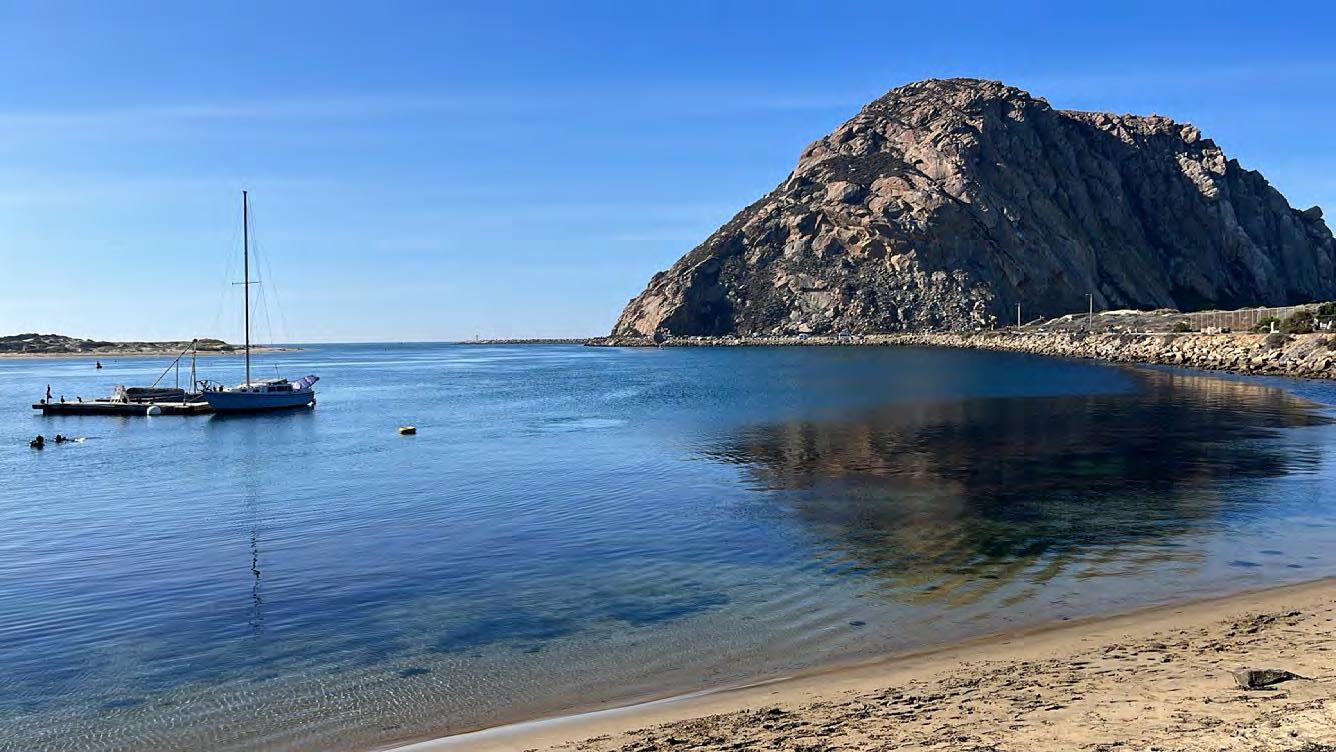
For California Sauna Clubgoers in Morro Bay, open waters at Coleman Beach replace the coldplunge tubs.
The Levas’ goal for 2026 is to set up a second, larger sauna trailer that’ll be fixed at the Morro Bay location.
“What’s great about Morro Bay is some of the cleanest water on all the California coast, even in a rain event,” Darren said. “It’s a really great place to cold plunge that’s safe.”
By the end of the hour, I stepped out of the sauna one last time. If I wanted to be relaxed, I should just dry off and cool down gradually, Darren told me. If I wanted all the energy I could get, step into the cold tub.
Work deadlines loomed. I took the plunge.

The Brothers Comatose (Goldengrass)
Charlie Musselwhite & GA-20 (Blues)
Neal Francis (Funk, Soul, Rock)
Jackie Venson (Electro-Funk, Soul, R&B, Blues)
Renée Christine (Americana Singer-Songwriter/Cellist)
Las Cafeteras (Afro-Mexican American Futurism)
Uncle Lucius (Southern Rock, Country, Blues)
Emily Nenni (Classic Honky-Tonk and Country)
Emily Brimlow (Beach Pop, Soul, R&B)
Francesca Blanchard (Singer-Songwriter)
The Sam Chase & the Untraditional (Folk Rock & Americana)
Crying Uncle Bluegrass Band (Bluegrass)
Slap Dragon (Bluegrass, Disco, R&B) J & the Causeways (Soul, R&B)
Mestizo Beat (Afro-Latin Funk and Soul) Greg Loiacono & Stingray (Soul, Rock, R&B, Funk)
The Mother Corn Shuckers (Beergrass) Amalia Fleming (Singer-Songwriter)
Dubwise Collective (Reggae) Electric Lavender (Soul, Folk, Rock)
Big Mable & the Portholes (Sea Shanties) Low Power Trio (Americana & Celtic) with more to come!
3 DAYS OF MUSIC, COMMUNITY, & FUN!














BY MADISON WHITE

Folks at the Morro Coast Audubon Society like to say that protecting birds means protecting the entire ecosystem.
Torrey Gage-Tomlinson, the organization’s program director, believes it wholeheartedly. The concept was a continuation of his early memories traveling across Latin America to go bird watching with his parents.
“It was a really unique childhood, and it gave me a broad perspective on the world,” Gage-Tomlinson said. “It was also really sobering because I would see parts of the world that have the most bird species out of anywhere just being razed. That gave me a sense of, ‘I want to do something about this.’”
For a while, he was the local nonprofit’s only staff member, essentially straight out of college

and responsible for building the organization. The Morro Coast Audubon Society (MCAS) has three core tenets: conservation, education, and advocacy.
Gage-Tomlinson recently helped his nonprofit earn a $262,000 grant from the California Natural Resources Agency to sustain its most ambitious environmental education program, FEATHER, an acronym for Fostering Environmental Awareness Through High School Education Research. It teaches students leadership, environmental awareness, and the skills necessary to succeed in college and the workforce.
Right now it’s embedded in a college readiness curriculum, AVID, at Paso Robles, Nipomo, and Central Coast New Tech high schools, but the
director hopes it’ll serve every high school on the Central Coast within the next five years. Throughout the current three-year grant period, an estimated 1,800 students will participate in FEATHER.
“That takes high school students from underserved communities, puts them out in nature doing community science, feet on the ground, getting hands dirty,” GageTomlinson said. “All that fun stuff.”
Enjoying nature requires privilege— free time, mobility, money—so Gage-Tomlinson wanted his education program to make the outdoors accessible and intriguing to teenagers.
“I think high school is the age you’re really starting to care about things in the world, and you’re making decisions about your future,” the program director said.
FEATHER’s pilot program started during the 2024-25 school year with two junior classes. The goal was to make science as cool as possible and encourage high schoolers to take an interest in experiencing the outdoors. It also needed to teach leadership and assist with college applications.
Easier said than done, GageTomlinson realized, because FEATHER must benefit every student, not just the ones who immediately gravitate toward science.
During the fall semester, students participate in a community science project coordinated by UCLA

called Project Phoenix. It studies how wildfi re smoke affects bird movement on the West Coast.
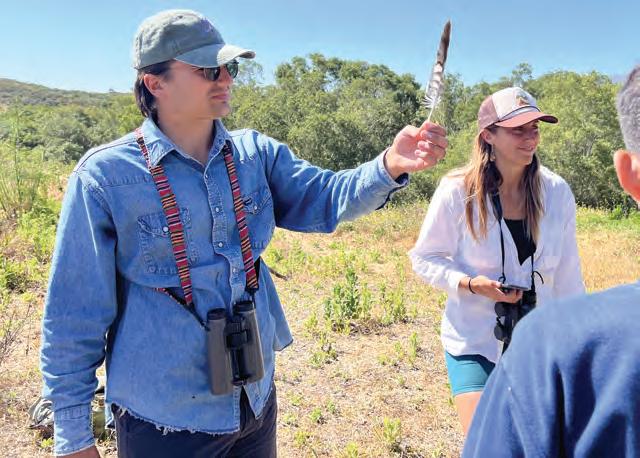
FEATHER students learned the local birds near their schools and how to monitor them during their AVID class period on Fridays. Morro Coast Audubon Society supplied each high schooler with a pair of binoculars, and the students downloaded a free app to help identify birds.
FEATHER is also sponsoring a February field trip to bring students down to the Natural History Museum of Los Angeles County where they’ll meet the Project Phoenix researchers. Students are developing their own conservation research projects in tandem with Project Phoenix.
“This is leadership, public speaking, research,” GageTomlinson said. “All those skills that are going to be really useful in college.”
For the rest of the school year, juniors are also responsible for designing a project that engages younger students from partner elementary schools and gets them out in nature.
“If you have a volunteer from MCAS coming into your elementary school classroom and showing you birds, that’s cool. Probably never see them again,” Gage-Tomlinson said frankly. “It’s completely another thing if your friend’s older brother is coming in and teaching you about
birds. That’s a lot more impactful.”
Part of the idea, too, is to make kids aware of FEATHER at a young age, creating a loop that’ll encourage them to participate in high school.
This semester, students are contributing to Project Feeder Watch, conducted by the Cornell Lab of Ornithology. Looking at feeders on their campuses, they decide what data to collect. Some track the weather and how much seed birds eat or what type of birds rely on the feeder when a predator comes in.
“These students get to work on a project run by Cornell or UCLA, and that legitimizes a lot of their work. It lends a lot of credibility to their work,” Gage-Tomlinson said.
Looking ahead, MCAS representatives and 30 student applicants will pack up and head out for a four-day trip to Fort Ord Natural Preserve, land stewarded by UC Santa Cruz. For many kids, it will be their fi rst time camping. As part of the trip, they’ll assist the university researchers with mammal and reptile trapping, tour the college campus, and talk with professors.
Though FEATHER is GageTomlinson’s brainchild, he couldn’t have created it alone. MCAS
established a new staff position to oversee FEATHER, hiring Camryn Curren in the summer of 2025. As a Paso Robles High School graduate and a participant in a similar field studies program, the idea of returning to her alma mater and encouraging the next generation excited her.
Curren is present in the classrooms at each high school multiple times a week to lead the community science projects and support students. She’ll also attend the upcoming trips.
Engaging with students and seeing them progress has been her favorite part of the role. Curren knows not all the high schoolers will grow up to become scientists or researchers, but she knows these experiences reach beyond career choices.
“I hope the value is that each student learns they derive some sense of joy from being outside, from watching birds, from spending time with friends in the outdoors,” Curren said. “And I hope they learn that they belong in the outdoors, and that is the space that is safe for them … to fi nd some sense of meaning and belonging.”







Dudley Hoffman Mortuary was founded in Santa Maria in 1876. This year we mark our 150th year serving the families of the Central Coast. We are deeply rooted in community and fully dedicated to care. dudleyhoffmanmortuary.com • 805.922-8463 • FD-56







BY GLEN STARKEY
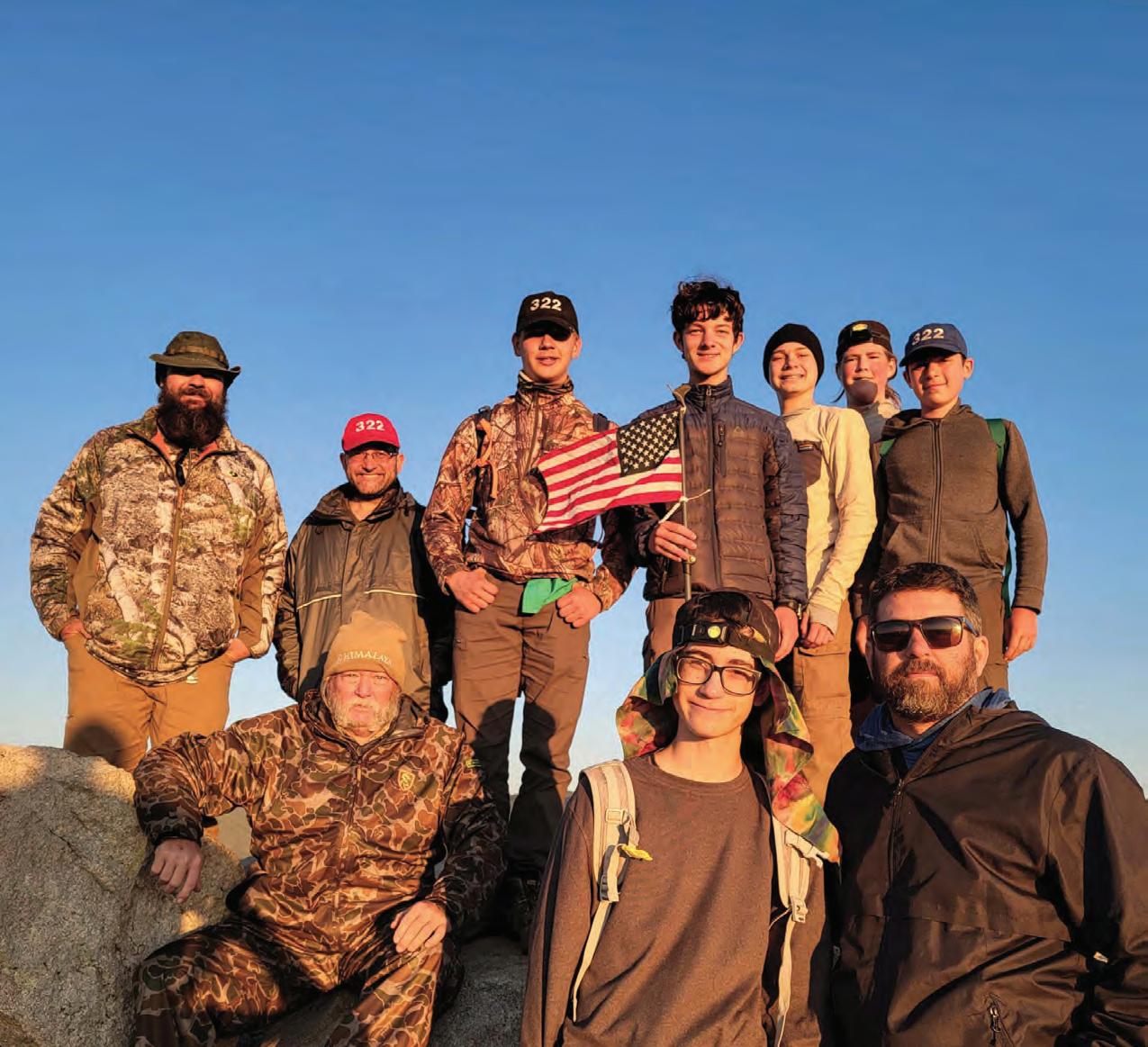
While attending Teach Elementary in San Luis Obispo, David Forrest remembers being recruited into Scouting. The local scoutmaster came to the school and “pulled all the boys out of both fi fth or sixth grade classes, and said, ‘You guys want to go camping?’ And, we were like, ‘Yeah.’”
Soon young Forrest was walking into the “shack” at the back of the SLO Elks Lodge, longtime home to Troop 322, the same troop he now leads as scoutmaster.
“Yes, I’m the scoutmaster of the
troop that I grew up in,” he smiled.
Now retired, his Scouting background served him well in his long career.
“I joined the National Guard in high school,” he explained. “I was a traditional reservist, and I spent 18 years in the Guard and 14 in the Reserves.”
He eventually reached the rank of lieutenant colonel. Weekend drills and annual training requirements eventually led to two deployments in Iraq and one in Afghanistan. In between, he worked as a correctional officer,
and when he retired, he decided to volunteer with the organization that shaped his youth.
He’s now in his early 60s, and he’s been scoutmaster since 2020. He plans to continue in the role as long as he can “stay fresh” and “physically do it.”
“I didn’t get up San Luis Mountain as fast as they did, but I got there,” he joked about his Troop’s recent night excursion up Cerro San Luis.
In San Luis Obispo County,
HIGH ADVENTURE
In 2023, Scouts of Troop 322 traveled to New Mexico’s Philmont Scout Ranch and scaled the 9,003foot Tooth of Time.
Scouting is alive and well. There are six Cub Scout packs and six Scout troops between Paso Robles and Arroyo Grande.
Scouting America—formerly the Boy Scouts of America—changed its name on the organization’s 115th anniversary on Feb. 8, 2025. Admittedly, the organization has had its critics, but it also changed some of its rules and policies over the years to become more inclusive.
One big change in Scouting is now allowing girls and women to become Scouts, though troops are
still largely segregated.
“You have separate troops—girl troops and boy troops,” Forrest explained. “But when you do something outside of your own troop activities, like at the district level—we had a Rendezvous in the last couple of years, we used to have Camporees—they worked together. Also, in the Order of the Arrow [Scouting America’s National Honor Society], they work together.”
Fourteen-year-old Isla Davis is in Troop 414, a girls troop from Arroyo Grande. She is homeschooled and has been in Scouts for a little more than a year and a half, and she’s already reached the First Class rank.
“I have a good troop with good Scouts who helped me get through it,” Isla explained. She hopes to reach Eagle and “also get some Eagle Palms too, if possible.”
Eagle Palms recognize further achievements after reaching the Eagle rank, like extra stars on a general’s uniform.
“I like learning all the different skills that there are in Scouting—first aid, orienteering,
personal fitness, swimming, stuff like that,” she said. “I also love to go camping and backpacking, and then I love hanging out with the girls. Since I don’t go to regular school, I don’t have the chance to meet that many girls.”
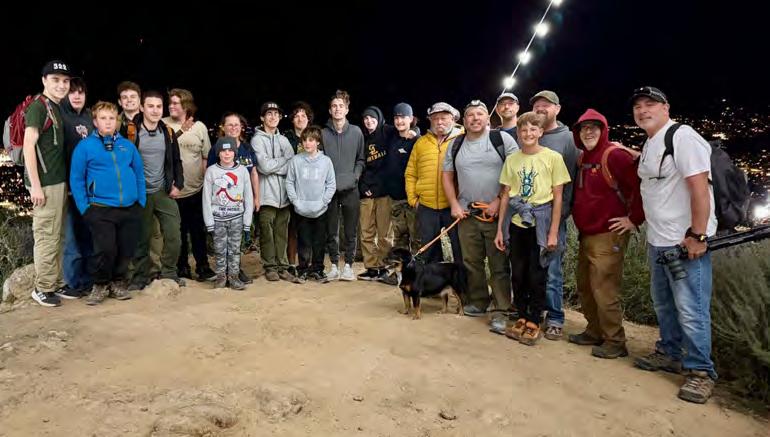
LOCAL ADVENTURES In December of 2025, Scouts from Troop 322 took a night hike up Cerro San Luis to the Christmas tree.
She was in Girl Scouts in Houston but joined a Cub Scout pack when she moved here, though COVID-19 disrupted pack activities. She hopes other interested girls will join Scouting America because it teaches “a lot more skills” than Girl Scouts.
“Scouts is basically a program to prepare you for life, figure out your interests, and—especially if you’re an outdoorsy person, but even if you’re not—it’s a great program to experience,” she said.
If she was lost in the woods, would what she’s learned in








Scouting get her to safety?
“Yes, definitely!”
“When I have my first scoutmaster conference with a new Scout,” Forrest said, “I explained to them that Scout to First Class is where you learn your scouting skills, and then Star, Life, and Eagle are centered around leadership, service, and merit badges.
“What merit badges do is introduce the scouts to either a hobby or a profession.”
It’s no small thing for a Scout to earn a merit badge. For instance, to become an Eagle Scout, one of the required badges is the Camping Merit Badge. The Scouting America website lists 10 main requirements to earn it, and under each requirement are many sub requirements including viewing 29 educational videos and studying a dozen informational websites or PDFs and then demonstrating to your counselor that you’ve mastered the information.
SCOUTING continued page 38


If Scouts reach Eagle, they’ve been trained to be confident leaders. Military and law enforcement recruiters seek out Eagle Scouts because they’ve got a lot of skills and leadership abilities recruiters are searching for.
Dimitri Todd is a 17-year-old homeschooled Scout in Troop 322. He’s been in 322 for six years and reached Life rank and is “working on Eagle.”
“I just need to figure out my project and get a few more merit badges finished up,” he said.
He’s thinking about building some tables and a play structure for a rural school in need of both.
“I’m really big on connecting the community, and it’s a really nice community,” he said.
Todd is also in the Order of the Arrow.
“I’m pretty involved in that, one of the more involved Scouts from our troop in it. I’m just really big on service and helping, and Scouts just provides that.”
“It’s a good environment,” Todd asserted. “It’s building you for life before it happens. We do board of reviews, and those are like a job interview. I got a summer job last year, and the interview is exactly like we practiced.”
Like Isla, as a homeschooled student, Scouting provides a social life.
“I’m not very connected with a lot of other people my age, and Scouting just provides that support and caring for you when you feel alone. I just take a lot of opportunities to meet people. I’m very social.”
The things Scouts learn can have real-world applications.
Forrest recalled that after a CPR class, three of his Scouts saved lives. In one case, twin Scouts recognized the signs of heart attack in their grandmother and took her to the hospital. In another case, a Scout performed CPR on his own father who collapsed at home, keeping him alive until the ambulance arrived.
The entire Scouting system is designed to build responsibility and leadership.
“I had the benefit of being in a Scout troop that was Scout led,” Forrest said. “The adults were there to facilitate, keep things safe, but us Scouts, as we got older, we got leadership positions. We
planned and led campouts.”
Forrest runs his troop the same way, with monthly Troop Committee meetings where he facilitates and supports leadership’s plans.
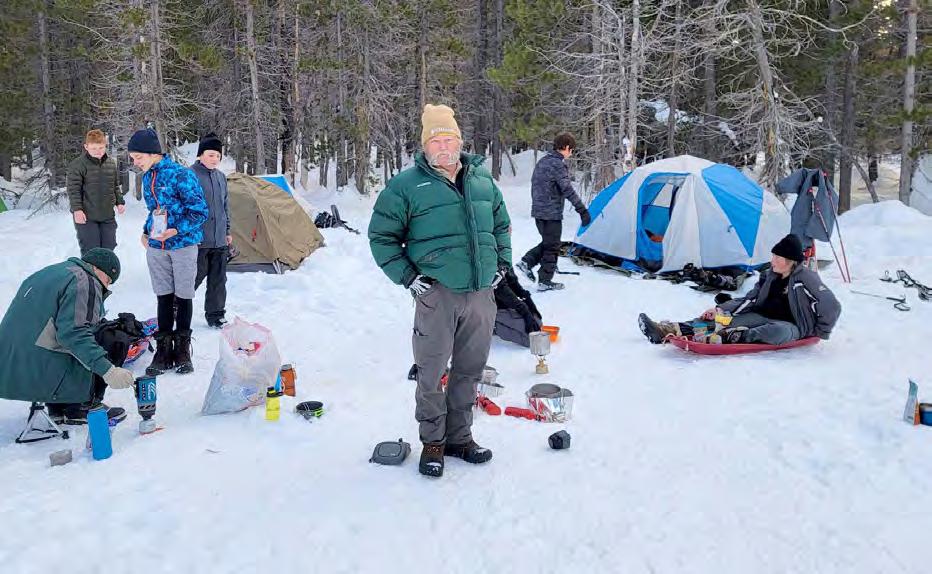
The Scouts of 322 do a lot of camping: San Simeon, Zion National Park in Utah, Arroyo Seco, winter camping at Bridalveil Creek, Santa Margarita Lake and its across-the-lake campgrounds, Lopez Lake, Pinnacles National Park—they’ve been all over.
Forrest has also taken his Scouts to the four national High Adventure Camps: Philmont Scout Ranch in New Mexico focusing on backpacking; Northern Tier in Minnesota focusing on winter activities; Summit Bechtel Reserve in West Virginia focusing on outdoor activities like ziplining, ropes courses, shooting opportunities; and Sea Base in Florida focusing on scuba certification, sailing, and STEM-
SCOUTING continued page 40









klondikepizza.com



Serving Good Times ‘n Good Grub Since 1988
Pizza • Beer • Wine • Vintage Video Games
SALADS • BURGERS • GRILLED SANDWICHES
BAKED and COLD SANDWICHES

ROADKILL
Pepperoni, Salami, Italian Sausage, Canadian Style Bacon, Ground Beef
DENALI
Pepperoni, Salami, Sausage, Mushrooms, Black Olives, Bell Peppers, Onions
KODIAK KORN PIZZA
Garlic Sauce ( only ),
Housemade Mexican Street Corn Relish with Sweet Corn, Onions, Red and Green Bell Peppers, Garlic, and Spices.
HOT HONEY PIZZA
Pepperoni, Onions, Bell Peppers, and a heavy drizzle of our secret Hot Honey Sauce
MAUI WOWIE PIZZA
Smoky Bacon Crumbles, Pineapple, CanadianStyleBacon, Red Onions, Red Bell Peppers. Drizzled with Teriyaki Sauce.
C HICKEN CORDON BLEU PIZZA
Sauced with Ranch Dressing and topped with Mozzarella Cheese, Canadian Style Bacon, Grilled Chicken, Red Onions, Swiss Cheese, and Parsley
GRIZZLY BURGER
Served on Baked Garlic Cheese Bread. Topped with Smoky Bacon Crumbles.
PROSPECTOR BAKED SANDWICH
Pepperoni, Onions, Bell Peppers, Mozzarella, Mayo, Cheddar Cheese
TERIYAKI CHICKEN SANDWICH
Glazed with Ter iyaki and topped with Swiss Cheese




I wonder what’s in that QR code? Join the Klondike Gold Rush Club for Special Deals!

MONDAY NIGHT







SCOUTING from page 38
related adventures.
“We did Philmont in ’23, Sea Base in ’24, and Northern Tier this last summer, so I have Scouts that are what they call the Triple Crown. They get a letter and a patch,” he said.
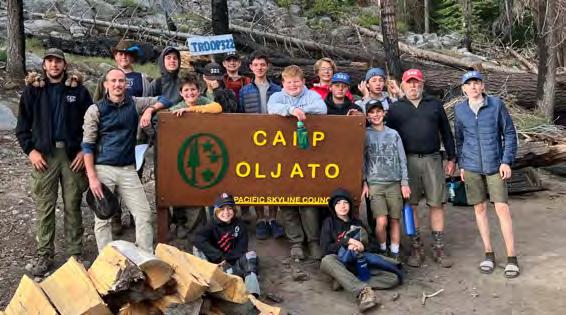
In California, they’ve been to Camp Oljato on Lake Huntington and Camp Emerald Bay on Catalina Island.
Joel Davis, Isla’s 16-year-old brother who’s also homeschooled, is a member of Troop 322 who’s reached the Life rank—and he’s one of Forrest’s Triple Crowns.
“It was amazing,” he said of the three High Adventure Camps.
He started in Cub Scouts in Houston when he was 6 and “bridged” from Cubs to Scouts when his family moved to SLO County in early 2020, he explained, noting his goal is to become an Eagle Scout. “To become Eagle, you have to earn a certain number of merit badges, you have to do community service, and, of course, the most popular thing, your project that
helps out the community.”
Joel hasn’t entirely decided on his project but said, “Most likely I’m going to be planting native trees. I really like the outdoors. I love going camping, especially backpacking.”
In addition to first aid skills, he believes the most important

thing he’s learned from Scouting is “how to appreciate nature. I just developed a love for the outdoors, especially when I’m camping. Sometimes I get my sleeping pad, go out, and just lay in the woods. Just taking in all the nature.”
In his retirement, working with the Scouts has given Forrest’s life

renewed meaning.
“This gives me what I lost when they retired me from the Army,” he said, “but I don’t bring the Army brand to Scouting. I bring the Scouting brand to Scouting. I still get the opportunities as a leader to mentor them, add to the beginning of their lives.”








































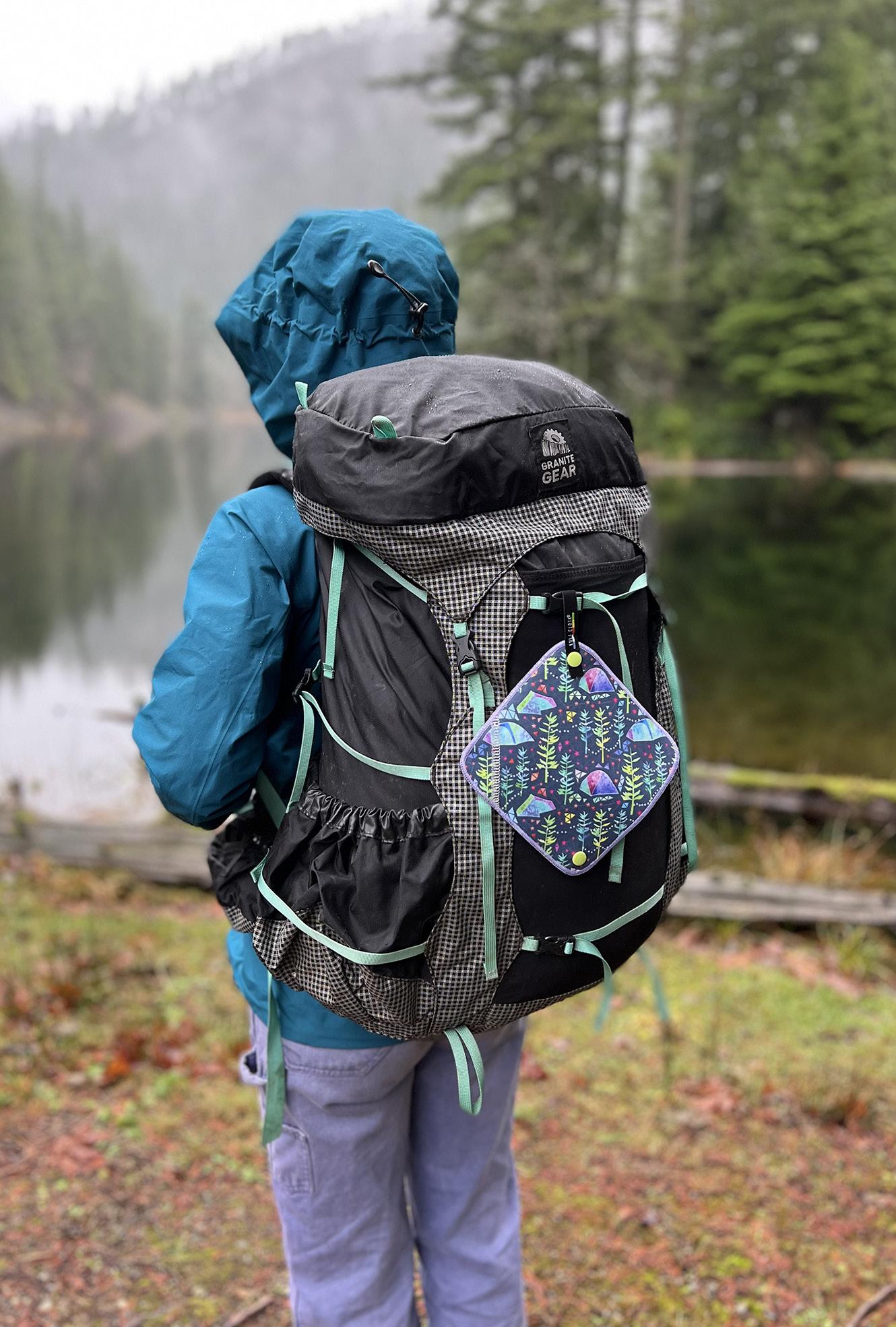
Available in a rainbow of colors and patterns, Kula Cloth is a handy tool for peeing in the wild.

positioned correctly.
The iconic pink funnel—which is packed away in what looks like a miniature soda can—is hypoallergenic, soft, flexible, easy to clean, repels liquid, and is odor-resistant.
How to use: A tutorial on how to correctly position Go Girl is available at go-girl.com. It’s vital to face away from the wind.
Shop for Go Girl at go-girl.com.
BY BULBUL RAJAGOPAL
Answering nature’s call is a little more complicated when you have a uterus.
Popping a squat in the woods isn’t for everybody, so here are some products that could be a lifesaver when you’re out on the trails.
Leave behind the excessive toilet paper rolls when you go camping and grab a Kula Cloth instead. Available in a variety of patterns and colors, Kula Cloth is a reusable antimicrobial pee cloth. The double-sided cloth is waterproof on one side and antimicrobial and absorbent on the other. Made with eco-friendly materials, Kula Cloth also snaps to your backpack.
How to use: Kula Cloth is only for wiping after urinating. According to its website, do not wipe from front to back like you might with toilet paper—keep the
Kula Cloth entirely in the peezone. Use the plain dimpled side of the Kula Cloth to absorb any residual moisture. The colorful waterproof side will prevent pee from soaking through your hand. Find it at kulacloth.com and rei.com.
Chickfly pants are exactly what they sound like—people wearing them can pee without unbuckling their climbing harness, taking off layers, or even removing the pants at all. Made from sustainably sourced fabrics like bamboo, merino, eucalyptus and beech tree Tencel, and recycled nylons, Chickfly comes in pants, shorts, leggings, and even underwear form. They’re perfect for outdoor recreation.
How to use : The two overlapping stretch fabric panels around the crotch area

stretchy design the need for undoing zippers and removing pants to answer nature’s call.
pull apart. The fly goes from front to back, allowing one to open it however much is desired. The fly snaps back into shape when released, removing the need for a zipper.
“You can go without underwear, or you can wear any stretchy underwear,” Chickfly founder and CEO Anna Birkas said.
Shop for Chickfly at chickfly.com.
The Peebol is from the makers of Shewee, the UK-based reusable stand-to-pee device. The Peebol is a portable bag that doubles as a pocket-sized toilet bowl. It’s unisex, odor-free, discreet, and 100 percent recyclable. It’s a handy device to have on your
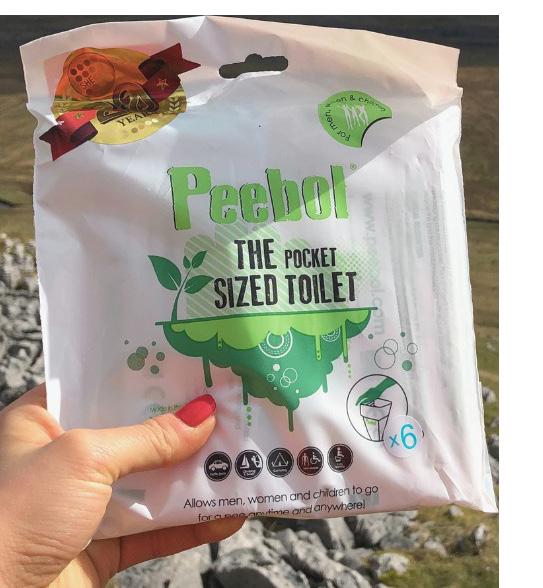
The Peebol, from the makers of Shewee, can be used as a portable toilet bowl during outdoor activities, but also as a sick bag for long car rides.
Go Girl’s pee funnel lives up to its promise of not making finding a bathroom life’s biggest adventure.
person for outdoor activities like camping and skiing, and even long car journeys when it can convert into a sick bag.
How to use: Unroll the Peebol’s cardboard sleeve and open bag to pour in the odorless and spill-free gel that comes with it. Do your business, wait a minute, seal, and dispose.
Find the Peebol at shewee.com.










BY ANNA STARKEY
I’m getting ready to take a very long walk. In October, I fly to Madrid. From Madrid, I will board a train. That train will unceremoniously take me to Astorga, where I will carry my life on my back for 250 or so miles through the Spanish countryside, through towns, and finally sink my toes into the beach of Finisterre (literally meaning the End of the Earth) at the Galatian seaside.
Sounds sexy, right? The truth of the matter is I will likely have feet covered in blisters, stinking in a shirt I’ve washed in the sink at the previous night’s albergue , shoulders indented with the
weight of my pack over those many days. An albergue is a hostel for pilgrims.
I will be a pilgrim—a freshoff-my-42nd-birthday pilgrim, with my most prized possessions strapped to my body and on my feet. I will carry everything over mountains and through rainy days, with the promise of more miles to come. I will buy a new pair of shoes a few months before my trek, just enough time to break them in before Spain. I will start walking with increasing weight in my pack between now and then.
There are things that need to be done in the months leading up to this journey. I need to walk … a lot. I need to think that a 15-mile










be without headphones. I buy learn about even more weeks on your back, you decisions about what the thing that I think



walk is an easy feat. I need to be able to do it without headphones. I need to buy things and learn about even more things. I need to brush up on my Spanish.















When you carry your life for two weeks on your back, you start making decisions about what is too heavy for you. What is the thing that I think I absolutely will need that I will abandon somewhere along my journey simply because the weight isn’t worth it?









the weight isn’t


I’ve carried a backpack on many camping trips. My trusty Osprey 48-liter

I’ve carried a camping trips. My











Kyte bag holding all the bits and baubles I need. However, for the Camino de Santiago, the name of the game is light and loaded— which means downsizing to a 30-to-38 liter bag.
In my research, I wanted to pick a bag that hits both in form and function, not just in a color I like. After a bit of back and forth, I decided on a cranberry-colored 36-liter Osprey Sirrus. It’s classified as a bag appropriate for light backpacking, but it technically isn’t an ultralight bag. Since I’ll be staying in albergues along the way, this size bag gives me just enough space to bring layers, toiletries, and a first aid kit without allowing me too much room to overpack.
A big appeal of this pack for me is that it is designed to fit women’s bodies—a women’sspecific harness with shoulder straps and a hip belt that’s shaped for typical female body contours make it a comfortable fit. It also has the added
benefit of adjustability, both in horizontal strap placement and a laddered shoulder strap technology.
It’s got a ventilated back panel, including rain covering (key for the Camino!) and a spot to hold the 1.5-liter water bladder I have. This bag design is a well-loved Camino staple, with easy to reach front pockets as well as hip side compartments that will be perfect for my most easy-to-reach necessities. It also has a “Stowon-the-Go” pole carrying system that Osprey developed to keep poles within easy access when you need them.
Ultimately, the pack that’s right for me may not be right for you. Maybe my long walk looks different from yours. The important things to consider are the size of pack you need depending on the length of your journey as well as needed supplies, what pack best fits your body, and what is most important for your journey. I’ll see you along the trail, fellow pilgrims!



JAN 30 ~ MAR 7

In a universe filled with superpowered individuals, three friends working at a fast-food restaurant land an internship to become The Super Trio. However, the return of the wicked Minerva brings new challenges an d twists to their adventure.
MAR 13 ~ APR 25

Young noble Jane is kidnapped by "The Nameless Piratess" just before her wedding. Together, they seek a witch's treasure on a dangerous island. Will Jane be rescued, or will she embrace a pirate's life for magical riches?
MAY 1 ~ JUN 13

Trapped in a mundane life, Gail's wish is granted when an earthquake transports her to Halzyon, a mystical town i n the coastal marine layer. She is enlisted by a cursed stranger to lead a mismatched crew on an adventure to defeat the town's elusive Wizard. Their journey is filled with chaos, secrets, and a tumultuous quest to the end.
A Kayak Shack
10 State Park Road
Morro Bay, CA 93442
Arroyo Grande
Parks & Recreation
1221 Ash St. Arroyo Grande, CA 93420
Arroyo Grande Physical Therapy
117 S. Halcyon Rd Arroyo Grande, CA 93420
BareFoot BodyWorks
1107 Johnson Ave.
San Luis Obispo, CA 93401
Bello Forno
119 E. Clark Ave.
Orcutt, CA 93455
Bill’s Take Out
523 N. Broadway
Santa Maria, CA 93454
Black Sheep
Bar & Grill
1117 Chorro St.
San Luis Obispo, CA 93401
Boo Boo Records
978 Monterey St.
San Luis Obispo, CA 93401
Branch Street
Deli and Pizzeria
203 E. Branch St. Arroyo Grande, CA 93420
Bricks & MiniFigs
863 Marsh St
San Luis Obispo, CA 93401
Cal-Coast Machinery
617 S. Blosser Rd.
Santa Maria, CA 93458
Cambria Bike
1239 Monterey
San Luis Obispo, CA 93401
Cambria Garden Shed
2024 Main St. Cambria, CA 93428
Cambria
Vacation Rentals
784 Main St. Cambria, CA 93428
Carolyn Elliott Permanent Makeup
San Luis Obispo County
Casa Ramos
Art Gallery
1034 Los Osos Valley Rd. Los Osos, CA 93402
Central Coast
Trailrides
Creston, CA 93432
California
Holistic Institute
11555 Los Osos Valley Rd. Ste #109 San Luis Obispo, CA 93405
Chukchansi Gold
Resort & Casino
711 Lucky Lane
Coarsegold, CA 93614
Chumash
Casino - Direct
3400 East Hwy. 246
Santa Ynez, CA 93460
City of Atascadero
Depth Perceptions
Diving
12322 Los Osos Valley Rd.
San Luis Obispo, CA 93405
Downtown
Paso Robles
Main Street
Association
835 12th Street, Suite “D” Paso Robles, CA 93446
Dudley Hoffman Mortuary Santa Maria
1003 E. Stowell Rd.
Santa Maria, CA 93454
Family Tree Service
PO Box 492
Atascadero, CA 93423
Great American Melodrama
1863 Front St. Oceano, CA 93445
KCBX
4100 Vachell Lane San Luis Obispo, CA 93401
Klondike Pizza
2059 S. Broadway
Santa Maria, CA 93454
104 Bridge St. Arroyo Grande, CA 93420
Lopez Lake
Marina & Store
6820 Lopez Dr. Arroyo Grande, CA 93420
Margarita Adventures
22719 El Camino Real
Santa Margarita, CA 93453
Melby’s Jewelers
1140 E. Clark Ave.
Santa Maria, CA 93455
Mike’s Shoes
487 Madonna Rd. #3
San Luis Obispo, CA 93405
Moats Laser & Skin Care
525 E. Plaza Dr. Santa Maria, CA 93454
Morro Bay
Little Guards
Morro Bay


Community Services & Promotions





Cambria’s only independent vacation rental company for over 30 years! 784 Main Street Suite A Cambria, CA 93428
6500 Palma Ave. Atascadero, CA 93422
City of Santa Maria
Utilities Dept.
2065 E. Main
Santa Maria, CA 93454


(805) 927-8200 Call (800) 545-5079 for Information & a Free Brochure www.cambriavacationrentals.com
Clark Center Association
487 Fair Oaks Ave. Arroyo Grande , CA 93420-4005


Nunno Steel
3461 Dry Creek Rd. Paso Robles, CA 93447
O’Connor Pest Control
101 Cuyama Lane Nipomo, CA 93444
Old Orcutt Kwik Stop
100 E. Clark Ave. Santa Maria, CA 93455
Pediatric Medical Group
1430 E. Main St. Santa Maria, CA 93454
Point San Luis Lighthouse
Avila Beach, CA 93423
Ragged
Point Inn
19019 Hwy 1
Ragged Point, CA 93452
Renaissance Festival
San Luis Obispo
Root One
928 Guadalupe St. Guadalupe, CA 93434
Sage Ecological
Landscapes
1301 Los Osos Valley Rd. Los Osos, CA 93402
SLO County Farmers Markets PO Box 1665 Arroyo Grande, CA 93420
SLO County Parks & Recreation
1144 Monterey St. San Luis Obispo, CA 93408
SLO Rowing Club
330 Village Glen Dr. Arroyo Grande, CA 93420
SLO Spas
3035 Broad Street San Luis Obispo, CA 93401
SLOCAL Roots
3535 South Higuera St. San Luis Obispo, CA 93401
SLOCOG Rideshare Public Information
Solvang Festival Theater
420 2nd. Street Solvang, CA 93463
State Farm
Donna Randolph 1650 S. Broadway Santa Maria, CA 93454
Summerwood
Winery & Inn
2175 Arbor Road Paso Robles, CA 93446
55 Broad St. San Luis Obispo, CA 93401
228 Cook Court Templeton, CA 93465 Vannon
4675 Thread Lane San Luis Obispo, CA 93401 Vineyard Antiques
1114 Marsh St. San Luis Obispo, CA 93401
SolarponicsDirect
4700 El Camino Real Atascadero, CA 93422
The Haunt in Atascadero
5805 El Camino Real Atascadero, CA 93401
The Luffa Farm
1455 Willow Rd. Nipomo, CA 93444
2320 Ramada Dr. Paso Robles, CA 93446 Wild Fields Brewhouse
9135 Pismo Ave. Atascadero, CA 93422