
Early Giving Begins November 6 • Give Day: December 5
Every community has a story. Here in Nebraska, many of those stories begin with a siren, a pager, a set of bunker gear by the door, and the steady hands of a firefighter answering the call.
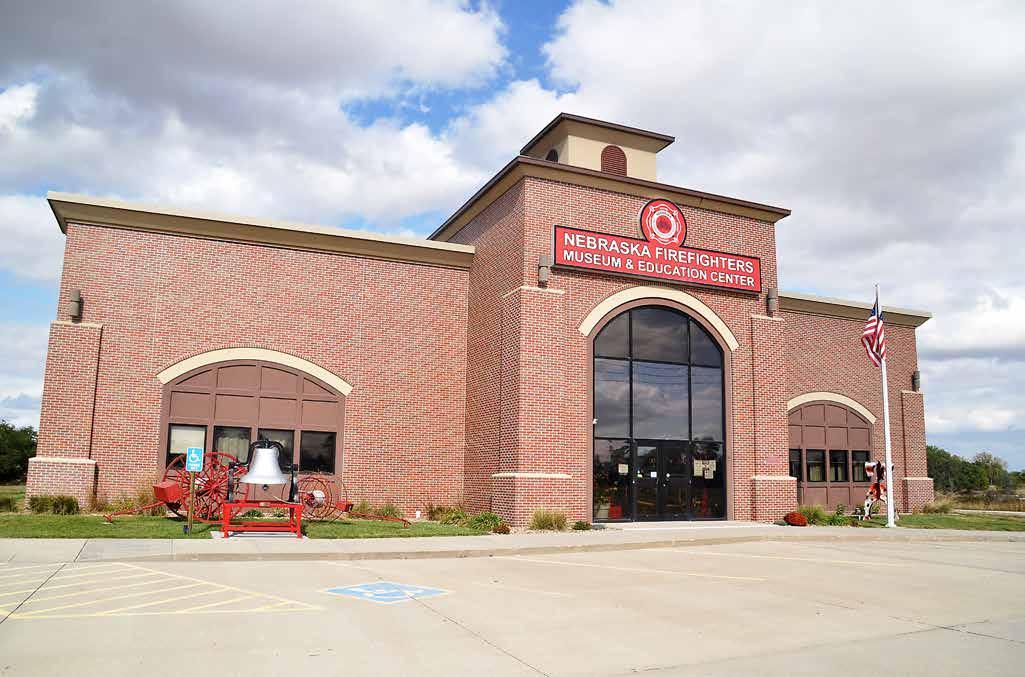
The Nebraska Firefighters Museum & Education Center is dedicated to preserving those stories—not as distant memories, but as living history that continues to shape our communities today.
This year, through the Give Where You Live campaign, we are inviting Nebraskans to join us in honoring our past, supporting our present, and educating our future.
A Home for History and Heart -Our museum is home to more than fire trucks, helmets, and memorabilia. Every item has a name. Every artifact has a face behind it. Every story is tied to a family, a firehouse, and a community that relied on someone’s courage. We exist to make sure those sacrifices are not forgotten.
Education that Saves Lives -Fire safety education is not a luxury— it is a necessity. Through school tours, hands-on learning exhibits, youth programs, senior community outreach, and family fire safety days, we work to ensure that every visitor walks away better prepared to prevent tragedy and respond
with purpose.
Give Where You Live helps us: • Expand school-based fire safety curriculum • Offer more educational workshops • Build engaging exhibits for hands-on learning • Support youth outreach and leadership development • Preserve memorial spaces that honor fallen heroes.
Why This Campaign Matters: Nebraska’s firefighters career and volunteer alike are some of the hardest working and most selfless individuals in our state. But service takes a toll. While firefighters are out protecting the public, it is our responsibility to protect their legacy, support their families, and teach the next generation what this service truly means.
Give Where You Live is not just about donations, it’s about community ownership of the stories that define us. Honoring Yesterday. Supporting Today. Inspiring Tomorrow. We are proud to serve as one of the essential ingredients that makes our community strong: courage, remembrance, and education.
Thank you for helping us preserve the history of the fire service in Nebraska—and for ensuring that the next generation carries the same spirit forward. Don’t forget December 5th!!!!
Submitted by JENNIFER SLATER , Director of the Nebraska Firefighters Museum & Education Center
By TRISTEN WINDER
Emergency crews rescued two hunters trapped in mud flats at Lake McConaughy’s Cedar View Area on Monday. Soon after, a large structure fire at Sandy Beach


Paradise occurred, resulting in a total loss.
The Lake McConaughy Dive Rescue Team responded to the Cedar View Area after two hunters became stuck in mud flats.
Nebraska Game and Parks assisted by deploying an airboat.
Rescuers, wearing cold-water survival suits, successfully removed one hunter, then a second hunter and his dog, from the mud and water. Both hunters were transported by Garden County EMS for hypothermia.
Assisting agencies included the Lake McConaughy Dive Rescue Team, Nebraska Game and Parks, Kingsley Lake Fire Department (KLFD), Lewellen Fire Department, Keith County Sheriff’s Office, Nebraska State Patrol, and Keith County EMS, which utilized a drone.
As the rescue operation con-
cluded, KLFD and Keith County Fire Departments were called to a structure fire at Sandy Beach Paradise.
Firefighters arrived to find a large structure fully involved with fire, endangering nearby exposures. The structure was a complete loss. Crews worked throughout the night, well into the morning hours, conducting mop-up and overhaul operations.
Numerous fire departments and emergency services responded, including KLFD, Ogallala Fire Department (OFD), Brule Fire Department, Paxton Fire Department, Grant Fire Department, Sutherland Fire Department, and Big Springs Fire Department. Other agencies assisting at the fire included the Keith County Sheriff’s Department, NSP, Keith County EMS, and Keith County Emergency Management.
Open reservations now for the NSVFA 2027 conference
Norfolk Lodge & Suites (Location of Conference Center) 4200 W NORFOLK AVE, NORFOLK, NE (402-379-3833) has Open Reservations now for the NSVFA 2027 conference that will be hosted by Battle Creek Volunteer Fire and Rescue.
GROUP BLOCK is under NSVFA 2027 and the room rate will $135.00 per night.
Also, if you would like a Hospitality Room, you must contact John Bomar, JBomar1970@gmail.com as they are in a block of their own. All other motels will not take reservations until after November 1, 2026, and the NSVFA office will put that list out after the 2026 NSVFA conference that will be held in Dakota City.
By COLE KLEINWOLTERINK
Every call demands something from our bodies, whether it’s climbing stairs in 60 pounds of gear, crawling through heat and smoke, or simply helping lift a patient from the floor. It goes without saying that this job requires a solid level of physical fitness. That said, this isn’t another typical fire service fitness article loaded with statistics about how unfit the fire service has become; we’ve all heard them before. Instead, the goal here is to present a simple, effective solution that removes excuses and builds functional strength. Let me introduce the sandbag.
I have a love-hate relationship with sandbags. I love that they’re inexpensive, versatile, and effective. But somewhere in the middle of a workout, I usually have a few choice words for that same bag. All jokes aside, the sandbag has given me some of the most challenging yet rewarding workouts I’ve ever done. Thanks to its design and shifting weight, it’s also one of the best tools for building real-world strength and conditioning that directly transfers to the fireground. Before we get into the “how,” let’s talk about the “why.” Sandbags might be the most underrated piece of training equipment in the fire service. They’re
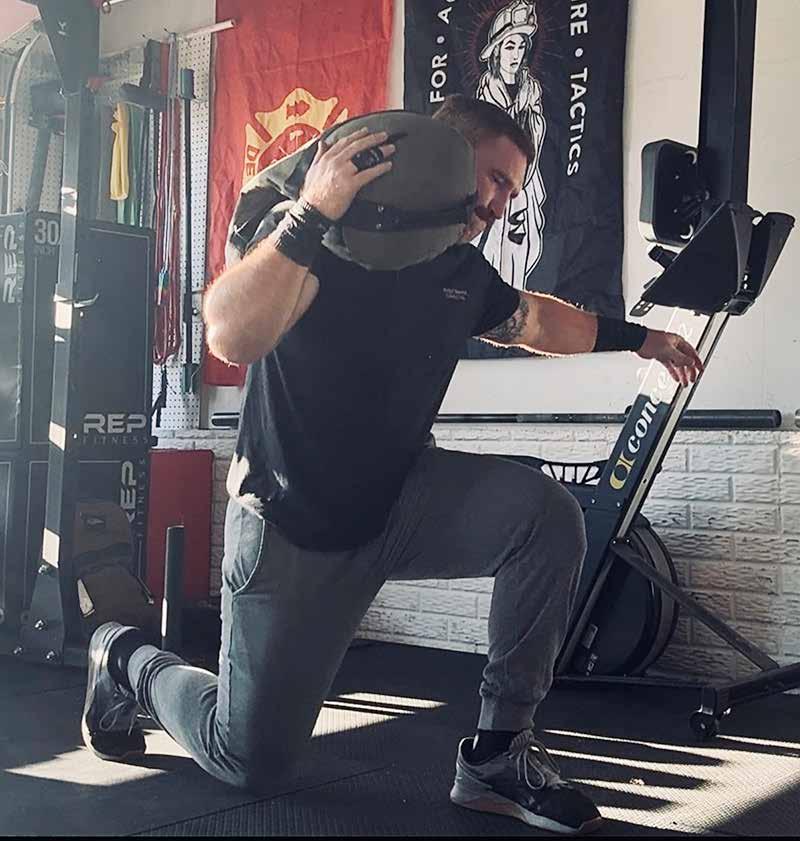
cheap, portable, and demand total-body control. Because the sand shifts as you move, every lift challenges your stability, grip, and core, the same muscles that protect your back and shoulders on the job. A barbell moves in a straight line. A sandbag fights you every inch of the way. That instability forces you to engage your entire body, just like when you’re dragging a charged line or lifting a patient from an awkward position. Sandbags are also joint-friendly and require less technical skill than Olympic lifts. You can squat, press, drag, carry, or throw them without needing a weightlifting platform. Heavier bags build strength and power; lighter bags test your endurance and conditioning. With one sandbag, you can hit every major muscle group in twenty minutes, and believe me, you’ll feel it the next day.
Most importantly though, sandbag training looks and feels like our work. Firefighting isn’t symmetrical or predictable, and neither is a shifting bag of sand. It teaches you to brace under load, move awkward weight, and stay composed under fatigue. It’s not pretty, and that’s exactly why it works so well.
To frame the “Why”, let’s look at Greg Glassman’s ten domains of fitness: cardiovascular and respiratory endurance, stamina, strength,
flexibility, power, speed, coordination, agility, balance, and accuracy. Sandbag training checks every one of those boxes. The workouts below show how a single tool can develop all ten. At the core of my own program is the twenty-minute workout, roughly the length of a SCBA bottle during intense work. Don’t get me wrong, short, high-intensity sessions and long, grinding workouts both need to be integrated for a well rounded workout program, but my go-to conditioning sweet spot is between fifteen and twenty-five minutes.
EXAMPLE WORKOUT #1 - Short duration workout: Emphasis on speed
In 5 minutes, perform as many repetitions as possible of:
1 sandbag clean + 2 sandbag jump overs
2 sandbag cleans + 4 sandbag jump overs
3 sandbag cleans + 6 sandbag jump overs
Continue this pattern until the 5-minute time is up.
Use your medium-weight bag.
EXAMPLE WORKOUT #2 - Medium duration workout: Emphasis on cardiovascular and respiratory endurance
*modified Hero Workout in honor of Lt. Brian Sullivan (FDNY). In 20 minutes, perform as many
rounds as possible of:
20 burpees
10 sandbag shoulder-to-overhead
20 sandbag alternating lunges
10 sandbag squats
Use a light or medium-weight bag.
This modified version removes the need for specialized equipment like rowers or boxes while keeping the same cardiovascular and muscular endurance challenge.
EXAMPLE WORKOUT #3 - Long duration workout: Emphasis on stamina
*Workout from GORUCK.
4 rounds for time:
4-minute ruck
30 sandbag thrusters
4-minute ruck
30 lateral pulls + mountain climbers
Use a light or medium-weight bag.
EXAMPLE WORKOUT #4 -
Strength-biased workout: Emphasis on strength
Every 2 minutes for 20 minutes perform:
10 sandbag squats
Use a heavy-weighted bag.
Each workout has its own emphasis that targets a specific fitness domain, but if you dig a little deeper into the individual movements, you’ll see how each one develops multiple areas. The sandbag clean from the short-duration workout builds power. The sandbag jump over develops agility, balance, and accuracy. The sandbag thruster (a squat plus overhead press) challenges coordination and flexibility. Together, these movements replicate the many demands of the fireground.
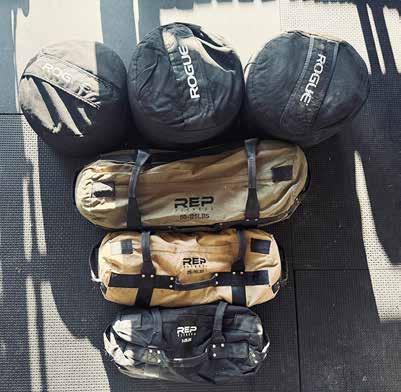
This article was designed to give a practical solution for fitness that actually matters. You don’t need a fancy gym. You just need a sandbag. Go online to Rep Fitness, Rogue Fitness, Brute Force Sandbags, GORUCK, or even Amazon, and pick one up for under $25.
Having three bags, light, medium, and heavy, gives you an entire gym for under $100. The investment is small, but the payoff of
being stronger, more durable, and ready for the job, is huge. Remember, the most important tool on the fireground is the firefighter. Make sure it’s ready.
Cole Kleinwolterink is a member of the Waukee Fire Department, Granger Fire Department, and Fire Science instructor at Des Moines Area Community College. Feel free to reach out to him at kleinwolterinkc@gmail.com with any questions, comments or inquiries.
Email your Upcoming Event by the 10th of the previous month (ex. Aug. 10 for the September issue) to jeff@ne- braskafirefighter.com . There is no charge.
DEC. 6, 2025: Dakota City Fire Department’s Winter Craft/ Vendor Show, 10 a.m.-2 p.m., 208 S. 21st St., Dakota City. JAN. 8, 2026: Scotts Bluff County Mutual Aid Association Meeting, West Nebraska Regional Airport (Annual Meeting).
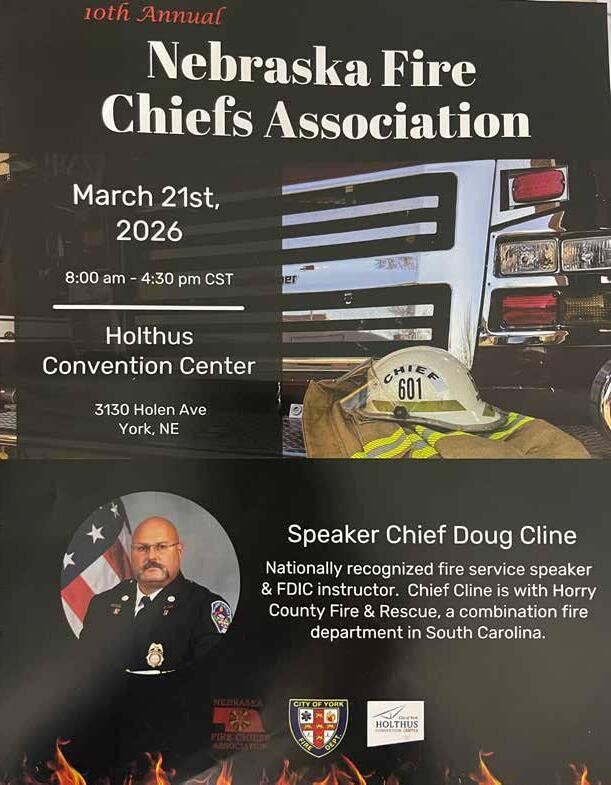
FEBRUARY 6-8, 2026: Les Lukert Conference, Kearney, NE. MAR. 21, 2026: 10th Annual Nebraska Fire Chiefs Association, 8 a.m.-4:30 p.m., Holthus Convention Center, 3130 Holen Ave., York, NE. Speaker will be Chief Doug Cline.
APR. 9, 2026: Scotts Bluff County Mutual Aid Association Meeting, Alliance.
MAY 15-17, 2026: 2026 Nebraska Fire School, Grand Island, NE.
JULY 9, 2026: Scotts Bluff County Mutual Aid Association Meeting, Banner County.
OCT. 8, 2026: Scotts Bluff County Mutual Aid Association Meeting, Bayard.
OCT. 15-17, 2026: NSVFA Annual Conference, hosted by Dakota City Fire Department in South Sioux City.
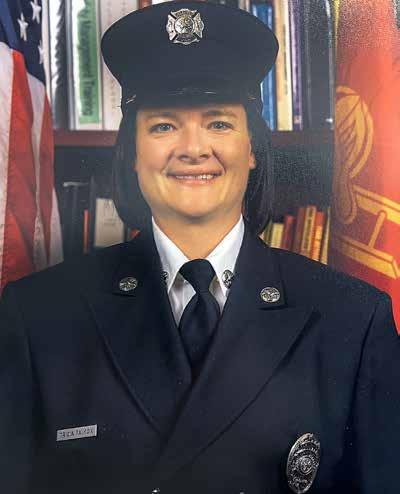
The Training Division of the State Fire Marshal’s agency Part-Time instructor spotlight for this month is Tricia Faimon with Norfolk Fire and Rescue. Faimon was originally from Lawrence NE, and now resides in Norfolk. Tricia is a fulltime firefighter/paramedic with Norfolk and is a member of the Peer Support team, training member of the Candidate/Probationary firefighter program and a member of the Norfolk Honor Guard. Faimon has taken advanced training in Swiftwater Rescue and enjoys teaching rope rescue and is a Trained Peer Support team member.
Tricia also volunteers with the Hadar Volunteer Fire Department were she also works as and fire-
fighter/paramedic and serves as the secretary and training officer for the Hader fire department. Tricia began journey with the fire service in 2013. In her downtime she enjoys reading, working out, training her puppy and competing in the Firefighter Challenge League.
During her time with the fire service she has been recognized with a CPR Life save.
When asked what she finds most satisfying in working for the Training Division she stated: “I find it most satisfying to train the brand new firefighters that have little to no experience (i.e. Firefighter I).
To watch them grow as they learn new objectives/techniques makes me excited to teach them more
Classified ads run $10 for the first 10 words, and 25 cents a word after that. A photo is $10 additional. Rates are the same in each state (Iowa, Minnesota, South Dakota, Nebraska and Kansas). Email the ad to jeff@nebraskafirefighter.com to place your personal or departmental ads.
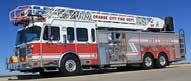
FOR SALE: 1998 Spartan Gladiator 8-man RD Murray/LTI 105’ Aerial, 2,000 pump, loaded with options. Chief Dan Roghair 712395-2824
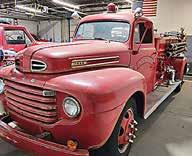
FOR SALE: 1949 Ford F-7 fire truck. Flathead engine, 6889 miles. Runs and drives, may need brake work. Some fixtures will stay with the truck. Been indoors majority of its life. Accepting sealed bids until 31 Dec. Truck will need to be paid in full prior to transfer. Send bids to Milford VFD, 612 1st St, PO Box 81, Milford, NE 68405 For questions or additional photos send email to milfordfirerescue@ gmail.com
and it never fails that they usually teach me something in return, whether they know it or not”.
As a follow question when asked to share an experience in teaching for the Training Division when you felt like you had made a difference to an individual firefighter or to a fire department Tricia responded with the following story, “probably one of my most favorite experiences working for the TD is being able to teach in the INRO to FF class at State Fire School for the last several years. When I am able to teach each student that putting out fire isn’t just putting water on it but a science and I explain that science and, all of a sudden, they get it, it makes me proud to be a part of that experience. One particular experience during the propane tree fire portion of class was with a young lady who was scared to step up to the front and lead on being able to turn the supply of gas off to the tree while the other students were maintaining the water curtain. I was able to explain to her what she needed to do and with a little prompting, she was able to lead. She was so excited when she was done”.
The Training Division would like to thank Tricia for teaching in the Northeast region of the state under the supervision of Training Coordinator Bill Pfeifer.

jeff@nebraskafirefighter.com
Holiday Fire Prevention Message from the NSVFA Fire Prevention Team Wishing You a Merry Christmas & a Safe, Happy New Year
As we gather with family and friends to celebrate the holiday season, the Nebraska State Volunteer Firefighters Association (NSVFA) Fire Prevention Team extends warm wishes for a Merry Christmas and a joyful New Year to all Nebraska firefighters, their families, and the communities they so proudly serve.
The holidays bring joy, tradition, and togetherness—but they also bring an increase in fire risks.
This year, our team encourages every department to take a moment to remind community members how simple precautions can keep holiday celebrations safe and memorable for all the right reasons.
HOLIDAY FIRE PREVENTION TIPS TO SHARE WITH YOUR COMMUNITY CHRISTMAS TREES & DECORATIONS
• Water real trees daily.
• Check lights for damage such as frayed wires or broken bulbs.
• Turn off all holiday lights before leaving home or going to bed.
• Keep trees and décor at least 3 feet from heat sources, fireplaces, and space heaters.
COOKING SAFETY
• Stay in the kitchen when cooking
By BOB HECKMAN
This month’s Smokey Sez article is dedicated to the memory of Mark Brandt Papillon VFD 1/28/2022, gone but not forgotten.
Using turkey fryers is a recipe for disaster if you do not follow the manufacturers recommendations Why you may ask? Severe burns from hot oils and fire hazards from spilled oils or overflow and using frozen or wet turkeys. Splattering and igniting oils, we have pets or curious children who should not be around turkey fryers.
Think about no phone zone while using the fryers. Think about where you are going to cook your
By BOB HECKMAN
This month’s article is dedicated to the memory of Robert “Bob” Nutzman from Holdrege VFD 6/15/2022.
Using candles in A safe manner. Always place candles on a stable heat-resistant surface and at least 12” away from flammable materials. Keep them away from children and pets, never leave a candle burning unattended. One moment of carelessness can lead to a lifetime of regret.
Before each use trim the wick to about 1/4 above the candle. MOST IMPORTANT NEVER LEAVE A CANDLE BURNING UNATTENDED. Some pets like cats may be attracted to candles. Please remember to put the candles out
turkey ahead of time. The area should be on a level surface free of tripping hazards and flammable material. Oil and water do not mix and never use water on a grease fire.
We know Winter can be cold outside. Use the turkey fryers outside. If the thermostat does not work, replace it before you need to use it. One careless moment can lead to a lifetime of regret.
According to the N.F.P.A., about 1,000 fires are caused by improperly using fryers, fire deaths and 15 million in damages. Thanksgiving is one of the peak times for kitchen fires.....fireman Bob.
before going to sleep, consider flameless candles.
Candles may be a big fire hazard if left unattended. 2 to 3% of structure fires are caused by candles, however a disproportionate number of injuries and deaths. Why, you may ask? Falling asleep while they are burning or too close to decorations are the common cause.
One last recommendation is the three-hour rule. After three hours put the candle out or inspect the candle for tunneling and ensure an even melt pool and maintain structural integrity of the candle and it’s container.
LAST OF ALL MERRY CHRISTMAS FROM THE PLATTSMOUTH VFD ......fireman Bob
on the stovetop.
• Keep kids and pets away from hot surfaces.
• Use timers and avoid distractions.
• Keep flammable items away from burners.
HEATING EQUIPMENT
• Have furnaces and chimneys professionally inspected.
• Keep space heaters on level surfaces and 3 feet away from anything that can burn.
• Never use extension cords for space heaters.
CANDLES & SCENTS
• Use battery-operated candles whenever possible.
• Keep real candles away from decorations.
• Never leave burning candles un-
Rhonda Cerny, NSVFA Fire Prevention
“The holidays are a time when many of you will step away from your own gatherings to respond to calls, attend trainings, or participate in community outreach. Your commitment protects lives, preserves property, and strengthens the communities we love.”
The NSVFA Fire Prevention Team wishes to express our heartfelt appreciation to every volunteer firefighter across the state.
The holidays are a time when many of you will step away from your own gatherings to respond to calls, attend trainings, or participate in community outreach. Your commitment protects lives, preserves property, and strengthens the communities we love.
As we prepare for a new year, our team remains dedicated to sup-
porting fire prevention education, community engagement, and department outreach across Nebraska. We encourage departments to reach out if they would like assistance with school programs, community events, or fire prevention resources in the coming months. From our team to yours, we wish you a Merry Christmas, a safe holiday season, and a Happy New Year filled with health, happiness, and continued service.
NSVFA Officer Directory
President
BRENDA JENNY
1767 Colfax Street, Blair, NE 68008 402.639.9647 bgolf2560@yahoo.com
1st Vice President
TROY SHOEMAKER 1433 Grove Ave Alliance, NE 69301 308-760-7682 tshoemaker@cityofalliance.net
2nd Vice President
KENNY KRAUSE 1229 D St. Fairbury, NE 68352 402-300-0097 krausechief@gmail.com
Secretary/Treasurer
MARK MEINTS
502 E H St, Wymore, NE 68466 402-806-7451 meints2@windstream.net
NSVFA Lobbyist
RYAN K. MCINTOSH PO Box 13 Nebraska City, NE 68410 ryan.mcintosh@stilmockmcintosh.com
NSVFA Legal Advisor
SCOTT SMITH P.O. Box 186 Syracuse 68446 scott.smith@bhhslawfirm.com
Past President
SCOTT SCHREMMER
815 W 6th, Chadron, NE 69337 308-430-1494 buffhater@gmail.com
District Directors
#1 DARRELL VANCE 1415 Q St, Gering, NE 69341 308-631-0053 DarrellVance1230@gmail.com
#2 JOHN BOMAR P.O. Box 222, Battle Creek, NE 68715 402-992-1560 JBomar1970@gmail.com
#3 RON CHADA 1721 N Sheridan North Platte, NE 69101 308-520-2828 rmchada@winnelson.com
#4 -- VACANT
NSVFA Representative National Vol. Fire Council
JUSTIN SCAMEHORN
202 Hidas Ave. Waco, NE 68460 402-366-1939 jscamehorn@yahoo.com
Appointed NVFC Director
JOEL CERNY 1618 Denver St. Schuyler 68661 402-720-4100 cerny_j@hotmail.com Chaplain
MATTHEW MAU
Cell: 402-363-1540
E: pastormattwaco@gmail.com
Across Nebraska, volunteer fire and EMS departments continue to serve as the backbone of their communities. But behind every strong department is something even more powerful than equipment or training hours: a culture rooted in service. Healthy culture doesn’t emerge on its own—it grows from intentional habits, shared expectations, and leadership that consistently reinforces the values that matter most. Departments that thrive often have common traits, and many of these can be grouped into 25 key practices that build trust, strengthen teamwork, and sustain long-term engagement.
A service-driven culture starts with clarity—clear mission, clear expectations, and clear communication. Departments that revisit their purpose, establish transparent decision-making, and practice open, respectful communication create an environment where everyone knows where they stand. Strong departments also invest in training, mentorship, and accountability. This includes encouraging regular participation, providing constructive feedback, celebrating progress, and ensuring that standards apply equally to every member. These foundational practices not only support operational excellence—they reinforce a shared identity rooted in professionalism
The holiday season is often portrayed as a time of joy, family gatherings, and celebration. But for first responders—firefighters, paramedics, police officers—the reality can be vastly different. While others are enjoying festive traditions, these professionals remain on duty, ready to respond to
2025-26 Nebraska State Volunteer Firefighters Association Auxiliary
PRESIDENT
Courtney Lane
1ST VICE PRESIDENT
Mary Chada
2ND VICE PRESIDENT
Jacey Rasmussen
TREASURER
Kristi Rounds
SECRETARY
Kathy Horn, Schuyler
PARLIAMENTARIAN
Sharlene Kuhr
and pride.
Equally important are the cultural habits that build connection and commitment. Departments that prioritize inclusion, support new members, maintain traditions, and foster camaraderie often find that engagement naturally increases. Encouraging teamwork, recognizing contributions, balancing workloads, and supporting members outside of emergency calls all help create a station environment people want to return to. Leadership plays a critical role here: modeling respect, showing humility, inviting input, and being willing to do the small tasks sends a message that service is everyone’s responsibility.
The final piece of cultivating a healthy culture is consistency. Strong volunteer departments commit to continual improvement by reviewing policies, addressing conflict constructively, staying active in community outreach, and reflecting on what’s working and what isn’t. Whether it’s maintaining equipment standards, showing appreciation, planning ahead, or encouraging leadership development, these ongoing practices strengthen the department year after year. When members see that their department values service, teamwork, and integrity—not just in words but in daily actions—they feel empowered, supported, and united in their mission. These 25 simple but intentional habits can transform a group of volunteers into a resilient, high-performing team that serves with pride long into the future.
We have an enviable culture of service, commitment, and connec-
emergencies that do not take a holiday break.
WHY HOLIDAYS ARE STRESSFUL FOR FIRST RESPONDERS
INCREASED CALL VOLUME: Winter weather, holiday travel, and seasonal activities often result in a higher volume of accidents, fires, and medical emergencies.
EMOTIONAL WEIGHT: Responding to tragedies during a time meant for happiness can take a heavy emotional toll. Incidents involving families or children can be particularly challenging. This hit home for the Alliance Fire Department family on Friday, November 14th. We lost an 18-month-old toddler of one of our department members. The emotional toll of such incidents can be long-lasting, affecting not only the responder but also their colleagues and loved ones. We are now navigating through this process as individuals and a department.
MISSED FAMILY TIME: Many first responders work long shifts during holidays, sacrificing time with loved ones. This can lead to feelings of isolation and guilt. Financial and Social Pressures: Like everyone else, first responders face holiday expenses and expectations, but with less time to manage them.
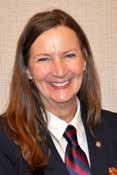
Brenda Jenny , Presi dent
“ Strong volunteer departments commit to continual improvement by reviewing policies, addressing conflict constructively, staying active in community outreach, and reflecting on what’s working and what isn’t. ”
tion. We need to always work to protect it and continually strive to improve it.
The past 30 days have flown by in a blur, and I am truly honored to serve as your president.
As promised at the Fire Delegate meeting in October, I am providing further clarification regarding Article Fifteen, Section 1 and if a member in good standing can vote at conference without being registered. Our Legal Advisor, (Ryan McIntosh) has reviewed the language of this section and confirmed that, regardless of where the commas are placed, the intended meaning is clear: members must be registered for conference to be eligible to vote. So, as instructed by the members during the Fire Delegates meeting, we will propose amendments to this section to remove the language stating that only those registered for the annual conference are eligible to vote.
There are other areas in the Bylaws that need cleaned up as well, so this year, the board will be thoroughly reviewing all sections of our Bylaws to identify areas where clarity can be improved, and confu-
COPING STRATEGIES
sion can be minimized. Our goal is to propose meaningful changes that ensure our bylaws remain relevant and aligned with current best practices, which is essential for preserving the strength and integrity of our association. We are committed to keeping the membership informed of our progress as we work toward the end goal of maintaining a robust and well-defined organization. We have our first full meeting on Saturday, December 6th and we will review and look at the first draft of proposed edits then.
I would like wish all of you a safe and healthy season filled with joyful moments and cherished time spent with loved ones. Thank you for your dedication and spirit—here’s to a wonderful holiday and a bright new year ahead! As always, if you have a meeting or an event, you’d like me to attend, please reach out and I will make every effort to be there. Until next time, stay safe and healthy!
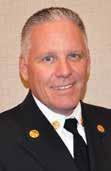
BRENDA JENNY, President Nebraska State Volunteer Firefighters Association
Troy Shoemaker, 1st Vice
President
“Adequate rest, healthy eating, and short breaks during shifts are essential for mental resilience. First responders often put their own needs aside to help others. They must take care of themselves, especially during the holidays when stress levels can be higher. Encouraging and supporting their self-care efforts can make a significant difference in their well-being.”
PEER SUPPORT: Talking with colleagues who understand unique challenges can help reduce stress.
FAMILY COMMUNICATION: Setting expectations with family about schedules and finding alternative times to celebrate can ease tension.
SELF-CARE: Adequate rest, healthy eating, and short breaks during shifts are essential for mental resilience. First responders often put their own needs aside to help others. They must take care of themselves, especially during the holidays when stress levels can
be higher. Encouraging and supporting their self-care efforts can make a significant difference in their well-being. The holidays can be tough for those who serve and protect. Recognizing their sacrifices and offering support—whether through a simple thank-you or community initiative is vital. Your involvement can make a significant difference.
Wishing all a wonderful and joyful holiday season. Stay safe!
TROY SHOEMAKER
NSVFA 1st Vice President
Please send them to jeff@nebraskafirefighter.com along with information to explain the photo.
It seems like these last few months have been particularly busy. I would just like to hi light a couple activities. The first one is Annual Conference. Thanks to Kearney for hosting and doing an amazing job! This conference seemed, to me, to be gaining some traction. I felt like both fire house and EMS house had good presenters in them and great conversations were sparked. Even the general assembly had good conversation. It’s good to hear differing opinions come out and have good discussions on the matters. The banquet was good as usual and the auction fund raiser was entertaining and raised a nice amount for the museum.
I’m honored to serve as your Second Vice President and am
lucky to follow in the footsteps of those ahead of me. I look forward to working with this current board over the next year. The one thing that made me feel exceptionally excited about this conference was seeing some new faces getting excited about serving the NSVFA in some way. I truly feel like getting new people involved is paramount to our success and am glad to see new people stepping up.
I, along with Brenda Jenny, just returned from the state’s networking workshop. Hosted by the Iowa Volunteer Firefighters Association. There were 7 states in attendance. A lot of ideas and discussions were had about legislation in each state, and programs that each have implemented, and which were work-
We are less than a month away from the Nebraska Legislature reconvening in Lincoln. The 109th Legislature, Second Session is scheduled to begin on January 7, 2026, and will last until mid-
April. This will be the final session for Rob Clements, Machaela Cavanaugh, Megan Hunt, Wendy DeBoer, John Arch, Ben Hansen, Mike Moser, Myron Dorn, Tom Brandt and Dave Murman, who
A Hastings man died Monday following the collision of a passenger vehicle and a semitrailer truck on U.S. Highway 281 south of here, the Hall County Sheriff’s Office reported.
Sabian Salais, 31, was taken to a local hospital where he was declared deceased, the Sheriff’s Office said in a news release.
The other driver, Anthony Kothe of Kansas, was uninjured.
According to the news release, authorities were called to the scene of the crash, in the area of U.S. 281 and Binfield Road, about 6:35 a.m. Monday. Binfield Road runs east and west. The crash location
was one mile south of Doniphan.
The preliminary investigation shows that a 2013 Jeef Grand Cherokee driven by Salais was northbound on the highway when it struck the rear end of a 2020 Peterbilt truck driven by Kothe.
A Hall County accident reconstructionist was working on the investigation Monday afternoon.
Hall County deputies were assisted at the scene by the Nebraska Sate Patrol, Nebraska Department of Transportation and Doniphan Volunteer Fire Department.
(Hastings Tribune, Hastings, NE, November 4, 2025)
Stanton Fire and Rescue was recently presented with a donation of $22,652.57 from Nucor, recognizing the department’s continued service and dedication to the community.
Each year, Nucor hosts a charity golf tournament to raise funds for local organizations that make a difference in the communities they serve. This year, Shane Weidner, a representative from Nucor, attended to personally present the check. Weidner expressed his appreciation to the department, thanking members for their dedication, care, and countless volunteer hours spent community.
Weidner’s serving the words carried special proceeds from the tournament were distributed among seven local Fire and Rescue Departments, including Stanton Fire and Rescue.
Other departments receiving
ing and which ones weren’t. This meeting is one of the best tools we have to help our association succeed. Learning from others is sometimes much less painless than trying to learn on your own.
One of the topics was our monthly Firefighter magazine, and whether moving to a digital format was a good move. Several states have already gone digital, and others are considering the change. Iowa has followed Nebraska, and taken the password protection off, so it is able to be viewed by anyone who visits the site. I have not been happy with my attempts to view the Firefighter since the change last January. It was explained to me over the weekend that I am not viewing it
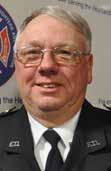
Kenny Krause, 2nd Vice President
“The one thing that made me feel exceptionally excited about this conference was seeing some new faces getting excited about serving the NSVFA in some way. I truly feel like getting new people involved is paramount to our success and am glad to see new people stepping up.”
in the right way. I’m sure there are others who have similar problem trying to look at it. Not all of us are computer literate, i.e. Myself. So, if you go to the NSVFA website, click on the Nebraska Firefighter, then scroll down to the past the issue on the screen to the bar that says Click Here to View Past Issues. Then you will see all the issues by month and scrolling to the
right will be the latest issue. Now I am much happier viewing the Nebraska Firefighter in this format, whatever it is. I have no idea what a PDF is but to me it stands for Pretty Darn Funny.
Until next month, stay safe.
KENNY
KRAUSE, 2nd Vice
donations were Battle Creek Volunteer Fire and Rescue, Madison Volunteer Fire and Rescue, Hadar Volunteer Fire and Rescue Department, Hoskins/Woodland Park Fire Department and Pilger Volunteer Fire and Rescue.
During last week’s monthly meeting, meaning, as he has firsthand experience in fire service. He proudly served 31 years with the Norfolk Fire Department as a volunteer firefighter and continues to serve with Madison Volunteer Fire and Rescue today.
Stanton Fire and Rescue extends heartfelt thanks to Shane Weidner for his ongoing service, and to Nucor for their generous support of local first responders.
The department also extends appreciation to the other recipient departments for their continued dedication and commitment to protecting their communities.
cannot run for reelection due to term limits. Additionally, Senators Christy Armendariz and Jane Raybould have announced that they do not intend to run for reelection.
The Nebraska Economic Forecasting Advisory Board met on October 31 to update the state revenue forecast. The Board voted to lower the revenue projections for the 2025-2026 fiscal year by $120 million. The new numbers increased the projected budget deficit to $451 million. Additionally, Governor Pillen has announced his efforts to cut spending by $500 million per year. The budget and spending will dominate debate in
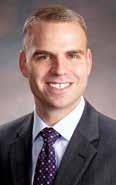
“...save the date for the annual Legislative Breakfast. The breakfast will be held on Tuesday, January 20th. Please attend if you are able to tell your story and represent the NSVFA.”
January. Anything that will result in new or increased spending will face an uphill battle.
Last, save the date for the annual Legislative Breakfast. The breakfast will be held on Tuesday, January 20th. Please attend if you



are able to tell your story and represent the NSVFA.
As always, don’t hesitate to contact me with questions.
RYAN K. MCINTOSH, NSVFA Lobbyist

By JEFF GARGANO
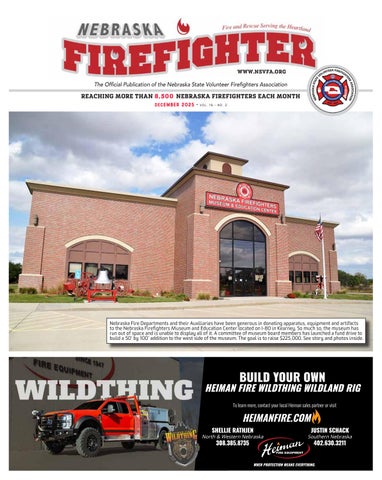
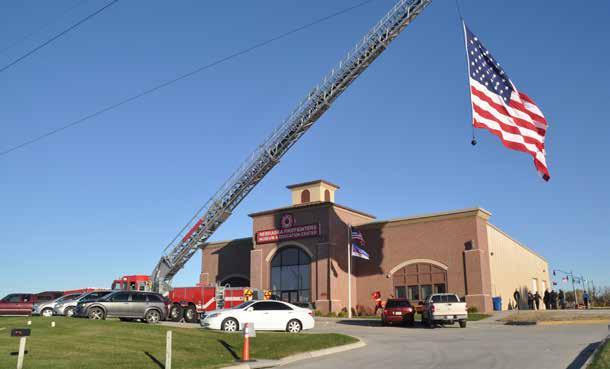
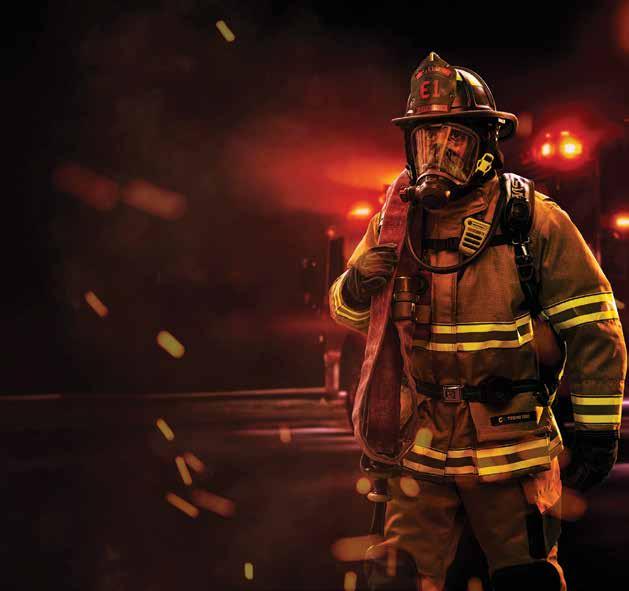
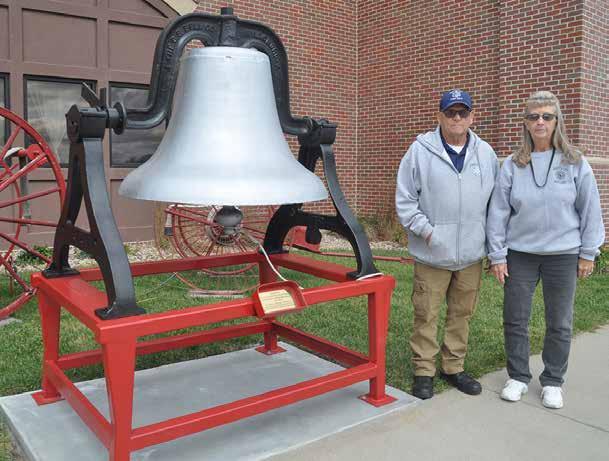
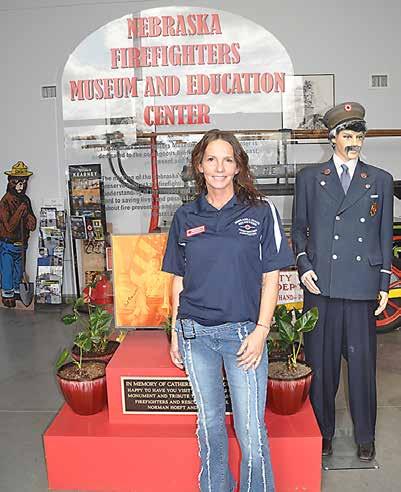
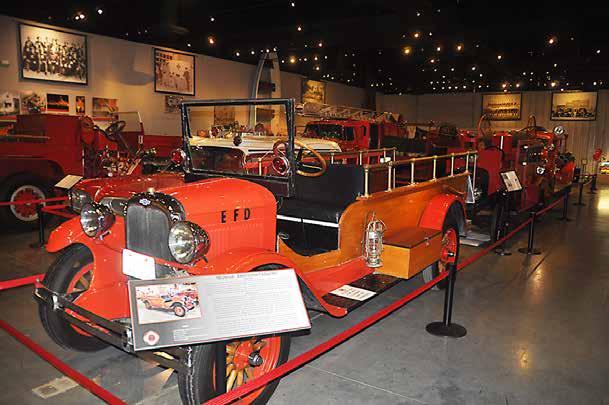
Nebraska Fire Departments and their Auxiliaries have been generous in donating apparatus, equipment and artifacts to the Nebraska Firefighters Museum and Education Center located on I-80 in Kearney. So much so, the museum has run out of space and is unable to display all of it.
A committee of museum board members has launched a fund drive to build a 50’ by 100’ addi-
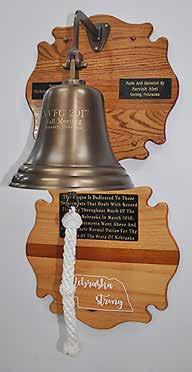
tion to the west side of the museum. The goal is to raise $225,000.
“There just isn’t room to display everything. We have a storeroom that’s full and apparatus are being stored at other locations. We need to do this. It’s been this dimension for 16 years,” Pat Moore of Dakota City, museum committee member and Past President of the NSVFA, said.
“We have an endless supply of interesting things that tell the history of firefighting in Nebraska. There are retired EMT suits, old air packs, nozzles and more that really need to be shown but can’t right now due to space limitations,” Moore said.
Displays are changed and rotated out on a regular basis. Apparatus on loan for one year are rotated in October.
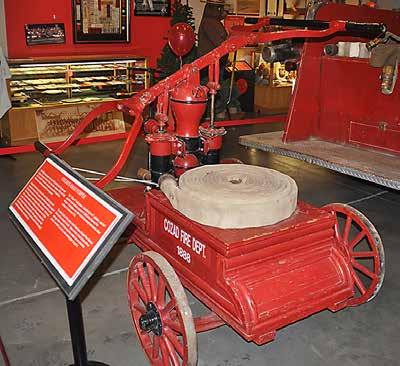
Currently in the entryway is an 1879 20-man hand pumper from David City. There’s a display of old fire brigade buckets.
“Imagine the work they went through to fight a fire with buckets,” Moore said.
There are displays honoring the Auxiliaries.
“The Auxiliary is a very important part of the fire service. They put up with a lot. Many members are very active and help in so many ways,” Moore said.
A Smokey Bear Fire Prevention display is always a hit with school children when they tour the facility.
“I like to watch the faces of the kids when they’re here,” Moore said.
Jenn Slater has been the museum director for the last five years. A
group dedicated to preserving the history of firefighting in Nebraska instigated the idea of a firefighting museum and education center in the 1960s. Moore noted people like Norm Hoeft, Bob Vogltance, Eric Rasmussen and others traveled all across the state for years to promote the project and to raise money.
Dedicated in August of 2009, the Nebraska Firefighters Museum and Education Board of Directors at that time included: Norman Hoeft, Gregg Erickson, Eldon Moser, Wayne Olson, James Egr, Bob Vogltance, William Lundy, Rhonda Cerny, Delwin Smeal and Lindsay Schluntz, the first executive director. The Design and
Development Committee included Gregg Erickson, Joel Cerny, Rhonda Cerny, Marie Hoeft, Eldon Moser, Wayne Olson, Eric Rasmussen, Lindsay Schluntz, Delwin Smeal and Bob Vogltance.
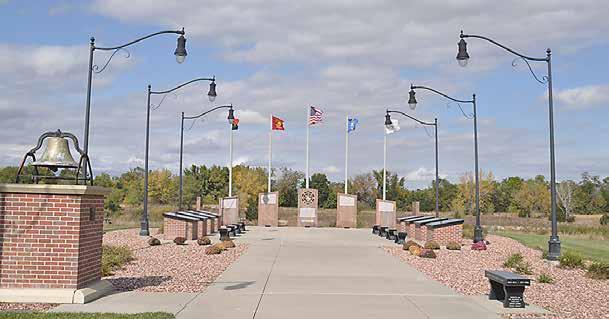
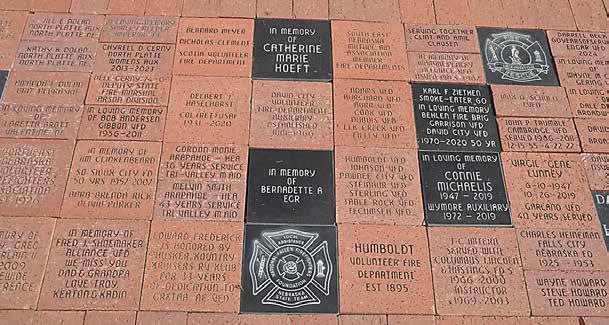
In addition, the facility also has the Nebraska Firefighter and EMS Memorial featuring upright granite monoliths bearing engraved names, honoring those who made the ultimate sacrifice in the line of
duty. Past and present firefighters and EMS personnel are showcased on the black granite tablets and bricks. New names are added to the memorial once a year in the weeks leading to the annual Firefighter and EMS Memorial Service held in September. The Memorial is open from sunrise to sunset
Museum FROM PAGE 8
daily. For more information or to donate people can go to nebraskafirefightersmuseum.org. Annual memberships are also available to help support the museum.
An annual gift of just $10 from each registered Nebraska Firefighter allows the museum to share the state’s firefighting heritage and history.
The Nebraska Firefighters Museum and Education Center is open from 10 a.m. to 5 p.m. Monday through Saturday, and 1-5 p.m. on
Sunday. Admission is $10 for seniors and adults, $5 for youth ages 3-17 with kids 2 and under admitted free. Museum members are also admitted free. Group rates are available by calling (308) 338-3473.
For more information on donating towards the expansion project, contact Pat Moore at (712) 8982381or any committee member or museum director Jenn Slater at (308) 338-3473, or go to https:// nebraskafirefightersmuseum.org
By: JERRY KNAPP
South Dakota FF Association provides world class training to its members and I have been blessed with the opportunity to be a small part of it for the past 3 years. Their conferences and hands on training are spectacularly organized, supported and presented. Like most state organizations they produce a
monthly newspaper.
In their monthly newspaper, Chaplain Rodney Veldhuizen has been a rabid supporter of Firefighter mental health and for the past several months, has provided readers with expert tips. Here are a few highlights from his Oct column. His full column is available at: rkWj9Zor
1--No one told us that along
with the glamour came the cost of seeing broken bodies, of not sav -ing the accident victim, or hearing the cries for help we could not answer…. There is a hidden cost, however that does not have to be the end of the story.
2--Rather than bore you with statistics, let me bluntly state that by choosing to be a firefighter you are three times more likely to
develop post traumatic stress disorder (PTSD) than the general population.
3--The constant exposure to trauma, loss, and high-pressure situations makes resilience a necessity, not an option.
One of the most important points Chaplain Rodney made was this: “While PTSD treat ment is critical, real progress starts with
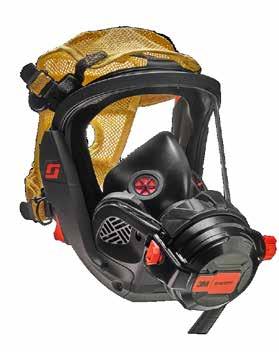
Wider field of view

proactive mental conditioning. The purpose of this article is to share, in FF terms and based on my experience some “proactive mental conditioning” that I learned the hard way, after my near LODD that will be helpful to you as your own prevention as Ch Rod explained more eloquently in his column.
My FD was operating at a severe natural gas leak. In a micro second I went from cool guy firefighter that had evacuated several people, taken gas readings in nearby buildings and helped stabilize the situation to instant victim when the building was shredded by a violent explosion. My captain and I were about 8’ from the front door which ended up across the street. We went almost as far. Only the grace of God was why we survived. Severe physical injuries were only the start and the easiest part to fix.
First the good news: POST TRAUMATIC
. Yes you can have positive actions as a result of mental trauma. In my case, I was obsessed with figuring out how this could happen to me. I was a Battalion chief of my Hazmat Team, this was only natural gas, not even toxic, I thought I knew what I was doing, how could this happen to me ? Dan Moran a good friend and better listener helped me sort this out, bit by bit piece by piece we uncovered clues, procedures I did not know, facts that were not in any of my training and probably not in yours. Many important details, but the end state from post traumatic growth was a training program called Tactical Response to Explosive Gas Emergencies that I taught in SD where I was blessed to meet these great American Firefighters and their association officers like Chaplain Rodney.
PERSPECTIVE
Here is some of what I learned in years following my near death experience. In rough terms, you have an emotional brain and a rational brain. A bad call and you know what they are or a near death experience of your own puts those parts of your brain in overdrive. I describe it as sending your emotions both happy and sad further than you have ever been and want them to go. Out of control, seems like a good description. It is too late, you need to deal with it, like a bad cut on your arm….easier said than done. It is like a scar, you can whine over it for the rest of your life or understand it and accept it. For me, understanding my reactions took years and counseling and research. Understanding it and counseling saved my marriage and likely my life. It is not easy for me to admit that.
My wife pointed her finger at me about 8 months after the explosion and said “You act like an ass.” I blew her off. Seven days later at
the fire house my captain pointed his finger at me and said, “You act like an ass.” The same powerful words, from people I love, from the nicest person I know and the most unfiltered person I know.
The first two things Dr Steve Levy said to me were: you are not crazy and you are having a normal reaction to an abnormal situation. Long, silent pause in the conversation. Think about it he said…a building blew up, you were almost killed, that is abnormal. Another key phrase: if you were not having a normal reaction to situations like this I would be very worried about you.
Personal ignorance: It took me a long time, several months to realize this was a really big deal. On the drive home from the hospital my wife tried to tell me it was a big deal. In my mind, we operate at uncontrolled situations, sometimes things go wrong, its part of the deal as a FF/EMT. Not an ego or hero mentality, my rational brain had this figured out. In simple terms that is what I signed up for and got away with it this time, clearly a rational thought. My emotional brain was out of control and I did not know it. Which for some reason is a common symptom.
ABNORMAL SITUATIONS
Fast forward a couple years. When I do the gas class described above I tell a quick version of my story so others understand. In most classes a Firefighter will come up to me on the break and say they had similar reactions/symptoms. Some have shared stories of divorce and even attempted suicide as a result of abnormal situations they saw or were are part of.
Finally, like Chaplain Rodney’s article, we have started to face the problem of firefighter mental health. We train to do searches under severe fire conditions; we train to remove vehicles from around entrapped victims. We need to train to deal with the normal reactions to abnormal situations we
will see, experience and smell as a firefighter. We had a fatal fire several years ago, to this day, many of us that were on that fire can still be found sniffing the air at working fires for that putrid smell of burning human flesh. Like a scar on your body, you can’t erase it but you can learn to control it.
Chaplain Rodney discusses debriefings as a first step to help us understand our normal reactions to abnormal situations. These are very helpful first step. As a peer member of the team I am the dumbest guy in the room. A total of 16 hrs of training is all a peer member needs, highly trained members, psychologists and mental health professional round out the team. My CIST uses a canned system developed by Dr Jeffry T Mitchell. Here are some of the details on how the system works to help you understand how great they are.
Some rules. Only people at the call that has caused the trauma can be in attendance. No notes or records kept. Rank does not matter. Attendees may speak or not, simply say pass. It is not a critique of the operation. We go around the room introduce ourselves and then attendees. Next question: what was your role in the call ? Next time around the circle: how do you feel about it ? The discussion often gets emotional and lively. Most importantly, and you don’t need a Phd to see the body language change from super tense to a bit looser then almost back to normal for most attended.
A few common points often comes up from FF/EMTs….i keep seeing the same scenario over and over in my head I cant get it out…. or the smell of the blood, I cant get it out of my head….screams, I hear them constantly….her distorted face will be with me forever. For some responders the simple hour long debriefing is not enough for are referred to counseling and we
Three of Nebraska Panhandle’s first responder agencies are answering the call with new ambulances in their station this month.
Crawford Volunteer Fire Department was the first to bring home a new rescue unit. The apparatus is a 2023 Superliner Ambulance, installed on a RAM 5500 chassis.
According to Crawford Fire Chief Brian Prosser, it cost a lot of money but was funded in part by generous donations from the Crawford and surrounding community. Prosser said he was very pleased with the attendance at the department’s Pancake Feed Fundraiser held in October. The unit arrived about two weeks ago according to Prosser.
Alliance Fire Department is eager to see their two new rigs.
offer 3 free private sessions with a professional and more if necessary.
Another common point that comes up in almost all debriefings…..i should have done this instead of that. NO. You did what you did and made the best decisions you could have based on what you were presented with. Sure, after you had time to see the real details of the emergency you may have chosen an alternative… but you did not know it at the time. And….you did the best you could physically and mentally execute at the time. Monday morning quarterbacks always win yesterday’s game, it is a losing strategy for our well being.
Chaplain Rodney discussed using dark humor to help relieve stress. It can be helpful to show the situation is not overwhelming. There was a rumor going around that I rang the doorbell igniting the explosion. At first, I was offended when guys would ask me did you ring the door bell? To cope with this, I would tell them, “No I had a flare in my hand and that is what started it.” Situation defused, followed by laughter.
For me, the memory and emotional trauma I keep in a box, it comes out only when I want it to, well most times. Doc asked me about flashbacks, no, been really good. About 2 years after my close call I heard a similar radio transmission to what I heard just before the building was shredded. My emotional brain took over in a flash(back). Before I knew it I ran to hide behind a nearby engine. It took my rational brain time to catch up…how did I get here? Then, it caught up and I pretended to looking for a tool. No one saw me but this shows the power and speed of your emotional brain. O yea, when the snow plow driver drops the blade and it makes that loud low bang, sleep is over for that night.
So to Chaplain Rodney’s point….how do we prepare ourselves and our trainees? Simple, be honest….understand that you will have normal reactions to abnormal situations and get help to deal with them especially if they persist and learn about the effects as part of our training.
You can be the hottest well trained/experienced Firefigher there is, you may not find that vic-
tim that will die at your next fire. This, despite your best efforts, the best rigs the best gear, sometimes you and the operation will all fall short. A good example is extrications. Should we call them the jaws of death? When these great tools first came out we all saved lives at extrications, not every time but most of the time. Today, if you need the jaws at an extrication it is likely so bad that air bags, seatbelts crumble zones were not enough to protect the victims. Make sure your members and your trainees know that. Sometimes there is nothing you can do. It is my hope this article will help you prepare yourself and your members for the mental challenges they will face as FF/EMTs. Here are three excellent books that provide more information: Deep Survival by Laurence Gonzales, Post Traumatic Growth by Jim Reddon and Resilience by Eric Gritens. In the end, it’s really simple…. don’t call it mental health or a disorder…call it what it is a normal reaction to an abnormal situation. You know, the ones we signed you for but were never taught how to understand or deal with. I hope this article has helped some.
According to Alliance Fire Department, the ambulances were ordered in late 2022 and early 2023 and are expected to arrive hopefully in the next week. They will replace their two 2010 rescue units, both of which are showing their age according to AFD.
Chadron is replacing one of their ambulances as well. CVFD was awarded a contract for a new ambulance back in 2022 that included an auto-load system for stretchers that makes it easier to load and unload patients in and out of the unit. The department is hoping to see the new unit by the end of next week.
(By Jared Fernau, Crawford Clipper, Crawford, NE, October 31, 2025)
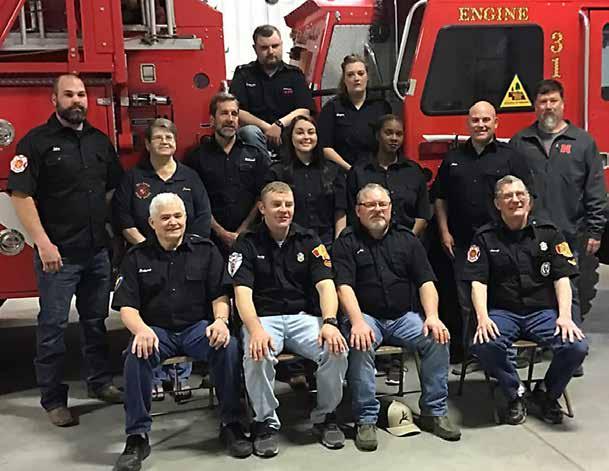
The Belden Volunteer Fire Department recently received funding through the State Farm Good Neighbor Firefighter Safety Program, administered in partnership with the National Volunteer Fire Council (NVFC). The grant enabled the department to purchase a new ground monitor, a vital tool that enhances firefighter safety and fire suppression efficiency. Serving a rural community of about 111 residents, the Belden
VFD relies entirely on volunteers. Before receiving this grant, the department lacked a ground monitor, which made large-scale fire operations more difficult and hazardous. The new equipment enables firefighters to deliver high volumes of water from a safe distance—especially important for structure and grass fires in rural areas.
“The ground monitor has already proven to be an incredible asset,” said Assistant Chief Lathan
Ohlrich. “It allows our firefighters to control large fires more effectively while keeping them safe. For a small department like ours, this makes a huge difference.”
The Belden VFD extends its gratitude to State Farm and the NVFC for supporting rural departments and helping ensure firefighters have the tools they need to serve their communities safely and effectively.
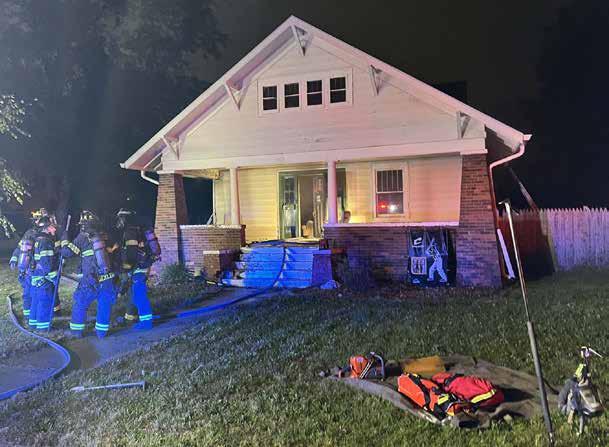
Hastings Fire and Rescue responded to the report of a structure fire around 9:30 p.m., on Saturday, Oct. 25, at 303 Oswego Avenue. No human residents were home when firefighters arrived, but firefighters did rescue two dogs. The fire was not active when firefighters arrived, but the house did sustain smoke damage. The cause and starting point of the fire are under investigation. Hastings Police Department, Utility Department, Street Department and Hastings Rural Fire Department responded to the incident as well.
By KALÉ CAREY
A training drill in Omaha simulates a driver trapped in a crushed vehicle as firefighters work against the clock to gain access. The scenario is routine for fire science students, but fire officials say the challenge begins long before an emergency call: having enough people to respond.
TRAINING FUTURE FIREFIGHTERS
Metropolitan Community College operates Nebraska’s only fire science program. It prepares students for careers in the fire service or for serving as certified volunteers in their communities.
“We prepare the next generation of first responders,” said Boomer Strawn, program director of the Fire Science Technology program at MCC.
Strawn, who previously worked as a firefighter, said the program teaches the skills needed to handle emergencies.
“You get to fix an immediate problem, and you may not know what the outcome is by the time you leave, but generally you left them better than you found them,” he said.
Students train in classroom settings and through hands-on exercises that simulate real calls. Enrollment has grown in recent years, with about 98 students in 2014 and roughly 740 in 2024. While most students are pursuing full-time fire service careers, about 20% train with the goal
of serving as volunteers in their hometowns.
“It is not just a paid versus volunteer issue,” Strawn said. “In general, we need first responders within our four counties, as well as all 93 counties in Nebraska.”
Even with increased interest in fire training programs, fire departments across Nebraska report difficulty maintaining staffing levels.
According to the National Fire Protection Association, the United States had about 1,041,200 firefighters in 2020, the lowest total since 1991. The NFPA reports that most of the decline stemmed from a drop in the number of volunteer firefighters. 65% of firefighters nationwide are volunteers.
Nebraska reflects that trend.
The state has more than 15,000 unpaid firefighters, compared to just under 1,500 paid, according to the Nebraska State Fire Marshal’s Office. Of the state’s 478 fire departments, only six are fully paid. A total of 449 operate entirely with volunteers.
“Everybody is needing volunteers,” said Roger Peek, second assistant chief with the Irvington Volunteer Fire Department. “All departments in this area I know are getting busier and busier every year.”
INSIDE A VOLUNTEER DEPARTMENT
Irvington, a volunteer department
located just northwest of Omaha, lists 38 volunteers on its roster. Peek said only about 16 members can consistently respond when a call comes in. As the district grows and call volume increases, the department hopes to reach 45-50 active members.
“We do everything, fire rescue, anything from assisting a party up that’s not injured, to a CPR in progress, to a car accident, to a house fire,” Peek said.
The demands of the job are one reason volunteers move on.
“We have one member who has made almost 680 calls this year,” Peek said.
Volunteers balance training, certifications, continuing education, and emergency calls with full-time jobs and family responsibilities. Peek said many volunteers stay for a short time before stepping back due to the time commitment and workload.
Volunteer departments often assist one another when additional personnel are needed during a call.
Irvington responds to emergencies within its coverage area and supports neighboring departments upon request.
“We may not get paid for that, but we are still helping people,” Peek said.
Whether paid or volunteer, firefighters respond when emergencies occur and communities need assistance.
Robert (Bob) Grant Martin, 84, of Lexington, NE, passed away Friday morning November 14, 2025, in his home after fighting a heart issue since January. Bob was born February 19, 1941, to Alice Margaret (Neff) Martin and Grant Cundy Martin. He was the youngest of three children blessed to this union, having two sisters Phyllis and Virginia. He was baptized and confirmed at First Methodist Church. He graduated from Lexington High School in 1959 where he enjoyed playing every sport he could. He was captain of the football team his senior year. He was fortunate to be part of the 1957 state football championship team, along with some big names and some lifelong friends. That team was inducted into the Nebraska High School Sports Hall of Fame in 2007. He attended Nebraska Wesleyan University to be a Math Teacher for two and half years, finding brotherhood in Phi Kappa Tau. He briefly attended Kearney State Teachers College until family illness called him to join the family business of Martin Electric. Bob met his wife Glenda Brecks, of almost 60 years, while in high school, they married on December 22nd, 1960. Bob and Glenda were blessed with five children: Shelley, Sheila, Natalie, Robert (Rob), and Cassandra (Cassie). The majority of their life was established in Lexington.
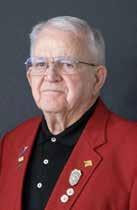
loved being part of the community celebrations. His love of sports was the topic of many of his conversations. He was often seen at the LHS & LMS football games with the rescue unit with his phone in hand watching Husker Volleyball and eating popcorn.
Bob is preceded in death by his wife Glenda, his mother and father, his sisters Phyllis (Martin) Fagot, and Virginia (Martin) Alfredson; and his brothers in-law Alfred Fagot, Jim Hofferber and Earl “Bud” Brecks; and his sisters in-law Alice (Brecks) Dorsey, Ethel (Brecks) Fox, Bonnie (Bud) Brecks, and Myong (James) Brecks; and his niece Melinda “Mindy” Anne (Fagot) Jurgens; and son in-law Martin L. Haith.
Bob was a faithful member of the First United Methodist Church as a weekly usher, choir member and dishwasher. He was an invaluable member of the Lexington community for most of his life. He was a supporter and sponsor of the Boy Scouts, of which he reached Eagle Scout at age 13. He sponsored youth sports teams and programs as well as played in the adult league: golf,softball, horseshoes He was a member of several community and religious organizations each for several years: Jaycees, Lion’s Club, Masons and Shriners, Lexington Area Community Choir, and Bell ringer for the Salvation Army and others. Bob found a way to further serve his community when he joined the Lexington Volunteer Fire Department (LVFD) in 1975. He was a member for 50 years, serving as the Chief for 25 years. His love for the LVFD was well known and he instilled that love in his family and new recruits and fellow members and their families.
Bob received many awards in most everything he did but never let them inflate his ego. He was a mentor, friend or helping hand to anyone who asked.
Bob loved his family, gardening and enjoyed playing games. He
Bob is survived by his brothers in-law James Brecks (O’Fallon, IL) and Don Fox; step sister inlaw Rosemary (Deeds) Hofferber (Cambridge, NE); his children: Shelley Haith (Brock, NE), Sheila Martin (Carver, MN), Natalie (George) Stockinger(Bowling Green, FL) , Robert ‘Rob’ Martin (Johnson Lake, NE) and Cassandra ‘Cassie’ (Peter) Green (Cozad, NE); 14 grandkids, Crystal (William) Howard (Nebraska City, NE), Steven Sherman (Brock, NE), Arlene Haith (Colon, NE), Daniel Dorsher and Breck Dorsher (Carver, MN), Alice (Ken) Medla (Patterson, NY), Natalia Stockinger and Rachel Stockinger (Rochester, NY), Katy Martin and Shay Martin (Rosemount, MN), Curtis Martin (Bloomington, MN), Robert Green and Michael Green (Cozad, NE) and Erin Green (Lincoln, NE); and five great-granddaughters Madison, Kayden, Hailie, Ashlee, and Rhiley; and two great-great-granddaughters KuyAnna and Maisyn; as well as a plethora of cousins, nieces, nephews, greats and great-greats. He will be missed.
Funeral Services were held on Thursday, November 20, 2025 at 10:30 a.m. at the First United Methodist Church in Lexington with Pastor Elmer Armijo and Sarah Neben, Lay Minister, co-officiating.
Visitation was held on Wednesday, November 19, 2025 from 5-7 p.m. at Reynolds-Love Funeral Home in Lexington. Interment is in Greenwood Cemetery at Lexington. Memorials are kindly suggested to the Lexington Volunteer Fire Department, First United Methodist Church in Lexington or Lexington Lion's Club.
Reynolds-Love Funeral Home in Lexington is honored to be assisting the family with arrangements. Please share online condolences with the family by visiting: reynoldslovefuneralhome.com
I hope you are enjoying the pleasant fall weather and taking time to prepare for the nasty cold weather that is being predicted. I would like to apologize for the length of this article, but I feel it is important as one of your National Volunteer Fire Council’s representatives to keep you informed of what is happening with the NVFC and the Committees I serve. Hopefully, you have read last month’s article that hit the headlines of the NVFC Fall Meeting held in Rapid City in October.
The first committee meeting I will share is the Recruitment and Retention Committee, which I happen to chair. The first item on the agenda was the NVFC’s Make Me A Firefighter (MMAF) program. If your department hasn’t already signed up on the MMAF site, please check it out and take advantage of what is being offered. We also reviewed the updated Family Plan that was made to help the families of the new firefighters get a feel of what it is like to have a firefighter in the family. Remember that this material is also available in Spanish if you need it. We had a lengthy discussion on the Coffee Talks that we host. The talks are usually scheduled on the 4th Thursday of the month, so we are skipping November and December due to the holidays. During October’s talk, Darin Lintner of the Nebraska State Fire Marshal’s training division joined me in a discussion on the importance of keeping a positive department and how it can help with the recruitment and retention of firefighters. If there is a topic you would like us to cover, please let me know. Co-Chair Joe Maruca led a short discussion on the use of Chat Bots to help with R & R that Nebraska’s own Daniel Chapek has developed for the Weston VFD. We will be looking more into this at the NVFC Spring Meeting in Alexandria. The NVFC Training Summit will be held in Arlington, Virginia, which is right outside of Washington, DC. June 26th and 27th, 2026. In fact, I’m currently reviewing 150 applications to teach at the summit. Stay tuned as the NVFC will be offering travel stipends again this year, and I will make sure the notice is sent out through Constant Contact. In the Wildland Committee, Mike Marusic from Anheuser-Busch’s Emergency Drinking Water for Wildland Firefighters Program gave us a report. They have now donated over 100 million cans of water. Applications normally come out in March, so again, watch for a Constant Contact to let you know when to apply. Adam Smith from the US Forest Service provided an overview of the Federal Excess Personal Property program (FEPP). There were almost 1,200 pieces of property valued at $12.7 million in 26 states placed in service in 2024. In the Firefighter Property Program (FPP) in 2024, 27 states acquired 61,409 items with
an acquisition value of over $73 million. Committee Chair Steve McClintock provided an update on the Wildland Fire Assessment Program (WFAP). It has been funded, but the process is still being worked out. Jay Wickham, South Dakota’s wildland fire director, said that in South Dakota, they have focused a lot of mitigation efforts on private land around homes, especially adjacent to the forest. NVFC Director Charlie Klute, also of South Dakota, talked about the U.S. Soybean Association testing a soy foam product. It’s biodegradable, fluorine-free, has no PFAS, and is tested for structure and wildland fires. It’s now being tested for aircraft fires and for military use. It’s a product that will be available from vendors moving forward. Jeff Buchanan from FirstNet, built with AT&T, talked about how FirstNet can improve reliable service in remote areas. The importance of this network is that it is driven by first responders. They are trying to locate where the wildfires are, but the work is not done, and the investment is ongoing to ensure service.
The third and last committee I serve on is the Health, Safety, and Training Committee. We had a presentation from Dr. Allie Barry, who discussed the South Dakota State University’s FEMA grant focused on examining ways to increase physical activity and nutrition in volunteer fire departments in South Dakota. The small things matter. There are many things you can do in your everyday life to be active. The grant was $600,000 over 3 years. The next step is utilizing focus groups to figure out what resources are viable for volunteer fire departments. Kevin Quinn, the Committee chair, talked about a meeting he went to in Lichfield, CT, where a consortium of oncologists and fire service leaders conducted a firefighter cancer screening clinic. They provided cutting-edge screenings for 50 firefighters. Early cancer detection is the key, and cancer screening bills are something we should all be working on. Brian McQueen thanked everyone who participated in the ECHOS Wristband Study. Firefighters in 16 states participated. David City and Schuyler VFD members were included in this study. The data collected by the firefighters should be sent to them in the next month. A webinar on the 19th of November reviewed the data from the study, and the data will also be shared with the board. Caroline Stachowiak from the NVFC reported that a second General Motors-sponsored train-the-trainer Electric Vehicle (EV) event took place on June 21. Since then, instructors have taught eight classes, and 10 more are scheduled before the end of the year. The General Motors grant ended on September 30, and we were invited to apply for a fifth year of funding. She also
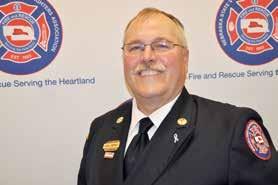
talked about the First Responder Helpline, and now it has an app and an online portal that offers training, assessments, additional information about services, legal forms, news, financial calculators, and child/elder care locators. The NVFC conducted a successful train-the-trainer course on our culture and leadership course. Fourteen in-person training courses are scheduled through the end of the year. A Heart-Healthy Guide will be released before the end of the year. Kevin Quinn said he attended a pilot session of the new Volunteer and Combination Officer Section (VCOS) Critical Thinking Academy. VCOS would like to form a joint committee with the NVFC to grow the Academy further.
Now, the last but not least
J oel Cerny, NVFC Director
“Darin Lintner of the Nebraska State Fire Marshal’s training division joined me in a discussion on the importance of keeping a positive department and how it can help with the recruitment and retention of firefighters. If there is a topic you would like us to cover, please let me know. Co-Chair Joe Maruca led a short discussion on the use of Chat Bots to help with R & R that Nebraska’s own Daniel Chapek has developed for the Weston VFD.”
is the OSHA Task Force. Good news is there seems to be a lull in anything new happening with OSHA trying to update the Emergency Responders 1910.156 Standard. One of the things the NVFC is looking at is suggesting that the standard be implemented in a tiered Standard so that the smaller and mid-sized fire departments don’t have to meet the Standard to the same level as
the largest departments. During the meetings, a motion was also made to have the NVFC hire a lawyer who specializes in OSHA issues. As always, I will be following this issue closely and will keep you all informed as best as possible.


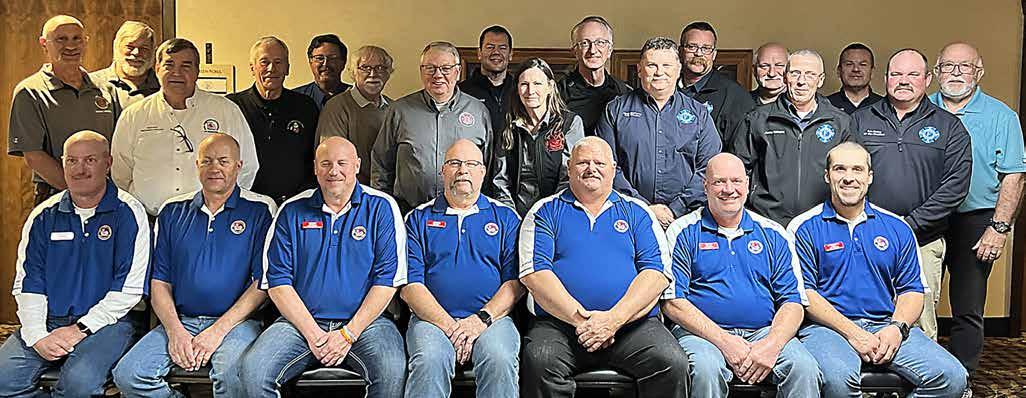
The Iowa Firefighters Association hosted the annual States Networking meeting in Des Moines on Nov. 7-8. A total of eight states were represented as they shared ideas and information. Attending from Iowa were Kent Brix, Mike Kime, Lonnie Newhall, Adam Kutz, Chris Bylund, Aaron Clemons and Taylor Moore. Kenny Krause and Brenda Jenny represented Nebraska. Attending from Kansas were Shane Pearson, Ron Ewing, Jimmy Hubbard, Laramie McPherson, Chad Mayberry and Courtney Fegter. Barry Kuenkel and Ron Hampton represented Wisconsin. Ed Hoffman, Zach Lundberg and Travis Olson attended from Minnesota. Don Ward and Rick George represented South Dakota. Keith Smith came from Missouri. Jerry Linston and David Elick came from Indiana. Mark Billquist from the 10-33 Foundation attended.
Firefighters are battling a garage fire on East Hansen Trail Road north of North Platte, an incident occurring as the National Weather Service has issued a Red Flag Warning for critical fire weather conditions.
The warning is due to gusty winds and low humidity, meaning fires can spread rapidly and uncontrollably. Residents are urged to exercise extreme caution with any potential ignition sources.
According to the North Platte National Weather Service Office, the Red Flag Warning is in effect for the majority of Lincoln County, along with much of Western Nebraska, including Keith, McPherson, Logan, Thomas, Arthur, and Hooker counties.
(By Tristen Winder, KNOP News 2, North Platte, NE, November 3, 2025)