

By Alexandria Munroe
By Samiksha Chemukula
This article was originally published in the South Florida Sun Sentinel on Nov. 30, 2025 as part of a collaboration between the Department of Communication, Media, and the Arts’ Mako Media Institute and mainstream media.
Yuval Fefer uses the Apple Health app on his phone and the Fitness app on his Apple Watch every day, tracking both his sleep and daily activity as he tries to keep his wellness and study habits in check as a freshman at NSU.
“I have a goal set of 600 calories burned, 60 minutes of activity, and 10 hours of standing. It keeps me active and aware of what I need to hit throughout the day,” said Fefer, 18, a business management major.
In South Florida, wellness culture is top of mind year-round, with
health apps becoming an essential and addictive part of daily life. From tracking heart rate to monitoring sleep after long study nights, wearable technology is used everywhere — and sometimes even obsessively.
Health app usage has skyrocketed in South Florida, mirroring national trends, according to Jeniffer R. Garcia at NSU’s Dr. Kiran C. Patel College of Osteopathic Medicine.
“Over the years, health apps have evolved from simple step counters to comprehensive platforms integrating fitness, sleep, mental health, and even electronic health records,” Garcia said.
College students in South Florida have adopted these technology practices to provide structure and motivation.
This sense of accountability is exactly what draws people to
consistent app use, especially when balancing busy schedules. Tools can help build self-awareness around sleep and activity, experts say.
Jaime Tartar, Department of Psychology and Neuroscience chair at NSU, who specializes in sleep and stress, stated that “the wearable technologies that exist now are much better than they used to be. They are pretty good at telling you total sleep duration, how long it took you to fall asleep, and sleep fragmentation.”
But experts are sounding the alarm on a growing side effect of this digital health boom: Orthosomnia, a form of sleep anxiety brought on by obsessively tracking sleep data. Sleep researchers coined the term orthosomnia to describe a paradox: People using apps to improve their sleep, but the pressure to achieve “perfect” scores making their sleep
worse.
“Some people track their sleep and get anxiety about those metrics,” Tartar said. “If it’s making you worried that you’re not getting enough sleep, then it’s probably not a good idea to be using those wearables.”
Frantzy Charles, 22, a Health Service Management master’s student at FAU, said, “I wear my watch to bed every day to see how many hours I sleep each night. I also keep track of the length and the quality of my sleep using my watch.”
But he admits to being a bit addicted to his fitness app.
“I use my Apple Watch to track my steps every day. I am always on the fitness app, competing with my friends and making sure I reach my daily goal of 10,000 steps,” he said.
NEWSROOM
Phone: 954-262-8455 makonews@nova.edu
BUSINESS & ADVERTISING Phone: 954-262-8455 thecurrentad@nova.edu
Antonio Miguel Escorzon Editor-in-Chief
Victoria Ruiz Art Director
Lila Taricco Art Director
Constanza Andujar Reporter
Marlee Card Reporter/Music Editor
Samiksha Chemukula Science/Health Writer
Isabella Fernandez de Cueto Sports Editor
Daria Gross Reporter
Bryce Johnson Film Critic
Madison Kasper Reporter/ Visual Journalist
Isabelle Moreno Reporter
Alexandria Munroe News Editor/Feature Writer
Sneha Subhash Science/Health Writer
Allen Worrell Web Editor/Reporter
Amaia Flores Social Media Manager
Yasmin De Andrade Rodrigues Assistant Social Media Manager
Krish Lalwani Business Manager
Liv Zolk Distribution Manager
Chris Delboni Mako Media Network Director
Mike Lynn Mako Media Network Assistant Director/Music Desk Adviser
Dr. Megan Fitzgerald Mako Media Network Faculty Adviser
Joyce Moed The Current Adviser
Dr. Mario D’Agostino Sports Desk Adviser
Dr. Aarti Raja Science/Health Desk Adviser
Dr. Eric Mason Digital Adviser
Dr. Shanti Bruce Chair, Department of Communication, Media, and the Arts
Dear Readers,
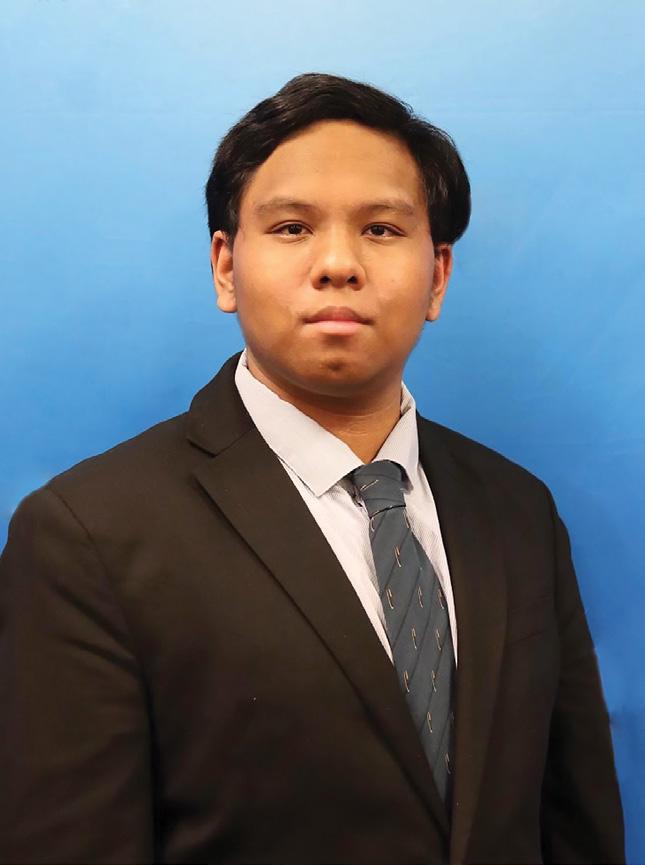
Hello there, Sharks! I hope you enjoy reading the semester’s sixth issue of The Current, NSU’s student-run newspaper. I am Antonio, the editor-in-chief.
The new year has started remarkably with a new look for the newspaper. I am thrilled about the upgrade!
You will see revamped sections focusing on art, theater, wellness and feature stories, as well as movie reviews. I really enjoyed reading about our coverage on the “Chaos 13” sculpture by artist Jedd Novatt, learning the sculpture allows the NSU Art Museum Fort Lauderdale to connect more with the university community.
We also have four articles from our reporters who have been published in the South Florida Sun Sentinel through the Mako Media Institute, sponsored by the Department of Communication, Media, and the Arts.
I am glad to continue this semester, by sharing news, compelling stories and what has been going on at NSU.
The Current is part of Mako
Media Network. MMN also includes Mako TV, NSU’s student-run broadcast news station on YouTube, and Mako Radio, NSU’s student-run radio station on 88.5 FM. If you have questions, comments or story pitches, you can find us in the Don Taft University Center, room 328.
On behalf of everyone at The Current, thank you for reading and making us part of your day.
Take care,
Antonio Miguel Escorzon
AMANDA M. DELBONI JOURNALISM ENDOWMENT FUND
The Amanda M. Delboni Journalism Endowment Fund was established to support NSU’s journalism program, including student scholarships, mentorship and shadowing opportunities. Donating to the Amanda M. Delboni Journalism Endowment Fund supports NSU journalism education and prepares students for industry careers.
The Current is Nova Southeastern University’s established vehicle for student reporting.
Editorials, commentaries and advertisements in this publication reflect the opinions of the authors and do not necessarily reflect the views of the University or its officials, The Current advisers or advertisers. The Current will not publish
unsigned letters except under special circumstances at the discretion of the Editor-in-Chief.
The Current reserves the right to edit, publish or deny submitted works. The Current shall remain free of associations and activities that may compromise integrity or damage credibility or otherwise create bias, real or perceived.
PHOTO BY MARLEE
By Antonio Miguel Escorzon
This article was originally published in the South Florida Sun Sentinel on Dec. 2, 2025 as part of a collaboration between the Department of Communication, Media, and the Arts’ Mako Media Institute and mainstream media.
A major shift in learning is underway at some of South Florida’s universities.
Schools such as Nova Southeastern University in Davie and St. Thomas University in Miami Gardens are heralding condensed learning, offering, for example, eight-week instead of the traditional 16-week courses.
Some students appreciate the change, while others find it challenging to manage their time.
Kaylyn Lee, an NSU sophomore
with a double major in psychology and criminal justice, is taking the online half-term CRJU 2000 – Constitutional Issues for her bachelor’s in Criminal Justice in the Abraham S. Fischler College of Education & School of Criminal Justice.
“I’d say it cuts your stress time down in half because you only have eight weeks to worry about versus 16 weeks,” Lee said.
At NSU, half-term courses are eight weeks, which can be taken in person or online, depending on what the course description offers.
Michael McCall, career and academic success coach for the Center of Academic and Professional Success, said NSU implemented halfterm courses to help undergraduate students keep up with their degree completion.
“For a lot of our students in the natural sciences, things like biology,

marine biology and chemistry — those types of majors usually require very high math requirements, and sometimes students need to catch up on their math to maintain their degree of progress,” McCall said. “So to satisfy that need, the math department offers a lot of half-term courses in lower-level math. So things like college algebra, pre-calculus, trigonometry, there are half-term versions of those courses, so that way students can do like two math classes in one semester.”
At St. Thomas University, the organizational leadership program offers four-week and eight-week courses.
Patricia Bloodworth, assistant professor in the Biscayne College for Liberal Arts and Social Sciences and the organizational leadership program director for St. Thomas, said the student population has a faster option to earn degrees.
“I think it’s great for the students,
By Antonio Miguel Escorzon
Lambent, a space planning software company, collaborating with NSU’s Office of Facilities Management, recently won the Global Innovator’s Award from CoreNet Global, a non-profit association which spotlights new technologies in real estate.
Lambent uses data from the university’s Wi-Fi hotspots to count the number of individuals occupying rooms at the Davie/ Fort Lauderdale campus.
“We use anonymous Wi-Fi data, instead of trying to manually count people or put a bunch of sensors everywhere,”
Julie Roberts, co-founder of and chief strategy officer
at Lambent, said. “We really are leveraging the university’s existing infrastructure anonymously in order to understand patterns of life.”
Daniel J. Alfonso, executive vice president for Facilities Management, Public Safety, and Business Services, said the Office of Facilities Management uploads the data on Lambent’s cloud server. Mindy Irwin, a project manager in Design and Construction, acts as a liaison between the Office of Facilities Management and Lambent, as she has access to the data in the server.
“She coordinates with the company as to exactly what reports we need and what we want to see,” Alfonso said.
Back in 2021, Alfonso looked into companies like Lambent that could help the Office of Facilities Management count people using space on campus.
because a large portion of our student population is trying to get their degrees and finish quickly,” Bloodworth said. The change does have its challenges. Bloodworth said students need to stay on top of the term courses because of their accelerated pace.
Gerasim Borodin, senior double-major in international business and sports administration at St. Thomas, said the accelerated pace requires sophisticated time management. However, he has applied those skills and has been able to make time for his other activities.
“For me, as an athlete in the school, [term courses] just gave me more freedom,” Borodin said. “More time to focus on my other classes or to focus on my athletic achievements.”
This article was edited to comply with Mako Media Network’s style.
He said that Irwin, after looking at the data, gave him reports that show the Office of Facilities Management does not need to build more space for classrooms, but it can reorganize class schedules to go to unoccupied rooms on campus, instead.
Using the data, the Office of Facilities Management can identify at what times and where to efficiently use energy, as well as the heating, ventilation and air conditioning systems for existing spaces on campus.
“It has been a huge cost avoidance,” Alfonso said.
COURTESY OF CORENET GLOBAL
Richard Scannell, CEO of Lambent, accepts the 2025 Global Innovator’s Award during the 2025 CoreNet Global North America Summit in Anaheim, Calif.
By Constanza Andujar
Designed to create open discussions on timely topics, the Open Classroom meets once a month at noon in the Adolfo and Marisela Cotilla Gallery, located in the Alvin Sherman Library, Research, and Information Technology Center. Free and open to the public, the series features speakers from the NSU community, who are experts across different disciplines.
Aileen Miyuki Farrar, director for the Farquhar Honors Program and the host of the Open Classroom, said that the Open Classroom bridges the gap between what is pop and current and what is considered academic research.
The Open Classroom is presented by the Farquhar Honors Program and the Alvin Sherman Library.
The Lifelong Learning Institute, a program offered by NSU for retired adults, has recently been collaborating with the Open Classroom.
Ashley Andersen, academic program manager for the Honors
Program, said that the series is beneficial for students to boost their learning, and also to meet new people.
“Whether it’s LLI, whether it’s honor students, whether it’s someone from the general public, that exchange is something that wouldn’t otherwise happen potentially,” she said.
Alessandra Coke, senior medical humanities and biology major, agreed. She said that attending this series enriches her college experience and adds to her perspective.
“It was so cool to see people of a bunch of different ages, as well. So it was like, wow, a lot of people are still invested in learning, and I think that’s super important,” Coke said.
The Open Classroom encourages open discussion, holding a Q&A session after the speaker’s presentation to help cover the topic more comprehensively.
“We’re saying that the speaker is like presenting a class lecture on something. But really, it’s also an opportunity for us to hear what is of interest for those around us,” Farrar said.
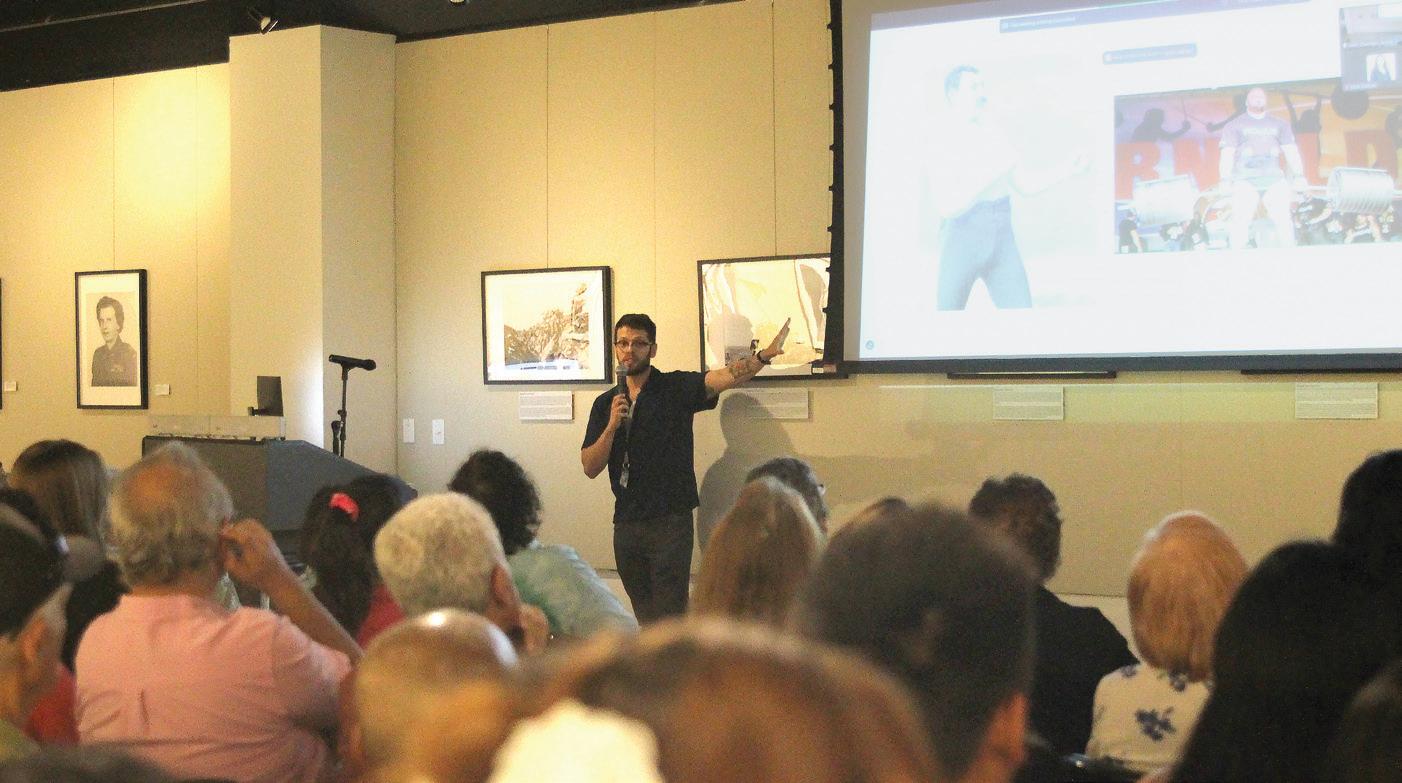
Bill Adams, music and theatre program director at the Department of Communication, Media, and the Arts, was the first speaker of the winter semester, discussing arts as an alternative medicine.
“I just am a conduit to more information. So we’ll probably end up getting more questions than we have answers,” he said. “We all learn from each other.”
Farrar believes that the Open Classroom is an important part of NSU.
“We want our campus community and our local communities to feel connected and this is a welcoming space for us to do that,” Farrar said. “The Open Classroom is most important because it gives everyone a chance to actually speak.”
By Marlee Card

More than 80,000 people attended the 2025 edition of Art Basel Miami Beach, held annually during Miami Art Week.
Since 2002, the fair has positioned the city as a central hub for the international art market, according to Art Basel organizers. The event held Dec. 5-7 at the Miami Beach Convention Center featured 283 leading galleries from 43 countries and attracted curators and collectors from around the world.
“Looking back on the 2025 edition, I am thrilled by the energy, ambition, and creativity that reverberated within and beyond our halls,” said Bridget Finn, director of Art Basel Miami Beach in a press release issued on Dec. 7. “With standout presentations, innovative projects, and record engagement, the fair reinforced its leadership in the Americas and its power to influence the global art market.”
Art Basel was originally founded in 1970 by Swiss gallerists in Basel, Switzerland, serving as a platform to connect galleries directly with collectors and
institutions. The first edition featured 90 galleries and 20 publishers from 10 countries, establishing the fair as an international meeting point for art.
Throughout the past 55 years, Art Basel has expanded into a global network with annual editions in Basel, Miami Beach, Hong Kong and Paris. Each region reflects its culture, while keeping a focus on modern and contemporary art.
The fair floor was grouped by theme and divided into sections labeled Galleries, Nova, Positions, Survey and Meridians, with a new section dedicated to digital art, Zero10.
“It was amazing to see digital art have such a prominent space in the fair, and I think this will really help to show that this really is just another medium with the same ability to invoke emotion and critical conversation,” said Beeple, digital artist and founder of Beeple Studios, in the press release.
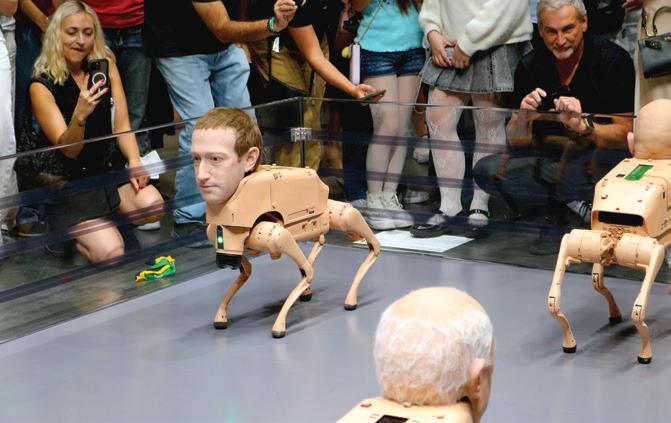
The social-media viral installation of “Regular Animals,” by Beeple was presented in the Zero10 exhibition.
Consisting of a herd of robotic dogs fitted with realistic silicone masks depicting well-known figures like Elon Musk, Jeff Bezos, Mark Zuckerberg, Andy Warhol and Pablo Picasso. By transforming cultural and economic icons into obedient, mechanized animals, Beeple explains the project reflects the relationship between humans and technology.
Basel’s Conversations program created dialogues among artists and critics. With conversations on topics like the intersections of art and evolving modes of artistic practice, or broader considerations of art and history.
“Through the fair’s core sectors, as well as initiatives like Zero10 and the Art Basel Awards, and our revitalized Con versations program, we celebrated diverse artistic voices, from Lat inx, Indigenous and diasporic practices to emerging digital
forms, creating moments of joy, discovery and meaningful cross-cultural and cross-disciplinary exchange that will resonate well into the year ahead,” Finn said.

By Marlee Card
What began as a love of coffee and a family tradition has grown into a specialty coffee shop rooted in Cuban culture and community.
“I grew up in a Cuban family where coffee was a big part of everyday life,” Jennifer Espinosa, founder of the coffee shop Whole Latte Monkeys, said. “My grandpa used to give me cafecito when I was just 2 years old. Coffee has always meant comfort, family and togetherness to me, not just a drink.”
Whole Latte Monkeys in Davie began as a mobile coffee shop, serving handcrafted drinks and signature coffee in sealed cans at events and local spots across South Florida. Now, Espinosa operates one location in Davie in addition to a mobile cart.
“What began as a small mobile trailer turned into a mobile coffee bus that turned into a full experience with pop-ups, themed events, and collaborations,” Espinosa said.
Espinosa attributes the shop’s success to her passion for coffee and her focus on community.
“Before this, I thought success was mostly about sales and growth. Now I see that it’s really about
people,” she said. “It’s not just customers, it’s neighbors, friends and families all choosing to show up for each other. When people support you, you owe them consistency, kindness and something worth coming back for. That changed how I look at business. It’s not just about selling coffee, it’s about creating a place people feel connected to and proud to support.”
Supporting other small businesses and local artists is a key part of Whole Latte Monkeys.
“We regularly collaborate with local artists, makers and entrepreneurs by featuring their products, hosting pop-ups and creating co-branded experiences that give them exposure to our audience,” she said.
Through a partnership with 2 Little Chicks Coop, a petting zoo, “Cows & Coffee” is a monthly event that brings the community together through coffee and a petting farm.
Nicole Gomez, senior Art+Design major, attended a “Cows & Coffee” event with a friend.
“I feel like getting coffee with friends is a very trendy thing right now, especially with young adults shop.”
2100 Shotgun Road, Davie, FL 786-778-4378


By Antonio Miguel Escorzon
Gary Opper, docent at the NSU Art Museum Fort Lauderdale, established his legacy gift in his trust for the museum to help fund education for those younger than 18. to museums, and of course, I always continue that with my children,” Opper said.
being straightforward in running his company.
Bonnie Clearwater, director and chief curator at the NSU Art Museum Fort Lauderdale, said docents lead tours and discussions.

“They get intensive education in art history and in touring techniques, how to engage the public in discussions about the art that’s on view,” she said. “They get to meet artists. They hear from the curators, and they learn from each other, as well.”
The NSU Art Museum Fort Lauderdale’s Planned Giving Advisory Board, of which Opper recently became a member, establishes legacy gifts from donors.
“It’s very important for museums or nonprofit universities to build up endowments because this way we are guaranteeing the future of an institution, to know that there will be funds,” Clearwater said. Opper earned his bachelor’s degree in business administration at the University of Florida in 1979 and received a master of taxation from Florida International University in 1983.
In 1994, he founded Approved Financial Corporation, a hard equity mortgage lender. He values his employees
“Unfortunately, a lot of people in the mortgage business, they can’t say no,” Opper said. “I train my people to say no. I train my people also to be very realistic, you know, as opposed to be optimistic or pessimistic.”
Clearwater enjoys having docents like Opper because they build camaraderie with the public.
“I’d like to say that you could identify who is a docent at the museum because they’re the ones walking around with the biggest smiles on their faces,” she said.
Opper has also been a docent at the Historic Stranahan House Museum in Fort Lauderdale since 2016. He loves the house’s history.
“That’s the oldest house in town, and it has an interesting story,” he said. “This lady [Ivy Julia Cromar tie Stranahan] encouraged the Semi nole Indians to get an education. She encouraged them to get religious. She encouraged them to under stand how our economy worked.”
Clearwater spends a lot of time talking to Opper because she likes to hear what docents like him have to say.
“He’s always looking about how to engage the public in
ways people who aren’t necessarily art experts, [like] how to get them engaged and intrigued,” she said. “Especially a lot of what we show is contemporary and not what many people think is art and how to open up their own minds and eyes.”

BY DARIA GROSS
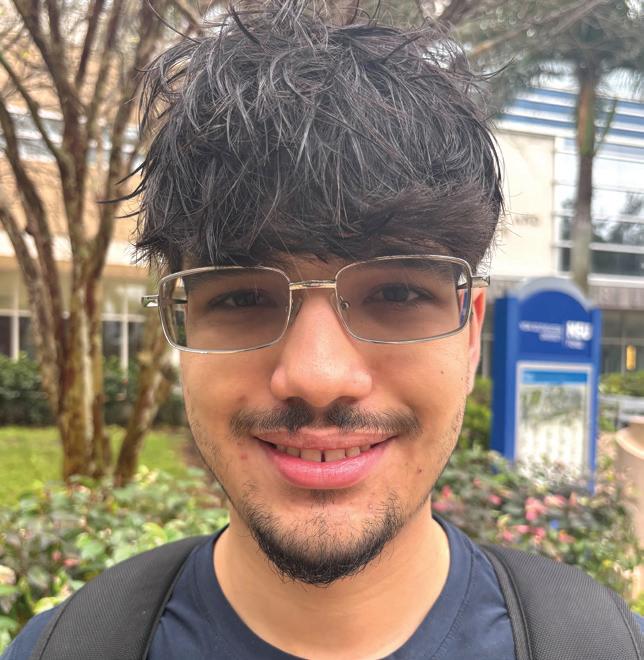
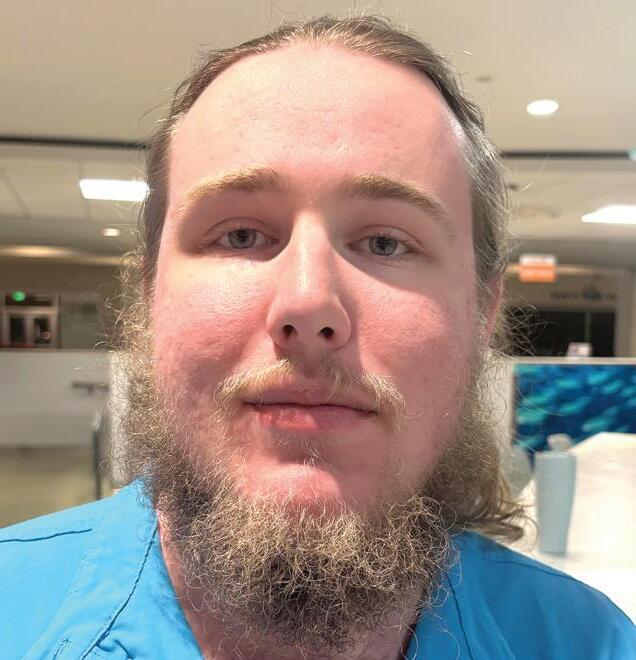
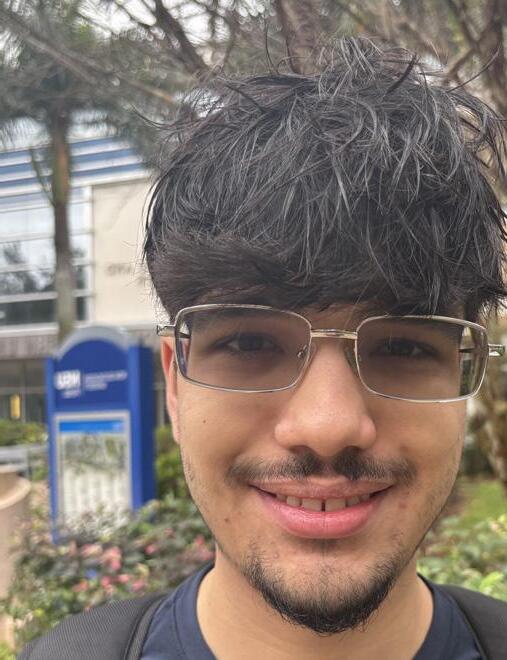
“This semester I am only doing three classes, so it’s not too crazy for me. I’m overall feeling pretty good, and they’re not too fastpaced, and I am enjoying my classes. I would say it’s good to be back. I am feeling used to college-level stuff.”
Jonathan Sarkes, freshman finance major.
“It’s a bit early to tell, but I will say that I am excited about the things I am doing this semester. The College of Psychology is doing this thing called PsychLink, which allows us to crosslink with graduate programs, and I am excited for that. My classes this semester are harder, but I am definitely feeling optimistic about this year.”
Kyle Fleming, senior psychology major.
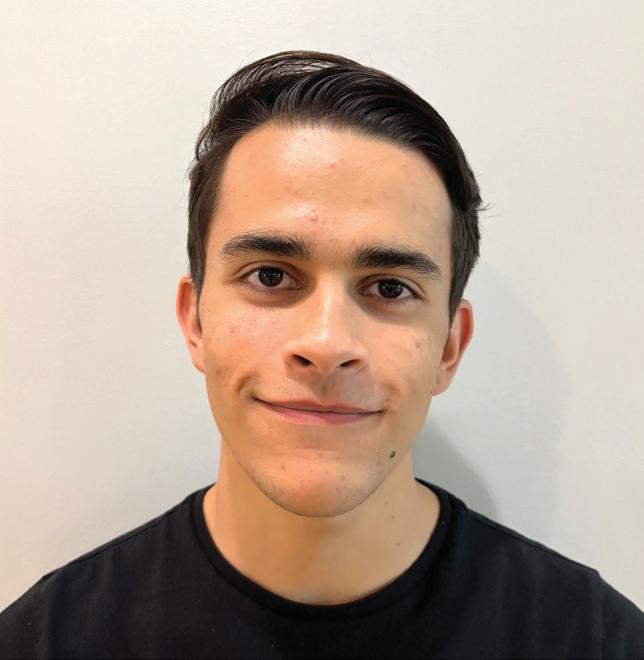
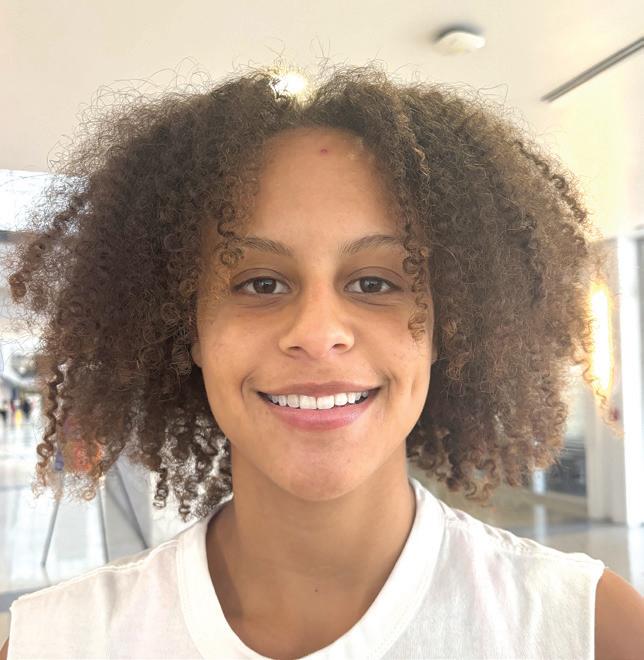
“It has been really nice to not have to wake up that much earlier in the mornings for class. Luckily, this year I have all online classes.”
Kaliyah Morales, sophomore communication major.
“To start out, it was a little difficult, but for now school is going well. For this semester, I have two professors who are really good, and overall, everything is going well.”
Tomas Hornak, junior marine biology major.
By Antonio Miguel Escorzon
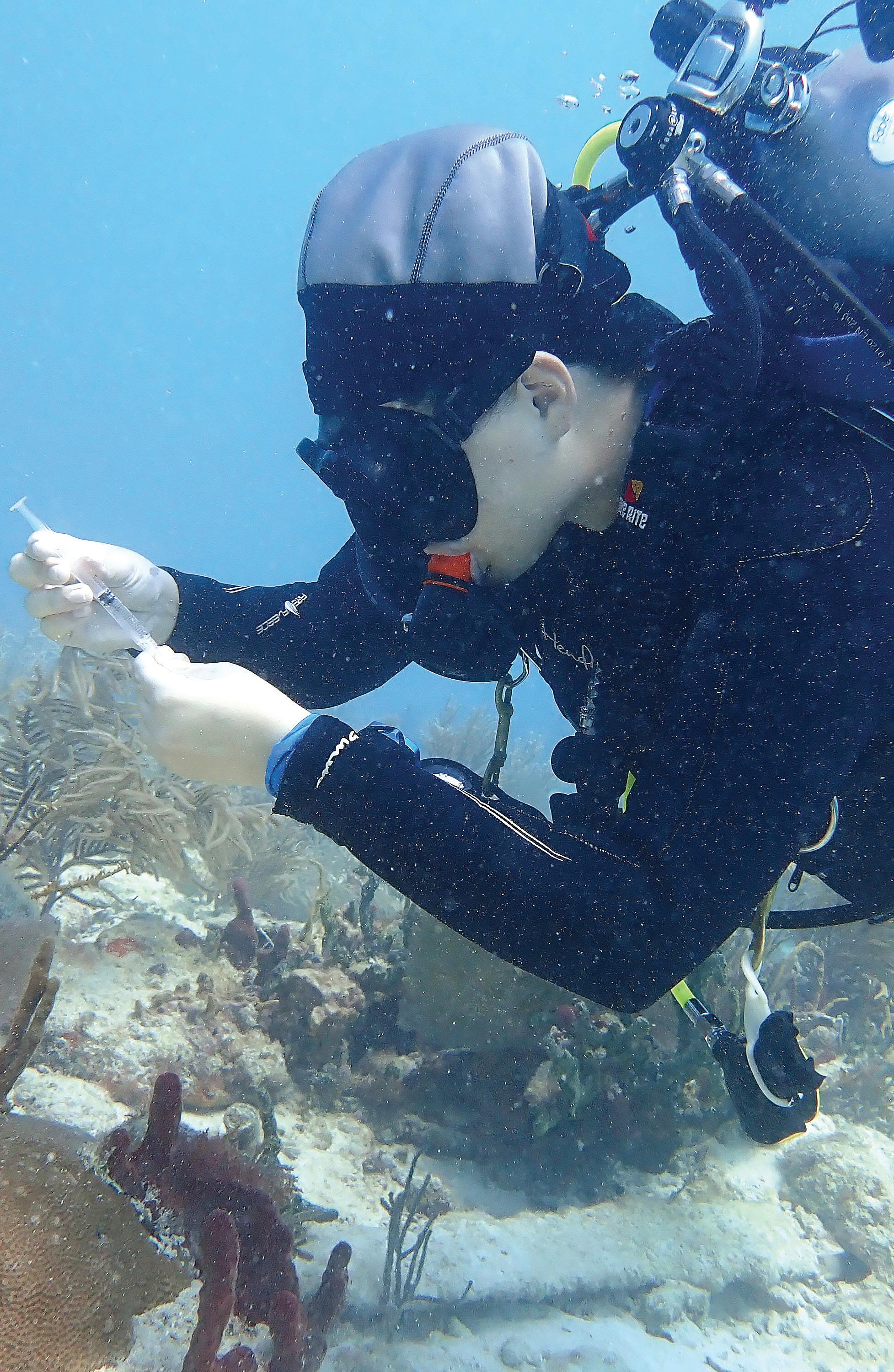
Delaney Deinlein, alumnus of the Halmos College of Arts and Sciences, started their research project about how changes in the season can affect the algae in coral when they were a sophomore marine biology major.
Deinlein was inspired to do this research after reading “Coral Bleaching as an Adaptive Mechanism: A testable hypothesis,” by Robert W. Buddemeier and Daphne G. Fautin.
“I approached my adviser, Dr. [Joshua] Feingold, and said, ‘Hey, this is what I wanna find out. This is kind of the shell of my research proposal,’” they said. “And he said, ‘Cool, let’s scale it down a little bit just to make it feasible for an undergrad.”
Deinlein led a team of students to help them get samples of coral.
“It was an incredibly fulfilling feeling, I suppose to be able to fund, plan, organize, find a boat and then actually get in the water and handpick which corals I wanted to sample,” Deinlein said. “So learning how to lead a team, learning how to make a dive plan, I think orchestrating and completing a full dive day was my favorite part of the project.’”
Their team collected tissue of two species of coral, Montastraea cavernosa and Siderastrea siderea, from three places: Broward County, Palm Beach County and Miami-Dade County. Deinlein chose five individual colonies in each county and took samples at which to look.
“I took one micro sample from the top and one micro sample from the side just to see if there was any variation, based on which side was exposed to the more sunlight,” they said. “From there I took it back to Dr. [Jose Victor] Lopez’s
genetics lab.”
Deinlein found that algal communities varied over time and geography.
“The corals switched and shuffled their symbionts between heat events, and community composition was different between counties,” they said.
Joshua Feingold, professor in the Department of Marine and Environmental Sciences, and Jose Victor Lopez, professor in the Department of Biological Sciences, were Deinlein’s faculty mentors.
“I’m very impressed with how well they did considering the scope of the project,’” Feingold said. “How much challenging it was to get the permits, collect the samples, analyze the samples, get the genetic data that they wanted and then make sense of it. So it was a graduate level kind of study done by an undergraduate.”
Deinlein had to learn about genetic extraction and ways to conduct it.
“They did quite a lot for an undergrad,” Lopez said. “They had to dive, so they collected a tissue sample, which also required a permit because all reef building corals in Florida and most around the world are considered endangered species.”
Deinlein said despite facing obstacles in the project, it was an opportunity for them to grow.
“I had to find all my own grants, and that was something that I never would’ve had to experience as an undergrad, so that gave me experience that’s gonna be incredibly useful for the rest of my career,” Deinlein said. “I learned how to organize the day-to-day and how to lead a team. So that was a huge professional growth thing because it’s not just being confident enough in my methods, but also being able to communicate those methods and to lead a team.”
By Alexandria Munroe
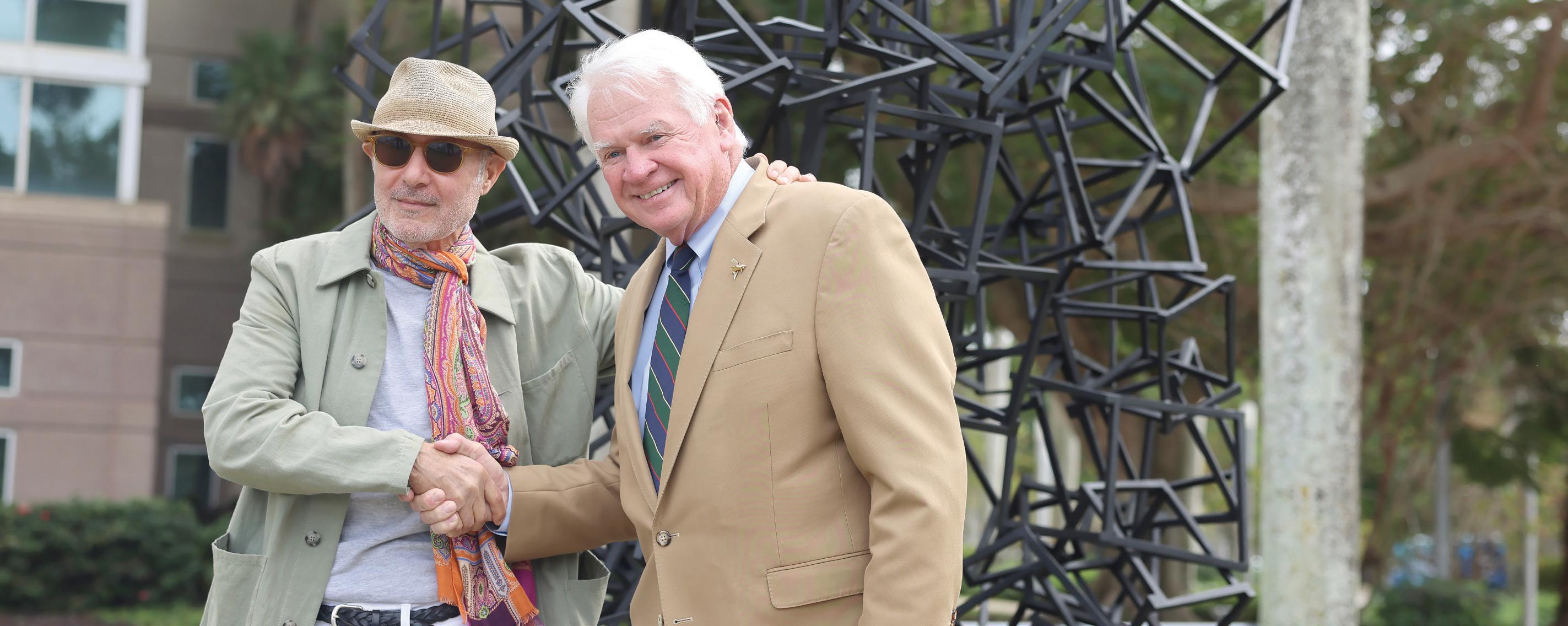
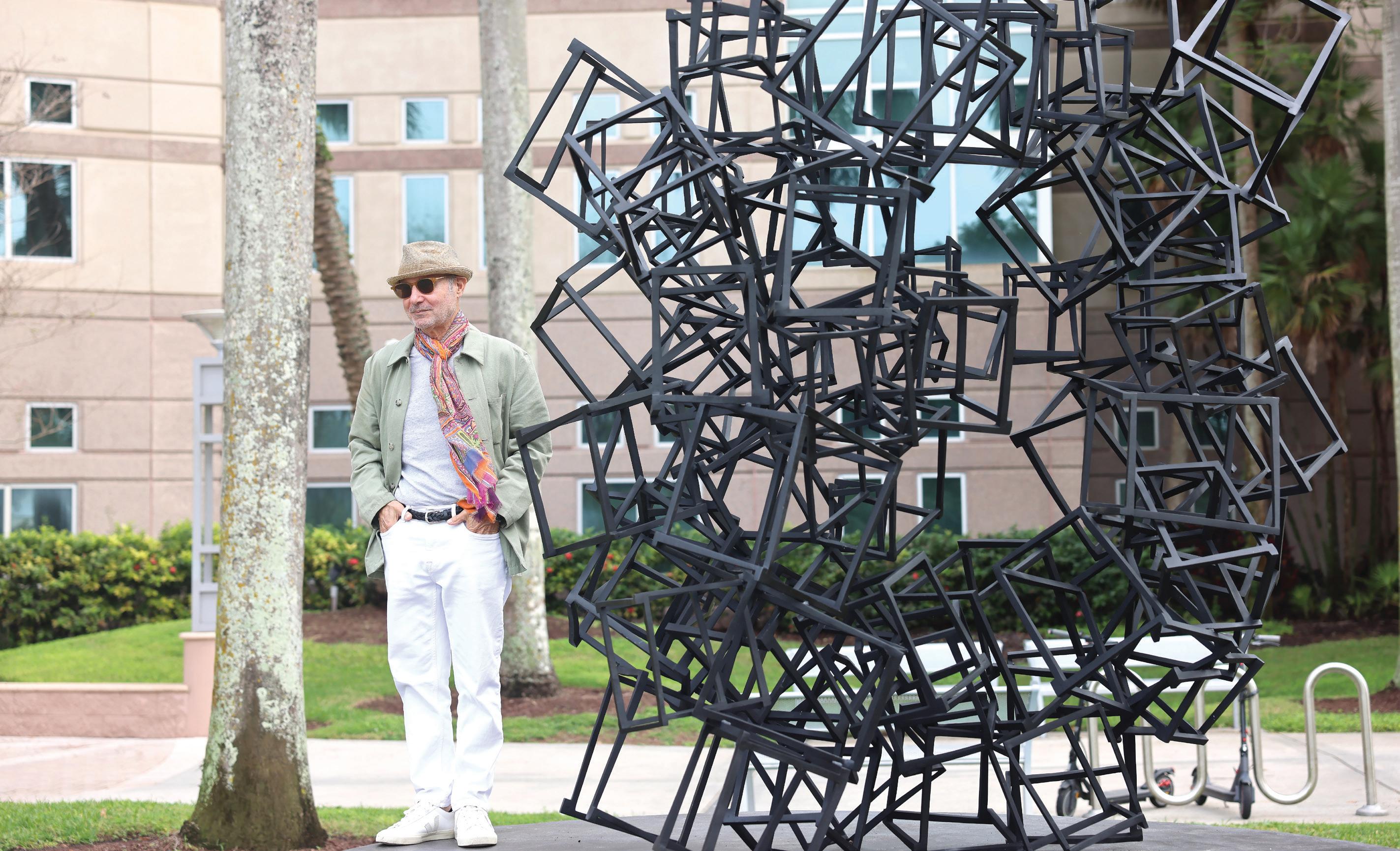
The NSU Art Museum Fort Lauderdale unveiled a new sculpture titled “Chaos 13” on the NSU Davie/ Fort Lauderdale campus in front of the Alvin Sherman Library. David Burgess and his wife, Lisa, donated the sculpture, created by artist Jedd Novatt, to the museum.
“Chaos 13” is a sculpture made of welded steel cubes that are unevenly stacked. Lisa Burgess said it reflects a balance between instability and structure.
“In nature, there is always order in chaos,” Burgess said. “As chaotic as
the sculpture looks, there is order in it.”
She said the sculpture, which was owned by the Burgesses for 15 years, holds sentimental value to her because it is the reason she and Novatt met.
The two met when a colleague of Novatt reached out to Burgess for help displaying the sculpture during Art Basel. Shortly after that, the Burgesses purchased the sculpture and have had it on view for the public.
Burgess said she and her husband have always believed in the importance of public art and wanted the piece to be easily accessible.
“Art is meant to be shared by people,” she said. “It’s not meant to be
locked behind doors, never to be seen again.”
The donation was made to the NSU Art Museum Fort Lauderdale’s permanent collection.
Bonnie Clearwater, director and chief curator of the NSU Art Museum Fort Lauderdale, said placing “Chaos 13” on campus connects the museum more directly with the university community.
“It’s a way for the museum to expand its footprint into the campus itself,” Clearwater said. “As we’re located in downtown Fort Lauderdale, this makes it possible to bring our collection to the students.”
Clearwater said that the placement on campus will allow students, faculty
and staff to engage with art in their daily routines.
“It demonstrates how important the humanities and arts are to create a full human being,” Clearwater said. “It’s here to stimulate our students, faculty and staff’s curiosity.”
Dr. Harry K. Moon, president and CEO of Nova Southeastern University, said the installation reflects NSU’s commitment to integrating art into academic life.
“This installation is part of our program to bring a greater exposure to the art of our museum,” Moon said. “It can be shared, appreciated, learned from and serve as an inspirational source for our students.”
OPENING RECEPTION
FEB 12 5PM - 7:00PM
EXHIBITION RUN FEB 12 - MAR 12
By Marlee Card
My 12-year-old cousin listens to Sabrina Carpenter on repeat, something I didn’t think much of at first. Pop music has always been part of growing up, but that changed when I actually read through the lyrics of songs like “When Did You Get Hot?” and “Go Go Juice” from Carpenter’s “Man’s Best Friend” album.
Carpenter is undeniably talented, her soprano range and vocal control allow for powerful performances, but I wondered who this music is really for and how much that distinction still matters.
Carpenter, alongside Olivia Rodrigo and Tate McRae, represents a new generation of pop stars dominating the charts. “Man’s Best Friend,” released in August 2025, debuted at No. 1 on the Billboard 200, following the success of her previous album, “Short n’ Sweet.” Tate McRae’s breakout single “Greedy”
spent 42 weeks on the Billboard Hot 100. Their popularity is undeniable, but so is the way sexuality has become central to how this era of pop is marketed and consumed, often by audiences younger than the artists themselves.
This trend is also seen with smaller artists like Nessa Barrett or Jessie Murph, and in the past with Katy Perry, Miley Cyrus and Britney Spears.
Some will argue that this shift is an expression of modern womanhood, a rejection of industry standards or redefinition of how women in pop are allowed to be.
In many ways, that is true. These artists assert control by producing their own work and shaping their public images on their own terms. And no one is saying their image should be controlled by the audience, but they are also using themselves as a central
marketing tool.
The transition from child star to adult artist illustrates how timing and audience perception shape that shift. Sabrina Carpenter and Miley Cyrus, for example, had to balance the expectations of fans with the desire to be taken seriously as mature artists. Similarly, Taylor Swift’s “The Life of a Showgirl” album cover signals a evolution of her image, reflecting both personal growth and strategic positioning within the industry.
Yet while these transitions can be carefully managed, today’s pop landscape often places a hyperfocus on sexuality. Whether it’s a way of taking control of their image or recognizing what sells, it affects how younger generations consume this music and how it shapes their idea of what childhood looks like.
From what I’ve seen, Gen
Alpha–ranging from infancy to around 15 years old–is already growing up too fast. Between makeup well above their age group, skincare routines that don’t fit their actual needs and outfits that intentionally make them look older, it can feel like too much, too soon. Honestly, it makes me wonder if the music that overly sexualizes girls and women is perpetuating the idea to be sexualized.
As a 21-year-old, I can differentiate between explicit lyrics and their meaning. For example, Carpenter’s “Manchild,” while provocative, is really about wanting a respectful and healthy partner. But can 10- to 13-year-olds recognize that deeper meaning when the explicit content is what stands out first? When imagery dominates, it shapes how listeners see womanhood long before they’re ready to understand it.
By
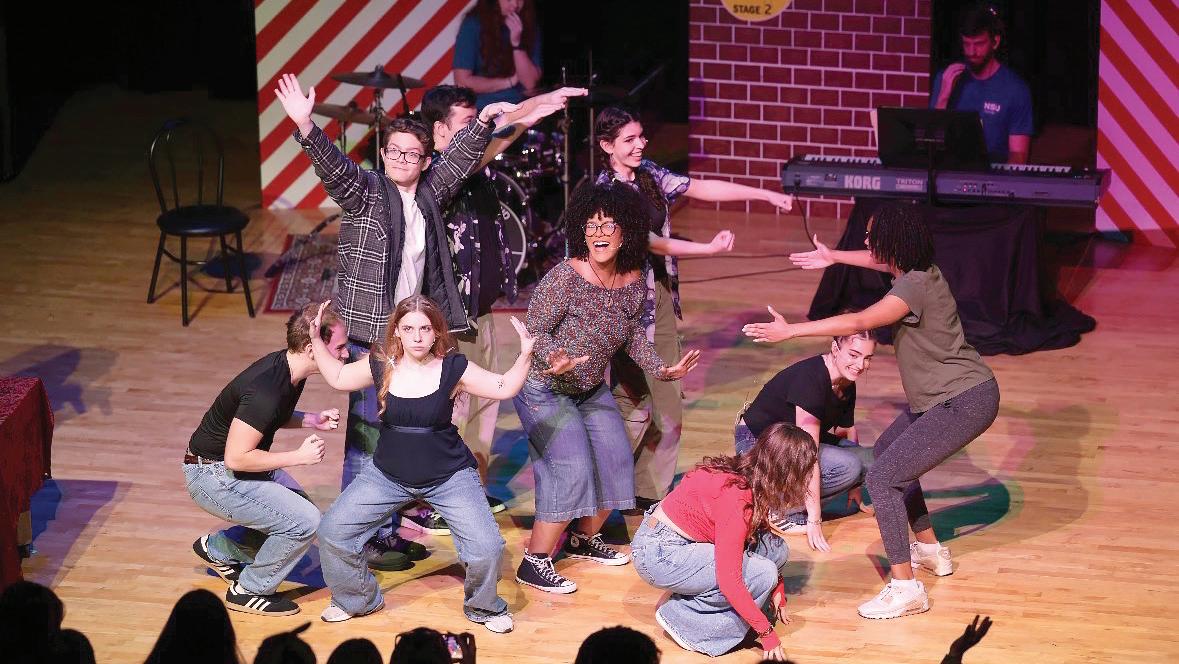
This year’s Improv Jam went beyond the performance with a pre-show fun fair and two post-show workshops. This Is Improv, an improv company founded by NSU alumnae Angelica and Alexandra Zadak, hosted an improv masterclass on Jan. 23, and performers from The Second City led “Employed: Using Improv Skills in Job Interviews,” on Jan. 31. Both workshops were organized in partnership with the Rose and Alfred Miniaci Performing Arts Center and Gustavo Padrino, general manager of Miniaci, who hopes every show will include an educational component for
the students.
Alexandra Zadak said that these additional workshops are designed to extend the impact of Improv Jam beyond a single night.
“Sometimes as humans, we lack communication, especially in the age of technology,” Alexandra Zadak said. “So we have been using improv for anyone in the tech industry or anything like that [to show] how to communicate and how to better understand the world.”
This Is Improv has collaborated with the Department of Communication, Media, and the Arts and Stage 2 Productions, NSU’s student-run production company, to present Improv Jam since 2018, when Alexandra Zadak graduated from NSU. She said their focus is on preparing the students for the unpredictable performance.
“We actually do intense rehearsals, which most people don’t expect for improv,” she said. “But we need to build connections between everyone because improv is a very trust-heavy art form.”
Ashley Goehmann, senior communication major and student director of Improv Jam 16, has participated in Improv Jam for three years. She said that the trust between cast members is one of the most important parts of the show.
“The biggest thing we have to do to prepare for Improv Jam is to build that connection between the cast since you have to trust one another throughout [the show],” Goehmann said. “We have a lot of long rehearsals, so we can build that connection.”
She said that participating in Improv Jam has changed how she approaches
life outside of theater.
“It makes me more confident and able to kind of communicate with people and connect with people,” Goehmann said.
Angelica Zadak, co-founder of This Is Improv, said that improv should be seen as a skill that applies to everyday life beyond theater.
“Improv is hugely important because it’s what we do all the time, every day,” Angelica Zadak said. “We are constantly living without a script.”
The Davie-Cooper City Chamber of Commerce also supported Improv Jam 16.
“The Chamber always enjoys connecting and supporting NSU students, and it also gives the opportunity to engage in the arts in Davie,” said Aimee Zadak, COO of the Davie-Cooper City Chamber of Commerce.
By Bryce Johnson
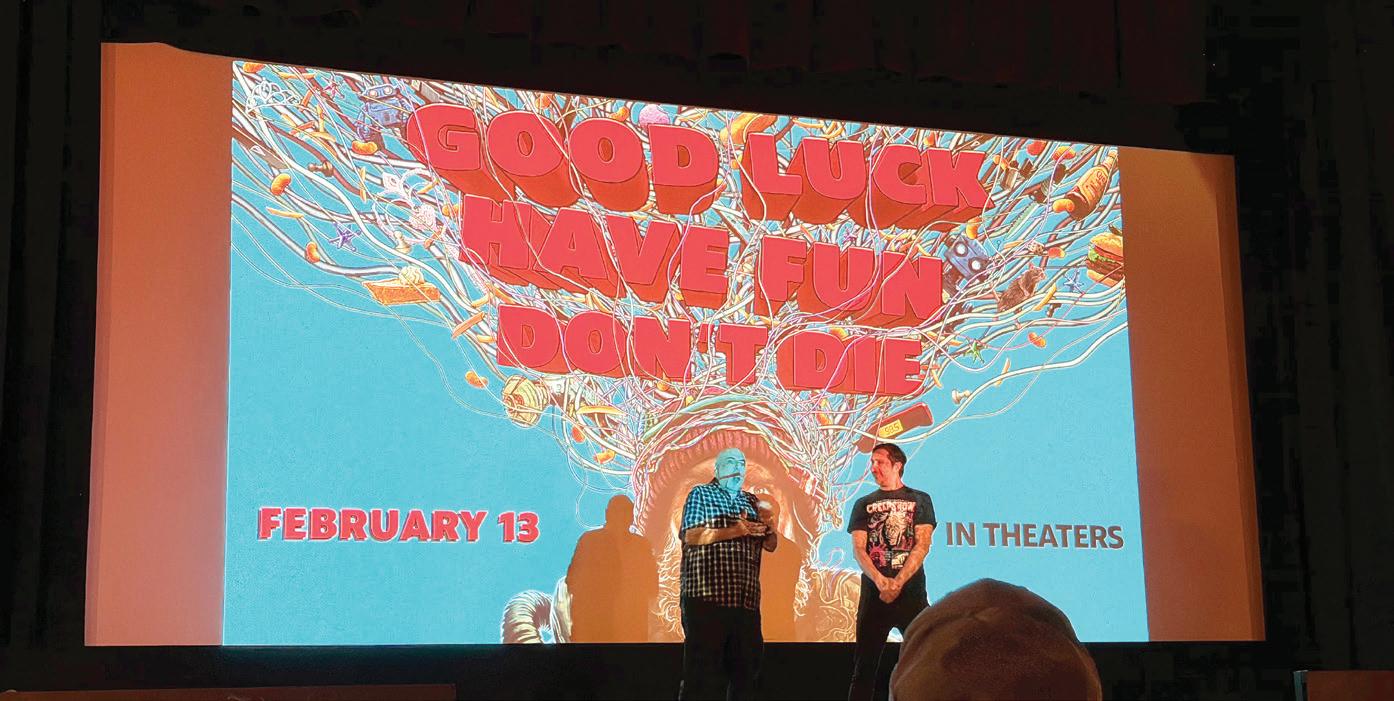
As I was waiting for my showing of “Good Luck, Have Fun, Don’t Die” to start, I suddenly became self-aware of how much I was using my phone. I looked around and so many other people were on their phones, too. Even those sitting and talking right next to each other had their faces faintly glowing from the light on their phones. It was especially poignant given the film’s subject matter.
In “Good Luck, Have Fun, Don’t Die,” a time traveller from the future, played by Sam Rockwell, recruits a seemingly random group of people to save humanity from a powerful emerging artificial intelligence.
What I like most about the movie is that it’s not simply “technology is bad.” Characters use technology throughout the film, but it’s only when they let it dictate their every choice that things start to go wrong
for them. There are ways to use it that genuinely benefit them. They just have to adapt, and I appreciated that aspect.
I also like how the story was told, with multiple characters getting backstories sprinkled throughout the film. You see each of their struggles, since no matter how hard they try, they can’t relate to technology as much as the younger generation can. It creates a disconnect between the characters and the people they hold close. That was a strong part of the film.
However, there were some scenes that dragged on too long and didn’t serve a real narrative purpose, particularly in the climax of the movie. Characters were wasting time for the sake of a joke, which didn’t make sense within the context of the movie. Thankfully, it didn’t detract
from my experience too much.
Overall, “Good Luck, Have Fun, Don’t Die” is funny and heartfelt from start to finish, with a few touching
By Alexandria Munroe
When Elana Lanczi, director of dance and associate professor in the Department of Communication, Media, and the Arts, first sent her resume to NSU, the dance program was just an idea.
“We were just starting to imagine what it could become,” she said. “I got to be on the ground floor of the dance program, which is a really great experience to be a part of.”
Now, as the director of the dance program, Lanczi teaches both theoretical and technique-based courses and directs the department’s showcases.
Before coming to NSU, Lanczi trained, performed and choreographed across the United States and internationally in countries like Brazil, South Korea and Germany. She said these experiences shaped her artistic voice and her approach to teaching.
“Each person I’ve danced or studied with has left an impression,” she said.
“I think I take a little bit of everybody with me.”
Lanczi said that one of the most impactful moments of her career came during a three-week residency in Germany, where she worked on a duet with choreographer, Gerda König. The piece was inspired by the recent passing of dancer Homer Avila, who lost his leg to a tumor during his career. Lanczi said that she and her duet partner, who was also in a wheelchair, were meant to embody his journey.
“[Avila] was just a phenomenal dancer and human being,” she said.
“It was the first time I’d done anything like that and was a very beautiful piece to be apart of.”
Lanczi said that throughout her dance career, her mentors and choreog raphers instilled a sense of happiness in the rehearsal process. As a dance pro fessor, she said she wants to keep stu dents grounded in why they love the art of dance.
“It’s about the joy of the rehearsal
process and the joy of discovering new things,” Lanczi said. “I try to not let students get too much into their heads and forget that it’s really about the enjoyment.”
That mindset has changed how Victoria Velez, junior dance major, views herself as a dancer and artist.
“She’s shown me that it’s OK to just appreciate dancing and what your body can do,” Velez said. “I’ll definitely take that experience with me when I open my own dance studio.”
During the fall semester, Lanczi choreographed a solo for Velez to perform in Dance Works, the fall dance concert. Velez said that working with
“She let me work on whatever technique and movement I already had in my body and really build something personal with her.”
For Lanczi, watching students develop confidence in their performance and choreography has been one of the most rewarding parts of building the program.
“Whether they go on to dance or not, I’ve really enjoyed watching the students take ownership of their work and find their own voices,” Lanczi said.
associate professor
of


While the demand is growing, so are the drawbacks. Jonathan Banks, a psychologist at NSU, warns that over-monitoring can turn helpful data into daily stress.
“Sometimes it’s helpful to take breaks from that kind of obsessive data-driven focus,” Banks said. “When you wake up, don’t immediately check the app; check in with yourself on how you feel.”
A study conducted by Duke
University’s Fuqua School of Business with 100 participants found that those who tracked the number of steps they walked reported walking less and feeling less satisfied. Participants also reported that the walk felt more like a job rather than a calm experience.
Author and nutritionist Elizabeth Moye detailed her experience with Fitbit on her blog, Hello Spoonful. She wrote about how step-tracking
became an addiction, causing her to constantly challenge herself and raise her goals to stay at the top. Over time, her focus shifted entirely to the number of steps she took each hour. This obsession negatively affected her mental and physical health, leading her to overwork her body and replace her enjoyable workouts with friends to solitary exercise aimed at meeting her step goals. She eventually decided that tracking her steps
was not good for her health.
Experts caution that health apps can’t replace medical guidance.
Dr. Allison Brager, who has worked with the U.S. Army on wearable testing, points out that while these tools are useful for performance enhancement, “Trying to make clinical diagnoses off apps is a wrong approach. That’s what doctors are for.”
This article was edited to comply with Mako Media Network’s style.
By Madison Kasper and Alexandria Munroe
This article was originally published in the South Florida Sun Sentinel on Dec. 3, 2025 as part of a collaboration between the Department of Communication, Media, and the Arts’ Mako Media Institute and mainstream media.
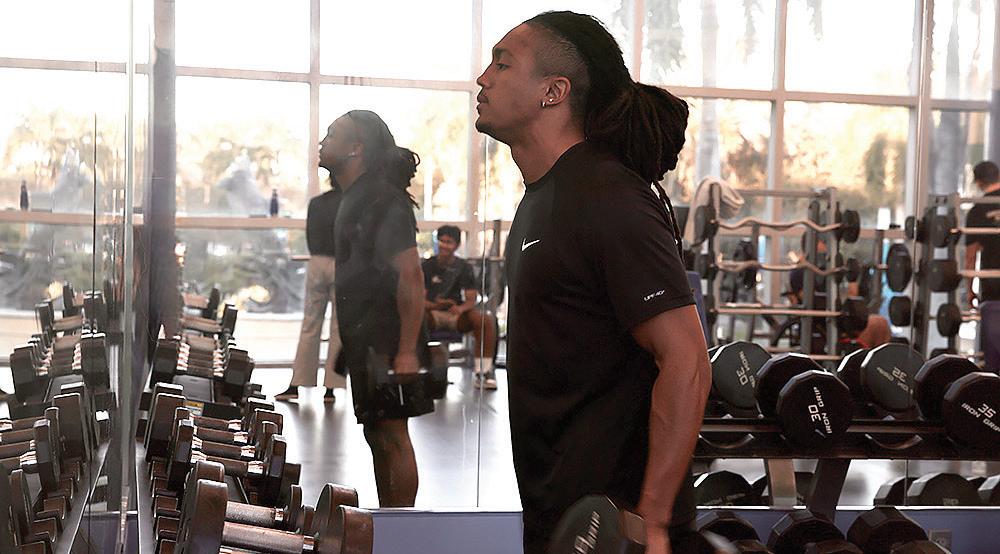
Thomas Steckman, 21, remembers exactly when going to the gym stopped being a hobby and started feeling like a compulsion. His routine quickly changed to long workouts, extreme calorie cuts, and a fear of undoing his progress.
“I want to say three or four months, and every month I would raise my calorie intake like 100 calories, and at the time it was working. So I got the solution that was a good thing and I was doing the right thing but towards the end of it, I started noticing that my energy was low and I was very irritable,” said Steckman, who is originally from New York and moved to South Florida to attend
Nova Southeastern University as an undergraduate student.
Men in South Florida in the 18-25 age group are chasing physiques that are shaped by fitness influencers, supplements, and a cycle of bulking and cutting. Meanwhile, health professionals and students are seeing troubling signs that mirror the traits of disordered eating.
“Gym culture does not exist in isolation,” said Elliot Montgomery Sklar, a professor in the Department of Health Science at Nova Southeastern University. “Because of social media, gym culture follows you. You take it with you.”
Sklar, whose research focuses on public health and men’s body image, said that young men are absorbing an over-idealized idea of masculinity shaped by the online fitness community. He described body image as an issue rarely acknowledged in men.
“Body image is a gendered topic in our society,” he said. “However that is not accurate, because we’ve all been taught through media and how we’ve been brought up that how we look, if we look good then we’re good.”
Sklar said men are scrutinized in the
same way as women, but are discouraged from admitting it. A study published in the International Journal of Eating Disorders found that 22% of men between the ages of 18 and 24 exhibit disordered eating behaviors, including the use of supplements and anabolic steroids and altered diets to gain or loose weight rapidly.
“We’re taught to be strong. And by being strong it’s not admitting weakness. Weakness is having a concern or an issue with your body image,” Sklar said.
For Steckman, that meant months of intense, self-imposed restrictions.
“I instantly cut my calorie intake down to like 1200 calories a day,” Steckman said. “I was running 3 miles a day and doing a full body workout every single day.”
Although Steckman said he was happy with his physical progress, the routine took a toll on his mental and physical health.
“I was tired all the time and I started to get really, really skinny,” he said. “For a long time, I was scared to eat anything more than the calories I set for myself because I thought I was going to revert
all my progress.”
Even if they avoid extreme behaviors, some men feel the pressure to conform to a certain ideal. Julian Cooper, an NSU student from Groton, Connecticut, said that people turn to unhealthy practices when they have unrealistic ideas of their fitness progress.
“I feel like the misconception is that it can be done quickly, and it can be done overnight, when it shouldn’t be,” Cooper said. “Your body’s your own body. It’s different from mine, and mine is different than yours.”
After Steckman realized what he was doing was unhealthy and fixed his habits, he still feels that going to the gym is important.
“I think the gym is necessary for everyone. At least some type of health or fitness, and sometimes you just have to get in there and try it for yourself,” Steckman said. “There’s a lot of bad things in the gym, but there’s a lot of good things too. Just make better choices and be healthy.”

By Marlee Card and Daniel Lopez
This article was originally published in the South Florida Sun Sentinel on Dec. 24, 2025 as part of a collaboration between the Department of Communication, Media, and the Arts’ Mako Media Institute and mainstream media.
For 26 year-old Acute Physical Therapist Brett Bucci, it wasn’t until he looked in the mirror after his father passed away that he realized something had to change. Years of struggling with selfdoubt, body image issues, and the lingering effects of an abusive relationship had taken their toll.
“I spent many years being negative, and it took my father passing away from cancer 3.5 years ago, to finally take a hard look in the mirror and find some solutions to improve not just my happiness, but my overall mental health,” Bucci said.
He struggled to understand what self-care truly meant. Like many other
men, Bucci grew up with the stigma that showing emotion or focusing on personal well-being was a sign of weakness.
“We are told over the entire course of our existence to be ‘tough,’ that ‘men don’t cry,’ to ‘suck it up,’ and to ‘provide’ for those around us,” Bucci said. “There is an immense pressure in society as a man to put on a facade.”
What Bucci, and more men today, are realizing is that self-care isn’t a luxury, it’s essential. His story reflects a growing shift as today’s generation prioritizes their mental and physical well-being, recognizing the connection between the two.
“Society as a whole is making immense progress in shifting the mentality of men and focusing more on men’s mental health, now so more than ever,” Bucci said.
According to the Anxiety and Depression Association of America, one in 10 men suffer from some form of depression or anxiety, yet only half receive treatment.
The correlation between men’s mental health and their personal hygiene is a double-edged sword. In many cases, neglecting simple hygiene routines can
be a visible symptom of deeper mental health struggles such as depression, anxiety, or burnout.
On the other hand, a lack of self-esteem and confidence can also discourage men from maintaining their appearance or engaging in consistent self-care practices.
“If you as a man care about your self-image, you will take care of not only your mental health, but your physical health, as well as your overall appearance,” Bucci said. “There is a reason why when individuals are depressed, and not just men, there is a slipping of self-care, meaning people sleep more, focus less on friendships and relationships with their family, and begin to care less about their appearance.”
A study published by the National Center for Biotechnology Information surveyed university health educators in Saudi Arabia and found that practices such as mindful awareness, maintaining supportive relationships and engaging in personal care are strongly associated with improved mental health.
Bucci’s perspective highlights a cycle many men experience: When mental health declines, self-care often declines
Do blue light glasses really improve sleep and eye health?
By Madison Kasper
As screens increasingly dominate our workdays and downtime, concerns about their impact on eye health and sleep have become more common. According to Lens.com, current data suggests that approximately 60-70% of regular digital device users have adopted some form of blue light filtering lens. As a part of Mako Media Health Update, Aarti Raja, professor in biology, discusses the use of blue light glasses.
Q: What are blue light glasses?
A: Blue light glasses are glasses that filter out these short wavelengths of light. What that does is when the glasses filter out that light, the belief
is that it reduces the production of a certain compound called melanopsin. With the reduction of that compound, there is a rise in the production of melatonin.
Q: How does the blue light exposure on screens compare to natural blue light?
A: The blue light that comes off of sunlight is about 1,000 times more than the blue light that we’re getting off of our electronic devices. Now, the blue light that comes from sunlight is good for us. There’s research that has shown that it’s good for young children to be exposed to because it helps with their vision. The problem with the blue light
that’s coming off of these electronic devices is when it comes at the wrong time of the day, as in, if you’re exposed to excess amounts of that blue light during the night, then there is, some indication that that can be problematic to what’s happening physiologically within the body, and that might have an impact on your sleep wake cycle.
Q: When should blue light glasses be worn?
A: So, if there are people, for example, who have a diagnosis of a condition like insomnia where they’re just having trouble sleeping and it’s actually a condition that has been diagnosed, in those people, the usage of blue light
with it, and rebuilding confidence usually starts with small, visible changes.
For 18-year-old college student Jonathan Paul, this is a cycle he notices as well.
“You look at yourself in the mirror and your confidence goes up, and confidence is a part of mental health,” Paul said. “If you drop a couple pounds, get a fresh haircut, or your skin looks clear, your self-esteem starts to rise, you get compliments, and compliments really help somebody’s self-esteem.”
Paul agrees that even in his generation, conversations around hygiene are becoming more normalized.
“I believe hygiene is starting to be more talked about because it really matters,” he said. “In my age group, we’re still very young, but a lot of people are really into colognes, smelling good, taking care of their hygiene, taking showers, brushing their teeth. It’s becoming something people actually pay attention to now.”
This article was edited to comply with Mako Media Network’s style.
glasses may help them have better sleep patterns. For those people, perhaps there’s some significance to using those blue light glasses. But again, it’s a small subset of the population.
Q: Any last thoughts?
The best advice that an optometrist once gave me is this thing called the 20 20 20 rule. And what that says is when you’re using these devices and if you’re using them a lot, the best thing to really do is to reduce that eyestrain is every 20 minutes take a break from the screen, look at something that’s 20 feet away, and look at it for 20 seconds and then you can go back to your screen.
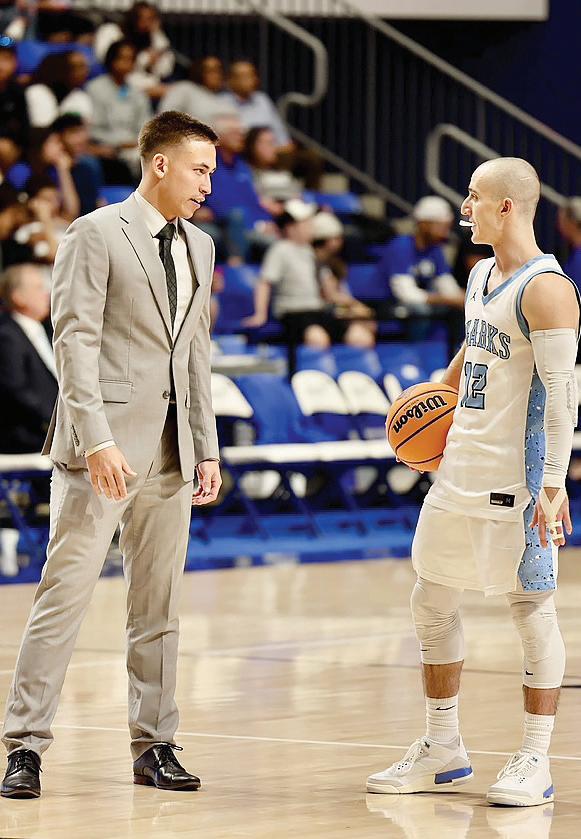
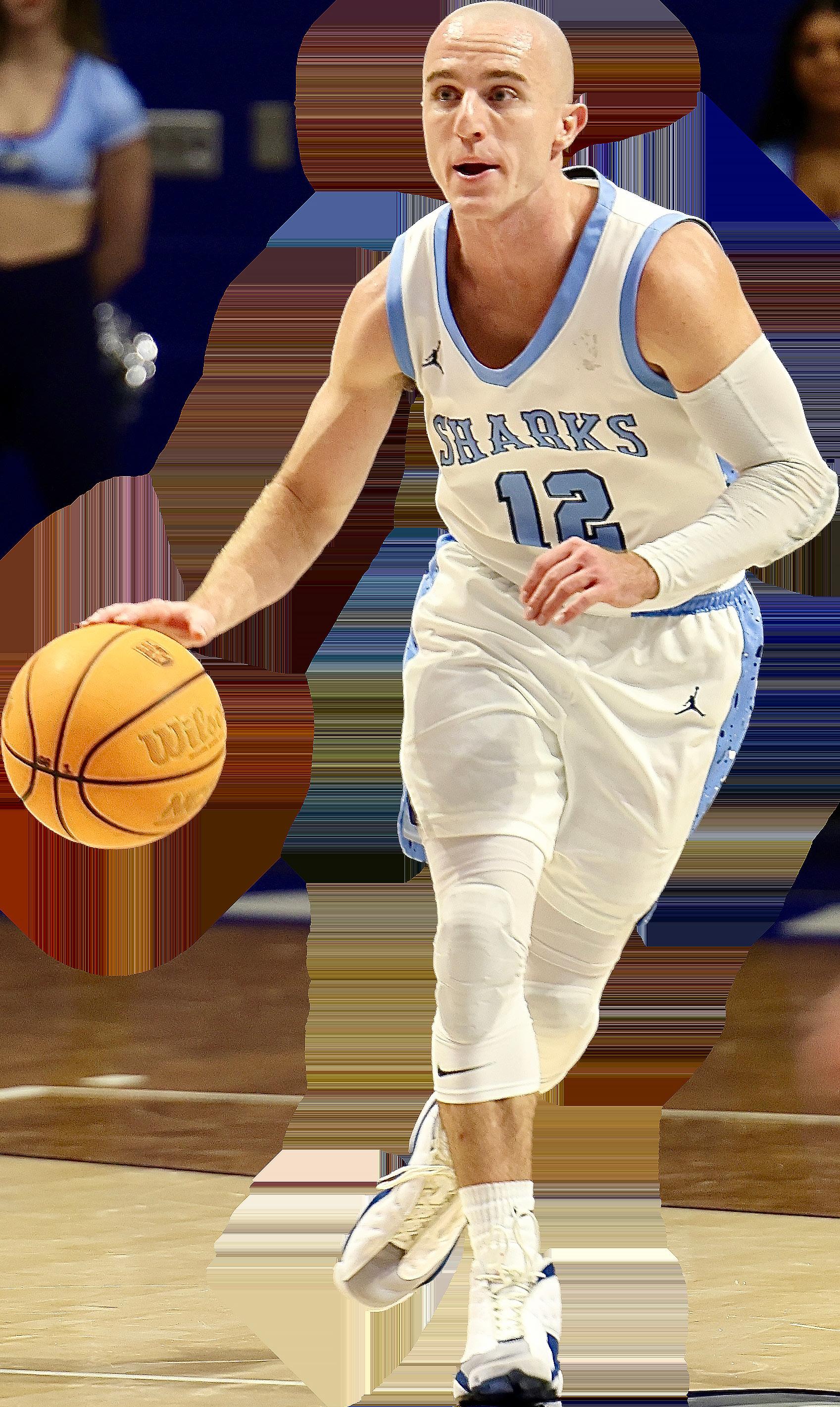
PHOTO BY MADISON KASPER
By Madison Kasper
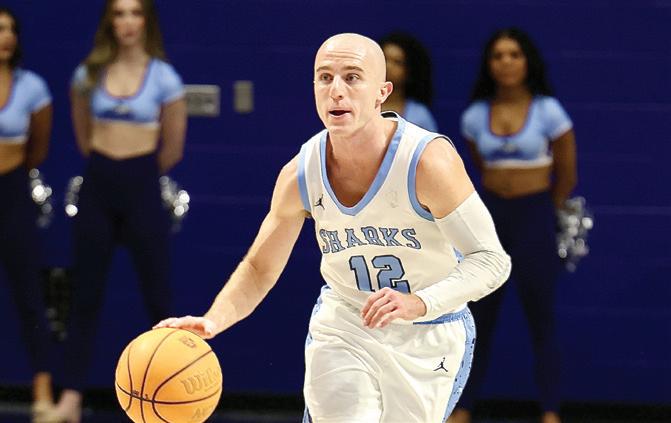
During a top 25 rematch of last year’s NCAA Division II Elite Eight against Assumption, Dallas Graziani, leadership graduate student, broke the program record for career steals previously held by Nick Smith, associate head coach and former player from 2017-2022.
Graziani said the achievement was more meaningful because Smith was the one who held the record before him.
“He’s a Shark legend. So, to be up there, it’s kind of impressive, and
I’m happy about that,” Graziani said.
As a senior, Smith took the steals record during the 2021-22 season. He said he is proud of Graziani and the player he has become.
“Records are meant to be broken, and he’s been such a huge part of our success over the last few years, and I’m happy for him,” Smith said.
Smith said Graziani is not focused on accolades and just wants to win the next game.
“What stands out is just his pure love for the game, his attitude for the game. As a coach, you want to win so badly, and all you want is your players to want to win as badly,
Dallas
leadership graduate student, warm up before the NCAA South Region Championship against Alabama-Hunstville on March 18, 2025.
and Dallas is that kid,” Smith said. “You want to coach the kind of kid that takes losing personally.”
Graziani credits his teammates for helping him earn this accomplishment.
“Maybe I’m the one getting the steals, but they’re the ones putting me in a position to either get a back tap or just make a play,” Graziani said. “Even though it’s an individual accomplishment, it’s a team accomplishment. If our defense wasn’t good, I wouldn’t be getting as many steals.”
Graziani believes he has benefited from Smith’s legacy through the program, both as a player and a coach.
“He was here when Coach Crutchfield first got here, and they were building up the program, and I got here when it was already kind of established,” Graziani said. “And so, I think him playing here before me, me playing with him, and now him still coaching here while I’m playing. I think all of that has helped me a lot.”
Graziani said that he has had a brotherhood with Smith for a long time and loves their relationship. “I always have that respect for him and love him as a player and a coach so it’s just kind of an honor to be up there with him.” Graziani said.
By Isabella Fernandez de Cueto
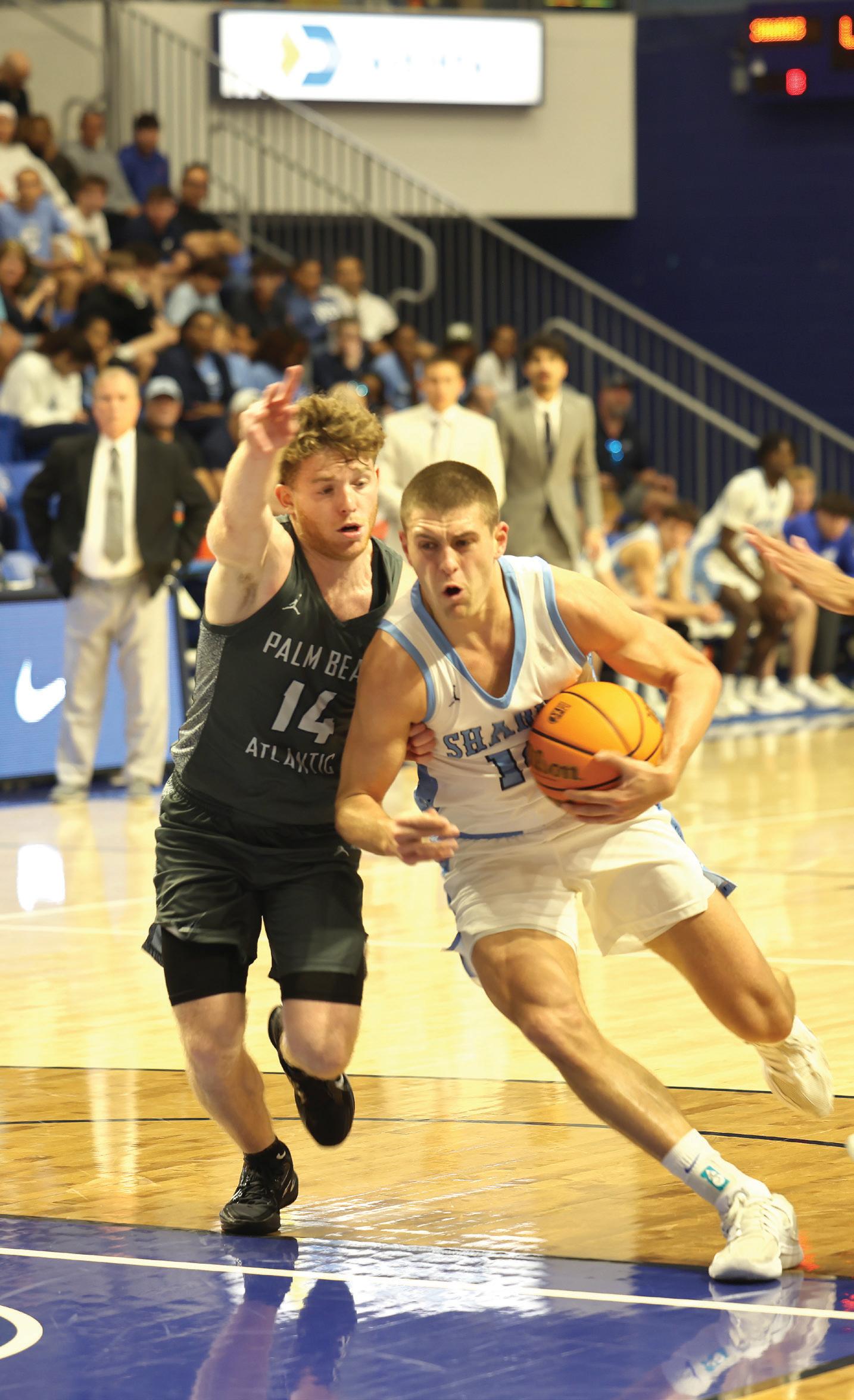
The No. 2 men’s basketball team have maintained its home win streak dating back to 2020, extending it to 95. The reigning national champions have seven newcomers on the roster, yet they’ve built good chemistry with each other according to Nick Smith, associate head men’s basketball coach.
“The first few games we were kind of trying to find out our identity, with a lot of new guys and who we are and what this year is going to be,” Smith said. “As the year has gone by, the guys have kind of played into their roles and started to figure each other out.”
Despite losing to Palm Beach Atlantic 88-83 on Dec. 13, Smith said the team used the result as a learning experience and motivation
to perform better.
“We took a tough loss against PBA at their place, but we came back and responded well,” Smith said. “The coaches were kind of curious to see if the guys would hang their heads and get upset, but no, they were mad that they lost but came back in a good way.”
The Sharks look to finish the remainder of their season strong ahead of the Sunshine State Conference and NCAA South Region tournaments, both set to begin in March.
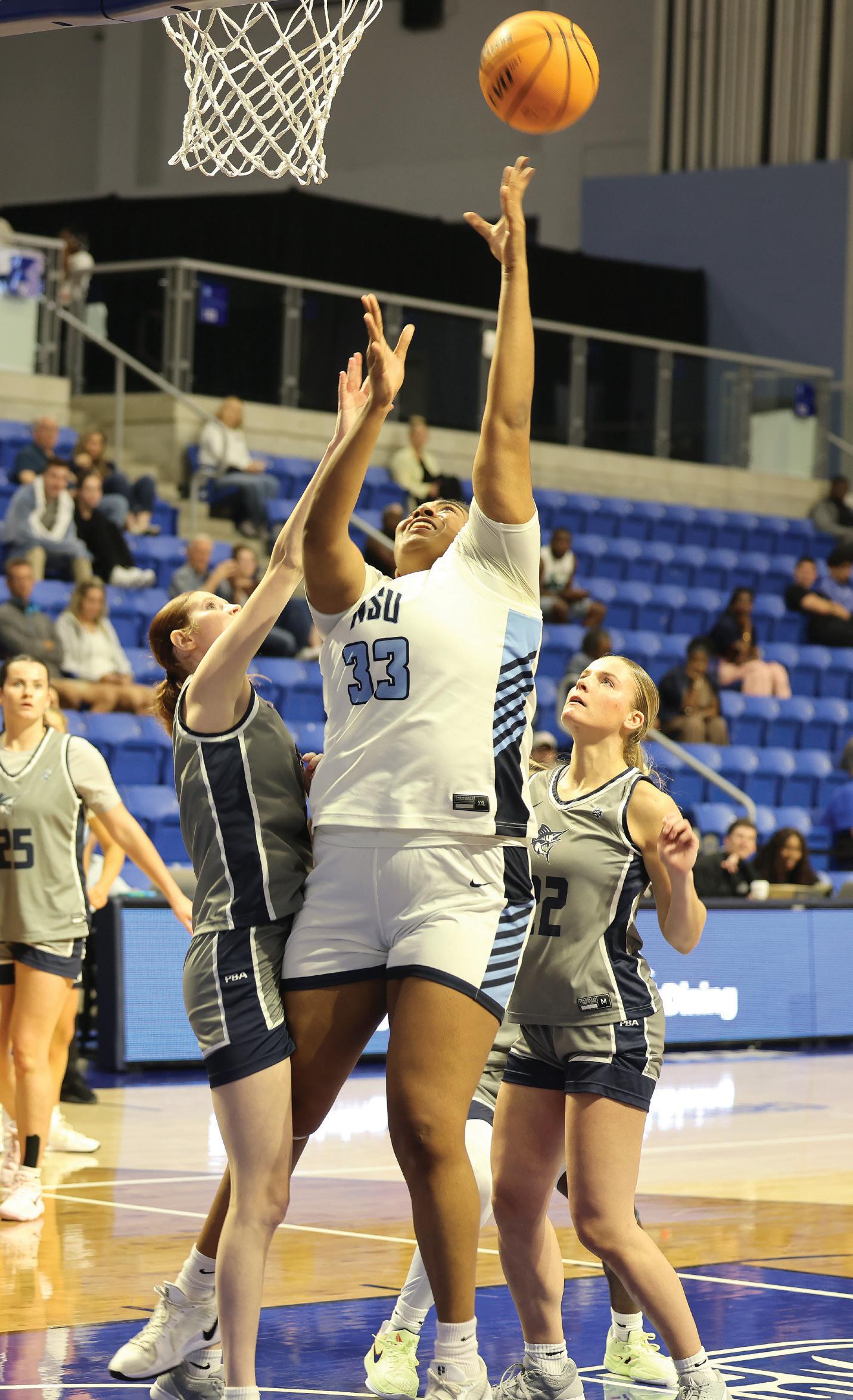
The No. 11 women’s basketball team started its season undefeated, and earned its best start in program history after winning its 16th straight game on Jan. 14. Every member of the team is in their first season at NSU.
“Coming into this season there was a lot of unknown, but we’ve really come together as a whole and stepped up to the plate,” said Bridie McCann, junior applied professional studies major and member of the women’s basketball team. “It’s been really nice to get to know each other both on and off the court, and I think we’ve adjusted really well.” McCann, a transfer from Chestnut Hill College, leads the team in points and 3-pointers made. She scored a career-high 29 points on Dec. 6 in
a top-25 matchup against Embry Riddle. The performance earned her WBCA/D2CIDA National Player of the Week honors.
The Sharks suffered its first loss of the season on Jan. 28. They head into the last month of regular season play ahead of the Sunshine State Conference and NCAA South Region tournaments, both set to begin in March.
“Every single day we want to create momentum, and the way you create momentum is your daily habits and the work you put in at practice, and right now the way the players are hitting the gym, preparing for games inside of scouting, film work has been incredibly impressive,” said Heather Macy, head women’s basketball coach. “It’s a great group to be around every day.”

By Isabelle Moreno
For Kristina Orban, sophomore business management major, it did not take much time for her to feel welcome at NSU.
“I felt like everyone was so welcoming to me,” Orban said. “Where I come from, the culture is a lot different, and people here in the U.S. are overall more social.”
The swimmer from Malmö, Sweden said this feeling extended beyond the pool and into the classroom.
“Every person on the swim team is amazing,” Orban said. “They’re so kind and we’re all like a huge family, but also the people on campus are so nice too. The workers, the staff, the professors, everyone.”
Orban said being part of the NSU swim program has contributed to her growth as both an athlete and a person.
“I feel like I’ve grown so much as a person since I came here,” Orban said. “I’ve stepped out of my comfort zone many times, which I would never do back home.”
Last season marked a turning point in Orban’s career. She won the 200yard freestyle at the NCAA National Championship meet, where she also finished second in the 100-yard freestyle and fifth in the 50-yard freestyle, and helped the team to its third consecutive NCAA National Championship. She won the 200-yard freestyle at the SSC Championship and was named a CSCAA All-American.
“I became a national champion in
By Isabella Fernandez de Cueto
Softball, Feb. 1
The softball team split a double header against Alabama Huntsville at the SSC/GSC Crossover, winning the first match 5-4 and dropping the second match 2-1. The first game saw two RBIs each from Abbey Moore and Christina D’Agostino, and a save and two strikeouts from pitcher Gracelyn Wallace. In the second match, Wallace pitched a complete game and threw four strikeouts.
Baseball, Feb. 1
The baseball team fell 14-4 against Wingate at home. The Sharks were led by Jack Cue, who hit a home run, and Sebastian Garavito, who had three RBIs.
Men’s basketball, Jan. 31
The No. 2 men’s basketball team defeated Tampa 110-78. Six Sharks had double-digit points, with Dallas Graziani getting 34 points, six assists
and four rebounds. Jaxon Nap had 16 points, seven assists and four rebounds.
Women’s basketball, Jan. 31
The No. 4 women’s basketball team lost 79-60 against Tampa. The Sharks were led by Bridie McCann, who had 22 points and four rebounds, and Markayla Holland, who had 16 points and five rebounds.
Softball, Jan. 31
The softball team split a doubleheader at the SSC/GSC Crossover, defeating Alabama Huntsville 9-1 in the first game and falling 4-0 to West Florida in the second. The first game saw Taylor Rogers, Emily Garcia and Destiny Lewis each score a home run and pitcher Gracelyn Wallace throw a complete game. In the second game, pitcher Ana Richiez threw a complete game and two strikeouts.
200 free, which was, I have goosebumps only thinking about it because it was such an amazing feeling,” Orban said. “It was such a relief that all the hard work that I’ve been doing the past years really paid off.”
Ben Hewitt, head men’s and women’s swim coach, said Orban’s success reflected her preparation and perseverance.
“She worked for that,” Hewitt said. “She understood how difficult that is and that there aren’t shortcuts. She had adversity, but she was able to persevere, find the moments, execute a fantastic race and became a champion.”
Hewitt said Orban has maintained her progress even after her success at the national championship. Orban won first place in seven events at the Shark Invitational on Dec. 18-19, leading NSU
to a first-place team finish. Following the team’s victory, she received the Michael D. Fish High Point Award for her performance and was named SSC swimmer of the week, making it her fourth this season and sixth overall.
“She continues to grow,” Hewitt said. “I think it’s only given her the confidence in her practices and in our competition, and you can just see the hunger.”
Looking ahead, Orban said her goals remain centered on continued success with the team.
“I want more moments like last year,” Orban said. “Where we won and where I won individually too, and obviously grow as a team together and just support each other through it and have fun.”
Baseball, Jan. 31
The baseball team lost 4-1 to Catawba in extra innings. Roylan Quevedo had one RBI, and pitcher Christopher Perez had five strikeouts in six innings.
Softball, Jan. 30
The softball team lost a doubleheader against West Florida to open its season at the SSC/GSC Crossover, losing the first game 6-2 and the second 3-2. In the first game, Destiny Lewis and Bella Ligotti each had one RBI, and pitcher Gracelyn Wallace threw a complete game. In the second game, Gianna Russo and Taylor Rogers each had one RBI, and pitcher Ana Richiez threw a complete game.
Baseball, Jan. 30
The baseball team beat Valdosta State 5-4 in its season opener. Roylan Quevedo, Emilio Gonzalez, Nick
Rodriguez and Dakota Jones had one RBI each, and pitchers Federico Zapata and Miguel Diaz each had four strikeouts.
Men’s basketball, Jan. 28
The No. 2 men’s basketball team won its 96th straight home game, defeating Eckerd 102-57. Five Sharks scored double digit points, as Ross Reeves scored a game-high 19 points, and Dallas Graziani had 14 points, seven assists and five steals.
Women’s basketball, Jan. 28
The No. 4 women’s basketball team suffered its first loss of the season, falling 79-65 to Eckerd. The Sharks were led by Kaliyah Morales, who scored 18 points, and Bridie McCann, who scored 12 points.
THURSDAY 5 The Music of Bill Withem 7:30 p.m. - Alvin Sherman Library, Research, and Information Technology Center, Cotilla Gallery
SATURDAY 14 Community Fest Noon - Gold Circle Lake The Imaginaries 8 p.m. - Rose & Alfred Miniaci Performing Arts Center
FRIDAY 6 Shark Pride Friday: Ohana in the Reef! Noon - Don Taft University Center Spine
MONDAY 9 Friendship Bracelet Making 6 p.m. - CLC Courtyard
MONDAY 16 All Around the World: Field Day 4 p.m. - Library Quad
WEDNESDAY 18 Love Notes and Cocoa Coats 5 p.m. - Commons Residence Hall, Room 307
TUESDAY 10 Love Is In The Air: Love Carnival Noon - Don Taft University Center Spine
FRIDAY 20 Mark Duncan Arts Endowment Donor Reception 6 p.m. - Performance Theatre, Don Taft University Center
Boeing Boeing - Theatre Production 7:30 p.m. - Black Box Theatre, Don Taft University Center
THURSDAY 12 Fin Films Lunch Watch Party 12:30 p.m. - Carl DeSantis Building, 2061
SATURDAY 21 Boeing Boeing - Theatre Production 7:30 p.m. - Black Box Theatre, Don Taft University Center
FRIDAY 13 512: The Selena Experience 8 p.m. - Rose & Alfred Miniaci Performing Arts Center
SUNDAY 22 Boeing Boeing - Theatre Production 2 p.m. - Black Box Theatre, Don Taft University Center
Please send your answer (no need to send any additional scratch work or justification) to Dr. Jason Gershman, chair of the Department of Mathematics, at jgershma@nova.edu no later than 5 p.m. on Wednesday, Feb. 25. The correct answer to this question will appear in the next issue of The Current in the winter semester. All members of the NSU community are invited to submit their answer and participate. Every member of the NSU community who submits at least one answer during the 2025-2026 school year will be invited to attend a celebration in April as part of Mathematics and Statistics Awareness Month.
Sarah is trying to fill her pool with water using 2 hoses, the first of which could fill her pool in 3 hours alone and the second which could fill her pool in 4 hours alone. She uses both hoses simultaneously to fill her pool, but also leaves open her drain (which would empty her entire pool in 6 hours alone.) How many hours does it take for her pool to fill up?
Answer to the question from the last issue: 16
SELFCARE RECORDS GLASSES CHAOS GIFT
GRAZIANI REDESIGN ORBAN MONKEYS ROBOT WOMANHOOD TRACKING IMPROV ELANA FUTURE