FEATURES | p. 7
The Shark Food Pantry provides free groceries and toiletries

ARTS | p. 10
New project highlights the achievements of Black men

SPORTS | p. 14
Sport Shorts: Women's swim wins conference championship


FEATURES | p. 7
The Shark Food Pantry provides free groceries and toiletries
ARTS | p. 10
New project highlights the achievements of Black men
SPORTS | p. 14
Sport Shorts: Women's swim wins conference championship
NSU's student-run newspaper, housed in the Department of Communication, Media, and the Arts
Cleaners at NSU are opposing the use of the newly implemented cleaning product H30, which many of them believe is toxic. 32BJ Service Employees International Union, the branch of the SEIU that represents the group, hosted a rally Feb. 13 to support the cleaning staff.
Anna Tinsly, regional communications manager for 32BJ SEIU, helped lead the rally.
“We're here to protest the use of a cleaning agent that is giving workers a myriad of serious side effects - welts, hives, trouble breathing and anaphylactic reactions, sore throats, skin peeling,” she said.
The cleaners are employed by Encompass Onsite, NSU’s cleaning contractor since December 2020. Encompass hires and manages all NSU cleaners. It introduced H30 to the staff in November 2023.
“[H30] created some reactions in some of the workers, and when the workers shared their concern about the reactions, they were met with a lot of pressure from the company to not do that, to not speak up and to keep using the product,” said Helene O’Brien, district director for 32BJ SEIU.

Encompass stands by the safety of H30.
“The product itself is safe. It has repeatedly been proven to be a safe product. It is approved by OSHA [Occupational Safety and Health Administration] and the FDA and Green-certified,” said Lisa Fisher, chief people officer for Encompass.
Daniel Alfonso, vice president of NSU Facilities Management and
Public Safety, said NSU cannot take a stance on the situation.
“When there is a dispute between the union and the company, it’s not appropriate for us to get involved because they’re not my employees,” Alfonso said. “They are Encompass’ employees, not NSU employees.”
He does not believe H30 poses a risk.
“The cleaning solutions that
are used on this campus are all OSHA-approved. From our review of the product that they are using and the safety data sheet that is provided by OSHA, I have no indication that the product is unsafe,” he said.
32BJ SEIU members posted fliers outside the Don Taft University Center a month after the death of their coworker, Graciano Del Valle Nuñez, 75, asking NSU students to attend the rally. The flier indicated that H30 may be connected to Nuñez’s death.
Fisher said this is incorrect.
“He had a job as a floor care technician. Floor care technicians do not use the H30 product,” she said. “He was a valued member of Encompass. The team did a lot to support him.”
A student saw Nuñez requiring medical assistance behind the NSU Bookstore on Jan. 9 around 9 p.m. and provided CPR. Another witness called 911 and Public Safety. An ambulance transported Nuñez to the hospital, where he was pronounced dead.
“I want to help people who are in places that I was in years ago, when I didn't know that I could ever get through it.”By Nicole Shaker and Jules Batchker
Emily Berkebile, senior public health major, is currently living in recovery. Her eating disorder began when she was on the middle school swim team.
“You're wearing swimsuits a lot, you're in front of a lot of girls and boys, and you become aware that you have a body, and you compare it to other people's,” Berkebile said. “I just noticed things about my body that I wanted to change.”
After a long struggle, Berkebile now raises awareness on the issue. She collaborated with the National
Eating Disorders Association to plan a walk at Gold Circle Lake for March 16 at 9 a.m. to support the cause.
“The harder topics like eating disorders or more severe mental health disorders can be touchy to talk about,” she said. “I just want to break that barrier of the stigma surrounding eating disorders and make it seem like, ‘Ok, this is a normal thing a lot of people struggle with,’ because so many people develop eating disorders, especially in college.”
Berkebile grew up with parents on Weight Watchers who would count their calories after every meal.
“That’s tough for a little girl to grow up with,” she said.
Faced with external pressures, Berkebile added running to swimming and began to write down everything she ate.
“It was not healthy at all, whatsoever,” she said. “I was exercising way too much and not eating enough to sustain the calories that I was burning.”
Berkebile took these habits with her to high school, where she was also put on birth control, a common side effect of which is weight gain.
“I went back to the doctor, and they weighed me, and I was crying.
I was like, ‘What's happening? I’m still watching what I eat. I'm counting calories,’” she said. “The doctor actually said to me, ‘Oh well, since birth control really shouldn't make you gain that much weight, maybe you should just try exercising more,’ and at this point I was swimming six days a week, three hours a day, and I broke down.”
In her junior year, Berkebile’s mom noticed her daughter wasn’t eating and began taking her to family based therapy.
The Student-Run Newspaper of Nova Southeastern University @makonews / makomedia.nova.edu
Located in the Don Taft University Center Room 328
NEWSROOM
Phone: 954-262-8455
makonews@nova.edu
Bryce Johnson Editor-in-Chief
Nicole Shaker Co-Editor-in-Chief
Brielle Aguayo Art Director/ Reporter
Danna Bertel Features Editor
Alex Hernández Music Writer
Bella Giaquinto Sports Editor
Isabella Fernandez de Cueto Sports Writer
Abraham Velasquez Sports Writer
Adam Sadik Health Writer
Ronald Martinez Reporter
Daja Long Reporter
Francesca Abarca Reporter
Jules Batchker Reporter
Nicole Gomez Graphic Designer
The Current serves Nova Southeastern University from its location in room 328 of the University Center. The Current is NSU’s established vehicle for student reporting. All community members are invited to contribute.
Editorials, commentaries and advertisements in this publication reflect the opinions of the authors and do not necessarily reflect the views of the University or its officials, The Current or other advertisers. The Current will not publish unsigned letters except under special circumstances
BUSINESS & ADVERTISING
Phone: 954-262-8455
thecurrentad@nova.edu
Kai Dear Business Manager
Michael Tomlinson Distribution Manager
Ana Sofia Aguiar Azambuja Web Editor
Josh Leatherman Sports Intern
Chris Delboni Mako Media Network Director
Mike Lynn
Mako Media Network Assistant Director
Dr. Megan Fitzgerald Mako Media Network Faculty Adviser
Joyce Moed
The Current's Faculty Adviser
Dr. Eric Mason Digital Faculty Adviser
Dr. Mario D'Agostino Sports Desk Adviser
Dr. Aarti Raja Science/Health Desk Adviser
Dr. Shanti Bruce Chair, Department of Communication, Media, and the Arts
at the discretion of the Editorin-Chief. The Current reserves the right to edit.
Contributing writers must not be directly involved with their coverage. Coverage by contributing writers must be meaningful and of interest to the NSU community. The Current reserves the right to edit, publish, or deny submitted works as it sees fit. The Current shall remain free of associations and activities that may compromise integrity or damage credibility or otherwise create bias, real or perceived.
Dear Readers,
Hello NSU family! I am so thrilled to present this issue to you. Bryce and I are extremely proud of the excellent work our reporters have done to bring you many significant stories. We have also done some of our own reporting for this issue, and we're happy we get to share with you news that matters.
One of my favorite articles is about Emily Berkebile, a senior who has done some incredible work raising awareness on eating disorders after having a long history with a disorder herself. Read it on the front page and page 9. Also on the front is another of my favorites: an article discussing the NSU cleaners protesting a cleaning product they believe may be unsafe. Check out the article to read all sides of the story, and let us know what you think. Check out our music page to get some exciting updates on what Mako Radio's been up to. And if you love music, scan our Spotify barcode to listen to Current Picks, our collaborative Spotify playlist that in this issue celebrates Black artists for Black History Month.
Looking for ways to celebrate Black History Month? Go to page 4 for a summary of upcoming on-campus events celebrating Black culture and diversity. We at The Current worked hard on this issue, and hope you will enjoy it. Any comments, questions or reactions? Stop by UC 328. We'd love to see you!
Happy reading, Nicole Shaker
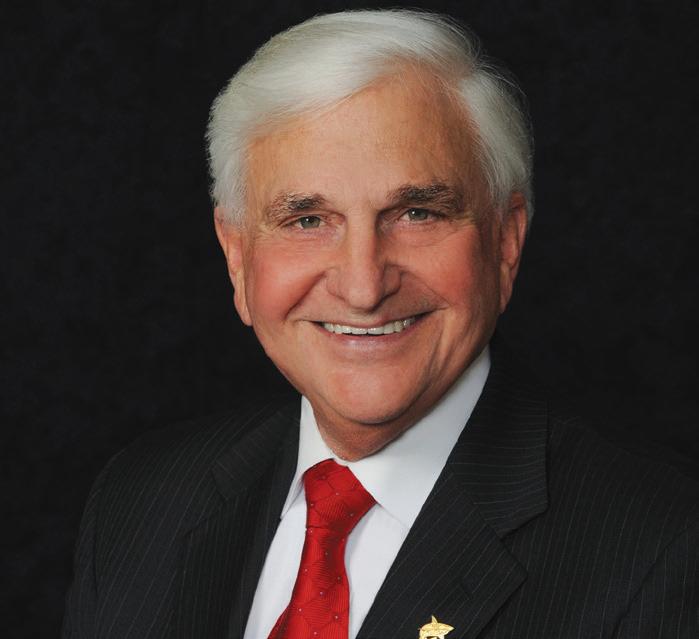 By President George L. Hanbury II
NSU recently hosted the 25th annual Celebration of Excellence, which recognizes excellence in community service as well as donors who have had a significant impact on the university with their financial contributions.
The President’s Award for Excellence in Community Service was presented this year to Joel Hochberg (posthumously) and Albert Miniaci. In 2011, these visionary philanthropists helped create the Razor’s Edge Scholarship Program through their “time, talents, and treasures.” Since then, Razor’s Edge has become an enormously successful program that has a 92% retention, completion, and graduation rate. Since 2011, the Razor’s Edge scholarships have helped 1,284 students, and plans to help more students each year.
Through their financial contributions and personal engagement
with the students, Mr. Hochberg and Mr. Miniaci found a purpose in helping those students. In return, our students found their purpose in working in diverse professions such as medicine, law, dentistry, education, and business. If not for these two gentlemen, those 1,284 students might not have had the opportunity to attend NSU, follow their passion, and begin to fulfill a very meaningful purpose.
There is indeed power in purpose and what you can accomplish when you discover it. Have you found your purpose? It usually follows your passion. I encourage all students to follow their passion – not their fortune. As such, I recommend that you passionately explore the many opportunities for your engagement during your academic journey at NSU. Take some classes on interesting subjects outside of your academic discipline, join one of our many student organizations, or volunteer on a community service project. The actions you take and the people you meet can inspire you in surprising ways. When you have followed your passion, you will find your purpose and you will know it.
Fins up!
George L. Hanbury II is the President and CEO of Nova Southeastern University.
From Feb. 1 to March 1, Black History Month annually honors the triumphs and struggles of African Americans throughout U.S. history. Throughout the month different organizations, including Black Student Union and Campus Life, have been hosting events celebrating Black History Month. One of the first events of the month was Embrace Your Roots, where students played games and learned more about why it is important to celebrate Black History Month.
“[Black History Month] shows a portion of who we are and how we can come together to celebrate. It showcases how we are a family and how we come together,” said Vyctorea Jones, senior biology major. “It is not about the past but also how we can change the future.”
When Charlee Musiakiewicz, sophomore elementary education major, was in the Science, Technology, Engineering, Arts, and Mathematics program in high school, she took special coursework related to her environmental sustainability track. When she was an upperclassman, she helped mentor and guide the underclassmen.
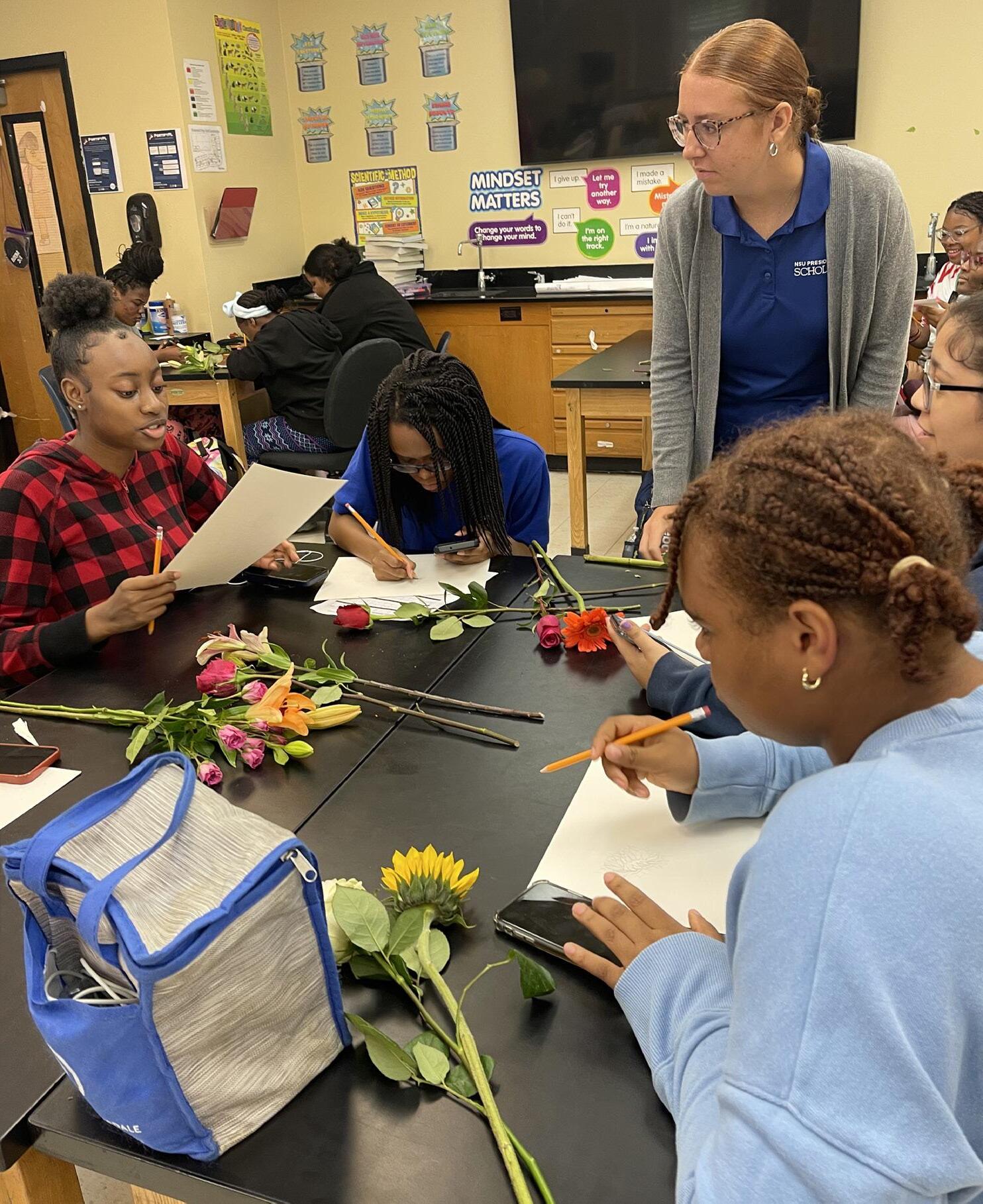
At NSU, Musiakiewicz has been conducting research to increase STEM education for high school students, specifically female students, since September 2023. With her mentor Hui Fang Huang “Angie” Su, professor in the Department of Education, Musiakiewicz visits the same group of students at Somerset Preparatory Academy Charter School in North Lauderdale to give them access to STEM education.
“We go there with different professors of different areas of STEM, teach them lessons in hopes that they gain more interest and it becomes less daunting for them so that they will choose STEM majors in college and STEM careers moving forward,” Musiakiewicz said.
Musiakiewicz acts as the girls' mentor, helping them learn about STEM education, like computer science, mathematics and marine biology.
“They're 16, 17, and I'm only 19. So it was someone that they could talk to, ask questions about NSU, about STEM, anything like that,” Musiakiewicz said. “One of the times, I actually taught a marine biology intervention, so I led the whole lesson by myself and then they came [to NSU] for a field trip.”
Originally from New Jersey, Musiakiewicz came to NSU as a marine biology major. In high school, she volunteered at an
Black History Month: Friday Matinee
Friday, Feb. 23, 3 - 4 p.m.
Tas Salini, instructor of film history and film appreciation at Broward College, will lead a discussion on the 2005 film, "The Simple Life of Noah Dearborn" on Zoom. It is hosted by the Alvin Sherman Library and Halmos College of Arts & Sciences. The film is available to watch through Broward County Library's Kanopy collection.
Black Excellence Showcase: Rise of the Renaissance
Friday, Feb. 23, 7 - 10 p.m.
Located in the Flight Deck Backyard, the Black Student Union celebrates Black culture with the
annual Black Excellence Showcase. There will be performances, dancing, music and food.
Florida’s Got Soul!
Monday, Feb. 26, 5:30 - 7 p.m.
Florida's Got Soul!, a presentation based on John Capouya's book "Florida Soul," includes classic soul music and vintage photographs in an educational and entertaining experience in the Adolfo and Marisela Cotilla Gallery, Alvin Sherman Library. The presentation takes inspiration from Florida soul performers, such as Ray Charles, Sam and Dave, James and Bobby Purify.
Black History Month: Happy Hour Book Club
Thursday, Feb. 29, 6 - 7 p.m.
The Alvin Sherman Library will host a book club meeting discussing James McBride's "The Heaven & Earth Grocery Store." The event will be held on Zoom.
For more information:
Scan this QR code to be directed to the Mako News Linktree, which includes registration links for some of the above events

aquarium and gave guided tours. Musiakiewicz said her research allows her to further explore her passions of STEM and education.
In the Razor's Edge Research Scholars Program, students conduct their own research in the second semester of their sophomore year.
Dana Mills, associate dean, works with Musiakiewicz in Razor's Edge Research Scholars. Mills was so impressed with Musiakiewicz that he brought her and another student into leadership positions in the program when they were freshmen, which typically only happens when students are sophomores.
“She would not be on time to class, she'd be 15 minutes early. She'd stay and ask questions late, she would have every homework assignment done early,” Mills said. “Never once did she ever say no, if we ever asked her to do anything extra. She just always wanted to do more.”
When Su needed a research assistant for the STEM project, Mills recommended Musiakiewicz.
“I learned that students as young as Charlee can really take on leadership roles,” Su said. “Charlee is very easy to work with. Whatever you need her to do, it’s always a yes, I can do it. That's a great attitude.”
Since then, Musiakiewicz and Su have worked together on the research. In March, they will present their findings at the University of Oxford in London.
“I'm a little bit nervous since this is my first conference experience and obviously University of Oxford, it's a big deal, but I'm very excited, very fortunate to be going with such an amazing mentor,” Musiakiewicz said. “I know she will lead me and prepare me all the way through, but I'm very excited.”
After graduating with her
bachelor’s degree, Musiakiewicz plans to complete a one-year program to earn her master’s in science education. Ultimately, Musiakiewicz wants to work as an environmental educator and continue STEM research.
“In Charlee’s case, she wants to be an educator, but her commitment has been to engaging girls in the sciences. That's something that
she really values,” Mills said. “As a dad of a daughter who's also interested in the sciences, I wish that Charlee had done this work before, because I could see how it could maybe even change somebody like my daughter's life, and then the tens of thousands of other girls out there who just don't have exposure to the sciences.”
Megan Fitzgerald, associate professor and communication program director in the Department of Communication, Media, and the Arts, went to Fort Lauderdale Mayor Dean Trantalis’s office last summer to write a story about him for OutClique Magazine. She left the office with an idea for an internship exclusively for NSU students.
Trantalis told Fitzgerald he wanted to create a communication internship program at the mayor’s office.
"Giving opportunities to our students to learn and grow in any industry is crucial for preparing them to meet the challenges of our modern workforce," Trantalis said. "I wanted to open the door for students who may not have had this kind of chance before, and hopefully inspire them to pursue a career in public service."
Fitzgerald worked with DCMA and the mayor’s office to establish the internship.
“It's an incredible opportunity for NSU students,” Fitzgerald said. “It’s a high profile opportunity for students to get really hands-on experience.”
Shanti Bruce, chair of DCMA, was excited when Fitzgerald initiated the idea.
“I’m grateful that the mayor’s office is giving NSU students this opportunity, and I am confident our students will exceed their expectations,” Bruce said.
The internship, which involves social media management and public relations, accepts one student every fall, winter and summer semester. The intern has the opportunity to work directly alongside Trantalis and his team.
Bella Giaquinto, senior communication major and sports editor for The Current, is completing the internship this semester. Her days consist of sitting in on meetings, creating the social media calendar and going to events to get social media content for Trantalis’s Instagram, Facebook and X, formerly known as Twitter. One of her biggest projects has been introducing Instagram reels to the mayor’s
page. The internship can be completed for credit by enrolling in COMM 4950. Giaquinto is gaining a lot from the experience.
“You get a lot of engagement. You meet a lot of new people when you go to all the events. It's basically like you're going to a networking event every time,” she said. “You start to see similar faces all the time, and you can really build relationships with people and start to get to know them.”
She especially appreciates how integrated she is into the office’s daily activities.
“There's not really anything that I'm excluded from. They want you to really be involved,” she said. “If someone is coming to pitch an idea to the mayor, we sit in on that so we can hear it.”
Giaquinto works alongside Zachary Eakins-Durand, community outreach director for the mayor's office, three days a week.
“We like to really rely on what [students] are learning in school to help inform us so that we can really uplift Mayor Trantalis’s message for Fort Lauderdale,” Eakins-Durand said.
He said that interns get a behindthe-scenes look at local government and how Fort Lauderdale runs, while gaining diverse skills.
“For anyone who is a student, you're going to get a behindthe-scenes look as well as a forward-facing opportunity to see government in action. Engaging with the public is a skill that our interns will get to see. We like to be sure that this is an opportunity that is as hands-on as possible,” he said. “We give interns the opportunity to come to city commission meetings, ground-breaking ribbon cuttings and all the events that go on that the elected leadership is asked to go to. We always will invite our interns to partake and observe, and I think through those on-the-ground field trips is where most of the growth occurs for all of us.”
Madison Hurtado, senior communication major, completed the internship last semester during its first run. She said that although she usually leans toward entertainment

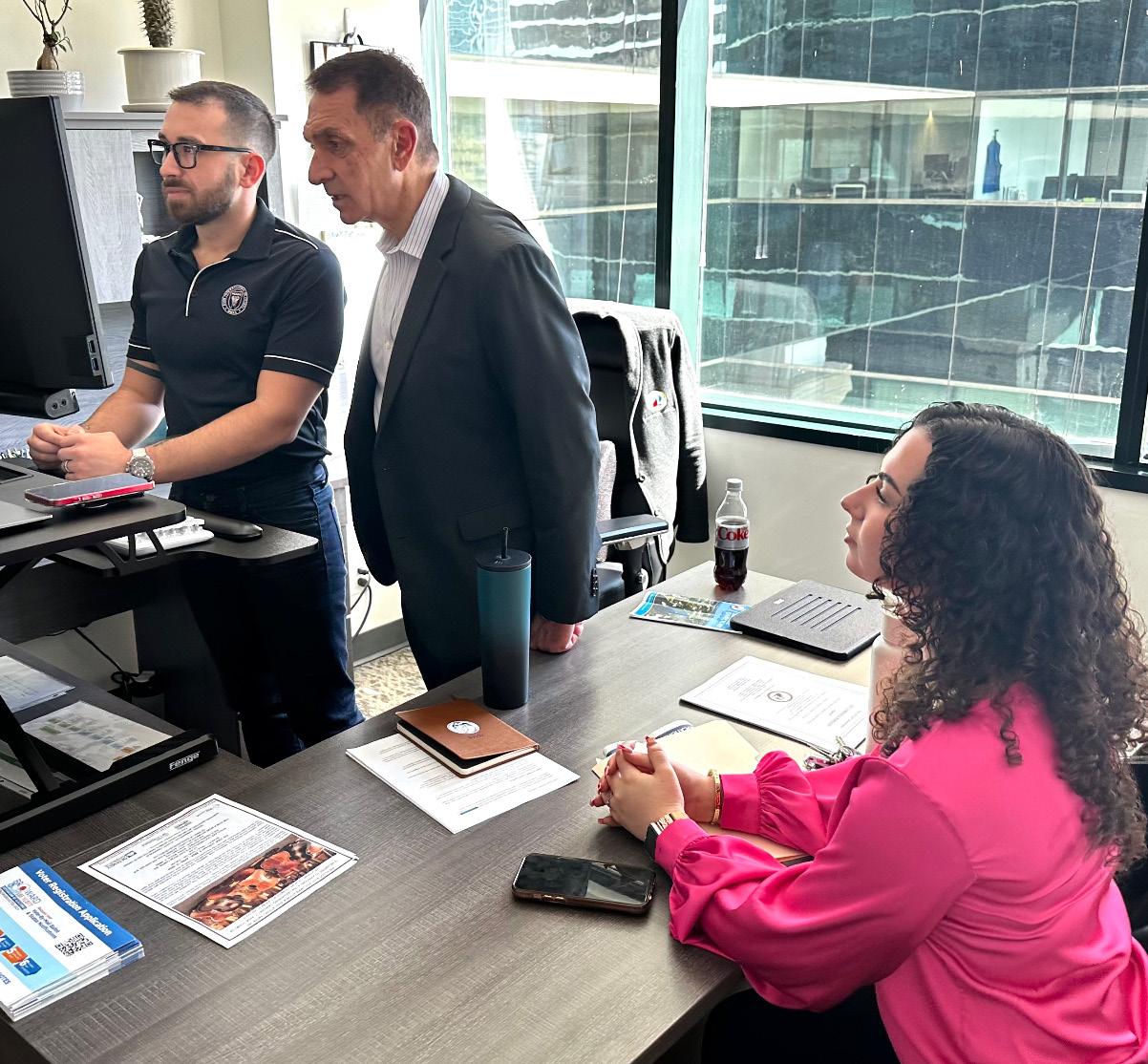
public relations work, this experience in the political realm helped expand her resume.
“It definitely helped me learn a different industry. I'm not really affiliated with politics. I've never considered doing that, so it definitely enhanced my professionalism, and it allowed me to build my networking skills,” she said. “It allowed me to grow my skills within inbox management and calendar management. With the social posts that I had to do, I also practiced my editing skills on a lot of photos. My creativity was enhanced.”
Fitzgerald said the internship is beneficial to all communication majors, regardless of whether their concentrations are in journalism, strategic communication or digital media production. It’s also open to non-communication majors who may be interested.
“There is a lot of overlap between strategic communication and journalism. So even if someone is not interested in going into
public relations, you still need to be a strong writer to work in the mayor's office as part of the mayor's communication team, and be able to take notes and do interviews,” she said. “So I think there's room really across the three concentrations, but I also think it's an opportunity that might be of interest to political science majors, or English majors or history.”
Interested students should reach out to Fitzgerald at mf821@nova. edu.
Eakins-Durand is excited to continue the program with NSU students.
“We hope that this is a fruitful and ongoing partnership well into the mayor's final term,” he said.
Megan Fitzgerald is Mako Media Network's faculty advisor.
The NSU Belonging, Equity, Diversity, and Inclusion Advisory Council will host Diversity Week 2024 from April 1 - 7. Students, faculty, staff and alumni can lead discussions around the theme "Exploring the Beauty of Unity in Diversity." The deadline for
Encompass launched a fundraiser with a goal of $5,000 to provide financial assistance to Nuñez’s widow, Maria, following the death. She also works as a cleaner at NSU.
The 32BJ SEIU flier also stated that Maria Elena Hernandez, a shop steward for 32BJ SEIU and cleaner at NSU for 16 years, may have been put on administrative leave by Encompass because she spoke out against H30.
“We’ve filed contract violation grievances against our employer, Encompass, due to their retaliation against workers who have spoken up about their concerns about the health and safety,” the flier read. “Now we turn to you — the students — to ask for your support in our fight to keep our workplace safe, healthy, and free from intimidation and retaliation.”
Fisher said Hernandez is under investigation for undisclosed reasons, and that Hernandez is still being fully paid and receiving benefits.
The protest took place on University Drive, in front of the Terry Building. Protesters held signs while chanting, “No matter what it takes, we are going to win this war,” “An injury to one is an injury to all” and “Justice for janitors,” in English and Spanish. The group also marched to the Encompass office on SW 39th Street to deliver a letter stating their grievances and requests.
“We are standing up today to ask the company to do two things: one, bring back the leader, Maria Elena Hernandez,” O’Brien said. “The other is that the company should either discontinue use of their product and compensate or offer an alternative to workers who are either allergic or having reactions to it.”
Hernandez attended the rally. She said that when she was suspended, Encompass HR wanted her to wait in the operation director's office while they got her an Uber to take her off campus, so that the other workers would not see her leaving.
“I'm suspended for pure retaliation, because I care about the health of the workers. I demand a safe and pleasant environment to work. Human Resources told me that I had no reason to get involved in their work,” Hernandez said in Spanish. “I am the voice of the workers and they don't want to listen to me. It's not that we don't want to clean the university, because we feel proud to work at Nova. What we want is that, if you see that this liquid is affecting some workers, to review it and do the correct procedure, like I asked them.”
Angel Valdez, NSU cleaner, was disappointed to learn of Hernandez’s suspension and hopes their voices will be heard.
“They think she is the sole voice of the union. But they are incorrect. We are all the union,” he said in Spanish.
When Encompass made the switch to H30 last year, the company instructed cleaners to use H30 for every surface, eliminating

all other cleaning products.
Maria Theresa Hernandez Palacio, NSU cleaner, has been hospitalized twice since then with symptoms like rashes and vomiting.
“The liquid poisoned me twice. I was sick. I looked like a monster and I had to go to the emergency room. I came out vomiting," she said in Spanish. "That was in November and in December, I repeated the same thing because they told me they changed it, but they had put a label on it, and it turned out that it was the same liquid and it hit me, and I went back."
During Palacio's second hospitalization, Hernandez stayed with her in the hospital all night.
“Maria Elena [Hernandez], my representative, took me to the emergency room here at Nova, and the doctor told me that I had the same reaction, and if they take me in a third time, my trachea would be blocked and I could die,” Palacio said in Spanish.
Palacio feels unsafe at her job.
“I am very afraid of getting that reaction again. I don't want to be in the hospital again. That scares me, and it makes me sad because I come to work with fear,” she said in Spanish. “It is a persecution at all hours. I have to use that liquid. Otherwise I will go home. That's what they tell me.”
Valdez also suffered symptoms after using H30.
“They are forcing me to use it, and the first time I was out of breath, so I had to leave,” he said in Spanish. “This second time, I used it with a mask and gloves. However, I still lost my voice for the past week. I can barely speak.”
O’Brien said the rally is meant to get Encompass to hear the cleaners.
“The death and the workers being sick and the company refusing to respect the workers’ fears and feelings has created panic, and the company has responded by sending home on leave the leader, the most outspoken worker of the bunch, the one who’s supposed to be supporting other workers, so we just feel like Encompass is making a difficult situation terrible,” she said.
After seeing the 32BJ SEIU flier, students like Caleb Siguenza, senior neuroscience major, joined the march.
“I heard what they were doing to the workers, how they’re using this mystery product. I was even trying to research about it online and couldn't really find much about it,” he said. “It seems like a cost-effective product for them, but they’re not really calculating the risk that it’s having for the janitors after they’ve expressed their discomfort with the product.”
Siguenza feels passionate about supporting the cleaners.
“They’re the backbone of everything we see. There’s trash all around every day, and I know the students don’t pick it up. Someone’s picking it up, and I think the janitors should be treated right,” he said.
Chase Pagley, senior chemistry major and president of the Chemistry Club, attended the rally with Siguenza.
“I think students should definitely be a part of this problem and cause because the students have the biggest voice,” he said.
Julian Oliver, sophomore biology major, attended the rally to show his support as well. He is concerned about potential impacts of H30.
“If it affected the janitors here, I don’t see why it can’t affect one of the students. That should not be taken lightly,” Oliver said.
Gregg McMullen, vice president of service delivery at Encompass, said H30 is essentially water with an extra oxygen molecule. H30’s safety data sheet shows a percentage of ozone that is less than .01%, the rest of the substance being water.
“It’s a misleading name. It just sounds like a proton, which can be in any chemical formula, but it’s a very specific chemical that we know is dangerous,” Pagley said.
Pagley said ozone could cause serious reactions in the body.
“H30 contains ozone, and ozone is a super unstable molecule that, when it reacts with water and oxygen in the body, forms hydrogen
peroxide, which ruptures through lipid membranes in the cells, especially in the airways, which are where people are breathing it in,” he said.
Maria Ballester, professor of chemistry, said the product may cause reactions.
"[Ozone] does react with the aqueous layer, so some people may be more sensitive than others," she said.
H30 is licensed by Encompass, so the company has exclusive rights to it within the cleaning space.
“If any cleaning company wants to use this product, they have to go through us,” said McMullen.
Mark Dickstein, an attorney who attended the rally, is a family friend of an NSU student. He said the reasons behind Encompass’ push for H30 should be examined.
“I think there's a proper investigation that needs to be made and it looks like there are grievances that need to be addressed. I was also told that a lot of the workers here are afraid of reporting these types of conditions,” he said. “If Encompass licenses this chemical and this is their chemical and they're looking to sell it in the open market, they stand to profit from this chemical and I would think they would need to keep things hush if that was the case. More investigation must be conducted.”
McMullen said Encompass made the switch to H30 because it is safer and more sustainable than traditional cleaning products.
“It’s our word to our customers that we provide service in the most safe and environmentally sustainable way,” he said. “The traditional chemicals are so caustic and so bad. [With H30], the only thing going down your drain is dirt and water. It’s all sustainability.”
Although NSU cannot take an official stance on the dispute between Encompass and its employees, Pagley said the school should still make a statement.
“The death of the worker happened a few weeks ago, and we’re only hearing about it now. It’s infuriating,” he said. “I think Nova should have immediately made a statement because [Nuñez] died in front of people, in front of students and coworkers, which is unacceptable. You can’t just have that happen on your campus and sweep it under the rug. It’s like treating someone like they’re not even human.”
Valdez encouraged the NSU student body to show its support for the cleaning staff as it fights against the use of H30.
“It could be affecting the students as well, and that is one of our main concerns,” Valdez said in Spanish.
 By Bryce Johnson
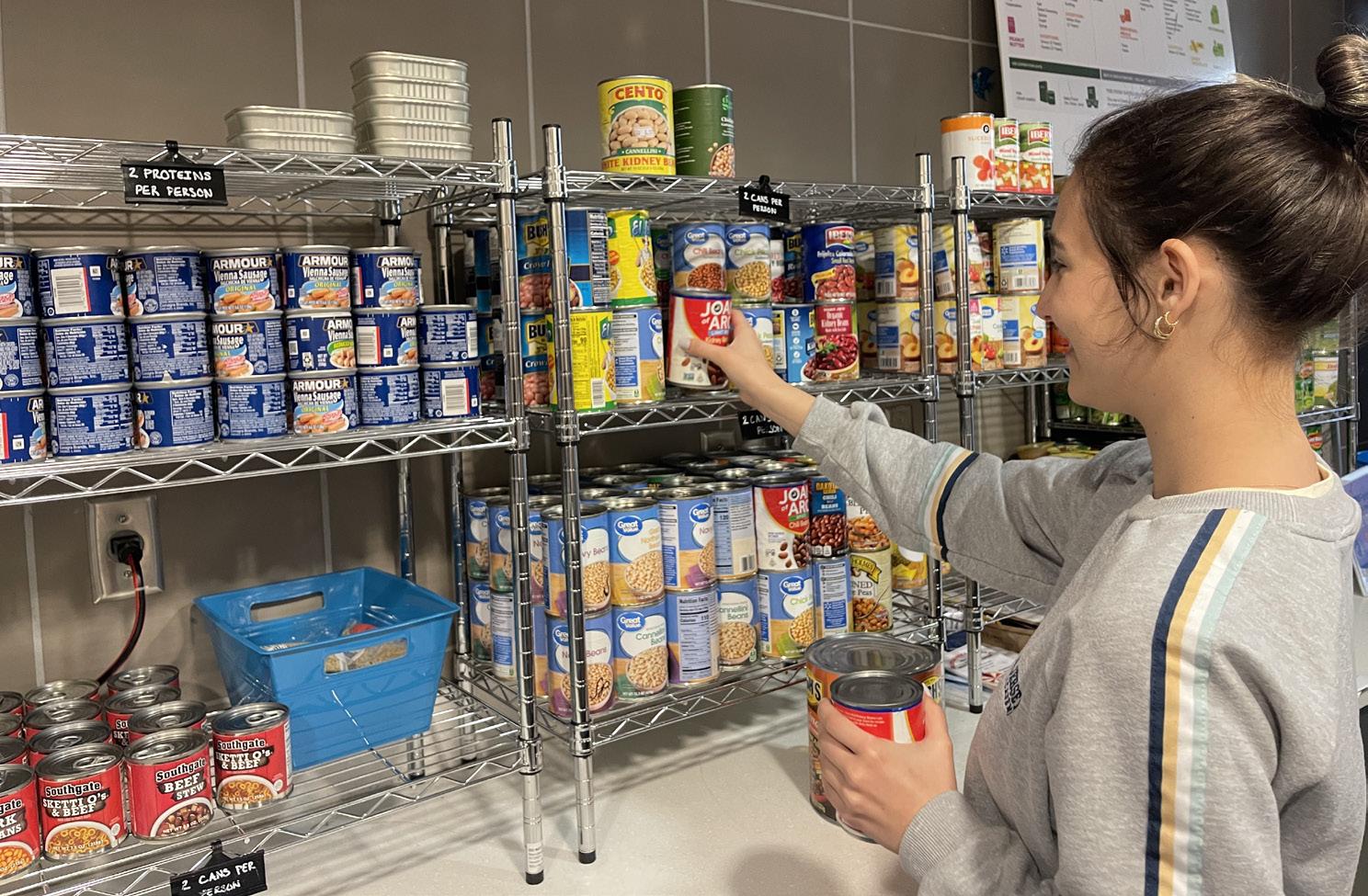
The Shark Food Pantry, located on the second floor of the University Center, is a resource open to all students. Each week, students can take up to 10 pounds of food, such as bread, milk, rice and cereal, as well as toiletry items like toothpaste and feminine hygiene products.
The idea for the pantry came from Meline Kevorkian, NSU associate provost and dean of the College of Computing and Engineering, in 2021.
"That was her brainchild and then she said, 'OK, make this happen.' So that's what we did. [She's] one of our biggest advocates," Katie Gittleman, director of STEM initiatives and outreach with the College of Computing and Engineering and Academic Affairs, said.
Gittleman remembers the
meeting when Kevorkian told her about the idea.
“They had recently had a student that was really struggling to provide himself food. One of the faculty members happened to see him on campus and saw him taking food out of a garbage can. So he provided the student some money and tried to help him,” Gittleman said. “They took care of that, but then she thought on a bigger scale, maybe we need to be providing our students with a resource, because he's probably not the only student that's struggling with this.”
Gittleman worked with the Undergraduate Student Government Association and the Department of Nutrition to start the pantry, which originally opened in the Carl DeSantis building in Nov. 2021.
The Shepard Broad College of
Law helped fund the Shark Food Pantry by holding a canned food drive. Every year since, the college has donated to the Shark Food Pantry, giving almost 9,000 items this year.
“The one thing that stands out the most to me is how thankful the students are. Obviously they like the items, but they're very genuine and they’re being authentic and very thankful,” Gittleman said. “Even when I'm there, because the students really run the pantry, they are really thankful."
Gittleman said she didn't realize the extent of the need on campus.
"And to be honest, I don't even think we're really capturing the need," she said. "I think there's way more students that either don't know about it or are not sure if they want to participate in it for whatever reason. But I don't even think we're scratching the surface.”
Aundria Mitchell, sophomore computer science major, is one of the pantry ambassadors. Mitchell hopes that the pantry can grow to have more variety of food.
“Right now, we're just doing like pantry staple items, so hopefully we get a bigger fridge, compared to the other campuses that have it. I think UF is huge, their pantry is huge, like industrial, supermarket type of fridges. I wish we could have that. So hopefully we go big enough to have that,” Mitchell said.
Mitchell learned about the pantry when she had Gittleman as her UNIV professor.
“I love it here," Mitchell said. "I do like working here. I don't even think I could imagine not having a job here. Not knocking the desk jobs, but I feel like that is probably a
little boring compared to this where I'm up and running. I'm doing a lot. I'm interacting with a lot of people. I do love that aspect, even though I'm sometimes antisocial, but this is very refreshing to get out of my dorm and then help people. I love it.”
Andrea Concepcion, senior public health major, is the Shark Food Pantry coordinator and oversees the ambassadors. Concepcion enjoys meeting so many students through the pantry.
“Once we got the two fridges, I think people were crazy for it. They loved it so much. People would come here and make the line one hour early so they would make sure they got their fridge items or freezer items,” Concepcion said. “We have grown so much since I started working here, but I still feel like there's room for more. We definitely need to promote a little bit more on the graduate side of the school.”
Pantry donors include Publix, Trader Joe's, Pepsi, Southeastern Grocers, The Public Interest Law Society, Swipe out Hunger, NSU students, faculty and staff, and the local community.
Visit the pantry: Located on the second floor of the University Center above the Arena Box Office.
Hours:
Tuesdays 11 a.m. - 3 p.m.
Fridays Noon - 4 p.m.
NSU ID required
"I think it would be interesting to have new science-based programs with a focus beyond biology, such as microbiology or biochemistry,” said Debora McMenamin, senior neuroscience major.
BY JENNIFER GRIGGS
“I would want to see more pet-related clubs and events, for example, bring your pet to campus day,” said Eden Nabridge, freshman business management major.
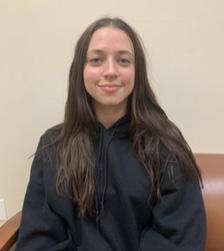
“I would like to see an acapella club or group like the ones in the movie, 'Pitch Perfect,'” said Gloria Marie Alcantara Montero, freshman finance major.
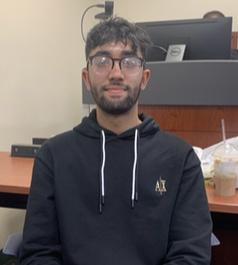
“I would like the see a club designated to the Sikh Indian culture where it has events celebrating festivities in that specific culture,” said Rohan Singh, freshman neuroscience major.
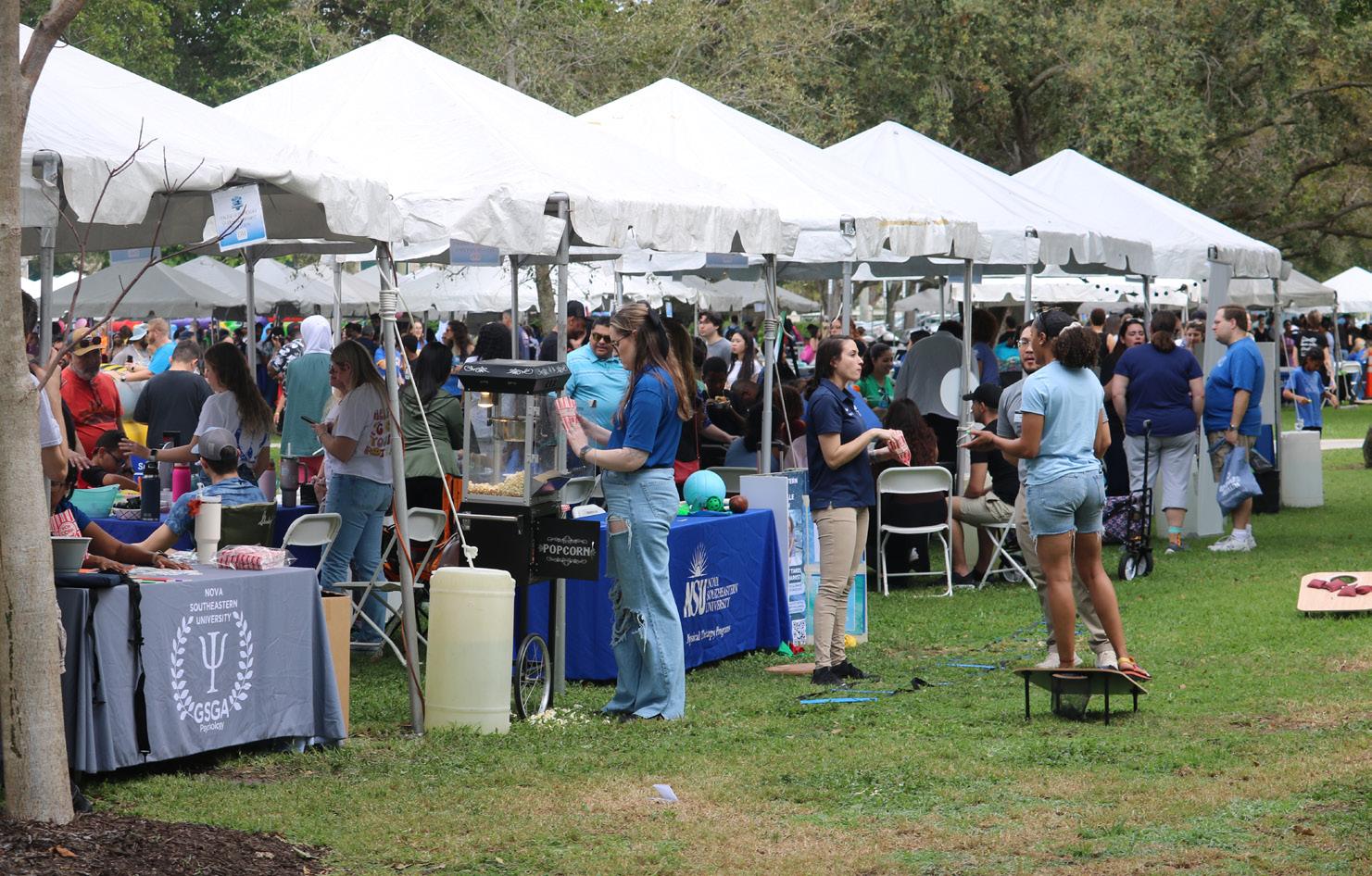
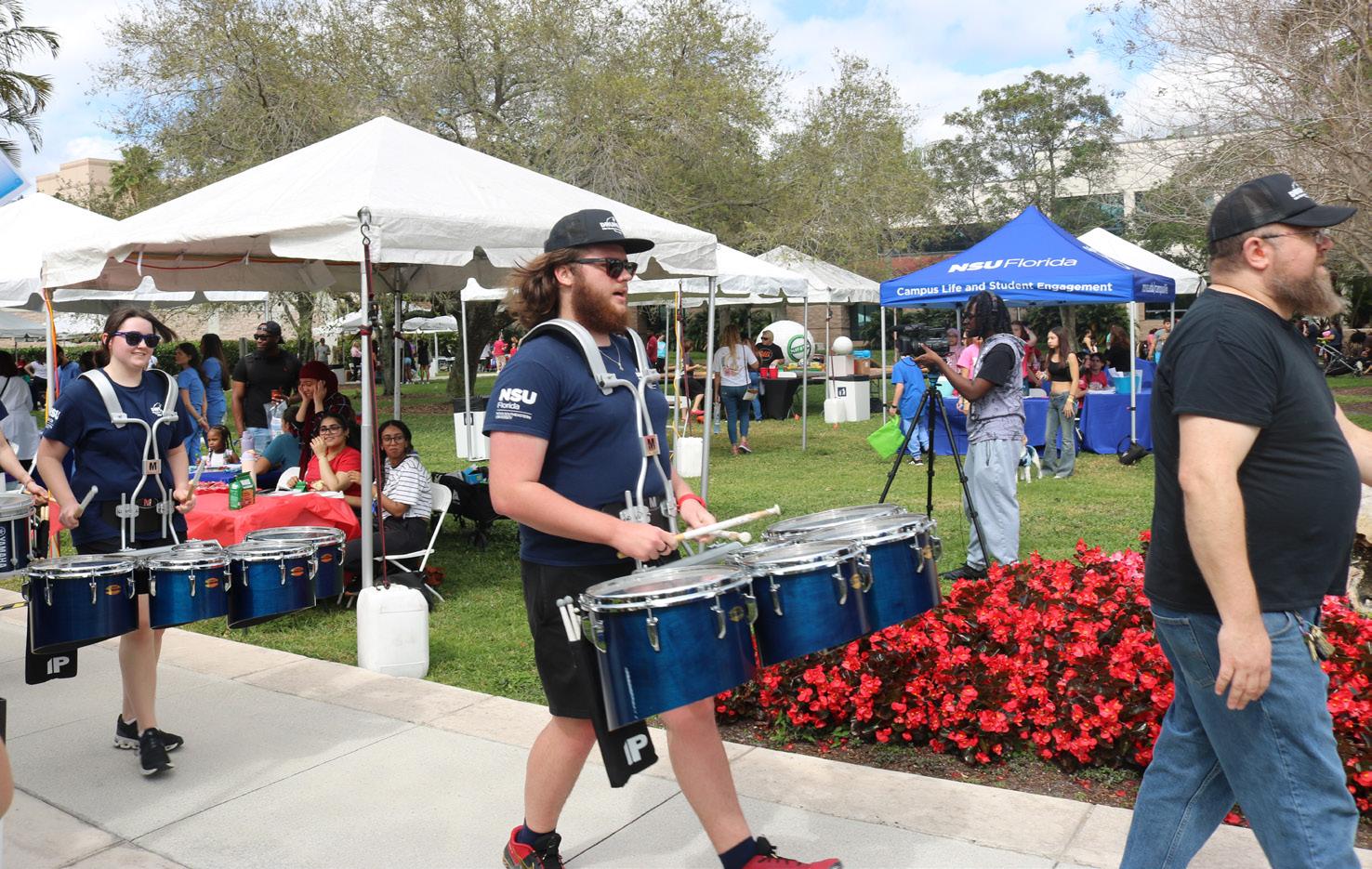


Once a week for the past two years, the Olaya family enjoys “high-quality dining” at Esposito’s Pizza Bar and Restaurant, according to their children who tend to only eat chicken nuggets and pizza. What makes their time at the restaurant memorable is the people who serve them.
“This place is just so special as everyone treats me like a part of their family,” Camila Olaya said. “It’s a good atmosphere that makes me feel at home.”
A sense of community is what keeps them and others coming back.
“My daughters are really picky eaters but coming here, everyone makes them feel like royalty and like they are not alone in their picky eating habits, and I really love that,” Olaya said.
In September 2004, Davie’s Esposito’s Pizza Bar and Restaurant opened its doors for the first time in the Tower Shops before
University Drive was even a thing.
The current owner, Joe Lay, had two failed attempts starting a restaurant before buying Esposito’s. The restaurant is named after Ethan Esposito, a middle-aged Egyptian, who originally ran the restaurant by himself.
The restaurant is praised for its original dishes that stray from traditional Italian food, its incredible customer service, welcoming ambiance and quick service.
The restaurant decor ensures peaceful vibes, while still bringing the excitement of a typical bar.
Fiorella Shepia, general manager, has worked at the restaurant since it opened 20 years ago
“It used to [have] carpet everywhere and pink tables,” Shepia said.
“After the remodeling 10 years ago, we added hardwood and opened up the back and added a coal-fire oven which many other restaurants do not have.”
The restaurant’s staff prides itself on being very family friendly, not only toward the guests but the rest
of the staff as well.
“After moving from Peru, my English was not good, but coming to Esposito’s allowed me to find people that did not care about my accent or where I had come from. Esposito was the first person to treat me like part of his family. [The restaurant] takes care of its employees and still considers us family,” Shepia said.
Esposito’s emphasizes Italian culture, which serves as the inspiration for the well-rounded menu. Customers often return to the restaurant for the pizza and specialty dishes.
“Our most popular dish besides the pizza is the Penne Espositogrilled salmon sautéed in a brandy sauce, with fresh asparagus served over penne pasta,” Lay said, who helps out in the kitchen almost every night.
The menu offers a wide variety of dishes, including some not typically found at other Italian restaurants, like Fiocchi di Pera and Pork Chop Palliard. The menu includes
two kinds of pizza, coal-fire and New York style. The restaurant also serves homemade bread, pasta, fish, chicken, veal, salads and desserts.
“This place has become the best pregnancy craving, I love coming back here to consistently see the same flavors, atmosphere and food that I love eating. I can’t wait to come back here with my newborn baby because to us this place is home too,” Olaya said.
For more information:
Address: 2221 S University Dr, Davie, FL 33324
Phone: 954-916-5667
Price range: $12-$39 per dish
“I knew at this point I couldn't keep living this way, but I didn't want to stop. I knew deep down I probably need this help, but it's such a tricky disease, because it'll make you think you can sustain this type of behavior,” Berkebile said. “If you want to sustain life like that, you're going to be alone forever because all that takes up your thoughts is ‘food, food, exercise, food’ and that's it. That's all that’s on your brain all day when you're not nourishing your body properly.”
Family based therapy got Berkebile onto the right track, but when she transitioned to college, she relapsed.
She then found a therapist to help her through, whom she still sees today.
“She saved my life,” Berkebile said. “She told me, ‘Emily, I know you're going to hate me for saying this, but I really think you need to go to inpatient treatment because this is consuming you.’”
Berkebile went to Oliver-Pyatt Center in South Miami for treatment, following her therapist’s advice.
“It saved my life. It really did. It was so hard. It was awful because you know you're there to face a disease that you want to keep living with,” Berkebile said.
At 19, she was the youngest patient there. Her roommate was almost 50.
“Being in that environment
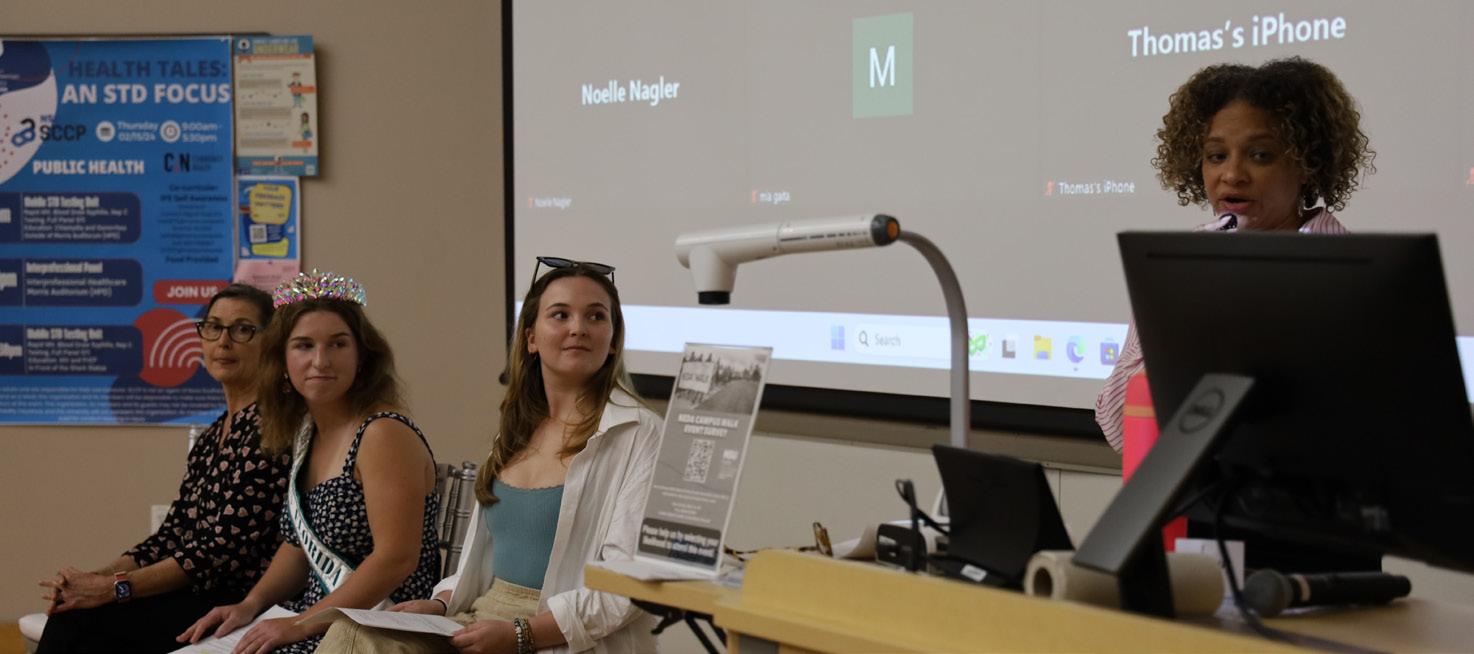
was a wake-up call for me. Eating disorders don't have age limits. They don't have restrictions,” she said. “It's a tough disease to work through, for sure, but the people that I've met along the way in my recovery have inspired me.”
After returning to NSU, Berkebile completed an independent study last semester under Christi Navarro, assistant professor in the Department of Public Health, where she researched eating disorders through the lens of the Social Ecological Model. The deliverable of this study is the upcoming NEDA walk, which Navarro helped organize.
"She came to me the first week of class, and she said she wanted to do an independent study with me, and I've never met this student before," Navarro said. "The director of the program had said, 'You're interested in an independent study on eating disorders. Go see Dr. Navarro. She does all the mental health stuff.' My initial response was, 'No,' and then she just started telling me why, and I'm like, 'Oh, man, I can't say no to this.'"
Berkebile was able to get in touch with Priya James, associate director of Community Engagement for NEDA. James loved her story and passion so much that she helped Berkebile plan this as a national, not just campus-wide, event.
To get the word out about the walk, Berkebile also planned two smaller events: a sunset yoga event
Jan. 25, outside Mako Hall which raised $85, and a panel discussion on eating disorders in the Health Professions Division/Terry Building on Feb. 13.
The panel featured Berkebile; Navarro; Berkebile’s therapist, Rebecca Schovitz; Meghan McNabb, sophomore chemistry major; Alexa Cohen, sophomore psychology student at the University of New Hampshire; and Sports Dietitian for NSU’s Athletics Program, Marilyn Gordon.
McNabb and Cohen are also in recovery. McNabb said her experience as a student-athlete has helped her in her journey.
"I knew that I couldn't be putting myself on this path anymore, that I had to make a change, and the change started with me," McNabb said. "I think that's when I tapped into a little bit of that discipline and perseverance from being an athlete."
Cohen sought treatment in high school. She also organized a NEDA walk on her university's campus because she wanted to dispel misconceptions about eating disorders.
"It can affect anyone of any size, shape, and race. I feel like it's very stereotypical that you only have an eating disorder if you're super thin or female, and it's just so far from true," she said
Berkebile hopes the panel educated people about the illness.
“As someone who has personally struggled through an eating disorder and is currently living in recovery, I think it's very important for people, like peers and friends, to know about the disease and what makes it so hard,” she said. “At the end of the day, it’s such a lonely disorder. The goal of [eating disorders] is to isolate you far from your social network and anything. It wants you to be alone.”
She especially stressed that eating disorders go beyond just their physical symptoms.
“The eating disorder voice itself is so loud, and the more you listen to it, the louder it gets, and it's just this vicious cycle,” she said. “It's a
misconception that it's just about eating. It's a mental illness.”
Berkebile said many may not even know they need help.
“I think a lot of people who struggle with eating disorders don't even know that they are struggling with disordered eating until it takes so much of your life that it's all you can think about,” she said. “I want to stress how important it is to recognize when food and eating and exercise become such a big portion of your thoughts that you need to address it as soon as possible, because I didn't and I thought it was normal."
She also said there is no specific appearance or feeling that corresponds with each eating disorder.
“You don't have to look malnourished to be struggling with something this big,” she said. “The label of whatever eating disorder you have shouldn't matter because all of them are producing the same thoughts, the same struggles, the same emotions, the same preoccupation with your body. All you can think about is the way you look and how uncomfortable you feel in your own skin. It's just awful.”
She advised students struggling with eating disorders to seek out off-campus help and recommended her treatment center, Oliver-Pyatt Center. She said Henderson Behavioral Health in the Student Affairs Building may be helpful as a bridge to further care.
“I would just want someone at Nova struggling to know there's hope,” she said.
For more information:
Scan this QR code to be directed to the Mako News Linktree, which includes eating disorder support and resources

Emma Johnson, freshman biology major, is concerned about the latest figures from the International Agency for Research on Cancer. The latest figures project a surge in cancer cases, with estimates exceeding 35 million in 2050, compared to the approximately 20 million recorded in 2022. This is a 77% increase on what was previously predicted.
“It is definitely worrying to me. It's a reminder of the need for greater investment in research and preventive measures,” Johnson said. “As a student, it motivates me to focus my education towards contributing to the fight against cancer
and making a positive impact on future health outcomes."
Despite Johnson's worry, Stephen Grant, professor in the Dr. Kiran C. Patel College of Osteopathic Medicine and a founding member of the Center for Environmental Oncology at the University of Pittsburgh Cancer Institute, said that this increase is not a cause for concern.
“It is absolutely true that this is an issue that's going to come down the pipe and requires being addressed, but it is a reflection of a positive thing,” Grant said. “Cancer is basically a disease of aging. There is a bigger increase in people in the Third World reaching the age of 65 where cancer becomes an
issue. We call this the epidemiological transition.”
There are ways to lower cancer death rates. Grant said that screenings are an important factor in helping to find and prevent cancer.
“We can't treat you if we don't know you have a problem,” Grant said. “Right now, with stage 1 breast cancer, we can cure 90% of the patients. However, in stage 4 breast cancer, it is around 30%. It is very important that we know as soon as possible that you have the cancer."
Cancer can be caused by many factors, including genetics, environmental factors, lifestyle choices and age.
Grant and his research team look
specifically at the genetics approach of cancer to combat it.
“My Ph.D. thesis was on mechanisms of carcinogenesis [cancer incidence]. I did monitoring experiments on people from Hiroshima and Chernobyl and people who had medical exposures and, in fact, demonstrated that if you look at the mutational burden in someone's blood it is a very good predictor of subsequent carcinogenesis,” Grant said.
Priya Pawar, sophomore biology major, is already taking measures to prevent cancer.
“I wear sunscreen whenever I go outside for a long time. I also make sure to eat more organic foods,” Pawar said.

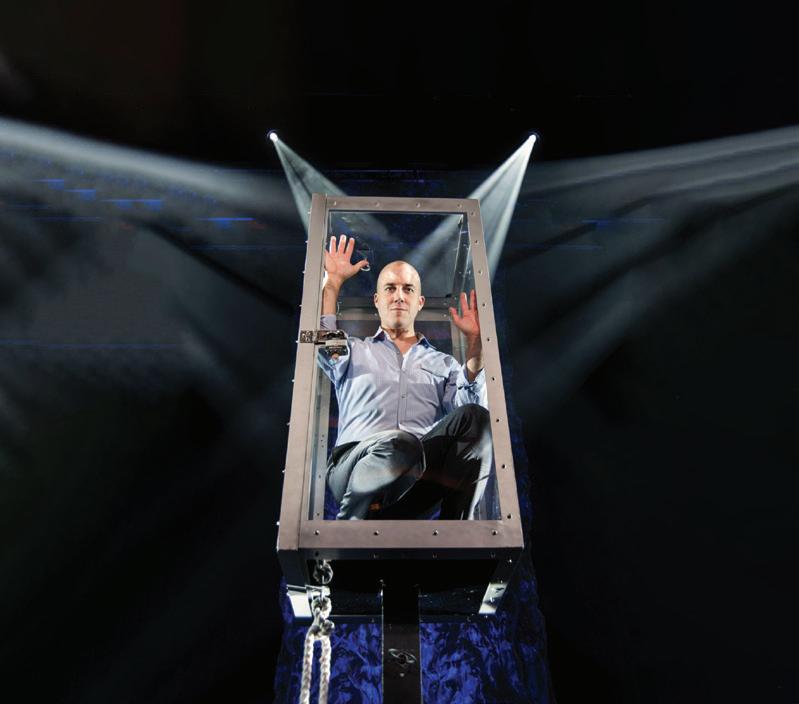
As part of the “Hero of a 1000 Faces” project, Alexander Star, NSU alumnus and Emmy-nominated singer and songwriter, was a featured guest at the Adolfo and Marisela Cotilla Gallery on Feb. 21.
“I'm happy to be a part of a really strong network of Black creatives using their gifts for the greater good to benefit other people. Being a part of this event and this movement is very much so in alignment with who I am and what I want to achieve during my time on Earth,” Star said.
“Hero of a 1000 Faces" is a project that sets out to educate the public through the stories of heroes and change the ways people stereotype.
Working as a high school teacher, Gabriel Andrews, “Hero of a 1000 Faces” producer, taught robotics to kids coming from different demographics. Taking the students on a break to enjoy a nice day playing outside, Andrews remembers seeing the students looking like targets as they ran around.
“I remember the latest shooting, I think outside of Minneapolis and I remember going out, we were taking a break from working in the school lab. It was a nice day and they were running around, throwing Frisbees and throwing footballs. I just remember, honestly, just seeing targets. I just saw them carefree, but they had targets on their bodies as they were running,” Andrews said.
Andrews proposed the idea to Michael Anderson, “Hero of a 1000 Faces” producer. Using the skills they excel at, such as video
production and editing, Andrews and Anderson came together to produce “Hero of a 1000 Faces."
“We thought what can we really do using the skills, the things that we like, the things that we love to do, to really put forward this type of content,” Andrews said. “Get the people to understand that there are some really awesome individuals out there who happen to be Black men. What they contribute and what they do for the society at large is not a reason to be feared, but a reason to celebrate."
Intending to tell the stories and impact of Black men, the producers of “Hero of a 1000 Faces” are looking for certain stories to highlight.
“What really stood out in this project for me in particular is that these heroes and these individuals are all around us,” Anderson said. “The roles of 1000 Faces is not about being famous or having a lot of money. It is really about the impact that these individuals are making in the community, and Alexander Star is definitely one of those individuals.”
Star is one of many speakers set to speak on their accomplishments and journey. Partnering with the Alvin Sherman Library, “Hero of a 1000 Faces” is meant to have a new feature monthly.
“The mission of the Alvin Sherman Library and the university libraries is to be the premier research cultural lifelong Learning center for the university and the community. So celebrating the culture, 14% of our student body and 26% of Broward County residents identify as Black or African-American, so it's important for us with
projects like this to celebrate the culture of the people that that are, walk our campus and walk our community,” said James Hutchins,

vice president for Informative Services and university librarian.




role that nobody else could. Can you tell me what you put into your portrayal that really captured Bob's spirit?
By Luqman GbenroA new movie musical is jamming its way into theaters this month.
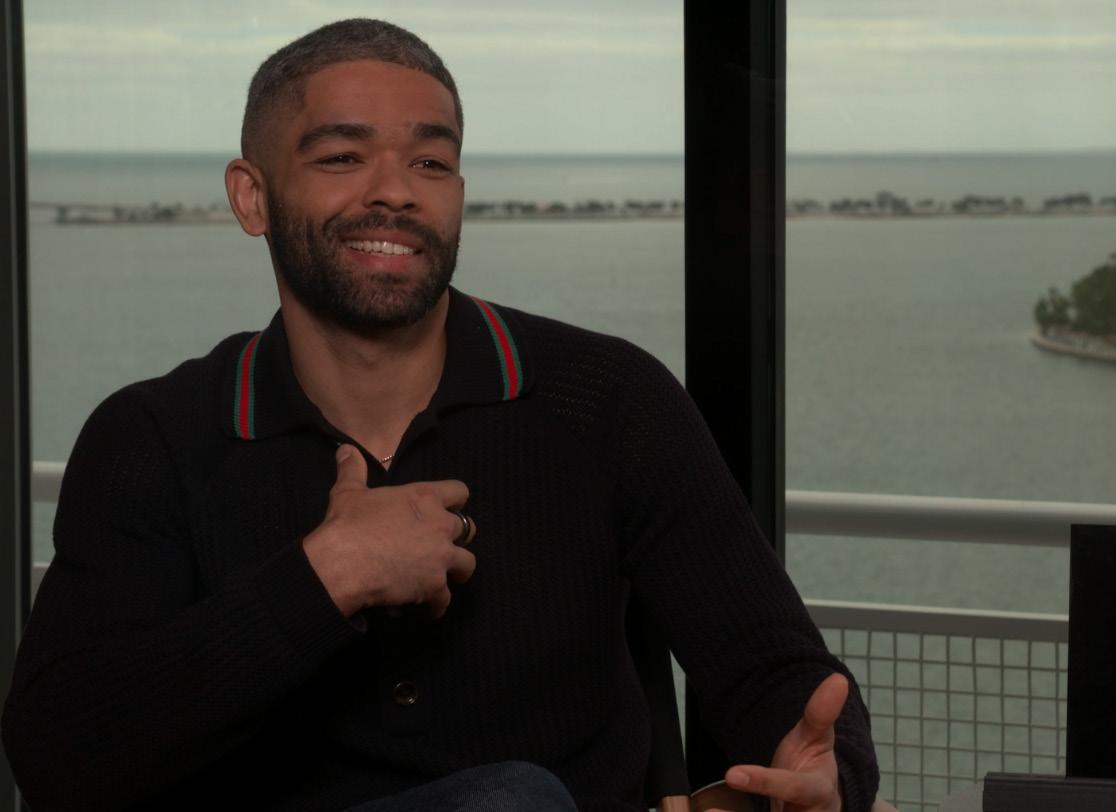
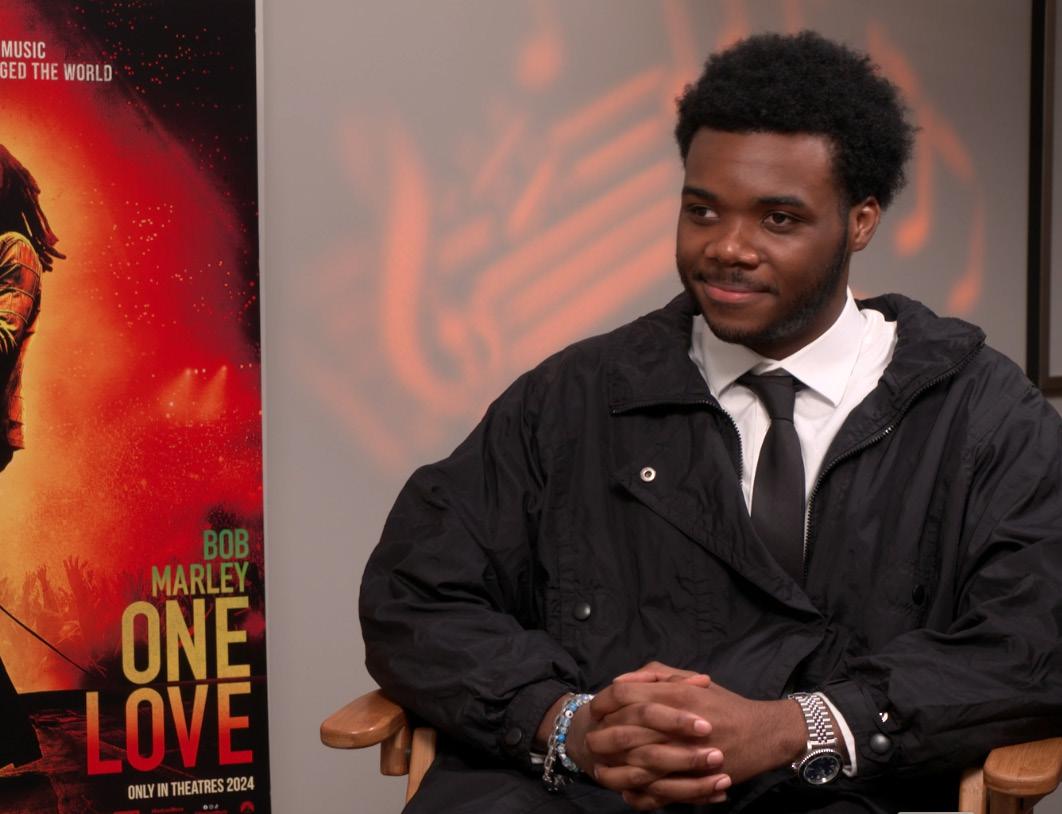
“Bob Marley: One Love” is a dramatic retelling of the reggae singer’s triumph over tragedy and mission to unite a divided Jamaica. Mako Radio attended the South Beach premiere on Feb. 8 and got to sit down for a one-on-one with the film’s star, Kingsley Ben-Adir.
With you playing Nesta the Messenger, I have to ask: What does the film’s message mean to you?
I really had to reflect on the message as it related to Bob personally. So peace, inner peace. Love, selflove. Unity, unity of your people
around you, you know? And getting to understand where Bob was personally with all of those things and learning about that through the memories of the people who loved him most. I also had to check myself with those things and ask, Where am I with inner peace and safety, you know? Especially when, you know, they all nearly died, and out of that trauma came this incredible album and this outpouring of emotion from Bob. They put that album together within months of the assassination attempt. So [it was] just a reflection on all of that, which was the major draw to this artistically, I guess.
In a previous interview, Ziggy Marley said that you brought a certain human element to the
Not to get too much into acting boring stuff, but I don't work externally and showy. I think all of that comes once you understand what his psychology was as a human being, what he was going through, and what his traumas were. Bob grew up in the ghetto, and he saw a lot and went through a lot. It was a journey he went on to get to that universal message. He didn’t just wake up one day and start singing about peace, love, and unity. He had to really figure that out, and it cost him a lot. He dedicated his life to music. [Seeing] his conviction, his work ethic, and how much he put into his music was eye-opening.
It's been about 50 years since the events of the film. And now, in our digital age, how do you think the message of human connection still applies to people who are separated by screens and miles of internet?
Yeah, I don't know. I don't know what the impact of all of this is going to be, because we're really in it. And when I was 12 or 13,
phones were around; we were texting and stuff. [But] the internet and iPhones are new. I didn't have one until I was in my mid-20s. But I feel like, on some level, we're all trying to feel love. We all want to be connected. We all want to feel safe. We all want to feel like we mean something to someone. I think how that idea related to Bob was the investigation really. I think that's what made understanding him as a human being relatable to me and why I thought it could work. He was on his own journey to find inner peace, you know? For me, the movie was Bob's lifelong journey to find peace on an internal level. You just try and hope that, in some way, you kind of connect with him. I was never trying to do an impersonation of him or a mimic of him. It was always just trying to interpret his spirit a little bit.
“Bob Marley: One Love” hit theaters Feb. 14.
Keep an eye on Mako Radio’s Spotify to hear this interview:

What's charting in college radio
The station has noticed a rise in pop and country music but the scene remains firmly indie. Our top artist this week is Ronnie Stone. He blends Indie and pop styles, creating a smooth feeling and a laidback experience. Some of his music has a similar sound to '80s pop, which is good news for fans of that genre. As we roll into next week, we are expecting some new indie and pop releases, matching our current music trend. A few artist recommendations this week: San Fermin, Mumford & Sons with Pharrell Williams, Maggie Rogers, Ty Segall, and Glass Beach.
New podcast: In the Know
In The Know is a new podcast
Want to know
Mako Media staff's favorite songs by Black artists?

brought to you by DJ Faith and DJ Digital where they discuss the status quo and how art influences these existing social norms. The newest episode covered Black history and how creatives shape the culture. From the origins of Black art to its influences on revolutionary movements and the impacts still felt to this day. Tune in every other Thursday to listen.
First off-campus DJ event
Mako Radio will hold its first off-campus DJ remote on Feb. 24 from 3-11 p.m., branching out beyond the university’s grounds. This all-day event will take place at Lime Fresh Mexican Grill in Plantation. Stop by and to socialize listen to music curated by a mix of DJs from the radio station. Location: 801 S University Drive, Plantation, Fla., 33324
Monday Noon-1 p.m. - DJ RAY: 90s-2000s Rock 6-8 p.m. - DJ MYSTICMELODY: Indie 8-10 p.m. - DJ SHORTY: K-pop
Tuesday 12:30-1:30 p.m. - DJ SIRENA: International 6-8 p.m. - DJ BLOSSOM: Soca 8-10 p.m. - DJ LYRIC: Pop
Two new episodes: The B-Side podcast
The B-Side podcast released two episodes this month featuring Assistant Director of Mako Media Network Mike Lynn, and Sports Desk Adviser Mario D’Agostino. Both episodes have explored the indie rock genre of music and related subgenres, such as shoegaze, bedroom pop, indie folk, math rock, and more. The B-Side podcast can be heard on 88.5FM WKPX Sunrise and streamed online every other Friday from noon to 1 p.m.
New episode: Off the Record
In tomorrow's episode of Off The Record, Denisia Martimbor shares the rich tapestry of Black history through music, pop culture, and campus life updates, celebrating the resilience and creativity of Black artists while shedding light on student-led businesses and the
Wednesday 6-8 p.m. - DJ ANT: Indie, DJ MYSTICMELODY: Indie 8-10 p.m. - DJ RAY: 90s-2000s Rock
Thursday 12:30-1:30 p.m. - In the Know (Week A), DJ VENUS: Jazz/Soul (Week B)
6-8 p.m. - DJ NEPTUNE: Indie/ Pop, DJ VENUS: Jazz/Soul 8-10 p.m. - DJ MR. E: Alternative Rock/Pop
behind-the-scenes journey of NSU athletes. Each segment is a vibrant brushstroke in the portrait of Black excellence.
New episode:
That's News To Us
That’s News To Us, hosted by Digital Faculty Adviser Eric Mason, hosted its fourth episode with Sports Desk Adviser Mario D’Agostino and Digressions literary magazine student staff members. That’s News To Us features a variety of segments in a game show formatincluding “Rip Current,” where students test their knowledge of news stories from The Current and “Fako News,” where a guest will hear two fake and one true story and will have to guess which story is real. That’s News To Us is featured once a month and can be heard on Mako Radio’s Spotify.
Friday Noon-1 p.m. - Off the Record (Week A), The B-Side (Week B)
6-8 p.m. - DJ ONYX: Alternative 8-10 p.m. - DJ FAITH: Country-Folk/Blues
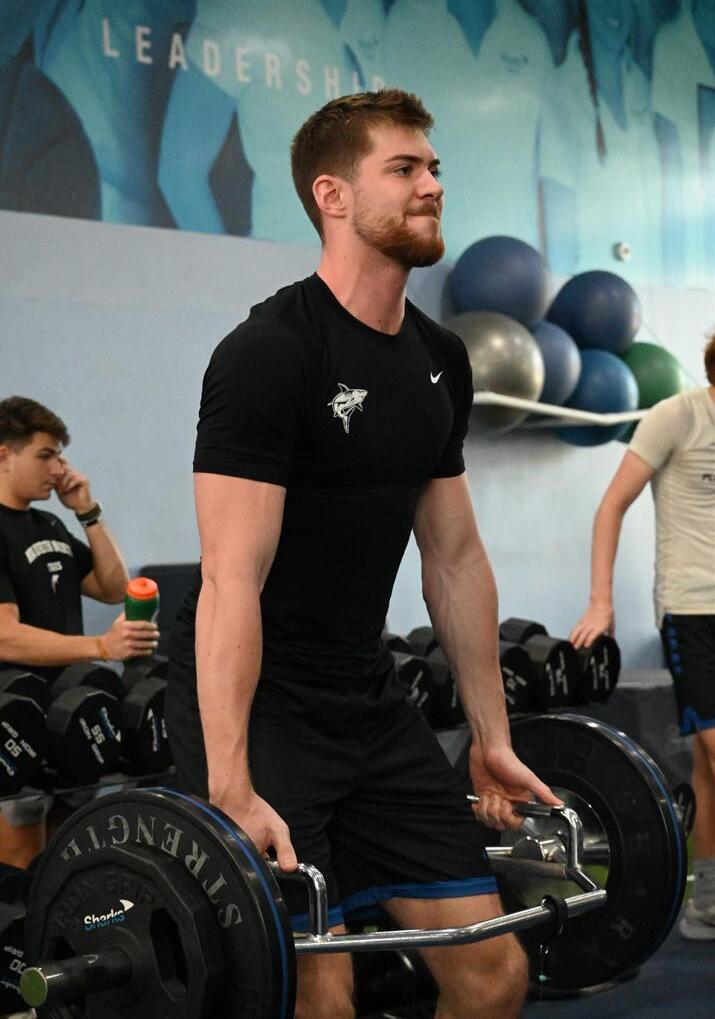
athletic training field has evolved in a variety of ways.
“In my time, healthcare has taken a turn to become all-encompassing. When I first started in the field, it was mainly treating just physical injuries, but now we also have studies into mental health awareness to add another layer of care for our student-athletes,” Gatens said.
In the fall of 2013, Gatens became the head athletic trainer for Research and Development, which led to his spearheading research efforts for the NSU Sports Medicine team. In this role, he saw the institution of a sleep education program, which is now available for all student athletes at NSU.
can be. We, as staff, emphasize to our community the importance of being aware and having personal awareness,” Gatens said. "I think the biggest change that we have seen in our NSU athletics community is that our athletes and coaches have grown to be more proactive when they don’t necessarily feel great and seek help immediately rather than waiting to see.”
commitment of time to us during the week of practices, especially when we have a fluctuating schedule," Nichols said. "Most importantly, he helps keep us on the field and feeling good.”
Gatens wants student athletes to be prepared and have everything they need for when they graduate.
By Bella Giaquinto and Josh LeathermanThe prioritization of health and wellness within NSU’s Athletic Training department has led the Sharks to greatness this past year, with even higher expectations for 2024.
Dustin Gatens, the assistant athletic director for Sports Medicine at NSU, returned to the university in 2021 after an initial term serving as athletic trainer for softball and women’s soccer from 2006 - 2017.
Gatens graduated from Temple University in 2004 and received his master's degree from Florida International University in 2006. During Gatens's time at NSU, the
"The thought that started the program was sparked by listening to Dr. Ana Imia Fins, who works in the NSU College of Psychology, while she was speaking at an annual retreat that focused on mental health,” Gatens said. “We don’t have D1 money here for all the luxuries that exist for sleep, but we do have D1 minds behind the program. Our ultimate goal is to expose and educate our student athletes to the benefits of proper sleep."
During his time away from NSU from 2017-2021, Gatens served as an athletic trainer at Holy Cross Hospital during the peak of the COVID-19 pandemic. Since returning to NSU in 2021, Gatens and his staff have maintained a number of adaptations that were implemented during the pandemic.
“With how COVID affected all of us, I think we got a better understanding and perspective on how the general basics of personal care
With South Florida being known as a cultural melting pot, the student-athlete population at NSU has a large percentage of players who come from a variety of countries. While Gatens and his staff provide care for all student-athletes, additional attention is given to international student-athletes so they remain in contact with the athletic training staff while off campus.
"Zoom is a big help for us to stay in contact with our players during breaks in the school year. Players can stay in contact with us no matter the time zone, and we will help them or try to put them in contact with someone to help wherever they are,” Gatens said. “We make plans with all of our athletes before they leave, but things happen, and we adapt.”
Ultimately, Gatens and his training staff do whatever it takes to support their athletes.
Charlie Nichols, junior pitcher for NSU baseball, appreciates how Jason Palmateer, head athletic trainer for basketball and men's and women's golf, is always open and accessible.
“He gives us plenty of options when it comes to getting care on and off the field. He gives a great
“Our biggest goal here is to make our players feel safe and cared for and to help them gain personal agency that they can take beyond their time here at NSU,” Gatens said.
NSU Athletic Training staff includes:
Amy Gatens, head athletic trainer, covers men’s basketball and the NSU Sharkettes.
Jason Palmateer, head athletic trainer, covers baseball and men’s and women’s golf.
Jessie Bollback, head athletic trainer, covers volleyball and men’s and women’s swimming.
Lily Goluszka, athletic trainer, covers women’s basketball and men’s and women’s cross country/track.
Chelsea Fessenden, athletic trainer, covers softball and women’s soccer.
Cheyann Sales, athletic trainer, covers rowing.
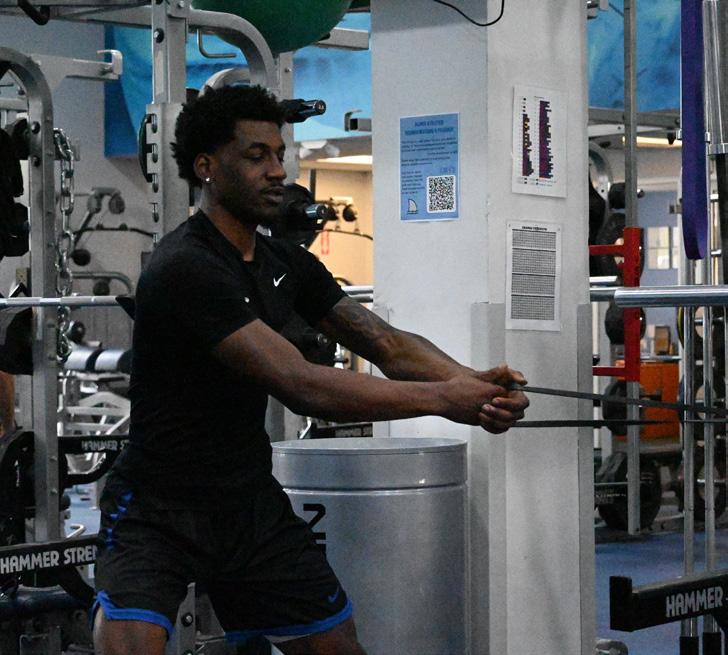
The Strength and Conditioning program for NSU’s student-athletes has been a contributing factor to the recent success NSU athletics has had on a national level.
Steve Orris is the assistant athletic director for Sports Performance and Student Athlete Wellness, as well as the head strength and conditioning coach. He currently trains the softball team and assists with volleyball and women’s soccer.
He began his career at the University of Florida, training the football team from 2003-2004, the baseball team from 2004-2009, the softball team from 2004-2011, and the women’s basketball team from 2009-2011. He came to NSU in 2011 and has made substantial changes to the program due to his experience at a Division I university.
“When I got here, I tried to recreate the big program I came from, so since then we’ve added a lot of funding, facilities, and equipment.
We have definitely made it a priority,” Orris said.
The growth and emphasis on strength and conditioning training at NSU can be seen through the number of staff.
“Most Division II programs have one, maybe two, strength coaches. Here at NSU we have five, which shows how much we have put into this training,” Orris said.
During Orris’s almost 13 years training various teams here, he was able to watch one of his former athletes develop a similar passion.
Andrew Labosky is the assistant strength and conditioning coach, who trains baseball, men’s and women’s swimming, and men’s and women’s basketball. He played baseball for NSU from 2017-2021.
“Because I played baseball here for five years, I learned strength and conditioning inside and out. I fell in love with it and knew I wanted to be a part of this program,” Labosky said
Strength and conditioning training involves lifting weights to get stronger, but the program here at
NSU stresses the importance of lifting for injury prevention.
“We focus a lot on injury prevention because we want our athletes performing at a high level all of the time, and they can’t do that if they’re injured,” Orris said. “The teams that win championships are the healthiest teams at the end of the season, so we spend a lot of time making our athletes’ bodies strong and we’ve seen the results over the last several years."
Another fundamental aspect of the strength and conditioning program is the environment the coaches foster during training.
“I always tell my athletes to leave your problems out of the weight room. This is a place where we have fun, work hard, and focus on ourselves,” Labosky said.
This approach seems to have worked for the athletes.
“We have created a culture where the athletes don’t just come in for their team sessions, but whenever they want to get work in. This comes from the work ethic we have helped instill in them,” Labosky said.
While athletes are working on their strength and conditioning, they are also working on their mental toughness and developing life skills.
“Responsibility, grittiness, mental toughness, and confidence are all values our athletes use in training, but they will also use them as they venture out into the world after college athletics,” Labosky said.
Taylor Swift, an American singer-songwriter, has sparked a record-breaking surge in NFL viewership due to her relationship with Travis Kelce, Kansas City Chiefs allpro tight end.
Throughout the past year, Swift has become the most popular recording artist and songwriter in the United States, and has earned various achievements including highest album sales, physical album sales, digital album sales, and digital track sales.
Swift’s public image and recent
relationship with the Chiefs star has led to an influx of young women interested in sports. Erin Andrews, FOX sports broadcaster, credits Swift with helping more women become passionate about football. Swifties, the endearing name for her fan base, have become captivated by professional football over the past four months. Swifites and NFL viewers have called this the “Taylor Swift Effect,” as the global pop star has brought new viewership and interest to the sport.
On Sept. 24, 2023, Swift attended her first Kansas City Chiefs game, unaware that her presence would
generate $331.5 million in brand value for the Chiefs and the NFL. Swift’s support for Kelce during the game also led his jersey sales to rise nearly 400% and caused future ticket prices to rise by 43%, only a few days later.
Swift successfully increased the overall NFL viewership, especially among teenage girls, raising their engagement by 53%. According to NBC Sports, Swift’s attendance at the “Sunday Night Football” game featuring the New York Jets against the Kansas City Chiefs on Oct. 1, 2023, averaged 27 million viewers.
Super Bowl LVIII was the most
watched TV broadcast since the moon landing in 1969, averaging 123.7 million viewers. A record of 202.4 million people also watched at least part of the game. Partial credit can be given to Swift, as her appearance with Blake Lively, rapper Ice Spice, and her embrace of Kelce after the Chiefs won were all highly publicized and prioritized by news media.
Some NSU students have particularly felt the impact of the “Taylor Swift Effect” throughout the 2023-2024 NFL season. Here is what they had to say.
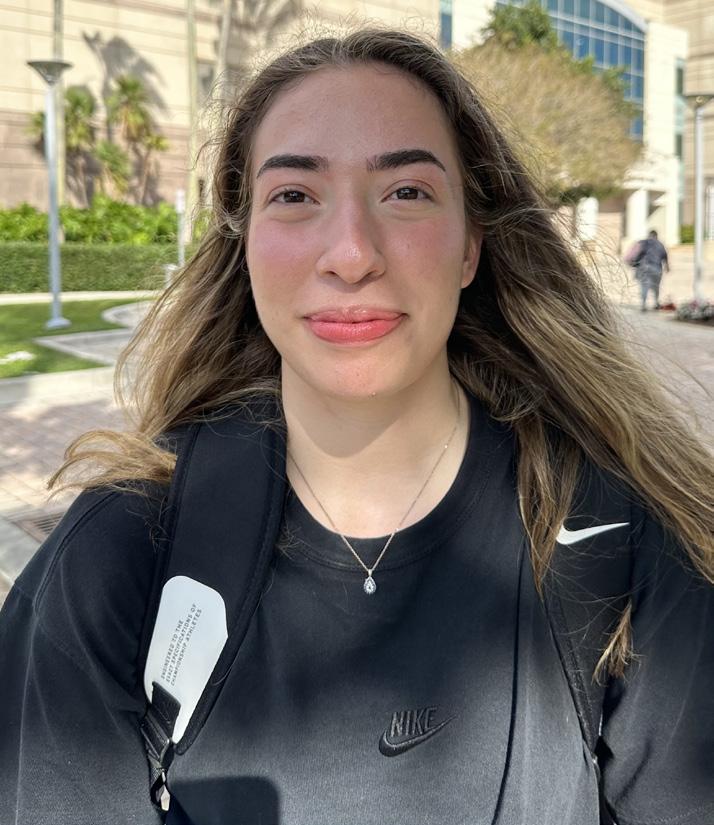
"I had no interest in American football, but my interest definitely sparked after I learned Taylor Swift's boyfriend was playing for an NFL team," said Zeyno Isil Seren, junior finance major.
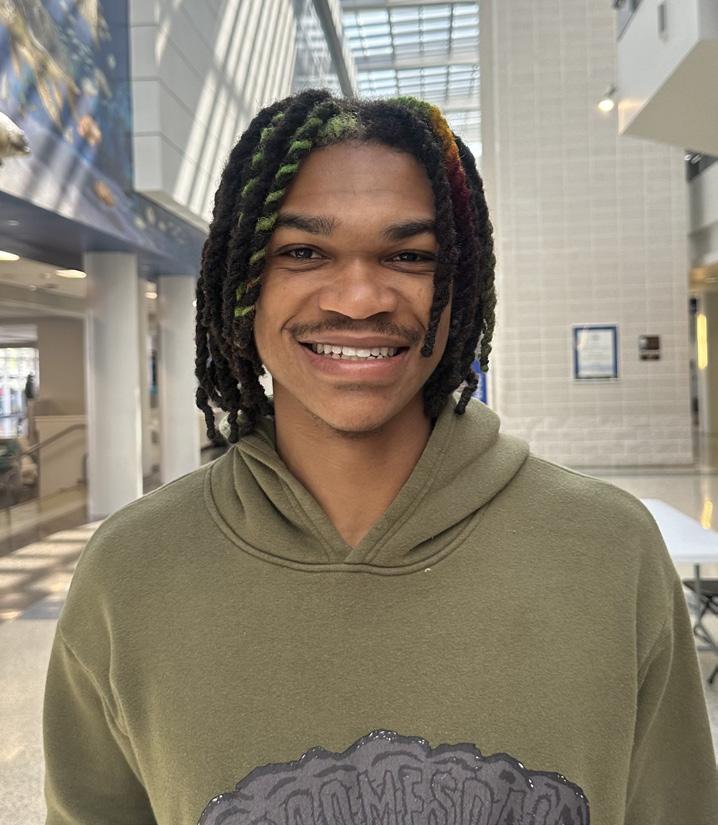
"I understand she’s supporting her man but her presence is drawing attention away from the interest of the game," said Trey Doomes, senior marketing major.
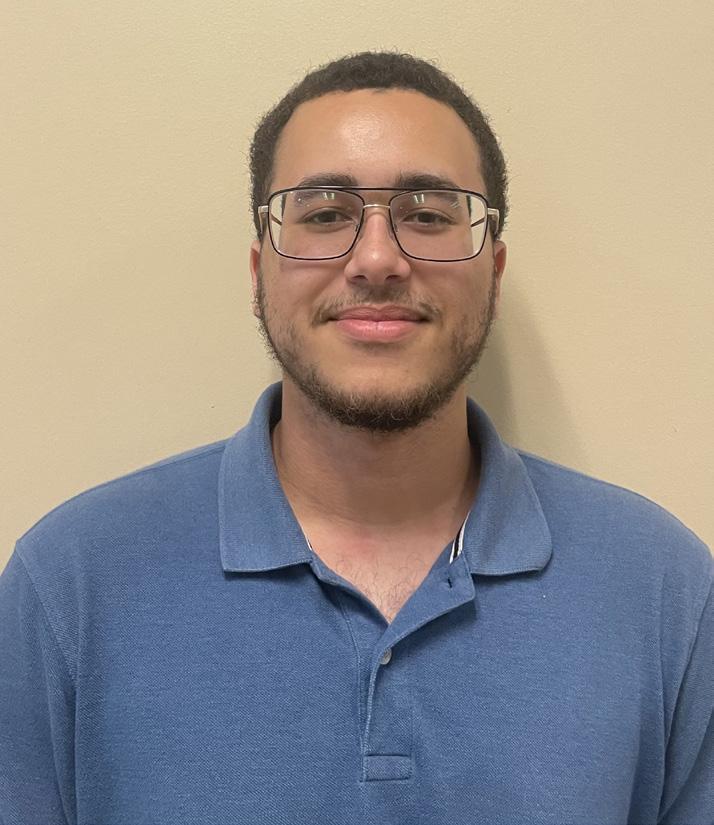
"I think Taylor Swift made me less interested in the NFL because they focused too much on her and less on the game," said Brandon Catalano, senior communication major.
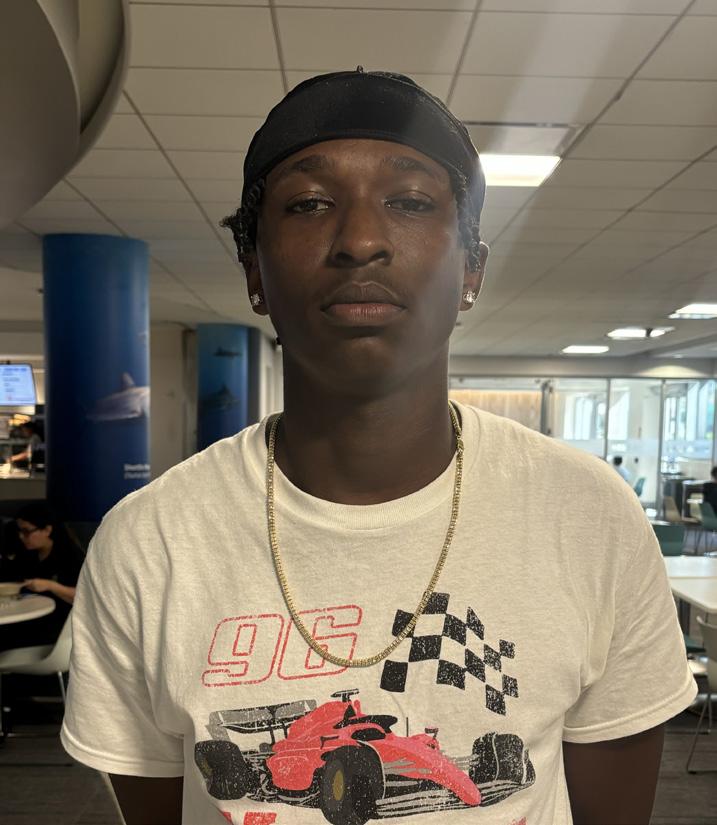
"I like that she brings the non-football people into the sport which attracts more viewership for football in general," said Seth Walcott, sophomore finance major.
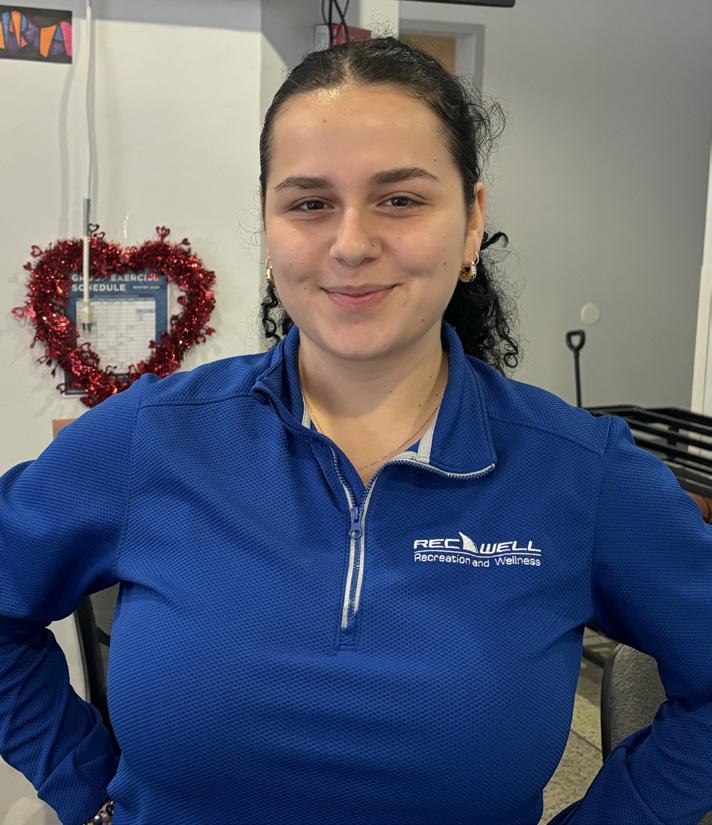
"I feel like she impacted the interest of younger girls who are now watching because of Taylor Swift. It hasn’t really done much for her career financial wise but the NFL is definitely capitalizing off of her face," said Emily Troy, junior political science major.
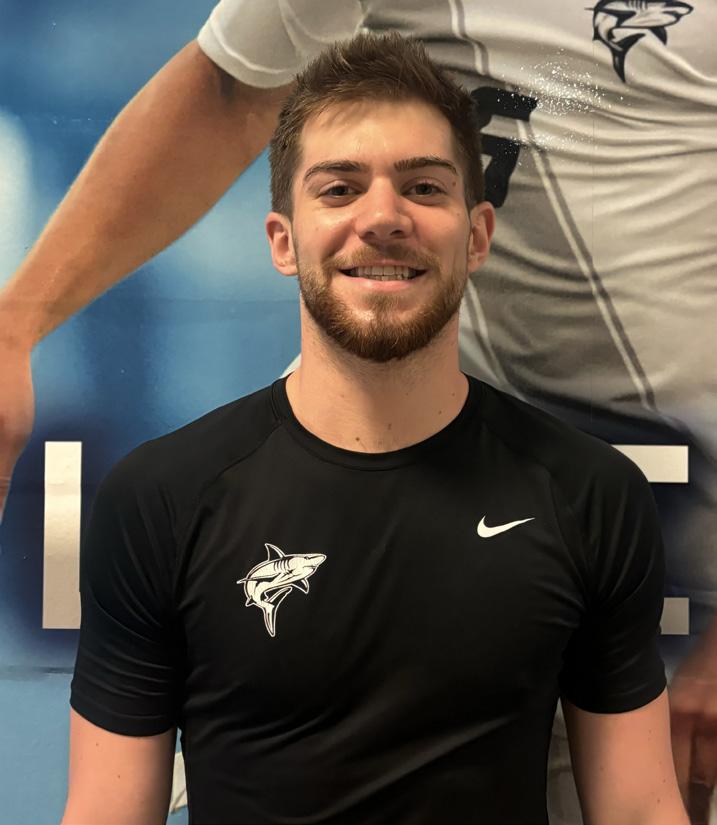
"I like Taylor Swift's involvement and I feel like the media overkill it. She looked really pretty in the Super Bowl," said Alex Mangold, entrepreneurship graduate student.
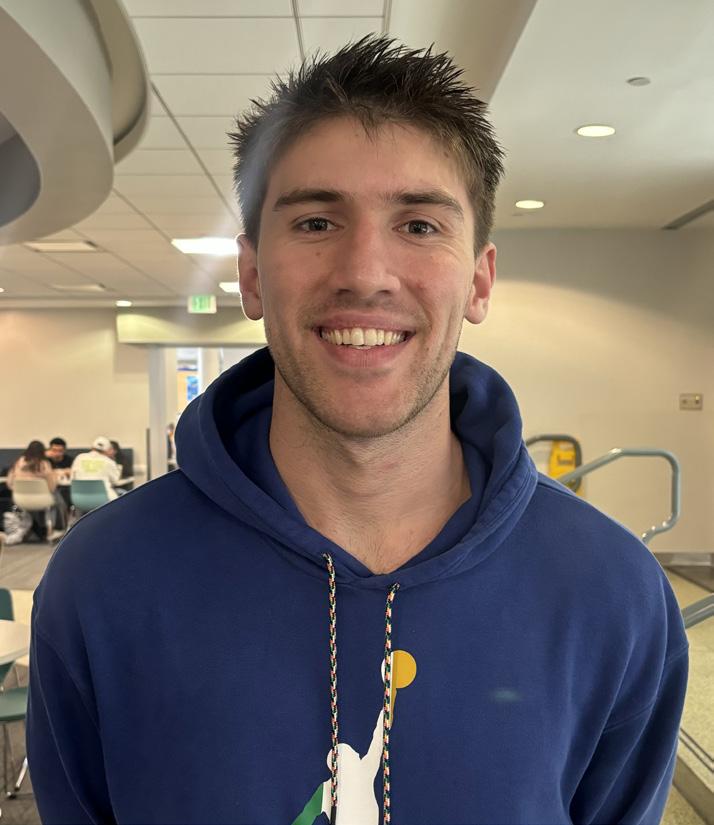
"I noticed that Taylor Swift definitely brought more people and it made the NFL more popular. Even if people didn't like her and didn’t want to watch the Superbowl because of her, they watched it anyway," said Ryan Davis, sophomore communication major.
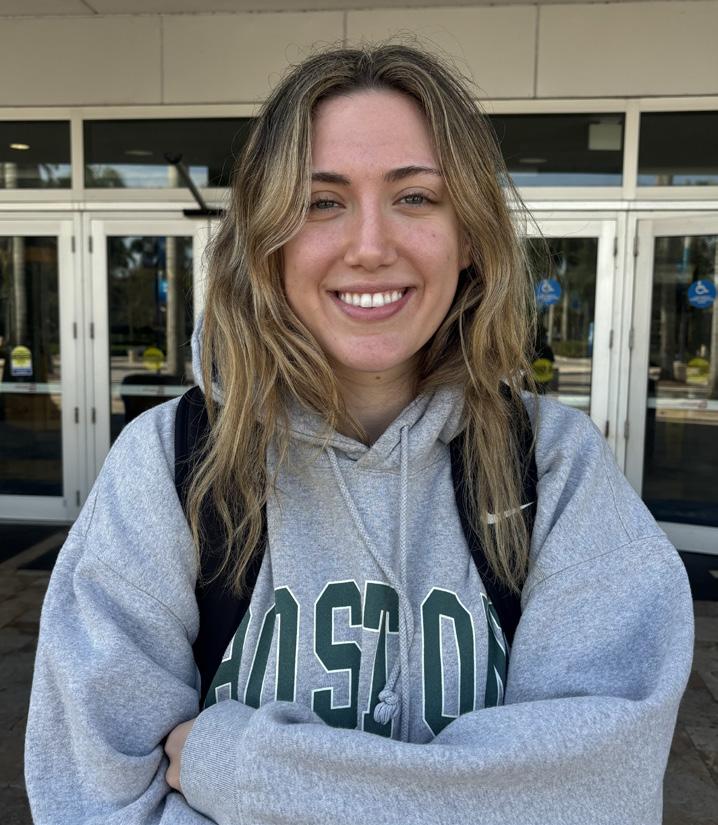
"I like Taylor Swift and it was my first time watching the Superbowl. I definitely got more interested since Taylor Swift got involved," said Suzan Kinran, senior communication major.

 By Josh Leatherman and Oliva Zolk
Women’s Swimming, Feb. 18
For the fourth straight season, the Nova Southeastern University Women's swim team has won the Sunshine State Conference Championship. Emily Treischmann repeated as Sunshine State Conference Swimmer of the Meet, scoring 80-points for NSU with her wins in the 800 Freestyle Relay, 1000 Freestyle, 200 Freestyle, 400 Medley Relay, 500 Freestyle, 1650 Freestyle (a new SSC and Meet record), and the 400 Freestyle Relay.
Men and Women’s Track, Feb. 17
The Nova Southeastern University track teams opened their season at the UT Spartans Open on Saturday evening. NSU had six top10 finishes led by a second-place finish from William Watson in the 1500.
Women’s Swimming, Feb. 17
The Nova Southeastern University Women’s swim team returned to the pool at FAST for day four of the 2024 Sunshine State Conference Championships. The Sharks added to their hardware collection, bringing their total medal count over four days to 14 gold medals, 13 silver medals and 11 bronze medals.
Men’s Basketball, Feb. 17
The second-ranked Nova Southeastern University Men's basketball team continued its dominance as the regular season winds down, earning its eighth consecutive win over the Palm Beach Atlantic Sailfish 115-96. MJ Iraldi led the
Sharks, with 21 points (7-12 FG), eight rebounds and three steals in the victory. Mike Moore (15 points), Trey Doomes (15), Ryan Walsh (12) and GianFranco Grafals (11) all contributed double-digit points off the bench for the Sharks.
Men’s Baseball, Feb. 17
The Nova Southeastern University Men’s baseball team lost a series to the Lander Bearcats over the weekend at the NSU Baseball Complex. The Sharks took game one of the doubleheader, 4-1, while dropping the series finale by a score of 9-7.
Women’s Tennis, Feb. 17
In a battle of the top-ranked NCAA Division II women's tennis programs, the No. 2 Nova Southeastern Sharks and the No. 1 Barry Buccaneers squared off at the Rolling Hills NSU Tennis Complex. The Sharks fell to the Buccaneers 5-2, losing its first match of the 2024 season.
Women’s Basketball, Feb. 17
The 21st ranked Nova Southeastern University Women's basketball team earned its 20th win of the season on Saturday afternoon, defeating Palm Beach Atlantic in an overtime thriller from Rubin Area. Double digit efforts from Morgan Kane (19), Alana Ellis (15), Nicole Scales (14), Kailyn Terrell (13), and India Shepherd (10) powered the Sharks to victory.
Women’s Softball, Feb. 17
The number 15 ranked Nova Southeastern University Women’s softball team completed a series sweep of Eckerd College from the
Turley Athletic Complex in St. Petersburg, Fla. A three-RBI performance from Alexis Smith powered the Sharks.
Men’s Baseball, Feb. 17
The Nova Southeastern University Men’s baseball team fell in extra innings to the Lander Bearcats by a final score of 9-8.
Women’s Softball, Feb. 16
The number 15 ranked Nova Southeastern University Women’s softball team kicked off SSC play with a doubleheader sweep of the Eckerd Tritons. NSU won game one 5-1, and followed that up with an 11-3 victory in game two.
Men and Women’s Swimming, Feb. 16
The Nova Southeastern University Men's and Women's swimming teams continued competition at the 2024 Sunshine State Conference Championships in Ocala. The Sharks continued to dominate the event, adding five gold medals, three silver medals, and four bronze medals.
Women’s Basketball, Feb. 13
Following a record breaking 17 straight victories, the Nova Southeastern University Women's basketball team was recently ranked 21st in the latest WBCA Coaches Poll. The Sharks make their first appearance in the poll after entering the season unranked.
SSC Players of the Week, Feb. 12
The Sunshine State Conference announced the Players of the Week for the week of Feb. 5 – 11.
Nova Southeastern University student-athletes Brenna Lokeinsky (Softball), Morgan Kane (Women's Basketball), Maia Samuelsson (Women's Golf), Natalie Espinal, (Women's Tennis), and Mike Hay (Men's Golf) earned honors following their outstanding performances.
Men’s Baseball, Feb. 11
The Nova Southeastern University Men’s baseball team lost a close game against No. 20 Mount Olive, 7-6.
Women’s Softball, Feb. 11
The fifth ranked Nova Southeastern University Women’s softball team swept the sixth ranked East Stroudsburg Warriors in doubleheader play. NSU won game one 9-1, following that up victory with a 5-4 walk off win in game two. Alisha Lanyon had a critical hit in the bottom of the seventh inning that powered the Sharks to the game two victory.
Men’s Basketball, Feb. 10
The second-ranked Nova Southeastern University Men’s basketball team won its seventh consecutive game, defeating the Embry-Riddle Eagles 99-81 from the ICI Center.
Women’s Basketball, Feb. 10
Morgan Kane's clutch free throws propelled the lady Sharks to victory over Embry-Riddle by a final score of 63-61. With the victory, the lady Sharks extend their win streak 17 games.
MONDAY
26
Black History Month: Friday Matinee
3 p.m. - ZOOM
Florida's got Soul!
Emporium
Board Game Night at Gulf Stream
1 p.m. - Gulf Stream Brewery & Pizzeria
ArtServe's First Exhibit
9 a.m. - ArtServe
West African Drumming Class: Rhythms of the Continent
Noon - 4487 N University Dr, Lauderhill, FL
Sunny Days/Starry Nights
11 a.m. - NSU Art Museum Fort Lauderdale
Grabbitz with William Black
6 p.m. - Revolution Live
ABBA Under the Starts
6 p.m. - Conrad Fort Lauderdale Beach
Tapestry: The Carole King Songbook Musical
7:30 p.m. - Lauderhill Performing Arts Center
Scavenger Hunt for Fort Lauderdale
3 p.m. - 1223 NW 2nd Ave, Fort Lauderdale, FL
Hard Rock Miami Dining Experience
Noon. - Bayside Marketplace
THURSDAY Black History Month: Happy Hour Book Club
6 p.m. - ZOOM
5:30 p.m. - Adolfo and Marisela Cotilla Gallery, Alvin Sherman Library 29
FRIDAY Enrique Iglesias
8
7 p.m. - Amerant Bank Arena
Karaoke Night at 26 Degree Bowling
3:30 p.m. - 2600 E Atlantic Blvd, Pompano Beach, FL
Directions and Rules: Please send your answer (no need to send any additional scratch work or justification) to Dr. Jason Gershman, chair of the Department of Mathematics, at jgershma@nova.edu no later than 5 p.m. on Wednesday, March 13. The correct answer to this question will appear in the next issue of The Current.
All members of the NSU community are invited to submit their answer and participate. Every member of the NSU community who submits at least one answer during the 2023-2024 school year will be invited to attend a celebration in April as part of Mathematics and Statistics Awareness Month.
The undergraduate student who submits the most correct answers during the contest year will receive the grand prize of a $50 gift card courtesy of the Department of Mathematics. If, at the end of the contest year, multiple students are tied for the contest champion, a tiebreaker question to determine the grand prize winner will take place where the fastest person to answer correctly wins the grand prize.
Question: For NSU’s upcoming Pi Day celebration (to which you are all invited to, on Thursday March 14 at noon outside of the Parker Building), suppose that the Department of Mathematics has a budget of $150 to spend on dessert pies to buy for the event. Mini pies (4 inches in diameter) cost $1.29 each. Small pies (6 inches in diameter) cost $3.79 each. Medium pies (8 inches in diameter) cost $5.79 each. Large pies (10 inches in diameter) cost $7.79 each. To maximize the surface area of pie purchased, how many of each pie should the department purchase?
__ Mini Pies, __ Small Pies, __ Medium Pies, __ Large Pies