INSIDE: THE INTERIM DIARIES, WHERE RESILIENCE MEETS THE ROAD AND MEDICINE 3.0 WITH ANAND PATEL ’02

INSIDE: THE INTERIM DIARIES, WHERE RESILIENCE MEETS THE ROAD AND MEDICINE 3.0 WITH ANAND PATEL ’02
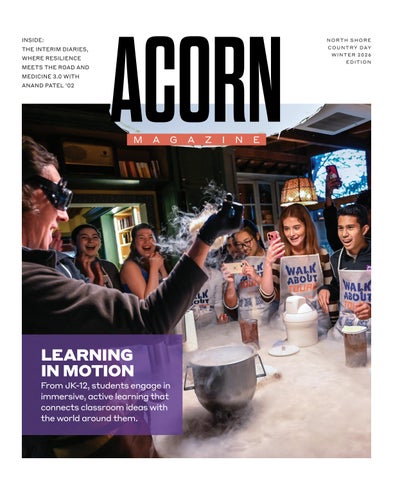
From JK-12, students engage in immersive, active learning that connects classroom ideas with the world around them.

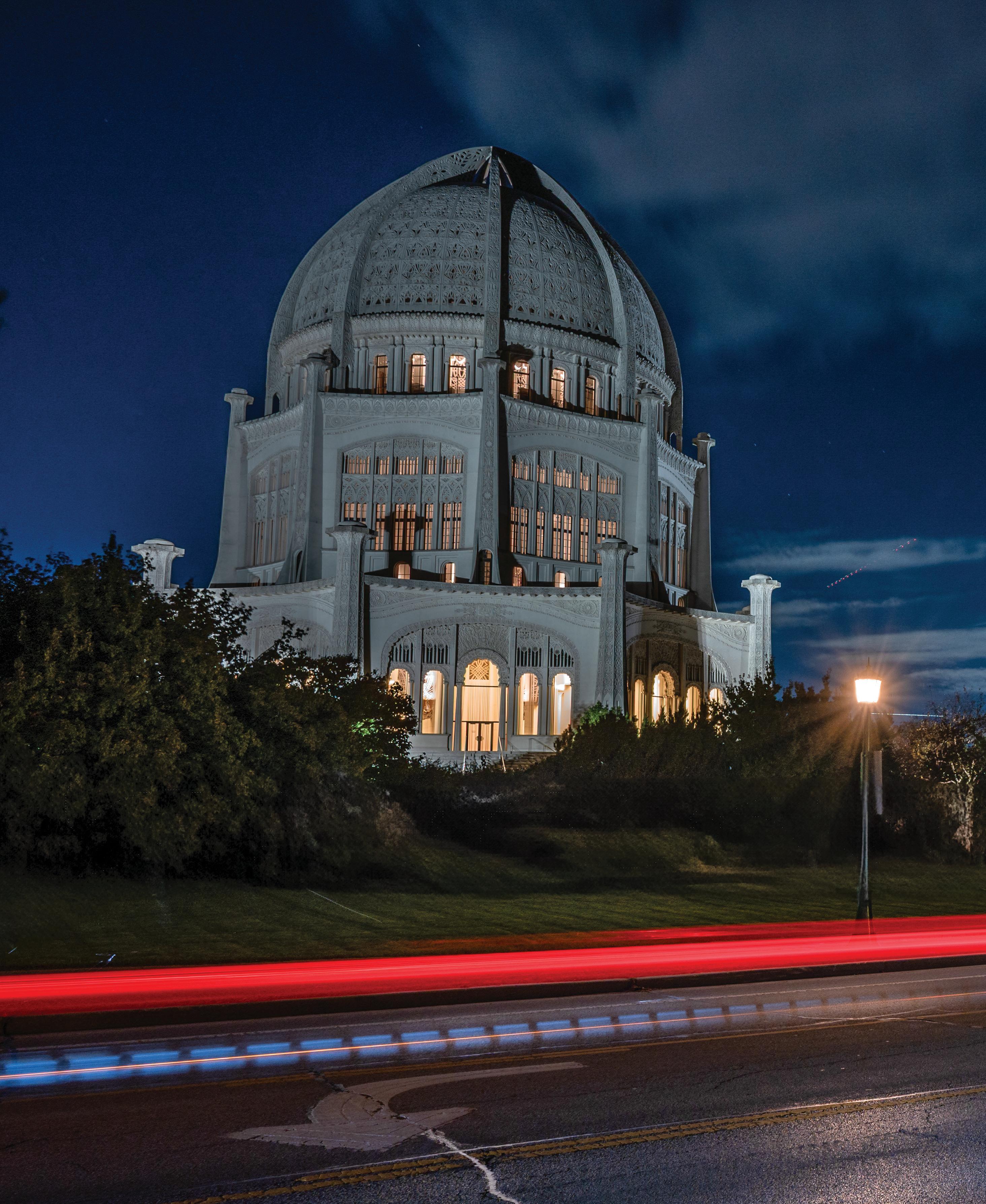
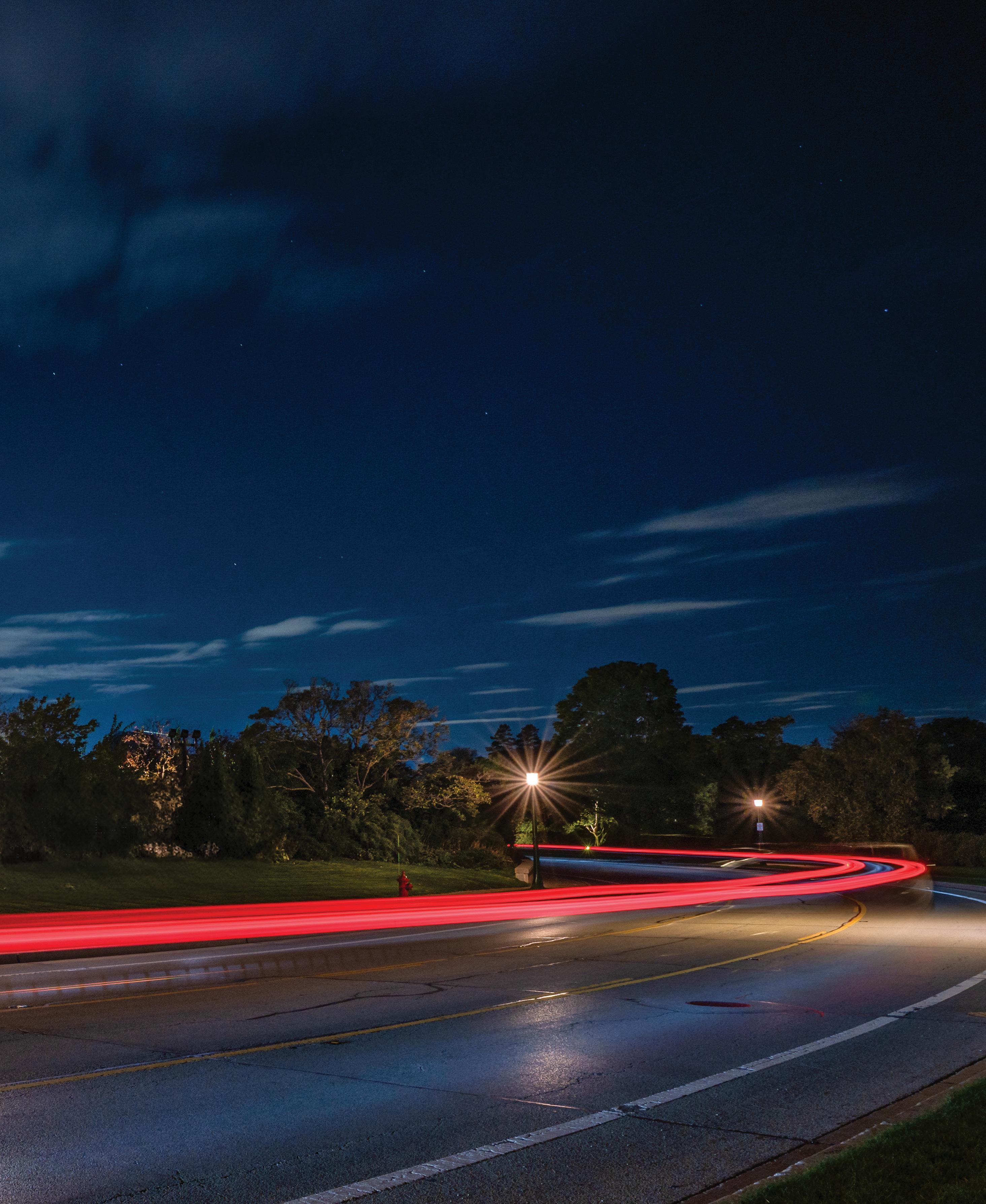
A car zooms past the Baha’i House of Worship at night. Student photographer Jack Larsen ’26 has been experimenting with light and motion as part of his AP Photography coursework.
FLAWLESS FINISH
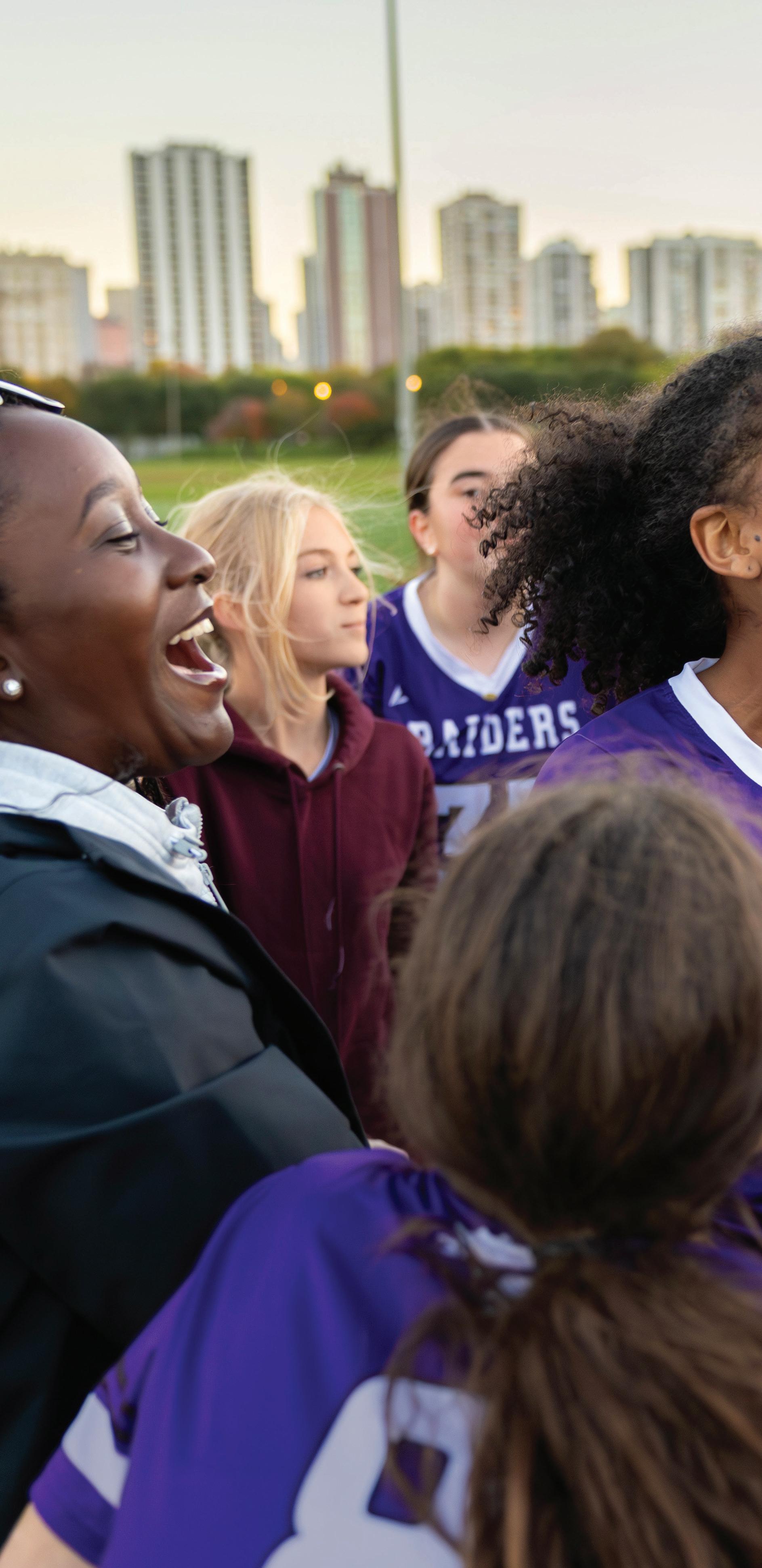
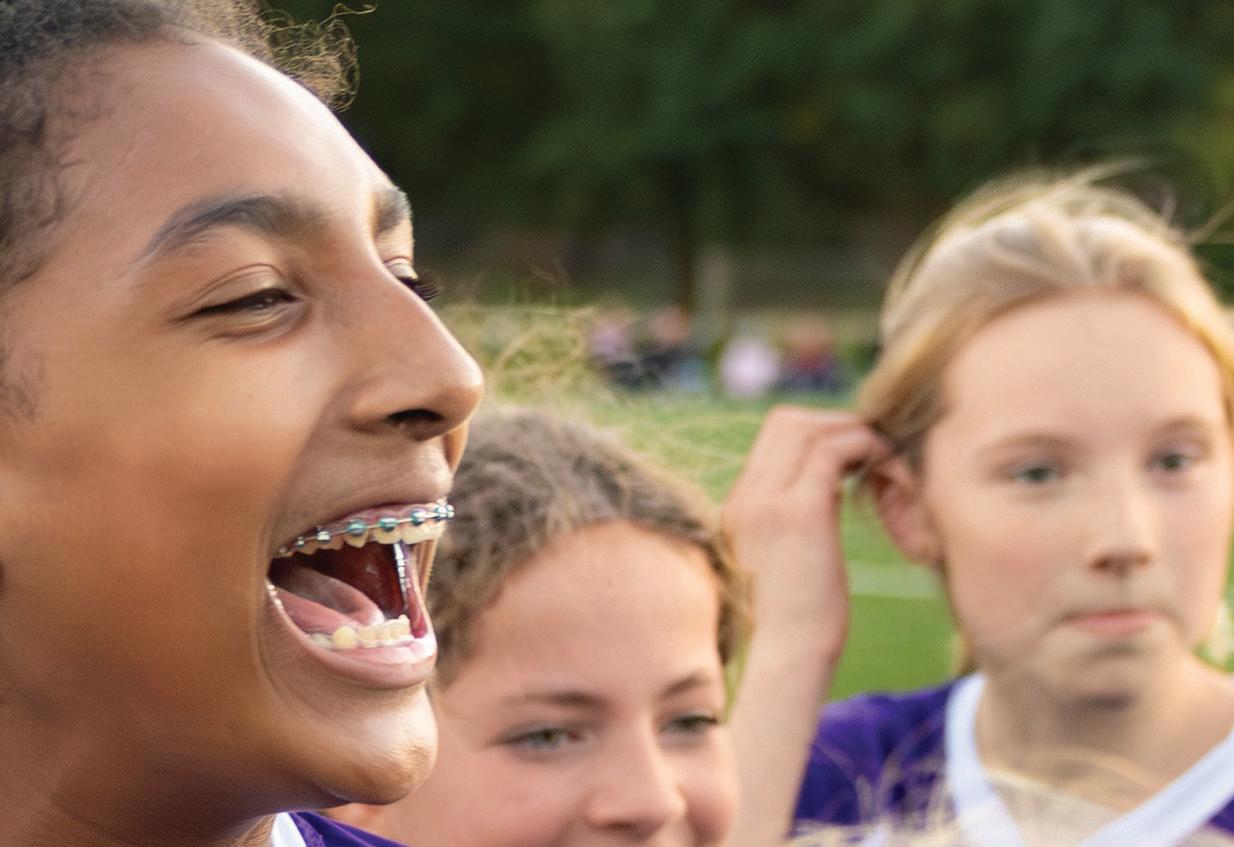
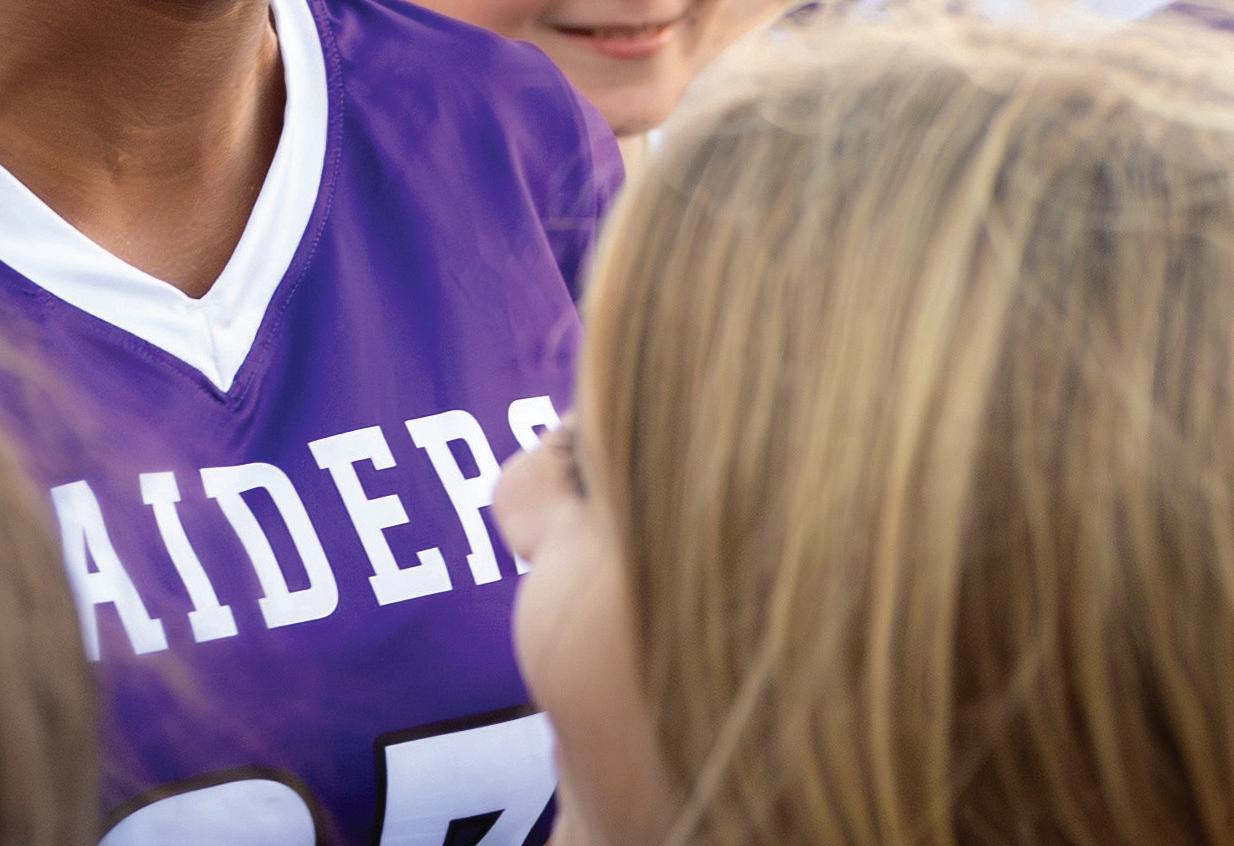
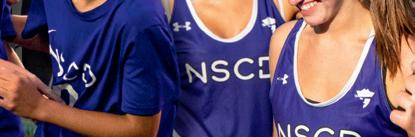
The middle school field hockey team celebrates the end of a perfect season with a win over Latin School of Chicago. The girls went undefeated with a shutout record, scoring 39 goals over 13 games.

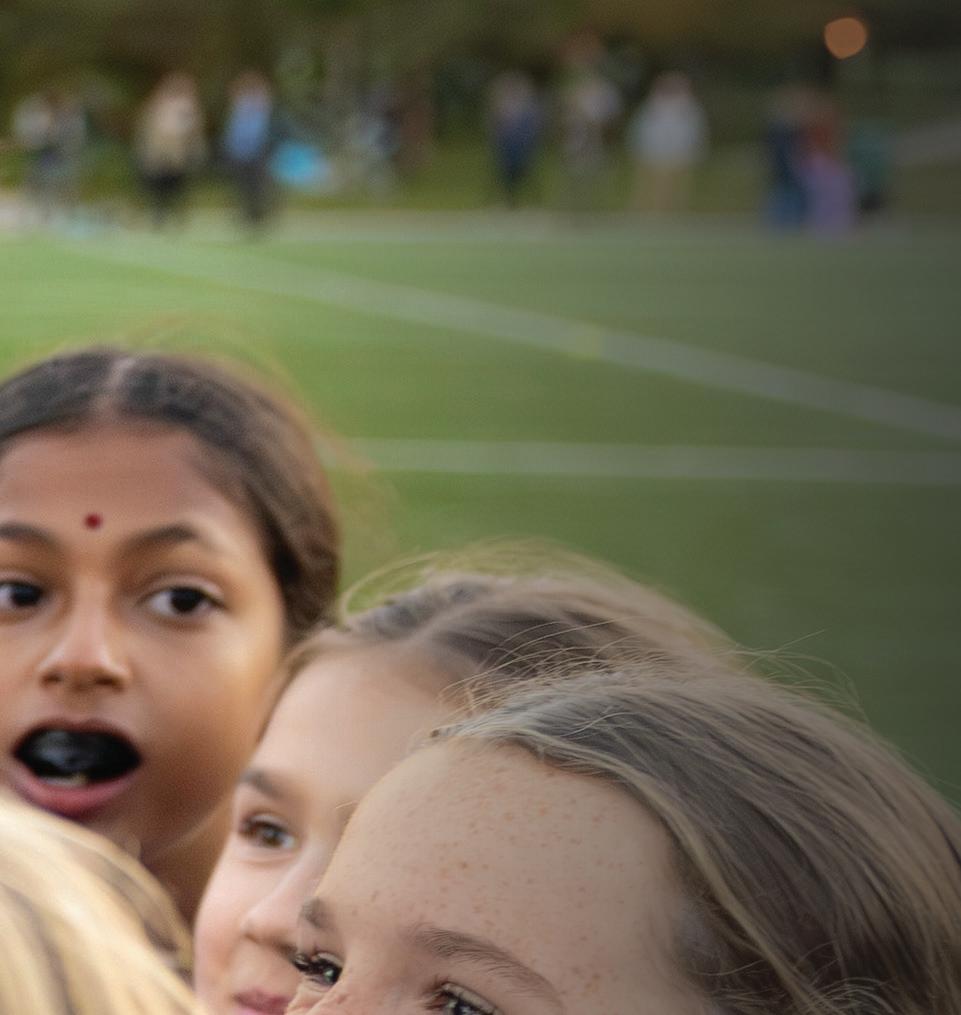
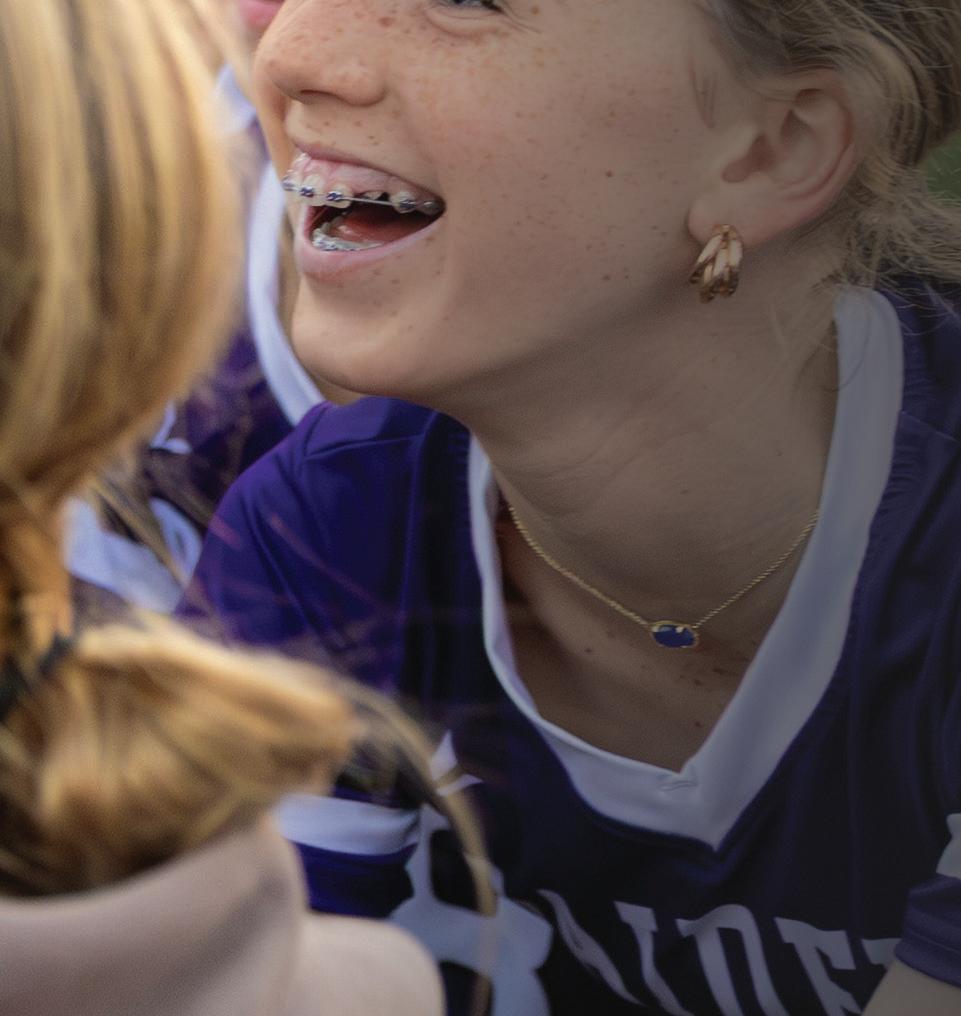
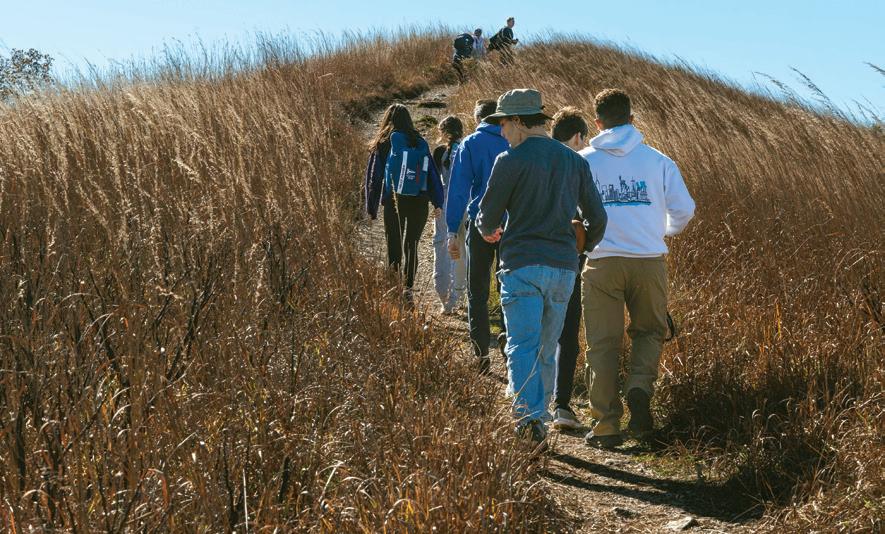
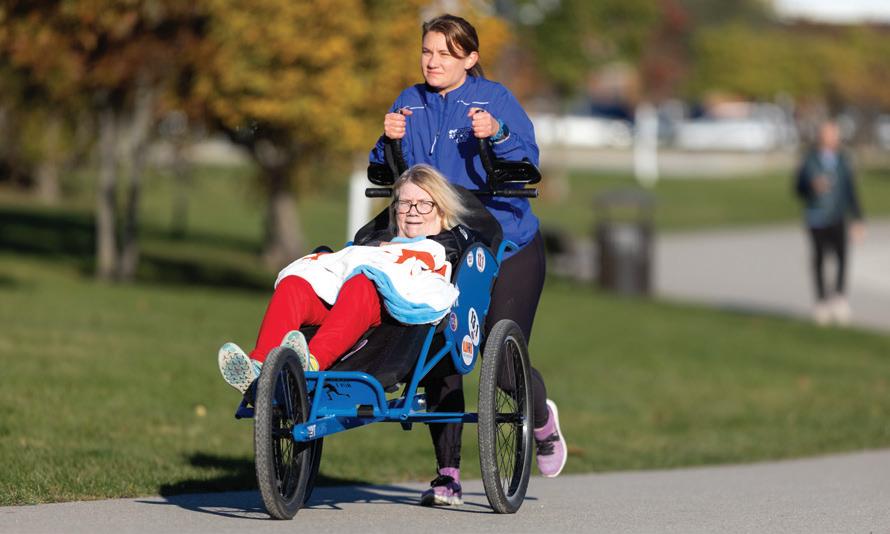
Photo by Jess Gerber

— IT
Earlier today, as I walked around campus, I came upon the culminating experience of an eighth grade humanities unit on Chicago history and culture. It was a mock trial about the famous Haymarket incident from the 1880s. It was also a master class in how excellent teaching fosters student engagement and a perfect example of the power of project-based learning.
Students reenacted the trial of the “Haymarket conspirators,” having prepared extensively to take on roles as jurors, attorneys and historical figures involved in the case. The students not only understood the facts, but also recognized Haymarket as a significant turning point in the late 19th century conflict between workers and industrial capitalists. The students were immersed and engaged, took their roles seriously and learned so much more than a lecture or textbook alone could ever provide.
I see this kind of active learning every day, and several other examples appear on the pages that follow. This is not new for NSCD, and alumni will recognize many elements of the classes they took here. “Learning by doing” is a common shorthand for our approach to education, though the idea goes by many names: “progressive education” or “project-based learning” or “experiential education.” What they all have in common is the now universally recognized and scientifically proven understanding that active learning beats passive learning in almost every situation.
The deeper learning that happens when students iterate and build machine prototypes, write and test their own code or act out a Shakespeare scene rather than just read it is the goal of our work. That deeper learning persists, and it is much more likely to adapt to novel situations. The lecturer-and-listener model of teaching that defined the era of mass education in the 20th century just isn’t enough anymore.
As we enter an important era of strategic planning, I am more excited than ever for what the future holds for our school. I have no doubt that our longtime, traditional focus on human-centered, experiential learning will not only keep North Shore Country Day distinctive in the educational landscape, but essential.
ACORN WINTER 2026
North Shore Country Day
310 Green Bay Road
Winnetka, Illinois 60093 847.446.0674 communications@nscds.org
Tom Flemma Head of School
Gia Anayas Director of Marketing and Strategic Communications
Christine Wachter Associate Director of Marketing and Strategic Communications; Acorn Editor
Jonathan Gibby Digital Content Manager
Tracie Frederick Director of Development
Kenleigh Howard Archivist, Major Gifts and Development Assistant
Ashleigh Palmer ’04 Development Associate— Major Gifts and Alumni Relations
Photographers
Jonathan Gibby
Jack Larsen ’26
Ryan T. Rayburn Ben Stone ’27
Writers
Christine Wachter Kathy Routliffe
Andrea Shemeley Design, ACreativeMindForHire.com
Graphic Arts Studio Printing, gasink.net
The Acorn is published twice yearly by the marketing and communications department of North Shore Country Day for alumni, families, faculty and friends. Its goal is to connect our school community, celebrate achievements and capture the essence of life and learning at NSCD.
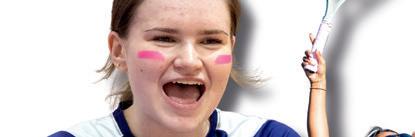
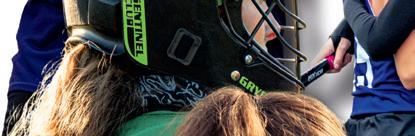
Fall 2025 was a season of growth, grit and memorable performances across upper school athletics. From the soccer pitch to the tennis courts, from the gym to the trails, our studentathletes demonstrated determination, teamwork and sportsmanship. Here are some of the highlights:

Girls tennis advanced a doubles team to the state tournament and earned all-state recognition
Golf posted top results, sending both teams to sectionals and a girls golfer to state
Volleyball posted its most wins in five years
Boys soccer earned both athletic and academic honors at the conference and sectional level
Field Hockey earned ISL and IHSFHA honors, along with all-state academic recognition
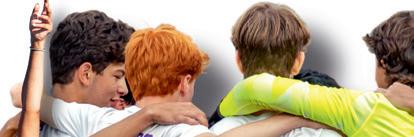
Boys and girls cross country qualified for sectionals as a full team for the first time since 2016


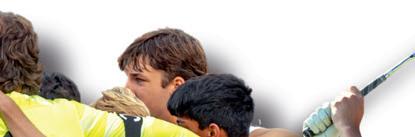
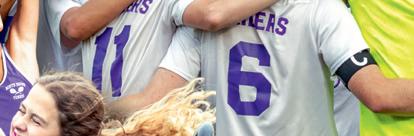
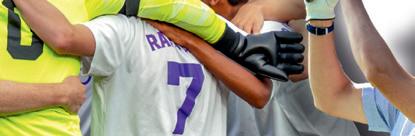
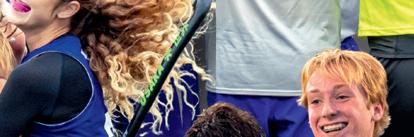
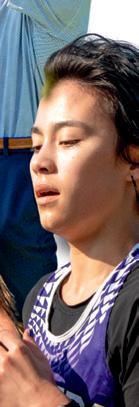
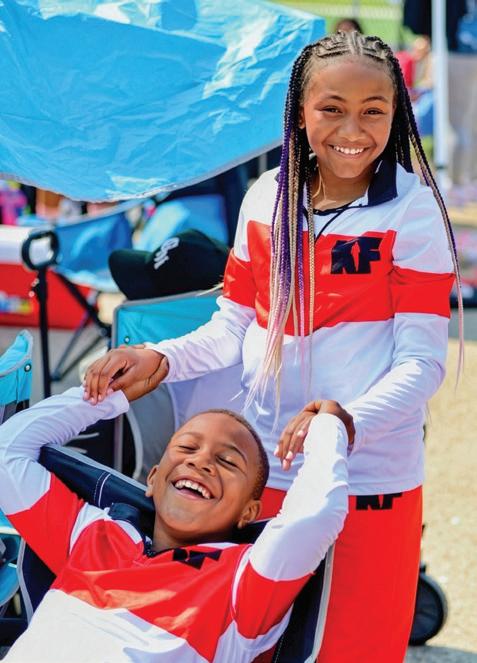
The Wright siblings capped o�f their summer with a trip to the 2025 National AAU Junior Olympic Games in Houston, where they competed against some of the best young athletes in the country in discus (Emersyn), shot put and triathalon (Wilson), and turbo javelin (both). The duo had no shortage of memorable moments.
What was it like competing at the National AAU Junior Olympic Games? What surprised you the most?
Emersyn: It was very fun. At the start I was like, “I’m going to win,” but then I realized these people are actually very good. I thought it would be like 500 people, but there were thousands competing across multiple events.
Wilson: I thought I was going to win because of my strength and athletic ability — until I saw Arturo. He’s a really good shot putter — like my big, big sister. But I placed 22nd in my age group in shot put, so that surprised me.
Your oldest sister, Dawson, is a Division I track and �ield athlete. What’s the best advice she’s given you?
Emersyn: Don’t throw the shot put like a dodgeball because it will really hurt your wrist.
Wilson: Keep trying. Don’t give up on your dream.
What’s the best part of having your sibling as a teammate — and what’s the hardest part?
Wilson: No matter what place we get, we’re in this together. The hardest part is sometimes we’re a little too rough with each other while training.
Emersyn: The best thing is they always support you. The hardest is when the younger one throws better than you.
Who’s more competitive?
Both: Me!
Wilson: I say I’m more competitive — maybe 51% me, 49% Emmy.
Emersyn: I am, because I always ask him to do a challenge. But if it’s my big sister, Dawson, I’m cooked!
If you could create your own dream track-and-�ield event, what would it be?
Emersyn: The 100-Meter Long Jump Dash. You run 100 meters and then jump into the sand pit.
Wilson: A weighted javelin event where you run far, then jump over a high bar, make a trick shot and then throw the javelin like normal.
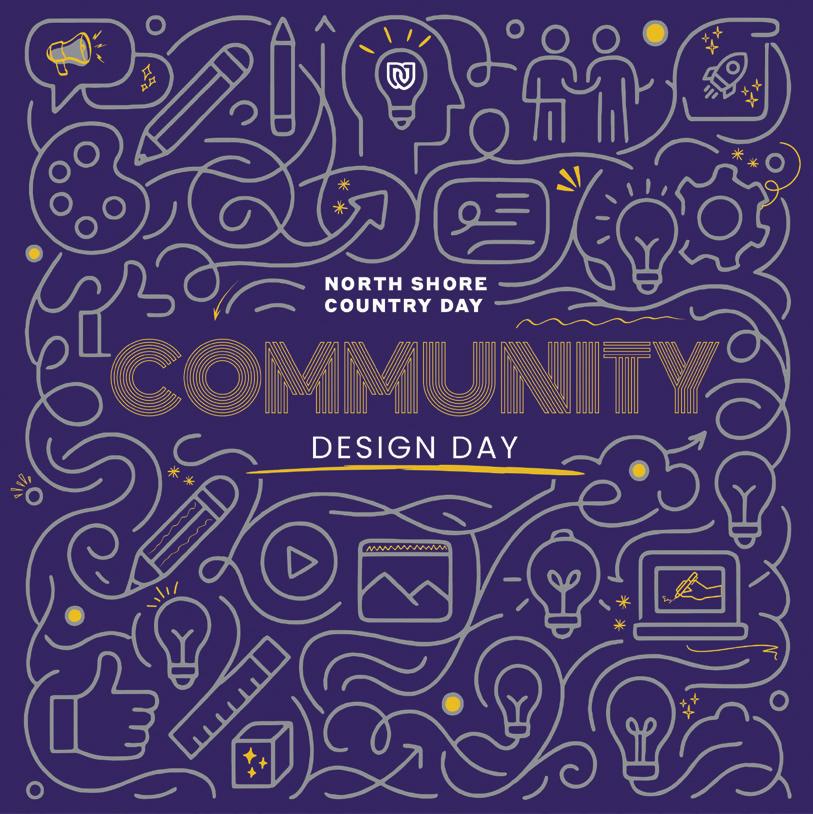
At the beginning of the school year, North Shore Country Day launched its next strategic planning cycle. Building on 30 years of thoughtful planning, the process is being led by Strategic Plan Committee chair Jessica Shinn, Director of External Relations and Strategic Initiatives Kristen Kaczynski and Head of School Tom Flemma, alongside a 12-member design team of parents, trustees, faculty, administrators and alumni. The school is partnering with consulting firm Leadership + Design to gather ideas, explore priorities and craft a plan that reflects the values and aspirations of NSCD.
Community input has already played a key role — from parent Think Tank sessions in the fall, to interviews with parents and administrators, to the fullday Community Design Day on January 10. These conversations and exercises are helping the design team draft a plan, which will be refined and presented for board review. The final plan, set to go into effect in the 2026-27 school year, will guide NSCD in the years ahead, and there will continue to be opportunities for all voices to be heard as the process moves forward.
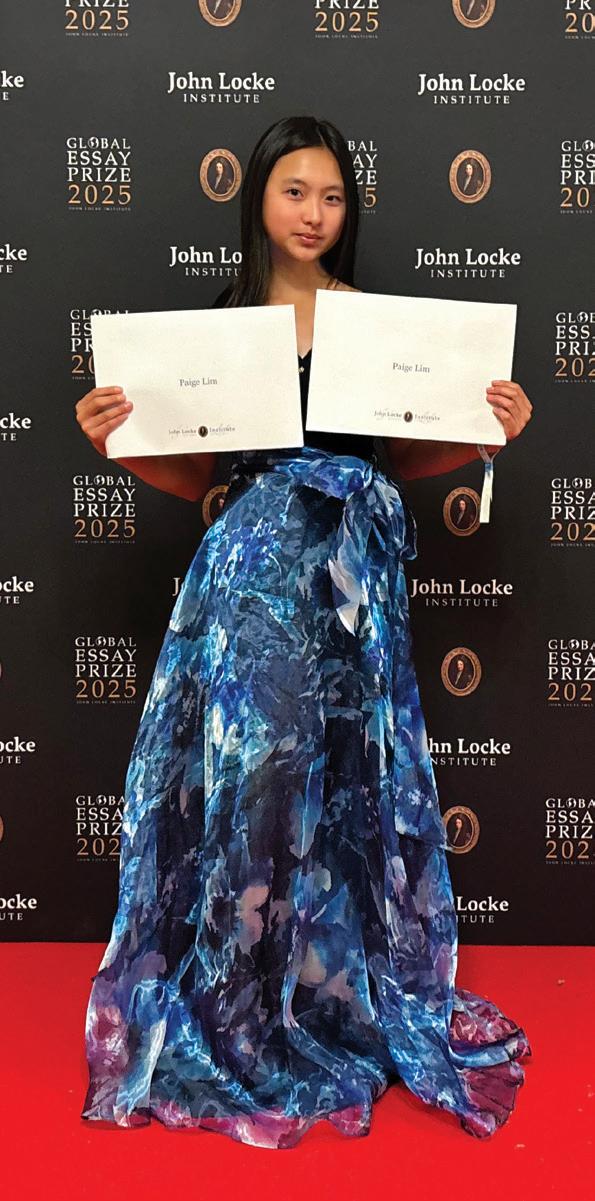
Congratulations to Paige Lim ’28 for earning commendations in both politics and theology in the prestigious John Locke Institute Global Essay Competition, which drew more than 63,000 entries from students around the world. Her essays — on the prompts “Diversity is fashionable, but is it necessary?” and “Why pray?” — were shortlisted for the final round, placing her among the top 19% of participants. In October, Paige traveled to London to attend the black-tie awards gala and invitation-only academic conference at the Grosvenor House Hotel, where she joined finalists from across the globe and participated in lectures with professors from Oxford and Harvard universities. Her achievement highlights not only her writing and analytical skills but also her engagement with big ideas on a global stage.

These books have taught me important lessons and expanded my life in significant ways. While they are stylistic- ally and structurally distinct, they all explore the beauty and pain of being a human in our world. In each of these books, flawed but heroic characters see the world as it is and then find reasons and ways to make it a little bit better.
“The Overstory” by Richard Powers (W.W. Norton & Company, 2018)
“The Heaven and Earth Grocery Store” by James McBride (Riverhead Books, 2023)
“Shuggie Bain” by Douglas Stuart (Grove Press, 2020)
“Girl, Woman, Other” by Bernardine Evaristo (Hamish Hamilton, 2019)
“Lincoln in the Bardo” by George Saunders (Random House, 2017)
“How To Be Both” by Ali Smith (Hamish Hamilton, 2014)

On November 18, North Shore Country Day honored Bruce Blair ’69 with the Foster Hannaford Recognition, celebrating his lifelong dedication to the school. A Raider since sixth grade, Bruce has contributed as an athlete, coach, trustee, mentor and alumni leader, inspiring generations with his energy, passion and care. Alongside his wife, Judith Nerad, and daughters, Tori ’19 and Margie ’22 , Bruce has been a steadfast presence at NSCD. His distinguished career in sports media, including 25 years at ESPN, reflects the same drive and commitment he has brought to every corner of the NSCD community.
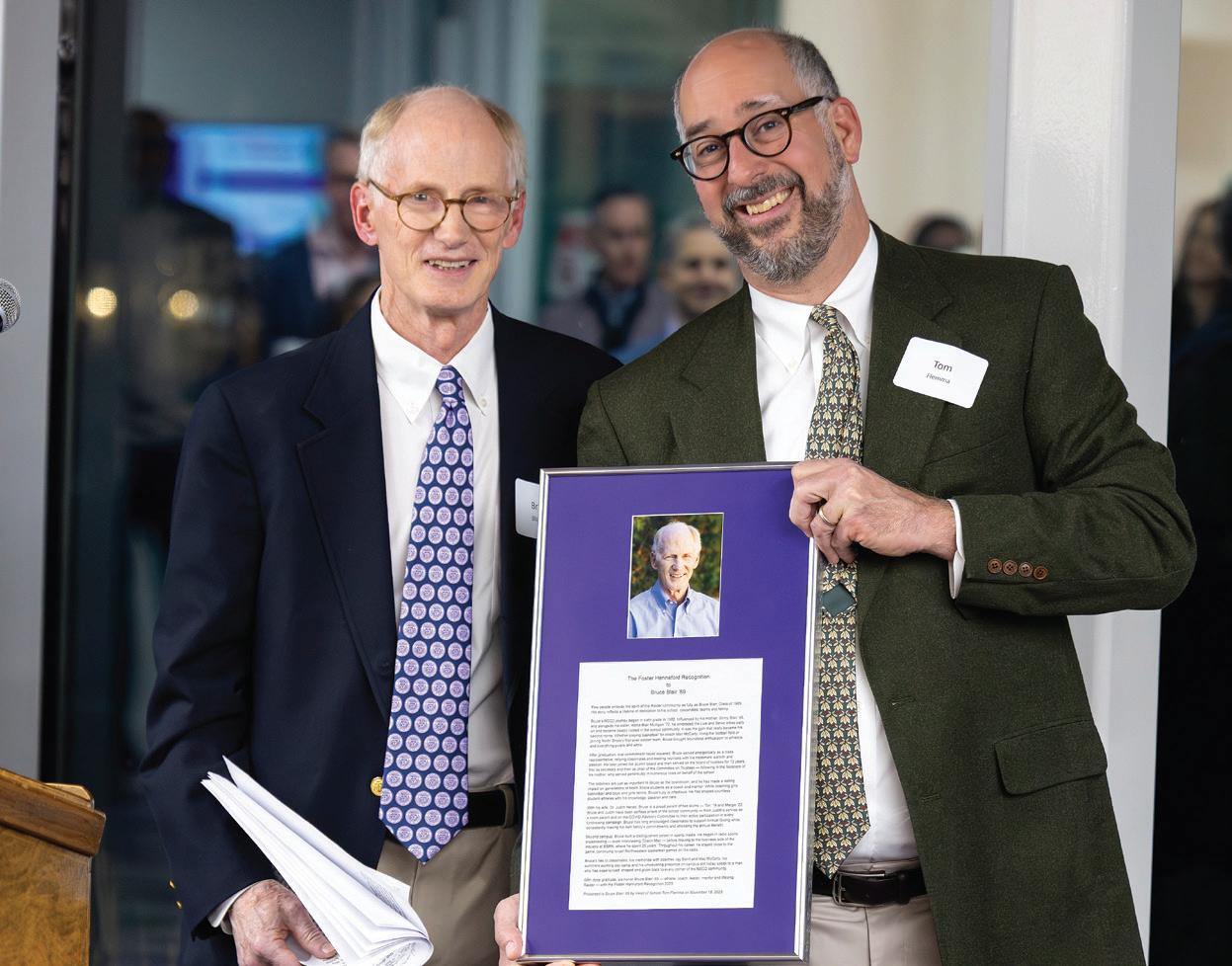
As he accepted his award, Bruce reflected on the community that shaped him. Looking out at the crowd, he emphasized the shared commitment that strengthens North Shore year after year. “I could toss a basketball blindfolded out in the crowd and probably hit someone just as deserving as I am,” he said. “There are so many people here who have given what they can of their time and financial support — it’s really great.”
Visit nscds.org/hannaford to read the full citation, see the list of past recipients and learn more about the Hannaford Recognition.
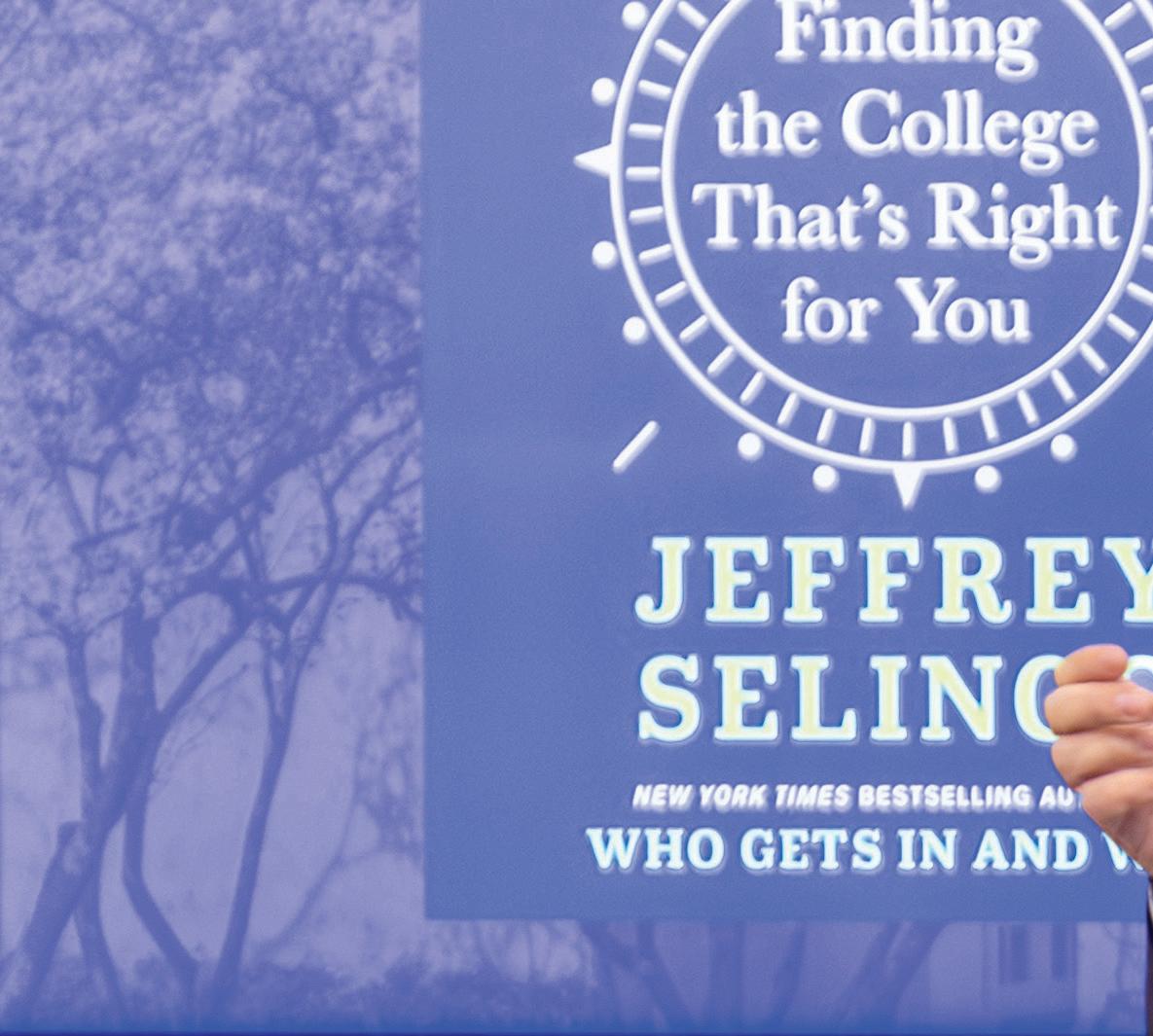
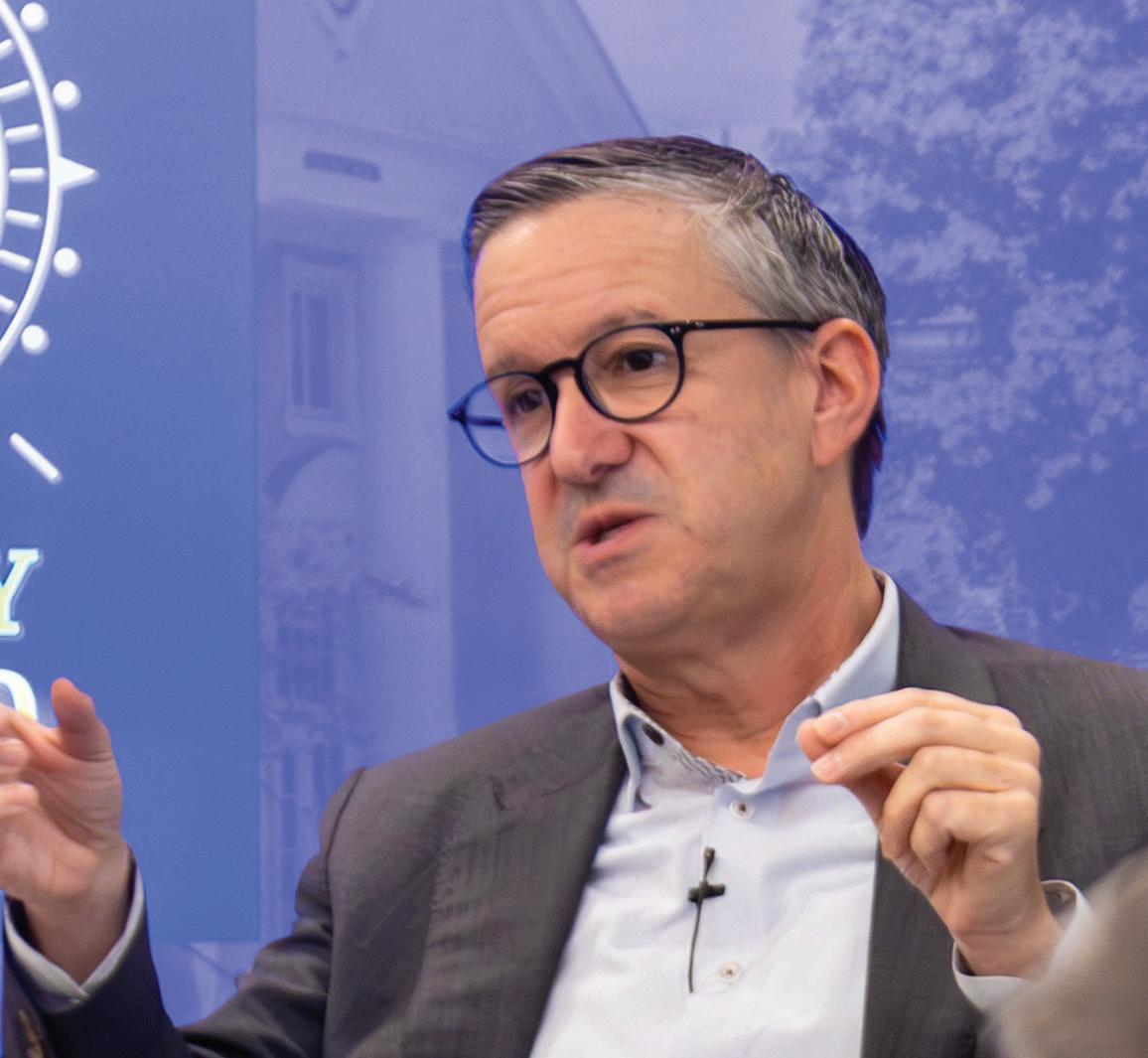
NEW YORK TIMES BESTSELLING AUTHOR AND HIGHER EDUCATION EXPERT JEFFREY SELINGO VISITED CAMPUS FOR A PRIVATE FAMILY ACTION NETWORK EVENT FOR NSCD FAMILIES. HIS LATEST BOOK, “DREAM SCHOOL: FINDING THE COLLEGE THAT'S RIGHT FOR YOU,” DEBUTED AS AN INSTANT BESTSELLER.
Selingo spoke with NSCD’s Director of College Counseling Kristen Kaczynski about the evolving landscape of college admissions and shared practical guidance on how families can take a more thoughtful, empowered approach to the college search process. Here are five key takeaways:
2 1
YOU HAVE MORE CONTROL THAN YOU THINK
Selingo reminded parents that despite how overwhelming the process can feel, students and families hold real agency. He encouraged parents to treat college as a major investment — not just an emotional decision — and to push past the idea that prestige alone equals quality. “Ask questions like you would for any other purchase,” he said.
“We go to the rankings because they make sense of a world that doesn’t really make sense,” he said. However, hundreds of schools offer strong outcomes beyond the top 25. Selingo urged parents to explore a broad range of options and consider the environment that best fits their student’s needs — large or small, urban or rural, structured or flexible.
Beyond brochures and acceptance rates, families should evaluate how colleges help students succeed — through strong first-year programs, faculty mentorship and hands-on learning opportunities like internships and research. “These are the things that truly define quality,” he explained.
ENCOURAGE AUTHENTICITY OVER STRATEGY
High school is a time for growth, not a checklist for college admissions. Selingo advised students to pursue activities and subjects that genuinely interest them, which often stand out more than formulaic approaches on applications.
3 4 5
“They know your school, they know your kids, and they know the history of your high school compared to where they’re going to college,” he said. He encouraged families to lean on NSCD’s counseling team as a resource.
<<< LISTEN NOW Scan the QR code for an expanded version of this story and to hear Jeff Selingo talk to Head of School Tom Flemma on a recent episode of The Raider Ramble.
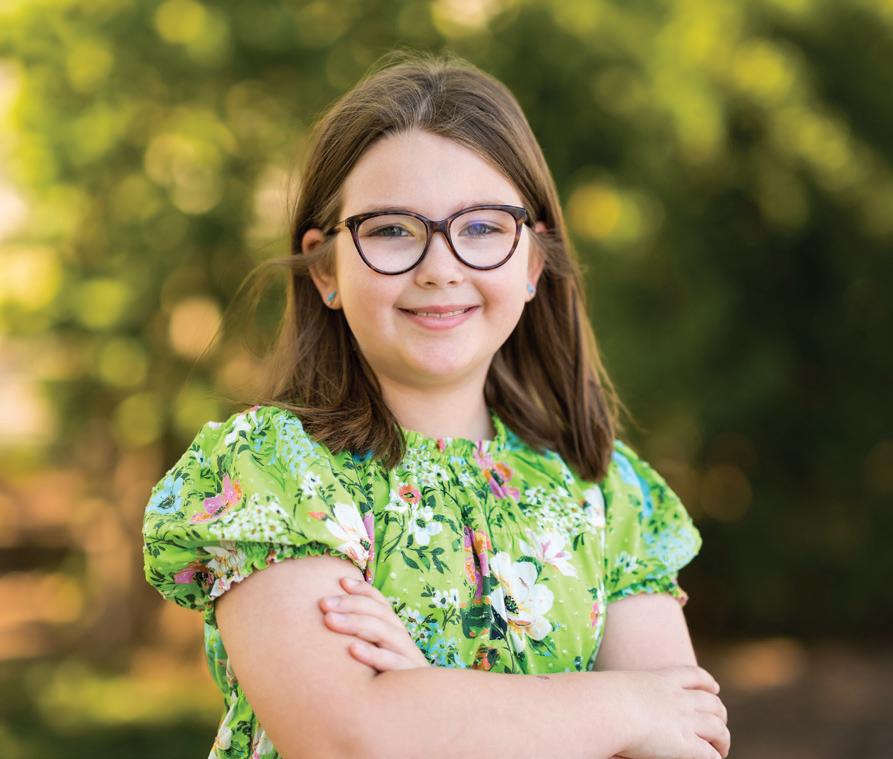
Lower schooler Carmen Foley Strasburg ’34 earned the first place Youth Award in the 2025 Vancouver Cherry Blossom Festival Haiku Invitational for her poem “cherry festival / the robins gather / in the grass.” Judges praised her work for its subtle wordplay — how “cherry festival” reads like “cheery festival” — and for beautifully connecting the joyful gathering of robins with people celebrating spring. Carmen’s poem will be featured in a public art exhibition in Vancouver, displayed alongside original visual art by Indigenous and Japanese-Canadian artists. Classmates Mateo Elias-Holeman ’34 , Cole McLennan ’34 and Graham Janus ’34 also received honors in the competition. Their former third grade teacher, David Green — now North Shore’s lower school inquiry specialist — is a published haiku author who delights in sharing the art form with his students. Earlier this year, another one of Carmen’s haikus was recognized in the Gwendolyn Brooks Youth Poetry Awards.
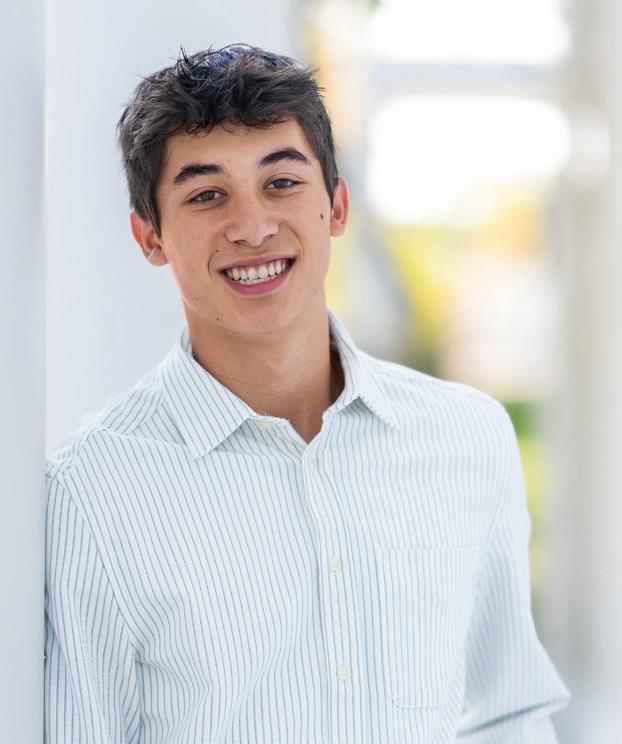
Earlier this school year, Quentin Tao ’26 was named a National Merit Semifinalist by the National Merit Scholarship Corporation, placing him among the top 16,000 students nationwide out of 1.3 million entrants. This prestigious recognition highlights Quentin’s academic achievement and dedication. He will learn in February whether he advances to National Merit Finalist, bringing him one step closer to potential national scholarship honors.
HOW
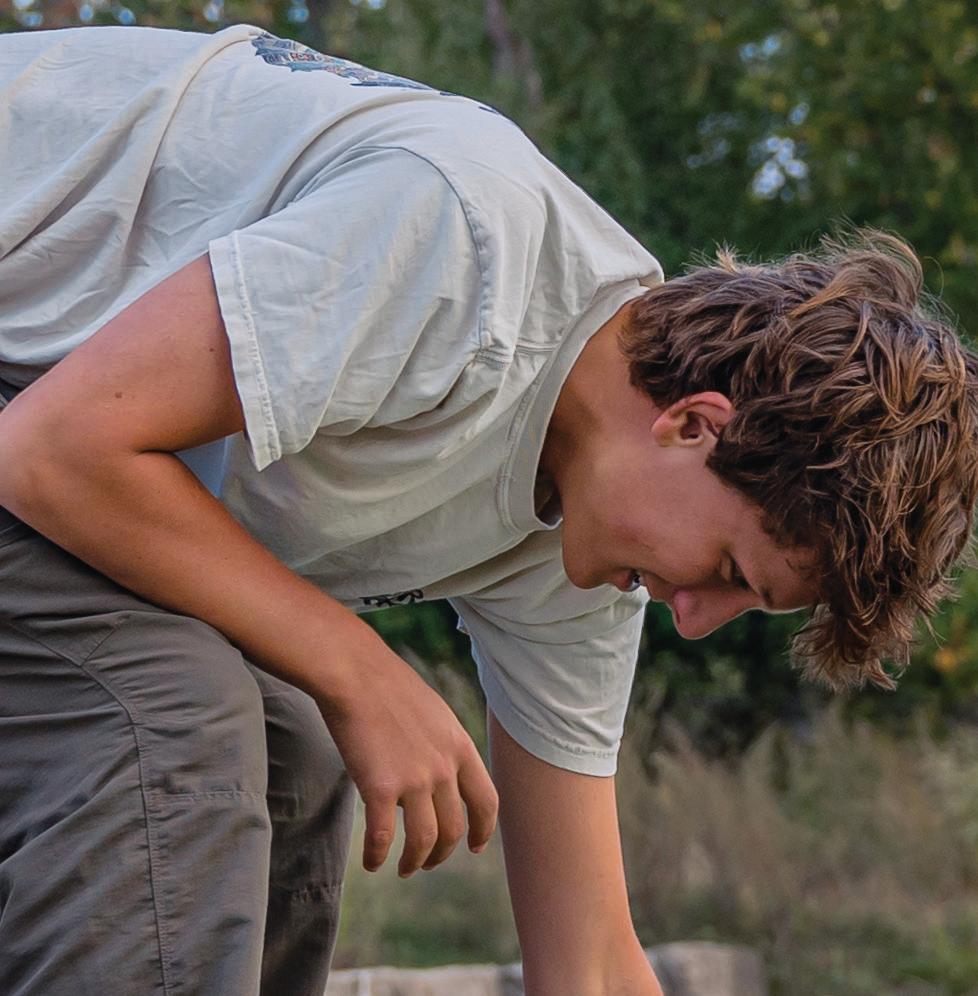
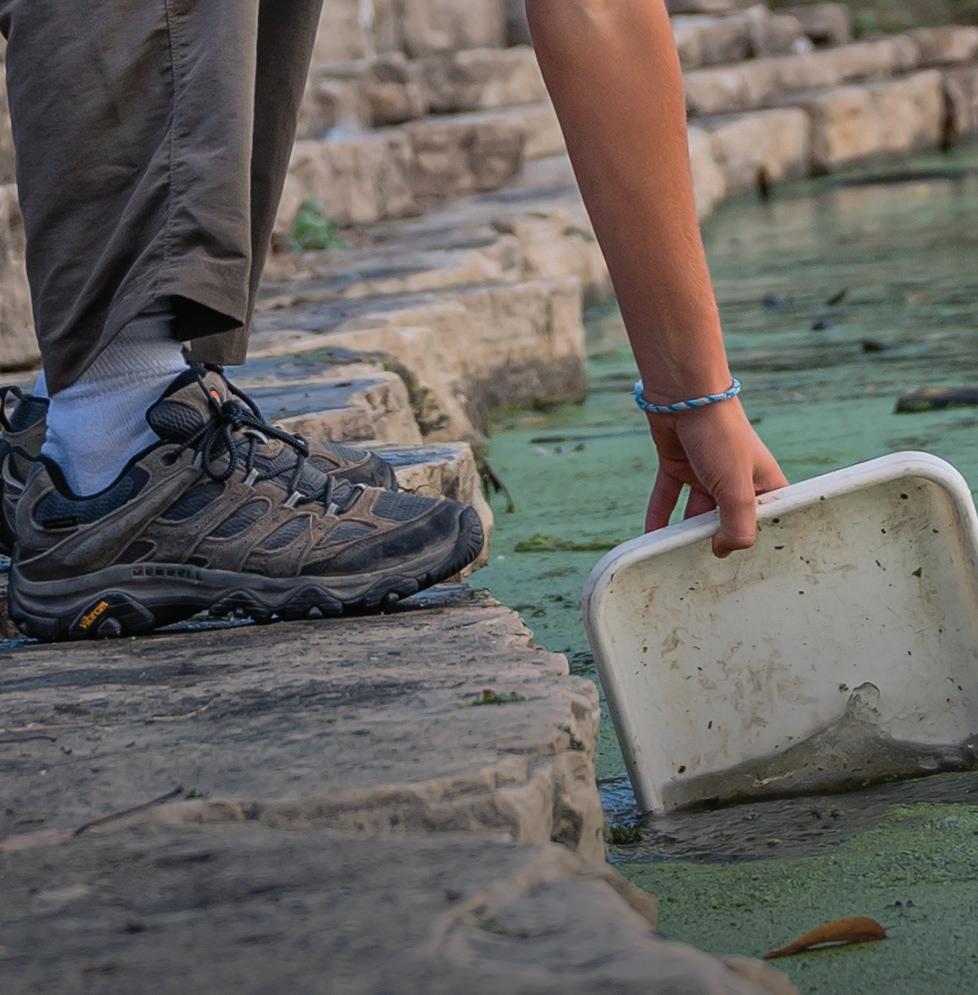
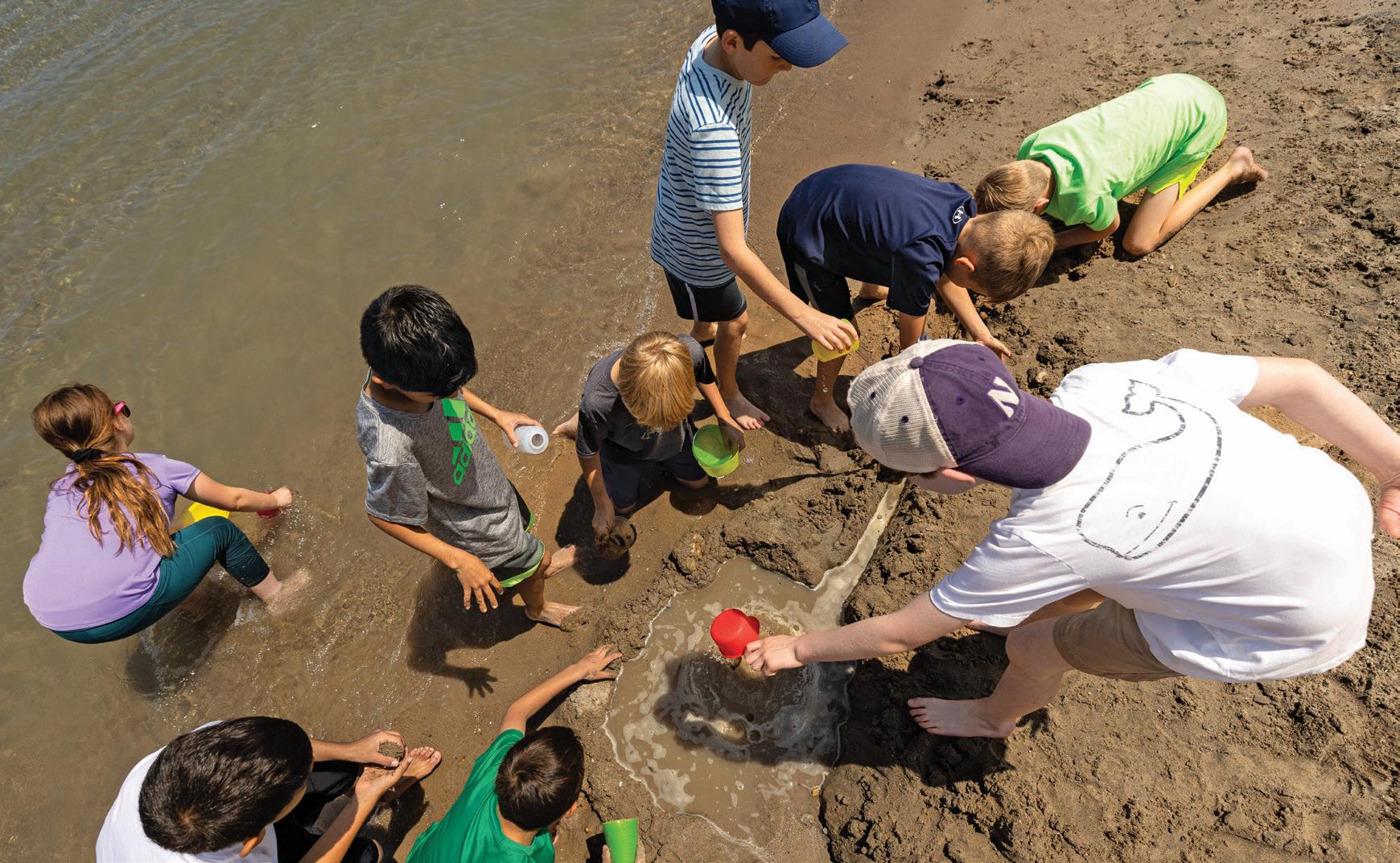
On a bright spring morning at Lloyd Beach, a second grader kneels in the sand with a beaker of murky lake water, watching it drip slowly through a homemade fi lter of cheesecloth, pebbles, sand and activated charcoal. As the last drops fall crystal clear into the waiting cup, she breaks into a grin — part pride, part awe — while Lake Michigan stretches endlessly behind her.
Experiential learning has long been part of NSCD’s identity. Today, it shapes a JK-12 journey defi ned by curiosity, connection and a willingness to explore. “When second graders consider water from a scientific perspective but also from a social, emotional and community perspective as they engage in lessons in their homerooms, they build connections across disciplines and start to think and act like real problem solvers,” explained lower school science teacher Annie Collins.
Moments like this unfold all year across North Shore Country Day. From water sampling in the shallows to canoeing through Wisconsin woods to interviewing postal workers and fi re chiefs, students in every division step beyond their desks and discover lessons rooted in place, community and lived experience.
Across grade levels, teachers describe the same truth: meaningful learning doesn’t just happen inside the classroom. It happens in motion, in nature and in community — in the moments when students stretch beyond what they already know.
Whether students are standing on the shore of Lake Michigan, wading through Skokie Lagoons, touring a Chicago neighborhood or exploring a national monument, NSCD teachers intentionally use place as an extension of the classroom.
For second graders, that journey begins with water. In the weeks before the Lloyd Beach trip, Annie’s students trace how water from Lake Michigan becomes the water that comes from their taps — specifically the water treatment plant process. They design “super strainers,” learning how each layer removes impurities. When they fi nally test them at the beach, the environment itself becomes part of the lesson.
“When students collect the dirtiest bucketfull of water possible and then watch it come through their water fi lter crystal clear — with the sound of wind and waves and the vision of Lake Michigan stretching as far as the eye can see — the awe and pride shows up on their faces immediately,” Annie said. “They feel a deep connection to nature but also the shared endeavor of human-centered problem solving.”
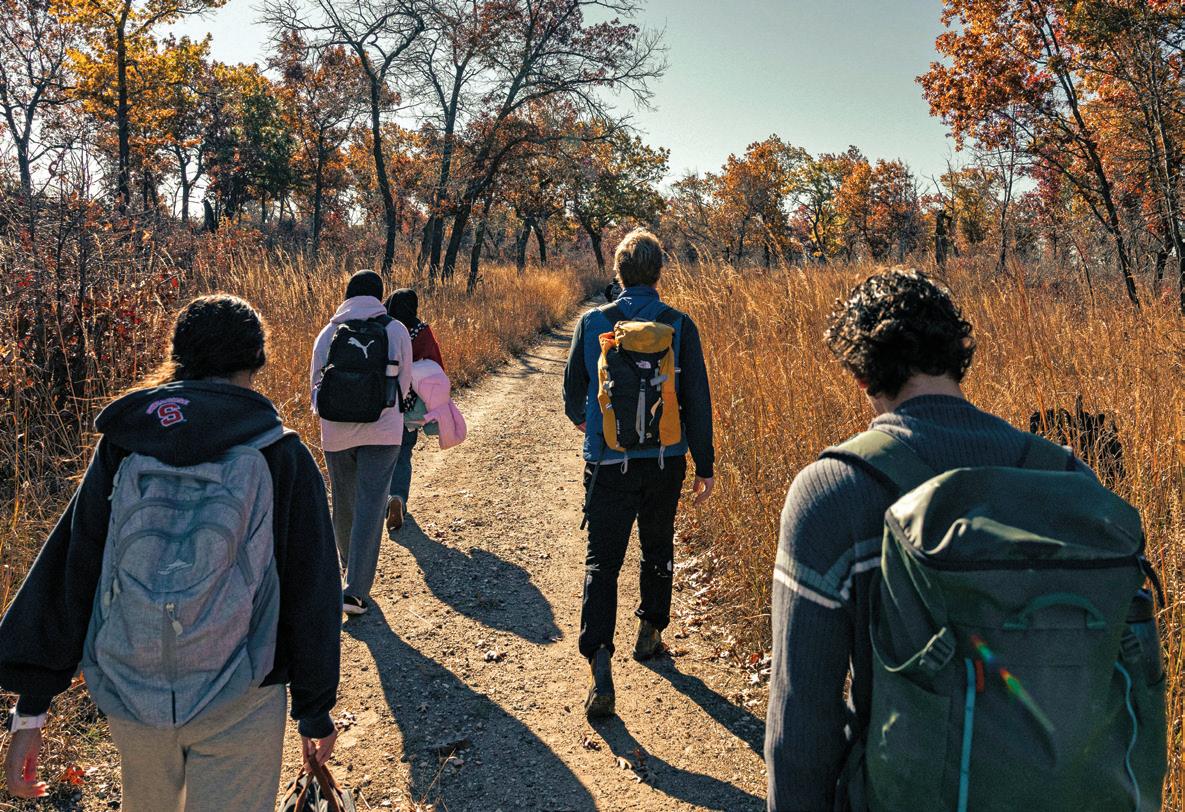
Upper school science teacher Natasha Itkin builds similar connections in AP Environmental Science. Her class begins its biodiversity unit at the Skokie Lagoons, where students put on waders and step directly into the ecosystem they’ve studied.
“It would be silly to not do things outside in the environment,” Natasha said. “It wouldn’t make sense to talk about biodiversity and not look at an ecosystem fi rsthand.”
Students measure oxygen levels, test for phosphates and nitrates, and learn to use quadrats — meter-square plots for counting species — to compare restored and unrestored prairie areas. They analyze invertebrates to assess water quality and calculate a pollution tolerance index. A textbook simply can’t replicate the immediacy or complexity of what they encounter.
“Now there’s something tangible students can keep thinking about throughout the year,” Natasha said. “It’s not just an exciting moment — it gives them a real experience to reference as we return to questions about biodiversity and it allows them to link concepts in a much more meaningful way.”
The same spirit of exploration thrives in the middle school, where community-building
and outdoor challenge take center stage. Sixth and seventh graders head north for Outdoor Ed adventures, while eighth graders spend the year exploring Chicago history and identity through fieldwork, neighborhood visits and museum experiences after traveling to Washington, D.C., in the fall.
By the time they reach the upper school, students are conducting university-level environmental fieldwork — and some even traveled to a biological field station in The Bahamas for Interim, where they studied coral reefs, blue holes and endemic species.
Across all these experiences, place isn’t a backdrop — it’s a teacher.
Experiential learning doesn’t just deepen academic understanding. It cultivates relationships — with peers, with teachers and with the natural world.
For middle school humanities and science teacher David Kubacki, who has led seventh grade Outdoor Ed since 2007, the trip’s core purpose is simple: build community in a new way.
“It’s about team building and forming bonds across the grade,” he said. “And it brings students close to nature. They’re away from screens, away from daily routines. It resets the tone of the year.”
Students canoe in pairs, hike, learn survival skills and build shelters from fallen branches. They practice starting a fire with flint and steel. These challenges invite students to rely on one another.
Canoeing, David said, is one of the most powerful bonding moments. Students are paired with classmates they may not know well. “Even if they’ve canoed before, they’ve never canoed with this person,” he said. “They have to cooperate, communicate and figure out how to navigate together.”
The evenings bring a different kind of courage. At the end of the second night, students gather for a talent show around the campfire. At first many insist they won’t participate. Then something shifts. One student performs, then another. Suddenly hands shoot up.
“Kids who were super shy end up getting up and singing or dancing,” David said. “It’s awesome to see that happen.”
He’s watched Outdoor Ed memories echo years later. “Seventh grade Outdoor Ed gets mentioned in lifer speeches,” he said. “It amazes me that it’s one of the experiences students carry with them.”
Belonging, teachers say, is fundamental to learning — and experiential moments often create the conditions for students to see themselves and each other in new ways.
Across divisions, experiential learning sparks curiosity that leads to deeper inquiry — the kind built on real questions rather than assignment prompts.
In environmental science, Natasha sees this happen instantly at the lagoons.
“The moment you’re confronted with the phenomenon, you can’t help but ask
questions,” she said, “And because of the nature of human curiosity, now you're driven to answer those questions.”
In psychology, she replicates famous studies so students experience concepts rather than memorize them. To learn how the brain maps sensation, they test each other with toothpicks to create their own “homunculus.” During the developmental psychology unit, they spend a week caring for handmade five-pound “babies” made from bags of rice, navigating the logistics of childcare — babysitters, safe handling, naps — around their actual schedules.
“They take it really seriously,” she said. “They look out for each other. They call each other out for not supporting a baby’s neck. It’s just fun to watch.”
Lower school students show similar agency. At the beach, they imagine new uses for trowels and beakers and ask questions about birds, insects and even litter along the shoreline. One student prompted Annie to introduce AI-based species identification tools — a moment that underscored both curiosity and student-led innovation.
“When kids have these opportunities to explore their passions,” Natasha said, “it validates for them that this is something they want to keep pursuing.”
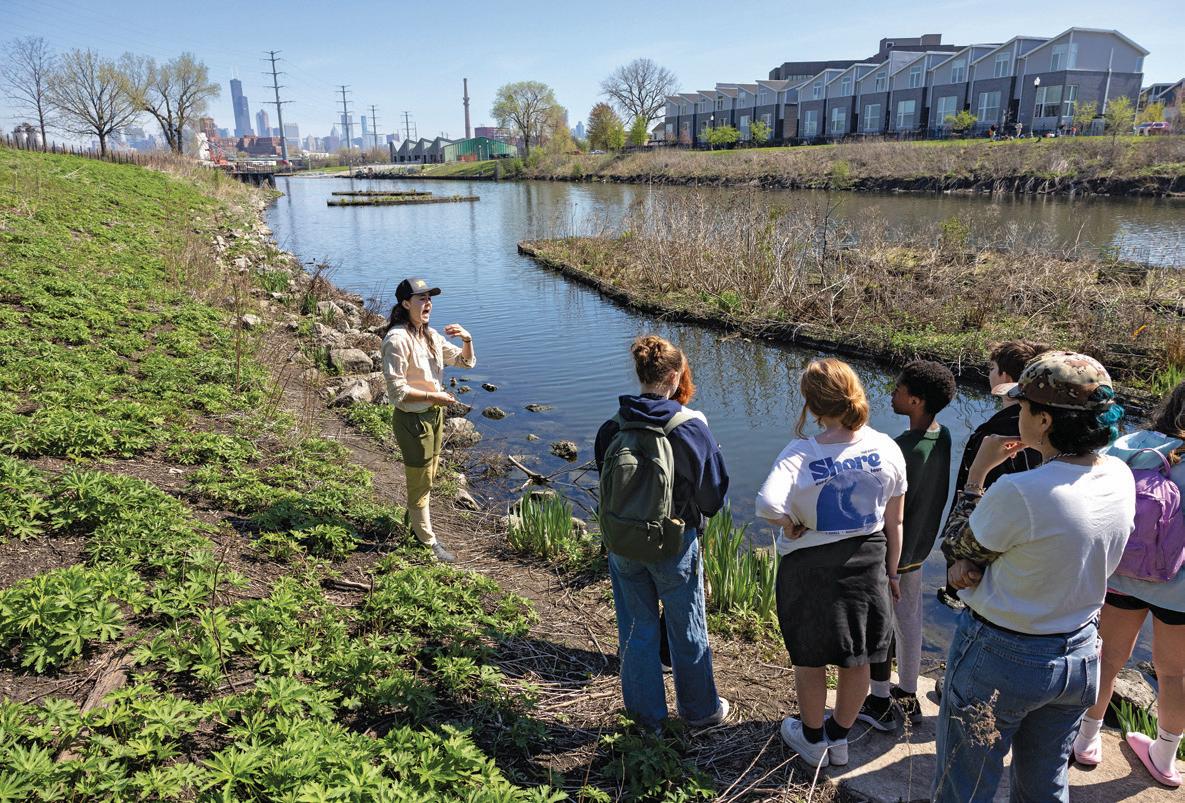
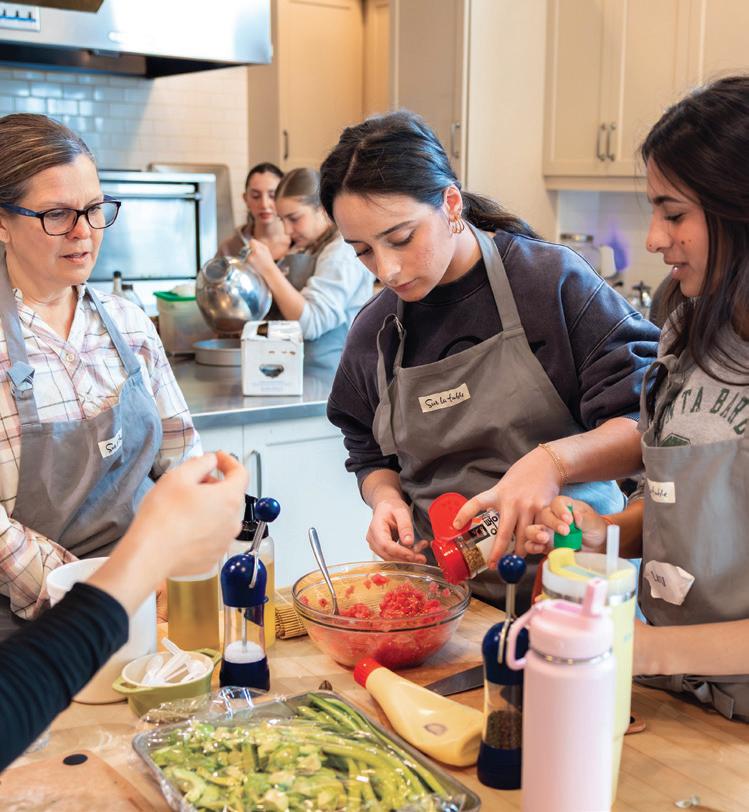
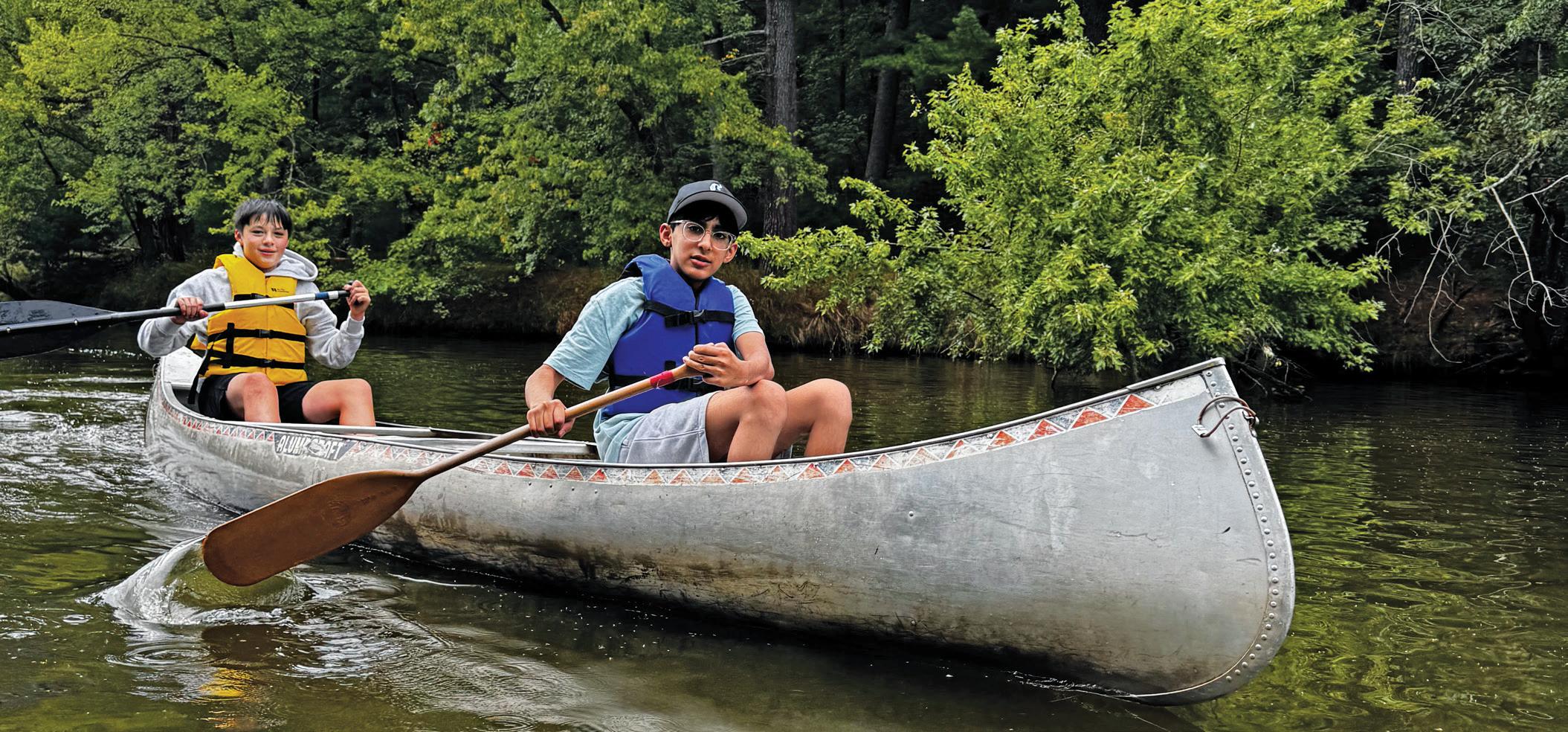
Experiential learning also helps students understand who they are — and how they are connected to others.
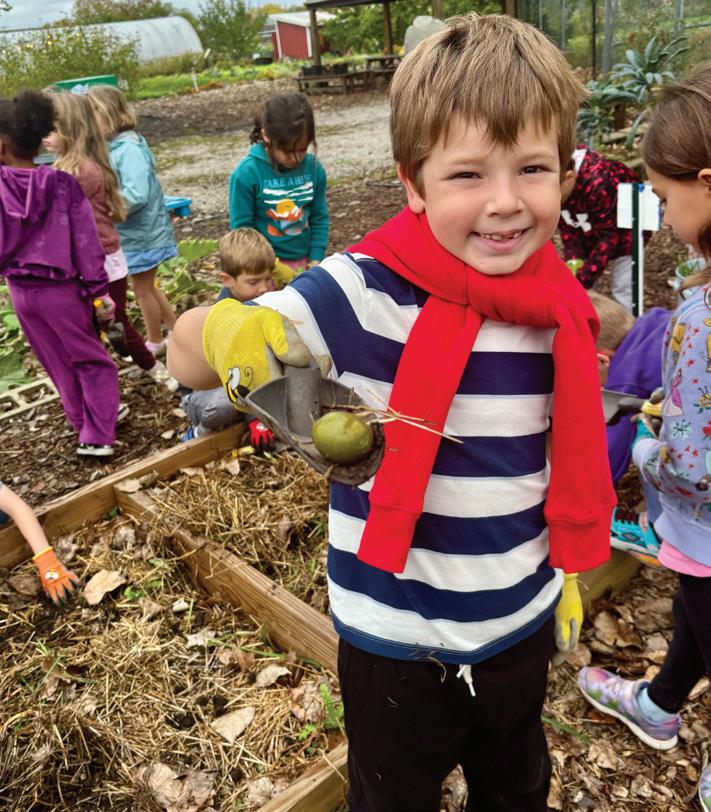
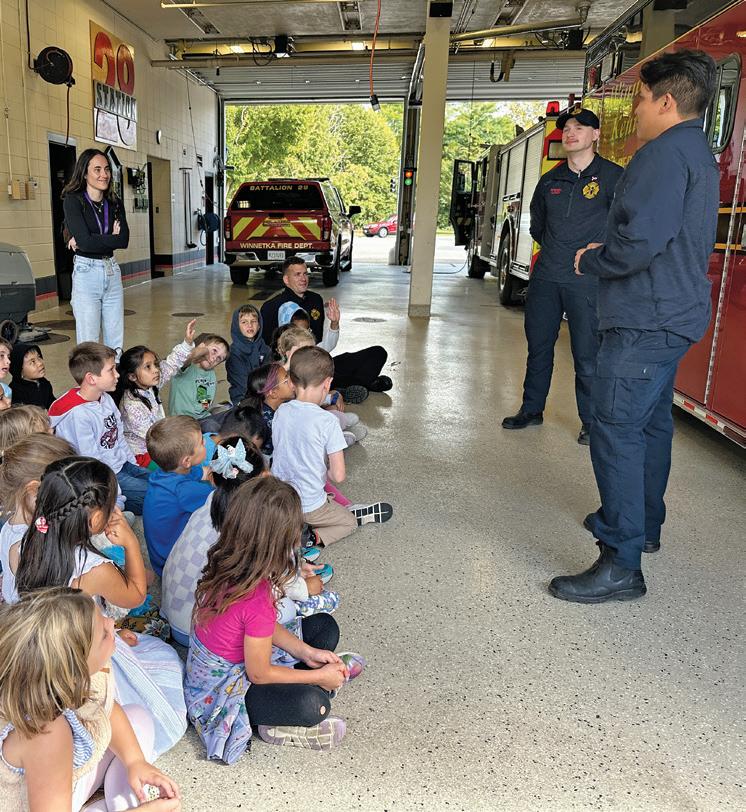
In first grade, students spend a good part of the fall exploring the community around them — their classroom community, NSCD as a whole and the surrounding Village of Winnetka. They interview faculty and staff and take field trips to places like the police and fire stations, the post office, the animal hospital, a local ice cream shop — even a working farm. They meet the people who make their community run and learn how different roles shape the place they live.
By eighth grade, students extend this sense of identity outward. Their yearlong study of Chicago history includes walking the city’s neighborhoods, standing at historical sites and wrestling with the stories those places hold.
As middle school humanities teacher Kirk Greer explained, the Chicago In the World theme helps students understand how the city fits into national and global narratives.
“When students go into the Bronzeville and Bridgeport neighborhoods to see the actual city blocks that we’ve been studying and where all these significant historical events happened, it helps them see Chicago — and themselves — in a broader social and civic context,” he said. “It makes history come alive so they can visualize it better and contextualize it more. That sensory experience has really locked in their understanding of the unit.”
Although a handful of NSCD eighth graders live within the city limits, most don’t. Many have only experienced Chicago as tourists. “These trips help students understand Chicago in a much different way — deeply connected to where we live on the North Shore, but also deeply connected to world history,” Kirk explained. “Chicago has been at the center of the biggest trends in world history over the past 150 years — be it trade, industrialization, the rise of resistance led by people of color and efforts to liberate themselves, or globalization.”
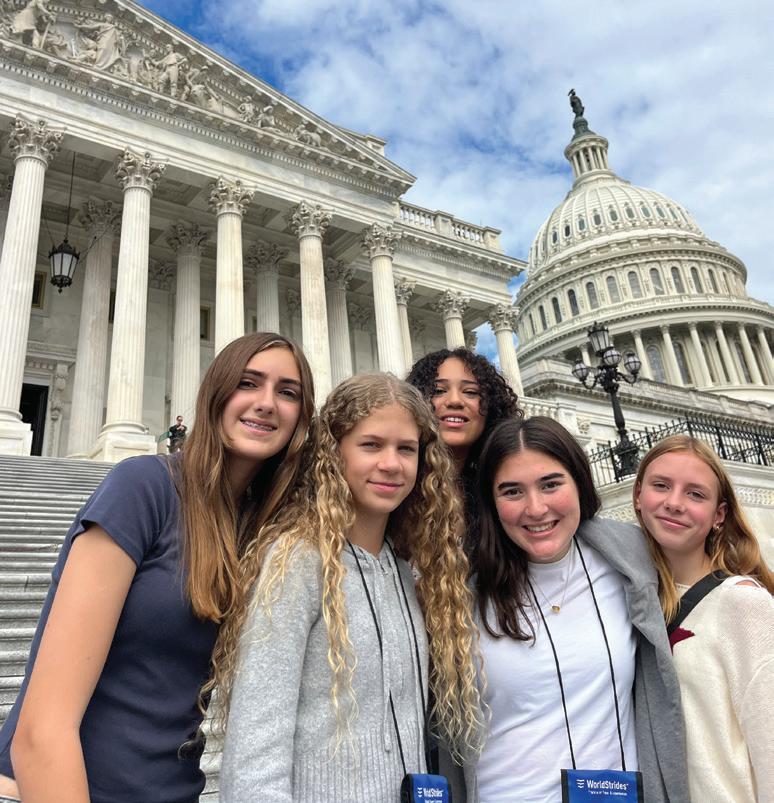
The annual fall trip to Washington, D.C., adds a national lens, connecting local history to the larger American story. Before the trip, students research a work of public art or architecture and write a script introducing its artist, context and significance. While in Washington, they deliver those presentations in front of the monuments themselves, and the unit culminates back at school as each student creates an original work of public art honoring Jean Baptiste du Sable.
Across all divisions, experiential learning fosters responsibility. In both middle and upper school, this work extends through Community Engagement Week and Interim — experiences designed to connect students with communities and contexts different from their own. During Community Engagement Week, sixth and seventh graders choose themed groups that explore issues across the region, while eighth graders spend the week immersed in Chicago. In the upper school, Interim challenges students to step beyond their comfort zones, engage with new perspectives and reflect on how those experiences shape their sense of identity and responsibility. At least once in four years, students participate in a Community Engagement Interim that places them in meaningful partnership with another community and asks them to learn across lines of difference.
Second graders consider water as both a scientific resource and a community concern. Middle schoolers learn to care for shared spaces and for each other. Upper schoolers grapple with environmental stewardship, cultural understanding and scientific inquiry. Students come to see themselves as part of a wider world — one they have the power to shape.
“Outdoor education — really any kind of experiential learning — matters at every age,” David explained. “The more opportunities we create for students to learn in this way, the better. It’s a defining part of our program and something that truly sets North Shore apart — every student gets the chance to experience it.”
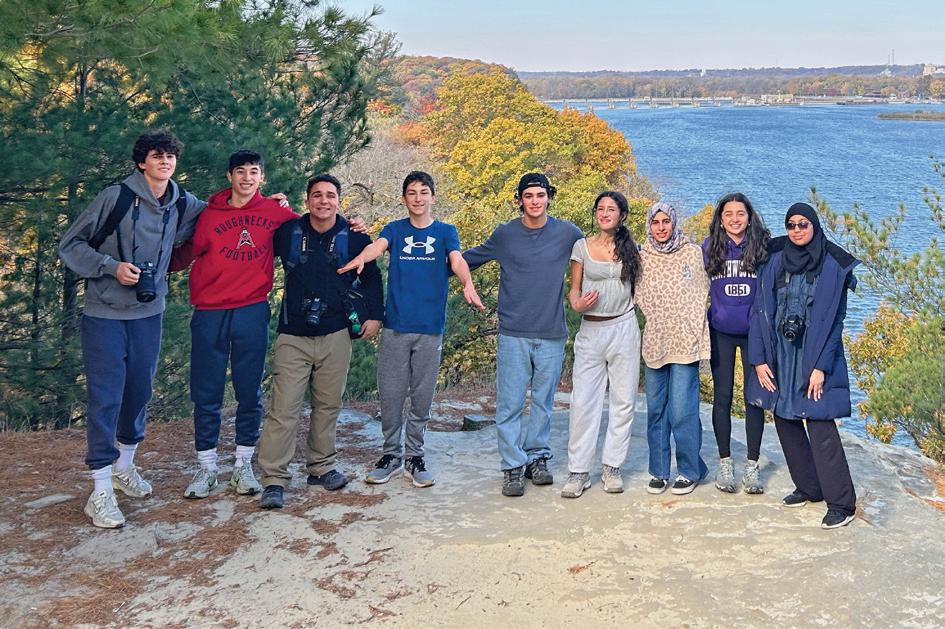
At NSCD, Interim offers upper school students a chance to step outside the classroom and explore experiences that challenge their perspectives, spark curiosity and deepen their understanding of the world. For one week in November, students engaged in a wide range of opportunities — from hiking and connecting with nature, to exploring history, language and culture — both locally and abroad. Here are just a few insights, surprises and moments of growth from their experiences, offering a glimpse into how these journeys are shaping the way they see themselves, their communities and the world around them.
By Avalon Felty ’26 Experience the Wonders of Japan
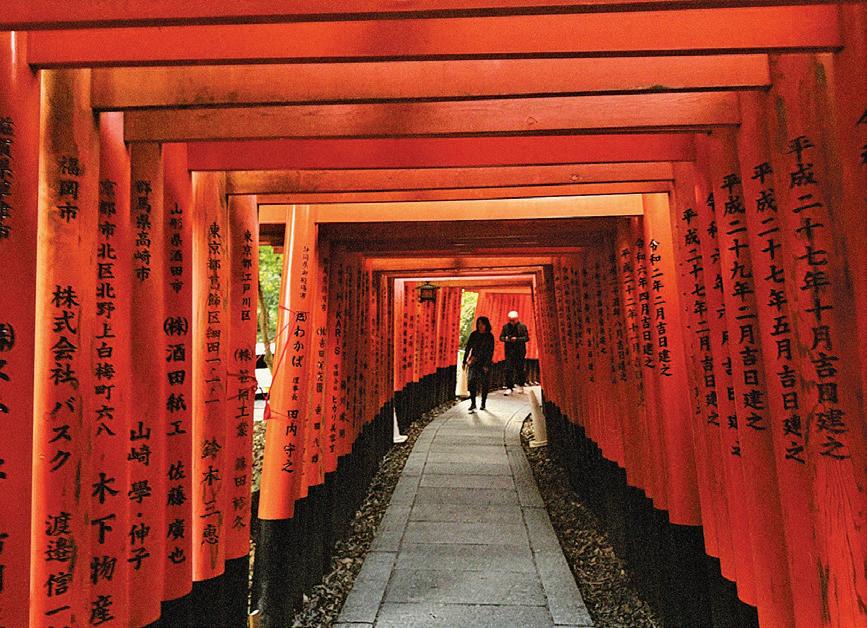
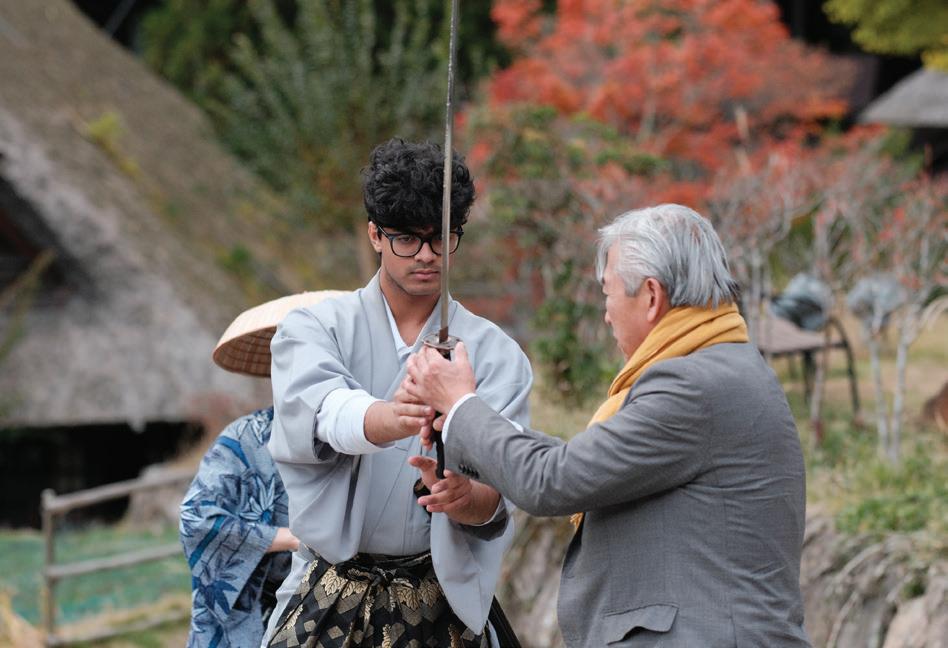
In the first three days of this Interim trip we visited 11 historical sites. Climbing to the top of Mt. Inari through hundreds and hundreds of Tori gates and visiting the inside of Nijo Castle were my favorites. The Tori gates on Mt. Inari were densely packed with barely a foot of space between them in some areas. The sun was setting as we climbed, making the bright vermilion red paint of the gates even more vibrant. About halfway up, there was a view overlooking all of Kyoto. We paused to watch the radio towers and street lights below us softly twinkle.
By Max Flemma ’26
Berlin and Prague: History. Art. Culture.
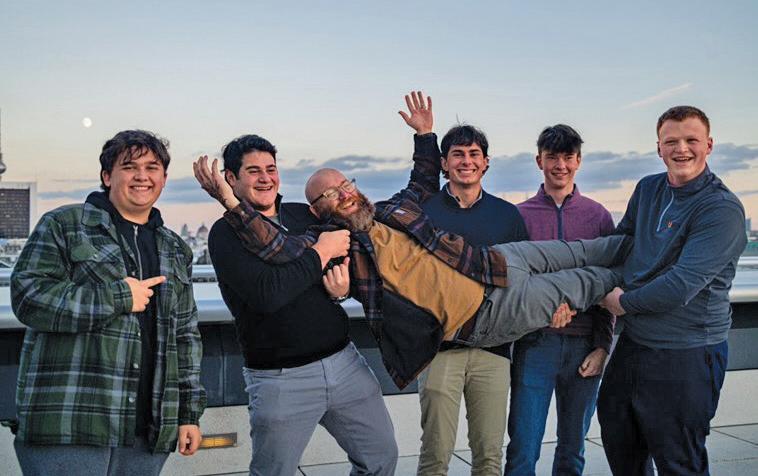
Yesterday we got to tour the Berlin Wall, which was truly amazing. It was super interesting to learn about how different the two sides were, and how people resisted in different ways. After that, we got to tour the Reichstag. From there we walked to the Brandenburg Gate, where we learned a lot about life and culture in Berlin during World War II. After that, we had a traditional German dinner! The trip has been amazing so far, and everyone has learned a ton.

By Emily Ver Eecke ’27
Italy: Under the Tuscan Sky
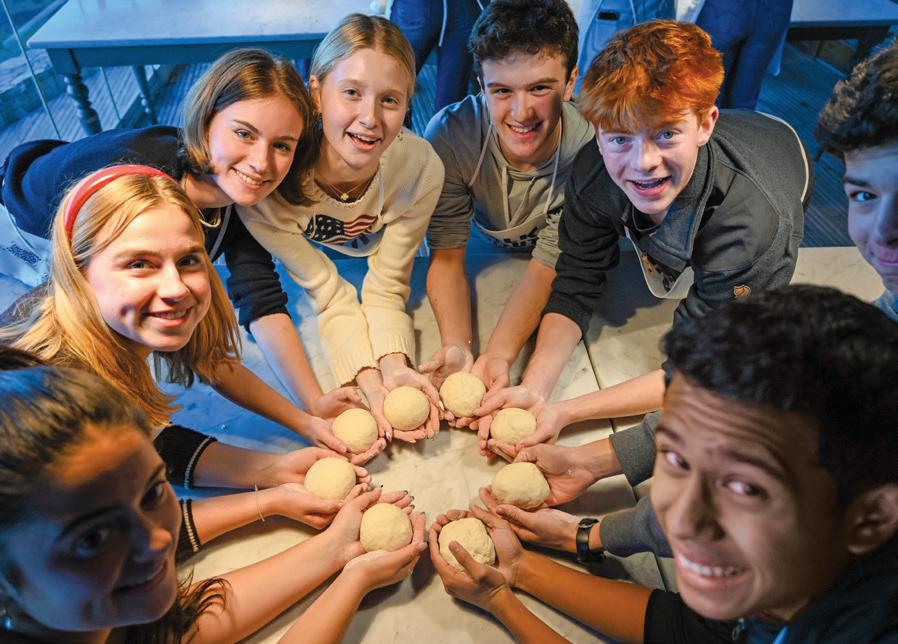
Today was such a fun and unforgettable day! We started the morning with breakfast at the hotel before walking to a local school for an Italian class. It was fascinating to see how similar Italian is to French and Spanish — it made learning so much easier! After class, we visited an Italian food market to practice our new vocabulary and order lunch. I got the most delicious truffle pasta and mango gelato!
After lunch, we took a scenic walk and bus ride to a beautiful Tuscan house that had been transformed into a kitchen for cooking classes. It was honestly one of the most fun experiences ever. The three chefs who led us were full of
By Charlotte Potthoff ’29 Monuments, Memorials and Memory
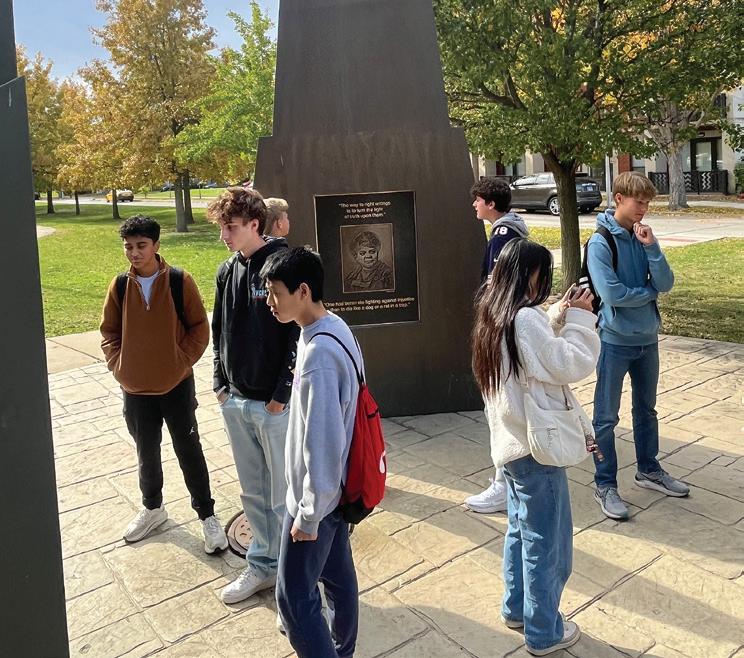
Today, we visited multiple monuments, including the Union Stockyard Gate and the Ida. B. Wells National Monument. Although I’ve seen both already, I was surprised by how much there was still to learn and explore about each. Through deep symbolism and historical roots, I’ve learned so much about the community through the creativity of these monuments and how their design greatly shapes their meaning. Now, I look at Chicago differently, realizing just how much has changed over the years.
By Ruby Waters ’28 Nature Writing and Solitude
energy and made learning how to make pizza and gelato so enjoyable! We even got to toss pizza dough ourselves. We ended the night eating what we made while watching the most stunning sunset over the Tuscan fields and villas.
Later that evening, we had a group discussion about Italian culture and what has surprised us the most. One thing that stood out was how meals in Italy are treated as meaningful moments of connection — not something to rush through. Italians take their time eating, talking and enjoying each other’s company. It made me think about how, at North Shore, we also value community, yet often only have 30 minutes for lunch. Experiencing this difference reminded me how slowing down — like the Italians do — can help us build stronger, more genuine connections within our own community.
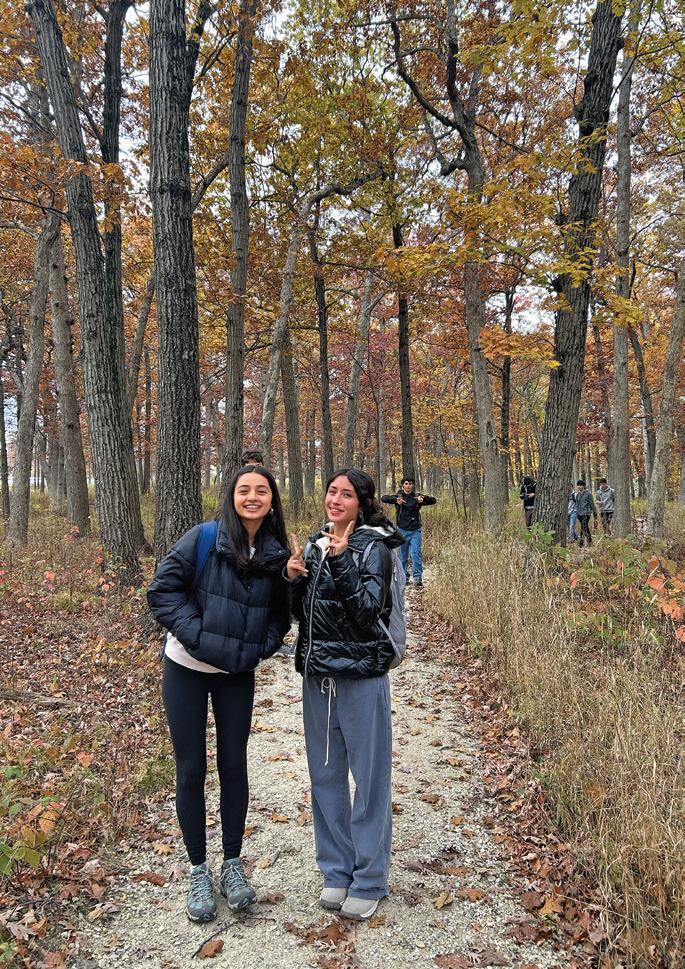
This year I chose Nature Writing and Solitude as my Interim. Yesterday, we hiked and walked trails around Glacial Park and today we did the same in McCormick Ravine. I think the biggest shift of perspective I've had is realizing how little time I spent completely alone in nature, or just in nature in general. By having the time to go to these places and having hours to just walk around, it really puts into perspective how little time in my normal life I actually choose by myself to go outside. A lot of times my excuse has been that Illinois is not a place that has hikes or trails or beautiful nature, but this Interim has already shown me the exact opposite. We found great trails an hour away and fifteen minutes away. I think it's really easy to make a bunch of excuses when thinking about spending time outside — especially in cold weather or in a state like Illinois that is not known for wildlife. But if you make the effort anyway, it's so beautiful and extremely calming. So far, I've had a great time connecting with nature in both silence and with my classmates and I'm very excited to hike Starved Rock tomorrow!
FOR MIDDLE SCHOOL MATH TEACHER KRISTEN SLAMAR, RACING ALONGSIDE HER MOM HAS BECOME BOTH A FAMILY RITUAL AND A LESSON IN RESILIENCE
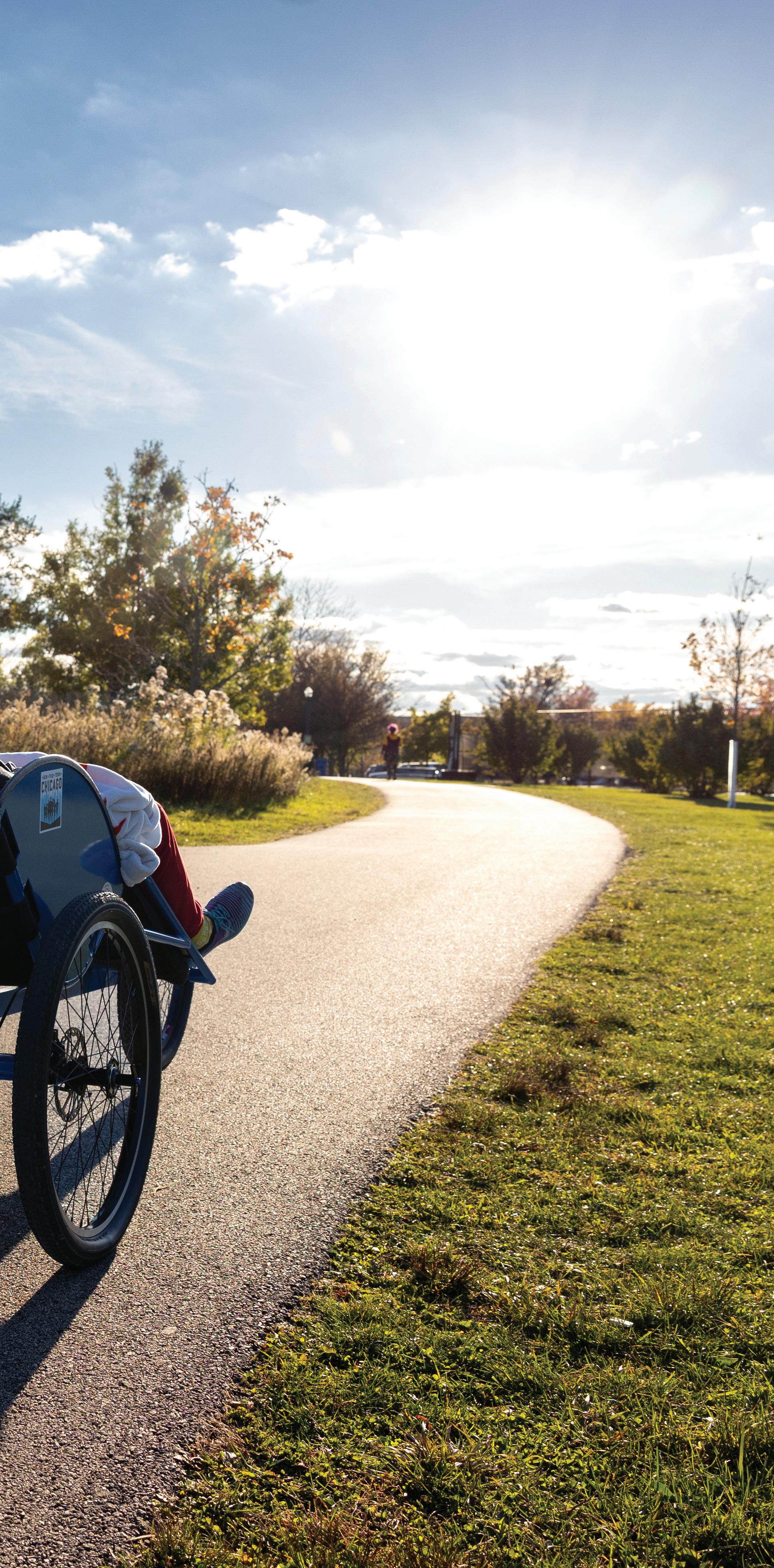
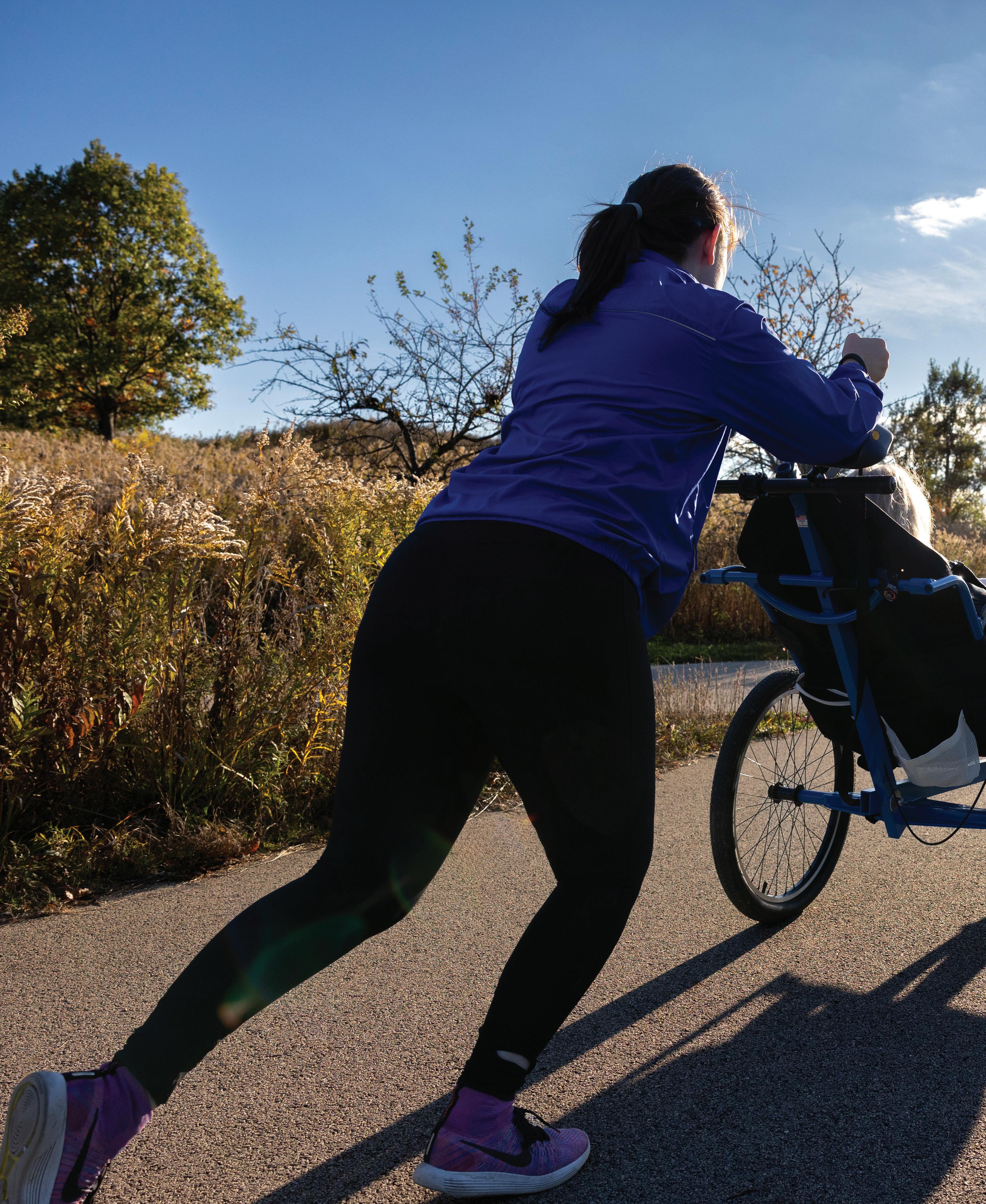
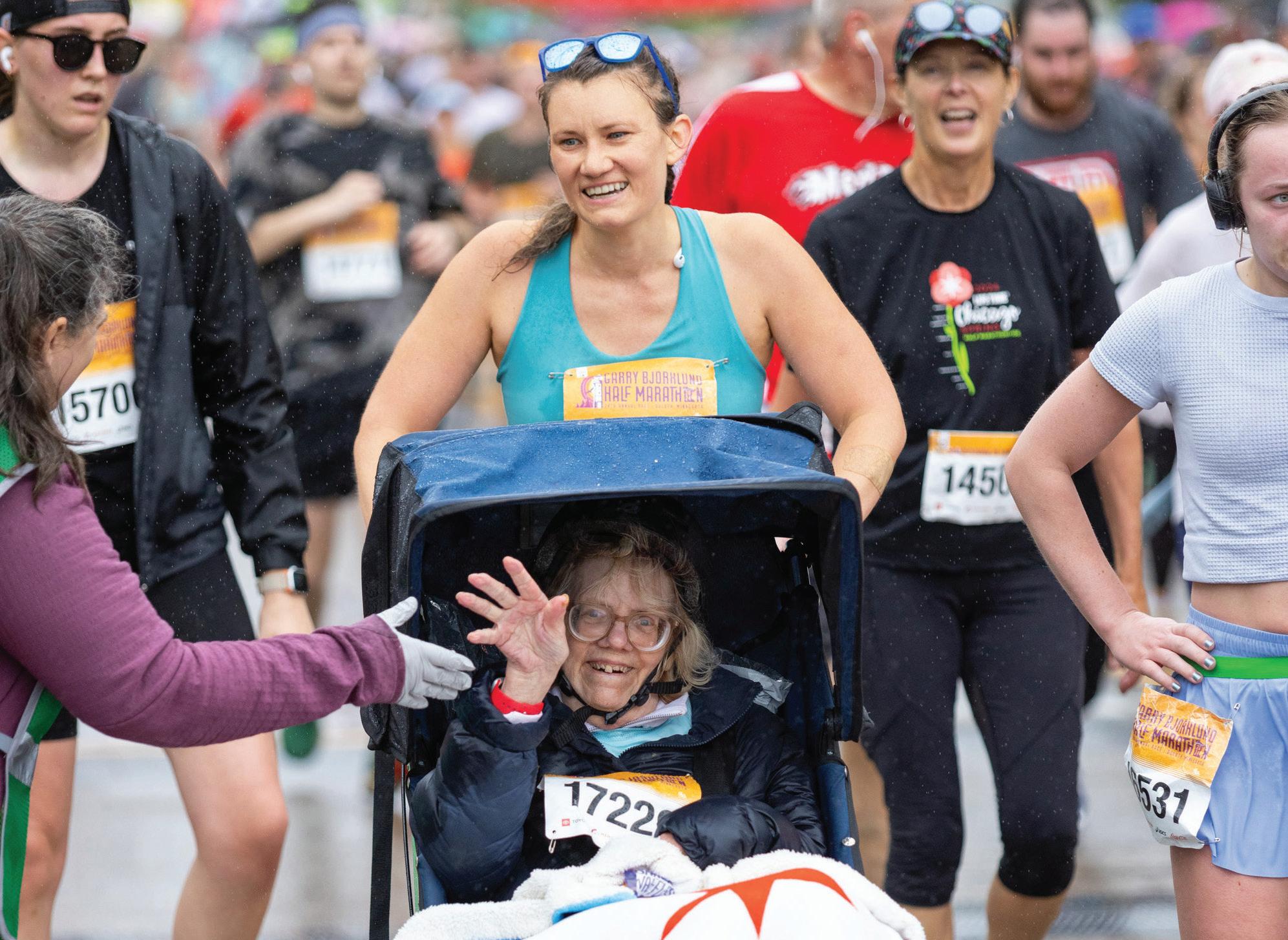
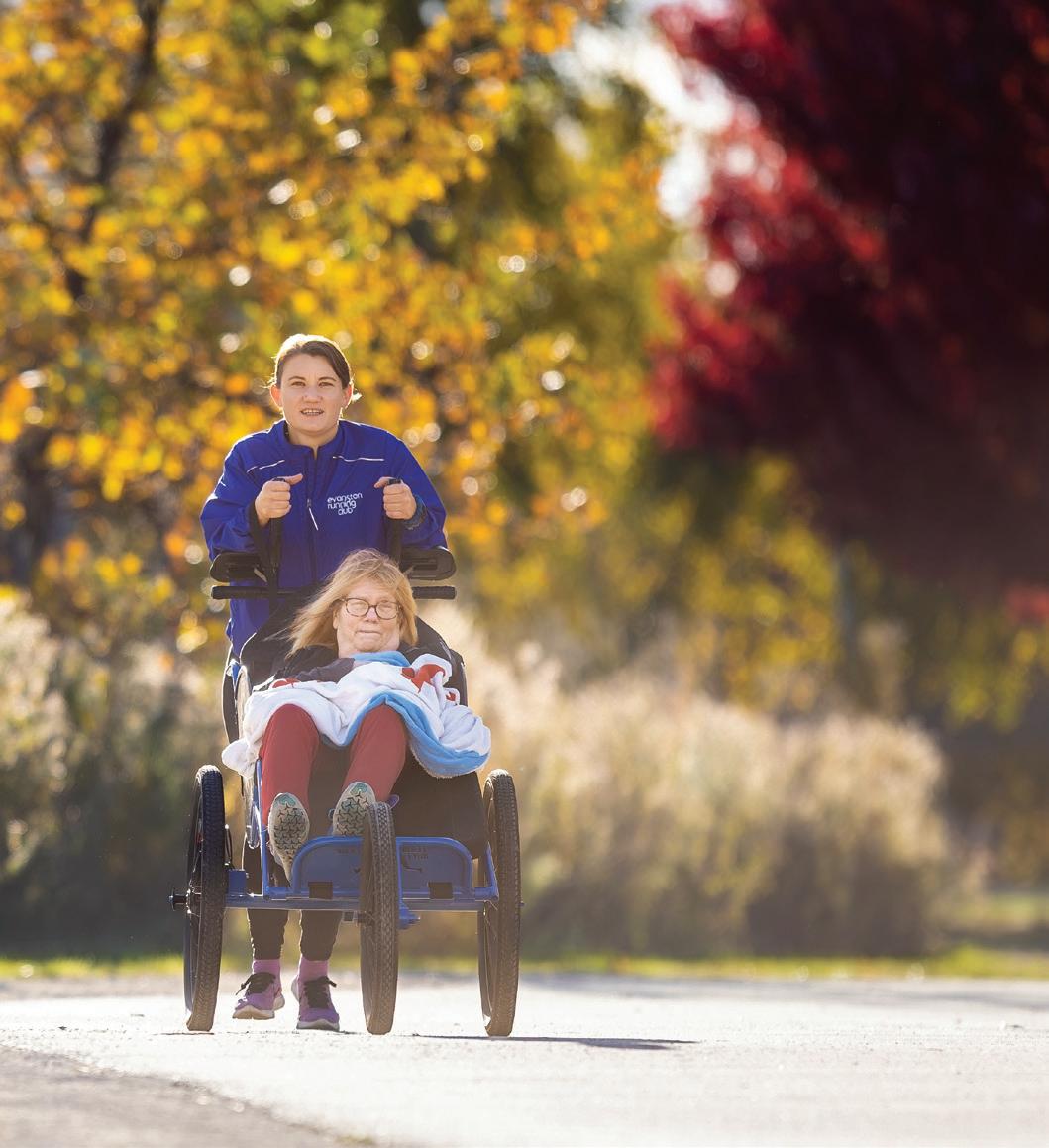
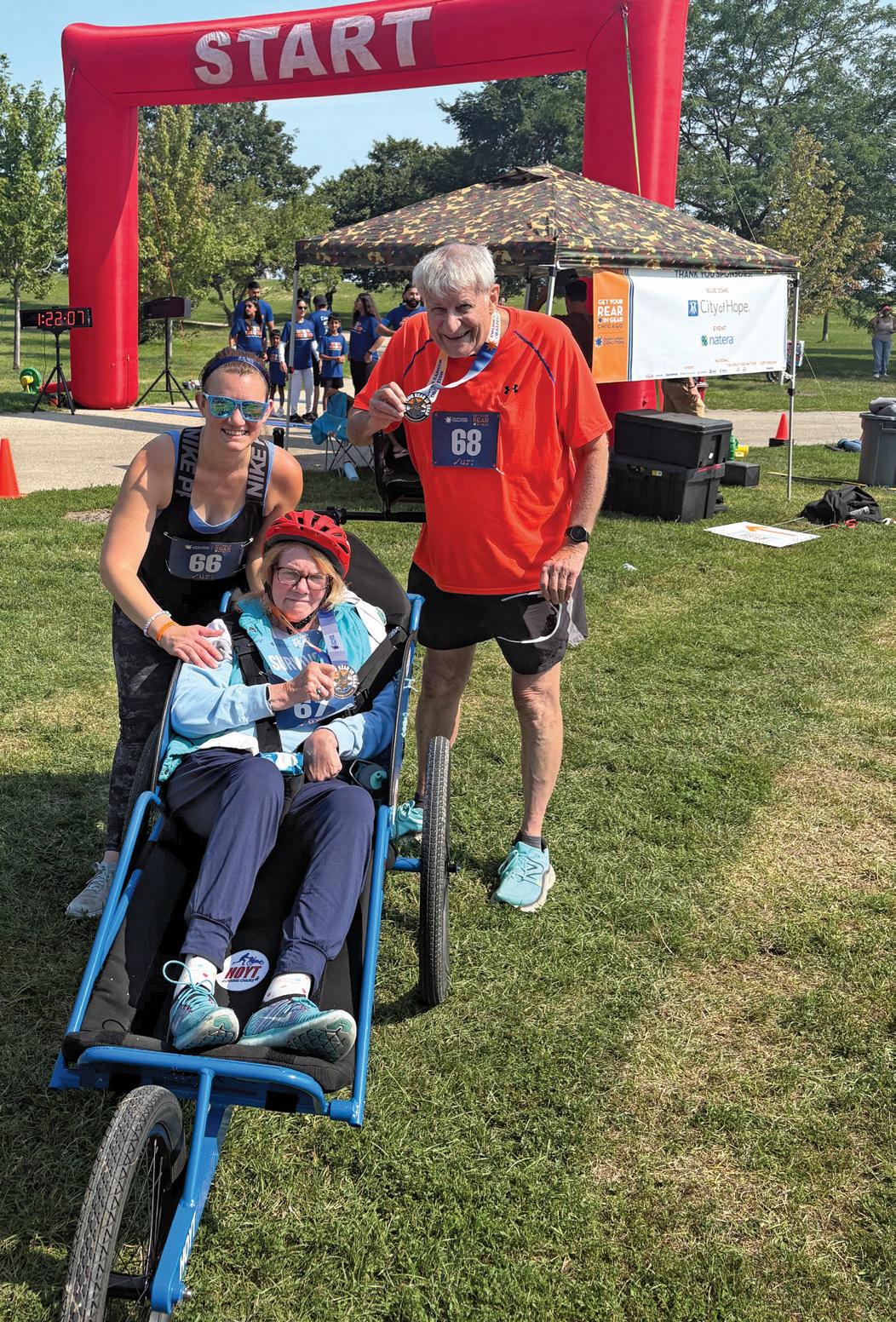
When North Shore Country Day middle school math teacher Kristen Slamar laces up her running shoes for a long run, she’s rarely running alone. Since 2023, she’s been racing alongside her mom, Gail, pushing her in a specially designed wheelchair through courses across the Midwest.
About two and a half years ago, at the age of 68, Gail suffered a stroke caused by colon cancer that left her partially paralyzed on her left side. As part of her recovery, Kristen looked for ways to get her mom outdoors and moving again.
“I had seen people racing this way, which was how I knew it was a thing,” Kristen said. “So we got a chair, and I said, ‘Mom, let’s try it just to get you outside.’ At first she was like, ‘This sounds awful, but I love you, so I’ll try it.’”
Those first outings were difficult — Gail was sick, the movement uncomfortable — but over time, it got easier. “As she started to feel better, getting outside felt better,” Kristen said. They began signing up for races that supported causes close to them, including colon cancer research and organizations helping families battling cancer.
Now, the two have completed 10 half marathons together, along with a handful of 5Ks, 10Ks and 15Ks, Kristen said. The half marathon has become their signature distance. “It’s so long,” she laughed, “but it’s my favorite distance to run.”
Their weekends often include what a neighbor calls “destination runs,” ending with a stop for a hot chocolate or milkshake. “It’s just so nice to spend time together,” Kristen said. “Even symbolically, crossing a finish line feels like your body and mind can accomplish this — and for her, it felt like getting closer to beating cancer.”
Finding Joy in the Challenge
Running while pushing a racing wheelchair requires strength, coordination and planning. Kristen explained that their current chair is specially designed to make it easier to run with
Part of running that’s inspiring is remembering that every person on the course has a different story and reason for being there.

proper form and to keep Gail comfortable. “It lets you use stronger muscles in your back instead of feeling like you’re pushing a cart,” she said. “The new chair is very smooth.”
Every race is a mix of logistical and emotional preparation. Kristen and her mom have to contact race directors ahead of time to make sure adaptive athletes are allowed and to find out whether there’s a “duo” category. “Some races will put us in a wheelchair division, others treat it like a stroller and a few have a separate duo team category,” Kristen said.
Despite the challenges, she said the experience has deepened her relationship with her mom. “When you’re out for a long run, your mind just goes to different places,” she said. “It’s a nice way to spend time together. My dad often comes for races too, so it’s kind of a family thing. We’ve done some smaller road trip races, and it’s a nice thing to do together and get excited about.”
Running has long been a Slamar family tradition. Kristen’s dad ran cross country in high school and completed two Chicago Marathons in the 1980s. “I actually started running in grad school just to relieve stress,” Kristen said. “I thought I’d do one 5K and be done, but then I got the bug — and my dad got FOMO and started racing again too.”
Their shared experiences have created a sense of connection not only within their family but also with the larger running community. Kristen recalled their first half marathon in Champaign, when they were featured in the local paper, the News-Gazette. “The amount of people who knew us and greeted my mom along the course was amazing,” she said. “People were wishing her good luck on her cancer treatments. She was so touched by that support.”
Gail, now 71, has continued to defy expectations. She’s made significant progress in her stroke recovery and now shows “no evidence of disease” from
cancer. “She’s determined to keep making progress,” Kristen said. “We actually did a micro marathon — which is 0.26 miles — where she walked with a walker. A few months earlier, that seemed like it might be impossible.”
As a teacher, Kristen sees clear parallels between running and education. “Part of running that’s inspiring is remembering that every person on the course has a different story and reason for being there,” she said. “That reminds me in the classroom that every student is coming from a different place and carrying different things with them. Keeping that in mind really shapes how I teach.”
Running has also taught her about discipline and resilience. “It’s not like you just show up at the start line,” she said. “There’s so much that goes into it — the daily training, the runs that feel great and the ones that feel hard. But it’s about doing what you set your mind to and keeping your commitments.”
Balancing training with teaching isn’t easy, but Kristen has found a rhythm. “Half marathons are forgiving,” she said. “If I miss a run, that’s okay. I’ve learned to give myself grace.”
Kristen and her mom are already planning their next races. “We’ve talked about doing a full marathon,” she said. While Kristen has run marathons solo, she’s never done one as a duo team with her mom. “I told her I will do one more for her. My mom’s mentioned Hawaii since that race doesn’t have a time limit. If we can go slow and just enjoy it, that sounds great.”
For anyone thinking about taking on a challenge with a loved one, Kristen’s advice is simple: “Do it. It’s a wonderful way to connect. There are programs that match people who want to push or guide runners who are blind. It’s such a cool way to be part of the running community and promote inclusion.”
hen students at North Shore Country Day dive into a book, tackle a math problem or ask a big question about the world, they’re not alone. Behind each moment of discovery stands a team of dedicated specialists — educators who focus on building foundational skills and nurturing curiosity from the earliest years of school.
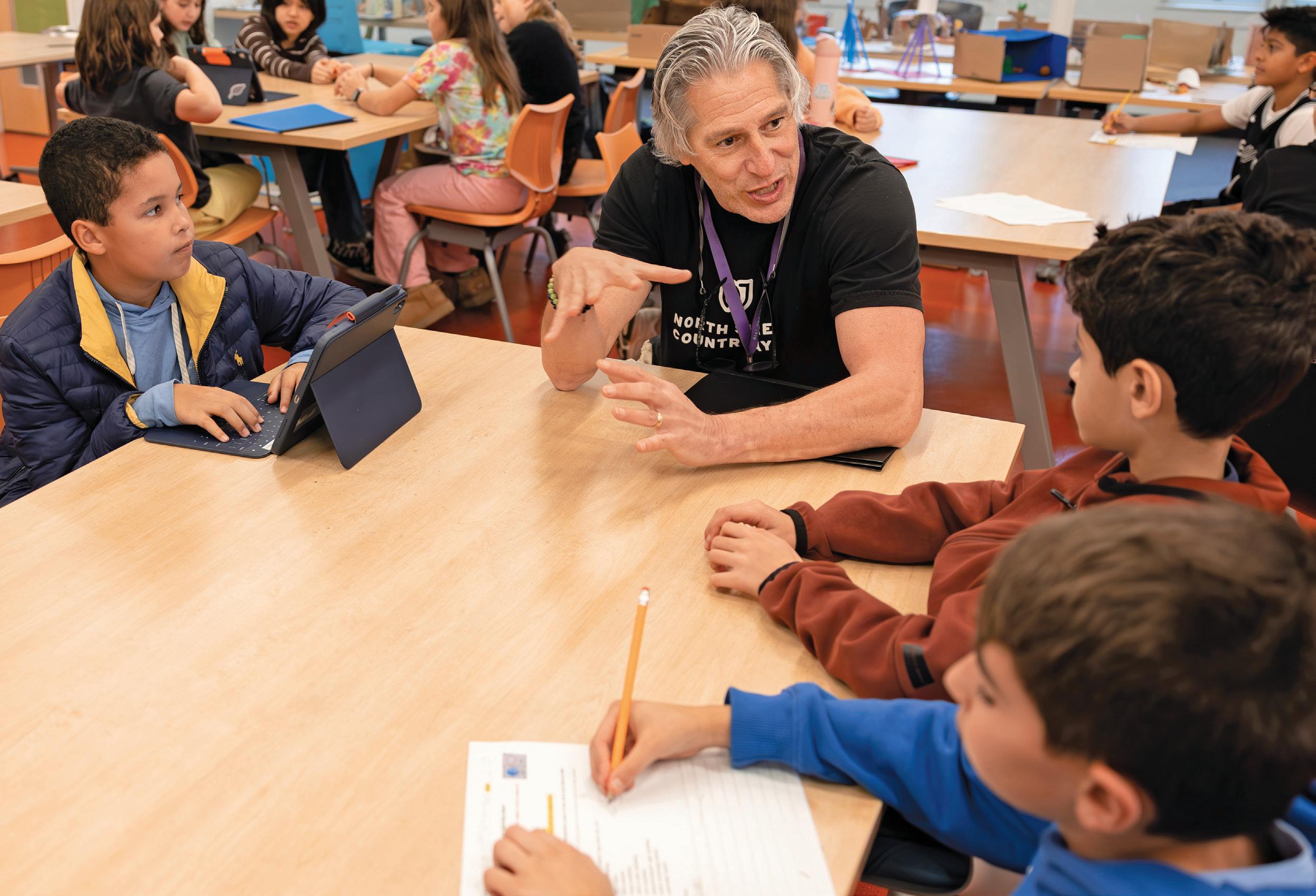
Together, Reading Specialist Sharon Lieberman, Math Specialist Amy Shuldiner, and Guided Inquiry Specialist David Green work alongside teachers and students to strengthen academic understanding, deepen engagement and help every child find their own voice as a thinker and problem solver.
Laying the Foundation: Reading and Learning
Reading is more than decoding words — it’s the foundation for all learning, Sharon said. “I work with teachers and students to help every child grow as a reader,” she explained. “Reading is my passion, and I’m excited to partner with families each year.”
Sharon co-teaches with classes from junior kindergarten through fifth grade, focusing on the five areas of literacy instruction — reading, writing, speaking, listening and word study. She spends time daily in JK through second grade classrooms and meets frequently with third grade students, providing small-group and one-on-one support.
Collaboration, she emphasizes, is at the heart of her work. “I’m a resource for everyone — students, teachers and parents. It’s true when they say it takes a village to raise a child, and we couldn’t do what we do without partnership.”
As part of that collaboration, Sharon helps select and implement North Shore’s reading curriculum, which includes Heggerty for foundational skills, Structured Word Inquiry for etymology and morphology, and Fishtank, recently rolled out in third through fifth grade. She also organizes grade-specific initiatives like reading nights and schoolwide programs like One Author, One School.
Her support extends beyond students to include faculty professional development and parent education. “Reading support is about giving students the tools they need to feel confident and successful,” she said. “Every child develops at their own pace, and it’s my pleasure to be their guide on that journey.”
Sharon also reminds parents of the power of simple daily routines. “Even 10 to 15 minutes of reading together makes a huge difference,” she said. “Chat about what you’ve read. Celebrate effort, not just accuracy — and most importantly, have fun reading together.”
For Amy, the lower school math specialist, math learning starts with play and conversation.
“Games and play are to math what spelling and phonics are to a good book,” she explained. “They let students practice skills and deepen understanding in an engaging way.”
Amy’s work spans every grade from junior kindergarten through fifth. Her role varies from day to day: sometimes co-teaching a class, other times leading enrichment groups or meeting with teachers to plan instruction. “Being prepared for this kind of teaching,” she said, “is done through frequent communication and intentional planning with the math teachers.”
In junior kindergarten and senior kindergarten, students use the Bridges in Mathematics curriculum. Amy often joins lessons like “Estimation Station,” where children solve clues and make predictions before counting collections to see how close they came. “Using familiar objects — like shoes — to explore attributes helps them transfer what they learn to shapes and patterns later on,” she said.
For older students, Amy introduces challenges “just a bit beyond their current understanding,” using the Building Thinking Classrooms approach. “They work together through productive struggle to come to an understanding,” she explained. She joins small groups during these sessions and meets with teachers to discuss student progress.
Outside class periods, Amy connects with students during “Morning Math Moments,” a time when second and third graders play
math games before school, and through fifthgrade office hours where students seek help or enrichment. “I get to watch their math skills grow and share this with their teachers as they move through North Shore,” she said.
She also takes time to talk math with NSCD’s youngest learners to better understand their thinking. “Interviewing our youngest learners is an important step to understanding their current mathematics knowledge,” she said. “I communicate my findings to the JK and SK teams so we can build from what students already know.”
After more than 30 years as a third grade teacher at NSCD, David has stepped into a new role as the lower school guided inquiry specialist. His mission: to channel the natural curiosity of lower school students into deep, meaningful exploration.
“Guided inquiry is examining what you’re curious about — what you wonder about,” David explained. “If you weave together the curriculum content teachers design with students’ natural curiosity, you create a ‘third space,’ and that’s where guided inquiry lives.”
David leads students through the Guided Inquiry Design process, beginning with an “opening” or hook — something that sparks questions and engagement. “It might be an antique bottle we found on campus or a question like, ‘How can you make the world a more beautiful place?’” he said.
From there, students conduct broad research before narrowing their focus to a specific question, gathering and analyzing information, and finally sharing what they’ve learned through a project, presentation or creative medium.
Already, each grade is exploring inquiry in ageappropriate ways: JK students asked questions about a giant pencil in the library. (“What is it made of? Can it really write?”) First graders are tracing the journey of food from farm to lunchbox — asking, “How did that get in my lunchbox?” — as part of their community unit, which includes a visit to The Talking Farm in Skokie to learn about sustainability.
Second graders investigated the origins of North Shore’s Morning Ex, while fourth graders are exploring Native American history and land
use through the question, “About 200 years ago, thousands of Potawatomi lived in the Chicago region, including the North Shore. They don’t live here anymore. Why not? What happened?”
Third through fifth graders will build on these foundations throughout the year, culminating in more complex projects. Fifth graders, for example, are centering their work around the question: “How do you make the world a better place?” Inspired by the school motto, “Live and Serve,” students are identifying real-world problems, conducting research and designing projects to address them.
Whether in the classroom or on a slide, students are often joined by Frank the Lower School Inquiry Dog, the program’s unofficial mascot, who has quickly become a familiar symbol of curiosity across the lower school.
David, who first integrated guided inquiry into his third-grade curriculum more than a decade ago, said the approach continues to surprise and inspire him. “I have a pretty good imagination,” he said, “but I’m always amazed by what lower school students come up with.”
He credits curiosity itself as the driving force behind meaningful learning. “Follow their curiosity,” he advises parents. “Help facilitate where they want to go with their wonderings. They’ll take you to some wonderful and interesting places.”
While each specialist’s focus differs, all three share a common thread: a belief in partnership and in seeing every child as a capable, evolving learner.
Sharon, Amy and David collaborate closely with classroom teachers, aligning literacy, numeracy and inquiry so that students can transfer skills across subjects. They also serve as a bridge for families — sharing insights, strategies and encouragement that help extend learning beyond the classroom.
Their combined work reflects North Shore’s whole-child approach, emphasizing both academic growth and a lifelong love of learning. “Our goal,” as Sharon put it, “is to help every child feel confident, curious and ready to take the next step.”
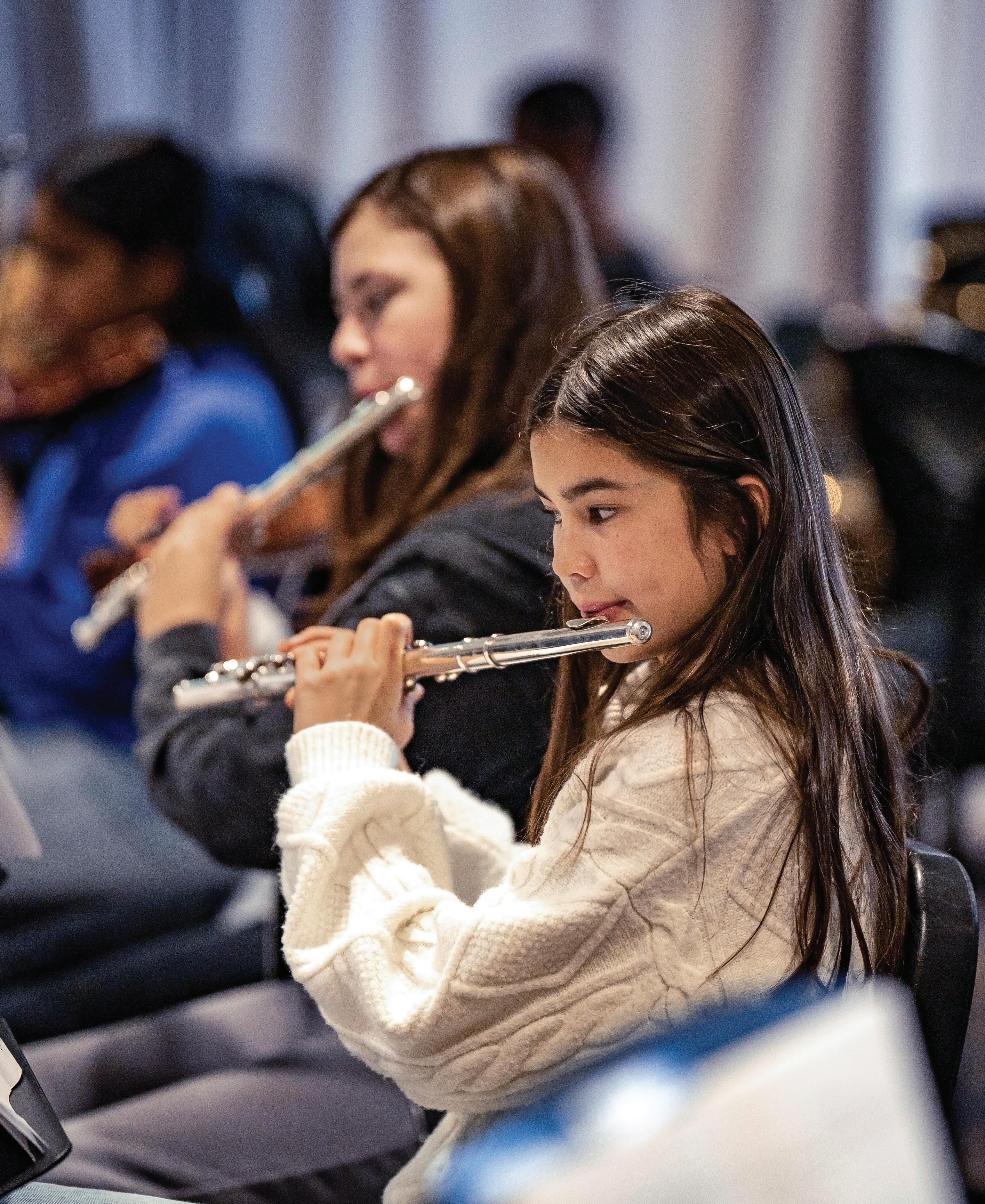
n middle school performing arts classes, it can be easy to focus on the final performance — the concert, the play or the recital. After all, that’s what friends and families see and hear. The “product” seems like the goal: the polished performance that shows off all the hard work students have put in. But while the concert is important, what truly matters in a performing arts class is the process — the learning and growth that happens every week in rehearsal. Valuing process over product helps students build lifelong skills, confidence and an appreciation for what it takes to put on a performance of any kind.
When we value process over product, we focus more on how we make music or learn a dance than on the final result. The “product” is the performance — the end goal. The “process” is everything that happens along the way: learning notes, listening to others, memorizing lines, making mistakes and trying again. In a rehearsal setting, process means showing up prepared, paying attention to feedback, applying that feedback in the moment and growing as both an individual and a member of an ensemble.
This approach shifts the focus from perfection to progress. Instead of thinking, “I need to play this perfectly,” students think, “I want to understand this better today than I did yesterday.” It helps students embrace their curiosity, apply their knowledge and persist through challenges.
In rehearsals, every moment has a purpose. Teachers structure their classes to ensure that student learning is scaffolded appropriately and pushes them to the “just uncomfortable” learning zone. Students learn what the
daily routine is and, over time, begin to see how this routine changes and grows based on what they have learned.
For example, when a clarinet player spends weeks figuring out how to play a tricky passage, they’re not just learning those notes — they’re discovering how to learn something that is challenging, and perhaps frustrating, to them. They’re developing strategies to overcome these challenges, like breaking a piece into smaller parts or slowing it down to build accuracy. This week of learning is an exercise in perseverance, attention to detail and resilience.
A process-based mindset also allows students to experiment without fear of failure. We get to embrace that mistakes aren’t embarrassing, but rather learning opportunities and proof that you are trying. When rehearsing in this type of environment, students feel more comfortable asking questions, trying new things and taking risks in front of their peers.
Of course, performances still matter — they give students a chance to share what they have learned and to feel proud of their progress. But when the emphasis is on process, concerts become celebrations of growth rather than tests of perfection. The applause at the end of a performance isn’t just for how well the kids performed — it’s for how much each student has learned, practiced and grown since the first rehearsal.
Here at NSCD, the Fine Arts Department fully embraces this philosophy, and it drives how we teach our classes. We encourage you to ask your student about what is happening in these classes and what progress they are making in each rehearsal. They may surprise themselves with just how much learning they are doing.


BUILT INTO THE SCHOOL DAY, NORTH SHORE’S NEW COLLEGE COUNSELING WORKSHOP TURNS A STRESSFUL MILESTONE INTO A MEANINGFUL, STUDENTCENTERED EXPERIENCE GIVING STUDENTS CLARITY, CONFIDENCE AND REAL-WORLD SKILLS AS THEY PREPARE FOR COLLEGE AND BEYOND.
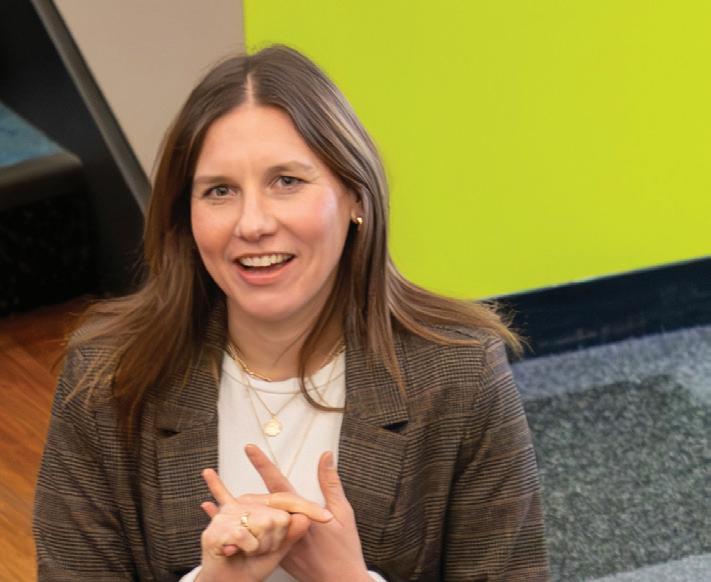

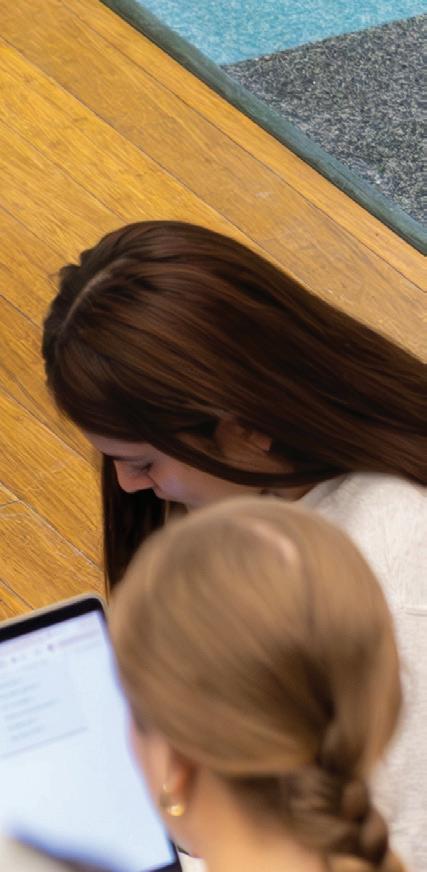
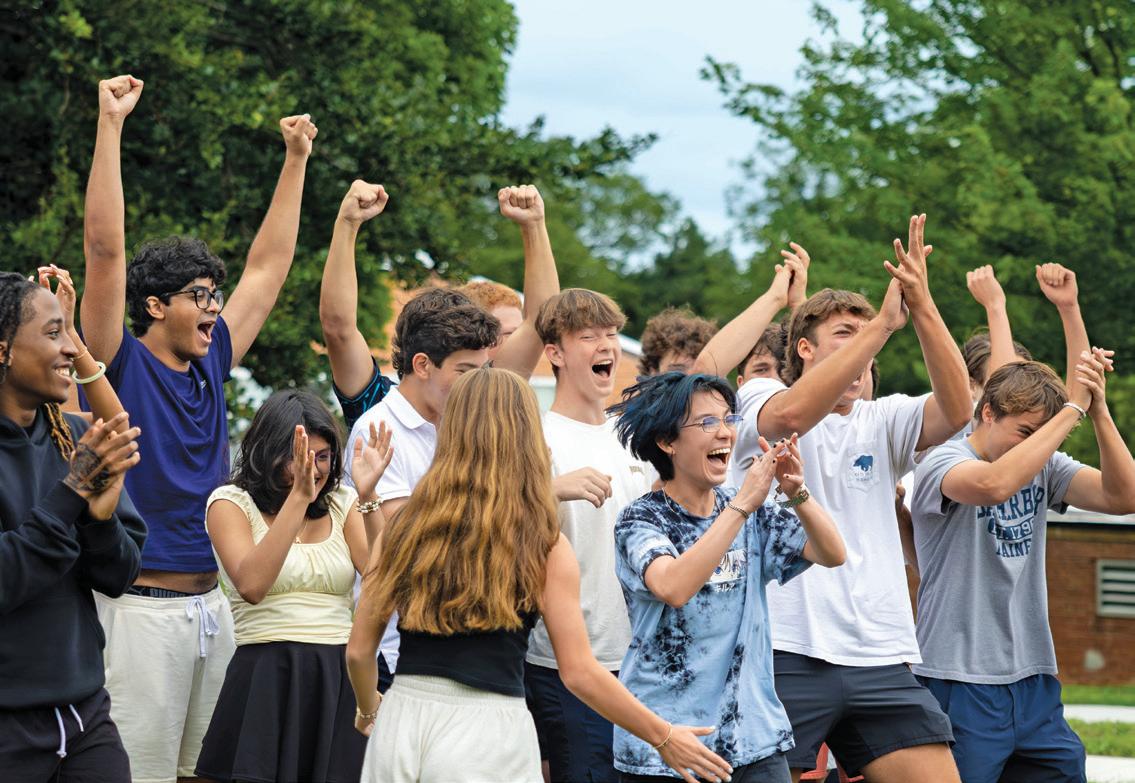
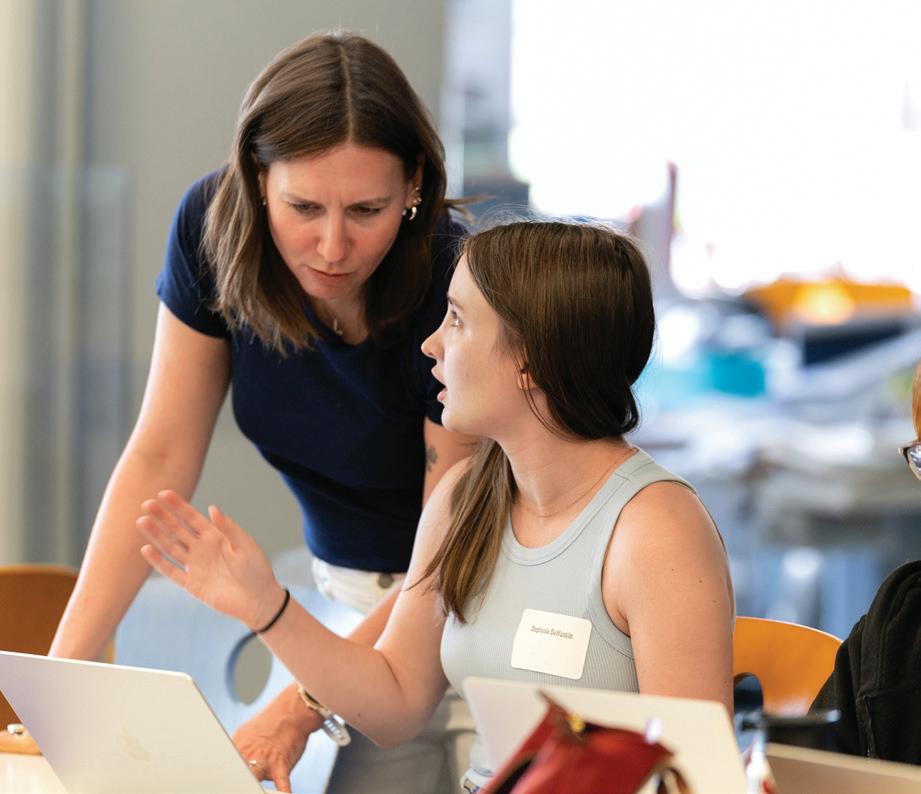
At North Shore, the college search isn’t just about where students are headed — it’s about who they’re becoming. That philosophy inspired the creation of the new College Counseling Workshop, a class designed to help juniors and seniors approach the process with purpose, perspective and confidence.
“Applying to college is not a means to an end,” said Director of College Counseling Kristen Kaczynski, known to students as Dr. K. “It’s an opportunity for growth and skill development, just like anything else we do here.”
For years, much of that growth happened in individual meetings or through long email exchanges. The new workshop — which meets twice a week for 45 minutes during the school day — changes that. It gives students structured time to learn key concepts, work on applications and ask questions in real time. “It’s work that we’ve always done,” Kristen said, “but in a much more thorough way.”
The senior workshop, which launched this fall, covered everything from filling out the Common Application to preparing for college rep visits. Each class included a mix of instruction and hands-on work time. “We might lecture for 15 or 20 minutes,” Kristen explained, “and then say, ‘OK, now take out your iPads and work on doing this thing that we’ve just talked about.’”
The result was a smoother, less stressful fall for students. “There was very little panic this year,” Kristen said. “And we had more students submit applications early than we’ve had in the past.”
New college counselor Mark Seamon saw similar benefits. “Having that time in the curriculum means that when we do meet oneon-one, we can really delve into each student,” he said. “We’re not answering logistical questions. We’re getting to know who they are through in-depth discussions.”
Students noticed the difference, too. “The most common thing I heard from kids was ‘thank you,’” Mark said. “Thank you for helping me solve my problem or cross this off my list. They were just grateful for it.”
Beyond applications, the workshop reflects a broader philosophy: that the college process can teach life skills. “Many kids come to us and have not had to make a real decision before,” Kristen said. “This is often the first actual decision they have to make mostly for themselves. So working through that — figuring out what information you need, how to write and speak about yourself — those are incredibly valuable lessons.”
Mark agreed. “You have to start by knowing who you are,” he said. “Being able to talk about yourself — not just in essays but in conversation — can broaden how you think about what’s possible for your future. It’s not just about finding the right college; it’s about understanding who you are right now and how that can propel you forward.”
With the senior class well underway in their college journeys, attention now turns to juniors. Their version of the workshop began in the second semester and focuses on college research and self-discovery.
“Our hope is to help students think more intentionally about what they want in a college experience,” Kristen said. “Many come to it with a relatively narrow lens. We want to broaden that, to introduce them to colleges they might not have heard of before and give them time to do real research.”
The new structure, Mark added, offers something else students and families appreciate: a clear roadmap. “There’s a beginning, middle and end to the process,” he said. “That sense of direction helps reduce fear of the unknown — for both students and parents.”
Perhaps the most significant change is that the workshop is built into the school day — not squeezed into lunch periods or after-school hours. “It sends a signal,” Mark said. “We devote time for this in the curriculum. We teach it. We help. It’s woven into what we do. That shows students this matters.”
Kristen put it simply: “It doesn’t have to be inherently painful to apply to college. By making time for it, we make it more manageable — even joyful.”
Being your authentic self will yield enormous dividends in the college process — and in life.



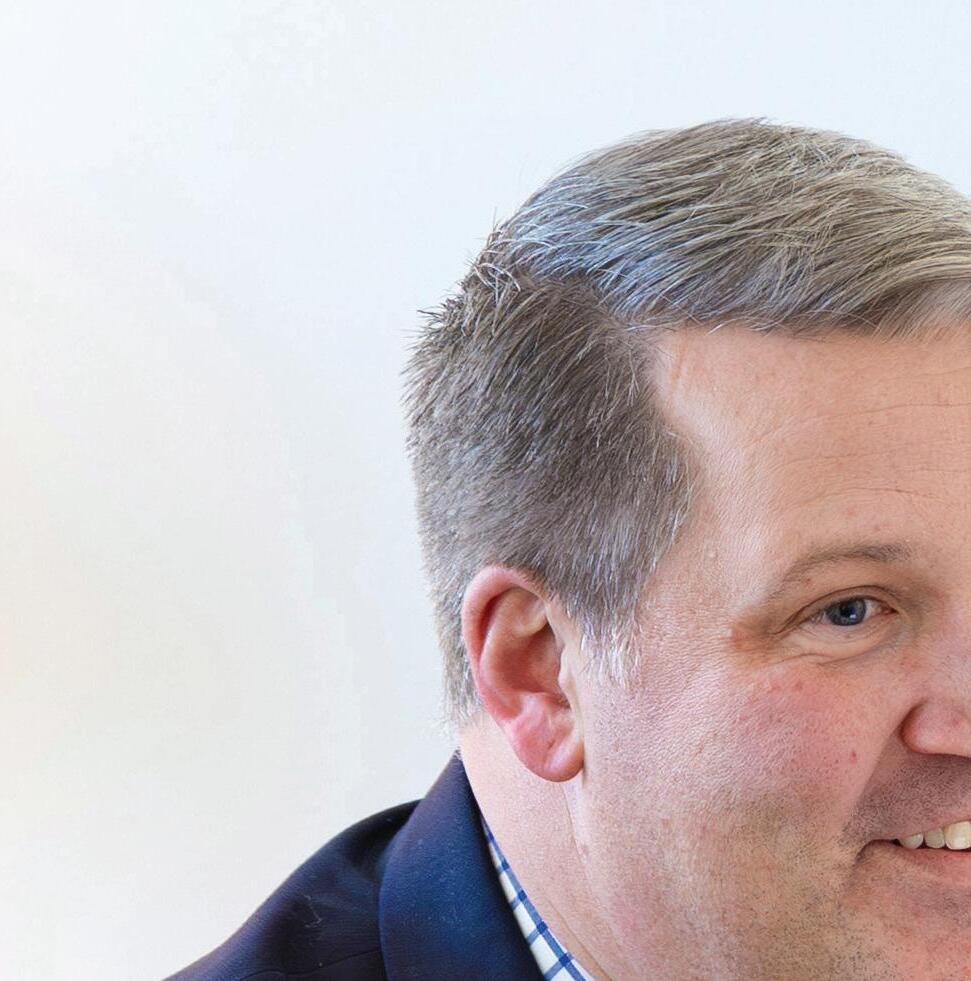
AS NSCD’S NEW COLLEGE COUNSELOR, MARK SEAMON BRINGS A BACKGROUND IN HIGHER EDUCATION, A LOVE OF TEACHING AND A CALM, THOUGHTFUL APPROACH TO HELPING STUDENTS FIND THEIR NEXT STEP — AND THEMSELVES — IN THE COLLEGE PROCESS.
YOU STARTED YOUR CAREER AS A COLLEGE PROFESSOR. HOW DID YOU FIND YOUR WAY TO COLLEGE COUNSELING?
I was a theater professor and director for 10 years at a pair of liberal arts colleges. I was often asked to sit on panels for prospective families, and people kept saying, “You’re good at this — have you ever thought about admissions?” Eventually, Notre Dame, where I went to undergrad, asked me to come back to help start their merit scholarship program and work in admissions. That was six years of learning — a graduate-level education in college admissions, really. I loved it, but I
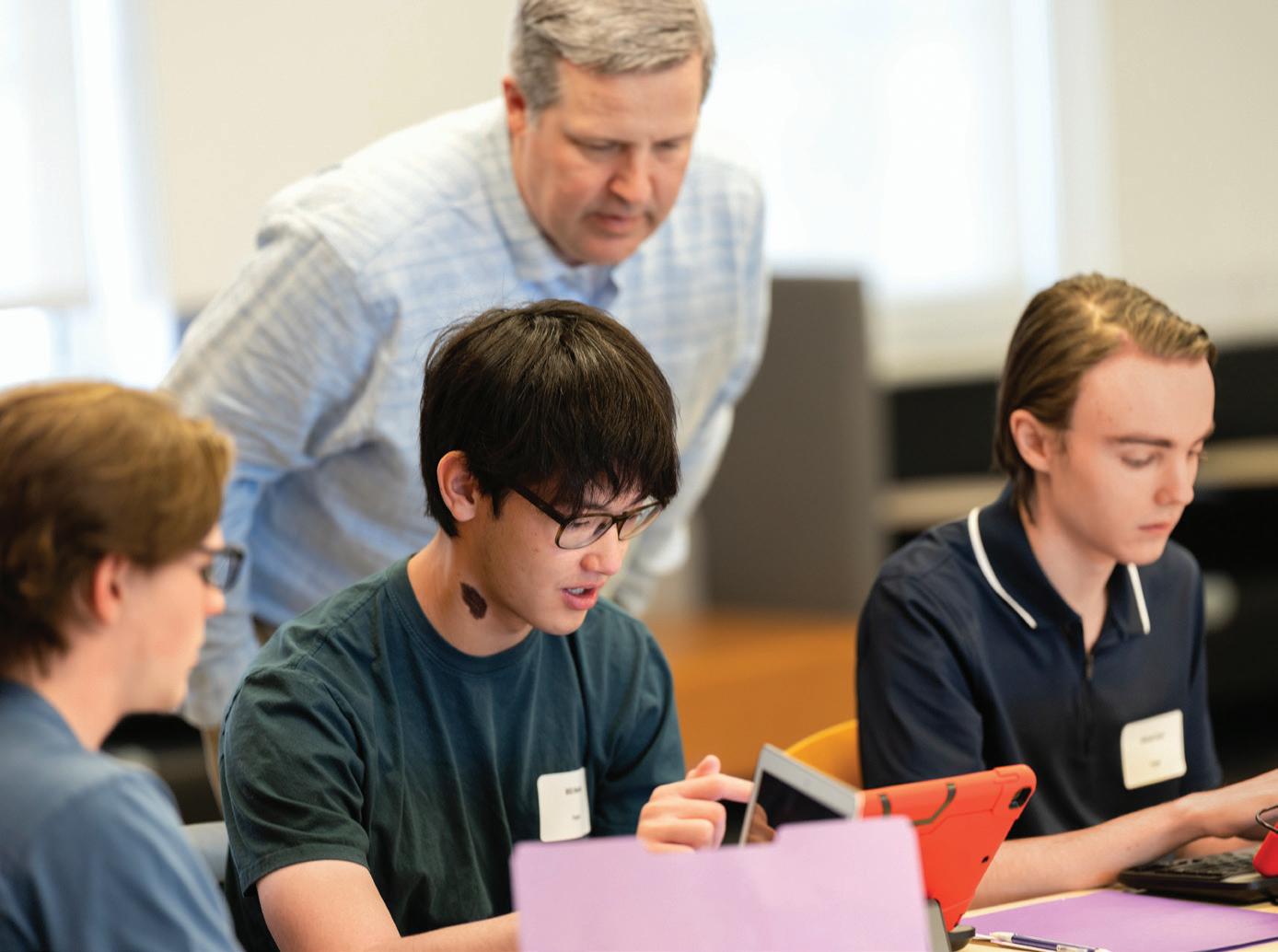
missed teaching. College counseling felt like the perfect blend of both worlds. It draws on everything I’ve done: working with kids, teaching and building relationships with families.
WHAT DO YOU LOVE MOST ABOUT WORKING WITH STUDENTS THROUGH THE COLLEGE PROCESS?
I’ve always loved one-on-one work with students. You really get to know them, and they get to know you. That familiarity helps them open up — it makes the process more comfortable. I love asking questions, getting them to talk and helping them understand who they are and how to express that.
WHAT’S ONE BOOK YOU THINK EVERY HIGH SCHOOL STUDENT SHOULD READ?
“Gmorning, Gnight!: Little Pep Talks for Me & You” by Lin-Manuel Miranda. It’s inspiring in its simplicity. It dials down stress and promotes a healthy mindset. For me, it drives home the advice I’ve given students for years: You are the best thing you have going for you. Being your authentic self will yield enormous dividends in the college process—and in life.
IF YOU COULD GIVE YOUR HIGH SCHOOL SELF ONE PIECE OF ADVICE, WHAT WOULD IT BE?
I’d tell myself: You are the best thing you have going for you. Be authentic. Don’t try to sound like what you think someone wants you to sound like. It’s so valuable and admirable when students are truly themselves — it makes the process easier and more genuine. I’d also tell myself to look more broadly. Back then, I applied to just a few schools because that’s what everyone did. I’d go back and explore more options, different types of colleges, different places.
WHAT’S SOMETHING PEOPLE MIGHT NOT REALIZE ABOUT COLLEGE COUNSELING?
That the process goes best when the student is in the driver’s seat. Not the counselor, not the parents — the student. When the kid takes ownership, everything runs more smoothly and it’s more meaningful for everyone.
WHAT DO YOU HOPE STUDENTS FEEL WHEN THEY LEAVE YOUR OFFICE?
Relaxed. More at ease. Seen and understood. Ideally, they leave thinking, “He gets me — and he’s got me.” I hope they even feel a little joy, like, “That was actually kind of fun.” If they look forward to coming back, then I know we’re doing something right.
WHAT’S ONE MYTH ABOUT THE COLLEGE PROCESS YOU’D LIKE TO BUST?
That it’s linear. People think it’s a straight line — set your goals, follow the path and you’re done. In reality, it’s rarely like that. There are twists and turns and that’s OK. The more open and flexible you can be, the better it goes. It’s not all science — there’s a lot of art in it, too.
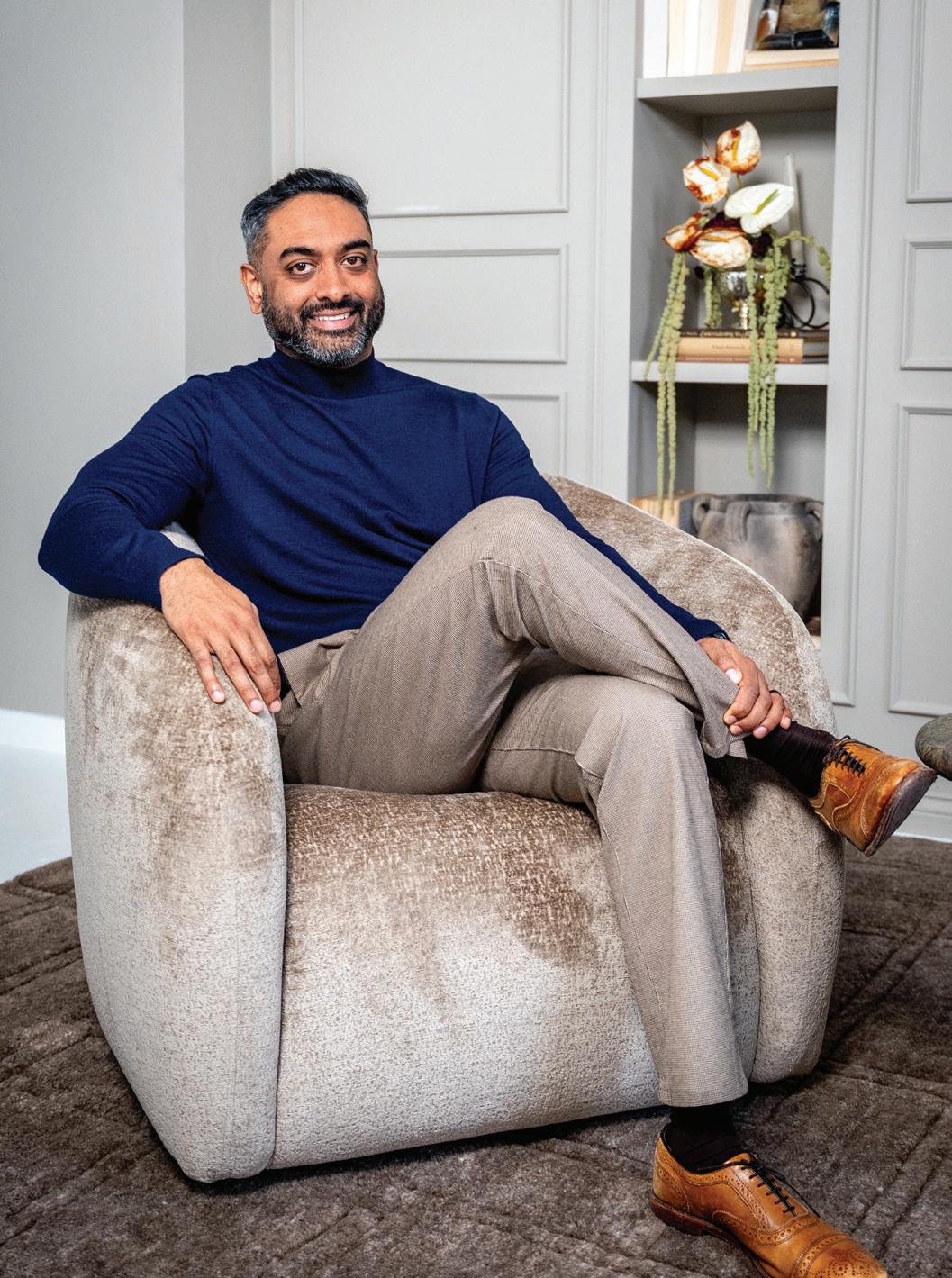
FROM HOSPITALIST TO HEALTH INNOVATOR, ANAND PATEL ’02 TRACES HOW NORTH SHORE’S “LIVE AND SERVE” ETHOS SHAPED HIS PATH TO MEDICINE 3.0
Anand Patel ’02 practically overflows with happy energy as he talks about the challenges and rewards of being a physician, and the delight he takes in helping patients live more healthily. That’s why it’s more than slightly surprising when he grins and shares something unexpected.
“I never wanted to be a doctor,” he laughs. His parents told him he was going to
be a doctor, but Anand wanted to be an investment banker. “That’s cute,’ they told me. ‘After you become a doctor.’”
Today Anand, who joined North Shore Country Day in fourth grade, points to the school’s motto — “Live and Serve” — when he talks about how his professional journey took him from a rejection of medicine to embracing it.
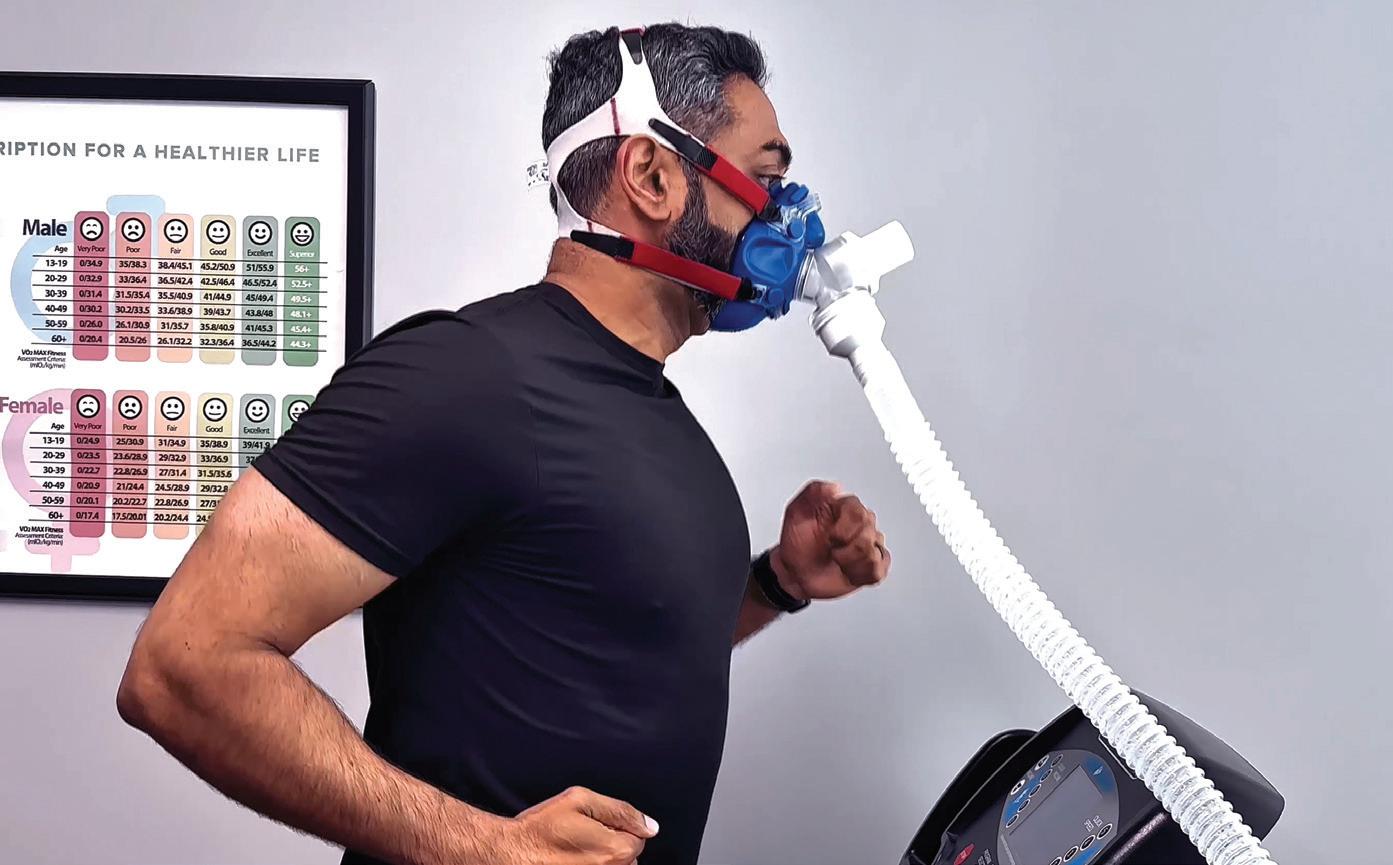
In fact, he has successfully melded a medical career with his entrepreneurial spirit throughout his adult life. Today those two impulses power LV8, the personalized medical practice he started in 2022 that features the concept of “Medicine 3.0” as a way to help executives and other highperforming patients live a longer and healthier life.
The people, the experiences and North Shore were such a pivotal part of my development that for whatever this crazy journey of life has been, I’m thankful that they were there to set my foundational metric.
None of that was on his radar when his parents, Hasmukh and Asha Patel, enrolled him at NSCD.
His father, a pharmacist who worked at a nearby independent pharmacy, wanted to provide his children with better education than was available near their Chicago home in what Anand describes as a tough neighborhood.
According to Anand, “My dad said, ‘If I do anything, I’m going to send you to school in this area because it’s much better than the schools in our area.’” His dad’s boss suggested they look at North Shore.
Anand praises Dale Wentz, who was the school’s director of admissions at the time, saying she directed the family to a scholarship that allowed him to attend NSCD. (His younger sister, Priya ’06, also attended North Shore between first and ninth grade.) Without that help, he would not have been able to experience North Shore’s combination of academic rigor and creative community, he says.
He made friends quickly as a fourth grader, and many of those friendships continue today, he says.
“We graduated high school together, we’ve remained in touch since high school. It’s one of those very unique aspects of having 40-some kids in your class.”
He describes his life at North Shore as dichotomous because of the extreme difference between his home neighborhood and the school, but speaks with affection of the friends he quickly made and whose families welcomed him into their homes.
“I would stay for extended periods of time. We’d have late games and practices, and they were my friends, so we’d have sleepovers all the time. It became kind of a fixture with our families,” he says.
Because North Shore’s athletic program welcomed every student who wanted to put forth effort, Anand had the chance to thrive athletically despite being, as he describes himself, “130 pounds soaking wet. I was tall and like a toothpick.”
“There is an ability to interact and do well in sports, and not just be the guy riding the bench. I got to play in basketball, I got to compete in track, I got to play football at a level I never would have done outside of the North Shore opportunity, and I still look back fondly at those memories,” he says.
In fact, he speaks with pardonable pride of being on the NSCD football team, where he was an active participant. “We made it to the state playoffs that year,” he says.
“Since then, the football team has been disbanded, so our banner is one of the last banners. No one [from NSCD] will ever go to the state playoffs again, and we won it!”
He was less enamored of the school’s theater participation requirement, although he worked on the crew and managed to say his one line on stage despite “freaking out on stage.” The school’s programs all work to push students out of their comfort zone, to discover what they can accomplish when they’re outside that zone, Anand says.
The teachers who coached and taught him, on the field or in the classroom, all pushed him, he says — not harshly, but in a supportive manner. He speaks fondly about many of his teachers. He calls Drea Gallaga, his upper school English teacher, pivotal to his academic success.
She saw when he was struggling or made mistakes, he says, and her demeanor was reflective of the school’s positive and supportive community. If his marks unexpectedly dropped, “the teachers knew. I was expected to do well and if I wasn’t, it means something is going on.
“You don’t get this level of oversight, where the teachers are asking, ‘Are you OK? What’s going on?’ You don’t appreciate the gravity of what that means when you’re a 15-year-old kid,” he says. “I would have been a number in a very large public school classroom, but here I was pushed to do more.”
After graduation, Anand initially studied pharmacology, but decided it was not the field for him. He changed lanes and became a doctor, studying internal medicine at Midwestern University in
Downer’s Grove, then training at Lutheran General Hospital in Park Ridge.
As a hospitalist at Lutheran General, he helped care for patients while they were in the hospital. He enjoyed a good salary and what amounted to 26 weeks of free time each year, which he used to exercise his entrepreneurial side by starting several medically connected businesses. He served as a medical legal expert supporting physicians, testifying on their behalf in legal cases. He also became a subject matter expert for pharmaceutical companies, educating doctors about new medications. For a decade, his life was productive and helpful to the hospital and patients he served.
But something was missing.
“There was a point in my life where I was looking around and I was like, I have the wife (Isa), I have the two kids (Ram and Vir), and the white picket fence — where is the big banner that says ‘Congratulations, you’ve made it!’ Where’s the fulfillment and sense of happiness that’s supposed to be overwhelming? Why am I not smiling ear to ear? Then I realized that practicing medicine the way we practice is probably the biggest problem,” he says.
Anand says he realized that the ongoing capture of hospitals by for-profit healthcare consortiums was killing the ability of doctors to build rapport with patients. The focus on quantity rather than quality frustrated him. His realization came just as the COVID-19 pandemic arrived.
“I was working through it, and I saw more death and despair in two years than I’d seen in the 10 years prior to that. I had six people die in one day,” he says.
Reacting to that trauma, he decided to become more healthy himself. People began to notice the changes in him. Some asked if he could coach them to better their own lives, he says. That led to him knowing where he wanted his medical expertise to go — and what he wanted to leave behind.
Anand praises the American medical scene for its successes in reactive medicine. There’s no better country to be in if you’ve broken your leg, he says. Where he feels it falls short is in proactive medicine that aims to help the entire person reach a life where that broken bone might be strengthened enough not to break.
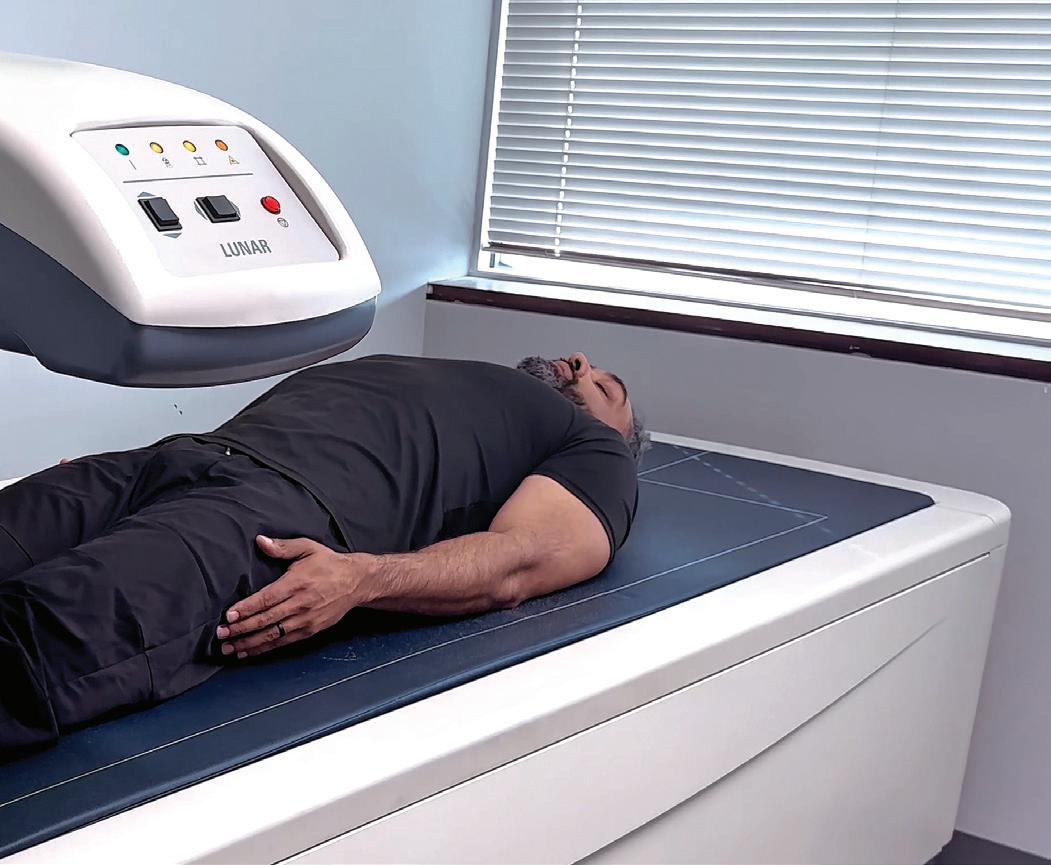
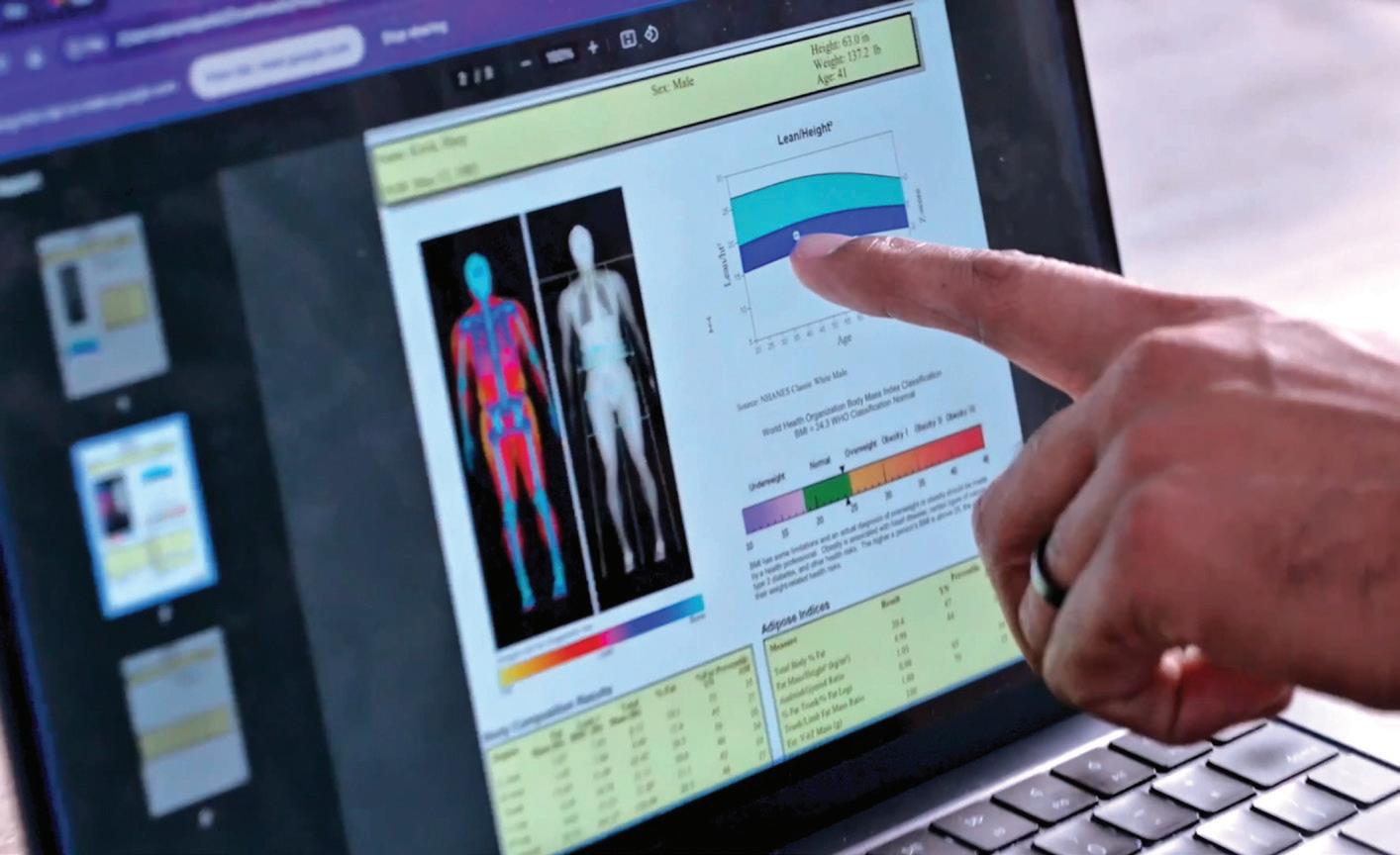
His desire to have rapport with patients also powered his journey into Medicine 3.0. That concept, developed and popularized by Dr. Peter Attia and other thought leaders in the medical field, spoke to him, because it asks physicians to be hyperfocused on every patient, helping each one to have a longer, healthier life with proactive and preventive efforts.
Medicine 3.0, while not the same thing as the concierge concept existing for the last couple of decades, shares with it what he calls “a bespoke and personalized service.”
This led to LV8, the company and medical practice he founded in 2022. Its goal: to provide preventive medicine and lifestyle programming aimed at prolonging and enriching the lives of people who want to invest in their futures.
“My point to my patients is to invest early, because the dividends are so much more,” he says.
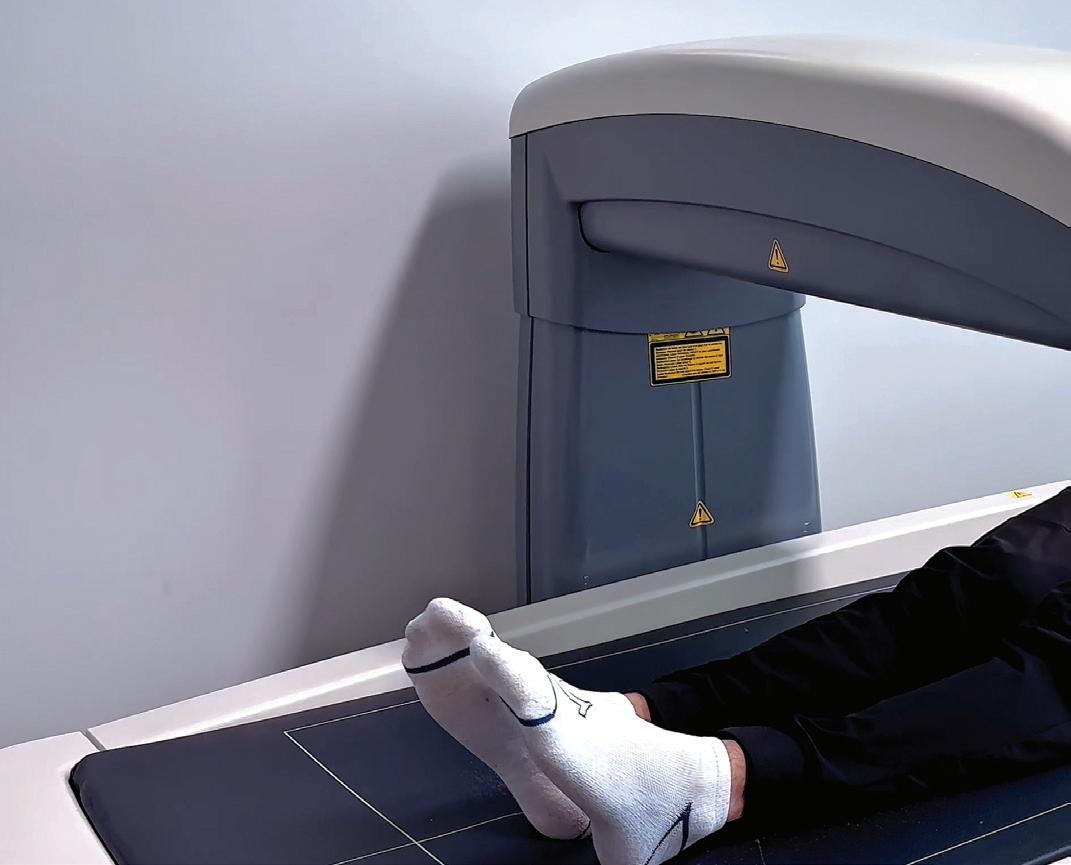
He estimates that about 20 percent of the precisely targeted preventive medical protocols that are part of his partnerships with patients — and he emphasizes that Medicine 3.0 requires patients to be part of their own healthcare team, with an initial
one-year dedication to the regular health tasks Anand assigns — are high tech and quite expensive. However, 80 percent of healthy longevity is learning healthy daily habits, he says.
“There are the ultimate biohacker people that want everything. Then there are some people that say, ‘Look, I want to run around with my grandkids,’ or ‘I’ve got my vacation home where I can go ski and I want to be able to ski when I’m 85.’ I say, ‘OK, if those are your primary goals and that determines your quality of life, that’s our goal.’”
Anand says expensive top-tier care, once available only to billionaires or millionaires, will gradually become more available to others. He says LV8 is actually working on a grant from the United Kingdom’s health service, researching the possibility of using some of LV8’s advanced technology to serve lower socioeconomic patients.
Back home, Anand enjoys the chance to get to truly know his patients.
“Most of my patients become my friends. Doctors used to have that relationship with their patients and that, to me, has been lost.
So every meeting I have with my patients, I look forward to — like ‘How are the kids?’ or ‘How was that trip to Florida?’ It’s that type of interaction that’s really brought me back to being a doctor,” he says.
Today, he relishes time spent with his family, traveling extensively to show his children the world.
Anand hopes he can live up to NSCD’s motto of “Live and Serve” by eventually being able to help more and more patients. His North Shore experience still helps him in life. He remembers the teachers who taught and cared about him; he’s grateful for classmates who have remained friends (and some who believe in and back his LV8 vision.)
“I just look back with gratitude,” he says. “The people, the experiences and North Shore were such a pivotal part of my development that for whatever this crazy journey of life has been, I’m thankful that they were there to set my foundational metric.”
By Phyllis Beattie ’72
I was mortified.
…As only an entering freshman at a new high school could be.
It was September 1968, and I had done what many did then: gotten a sunburn from a (now illegal) sun lamp. How embarrassing. I walked into first-period study hall that Monday, dreading the moment someone would start teasing me. I’d been teased so much in grammar school.
Ugh. Here I was again.
“Hey — did you mess up with a sun lamp or something?” There it was. From Susan, of all people — a really popular girl who’d been at the school most of her life. I. Could. Just. Die.
“Don’t you hate that?” she continued. “I’ve done it like three times. They should put a bell on those things or something.” Soon a little group had gathered, sharing their own stories of stupid sunlamps and teen traumas.
And there I was — still with a goofylooking sunburn — feeling relieved and accepted.
Wow.
It’s such an obvious fact of life: When kids — or anyone — feel welcomed and appreciated, they do better. In school, sports, work … in life. How blessed I am to have found my way, at age 14, to a place and people who understood that.
Now, decades later, I see the same thing when I visit: students at ease with themselves, friendly, confident, having fun.
And now the school has an added layer of appeal — a clear, intentional display of good will for the outside world. Posters inviting volunteers to charities, boxes for canned food drives, notices for
fundraising events. I often comment that there is a greater sense of mission at my alma mater than at many places of worship. The strong academics offered at North Shore are laudable, but even more meaningful to me are the lessons the school imparts about living a generous,
purposeful life — about what true “success” really means.
And so, inspired by my future fellow alums, I give.
It feels good to know that leaving a legacy — of any size — to North Shore will join with others to make a real difference in the lives of future students and faculty and, in turn, the outside world.
Because our motto is simply and profoundly to “Live and Serve,” I try to do so — for the school that welcomed this shy teenager so many years ago. For the
It’s such an obvious fact of life: when kids — or anyone — feel welcomed and appreciated, they do better.
remarkable institution that educates its students — academically and altruistically — so well and with such noble intention.
To learn more about planned giving, contact Director of Development Tracie Frederick at 847.881.8809 or tfrederick@nscds.org.
1950s
Alice Suter Hardesty ’55, who was unable to attend her 70th class reunion, shared an update: “I’ve been very unretired here in Portland, Oregon, writing about music for an online arts magazine, organizing classical music concerts for the community where I live and gardening.”
Bert Getz ’55 passed away on August 31, 2025. As noted in his obituary, he embodied the school’s motto, “Live and Serve,” throughout his life. A devoted family man and visionary business leader, Bert served as Chairman Emeritus and Director of Globe Corporation and held leadership roles with numerous organizations, including the Mayo Foundation, the Arizona Community Foundation and The Lawrenceville School. His lifelong commitment to service, faith and family reflected the values he first embraced at North Shore.
Trink Smith Chambers ’59 shared, “Bill and I are enjoying life in Palm Desert, California.”
1960s
Jim Beck ’60 and his wife, Cheryl, are happy to report, “We’re healthy and still spend our winters sailing the same boat we have sailed across most oceans. Again, this year we will be at Green Turtle Cay, Bahamas.”
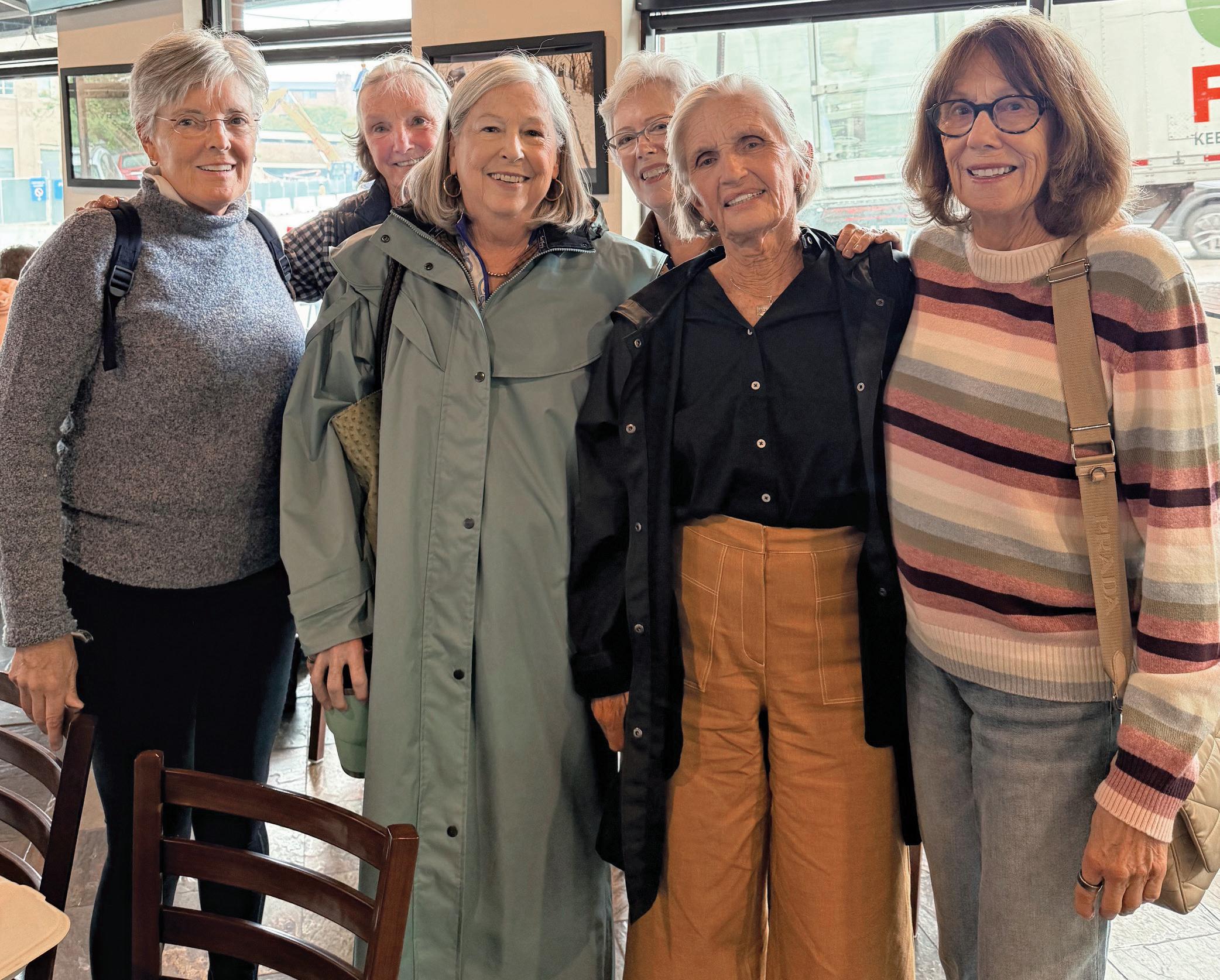
Over the summer, several alumni gathered for a fun lunch arranged by Heather Ramsey Campbell ’63. Pictured from left to right: Cece Ewen Durbin ’67, Buff Winston ’63, Jeannie Lea Scully ’63, Nancy Green Whiteman ’71, Heather Ramsey Campbell ’63 and Anne Coulter Tobey ’63 (not pictured Peggy Smith Coffee ’90).
Are you in the Chicagoland area? We’re planning a local volunteer opportunity — details coming soon! If not, and you’d like to help organize a service project in your own community for the 2026 Live and Serve Day, please contact Ashleigh Palmer ’04 at apalmer@nscds.org. Let’s build a coast-to-coast day of service!
Petrie Hutchinson ’65 wrote, “Dorothy and I have been living in Florida since 2012. We’ve been traveling a lot to Mediterranean Europe, North Africa, Asia and Canada. All the best to the NSCD folks.”
John Chamberlin ’65 shared that his 60th NSCD reunion weekend fell during a milestone stretch in his life: his 50th law school reunion, his 40th wedding anniversary and his wife’s birthday. While he stayed close to home in Oregon to celebrate these milestones, John is grateful to be doing as well as possible, “even if Father Time isn’t taking a break.” He continues to actively practice law, enjoys time with his many grandchildren and, if the weather cooperates, will be harvesting pinot noir and chardonnay.
Polly (Nicki) Steel ’65 shared fond memories of her time at NSCD. Her favorite teachers, Woody and Wally, inspired her love of research during her senior year, even while she was in a body cast from a skiing accident. She fondly remembers growing up alongside the late Allison French Berkeley ’65 (both faculty brats from pre-K on), and the hilarious ski trips to Michigan with classmates Les Moore ’65, Ann Young ’65, Pam Kimbal Weilenmann ’65 and others. Nicki has lived in Vermont for more than 55 years, is mostly retired and runs a small photography business at nickisteel.com. She welcomes anyone visiting the area to reach out!
Steve Cook ’67 shared that his brother, Fred Cook ’68 , passed away in November from complications of a stroke at his home on Saltspring Island, British Columbia. Fred earned his doctorate in geophysics at Cornell and went on to teach and chair the Geology Department at the University of Calgary before his retirement. He will be missed. For Steve, after a career in journalism and public relations, including six years as a congressional staffer and 45 years in public affairs, he recently retired to Wilmington, North Carolina, with his wife, Kathy. Steve’s son, Peter, works as an auditor for the U.S. Department of Defense. His sister, Carolyn Cook ’72 , is also retired and resides in Los Angeles.
Gail Wirtz Costello ’72 is happy to announce that her newly published book, “Seeing the Unseen,” is now available for purchase on Amazon and in local book stores.
Jim Deuble ’76 and Dan Deuble ’77 came together with many NSCD alumni and faculty families to celebrate and honor their mother, Jane Deuble, on November 8. A reception following the service at 501 Local included Jim Deuble ’76, Tracey Bach Vogel ’85, Jay Bach, Peter Silberman ’76, Miller Bransfield ’80, Lynne Harwich McAlevey ’81, Bob Elisha ’77, Dan Deuble ’77, David Deuble ’11, Jim Montembeault, Linda Kiracibasi, Amy Deuble, Aleda Deuble ’12, Bill Ake ’88, Peggy Smith Coffee ’90, Tom Flemma, Lee Block, Jeannie Peters Appelbaum ’12, Grace Flickinger Stupar ’12, Kathy and Patrick McHugh, and Morgan Peters ’11.
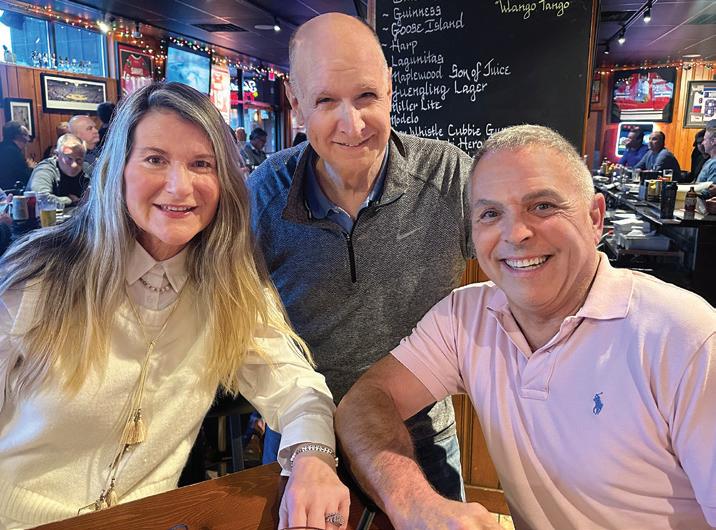
Classmates from the Class of 1979 gathered together at Stormy’s in Northfield as Matt Berman was in town from New York! Cathy Kleiman Bartholomay and Scott Olson were among those who joined the fun.
Jackie Scott ’85 visited Bobby de la Fuente ’85 for dining, drama (theater!) and some Dynasty (IYKYK) in Miami.
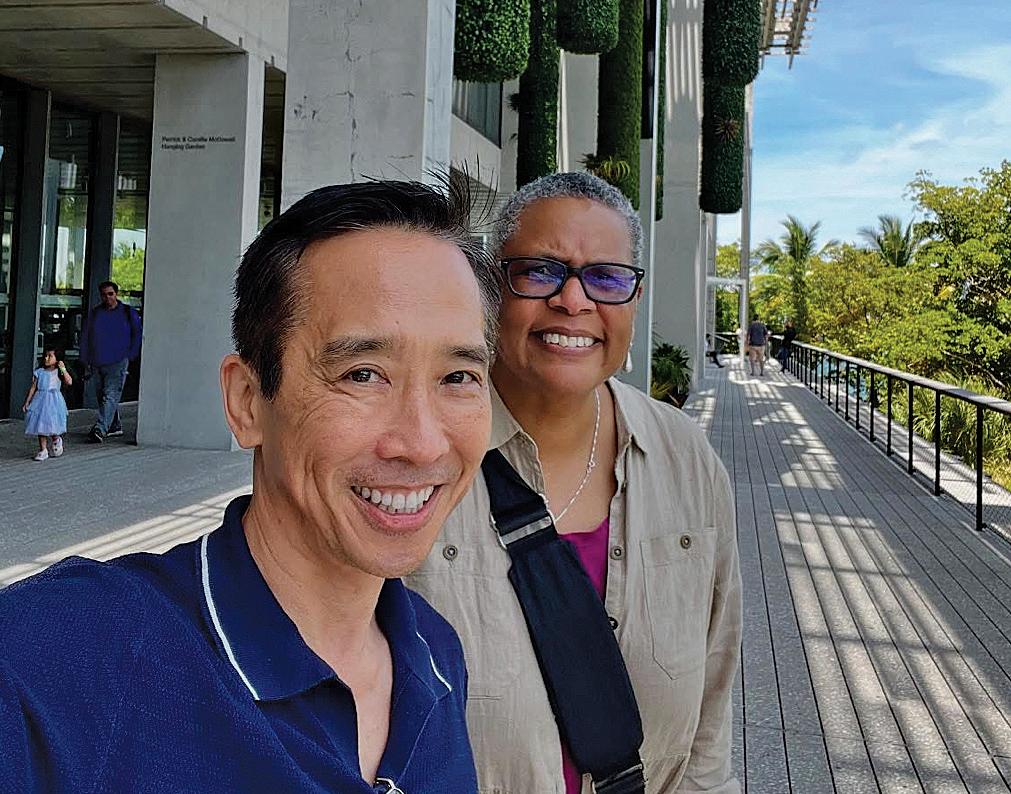
Helen Loennig ’86 was elected to a fouryear term as city council member in Baker City, Oregon, president of Eastern Oregon Regional Theatre and serves as the treasurer of the local Democratic party.
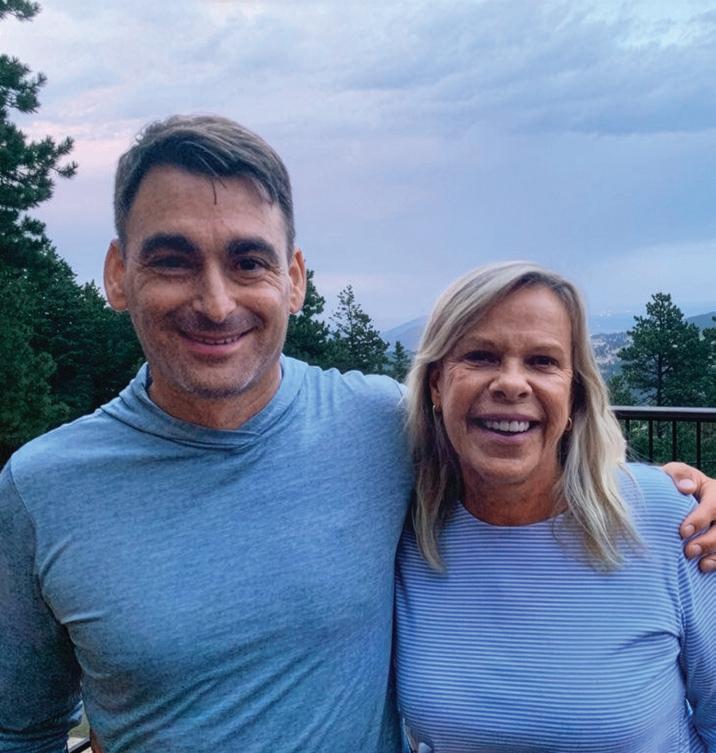
Greg Jacobs ’93 and former faculty Amy Deuble caught up in Evergreen, Colorado, after more than 30 years. Greg stopped by during a trip to drop off his daughter at his own alma mater, Colorado College. Even though it had been three decades, they picked up right where they left off. Amy and Jim Deuble ’76 want their fellow Raiders to know they are always welcome if anyone is passing through the Denver area.
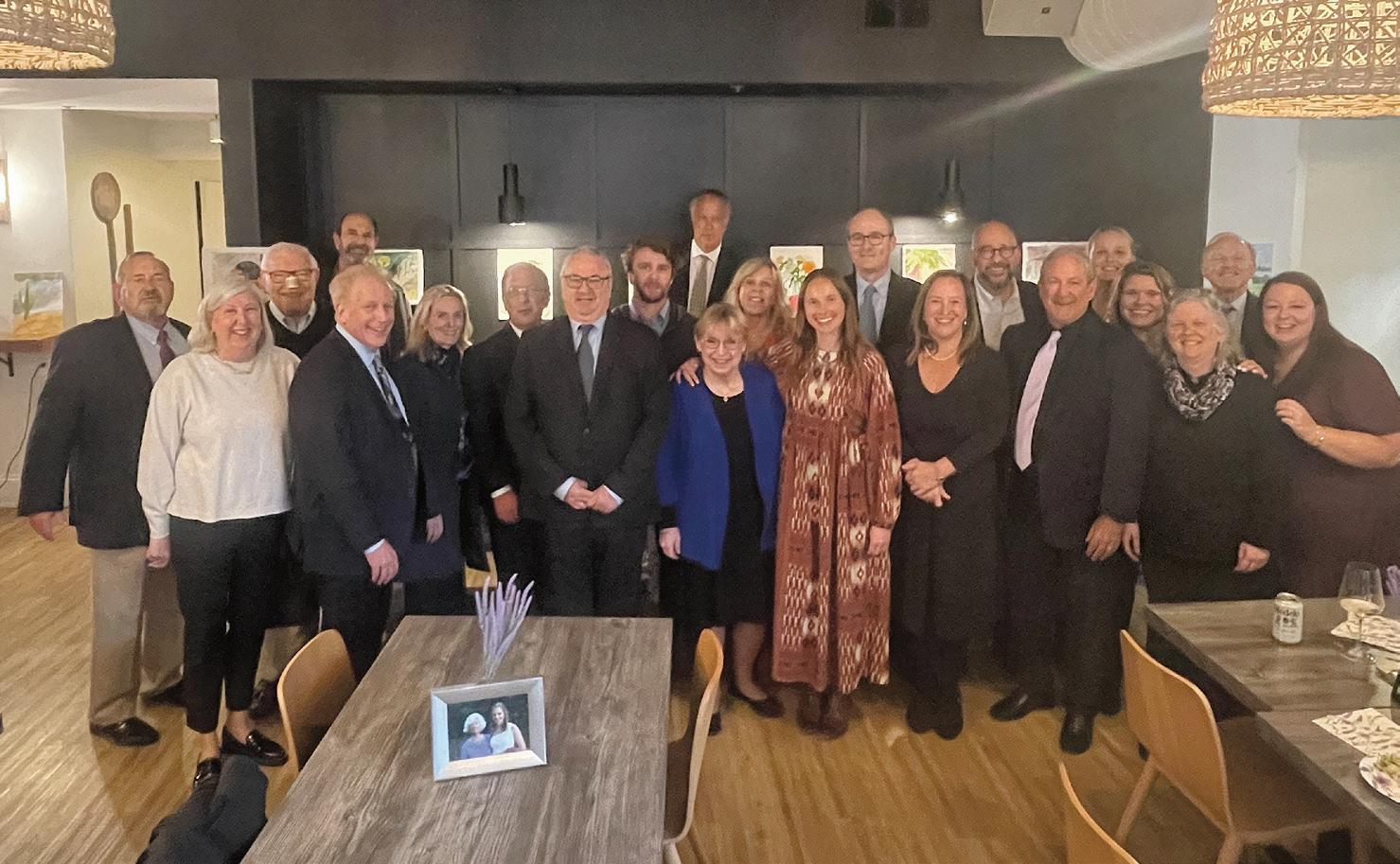
Marshall Escamilla ’98 co-created Tumble: Science Podcast for Kids. Tumble brings the wonders of scientific discovery to young listeners through storytelling, curiosity and humor. From exploring black holes to decoding dinosaur mysteries, each episode inspires kids (and grown-ups!) to think like scientists. To learn more and to listen, visit sciencepodcastforkids.com.
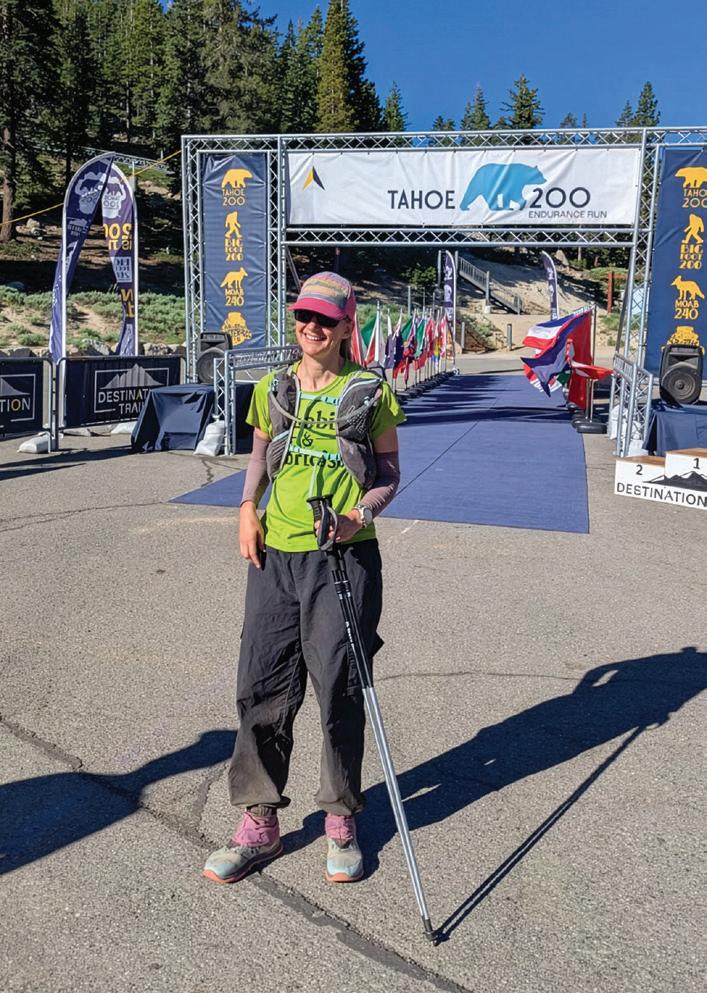
Amelia Kegan ’01 completed the Tahoe 200 Trail Race journey in June. This incredible endurance race covers 200 miles of challenging terrain around Lake Tahoe, with more than 35,000 feet of elevation gain through mountain passes, forests and rocky trails. Runners have 100 hours to finish, navigating day and night with minimal support. Amelia’s perseverance and determination carried her across
the finish line — an extraordinary accomplishment and true testament to Raider grit!
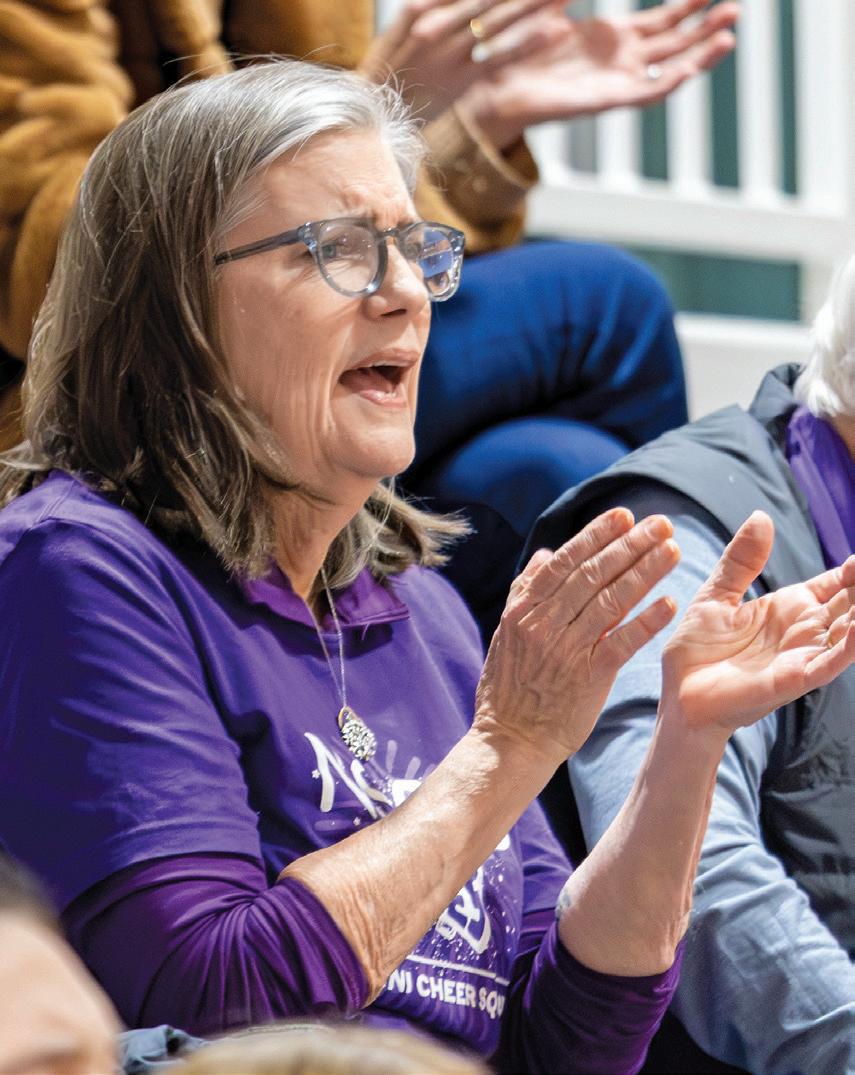
The NSCD Alumni Board Live and Serve Committee is rallying a group of loyal, enthusiastic alums to cheer on current students at on-campus events, athletic games and performances. Introducing the NSCD-YES! cheer squad, led by Phyllis Beattie ’72 .
Please contact Ashleigh Palmer ’04 at apalmer@nscds.org to join the group.
We lost a great Raider on September 14. Former parent and grandparent Jane Deuble had a connection to North Shore Country Day that stretched more than six decades, beginning in 1963 when her children attended the school’s summer camp — a decision that soon led them to enroll as students in the school. At North Shore, a “lifer” usually refers to a student who attends from kindergarten through 12th grade; Jane could be described as a lifer extraordinaire.
Mother of Jim ’76 and Dan ’77, motherin-law to former faculty Amy Deuble and grandmother of David ’11 and Aleda ’12 , Jane believed deeply in the school and its mission. Her dedication never wavered. Through her generous support, she strengthened programs, facilities and endowment for more than 50 years, always offering thoughtful input that prioritized students and enhanced learning opportunities.
25-26, 2026
Classes celebrating special reunions include: 1946, 1951, 1956, 1961, 1966, 1971, 1975, 1976, 1981, 1986, 1991, 1996, 2001, 2006, 2011, 2016 and 2021
If you are interested in joining your reunion planning committee, contact Ashleigh Palmer ’04 at apalmer@nscds.org or 847.881.8848
From the earliest days of her family’s North Shore experience, Jane immersed herself in volunteer work and leadership. She served across the community — from Parents' Association volunteer, lunchline server and switchboard operator, to North Shore House Walk contributor, athletic supporter, longtime co-chair of the school’s needlepoint fundraising show, Woman's Board president and committed Annual Giving and Capital Campaign volunteer. She was also a former Hannaford recipient in 2009.
Jane's genuine warmth, humility, sense of humor and unwavering Raider spirit embodied the community values we cherish. Through her service and leadership, she modeled the school's motto — “Live and Serve” — for her family and for all of us.
Festivities kicked off Friday evening with a reception in the Hall Library, followed by reunion class dinners and gatherings both on and off campus — offering ample opportunities to reconnect with classmates and faculty.
Nearly 200 alumni returned to campus from across the country and abroad — from as far away as China — to celebrate milestone reunions. The Class of 1950 marked its 75th, while the Class of 2020 marked its fifth. The Class of 1980 saw the largest turnout among reunion classes ending in 0s and 5s.
Saturday’s program included an update from Head of School Tom Flemma, a student panel and the presentation of the Francis R. Stanton ’27 Alumni Recognition to Patricia Ostrom Kohnen ’60, honored for her groundbreaking career in STEM and lifelong commitment to service. Members of the Jay Bach Iron Raiders Society — alumni who completed 12 consecutive athletic seasons during upper school — were also recognized.
For the first time, there was also an all-class alumni luncheon, followed by a Live and Serve project in which alumni and their families prepared 100 lunches for The Love Fridge Chicago and Evanston.
Attendees also toured the campus, including the community photography exhibition “So Close and Yet So Far” in the John Almquist Gallery.
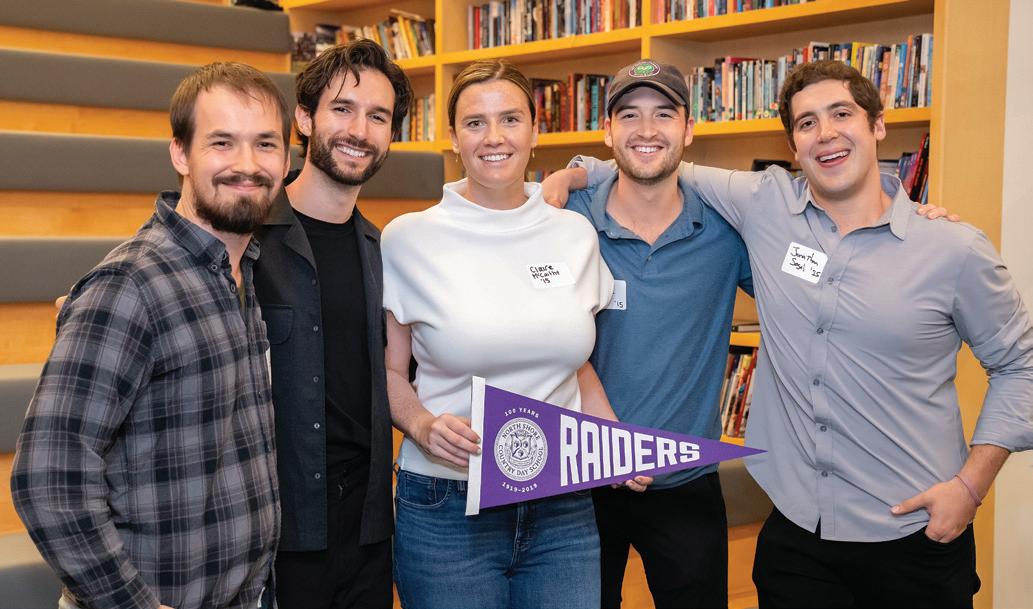
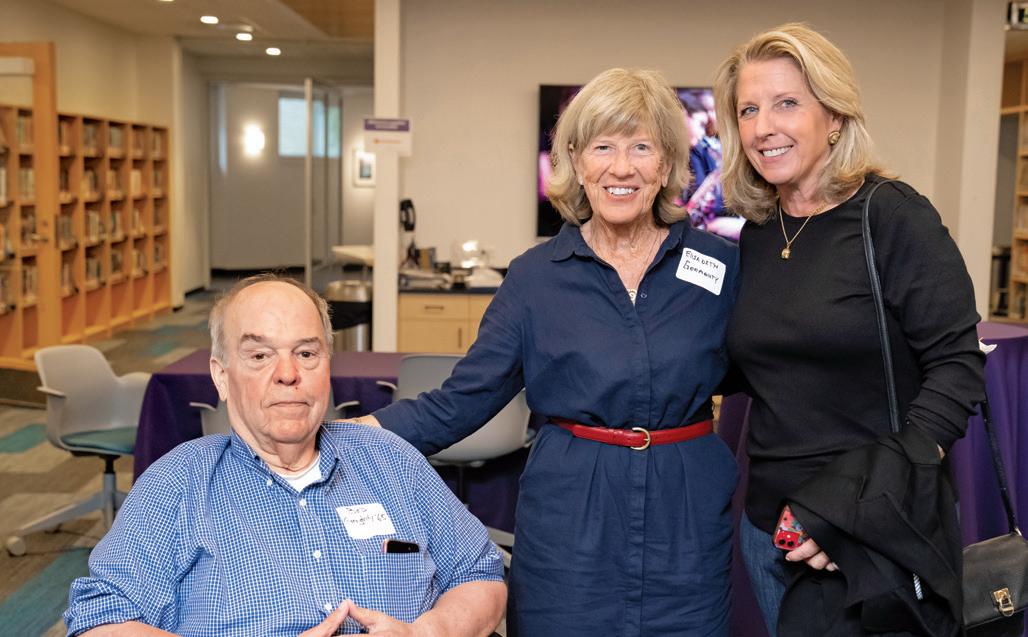
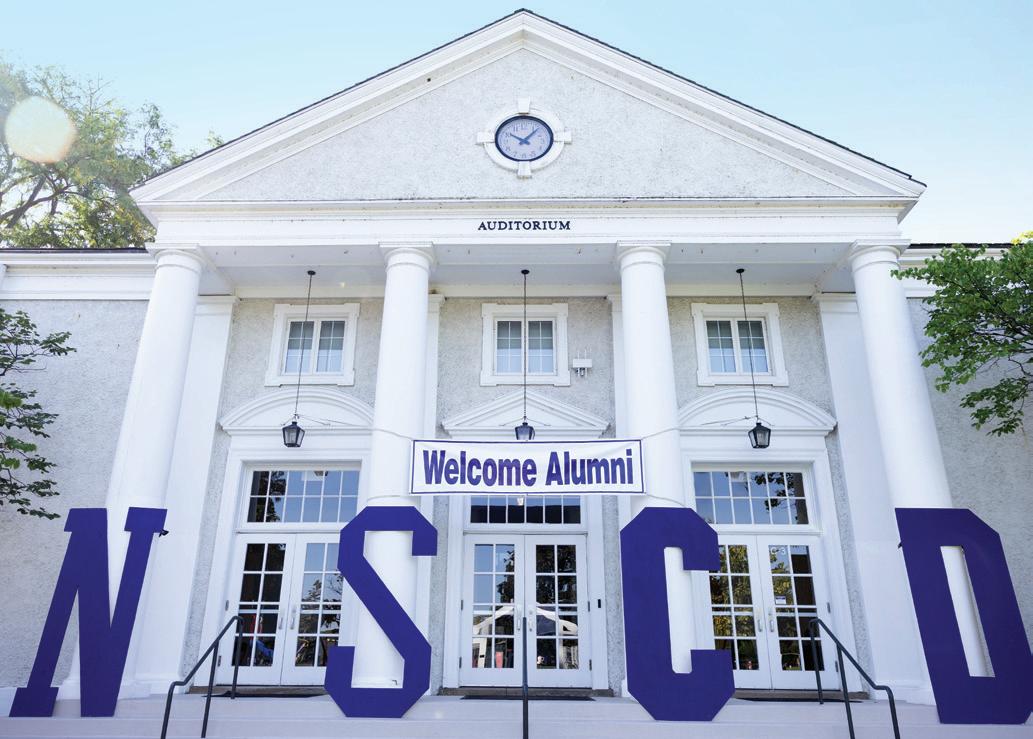
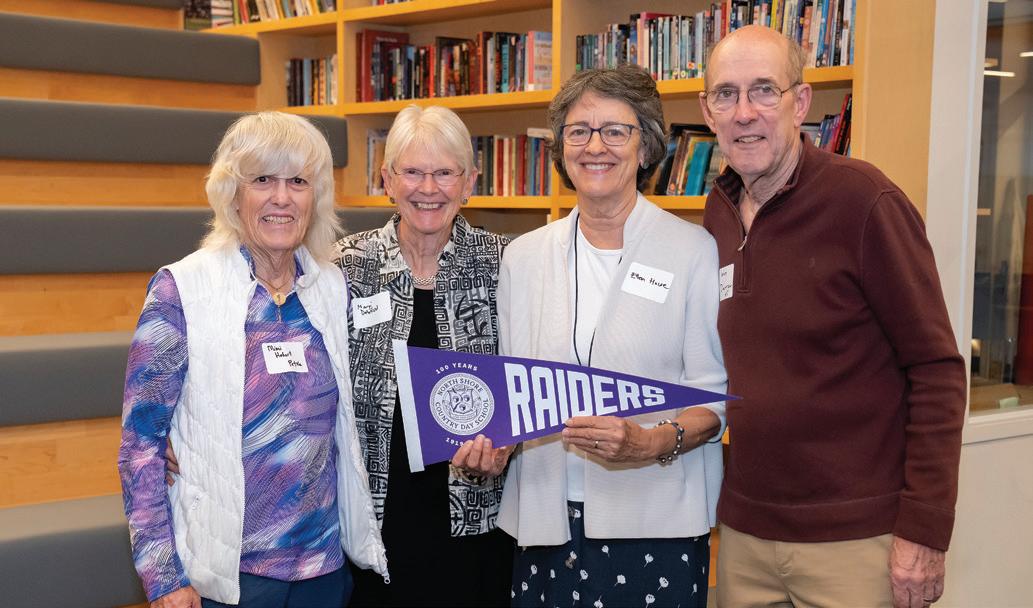
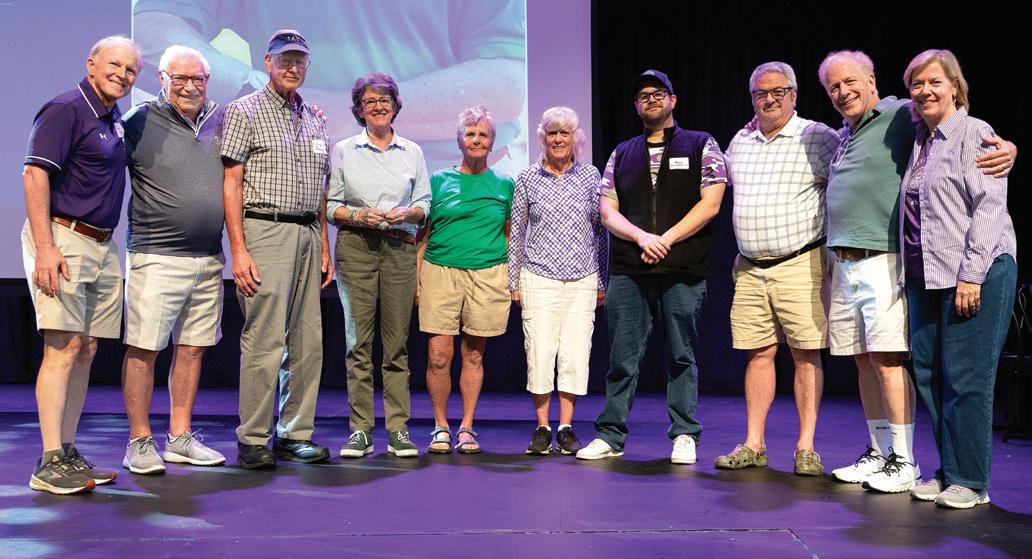
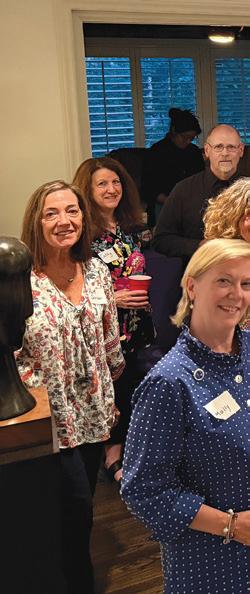
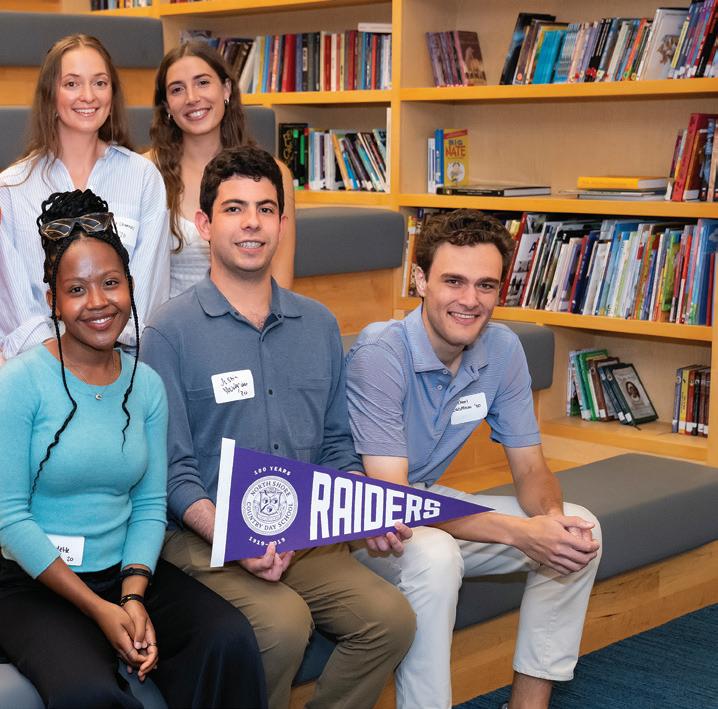
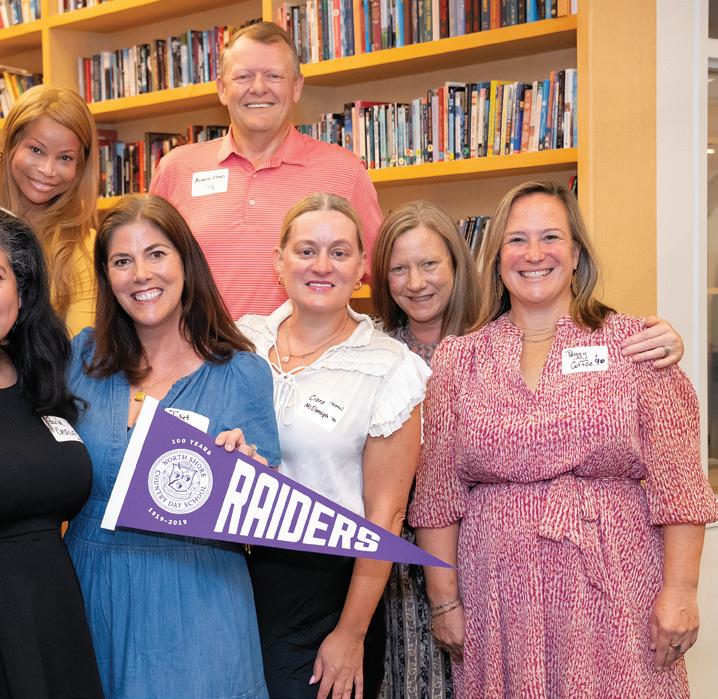
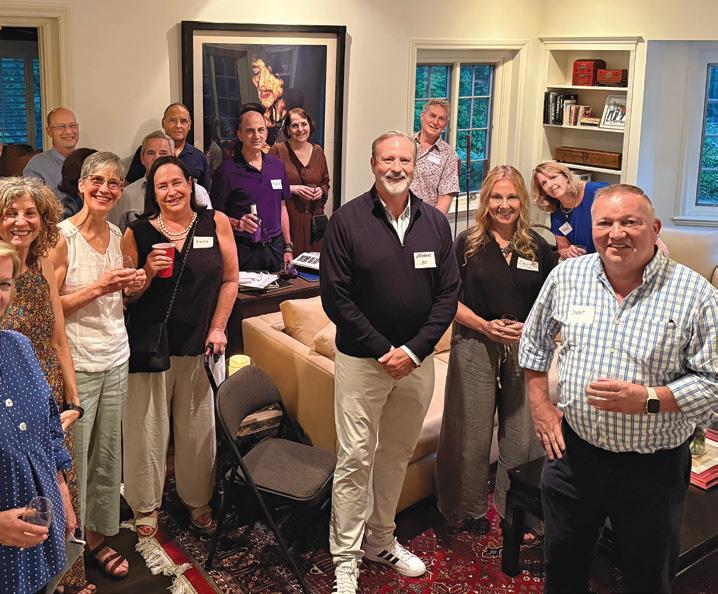
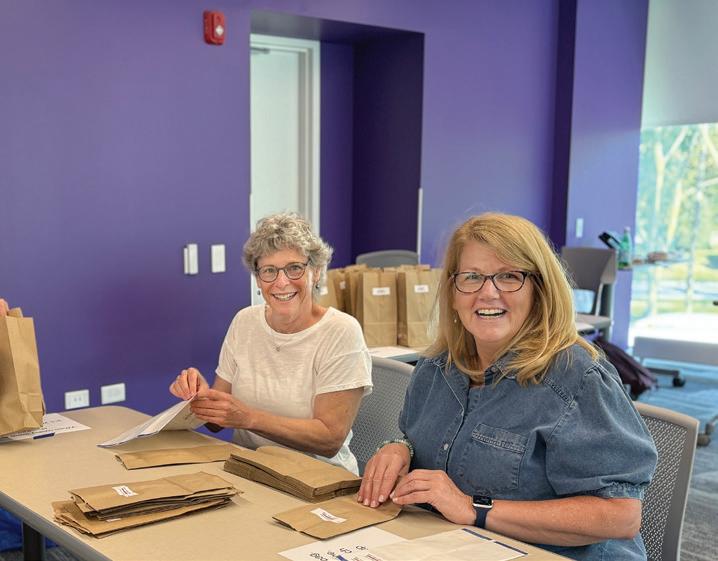
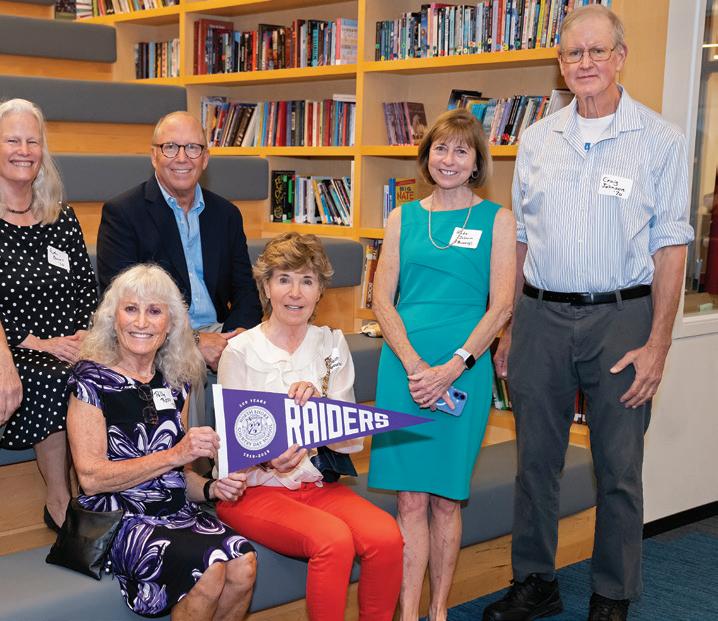
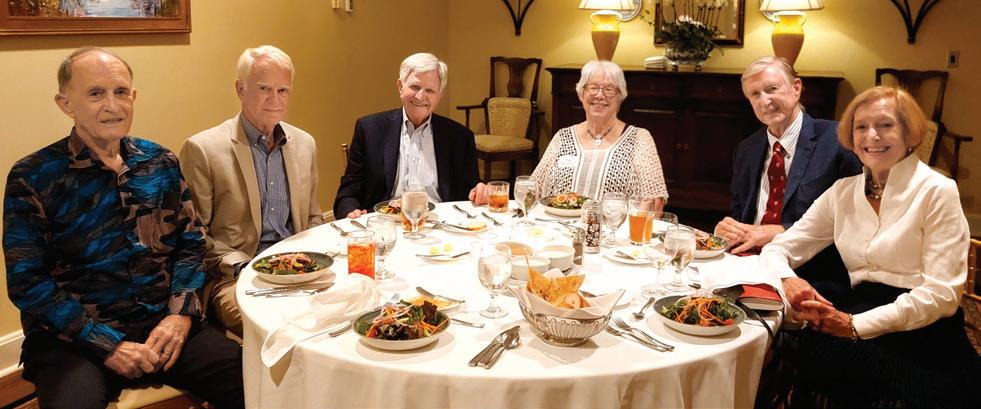
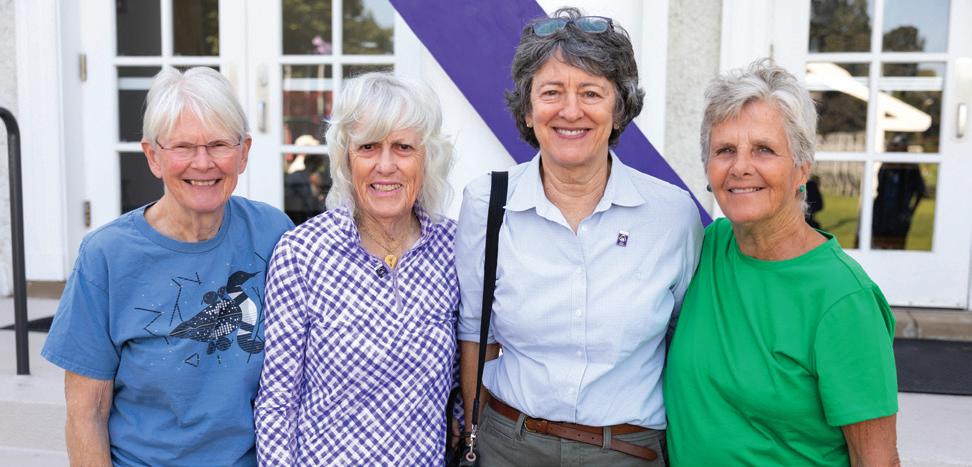
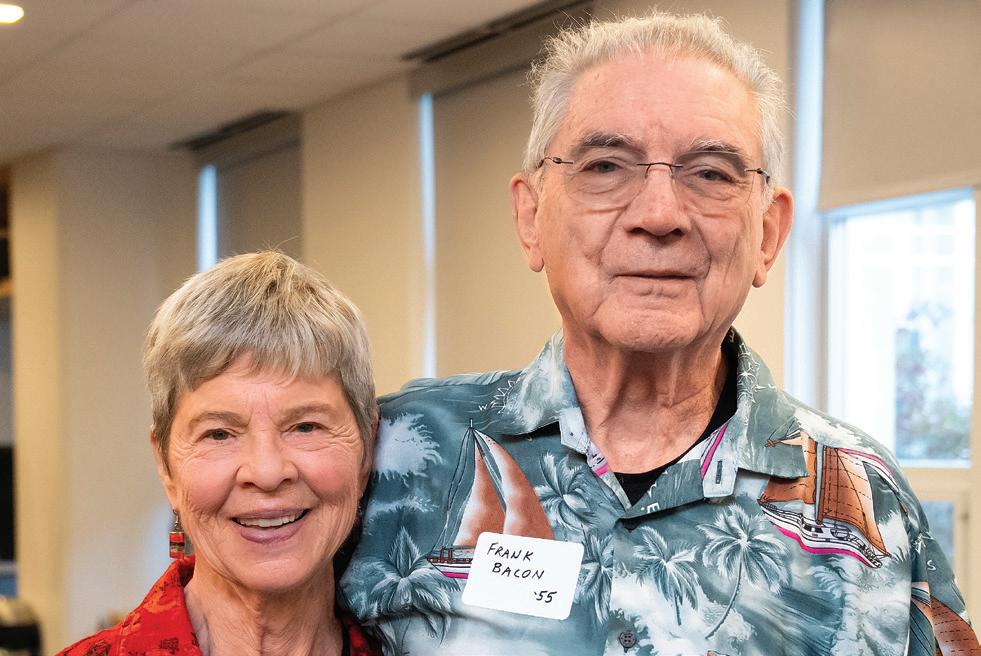
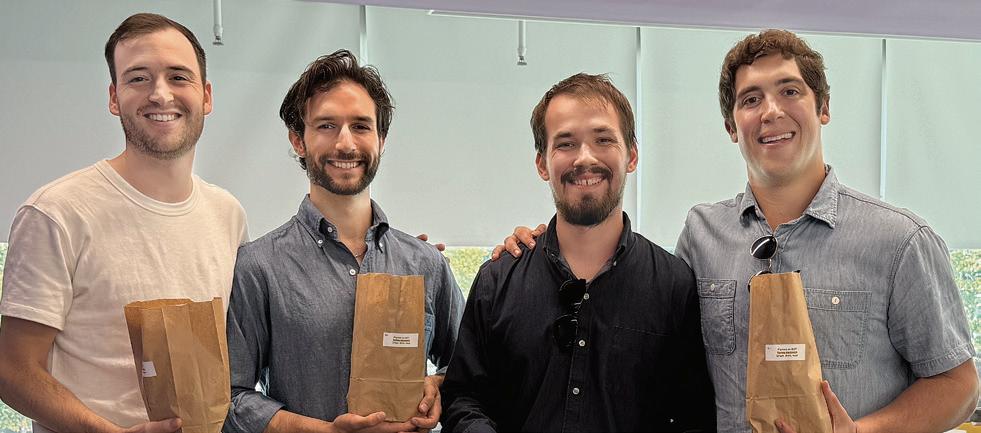
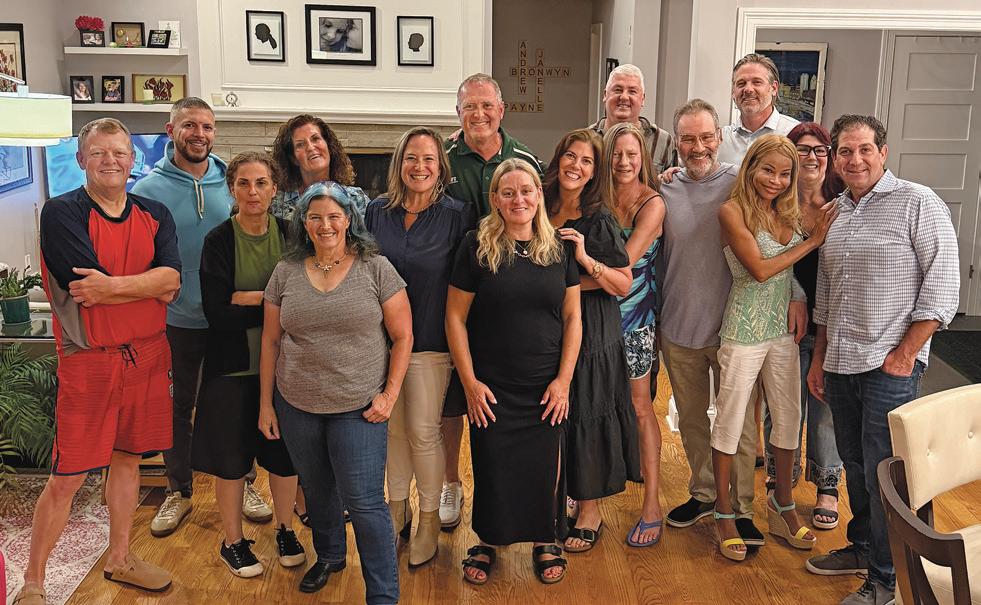
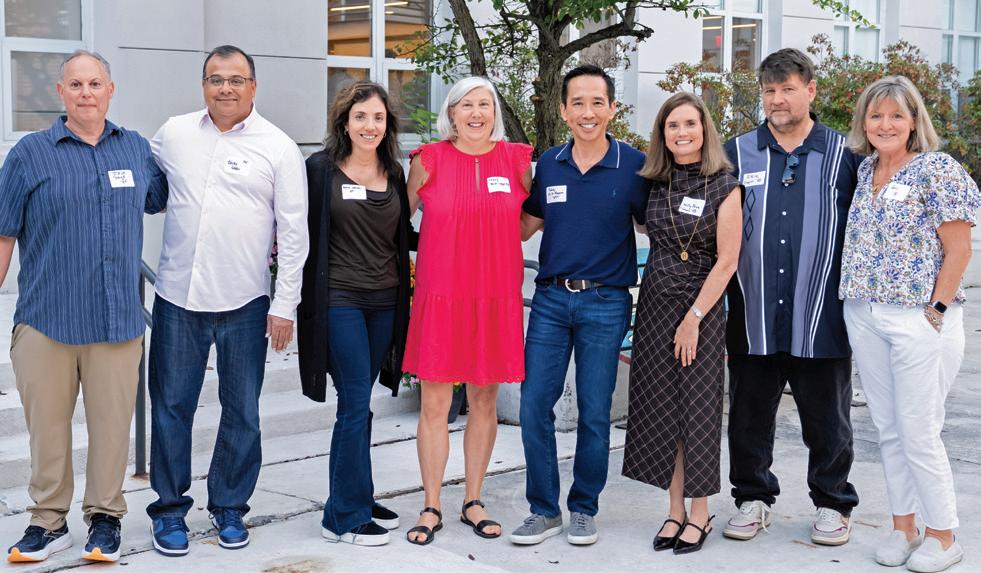
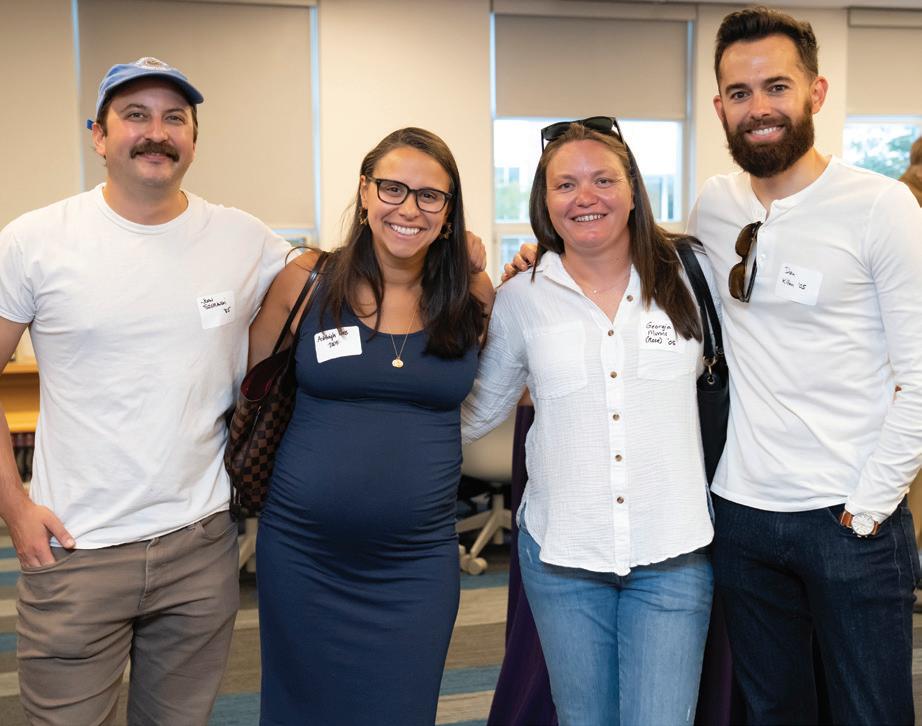
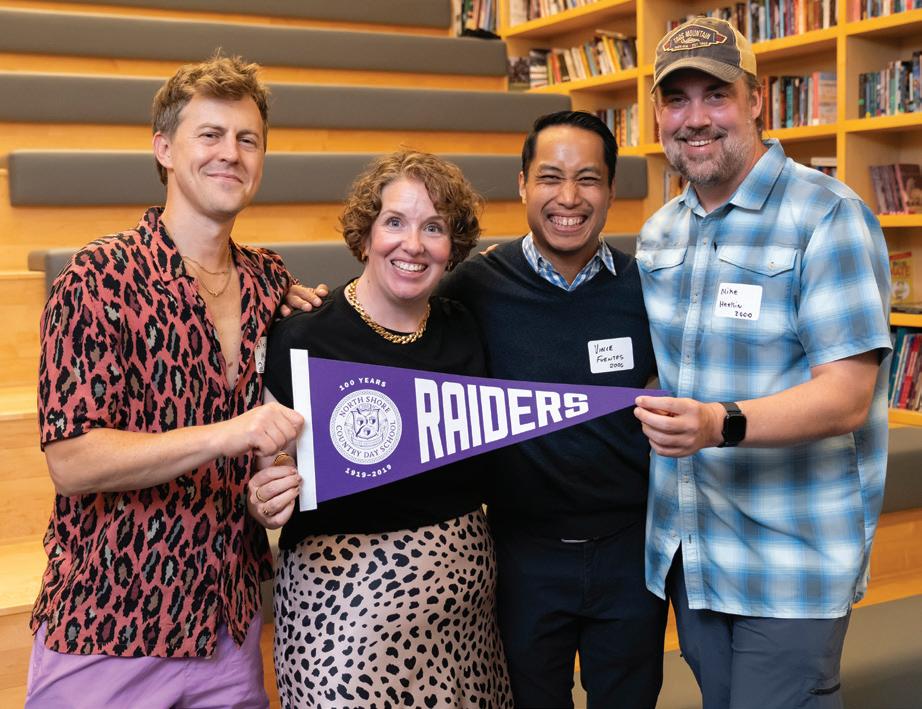
1. Class of 2015: Zak Nelson, Xander Mitchell, Claire McCarthy, Skip Wiltshire-Gordon and Jonathan Segal
2. Bob Geraghty '65, Elisabeth Geraghty and Betsy Blank Prine '80
3. NSCD auditorium welcomes alumni home
4. Class of 1965: Mimi Hobart Petke, Margi Delafield, Ellen Howe and John Darrow
5. Iron Raiders
6. Class of 2020: (Back) Zoe Bogan, Allie Charnas, Caroline Segal (Front) Claudette Kankindi, Justin Youderian, Michael Canmann
7. Class of 1990
8. Class of 1980
9. Alumni Live and Serve Project — Class of 1980
10. Class of 1970
11. Class of 1960 reunion dinner
12. Class of 1965: Margi Delafield, Mimi Hobart Petke, Ellen Howe and Eliza Howe Earle
13. Annliv and Frank Bacon '55
14. Alumni Live and Serve Project - Class of 2015
15. Class of 1990
16. Class of 1985
17. Class of 2005: John Szymanski, Ashleigh Cross
St. Peters, Georgia Rose Munns and Dan Killian
18. Class of 2000: Alex Moffat, Emily Smith Fleek, Vince Fuentes and Mike Heekin
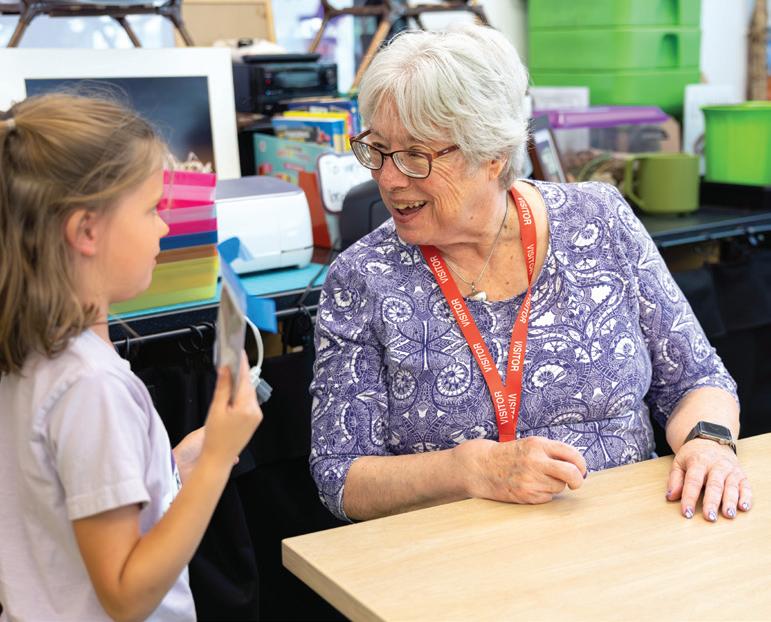
On the Saturday of Homecoming Reunion Weekend, Patricia Ostrom Kohnen ’60 was presented with the 2025 Francis R. Stanton ’27 Alumni Recognition. A pioneer in STEM at a time when few women pursued such careers, Pat relied on her strong scientific training and adaptability to help her open doors in a rapidly evolving industry. She often credited the foundation she received at North Shore for giving her the confidence to retool and seize new opportunities throughout her 25-year career with Chevron. Beyond her professional achievements, Pat’s enduring legacy is her service to others. She has shown that living with integrity, curiosity and courage not only enriches one’s own path, but also strengthens the communities we call home.
The Stanton Recognition is given each year to alumni whose lives exemplify the school’s “Live and Serve” motto. To recommend an NSCD alum for this distinguished honor, please contact Ashleigh Palmer ’04 at apalmer@nscds.org or 847.881.8848.


Congratulations to these alums who completed the 2025 Chicago Marathon: Mike Moreau ’04, Lauren Lowinger ’06, Aleda Deuble ’12, Annie Kroll ’15, Claire McCarthy ’15, Emily George ’17, Sophie Hiland ’18, Mazeed Oluewu ’19, Allie Charnas ’20 and Xas Morgan ’20.
Firouz Niazi ’17 shared, “I have been selected as a Bartlett Fellow at the Energy Policy Institute at the University of Chicago (EPIC). During this year-long fellowship, I’m looking forward to further developing my knowledge of and interests in state and local government climate adaptation and resilience financing.”
Henry Probst ’19 joined Equity LifeStyle Properties in Chicago as a Financial Analyst following his graduation from Duke University’s Fuqua School of Business.
Morgan Small ’19 is happy to share what she’s been up to after
graduating from North Shore. Morgan received a Bachelor of Music, Vocal Performance with a minor in theater from Northwestern University in 2023. Among other roles at Northwestern, she appeared as Eurydice in Offenbach’s “Orpheus in the Underworld,” Cunegonde in Bernstein’s “Candide” and Papagena in Mozart’s “The Magic Flute.” In 2023, the Chicago Musicians Club of Women awarded Morgan its Nerenberg Award. As a second-year master’s student in vocal performance opera at the College Conservatory of Music at the University of Cincinnati (CCM), Morgan appeared as Sandrina in Mozart’s “La finta giardiniera.” Recently, Morgan was an Indiana district winner for the Metropolitan Opera Laffont Competition and won the prestigious Corbett Award at CCM’s Corbett Opera Scholarship Competition. She also appeared as Anna in a workshop of “The Post Office” with Cincinnati Opera. Morgan plans to pursue her artist’s diploma in opera vocal performance at CCM.
SCAN THE QR CODE OR VISIT NSCDS. ORG/STANTON TO SEE THE LIST OF PAST RECIPIENTS AND LEARN MORE ABOUT THE STANTON RECOGNITION
Thank you to everyone who supported Raiders Forever Giving Day. Together, our community raised nearly $330,000 in two days from more than 290 donors, bringing us to almost 50% of our 2025-26 annual goal. We are deeply grateful to the alumni, families and friends who showed their generosity and helped make this an important day of giving for North Shore Raiders.
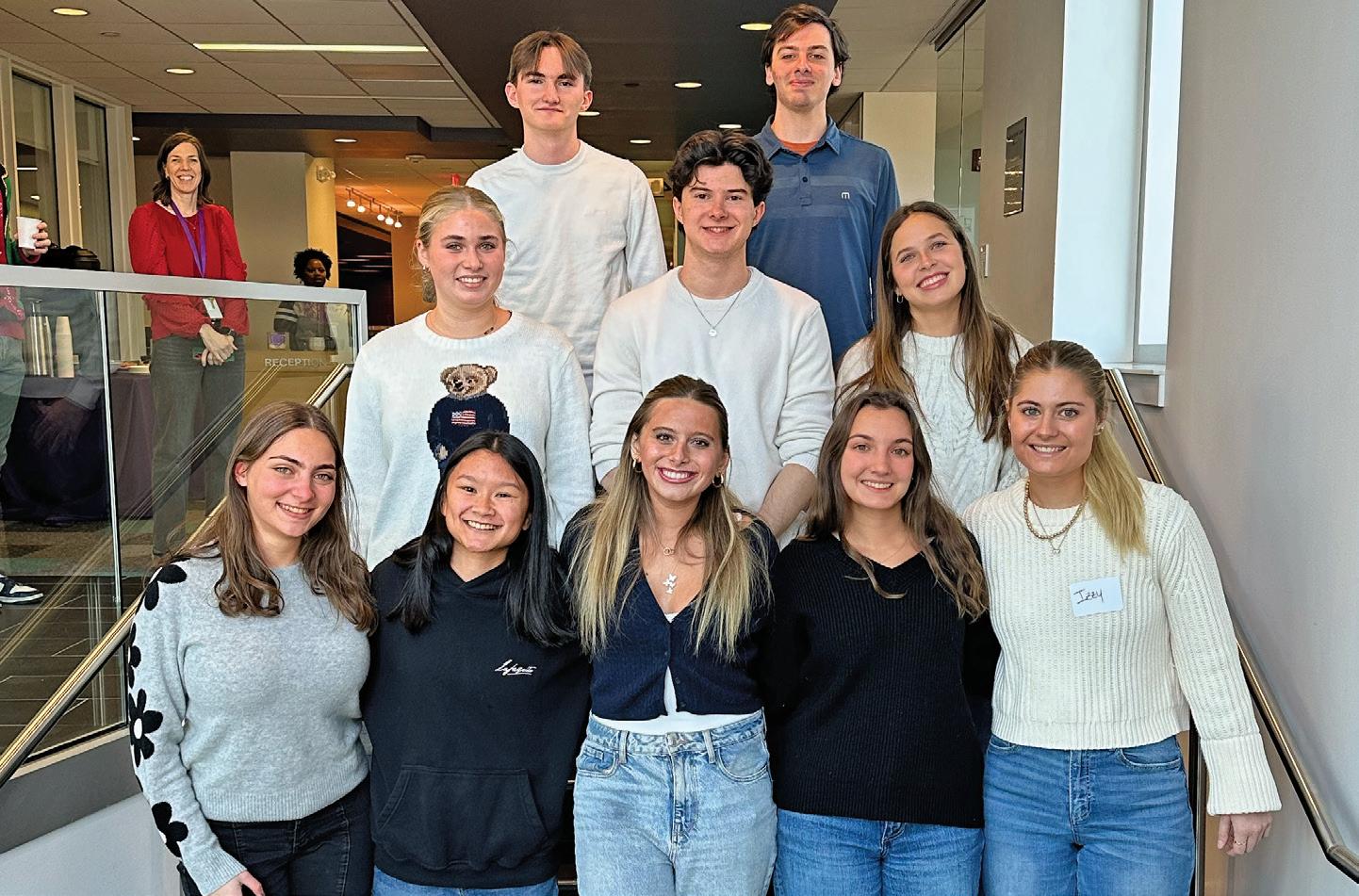
We welcomed alumni from the classes of 2021-2025 back to campus on December 19 for lunch and time with friends and former teachers. In keeping with tradition, all alumni in attendance were invited to watch the Winter Celebration and joined faculty and staff in leading the closing song, “Winter Wonderland,” with the entire community. (Pictured: Alumni from the Class of 2025.)
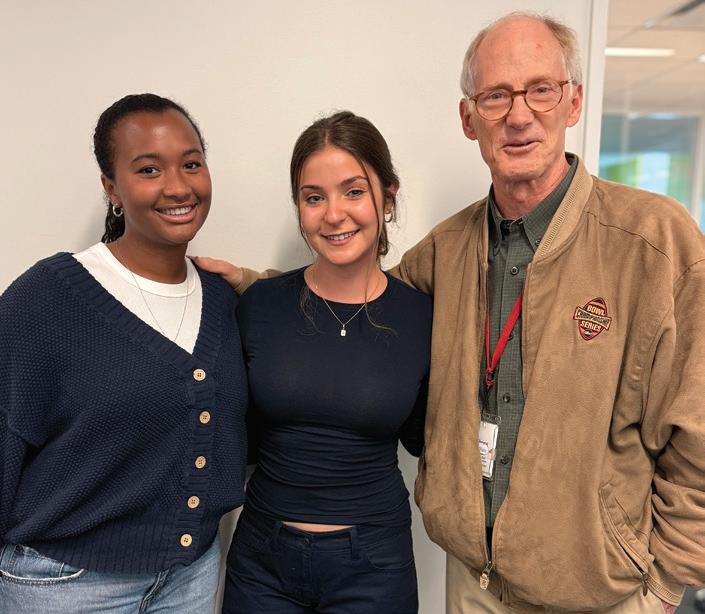
Rachel Olatunji ’21 and Ava Prezant ’21 visited coach Bruce Blair ’69 on campus for a tour of the Mac McCarty Athletic Center and to meet with faculty members.
Nick Potter ’22 was named Centennial Conference defensive player of the week in October for his hard work on the Dickinson soccer team.
Smith Flickinger ’24 and the Skidmore soccer team finished the regular season with a record of 10-4-3 and a second-place finish in the Liberty League.
Aram Dombalagian ’24 had a great baseball season at Macalester College last spring, highlighted by a 9-4 win over Hamline University in April. In the Game 2 victory, Aram went 3-for-5 at the plate, driving in a key early run and later scoring twice to secure the team’s lead. His strong performance highlighted a standout day for the first-year player.
A group of long-time former middle school team members gathered together. Left to right: Susan Schinleber, Lee Block, Dana Specht and Leonie O’Donohue
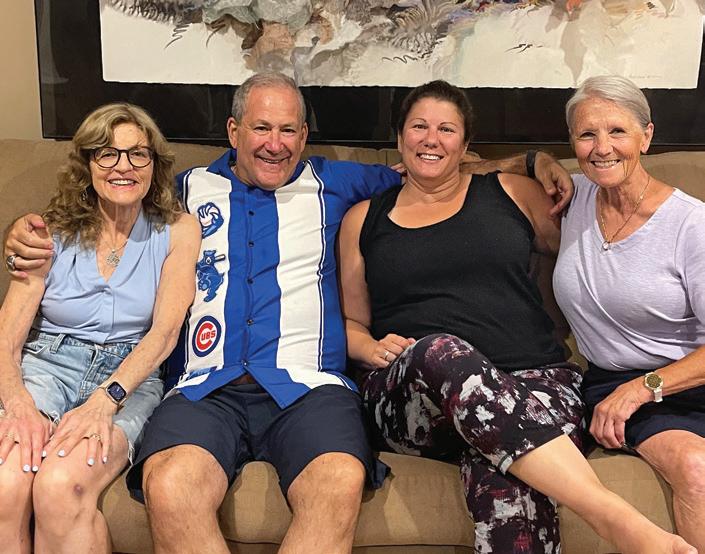
The alumni board and local alumni joined current students to collect canned food and non-perishables for those in need.
Former faculty member Kevin Randolph shared that he had a wonderful visit with David Plazas ’94 and Yvonne Zusel ’99, who are both editors at the Atlanta JournalConstitution. They had a great time talking about the old days.
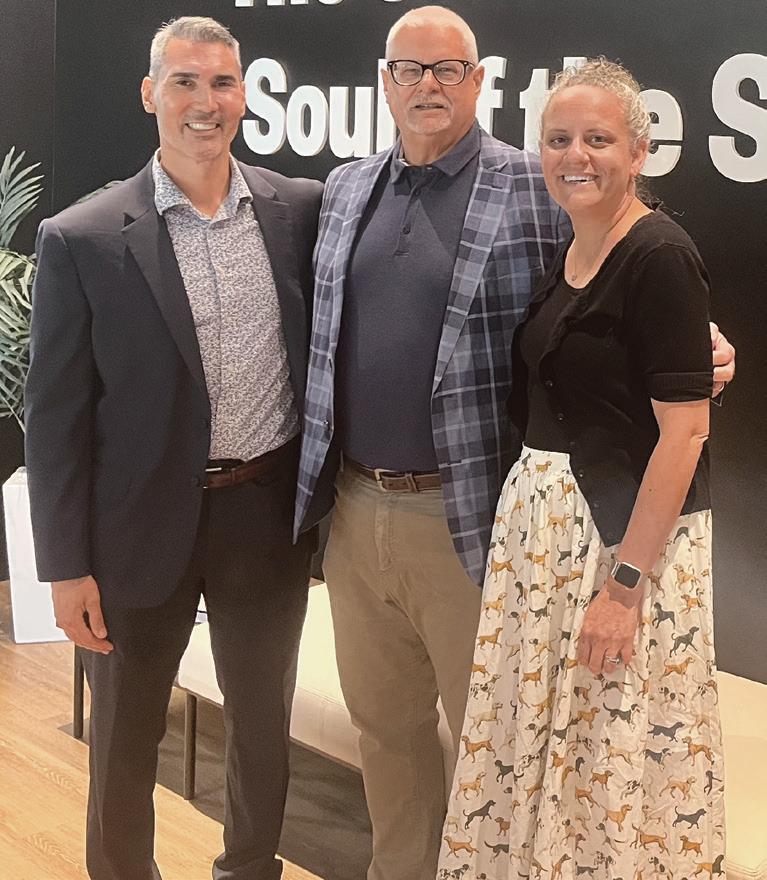
David Osberg, beloved former head of upper school, college counselor and math teacher, passed away on May 24, 2025. Dave was deeply respected by students and colleagues alike for his kindness, humor and steady leadership. After his years at NSCD, he earned a doctorate in education from Northwestern University and went on to enjoy a long career in educational testing and development. Dave’s lifelong love of learning, teaching and community reflected the very best of North Shore’s spirit.
North Shore connections brought together alumni, former faculty and parents of alumni for gatherings in Denver and Los Angeles.
In Denver, former faculty Amy Deuble and Frank Dachille hosted the event, which drew 17 attendees and featured a clip from the “Seconds Away” documentary (see page 44).
In Los Angeles, Head of School Tom Flemma shared an update on the school’s strategic plan at the home of Carole and Bob Kopple ’61, with 20 attendees.
August 16, 2025
SCAN THE QR CODE OR VISIT NSCDS.ORG/ ALUMNI-EVENTS FOR UPDATES.


Sophia Amelia Vertrees January 9, 2025
Alexander ’07 and Emily
Finlay Vertrees ’07
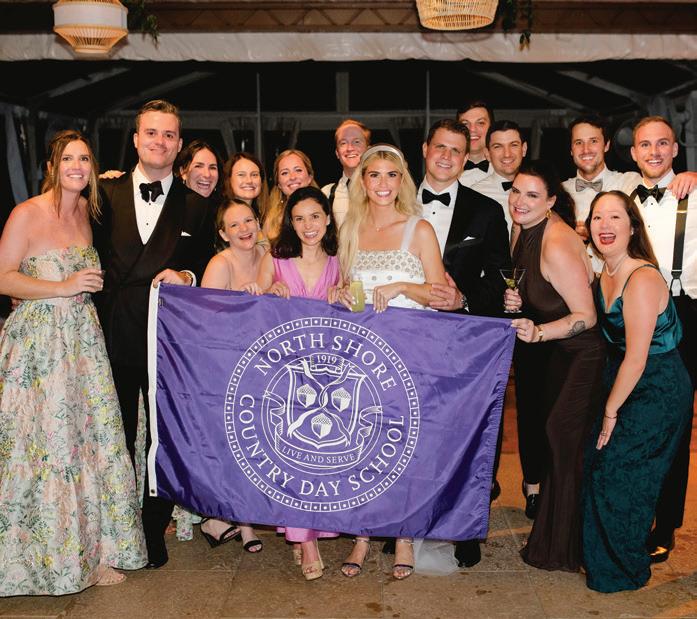
Richard Pompizzi ’07 to Caroline McCarthy ’09
September 20, 2024
Gary Cornog
February 24, 2024
Husband of Ellie Wagner Cornog ’62
Scott Miller ’60
June 19, 2024
Denny Scully
October 11, 2024
Husband of Jeannie Lea Scully ’63
Father of Ginger Scully ’90, Robin Scully Baasen ’93 and Page Scully ’94
Frederick Cook ’68
November 2024
Brother of Steve Cook ’67 and Carolyn Cook ’72
Thomas Belshe ’49
December 13, 2024
Norman Ferris ’49
February 14, 2025
Cindy Brennan Annibali ’87
March 14, 2025
Cindy Pritzker
March 15, 2025
Mother of Dan Pritzker ’77 and Gigi Pritzker Pucker ’80
Grandmother of Nancy Pritzker ’08, Zachary Pritzker ’09 and Cindy Pritzker ’14
Courtney Curtis Bowes ’55
April 10, 2025
Donna Elizabeth Fletcher Schur
May 5, 2025
Mother of Danny Schur ’12
David Osberg
May 24, 2025
Former Faculty
Father of Ken Osberg ’79 and Laurie Osberg ’82
Michael David Mesic
May 29, 2025
Father of Melissa Mesic Marshall ’97 and James Mesic ’99
Caroline Erbmann
June 1, 2025
Former Faculty
Daughter of the late Caroline S. Hartmann ’35
Mother of Liz Smith ’84
Mary Belle Harwich
June 12, 2025
Mother of Ellen Harwich Mautner ’72, Murray Harwich, Jr. ’78 and Lynne Harwich McAlevey ’81
Grandmother of Murray David Harwich lll ’16
Peggy Hemphil Lennan
July 16, 2025
Mother of Scofield “Sco” Hemphill ’80, Chapin Hemphill ’89 and Ashley Hemphill Netzky ’91
Mother-in-Law of Stefani Hemphill ’90 and Pamela Netzky ’93
Grandparent of Rose Nelson ’12 and Zak Nelson ’15
John K. Notz Jr. ’49
July 22, 2025
Brother of the late Elinor Notz Foltz ’51 and of Ted Notz ’53
Ted Washburne ’46
July 24th, 2025
Husband of the late Mary Marsh
Washburne ’47
Ellen Patricia Alberding
July 26, 2025
Grandmother of Caroline McCarthy Pompizzi ’09, Nick McCarthy ’11 and Claire McCarthy ’15
Walter Porter ’70
July 26, 2025
Betsy Gray
August 11, 2025
Former Faculty
Frederick Loomis ’68
August 19, 2025
Brother of the late Betsy Loomis Norton ’59 and the late Joe Loomis ’61
Bert Getz Sr. ’55
August 31, 2025
Grandfather of Lindsay Getz ’16, Bert Getz, III ’18 and Lachlan Getz ’20
Charles Leo McClenahan
September 3, 2025
Father of Scott McClehahan ’01 and Edie McClenahan Britton ’04
Mary “Mimi” Whiston
September 8, 2025
Grandmother of Danny Wirtz ’95, Hillary Wirtz ’97 and Kendall Wirtz Murphy ’04
Nancy Rae Silberman
September 17, 2025
Mother of Peter Silberman ’76
Judith Uehling ’53
September 18, 2025
Aunt of Scott Olson ’79, Chris Olson ’85
Brother of the late Ray Olson, Jr. ’51 and the late Lynn Olson Gilchrist ’56, and of Elisabeth Olson Geraghty ’65
Judith Demetriou
September 25, 2025
Mother of Kristine Demetriou Marubio ’87 and Nicole Demetriou ’89
Nydia Wieboldt Hohf ’37
September 25, 2025
Sister of the late Ray Wieboldt, Jr. ’36 and Jim Wieboldt ’39
Jane Deuble
September 28, 2025
Mother of Jim Deuble ’76 and Dan Deuble ’77
Mother-in-law of Amy Deuble, former faculty
Grandmother of David Deuble ’11 and Aleda Deuble ’12
Peggy Melville Stern
October 20, 2025
Wife of Russ Stern ’68
We want to hear from you! Share your recent accomplishments and milestones—weddings, births, new jobs, retirements, alumni meetups, and more. Submit a class note online at nscds.org/alumni-connect, or reach out to Ashleigh Palmer ’04 at apalmer@nscds.org or 847.881.8848
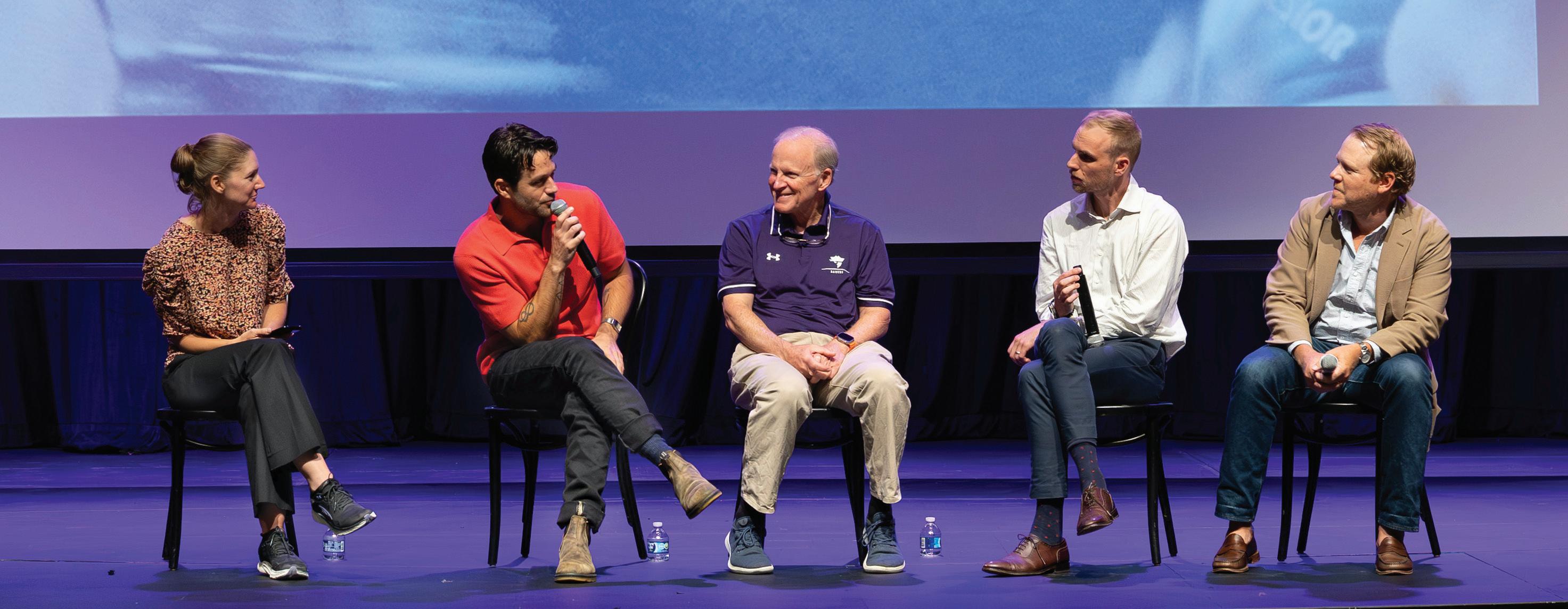
ALUMNI FILMMAKERS RETURN TO THEIR ROOTS TO TELL A STORY OF ATHLETIC AMBITION, MENTORSHIP AND UNWAVERING SUPPORT.
When North Shore alums Ben Kegan ’05 and Matt Downe ’04 set out to film Peter Callahan ’09’s attempt to qualify for the Olympic track team, they expected a story about athletic achievement. What they found was a story of human connection, resilience and the pursuit of a dream at the highest level.
“Their relationship is so unique, built over so many years, and Peter is such a thoughtful individual,” explained Ben, who directed the film. “I felt that no matter what happened, the journey would reveal something about what it takes to pursue your dreams at the highest level. Anchoring that in such a deep and personal bond fit the kind of filmmaking I gravitate toward: intimate, subjective and centered on human connection.”
The project began modestly. NSCD Athletic Director Patrick McHugh, who had coached Peter since high school, asked if Ben could record a few training videos of him and Peter — perhaps for a simple social media clip. “When he reached out, I saw a much larger opportunity,” Ben said.
From the outset, the filmmakers approached Seconds Away as more than a sports documentary. “I always try to think about the themes underneath the narrative,” Ben said. “The COVID pandemic and Patrick’s cancer diagnosis were unexpected obstacles that deepened those themes: resilience, the body’s limits and how you keep moving forward when life changes. Watching Peter and Patrick support each other on and off the track showed that the film was also about resilience and care.”
beneath that is an entire world of athletes who have been the best their whole lives and still have to fight for a chance to reach the Olympics,” Ben said. “I wanted people to understand how much invisible work, sacrifice and uncertainty sits beneath the surface.”
Peter’s dedication and that of the running community also left an impression. “The level of commitment required at that elite level was striking. Training, eating, recovering. Every day planned with precision. Seeing it up close was both surprising and inspiring,” Ben said.
filmmaking requires you to observe and respond quickly. You are taking in the emotional moment while making fast creative decisions about how to capture it. It is a balance of listening and creating in real time.”
The filmmakers gave the NSCD community a sneak peek of the finished product at the start of the school year. “That screening was the first time Peter and Patrick saw the finished film and sharing that moment in a room filled with family, friends and teachers made it even more special,” Ben said.
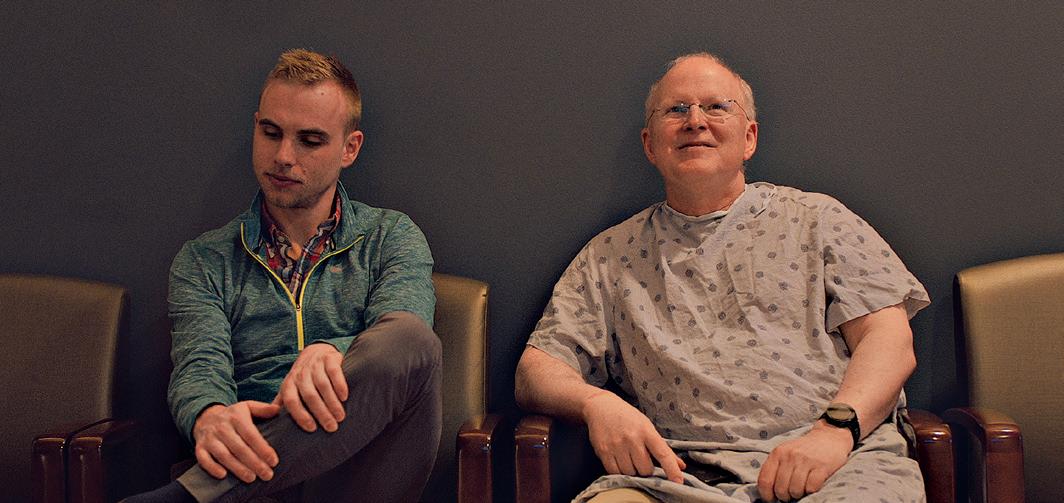
Ben credits his own North Shore experience with shaping the project. “The existing trust between me, Patrick, Kathy [McHugh] and Peter mattered. They knew me from my time in school, and without that history it would have been much harder to capture something this vulnerable, especially during Patrick’s treatment,” he said. He also found that lessons learned in the classroom and on the track carried over into his filmmaking. “Patrick always talked about investing in the process and showing up with consistency. Kathy’s English classes were all about rewriting and refining. Filmmaking is built on those exact ideas. Scene by scene, brick by brick. So in many ways, the way I approach storytelling grows out of the same ideas they taught in the classroom and on the track.”
The film captures the narrow margins and immense dedication required to compete at the Olympic level. “We often see the medal ceremonies or the highlight moments, but
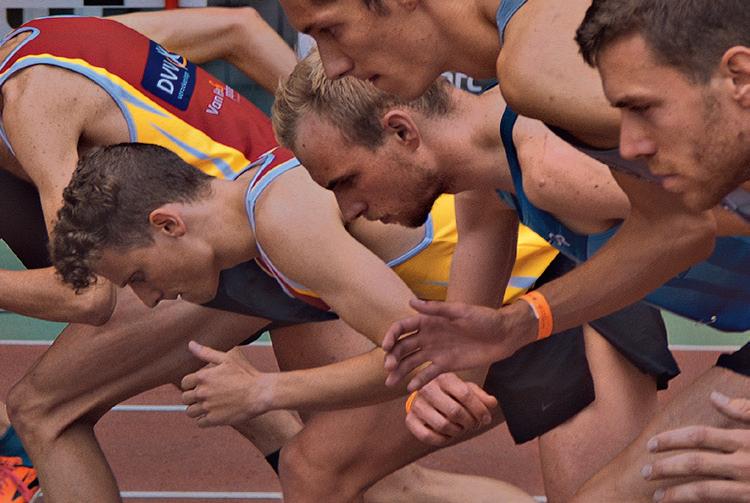
“It became clear how many relationships and friendships were woven into Peter’s journey. He talked about how those connections were just as meaningful as the athletic goals, and that stayed with me.”
Patrick’s mentorship provided the emotional core of the film. “Their shared history is at the heart of the film. You see it immediately in the way they interact on and off the track. Patrick is a mentor, and they believe in each other in very deep ways. That mutual belief is what makes their relationship so compelling.”
Documenting Patrick’s treatment alongside Peter’s training was a privilege, Ben said. “Being close to Patrick and Kathy during that period reminded me how powerful simple witnessing can be. Many people never see what treatment looks like until they or someone close to them is facing it. Being present in those moments made the story more human. At the same time,
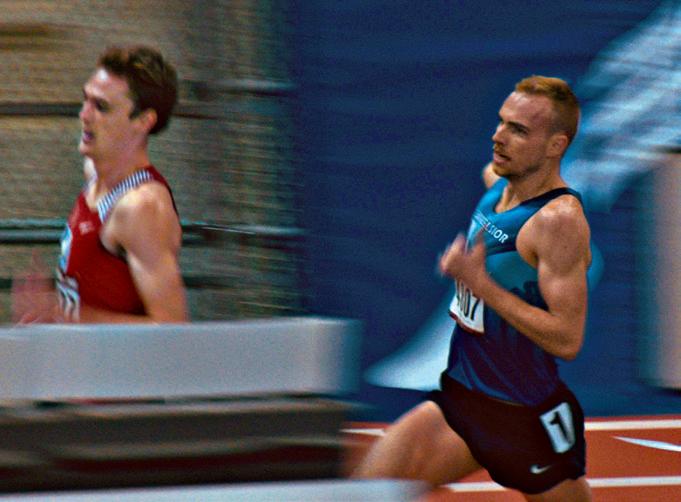
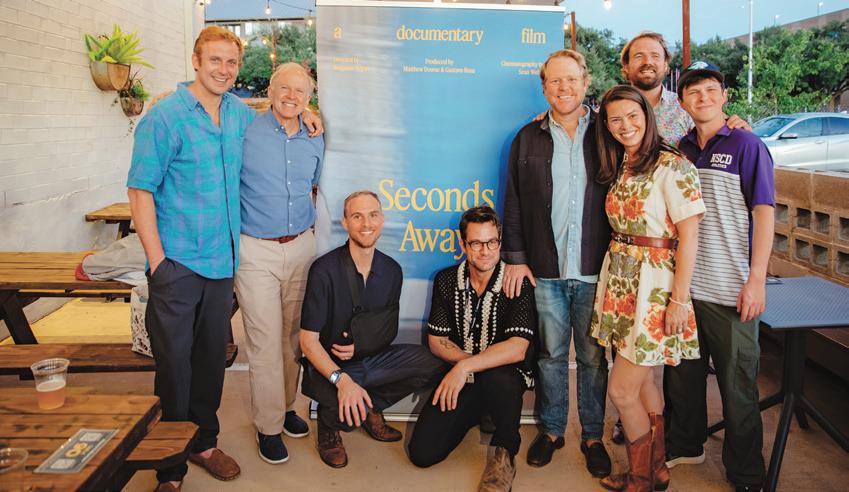
“Seconds Away” recently had its North American premiere at the Austin Film Festival, with Patrick, Peter and several other NSCD alumni in attendance. Audience response has been deeply rewarding. “People talk about how the story made them think about their own mentors, hardships or goals,” Ben said. “It has also been great to watch audiences discover Peter and Patrick as the remarkable people they are.”
The film has screened at the Centre Film Festival, receiving a Jury’s Choice Award, and at the world’s oldest sports film festival in Palermo, Italy. It continues on the festival circuit, with community screenings planned, particularly in the running world. Distribution conversations are ongoing.
For those who want to follow along, updates and screening information are available on Instagram at @secondsawayfilm or at secondsawayfilm.com.
I HAVE THE JOY TO REFLECT ON MY TIME AT NORTH SHORE NOT ONLY AS AN ALUM BUT ALSO AS A FORMER TEACHER. MY FIRST ROLE OUT OF COLLEGE WAS THIRD GRADE ASSISTANT TEACHER AT MY ALMA MATER AND UPPER SCHOOL FIELD HOCKEY COACH.
Walking the same hallways as a teacher was both strange and familiar. On my first day, lower school music teacher Linda Kiracibasi — known to her students as Mrs. K — gave me a big hug and said, “Now you need to call me ‘Linda.’” I awkwardly tried to explain that I could not do that. I also had a classic first-job mishap. One morning when I didn’t show up for work, the head of the lower school, concerned, called my emergency contact. That led to the humbling experience of my mom waking me up and reminding me that being late hits differently when you’re the teacher. Such an experience left me wondering
in what ways I had moved forward and grown — and in what ways I hadn’t.
Occasional sleepiness aside, my coworkers, administrators and parents believed in me and supported me in my first two years there as an early career teacher. I built meaningful relationships with my students, grew my confidence in instructing and learned all of the ins and outs of teaching at an independent school.
I also had moments that reminded me how a community can stay with you long after you leave it. My senior year, my classmates on the field hockey team and I choreographed an elaborate dance for the pep rally (largely thanks to the efforts of Jenny Chandler ’11). One move in particular — a two-foot hop to the side with a swinging arm motion and a snap — required more coordination than many of us naturally possessed, so we practiced it endlessly. It paid off.
During my first year teaching as I watched the pep rally, the field hockey team performed another elaborate dance. At the very end, they burst into the exact same move. Afterwards, the players shared with me that it was a tradition to close with that move every year. It’s a pretty delightful surprise to learn you accidentally started a tradition.
Over the two years I taught and coached there, I slowly grew more comfortable in my new role in the community. I’m still a teacher today, teaching middle school humanities at a private school in Salt Lake City. When I look back, I can see how my time at North Shore helped shape my core beliefs as an educator: that students learn best from adults who know and respect them, that teachers flourish with supportive and understanding administrators, and that the traditions and connections within a community shape us in ways we only understand much later.
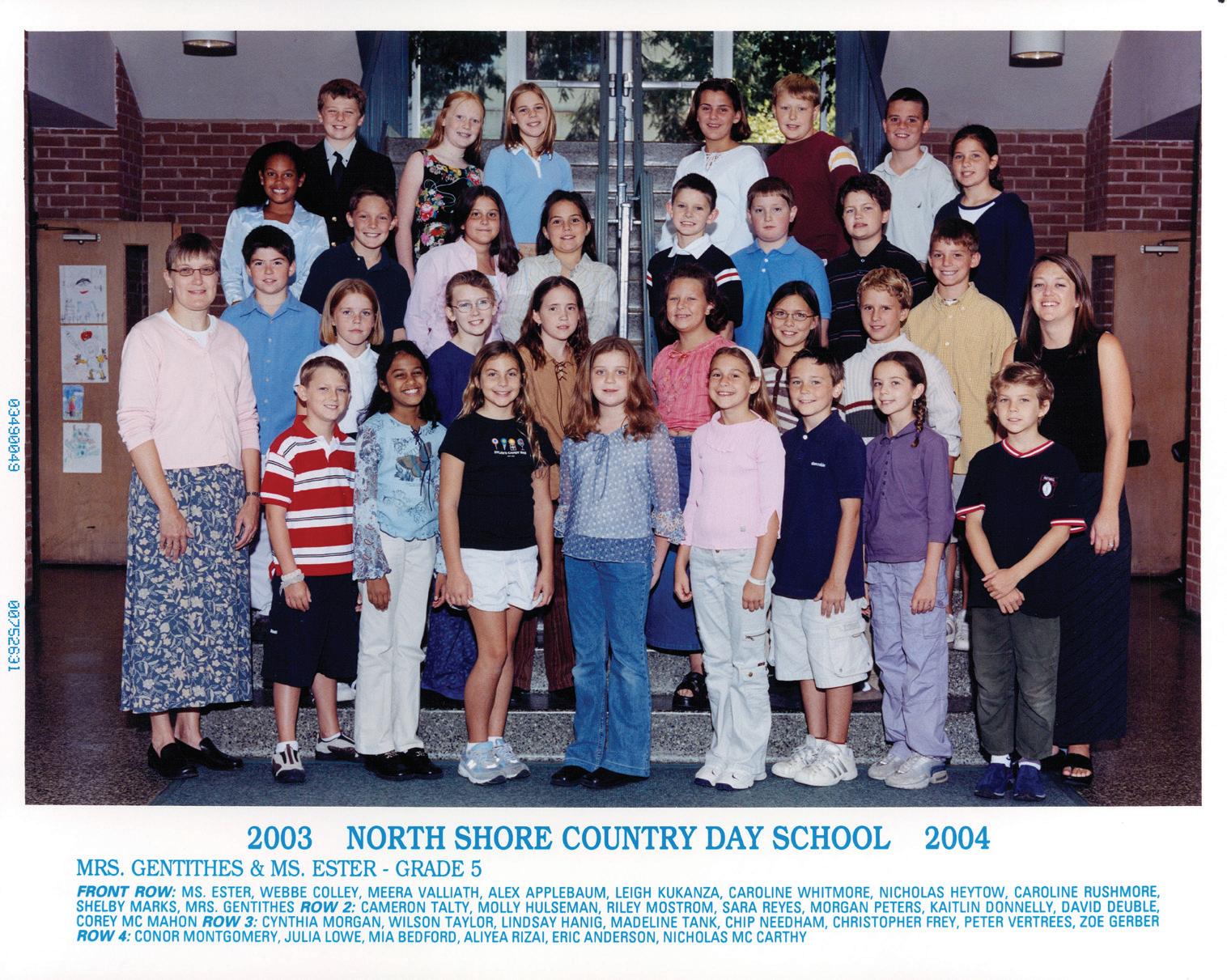
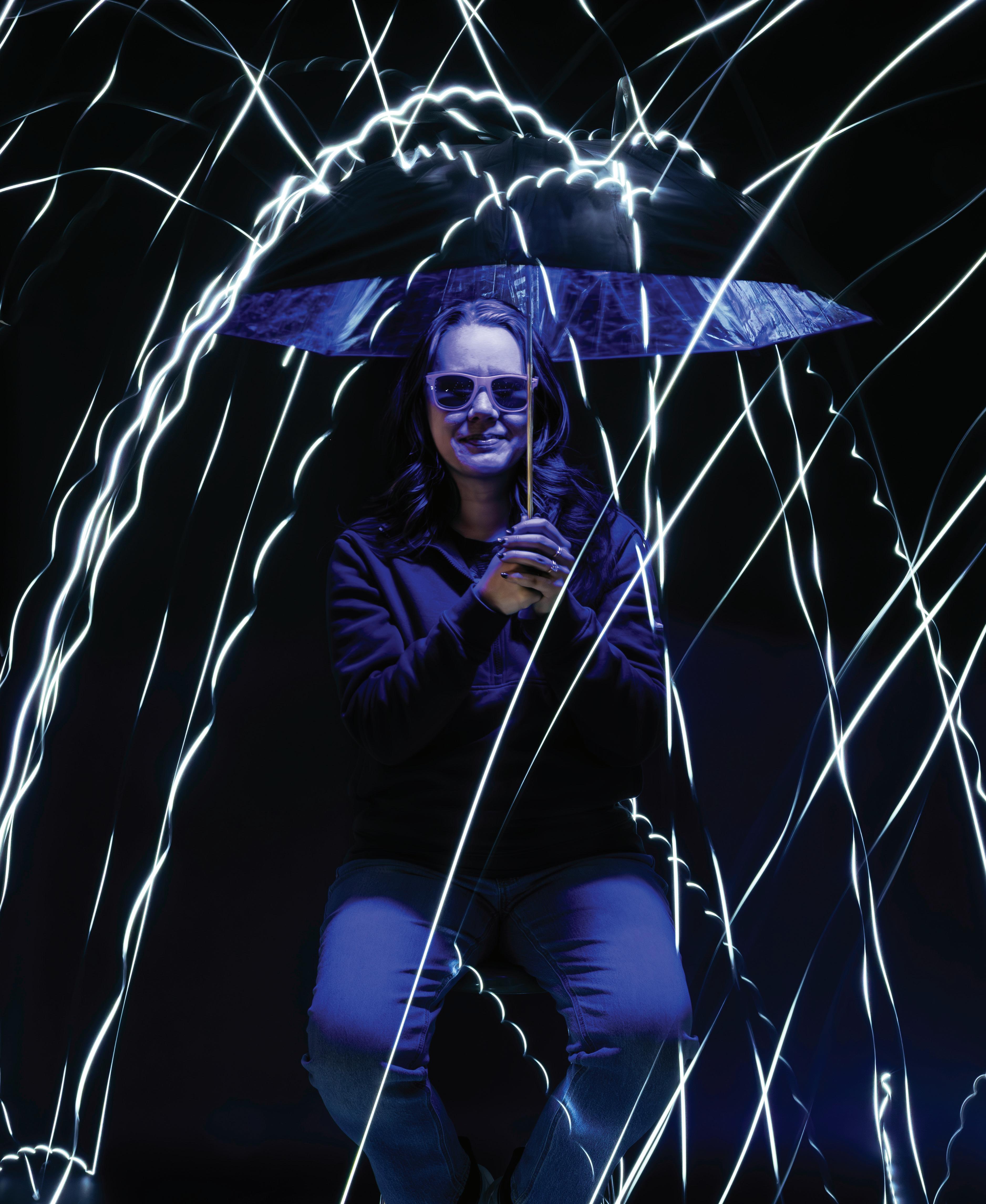
Light-painting assignment created collaboratively by the upper school Digital Photography class.
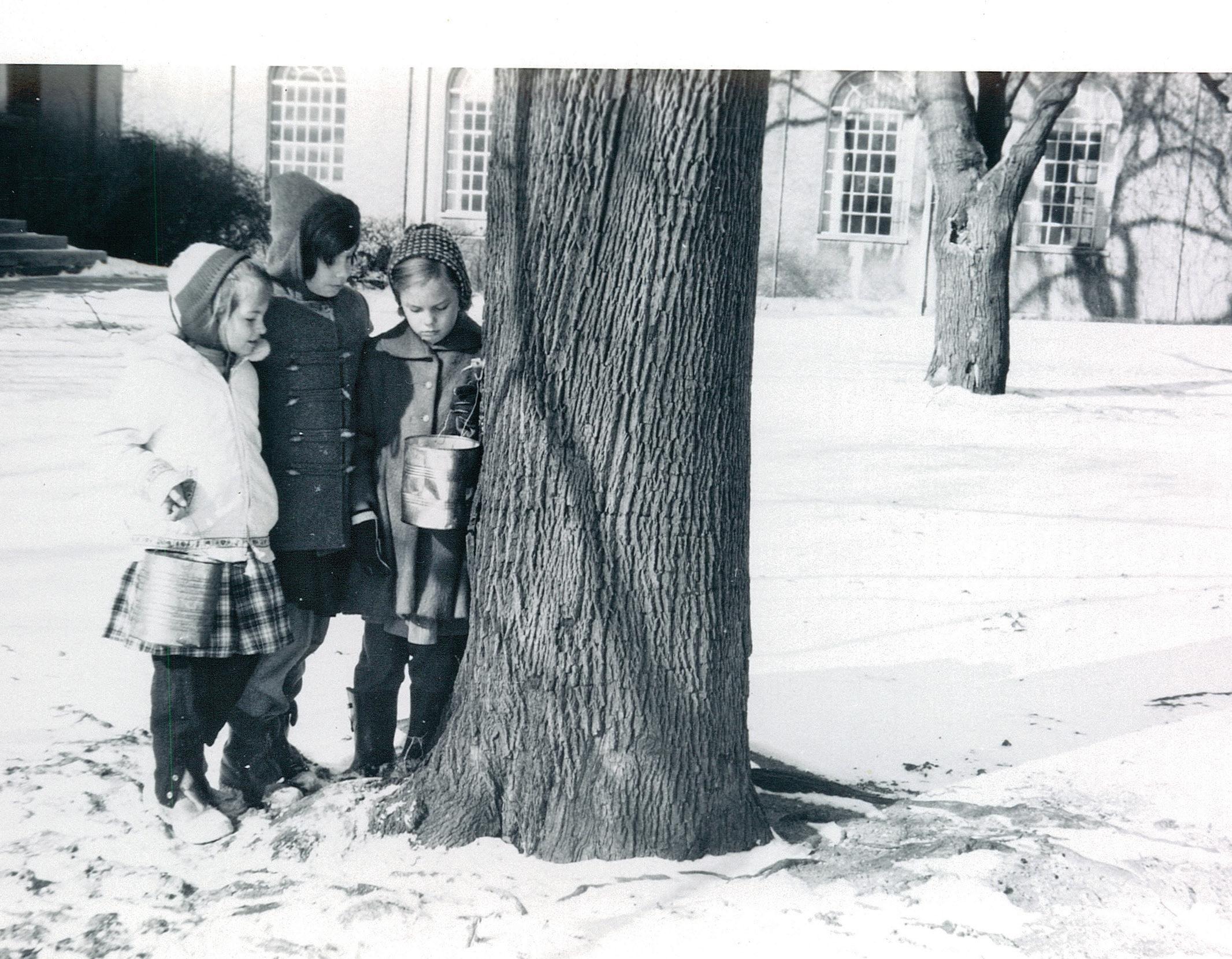
Lower school students tap a maple tree on campus during an early hands-on lesson in how maple syrup is made. Do you know more about this photo? Recognize the students? If so, please reach out to archivist Kenleigh Howard at khoward@nscds.org or call 847.881.8844.