5
T H E C O M P L I C AT E D C A N D I D AT E :
5
T H E C O M P L I C AT E D C A N D I D AT E :
I N D I S C E R N M E N T & F O R M AT I O N
August 31-September 3, 2026 | St. Meinrad, IN
a conference for formation and vocations personnel and diocesan and religious leadership
SLI org/CHF2026 | conferences@sli org
Editor Jesús Leyva
Design Consultant
Patrice J. Tuohy
© 2026, National Religious Vocation Conference
HORIZON is published quarterly by the National Religious Vocation Conference, 5416 South Cornell Avenue, Chicago, IL 60615-5664. 773-363-5454 | nrvc@nrvc.net | nrvc.net
Facebook: Horizon vocation journal
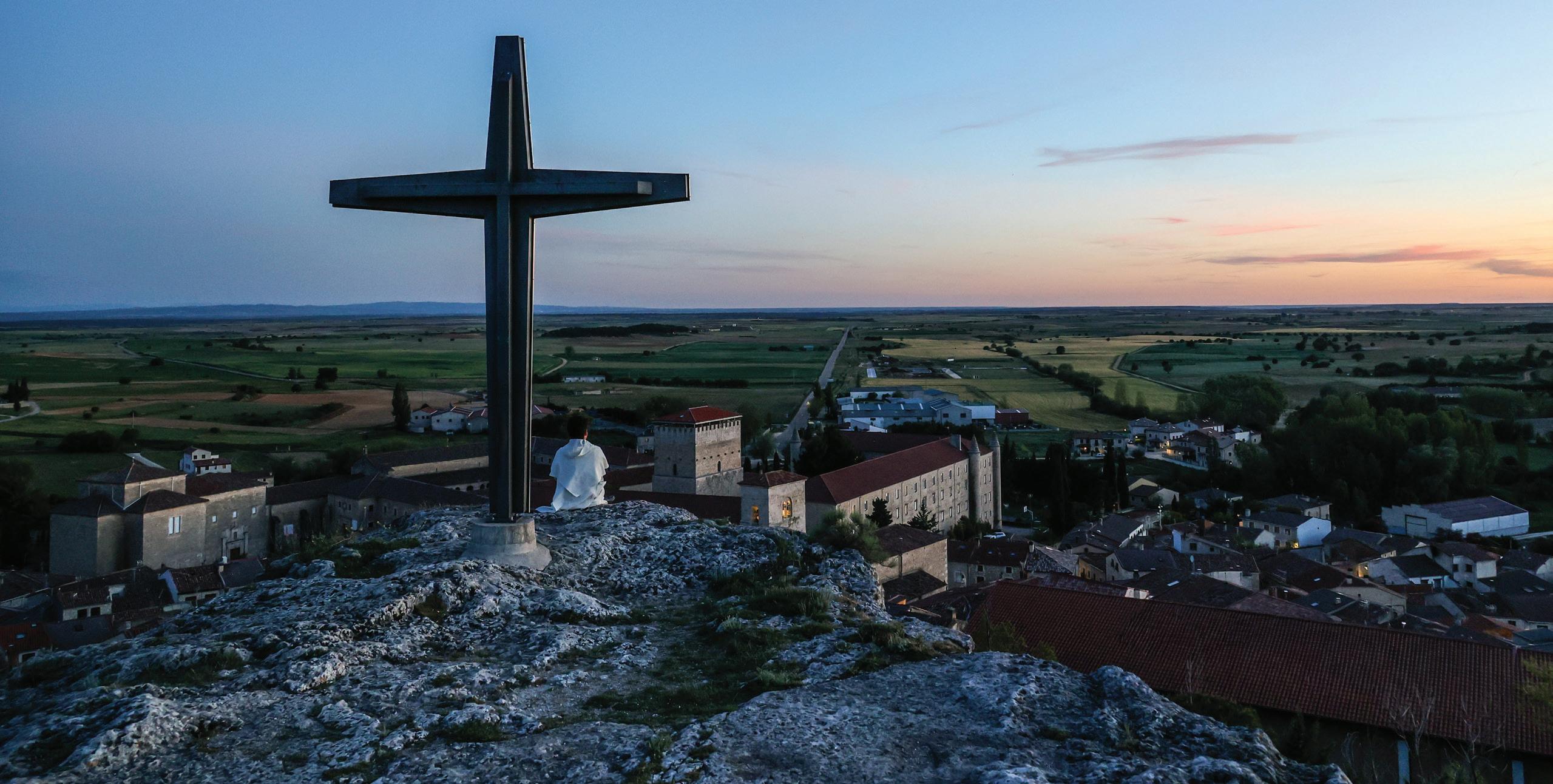
Cover image: Father Lawrence OP
SUBSCRIPTIONS
A complimentary subscription to HORIZON comes with NRVC annual membership. Additional subscriptions are $50 each for NRVC members; $125 each for non-members. Single copies are $25 each. Subscribe online at nrvc.net/signup. Please direct subscription inquiries to the NRVC office at nrvc@nrvc.net.
POSTMASTER
Send address changes to HORIZON, 5416 S. Cornell Ave., Chicago, IL 60615-5664. Periodicals postage paid at Chicago, IL. ISSN 1042-8461, Pub. # 744-850.
REPRINTS, ARCHIVES, ELECTRONIC EDITIONS
Permission is granted to distribute copies of HORIZON articles for noncommercial use. Please use the following credit line: Reprinted with permission from HORIZON, journal of the National Religious Vocation Conference, nrvc.net. For other types of reprints, please contact Jesús Leyva at jleyva@nrvc.net.
EDITORIAL INQUIRIES & ADVERTISING
All editorial and advertising inquiries should be directed to Jesús Leyva, jleyva@nrvc.net. Advertising rates and deadlines are also posted on nrvc.net.
THE NATIONAL RELIGIOUS VOCATION CONFERENCE is a catalyst for vocation discernment and the full flourishing of religious life as sisters, brothers, and priests for the ongoing transformation of the world.
Award-winning member of the Catholic Media Association.
IN THE WORDS OF BOB DYLAN, “You don’t need a weatherman to know which way the wind blows.” And it’s true: the winds are changing, and rapidly evolving realities abound. There’s no denying it. However, the world and our beloved church have experienced seismic shifts since the beginning of time. One could say this is old news. And yet, the Catholic Church has endured, and so has God’s call to religious life, despite everything the world has thrown at it.
There’s no need to describe the present. Doing so will take word upon word, and it’s possible that we may not all agree on what is and what is not. It’s also important to note that while God is eternal, the realities of the world are not, and often require recognition, adaptation, and at times, real change.
The core message, and our forever starting point, is recognizing that God is in control and will never stop calling courageous people to religious life. What comes next, though? Becoming aware of the realities of the world so we may better understand the next generation who is experiencing God’s miraculous call. However, this comes with a caveat and we must not forget it. As the wise saying goes, “Be in the world, but not of the world.” In other words, we must cling to God as we brave the mysterious headwinds of this unique moment in time.
As you read these articles, in the midst of winter and praying for longer days, when the sun shines with all its splendor, remain faithful that God will continue calling people to religious life. Trust that God will inspire us to respond to evolving realities. And know that God will bless your work as vocation ministers, today and always.
— Jesús Leyva,
editor

HORIZON is an award-winning journal for vocation ministers and those who support a robust future for religious life. It is published quarterly by the National Religious Vocation Conference.
NATIONAL RELIGIOUS VOCATION CONFERENCE BOARD
Board chair:
Friar Mario Serrano, O.F.M. Conv.
Vice chairs:
Sister Eileen McCann, C.S.J. and Brother John Skrodinsky, S.T.
Ex officio
Sister Deborah Borneman, SS.C.M.
Brother Joseph Bach, O.F.M.Conv.
Brother Edward Shields, F.S.C.
Sister Gail Trippett, C.S.J.
Sister Jill Marie Reuber, O.S.B.
Sister Donna Del Santo, S.S.J.
Sister Carolyn Martin, lsp
Sister Corrina Thomas, F.S.P.A.

We are excited to announce that our Summer Institute participants have chosen a Convocation logo to beautifully complement our inspiring theme selected by the National Board: Bearers of Hope/Portadores de Esperanza/Sứ Giả Hy Vọng. Join us as we celebrate this spirit of hope together, and mark your calendars to attend Convocation in Orlando, Florida, November 19-23, 2026!
Convocation unites the NRVC membership and its trademark excellence in workshops, liturgies, keynote presentations, and networking. This conference also includes the member business meeting, awards, and invitations to collaborators. It provides the opportunity to celebrate our mission and vision while engaging in professional development and ongoing formation. Plans are
underway to select presenters and solicit sponsors. Many levels of sponsorship are available, and we welcome your support. Please direct questions to Sister Debbie Borneman, SS.C.M. at debbiesscm@nrvc.net.
We are pleased to share the following exciting workshops. For more information, contact Sister Dina Bato, S.P. at dinasp@nrvc.net. We look forward to seeing you!
The Well Spirituality Center, Lagrange Park, Illinois
• May 11-12, 2026, Behavioral Assessment 2
Marillac Center, Leavenworth, Kansas
• July 8-12, 2026, Orientation Program for New
• Vocation Directors
• July 14-16, 2026, Behavioral Assessment 1
• July 18-20, 2026, Spirituality and Vocation
• Discernment
• July 22-24, 2026, Family Matters and Their Impact on Vocation Discernment
“Talk it Up Tuesdays” began on January, 27 2026, and will continue throughout the year! These 60-minute Zoom gatherings are designed for members to learn together, encourage each other, and share ideas. Sessions will start at 1:00 p.m. CDT and focus on a unique topic in vocation ministry. Register at https://tinyurl.com/tiutzoom. Please visit nrvc.net for a preview of upcoming topics or contact Sister Dina Bato, S.P. at dinasp@nrvc. net for more information. See you soon!
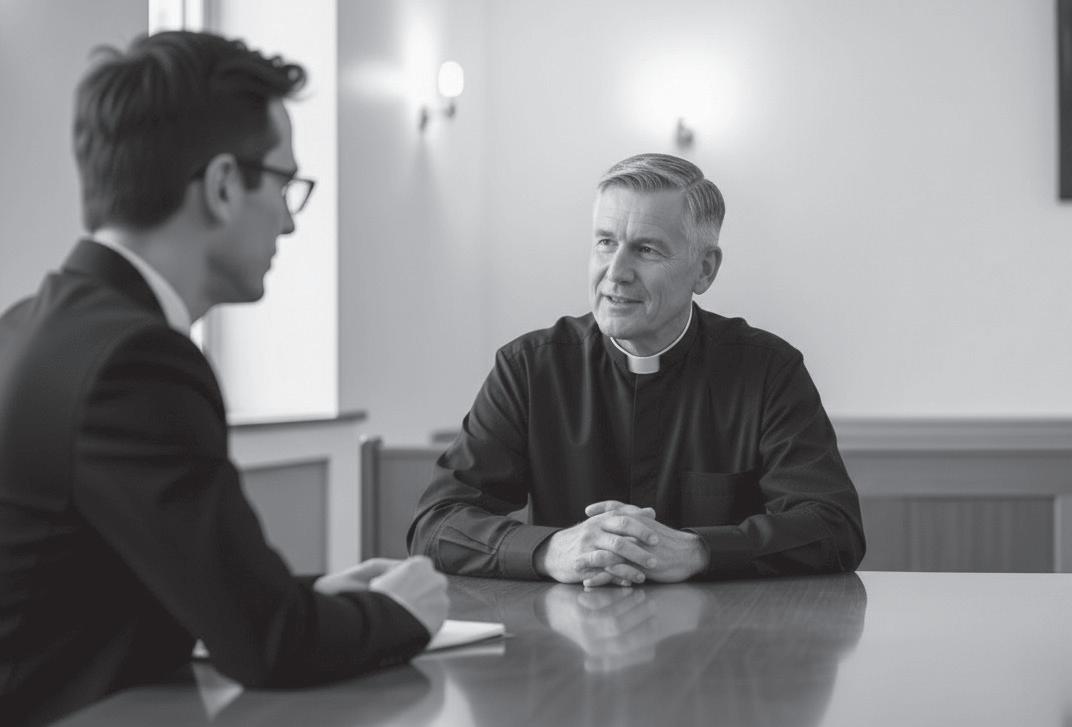
As a vocation director, you accompany individuals discerning a call to religious life, helping them listen for God’s invitation and respond with courage. You nurture their desire for prayer, service, and community. You also carry a second, equally sacred responsibility: safeguarding.
SAFEGUARDING BEGINS AT THE DOOR. Vocation ministry is sacred work. As a vocation director, you accompany individuals discerning a call to religious life, helping them listen for God’s invitation and respond with courage. You nurture their desire for prayer, service, and community. You also carry a second, equally sacred responsibility: safeguarding.
When someone enters your community, they are entrusted with access to the people and ministries at the heart of your mission. That trust must be protected. Screening is not an administrative hurdle. It is prevention. It is stewardship of the call. And it is deeply pastoral.
Praesidium strongly believes an organization’s screening and selection process is its first line of defense. Its Standards for Religious Institutes define what a strong screening process looks like in practice. Standard 5 specifically focuses on integrating an abuse risk management lens when screening new candidates for the risk or history of sexual abuse of minors or boundary violations with minors. It details what screening components and tools institutes should implement, the importance of training those involved in the screening process, and what might disqualify a candidate
Screening is not an administrative hurdle. It is prevention. It is stewardship of the call. And it is deeply pastoral.
By Adriana Dominguez

Adriana Dominguez assists organizations to prevent abuse, oversees much of Praesidium’s international work, and collaborates closely with the Praesidium Chile office. She graduated with honors from Villanova University and received her Juris Doctor degree from the Dedman School of Law at Southern Methodist University.
from continuing. The guidance below blends Standard 5’s requirements with practical tips and the pastoral framing that vocation ministers live every day. The aim is simple: help you welcome wisely while protecting those you serve.
Your work requires balancing two lenses. The pastoral lens is about accompaniment. You look for spiritual maturity, openness to formation, and alignment with your charism. You notice generosity, humility, and a desire for community.
The protective lens is about safeguarding. You ask whether this person can establish healthy relationships, respect boundaries, follow rules, and serve safely in a position of trust. You look for honesty, accountability, and the capacity to receive feedback.
Screening is not about finding perfect candidates; it is human to have strengths and areas of growth and to encounter experiences that may mark us in unexpected ways. What matters most is the readiness and openness to reflect, learn, redirect, and commit to being an active part of communities that are supportive and safe for everyone. That readiness manifests itself as transparency, integrity, and growth.
Praesidium Accreditation provides institutes with a clear, consistent framework for prevention. For vocation directors, it does three things:
1. It includes specific requirements to ensure best practices are followed and institutionalized into your vocation process.
2. It creates a team approach, so that no one is forced to make critical decisions in isolation. Vocation and formation staff, leadership, safeguarding personnel, and outside experts all bring a trained perspective that will help the institute make informed decisions.
3. It helps build a culture where transparency, documentation, and careful decisionmaking are normalized. When screening is consistent and well documented, you can explain decisions confidently and adjust your approach as you learn.
Below are the five core components of a screening and selection process for new candidates, presented as a checklist with practical tips and safeguarding-related rationales. The language reflects Praesidium’s Standard 5 while combining closely related recommendations for ease of use. Ultimately, the goal is to create a comprehensive understanding of the candidate by gathering information from each component and evaluating it collectively to make informed decisions.
What to do: Conduct a layered check that includes a multi-state criminal records search, a national sex offender registry check, a Social Security number trace with alias search, and individual county-level searches for every county where the candidate has lived in the last seven years. For candidates who live or have lived outside the United States, obtain criminal background checks or the closest available equivalent, and document any limits faced in obtaining said documentation.
• Use a reputable screening vendor who is familiar with religious institutes.
• Verify all names: legal, nicknames, former names, and spelling variants.
• Capture a full address history going back seven to ten years.
• For candidates residing in other countries within that time frame, coordinate with the candidate or a vendor to obtain the relevant checks. Should limitations arise in obtaining the sought information, document your efforts and results.
Why this matters: A criminal background check is the minimum due diligence an organization is expected to implement, but not all checks are created equal, which is why county-level checks are recommended. Though an important step, we also know that it is not enough by itself because most people who abuse will not have a criminal history in their record. In some cases, however, it will help surface known offenses, fraud, restraining orders, or undisclosed legal issues; if nothing else, it sends a strong message from the very beginning that your community takes safety seriously.
What to do: Conduct in-person interviews with more than one trained representative of the institute. Include standardized questions that help elicit past actions, not just intentions, that the candidate has employed. These are known as behaviorally based questions, and they can help you assess the risk for abuse.
• Explore attitudes and skills that are key to safeguarding: boundaries, trainability, policy adherence, patience, supportiveness, and judgment. Ask them to describe a situation where others relied on them. How did they manage closeness and limits?
• Ask for examples: Tell me about a time you received feedback you disagreed with. What did you do?
• Compare notes across interviewers, take note of concerns or areas you’d like to explore further, and leave a written record.
• Consider come-and-see and live-in opportunities to observe daily functioning and boundary awareness in community life.
Why this matters: Multiple interviewers reduce bias and improve accuracy. Behaviorally based questions help you understand how the person actually behaves in specific situations, like being under pressure or interacting with authority figures. Observed behavior in community often reveals strengths and concerns that interviews can easily miss.
What to do: Obtain at least five references per candidate. Include three personal references, with at least one family member, and two professional references.
• Call references and use standardized, behaviorally based questions. If requesting written references, develop a standardized form that includes behavior-based questions, and be sure to follow up with a phone call. Do not rely on form letters alone.
• Use open-ended questions: How does this person handle feedback, rules, and stress? What concerns, if any, should we consider as they enter religious life?
• Press gently on vague responses. Ask for concrete examples, try rewording the question, or put it in a context more familiar to the reference.
• Be alert to inconsistencies between what has been shared by the candidate and what is shared by the references. Take the opportunity to explore or follow up on concerns identified in the interview with the candidate.
• Be cautious if a candidate refuses to list past supervisors or only offers character references.
Why this matters: References offer an external perspective and can reveal patterns over time and across settings. They help you confirm strengths, notice concerns, and understand how the candidate functions in authority structures and community life.
What to do: Use a licensed psychologist or other qualified clinician who understands religious life to conduct a comprehensive evaluation that includes a psychosexual history and assessment. Ask the evaluator to address emotional maturity, interpersonal functioning, trauma history, impulse control, sexual development and integration, capacity for celibate chastity, and risk indicators. Provide the evaluator with your institute’s suitability expectations in advance and obtain appropriate releases from the candidate, so findings can be shared and clarified with your team if needed.
objective look at readiness. It identifies strengths that support vocation, highlights potential needs related to formation, and surfaces risks that require attention, caution, or dismissal.
What to do: Review publicly accessible content on social media platforms, blogs, and websites associated with accounts controlled by the candidate. Include major platforms as well as any blogs, gaming handles, or public forums they use.
• Determine whether you want to complete these in-house or outsource them, and consider the implications of each option, such as consumer reporting laws that might apply if you outsource them.
Establish clear grounds for dismissal and a written process for evaluating concerns; this helps establish consistency and objectivity.
• Set the expectation of this check with the candidate and extend the opportunity to be transparent about any potential information you might find in your search.
• Search known names and aliases.
• Save screenshots with dates of concerning content.
• Discuss findings with the candidate and document the conversation.
• Look for patterns rather than isolated posts and consider age and context.
• Choose evaluators who are experienced with religious life and communities and positions of trust.
• Share your charism and community context so that recommendations inform different formation aspects.
• Request practical guidance: strengths to nurture, growth areas, and clear concerns that would require support, delay, or dismissal.
• If a candidate needs additional support or treatment, clarify who will provide it, how progress will be monitored, and what must change before admission or advancement.
Why this matters: A professional evaluation offers an
Why this matters: Digital footprints reveal attitudes and patterns that may not surface in interviews. Look for alignment between personal presentation and public behavior and for patterns that conflict with your safeguarding efforts.
Establish clear grounds for dismissal and a written process for evaluating concerns; this helps establish consistency and objectivity. At a minimum, a candidate with an established allegation of child sexual abuse, or who is known to have acquired, downloaded, or intentionally viewed child sexual abuse material, cannot be allowed to continue to membership. Similarly, a candidate who is unable to maintain appropriate boundaries with minors, despite guidelines and instruction, should not be admitted. In cases where the admissions process must be ter-
minated, provide candidates with respectful closure and support. This safeguard protects potential victims, your current members, and your mission. It is not punitive. It is protective and non-negotiable.
Every institute should define suitability in plain language. A suitable candidate can live in community without harming others, follow rules and structure, receive feedback, maintain healthy adult relationships, and uphold boundaries in ministry. Suitability also includes honesty about limitations and a willingness to accept help if necessary.
Be honest about red flags. These include unexplained gaps, inconsistent stories, defensiveness, evasion, a pattern of testing boundaries, poor reference quality, or social media content that conflicts with your values. One concern is not always disqualifying, but repeated or cross-corroborated concerns are serious. Address them directly and document what you learn. If concerns cannot be resolved, do not move forward.
Practical exercise: before each final decision, ask your team to name the three strongest indicators of suitability and the three clearest concerns. If you struggle to name strengths with evidence, pause. If concerns are significant or multiply across sources, stop.
Do not base acceptance on a single strong impression, regardless of whether it is positive or negative. Review the full picture: background check results, insights from references, interview observations and notes, the social media check, and the psychological report. Ask what the data says when viewed together. Consider whether formation can reasonably address identified needs or areas of growth without placing others at risk. If something does not add up, pause. Additional time, information, or consultation is a strength, not a weakness.
Finally, create a short synthesis memo for each candidate that lists the evidence you have, what it suggests about suitability, and any conditions for proceeding. File this memo with your documentation, so leadership can see the path you took from data to decision.
Discernment is a group effort. Include more than one trained person at each step. Use a small review group to synthesize findings and make recommendations. When concerns arise, consult leadership, safeguarding personnel, and other experts. Share what you know, what you do not know, and what you propose to do next. Consider appointing a standing screening/admissions team that
meets monthly or as needed. Give the team a simple rubric to rate core domains, such as honesty, boundary awareness, response to authority, and readiness for celibate living. Ratings should be anchored in evidence, not merely on impressions.
Documentation protects everyone. Keep a clear record of interviews, reference calls, background results, social media findings, evaluator reports, concerns identified, how you addressed them, and the final decision with its rationale. Good records allow leadership to understand your process, support continuity when roles change, and answer questions with confidence. Documentation also supports formation by passing along insights that help mentors accompany the candidate well.
Practical tools: a screening checklist, a reference interview template, a behaviorally based interview guide, a social media review log, and a final decision summary. Build these once and reuse them for every candidate
You are a culture setter and promoter. From the first email or call, normalize safeguarding. Tell candidates that everyone completes the same thorough process. Explain that strong screening helps communities and candidates thrive. Most discerners appreciate this clarity. It signals a community where safety and transparency are real. Use welcoming language that is direct: We are honored to walk with you in discernment. Because we serve vulnerable people and live closely in community, we follow a thorough screening process for all applicants. We will describe each step, answer your questions, and keep you informed about timelines and decisions.
Create a one-page checklist of the steps above, and use a standard file structure so every candidate’s documentation is centralized and consistent. Schedule touchpoints with formators to share what you learned that will help them accompany the candidate. Review your process annually against Praesidium Accreditation expectations and best practices and make revisions as needed.
§§§§
Vocation ministry is about hope. Safeguarding anchors that hope in responsibility. Each safeguard you implement is an act of love for those in your care and those you will one day serve. Screening does not close doors. It helps you open them wisely, welcoming people who can flourish in community and protect the vulnerable entrusted to your institute. n

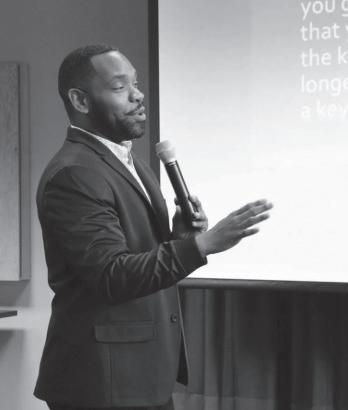
DR. MYLON KIRKSY, ED.D., of Sidebar Education Consulting Group, is an Intercultural Development Inventory (IDI) Qualified Administrator and Qualifying Seminar Instructor. He has helped hundreds of students significantly increase their intercultural competency, provides personalized leadership coaching, and consults with dozens of institutions and companies on how to improve organizational, team, and individual outcomes related to intercultural competency and effectiveness.
By Jesús Leyva

Jesús Leyva
is a creative fiction writer, award winning editor, and the director of communications at the
Dr. Kirksy has been working with the National Religious Vocation Conference (NRVC) for four years as part of two Conrad N. Hilton Foundation grants. He has accompanied organizational leaders within the NRVC on a transformative journey of learning and unlearning behaviors, seeking to deepen understanding of intercultural competency. NRVC Board members, Member Area Coordinators, staff, and key partners completed pre and post-assessments using the Intercultural Development Inventory, sparking meaningful conversations and inspiring advocacy across cultures and generations in transforming relationships.
While all of us have implicit biases, we can become better ministers when we move from minimalization behaviors, such as minimizing differences, assuming commonality, centering ourselves to understand others, and creating environments where others have to assimilate or “go along to get along” to fit in. When we lean into curiosity and “create space for difference to show up,” we can achieve greater levels of interpersonal connection and deepen our understanding of individuals, groups, and cultures different than our own. This helps us achieve better interpersonal and organizational outcomes, create more inclusive environments, and adopt more effective and culturally responsive practices.
Can you introduce the IDI and basic concepts to get us started?
Let’s begin with cultural commonality and difference. People enter spaces with different mindsets and skill sets to engage those who are different from themselves, and the Intercultural Development Inventory is a lens and framework for examining this. This tool helps approach cultural commonality and difference in interactions, especially when things are unfamiliar. It can also help groups and organizations understand their mindset and then influence how they are pursuing their goals around effective cross-cultural engagement.
Simply put, it teaches us how they are meeting the diverse needs of the people they serve.
I was a young professional, but I had the blessing of ascending to higher levels of leadership as an associate director and then a director at a college. As one of the few people of color, I was often asked to participate in groups, committees, and different types of representation. And when I was in those spaces and started contributing different ideas and thoughts, they were overlooked, ignored, or suppressed. I was being invited for my differences and told to conform. I wondered, “Why was this happening?”
I learned that the IDI was a framework that describes this phenomenon in terms of mindset and how people engage difference. I started learning about minimization and how this mindset values cultural commonality while de-emphasizing cultural differences, whether intentionally or inadvertently. De-emphasizing difference means trying to connect across cultures through commonality. But just because someone has
something in common doesn’t mean they’re having a shared experience. When we approach others through the lens of commonality, we may fail to see how, within the commonality, someone may be experiencing a much different reality.
Differences in people’s experiences are important to pay attention to. For example, when we first meet someone, one of the questions we may ask is “Where are you from?” So, if I’m from Chicago, and I meet someone else who’s from Chicago, I might say, “Oh, me too.” What we’re saying when this happens is, “Oh, I think you’re like me,” because we haven’t done anything to know the other person’s experiences. We are assuming commonality with the person and basing our understanding of them on our own experiences of what Chicago is to us.
A minimization mindset is not bad, but it often leads to misunderstanding or an inaccurate or incomplete understanding of others. It means your understanding of others is limited by what you can see in your own experiences, and you engage others’ cultures through your own cultural lens. The result is that I only come to know you through me, not truly understanding you for who you are. Using the same example of Chicago, if I want to demonstrate greater cultural competency, I can ask, “What part of Chicago are you from? Or, “How long have you lived there?”, etc. Asking specific questions about others’ experiences will help you more accurately and deeply understand them.
When we approach others through the lens of commonality, we may fail to see how, within the commonality, someone may be experiencing a different reality.
Whenever we think that others are “basically the same” as us, we need to be more curious and ask more questions to ensure that our interpretations and understanding are accurate. We need to focus on understanding others for who they are, not how we think they are. We should avoid having people respond to us based on our thoughts and interpretations. We want to more deeply understand their thoughts and experiences. So, we should avoid saying things like, “Are you having a good day?” Instead, we should say, “How is your day going?” A “good day” is a qualifier that I have added to the conversation based on what I want to know, which
The IDI provides two scores. One talks about your perceived orientation (PO), which describes what you desire to do as you’re engaging across cultural differences and commonality—your intentions, and how you want others to experience you. The other score that the IDI provides is the developmental orientation score (DO), which tells us what you are actually doing, or the approach that you are taking when you are interacting with others.
isn’t the same as understanding how the other person’s day is really going. The qualifier puts people in a position where they must respond to us based on our lens of “good,” which may not reflect how they are feeling. This is why it is generally better to ask people open-ended questions rather than closed-ended questions. Intercultural competency is not about right and wrong. It is about finding ways to achieve a deeper, more accurate understanding of others by shifting perspective and adapting our behaviors in culturally appropriate and authentic ways.
Minimization is a common mindset because there is a positive value placed on universal truths and similarities. In some cultures, like the United States, there are values and norms around “oneness” to bring different people together and find “common ground.” The impact of this can lead to overemphasizing commonality and deemphasizing differences. What we have to remember is that we can use commonality while also giving attention to differences. We can talk about our shared connections while also seeking to understand how our experiences may be different.
When I think about the relationship I’ve had with NRVC and the work we’ve done, our goal has been to create space for difference to show up more consistently in practice, policies, programs, and interpersonal relationships.
Often, one’s developmental orientation score is not as far along on the continuum as the perceived orientation. This is because we often desire to interact in certain ways, but when we engage with others, our actions don’t match our intentions. Another way of saying this is that our actions are “missing the mark” and do not create the outcomes we want to achieve, which are reflected in our perceived orientation. Since the beginning, the NRVC has had intercultural aspirations for how they want to be seen and understood by the people and communities they serve, and within the organization to relate to one another. The NRVC wants to be seen as people who recognize, appreciate, and deeply understand cultural differences. When we started, the perceived orientation score was in the acceptance mindset, and it has only grown over these four years. However, the developmental orientation score, especially at first, was toward the beginning stages of minimization. In that stage, the NRVC was still learning to find commonality and use it to help bridge across difference. Four years later, we are within the developmental orientation of minimization, but at the end of minimization, and moving towards acceptance. This means the organization as a whole is no longer just looking for commonality; it has learned to use commonality and is more curious about learning about and bridging across cultural difference.
The NRVC has moved from comfortably using commonality to being more desiring and curious about engaging differences more consistently and creating more space for people to show up. For example, in the past, the mindset may have been, “What can we do for everyone?” And that seemed fair. But now, the organization is thinking, “What can we do for people to meet their needs?” There is more recognition and understanding that “onesize-fits-all” is not the best approach to being culturally responsive. The focus is now on being culturally responsive by acknowledging individual needs while maintaining consistency around our mission, vision, and values.
Is it true that most organizations and people are operating from a minimization mindset?
Yes. Individuals and organizations often pursue commonality for establishing connection and consistency. People often feel better when they have something in common with folks, and that’s not wrong. To be more effective, we just have to remember to challenge our assumptions around commonality and give equal attention to differences to improve our understanding of others. To practice intercultural competency and improve our understanding of others, I don’t need to validate or invalidate your experience. I can learn about you based on your experience. Both of us can share our thoughts and listen to each other without focusing on agreement or disagreement, and build awareness and understanding. I don’t need to convince you to agree with me. You don’t need to convince me to agree with you. The best learning and growth often come from learning about different perspectives and experiences. This is how we become more culturally competent. This intercultural competency framework, as measured by the IDI, is about goal attainment. The question is, how can I accomplish the goals I have for the interaction I’m having across cultures more effectively? The definition of intercultural competency is “he capability to shift perspective and adapt behavior in culturally appropriate and authentic ways.” It is not about doing things right 100% of the time. It is also not about knowing everything there is to know about someone’s culture. It is about recognizing what I don’t know and knowing how to shift perspective and adapt behavior in ways that others will view as appropriate and authentic.
The key is genuine curiosity.
Curiosity should be fueled by a desire to better understand someone or something. When we are only curious to prove or disprove, or invalidate or validate, we will not reach positive results. Asking someone, “Why do you think that way?” is not curiosity. It’s a challenge posed in the form of a question. I call those types of questions “question-statements” (laugh). When people make question statements, they’re not intending to learn; they’re intending to make a statement about how they feel about what you said. That type of curiosity will not increase awareness and understanding because you’re asking me to define my experience based on how you think or feel about it. I don’t have to agree or disagree with an individ-
ual to understand them. There’s no reason to pursue this in my conversations with individuals unless I am trying to forward an agenda. And when we do this, we risk coming across as less culturally competent, rude, inconsiderate, and potentially dismissive.
Our efforts at bridging may fall short when we do not acknowledge or create space for people’s realities, circumstances, and experiences to be considered. We must give equal consideration to how other people are experiencing the world around them. That doesn’t mean that we have to agree, but we should try to understand where they’re coming from, and the values, norms, beliefs, and expectations that have influenced their thoughts or actions. Once we have done this, we have to make choices about how we can navigate important differences to accomplish our goals. For example, my goal is to explain the developmental orientation of minimization and how it applies to the developmental work that NRVC has engaged in. From there, I hope that HORIZON readers will think about their own personal interactions across culture and make better individual, group, and organizational decisions that are more interculturally competent after reading this article.
This framework is not designed to tell you how to think or what to think; rather, it helps you better understand your mindset (thoughts) and skill sets (behaviors) for engaging across cultural commonality and difference. When you expand your mindset and work to develop your skill sets, you will achieve better outcomes and be more effective in your interactions across culture. I love doing this work because people have the opportunity to learn more about themselves (self-awareness) and others (other-awareness) in ways that can improve their effectiveness in interacting across culture. In truth, this is life-changing work!
How do these concepts help vocation ministers with their ministry?
It will help you become more aware, understanding, and responsive to people and their experiences. When you are more sensitive to understanding people’s experiences, genuinely curious about them, and can relate to them, it matters. Improving intercultural competence can also help you develop more effective strategies for vocation ministry and supporting individuals. Meeting people where they are at and helping them understand their path requires this level of intercultural competency and proficiency. n

Social media is where people gather to spend their time for work, learning, hanging out, and for prayer. This place has become one of the largest mission territories of our era.
Social media is where, even amid distractions and divisions and temptations, thousands of souls are discovering Christ for the first time. It is a place where we can go to encounter, to nurture, and to call people forth.
LBy Sister Orianne Pietra René Dyck, F.S.P.
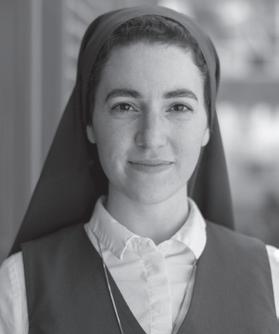
Sister Orianne Pietra René Dyck, F.S.P. is a Canadian religious sister with the Daughters of St. Paul. Raised between Manitoba and rural Ontario, she discovered the Daughters of St. Paul through their website and social media presence and entered the community in 2017. Since professing her vows, she has served as Social Media Manager for the sisters’ publishing house.
ET’S BE HONEST. For many of us serving in ministry and vocation work, “social media” is a term that triggers an immediate emotional reaction. We might feel anything from a surge of anxiety to a resigned sigh of, “I wish I had time”; from an overwhelmed, “I’m trying, but I don’t think I’m doing this right,” to a surge of genuine disdain. It’s real. So, let’s put social media aside for a moment… because at its core, this article isn’t actually about social media at all. And I hope you’ll see why.
Throughout history and geography, the Lord has faithfully continued to call people to particular forms of discipleship, just as he called four fishermen by the side of a lake so many years ago. Today, vocation work is a sacred space where that work is continued in the calling of souls. Whether we are stepping into vocation work for the first time, or have walked in this ministry for decades, we are all touched by the echoes of those first callings of Christ… and by the truth of his call to us.
In a time where our society has drifted from God and become mission territory anew, vocation work too is experiencing shifts. In some ways, these shifts may seem like strange, daunting, and uncharted territory. Yet in other ways, they may seem oddly familiar. As the shifts in our society demand a
return of the church to her ancient missionary roots, the shifts in the vocational apostolate may also invite us to re-examine the ancient roots of vocation work: the very first callings of Christ.
At the beginning of Christ’s public ministry, we notice something intentional about how he brought the Good News to people and how he called his disciples. He didn’t set up an office near the Temple in Jerusalem and expect them to find him. He went out to where they already were, where they worked, where they learned, where they hung out with friends, where they prayed, and found them. Strikingly, he went to Capernaum to call nearly half of his 12 apostles from the places they worked: Simon, Andrew, James, and John from the docks, and Matthew from his tax booth.
He actively went out from where he was to where they were spending their time, and there he called them by name.
If you are serving in active ministry or in vocation work, you are deeply familiar with the reality of going out to where people are. You may even recall times you were stretched out of your comfort zone in ministering to someone unexpected, or imagining the scramble of setting up booths at hundreds of college campus vocation fairs. Or perhaps, if you live the gift of your community’s charism within cloistered life, you are recounting all the brochures you entrusted to someone to bring to a parish or young adult conference on your behalf.
We instinctively know we must go out, and we value our experiences in these spaces. In vocation work, going out to speak with young men and women face-to-face in the places they work, learn, hang out, or pray, where they spend their time, are sacred opportunities, and leave a mark both on them and on us. Many of us may have a particular conference, school, parish, or event that left a lasting impression on us or bore fruit that we are still moved by. These are the places we go to meet those Christ is calling.
But there is another place where young men and women work, learn, hang out, and pray–where they spend their time–and in a greater collective number than any of the places mentioned above. A sort of Capernaum for our modern missionary age.
That place is social media. Social media isn’t just a digital tool or an information display. It is a place where people gather to spend their time for work, for learning, for hanging out, and even for prayer. For better or for worse, this place has become one of the largest mission territories of our era. And it is one where, even amid distractions and divisions and temptations, thousands of souls are discovering Christ for the first time. It is a

place where we can go to encounter, to nurture, and to call people forth.
Granted, the Capernaum metaphor is sure to fall short if stretched far enough. Social media is a place, but it is a disincarnate one. As humans, we are called into the fullness of an incarnate reality, a sacramental life, and a faith that brings us into communion. But like Capernaum, social media is a place the Lord can use as the initial ground to encounter his children and call them forth. Simon, Andrew, James, John, and Matthew were not called to stay in Capernaum, though they did continue to spend some time there. Ultimately, they were called forth from it in their journeys of discipleship, to Samaria, to Jerusalem, to the nations.
Each of us serving in vocation work is doing so within the gift and the guidelines of a particular charism and way of life, which God has offered to us as our way to sanctification. Where we venture, and how we show up there, will inevitably be guided by our charisms and rules. They won’t be identical to one another’s, and nor should they be. As such, there is no “one-size-fits-all” guide to how to evangelize or do vocation work on social media. Trying to craft one wouldn’t honor the diverse gifts of the Holy Spirit in the wealth of charisms we hold, nor would it honor the very human reality that each of us as individuals face. We each live different realities, juggle different responsibilities, experience different community or health demands, have different comfort levels with media, or struggle with different personal pitfalls with social media.
Thus, I won’t try to present a “one-size-fits-all” how-to guide for social media evangelization or mission work. I won’t even try to convince you to use social
media at all, because it might not be in line with your charism’s realities, or be right for you at this time. But as someone who personally encountered the charism and community that God was calling me to online, and who has learned from both mistakes and miracles in social media ministry, I would like to share seven key questions to consider. I pray these questions may be a helpful framework to which you can bring the wisdom of your experience and charism in discerning whether you may be invited to social media ministry or vocation work, and if so, how.
1. What is the ultimate message of my charism, and to whom is my charism committed to proclaiming it?
You might read this question and wonder why it is included in this list. It may feel awfully rudimentary. Or perhaps, if it is something your community is still seeking to clarify, it may be frustrating. But this question must be at the core of our discernment of where God is asking us to go and how God desires us to show up there, especially when we are discerning or using social media. It is so easy to get caught up in what others expect of us, what trends demand of us, or the pressure to deliver numbers, that we can lose sight of the souls, the intercession, and the task entrusted to us. It can also be easy to place our own sanctification as a back-burner priority in the wake of these pressures or distractions, when it is truly the first work of the Spirit in our lives. So, let’s allow the Spirit to orient us through the response to this first question.
2. Where are the people entrusted to our charism spending their time?
3. Where are the young men or women the Lord may be calling to our community charism spending their time?
For some of the apostles, Jesus literally traipsed into their workplaces. Many disciples encountered him in the synagogues, some in the street, some because he was eating at the home of one of their not-such-a-great-example friends. Some because they were ill, and a family member brought them to the only healer they trusted, and they never left. It is worth taking a look at the statistics of where young vocations seem to be coming from (and where they spent their time), as well as considering any less-expected places God may be calling. Make another list of these places. Which of these places are you already present in? Do any strike you as places you may be invited to step into?
What would be the goal of your presence online? It is essential to know our mission on social media before we jump in.
After answering 1, 2, and 3, this question is hopefully a bit less nebulous. Your answer may be an assured “No.” And that’s valid. However, if your people are deeply present on social media, it is worth seriously considering the possibility that you may be invited to be present on social media in some way. But there are other factors to consider as well. First, what would be the goal of your presence online? It is essential to know our mission on social media before we jump in. This is something that can be brought to your wider community, even those who may have no technological leanings but much charismatic wisdom.
In the Gospels, we see Christ seeking men at work, outcasts at wells, the sick in their homes, a guilty woman in the midst of public accusation, lepers at a distance, Pharisees in synagogues, the faithful in the Temple, criminals at their place of execution, soldiers at their posts. Where are those he entrusts to your prayers and ministry spending their time today? It may be helpful to make a list of all the places they go for work, learning, hanging out, prayer, healing, coping, or escape. Of that list, which of these places are you already present to them? Are there any that strike you as places you may be invited to?
Some further questions for intentional consideration: Which platform are your people most involved in? (Facebook, Instagram, X, TikTok, YouTube, etc.) Do you have a member who is willing to study, observe, and learn this platform? Do you have someone who can serve as a point person for that member to help ensure the messages conveyed are true to the heart of your charism, pastoral in tone, and appropriate for the culture of the platform you are using?
It’s okay if they are learning together, because just as Jesus sent out his disciples on their first journeys in pairs, it is an important safeguard and support for us not to strike out alone. Or, if a member can’t be active on social media at this time, can a trusted lay employee, volunteer, or third order member?

5. How should we be present on social media?
A community’s presence on social media must be a continuation, an extension, and a fruit of the good work they are doing, and of the sanctification that God is already working out in their members. Depending on the goal of your presence on social media, as well as the personal gifts and limitations of the members involved, you may choose to be present in one of these ways:
• Story-based witness: sharing stories as appropriate from your lives, your ministry, the Gospel, etc., and responding pastorally to people via direct messages or comments.
• Pastoral apologetics or teaching-based sharings: you can learn the ideal format by studying the platform you desire to use.
• Pre-evangelization witness: sharing in appropriate trends from the lens of your unique life, or by sharing relatable glimpses into Christian life.
• Tips-and-tricks-based sharings: sharing tips and tricks regarding both spiritual things (distractions in prayer; how to pray Lectio
Divina, etc.) and practical things (how my brother monks brew the best beer; how to make a rosary, etc.) can serve both as preevangelization and evangelization, and require a much lower time commitment than other forms of engagement.
• Events-based invitations: perfect for when you don’t have the time or ability to be present in a more direct way, a social media account that simply shares informational posts about who you are, upcoming Come & See events, etc., does provide a resource parishes or friends online can share with others.
Like Capernaum, social media is not the place we are called to stay. If you discern to be present on social media for pre-evangelization or evangelization, how will you invite people into lived experience, incarnate community, and the Sacraments? If you discern to be present for vocational reasons, how will you invite potential discerners deeper? Will you be poised to encourage them in deepening their prayer and sacramental lives, ready to

invite them to a low-stakes Theology on Tap or Prayer and Supper event? Will you have Come & See retreats open to them? Will you know where to direct them to OCIA if necessary?
7. How will we stay grounded and accountable?
Social media is a place flooded with precious souls. There is so much beauty to be found there, and far more to be gifted. But its structure is not neutral. Screens are overstimulating. Algorithms are meant to addict. Word limits encourage unnuanced and inflammatory statements. Pre-paced feeds spur instant, gut-lead reactions, and trends in oversharing foster poor boundaries. Positive interactions bloat pride, and negative interactions wound pride. “Trolling” breeds discouragement, despair, anger, and bickering. Lack of policing allows for the flourishing of scammers, impersonators, and pornography baiting via direct messaging.
It is essential that, if we are present on social media, we remain sober and alert, or we risk being devoured, counterwitnessing to the Gospel, or leading others astray.
example, never giving out a phone number, when to recommend someone to a help line, a standard response to private messages from minors consistent with safeguarding policies, a time limit on your device, a personal rule to step away if a comment makes you angry before responding, a rule about when to block an account or delete a comment, a policy of what not to engage with topics for the sake of avoiding confusion, etc.) Who in your community can pray for those engaged in online ministry or vocation work? Who can serve as an accountability buddy to help ensure pastorality and fruitfulness? And ultimately, is the work bearing good fruit both for those you engage with and in yourself as the one ministering?
Missionaries and vocationists are as prone to these risks as any other human. It is absolutely essential that, if we are present on social media, we remain sober and alert, or we risk being devoured, counter-witnessing to the Gospel, or leading others astray.
If you are already involved in social media ministry or invited into it, consider specific structures of accountability for yourself and your presence there. What are the boundaries you will set in your interactions? (for
These are all important questions to consider and re-consider in social media ministry. Hopefully, these questions bring some structure, clarity, and relief to your own grappling with the issue of social media. Or perhaps they make you want to throw your hands in the air in exasperation. I apologize if it’s the second! But even if the second is true, I hope this last note will be a point of encouragement and peace for you. Whether your discernment around social media ministry is a “no,” a “yes,” or a “not yet,” the important thing is not whether others believe you ought to be there or ought not to be there.
The important thing is whether Christ is calling you to find his people in this Capernaum, or if he is calling you to find them in another place entirely. The important thing is remaining faithful to the call of Christ, who always remains faithful to us. n
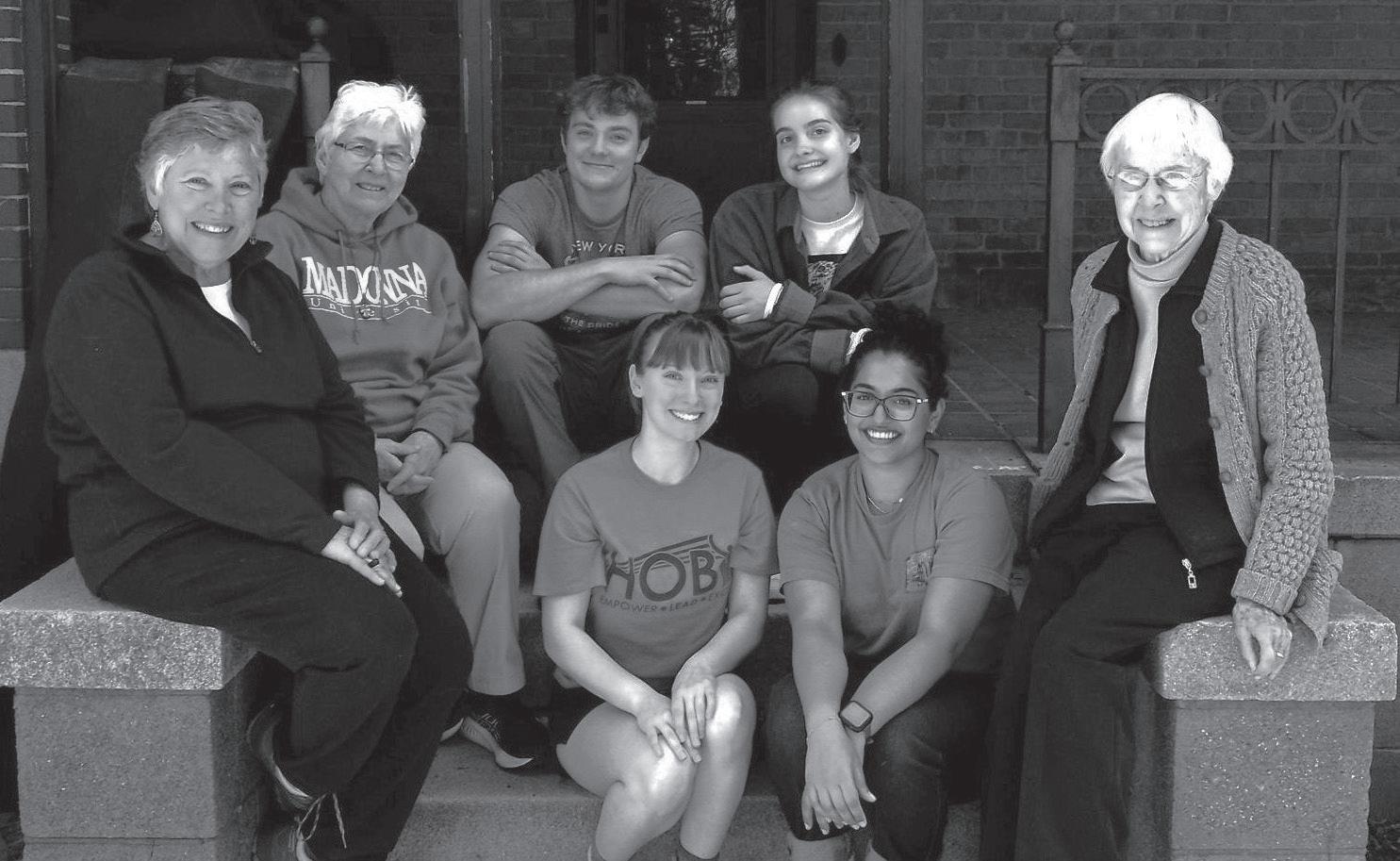
youth and young adults the opportunity to work directly with one of their ministries to serve those who are poor and on the margins, while living in community, sharing prayer, meals, and their best selves.
LATELY, I HAVE BEEN THINKING a lot about Mary’s yes to being the Mother of God. Mary’s yes was not a one-time event, but rather a yes to a way of being, and a way of loving, with a radical openness to God’s invitation to be a God-bearer. That is the spirit we have adopted in our way of living in community. Begin with a yes, and God will provide for the next best step.
We have been saying yes together since 1996, when we began the SSJ Volunteer Corps. Its initial purpose was to offer youth and young adults the opportunity to work directly with one of our ministries to serve those who are poor and on the margins, while living in our community, sharing prayer, meals, and their best selves. Each evening, they were asked to reflect on their experience of ministry and how it affected their lives, all the while exploring how God is shaping them and their yes to their life’s call.
As a community, we strive to pay attention to the signs of the times, so in 2009, we expanded our mission from hosting weeklong groups to partnering with the Notre Dame Mission Volunteers to welcome yearlong AmeriCorps volunteers who were interested in living in an intentional community while doing a year of service at one of our SSJ ministry sites.
By Sister Donna Del Santo, S.S.J.
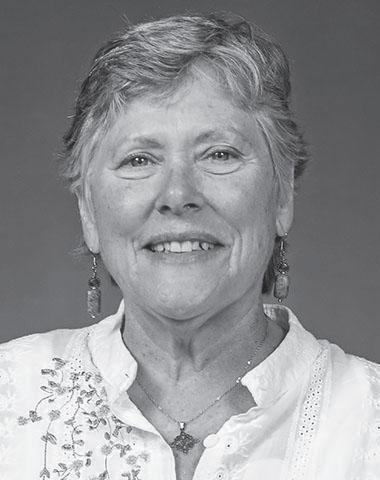
Sister Donna Del Santo, S.S.J., has been a Sister of St. Joseph of Rochester since 1992 and has been the coordinator of the SSJ Volunteer Corps since 1996. She is her congregation’s Director of Vocations and the Campus Minister for Discernment and Vocation at Nazareth University’s Center for Spirituality.
Since we began, we have been blessed to welcome over 1,000 youth and young adults who live with us from one week to a year to serve our dear neighbor.
Around 2018, my local community and I recognized that our area campuses were offering food cupboards to their students. So, we asked, “What is happening to students that they should be experiencing food insecurity, and are they also experiencing housing insecurity?”
This question led us to reach out to area campus ministers and discover that students were indeed suffering both food and housing insecurity. As a community, we offered students in need of housing on these campuses the opportunity for affordable communal living, if they were also willing to live in an intentional community with us. We soon discovered that many of these young adults were seekers and wondered how we might offer an environment to help them explore their spiritual lives and provide the support they need. We were also surprised by how they affected us as religious. Another yes.
You may be wondering how this all works. How do we discern if they would be a good fit for us, and we for them? Usually, somebody knows somebody and suggests they reach out to us. As a vocation director, I spend time on a variety of campuses and am usually the first contact. Our process is simple. We invite the interested person to our community for dinner. We learn about them, what led them to us, and what their understanding of our life in community is like. Then, we share how we actually live in community.
and be one with Mother Nature? We recognize our firstworld privilege in light of extreme poverty and lack of basic needs, safety, etc., for millions around the world, including our own neighborhood.
We enjoy a weekly community night which includes a meal followed by a longer evening of prayer, which we call “State of the Heart”. Here we share our experience of God throughout the week, which can come in many forms of experiences of compassion, service, self-discovery, and more.
In saying yes to opening our doors to young people, we are also changed, challenged, and inspired as religious.
As sisters, we recognize that we are not the only ones to say yes to this experience; the young adults who live with us also say yes. Yes, to share life with others, through prayer, meals, and daily living. And yes, to being open to being surprised and changed by the experience. Granted, not everyone who comes through our door is inspired to join religious life. But for many young people, this is a once-in-a-lifetime opportunity to come closer to Christ and explore their spirituality in deeper ways. Ultimately, we’re all called by God, whether it’s to religious life, marriage, or single life. In saying yes to opening our doors to young people, we are also changed, challenged, and inspired as religious. I recently invited some of our young women and men who have lived with us for eight months or more to reflect on their experience of living in community with us. Perhaps their reflections will inspire you to consider saying yes to this experience.
Today, our community consists of three Sisters of St. Joseph, and each year we invite up to three or four young adults to live in community with us. Some may have had a religious tradition, while some are “nones,” yet all have found a welcoming home while living in our community. We share meals, cooking, prayer, and the responsibility to make sure everything happens. The house is big, so instead of “quartering the city” as our first sisters did in France in 1650, we literally “quarter the house” to divide the responsibility of caring for the house.
We ask each young adult for $300/month for room and board, and in exchange, they have their own room, wi-fi, laundry, and, of course, healthy meals. We attempt to live simply and are socially conscious, one with our local neighborhood and our global community. For example, we consider how we use things like water and heat. We ask ourselves: how do we compost, recycle,
Akua lived with us 11 years ago while serving with AmeriCorps. She joined us, hoping to contribute to our community and grow personally, and found what she was looking for. What surprised her most was how deeply community life offered growth and challenge. Living intentionally with others, sharing meals, prayer, and personal development was a beautiful and stretching experience as she often felt torn between the quiet she needed to recharge and study, and her genuine desire to fully participate and show up for others. What helped her most was open communication and feeling free to ask for space when needed. She also learned to value a rhythm that allowed for ebb and flow rather than trying to perform “perfect community life.”
This time profoundly shaped the way she approaches her faith and what it means to love others as our Lord
Jesus Christ does, through service and intentionality. Especially now, in the wake of being laid off from her job and the uncertainty that followed, she finds herself leaning on the lessons she gained during that season: the strength of community support in hard times, the grounding power of faith, the ability to sit with uncertainty, and the deep belief that something meaningful can still unfold, even in the wilderness.
One thing we have discovered as sisters is that our community life is more alive and intentional when we live with young adults such as Akua. They are always watching and learning from us, and make me wonder: how often do we have the same level of vigilance and intentionality for each other as sisters? In addition, our young guests offer us an experience of generativity that is not all that common in our religious communities, as it was 40 or 50 years ago. Together, we can raise the bar for each other when living together in an intergenerational community.
Kelly lived with us from 2015 to 2016 as an AmeriCorps volunteer and is presently a physician at Yale University. Even though he only spent one year living in community with us, it was one of the most formative times in his life. He developed bonds he didn’t think were possible, which broke down barriers of age, gender, and vocation. Here, he was challenged to see that there is more to life than his career as a physician; that we are on this life journey as neighbors, all striving to do the best we can in a life that is full of mystery and suffering.
Morning prayer connected him more to God and the community. Every day, it was led by a different person, allowing him to see how others connected to God, whether through music, prayer apps, scripture, poems, silence, or a mixture. This led him to discover different ways to communicate with God. He especially cherished our weekly “State of the Heart,” where we would each reflect on our experiences of the previous week and share what it meant to us. He admired the sheer honesty, even if it meant admitting a part of ourselves we hoped to change or an injustice we couldn’t be blind to. During these moments, he always felt that he learned more about his community and saw that he wasn’t alone in his feelings and experiences of God.
Living in community made love a bigger focus in his life than a career, and he cared less about being right and more about learning about others’ experiences. More
than seeing God in everyone, he could see himself in others, too. He learned that the journey truly is the vocation, being less fixated on endpoints, like his work as a physician. He discovered that his vocation is really a way of being rather than who he wants to become. It’s about listening in silence and opening your heart to others.
When I step back and absorb Kelly’s reflection, I see how the hand of God has guided our lives as Sisters of St. Joseph shared in community. It also extends to Kelly, who he is becoming, and how he serves and cares for his patients, and ultimately, how he impacts the greater world.
Maisie lived with us 2015-16 as an AmeriCorps volunteer and is now a physician at a federally funded health clinic and mentor to medical students at Yale University. She learned so much about herself and cultivated the values she holds most dear, including advocating for the underserved and marginalized by society. As an AmeriCorps volunteer, she worked at St. Joseph’s Neighborhood Center, a healthcare center that served the

uninsured or underinsured, working side by side with physicians, nurses, volunteers, and community advocates who were committed to the same mission of “serving the dear neighbor.”
She soon discovered the great value of intergenerational living and was surprised by how much she had in common, especially on issues of social justice. She appreciated that we were able to support and listen to one another, especially during our Monday evening “State of the Heart.” If she was struggling with something, she felt that the community she lived with had the wisdom to help her through it.
One valuable reflection she learned was to “love the questions.” Our current society, especially in professional workspaces, often asks her to reflect on long-term plans. But many feel great uncertainty in these challenging times, and reflection can feel scary or upsetting. Even if we don’t come to a perfect answer, we start to ascertain our values and passions through the process of reflection. Holding on to these lessons has helped her remember that uncertainty can be an opportunity for growth and reflection. The SSJs helped her see the beauty and connection that can exist in a faith community, and she saw the heart of Jesus in caring for the most marginalized people.
She was also fortunate to work with Kelly, a fellow AmeriCorps member with whom she continued to foster a friendship and ultimately married two years ago. Find-
ing her life partner, particularly someone grounded in the same social justice and faith principles she holds, is a true blessing.
As a vocation director since 2003, I have long embraced the concept of creating a culture of vocation, where we recognize that all people are called by God for a purpose and to express God’s love in the world, and where it is easy to ask, “What is God’s dream for me and what does the world need from me?”
I love the quote from Howard Thurman, a wonderful tool for life’s discernment: “Don’t ask what the world needs. Ask what makes you come alive and go do it. Because what the world needs is people who have come alive.”
In some ways, this has been part of our mission in living with young adults, to help them see that they are called to something greater than themselves and that they are made to come alive in doing so. Whether it be to live as a vowed religious or as a married couple like Kelly and Maisie, one’s vocation can take on many manifestations.
Maria lived with us in 2020-21 and is now in law school. The experience of living in community exceeded her expectations. She can be shy around new people and was surprised at how quickly she felt comfortable with the community members. The love that radiated in our home made opening up to new people effortless.
Because of her time living in community with us, she was inspired to make a direct impact on people’s lives and guided to become more aware of the issues that marginalized members of the Rochester, New York community face. As a result, she left a private law firm for a nonprofit legal aid organization a few months after she moved out of community. She has felt much more fulfilled since making this career move.
She also felt extremely close to God during her time living in community. The routine, living simply, living with others, and shared prayer and responsibilities were a perfect recipe for feeling God’s love. This is because she was living intentionally and not “on autopilot.”
As a result of living in community, she grew in compassion and patience and became a better advocate for the Rochester community. She is now on a path to law school to better serve those in need.
Perhaps one of the strongest and most central elements of our life together is prayer, our prayer as individuals and our prayer as a community. It is a time to get to know each
Santo | Saying Yes
other and build our relationships with each other, where prayer is expressed in many varied ways.
The Sisters of Saint Joseph were founded in 1650 in Le Puy, France, by a Jesuit, Jean-Pierre Médaille, SJ, and formed in Ignatian spirituality, regularly practicing the “State of the Heart,” a form of the Ignatian Examen. Sisters would go out daily to serve the “dear neighbor” and, in the words of Médaille, “… undertake all the spiritual and corporal works of mercy of which women are capable.”
While serving the neighbor, the sisters were aware of how God was active in and throughout their day. Each evening, as they made LePuy lace to support themselves and their ministries, they would share the state of their hearts, of where and how they experienced God in their day. 375 years later, we continue this practice weekly and share it with all our community members, so they have practice in seeing and knowing God’s presence in their lives, in whatever way they serve the “dear neighbor”.
To help our young adults adjust to both Morning Prayer and State of the Heart, I created “cheat sheets” so they could follow along and fully participate until outlines were no longer needed. Having our young adults participate and eventually lead our prayer time is such a beautiful expression of who they each are, as they put their own spin on prayer, and a great gift to the spiritual growth of our community.
Eleesa lived with us 2024-25 as a grad student. She now works in Minnesota as a packaging engineer. “I live with sisters” is not a phrase she ever imagined herself saying. She entered this experience without any specific expectations, but carried a hope to deepen her faith. Looking back, she can say with confidence that her hope was fulfilled and far exceeded.
Living in this community, she encountered God in both profound and everyday ways—directly through our daily prayers, and indirectly through the love and presence of everyone in the house. She had never easily formed attachments to people or places, but in eight months, this community became her family. She was surprised by how deeply she was transformed by the love of people who were once complete strangers, and living in community turned out to be the best experience of her life.
She gained patience and gentleness, especially in navigating differences and learning to live in harmony with people from diverse backgrounds and perspectives. These qualities weren’t just taught—they were modeled
by her peers and the sisters in countless quiet moments. She still carries these lessons into her work, relationships, and spiritual journey. They remind her to lead with compassion, to seek balance, and to stay rooted in community. Most of all, they’ve shaped how she defines growth— not as constant achievement, but as quiet transformation through love, service, and grace.
As I reflect on the last 30 years and all the lives we have been blessed to share community with, I recognize the life-changing effects of that little three-letter word: YES. Perhaps, it is the most powerful word in our individual and collective vocabulary. It is not simply a guide, but rather a witness to active, inclusive love, and a way of living with our hearts and spirits open to God’s presence and invitation to our next adventure of discipleship. It is this act of humble, radical acceptance, YES, which is essential to becoming God Bearers—just like Mary! n
Religious community leaders must creatively rethink and reimagine vocation and initial formation ministry to welcome younger, newer members.
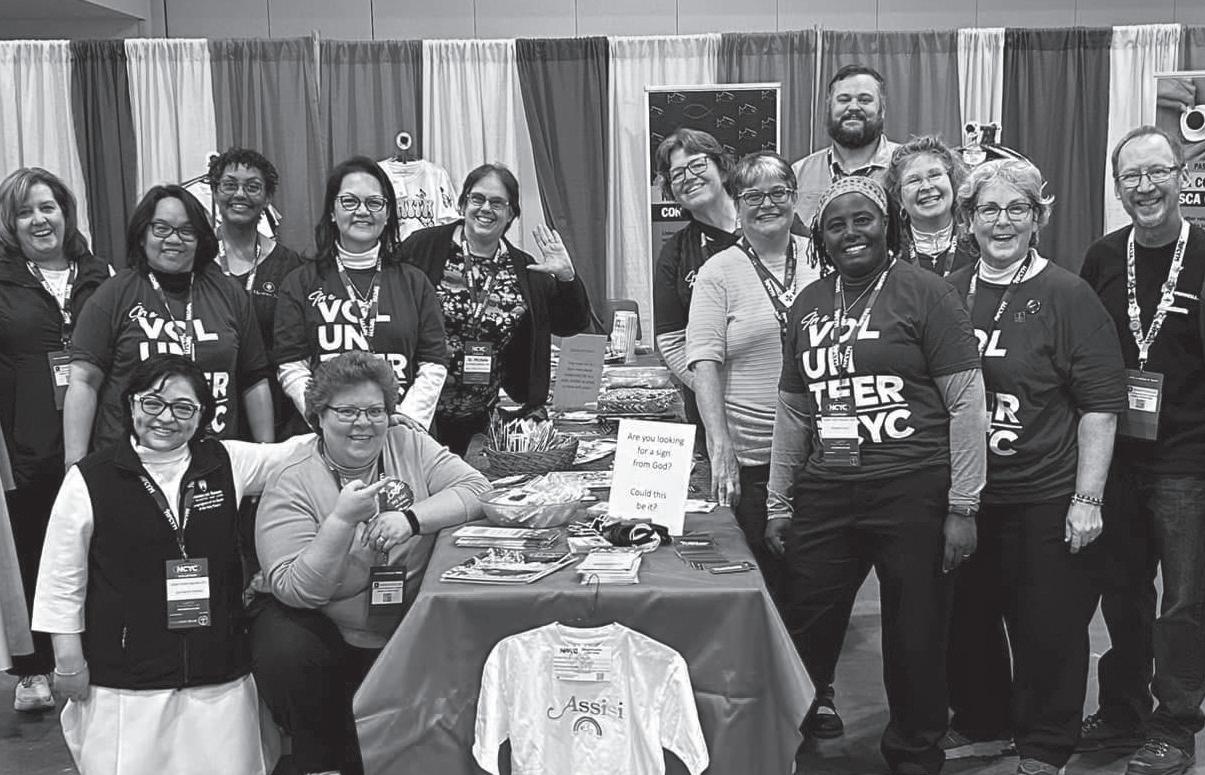
Various NRVC member institutes promoted vocations at the recent National Catholic Youth Conference in Indianapolis. Many youth are called to enter a deeper relationship with Christ. As leaders, we must view this desire as one of the needs of our time. Photo courtesy of the NRVC.
By Sister Sheena George, CSJP
Sister Sheena George, CSJP, is currently living in Jersey City, New Jersey, in an intentional intercultural community with two other Sisters of St. Joseph of Peace. She is also a councilor for her congregation’s leadership team and liaison for formation and international inquiries.
IN THE VERY FIRST SUNDAY address of his papacy, Pope Leo XIV encouraged young people to embrace their callings and trust God’s plan for them. He stood on the balcony of St. Peter’s Basilica in May 2025, and, looking away from his prepared text, he told them, “Be not afraid! Welcome the call of the church and of Christ the Lord.”
It was World Day of Prayer for Vocations, and Pope Leo continued, extending the invitation to all of us, saying, “Let us take up the invitation that Pope Francis left us in his message for today: the invitation to welcome and accompany young people…. It is important that young men and women find welcome, listening, and encouragement in their vocational journey within our communities, and they can rely on credible models of generous dedication to God and their brothers and sisters.”
At this moment in religious life, Pope Leo XIV’s words are both an invitation and a challenge for the leaders of religious communities. They reflect a pressing need as young people search for a more reliable and mean-
ingful faith to navigate their complex lives. Many young adults lack a sense of meaning, purpose, and direction, which significantly impacts their overall well-being. Additionally, many spend considerable time on social media, subject to the negative effects of social comparison. The pressure from society to meet specific goals and expectations plays a significant role in their lives, often leaving them unsure of their life purpose and yearning for individuals who can guide them on their spiritual journeys. They seek those who can listen to them with a non-judgmental attitude as they question and explore their identity while searching for belonging, community, and opportunities for their gifts to flourish for the betterment of the world. In this quest, some come to recognize and discern that what they truly desire is to give themselves in love to God in religious life, where their gifts can thrive for the good of the world.
Sister Liz Dodd, CSJP, a newly vowed member, reflected on her call to religious life, emphasizing that, at its core, religious life centers around a relationship with God. She shared that there is something essential and countercultural about our religious life. By letting go of hyper-capitalist independence—salaries, property, a career ladder—we create something greater than the
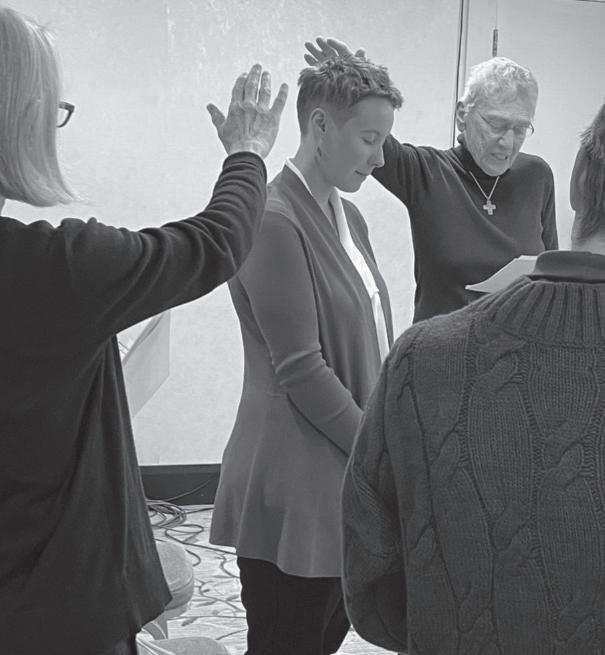
sum of its parts. This relationship with Christ compels individuals to follow him to the margins. Like Liz, many women and men are called to enter a deeper relationship with Christ and follow him to the margins of society and the world by walking with the poor and the outcast. They desire to be part of a community whose way of life involves a profound relationship with Christ and recognizes the value of human life and dignity in everyone. We, as leaders, are compelled to view this desire as one of the needs of our time, and we have a responsibility to nurture this call and help it flourish.
The challenge and invitation to journey with young people reaches religious communities at a particularly difficult time. Most men’s and women’s communities in the United States are undergoing a paradigm shift. Religious communities are not only becoming smaller in number, but many congregations of women religious have an average age of sisters of 80 or older. The physical energy and capacity to engage with the younger generation have diminished among these older members.
Leaders are faced with the challenge of valuing the needs of our aging members, properties, sponsored ministries, governance, and structures while also committing to establishing a vision for the future and supporting the young people who wish to continue the path of consecrated life.
Another significant challenge that leaders must consider and understand in welcoming vocations to religious life is creating intercultural communities that embrace members from diverse cultures. We live in a globalized world where many young people belong to two or more cultures and often feel they do not fit into any specific culture. Existing between cultures can leave them feeling lost and invisible. Currently, many of our communities do not comprehend hybrid cultural identities, and we are called to transform by being open to welcoming and engaging in an intercultural experience that enables us to embrace new members while helping them explore their cultural identities.
In addition to these challenges, the generation gap in most religious communities spans as many as five generations. Each generation differs significantly in experience, background, expectations, and approaches to ministry and religious life. Many older members of our communities find themselves in a transitional middle space, creating something new. Those exploring and entering religious life are not in this middle space. For them, the familiar is not in decline; they are already embracing the
new and are ready for the prophetic journey. Amid these challenges, religious community leaders must creatively rethink and reimagine vocation and initial formation ministry to welcome younger, newer members into a culture that embraces interculturality, intercongregational, intergenerational, and—in many cases—international collaboration.
Melinda French Gates, in her book The Next Day: Transitions, Change and Moving Forward, and in her address to the graduating class of 2024 at Stanford’s 133rd Commencement ceremony, shares a teaching by the spiritual leader Ram Dass about two waves—one big, one small— rapidly approaching the shore. The big wave, devastated that the end is near, insists, “We’re done for.” The smaller wave remains calm and assures the bigger wave that they are not because, “You’re not a wave. You’re water.” Her story captures what it is like to experience an enormous transition in religious life without losing the core of who we are. Gates urges us to be excited about new possibilities and to be open to new paths. “Remember that once the wave learns to call itself by a different name—once it realizes it is not just a wave, but it is water—it becomes free to take on new forms.”
That analogy is apt for the transition we are experiencing in religious life. We are challenged to learn to look at vocation and formation ministry in a new way without losing the core of who we are. We are not one small wave about to crash into the shore and disappear; rather, we are part of a larger body in transformation, and in that transformation, we remain true to our call to religious life, to our charisms that are needed in our hurting world, now more than ever.
emphasize and prioritize vocation formation ministry as one of the pressing needs of our time, and we must face the challenges collectively. Finally, Melinda French Gates urges us to cultivate trust. While this is challenging, Gates says such a high aspiration is a worthy goal. “We need each other. No matter who you are, there will be moments in your journey when you need to be carried, or when someone else will need you to help carry them.”
These approaches are collaborative, allowing us to meet our current challenges with a mindset of abundance, not scarcity, and to face these challenges together, not as individual sisters or congregations alone and without support.
Consecrated life has undergone various transitions throughout the history of the church. From the desert Fathers and Mothers to Francis of Assisi’s call to rebuild the church, religious life has experienced many evolutionary journeys. The renewal of religious life following the Second Vatican Council resonates today. The journey we are currently on is a precious one. In this transitional phase, some congregations will reach historical completion in navigating changes due to their sharply declining numbers. We must accept this historic completion of some communities as part of the journey. However, this does not mean that consecrated life will end or that every community is destined for completion.
We must safeguard ourselves from the temptation of seeing things solely in terms of numbers and efficiency, and even less, to rely on our own strength.
Gates shares three lessons from her experiences with transitions that we could adapt in our approach to vocation formation ministry. First, she emphasizes approaching change with “radical openheartedness.” Her invitation is to embrace the uncertainty of the present and leave room for change. Secondly, she encourages us to find our “small wave” by seeking the help and wisdom of others and then reciprocating that support. We cannot approach vocation formation ministry using the old model. We need each other’s wisdom to envision and reseed vocation and initial formation. We must continue to
When leaders examine the reality of demographics, resources, and our ability to nurture vocations and invite new members into religious communities, it can feel a bit overwhelming. However, as Pope Francis reminded religious during the 2014 Year of Consecrated Life, our hope for the future is not based on our achievements and abilities but on a God of possibilities. Francis urged us to look to the past with gratitude, live the present with passion, and embrace the future with hope. “This hope is not based on statistics or accomplishments, but on the One in whom we have put our trust (cf. 2 Tim 1:2), the One for whom ‘nothing is impossible’ (Lk 1:37).
This is the hope that does not disappoint; it is the hope that enables consecrated life to continue writing its great history well into the future. It is toward that future that we must always look, aware that the Holy Spirit
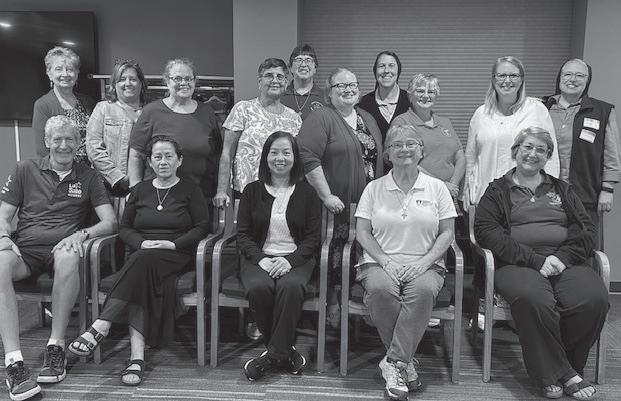
spurs us on so that God can still do great things with us.
Taking the invitations of both Francis and Leo seriously, we, as leaders, must trust that the call to consecrated life comes from God, for with God, nothing is impossible. Leaders need to be open-hearted and responsive to the leading of the Spirit and have a responsibility to encourage our members to journey alongside young people. We need to invest our financial and human resources in journeying with the young. It is our duty to bring hope to our broken world by journeying with newer members and inviting men and women to join our religious communities.
§§§§
We must safeguard ourselves from the temptation of seeing things solely in terms of numbers and efficiency, and even less, to rely on our own strength. We must listen to the warning that Pope Francis gave us, a caution that as we scan the horizons of our lives and the present
moment, we should be vigilant and avoid joining the prophets of doom who proclaim the end of or the meaninglessness of consecrated life in the church in our day. Rather, we should clothe ourselves in Jesus Christ and put on the armor of light.
In the words of Sister Susan Francois, CSJP, “We are inspired by the stories that God started in our founders and that continue to be written today. We know that God is still writing that story, and lucky us, spurred on by the Holy Spirit, we have the opportunity and obligation to co-create that future full of hope for all God’s people in need.”
And so, in our vocation ministry, as Sister Teresa Maya, CCVI told the Leadership Conference of Women Religious in her 2018 presidential address: “We will become lighter and itinerant, we will be fewer. However, we will be enough; we are enough; we will be what God needs today. We will bring with us our call to community and our stubborn conviction that Christ’s suffering in God’s people requires our response.” n

Your vow of poverty said autumn must be patience patient as the slow drop of a leaf patient as winter’s slow silence breathing into spring like you the tree gives up nothing when in a golden dying and its scarlet last sigh of what was green is gifted into the sacred space around it shorter days allow nights to linger a bit longer then turning on time’s equinox announces the slow rebirth of light how patient the earth turns and turns again everything in its own time like you waiting
IN HIS PREFACE to this 2025 release of A White Catholic’s Guide to Racism and White Privilege, the author, theologian Dan Horan, shares a narrative that reveals much about the state of racial injustice in the U.S. Catholic Church. In these opening pages, he explains how a book written in the aftermath of George Floyd’s spring 2020 murder was, within two years, abruptly pulled from the catalogue, abandoned to the power of the subject of the text—white privilege. Horan implies that he predicted this outcome. He recognized that a text about social justice released under an imprint that hewed more toward the pastoral and spiritual might not be a good fit.
Happily, Orbis Books was eager to take up the challenge. It is to them that the U.S. Catholic Church owes deep gratitude for making available this challenging and necessary work of love and social justice once again.
Even for someone who for decades has been reading texts on racism, privilege, and white supremacy, and participating actively in the humbling, challenging work of antiracism, the book is a revelation. In the first four chapters the author succinctly defines racism, answers oft-heard objections to its existence, helps white folk (among whom I am counted) understand our whiteness, provides tools to understand the systemic and structural nature of racial injustice—something sorely lacking from the experience of most of us—and calls us to recognize racism and white supremacy as wounds that will never heal without the commitment of white people.
By Sister Beth Murphy, OP
Readers benefit greatly from the fruitful friendship between the author and Father Bryan Massingale, whose writing shapes the author’s insight into the challenges of racism within the Catholic milieu. Horan draws deeply on many prophetic texts and talks through which Massingale, an African-American priest of the Milwaukee Archdiocese, has struggled to clarify for his white coreligionists what no U.S. Bishops’ document has been able to express.
Horan articulates the difference between what Massingale calls “common sense” racism—what I think of as personal racial prejudice—and the deeply embedded, historic, largely invisible (to some white people) systemic, structural racial injustice that has burdened white colonialist Americans for 400 years. I can imagine this is of great help to the intended audience for the book—white Catholics in a parochial setting—because without understanding this difference, there is no way to understand the hydra of racism in our nation.
The book is divided into two sections. The first four chapters, designed to bring a white Catholic audience up to speed on the topic, are a primer for approaching chapter five, “What does the Catholic Church Teach about Racism?”
it prevents the need to see deeply into racism’s historic and social causes, which are uncomfortable for many people to see and acknowledge. But without understanding and working to dismantle the structures of racism, nothing will change.
Without understanding and working to dismantle the structures of racism, nothing will change.
Here, Horan is clear—and charitable—about the implications of the U.S. Catholic bishops’ inability, or unwillingness, to be brave in calling white Catholics to account. He makes this need clear with a concise review of papal documents and a summary of documents on racism produced by the bishops of India, South Africa, and the United Kingdom. Next, he parses the texts on race by the United States Conference of Catholic Bishops. “Whether intended or not,” Horan notes of the bishops’ 2018 document on racism, Open Wide our Hearts, “this document does not adequately challenge white Catholics to consider their role in a systemically racist society and Church.”
The chapter reminded me yet again just how deeply embedded the U.S. Catholic Church is in our social and historical context, and how complicit we have been and continue to be in propping up the racist structures in our nation. What might happen if white Catholics were to at last acknowledge and bravely counter racism using the tools provided by Horan in the final two chapters of his book? It gives one reason to hope.
I am familiar with the desire of many people, including many people of color, to “make nice” in the attempt to dismantle racism. This approach is appealing because
This book is useful, practical, and challenging for its intended audience and context. But can it also be useful to the vocation director? I am aware that not all vocation ministers working for U.S. religious institutes are white, nor are they all native born. The book is still vital for every vocation minister’s bookshelf or bedside table. I humbly recommend that the vocation ministers who use this book spend some time discerning their own social locations, and equally important—that of those they serve—before cracking the cover of the book. For example, journal what you think you know and understand about racism right now. Where would you place yourself and your congregation or province on a continuum of knowledge, experience, and activism? What experiences have formed your understanding? What do you expect to learn on first reading?
I suggest jotting down your responses to questions like these before you begin reading, then returning to them later. Think about what you know of the social location of the women or men you accompany as a vocation director. What are the demographics of the people who make initial contact with your congregation? Are they more like or unlike you? Are they native-born U.S. citizens? Immigrants from Latin America, Asia, or Africa? What would their experience of racism and white privilege look like? How will the discernment process, and later the formation processes for these particular men and women, need to be shaped in light of what you are learning about racism and white privilege?
My second suggestion is that this text be paired with others on the question of interculturality. If our work is to be truly transformative, it requires us to live into the theological construct of interculturality as a prophetic antidote to racism.
§§§§
When the reader understands the author’s intent for the book and can adapt it to their own context and needs, it can be a helpful tool to support our vowed commitment to living truly prophetic lives to the benefit of our church and the world. n
7101 W Picture Rocks Rd, Tucson, AZ 85743 USA
Phone: 520 744 3400 ~ Email: office@desertrenewal org ~ www desertrenewal org
2026
March 1 - May 8
July 19 - August 21
October 4 - December 11

2027
March 7 - May 14
July 18 - August 26
October 3 - December 10
The demands and expectations of full -time ministry are both rewarding and fulfilling; however, it is important to take time to rest & renew. Envision a sabbatical filled with silence. The emphasis of the Contemplative Study and Retreat Sabbatical is on spirituality, specifically spirituality that is anchored in a contemplative attitude & approach towards life. The atmosphere provided by the Sonoran Desert is essential to the experience. The desert, if we allow it to serve as a metaphor for our spiritual journey, can provide unique access to God. We believe that the desert experience is an important part of what makes the Contemplative Study and Retreat Sabbatical opportunity unique.