The Gallery is committed to reducing our environmental impact. This magazine is fully recyclable and has been produced by a certified carbon balanced printer. Their Partnership with the World Land Trust is helping to preserve and protect carbon rich habitats around the world.
As we move into spring, the new National Portrait Gallery continues to attract many new and returning visitors. I am pleased to introduce this latest edition of Face to Face, which shares details of our forthcoming exhibitions as well as insights from across the Gallery.
In June, we are proud to stage a new exhibition looking at the six wives of Henry VIII. Our Tudor galleries are a perennial favourite for visitors from across the globe and I am always delighted to see people admiring this important chapter in our Collection. Dr Charlotte Bolland, Senior Curator, Research and 16th-Century Collections, has brought her years of study to the fore with an intimate look at the public perception and private lives of these often-misinterpreted women. Six Lives: The Stories of Henry VIII’s Queens will run until 8 September.
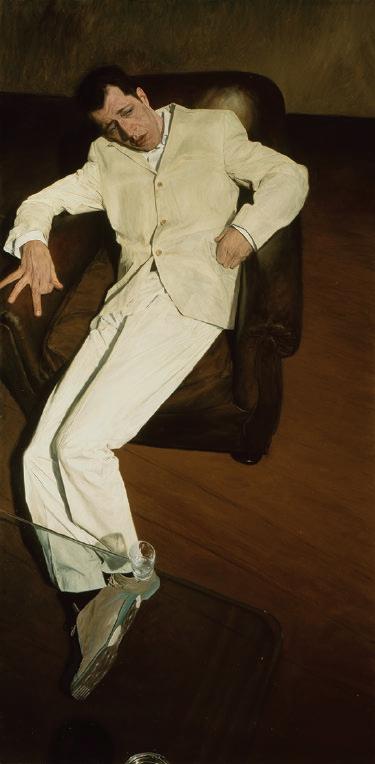
This summer also sees the return of the ever-popular Portrait Award with new sponsor Herbert Smith Freehills. The exhibition will feature 50 paintings by contemporary portrait artists. I was delighted to be involved in the shortlisting for the Award and look forward to the announcement of the winners on 9 July.
In this issue, we have asked Paul Cox, Curator of our Reference Collection, to share some of the exciting work he has done in recent years on the Byron Screen, which is on display in Room 11. The screen was owned by the poet Lord Byron and purchased from his estate by the forebears of the current owner, John Murray, who has kindly loaned us the work. It is a fascinating object and demonstrates the excitement around printmaking in the early 19th century. A great variety of printed portraits are included in
the screen and Paul has completed some fascinating work to identify each sitter.
We also asked the author and former Trustee Flora Fraser to share some of her personal history with the Gallery. Her grandmother, the Countess of Longford, was also a Trustee in the 20th century and her portrait by the photographer Bassano hangs in our offices. We asked Flora to tell us what the Gallery means to her.
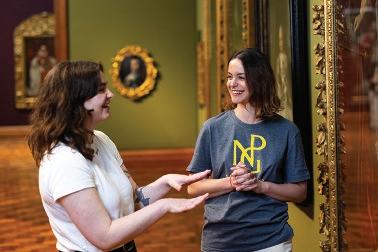
One of the great successes of the Inspiring People project was the launch of the volunteers’ scheme. If you have been to the Gallery recently you will see how important they are in supporting and helping our visitors. We asked Annie Reeve, Volunteer Development Manager, to talk about the success of the scheme. I have completed a number of stints in a volunteer’s jumper talking to visitors and it was a wonderful experience and I was very proud to be a member of the team, even for a short time.
Finally, we reached out to the broadcaster and journalist Martha Kearney, who presented the Gallery’s Close Encounters series on BBC Radio 4 just before we reopened. Martha’s discussions with a range of influential Britons were fascinating despite the challenges of working on an active construction site! She tells us about some of her favourite portraits and her connection to the Gallery.
As always, I am incredibly grateful for your ongoing support and would also like to take the opportunity to thank new Members for joining us. We look forward to welcoming you to the Gallery soon.
Dr Nicholas Cullinan OBE Director
My Favourite Portrait
by Martha Kearney Journalist and broadcaster
When Mohit Bakaya, the controller of BBC Radio 4, asked me to present a series behind the scenes at the National Portrait Gallery, I literally threw my arms round him and hugged him. Not totally professional, but I have loved the Gallery since I was a child and was taken there by my father, Hugh Kearney, an historian. Later, when I worked as a political journalist in Westminster, the airy restaurant was a perfect place to meet for lunch.
When we recorded Close Encounters, we took well-known people like Sir Tim BernersLee, Arlo Parks and Sir Paul Smith around the Gallery to discuss their favourite portrait to the noisy backdrop of last-minute work being done before the reopening. Many of the paintings and statues were shrouded by plastic wrappings and then, day by day, their glories were unveiled, including favourites like Seamus Heaney by Tai Shan Schierenberg or Dame Laura Knight’s self-portrait.
I got to know some paintings very well. ‘Turn right by Anna Neagle’ we would say, as her glamorous gold gown was a handy landmark.
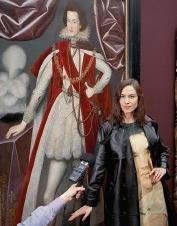
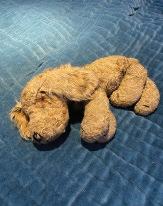
Our final recording was with Alexa Chung, the model and presenter. She had picked the Duke of Buckingham, the flamboyant lover of James I, whose painting shows off ‘the finest legs in Europe’ in bright doublet and hose. As Sadie Catt photographed her in striking angular poses – with my producer Tom Alban acting as hand model with the microphone – I wandered round the neighbouring room of Stuart portraits and stopped to read the label on one. It was Thomas Wentworth, the 1st Earl of Strafford. This statesman from the reign of Charles I was a household name for the Kearney family, as he was the subject of my father’s first book Strafford in Ireland. Dad dated the introduction for my first birthday and to celebrate, one of my uncles gave me a stuffed dog which we called Strafford (shown below). I still have him, though, rather like me, he’s a bit the worse for wear.
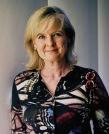
Martha Kearney is a highly regarded presenter and broadcaster. She currently presents the Today programme on BBC Radio 4 but will be leaving later this year to work on a new series called This Natural Life. Martha has also won the Sony Radio Bronze Award and has been nominated for a BAFTA for her coverage of the Northern Ireland peace process.
To listen to the complete series of Close Encounters visit npg.org.uk/collections/close-encounters/
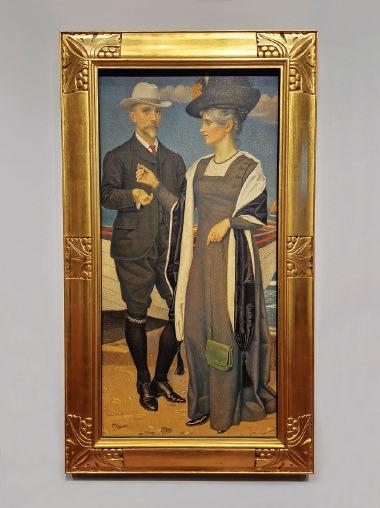
An important reframing project that I completed ahead of the Gallery’s reopening was for the self-portrait of the tempera artist Joseph Southall and his artist wife Elizabeth. Known as ‘The Agate’, the painting shows the couple on Southwold beach in Suffolk holding agate stones, commonly found in the area and traditionally used to make tools to burnish water gilding. It is believed that the original frame was separated from the painting in the 1960s and since acquiring the work in 2016,
we have wanted to reframe it in a more historically appropriate manner.
It is well documented that Joseph designed his own frames while Bessie (as his wife was known) undertook the gilding and burnishing. Together they were influenced by early Italian designs and techniques that complemented Southall’s delicate use of egg tempera. Through my research I discovered many original Southall frames held in collections across the UK and these examples proved invaluable when creating my design.
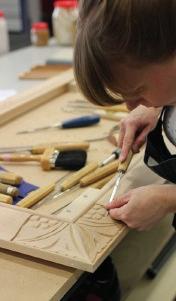
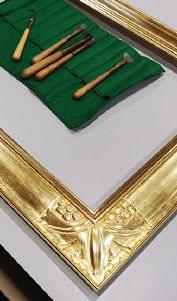
The frame has been constructed in lime wood and features carved acanthus leaves and berries, which give it a soft, natural feel.
I undertook the carving and gilding in the Gallery’s Frame Conservation Studio using traditional tools and materials. The design was drawn on to the frame and I used various gouges to ground it out. I then prepared the surface with size and several layers of gesso, which were sanded to a smooth finish. I applied a red clay bole and then gilded the frame using 23.5-carat gold leaf. I burnished the gilding using an agate burnisher to create a bright mirror shine and lightly toned the surface with parchment size and watercolours.
The painting now hangs in Room 19 of the Gallery in its new frame, which complements this striking but delicate portrait and honours both husband and wife’s exceptional skills and craftsmanship.
Above – Joseph Southall and Anna Elizabeth Southall by Joseph Edward Southall, 1911 (NPG 7020)
Right (from left) – Claire Irvine carving the new frame; burnishing the frame
A Georgian Visual Puzzle: the Challenge of
Cataloguing the Byron Screen
by Paul Cox Curator, Reference Collection
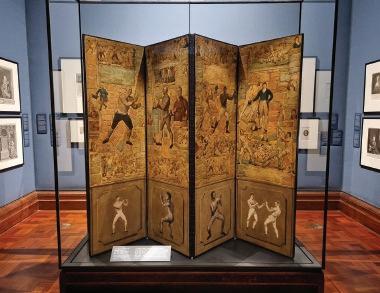
The decorated screen currently on loan from John Murray and once owned by the poet Lord Byron dominates the Gallery’s print room: Making an Impression: Prints, 1600–1840. It is an unusual object to encounter in the National Portrait Gallery, where most of the historical portraits are in traditional techniques such as painting, sculpture and photography. The screen, by contrast, is a piece of furniture – a room divider – created by pasting cut-out prints on to a framework of wood and canvas.
On one side of the screen, prints of prizefighters and boxing matches reflect Byron’s interest in the sport; on the other, theatrical scenes and portraits of actors point to his love of the theatre. Byron’s fencing teacher, Henry Angelo, who had friends in the theatrical world, made the screen, but it appears likely that Angelo’s friend
and business partner – and Byron’s boxing instructor – ‘Gentleman’ John Jackson helped with the boxing side.
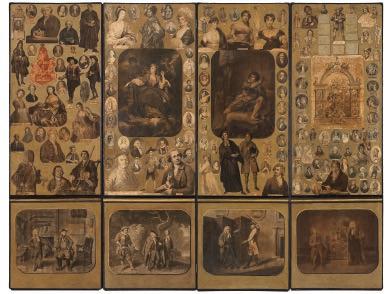
There are over 200 prints on the screen and, while printed inscriptions identify some, others have no accompanying text. Previous researchers had identified a selection of prints, but no one had attempted a systematic identification of every one. The task of cataloguing the screen and identifying the portraits was therefore a daunting one.
Cataloguing was done from photographs, initially from my snaps taken before the screen entered the Gallery and later from excellent images made during a session in the Gallery’s boardroom – the largest room available while the building was out of bounds during refurbishment. I worked on the theatre side and a freelance researcher, Máire MacNeill, worked on the boxers. Most of our work was done using online databases, my own starting point being the prints in the Gallery’s Reference Collection. Having catalogued many of them myself,
Above – Lord Byron’s Découpage Screen showing boxing side in situ in Room 11 (left) and composite image of theatre side (right), by Henry Angelo, probably by John Jackson, c.1814 (NPG L269) Lent by John Murray, 2022
I knew the best ways to find the most relevant material, but even so, my search results often numbered several hundred prints. Thankfully, one cannot remain a curator at the National Portrait Gallery for long without acquiring an ability to recognise faces. I was soon able to recall many of the portraits in the search results, particularly if the sitter had an unusual hairstyle or pose, and the work started to proceed more rapidly. The whole process took on the nature of a giant puzzle and, as much was done in late 2021 and early 2022, when it was often impossible to access the Gallery in the aftermath of the pandemic, it became a very pleasant and absorbing alternative task.
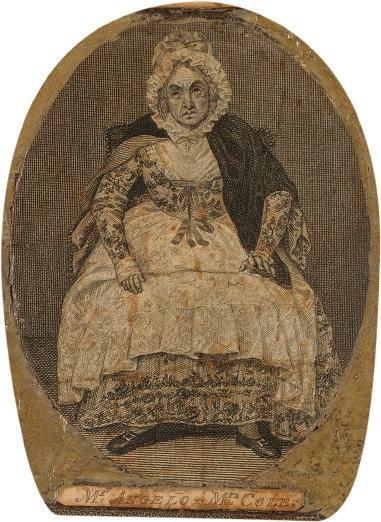
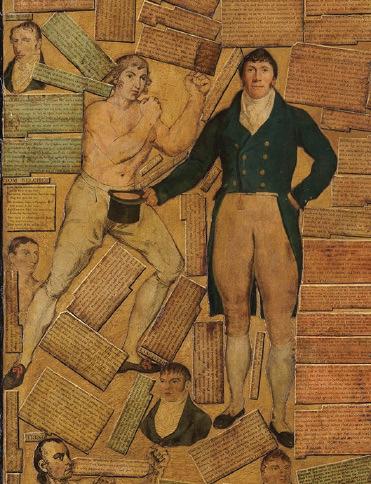
There are 210 separate prints on the screen, of which 15 remain unidentified; I hope, of course, that we will pin them all down one day. Of the selection, I was struck by the contrast between the print of Henry Angelo in drag as Mrs Cole, his only professional theatrical part, and the dashing fencer portrayed in Mather Brown’s portrait (NPG 5310, currently in Room 18). I was also tickled by the playful way in which the figure of John Jackson holds his hat over boxer Thomas Futrell’s groin. If my theory about Jackson’s role in the creation of the screen is correct, he may have been responsible for this visual joke himself. Finally, the screen reveals something of Byron’s own theatrical tastes. He was a great admirer of the actor Edmund Kean and attended his performances whenever he could. There are 14 prints of Kean on the screen – more than of any other individual – which suggests that its creators had Byron’s tastes foremost in their minds when making their selection.
Above right – Detail showing Henry Angelo in drag as Mrs Cole
Right – Detail showing John Jackson holding his hat in front of the boxer Thomas Futrell
From
Famous Childhoods to Little People, Big Dreams and Beyond at the NPG
by Flora Fraser Trustee, 1999–2008, and historical biographer
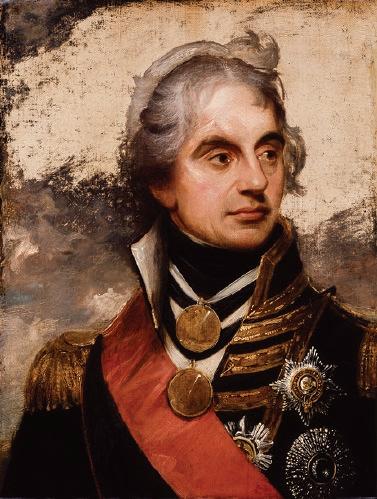
As a child I was a devotee of books in a series, Famous Childhoods, which were popular in the 1960s and included volumes on Robert the Bruce and Florence Nightingale. My favourite book of all in this juvenile library was The Young Nelson by Ronald Syme, himself a famous historian of ancient Rome. My martial spirit soared when viewing Madame Tussaud’s smoke-filled representation of the Admiral’s victory and death at Trafalgar in 1805. But it was the masterful head and shoulders of the naval officer in the National Portrait Gallery that gave me a face, all nerve and feeling, to attach to the legend.
Family outings to the NPG were a delight, given that I considered myself expert on
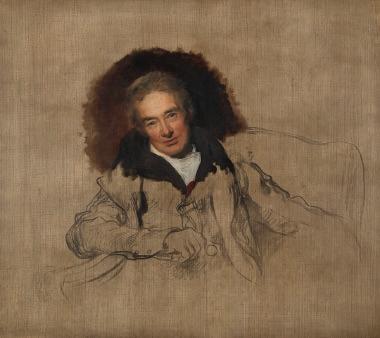
so many Famous Childhoods. Pictures of Elizabeth I, Elizabeth Fry, Lord Shaftesbury and Captain Cook all seized my attention. This interplay between word and image continued when I was in my teens. My liking for Holbein’s Thomas More and for Lawrence’s unfinished sketch of a benign Wilberforce in the Gallery led me on to read my first adult biographies. I watched, too, my late grandmother, Elizabeth Longford, and my mother, Antonia Fraser, biographers of Wellington and Cromwell, illustrate their books with copious NPG portraits.
Little People, Big Dreams is a library of books for younger children popular today. As in Famous Childhoods, the Little People are considered by the publisher to be inspirational or significant. Nelson and others have fallen from favour, but this new series includes Ada Lovelace, Charles Darwin and suffragist Emmeline Pankhurst. Heroes of our own time like Marcus Rashford, Malala Yousafzai and David Attenborough feature too. Computer-savvy children can
find images of all these personalities with a couple of clicks on the NPG website. The Gallery hopes that all visitors, senior and junior, will be led to an ‘appreciation and understanding of the people who have made and are making British history and culture.’
When I turned to writing historical biography as an adult, I happily communed with portraits of my 18th-century subjects at the NPG and researched in the Heinz Archive too. Only upon being appointed to the Board in 2009, however, did I appreciate the full breadth and depth of the Collection. Indeed, I experienced near sensory overload! My grandmother, a former Trustee, agreed that approving new commissions of those living –Phil Hale’s Thomas Adès is a special favourite of mine – was an immense responsibility. But thrilling!
Dedicated senior curators worked miracles, fundraising, during the two terms I served. William Parry’s important group portrait of Joseph Banks, Solander and Mai, or Omai, was acquired in an Anglo-Welsh partnership which presaged that of last year whereby the Gallery and the Getty jointly own Reynolds’s Mai. At the sensational Mario Testino show in 2002, when crowds gathered round his powerful photographs of the late Diana, Princess of Wales, it might have seemed that oil paintings and figurative art were dead. Last year, however, at the fabulous opening party for the renovated NPG, Reynolds’s Mai in tapa cloth with tattooed hands was the focus of all eyes. The wheel turns, and there is room for sitters, artists, and media of all kinds at the NPG.
Flora Fraser’s most recent book is ‘Pretty Young Rebel’: The Life of Flora Macdonald (Bloomsbury, 2022)
Top left – Horatio Nelson by Sir William Beechey, 1800 (NPG 5798)
Left – William Wilberforce by Sir Thomas Lawrence, 1828 (NPG 3)
Above – Thomas Joseph Edmund Adès by Phil Hale, 2002 (NPG 6619) Commissioned with help from the Jerwood Charitable Foundation through the Jerwood Portrait Commission, 2002
Six Queens Step into the Spotlight
by Charlotte Bolland Senior Curator, Research and 16th-Century Collections
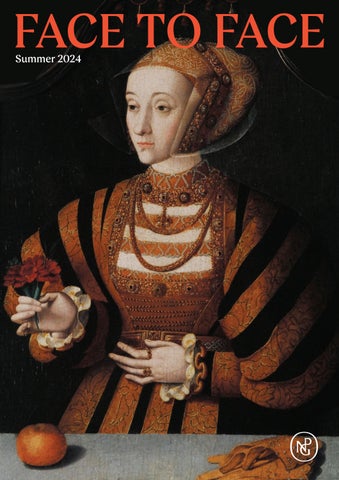
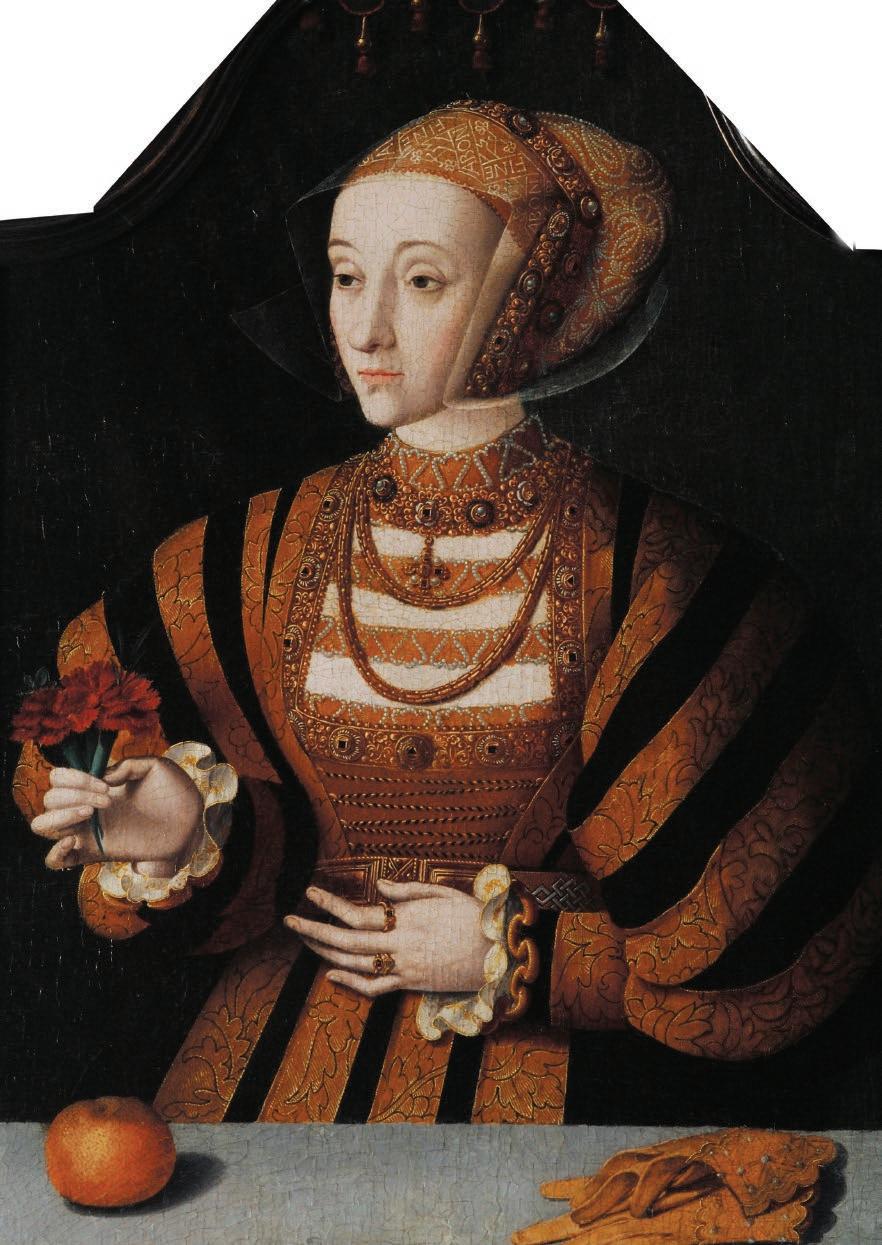
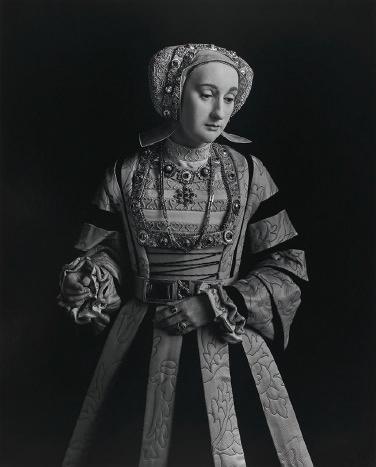
Dramatically lit and sumptuously dressed, Anne of Cleves is brought to life by Hiroshi Sugimoto’s lens. She reaches out to the viewer with her right hand but averts her gaze, momentarily interrupted and lost in thought. It is easy to believe that Anne has just stepped into a studio wearing her heavy cloth-of-gold gown and jewel-studded headdress, ready for her photograph to be taken. As the subject of one of the most famous portraits in history, she would certainly have been familiar with the process of submitting to an artist’s gaze. There is a palpable sense of an encounter with a three-dimensional human being, and this uncanny feeling is only enhanced by the fact that the viewer can readily recall fragments of Anne’s biography: the woman spurned on sight for not living up to her portrait, queen of England for barely six months and condemned to be remembered through the cruel description of a 17thcentury bishop as the ‘Flanders mare’.
In this portrait, Sugimoto has performed a trick of transubstantiation that allows the image seemingly to span time. His Anne is not flesh and blood but wax, an echo of a portrait that was sent to England nearly 500 years ago. In that original half-length image by Bartholomaeus Bruyn the Elder, Anne is surrounded by imagery associated with betrothal: she holds a carnation and a golden apple rests on the ledge in front of her, alongside a pair of delicate leather gloves. By contrast, the wax figure used to create this portrait stands in Madame Tussaud’s amidst a fraught tableau, posing alongside not only the man Anne would marry but also the five other women who shared the dubious privilege of being Henry VIII’s queen: Katherine of Aragon, Anne
Boleyn, Jane Seymour, Katherine Howard and Katherine Parr. Sugimoto made portraits of all of them, each spot-lit as an individual, bringing to mind not only our contemporary encounters with their stories on stage and screen, but also the fact that they themselves could never forget that they were performing on the court stage.
Six Lives: The Stories of Henry VIII’s Queens explores both these contexts – the historic and the contemporary – in order to consider the transformation of the queens over time, from individuals who each played a role in a fascinating period of English history, to a group of women defined by the way in which their marriages to the same man ended:
Divorced, Beheaded, Died
Divorced, Beheaded, Survived
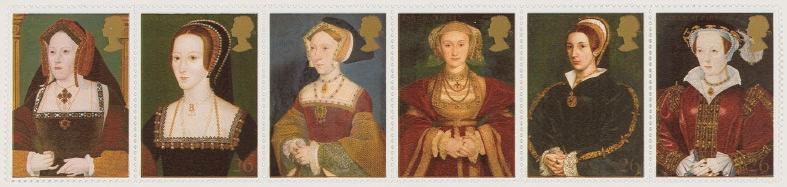
Portraiture has been key to this process. The six queens’ portraits were each created in distinct circumstances – for courtship, to celebrate kinship and status, and even for posthumous commemoration – and this is reflected in their composition, scale and materials. However, over time these images have been homogenised so that the queens could be visualised as a group. No such picture gallery ever existed in the 16th century, not even in Henry VIII’s collection, but today it can be found adorning the women’s group biographies, and countless novelty items and commemorative commissions that primarily celebrate their husband.
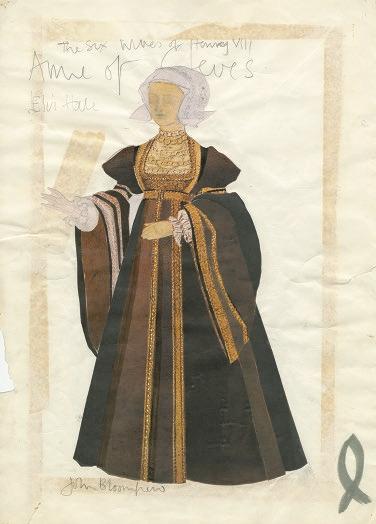
However, while portraits have undeniably been used to flatten the queens’ visual identity into a simplified group, they have also inspired the characterisation of the queens as individuals. This has been true in both fact and fiction, with historians, writers and playwrights reading biography and personality onto their faces. In addition, the portraits have frequently been brought to life by actors performing in costumes that were designed to ensure that the queens’ characters were instantly recognisable.
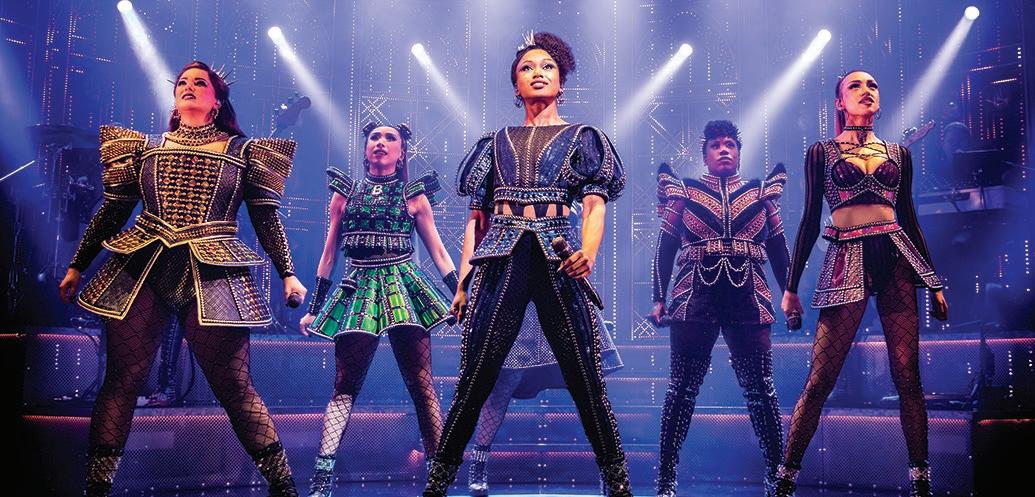
Given the richness of the narratives that have built up around them over the centuries, Six Lives: The Stories of Henry VIII’s Queens steps back through time to offer a series of encounters with the women. Starting with the performance of their stories on stage and screen, in productions ranging from the musical SIX (2020) and the BBC television series The Six Wives of Henry VIII (1970) to William Shakespeare and John Fletcher’s Henry VIII/All is True (1613), the exhibition goes on to explore the staging of the queens’ lives in their own time – in particular, their alignment with the exemplary stories of the women of classical antiquity and the Bible that were on constant display, in imagery that permeated every aspect of court life: chased in metal, painted on panels, woven into tapestries and illuminated in books. Finally, at its heart, the exhibition places the fascinating traces of the queens that survive amidst their letters and possessions – their choices, their tastes, their interests – in dialogue with the images that have helped to turn them into icons.
Six Lives: The Stories of Henry VIII’s Queens From 20 June until 8 September 2024 Floor 0 Exhibition Gallery
Tickets £21 (Concessions 10% off / Under 25s on Fri/Sat/Sun £5)
Members and Patrons go free
Six Lives: The Stories of Henry VIII’s Queens Hardback, £35
Essays by Suzannah Lipscomb, Nicola Clark, Brett Dolman, Alden Gregory, Benjamin Hebbert, Nicola Tallis, and Valerie Schutte.
Available to pre-order now at npgshop.org.uk Don’t forget to enter the code MEMBER2024 at checkout to receive your exclusive 10% discount for Gallery Supporters.
When NPG Curator Charlotte Bolland first presented the concept of the exhibition Six Lives, a partnership with SIX the Musical felt like a match made in heaven. Both place the six queens of Henry VIII at the heart of the story, bringing them to life and giving them voice and agency.
SIX the Musical began as a student production at the Edinburgh Fringe before becoming West End royalty. Written by Toby Marlow and Lucy Moss, it’s currently celebrating its sixth year and is at the Vaudeville Theatre on The Strand.
Six Lives provides both a historical encounter with the queens and an exploration of how they’ve been represented in art and culture across time, including how they’ve been portrayed on stage and screen. Each representation reveals just as much about the preoccupations of the time as it does about the historical moment.
Conversations between NPG and SIX have explored creative connections and
shared ideas to shape a unique programme of events at the Gallery. A key focus of the programme is to reach and engage new audiences, in particular young people, for an exhibition with a historical focus.
We are collaborating with SIX on a very special Youth Late, taking place on 2 September for over 500 young people. The event is being designed by our Young Producers, a group who are gaining knowledge and skills development by working with staff to manage and realise this large-scale event.
The programme for schools will provide strong links to the National Curriculum, building on the ever popular subject of the Tudors. We are encouraging teachers to bring their schools to visit the exhibition with £5 tickets, resources to support teaching and learning, schools conferences and teacher evenings. Family activities and a special trail will support family visits to the exhibition along with free tickets for children under 12 years. Alongside there will be a rich adult programme including talks, workshops and a free late night SIX extravaganza with activity across the whole Gallery and a chance to meet the Queens.
The Portrait Award, which spotlights the very best in contemporary portraiture, is making an exciting return to the National Portrait Gallery after four years. Entry to this exhibition will remain free to all visitors, thanks to the new title sponsorship of Herbert Smith Freehills. In total, 50 portraits have been selected for exhibition from almost 1,700 entries.
Open to anyone over the age of 18, the competition attracts submissions from students, self-taught artists, and more established painters. This year, in steps towards making the competition more accessible, we have offered a number of discounts to entrants including free
submissions for artists in receipt of Universal Credit and half-price discounts for students. The winning artist receives £35,000, with three further prizes awarded to second and third place and a young artist.
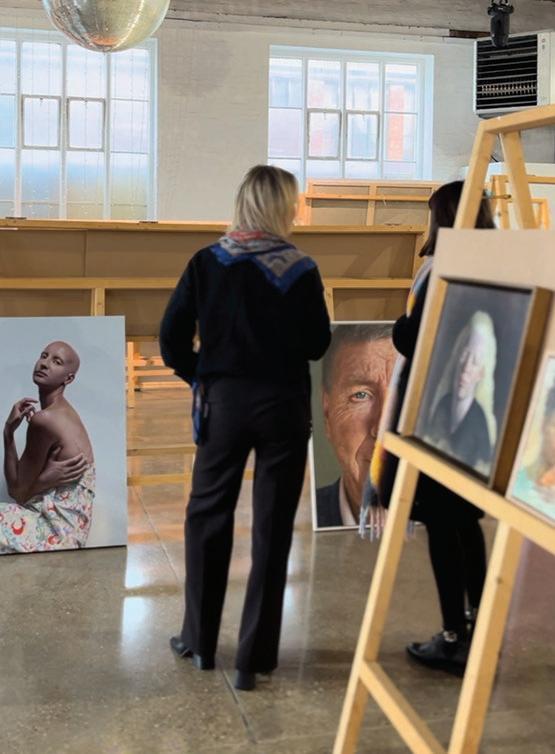
We are one of only a few painting competitions that are international in scope. This year there were submissions from over 60 different countries: the final selection includes work by talented artists from Australia, Brazil, China, South Africa, the United States and the United Kingdom. Every year the judging panel changes to allow for fresh perspectives and each work is judged on a completely anonymous basis. The Director of the Gallery, Nicholas Cullinan, and I were joined by Tom Shakespeare, Professor of Disability Research at the London School of Hygiene and Tropical Medicine, actor and selfprofessed ‘art geek’ Russell Tovey, and the renowned Birmingham-based artist Barbara Walker. Their insights were invaluable and together the panel were delighted, surprised and occasionally divided over the more than 200 portraits selected to be brought to a chilly riverside warehouse, following a first round of digital judging.
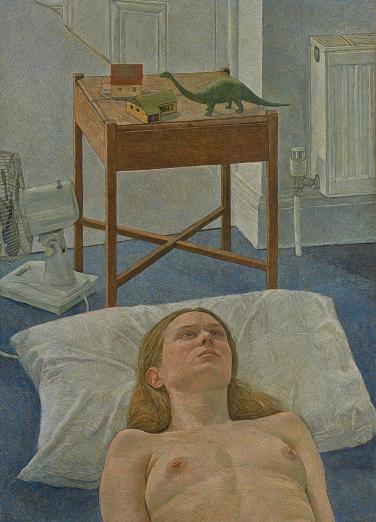
From the 50 works chosen for exhibition, visitors will get a sense of the range of approaches to painted portraiture today. One of the artists, Antony Williams, demonstrates, in his portrait Jacqueline with Still Life, his masterful use of egg tempera,
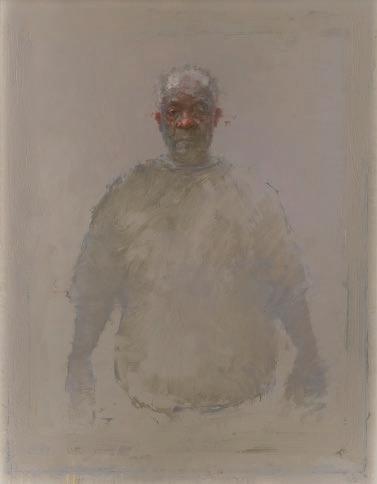
a painstaking and exacting medium. Williams knows the competition well, having first entered the award in 1995; he has since exhibited ten times, winning third prize in 2017. All his work is based on direct and intense observation from life, often giving equal prominence to the objects in the background and the portrait subject. In contrast, the artist Nathan Ford uses a limited palette and sparsely painted marks that often obscure more than they reveal. Ford painted Monument 3, based on sittings from over a decade earlier, over several years as a way to come to terms with his father’s death.
Unlike the rest of the Gallery’s permanent hangs, the sitters in the Portrait Award exhibition are not well known. They represent family, close friends, or fellow artists and therefore the exchange between artist and sitter is often more intimate and emotive than more formal commissioned portraits. There are also many candid and sometimes experimental self-portraits. Come along over the summer months to experience these 50 artists’ unique way of looking at the world through the flourishing portrait genre.
Herbert Smith Freehills Portrait Award 2024
From 11 July until 27 October 2024
Floor 2 Exhibition Gallery Free entry
Supported by Herbert Smith Freehills
The exhibition catalogue is available to pre-order now at npgshop.org.uk. Price, £18.95 (paperback).
Don’t forget to enter the code MEMBER2024 at checkout to receive your exclusive 10% discount for Gallery Supporters.
Discovery, Joy and Connection:
Volunteering at the National Portrait Gallery
by Annie Reeve Volunteer Development Manager
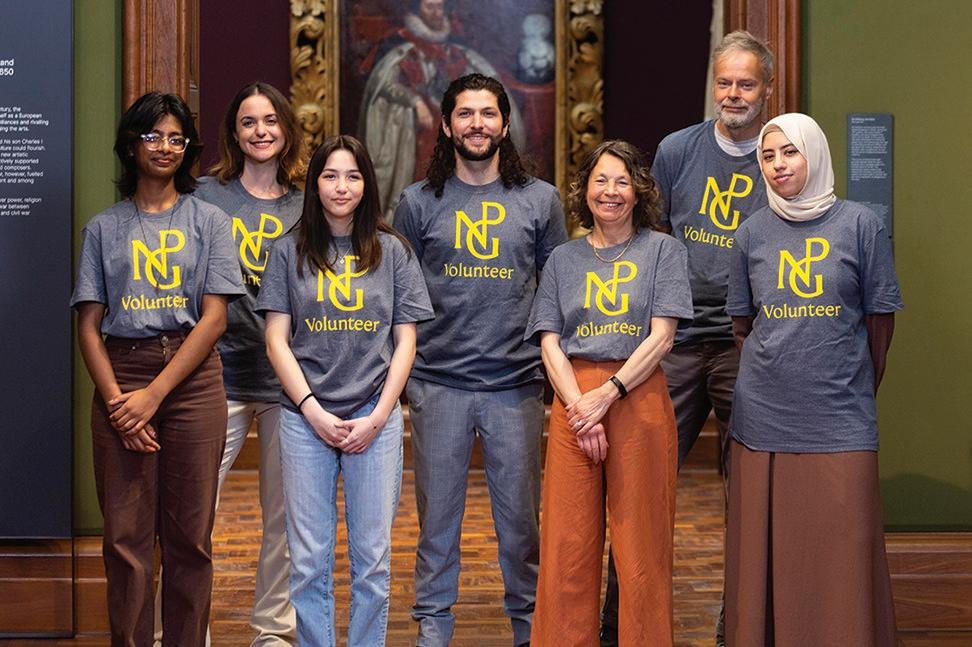
Why volunteer at the NPG? There are probably as many answers as there are volunteers – and more. The Gallery has seen a significant expansion of its volunteering programme over the last few years: as of November 2023, the team had recruited and trained over 250 volunteers as part of Inspiring People, the Gallery’s transformative project which aimed to diversify both our staff and Collection, to better reflect Britain today and focus on the needs of audiences.
New to the Gallery myself, I spoke with volunteers at our recent Christmas party and was both inspired and moved by their passion for the Collection, their love of the gallery spaces and their great affection for
the NPG. Others have been enabled through volunteering to gain vital experience in the museum and gallery sector.
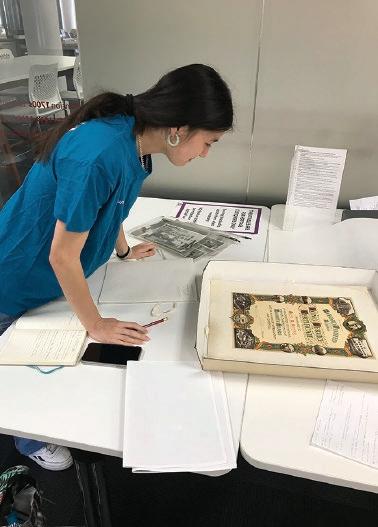
I caught up with Chloe Jones to discuss her experience. Chloe was a volunteer on the schools digital programme last year, supported by Eleanor Hilton, Digital Learning Manager. According to Chloe, ‘Eleanor was an amazing supervisor – really flexible and supportive. It was also great to be able to connect with other volunteers. Even though my role was remote, I was invited to attend the volunteer social events and I felt part of a community.’
Without previous experience in the sector, and looking to change careers,
Chloe’s volunteering at the NPG proved transformative: she recently joined Tate Britain in a paid role within their exhibitions team.
Prior to Inspiring People, the volunteer base was only around 15 people. Thanks to the Gallery’s investment in volunteering, there are now over two hundred, with a significant increase in the number of younger people, including those aged 16–25 years, a group that is typically under-represented in volunteering nationally. The scheme is supported by a dedicated team of three coordinators and a manager.
It’s well known that volunteering has many benefits for the people doing it; there are great benefits for organisations, too, as volunteers extend resource, enrich activities and contribute a wealth of skills and experience, as well as bringing new perspectives and energy to a variety of roles.
When people think of volunteering in a gallery or museum, it’s often the visitor experience volunteers, those people who do such a magnificent job of welcoming and guiding visitors, that come to mind – but there are a surprising number of ‘backstage’ volunteer opportunities across the Gallery too. From Membership to Conservation, Archive to Digital, volunteers participate and contribute throughout. For example, volunteers provide vital support for our learning programmes, assisting with the comprehensive range of activities, workshops and events for all ages.
‘I started my journey as a Learning Volunteer at the Gallery in September and it has been an experience full of discovery, joy and connection. Whether I am welcoming school groups or helping in workshops, I get a real insight into the inner workings of the learning programme and the organisation. Most importantly, I have felt a part of the team and, as a volunteer, that is invaluable.’ – NPG Learning Volunteer
Back in 2006, we had a very small civil partnership ceremony in New Zealand. And as London has been our home for several decades, a few months later we wanted to host a bigger celebration for our circle of friends and family here.
Seeking somewhere welcoming, different, and capable of hosting a big event, we simply couldn’t think of the right venue until inspiration struck: why not at the National Portrait Gallery?
As we investigated this option, we really enjoyed meeting a range of NPG staff – one of whom suggested we become Patrons, not least because we then enjoyed a discount on the cost of hosting the celebration. So, we decided to go all in and sign up; 17 years on, we’ve never looked back!
In the subsequent years, we’ve become part of the community of Patrons. Whenever we go to an event, we see familiar and friendly faces – both fellow Patrons and staff. There’s always something to catch up on, and we learn more about portraiture at every event we attend.
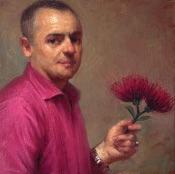
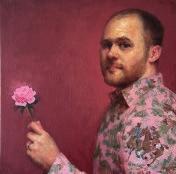
Through the Gallery we met artist Darvish Fakhr, for whom we sat in 2009, dressed as we had been in New Zealand. He captured a permanent record of our civil partnership as a diptych.
We’ve also been on several tours with the NPG: Washington DC, Stockholm and New York have been the most exotic, and gave us access to private collections and experiences we would otherwise never have had. Several times a year we also attend visits to studios and collections across London and other parts of the UK, always with a different focus and new things to learn and enjoy.
For us, three words describe the experience of being a Patron: community, learning and access. We’ve met interesting people and enjoyed collections of portraits that only the National Portrait Gallery can access, and it’s always in the friendliest of environments. Thank you, NPG!
A Pohutukawa
Nicholas Ayre and Nicholas Creswell are Reynolds Patrons of the National Portrait Gallery and have supported the Gallery as Patrons since 2006. Nicholas Ayre is the Founder and Managing Director of Home Fusion, a residential property search agent with over 20 years’ experience in finding homes to buy and let in central London, whilst Nicholas Creswell is Global Head of Culture & Talent at Ørsted, an international renewables company. They are supporters and collectors of art, which is displayed in their London home.
If you are interested in becoming a Patron of the National Portrait Gallery, please contact the Patrons Team at patrons@npg.org.uk or call +44 20 7321 6645 for more information.
Above – Nicholas Creswell, holding an English Rose, and Nicholas Ayre, holding a Pohutukawa* by Darvish Fakhr, 2009 *
is a flower native to New Zealand.
The Art of the Artichoke
by Richard Corrigan Chef and restaurateur
‘The whole artichoke, cock crab and kombu is everything. Perhaps the most visually striking signature dish in London for a decade.’
– Tim Hayward, The Financial Times
The humble artichoke. Mentions of the artichoke as food date back as early as the 8th century BC: they were mentioned by Homer, featured in Greek mythology and, later, grown in Henry VIII’s garden. Their place in food history is undoubted, and for good reason.
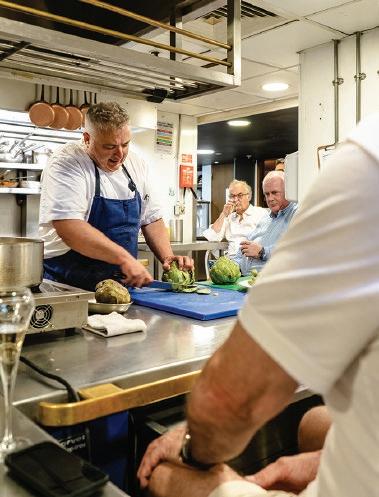
Globe artichokes, both green and violet varieties, are best in the summer months, when their leaves are at their plumpest. Ours have been sourced by local, London-based wholesale suppliers Smith & Brock, who searched far and wide to ensure they were working with growers who pride themselves on producing the very best-quality products, and who have the same passion that we do.
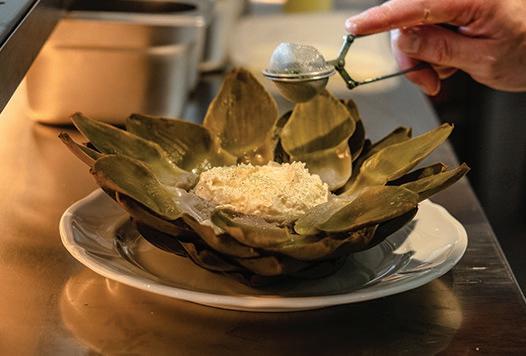
One of the stars of our menu upon opening, our artichoke with cock crab is soon to make its seasonal return. A globe artichoke is cooked until the meat of the leaves is perfectly tender, and then filled with a cock crab and kombu mayonnaise. Decadently elegant, the image of this will stay in your heart for a long time to come.
The Portrait Restaurant is a contemporary British dining destination with renowned chef Richard Corrigan at the helm. The Portrait offers an all-day menu that highlights the finest flavours of the British Isles while providing spectacular views across Trafalgar Square and beyond.
Book now on theportraitrestaurant.com or email reservations@theportraitrestaurant.co.uk. NPG Members receive 10% discount.
NEW IN OUR GALLERY SHOP
for Gallery Supporters
Presenting our exclusive bone-china range created in collaboration with Tracey Emin
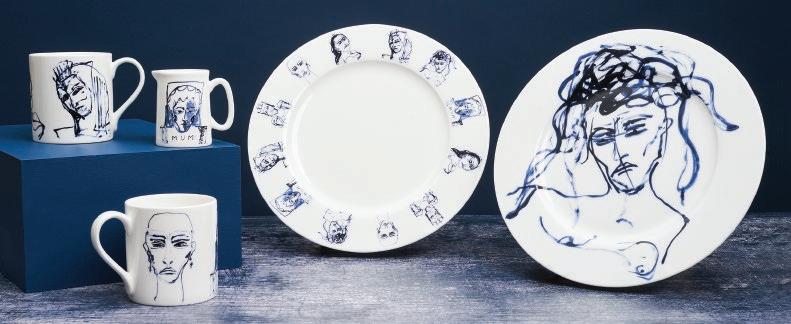
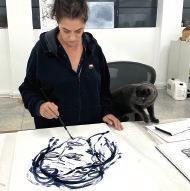
We’re celebrating Tracey Emin’s unique National Portrait Gallery commission, The Doors (2023), with a beautiful new range of bone china featuring six of Emin’s preparatory acrylics on paper.
This unique range, Untitled (2023), consists of two plates, two mugs, sold individually, and a milk jug featuring a single portrait. The range is an open edition, available exclusively at National Portrait Gallery shops. Each fine bone-china piece is silkscreen printed with two colours (cobalt blue and black) in Stoke-on-Trent, England, and presented in a navy-blue lidded gift box embossed in white, with Tracey Emin’s signature and the Gallery’s monogram.
You can shop the bone-china collection now both in-store, and online at npgshop. org.uk/collections/ untitled-tracey-emin. Be sure to flash your member’s card in-store or enter the code MEMBER2024 at the checkout online to receive your exclusive 10% discount for Gallery Supporters.
In addition to the product range, the NPG has collaborated with Counter Editions to produce four Tracey Emin limited-edition prints based on the commission. More information can be found via a link on our retail homepage, npgshop.org.uk.