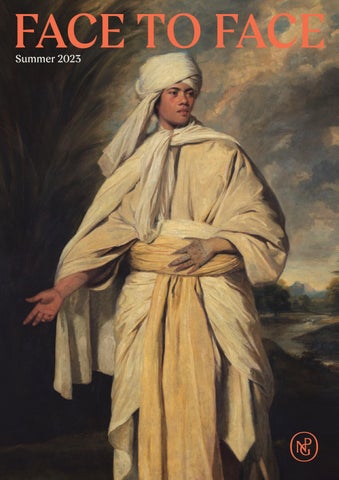
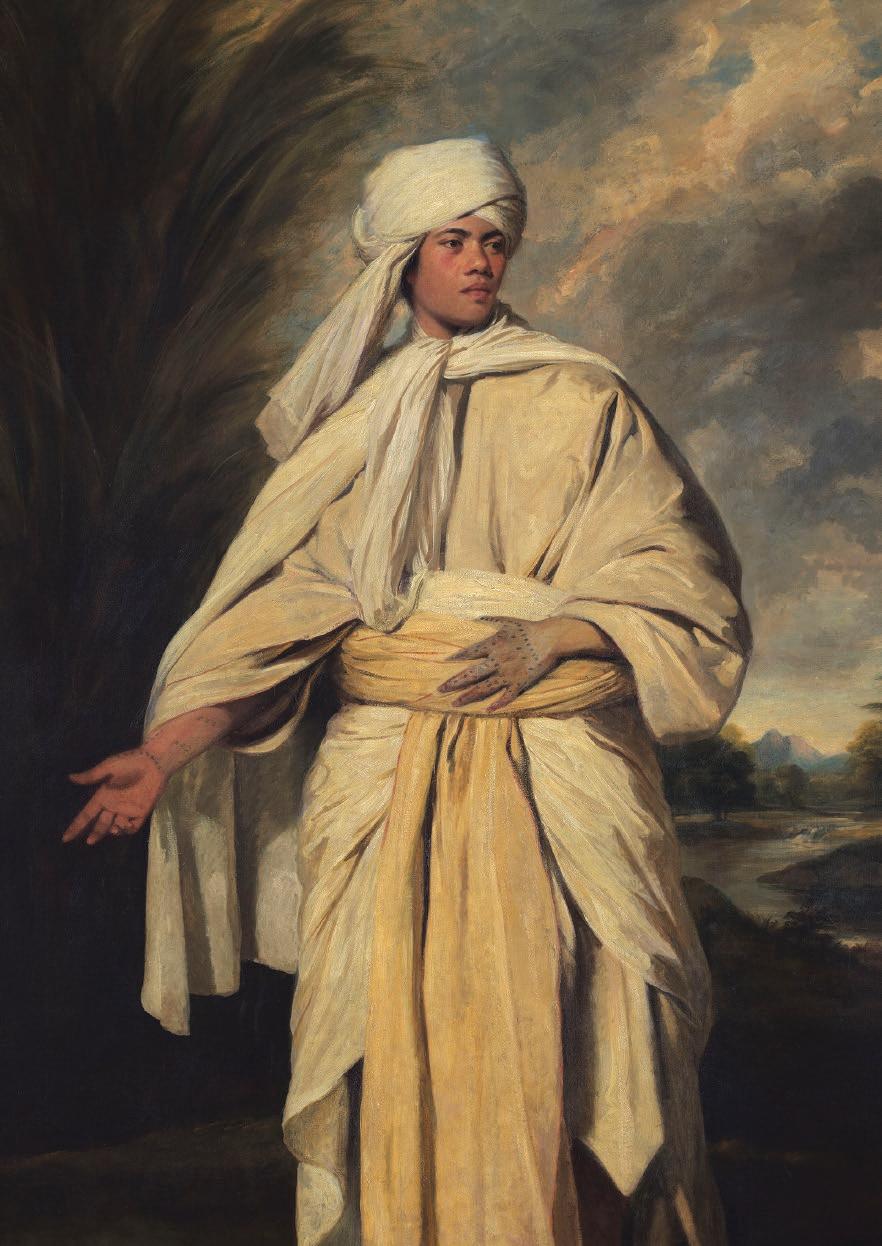
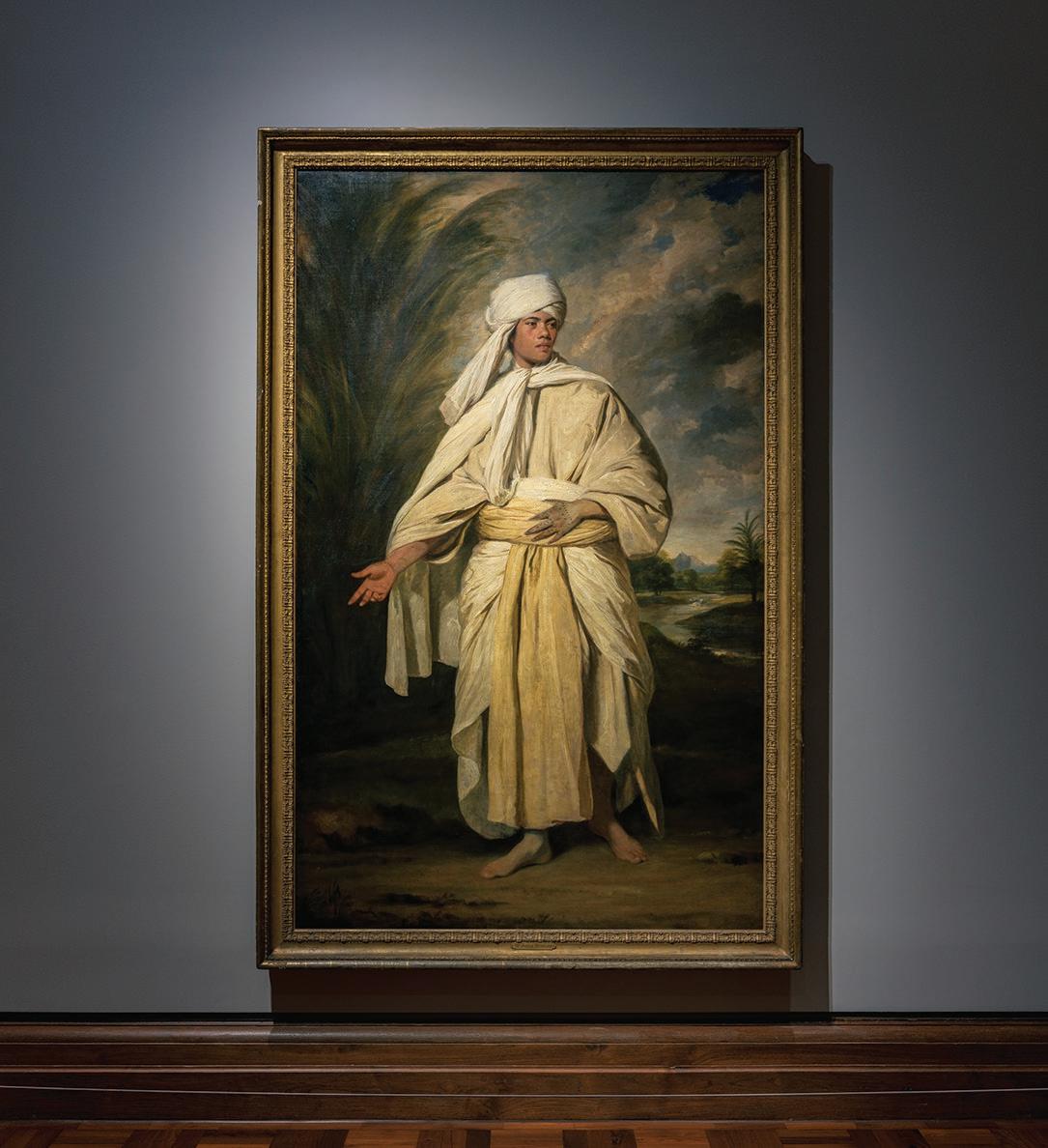
Cover image – Portrait of Mai (Omai) (detail) by Sir Joshua Reynolds, c.1776 (NPG 7153)
The Gallery is committed to reducing our environmental impact and this magazine is printed on paper certified by the Forestry Stewardship Council and is fully recyclable.
I am delighted that after so much work we are now about to open the new National Portrait Gallery and welcome you back through our doors. The last three years have been an extraordinary period of transformation for the Gallery and I am extremely proud of what the Inspiring People project has achieved, with thanks to the support of countless people, including our wonderful staff, our community of supporters and you, our members and friends.
When we embarked on this major project, we were not also anticipating to take on the largest acquisition campaign ever attempted by the Gallery. However, the chance to acquire Portrait of Mai by Sir Joshua Reynolds represented a singular opportunity to bring a portrait of global significance into our Collection. This is not only the largest acquisition of a work of art that the UK has ever made (along with the Titians acquired by the National Gallery and the National Galleries of Scotland in 2009), but it involves an innovative model of international collaboration through our partnership with the Getty in Los Angeles.
We could not have acquired this portrait without the significant and historic grants made by the National Heritage Memorial Fund and Art Fund as well as the contributions made by 2,000 Art Fund members and National Portrait Gallery supporters across the UK and so many others. I have the pleasure to tell you more about the acquisition later in this issue.
The Gallery and Getty have a long history of partnership. In 2015, we acquired a large number of works from the Lucian Freud Archive. Through a generous grant from the Getty Foundation we have been able to conserve these important works for
the future. Our Getty Paper Curator, Tanya Bentley, tells us a little more about the project.
The CHANEL Culture Fund has supported a game-changing project to increase the representation of women throughout our Collection. Focusing on 20th and 21st centuries, the project has seen the Gallery readdress historic gender imbalances in our post-1900 collection and I am pleased to say that as of re-opening, 48% of portraits on display in those galleries will be of women. Constantia Nicolaides, Assistant Curator, Cross Collections, writes about the large seven-panel stencil piece, Work in Progress by Jann Haworth and her daughter, commissioned as part of this project.
We recently announced that the Gallery will have two new catering operators, Daisy Green in the Weston Wing, and Richard Corrigan in The Portrait Restaurant, who will provide an exciting and wide range of food and drink offers for our visitors. Anna Starling, Director of Commercial, sits down for conversations with them to hear about their plans.
Finally, the architect for Inspiring People, Jamie Fobert CBE, writes about the completion of the project and what it means to him personally.
I am very much looking forward to welcoming you back to the new National Portrait Gallery in a few short weeks. I hope that you will be as delighted with our transformation as we are.
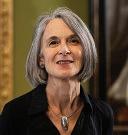
Dr Nicholas Cullinan Director
My Favourite Portrait
by Alison Smith Chief Curator
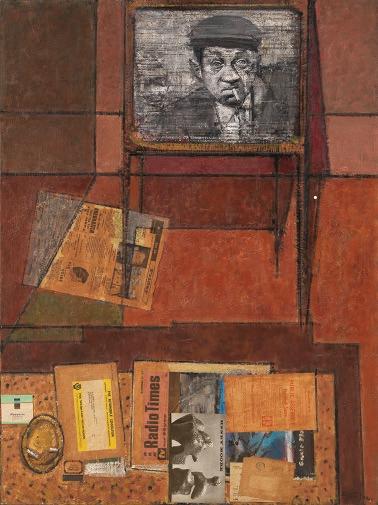
I like to think this is the world into which I was born, in the year this collage featuring the comedian Sid James was made. To me it captures, in a way both funny and sad, how life is made up of grand aspirations and messy little domestic settings. We get the view from the sofa, watching television, specifically an episode of Hancock’s Half Hour, that timeless sitcom in which Tony Hancock, the wannabe beatnik intellectual of East Cheam, is relentlessly brought down to earth by his dodgy pal Sidney James (who was born Solomon Cohen to British Jewish
parents in South Africa, and later of course went on to star in the Carry On film series, of which I remain an unrepentant fan). That tension between the characters is carried on in the paraphernalia of the modern living room in which we are placed. The upper half of the composition almost suggests Francis Bacon, and there is what looks like an invitation to the opening of a Henry Moore exhibition. Then there’s a flyer for a Mass Civil Disobedience protest organised by the Campaign for Nuclear Disarmament (in 1962 at the peak of their influence). However, just in case we get too carried away by the thrill of art and activism, prominent in the magazine on the floor are adverts for remedies for colds, flu and rheumatism. Maybe we’ll just stay in by the telly.
Alison Smith is Chief Curator at the National Portrait Gallery. Since joining the Gallery in 2017, she has worked closely with curators and colleagues across the organisation on the redisplay of the permanent collection. The portrait of Sid James can be seen in the ‘Making the Modern World: 1945–2000’ gallery in room 28 on the second floor.
by Sarah Howgate Senior Curator, Contemporary Collections
‘John had a life-force that halved his age. He knew everything; art historical references, contemporary painting, gossip, museum collections, royal connections, people’s grandmas, second cousins, characters from the criminal underworld, rap singers, academics. He spanned a century of knowledge and cultural identity and understood gender fluidity before the term had been invented.’
– Jenny Saville, Art Forum, 3 April 2019
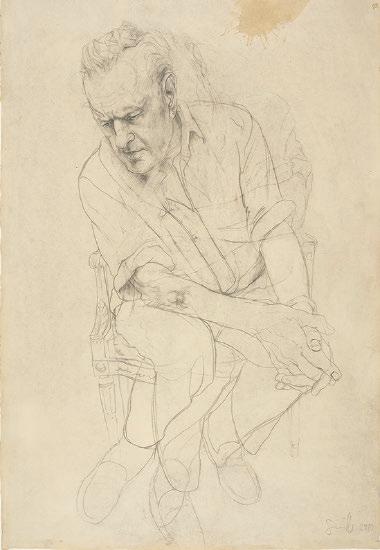
Jenny Saville’s friendship with Sir John Richardson dates back to 2008, when they met at the opening of the Garage Museum in Moscow and talked and danced the night away. This is one of a series of studies made by the artist of the art historian. Saville originally asked Richardson to pose naked for a portrait – to which he gamely replied, ‘Well, I may as well.’ Characteristic of the artist’s drawing process, the hybrid portrait tells the history of the sittings over time, revealing multiple limbs and ghosts of drawings, a palimpsest, which suggests movement and dynamism.
Study of John is a great tribute to an influential art historian and cultural figure by one of today’s leading artists. Saville has reinvigorated contemporary figurative painting but rarely makes direct portraits of known sitters. Drawing is at the heart of her practice and this study is a fine example
of her exquisite draughtsmanship, which is both contemporary and rooted in art history. This is the first work by Saville to enter the Gallery’s Collection, while Richardson is also represented with a miniature painted head by Lucian Freud on long-term loan to the Gallery. The drawing represents their inspirational friendship based around passionate dialogues on art and art history. With their shared obsession with Picasso, it is fitting that the artist should portray the modern master’s acclaimed biographer. In conversation with the artist, Richardson discussed ‘the underpinning of drawing’ in Picasso’s and de Kooning’s work and how this is at the heart of Saville’s practice too. He went on to say: ‘This mastery of drawing – something that few contemporary artists bother with – enables you to juggle multiple layers of conceptual meaning.’
On 25 April we announced that the National Portrait Gallery and Getty had jointly acquired Joshua Reynolds’ Portrait of Mai (Omai). This was the culmination of a fundraising campaign with multiple partners and supporters, including many National Portrait Gallery Members, who helped us to bring this remarkable painting into public ownership for the first time.
Reynolds’ spectacular portrait of Mai holds a pivotal place in global art history, depicting the first Polynesian to visit Britain, and it is widely regarded as the finest portrait by one of Britain’s greatest artists. Known as ‘Omai’ in England, Mai (c.1753–80) was a native of Raiatea, an island now part of French Polynesia, who travelled from Tahiti to England with Captain James Cook. He spent the years 1774–76 in London, where he was received by royalty and the intellectual elite, and became something of a celebrity. Mai returned to his homeland in 1777 and died there two years later. Reynolds painted Mai while at the height of his creative powers, exhibiting the painting at the Royal Academy of Arts in London in 1776. The artist, who apparently made the portrait for personal reasons, kept the picture in his London studio until his death in 1792.
Our partnership with the Los Angelesbased Getty is an innovative model of international collaboration, which will maximise public access and enable us to share the work for public exhibition, research
and conservation care. In both locations, one facing the Pacific from where Mai came, and the other only yards from Reynolds’ studio in London, the public will be able to view the portrait free of charge.
The painting will first be exhibited at the Gallery when we reopen on 22 June and will later be shown at other institutions across the UK. The first Getty presentation will be in 2026, including the period when Los Angeles hosts the 2028 Olympic Games.
The National Portrait Gallery raised £25 million, which, together with a matching amount from Getty, made up the £50 million needed to secure the painting. We are hugely thankful to all those who made this extraordinary acquisition possible, including an exceptional grant of £10 million from the National Heritage Memorial Fund, one of its most significant awards for saving a heritage treasure, and an Art Fund grant of £2.5 million, the largest in its history. Major contributions were received from The Portrait Fund, the Deborah Loeb Brice Foundation and Julia and Hans Rausing, and support also came from the Idan and Batia Ofer Family Foundation, Bjorn Saven and the David and Emma Verey Charitable Trust, as well as many other generous trusts, foundations and individuals.
We are also enormously appreciative of the gifts of all sizes made by over 2,000 Art Fund members, National Portrait Gallery supporters and members of the public.
Right – Portrait of Mai (Omai) by Sir Joshua Reynolds, c.1776 (NPG 7153) on display in room 18 on the third floor
Reynolds’ majestic Portrait of Mai is by far the most significant acquisition in the National Portrait Gallery’s history, and the largest acquisition of a work of art the UK has ever made, along with the Titians acquired by the National Gallery and the National Galleries of Scotland in 2009 and 2012. My heartfelt thanks go to my wonderful
colleagues who worked so hard to make this possible. We are all delighted that this uniquely important painting is entering our Collection, in Reynolds’ 300th anniversary year, so that its beauty can be seen and enjoyed by everyone. We hope you will visit us soon to view this masterpiece for yourself, as it takes pride of place in our new galleries.
The Lucian Freud Archive Displayed
by Tanya Bentley
Getty Paper Project Curator (Lucian Freud Archive)
A gallery dedicated to Lucian Freud (1922–2011), one of Britain’s greatest portrait artists, will be part of the reopening displays. Over the next three years, highlights from the Lucian Freud Archive, allocated to the Gallery in 2015 as part of the Arts Council England Acceptance In Lieu scheme, will be on view in this new space. This has been made possible thanks to generous support from Getty as part of The Paper Project initiative, which supports the development of curatorial expertise in works on paper.
On display first will be Freud’s charming childhood drawings, made in Germany before he emigrated to the UK in 1933, and an illustrated letter to his mother written when he was a student at the East Anglian School of Painting and Drawing. There will be a selection of his remarkable sketchbooks, of which the archive holds 47. They reflect
the ebb and flow of his drawing practice from adolescence to old age and contain over 600 drawings, mostly portraits. They illuminate the hours he spent observing his many sitters, himself included, and sketches relating to known paintings and etchings that record his working method. Packed also with Freud’s private thoughts on life and art, draft letters and betting notes, they are an intimate record of one of the late 20th century’s most acclaimed artists.
Drawings from his sketchbooks of his first wife Kitty Garman (1926–2011) and an experimental watercolour of his daughter Annabel (b.1952) will be on display. These more finely executed drawings contrast with a loose sketch before Freud’s iconic painting, Hotel Bedroom (1954), and a self-portrait amongst notes reflecting on his ‘naked’ portraits, begun from the 1960s. These treasures are complemented by a painted self-portrait ‘fragment’ from the mid-1980s with visible charcoal underdrawings and a postcard-sized painting of art historian Sir John Richardson (1924–2019), on display at the Gallery for the first time.
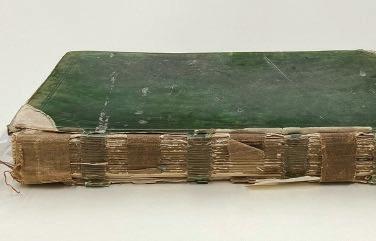
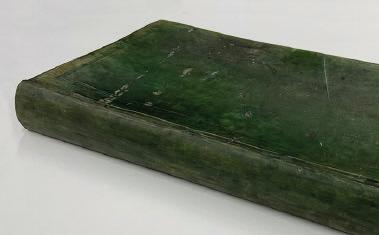
As working objects, the sketchbooks carry the traces of a productive artist. They vary in scale from pocket-sized notebooks to a large 18th-century accounts ledger that Freud bought from a market during the Second World War when paper was in short supply. His coffee and paint stains are on the covers and pages have been torn out, causing the spines to come away, posing considerable obstacles for their display. Getty’s support has therefore enabled important conservation work so that we can share the sketchbooks safely with the public and preserve them for future generations. Paper conservators Rosie Macdonald and
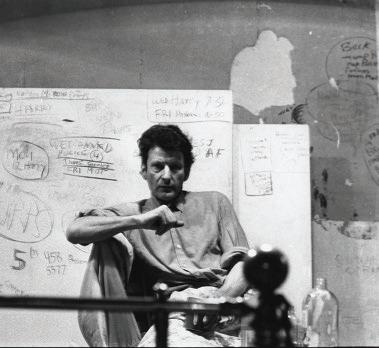
Above – Lucian Freud (detail) by Harry Diamond, 24 January 1970 (NPG x210133)
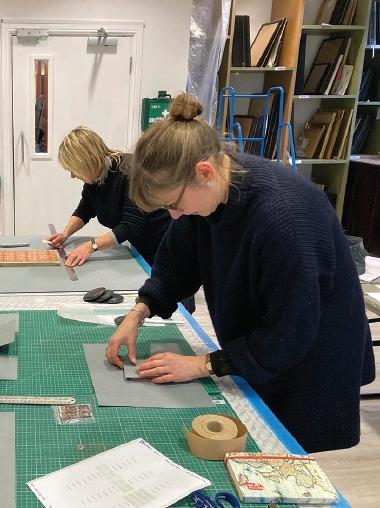
Tanya Millard led treatments such as surface cleaning, paper repairs, crease reduction and pressing. A long-term storage solution is also under way with made-to-measure four-flap folders created for each sketchbook, to improve access and protect the books.
The most extensive treatment was carried out on sketchbook 6, the 18th-century ledger repurposed as a sketchbook. Its faint iron gall inscriptions made by its original owner can be seen throughout its first half, forming the backdrop to Freud’s drawings. The treatment included cleaning, re-sewing and relining the back of the spine. A new film capturing this conservation work will be included in the Gallery.
Freud would use a variety of drawing media in the sketchbooks, from graphite, pen and ink to crayon, charcoal and watercolour. As part of The Paper Project, we have been working to clarify some of the media descriptions through close examination under magnification. Through research and connecting with Freud experts, and sitters who are still alive today, we have uncovered new sitter identifications and more accurate dating of some drawings.
Freud has famously said that ‘everything is autobiographical and everything is a portrait’. When one pores over the pages of his sketchbooks, there is an intimacy and immediacy of looking into the private world of the artist, a portrait of his daily life, which will now be shared for all to enjoy.
The Gallery is grateful to Getty, whose generous support has made this project possible.
The Lucian Freud Archive is on display on the second floor in room 26.
Above from top – Sketchbook 6 before and after conservation treatment repairing the spine
Photos courtesy of book conservator Sayaka Fukuda
Above right – Paper conservators Tanya Millard and Rosie Macdonald preparing the storage boxes for the sketchbooks
Extraordinary Portraits
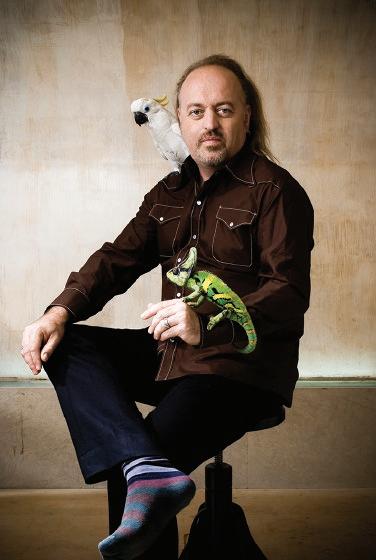
by Bill Bailey
Comedian, musician and actor
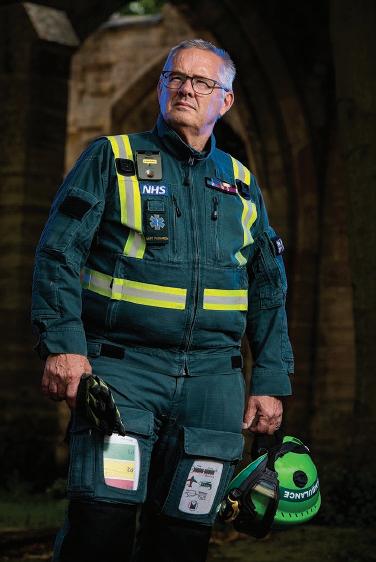
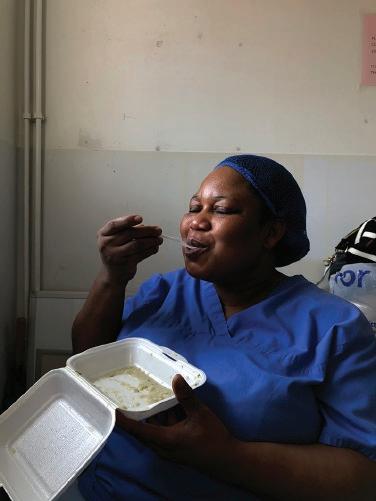
Bill Bailey talks about his love of portraiture and his new BBC One TV show, which captures heroes of the NHS as portraits and explores what portraiture means.
I love portraiture because it not only tells the unique story of the subject, but it also offers an insightful and thought-provoking study of who we are: portraits are part biography and part social history. So it was a great pleasure to be asked to contribute to the reopening issue of the National Portrait Gallery magazine, a gallery of the people for the people, to talk about my series of Extraordinary Portraits on BBC One.
Portraits have previously been the domain of the wealthy and well-connected, the revered and even the notorious, so I have greatly enjoyed celebrating some of the unsung heroes of modern Britain, and in the process showing us who we are now. I know the Gallery has also been doing this with projects such as Hold Still, which saw members of the public documenting their pandemic experience, and the recent acquisition of Michael Armitage’s tapestry depicting four refuse collectors at work during lockdown in 2020.
It has been a chance to work alongside a fantastic range of British artists, established names like the President of the Royal Society of Portrait Painters Adebanji Alade, sculptor Nick Elphick and photographer Brock Elbank, along with the very talented Belinda Eaton, Mark Draisey and Jemisha Maadhavji.
Since I began touring as a stand-up, I’ve always been involved in the designs for my tour posters, offering up sketches and cartoons, but increasingly I’ve found a real love of drawing. I find it a way to relax, and very rewarding. Sometimes I like to draw portraits, sometimes bees, birds and butterflies. I have always been fascinated by wildlife, an interest since childhood that my parents encouraged. A few years ago, I was commissioned to write a book on British birds, and at the request of the publishers I made a few sketches, which turned out quite well. I wasn’t sure about including them as I didn’t plan on being an artist, but then I didn’t plan on being a dancer or a presenter either. Linking all these activities, though, is that whatever comes my way, I throw myself into it wholeheartedly and so far it seems to have worked out OK.
But I had another reason to be involved in the project, as everyone being celebrated works for the NHS, something very dear to my heart. I grew up in the little town of
Keynsham between Bristol and Bath. My mother was a nurse and Dad was the local doctor – his surgery took up one end of the house and my family and grandparents all lived at the other. This was well before GP call-out services, so if the phone rang during the night it meant my Dad was on call, and on the end of the line for any patient with some kind of medical emergency. From my bedroom I could hear my Dad’s calm, unruffled voice on the phone, and then he’d hurriedly dress and leave. Their dedication to helping others, the spirit of selflessness and duty of care, has stayed with me all my life.
It has been a real privilege matching incredible people and their extraordinary stories with some of the country’s most talented artists and seeing how each piece of artwork can convey such emotive power and storytelling skill. Throughout the project I’ve been moved by how extraordinary the
NHS workers are. We have such a diverse collection of stories – from the inner-city trauma surgeon who deals with knife wounds but who also pioneers violence-reduction initiatives, to the porter who joined the institution after her daughter’s diagnosis. I was especially moved by the kindness and compassion of an end-of-life care nurse who helps people to die with dignity. Each is a powerful individual story, but together they form a bigger picture, showing the NHS as a whole.
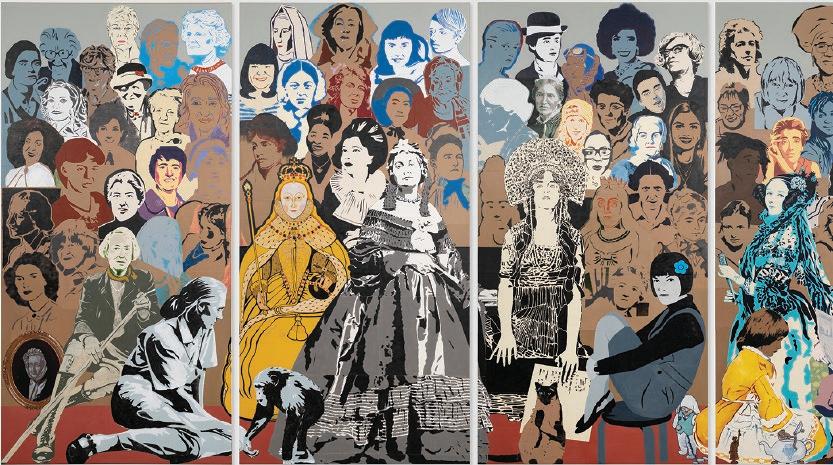
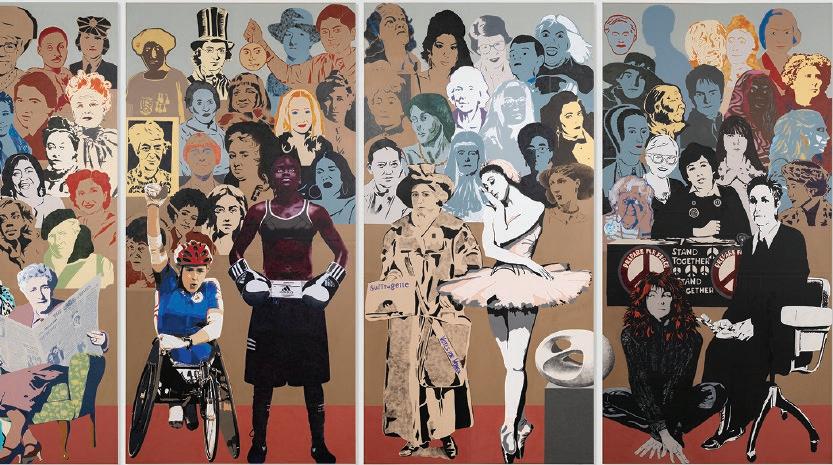
When the National Portrait Gallery reopens on 22 June 2023, visitors will be struck by a notable new addition to the Gallery’s walls. Work in Progress is an impressive 8 x 28-ft mural, depicting 130 women from Britain’s past up to the contemporary period. Cocreated by pop artist and soft sculpture pioneer Jann Haworth and collage artist Liberty Blake in collaboration with groups from across the UK, the mural endeavours to illuminate the broad contributions of women to British history and culture across a range of disciplines and eras. Drawing on the depths of the Gallery’s vast portrait collection, it showcases both prominent and lesser-known women as varied as first-century warrior queen Boudicca, mathematician and computer pioneer Ada Lovelace, architect Dame Zaha Hadid
and Paralympic athlete Baroness Tanni Grey-Thompson. Among the new faces added to the Collection through Work in Progress are Pre-Raphaelite artists’ model Fanny Eaton, electrical engineer Hertha Ayrton, Britain’s first sickle-cell and thalassemia nurse specialist Dame Elizabeth Anionwu and the recent period poverty campaigner Amika George.
This bold tribute to female achievement was commissioned as part of the Reframing Narratives: Women in Portraiture project, begun in 2020 with generous funding from the CHANEL Culture Fund. This landmark, almost three-year project has enabled the Gallery to enhance its representation of women and highlight their stories through a number of portrait acquisitions and activities including online resources, publications, and the cataloguing and digitisation of the photographer Yevonde’s tri-colour separation negatives. The mural contributes significantly to increasing to 48% the number of women shown in the Gallery’s post-1900 displays when it reopens, another important ambition for the project.
The inspiration for Work in Progress came from an existing and ongoing mural project of the same name, begun by Haworth and Blake in 2016 with their local community in Salt Lake City, Utah, and which now encompasses portraits from contributors worldwide. This provided the format for creating the National Portrait Gallery’s work, which involved a series of workshops held during the Gallery’s closure with its Youth Forum, at the Courtauld Institute of Art in London, at Murray Edwards College in Cambridge, with members of the Community Programme at Pallant House Gallery in Chichester and with Pathways to Wellbeing programme members at the Holburne Museum in Bath. Having each chosen a woman who has made a significant contribution to British life, workshop participants were guided by the artists to produce a stencilled portrait on paper with acrylic paints, based on an existing depiction. An additional 14 professional artists from the UK and US were invited to create the full-length portraits for the mural’s front row. With the finished portraits assembled and collaged on to the multiple panels by Blake,
the final result is a vibrant visual celebration of women’s history that foregrounds its collaborative production through the diverse styles and aesthetic choices of its varied contributors.
Of course, Work in Progress only scratches the surface and while, as Blake points out, it ‘helps people learn more about the contributions of some of the women who have played a part in shaping the world that we live in’, there are countless more women not included who are equally deserving of wider attention and recognition. Haworth asks: ‘How can you celebrate the accomplishments made by women when you know that the more that you look the more that you discover and that you will have to answer this question: Why isn't “X” on this mural?’ The mural’s title nods to that fact, as does the generic silhouette of an unnamed woman on the seventh panel, which poses the question: who would you include?
Below – Work in Progress by Jann Haworth (b.1942) and Liberty Blake (b.1968), 2021–22. Commissioned with kind support from the CHANEL Culture Fund (NPG 7145). On display in the History Makers gallery on the ground floor
Food and Art Combine in our New Restaurants
Anna
Starling, Director of Commercial, in conversation with our new hospitality partners
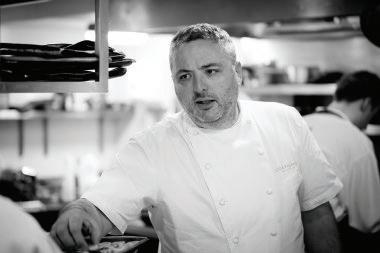
The much-loved Portrait Restaurant will reopen this summer, led by celebrated chef Richard Corrigan.
Why were you drawn to the opportunity to run the Portrait Restaurant?
I was initially involved in the opening of the restaurant over 20 years ago, so it holds a special place for me, and when the opportunity to run the restaurant came up, I couldn’t turn it down. How did you start cooking?
My culinary journey started at home watching my mother bake bread and make butter, and my father would bring back the catch after a day’s shooting or fishing. It sounds like a cliché, but that was rural country life in the 1960s and 70s in Ireland. I left school at 15 to work at the best hotel in the area and learnt the basics. I quickly moved to Amsterdam, working in the great hotels and restaurants of Europe, and it was there that I completely fell in love with the craft.
The Corrigan Collection includes Corrigan’s Mayfair and Bentley’s. How will the Gallery's Portrait Restaurant be distinct from your other restaurants?
All my restaurants, although having
distinct personalities, ride on the Corrigan Collection ethos of good food, good drink and warm hospitality. Bentley’s has been a legendary seafood restaurant since its opening in 1916. Today I’m proud to say that we have continued that tradition, and we serve the largest oyster selection in the UK. Similarly, Corrigan’s Mayfair, now in its 15th year, focuses on the best that Britain and Ireland have to offer, with wild game served alongside fresh pickings from our coastlines. The newest addition, Daffodil Mulligan in Shoreditch, has been my wild child: a place where there are still the same strong expressions of local and traditional British and Irish fare but reimagined through a dynamic natural wine list, cooking over coals and a more informal experience. The Portrait Restaurant will naturally retain a feel of these restaurants, but I’m planning a bolder interpretation of the Corrigan Collection ethos.
Is there a dish you are particularly l ooking forward to serving up at the Portrait Restaurant?
We are currently still working on and reworking the dishes, but we have been trailing them for the last month, and so far, the feedback has been great. Food and drink are like fashion and music – the classics always come back in one form or another. What drink do you relax with after a long day of work?
A cold beer or a glass of Champagne. If it’s been a particularly long or cold day, I’ll treat myself to a glass of Irish whiskey. Do you visit art exhibitions and events and collect art yourself?
I do; it’s one of my greatest hobbies. I have been going to galleries since I moved to Amsterdam as a young man. A day in a
Richard Corrigan
gallery or a museum for me is the best tonic for relaxation and creativity. I have always been a huge fan of the National Portrait Gallery, and the work that has been done in the Inspiring People project fills me with excitement.
Do you have a favourite work or a period of the Collection you are particularly interested in?
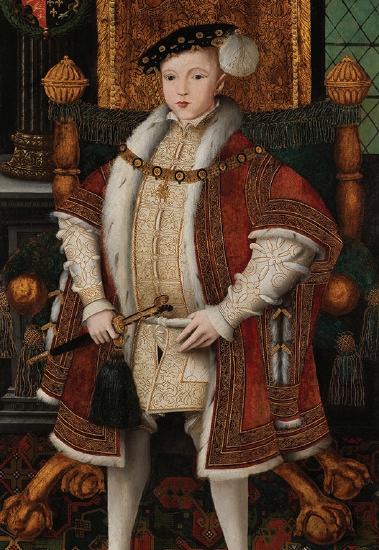
My favourites are the Tudor portraits on the third floor, especially those associated with Holbein. I make a point of visiting this gallery once a month without fail.
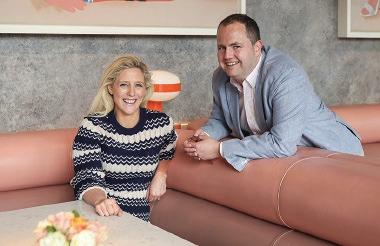
Tom Onions and Prue Freeman, founders of Daisy Green
On reopening, the Weston Wing facing on to St Martin’s Place will feature two new hospitality spaces run by Daisy Green Collection.
Why did you decide to work with the National Portrait Gallery?
Art has been a key component of the Daisy Green Collection from our early days. We were also given the opportunity to do something different – contemporary, independent and in a manner quite transformational for gallery hospitality in England.
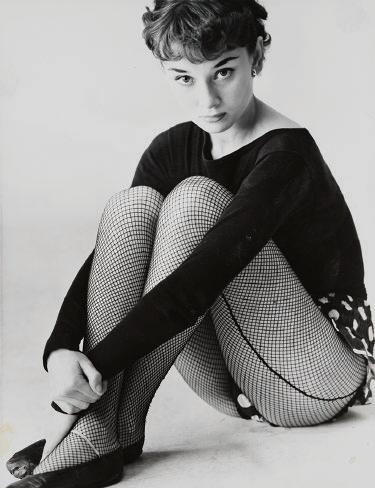
‘Audrey Green’, our café and bar, is going to showcase facets of what made Audrey Hepburn so special – from Ballet to Theatre to Film and Fashion. We hope her heart and energy will shine through. We have filled the space with portraits from the Collection with a particular focus on the West End. Downstairs in the vaulted brick space (informally named Larry’s after Sir Laurence Olivier) you will be able to drink and eat amidst the famous and infamous faces of the London scene.
How did the Daisy Green Collection come about?
Richard Corrigan is an Irish chef who owns and runs Bentley’s Oyster Bar & Grill, Corrigan’s Mayfair, Daffodil Mulligan, as well as Virginia Park Lodge and The Park Café in Dublin. He has published two cookbooks and has cooked for the late Queen and Barack Obama. He regularly makes appearances on radio and television, notably winning BBC’s Great British Menu three times.
Daisy started in 2012 from a dream that manifested itself in the purchase of a vintage Bedford ice cream van from eBay. It has evolved organically in a fun and often unexpected way.
We are truly independent, which allows us to do things differently. For example,
Above – King Edward VI (detail) Workshop associated with ‘Master John’, c.1547 (NPG 5511)
Photo: Melisa Coppola
we spent years restoring a 19th-century Oxford spectator barge called Peggy Jean at Riverside Green. The barge has an amazing history, with ups and downs, having sunk twice and burnt down once. Nevertheless, it now graces Richmond Riverside. All your venues have distinct names –how did you settle on ‘Audrey’ for your venue at the Gallery?
For us and the Gallery it was always ‘Audrey Green’. Audrey Hepburn danced at the fashionable Ciro’s nightclub in 1949 on Orange Street, now the offices of the National Portrait Gallery. Trained in classical ballet, she joined the Marie Rambert School and after being spotted in Sauce Tartare by up-and-coming photographer Angus McBean she graced many theatrical productions before her breakthrough film role in Secret People as a ballet dancer (an image captured in a wonderful Bassano portrait, on proud display in our café). After that it was Hollywood and one of our favourite films –Breakfast at Tiffany’s! We plan to launch an iconic ‘Breakfast at Audrey’s’ Afternoon Tea to celebrate the UK afternoon tea week on Wednesday 7 August. How do you go about putting a menu together?
Our food is all about provenance and flavour. Having grown up on a farm we take no short cuts in quality and preparation. Our food is fresh and considered to be British/ Mediterranean in origin. We aim to create dishes that have a significant plant-based content, having worked with Kirk Haworth (first vegan chef on The Great British Menu) for many years.
Our meat is from H.G. Walters, who work with over 30 Michelin-starred restaurants, and our fish is line-caught daily in Devon. We are going for lots of hyper-local British cheeses, London charcuterie and seasonal truffles from Wiltshire. It promises to be very special but also accessible. Your coffee is legendary – how do you make sure it is always delicious? Coffee really is a big part of our DNA,
it’s where we started the business and it brings us huge loyalty and joy every day. It all starts with sourcing sustainable speciality-grade green beans and ensuring a consistent roast profile. For us, our signature ‘Brunch Blend’ combines notes of milk chocolate, walnuts and nougat –it’s a flavour profile that customers love and it pairs perfectly with milk. What do you love about the National Portrait Gallery?
The beauty of portraiture is that your relationship with the work evolves as you do.
Above – Audrey Hepburn in costume for The Secret People by Bassano Ltd, 21 November 1950 (NPG x87244)
Daisy Green Collection was founded by Australian born Prue Freeman and her husband Tom Onions in 2012.
Prue left a role in M&A at UBS investment bank to pursue her dreams of bringing relaxed and buzzing Australian food and coffee culture to London. The Collection now includes 14 cafes and restaurants across London and is the holder of Trip Advisor’s Number 1 Brunch spot.
The Nation’s Family Album
by Tatiana Wheeler
International Communications Manager, Ancestry
In February of 2022 Ancestry, with the help of the National Portrait Gallery, launched The Nation’s Family Album – a search for undiscovered portraits of everyday British people collated into a representative album. People from different backgrounds, ages and cultures across the UK delved into their family albums, phones and attics to find images of themselves, family and friends that represented belonging, legacy, connection and identity. This initiative saw over 2,000 members of the public submit incredibly inspiring photos and the moving stories behind them.
Ancestry is excited that this August a number of these images will be displayed at the National Portrait Gallery in the same building as the likes of Queen Elizabeth II, Sir David Attenborough and Jane Austen. When we began this project, a key objective was to demonstrate the diversity of families across Britain. From the incredible range of submissions, this objective was met. It was incredibly affecting to see all the images, even more so to read the stories behind them, which often tended to change how the images were perceived. Family stories are so important, as they supply the intricate details that could be overlooked
and give a new significance to an image. I am looking forward to the display at the National Portrait Gallery, and hope the public will experience the emotions that I did.
The Nation’s Family Album has proven to be a landmark in representing the diverse families across the UK through portraiture and the compelling family stories behind them. The hope for the upcoming display is for the wider public to experience and celebrate these stories, making it easier for future generations to find out more about their family history through stories and images.
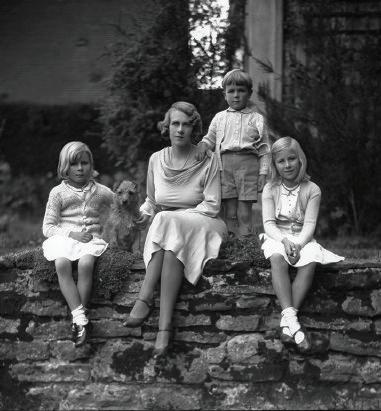
Right – The Mackintosh family (detail) by Bassano Ltd, 16 October 1935 (NPG x34685) on display in the Spotlight Space from 10 August
Architecture as Conversation
by Jamie Fobert CBE
Lead architect
for the National Portrait Gallery’s Inspiring People redevelopment
As I look back over the last five years, it has occurred to me that our work on Inspiring People can be seen as a number of parallel conversations. These conversations have all come together to present to the public a new, unified and welcoming National Portrait Gallery, which in its very fabric embodies a delicate play between the new and the old.
As I was working, I was very aware that I was engaging with past architects: mainly, Ewan Christian and his building of 1896, but also Sir Richard Allison’s 1930s Duveen Wing and the more recent work of Dixon Jones, from 2000. If I was considering alterations to a space that Ewan Christian designed, my first thought was: what were his intentions?
What would he argue for that space if he were sitting at the table with me? How would I convince him that what we were doing made sense?
Much new architecture intentionally stands out against its existing context; the counterpoint is a pastiche architecture, which makes a point of mimicking the old. I resist either of these approaches and, instead, I am deeply interested in having an architectural conversation between the past and the present.
I am so grateful that dialogue with architects Jeremy Dixon and Edward Jones could be in person. Even in the competition stage, they came to the studio and allowed
Jamie Fobert CBE is a London-based architect and designer. Born in Canada, he arrived in London in 1988 and established Jamie Fobert Architects in 1996. Completed projects include major extensions to Kettle’s Yard in Cambridge and Tate St Ives in Cornwall, and current work includes the redevelopment of the Royal Observatory Greenwich. Over the past five years, Jamie has been the lead architect for the National Portrait Gallery’s Inspiring People project.
Jamie Fobert in conversation with Nicholas Cullinan
Friday 30 June 2023 I 19:00–20:00 The Ondaatje Wing Theatre
Onsite £20 (£16 Members/Concessions)
Online £8 (£6 Members/Concessions; £5 Under 30s)
me to show them my proposals, and they talked me through the intentions of their own scheme, and the constraints under which they had worked. We met again at the planning stage, and visited the site together at different times. Their generosity has been really significant.
My intention is that there is no crisp line between any of these building epochs. I would like visitors to encounter the building as a consistent experience. If there is any ambiguity about who did what when, that is fine; in fact, it is perhaps a good thing.
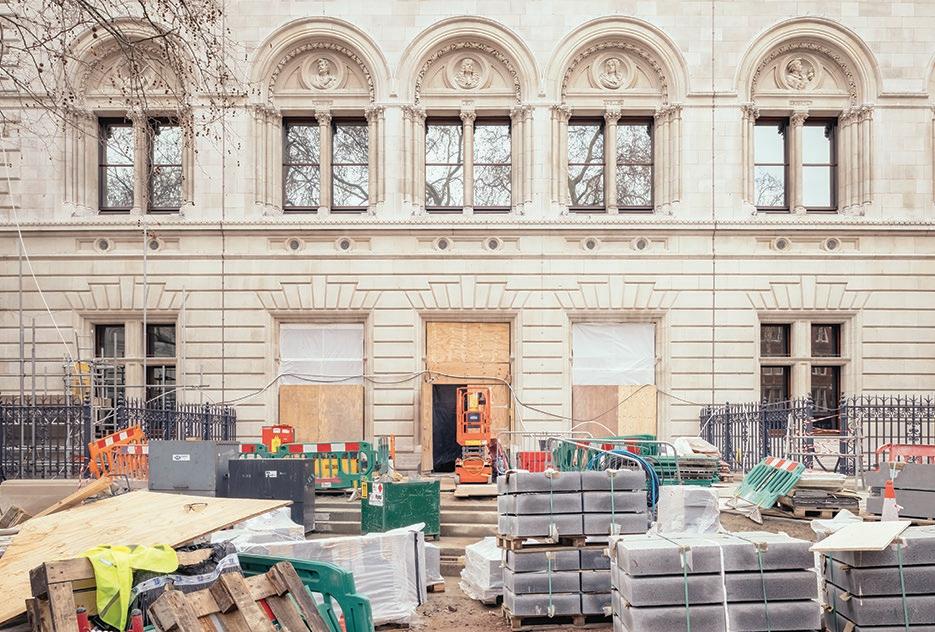
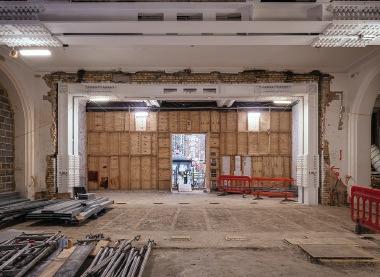
In Inspiring People, this unifying intention has manifested itself in different ways. There were moments when our work has focused on revealing the beauty of the building that has been lost. For example, opening up the windows throughout has restored the building to its original form, and, perhaps more importantly, opened it up to the city, reinstating views in and out which had for decades been lost. In this important restoration work, we collaborated with heritage specialists Purcell.
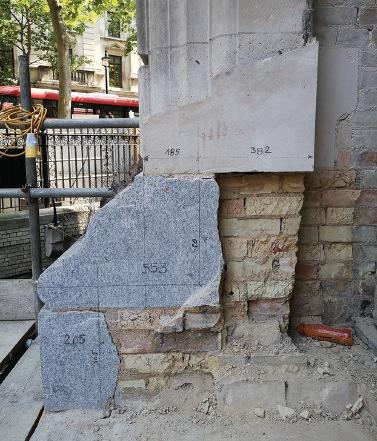
In other moments, I felt a contemporary form would best resolve the design. In creating a new piece of public realm for London – a wonderful task! – in front of the new entrance, I wanted our design to relate closely to the historic building yet to be entirely of its time. Granite was chosen in part for its durability in an urban setting, but also because the new surface begins right next to the cuts that we made through the granite base of the building to create the three new doorways. So, the cutting of Christian’s base becomes the material which extends out into the public realm, defining a gathering space in front of the NPG, where the building comes face to face with the city.
Cutting through the Portland stone sill and granite base of Ewan Christian’s windows to form the new entrance doorways
Gift
a New Bench for the Gallery
by Rebecca Redclift Campaign Manager
‘Just like the Inspiring People project, the new National Portrait Gallery bench has been designed to be a bridge between the past and the future.’
– Jamie Fobert
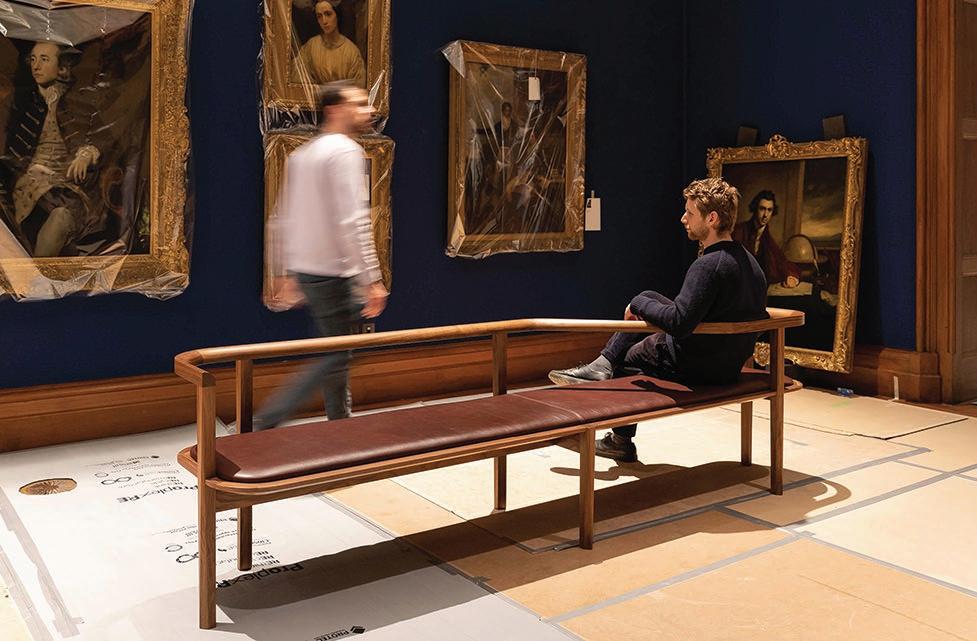
As we prepare to reopen this summer, the details that will elevate the experience of visiting the Gallery are on our mind. Our old gallery benches have seen better days, something Jamie Fobert also noticed when working on the renovation. In response, Jamie has created a timeless new gallery seat especially for the National Portrait Gallery. It is inspired by Victorian love seats: a chair elongated into a bench, with an elegant, curved back that mimics the new stone
bench in our forecourt. Crafted from solid American walnut or Iroko with a Muirhead leather seat, they are a celebration of craftsmanship today, designed and made with the next 100 years in mind.
We would love to make ten new benches for our reopening year. Please help us to do this by donating one with a suggested gift of £12,000. Your bench will provide visitors with a space for rest and reflection and may be hand-carved with a name of your choice. For more information, please contact RRedclift@npg.org.uk
Below – The curved arm of the new National Portrait Gallery bench allows visitors to sit facing either one or the other way, providing different perspectives on the portraits in the room
Corporate Membership at the National Portrait Gallery
by Amber Speed and Chloe Jamieson Corporate Development Managers
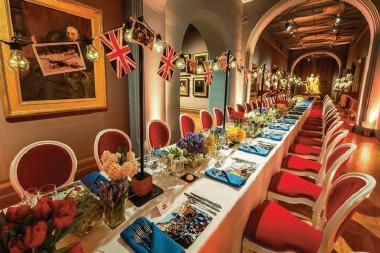
Our Corporate Membership programme is a dynamic offering that enables businesses and organisations to engage with the National Portrait Gallery. The programme offers our members many varied benefits, thus enabling organisations to engage with their different audiences, from internal senior stakeholders to clients, VIPs and influencers.
Our partners have a multitude of benefits to choose from, including complimentary and discounted event hires to set the scene for entertaining your clients and key stakeholders. The Gallery’s exhibitions and permanent collection provide the perfect backdrop, with membership benefits including bespoke curator-led tours and special behind-the-scenes studio and archive tours. Our events team work closely with all corporate members to ensure the delivery of tailored, beautiful and grand moments of celebration. Whether it be anything from an intimate dinner for 20 people to a drinks reception for 200 people, our team go above and beyond to exceed expectations.
An allocation of complimentary guest tickets to Gallery exhibitions plus free entry for your staff are great ways of incentivising a workforce and provide a marvellous way to engage with clients. Other benefits include discounts in the Gallery shop and our new catering spaces, ensuring that your staff and their families can enjoy the perks as well.
Our corporate memberships start at £15,000+VAT and if you are interested please email: Amber Speed, aspeed@npg.org.uk and Chloe Jamieson, cjamieson@ npg.org.uk.
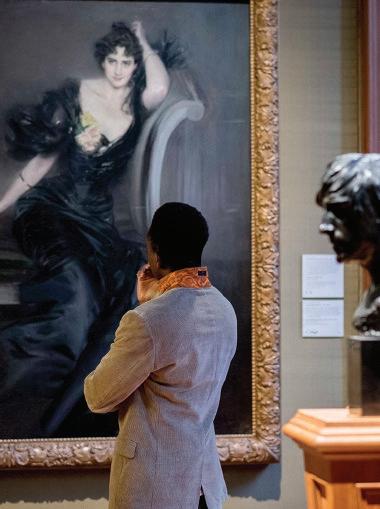
Above from top – Viewing the Collection out of hours
Portrait featured: Lady Colin Campbell by Giovanni Boldini, 1894 (NPG 1630) Photo: Camilla Grenwell
Heart of London Business Alliance represents businesses across the West End, raising the profile of the area as a global hub of commerce, culture and tourism.
Last month, Heart of London launched a first-of-its-kind strategy to support the evening and night-time economy so that it can reach its full potential for all who work, visit and live in the West End. Face to Face speaks with Chief Executive Ros Morgan on their latest vision, strategy and action plan for the night-time experience.
How important is the West End’s evening and night-time economy to the cultural sector?
The West End is the cultural heart of London with a night-time experience that is unparalleled. It is famous worldwide for its art, culture and heritage and is home to the best of the world’s creative talent, attracting 200 million visitors per year.
Evening and night-time activities –between the hours of 6pm and 6am – are a defining component of what makes the West End a world-famous destination; and this sector of the West End’s economy is also a significant contributor to the wider UK economy, accounting for £14bn a year and over 25% of all West End jobs.
The night-time economy is deeply connected to the entire ecosystem of business and leisure activities in central London, and, if supported, can become a major driver for recovery across all sectors. However, we learnt from the pandemic that you can’t have a national economic recovery without the recovery of the cultural sector. We worked hard for and secured a £1.57bn support package for the arts and culture sector during the pandemic, which has meant the retention of art galleries, cultural institutions and theatres. These remain our greatest assets and the backbone of our global standing and our place in the national psyche.
What cultural initiatives have you planned to revive the night-time economy for the West End?
While it has almost recovered to its pre-pandemic level, our research shows that it is still below its growth trend line. Prepandemic trends suggest the West End’s evening and night-time economy should now be worth £15.5bn, rather than only £14bn. Factors such as high living costs, supply chain disruption and staff shortages are having an impact.
What I love about London is the diversity of its people and the energy and creativity that brings with it. To me, the West End is at the centre of it all, and culture is its beating heart. Part of our evening and night-time strategy, as well as our cultural strategy, is to look beyond the obvious and implement actions that support the direct value and employment within these sectors.
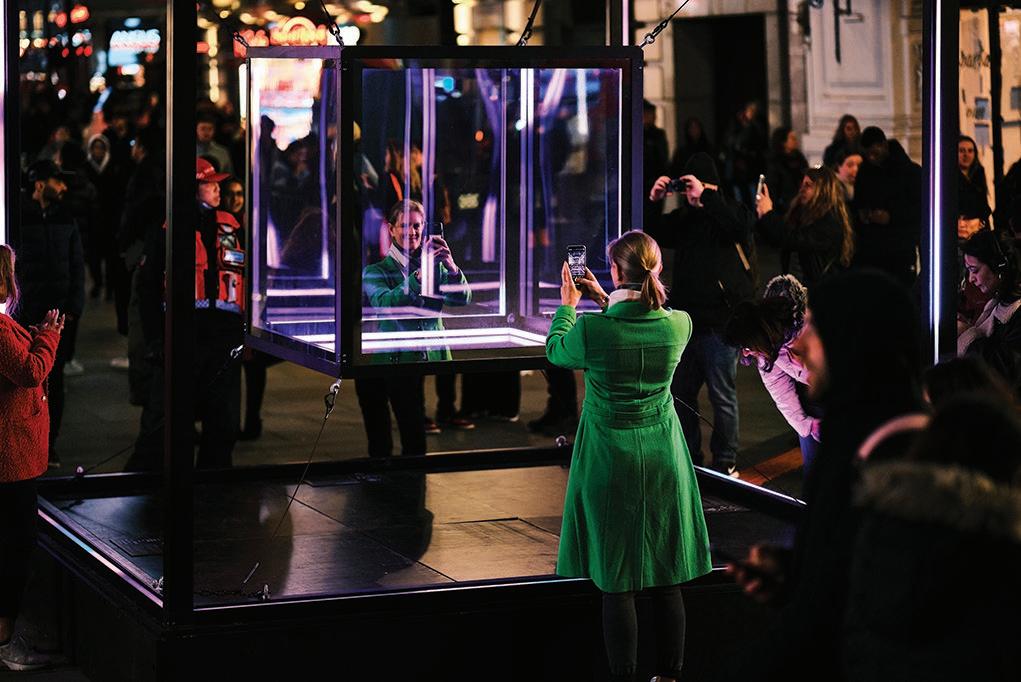
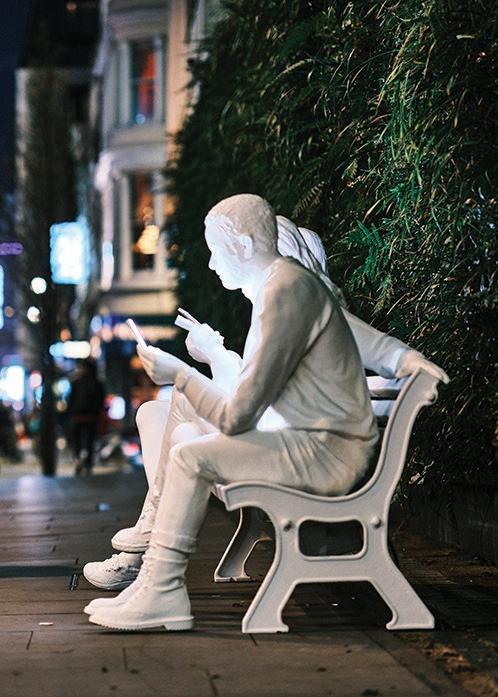
Recognising what a vital role culture has during the night-time, Art of London, our cultural initiative for the West End, has launched Art After Dark, a free and seasonal art programme, that not only brings art out onto the streets, integrating it into the built environment, but unites world-class institutions such as National Portrait Gallery, National Gallery, Royal Academy of Arts and independent galleries across the West End to keep gallery doors open late.
Three times a year, members of the public can experience headline exhibitions at major galleries as part of their night out in the West End, making art accessible to all.
Ros has over 20 years’ experience in delivering successful destinations. Her areas of expertise combine place management, campaigning for strategic change and cultural activations. She represents Heart of London’s members at a local, regional and national level, ensuring that the West End maintains its place as the pre-eminent destination to live, work and visit.
Art After Dark will be returning to the West End on 29th and 30th June – www.holba.london www.artoflondon.co.uk
Left – Exponential by Lucid Creates (a levitating kaleidoscopic mirrored cube creating optical illusions)
As we prepare to welcome you into the Gallery’s beautiful new retail spaces this summer, we thought we would begin by introducing one of the many new designers we will be showcasing in our shops at the Gallery and online.
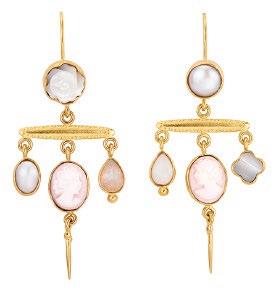
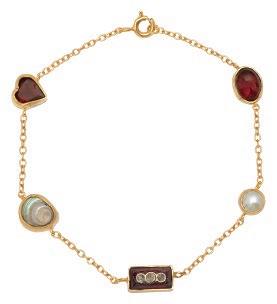
Shortlisted for the Jerwood Applied Arts Prize in 2007, Grainne Morton’s jewellery takes inspiration from her extensive collection of miniatures and precious curios. Morton’s exquisite pieces are carefully choreographed designs that feel both vintage and contemporary. By using unexpected, juxtaposed materials she can establish a relationship between each element and tell a story to the viewer.
Informed by historic jewels worn by some of our most glamorous sitters, Grainne Morton’s use of cameos, eclectic gemstones and complex shapes gives a nod to iconic portraits in the Collection including Elizabeth I, Lady Colin Campbell and Princess Margaret.
Visit the brand-new shop from 22 June and discover Grainne Morton’s jewellery, as well as a whole host of exciting new products inspired by the Collection. Alternatively, you can shop online by visiting npgshop.org.uk/products/ grainne-morton from 22 June.
Be sure to enter the code NPGMEMBER10 at checkout to receive your exclusive 10% discount for Gallery Supporters.