The Gallery is committed to reducing our environmental impact and this magazine is printed on paper certified by the Forestry Stewardship Council and is fully recyclable.
Dr Nicholas Cullinan
it has been a privilege to witness the ongoing transformation of the Gallery during our Inspiring People Project, a highlight of which has been seeing our new entrance and forecourt taking shape. Soon we will be moving into the final stages of Inspiring People and working towards reopening and welcoming you all back to the Gallery. Ros Lawler, Chief Operations Officer, tells you about the key moments in this critical phase of the project, as we approach the last stages of construction.
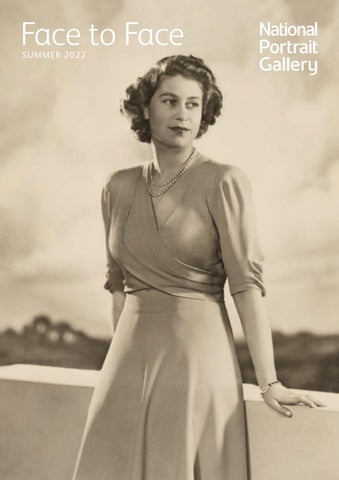
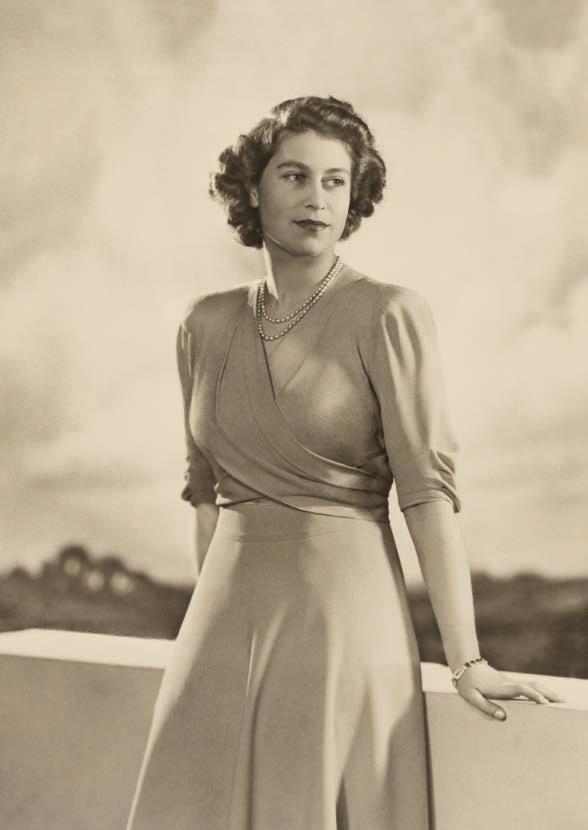
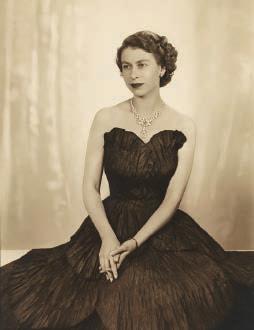
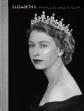
In this Platinum Jubilee year, the Gallery will be celebrating Her Majesty Queen Elizabeth II, who has given the country an incredible seventy years of service as Queen. A beautiful new publication highlights the most important portraits of Elizabeth II from the Gallery’s Collection. Elizabeth II: Princess, Queen, Icon will take readers on a visual journey through her life, and one of the images from the catalogue has been reproduced on the cover of this issue of Face to Face.
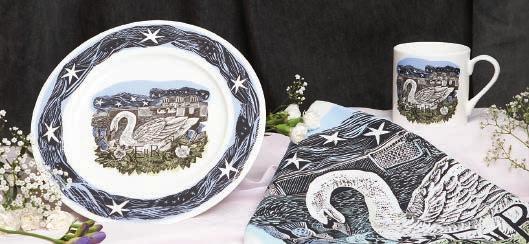
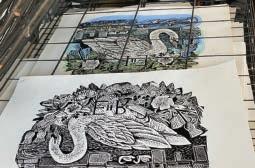
Recently, noted artist and illustrator Angela Harding has developed a line of products for the Gallery to mark the Platinum Jubilee. Angela is best known for her drawings of nature and she took inspiration from the Queen’s coronation gown and its depiction of the national flowers of each country in the UK. Meet the Maker will reveal more about this collaboration.
Dr Flavia Frigeri, Chanel Fund Curator, tells us about the important work the Gallery is doing to enhance the representation of women in its Collection. This issue highlights new acquisitions of female self-portraits, generously supported by the CHANEL Culture Fund.
During our planned closure, the Gallery has run a series of engagement projects staffed by our much-valued community of volunteers. Sara Manzanares Rubio, Volunteer Development Manager, spoke to some of our volunteers to learn more about why they volunteer for the Gallery and what it means to them.
Finally, I want to thank Margaret Conklin, the President of the American Friends of the National Portrait Gallery, for the important work that she does in support of the Gallery from her home in New York. This month we asked Margaret to share one of her favourite portraits with you.
As always, we are extremely grateful for your continued support of the National Portrait Gallery.
Dr Nicholas Cullinan director
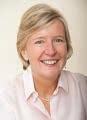
by Margaret Conklin
American
Friends of the National Portrait Gallery (London) Foundation
i am an american and naturalised British woman who came of age during the second wave of the feminist revolution in the 1960s. I also have a daughter for whom the achievements and struggle for recognition of that generation of women are both a reminder that this battle continues today, and an important inspiration to show her that she too can excel in whatever field she may choose.
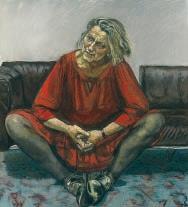
It is thus perhaps not surprising that a personal favourite among all the Portrait Gallery’s wonderful portraits is Paula Rego’s powerful 1995 painting of Germaine Greer. Wearing a red dress (said to be one of her favourites), sitting on a low sofa, legs casually splayed so that her silver-grey shoes – one of whose soles has come unstuck – are joined together, with her hands (apparently roughened from gardening) clenched at her waist and her face attentive elsewhere, Greer, as painted by Rego, is indifferent, or even affirmatively hostile, to
the power-affirming tradition of the portraiture of important men and women.
Like most of Rego’s portraits, this one does not seem to have been intended to flatter the sitter. Greer, however, knows better, seeing in her portrayal an energy and intelligence that she shares with Rego, her acknowledged fellow traveller in the struggle to be taken seriously and to have her achievements appreciated on their own terms. As Greer has written, ‘I think it is a wonderful picture…. I don’t feel as if I’ve been caricatured or anything … it looks like a portrait of intelligence – it’s got this incredible flicker about it, of energy, which is her energy more than mine, but my image is invested with power and concentration.’ This, Greer seems to be saying, is what a woman of achievement, painted by another woman of achievement, looks like today.
Rego’s portrait is exceptional in another way. The artist famously does not paint on commission, but she made an exception for the Gallery’s request for a portrait of Greer, who had discovered Rego’s own feminist work in the 1980s and later became a vocal and ardent supporter. Some day, I hope, this extraordinary portrait can travel to the United States and help further inspire a generation of young American women to follow their own passions.
Margaret Conklin is President of the Board of Directors of the American Friends of the National Portrait Gallery (London) Foundation, an independent US-based charity that helps to support its exhibitions and acquisitions and strengthen our common artistic heritage.
COMING HOME : PORTRAITS OF THE DUCHESS OF CAMBRIDGE
by Laura Down Head of National Programmes
in january this year , the Gallery acquired three new portraits of Her Royal Highness The Duchess of Cambridge, made by the photographer Paolo Roversi to mark The Duchess’s 40th birthday. The portraits are being exhibited for the first time this summer, on a tour that sees them displayed in venues in Berkshire, St Andrews and Anglesey. The tour is part of the Gallery’s Coming Home initiative, which takes portraits of well-known individuals ‘home’ to places that have a special significance for them.
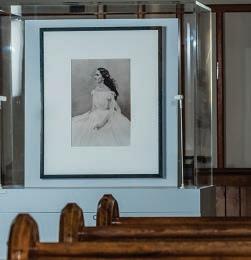
The first Berkshire venue was St James the Less Church in the village of Pangbourne, where The Duchess’s family have been welcomed as parishioners over several generations. The portrait that was on show from 22 March to 5 April depicts The Duchess
seated, gazing to the left. It was displayed in the nave and attracted many visitors both locally and from around the country. The same portrait then travelled to a second venue in Berkshire, the Reading Museum, chosen because of its proximity to the Royal Berkshire Hospital, where The Duchess was born. The portrait will be on display there between 7 April and 4 June.
The photograph of The Duchess dressed in red will be displayed between 13 June and 30 September at the Wardlaw Museum, University of St Andrews, where she studied History of Art. The Duchess met The Duke of Cambridge while they both attended the university. The third photograph in Roversi’s series shows The Duchess in a white dress, smiling straight at the camera. This portrait will be displayed from 16 July to 2 October at the Oriel Mon Museum and Gallery in Anglesey, where the The Duke and Duchess of Cambridge first lived in the early years of their marriage, while Prince William worked as a Coastguard Search and Rescue helicopter pilot at RAF Valley.
Paolo Roversi often works in the studio, using both traditional and digital techniques to create ethereal and soulful portraits. For this series, captured at Kew Gardens in November 2021, The Duchess and Roversi took inspiration from 19th-century photography, which was the subject of Her Royal Highness’s undergraduate thesis at the University of St Andrews.
by Sara Manzanares Rubio Volunteer Development Manager
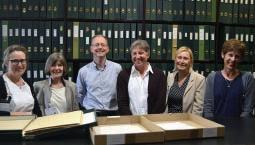
when christine joined the Gallery as a Collections Research Volunteer to help us unlock personal stories linked to Heathrow Airport, she could not have imagined the amazing journey she would embark on:
As someone who has worked all their life in the criminal justice system and studies art history in their spare time, researching Heathrow seemed somewhat of a contrast! However, finding out who our first commercial ‘air hostess’ was, the food science behind in-flight meals as well as hi-jackings, hotel murders… the topic is far from dull. l had no idea how interesting it would be.
Our volunteering programme is funded by the National Lottery Heritage Fund as part of Inspiring People to materialise our ambitions to develop a cohesive culture of volunteering across the Gallery. The programme provides a welcoming environment for volunteers of all backgrounds to gain skills, explore new horizons and feel empowered through meaningful roles
that bring added value to the work we do. From collections care to social media, research, digital content, schools workshops or archiving: we have a wide range of opportunities and a breadth of skills to share.
Volunteering has always been a force of change throughout my life, but when I joined the Gallery in 2017 to create a brandnew volunteering programme from the ground up, I could never have envisioned all the challenges we would face. After years in the making, including an initial launch (accompanied by a large volunteer recruitment) not long before the UK entered its first national lockdown, I am happy to say that we proudly relaunched with a new and exciting remote offer last autumn and the programme is now up and running.
I have volunteered at the Heinz Archive and Library since 2008 and in 2013 I was very happy to take on an additional project for the National Portrait Gallery Photographs Department, where I created nearly 2,000 artist records in total! Having done no volunteering at the Gallery for two years now, due to the pandemic, I am very pleased to say I have just begun a new role as a Schools volunteer on the Faces and Places outreach programme – Steve, schools volunteer
Far from a compromise, the new, refreshed volunteering programme is more ambitious and has even more activity behind the scenes than we ever anticipated. Having a remote
If you are curious about volunteering and would like to try something new, get out there to support a local cause, search for ways to help from home or reach out to hear more about future opportunities to join the Gallery: find out more by emailing volunteering@npg.org.uk
offer has allowed us to engage volunteers across the UK and offer flexibility to enable more people to share their time and passion with us. And this is nothing but the start. As the opportunities behind the scenes continue to grow during closure, with a mix of on-site and remote activity and a team of Schools Outreach Volunteers, we are already working on our ambitious volunteering vision for reopening. I cannot wait to see our volunteers helping to bring the new galleries and Learning Centre to life.
Engaging volunteers is a great way of widening participation and inviting a diversity
of views and experiences into the Gallery. To ensure that our opportunities are really open to everybody we collaborate with a number of organisations, such as Mencap and Speakers for Schools, and particularly welcome volunteers with no experience or qualifications in the area they are applying for. We also offer a structured work experience programme for secondary-school students attending state-funded schools, where priority is given to those receiving free school meals or pupil premium.
Volunteering is a powerful tool to strengthen communities and change people’s lives.
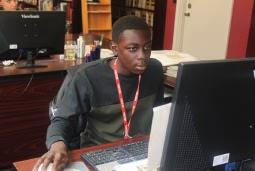
For me, volunteering at the National Portrait Gallery has been one of the highlights of my year out between my undergraduate degree and my master’s. My BA was in History of Art, so the Gallery has been the perfect place to apply that knowledge and interest through engaging with the Gallery’s vast Collection –Olivia, social media volunteer
SELF-PORTRAITS
BY WOMEN ARTISTS
by Flavia Frigeri CHANEL Curator for the Collection
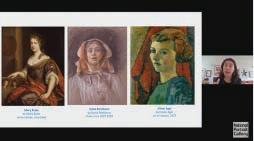
in partnership with the CHANEL Culture Fund, the Gallery launched a new project –Reframing Narratives: Women in Portraiture – back in 2021 to enhance the representation of women in its Collection and highlight the often overlooked stories of individual women who have shaped British history and culture. Now, one year later, we are thrilled to share the news that five important self-portraits have entered our Collection, moving us closer to increasing the proportion of women artists and sitters on display at the Gallery when we re-open in 2023. You can read more here about the portraits newly acquired for our Collection.
below
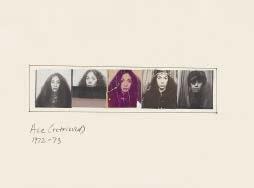
‘Ace (retrieved)’ from The Photomat Portrait Series by Susan Hiller, 1972–73 (NPG x201523)
Susan Hiller’s practice extended across different media and remains notable for its innovative use of audio and visual technology. As an artist and subject, she enters in Ace (retrieved) from The Photomat Portrait Series into a conversation with the photo-booth machine – a long-standing pivotal instrument in the mass production of identity images. For the artist, photo-booth portraits represented an unfiltered medium, accessible to all, including ‘those who don’t own or can’t borrow cameras’. In ACE (retrieved) a sense of ‘active co-operation’, as she described it, is entertained. By combining an arrangement of self-portraits, each taken at a different point in time, Hiller visualises the individuality of each machine, as well as her changing self.
below
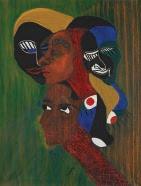
Everlyn Nicodemus (‘Självporträtt, Åkersberga’) by Everlyn Nicodemus, 1982 (NPG 7130)
Everlyn Nicodemus is an artist, writer and curator, long associated with the Black British artistic and intellectual community. Born in Kilimanjaro, Tanzania, she emigrated to Sweden in 1973, and then relocated to France and Belgium before finally settling in Edinburgh, where she now lives. For the artist, self-portraiture is a site of self-discovery – as she explained: ‘I exhibited myself as a subject, showing every part of myself, my problems, my hopes, my conflicts – my whole life.… It was a form of psychological survival.’ Through the layering of multiple faces, she contemplates herself from co-existing perspectives, suggesting that plurality is part of her being.
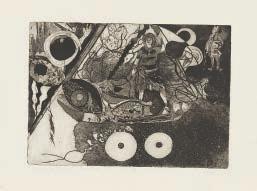
below ‘Aphrodisiacs Being Socially Constructed’ by Chila Kumari Burman, 1988 (NPG 7131)
Chila Kumari Burman’s work spans multiple media, including painting, installation, photography, printmaking and film. She describes herself as a ‘Punjabi Liverpudlian’ who combines her Indian heritage with popular culture. This is one of Burman’s finest etchings and one of her most arresting self-portraits. In Aphrodisiacs Being Socially Constructed Burman combines a complex matrix of personal histories, as well as collective mythologies – including a reference to the Indian warrior Queen Rani of Jhansi. Static notions of selfhood are dismantled here to reveal a determined artist and a young woman ready to escape the social constructions attached to womanhood.
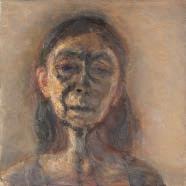
Throughout her long career, Celia Paul has repeatedly painted herself, her own family members and landscapes with a deep personal connection. As demonstrated by Portrait, Eyes Lowered, Paul’s self-portraits are acutely intimate and reflective. The eyes lowered and the sombre palette reinforce the emotional intensity of the work and infuse it with an ethereal aura, while the intimate scale of the self-portrait draws the viewer into Paul’s profoundly meditative world. The work was painted in Paul’s studio, which is not immediately visible; it is opposite the British Museum and not far from the National Portrait Gallery.
below
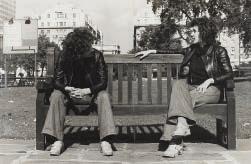
Preparatory study for ‘Divided Self’ by Rose Finn-Kelcey, 1974 (NPG x201525)
For over four decades, Rose Finn-Kelcey was a major figure in the contemporary British art scene, exploring questions of gender, power and agency. This self-portrait shows the artist seated on a bench at Speakers’ Corner in Marble Arch, London. Since the mid-19th century, Speaker’s Corner has been the site for public speeches and debate, hosting the likes of Karl Marx, Vladimir Lenin and George Orwell. Finn-Kelcey builds on this tradition of public speaking, only to highlight how women’s voices have traditionally gone unheard. By staging a conversation between her two selves, she furthers this point to suggest that being ignored meant that women had only themselves to talk to.
PRINCESS, QUEEN, ICON
by Kara Green Publishing Manager
Queen Elizabeth II by Dorothy Wilding, 26 February 1952 (NPG P870(5))
with just under 1,000 portraits of Queen Elizabeth II, the National Portrait Gallery holds some of the most treasured and famous official portraits of her captured at key historic moments, as well as day-to-day images of her at home and with her family. To mark the Platinum Jubilee, we have created a beautiful new hardback book to celebrate the seventy years since her accession to the throne on 6 February 1952.
We had to whittle down 1,000 images to just eighty, ensuring that the most famous and recognisable works were illustrated, along with lesser-known images of The Queen, particularly from her childhood. Portraits featured are by key artists from 1926 to the present: Cecil Beaton, Dorothy Wilding, Patrick Lichfield, Andy Warhol, Annie Leibovitz and David Bailey.
Former Editor-in-Chief of British Vogue Alexandra Shulman contributed a wonderful introduction, highlighting her favourite images of The Queen, and exploring her impact as an iconic figure in modern British culture and history:
There has been scarcely any element of her life that has not been recorded by somebody else, from the postcard of her as a sweet baby girl to the immensely tragic pictures of her seated alone, due to pandemic restrictions, in St George’s Chapel, Windsor Castle, at the funeral of Prince Philip, her husband of seventy-three years.
She is symbolic, out of this world, a distanced figure clad in the panoply of royalty. Recently we have seen her presented in this manner far less often, but, even in a more everyday mode, she loses none of her majesty. She remains one of the contemporary world’s true icons. (Edited extract)
Elizabeth II: Princess, Queen, Icon Published 6 February 2022 Hardback, £14.95
Gallery Supporters enjoy a 20% discount on the book in our online shop, npgshop.org.uk: to redeem use the online discount code MEMBER2020
MEET THE MAKER: ANGELA HARDING
by Jasmin Woolley-Butler Ecommerce Marketing Manager
this june sees the United Kingdom celebrate Her Majesty The Queen’s Platinum Jubilee. She is already our longest-serving monarch, and this historic event is one worth commemorating in style.
Here at the Gallery, we approached esteemed printmaker and illustrator Angela Harding to collaborate on an exclusive range of commemorative products for the Platinum Jubilee year.
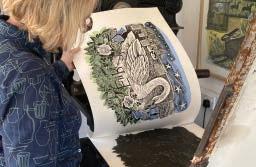
Angela creates intricate illustrations inspired by wildlife and nature seen around her rural Rutland home. Her technique combines lino/vinyl-cut relief printing with silkscreen printing, which results in imagery both bold and beautiful. With layers of carefully chosen colour and textural detail, each illustration is truly immersive and evocative.
Angela has created illustrations for a number of nature books including English Pastoral by James Rebanks and The Salt Path by Raynor Winn. She has also been commissioned by many major publishers, including Faber & Faber, Bloomsbury and Penguin, to illustrate their publications. In 2021 she worked with Little Brown Books to publish her own illustrated book entitled A Year Unfolding
We recently chatted to Angela about working with us on the upcoming Jubilee Range to find out about the inspiration behind the design and the relevance of the elements that make up the final image.
Speaking about the range, Angela says: ‘I have produced designs for a tea towel, plate and mug – I have produced many tea-towel designs and I love the accessibility of this
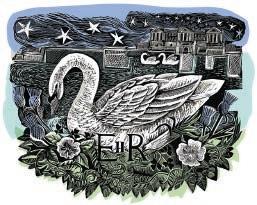
Angela Harding’s central design for the Platinum Jubilee range
product to all – tea towels can bring art into a kitchen at low cost. I loved producing the designs for the ceramics and took great joy in looking at Eric Ravilious’s work and the designs he had done for previous coronation celebrations. They proved a source of inspiration for my own work.’
The central figure in the design for our Jubilee range is a swan perched behind the royal cypher, with Buckingham Palace in the background. Angela explains, ‘I used as the main theme of royalty a swan that sits on a bed of flower symbols representing the Union.’ Angela then explains how she chose the flowers: ‘I took as my inspiration the coronation dress worn by The Queen and looked at the flora it contained.’ The symbolic flowers found in the intricate embroidery of the dress include the national flower of each country in the Union — a Tudor rose, a Welsh leek, Scottish thistles and Irish shamrock.
The Platinum Jubilee range created by Angela Harding exclusively for the National Portrait Gallery is available to purchase now through our online shop and, don’t forget, members get 20% off with code MEMBER2020.
The Jubilee mug and plate are made in Angela’s birthplace, Stoke-on-Trent, from fine bone china, screen-printed using three colours and presented in a black gift box with the artist, Gallery and Jubilee branding embossed in silver foil. The Jubilee tea towel is also made in the UK from 100% cotton and screenprinted using five colours, presented with a card belly band, again with artist, Gallery and Jubilee branding. npgshop.org.uk/collections/queens-jubilee
the arrival of spring heralds an exciting time for the Gallery as the transformation of the building takes shape.
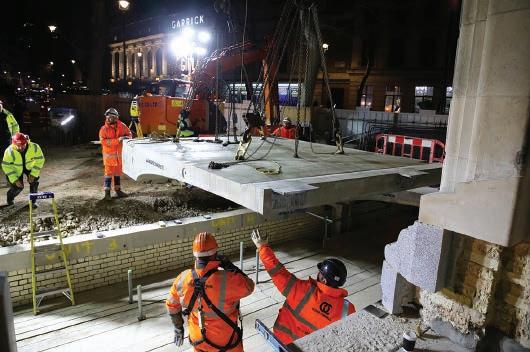
From inside the new, spacious entrance hall we can look up Charing Cross Road and imagine crowds of visitors arriving across the pedestrian bridge connecting the North Façade doorway to the forecourt. The bridge was installed on a freezing night in January. Because of the size and weight of the concrete slabs, which were shipped from Northern Ireland, they could be driven
through London only after midnight to avoid causing traffic chaos, before being lifted into place by an enormous crane. The lifting operation involved moving three bridge sections, weighing sixteen tonnes each, into place on top of previously installed supports. A massive thank you to the team, who stayed up until 2 am at minus four degrees to see it safely installed!
The installation of the new staircase to the Learning Studio has also built anticipation, and we can imagine the chatter of children and
their footsteps as they make their way down the beautiful circular stairs to the modern, light-filled studio. Another high point is the view from what will be a new café space in the East Wing, across the road to St Martin-in-theFields. You can almost smell the coffee…
There is still a huge amount to do before we re-open next year. We have used the opportunity of closure to replace the escalator, which takes visitors from the ticket desk to the second floor. When it was originally installed in 2000, it was the longest escalator in Europe, so it’s been no mean feat to remove the existing structure and commission a replacement.
We are finalising the designs for our new catering and retail spaces to create exciting destinations for our Gallery regulars and more casual ‘drop-in’ visitors alike. The view from the Portrait Restaurant is one of the most iconic dining views in the world and we are committed to delivering a dining experience that lives up to this.
Over the past year, we have found some forgotten features from the original building designs which are now being restored to share with visitors for generations to come. I won’t spoil the surprises, but we think you will be delighted to see them when you return to the Gallery.
So much hard work has gone on behind the scenes to prepare for the building project:
from government approval to fundraising, from planning permission to selecting a brilliant architect and building contractors, not to mention managing work around the added complexities of Covid and related supply chain issues.
With excellent planning (and just a little bit of luck!) the project remains on time and on budget. It has been a mammoth effort, which would not have been possible without the dedication of our talented staff and ongoing support from our wonderful members.
PORTRAITS OF WRITERS
by Catharine MacLeod Senior Curator, 17th Century Collections
this exhibition is the inaugural display at the Hay Castle Museum. Working with National Portrait Gallery curator Catharine MacLeod, the author and journalist Dylan Jones, OBE, has selected a group of portraits from the National Portrait Gallery’s Collection. The group comprises a wide range of individuals who use words in their work, although not all are writers in the traditional, literary sense. Dylan’s chosen theme, Identity, provides a lens through which to consider the rich contributions these figures have made to both national and international discussions about individual and collective identities. Among the topics explored in their work are gender identity and sexuality; race, ethnicity, migration and colonialisation; artistic identity; national and regional identity; identity and memory. Many have written about the tensions as well as the advantages of multiple,
sometimes conflicting identities; another common theme is the need for connection and community, and the fluidity of identity.
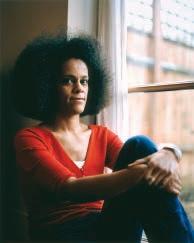
Among those included in the exhibition are Simon Armitage, Poet Laureate of the UK since 2019, who won the Hay Festival Medal for Poetry in 2012. He has said: ‘Part of my philosophy has always been to try to find the …miraculous within the everyday and the ordinary and the domestic.’ The Welsh-born novelist Sarah Waters has brought lesbian literature into the popular mainstream and has also helped to establish historical fiction as a serious literary genre. She has said that the lesbian characters in her books are in some ways incidental because lesbianism is part of her life, but also that she writes with a clear lesbian agenda. Bernardine Evaristo, the author of eight books of fiction and verse fiction as well as numerous other works, became in 2019 the first black woman and the first black British person to win the Booker Prize, for Girl, Woman, Other. Much of her writing is experimental in form, dissolving boundaries between traditional literary genres while exploring ideas of post-nationalism and the African diaspora. She considers the impact of migrations and global movements on both individuals and countries.
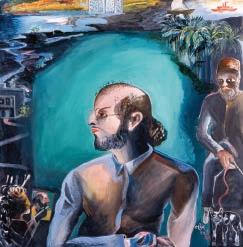
The exhibition includes photographs as well as some of the Gallery’s most striking paintings of contemporary literary figures. The oil portrait of Salman Rushdie by Bhupen Khakhar shows the author surrounded
below top
Salman Rushdie (‘The Moor’) by Bhupen Khakhar, 1995 (NPG 6352)
Portraits of Writers will be on display at Hay Castle, Hay-on-Wye from 20 May to 31 August 2022
The exhibition is part of a Skills and Knowledge Exchange Programme working with 12 museum partners across the UK while the Gallery is closed for its Inspiring People project
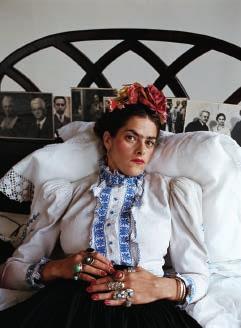
by scenes from his novel The Moor’s Last Sigh (1995). Rushdie’s work explores the interconnections and clashes between Eastern and Western cultures, and issues of identity in relation to nation, migration and postcolonialism. Arturo Di Stefano’s painting of transgender travel writer and historian Jan Morris is a celebration of her life and work, and she described her feelings on sitting for the portrait as ‘one of the happiest experiences of my life’. Mary McCartney’s photograph of Tracey Emin shows her in the guise of the Mexican artist Frida Kahlo (1907–1954), whose unconventional lifestyle and art Emin admires and whose work connects with hers in its raw and honest autobiographical narrative. Emin has said: ‘I love writing…I think every artist has a backbone to what they do. For some it could be photography, painting, the ability to make a formal sculpture stand, but for me it’s writing.’
Dylan Jones has said about the exhibition: When I was asked to help curate this first exhibition at Hay Castle, an exhibition essentially recognising creativity, I thought that it would be invidious to focus on anyone and anything else but writers and writing. After all, Hay is not only globally recognised as the home of books – it is the second-hand book capital of the world. It is also home to one of the most influential and celebrated festivals in the world.
So, as Hay is the home of writers, so is this exhibition.
IT’S A VIRTUAL WORLD
by Cassandra Makris Membership Acquisition Officer
while we were preparing for our planned closure in 2020, world events saw us closing our doors earlier than expected, giving us a new perspective on how we keep ourselves entertained and connected to others from home. The Membership Team have embraced this alternative approach to bringing our membership community together during the period while in-person Members’ events are paused.
Welcoming a virtual events programme has given us the opportunity to engage with many different areas of the Gallery’s activity. We strive to highlight our programme across the UK and internationally with events focused on exhibitions and displays.
In 2020, we were still finding our feet while getting to grips with the new normal, but launched the programme in style with a virtual drawing workshop in conjunction with Raw Umber Studios. The success of this was astounding and we have not looked back since.
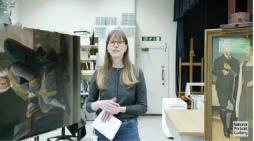
We have highlighted the Inspiring People project through the programme such as our talk about the decant, the removal of portraits that previously hung on our walls, and projects being undertaken in our Conservation studio with a Spotlight on Conservation event. We’ve also highlighted international exhibitions like Icons and Identities: Shakespeare to Winehouse, held at both the National Museum of Korea and the National Portrait Gallery in Canberra, Australia.
These events bring the National Portrait Gallery to a wider audience and we have seen Members from as far afield as America join us from the comfort of their own home. Excitingly, we have seen an increase in attendance and the feedback has been tremendously positive.
For those who haven’t been able to attend or for those who simply want to watch again, these events are recorded for posterity in a Members-only YouTube page. These can be revisited at any time, with new events being added monthly. Members can view our upcoming events on our Members’ page at npg.org.uk/support/join-us/members/ members-events
PASSING ON PORTRAITURE TO THE NEXT GENERATION
by Charlotte Moss Long-term member and legacy pledger
below left
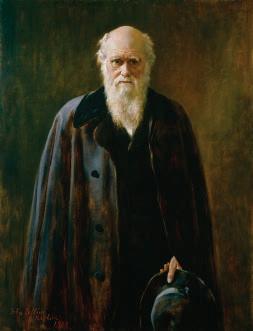
Charles Darwin
Copy by John Collier, 1883, based on a work of 1881 (NPG 1024)
years ago , my sister said, ‘If you are ever in London and have a spare half-hour, go to the National Portrait Gallery.’ One day, before the theatre, that’s what I did. I was just blown away. It was so calm, the architecture so beautiful. I was completely taken. Ever since then, whenever I’m in London, I always make the Gallery part of my day. London is full of bustle, and I like that, but the Gallery is a place to think, to reflect. It’s good for the soul. There are very few places in London where you can feel like that.
I’ve now seen all the galleries. I enjoy understanding why and how a portrait was made. For me it feels intimate, I feel a close connection with the people in the pictures. The full-length portrait of Darwin by John Collier is the one I always come back to. I studied evolution at university, and spent time studying Darwin. Other portraits of him focus on grandeur, but this one is matter-of-fact, humble. You feel you’re encountering this impressive mind, but also his personality; you can’t get that from his diary or other writing.
I’ve been a member for many years, and I’ve also left the Gallery a gift in my Will. I think it’s important the Gallery has funding for new work, exhibitions and so on, but also to be there for future generations. I want to give something significant, but that isn’t possible in my lifetime. I’m giving just a small percentage of my estate, so my loved ones will be looked after first. The risk is if we don’t support the arts, and sciences too, we could lose them. We need to make sure they’re accessible for future generations. I know I’ll be leaving a legacy that continues.
Charles Darwin was naturalist who formulated the theory of evolution by natural selection; the result of years of research, his On the Origin of Species (1859) made a meticulous survey of life-forms and the conditions which governed their development; wrote other important works on botany, zoology, geology, and the philosophy of evolution.
If you’d like to find out more about how a gift in your will could support the Gallery, please contact Anna Pharoah, Fundraising Manager, apharoah@npg.org.uk
Summer offer for
Gallery Supporters
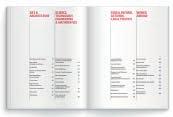
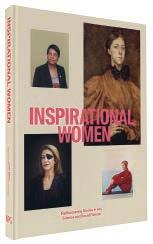
INSPIRATIONAL WOMEN: REDISCOVERING STORIES IN ART, SCIENCE AND SOCIAL REFORM
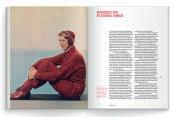
Published in celebration of Women’s History Month, this beautifully illustrated book focuses on the stories of inspirational and pioneering women whose work has changed the course of British history.
The book features an introductory essay by Samira Ahmed, influential journalist, writer and broadcaster, as well as extensive captions.
Although the successes of many of these women have not been celebrated historically, this new title will shine a light on their achievements and contributions to history and culture both in Britain and, in some cases, internationally.
The author is Dr Lydia Miller, currently Assistant Curator at Pallant House, Chichester, and the book provides a snapshot of the initial research undertaken as part of Reframing Narratives: Women in Portraiture, a three-year project supported by the CHANEL Culture Fund.
To make your purchase please visit npgshop.org.uk and search ‘inspirational women’ – and don’t forget to enter code MEMBER2020 at check-out to receive your exclusive 20% discount for Gallery Supporters. Inspirational Women: Rediscovering Stories in Art, Science and Social Reform is available to order now.
This offer is open to National Portrait Gallery Members and Patrons only.