The Gallery is committed to reducing our environmental impact. This magazine is fully recyclable and has been produced by a certified carbon balanced printer. Their Partnership with the World Land Trust is helping to preserve and protect carbon rich habitats around the world.
As we enter 2024, I am proud to reflect on the remarkable achievements of 2023 in what was a historic year for the National Portrait Gallery. With your support, we have undertaken the most extensive transformation of the Gallery since 1896 and raised our profile to inspire even more people. The Gallery has now received over one million visitors since it opened in June, and we are on track for a recordbreaking year.
At the end of 2023, we were delighted to be awarded the prestigious Apollo Acquisition of the Year Award for Portrait of Mai by Sir Joshua Reynolds. Apollo praised the Gallery’s collaboration with Getty in what was the largest acquisition the UK has ever made, along with the Titian acquired by the National Gallery and National Galleries of Scotland in 2009. It has been thrilling to see the portrait viewed by visitors and school groups for the very first time in a public collection and I see this Award as tribute to all those supporters and Gallery staff who worked so hard to make the acquisition possible.
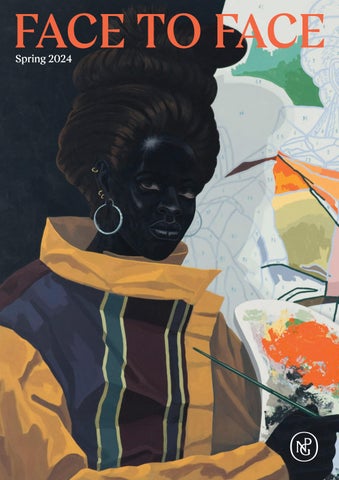
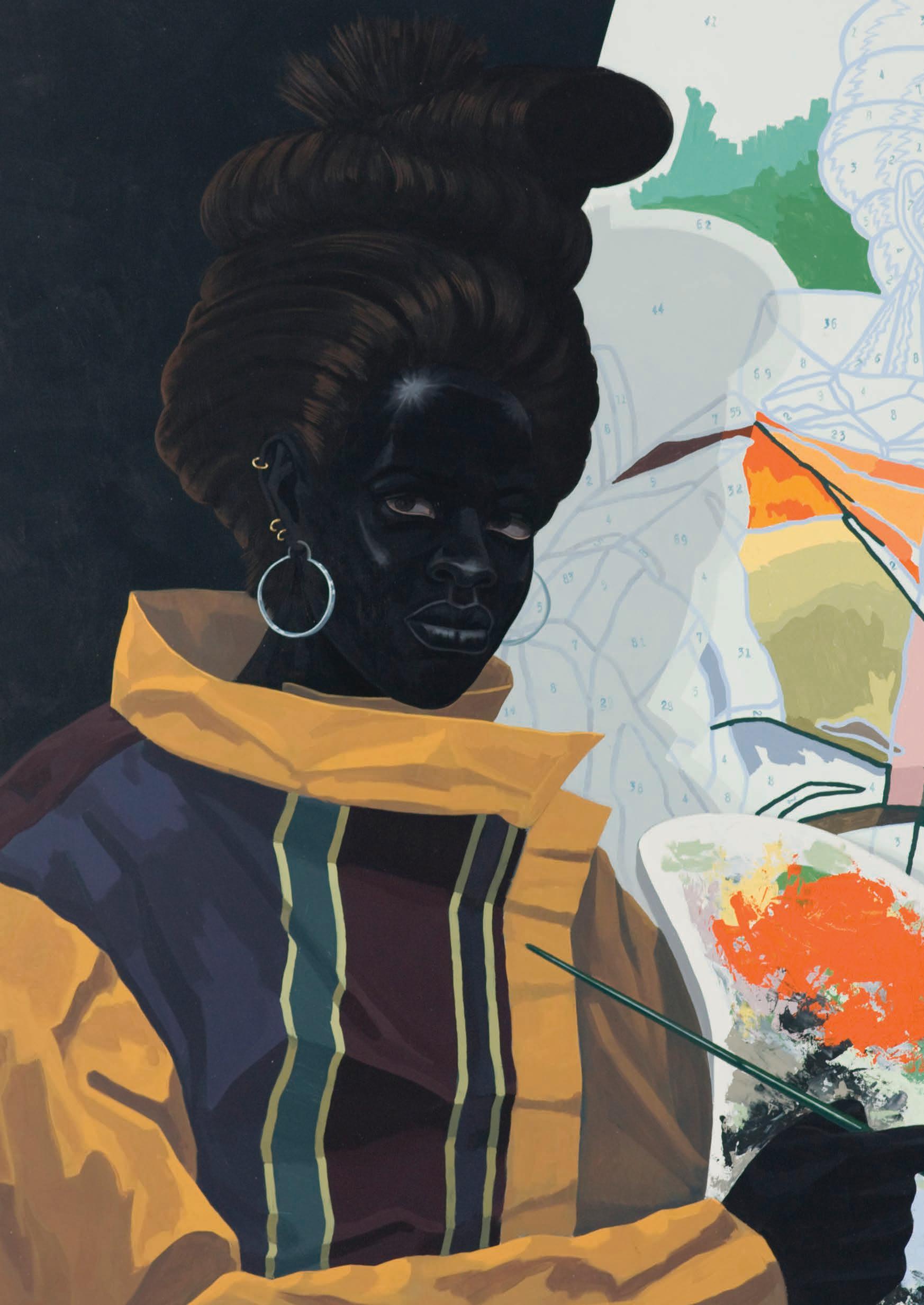
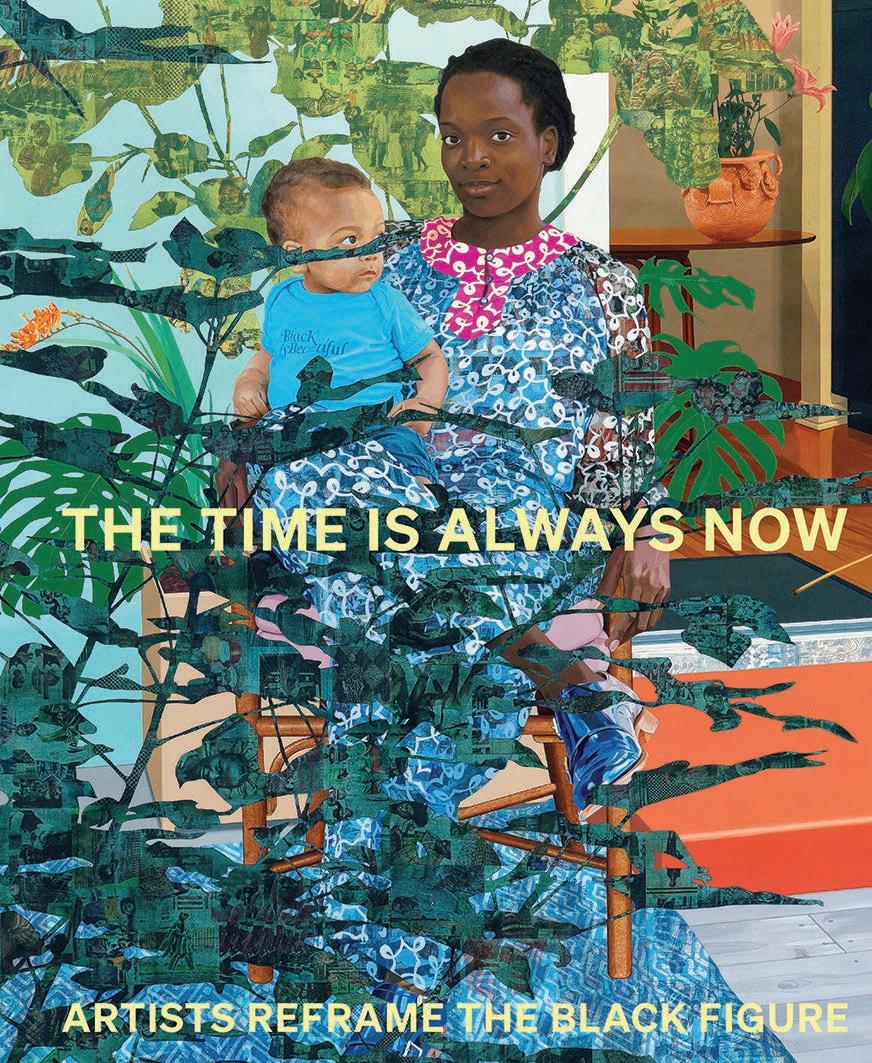
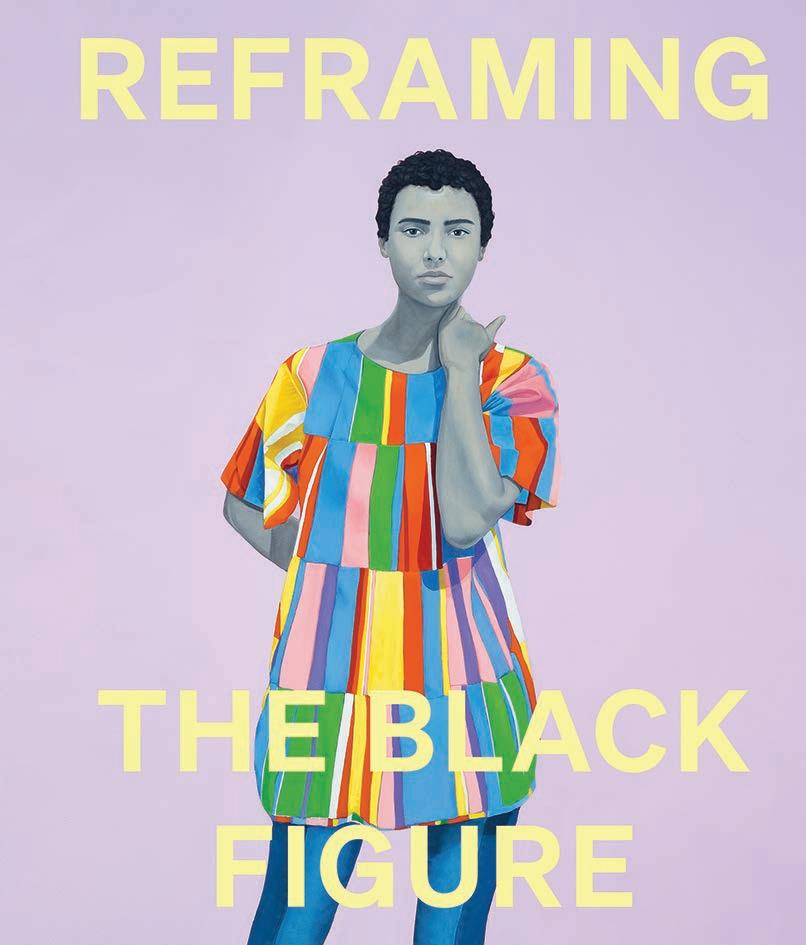
Looking forward, we are excited to introduce you to the exhibition programme for 2024 and Poppy Andrews, Senior Communications Manager, shares further details on this. One of the highlights will no doubt be The Time is Always Now: Artists Reframe the Black Figure, curated by Ekow Eshun. Included in this issue is an abridged extract from the introduction to the exhibition catalogue.
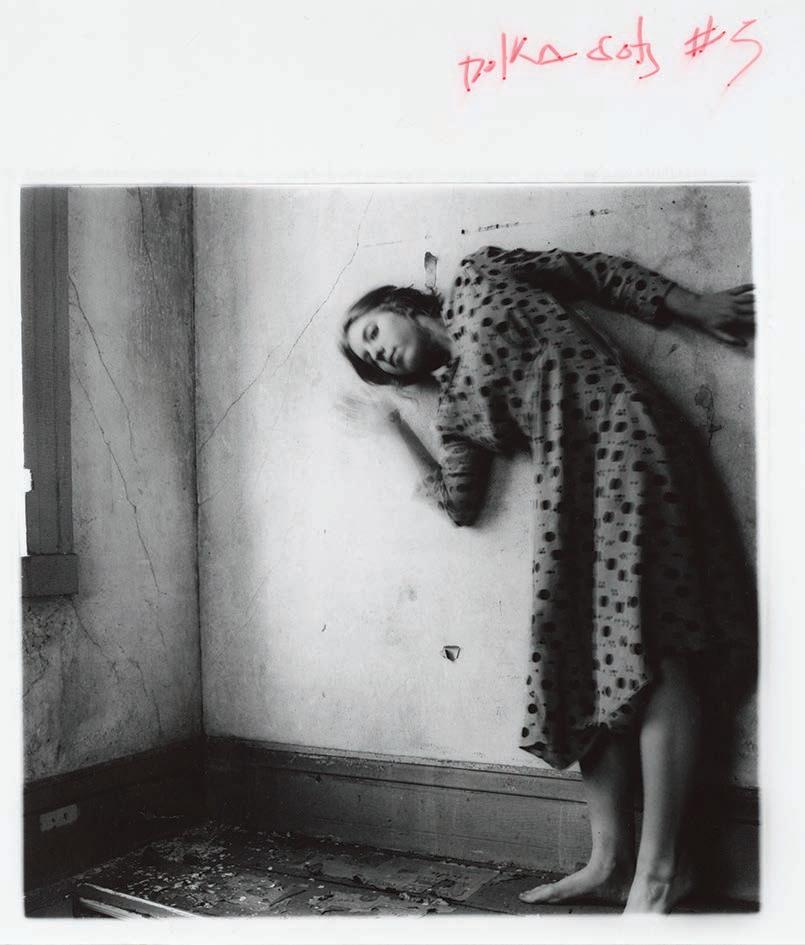
This spring, we will also open Francesca Woodman and Julia Margaret Cameron: Portraits to Dream In. This exhibition is the culmination of many years of study by Magda Keaney, our former Senior Curator
of Photographs. Denise Vogelsang, Director of Communications and Digital, sat down with Magda who shares her personal insights into two great female photographers working 100 years apart.
The Gallery has received support from the Samuel H. Kress Foundation and the Pilgrim Trust to take a much closer look into our Heinz Archive to find sitters previously unnamed and overlooked. Anna Pharoah, Fundraising Manager: Grants and Legacy Giving, spoke with Kate Bernstock, Curator: Archive Study Project, to find out more about the project and the importance of this work.
Finally, we asked Sir Harry Djanogly to tell us about his favourite portrait in the Collection. Sir Harry is a longstanding supporter and the Gallery has named two Rooms in recognition of his support: The Harry and Carol Djanogly Gallery, which focuses on art, science and society, 1660–1760, and The Lady Carol Djanogly Gallery which showcases portrait miniatures. During our closure, Sir Harry helped us to acquire the exquisite portrait of Lucy Russell (née Harington), Countess of Bedford by the great Tudor miniaturist Isaac Oliver, which you can find on display in the latter room.
Thank you for your continued support and I look forward to seeing you at the Gallery during this exciting year.
Dr Nicholas Cullinan Director
My Favourite Portrait
by Sir Harry Djanogly CBE
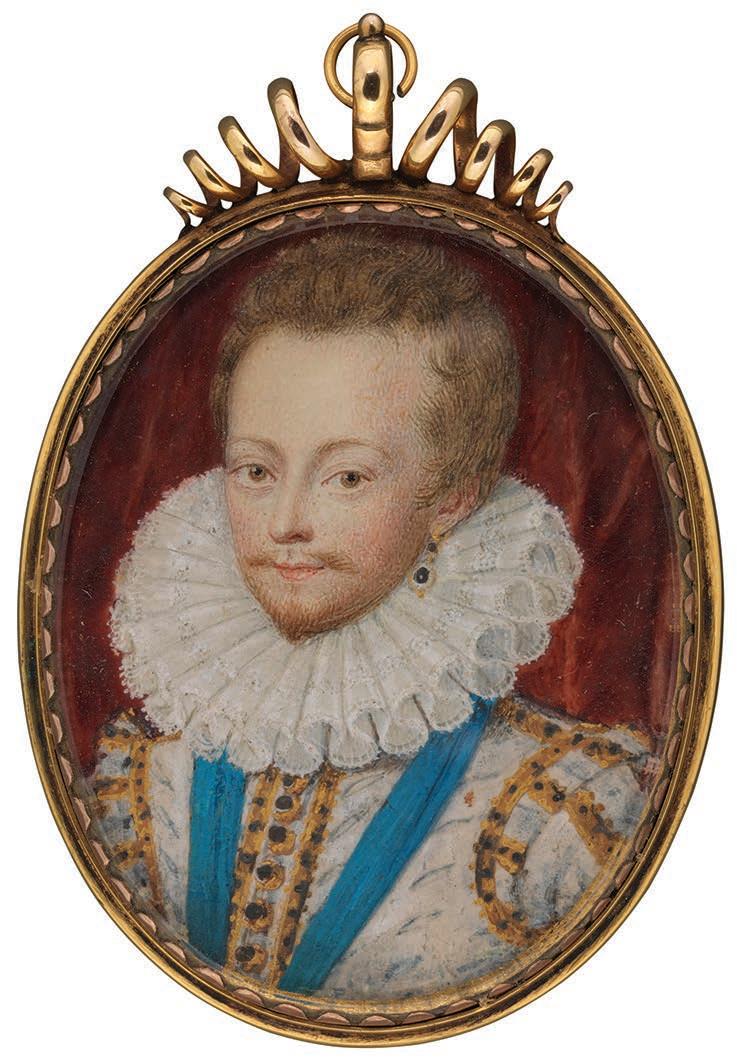
There is something that has long fascinated me about miniature portraits. Exquisite brushwork and the skill of the artist in reducing the image characterise the style. Moreover, the close intimacy conveyed by so many of these pictures is captivating. Regular large portraits aimed at a wider and more distanced audience can lack the intimacy and directness of the miniature. Sometimes the relationship of the sitter and the commissioner is obvious: a picture sent to encourage a match, homage to a famous individual, a memento for the traveller or a keepsake from or to a loved one. But sometimes the relationship is not so obvious and is thereby possibly more intriguing as a result.
Nicholas Hilliard (1547–1619), arguably the greatest of English portrait miniature artists, provides us with some of the best visual images from Elizabethan England. Hilliard was appointed limner (miniaturist) and goldsmith to Elizabeth I, with his first known miniature of the Queen dated 1572. Continuing to receive royal patronage under James I, Hilliard received from the King in 1617 a special patent granting him sole licence for engraved portraits. He also produced many miniature portraits for the King.
This youthful 1611 depiction of Robert Carr is a great example of Hilliard’s work. It is also a reminder that in Jacobean society, subjects could fall from favour every bit as fast as they were raised. In Carr’s case, within 12 years of meeting James I, he had been created a Viscount, a Knight of the Order of the Garter and then an Earl, followed by his indictment for murder!
I think that Carr’s flamboyant clothing and somewhat mischievous look give some indication of his temperament, if not his impending fall from grace.
Sir Harry Djanogly CBE’s business career commenced in 1954 when he joined the family textile business. From 1974 until 1998 he chaired the Nottingham Manufacturing Company plc and the subsequent companies with which it merged; finally Coats plc.
He has been a director and investor in companies dealing in real estate, retail, manufacturing, banking and service industries. He has funded and supported artistic, medical and educational projects predominantly in London, Nottingham and Israel.
Sir Harry is holder of three honorary doctorates, a Fellow of the City of Jerusalem and holder of the Prince of Wales Medal for Arts Philanthropy.
Above – Robert Carr, Earl of Somerset by Nicholas Hilliard, c.1611 (NPG 4260)
Portrait Pavilion Opens
by Anna Starling Director of Commercial
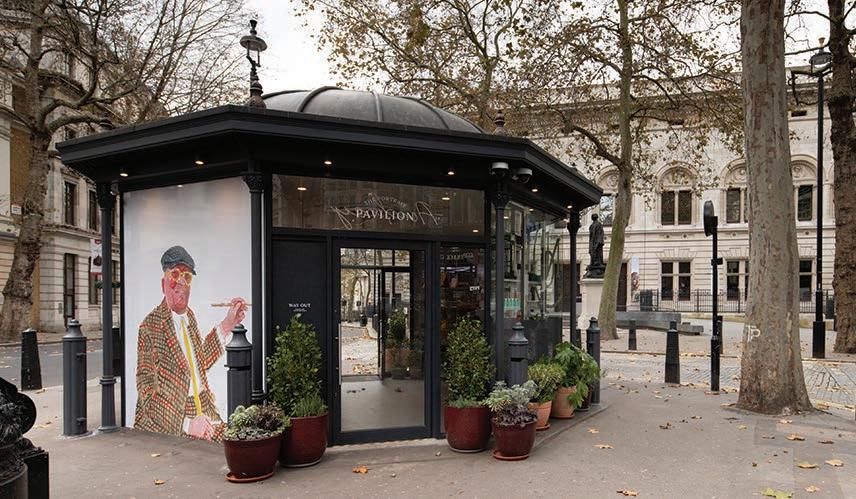
On 1 November 2023, the Gallery opened The Portrait Pavilion, a new café and popup shopping space, situated opposite the new Ross Place entrance and forecourt. Enhancing the vista of Charing Cross Road, the new Portrait Pavilion will provide an independent café offer for the neighbourhood, serving outstanding coffee, grab-and-go snacks and signature sweet treats by the Daisy Green Collection who also operate two of the Gallery’s hospitality spaces, Audrey Green and Larry’s Bar.
The former theatre ticket kiosk, which served the West End until its closure in spring 2021, was purchased by the National Portrait Gallery in 2022, with support from The Blavatnik Family Foundation, kickstarting a further phase of transformation to the Gallery’s estate. A spacious 1,700
square foot area below ground level will provide opportunities for the Gallery to expand its public footprint and programme in the future.
The Portrait Pavilion provides the opportunity to attract new, first time visitors and brings our exciting hospitality and retail experiences out of the building. Tourists, commuters, and residents alike will be able to enjoy all that’s on offer from the Portrait Pavilion in the kiosk that has been situated in the heart of the West End for decades.
The Portrait Pavilion is open from 7.30am on weekdays to cater to the early morning trade and Members can enjoy 10% off their Portrait Pavilion purchases.
Above – The newly opened Portrait Pavilion opposite the Ross Place entrance
The National Portrait Gallery Unveils its Line-up of
Major Exhibitions for 2024
by Poppy Andrews Senior Communications Manager
2023 was a busy year for all teams across the Gallery and we in the Communications department really did feel as if we’d hit the jackpot, with so many brilliant exhibitions, event updates and offers for our subscribers, social media followers and colleagues in the media. I am now delighted to share an overview of what you can expect from our programme in 2024.
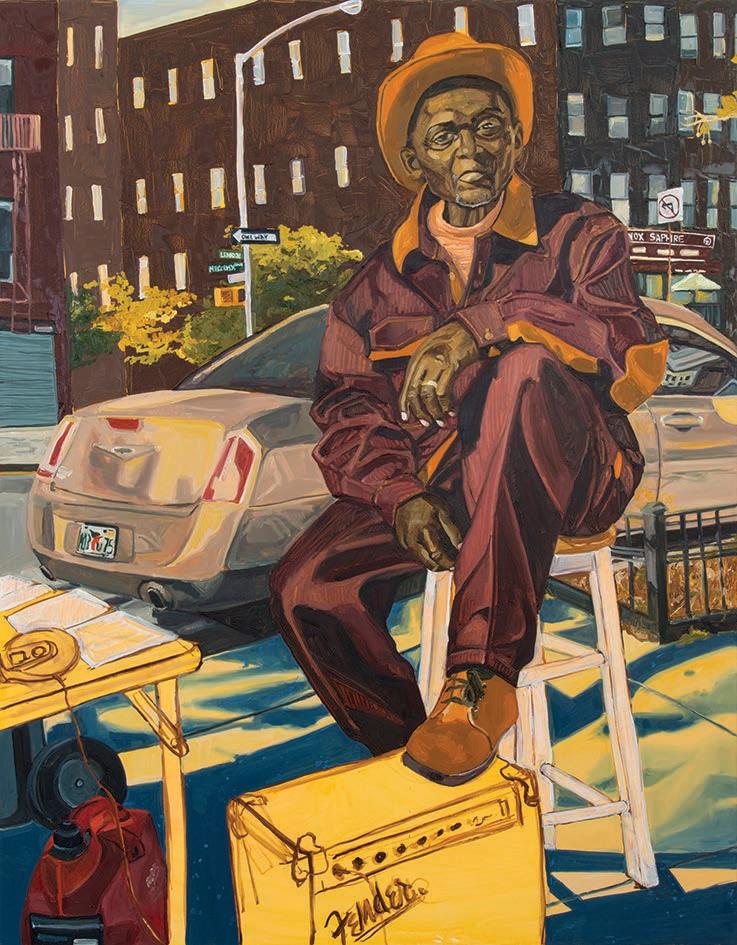
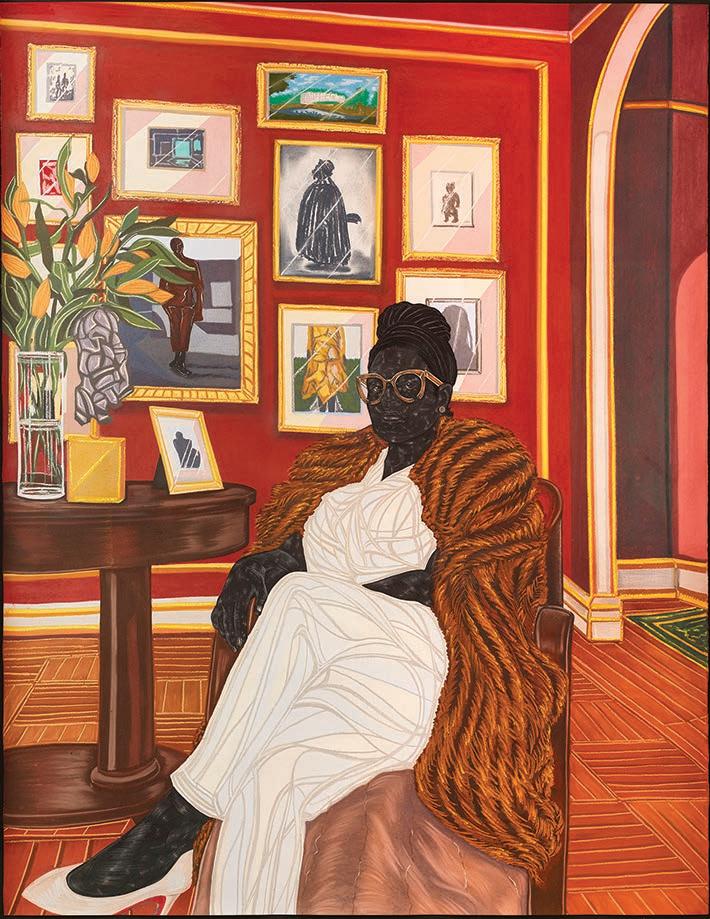
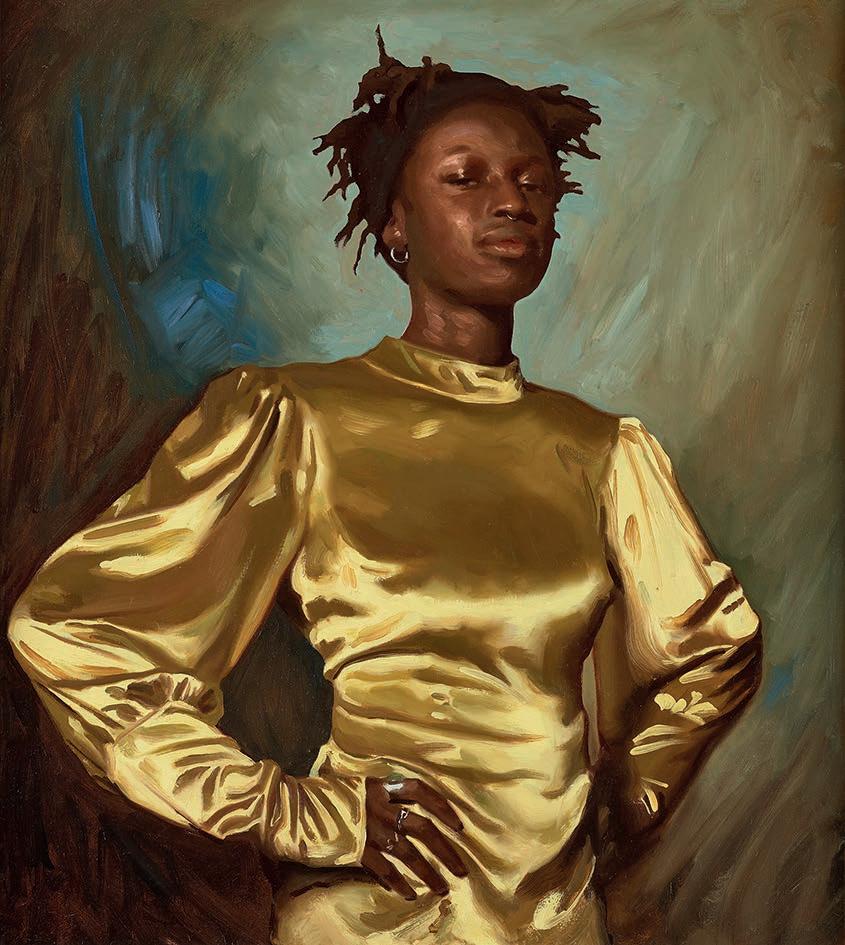
Members will be among the first to see one of our most anticipated exhibitions of 2024, The Time is Always Now: Artists Reframe the Black Figure, opening to the public on 22 February. Supported by Bank of America and curated by Ekow Eshun, writer and former Director of the Institute of Contemporary Arts, the exhibition
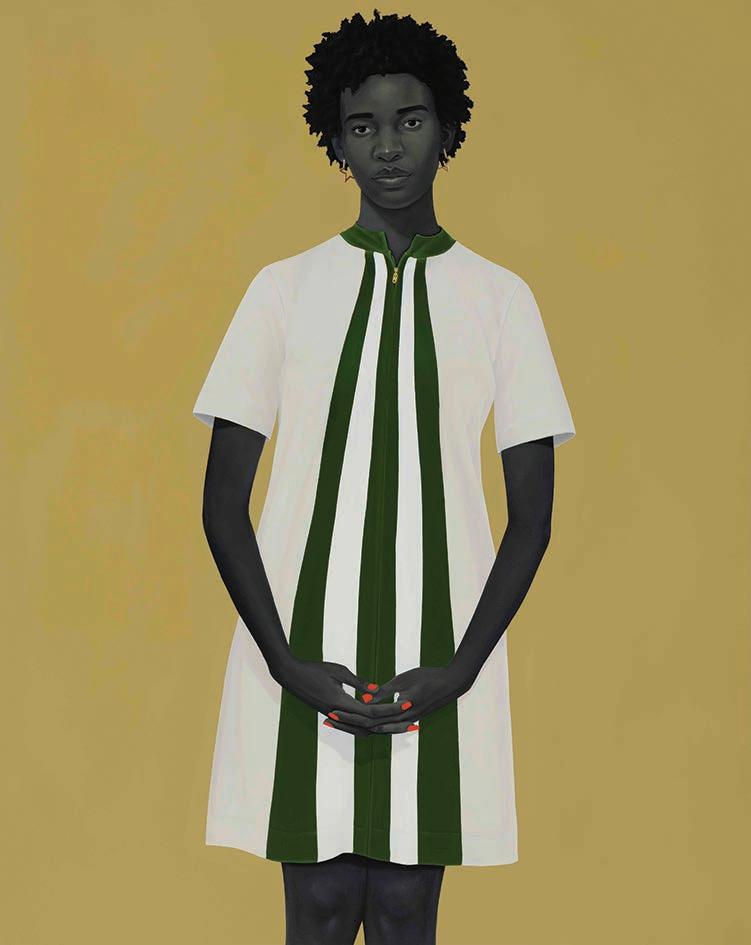
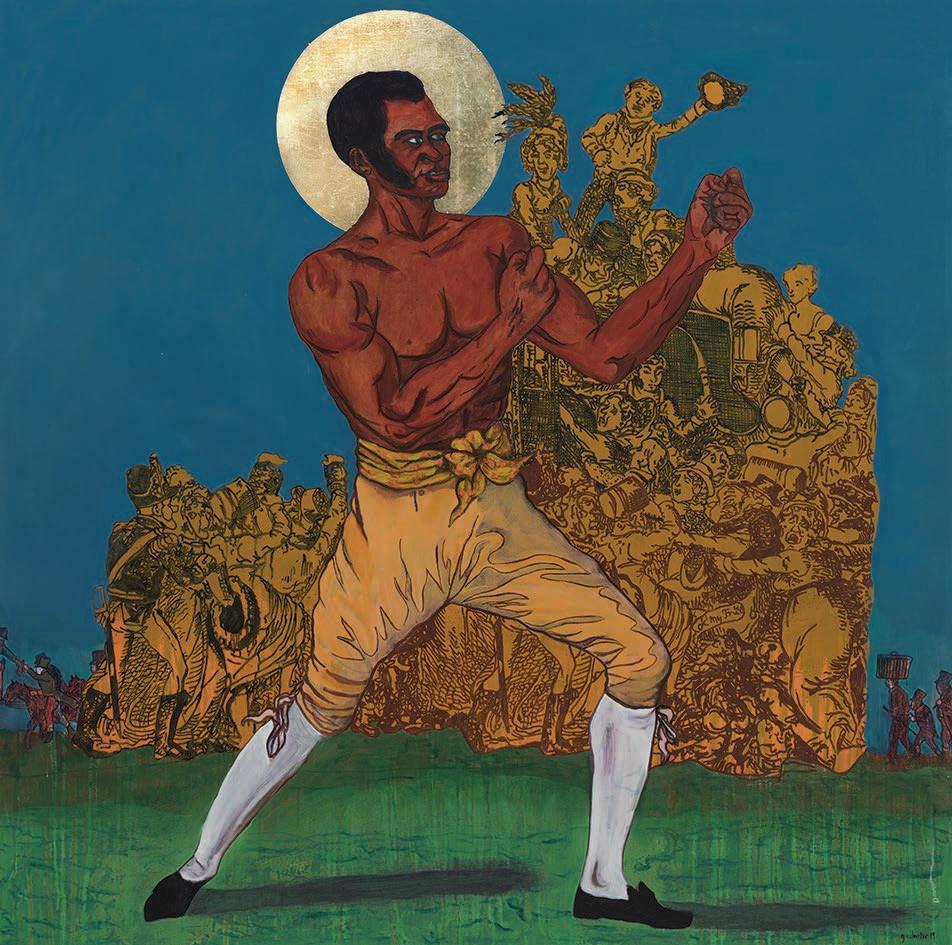
will showcase work by 22 leading African diasporic artists, working in the UK and USA. Exploring the depiction of the Black form within portraiture, it will feature contemporary works – made between 2000 and today – celebrating and illuminating the richness and complexity of Black life.
From 21 March we will be opening Francesca Woodman and Julia Margaret Cameron: Portraits to Dream In on Floor 2,
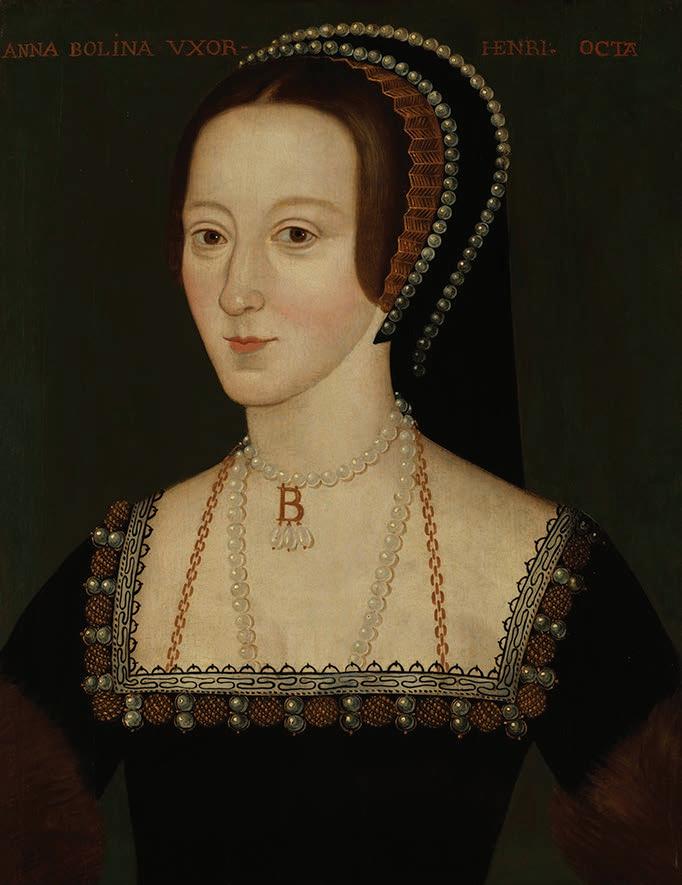
Anne Boleyn by an unknown English artist, late 16th century (NPG 668)
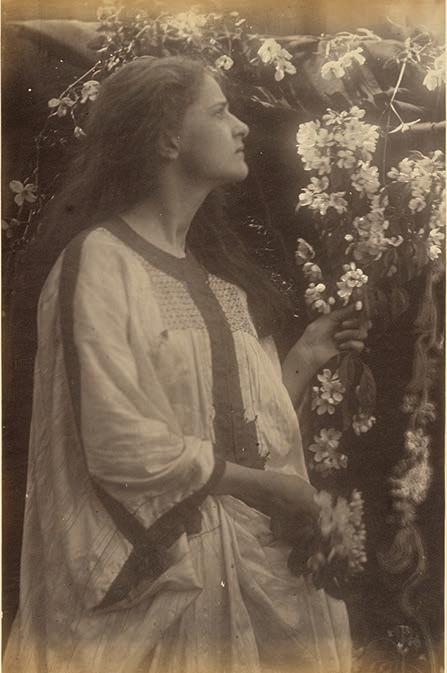
juxtaposing the lives and work of two of the most important and influential practitioners in the history of photography. Showcasing more than 150 rare vintage prints, the exhibition will span the entire careers of Woodman and Cameron – who worked 100 years apart – with examples of both their best-known and less familiar work. Proposing new ways of appreciating and thinking about the artists, portraiture and the relationships between 19th- and 20th-century photographic practices, it will explore the idea that Woodman and Cameron share an engagement with portraiture as a ‘dream space’, conjuring notions of imagination, beauty, symbolism and story-telling.
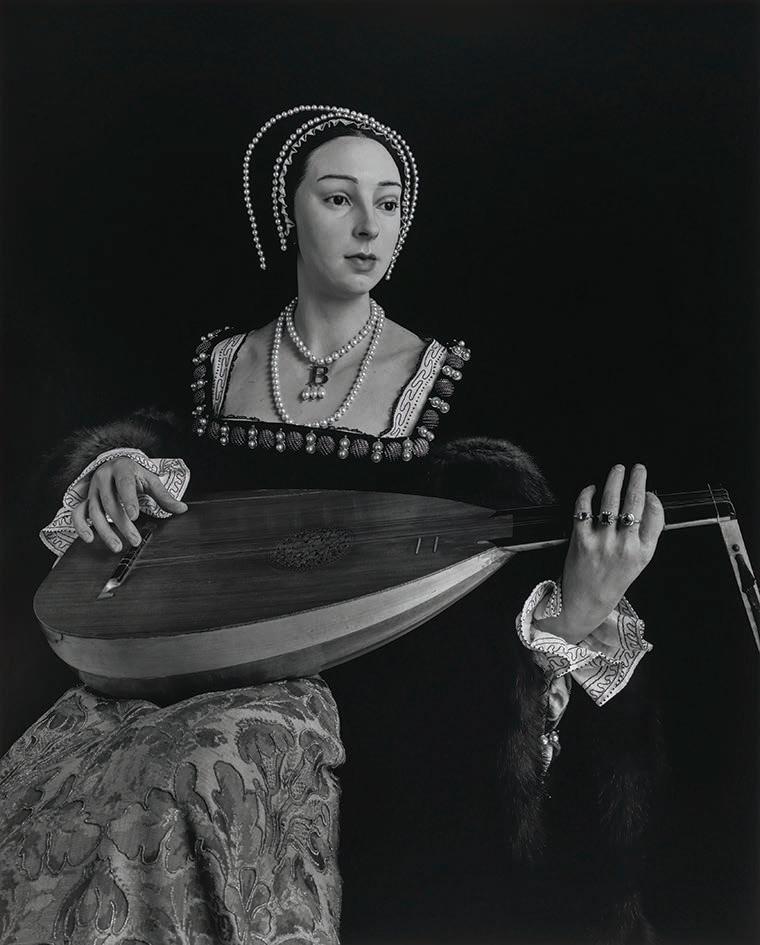
In the summer, historic paintings by Hans Holbein and contemporary photography by Hiroshi Sugimoto will meet in the Gallery’s first exhibition featuring historic portraiture since its reopening: a study of the lives and afterlives of the women who married Henry VIII. Six Lives: The Stories of Henry VIII’s Queens on show from 20 June, will chronicle the representation of Katherine of Aragon, Anne Boleyn, Jane Seymour, Anne of Cleves, Katherine Howard and Katherine Parr throughout history and popular culture up until the present day. The exhibition will draw upon a wealth of factual and fictional materials to present six women who changed the landscape of English history.
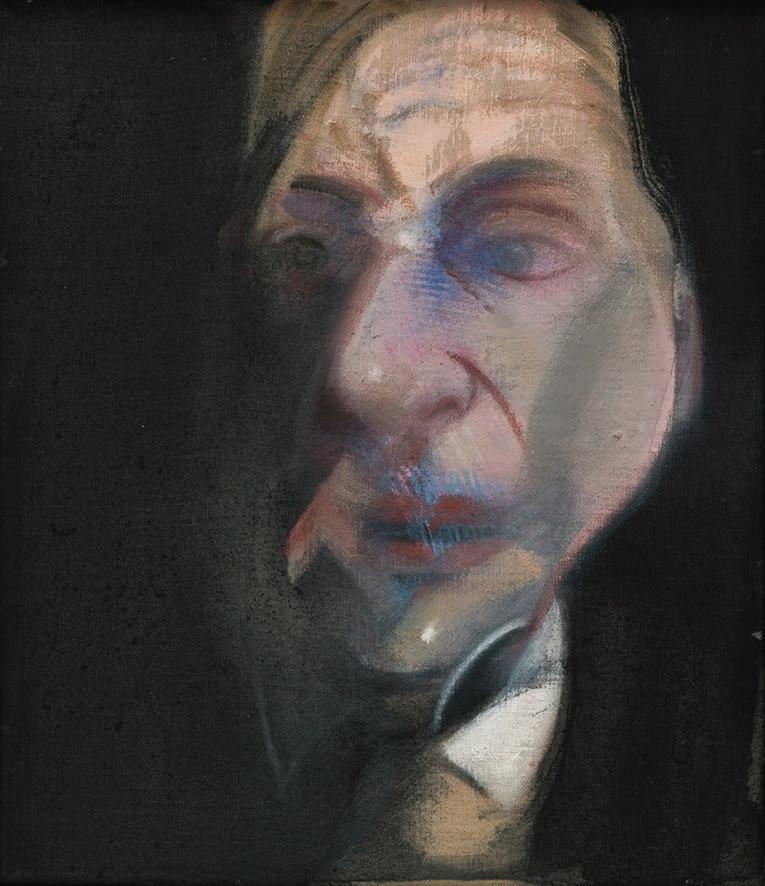
On 10 October, the Gallery’s focus switches to the portraits of Francis Bacon. Featuring works from the 1950s onwards, this major exhibition will explore Bacon’s deep and complex engagement with portraiture, challenging traditional definitions of the genre – from his responses to portraits by earlier artists to large-scale
paintings memorialising lost lovers. While Bacon valued qualities of immediacy in the application of paint, in practice he frequently distanced himself from his subject, choosing to paint from photographs and memory. Featuring works from major public and private collections, this exhibition will explore the artist’s life story through portrayals of his closest relationships –including lovers Peter Lacy and George Dyer and friends Isabel Rawsthorne and Lucian Freud – alongside self-portraiture in depictions that transcend likeness.
Our prestigious painting competition, now named the Herbert Smith Freehills Portrait Award, will make a welcome return on 11 July and our ever-popular Taylor Wessing Photo Portrait Prize enters its 17th year when it opens from 14 November.
Facing the Past: Uncovering the People
Hidden in the Heinz Archive & Library
Anna Pharoah, Fundraising Manager: Grants and Legacy Giving, in conversation with Kate Bernstock, Curator: Archive Survey Project
AP: Tell us about you, and why are you excited about leading this project?
KB: I studied History at the University of Oxford and then studied an MA in Black British History at Goldsmiths, where I fell in love with Reading against the archive’s grain, to ask questions of historical subjects that we never thought we’d be able to ask. This project, funded by the Samuel H. Kress Foundation and the Pilgrim Trust, is the perfect opportunity to do just that. I am excited to be leading research in the Archive that has never been done before. It’s a brilliant chance to ask new questions and view sitters from a new perspective.
Please describe the Archive.
The Heinz Archive is home to over one million photographic records of portraits
from public and private collections ranging in date from the 13th century to the present day. These portraits are organised into alphabetical artist and sitter boxes, an organisational system that can mean portraits of those from the global majority, many of whom are unidentified, have become lost. Building on Caroline Bressey’s Research Study on Representation of ‘Ethnic Minorities’ in the Collection of the NPG (2003), a group of volunteers will methodically search the sitter boxes, identifying images and working with me to make them more accessible to researchers (we have had over 100 applicants wanting to volunteer so far!). It is hoped that the images, and the research I conduct to uncover hidden identities, will be an invaluable resource for those studying
histories of the global majority through British portraiture, encouraging innovative research.
How does the project relate to and support the Gallery’s wider work?
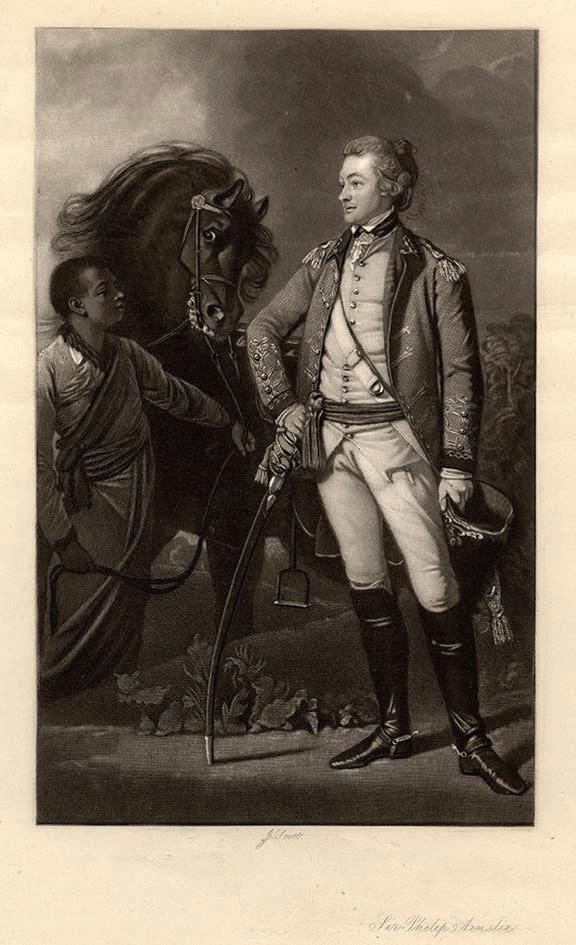
I am currently interested in researching three of Joshua Reynolds’s portraits: one of Sir Philip Ainslie (dates unknown), an engraving of which is in our reference collection, and the two portraits of John Manners, Marquis of Granby (c.1766–70), and Frederick William Ernest, Count of Schaumburg-Lippe (1767), in the Royal Collection. All feature a groom and/or model of African descent and, based on visual analysis, it is possible that the sitter may be the same person and a member of Reynolds’s household.
Although this model and/or groom is currently unnamed, using a methodology described by Saidiya Hartman in Venus in Two Acts as a form of ‘critical fabulation’, we are able to use contextual historical evidence to imagine a vivid picture of his life by grounding him in space and time. In this way, we can know the food that servants tended to eat during the period in which these portraits were painted and, for example, the music that was played in taverns like those near Reynolds’s studio. We can even imagine the other people of African descent this young man may have crossed paths with on his journeys to and from that studio, for example Jane Harry Thresher, of dual heritage, who received some training from Reynolds and went on to receive a prize from the Society for the Encouragement of the Arts for her own portraiture. More about Jane Harry Thresher’s connection to Reynolds can be found on page 108 of Daniel Livesay’s
Children of Uncertain Fortune: Mixed-Race Jamaicans in Britain and the Atlantic Family, 1733–1833.
Why is the project important?
Beyond the identification of works, our goal is to redress the paucity of information currently available about sitters from the global majority who are too often unnamed, and made visible only by reference to their subordination (‘groom’, ‘servant’, etc.). This obfuscation results from decisions made by artists, owners and curators throughout the centuries. With this project, we hope to redress this imbalance by identifying some of the individuals we find and bringing greater contextual understanding and appreciation of their many and complex lives.
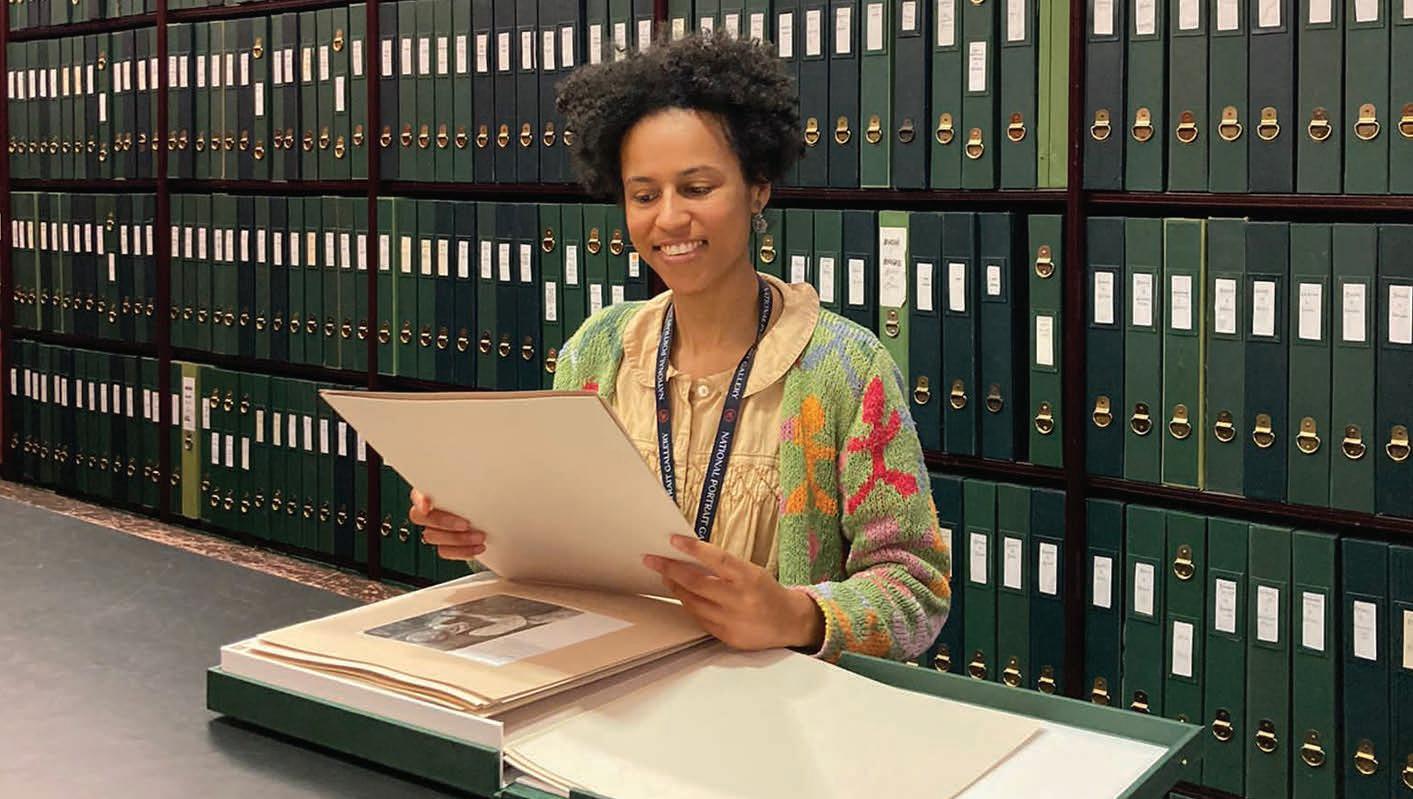
Above left – Kate Bernstock at work in the Heinz Archive & Library
Right – Sir Philip Ainslie with a model/groom by James Scott after Sir Joshua Reynolds, 1876 (NPG D318)
The
Time
is
Always
Now: Artists Reframe the Black Figure
Abridged extract from the introduction to the book The Time is Always Now by
Ekow Eshun
We are living through a period of extraordinary abundance when it comes to depictions of Black people by Black artists. Dazzling museum shows by artists who are taking the Black figure as a subject, a cause, a departure point for forays into beauty and mystery have become, if not a commonplace, then certainly a repeated, wondrous occurrence over the past decade. This is the catalyst for The Time is Always Now, which gathers together the work of a range of 21st-century artists who are illuminating the richness and complexity of Black life through figuration.
Defying those critics and scholars who’ve been stridently pronouncing its death for decades – courtesy of the
camera and conceptual art – figuration persists today: in part, no doubt, because it speaks a visual language we all understand. To varying degrees of aesthetic complexity, a picture of a person is seemingly nothing much more than a representation of the natural world. We look at it, register its familiarity, and move on. Yet when it comes to images of Black people, I’d express a note of caution. Here, such familiarity is infused with meaning shaped by a society in which the customs, culture and beliefs of white people are the standard against which all other groups are compared. As a result, Black bodies are frequently imagined to signify something other than themselves.
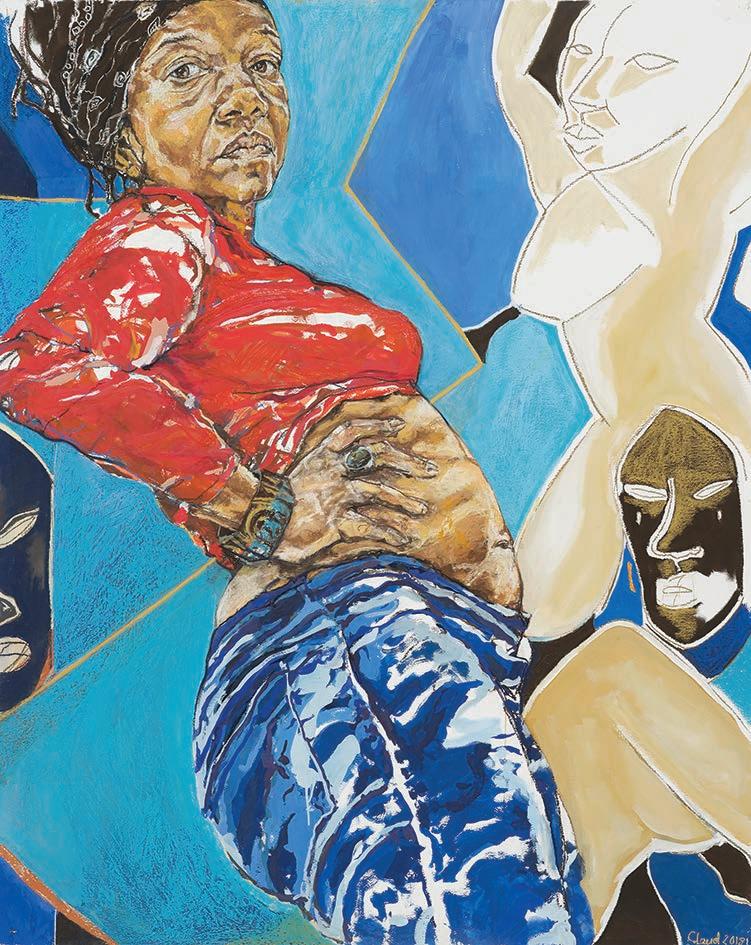
The Time is Always Now considers how contemporary artists are posing consequential questions of being, presence and aliveness while creating works of astonishing visual force and beauty. In the process, they are inviting a shift in perspective from ‘looking at’ the Black figure – via an external, objectifying gaze – to ‘seeing through’ the eyes of Black artists and the figures they depict. The failure of modernist artists to imagine people from the African continent as anything other than primitive is one of the themes addressed in Claudette Johnson’s Standing Figure with African Masks (2018). The painting depicts a Black woman with her hands on her hips. She wears blue jeans, a black patterned
headscarf and a red top, which has ridden up to expose her stomach. Johnson does not categorise Standing Figure with African Masks as a self-portrait, but the painting depicts the artist and was drawn from life using a small mirror placed on a chair. It is a large work (151.5 × 122cm), and from within its frame Johnson looks down on the viewer: her stance commanding, her expression scrutinising. (The painting’s original title was Brazen Woman.) In the geometrically patterned blue background behind her, we can trace the outlines of three female figures. They wear Dan-style masks in reference to the women in Pablo Picasso’s Les Demoiselles d’Avignon, a painting Johnson first encountered as an art student.
Interviewed in 1990, Johnson spoke of her commitment to figurative painting as a means of ‘giving space to Blackwomen’s presence. A presence which has been distorted, hidden and denied. I’m interested in our humanity, our feelings and our politics; some things which have been neglected… I have a sense of urgency about our “apparent” absence in a space we’ve inhabited for several centuries.’ As she looks out of the frame, Johnson is also staring down the reductive gaze of the Western imaginary, insisting that she be recognised as fully whole, complex and human. Her body becomes simultaneously a subjective, individual and collective invocation of Black womanhood, a vessel through which to ‘tell personal and, in its widest sense, political truths’.
As the theorist Paul Gilroy has observed, racism ‘works by forgetting and sometimes erasing black contribution to society’. In cultural fields such as music or dance, there’s a long legacy of Black artists whose work has been overlooked, appropriated or omitted from the historical record. In
visual art, the tendency is to denigrate the talented, to discount them as a faddish novelty lacking historical antecedent. Just as Picasso couldn’t conceive of the makers of the masks in the Trocadéro as artists working within a tradition of creative practice, so the American artist Jean-Michel Basquiat – an omnivorous autodidact with a deep connection to the development of Western art history – was dismissed after his death in 1988 by the critic Robert Hughes as ‘a small, untrained talent’ absurdly overpromoted by an art world that ‘felt a need to refresh itself with a touch of the “primitive”’.
The Time is Always Now: Artist Reframe the Black Figure Hardback, £35
Edited by Ekow Eshun with essays by Esi Edugyan, Ekow Eshun, Bernardine Evaristo, and Professor Dorothy Price
Reframing the Black Figure: An Introduction to Contemporary Black Figuration
Paperback, £14.95
Edited with an essay by Ekow Eshun
Available to pre-order now at npgshop.org.uk. Don’t forget to enter the code MEMBER2024 at checkout to receive your exclusive 10% discount for Gallery Supporters.
The Time is Always Now: Artists Reframe the Black Figure
From 22 February until 19 May 2024
Floor 0 Exhibition Gallery
Tickets £9.50 (Concessions 10% off / Under 25s on Fri/Sat/Sun £5)
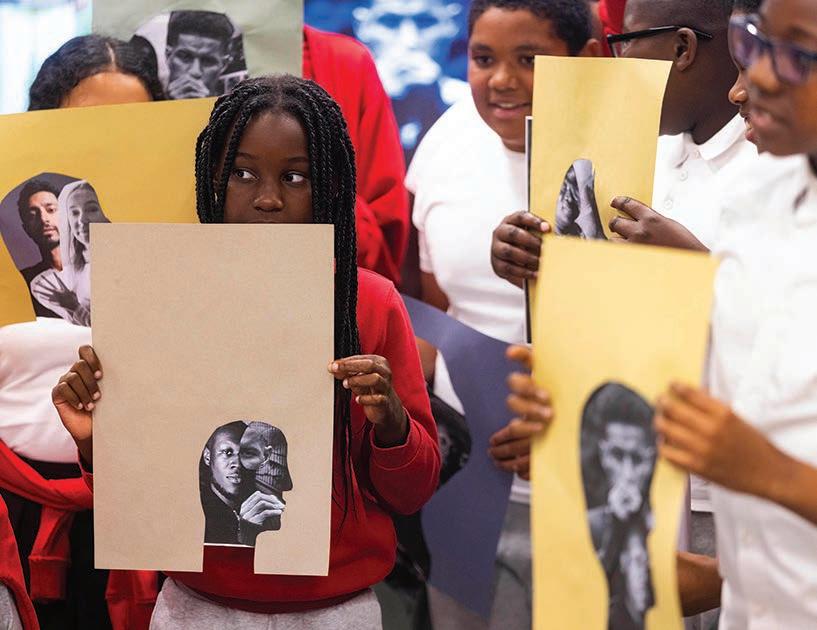
Last term we launched our new programme of bookable workshops for primary, secondary and special schools with sessions aimed at students aged 5–18. The workshop programme focuses on the subjects of art and history through portraiture, exploring a range of themes and topics including identity, migration and empire. All of the workshops are curriculum-relevant and enhance students’ learning at school. Classroom learning is further supported by Schools hub – our newly launched online hub – featuring over 150 resources and videos designed especially for schools.
The new workshops have been developed as part of the Inspiring People project, beginning with teacher consultation in 2021, which included teacher panels and surveys. An ambitious and relevant set of workshop plans was then developed with experts. We’ve connected with key themes in the re-hang of the Collection and engage with well-known artists and sitters, as well as lesser-known histories and stories.
Our new history sessions bring students face to face with figures from the past, encouraging students to see portraits as sources, gathering evidence and clues on significant individuals and their role in history. Sessions include Tudors: the world in a portrait and Migration to Britain for secondary schools, and Significant Black figures in British history for primary schools.
The state-of-the-art Mildred and Simon Palley Learning Centre has enabled us to create an ambitious set of practical creative art and photography workshops where pupils are the artists, experimenting with techniques, materials and equipment in a professional setting. Sessions include Identity through portraiture photography
‘ The children loved the whole experience and were talking about it on the entire journey home to school. The workshop was both informative and very interactive which was fantastic.’
– Migration stories, Key Stage 2 teacher, Lambeth
workshops for secondary schools and Exploring drawing and Mixed-media making workshops for primary schools. Our Express yourself sessions for students with special educational needs and disabilities engage students in multi-sensory ways with portraits on display as well as expressive portrait-making in the studio.
We are also running exciting special events for schools. In June and July as part of the First Look festival, we held taster workshops and a one-off stencil and collage workshop with artists Jann Haworth and Liberty Blake where 6th form students responded to the artists’ Work in Progress. This term we will run a history conference, artist masterclasses and more.
We have welcomed over 20,000 students to the Gallery since reopening in June. It has been wonderful to experience the children and young people taking on the discussion topics and creative activities with such enthusiasm, exploring the Collection and responding with their own ideas, observations and creative work.
Francesca Woodman and Julia Margaret Cameron: Portraits to Dream In
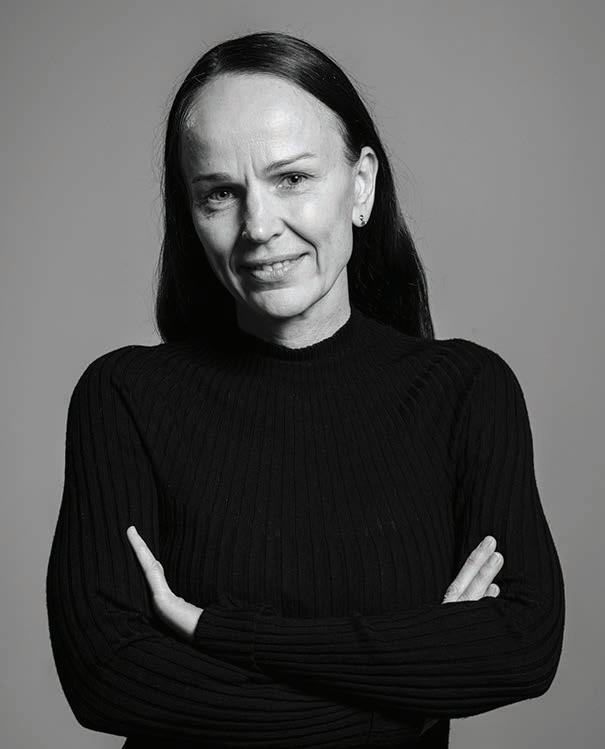
Denise Vogelsang, Director of Communications and Digital, talks to Magda Keaney, Curator
DV: Can you tell us what was the inspiration and thinking behind presenting these two photographers together?
MK: One of the great things about being a photo historian and curator is that you can engage with the history of the medium backward and forward in time, from the earliest images produced in 1839 to the contemporary period, because that is less than 200 years. I’ve been thinking about what happens when you look at Woodman (1958–81) and Cameron (1815–79) side by side since the start of my career. I was first interested in how going backward, starting with Woodman, to look at Cameron might
open up space around how we understood Cameron’s work. That was intriguing to me because so much has been written about Cameron and my question as a young curator was: is there anything left to say? I don’t start out making exhibitions with a preconceived answer in mind. So an initial question was what happened when you looked at Cameron via the work of Woodman – even though of course Cameron knew nothing of Woodman.
How did you come up with the title ‘Portraits to Dream In’?
It wasn’t there from the beginning, but came from the work itself. In the case of both artists the physical quality of the prints they made is revelatory on many levels. So I started by spending as much time as I could with the prints, and that is how I came to the shared idea of the Dream Space. The phrasing of ‘Portraits to Dream In’ comes from a quote that Francesca Woodman made about the potential of photography. Julia Margaret Cameron titled one of her works ‘The Dream’, and putting those two things together with ideas from my research made the title seem exactly right.
What qualities do the two of them share? There are formal things – approaches to picture-making – for instance the use of focus and blur; or staging and props; or expressive gesture. There are conceptual or metaphorical ideas they share – for example around nature and femininity or in an approach to storytelling and a preoccupation with literature, mythology or archetypes. I think an engagement with the process of photography, culminating in a physical print and a shared commitment
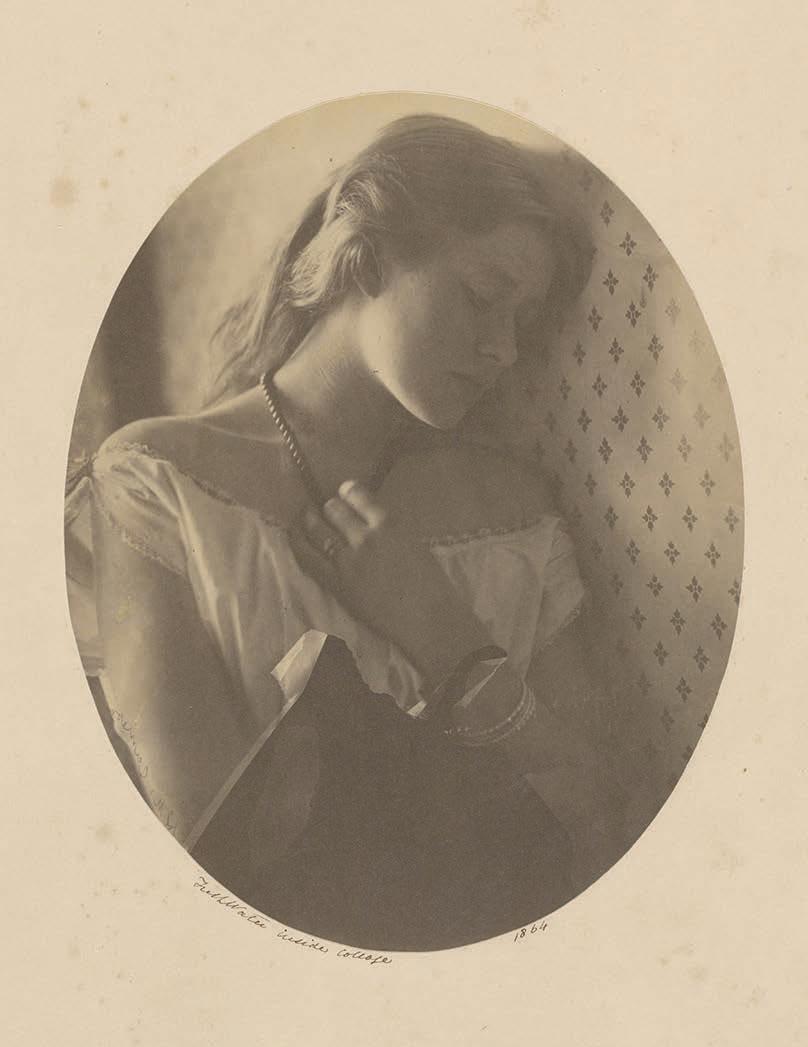
Above – Sadness (Ellen Terry) by Julia Margaret Cameron, 1864. The J. Paul Getty Museum, Los Angeles, 84.XZ.186.52. Digital image courtesy of Getty’s Open Content Program.
to the print process, is another. Then there are circumstantial things – they were both gifted a camera, they both worked for a relatively short and intense period, and more. They both worked incredibly hard at times when women were marginal in the history of art and photography.
Were there ‘must have’ loans that you really wanted to include?
So many! Almost all of Woodman’s work is loaned from the Francesca Woodman Foundation in New York, so the show would not have been possible without their support and generosity. The team there have been key collaborators from the start. For Cameron it is a case of key lenders rather than key works – from the V&A, the Getty, and The Metropolitan Museum.
As the Gallery’s former Senior Curator, Photography, you must have spent much time with Cameron’s work in our Collection. How does she come to be such a powerhouse in the early years of photography?
The Gallery has a modest but beautiful and important collection of work by Julia Margaret Cameron. It was a privilege to be able to go and look at her work in the special collection store and this is something that I really miss. I think there are many answers to this question. If I was going to single out something it would be her unprecedented sense of creative exploration – not letting technical setbacks and social expectations restrict her artistic practice. In the 1860s and 70s photography was a cumbersome physical process and conceptually operated within specific boundaries and conventions favouring ‘the real’. Women photographers
at this time were an exception. But perhaps something that hasn’t changed so much for artists is that to be a ‘powerhouse’ you just have to keep working. In Cameron’s case that meant preparing her own plates, developing and printing glass plate negatives that could and did easily break, persisting in the face of failure or criticism. Cameron did all of those things tirelessly.
Why do you think Woodman’s work still receives so much attention and is so resonant with people today, over 40 years after her untimely death?
It is fascinating but not surprising to me that Woodman continues to inspire audiences and particularly young people. So although her images move further away in time from when they were made, they are no less relevant. I think that is because
Francesca Woodman was an incredible artist. Her project is compelling, direct and deeply human. The themes and narratives that emerge in her work are provocative at times, as well as other-worldly and suggestive. So there is space to respond to her work in many different ways and I think that audiences respond to that openness. Sometimes I have thought that, while critics and curators have debated the meaning of her work, young people in particular seem to approach its complexity with ease. I also think if you see her work in person there is a visceral response to her prints.
What do you hope visitors to the exhibition will get out of the experience?
I hope that visitors relish the physical experience of seeing such a large collection of prints by Woodman and Cameron side by side They are beautiful, subtle, intricate, and beguiling. Then of course they will come away knowing more about these two women artists who have defined the history of photography. I hope that it inspires emerging women photographers to keep on with their work. I hope it poses questions about how we might think in new ways about relationships between 19th- and 20thcentury photographic practice and what a portrait is and can be.
Francesca Woodman and Julia Margaret Cameron: Portraits to Dream In
From 21 March until 16 June 2024
Floor 2 Exhibition Gallery
Tickets £9.50 (Concessions 10% off / Under 25s on Fri/Sat/Sun £5)
Members and Patrons go free
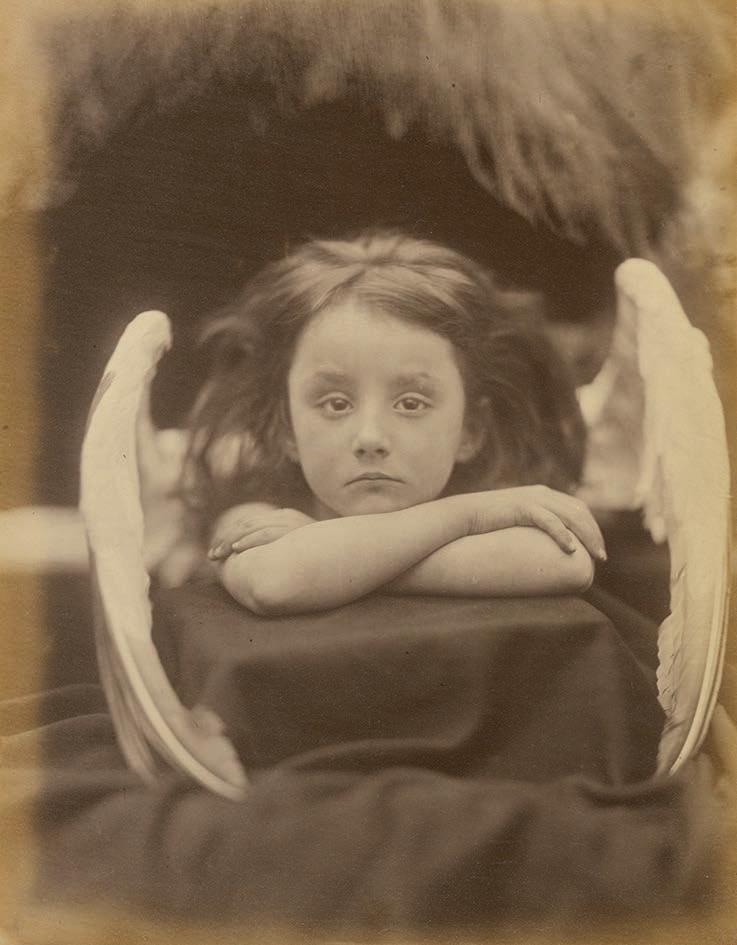
Left – Spring by Julia Margaret Cameron, about 1865
The J. Paul Getty Museum, Los Angeles, 84.XM.443.22. Digital image courtesy of Getty’s Open Content Program.
One Life Digital Exhibition
by Lydia Brightling-Reed Head of Corporate Development
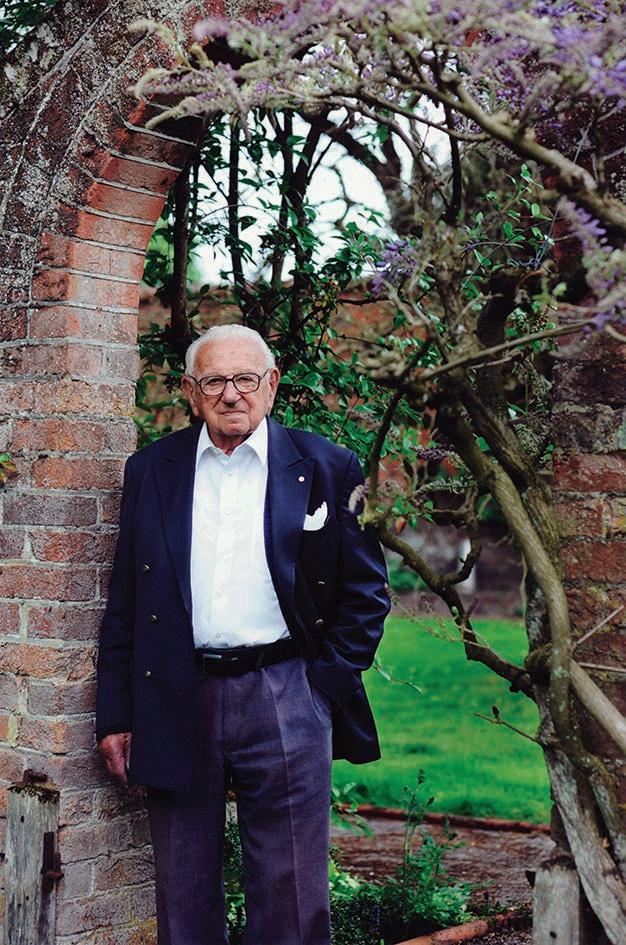
The Gallery has teamed-up with Warner Bros. Pictures to create a digital exhibition that celebrates the life of Sir Nicholas Winton (1909–2015). To coincide with the release of the film One Life in cinemas from 1 January, the exhibition features 11 new portraits of people who, as children, travelled on the Czech Kindertransport (children’s transport), organised by Winton 85 years ago. These portraits were captured by Simon Hill HonFRPS during a special reunion moment at the recent European premiere of the film at the BFI London Film Festival. The digital exhibition will also include our
portrait of Sir Nicholas Winton, captured by Henry Browne on 30 April 2009 in his one hundredth year, in addition to interviews with the Kindertransportees, detailing their journeys and experiences.
One Life tells the true story of Sir Nicholas ‘Nicky’ Winton, a young London broker who, in the months leading up to World War II, rescued 669 children from the Nazis. It details the remarkable actions of Nicky and his team during the war, and the prevailing impact they had on all involved. The story remained largely untold for fifty years until the 1980s when a BBC television show, That’s Life, reconnected Nicky with some of the surviving children in a moving exchange that captured the hearts and attention of the nation.
In spite of everything they were forced to leave behind, these individuals have gone on to lead full lives, enriching the UK in the fields of education, politics, medicine and the arts. They and the others who were rescued have become affectionately known as ‘Nicky’s Children’.
To view the One Life digital exhibition visit www.npg.org.uk/whatson/exhibitions/one-life
by Dr Sarah Moulden Curator of 19th-Century Collections
In the ambitious rehang of the Gallery, curators have woven photography through the permanent Collection displays like never before. Its integration has transformed the 19th-century displays, enabling us to show a much more diverse portrait of Britain under Queen Victoria.
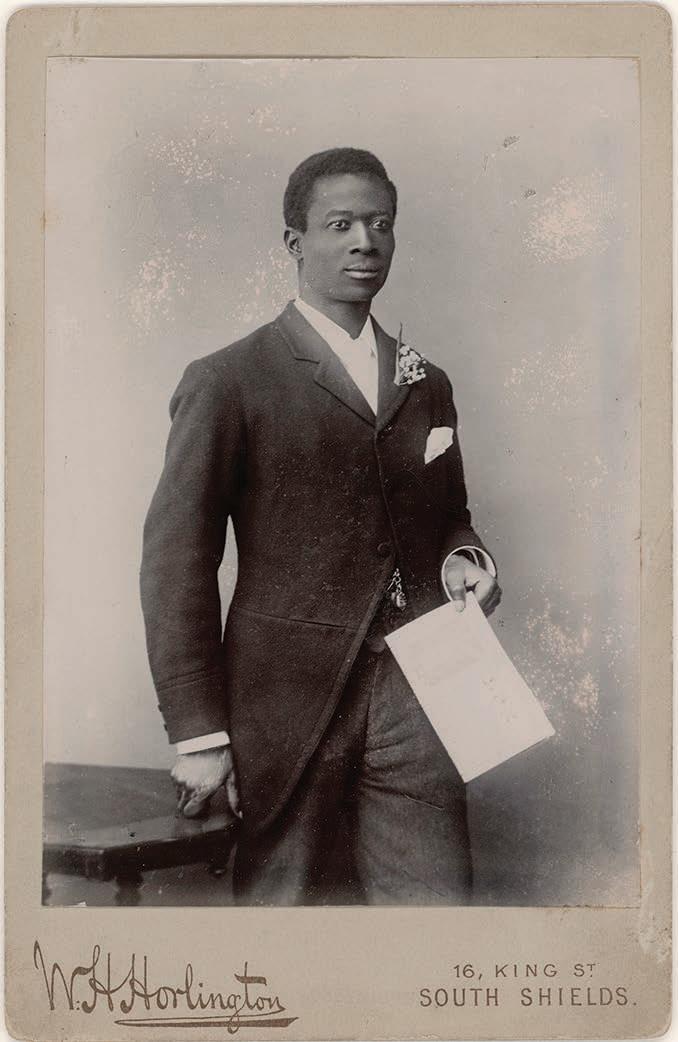
Historic photographs range from daguerreotypes and large albumen prints to more commercially popular forms such as postcards, cabinet cards and tiny cartesde-visite. Some are on display for the first time and a number are new acquisitions,
including this recent gift of a cabinet card showing Britain’s first Black newspaper editor, Celestine Edwards, which has been on display since the Gallery reopened this Summer.
Edwards was born in Dominica in 1857 and stowed away on a French ship when he was just 12 years old. He eventually settled in London, where he studied Theology at King’s College before becoming a medical student at the London Hospital. Committed to social justice, Edwards used writing and public speaking to offer powerful criticisms of British imperial rule and oppression, attracting a huge following. In the 1890s, he became the editor of two publications, the Christian newspaper Lux and the anti-racist magazine Fraternity, which offered radical reassessments of empire.
Although his portrait is only small, Celestine Edwards left a huge legacy. He galvanised various campaigns for racial equality that became highly influential in the civil rights movements of the 20th century. His story and achievements continue to inspire today.
Left – Celestine Edwards by William Harry Horlington, 1894. Given by Terence Pepper, 2022 (NPG x201542)
National Portrait Gallery’s Longstanding Painting Competition Returns
by Clementine Williamson Exhibitions Manager, Competitions and Special Projects
The Gallery’s celebrated painting competition returns for its 42nd year, thanks to the support of new headline sponsor Herbert Smith Freehills. Shortlisted works will be displayed at the Gallery from 11 July to 27 October 2024.
This inaugural year of sponsorship builds on 20 years of support. Herbert Smith Freehills, the international law firm, longstanding partner of the National Portrait Gallery, has supported exhibitions, seasons, and the Gallery’s 150th anniversary, as well as its major transformation project, Inspiring People, when the firm was our Reopening Partner. As sponsor of the Herbert Smith Freehills Portrait Award, it continues its support of the Gallery’s new chapter, ensuring free access to the exhibition.
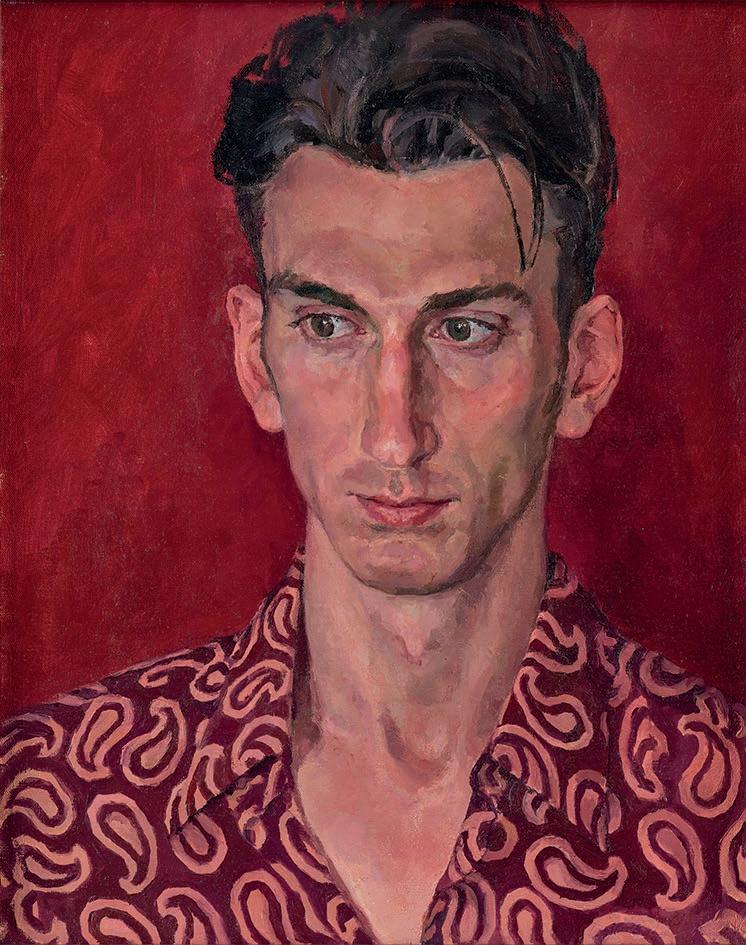
This highly successful competition aims to encourage artists over the age of 18 to focus upon, and develop, the theme of portraiture in their work. Since its inception, it has attracted over 40,000 entries from more than 100 countries, and the exhibition has been seen by over six million people. The competition carries a first prize of £35,000, making it one of the largest for any global arts competition. The second prizewinner receives £12,000 and the third £10,000. The Herbert Smith Freehills Portrait Award will also include a Young Artist Award, which will see a prize of £9,000 awarded to a selected entrant, aged between 18 and 30, profiling the artist’s talent and supporting their career development.
Jann Haworth + Liberty Blake ‘Work in Progress’ Collection
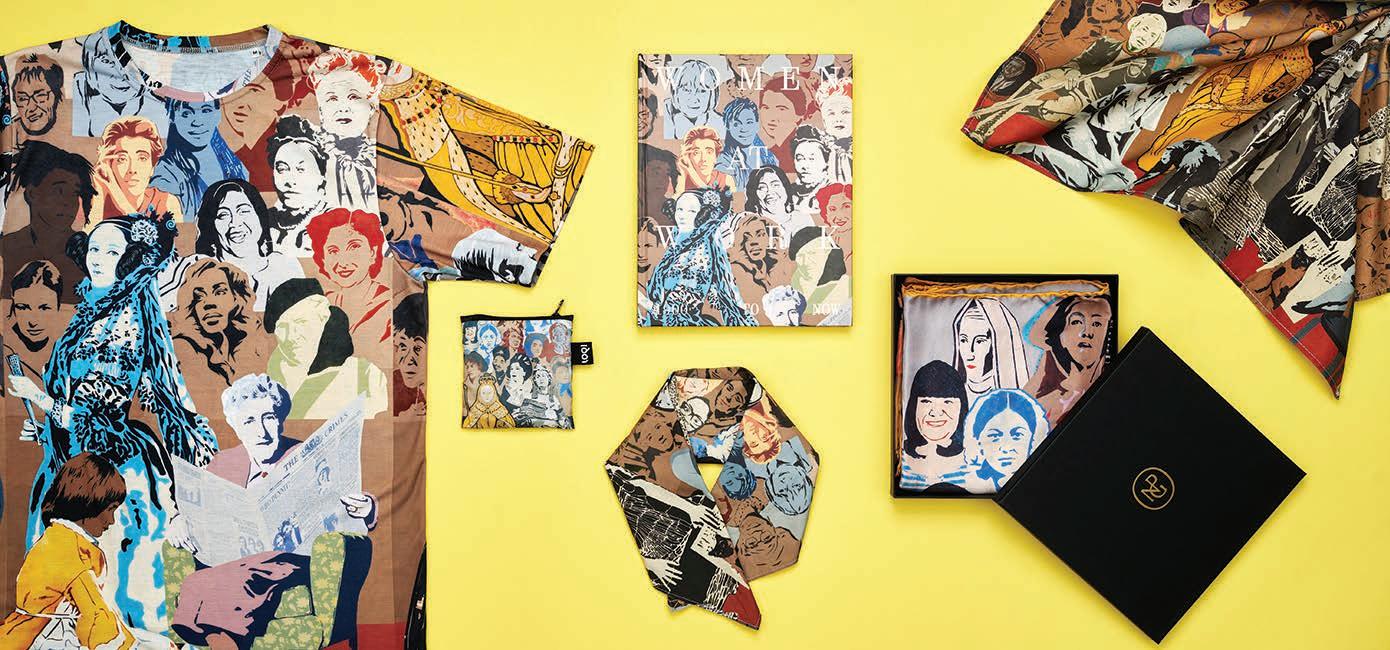
We are delighted to share our stunning new collection featuring the Gallery’s major commission co-created by pop artist and soft sculpture pioneer Jann Haworth and collage artist Liberty Blake. The artwork Work in Progress (2021–22) forms part of the Gallery’s Reframing Narratives: Women in Portraiture project, with kind support from the CHANEL Culture Fund.
Each woman depicted bears her own story, from the ancient warrior queen Boudicca to the computer pioneer Ada Lovelace, the Paralympian Tanni Grey-Thompson and the writer Zadie Smith, among many others.
The new retail collection includes a striking all-over print T-shirt, tea towel, bandanna, fold-away tote, and a detailed silk scarf beautifully presented in an embossed gift box. In addition, the collection complements the Gallery’s recent publication Women at Work: 1900 to Now.
Work in Progress is on display in room 33.
You can shop the collection now instore, and online at npgshop.org.uk/collections/work-inprogress-jann-haworth-liberty-blake. Be sure to enter the code MEMBER2024 at checkout to receive your exclusive 10% discount for Gallery Supporters.