I am delighted that this issue of Face to Face reflects our new brand and hope that you enjoy the bold colours, new typefaces and logo. We wanted to create a brand that would feel timeless and modern, based on our rich heritage and appealing to today’s audiences. On the following page, I have written about how the work of the first Director of the Gallery, Sir George Scharf, inspired our approach.
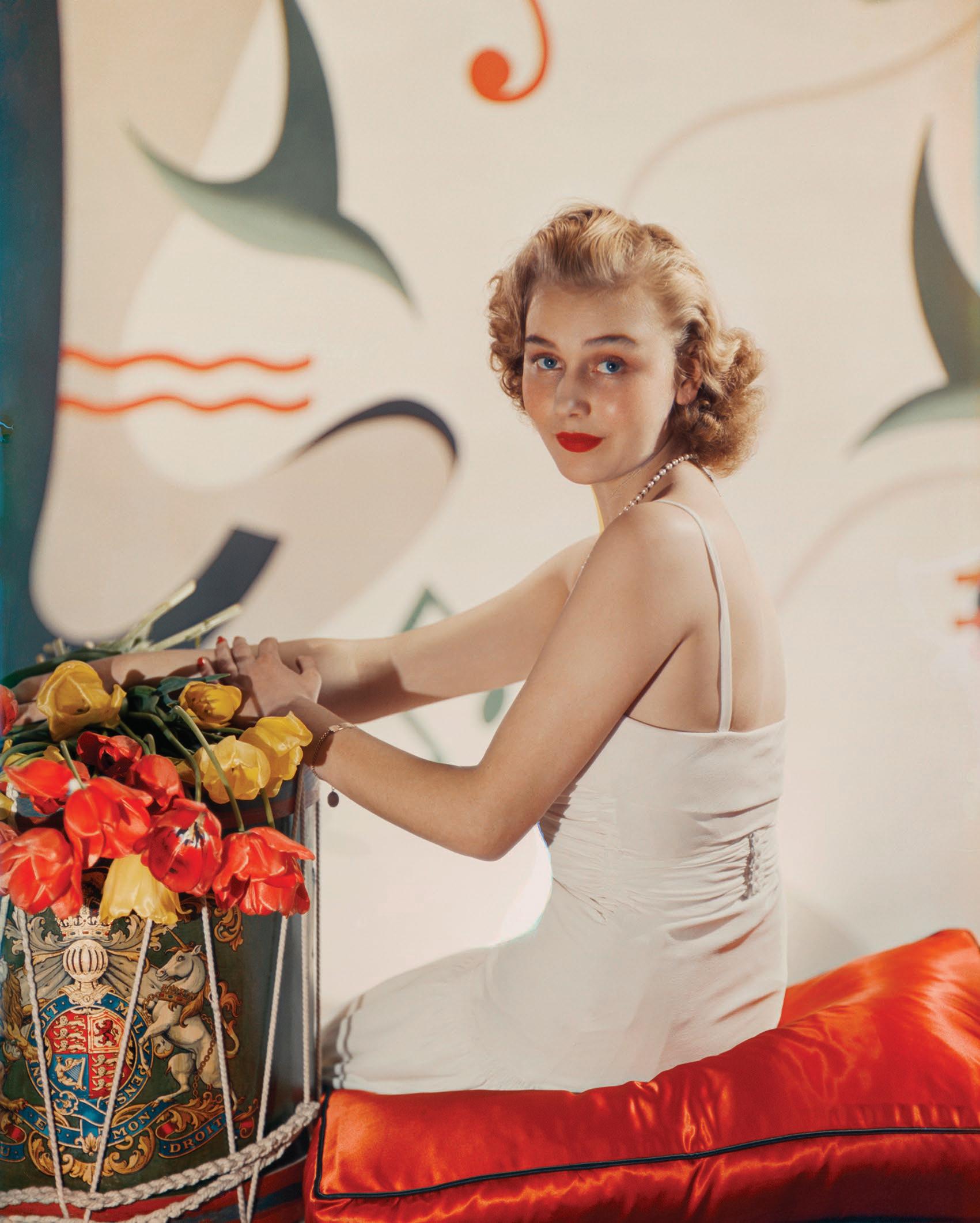
Our new brand is just one of many changes that you will notice as we move closer to our reopening in June of this year. With the date fast approaching, David Ross, our Chair of the Board of Trustees, tells you about what to expect on your first visit back to the Gallery. Encompassing photography, painting and drawing, exhibition highlights in our reopening year include the restaging of the critically-acclaimed David Hockney: Drawing from Life (2 November 2023–21 January 2024); paintings by leading artists in The Time is Always Now: Artists Reframe the Black Figure (22 February–19 May 2024) and, for the very first time, two pioneering photographers in Francesca Woodman and Julia Margaret Cameron: Portraits to Dream In (21 March–30 June 2024). In this edition we focus on our first two exhibitions: Rosie Broadley, Head of Collections Displays (Victorian to Contemporary) tells us about Paul McCartney Photographs 1963–64: Eyes of the Storm (28 June–1 October 2023) and Clare Freestone, Curator, Photographs, talks about Yevonde: Life and Colour (22 June–15 October 2023).
Your support as a Member or Patron plays a critical role in our future, particularly as we reopen a newly expanded Gallery with a more ambitious programme. This issue of Face to Face takes a closer look at new ways to be involved. Rebecca Redclift, Campaign Manager, talks about the final opportunities to support the Inspiring People project and Georgia Perkins, Philanthropy Manager, tells us about some exciting developments with our Patrons Programme.
In this issue we also introduce you to our garden designer, Todd Longstaffe-Gowan, who is bringing his experience as an architect, landscape architect, cultural geographer and historian to the task of creating a beautiful green space at the heart of our new facilities for learning. We also hear from Jessica Rutterford-Nice, Adult Programme Manager, about our programme of talks and lectures and the engaging events we have planned for autumn 2023 and beyond.
Finally, I am thrilled that Lady Blavatnik, whose Foundation made the largest private donation in the Gallery’s history, has chosen to tell us about her favourite portrait in the Collection.
We very much look forward to welcoming you in person to our transformed Gallery in a few short months.
Dr Nicholas Cullinan Director
My Favourite Portrait
by Lady Blavatnik Co-Chair, Blavatnik Family Foundation
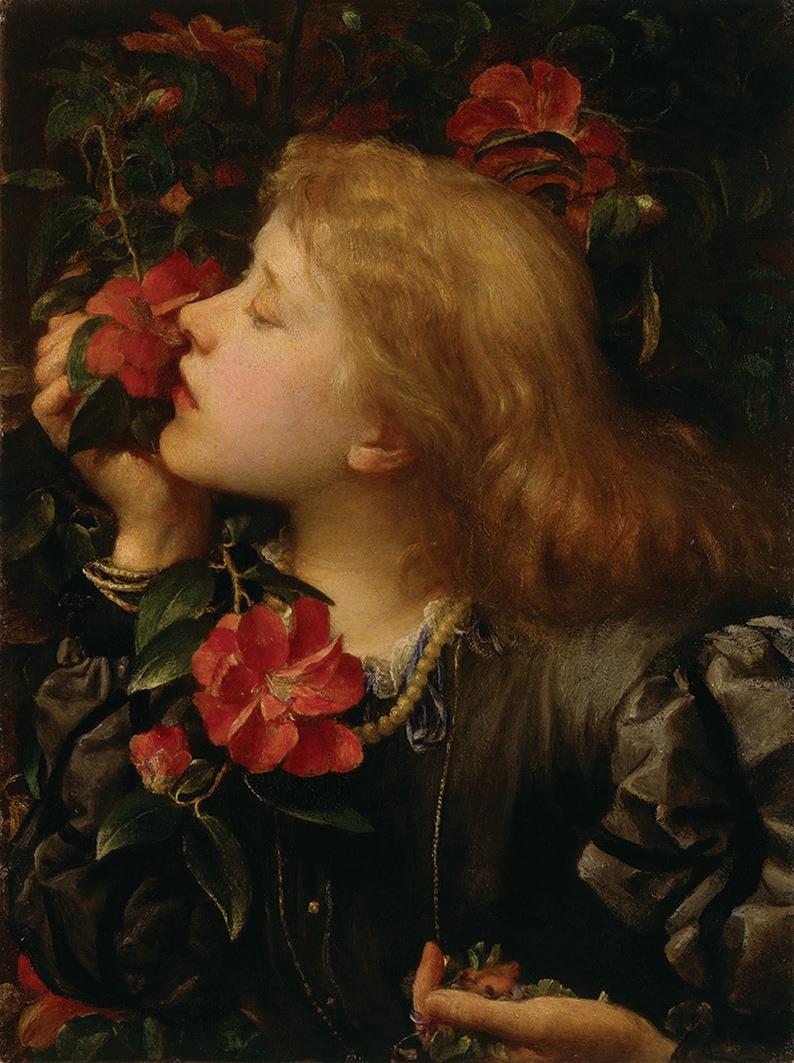
The Gallery is fortunate to have so many wonderful Victorian-era portraits. My husband Len’s favourite is John Everett Millais’s of Benjamin Disraeli. Top of my list is Ellen Terry (‘Choosing’), painted in 1864 by George Frederic Watts. It is both historic and luminous, capturing the celebrated actress Ellen Terry (1847–1928) as a young woman.
The portrait is the epitome of romance. It shows Ellen Terry in a bower of flowers, where she must choose between the earthly vanities, as symbolised by the showy but scentless red camellias, and the virtues of modesty and fidelity, as symbolised by the humbler but fragrant violets. The circumstances of the portrait were in
themselves historic and highly unusual, since she married Watts shortly afterwards, despite his being 30 years her senior. Watts had painted Ellen Terry in 1862 with her elder sister Kate when they were both rising actresses. Watts fell in love with Ellen and wanted to protect her from what he saw as a dubious profession on the stage.
The history of art throughout the ages is rich with examples of beautiful young women inspiring elder geniuses. Watts hoped to guide his exuberant and freespirited young bride into womanhood, but the marriage proved untenable, and they separated in less than a year.
Ellen Terry went on to enjoy a long and brilliant acting career, performing the gamut of roles from Shakespeare to modern comedies on the stage and in the new world of films. Her decades-long work as Henry Irving’s leading lady was legendary, as was her ‘paper courtship’ correspondence with George Bernard Shaw. One of the most beloved English actresses of her day, she ended with a plethora of honours, acting and civil. Blessed with an abundance of talent, beauty, daring and drive, she was an independent woman, ahead of her time. Almost a century after her death I find this portrait moving and exceptional.
A lifelong patron of the arts and proud supporter of the National Portrait Gallery, Lady Blavatnik dedicates her philanthropy to world-class cultural institutions, as well as charities that care for underprivileged and underserved children.
Our New Brand
by Dr Nicholas Cullinan Director
The Inspiring People project is all about transforming the National Portrait Gallery through celebrating its history and beauty in order to raise its profile for new and existing audiences. In addition to a comprehensive renovation of our building, the rehang of our Collection, and shaping the future programme, refreshing the way we present ourselves and communicate with our audiences through our brand identity is a fundamental part of this comprehensive transformation.
The process started with the development of our new vision, listening to insights gained through consultation with staff and stakeholders and testing these with audiences, enabling us to clarify who we are as an organisation and understand what people want and expect from us. The next phase was to find a way to express this new purpose through our communications. From the beginning, we wanted to create a brand that would feel timeless and rooted in our history but also fit for the 21st century. We needed an identity that could sit seamlessly alongside our magnificent Grade I listed building, and both our historical and contemporary collections, as well as appealing to a diverse range of audiences, existing and new.
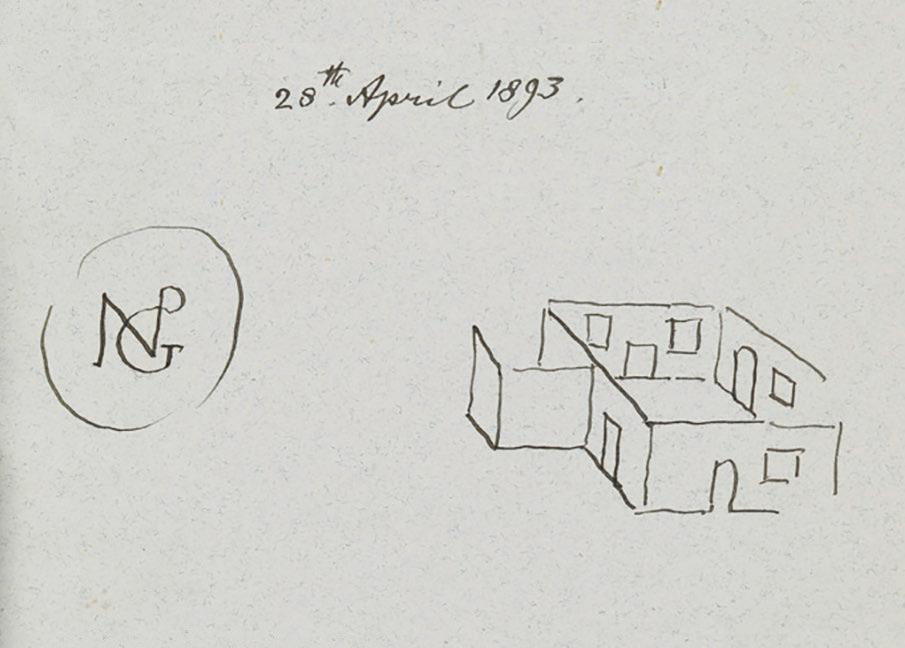
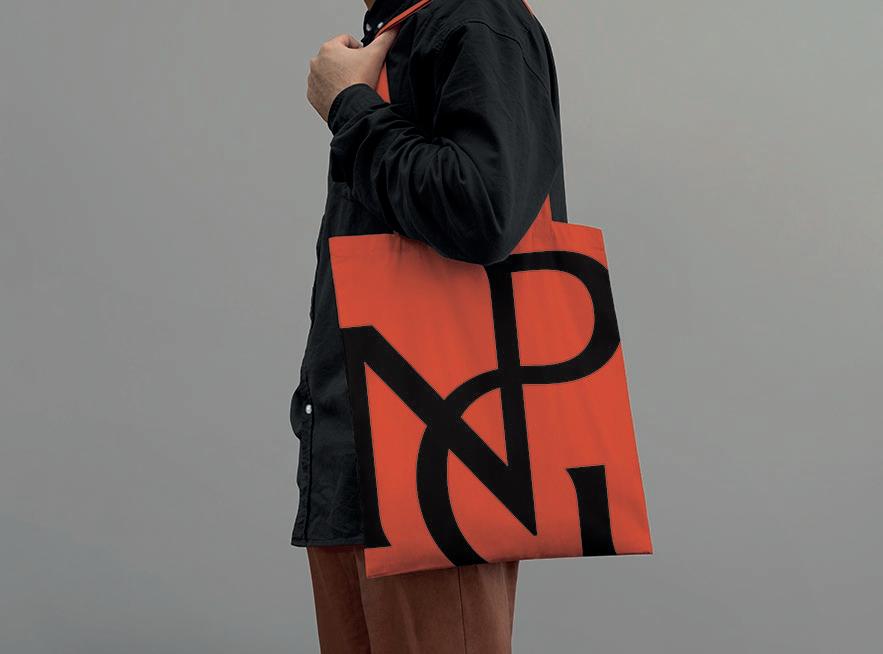
We worked closely with our creative agency, Edit Brand Studio, to look at details in the building and went through our archives, finding many wonderful motifs and monograms, including in our original mosaics from the 1896 building. This included a sketch by my predecessor, the Gallery’s first director, Sir George Scharf, drawn in 1893. We enlisted the expertise of Peter Horridge, a calligrapher and typographer, to develop this sketch into our new monogram. We also worked with Peter and type foundry Monotype to create a bespoke logotype and contemporary new typeface all rooted in historic references found in and around the Gallery. These elements are coupled with a fresh, modern colour palette and a bolder use of our portraits to create our new look and feel. We hope that you enjoy our new brand materials and look forward to revealing more when our doors reopen in June.
Left – Ellen Terry (‘Choosing’) by George Frederic Watts, 1864 (NPG 5048)
Above right from top – Sketch by Sir George Sharf, 1893 (NPG 66/4/1/2)
As one of our close supporters, I’m sure you will have been following the Gallery’s Inspiring People project with great interest. Our launch in June will be one of the most exciting events of the British Cultural Landscape in 2023. We’ve got an incredible exhibition programme planned for the year, from unseen portraits of The Beatles to the hugely anticipated return of David Hockney’s Drawing from Life exhibition, and we are very much looking forward to welcoming you back through our doors.
Since closure in March 2020, the team have been working on new and innovative ways of sharing the Collection and I hope you have had a chance to visit our incredible exhibitions and encounter some of our
activity, which has been very well received across the UK and around the world. As part of Coming Home, a project that returned portraits to places of personal significance for the sitter, we exhibited over 30 portraits, including Virginia Woolf, Stormzy and Jessica Ennis-Hill, in their respective hometowns –Lewes, Croydon and Sheffield.
In 2020, we also undertook one of our most ambitious projects, a community exhibition called Hold Still, resulting in a unique collective portrait of the UK during the first national lockdown. Spearheaded by the Gallery’s Patron, Her Royal Highness The Princess of Wales, the Gallery received over 31,500 photographic entries from all corners of the UK.
A hundred of these images were featured in a digital exhibition and nationwide outdoor display, seen by over 5 million people in 80 locations. We have also been focusing on children and young people; Faces and Places has delivered workshops to over 50 schools across London, targeting areas with low access to arts provision and Creative Connections has brought together GCSE art students and artists in Coventry, Sheffield, Southampton and Newlyn. Our international programme also saw hundreds of portraits travel across the world, to Australia, Italy, the Netherlands, South Korea, Taiwan and the United States of America.
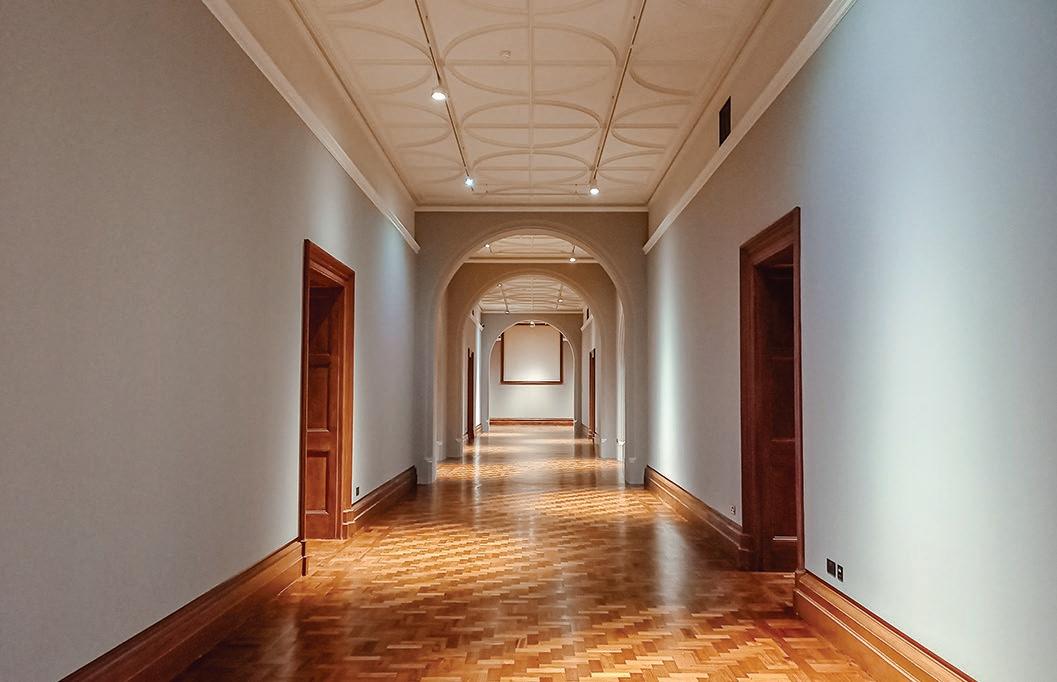
We are now preparing to welcome our visitors again and the reimagining of this space is in its final phase. When you come to see us later in the year, we hope you will experience something very different to before. There has been a complete redisplay of the Gallery’s Collection from the Tudors to today, bringing together much-loved works and some new portraits shown for the first time. These will be displayed in beautifully refurbished galleries, many of which contain freshly revealed historical features. The Gallery welcome will be transformed for visitors as they arrive at our new forecourt, and enter through three doors, converted from large windows, all forming part of the new Ross Place entrance on the North Façade. The East Wing will reopen for the first time in over 30 years, as The Weston Wing, with restored original gallery spaces housing the contemporary collection and exciting new retail facilities, including a street-level café. The first floor will become The Blavatnik Wing, encompassing nine galleries, which will explore society and culture in the 19th and early 20th centuries. A new Learning Centre will also welcome
visitors of all ages for events and activities, with studios, breakout spaces and cuttingedge digital facilities.
The exhibition programme will showcase an incredible range of portraiture for our first 12 months and offer fascinating insights into world renowned artists and contemporary talent.
Our first two exhibitions opening in June include a first look at the intimate, never seen portraits of The Beatles taken by Sir Paul McCartney between December 1963 and February 1964, an exploration of the life and career of the 20th-century photographer Yevonde, who pioneered the use of colour photography in the 1930s, and the return of David Hockney: Drawing from Life, his exhibition that was staged for just 20 days before the Gallery’s closure as a result of Covid in March 2020.
We are also planning a fantastic programme of special events with talks, tours and creative workshops, plus new opportunities to enjoy our hospitality offer in the evenings as well as special activities for families and young people. We aim to be more accessible, more open, more interesting and more welcoming than we’ve ever been before. We will announce more details over the coming months and, as a Member, you will be among the first to hear. I am so proud of all that has been achieved over the past three years and I hope you love the transformed Gallery as much as we do when it reopens.
Above left – The newly refurbished galleries in The Blavatnik Wing, 2022 Photo Nick Chantarasak, Purcell Architects
1923 – a century ago – was a defining year for Yevonde, who had entered her third decade in January. By now success demanded that she upgrade to a larger photographic studio, which she found at 100 Victoria Street. She had migrated just doors along from her first bijou premises, which she had established nine years earlier. Her feminist neighbours there had included Lady Margaret Rhondda, who had recently formed the Six Point Group, Britain’s leading equal rights organisation between the wars. Rights for women had been Yevonde’s foundation stone and the raison d’être of her business. Her contribution to the Suffragette movement manifested itself in strident independence and in her proclamation that ‘portrait photography without women would be a very sorry business’.
The premises at Number 100 ‘were much more spacious: the studio, dressing-rooms and work-rooms were on the top floor and in addition there was a reception room with a shop window’. As the new studio faced south, Yevonde adopted entirely artificial lighting: ‘I could not accustom myself to the new conditions and for some time my work suffered. But later it benefited by the change and my work improved.’ Indeed, her business prospered; Yevonde’s sitters, of which she had four or more a day, were often invited from the local theatres for complimentary sittings, which were purchased by the readily consumed weekly illustrated magazines. The Tatler, Bystander and Sketch would occasionally colourise her portraits, achieving (to her) undesirable ‘wishy-washy hand tinted effects’.
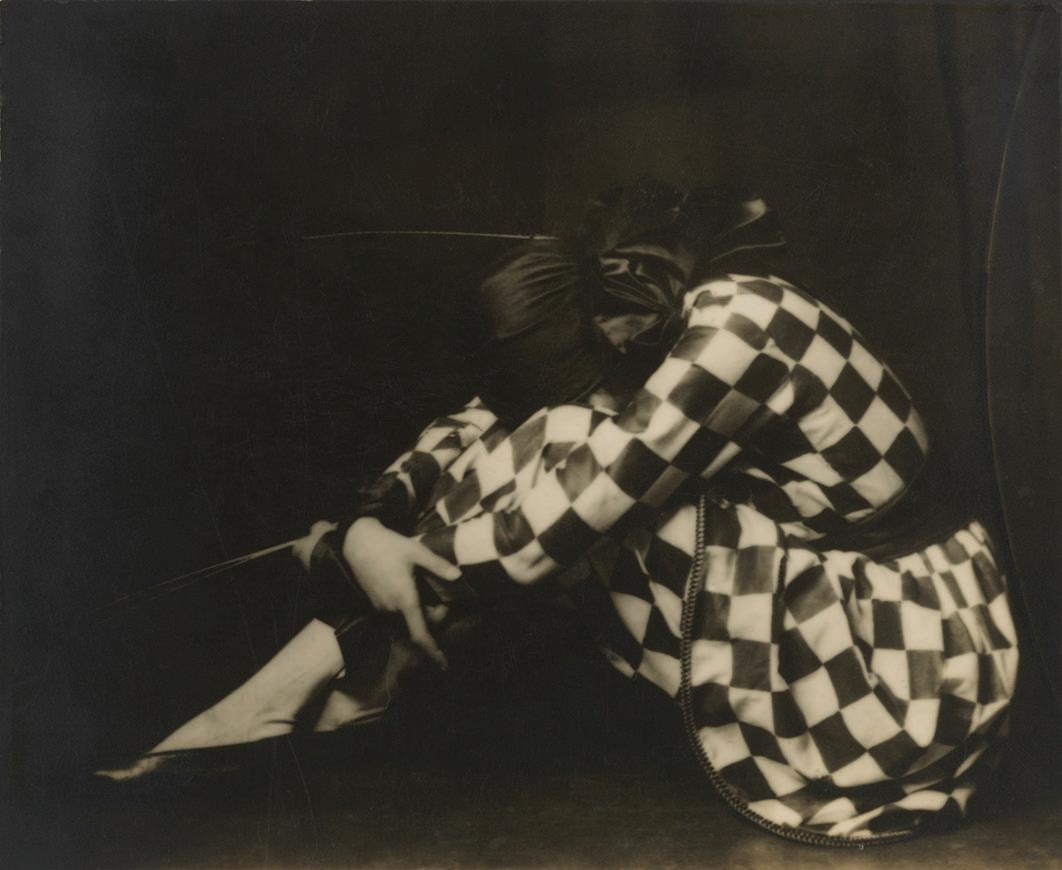
Yevonde’s accomplished, art-inspired works appeared in influential photographic journals and the London Salon of Photography included her celebrated narrative scene Invitation. The Harlequin as a figure in art appealed to Yevonde, who adopted his ambiguous traits in her self-portrait from this time.
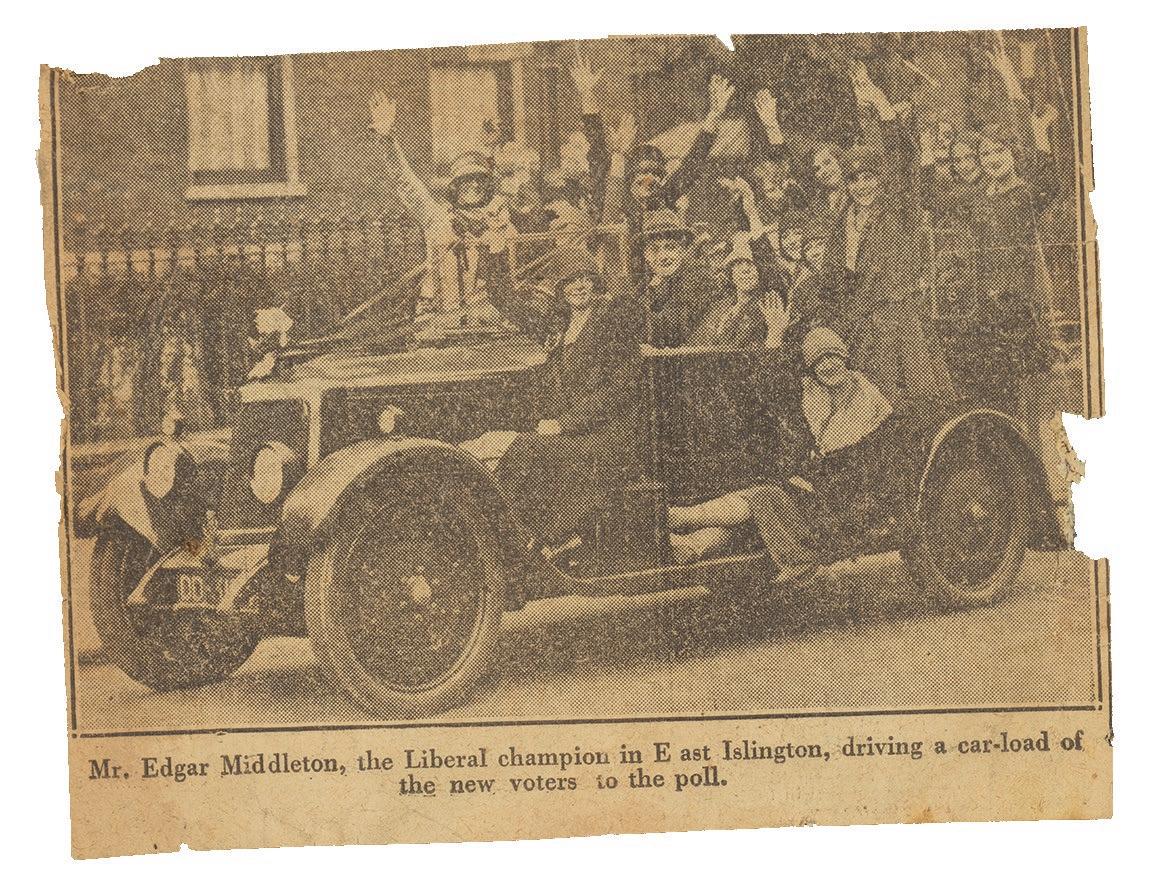
Having been married to journalist Edgar Middleton for three years, Yevonde had presumably grown accustomed to his obsession for filling all their time together writing plays – for which he achieved varying success. Yevonde, however, was fortunate that she had not been asked on marriage to give up work – high unemployment and socially constructed gender roles made this the norm. We can feel sure that in December 1923, Yevonde, having reached the required age of 30, would have dashed to the polling booth to cast her first vote in the general election.
She was still a decade away from her career-defining innovations using the Vivex colour process, but Yevonde’s desire for vibrancy was already evident. She describes how, at Number 100: ‘I took great pleasure in arranging and dressing my shop window… I had three different effects, a jade green, a black and an orange. These were obtained by variations in carpet, curtains, frames and flowers in vases.’
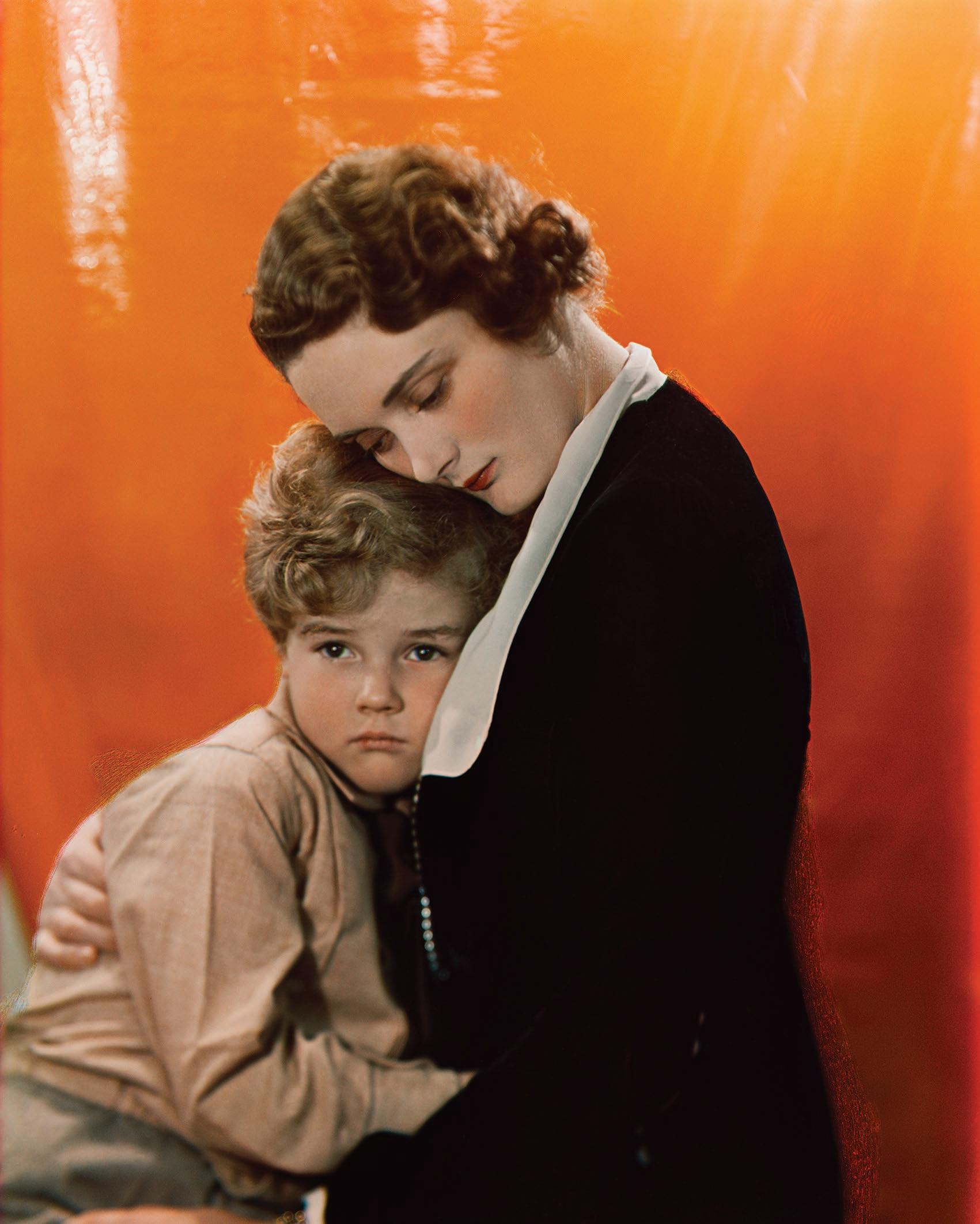
Far left – Margaret Hunam Redhead (Mrs Esmond Harmsworth) with her son Vere Harmsworth, 1932 (NPG x222108)
Above right – Anne Paget, published in the Sketch, 15 February 1939 (NPG x220661)
This skill of thinking in colour was something she would go on to demonstrate and advocate. From 1932 she was defending the fledgling process to her fellow photographers: ‘The colour photograph has arrived. It is here for us to develop and exploit. It will not be an easy task. We know that in women’s portraiture it has a vast future… The only possibility of failure will be if the photographers are not up to the work.’ Our reopening exhibition, Yevonde: Life and Colour will present her own dedication to colour photography, drawing upon the multitude of successes found within her separation negatives. Within this treasure trove, visible in colour only when digitally constructed or printed using three colours, there exists the reality of what was only a dream a hundred years ago.
Yevonde: Life and Colour
From 22 June until 15 October 2023
First Floor Exhibition Gallery
Tickets £15 (Concessions 10% off / Under 30s £5) Members go free
Supported by the CHANEL Culture Fund
Paul McCartney Photographs 1963–64: Eyes of the Storm
by Rosie Broadley Head of Collection Displays (Victorian to Contemporary), Senior Curator, 20th-Century
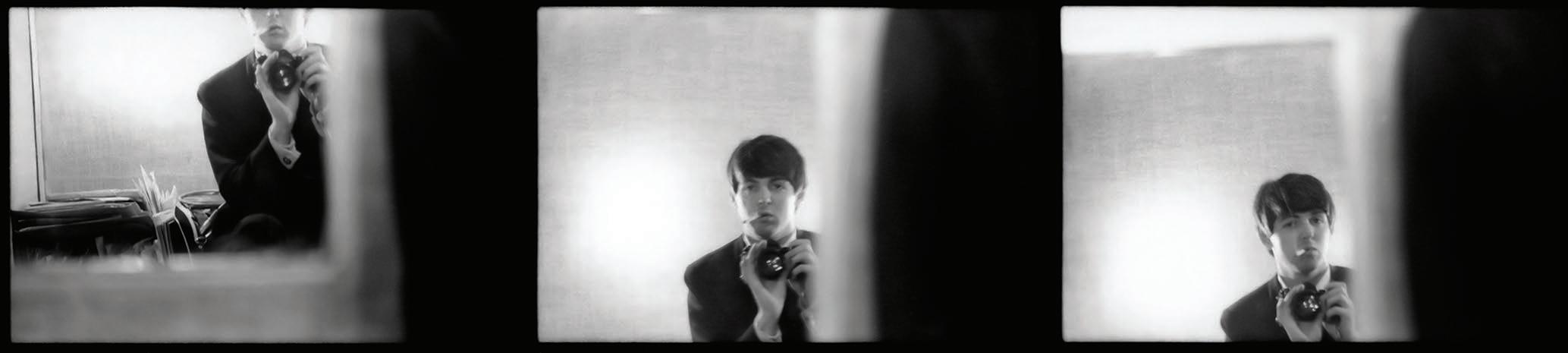
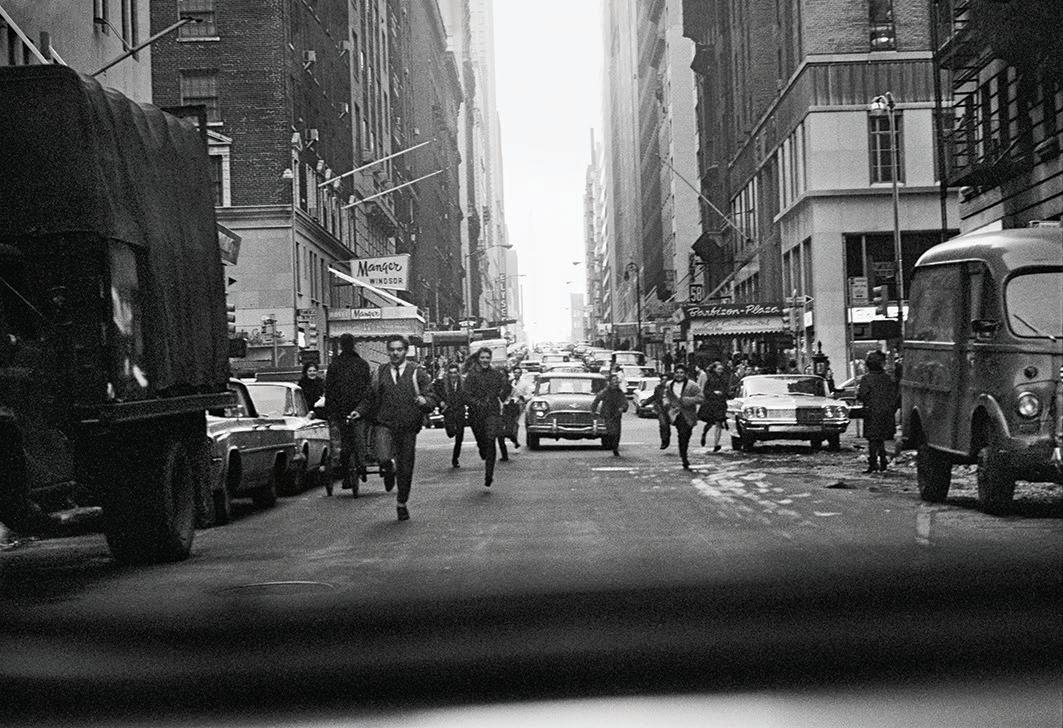
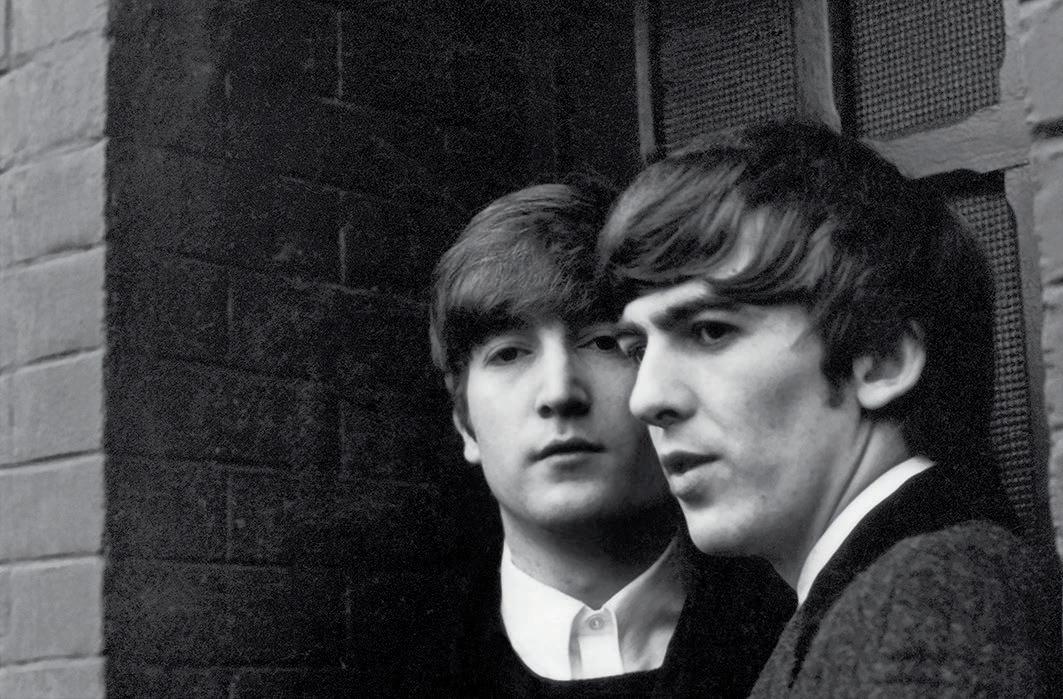
The Gallery’s major reopening exhibition presents an extraordinary archive of photographs by Paul McCartney that document his time with The Beatles at a critical moment in the group’s evolution. The earliest images in the exhibition date from October 1963, just as Beatlemania was gripping the nation, and the show culminates with photographs taken at Miami Beach in February 1964, during the final days of their first triumphant trip to ‘conquer’ America. That visit generated thousands of column inches, press images and film footage both at the time and subsequently, in numerous books and documentaries. Indeed, you would be forgiven for thinking that it was impossible to find a new perspective on such a fabled moment in popular culture. However, Paul McCartney’s photographs are just that: an unprecedented opportunity to consider the frenzy of Beatlemania from the inside out, through the lens of McCartney’s Pentax camera: in his own words, the ‘eyes of the storm’.
The photographs themselves have existed as negatives and contact sheets for 60 years, stored in McCartney’s personal archive. While a handful of images have been published, including a short run from
a contact sheet that appeared on the poster designed by Richard Hamilton for the album The Beatles (The White Album) in 1968, they have never been made into prints. In recent years, McCartney has been reviewing his archive, and one outcome was the publication in 2021 of The Lyrics: 1956 to the Present. The complete cache of his own historic photographs re-emerged during research undertaken in 2020 for an exhibition of the work of McCartney’s first wife, eminent photographer Linda McCartney. When McCartney and his team approached the Gallery with the idea that we work on a display of some of these pictures, it was immediately apparent that this is an outstanding body of work, of historic and cultural significance, which demands a larger exhibition. McCartney himself has been instrumental in selecting the images and generously sharing his memories of the photographs and the period in such fascinating detail that the exhibition is presented, as much as possible, in his own words.
While the exhibition’s narrative represents just four short months, it consists of nearly 300 photographs: ranging from grainy black and white portraits taken backstage in Liverpool, rehearsing musicians at a recording
studio in Paris, wintry Manhattan skylines, to gleaming colour shots of Miami Beach in the sunshine. McCartney’s acute observation, so celebrated in his song-lyrics, characterises pictures that capture The Beatles’ entourage and their manager Brian Epstein. While the group are surrounded by the media at every turn, McCartney used his camera to draw out personal encounters with press photographers and individuals against a backdrop of roaring crowds. His interest in the visual arts of the period is also evident in photographs that reflect New Wave and documentary film-making and emerging photojournalism.
This exhibition offers a privileged encounter not only with McCartney, but also with his fellow Beatles John Lennon, George Harrison and Ringo Starr, and the pictures capture four friends whose lives were irrevocably changing. Its narrative pivots on a single event: the group’s appearance on the Ed Sullivan Show on 9 February 1964. Watched by an unequalled television audience of 73 million people, their performances not only transformed The Beatles into global superstars but redefined fame in the modern era. We now recognise Paul McCartney as one of the great cultural figures of the 20th and 21st centuries, and the four months depicted in this exhibition were just the beginning of an era of British cultural dominance in music, fashion and film – something that visitors can explore in the Gallery’s new chronological displays. McCartney’s extraordinary photographs invoke an era when culture was opening up to everyone: when four very young men from a northern English seaport could influence the world with their music and creativity.
Paul McCartney Photographs 1963–64: Eyes of the Storm
From 28 June until 1 October 2023
Ground Floor Exhibition Galleries
Tickets £22 (Concessions from £11 / Under 30s £5)
Members go free
Supported by Bloomberg Philanthropies
My Passion for Portraiture
by Todd Longstaffe-Gowan Architect and landscape designer
I can pinpoint the precise moment when I became fascinated by portraiture, and by physiognomic likenesses, or life masks, in particular. I had been working in Venice as an intern at the Guggenheim Museum in the late 1980s when I was introduced to Olga Rudge, the then nonagenarian muse of Ezra Pound. As we conversed in her apartment, I found myself transfixed by a pair of plaster life masks on the mantelpiece. The casts lay flat, the sitters’ serene and youthful profiles facing upwards; their heads almost touched, and their long necks glided almost imperceptibly into the stony mantel. My host told me that they had been taken in the 1920s, and depicted her and Ezra shortly after they had met. Both were then ardent
young things. I became at once beguiled by the art of casting from nature – on my return to London I arranged to have my own face cast. The result was gratifying, but at what a cost! Despite liberal coatings of Vaseline, the mould was released only with the aid of a cold chisel and a scalpel – and most of my eyelashes and brows were left adhering to the plaster. I improved my technique and began to throw ‘cast parties’, where my fresh-faced friends would have their mugs cast in plaster – a most disagreeable but worthwhile experience. Decades later, I have occasionally returned them to my victims as tactile, three-dimensional souvenirs of our misspent youth.
Later, I began collecting portraits –drawings, paintings, and portrait busts of 17th-, 18th- and 19th-century worthies –people I didn’t know. Indeed, my partner and I have a particular enthusiasm for portraits of ecclesiastics – popes, cardinals, and nuns – and of servants, a peculiar but distinctive genre championed by our late friend, the novelist, curator and art historian Giles Waterfield.
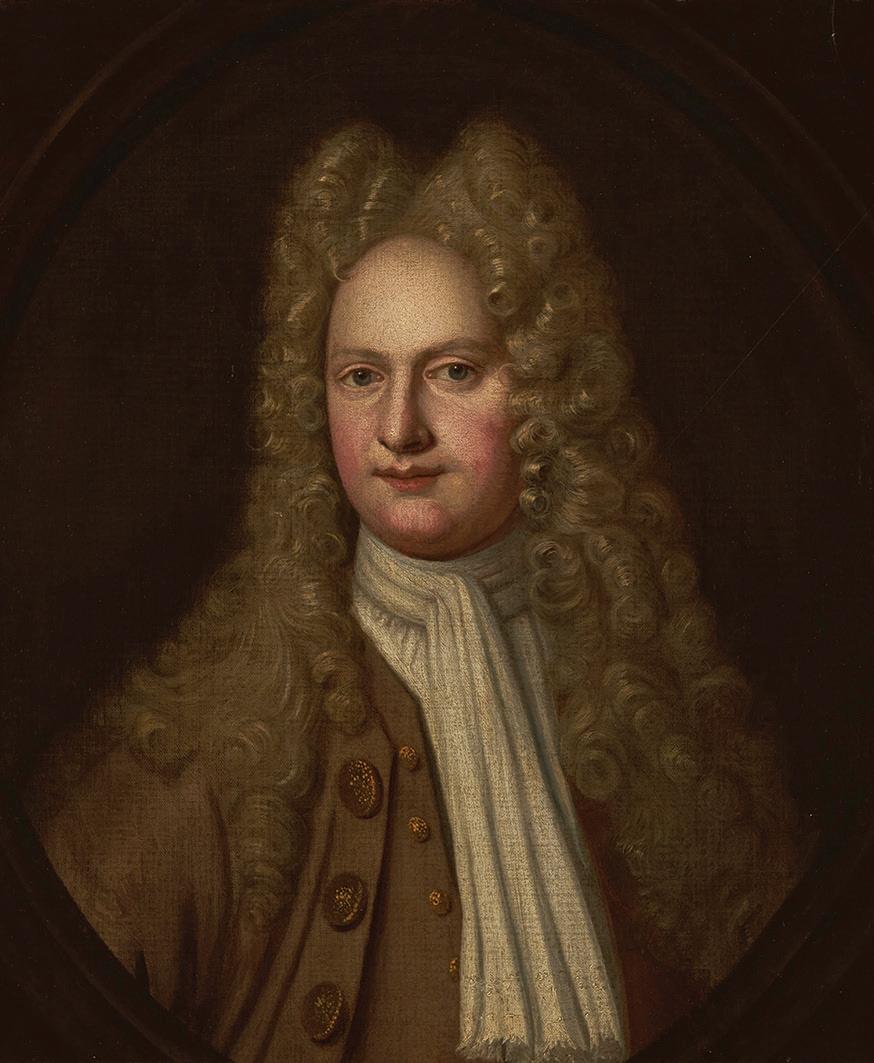
More recently I have focused on portraits of gardeners and landscape improvers. As a gardener by profession, I have always had a soft spot for those who practise what has been described historically as the ‘trade, crafte or misterie of gardening’. My collection includes portraits of mainly British gardeners dating from the early 18th to the mid-20th centuries: Among them, Thomas Ackers, ‘gardener to Queen Anne’, in a full-bottomed wig and spectacular lace jabot, unencumbered by any reference to how he made his living; the nurseryman John Busch, who recast Empress Catherine the Great’s gardens in Russia, clad in court dress
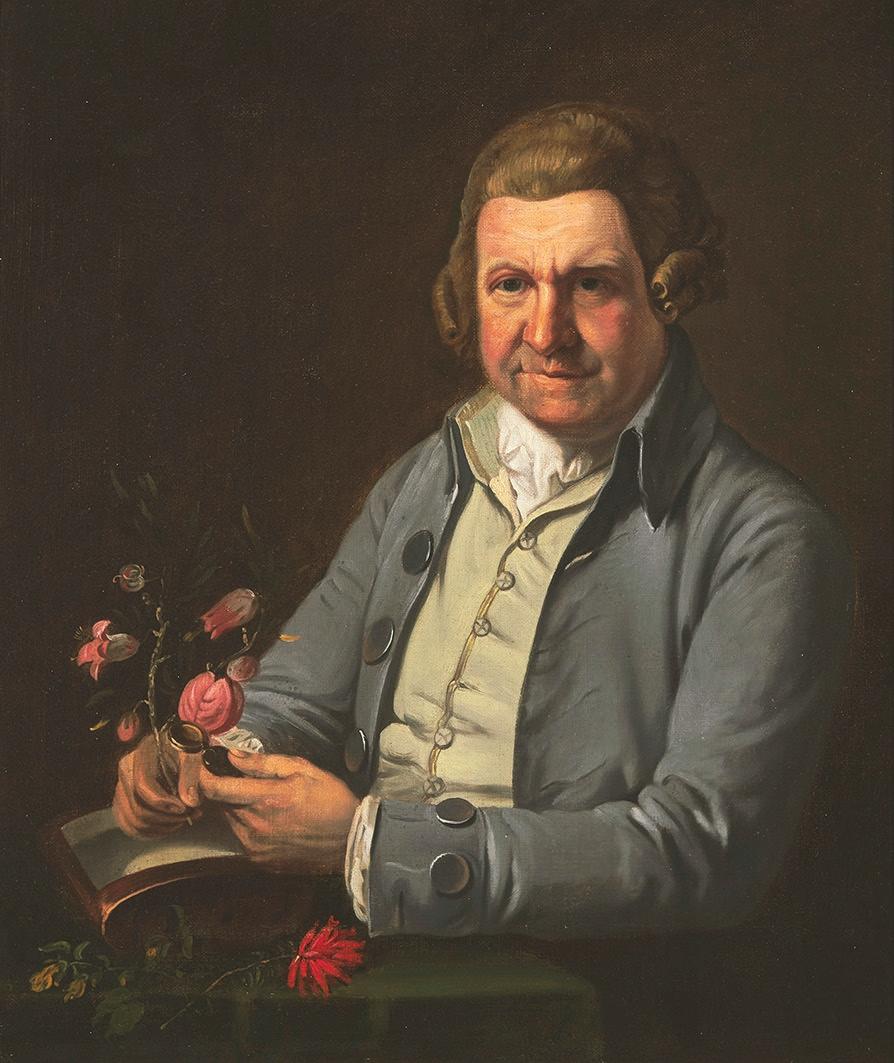
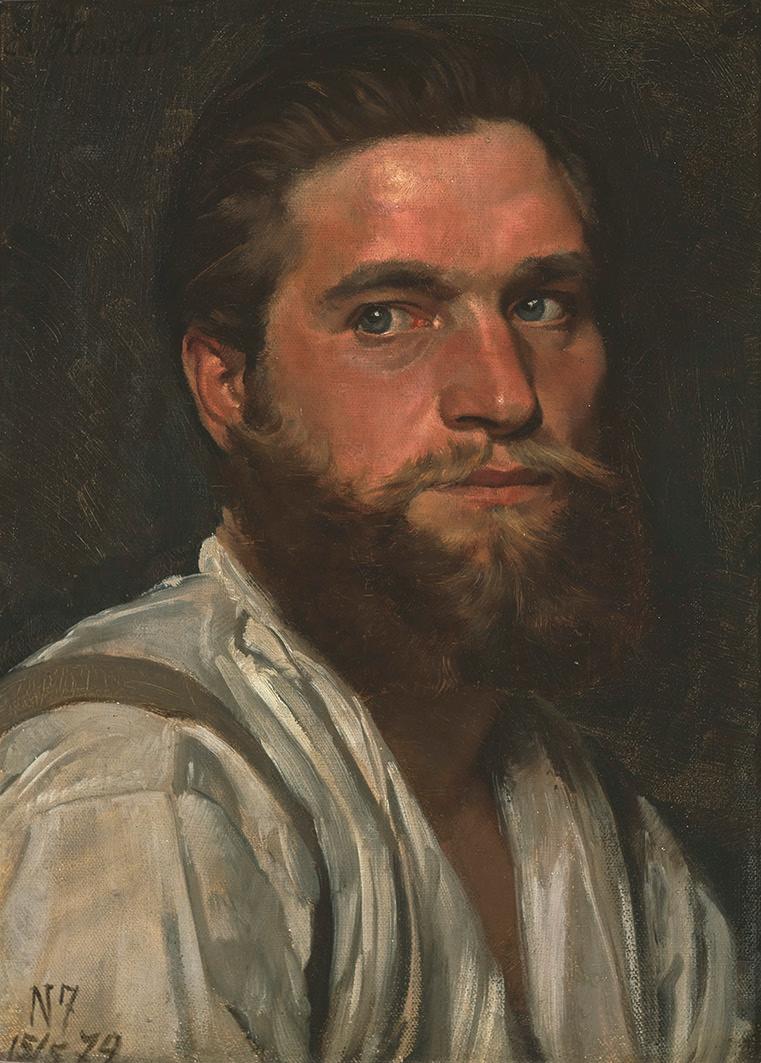
bedizened with cut-steel buttons, with a glimpse of a luxurious waistcoat of gold stuff; William Aiton – Botanic Gardener to King George III – portrayed with a vasculum and grasping an Aitonia capensis; and the 18-year-old Byronic Hofgärtner Otto Ludwig Sckell, a magnificently whiskered ‘hipster’ wearing a loose-fitting white chemise.
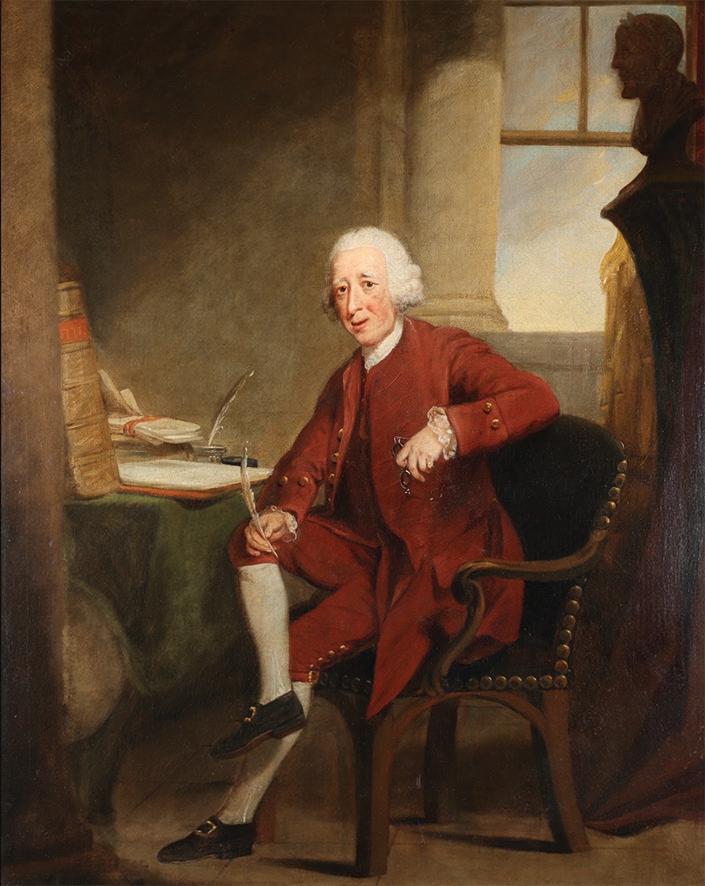
My most recent acquisition is a hitherto unknown full-length portrait of the celebrated Lancelot ‘Capability’ Brown – the Holy Grail for admirers of British landscape gardening. He is depicted as a prosperous ‘man of business’, seated at a table surrounded by ledgers. Sadly, there are no lurking plants or plans for expansive garden improvements, but, on his right pinkie finger, he wears a conspicuous diamond ring. Might this be a token of esteem from that most voracious ‘Anglomaniac’ and ‘plantomaniac’, Empress Catherine, who tried unsuccessfully to lure him to St Petersburg? I have yet to identify the subject of the mysterious wreathed portrait bust that is silhouetted against the open window.
Todd Longstaffe-Gowan is an architect, landscape designer, and author whose English Garden Eccentrics was published by the Paul Mellon Centre and Yale University Press (UK) in April 2022. The book was awarded the ‘Book of the Year’ (2022) prize by Apollo Magazine
Todd s contributing to the Inspiring People project by creating a new garden in the original 19th-century courtyard on the north side of the National Portrait Gallery. Named The Mildred Garden, this new green space will be visible from the new north entrance and inspire participants in our Learning programme. Mildred Palley, founder of The Mildred Fund, is the generous supporter of the Garden.
Left – Thomas Ackers attributed to Thomas Murray, c.1710
Above from top left – William Aiton by Edmund Bristow, c.1786/7
Otto Ludwig Sckell by Ernst Henseler, 1879
Lancelot ‘Capability’ Brown attributed to Mason Chamberlain, 1771. All Todd Longstaffe-Gowan
by Jessica Rutterford-Nice Adult Programme Manager
Have you ever spent an afternoon within our galleries, walking through centuries of fascinating figures, past and present, and wanted to learn more about a particular sitter, subject or artist? Or perhaps you’ve seen a technique used by one of the artists on display and wished you could spend some time developing those same skills? If delving deeper into our Collection and contemporary exhibitions via conversation, workshops and performance sparks your interest, then our new public programme will be for you.
As we prepare for a momentous period of reopening following our three-year
closure, we have had the opportunity to do something we very rarely can – completely reinvent.
We’ve spent time reflecting on our strong and engaging past programmes, and also gained valuable current insights into how you, our Members and the general public, might now be seeking to engage with us in order to deepen your knowledge of British portraiture, history and contemporary art.
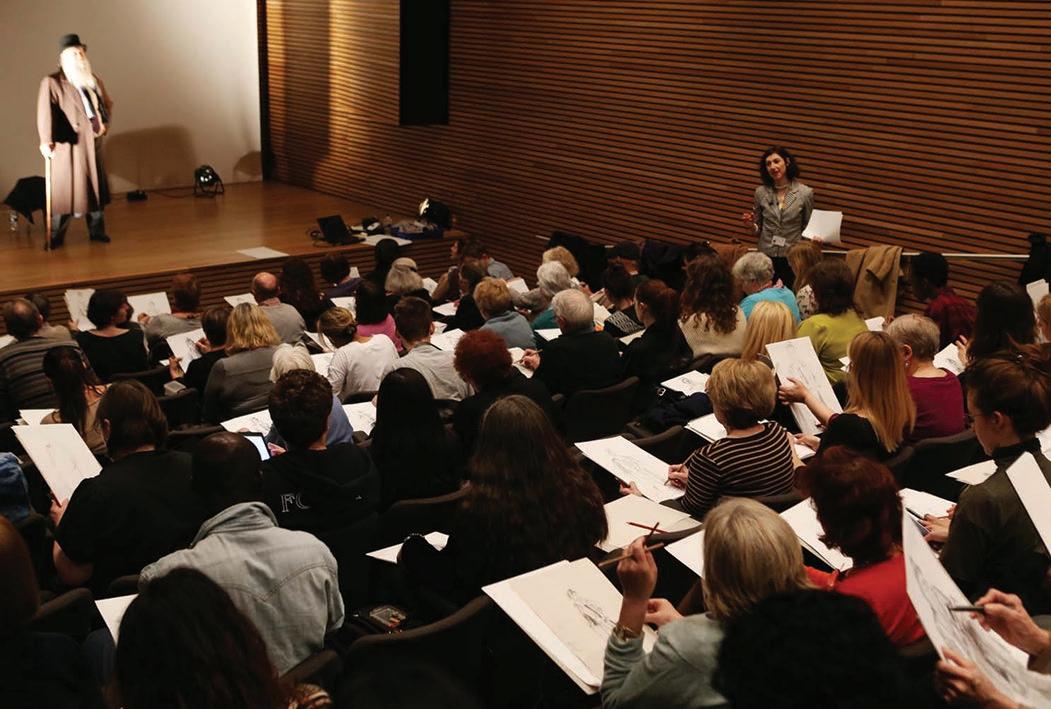
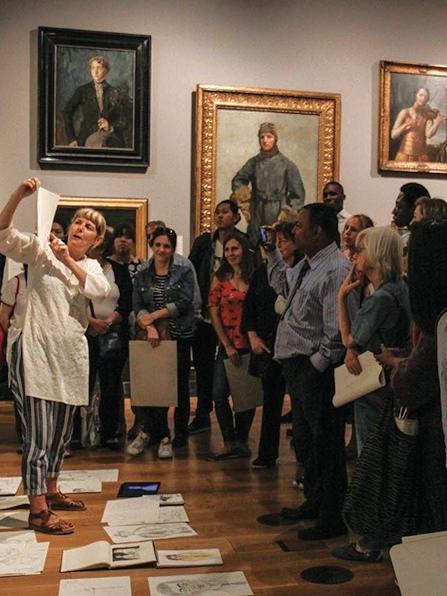
We will be reinstating some of your favourite activities (our regular ‘Drop-in Drawing’ sessions will continue to take place amongst the Collection), and you
can also expect more ‘In-conversations’ from renowned artists and cultural speakers, world-class debates, musical performances, readings, spoken word, dance and film screenings held in our Ondaatje Wing Theatre and throughout the renovated gallery spaces.
Along with this, we are now able to offer a string of new workshops and classes for adults within our transformed Learning Centre, consisting of two new studios dedicated to art-making. Keep your eyes peeled for a rich line-up of regular practical workshops in painting, photography, sculpture and printmaking, led by contemporary artists and leaders in their fields.
The comprehensive new re-display of the Collection has allowed for wider areas of questioning and debate within our programme. We will engage openly and critically with the complexities of British history and how it continues to change today, within new, regular, themed strands of programming, hearing directly from a diverse range of voices and perspectives.
As Members, you will be the first to hear about our public events and will have priority access to secure the limited tickets. We’ll also take you behind the scenes and aim to introduce bespoke elements of programming just for Members, allowing further opportunities to link up with our Collection and the Gallery.
As we look to the future, we will be moving to a hybrid offer of both on-line and on-site programmes, allowing for both international contributors and audiences. Academic and practical courses will also become a regular feature within our programme. This has all been integral to our goal of ensuring that those who do not have access to the Gallery can regularly connect to the themes and works held within our Collection and temporary exhibitions. We are in a unique position at the National Portrait Gallery, in that we will be programming live events at an organisation that hosts the most extensive collection of portraits in the world – it’s a gallery about people and for people, and our Public Programme allows you to have the opportunity to hear directly from and about these voices. It’s an exciting notion to be able to further explore the people shown in our spaces, and we look forward to you joining us as we uncover their stories in new and imaginative ways.
With the Inspiring People project coming to fruition, I wanted to say a huge thank you to everyone who has given so generously to our fundraising campaign. We are so grateful to each and every one of you for your incredible support at this key moment in our history. Ahead of our reopening, there are still opportunities to support us and leave your mark on the Gallery.
For £50
Become a Mosaic Supporter and support the restoration of our iconic mosaic floors. All Mosaic Supporters will be thanked in an artwork, created especially for our reopening year.
For £2,500
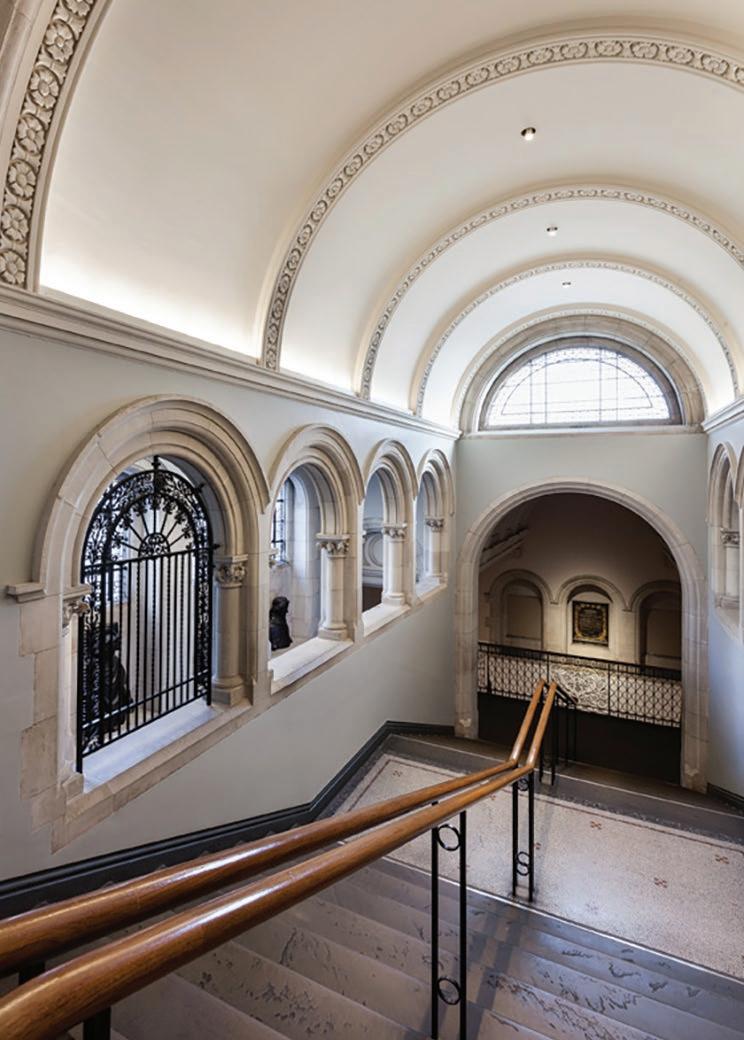
Name a step on our beautiful historic staircase for you, your family or in memory of a loved one. Your chosen name will be engraved on to a patinated brass panel, mounted on the wall above your step to create a brass seam running alongside the staircase.
From £5,000
Adopt a Portrait and celebrate your inspirations, the people who have shaped, and are continuing to shape, British history, society and culture. Your chosen name will appear alongside a portrait of your choice in time for our reopening. A really special way to remember a loved one and celebrate their life and interests.
I have always loved the Scharf/Christian staircase, and am proud to think my own and my grandmother’s names will feature there.
– Flora Fraser
I am naming a step in memory of my maternal grandparents who were great art-lovers. It’ll be nice to remember them whenever I’m popping into the Gallery.
– Robert Sutton-Mattocks
I am delighted to have been part of the group of donors who helped fund the mosaic restoration and I cannot wait to see the reopening.
– Bonnie A. Hirschfeld
For more information, please visit our website or email me on rredclift@npg.org.uk
Above – The National Portrait Gallery’s historic staircase where you can name a step
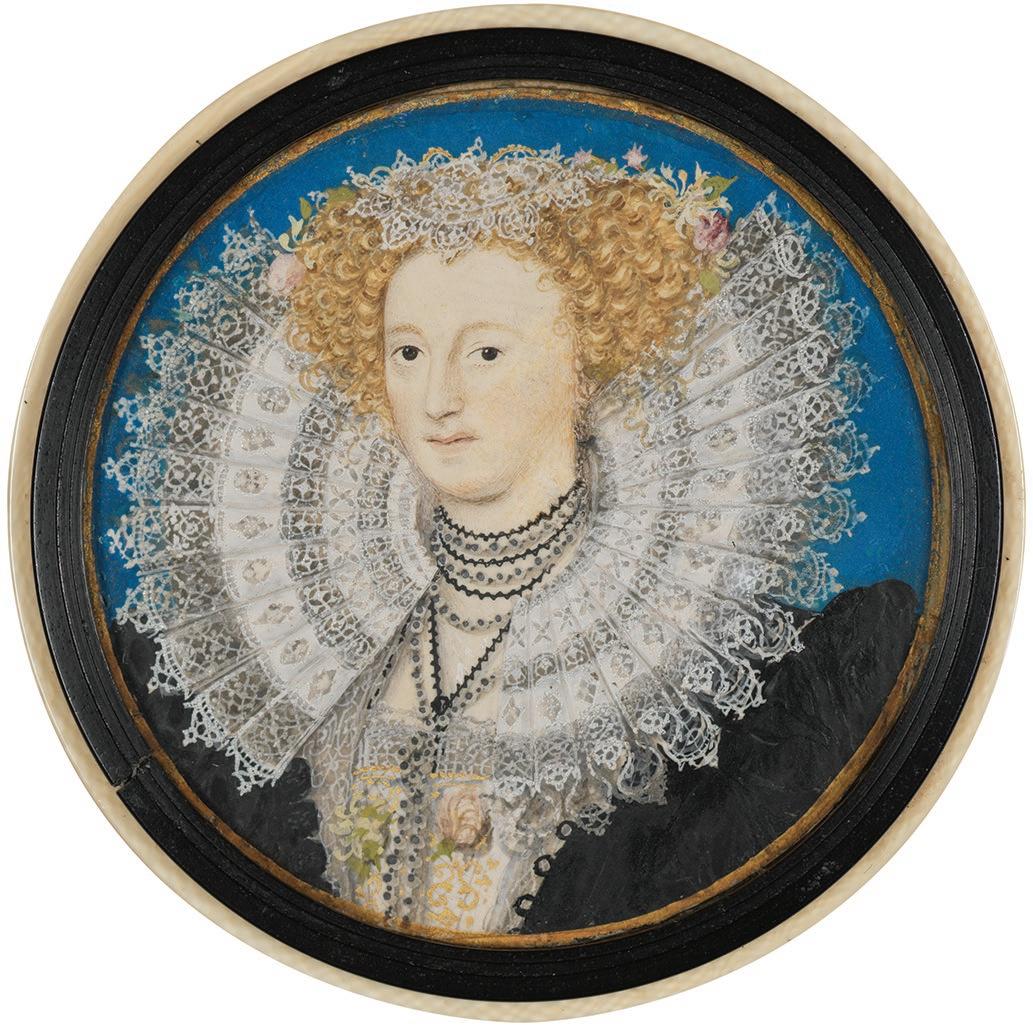
Right bottom left – Mary Herbert, Countess of Pembroke by Nicholas Hilliard, c.1590 (NPG 5994)
New Collector’s Plate from Pollyanna Johnson and National Portrait Gallery
by Jasmin Woolley-Butler Ecommerce Marketing Manager
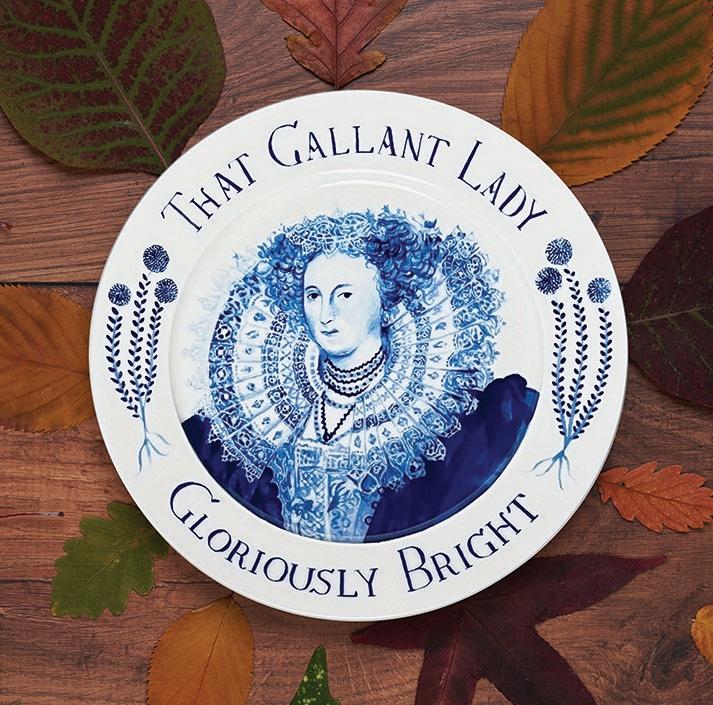
We are proud to share our new artistdesigned fine bone-china plate, which is available exclusively from the Gallery’s online shop.
We have worked with artist Pollyanna Johnson to create this exquisite piece. Limited to an edition of just 50, each plate is shipped in a black presentation box, embossed with the Gallery’s monogram in gold foil, and includes a numbered card insert.
The design centres around Johnson’s painted interpretation of Nicholas Hilliard’s miniature of Mary Herbert, Countess of Pembroke, and features a text excerpt from Herbert’s translation from the Italian (c.1590) of Francesco Petrarch’s The Triumph of Death (written 1348, published 1470).
Johnson was inspired to paint Herbert as she was the most prominent non-royal woman writer and poet in Elizabethan England. She wears a fashionable cartwheel ruff and maintains a defiant gaze that belies her steely reserve, required to maintain her standing in society.
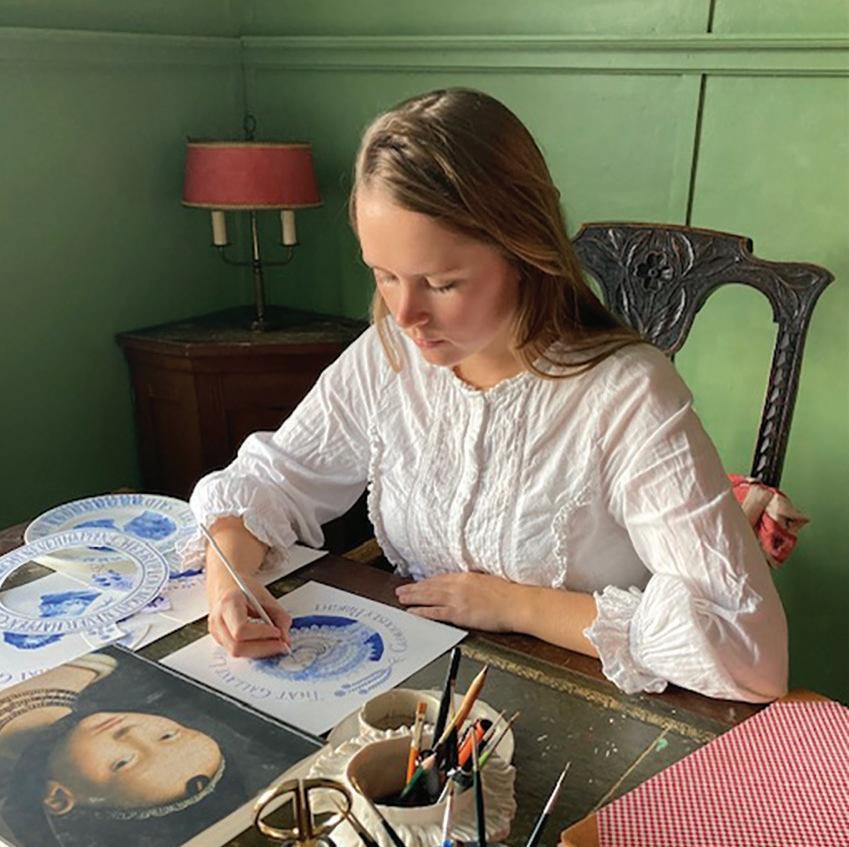
Born in 1993, Pollyanna Johnson is a painter living and working in East Sussex. Pollyanna creates intricately painted ceramics featuring women from art, freeing them from the walls of the Gallery and the male gaze of the painters and paintings that once surrounded them.
The National Portrait Gallery is a constant inspiration for my work, and has some of the most iconic portraits of women from history… My art practice is centred around ceramics, using these as a canvas to explore portraits of women from art history. Transposing them from their original context, I want to celebrate and bring them to centre stage, emphasising the common themes of being a woman, from both my world and theirs.
– Pollyanna Johnson
Photo: Pollyanna Johnson
Relaunching our Patrons Scheme
by Georgia Perkins Philanthropy Manager
With the highly anticipated reopening of the Gallery fast approaching, we are delighted to re-launch our Patrons scheme. Becoming a Patron of the Gallery means joining a community of people impassioned by portraiture, art and history. Together, we delve into the stories behind our portraits and ensure they are available for generations to come.
As a Patron, you meet the artists and sitters featured in our Collection, you’re the first to see our exhibitions, and you spend time with fellow Patrons at award ceremonies, exclusive events and curated art trips. You hear stories about the coming together of our Collection, and share insights others will not encounter. Highlights of this year’s programme have included a visit to Grayson Perry’s studio, a Salon hosted at Fortnum & Mason as part of our Reframing Narratives: Women in Portraiture project, supported by the CHANEL Culture Fund and a two-day art trip to York.
Our Patrons have been part of the transformation of the National Portrait Gallery – visiting the site and supporting the new Gallery – and, as a thank you, you will be among the first through our doors upon the reopening in June.
Patrons make it possible for us to share our Collection with the nation: not just to acquire incredible portraits, but to preserve and champion the stories behind them. We now have four tiers of Patronage available – Bloomsbury, Reynolds, Ditchley and Life Patrons – each deepening your relationship with us.
Patronage starts from £2,000, which includes a suggested donation to the National Portrait Gallery of £1,500. We offer monthly and quarterly Direct Debits to spread the cost of your Patronage.
To hear more about the new Patronage scheme, do get in touch with us at patrons@npg.org.uk or by phone on 020 7321 6645. We’d love to hear from you.
by Marcus
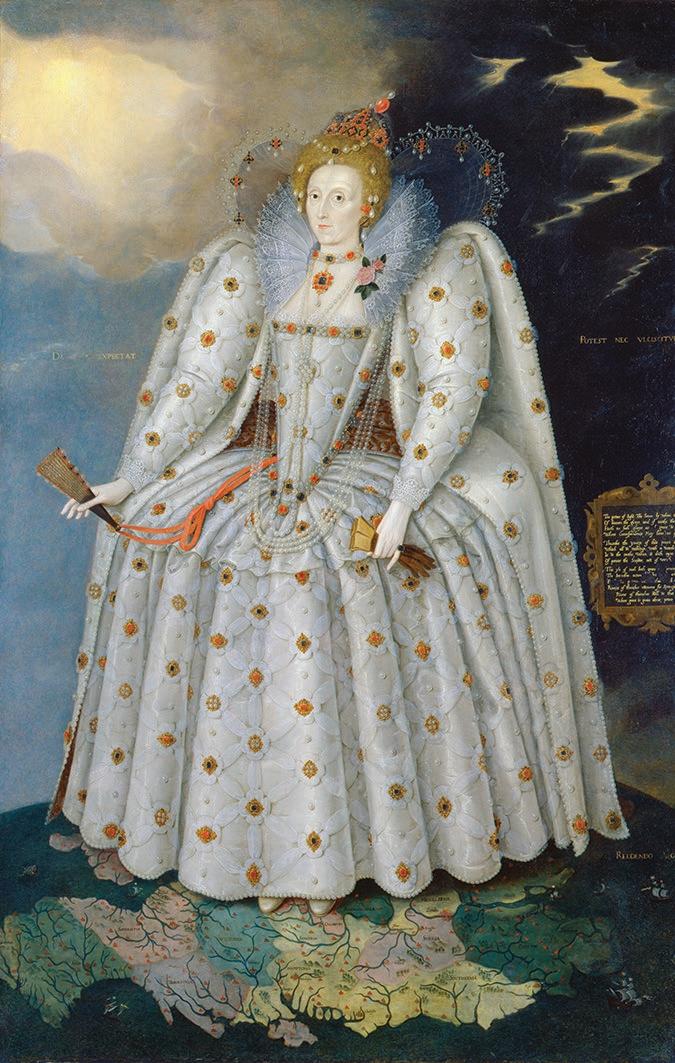
Right – Queen Elizabeth I (‘The Ditchley portrait’)
Gheeraerts the Younger, c.1592 (NPG 2561)
Supporters’ Preview Day
by Lisa McGann Membership Manager, Projects
As a Member, you are part of the National Portrait Gallery at one of the most exciting times in our history and we can’t wait to see you all in person at the Supporters’ Preview Day on 21 June 2023.
To all our donors, who have generously supported us over the years and throughout the closure, we simply want to say a huge thank you and welcome back! We are offering this exclusive invite to you, our Members, to be the first through the door and see the new Gallery before we open to the public.
This day offers a chance to discover all that you can experience from your Membership in the new Gallery.
We know how much you are looking forward to exploring the new re-display of the Collection, so you will have an opportunity to join exclusive tours that will take you on a journey through our transformed galleries, and to hear all about some of the amazing architectural finds uncovered during the refurbishment.
You will have a first glimpse at our new shops and eateries, including the stunning new-look first-floor temporary exhibition shop. Our Learning Centre, a space for creative workshops in painting, photography, sculpture and printmaking, will be open for the first time and hosting a variety of free taster sessions for you to enjoy.
Your Supporters’ Day will also include special preview access to the opening exhibition Yevonde: Life and Colour which runs from 22 June until 15 October 2023. This ground-breaking exhibition explores the life and career of the 20th--century female photographer, who pioneered the use of colour photography in the 1930s.
To help our Members have the best experience during this busy reopening period, you will now have the option to book your preferred free time slot for exhibitions and events taking place over the summer months. If you would like to take advantage of booking your place for the Supporters’ Preview Day, you can do so by logging in to your Membership account online and visiting npg.org.uk/membersevents.
Booking for the Supporters’ Preview Day opens on Wednesday 3 May 2023.
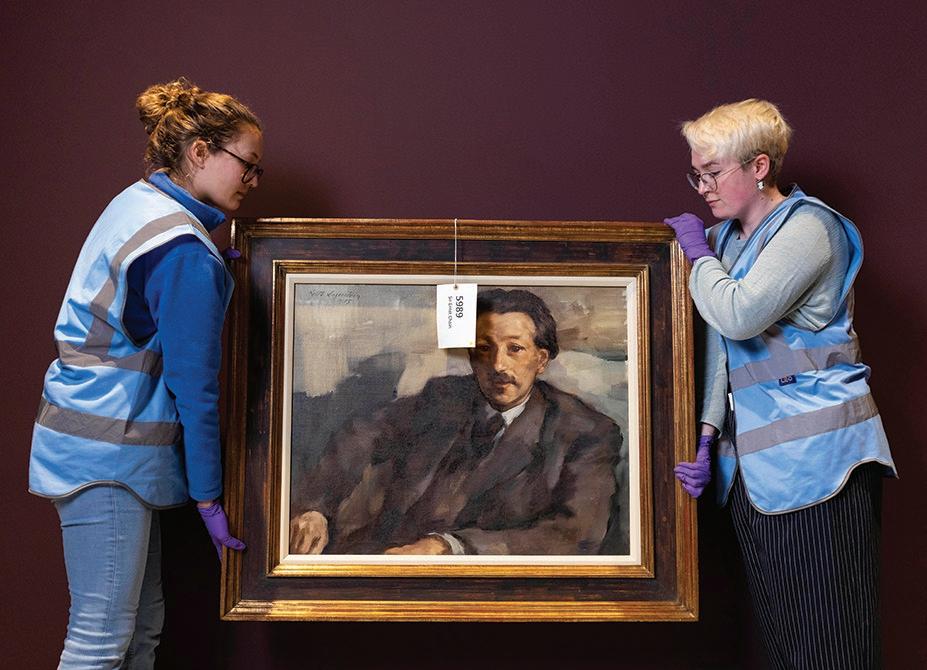
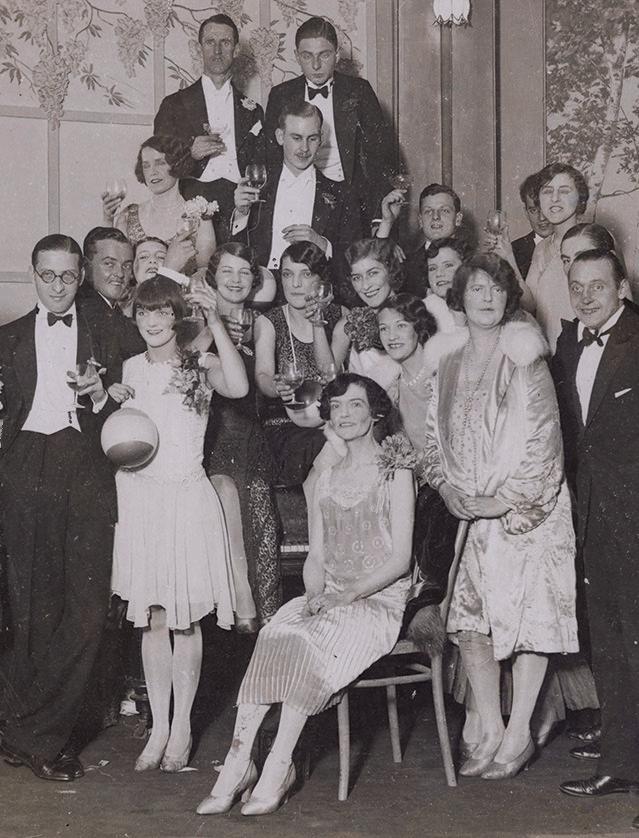
Above right – Kate Meyrick (detail) by Planet News, 1928 (NPG x194141)
SPRING OFFER for Gallery Supporters
Limited edition signed print by Sky Arts Portrait Artist of the Year 2022 now available
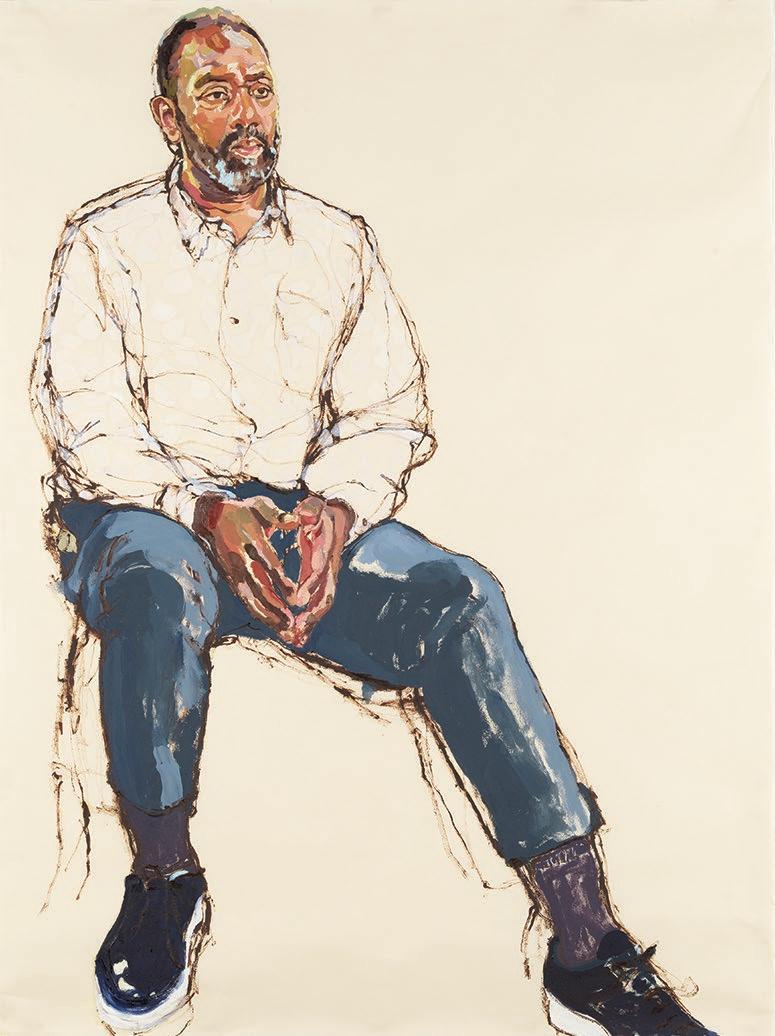
Commissioned by the Gallery, this beautiful and reflective portrait of Lenny Henry by Morag Caister is now available as a gallery-quality giclée print.
Morag Caister, b.1994, is a London-based portrait artist working in the medium of oils and pastels. She graduated from the University of Brighton in 2019 and has been crowned winner of Sky Arts Portrait Artist of the Year 2022 with this portrait of the well-loved British actor and comedian.
Each print, in this limited edition of 100, is signed and numbered by the artist. Priced at £400, this edition is now available from our online shop. npgshop.org.uk/collections/editions
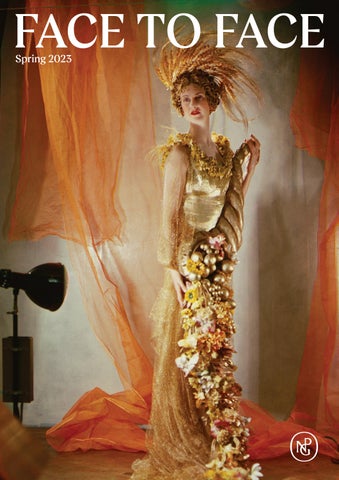
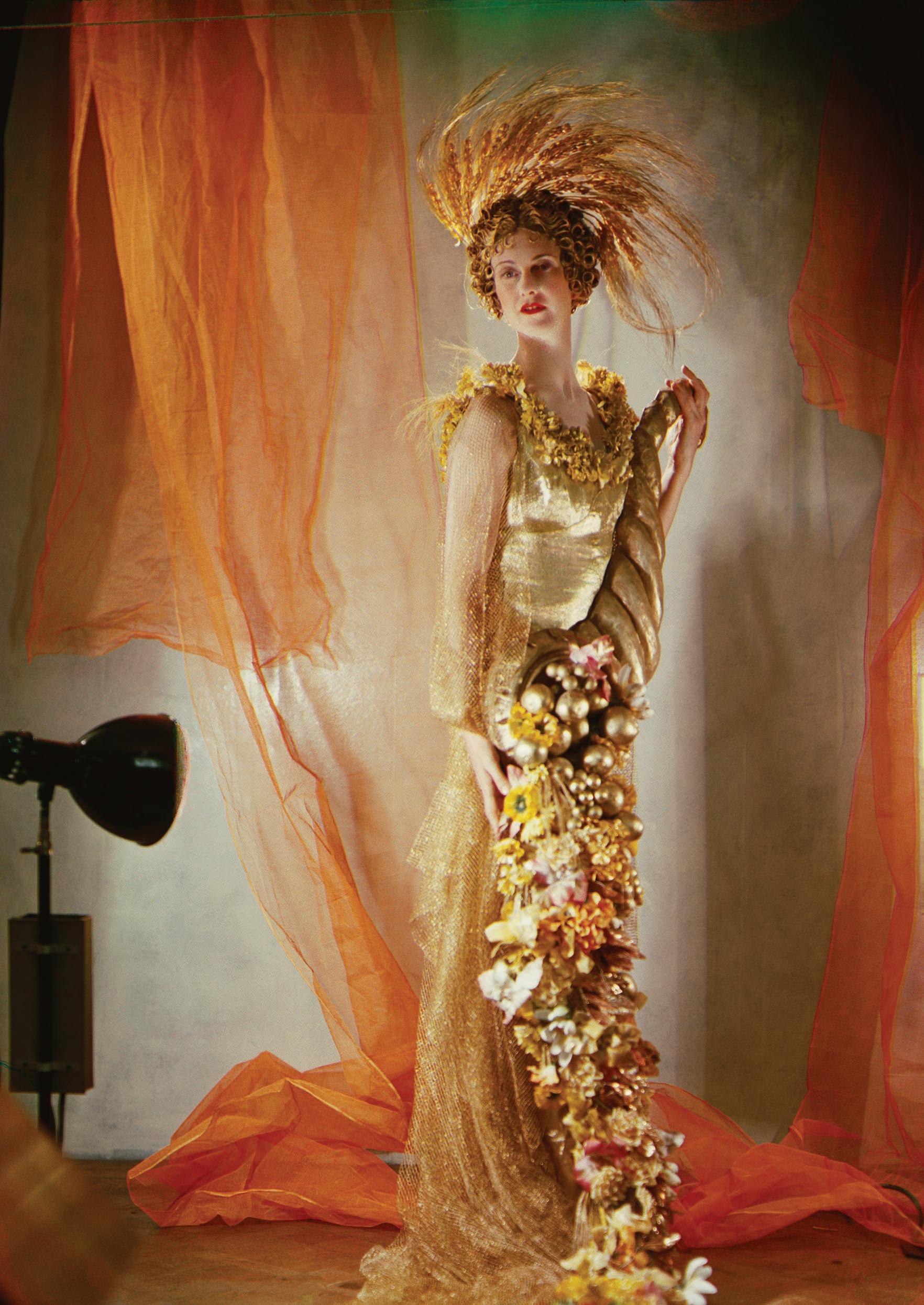
Cover – Lady Dorothy Warrender as Ceres (detail), Yevonde, 1935. Purchased with the Portrait Fund, 2021 (NPG x220025)
Right – Lenny Henry by Morag Caister, 2022 (NPG 7134)