The Gallery is committed to reducing our environmental impact. This magazine is fully recyclable and has been produced by a certified carbon balanced printer. Their Partnership with the World Land Trust is helping to preserve and protect carbon rich habitats around the world.
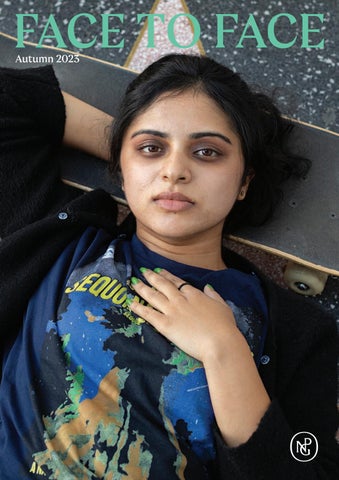
It is a great pleasure to introduce the first issue of Face to Face following the opening of the new National Portrait Gallery.
The response to the transformation has been extraordinary, and I want to begin by giving my thanks to you for your support in making this possible. When we opened our doors on 21 June for Supporters’ Preview Day, Members and Patrons were able to experience a complete rehang of the world’s greatest collection of portraits in beautifully renewed galleries and revitalised spaces by architect, Jamie Fobert. We have been delighted by the five-star reviews in the press and, most importantly, the response from our supporters and visitors.
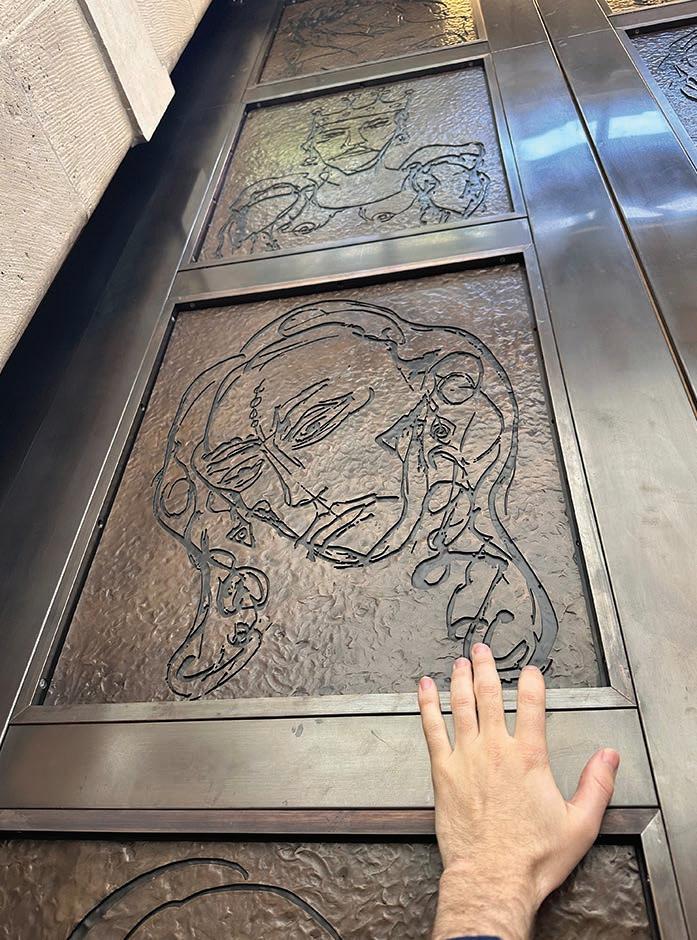
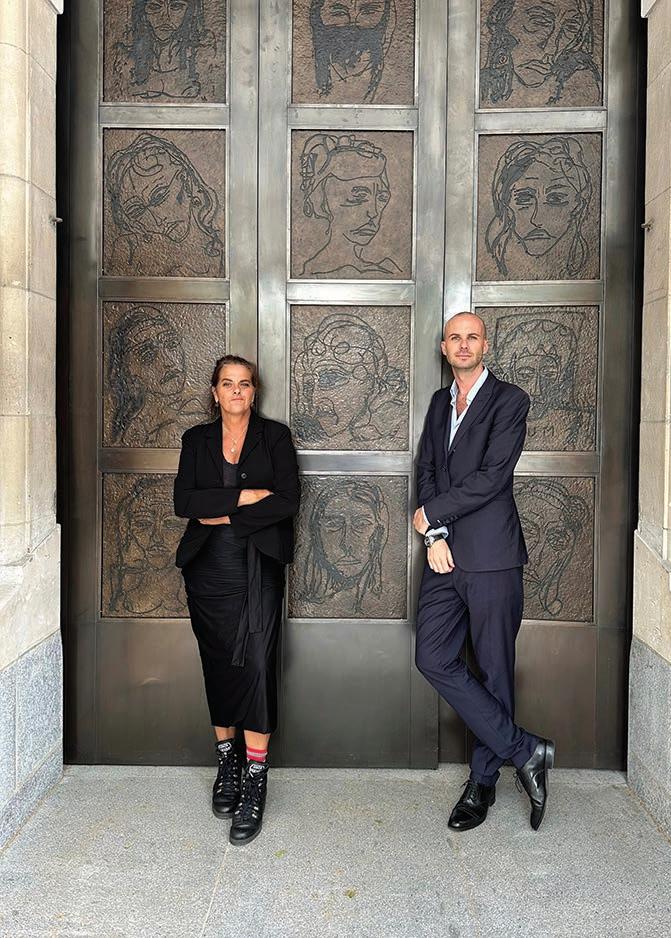
In the week of the opening, we were particularly proud to announce a major new commission by Tracey Emin. The commission consists of 45 individual bronze panels representing ‘every woman’, which cover the three doors at our new entrance, Ross Place. In this issue, Harry Weller, Creative Director of Tracey Emin Studio, shares with us the meticulous process behind their creation.
Jenny Waldman, Director of Art Fund, also tells us about her favourite portrait. Jenny was instrumental in assisting the Gallery with acquiring Sir Joshua Reynolds’s Portrait of Mai, which is displayed as the centrepiece of the salon hang in room 18.
This autumn, we have been able to welcome back schoolchildren to the Gallery in much greater numbers than ever, thanks to the new Mildred and Simon Palley Learning Centre. Eleanor Hilton, Digital Learning Manager, tells us about the launch of our digital Schools hub.
Commemorating the 75th anniversary of HMT Empire Windrush’s arrival in Britain, Windrush: Portraits of a Pioneering Generation is a display of ten portraits commissioned by His Majesty The King, and lent from the Royal Collection, which honour the accomplishments of the Windrush Generation. Dr Sarah Moulden, Curator, 19th Century Collections, gives the background to this special display.
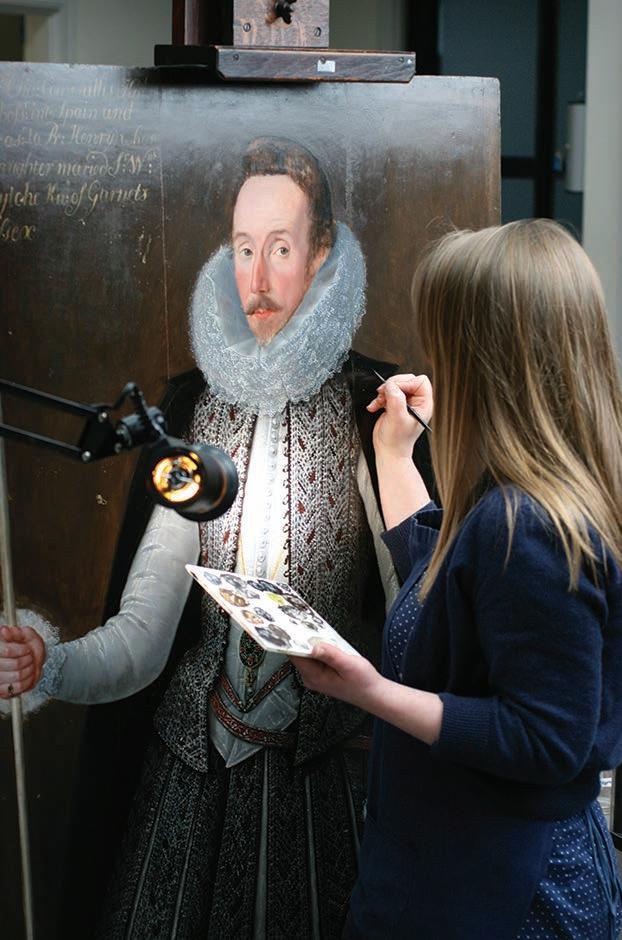
This year, the Gallery opened its first conservation studio dedicated to works on paper, photographs and portrait miniatures. Emmanuelle Largeteau, Works on Paper: Conservation Manager, introduces this new space and explains how important it is for the long-term protection and conservation of this growing part of the national collection of portraiture.
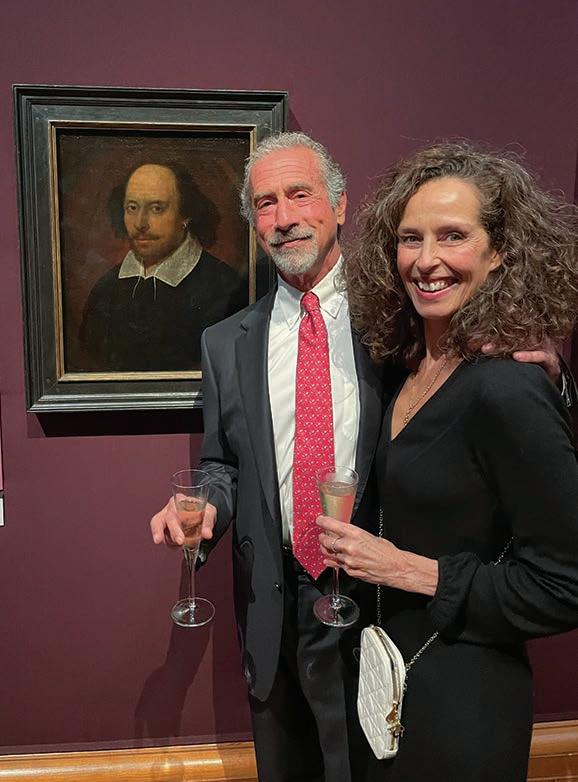
Finally, it is wonderful that so many of you have decided to support or ‘adopt’ your favourite portrait in the Collection, often in memory of someone close to you. We asked supporters Michael Silver and Stephanie Thomas to talk about why they wanted to adopt the portrait of William Shakespeare, the first painting in our Collection.
Thank you once again for your fantastic support as we enter an exciting new chapter for the National Portrait Gallery.
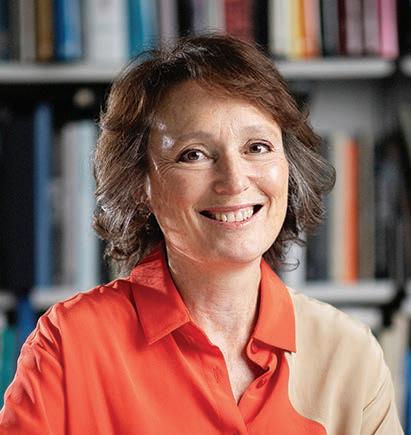
Dr Nicholas Cullinan Director
My Favourite Portrait
by Jenny Waldman Director, Art Fund
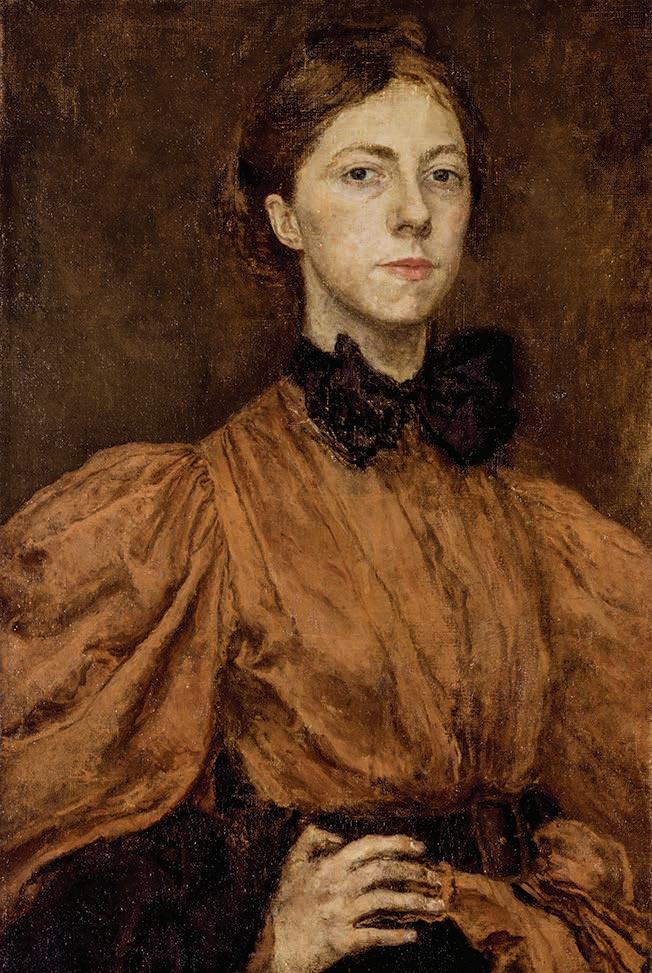
Among the portraits of writers, artists, politicians, reformers and activists in room 24 of the magnificently refurbished NPG is a striking self-portrait by Gwen John, painted when she was about 24. The artist portrays herself in assertive pose, looking straight at the viewer, hand on hip. You can feel the intensity of her gaze. The meticulous attention to detail, subdued colour palette, and delicate brushwork are remarkable. It’s a powerful visual statement, conveying the strength of her character.
Gwen John (1876–1939) was born in Haverfordwest, Wales. She studied at the
Slade School of Fine Art at the same time as her younger brother, Augustus John, and spent six months studying in Paris with James McNeill Whistler. She moved to Paris permanently in 1904, where she became the muse and lover of the sculptor Auguste Rodin. She completed fewer than 150 paintings, mostly portraits, particularly of women and self-portraits. She was a perfectionist, painting with deliberate, small brushstrokes. She created a numerical system to keep track when mixing colours and tones, so that she could use the same colours across her works. And she innovated, mixing chalk and other materials into her paint and the canvas to create an opaque, textured, yet luminous effect.
Although her work was exhibited internationally she was under-appreciated in her lifetime. Her more famous brother considered her to be the greatest woman artist of her time and predicted that he would be remembered as Gwen John’s brother. Her reputation has grown significantly over the 80 or so years since her death and most of her work is now in museums around the world. I’m proud to say that Art Fund has helped ten works by Gwen John into public collections in the UK, the first of which was this self-portrait, acquired by NPG with Art Fund support in 1965. Spend a few minutes looking at it and her gaze will stay with you for the rest of the day.
Jenny Waldman is Director of Art Fund, the UK charity for art and museums. Founded in 1903, Art Fund raises funds to help museums to build and share their collections as widely as possible. Art Fund’s activities across the UK are supported by individuals, trusts and foundations, and over 135,000 National Art Pass holders.
Above – Self-portrait (detail) by Gwen John, c.1900 (NPG 4439)
Naval Officers of WWI
by Claire Greenaway Loans Registrar, Exhibitions and Collections Management
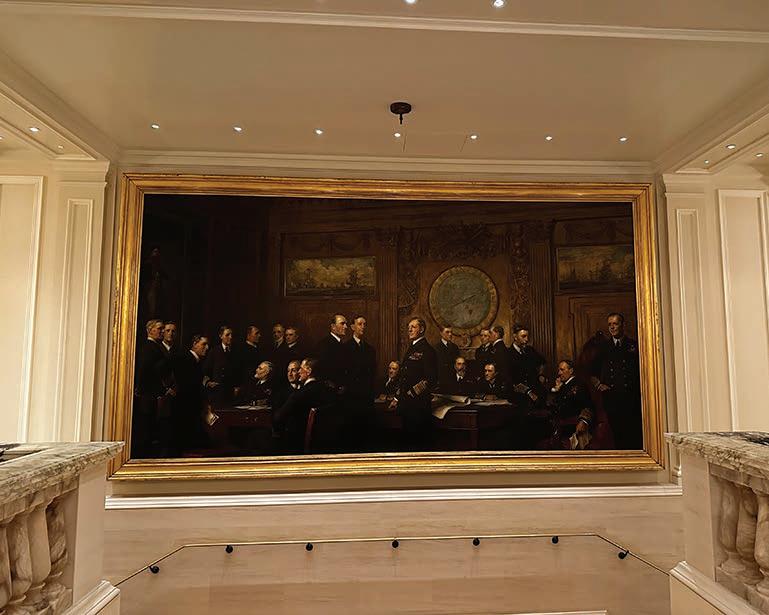
One of the challenges presented by the Inspiring People project was the need to find a new home for Arthur Stockdale Cope’s Naval Officers of World War I.
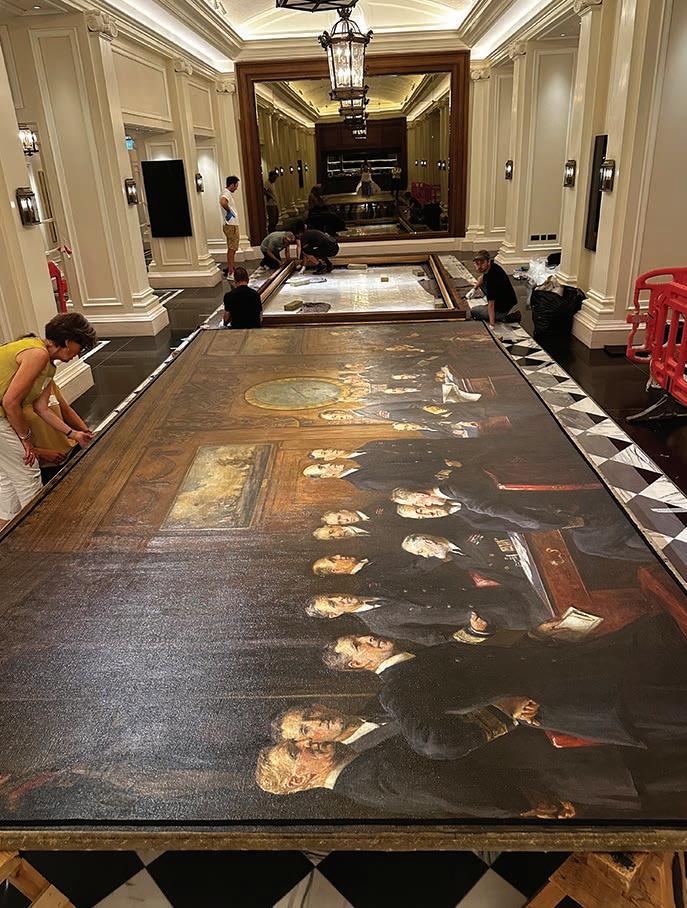
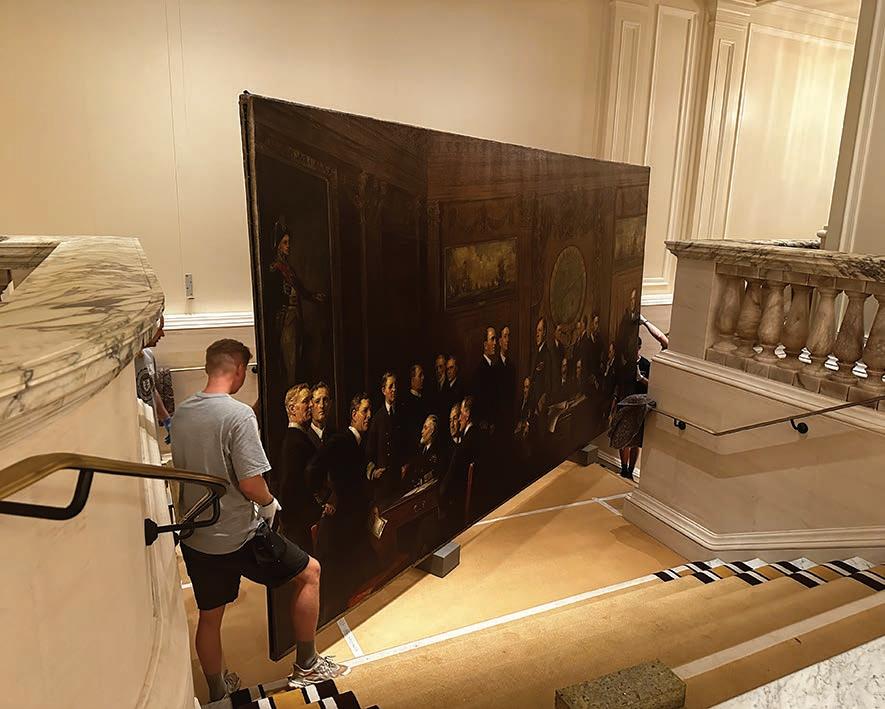
At over two metres tall and over five metres wide, this monumental oil on canvas required a space where it could make an impact, a wall which would physically support it, and space to unroll and prepare the frame and canvas. The new Raffles Hotel at the Old War Office building seemed the perfect place for it to be available to the public, fitting the period and history of the painting as well as being a construction site when initial conversations started, so that we could tailor the setting to the requirements of the work. Fast forward two more years and we were finally able to make the install
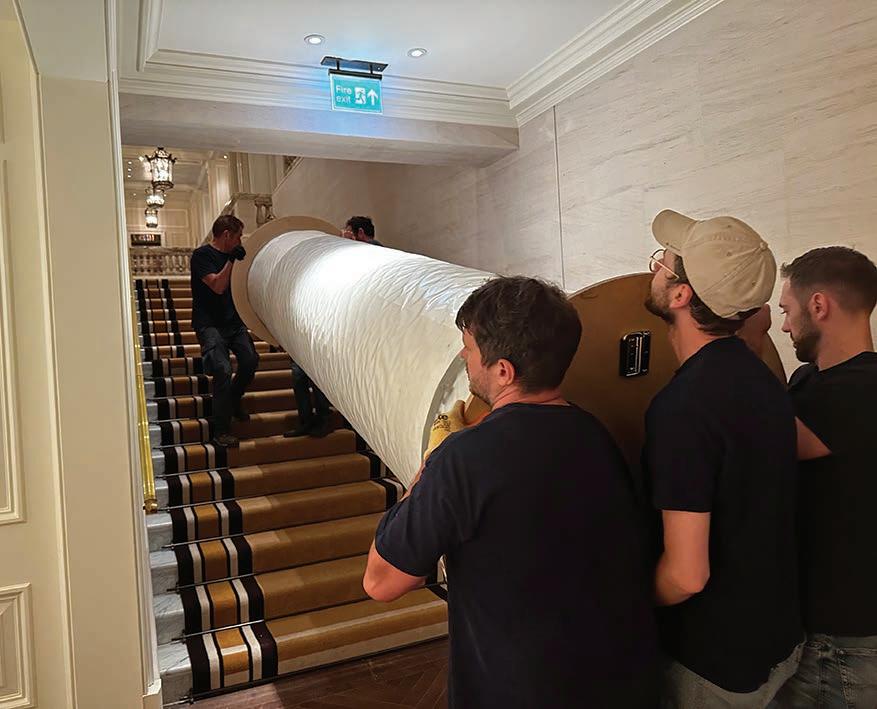
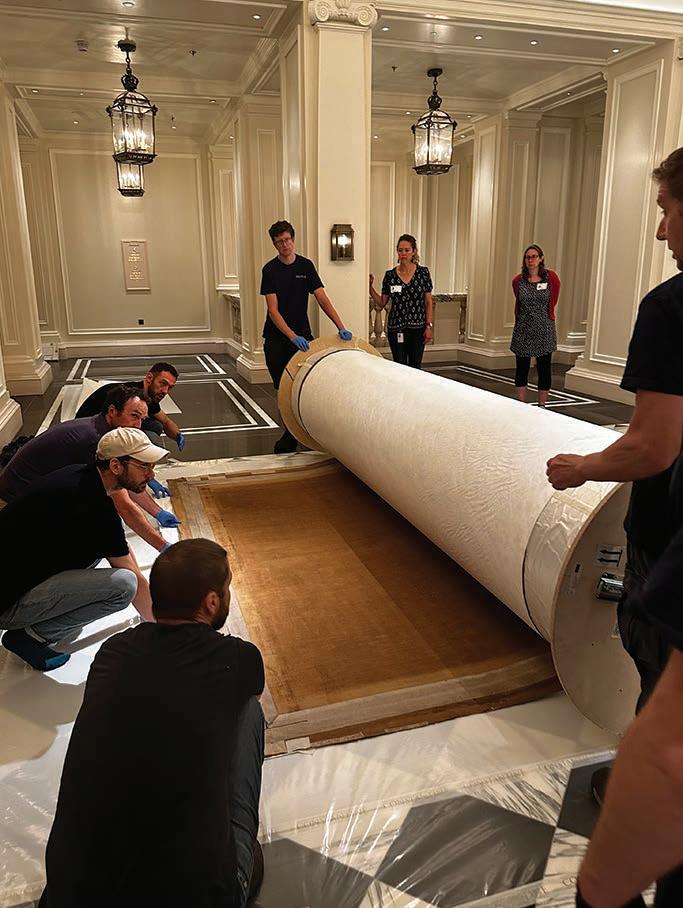
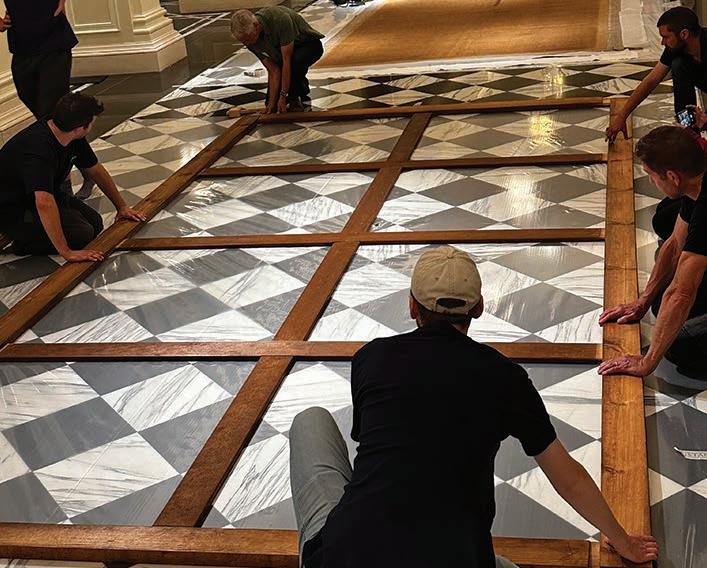
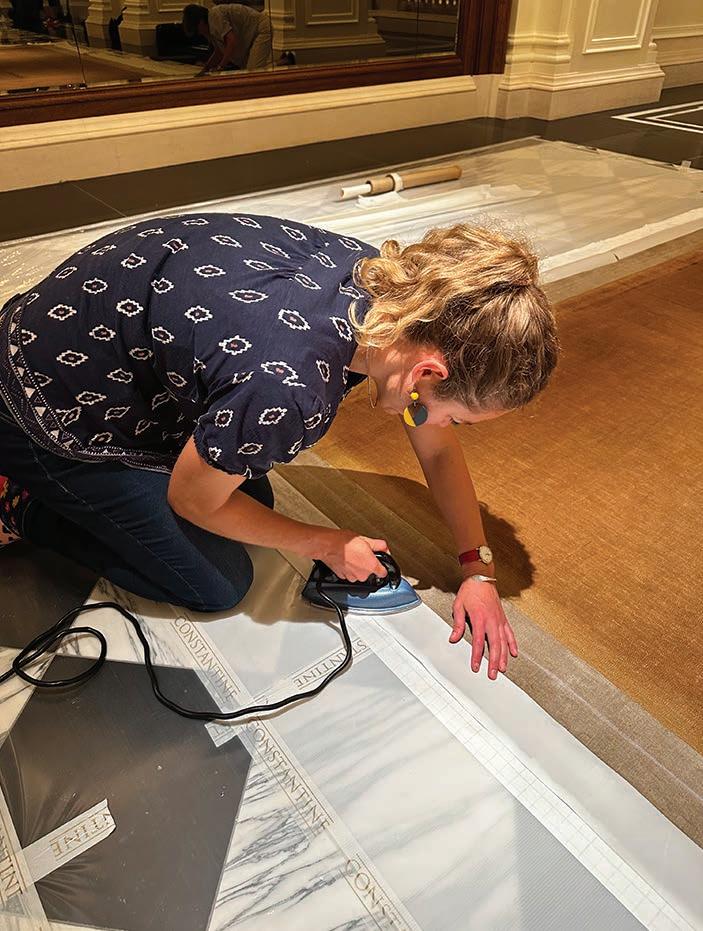
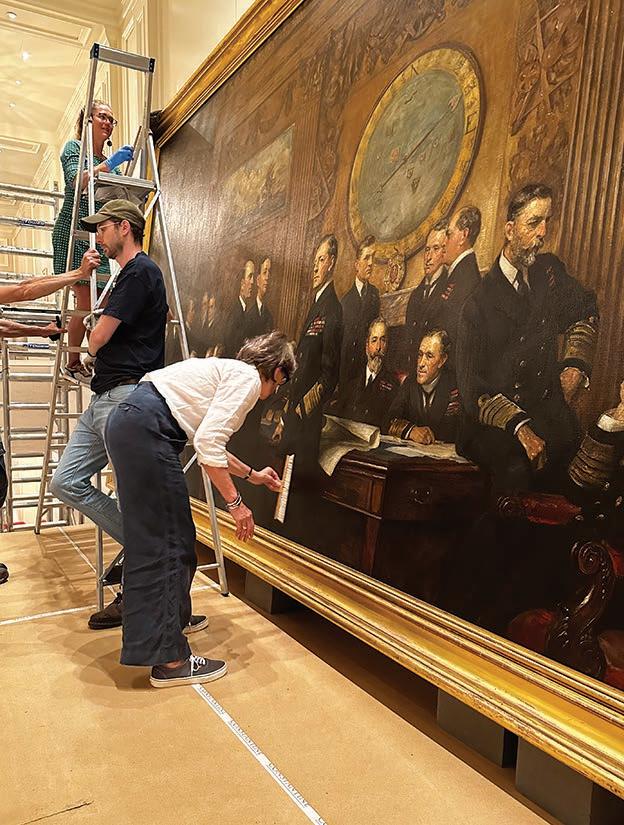
happen! We had to guide the hotel architects through the process of borrowing from a national institution, liaising with Arts Council England and meeting the security, display and environmental standards required. In addition, the work was to be hung above a split staircase with a landing narrower than the work. Because of its size the work was stored and transported rolled with the stretcher and frame in parts: it required four days, three conservators, between three and six art handlers per day, two stackers, two stair scaffolds, two registrars and lots of biscuits to carry the roller up the staircase, unroll it, prepare the canvas and frame, stretch the loose lining and painting work on to the stretcher, fit the work in the frame and finally hoist it on to the wall using scaffolding over the stairs. It was a brilliant collaborative effort between the hotel, the transport company, Constantine, and the National Portrait Gallery. Today it looks as if it had always been there! The Naval Officers now look down on guests in a building steeped in the history of which the sitters played a part.
7 & 8 – Final dusting; Naval Officers of World War I by Sir Arthur Stockdale Cope, 1921 (NPG 1913) installed!
1 & 2 – Rolled work taken upstairs; work being unrolled face down on to poly
3 & 4 – Building the stretcher; reinforcing the canvas, tacking edges with sailcloth and heat-activated adhesive
5 & 6 – Stretching the canvas on to the stretcher; carrying the work unframed down the stairs
A Dialogue Across Time
Emin’s Unique Line: A Pathway to the Viewer
by Harry Weller Creative Director, Tracey Emin Studio
As someone who works closely with Tracey Emin, I had the privilege of overseeing the entire process of crafting the bronze doors that breathe new life into the recently renovated National Portrait Gallery. Almost four years ago, Tracey received a request. ‘Would you consider making the new doors to the National Portrait Gallery?’ She was ecstatic. I was ecstatic. What an honour, a responsibility. This herculean task was to be considered. We would spend the next two years visiting the Gallery and exploring the Collection, thinking how best to proceed. What was clear was that the Gallery facade predominantly featured male figures. Above what will be the new doors are notarial men carved in the roundels of
the building: a reminder of the historical marginalisation of women in art. Tracey knew she had to challenge this narrative by offering a platform not only for women but also for personal and emotional expression – to subvert the male-dominated discourse and to shine a spotlight on universal human experiences that transcend gender boundaries.
The process of creating these doors was a journey, one that perfectly encapsulates the ethos of Tracey’s artistry. It was a dance between tradition and innovation, between her raw, unfiltered emotion and the precise, clinical process of fabrication. The doors stand as a testament to this dance, a symbol of the harmonious coexistence of the old
and the new, the tangible and the intangible, the emotional and the technical.
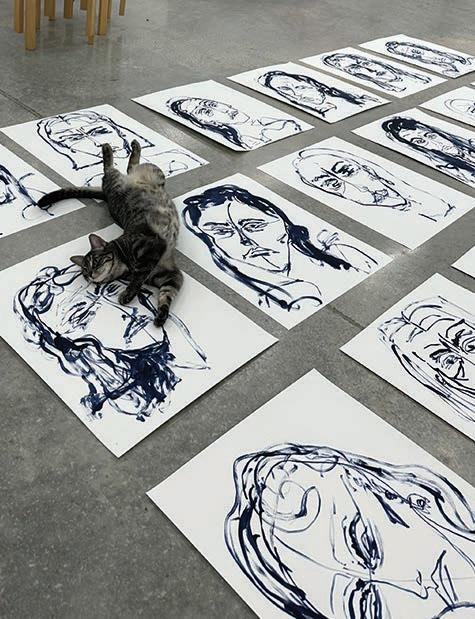
The decision to use paper for the initial drawings was intentional. We knew that additive methods in clay, or pulling her line through clay, wouldn’t do justice to the fluidity of her natural line. Tracey began by drawing the portraits of women on paper with loose acrylic paint, assured that with the help of our foundry, AB Fine Art Foundry, I would take care of transferring her unique and distinctively flowing lines on to the bronze panels. The paper allowed her the freedom to pour forth her thoughts, to let the lines flow unhindered. Her artistry is steeped in raw emotion; her line is a language of its own, each stroke narrating a piece of her story: a line unique to Tracey. This distinct line is a vital part of her artistic lexicon. Whether it’s her handwriting lit up in neon, the weight of the line in her monoprint drawings or the immediacy in her paintings, her line is what makes her the artist she is. I witness the immediacy when she draws. Nothing is calculated. It’s a dance. Her body follows her hand as she throws herself across the studio. The work is sincere. It must surprise her, or it is painted over. Anything that comes too easily will be destroyed. She always tells me that painting is like seeing a fortune-teller: you don’t go to one to learn something about yourself that you already know; you go because you want to learn something new. The same goes for drawing
and painting. She must learn from each of her marks, or it is of no interest to keep. I respect Tracey because she continues to challenge herself. It’s admirable.
Indeed, the doors embody a sense of vulnerability, a sentiment deeply intertwined with Tracey’s artistic philosophy. Her artwork has always been a mirror to her soul, an exploration of her deepest fears and desires. The doors, too, reflect this journey, a testament to her courage to bare her soul to the world.
The approach to the doors evolved over time. Initially, she began by focusing on notable women throughout history, such as Mary, Queen of Scots, and Daphne du Maurier, women she admired. However, these depictions felt impersonal, like illustrations for a school project. They lacked the emotion and sincerity so intrinsic to Tracey’s art. She was essentially replicating the depictions of others, and this lack of personal connection was frustrating.
Far left – Tracey Emin’s original drawings on her studio floor
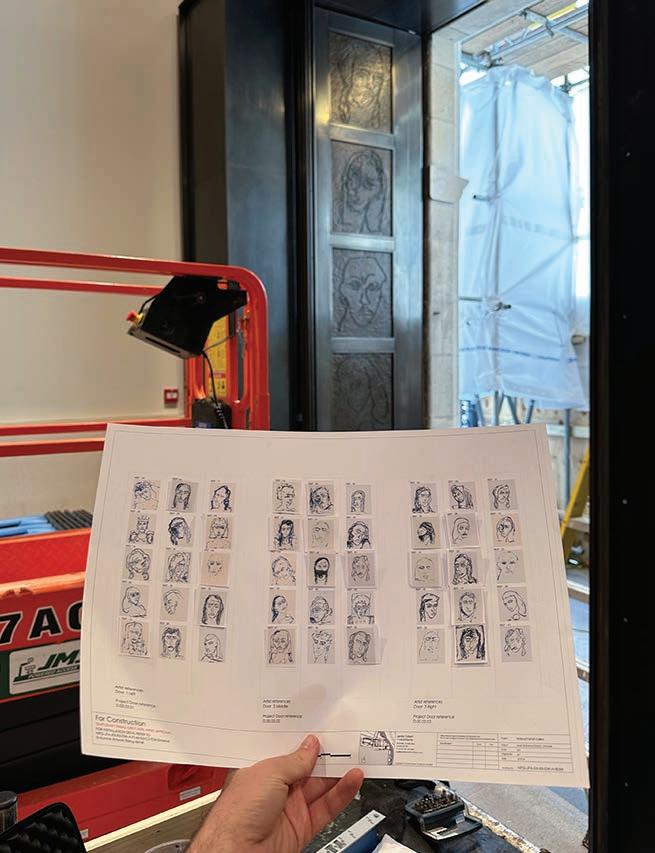
Left – Panel layout and positioning of bronze plates
The idea of simply inscribing the names of notable women from British history, dead or alive, in her distinctive handwriting seemed a more genuine approach. However, most of the women that came to mind had already passed away. While they were respected figures in history, their lives had ended. There were also friends and respected women who were internationally known and alive that she considered including, but she felt it was a bad omen to immortalise them before their time. Furthermore, there was the potential controversy of including or excluding specific names that could divide public opinion.
Tracey then shifted her focus inward, using herself as a template to paint women. Gradually, she began to remove her own likeness from the portraits, and women from different times and cultures began to emerge in her art. These were not specific women, but, rather, represented every woman.
The result is an assembly of women, an amalgamation of the concrete and the ethereal, the real and the imagined. Some exist in the physical world, others are figments of the artist’s mind, while some echo voices from the past.
Reminiscent of the bronze doors of the Renaissance, such as Lorenzo Ghiberti’s Gates of Paradise, the medium of bronze would give a profound connection with the rich history of art, evoking a sense of timelessness; by drawing on this historical context, Tracey’s drawings become a conversation that spans centuries, allowing the past to inform the present and shape the future. The warmth and heaviness of the material encourage viewers to touch the relief, establishing a sensory connection with the artwork. A grand yet intimate entrance, ‘ The Doors’ invite interpretation and personal connection. They encourage viewers to embark on a journey of selfdiscovery, to see their own experiences reflected in the faces on the bronze panels, to recognise their own narratives of pain, joy, heartbreak, and resilience. They evoke emotion to create a connection between the viewer and the artwork. Tracey’s aim is for viewers to stand in front of the doors and see themselves, their mothers, their sisters, their friends and their idols. The portraits are an embodiment of every woman, a tribute to their strength, resilience and vulnerability. In this way, Tracey has created something that is deeply personal yet universally relatable: a testament to her ability to convey emotion through her line, to touch the viewer on a profoundly personal level. They are not just an entrance to the National Portrait Gallery, but a portal into the shared experiences of women throughout history and across cultures, a celebration of every woman.
We adopted this wonderful and muchdiscussed portrait of William Shakespeare in part because we are committed to giving to the National Portrait Gallery long-term, and what better way to express this than to adopt the first painting it acquired?
We are huge fans of Shakespeare and the portrait is believed to be the only painting of him rendered during his lifetime; it is the model for all subsequent Shakespeare portraits, including the famous First Folio engraving, published posthumously in 1623.
We love the many mysteries surrounding the work. While it has been attributed to the actor-painter John Taylor, the true artist and whether Shakespeare physically sat for it remain unclear.
We particularly enjoy all portraiture because it is an art form that invites subsequent generations to peer into another era, continually seeking new clues as to the subject and his or her life and times. It is said Sigmund Freud believed this image to be that of a Frenchman and asserted that ‘Shakespeare’ was in fact a corruption of ‘Jacques Pierre’. Some historians felt that the countenance of the subject and therefore Shakespeare himself appeared to be Jewish. One clue scholars offer to confirm the subject as Shakespeare is the single earring and loose open collar which it is said was intended by the artist to identify the subject as a poet, in line with the Elizabethan fashion of the day.
Finally, it is simply a beautiful oil painting; a wonderful portrait of the man many claim to be the greatest figure in English literature.
We are extremely grateful to the National Portrait Gallery for providing us with this opportunity to continue to support its essential mission.
If you are interested in adopting your own favourite portrait, or adopting a work in memory of a loved one, please contact Rebecca Redclift, Campaign Manager, at rredclift@npg.org.uk for more information.
Michael Silver is a business executive, philanthropist and art collector. He founded and is the CEO of American Elements, a global high-technology materials manufacturer based in Los Angeles. As well as supporting the arts, he is passionate about supporting education in high technology and material science.
In 2023, Michael supported the Gallery by adopting NPG 1, the very first work acquired for the Gallery’s Collection, the portrait of William Shakespeare, associated with John Taylor, painted c.1610.
Taylor Wessing Photo
Portrait Prize 2023
by Clementine Williamson Exhibition Manager: Competitions
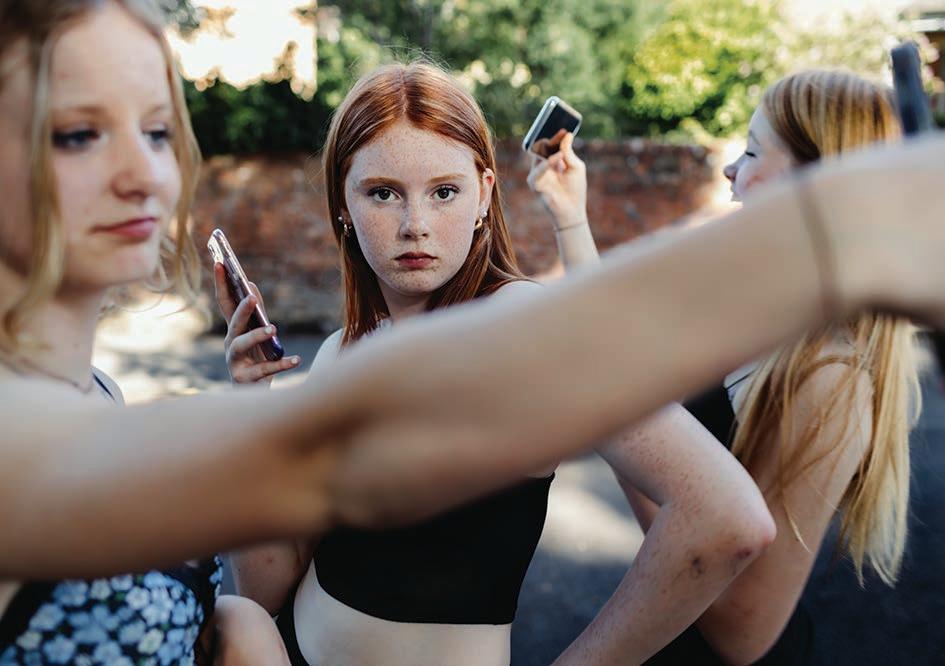
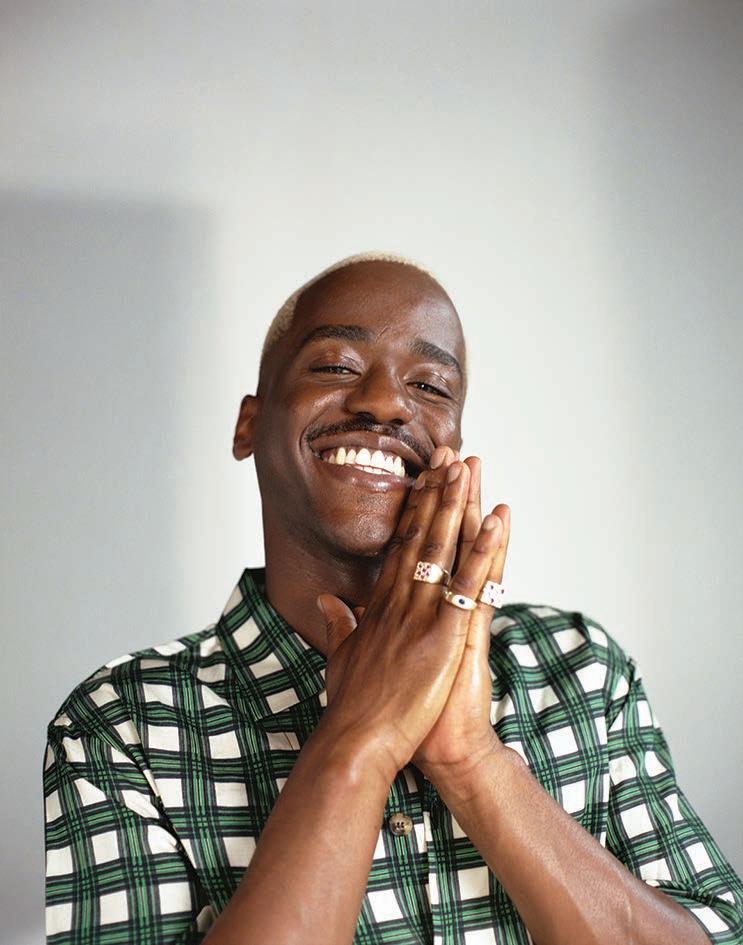
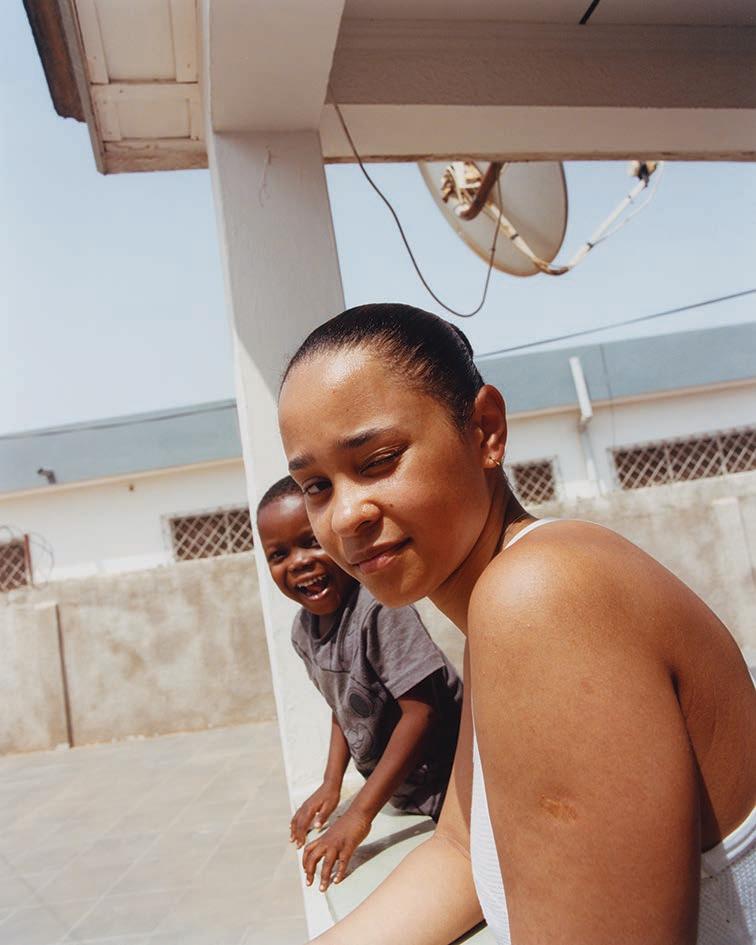
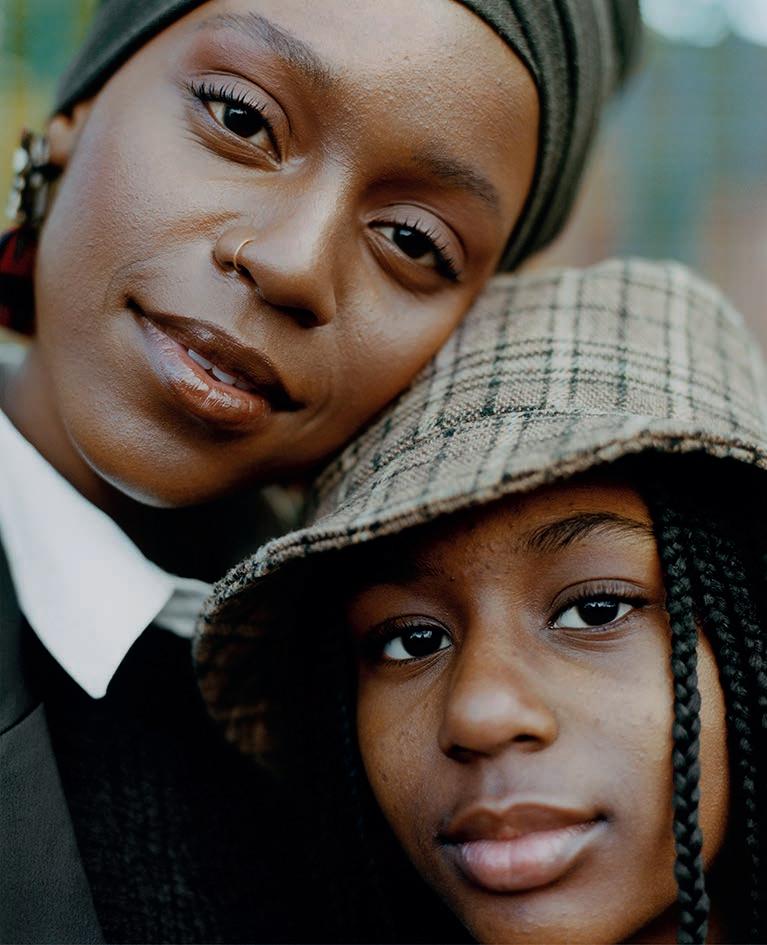
This year’s Taylor Wessing Photo Portrait Prize will be returning to the National Portrait Gallery for the first time since 2020. The competition is one of the most prestigious and long-running photographic prizes, surveying the best of photographic portraiture from around the world. All entries must have been taken within the last year, so the exhibition content is always current and fresh: inviting debate and discussion and allowing audiences to engage with contemporary issues and recent world events.
The Prize encourages the display of works by a diverse range of photographers from all over the world. Some of these artists may be established but others may be starting out on their photography journey.
One of the priorities of the Prize is to further careers and act as a springboard for all who enter. This year we introduced a number of discounts to open up the competition further. Photographers in receipt of Universal Credit or Pension Credit could enter for free, and a 50% discount was in place for photographers who are students between the ages of 18 and 25, and those who receive Disability Benefits. We also wanted to support submissions from new and emerging photographic communities around the world, so we worked with the research project Fast Forward to further increase access to the competition’s call
for entries and to reach photographers across the globe.
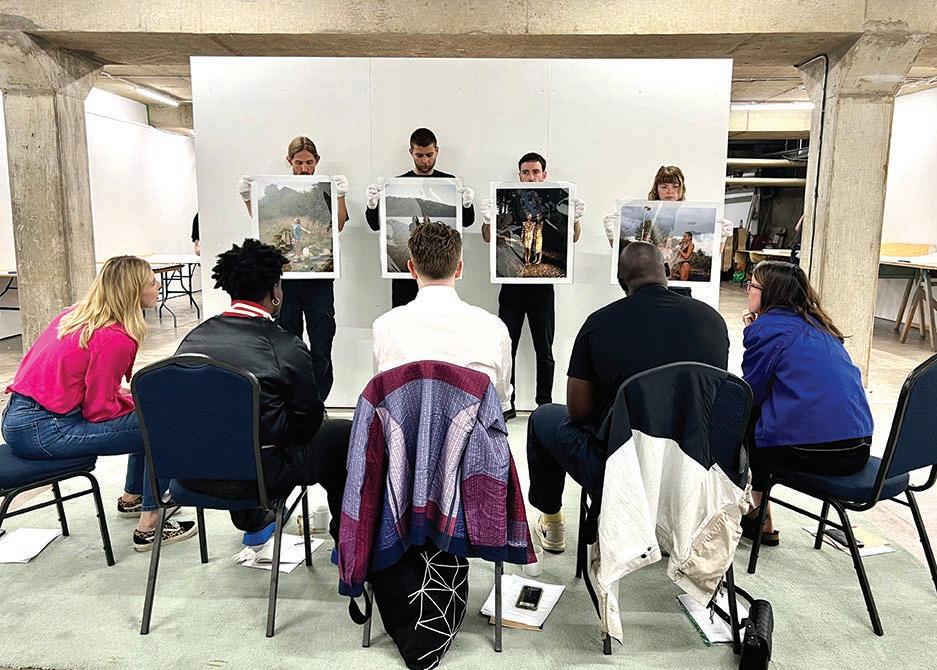
During the ‘call for entries’ period, we received an impressive 5,020 entries from 1,785 photographers. All these images went on to be viewed digitally and anonymously by a panel of judges, who selected a shortlist of works to be viewed physically. The panel of judges changes yearly to allow for fresh perspectives, often consisting of prominent photographers, critics and curators. This year’s panel was chaired by the Gallery’s Director, Dr Nicholas Cullinan, joined by Senior Curator at The Photographers’ Gallery Karen McQuaid; writer and photographer Caleb Azumah Nelson; artist Campbell Addy; and the Gallery’s Senior Curator of Photography, Sabina Jaskot-Gill.
In all, 58 portraits from 51 photographers were selected this year and five of those photographers were shortlisted to win a prize. In addition to our regular first, second and third prizes this year we have introduced a new commission prize where £8,000 will be
Left – This year’s judging panel viewing works at the physcial judging stage
awarded to one of the shortlist. Supported by Taylor Wessing, the winning photographer will create a new artwork that will enter the Gallery’s Collection.
All the photographers will see their works hung alongside this year’s In Focus display. The display is an important element of the competition. First introduced in 2015, it allows us to collaborate with a significant contemporary artist working in and around portraiture, inviting them to present recent work. The first artist to participate in this initiative was Pieter Hugo, and since then we have worked with photographers such as Todd Hido, Cristina de Middel, Rinko Kawauchi and Alessandra Sanguinetti.
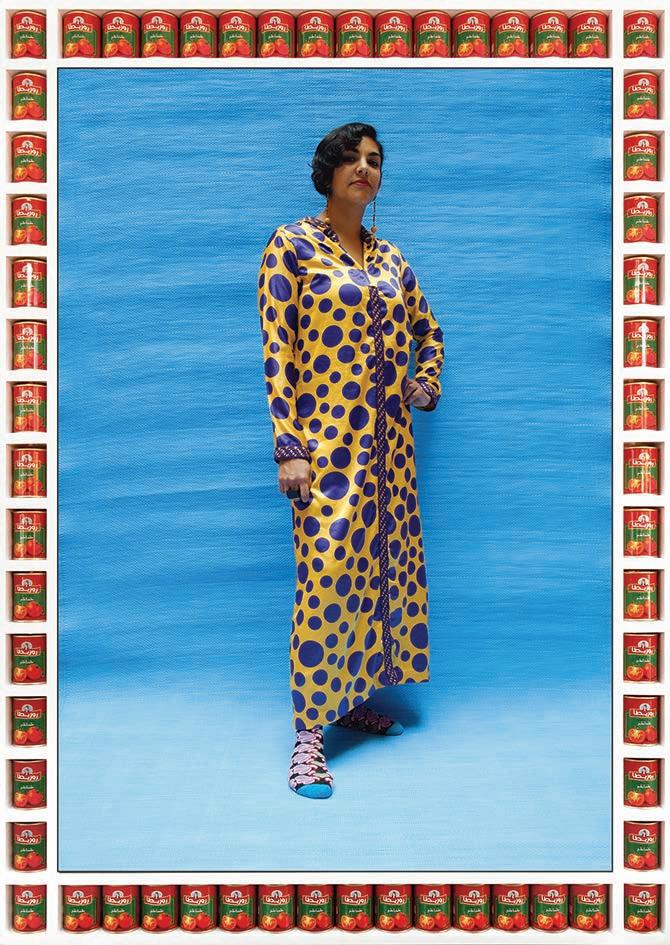
Our In Focus photographer this year is Hassan Hajjaj, a Moroccan-British artist who lives and works in both London and Marrakesh. His vibrant photographic portraits incorporate references to African studio portraiture and Western pop art,
mixing traditional Moroccan fabrics and motifs with contemporary streetwear and maximalist styling, to explore his experience of living between British and North African cultures.
Hajjaj’s work alongside the 58 portraits selected for this year’s Taylor Wessing Photo Portrait Prize will be on display at the National Portrait Gallery from 9 November 2023 to 25 February 2024. The prize-winners will be announced at the Awards Ceremony on Monday 6 November.
by Sarah Moulden Curator, 19th Century Collections
October is always an exciting month at the Gallery: Black History Month, Frieze London, the changeover of major exhibitions. And this October, to celebrate the 75th anniversary of Windrush, we are mounting a special display of portraits showing members of the Windrush Generation, commissioned by His Majesty The King, when Prince of Wales. We are enormously grateful to His Majesty and the Royal Collection Trust for lending these portraits, first unveiled at the Palace of Holyroodhouse in Edinburgh on 22 June, the same day the Gallery reopened its doors.
The HMT Empire Windrush docked at Tilbury on 22 June 1948, bringing 802 passengers from the Caribbean. Many of these people had served during the Second
World War when Britain governed what was still a huge empire. The war had ended only three years earlier, leaving the country with a desperate labour shortage and a shaky economy. In a bid to improve the situation, the British Nationality Act of 1948 was passed to give Caribbean people the right to live and work in the UK. Following the arrival of the Empire Windrush, many more boats and planes followed (until 1971), carrying the people who became known as the Windrush Generation. They found jobs in many sectors including infrastructure, transport and in the newly established NHS. Some rose to become inspiring pioneers, leaving lasting legacies in their local communities.
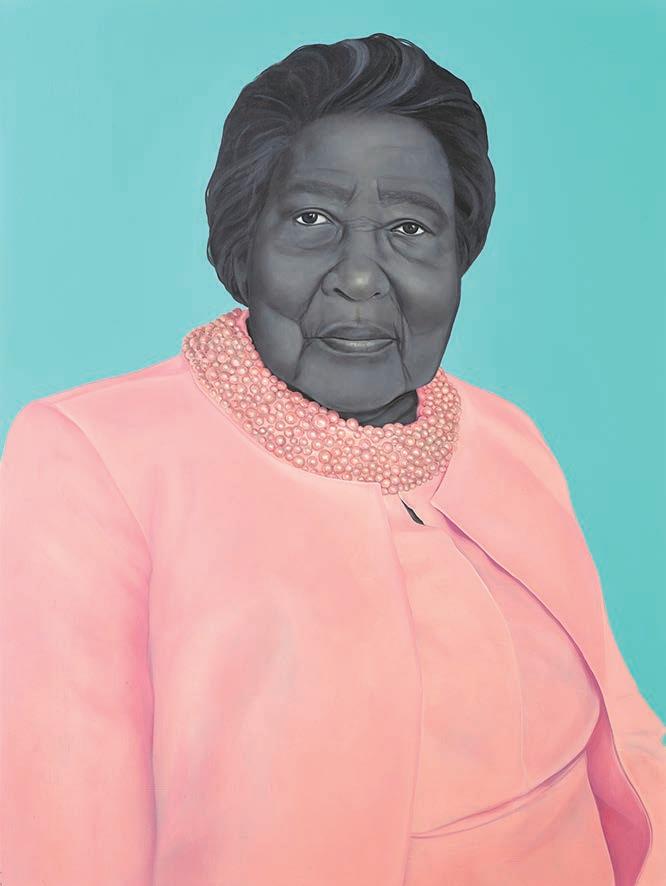
Ten of these pioneers, all now in their 80s and 90s, were recently invited to sit for their portraits, made by leading Black artists personally selected by The King. They represent former veterans, community campaigners, nurses and activists, including: Alford Gardner, an RAF veteran who settled in Leeds to become an engineer; Edna Henry, a nurse for 23 years in Cardiff; the wellknown actress Carmen Munroe who went to London; and Professor Sir Geoff Palmer, OBE, CD, a scientist and human rights activist who settled in Edinburgh and became Scotland’s first Black professor.
All of the sitters’ stories are deeply inspiring and their accomplishments vast, demonstrating the resilience, determination and positive impact that has become a hallmark of the Windrush Generation.
Windrush: Portraits of a Pioneering Generation is on display in room 14 until 1 April 2024.
Edna Henry (left) arrived by plane in 1962, following her brother to Cardiff. She found life hard at first –the food was very different, she was not used to the smoke and cold and she experienced discrimination. But through her Pentecostal Church community, she developed an inner strength. Edna’s vibrant portrait shows her as a woman with dignity who persevered to give her family the best opportunities.
by Emmanuelle Largeteau Works on Paper: Conservation Manager
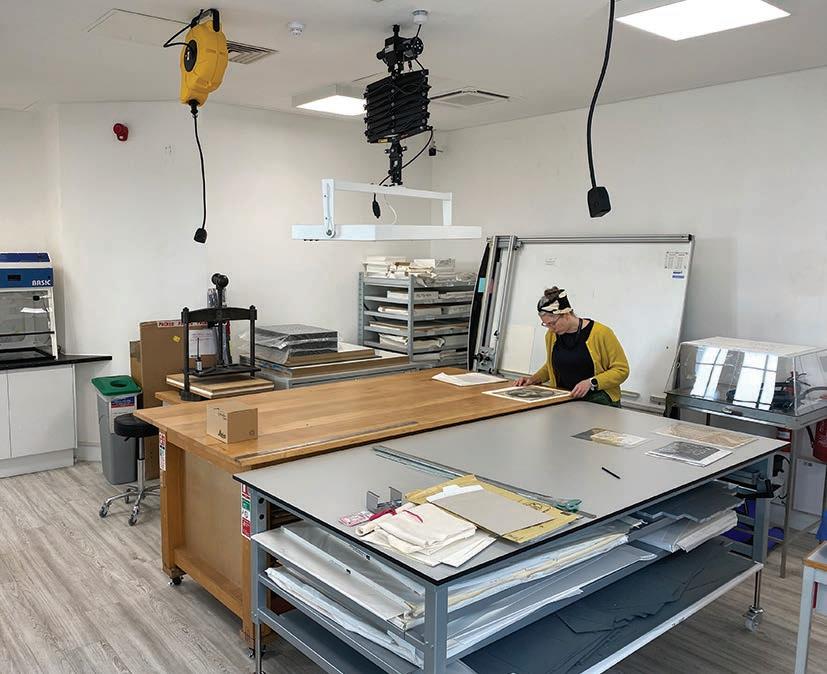
For the first time in its history, a conservation studio dedicated to works on paper, photographs and miniatures has been created at the National Portrait Gallery, complementing the existing painting and frame conservation facilities. This new space has been created in parallel with the reopening of the Gallery in June 2023. Now having a dedicated space for the treatment of works on paper gives the Gallery the
opportunity to fully explore the materiality of the works on paper, photographs and miniatures collections.
This new space supports the ambitious display programme within the Gallery, now with double the number of works on paper and photographs in the permanent galleries, and exhibitions such as the Yevonde: Life & Colour and Paul McCartney Photographs. Being more sensitive to light exposure, the
paper items, photographs and miniatures will be regularly rotated. The paper conservation studio will also support the external programmes both nationally and internationally as well as the extensive loan programme.
A space for research
The studio will also be a space for research and analysis. Thanks to funding from the Arts and Humanities Research Council’s Creative Research Capability awards, the Gallery purchased new state-ofthe-art equipment, opening up research opportunities.
This new equipment will help our team to know the materiality of the Collection better by learning about the artists’ materials, the processes and more generally about the history of techniques. We will also be able to assess more thoroughly their current condition and by extension to provide better care for the Collection.
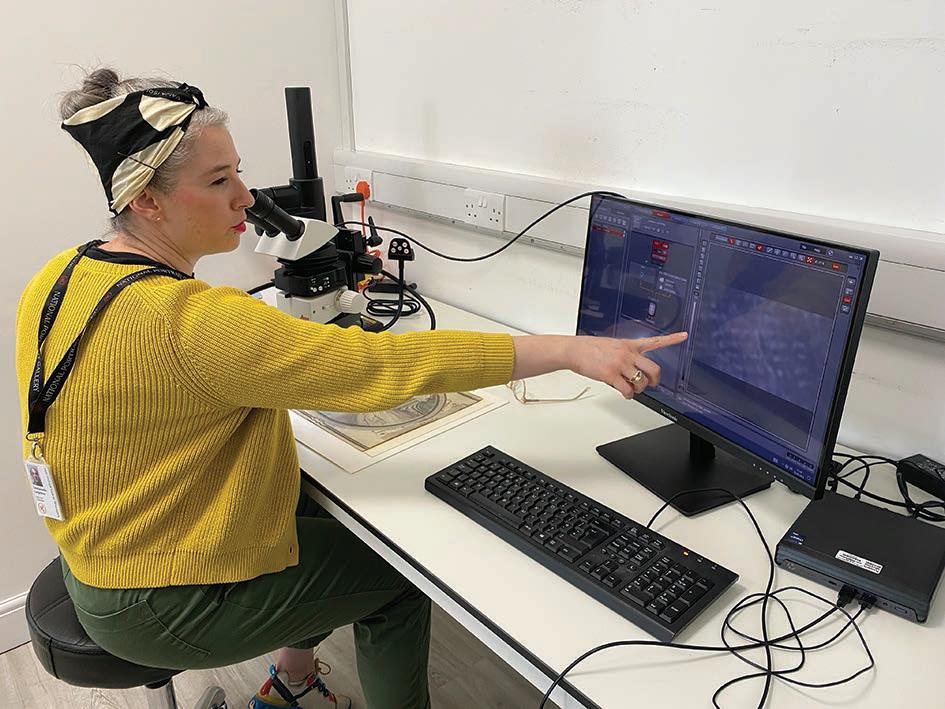
This new equipment includes a Leica M60 stereomicroscope that will allow the conservators and other researchers to examine closely the surface of an item and learn more about its making. In addition to giving us a new level of examination thanks to high magnification, the microscope will allow the conservation team to undertake very delicate and precise treatments such as pigment-layer consolidation and intricate repairs. The microscope is linked to software that gives the capacity to capture what is visible under the microscope.
The studio is also equipped with a Hirox 3D digital microscope that provides high resolution three-dimensional images at a wide range of magnifications, to capture for instance the texture of the paper support and the media applied, giving information on the techniques used and the condition of the object examined.
The grant supported the acquisition of an air extraction unit, so conservation treatments requiring the handling of solvents can be undertaken safely.
A space for sharing
The new studio is a space for conservation, conversation and collaborative work. The use of the studio won’t be limited to the paper and photographs conservators. This space is a great environment for collaborative working: between National Portrait Gallery staff from different specialities but also with external colleagues and researchers.
Once it is fully set up, we will host workshops and placements to offer the opportunity to emerging conservators to experience the exceptional studio facilities and gain deeper understanding of the National Portrait Gallery collections.
Left – Emmanuelle Largeteau condition-checking a drawing in the new conservation studio
Right – Emmanuelle Largeteau examining a drawing under the microscope
Our new programme of Members’ Events: Behind-theScenes at
the Gallery
by Lettie McKie Adult Programme Manager
This autumn the National Portrait Gallery launches a new, behind-the-scenes programme of events exclusively for Members. Adding value to your Membership, this new programme is in addition to free previews and late-night openings that continue to be a benefit.
These Members-only events offer special experiences not available to the general public and commence monthly from November. This autumn, each event features the expert knowledge of NPG Curators and Conservators. Hear from these experts about the highlights and challenges behind their work on the incredible transformation of the Gallery over the last three years.
The NPG’s redevelopment includes our new suite of event spaces, the Mildred and Simon Palley Learning Centre, which provides an exciting opportunity to organise more specialised experiences for Members and the chance to meet each other in person. From lectures to evening art classes, you will have the chance to learn directly from a range of expert curators, historians, artists and high-profile speakers. There will also be a chance for Members to hear about new art-historical research and discoveries that are not yet public knowledge. A mix of in-person and online tickets is available for lectures and in 2024 we will be adding practical art classes as well. These will include painting, drawing and photography in our new Law Photography Studio and all materials will be provided.
Tickets are now available at an exclusive Members’ rate. You can book for our first three events online at my.npg.org.uk or by calling 020 7321 6283.
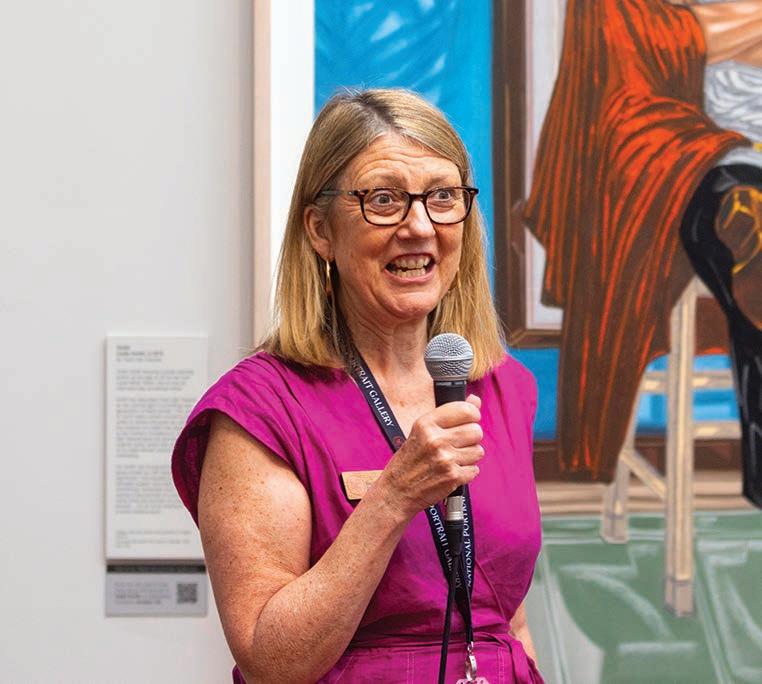
Above from top – Sarah Howgate, Senior Curator, Contemporary Collections, leading a talk
Dr Lucy Peltz, Head of Collections Display (Tudor to Regency) and Senior Curator, 18th Century Collections, introduces the relaunched National Portrait Gallery, sharing behind-the-scenes insights into how the new displays were created. Hear from Lucy as she speaks more about a refurbishment and rehang that was in the making for nearly 12 years.
Paint & pigment: how to conserve a Tudor portrait
Friday 15 December | 7–8pm
The Law Photography Studio £15 members only
Join the Gallery’s conservator, Polly Saltmarsh, for an intimate evening talk revealing the processes behind her conservation of some of the Gallery’s most prized Tudor portraits. From demonstrating how pigments were used to render fabrics, jewels and other decorative elements of Royal clothing, to revealing how these portraits have changed over time, Polly will offer her unique insight as a conservator and show how she has worked directly with these treasures from art history to preserve them for the future.
Curator’s introduction to the Collection
Thursday 11 January | 1–2pm
The Ondaatje Wing Theatre
Onsite £15 | Online £8
Rosie Broadley, Head of Collection Displays (Victorian to Contemporary) and Senior Curator, 20th Century Collections, introduces the new displays in the galleries that date from the Victorians through to the present day.
Launching
the National Portrait Gallery’s Schools hub by Eleanor Hilton Digital Learning Manager
In September 2023, the Gallery launched its state-of-the-art Schools hub – a free online learning resource, designed to support those studying and teaching Art & Design and History through the world’s largest collection of portraits – www.npg.org.uk/schools-hub.
What is Schools hub?
Schools hub has been developed as part of the Inspiring People project, which physically culminated with the reopening of the Gallery on 22 June 2023. It aims to support learning in primary and secondary schools across the UK, enabling students and teachers to explore the stories of those who have shaped British history and society through their portraits.
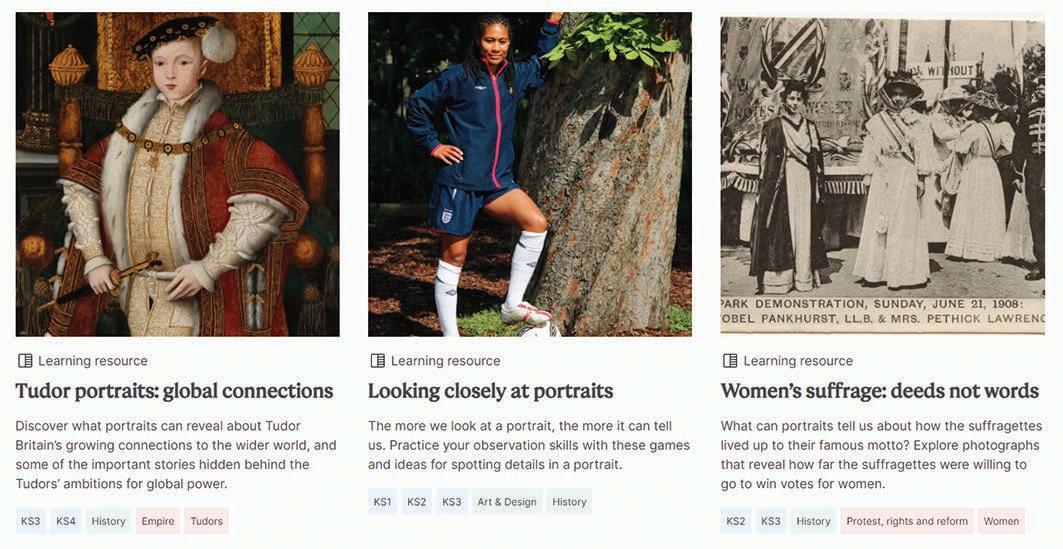
Above from top – Schools hub resource thumbnails
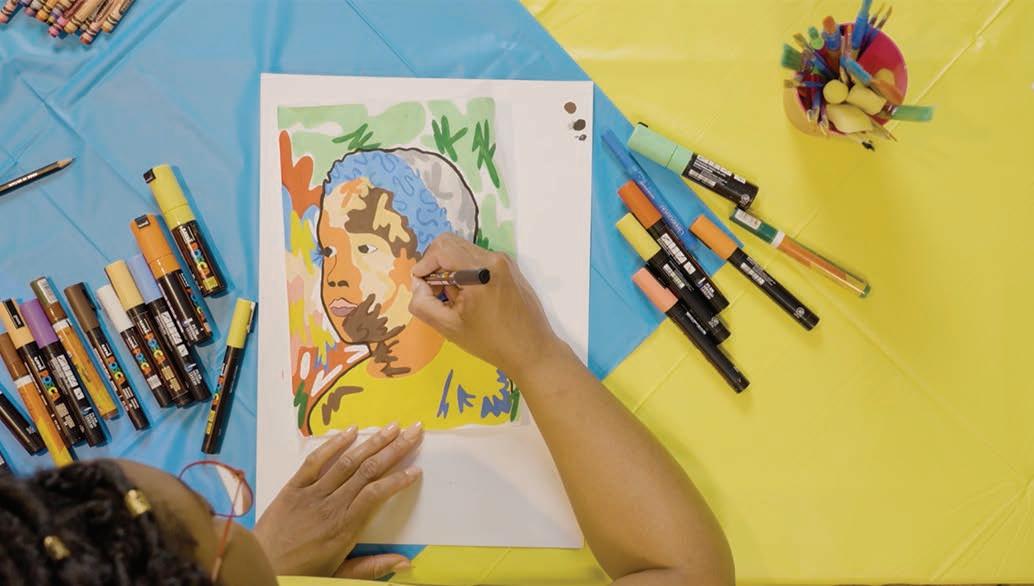
Still of artist Venessa Scott in Artist demonstration: how to make a Pop art portrait
Schools hub features more than 150 newly commissioned online learning resources and videos, all linked to the National Curriculum, and all developed by and with teachers, historians, artists and education experts.
Its huge range of resources has been designed to support remote and schoolbased learning, as well as to complement the Gallery’s on-site programme for schools.
Identifying
and meeting needs
The needs of teachers and students underpinned all stages of development of Schools hub and its learning resources and videos.
We conducted extensive research across the education sector and beyond, to better understand the requirements. We then worked with teachers, expert advisers and subject specialists to produce Schools hub and its resources, testing with key audiences throughout the process.
Research indicated that schools wanted curriculum-relevant flexible resources, tips and demonstrations from practising artists, structured support with portrait analysis, and support in teaching topics including identity, empire, migration and underrepresented stories.
Schools hub resources have been designed to be flexible, so they can be used by learners studying independently, or by teachers with their classes, and can be accessed whole or in part, depending on the needs of the learner.
Schools hub resource highlights
Tudor portraits: global connections
Discover what portraits can reveal about Tudor Britain’s growing connections to the wider world, and some of the important stories hidden behind the Tudors’ ambitions for global power.
Artist demonstration: how to create a narrative collage portrait
Artist Venessa Scott demonstrates how to create a self-portrait and express your identity through collage.
Migration to Britain: inspirational musicians and their anthems
Explore portraits of different musicians and discover what they can tell us about music, migration and its impact on British culture.
Artist in focus: Nina Mae Fowler
Join Nina Mae Fowler in her studio as she works on a new commission and reveals the complex processes behind her highly detailed drawings.
British civil rights: intersectional struggles (1950s–70s)
Explore some of the ways women of colour have fought against injustice in society on the basis of race, gender and class through their portraits.
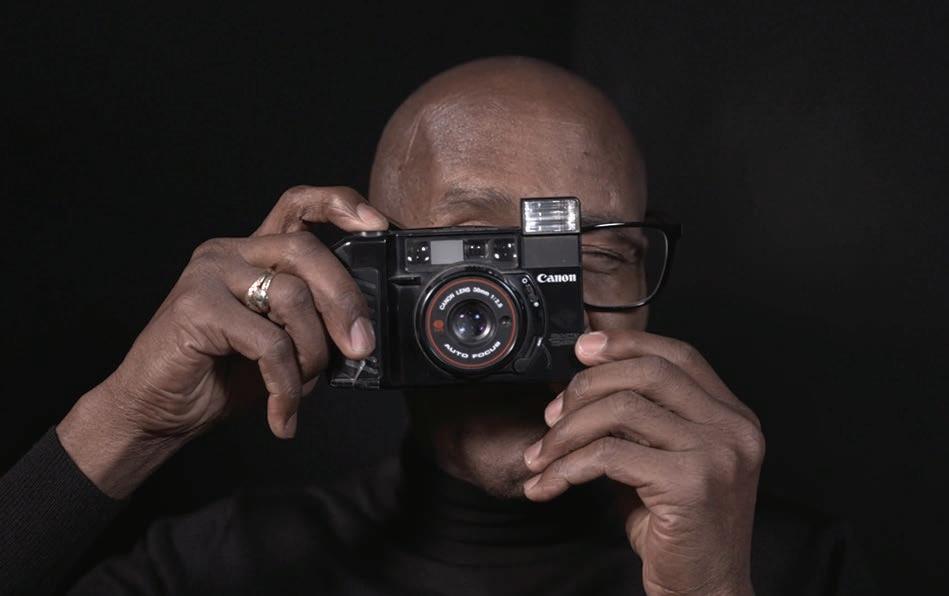
Above from top – Still from Artist in focus: Pogus Caesar
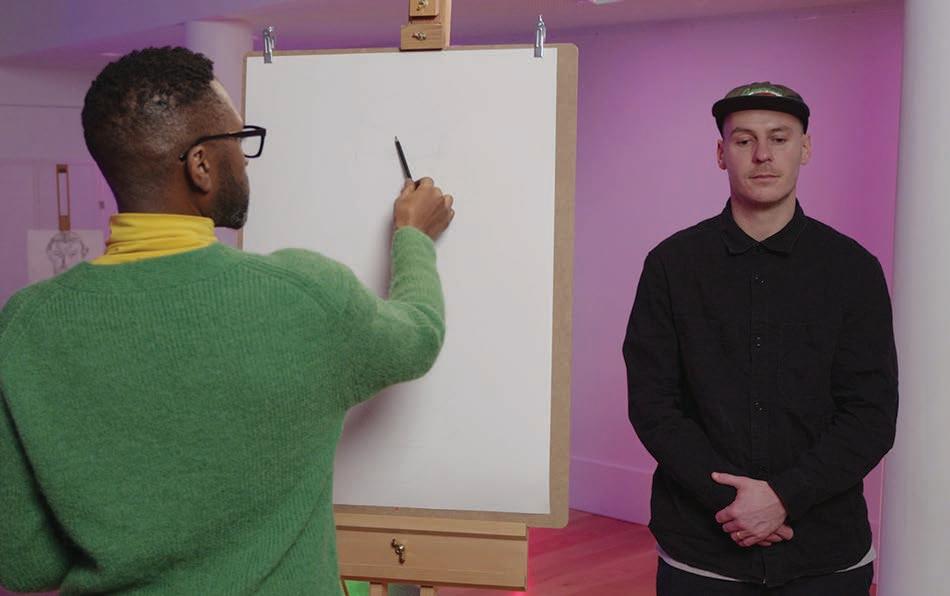
Still of artist Curtis Holder with sitter in Artist demonstration: how to draw a portrait
Discovering New Stories: Women at Work
by Kara Green Publishing Manager
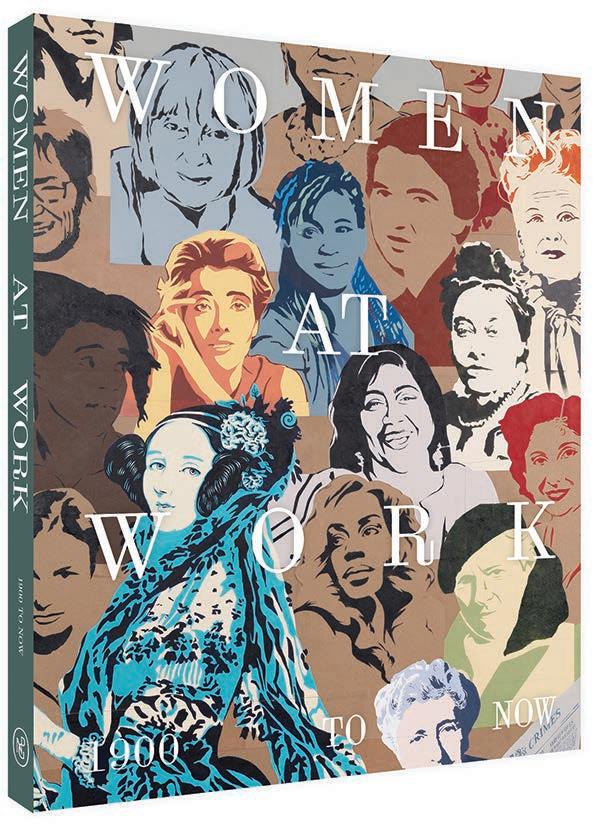
The National Portrait Gallery publications team is pleased to announce its newest Collection title, Women at Work: 1900 to Now, which reveals the research made possible through Reframing Narratives: Women in Portraiture, a three-year project at the National Portrait Gallery supported by the CHANEL Culture Fund.
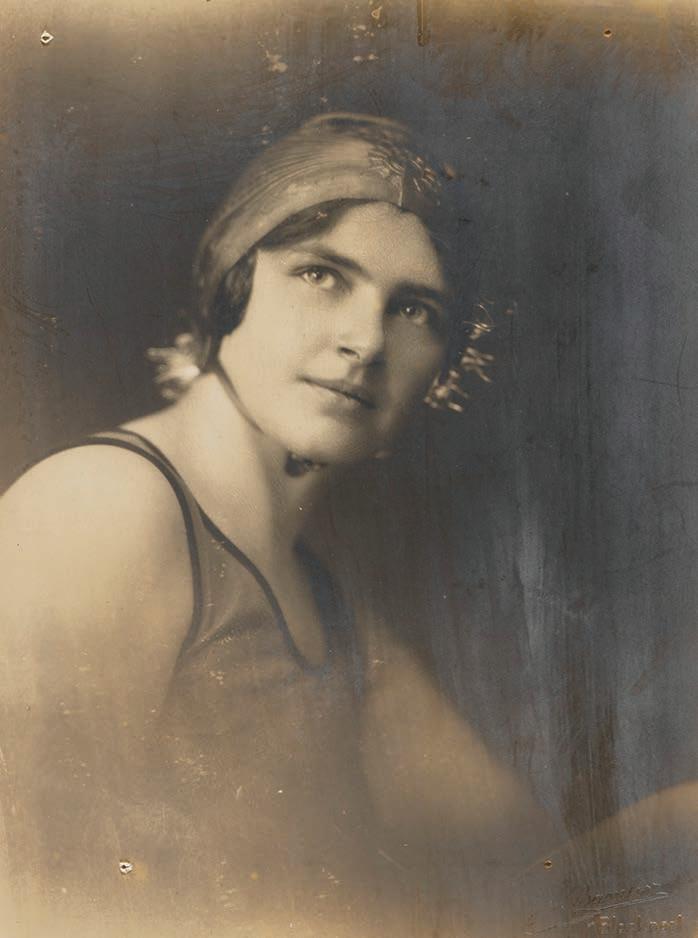
Through working on this project we have been able shed light on, and learn about, women throughout history who have made remarkable contributions to Britain and beyond. We highlight fascinating and sometimes overlooked stories such as that of Mercedes Gleitze, the first British woman to swim the Channel, in 1927.
The book also allows us to shine a spotlight on contemporary women who are continually making significant contributions in varying fields of endeavour. We have included many new acquisitions, such as portraits of campaigner Amika George, conservationist Bella Lack and The Lionesses, the England women’s national football team.
We were also grateful and excited to be able to highlight as the final story within the book, and on the cover, Work in Progress (2021–22): a major commission co-created by artists Jann Haworth and Liberty Blake. This new work delves into the depths of the Gallery’s vast Collection to celebrate women’s achievements.
The book highlights the role of women in many different fields, including science, design, literature and activism, in addition to featuring essays on self-portraiture, celebrity culture and photography. Contributors include design critic Alice Rawsthorn and physicist Emma Chapman, as well as the Gallery’s photography curators, and CHANEL
Curator for the Collection Dr Flavia Frigeri who describes the book as: ‘Challenging the foundation of how we think about women’s careers by uncovering alternative networks of exchange and probing the cultural, institutional, social and political factors that have traditionally shaped the mainstream narrative and defined difference.’
Women at Work: 1900 to Now
Published 5 October 2023
Hardback, £29.95
Gallery Supporters enjoy a 20% discount on the book in our online shop, npgshop.org.uk: to redeem use the online discount code MEMBER2023
Above – Mercedes Gleitze by J.P. Bamber Studios of Blackpool, 1928 (NPG P872)
NEW IN OUR GALLERY SHOP
for Gallery Supporters
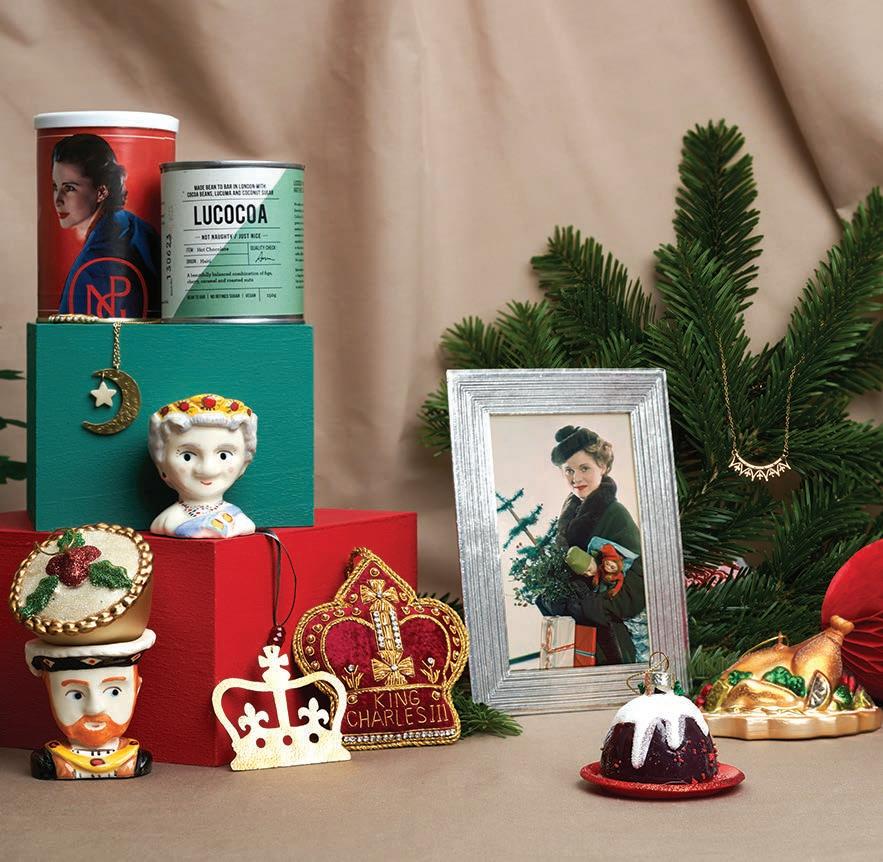
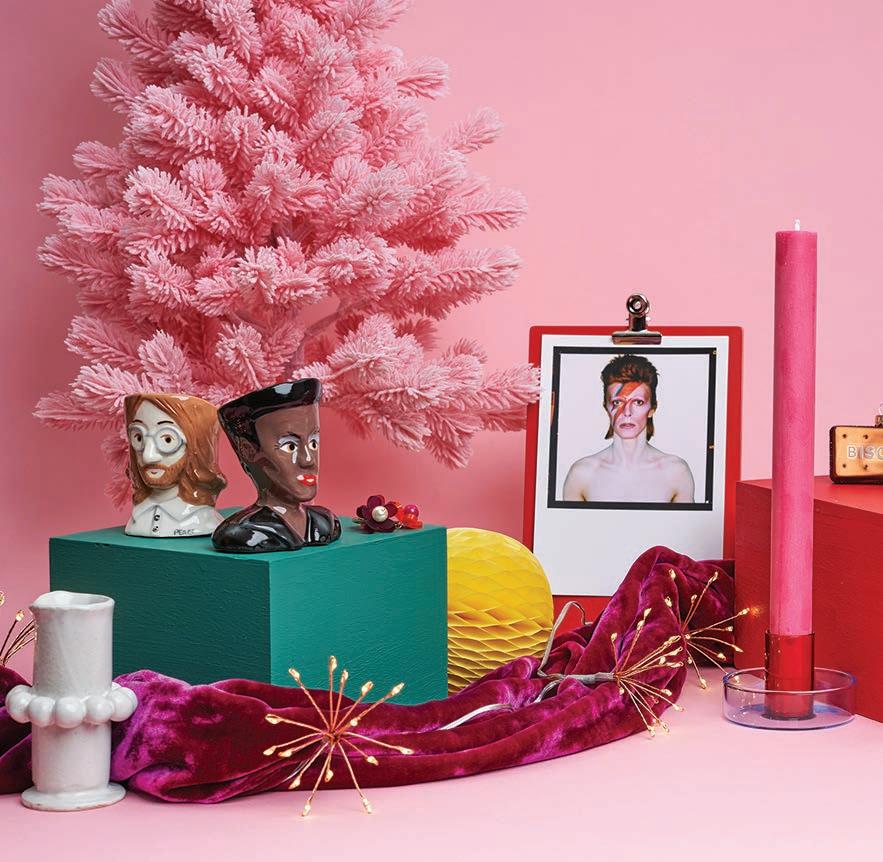
The Fresh Face of Christmas at the National Portrait Gallery
We’re excited to welcome our first festive season since the Gallery reopened its doors. With our new shops and online store filled to the brim with jewellery, homeware, books and more, you’ll find plenty of unique and special gifts for everyone on your list.
In addition, we have an exciting collection of festive decorations, lights and cards, all of which will help you bring Christmas sparkle to your home and spread some festive cheer.
All of these special gifts and decorations can be complemented by our extensive print-on-demand range, including customisable greetings cards, allowing you to send a bespoke message direct to your loved ones featuring your favourite portrait from our Collection.
To shop for Christmas, please pop by when you next visit the Gallery or go to npgshop.org.uk and remember to show your membership card or enter code MEMBER2023 online to receive your exclusive 10% discount for Gallery Supporters.