Face to Face
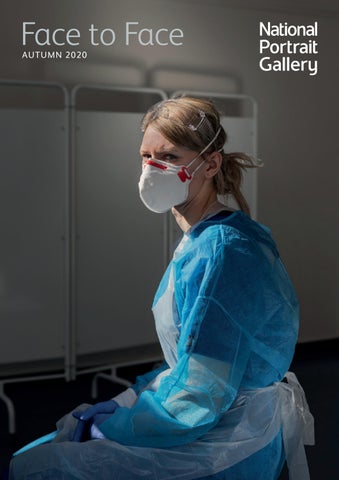
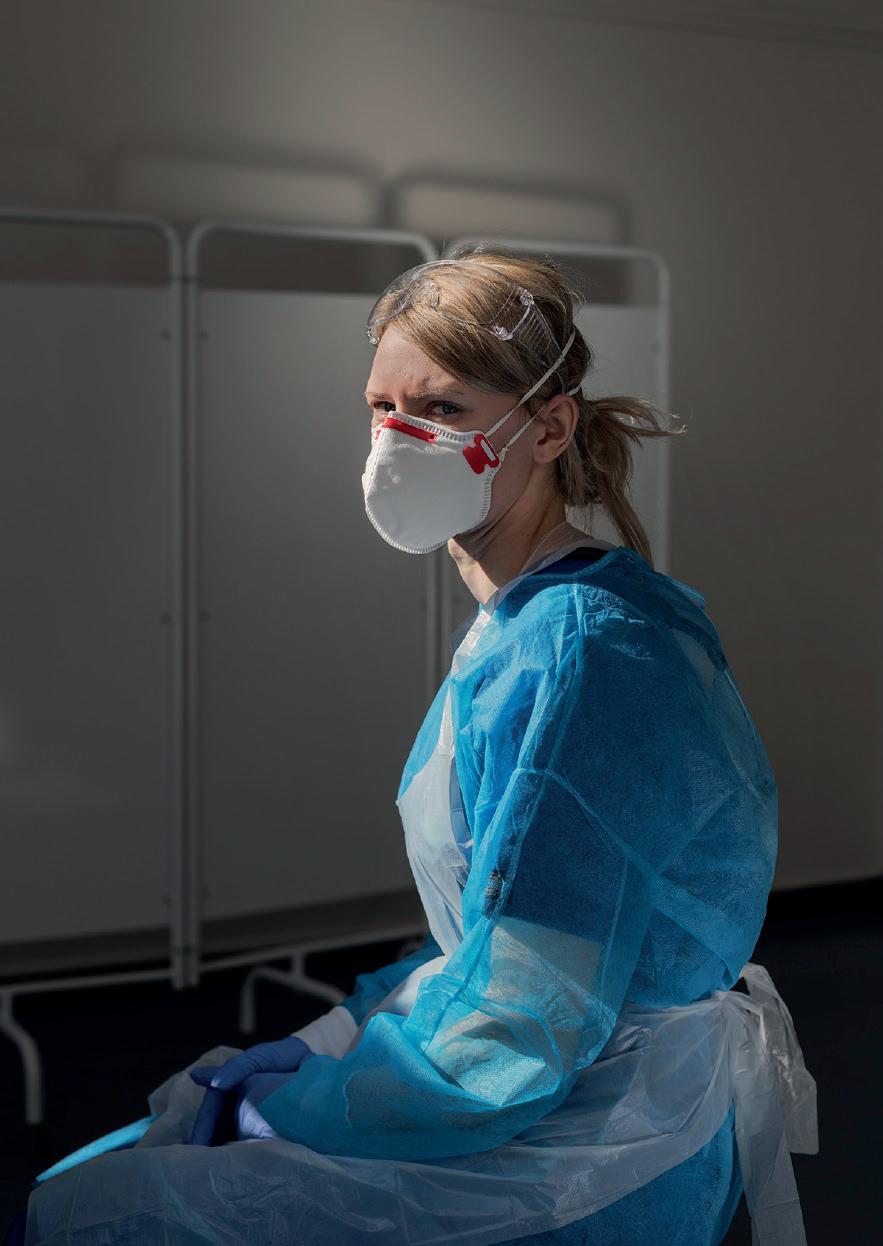
cover detail ( and below ) Melanie, March 2020 by Johannah Churchill, 2020
Hold Still will be available to view online from 14 September 2020
Face to Face Issue 64
Director of Development
Jessica Litwin
Manager Daniel Hausherr
Copy Editor
Elisabeth Ingles
Designer Annabel Dalziel
All images National Portrait Gallery, London and © National Portrait Gallery, London unless stated
npg.org.uk
Gallery Switchboard 020 7306 0055
Dr Nicholas Cullinan
this autumn and winter will see the Gallery begin its transformation as we start on the major works for Inspiring People. In a few weeks the process of removing all the artworks in the building will come to a close. Many portraits will go on loan to partners across the country as part of our Coming Home initiative, with the remainder going into temporary storage. Ed Purvis, Head of Collection Services, tells us more about the progress of the decant.
In my previous From the Director message I wrote that I had hoped to be able to welcome you back to the Gallery after the national lockdown. Unfortunately, government restrictions meant that we were not able to open our doors before beginning on the work for Inspiring People. As such, many of you will not have had the opportunity to visit David Hockney: Drawing from Life or Cecil Beaton’s Bright Young Things. We hope that we might be able to stage our David Hockney exhibition once we reopen in 2023, and our Cecil Beaton exhibition will go on show in the Millennium Gallery, Sheffield, and The Wilson, Cheltenham, so I hope you might see it there.
Even during the forced closure, the Gallery’s activity did not stop. In May we were able to launch Hold Still. The project was
spearheaded by our Patron, The Duchess of Cambridge, who was keen to record this unprecedented moment in our history and to document how the pandemic has touched all our lives. Denise Vogelsang, Director of Communications, tells us more about the project and how it will form a unique collective portrait of these times.
In July we were delighted to unveil a new portrait of one of Britain’s best-known writers, Zadie Smith, by Nigerian-born artist Toyin Ojih Odutola. The full-length portrait is available to view on our website and will go on display in the Brent Museum and Archive in north-west London, where Smith grew up, in December 2020 as part of Brent 2020, London Borough of Culture.
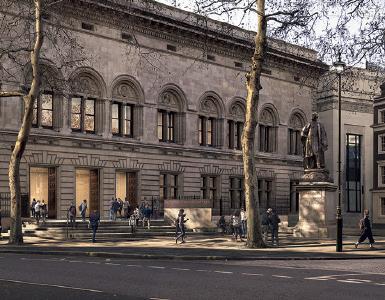
Over the coming months the building will be wrapped in hoardings, the statue of Sir Henry Irving will be removed for safe storage, and work will begin on transforming the Gallery. In 2023 Sir Henry will return, taking pride of place in our new forecourt and public entrance at the beautiful north façade of Ewan Christian’s 1896 building. During this period of change, the work of the Gallery will continue as we share our Collection and connect with audiences in new ways, and we hope you will join us on the journey.

Dr Nicholas Cullinan director
MY FAVOURITE PORTRAIT
by Yvonne Mullins
Ticketing and Sales Operations Assistant, former Visitor Services Assistant
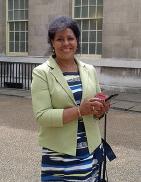
i have worked at the National Portrait Gallery since 2009, giving directions and information to visitors. I have enjoyed working here immensely. The Gallery is now closed but will re-open with great fanfare in 2023. I will be very excited to come back to see the changes, and of course, my favourite portraits, when it reopens.
One of the wonderful things about working amongst such amazing portraits is that you have the luxury of really scrutinising them. The VSAs are trained to understand the components of a given portrait so we can
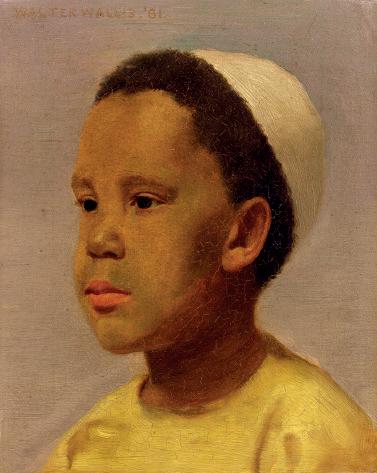
give visitors the information we have learned and help to enhance their visit to the Gallery.
Samuel Coleridge-Taylor’s portrait, painted by Walter Wallis in 1881, is hung in Room 28 on the first floor. It caught my eye because it is a portrait of a little boy of mixed heritage, like me. His mother was English, Alice Hare Martin, a woman from a very creative musical background. His father, Dr Daniel Taylor, also of mixed heritage, came from Sierra Leone in West Africa. I had to know who the child was, and why he was amongst the most prestigious Victorians of the day.
Samuel at this time would have been aged seven, dressed in African-style clothing, with a small cream skullcap on his head. His ear is well formed, as if the artist knew that Samuel would become a world-renowned composer. Given a violin aged six, he later attended the Royal College of Music, and became a professional musician and Professor of Music. With his Song of Hiawatha he became internationally known, especially in America. His music evolved to include African musical elements. He died aged 37 in 1912. In his short life, Samuel created the most beautiful music, quite unique at the time.
Yvonne Mullins was born and lives in London. She has worked at the Gallery for 11 years. She loves the arts, writes and paints a little.
Samuel Coleridge-Taylor by Walter Wallis, 1881 (NPG 5724)
Photo: © Nathan Mullins
NEW ACQUISITION: SARAH BIFFIN
by Catharine MacLeod, Senior Curator, 17th-Century Collection & Lucy Peltz, Senior Curator, 18th-Century Collection
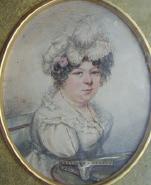
the gallery recently purchased a truly inspiring miniature from the early nineteenth century. We know it is a painting of Sarah Biffin, a professional miniature painter, who was born without arms and legs, a condition now known as phocomelia. Further research is being done to ascertain whether or not it is a self-portrait.
From what we know of her, she was clearly a person of great resolve and determination. Coming from a modest Somerset background, with a father who was a shoemaker, she taught herself to sew, write and paint using only her mouth. This, in turn, brought her to the attention of a travelling showman, Emmanuel Dukes, who contracted her to exhibit herself and her work at local fairs. She was billed as ‘The Greatest Wonder in the World’ on a surviving advertisement, which records that she painted miniatures on ivory for 3 to 10 guineas each. While allowing herself to be a spectacle must have been demeaning and uncomfortable, it offered opportunities for income and contacts. In 1808 she met the Earl of Morton, who arranged for her to receive tuition in watercolour painting with the royal watercolourist William Craig. Possibly through this relationship, she went on to paint miniatures for several members of the royal family, but initially refused to leave Dukes’s employment, as she claimed he had treated her with great kindness. Eventually, with the help of the Earl of Morton, she established herself as a successful independent artist,
winning a silver medal from the Society of Arts in 1821 and exhibiting at the Royal Academy of Art. She was married briefly to a bank clerk, though they separated shortly after the marriage, and later she lived and worked in Liverpool. Her fame was such that she was mentioned in numerous contemporary literary sources, including four of Dickens’s novels and a poem by Thomas Hood.
In the Gallery’s miniature portrait, Biffin is shown in the process of painting, with a small card or piece of ivory on her painting slope, dipping her brush into a glass of water. Her dress and elaborate hat are not the practical work clothes of a painter but those of a prosperous society woman of the period. This was traditional in female self-portraiture but is particularly significant here as Biffin’s skills as an artist enabled her to transform her social and material status. While the composition and dress to an extent conceal her disability, the centrality of the brush attached to her sleeve draws attention to the particular manner of her painting, the source of her fame and success at a time when it was still unusual and difficult for women to make an artistic career. Moreover, in the context of her severe physical disabilities, her career is extraordinary at that time. We hope this miniature will be a fascinating discovery for visitors to the new Inspiring People displays, and will bring back to life the story of this astonishing woman, not just in the National Portrait Gallery but in the national consciousness.
left
Portrait miniature of Sarah Biffin by an unknown artist, c.1820
COLLECTION FOR INSPIRING PEOPLE
by Edward Purvis Head of Collections Services
i am pleased to report that decant is now in full swing, following months of detailed planning.
The nation’s lockdown in March brought understandable challenges for us all, both professionally and in our private lives. The Gallery is fortunate to have strong remote access to its systems, meaning that critical planning for decant was largely unaffected during the Government measures. I, for one, never thought I would be doing so much decant planning from my bedroom desk!
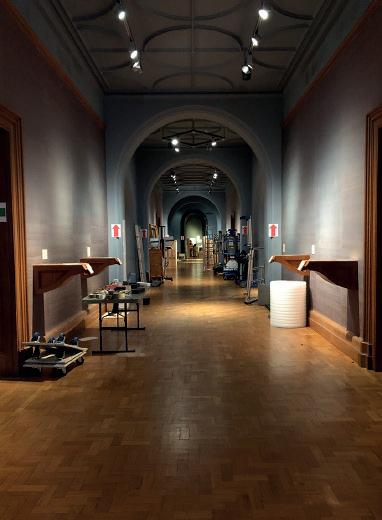
Although the impact of Coronavirus has naturally brought many hurdles in the past few months, every single one of the Gallery’s collection care procedures had to be painstakingly re-designed to minimise transmission of the virus. Safety has always been at the heart of what we do when moving art; however, the scale of the moves meant the Gallery naturally had to put in additional staff routing, hygiene and handling procedures ahead of any on-site work starting. This was all done in line with the Government’s guidance.
The crisis has yielded many opportunities, though, some of which I hope will have a lasting legacy. The Gallery has been able to learn much from peers going through similar logistical challenges, and conversely, staff have also taken the opportunity to share knowledge and expertise in new ways. There’s also been a chance for innovation, the building of new partnerships, and, last but by no means least, a time to support the nation’s care-workers. The Gallery, in common with many of its peers, donated 800 pairs of surplus nitrile gloves to the NHS in April.
I know that once decant has been completed, it will be an achievement that all staff can share in and be proud of, not least because it has involved so many, but also because of the extra challenges encountered and overcome.
AU REVOIR SIR HENRY
by Daniel Hausherr Manager, COO office
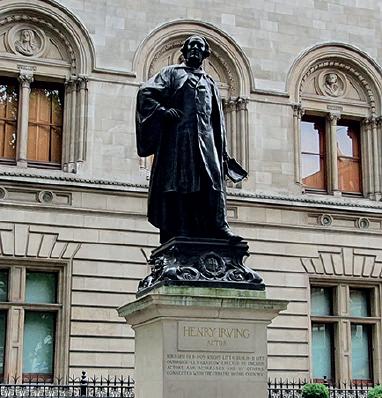
we are about to say goodbye , temporarily, to the statue of Henry Irving that has stood outside the Gallery since 1910. The statue was designed by the sculptor Sir Thomas Brock, RA. Brock was also responsible for the statue of Queen Victoria in front of Buckingham Palace as well as that of the Prince Consort seated in the Albert Memorial. He was one of the greatest sculptors of his day and the statue of Sir Henry is one of his finest works.
The statue was paid for by subscription fundraised exclusively from people involved in the British theatre. The unveiling ceremony took place on 5 December 1910, with all the greatest actors of the day in attendance alongside Sir Henry’s manager, the author Bram Stoker.
below left
Sir Henry Irving by Sir Thomas Brock, KCB, RA, 1910
© Daniel Hausherr
below
Visualisation of the Sir Henry Irving statue in its proposed new position as centrepiece of the new forecourt
© Jamie Fobert Architects
During WWII, the fear of damage by aerial bombing was such that a friend of the monument privately paid for it to be enclosed in a brick box. The statue survived unscathed. Originally this small plot was of unremarkable paving that stood across the street from the Metropolitan Borough of Westminster’s offices. As part of the Festival of Britain a memorial garden was planted with low railings incorporating the initials HI. The new gardens were unveiled by Sir Laurence Olivier in 1951.
At the end of this year Sir Henry will be removed, boxed up and stored. The plinth requires some light conservation, which will be undertaken by specialist stone conservators. In 2023, when Sir Henry returns, he will be the centrepiece of our new forecourt and stand, with confident hand on hip and now facing the Garrick Theatre that he knew so well, to welcome our visitors.
CREATING HOLD STILL: A PORTRAIT OF OUR NATION IN 2020
by Denise Vogelsang Director of Communications & Digital
for 164 years , the National Portrait Gallery has existed to tell the stories of British people through the medium of portraits. In the unprecedented circumstances of 2020, it felt more important than ever to find a way to document and share our individual and collective stories. So in May 2020 we launched Hold Still, an ambitious community photography project, spearheaded by our Patron, HRH The Duchess of Cambridge, and invited people from across the UK to submit their own photographic portrait, taken during these momentous times. The project, open to all ages and abilities, aimed to capture the spirit, mood and feelings of the nation during the Coronavirus outbreak.
I have been lucky enough to lead on Hold Still for the Gallery, working closely with colleagues from the communications, digital, exhibitions, learning, visitor services, development and curatorial departments, in what has been a wonderful team effort in testing conditions, with the Gallery offices closed and many of us working remotely. Given the nature of the project we had to plan the logistics at speed to ensure that we could reach the public quickly and capture the lockdown experience. I am hugely grateful to the Gallery staff and to the team at Kensington Palace for all their efforts, which made the idea swiftly become reality.
On launch day Hold Still received widespread coverage across multiple media channels and The Duchess was interviewed on ITV’s This Morning. The project immediately captured
the public’s attention, with the Gallery’s website receiving a record number of hits in the first twenty-four hours! During the six-week entry period, there were features in all national newspapers and a wide range of publications, from Tatler and Vogue to the Daily Mail and The Sun. An exclusive piece in Hello! Magazine included a selection of entries, chosen by the Gallery’s Director, Nicholas Cullinan, and Catherine Roche from the children’s mental health charity Place2be. Other key media moments included coverage of The Duchess’s personal comments left on some of the Instagram submissions, and a filmed message in which she thanked those who had entered and shared some of her favourite images so far. Poster sites on the London Underground network, which had been booked for the now closed Hockney and Beaton exhibitions, were used instead to highlight the project to key workers.
We were very keen to encourage children and young people to enter and we worked with the Renaissance Foundation, a charity that supports disadvantaged young people, to share some images created by young carers during Carers’ Week. Hold Still reached out to families, with a special photography resource published on the BBC Bitesize website, and to schools, with The Duchess taking part in an Oak National Academy Assembly on the theme of kindness.
There was a ‘one week left to enter’ push with a video from The Duchess featured on This
Here (and overleaf) I have selected a few of my favourite images and explained why they appealed to me. It has been a huge privilege to be involved in this project and I hope when you view the exhibition that you get as much out of it as we have in putting it together.
Morning, The One Show and BBC News, and live interviews with photographers and sitters appeared on BBC Breakfast, Sky News and ITV News at Six. We were overwhelmed by the response to the project, with over 31,500 entries from the public by the time the entry period closed, including over 650 images from 99 schools across the UK.
The Hold Still judging panel, including The Duchess, our Director Nicholas Cullinan, the author and broadcaster Lemn Sissay, the Chief Nursing Officer for England Ruth May, and award-winning photographer Maryam Wahid, met virtually and undertook the challenging process of selecting 100 images, which will form a digital exhibition on the Gallery’s website from 14 September. A selection of these photographs will also be shown in cities across the UK later in the year.
Images were taken on both phones and cameras and assessed on the emotion and experience conveyed rather than quality or technical expertise. Hold Still, therefore, really enabled us to capture a snapshot of the UK at this extraordinary time and create a unique collective portrait. I think it shows how portraiture can help us express ourselves in a unique way that is accessible to everyone. Viewing the entries as they came in was a very emotional process, prompting both laughter and tears, and I myself was amazed by the range of personal experiences that people wanted to share, reflecting humour, isolation, creativity, kindness, tragedy and hope.
below
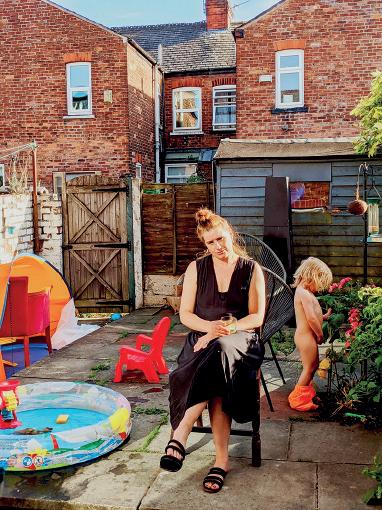
‘We’re really lucky to have a garden’ by Robert Coyle, 2020
‘We’re really lucky to have a garden’
As a mum with a six-year-old child, this image really chimed with me. I love the knowing expression on the woman’s face, surrounded by all the chaos associated with family life. I think it sums up the experience of parenting for some people during lockdown: both the joy of being able to spend more time with your children but also the stress of balancing work and childcare responsibilities.
Cutrupi, 2020
The look of lockdown
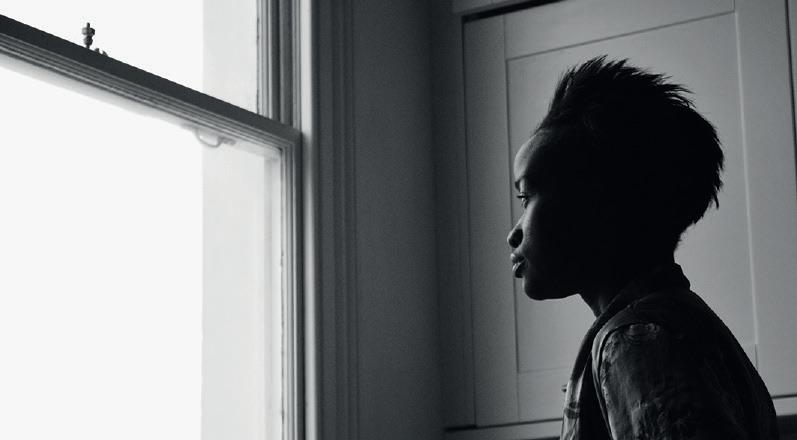
There were many entries that included windows. Photographing people looking out of or seeing others through glass seemed to illustrate for so many of us the experience of being distanced from the outside world. I loved how still and thoughtful this photograph is, capturing a quiet moment of contemplation. The photographer’s description puts it perfectly: ‘The picture is a representation of our daily dose of daydreaming we do whilst we watch the world go by without us.’
Where’s Grandpa?
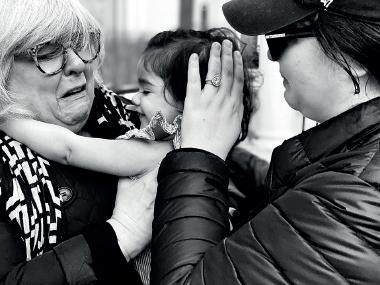
by Roni Liyanage, 2020
Where’s Grandpa?
This very moving image shows a moment when a mother has the first physical contact with her daughter and granddaughter after the death of her husband. The photographer describes it as the first ‘moment of shared grief that was possible in this time of social distancing’. I think it expresses the human tragedy of the pandemic but also the psychological impact of isolation and the loss of physical contact, especially for those experiencing grief and sadness.
Street artist at work
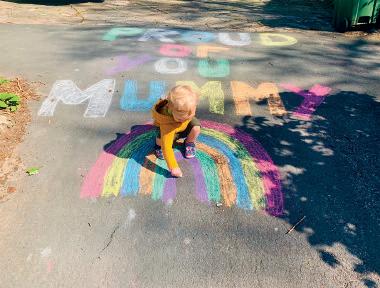
Another recurring theme recorded by entrants was the rainbow. Numerous images featuring this symbol of hope reflected the burst of creativity that took place across the UK, with houses and streets decorated with bunting, banners, paintings and chalk drawings. This rainbow was drawn on the pavement as a surprise for the child’s mother, for her to see when she returned home from working as a nurse on the front line.
Street artist at work by Victoria Stokes, 2020
Arnhel de Serra,
Everyday hero
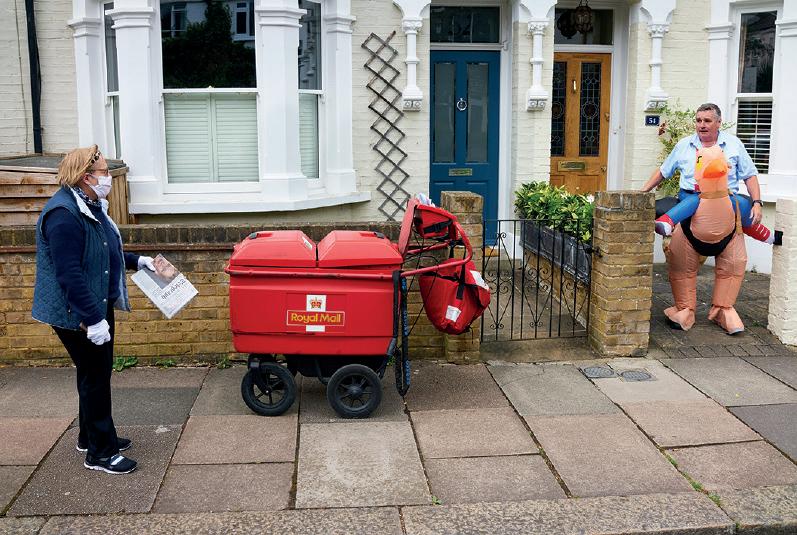
Many of the images in the project show a terrific sense of humour despite the challenges of lockdown. This Putney postman lifted the spirits of local residents by wearing fancy-dress costumes on his rounds. He apparently had five various outfits and wore a different one each day unless it was raining! This was just one of multiple images of key workers supporting communities with essential services.
Karwai
Care worker
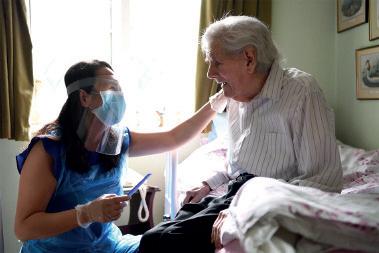
There were so many incredible images submitted that portrayed the work of health and care professionals, as well as many that depicted members of the public expressing their appreciation for these key workers though the ‘Clap for Carers’. I thought that this one was particularly touching – even with the mask and PPE you can see the connection between the two sitters and the importance of this personal interaction. As the care worker says in her description of the image, ‘The first thing he says to me when I open the doors is “I am so glad to see you” and with that he makes all the hard work we have been doing worthwhile.’
Dadi’s love
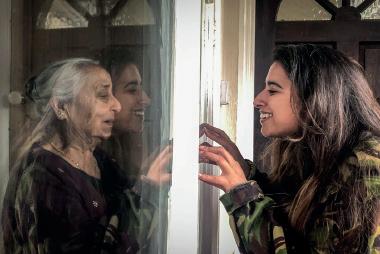
This is another lovely window image. Dadi is the word for ‘father’s mother’ in Punjabi and the entrant describes this as a meeting of a granddaughter and grandmother after a period of separation. I love how they are echoing each other’s pose and facial expressions and the way that their faces, revealing a strong family resemblance, are brought close together in the reflection. It represents the importance of family even when you cannot be physically together. The photographer describes the situation as ‘separated by a window but connected by love’.
Dadi’s love by Simran Janjua, 2020
by
Tang, 2020
CECIL BEATON’S
BRIGHT YOUNG THINGS
PHOTOGRAPHY COMPETITION
by Helen Whiteoak Head of Programmes & Engagement
cecil beaton ’ s bright young things exhibition explores the extravagant world of the glamorous and stylish ‘Bright Young Things’ of the 1920s and 1930s. It illuminates the avant-garde artists, creatives, socialites and party-goers of the day.
Taking inspiration from Cecil Beaton, the Gallery invited audiences to create their own images of the ‘Bright Young Things’ of 2020. We were interested to see what the response would be 100 years on from Beaton’s work. It was the perfect theme to reach and engage new, young audiences via our social media channels and directly through our schools programme.
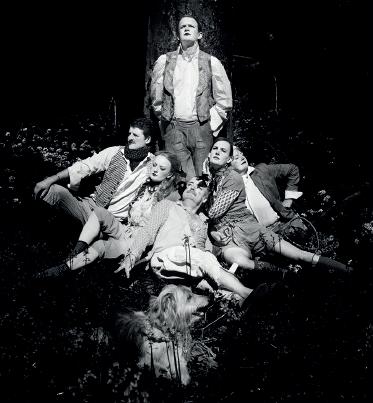
We asked for portraits that responded to costume and masquerade; fashion; props, performance and self-portraiture. The competition was judged by the exhibition curator, Robin Muir, and fashion photographer Tim Walker, who selected their winning shots from over 1,000 entries. Their generous comments on the winning images were received with excitement by the winners and appreciation by teachers:
Wow! I am shaking with excitement after having read the comment from Tim Walker. What a fab experience this was taking part and being part of the winning team. Thank you for organising such inspiring educational resources, which enabled me to run this competition. MRS E. LOGAN , Art Teacher
1st place: Over 25s category by Jamie Coreth
It’s very difficult to do group pictures well. Beaton was so good at it because he photographed people who naturally gathered together. His friends. Nothing was forced. The group in Jamie Coreth’s picture has that ease of a family of friends and reminds me of the importance of kinship when photographing a group. TIM WALKER
Further images of the 2nd and 3rd places for each category can be seen at: https://www.npg.org.uk/whatson/cecilbeaton-bright-young-things/exhibition
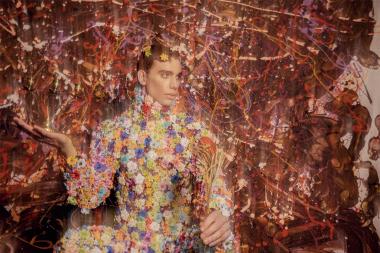
1st place: Under 25s category by Keren Kierkegaard
This is playing again. The play of photography is sometimes successful when more IS more and is adopted. Here it is. All the ingredients mixed up to a Battenberg. I’ll have a slice. But a small one TIM WALKER
This could not be more thrillingly Beatonesque in its glamour and liberally sprinkled stardust – but the photographer has made it his own and his sitter undeniably himself ROBIN MUIR
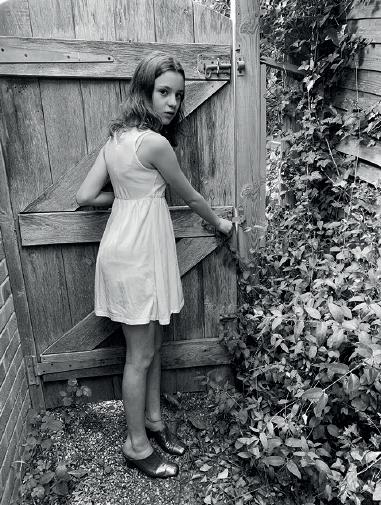
1st place: Schools Category Gateway by Ryder, aged 15. Year 10, Chailey School, East Sussex
I always think there was some bridge between Arbus’s photos of children and Beaton’s photos of children. Their resulting imagery portrays part adult, part innocent in the garden or nestled in seas of cow parsley... again, here, this little girl is at the door of an unknowing adulthood ... but she seems to know something I don’t TIM WALKER
NEW ACQUISITION: ME AS JULIA MARGARET CAMERON AND TWO MUSES
BY GILLIAN WEARING
by Magda Keaney
Senior Curator, Photographs
you won ’ t be surprised to learn that the Gallery has something of an evolving and growing ‘wish list’ of portraits we hope to secure for the national Collection. These are often of significant missing sitters, but also can be examples of compelling work by leading artists. Gillian Wearing is one of the most important British artists of her generation and since the Gallery’s major exhibition Gillian Wearing and Claude Cahun: Behind the mask, another mask in 2017, the curatorial team has been working towards acquiring a major self-portrait.
This landmark acquisition has been made possible through the generous gift of Wearing’s long-time collaborator and gallerist, Maureen Paley. It is an indication of both our commitment to portraiture as a contemporary medium but also to our ongoing work as an institution to redress the historical gender imbalance in the history of art. Though the Gallery has sought for some time to ensure women artists and sitters are better represented in our collection and programming, we are excited to move into our work towards Inspiring People with women’s stories as an imperative.
Wearing was born in Birmingham and studied at Chelsea School of Art and Goldsmiths College, University of London. Predominantly working in photography and moving image, she made her critical breakthrough with the series Signs that Say What You Want Them To Say and Not Signs that Say What Someone
below Me as Arbus by Gillian Wearing, 2008
Image © Gillian Wearing, courtesy Maureen Paley, London/ Hove, Tanya Bonakdar Gallery, New York/Los Angeles and Regen Projects, Los Angeles
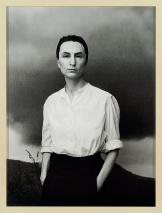
below Me as O’Keeffe by Gillian Wearing, 2018
Image © Gillian Wearing, courtesy Maureen Paley, London/ Hove, Tanya Bonakdar Gallery, New York/Los Angeles and Regen Projects, Los Angeles
Else Wants You To Say, a group of fifty street portraits in which each participant holds up a placard revealing a handwritten message, made in the early 1990s. In 1997 Wearing was awarded the Turner Prize, at that time only the second woman artist to have received the honour. She has exhibited consistently to critical acclaim for more than three decades, including a mid-career retrospective at the Whitechapel Gallery in 2012. Wearing was commissioned to create a sculpture of the Suffragist Millicent Fawcett, unveiled in 2018 in Parliament Square, the first ever monument to a woman to be erected among the twelve sculptures of significant political figures in the historic public space. In 2019 she received a CBE for services to the arts.
The self-portrait has been a persistent theme in Wearing’s work. She made painted selfportraits at art school in the late 80s, but since the early 1990s her primary investigation has been via the photographic image, Wearing often dressing up and incorporating masks to create and recreate versions of herself.
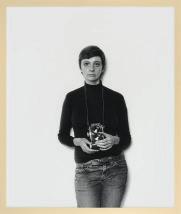
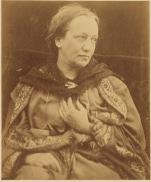
left Julia Margaret Cameron by Henry Herschel Hay Cameron (later The Cameron Studio), c.1873 (NPG P696)
below
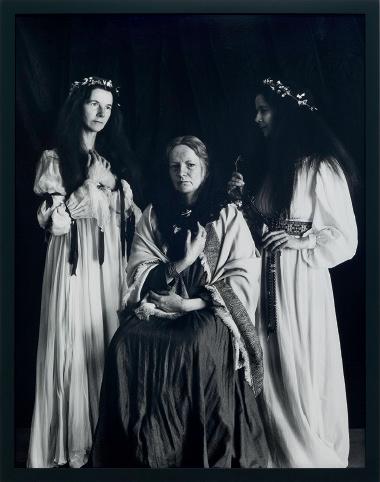
Me as Julia Margaret Cameron and Two Muses by Gillian Wearing, 2019 Gift of Maureen Paley, 2020 (NPG P2090)
Image © Gillian Wearing, courtesy Maureen Paley, London/Hove
Me as Julia Margaret Cameron and Two Muses comes from an extended set known as ‘Spiritual Family’, begun around 2008. She casts herself in the role of various artists, male and female, who have inspired her, transforming her appearance using costume, pose, props and intricate prosthetic masks specially made for each portrait. The group includes Georgia O’Keeffe, Albrecht Dürer, Claude Cahun, Andy Warhol, Diane Arbus, Robert Mapplethorpe and August Sander. Of the series she has said, ‘Without those artists I probably wouldn’t have become one myself – they were the culture in my life. I wanted to honour them in return by becoming them.’
Here Wearing pays homage to the trailblazing Victorian photographer Julia Margaret Cameron, a likeness based on a well-known photograph of Cameron by her son held in the collection of the National Portrait Gallery (P696). Cameron famously photographed ‘Fair Women’, often evoking religious archetypes or literary references. In the portrait two such figures in typically billowy dresses appear, Wearing simultaneously performing the roles of artist and subject –Cameron, who began making pictures only in later life, seated and her beautiful young muses at her side. Though Wearing does not seek to replicate the original exactly, she has referenced particular details such as the dove brooch that fastens her shawl. Wearing chose this portrait ‘as she [Cameron] was at the pinnacle of her career. I also like that her son took the image.’
That Wearing assumes the role of Julia Margaret Cameron is also particularly significant for the Gallery’s photographs collection. With extensive holdings of Cameron’s work, including many of her ‘Fair Women’, the acquisition will be an interesting provocation, providing new ways to consider the history of British women photographers, the idea of the self-portrait in relation to both artists – Cameron often photographed women but apparently never made a self-portrait –and the relationships and resonances between Victorian and contemporary photographic practice.
NEW ACQUISITION:
ZADIE SMITH BY TOYIN OJIH ODUTOLA
by Dr Georgia Haseldine Assistant Curator
zadie smith is one of Britain’s best-known and most admired writers. She became a household name with the publication of her first novel White Teeth (2000). Her subsequent books include NW (2012), Swing Time (2016) and the collection of essays Feel Free (2018).
The National Portrait Gallery commissioned Toyin Ojih Odutola’s portrait of Smith, a monumental work on paper, in 2018. Artist below ‘Sadie’ (Zadie Smith) by Toyin Ojih Odutola, 2018–19 (NPG 7105)
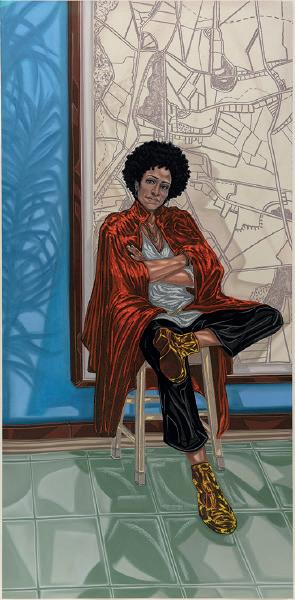
© Toyin Ojih Odutola
and sitter were eager to collaborate as they both found inspiration in each other’s work. Nigerian-born American Ojih Odutola is, in Smith’s words, the ‘central light in a thrilling new generation of black artists’. Detailed and labour-intensive, Ojih Odutola’s drawings are particularly striking for the dense patterning of skin that makes every face a glowing, moving topographical landscape. The singer Solange Knowles has said that her drawing style has ushered in ‘new considerations of all the endless possibilities and ways to emphasise blackness’.
Smith and Ojih Odutola have discussed their common practice of constantly calling on broad and diverse influences while writing and drawing. Smith’s writing desk ‘is covered in open novels’. Ojih Odutola might look to John Singer Sargent or Loïs Mailou Jones when choosing a new colour. Both have a fierce work ethic: ‘I enjoy labour’, Ojih Odutola reflected and Smith insisted that this ‘craft is human’.
In the resulting drawing, Ojih Odutola has shown Smith in a relaxed pose, her natural hair uncovered, to show an assured and talented woman on her own terms. The artist chose the title ‘Sadie’ (Smith’s name at birth) to signify the foundations of Smith’s life, as a woman from north-west London with firm roots in Jamaica and England.
A Countervailing Theory, Toyin Ojih Odutola’s first UK solo exhibition, opened on 11 August 2020 at The Curve Gallery, Barbican.
BP AWARDS GO VIRTUAL
by Georgia Smith Head of Corporate Development
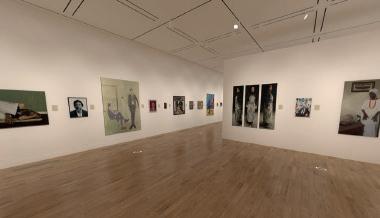
when the uk went into lockdown in March, the National Portrait Gallery had two exhibitions scheduled for this year. The first was the BP Portrait Awards, which readers of Face to Face will know went live as a virtual exhibition in place of the physical awards in May.
Our Exhibitions team responded to the Covid-19 crisis very quickly, working with software company ExhibitaPro to create an exhibition displayed in a virtual space replicating the rooms of the Gallery.
Although nothing can replace the unique experience of exploring an exhibition in person, the team have noticed some interesting benefits to staging a virtual exhibition.
The BP Portrait Awards have received over 190,000 visitors, demonstrating that there is still appetite for viewing exhibitions online. One visitor explained her views: ‘I went on a virtual “trip” to the BP Portrait Awards with some friends. It’s a very different experience,
The Taylor Wessing Photographic Portrait Prize will be viewable online from November 2020
The BP Portrait Awards 2020 viewed as a virtual exhibition
of course, but it was quite fun to be able to look at particular portraits for as long as we wanted, all while having a glass of wine!’
The Exhibitions team at the Gallery have also been delighted to see visitors viewing the exhibition from all over the world. While we often cater to a very UK-centric audience, there has been an impressive rise in visitors from Europe, America, South Africa, Australia and more.
The team are utilising digital tools to reach a broader audience for the exhibition in other ways, too, such as the artist and sitter films that have been recorded digitally and uploaded to the Gallery’s YouTube channel. Artist Thomas Leveritt spoke with his sitters, Emily and Funmi – both frontline NHS staff. They reflected on the portrait, the pressures of working in healthcare, and the immediacy of the work’s message since the pandemic.
The success of the virtual BP Portrait Awards promises well for the virtual Taylor Wessing Photographic Portrait Prize. The call for entries was announced in July and the exhibition will be staged virtually in November 2020, building on the success of the Gallery’s experience in staging virtual shows.
With the uncertainty of Covid-19 affecting swathes of the cultural sector, the Gallery and its sponsor, Taylor Wessing, felt that a virtual exhibition was a way of guaranteeing that the show will go on.
Supporters
CHRISTMAS GIFT GUIDE INSPIRED BY THE TUDOR COLLECTION
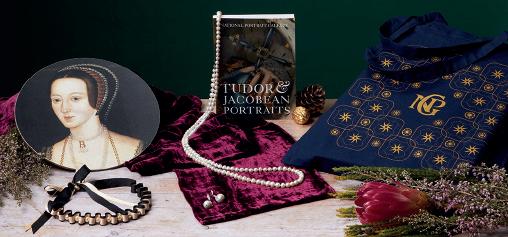
This Christmas the Gallery has taken inspiration from the Tudor Collection to create a timeless gift range available online only at npgshop.org.uk.
During the Tudor era gifts at court were given at New Year rather than Christmas Day, and it was a significant social and political event. The gift exchanges were recorded in the gift roll, and from this we know that Elizabeth I’s presents included a range of items, from lavish jewels and clothes to food, books, lute strings and writing desks.
The Gallery has been inspired by these traditions and the portraits of the era from its Collection to create this Christmas gift range. A bespoke tote bag features a repeat design inspired by one of the Gallery’s portraits of Queen Elizabeth I (NPG 541). Jewellery collections feature ruffles and pearls, which are present in strings on the necklace of Elizabeth I and of her mother Anne Boleyn (NPG 668).
Accompanying the range are a number of artist collaborations exclusive to the National Portrait Gallery Shop, including those by Celia Birtwell, Grayson Perry, Lavenham and Dinny Hall, a gardening range from Burgon & Ball, handmade ceramics by Katch Skinner, books, custom prints and classic presents that reflect the gifts of Tudor times.
Gallery Supporters can now enjoy an increased discount of 20% in our online shop, including on Christmas gifts. Use code MEMBER2020 This code will replace your Membership number as the required discount code for all purchases.