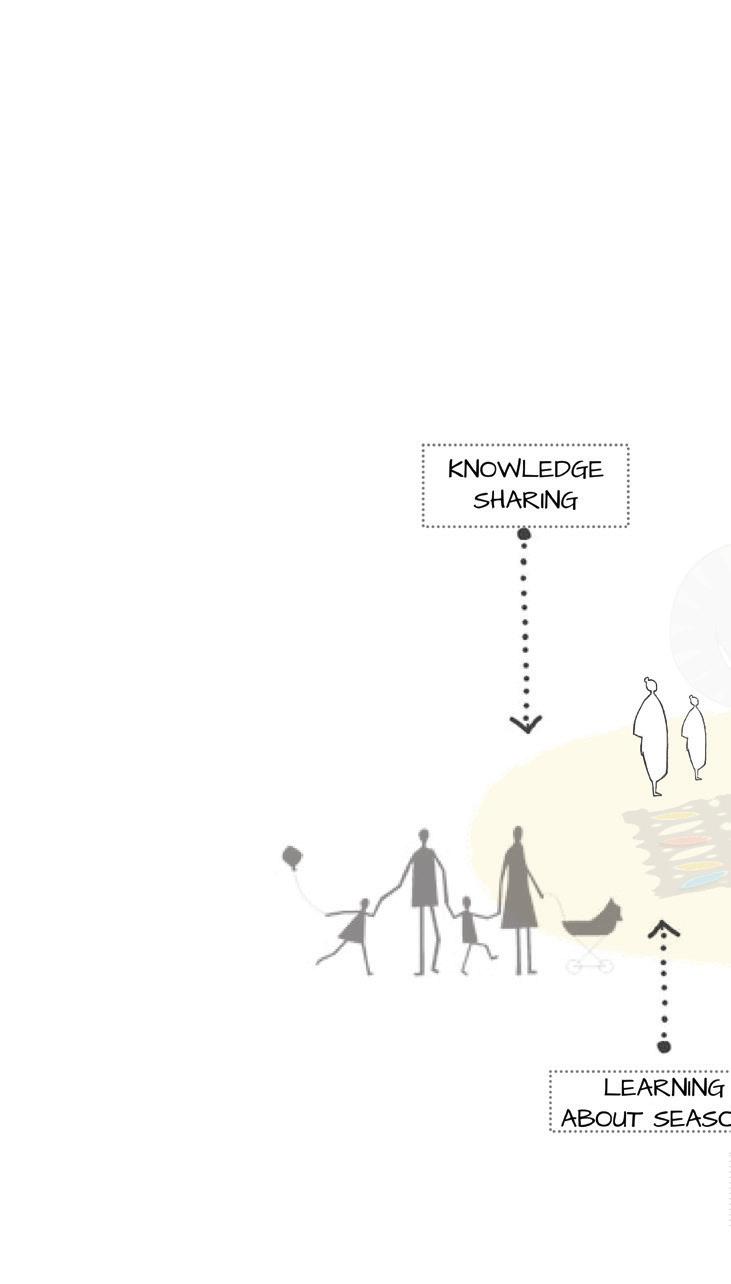
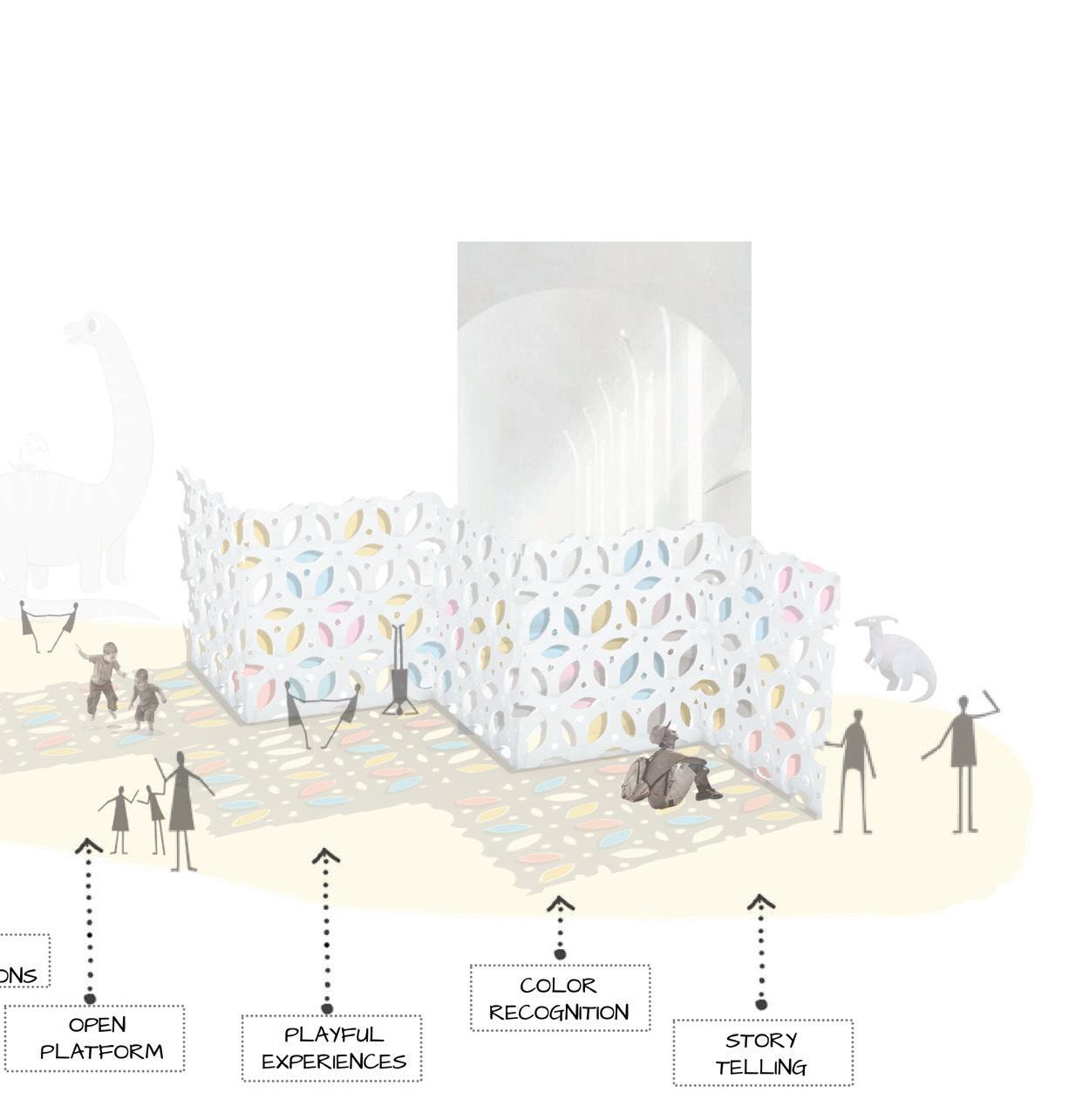
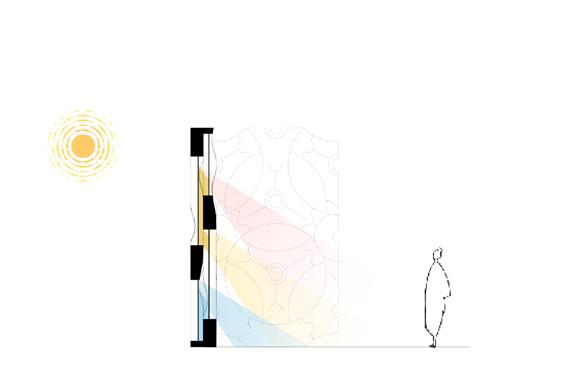
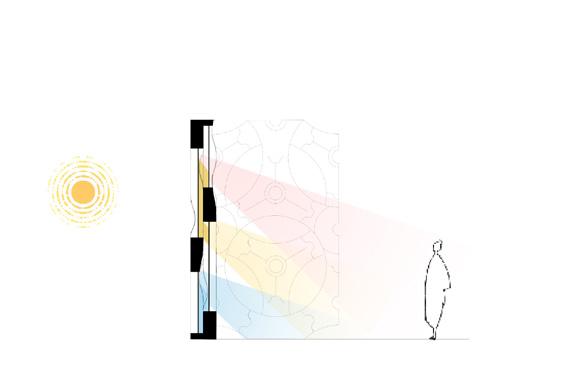
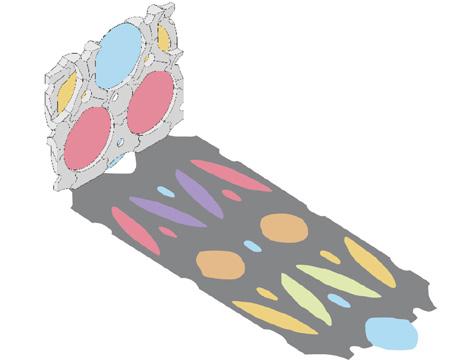
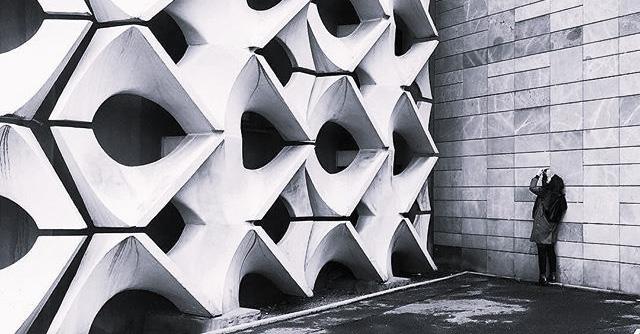
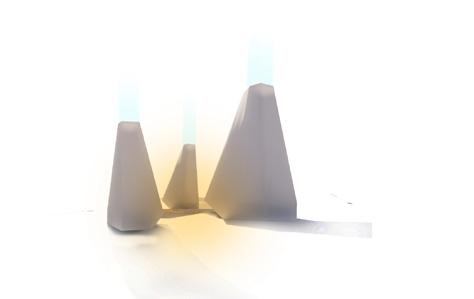
Our creative journey begins with a specific design idea in mind, which is based on a playful, perforated wall that encourages children to create their own experiences while being in a park at one time inside the built environment. Exploring different possibilities of a two-and-a-half-dimensional module and creating a playful learning opportunity for young children.
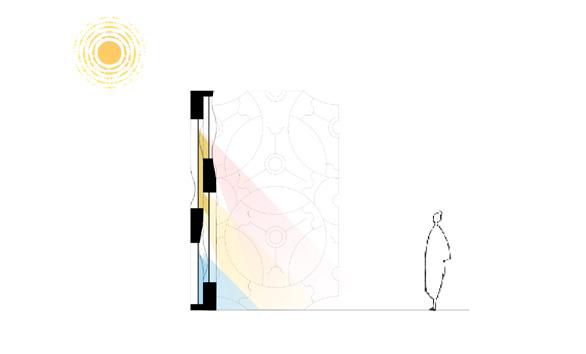
Offering them a platform for knowledge sharing through a playful experience. Giving possibilities of learning about colors as well as seasons through changes in light sources, mix and match of colors, and shade shadow.
Fall 2023 | Professor Nilufar emami | Project type : group project | Team Members : Noushin Anjum, Madison Bowman & Jon Guttello
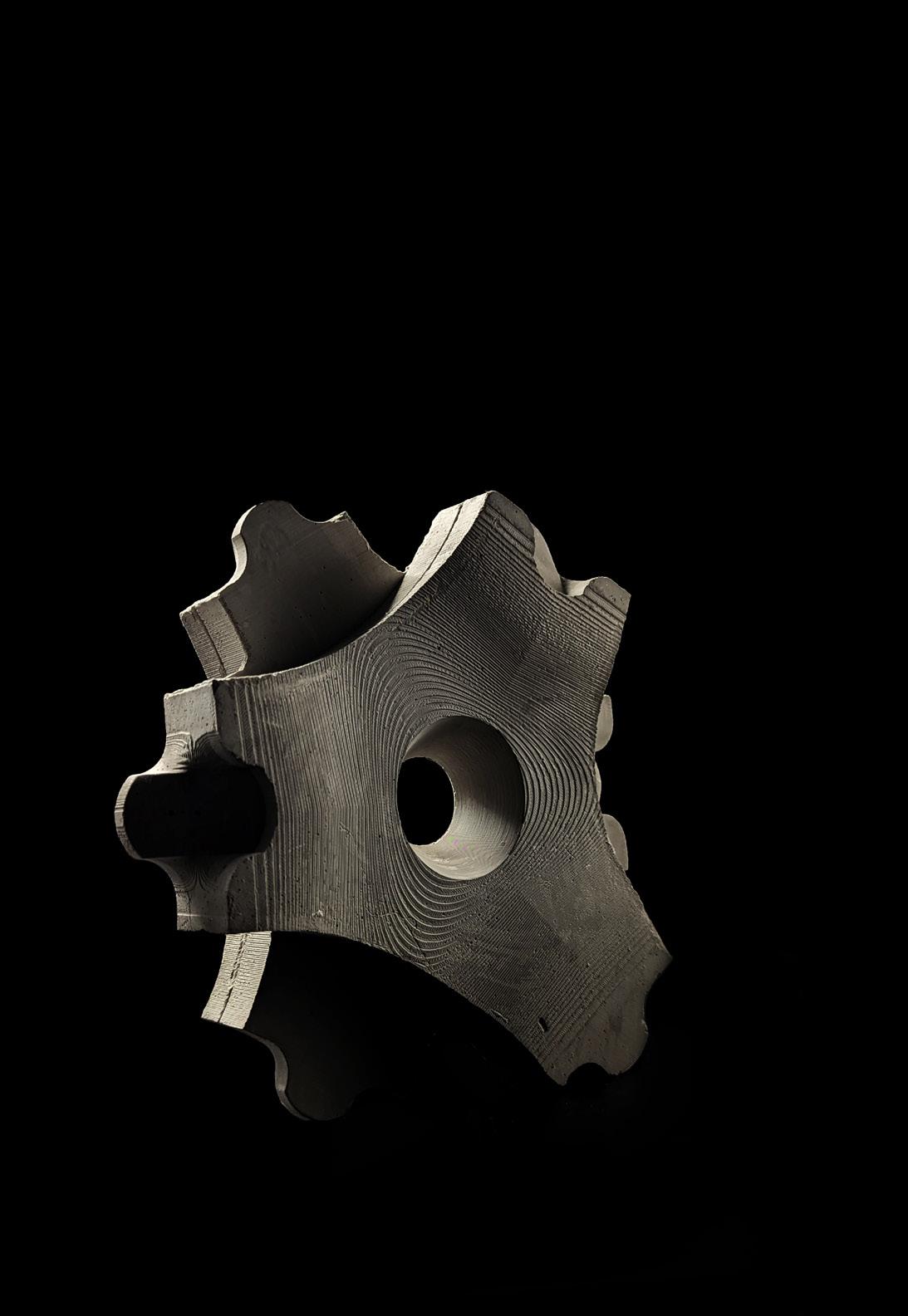
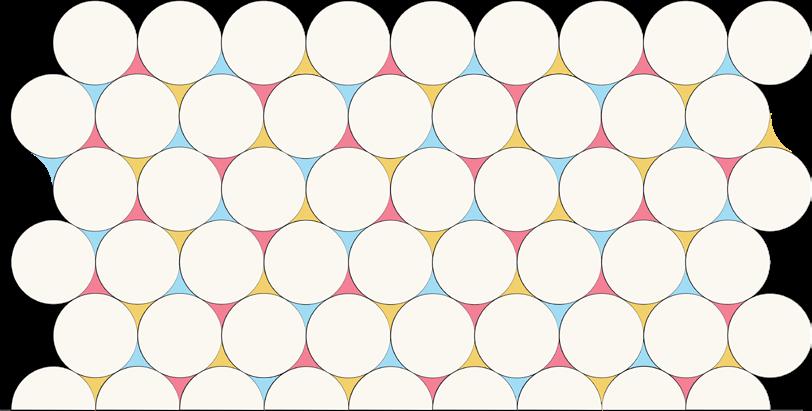
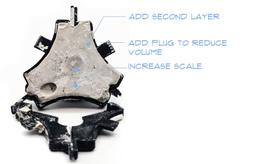
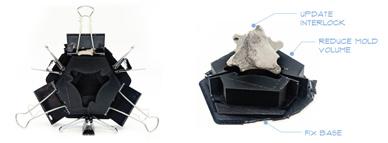
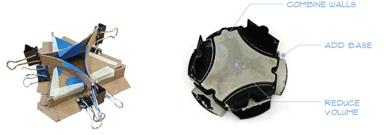
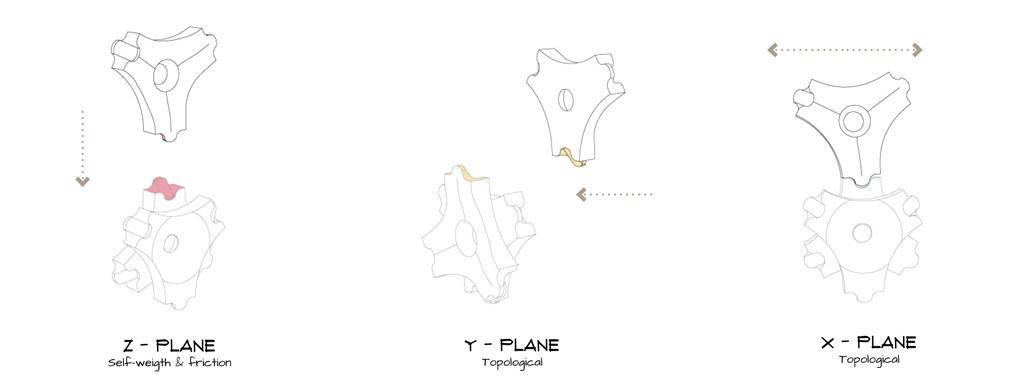
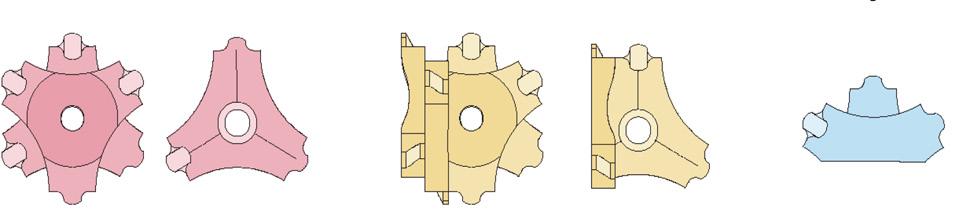
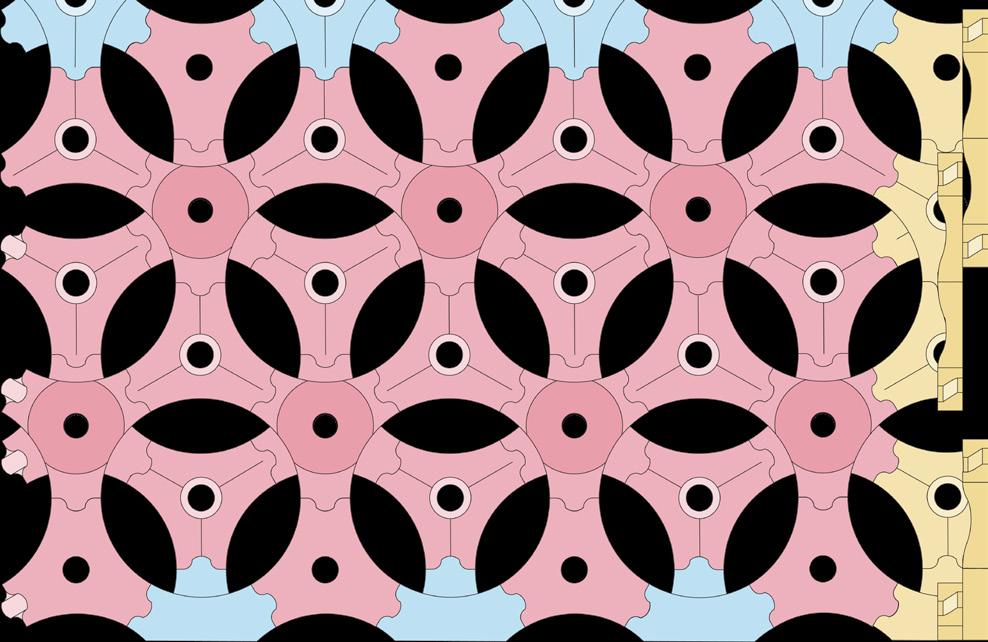
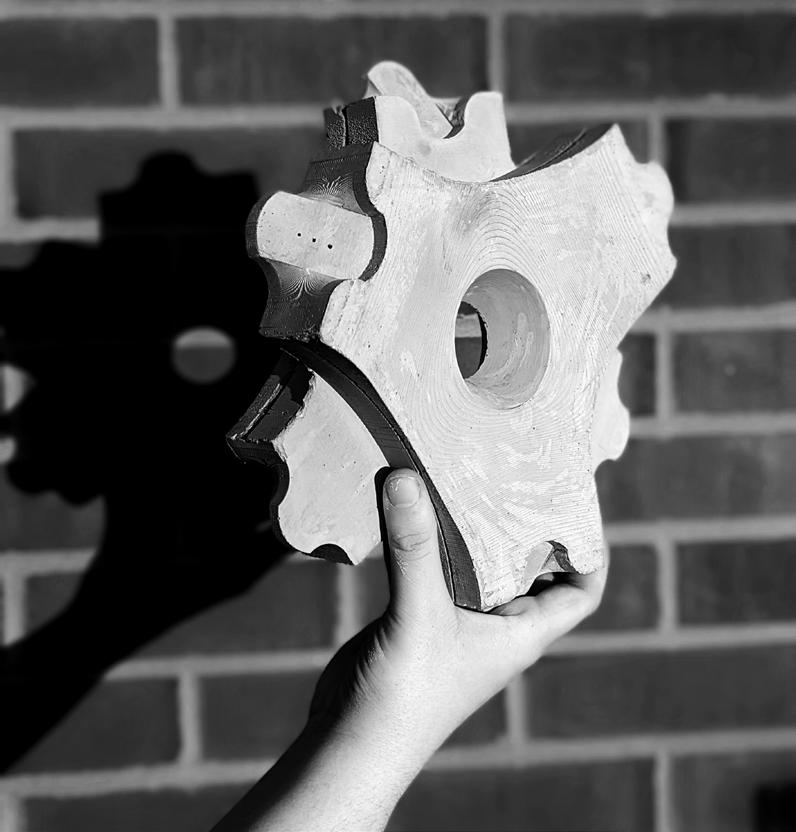
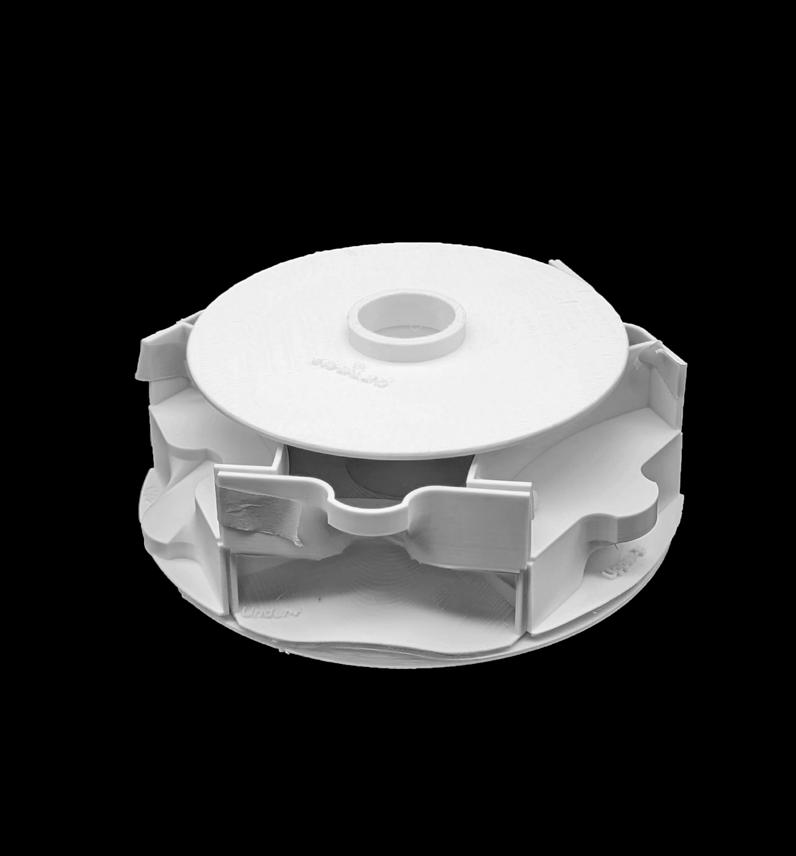
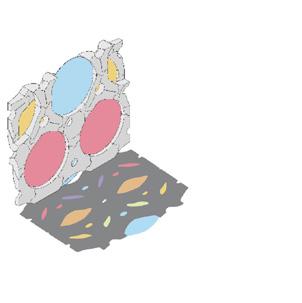
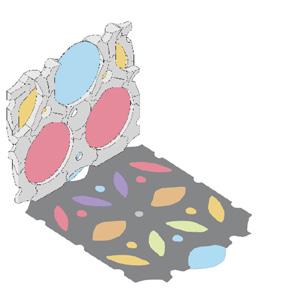
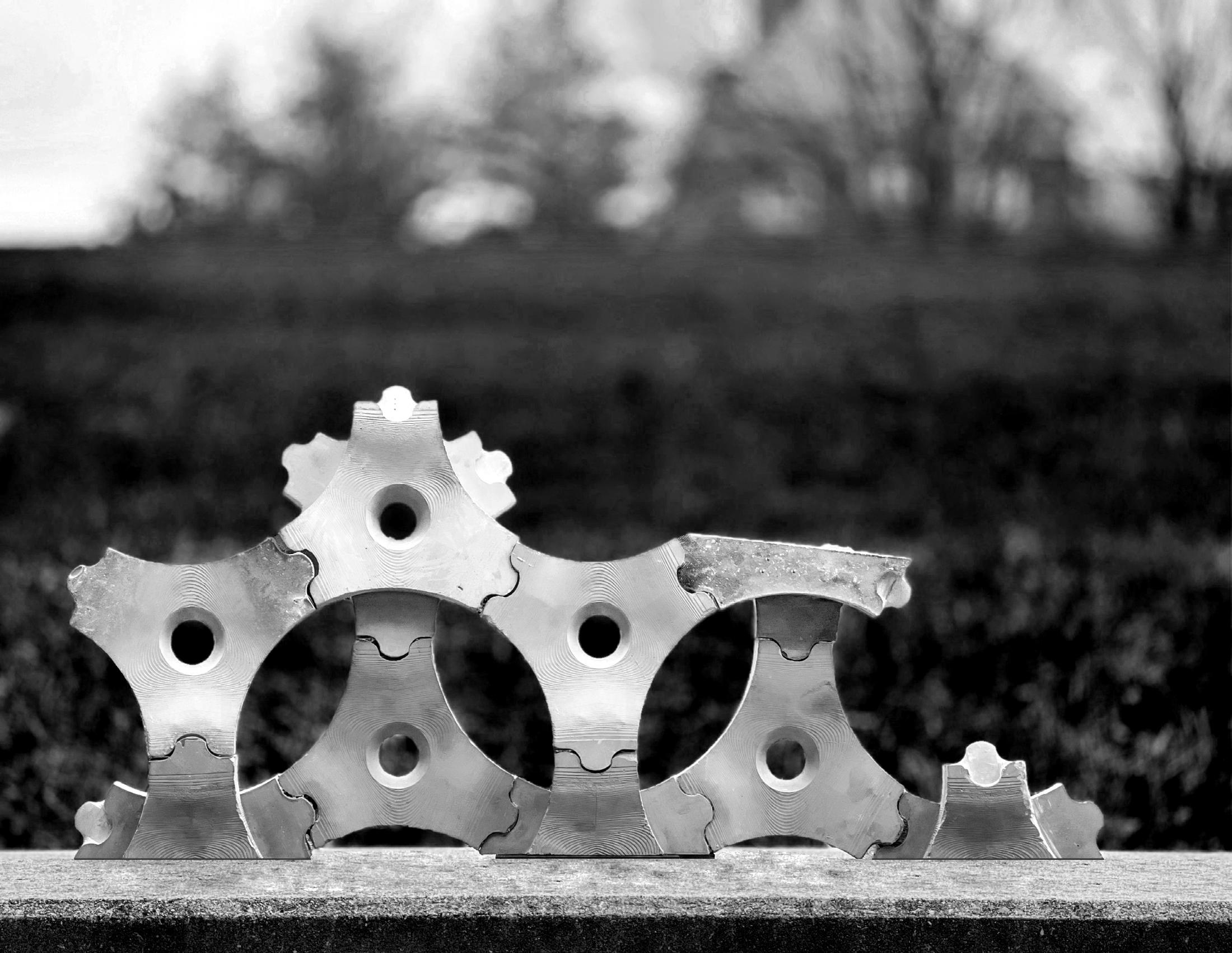
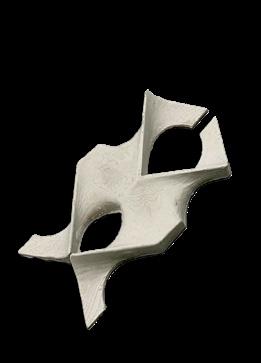
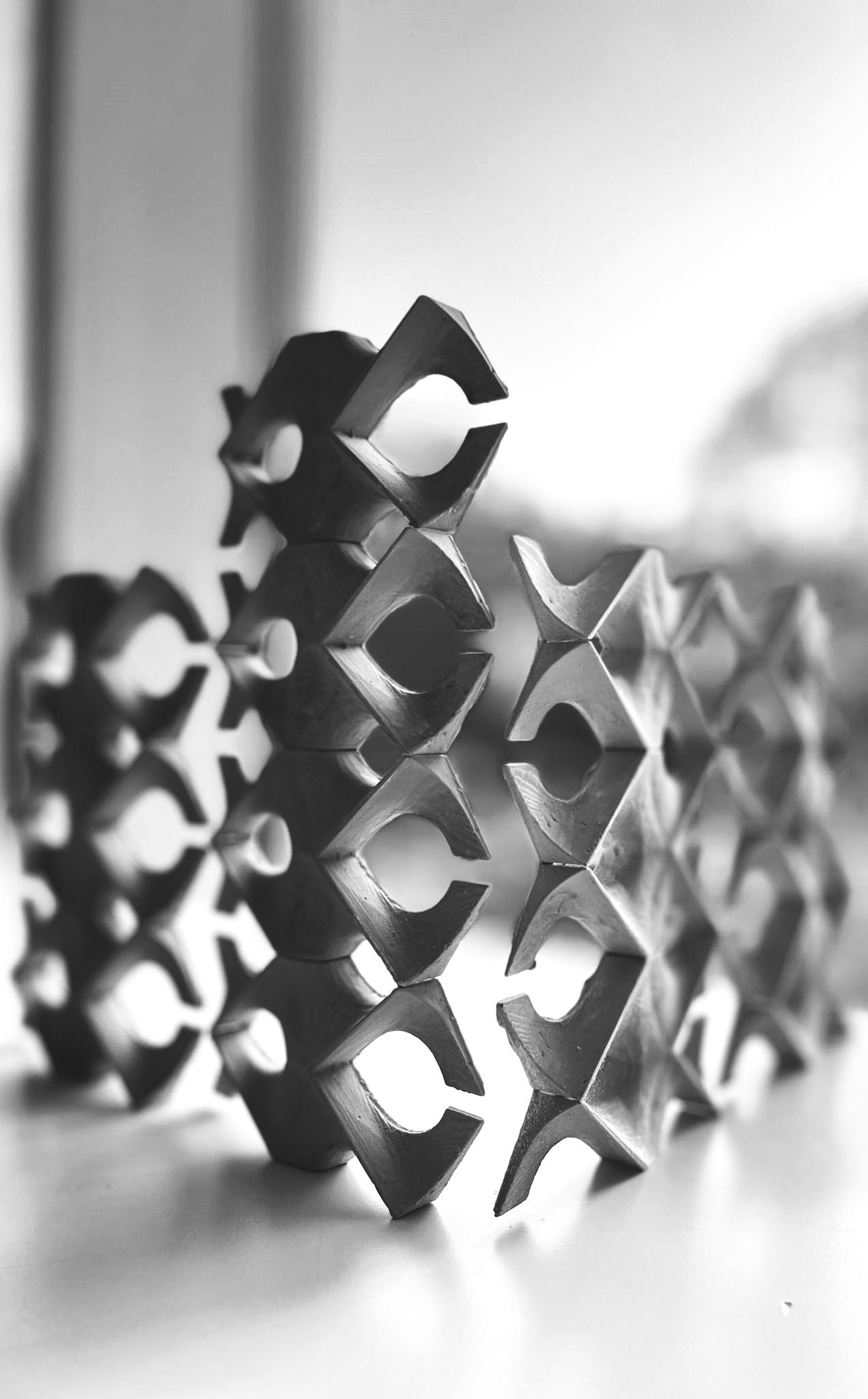
The Kaleidoscope features structurally optimized interlocking concrete blocks, designed from the negative space from a circular grid. The design uses additive formwork that was 3D printed using PLA. Colored glass panels within the blocks highlight the original grid while casting vibrant patterns on surrounding surfaces, enhancing the overall ambiance.
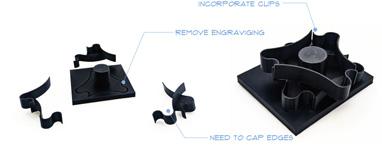
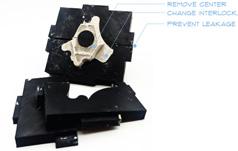
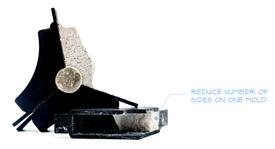
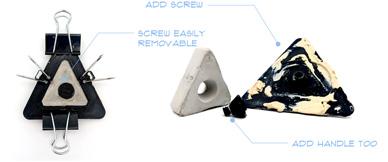
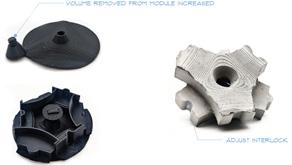
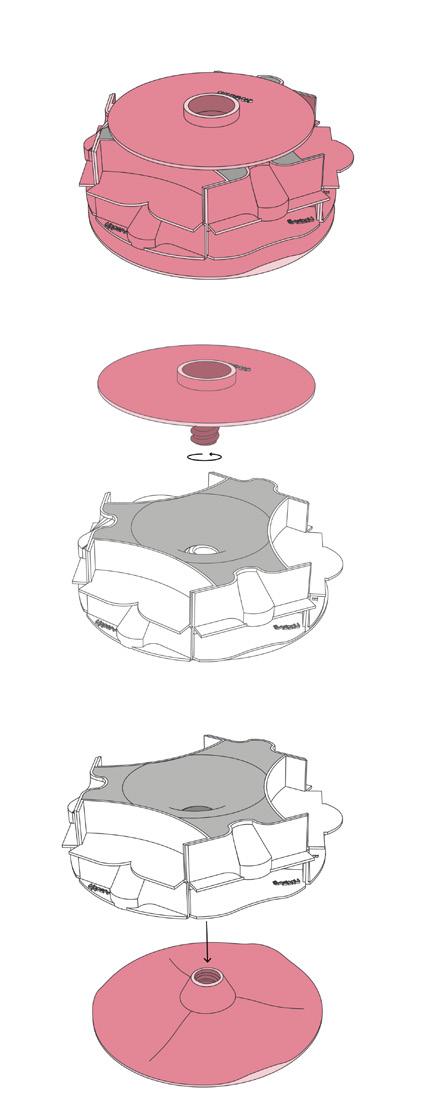
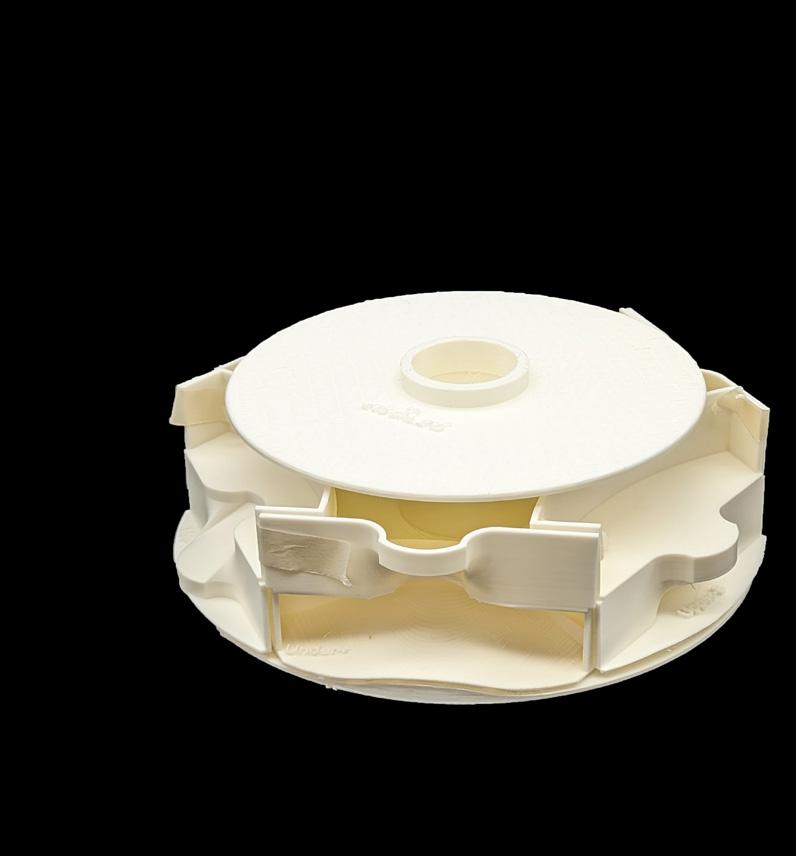
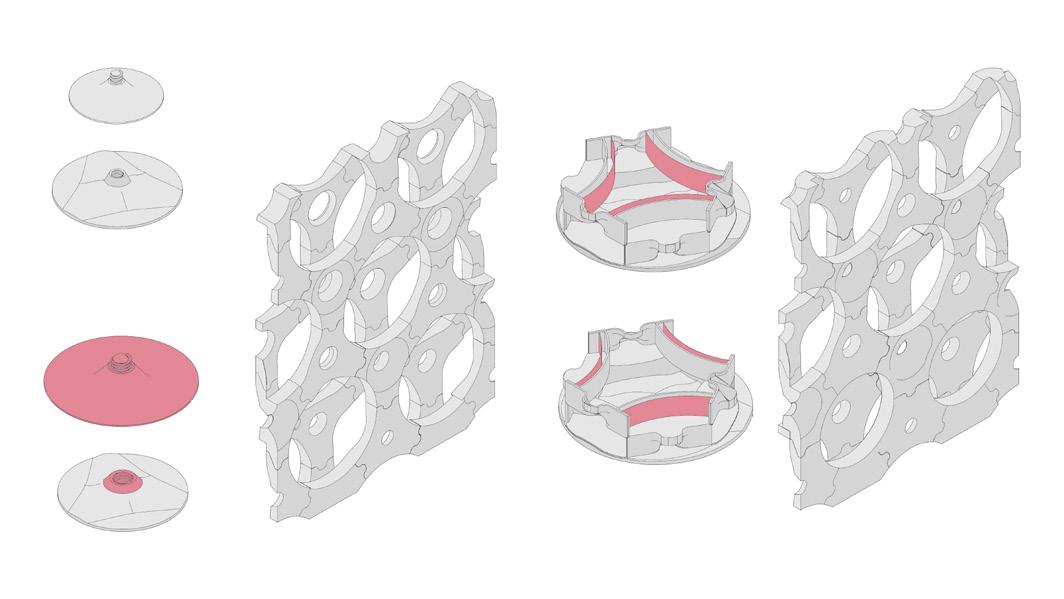
While tailored for a museum setting, the design encourages exploration for all visitors of all ages and displays the innovation and customization of 3D printed molds. Specifically for this mold, a screw cap allows for undercuts in concrete, meaning either side of the mold can have different perforation sizes, which significantly reduced the volume of the module.
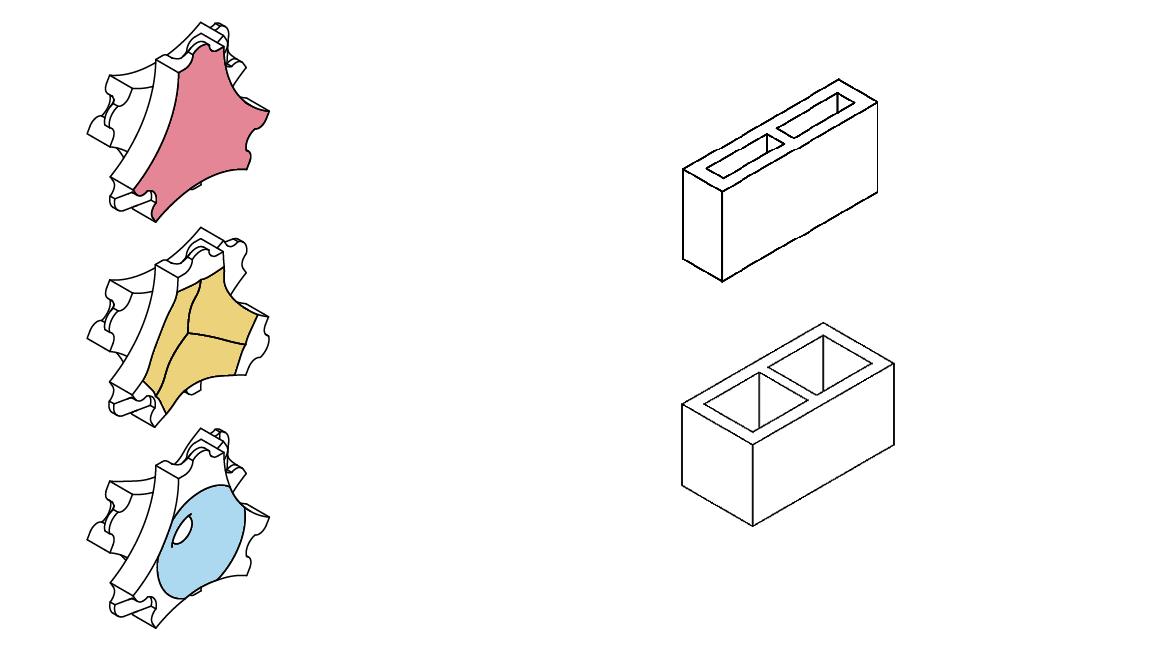
A screw system was incorporated in the mold, which saved material, time and reduced the weight of the module. Which made the module versatile, dynamic, structurally as well as economically efficient. We compared our module with CMU blocks and tested its structural integrity.
The structural optimization and customization are the key components to this project. In the following figures, it is apparent the material usage is greatly reduced, especial in comparison to its masonry block counterpart. On top of this, the mold walls, plugs, and base can be customized to adapt to project necessities (e.g. lighting, limited space) and change the radius on center holes and grid circulars/window panes. This simple adaptability in the mold design is much like the toy the modular is named after, simple, colorful, and ever changing
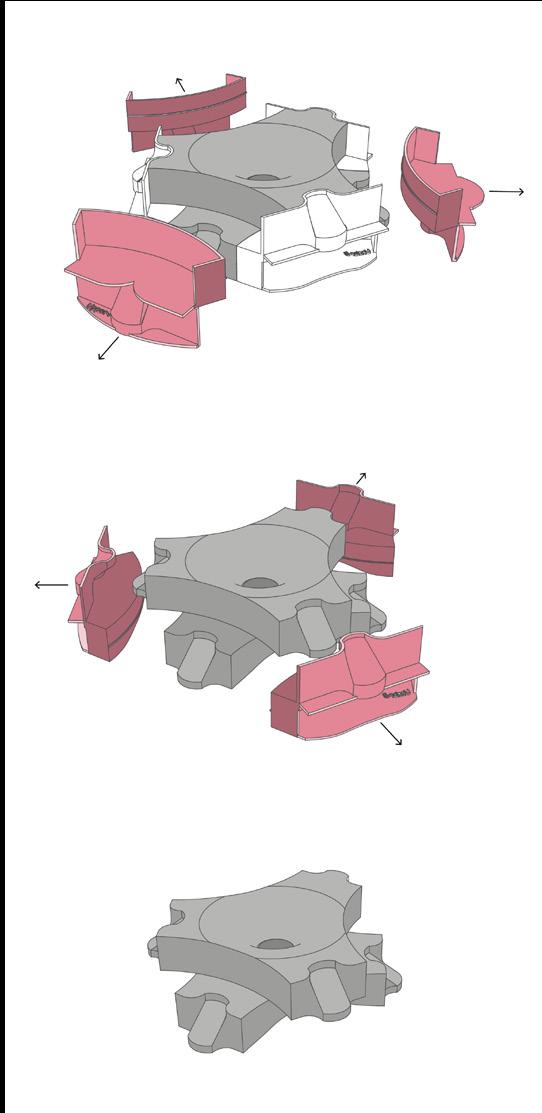
Final mold de-molding sequence ( Module A )
Structural optimization : comparison with CMU
Customization
Another major design element of the mold is the walls; just by exchanging a few walls, a person can create two types of conditions for the normal, corner, and edge mold. The walls can also be replaced with a larger or smaller radius, as well as different sized screws. The design is optimized for volume reduction and grid customization.
Study with a light source
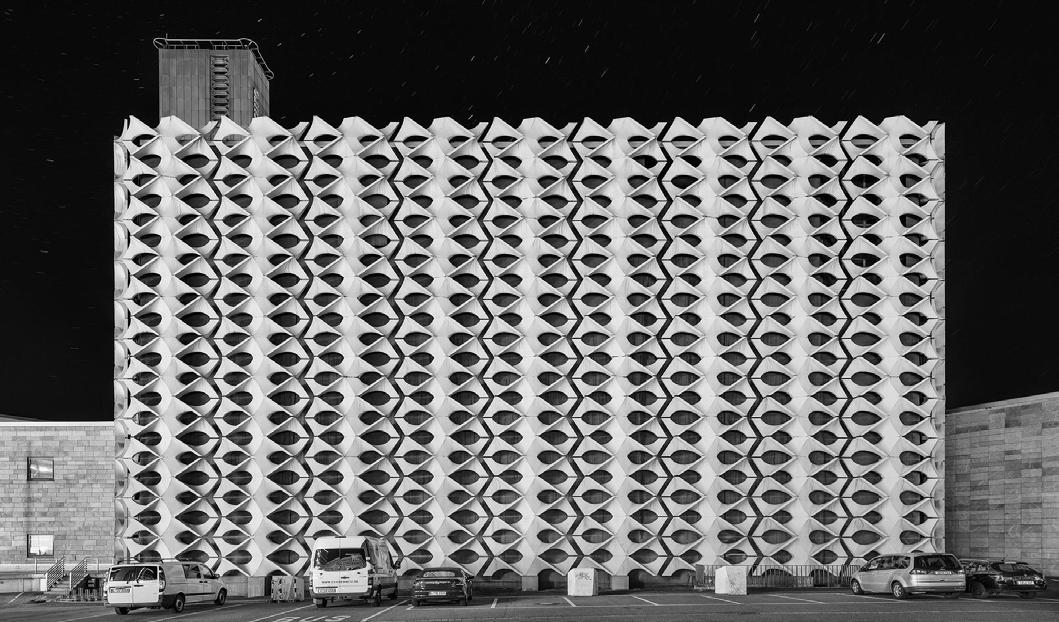
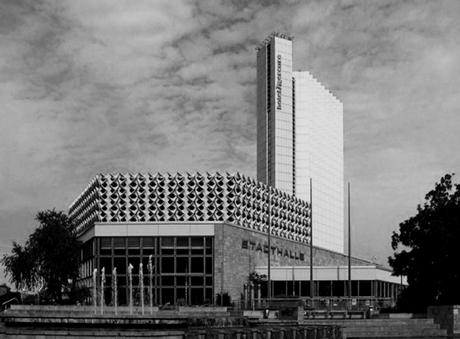
City Hall of Chemnitz, Germany
The Stadthalle in Chemnitz, constructed during the era of the German Democratic Republic, when the city bore the socialist moniker “Karl-Marx-Stadt,” showcases a distinct architectural legacy.
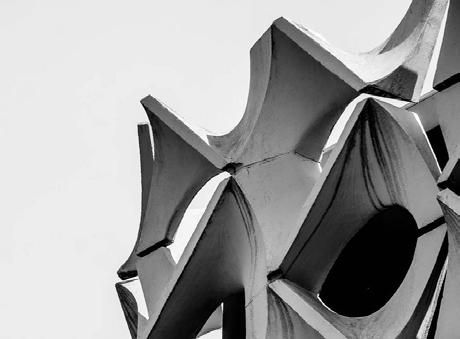
Within the Stadthalle, architectural geometry diverges from traditional balconies, featuring a striking exterior design composed of uniquely shaped precast concrete elements, akin to interlocking tiles. This distinctive architectural approach imparts a heightened sense of dynamism to the building’s outward appearance.
Project started from 1969, completed on 1974. Post war brutalist signaficance presented with sculptural manifesto. Weisser, Rudolf was a local urbanist in the city of Karl-Marx-Stadt, where he had a major influence on the reorganization of the city center.
The german artist Hubert Schiefelbein played an important role in the development of City Hall Chemnitz and Hotel Congress in Karl-Marx-Stadt, modern day city of Chemnitz.He is primarily credited with the construction of two important rooms and the concrete decorative elements on the facade in this emblematic and historic building
The curriculum was crafted with the aim of comprehending pre-fabrication and its traditional domains, exploring its fundamentals, and recognizing its advancements in the contemporary era through de-constructing, CAD modeling, 3d printing, mold making and cast making.
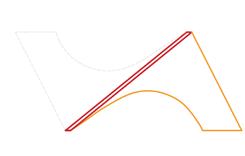
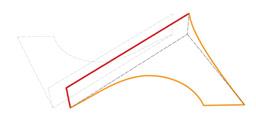
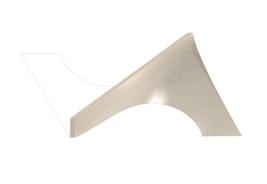
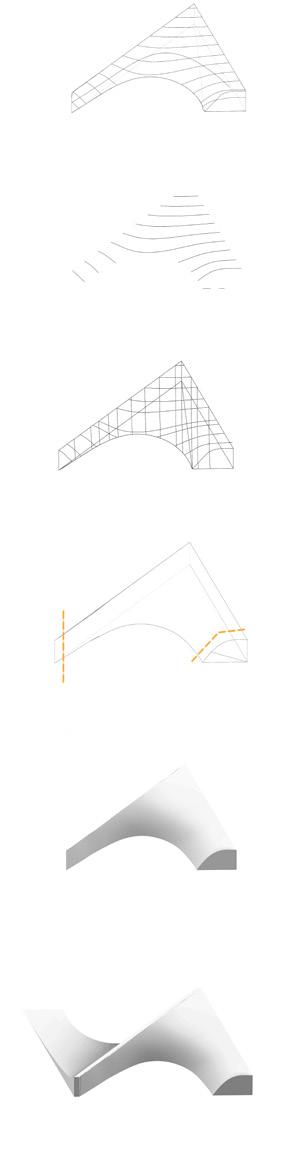
Detection of curves and lofting the edges
Lofted Geometr by patch, but curves are not clean
Perspective of the module, shows which part are being used for lofting.
Sweep 1, 2 doesn’t work when geometry has too many bindings, such as multiple geometric curves.
Extracting Curves
Lofted the 2 lines, the red line and the orange.
Orange one had 2 curves in it. Lofted the curve and then rebuilt it with 1300 polygones for the smoother version.
Extracting Curves
Extracting Curves
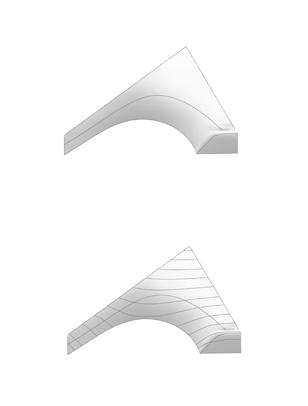
Form Generation from isoCurves. Extended the ends
Spliting the extended egdes
Cap the geometry
Merger of both geometry
3D printed module , using filaments and raise 3d
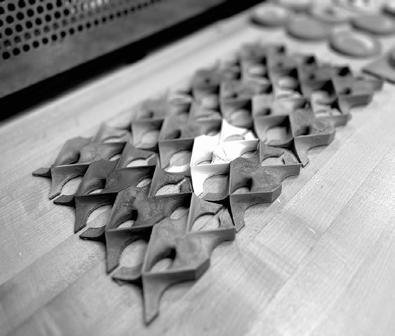
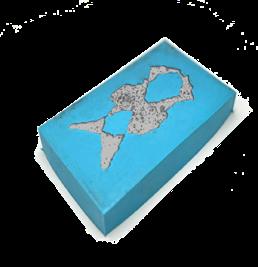
Concrete casted in rubber module
The entire architectural composition stands as an independent structure, with its skeletal framework serving as the primary load-bearing element. Initially, the framework was fabricated using the contemporary technique of steel casting, reflecting the prevailing architectural trends of the era.
In the construction process, rubber molds were employed and treated with mold-release sprays before the concrete was meticulously cast. The concrete mixture adhered to a precise ratio of 5 parts concrete to 1.5 parts water, ensuring structural integrity and stability.
The curing time for this concrete formulation is relatively short, requiring only one hour to set. Minimal sanding was performed to achieve a refined surface finish. However, it should be noted that there were imperfections resulting from air bubbles in the rubber molds, a concern that will be vigilantly addressed in future endeavors.
The entire procedure proved to be highly daunting in light of my academic pursuits and passions. This project afforded me the opportunity to engage in the processes of modeling, observation, and experimentation. I intend to intensify my involvement in the realm of fabrication and delve deeper into my studies.
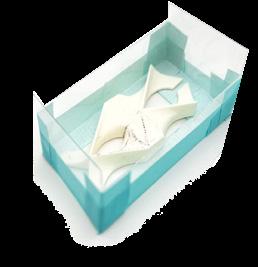
Flexi plast mould for Rubber mould
3d printed module , submerged in one sides rubber mould
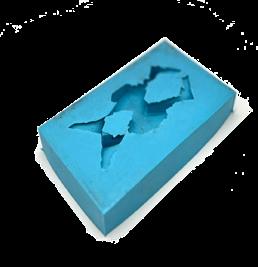
3d printed module removed from the rubber mould
Concrete casting in rubber moulds
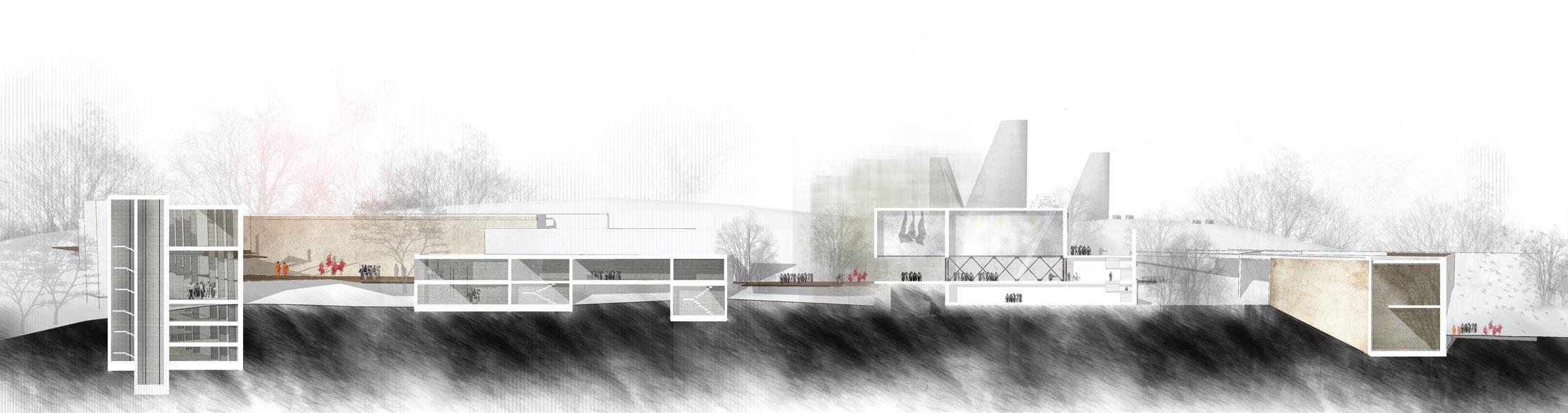
CHITTAGONG HILL TRACTS REGIONAL COUNCIL
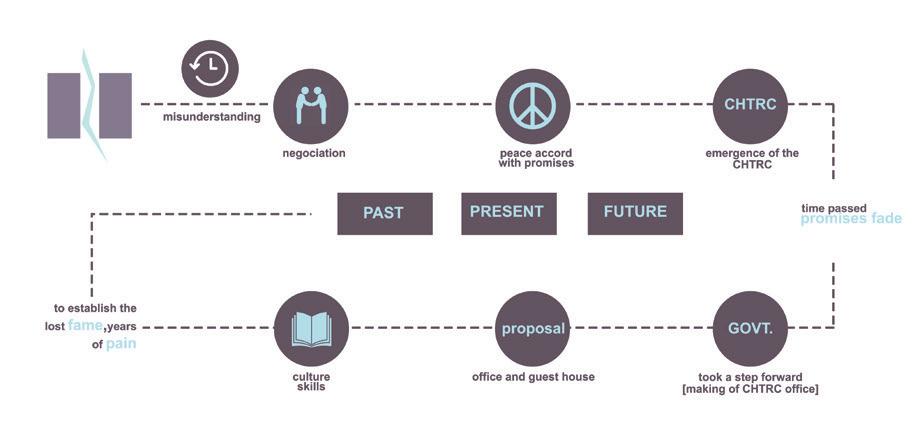
Chittagong Hill Tracts, located in southern Bangladesh, is one of the largest of the country’s other eight divisions, featuring rolling green hills, lush woods, a mild temperature, and extensive sandy beaches.
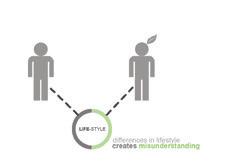
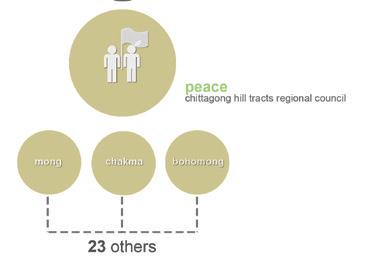
Chittagong hill tracts embraces people of all races, but with time area’s vastly spread forest and water resources have resulted in ethnic disputes and quandaries.
My approach to the project was to make a simplified cultural platform regardless of gender, cast, and regional boundaries. Taking social emerging cultures as an opportunity, tried to bring equality and justice in social platform.
CHTRC, a cultural hub, a platform, a center for cultural exchange besides being a council office promotes local credibility, preservation of the past and creates endless opportunities for the future.
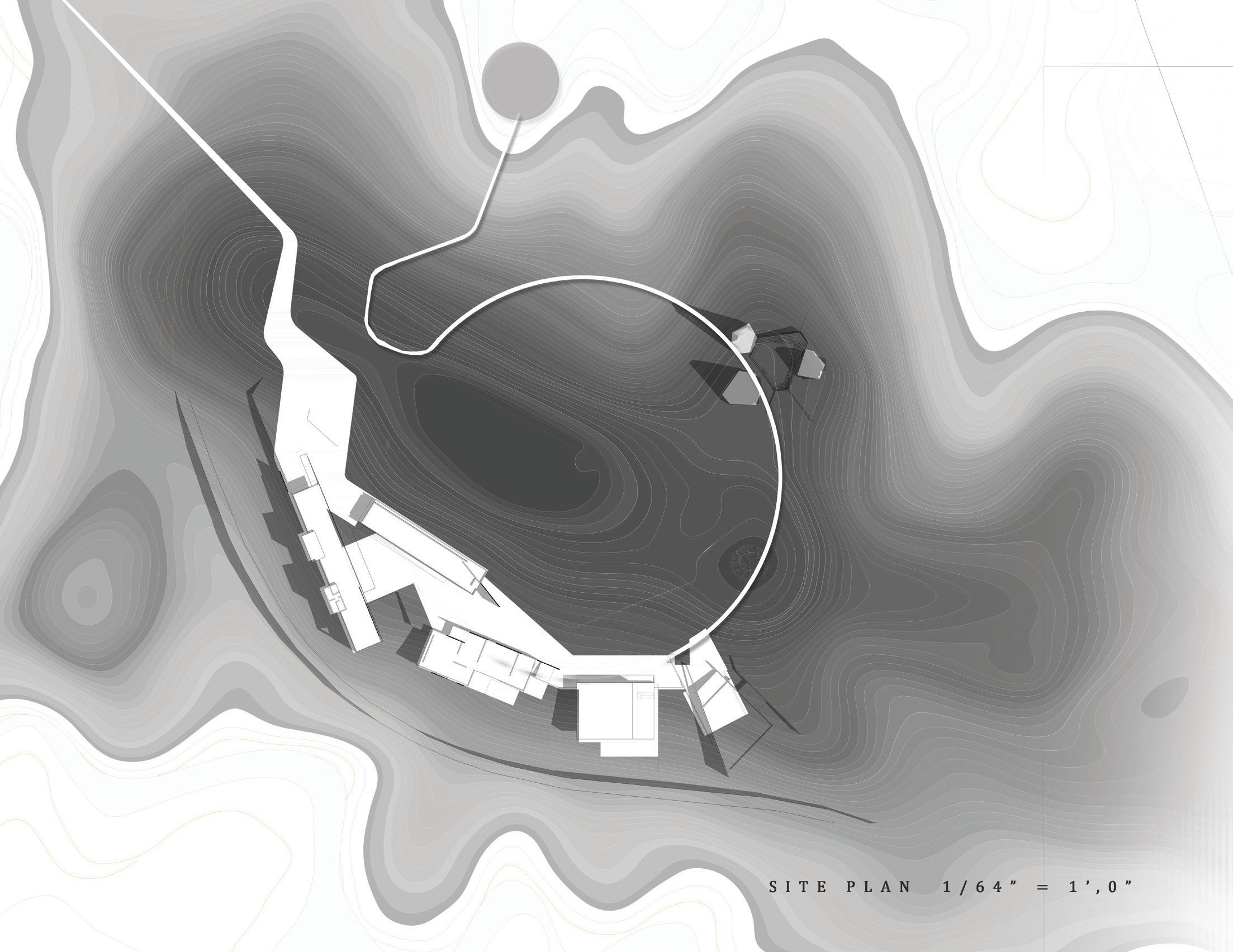
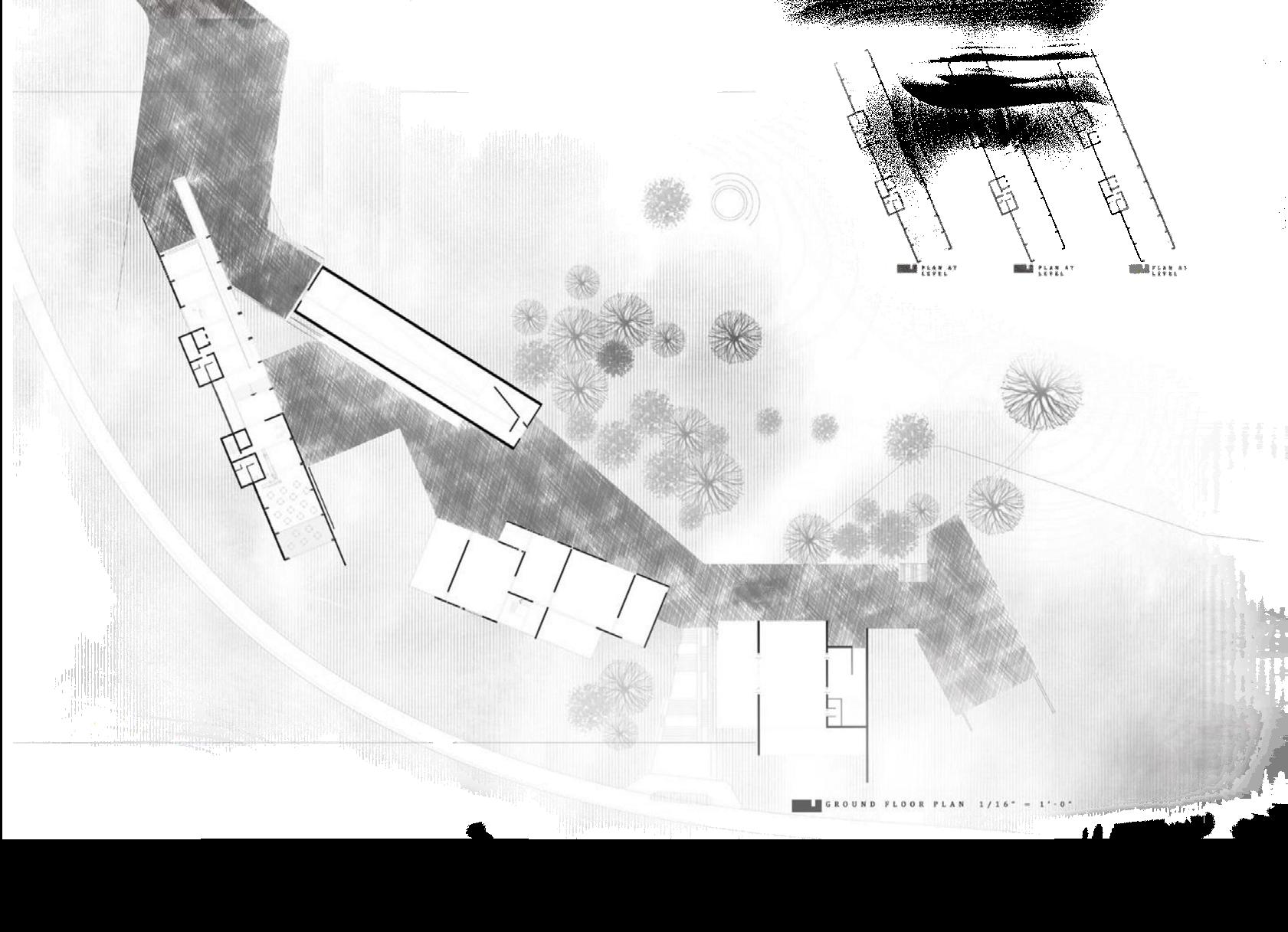
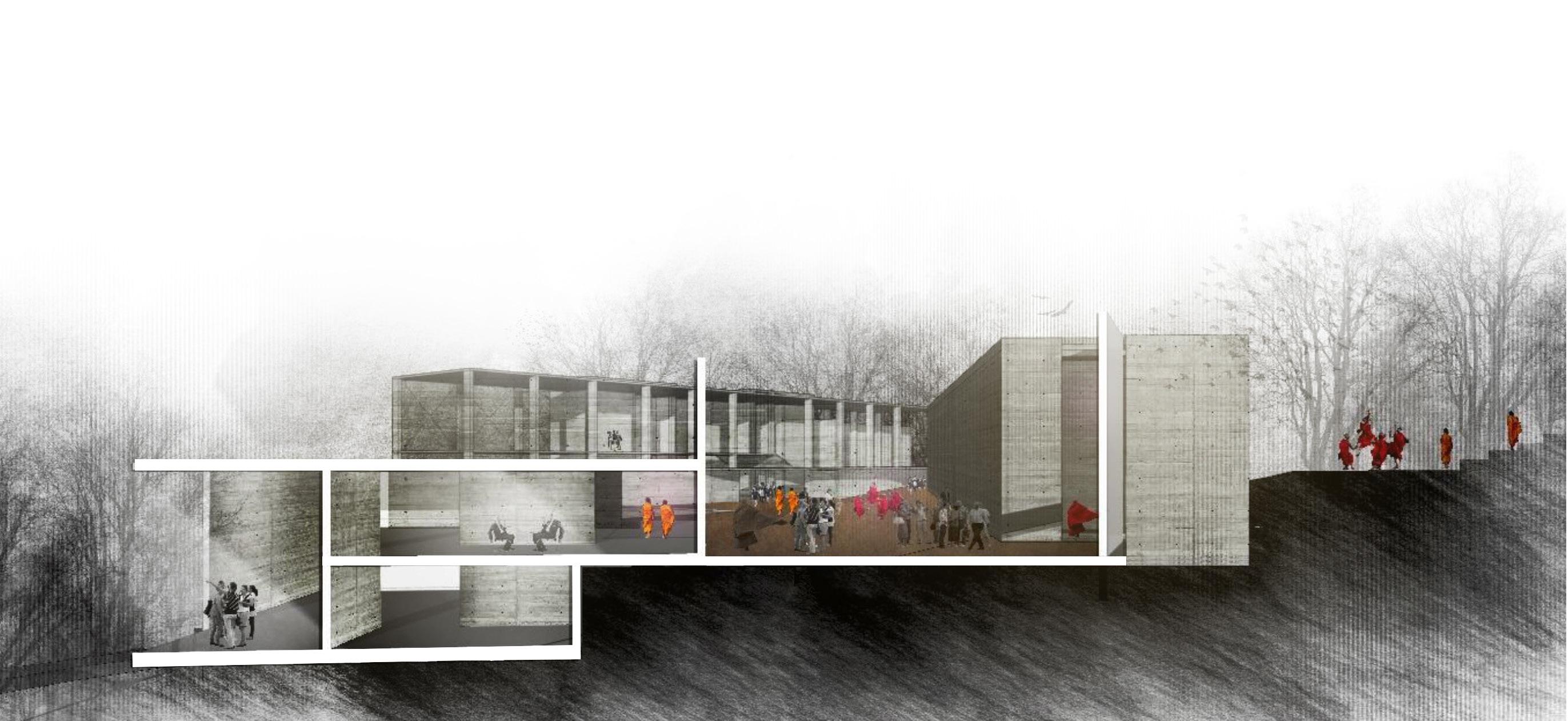
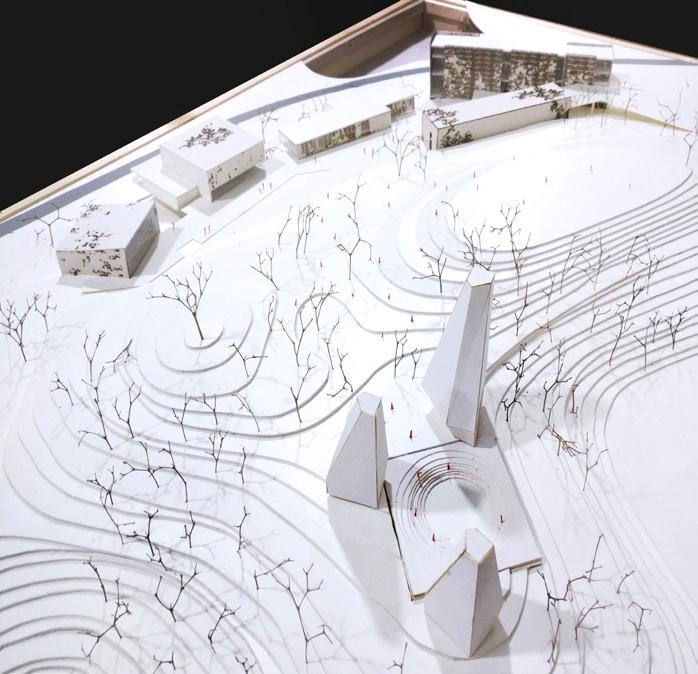
All the functions are layered with in the natural contours beside the grand crystalline water body of Kaptai Lake.
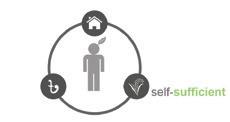
The orientation of the buildings have been organized for diversified uses of limited resources inspired from regional heritages
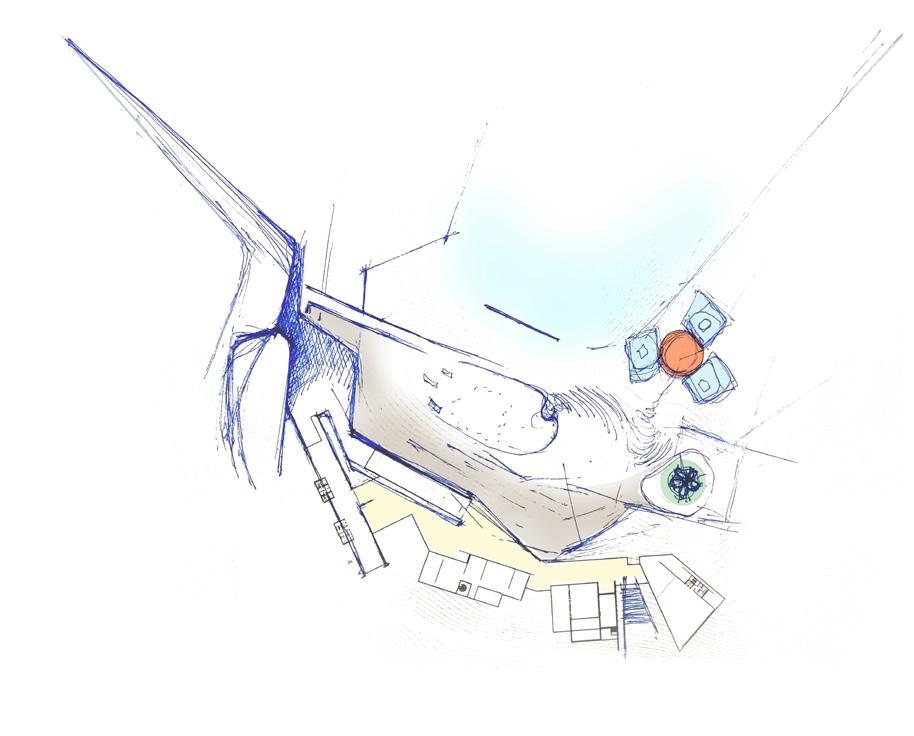
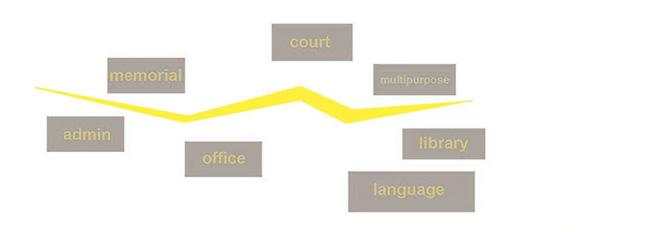
Preliminary sketch diagram
Council Office Building
CHTRC focuses on the present to build a better future for everyone, learning from the past experiences and inspired by glorious histories. Heritages which were almost lost in the curves of mountains, brought back to life with a concept to revive history and chalk out aspirations of the peace loving locals.
A platform with a self discovering center promoting skill development, health and wellness and cultural interpretation.
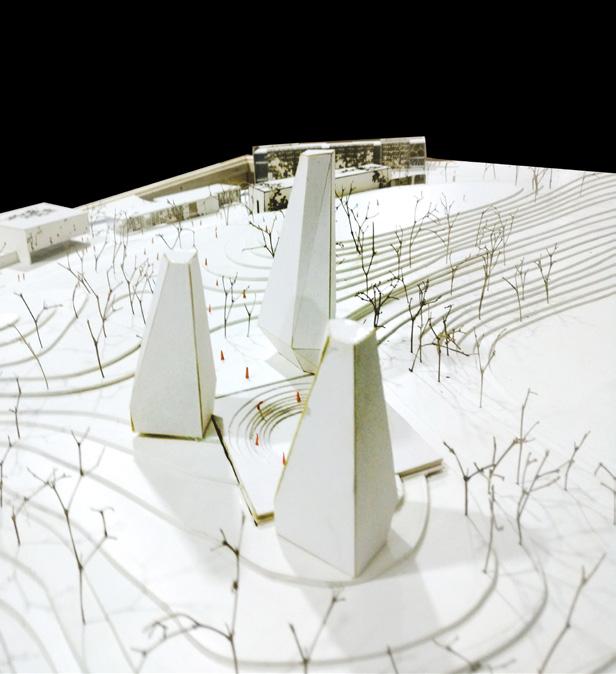
Model image, court of the kings
Connecting with pathways
Functional layout on site
model image, masterplan
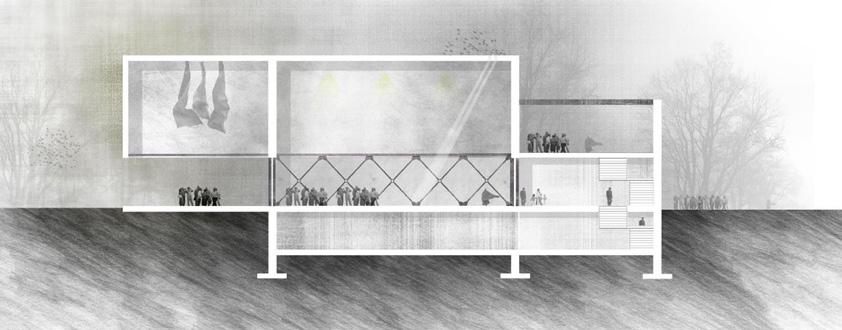
section cc’ - through art and cultural center
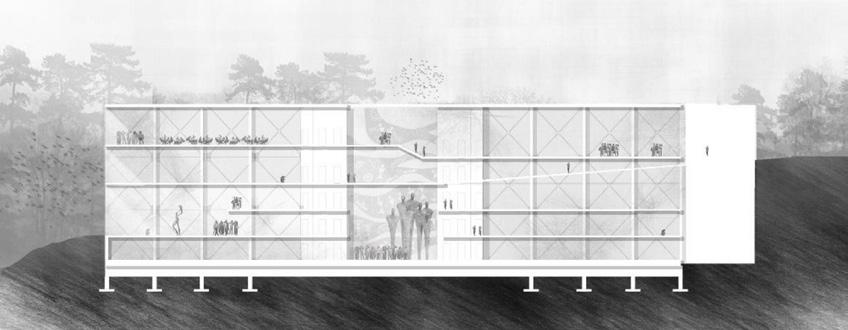
section dd’ - through regional council office
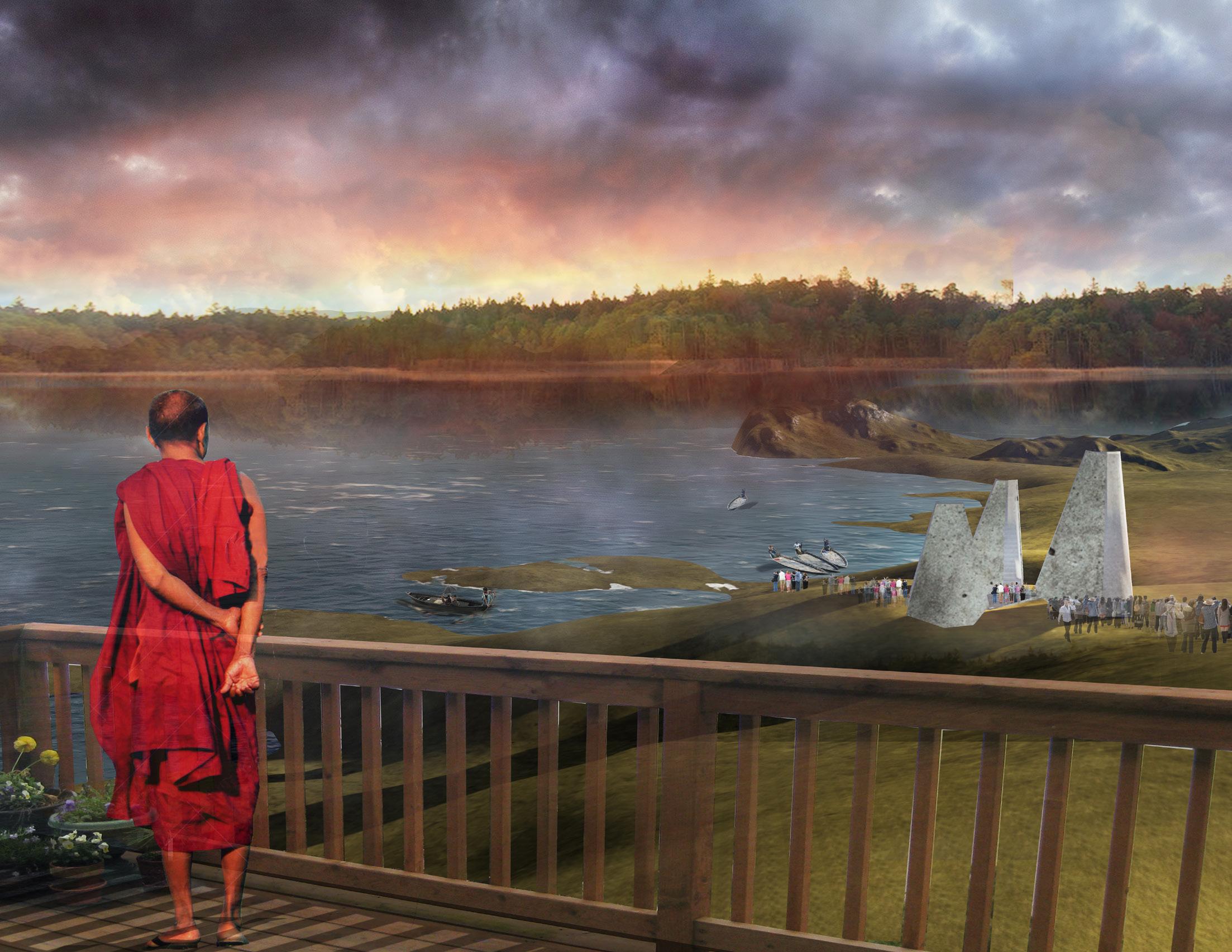
view from cultural center terrace, over looking the ghat and court of 3 kings
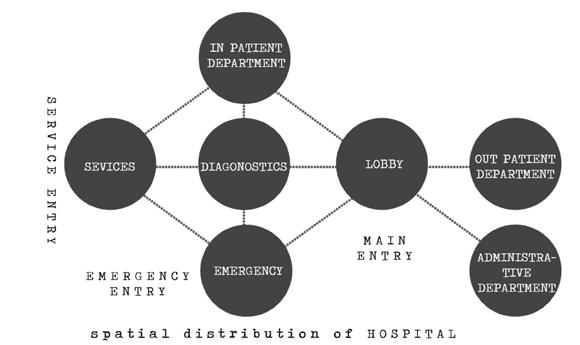
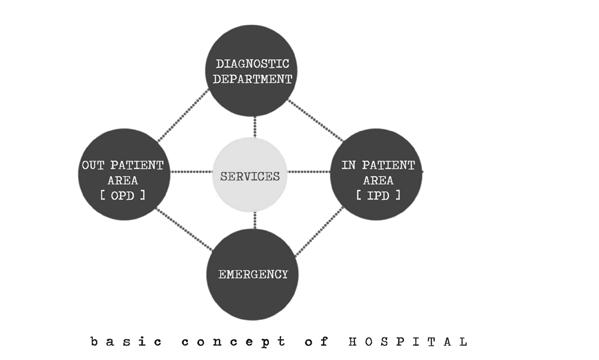
DIABETIC HOSPITAL & Rehabilitation center
An urban window, accessibility to care in a demographic diversified landscape.
The design approach was to make a hospital with an welcoming aptitude. Patient friendly space making where the building will respond to it’s surrounding context ensuring visual connections with nature. Which will heal establishing access to care, nature and spirituality.
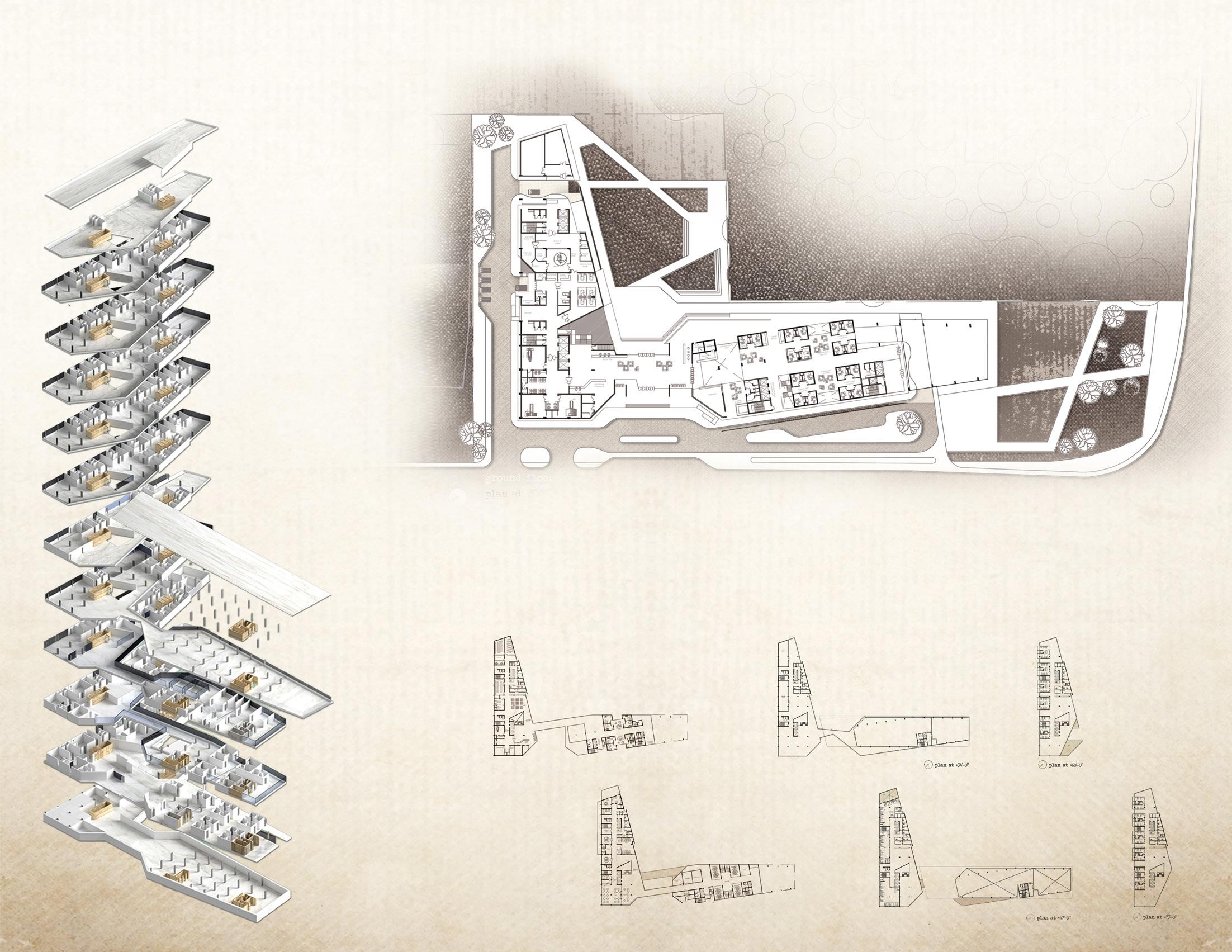
Two individual functioning mass of respective public and private zones are connected with a central lobby which opens towards a healing garden, specially curated for diabetic patients.
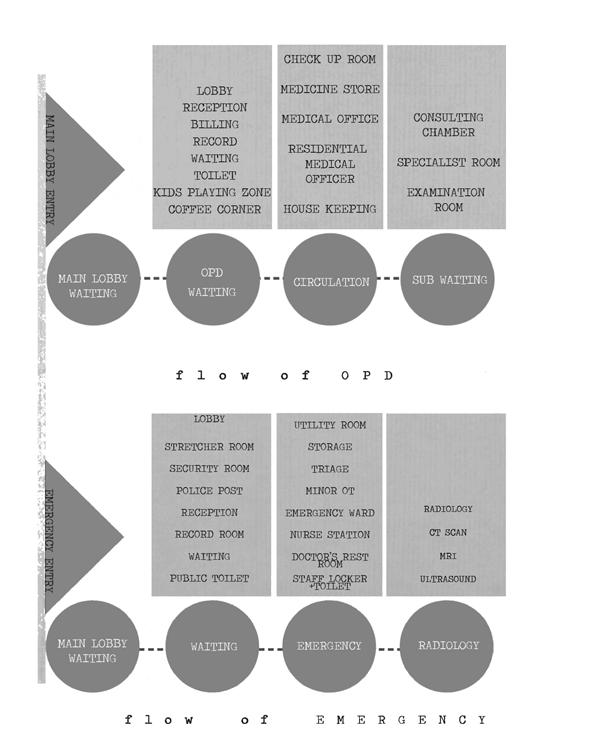
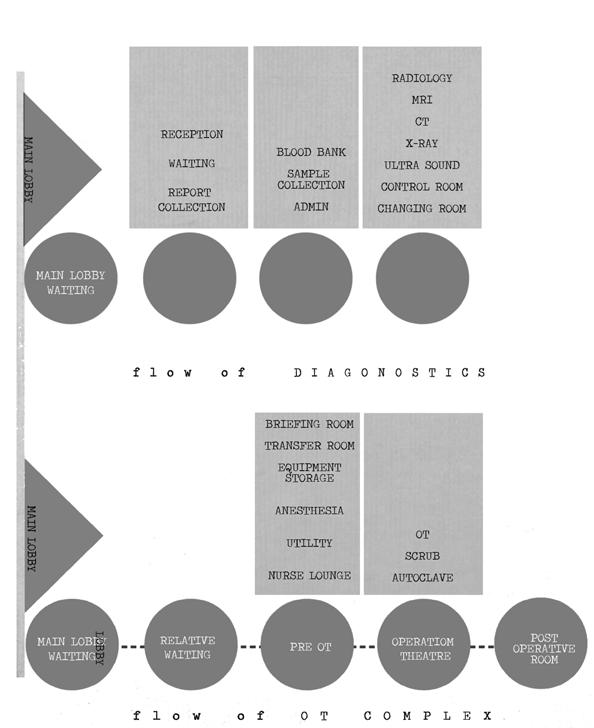
Attentions given to strategic planning of zones, inter-connections of programmes (horizontally and vertically), efficient traffic management and flow of circulation in the entire complex. To address the climate and sound pollution, fenestrations for the road side south facade were designed, which impacted day light usage and reduced load on Air Conditioning.
Habitat with people
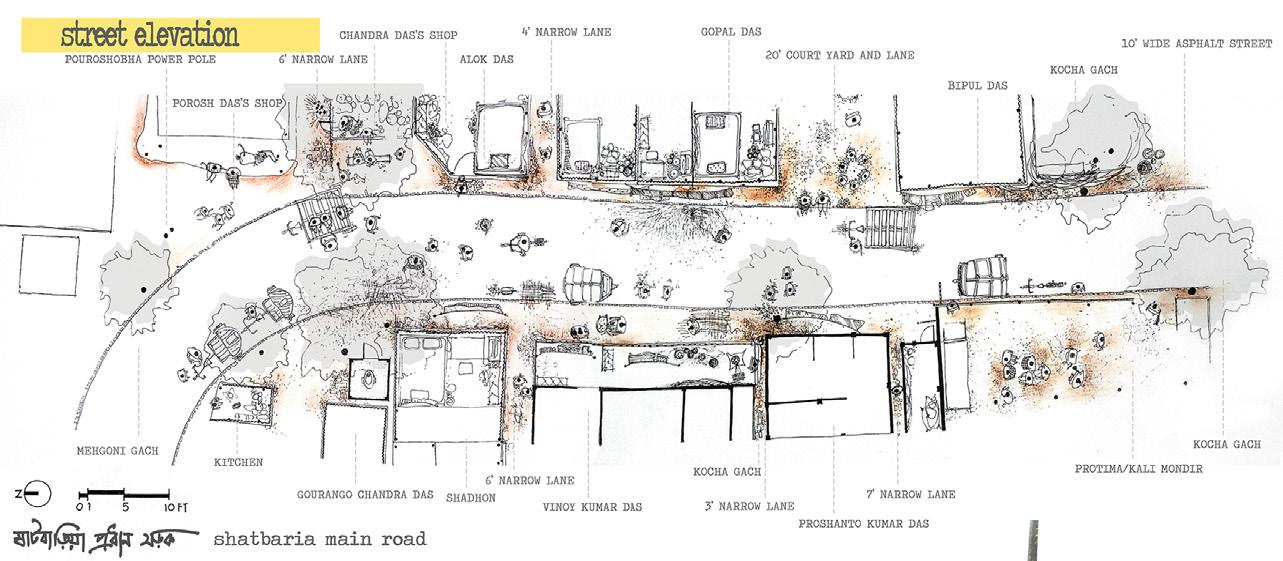
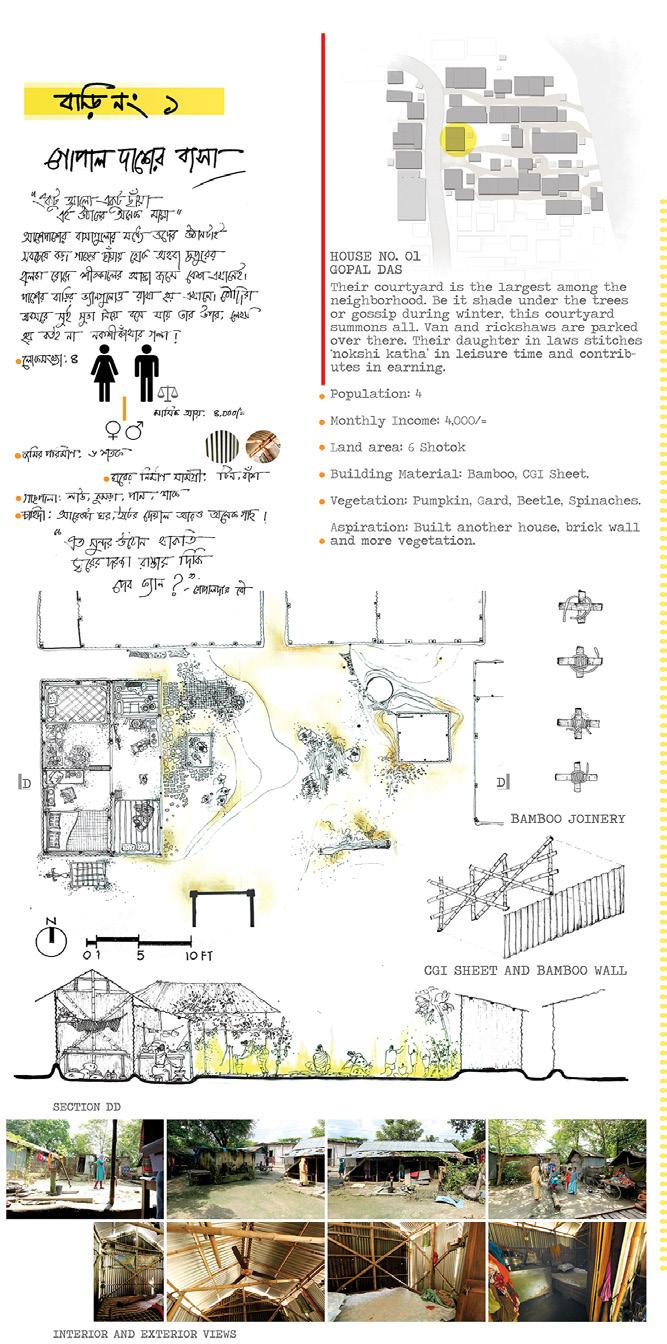
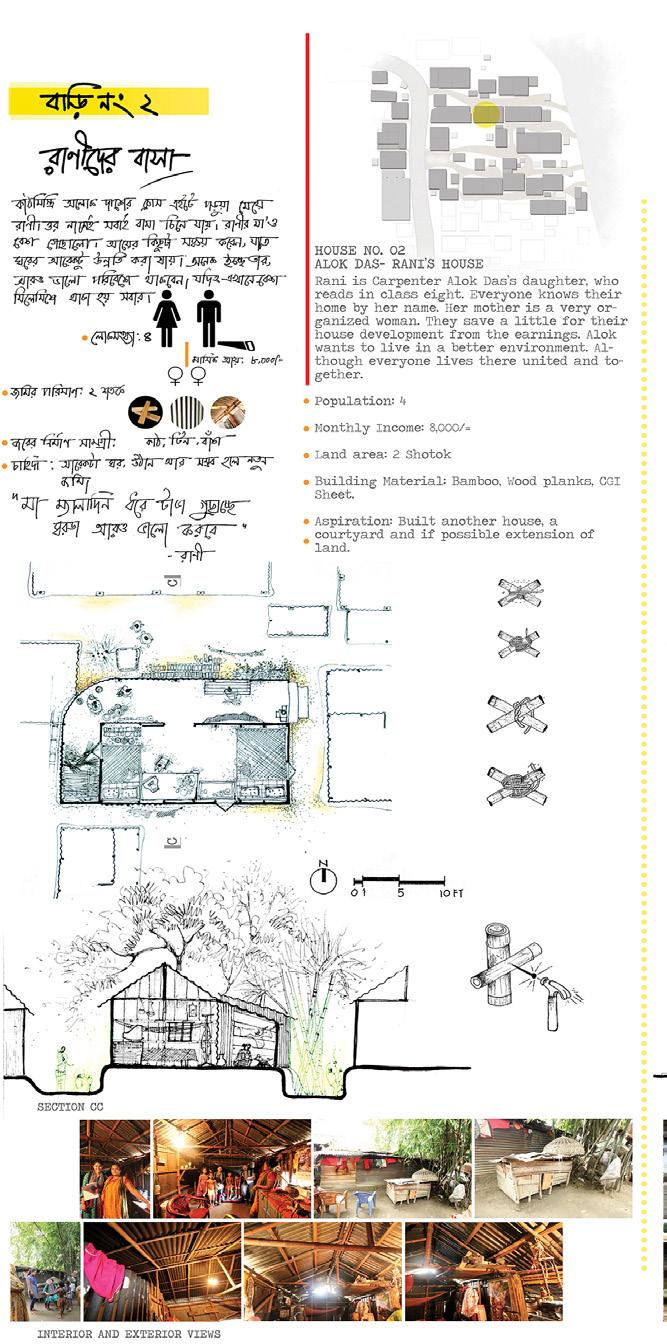
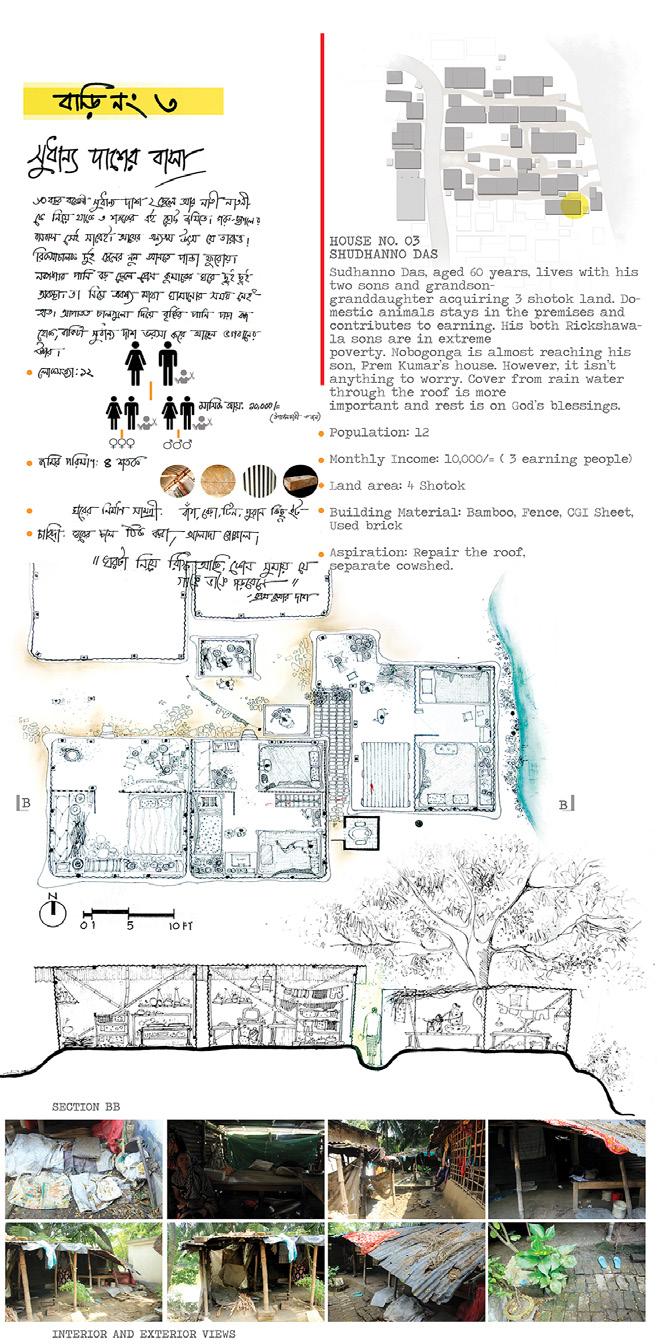
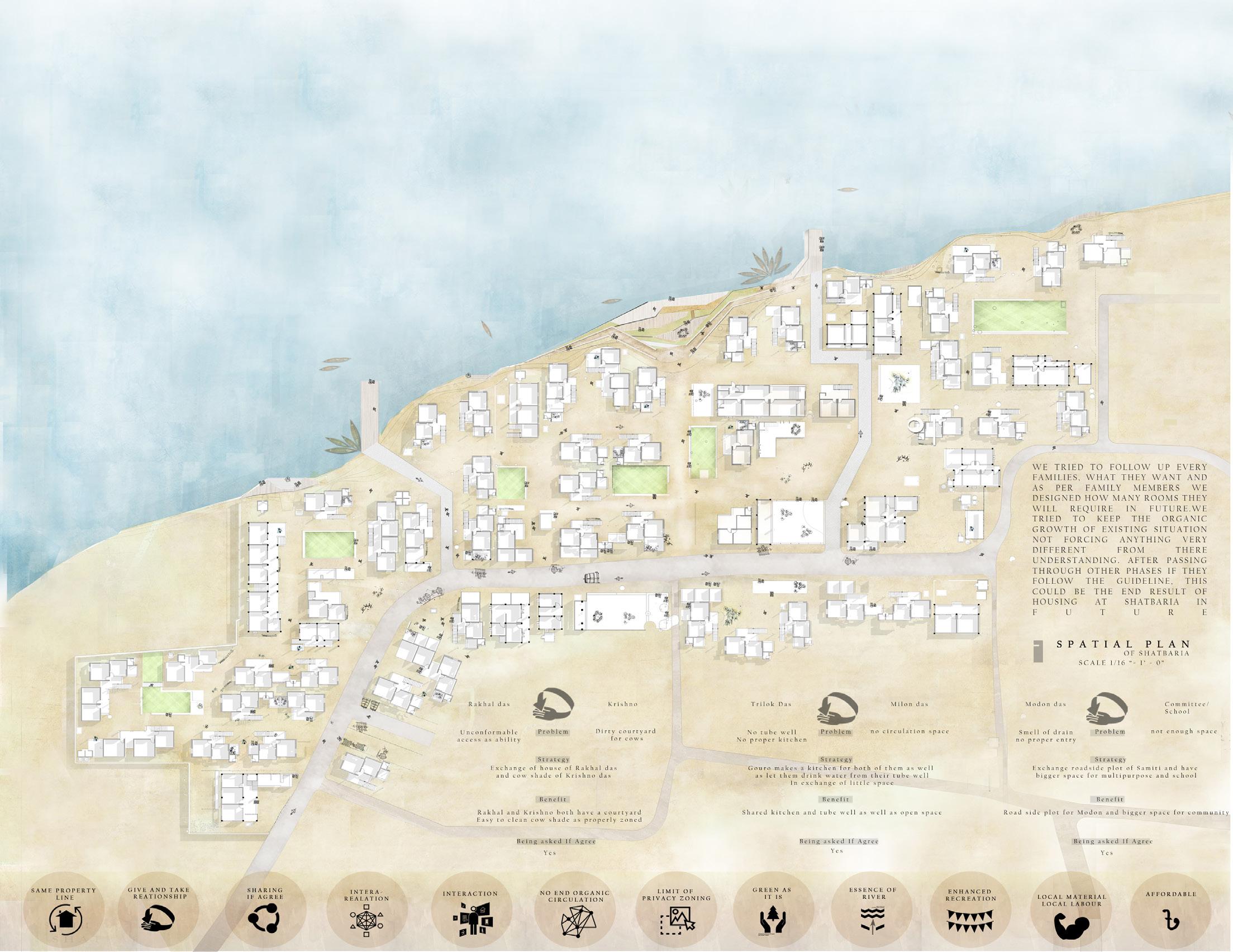
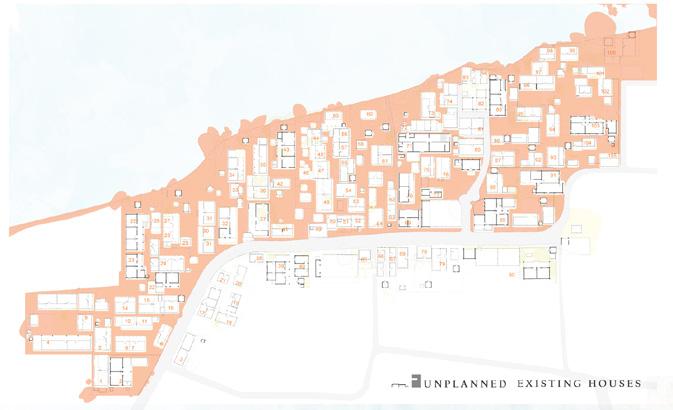
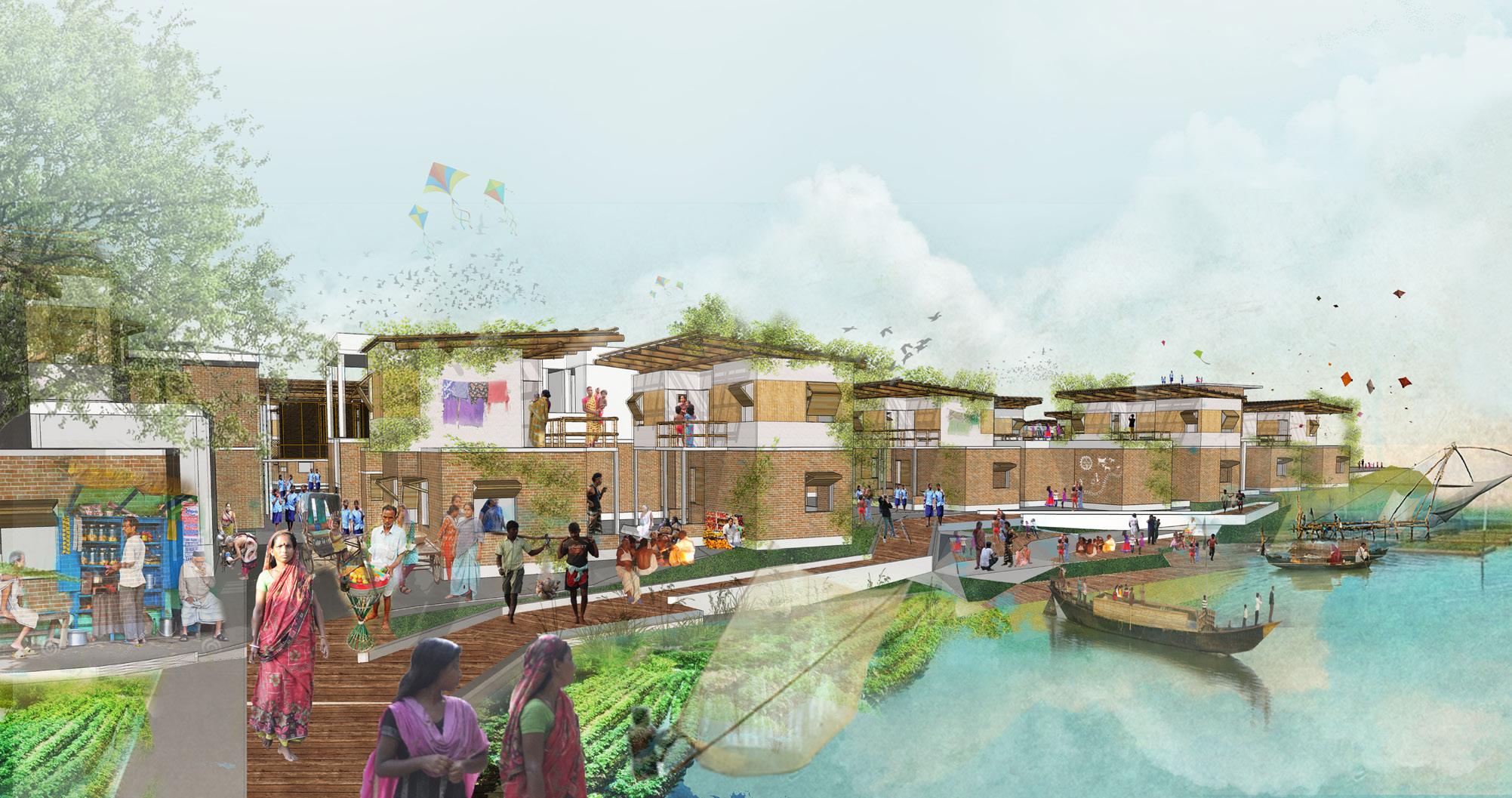
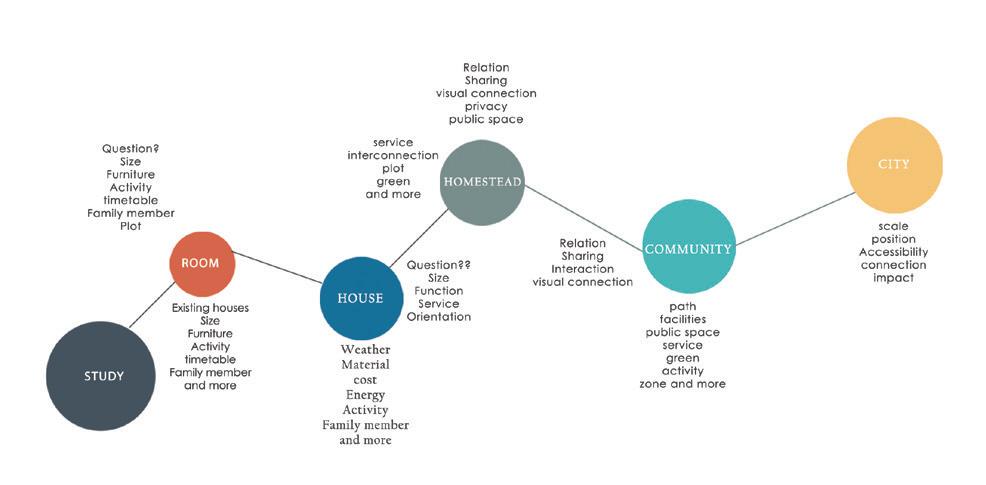
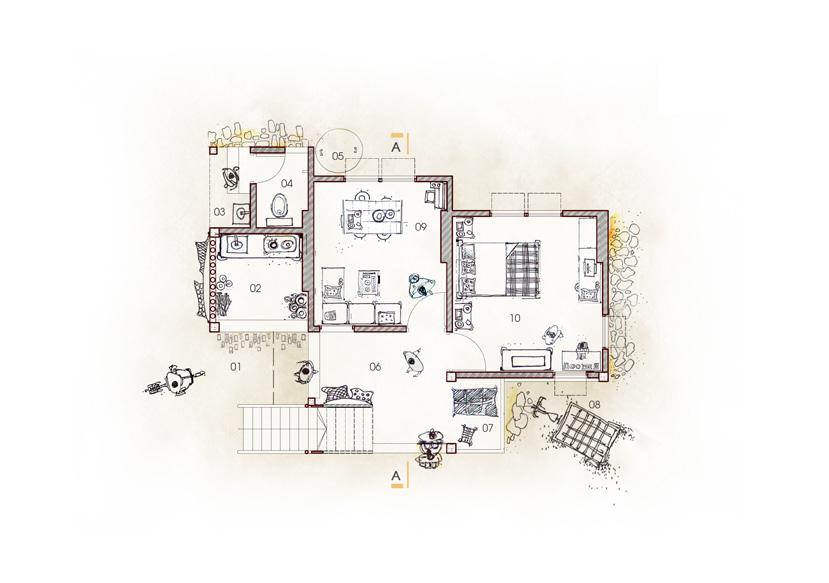
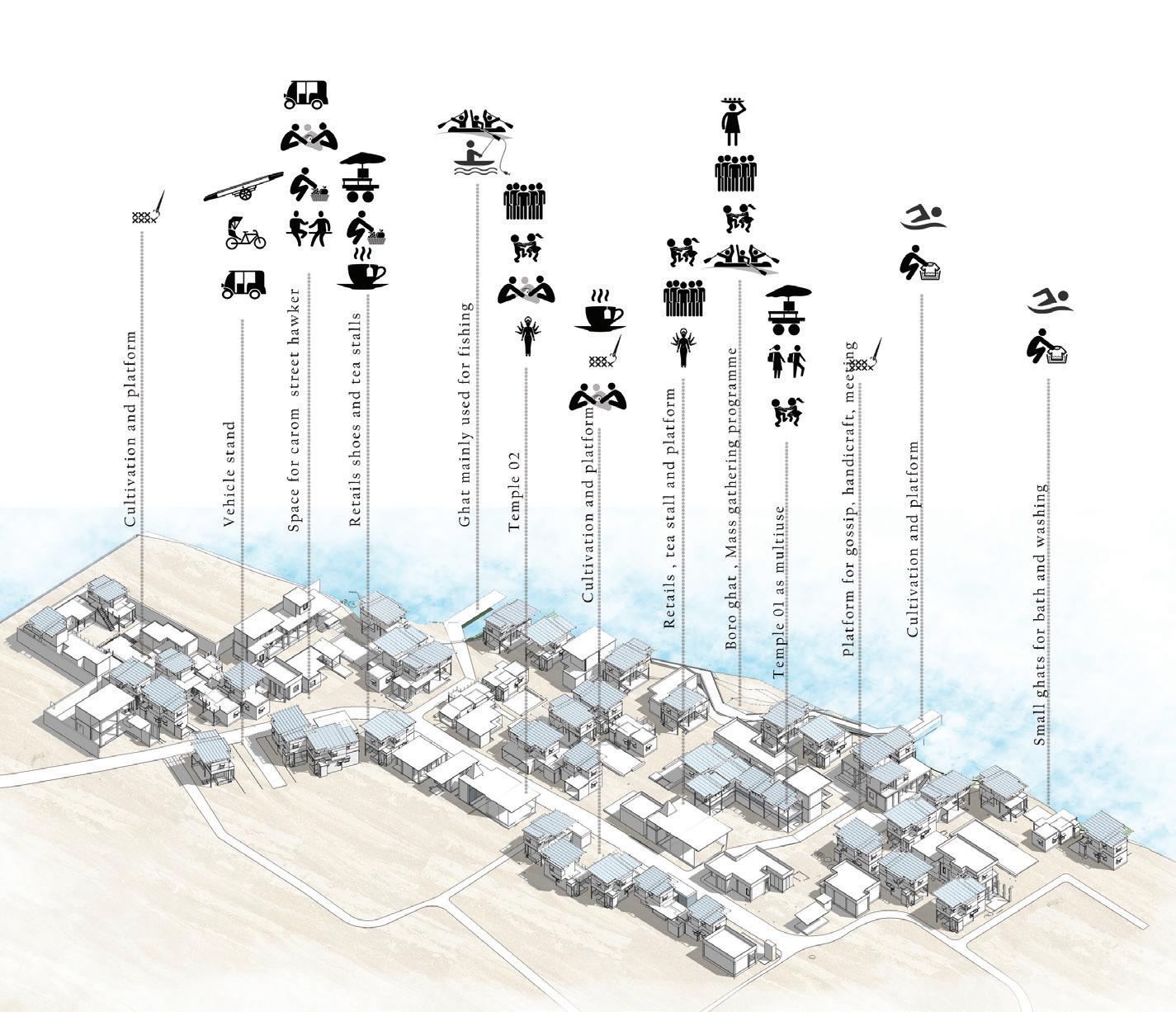
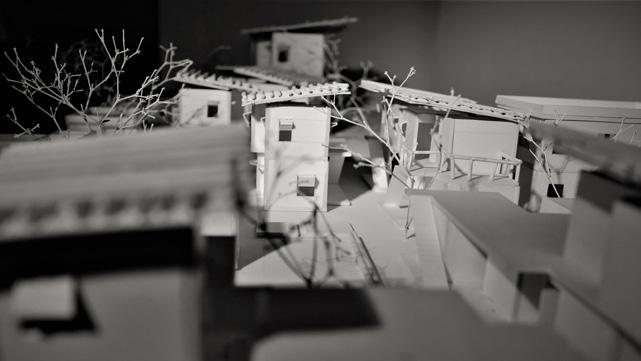
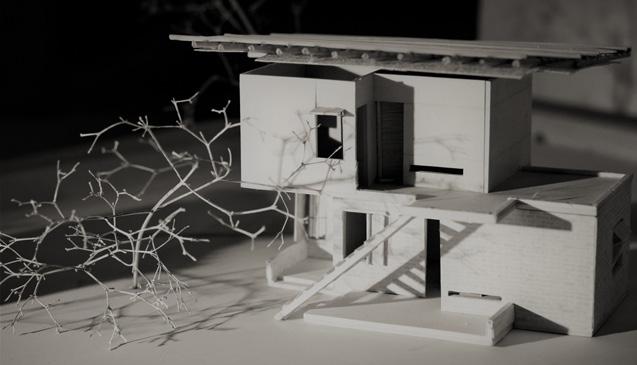
Facilitated by the Aga Khan award winner khondaker hasibul kabir, the studio seek to (re) design Shatbaria, a small community of low income group located by the edge of Nabaganga river at Jhinaidah. The process of the studio was not only to design housing units but also to understand and address the complex interconnection of the socio economical context and user group in the built environment. The critical analysis on the multiple factors was expresses through different mapping with the help of community people, giving priority to the bottom up approach of design process.
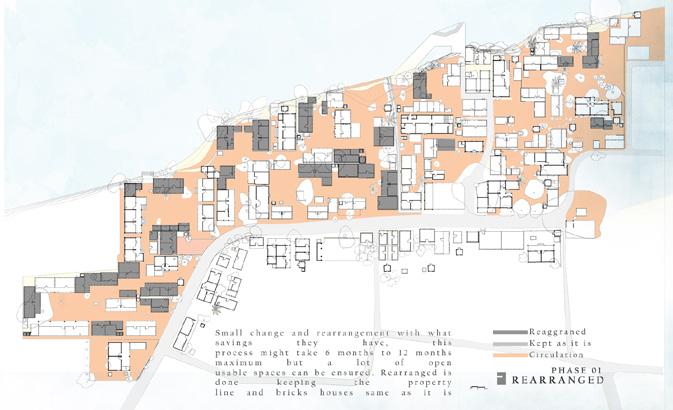
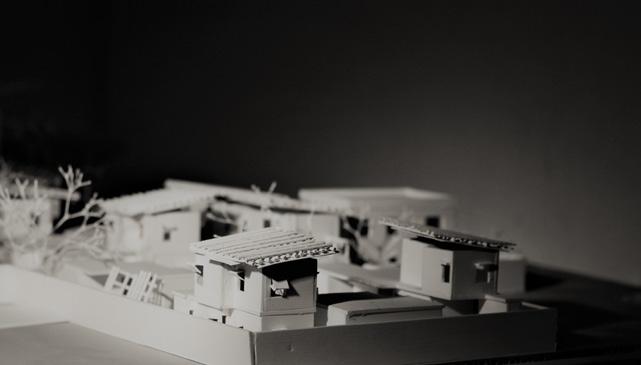
The project was divided into two part, one spatial study with a larger group and then focused strategic planning into the group of two. The design proposal followed the effective strategic planning combining the aspiration from different generation with the community strength into an incremental housing solution.
Role: Mapping, extensive study and sketching, three dimensional perspective render, model making
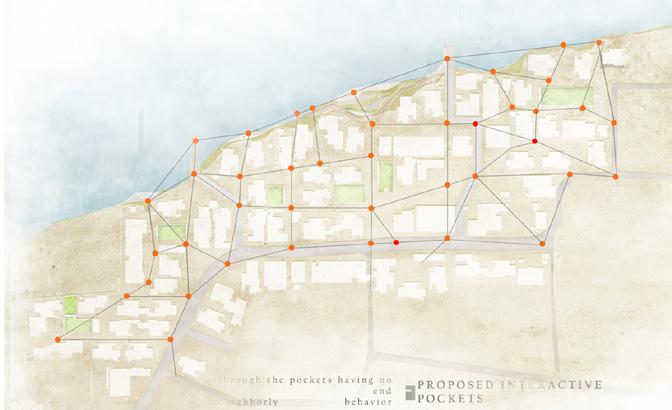
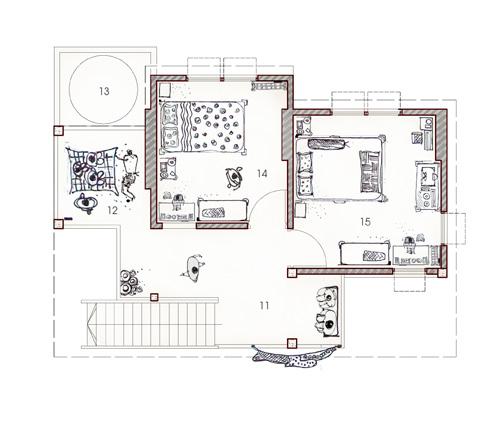
The spatial planning follows the existing positive energy of the built environment of the community with interactive connections between courtyards and fluid circulatory space. All the household is interconnected through the informal path making the housing resilient and inclusive. The phasing is done with an effective manner to accommodate social gather and vegetation space for the community.
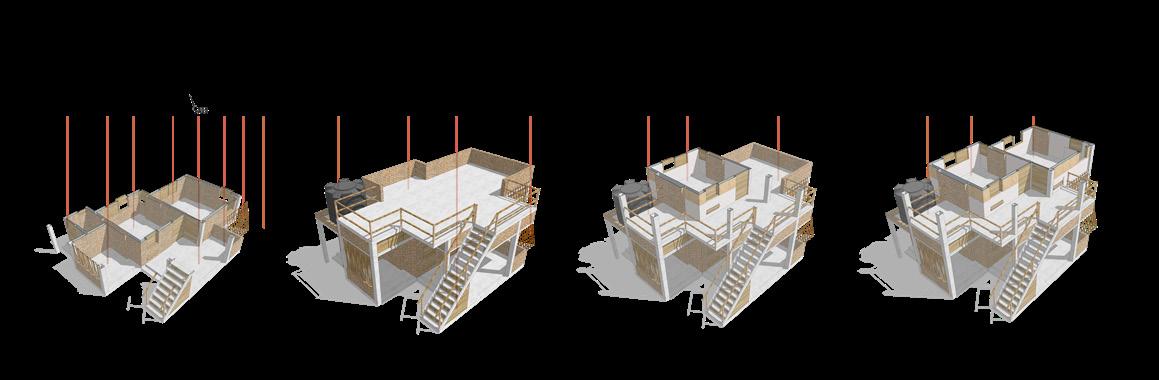
Accommodating inter generation aspiration will make the housing more successful in terms of reforming family ties creating ownership of the community. With incremental progression, the housing will always adapt to the situation in the emerging built environment .
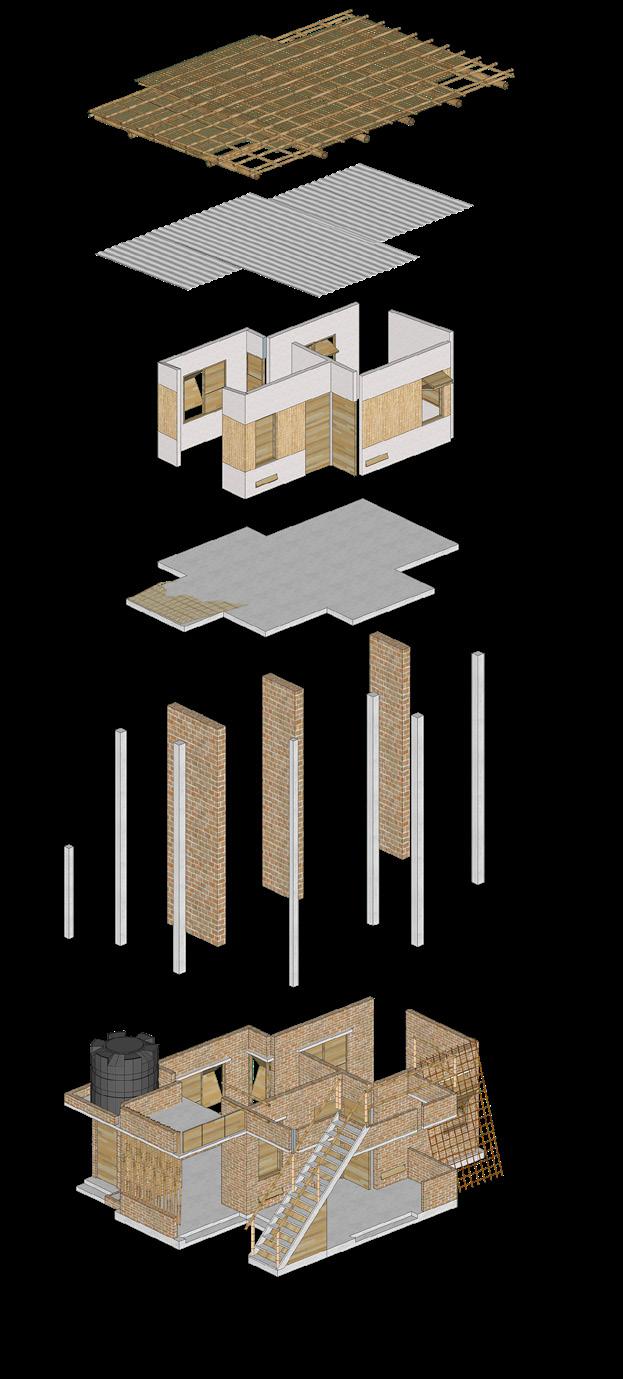
Roof:
Frame structure of Bamboo and bamboo mesh, could be plastered
Wall on the 1st floor :
Framework of Bamboo and bamboo mat plastered with ferro cement
Material of 1st floor :
Concrete 4” slab or Bamboo weaved floor with plaster.
RCC Bars used for support to the structure
Ground floor has 5” thick brick wall and 10” load bearing wall
Study on the wider linkage of community and built form
12” raised platform is made of mud and finished with plaster along with Bamboo frame structures & concrete blocks
a stair made of wooden steps and bamboo railing with 8” risers
Incremental adaptive housing unit with expansion
Housing Unit with current user activity flow
Ground Floor Unit
First Floor Unit
Existing Section Through the Primary Path
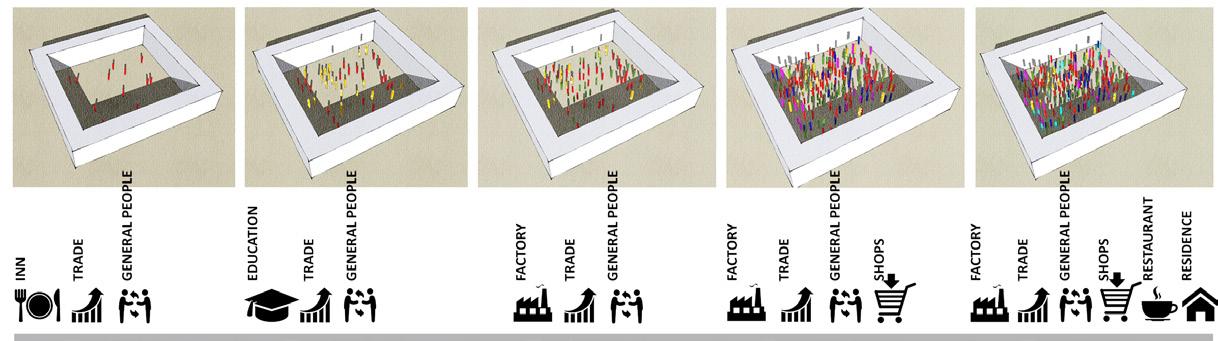
MORPHOLOGY OF ADAPTIVE URBAN HERITAGE : choto katara
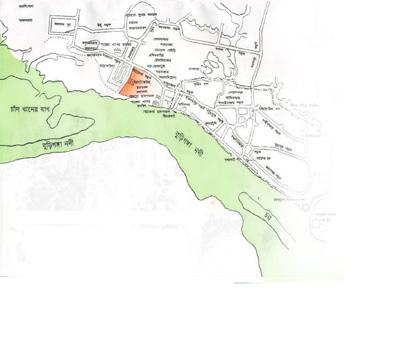
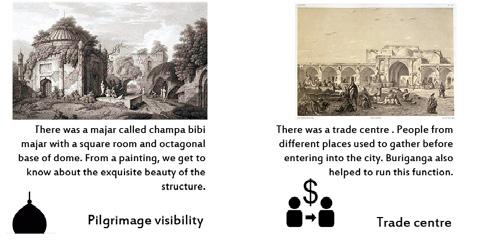
Choto Katara : one of the finest of presiding caravanserai’s of Dhaka at the time it was built, around late 17th centuries. It was famous for its location and shortest distance to Shadarghat, largest quay for trade of that time.
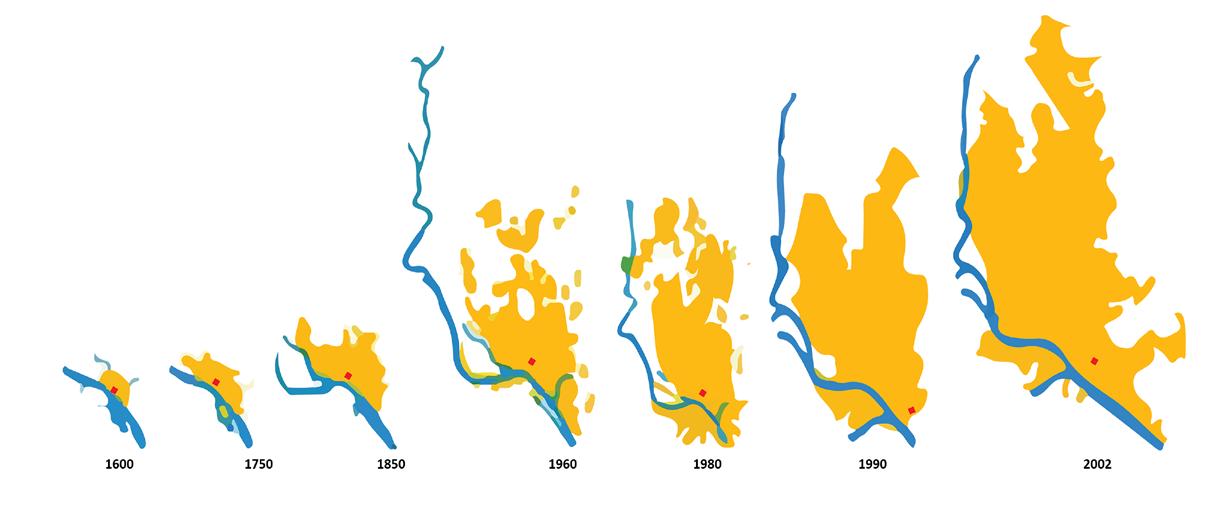
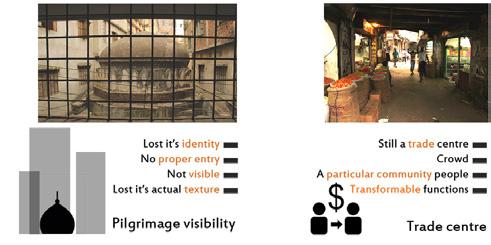
Dhaka is a fastest growing mega city. It started growing beside buriganga river and slowly left all the histories far behind to accommodate dreams of its people. Gradually an important structure like Choto Katara lose it’s priority among the other infrastructures in the current urban context.
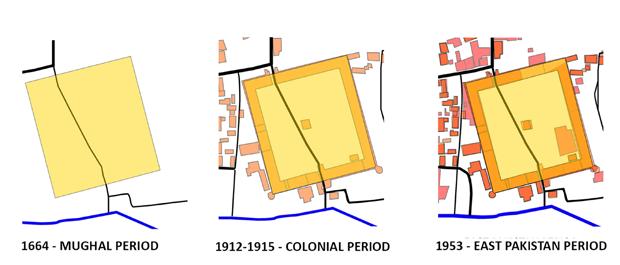
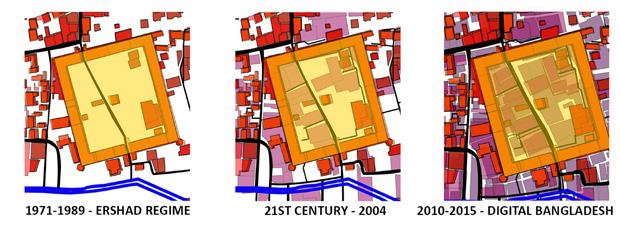
This historical building has undergone many renovations as per the chief of every regime. Many modern extensions were also added to the original building. Once it went to public it was very difficult to restore it to its previous glorious condition.
Evaluation
Role: Mapping, Study, Diagram, Master Plan Render, Model making
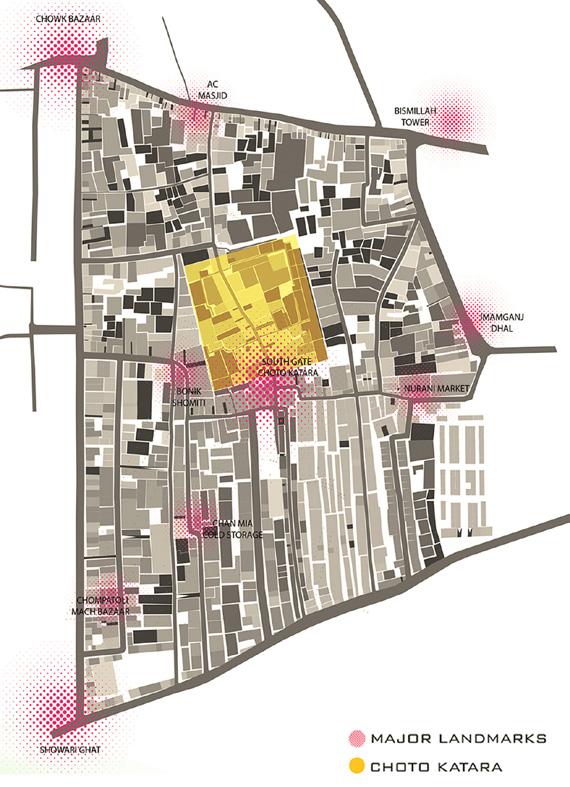
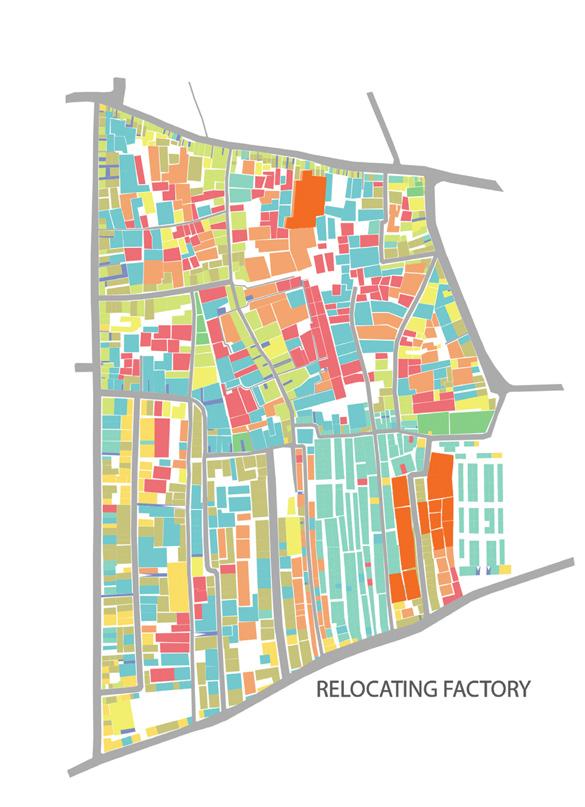
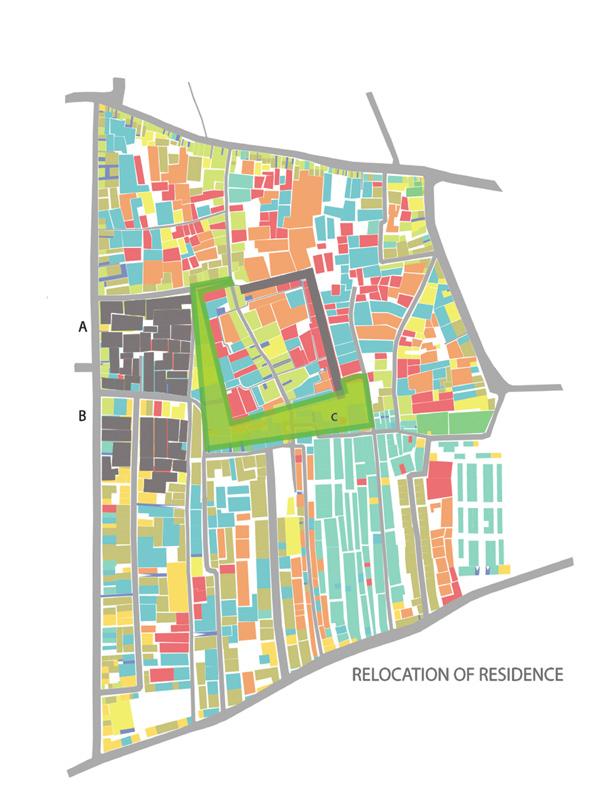
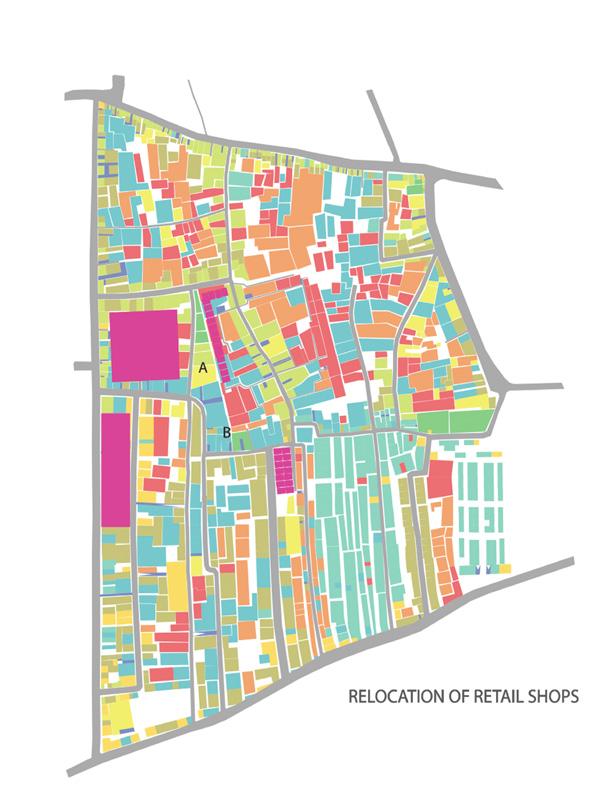
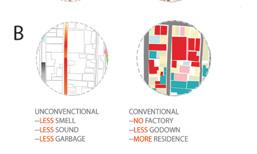
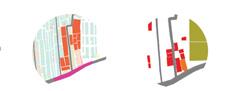
Studies through mapping, planning for relocation of residences, factories and shops built inside choto katara
Rethinking & reinstating choto katara
Once introduced to the project, our first step was to study the area. Our study included the surrounding context, income group, lifestyle, understanding historical time line.
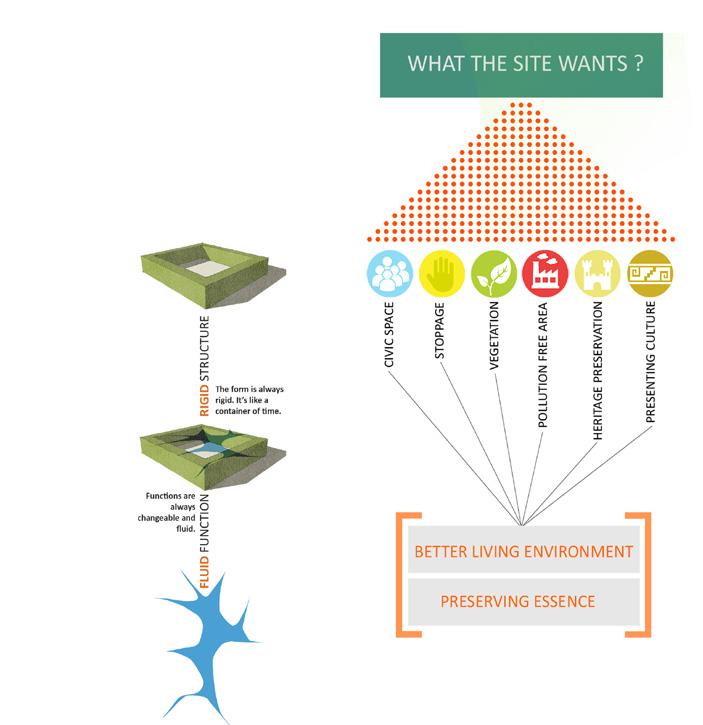
Rethinking choto katara brought many aspects, we chose to address three of them, beauty, identity and visibility. As we already gathered past shapes a society, values are nurtured by it.
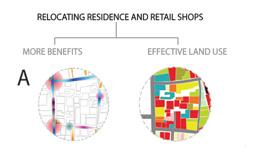
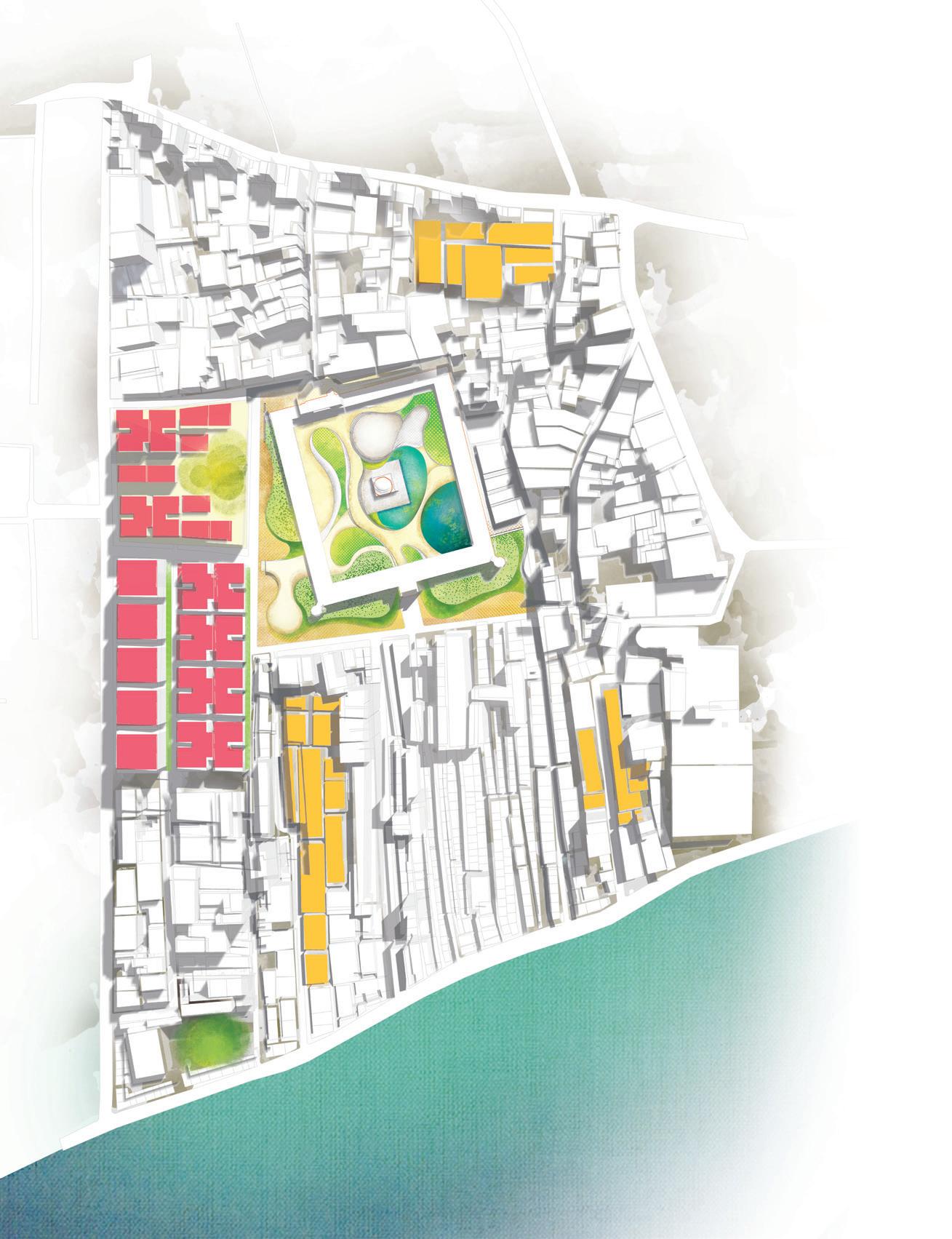
Adaptive use of katara, as a civic space, and a cultural platform. Relocation grouping was done by lifestyle study. Unauthorized residences shifted to better place with an overlooking view of katara, factories closer to the chowk, and moved godowns to the south, closer to river port.
For a developing country like ours, history needs to preserved for it’s unconditional values. Katara shall work as a breathing space for the densely populated community. Extensive studies and research work showed us the possibilities lies behind the doors of choto katara. Old Dhaka is hub for cultural activities, but lack defined spaces. Katara Can serve as center for all public activities, such as shakhrain kite race, or ashura marching.
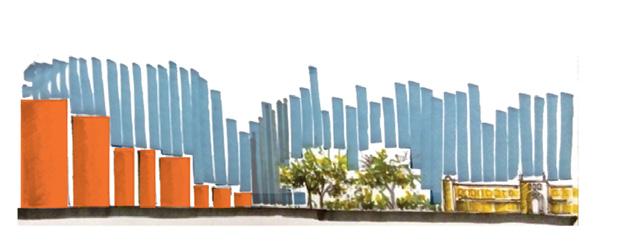
section aa’ through Katara central courtyard
section bb’ through existing Katara building
VERTICAL HORIZON
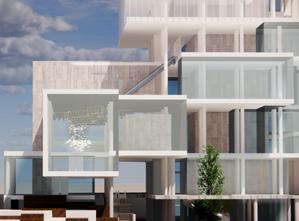
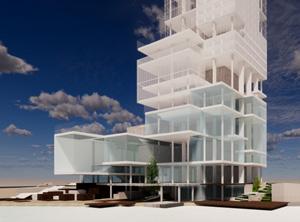
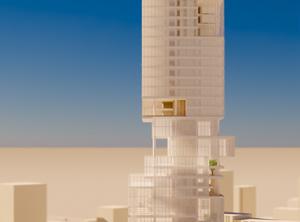
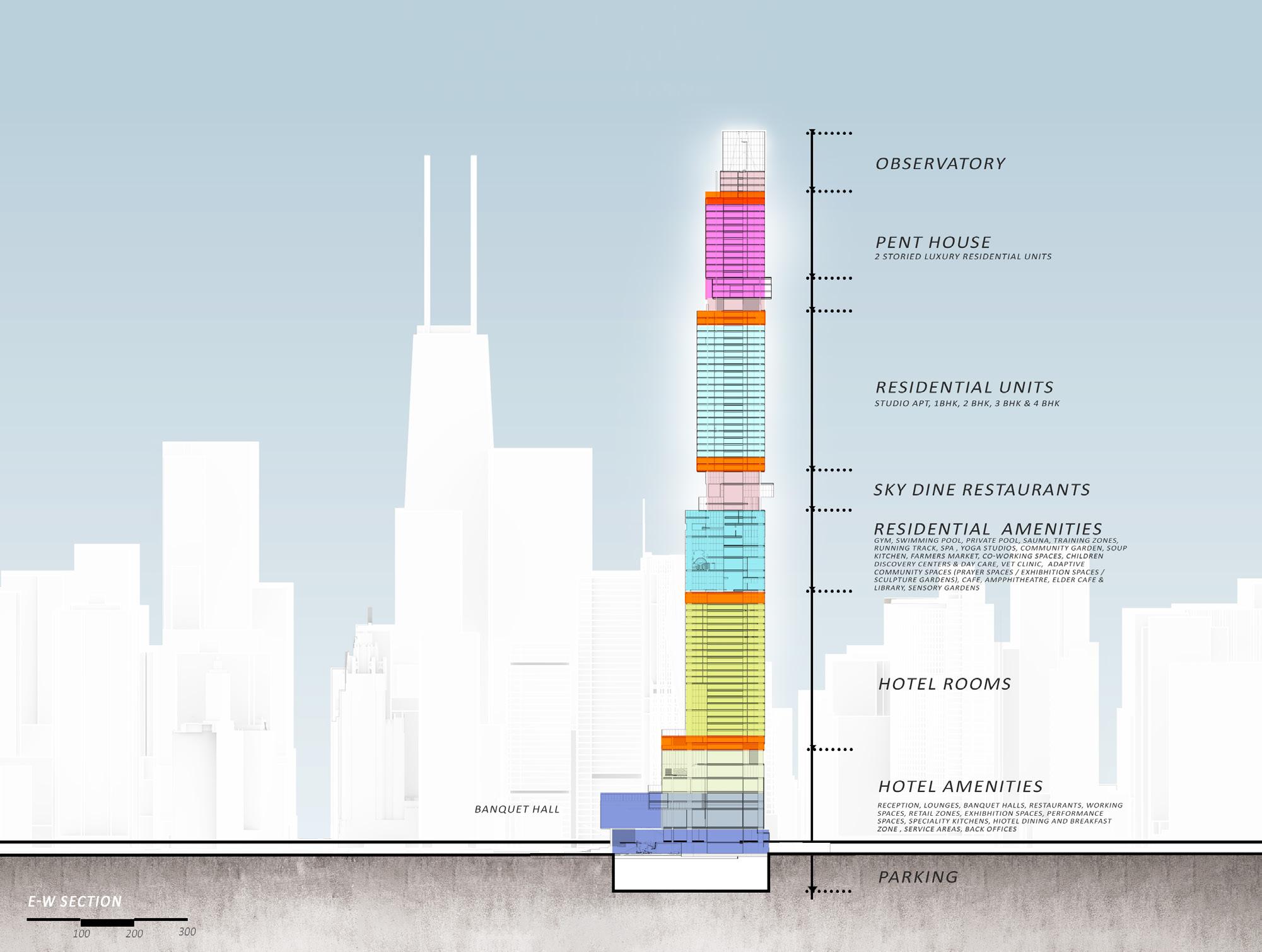
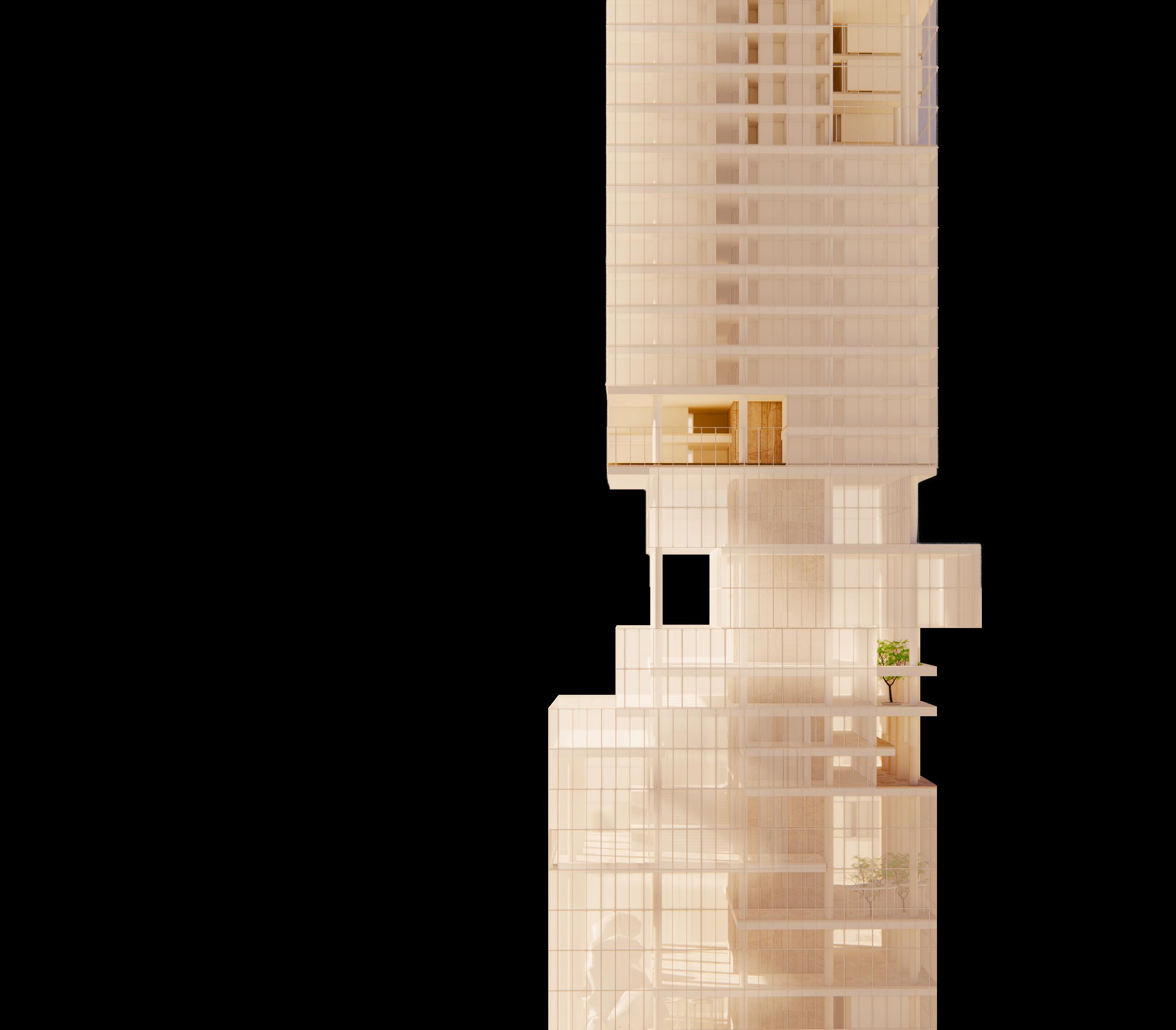
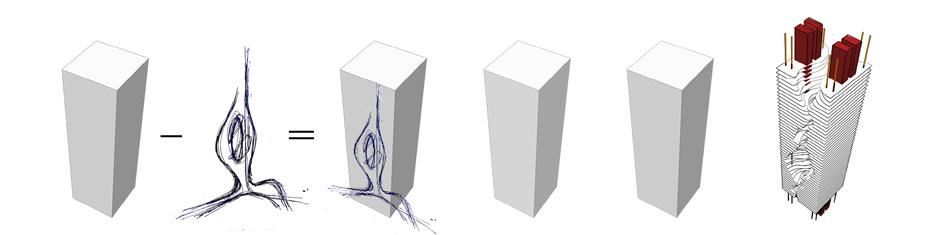
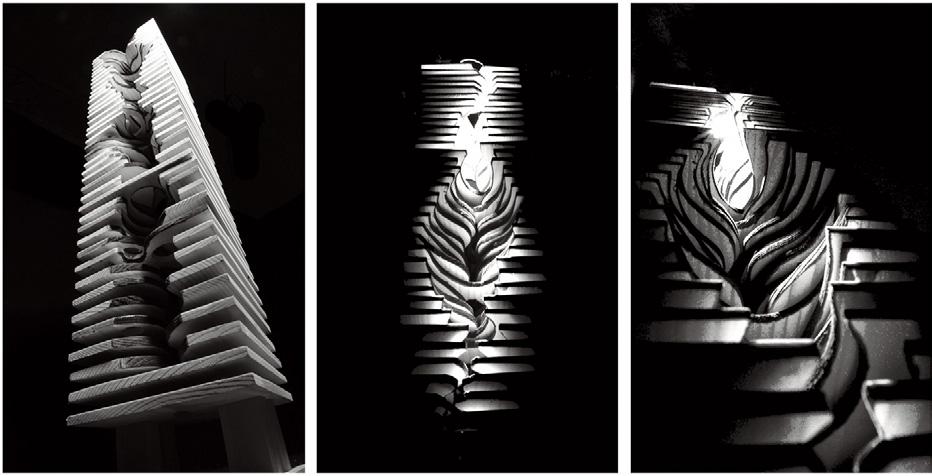
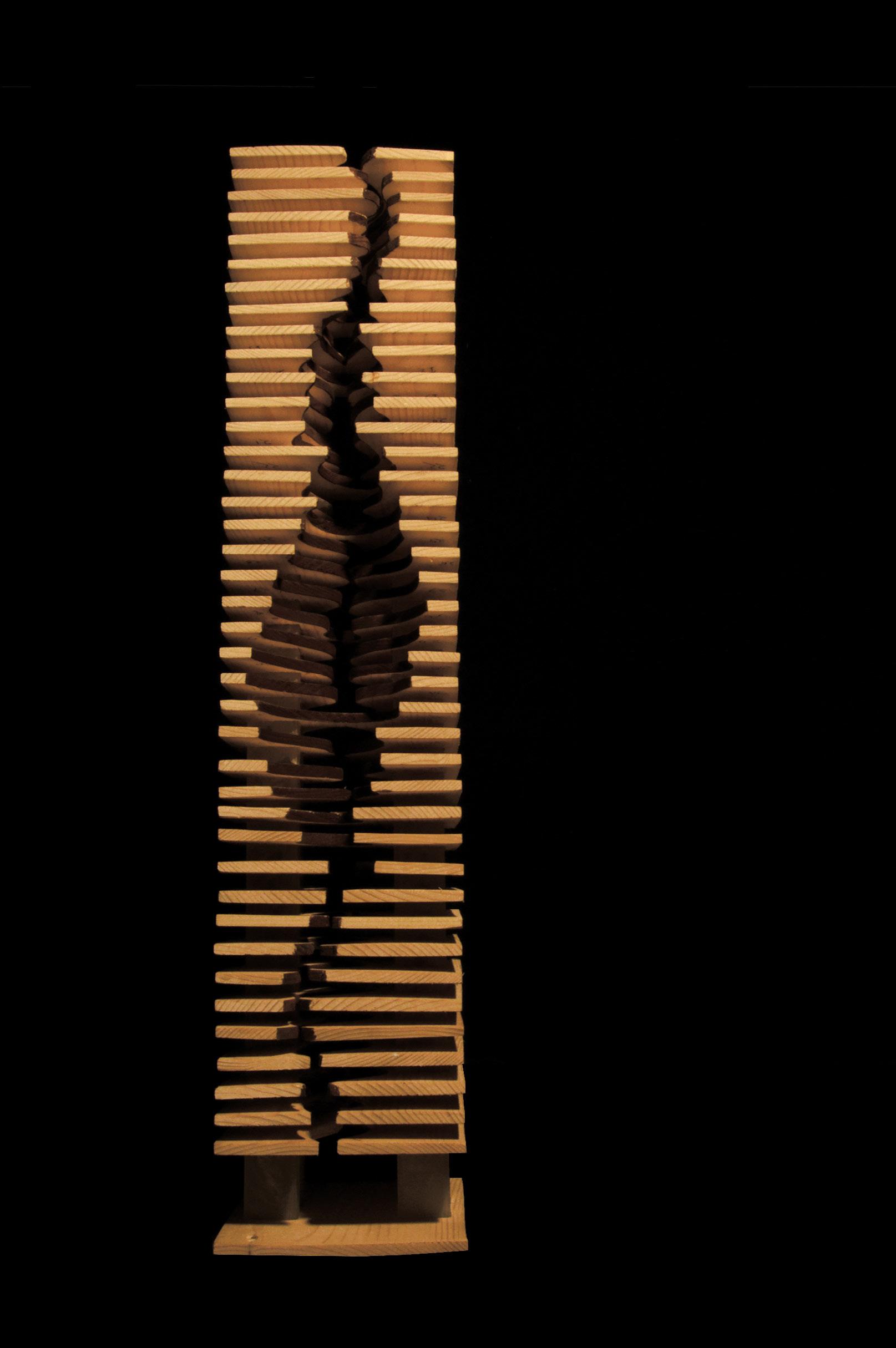
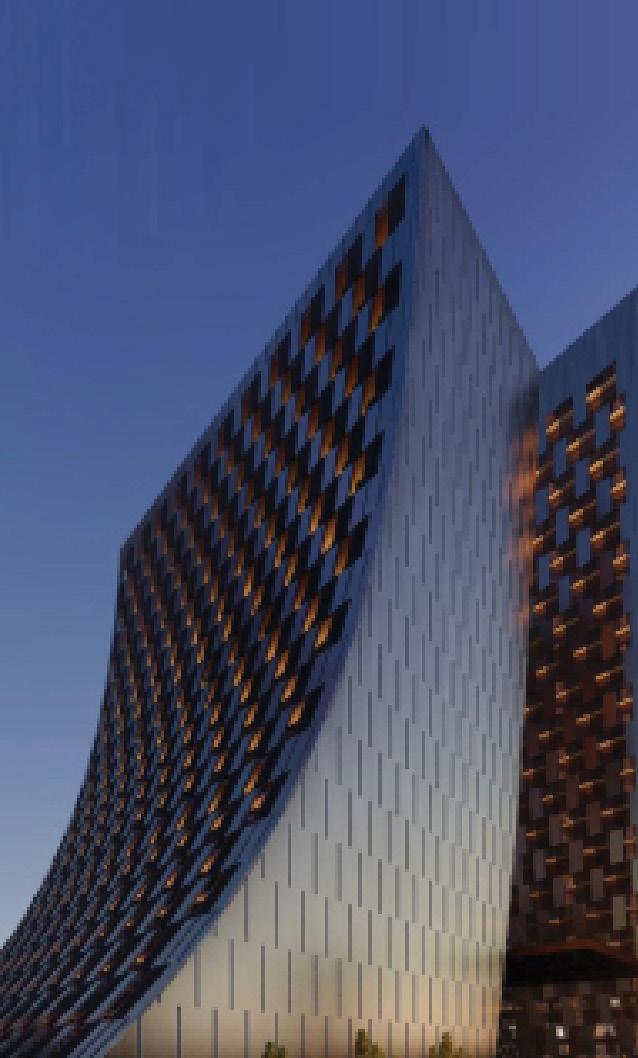
Carved a central void out of an orthogonal mass to achieve a bold sculptural expression. The void enhanced the public scale of the project and a dramatic expression of form was used to achieve a landmark quality essential for a project of this scale.
ARMED FORCES INSTITUTE
OF PATHOLOGY
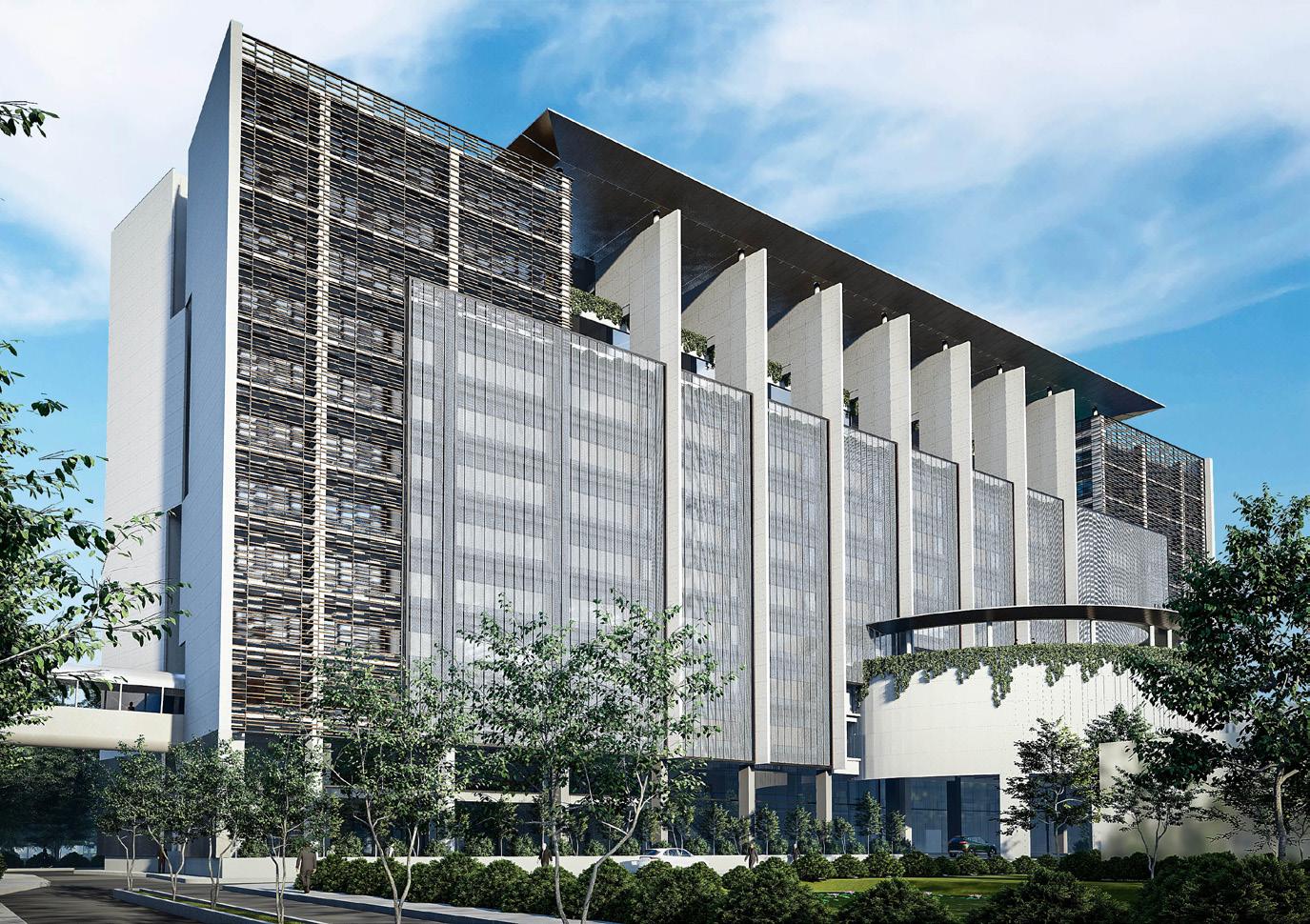
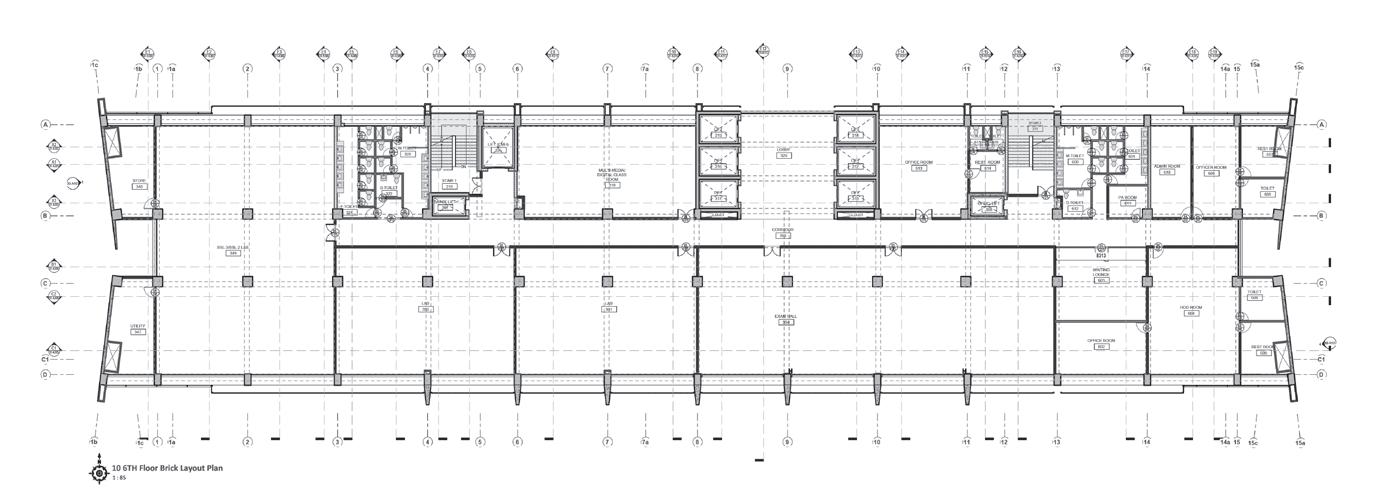
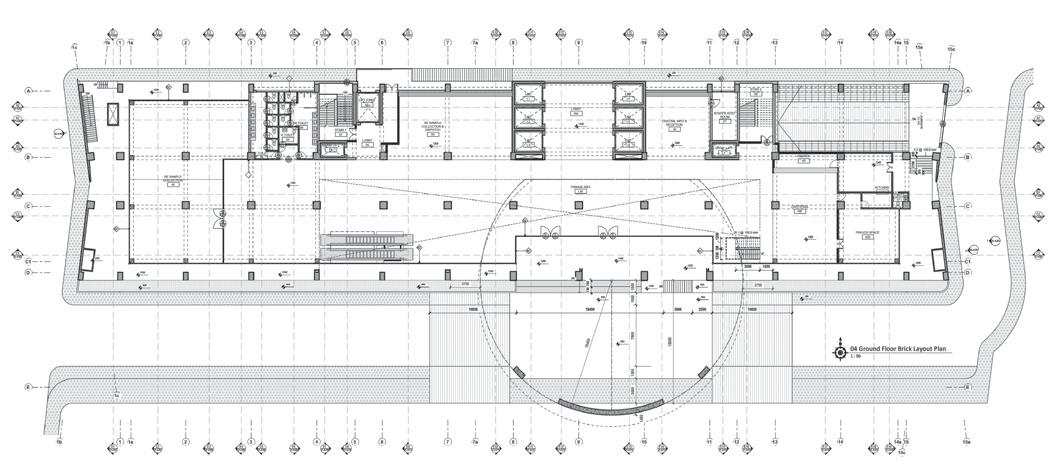
AFIP is an extension of Combined Military Hospital, Dhaka, very first attempt towards zero carbon building in Bangladesh. This institution handles 400-500 patients on regular basis.
Design approach concentrated on using the existing natural resources and place making for patients as well as care givers.
Elevations were designed to incorporate more daylight and harvest rain water. A designed open park beside existing water body impacting lives of patients and passer by influencing positivity and behavioral changes.
Section a2
section e8
Section of link corridor
|10
Bangladesh Public Administration Training center
[bpatc]
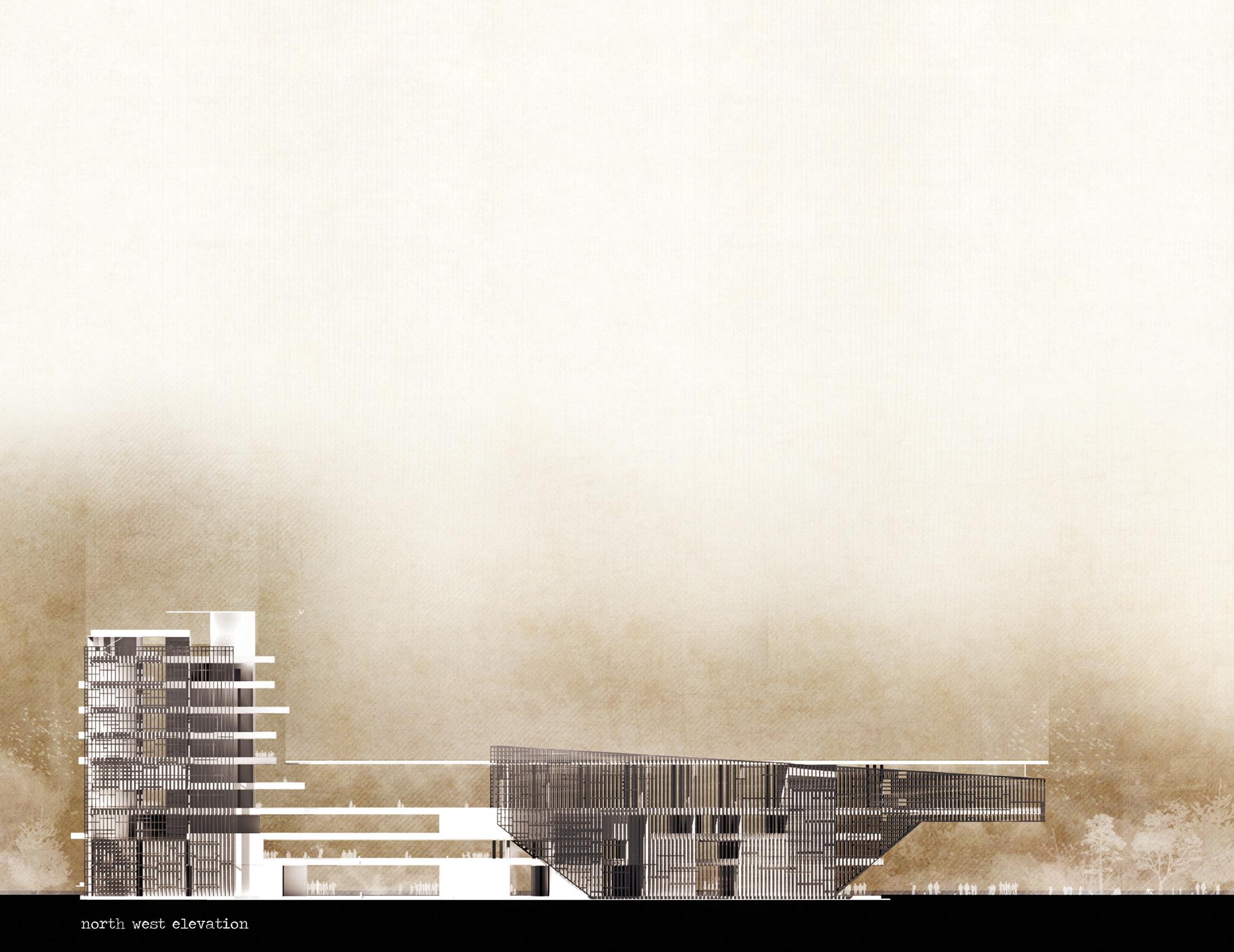
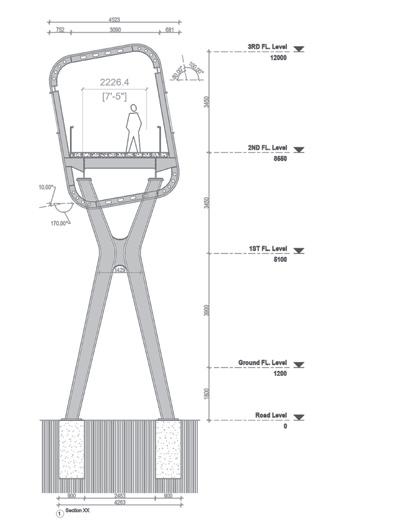
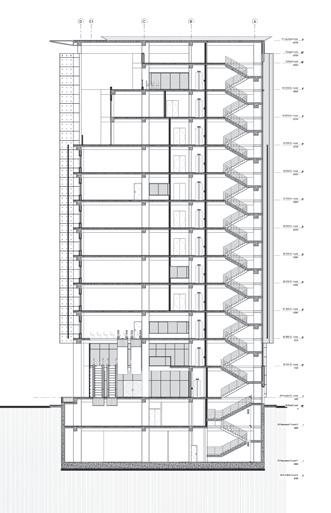
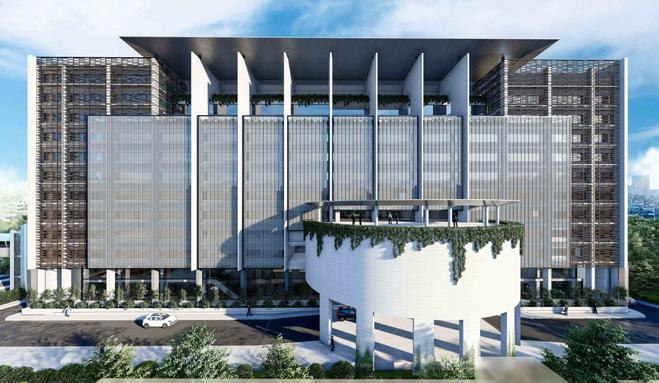
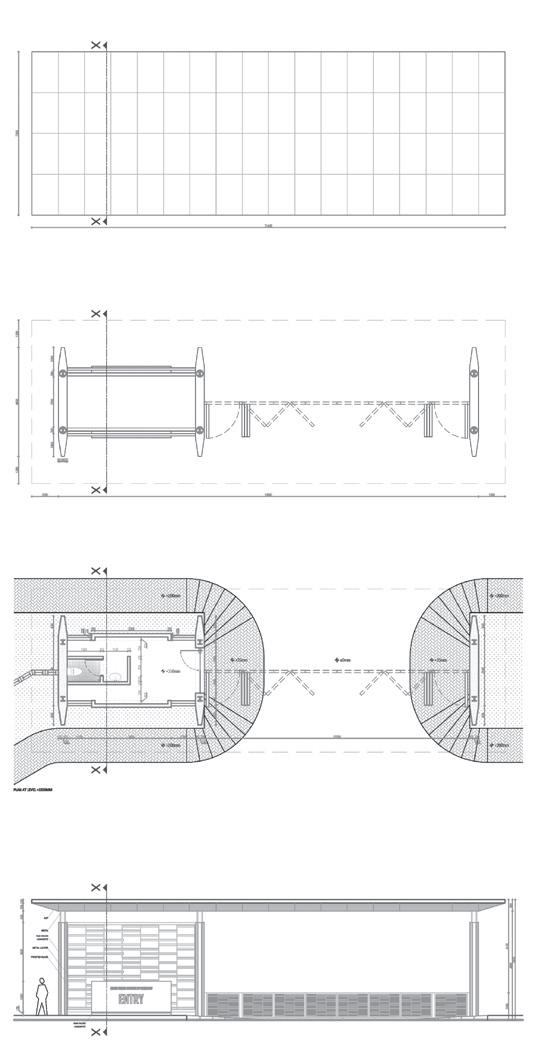
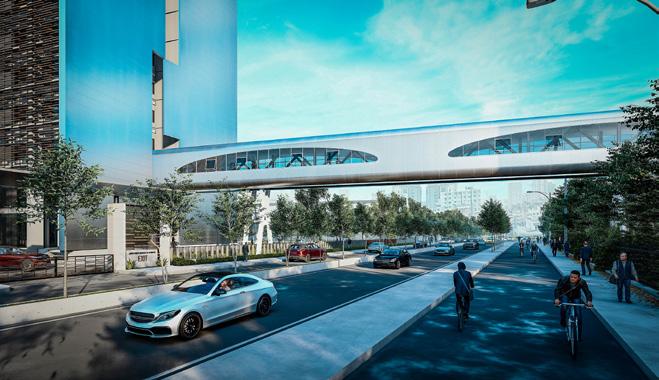
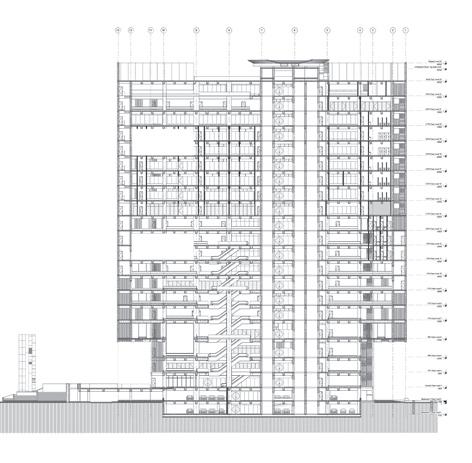
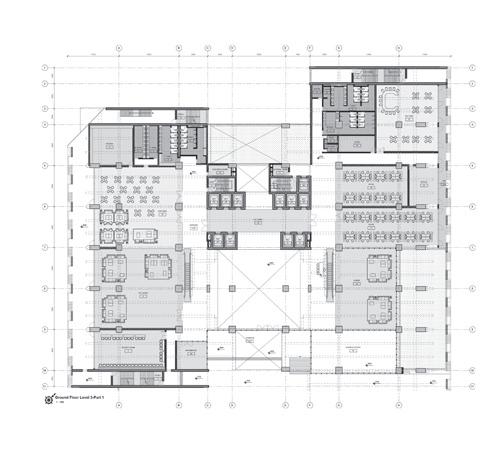
BPATC is a core building institution for every civil servant. A 22 storied academic building, comprises of various types of class rooms, a library, cafeteria, breakout zone/indoor park in every 4th floor, a state art gallery, admin block and a helipad. Its curvature elevations are designed for water harvesting and works as a shading device for the class rooms
Role: Site survey, functional study, program analysis, Preparing project..requirements finalize approval drawings, preliminary concept design, lighting study, BOQ, 3D modelling and render
COMMUNITY MOSQUE
VOLUNTARY DESIGN FOR A SMALL COMMUNITY
KAFLATOLI | LAKSHMIPUR| Project type : group project (TEAM OF 2)
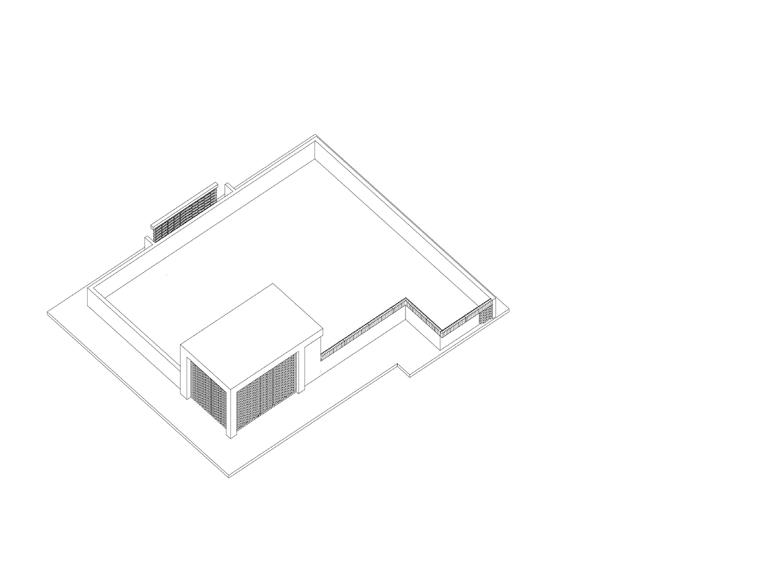
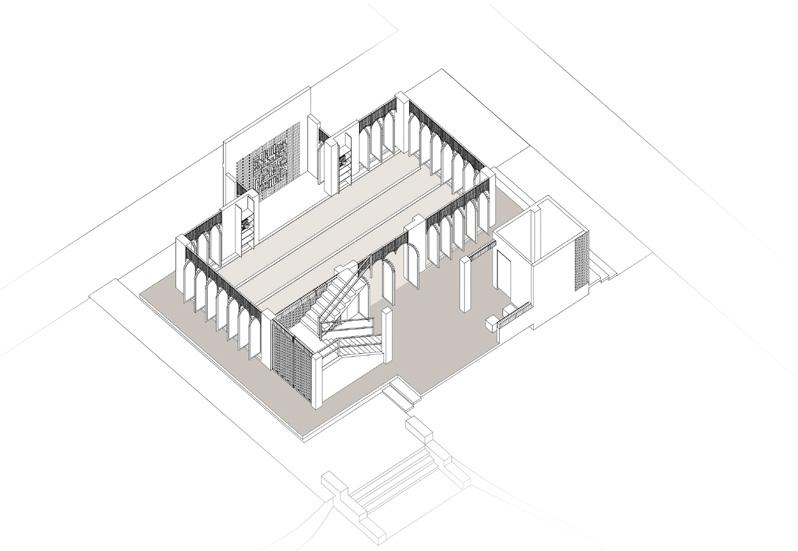
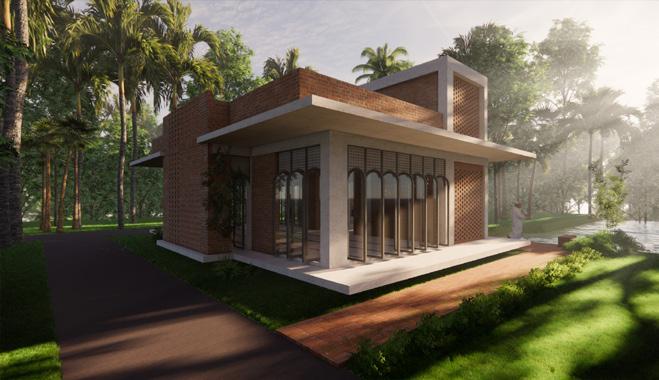
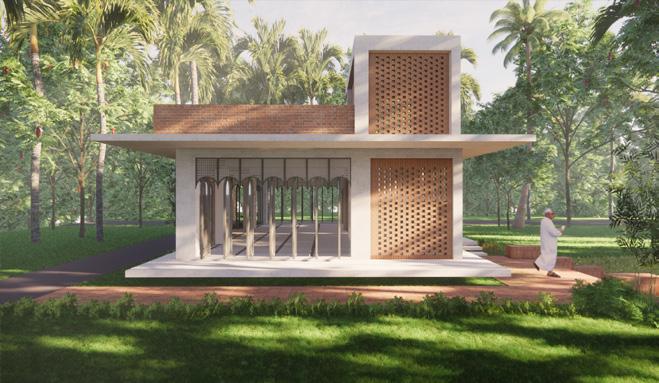
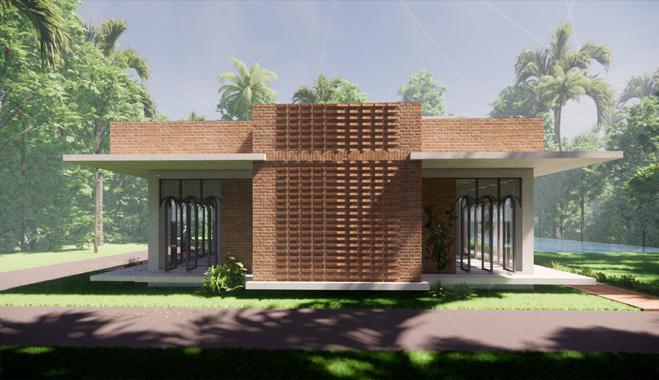
Kaflatoli mosque is a small mosque of appox 1300 sft covering ground area, located near a big hat (temporary market, which takes place twice a week) of Bepar Bari road.
Design strategy was to construct a integrated functional building which will work as a community platform and merge with the context ensuring visual permeability to the surrounding green spaces and small water body on the east. We replaced the walls with linear modular pivoted windows which establishes openness and harmony with the site as well as addresses natural ventilation.
Mosques are local symbol of affluency in local context, they work as landmarks also. It is very rare in small towns of Bangladesh to have a mosque without dome and minaret, to achieve that monumental effect we had to focus on the proportion and detailing of the facades. We opted for local and proposed reused material to reduce construction and transportation cost.
This mosque is under construction with the help of local community demonstrating aspiration, bond, traditionally suited and functionally modern.
Role: Mapping, Site survey, Working drawing facade detailing, 3D modelling
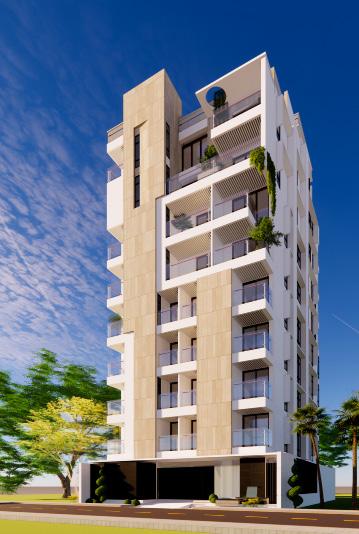
9 storied Residential Building at savar dohs
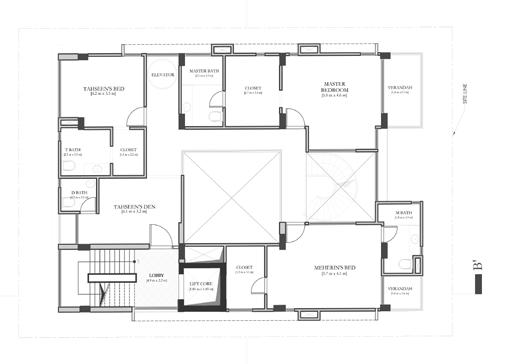
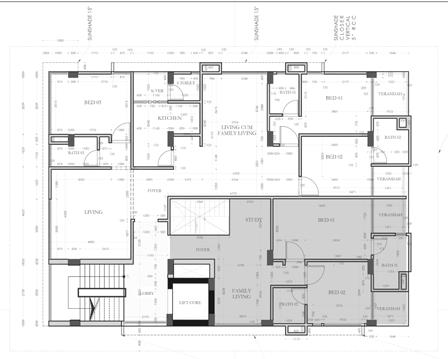
A nine storied building on ground of 3600 sft. It consists of 3 duplexes, 2 single unit and 4 double unit apartments. The design of this mixed building approached with ensuring well lit & ventilated interior. This work derived from surrounding elements and cantonment codes. Challenges were to keep up with so many diverse functions. Construction of this building is now done and finishing work on going.
Role Played : Design Lead, Architectural and Working Drawing, 3D Rendering, Approval Process, Ongoing Construction Supervision
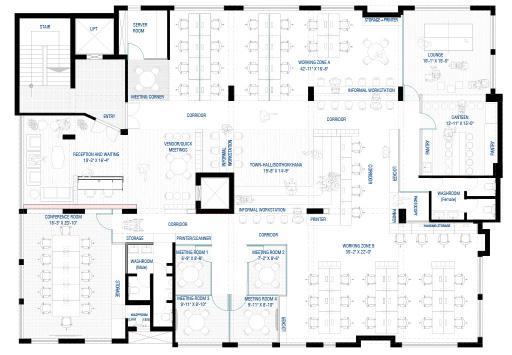
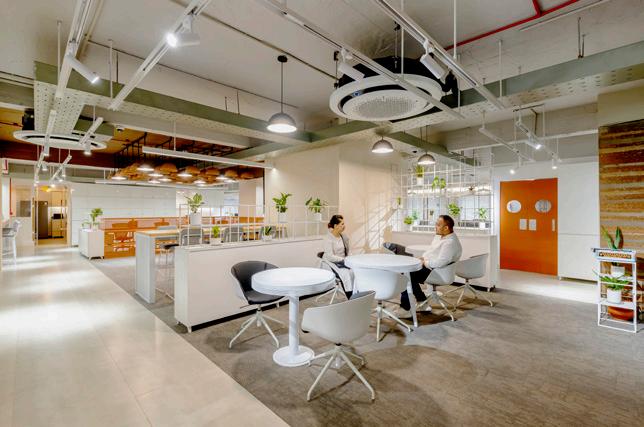
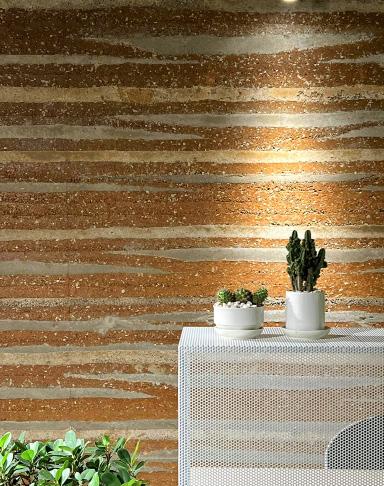
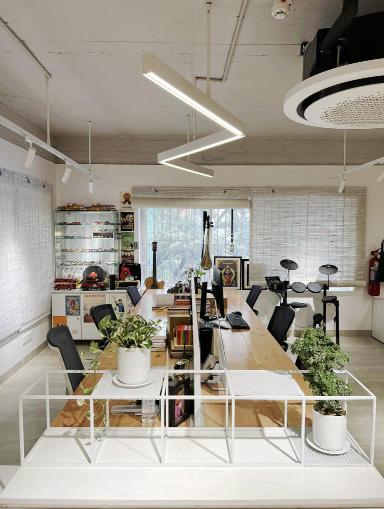
office interior : dot birth
work and collaboration space design for an ad agency
DHAKA | Project type : group project (TEAM OF 3)
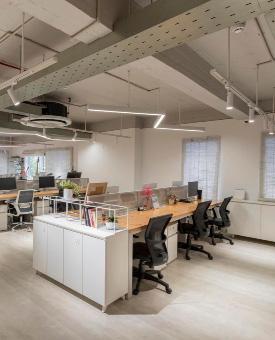
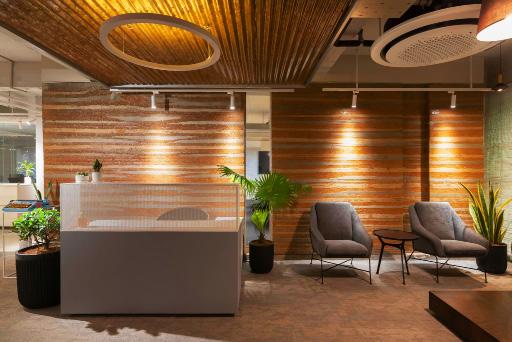
In the endeavor of crafting a 5000 square feet office space and overseeing its realization, our objective is to cultivate an environment steeped in empathy and inspiration. Through strategic design interventions, we aim to foster a culture wherein individualsbring forth their utmost creativity, facilitating the delivery of innovative, effective, and integrated brand marketing and communication solutions to propel our clients' brands and businesses forward.
Central to this vision is an open floor design concept, where visibility spans from one corner to another, fostering a sense of equality and interconnectedness among all occupants. This layout embodies our commitment to inclusivity and collaboration, ensuring that every individual feels empowered to contribute and thrive within our shared workspace.
BANANI
Our architectural vision is anchored in the belief that cultural values serve as vital catalysts for innovation and advancement. We aspire to create a world where these values are not only revered and celebrated but also harnessed to drive meaningful progress. By leveraging the diverse tapestry of cultures, we seek to ignite transformative change, fostering solutions that inspire, connect, and ultimately, reshape the landscape.
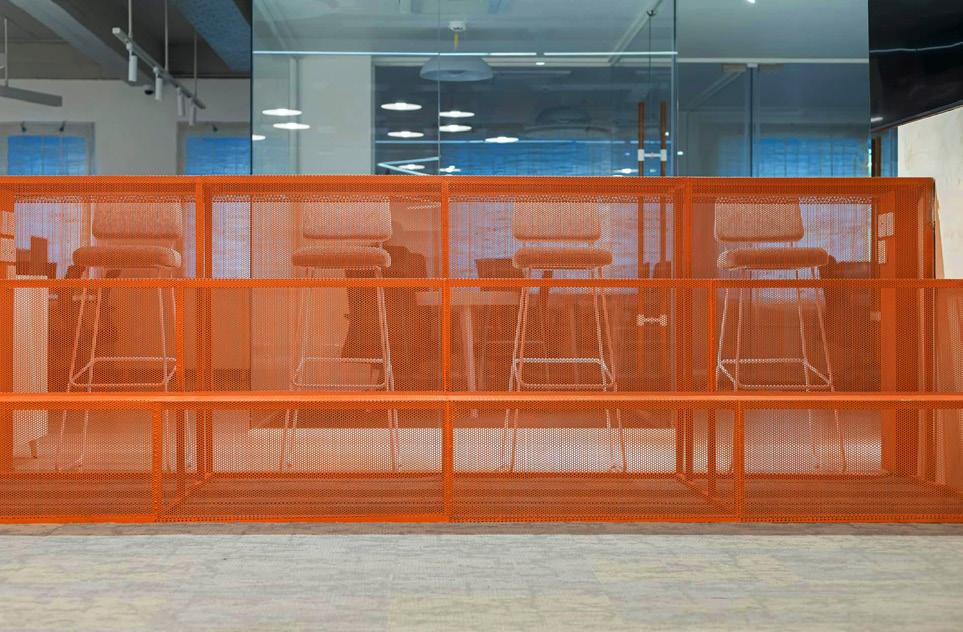
Role Played: Design Lead, Architectural and Working Drawing, HVAC Coordination, Fire Fighting drawing and fixture layout, Cabinets-storage design and customized planters.
Precedent Portraits
understanding the work relationship of graphics and nature
NORTH LAWNDALe | CHICAGO| Project type Individual
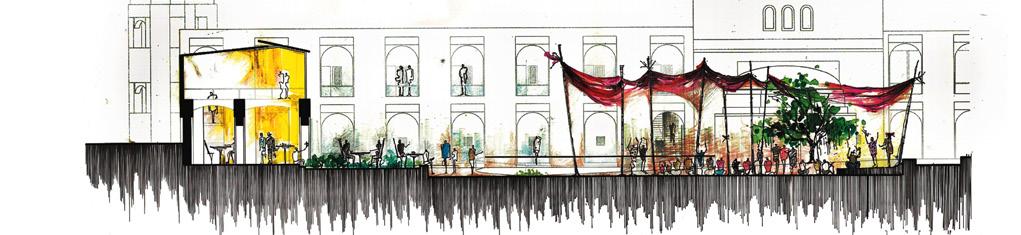
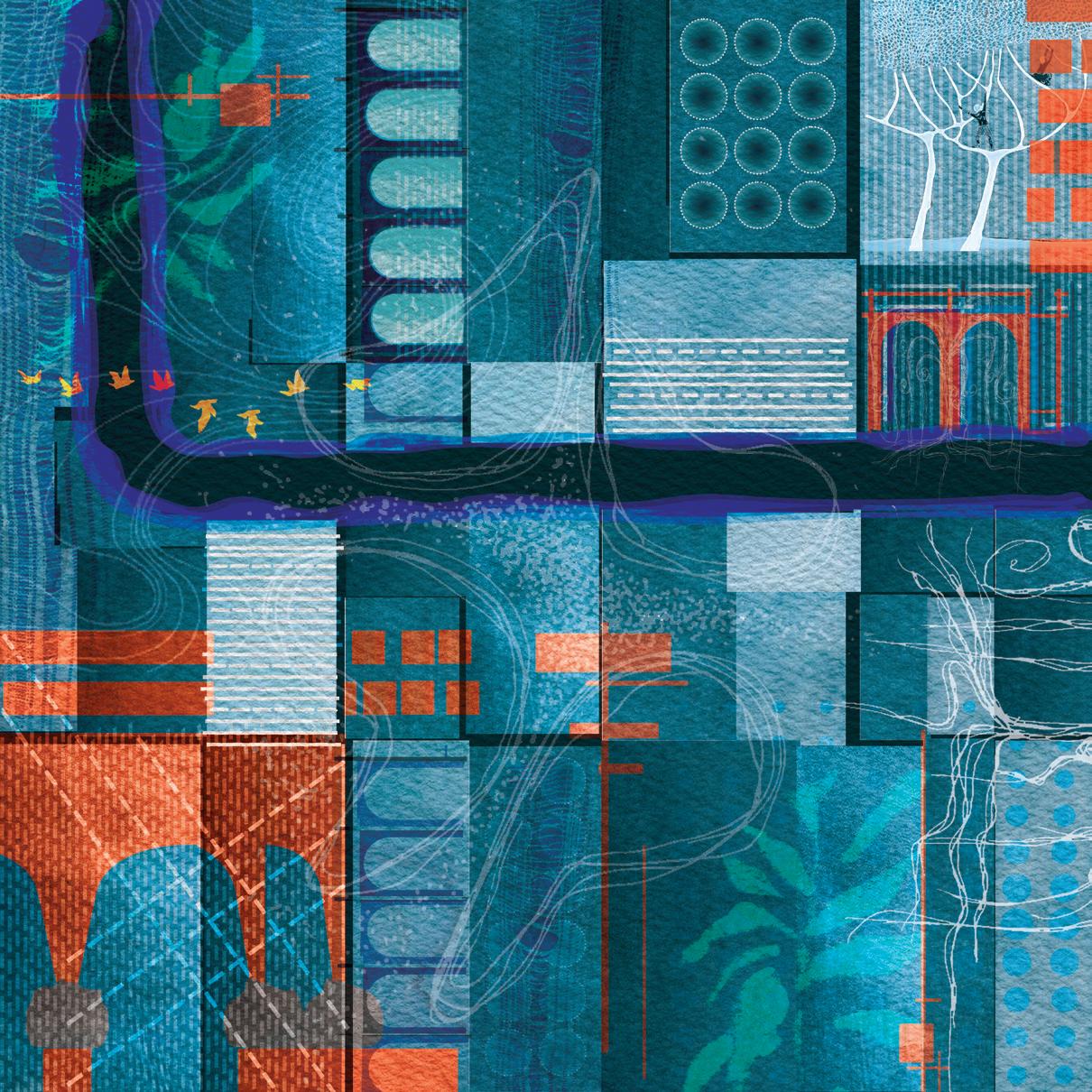
Supergraphic Landscapes explore design strategies for urban-scaled graphics that amplify identity, access, and belonging in public spaces. We studied and speculated supergraphic strategies at the scale of the city.
James Stone Freedom Square in Chicago's North Lawndale neighborhood doubles as the venue for the annual Chicago Sukkah Design Festival. This festival showcases outdoor pavilions celebrating cultural heritage and solidarity. The square hosts cross-cultural public programs during the event, fostering connections among diverse neighborhood groups.
How a landscape can weave our neighborhood and bring people closer by bringing the community relationship back between existing institutions working for development and the user group.
Design Team: Joseph Altshuler, Zack Morrison, Nekita Thomas
Paint the town Red
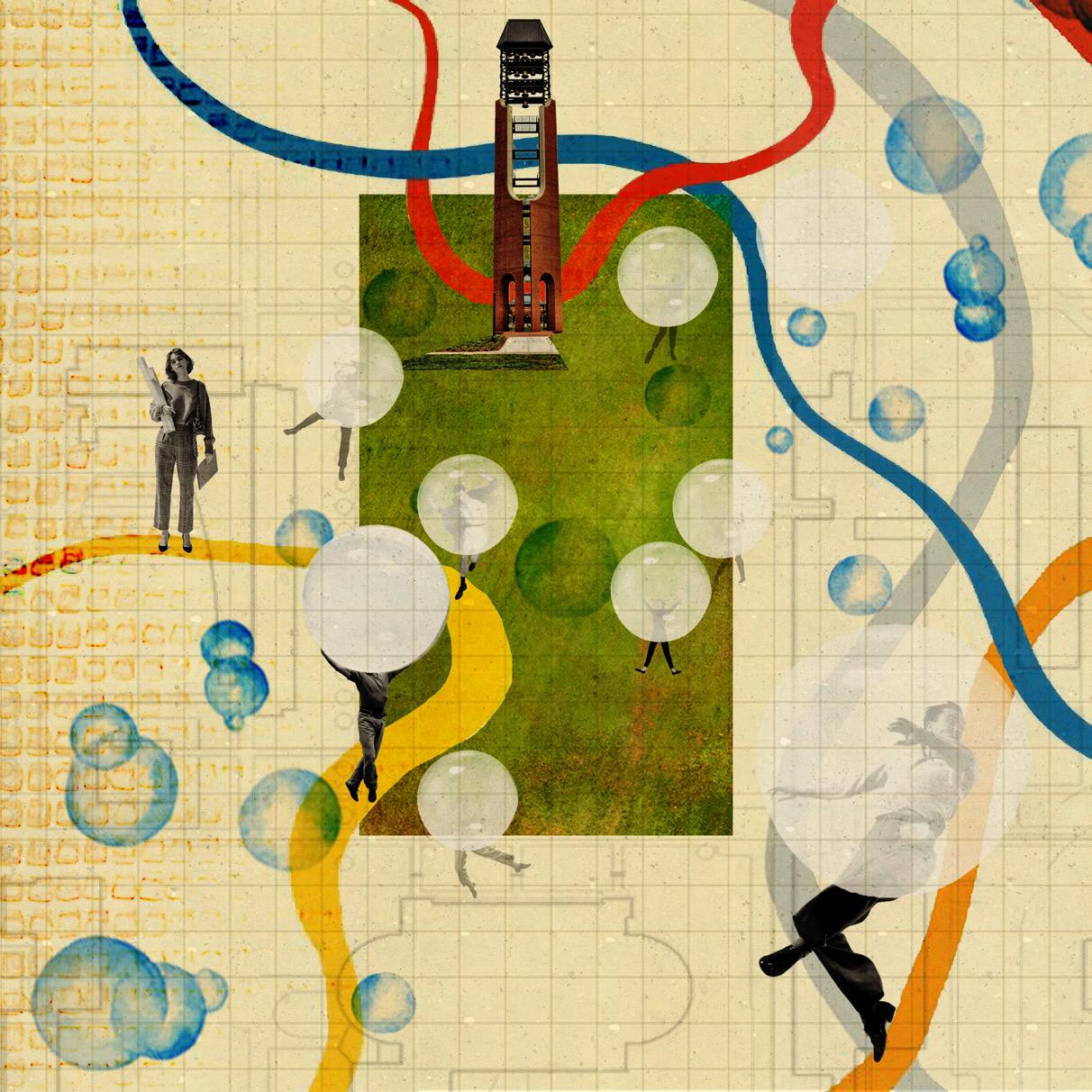
South Quad of the university marks the end of the university territorial axis anchored by the iconic bell tower. It also creates an edge between the architecture school and the agriculture school. My design inspiration was borrowed from the vibrant cultures of both the schools. I added colorful stripes throughout the south quad to visually connect both the schools. These stripes would serve as dynamic pathways, guiding pedestrians through the space while also injecting bursts of energy and creativity into the environment. By using bold colors and geometric patterns, I aimed to create a visually stimulating experience that would capture the imagination of students from both schools.
My goal was to transform the neglected South Quad into a vibrant and inclusive space that celebrates the unique identities of both the agricultural and architecture schools while fostering a sense of belonging and excitement for all who visit. Through thoughtful design and strategic planning, I believe that this project has the potential to not only enhance the physical environment of our campus but also strengthen the bonds between our academic disciplines and our student body as a whole.
Serious play children’s discovery center
understanding the work relationship of site and context
LAWNDALe | CHICAGO | Project type group
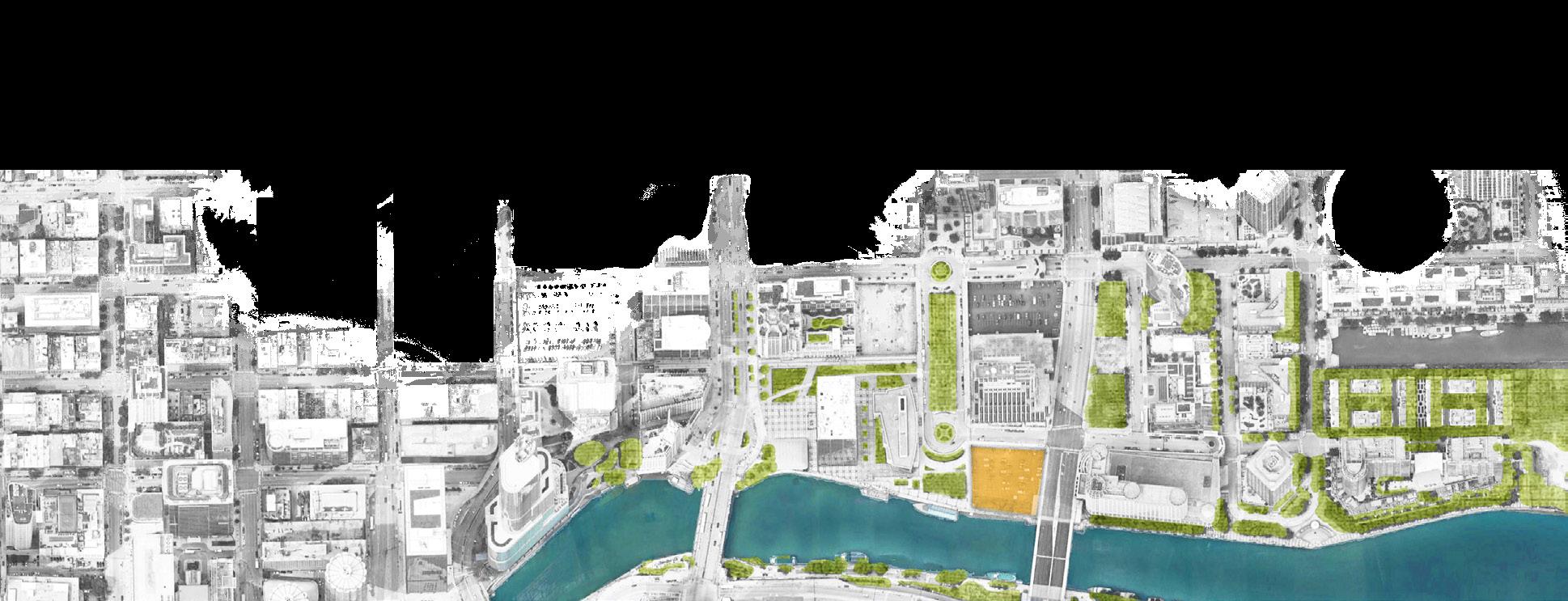
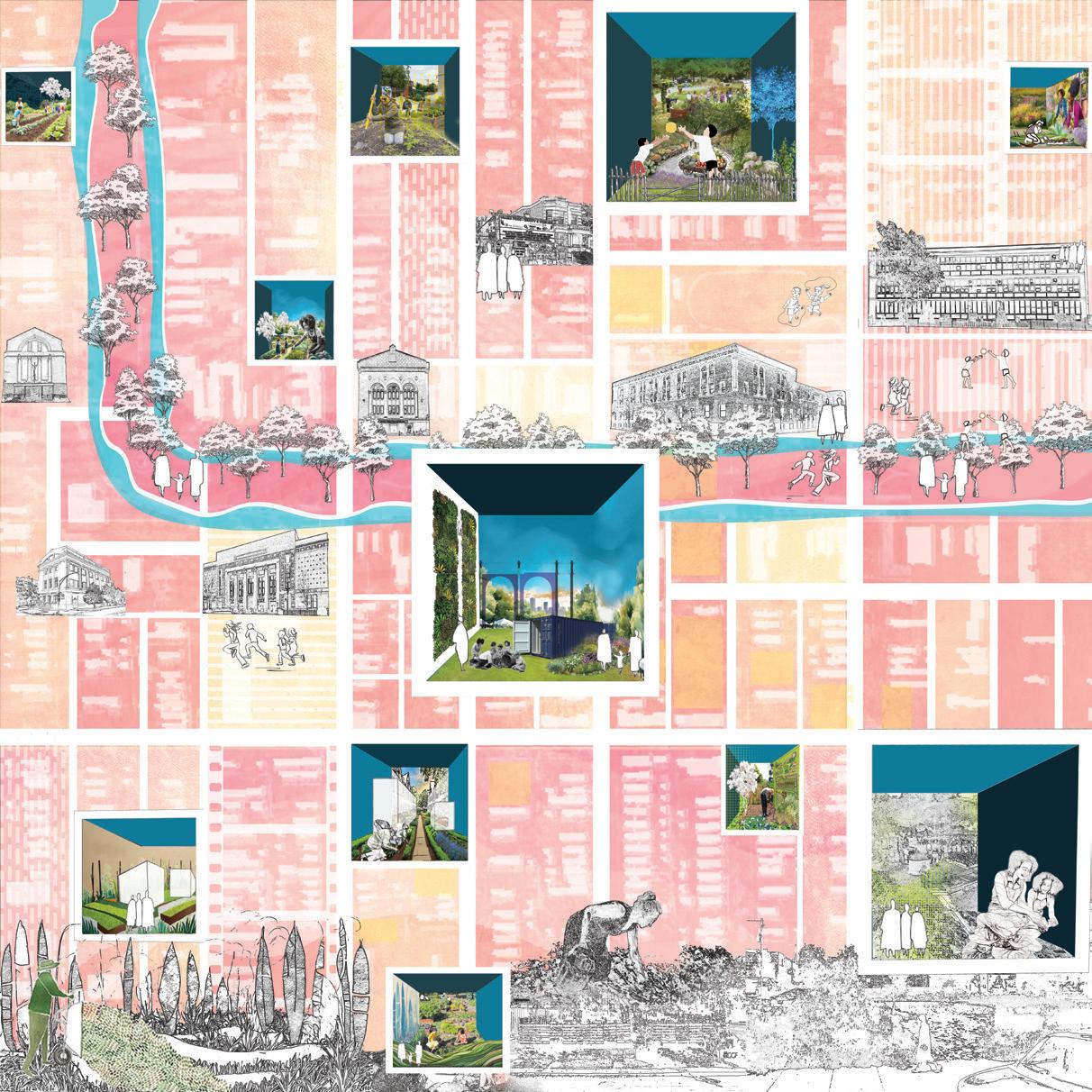
North Lawndale stands as a vibrant neighborhood intricately woven into the green emerald necklace of Chicago. Its unique character is defined by the presence of boulevards that not only serve as thoroughfares but also as the backbone of its public and common spaces. At the heart of North Lawndale lie its formal and informal community gardens, which play a pivotal role in fostering community cohesion and sustainability. This architectural study aims to delve into the essence of North Lawndale, exploring its built environment, community spaces, and the interplay between architecture and community life.
The study of North Lawndale presented us an opportunity to celebrate the neighborhood’s rich heritage, amplify community voices, and create a transformative space for learning and play. By embracing inclusivity, sustainability, and cultural authenticity, the children’s museum can serve as a beacon of empowerment and pride for current and future generations of North Lawndale residents.
Group Mates:
Michael Nicholson, Owen Russell Degrace
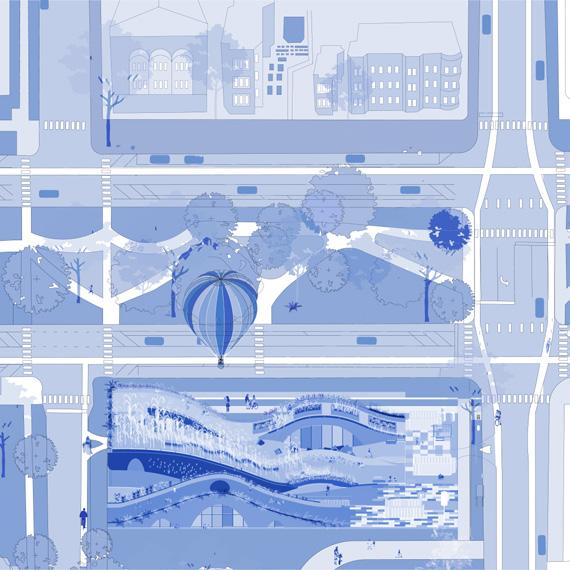
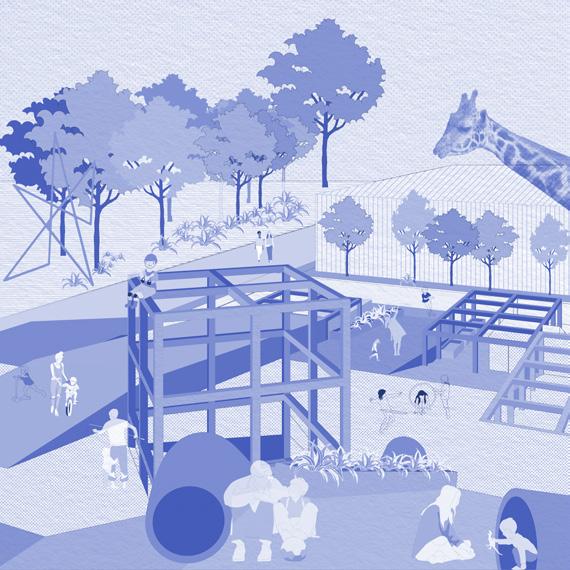
perspectives and plan oblique of children’s museum
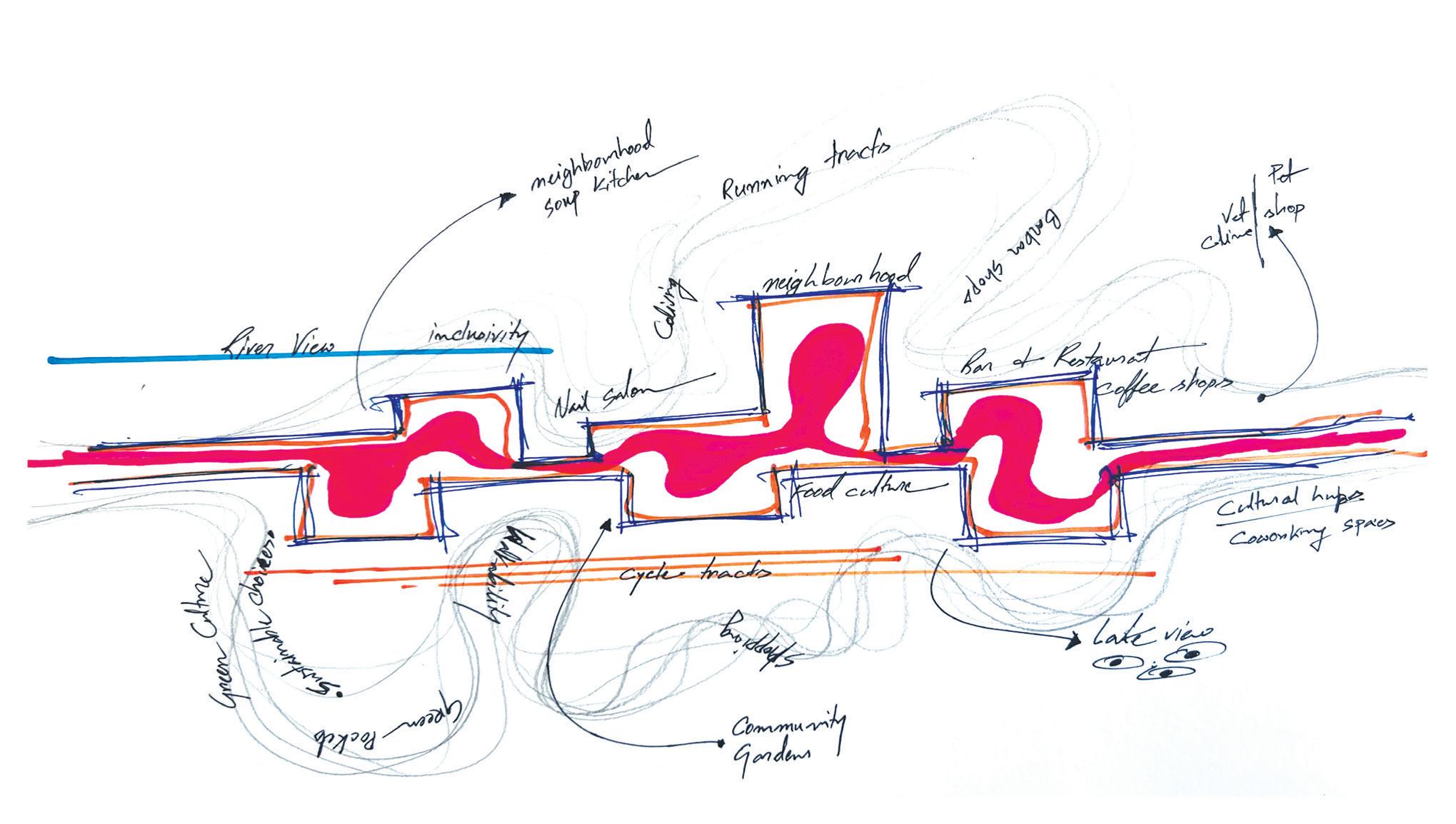
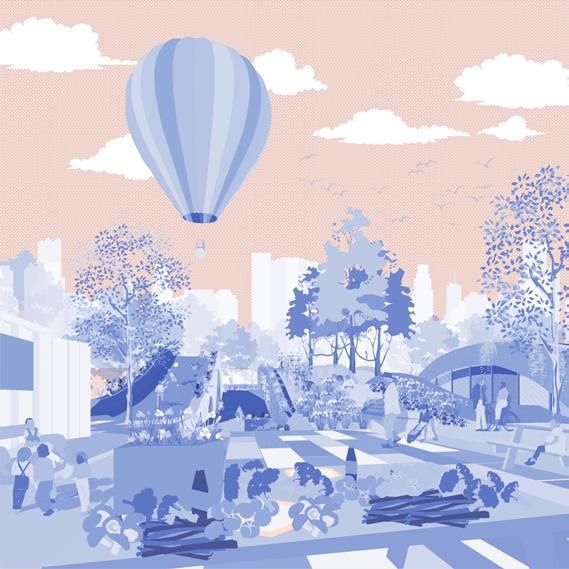
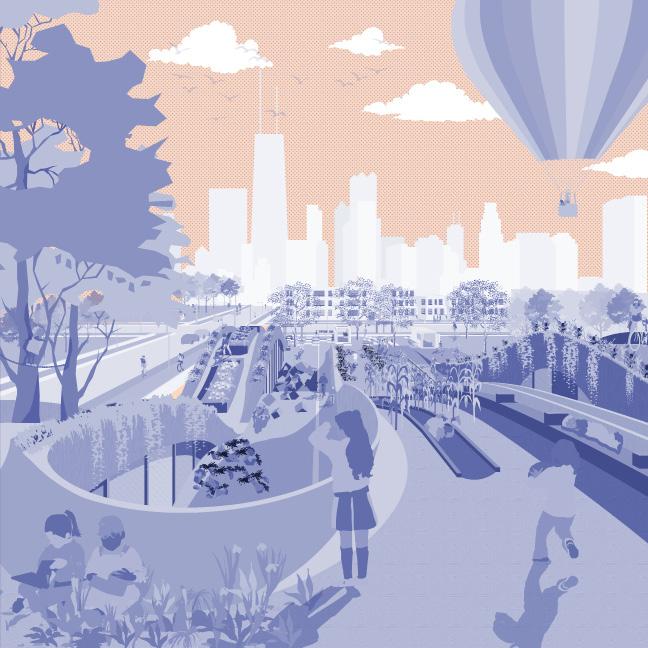
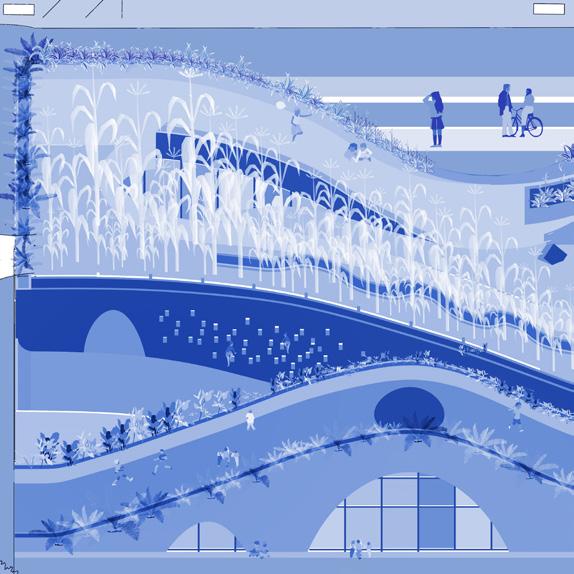
Terrascape reimagines a children’s discovery center as a synthetic landscape, where multiple linear “stripes” of constructed terrain organize a series of distinct micro-environments and play experiences. The project celebrates and elevates North Lawndale’s vibrant culture of community gardens (as well as the specific garden that was located on this site) by integrating new community planting areas throughout its undulating terraces. The project also links with, expands, and amplifies the existing public spaces and social enterprises at Loves Bloom Here Plaza, generating an inclusive social infrastructure that encourages people to collaborate in gardening, community building, and self-expression.
Terrascape builds new connections between a variety of existing cultural assets. For example, the topographic landscape stripes touch down at street level adjacent to the Lawndale Pop-Up Spot, a community museum in a shipping container as well as another shipping container that operates as a fresh-cut flower shop. As another example, Terrascape introduces innovative bike lanes and pedestrian pathways, offering unique recreational routes alongside conventional commuting paths. These connections seamlessly link the boulevard, Love Blooms Here Plaza, and James Freedom Square Plaza to the surrounding street grid and the built environment. The landscape stripes effectively operate as a connected companion to the Emerald Necklace, the linear parkway system that meanders through the heart of North Lawndale, building public spaces and social hubs for community engagements. The project aims to uphold the spirit of these interconnected community ties by establishing indoor-outdoor relationships within these distinct micro-environments along these terrain stripes
The landscape stripes effectively operate as a connected companion to the Emerald Necklace, the linear parkway system that meanders through the heart of North Lawndale, building public spaces and social hubs for community engagements. The project aims to uphold the spirit of these interconnected community ties by establishing indoor-outdoor relationships within these distinct micro-environments along these terrain stripes
To quickly walk you through how the discovery center works, visitors enter from all directions, including from Douglas Boulevard, Central Park Avenue, and Millard Avenue. Children are invited to take part in all five stripes creating unique experiences by engaging in above ground, and below-ground activities such as bouldering through the talus field stripe, getting lost in the corn maze stripe, or getting their feet wet in the constructed wetland stripe. Their parents can watch them from the interior coffee shop or follow them throughout their adventures. Return visits are encouraged by the regular cultural happenings at Love Blooms Here Plaza, and the numerous tunnels and access points which are designed to provide adventurous ways to traverse the Terrascape.
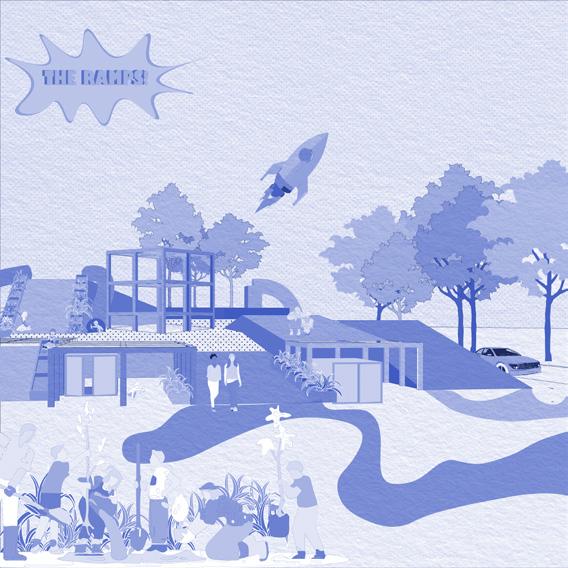
Sketches and preliminary perspectives of children’s museum