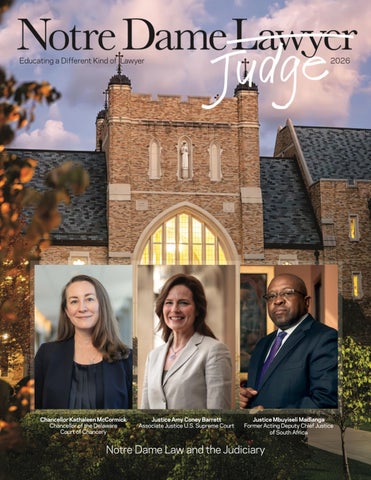
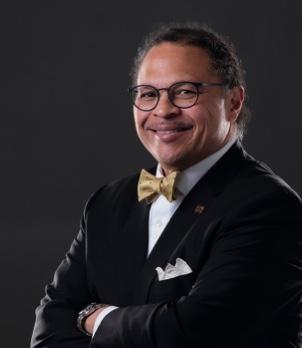
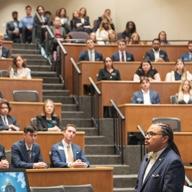
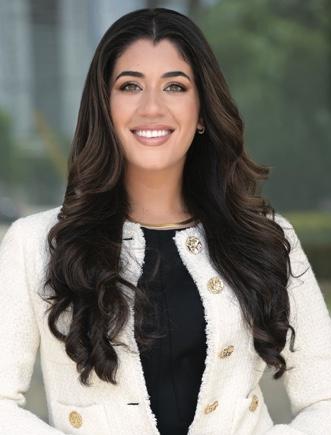
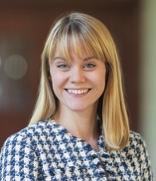
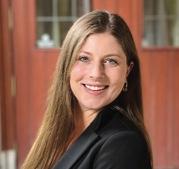
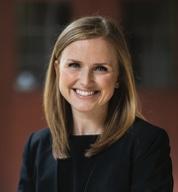
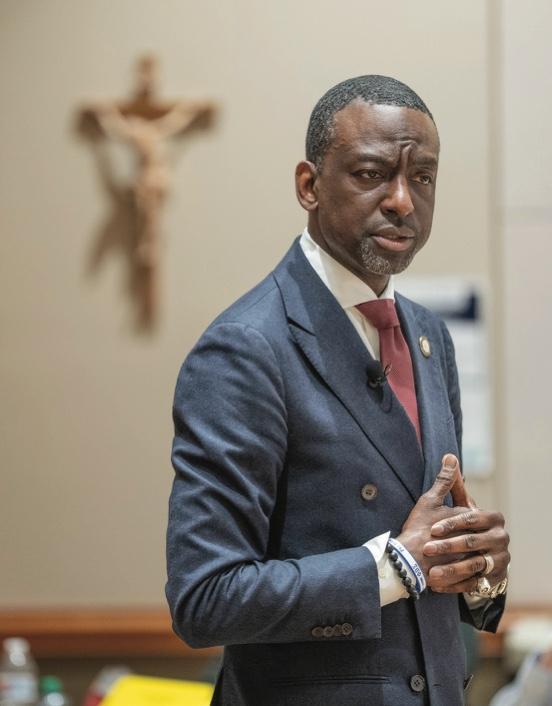
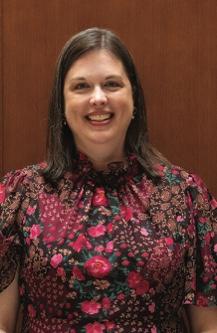
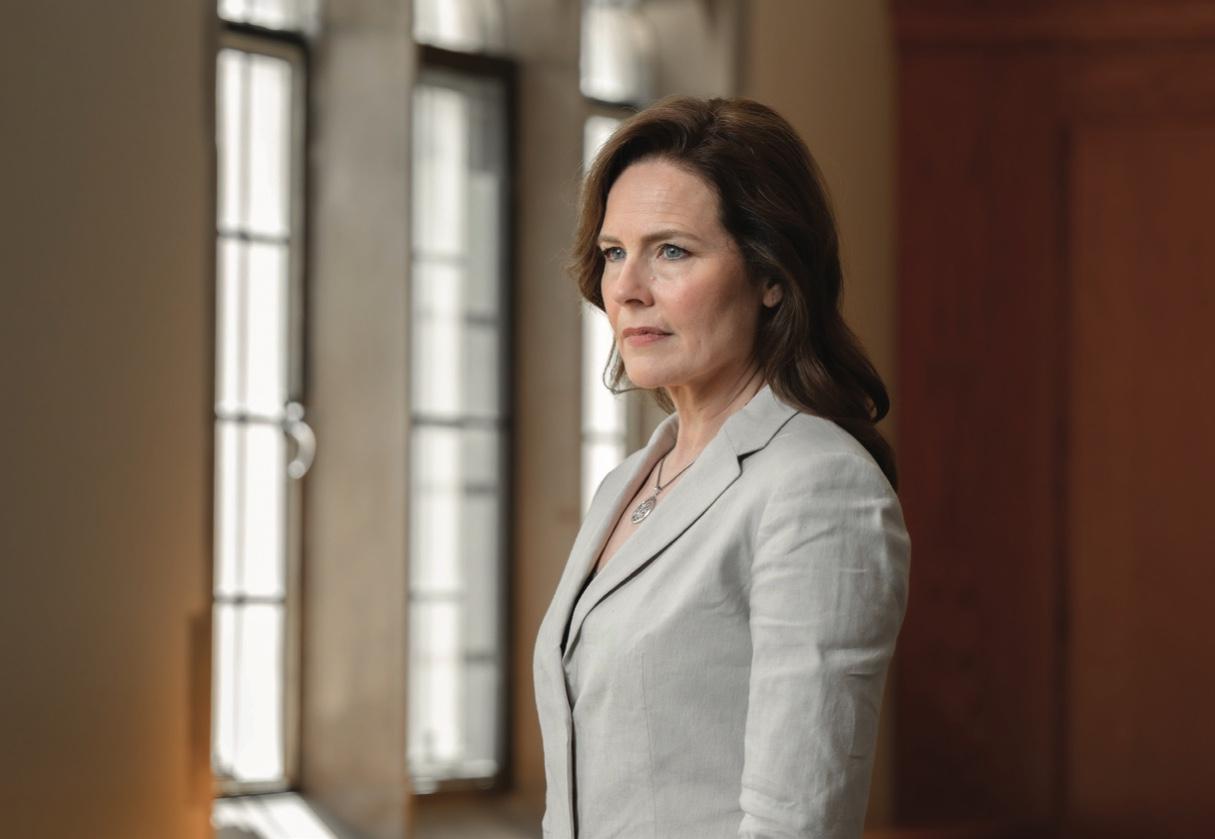
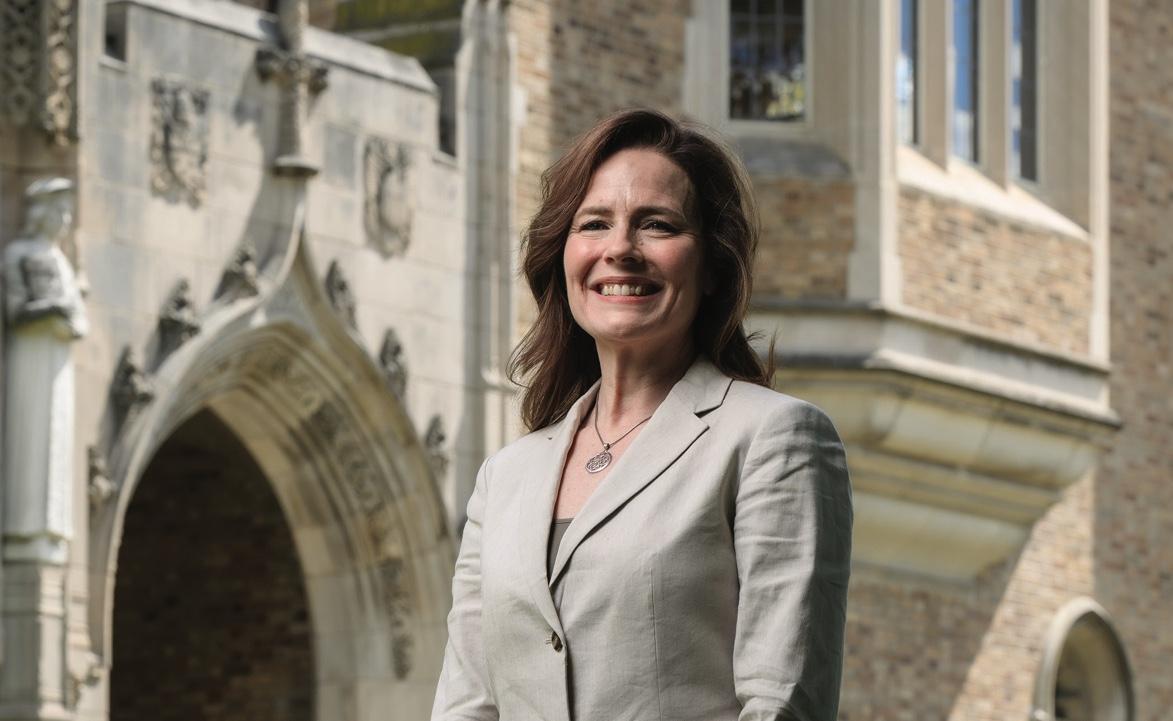
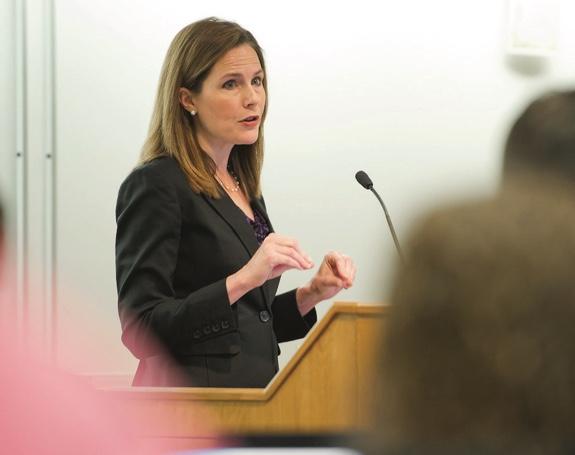
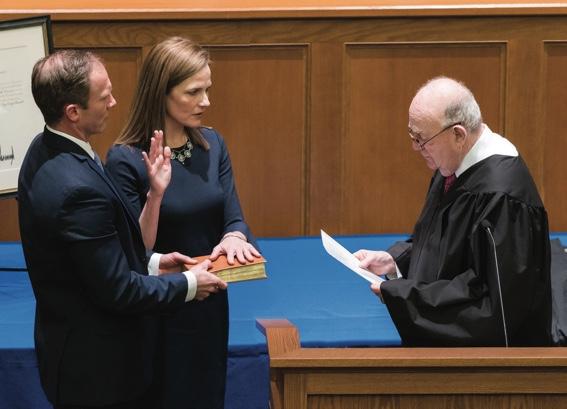
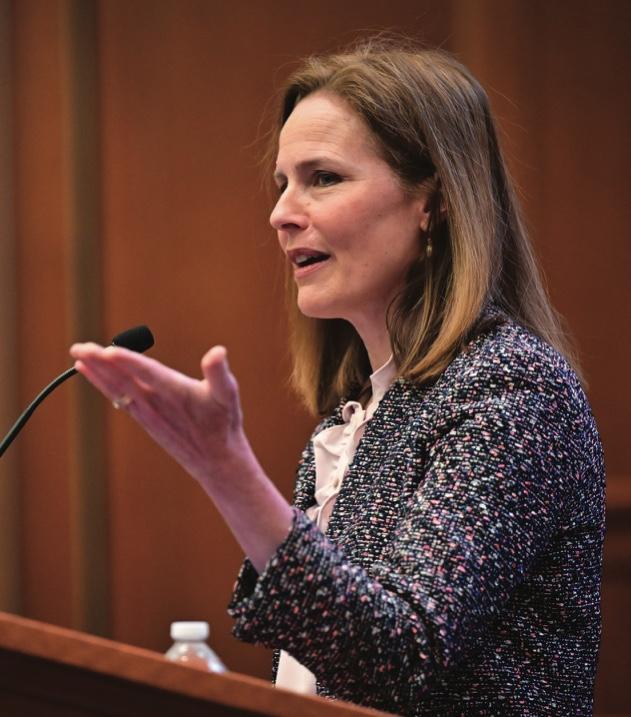
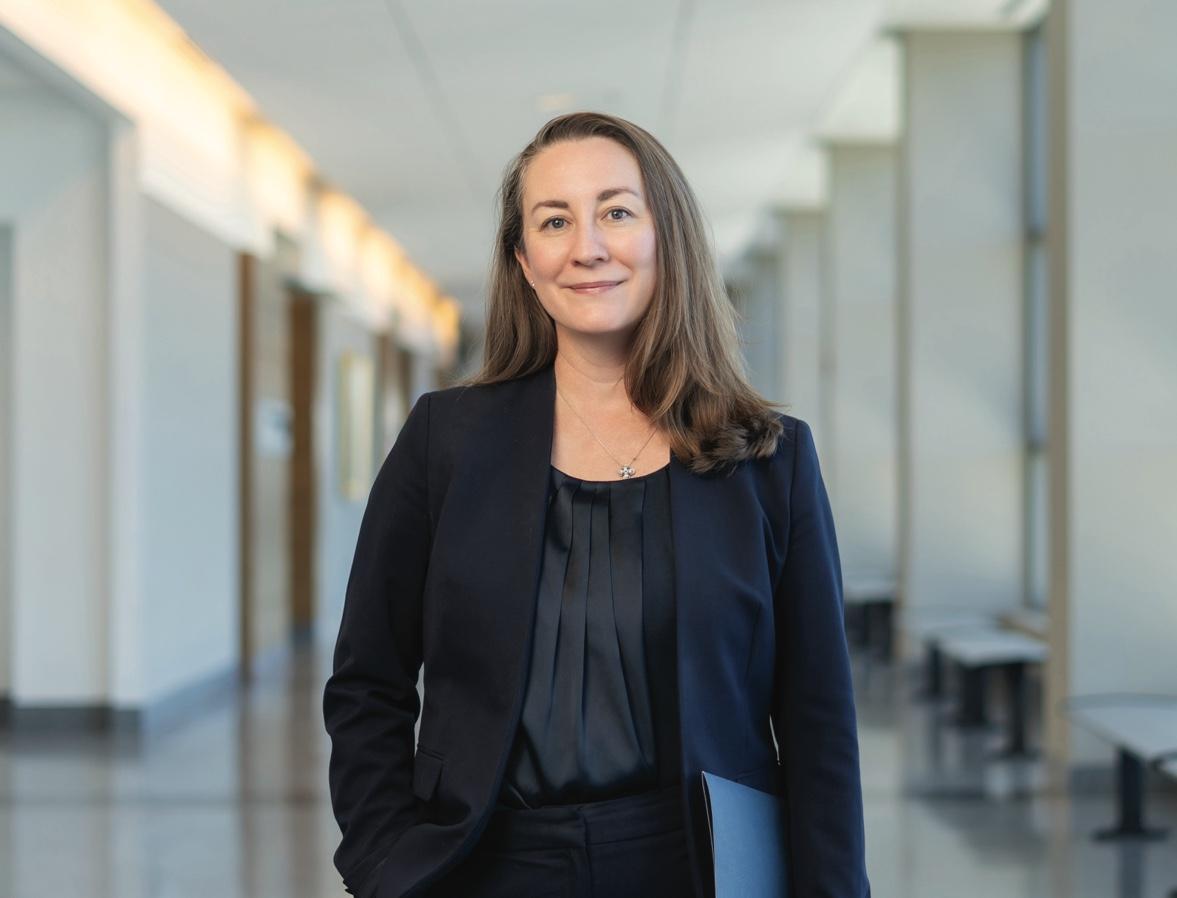
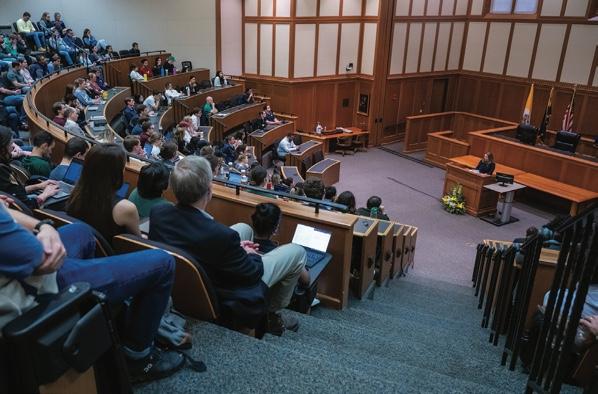
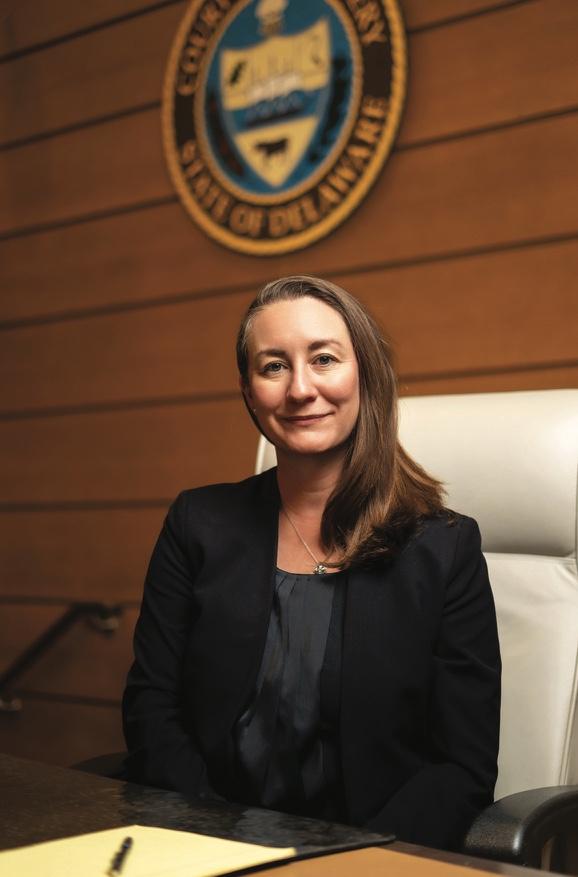
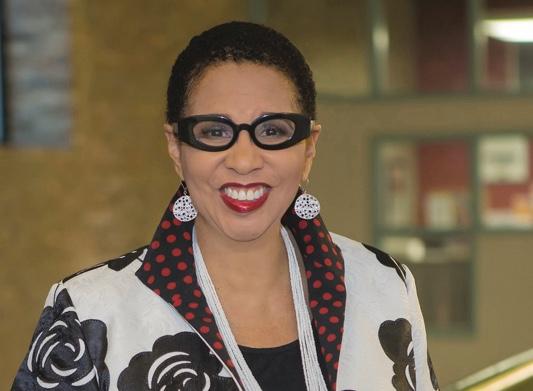
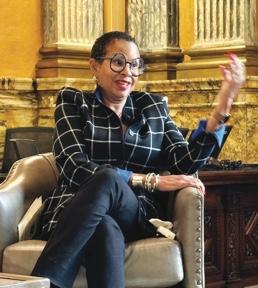
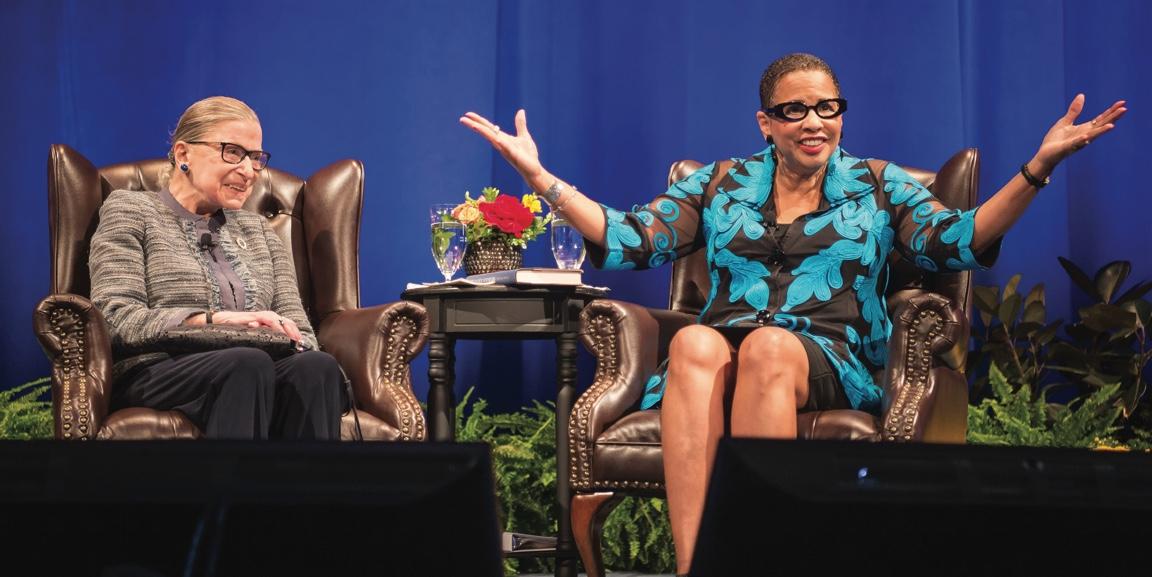
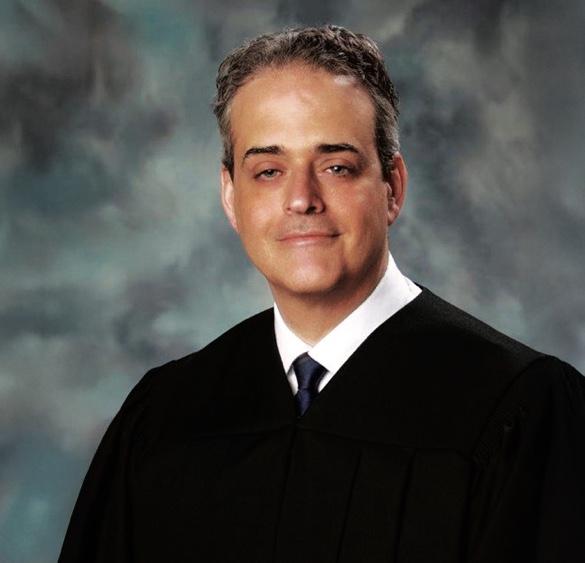
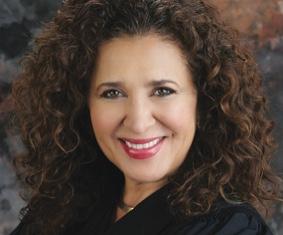
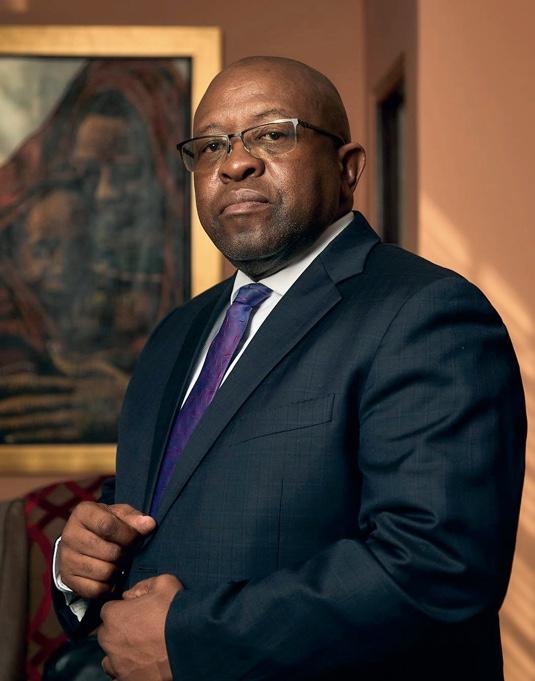
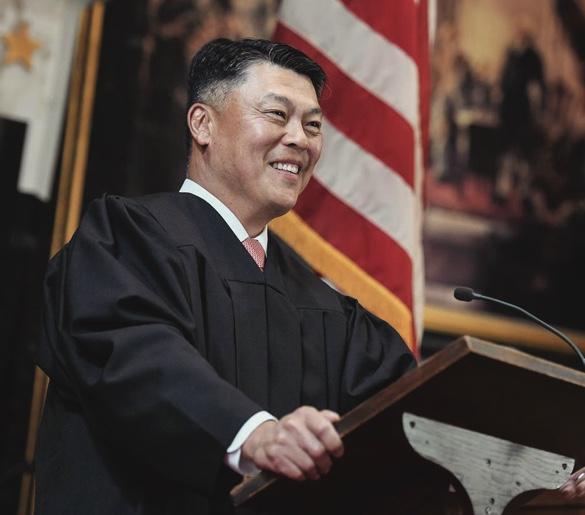
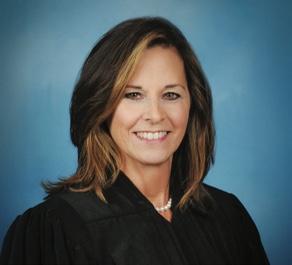
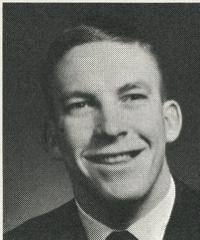
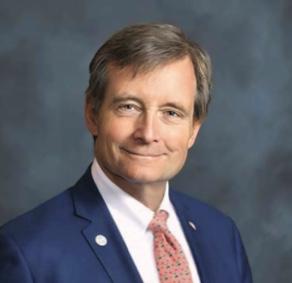
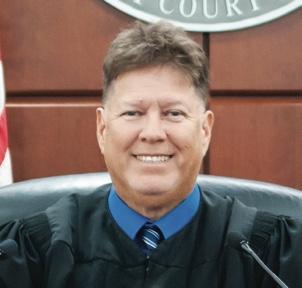
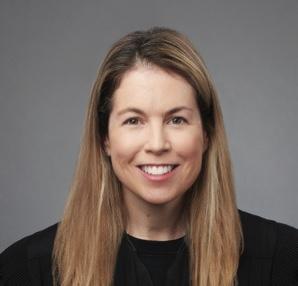
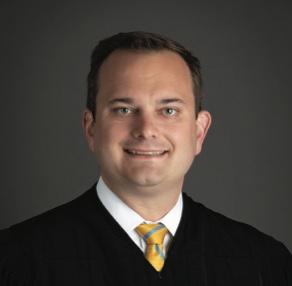
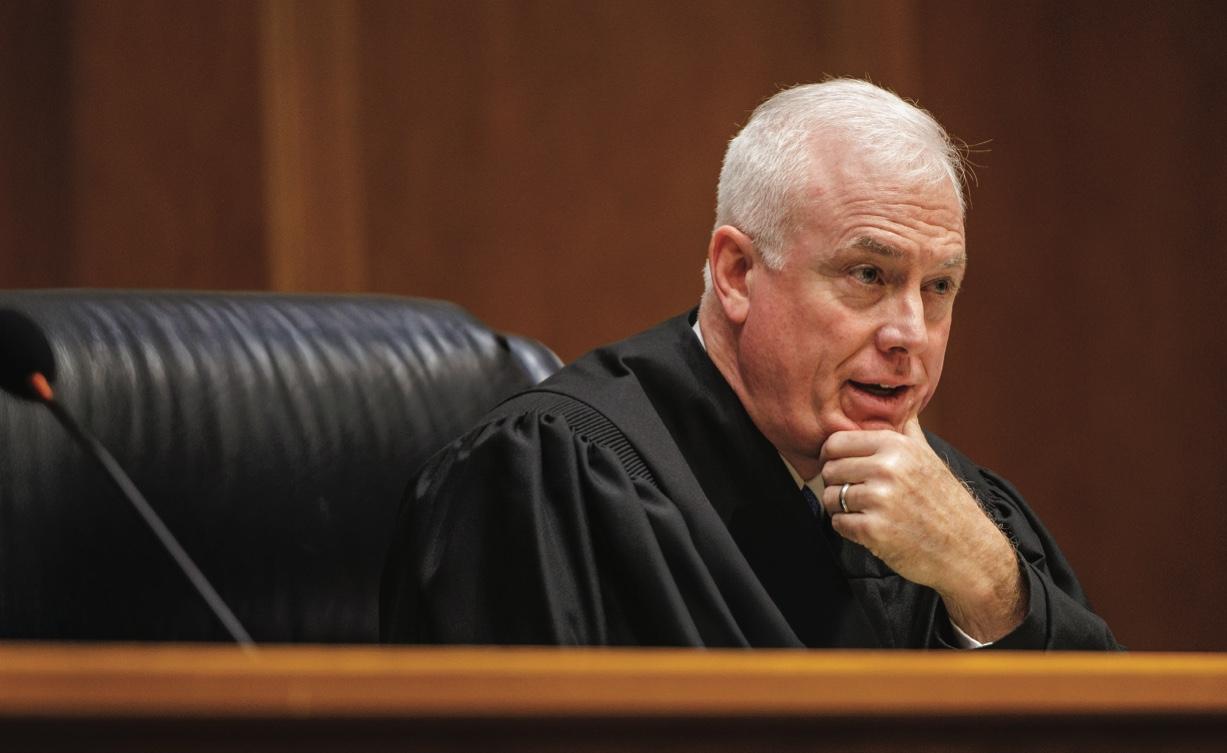
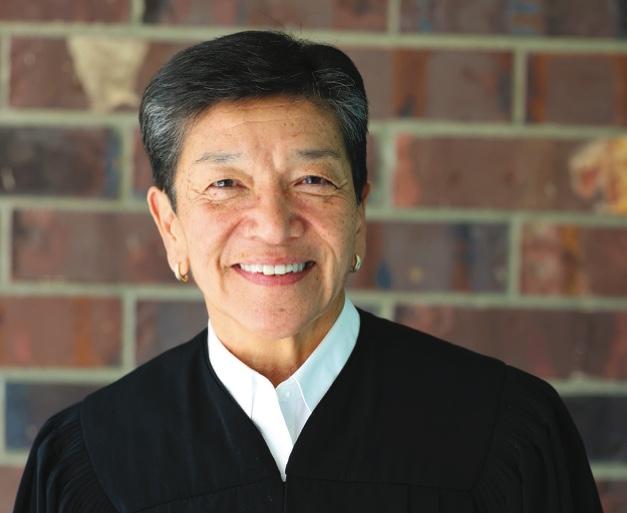
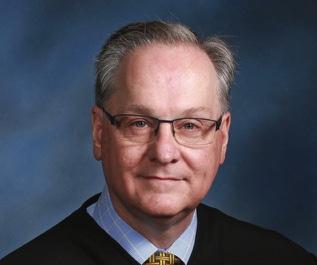
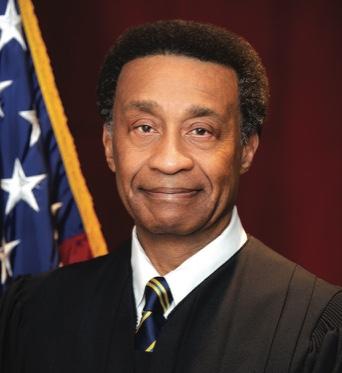
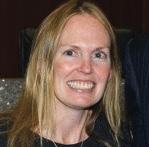
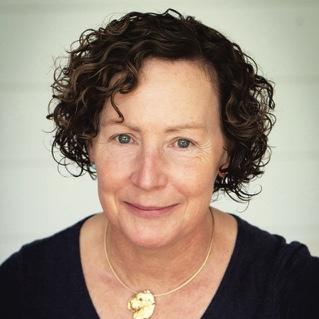
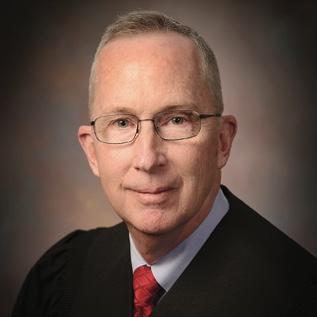
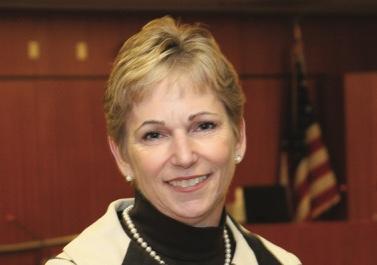
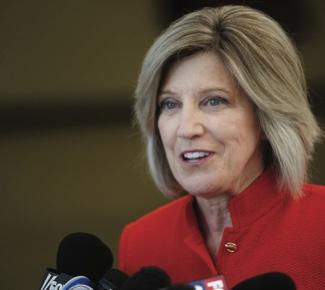
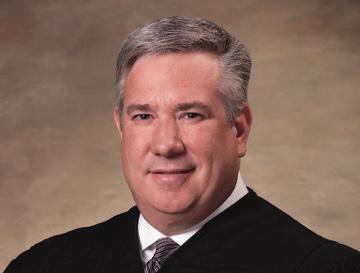
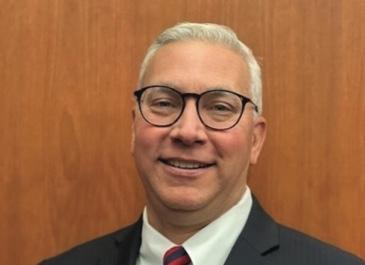
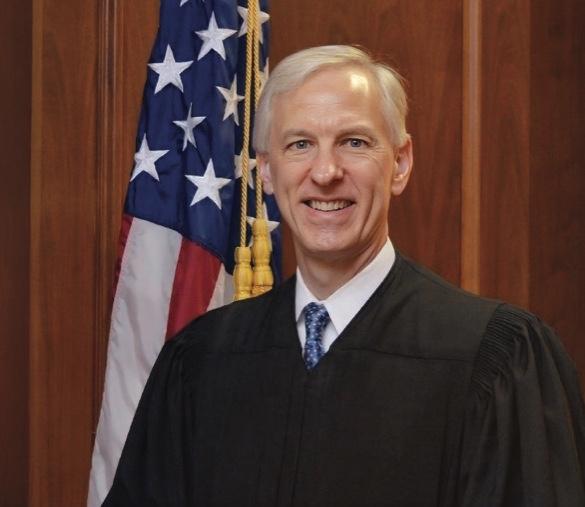
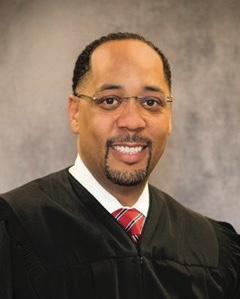
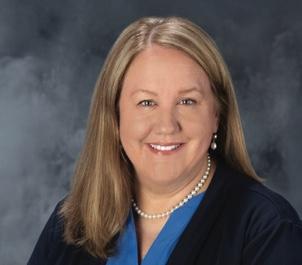
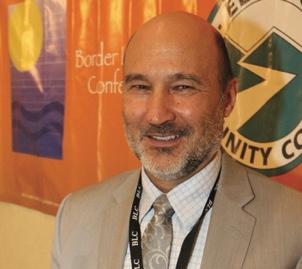
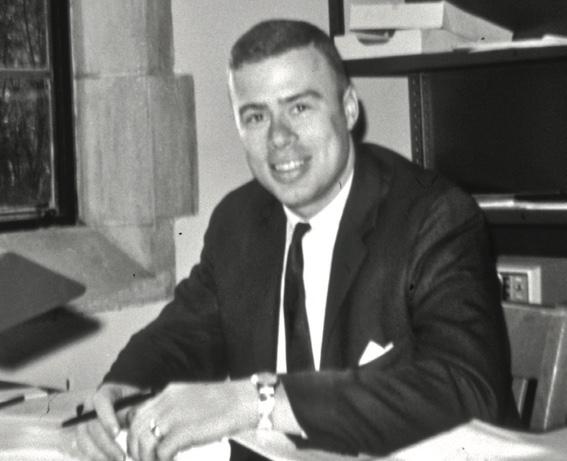
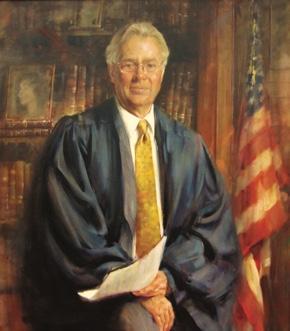
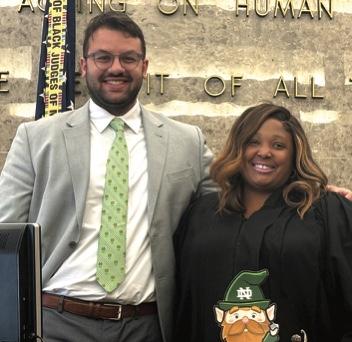
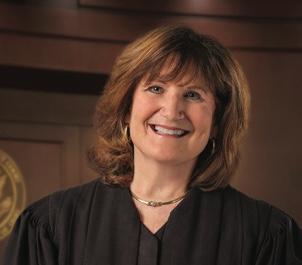
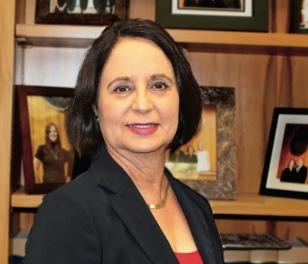
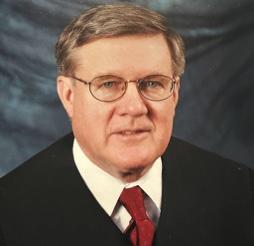
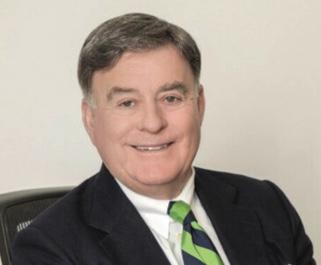
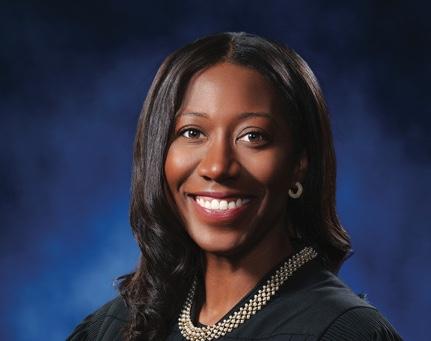
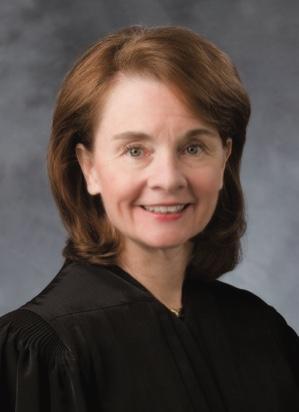
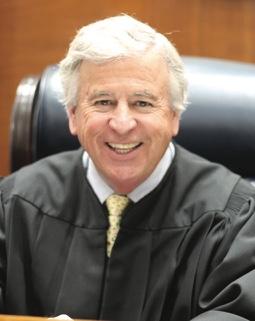
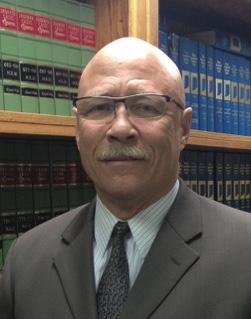
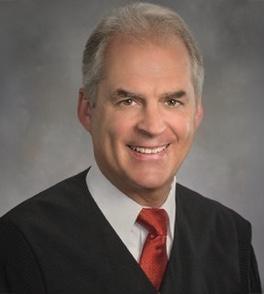
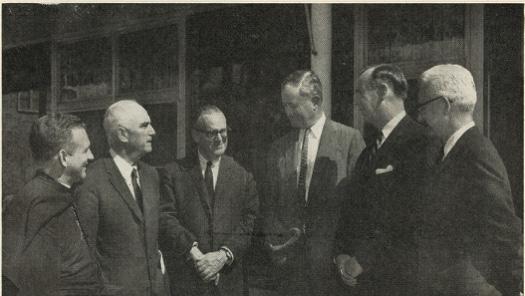
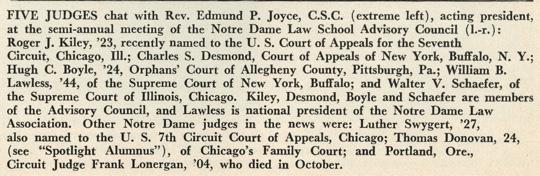
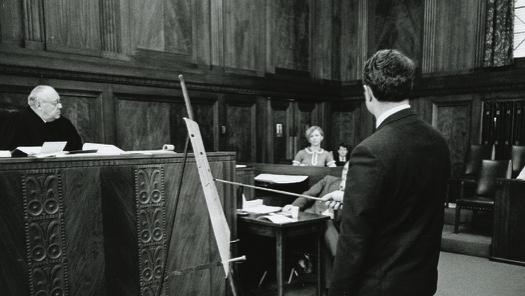
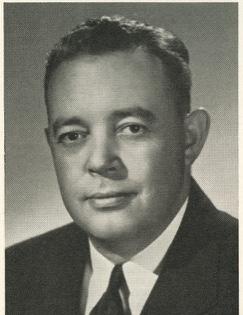
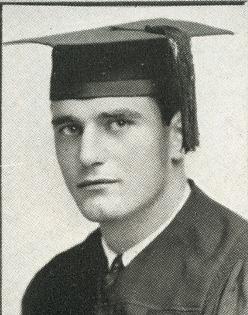
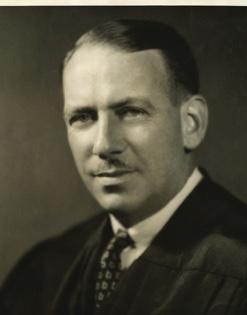
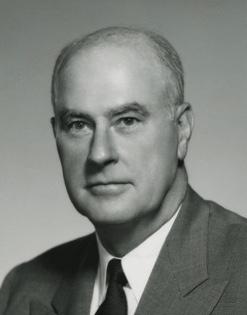
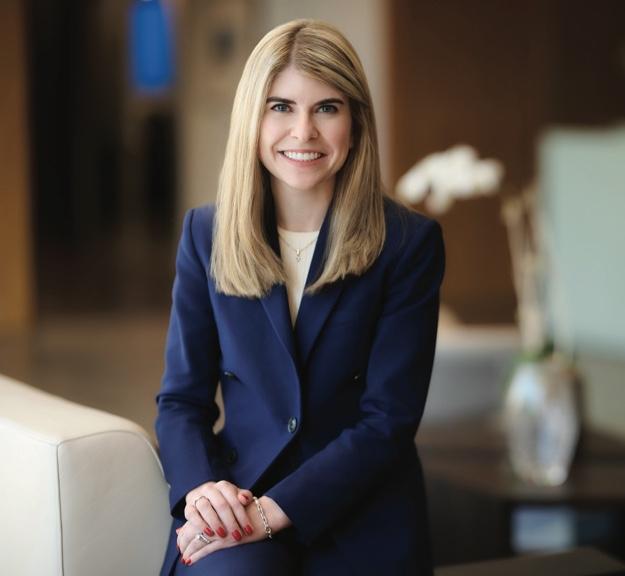
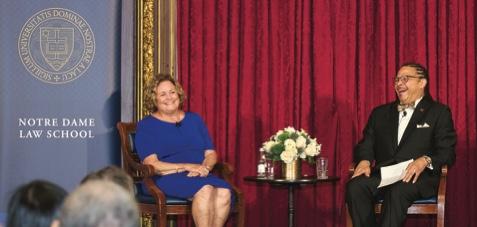
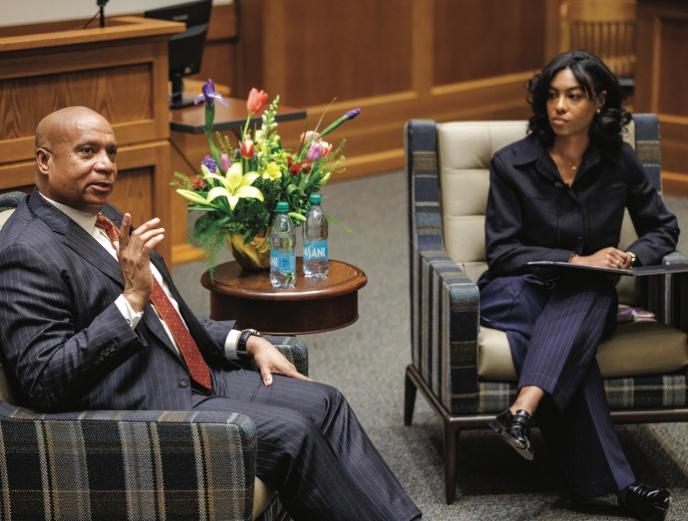
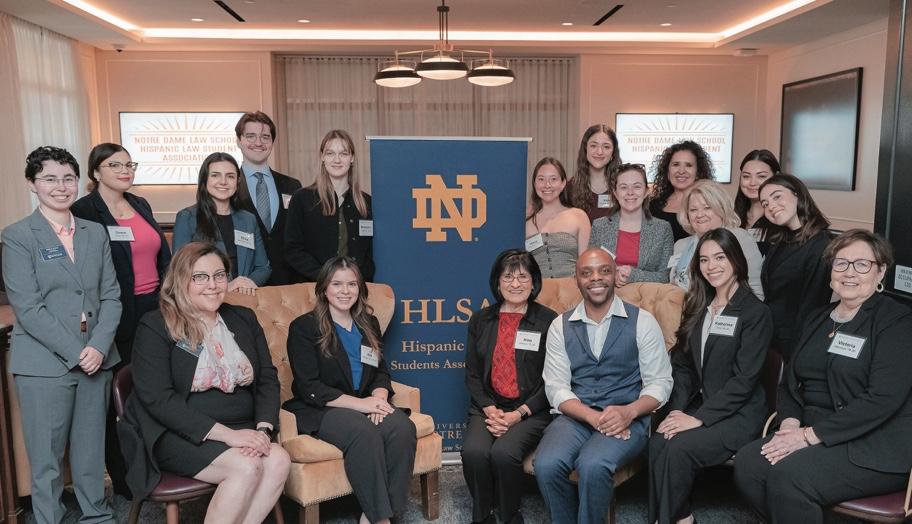
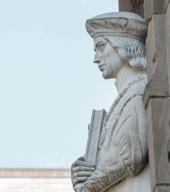
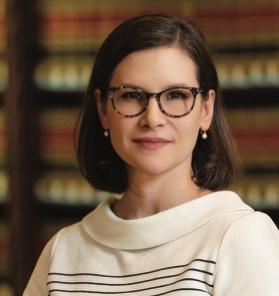
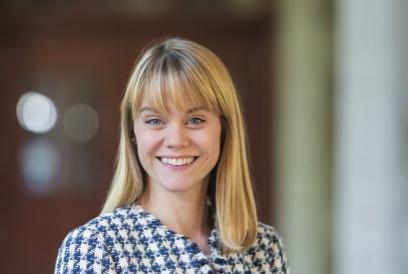
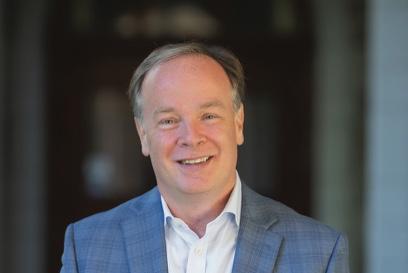
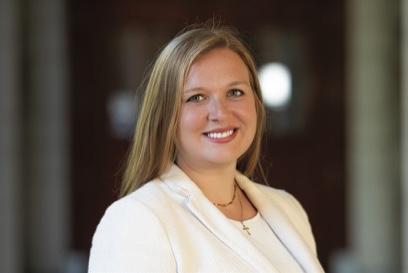
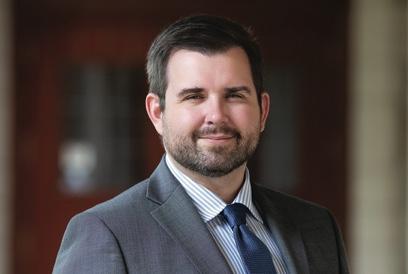
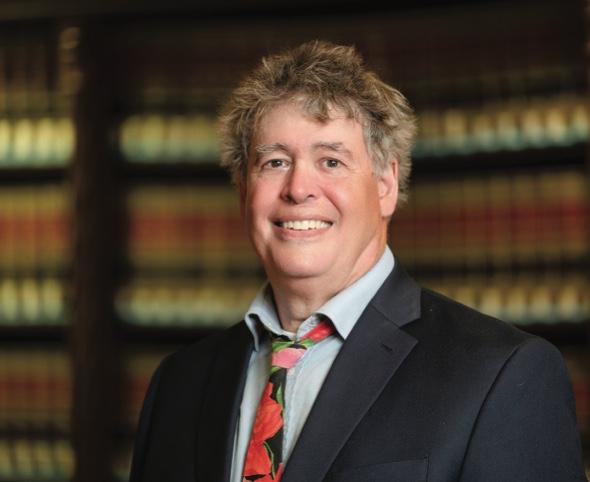
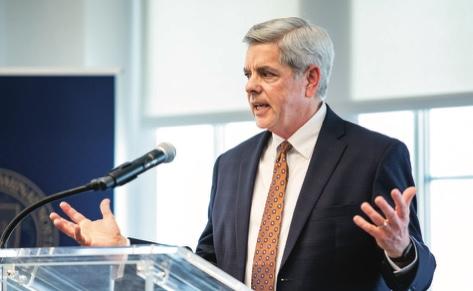
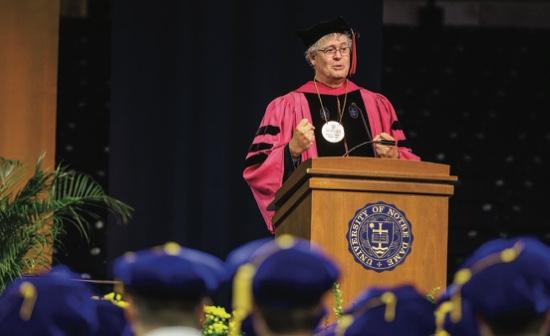
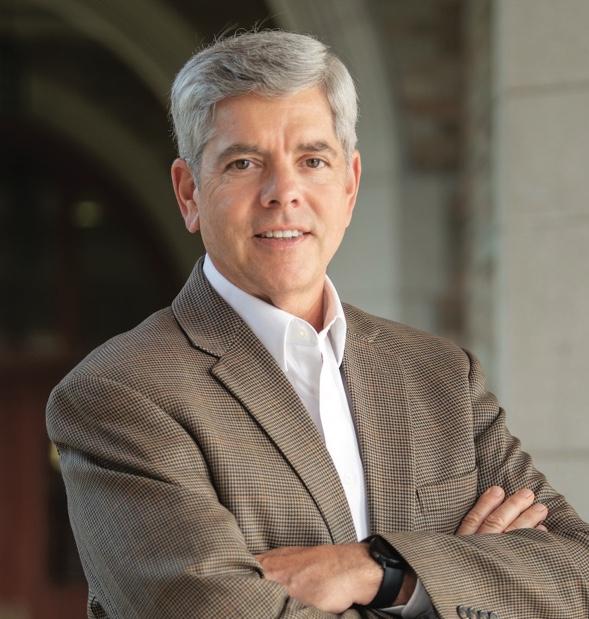
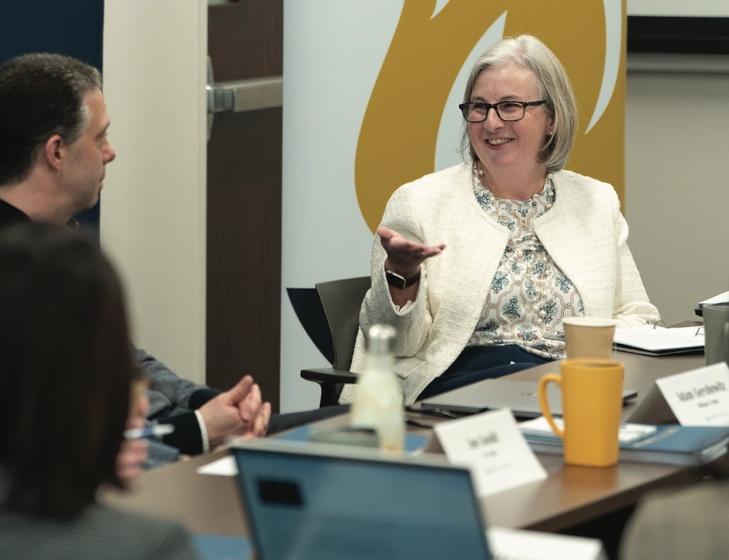
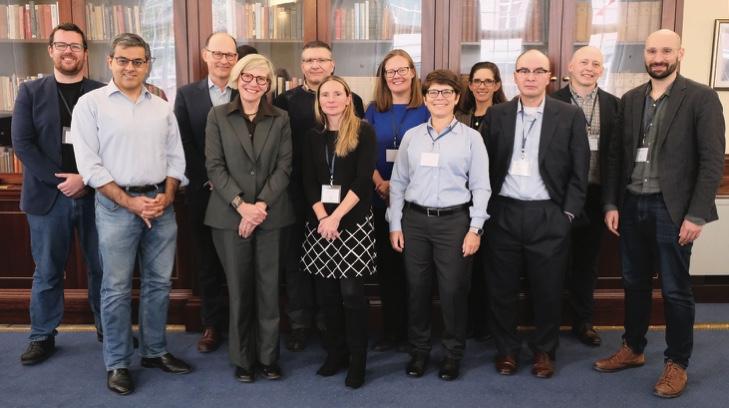
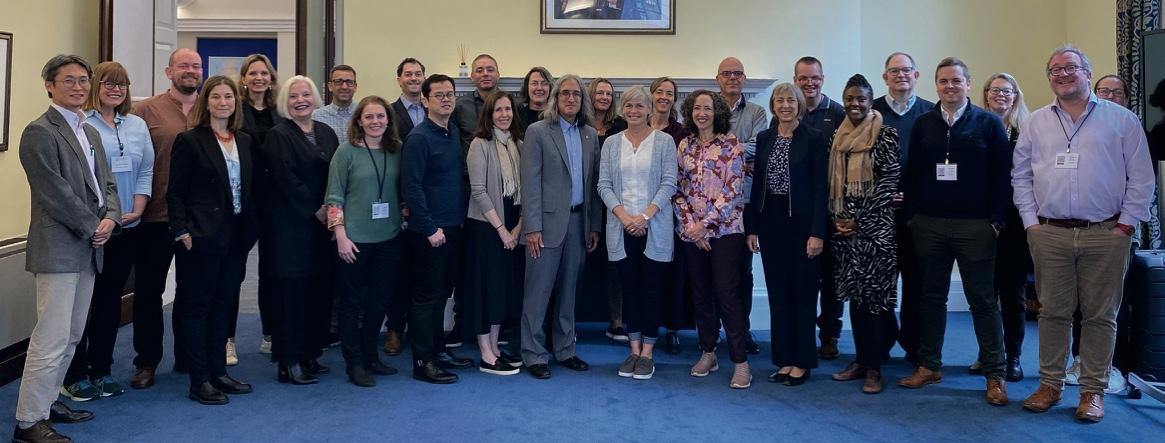
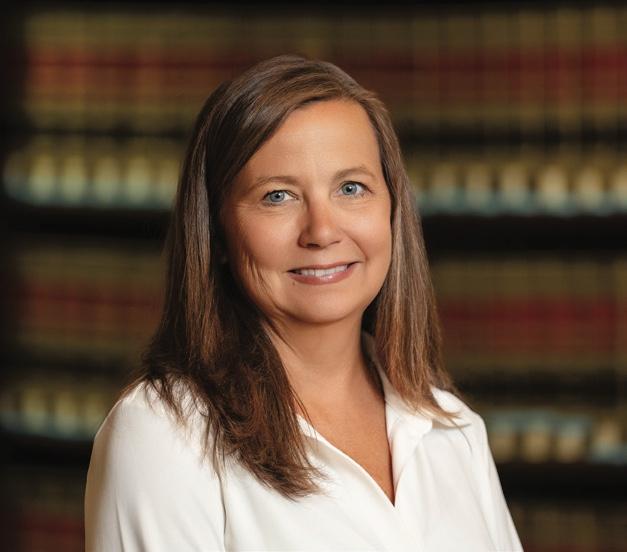
Chancellor Kathaleen McCormick Chancellor of the Delaware Court of Chancery
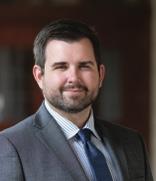
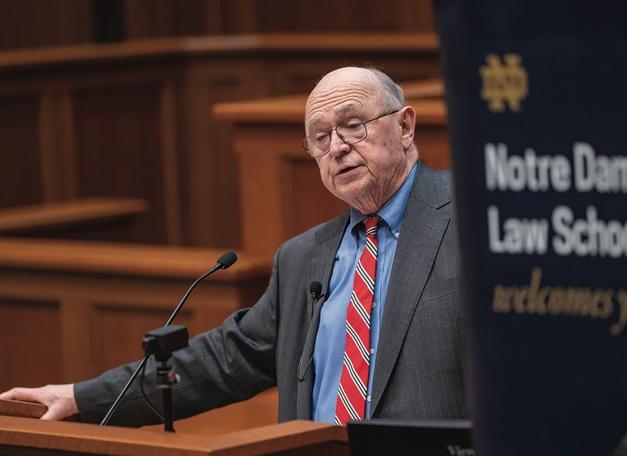
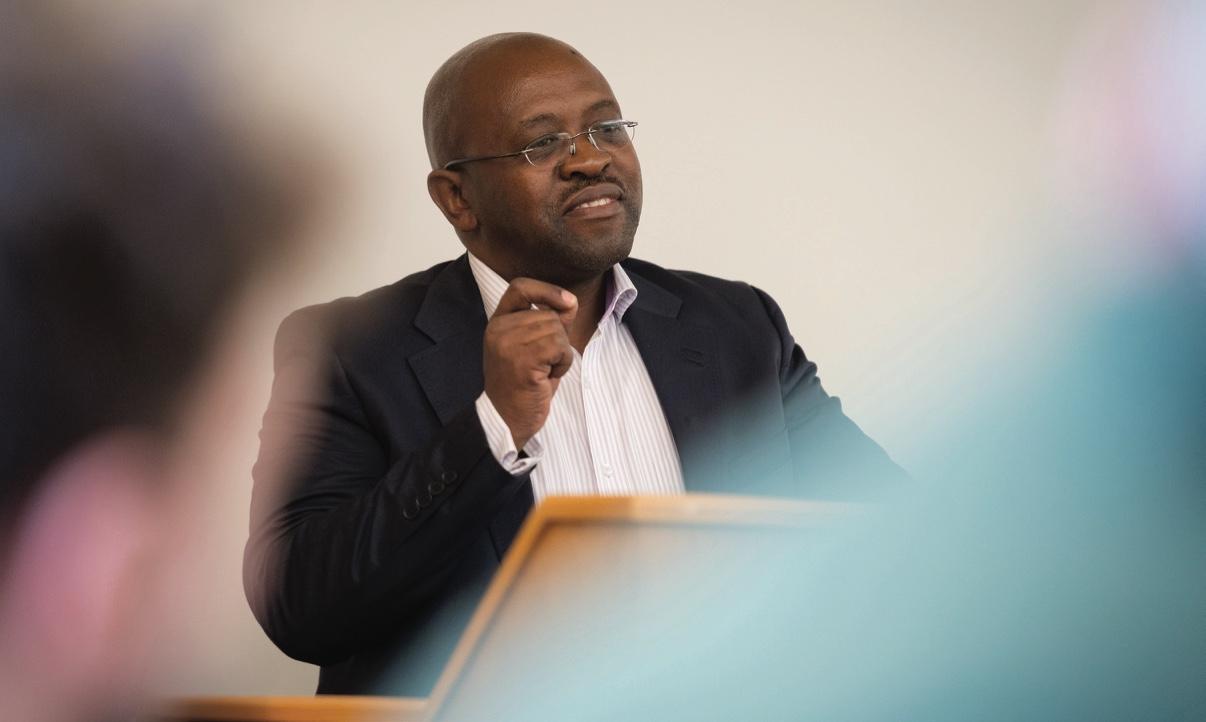
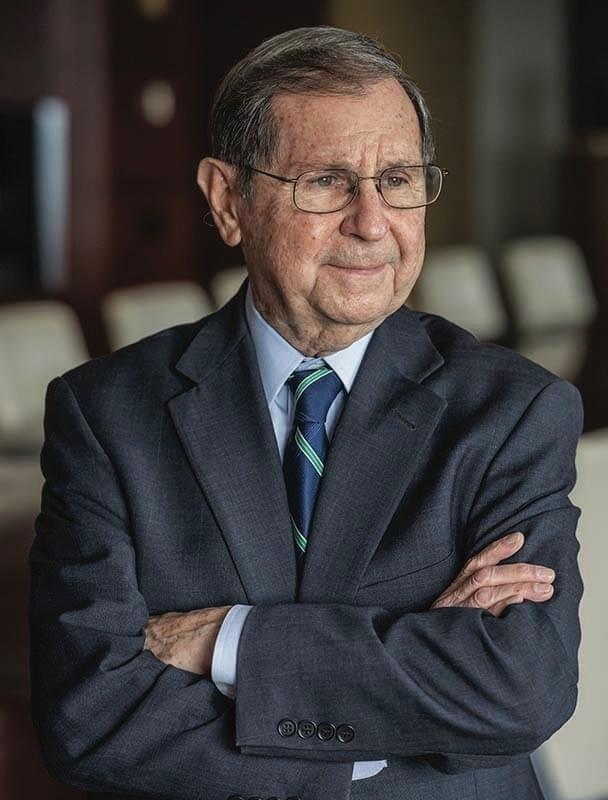
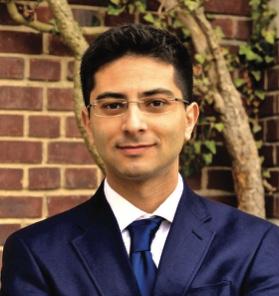
Justice Mbuyiseli Madlanga Former
Dear Notre Dame Lawyers,
Welcome to the 2026 issue of Notre Dame Lawyer magazine! While we celebrate Notre Dame Lawyers each and every day, this special issue is dedicated to a celebration of Notre Dame Judges, and the relationship of Notre Dame Law School to the judiciary.
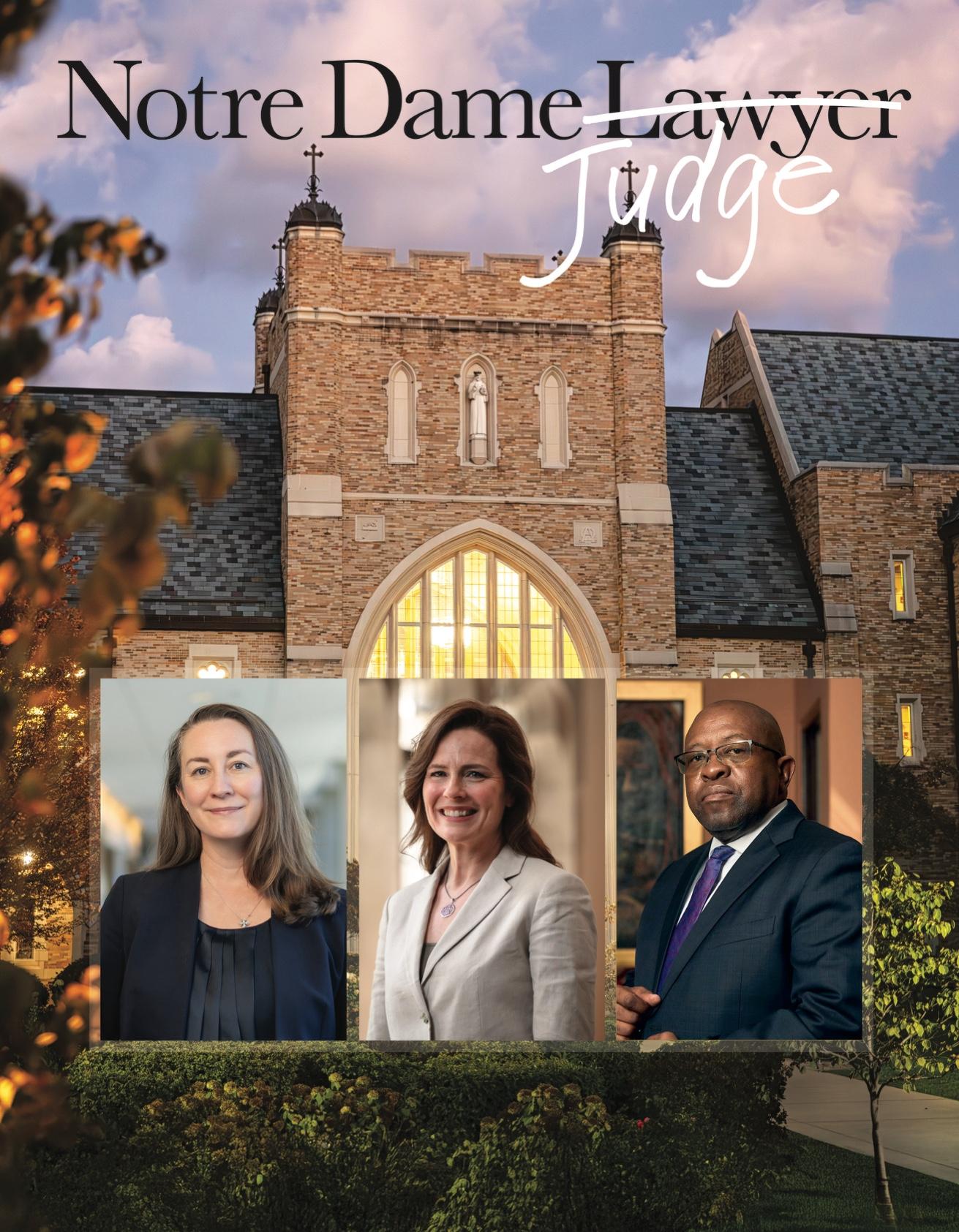
The three judges who grace the cover of this issue illustrate the importance of Notre Dame Law School as a starting point for some of the most influential judges in the world. Everyone is aware of our most illustrious alumna, United States Supreme Court Justice Amy Coney Barrett. But Notre Dame has graduated many lawyers who have gone on to serve our nation and the world in the judiciary.
Among the most important are Chancellor Kathaleen McCormick of the Delaware Court of Chancery. In this role, she serves as the highest judge on the most important business law court in the world, where over half of all publicly traded corporations fall within her court’s jurisdiction.
We are also proud to claim Justice Mbuyiseli Madlanga of the Constitutional Court of South Africa, and now the head of the “Madlanga Commission” of Inquiry, appointed to investigate political corruption in that country. These three courageous examples highlight the importance of ethical and competent leadership in our legal system, hallmarks of Notre Dame Lawyers everywhere.
Of course, there are many other “Notre Dame Judges” who provide similar examples of courage, competence, and integrity. The success of our alumni in the judiciary is a testament to the distinctive Catholic mission of Notre Dame Law School, with our emphasis on ethics, personal responsibility, selfless service to others, and sound fundamental legal training. Like all Notre Dame Lawyers, our Notre Dame Judges are the embodiment of the values that produce “A Different Kind of Lawyer.”
In recognition of our special role in preparing leaders, like judges, for our country and our world, I am delighted to share with you some of the exciting news about the ways in which we fulfill our responsibility to produce such leaders.
First, we continue to send record numbers of our graduates into top federal and state clerkship opportunities after graduation. In fact, over the past three years, nearly one-fourth of all Notre Dame Law School graduates have secured federal or state judicial clerkships. This astounding figure regularly places us third or fourth in the nation, behind only Yale, Stanford, and occasionally, the University of Chicago. Even Harvard, Columbia, and Virginia are looking up at us when it comes to federal judicial clerkships.
Second, we continue to lead the way in preparing law students to be “practice ready” on day one. Our pioneering partnership with Harvey AI, the nation’s preeminent AI platform for law practice, enables our students to be familiar with the ways in which Artificial Intelligence is currently used in law firms to aid document review, legal research, and case management. At the same time that we are training our students in the use of AI in law practice, we are limiting or eliminating its use in law school assessments, ensuring that our students acquire the irreplaceable legal skills fundamental to the elite practice of law.
We are also providing new ways for students to acquire and hone those fundamental legal skills. This fall, we have opened three new clinics—in Veterans Rights, Immigration Law, and Intellectual Property Law—bringing our clinical offerings to ten legal aid clinics. When combined with our Community Development Clinic, our Housing Clinic, and our world-leading Lindsay and Matt Moroun Religious Liberty Clinic, which serves as our de facto Supreme Court Clinic, we have gone from 32 clinical seats for our students in 2019 to 104 in 2026. Rounded out by our Galilee Project, our “On the Front Lines” experience, and our externship program, Notre Dame Law School is now a national leader in “hands-on” experiential learning.
Our emphasis on fundamental lawyering skills and experiential learning is reinforced by our newly reconstructed Legal Writing program and faculty, which now consists of five, full-time Professors of Legal Writing. These incredible professionals bring a wealth of real practice experience and teaching excellence to our students, ensuring that they will indeed be “practice ready.”
Of all of our new developments, I am particularly proud of our Justice Amy Coney Barrett Moot Court Tournament. Now in its second year, and spearheaded by Professor Jacqueline Liedl, our new moot court tournament showcases our talented student advocates for the whole world to see, and demonstrates that competition can be civil, dignified, and uplifting.
While we thought you might enjoy learning of our many alumni among the ranks of the judiciary, it is important to remember that the world needs Notre Dame Lawyers in every area of law, from litigators to legislators, securities regulation to secured transactions, banking to bankruptcy, public interest to public service, and counselling to council members. Just as God has called us to this vocation, he has called us to all aspects of it. Every Notre Dame Lawyer provides a service to God’s Kingdom that only she or he is uniquely gifted to provide.
We hope you enjoy this issue of Notre Dame Lawyer and use it as an opportunity to stay connected with your law school. We rely upon our alumni, not just for financial support and wisdom, but also to serve as examples of what is possible for our students, our society, our country, and our world.
Yours in Note Dame,
The Joseph A. Matson Dean & Professor of Law
Inaugural Justice Amy Coney Barrett Moot Court Tournament Culminates in Strong Competition and Awards for Top Teams
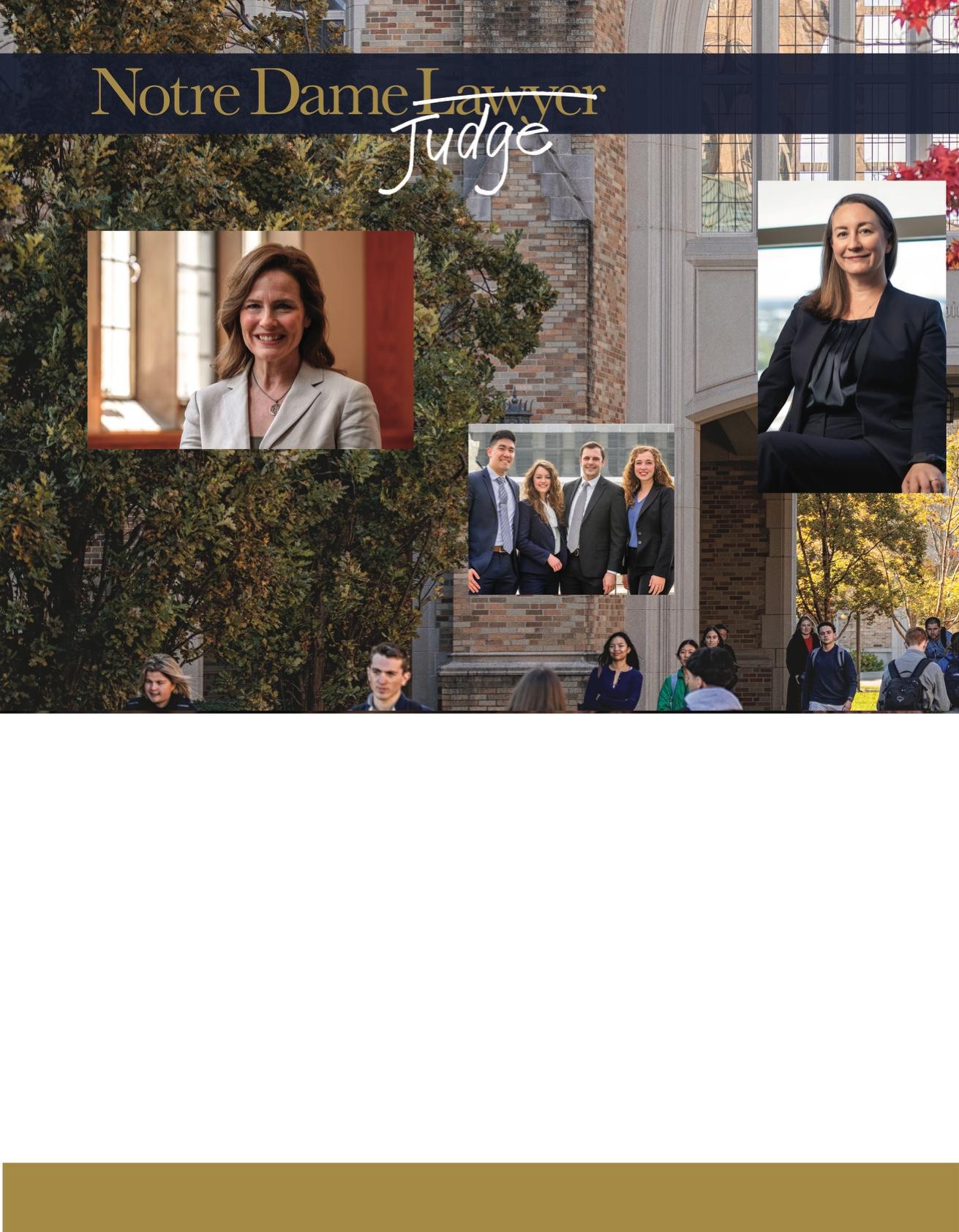
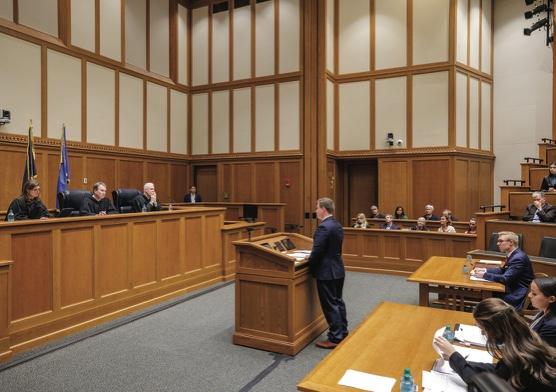
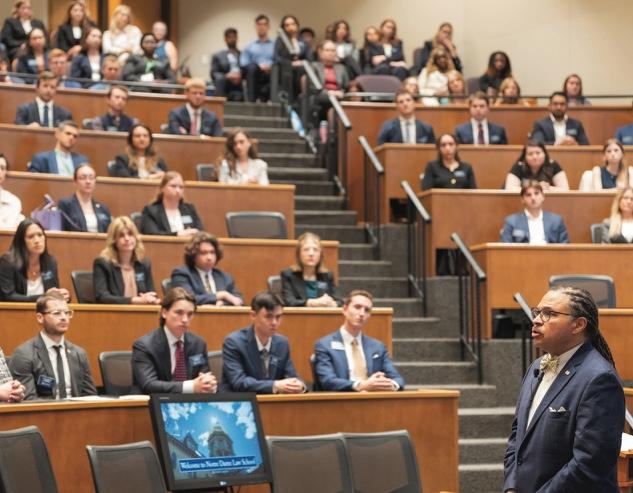
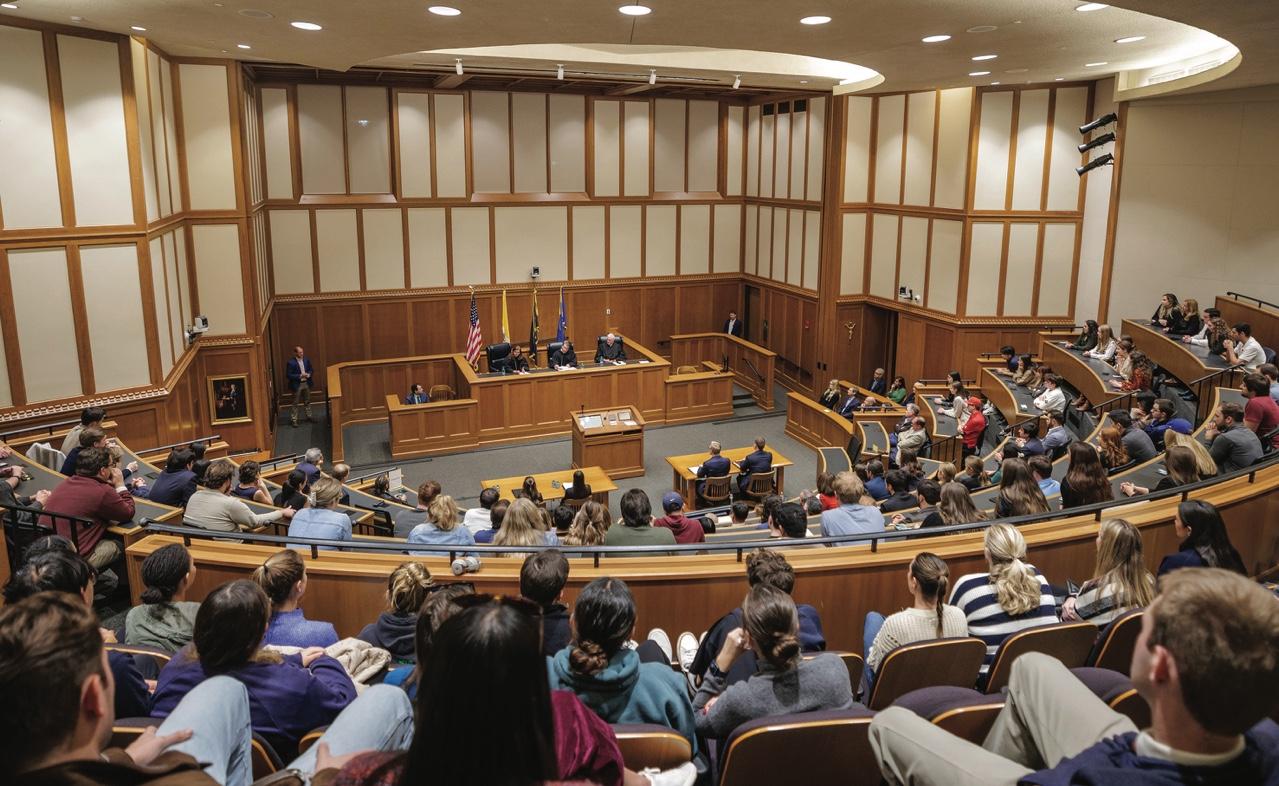
Notre Dame Law School’s inaugural Justice Amy Coney Barrett Moot Court Tournament, held on November 8, 2024, was a resounding success, showcasing the advocacy and writing skills of second- and third-year law students.
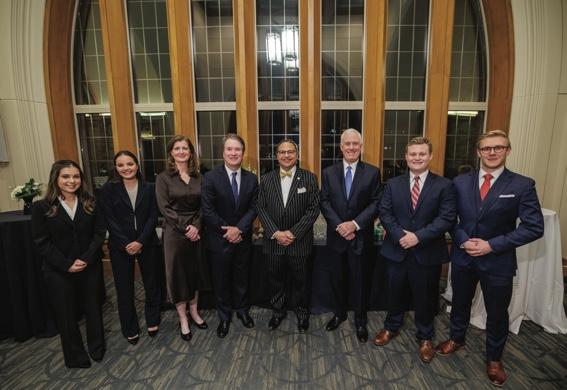
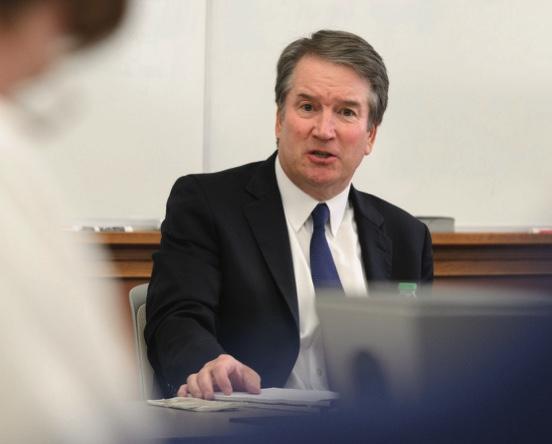
A distinguished panel of judges presided over the final round, including U.S. Supreme Court Justice Brett Kavanaugh, Judge Elizabeth Branch of the U.S. Court of Appeals for the Eleventh Circuit, and Notre Dame Law alumnus Judge Jerry Pappert ’88 J.D. of the U.S. District Court for the Eastern District of Pennsylvania.
The tournament began in September with 32 oralists and seven briefs and concluded with a highly competitive final round. Thirdyear law students Gabriel Powell and Thomas MacPhee, serving as respondents, were awarded first place for their compelling arguments, with MacPhee also earning the Best Oralist Award. Marin Larkin and Kathleen Casey, serving as petitioners, secured second place for their exceptional advocacy. Recent alumna Brianna Ivy ’25 J.D. received the Best Brief Award for her outstanding written work.
Dean G. Marcus Cole said, “This tournament honors Justice Amy Coney Barrett’s legacy of legal excellence and celebrates the extraordinary talent of our students. We are all incredibly proud of their dedication and the seriousness with which they approached this competition. Their performances demonstrate the high level of excellence that defines Notre Dame Law School. I couldn’t be prouder of what our teams accomplished during our first competitive tournament.”
The competition was centered on a fictional appellate case on Fourth Amendment questions regarding border searches of cellphones and digital privacy. The finalists debated the legality of forensic cell phone searches under the border-search exception.
This year’s Justice Amy Coney Barrett Moot Court Tournament was held on November 21, 2025.
Notre Dame Law School Expands Partnerships in Africa and Brazil
As one of the Law School’s key priorities, the Global Lawyering Initiative advances Notre Dame Law School’s commitment to preparing students with a comprehensive understanding of legal issues that transcend national borders. This commitment takes shape through the initiative, which leverages strategic partnerships to expand global opportunities for faculty and students through research collaboration and academic exchanges.
To advance this priority, the Law School has established full partnership agreements with institutions in Africa and Brazil: Strathmore Law School in Nairobi, Kenya; the Constitutional Court of South Africa; the University of Cape Town in South Africa; Insper in São Paulo, Brazil; and Fundação Getulio Vargas in Rio de Janeiro, Brazil. Led by Dean G. Marcus Cole, a delegation from Notre Dame Law School visited Africa and Brazil in January and March, respectively, with the goal of strengthening relationships with these institutions.
The delegation engaged in a wide range of activities—from Memorandum of Understanding (MOU) signings and public lectures to alumni gatherings and joint academic conferences—showcasing the Law School’s expanding global footprint.
“Notre Dame Law School is committed to training lawyers and leaders of the future, and the future of law is transnational. The best lawyers will be ones who can lead and solve problems all around the world,” said Dean Cole. “These strategic partnerships not only enhance our international presence, but also allow Notre Dame Law School to promote global academic excellence while broadening opportunities for our faculty and students consistent with our Catholic mission.”
The Global Lawyering Initiative aligns with the Law School’s mission to cultivate lawyers who view the practice of law as a service to others, not just a profession, and who are dedicated to advancing justice and human dignity on a global scale.
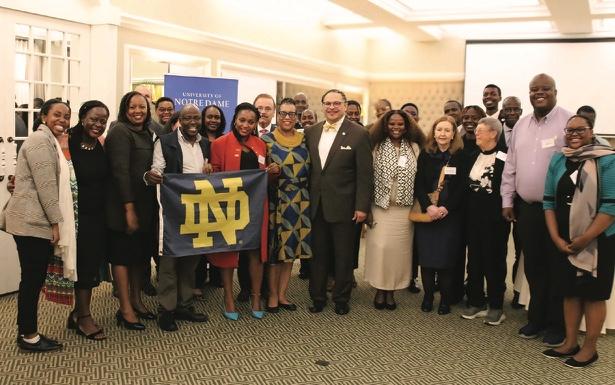
The Notre Dame Law School delegation hosted a gathering in Kenya for Notre Dame alumni and prospective students.
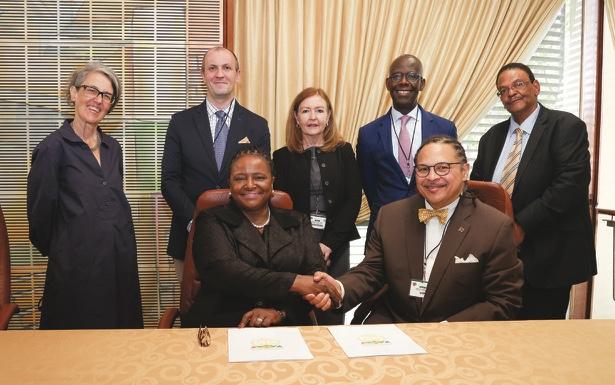
Notre Dame Law School signed a historic MOU with the Constitutional Court of South Africa in Johannesburg, South Africa.
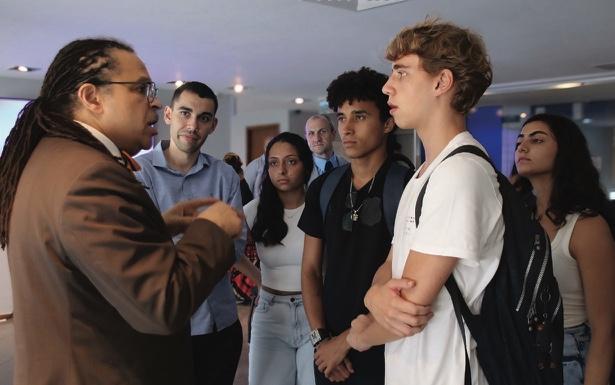
Dean G. Marcus Cole joined a dynamic fireside chat with students at the Fundação Getulio Vargas in Rio de Janeiro, Brazil.
From Courtrooms to Communities: Global Human Rights Clinic in Action
Notre Dame Law School’s Global Human Rights Clinic, led by Professor Diane Desierto, provides students hands-on experience advocating for human rights worldwide. Students engage in legal representation, human rights training, and advocacy for legislative and policy reforms through work with courts, tribunals, and global organizations. The following highlights showcase the Clinic’s global reach, diverse initiatives, and impact.
Collaboration with U.N. Development Programme on Women and Justice in the Asia-Pacific
The Clinic launched the Women and Justice in the Asia-Pacific project, which involves fact-finding investigative research and international human rights training that examine the obstacles, opportunities, and capacities available to women lawyers, justice professionals, and judges in Indonesia, Bangladesh, Thailand, and Laos. The Clinic is also conducting interviews with judges and other justice professionals from these countries to contribute to the final report and judicial leadership training module on Women and Justice in the Asia-Pacific. The final report was launched in October 2025 at UNDP’s regional conference with Asia-Pacific courts in Bangkok, Thailand.
U.N. Guidelines on Human Rights and Corruption and Knowledge Hub on Economic, Social, and Cultural Rights
The Global Human Rights Clinic completed a collaborative project with the U.N. Office of the High Commissioner for Human Rights (U.N. OHCHR) in Geneva. The team authored the 120-page United Nations Guidelines on Human Rights and Corruption, to be officially adopted by the U.N. Human Rights Council in 2025 and disseminated to all States and U.N. agencies. Last May, the Clinic co-hosted a consultation roundtable on the guidelines with experts from the U.N. OHCHR in Geneva, held at the University of Notre Dame’s Washington, D.C. offices. U.N. OHCHR launched the guidelines in the fall of 2025.
The Clinic is also now collaborating with the U.N. OHCHR on building the new Knowledge Hub on Economic, Social, and Cultural Rights, as approved by the U.N. Human Rights Council.
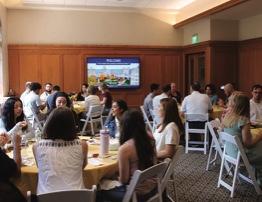
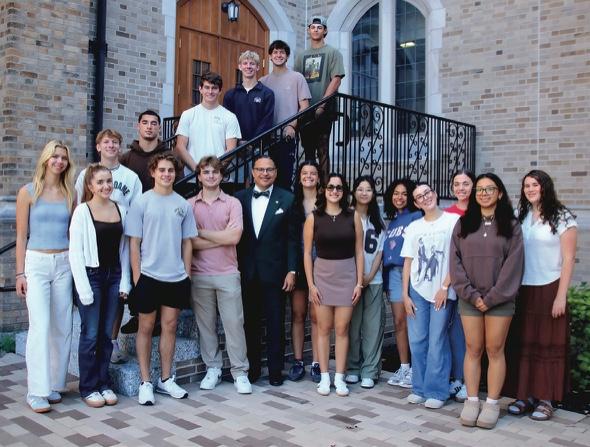
Meet the Class of 2028
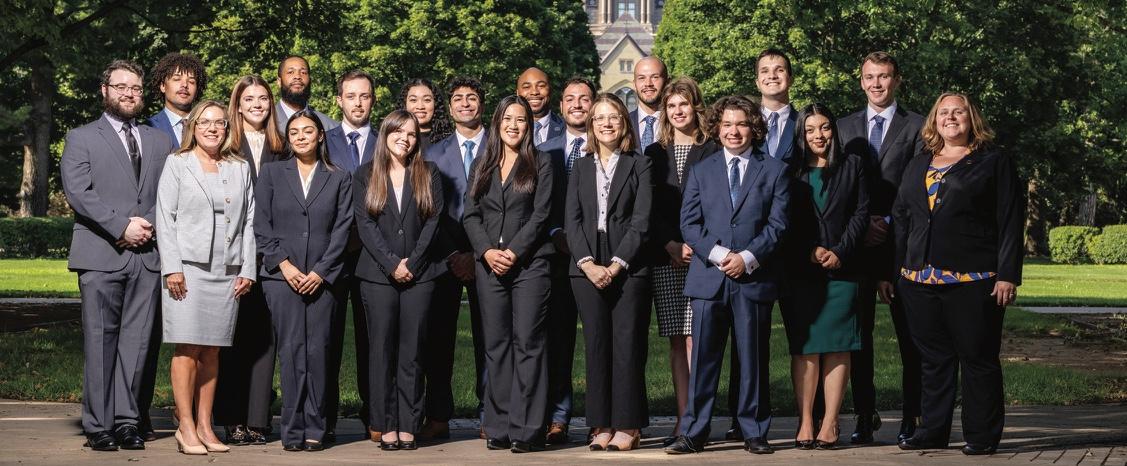
In fall 2025, the Class of 2028 arrived on campus, officially joining the Notre Dame Law School community.
Collaboration with the U.N. International Organization of Migration
The Clinic is working with the United Nations International Organization of Migration and their respective country offices in Ethiopia, Colombia, and Sri Lanka. They are focused on examining and investigating areas for improving international human rights protection, policy, and legislative reform. The collaboration will look for consistency with international human rights law in housing, land, and property access, use, and sustainable environmental stewardship by vulnerable displaced groups in these three countries. Such groups include internally displaced persons (IDPs), indigenous peoples, rural women farmworkers, persons of African descent, and campesino or peasant communities.
Students of Color
Dean’s Initiative for Leadership and Scholarly Excellence Equips First-Year Law Students for Academic and Professional Success
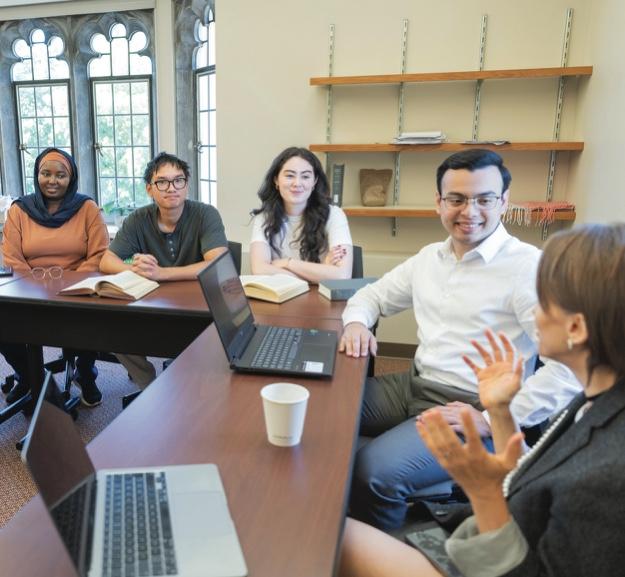
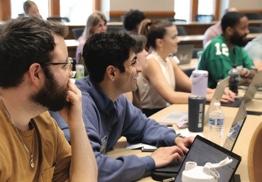
Two weeks before the start of the academic year, a select group of 19 incoming J.D. students arrived at Notre Dame Law School to participate in the inaugural Dean’s Initiative for Leadership and Scholarly Excellence (LSE) program. Designed to support students with limited exposure to the legal profession or from traditionally underrepresented backgrounds, the LSE program fosters academic, professional, and personal growth through mentorship, foundational coursework, and professional development to help students build a strong foundation for success in law school.
The two-week program, established by Dean G. Marcus Cole, was modeled after a similar program that Cole participated in as a law student at Northwestern University.
“I thought about my experience in that program leading up to law school. I wanted to replicate that and put students with exemplary leadership experience in a program where we give them exposure to what they are about to learn in law school,” said Cole.
The LSE cohort experienced sample lectures in Legal Writing, Contracts, Property, and Civil Procedure, serving as an introduction to their doctrinal classes, legal reading and writing, and preparing for classes. The students also gained insight into financial support, wellness services, exam preparation, and career development through workshops, sessions, and individual resource meetings with Law School staff.
Experts from Across the World Convene at Fifth Annual Notre Dame Religious Liberty Summit
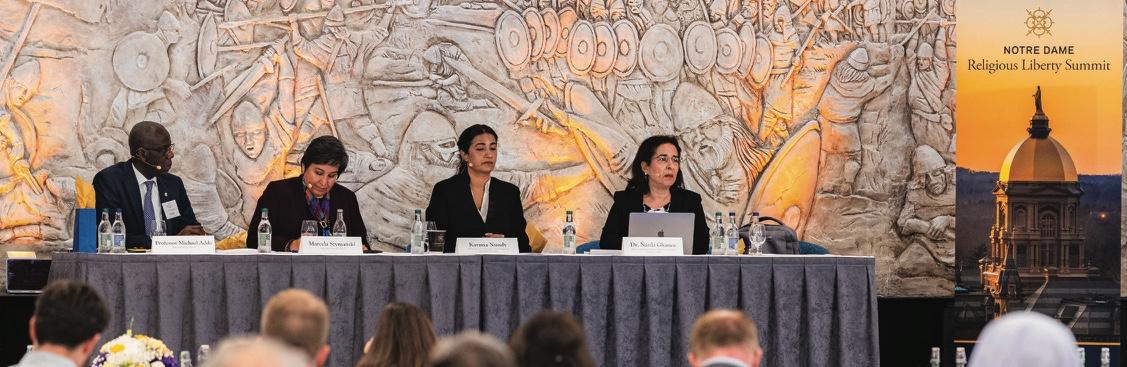
Each year, Notre Dame Law School hosts the Notre Dame Religious Liberty Summit, bringing together expert scholars, advocates, and faith leaders for robust discussions on complex global religious liberty issues and the future of religious freedom on the worldwide stage.
This year’s fifth annual Notre Dame Religious Liberty Summit was held in Dublin, Ireland at the historic Clontarf Castle and centered on the theme of “Political Authority, Civil Society, and Religious Freedom.”
The Summit featured over 20 speakers in panel discussions and keynotes on topics such as the suppression of religion in China and Hong Kong, the persecution of Christians worldwide, and combating religious oppression by powerful states. Over 100 leading scholars, faith leaders, and advocates attended the event.
In addition to academic and professional preparation, the LSE program provides tangible financial support to its participants. Each member of the cohort received a one-time $2,000 housing stipend and will receive a $10,000 annual scholarship during law school.
By providing additional guidance and a structured schedule before classes even began, the LSE program helped its inaugural cohort enter law school with confidence, connection, and a clear sense of purpose. The comprehensive program set the tone for their first year— equipping them not just for academic success, but for leadership within and beyond Notre Dame Law School.
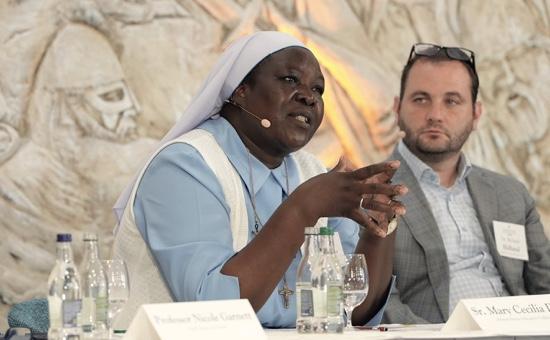
The panel discussions explored the rising global threats to religious freedom and the vital role of civil society in defending it. Experts highlighted how powerful states use legal, social, and political pressures to stifle religious belief and practice. Other panels examined how attacks on religious education and faith-based social services weaken civil society’s capacity to protect vulnerable communities and
promote pluralism. Together, the conversations underscored the need to resist religious oppression and strengthen the institutions that sustain freedom of conscience worldwide.
The summit’s culminating event was the Religious Liberty Awards Dinner. The 2025 Notre Dame Prize for Religious Liberty was awarded to Professor Michael McConnell of Stanford Law School. The 2025 Religious Liberty Scholarship Award was presented to Dr. Russell Hittinger ’75 of the Catholic University of America.
The summit also featured a number of cultural experiences for attendees, including a visit to the Four Courts, which houses the Supreme Court of Ireland.
“If we are to win the case for religious freedom, we cannot settle for winning that case in the court of law,” said Dean G. Marcus Cole. “We must also win in the court of public opinion, and that court is in each heart. We cannot win hearts with reason. We must win hearts with love.”
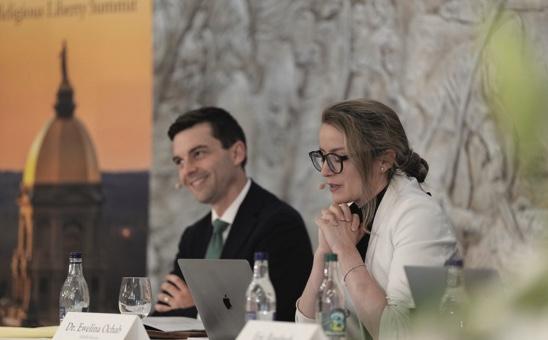
ND Law Professor John
and Dr.
Inaugural LSE cohort
Sister Mary Cecilia Draru, African Sisters Education Collaborative, and Professor Michael Helfand, Pepperdine Caruso School of Law, on the panel discussion, Threats to Civil Society: Religious Education
Meiser
Ewelina Ochab, IBAHRI/Refcemi, participate on the panel discussion on Threats to Civil Society: Religious Social Service Providers
Learning from the Nation’s Highest Court
It is not every day that law students have the chance to learn from a distinguished jurist—let alone two sitting justices of the United States Supreme Court. During the 2025 fall semester, Notre Dame Law students experienced just that, with the opportunity to take short courses taught by Justice Amy Coney Barrett ’97 J.D. and Justice Brett Kavanaugh.
In August, Justice Barrett returned to Notre Dame to teach Modern Constitutional Theory, a weeklong seminar exploring major theories of constitutional interpretation, with a special focus on the debates surrounding originalism.
Just two weeks later, Justice Kavanaugh joined Professor William Kelley for a Supreme Court Seminar course, offering students insight into the Court’s workings and decision-making process.
In addition, Chief Judge Jeffrey Sutton of the U.S. Court of Appeals for the Sixth Circuit co-taught Advanced Topics in Constitutional Law with Professor Kelley, further broadening students’ exposure to leading members of the judiciary.
Student Perspectives
Third-year student Steven Tu said, “Beyond the once-in-a-lifetime opportunity to learn from a sitting U.S. Supreme Court justice, Justice Barrett is someone I’ve always admired for her principled approach to constitutional interpretation and her integrity as a judge.” He added that the course deepened his respect for judges who “wrestle with these questions every day.”
Grace Cala, also a third-year student, described the seminar as “an actual dream come true, and my most memorable moment at Notre Dame Law School.” She was struck by Justice Barrett’s passion for teaching and said she would carry with her the Justice’s advice on “balancing faith, family, and a legal career.” She reflected, “As a law student, it’s easy to be intimidated by SCOTUS opinions, but it’s important to remember that cases are resolved by human beings who actually think a lot like we do.”
Kresge Law Library Becomes Home to St. Thomas More Collection
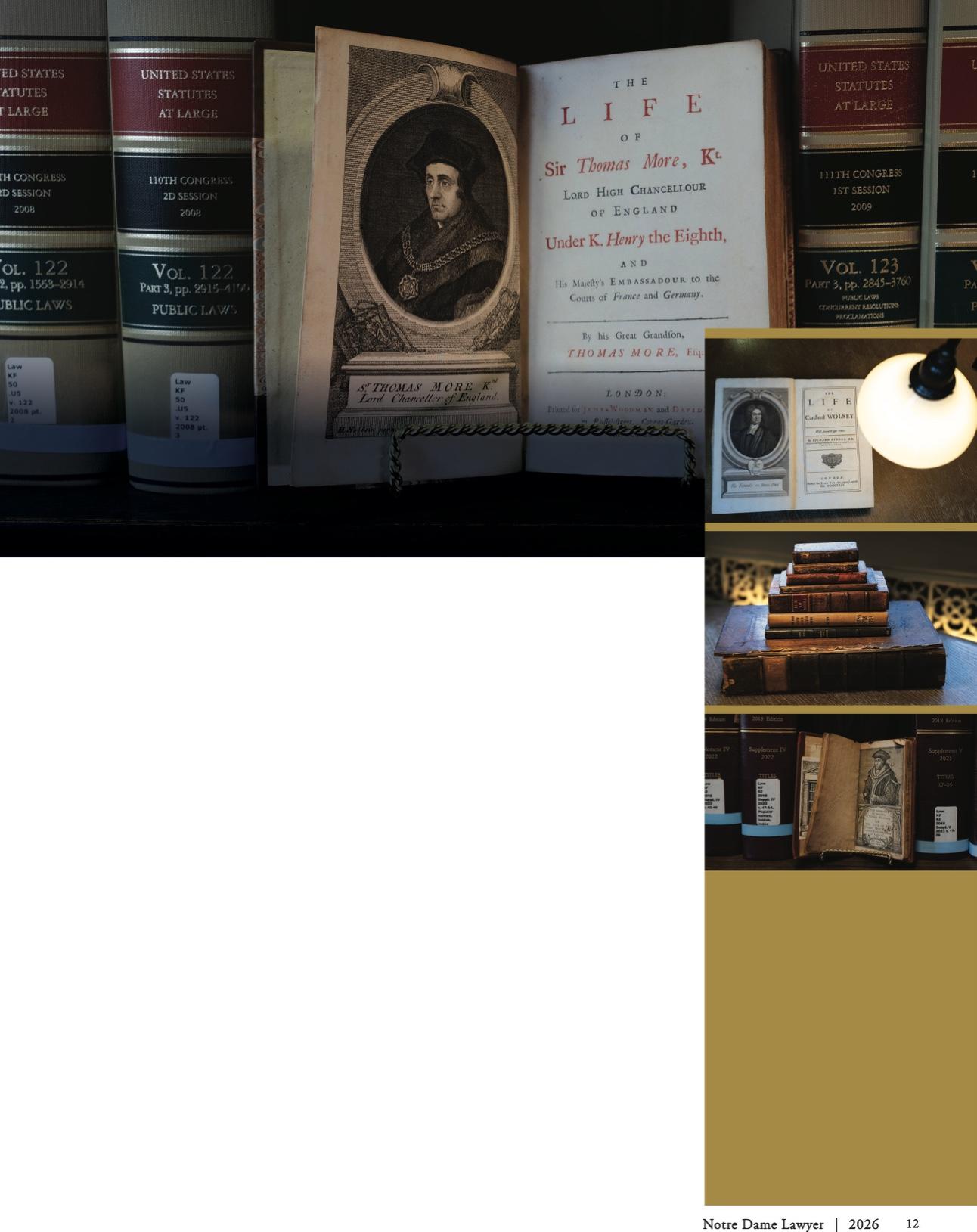
The shelves of the Kresge Law Library are rich with more than 400 volumes tied to the life and legacy of St. Thomas More, thanks to a gift from St. John’s University School of Law in Queens, New York.
The collection, 431 items spanning 293 unique titles, arrived at Notre Dame as part of a reorganization project. Rather than dispersing the works, St. John’s sought a home where the volumes would be preserved and accessible to scholars, students, and future generations.
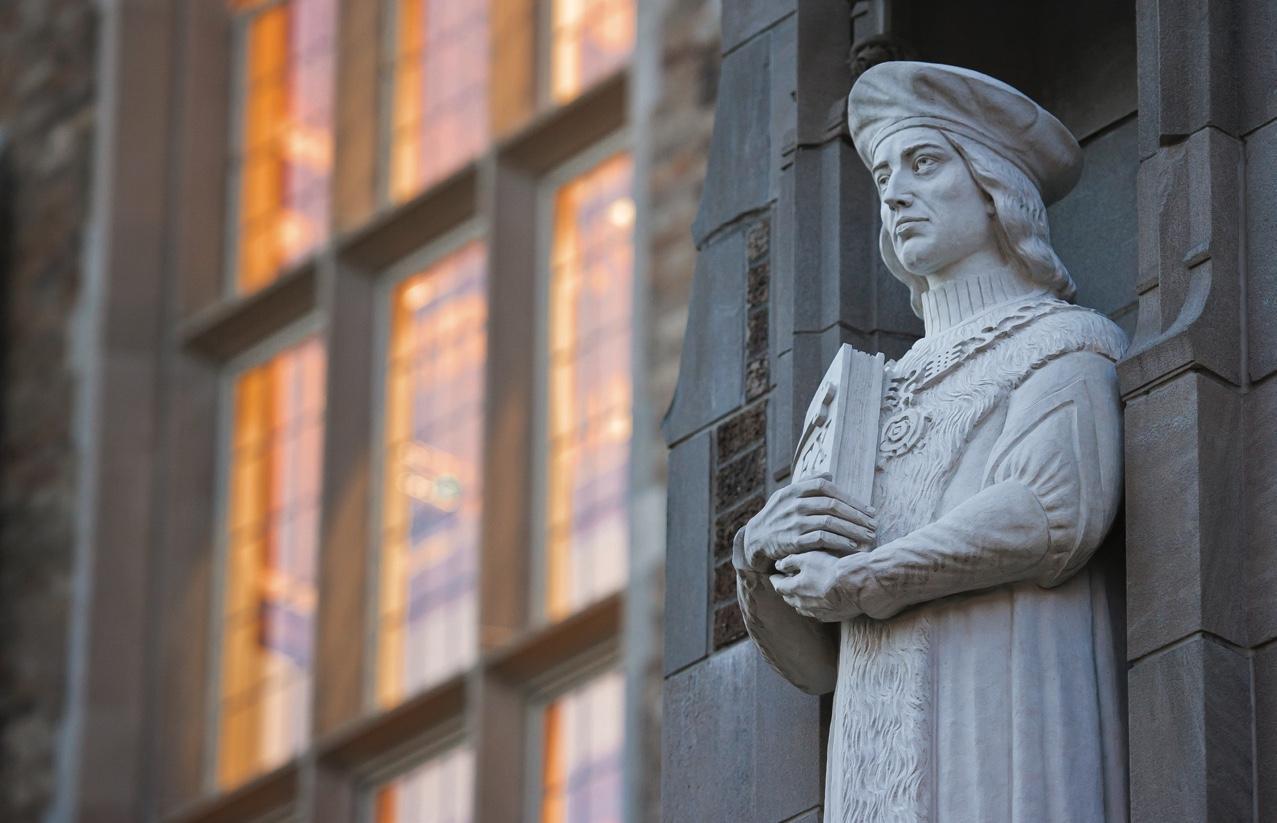
Few figures in history embody the union of faith, intellect, and law as fully as St. Thomas More. Born in London, More was educated at Oxford and trained at Lincoln’s Inn before rising to prominence as a lawyer, undersheriff, member of Parliament, Speaker of the House, and ultimately Lord Chancellor of England.
Among the legal community, More’s influence is deep and multifaceted. His professional excellence, intellectual acumen, and sharp wit serve as enduring ideals for lawyers and judges; he represents the archetype of a legal scholar who leverages rigorous reasoning and ethical principles to navigate complex moral and legal issues.
Highlights of the Collection
The collection showcases the breadth of More’s influence, both during his lifetime and across the centuries. Among the collection’s highlights are:
Beatificationis seu Declarationis Martyrii Servorum Dei (1881)
Held by only three libraries worldwide, this rare volume documents the Church’s formal recognition of More’s martyrdom.
Utopia (1639 English translation)
One of the earliest Englishlanguage editions of More’s masterpiece, still widely read today.
Mirror of Virtue in Worldly Greatness: Life of Sir Thomas
More by William Roper (1817)
Written by More’s son-in-law, this intimate biography provides a firsthand perspective on his life and character.
Epigrammata (1520)
A collection of over 250 Latin poems, many reflecting on politics and governance, showcasing More’s wit and literary skill.
Dialogue of Comfort Against Tribulation (1534)
Written during his imprisonment in the Tower of London, this deeply personal work encourages perseverance in the face of suffering, balancing profound spiritual insight with humor and sharp political commentary.
Few historical figures resonate so powerfully across centuries and disciplines as St. Thomas More, whose life and works remain indispensable guides in the quest for justice, integrity, and moral courage.
Kresge Law Library’s St. Thomas More Collection provides unmatched resources for those seeking a better understanding of St. Thomas More and his innumerable contributions.
Justice Amy Coney Barrett
Justice Brett Kavanaugh
Lardy Scholarship Award: Amanda Garcia
Amanda Garcia is the recipient of the Peter A.R. Lardy Scholarship Award for the 2025-26 academic year. The scholarship was established by the Notre Dame Law Class of 1975 to honor their classmate Peter A.R. Lardy, who died of cancer during his third year of law school. The award is presented annually to a rising third-year student “who exemplifies his courage, love, and understanding toward his fellow man” and includes substantial tuition assistance.
Religious Liberty Clinic Students Help Prepare Religious Charter School Case for U.S.
Supreme Court
New Clinics
Notre Dame Law School continues to expand hands-on learning opportunities for students while deepening our service to the community. This year, we launched three new clinics that significantly broaden the scope of pro bono legal assistance our students provide.
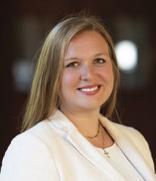
“The Lardy Scholarship is more than just financial support,” said Garcia. “Receiving this award is a powerful reminder that people believe in me and in my future—not just as a lawyer, but as an advocate. It reaffirms my own belief that anyone can do this. I’m the first in my family to attend law school and become an attorney, and carry that with deep pride.”
Immigration Clinic
Directed by Clinical Associate Professor Ashley Sanchez, the Immigration Clinic offers pro bono representation in asylum, citizenship, bond hearings, DACA, and family reunification cases. Students advocate for clients before U.S. Citizenship and Immigration Services and in Immigration Courts.
Garcia has been deeply engaged in the Notre Dame community. She served as president of the Women’s Legal Forum and Tax Law Society last year, and treasurer of the Student Bar Association. In addition to her leadership roles, Garcia is a member of Jus Vitae, the St. Thomas More Society, and the Federalist Society. Outside of Notre Dame Law School, Garcia volunteers for Sleep in Heavenly Peace, an organization dedicated to constructing beds for children in need. She is also a Sorin Fellow for the de Nicola Center for Ethics and Culture and extern for the Office of Institutional Equity.
Garcia received heartfelt nominations from members of the Notre Dame Law School community, who praised her extraordinary character and the kindness, generosity, and courage she shows to others. Her support has inspired not only first-year students and recent graduates, but also fellow transfer students navigating their own transitions. One classmate shared, “She embodies Notre Dame’s vision of a ‘different kind of lawyer’— one who approaches the law not simply as a career, but as a calling to serve justice, community, and love. Her courage, compassion, and character are not only extraordinary—they are transformative.”
Days before graduating, then third-year Notre Dame Law student Hadiah Mabry ’25 J.D. attended oral arguments at the U.S. Supreme Court for a high-profile case she helped litigate through the Law School’s Lindsay and Matt Moroun Religious Liberty Clinic.
The case, St. Isidore of Seville Catholic Virtual School v. Drummond, challenged Oklahoma’s exclusion of religious schools from a private charter program, arguing that the policy amounts to unconstitutional religious discrimination.
Intellectual Property Clinic
Led by Clinical Associate Professor Grace Mills ’15 J.D., the Intellectual Property Clinic will serve innovators, artists, educators, and other creators. Students will advise on patents, trademarks, copyright, and fair use, helping clients protect their work while gaining hands-on experience.
Veterans Law Clinic
Clinical Associate Professor Caleb Stone leads the Law School’s new Veterans Law Clinic, dedicated to providing free legal assistance to U.S. military veterans in matters such as disability claims and appeals. Read more about the Clinic on page 21.
Mabry was among five current and former Law School students who worked on the case with the Religious Liberty Clinic, led by the clinic’s director John Meiser ’07, ’10 J.D. and staff attorney Meredith Holland Kessler ’14, ’18 J.D. in collaboration with Nicole Stelle Garnett, the John P. Murphy Foundation Professor of Law. Notre Dame alumnus Michael McGinley ’06 of Dechert LLP presented oral arguments for the school, with Meiser as second-chair counsel.
“It was truly an honor to experience oral arguments at the Supreme Court,” Mabry said. “Very few lawyers get to see a case they worked on go to the Supreme Court, and I’m so grateful to the Religious Liberty Clinic for making this possible while we were still in law school.”
The students helped prepare for oral argument at the Supreme Court. Meiser said it’s hard to overstate how meaningful the experience was for the students.
“They used their legal skills to help a new school grow from the ground up. They navigated complicated regulatory processes, worked on two separate litigations and then had the rare chance to help prepare for oral argument before the highest court in the country. Lawyers go their entire careers without opportunities like our students have gotten.”
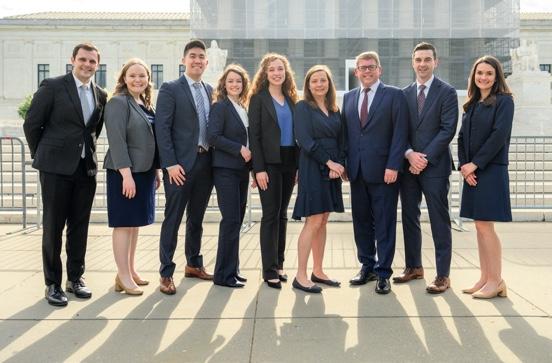
Brake 3L, Bernadette Shaughnessy ‘24 J.D., Steven Tu 3L, Jessica Smith 3L, Hadiah Mabry ‘25 J.D., Nicole Stelle Garnett, Michael McGinley ‘06, John Meiser ‘07, ‘10 J.D., and Meredith Kessler ‘14, ‘18 J.D.
Attorneys argued that religious organizations in Oklahoma have the constitutional right to have access to a state program that allows other private groups to operate charter schools, and to deny St. Isidore’s charter constituted unlawful religious discrimination. The Supreme Court upheld the Oklahoma Supreme Court’s decision in a split 4-4 decision.
“We have given our students legal experiences that can’t be replaced and which I could never have imagined during my own time as a Notre Dame student,” said Meiser. “And we did it all alongside, and because of, so many great people from Notre Dame.”
Amanda Garcia
The Notre Dame Law School St. Isidore team poses in front of the United States Supreme Court. Pictured (L-R): Simon
Clerkships
Notre Dame Law School continues to demonstrate exceptional success in placing its graduates into prestigious judicial clerkships. More than 17 percent of the Class of 2024 entered federal clerkships upon graduation—ranking fifth among American law schools.
A total of 36 graduates earned 45 clerkships, including one at the U.S. Supreme Court, 15 with the U.S. Courts of Appeals, and 20 with U.S. District Courts. Nine graduates also clerked in specialized federal courts—such as the U.S. Court of Federal Claims, U.S. Bankruptcy Court, and U.S. Court of International Trade—while another nine secured positions in state courts, including six on state supreme courts.
Across the classes of 2020–2024, graduates have secured at least 253 clerkships in federal, state, and local courts nationwide, including placements at the U.S. Supreme Court.
“I will forever be grateful for the year I spent as a judicial law clerk. When I applied for and accepted my clerkship, I looked forward to the invaluable research and writing skills I would develop and the public service opportunity a clerkship would provide. I have gained an incredible mentor in my judge and lifelong friendships with my co-clerks.”
-Sarah Barritt ’24 J.D.
Clerked for Judge Thomas Kirsch of the U.S. Court of Appeals for the Seventh Circuit
“Beyond the writing experience and unique opportunity for mentorship the job provides, I am constantly reminded in this role of what our job as attorneys is truly about: serving the country, the legal system, and the individual parties. Notre Dame does an amazing job of cultivating a love of the law in all students, and my experience clerking has deepened that appreciation and passion.”
-Anne Bennett Osteen ’24 J.D.
Clerked for Judge Eleni Roumel of the U.S. Court of Federal Claims
Clerking at the Highest Court
Michael Bradley clerking for Justice
Samuel Alito
A triple Domer, Michael Bradley ’14, ’17 M.T.S., ’22 J.D. earned both his undergraduate degree and a master’s in theological studies from Notre Dame before enrolling in law school.
Law runs deep in Bradley’s family. His father, Professor Gerard Bradley, taught at Notre Dame Law School for over three decades, and his brother, Timothy Bradley ’20 J.D., clerked for Justice Amy Coney Barrett during the 2022 term.
After graduation, Bradley clerked for Judge Thomas Hardiman of the U.S. Court of Appeals for the Third Circuit and Chief Judge William Pryor of the U.S. Court of Appeals for the Eleventh Circuit. He also worked as an associate at Jones Day in Washington, D.C.
Inaugural Death Penalty Abolition Week Brings Together Exonerees, Advocates, and Faith Leaders
From conversations on wrongful convictions and systemic failures to reflections on faith, justice, and mercy, Notre Dame Law School’s inaugural Death Penalty Abolition Week invited the Notre Dame and broader South Bend community to engage deeply with one of the most urgent human rights issues of our time. The four-day series of events, held in March 2025, aimed to confront the realities of wrongful convictions and spark critical conversations about the use of the death penalty, marking the beginning of an annual event.
William Eisenhauer clerking for Chief Justice
John Roberts
Originally from Dayton, Ohio, William Eisenhauer ’23 J.D. graduated from the United States Naval Academy in 2015. He served as a submarine officer for five years before pursuing law school.
At ND Law, he earned top honors and received the Colonel William J. Hoynes Award for the Class of 2023—the Law School’s highest academic honor, recognizing outstanding scholarship, application, conduct, and achievement.
Eisenhauer previously clerked for Judge Ben Beaton of the U.S. District Court for the Western District of Kentucky. Immediately after graduating, he clerked for Judge Amul Thapar of the U.S. Court of Appeals for the Sixth Circuit.
During Death Penalty Abolition Week, distinguished speakers— including exonerees, advocates, and experts committed to criminal justice reform—shared firsthand accounts and examined the systemic issues tied to wrongful convictions and capital punishment, including racial bias against defendants of color and the fundamental violation of human dignity.
Yusef Salaam, Central Park Five Exoneree and New York City Councilman, Delayed But Not Denied
Dr. Yusef Salaam, one of the Exonerated Five and a New York City Councilman, opened Notre Dame Law School’s inaugural Death Penalty Abolition Week with a deeply personal and urgent reflection on his wrongful imprisonment. At just 15 years old, Salaam was falsely accused of a brutal crime in Central Park in New York City, tried as an adult, and sent to prison at 16. “They looked at the color of my skin and not the content of my character and deemed me guilty,” he told a packed room, highlighting how racism and media-driven narratives shaped his fate and that of four other Black and Latino boys. He described his case as a “love story between God and His people”—a reminder that while the truth can be buried, it cannot be destroyed.
Salaam closed with a challenge to students: to live with purpose, reject apathy, and see themselves as part of a long generational fight for justice. “I need you to be a master strategist in your approach, because this is not a short-term game,” he said. Urging them to treat their lives as a baton passed to future generations, Salaam emphasized that vision, resistance, and intention are the true cure for a broken system.
Penalty in the United States.
The events throughout the week were organized by the Notre Dame Law School Exoneration Justice Clinic and the Klau Institute for Civil and Human Rights, and co-sponsored by several student organizations.
Notre Dame Law School was honored to feature as speakers Dr. Yusef Salaam, Central Park Five exoneree and New York City Councilman; Ohio death row exoneree Lamont Hunter and his attorney, Erin Gallagher Barnhart ’05 J.D.; Syl Schieber ’72 M.A., ’74 Ph.D. a leading voice for the abolition of the death penalty; and Sister Helen Prejean, author of Dead Man Walking: An Eyewitness Account of the Death
Dr. Yusef Salaam shares his story with a packed audience at Notre Dame Law School.
Death Row Exoneree Lamont Hunter and His Attorney Erin Barnhart
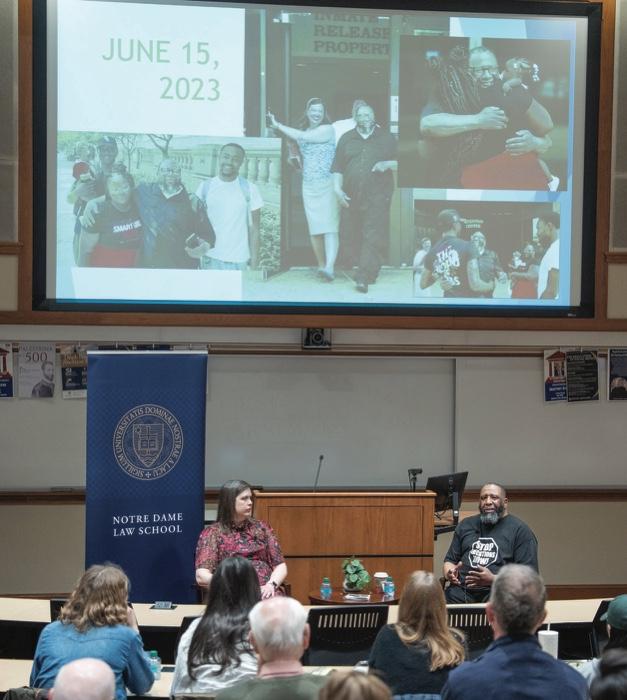
On the second day of Death Penalty Abolition Week, Ohio death row exoneree Lamont Hunter and his attorney, Erin Gallagher Barnhart ’05 J.D., shared the emotional and legal journey that led to his release after nearly 18 years behind bars. Hunter was convicted in 2007 in connection with the death of his 3-year-old son. He was ultimately freed in 2023 after newly discovered evidence cast doubt on the original forensic conclusions, leading the state to vacate his capital convictions. He then accepted a plea deal to lesser charges and was released with time served.
Hunter spoke candidly about the emotional toll of incarceration and the decision to accept the plea deal—not for financial restitution, but for the sake of truth and family. Now free, Hunter continues to rebuild his life and speak out against the flaws of a system that failed him at every turn, costing him nearly everything.
Syl Schieber, When the Death Penalty Got Personal
On the third day of Death Penalty Abolition Week, Syl Schieber ’72 M.A., ’74 Ph.D., shared a powerful testimony rooted in faith, forgiveness, and justice. After his 23-year-old daughter, Shannon, was raped and murdered in 1998, Schieber and his wife, Vicki, made the decision to oppose capital punishment for her killer—a decision grounded in their Catholic faith and belief in the sanctity of human life. In the years since, Schieber has become a prominent voice in the movement to abolish the death penalty nationwide.
Dean G. Marcus Cole opened the event by affirming the Church’s call to oppose the death penalty, saying, “I’m proud that Notre Dame Law School stands with our Church and with Syl Schieber in following the command of Christ to fight for the abolition of the death penalty and to recognize the human dignity of every human life as created in the likeness and image of God.”
Schieber echoed Cole’s message, underscoring the central role that faith and forgiveness play in his life. “If you can’t stand by your principles when it’s difficult, then they’re not your principles,” said Schieber.
Sister Helen Prejean, The Sanctity of Human Life
Sister Helen Prejean closed Death Penalty Abolition Week with a powerful story of how she was unexpectedly drawn into her life’s mission. What began as volunteering to write letters to a death row inmate, Patrick Sonnier, ended with her accompanying him to his execution as his spiritual adviser. “I came out after watching Pat be killed and the first thing I did was throw up. But that’s also when the mission to talk to all of you about this issue began. I’m a witness,” she said.
Since that moment, Sister Helen has become one of the world’s most influential voices against capital punishment. Calling it “an extreme physical and mental assault on someone who’s been rendered defenseless,” she described death row as a form of torture and challenged students to confront its moral implications: “The death penalty is about us. We should not identify a human being solely with the worst act of his or her life.”
Sister Helen’s talk capped a powerful week of events that brought together exonerees, lawyers, advocates, students, faculty, and the broader South Bend community to confront the moral and legal challenges of the death penalty.
Erin Gallagher Barnhart ’05 J.D. serves as the assistant federal public defender for the Southern District of Ohio’s Capital Habeas Unit. In her work she represents death row inmates in federal habeas, civil rights litigation, and state clemency matters. While at Notre Dame Law School she was an editor of the Notre Dame Law Review and earned the Farabaugh Prize for High Scholarship in Law.
Erin Barnhart and Lamont Hunter reflect on Hunter’s journey from death row to justice.
Dean G. Marcus Cole engaged in a conversation with Sister Helen Prejean before a full audience in the McCartan Courtroom.
Syl Schieber speaks in the McCartan Courtroom about how his faith and principles guide his advocacy against the death penalty.
Eviction Clinic Helps Shape Indiana Law Expanding Access to Eviction Expungement
Notre Dame Law School’s Eviction Clinic has long been a cornerstone of the Law School’s commitment to public service and hands-on legal education. In the clinic, students work alongside Professor David Pruitt ’92, ’99 J.D. to represent clients facing eviction and related proceedings in St. Joseph County, Indiana.
In spring 2024, a conversation between Indiana State Senator Liz Brown ’80, Pruitt, and his students sparked a broader effort to reform state law. They identified a key problem: prior
eviction cases, regardless of their merit or even if they were dismissed, often make it extremely hard for tenants to secure new housing.
Students in the class, together with Pruitt and the Indiana Justice Project (IJP), researched the issue and co-authored a white paper recommending reforms. Their proposals became the foundation of Senate Bill 142, with Senator Brown serving as the bill’s primary author.
During the 2025 Indiana legislative session, clinic students joined Pruitt in testifying in support of the bill. Signed into law last spring, the measure ensures automatic sealing of dismissed cases and clarifies that tenants who pay off judgments are eligible for sealing. Advocates say the reforms will improve housing stability for thousands of Hoosiers, while giving Notre Dame Law students a powerful example of how their advocacy can spark systemic change.
Notre Dame Law School Becomes First to Partner with Harvey AI
Notre Dame Law School has become the first law school to partner with Harvey AI, a generative artificial intelligence platform built specifically for the legal profession. Already adopted by 70 percent of AmLaw 10 firms and nearly 50 percent of AmLaw 100 firms, Harvey is now being integrated into legal education at Notre Dame Law School to prepare students for a rapidly evolving legal marketplace.
The collaboration reflects a growing recognition that tomorrow’s lawyers must be fluent in AI. By equipping students with practical training on Harvey, the Law School aims to give graduates a competitive advantage from the start of their careers.
“Artificial Intelligence is here. It is increasingly more sophisticated and will rapidly become more integral to our work,” said Dean G. Marcus Cole. “Law firms and organizations will expect expertise in the use of AI, so it is incumbent upon us to prepare our students to utilize it effectively and ethically. We are excited to be a pioneer in legal education, partnering with Harvey to bring this critically important education to our students, preparing them to work for the common good.”
Rev. David T. Link Public Interest Banquet Celebrates Lawyers
In October 2025, Notre Dame Law School hosted the fourth annual Rev. David T. Link Public Interest Banquet, celebrating lawyers who dedicate their careers to serving others. The event honors the legacy of former Dean Rev. David Link, whose life exemplified service and a deep commitment to others.
This year’s South Bend Community Award honored Rudy Monterrosa ‘01 J.D., whose career has been defined by tireless advocacy for the disadvantaged and marginalized. As founding attorney of the Monterrosa Law Group, he has practiced criminal, immigration, and family law in South Bend and made history as St. Joseph County’s first Latino deputy public defender.
The Rev. David T. Link Impact Award was presented to Andrea Kerby ‘18 J.D., a pro bono staff attorney at Cabrini Green Legal Aid, who embodies the union of vocation and purpose through her record of relief work and her mentorship of future attorneys committed to justice.
The annual banquet is organized by the student-led Public Interest Leadership Council.
The partnership began in fall 2024, when Notre Dame Law librarians received training on the Harvey platform. By spring 2025, the initiative expanded to two Advanced Legal Research courses where students used Harvey to supplement their coursework. Through this pilot program, students explored how AI can streamline legal research, distill complex information, and support more efficient analysis.
The initiative underscores Notre Dame Law School’s longstanding commitment to producing practice-ready graduates. More than half of each graduating class join leading firms where AI is already reshaping daily legal work. By providing students with hands-on experience using tools that are becoming industry standards, Notre Dame ensures its graduates are well positioned to succeed in technology-focused environments.
Pat Manion: Global Business Development at Harvey
Pat Manion ’18 J.D. manages global business development at Harvey. Before joining Harvey, he practiced white-collar and securities law at Jones Day and later served as chief of staff and assistant general counsel at Robinhood. At Harvey, Manion has played a key role in expanding the company’s international presence and building strategic partnerships.
In 2024, he returned to Notre Dame Law School to speak on a panel about the growing impact of artificial intelligence in the legal profession.
Pictured (L-R): Jared DeFelice ’25 J.D., Indiana State Senator Liz Brown ’80, Robert Stone Curl ’25 J.D., and David Pruitt ’92, ’99 J.D.
Dean G. Marcus Cole with the two award winners, Andrea Kerby ‘18 J.D. and Rudy Monterrosa ‘01 J.D.
Serving Those Who Served: Law School Launches Veterans Law Clinic
In the fall of 2025, Notre Dame Law School officially opened its newest legal clinic, the Veterans Law Clinic, dedicated to providing legal assistance to U.S. military veterans while preparing law students to become service-driven attorneys. Directed by associate clinical professor of law Caleb Stone, who previously taught at William & Mary Law School and co-directed the Lewis B. Puller Jr. Veterans Benefits Clinic, Notre Dame’s new clinic is giving students the chance to advocate for veterans navigating the often-complicated system of disability benefits.
Every year, thousands of veterans file disability claims with the U.S. Department of Veterans Affairs (VA), seeking compensation for medical conditions connected to their service. For many, the process is long, complex, and difficult to navigate without legal help. When veterans go unrepresented, the likelihood of receiving the benefits they deserve is significantly diminished.
“The difference between being represented and being unrepresented is massive,” said Stone. “Good representation can be the difference between winning and losing—and for veterans, that difference can mean whether they receive health care and financial support essential to their daily lives.”
The Veterans Law Clinic seeks to fill this gap. By offering pro bono representation in disability claims and appeals, the clinic ensures that veterans, particularly those who may not otherwise have access to legal counsel, have advocates on their side.
Building on a Tradition of Service
The creation of the Veterans Law Clinic was years in the making. Students in Notre Dame’s Military and Veterans Law Society, along with alumni and faculty supporters, were instrumental in laying the foundation.
“Notre Dame has always been a military-friendly place,” said Stone. “If it weren’t for the Navy, the University might not exist as we know it today. Combine that history with our Catholic mission of service, and a clinic like this makes perfect sense.”
That combination of mission and history has generated overwhelming support. Faculty, students, alumni, and community partners have rallied behind the clinic, offering resources, referrals, and strong encouragement.
In its inaugural semester, nine law students were enrolled in the clinic, not including three undergraduate students eager to volunteer in support of the clinic. Under Stone’s supervision, they are conducting client interviews, gathering evidence, drafting briefs, and preparing appeals.
Robert Rizzo, a second-year law student and a graduate of the United States Military Academy West Point, has come to understand and appreciate the unique culture, values, and challenges that come with uniformed military service as a veteran himself.
“After my time in the Army, I, like many other service members, grappled with the complex and often intimidating process of applying for VA disability compensation,” said Rizzo. “The Veterans Law Clinic offers me a unique opportunity to draw on my experiences, both during and after service, to blend my military background with my legal education to achieve positive outcomes for fellow veterans.”
“The students are driving the clinic,” said Stone. “They’re the face of the clinic to the outside world. They’re doing the reading, the writing, the client contact, and through that process, they’re learning that this work isn’t about them. It’s about serving a higher purpose.”
“Up until this point in my law school career, much of my learning had been conceptual, but sitting down with a veteran and hearing his story firsthand made the work feel tangible. It gave me an understanding of the real-world impacts of legal advocacy and added a new dimension to my sense of purpose as a future lawyer,” said Rizzo.
Expanding Reach and Vision
Beyond individual cases, students are also tasked with community outreach. Working in small teams, they are building partnerships with veterans service organizations, VA medical centers, and state agencies to raise awareness of the clinic and expand its reach.
The clinic’s core work focuses on helping veterans secure disability compensation, but its vision extends further. Stone plans for the clinic to eventually take on cases involving military disability retirement,
collaborate with local veterans treatment courts, and contribute to policy advocacy at state and national levels.
Although the clinic is rooted in serving veterans in Indiana and the surrounding region, its scope is national. Within weeks of opening, the clinic had already received applications from veterans across the country.
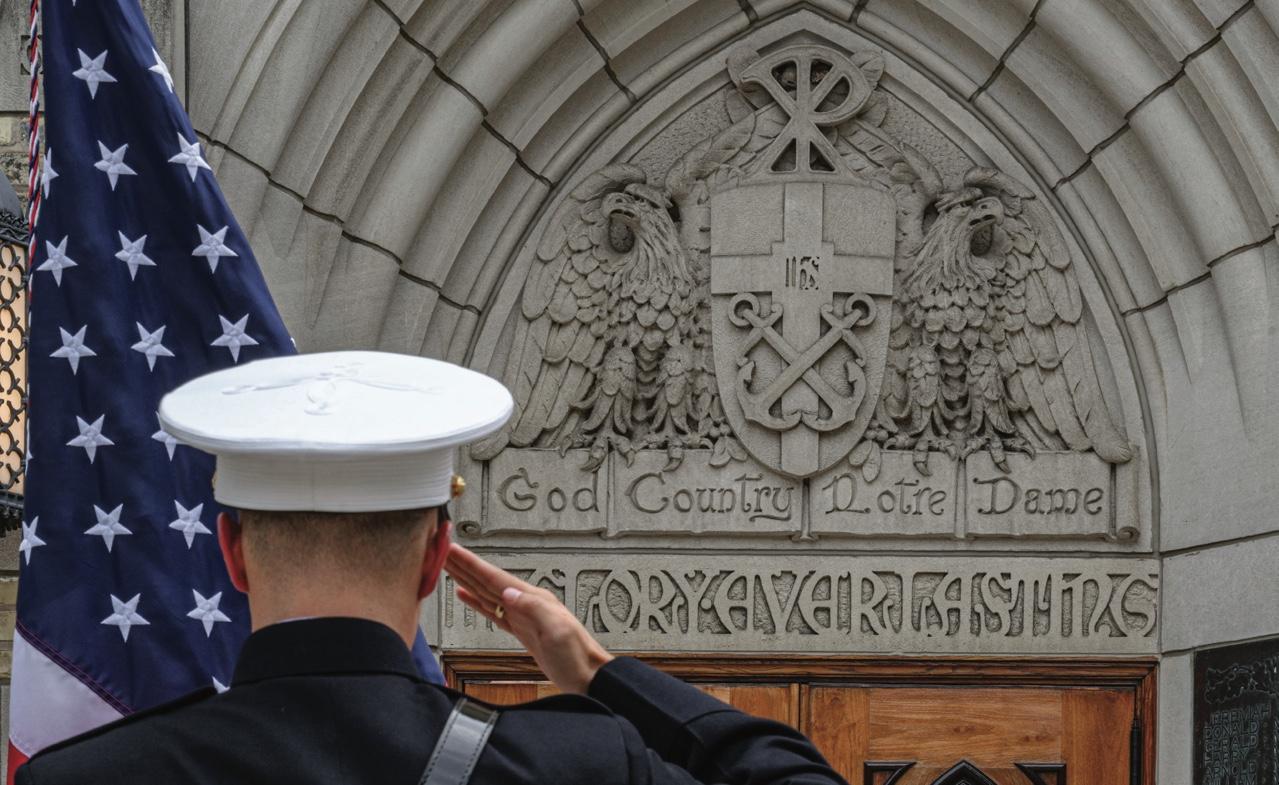
The Veterans Law Clinic represents more than just a new program. It embodies the University’s motto of “God, Country, Notre Dame” and the Law School’s commitment to “educating a different kind of lawyer.”
“Working with veterans reminds students that the law is a vocation,” said Stone. “It’s not just about personal achievement or financial success. It’s about service. Veterans have made sacrifices for a higher purpose, and representing them gives our students the chance to do the same.”
As the clinic grows, Stone envisions Notre Dame becoming a national leader in veterans legal advocacy. Plans are underway to expand, increase the clinic’s caseload, and build on partnerships with local and national organizations.
Ultimately, Stone believes the Veterans Law Clinic can become the best of its kind in the country. “We have the support, the resources, and the mission,” said Stone. “Notre Dame is uniquely positioned to lead in this space, and I think we can make a tremendous impact.”
From the Dome to the Bench: Notre Dame Lawyers in the Judiciary
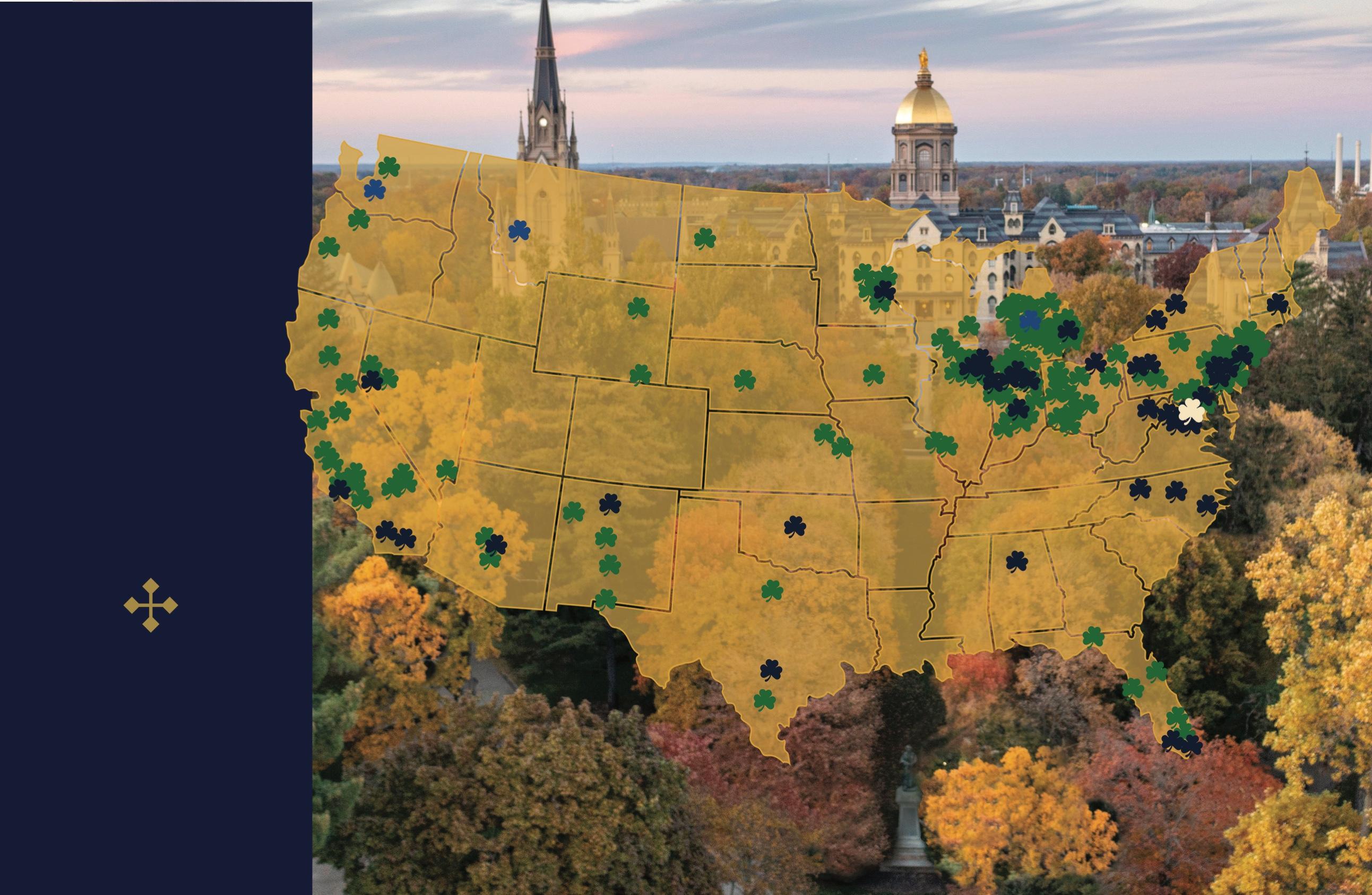
Since the late 1800s, Notre Dame has produced judges serving at every level of the judiciary. Today, more than 170 Notre Dame Law School alumni sit on courts across the United States, in U.S. territories, and abroad—along with many who have served and are now retired.
Their service spans the full breadth of the judiciary—from the Supreme Court of the United States, to federal appellate and district courts, state and local benches, and specialty and military courts.
Each Notre Dame Judge reflects the ND Law mission to pursue justice with integrity, civility, and respect for the dignity of all people. Every one has a meaningful story. In the following pages, we highlight just a few.
Scan or visit law.nd.edu/judges to view a complete list of ND Law alumni serving in the judiciary as of 2025
We’re proud of all Notre Dame Lawyers—those who earned their J.D. from ND Law, and those who earned their undergraduate degree from Notre Dame and a law degree elsewhere. This map includes only judges who earned their law degree at Notre Dame Law School.
If you know of a living ND Law graduate who is an active, senior, or retired judge and is not on our list, please email lawalum@nd.edu
A Vocation Pursued: U.S. Supreme Court Justice Amy Coney Barrett
By Denise Wager
When Justice Amy Coney Barrett ’97 J.D. returned to Notre Dame Law School in late August 2025, it wasn’t as a guest cloaked in the formality of the nation’s highest court. Instead, she stepped back into familiar halls she knew as a student, teacher, mentor, and colleague—as a member of the Notre Dame family.
For Justice Barrett, Notre Dame has always felt like home. It’s where she earned her law degree, graduating with the distinguished Hoynes Award; where she discovered her calling to teach and spent nearly two decades shaping the minds of future lawyers; and where she returned to the classroom, even while serving on the U.S. Court of Appeals for the Seventh Circuit and on the U.S. Supreme Court.
During her August visit, Justice Barrett taught a short course on Modern Constitutional Theory, sat down with CBS’s Norah O’Donnell to discuss her new book, Listening to the Law, and visited family, friends, and colleagues.
In a wide-ranging conversation with Notre Dame Lawyer magazine, Justice Barrett considered how her years at Notre Dame—as both a student and a faculty member—continue to shape her life on and off the Supreme Court.
Answering the Call
When the opportunity came in September 2020 about a possible Supreme Court nomination to replace the late Justice Ruth Bader Ginsburg, Justice Barrett admitted her first reaction was not one of immediate excitement.
“I had a pit in my stomach,” she recalled. “I knew the confirmation process would be difficult at best, brutal at worst.”
She and her husband Jesse gave the matter considerable thought. “It was an opportunity to serve the country, and the things that were going to be hard about it for me would have been hard for whoever said yes. So it seemed selfish if that were the only reason not to do it.”
Plus, the decision wasn’t about ambition. It was about vocation. “It just felt like a way to serve, a way of thinking about law as a vocation. If this was a way to serve the country and to put my skills and talents to use for the rule of law, then I should be open to doing that.”
Both she and Jesse knew that once she accepted the nomination, there would be no turning back. Still, the personal sacrifices were
significant. Leaving South Bend, where the Barretts have deep roots, a thriving family life with seven children, and close ties to both the community and the Law School, was the hardest part.
“We were very happy in South Bend,” she said. “We were giving up a community we loved. And I was still very rooted in the Notre Dame community.”
Strength of the ND Community
As she stepped onto the national stage in a very public way, Justice Barrett felt the strength of the Notre Dame community behind her.
“It meant a lot to me that Father Jenkins came to the Rose Garden ceremony,” she said. That support from the University wasn’t new. During her 2017 nomination to the U.S. Court of Appeals for the Seventh Circuit, Justice Barrett faced pointed questions, some about her faith.
“It’s not that everyone at Notre Dame, or every alum of Notre Dame, was supportive of my nomination. And that’s fine,” she explained. “But it meant a lot to me that when I was attacked specifically for my faith, Notre Dame stood up for me, that Father Jenkins stood up for me.”
Behind the scenes as CBS News Senior Correspondent Norah O’Donnell interviews Justice Amy Coney Barrett at Notre Dame Law School about her new book, Listening to the Law.
Her Seventh Circuit appointment also drew robust support from her Notre Dame Law School colleagues. In a letter endorsing her nomination, every full-time faculty member signed a collective statement praising both her intellect and character. One part read: “She possesses in abundance all of the qualities that shape extraordinary jurists: discipline, intellect, wisdom, impeccable temperament, and above all, fundamental decency and humanity.”
That same spirit of community carried forward when she was later considered for the Supreme Court. The circle of support expanded, including hundreds of former students, co-clerks from the Supreme Court, faculty, and alumni from across ideological lines.
As a group, hundreds of Notre Dame Law alumni wrote in a letter to the U.S. Senate that their support reflected not politics, but gratitude: “We have come to know and love Judge Barrett not for her impressive credentials, but for her presence, enthusiasm, and intellect as a faculty member at Notre Dame Law School.”
Justice Barrett commented on that spirit of belonging. “I think that the sense of a Notre Dame community of belonging, loyalty to one another, and friendship is pronounced here,” she said. “There’s also a sense that you can disagree and have different politics or views about public policy but still respect one another as people.”
At Home and On the Court
Behind the pillars of the Supreme Court, daily life is smaller and more personal than many expect.
“It’s a very small branch of government. Nine officials, each with four law clerks. It is a place where you see one another and interact a lot. There are warm feelings, even though there are strong disagreements,” Justice Barrett said.
In her book, Justice Barrett discussed the importance of engaging across differences. She likened her family of nine to the nine members of the Supreme Court, recognizing that there will be differences. She said that while it might be easier to avoid people whose beliefs differ from her own, it would make life “less rich by excluding wonderful people from it.” Sparring with intellectual opponents, she noted, is “the way to hear the other side of the argument.” Such engagement isn’t optional on the Supreme Court.
“Because the Court cannot function without collegiality, the work drives home the importance of balancing a commitment to ideas with a commitment to respond to people who don’t share them,” she wrote.
Justice Barrett added that life on the Supreme Court can quickly become insular. “It would be very easy to become isolated or to think of yourself as defined by your job,” she said.
Contributing to this insular aspect is the level of security required and a sense of confinement, which is much more pronounced than when she clerked for the late Justice Antonin Scalia during the 1998–99 term. Justice Barrett said it is one of the most surprising changes since her days clerking.
For her, the necessary security started abruptly on the Saturday before her nomination. The press had already started camping outside her home. She had plans to attend one of her children’s soccer games and make a Costco run—simple things she would normally do on her own. “Well, I didn’t go to the soccer game and I didn’t go to Costco.” Laughing, she added, “I didn’t even
A Different Kind of Lawyer
As a member of the Class of 1997, Justice Barrett was drawn by the school’s sense of mission and community. “I chose Notre Dame because it was a place that valued academic excellence. At the same time, there is also an emphasis on thinking of your life in terms of vocation and working for the common good.”
She resists the suggestion that Notre Dame has shaped her identity as a justice. Instead, she said, it has shaped her identity as a person. Her decision to attend Notre Dame mirrored her belief that law is not something separate from life, but is part of a larger calling.
“It was an opportunity to serve the country, and the things that were going to be hard about it for me would have been hard for whoever said yes.” – Justice Barrett
know that it would have been the last time I would go to a soccer game or to Costco and drive myself.”
While the bubble of security and official events can create a sense of distance from ordinary life, Justice Barrett said what helps her stay grounded are the familiar rhythms of home and her life as the same regular mom—doing all of the same things for her younger children now that she did for her older ones before she was on the Court—cooking dinner, cheering from the sidelines at soccer games, volunteering at their school, and joining in family traditions. Those everyday moments, she reflected, make it hard to think of herself solely through the lens of being a Supreme Court justice.
Even at the height of her judicial responsibilities, Justice Barrett continues to see law through the same lens she brought to her classrooms at Notre Dame.
A beloved and respected teacher during her 23 years on the Notre Dame Law School faculty—15 years as a full-time faculty member and several more on an adjunct basis—Justice Barrett was named by students as the Distinguished Professor of the Year and delivered the commencement address in 2006, 2016, and 2018.
In her 2006 address to graduates, Justice Barrett reflected that being a different kind of lawyer isn’t about mastering a different body of law or choosing a particular career path.
“Being a different kind of lawyer means recognizing that law is just one part of your life—one part of your vocation. This is part of the Catholic mission to do your work to the best you can, while recognizing that your work takes place in the larger context of life, which includes your family, your faith, and your friendships,” she said.
For Justice Barrett, vocation has meant service to the country. For her students, it may mean public interest, private law, or nonprofit work, but the core mindset remains. She says, “Your motivations should be focused outward on service, in whatever shape that takes.”
A decade later, in her 2016 commencement remarks, she returned to that theme, urging graduates to measure success not by comparison but by integrity and purpose.
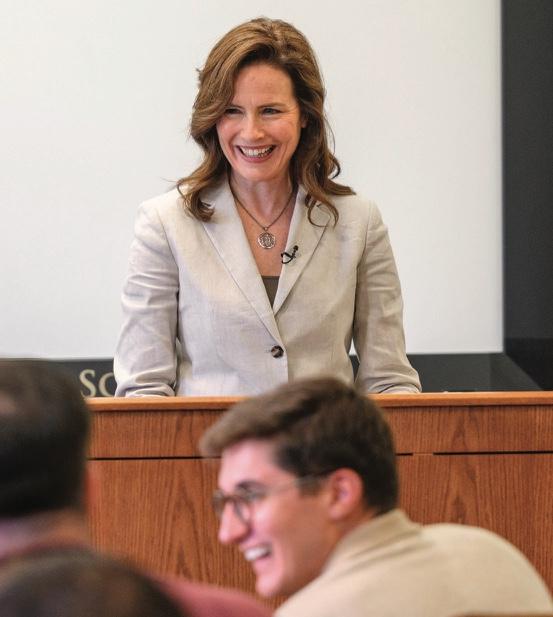
Justice Amy Coney Barrett, then a full-time faculty member, teaching at the Law School in 2013.
“Don’t lose time or happiness by comparing yourself to those on your right or your left. Look straight ahead and run your best,” she said.
Her message—to approach law as a calling rooted in service and integrity—is one her students still carry with them.
Teacher, Mentor, Notre Dame Lawyer
Former Dean Patricia O’Hara was dean when Justice Barrett joined the Notre Dame faculty in 2002. During her 2020 Senate testimony introducing Justice Barrett she noted, “Our students, then and now, hold her in awe for the power of her intellect and for her consummate professionalism.”
guidance to not let your work as a lawyer take control over the most important things in life, like family. Finding that balance can be challenging at times, and I’m so grateful to have Justice Barrett as a role model.”
Lorentson added, “Though her titles have changed, she remains the same person: a rigorous academic, a generous mentor, and a kind person.”
Even amid the demands of the Court, Justice Barrett said she still loves being a teacher.
“I enjoy thinking about material and then trying to make it accessible, to help make it clear for students, to show them where the hard issues are, and to get them to think critically.”
“This is part of the Catholic mission, to do your work to the best you can, while recognizing that your work takes place in the larger context of life, which includes your family, your faith, and your friendships.” – Justice Barrett
Kari Lorentson ’19 J.D. served as a research assistant for Justice Barrett while at law school and clerked for her at the Supreme Court. She said, “Over the years, I’ve had the privilege to witness Justice Barrett’s impressive work ethic and relentless dedication to getting the law right regardless of outcome,” said Lorentson. “How Justice Barrett approaches her role as a judge has instilled in me the importance of hard work, thoroughness, and attention to detail.”
Lorentson recalled often chatting with Justice Barrett along with her fellow law clerks during lunch about their goals, both professional and personal. Now an associate at Jones Day in Washington, D.C. and also a mother, she said, “I’ve always appreciated her
She has returned annually to teach since joining the Supreme Court, offering one-week intensive courses. While a full-time tenured faculty member, she taught Civil Procedure, Evidence, Constitutional Law, Constitutional Theory, Federal Courts, and Statutory Interpretation.
“No one learns to be a lawyer in a vacuum. They learn because lawyers who are more experienced show it to them. I truly enjoy doing that for law clerks and law students,” Justic Barrett said.
Shaping Trajectories
That commitment to teaching has left a lasting mark on her former students. Laura Wolk Slavis ’16 J.D.—the first blind woman to clerk on the U.S. Supreme Court—has spoken often of Justice Barrett’s mentorship and friendship. During Wolk Slavis’s first year of law school, when her assistive technology hadn’t arrived and her laptop failed, Justice Barrett stepped in to help.
“This is not your problem anymore, it’s mine,” Justice Barrett told her, taking ownership of the problem and ensuring it was resolved.
Years later, Wolk Slavis testified during Justice Barrett’s confirmation hearings: “In part because of her unwavering support, I am the first blind woman to serve as a law clerk on the Supreme Court.”
Her story is one of many that illustrate Justice Barrett’s personal investment in her students and the values she continues to model on the bench.
A former Catholic school teacher and ACE Teaching Fellow, John Schoenig ’98, ’00 M.Ed., ’10 J.D., said his time in Justice Barrett’s classroom—and the encounters they’ve shared since— fundamentally shaped the trajectory of his career.
“Of all the teachers I have ever studied under, and indeed of all the teachers I have ever observed, Justice Barrett stands alone,” he said. “She helped me to take my vocation seriously, to share whatever gifts I have with those who need them most, and to be comfortable laughing at myself.”
Mind, Heart, and Soul
As Justice Barrett just celebrated her fifth year on the Supreme Court, her personal ties to Notre Dame remain strong. She returns often to visit friends and favorite spots on campus, and loves cheering on the Irish in the fall.
“I am very grateful for my Notre Dame education. I met my husband at Notre Dame. I had the opportunities that I had because I had mentors on the faculty. Notre Dame has been a place that has not only encouraged my faith and helped me to be an excellent lawyer, it’s also given me friends. It’s given me the privilege of teaching so many students over the years. It’s given me a place that I can always come back to,” Justice Barrett said.
As former Dean O’Hara once observed, Jutice Barrett’s life reflects the same wholeness she teaches her students to pursue: “Amy Coney Barrett is a woman who leads an integrated life of mind, heart, and soul, and it’s that integration that allows her to move so seamlessly between her professional responsibilities and her family commitments.”
Musing about what she hopes to feel at the end of her career, Justice Barrett said, “I can’t be confident that I will make the right decision in every case. In fact, I think I can be confident that I will sometimes get it wrong. But I hope that I can truly say at the end that I have done my best, that I have always conducted myself with integrity, and that I have been fearless and never made a decision other than one that I thought the law required.”
For Justice Barrett, vocation, faith, and service are not separate tracks—they converge in how she lives both her public and personal life. She remains a Notre Dame Lawyer, committed to integrity, humility, and purpose.
The Amy Coney Barrett Law Fellowship, established in 2025 by two members of the class of 1997 in honor of their classmate, will be awarded annually to a Notre Dame Law student who has shown outstanding performance or who brings special qualities or abilities to the Law School.
Justice Amy Coney Barrett delivers the Notre Dame Law Review Symposium Keynote Lecture in McCartan Courtroom at Notre Dame Law School in 2022. Barrett served as executive editor of the Notre Dame Law Review in 1996-97.
Justice Amy Coney Barrett with her husband, Jesse, at her investiture as a judge on the U.S. Court of Appeals for the Seventh Circuit in McCartan Courtroom at Notre Dame Law School. The oath was administered by the late Hon. Laurence H. Silberman, for whom Barrett clerked after graduating from Notre Dame Law School.
In the hallowed halls of the Delaware Court of Chancery, where the nation’s most pivotal corporate disputes are adjudicated, the name Chancellor Kathaleen McCormick ’04 J.D. is synonymous with intellect, integrity, and innovation.
Her ascent to becoming the first woman to serve as Chancellor of this venerable institution is not merely a personal triumph, but a beacon of progress in the judiciary. Chancellor McCormick’s career is a testament to the power of perseverance and the enduring impact of a legal vocation embraced as a calling to serve others through justice, honor, and faithful stewardship of the law.
Rooted in Service
McCormick’s journey began in the small town of Smyrna, Delaware, where she was raised by a high school football coach and an English teacher. Her early years were shaped by a passion for justice, inspired by stories like To Kill a Mockingbird. The book reflects her sense of empathy and fairness, values that would go on to define both her education and her career.
After graduating from Smyrna High School, McCormick earned a degree in philosophy from Harvard University, where she served as executive director of the Small Claims Advisory Service, a nonprofit organization that empowers socioeconomically disadvantaged residents of Massachusetts to navigate the small claims court system. She then attended Notre Dame Law School, which she credits with shaping her values and approach to the law.
“Notre Dame teaches its students to view their legal career as a vocation, a calling,” she said. “I went to Notre Dame because it emphasizes the fact that the practice of law is more than the pursuit of a paycheck.”
Breaking Barriers in the Judiciary: The Rise of Chancellor Kathaleen McCormick
by Arienne L. Calingo
At Notre Dame Law School, McCormick immersed herself not only in rigorous coursework, but also in meaningful community service through her involvement in several clinics. In addition to serving as a student law clerk in the Immigration Clinic, she was involved in the Asylum Clinic, where she successfully obtained asylum for a mixed-race child victim of the Rwandan genocide. She also gained invaluable experience and contributed to the community as a public defender extern at the St. Joseph County Juvenile Justice Center.
“I enjoyed the clinics, which taught me how to be a practical attorney,” she said. The experiences deepened her understanding of how the law touches people’s lives.
She added, “There are many professors who made a lasting impact on me, including G. Robert Blakey ’57, ’60 J.D., for whom I was a research assistant; my 1L writing instructor, Teresa Godwin Phelps ’73, ’75 M.A., ’80 Ph.D., who taught me how to communicate clearly; and Paolo Carozza, who modeled how to be a person of faith and integrity in the practice of law.”
Those formative years helped McCormick embrace what she describes as Notre Dame Law School’s mission to educate a “different kind of lawyer”—one guided by an open mind, a love for learning, and a sense of responsibility.
From Public Interest to Corporate Governance
McCormick’s professional journey began in the frontlines of public interest law as a staff attorney with the Delaware Community Legal Aid Society. There, she advocated for victims of domestic violence in housing, family, and immigration matters and in policy work. She also handled housing discrimination outreach and case work, demonstrating her commitment to equity and fairness. “To help people,” she succinctly stated, was the driving force behind her decision to pursue a career in law.
Her transition to corporate law came when she joined Young Conaway Stargatt & Taylor LLP in 2007, one of Delaware’s leading firms for corporate and commercial law. There, she developed deep
“The key is to put yourself out there and have confidence that you have the skills needed to do the job.”
- Chancellor Kathaleen McCormick
expertise in corporate governance and the litigation of complex business disputes before the Delaware Court of Chancery. Her keen analytical mind and incisive judgment earned her recognition early on, leading to her promotion to partner by 2015.
During her tenure, McCormick deftly handled a wide range of challenging cases, particularly during the 2008 financial crisis. She was part of a team of attorneys representing the Huntsman Corporation in a major merger dispute after a private equity firm backed out of a multibillion-dollar deal—a case that tested her ability to navigate high-stakes negotiations with precision and poise. Her years in private practice cemented her reputation as a trusted and skillful corporate litigator, respected for her clarity, diligence, and strategic acumen, and set the stage for her eventual move to the nationally influential Chancery Court.
In 2018, she was nominated by then-Governor John Carney to serve as vice chancellor on the Delaware Court of Chancery— a move that marked a pivotal moment in her career.
“Joining the bench was a critical moment in my career. A lot of people who are first-generation lawyers suffer from imposter syndrome, and I certainly have that affliction,” she said. “The key is to put yourself out there and have confidence that you have the skills needed to do the job.”
Her rise to chancellor in 2021—as the first woman to lead the court—was historic, breaking gender barriers in an institution that had been predominantly male for much of its over 230-year history.
The Twitter Case and the Power of Principled Leadership
McCormick’s tenure has been defined by calm, decisive leadership—qualities that became especially evident in high-profile cases like the litigation surrounding Elon Musk’s acquisition of Twitter. The case, which captivated global media attention, underscored her adeptness at managing complex legal maneuvering while maintaining impartiality and efficiency.
When Musk attempted to withdraw from his $44 billion agreement to purchase Twitter, the case landed squarely in the Delaware Court of Chancery—and McCormick assigned the case to herself. It became one of the most closely watched business disputes in recent history, with implications not only for the two global entities involved, but for corporate law itself.
McCormick’s management of the case drew widespread praise. Despite relentless media attention, she kept the proceedings efficient and focused, ensuring that the courtroom remained a space of reason rather than spectacle. Her calm demeanor, quick wit, and deep command of Delaware corporate law stood out.
The Wall Street Journal called McCormick “the most honorable character in Twitter v. Elon Musk.” The Associated Press deemed her “the judge who tamed the Musk-Twitter trial.” The New York Times wrote, “Elon Musk seems to answer to no one. Except for a judge in Delaware.”
For McCormick, though, the lesson was simple: focus on the work.
“Being a member of this court means being subject to constant media attention. I don’t think anyone fully appreciates the level of attention we receive,” McCormick observed. “It’s difficult to manage, but I do so by sitting at my desk, doing my best, and hoping that’s enough.”
That quiet philosophy has become a guiding principle of her tenure—a model of judicial temperament defined by humility, fairness, and focus.
Mentorship, Empowerment, and Career Wisdom
McCormick’s influence extends beyond the courtroom. As a mentor and role model, she is passionate about encouraging the next generation of women in law.
“To paraphrase the late Justice Ginsburg, women should be everywhere where decisions are made,” said McCormick. “For women, contributing your own voice is the only way to guarantee that women are part of the discussion.”
When asked what makes a great judge, she said, “Great judges allow the facts of the law to direct the outcome of the case. A judge needs to approach every decision with an open mind and a commitment to learning.”
She also underscored the importance of preparation and responsibility, and a willingness to grapple with the difficult questions.
Leading with Integrity and Vision
Chancellor McCormick exemplifies the ideals of a Notre Dame Lawyer. As she leads the Court of Chancery, she breaks barriers, inspires meaningful change, and upholds the highest standards of judicial excellence. Her career is a beacon for those who believe in the law’s power to achieve justice and advance equity, showing that the judiciary is not merely a forum for adjudication, but a platform for principled leadership.
Amid the distractions of high-profile cases and public scrutiny, McCormick remains unwavering in her commitment to deliberate, thoughtful decision-making. Her skill in guiding the Court of Chancery through complex corporate matters with clarity and insight underscores her extraordinary judgment and intellect.
Her career stands as a compelling example that with dedication, courage, and an unwavering commitment to one’s calling, one can uphold the highest principles of the judiciary while shaping the future of the profession.
“A judge needs to approach every decision with an open mind and a commitment to learning.”
- Chancellor Kathaleen McCormick
Chancellor Kathaleen McCormick delivers the inaugural Patricia O’Hara Distinguished Lecture in Law and Business at Notre Dame Law School in 2022.
Trailblazer for Justice Across Continents Judge Ann Claire Williams
Retired Judge Ann Claire Williams ’75 J.D. has built a career defined by service— both at home and across the globe.
After earning her J.D. from Notre Dame Law School, Judge Williams rose through the ranks of the U.S. Attorney’s Office in Chicago before making history as the first woman of color to serve on the U.S. District Court for the Northern District of Illinois.
In 1999, President Bill Clinton elevated her to the U.S. Court of Appeals for the Seventh Circuit, where she again broke barriers as the first judge of color to serve on that court.
Dean G. Marcus Cole reflected, “Judge Ann Claire Williams has been the model of what we mean when we say that Notre Dame produces a ‘different kind of lawyer.’ She has assembled a lifetime of pioneering accomplishments.”
She was the first African American woman to graduate from Notre Dame Law School, the first appointed assistant U.S. attorney in Chicago, the first African American woman appointed by the President to the U.S. District Court for the Northern District of Illinois, and the first to be confirmed by the Senate to sit on the U.S. Court of Appeals for the Seventh Circuit.
Before law school, Williams earned degrees in education from Wayne State University and the University of Michigan and taught third grade in Detroit. That foundation in teaching and service would become a hallmark of her approach to justice. Following her graduation from Notre Dame, she clerked for Judge Robert A. Sprecher of the U.S. Court of Appeals for the Seventh Circuit and later became chief of the Organized Crime Drug Enforcement Task Force in Chicago.
Nominated to the federal bench by President Ronald Reagan in 1985 and later elevated by President Clinton, Judge Williams became a rare jurist to have received appointments from presidents of both major parties. Her tenure on the bench was marked by her deep respect for the rule of law, fairness in the courtroom, and a commitment to mentoring young lawyers from underrepresented backgrounds.
Beyond her judicial accomplishments, Judge Williams has become a leader in advancing the rule of law internationally. Williams is passionate about access to justice and has worked extensively across Africa to train judges, lawyers, and court administrators in countries including Zambia, Uganda, Liberia, and Ethiopia. Through partnerships with organizations such as the U.S. State Department, Department of Justice, the National Institute for Trial Advocacy, Strathmore University, and others on the ground—including public defenders, prosecutors, and NGOs—she has led programs focused on ethics, case management, and trial advocacy. These trainings and collaborations have strengthened justice systems and promoted judicial independence across Africa.
Dean Cole noted, “Judge Williams continues to lead and inspire. Her work with lawyers and judges in Africa has made a difference for victims of domestic violence there, and she has brought modern methods of dispute resolution to remote areas of the African continent.”
Since retiring from the federal bench in 2018, Judge Williams has continued her mission serving as Of Counsel at Jones Day, where she chairs the firm’s Rule of Law Initiative in Africa. She frequently
leads delegations of U.S. judges and lawyers to collaborate with African judiciaries and mentor emerging leaders who are committed to justice reform worldwide.
Dean Cole added, “Our entire strategy for legal research collaboration in Africa has drawn inspiration from her activities there, and our efforts have been aided by her connections and counsel.”
She also helped found organizations such as Just the Beginning – A Pipeline Organization, the Black Women Lawyers’
Association of Chicago, Minority Legal Education Resources, and the Public Interest Fellowship Program for Equal Justice Works—all designed to expand opportunities for young lawyers and students of color entering the legal profession.
In 2024, the American Bar Association honored her with a Presidential Citation “for her extraordinary and tireless leadership as chair of the ABA Standing Committee on the Federal Judiciary; her dedication to building a pipeline aimed at inspiring young students and
increasing diversity and inclusion in the legal profession and the judiciary; and her lifetime commitment and devotion to the rule of law, both at home and abroad.”
A Trustee Emerita of the University of Notre Dame, Judge Williams remains deeply connected to her alma mater. Her life’s work—on the bench, in classrooms, and across borders— embodies the spirit of a Notre Dame Lawyer: using the law as a force for good, in service of human dignity everywhere.
“
. ”
- Dean G. Marcus Cole
Then U.S. Court of Appeals Judge Ann Claire Williams engaged in a conversation with the late U.S. Supreme Court Justice Ruth Bader Ginsburg at Notre Dame in 2016, covering a wide range of issues.
Judge Ann Claire Williams at the Southern District of Indiana’s Black History Month program, titled “Living History: The Black Women Judges of the Seventh Circuit Court of Appeals” in February 2025
Judge Williams brought modern methods of dispute resolution to remote areas of the African continent
Q&A: Judge
John “Jack” Blakey
A double Domer with deep Notre Dame roots, Judge John “Jack” Blakey ’88, ’92 J.D. grew up in South Bend. There, his father, Professor G. Robert Blakey, taught at the Law School and drafted the federal RICO Act, becoming its leading authority. After studying theatre as an undergraduate, he returned for his J.D. and built a career as a prosecutor—serving as an assistant U.S. attorney and in the Cook County State’s Attorney’s Office—before joining the federal bench.
What first drew you to a career in law and how much of a factor was your father in that decision?
I didn’t know wanted to go into law until later in life, but I’d had plenty of exposure through my father. He was a law professor, a prosecutor for Bobby Kennedy in the ’60s, and a private attorney on both the defense and civil sides. My brother and two of my sisters are lawyers, so it was common to have amazing, interesting legal conversations at the dinner table.
He’s always been a role model—especially when first started out as a prosecutor. It was like trying to be a songwriter when your dad is Elvis. People would say, “Oh, you’re Professor Blakey’s son!” and I was proud every time someone made that connection. He’s been instrumental in my career, not just in how I practice law, but in how I think as an attorney. I even had him for class. Of course, the grading was anonymous, and in my first year, four people wrote “Have mercy, Dad” on their exams—and none of them were me!
How did your experiences as a prosecutor shape your perspective on justice or prepare you for work on the bench?
When prosecution is done right, the goal isn’t to win—it’s to see that justice is done. When you don’t have a private client but a public one, you can advocate for the right answer in a way other lawyers sometimes can’t when they are obligated to pursue what’s best for their client, even if it’s not the best outcome for everyone else. As a judge, I don’t have any stake in the case at all—other than ensuring that justice is done under the law.
It was certainly a transition to become a judge, but my earlier work in civil litigation, criminal defense, and clerking (for Notre Dame alum William J. Zloch ‘66, ‘74 J.D., U.S. District Court in the Southern District of Florida) served me well. My experience as a prosecutor— especially the trial work—was instrumental. Conducting and managing a trial is a highly specialized skill.
What has surprised you most about being a judge?
One thing that maybe wasn’t surprising—but that I knew would be difficult—is sentencing. Sentencing is hard. In some ways, it’s impossible, but it has to be done. A really experienced judge, who’s no longer with us—once said, “When that part gets easy, you need to quit.” So I tell my staff I’m not in danger of quitting, because it’s never easy.
What do you find most rewarding about your work?
I love naturalization ceremonies. Imagine 500 people in a room, all beaming. I get to talk about things some people might call corny, about how great America is and the importance of our freedoms, but I believe they are all absolutely true. Everyone there to be naturalized appreciates the value of our country and our freedoms.
I tell them that being a U.S. citizen isn’t a spectator sport—you have to learn about the issues, vote, and serve on juries. I tell them it’s not just freedom from tyranny, but freedom to become something: how you raise your family, build a business, help others, worship God—whatever that may be. I end by saying, “Everyone will tell you how lucky you are to be an American, but on behalf of your new family, let me say how lucky we are to have you.”
Then I encourage them to cheer at the end. They’re so nervous at first so before the ceremony and administration of the oath, I make them practice cheering a couple of times, again louder, until the whole building wonders what’s heck is happening on the 25th floor. That’s
when they realize this isn’t just a formality—it’s a celebration. That’s my favorite part of the job. I love it.
How have mentors influenced your career path, and how do you mentor others, especially your law clerks?
All my law clerks feel like my kids, except I don’t have to pay for their tuition! I really enjoy teaching them, they’ve become part of an extended family I still hear from.
Mentoring also happens through my teaching at the Law School. I try to help students not just by teaching, but by guiding them as they make decisions about their careers. Many people—especially first-generation students—haven’t had the same role models or opportunities as others, so it’s important to help them see paths they might never have considered.
The Notre Dame network has been instrumental. It helped me early in my career, and while I may never fully be able to pay it back, I’ll definitely keep paying it forward.
With such deep ties, what does Notre Dame mean to you?
Notre Dame is part of my family—it’s been part of my memory for as long as I can remember. It’s more than just football, and it’s not so much the institution itself as it is the people. Some are friends I’ve known for more than 45 years; others are colleagues I may not know as well, but we still have a shared commitment—not only to doing important things, but to doing good in the world. I think there’s a self-selection of people who chose to come to Notre Dame and want to make the world a better place, and that creates a community I feel honored to be part of.
JUSTICE WITH COMPASSION: How Judge Martha Vázquez’s Roots Shaped a Life of Service
Judge Martha Vázquez ’75, ’78 J.D., a proud double Domer, has built a distinguished career defined by courage, compassion, and trailblazing achievement. Appointed to the United States District Court for the District of New Mexico by President Bill Clinton in 1993, she made history as the first woman appointed as a federal district judge in New Mexico. She served as chief judge from 2003 to 2010, and in 2022 she assumed senior status.
Born in Santa Barbara, California, to a close-knit Mexican immigrant family, Vázquez has dedicated her career to advocating for underserved communities. After earning her J.D., she worked with Michigan Migrant Legal Services, then as a public defender in New Mexico, before entering private practice in Santa Fe, where she specialized in criminal defense, personal injury, and civil law. Her tenure has been marked by fairness, integrity, and a deep commitment to public service.
Vázquez’s career and influence are featured in a newly published book, Better Judgment: How Three Judges Are Bringing Justice Back to the Courts. The book tells the story of three federal judges, including Vázquez, using their experiences to argue that while the power of federal trial courts has diminished over time, judges like them continue to show how the judiciary can remain a powerful force for justice and democracy. Drawing from interviews with the judges, their clerks, and families, the book highlights how Vázquez’s empathy, integrity, and steadfast commitment to the rule of law embody the ideals of judicial service.
From the classrooms in South Bend to the federal bench in New Mexico, Judge Vázquez continues to exemplify the Notre Dame mission to be a force of good in the world. She maintains an active role in the University community as a member of the Notre Dame Law School Advisory Council.
Judge Jack Blakey teaching his Federal Criminal Practice class at Notre Dame Law School in the fall of 2025.
A Vessel of Moral Vision: Justice Mbuyiseli Madlanga and the Pursuit of Justice
In a rural village 16 kilometers outside
Mount Frere in South Africa’s Eastern Cape, a young boy grew up herding cattle and goats amid a landscape that tempered his spirit and trained both his mind and his character for the challenges ahead. The days were long, the surroundings modest, yet the rhythm of daily life —laughter, labor, and the quiet harmony of community— wove together lessons far beyond the fields.
That boy, who once fashioned toys from wire and clay, would one day rise to become one of South Africa’s most respected jurists: Justice Mbuyiseli Madlanga ’90 LL.M., retired acting deputy chief justice of South Africa.
Justice Madlanga’s journey—from humble beginnings to the apex of his nation’s judiciary—embodies the transformative power of education, ethics, and faith in justice. At the heart of his formation stands Notre Dame Law School, where a young South African lawyer once walked the tranquil paths of campus, carrying the hopes of a nation still trembling in the twilight of apartheid.
A Journey of Family and Fortitude
Madlanga’s early years were defined by scarcity and abundance in equal measure—scarcity of material wealth, but abundance of community and love.
Although he grew up in a family of six children, the household was rarely small. His late father, who deeply valued familial relationships, welcomed not only children but also adults, and there were often as many as 20 people living at his home.
“Growing up amongst that many children and adults, all with different personalities, taught one—quite early on—how to navigate life in the midst of different personalities that you could not avoid,” he recalled. “It taught one patience.”
His father, a school principal, and his mother, a housewife, instilled in him the dignity of work and the value of education. When he reached his final year of high school, uncertain about what to pursue next, his father wrote him a letter with a simple question: Would you not like to be a judge someday?
“I did not even have to think about it,” said Madlanga. “The following year I registered for a junior law degree.”
That single letter from his father set him on a path that would transcend the borders of his small village. What began as a young man’s promise to his father would soon evolve into a lifelong pursuit of justice guided by humility, intellect, and principle.
by Arienne L. Calingo
The Vision That Crossed Continents
That journey eventually carried him to the University of Notre Dame—an ocean away from the Eastern Cape but deeply aligned with the values that had shaped him since childhood.
After completing his law studies at Rhodes University, Madlanga came across a scholarship advertisement on a notice board that would change his destiny: the Bradlow Notre Dame Human Rights Law Scholarship, created by then University of Notre Dame President Rev. Theodore Hesburgh, C.S.C. and Justice Richard Goldstone, a prominent South African jurist who would later serve on the Constitutional Court of South Africa. “The benefits afforded by the scholarship were costs of travel, a comfortable living stipend, and a waiver of tuition fees by Notre Dame,” said Madlanga. “I applied and got the scholarship. As they say, the rest is history.”
In the early 1980s, when South Africa’s apartheid regime still held millions under its iron grip, a quiet conversation in the American Midwest helped plant a seed of hope. Justice Goldstone, then serving on South Africa’s Transvaal Supreme Court and leveraging his insider position to fight apartheid and promote justice, met with Father Hesburgh, a moral voice of the American civil rights movement.
When Father Hesburgh asked how Notre Dame could assist in promoting justice in South Africa, Goldstone’s reply was simple yet profound: “Educate our lawyers.”
From that exchange emerged Notre Dame’s LL.M. Program in International Human Rights Law—a program initially envisioned to apply lessons from America’s civil rights movement to the struggle against apartheid. What began as a partnership rooted in moral conviction has since expanded into a globally recognized program that has educated more than 500 lawyers from over 100 countries. Among its earliest graduates was a young Mbuyiseli Madlanga, whose life and work stand as a living testament to the transformative vision shared by Father Hesburgh and Justice Goldstone.
Full Circle at Notre Dame
At Notre Dame Law School, Madlanga found himself in a new world—not only of ideas, but of moral imagination. He studied under Father Bill Lewers, a human rights advocate who had lived through political upheaval in Chile, and Professor Donald Kommers, one of America’s leading scholars in comparative constitutional law.
“Father Lewers exuded charm and was an excellent teacher who brought the subject matter alive through his references to his lived experiences in Chile,” Madlanga reflected. “Professor Kommers was the consummate scholar. The two of them left an indelible mark on me and have contributed to the lawyer that I am.”
Decades later, Justice Madlanga returned to Notre Dame as a visiting scholar in 2016, serving as the Judge James J. Clynes Jr. Visiting Chair. He was assigned to co-teach Comparative Constitutional Law alongside Professor Donald Kommers—the very mentor who had once supervised his mini-dissertation.
“The emotion and thrill that engulfed me when I learned that I would share a classroom stage with one of my respected professors are indescribable,” said Madlanga.
The Youngest Judge in South Africa
After completing his LL.M. at Notre Dame Law School, Madlanga returned home to South Africa to begin his legal career. He completed his pupillage and quickly distinguished himself as an advocate.
Within only five years of practice, and at the age of 34, he was appointed to the Transkei Division of the High Court, becoming South Africa’s youngest judge at the time.
“...we have always had ideas about corruption in the criminal justice system, but the allegations that it was seriously infiltrated and unduly influenced by criminal syndicates shook the nation.”
- Justice Mbuyiseli Madlanga
“I will not say that there were pivotal moments that led to this elevation,” he said. “Perhaps, despite my age and relative lack of experience, the judge president of the division, who recommended me for appointment, saw something in me.”
That “something” was evident to all who encountered him—a calm moral force that would come to anchor his leadership on South Africa’s highest court.
As acting deputy chief justice of South Africa, Justice Madlanga not only supported Chief Justice Mandisa Maya in leading the Constitutional Court, but also assumed significant responsibilities of his own. Among these was serving as chairperson of the Judicial Conduct Committee, where he reviewed all complaints against judges at the initial stage—a role that demanded discernment, fairness, and the courage to uphold judicial integrity from within.
For Madlanga, the most rewarding part of his role as acting deputy chief justice was supporting the chief justice in leading both the Constitutional Court and the wider South African judiciary. “What I loved most was presiding at the hearings when the chief justice could not sit,” he reflected.
The Madlanga Commission
In July 2025, Madlanga was once again called to national service when President Cyril Ramaphosa appointed him to chair the Judicial Commission of Inquiry into Criminality, Political Interference, and Corruption in the Criminal Justice System— known as the Madlanga Commission. “The appointment came as a complete surprise,” he said.
As chairperson, Madlanga is leading the investigation into allegations made by KwaZulu-Natal Provincial Police Commissioner Lieutenant General Nhlanhla Mkhwanazi, who claimed that criminal syndicates had deeply corrupted South Africa’s criminal justice system at nearly every level.
“As a nation, we have always had ideas about corruption in the criminal justice system, but the allegations that it was seriously infiltrated and unduly influenced by criminal syndicates shook the nation,” Madlanga stated. “The revelations we are getting thus far are astounding, but it is early days to make any conclusions as those implicated are yet to answer the allegations against them.”
Even in the face of such daunting national challenges, Madlanga remains steadfast in his belief that the truth must prevail. Through every stage of his legal journey, he has upheld the belief that the rule of law is strengthened most by principled reasoning and a deep concern for human dignity.
Where Integrity Meets Vision
From the hills of the Eastern Cape to the halls of Notre Dame to South Africa’s highest judicial bench, Justice Mbuyiseli Madlanga’s journey reflects the enduring truth that greatness is not born of privilege but of purpose.
In every decision, every judgment, and every act of service, he embodies the values that first brought him across the ocean to Notre Dame—the conviction that the law, at its highest, is not merely an instrument of power but a vessel of moral vision.
“It is impossible to capture in a few words who and what God’s magnum opus, Justice Madlanga, means to me and to South Africa. I once believed it was impossible to meet someone blessed with both a brilliant mind and genuine compassion, yet Justice Madlanga embodies both. His enormous contribution to South Africa’s legal system has taught me that the highest form of excellence is one expressed through being a gentle advocate and a compassionate jurist.”
- Zolile Shude ‘26 LL.M. candidate Former law clerk to Justice Leona Theron at the Constitutional Court of South Africa
Justice Madlanga with the late Professor Donald Kommers, 2016
Justice Mbuyiseli Madlanga
Q&A: Judge
Edward S. Kiel ND LAW and the JUDICIARY
Judge Edward S. Kiel ’91 J.D. serves on the federal bench as a U.S. District judge for the District of New Jersey. After a long career in private practice, he made history by becoming one of the first two Asian American judges appointed to New Jersey’s federal judiciary. He is also the first Asian American Notre Dame Law School graduate to serve as a U.S. District Court judge. He reflects on his path from engineering to law, his Notre Dame experience, and the values that guide his work on the bench.
Please share a little about your background.
I was born in Daegu, Korea. My parents were refugees from the Korean War. They came from North Korea, and my father was sent to the United States by Christian missionaries to attend Princeton Seminary. Eventually, we moved to New Jersey, where my father founded the second-oldest Korean church in the state. He served as a minister there for many years.
I went to Rutgers and majored in electrical engineering. My intent was ultimately to go to law school and pursue patent law. I thought that career combined the things I enjoyed—math, science, and writing. That path didn’t quite happen the way I expected.
Can you tell me about any memorable experiences, or professors who influenced you at Notre Dame Law School?
I think back to the very first day of orientation. Dean Link got up and said two things. He told us, “Those Harvard and Yale lawyers are Cadillacs. You guys are Ferraris.” He also emphasized that Notre Dame Lawyers are a different kind of lawyer. Those words stayed with me.
Dean Link was already a legend, but he was also so approachable. His office was right by the library, and remember being able to walk in with questions—sometimes even personal ones. Coming from a large state school where you didn’t really have that kind of personal interaction with important people was something I didn’t expect. There was also a strong emphasis on ethics and doing the right thing. I think of Judge Murphy, who taught contracts, and Judge Rice, who taught torts. It wasn’t like the movies where law school seemed cutthroat. We shared notes, we helped each other, and while it was stressful and demanding, it wasn’t hyper-competitive.
Of course, I remember the lighter side—the bowling league with 10-cent beer nights, the softball games, bookstore basketball. Those moments of camaraderie are some of my best memories from Notre Dame.
What led you to the judiciary—was becoming a judge always your plan?
I didn’t come out of law school expecting to be a judge. My first job was at one of the largest law firms in New Jersey, and the hiring partner took a chance on me and she gave me my start in big law. I moved between a few firms and eventually became a partner at one of the largest firms in New Jersey, and had a very good career. But after many years of grinding it out, I wanted to try something different.
I saw a Federal Bar advertisement for a magistrate judge position in New Jersey. At the time, there were no Asian judges in New Jersey’s federal judiciary. In 2019, I was appointed as a magistrate judge.
Later I met a staffer from Senator Cory Booker’s office and through that connection was nominated by President Joe Biden, and in 2024 I became the second Asian Article III judge in New Jersey.
How would you describe your judicial philosophy?
There’s an old saying—something like “culture eats strategy for breakfast.” That idea captures what try to build in my chambers. It’s less about a formal judicial philosophy and more about the culture we create. I remind my team that we’re in the customer service business. Our job is to serve—treating every case as important, whether it’s the biggest antitrust matter or a slip-and-fall in federal court based on diversity jurisdiction. We work hard, respect counsel and pro se litigants alike, and aim to move cases along as quickly as possible.
As for resolving cases, try to keep it straightforward: look at the law, apply the facts, and be faithful to both.
What role do you think judges should play in mentoring the next generation of legal professionals?
When I interview potential law clerks, I ask: “Why do you want to clerk in New Jersey?” I want to give opportunities to people who plan to stay here and practice in front of me, not someone with no connection to this district.
For me, mentoring also means opening doors for people who might not normally have access to a federal clerkship. There are so many bright students from underrepresented backgrounds, or from less advantaged circumstances, who deserve a chance. Giving those students an opportunity—knowing it could be a springboard to their entire career—is one of the most important things I can do as a judge.
Is there anything else you’d like to share?
I’m very proud to be a Notre Dame Law School alum, especially in New Jersey. I don’t come across many ND Law alumni here, but when we do see each other, there’s always that instant connection.
Benchmark Judicial Briefs Meet
Nineteen Notre Dame Judges
James R. Sweeney II ’96
J.D. U.S. District Court for the Southern District of Indiana Service, Scholarship, and the Bench
Judge James R. Sweeney II, Chief Judge of the U.S. District Court for the Southern District of Indiana, was appointed to the federal bench in 2018 following unanimous Senate confirmation. Before joining the bench, he was a partner at Barnes & Thornburg LLP, where he focused on intellectual property matters, as well as representing clients in criminal, military law, international traffic in arms and trade regulation, national security, cybersecurity, and privacy. At Notre Dame Law School he served as editor-in-chief of the Notre Dame Law Review. He earned a B.S. from the U.S. Naval Academy and retired as a Marine Corps colonel after distinguished combat service. Sweeney continues to serve the community on the Indiana Bar Foundation Board, as chair of the Brebeuf Jesuit Preparatory School Board of Trustees, and in leadership roles with veterans’ organizations.
Beth Tavitas ’85, ’90 J.D. Indiana Court of Appeals Champion of Access to Justice
Chief Judge-elect Beth Tavitas has served Northwest Indiana with distinction since she began her career as a deputy prosecutor in the Lake County Prosecutor’s Office. Later, she took on the role of juvenile public defender and maintained a private law practice until her appointment as referee in the Lake Superior Court, Juvenile Division. In 2006, the Lake Superior Court, Civil Division, became the next step in her career. She presided in the Civil Division for 12 years until her appointment to the Indiana Court of Appeals in 2018. Tavitas’s exemplary service is reflected in her recognition as the Most Influential Woman of Northwest Indiana in the Law, her receipt of a 2019 Fellows Award from the Indiana Bar Foundation, and her acceptance of the Indiana Lawyer’s 2021 Distinguished Barrister Award. In addition, the National Judicial College recognized her as a Courageous Judge Honoree 2023 for demonstrating courage in upholding the rule of law and providing justice for all.
William Zloch ’66,’74 J.D.
U.S. District Court for the Southern District of Florida
From the Gridiron to the Federal Bench
A 1974 graduate of Notre Dame and former Fighting Irish quarterback, Judge William J. Zloch was appointed to the U.S. District Court for the Southern District of Florida in 1985. He served as chief judge from 2000 to 2007 before assuming senior status in 2017. Over four decades on the federal bench, Zloch has earned a reputation for his steady leadership and service.
Quarterback Bill Zloch runs the ball during the Notre Dame vs. Southern California game on October 23, 1965
Taking Justice One Step Further
Four Alumni on Their Roles as Federal Magistrate Judges
Two events happened in 1968 that would shape the course of Brian Short’s career: University of Notre Dame quarterback Terry Hanratty became a consensus All-American and the Federal Magistrates Act of 1968 was enacted.
Reading about Hanratty and the rest of the Notre Dame football team in Sports Illustrated that summer attracted former Magistrate Brian Short ’72, ’75 J.D. to the University. The excitement surrounding the Fighting Irish and the University appealed to him, and he persevered through seven years to earn his law degree.
The impact of the Federal Magistrates Act was less direct but ultimately no less consequential for Short and other Notre Dame Law alumni who have served as federal magistrate judges. In the nearly 60 years since the law was passed, many an alumnus has served as a magistrate judge. Four of them, profiled here, span four decades of Notre Dame Law School education which, they say, significantly shaped their future roles.
Justice and Efficiency
The 1968 law created the office of magistrate. In 1979, another law broadened the role and alleviated some of the burden on federal district judges. As a result, magistrate judges today are able to try certain cases with the consent of the parties and often play an important role in resolving matters.
In 1980, Short was in private practice when he learned of an open magistrate position in the District of Minnesota. With the expanded authority the new law provided, he found the possibility intriguing.
As a magistrate through 1984, Short left his mark on the developing office. He was the first magistrate in Minnesota—and one of the first in the nation—to conduct summary jury trials, an alternative dispute resolution technique in which parties present streamlined cases. “The goal is to have a judicial system which is just and efficient,” he said. “We spend huge resources on making it just and we kind of forget about the efficient part. One of the things that motivated me was, if we could figure out a way to make it more efficient, it would become more just.”
Magistrate Roles
Short may have been the first Notre Dame Law alumnus in the evolving role of federal magistrate judge, but others who have followed him have also contributed to the office and how justice is administered in each of their districts.
Magistrate Judge Michael Bordallo ’83, ’87 J.D., the only current magistrate judge in the District of Guam, serves on the Magistrate Judges Executive Board for the Ninth Circuit. During board meetings, he interacts with magistrate judges from courts in cities
including Los Angeles and Phoenix, where there are around 20 magistrate judges. Despite differences in geography and personnel, “We are identical to any district court.” Much of Bordallo’s work is in the drug court, which supervises the release of individuals convicted of drug offenses. “Many of the people coming before me come from households where they literally raised themselves, where one parent was an addict, or never gainfully employed,” he said, noting that it’s important to “understand where they came from and understand what little victories are for them.”
Another major role for federal magistrate judges involves presiding over settlement conferences. These conferences are where Magistrate Judge Heather McShain ’96, ’99 J.D. of the Northern District of Illinois said she spends about half her time. “It’s rewarding to have parties feel heard and help them resolve their cases short of litigation, to save time and expense and gain closure.” McShain also presides over the Veteran Treatment Court in her district, a diversion court which helps military veterans who have had multiple arrests address substance abuse or mental health issues. “The work is rewarding and my favorite judicial role,” she said.
Also a fan of settlement conferences, Short found them exciting and rewarding. In his interactions with litigants early in their cases, he saw that through scheduling and settlement conferences, he could help them reach agreements. “I’m kind of a deal guy. I’m a transaction person, and settling cases was something that was a deal to me, was a transaction, and I was fairly adept at it,” remarked Short, who now operates banking and trucking businesses.
Of course, not all matters settle, and magistrate judges can help litigants understand those outcomes as well. Magistrate Judge Robert Numbers II ’05 J.D. of the Eastern District of North Carolina said, “In each case, at least one of the parties is going to be disappointed in the court’s decision. It is important that both sides understand that the court’s decision resulted from the application of neutral principles, like precedent, statutory text, or the Constitution’s original meaning, not the judge’s personal preference.”
by Suzi Morales
Notre Dame Influence
The Law School’s ethos of service has loomed large in the lives of these Notre Dame Law alumni. “At Notre Dame, I learned that being a lawyer is not just a career, it is a vocation. A lawyer’s responsibility goes beyond mastering the substantive aspect of the law. It includes acting with integrity, demonstrating respect for the dignity of every person, and living a life focused on service to others,” said Numbers, who worked in private practice representing businesses, municipalities, and law enforcement agencies before becoming a magistrate judge in 2014.
“I carry these values with me each day as I approach my work as a judge.” He also was inspired by his parents, who served in local government in his hometown of Coopersburg, Pennsylvania.
Similarly, Bordallo’s family heritage of service prompted him to become a judge. In addition to his father—Notre Dame alumnus Fred Bordallo ’55, an attorney who served in multiple roles on the board of education—several uncles were elected officials and worked for government agencies. In 1998, Bordallo joined the bench of the Superior Court of Guam, the territory’s trial court, where he served until becoming a federal magistrate judge in 2020. Bordallo’s own community service extends outside the courtroom; he plays ukulele in a band that often entertains at fundraising events.
Additional Magistrates from ND Law
Ryan C. Carson ’03 J.D.
U.S. District Court for the District of Nebraska
Nicholas A. Danella ’06 J.D.
U.S. District Court, Northern District of Alabama
Katherine J. Garza ‘02, ‘05 J.D.
Lake County Superior Court, Juvenile Division, Crown Point, Indiana
Michael G. Gotsch Sr. ’79, ’87 J.D.
U.S. District Court, Northern District of Indiana (Ret.)
McShain believes that “the credential of a Notre Dame law degree hopefully means more than job prestige and high earning potential, and that this Law School produces lawyers with a demonstrated and constant commitment to serving others, regardless of whether one lands in the public or private sector.” McShain’s interest in a legal career was sparked as a Notre Dame undergraduate, when she completed a summer service project working with a Boys & Girls Club. After interacting with attorneys on the organization’s board, “I walked away with the impression that you can do a lot of different things with a law degree.” McShain herself has done just that, with varied roles from private practice to federal prosecutor. She became a magistrate judge in 2020.
For Short, the Notre Dame Law legacy of service simply comes down to caring about people. He valued the opportunity to learn critical thinking and interact with “really smart people” as a law student, but also, “Notre Dame certainly was, and I think still is, a real special place.” As a magistrate and in the rest of his career that followed, he has prided himself on his concern for the people around him. “I give Notre Dame a lot of credit for that.”
“Notre Dame appealed to me because it combined rigorous academics and a vibrant alumni network with a mission rooted in values and service,” commented Numbers. “It felt like a place that would prepare me not just to practice law, but to do so with purpose.”
A Privilege
No matter how these alumni—influenced by everything from gridiron success to family legacies—ended up at Notre Dame Law and beyond, they all integrate their values of service and concern for others in their work.
For Numbers, several of his own clerks have been Notre Dame Law alumni. “Seeing them go on to successful careers, whether in private practice, government service, or in industry, is deeply gratifying,” he said. “It’s a privilege to help shape the next generation of lawyers.”
Anthony P. Patti ’90 J.D.
U.S. District Court, Eastern District of Michigan
Robert G. Scott ‘73, ‘75 M.S., ’80 J.D.
District Magistrate Judge, 10th Judicial District, Johnson County, Kansas (Ret.)
Eric J. Tamashasky ’04 J.D.
St. Joseph County Superior Court, Indiana
Brian Short Michael Bordallo
Heather McShain Robert Numbers
Trust the Journey: Judge Jerry Pappert
A
lifetime of doing the right thing for the right reasons paves the way for a storied career on both sides of the bench.
If you ask Judge Jerry Pappert ’88 J.D. if he thought he’d sit on a federal bench one day, he’d say, “Not in a million years.” He worked on one side of the bench as a lawyer in various capacities for over 25 years. Sitting on the other side never crossed his mind.
But when he got the call to serve on the U.S. District Court for the Eastern District of Pennsylvania, he knew he was ready. It was as if he had been preparing his entire career for the role.
Years of service in private practice, public service, and
corporate leadership had broadened his perspective of the law. He also had earned a well-respected reputation in and outside the court.
Real-Life Lessons Shape a Career
Pappert was driven to explore bigger, broader challenges than practicing law in his hometown of Albany, New York. That’s why he pursued a law degree at Notre Dame Law School after graduating with a Bachelor of Arts from Villanova University.
“I knew all along that I would go to law school,” he said. “And I knew I wanted a law school with a national reach and reputation.”
But his conviction that the law was the right field for him took a confidence-rattling setback in his first round of law school exams. Pappert had followed
by Melinda McNamera
a blueprint to prepare for the exams that had worked well for him at Villanova. Go to class.
Take good notes. Memorize the notes. Breeze through the exam.
“I came out after three hours of my first test—criminal law—feeling like I had gone 15 rounds with Mike Tyson,”
Pappert explained. “I didn’t bomb it by any means. But I certainly didn’t get the result I was accustomed to. I realized then I would need to do things differently.”
His professor Fernand “Tex” Dutile ’65 J.D. posed a different argument for Pappert.
“He said, ‘You wrote the answers in college. You write the questions in law school,’” Pappert recalled.
He realized there are no shortcuts when it comes to the law. The revelation shaped how he attacked law school head-on and molded his career.
Law school also introduced Pappert to a philosophy that is at the heart of Notre Dame’s culture: Do the right thing for the right reasons.
“Much of what we do as judges impacts the law and impacts people,” said Pappert.
Case in point: Pappert rejected a legal challenge by the Federal Trade Commission to prevent a proposed merger of two large Philadelphia hospital health systems in 2020. Reaching that decision didn’t come easily for the judge.
Pappert dug into the case for months. He knew how important the decision would be for the greater Philadelphia healthcare delivery system. It would have a broad, sustaining impact on countless people in the region.
The decision also would have a lasting effect on future hospital mergers. Eventually, the FTC voluntarily dismissed its appeal, marking a rare defeat for the commission.
Uncharted Path Leads to Unexpected Opportunities
Deep appreciation for his many mentors has proved instrumental in Pappert’s journey to the federal bench. He credits professors, politicians, and people from every walk of life for guiding him each step of the way.
The network Pappert cultivated early in his career afforded him the opportunity to manage an election campaign for Pennsylvania attorney general in 1996. He took a leap of faith to leave private practice—and it forever altered his career.
Pappert served as first deputy attorney general under the newly elected attorney general Mike Fisher. When Fisher left the AG’s office for the U.S. Court of Appeals, Pappert accepted the challenge to serve out the term as AG.
Doors opened in another unexpected way when Pappert agreed to serve as general counsel for a large pharmaceutical company. Cephalon Inc.’s founder, Frank Baldino, was a highly respected visionary who was willing to mentor Pappert in the intricacies of corporate leadership. Baldino gave Pappert a front row seat in the fast-paced arena of publicly traded commerce. It was another learning ground that changed the trajectory of Pappert’s career.
Right Time for the Right Move
At every turn in his career, Pappert earned a solid reputation for his uncompromising integrity, knowledge of the law, and respect for the profession. He also fostered connections on both sides of the political aisle as well as in business.
“My accomplishments, relationships, and experiences enabled me to be the logical choice for the district court,” he said. “It wasn’t something I planned to do, but I was very prepared for it because of all I had done in my career.”
On the bench, Pappert applies the same principles he has carried with him since law school. Prepare carefully. Write clearly. Be succinct.
“I try to explain my thinking in a direct way that could benefit another judge or lawyer who reads my opinion,” Pappert said.
Pappert passes along these real-life lessons to his young clerks. He reminds them that how you write a brief matters. So does how you argue a case. And how you conduct yourself in a courtroom has lasting consequences.
“As lawyers, we must uphold the integrity of the profession,” he said.
Let an Internal Compass Guide You
Pappert is steadfast in his judicial courage to get to the right result for the right reasons, even when public opinion runs in another direction.
“It’s easy to characterize a judge’s work based on generalizations,” said Pappert. “But we deal with all the nuances of the law and do what the law requires us to do.”
That unwavering strength and belief has carried Pappert forward through every unexpected twist and turn in his career. It also frames the advice he readily offers young lawyers as they set out on their own career paths:
“Let your path naturally unfold and evolve. Work hard. Do good work. Treat people with respect. And one day, an opportunity may take you in a direction you couldn’t foresee— not in a million years.”
-Judge Jerry Pappert
Judge Jerry Pappert presiding over the inaugural Justice Amy Coney Barrett Moot Court Tournament in McCartan Courtroom, November 2024
Faith, Justice, and the Law: The Enduring Legacy of Justice Mary Yu
Court. A native of the Bridgeport neighborhood on Chicago’s South Side, Justice Yu is a first-generation American and the first member of her family to graduate from college. Her mother immigrated from Mexico and her father from China.
by Andrew Clark
to seek justice for all,” said Justice Yu, who has served on the Washington Supreme Court since 2014. “I took to heart the biblical mandate that we should measure the success of our community by evaluating how well or not the least among us is doing.”
“Overall, I have no regrets and loved my job every day.”
-Justice Mary Yu
Spending the past 25 years as a judge was more of an accident than a planned path, according to Washington Supreme Court Justice Mary Yu ’93 J.D. She was working in the King County Prosecutor’s Office when a retiring judge encouraged her to apply. After other mentor judges motivated her to make the move to the bench, she decided to submit her name for consideration.
She was appointed by Governor Gary Locke in 2000 to the King County Superior Court, marking the beginning of a storied judicial career.
Justice Yu is the first Asian, the first Latina, and the first member of the LGBTQ community to serve on the Washington State Supreme
Raised in a working-class family, Yu once doubted that college was within reach. That changed when a teacher at St. Mary of Perpetual Help High School encouraged her to pursue higher education. She went on to earn a bachelor’s and a master’s degree in religious studies from Dominican University—then known as Rosary College— and from Mundelein College of Loyola University.
But attending law school was something that never crossed her mind until she spent 10 years working for the Archdiocese of Chicago in the Peace and Justice Office. After working on various initiatives related to social justice, it became clear to her that she needed “another set of tools to effectively advance social policies.”
With a desire to study law in the context of her Catholic faith and the church’s social teachings, Justice Yu found her ideal match in Notre Dame.
“I was able to shape my view of the law, considering what I believe to be a moral mandate—
Whether she was being encouraged by Terry Phelps to find her voice, mentored by Father Bill Lewers on social justice, or inspired by the deep philosophical thinking of Robert Rhodes, Justice Yu said her time in South Bend molded her into the lawyer she is today.
“I remind myself daily that I am a different kind of lawyer because I am a Notre Dame Lawyer,” she said. “I have taken to heart that whatever we do daily should be rooted in integrity, respect for the dignity of all people, and service to others.”
At the end of 2025, Justice Yu is stepping down from the bench.
During her quarter-century on the bench, she has made an indelible impact, having been part of some of the state’s most historic legal moments. In 2012, she officiated Washington’s first same-sex marriages. Then, in 2018, she joined the majority when the Washington Supreme Court struck down the state’s death penalty, citing its racially biased application.
When reflecting on her career, Justice Yu noted the difficult work that judges take on. She said they are tasked with making tough decisions, and judges in her home state are doing the best they can with limited resources. Justice Yu added that it becomes difficult to explain these difficult decisions so that the public understands how a trial court reached its decision.
“It is important because it goes directly to the issue of transparency and public confidence in our courts,” she said. “For example, despite the presumption of innocence in a criminal case and presumption of release, the public does not understand when a judge allows someone to be released pre-trial.
It is not possible to predict human behavior, and our state and federal constitutions have been interpreted to release an individual, absent a finding of dangerousness. This is a very tough decision for a trial judge, and much more grace needs to be given to those judges.”
Ultimately, for Justice Yu, serving on both the trial court and the Washington Supreme Court has been a personal honor. She said being a great judge means developing the ability to listen, remaining humble so that you allow the lawyers to teach you about their case, and maintaining intellectual curiosity about the law and people. ND LAW and the JUDICIARY
Mary Beth Kelly ’87 J.D. Michigan Third Circuit Court Championing Fairness, Family, and Reform Beyond the Bench
Judge Mary Beth Kelly was the first woman to serve as chief judge of Michigan’s Wayne County Circuit Court, where she doubled the Court’s Family Division, tackled jail overcrowding, and led efforts to diversify jury pools. Passionate about juvenile justice, she has chaired statewide initiatives and earned accolades for her advocacy on behalf of children and vulnerable communities. Kelly also was elected to the Michigan Supreme Court and is now back in the Third Circuit Court again handling Family Division matters.
Michael Gotsch ’79, ’87 J.D.
U.S. District Court for the Northern District of Indiana
A Laborer in the Vineyard of Justice
After dedicating more than 40 years to the law, Judge Michael G. Gotsch Sr. retired from full-time employment in 2024, concluding a career that spanned military, state, and federal service. Reflecting on his career, he described himself as “a laborer in the vineyard of justice,” committed to treating every litigant with dignity and compassion. A double Domer, he has frequently returned to the Law School to serve as an adjunct professor, lecturer, and a judge for the moot courts and mock trials. Gotsch continues to assist the U.S. District Court on recall status.
Justice Mary Yu with her classmates at the Notre Dame Law School graduation
Justice Mary Yu
Judge Charles R. Wilson: Where Preparation Meets Opportunity
by Pat Milhizer
Judge Charles R. Wilson ’76, ’79 J.D. believes success happens with something we control—and something we don’t.
“I teach my law clerks,” he said, “that success comes when preparation intersects with opportunity.”
Wilson would know. In a 45-year career in law, Wilson has represented clients in state and federal courts, served as the top federal prosecutor in one jurisdiction, and is now a member of the federal judiciary. As he says, the opportunities arise. But it’s what every judge and lawyer controls that makes the difference.
“The best lawyers are ethical, trustworthy in their representations to the court, and meticulously prepared,” Wilson said. “They observe the five Ps: prior preparation prevents poor performance.”
A career that reached higher than he ever planned—and that opened doors for nearly 50 Notre Dame alumni clerks
On the United States Court of Appeals for the Eleventh Circuit, Wilson hears cases that present constitutional, criminal, civil, and administrative issues. It’s a court where several remedial statutes approved by Congress in the 1960s—to address racial discrimination in Southern states—continue to appear in present-day disputes. The circuit covers Florida, Georgia, and Alabama.
“All three states have the death penalty, which means we routinely entertain appeals from the denial or grant of writs of habeas corpus by death row inmates. And given the Supreme Court’s limited docket, we are, for the most part, the federal court of last resort in these states. To have a role in the development of decisional law in the Eleventh Circuit is the most rewarding aspect of my job,” Wilson said.
Wilson has served on three-member panels in the Eleventh Circuit since 1999. Early in his tenure, he was assigned to high-profile cases that dominated headlines and public debate: Schiavo v. Schiavo, Bush v. Gore and Elian Gonzalez v. Reno
“Although every case is equally important, the high-profile ones require special attention because the eyes of the public
are on you. The reputation of the court as an institution— and the public’s confidence in our judicial system—are at stake,” Wilson said.
A fourth-generation Floridian, Wilson has lived most of his life in Tampa. As a senior at Jesuit High School, his father—an attorney at the time—took him to visit just two colleges: Georgetown University and the University of Notre Dame.
“It didn’t take long after we got out of the car on the Notre Dame campus that I decided Notre Dame was the place for me,” Wilson said.
In 1972, Wilson entered Notre Dame as a member of the first class of freshman coeds. He majored in government and lived at Grace Hall, where he met roommates who remain friends today. And it was an encounter with Dean David Link that compelled him to choose Notre Dame for his law degree.
“I’m told that Dean Link personally selected every member of my class, the Class of 1979. So, thanks to Dean Link, I’m a double Domer,” Wilson said.
“Twenty-five years later, Dean Link called to invite me to serve on the Law School Advisory Council, where I
continue to serve today.”
Wilson’s experience began as a law clerk for Judge Joseph W. Hatchett on the United States Court of Appeals for the Fifth Circuit in 1979. He became an assistant county attorney in Hillsborough County in Florida in 1980, where he served until opening a private practice in Tampa in 1981.
He practiced as a solo practitioner for five years, handling a wide range of cases and trying jury and nonjury trials in state and federal court.
He also contributed to civic and charitable organizations, building a strong reputation that led Florida Governor Bob Graham to appoint him as a county judge in 1986. Wilson presided in Hillsborough County until 1990 before serving four years as a U.S. magistrate judge in the Middle District of Florida. At the recommendation of Attorney General Janet Reno, President Clinton appointed him U.S. Attorney for the district in 1994 and, five years later, to the United States Court of Appeals for the Eleventh Circuit.
“As fate would have it, although I was rejected after multiple applications for a job as an assistant United States attorney early in my career,
15 years later I became the United States Attorney,” Wilson said.
“And although I failed three times upon applying for appointment to the District Court, today I serve on the Court of Appeals, reviewing the decisions of the district judges who got the job I wanted. These experiences illustrate the value of perseverance, resilience and more importantly, being
Holly Lanchantin ’22 J.D. clerked for Wilson in 2022–23 and noticed how his kindness and welcoming nature resonated with courthouse staff and people in the community.
“He’s more of a listener than a talker. And watching him on the bench, he is very even-keeled. It’s hard to tell the way he will judge a case if you just watch from the gallery because he is very reserved. And I think that’s really
professionally prepared to take advantage of the opportunity when it presents itself.”
The Notre Dame Clerks
And Wilson remembers his collegiate roots. He has hired 38 law clerks who are graduates of Notre Dame Law School, two who have master’s degrees from Notre Dame, and eight who are Notre Dame undergraduate alums.
powerful,” said Lanchantin, an assistant attorney general for the State of Illinois. “I try to emulate him in my career and how I tend to interact with judges—listening more than talking, choosing my words carefully, and speaking slowly.”
Matthew Duffy ’07, ’13 J.D. clerked for Wilson in 2013–14 and remembers the Mondays after Notre Dame football games when the casual
discussion in Wilson’s chambers centered on the game.
“For the clerks who were not Notre Dame fans, they quickly became fans. Judge Wilson is an incredibly optimistic Notre Dame fan,” said Duffy, a litigation partner at Kellogg Hansen in Washington, D.C.
In the courtroom, Duffy noted that even though the practice of law is “often contentious and people have sharp elbows, Judge Wilson was always respectful and collegial. People would have disagreements on paper, but everybody could still be friendly and collegial. He did a great job throughout the Eleventh Circuit fostering mutual respect. It’s really a core value to him.”
Michelle Letourneau-Belock ’12, ’15 J.D. also remembers Wilson’s thoughtfulness, careful listening, and ability to exude calmness.
“In oral argument, Judge Wilson listens carefully and treats counsel with respect, trying to work with everyone in the room to come to the right answer legally,” said Letourneau-Belock, an assistant general counsel at Notre Dame who clerked for Wilson in 2015–16.
“While he is deeply thoughtful about the legal issues, he also keeps in mind the human element that’s at the heart of each case being brought. For
the parties involved, this case and having a decision from the Court in an efficient manner, are very important.”
When he’s not working, Wilson enjoys following Notre Dame sports and spending time with family. He has passed down his affection for the university and the rule of law to his daughters, Courtney Wilson ’07 and Kendall Wilson ’14 J.D., who both have degrees from Notre Dame and are practicing lawyers.
Looking back on his time at Notre Dame, Wilson remembers the emphasis on professionalism, integrity, and service.
“It has been my experience that the most important asset that a lawyer or judge can have is your reputation for integrity. Notre Dame and Jesuit High School reinforced values that were instilled in me by my mother and father. Although the term was coined after I graduated, I guess that is what we mean by a ‘different kind of lawyer,’” he said.
“I hope,” Wilson said, “that my legacy will be that I decided cases fairly, impartially, and decisively, based on the law and the facts, without any particular ideological predisposition.”
And, of course, plenty of preparation.
Judge Charles Wilson with former ND law clerk, Michelle Letourneau-Belock
Court Judges The Specialists: Article I Federal
Meet three specialty court judges who tackle complex legal questions
Most people picture the federal judiciary system as a single highway leading from trial and appellate courts straight to the Supreme Court. Yet alongside that familiar pathway runs a smaller network of specialty courts focused on narrow areas of the law.
Many Notre Dame Law School graduates have served on these federal specialty benches. They bring both judicious rigor and constitutional responsibility to highly intricate legal issues, including tax disputes, veterans’ claims, and military justice.
Judges serve 15-year terms rather than lifetime appointments like other federal courts. That means a steady flow of independent thinking, fresh perspective, and accountability flows into these courts, keeping them dynamic and responsive.
Balancing Tax Collection and Taxpayer Rights: Kathleen Kerrigan
For Judge Kathleen (Sullivan) Kerrigan ’90 J.D. tax law is about more than just numbers. It’s about fairness, facts, and a deep understanding of complex tax rules set by Congress.
Kerrigan was appointed to the U.S. Tax Court in 2012 and served as chief judge from June 1, 2022 to May 31, 2025. She brought decades of experience in legislation and private practice to the highly specialized court.
Taxpayers submit more than 20,000 disputes with the Internal Revenue Service to the Tax Court for judicial review each year. Cases can range from individuals with very small dollar amounts at issue to international corporations challenging multi-billion dollar deficiencies.
“Everyone can get their day in court,” Kerrigan said. “The Tax Court gives taxpayers an opportunity to tell their story and have their evidence in the record.”
Cases often settle. Trials can range from under 30 minutes to over two months. Kerrigan credits her 15 years of working for members of the tax writing committees. She served as legislative director for Congressman Richard Neal and tax counsel for Senator John Kerry before her federal appointment.
“I learned to be a generalist,” she explained. “Tax touches all aspects of life.”
Kerrigan’s sense of fairness, integrity, and respect for the law traces back to her days at Notre Dame Law School. That’s where she embraced the ethos of a “different kind of lawyer.”
The practice of law is not static, Kerrigan learned. It evolves. That means Kerrigan takes a nimble approach to the law while maintaining a practical mindset.
It’s all about “striking the right balance,” she said.
Bringing Civilian Oversight to the Military Justice System: Margaret (Meg) Ryan
Many people may see rules and regulations as rigid or complicated. Judge Meg Ryan ‘95 J.D. sees them as the foundation of justice and shape her approach to the judicial process.
Ryan brought a principled approach to the law and a sense of fairness, integrity, and reasoned judgment to every case when she served on the U.S. Court of Appeals for the Armed Forces. Her 15-year term as a judge ended in 2020, and she continued as a senior judge until 2025.
The appeals court serves as a key bridge between the military justice world and the broader federal judiciary. It hears appeals from courts-martial and other military justice proceedings under the Uniform Code of Military Justice.
For Ryan, service on the federal bench was a natural extension of her decade-long service in the U.S. Marine Corps. That’s where she served as a judge advocate general, trial counsel, and aide-de-camp before returning to civilian life in 1999.
few lawyers ever encounter
Clerkships with Justice Clarence Thomas and Judge J. Michael Luttig strengthened her approach to decision-making and adherence to limitations placed on judges by statute and the Constitution.
Notre Dame Law School also gave Ryan a keen sense of justice as well as the courage and conviction to act in the interest of justice even when it is not easy.
“Notre Dame mirrored the values my parents and the Marine Corps taught me to aspire to—honor, courage, and commitment, God, country, Notre Dame,” she said. “My approach to the law has been the same. I strive to always act in a principled fashion and follow the rule of law.”
Ryan now serves as director of the Division of Enforcement at the U.S. Securities and Exchange Commission. She is leading the agency’s largest division, charged with pursuing misconduct in U.S. securities markets.
Ensuring Veterans Get the Benefits They’ve Earned: Joseph Falvey Jr.
For Judge Joseph Falvey’s ‘81, ‘87 J.D., public service is part of his DNA. He is a 30-year veteran of the U.S. Marine Corps and part of a multi-generational family that has a storied history of military service.
As a civilian now, Falvey continues to serve his country and its veterans as a judge of the U.S. Court of Appeals for Veterans Claims. To serve in a court devoted to veterans’ rights is the capstone of his career, he said.
“It allows me to practice law in a court that is devoted to those Americans who have sacrificed greatly for our freedoms and our country,” said Falvey, who was appointed to the bench in 2018.
The court gives veterans a chance to appeal decisions made by the Board of Veterans’ Appeals (BVA) regarding benefits and
Additional Speciality Judges from ND Law
John J. Hargrove ’67 J.D. Judge, U.S. Bankruptcy Court, Southern District of California (Ret.)
Michael E. Ridgway ’81 J.D. Judge, U.S. Bankruptcy Court, District of Minnesota (Ret.)
by Melinda McNamera
disability claims. That means a veteran who believes the BVA erred in a claims decision has an impartial federal court to review that decision.
For Falvey, the law is more than a career. It is a calling.
His years at Notre Dame instilled in Falvey “the importance of devoting oneself to a life of service, whether it be service to the family, the community, or the nation,” he said.
Falvey also learned tenets that are at the core of his judicial philosophy from Professors Charles E. Rice, Edward J. Murphy, John Attanasio, Douglas Kmiec, and Walter Pratt.
“The role of the judiciary is to faithfully interpret and apply the law,” he said. “Say what the law is, not what it should be, exercising judgment, not will, to paraphrase Alexander Hamilton and John Marshall.”
Judges like Kerrigan, Ryan, and Falvey set a high standard for reasoned judgment, fairness, and respect for the law in these specialized courts. Their rulings will continue to shape how justice is carried out for years to come.
Lisa M. Schenck ’89 J.D. Chief Judge, U.S. Court of Military Commission Review
Gregg W. Zive ’73 J.D. Judge, U.S. Bankruptcy Court, District of Nevada (Recalled)
Kathleen Kerrigan Margaret (Meg) Ryan
Joseph Falvey
Barbara Scheper ’85 J.D.
Superior Court of California, Los Angeles County
A Busy Career on California’s Largest Trial Court
Appointed to the Los Angeles County Superior Court in 2001, Judge Barbara Scheper served for over two decades on one of the nation’s busiest trial courts before her retirement. Before her appointment to the bench, she served for nearly a decade as an assistant U.S. attorney in the Central District of California and later as assistant inspector general for the Los Angeles Police Department, gaining extensive experience in federal prosecution and public-safety oversight. She is widely respected for her diligence, professionalism, and mentorship of younger lawyers and judges.
Sheila O’Brien ’77, ’80 J.D.
Illinois Appellate Court First District Upholding Justice with Integrity
Retired Judge Sheila O’Brien served more than two decades on the Illinois bench, including 16 years as a Justice of the Illinois Appellate Court. She authored nearly 150 published opinions and served in judicial leadership positions. Beyond the courtroom, O’Brien champions Notre Dame alumni initiatives, has served on the Notre Dame Alumni Association Board and supports community organizations. A recipient of the Rev. Edward F. Sorin, C.S.C. Award, she exemplifies the University’s mission through her lifelong commitment to integrity, leadership, and service.
Scott Hardy ’96 J.D.
U.S. District Court for the Western District of Pennsylvania
A Career Built on Service and
Leadership
Judge W. Scott Hardy, born and raised in Pittsburgh, was nominated to the U.S. District Court for the Western District of Pennsylvania in 2020. He built a distinguished career in labor, employment, and health law before joining the bench. Known for his professional leadership and civic involvement, he has served on bar committees, American Inns of Court boards, and local nonprofit boards, reflecting a lifelong commitment to service and community.
Christopher Coury ’91, ’94 J.D.
Maricopa County Superior Court, Arizona
Leading
in Court and in Community
Judge Christopher Coury serves on the Maricopa County Superior Court in Arizona, the fourth largest trial court in the nation. His breadth of judicial service includes criminal, civil, family, and juvenile law rotations, and he currently adjudicates complex commercial cases. Appointed in 2010, he is recognized for his thoughtful judicial temperament and commitment to fairness, and was selected as his court’s Judge of the Year in 2019. In addition to his judicial service, he leads the Notre Dame Law Association Board as its president, strengthening connections across the Law School’s global alumni network.
Do any faculty at Notre Dame stand out as especially formative in your development as a lawyer or as a judge?
Q&A: Judge Thomas Schroeder
Judge Thomas Schroeder ’84 J.D. has served as a federal judge for the United States District Court for the Middle District of North Carolina since his appointment by former President George W. Bush in 2008. A proud graduate of Notre Dame Law School, Judge Schroeder has built a distinguished career defined by integrity, respect for the rule of law, and a deep sense of service. In this Q&A, he reflects on the formative influence of his legal education and mentors, his judicial philosophy, and the enduring impact of Notre Dame’s values on his life and work.
Can you tell us a little about your background, your early life, and what inspired you to pursue law and attend Notre Dame?
I grew up as the middle of five children in what you’d call a middleclass environment. Initially, I thought I’d pursue a career in music, as I was a trumpet player, but realized that was not to be my vocation. My next-door neighbor in high school was a prosecutor and then judge, and his influence sparked my interest in the law. I would on occasion watch him in court and admired how he treated everyone with compassion no matter what the situation. I chose Notre Dame because of its Catholic mission as well as the fact that the National Institute for Trial Advocacy was headquartered there and I wanted to be a trial lawyer. Because I had no family members who were lawyers, I frankly really didn’t know what lawyers did on a day-to-day basis.
Looking back, did your time at Notre Dame Law School shape the values that guide your work and approach to the law?
Undoubtedly. At law school, I was taught to consider how the law relates to and affects people, and I am sure that helped me try to remember in every case I handled the need to treat all litigants with dignity and to consider the effect of the litigation on them. The law school environment was also collegial, not competitive, and that taught me that I could be a zealous advocate while treating my opposing counsel with respect, just as I would my colleagues. I was also involved in my law firm’s management as a practice group leader and later as a member of the firm’s management committee, and I served as vice chairman. Those same values influenced how I treated everyone in the firm, from the chairman to the mailroom clerks.
Yes. Judge Kenneth F. Ripple was probably the most influential faculty member. Back then, the Law School paired 1Ls with a faculty member alphabetically. It was my great fortune to have been paired with Judge Ripple as my advisor at Notre Dame Law School. He introduced himself to me immediately, and he and his wife Mary invited me and my closest classmates to their house for dinner. He made it clear that if I ever felt that I needed some good counsel, to just tell him, “I’d like to get together for a cup of coffee.” That was the code phrase for “we need to talk!” We have kept in touch over the years, and he was kind enough to accept my request to make remarks at my investiture as a federal judge in 2008. I hope he knows what an important figure he was in my life.
When a case is under intense public scrutiny, how does your judicial approach guide your decision-making?
All cases are important. In every case, I endeavor to make sure that what the court does is transparent, so the litigants and the public have confidence that, whether or not they agree with my decision, they know that I worked hard to understand the issues and rendered what I thought was the correct decision. I do not hold conferences in chambers. Everything I do is addressed in the courtroom or on the public record. I do make sure that everyone has had a fair opportunity to be heard, and in issuing my decision I try to articulate it in a way that can be understood not only by the litigants, but also by the public, who deserves to be able to understand the ruling as well.
What advice would you offer to law students and young lawyers?
I would encourage young lawyers to remember why they chose law as a profession: to help others. It is easy to get sucked into the machinery of day-to-day legal practice, particularly with larger firms. To be sure, I have nothing against larger law firms; I worked in one and enjoyed it immensely. The sophisticated legal challenges provide a great opportunity for younger lawyers. Volunteer, do pro bono, and give back to the community. The community needs good lawyers.
Judge Thomas Schroeder being hooded by Dean Rev. David T. Link at his Notre Dame Law School graduation in 1984
by
The Law Should Serve People, Not Overshadow Them: Judge Bernard M. Jones
Judge Bernard M. Jones ‘04 J.D. worked in private practice and academics before rising through the ranks to serve as a U.S. District Court judge. He reflected on prioritizing fairness and integrity, opening doors as a trailblazing African American jurist in Oklahoma, and what it means to him to be a “different kind of lawyer.’”
“I want all who appear before me to feel as if they were heard, treated with dignity,and judged with impartiality.”
-Judge Bernard M. Jones
Jones grew up attending Oklahoma City public schools before his parents decided to send him to Bishop McGuinness Catholic High School. “The discipline of study, the call to service, and the rhythm of weekly Mass mirrored the values that were instilled in me at a very young age: hard work, education, service and, of course, faith,” he said. “These values and the lessons that flowed pointed me towards law and helped me to appreciate law as more than a job or profession but a vocation of service.”
Jones attributes this initial encounter with Catholic education as the first stepping stone to his commitment to being a different kind of lawyer.
Jones earned his undergraduate degree from Southern Methodist University prior to joining Notre Dame Law School’s class of 2004. After graduating from law school, Jones moved to Columbus, Ohio, where he practiced commercial and labor and
employment law with Porter Wright Morris & Arthur.
After two years, he returned to Oklahoma City as a litigator for McAfee & Taft.
In 2008, Jones joined the administrative faculty at Oklahoma University School of Law, first working as an assistant dean for admissions and later rising to an associate dean for admissions and external affairs.
At the age of 33, Jones was appointed District Judge for Oklahoma’s Seventh Judicial District. In this role, he oversaw civil, family, and domestic dockets as well as the district’s drug and mental health court programs. “I came to better appreciate that every case was about people and the real impact of judicial decisions on their lives,” he shared about his work. This outlook would set the foundation of Judge Jones’s jurisprudence and professional legacy.
After three years, he was named United States Magistrate Judge for the Western District of Oklahoma. As the first
African American to serve as a U.S. magistrate judge in Oklahoma, Jones said that his experience formed his views on mentorship and leadership. He reflected, “It reminded me that the law is bigger than any one person and that representation matters—not for the sake of appearance, but because it signals to others that doors are open.”
In 2019, President Donald Trump nominated Jones to serve the U.S. District Court for the Western District of Oklahoma. On December 19, 2019, Jones was confirmed by the U.S. Senate with 91 senators voting in favor, three against, and six absent on the presidential campaign trail. He is only the second African American in Oklahoma’s history to be confirmed and to serve as a federal judge. This strong bipartisan vote, Jones said, was affirmation that his reputation was that of an impartial and just jurist. Jones attributes much of his success to his education at Notre Dame Law School and
its emphasis on forming a different kind of lawyer. “This notion of service has shaped my approach to the law and taught me that justice requires more than knowledge; it requires humility, fairness, and respect for the dignity of every person. I carry these lessons with me on the bench each day,” he explained. “Each case is different, but the principle is the same: the law should serve people, not overshadow them.”
Jones has been married for 20 years to his wife, Dr. Mautra Staley Jones. He describes her as “a trailblazer in her own right” serving as the president of Oklahoma City Community College, the fourth largest postsecondary institution in the state. She is the first woman and the first person of color to lead that institution.
When asked about his legacy as a judge, Jones hopes his will be one exemplifying fairness, integrity, and honoring the dignity of every person he encounters.
Elizabeth Wolford ’92 J.D.
U.S. District Court for the Western District of New York
Breaking Barriers in the Western District of New York
Chief Judge Elizabeth A. Wolford made history as the first woman to serve as Chief United States District Judge for the Western District of New York and the first to hold a chief judgeship in any New York district outside New York City. Appointed by President Obama in 2013, she was also the first woman appointed as a district judge in the Western District. Before joining the bench, she practiced for more than 20 years at The Wolford Law Firm LLP, focusing on civil litigation, and was widely recognized for her leadership and service to the legal community.
“I want all who appear before me to feel as if they were heard, treated with dignity, and judged with impartiality. While titles and positions pass, it will be enough for me to simply be remembered as a servant of justice who upheld the law with humility and respect for all.”
To aspiring lawyers and judges, his advice is simple: “Love mercy, do justice, and walk humbly with God” (Micah 6:8).
David Guaderrama ’79 J.D.
U.S. District Court for the Western District of Texas
A Voice at the Border
Senior Judge David C. Guaderrama serves on the U.S. District Court for the Western District of Texas, covering El Paso—a jurisdiction central to America’s border and immigration challenges. Appointed by President Obama in 2012, he draws on his experience as a chief public defender and state judge to ensure fairness and due process. Known for his calm presence and deep understanding of border communities, he mentors students and engages the public, grounding justice in law, compassion, and human dignity.
Libbey Detcher ‘24 MNA
From Lawyer to Judgeship Judge Paul Niemeyer
Found Fulfillment on the Bench
In 1987, Judge Paul Niemeyer ‘66 J.D. got an unexpected phone call that changed the trajectory of his legal career. There was a district court vacancy in Maryland and several sitting judges had recommended Niemeyer, then a trial lawyer at Piper & Marbury (now known as DLA Piper).
But when the U.S. District judge in Maryland invited Niemeyer to submit his name to the Department of Justice for consideration to be a presidential nominee, he hesitated.
Niemeyer wasn’t sure he could afford the transition to public service, which would come with a drastic salary reduction, especially while he had three children in private school. And he loved his job as a trial lawyer. His firm represented Fortune 500 companies and had grown to be the largest in the state of Maryland. Niemeyer himself had handled two of the largest civil cases ever tried in the United States District Court for the District of Maryland.
A Greater Force
He wrestled with the decision for weeks. One morning, he was consumed with frustration while driving and exclaimed, “Oh God, give me some guidance. This decision cannot be all mine.”
Niemeyer was not a man who spoke out loud to himself—or God. But on that day, he was overcome with the urge to ask for God’s help. When he got home, he flipped open the Bible and without turning any pages found Psalm 26, which starts, “Test me, O Lord.”
The decision then felt clear to Niemeyer, who believed accepting the nomination would be that test. He felt called to serve by a greater force than his own free will.
Niemeyer accepted the judge’s invitation to submit his name, and President Ronald Reagan soon called to share that he was officially nominating Niemeyer to the bench. After a lengthy and trying confirmation process, Niemeyer was confirmed and appointed by the U.S. Senate in February 1988.
Despite his initial concerns, Niemeyer quickly felt rooted in his decision. He found the job satisfying, exhilarating, and uplifting. He loved that his days and his work were centered around determining what was right and just, instead of a client’s demands.
“A judge applies law and provides it to achieve the right result in the case,” he said. “The task of seeking to do what is right and just would fulfill anyone. It certainly did me.”
It was only two years later that he received another unexpected phone call. This one came from President George H.W. Bush, who was nominating him to fill a vacancy on the Fourth Circuit.
Niemeyer was reluctant to leave the district court because he’d come to enjoy the position, but he also wanted to accept President Bush’s nomination, and he did in 1990. Again, he found himself thriving despite his initial resistance. Through his new position, he became a member of the Advisory Committee on Federal Rules of Civil Procedure and was its chair for four years.
Fulfillment and Challenges
Throughout his service, Niemeyer has reflected on his connection to Notre Dame Law School’s values of integrity, respect for human dignity, and service. He gravitated to Notre Dame Law, in large part, because it was a Catholic school with strong values and a growing reputation. Plus, his father, who fled Hitler’s rule and National Socialism in Germany in 1937, was a political science professor at the university.
Niemeyer appreciated that Notre Dame Law School was focused on “the ‘noble profession’ that is designed to help humankind to
by Emily Halnon
live under a rule of law—both civil and natural—while seeking and orienting beyond itself, something good. I am still influenced by that process and am most proud of it.”
As much as he loved serving on the bench, being a judge has not been without its challenges. He found sentencing especially hard while he was a district court judge as he felt the weight of “pronouncing judgment so basic to life and liberty that no human, in the final sense, might have that authority.”
Niemeyer also found it difficult to navigate issues that lacked clarity while he was presiding over legal decisions.
“Judicial decision-making often presented challenges when addressing issues that fall in the cracks between distinct or conflicting meanings of statutes or contracts, that have murky and conflicting facts, and that present competing interests,” he said. “I have found that one must apply judgment and spirit of the whole man to such issues, which involves a complex layer of factors, including common sense, logic, custom and practice, tradition, practicality, acceptance by the public, and moral norms, among others.”
While Niemeyer was honored to receive nominations from two U.S. Presidents, he also felt the pressure that came with those nominations. He wanted to deliver on the trust that was placed in him. But he felt that if he did his best to determine what was right and just, with clear and reasoned opinions, he should be satisfied and proud of his service as a judge.
“If others were to say that I was kind, did justice, and walked humbly before God, I could not ask for more,” Niemeyer said. “Or simply, ‘he was a good judge.’”
Shaping the Law Across Continents
Notre Dame Law School recognizes that the cause of justice requires lawyers with a global perspective. We are honored to learn alongside a vibrant community of international students and alumni whose lived experiences broaden our understanding of the law’s purpose, deepen our commitment to human dignity, and extend the impact of a Notre Dame Law School education across the world.
Some prominent alumni who serve as judges in other countries include:
Judge Theerat Dol Bunnag ‘95 LL.M. of the Southern Bangkok Criminal Court at the Court of Justice in Thailand
Executive Secretary Pablo Saavedra ‘96 LL.M. of the InterAmerican Court of Human Rights in Costa Rica
Judge Remzije Istrefi-Peci ‘02 LL.M. of the Constitutional Court of the Republic of Kosovo
Hon. Justice Prof. Mulela Margaret Munalula ‘02 J.S.D. President of the Constitutional Court of Zambia
Judge Ganesharajah Maniccavasagar ‘10 LL.M. of the Judicial Service Commission of Sri Lanka
Judge Bibi Wahida Rahimi ‘24 LL.M. of the Court of Violence Against Women and Juvenile Delinquency in Afghanistan.
Judge Qiana Denise Lillard ’98, ’01 J.D.
Wayne County Third Circuit Court, Detroit
Judge Qiana Denise Lillard was appointed to the bench in 2013. She first served in the family-juvenile and criminal divisions and currently serves in the civil division. She recently welcomed her first clerk from Notre Dame Law School, Seth Athisa ’25 J.D.
Judge Paul Niemeyer’s judicial portrait
Judge Paul Niemeyer in the Notre Dame Law Review office circa 1965 where he served as the developments editor
Patricia A. Gaughan ’78 J.D.
U.S. District Court for the Northern District of Ohio
Pioneering Leadership on the Northern District Bench
Judge Patricia A. Gaughan was the first woman to serve as chief judge of the U.S. District Court for the Northern District of Ohio, completing a six-year term in 2023. Appointed to the federal bench by President Clinton in 1995, she previously served as a state trial judge, assistant U.S. attorney, county prosecutor, civil practitioner, and trial advocacy adjunct professor of law. She continues to serve on the bench and on the Committee on Judicial Conduct and Disability of the United States Judicial Conference, shaping federal policy and mentoring colleagues. Gaughan also serves on the Board of Directors for the Collaborative to End Human Trafficking. Among her numerous awards, she has received the St. Thomas More Award, Jurisprudence Award from ORT America, and the Irish Archives Walk of Life Award.
Janis L. Sammartino ’75 J.D.
U.S. District Court for the Southern District of California
Steadfast Service in the Federal Judiciary
Judge Janis L. Sammartino was appointed to the U.S. District Court for the Southern District of California in 2007. She has presided over complex civil and criminal matters with distinction. Her judicial career is marked by professionalism, thoughtful decision-making, and a dedication to mentoring younger attorneys. She was selected as a recipient of the 2025 Amicus Award by the International Municipal Lawyers Association.
David Larimer ’69 J.D.
U.S. District Court for the Western District of New York
A Legacy of Service in Western New York
Judge David G. Larimer has served for 40 years in the United States District Court for the Western District of New York at Rochester, New York. He was nominated by President Reagan in 1987 for the District Court judgeship. Prior to that, he was the first full-time magistrate judge there. Larimer was chief judge from 1996 to 2002 and assumed senior status in 2009 but continued to take a full complement of cases, both criminal and civil, until he assumed Inactive status in July 2024. He also served several times, by designation, on the Second Circuit Court of Appeals. After graduating, he served as a law clerk in the District Court in Washington, D.C. Then, he served as an assistant U.S. attorney for five years in Washington and in Rochester, New York. He also served as chief law assistant (counsel) to the New York Supreme Court, Appellate Division, Fourth Department.
Alfred J. Lechner Jr. ’72 J.D.
U.S. District Court, District of New Jersey
Author of More Than 250 Opinions Shaping Federal Jurisprudence
During his tenure on the federal bench, retired Judge Alfred J. Lechner Jr. published more than 250 opinions spanning securities, class action, contract, corporate, intellectual property, product liability, and employment law, and sat by designation on the Third Circuit Court of Appeals. As an attorney, he has briefed and argued appellate matters before the Third Circuit as well as New Jersey’s supreme and appellate courts.
Called to Serve Through the Law: Judge Cristal Brisco
by Melinda McNamera
A judgeship grounded in integrity, civility, and respect for human dignity—and anchored by a steadfast commitment to the rule of law.
A conviction about public service has guided Judge Cristal Brisco ’06 J.D. since she was young.
Brisco’s first introduction to the law was in third grade when she learned what it meant to be a lawyer.Brisco’s inquisitive nature compelled her parents to educate their daughter about the profession. They introduced her to a local lawyer who explained in words a third grader could understand.
“He said, ‘I help people,’” recalled Brisco. “That was life-changing for me because he described the profession as using the law in service to the community.”
The profound moment stayed with Brisco as she navigated the many twists and turns along her career path. It deepened her passion to help people as she moved from private practice to service in local government, as general counsel and as a state judge. Now as a judge for the U.S. District Court for the Northern District of Indiana, Brisco knows she has found her calling. “You are resolving cases for your neighbors, your community, your country,” she said. “This is what it means to serve.”
A Heart Set on Service
From day one as a Notre Dame Law School student, Brisco knew she was in the right place to learn, grow, and find her path as an advocate for the public good. She was particularly intrigued by the school’s commitment to educate a different kind of lawyer.
“It spoke to me,” she said. “It reflected the values I was raised with.”
Professors, peers, colleagues, even elder statespeople in the profession poured into Brisco’s life and confirmed that she belonged in public service. She took advantage of the school’s experiential learning programs to gain real-life insights into criminal justice, legal aid work, and the civil justice system.
Brisco counts the late John T. “Jerry” Mulvihill ’53, ’65 J.D. as one of the most influential mentors in her professional journey. The two met while Brisco worked at Barnes & Thornburg. They bonded over a love of the law and fierce allegiance to Notre Dame football. Mulvihill challenged Brisco to always be prepared, do her best work, and faithfully apply the law, whether as an attorney or judge.
“He was the first mentor who opened my mind to the possibility of a judgeship,” Brisco said. “He was an excellent trial lawyer, and I was humbled that he felt confident in my ability to serve as a judge. His steady encouragement inspired me to apply for my first judgeship.”
Bringing Civility and Respect to the Courtroom
Brisco’s knowledge about the workings of the court deepened as she immersed herself in her first judgeship on the St. Joseph County Circuit Court. She presided over a vast cross-section of civil cases. It gave her a breadth of experience well beyond her years in private practice and government work.
Her reputation as a fair, decisive judge carried forward to her service on the St. Joseph County [Indiana] Superior Court and a concurrent judgeship on the Indiana Commercial Court. Brisco was quickly recognized for her legal training, instincts, and a strong sense of fairness. In the courtroom, Brisco fosters a just and respectful judicial environment where all parties feel heard.
One of the most humbling aspects of the job for any federal judge is imposing sentence on criminal defendants. “It is my goal that everyone who comes before me—no matter the choices that led them here—is treated with the respect that every human being deserves,” she said.
Purpose-Driven to Serve
When Brisco reflects on her path to the federal bench, she clearly sees how “doors of opportunity open, even if you don’t knock.” Initially, she didn’t see herself as a judge. Yet when a mentor encouraged her to consider a judgeship, she knew she was prepared.
“Integrity, civility, respect for the dignity of all people, and an unwavering commitment to the rule of law have been my guideposts throughout my career,” Brisco explained. “The education and training I received at the Law School prepared me to transition from a large law firm to city government to higher education to the state court bench, and ultimately to serve as a United States District Judge.”
Now Brisco always keeps the door open for students or young lawyers who seek her guidance on their career path. She hopes a word of encouragement will help them clearly see their path and believe, “This is where I’m meant to be.”
Senior Judge Nora Fischer Holds Court
Senior Judge Nora Barry Fischer ’76 J.D. presides over a legal world far different from the one she first encountered after passing the bar. When Fischer sought her first job as a lawyer, a person could interview at many firms without finding even one female lawyer among its roster.
Such was the case at her first firm. But she came prepared.
Notre Dame Law School didn’t exactly have a large population of female students when she attended, but Fischer remembers a well of encouragement on the Golden Dome docket.
“I can recall my Contracts professor, who had a calmness and assuredness in his teaching style,” she said. “I also enjoyed learning trial tactics from Professor Seckinger. He actually was very involved during his
by Eric Butterman
partner at Pietragallo Bosick & Gordon. She characterized it as more of a commercial firm, where insurance defense, workers’ compensation, and trial work were common. In time, she also took on the role of practice group leader for insurance defense and toxic tort at the firm. Yes, it was 15 years again at this stop—and then the bench came calling.
Or rather it was others who called Fischer to the bench.
career nationally with the National Institute of Trial Advocacy.”
But as much as anything, she remembers empathy for the challenge before her and she has tried to pass it on.
Being the First
When hired at her first law firm job in 1977, Fischer was ready to be the first female associate at Meyer, Darragh, Buckler, Bebenek, & Eck. Still, it felt to her that more than just her own future was on the line.
“I felt the pressure that if I didn’t do well they wouldn’t hire another woman,” she admitted. She did well, indeed. In her 15 years at the firm, other female firsts would include becoming junior partner and senior partner. She shared that a woman law clerk she mentored later became the managing partner after Fischer left.
In her next and final stop as a lawyer, Fischer was equity partner and administrative
Taking the Bench
At the time, she was thriving in practicing law through running practice groups, growing and maintaining a substantial book of business, and basking in the firm’s camaraderie.
Beyond the office, she poured her energy into professional organizations, including the Allegheny County Bar Association, where she served on the Board of Governors, and the Pennsylvania Bar Association, where she co-chaired the Commission on Women in the Profession and helped honor the first women lawyers and judges in Pittsburgh. She also served as an officer at the local Academy of Trial Lawyers and as a member of The College of Trial Lawyers. She has also been a longtime Master Member and Counselor with the American Inns of Court.
These experiences added to satisfaction in her career choice, but they also pointed to a
flourishing lawyer who could find success as a judge. Not least, as the oldest of eight siblings, those early years of presiding over disagreements perhaps hinted at a future judgeship.
“About the time I turned 50, various people approached me, one being a then-sitting judge here in this courthouse. A couple of others were prominent practitioners on the plaintiff side and I was largely a defense lawyer.”
She recalled them saying to her, “Nora, why don’t you think about the bench?”
She now has 18 years’ experience as a judge and senior judge. As judge, she served the U.S. District Court for the Western District of Pennsylvania from 2007 to 2019. As senior judge, she served in the same district from 2019 to the present.
In recognition of her leadership and commitment to the administration of justice, she was appointed by Chief Justice John G. Roberts Jr. to the Judicial Conference’s Committee on Court Administration and Case Management, which advises on national policy affecting how federal courts manage cases, staffing, and courtroom procedures.
“We call ourselves the court family,” she said. “I think we are like that here, collegial. I find that very rewarding.”
Fischer has proudly watched many of her Notre Dameeducated clerks move on to private practice and work in
ND LAW and the JUDICIARY
the U.S. Attorney’s Office. Former clerks and interns keep in touch, many in attendance at her oral history in November 2024.
Serving with Pride
Fischer has presided over her share of high-profile cases, including one of the larger U.S. patent cases ever tried, Carnegie Mellon University v. Marvell, which resulted in a verdict of over $1 billion; eventually, the parties settled for $750 million. Throughout her cases, big and small, Fischer has tried to remember what she believes are the qualities of a good judge.
“When I was in practice, I always appreciated a judge who was prepared and cordial,” she said. “I think that helps a bit. I think you have to be fair and listen to both sides. I used to want to jump in and show lawyers how to do something appropriately. But I’ve learned that it will play out however it will play out.”
For Fischer, she could have let it play out in retirement years ago but she chose to carry on as senior judge. She takes pride in serving.
It’s fair to say that many take pride in her.
Daniel Buckley ’77, ’80 J.D.
Superior Court of California, Los Angeles County
A Respected Jurist Dedicated to Fairness, Innovation, and Education
Judge Daniel Buckley, former presiding judge of the Los Angeles County Superior Court, has over 40 years of experience as a trial attorney, jurist, and educator. Now serving as a mediator and arbitrator with Signature Resolution, he is widely recognized for his leadership in the California court system.
Roland W. Chamblee Jr. ’73, ’77 J.D.
St. Joseph County Superior Court
Serving the South Bend Community Judge Roland W. Chamblee Jr., a double Domer, served with distinction on the St. Joseph County Superior Court for over two decades. He is a recipient of Notre Dame’s F. Jay Nimtz Award, recognizing his decades of outstanding public service and dedication to the South Bend community. He retired from the bench in 2013.
David J. Dreyer ’77, ’80 J.D. Marion County Superior Court
Champion of Judicial Excellence and Legal Education
Judge David Dreyer served on the Marion County Superior Court (Indiana) from 1997 until 2020, bringing extensive experience as a former chief counsel in the prosecutor’s office, adjunct law professor, and pro bono advocate. His career is marked by commitment to judicial improvement, public service, and legal education.
Watch Judge Fischer’s oral history here.
Judge Nora Berry Fischer
THE FIRST BENCH Early Notre Dame Lawyers in the Judiciary
John J. Ney (LL.B. 1874)
• First known Notre Dame Law graduate to serve as a judge
• Appointed to Iowa’s Tenth Judicial District in 1884
• Earlier, served as Mayor of Independence, Iowa (1878)
• Remembered in his Notre Dame Alumnus obituary as an “excellent lawyer and active citizen” whose public service reflected the young Law School’s mission
2 Timothy Edward Howard (LL.B. 1873)
• Justice, Indiana Supreme Court (1893–1899)
• The first ND Law graduate to serve on a state supreme court
• Awarded Notre Dame’s Laetare Medal (1898) for service to law and education
• Longtime professor at Notre Dame, taught English, history, and law
3 John W. Eggeman (LL.B. 1900)
• Judge, Allen County Circuit Court (Fort Wayne, Indiana), 1912–1918
• Among the first ND Law alumni on an Indiana trial bench
4 John F. O’Connell (LL.B. 1913)
• Judge, Chicago Municipal Court
• Noted in 1932 as the youngest judge on the Chicago Municipal Court bench
• Served as national director of the Notre Dame Alumni Association
5 Harold P. Burke (LL.B. 1916)
• First ND Law graduate appointed to the federal bench
• Nominated by President Franklin D. Roosevelt in 1937 to the U.S. District Court for the Western District of New York
• Served as chief judge (1955–1967) and senior judge (1967–1981)—one of the longest-serving federal judges in U.S. history (44 years)
6 Clifford P. O’Sullivan (LL.B. 1920)
• First ND Law alumnus to serve on a federal appellate court
• Elevated by President Dwight D. Eisenhower in 1960 to the U.S. Court of Appeals for the Sixth Circuit
• Previously served as U.S. District Judge for the Eastern District of Michigan
7 Roger J. Kiley (LL.B. 1923)
• Appointed by President John F. Kennedy in 1961 to the U.S. Court of Appeals for the Seventh Circuit, the first ND Law alumnus appointed directly to a federal appellate court
• Former All-American football player under Knute Rockne, and a Chicago alderman
8 Luther Merritt “Mike” Swygert (LL.B. 1927)
• Appointed by President Franklin D. Roosevelt in 1943 to the U.S. District Court for the Northern District of Indiana
• Later elevated by President John F. Kennedy in 1961 to the U.S. Court of Appeals for the Seventh Circuit
• Known as a progressive judicial voice, emphasizing civil liberties and procedural fairness
9 William Blakely Jones (LL.B. 1931)
• Appointed by President John F. Kennedy in 1962 to the U.S. District Court for the District of Columbia, where he later served as chief judge (1975–1977)
• Earlier career in private practice in Montana and with the U.S. Department of Justice
Notre Dame Law School - Moot Court in South Bend Federal Court with Judge Luther Swygert, 1969
May these students learn the majesty of the law in this place...
-Rev. Theodore M. Hesburgh, C.S.C.
Dedication of the Kresge Law Library, 1973
From Notre Dame to the White House: Rachel Palermo’s Path to Public Service
RACHEL PALERMO ’21 J.D. didn’t wait until after she graduated law school before diving into the heart of American politics.
And her journey—from a law student juggling campaign calls and classes, to advising Kamala Harris during her term as vice president of the United States—reveals the extraordinary possibilities of a legal education grounded in service, intellect, and courage.
Palermo first started on this path prior to law school, when she worked on the 2016 presidential election and spent time doing strategic communications at a public affairs firm in Washington, D.C. Once she started studying at Notre Dame Law School, she took every opportunity to continue fueling her passion for politics and public service.
As a second-year law student, Palermo joined the presidential primary campaign of then-South Bend Mayor Pete Buttigieg.
As a member of his legal team, she spent eight months, from August 2019 to March 2020, balancing the rigorous demands of law school with the fast-paced, high-pressure environment of a national campaign, gaining valuable hands-on experience in building a campaign from the ground level.
“Being part of a presidential campaign during such a pivotal time was both exhilarating and challenging,” said Palermo. “Having previously worked in political communications, I loved learning about the legal side of running a campaign on a national level— from compliance efforts to voter protection.”
Joining the Biden-Harris Transition Team
At the start of her third year of law school, Palermo volunteered with the Biden-Harris Transition Team, supporting preparations for a potential victory in the upcoming 2020 election. Her role included developing and executing media strategies for important transition announcements, including White House staff appointments.
Then, in early 2021, as many law students were still navigating the disruptions of the COVID-19 pandemic, Palermo stepped into a historic moment.
Following the election of Joe Biden and Kamala Harris, she officially joined the new administration on January 20, 2021—Inauguration Day—as assistant press secretary to Vice President Harris. She began the role remotely from South Bend, Indiana, while completing her final semester of law school. The Biden-Harris administration made history by electing the first female vice president, and Palermo’s path into national public service was anything but conventional.
“One of the most memorable challenges was balancing my 8:00 a.m. Evidence class with Professor Gurulé with a 9:30 a.m. daily call with the vice president’s communications team,” she recalled. “I’d literally sprint out of class to take those calls, often sitting in my car to find a quiet space.”
This unconventional setup didn’t slow her down. Rather, it strengthened her ability to operate under pressure and multitask across two demanding roles. By March she had moved to Washington, D.C., finishing her final classes online thanks
to remote-learning accommodations put in place during the pandemic. She returned to Notre Dame to graduate and went on to take the bar exam while working in the White House.
Vice President’s Advisor
Palermo’s responsibilities quickly expanded. She was promoted to deputy communications director for Vice President Harris, advising her on messaging, briefing her ahead of media interviews and other public engagements, and managing the communications team’s daily operations, including the press, digital, and speechwriting teams. Palermo’s work took her across the country and beyond, engaging with the media and ensuring that the vice president’s voice resonated on critical issues.
Two years into the Biden-Harris administration, Palermo stepped into an additional role as associate counsel to the vice president, where she focused on oversight requests and ensuring compliance with ethics and election laws—a vital component of upholding integrity within the administration. This unique combination of legal and communication responsibilities allowed her to bridge the gap between policy and public messaging, reinforcing the importance of transparency in government.
Even as she made her mark in public service, Palermo remained grounded in the issues that first drew her to law school. At Notre Dame, she served as the president of the Women’s Legal Forum and as the managing articles editor for the Notre Dame Journal of Law, Ethics & Public Policy. She wrote her journal note on Title IX, examining challenges women face in higher education and proposing solutions. A course on Gender Issues and International Law with Professor Christine Venter further deepened her understanding of systemic inequity and the legal tools available to address it. As a member of the Notre Dame Moot Court Board, she defended a client before the U.S. Court of Appeals for the Seventh Circuit—demonstrating her early commitment to advocacy at the highest levels.
After three years with the Biden-Harris administration, Palermo became interested in pivoting to private practice so that she could focus on strengthening her legal career, and she joined Jenner & Block as an associate in their Washington, D.C. office. She was drawn to Jenner because of the firm’s Government Controversies and Public Policy Litigation team, which represents clients on a broad range of complex challenges dealing at the intersection of law, policy, and government regulation. But another unexpected opportunity soon came.
A Key Member of the Harris-Walz Team
When President Biden announced he would not seek re-election in July 2024, Harris launched her presidential campaign with Minnesota Governor Tim Walz as her running mate to challenge then-candidate Donald Trump. Soon after Harris started running for president, Palermo served as a surrogate for the campaign, appearing in dozens of TV interviews about the race and offering insight about Harris’s leadership.
In September 2024, Palermo took a leave of absence from Jenner & Block to become a key member of the Harris-Walz Transition Team. She served as the senior director of confirmations, where she led the team that was preparing for the confirmations of potential administration nominees by the U.S. Senate. Palermo also served as the team’s communications director, leading communications strategy and press engagement.
Palermo has since returned to Jenner & Block, where she leverages her legal and communications background to counsel companies, institutions, and individuals through congressional inquiries and other sensitive investigations. She guides clients on crisis response, often on matters facing intense public scrutiny, and she prepares witnesses for high-stakes appearances before the U.S. Congress and similar government bodies globally.
Her journey continues.
The White House
Palermo during a BBC interview at the Democratic National Convention in Chicago, August 2024
Strengthening Bonds at Notre Dame Lawyer Alumni Events Alumni
Distinguished Corporate Litigator Charlie Weiss
Brings Hope to the Wrongfully Convicted
Charlie Weiss ’68 J.D., a former high-powered corporate litigator, has redirected his career to give voice to the wrongly convicted. His legal career was highlighted by two pro bono victories in the nation’s highest court which later expanded to his work on innocence cases, including the landmark exoneration of Josh Kezer, where he helped expose prosecutorial misconduct and flawed evidence.
Since then, Weiss has worked on multiple exonerations. He credits his success to humility, faith, and a commitment to truth—qualities that guide his approach when navigating a system often resistant to admitting error. For him, this work is not merely legal advocacy but a moral duty. His story shows how uncovering the truth can bring transformative freedom for exonerees, healing for their families, and renewed faith in public justice.
New York Notre Dame Lawyers: Corr & Cole, LLP: A Conversation about the Legal Landscape of Higher Education
In June, the Law School hosted a wonderful Notre Dame Lawyers event in New York City at the Metropolitan Club. Dean G. Marcus Cole and Marianne Corr, former vice president and Robert K. Johnson General Counsel at the University of Notre Dame, engaged in a conversation about legal issues in higher education. Over 150 alumni and students attended the program and networking reception.
13th Annual Indianapolis Notre Dame Lawyers Gathering
The Notre Dame Lawyers of Indianapolis held their annual gathering in June at the home of Nancy ’81 J.D. and Mark Gargula ’81 J.D. Dean G, Marcus Cole joined students and alumni for the event, which has been bringing Indianapolis alumni together for the past 13 years.
Los Angeles Notre Dame Lawyers Meet and Greet
Alumni Barbara ’81 J.D. and Dave Scheper ’81 J.D. again hosted the annual Notre Dame Lawyers of Los Angeles meet-and-greet at their home this June. The gathering brought together current students, admitted students, and alumni from the Los Angeles area to connect and build community.
Winter GALILEE
Scan the QR code to learn more about Charlie Weiss in Notre Dame Magazine
This winter, Notre Dame Law School continued its annual GALILEE program, which gives first-year students hands-on experience in public interest law. In keeping with the Law School’s mission to educate a “different kind of lawyer,” GALILEE introduces students to ways they can incorporate public service into their careers—whether through full-time public interest positions or by engaging in pro bono work while in private practice. More than 100 students took part in this year’s program. We are grateful to our alumni who generously host our students each year.
Spring Meet the Employers
This spring, Notre Dame Law School hosted its annual Spring Meet the Employers reception for our first-year students. More than 50 law firms and organizations— including many Notre Dame Lawyers—attended to connect with our students as they explored the wide range of career opportunities available to ND Law graduates.
Notre Dame Law Association Board Presents Father Michael McCafferty, C.S.C. Award to Tom and Anita Veldman
The Notre Dame Law Association Board honored Tom Veldman
’82 J.D. and his wife Anita Veldman with the Father Michael McCafferty, C.S.C. Award on September 19, 2025. Named for Rev. Michael D. McCafferty, C.S.C.—also known as Father Mike, a popular and highly respected Notre Dame Law School teacher whose life was cut short by cancer—the award is given to Notre Dame Lawyers or faculty members for distinguished service to the University of Notre Dame and her surrounding community.
Tom, the son of Dutch immigrants who endured the Nazi occupation, and Anita, the daughter of Lebanese immigrants, embody a story of perseverance and generosity. Tom’s path after graduating from Notre Dame Law School took him from a clerkship with Judge Roger Robb to a distinguished legal career in mergers and acquisitions. He later served as chairman and co-CEO of Tire Rack until his retirement in 2022. Anita, who holds a bachelor’s degree in nursing and education from Indiana University, worked as an emergency room nurse to support Tom through law school; Anita then spent two decades leading human resources at Tire Rack.
Together, they raised four children, welcomed nine grandchildren, and embraced a life of charity that spans from the local South Bend community to global causes. They frequently travel to Haiti through the Haiti Salt Project, a University of Notre Dame initiative working to eliminate lymphatic filariasis and prevent iodine deficiency disorders. They also helped establish the Audrey Veldman Vocational Training Center in Tanzania with the assistance of other family members and the Congregation of Holy Cross.
At Notre Dame, Tom and Anita founded the Valinhos Foundation, which focuses on youth and family mental health in Indiana among other causes. This foundation has directly empowered the creation of an endowed fund for the Law School’s Program on Church, State & Society and a fellowship program at the Law School that supports students passionate about public interest law. It also helped fund Holy Cross College grants to enhance the mental health and well-being of students. The Valinhos Foundation, along with the foundations of other Veldman family members, made a transformational gift in 2024 to the University of Notre Dame in honor of their parents to establish the Wilma and Peter Veldman Family Psychology Clinic. This gift continues to support the quality and availability of mental healthcare at Notre Dame and in the South Bend community.
“ Anita and I express our appreciation to the NDLA, all members, to Dean Cole, and to the Law School. We are incredibly blessed to be part of the Notre Dame Law School community and honored to have this connection to Father Mike. I’d like to give special thanks to my classmates, the class of 1982. It’s nice for them to be here to participate in this.”
-Tom Veldman
Class of 1980
The Class of 1980 marked its 45th reunion the weekend of May 30, gathering for a welcome dinner, a class Mass, and a cocktail reception and dinner that featured a slideshow of memories from their law school years.
50 th Reunion 45th Reunion
Class of 1975
The Class of 1975 returned to campus for its 50th reunion the weekend of May 30, enjoying a Friday evening dinner before gathering again on Saturday for brunch, a celebratory Mass, and a cocktail reception and dinner.
The award was presented to the Veldmans by Judge Chris Coury ‘91, ‘94 J.D., president of the NDLA Board, Frank Julian ’82 J.D., and Dean G. Marcus Cole during the board’s fall meeting. Several members of the Class of 1982 attended, as well.
Robert Billmeier, Eugene Smary, Dennis Mulshine, William Grimmer
Thomas Pollihan, Hannah Callaghan, Mary Pelling Hulce
Bernadette Broccolo, Judith McMorrow
Jane Farrell, Mollie Murphy, Richard Myers
Glen Pewarski, Joseph Dunn, Steven Barclay
Jane Farrell, Judith McMorrow, Glen Pewarski, David Crossett, John Selent, Mollie Murphy, Richard Myers
John Selent, Anthony Vero, Richard Waris, Ann Waris, Jamee Decio, James Gresser, Carolyn Short, Betsy Short
Top row: Bruce Bower, Lisa Billmeier, Robert Billmeier, Eugene Smary, Mary Pelling Hulce, Thomas Pollihan, Robert Weaver, John Lynch, Dennis Mulshine, Frederick Giel, Bottom row: Marta Estrada, Arturo Estrada Jr., Hannah Callaghan, Mary Sommer Sandak, Jeanne Jourdan, Sandy Lynch, Karen Giel
Affinity Alumni Reunion Weekend
Notre Dame Law School hosted its first-ever Affinity Alumni Reunion Weekend on March 21–22, 2025, uniting Black, Hispanic, and Asian Pacific American alumni along with current students, admitted students, faculty, staff, and friends of the Law School.
Dynamic panel featuring alumni who shared stories from their careers and reflected on the importance of mentorship, representation, and adaptability in the legal profession.
Fireside chat with Kevin Warren ’90 J.D., president and CEO of the Chicago Bears, who spoke about leadership, resilience, and his path from law school to the NFL.
Inaugural Reunion Gala, a milestone event celebrating community, progress, and leadership. The evening honored Judge Edward S. Kiel ’91 J.D. with the inaugural Judge Edward S. Kiel Alumnus of the Year Award.
BLSA Alumni Gala, where the Law School honored Jodi-Ann Quarrie ’17 LL.M., an international human rights and climate change attorney.
Fireside chat with Irma Herrera ’78 J.D., a playwright and solo performer, who shared insights from her legal and artistic journey.
Graciela Olivárez Banquet honored Judge Federico Moreno ’74, senior judge of the U.S. District Court for the Southern District of Florida, with the annual Graciela Olivárez Award.
A central theme of the Affinity Alumni Reunion Weekend was unity among members and alumni affiliated with APALSA, BLSA, and HLSA. Alumni from all three communities came together for a powerful conversation titled “Stronger Together,” highlighting collaborative leadership and shared values in law and advocacy. The panel featured voices across generations and practice areas.
Kevin Warren ’90 J.D.
Jodi-Ann Quarrie ’17 LL.M. and third-year law student Nicholas Smith
Katie Takeuchi ’20 J.D., Emily Mollinedo ’21 J.D., AJ Simonton ’19 J.D., Max Gaston ‘13 J.D., Mark Wattley ’91 J.D., JoAnn Chávez ’86, ’90 J.D., and Jae Kim ’15 J.D.
Sang Yup Lee ’05, ’09 J.D., Karen Selking ’05 J.D., third-year law student Brian Kim, Madhavi Seth ’17 J.D., and Jobil Cyriac ’06 J.D.
Third-year law student Madeleine Filak and Irma Herrera ’78 J.D.
Dillon Yang ’23 J.D. and Judge Edward S. Kiel ’91 J.D.
Judge Fredrico Moreno ’74
HOMECOMING TAILGATE
There’s no place like home! We loved welcoming Notre Dame Law alumni back to campus for our Homecoming tailgate before the Notre Dame-Purdue game. Thank you for celebrating with us!
1L NETWORKING RECEPTION
One of the highlights of Homecoming weekend is the 1L Networking Reception, where first-year students have the chance to meet members of the Notre Dame Law Association Board and connect with other alumni. We are grateful to our NDLA Board for serving as a resource for the next generation of Notre Dame Lawyers as they navigate law school and launch their legal careers.
FIRESIDE CHAT
Dean G. Marcus Cole moderated a discussion with Dame Siobhan Keegan, Lady Chief Justice of Northern Ireland, as part of Notre Dame’s Women in Leadership series on law, leadership, and the future of justice.
In the Matter of Karen Ann Quinlan: A Decision 50 Years Ago Changed the Right to Die
Three Notre Dame Law School graduates, Judge Paul Armstrong ’73 J.D., James Crowley ’72 J.D., and Thomas Curtin ’68 J.D., were at the center of the Quinlan case that in 1976 set legal precedent in end-of-life choices. This year marks the 50th anniversary of that landmark decision.
Few people in the 1970s questioned their right to live privately or refuse medical treatment. Most wanted simply to be left alone to live their lives their own way. When illness
struck, they trusted their doctors to decide what could and should be done.
Then came the case of Karen Ann Quinlan, a young woman in a persistent coma whose parents asked doctors to remove a respirator and let her die with grace and dignity. The request conflicted with medical ethics and challenged the notion of who had the right to decide when to end medical care.
Quinlan’s doctors also questioned if the withdrawal of life support constituted homicide. Would the law interpret the act as intentionally causing a patient’s death?
The case forever changed the way people talk about dignity, faith, and choices at the end of life. It also led to huge shifts in the legal landscape regarding the right to refuse life-sustaining care and the right to privacy in medical decisions.
“The questions at the heart of the case about patient autonomy were important at the time, and have become even more important over the years,” said Crowley.
Navigating Uncharted Territory
Initially, the Quinlans petitioned the New Jersey Superior Court to end Karen’s life support, but it was denied. The court also denied a request to turn guardianship over to Karen’s father, which would allow him to make decisions on her behalf. That’s when the state Supreme
Court agreed to hear arguments, bypassing appellate courts.
The Quinlan case sparked an international debate over questions few people wanted to ask: What is death? What is life?
It also changed the lives of three young attorneys who answered the call to serve. Law school classmates Armstrong and Crowley served as pro bono co-counsel in the landmark case. They brought a deep conviction that dignity and compassion belong at the heart of the law.
Curtin served as Karen’s court-appointed guardian. He leaned on his legal training and Catholic faith to protect Karen’s interests and safety throughout the legal proceedings.
“My parents always quoted a variation of the line: ‘God gave you two hands, one to help yourself and one to help others,’” said Curtin. “This was one of those times where I felt that God gave me a hand to help other people.”
A Matter of Privacy and Individual Choice
Armstrong was just two years out of law school and in private practice when Karen’s father, Joe, approached him for legal help. Karen had been in a persistent vegetative state for nine months. The family felt it was time to remove their daughter from the machines that were helping her breathe and let nature take its course.
As lead attorney in the case, Armstrong found no specific
legal precedent to follow. “There was no legal precedent for this kind of case, at all, anywhere,” he remembered. “And I thought to myself, ‘This is likely going to have much larger ramifications for law, medicine, and a family’s right to make medical decisions about end-of-life issues.’”
Instead, he turned to Griswold v. Connecticut (1965) and Roe v. Wade (1973) to create a legal framework around a right to privacy and personal autonomy. While those decisions were contrary to Catholic doctrine, they articulated a right to privacy that had implications for the Quinlan case.
Armstrong argued that the right to privacy articulated in Griswold and Roe could be applied to end-of-life decisions. He also pointed to common law that a person could not be required to receive medical treatment without their permission or informed consent.
Another key question was who should be able to make a decision for a person who
couldn’t express their own wishes? Crowley drew from cases that considered guardianship and relationships between individuals and healthcare providers to develop his moral-ethical argument.
“We developed the idea of closeness, particularly familial closeness,” said Crowley. “Those closest should be able to apply judgment or interpret the wishes of persons not able to express their own desires.”
Confluence of Court and Church
Beyond the legal questions that needed answers, the Quinlan case intersected with questions about religious values and morals. Karen’s parents were devout Catholics. They wanted to make sure the legal decision aligned with the tenets and teachings of the Church, explained Crowley, who had earned degrees in theology and Church law.
All three attorneys shared the Quinlan family’s deep Catholic faith. They sought guidance from a cadre of bishops and think tanks on bioethics to consider the moral and ethical ramifications of the case.
A New Jersey conference of bishops filed an amicus brief, supporting the family’s decision to stop the extraordinary means to keep Karen alive. The brief stressed that human dignity includes the right to die a natural death when treatment offers no hope of recovery.
The Landmark Decision
Seven judges sat on the New Jersey Supreme Court in 1976 to hear the Quinlan case. They handed down a unanimous decision that Karen had the constitutional right to refuse medical treatment since she had no reasonable possibility of recovery. They also ruled that her right of privacy, which afforded her the power to make that decision, could be exercised by her guardian and family on her behalf.
Joe Quinlan was granted full legal guardianship power by the court and withdrew his daughter from the life-sustaining ventilator. Karen continued to breathe on her own for another nine years, dying in 1985.
The Quinlan case remains a cornerstone of the rule of law and bioethics. It gave the U.S. Supreme Court an opportunity to address the right-to-die law at a national level in Cruzan v. Director, Missouri Department of Health (1990).
Beyond legal precedent, the decision continues to shape how we talk about dignity, faith, and choice at the end of life.
A Lasting Legacy
The three Notre Dame alumni went on to lead fulfilling legal careers that partially integrated with healthcare and medicine.
Armstrong, who later served as a judge on the New Jersey Superior Court, is an internationally recognized expert on
by Emily Halnon
end-of-life issues and bioethics. He recently completed a 68-page law review article examining the extensive legal influence of the case.
“The hospice movement emanated from the Quinlan case,” said Armstrong. “It became a guiding principle for how we care for one another at the end of life.”
Crowley has maintained his commitment to life issues as counselor to the Vatican’s Pontifical Academy for Life. He led a robust legal career in international corporate, securities, and insurance law. Curtin continues to practice law in New Jersey. His deep respect for the law is reflected in his service on the New Jersey State Bar Association, Association of the Federal Bar, and Board of Governors for the American Bar Association.
“Lawyers help people solve problems,” said Curtin. “And I’m grateful I got to play a small role in a case that had such significant impact.”
Judge Paul Armstrong ’73 J.D
Tom Curtin ’68 J.D.
James Crowley ‘72 J.D. (left)
Julia and Joseph Quinlan at the State House, with New Jersey Governer Jim Florio, left, who signed legislation providing for an advance decision on life-sustaining treatment, July 11, 1991
Faculty
Tenure:
Professors Sadie Blanchard and Sherif Girgis
In July 2025, Professors Sadie Blanchard and Sherif Girgis were granted tenure and promoted to full professors of law.
PROFESSOR SADIE BLANCHARD’S research examines how legal institutions interact with social forces to shape behavior, especially in markets.
Her article “Contract or Prison” was recognized by the Law and Political Economy Project as one of the best new articles about law and political economy. Blanchard also authored “Contracts Without Courts or Clans: How Business Networks Govern Exchange,” which was published by Georgia Law Review and featured on the Business Law Scholarship
Podcast. It was also recognized as the runner-up for the Best Paper Award at the History of Insurance in Global Perspective international conference.
Blanchard teaches contracts, corporations, and international business transactions and also leads the Law School’s Private Law Workshop.
PROFESSOR SHERIF GIRGIS teaches constitutional law, criminal law, and jurisprudence. His scholarly work focuses on constitutional law and theory. His article “Living Traditionalism,” which examines the Supreme Court’s reliance on historical practice in constitutional interpretation, was published in the New York University Law Review profiled in the New York Times, and cited in an opinion by Justice Brett Kavanaugh. Girgis has published widely on constitutional rights, with articles appearing in leading law journals. He is also the coauthor of “What Is Marriage? Man and Woman:
A Defense,” cited in a dissenting opinion in United States v. Windsor Girgis is currently completing a Ph.D. in philosophy at Princeton University.
Moreau First-Year Seminar at the Heart of Notre Dame’s Mission
The Moreau First-Year Seminar—a signature part of undergraduate education at the University of Notre Dame—integrates academic rigor with personal growth, inviting students to reflect on perennial questions about worth, purpose, and relationships with others, the world, and God. Inspired by Notre Dame’s Catholic mission and sacramental vision, the course cultivates a sense of community through engagement with diverse texts, contemporary authors, and co-curricular experiences.
The fall 2025 Moreau faculty cohort consisted of more than 100 faculty from diverse units across campus, including four members of Notre Dame Law School: Dean G. Marcus Cole, Professor Richard W. Garnett, Professor Jeffrey Pojanowski, and Brett Cavanaugh, who serves as the transactional legal fellow for the Lindsay and Matt Moroun Religious Liberty Clinic.
Dean G. Marcus Cole with his Moreau First-Year Seminar students on the Notre Dame Law School campus
Notre Dame Law School Welcomes New Clinical Faculty Members
GRACE MILLS ’15 J.D. has joined the Law School as an associate clinical professor of law and director of the Intellectual Property Clinic. She previously served as a partner at Finnegan LLP in Washington, D.C., representing clients in district courts, before the U.S. Patent and Trademark Office, and in the U.S. Court of Appeals for the Federal Circuit. She clerked for Chief Judge Kimberly Moore of the Federal Circuit and earlier worked as a patent agent, drafting and prosecuting patent applications before the USPTO. Mills earned her J.D. from Notre Dame Law School and a B.S. in Electrical Engineering from Northwestern University.
DAVID PRUITT ’92, ’99 J.D. has assumed a new role as associate clinical professor of law and will serve as the faculty director of the Law School’s Eviction Clinic. Pruitt has been with Notre Dame Law School since 2017, previously serving as director of the Clinical Law Center and overseeing the Eviction Clinic. Before joining the Law School, he practiced in law firms in Washington, D.C. and South Bend. A double Domer, Pruitt earned his B.B.A. in Finance from the University of Notre Dame and his J.D. from Notre Dame Law School.
ASHLEY SANCHEZ has joined the Law School faculty as an associate clinical professor of law and director of the Law School’s Immigration Law Clinic. She previously served as supervising attorney at Catholic Charities Immigration Legal Services in Cleveland, Ohio. She also practiced in the Mergers and Acquisitions group at Jones Day, where she participated in the firm’s Laredo Project at the U.S.-Mexico border. Sanchez earned her J.D. from the University of California, Berkeley, School of Law and dual B.A. degrees in Spanish and International Studies from Ohio University.
CALEB STONE has joined the Law School faculty as an associate clinical professor of law and director of the Law School’s new Veterans Law Clinic. He previously served as professor of the practice at William & Mary Law School, where he co-directed the Lewis B. Puller Jr. Veterans Benefits Clinic, helping clients secure more than $6 million in past-due benefits and over $40 million in lifetime expected benefits. He also co-created and directed a certificate program on disability compensation, William & Mary Law School’s first significant online education initiative. Stone earned his J.D. from William & Mary Law School and a B.S. in Political Science from Kennesaw State University.
ND Law School Celebrates Careers of Faculty Members Jay Tidmarsh and Bob Jones
Jay Tidmarsh
Jay Tidmarsh ’79 has been a pillar of Notre Dame Law School for more than three decades, shaping generations of Notre Dame Lawyers through exceptional teaching and a genuine care for his students.
Tidmarsh’s Notre Dame legacy, however, started well before he joined the faculty when he received an A.B. from the University of Notre Dame in 1979. He later earned a J.D. from Harvard Law School in 1982.
Tidmarsh joined the Notre Dame Law faculty in 1989 following seven years as a trial attorney in the Torts Division of the U.S. Department of Justice. Among his accolades, he was named the Judge James J. Clynes Jr. Professor of Law in 2017, received the Law School’s Distinguished Teaching Award six times, most recently in 2025, and delivered the commencement address to the Class of 2025.
A prolific scholar, Tidmarsh has authored or co-authored 15 books, including leading casebooks, and published numerous law review articles on civil procedure, complex litigation, and federal courts. He also served as chair of the AALS Section on Civil Procedure and on the AALS Committee on Professional Development.
Whether in the classroom, the courtroom, or the wider scholarly community, Tidmarsh’s influence has profoundly shaped legal education at Notre Dame Law School. His unwavering dedication to teaching and to his students, and the lasting, positive impact he has had on them, exemplify the very best of Notre Dame’s mission and values.
The Law School honors professor of law Jay Tidmarsh and associate dean and professor Bob Jones for their years of dedicated service to Notre Dame. Both retired earlier this year, leaving a lasting impact on the Law School community through their teaching, mentorship, and leadership.
Bob Jones ’80 has left a lasting mark on generations of students. Over the course of more than two decades, he has dedicated himself to strengthening Notre Dame Law School’s experiential learning programs, including clinics, externships, and skills courses.
His association with the University of Notre Dame dates to 1980, when he graduated with a B.A., later earning his J.D. from Harvard Law School in 1984. Returning to his alma mater as a faculty member in 2002, Jones served as associate dean for Experiential Programs from 2012 until his retirement this year.
“
Congratulations, Professor Jones! I am eternally grateful for your guidance and encouragement in pursuing a legal career in public service. Finding such meaning and fulfillment in the professional sphere is truly a blessing, as I’m sure you well know! Thank you for everything, and fare well in your next chapter.”
- April Kentala ’14 J.D.
“A terrific professor dedicated to teaching his students how to be a ‘different kind of lawyer.’ An intellectual powerhouse with equal parts humor and kindness towards his students. Thanks, Professor Tidmarsh—wishing you all the best in retirement!”
- Sara Garvey ’00 J.D.
From 2002 to 2012, he directed the Notre Dame Legal Aid Clinic, supervising students in civil practice. This work resulted in his development of a robust portfolio of externship courses, including the Public Interest Externship, Seventh Circuit Practice Externship, and Appalachia Externship. In addition, his passion for forming attorneys influenced the expansion of the Law School’s signature GALILEE program, which provides first-year students with an immersive introduction to legal issues.
Beyond the Law School, Jones served on the Executive Committee of the AALS Section on Clinical Legal Education; he remains active on the AALS Clinical Section Externship Committee. His scholarly interests include legal ethics and clinical education.
Throughout his tenure, Jones played a transformative role in significantly expanding the Law School’s hands-on learning opportunities, shaping both the curriculum and the professional growth of countless students. His vision, mentorship, and dedication exemplify the best of Notre Dame’s mission. His legacy, compassion, and innovation continue to inspire the students and alumni he has guided, reflecting the heart of Notre Dame’s commitment to educating a “different kind of lawyer.”
Bob Jones
Jennifer Mason McAward Publishes Landmark Study on Brady Violations
Professor Jennifer Mason McAward, who also directs the Klau Institute for Civil and Human Rights in Notre Dame’s Keough School of Global Affairs, has compiled and analyzed the largest-ever set of criminal cases in which the government suppressed evidence in violation of a defendant’s constitutional rights.
Her article, “Understanding Brady Violations,” published in the Vanderbilt Law Review, presents a detailed and nuanced understanding of who suppresses material evidence in criminal cases as well as why, how, where, and how often. McAward’s study confirms that this misconduct is widespread. The paper also identifies many cases in which evidence is mistakenly withheld and where police officers, not prosecutors, suppress the evidence.
By providing unprecedented detail about historical Brady violations, McAward’s study helps promote the integrity of the criminal justice system and compliance with longsettled constitutional rights.
Comparative Administrative Law Workshop
Notre Dame Law School hosted the second Comparative Administrative Law Workshop in September 2025 at Notre Dame London.
Building on the success of the inaugural program in 2024, the workshop—developed and led by Professor Emily Bremer —brought together a dozen administrative law scholars from the U.S. and the U.K. to discuss a range of topics, including theoretical constructs in administrative law, methods of statutory interpretation, standards of judicial review, the role of ombudsmen, and the internal administration of legislative bodies.
The sessions fostered lively transatlantic dialogue and ongoing collaboration in administrative law. Looking ahead, the workshop will continue as a recurring series, rotating among Notre Dame’s global campuses.
Connecting Charity Law Across Borders: Lloyd Hitoshi Mayer’s International Charity Law Network
In 2022, thirty international scholars from a dozen countries and five continents gathered at Notre Dame’s London Global Gateway for a charity law workshop. The presentations of works and progress and related discussions confirmed the insights that formed the basis for today’s International Charity Law Network.
The person behind this gathering was Professor Lloyd Hitoshi Mayer who worked with two leading nonprofit scholars from Australia and the United Kingdom. Mayer had spent years thinking about what it would mean to create a space where academics who study nonprofit and charity law could share ideas across borders. “Most people working in this field focus on their own country’s laws,” Mayer said. “But the challenges charities face, which include questions about tax exemption, political activity, or governance, are surprisingly universal. We needed a way to connect.”
Across borders, nonprofits wrestle with the same perennial challenges. How much can an executive be paid and still be considered charitable? How much political activity should be permitted? How much business activity can be allowed before an organization looks more like a business than a charity?
Layered on top of these enduring debates are 21st-century concerns. One is foreign funding: should domestic nonprofits be allowed to receive financial support from abroad, or does that risk improper influence? Dozens of countries, including Israel, India, Russia, and the U.S., have tightened restrictions on charities in recent years. Another is who gets to define “public benefit.” Traditionally, governments allowed charities broad latitude to pursue their missions so long as they weren’t enriching insiders or engaging in partisan politics. But increasingly, governments are demanding alignment with their own policy agendas.
“Russia and China, for instance, welcome charities that fill gaps in social services,” Mayer said. “But they use laws like registration requirements, foreign funding limits, or red tape to suppress organizations that challenge government policies. It’s what scholars call the ‘closing space’ phenomenon, and it’s not just authoritarian regimes.
Even in democracies, there’s growing tension over whether charities should have to mirror the government’s idea of public benefit.”
These are the kinds of issues the International Charity Law Network was designed to address. After the London workshop, Mayer and his colleagues set up a website and created an international advisory board. They also developed the world’s first database of global charity law research, now holding more than 750 entries.
By 2024, the network had grown large enough to host its second conference, at York University in Toronto. That meeting expanded beyond scholars to include regulators and practitioners. The next gathering, planned for 2026 in Nairobi, aims to bring together voices from across Africa, where nonprofit law is both rapidly evolving and deeply shaped by local history.
Charity law touches everyday life more than most people realize.
“Charities are integral to you and your family’s life,” Mayer said. “They include your church, your kids’ Little League, your alma mater, your hospital. The law of charities is ultimately about protecting the space where these organizations can exist and thrive.”
If the law is good, Mayer argues, societies get a vibrant, independent nonprofit sector. If the law is restrictive, politicized, or hostile, communities lose that space and people are forced to rely more heavily on government or business, which may not meet their needs.
Today, the International Charity Law Network counts more than 30 official “Charity Law Scholars” and nearly 100 participants, including regulators and practitioners. For Mayer, the goal isn’t just to grow the network, but to defend the idea of a robust, independent sector. “Law can be used to create space for charities or to close it. The future of this field is making the case for why societies are better off when citizens are free to come together, even if their vision of the public good doesn’t line up perfectly with the government’s.”
Find out about the Charity Law Network here.
Professor Jennifer Mason McAward hosted a workshop discussion on improving compliance with the Brady rule in Washington, D.C.
Attendees at the second Comparative Law Administrative Workshop held at Notre Dame London
Nicole Stelle Garnett: Championing Educational Pluralism and Religious Liberty
Professor Nicole Stelle Garnett has built a distinguished career at the intersection of education law and policy, and religious liberty. In 1996, after clerking for Judge Morris S. Arnold of the U.S. Court of Appeals for the Eighth Circuit, she joined the Institute for Justice, where she helped defend the constitutionality of the nation’s first parental choice programs in Wisconsin and Ohio. There, she also challenged restrictions on families’ use of public funds for faith-based education in Maine, which helped pave the way for the Supreme Court’s landmark decision in Carson v. Makin (2022).
“Throughout my career, I have fought for parental choice and the rights of religious schools to participate in choice programs,” said Garnett. “As an academic,
“It’s exciting to know that our work with Professor Garnett is supporting justice and equity for families and religious organizations across the country. We’re helping to ensure that religious groups are not disqualified from generally available public programs merely for being religious.
Notre Dame Law School, the Religious Liberty Clinic, and the Education Law Project have been leaders in religious liberty advocacy and I’m really grateful to be part of this important mission.”
-Second-year student
I think one really important inflection point was the publication of my book, Lost Classroom, Lost Community: Catholic Schools’ Importance in Urban America (2014), which demonstrated the negative effects of Catholic school closures on urban neighborhoods. This book led me to pivot to writing almost exclusively on parental choice and faithbased schools.”
Garnett has always believed that Notre Dame should be more involved in education policy, especially policies assisting disadvantaged children like parental choice. “Especially now, there are so many opportunities for low-income kids to attend great schools, including Catholic schools. How can we be supportive of that?” she said.
Daniel Lindstrom ‘19 “As an undergraduate, the opportunity to work with Professor Garnett has been an incredible blessing. It is extremely rewarding knowing the work we are doing will directly benefit families by strengthening parental choice. During the summer, we worked to ensure that families who opt for private and religious schools receive the services they are entitled to under the Elementary and Secondary Education Act of 1965, as reauthorized by the Every Student Succeeds Act (ESSA).”
- Undergraduate student fellow
Alejandra Ricardo ‘26
That idea evolved into the Education Law Project, which Garnett founded and now directs. The initiative reflects her lifelong commitment to ensuring families—particularly those in underserved communities—have access to quality education, including faith-based schools. Through research, legal advocacy, and public engagement, the project works to examine policies that promote or impede educational pluralism in K-12 education, foster a deeper understanding of the benefits of parental choice, and defend the rights of parents to choose where and how their children are educated. Reflecting its growing
national impact, the Education Law Project recently filed five amicus briefs in cases related to parental choice.
One of the project’s most innovative undertakings is the Religious Discrimination Tracker, a website developed in collaboration with the Lindsay and Matt Moroun Religious Liberty Clinic and the Orthodox Union’s TEACH Coalition. This ambitious research project identifies state and federal programs that discriminate against religious organizations in a range of funding programs, despite a series of Supreme Court cases holding such discriminatory treatment unconstitutional.
“I think it’s really important that this is an ecumenical project,” said Garnett. “It has been very meaningful to work with the Orthodox Union to advance the equal treatment of religious organizations of all faiths. Our Education Law Fellows made this work possible.”
government policies—including both public funding and regulation—shape the operation of private and faith-based schools abroad. Thus far, the initiative has produced a growing collection of scholarly reports in English and Spanish examining national laws and educational systems across Latin America.
The project’s impact extends far beyond the United States, advancing educational pluralism globally, particularly in the Global South. The project has produced reports documenting how
The Education Law Project stands as a testament to Garnett’s long-standing commitment to religious liberty, parental choice, and the belief that all families, regardless of faith or socioeconomic status, deserve the opportunity to pursue the education that best serves their children.
Faculty Present Private Law Scholarship in Singapore
In early August, four Notre Dame Law professors helped strengthen the Law School’s strategic partnerships in Asia.
Professors Paul Miller, Rev. Patrick Reidy, C.S.C. ’08, ‘13 M.Div Sadie Blanchard, and Patrick Corrigan ’07 participated in leading private law workshops at two of Asia’s top universities—the National University of Singapore (NUS) and Singapore Management University (SMU). Reflecting its growing national impact, the Education Law Project recently filed five amicus briefs in cases related to parental choice.
At NUS, Professor Miller led the Law School’s delegation at the Oxford Studies in Private Law Theory Workshop, where scholars from universities around the world presented original work in private law theory that will be published in Oxford Studies in Private Law Theory, Volume IV
The SMU Yong Pung How School of Law hosted the SMU-Notre Dame Commercial and Private Law Workshop, a joint roundtable that highlighted new scholarship from both institutions, including contributions from Notre Dame Law professors Corrigan, Blanchard, Rev. Reidy, C.S.C., and Miller.
Beyond the exchange of scholarship, Notre Dame Law School’s visit to Singapore advanced the Global Lawyering Initiative to expand opportunities for international collaboration, research, and faculty and student engagement.
View the Religious Discrimination Tracker here
SMU Assistant Professor Rachel Phang, and ND Law Professors Sadie Blanchard, Paul Miller, Rev. Patrick Reidy, C.S.C., and Patrick Corrigan
Student fellows Daniel Lindstrom and Alejandra Ricardo with Professor Nicole Stelle Garnett at the Kresge Law Library
Support the Order of St. Thomas More
Notre Dame Law School is a proud, tight-knit family, and the bond between our students and alumni is unique. It’s what inspires our alumni to become champions of the ND Law experience as members of the Order of St. Thomas More (OSTM).
Last year, the Order of St. Thomas More raised an incredible $3.6M. This year, 100% of all contributions will be used exclusively for financial aid, ensuring that more students can access a Notre Dame Law School education.
As the nation’s oldest Catholic law school, Notre Dame Law School embodies the mission of St. Thomas More—to serve humanity with unwavering ethical and moral standards, fostering education in justice and law. Thanks to the generosity of our members, we can provide critical financial assistance to students, making their dream of a mission-driven legal education a reality.
Become a member today!
Visit: go.nd.edu/nd-lawyer
Contact: Sarah Carruthers Associate Director, Annual Giving Law and Graduate Business University of Notre Dame
Phone: 574-631-4394
Email: giving@nd.edu
Stay connected with us.
Dear Fellow Notre Dame Lawyers,
I am honored and humbled to serve as the current NDLA President. Whether you are a fellow Notre Dame lawyer, a current or prospective law student, or a family member of a student or applicant, I invite you to read on to learn about the NDLA which, believe, is one of the truly unique dimensions of the Notre Dame Law School.
What is the Notre Dame Law Association?
When Father Edward Sorin, C.S.C. founded the University of Notre Dame, he envisioned a university that would develop to become one of the most “powerful means for good” in the country. Consistent with this vision, the Notre Dame Law School has adopted the unique mission of educating a “different kind of lawyer.” The NDLA proudly serves as a resource by tapping into Notre Dame’s unparalleled alumni network and the legendary “Notre Dame Family” to provide support for the Law School and its students.
Who is eligible to join the NDLA?
Every graduate of the Law School is a member of the NDLA. And, all lawyers who are graduates of the University of Notre Dame also are eligible to join the NDLA. There are no dues. Currently, there are over 13,000 NDLA members worldwide!!
What does the NDLA do?
By connecting with Notre Dame lawyers across the country and the world—one of the strengths of the Law School—the NDLA supports prospective and current law students, and Law School alumni, before, during, and after their formal legal education. NDLA activities include:
Serving as a resource for admitted students: Even before a student decides to attend the Law School, NDLA members reach out to outstanding applicants and prospective admitted students, offering to provide information and answer questions about the Law School.
Assisting students while enrolled: The NDLA organizes meetings with current students as early as their first year, not only to offer career advice, but also to mentor students as they consider how to shape their legal education and careers. With board members spanning the
country and the globe, the NDLA supports the Law School’s national and international platform by helping students to network with Notre Dame alumni. The NDLA not only assists students in these ways, but in doing so, fosters the Notre Dame spirit of solidarity and friendship within the Law School.
Organizing Notre Dame Lawyer Committees or Students and Notre Dame Lawyers: Members of the NDLA have organized Notre Dame Lawyer Committees in more than 30 cities and regions nationwide. These committees endeavor to provide students with opportunities in their communities to meet with potential students who are considering Notre Dame Law School, to share professional experiences and advice with others, and to enjoy the special fellowship we share as lawyers educated at Notre Dame. Events sponsored by the lawyer committees have included continuing legal education seminars, Hesburgh lectures, mock interview sessions, meet-and-greet receptions, meetings and fellowship with students during their GALILEE programs, and student send-off parties.
In sum, the NDLA is active, engaged, and focused on sponsoring exciting, fun, and rewarding activities aimed to pay it forward to the next generation of Notre Dame Lawyers. Please contact your regional Representative on the NDLA board, lawalum@nd.edu, or me to get involved in your local Notre Dame Lawyer Committee. And if you live and work somewhere where there is not yet a Notre Dame Lawyer Committee, contact one of us and we will work with you and your local Notre Dame Club to get one started.
Go Irish!! Yours in Notre Dame, Christopher A. Coury, ’91, ‘94 J.D. President, Notre Dame Law Association
ALUMNI NOTES!
Scan to view Alumni Notes
To submit an Alumni Note, please email your update to lawalum@nd.edu law.nd.edu/alumninotes
NDLA Leadership
View NDLA board members and leadership for ND Lawyer committees. law.nd.edu/alumniboard
Patrick F. McCartan Courtroom named in honor of Patrick F. McCartan ‘56, ‘59 J.D.