BRIGHT MAGAZINE is published by NorthWestern Energy. The publication is free with postage paid by NorthWestern Energy. It is printed and published by the Communications & Creative Services Department, 11 E. Park St., Butte, MT 59701.
Although Bright Magazine is copyrighted, permission to reprint articles is available by contacting our office.
NorthWesternEnergy.com/Bright
For address changes or subscription information, call or email: (888) 467-2669 bright@northwestern.com
VOL 5 // ISSUE 2 // ENVIRONMENT
Editor in Chief:
Bobbi Schroeppel
Managing Editor: Erin Madison
Creative Director:
Brandy Powers
Designer: Cassie Scheidecker
Production Support: Nina Nichols
POSTMASTER
Send address changes to: Bright Magazine, NorthWestern Energy, 11 E. Park St. Butte, MT 59701
Preferred periodicals postage paid.
Photographers:
Jo Dee Black
Alissa Byrd
Angie Christiansen
Amy Grisak
Joe Hagengruber
Morgan Jacobsen
Erin Madison
Susan Malee
Marc Anthony
Martinez
Anna Noson
Cassie Scheidecker
Jennifer Stallkamp
Judy Stulken
Eric Thorsrud
Andy Welch
Keith Wellstone
Lynette Williams
Contributing
Writers:
Jo Dee Black
Alissa Byrd
Chris Forbeck
Amy Grisak
Bleau LaFave
Erin Madison
Natalie Mueller
Brandy Powers
Ben Sorensen
Judy Stulken
Eric Thorsrud
By Lynette Williams
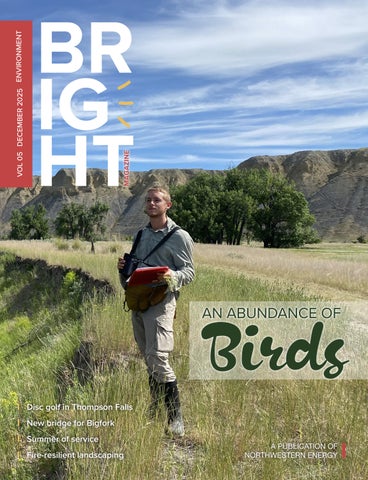
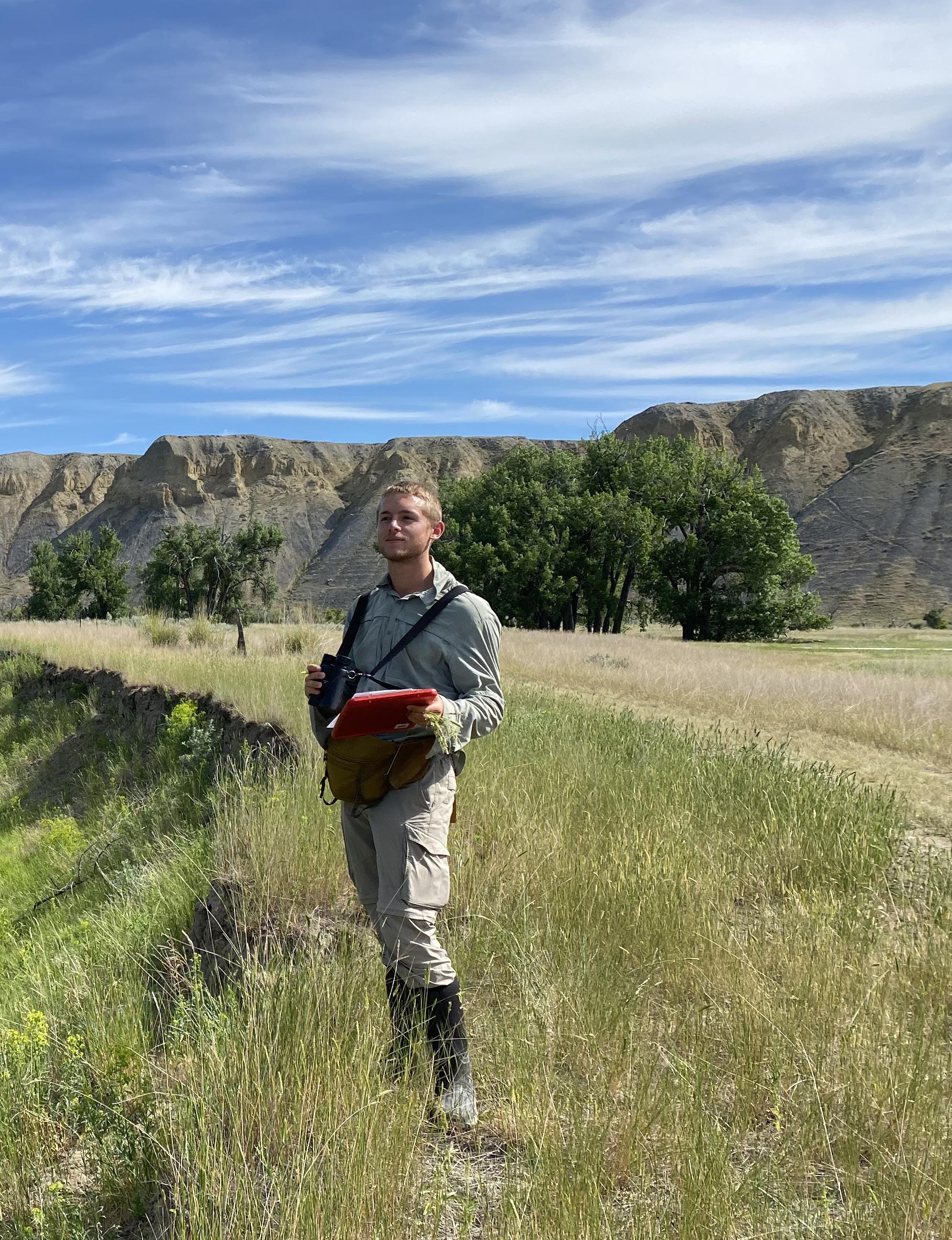
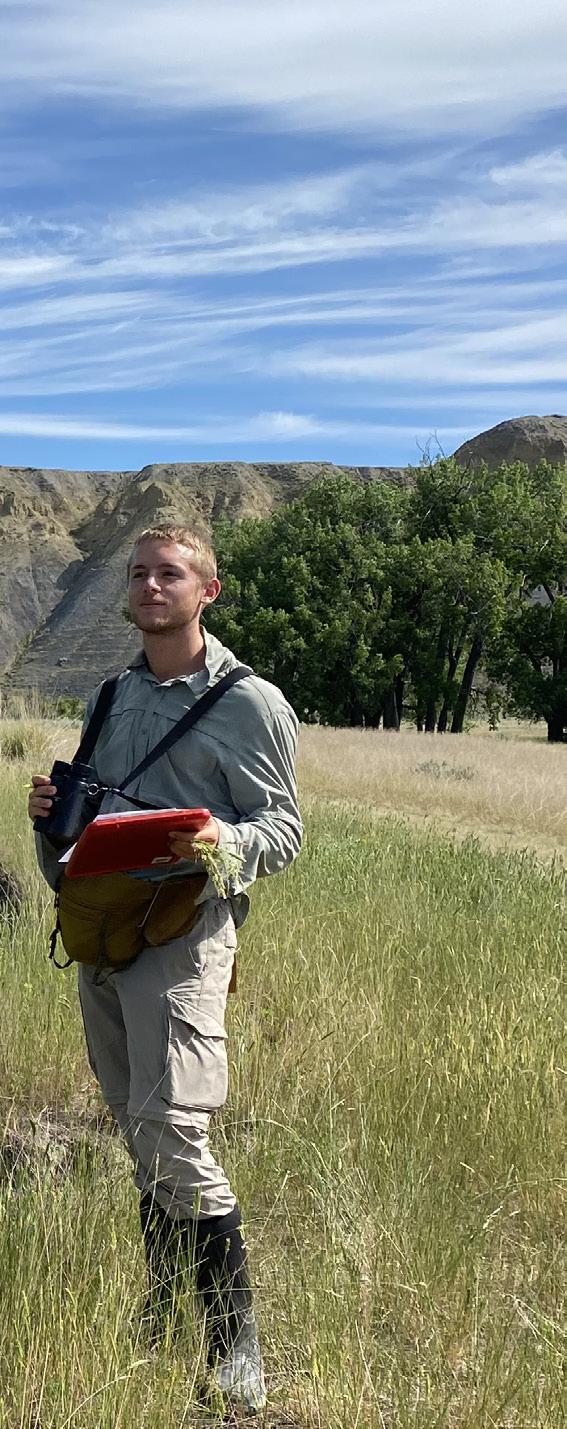
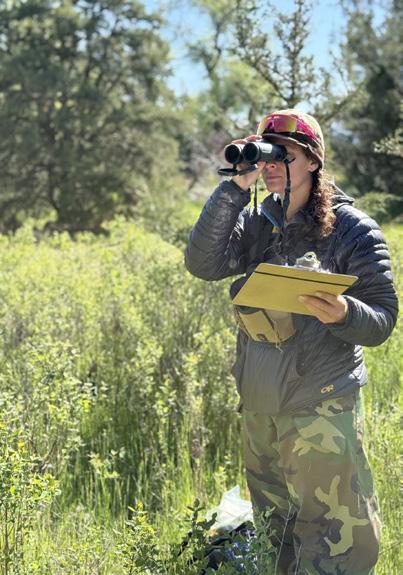
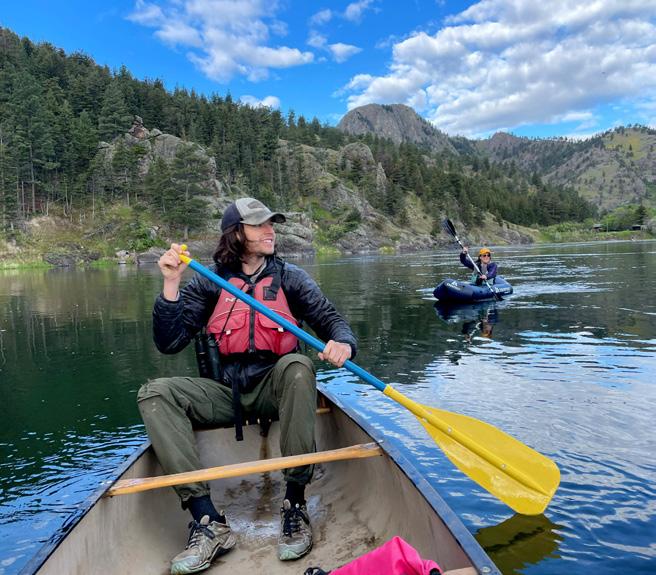
Lynette Williams is a seasonal field technician with the University of Montana. She captured this photo of Konshau Duman conducting a survey for birds on the Missouri River. He is writing down all the birds he sees or hears during a 10-minute period.
The University of Montana and NorthWestern Energy partner to monitor Montana’s bird populations.
Delivering innovation to Mystic Lake
A major upgrade is making it safer and more efficient to deliver equipment to Rowe Dam.
‘Hospitality Time’
Great Falls Gas cooking show of the ’60s and ’70s delighted audiences with delicious recipes and friendly kitchen conversation.
Cottonwood cavities
A graduate school project is focused on creating nesting habitat for native birds.
From boots on the ground to eyes in the sky
Drones are reshaping the way we approach maintenance and wildfire mitigation.
her comfort zone
One of NorthWestern Energy’s own, Janelle Garza, is headed to Greece to compete in the Spartan races.
We appreciate it when our customers take the time to extend a thank you to our employees. Here’s what we heard from one customer recently.
When Velda stopped by the Aberdeen office, she was delighted by the customer service she received from Customer Associate Shannen B., whom she described as “so helpful and kind.” Velda said she appreciates the great customer service and that Shannen took the time to explain everything to her and answer all her questions.
THE BRIGHT SIDE
We love hearing from our readers. We welcome all your comments, questions and letters to the editor. We’ll edit letters as needed for accuracy, style and length, and we will feature letters in future issues. Write us at:
Bright Magazine NorthWestern Energy 11 E. Park St. Butte, MT 59701
Or email us at: bright@northwestern.com
At NorthWestern Energy, we’ve always believed that our responsibility goes beyond simply delivering electricity and natural gas. We are stewards of the energy future for the communities we serve across Montana, South Dakota, Nebraska and Yellowstone National Park. That future is evolving, and so are we.
As Vice President of Asset Management & Business Development, I work to find solutions to the complex problem of how we will provide reliable and affordable energy as our customers’ demand for energy shifts and grows.
Our commitment to reliability, affordability and sustainability remains steadfast. We’re investing in a balanced energy portfolio that includes carbon-free hydro, wind and solar, alongside traditional resources. In fact, 58% of our electric generation is already carbon-free, and we’re working every day to increase that number while maintaining the reliability our customers count on.
We’re also navigating new challenges — extreme
weather, wildfires and rising demand for electricity. As we look ahead, our mission is clear: to enrich lives through a safe, sustainable energy future. That means planning wisely, investing responsibly and always putting our customers first.
Many people may not realize the work that goes on behind the scenes to deliver reliable energy. This issue of Bright magazine will shed light on our incredible employees and the hard work they put in to keep the electric grid and natural gas system running, all while being good stewards of the environment.
We hope you enjoy this issue of Bright magazine!
Bleau LaFave
Bleau LaFave Vice President of Asset Management & Business Development
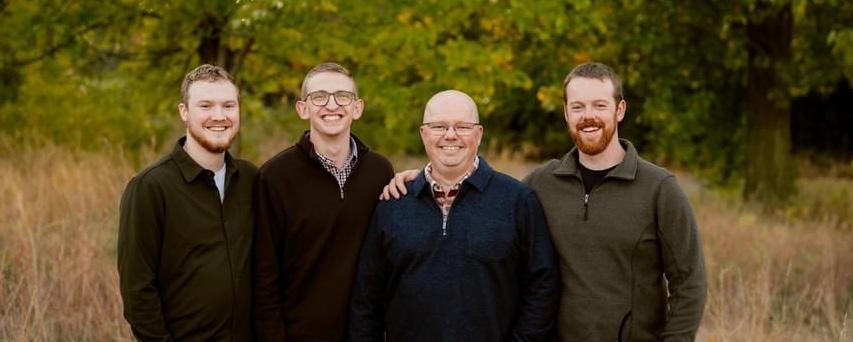
Bleau LaFave, Vice President of Asset Management & Business Development, with his son and two sons in-law.
Shareyour thoughts prettyplease withacherry on
We’d cherry-ish your feedback!
By taking just a few minutes to share your thoughts, you’ll be helping us gain a better understanding of what readers want to see in Bright magazine.
Take our short survey and help us make things even better.
As a little thank you, we’ll send you a dishcloth with a delightful cherry design — because you’re the pick of the bunch!
Scan this QR code with your phone’s camera to complete the survey.
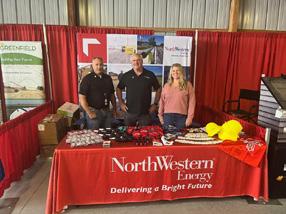
We‘ve been busy attending events across our service territory (shaded in red). We loved getting to see so many people in person! Here are some highlights of events, sponsorships and more.
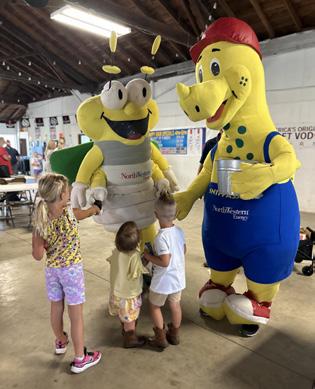
Brown County: This summer, Louie the Lightning Bug and Sniffy the Sniffasaurus participated in the Brown County Fair Mascot Challenge. Competition was pretty fierce and featured other local mascot celebrities such as Thunder the Wolf from Northern State University, the Climate Control Turtle and Winger representing the Wings Hockey team. Construction Engineer Intern Sarah Mitzel showed off her quick reflexes and good listening skills, emerging as one of the winners of the 2025 Mascot Best Listener award.
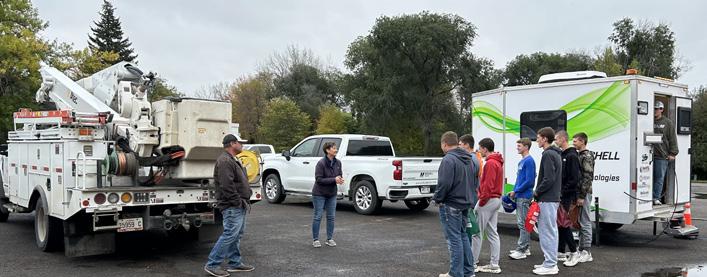
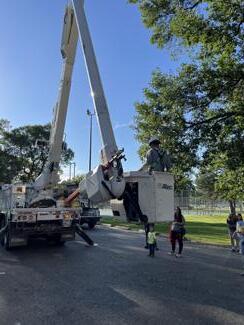
Redfield: NorthWestern Energy participated in the annual Career Here! event hosted by Grow Spink Inc. by offering bucket truck tours and a booth featuring information about careers in energy.
Grand Island: Our employees joined Husker Harvest Days, sharing awareness with the community on Call 811 Before You Dig and pipeline safety. We also gave away 811 garden trowels and magnets.
Aberdeen: On Aug. 26, 2025, the Aberdeen team proudly participated in the community’s 21st Annual National Night Out, hosted by the Aberdeen Police Department. Families and children especially enjoyed bucket truck rides offered by NorthWestern Energy, while our mascot Sniffy greeted kids with high fives. We also shared important safety information, including details about calling 811 before you dig and the role of “stinky eggs” in detecting natural gas leaks.
Everywhere: We installed water bottle filling stations in our NorthWestern Energy locations across the service territory. This has resulted in an average reduction of 3,370 plastic bottles per year per station — adding up to an impressive 151,693 bottles saved annually.
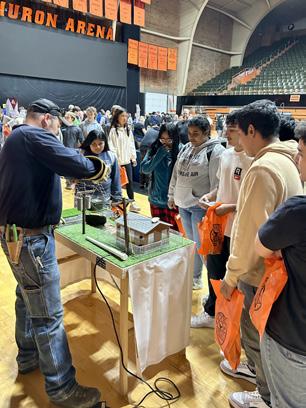
Huron: NorthWestern Energy participated in the 4th Annual Business & Career Fair hosted by the Huron School District and Career & Technical Education. Held annually, this fair offers a valuable opportunity to connect with students from both Huron High School as well as students from schools in the outlying areas. This year, our booth featured our new Electric Safety City table.
Huron: We proudly sponsored the South Dakota State Fair and had a booth at the Warren Lotsberg NorthWestern Energy Freedom Stage.
Brookings: Customer Associate Lanna Jacobson noticed a need in the Brookings community and organized an employee drive for cat items to help Brookings Humane Society after taking in loads of cats from a hoarding situation.
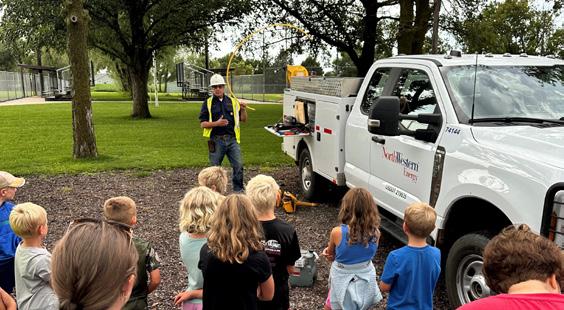
Marion: District Superintendent Rick Nelson gave a Touch a Truck and safety presentation to a daycare in Marion, South Dakota.
Mitchell and Yankton: We’re proud to support Avera St. Mary’s CNA Training Camp through our Advantage South Dakota Workforce Grant Program, which has funded the Mitchell region’s CNA training for the last five-plus years.
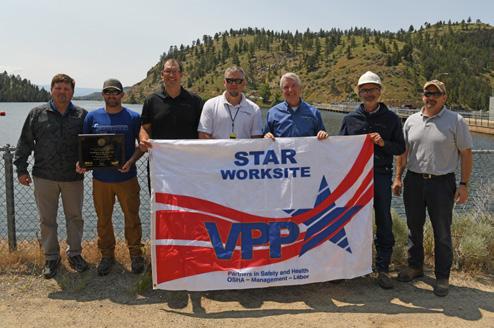
Hauser Dam: NorthWestern Energy is proud to announce that its Hauser hydroelectric facility has earned its third Voluntary Protection Program (VPP) Star recertification from the Occupational Safety and Health Administration (OSHA). This prestigious recognition highlights the facility’s exceptional safety standards and strong employee involvement.
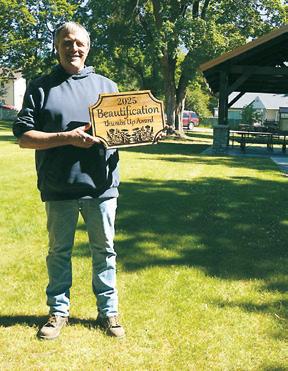
Thompson Falls: Noel Jacobson, Thompson Falls Hydro Plant Foreman at NorthWestern Energy, accepted the “2025 Beautification Thumbs Up” award for the Power Park improvements at David Thompson Days.
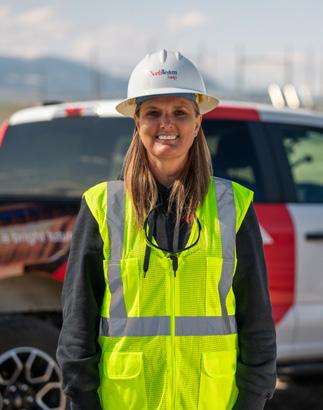
Butte: NorthWestern Energy Director Safety & Labor Relations Carolyn Loos has played a pivotal role in shaping NorthWestern Energy’s safety culture, overseeing compliance with industry safety standards, and ensuring the well-being of the workforce. We are pleased to see Carolyn honored as one of the Women We Admire’s 2025 Top 50 Women Leaders of Montana.
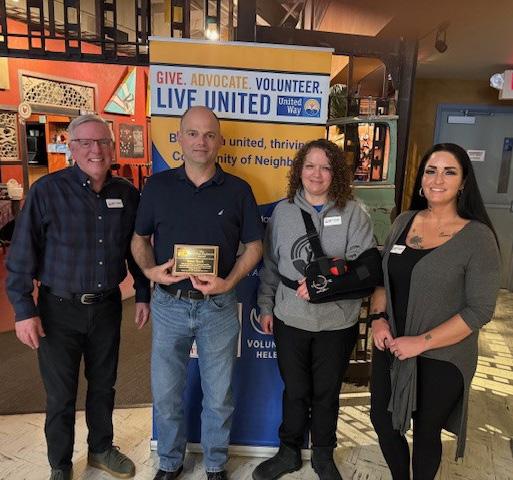
Helena: Helena Division Supervisor of Electric Operations Steve Rock received the Betty Lou Lindstrom award from the United Way of the Lewis & Clark Area for his volunteer efforts with United Way. As board chair, Steve oversaw a redefining of the organization.
Butte: Some 135 NorthWestern Energy employees from various office locations within Butte participated in the inaugural SOCCathon 5K for Charity! Twelve laps around the buildings equaled the 5K distance, and together employees raised $13,500 for Big Brothers Big Sisters of Butte-Silver Bow. Through NorthWestern Energy’s Charitable Team Participation Grant Program, each participant contributed a $100 donation to Big Brothers Big Sisters. Thank you to everyone who participated or volunteered to make this event a success!
Butte: Over the summer, our employees stepped up to support the kids at West Elementary in Butte by volunteering with Action Inc., serving 1,350 lunches over 45 days. Huge shoutout to the finance team for making a difference in the community!
Fort Benton: The restoration of the Mandan, a historic keelboat replica built for the 1952 film “The Big Sky,” recently received a major boost thanks to the generosity and teamwork of NorthWestern Energy. Led by the Fort Benton Community Improvement Association, the project required a new mast — and NorthWestern Energy delivered, both literally and figuratively. NorthWestern donated a new mast for the boat and installed it, using a line truck to lift it into the boat while the restoration team secured it in place.
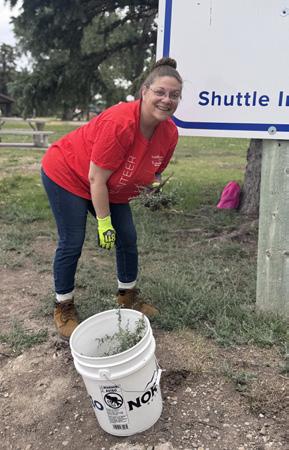
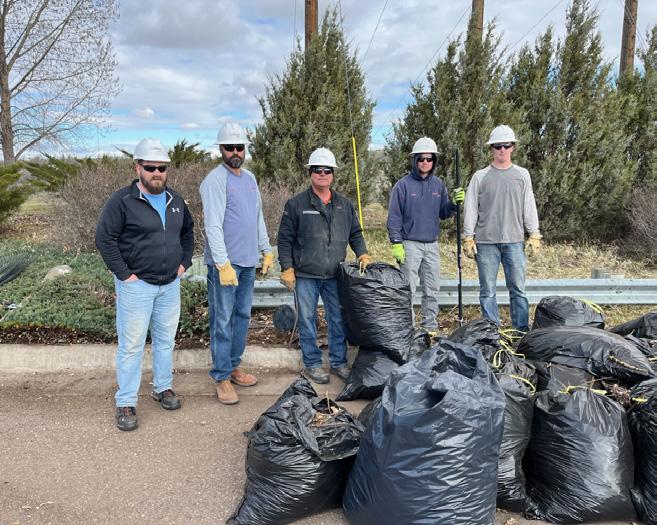
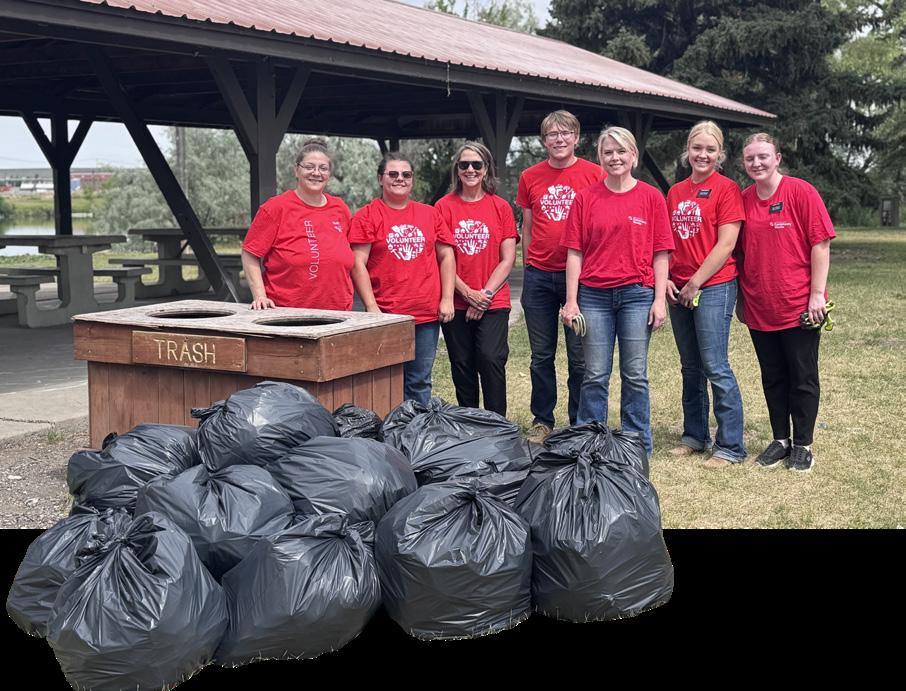
Great Falls: Our employees hit the water and the riverbanks of the Sun and Missouri rivers in Great Falls, teaming up to clean up trash and remove invasive weeds. We’re proud to support the Sun River Watershed Group, an organization dedicated to protecting and restoring the Sun River’s natural resources. To recognize our employees’ hard work, NorthWestern Energy made a donation to help further the group’s mission. Our volunteers brought energy, teamwork and collected plenty of trash and weeds along the way. Great job, team!
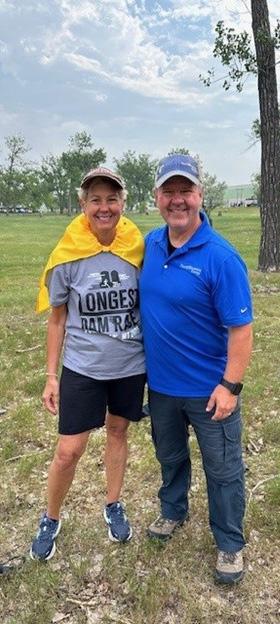
Fort Peck: We’re proud to support the 31st annual Longest Dam Race hosted by the Glasgow Chamber and Two Rivers Economic Growth. We handed out hydro safety brochures, Bright magazines, sunglasses, can koozies and our “Be Dam Safe” slap bracelets and 811 Superhero capes — worn proudly by kids (and a few fun-loving adults) in the one-mile race!
Belt: NorthWestern Energy proudly sponsored the Belt High School Clay Target Team at the 3rd Annual Sporting Clay Tournament held at the Ranches at Belt Creek. The event took place over the weekend of Aug. 2-3, with our team competing in the first flight on Saturday against a field of 16 teams. We’re thrilled to share that our team earned an impressive second place finish!
Billings: Turning hoops into hope! At the Fall Home Improvement Show in Billings, our Popa-Shot game raised $2,000 for Billings Family Service, which provides food, clothing, rent and energy assistance to our neighbors in need. For every basket scored, NorthWestern Energy pledged $1 to Billings Family Service. Over three days, attendees sank 1,800 baskets — and we rounded up our contribution to $2,000 to support Family Service’s mission in the Billings community. Thank you to everyone who joined the fun and helped us turn baskets into community impact!
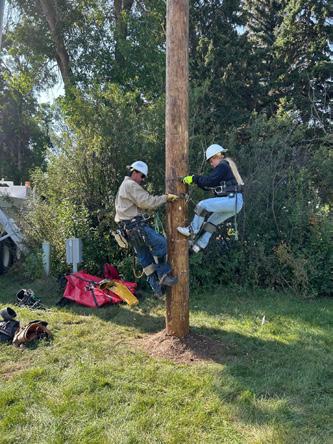
Lewistown: Our crew had a blast at the Workforce Expo, giving local students a hands-on look at energy careers. From bucket truck rides to power pole demos, students got to experience what it’s like to work in the energy industry — and meet the professionals who keep Montana powered.
MORE THAN 1 MILLION POUNDS OF ELECTRIC AND GAS METERS RECYCLED
By Erin Madison
NorthWestern Energy recently wrapped up its advanced meter project in Montana after installing around 590,000 new advanced electric meters and natural gas modules.
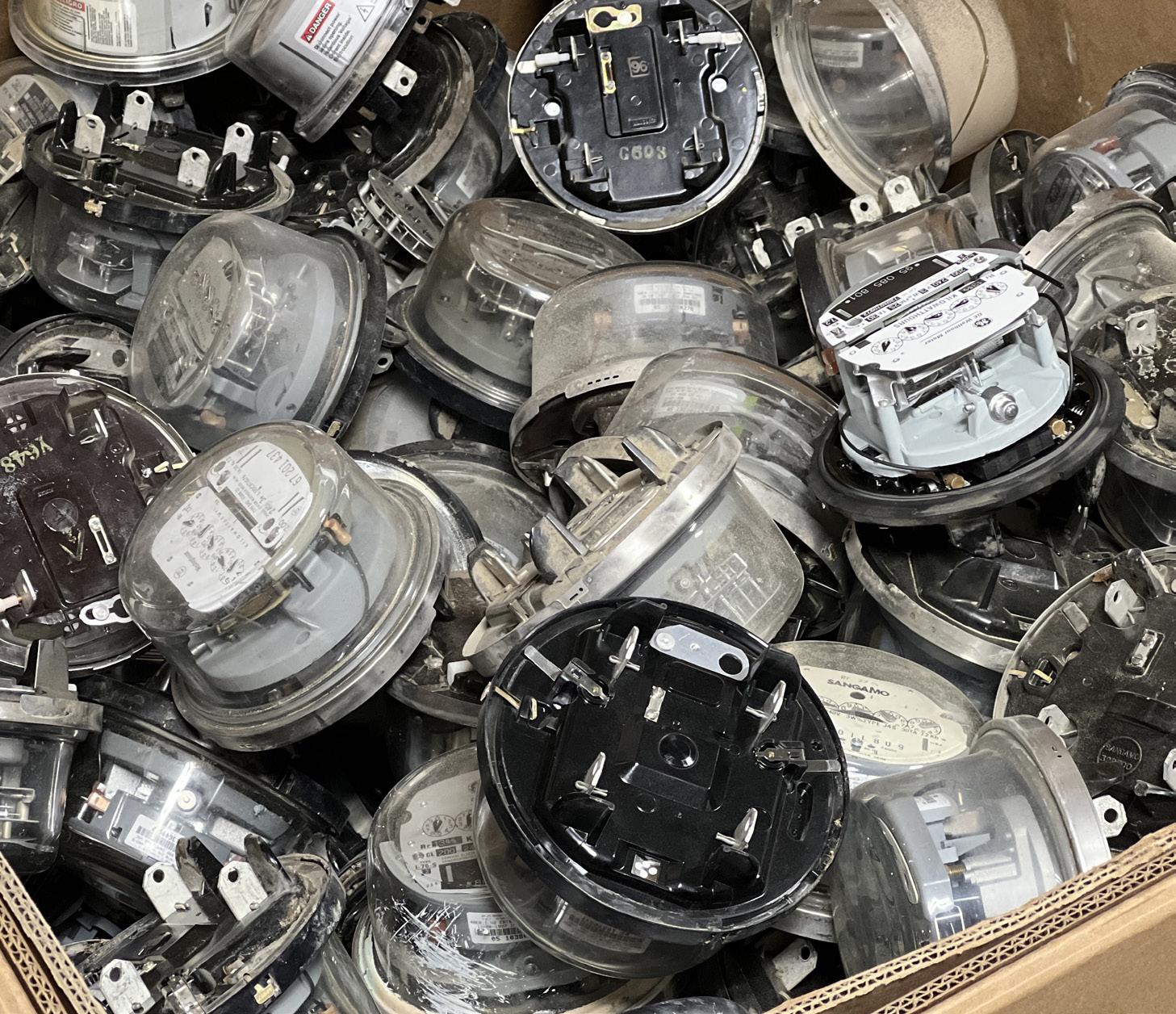
Along the way, we’ve kept more than 1.1 million pounds of waste out of the landfill by recycling the old meters.
After meters are replaced, they’re sent to a recycling facility in Illinois, explained Sarah Kaufman, AMI Coordinator for NorthWestern Energy. Thirty-four loads of meters were sent to Interco for recycling. Each load fills a 53-foot trailer and contains 40-47 bins of old meters.
While replacing meters, Tru-Check, NorthWestern’s contractor, separated electro-mechanical meters that have glass covers from digital-style meters that have plastic covers. Then, Interco breaks down the meter into separate components for recycling.
“We’ve been recycling meters since this project began,” Sarah said.
Electric meters contain valuable metals and are fully recyclable, according to Interco. Recycling helps keep hazardous materials out of landfills and allows valuable metals to become future products.
UNCOVERING HIDDEN RISKS
How environmental site assessments safeguard our future.
By Ben Sorensen
When it comes to real estate, what you don’t know can hurt you. At NorthWestern Energy, property transactions are a regular part of business, especially when it comes to buying commercial and industrial properties. But beneath the surface of every property lies the potential for hidden risks — remnants of past land use, improper disposal practices or simply the unknown. That’s why environmental site assessments (ESAs) are more than just a box to check — they’re a strategic safeguard for our company’s future.
Seeing beyond the surface
Imagine purchasing a property, only to discover later that an old underground storage tank is leaking fuel oil into the soil and groundwater. The result? A costly cleanup and a mountain of legal liability. Phase I Environmental Site Assessments, guided by the American Society for Testing and Materials (ASTM) E1527-21 standard, are designed to prevent these scenarios. They’re not just due diligence; they’re our shield against unforeseen financial and legal consequences.
The power of Phase I ESAs
So, what exactly is a Phase I ESA? It’s a structured process that helps us identify Recognized Environmental Conditions (RECs), or the presence or likely presence of hazardous substances or petroleum products due to a release, or the threat of a future release. This information is invaluable: it can shape negotiations, protect new property owners or even prompt us to walk away from a risky deal.
The ESA process includes:
• Historical research of the property and its surroundings
• Site reconnaissance to observe current conditions
• Interviews with owners, occupants and local officials
• Review of regulatory databases and environmental records
This process helps buyers, lenders and developers comply with the All Appropriate Inquiry requirement under the federal CERCLA law (the formal name for the Superfund law), potentially qualifying them for liability protections.
Lessons from the field
Real-world examples from our Environmental Department show just how critical ESAs are:
• Building a new shop: We considered purchasing a property for a new shop. The ESA revealed the site lacked proper certification, and had a history of petroleum releases and buried wastes. The risks were too high, so we walked away.
• Future business needs: Another parcel, eyed for a new office/shop, had a history of industrial use. Soil samples confirmed contamination, and the property was removed from consideration. (Note: Phase I ESAs typically don’t involve soil sampling, but when more information is needed, a Phase II ESA can be conducted for deeper investigation.)
More than paperwork
At NorthWestern Energy, Phase I ESAs are part of our standard business practice. They’re not just paperwork; they’re a proven risk management tool that protects our investments and reputation. Taking the time to complete a thorough ESA has proven time and time again to be one of the best risk management tools when purchasing real estate.
And it’s not just for businesses. Anyone considering the purchase of a home, land or business property can benefit from a Phase I ESA. It’s a smart, strategic step to safeguard your decision.
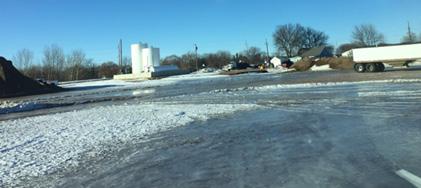
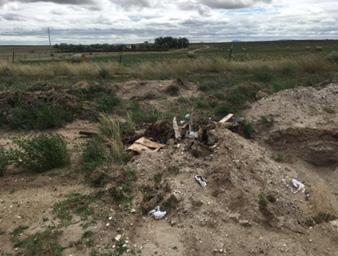
These photos show examples of land where we have conducted environmental site assessments.
PUMP UP THE ELECTRIC WATER HEAT
By Pamela Hanson
An exciting new, flexible electric water heating option is now available, ideal for households considering a replacement for their existing electric resistance water heater. NorthWestern Energy’s Heat Pump Water Heater (HPWH) Program, currently operating as a pilot, is accelerating the adoption of HPWHs by providing incentives up to $3,000 to customers and workforce training.
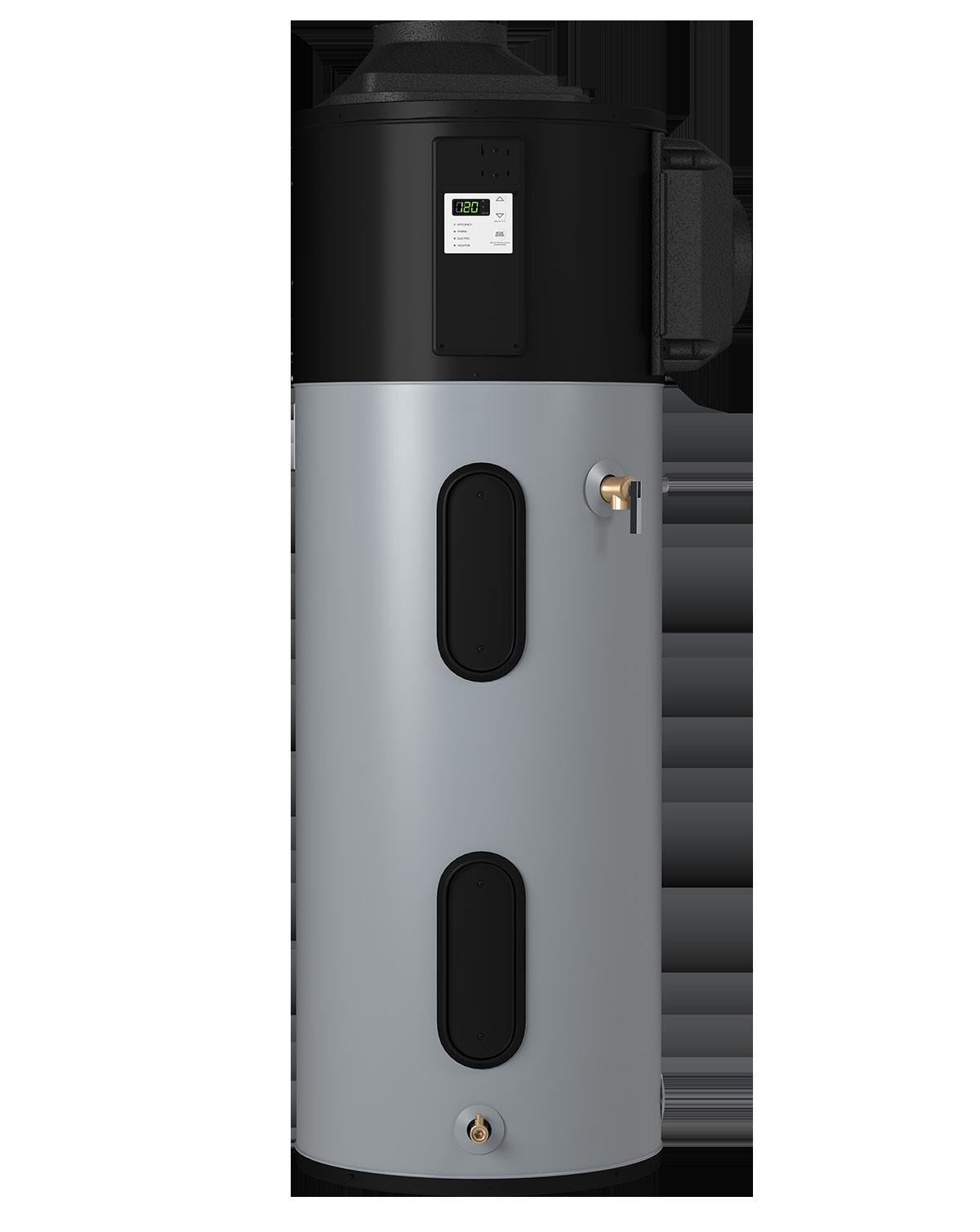
The heat pump water heater, also known as a hybrid water heater, is a marriage of well-known heating technologies that allows you to heat water the way you want to. You can be as efficient as possible, reducing cost and energy consumption or, at times of high hot water demand, you can heat water faster.
Who is eligible for the Heat Pump Water Heater Program?
NorthWestern Energy electric water heating residential customers in Montana are eligible. The program offers customers a one-time instant incentive of up to $3,000 to offset installation expenses. Homes must be owner occupied, existing single-family or man ufactured homes (on a permanent foundation). The incentive is available only through a licensed contractor. For more information, visit northwesternenergyhpwh.com.
How does a heat pump water heater work?
Over the past few decades, heat pump technology has become more popular in the United States thanks to improvements in per formance and efficiency. You might already be familiar with heat pumps — they’re commonly used in refrigerators and home heating and cooling systems. Now, that same technology is being used to heat water.
Instead of generating heat directly like tra ditional electric water heaters (which use metal elements that get red-hot), HPWHs move heat from the surrounding air into the water tank. This process uses much less energy — making HPWHs two to three times more efficient.
HPWHs come with modern upgrades like:
• Push-button controls for easy operation
• Wi-Fi connectivity so you can monitor and adjust settings remotely
• All-in-one design, similar to a refrigerator, with the heat pump mounted on top of the water tank
HPWHs can heat water in different ways depending on your needs:
• Heat Pump Mode: Uses surrounding air to heat water slowly but efficiently — great for saving energy.
• Electric Resistance Mode: Uses traditional heating elements for faster heating when needed.
• Hybrid Mode: Combines both methods to balance speed and efficiency.
• High Demand Mode: Uses all heating elements for quick recovery during heavy use.
Available in 40-, 50-, 65- and 80-gallon capacities, these tanks still include the familiar upper and lower electric resistance elements, ensuring reliable performance while offering enhanced energy efficiency and functionality.
Technology Adoption and Workforce Development
Heat pump water heaters are important to NorthWestern Energy as they can reduce residential peak demands on our system. We are working to further advance market adoption and knowledge of residential HPWHs by engaging distributors, licensed contractors (installers) and customers in Montana. The program goal is to familiarize installers with HPWH technology and encourage them to identify opportunities to install HPWHs rather than standard electric resistance tanks. The program offers no-cost workforce training to licensed contractors, building inspectors, community groups and a $500 incentive for every HPWH a
Since the launch of the HPWH pilot program, there have been 20 training sessions attended by 157 participants, along with multiple in-person visits across NorthWestern’s service territory. As a result of these efforts, 29 licensed plumbing and heating companies are now equipped to install HPWHs. Collectively, they’ve replaced about 50 traditional electric resistance water heaters with high-efficiency heat
NORTHWESTERN ENERGY NAMED BUSINESS PARTNER OF THE YEAR
By Jo Dee Black
NorthWestern Energy was honored to be named NeighborWorks Great Falls’ Business Partner of the Year during the 2025 NeighborWorks Week.
Held annually during the first full week of June, this is a time used to showcase the work that has been done in the community and recognize the partnerships that have made it possible.
“NorthWestern Energy was an obvious choice for our Business Partner of the Year,” said NeighborWorks Great Falls Community Engagement & Marketing Coordinator Emma Nelson. “This past year they have done so much,
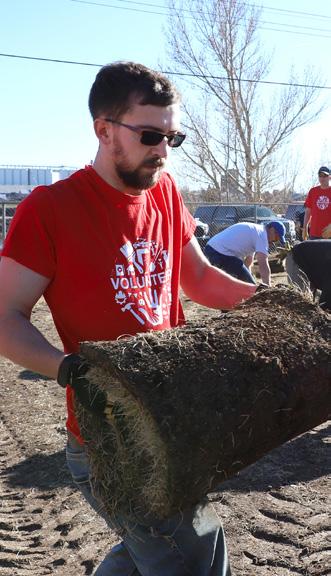
not just for NeighborWorks, but for the community at large. Whether it was planting trees and laying sod at the Owner Built Homes, picking up trash in Black Eagle or helping hang Christmas Lights on Flag Hill, NorthWestern Energy was a true example of a business that gives back.”
“We are truly honored and humbled to receive this recognition from NeighborWorks Great Falls,” said NorthWestern Energy Community Relations Manager Shane Etzwiler. “Their work to build strong neighborhoods and support successful homeownership is vital to the health of our community, and we are proud to stand alongside them in that mission.”
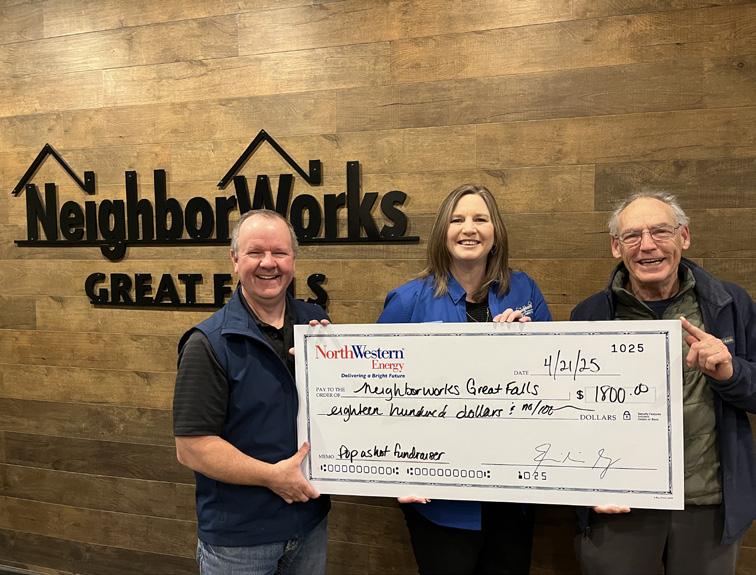
NorthWestern Energy was named NeighborWorks Great Falls’ Business Partner of the Year, honoring the work we do with NeighborWorks and the Great Falls community. This includes planting trees and laying sod, picking up trash in Black Eagle and helping hang Christmas lights on Flag Hill. In the bottom center photo, NorthWestern Energy Community Relations Manager Shane Etzwiler presents an $1,800 donation to NeighborWorks Great Falls Executive Director Sherrie Arey and Board Member Mike Parchen.
AN ABUNDANCE OF Birds
By Natalie Mueller
The University of Montana and NorthWestern Energy partner to monitor Montana’s bird populations.
When Anna Noson first moved to Missoula more than 25 years ago for a position at the University of Montana, she never imagined just how deeply her work would connect her to the rivers, landscapes and wildlife of the state. Drawn to the outdoors and fascinated by how birds respond to their environment, Anna quickly found her niche in bird studies.
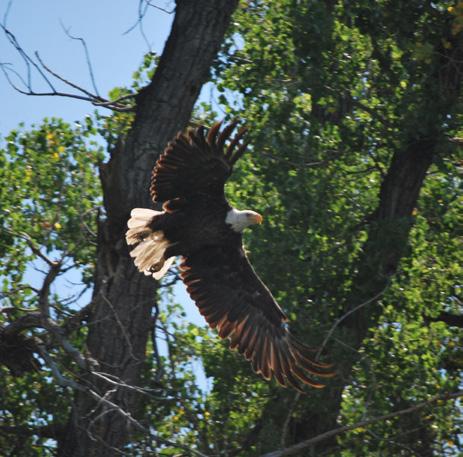
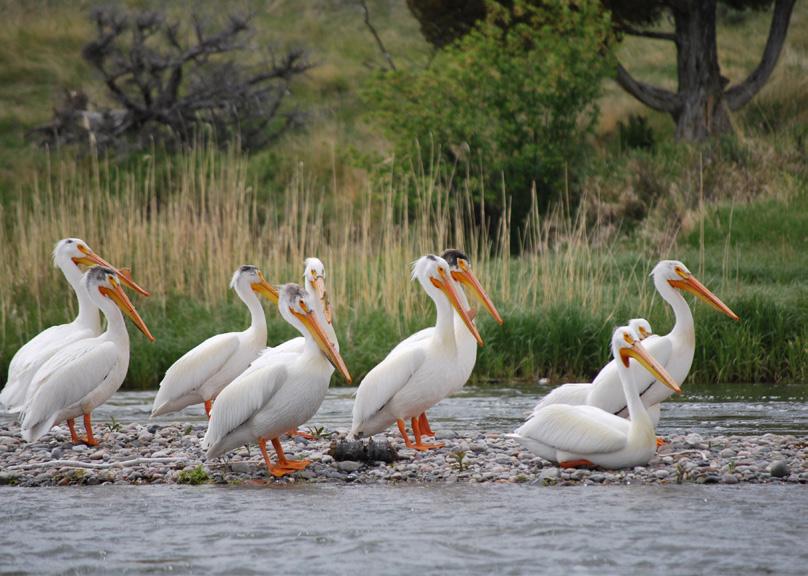
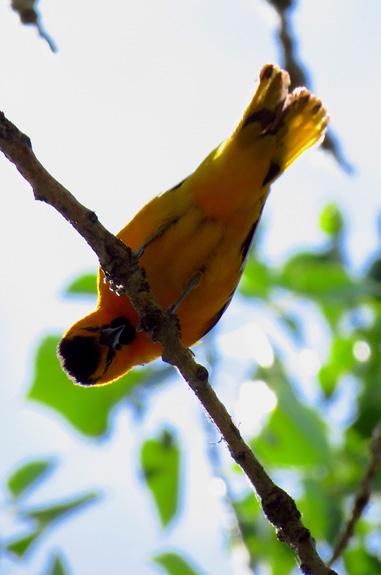
In 2005, NorthWestern Energy, in partnership with the university and the Bureau of Land Management, launched a long-term program monitoring bird populations along Montana’s rivers. This research is a requirement under the federal license that allows us to operate hydro facilities along the Missouri River. Our goal is to monitor and evaluate avian species and the habitat so we can implement protection, mitigation and enhancement strategies.
Anna was there from the very beginning. NorthWestern Energy’s funding has allowed researchers to continue surveys year after year, to compile long-term data that would otherwise be challenging to gather.
“NorthWestern decided to use birds as a wildlife indicator because they are relatively easy to survey and respond to ecological changes rapidly,” Anna said. “Birds are abundant in small areas. They’re also very diverse so we can record a lot of different species with a single survey.”
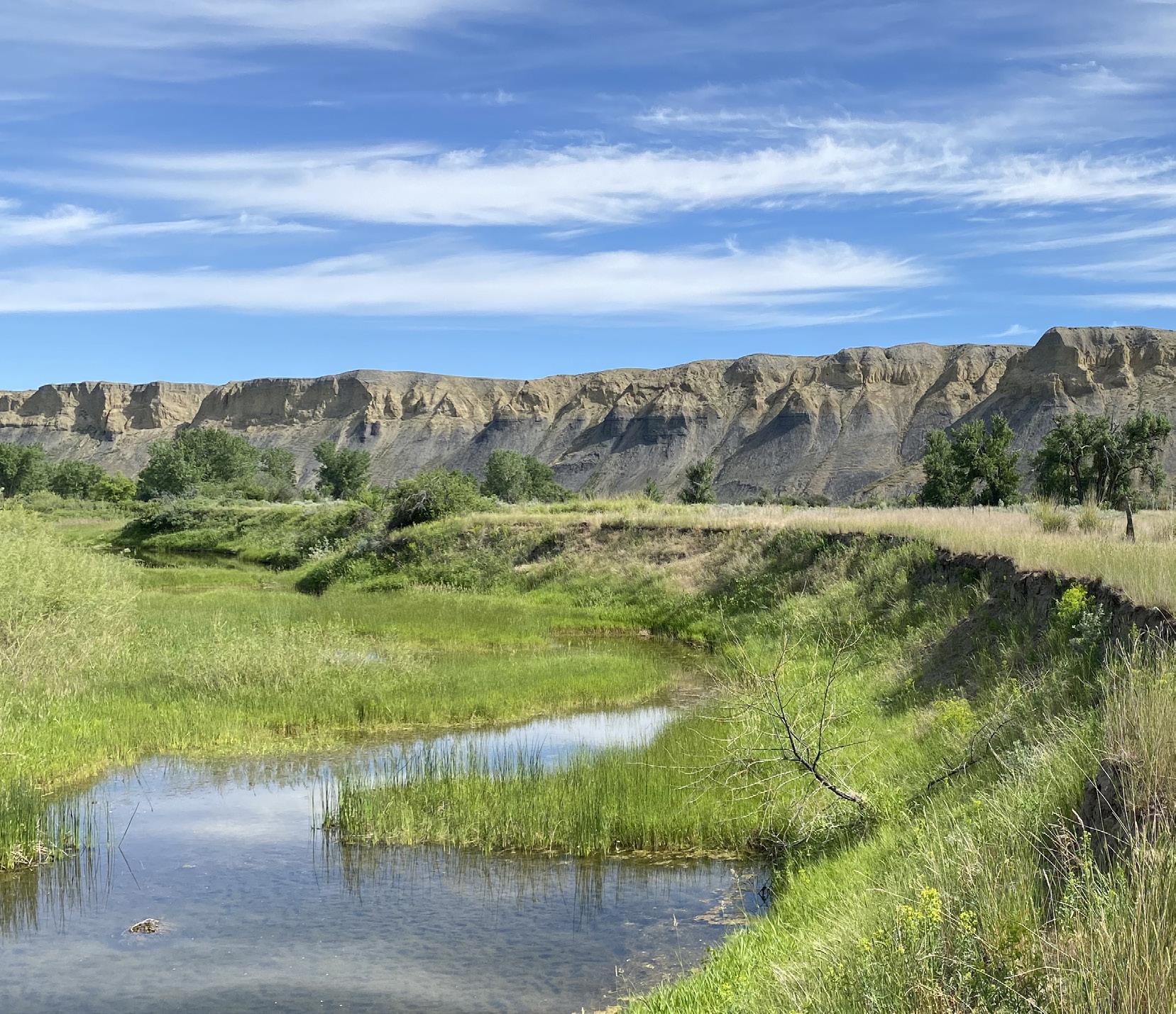
Anna’s work is both rewarding and challenging. Together, the team surveys more than 500 miles of river habitat, including the Madison and Missouri rivers and encompassing the Upper Missouri River Breaks National Monument. The data she and her team gathered has proved invaluable.
“The research done by Anna and the University of Montana has guided us to put more emphasis on conserving and restoring riparian vegetation to benefit wildlife populations, especially birds,” said Grant Grisak, Hydro Compliance Professional for NorthWestern.
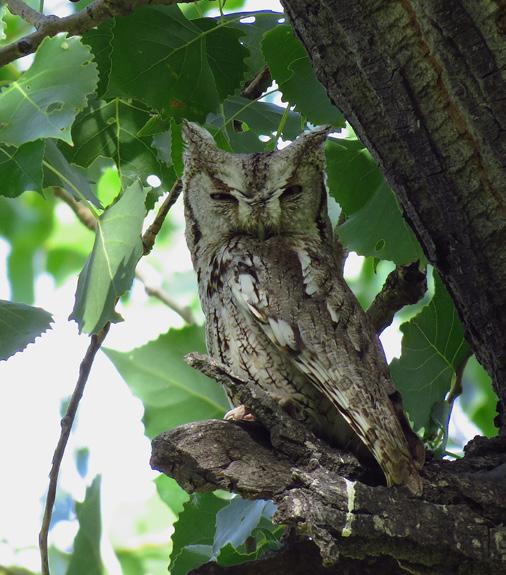
Anna also had some fun facts to share about birds. She explained that when people think of sleeping birds, they picture them in nests, but in reality, they typically sleep on branches. Birds use nests as nurseries to raise their young, and once the chicks no longer need them, the nests are abandoned. She also explained that certain species fly in a “V” formation to reduce drag and conserve energy, like bikers taking turns leading the line in a race.
The work is not without obstacles. In June, when birds are nesting, heavy rains can swell the rivers, making surveys difficult. Bad weather shortens the already limited window for studying bird activity, and permission from many landowners is needed to access private property. Still, Anna is undeterred. She loves the chance to explore new wild places, meet the landowners who care for them and discover unfamiliar birds, always inspired by Montana’s rich biodiversity.
Through this partnership, NorthWestern Energy is helping ensure that the story of Montana’s birds is carefully documented and understood. Our investment not only supports scientific research but also strengthens the stewardship of natural resources that communities and customers alike depend on. For Anna, that impact is personal; it reflects both her lifelong passion for the natural world and the company’s commitment to caring for the environment.
DELIVERING INNOVATION TO MYSTIC LAKE
By Jo Dee Black
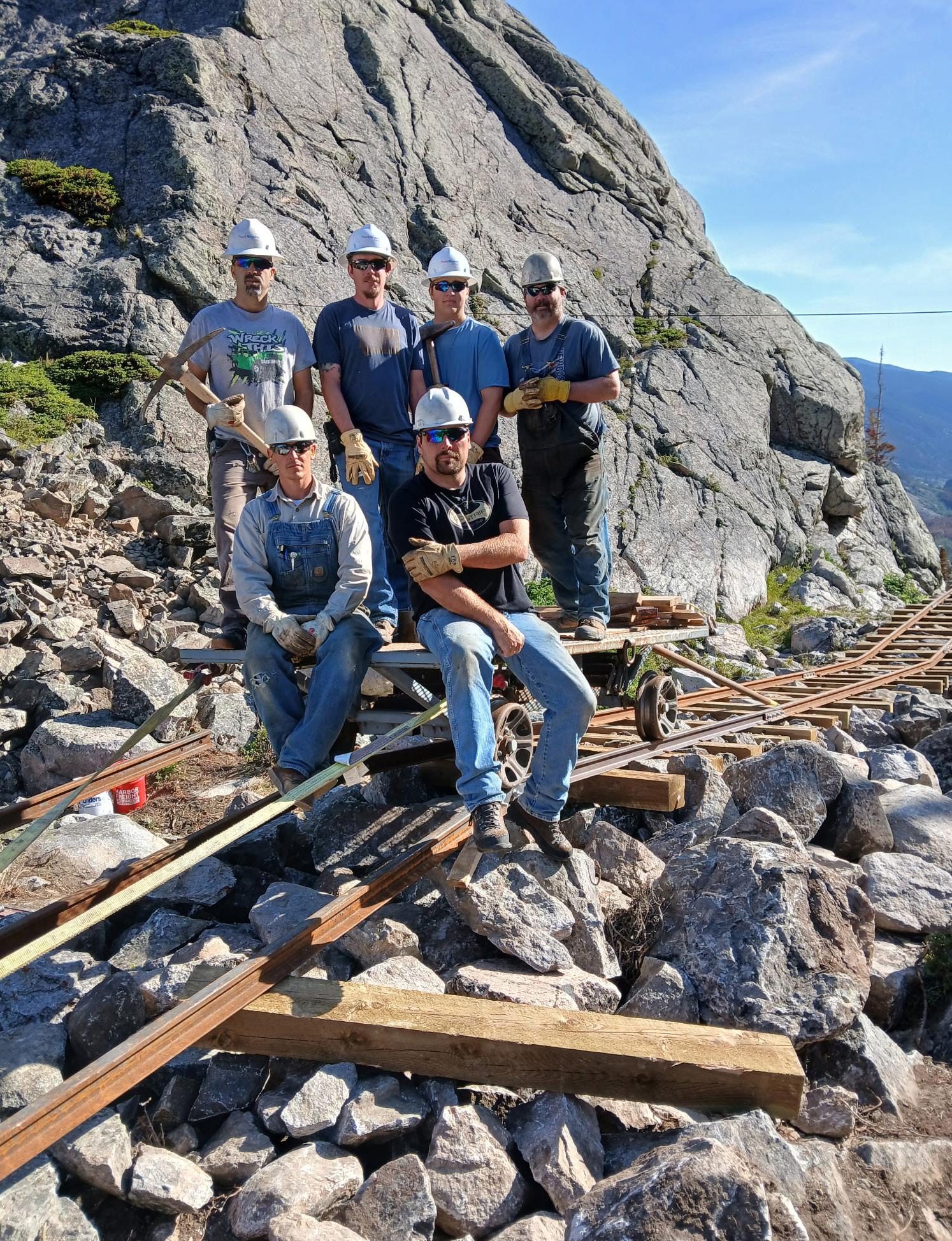
NorthWestern Energy crews at the Mystic Hydro Project recently completed a major upgrade that’s making supply and equipment delivery to Rowe Dam at Mystic Lake safer and more efficient. This location is one of the most remote in our system, and getting materials there has always been a challenge.
The new setup includes a hoist system mounted to a concrete pad that now pulls a rail cart — loaded with gear — on the steep grade to the dam’s intake structure. This replaces the original method, where equipment was carried or a rail cart was pulled with a looped cable by a locomotive moving in the opposite direction.
At 7,600 feet above sea level, the rail line to Rowe Dam may be the highest regularly operating rail line in Montana.
Getting the site ready took some creative logistics. A mini excavator was flown in by helicopter to prep the area, and buckets of concrete for the pad were airlifted in a few weeks later.
Getting supplies, equipment and people to Rowe Dam at Mystic Lake is an involved process.
An electric-hoisted tram with a 53% pitch runs from the Mystic Powerhouse — about a half mile and 1,000 ver-
tical feet below the dam. From there, it’s another two miles to the dam.
A locomotive engine pulls rail carts to a section of track that was washed out by a rockslide in 1979.
Supplies cross that stretch using a pulley system suspended on an elevated cable. Crews cross on a footbridge.
Then, supplies are loaded onto other rail carts pulled by another engine to travel to Mystic Lake.
This upgrade was a team effort that included:
• Mystic Dam Operator Maintenance Journeymen: Joe Clark, Tim Stockman and Ryan McPherson
• Mystic Dam Hydro Aide: Cody Ruprecht
• Thompson Falls Dam Operator Maintenance Journeyman: Mike Mercer
• Rainbow Dam Maintenance Team: Zac Banta, Thomas Duncan, Justin Smith and Berry Gibson
• Project Engineer: Devin McCarthy
• Our associates at Morrison-Maierle, AFFCO and Central Copters
Thanks to everyone involved for your hard work and dedication. This project is a great example of how we innovate and collaborate to overcome challenges and keep our system running strong.
New Hoist
Rowe Dam
Rail Line #2
Rail Line #1
Tram Powerhouse Washout
Hospitality Time
By Jo Dee Black
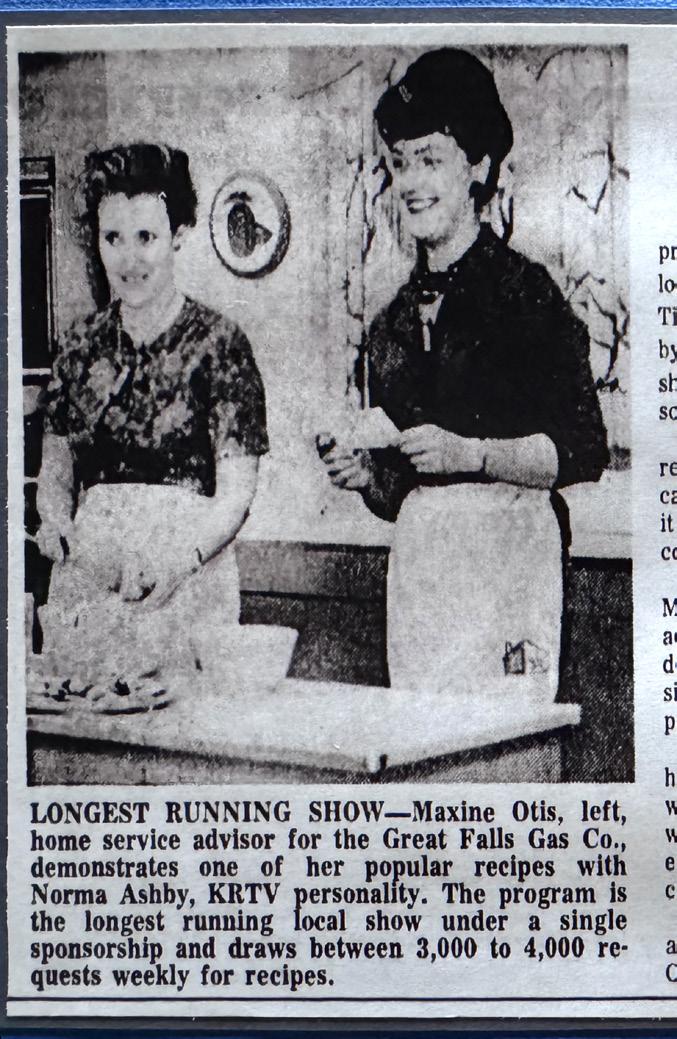
Great Falls had its own homegrown culinary stars who brought warmth, flavor and community spirit into local homes. In the 1960s and 1970s, “Hospitality Time” on KRTV became a twice-weekly tradition for viewers in the Electric City, delighting audiences with delicious recipes and friendly kitchen conversation.
The show featured the talented duo of Mrs. Maxine Otis, the Great Falls Gas Company’s Home Service Advisor, and Norma Ashby, a familiar face on KRTV. Together, they turned everyday ingredients into memorable meals and made cooking feel like a shared experience. “Hospitality Time” was sponsored by the Great Falls Gas Company, which later became Energy West and then part of NorthWestern Energy.
Broadcast from the cozy Great Falls Gas Hospitality Room, each episode featured Maxine preparing dishes that ranged from hearty entrees like Baked Stuffed Pork Chops and Ham Loaf Supreme to sweet treats like Butter Horns and Apple Turnovers. Norma added her signature warmth and charm to the demonstrations, making viewers feel right at home.
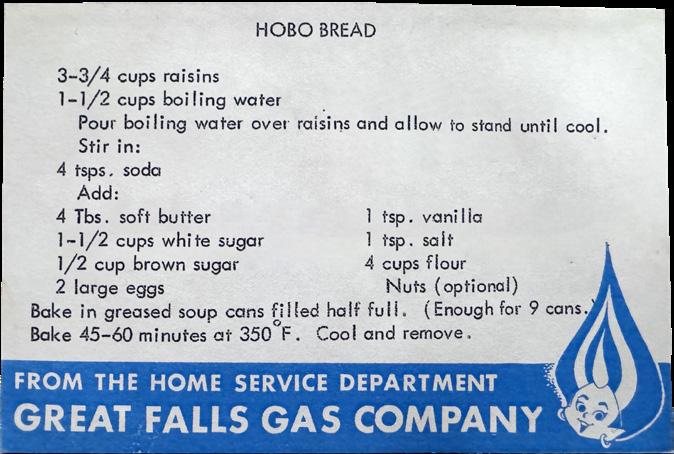
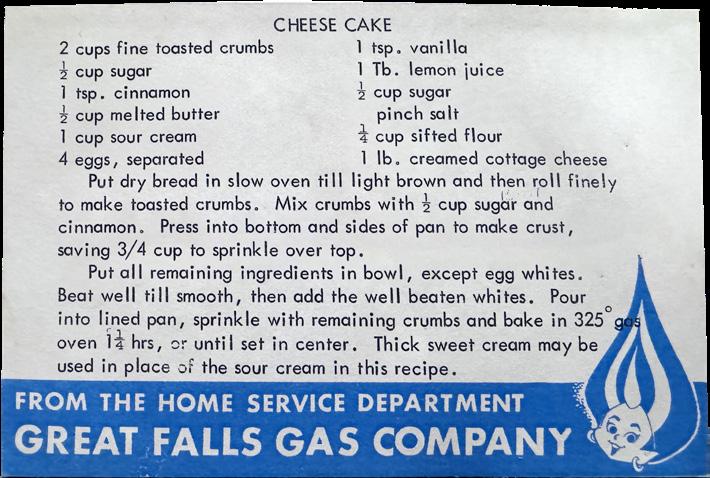
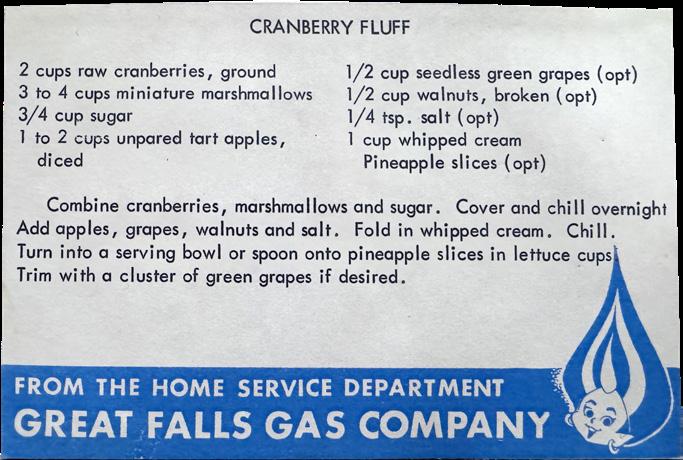
But “Hospitality Time” wasn’t just about what happened on screen. Maxine also hosted live cooking demonstrations at the Great Falls Gas Company’s office on Central Avenue, where locals could learn firsthand how to re-create the recipes they saw on TV. To meet the demand, she printed between 800 and 1,000 copies of each recipe — an impressive feat that speaks to the
A delicious slice of Montana television history.
show’s popularity and the community’s appetite for good food and good company.
Over time, the most beloved recipes from the show were collected into a cookbook featuring 185 favorites. Though copies are now rare, the cookbook remains a cherished piece of Great Falls’ culinary and broadcasting history.
Mrs. Sigrid Johnson of Belt, Montana, was among the contributors, sharing her prize-winning Pigs In The Blanket recipe. Mrs. Johnson was the grandmother of NorthWestern Energy’s Sally Fraser, a member of the Great Falls warehouse crew.
Pigs in the blanket
Ingredients
1 head of cabbage
¼ pound ground beef
1 pound ground pork
½ cup rice
1 ½ teaspoons salt
¼ teaspoon pepper
¼ teaspoon Accent seasoning
¼ cup chopped parsley
1 medium onion, chopped
½ teaspoon chopped garlic (optional)
1 egg
Sauerkraut
Potatoes (optional)
Directions
1
Remove cabbage leaves from large head, immerse in boiling water and cook until leaves are pliable and partially translucent. Drain.
2
3
4
Mix together all other ingredients, except sauerkraut.
Spoon meat mixture on each leaf, roll up and press in each end or fasten with toothpick.
Place alternative layers of sauerkraut and cabbage rolls in kettle, topping with sauerkraut.
5
Pour 2 cups of water over all. Cook slowly for about 2 hours. Last 45 minutes cut potatoes may be put on top.
CAVITIES COTTONWOOD
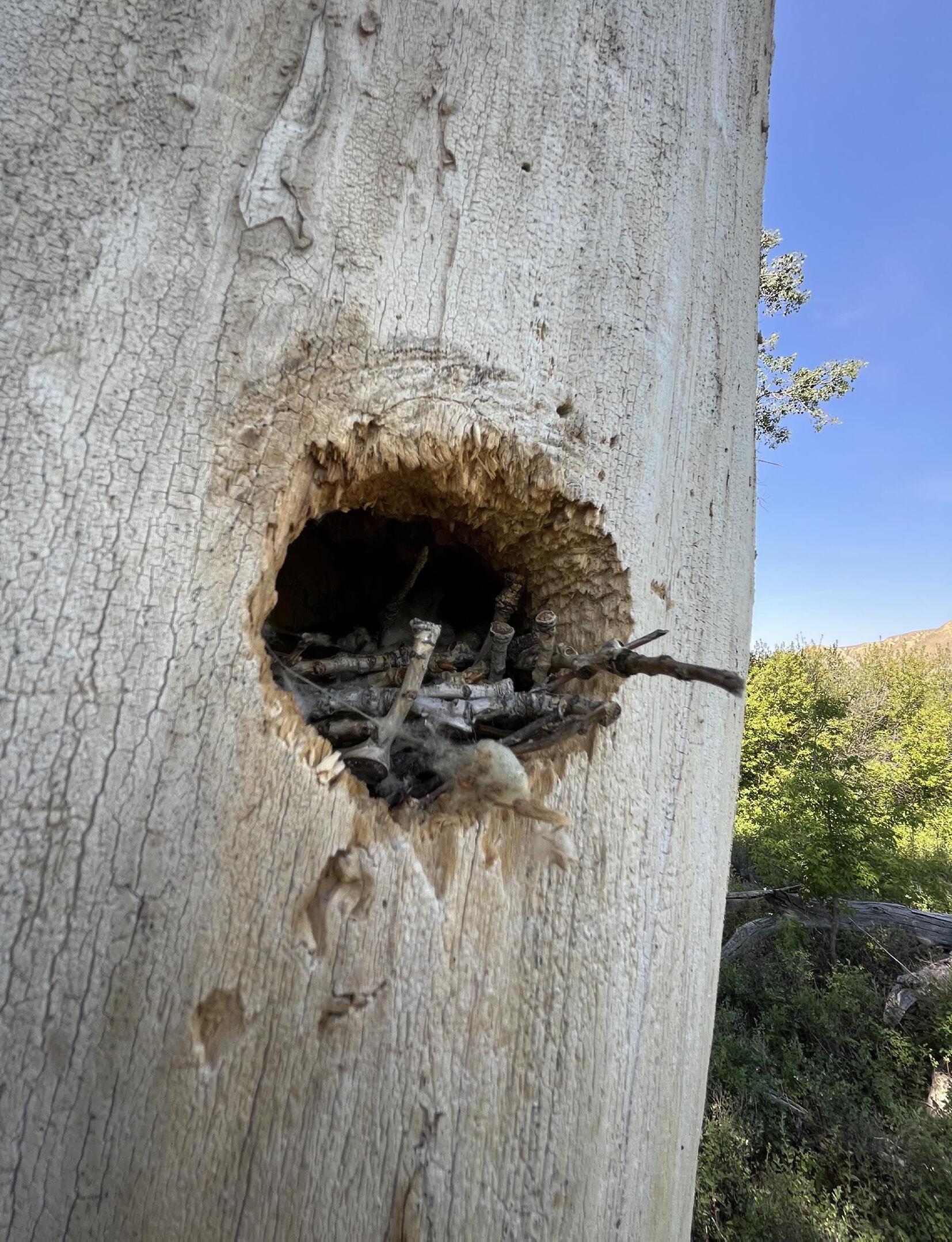
A project along the Missouri River attempts to replicate natural cavities in cottonwood trees to create habitat for secondary cavitynesting birds.
Creating nesting habitat for native birds.
By Erin Madison
Cottonwood trees, particularly big, standing-dead cottonwood trees, are prime habitat for cavity-nesting birds.
However, flood-control and hydroelectric dams have majorly impacted cottonwoods along the Missouri River in Montana. Cottonwood trees rely on high-water years for flood waters to carry and distribute seeds, explained Joe Hagengruber, Hydro Compliance Professional at NorthWestern Energy.
“Without these big flood years, the river isn’t able to get into its historic flood zone,” Joe said. “The big cottonwood galleries aren’t able to regenerate like they used to.”
Joe is working on his master’s degree in Fisheries and Wildlife Administration and chose to focus on cottonwood trees and secondary cavity-nesting birds for his capstone project.
Secondary cavity nesters include swallows, wrens and bluebirds. These birds nest in cavities formed by other birds – usually woodpeckers, flickers and sapsuckers.
A simple solution to add habitat for secondary cavity nesters is to install manmade nesting boxes. However, the stretch of river Joe is studying is designated as a Wild and Scenic River, which calls for “undeveloped” and “primitive” shorelines.
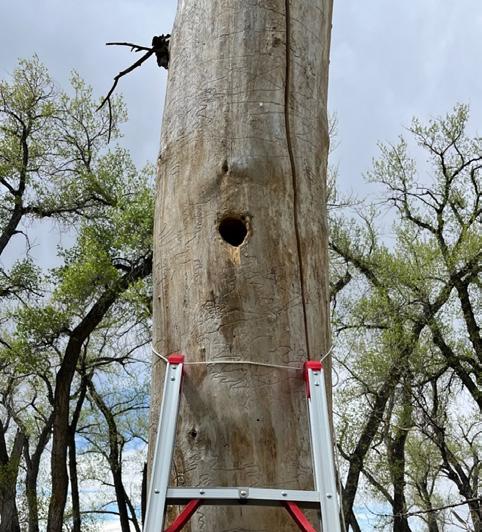
Instead, Joe is attempting to replicate natural cavities.
“We go in and act like a human woodpecker,” Joe said.
Joe, along with his mentor and fellow Hydro Compliance Professional Grant Grisak, drilled 70 cavities in 50 different trees along the Missouri River between Fort Benton and Judith Landing. Now they are monitoring those cavities to see if birds find them to be suitable nesting habitat.
While the cavities weren’t as easy to drill out as Joe expected – it took 16 minutes on average to drill a cavity – Joe suspects they may have benefits over nesting boxes. Being inside a tree may help birds with thermal regulation and may give them better access to food.
So far, things are looking promising. Joe and Grant drilled the cavities in May 2024, and a year later, 49% of them were being used.
To check on the cavities, Joe uses a borescope, which is typically used in plumbing and automotives. It allows him to peer inside the cavities without disturbing the inhabitants.
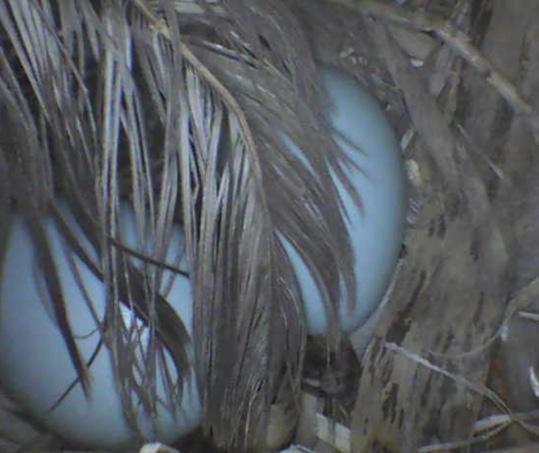
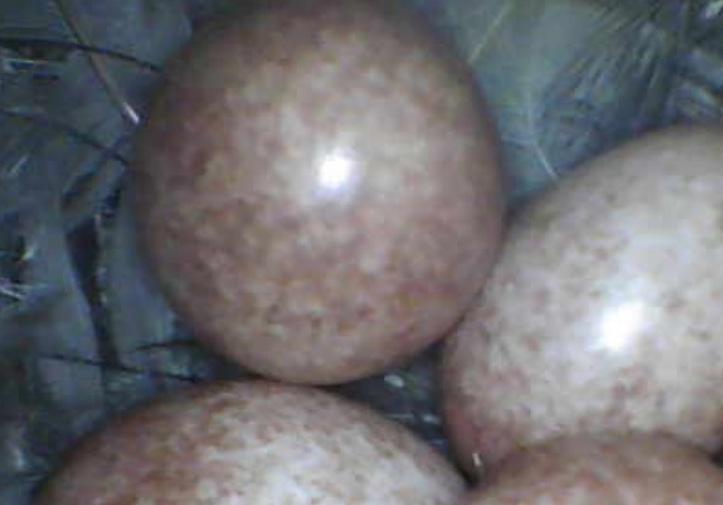
“In a couple nests, we found eggs,” Joe said. “We even saw nestlings in one.”
Three native species are using the cavities – tree swallows, violet-green swallows and northern house wrens. European starlings, which are non-native, were also observed in about 1% of cavities.
Joe will survey the cavities again next summer and expects utilization rates to increase as more birds discover the new nesting habitat.
Middle: “We go in and act like a human woodpecker,” Joe Hagengruber, Hydro Compliance Professional at NorthWestern Energy, said of his project to create cavity nesting habitat.
Bottom: House wren eggs in an artificial cavity.
NorthWestern’s education reimbursement program
Joe Hagengruber, Hydro Compliance Professional at NorthWestern Energy, is working toward his master’s degree thanks in part to NorthWestern Energy’s education reimbursement program.
Joe started with NorthWestern as an intern in 2021 while working on a bachelor’s degree in environmental science from Carroll College in Helena, Montana. He joined the company full time in 2023 and wants to earn his master’s for career advancement opportunities.
While working full time, he’s also taking classes online through Oregon State University. NorthWestern encourages its employees to work toward degrees and reimburses a portion of tuition, books and fees.
Top: European starling eggs in an artificial cavity.
FROM BOOTS ON THE GROUND TO EYES IN THE SKY
By Alissa Byrd
What began as a pilot program has quickly become a part of NorthWestern Energy’s toolkit for identifying issues and enhancing reliability across our system.
With the growing risk of wildfires across our service territory, NorthWestern is actively pursuing ways to protect customers and enhance system reliability. One way we’re doing this is by using drones to maintain our electric system.
In August 2024, we launched a pilot program working with vendors to patrol 180 miles of overhead electric line looking for issues on overhead poles that have the potential to cause fire.
Before the wildfire program, linemen would patrol half of the overhead electric distribution system one year. And then the following year, look at the other half of the system.
“We still have our crews doing ground patrols,” said Zach Carlson, Construction Engineer in our Missoula Division. “Previously, they would inspect 50% of the system for one year and the other 50% the next. Now, we’re assessing 100% of the system every year.”
Internal crews patrol half of the system and contractor crews perform a ground assessment on the second half of the system from a groundline perspective. In high-risk areas, drones are used in conjunction with ground assessments and patrols.
Having two views of our system – one from the ground and one from the air – has turned out to be valuable.
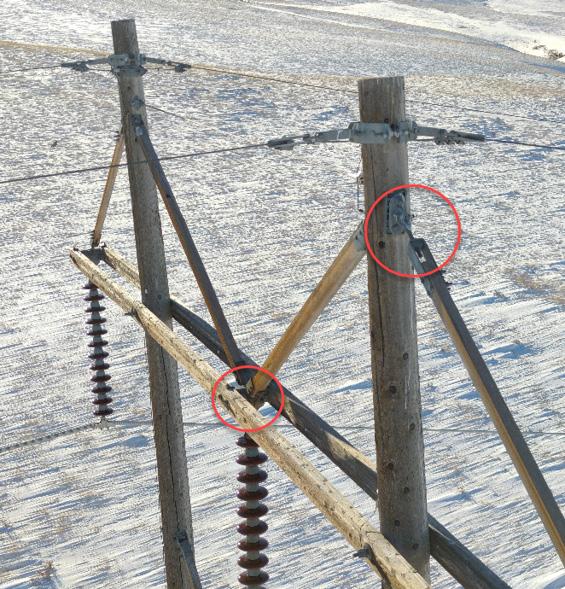
“We had cross arms that, looking at it from the ground, looked like they were solid,” Zach said. “But when we got that top-down view on them, you could tell that it was pretty compromised, and it was probably on its way out.”
The aerial assessments have allowed us to identify issues like pole top rot, hardware problems and conductor damage that would be hard to spot from the ground.
“That’s ultimately why we determined the aerial inspection program added value,” Zach said. “Our data analysis showed we were identifying issues that weren’t reported from ground-level inspections.”
After the pilot program, Zeitview was selected as NorthWestern’s vendor and began operations in June 2025, focusing on high-risk areas identified by our wildfire risk model. Matt Holden, Electric Central Maintenance Manager in Montana, is optimistic about the transformative potential of the aerial data.
“Once we analyze all the data, we’ll know if we’re capturing what’s needed,” Matt said. “Are we targeting the right areas? Should we rethink the way we build these lines?”
One example discussed was reevaluating the use of wood cross arms on poles — a tried-and-true material for years.
“Maybe it’s time to explore alternatives like fiberglass
Drones are reshaping the way we approach maintenance and wildfire mitigation.
or composite materials,” Matt said. “By identifying patterns in exception types over the next several years, it might prompt us to make some changes.”
Incorporating visual data into decision-making is a significant leap forward, streamlining maintenance operations to be more accurate and effective.
Drone assessments aren’t just transforming the way the distribution system is assessed, but the transmission system, too.
“The transmission group immediately noticed certain line segments on specific voltages. There are cross arms that, if you look at them from the ground line or even via the helicopter, they look OK,” Matt said. “But when these drones are flying, they found several items that provided evidence they should probably start replacing those arms. They would have never captured any of that information had they not been able to fly it with a drone.”
Matt sees drones as a game-changer for NorthWestern. His long-term goal is for every area to have trained drone pilots ready to respond when needed. Drones would allow teams to inspect hard-to-reach locations. Instead of sending crews out in dangerous conditions — such as after a major storm — drones can assess damage quickly and accurately.
“Being able to go and visually take a look and see what happened, rather than having to try to get crews out
into that ... is my long-term goal,” he explained. “To me, it’s a big safety win. We don’t have to put these crews out in some of the conditions where we can use technology to our benefit.”
Drone assessments of our overhead electrical lines have allowed us to identify issues like pole top rot, hardware problems and conductor damage that would be hard to spot from the ground.
A DISC GOLF COURSE FOR THOMPSON FALLS
By Erin Madison
It started as an idea from Project ASCENT, a nonprofit in Thompson Falls, Montana, that focuses on getting kids outdoors and connected to nature – Thompson Falls needed a disc golf course.
For those who have never played disc golf, the sport involves throwing plastic Frisbee-like discs into baskets. Much like golf, games consist of multiple holes, or baskets. However, the courses are typically less manicured – sometimes they’re located in public parks or in the woods.
A disc golfer himself, Rob Christensen, Founder and Executive Director of Project ASCENT, knows disc golf is a great way to spend time in nature.
“There’s no scoreboard pressure, no gear checklist — just you, the course and a good excuse to wander outside for a while,” Rob said.
Rob and the Project ASCENT team enlisted the support of the Sanders County Community Development organization. Then, they approached NorthWestern Energy about the possibility of building a disc golf course on NorthWestern Energy’s property in Thompson Falls.
NorthWestern Energy owns
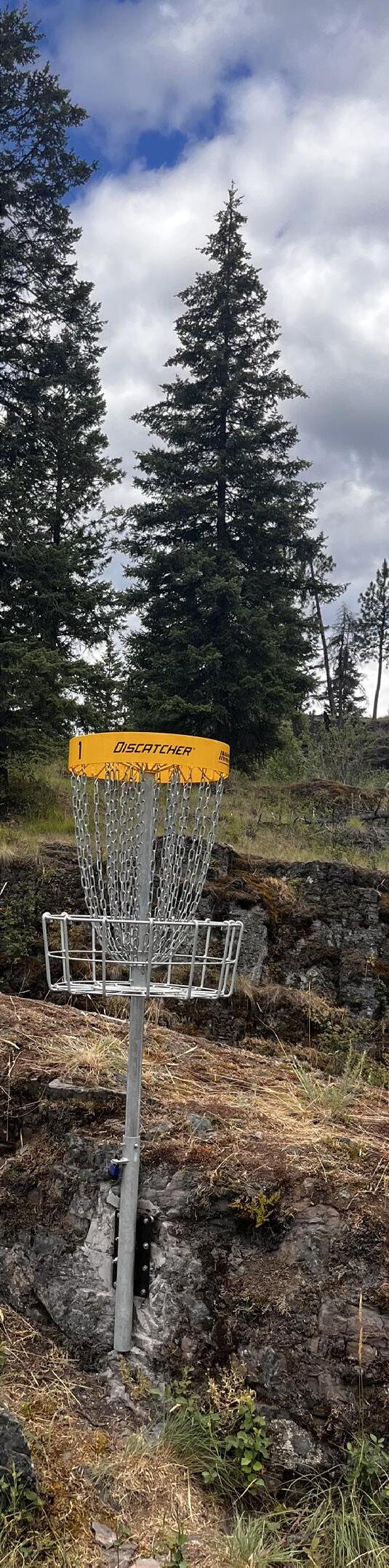
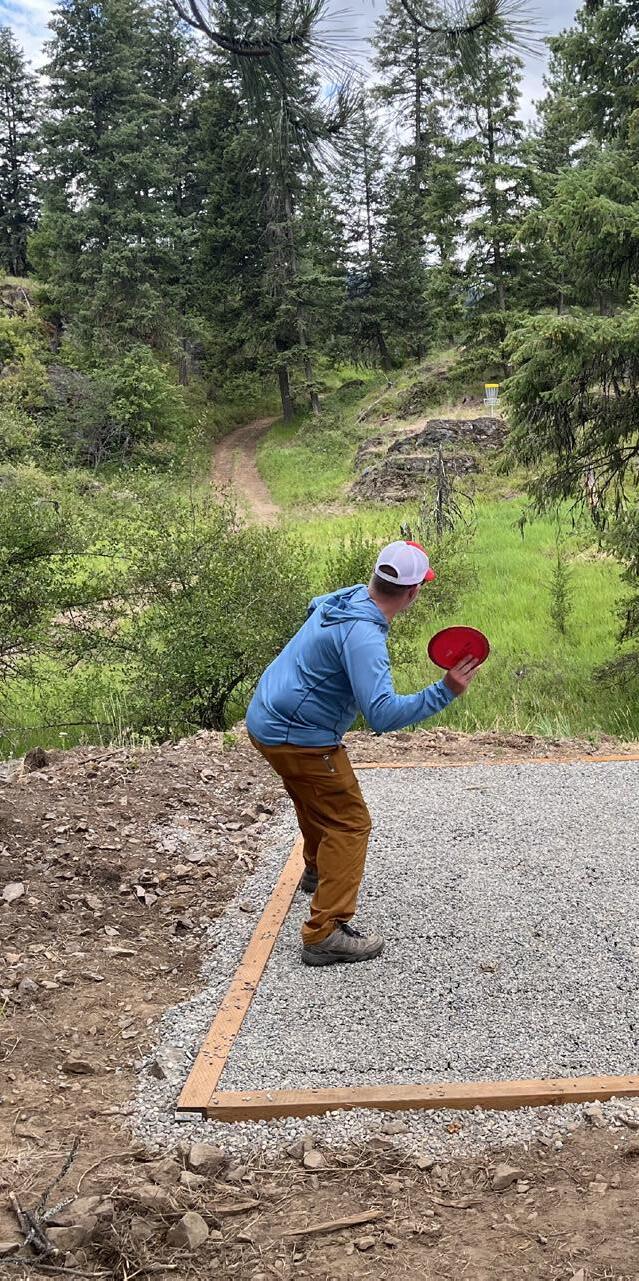
Disc golf is played much like traditional golf, but with baskets instead of holes.
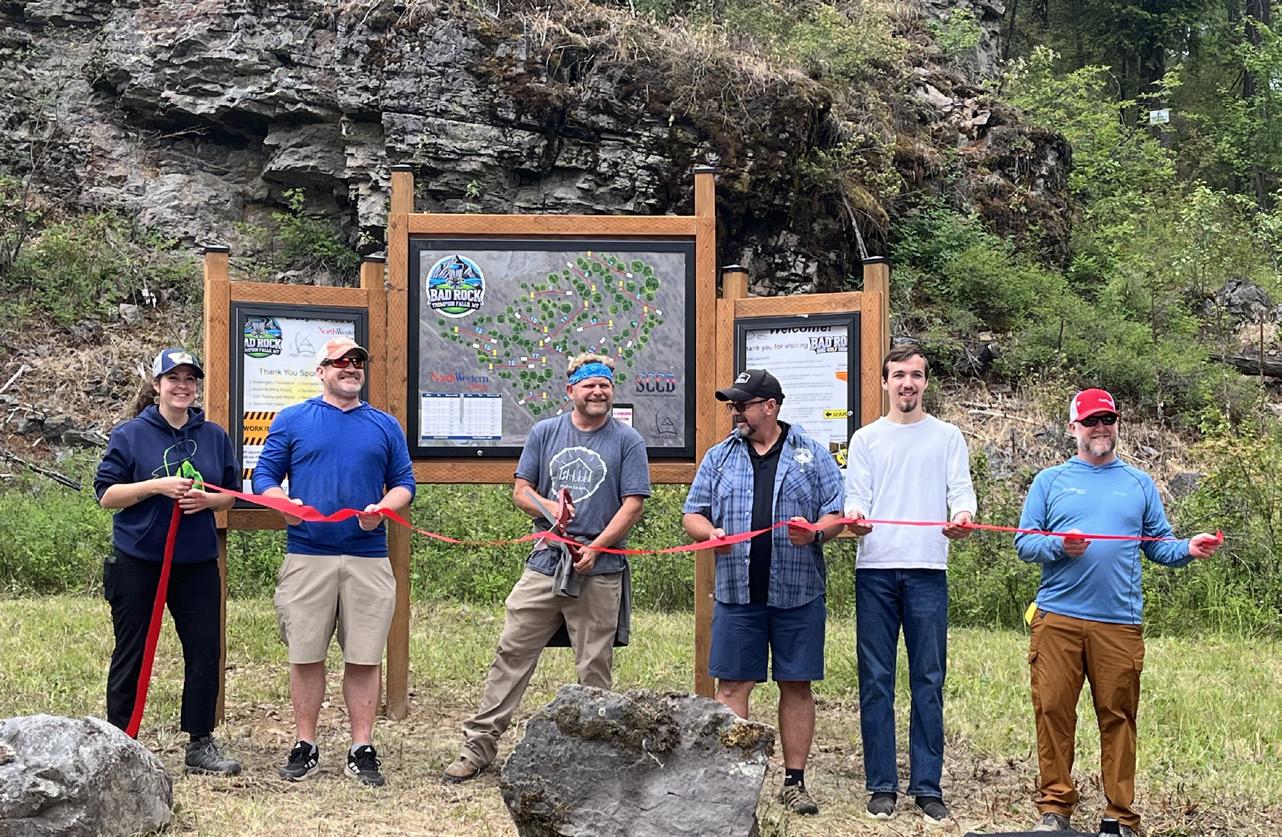
NorthWestern Energy participated in the ribbon cutting for the Bad Rock Disc Golf Course in June.
owns and manages land on both sides of the river. The land already contains a trail system and a public park, so a disc golf course was a great addition to the property.
“One of our goals is to offer a diversity of recreation opportunities near our hydro facilities providing value to local communities and visitors alike,” said Andy Welch, Manager of Hydro License Compliance for NorthWestern Energy. “Partnering with local community organizations is an ideal way to do so.”
In June, the Thompson Falls community celebrated the grand opening of the Bad Rock Disc Golf course during the annual David Thompson Days. The course features 18 professionally designed holes, each with unique challenges and scenic views. The course traverses one and a half miles through forests and meadows.
But the Bad Rock Disc Golf Course didn’t just appear. It was truly a community effort.
“It was built from scratch by a crew of dedicated volunteers who put in countless hours clearing brush, setting baskets and shaping fairways with care and grit,” said Andrea Christensen, Operations Manager of Project ASCENT.
Since the grand opening in June, Bad Rock has gained popularity with locals and avid disc golfers who have traveled to check out the new course. Bad Rock hosted its first tournament this fall with 58 players, age 11 to 67.
“The course got rave reviews,” Rob said. “Some players even said it was their favorite course ever, which means a lot considering most of them play courses all over the state. NorthWestern did an amazing thing here for our community.”
Overall, Bad Rock is getting more use than expected. In July and August, more than 600 people used the course.
“It’s fantastic to see so many players of all ages and skill levels enjoying the course,” Andrea said. “Every round at Bad Rock feels like a mini adventure. There’s something grounding about a round of disc golf here.”
‘Every round at Bad Rock feels like a mini adventure.’
Andy Welch, Manager of Hydro License Compliance for NorthWestern Energy, plays a round of disc golf at Bad Rock in Thompson Falls.
REVIVING Trout Spawning
GROUNDS ON THE LOWER MADISON RIVER
By Jo Dee Black
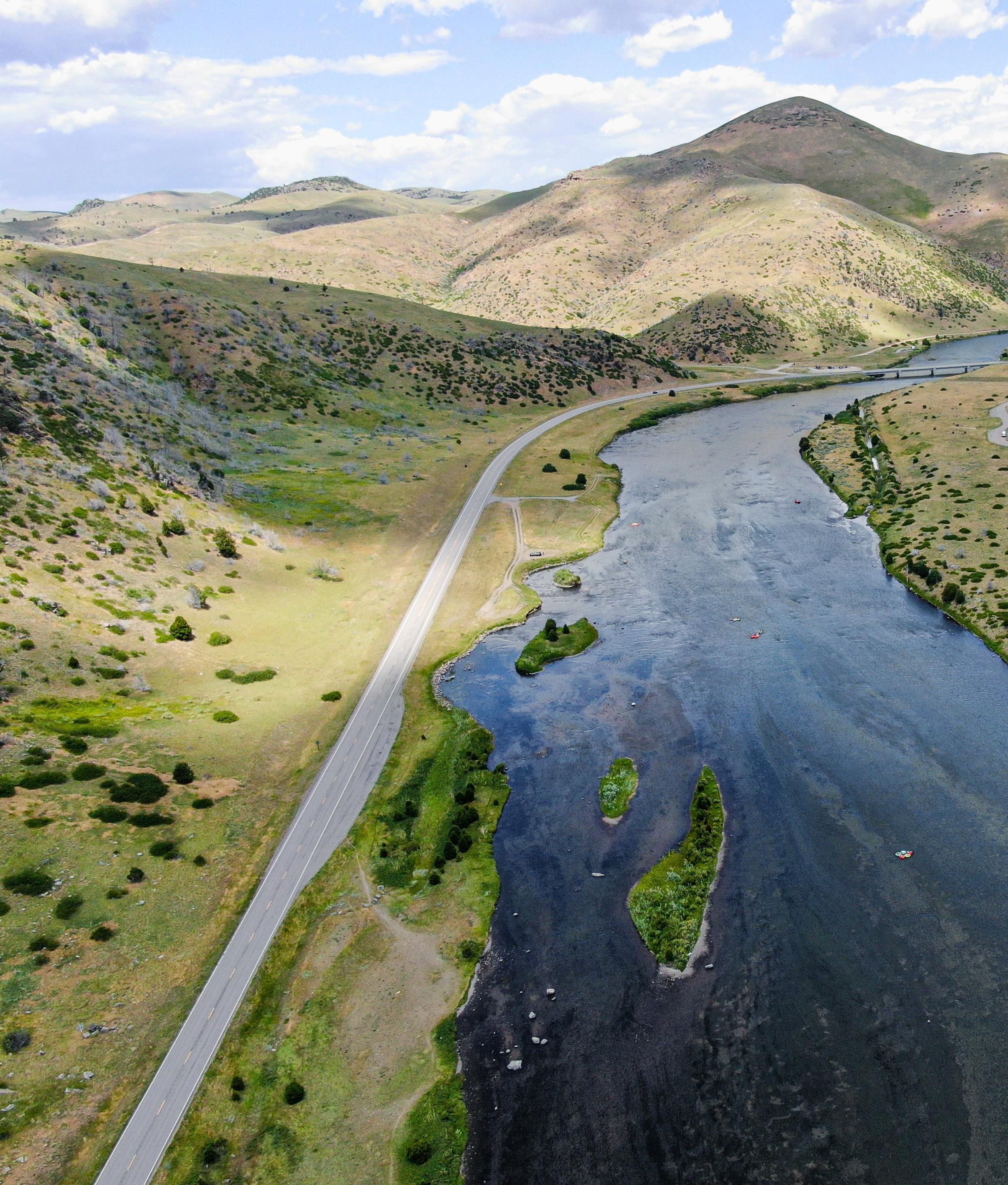
In the lower Madison River, a stretch renowned for its scenic beauty and recreational appeal, trout populations have declined to historic lows — prompting a targeted restoration effort to address the underlying habitat challenges.
NorthWestern Energy, Montana Fish, Wildlife & Parks and the Bureau of Land Management partnered with River Design Group (RDG) and TNT Excavating to implement the project.
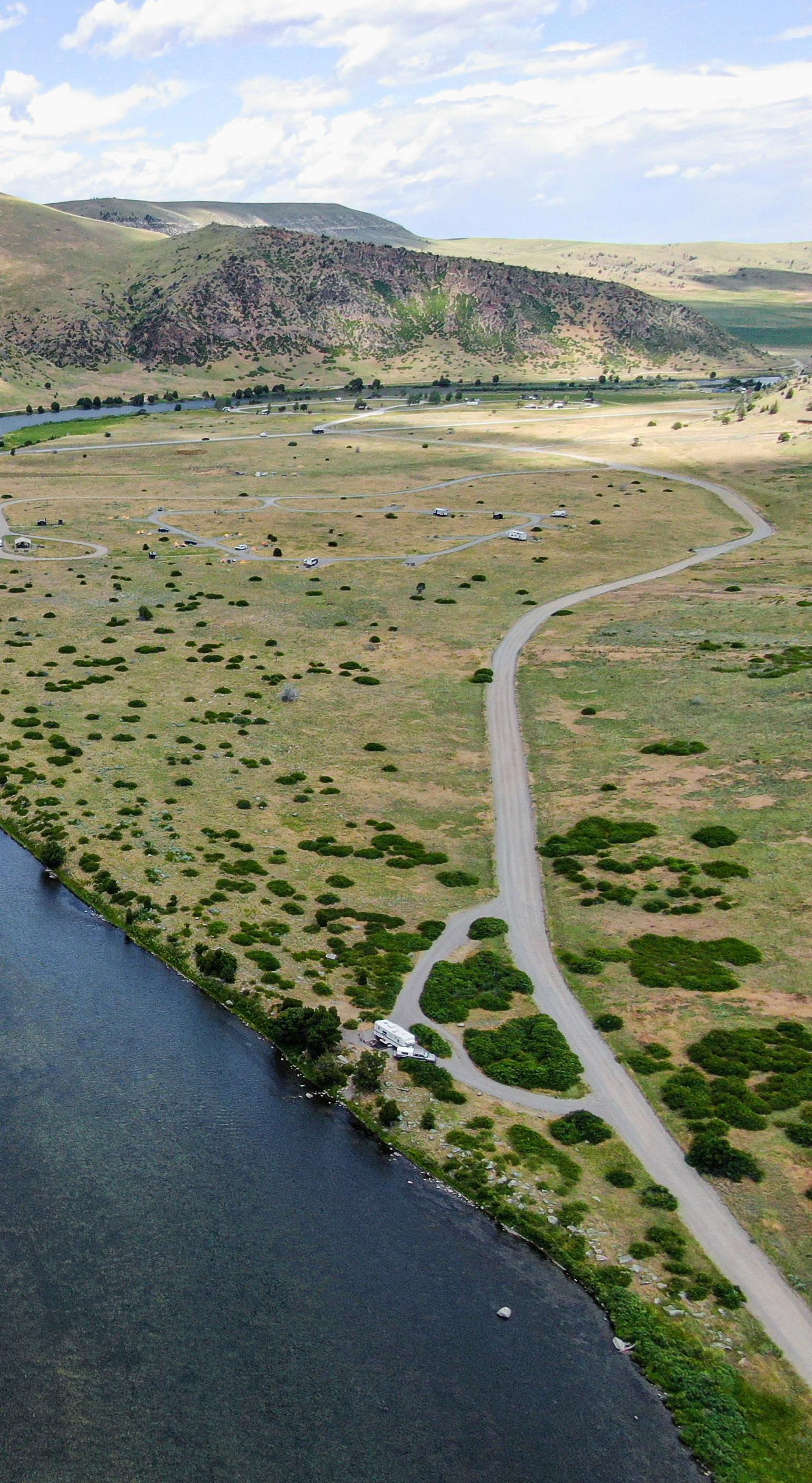
The project focused on an area of river located downstream from Madison Dam, between the Bureau of Land Management’s Warm Springs Day Use Area and the Highway 84 bridge at Trapper Springs recreation area.
Key components of the project included:
• Modifying existing islands and enhancing side channel habitat complexity to improve flows for the maintenance of gravels used by trout for spawning.
• Restoring riparian vegetation and implementing fish-friendly erosion control measures along the riverbank.
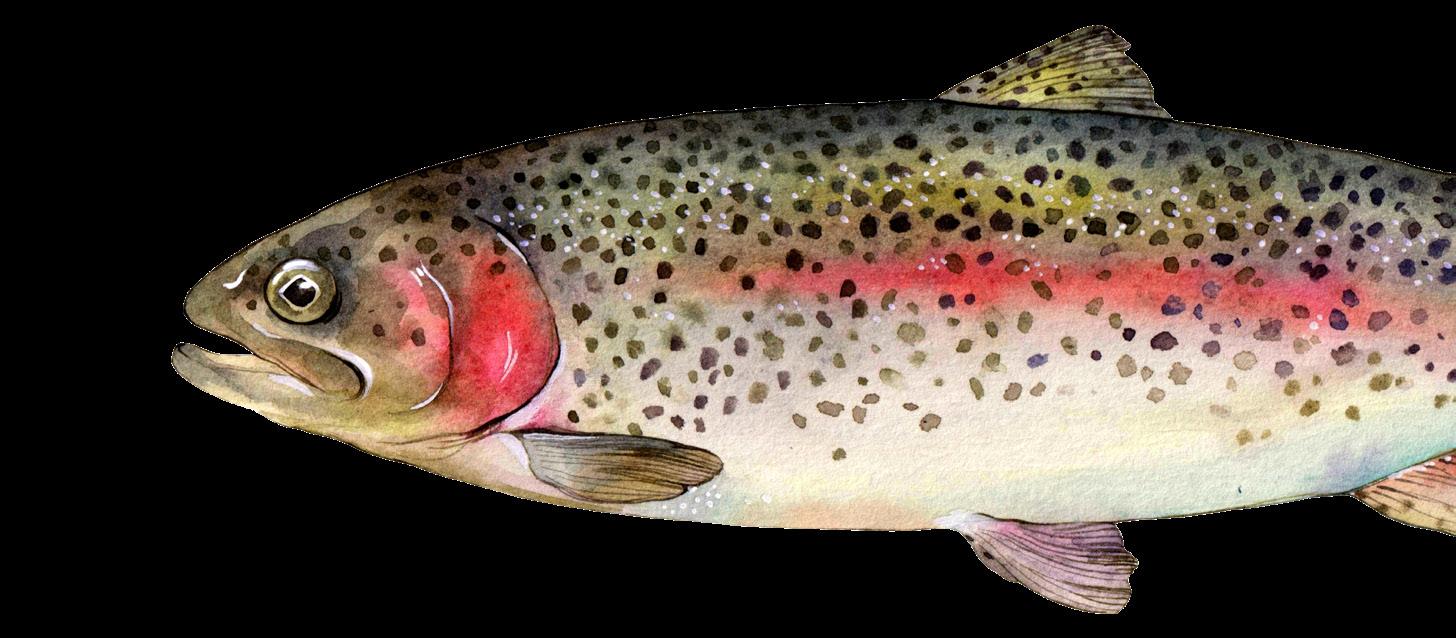
These efforts were designed to improve spawning and rearing conditions for rainbow and brown trout, which have experienced low recruitment in this section of the river. The river remained open to recreational use during construction.
According to Matt Jaeger, Hydropower, Native Species, and Beaverhead-Ruby Program Manager at Montana Fish, Wildlife & Parks, the project aims to strengthen the fishery resource in the lower Madison River.
Jon Hanson, Hydropower Compliance Specialist at NorthWestern Energy, stated that the initiative supports the company’s responsibility to mitigate the effects of its hydropower operations.
Revegetation efforts are now underway on the newly expanded island, side channel and riverbank to support long-term habitat stability and ecological recovery.
NorthWestern Energy, Montana Fish, Wildlife & Parks and the Bureau of Land Management are working to modify existing islands and enhancing side channel habitat in the lower Madison River.
FROM COMBAT ZONES
TO WILDFIRE ZONES
By Natalie Mueller
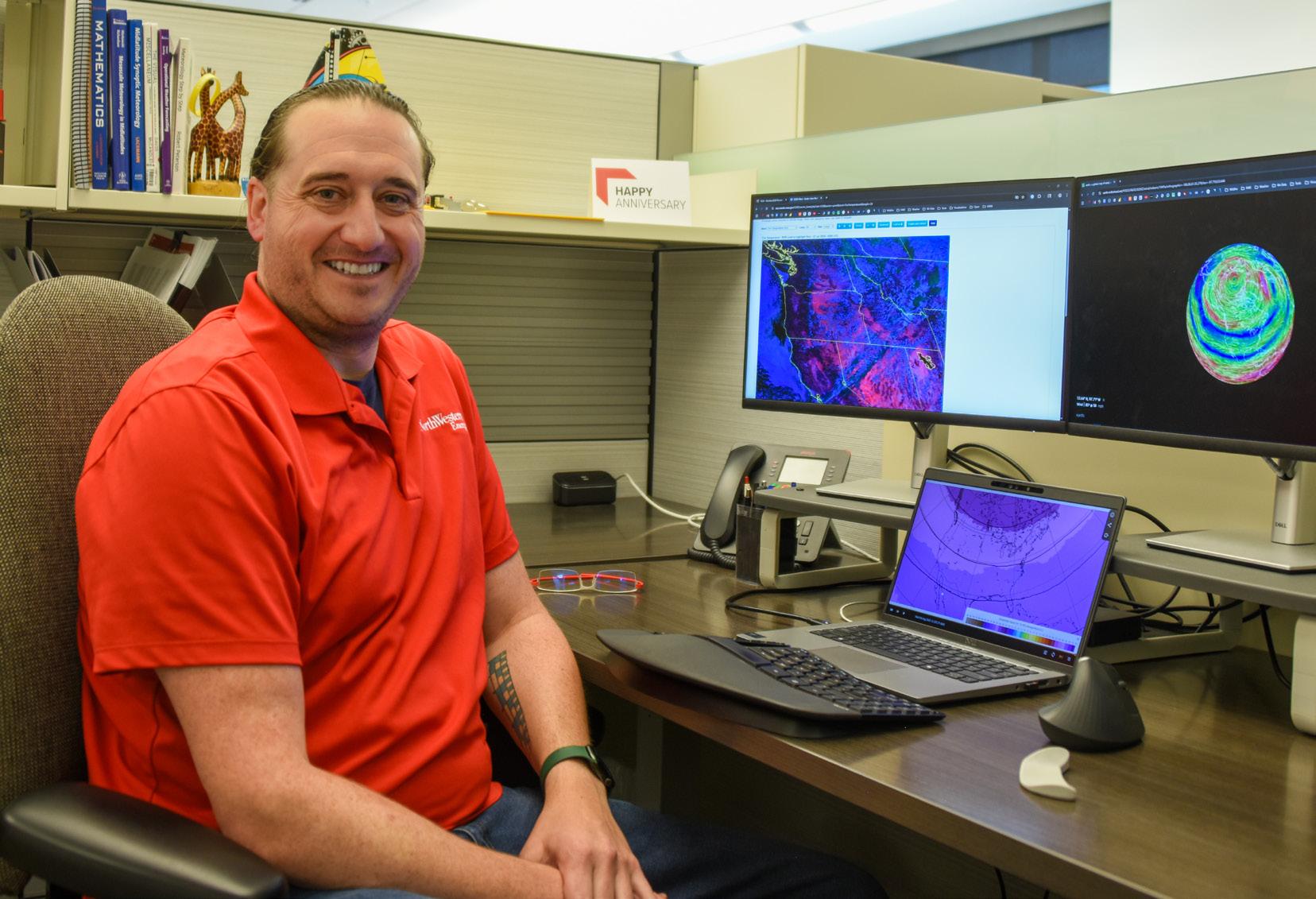
Matt Sargent works as a meteorologist in NorthWestern’s Wildfire Situational Awareness team.
Matt Sargent honed his meteorological skills in the Air Force and now uses them to help NorthWestern prevent wildfires.
When NorthWestern Energy Meteorologist Matt Sargent says he “watches the weather,” he’s not talking about checking an app on his phone. For Matt, monitoring the atmosphere means finding patterns, anticipating dangerous conditions and turning data into life-saving decisions.
As a part of our Wildfire Situational Awareness team, Matt is always on the lookout for what he calls the “wildfire triple threat”: hot, dry, and windy conditions. By predicting these patterns up to a week in advance, his forecasts give us valuable time to get equipment ready and safeguard communities.
Before joining NorthWestern Energy eight years ago, Matt spent 10 years in the U.S. Air Force, jumping out of airplanes, releasing weather balloons and gathering critical data in the Middle East as a combat meteorologist. In those high-stakes environments, his forecasts influenced everything from flight safety to the timing of military operations.
“That was such an interesting and fulfilling job,” Matt said.
Originally from Butte, Matt developed a love for the natural sciences early on, which led him to the University of Alaska. There, he earned degrees in both meteorology and political science. At first, Matt envisioned running for political office, which inspired him to pursue the military. But over time, he decided politics wasn’t for him and focused fully on meteorology.
He entered the Air Force, trained with special forces and took on missions where weather forecasts were pivotal.
Matt had planned to stay in the military until retirement, but at age 29, a medical discharge caused by shrapnel injuries, forced him to change course. What followed was a winding career path, each role bringing new experiences.
His first job out of the military was in San Francisco’s tech industry. It was steady work and a good fresh start, but he wasn’t sure about living so far away from Montana. During this time, Matt met the 30th employee of Google, who also happened to be a chef. That meeting led to an unexpected adventure for Matt, traveling to Mexico to learn the art of making tequila.
After returning to the U.S., Matt realized San Francisco still wasn’t where he wanted to be. He moved back to Butte, putting his new skills to use at a local distillery, where he eventually became head distiller. While he enjoyed the work, he was ready for a new challenge.
His next step was education. Matt earned his teaching certification and began teaching at Butte High School, a role he found meaningful but not as financially stable as he had hoped. After discussing his situation with a friend, he was encouraged to apply at NorthWestern Energy.
That recommendation changed everything.
“I finally felt a sense of purpose,” Matt said. “It was the first time since the military that I felt truly fulfilled.”
Matt says the energy industry is surprisingly collaborative.
“You can call someone at another utility across the country, and they’ll share what they know,” Matt said. “It’s all about learning from each other.”
This teamwork reminds him of his military days, when the mission came first and everyone pulled together.
From flying missions in combat zones to forecasting under Montana’s wide-open skies, Matt’s goal hasn’t changed. He wants to keep people safe and stay one step ahead of whatever the weather throws at him.
NorthWestern Energy’s weather station network
To further improve our ability to track and respond to changing conditions, Matt is leading an effort to grow NorthWestern’s network of weather stations to 100 sites by next year.
To see our network of weather stations, scan this QR code with your phone’s camera.
Spanning Legacies
By Erin Madison
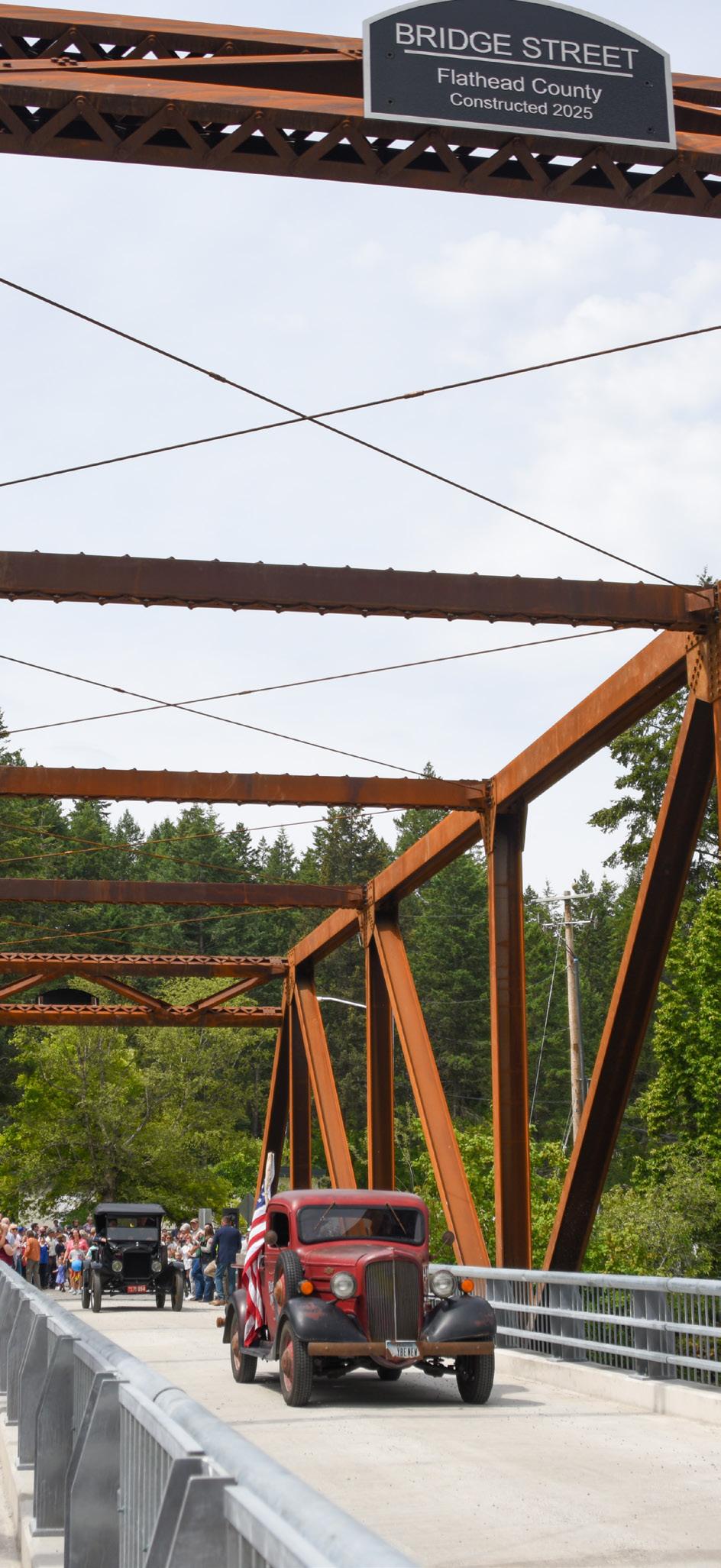
Built in 1911, the one-lane, steel truss bridge over the Swan River helped the town of Bigfork, Montana, grow into a significant trade and industrial center. Over the past century, it also turned into a beloved landmark for the town.
“When you think of Bigfork, you think of our bridge,” said Megan Shoultz, President of the Community Foundation for a Better Bigfork.
In January 2024, the beloved Bridge Street Bridge was closed due to structural concerns. Replacing the bridge was expected to take a few years to complete. Instead, the new bridge was opened 18 months later, in the same location as the old bridge.
“This bridge is here over a year ahead of schedule,” Montana Gov. Greg Gianforte said at the ribbon cutting in late June.
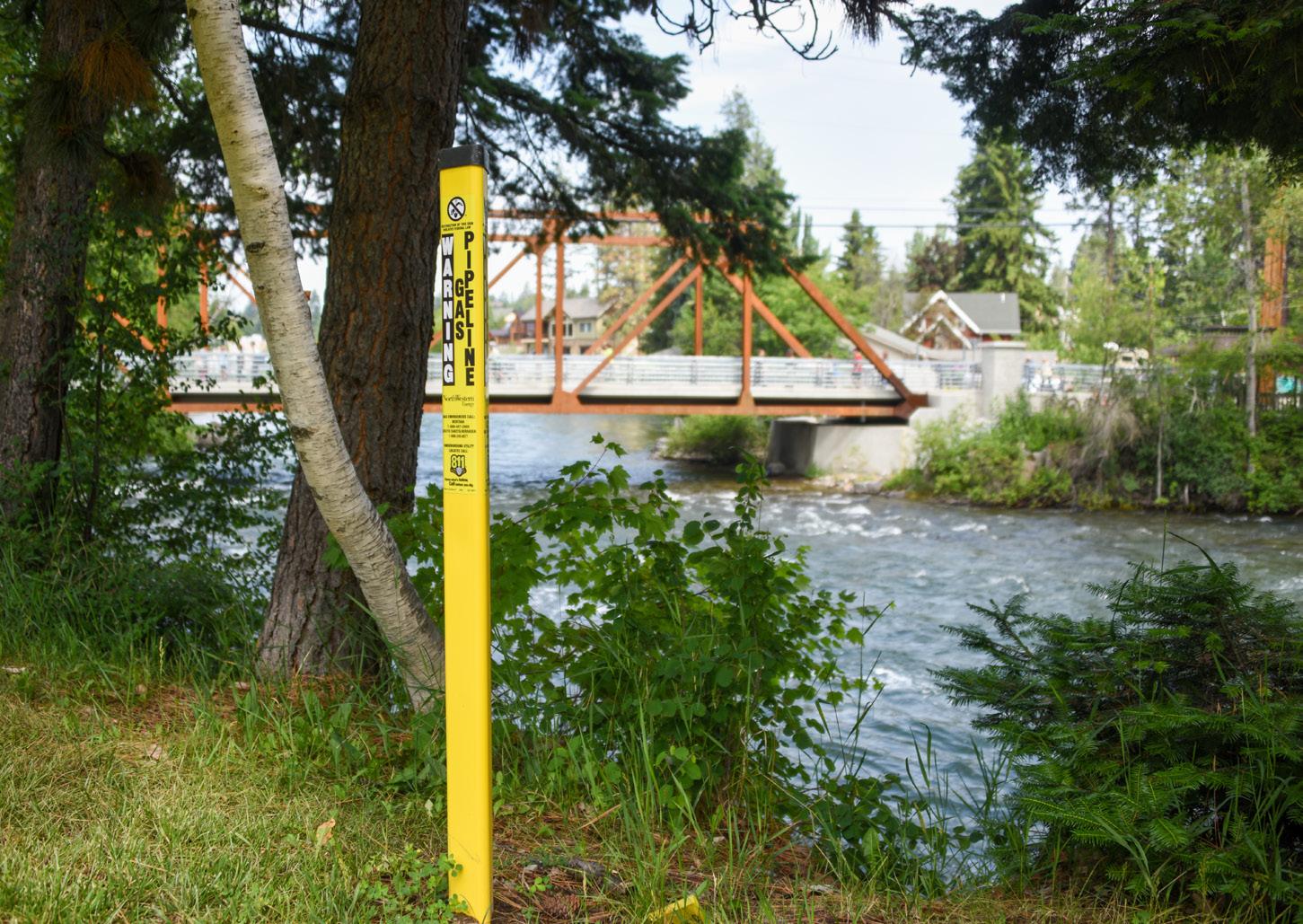
One of the hurdles for rebuilding the bridge was that a NorthWestern Energy natural gas pipeline was attached to the old bridge. After the bridge closed, NorthWestern began looking at options to replace and relocate the pipeline sometime in 2025 or 2026. When NorthWestern got word that the bridge replacement was a top priority for the Montana Department of Transportation, we began looking for ways to fast-track the project.
“Normally, a project of this size and complexity would take approximately 18 months to permit and complete,” said Brad Gilchrist, Manager of Central Construction for NorthWestern. “NorthWestern Energy and MDT were able to work together to complete it in eight months.”
NorthWestern determined the best option was to bore the pipeline under the Swan River just upstream from the Bridge Street Bridge.
NorthWestern Energy helps Bigfork bridge replacement finish ahead of schedule.
Before construction could begin on the pipeline, NorthWestern had to secure several land easements, as well as county road permits and approvals from the Montana Department of Natural Resources and Conservation.
One of those easements was from PacifiCorp, the energy company that owns the Bigfork Hydroelectric Project just upstream from the bridge. Because the Federal Energy Regulatory Commission provides the license that allows PacifiCorp to operate the dam, FERC also had to sign off on the easement. That required a cultural survey and a land survey – processes that usually take months to complete.
“There were a lot of moving parts, and each one of those moving parts had other moving parts,” said Mike Cassidy, Real Estate Representative for NorthWestern.
After lots of reminders and nudging on Mike’s part, all permits were issued, and excavation for the pipeline was able to begin in early October 2024. By the end of that month, the new pipe was in place.
NorthWestern Energy installed a bypass while work on the pipe was underway, so there were no gas outages
for customers, explained Kane Claunch, NorthWestern Director of Central Construction.
By mid-November 2024, we were able to abandon the pipeline attached to the bridge, and removal of the old bridge was underway in December.
“Thanks to NorthWestern Energy for moving quickly on their part of it,” Chris Dorrington, Director of MDT, said at the ribbon cutting.
Working with utilities is often a challenge, Chris said, but that wasn’t the case with NorthWestern.
“So many conversations that I’m a part of begin with ‘We can’t,’” Chris said. “This bridge was the exact opposite.”
The new bridge, which opened in time for the annual 4th of July celebration in Bigfork, is similar in appearance to the old bridge. It’s still one lane and made from steel trusses. Kane was an official ribbon holder at the June celebration.
“When the bridge was closed, it felt like a part of us was missing,” Megan said. “The bridge may look new and different, but it’s better than ever, and best of all, it’s ours.”
NorthWestern relocated its natural gas pipeline under the Swan River just upstream from the Bridge Street Bridge to allow for construction of a new bridge.
SUNSETTING THE BECK HILL SOLAR PILOT PROJECT
By Brandy Powers
“Living in rural Montana, reliable energy is essential, and NorthWestern Energy consistently delivers excellent service.”
- Jason Jones, Enterprise Risk Management Lead at NorthWestern Energy
For 10 years, the Beck Hill Rural Microgrid Project stood as a beacon of innovation in NorthWestern Energy’s commitment to clean energy and rural service reliability. Launched in 2015 and decommissioned in 2025, this solar pilot project was designed to explore how small-scale microgrids could enhance electric service in remote areas.
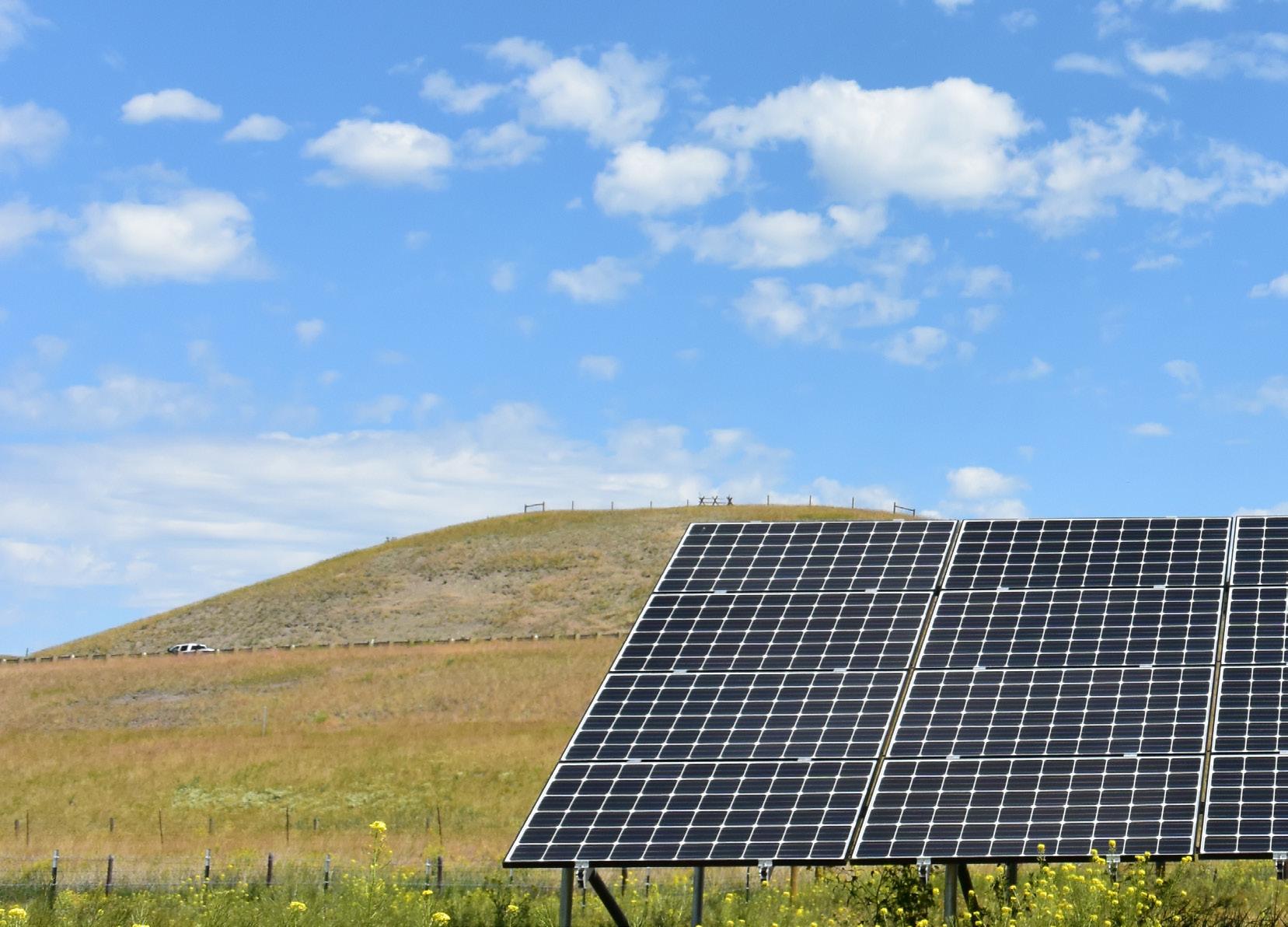
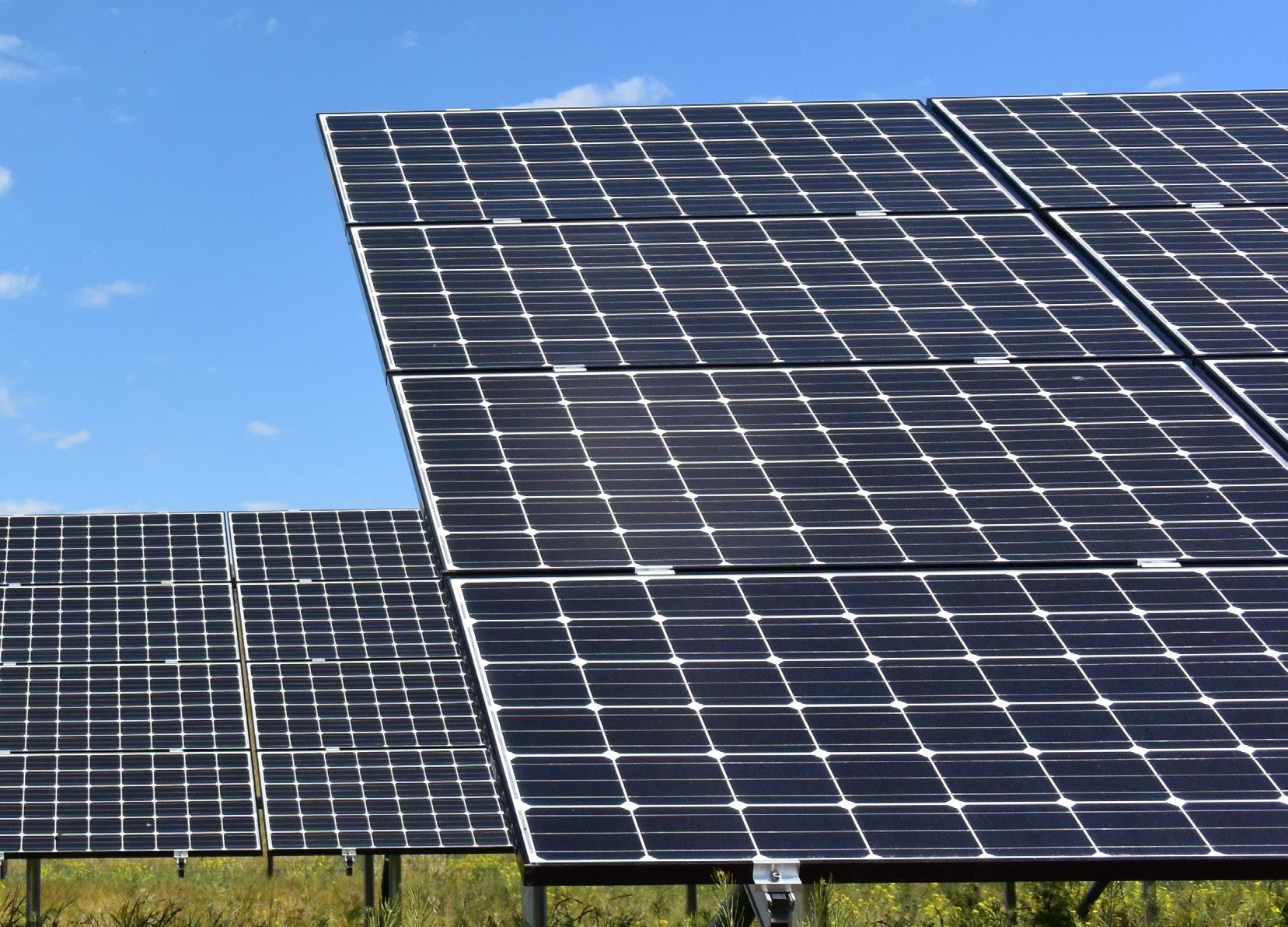
Located on privately owned land north of Deer Lodge, Montana, the Beck Hill site featured a 40.26-kilowatt solar photovoltaic system paired with a battery bank capable of storing 186 kilowatt-hours of energy. This setup allowed the system to deliver up to 80 kilovolt amperes of power for more than two hours during outages, providing critical support to 17 rural customers.
The microgrid’s design included 132 LG solar panels, multiple inverters and charge controllers, and advanced automation controls. The system was split into two segments: 8 kilowatts of AC-coupled solar feeding directly into the grid, and 32 kilowatts of DC-coupled solar charging the
The Beck Hill Rural Microgrid Project delivered up to 80 kilovolt amperes of power for more than two hours during outages, providing critical support to 17 rural customers.
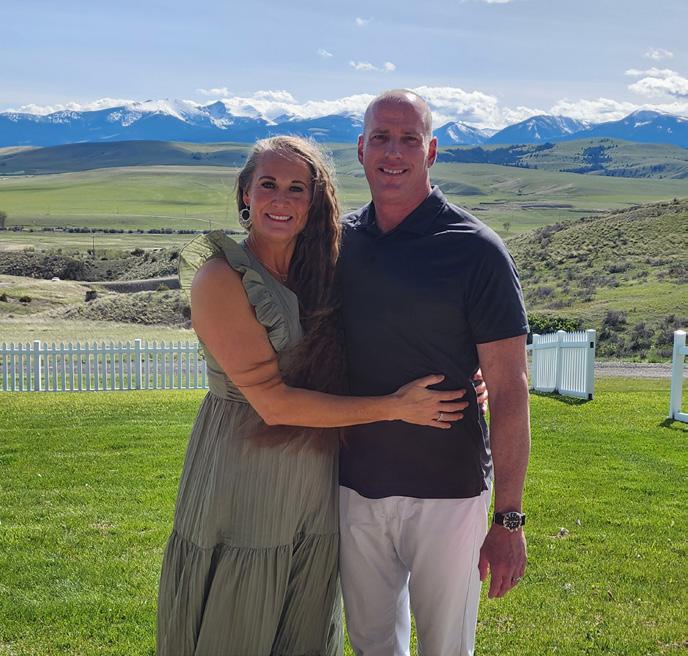
Jason Jones, Enterprise Risk Management Lead at NorthWestern Energy, and his wife live in the area that was served by the Beck Hill Rural Microgrid.
batteries before sending excess energy back to the grid.
Throughout its operational life, Beck Hill not only improved local infrastructure and reduced outages but also served as a valuable learning platform. The data and insights gathered have informed NorthWestern Energy’s broader clean energy strategy, helping shape future renewable initiatives across Montana.
The project’s conclusion came with the end of its land lease agreement. While the solar and battery components have been decommissioned, service reliability in the area remains strong thanks to the infrastructure upgrades completed during the pilot’s tenure.
“Beck Hill was a big reason we bought our home,” said resident and NorthWestern employee Jason Jones. “We were excited by its innovative technologies and green energy focus, which my teens appreciate — especially when it affects charging their phones! Living in rural Montana, reliable energy is essential, and NorthWestern Energy consistently delivers excellent service.”
As we look ahead, the legacy of Beck Hill lives on in our continued pursuit of sustainable energy solutions.
From Bozeman to Missoula, additional solar pilot projects are still underway, each building on the foundation laid by Beck Hill and its pioneering role in rural microgrid development.
NorthWestern Energy remains committed to balancing innovation with reliability, ensuring that our customers — no matter where they live — benefit from a resilient and forward-thinking energy system.
Stay tuned:
Look for future story features to recap the Missoula urban and Bozeman community solar pilot projects in the next issue of Bright and learn more about these projects on our Clean Energy web page at NorthWesternEnergy.com.
PROPERTY TAXES IN
By Jan Thomson-Rouse, NorthWestern Energy Government Affairs, and Robert Story, Montana Taxpayers Association
Property taxes are probably one of the oldest forms of taxation and are used to pay for services that people need to live together as they congregate in settlements, villages, towns and cities. Very little property tax revenue is used to fund state government obligations.
Montana, like most other entities that tax property, has developed its system of assessment, classification and taxation over a long period of time.
Montana’s property tax system is governed by the 1972 State Constitution and state statute. The constitution is flexible in its restrictions on property taxes, but requires that:
1. All appraisals shall be done at the state level to maintain a centralized system of fairness and integrity;
2. Local governments will use those values to generate revenue;
3. There will be an independent means of objecting to valuations; and
4. The Legislature has the ability to exempt property from taxation.
The state of Montana levies 95 mills for public school equalization funding. Additionally, 6 mills are levied in support of the University System and 1.5 mills in support
of vocational and technical education. Counties levy property taxes to help fund schools at all levels, general operations and a variety of other activities. Cities also levy property taxes in a similar manner. Property taxes used to fund schools are levied by the state, county and local school district. A variety of special districts levy property taxes to fund specific services such as libraries, museums, weed districts and others.
HOW ARE PROPERTY TAXES DETERMINED?
Property taxes in Montana are based on three components:
1
Property type, which determines the tax rate.
2
Property value.
3
Total number of mills levied on the property.
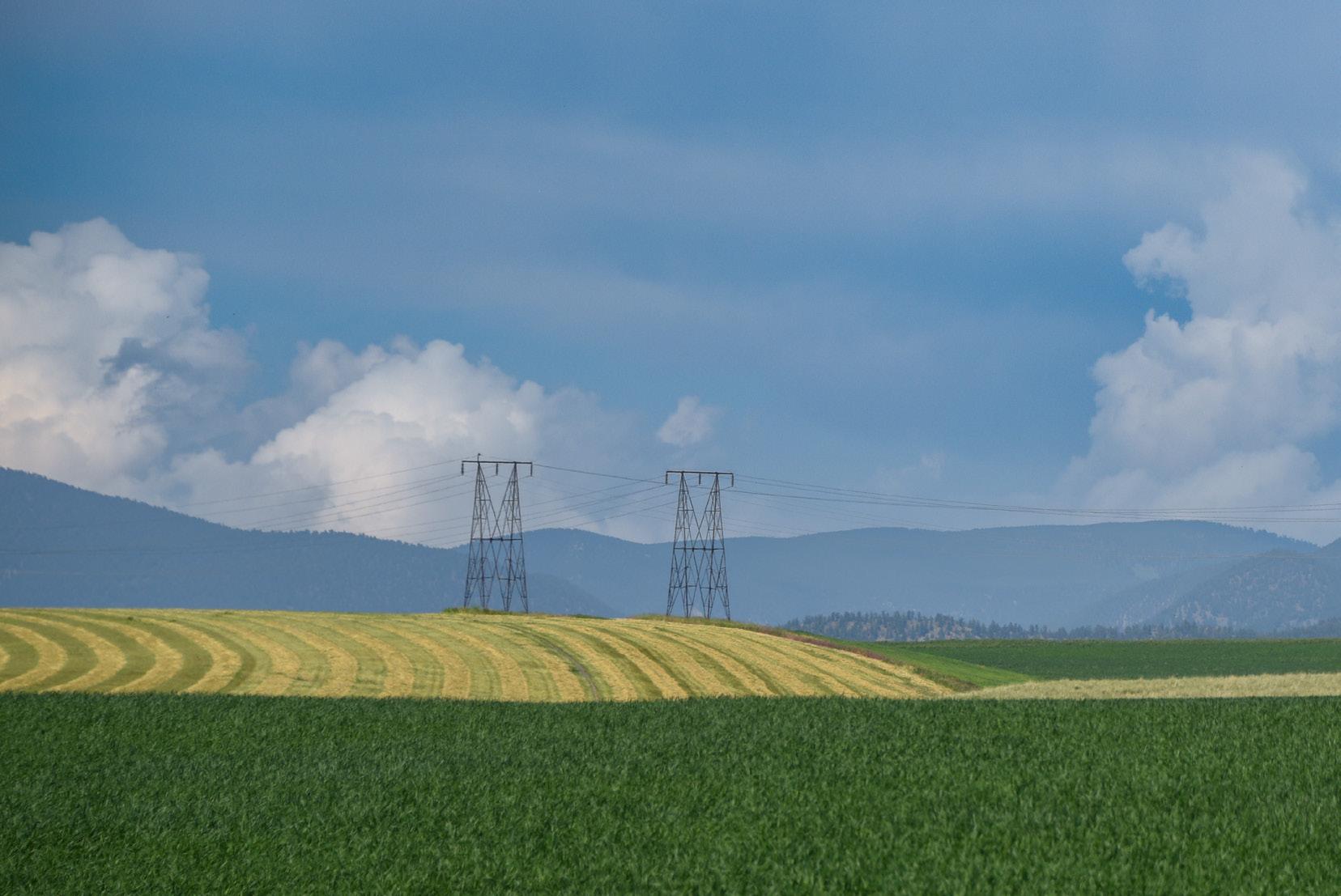
A NorthWestern Energy transmission line runs through farm fields near Helena, Montana.
PROPERTY TYPE
Many people assume that every taxpayer’s tax burden is the same if they own the same amount of property, but this is not the case in Montana’s multi-class system.
Montana uses a classified property tax system with 16 classes of property, two of which have more than one tax rate. This system allows the state to use different valuation methods and separate tax rates for each classification.
The graph to the right compares the percentage of property tax paid by each class of property in tax year 2024. As the graph shows, residential property owners pay more than half of the property tax revenue collected in Montana.
NorthWestern Energy is Montana’s largest single property taxpayer and has been for many years.
In tax year 2025, NorthWestern Energy is estimated to pay $170.6 million in property taxes, 3.9 times more than Montana’s second largest single property taxpayer, which is BNSF Railway.
PROPERTY CLASS AND SHARE OF TAXES PAID
Railroads and Airlines: 2.1% Ag Land: 3.4%
Equip: 4.3% Electrical Gen. and Telecom: 3.1%
CA Wires, Poles and Pipelines: 13.1%
CLASS
Montana classifies property in 16 classes, and most classifications have different tax rates. Some classes have more than one tax rate. For example, for tax year 2025, Class 4 property has a tiered property tax rate for residential property ranging from 0.76% to 2.2%, and a tiered
commercial property tax rate ranging from 1.4% to 1.89%. Class 8 Business Equipment has a $1 million exemption provision and a tax rate ranging from 1.5% to 3%.
The following table shows the effective tax rate (ETR) for each class of property. The effective tax rate is determined by dividing total taxes paid by the market value of the property.
Note: $2 million is used as market value for Class 4 property and $8 million for Class 8 property to better understand the effects of the tiered assessment method.
Table provided by Montana Taxpayers Association. *The table does not include Class 1 property – Mine Net Proceeds (100%), and Class 2 property – Gross Proceeds Metal Mines (3%).
MILL LEVY
A mill equals 1/1000 of a dollar, or 0.1 cent. A mill levy is a calculation done by governments and schools to determine how to collect the tax revenue necessary to fund their budget. All budgets funded through property tax are limited by state statute or locally voted levies. Budget growth for cities, counties and many special districts is limited to half the rate of inflation plus revenue from new property. Any additional revenue growth must be approved by the voters with a few exceptions. School levies are limited by state funding laws and are largely driven by number of students. The mill levy assessed for any individual property is the total of all levies from the state, county, city, school district and special jurisdictions in the district where the property is located.
TAX CALCULATIONS
Property taxes are calculated in the following way:
Market Value x Tax Rate x Total Mill Levy = Taxes Owed
The following examples compare the taxes owed on a $1 million residential property (Class 4), a $1 million commercial property (Class 4), and $1 million - pipelines and nonelectric generating of electric utilities (Class 9). The mill levy for all jurisdictions is 825 mills (which converts to 825/1000 or .825)
Residential:
($400,000 x .0076 + $600,000 x .011) x .825 = $7,953
Commercial:
($400,000 x .014 + $600,000 x .0189) x .825 = $13,975
Electric Utility:
$1M x .12 x .825 = $99,000
The total tax due is then divided into two payments, one due in November and the second in May.
PROPERTY TAX INCREASES
Taxes on an individual’s property may increase for several reasons. The major reasons are:
1. When voters approve a bond issue, mill levy increase or the creation of a new taxing authority or property taxes increase. Voted levies are the largest contributor to property tax increases.
2. Increases in property values due to reappraisal or new construction.
3. Inflationary adjustments to local government and school budgets may be covered, in part or in entirety, by local property taxpayers.
4. Property tax increases if the state does not decrease education levies when reappraisals increase property taxes.
5. Increases in medical insurance costs for local governments that are collected through property taxes.
6. Reducing tax rates for some property classes or removing properties from the property tax rolls. This lowers the taxable value for the entire jurisdiction, shifting the tax liability to other property taxpayers. You can think of property taxes like a pie, with each taxpayer paying for one slice of the pie. If a taxpayer leaves, the size of the pie doesn’t change. Instead, the pieces become larger.
2025 LEGISLATIVE ACTION
The 2025 Legislature made significant changes to the property tax system. The changes become effective in two stages. For 2025 property tax bills that will be received in November, tax rates were lowered for agricultural land, most residential property and small commercial properties. Those rates are reflected in the table on page 36. In 2026, a much different tax system will apply to residential property. Tax rates will be determined by the “use” of the property. Owner-occupied residential property and long-term rentals will have progressive tax rates depending upon their value. There will be four rates ranging from 0.76% to 1.9%. Second homes and short-term rentals will see their tax rate increase from the 2025 rates to a single rate of 1.9% applied to all values. For many of these types of properties, the taxable value will increase by 2.5 times.
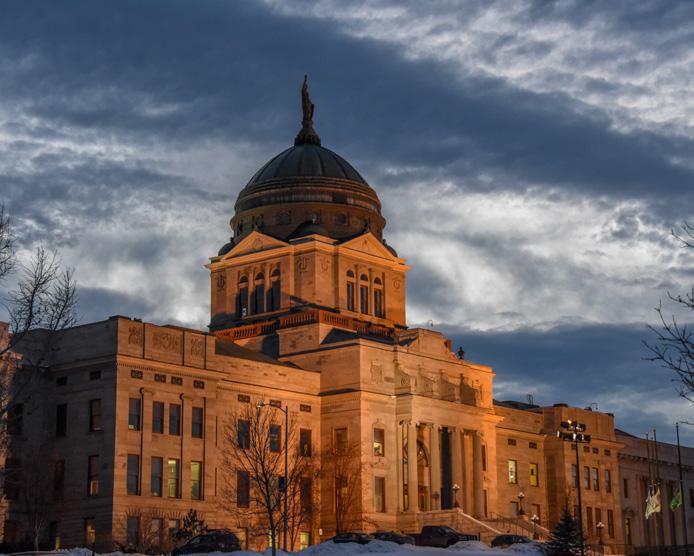
The Montana Capitol building.
Summer of Service
By Jo Dee Black
This year, NorthWestern Energy’s interns gained more than hands-on experience in business technology, safety, engineering and human resources — they also embraced one of the company’s core values: giving back to the communities we serve.
From the banks of the Missouri River in Great Falls, Montana, to the banks of the Big Sioux River in Sioux Falls, South Dakota, these future professionals rolled up their sleeves and led the charge to make a meaningful impact. Organizing and executing volunteer projects across North Western Energy’s service territory, they rallied co-workers
and tapped into the company’s Charitable Team Participation Grant Program, which recognizes employee volunteerism with financial contributions to the nonprofits our employees support.
Their efforts were as diverse as they were impactful:
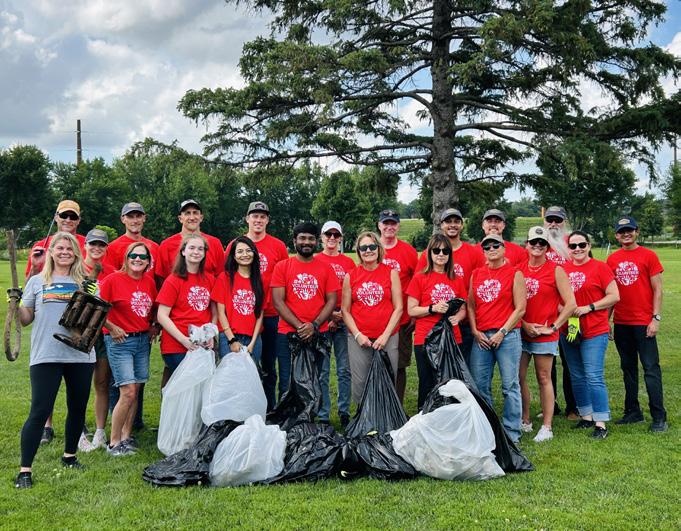
• In Great Falls, Montana, interns led riverbank cleanup efforts, removing trash and noxious weeds.
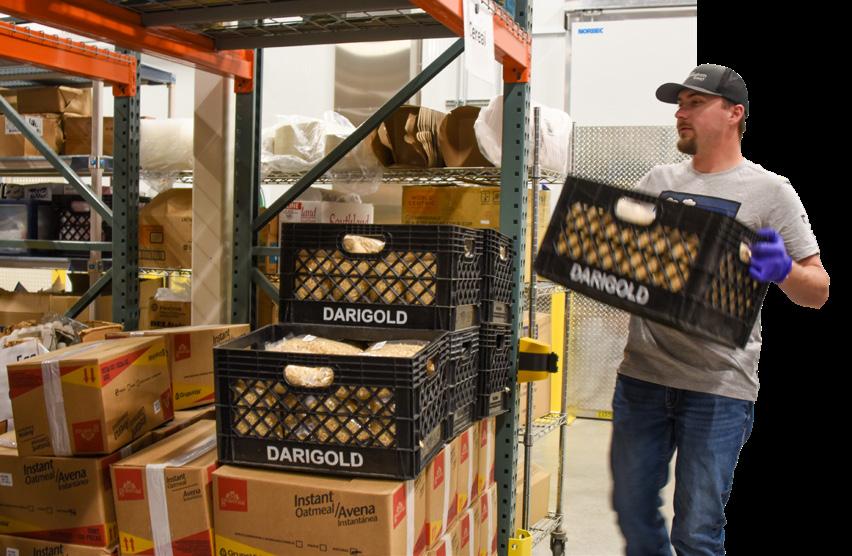
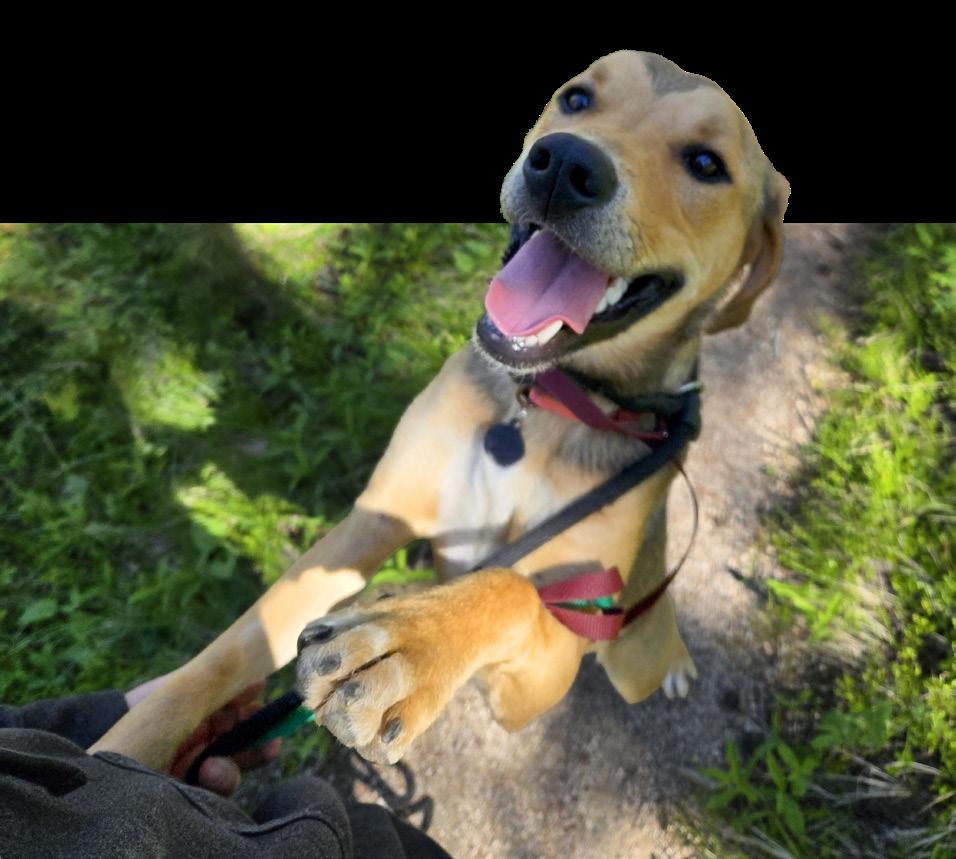
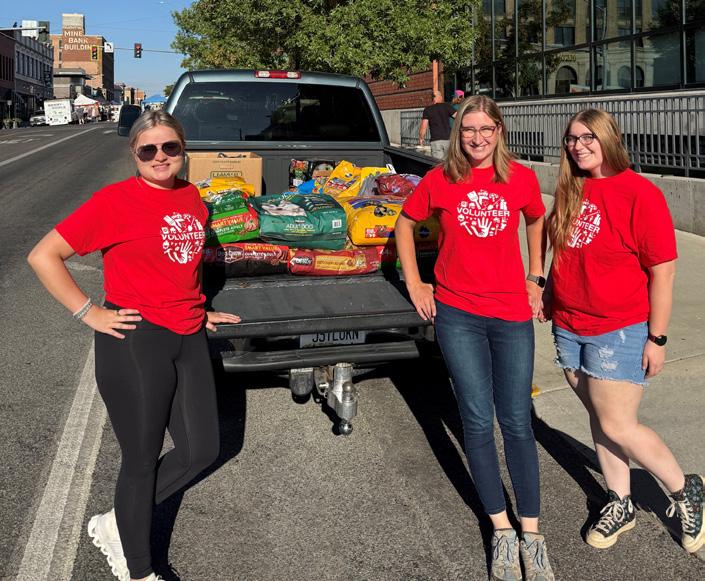
• In Butte, Montana, they sorted donations at the local food bank and hosted a “day out” for adoptable dogs from the Chelsea Bailey Animal Shelter, giving the pups a chance to shine and socialize.
In Helena, Montana, interns organized a volunteer event at the Helena Food Share.
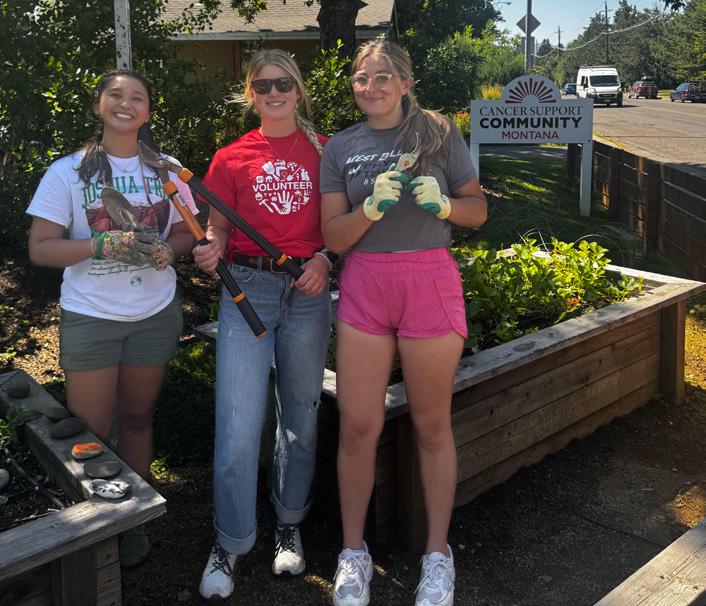
In Bozeman, Montana, interns refreshed the garden at the Cancer Support Community.
In Sioux Falls, South Dakota, interns beautified Tuthill Park as part of the Big Sioux River Clean Up.
An adoptable dog from the Chelsea Bailey Animal Shelter enjoys a “day out” thanks to a summer intern.
Our summer interns embraced a core company value: giving back to the communities we serve.
• In Helena, Montana, they joined forces with Helena Food Share, helping organize donations for families in need.
• In Kearney, Nebraska, they cleaned and organized at the historic World Theatre, a community entertainment and events center.
• In Sioux Falls, South Dakota, they tackled litter and beautified Tuthill Park as part of the Big Sioux River Clean Up.
• And in Bozeman, Montana, they refreshed the garden at the Cancer Support Community, creating a peaceful space for healing and reflection.
Altogether, NorthWestern Energy’s interns organized projects that collectively contributed more than 60 hours of service and helped generate more than $6,000 in grants to the organizations they supported.
The interns spent time building stronger communities while building their résumés. Their summer of service stands as a testament to the power of teamwork, initiative and the value of supporting the communities we serve, where our employees live and raise their families.
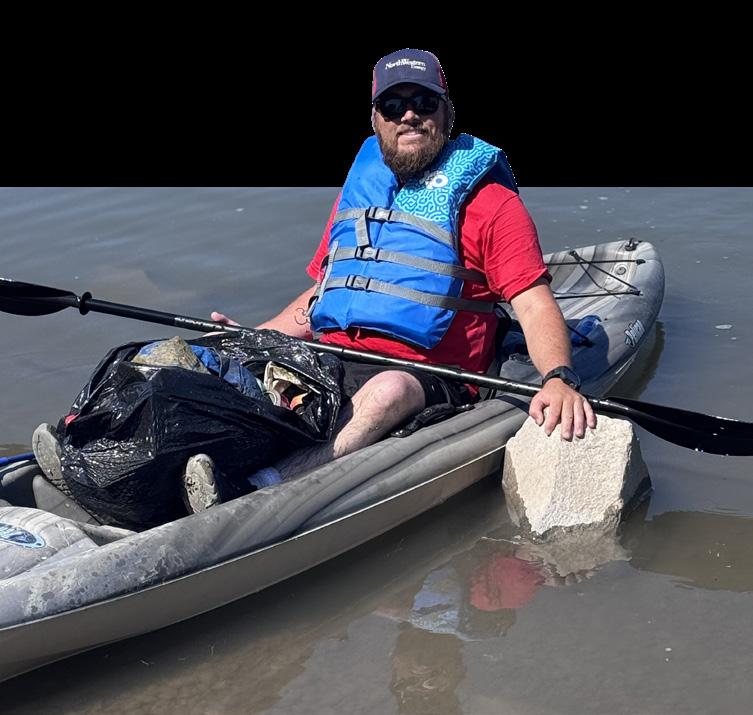
NorthWestern Energy Estimator Parker Crouse volunteered to help with trash cleanup along the Missouri and Sun rivers
NorthWestern employees participate in a volunteer event at the Helena Food Share.
In Great Falls, Montana, interns led riverbank cleanup efforts, removing trash and noxious weeds.
In Butte, Montana, interns organized a pet food drive for the Chelsea Bailey Animal Shelter.
EMPOWERING YOUTH & FEEDING FAMILIES
By Natalie Mueller
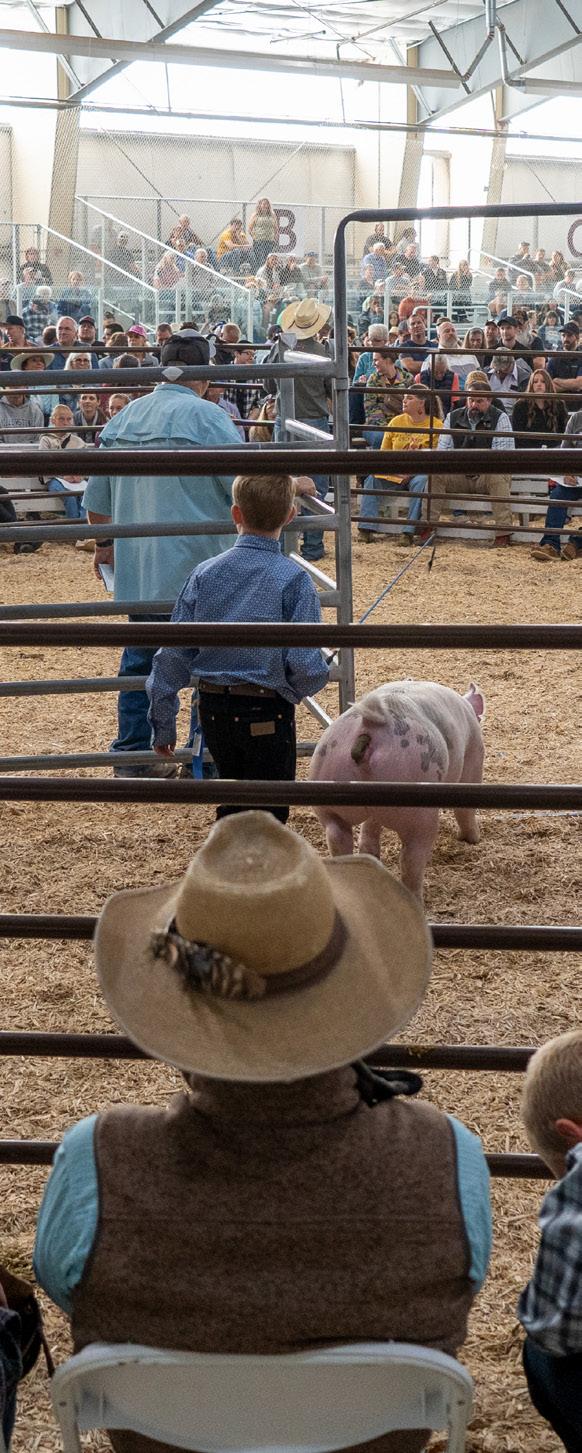
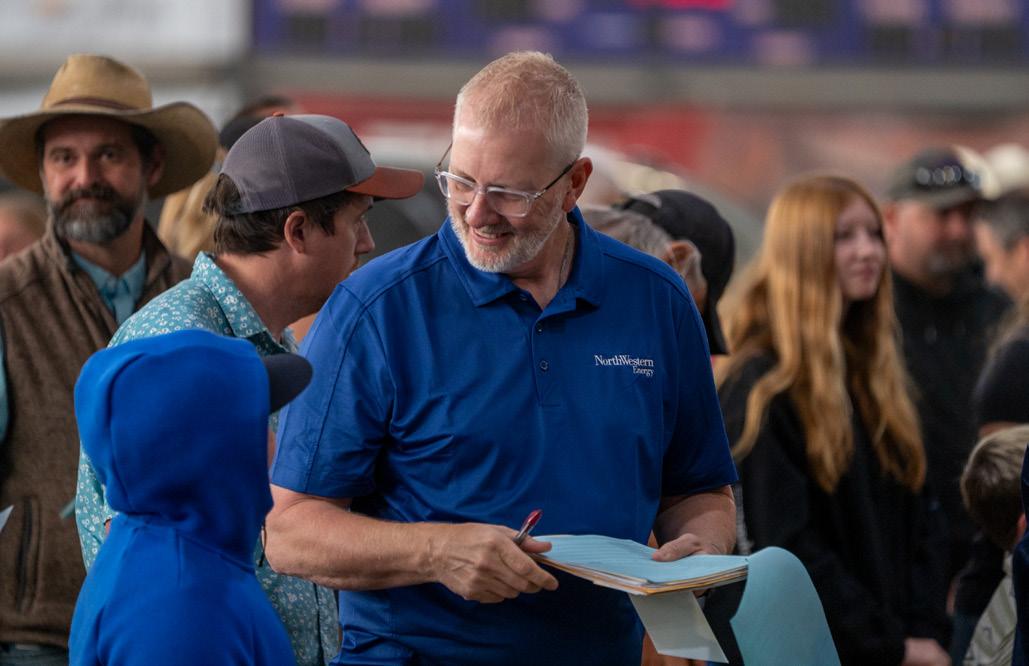
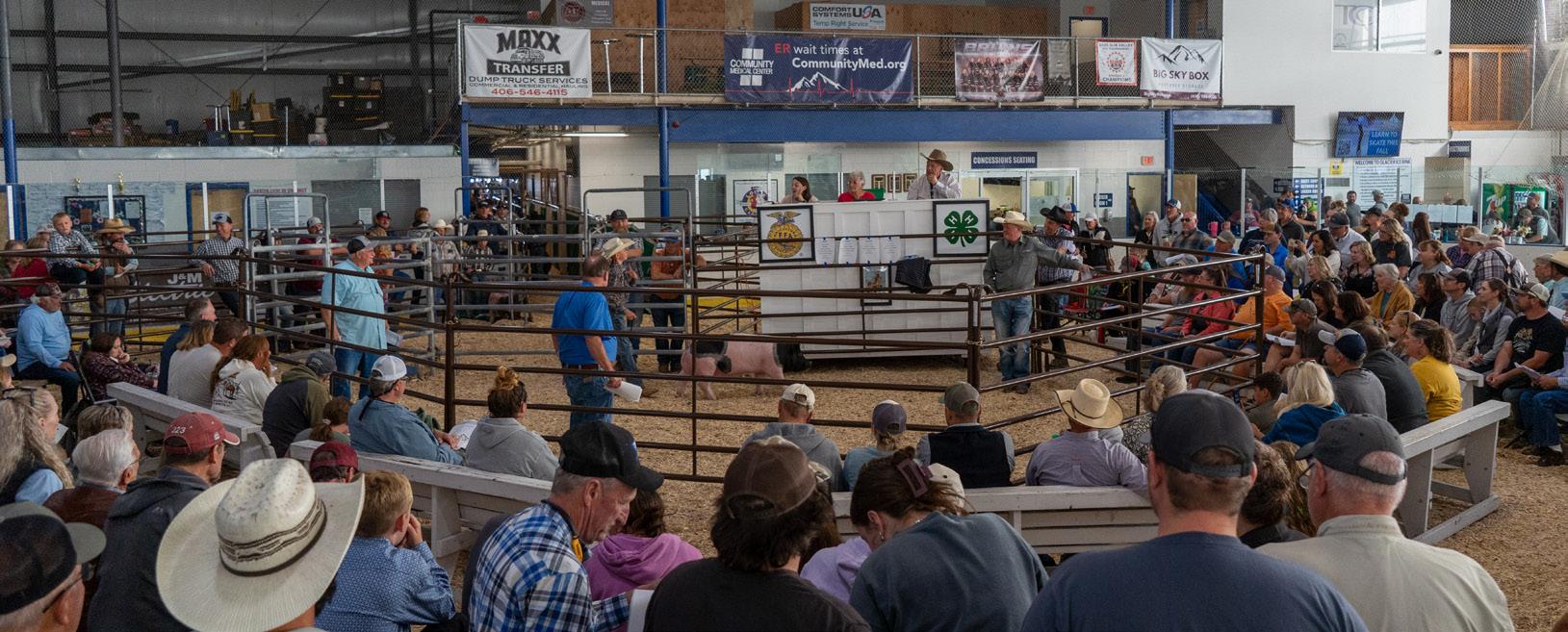
One of Missoula’s most impactful community events is the annual 4-H Livestock Sale, a tradition that brings together local kids, businesses and organizations to support agriculture and feed families in need. For the past several years, NorthWestern Energy has been an enthusiastic participant, thanks in large part to Todd Rahr, NorthWestern’s Community Relations Manager in Missoula.
Each summer, Todd heads to the sale, held most recently in early August, to represent NorthWestern and decide how the company will invest in the next generation of ranchers and farmers. As part of his role, Todd is responsible for budgeting company funds and determining how
much to contribute toward the purchase of animals. NorthWestern has donated around $10,000 each year, and the company sees it as money well spent.
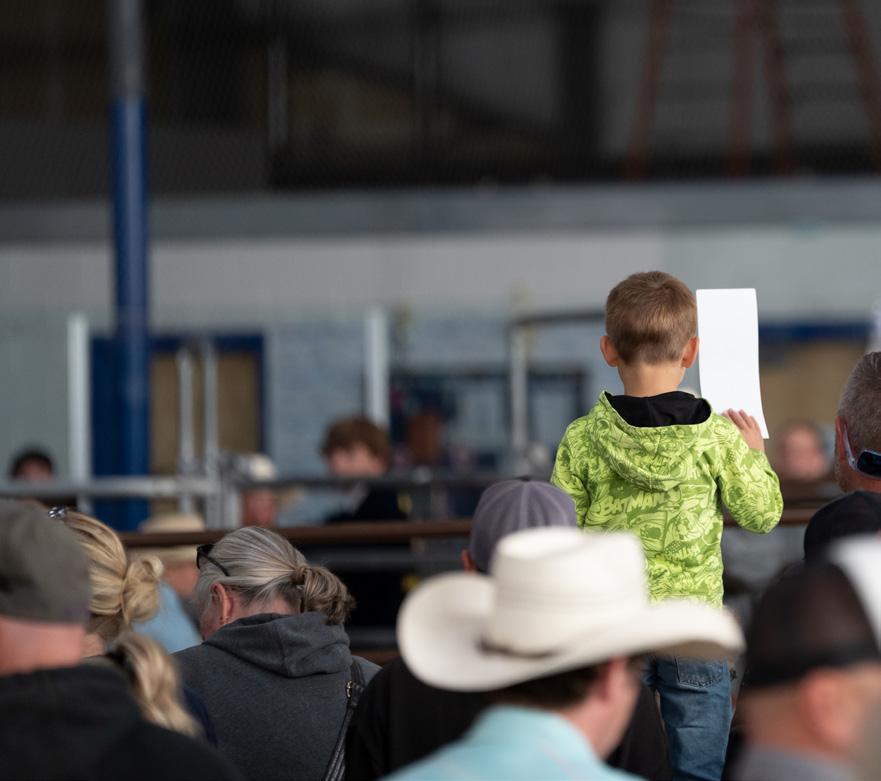
But this event is about much more than buying livestock. It’s about teaching kids valuable life skills. The young participants don’t just raise their animals; they learn how to present them with pride. In the weeks leading up to the sale, these kids practice their showmanship skills, preparing to step into the ring and convince bidders, including NorthWestern, that their animal is worth the investment. It’s an exciting moment for them, and Todd says it’s one of his favorite parts of the job.
“It is inspiring to see how much these kids learn at
Todd Rahr, NorthWestern’s Community Relations Manager in Missoula, participates in the 4-H livestock sale.
such a young age,” he said. “The 4-H program helps them build essential life skills, from caring for their livestock to understanding the fundamentals of marketing and business. Their sense of accountability and entrepreneurship is impressive, and it is rewarding to see them each year.”
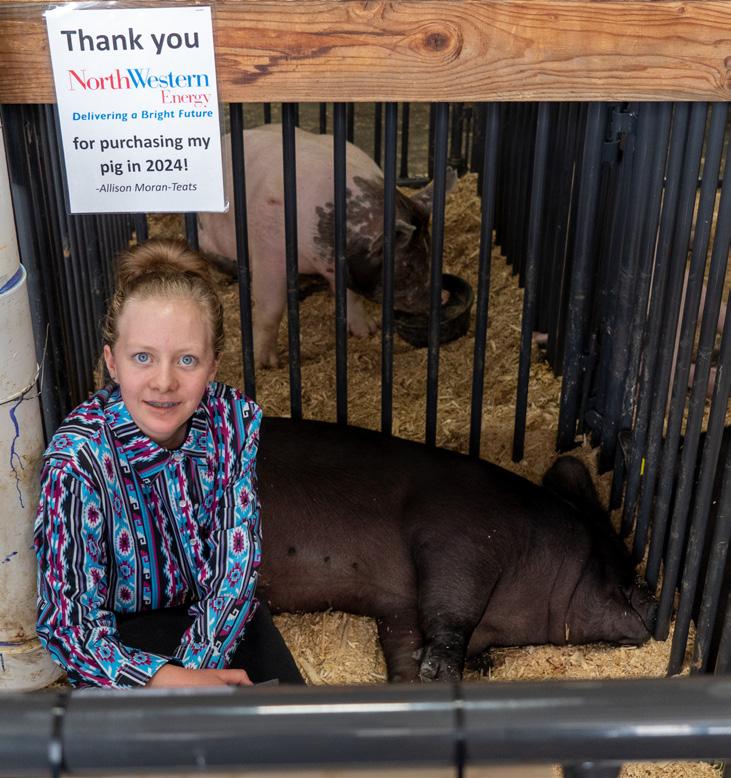
The meat purchased by NorthWestern goes straight to the local food bank, where it helps provide high-quality food to families in Missoula. For Todd, seeing the direct connection between the company’s contributions and the community’s well-being is incredibly rewarding.
“NorthWestern has supported this event for years, and it’s something we’re proud to continue,” Todd says. “It’s good for the kids, good for the community, and good for
the Missoula food bank.”
For Todd and NorthWestern Energy, the 4-H Livestock Sale isn’t just a tradition, it’s a way to give back, build relationships and invest in the future of Montana’s youth and communities.
“There are so many amazing nonprofits in town, and the company would love to support all of them, but it’s just not possible. When I started my career with the company, working with 4-H was one of our traditions, so I decided to stick with it and see what it’s all about,” Todd said. “I’m so glad we decided to keep it going; it’s just an incredible event.”
The meat from animals purchased by NorthWestern Energy is donated to the local food bank, where it helps provide high-quality food to families in Missoula.
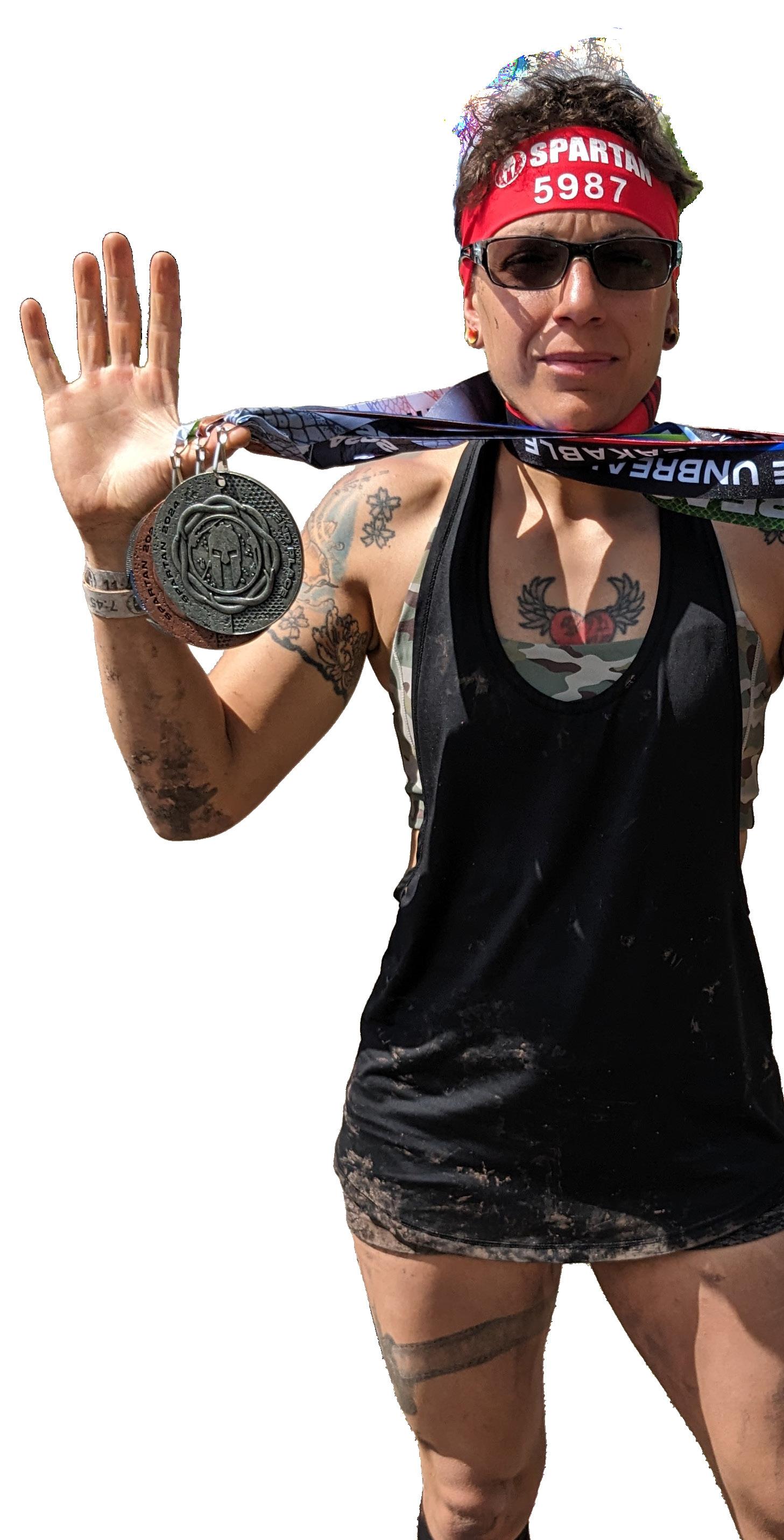
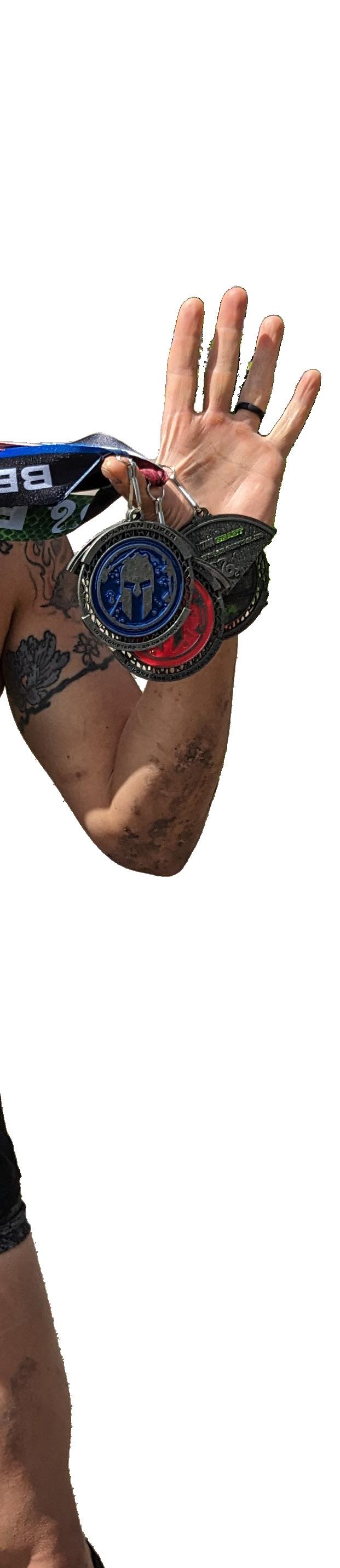
OUTSIDE HER COMFORT ZONE
One of NorthWestern Energy’s own, Janelle Garza, traveled to Greece to compete in the Spartan races.
By Natalie Mueller
On weekdays, Janelle Garza brings her passion for science to her role in NorthWestern Energy’s Environmental Compliance Department. With a background in biology, she appreciates the opportunity to keep learning while applying her expertise to real-world challenges. Much of her work centers on permitting around waterbodies, an area she finds especially meaningful because it helps protect natural resources while supporting essential energy projects.
Outside of work, Janelle is all-in on one of the most demanding sports out there: Spartan racing. These intense competitions combine long-distance running with obstacle courses designed to test both physical strength and mental tough ness, making it challenging for anyone taking part in them.
Before Spartan racing, Janelle was a committed powerlifter. It wasn’t until 2019, when some friends from her gym convinced her to try a race, that she discovered a new passion. Despite not seeing herself as a runner, she gave it a shot and ended up completing three more races that same year. She’s been hooked ever since, taking part in 24 Spartan races since 2019.
Training for Spartan races is a daily commitment.
Janelle starts her day at 4 a.m. with a run anywhere from six to 13 miles. After a full workday, she hits the gym for another hour and a half of strength training.
Fitness has always been a part of Janelle’s life. She played competitive soccer for 10 years before taking a break from intense workouts. Eventually, she found her way back to fitness through powerlifting.
““I was going through a really hard time in my life, and when I started powerlifting, I felt a sense of relief,” she said. “I got strong really fast and fell in love with the fitness world.”
When asked how she manages to stay motivated and juggle all her responsibilities, Janelle shared, “I realized I wouldn’t make progress unless I stepped outside my comfort zone. In the end, the benefits are worth the challenges.”
Of all the obstacles Spartan racing throws at her, Janelle says terrain is often the toughest to prepare for. While she can train for strength and endurance, the unpredictable nature of the course conditions – mud, hills, rocks, and weather – can catch even the most seasoned athlete off guard.
Her most difficult race? Hawaii.
“I knew I’d be miserable, but at least I could be miserable in paradise,” she joked. “Turns out, I was more miserable than ever. I don’t think being in paradise helped at all. It was horrible.”
So, how did Janelle qualify for the race in Sparta, Greece, in late October 2025?
“You have to compete in the three main races in one year, the Trifecta,” she explained. “That’s the Sprint (5K), the Super (10K), and the Beast (a half marathon). They usually want you to complete all three in one weekend. I’ve done that three times so far.”
You won’t get anywhere unless you push your boundaries.
As if the Spartan races weren’t impressive enough, Janelle still regularly practices martial arts and is currently a kickboxing coach.
While it may sound intimidating, Janelle encourages newcomers to start small. Her advice: try a Sprint or 5K open run. They’re great entry points, especially with friends and family, and Janelle is always happy to help beginners with training tips.
NorthWestern Energy is proud to spotlight an employee who pushes her boundaries every day.
NORTHWESTERN ENERGY NAMED AN
Adoption-Friendly Workplace
By Chris Forbeck
Earlier this year, NorthWestern Energy was named one of the 2025 100 Best Adoption-Friendly Workplaces by the Dave Thomas Foundation for Adoption. This national recognition celebrates organizations that go above and beyond in supporting employees who choose to grow their families through adoption and foster care.
This was NorthWestern Energy’s first time participating in the Dave Thomas Foundation’s annual survey — and we’re honored to be ranked 92nd on the list of employers with 1,000 or more employees. In addition to our overall ranking, we received special recognition for our support of foster parents and were named one of the top three companies in the energy and utility industry.
“At NorthWestern Energy, we are deeply honored to be recognized by the Dave Thomas Foundation for Adoption,” said Chris Forbeck, Director of Total Rewards.
“Every child deserves a loving, permanent home, and we are proud to support our employees who step forward to provide that through adoption and foster care. Our benefits reflect our belief that family is created through love, commitment, and care — and we’re grateful to be part of a community that’s helping children thrive.”
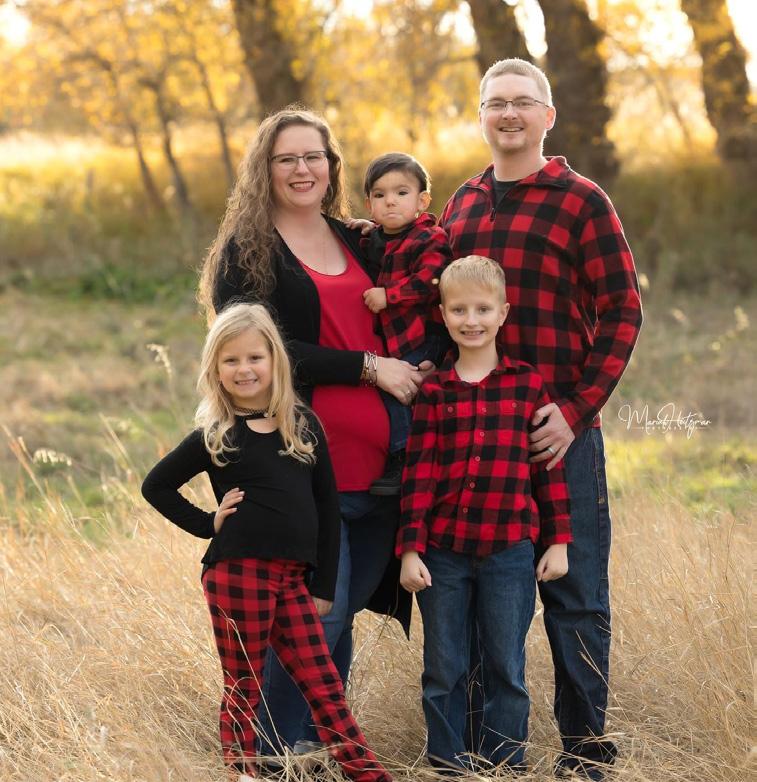
One of the powerful stories behind this recognition comes from Ryan Lower, Manager of District Operations in Lewistown, Montana, who, along with his family, adopted his son Nikola from Bulgaria.
“We waited four years before we got the call in April 2022,” Ryan said. “When we finally met Nikola, it was the most beautiful moment. Watching the orphanage workers bring him out, we knew our lives were about to change forever.”
NorthWestern Energy supported Ryan and his family throughout the process, contributing toward the signif-
“icant cost of adoption. Ryan was also granted parental leave to help ensure a smooth transition for Nikola and their family.
“The ability to use parental leave for adoptions is amazing and so beneficial to supporting a successful bonding experience with your child,” Ryan said.
Adoption is a long journey, but it’s one that NorthWestern Energy is proud to support. We believe in helping our employees build strong, loving families — however they are formed. As Ryan said: “There’s not a moment or even a penny that I would not spend all over again to be this little boy’s family. Adoption is a true gift.”
“We know that attracting and retaining top talent means supporting the whole person — and that includes recognizing and enabling the journey to parenthood through adoption and foster care,” Chris said. “We’re proud to lead in our industry and to offer benefits that reflect our dedication to equity, family and meaningful impact.”
Every child deserves a loving, permanent home, and we are proud to support our employees who step forward to provide that through adoption and foster care.
- Chris Forbeck, Director of Total Rewards
To learn more about the Dave Thomas Foundation for Adoption and see the full list of recognized organizations, scan this QR code with your phone’s camera.
Ryan Lower, Manager of District Operations in Lewistown, Montana, and his family.
By Amy Grisak
It was the first of February, and a plume of smoke billowed harrowingly close, within two miles of our home. A slight breeze fanned the grass fire that scorched 20 acres within 30 minutes. This mid-winter event sent a powerful message: Every season is fire season.
Even if it isn’t the middle of a hot, dry summer, right now is the opportune time to take a look at your home and property to address fuel mitigation and create a defensible space in the case of wildfires. In reality, it’s a terrific time to thin fuels, as well as plant perennials and shrubs to beautify the landscape, but the first step is to take a look at fire behavior.
It was shocking how quickly the fire in our neighborhood spread, despite the cool conditions. Peter Kolb, Montana State University Extension Forestry Specialist and Associate Professor of Forest Ecology & Management, confirms the scenario. “Range fires are more dangerous than forest fires. Mann Gulch was a grass fire.”
Part of the reason is the speed of the blaze. “If a forest fire is moving 5 miles per hour, it’s moving fast, but a grass fire can reach 80 miles per hour.”
So, whether we’re surrounded by trees or have prairie
“The first thing people need to consider is that the real danger of wildfires is not the wall of fire,” Peter explained. “It’s the ember storms. The trees that torch out will throw embers for at least a couple of miles. Ninety percent of the houses that burn are from burning embers.”
“Think of the vegetation around your house like a fuse,” Peter remarks. “Imagine it’s a 90-degree day, with low humidity, and it’s been hot for a week or so. Then look at each of those burning embers as a match.”
If you can take a standard wooden match and light anything, from dried grass to the juniper shrub filled with dead needles, you have perfect fire conditions.
One of the first recommendations is to clear the area of flammable materials and create a green space within 30 feet of your house and outside structures.
“If you clean out the dead stuff, it won’t catch fire,” Peter said. This includes dried grasses, branches and even stacks of firewood. If it can burn, it should be away from the house.
Peter stresses that you should always water plants and grass. Considering that paper burns at 451° F and water boils at 212° F, it makes sense that if the plants are well hydrated, the water within them has to boil off before
to Department of Natural Resources, installed hundreds of varieties of perennials and shrubs that create a jaw-dropping garden with fire-resistant qualities. Plants such as yarrow, penstemon and baptisia bloom throughout the season, while the gravel mulch (instead of wood chips) would not catch fire if embers fell in the area.
Another landscaping tip to remember is to avoid using flammable materials in your yard. Peter says he’s been on sites where homeowners lined their drive with creosote-laden railroad ties. The fire burned right up the ties and caught the house on fire.
Beyond the 30-foot zone around your home and outside structures, the next area extends 100 feet to enhance the fuel mitigation. This includes mowing dried grass, picking up any branches or debris, and limbing trees at least six feet high, although 16 feet is ideal.
of security,” Peter said. “If you’re in a neighborhood, the big danger is whether your neighbor’s house catches on fire. If there are more than eight houses on fire, personnel can’t fight it effectively. We can rely on fire suppression only if we allow them to do their jobs, and if we do the work.”
Many people believe that wildfires are partially the result of increased human activity in forested areas. In reality, Peter says that those who live in the wildland-urban interface are often the buffer that saves other properties.
A firefighter tromps uphill through a burning forest. (Public domain - U.S. Forest Service)
It’s also a good practice to have trees farther apart in a forested landscape. When thinning trees, extend the distance between the crowns of the trees to diminish the opportunity of the fire to jump from one tree to another. “Ten to 15 feet between crowns can slow down a fire,” Peter notes.
It’s also important to understand the effect of topography on fire behavior. Hillsides act like wind because heat rises. The fire is drying out and preheating the fuels in front of it, allowing everything to burn more easily and quickly.
Even a seemingly innocuous 5% slope equates to a wind effect, and a wildfire can burn four times faster when the slope is 30% or greater.
Peter notes that fighting fires on slopes is also more challenging for fire personnel because they must be able to reach the home safely. If you’re 500 yards up a mountain, they don’t want to go there and be trapped, which makes fuel mitigation even more critical.
Fuel reduction is important even for city-dwellers.
“People in town have a false sense
He notes that it’s very difficult for state and federal agencies to manage forests due to the public scoping and paperwork involved, but it is far simpler for private landowners, at least in Montana and many other states, where the primary guidelines focus on stream integrity and fuel cleanup.
“Most of the fires are caught when private landowners have done the work,” he said, and notes that in his 30 years of dealing with fires, “The people who did fuel treatment, their houses survived.”
The right time to create a fire-resilient landscape is now. Focus on tasks within these zones around your home and property, and don’t hesitate to create a garden in the autumn. As long as the ground is unfrozen, it’s a great time to plant perennials, trees and shrubs. Chip away at tasks now; by the time the hot, dry summer arrives, you and your home will be ready.
Editor’s note: Thank you to everyone who took the survey from the Community issue of Bright. This article was inspired by a suggestion from that survey.
Amy Grisak is an avid gardener and writer. Her writing appears in everything from the Farmers’ Almanac to Popular Mechanics, along with her books, “Nature Guide to Glacier and Waterton Lakes National Parks” and “Found Photos of Yellowstone.” Amy lives in Great Falls, Montana, with her two sons and her husband, Grant, who is a biologist with NorthWestern Energy.
Yarrow, penstemon, and baptisia in the Firewise Gardens.
GREAT FALLS, Montana
By Erin Madison
Great Falls, Montana, earned its nickname “The Electric City” thanks to the mighty Missouri River and the hydroelectric dams that harness its power.
Long before it was dubbed “The Electric City,” the area was home to the Blackfeet and other tribes who hunted and lived near the confluence of the Missouri and Sun rivers. Lewis and Clark explored the region, and their journals inspired Paris Gibson to see the series of five waterfalls on the Missouri River. With backing of railroad owner James Hill, Paris Gibson founded Great Falls in 1884.
The city quickly developed as a center for trade and industry, with its location on the river making it a natural crossroads for explorers and settlers. Great Falls became a hub for energy production in the early 20th century, fueling growth across the region.
Today, Great Falls proudly showcases its rich history – from Lewis and Clark’s legendary expedition to its role in powering Montana – while offering visitors endless
opportunities for adventure. Explore scenic trails, visit the renowned C.M. Russell Museum or take in the breathtaking views of the falls that gave this city its name.
Walk across the swinging bridge to Ryan Island – Get an up-close view of NorthWestern Energy’s Ryan Dam and the Great Falls from Ryan Island Park. Open from Mother’s Day to Labor Day, Ryan Island is accessed from a suspension bridge over the Missouri River. It is one of the ways NorthWestern offers recreational opportunities as outlined in our FERC license. The island is a lush oasis with a great view of the Great Falls that gave the city its name. It’s also the perfect spot for a picnic. 160 Ryan Dam Road.
Take a walk on the River’s Edge Trail –
Extending nearly 60 miles along the Missouri River, the River’s Edge Trail provides the perfect opportunity for walking, hiking, running, cycling and mountain biking. NorthWestern Energy is a major supporter of the River’s Edge Trail. River Fund Grants have helped leverage nearly $1.2 million in improvements to the trail since 2007. Access the trail at multiple points throughout Great Falls. Thetrail.org.
Grab a coffee – Located inside an old filing station, Buffalo Blanc is a great place to get coffee, breakfast or lunch. This new coffee shop features large windows, creating an airy environment perfect for a leisurely coffee break. 1925 2nd Ave. S. buffaloblanc.com.
Play in the park – Stop by NorthWestern Energy’s park located behind our building in downtown Great Falls. The park is conveniently located along the River’s Edge Trail, with lots of shade trees and picnic tables. 1 1st Ave. S.
Dine on the patio at The Station – With beautiful views of the Missouri River, The Station offers four unique restaurants all under one roof in a food hall-style setting. Choose from burgers made with locally raised beef, authentic Mexican, Italian favorites with a Montana flair or pan-Asian bowls. Don’t miss the boozy milkshakes for dessert. 119 River Drive N. thestationdistrict.com.
Feed the fish at Giant Springs State Park – Giant Springs is one of the largest freshwater springs in the country, producing more than 156 million gallons of water per day. Some of that water flows into the Roe River, once listed in the Guinness Book of World Records as the world’s shortest river at 201 feet in length. The state park is also home to the Giant Springs State Fish Hatchery, which has raised more than 94 million fish since it was established in 1924. The hatchery has a viewing area with exhibits and an outdoor tank where, for 25 cents, you can feed the trout. 4803 Giant Springs Road. fwp.mt.gov/giant-springs
Climb the walls – The Hi-Line Climbing Center offers indoor climbing and bouldering for the whole family. The center provides classes, birthday parties and much more. All ages and abilities are welcome. 608 1st Ave. S. hilineclimbingcenter.com.
Order from a car hop – A stop at Ford’s Drive-In feels a bit like stepping back in time. Stay in your car and let the car hop come to you. Try a hand-battered corndog, juicy burger, grilled cheese or crispy fries. And be sure to save room for a milkshake for dessert –Ford’s has more than 70 flavors to choose from. Much like the good old days, credit cards are not accepted – cash or local check only. 1301 Central Ave. W.
Relive the Corps of Discovery – The Lewis and Clark Interpretive Center houses North America’s most extensive collection of the Corps of Discovery expedition. Built into a scenic bluff with spectacular views of the Missouri River, the center features interactive exhibits, a theater and scenic trails winding outside the museum. 4201 Giant Springs Road.
See the art of the American West – Charles M. Russell was perhaps the most famous person to ever live in Great Falls, so it’s fitting that his legacy is captured in a world-class museum just next door to where he lived and worked. The C.M. Russell Museum houses many of Charlie’s original works, as well as traveling exhibitions by other western artists. The museum campus also includes Charlie’s house and his log cabin studio. 400 13th St. N. cmrussell.org.
Have a drink with a mermaid – No visit to Great Falls is complete without a stop by the Sip ‘n Dip Lounge inside the O’Haire Inn. GQ Magazine named it the No. 1 bar on Earth worth flying for, and it’s true there is nowhere else like it. The Sip ‘n Dip takes tiki bar to a whole new level. A window behind the bar looks into the hotel pool where mermaids swim most nights from 6 to 10 p.m. You can also enjoy live piano music most Fridays and Saturdays starting at 7 p.m. 17 7th St. S. ohairemotorinn.com/sip-n-dip.
Taste the best burger in Montana – The Roadhouse Diner claims to serve the best burger in Montana. But these aren’t ordinary burgers. Try the Roadhouse Burger, topped with bread and butter pickles and grilled onions, or the PB&J Burger, a bacon cheeseburger on a peanut butter and grape jellied bun. 613 15th St. N. roadhousegf.com
Can you escape? – Challenge your mind and your skills at Escape the Falls Escape Rooms. If you’ve never tried one, escape rooms are interactive and immersive gameplay that challenge you to find clues, solve riddles and decode puzzles. Gather your friends, family or co-workers and try one of Escape the Falls’ several themed escape rooms. 511 Central Ave. escapethefalls.com.
Get a taste of paradise – Paniolo serves delicious Hawaiian food in the heart of Great Falls. Try the daily special, and don’t miss the bakery case, where you’ll find cupcakes, brownies, jumbo cinnamon rolls and haupia, a traditional Hawaiian coconut dessert. 600 Central Ave. Suite 109. paniolocafe.com.
Take a walking tour of the downtown murals – Starting in 2019, Great Falls has hosted an annual ArtsFest, inviting talented artists to paint vibrant murals throughout the downtown area. There are now more than 50 murals adorning the streets of Great Falls. visitgreatfallsmontana.org/listing-item/downtown-murals.
Experience the best patio in Great Falls
The Magpie’s claim to fame, along with being locally sourced and crafted with love, is having the best patio in the Electric City. The menu features street tacos, salads, sandwiches, burgers and more. 202 2nd Ave. S. magpie-gf.com.
Shop til you drop – Dragonfly Dry Goods has an impressive selection of clothes, gifts, home goods, shoes and more. Whether you’re looking for a gown to wear to a black-tie affair or a Great Falls T-shirt, Dragonfly has numerous options. You’ll also find baby gifts, jewelry, men’s clothes and truly something for everyone. 504 Central Ave. dragonflyshopping.com.
Catch a show – The Newberry hosts music, comedy, theatrical acts, community events and more. Check out the website for a list of upcoming shows. 420 Central Ave. thenewberrymt.com.
MARY MATELICH’S
CHOCOLATE MINT BROWNIES
For years, the Great Falls Tribune ran a weekly column called Give and Take that encouraged readers to share their favorite recipes and clip any recipes from the column they might save for later.
One of the most popular recipes to ever appear in Give and Take (so popular, in fact, that it appeared several times) was Mary Matelich’s Chocolate Mint Brownies. If you mention “Mary Matelich Brownies” in Great Falls, most longtime readers of the Tribune will know exactly what you’re talking about. These brownies have achieved fame across the Electric City.
Ingredients
For the brownies
1 cup sugar
½ teaspoon salt
½ cup butter, softened
1 ½ cups chocolate syrup
4 eggs, beaten
1 teaspoon vanilla extract
1 cup flour
½ cup nuts (optional)
For the frosting
2 cups powdered sugar
½ teaspoon peppermint extract
½ cup butter, softened
2 or 3 drops green food coloring
2 tablespoons milk
For the glaze
1 cup chocolate chips
6 tablespoons butter
Directions
1
2
3
Combine the sugar and butter. Add eggs and mix well.
Add flour, salt, syrup, vanilla and nuts. Mix until combined.
Bake in a greased and floured 9- by 13-inch pan at 350 degrees for 30 minutes. Do not overbake more than two or three extra minutes. Allow brownies to cool completely.
4
To prepare the frosting, combine sugar, butter, milk, peppermint extract and food coloring.
5 Frost the cooled brownies.
6
For the glaze, melt chocolate chips and butter over low heat. Let cool slightly, and spread over cooled, frosted brownies.
What causes the power to go out?
Editor’s note: Thank you to everyone who took the survey from the Community issue of Bright. One suggestion from that survey was to include information on what causes power outages. We work hard to keep power outages to a minimum. However, some outages are unavoidable and caused by forces outside our control. Here are the top 10 causes of power outages.
15% Weather
Inclement weather, including snow, hail, rain and wind, can cause damage to infrastructure which results in an outage for customers.
20% Power Supply
These are transmission outages that impact distribution customers.
4% Underground Underground equipment can occasionally fail.
4% Animals
This includes raptors, raccoons, squirrels, cats, etc. that create a line fault.
15% Planned
This includes maintenance on the system and construction to replace aging infrastructure.
12% Unknown/Other
Sometimes when crews go out to investigate, there isn’t an obvious cause of an outage.
5% Substation
This can include equipment failure or animal contact within a substation.
6% Public
This is typically accidentally digging into underground powerlines or a driver knocking down a pole.
11% Overhead
Faults on overhead (as opposed to underground) powerlines are typically due to equipment operations.
8% Vegetation
This ranges from a branch briefly contacting a line to a whole tree falling into a line.
Providing reliable power
While power outages are unavoidable, we are dedicated to keeping the disruption to a minimum. In 2025, through the third quarter, our customers, on average, experienced about 80 minutes of outage time. This represents 99.986% reliability and first-quartile performance as compared to our industry peers for many of the reliability metrics shown below. We monitor and measure the frequency and duration of outages through industry-accepted performance standards. The data below exclude major event days.
SAIFI (System Average Interruption Frequency Index): The number of sustained outages (a power outage lasting longer than five minutes) experienced by the average customer in a year.
SAIDI (System Average Interruption Duration Index): The total time of sustained outages, in minutes, experienced by the average customer in a year.
CAIDI (Customer Average Interruption Duration Index): The average time required to restore service once a customer experiences an outage.
Where does your energy come from?
Our electric portfolio includes a balanced mix of safe, reliable, affordable and clean energy. At NorthWestern Energy, our goal is to provide our customers reliable energy at the lowest long-term cost. We do this through a combination of carbon-free resources, including hydro, wind and solar, and traditional thermal resources.
DO YOU RECOGNIZE THE LOCATION OF THESE PHOTOS?
Do you recognize the location of any of these photos? Send us your guesses to be placed in the drawing for a prize. Guesses should be specific, such as naming a feature in the photo or giving the exact location.
Send your guesses to bright@northwestern.com. Be sure to include your name, mailing address and phone number so we can contact you if you’re a winner.
MONTANA
SOUTH DAKOTA
Answers from the Community issue
Montana: Many readers recognized the photo of the Grand Union Hotel in Fort Benton. Of the many correct answers, we drew Sarah K. of Billings as the winner. In addition to being the lucky winner, Sarah was lucky enough to have stayed at the Grand Union and says it was lovely!
South Dakota: Only two people recognized the South Dakota photo as the rest stop near Chamberlain where the larger-than-life Dignity sculpture is the main attraction. Jenny M. of Great Falls, Montana, is the winner. Jenny not only correctly identified the South Dakota photo, she recognized all three photos!
Nebraska: Three readers were able to identify the photo of Alda. Of those, we drew Dan S. of Helena, Montana, as the winner.