Produced July 2024 Not for reproduction without permission.
Land acknowledgment
We respectfully acknowledge that Northumberland County is located on the Mississauga Anishinabeg territory and is the traditional territory of the Mississauga Anishinabeg.
Nor thumberland County respectfully acknowledges that the Mississauga Nation are the collective stewards and caretakers of these lands and waters in perpetuity and that they continue to maintain this responsibility to ensure their health and integrity for generations to come.
Our commitment to accessibility
Northumberland County is committed to ensuring that people of all ages and abilities enjoy the same opportunities as they live, work visit and invest in our community The County is guided by the four core principles of dignity independence, integration and equal opportunity and supports the full inclusion of persons as set out in the Canadian Charter of Rights and Freedoms, and the Accessibility for Ontarians with Disabilities Act (AODA). This document is available in an alternative format upon request
Special thank s
Special thanks
Northumberland County’s Communications Master Plan is the resul t of a comprehensive process involving input f rom residents and stakeholders, backed by quantitative and qualitative research. It was shaped through a collaborative effort involving members of Northumberland County Council, the County’s Senior Leadership Team and staff, stakeholders and community partners, and the Northumberland community. Northumberland County would like to thank all those who participated in this process for your engagement and input.
Thank you
County Council
Warden Brian Ostrander, Deputy Warden Olena Hankivsky Councillors Lucas Cleveland, Bob Crate, Scott Jibb John Logel, and Mandy Martin
Senior Leadership Team
Jennifer Moore, Chief Administrative Officer; Lisa Ainswor th, Director of Corporate Services; Dan Borowec, Director of Economic Development, Planning, & Strategic Initiatives;
Susan Brown, Chief of Nor thumberland Paramedics; Dwayne Campbell, Acting
Director of Planning and Economic
Developm ent; Kate Campbell, Direc tor of Communications and IT; Glenn Dees, Director of Health and Human Services; Lisa Horne, Director of Community and Social Services; Denise Marshall, Director of Public Works; Darrell Mast County Solicitor
Communications Team
Scott Berr y Communications Officer Capital Projects; Jennifer Hardy-Parr, Grant Writer Cara Timmermans, Specialist Digital and Document Accessibility; Shayna Tinson, Manager of Communications & Creative Services
Northumberland County Staff
Northumberland County Staff
Northumberland Member Municipality Communications Leads
Emily Cartlidge, Deputy Clerk (former), Township of Hamilton (current Clerk, Township of Alnwick/ Haldiman d); Kara Euale, Communications Manager, Town of Cobourg; Holly Grant CAO, Township of Cramahe; Nicole Hamilton, Deputy Clerk Township of Cramahe; Ben Hagerman, Mana ger of Econ omic Developm ent an d Communications, Municipality of Brighton; Kate Ingram, Communications Manager, Municipality of Port Hope; Kira Mees, Community Development Manager Municipality of Trent Hills; Jennifer Steen, Coordinator, Parks, Recreation and Culture, Township of Alnwick/Haldimand
Northumberland Community Members
Northumberland Community Members
637 community members who submitted a completed communications survey
Sector Stakeholders
Local Media
Pete Fisher Today’s Northumberland; Sarah Hyatt, Nor thumberland News (former); Rob Washburn, Consider This Northumberland (Northumberland 89.7) Sue Dickens, Trent Hills Now (former)
Comparator and Leading Municipalities
140 employees who submitted a completed internal communications survey
140 employees who submitted a completed internal communications survey
Darla Price, Nor thumberland Manufacturers’ Association Executive Director Maggie Darling, Northumberland United Way Communications & Impact Director (former); Rev. Wanda Stride, Trinity
– St Andrew ’s United Church, Brighton Minister
Rev Neil Ellis, Transition House Shelter Board Chair (former); Madelaine Currelly Community Training and Development Centre CEO; Anthony Dew Stalwood Homes General Manager; Ann Newell, Watton Employment Services Executive Director; Mark DeJong, Northumberland Federation of Agriculture President (former)
York Region: Patrick Casey Director of Corporate Communications, Andrea Griepsma, Manager of Digital, Design & PR, Jennifer Mitchell, Manager of Corporate Communications; Town of East Gwillimbury: Meeta Gandhi, General Manager of Corporate Services; City of Calgary, Alberta: Heather Hastie, Manager of Communications; City of Wentzville, Missouri: Kara Roberson, Strategic Communications Officer; City of Guelph: Tara Sprigg, Director of Communications (former), Laura Mousseau, Manager of Communications (former); City of Mississauga: Ivana Di Mello, Director of Communications (former)
Communications Consul tant –Redbrick Communications
Brian Lambie, President; Andrea Montgomery, Vice President; Farah Tayabali, Vice President
FThis is the first Communications Master Plan for Nor thumberland County. It comes at a tim e of significant post-pan demic chan ge an d evolution in m edia, techn ology, social need, government policy and funding, and public sentiment.
The purpose of this Master Plan is to build more inclusive and effective public services and greater trust in local government by fostering a community that is informed about County ser vices, and engaged in shaping municipal priorities, policies, and programs. As such, this plan is for all staff across the municipality who engage and interact with those we serve. It is also for the community.
The development of this Master Plan is identified as a key action under Pillar 1 of Northumberland County s 2023-2027
Community Strategic Plan. It is based on communications research, trends and current pressures, municipal best practices, and input f rom internal and external stakeholders. While it spans a 10 -year h orizon, we recognize th e world will not look the same in 2033 as it does today As such, this plan is a guiding document. Th e vision an d guidin g prin ciples identified here will root our work and give us a clear line of sight to strive toward, even when we may need to change course and adapt.
Northumberland County’s 2023-2027 Community Strategic Plan Pillars
Specifically this Master Plan will:
• Reinforce the County ’s commitment to placing residents at the centre of all communications, taking into account how they receive, interact with, and share municipal information.
• Improve accessibility and inclusion by providing a f ramework for how we engage and communicate with diverse audiences.
• Help the County measure and understand how well our communication efforts are working.
• Set a five-year implementation plan of concrete actions that are aligned with the priorities of the Community Strategic plan.
• Equip the Communications Department with a roadmap for technology and training that will ensure the team has the tools and skills required to be strategic partners.
• Build trust in municipal government through an integrated approach to resident experience that conveys care for residents; competence, reliability, and quality in service delivery; and commitment to open and honest communication.
This plan is about uniting the County team in our shared responsibility as County ambassadors. It is about stren gth enin g par tn erships, recognizin g we can do more and better when we combine efforts and leverage strengths. It is also about the future and readiness for change. It will inform future investments and ensure the Communications Department continues to deliver the highest value and quality for the County and the public
Just keep listenin g, keep channels of communication as open as possible. Be clear and concise—we don’t like every answer we receive, but we do like to get responses.
- Community respondent to survey about municipal communications in Northumberland, September 2023
Northumberland County is located on the traditional territory of the Mississauga Anishinaabeg. It is situated on the outer ring of the eastern region of the Greater Golden Horseshoe and consists of seven area municipalities.
Our population is growing, changing, and aging.
Northumberland is projected to increase f rom approximately 89 000 (2021) people to 122 000 by the year 2051. The average age of the population is 48 with nearly 30% being 65 year of age or older . From 2016 to 2021, the county saw a 77% increase in new Canadians moving to the area2.
As an upper-tier level of municipal government,
Nor thumberland County has over 685 staff delivering a range of services f rom waste management social and family services, long-term care, and paramedic services, to economic development, land use planning, natural and cultural heritage services, court services, and roads and asset management. Like many municipalities in Ontario, the County is facing increasing pressures related to housing and homelessness, opioid use, and increasing accountabilities for health and wellbeing as government funding models change and local needs grow.
at a glance
29% of population are seniors 77 %
increase in New Canadians moving to Northumberland f rom 2016 to 20212
Our Nor thumberland
89, 365 Population in 2021
2 1
9 4% of residents know English
Key drivers in Northumberland’s economy are manufacturing, agriculture, food processing and tourism. The county is known for its outdoor beauty, water ways, rolling hills, beautiful downtown areas, and historic towns and villages.
1 Statistics Canada Census Profile, 2021 Census of Population, Northumberland County
2 Northumberland County 2023-2027 Community Strategic Plan
27 % increase in population projected by 2051
4 4 .7 % of population has a post-secondary degree, certif icate or diploma2
Spans seven municipalities, bordered by Port Hope to the west, Brighton to east and Trent Hills/Rice Lake to the north. Population by age1
37, 33 0 Households
Since Northumberland County established a formal corporate communications department in 2013, the municipality has significantly advanced two-way communication with residents.
Continuous improvement
The department is focused on continuous improvem ent . Our team has a dopted compreh ensive content mana gem ent strategies, enhanced social media governance, information accessibility protocols, and brand reputation practices.
Individuals have sought membership with professional associations like the International Association of Busin ess Communicators (IABC), th e Association of Registered Graphic Designers (RGD), and the Municipal Information Systems Association (MISA) to help keep us at the foref ront of emerging trends and technological advancements.
Team members have also achieved industry designations and/or certifications such as:
• Certified Communications Management Professional (CMP®)
• Registered Graphic Designer (RGD)
• Lean Six Sigma Yellow Belt
• Cer tificate in Public Par ticipation by the International Association of Public Participation (IAP2)
... It shows you are interested in your residents and want them to feel involved and that their opinion counts.
- Community respondent to survey about municipal communications in Northumberland, September 2023
Learning and development
In 2024 , all staff of the Communications Depar tment were trained in Group Facilitation Methods, as well as use of the new powerful Google Analytics 4 platform for enhan ced digital marketin g repor tin g an d analy tics. Th e Depar tm ent also coordinates training to help staff across the organization develop and enhance their media and communication skills, including media spokesperson training, social media training, and content accessibility training.
Fostering community conversations
Our team has successfully fostered robust two-way communication channels, ensuring transparent and responsive interactions between the County and its residents. Our progressive approach has not only strengthened Northumberland County s public relations efforts but also reinforced the organization’s Mission to be a best practices leader in County government
Addressing challenges
The County continues to face challenges reaching all residents. More than one third of Northumberland residents have limited to no internet connectivity As well, local communities have recently lost their weekly print newspapers, which was an important source of accurate information. This is in an environment of increasing public expectation to be consulted and engaged in meaningful ways by their local government.
Efforts continue with service providers and government partners to improve local broadband and overcome barriers to ensuring residents, businesses, partners and key stakeholders have consistent access to important municipal information, updates and engagement opportunities.
An informed, engaged, and welcoming community.
Mission
To enhance resident experience with municipal government through exceptional communications that build trust, encourage participation, and promote inclusion.
Guiding principles
People first
We place the resident at the centre of all our decisions and communications, delivering timely, accurate information on the channels, devices, and platforms that our community members prefer. We embrace diversity and ensure that all voices are heard and represented in our communications.
Excellence
We stay informed of industry best practices and emerging trends, striving for the highest standards of quality and professionalism in every aspect of our work. We set SMART goals, measure progress, evaluate outcomes, and apply what we ve learned to drive results.
Agility
We are flexible and adaptive, ready to respond to the evolving needs of the organization and our community We cultivate creativity innovate and experiment to find f resh approaches to communication challenges and to reach target audiences effectively
Integrity
We uphold honesty, accuracy, ethical behavior, and trustworthiness in all our interactions. We prioritize openness and accountability, uniting the whole County team in our shared responsibility as County ambassadors.
Partnership
We work together with internal clients, member municipalities, agency par tners, Indigenous communities, and others to achieve common goals and enhance community outcomes. We maintain curiosity, fostering a culture of listening and learning, always open to different perspectives and new ways to improve our reach and impact
The Communications Depar tment is responsible for effec tively sharing timely and accurate County information and meaningfully engaging with Northumberland staff and the community – including businesses, partners and key stakeholders. The Department’s roles and responsibilities span four key areas.
Corporate and executive communications
Communications strategy and planning
Media relations and issue management Emergency communications Event management and speech writing Employee communications
Public affairs
Grant writing Community engagement Legislative compliance Ad-hoc support for municipal & community partners
Digital experience
Website operations and governance Social media corporate accounts and standards
Information accessibility Analytics and reporting
Marketing and creative services
Graphic design and multimedia
Advertising and campaign management Brand strategy
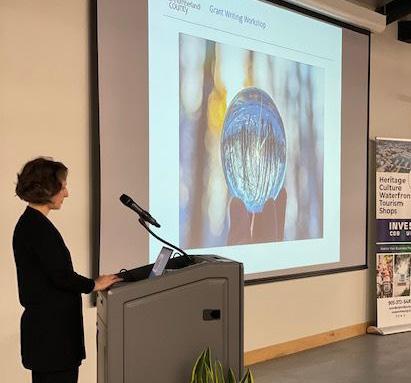
Northumberland County’s Communications Department currently consists of five staff, which in cludes two positions n ot often found on municipal communications teams. We have a dedicated grant writer to help lessen the tax burden on local residents by increasing the County ’s access to potential external funding for major projects. We also have a dedicated role to ensure the County adheres to the Accessibility for Ontarians with Disabilities Act in all documents we produce that are publicly available.
Our current team complement
Director, Communications & Information Technology Manager, Communications & Creative Services
Leads and manages the complete operation of the Communications and Information Technology teams.
• Directs strategic planning
• Oversees digital transformation
• Protects the County’s reputation
• Leads issues management
• Manages media relations
Grant Writer
Maximizes opportunities to secure funding f rom other levels of government and external sources, and leads corporate initiatives for enhancing municipal services.
• Researches funding opportunities
• Provides strategic guidance and prepares funding proposals
• Cultivates funder relationships
• Develops strategies and action plans to capitalize on opportunities identified by the organization and coordinates cross-departmental collaboration
Manages communications, marketing and creative services.
• Oversees the County’s brand identity
• Produces all creative content
• Manages the organization’s content accessibility and marketing strategies
• Leads development and implementation of marketing and communications campaigns
Communications Officer, Capital Projects
Increases awareness and understanding of capital projects and improves access to municipal services.
• Supports strategic planning
• Develops communications plans and products
• Cultivates community engagement
• Fosters positive Indigenous Relations
• Supports media relations
Specialist , Digital & Document Accessibility
Lea ds a ccessibility an d in clusion communications efforts for the organization.
• Develops and manages processes to ensure the County ’s compliance with legislated information and communication accessibility requirements
• Leads document accessibility training, auditing, and remediation
• Coordinates initiatives to promote inclusivity in County services and the community
The research f ramework for this Plan included inputs that are both qualitative and quantitative.
The Plan was developed using feedback f rom many groups and individuals within Northumberland County as well as input f rom municipal communications leaders across the province and beyond. Where input came through one-on-one interviews, group discussions, and open-ended survey responses, a f ramework was used to identify and analyze patterns and establish structured themes, as findings.
The Plan is also rooted in objective, important and timely insights f rom studies and expertise f rom recognized leaders in the fields of public relations and communications, and statistical information gathered f rom the County’s digital channels, as well as staff and public survey results.
The findings f rom this research were consolidated under key themes, analyzed against best practices, and assessed against a communications maturity model for municipalities. This analysis led to the strategic pillars, goals and actions identified in this plan.
Inputs and engagement
Plan inputs included the following internal and external sources.
Internal
• Individual interviews with each member of County Council & the Chief Administrative Officer
• Group interviews with the County s senior leadership team
• Staff survey results (140 responses)
• A review of internal strategic documents, including the County s:
• 2023-2027 Community Strategic Plan
• 2022 Annual Report
• 2024-2026 Communications Business Plan and Budget
• 2023 Communications Master Plan Budget Issue Paper
• Review of Communications Department’s services inventory job descriptions, planning templates and guides
• Review of sample communications plans, marketing materials, and KPI reports
• Corporate channel review of the County’s approach to digital communications: website and social media channels, including Northumberland.ca, Join In Northumberland, Facebook, X, and LinkedIn
• Digital analytics for the County’s website and social media channels
External
• Meeting with eight different sector leaders in the community
• Consultation with Communications leads for each Northumberland municipality
• Interviews with four members of the local media (print online, radio)
• Public survey results (637 responses)
• Interviews with Communications leaders in six comparator and leading municipalities (four in Ontario one in Alberta, one in the United States)
• Secondary research into industry trends and best practices including thought leadership f rom Edelman Communications, Deloitte, International Association of Business Communicators, International Association for Public Participation, the Canadian Public Relations Society, the Beryl Institute, and more
• Environmental scan of 10 municipal corporate communications plans
• Sector insights f rom Redbrick Communications’ 22 years working in the municipal sector
Ensure that every household has access to opportunities to give input.
- Community respondent to survey about municipal communications in Northumberland, September 2023
Findings
Below is a high-level summary of the input and insight gathered through the previously-noted activities.
General overarching themes
Below is a high-level summary of findings f rom the best practice research and the Master Plan consultation process. While learnings emerged f rom each input, the insights fall under the following five overarching key themes.
• Communications teams must be adaptable and innovative.
• Keeping up with a changing landscape and tools
• Finding new ways to reach audiences
• Staying current on changing social media algorithms
• Authentic storytelling builds trust.
• Strengthening community connection with local government
• Engaging audiences and broadening reach
• Combatting negativity and misinformation through human stories
• Differentiating municipal f rom other levels of government
• The County can’t do it alone.
• Needing to partner and collaborate
• Drawing in and inviting other voices to strengthen messaging and help amplify reach of important information and good news
• Meaningful listening and engaging matters.
• Meeting residents’ growing expectations to have a voice
• Focusing efforts for better decision making
• Demands on communicators are increasing.
• Strengthening internal processes, protocols and visibility
• Building capacity and competency
• Focusing on highest value strategic work
A changing communications landscape
• Trust in governm ent an d governm ent lea ders continues to be in decline in Canada (down two points in 2024 f rom 2023 based on Edelman’s Trust Barom eter)
• Along with the decline of traditional media, in Canada, we are seeing some growing distrust of media, which is more recent
• The public generally trusts their own research, meaning they have the greatest trust in their own search engine searches when seeking general news and information.
• Communities are experiencing greater polarization, misinformation and information overload. There is also a rise in the spread of disinformation.
• The pace of change is getting faster related to technology, the use of Artificial Intelligence tools, evolving social channels, and increasing customer service expectations.
• The face of communities is changing as a result of growth, resident relocations following the pandemic and federal immigration policies.
• Communications teams require a broader cross-section of skillsets, such as data management and analysis, digital marketing, publication and video design, accessibility tools, and change communications.
Stakeholder insights County Council
• The County’s Communications team is well respected and achieves high-quality work despite limited resources and capacity
• The dwindling media landscape makes it harder to reach the public
• There is need to foster greater public trust and confidence in the face of more polarization and misinformation.
• The public expects information how and when they want to receive it, with people appearing less inclined to proactively seek out information about government activity.
• There is a general lack of understanding around which level of government is responsible for which ser vices.
• Public interest in engagement tends to be low
Changing media landscapes
On September 15, 2023, Metroland Media group stopped printin g 7 1 community newspapers across Ontario including Northumberland News –moving to an online-only model.
County staff
• Most staff are informed by all-staff emails, managers, or word of mouth.
• Staff would like improved cross-departmental communication.
• Staff desire greater en ga gem ent an d understanding of how their feedback is used when they are engaged.
• Sur vey respondents feel seniors, the homeless, new residents & youth are the hardest to reach audiences.
• There are opportunities to tell more engaging, authentic stories about County services and to get ahead of emerging issues.
Northumberland member municipality communications leads
• Member municipalities face challenges engaging the community, especially in person. Online surveys work best.
• Correcting misinformation is one of the biggest challenges they face.
• Lack of media sources makes it more difficult to inform the broad community
• They see value in greater collaboration with the County and joint promotion and strategic planning.
Media
• Overall, they have a positive relationship with the County.
• They feel the pressures of a changing media landscape with fewer resources and new business models.
• They need as much advanced notice as possible for upcoming events or stories to cover.
• Media prefer access to subject matter experts, when possible, in addition to elected officials.
Sector stakeholders
• They value the direct relationships they have with County staff
• They do not perceive social media as a reliable source of information given each channel’s algorithms, but recognize it can be good for some information sharing.
• They encourage greater coordination between the County and member municipalities.
• They would like more positive communitybased stories shared using a variety of channels.
• They want to ensure all voices have an oppor tunity to be heard, especially those most impacted by a decision.
Comparator and leading municipalities
• High-functioning Communications teams are investing in digital story telling and tools, and public engagement
• Communications teams need to be adaptable and agile.
• They recognize the value of robust internal communications but do not always have the bandwidth.
• All are experiencing greater spread of misinformation and distrust.
• With declining media, they recognize the need to function more as a newsroom.
• Effective communications must be audience centric to have impact.
• Good policies and processes help elevate communications and issues management response.
• Based on nine municipalities with populations ranging f rom 82,000 to 150 000, the average number of Communications full-time equivalents is seven.2
Community
6 4% Facebook Community’s top information sources
• The website is hard to navigate and they want more engaging content on social media.
• They desire simple communications and ways to engage with and contact the County/local municipality.
• They want less reliance on digital communications. The community would prefer hard copy notices and newsletters or emails.
• The public would like comments and questions answered on social media.
• Survey respondents want to be engaged, especially rural respondents, and to learn more about opportunities and how their feedback is being used.
2 Data is based on the composition of communications teams f rom the following municipalities: City of Guelph, Town of Whitby Town of Milton, City of St. Catherines, City of Pickering, City of Waterloo City of Brantford, Town of Newmarket Town of Caledon. Data is f rom research conducted f rom 20212023 and may not reflect current state. 2
47 % municipal website
However, th ey trust th e County website (71%) more than media coverage (50%) or the County ’s Facebook page (45%).
49 % local newspapers* survey was conducted before Metroland ann oun ced th e shutdown of print community newspapers
Internal analysis
Strengths
• Communications leadership and the team are highly respected for their efforts and the quality of their work The team has grown over time, and seeks to deliver value with every project.
• The Communications director sits at senior most table and drives a strategic approach tied to organizational goals and the priorities identified in the 2023-2027 Community Strategic Plan.
• The municipal voice is strong and the Communications team continuously looks for ways to enhance this voice by being creative, proactive and by anticipating the needs of staff council and the community
• Communications has established a strong foun dation on which to build, with m ost foundational policies and processes in place.
• The Communications team strives to measure, achieve and report back results against KPIs. They have created reportback dashboards to demonstrate the value and impact of their work, an area that many municipalities struggle with.
• Individual professional development plans exist for the team, with annual group training arranged based on core competency development for the department
• The County is a leader in information and communication accessibility, with staff resources, policies and processes in place to ensure legislative compliance and continuous enhancement of organizational capacity.
• Marketing campaigns are becoming more sophisticated, increasingly using engaging visuals and messaging (e.g., ‘Communications is always changing’ campaign) along with a mix of marketing tools and channels, and enhanced metrics and reporting.
Challenges
• The County’s current communications depar tm ent consists of five team members, of which only 2.5 are professional communications resources. The additional roles (Grant Writer and Digital & Document Accessibility Specialist), while they complement efforts, support corporate priorities. As a result the team is stretched and it is more challenging to keep up with demand, meet the organization s needs a cross 25 busin ess units, m onitor an d manage reputation, use multiple, varied communications channels, and effectively inform and engage the community.
• The Communications sector is rapidly changing. Government communicators must be prepared to address trends such as the decline of traditional newsrooms, the prevalence of misinformation/disinformation, integration of disruptive technologies, and enhanced use of – and ethics related to –data. Diverse skillsets will be needed on the Communications team. A team approach to training and development will be required.
• Municipalities need to balance budget priorities and, with rising costs, they are struggling to keep tax increases manageable. This will be a key factor in decision making when considering investments in communications, community engagement training and development
• Based on internal feedback, there is a need to strengthen organizational listening and response (internal and external).
• Staff identified word of mouth as one of their main sources of information, which is not reliable. Staff want more timely and f requent information. Strengthening internal communications can help more staff become ambassadors for the County
• Cross-departmental information sharing needs improvement and could help with consistent and more coordinated messaging, especially with customer service.
• Communications technology and tools are needed to monitor, listen, respond and measure. Some gaps exist
• Improved clarity of roles, responsibilities and processes related to the County s community engagement approach is required.
External analysis
Opportunities
• Connections and collaboration with local municipalities are strong, with a commitment to continue strengthening ties and reach of messaging.
• The County has a strong Community Strategic Plan that can guide stor y telling and the sharing of accomplishments.
• Community engagement effor ts are strengthening, including inviting key stakeholders to the table and working to consistently close the loop Community survey respondents said they are motivated to engage on issues they care about or directly impact them. There are opportunities to better position consultations in ways that resonate with the community and create actionable insights f rom the learnings.
• Th e County is workin g toward developin g an Equity, Diversity and Inclusion f ramework an d policies, which will h elp fur th er guide and inform the County s related communications positioning.
• The County has rich stories to tell and with which to engage others, including the strength of partnerships and collaboration on key priorities like health and housing. Oppor tunities exist to increase positive storytelling by leveraging layers of information (f rom “quick and dirty” to greater detail).
• 60% of community sur vey respondents are on Facebook but only 50% of those follow the County. There is an opportunity to promote the County’s channels and increase reach.
• For the past five years, Facebook has consistently been the top source of traffic to th e County ’s website by far. Th ere is opportunity to further leverage that channel–such as m ore use of video – to expan d reach and information sharing. Other area municipalities also drive traffic, though to a lesser degree; this could be expanded.
• Digital transformation is progressing across County operations, which will ultimately support improved client experience with County services.
Risks
• Trust in governments continues to decline while polarization is on the rise in Canada, and this is challenging for municipalities to manage and counter. Focusing on resident experience with the County, including targeted content customized for the channel and the audience, along with engaging diverse voices, will be essential to build trust and confidence in municipal programs and services.
• Polarization at upper levels of government is trickling down to the municipal level and has an impact on local, social debate.
• More than one third of residents in the County have limited to n o intern et conn ec tivity. The closing of Metroland print community newspapers is a significant loss, especially since 49% of community survey respondents said they get municipal information f rom local papers. With a broad and diverse audience, it is a challen ge to fin d th e right level of information for the right audiences using the right channels.
• Northumberland is on the edge of a larger media market Local municipal coverage is challenging to garner.
• Understanding of roles and responsibilities of each level of government is not well understood – leads to confusion / f rustration.
• People are inundated with information and less likely to be proactive in seeking out information. Expectations are high for municipalities to reach residents in ways that work for the community (i.e., have the information come to them).
• Mis- and disinformation continue to spread, especially on Facebook community channels, which are a highly a ccessed source of information. Municipalities have challenges to stay ah ea d of th e cur ve, an d foster constructive engagement and discourse.
• Social media channels and their algorithms continue to change. It is challenging to keep up and ensure the County is reaching target audiences with these channels.
• Complicated stories, such as homelessness, growth, and preparing for change, are challenging to tell, have resonate, and influence opinions. Different audiences want different things. There are pressures f rom other levels of government
The Chief Communication Officer provides ‘horizontality ’ to strategy development , much like the CEO. Other C-suite members have a ver tical perspective.
- Terry Flynn, Director Master of Communications Management, McMaster University
Redbrick Communications’ Municipal Communications Maturity Index
Nor thumberland County engaged Redbrick Communications Inc . for this project because of their depth of experience working within the sector. They have also developed a maturity index customized for municipal communications, to use as an assessment tool. Leveraging a maturity model was a key ask by the County for the development of this Master Plan.
What is a maturity index ?
Maturity models offer a non-biased approach to measuring an organization s current state against a best practice state. As such, they are used for
provide a roadmap to growth and greater effectiveness.
How is maturity measured?
Redbrick’s index is based on a review of other business and public relations maturity models, communications capability f rameworks, and c
trends. It measures five levels of organizational maturity against five capability measures. It is a valuable assessment tool that has informed this Master Plan and strategic conversations with decision makers at the County.
Municipal Communications Maturity Index:
Northumberland County
Organizational structure and competency
Northumberland’s rating
Fractured and off the side of the desk; under resourced, limited skills and/or training; no access to the senior leadership team
Limited dedicated resource(s); emerging training/development; report to manager or director with limited to no access to the senior leadership team
- -
Resourcing for service level expectations; some training/ development; duo reporting to CAO and other
Strong alignment to ser vice objectives; sufficient resources and varied skillsets to meet needs; development plans in place; report to CAO with seat at senior table
Strategic business purpose
No Corporate Communications strategy (internal or external); tactical
Northumberland’s rating
Organizational accountability and processes
Northumberland’s rating
Operational investment and backing
Northumberland’s rating
Community building, accessibility and inclusivity
Northumberland’s rating
No processes; no KPIs or use of analytics/data; no standards nor clear roles or confidence in communications
Minimal involvement in business strategy and decision making
- -
Alignment with business strategy and customer service emerging; consulted for some key decisions
Some standardized processes and service level standards; minimal KPIs, use of analytics an d repor tin g; em ergin g confiden ce in communications; some collaboration with departments
- - -
Processes are standardized, basic ser vice stan dards in pla ce; som e analytics/data and reporting; regular collaboration; some confidence in communications
No budget, tools not automated; no flexibility to take innovative approaches
Minimal budget, basic tools; limited to no flexibility to take innovative approaches
Some budget and automation; emerging use of communications/ marketing tools; some flexibility to take innovative approaches
Sufficient complement for entire organization s communications needs; mul tidisciplinar y ; fun c tion is equal partner and integrated at senior table; embedded continuous improvement
Northumberland's rating falls in the middle of the Strategist column. -
Function aligned with overall strategy customer service; Corporate Communications strategy followed, including for public engagement
Northumberland's rating falls to the left side of the strategist level. -
Value Creator: involved in and advise on all business strategy, integrated with customer service
KPIs tracked; often data driven with regular reporting; continuous improvement; expected collaboration and high confidence in communications
Northumberland's rating falls to the left side of the strategist level.- - -
Centralized budget, more advanced business tools in place; often innovative
Northumberland's rating falls to the left side of the strategist level. -
Advanced analytics and reporting and KPIs; demonstrated impact to business goals; standardized/ streamlined processes; clear roles; built in collaboration
Centrally owned and managed budget for all municipal communications; proactive adoption of new tools; always seek innovative approaches
Reactive issues management with no communications involvement; no focus on strategic relationship building or on accessible/inclusive communications*
Some involvement in issues management and strategic relationships; some accessible and inclusive communications
Often involved in issues management and strategic relationships; communications are often accessible and inclusive
Always consul ted for issues management and guiding strategic relationships; communications are always accessible and inclusive
- - Northumberland's rating falls in the middle of the Ally column. - -
*Accessible and inclusive communications mean the use of plain language, visual storytelling, following AODA guidelines and inclusivity best practices / language demonstrating a welcoming workplace/community
Communications has influence and guides ethical response and strategic relationships; accessible and inclusive approach across the organization
As an organization, Northumberland County s approach and understanding of the strategic value Communications can bring to a municipality is more mature and progressive than many.
Th e Communications team is well respec ted a cross ea ch department and offers a strategic voice for leadership. They work collaboratively with departments and seek to deliver the highest value to meet municipal goals and reach target audiences.
Increasing the team s current complement and looking for opportunities to build out strategic skillsets toward a more multidisciplinary team, along with standardizing workflow, KPIs and reporting will further elevate the function.
As trust in government declines, the media landscape wanes, and municipal strategies for diversity equity and inclusion continue to mature, the County will need to continue its work to foster an integrated approach to resident experience and to demonstrate transparency, accountability and inclusivity to staff and the community
Breakdown by indicator
Organizational structure and competency
The County’s team reports directly to the CAO and the director has a seat at the senior most table.
When considering the team’s current capacity, compared to other municipalities of th eir population size, an d as a growin g community Nor thumberlan d’s team would benefit f rom one to two additional full-time positions to ensure a sufficient complement to meet the entire organization’s communications needs. Current professional developm ent plans are in pla ce an d focus on in dividual Communications staff. A team focus has recently been applied, with annual group training arranged based on core competency development for the department
As a next step focusing individual and department professional development on ensuring proficiency with increasingly sophisticated communications and analy tics tools, while also advancing organizational communications competencies, will help the County as a whole deliver communications excellence.
Strategic business purpose
The team’s work is highly aligned with the County s strategic objectives and focused on bringing the highest value to each department Policies and processes are in place to guide their work and ensure they are working collaboratively with each program area.
This Master Plan will help root and direct the team’s efforts over the coming years. Strengthening the County s processes, planning, coordination and approaches to community engagement will be an important next step
Organizational accountability and processes
The County’s team is results oriented, with a growth mindset. Whenever possible they use data to shape decisions, target the appropriate audiences and report to leadership. Some standard KPIs for Communications are in place, with an opportunity to enhance and align with the County s new Community Strategic Plan and this 10-year Master Plan.
Operational investment and backing
Th e organization has invested in th e usual tools for graphic design, social m edia monitoring, community engagement and project management The team is supported to use innovative approaches to reach audiences and have a general central budget for staffing and corporate projects. As digital transformation progresses across the organization, this will enable further integration of communications with customer service delivery.
Community building, accessibility and inclusion
By matter of course, the County s Communications team is consulted and relied on as a trusted advisor for issues management. They also inform strategic relationships.
Communications messaging is typically plain language, visuals are strong with some use of video (an area that could be enhanced). The organization is working toward developing its Equity, Diversity and Inclusion f ramework and policies. This is an important area for improvement to ensure there are sufficient structures and capacity to demonstrate a cross-organizational commitment to inclusivity
Three key communications pillars emerged f rom the research findings that will inform next steps and future planning for Nor thumberlan d County ’s communications an d community engagement.
These pillars build on the strong foundation already in place at the County align with the Mission and Vision for our department, and represent the target outcomes of this Master Plan –what we will work to advance throughout the life of this plan.
Focus
• A deeper focus on communications across the organization, ensuring greater collaboration and understanding of ever yon e’s role as an ambassador enhancing resident experience with the County
• Supporting the Communications team to achieve the highest professional standard and deliver value
Par
tner
• A greater emphasis on partnership building
• Inviting in, listening to and engaging more audiences in meaningful ways, including staff
• Involving more voices to share and strengthen County information and value
Innovate
• A flexible approach to adapt to changing needs and expectations
• Establishing new ways to communicate, engage and tell stories
• Leveraging new tools and approaches to increase reach and engagement
• Sharing authentic human stories that resonate
Goals and Approaches
Focus
Goal 1: Embed an organizational communications mindset
Trust in governments is declining. Polarization is increasing. Municipalities are struggling to authentically demonstrate their value and combat misinformation. Communications excellence is achieved through building trusting relationships, which cannot and does not fall to one team.
Communications excellence is achieved by the whole organization. All staff have a role as a communicator, whether they interact with other internal staff, with elected officials, stakeholders, partners, or members of the community. In every intera c tion, staff represent wh o th e municipality is, what it stands for and how it delivers value to those it serves, shaping an individual’s experience with the County. Staff therefore play a key role in enhancing resident experience and building trust.
As such, the first goal in this Master Plan and under this pillar is to build a culture of ownership and responsibility for the success of Nor thumberland County ’s communications. For example, staff can proactively share information and updates with the Communications team, confirm facts, help broaden the reach of the County’s messages through their networks, listen and report back with community input to inform approaches.
Embedding this mindset across the organization will go far in elevating resident experience with our organization, and our ability as a municipality to build greater trust with those we serve.
What this looks like...
• Teams across the organization understand their responsibilities related to communications and positive resident experience.
• Staff are clear about th e expec tations, standards and processes for inter-department and communications collaboration.
• The Communications team is visible an d consistently engaged early in projects.
Goal 2: Build strategic communications capacity
The world of communications is changing, as are community expectations of local government. This means that municipal communications teams and approaches cannot remain static They need the right people with varying skillsets, ready to adapt to changing landscapes.
In a time of growing misinformation, and a general feeling of information overload, municipalities also need the ability to communicate quickly and provide layers of information that are easy to digest and access for those who want more details.
Building off Goal 1, when organizations understand the value of communications, they ensure sufficient resources are in place. They are flexible to adopt new tools. They engage in partnerships that expand mutual reach and impact. They have the ability to effectively monitor and respond to emerging trends.
Nor thumberland, to date, has built a strong, strategic Communications team. Continued investment in communications, with a focus on building a multidisciplinary team, will further the team s ability to deliver strategic value.
What this looks like...
• The Communications team has sufficient resources to meet the entire organization s needs and are effectively set up to communicate quickly
• The team has access to the necessary tools and technologies to support effective and efficient communications.
• Communications team m embers’ skillsets continue to evolve as th ey have a ccess to and pursue professional development
• Communications competen cies are increased across the organization, in all departments.
• Th e County has a mindset of continuous improvement. We review and evaluate our success, and adjust as needed based on our learning.
Goal 3: Align all communications to the County
’s strategic business purpose
The pace of change is getting faster. The daily delivery of municipal programs and services is demanding, broad in scope, and increasing in complexity It is common to see communications efforts weighted heavily on m eetin g daily operational n eeds an d messaging, and less on providing strategic value that advances organizational goals.
The County recently invested in completing its 2023-2027 Community Strategic Plan. The municipality sought a wide range of voices and heard f rom a variety of stakeholders who told the County what matters to them and where they want to see Northumberland focus in the coming years.
The Community Strategic Plan is a foundational document. It provides a f ramework for Council and staff to inform strategies, actions, resources, and decision making. It identifies a commitment to integrate leading-edge technologies over the coming years. And it positions communications and engagement as a core goal.
A s this Master Plan is implem ented, th e Communications team and the organization will keep coming back to what the County has committed to the community with the goal to ensure that all communications efforts are focused on the highest priority actions and initiatives that move the County closer to achieving goals.
What this looks like...
• This Master Plan is reviewed and consistently aligned with other corporate plans and strategies.
• All communications effor ts an d achievements tie back to corporate objectives.
• The County invests in opportunities to better understand our audiences to ensure a research-based approach that informs customized, audiencecentric communications.
Par tner
What this looks like...
Goal 4: Engage networks for shared insight
As our community evolves, it is crucial that our communication strategies adapt to reach and engage a diverse range of voices. It is common for municipalities to have a group of people who consistently engage with local government; we value such feedback and also recognize there are many others f rom whom we do not hear Building and maintaining community trust requires an approa ch that dem onstrates genuin e care for residents, excellence in service delivery, and a commitment to transparent communication. Our communications efforts must be inclusive, researchbased, timely and focused on achieving tangible results. By doing so, we aim to ensure everyone feels their input is valued and that they have an equal opportunity to participate.
Through this Master Plan, we commit to strengthening collaboration with existin g n etworks of staff an d partners while embracing new voices. We have plans to stren gth en our strategic par tn erships an d our advocacy to address and advance community needs and interests.
Through the County’s Community Strategic Plan and our communications, we will build on our capacity and ability to tell the County s story to all who have a stake in our success and for all whom we serve. We will look for opportunities to further demonstrate the County’s vision to brin g togeth er people, par tn erships, an d possibilities for a strong and vibrant Northumberland.
• The County expands the methods and opportunities it uses to seek input f rom the community.
• Staff have access to the information they need, when they need it They feel valued and heard, and report an improvement in organizational listening and timely information sharing.
• Communications leads in each municipality com e togeth er to formalize a n etwork for regular and purposeful collaboration. This n etwork is a gateway to share best practices, local data, and lessons learned for continuous improvement of communications and community engagement, expanded audience reach, and enhanced resident experience with municipal government.
• Th e County a c tively cul tivates trusted collaboration with Indigenous residents and neighbouring First Nations communities.
• The County proactively reaches out and demonstrates its commitment to partnership-building with equityseeking groups to amplify its ability to communicate with a range of audiences and stakeholders.
Goal 5: Enhance community experience with the County
The community is an impor tant par tner with the municipality. As taxpayers and residents, community members are impacted ever yday by local decisions. They do and should have a voice in local government decision making.
Many communities have become more vocal in demanding to have a stronger voice in local government decision making. They expect more opportunities to have a say, in ways that are easy for them to access and par ticipate. This means that municipalities are expanding beyond traditional engagement tactics, such as in-person Public Information Centres, where they are seeing a decline in attendance, and are looking for new ways to engage and hear f rom the public
In addition, as seen in the research with comparable municipalities an d th ose wh o have lea din g communications teams, more and more towns, cities, regions and counties are recognizing the need to improve th eir effor ts an d resourcin g related to community engagement Some municipalities have hired dedicated community management specialists, or created public engagement teams. Some are investing and expanding staff training in this area, and creating corporate strategies.
Through the County s Community Strategic Plan, Nor thumberland recognizes the need to foster a community that is engaged in shaping municipal priorities, policies and programs.
What this looks like...
• The County publicly establishes and declares its commitment to meaningful community engagement.
• Community engagement standards, policies and processes are in place and understood across the organization.
• Staff leading community engagement initiatives have the competencies and capacity they need to lead them effectively.
• The County expands the methods and opportunities it uses to seek input f rom the community.
• County staff consistently close the loop with the community, sharing how input was used to influence a decision or direction.
• Communications is embedded as par t of corporate -wide initiatives such as customer ser vice, Reconciliation with Indigenous communities, and Inclusion Diversity, Equity and Accessibility (IDEA) commitments.
Innovate
Goal 6: Broaden the reach and effectiveness of County communications
Reaching a broad range of audiences has become increasingly more difficult at a time when traditional media is in decline and there is great reliance on internet connectivity to access information and share input. Audiences are busy and inundated daily with information. Governments cannot rely on passive tools like websites to share information. Nor can they rely on traditional means of engagement to hear f rom as many people as possible. They need to find creative and innovative solutions to break through the noise.
The recent closing of Metroland print local newspapers has left a significant gap in the community’s access to accurate information. The County continues to work with radio, broadcast, and online news outlets serving the community. We are also seeking new ways to be our own newsroom. We recognize we will need to be flexible and ready to experiment with new approaches so our community is aware of how their taxpayer dollars are being used and can play a role in informing our priorities and the decisions we make.
What this looks like...
• We actively and regularly seek out and learn f rom industry and sector leaders to improve our practices.
• We are flexible and adaptable to tr y new ways to reach and engage our audiences.
• We are audien ce - centric in our approach. We consistently evaluate our success, and adapt our efforts to align with how our audiences receive, interact with, and share municipal information.
• The Communications team plans for digital transformation, tr ying new tools and maximizing digital and data resources and practices to expand reach, build awareness, encourage participation, and promote inclusion.
Goal 7: Strengthen the stor
y
As humans, we are drawn to stories. Th ey connect and bring us together They can build trust. Our staff and the community have told us they want to share and hear more of the positive local stories that make Northumberland County a great pla ce to live, play, work an d visit . Th ey want to hear about the people that are making a difference, and we want to celebrate our staff their accomplishments, and show the good work the County delivers ever y day.
At the same time, how stories are told has evolved. More channels are emerging, with social media continuing to be a powerful tool. It has demonstrated the power of visual and video storytelling. It has also shown the power of simple, easy-to-understand information – stories people are more likely to share with their f riends.
What this looks like...
• Th e County focuses on sharin g human, authentic stories that resonate and build trust
• Our corporate website anchors our stories, connecting the County ’s vision with the community ’s voice, fostering awareness, un derstan din g, transparen cy and engagement
• The Communications team focuses on visual and video storytelling when appropriate and leverages the strengths of each corporate channel to deliver content that is most relevant and useful to the audience.
• The County has a positive relationship with media, and partners with them to increase accurate and timely coverage on the stories that matter to residents.
Our Action Plan
The following Action Plan details how Northumberland County will achieve the goals set under each pillar in this Master Plan.
Prioritizing adaptability
As indicated earlier in this plan, the communications landscape continues to evolve. As such, so may these actions over time.
The County ’s Communications team will remain flexible an d a daptable. We will regularly m onitor an d review progress, and adjust accordingly as part of annual business planning processes.
Goal 1: Embed an organizational communications mindset
Objective Action
Ar ticulate a Communications vision for the organization
Raise awaren ess of the Communications Master Plan across every department
Improve crossdepar tm ental information sharing
Expand the use of data to drive more efficient and effective operations
Strengthen onboarding processes to orient new County employees to corporate communications culture
Enhance consistency and professionalism of written content an d prom ote inclusive writing practices across the organization
Affirm the Communications vision, mission, and goals through County Council endorsement Council
Organize a cross-department ‘ road show presentation and distribute a resource booklet on communications practices, policies, and supports
County Departments
Establish cyclical CAO Town Halls for management, with resources for staff communications Office of the CAO; All County Departments
Expand organization-wide tracking of key performan ce m etrics an d deliver public-facing dashboard
Update the communications policy f ramework
Action
Develop and implement an updated Communications Policy Framework addressing areas such as a dver tisin g, m edia relations, issues management, social media, and content accessibility
Improve the organization s ability to anticipate and respond to issues, reducing the likelihood of escalation
County Departments
Establish a process and materials, including brand and communications protocols and baseline training Corporate Services
Develop a County Writing Style Guide to help staff maintain a consistent style, voice, and tone across written communications, web content and documentation
Strengthen emergency preparedness
Update the County’s Issues Mana gem ent Policy an d f ram ework , an d improve employees’ understanding of their role in the process through roll-out of tools and training
Lead cross-departmental review and update of crisis communications plans to ensure alignment with the County s Hazard Identification & Risk Analysis
All County Departments
Goal 2: Build strategic communications capacity
Goal 2: Build strategic communications capacity
Assess Communications team composition and resources to ensure responsive an d a gile structure and capacity to meet organizational demand
Align proposals for changes to team structure with the organization’s multi-year budget cycle
Invest in specialized skill developm ent to ensure the Communications team remains well position ed to employ increasingly sophisticated tools and tactics
Establish and maintain a professional development program for the Communications Department aligned with IABC’s Global Standard for the Communications Profession and integrating best practices for municipal communications leadership
Improve communications capa city a cross departments, equipping staff to leverage best practices and tools
Formalize a competen cy training program for staff (e.g., outcomes-focused program development, media relations, issues management, content accessibility, social media) Corporate Services; All County Departments
Regularly assess th e state of local municipal communications based on benchmarks
Partner with member municipalities to design and deliver annual community communications survey and assess results for trends and opportunities to enhance practices
municipalities
Deliver regular reporting to County Council on the effectiveness of corporate communications activities
Implement quarterly and annual reporting on communications-related business outcomes based on in dustr y-lea din g UK Government Communication Service Evaluation Framework
Leverage outcomesfocused project models to maximize success in securing grant funding f rom oth er levels of government/external sources
Establish process to identify annual communications priorities for each business unit
Monitor for and identify grant oppor tunities, an d coordinate interdepartmental collaboration on applications, to secure investm ent in County programs and services
Create an annual corporate communications projec t calendar All County Departments
Promote a single tone of voice for Countywide marketing and promotions L aun ch an internal County Marketing Working Group to align and leverage marketing strategies and opportunities Waste, Economic Development, Tourism Departments
Increase use of audience research and analytics to better understand current community priorities
Coordinate a County-wide market research program for enhanced municipal decisionmaking (e.g., satisfaction surveys, pulse checks)
Annually review the status of the Communications Master Plan Fulfill the Plan s recommendations, incorporating into the County ’s budget an d business planning processes
Reaffirm and renew the Communications Master Plan in alignm ent with the strategic direction of the organization
Develop a new five-year action plan for the next phase of County communications
Par tner
Goal 4: Engage networks for shared insight
Objective Action
Strengthen the County’s employee culture through a more effective employee communications program
Create an Internal Communications Strategy including undertaking an employee communications audit to assess an d recomm en d n ew approaches for consistently seeking feedback, sharing information, and demonstrating how feedback is used All County Departments
Stren gth en collaboration with member municipalities
Suppor t the County s meaningful engagement cultural learning and un derstan din g, an d respectful action towards recon ciliation with Indigenous communities
Formalize an Inter-Municipal Communications network and establish protocols for sharing lessons learned, local data, and joint project planning
municipalities
Develop an Indigenous Relations and Reconciliation Action Plan in consultation with Indigenous communities Office of the CAO
Objective Action
Ensure the County remains responsive and in clusive in a ddressin g the needs of increasingly diverse community members, stakeholders, an d staff as th e community grows and changes
Establish an Equity, Diversity, and Inclusion f ramework in consultation with equity-deserving groups and the broader community. All County Departments
Promote a welcoming and inclusive community by raising awareness of cultural, societal, historic and religious dates of significance Establish a Comm em orative Dates Policy an d annual calen dar
Explore opportunities to enhan ce dialogue between residents and the County, ensuring community concerns are heard, addressed, and integrated into local government decisions
Consider creating round table community groups in ea ch municipality to engage periodically, sharing their insights with the County and communicating municipal updates an d consultation opportunities back with their networks
Goal 5: Enhance community experience with the County
Goal 5: Enhance community experience with the County
Amplify the County’s messaging with a range of audiences and stakeholders
Build stronger and more robust relationships with key influencers, stakeh olders, an d community partners to expand opportunities to engage with community members and share information
Create consistent community engagement practices across the organization
Formalize a community engagement f ramework based on the International Association of Public Par ticipation (IAP2) spectrum and best practices, and roll out training and toolkits to staff
In crease public participation in shaping municipal priorities, policies, and programs
Improve coordination of consultation efforts across County business units to make it easier and more efficient for residents to engage on multiple topics of interest, and balance the use of traditional consultation methods (e.g. public meetings, surveys) with more collaborative methods (online forums, committees) to best suit the situation
Build specific strategic actions to evaluate, address and improve resident experience with County programs and services
Create a Client Experience Strategy for the County, leveraging leading experien ce f
am eworks f rom other industries such as The Beryl Institute s Experience Framework for healthcare All County Departments
Create protocols for two -way lin es of communication between Communications and the County s Customer Care Representatives
Formalize process for providing Customer Care Representatives with notices and key messaging to support response to public inquiries, and for Customer Care Representatives to share insights with Communications based on public interactions Corporate Services
Innovate
Goal 6: Broaden effectiveness and reach of County communications
Goal 6: Broaden effectiveness and reach of County communications
Ensure a coordinated approach to continuous an d effec tive communication with key audiences
Ensure content is created and distributed in a datadriven, coordinated, and customer-centric manner, maintaining consistency, a ccura cy, an d quality across all departments
Enhance the impact and strategic effectiveness of the County s use of social media
In crease rea ch an d awareness of County communications via social media
Implement a County-wide content schedule and annually develop core County campaigns
tments
Enhance and strengthen th e County ’s digital marketin g pra c tices
Develop a content governance model for County communications
County Departments
Stren gth en stan dards for/management of the County brand
Explore new mediums for sharing engaging content with audiences
Implement a Brand Standards Guide, Logo Use Policy and a Digital Asset
Mana gem ent solution to improve consistent use of approved County logos, brand elements and imagery
Consider a municipal magazine to fill declining print media gap; a ‘Municipal Minute video podcast; and expanded use of roadside signage
Municipalities
Redevelop the County’s social media strategy, including implementing recommendations f rom 2024 channel audit
Enhance marketing of current social media channels, and evaluate and expand social media channels to reach target audiences (prioritizing LinkedIn and Instagram)
Adopt n ew techniques an d solutions in areas such as enhanced data-driven marketing, social media marketin g optimization, email marketing, and digital publications
In crease th e use an d effectiveness of targeted content
Develop marketing content based on audience personas to help deliver content that will be most relevant and useful to target audiences
Goal 7: Strengthen the story
Goal 7: Strengthen the story
Revamp Northumberland.ca
Oversee a website redesign project to modernize the corporate site, emphasizin g community stor ytelling, ensuring straightfor ward language and simple navigation, and focusing on mobile-first based on trends in community access.
Leverage the reach and power of video to reinforce m essa gin g and boost engagement
Surface and promote good news stories and the staff behind these stories
Create a Video’ strategy, identifying community an d organizational story ideas/priorities and budget
Establish simple processes for staff to share department accomplishments and good news stories, and feature these on corporate channels to demonstrate County staff care and expertise, as well as taxpayer value
Showcase the County’s workplace culture, values, and success stories to attract and retain top talent
Enhance the County s brand visibility and reputation with prospective employees through a ren ewed Recruitment Marketing Strategy
County Departments
Enhance the County s media relations strategy
Implement cyclical and ad-hoc media briefings to ensure local repor ters have a ccess to th e information they need for accurate and timely coverage of County services and initiatives
CMeasuring our success
The County s progress in achieving the goals identified in this Master Plan will be monitored, measured and evaluated along the way. The Communications team will report back to Council and the community on a regular basis through quar terly and annual repor ting, and we will make adjustments as needed based on lessons learned, outcomes achieved, and other influencing factors over time.
Several tactics will be used to evaluate success. These will include, but are not limited to:
• Completion of activities identified in the Action Plan
• Feedback f rom internal staff and Council
• Feedback f rom the community, partners & key stakeholders, including member municipalities
• Website and social media growth and analytics
• Media coverage: quantity tone and alignment with County key messages
• Public engagement participation and feedback f rom participants
Through an annual Municipal Communications Survey, we will also track three performance indicators, the results of which will be made available via the County’s Corporate Performance
Dashboard:
• Per cent of residents who say the County has communicated well about its services, programs, policies, and plans
• Per cent of residents who say that information provided by the County is clear and easy to understand
• Per cent of positive and neutral media coverage
Additional metrics will be monitored as plans unfold.
Looking ahead
Northumberland County’s Communications team is committed to delivering high-quality, strategic and innovative content Over the past 10 years, we have built a solid foundation based on trust across all depar tments. Internal par tners engage the Communications team for advice and counsel and to produce collateral that is engaging and focused on achieving business goals. County leadership recognizes the importance of effective communications, and have made it a priority for the organization.
At a time when the communications landscape is changing rapidly, community expectations are increasing and trust in government bodies is waning, it is challenging for any municipal team to keep up. The goals of this 10-year Master Plan – a first of its kind for the County – are to foster a more informed and engaged community, and to elevate the County’s communications efforts, its ability to deliver greater value, and to tell a stronger, positive municipal story
The Plan sets a clear vision and mission that will root the municipality over time. The guiding principles will steer the work of the team and ensure all communications f rom the County meet the highest standards of quality and ethics. The three pillars and their corresponding goals establish an efficient structure that reflects what we learned f rom the research.
Developing this Master Plan achieves one of the actions identified in the County’s Strategic Plan, and it will go a long way to strengthening communications and engagement f rom the County with its community for years to come.
Below are the many secondary sources reviewed during the research phase for the development of this Master Plan:
• The Beryl Institute. The Beryl Institute Experience Framework. August 22 2018. Accessed April 11, 2024
• Canadian Public Relations Society Code of Professional Standards Accessed October 6 2023.
• City of Dryden, Ontario City of Dryden Communications Plan 2023-2025. February 2 2023. Accessed March 5, 2024.
• City of Greater Sudbury Ontario Connecting You, Connecting Us: Communications Strategic Plan 2018-2020 Accessed March 5, 2024
• City of Guelph, Ontario One City One Voice. Shared Purpose: Strategic communications and community engagement plan (2022-2026) Accessed September 25, 2023.
• City of Kawar tha Lakes, Ontario Corporate Communications Strategy 2024-2027 March 19 2024 Accessed April 29 2024 .
• City of Mississauga, Ontario Communications Master Plan, 2012 May 9, 2012 Accessed July 18 2022
• City of Mississauga, Ontario Communications Master Plan, 2018 June 27 2018. Accessed July 18, 2022.
• City of Nanaimo British Columbia. City of Nanaimo Communications Plan, Spring 2013 Accessed March 5, 2024
• City of Prince Albert, Saskatchewan. Communications Master Plan 2017. Accessed March 5, 2024
• City of Red Deer, Alberta. Community and Public Relations Department Plan.
• Deloitte. “ The Four Factors of Trust: How Organizations Can Earn Lifelong Loyalty.” Press release, November 1, 2022 Accessed April 8, 2024.
• Edelman. 2023 Edelman Trust Barometer Global Report. January 18 2023. Accessed September 26, 2023.
• Edelman. 2024 Edelman Trust Barometer Global Report January 14 2024 Accessed February 6, 2024.
• Edelman. 2023 Future of Corporate Communications Study. September 2023. Accessed October 6, 2023.
• International Association of Business Communicators. Code of Ethics for Professional Communicators 1977 Accessed October 6 2023.
• International Association for the Measurement and Evaluation of Communication (AMEC). Barcelona Principles 3.0 July 10 2020 Accessed September 27, 2023.
• International Association of Business Communicators. Global Standard of the Communication Profession. 2011. Accessed October 6, 2023.
• International Association of Public Participation. IAP2 Spectrum of Public Participation Accessed September 26, 2023.
• Reichheld, Ashley, and Amelia Dunlop The Four Factors of Trust: How Organizations Can Earn Lifelong Loyalty. Hoboken, NJ: John Wiley & Sons, Inc., 2022
• Tisch, Daniel. The Elevation of Public Relations: A discussion paper on a profession s present – and its possible future Argyle Public Relationships. July 30, 2018. Accessed September 26 2024
• Town of Blue Mountains, Ontario. Your Community Your Voice: Communications Strategy 2021-2025 Accessed March 5, 2024
• UK Government Communication Service. Strategic communication: a behavioural approach. March 2020 Accessed April 12 2024
• UK Government Communication Service. The GCS Evaluation Cycle. February 2024 Accessed April 12 2024.
• USC Annenberg School for Communication and Journalism. 2024 Global Communications Report. Released April 2024 Accessed May 14 2024.
• Wolf Jason A “Introducing a Framework for Experience in Healthcare: 8 Strategic Lenses for Action.” LinkedIn, August 30, 2018. Accessed April 10 2024.