
Page
Page 3
Page



Page
Page 3
Page
Clients that apply to EP are prequalified for a mortgage according to industry standard underwriting criteria and are then underwritten for a down-payment loan
Clients prequalified by EP Financial are introduced to a mortgage broker who accounts for the borrowed down-payment loan and works to ensure that the client’s debt ratios are in line to satisfy lenders and insurers The mortgage broker then provides a preapproval and submits the application to a lender
EP Financial introduces approved clients to homebuilders in the EP Financial preferred builder network where they can search for and purchase a home The new-home purchaser must qualify for a mortgage with the 5% loan payments accounted for in the total debt servicing ratios, to ensure that the home purchaser can service both the mortgage and the loan
Cost to the homebuyer
5% per annum interest rate with monthly or a fiveyear balloon payment based on affordability.
The homebuyer must be able to afford the purchase closing costs.
EP Financial’s role
EP Financial provides the client with a personalized home-buying experience from start to finish, including sourcing a desired home and answering all home buying questions.
Credit monitoring, financial coaching, and homeownership education is offered to the client during the duration of the loan period. EP either directly lends the 5% down payment or assists in facilitating through other lenders
The Everyday People Financial (“EP Financial”) borrowed down-payment program (BDPP) offers a flexible downpayment option for borrowers who qualify for a mortgage and are purchasing a newly constructed home.
Through EP Financial, the qualified borrower may access 5% equity of their new home purchase as a loan, which will be applied as a down payment on their purchase This allows the buyer to become a homeowner with an insured mortgage that would be offered at a lower interest rate than current flex-down options in the market with flexible repayment terms
EP Financial lends or arranges the approved client’s required down payment, which allows for a mortgage-insured loan with any lender qualified to offer insured mortgages
The down payment loan could either be amortized and repaid over a flexible repayment period or can be repaid as a balloon payment at the end of the term
In both cases, additional payments made to the loan, or an early payout would not be penalized The downpayment loan would be required to be paid out upon a sale or refinancing of the home.
Parents for their children, and other non-residing immediate family members could co-sign for the homebuyer to quality, if needed

Energy hungry data centres sprout around the world to satisfy AI’s demand for power: will it be enough?
ernest granson senior editor | Business Edge Media
story begins on next page
Demand for data centres has skyrocketed, and this writer means that in the literal sense of the word.
In March of 2025, the first data centre to be placed on the moon blasted off on a SpaceX Falcon 9 rocket housed inside Intuitive Machines LLC’s Athena lunar lander.
A data centre on the moon, you must be asking? It’s true, but not to mislead anyone, this data centre consists of a compact hardware module composed of an eight-terabyte solid state drive powered by a PolarFire SoC FPGA (system-on-chip field-programmable gate arrays) microchip.
Lonestar Data Holdings of St. Petersburg, Florida and Flexential Corp. of Charlotte, North Carolina, collaborated to develop this piece of equipment, and while this data centre is a miniature in comparison to the massive facilities on earth, it is a bonafide data storage unit that successfully executed file uploads and downloads, data encryption and decryption authentication as well as in-space data manipulation. This, despite the fact the Athena lander tipped over soon after landing on the moon, losing power and shutting down.
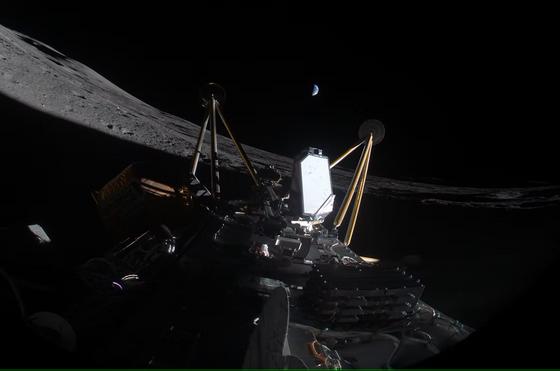
SelfieofIntuitiveMachines’Athenalunarlander lyingonitssideatthelunarsouthpole.The compactdatacentrehousedinthelandermanaged tocompleteanumberofvitalexecutionsbeforethe craftlostcommunicationwithIM’scommandcentre.
Credit:IntuitiveMachinesLLC
Why a data centre on the moon? According to Lonestar – “Lonestar is committed to pioneering lunar-based edge computing and storage solutions, ensuring that critical digital assets can be preserved independent of Earth-based infrastructure.” The company has set an ambitious program to follow up on the Athena mission planning to launch multi-petabyte data centres into lunar orbit and on the moon itself between 2027 and 2030.
Back here on earth, it’s also full speed ahead for the construction of data centres all around the world. According to digital publishers Visual Capitalist and Statista, as of March 2024, (the latest numbers available), there were 5,697 public data centres globally, i.e., commercially accessible. That number changes significantly to 11,800 if private data centres are included. Of those centres, 511 are considered hyperscale.
4
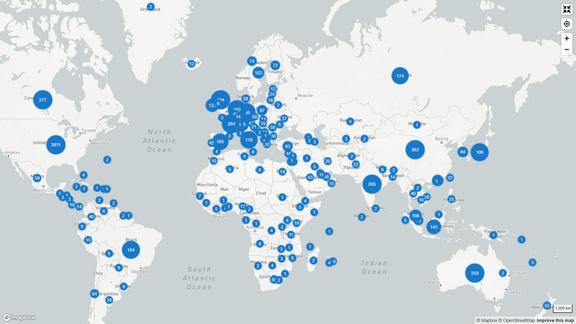
Database of global data centres as of July 2025. Credit: DataCenter.Map
As you would suspect, hyperscale facilities refer to data centres substantially larger than what would be considered “average” centres. Various sources define hyperscale as those centres that are larger than 10,000 square feet, large enough to fit at least 5,000 servers and miles of cable.
For comparison’s sake, let’s take a look at some of the world’s biggest data centres as of this writing. Please note that the term “power capacity” is defined as the maximum amount of electrical power a data centre can draw from its utility sources or backup systems at any given time compared, to “power consumption”, which is the actual amount of electrical power used by the data centre at a given moment or over a period of time.
Mongolia
Switch’s “The Citadel” at Reno, Nevada, USA
7 2 million sq ft ; power capacity – 130 MW to be scaled to 650 MW from renewable energy.
Alibaba Cloud Zhangbei Data Center, Zhangbei County, China
19 sq ft ; power capacity – 150 MW
Kolos Data Centre, Ballangwen, Norway
6 6 million sq ft ; power capacity - 650 MW in initial phase, to be scaled to 1gigawatt – from hydroelectricity and wind
Utah Data Center, Bluffdale, Utah, USA Between 1 million – 1.5 million sq. ft. – power capacity – 65 MW Lakeside Technology Data Centre in Chicago.
story continued on page 6
There are many more data centre projects in the proposal and planning stages some of which could surpass those in this list including the much touted $500 billion joint Stargate AI Project announced in January 2025 by US President Donald Trump, OpenAI CEO Sam Altman, Oracle Chairman Larry Ellison, and SoftBank CEO Masayoshi Son. This joint venture will eventually result in the construction of 20 data centres across the U.S. The first two phases in Abilene, Texas now be being built will consist of facilities totalling 4 million sq. ft. with power capacity of about 1.2 GW.

Aerialviewof ongoing constructionofthe firstphaseofThe StargateProjectin Abilene,Texas,a collaborationof OpenAI,Oracle andSoftbank. Credit:OpenAI
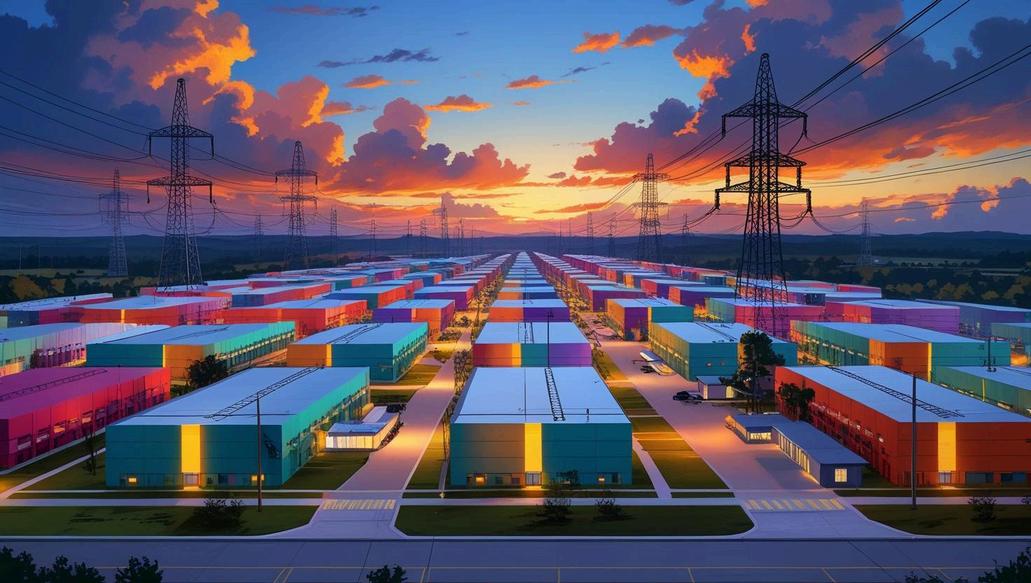
This brings us to Northern Alberta and another proposed hyperscale project named “Wonder Valley,” described by its chief backer and proponent, venture capitalist, Kevin O’Leary as the “largest AI Compute Data Centre Park on Earth.” The plan is for this 8,000 - acre facility to eventually operate with a power capacity of 7.5 GW, with the initial phase of 1.5 GW to be completed sometime in 2028. As pointed out in the list above, that’s drastically more power than even the Abilene Stargate facility.
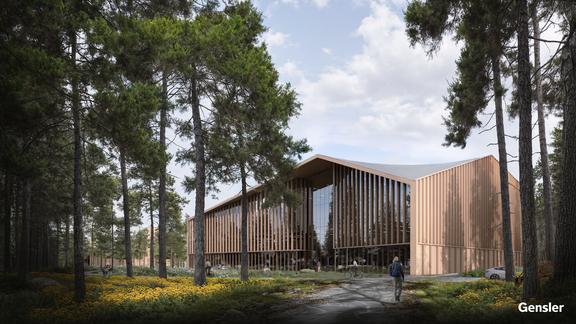
Rendering of one of the buildings for the planned Wonder Valley Data Centre near Grande Prairie in Northern Alberta Credit: O’Leary Ventures
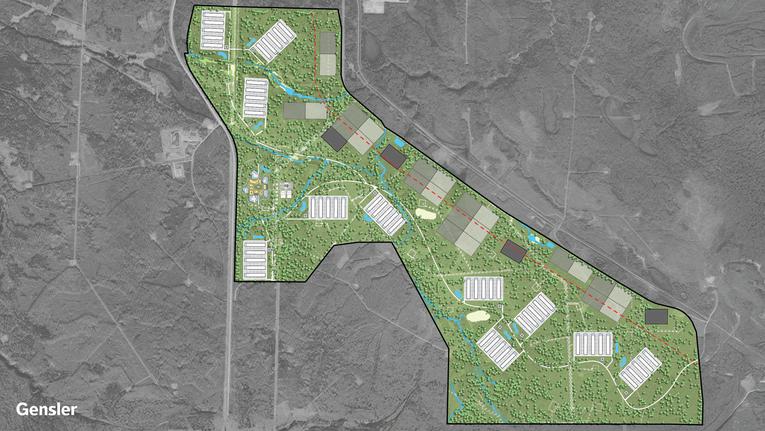
In a keynote address at the Data Centre World which O’Leary delivered at the Data Center World 2025 Conference in Washington D.C. in April, O’Leary called the demand for data centres by AI businesses as a modern-day gold rush.
And while that kind of a demand is desirable as a business case, he also stressed that transforming that need into a revenue producing business entity is a complex and difficult exercise, especially meeting the regulatory and permitting challenges as well as lining up the immense power supplies. Financing is dependent upon all of those factors, of course.
For O’Leary Ventures, a project of this enormity has become viable because of a unique piece of land located in Northern Alberta a short distance from Grande Prairie, a city with the population of about 70,000 and a trading area of nearly 300,000. That parcel of land is called the Greenview Industrial Gateway (GIG), created through a collaboration the Municipal District of Greenview, the County of Grande Prairie and the City of Grande Prairie, specifically to develop a world-class, heavy ecoindustrial district, according to the GIG Area Structure Plan (ASP). The resulting administrative and physical structure of the GIG has opened the door for a project like Wonder Valley by providing the necessary utilities and streamlining the approval process. As O’Leary Ventures CEO and Wonder Valley project manager Paul Palandjian points out, North America and Canada in particular, offers the combination of being among the most stable, safest and secure place to store data, along with possessing an enormous amount of natural resources.
“Our thesis is that the two places in all of North America where there is a virtually endless supply of stranded natural gas and which are best suited to undertake a project of the size and scope that the hyperscalers are now looking for at a relatively low cost of power and with relatively low carbon intensity. Those two are Northwest Alberta and the MD of Greenview in particular and the Marcellus Shale formation in West Virginia,” says Palandjian. “Rather than having to build a massive infrastructure and pipeline to harvest and distribute that gas, we were intrigued by the idea that we could go to the source without the need for high transportation costs which means higher carbon intensity and ultimately a higher cost of power. Then take that natural gas, convert it to electrons by generating power behind the meter, convert those electrons to zeros and ones, and then send those zeros and ones out of the country, across the globe on fiber-optic cable networks that already exist. That’s a very sound business concept. When we became aware of the Greenview Industrial Gateway, we were quickly convinced of its attractiveness of constructability. Dating back to 2012, the Municipal District of Greenview had the foresight to create an area structure plan, put into place a permitting and zoning plan and a mechanism by which they could quickly assemble large amounts of land owned by the Crown. They put a lot of dollars into surrounding highways and the fiber-optic network. All of the things that you need to execute on a project of this size and magnitude are there. It's a true unicorn, I would argue, not just for North America, but globally. There's not a better piece of land that exists to do what we're contemplating doing.”
As of this writing, Palandjian says O’Leary Ventures has a purchase and sales agreement to acquire 7,850 acres and optioned another 5,000 acres. “The potential exists to increase the size and scope of the project from what is currently contemplated as 7.5 GW of power generation with 5.5 GW of IT load that would be rolled out over five phases and roughly 36 million sq. ft. of data centers in the 55 buildings,” he says. “We have already undertaken to create our own two prototype AI data centres that meet the modern requirement of the hyperscalers. One is a singlestorey high-density AI factory and the other is a two-storey building that is engineered for a combination of AI inference and cloud computing. The data centre campus of the future is likely to contain a combination of both. Essentially, the facility concept can be lifted to put anywhere to meet the highly specific needs of the hyperscalers in today's environment.”
story Continued on next page
Paul Palandjian O’Leary Ventures CEO
With the purchase and sale agreement in place, O’Leary Ventures has begun assembling its development team including Beairsto & Associates Engineering Ltd., the Calgary civil engineering firm involved with the MD Greenview Master Plan, architectural design firm Gensler, headquartered in San Francisco, Sudlows Consulting, a subsidiary of Kent Engineering headquartered in Dubai but with a robust presence in Calgary, construction manager PCL Construction, real estate market research consultant Cushman & Wakefield, security engineering firm CenCore Group, engineering consultant, InPwr Inc., CSV Midstream Solutions, and the large projects division of Calgary-based KPMG.
“What we're putting together is dream team of highly seasoned, sophisticated world-class professionals to meet the highly specialized requirements that the off takers of a data center of this kind will require,” Palandjian says.
While all of those ingredients – land, transportation, water, years of permitting already under way by the MD of Greenview – are all supporting an accelerated project timeline for O’Leary Ventures at the GIG, there is one element that has to fall into place for this enormous project to be feasible and that is – power. As Palandjian puts it: “If you’re in the data centre business, you’re in the power business. You have to be because there’s just not enough power on the grid. Our conclusion is, to meet the growing need of hyperscalers we have to become the power company. That’s not to say we won’t partner with other firms who specialize in building, operating and maintaining power centres, but yes, we will be the utility – the water utility, the power utility and the data centre developer and operator.”
And in the short and medium term, the source of that power will be natural gas-fired turbines built on-site sourced from Greenview MD’s major reserve of natural gas. No power will be drawn from the grid. Nuclear and geothermal have been suggested within the industry as potential options for fuel sources but Palandjian says both sources are longer term solutions but aren’t cost effective yet.
As an example, to build one GW of nuclear power is roughly $16 billion – to build one GW of natural gas generated power is roughly $1.5 billion. Therefore, the cost of power to get a return on that spend is much higher, and that cost gets passed through to the ultimate off taker.
Generating geothermal power, as well, is not considered cost-effective as of yet, although Palandjian suggests it’s possible to power a portion of a data centre to create a story of renewables, but in the case of Wonder Valley, to build the lowest carbon intensive data centre anywhere, the goal is to be carbon capture ready. “We're going to design and engineer our power solution to be able to sequester carbon, and we're sitting in the MD of Greenview, approximately 25 to 40 kilometers from the largest aquifer in all of Canada, that can handle the sequester registration of all of its carbon for the next two centuries. It's a geological attribute that no one else has,” he says.
Who’s buying? It’s the chicken-and-egg dilemma
To commit to this huge, enormous, gigantic – you pick the adjective –investment must mean O’Leary Ventures is confident of securing clients on the hyperscale list, right? Well, that’s the interesting question, says Palandjian. “This is the singular chicken and egg dilemma which exists for this industry,” he says. “Let me take a step back and say, if you were to build a modern-day office tower of a million square feet, there might be 1,000 potential credit worthy tenants that could occupy the floors of that building. You go whale hunting to bring in the best tenants to fill that building. In the data centre space, there are really only 15 or so potential tenants in the world. It’s like you're alien hunting in space for the hyperscalers by comparison. It's Google, it's Meta, it's Tesla or X.AI, Oracle, Alibaba, Amazon and the like. Each of them has an in-house capability to design and develop their own power and data centres. And because it’s not their core business, they're also looking to data centre developers like ourselves. And the questions they ask are, do you have the land? Do you have the power? How quickly can we get to market and start lighting up data centres there? Hyperscalers want to know that the power is there and that you can give them a power contract and know what their cost of power will be.”
“On the other hand, to finance that power build, the banks are going to say, ‘Well, do you have a tenant as an off taker for that power?’ So, you're not going to finance the power unless you have a tenant. You're not going to get a tenant unless the power is on the way. The world is waking up to this dilemma and we believe there is a solution to the problem and that’s because, more and more, we’re seeing U.S. chip suppliers become involved.
Take for example, the recent move by NVIDIA to invest in AI hyperscaler CoreWeave. With NVIDIA committing $2 billion in debt to CoreWeave, as a hyperscaler you immediately have more confidence the project will be built. That is why we are actively in early discussions ourselves with both chip manufacturers and hyperscalers to resolve this and unlock the value proposition in the project.”
Earlier in this article, we spoke about the global eruption of data centres which number about 5,697 commercially accessible and about 11, 800 counting private data centres. It should come as no surprise that 45% or about 3,391 of those are located in the United States with Virginia (537), Texas (304) and California (302) at the top of the list with the most facilities. Germany (529), the U.K. (523), China (449) and Canada (336) are next on the list. It’s expected that the Asia-Pacific region will eventually build out more than other world regions by the end of the decade. It’s important to point out that these numbers change rapidly with more data facilities coming online constantly.
story Continued on next page
A prime example is the Province of Alberta’s push to attract these tax-revenue producing entities. The province has 22 operating centres currently spread out between the two major centres of Calgary and Edmonton and other parts of the province with 29 more major centres in the que on the Alberta Electric System Operator’s Large Load Project list. Like other regions with aspirations of becoming data centre hubs, Alberta is trying to balance its existing power supply with the ever-increasing need for more power.
That power situation is not lost on those corporations who are developing these facilities and, as a result, alternative energy resources have been made priorities as evidenced by the Wonder Valley project above and other facility providers. A number of centres will be connected to the grid, drawing power from province’s natural-gas generated supply, but a significant number are planning to build their own on-site natural gas power generation plants, called “Behind-the-Fence”.
The emergence of a data centre colossus
The abundant supply of natural gas is a major reason why this province is drawing significant attention. Compare that situation to what is happening in Northern Virginia, the northern half of the Commonwealth of Virginia. Known as Data Centre Alley, and located in Loudoun County, basically a suburb of Washington D.C., it’s considered the world’s largest and most concentrated region of data centres and is host to 70% of the world’s Internet traffic.
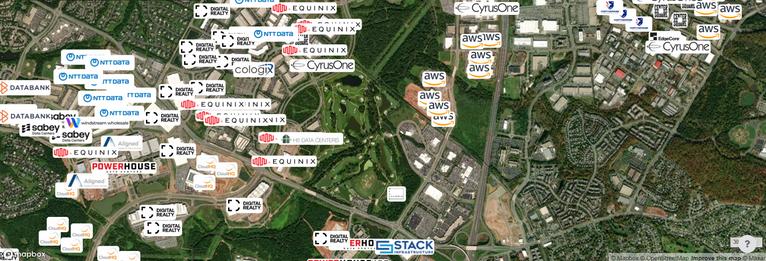
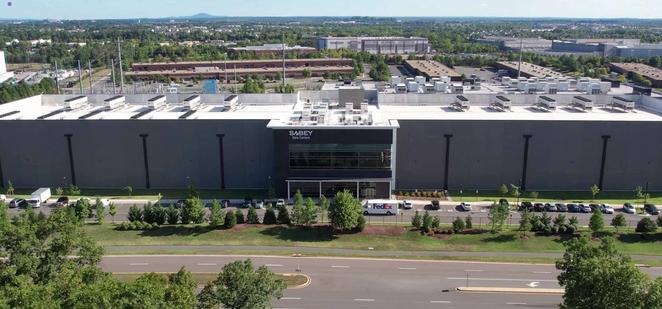
In a way, some parallels could be drawn between the situation which led to Loudin County sprinting to the top of the data center list and the objective which the Province of Alberta has set for itself through its AI Data Centre Strategy announced in December of 2024. In a January 2025 blog, service technology brokerage UPSTACK of New York provides a timeline of Data Center Alley and a fascinating look into the history of Internet development in North America.
The seeds for Northern Virginia’s data centre hub were planted in the early 1990s when several Internet network providers in Virginia created an Internet Exchange (also known as a Peering Exchange) by linking their systems together in a fibre network. Then, a name out of the past – America Online (AOL) - selected the area for its headquarters opening the door for the installation of more fibre and power infrastructure.
Soon, a combination of reasonably priced land, low electricity costs and a skilled workforce attracted major companies like Verizon, Orbital Sciences, Telos and Equinix Inc, the world’s largest colocation data centre (a specialized data center which rents out space for other companies to install their own servers). And that fibre-optic/Internet infrastructure buildout continues with the recent commissioning of United Fiber & Data’s network from Virginia to New York City.
According to various sources including Loudin Economic Development (LEC), the primary attractors were: access to three low-latency, highcapacity intercontinental subsea cables connecting Virginia Beach with Europe and South America; cheap land; power rates 28% below the US national average; incentives such an exemption from the 6% sales and use tax for servers and server-related equipment; and significantly, the county’s Fast-Track Commercial Incentive Program “designed to streamline the development process, provide process certainty, reduce approval times and provide a central point of contact.”
An important note is that in the case of the Commonwealth of Virginia, although its state government has supported data centre growth by legislating certain regulations, it has also made it clear that data centre zoning decisions are made at the local government level and its those individuals and their decisions which have led to the region’s current technology status. One of those significant decisions came this past March when Loudoun County Board of Supervisors approved a Zoning Ordinance amendment “making data centers a special exception use in zoning districts in which they were previously a by-right use. By-right applications are approved administratively through the county’s site plan process, whereas special exceptions require a legislative process involving staff review and public hearings before the Planning Commission and the Board of Supervisors.”
Increasing the oversight of data centre approvals came after local residents complained about the facilities creating too much noise and being constructed in inappropriate areas such as beside residential neighborhoods.
Of the vastness of the U.S. Eastern Seaboard’s communications network labyrinth, there is no argument. Approving and building the infrastructure has probably been the most streamlined aspect of the Northern Virginia data centre ecosystem. As Loudoun Economic Development likes to point out, “There has not been a single day without data center construction in Loudoun in more than 14 years.”
story Continued on next page
But with all of the questions being tossed around about providing power to drive this ecosystem, how does Loudoun County do it? Let’s turn to the Virginia State Energy Profile supplied by the U.S. Energy Information Administration. The profile states that in 2023, natural gas accounted for 55% of Virginia's total in-state electricity net generation, nuclear power supplied 32%, renewables—mostly solar energy and biomass—provided 12%, and coal fueled 2%. More than four-fifths of Virginia’s natural gas production came from coalbeds, and the state accounted for about one-tenth of the nation’s total coalbed methane production.
While that is the breakdown for Virginia’s current power sources, it doesn’t address the fact that unconstrained demand for power in Virginia is projected to double within the next 10 years, with the data center industry being the main driver, according to an independent forecast commissioned by the state’s Joint Legislative Audit and Review Commission. That demand is creating conflict with Virginia’s Clean Economy Act (VCEA) which requires the state’s two major utilities to provide 100% carbon-free electricity by 2045 (Dominion Energy) and 2050 (Appalachian Power). For instance, the power demand has forced some power generators to back off from shutting down coal plants which had been slated to close as early as this year.
Everyone wants in on the game
As Data Center Valley continues its eye-watering infrastructure expansion, but faces fundamental energy questions this brings us back to Northern Alberta and the provincial government’s charge to not only become competitive in attracting data centre hubs but to become “North America’s destination of choice for AI-enabled data centre investment” according to its AI Data Centre Strategy. That’s a tall order considering the various areas around the world competing for that same goal.
Ken
Huges,
Vice-Chair, Beacon AI Data Centers
Credit: Bacon AI Centers

It’s no wonder that global regions are doing their best to attract the energy gobbling facilities. The benefits are tempting; as the State of Virginia’s Joint Legislative Audit and Review Commission notes - the data centre industry is estimated to contribute 74,000 jobs, $5.5 billion in labor income, and $9.1 billion in GDP to Virginia’s economy annually. Most of these economic benefits, though, derive from the construction phase rather than data centres’ ongoing operations. Localities with data centers can collect substantial tax revenues from the industry, primarily from business personal property and real property (real estate) taxes.
And, as data centre developers emphasize, these benefits don’t end when construction is completed. “These are not short-term projects,” says Ken Huges, Vice-Chair with Beacon AI Data Centers. “They will remain in operation for 15 to 20 to 30 years at a minimum.” Beacon announced in January of 2025, that it has six facilities in the Alberta Electric System Operator (AESO) que for Alberta sites with a total investment of about $10 billion will bring 1.8 GW capacity for hyperscalers with a total pipeline of 3.8 GW. Beacon calls its data centre infrastructure cutting-edge, according to the press release, in that it will utilize flexible, modular, and quickly deployable building techniques so hyperscalers can rapidly scale up infrastructure.
In addition to the economic benefits, Hughes feels these projects help to strengthen the workforce and support the educational institutions that the developers will work with to boost the workforce. And for the Province of Alberta, in particular, Hughes is adamant that the government’s strategy of attracting data centres and building upon its greatest assets, that of a world scale natural gas resource, will be transformational for the province.

Rendering of Beacon AI’s Foothills Artificial Intelligence Hub to be located about 50 km south of Calgary, Alberta
Credit: Beacon AI Centers
While governments the world over scramble and pitch for the biggest and most data centre facilities, it’s important to take into account some unforeseen, or perhaps, disregarded negative aspects for those who live within the reality of these imposing facilities. That’s a topic for another conversation, but the following article from The Washington Post about residents living in the Data Centre Alley in Northern Virginia provides relevant comment about the benefits and disadvantages of this phenomenon.
story begins on next page
It’s full speed ahead for Regency Silver Corp.’s drilling program.
The company recently announced the closing of its oversubscribed, $4-million brokered private placement, paving the way to commence an ambitious drilling program at its major gold/silver/copper find at the Dios Padre project in Sonora, Mexico.
Bruce Bragagnolo – CEO, director, and founder of Regency Silver Corporation – has led several mining corporations through the exploration, IPO and production process. He recently discussed the company’s impressive results and plans with Business Edge News Magazine senior editor Ernest Granson.
1. It has been an exciting several years for you and for Regency Silver. The company continues to advance after two years of successful drilling operations at its Dios Padre flagship property in Sonora, Mexico, and, this past spring, you were appointed CEO for Regency Silver. It must be quite gratifying to oversee leadership of the company as it progresses into this next stage.
BB: You know, it is a project that I have always been very interested in – since 2017, when I first founded the company. It had a lot of potential back then because it was high-grade silver in a breccia body, which is kind of unusual. It was very high-grade; they were mining 750 grams of silver historically. And there were big stopes – these large, 60-foot-high chambers where they had been mining. So, it seemed very intriguing, and it had been under option to some very important silver companies, like Silver Standard and First Majestic. They had drilled the deposit like it was a vertical plug, rather than something that angled off. It was the advancements in modern software that helped us determine there was a source of the mineralization toward the north. We drilled our first hole back in 2022 and hit on that very first hole. The results, I would say, are spectacular. They are amazing results from our first series of drilling, so we are pleased to be back drilling again. Centurion One Capital led our financing and managed to raise $4 million for us to get back drilling, and we are very excited about that.
2. Let's talk a bit more about the latest results and the current program. As you were mentioning, based on previous results, gold resources will be the main target, which makes sense, considering the steady upswing in the price of gold this year and its strong outlook.
BB: I think precious metals in general, like gold and silver, are looking very good right now. Silver is moving up. The general rule is that the price of the commodity has to be double what it costs to produce it. Gold is well beyond that now, and silver is also well beyond it, given the last few months.
It is very gratifying to see the prices move to a point where people are really taking interest. What has happened with Dios Padre is the historic silver mine is just the surface manifestation of the mineralization. We are going to have different gradients, so it is silver at the top of the system with gold interspersed with it. Then we have other levels – think of this as a series of levels like floors on an elevator. On the top floor, we have got the silver with a bit of gold.
We should be able to find a silver/gold transition zone, which is about 50-50, and we have been drilling into the gold-rich zone with some silver. So, we have a lot of drilling to do. We have to drill updip, and we have to drill down-dip after this program.
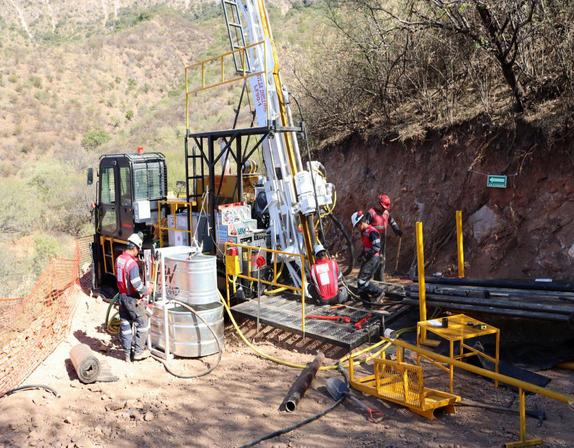
We are drilling along strike with this next program. We have a very good idea where the gold level is, so we will be following that, and we can tell visually when we are hitting the system. It is a big system. It is 100 metres wide in some spots, but the real high grade zone is about 50 metres. That is a significant gold zone.
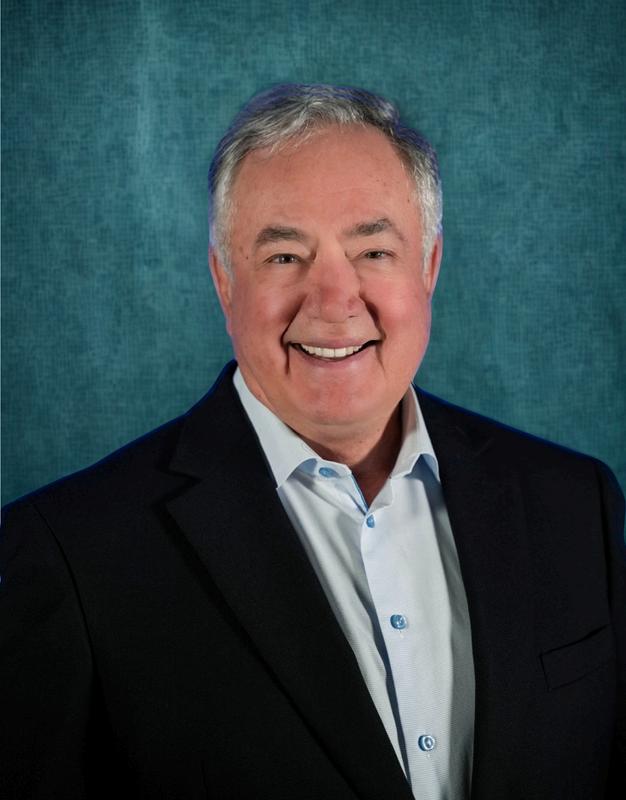
Bruce Bragagnolo CEO, director, and founder of Regency Silver Corporation
Continued on next page
3. What seems so striking about this breccia zone is the size. Could you elaborate?
BB: I haven't seen something with that width and grade in Mexico. If you look at gram/metres, which is simply the grade times the width of the mineralized zone, we have got 296 gram/metres at Dios Padre. I looked at the highest-grade intercepts for, I think it was for all of North America, and there were only two higher than that in the last month. So, this a very high-grade, wide zone.
4. This discovery is not necessarily a surprise, is it, considering the history of that area in Sonora? As the old saying goes, “the best place to find a new mine is near an old mine.” So, can you give us a brief history of mining in this area, and Regency Silver's play in particular.
BB: I will tell you what the surprise was to us. We knew we had a copper target because we had an IP anomaly, which is induced polarization. You send a charge, an electric current, into the ground, and check to see how conductive or how resistive the rock is. That gives you an idea of the chargeability. If it's copper the charge is going to go faster. So, we had this IP anomaly that looked a bit different by the silver mine which we suspected was pyrite.
We drilled the hole right down through the IP anomaly, which looks like it is the halo on top of a big system. It is the gaseous phase of a porphyry. And then we hit the gold zone right where we thought we would hit it, about 410 metres. Even though we hit it, we couldn't tell how much gold was there. It wasn't dripping like candle wax, but it is very high-grade, and we have had backup drilling to substantiate that.
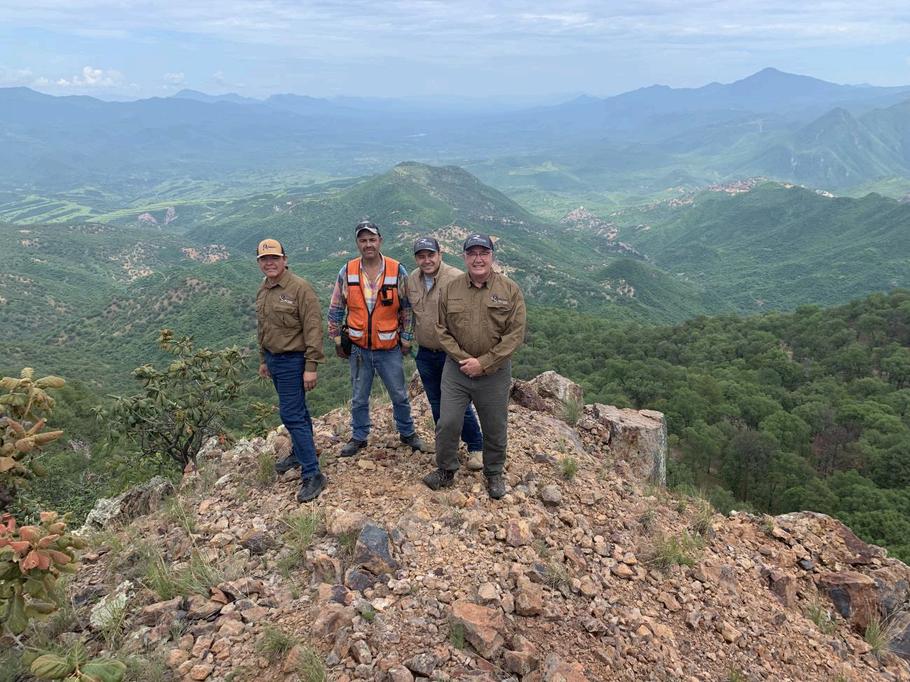
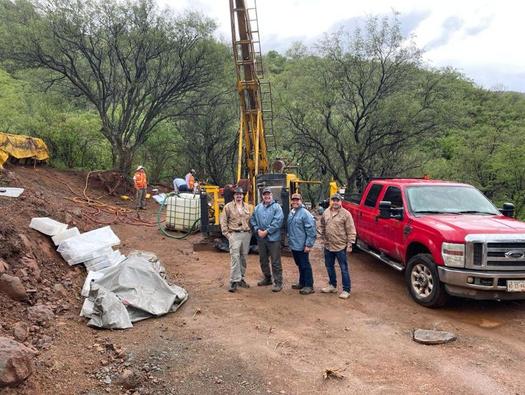
Left to right: Mike Tucker - head geologist, Bruce Bragagnola - CEO, Frank Cordova - VP Mexican Operations, Walfre Suarez - Operations Supervisor
It wasn't that obvious to the previous option holders. We own it 100% now, but it wasn't obvious to them. It is a bit different from the other mines in the area, and there are some big mines in the area. There is Pinos Altos, there is La India, there is Mulatos, there is Dolores, all owned by bigger companies. It is a very prolific district. It is going to get more exploration on it over the next few years, I believe, because it is right in that Laramide Porphyry belt that extends from all the way up in the states, all the way through Culiacan. It is under-explored.
5. What are you looking to prove here in this next set of drill holes?
BB: The target here is just to extend the zone along strike. When your last hole, which was hole 23-21, intercepts 38 metres of 7.3 grams of gold, you are just going to keep following that. We are going to follow that along strike and eventually the model is going to tell us to go up-dip towards the silver mine. We need to get an indication of where to do that. And that would be a big event for the company, because it would indicate we have got another level going up toward the silver mine. Right now, we have two levels. We've got the silver mine, and we've got the gold zone, and then we need to find something in between. I'm positive it's there, in my view. We just have to find out where it is.
6. What is the time frame for this next drilling program?
BB: We are drilling already and are waiting for assay. We have commenced our 8 hole program. Our goal is to bring in another drill in the near future and keep two drills turning full time.
7. Regency Silver has entered into option agreements over the past several years for other projects in Mexico. What can you tell us about those?
BB: Well, I really like that district around San Dimas. There are issues down there with some titles which we are trying to resolve. At some point, we will be getting back into that area. We really don't have the ability to work on too many projects right now, but that is an area that I really like, and I think it will be a very prolific district for silver in Mexico in the coming decade.
8. You mentioned that in order to properly evaluate the characteristics of the Dios Padre property, you used Leapfrog geological modelling software. How does that technology compare to earlier types of technology when it comes to substantiating the property data.
BB: Well, I've said this before – it's like writing in crayon versus a 4K television. It just gives you so much more information. The old software used to be a series of discs, kind of pointing in a general direction. With Leapfrog, when you input the information, you get a 6x5 block. I always try to run a grade shell because that is where the value is. You just follow the grade. And in this instance, we just followed the grade shell of the silver mine, 45 degrees down dip – and there was the high grade gold zone.
Continued on next page
9. Regency Silver has clearly developed a specific mission as an exploration company – as pointed out on your website – and the strategy is to qualify those properties as potential takeover candidates. Can you take us through the reasoning behind this strategy?
BB: I looked at the general market a few years back. The existing mines were doing okay, but they had to struggle for a number of years just to keep up with the cost of production. They are doing very well now, but that has only been the last year-and-a-half to two years. The share price increase in the producers is well under way. They're getting a good multiple now, and they are making a lot of money.
The developers really don't have the share capital yet. You can see it coming into the market, but they don't have the market cap to allow them to raise the equity required to build a mine. I have lived through this at Timmins Gold, my old company. We received no bump at all in our share price. We got no love from the market for the two years that it took us to build the mine. We had a $1 share price when we started building the mine, and despite the fact that we had raised money, that we were developing, that we were building, that things were progressing at the mine, we got no lift until we turned the crushers on at the mine. Then, all of a sudden once we turned on the crushers and started producing, we started to move up.
That Lassonde Curve (which illustrates the different stages of a mineral property’s typical life cycle) is absolutely accurate when it comes to where your share price goes. We want to take advantage of that first curve in the value setup. I found in the last cycle that the company developers who sold their projects did very well, and companies that kind of rode through the cycle and hit the down part of the cycle didn't do as well. Certainly, when people want to buy, we are there to sell. We have been extremely fortunate at Dios Padre. Luck has something to do with all this. Apart from having the experience in what we are looking at, luck is a very important factor in all this.
10. You have a successful track record in guiding two exploration companies into production companies. Based on the significant findings in the Dios Padre property, could you see yourself recommending the same route for Regency, and could you see committing yourself to that kind of journey again?
BB: Well, we could do it. I just think that the financing, the market requirements, the time it takes is something that you don't take on lightly. But we could certainly do it, especially if the equity value was there in the company. But our preference would be to drill it and sell it, create value for our shareholders as quickly as possible, and then go do something else. There are lots of opportunities out there.
11. Considering the journey through which you led both Timmins Gold and Silver, would you say that IPOs are the most advantageous goals to aim for when it comes to mining companies, whether it is exploration or production?
BB: I prefer the IPO route, because you know where every single share is. You just get more certainty with an IPO. It also takes just as long to go through an RTO or an IPO. It is the same base disclosure document. Some people prefer RTOs, but I'm a big fan of the IPO route. And, I gotta say, it has become quite time consuming because of all the rules and regulations to do either one of them. I think we are actually quite restricted in our activities by the policies of the exchange and what we can do.
Continued on next page
12. You have had an enormous amount of experience in the world of Mexican business. How would you rate that country's business environment, especially in your sector?
BB: Well, it is improving. That is about all I can really say. It kind of hit rock bottom under the previous president, but now it seems to be on the upswing. The new free-trade agreement is being negotiated. I know that mining is a big topic of discussion, and there have been the right noises coming out of the Mexican government.
For example, there was some discussion initially about banning pit mining in Mexico. That is no longer on the table. That has been eliminated from any discussion, so that is a very positive point.
It looks like things are improving. I'd like to see some more action rather than talk. We will see what happens on that front. The problem around the world these days is that mining is becoming more difficult. There seems to be a reaction against it, but that is where all the metal comes from to build our infrastructure.
13. A few weeks ago, Regency Silver closed a $4-million financing led by Centurion One Capital. You must be very pleased to see this substantial amount of confidence from investors.
BB: Well, it was amazing. Centurion One did a marvelous job for us. They got us the capital we needed to get the drills turning again.
Without drilling and news these days, you just don't get the attention of the market. They did it quickly, they did it efficiently, and they brought in a really good shareholder base. The people they brought in have been excellent.
14. You have spent several decades practising securities law prior to moving into leadership roles in the mining sector. How did that prepare you for this kind of responsibility? And was that a goal that you had in mind during that legal stage in your career?
BB: It wasn't really a goal that I had in mind when I was practising law, but I did think that with the right amount of contacts in a country, and if I really rolled up my sleeves and got down to it, I could do a decent job of it. I got a little bored practising law, so it was a welcome challenge to me. As it turns out, I've been told that I've got a pretty good eye for properties, so it has worked out pretty well.
15. Before we call it a wrap, is there anything you would like to add?
BB: There is one thing that I might not have made absolutely clear here, and that is I really feel that Dios Padre is going to be a big mine someday – the width, the grade, the multiple phases of mineralization; this is what makes a mine, and this, to me, is the best opportunity that I have seen in the country.
Regency Silver Corp. is listed on the TSXV (RSMX) and OTCQB (RSMXD).


ABy Constantine Lyocs
s I am writing this today, October 10, 2025, speculation in the capital markets remains rampant with artificial
intelligence (AI) related stocks such as NVDIA making all-time highs. Valuations for stocks are very high, while the general economy excluding AI spending is generally flat. Real gross domestic product (GDP) growth for advanced economies as predicted by the International Monetary Fund (IMF) is on pace to be only 1.4% in 2025, which would be the lowest growth in the last 22 years, excluding the financial crisis of 2008-2009 and 2020, the first year of the COVID pandemic. Source: https://www.imf.org/external/datamapper/NGDP_RPCH@WEO/ADVEC
Governments around the world, however, are spending borrowed money at the rather high rate of 4.3% of GDP, meaning they are spending over and above what they are generating in tax revenue by a substantial amount. This liquidity is helping support the economy and the markets, and is partly responsible for speculative fervour – the rise in stock prices, gold, and cryptocurrencies.
Regardless of economic conditions, it is normally wise for investors to mostly ignore the economic indicators and focus on investing in good businesses whose shares are not overpriced. This is what we do!
My three stock picks:
Groupo Financiero Galicia SA (NASDAQ:GGAL, $33 per share)
Not for the faint of heart, this stock is one of the cheapest in the world, trading at about 5x earnings. The company is a financial services conglomerate based in Argentina, a country that historically has seen capital destroyed through socialism, corruption, and theft. Since the election of President Javier Milei, however, investment conditions have started to improve, with reduced government deficit spending, reduced corruption, reduced inflation, and rent and other market controls reduced or eliminated – all conditions that restore free markets, and free markets offer the best path to prosperity.
Banks offer a levered bet to economic activity, so a bet on Argentinian banks is a bet on Argentina and a bet on Milei. A bet on free markets is a no-brainer, but the political stability of a country such as Argentina is not. Hence, the low valuation of this stock. In a relatively stable economy such as Canada’s, a bank that generates around 20% return on equity would trade at around 20x earnings, at a 400% higher valuation than this bank.
BW LPG Holdings (NYSE:BWLP, $12.50)
My second stock pick is transportation firm BW LPG. This is a shipping company that primarily transports Liquified Petroleum Gas. It is an energy transportation company with massive tankers. It is a cyclical business, so it would be affected by a slowdown – not in a good way. However, the company has been very profitable. We need to own companies that can take advantage of anticipated increases in energy demand, and rising energy needs are here for the foreseeable future, especially considering AI’s insatiable appetite for power. Somebody needs to transport this energy, and BW is a very profitable and solid choice.
KB Homes (NYSE:KBH, $57.90)
My third pick is homebuilder KB Homes, symbol KBH on the NYSE. KB builds single-family homes and communities across different geographical segments in the U.S. including the West Coast. With the unfortunate fires in LA, homebuilders including KB should have additional demand for their services. It is a reasonably profitable company that has generated a median return on equity of 13% over the last 10 years. KB trades at a discount of 0.95 times book. Good company, good price, good pick.
As always, if you have any questions about these investment opportunities or any other investment-related matter, give us a call or drop a line at constantine@lycosasset.com
(Constantine Lycos, Business Edge Media, 2025)
15
ernest granson senior editor | Business Edge Media

story begins on next page
The news that O’Leary Ventures has made bold plans to build a massive data centre in Alberta’s Municipal District of Greenview has focused attention on the factors required for regions to attract global scale projects. In the context of these huge facilities centres obtaining energy supplies, there could be considerable complexity because most of the existing and proposed projects would use multiple primary and backup electricity sources. This kind of situation could also result in unfamiliar legal circumstances as Brady Chapman, a corporate and commercial attorney with MLT Aikins LLP in Calgary, explains.
“These data centers are not just large infrastructure projects in terms of the actual building but they're also going to involve large power projects,” says Chapman, who focuses on energy, natural resources and transactional matters. “As the developer, you have to ask, do we need a natural gas facility with carbon capture and storage? Do we also need renewables? And will the entire energy supply be behindthe-fence (electricity that is generated and consumed on-site by a facility)? That would involve a real nexus of permitting and development which needs to be packaged together. As a significant project, it derogates from what we would typically see in the current market, which would just be an industrial load that contracts to obtain energy with individual producers.”
A major difference, Chapman goes on to say is that if that party, say a renewable energy supplier, is not able to provide energy or if the natural gas plant needs maintenance or goes offline suddenly because it's very cold, suddenly that data centre might need to secure backup power from the grid. “The reality is,” he says, “it's not as easy as just flicking on a light switch and getting half a gigawatt of energy because your natural gas facility is down. So, even if you're behind the grid, you still may need to be connected to it for contingency purposes. How will that look in terms of the contracts and the approvals you need to get, and how will that be regulated by the utility? Those are all situations that must be considered.”
Chapman points out that another key legal consideration is intellectual property involved in the development of data centres. “If you're contracting a major project, intellectual property is very important point in terms of the engineering and the building group that's actually going to be constructing the facility,” he says. “When we start to look at these large projects where you have behind-the-fence power components, and the actual data center facility connection, there are a lot of parties at the table with a lot of interaction of intellectual property. And, on the contracting side, there are also the various contracting models that need to be factored in.”
Foreign acquisition and ownership can be a point of contention when it comes to major projects throughout the world. For instance, those issues are tightly regulated in Sweden and Norway (home of the 6.6 million sq. ft., eventual 1gigawatt Kolos Data Centre). Foreign ownership in Sweden is enforced under the Foreign Direct Investment (FDI) Act. In Norway, it’s controlled under the newly enacted Electronic Communications Act (Ecom Act). In both of these cases, the regulations focus mainly on national security and public safety.
In Canada, each of the ten provinces have their own requirements. In Alberta, the issue is covered by the Agricultural and Recreational Land Ownership Act (ARLOA) and the Foreign Ownership of Land Regulations (FOLR). The national security factor is governed federally under the Investment Canada Act (ICA). On the provincial side, Chapman says the ARLOA specifies a prescribed amount of foreign land ownership which is allowed in various situations along with potential exemptions.

“Data centres will have to review that regime and think about how much land they need, whether there are exemptions, along with the process to gain formal approval to be able to acquire the land,” Chapman says. “But this isn't a novel situation. For instance, if you’re planning to build out an agricultural facility, you also have to navigate these foreign ownership requirements.”
Developing a data centre, like any other business venture, is done for the eventual financial gain and, so, tax incentives become important factors. For those developers, says Chapman, there are several elements to analyze. “First of all,” he says, “if there is an acquisition, will it be a Canadian controlled corporation? Any group or individuals from Europe or the U.S. planning to be involved in ownership need to explore what access it may have to any tax programs. Is there any way to structure their ownership, possibly with a Canadian partner, to gain access to any tax benefits? A lot of work must be done upfront on the structuring side.”
And again, energy generation becomes such a crucial component for these facilities, in this case for tax incentives. “I am not a tax lawyer, so I can’t speak in specifics, but investment tax credits (ITC) are now available for generation purposes,” Chapman says, “so, if you’re building a geothermal facility, you might qualify for the tax credits. If you have a Carbon Capture, Utilization, and Storage (CCUS) facility on your natural gas generation, then there might be certain ITCs available.”
Of all potential contentious legal issues facing data centre developers, Chapman says there is no question that the number one issue is energy. “Think about the fact that there are data centres applying for permits who say they require as much energy as entire cities,” he says. “It’s the most important issue these groups are going to have to navigate, both in terms of working with the system operator on interconnections and also figuring out solutions for themselves for behind-the-fence solutions that may involve packaging certain energy types together. If they are able to resolve that component, all the other issues can likely be settled.”
Keith Uthe is not your average mortgage broker.
Besides being an award-winning Independent Mortgage Broker with Enrich Mortgage Group, Keith is a Licensed Realtor, Certified Real Estate Investment Advisor, Smith Manoeuvre Certified Professional, and Real Estate Investor.
While mortgage holders often work with brokers who simply take the commission from the deal and disappear, Uthe looks at his role as an industry-leading coach who can provide valuable guidance to clients on an ongoing basis.
"Maybe you can foresee a move in the future –perhaps for a new job or lifestyle change – three, five, or 10 years from now When it comes to these large investments, it makes sense to have a prudent plan with contingencies in mind –and it is critical that you have access to the most important information.
"That is what I am here for; I am constantly educating myself so that I can be a valuable resource to my clients "

Recently, the Bank of Canada released a document indicating that about 50% of variable-rate, fixedpayment mortgages have reached their trigger rate, the point at which the mortgage payment only covers interest and contributes nothing toward the principal This affects about 13% of Canadian mortgages.
But that is not cause for panic, according to Uthe
"Mortgagesareusuallythemost significantfinancialtransactionsinour lives,soitisparamountthatwe understandwhatwearegettinginto,as wellashowthingsmaychangedownthe road,"Utheexplains."WhenImeetwith myclients–beitinpersonorvirtual–we discussnotonlywherewearenowand howwegotthere,butwhatthefuture maybring.Thereareallsortsof variablesthatshouldbeconsidered whenmanagingmortgagesandother realestateinvestments.
A series of interest rate hikes is the latest sign of how the mortgage industry can undergo great change.
"The last thing you want to do is make a rash decision that could put you in a difficult position," Uthe explains "If you work with me, I can go over various options, including possibly increasing your mortgage payment by a sensible amount so that you keep pace with the mortgage term without putting too much pressure on your current situation."
As a Smith Manoeuvre Certified Professional, Uthe can even show you how to make your mortgage payments tax deductible.
To remain relevant, oil and gas trade shows and conferences continually adapt
ernest granson senior editor | Business Edge Media

story begins on next page
Tstaple event for the energy industry in Western Canada with its 56th edition having taken place in June 2025. It attracts more than 30,000 attendees each year from around the world. It’s just one of numerous global conferences and events produced by dmg events, headquartered in London
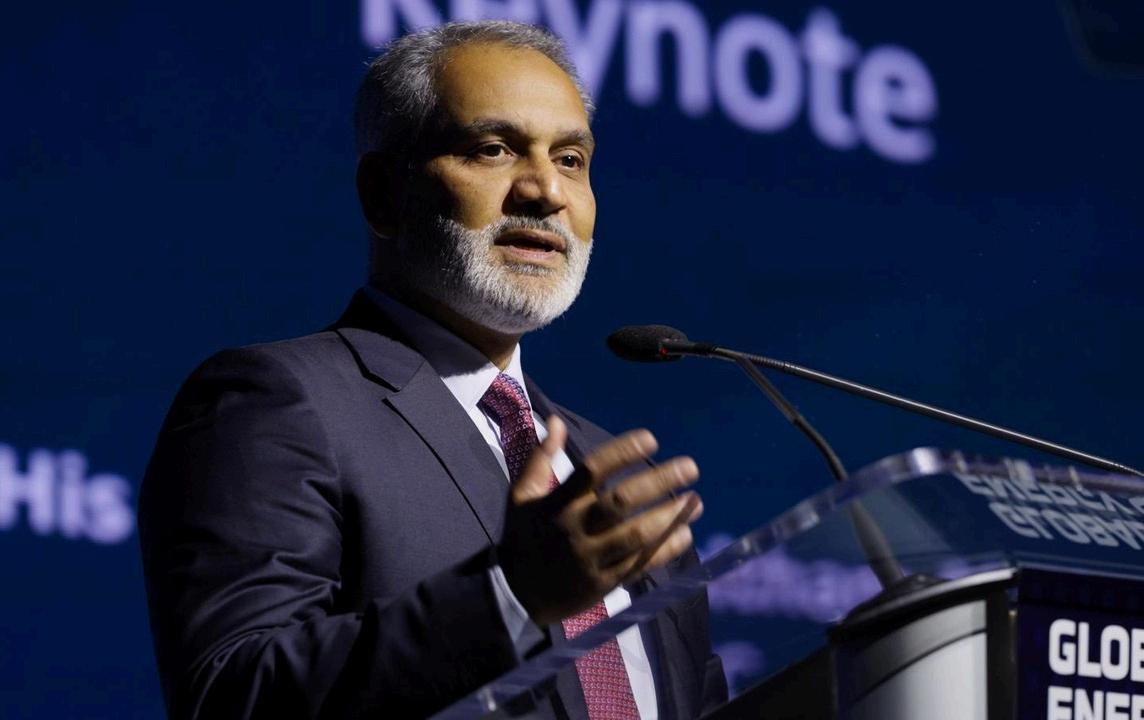
The 2025 edition featured a keynote speech given by HE Haitham Al Ghais, OPEC Secretary General (SG), who delivered a strongly worded message announcing that, “there is "no peak in oil demand on the horizon.” In fact, stated the SG, “primary global energy demand is expected to rise by 24% between now and 2050, driven by population growth, urbanization, and economic expansion. This will require an estimated $17.4 trillion in investment in the oil sector during that period ” Al Ghais concluded his address by praising those involved in the oil and gas industry, and urging them to be proud of their efforts for being innovative and for helping to raise the global standard of living.
HE Haitham Al Ghais, OPEC Secretary General, at the 2025 Calgary Energy Show. Credit: OPEC
For the dmg’s Energy Show, this past edition might be considered somewhat of a high point, following more than ten years of uncertainty for the oil and gas sector Business Edge’s Senior Editor Ernest Granson spoke with dmg event’s Senior Vice President Nick Samain, about show’s journey through past decade

he Calgary Global Energy Show (formerly the Calgary Global Petroleum Show) is a story Continued on next page
Nick Samain, Senior Vice President, dmg events: “We're really quite excited about that cross pollination of ideas, of diversity.” Credit: dmg events
BE: Nick, the Calgary Global Energy Show has gone through the peaks and valleys right along with the energy industry over the decades, and you, having come on board with dmg events in 2014 must have gotten a taste of not just the peaks, but also those valleys, for example, as the 2014 oil and gas downturn created a dramatic effect on the industry, and with the pandemic era as well, What were the experiences like for you and all the parties involved with the energy show during those stressful times?
NS: The 2014 show was a record breaker for us, both in size and number of participants, and the sector here was just hopping. I think, in retrospect, it felt as though this can't end, and we're just going to see unbridled growth. Of course, that's not what happened There was a big downturn, and let me put it this way, it’s certainly one way to learn the sector from top to bottom. During that year and the subsequent difficult years of operating Canada's largest energy event there were plenty of challenges, but we learned a tremendous amount, which has really helped us to cement what we felt an all-new event should be about in these more current times
BE: The name of the energy show changed from the Global Petroleum Show to the Global Energy show back in 2020, That seemed to be a fundamental change What was the discussion like when that rebranding was put forward? What were the reactions from those long-time energy show partners? And also, what does it tell us about the changes in what we used to call the oil and gas industry?
NS: Yes, there are several aspects to that. One was the obvious one which you pointed out, which was to change the brand to the word “energy” because in the subsequent years since that downturn there was a tremendous amount of growth in areas like renewables, clean energy, new energy, but also that integration of different types of energy along with supporting oil and gas. We had all of those things at play It’s also important to keep in mind, that much of the investment coming into sustainable energy was coming from and continues to come from the oil and gas sector We saw that all of that converging and were one of the first big events to really broaden out our view. In this space, there’s been a tendency for an “us versus them” or “them versus us”, but we’re really at that point now where we realize that no single source of energy can meet the world's needs, and that's what the show is really striving to represent
BE: The 2025 show included several big issues that form the Executive Conference program part of the show Here are the titles of three of those discussions: 1.) Is Canada's energy story at a crossroads, or the inflection point? 2.) US - Canada relations, North America's energy future, and 3 ) How can Canada create its own national identity in the energy sector. They're obviously all closely related. But who develops these themes or focal points for the energy show, and how did you arrive at these particular topics to tackle?
NS: Shortly after the downturn we started to rebuild the show One of the first things we did was to reach out to build an executive committee. It was important that this would be a committee with a broad base of experience, that it would be diverse and that its members would be both domestic and international. It really comes from challenging how we operate this event from a day-after approach When we had our first committee meeting for the 2025 event almost a year ago in July we knew there was going to be a US election and we knew there was going to be a Canadian election coming up but there were certainly
plenty of things that we couldn’t predict such as what we're currently seeing in the news, whether it’s tariffs or other world events. We knew it was going to be a time of change But it's also a tremendous opportunity to look ahead to address many of the challenges for the domestic sector. And those challenges could be building more infrastructure such as LNG or transporting more energy to tide water or bringing the energy from where it's located in Alberta to consumers in different parts of Canada in a more cost effective and reliable manner or diversifying Canada's customer base to more countries that are looking for clean, affordable and reliable energy.
Those were the macro issues that the committee considered as the members began to put this year’s programs in place. We did have some of those issues taking place already at that time but as it stands now, because of two big events with the new U S administration and its actions, we’re now passing though more unusual times, unprojected times for us. So, yes it's been an unusual year, but also an exciting year and we've really been seeing the results of that come in now with a growth of the trade show, because we do believe there is a real sense that the sector's getting together and planning for what that infrastructure could look like Whether you're a business, an investor or a policy maker, it’s important to be around for that largest gathering of the energy sector
Inthisspace,there’sbeenatendencyfor an“usversusthem”or“themversusus”, butwe’rereallyatthatpointnowwherewe realizethatnosinglesourceofenergycan meettheworld'sneeds,andthat'swhatthe showisreallystrivingtorepresent
BE: You have brought in a new conference component as well It's called Energy Influencers The three themes you selected were 1.) The next frontier in oil and gas, 2.) New energy, and 3.) AI and digitalization. It seems you have had to significantly broaden the types of technology in the business areas as you just previously mentioned. Are we operating in a new age of energy production, where sectors can't be distinctly or cleanly separated?
NS: I think we are to a great extent, Ernest. In particular, when it comes to AI It's tough to find a conference that's not talking about AI and digital in general, and I think there's a good reason for that. It's multifaceted in the energy sector because AI can optimize and do all kinds of amazing things from an energy technology standpoint
story Continued on next page page 21
BE: What was the reaction from those people who are now participants in this digital technology component that you've included? Were they skeptical? Were they excited? Was this part of the show that really spoke to them?
NS: Yes, it really spoke to them because digitization in oil and gas and energy has actually been around a long time. In fact, that's where so many of new advancements that are industry transferable between the energy sector and, let's say, the automotive or aerospace or AgTech originate. There's a tremendous widespread community that has already participated at the Global Energy Show but there really hasn't been a home gathering to focus in on what energy and digitalization and AI means. For instance, what are the investment pathways? What are the educational and human resource needs that are going to be upcoming in the next five years, because there are some very competitive markets right now going on to see if Canada can be a global leader in that sphere
There'satremendous widespreadcommunitythat hasalreadyparticipatedat theGlobalEnergyShowbut therereallyhasn'tbeena homegatheringtofocusin onwhatenergyand digitalizationandAImeans.
BE: Finally, Nick, what do you see as far as future trends or directions into which the energy industry is moving that trade show/conferences/gatherings you have to consider for future events?
NS: At dmg, we're fortunate to operate some of the world's largest energy events, including the largest in the world, ADIPEC (Abu Dhabi International Petroleum Exhibition and Conference) which happens in Abu Dhabi every November, Gastech (September 2025 in Milan, Italy), India Energy Week (January 2026 in Goa, India), and others.
The trend that we are seeing and where we're finding success is that the big events are getting bigger. People have less time. There are plenty of ways to connect digitally, and we have our own energy connections, portal and otherwise digitally, but getting together, face to face is becoming more important. But delegates are also becoming more particular to which conference that they want to commit. We're seeing that in their budgets, whether they decide to go to Calgary in June, or Las Vegas or New York or Milan They need to be able to pick and choose and so many delegates are really closely reviewing potential events. From a trend standpoint, they want to make sure they are receiving premium value day in and day out They don't necessarily want to spend all day in a conference room absorbing tons of information. They also believe in the value of networking Who's going to be there, who am I going to bump into, is so much more important. We tripled the amount of networking possibilities this year in the Global Energy Show in response to that
To encourage that networking, especially for our younger energy industry participants, we’ve brought in activities such as the big centre court in the exhibit hall where you shoot basketballs. There’s a 24-hour latte lounge open. There are places where you can plug in and get some work done There are three session theatres where the content is being recorded so you can hang out any one of the theatres and not miss anything. You can network with fellow energy influencers through the app, set up meetings off site. It’s really taking the traditional conference model and turning it on its end.
Probably what I'm most excited about is that you can take our newly created conferences like the Executive Conference, which discusses some of the heavy issues of the day by significant speakers such as the CEO of major corporations and then the Energy Influencers, with its diverse mix of participants, put them together at the end of the day networking and see what happens We're quite excited about that cross pollination of ideas, of diversity. That's what energy is all about, and where those breakthroughs are rooted
Those are some of the trends that we're seeing and that is what we led into with our investments in this year's edition
BE: Nick, thanks so much for taking us inside one of the major global energy showcases, the Calgary Global Energy show, and describing how its many elements are created.
O’Leary Ventures says that has been the case for the last 10 years.
by ernest granson

The business of developing, building and operating a data center, whether it’s a moderate sized facility or on the hyperscale level is a high stakes activity. In order to execute their project, developers will have either invested from their own finances or attracted financing from investors. In both cases, the location of the project, whether on a global or regional level, plays a crucial role in the decision the investors make.
In a recent media interview, Kevin O’Leary, chairman of O’Leary Ventures, the Miami-based company which is in the midst of planning a major data centre in the Municipal District of Greenview near the Northern Alberta city of Grande Prairie, related his experience in proposing this project to European sovereign wealth funds. O’Leary described being initially shot down by those potential investors because of what he said is the Canadian federal government’s poor reputation for approving large infrastructure projects.
In that same interview, O’Leary stated that the business environment in Alberta is much more conducive, which O’Leary says is the main reason why his corporation has decided to go ahead with its ambitious data centre project in the province.
O’Leary Ventures CEO and Data Centre project manager Paul Palandjian elaborates on this view: “As an American with a Canadian family, I try to stay out of political commentary, but will say this, in the last ten years, the Government of Canada has been highly punitive for development filled with regulatory constraints and has impeded the institutional markets from investing in Canada. As a general statement, issues such as heavy carbon taxation and what, we in the U.S., call the Green New Deal, are
frankly, anathema to the need for power generation and national security for both Canada and the U.S.”
These are real issues that have left Canada largely behind the world stage when it is sitting on a tremendous amount of natural resources that could help in solving the global energy problem. You can have all the natural gas in the world, all the hydro and all the nuclear, but if you make difficult for people to invest, you’re going to be highly restricted in terms of what you can accomplish.
“And right now, the Canadian grid is in total, only 130 gigawattsthe province of Alberta is roughly 13 or 15 gigawatts - and those numbers need to double in the next four to eight years to be able to compete on a global stage. In my mind, the utilities, which are highly regulated, are not going to be the solution to this problem. It's got to be the private sector building power behind-the-fence that doesn't trigger environmental overreach by the Fed.”
“What you have in the province of Alberta is a pro business, relatively frictionless business environment. The private sector is well capitalized, and the province has most of the natural resources of the country. It’s almost an island unto itself and I think it's a unique opportunity as compared to the rest of Canada. That's why, in our talks with sovereign wealth there is an interest and there is an attraction.”
“It’s not just sovereign wealth. It's also Canada's own pension funds, which have been very slow in investing in its own country. Ultimately, whoever's in leadership in Canada is going to have to open the doors to foreign investment. In order to do that, they're going to have to make it attractive from a regulatory perspective. So that's the bet we're making here. We’re very optimistic that great things are to come.”
The world of business is noisy. Ideas, products, services, companies, ads, and promotions. We encounter thousands of messages every day. How will you be heard amidst the noise? and if your great ideas are lost in the noise, how will you meet your business goals?
Colleen Stewart can help you make the perfect pitch..
Since 2012, Perfect Pitch has been helping leaders, presenters, sales people, and marketers learn the art of storytelling to deliver communications that are memorable, repeatable, and actionable Workshop participants learn to:
Organize ideas logically, clearly, and in a way that resonates with the audience
Use story devices to make abstract ideas concrete, and complex ideas easy to grasp
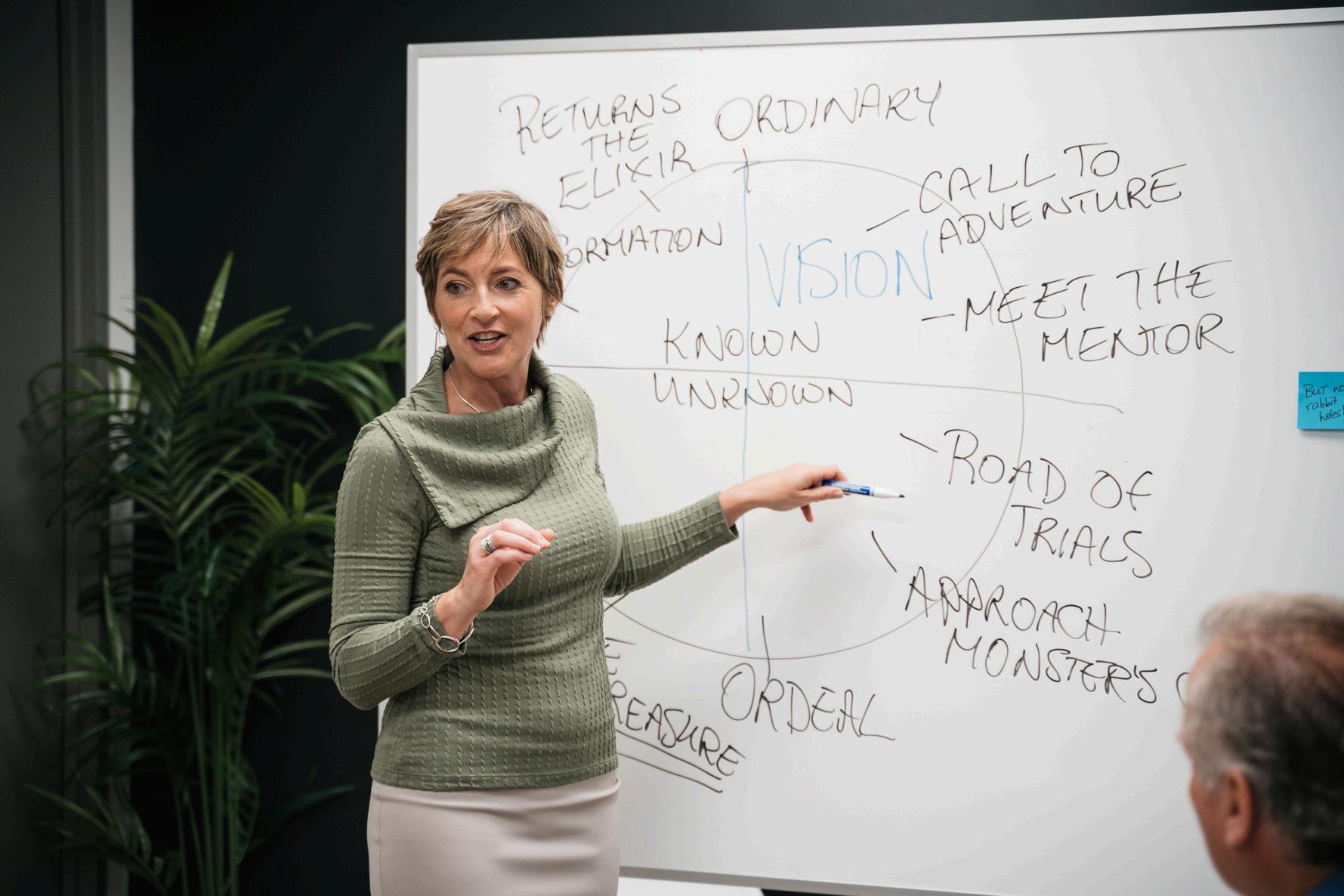
Design visuals that help the audience to understand and remember
Fortune 500 companies including Bayer, Danone, Enbridge, Shell, Abbott Labs, and Avon have worked with Colleen to up their storytelling game.
"TheprocessPerfectPitchdeliverswillchange thewaywepresentforever.Iwouldhighly recommendPerfectPitchtoanybusiness lookingtotellitsstoriesincaptivatingways."
–SusanGroenveld,WSco-founder
If you are looking for professional development that will have an immediate impact on your work, look no further
Perfect Pitch workshops are challenging, engaging, and effective. Transform your communications by learning the art of data and business storytelling.
In-house workshops are designed to meet the unique needs of your team. Contact Perfect Pitch today to explore how mastering the art of storytelling can help you suceed.
colleen@perfectpitchpros.com perfectpitchpros.com

senior editor | Business Edge Media

story begins on next page
Many years ago, the venerated comedy SCTV aired a parody TV promo which featured
the beloved John Candy and future Schitt’s Creek star, Eugene Levy. Candy and Levy (the two Gords in the video) wear excruciatingly painful orange blazers as CBC commentators for the imagined Monday Night Curling. In the segment, curling instructor Howie McMeeker, dressed in outlandish plaid pants and a Tam o’ Shanter, knocks over a young curling student in his zeal to illustrate how to correctly throw a rock from the hack (indented footgrip in the ice). McMeeker, for the uninitiated, was a play on the name Howie Meeker, who was a former NHL star, hockey broadcaster and educator. In the skit, curlers sweep a rock frantically down the rink with now old-school corn brooms while the two commentors furiously shout out the action. The SCTV writers were having a lot of fun with the idea that the sport of curling could be considered on the same excitement level as that great American tradition – Monday Night Football.

Paul Flaherty, John Candy and Eugene Levy shout out the action on SCTV’s Monday Night Curling
Back to the present and the sports venture company, The Curling Group (TCG) is banking that curling can generate that NFL football level of excitement along with an accompanying financial windfall. In April of 2024, TCG acquired ownership of the Grand Slam of Curling competition from Sportsnet and secured just under US$7 million in seed funding to “take the sport of curling to new heights through strategic investments, innovation, and content production” according to a company press release. The round was led by Toronto-based venture capital firm Relay Ventures
Also, according a TCG press release: “The rise in curling’s popularity is reflected in the interest of pro athletes and celebrities, including former NFL star Jared Allen and current NFL stars George Kittle and TJ Hockenson, who are all a part of The Curling Group’s initial group of investors. Two-time Olympic gold medal curler John Morris and Olympic gold medal curler Jennifer Jones are also serving as strategic advisors.” Behind this major effort to put the sport of curling on the world map and to put meaningful money into the bank accounts of curling athletes is Nic Sulsky, former chief commercial and revenue officer of Ontario’s regulated online bookmaker PointsBet Canada and former president of fantasy sports company Monkey Knife Fight
Prior to his online career, Sulsky developed his skills as a TV/video personality, producer and content provider. He was a regular contributor and guest on TSN’s former talk show Off the Record with Michael Landsberg.
An athlete, but not what you call a curling aficionado (although he has curled a few times, he says), Sulsky’s passion for the sport was ignited when PointsBet became a sponsor of major curling events.
“I was taken aback by how different it was than I thought it was going to be,” Sulsky says. “It’s always been interesting to me when you get caught up in stereotypes and then experience something with your own eyes which breaks down that stereotype. Because if I experienced this, I’ll bet there many others that could probably have that similar experience.”
But it wasn’t only what he experienced as a spectator which impressed Sulsky, it was the personalities of the curlers. “When I got to meet the curlers, I found they were such amazing people,” he says, “and I also realized what incredible athletes they are. I saw an opportunity around rebranding and reinvigorating a sport that has an incredible amount of history, including being in the Olympics, that had started to grow around the world. That is what drew me to it to the sport.”
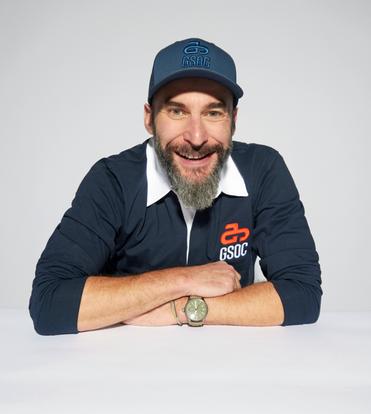
It's one thing to believe in and commit to an opportunity – it’s another to make that opportunity pay off. In the case of the sport of curling, trying to attract spectators and their ticket revenue is an important goal, but sponsorship revenue is crucial. Sulsky says this is fundamental to just about all sports. “The foundation of sports business is sponsorship revenue,” he says. “In order to trigger sponsorship revenue, you need to have eyeballs and engagement. In order to get that, you need to have distribution partners, whether it’s on linear, digital or streaming platforms. The great thing about the Grand Slam of Curling (GSOC), which is the first asset we acquired, is that Sportsnet has done a great job over 12 years building up the property. Sportsnet is maintaining the linear broadcast in Canada, so I knew in Canada, at least, we would have a solid foundation by way of distribution that would allow us to capitalize on sponsorship within this country.”
story Continued on page 30
According to The Curling Group’s numbers, it grew its Grand Slam TV audience on Sportsnet by 16% in Canada over its first year of operation of 2023-24 with a national reach of 5.3 million. It launched its international streaming offering in 202425 producing streams for each game, garnering a global reach of 6.5 million throughout the season. Important to note is that more than half of its viewers are between the ages of 25–54, a sign that viewership isn’t aging out. In-venue attendance is also up by 11% year over year with sold out weekends for the last six GSOC events of 2023-24.
While Sulsky is credited with steering TCG towards these positive numbers as CEO, he’s quick to point out the significant role played by his co-founder and head of revenue, Mike Cotton. “Mike has built some really successful businesses and understands how to connect the digital ecosystem into the real world,” Sulsky says. “He is an analytics expert, which is crucial when we think about the intricacies of deciding which are the best locations for hosting the events and the best business models within each of those local destinations. We also brought on a third member for our C suite, our CFO, Mike Cooke, who has an incredible background. In addition to raising hundreds of millions of dollars, he has run and served as CFO for a number of publicly traded companies. If you ask anybody, they’ll tell you the CFO is the most important person in any company and we have one of the best rock star CFOs in the country. I think we all complement each other extraordinarily.”
Encouraged by these positive numbers, in the spring of 2025, TCG made its major announcement of the formation of Rock League, the first ever truly professional world curling league, consisting of six initial franchise teams with two teams based in Canada, two in Europe and one team each in Asia-Pacific and the United States. What’s different from previous international competitions is that players from different nationalities in Europe and Asian Pacific can – and most likely will – be on the same team.
In Canada, curling is a well-established sport, both at the grassroots and competitive level. There is sufficient viewership and interest to make it financially viable for coverage by conventional media such as TSN and Sportsnet. But what’s the financial attraction for a successful venture capital firm such as Relay Ventures, especially when the sport is up against the major North American leagues and also against the multitude of professional world sports?
Relay Ventures co-founder and partner, John Albright, admits that when Nic Sulsky approached the company with his proposal for The Curling Group, pretty well everyone on the team responded with the attitude that they were aware of curling but would never watch it and weren’t interested in it.
“We’re watching the NFL, NHL, NBA or MLB. If you’re in North America, that’s what you watch,” says Albright. “But when Nic came to us and laid out the actual audience numbers in the various global geographical locations like Europe and Japan and Asia Pacifica, we had to take a closer look and say to ourselves, ‘Just because we don’t watch it, it doesn’t mean that it isn’t valuable content.’
John Albright, Co-founder, Relay Ventures
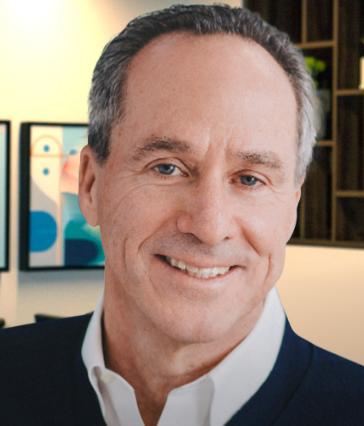
Our thoughts were, curling fans will watch a match for two hours. What if we got the sports book companies to post not only the odds for winning a curling match but who’s going to make the next shot along with other types of bets. What if we allow the fans to get engaged rather than just passively watch their favorite team from Japan or Scotland or Denmark. Let them bet $10 or $5 or $100. Nic opened up our eyes to these possibilities.”
There are other factors which increase the financial viability of niche sports. Viewership can be substantially broadened by implementing a streaming component at 20% of linear production costs but with the same quality, opening the door for sponsorship and inventory revenue from countries that may not have had access through linear media. That same higher viewership could result in increased betting revenue, a major reason why many niche sports have become visible to a larger part of the viewing population. For those emerging sports, Albright estimates that betting could generate a significant revenue base with media and sponsors comprising roughly 50% and the remaining revenue derived from specific content on a variety of platforms. Not only that, but to produce that specific type of content wouldn’t necessarily require a large staff, Albright says. AI agents can be used to scrape and produce the content faster and more efficiently at a high level of quality.
There are also significant cost advantages when it comes to hosting curling events; a separate venue is not required - the competition can take place in any ice rink. The matches are quite confined in terms of space, so matches can be captured on video using AI cameras, whether stationary or hanging from a ceiling where the camera can zoom in and follow movement.
Those are the financial upsides for leagues and investors jumping into the chase. What about the curlers? What does it mean when they become part of a “professional” league? When you listen to a world level curler like John Morris lay out the realities of playing in the top national and international competitions, you realize that it requires not only passion for the game but also sheer determination to make the finances work. Morris is part of The Curling Group and serves as strategic advisor along with curling great Jennifer Jones. page 27
story Continued on next page
As Morris explains, playing for a top competitive team also includes managing that team: “Under the current system, most teams don’t have a manager. They’re on the hook to find all their own sponsorship, which is challenging. And the prize money really hasn’t been a lot, plus you have to pay the entry fee for events. Then, let’s say you’re in an event with 24 teams. You would have to make the semifinals or the top four to make money. The majority of teams are spending more than they’re making. Unless you're part of a small percentage of curlers and teams around the world, you're probably not making money unless you have someone on your team who is an absolute guru at finding sponsorship, which is few and far between.”
It would come as no surprise then to curling fans, that these curlers undertake these challenges because they love to curl and to a large extent, hope to represent their country at top competitions like the World Championships and the Olympics. But as Morris says, this situation has deterred a lot of talent from making its way to the top ranks. “The sad part is, we get some really great young curlers that come up through the university ranks. They play great in the juniors, but when they graduate from university, they find themselves in real life with a full-time job. That’s when playing at a high level becomes a real challenge. That's where we lose a lot of these awesome curlers around the world.”
Two-time Olympic gold medal curler and TCG strategic advisor, John Morris. Credit: TCG

So, what can these world class curlers expect as far as financial remuneration for their dedication? After all, they create the fundamental product – the matches, the tournaments and all the emotions which drive the fan experience. “Our first job with the curlers,” says John Albright, “is to give them the opportunity to be solely dedicated to their sport and perform at their highest. In order to do that, you have to pay them at least equal to their side hustle, i.e., their curling competitions, and their fulltime job. Let’s say they made $50,000 on prize money and a bit of sponsorship on their sweaters and other possible revenue. And, their fulltime job paid them $75,000 for total income of $125,000.
If they can start at $125,000 as a fulltime athlete with the potential for additional prize money, then an athlete is already ahead of the previous competition system right out of the gate.” Albright goes on to explain that there are additional income earning possibilities. “For any athletes, whether it’s a curler or a pickleball player, there’s a lot of content in their lives that maybe hasn’t been available because there’s not someone filming you in the background at all times. Maybe you have a friend using their iPhone and posting it on TikTok or Instagram or YouTube or whichever platform. But if that athlete has access to a dedicated team to provide all their social media on the various platforms, then their fan base can go from 50,000 to 100,000 to 300,000 and more. Suddenly they have their own separate brand with their name on it and it’s generating revenue outside of their pro league. So, those are ancillary benefits for these athletes.”
The social platforms are certainly a major route Nic Sulsky sees for creating content and exposure for GSOC, however he confirms TCG has partnered with a production company and is in the early stages of producing a curling docu-series following in the paths of series such F1’s Drive to Survive, basketball’s The Last Dance and others. A Hollywood film crew chose the AMJ Players’ Championship in Toronto in April of 2025 to kickoff the production filming action and interviews featuring some of the greatest curlers. “They captured some incredible content,” Nic says, “But I would say as it relates to content, the younger sports fan watches sports different than we did when we were growing up. Right now, it's all about short form, snackable content that a young audience can watch on their phones whenever they want. So while the docu-series content is definitely something we're exploring and we have high hopes for it, our focus right now is on capturing as much content as we can from a short form perspective that we can put across Instagram, Tiktok, YouTube, AX, Snapchat, Twitch and and KIK because at the end of the day, the curling community needs to engage and express how awesome the sport is to the younger sports fan. We have extensive sports highlights along with a great array of characters, both male and female, who aren't afraid to communicate, which is crucial because curling is not just a sport. It’s a lifestyle, a community. And that makes for so much awesome content.”
The zeal which Nic Sulsky has for the sport of curling and the curlers, along with his understanding of content and its delivery, convinced the veteran venture capital founders at Relay Ventures that both the sport and Sulsky were a good bet (pardon the pun) for success. John Albright, who is one of the founders, says that Relay Ventures has proven to be very effective at identifying people with prior successes and surrounding them with the expertise they may not have had to advise them in their startups.
“What Nic brought to the table,” Albright says, “is this crazy internal passion for curlers around the world that are, essentially, professional young, fit athletes but doing it as a side hustle. He has been able to convince both the financiers, such as ourselves, that this league can be profitable and the athletes who are the content providers. He clearly understands the value of content, the value of the consumer, which is the fan. He understands that he has to deliver value to get value, and people are willing to pay for it if you give them content that they enjoy. He’s sort of like his own personal marketplace.”
Business Edge Media's unique Leading Edge Achievement Program (LEAP) gives you a big jump on the competition through a mix of marketing services including:
Regular strategy discussions and ongoing hotline for instant feedback on marketing and other business-growth initiatives
Consistent social media posting with original content that educates a huge audience and demonstrates thought leadership
Sponsored content (advertising/advertorial) in Business Edge News Magazine, read by thousands of business decision makers.

Being the featured guest on our popular "On the Edge with Rob Driscoll" podcast
Ongoing coverage of newsworthy accomplishments
Participation in our annual LEAP into Paradise Business Growth (and super fun) Summit in Hawaii

ernest granson senior editor | Business Edge Media
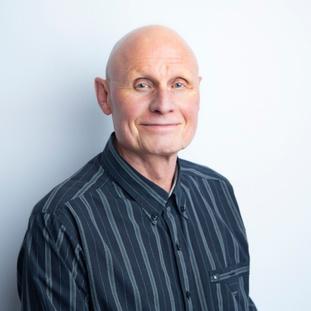
The world is awash in sports and not just the big five – Premier League, NFL, NHL, NBA, MLB, and other leagues with substantial multi-
story Continued on next page platform viewership We also have pickleball, bowling, surfing, Sail GP or sport fishing And what about, sport climbing, footvolley, Muay Thai, World Chase Tag, flag football, chess, judo, ball hockey, field hockey or eSports? All of these sports and activities, plus many more, have their fans and followers.
For those fans, in past years, following their favorite sport was limited. Today’s technology, streaming in particular, has made it possible for video content to be disseminated wherever and whenever fans want to see it or hear about it. It’s no wonder that sports fans have migrated en masse to streaming as their primary source for live sports
According to Hub Entertainment Research, survey results from January of 2025, show that 69% of U.S. sports fans use Streaming Video On Demand (SVOD) to watch live games compared to 66% who watch games on broadcast networks and 63% on cable networks. That survey also confirmed that more younger sports fans choose this method of watching (ages 13-34: 48%, age 35+: 29%).
Venture Capital firm Relay Ventures (RV), headquartered in Toronto and with offices in Calgary and San Francisco, has long recognized this trend, drawing several sports oriented startups into its portfolio, including The Curling Group as profiled in this issue of Business Edge Magazine, and other companies including Home Team Network, Alt Sports Data Inc. and PressBox.
As company co-founder John Albright explains, those four companies and others fit into its sports, media, entertainment, gaming and gambling vertical on which he and two partners focus. The company has done about 20 deals in this space over the last 25 years and has been unusually successful, he says, compared to the normal VC odds of success Building on its sports related portfolio, RV is launching a new platform, named Player 12, in which to invest and purchase ecosystems companies around new and emerging sports
“These sports require specific services and solutions to generate revenue if they are to become viable,” Albright says. “It could be in streaming technology, ticketing, betting, venue management, fan engagement, content generation, merchandise etc We call this the flywheel or the doughnut that surrounds the emerging leagues and the teams. To carry this further, whenever a new league launches, management positions have to be filled to operate the company Somebody in the organization is responsible for revenue, i.e., the chief revenue officer. Where is that revenue going to come from? From sponsors, right? Someone has to take the lead to bring sponsors on board. Somebody has to integrate data from the league and teams to the relevant gambling sites to allow their fans to bet Somebody has to build the sales force.”
Hand-in-hand with these responsibilities, founders of these startups must evaluate numerous essential service companies, Albright continues “There’s the streaming company, the betting company, the venue company, the merchandise company and the content company. All of these service companies are knocking on the door of the startup with their own service product to offer. But what if they knock on the door and have eight products to sell instead, or maybe five if the team owners have already made some connections? With Player 12 we will be able to offer a ticket solution, a merchandise solution, a streaming solution, a betting solution and more. Player 12 will provide an end-to-end solution to the emerging leagues and teams that accelerates their revenue capabilities and captures fandom.”
“If you take into consideration the cost of some of the teams in these emerging sports, approximately the US$5 – 10 million range, how does the owner get a payback on that investment. How long does it take to become profitable? We want to solve that problem and we can do that by creating an end-to-end ecosystem This is about investing and integrating the best of breed solutions and connecting them through SG & A (Selling, General, and Administrative expenses) as well as tech.”
“The Player 12 platform enables revenue and cost synergies amongst the emerging solution providers. That means one sales force instead of 8 to 10 selling multiple solutions to the same customers, one back office instead of 8 to 10, one tech platform, etc. We want to be a partner with the founders, and we want the founders to be partners with each other This is a win-win situation ”
To be clear, there are specific requirements to be met by these leagues and teams, such as the professional triathlete league, snowboarding, surfing, rugby, badminton, professional female sports leagues and others Number one on the requirement list is the global audience. The cutoff, Albright says, would be a global audience of 100 million globally. “Any smaller audience might be too difficult today We know that at 100 million, the math works. The second condition is that the league includes the top 10 professionals in that sport. This is a must Generating viewership and revenue depends on content and at the end of the day, that means signing up the best players in the world.”
The good news: it costs as little as $1.92 USD per week.

BECOME A MEMBER
to receive full access to all of our content, which will make you the smartest person in the room. Every day.