
Acknowledging Country
We acknowledge the Bundjalung, Arakwal, Yaegl, Githabul, Gumbayngirr, Dunghutti and Birpai peoples, the traditional custodians of the lands on which the Diocese of Grafton is based. We pay tribute and respect to the elders of these nations and peoples, both past, present and emerging, acknowledge their continuing connection to the land and waters, and thank them for their protection of the mountains, hinterland, waters and coastline since time immemorial.
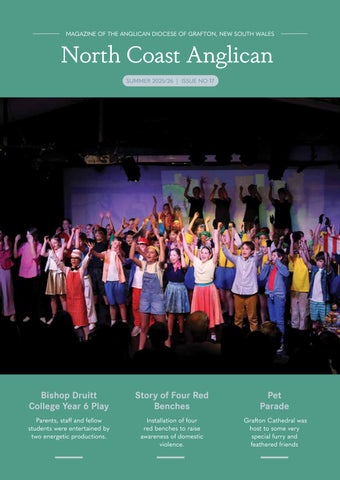
Front Page Image: Bishop Druitt College Year 6 students performance.
North Coast Anglican
TRANSFORMING LIVES THROUGH JESUS CHRIST
EDITORIAL TEAM
The Rev'd Vivian Hoskins, Jan Fryer, Kaytrina Jessup, The Ven. Tiffany Sparks, Anne Weekley
EDITOR DETAILS
PO Box 4 Grafton NSW 2460 nca@graftondiocese.org.au
DESIGNER
Yoohoo McPhee - Grafton yoohoomcphee.com.au
SUBSCRIPTIONS
Australia $16.00 p.a
Overseas
$28.00 p.a
CIRCULATION
Circulation: 1,000
ADVERTISING
Please contact the Editor for rates and bookings.
CONTRIBUTIONS
Please send articles by email as a Word Doc. attachment. Photographs must be sent as email attachments in JPEG format, with a file size of 500kb or greater. Please contact the Editor to 'pitch' article ideas and to discuss due dates, word limits and image requirements.
ALL CONTENT
The Editor is not responsible for the opinions expressed by any contributors, nor do their views necessarily reflect the policy of this publication or of the Diocese. Acceptance of advertisements does not necessarily mean endorsement of the product or services.
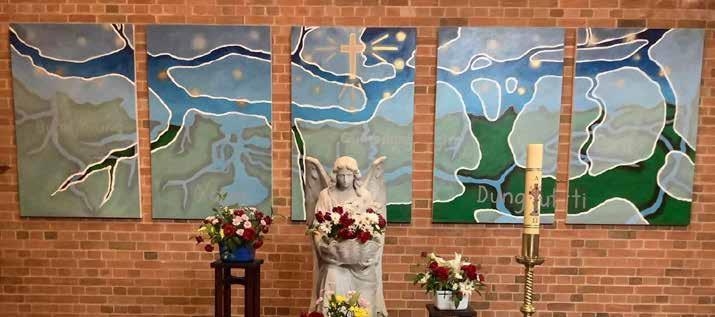
The Baptistry of Grafton Cathedral proudly displays Yaegl artist Frances Belle Parker's painting, which evokes the life-giving capacities of the Clarence River and reminds us that we stand on country that has long been sacred to the Indigenous peoples of this ancient land. In the spirit of Jacaranda Festival, the Cathedral community put together some beautiful flower arrangements for the locals and tourists to enjoy while exploring the city during this time of celebration.
Reflections from the Bishop
It was recently announced that in March next year the current Bishop of London, Bishop Sarah Mullally, will become the 106th Archbishop of Canterbury. Our Anglican formularies state that the Archbishop of Canterbury is one of the “instruments of communion” of the Anglican Church. The Archbishop of Canterbury is the first among equals of the Bishops, the spiritual leader of the Communion, and the focus of its unity. The visit to Grafton Diocese of Archbishop Justin Welby in 2022, then Archbishop of Canterbury, gave us some insight into this role and its importance in our global Communion.
Headlines from within and beyond the church have largely focused on Bishop Sarah being the first woman to fill this role. Certainly this is something to celebrate, but regardless of her gender she has outstanding leadership gifts. She has been Bishop of London for over seven years. This is a demanding role in itself. In a large and diverse diocese, she has shown gracious engagement with people from a variety of theological backgrounds and traditions, always having a view to promote unity rather than division. Before that she had an outstanding career in nursing, holding the senior role of Chief Nursing Officer for England. I firmly believe that the church will benefit from her steady, gracious approach and her proven ability as a leader.
Some are unhappy about a woman being a leader in the church, let alone Archbishop of Canterbury. Those who take this complementarian view see men as divinely designed for leadership, and women as suited to simply complement the leadership of men. I am grateful that Grafton Diocese has a long history of affirming the God-given gifts of women for leadership roles. Hence, we were the first diocese to have a female Diocesan Registrar (Ailsa Tester from 1964-1979), and the first Australian Diocese to have a woman as Diocesan Bishop (Bishop Sarah Macneil from 2014-2018). We now join with the wider church in congratulating Bishop Mullally and uphold her in our prayers as she prepares for this enormous responsibility as the spiritual leader of the world’s Anglicans.
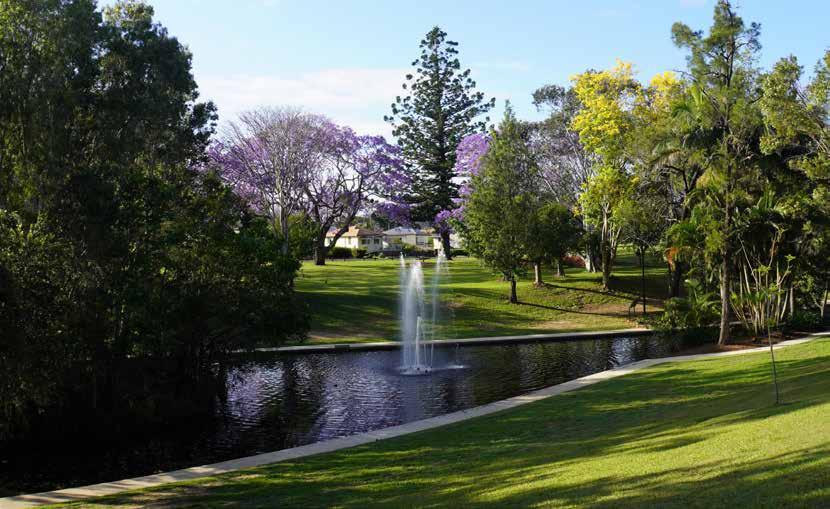
Source: Shutterstock - View of Grafton's See Park on an early Spring morning. New South Wales, Australia
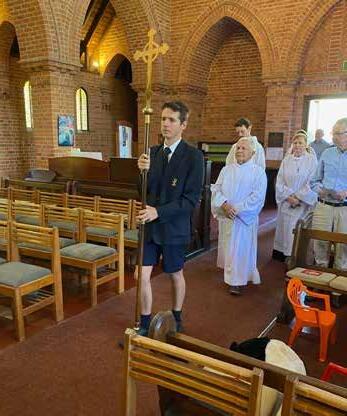
Around the Diocese Around the Dioceses
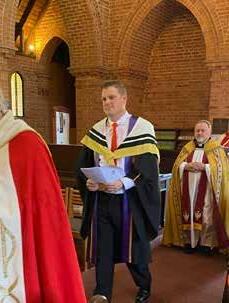
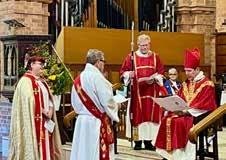
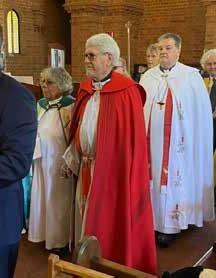
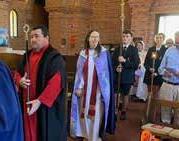
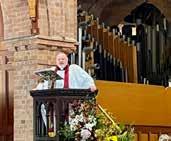
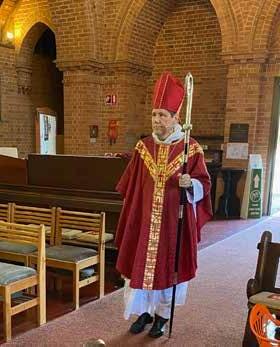
On the 15th of November the Reverend Murray Fysh was ordained to the priesthood by Bishop Murray Harvey in Grafton Cathedral. We were blessed by the Venerable Rod Bower who lead the retreat for Reverend Fysh and preached at the ordination. It was a joyous occasion.
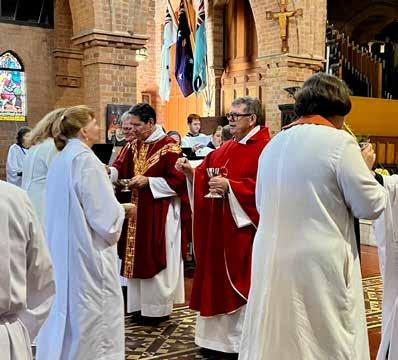
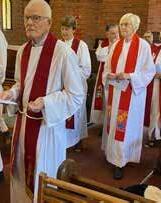
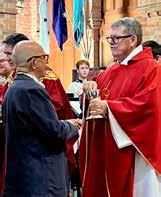
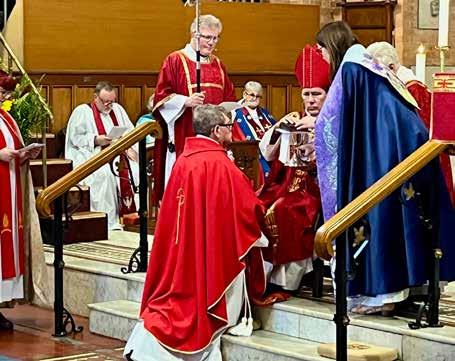
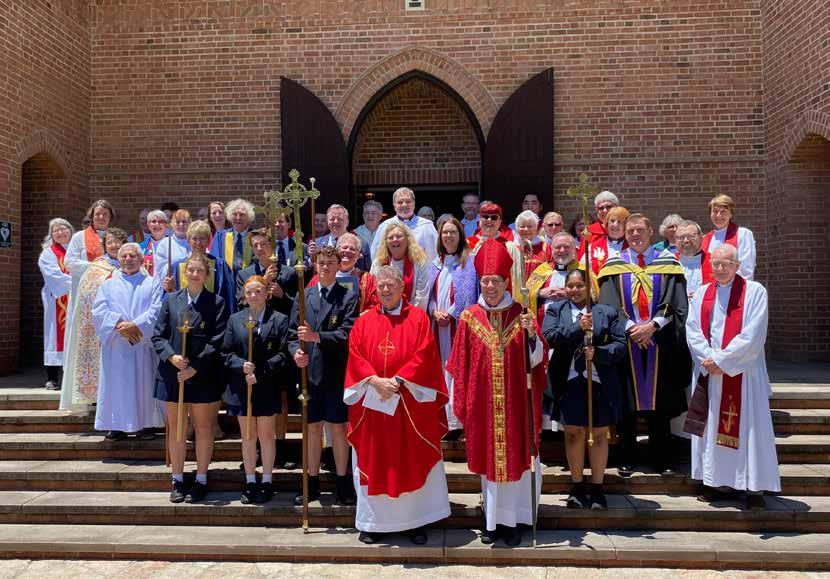
Commissioning of New Rector of Lismore
After an almost 3 year wait, Revd Roxanne Addley was commissioned as the Rector of Lismore on 4th November 2025. Before coming to Lismore, Revd Roxanne was the Vicar of Lara with Little River in the Diocese of Melbourne and also Area Dean of the Corio District which is the area of Geelong. Revd Roxanne was ordained Deacon in 2018 and also in 2018 as a Priest at St Paul’s Cathedral. She has served as a Curate at Christ Church, South Yarra until 2021 when she took up the appointment to Lara and Little River.
Much of Revd Roxanne’s working life has been in HR (Human Resources) positions in commercial, government, university and welfare based organisations. Revd Roxanne also served in the Royal Australian Air Force for 8 years and reached the rank of Flight Lieutenant.
Tuesday evening the 4th November was an exciting one for the Parish as we welcomed Revd Roxanne and her husband Leon together with Bishop Murray Harvey. Revd Brenda Yaeger gave the Acknowledgement to Country
whilst the sermon was preached by The Revd Canon Sally Miller. A large number of Clergy from across the Diocese were present as well as Clergy from other denominations in Lismore. ■
Voices Across the Dioceses
Story of Four Red Benches
SUBMITTED BY ANNE WEEKLEY
Australia is several years into the Council of Australian Governments (COAG) National Plan to End Violence against Women and Children 2022-2032, a 10-year plan aiming to end gender-based violence in one generation. The focus is on prevention, early intervention, response, and recovery and healing.
Our Parish of Nambucca Valley decided that this is something that we wanted to be involved in. We already had a small team of highly committed women who assist in providing basic needs for women escaping Domestic Violence (DV).
This year we have gone further. We hosted Reverend Tracy Lauersen, the National Program Manager for the Families and Culture Commission, introducing the first Sunday in May as DV Sunday. We conducted street stalls to raise money to support our outreach with DV affected persons in the Nambucca Valley. We support and pray
All Saints, Stuarts Point
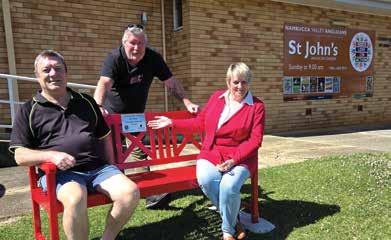
Food Hub and Office workers at St Johns, Nambucca Heads
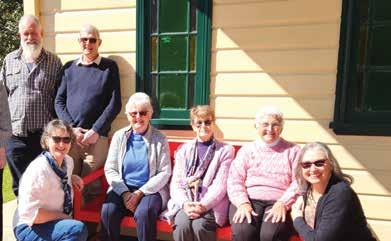
Part of the congregation at St James, Bowraville
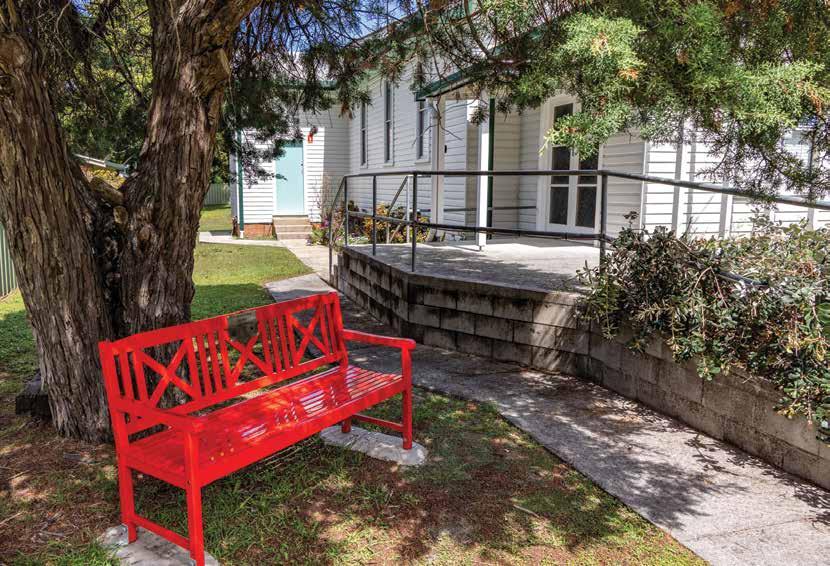
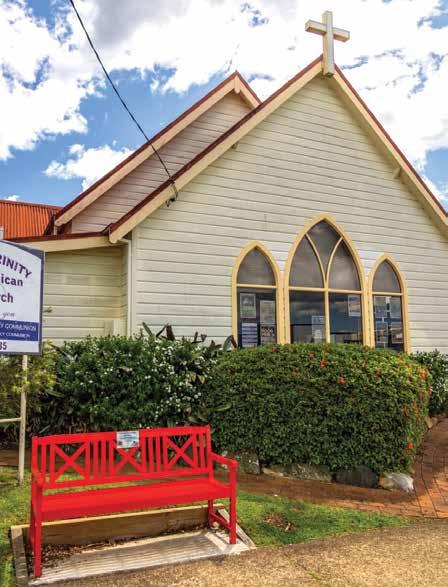
for our Community minister in her contacts with women and we installed a Red Bench at each of our four worship centres: Holy Trinity in Macksville St Johns in Nambucca heads, St James in Bowraville; and All Saints in Stuarts Point.
The Red Benches are fitted with a plaque that reads:
Change the Ending: Let’s Stop Domestic Violence.
The presence of a Red Bench in a public location aims to raise awareness of domestic violence and provide an opportunity for this important issue to remain visible.
The Red Bench project is an initiative of the Red Rose Foundation, which works towards ending domestic violence related deaths in Australia. ■

ABM 175 Anniversary Dinner
NSW Parliament House
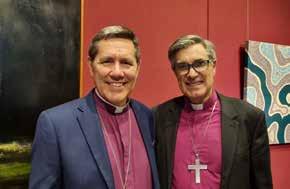
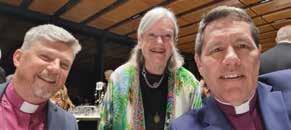
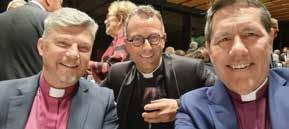
On the 24th of August, Bishop Murray spent time at St Thomas' Anglican Church, Port Macquarie, where he confirmed the faith of Sandra, William, Mei, Lan and Stuart at the 8am service. Bishop Murray also preached at both 8am and 10am services on the sermon series “lifestyle of a spirit led church”, where he taught about the gift of being a shepherd in Christ’s church.
Holy Trinity, Macksville
Praying with the Saints
BY THE REVEREND CANON CAMELLIA FLANAGAN TSSF
Charles Simeon, evangelist. Feast day 12 November. Died 1836.
Reverend Canon
Charles Simeon, son of a wealthy lawyer, was educated at Eton and King’s College Cambridge where he remained for the rest of his life. The church was ‘in the doldrums” and University and the Church of England students and priests at the time were not practicing what they preached and behaved abominably. When Charles was twenty, he had a powerful conversion experience with an overwhelming sense of guilt and gave all his sins to Christ. He went back to Cambridge, prepared for ordination and was made deacon by the bishop of Ely in 1782. This was followed by a period of aloneness with God and the summer of that year found him preaching a series of sermons at St Edward’s Cambridge that were inspiring and prompted the bishop to appoint him to Holy Trinity Church. He was ordained priest the following year and commenced his ministry in earnest with great zeal. However, his sermons upset many people of the well-to-do set who stayed away from church. He continued preaching to artisans and paupers, wrote his own version of the psalms and hymns which matched the set tunes on a barrel organ he purchased, and encouraged the congregation to sing at a time when church singing was almost unheard of. He hoped to teach the poor in church on Sundays, but the church wardens locked the doors, so he started a system of group meetings and preached in poor villages.
His sermons were the result of serious bible study. He raised considerable money from publishing his sermon outlines which he donated to Evangelical societies. He lived at the college under fellowship terms of tenure that precluded marriage. He was Dean of Arts and Dean of Divinity but did not lecture. His mission was criticised for lack of scholarship but was directed towards conversion and fostering vocations to the ministry. He was not popular either in the college or the local town. He was labelled a Calvinist, and mocked for his pedantic ways, but he ignored it all, thought of Simon of Cyrene, and carried the cross.
As the Evangelical movement of the church increased his followers called themselves “Simeonites” or “Sims”. His 900-seat church was packed with supporters, and he became an active member of the Church Missionary Society encouraging clergy to join the mission field. Charles Simeon lived an ascetic life, fasting, praying and reading his Bible. He drank no wine and the Simeonites drank only tea, and he was affectionately known as “the Old Apostle.”
Founder of the Simeon Trust his considerable wealth acquired patronages to appoint clergy of Evangelical churchmanship. When he died in November 1836 more than eight hundred members of the University processed at his funeral. He is buried in King’s College chapel, in a vault simply marked “C.S.1936” Thinking of Simeon’s life can we pray? “Lord, make me a loyal and real disciple, and a trustworthy ambassador of Your love to the world. Help me stay loyal even when it would be easier to quit. Amen.” ■
Threads Laid Bare - Garden Iris and Lilies.
BY THE REVEREND CANON CAMELLIA FLANAGAN TSSF
The Iris is named from the Greek word meaning rainbow because of the wide range of colours seen in this species of flower. We cannot help wondering at the fragile diversity of the handywork of the Creator quietly displaying beauty in the Cathedral Garden. Historical records date as far back to 1479 B.C. – nearly 3,600 years ago. After conquering Syria, King Thutmose III of Egypt brought plants back to Egypt and planted them in his gardens and had its image sculpted on the walls and columns of the Temple of Amon at Karnak. In over 200 acres of the temple structures and grounds, sculptures of Irises and other flowers can still be seen on the temple walls.
Between 327 and 325 B.C. Alexander the Great invaded India spreading Greek culture wherever his armies went. As a result, there are many species of Iris with names corresponding to territories he invaded during the fourth century B.C. Some of these are Iris mesopotamia and I. cashmiriana. Irises found where the Greeks colonized parts of Turkey, are Iris trojana, I. cypriana and I. junonia.
CONTINUED OVERLEAF
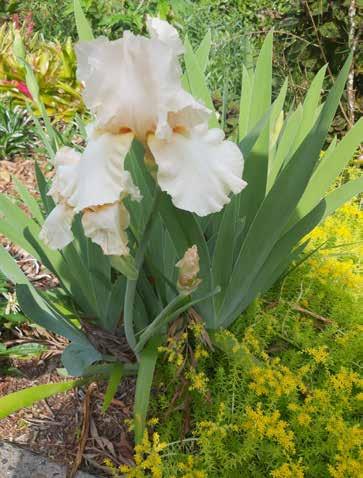
The
Greek goddess of the rainbow, Iris, who was revered as a messenger
between human beings and the gods shares a name with the beautiful delicate
flowers.
Today Irises are found in a wide variety of colours and species, and many hybrids have been developed which are suitable for diverse parts of the garden. Flowers are produced in all colours and combinations to produce magnificent displays in Spring and Summer. Irises all have six petals, three upright and three curving downwards. They can be described as bearded, beardless or with crests. In Luke 12:27 "κρίνον" (krinon) is translated as “Lily” but possibly refers to any known beautiful flower. Referring to symbolism, Irises are associated with the Virgin Mary, with reference to purity owing to their delicate appearance and grief of Christ’s passion, based on the sword-shaped leaves. An Iris may appear instead of the more usual lily in religious art depicting the Virgin Mary. ■
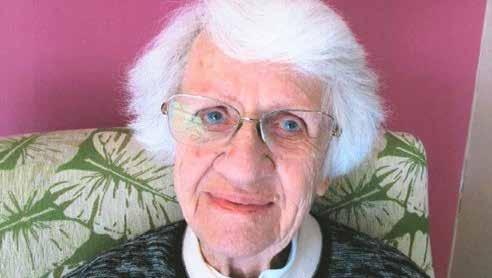
A Life Lived in Faith and Grace – Remembering Muriel Macrae
SUBMITTED BY
DEREK W ALDEN
On 23 June 2025, at the age of 101 years and 8 months, Muriel Isabel Shropshire Macrae (née Savage) was called to her eternal rest. Born in Kempsey in 1923, Muriel was baptised and confirmed at All Saints Church, where her family were regular worshippers. Faith was woven into the fabric of her life from the very beginning.
In 1943 she married Lt Donald George Macrae at All Saints, Kempsey. Together they moved to Grafton in 1949, purchasing Syers Newsagency and raising three children in the fellowship of Christ Church Cathedral. Her husband’s death in 1963, the result of war wounds, left Muriel widowed at a young age. Yet she never faltered. With quiet courage and steadfast faith, she continued to guide her family and live out her calling as a servant of Christ.
In 1970, Muriel made her home in Mosman, Sydney, where she remained active in both church and community life. For many years she contributed with distinction to women’s bowling in New South Wales, serving as President of the Women’s Bowling Umpires Board. Those who knew her speak of a woman who was strong-willed yet fair-minded, determined yet gracious — one who faced life’s trials head on, never allowing hardship to overwhelm her.
The psalmist writes, “The steadfast love of the Lord never ceases; his mercies never come to an end; they are new every morning.” Muriel’s life bears witness to this truth. She lived with resilience, dignity, and hope, drawing strength from her Lord in every season.
We give thanks for Muriel’s long life of faith, her love for family, and her faithful service in church and community. May her example inspire us all to trust God’s promises and to walk each day in the light of Christ, until we too share in the joy of His eternal kingdom. ■
She lived with resilience, dignity, and hope, drawing strength from her Lord in every season.
Wedding vow Iris in the Cathedral Garden
Voices Across the Dioceses
GRAFTON CATHEDRAL
Pet Parade
SUBMITTED BY MANDY STARK
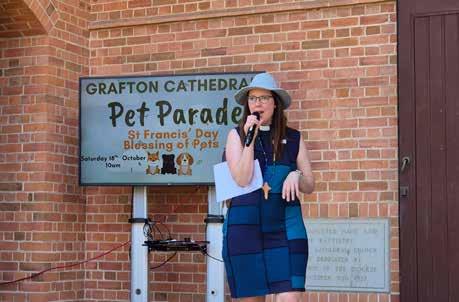
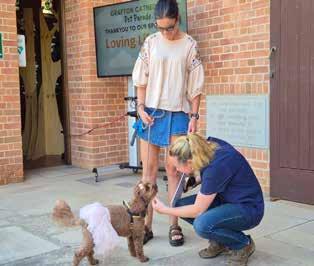
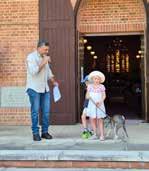
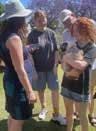
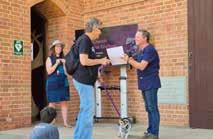
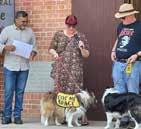
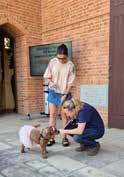
On a beautiful, sunny, jacaranda filled Saturday morning, Grafton Cathedral hosted some very special furry and feathered friends, celebrating the Feast of St Francis. We had a wide selection of breeds represented from border collies or greyhounds, and budgies to ragdoll cats. Each pet was given the opportunity to walk the cat/dog walk up the stairs, have their time in the spotlight (including the opportunity to do tricks) and then proceed to the fountain for their blessing. Prize categories included, the furriest pet, the friendliest pet, the oldest pet and the cuddliest pet. Prizes were donated by Bunnings and Petstock, with Tessa from Riverbank Animal Hospital as our judge.
Prayers were offered for those pets who were unable to attend, and for those pets who have left us. It was certainly clear what a blessing each of these pets are to the homes who love them.
I thought I might share this prayer with you all, a reflection on the day. ■
A prayer of Blessing for the animals
Loving and ever-present God, on this day we give thanks for all the animals.
We are blessed to share a planet with such a wide variety of incredible creatures,
For those who are awkwardly enormous, like the giraffe, and the hippopotamus,
To the millions of insects, microscopic, smaller than we can imagine, yet essential to the survival of our fragile ecology.
Lord, help us to appreciate the gift of each and every animal, even the ones we can sometimes be a bit frightened of Lord, we ask your blessing on the animals that share our lives.
They may be livestock, or chickens, or animals on the land.
We are grateful that each of these animals has a place within creation.
May we work with and appreciate the gifts these animals offer. May they always be treated with Kindness. We especially give thank you for the pets in our lives and homes.
For the ones with four legs and fur, to the ones with two legs and feathers, and those that live in terrariums or bowls with no legs at all - and all those in between.
Lord all pets hold a special place in our hearts and in our lives.
They offer comfort, joy, companionship and above all unconditional love - though secretly the cats aren’t quite sure about that part!
Bless our pets, Lord of creation with compassion and love.
We remember the pets we have loved and lost. Those who shared part of our life’s journey, whether we were young or old, well or unwell, had more or less, or anytime inbetween.
Each one holds a place of treasure, of honour, of thanks in our hearts.
Lord give them a pat, or a hug, or just a message of love from us.
Loving God, we thank you for the animals. For all creatures great and small.
Bless them. AMEN.
Lismore Parish Op Shop Fashion Parade: A Stylish Success
A Celebration of Style, Community, and Sustainability
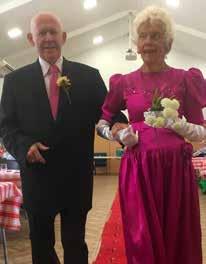
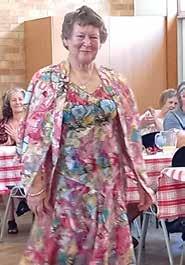
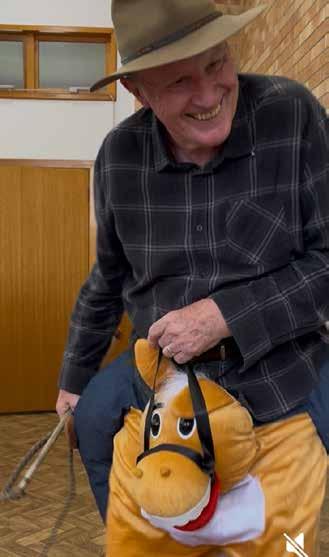
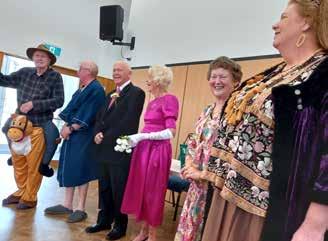
How can a fashion parade be so much fun? On Saturday, 18th October, the Lismore Parish hall came alive with colour, excitement, laughter, a touch of glamour and silliness as we hosted our annual fundraising Op Shop Fashion Parade. Locals gathered to celebrate creative sustainable fashion, community spirit, with a good belly laugh.
A Runway of Pre-Loved Treasures
The event showcased an eclectic array of outfits, mostly sourced from the Op Shop’s ever-changing selection. From elegant evening dresses to quirky casual ensembles, models strutted their stuff down the makeshift runway, proving that style and sustainability can go hand in hand. Each outfit demonstrated the versatility and charm of pre-loved clothing, inspiring attendees to rethink their approach to fashion and embrace sustainable second-hand shopping.
Community Spirit Shines
Volunteers worked tirelessly behind the scenes, organising outfits, setting up the venue, preparing food and ensuring everything ran smoothly. Supporters were treated to a sumptuous afternoon tea, lively conversation and catching up with friends, lots of laughs, making it a delightful afternoon out for all who attended.
Supporting ministry
Funds raised will support the Parish’s outreach programs and local initiatives. The Op Shop, located in the growing suburb of Goonellabah, continues to be a vital local resource, offering affordable clothing and collectibles while fostering a sense of belonging amongst locals.
Looking Ahead
Excitement is already building for next year. The event has not only highlighted the importance of sustainable fashion but also reinforced the strength and warmth of the Lismore community. Congratulations to all the organisers, volunteers, models, and supporters for making the day truly memorable. If you missed out, pop into the Rous Road Op Shop next time you’re in Goonellabah – you never know what treasures you might find! ■
Voices Across the Dioceses
PORT MACQUARIE ANGLICAN CHURCH
St Thomas’ Church Clocks Shine Once More
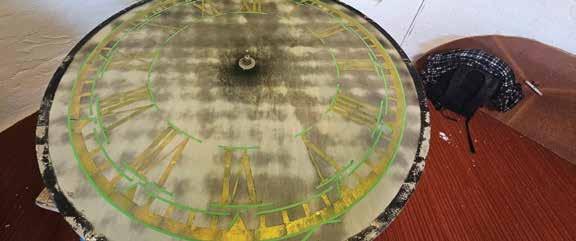
In 2024, St Thomas’ Anglican Church received a partial grant that assisted with the repointing of the church tower — a project completed just in time for our Bicentennial celebrations at the end of the year. As part of this restoration, we also hoped to refurbish the tower clocks, which had become faded over time.
In a wonderful gesture of community support, Fr Paul Gooley and the parish of St Agnes Catholic Church, located just across the road, kindly offered financial assistance towards this project. Their generosity helped ensure the
NAMBUCCA VALLEY PARISH
Welcome Bishop Murray
SUBMITTED BY LESLIE
Nambucca Valley Parish was delighted to welcome Bishop Murray on 31st August.
FOTAKIS
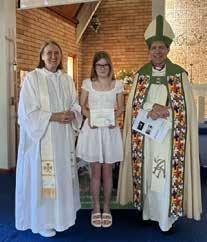
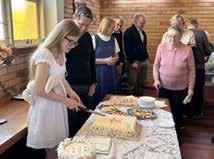
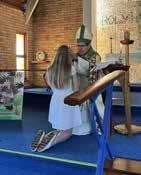
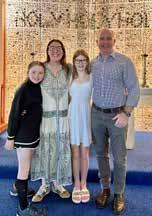
Bishop Murray led a Service of Confirmation at St John's, Nambucca Heads. Samira Peake was confirmed, something she had been looking forward to for over 12 months!
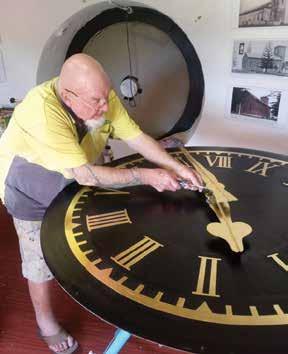
clocks could be renewed as part of our Bicentennial works.
Lance from Grafton Fine Arts undertook the delicate task of restoration. Once the necessary gold leaf was sourced, he promptly set to work. The finished clocks now gleam beautifully atop the tower, providing a fitting and elegant conclusion to the restoration of St Thomas’ historic landmark. ■

The restored clocks and Lance from Grafton Fine Arts — sourced from St Thomas’ Facebook page
TOP: Samira with Bishop Murray and Reverend Leslie Fotakis TOP RIGHT: Samira being confirmed
ABOVE: Samira cutting her Confirmation Cake RIGHT: Samira with her parents Neil and Amanda and her sister Hazel.
PORT MACQUARIE ANGLICAN CHURCH
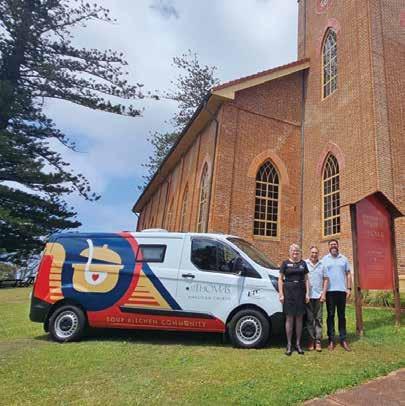
A New Van for St Thomas’ Soup Kitchen Community
In early April, St Thomas’ was delighted to receive a $40,000 grant to purchase a van for our Soup Kitchen Community. This vital vehicle enables the collection of food supplies used for our Wednesday Soup Kitchen, which serves between 60–80 people each week.
Each Wednesday, guests enjoy morning tea, grocery items, and a freshly prepared three-course meal — all lovingly cooked by volunteer chefs and distributed by a dedicated team of supporters, including students from St Columba Anglican School (SCAS).
With the grant funding, St Thomas’ purchased the new van and worked with Oxley Signs to create stunning signage that not only identifies the Soup Kitchen but also showcases the many community ministries offered through the church.
This new van will greatly enhance our capacity to collect food donations and, in time, may also be used to deliver meals and essential items directly to those in need within our community. ■
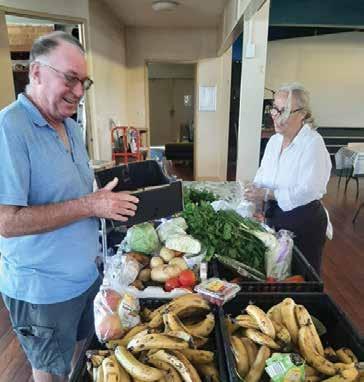

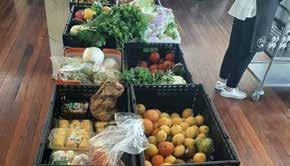
Wednesday Soup Kitchen serves between 60–80 people each week.
Top Right: The Soup Kitchen van, Reverend Daniel Berris (Rector St Thomas Anglican Church), Chris Evans (St Thomas Soup Kitchen Coordinator) and Rhonda Wilkie (from ETC).Above: Volunteers serving meals.
Voices Across the Dioceses
Hearts Ready, Hands On: Celebrating Community Resilience Through Service
SUBMITTED
BY LESLEY GRANT
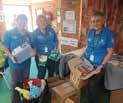
When disaster strikes across the North Coast, a remarkable network of volunteers springs into action, not as outsiders rushing in, but as neighbours who were already there. From the Mid North Coast floods to the Northern Rivers bracing for Cyclone Alfred earlier this year, Anglicare North Coast's disaster recovery volunteers have demonstrated what faithful service looks like in our most challenging moments.
A Ministry of Presence
These volunteers embody the Gospel call to care for our neighbours in practical, tangible ways. They open evacuation centres before dawn, staff facilities alongside partner agencies, check on isolated streets, and quietly solve countless small problems that make large-scale disaster response possible.
Learning and Growing Together
Each disaster has strengthened this network. After every activation, volunteers gather to share lessons learned and refine their approach. Simple signage for stressed evacuees, pet-friendly spaces, quiet corners for those in distress, and streamlined links to essential services— all these improvements emerged from volunteers' reflections on their experiences.
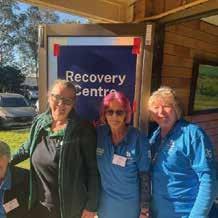
What began as improvisation has evolved into embedded practice shared across the entire network. WhatsApp groups coordinate rosters, laminated checklists have become living documents, and donation chaos has transformed into organised pre-packed kits.
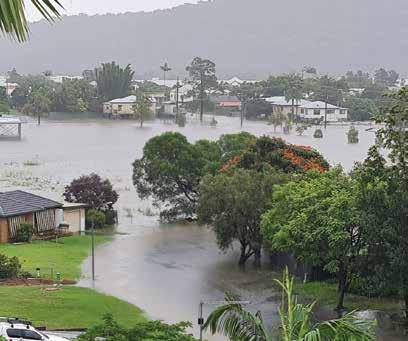

These local volunteers don't wait for the call—they're already embedded in their communities.
The Power of Local Teams
Perhaps the most significant development has been the organic growth of small, agile volunteer teams based directly in towns and villages throughout the region. These localised teams understand a crucial truth: when disaster strikes, communities are often cut off and must be self-reliant in those critical first hours before external help can arrive.
These local volunteers don't wait for the call—they're already embedded in their communities. They know the back roads that flood first, they know which neighbours live alone, and they're ready to open evacuation centres in partnership with emergency services the moment disaster threatens. This hyper-local approach means faster response, smarter resource deployment, and the comfort of familiar faces during the hardest moments.
From Experience to Expertise
Years of recurring disasters have forged something remarkable: a network of volunteer experts committed to continuous improvement. Teams across the region collaborate to implement practical enhancements—from securing satellite phones after Cyclone Alfred disrupted power and communications, to refining supply logistics to ensure no evacuation centre runs short, to developing better ways to support people experiencing trauma and anxiety.
Photo: Volunteers at Macksville.
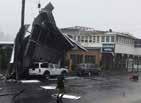
TOP: 2025 Flood waters submerging the streets. L-R: Volunteers from Macksville & storm damage in Maclean
National Recognition for Local Leadership
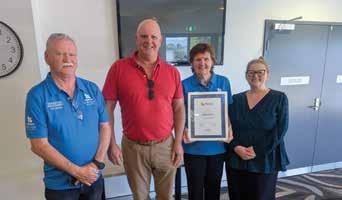
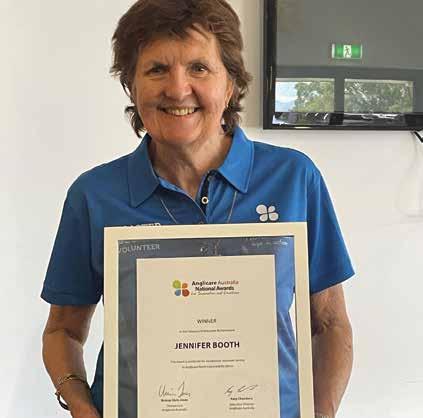
This year, our network's dedication received national recognition when Jennifer Booth of the Murwillumbah team was awarded the prestigious Anglicare Australia Volunteer of the Year Award.
Jennifer has spent nearly a decade transforming disaster response in the Northern Rivers. As a founding member in 2015, she built the Murwillumbah team from two volunteers to the robust team it is today. Her leadership guided the team through five major disaster events, including Cyclone Debbie (2017) and the devastating 2022 floods.
Partner agencies praise her effectiveness; Red Cross volunteer Michelle Bradley commended her "kind compassion and clear communication" and grace in managing "very dynamic situations". Beyond the centres, Jennifer is a devoted mentor, described by a colleague, Melanie Bloor, as a "force of nature" who inspires a new generation of volunteers.
Her philosophy—"Everyone has something to offer even if you think you don't" —guides her leadership and transforms stressful work into meaningful community building.
A Network of Partnership
This vital ministry is made possible through strong partnerships. Anglicare North Coast works closely with the SES, RFS, local councils, police, health services, churches and community halls, service clubs, Foodbank and SecondBite, local businesses, and spontaneous volunteers who all step up during crises.
Together, this network exemplifies the strength found in Christian community—diverse groups united in purpose, serving those most vulnerable in their time of greatest need.
Answering the Call
The volunteer network continues to grow and welcomes new members. Training, support, and camaraderie are provided, along with the deep satisfaction of knowing you're helping when it matters most.
Those interested in becoming disaster recovery volunteers can contact Owen Gray at oweng@anglicarenc.org.au or phone 6643 4844. Applications can also be submitted through the Anglicare North Coast website at www. anglicarenc.org.au.
Financial support for this vital ministry is also welcome and enables Anglicare North Coast to maintain readiness, provide volunteer training, and ensure resources are available when disaster strikes. Donations can be made by calling 02 6643 4844. ■
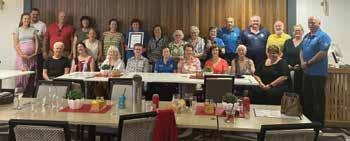
L-R Owen Gray, Disaster Recovery Coordinator, Mark McNamara CEO ANC, Jennifer Booth Anglicare Australia Volunteer of the Year, Lesley Grant Programs Manager ANC
Jennifer Booth Anglicare Australia Volunteer of the Year.
Voices Across the Dioceses
Hope in a Mad World: And Lazarus Laughed
REV JON CORNISH SCAS CHAPLAIN PORT MACQUARIE
There is only life! I heard the heart of Jesus laughing in my heart…. and I laughed in the laughter of God!
Jesus cried with a loud voice, ‘Lazarus, come out!’ John 11: 43
It’s a mad world, no question, in fact it could well be humanity’s theme song since our fall from grace. We live in a deeply conflicted world controlled by a corrupt oligarchic elite. What we see now is similar to what Jesus saw in the ancient world where the rulers were transfixed with the temporal goals of vain glory, money and power. The marginalised in our world always pay the price for this. We all see their suffering, both then and now. Is that why Jesus drove them out of the temple with a whip? Where is our hope?
In 1925, Eugene O’Neill completed a fascinating play with a marvelous idea called ‘Lazarus Laughed: A Play for an Imaginative Theatre’. The idea? What happened to Lazarus once he was raised from the dead? How did he live? The Bible is silent on this. A hundred years later in 2025 to honour this great playwright and in lieu of a sermon, I wrote a cameo play called ‘And Lazarus Laughed’. It was performed by a talented group of four Year 10 students from our specialist Iona PEAK Academy program at St Columba Anglican School Port Macquarie. These students are involved in a highly creative and integrated program over four years that succeeds in developing their dramatic, musical and dance skills; along with their direction, storytelling and writing ability.
Eugene’s core idea is that when Lazarus comes back to life he is no longer fearful of death and is full of joy knowing God’s infinite love. The laugh of Lazarus is beautifully described in Act 1 Scene 1 of his play when Lazarus says;
There is only life! I heard the heart of Jesus laughing in my heart…. and I laughed in the laughter of God!
(He begins to laugh, softly at first--a laugh so full of a complete acceptance of life, a profound assertion of joy in living, so devoid of all self-consciousness or fear, that it is like a great bird song triumphant in depths of sky,

proud and powerful, infectious with love, casting on the listener an enthralling spell. The crowd in the room are caught by it. Glancing sideways at one another, smiling foolishly and self-consciously, at first they hesitate, plainly holding themselves in for fear of what the next one will think.)
The play has hardly ever been performed, largely because of the difficulty in playing Lazarus, the large caste and other factors. Rather than lose the key idea and insight of this play, I made a radical adaption – cutting back and rewriting it to just four characters and giving it a modern setting.
In Eugene’s play, upon Lazarus’ resurrection, his fame procedes him. Everyone is fascinated. Many are excited, others fearful, but always his laughter and joy remain steadfast no matter who he meets. Things go wrong. Tiberius is killed by Caligula and Lazarus has been tied to a pyre which is now alight. Lazarus is unfazed and faces Caligula calling out; ‘Fear not, Caligula! There is no death!’.
In the cameo play, ‘And Lazarus Laughed,’ Lazarus meets the emperor of the New Rome. He is the president of the USA, Mr. Johnny Miller. It is the largest and most powerful empire the world has even seen, but it is in decline. There is this clash of ego with God’s joyful love, of the divine with the profane, of false legacy with deep truth. Throughout this, Lazarus is steadfast and joyful, no matter how threatening and insecure the president becomes about his own self-importance. As Johnny becomes increasingly enraged, Lazarus, concludes with:
‘Yes, you’ll be remembered… in the short term... but as time moves on, you and your legacy will fade away. Your name won’t last forever. Only the laugh remains, the deep Godly joy of all creation. It stands outside of time, beyond empires. It will be here long after you're gone. And in that laugh, I find freedom. In that laugh, I find God’s unstoppable reach. In that laugh I find His love. Praise God and hallelujah for that.’
Let’s be like Lazarus and find joy in hearing the heart of Jesus laughing in our heart. Hope and meaning is found in God and his kingdom can be made real now. Amen to that. ■
Registry Update
OCTOBER 2025 - REFLECTIONS BY
JAMES GALE
Leading as a Visible Servant: A Reflection from the
Registrar/ General Manager 6 months in.
The role of Registrar is, for me, a unique Christian vocation. It is a profound blend of the practical and the spiritual. My aim is to be a leader who serves the church not just from an office, but as a visible force of our shared values and mission. Every policy, budget line, and legal document we manage is purposed to help transform lives through Jesus Christ and support the Diocese in its great mission of sharing the Good News and growing our faith communities.
In the Registry office, we constantly navigate between the sacred and the temporal. We are the stewards of the Diocese’s practical life: its finances, governance, risk management, legal compliance, and property. This is serious work, demanding a systematic and pragmatic approach to ensure our institution is stable, accountable, and sound. It is a true reflection of our commitment to Accountability and Discernment.
Crucially, this temporal work is never an end in itself. Our spreadsheets, policies, and contracts are the infrastructure that supports the spiritual life of our clergy, congregations, schools, and wider community. Our task is to build a robust "trellis"; a reliable framework upon which the vine of faith can flourish and grow. This is our Christlikeness and distinctiveness in action.
My commitment is to be a visible leader in this Diocese, not for the sake of attention, but as an act of service. This is servant leadership that requires me to be the first to embody our shared Christian values of humility, integrity, and compassion.
By being present and engaged across the Diocese, I can better understand the real-world challenges our clergy and laity face. This helps us ensure the Registry provides the resources and support you need to thrive; a tangible expression of our value of collaboration. By taking responsibility and fostering transparency, we set a clear operational and moral example, creating a culture where everyone feels empowered to lead and serve. Our administrative work, when rooted in this purpose, becomes a tangible act of faith.
The Registrar’s role is crucial in making the Diocese’s mission and values tangible. It is about transforming abstract ideals into concrete action.
• If social justice is a core value, it must be reflected in our investment policies, along with our community outreach.
• If we are called to be an inclusive church, our processes and communications must be accessible to all.
This commitment requires openness to new ideas and a dedication to continually transforming our structures for the better. In this way, the administrative function becomes a powerful engine for our mission, turning faith into action. My hope is that my visible presence and dedicated work will help to model this truth: every task, no matter how small, is a step in our shared journey toward the spiritual kingdom of God on Earth. ■
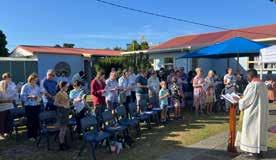
ANGLICAN PARISH OF KINGSCLIFF
All Creatures Great and Small
The Blessing of the Animals in the Parish of Kingscliff
WRITTEN BY JASON
SALTEARN
Appreciative gatherings of parishioners, and their pets, enjoyed two special outdoor services on the plush lawns of St James, Kingscliff and St Marks, Pottsville during October to celebrate the Season of Creation.
At the “Blessing of the Animals” service at St James on Oct 5, Rev. Constantine Osuchukwu led worship in the ‘Cathedral of Nature’, accompanied by a small choir which led the 40 people (and 12 dogs) assembled, in hymns of praise to our Lord God who made “All Creatures Great and Small”. Mrs Chris Parsons spoke about St Francis of Assissi’s Christ-like life of poverty and humble service, and his love of animals.
At the delightful “Blessing of the Pets” event at St Marks on Oct 26, 38 adults, 5 children and five dogs turned up including some who do not regularly attend Church : a soft introduction to Christian worship. Many attendees assembled under the canopies in the warm conditions, and others huddled in shady areas of St Mark’s lush garden. A garden table was pressed into service as the communion table and Meyril Turnock played the catchy tunes chosen for the service with grace and style, the music rang out for the whole community to hear. Morning tea, a sausage sizzle and conversation followed, including indications from newcomers that they would return. All dogs behaving themselves despite the tempting aromas in the air.
These services highlighted the significance of recognising our place within Creation and the importance of caring for it as a demonstration of love for the Creator. ■
Journeys in Education
New Spiritual Compass: Flowing CVAS traditions into new life
SUBMITTED BY AMANDA BILL
A powerful and deeply contemplative moment arrived in the life of Clarence Valley Anglican School (CVAS) recently with the official unveiling of a new School Prayer, developed through an extensive process of deep listening to the history, values and experience of the CVAS Community. This new prayer is far more than a simple recitation; it is a rich tapestry woven together from biblical narratives centered around Jesus Christ, historical events and theological connectivity bringing forth the essence of the school’s core values while simultaneously acknowledging the Indigenous peoplesGumbayngirr, Bundjalung, and Yaegl - and their enduring place on this land.
This change honours, rather than replaces, the heritage of the past. We deeply acknowledge the previous school prayer that was learned by generations of students and staff and which faithfully upheld the traditions of the school for so long. The new prayer continues this sacred duty while expanding its reach to reflect a more inclusive and complete narrative.
The new CVAS prayer is born from the development of the CVAS story. The story is written and told in the Godly Play style of simplicity and depth, using the river as both a lens and a canvas from which to see our common life, history, values and aspirations.
This engaging, creative telling of our school's journey was presented for the first time at our most recent Valedictory Service. It was an emotionally resonant occasion, made even more special by the rich setting of our Cathedral. We are immensely grateful to have such a magnificent Cathedral space where we can gather as a community to celebrate the life and achievements of our students, marking the end of one chapter and the beginning of another with such grandeur and unity.
These two moments—the introduction of the new prayer and the debut of the CVAS story—provide a strong spiritual foundation, ensuring the values, history, and inclusive spirit of CVAS guide every student and community member in their present lives and into the future.
CVAS Prayer God of Holy Dreaming, your presence endures at our very heart; your love speaks into every valley and darkness. Mark our way by the light of Christ That flowing together we may be a river of hope; delighting in compassion, and rising with courage, to serve and nourish the world you love.
Amen ■
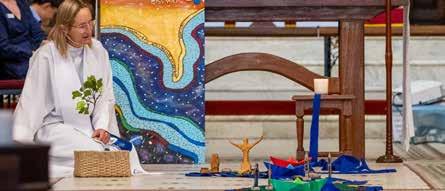
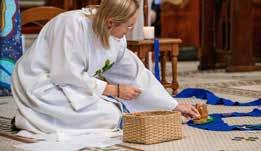
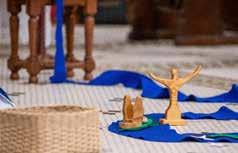
Photos: Official unveiling of a new CVAS School Prayer
2026 School Captains and Vice Captains
SUBMITTED BY SIMON MCKINLEY
Lindisfarne Anglican Grammar School is pleased to announce our 2026 School Captains and Vice Captains.
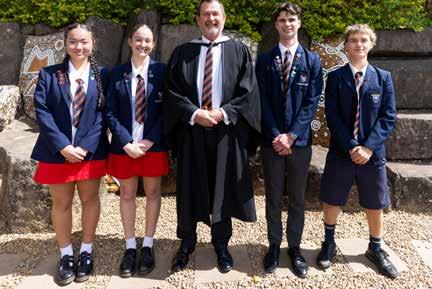
Our School Captains for the coming year are Nicolas Leotta and Phoebe Robins, and our School Vice Captains are Byron Millar and Kimiyo Tango.
These students were elected by the Senior School community following a comprehensive selection process that included written applications, staff and student endorsements, leadership speeches, and a formal voting process. Each of these young leaders has demonstrated outstanding commitment, integrity, and enthusiasm in their approach to school life, and they have earned the respect of their peers and staff alike.
In 2026, Nicolas, Phoebe, Byron, and Kimiyo will take on important roles representing the student body and upholding the values that define Lindisfarne Anglican Grammar School. Their leadership will play an integral part in shaping student culture, fostering community spirit, and supporting the many programs and initiatives
that make Lindisfarne such a vibrant and connected school.
Head of Senior School, Kate Cornell, commended the newly appointed leaders, saying:
“Leadership at Lindisfarne is about service. Our Captains and Vice Captains are entrusted with the responsibility of guiding their peers, representing our values, and serving the community with humility and courage. Nicolas, Phoebe, Byron, and Kimiyo have shown exceptional maturity and a genuine commitment to making a positive difference. We look forward to watching them grow in their leadership, no doubt leaving a lasting legacy within our school.”
Please join the Lindisfarne community in congratulating Nicolas, Phoebe, Byron, and Kimiyo as they step into these important roles for 2026. ■
BISHOP DRUITT COLLEGE
Colour Run
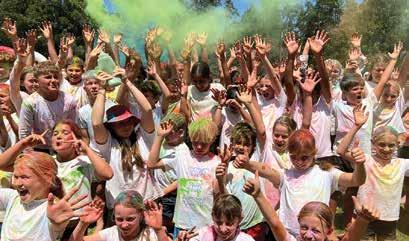
Our annual Colour Run on 15 October was a burst of colour, laughter and community spirit.
The event saw our primary and secondary students take to the course with boundless energy, dashing through clouds of vibrant powder and cheering each other on from start to finish.
It was wonderful to see so many smiling faces as students embraced the fun and fitness of the day. The event encouraged teamwork, healthy activity and plenty of school pride.
Together, these experiences reflect the BDC Advantage –an education that values care, connection and excellence while nurturing the whole child. From creative learning and service projects to milestone celebrations and community events, each moment strengthens student wellbeing, fosters enrichment, and builds the confidence, compassion and resilience that equip our students to be World Prepared. ■
Photo L-R: Kimiyo Tango, Phoebe Robins, Principal Stuart Marquardt, Nicolas Leotta and Byron Millar
in Education
BISHOP DRUITT COLLEGE
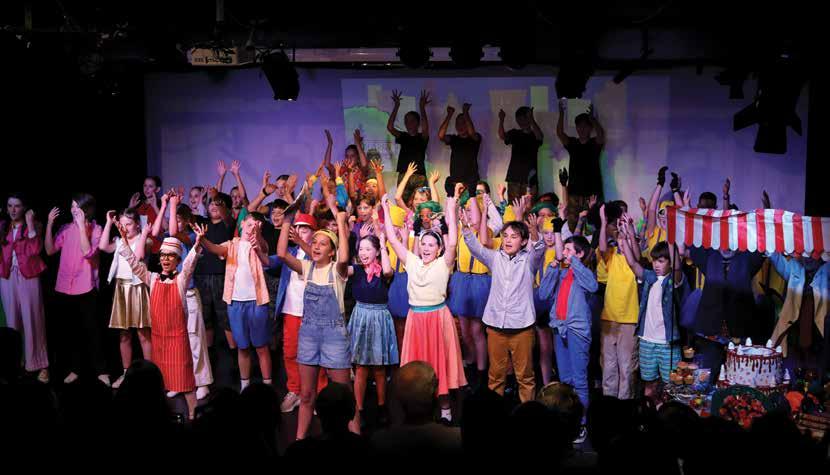
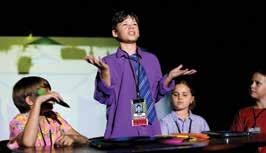
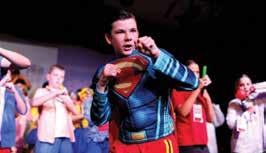
Year 6 Play Super Stan, Super Sam
This year, our talented Year 6 students took to the stage with two energetic and entertaining productions. Classes 6C and 6F performed The Amazing Adventures of Supersam, while 6A and 6B brought The Amazing Adventures of Superstan to life.
Parents, staff, and fellow students were invited to enjoy the shows, and our Year 6 performers rose to the occasion. With enthusiasm, creativity, and confidence, they delivered memorable performances that showcased their dedication and teamwork. Our Year 6 teachers did a wonderful job supporting our performers and bringing these shows to life. ■
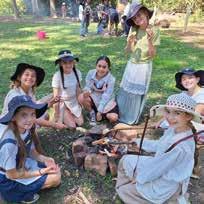

Year 5 wrapped up their History unit with a fun-filled Gold Day! They mined for gold, helped injured miners, crossed rivers, guided each other through mineshafts, and cooked damper over open fires. The commissioners were very impressed with their teamwork and good behaviour as the Gold Game came to a close.
LINDISFARNE ANGLICAN GRAMMAR SCHOOL
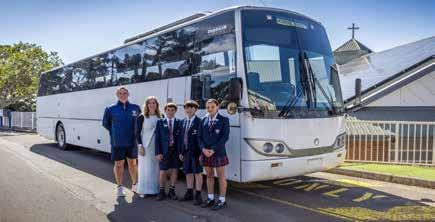
Lindisfarne’s Safe Sleep Bus: Education in Action
SUBMITTED BY THE REVEREND CONSTANTINE OSUCHUKWU
On 14 August, members of the Grafton Schools Commission gathered at Lindisfarne Anglican Grammar School for the Term 3 Schools Network meeting.
At Lindisfarne Anglican Grammar School, education is about more than the head—it is also about the heart and the hands. We teach our students to integrate the processes of thinking, feeling and doing because true learning shapes thoughtful minds, compassionate hearts, and purposeful action. Elie Wiesel once said, “Education must make students more, not less, human.” This belief is being exemplified on the Tweed Coast through a student-led initiative addressing one of our region’s most pressing issues: homelessness. Grounded in our school values of Compassion, Wisdom and Respect, Lindisfarne students are learning to use their gifts and privileges for the good of others, and to make a positive contribution to society. In Term 3, our Year 8 cohort embraced that call with energy and courage, organising a 24-hour run to raise awareness and funds to combat homelessness.
Homelessness in the Tweed Shire is often described as a “hidden crisis,” yet the statistics reveal its growing urgency. More than 500 people are without secure housing—an increase of 70% in just over a decade. Behind these numbers are families fleeing domestic violence, young people without safe shelter, older women, First Nations peoples, and individuals living
with mental health challenges. It is a moral emergency demanding compassionate action.
In response, Lindisfarne has launched the Ubuntu Safe Sleep Bus—a two-stage project to provide safe, temporary overnight accommodation. Stage One will focus on securing and fitting out an old Lindisfarne School Bus with help from local trades and businesses; Stage Two will see the bus operating to offer safety, dignity, and hope to those most in need.
Through this initiative, our students are living out our School’s Christian faith in action—raising awareness, demonstrating compassion, and leaving a legacy of service. We invite the wider community to join us in bringing this vision to life through volunteering, donations, or practical support. Together, we can extend the circle of compassion and bring light to those sleeping in darkness. ■
DRUITT COLLEGE
Year 6 Refugee and Empathy Projects
In Term 3 our Year 6 students explored the diversity of our world, focusing on the experiences of refugees who have settled in Australia. Students collaborated, researched and created projects showcasing the journey and challenges of refugees who have made Australia their home. Their projects were displayed during the EYE Week Gallery Walk.
In addition to their refugee project, students also presented their Empathy Projects, where they developed ideas to support refugees transitioning to life in Coffs Harbour. Each group addressed a significant challenge refugees face and proposed innovative solutions to help overcome it. ■
Commencing in Prayerful Focus
The College Leadership Team commenced Term 4 with a reflective and prayerful gathering led by Principal Simon Doyle, in partnership with Chaplain Rev Lisa Williamson. The focus was on service and generosity of spirit, with Rev Lisa embedding the Marks of Mission into this time of centring and renewal. Rev Lisa also shared the inspiring story of new beginnings within the Anglican community, following the appointment of the Right Reverend and Right Honourable Dame Sarah Mullally as the new Archbishop of Canterbury. ■
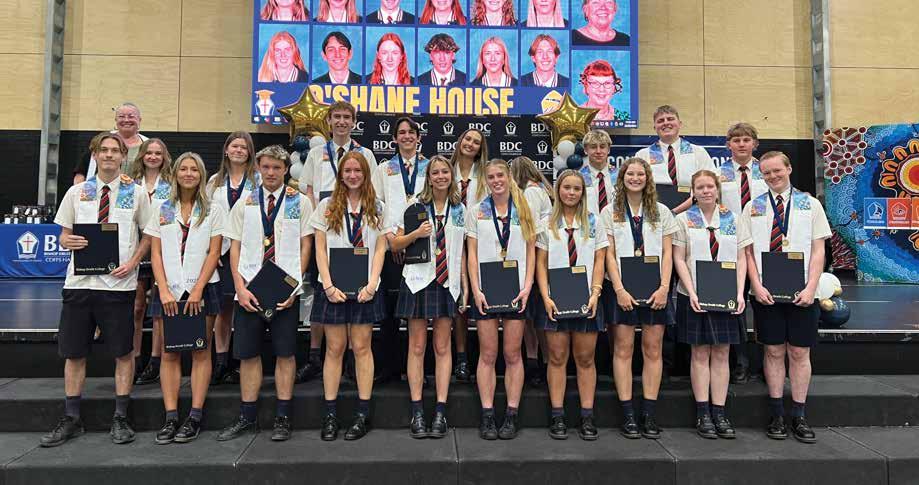
Class of 2025 Valedictory Service and Assembly
The BDC Class of 2025 was the largest Year 12 cohort in the college’s history, with 25 Foundation students among those thanked and farewelled as part of this significant milestone in the school’s legacy. The Valedictory Service of praise and thanksgiving and the Valedictory Assembly for the Class of 2025 were moments of deep significance and reflection: the culmination of 13 years of learning, growth, and relationships - and the final rite of passage for our graduating students as they step into life beyond school. They left us not just as individuals, but as part of something bigger: the BDC Alumni and our World Prepared community. This is the BDC Way - valuing care, excellence and connection - and the BDC Advantage that will continue to guide them as they move into their exciting futures.
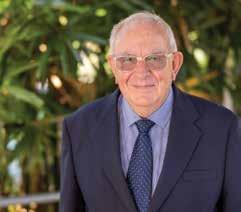
At our Valedictory Service BDC also farewelled our long-serving Chair of School Council, Mr David Ford. For nine years, David has been a steady presence and a passionate advocate for the vision and values of Bishop Druitt College. His leadership shaped the direction of our school, ensuring our students had every opportunity to thrive. It felt fitting that on the same day we farewelled our graduating class, we also farewelled a leader who walked alongside us with wisdom, commitment, and care.
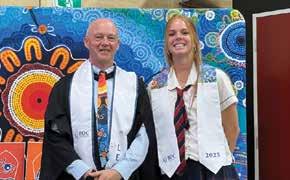
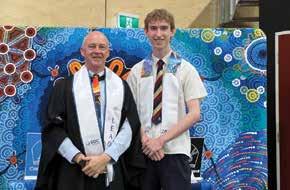
BDC has also welcomed our new Chair of School Council, Mrs Kylie Cameron. Kylie brings a deep understanding of the college and its community, a strong commitment to service, and a wealth of knowledge that will serve her well in this new leadership role. She will guide the College Council and therefore the college with integrity, insight, and a strong sense of purpose. ■
BISHOP DRUITT COLLEGE
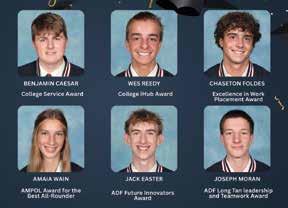

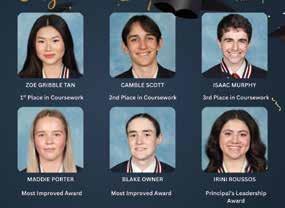
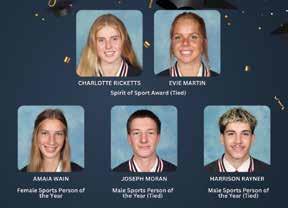

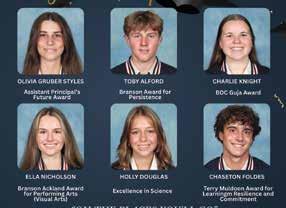
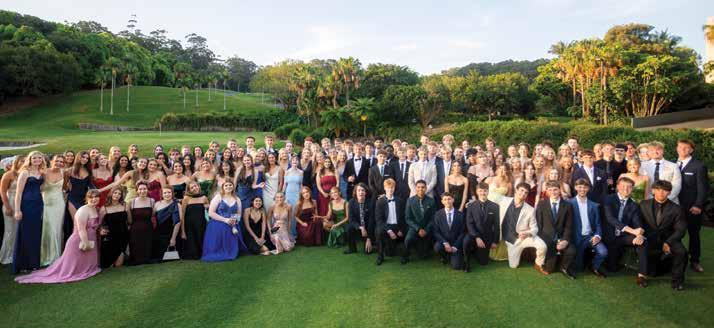
Class of 2025 Valedictory Dinner
The Year 12 Valedictory Dinner was a distinguished and memorable occasion, marking the culmination of the Class of 2025’s journey at our college.
Held in the presence of students, families, staff and special guests, the evening celebrated the achievements, growth and contributions of our graduating cohort.
The program featured heartfelt reflections, expressions of gratitude, and moments of pride as students looked back on their time at the college and forward to the opportunities that await them. The sense of camaraderie and mutual respect among students and staff was evident throughout the evening, highlighting the strong community that defines our school. ■
BISHOP DRUITT COLLEGE
Bishop Druitt College
Acclaimed in the 2025 The Educator 5-Star Best Schools
SUBMITTED BY HOLLY HEATHER
Bishop Druitt College (BDC) has been named one of The Educator’s 5-Star Best Schools for 2025, a national recognition that highlights excellence in teaching, innovation, and student wellbeing.
Bishop Druitt College (BDC) has been named one of The Educator’s 5-Star Best Schools for 2025, a national recognition that highlights excellence in teaching, innovation, and student wellbeing. The inaugural list celebrates schools that demonstrate leadership and impact across six key pillars: innovative extracurricular programs, student support, safety and wellbeing, technology in learning, diversity and inclusion, and holistic student development.
Principal Simon Doyle said the award reflects the strength and depth of BDC’s programs across both academic and wellbeing domains.
“This award is a testament to our commitment to holistic student development and inclusive learning,” Mr Doyle said. “At BDC, we pride ourselves on creating an environment where every student is known, supported, and inspired to thrive.”
Chris Sweeney, Managing Editor for Special Reports at The Educator, shared his insights on the selection process, stating, “Bishop Druitt College fully merit their 5-Star recognition for exemplifying educational excellence. Their forward-thinking approach and dedication to comprehensive student growth are evident through innovative extracurricular offerings, advanced technology integration, and a strong focus on wellbeing initiatives.
The Educator ‘s 30+ strong Intelligence Unit compiled the final winners list after the completion of a rigorous 3 months process, canvassing the opinions of objective industry experts and collating leading-edge research. In addition, further insight was provided by The Educator’s esteemed judging panel. The prestigious list of honourees was then matched with the 5-Star Best Schools’ precise criteria.
A key initiative contributing to the recognition is the Kaizen Initiative, a signature program for Years 5–8 that challenges gifted students while expanding opportunities for all learners.
“What sets BDC apart is our ability to recognise and
nurture talent beyond traditional academic measures,” Mr Doyle explained. “The Kaizen Initiative is just one example of how we embrace diversity in learning, identifying student strengths across a broad range of areas, all at no extra cost to families.”
BDC’s recognition also stems from its whole-school approach to wellbeing, anchored by a dedicated K–12 Wellbeing Hub staffed by school counsellors, chaplains, and a family therapist. Proactive programs like SEAL (Social and Emotional Aspects of Learning) in Primary, structured pastoral care in Secondary, and the introduction of Barkley, the college’s wellbeing dog, ensure students feel supported emotionally, socially, and academically.
The college’s global engagement also drew praise. As a proud member of the Round Square network, BDC offers students meaningful international opportunities through conferences, service projects, and cultural exchange programs with partner schools in Japan, France, and Cambodia.
“We are deeply committed to developing culturally aware, globally minded young leaders,” Mr Doyle said. Technology also plays a major role in BDC’s innovation. BDC’s digital learning strategy includes BDC Horizon Online, immersive content using AI-generated video, and cutting-edge technologies such as ClassVR, HTC Vive Pro 2, DJI RoboMasters, LEGO Spike Prime, and driving simulation software, all embedded into the K–12 curriculum.
“These tools aren’t just impressive, they’re meaningful,” Mr Doyle noted. “They foster creativity, critical thinking, and future-ready skills that students will take beyond the classroom.”
Another standout factor is the college’s comprehensive career education program, which spans Year 5 to Year 12. Designed by a full-time, qualified careers practitioner and aligned with the Australian Blueprint for Career Development, the program equips students for lifelong learning through structured stages of career exploration, development, and planning.
“Every initiative we implement is designed to meet the needs of today’s learners while preparing them for tomorrow’s world,” Mr Doyle said. “From academic enrichment to wellbeing, from global citizenship to career readiness it’s all about supporting the whole child.”
As a regional independent school in Coffs Harbour, Bishop Druitt College is proud to demonstrate that outstanding education isn’t confined to major cities.
BISHOP DRUITT COLLEGE
“Being selected as one of the country’s leading schools highlights the innovation and care that drives our approach every day,” Mr Doyle added. “We are proud to be a place where every student can grow and thrive right here on the Coffs Coast.” ■
Milla Adamson becomes youngest ever Bonville Golf Club Champion
SUBMITTED BY HOLLY HEATHER
Bishop Druitt College student Milla Adamson has made history, becoming the youngest ever Bonville Golf Club Champion after an outstanding performance recently.
Competing on one of Australia’s most challenging and picturesque courses, Milla produced two days of exceptional golf, carding a 3-over-par on Day 1 and 4-over-par on Day 2, to secure the championship title.
Milla’s victory marks the culmination of a year of hard work and steady improvement, supported by her family, her mentors, and Bishop Druitt College’s High Performance Program and Golf Academy.
“Milla is an outstanding role model, not only for our aspiring golfers, but for all young girls who might be inspired to give golf a go after seeing her success,” said Natalie Titcume, Head of High Performance and Academies at Bishop Druitt College and the 2023 Bonville Club Champion. Natalie also said, “Her determination, humility, and work ethic are exceptional.”
Milla said she was thrilled to take out the Bonville Ladies Championship title.
“I am so excited to have won the Bonville Ladies Championship. It’s shown me that hard work really does pay off and it’s given me a big boost of confidence for the future,” Adamson said.
“I remember watching Steph Kyriacou win the Bonville Ladies Classic back in 2020 when I was just eight years old, and she really inspired me. To now win on the same course feels pretty special.
“I’m so lucky to have an incredible support network behind me, especially from my school. The Golf Academy at Bishop Druitt College has given me the chance to play more golf and get in extra practice, which has helped me improve so much over the past two years. Being part of the High Performance Program has also been a huge help - it supports me with strength and conditioning, mentoring, nutrition and overall athlete development.
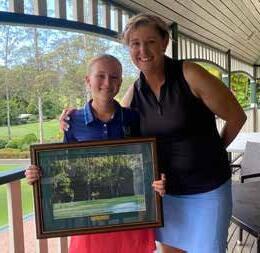
“My sponsor, Guzman Y Gomez, has made it possible for me to attend more tournaments and travel all over NSW, which has been amazing.
“I can’t wait to see what the future brings.”
The final championship group featured defending champion Christine Clarke (also Milla’s mentor), Adrienne Smith of Sunny Corner Pastures, and Nat Titcume.
Milla’s achievement also highlights the impact of the Bishop Druitt College High Performance Program, which provides elite student-athletes with:
Personalised coaching and mentoring from experienced professionals,
Strength and conditioning programs designed for performance and wellbeing,
Access to advanced sports science support, and opportunities to compete and train at regional, state, and national levels.
The BDC Golf Academy, one of several specialist academies within the program, nurtures talented young golfers through structured coaching, competition experience, and community partnerships with organisations such as Bonville Golf Resort.
Bishop Druitt College extends its thanks to Nicole and Michael from Guzman y Gomez Coffs Harbour for their ongoing sponsorship and to Bonville Golf Resort for supporting young players like Milla in pursuing their sporting dreams.■
DSN Eucharist 2025
A
sermon preached at Lindisfarne Anglican Grammar School Chapel for the Diocesan Schools Network meeting on 15 August 2025 by Rev’d Lyndon Mulholland, School Chaplain.
As I’m sure you know, the Anglican Church of Australia is celebrating this year as the year of hope known as hope25.
So I’d like to talk to you briefly this morning about the theme of hope.
First of all we should ask the question, what is hope?
You know for many people, hope is a kind of wishful thinking. A kind of crossing of the fingers and hoping for the best. A wishing that things in which we have absolutely no control over will somehow work out in our favour.
Things like; I hope the footy team I support wins on the weekend. I hope it doesn’t rain on our holiday. I hope my ‘lucky numbers’ come up.
This kind of ‘lucky hope’ is totally different from the biblical concept of hope. The biblical concept of hope is to wait on God in joyful and confident expectation.
This means that hope, at its core, is future tense.
The late Pope Francis described Hope as throwing an anchor into the future.
During a number of our recent chapel services, Ella McCluskey - one of our Community Prefects - has been sharing with our students about her Round Square experience of visiting Columbia.
Ella pointed out that some of the Colombians’ full-time work is actually planting trees for future generations. That’s hope!
Last term, a number of our staff participated in an Omcountry Indigenous Experience as part of the Waratah Project.
Of the many wonderful insights we learned, one was the Bundjalung people’s cultural practice of not grabbing the best fruit off the fruit tree but rather grabbing the best
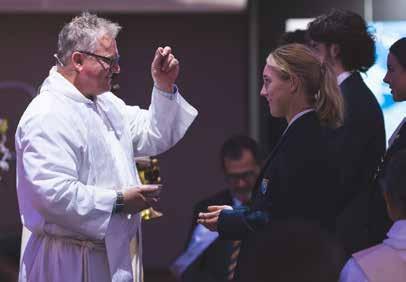
fruit that had already fallen on the ground so that there may be fruit for the next group who comes through and the one after that.
Indeed, in this way, the Bundjalung people are future proofing as they are always thinking at least two generations ahead. That’s hope! Hope that is anchored in the future. Hope that has ensured their existence for some 65,000 years.
Sadly, today, we can get so bombarded by the political, environmental and social turmoil around us that we can often feel hopeless. We can even be inclined to ask the question, what can I possibly do to brighten our future and to bring hope to others?
I’m reminded of the story of a young boy who found tens of thousands of starfish marooned on the shore so he started very carefully one by one to pick up the starfish and place them back in the ocean. An elderly gentleman was taking his dog for a walk and he saw what the young boy was doing so he said to him, “What do you think you’re doing? There’s tens of thousands of them. What difference do you think you can possibly make?” The boy just calmly picked up another starfish and said to the man, “It’ll make a difference for this one.”
You see, we can do plenty to instill hope in our future and that of our young people, especially when we realise that the future of the world, whilst to a great degree is our responsibility, is ultimately in God’s hands. As our Year’s Bible verse reminds us - Jeremiah 29:11 - ‘for I know the plans I have for you, declares the Lord, plans to prosper you and not to harm you, plans to give you hope and a future.’
It was this kind of hope that the ancient Jews needed to possess at the time that they received this message from Jeremiah for they were indeed in a difficult and seemingly hopeless situation.
They had just been defeated by the world rulers of the day, the Babylonians. Their beloved city, Jerusalem, had been utterly destroyed and they had been torn away from their homeland and had become refugees in Babylon.
Year 12 Eucharist
And it was in the seemingly hopeless situation that they needed to learn that their God’s power extended beyond the borders of ancient Israel. They had to learn that their God was not a local deity but rather the Lord of the universe.
The wonderful reality is that they did put their hope in God’s plans to restore them to their beloved homeland and their former way of life.
However, after settling back into the land, there was something further to hope for, or should I say, to wait for, as ‘hope’ and ‘wait’, we have already seen, are synonymous words in the Bible.
This hope came to be more and more focused around a person - the coming of the promised one, the Messiah, God’s anointed king.
And yet, there was to be a 400 year wait - known as the silent years - between the close of the Old Testament period and the beginning of the New, before this hope would be realised. Which we hear in Luke 2:25-32, when Simeon, was waiting for the consolation of Israel, he saw it fulfilled in the infant face of Jesus - a hope that would permeate the entire world.
This is why St Paul could confidently say to the Corinthian Church: ‘For no matter how many promises God has made, they are all “Yes” in Christ Jesus and so through him the “Amen” is spoken by us to the glory of God.’
To finish, I’d like to leave you with this Christian acronym for hope: Holding On with Patient Expectation - H.O.P.E. That is, doing all we can to brighten our future and trusting God made manifest in Jesus, for the rest. Amen. ■
BISHOP DRUITT COLLEGE
Bishop Druitt College Appoints New Deputy Principal
SUBMITTED BY HOLLY HEATHER
Bishop Druitt College is pleased to announce the appointment of Mrs Suzanne (Sue) O’Connor as its new Deputy Principal following an extensive recruitment process involving multiple applicants from across Australia.
Mrs O’Connor is a highly respected leader within the college community, having served at Bishop Druitt College since 2000 in a variety of roles, including classroom teacher, Year Coordinator, Director of Student Wellbeing (K–12), and most recently Acting Assistant Principal – Head of Secondary.
“Mrs O’Connor brings a wealth of experience, a deep commitment to student wellbeing, and a clear vision for the future of Bishop Druitt College,” said Principal Simon Doyle. “She has been an integral part of our community for more than two decades, and her leadership has shaped initiatives such as the Wellbeing Hub, the Wellbeing Dog program, the driving force behind the Waratah Project, leading on-country learning experiences and strengthening cultural understanding, student voice and leadership opportunities across the college. We are excited to see Sue continue her outstanding work in this new capacity.”
Mrs O’Connor has dedicated her career to creating a culture of care, belonging, and excellence, while also driving educational innovation. Sue demonstrates her growth mindset through the prestigious AISNSW National Flagship Leadership Program, which develops the next generation of educational leaders across the independent school sector.
“I am deeply honoured to be appointed as Deputy Principal at Bishop Druitt College, a place I have proudly called my professional home for more than 25 years,” Mrs O’Connor said. “I look forward to working with staff, students, and families to build on our strong foundations while embracing innovation, equity, and inclusion. My passion has always been ensuring that every student feels a sense of belonging and is equipped to thrive in an ever-changing world.”
..the Bundjalung people are future proofing as they are always thinking at least two generations ahead.
Mrs O’Connor’s leadership has also been marked by her commitment to cultural responsiveness and community connection. Through projects such as the Waratah Project and the Stronger Smarter Leadership Program, she has worked closely with Indigenous communities and supported staff in developing highexpectation relationships with Aboriginal and Torres Strait Islander students.
As one of his final responsibilities as Chair of College Council, outgoing Chair Mr David Ford said, “By appointing Sue, we have built a strong leadership team with Simon as Principal, Sue as Deputy Principal, and Shane Oxley as Chief Operating Officer. The leadership of BDC has never been stronger.” ■
BISHOP DRUITT COLLEGE
Bishop Druitt College Celebrates Student Achievement Through the Duke of Edinburgh's Award
SUBMITTED BY HOLLY HEATHER
Bishop Druitt College (BDC) is proud to celebrate the remarkable accomplishments of its students participating in The Duke of Edinburgh’s International Award program, with a special spotlight on BDC alumni and current teacher at the college Kayla Baker, who recently completed her Gold Award which is the highest level of achievement in the program.
The Duke of Edinburgh’s Award is a non-competitive, globally recognised youth development program that fosters personal growth, resilience, leadership, and community engagement. Open to all young Australians aged 14-24, it requires participants to complete activities across four key sections: Volunteering, Physical Recreation, Skills, and Adventurous Journey with a fifth Residential Project required at the Gold level.
At Bishop Druitt College, the program is strongly supported and integrated into school life, with various initiatives such as volunteering at Op Shops, Soup Kitchens, and community service programs aligning with Award components. As a certified Duke of Edinburgh Centre, BDC ensures that students receive safe, supported, and structured pathways to complete all levels of the Award.
Tim Chapman, BDC Outdoor Education Coordinator and Duke of Edinburgh Leader, commented:
“Bishop Druitt College is proud to be a Duke of Edinburgh Centre. The program complements our school values, introducing students to new skills, leadership opportunities and personal growth.”
“There are a number of students currently completing their Duke of Edinburgh at BDC. It’s an ‘optional program’ that students can select, and we support their journeys and personal development.”
One of the program’s standout success stories is Kayla Baker, who began her Duke of Ed journey in Year 10 and has now completed the full suite of Bronze, Silver, and Gold culminating in a powerful testament to her resilience and commitment.
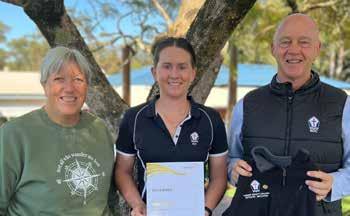
Kayla’s journey included:
Volunteering: OSHC programs
Skills Development: Scrapbooking, cooking, and photography
Physical Recreation: Oztag
Adventurous Journeys: From canoeing along the Bellingen River to completing sections of the Yuraygir Track, Washpool National Park, and the Great North Walk
Residential Project: A cultural immersion trip to Cambodia with BDC
“I wanted to do this as a self-challenge. I saw the information about it in the college newsletter and thought this is a challenge for me. I’m someone who’s always wanted to do things that no one else has done. It wasn’t easy as I faced COVID, university commitments, and the personal loss of my father but I kept going,” Kayla shared.
“It has been a journey over 8 years to complete all of this and it needed to be completed before I turned 25 years old. I started this in Year 10”. This journey has opened doors, improved my job prospects, and even contributed ATAR points during school. I couldn’t have done it without my assessor, Beth Hilton. Her support was everything.”
Beth Hilton, who mentored Kayla throughout the entire process, said:
“While there are lots of different programs at BDC that can help a student achieve this award, the process is student-led with strong support from family and develops independence. I am incredibly proud of Kayla. She was one of six who began the journey with me and the only one who completed the Gold Award. It’s been a privilege to walk this path with her.”
Kayla’s journey is a true inspiration, and she continues to give back now mentoring younger students on their own Duke of Ed pathways. She will soon accompany Year 10 students on a Bronze-level Adventurous Journey at Washpool National Park.
Bishop Druitt College commends Kayla Baker and all current participants for their dedication and resilience. We look forward to seeing many more students embrace the challenges and rewards of the Duke of Edinburgh’s Award in years to come. ■
Love One Another
SISTER HELEN CSC
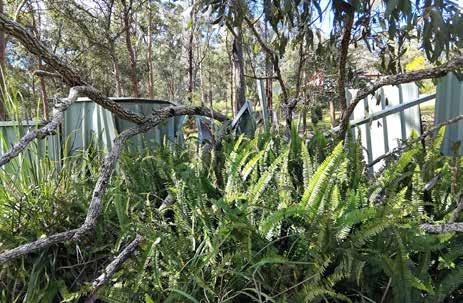
On August 2nd, a storm hit Kempsey with a strong wind that blew down large branches of our gum trees. Some of these branches broke two of our fences, one on each side of our 1 acre property. (Above are photographs of one of the broken fences, both after the storm and after branches had been removed.) One might think, that since this happened on top of the repairs and renovations at present being done on and around our house, and being delayed and extended because of sickness and a leak which appeared in our water pipes that needed mending, I would become more stressed than I was before, but not so. Surprisingly, this last disaster has made me feel better, not worse! I believe that this is because what has happened, and continues to happen, can be understood, at least by me, as a string of actions that have revealed the words of Jesus in John 13:34, “Just as I have loved you, you also should love one another.” Disasters can lead to expressions of God’s love.
What I discovered was that when we both give and receive love with others, we seem to be unified with them and life is enriched. Is this because God loves in such a way?
In the Trinity, God both gives and receives love. Even when loving us and others through us, God is giving and receiving love. It is also how Jesus showed us how to love when we are suffering. This is seen very dramatically when Jesus, although dying on a cross and in great pain, was able to respond and minister to one of the two men who were dying beside him. This man rebuked the second man who was criticising Jesus, and then asked to be remembered when Jesus came into his kingdom (Luke 23:39-43).
When a fence is damaged and is between two houses or properties, it usually affects two lots of people. This was so for us. We had two fences broken, so two groups of neighbours along with ourselves were involved.
After the storm was over, we inspected the damage. Branches were down everywhere, but the immediate need was to move the branches off the broken fences. Then we needed to block up the exposed gaps to prevent neighbouring dogs from coming into our place, and our two hens wandering off and being attacked or lost.
I started to clear up the mess using an ordinary carpentry saw. Sister Linda Mary and I managed to remove many branches but had no hope of dealing with the large branches more than 10cms in diameter. Friends soon contacted us to find out how we had survived the storm. They organised for a couple, who had come recently to our church, to help us by using their chain saw. They worked for more than two hours clearing our fences and sawing up firewood.
Later a fencer came to look at the damage, and to give a quote to mend the worst fence. The cost of repairing this fence, pictured, we would share with the neighbour involved. Our other neighbour has not been well lately, so we are planning a different arrangement.
I was most grateful for the sympathy and help of all the people who came to assist us. I also realised that we could help the second neighbour. Both the receiving of love and help from one group of people, and the giving of love and help to our needy neighbour, lifted me up. In both cases relationships with others were deepened and God’s love was present.
Jesus also saw from his cross his mother Mary and his friend John standing together, grieving out of love for him. He showed care for them both by arranging for John to be responsible for looking after Mary (John 19:26-27).
On reflection, I realized that when discussing repairs etc. with our neighbours, no one blamed anyone for having trees near a fence, or expected others to pay for all the repairs, or even blamed the storm or wind! Jesus showed us how to love others in a way that was not controlling, not expecting or insisting on any retribution nor demanding a loving response.
In all the troubles that arose from these calamities, it seemed that God’s loving presence was involved in giving and receiving. Even though Linda Mary and myself have collected and burnt piles of branches and leaves, and further clearing up and repairing by others is being delayed, anger or frustration does not seem to have arisen in us.
Such happenings can be seen as ordinary parts of daily life and may be ignored. However, when we believe our God is a loving God, present in and giving life to all creation, human and non-human, they can become sources of growth in our loving of one another as God loves us.
Two quotations from Richard Rohr’s book, “The Universal Christ”, seem to be relevant to this topic of loving as God loves. On page 16 he writes, “God loves things by uniting with them and not excluding them.” And on page 6 he writes, “Once we know that the entire physical world around us, all of creation, is both the hiding place and the revelation place for God, this world becomes home, safe, enchanted, offering grace to any who look deeply.”
May the world be as such for us. ■
Reflections by Sister Helen
The Importance of What is unseen
BY SISTER HELEN CSC
When listening to the beginning of a sermon on Michael and All Angels Day, (September 29), I was reminded of the importance in our lives of what we do not see with our eyes. We sometimes say or hear others say, “I will only believe it, if I see it”. Yet we all believe, and need to believe, in some things we do not see. We catch a train by going to the empty station before the time we are told it will arrive. We use our phones to send emails to people overseas or next door, believing the emails will go but not seeing them go. And so on.
As Christians, to believe in what we cannot see is vital to our lives. We cannot see God. We may have seen paintings of God, but what are they? We do have written evidence of the life of Jesus, but our belief in God’s existence and love for us is something more, it guides and shapes our whole lives.
In the Nicene Creed we say, “We believe in one God, the Father, the Almighty, maker of heaven and earth, of all that is, seen and unseen.” In this creed we affirm our belief in a God who is the maker of all, “seen and unseen.”
We know what is seen, but what is meant by ‘unseen’ in this context? There are emotions or feelings such as love, fear and joy, that we do not see, but we do see their expressions in our own acts and those of others. Angels are also unseen by us, and I wish to focus on them. We read about angels, particularly in the Bible, and their relationships with God and humans. They love and obey God, take messages from God to people, and at times protect or care for people.
In the Rule of our Community, The Sisters of the Church, our founder, Mother Emily, placed us under the patronage of Michael, (pictured), and the angels. She did this because she saw the lives of the angels, “pointing us to a life both of worship and active ministry, of mingled adoration and action”. Like the unseen angels, we are called to love our God, and express that love in our relationships with all God’s creation, human and nonhuman. This is, of course, the calling of all Christians.
In Revelation 12, we are told of a battle between Michael and his angels and the Devil or Satan and his angels, which is for us, an unseen conflict by unseen beings, basically between good and evil. We know about conflicts in our own lives between good and evil. In the story of
Michael’s life, he defeated the Devil but did not kill him. Instead, the Devil and his angels were thrown down from heaven to earth. Here on earth, the Devil was conquered by the power of Jesus’ death on the cross, described as, “the blood of the Lamb”, but again not destroyed. In a sense, an unseen victory over the Devil and evil, has already been achieved, but there is still work for us to do.
Michael could have killed the Devil with his spear, and God could have controlled our world by eliminating evil from it, but this did not happen. Evil, pain, fear and suffering, seen and unseen, along with our free will to choose good and evil, are part of human life on earth. God helps us to work through these difficult times and so to grow in God’s love. In Jesus’ life, he struggled before accepting to undergo a horrible death by crucifixion, that in the end brought new life, resurrection, redemption and hope for all.
Returning to the lives of worship and active ministry of Michael and his angels, these two activities can be linked together in various ways. One way is when we believe God our creator, although unseen, is present in some form in all creation, human and non-human. Then, I suggest, that we worship God not only in hymns and prayers, but also whenever we appreciate and minister to any part of God’s creation that we see.
In our relationships with nature, we worship our unseen God, when we give thanks for and enjoy the beauty of nature, and when we serve nature. In the ABM Season of Creation which ended on October 4, the feast day of St Francis of Assisi, patron saint of ecology, we are urged to work at healing nature. We can do this by recycling when we can, using more solar and wind power, and working with nature by planting more trees, caring for animals and plants facing extinction, and conserving land, etc.. The unseen worship of God and seen active ministry merge.
Then there are the many people of the world, those we meet each day, as well as those we do not know even exist. Do we respect and reverence them, and ourselves, because we all are God’s creation, and God’s unseen presence is in us all? Jesus taught his followers to pray, “Our Father…”, so all people are children of God, our brothers and sisters we are to love and care about. I feel drawn to try to smile at people I pass in the street. Some smile back at me, others do not. We also are called to listen to, and help those in distress when we can. Again, worship of God and active ministry merge.
When we respect, reverence, love and serve all God’s creation, human and non-human, we are surely following the example of the unseen angels, worshipping and ministering to our unseen God who loves us and is present in all of us, the seen and unseen ■
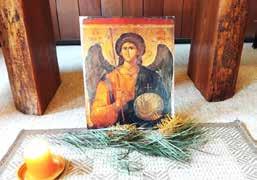

NOVEMBER REFLECTION
The Importance of What is Seen
BY SISTER HELEN CSC
The above puppies are four days old. It may be difficult for the reader to see them, but the puppies cannot see at all, so are very vulnerable. They identify their mother by scent and feeling to obtain the life-giving drinks they need. She can see them, and will try to protect and care for them, even when they all move in different directions. Soon they will see for themselves and come to know what they are seeing, including one another, their mother and themselves.
This season I shall explore the importance of what we do see, human beings, animals and nature. I do not wish to compare seeing with unseeing, but rather to affirm the importance of all God’s creation, seen and unseen.
Seeing is usually the way we recognise others, but we also use, especially when we are blind or have poor vision, hearing, touching, and perhaps, like the puppies, even smelling to identify others.
When we look around us as we walk down a street or sit in a waiting room or bus, we may ignore or just glance briefly at the people who pass by or sit beside us. Alternatively, we may decide to see others as people created by God, as we are, and so in a sense, as our brothers or sisters. This does not mean that we stare at them or try to force them to relate with us, but rather that we surround them with God’s love, and recognise God’s presence in them.
God’s love, as I understand it, does not demand a response from the one being loved. Instead, God’s love allows a freedom for all to respond or not, as they wish. This means that our offers of friendship and love can be ignored, rejected, or accepted with gratitude. It is not a controlling relationship we are desiring, but one that respects and reverences the other. It can be quite uplifting when someone acknowledges us as a fellow human being, and responds in a positive way to our caring smile.
Seeing others reminds us that we belong to the world of which we are a part. In the first instance we are all created and seen by God, surrounded by God’s love and have something of God’s presence in our lives. This unites us with all other human beings and also the non-human part of creation we see around us. We are all bound together as members of God’s creation. I notice that if I arrive late to put my two hens into their house and give them their evening meal, they have already gone in, but on seeing me they immediately come out again, and squat down for me to pick them up and put them back where they have just been. This means they and I can share the enjoyment of being seen, recognised and felt.
It is interesting that after 9 months, on October 21st, 2025, our Prime Minister, Anthony Albanese, was able to have a face to face meeting sitting next to the President of USA, Donald Trump, in the White House. And after 500 years, King Charles, head of the Church of England, and Pope Leo were able to come together on October 23, 2025, and publicly pray at a service in the Sistine Chapel, offering a visible sign of unity and reconciliation between Christians. In both cases connections could have been made in other ways, but being physically together where they were, seemed to achieve much more.
We might now ask, how do we see ourselves? Each day we look in the mirror and see part of ourselves. Other people can see more of us, like the back of our head! If this is so, do we need to carefully relate with others to know not only them, but to better know ourselves?
When it comes to our relationships with nature, trees are stirred by a gentle breeze, will capture our attention and fill us with peace. Also I find that stopping to look at the beauty of a rose, a Noisy Miner bird feeding from the red blooms of a bottlebrush bush or a lizard in our garden nodding its head in my direction when I speak to it, gives me much pleasure.
At the resurrection of Jesus, what is unseen and what is seen is mixed up. Unseen angels were seen, a dead body was not seen, a risen body was not recognised, but thought to be a gardener in one story, and a stranger walking along a road in another. Jesus’ friends saw his resurrection body and even heard him talk, but they did not at first recognise him.
What and how, do we see when we look at a person, animal or plant? Do we look carelessly or carefully, taking time. It can be difficult sometimes to see and recognise God in other people, and even in wriggly 4 day old puppies. Rowan Williams in “Being Human” page 65, suggests that difficulty, “imposes the willingness to believe that there is more to work on”. So accepting the importance of what is seen, and taking time to relate with it, may enable us to deepen our recognition of God in all creation, and then reveal more of God’s love which is present in both the seen and unseen in God’s world. ■
And let the peace of Christ rule in your hearts, to which indeed you were called in the one body. And be thankful.
COLOSSIANS: 3:15

OF THE
North Coast Anglican
MAGAZINE
ANGLICAN DIOCESE OF GRAFTON, NEW SOUTH WALES