Featuring Nelly Korda, Ben Griffin & More
Shinnecock Hills Golf Club
cd: ROBB AARON GORDON






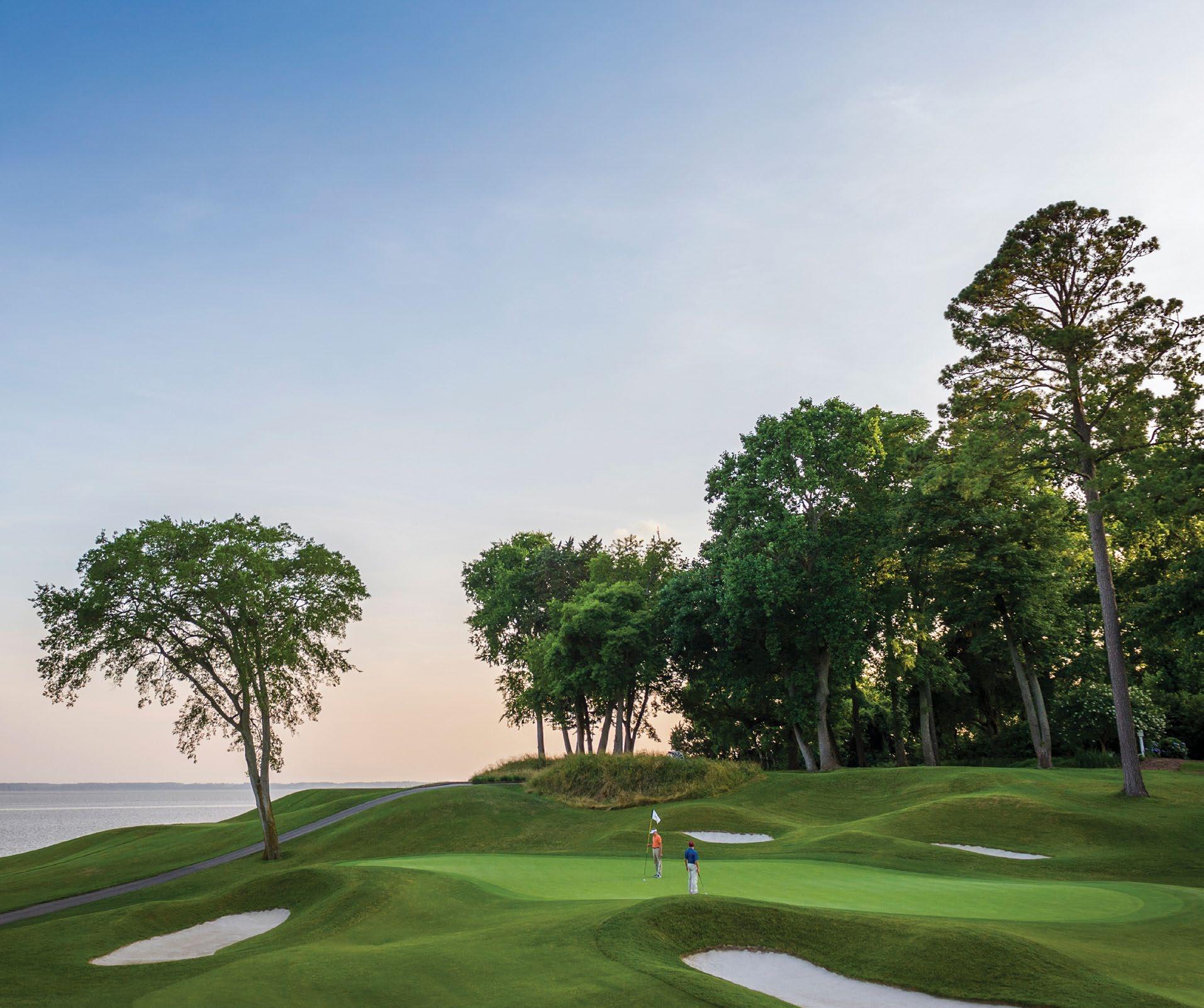
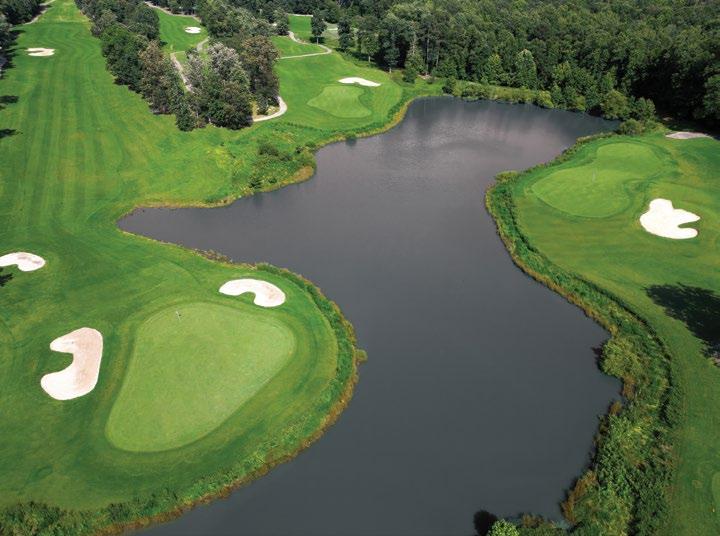
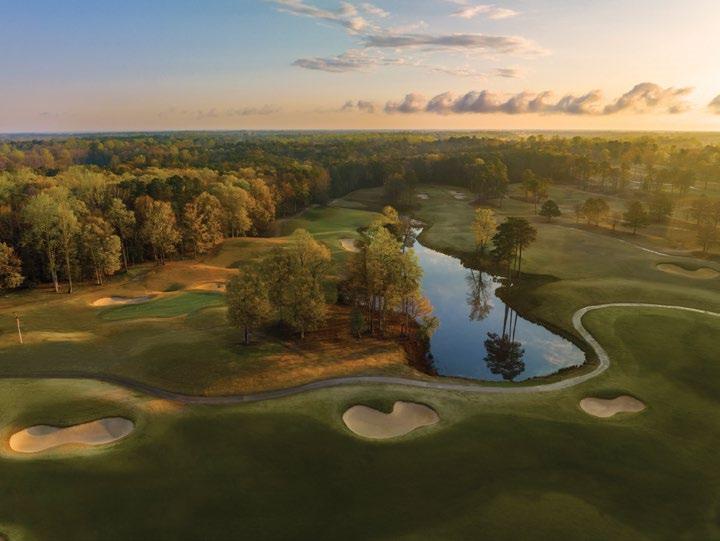
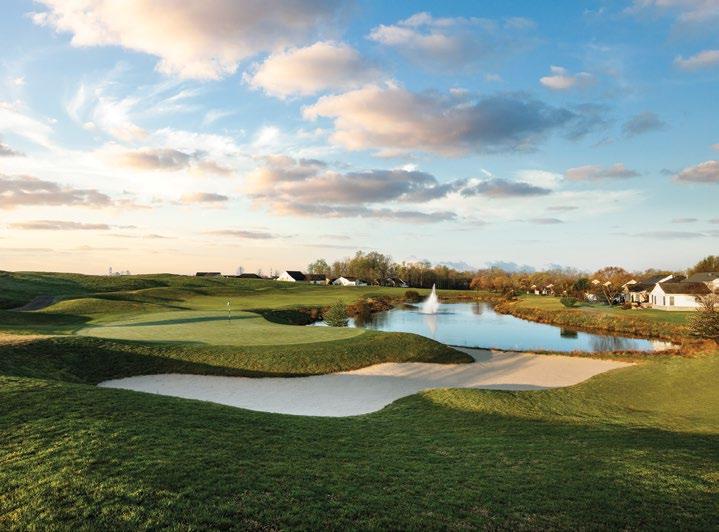
Tucked into the rolling landscapes of Virginia’s Historic Triangle, Williamsburg is emerging as one of the East Coast’s most compelling golf destinations.
More than a dozen standout courses offer challenging play across scenic fairways and impeccably maintained greens. Tee off on acclaimed championship courses designed by legends like Arnold Palmer, Jack Nicklaus, and Robert Trent Jones Sr., then unwind beyond the fairways with inspired dining, local wineries, craft breweries, upscale shopping, and the thrills of Busch Gardens® Williamsburg.
From luxury hotels and waterfront resorts to spacious condo-style retreats, Williamsburg delivers a refined golf escape that pairs world-class play with unforgettable experiences.





Explore more at subzero-wolf.com



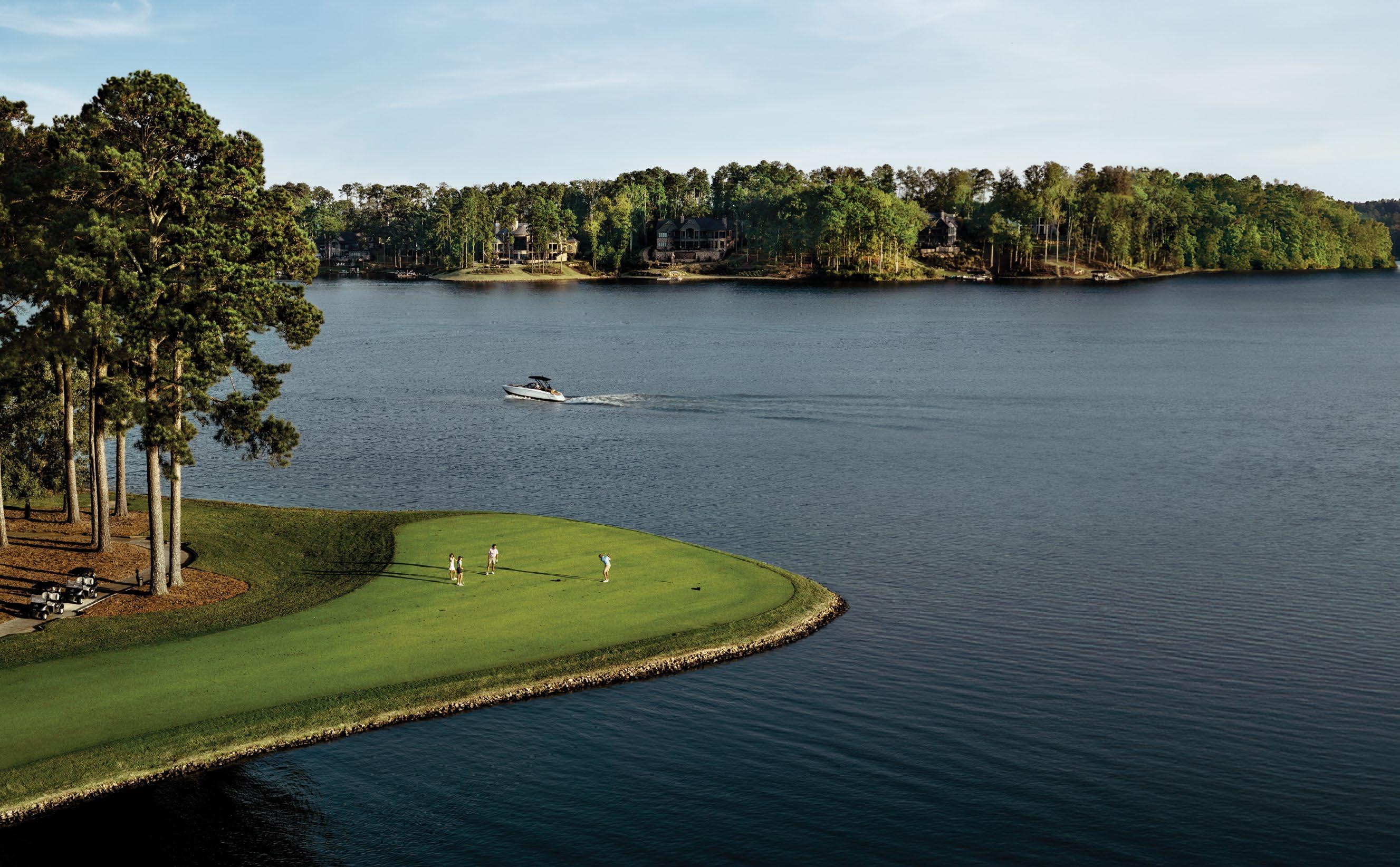

Just east of Atlanta, and one flight from just about anywhere, Reynolds Lake Oconee has welcomed Members from around the country for nearly four decades. Whether a weekend cottage or a home for the generations, Reynolds has a special magic all its own.
For those interested in Real Estate and Membership, preferred rates in our cottages or The Ritz-Carlton ® are available. reynoldslakeoconee.com/kingdommag | 855.915.1345








When a Satur day af ter noon r becomes a celebration.




Publisher & Co-Founder
MATTHEW SQUIRE
Executive Vice President, Content BRUCE WALLIN
Creative Director
MATTHEW HALNAN
Editors
ROBIN BARWICK (UK) SHAUN TOLSON (US)
Managing Editor LORI BRYAN
Head of Advertising Sales JON EDWARDS
Executive Director, Marketing EMILY POPPERT
Marketing Coordinator MORGAN BARBAY
Contributing Editor ALEXANDRA O’LAUGHLIN
Founding Director ARNOLD PALMER
PUBLISHED BY
Executive Vice President, Content: Bruce Wallin
Executive Vice President, General Manager: Pamela Abbott
PARTNERSHIPS
Santiago Abreu, Paolo Cassano, Jackson Castillo, Mark Cooper, Tori DeClaris, Jay Gentile, Margot Giblin, Travis Haley, Collin Jenkins, James McNulty, Christian Poppert, Elaine Rizos, Debbie Topp, David Van Sicklen
Photography
Evan Schiller, Jacob Sjöman, Mr. Tripper
Special Thanks & Contributors
Crai S. Bower, Jillian Dara, Gina DeCaprio Vercesi, Adam Erace, Dylan Ettinger, Ben Griffin, Casandra Karpiak, Nelly Korda, Allan Lynch, Johnny Morris, Gary Player, Albert Pujols, Shivani Vora, David Whelan
Order online at: shop.kingdom.golf and receive special subscriber offers
Or email: hello@kingdom.golf
Advertising and Commercial matt.squire@interluxegroup.com 646-970-3755
Editorial robin.barwick@interluxegroup.com
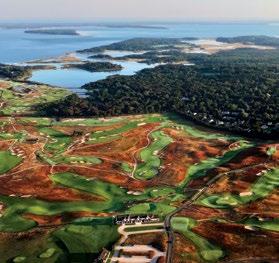
COVER
Shinnecock Hills Golf Club
PHOTO
Jon Cavalier, linksgems.com
SOCIALS VISIT
kingdomgolf kingdommag kingdomgolfmag
Newsletter
Subscribe at: kingdom.golf/kingdom-newsletter
Kingdom is a luxury lifestyle and golf magazine enjoyed by more than 2 million readers annually through our print publication, social channels, website, newsletters, and events. Co-founded in 2003 by Arnold Palmer, Kingdom continues the King’s legacy with original content that celebrates excellence and the modern golf lifestyle, both on and off the course.
Printed in the USA
CONTENT AND CREATIVE SERVICES
Director, Creative Services: Shannon Corrigan-Baumann
Content Director, Custom Media: Nikki Prange
Operations Manager: Mandee Klenk
MARKETING
Julia Biedenbender, Tatiana Imamura, Adam Szafranski
EXECUTIVE TEAM
President, Lifestyle Media: Jay Meyer
President, Strategic Communications: Florence Quinn
President, Experiential: Maneesh Goyal
Founders: Matt Carroll and Nick Van Sicklen
Kingdom (Copyright © 2026 by Interluxe Group) is published quarterly by Interluxe Group, 7324 Gaston Ave, Ste 124-451, Dallas, TX 75214. Business and Editorial Offices: 3943 Irvine Blvd, Suite 32, Irvine, CA 92602. Accounting and Circulation Offices: 208 Sora, Irvine, CA 92618. Visit shop.kingdom.golf to subscribe. Periodical postage is paid at Irvine, CA, and additional mailing offices (if applicable). Reproduction without permission is prohibited. The articles appearing within this publication reflect the opinion of their respective authors and not necessarily those of the publisher. The contents of advertisements and advertorials are entirely the responsibility of advertisers. No responsibility is taken for unsolicited submissions and manuscripts.
Teeth of the Dog, Where the Legend Rests, the Legacy Lives On.
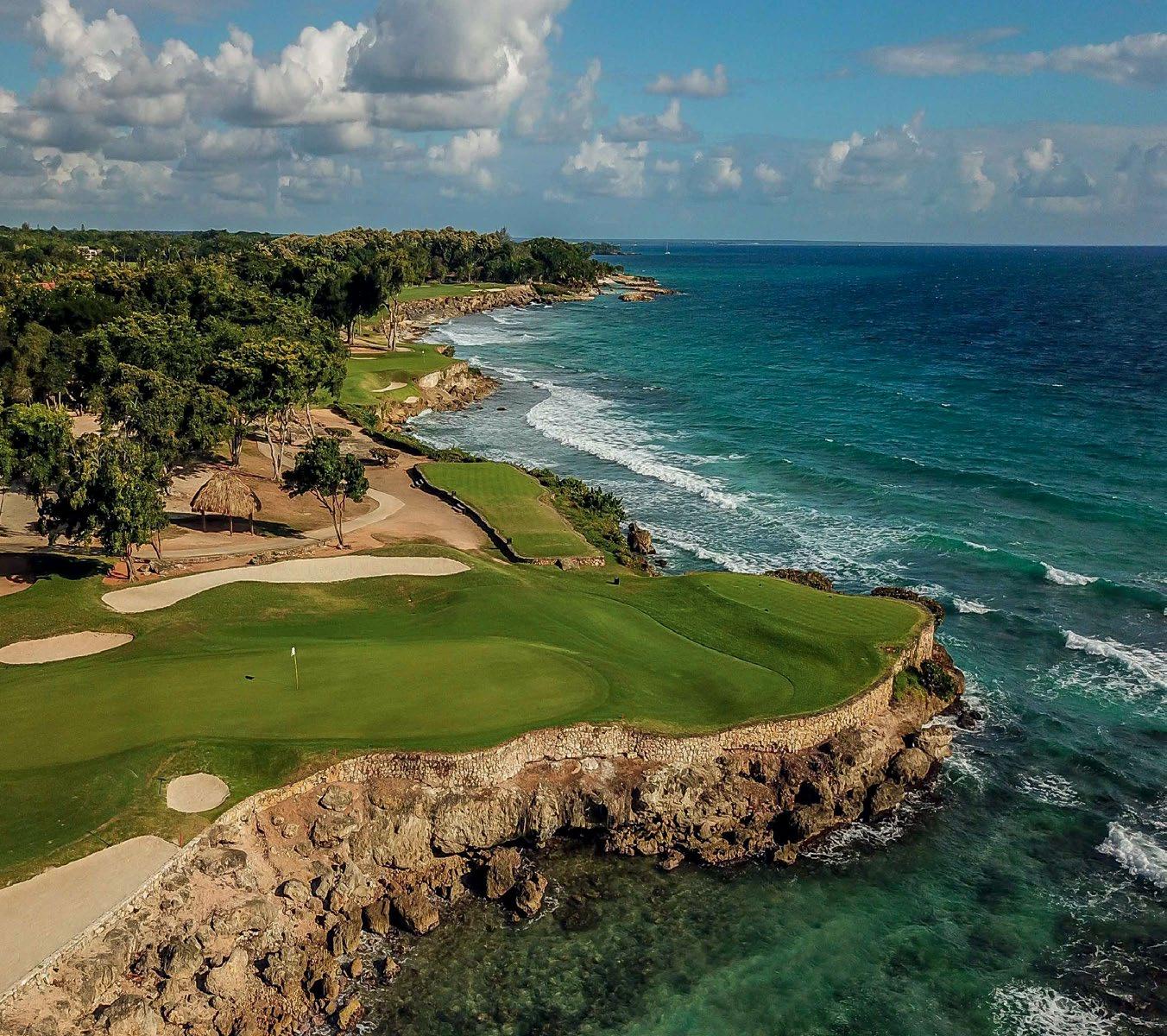
Teeth of the Dog, Pete Dye’s masterpiece and the No. 1 course in the Caribbean, returns more spectacular than ever. Its iconic oceanfront holes, restored fairways and greens, and an elevated playing experience usher in a new era for this golf legend. At Casa de Campo® Resort & Villas, legendary golf meets unmatched luxury — with stunning accommodations, world-class dining, a beautiful new state-of-the-art spa, marina, equestrian center, shooting center, and exclusive white-sand beaches with crystal-clear waters. Discover more at casadecampo.com.do • res1@ccampo.com.do • 800-877-3643 2025 The best. The most. The first.
Time flies when the golf gods are having fun! It only seems like a minute since Rory beat Justin Rose in a playoff at Augusta National last April.
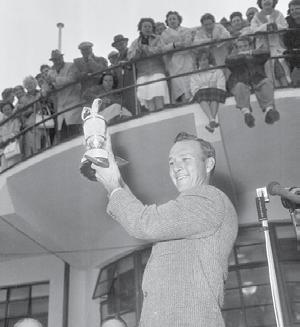
I love this time of year, as the Masters fast approaches, and this summer I am particularly excited to see the Open return to Royal Birkdale. This was the scene of Arnold Palmer’s first Open victory, in 1961, and this famous occasion elevated the profile of the tournament in the States. Upon winning, Arnold said, “I wanted this championship more than anything in my life, but anything you want real bad is awfully hard to get.”
Jack Nicklaus took note and followed Arnold to Scotland’s Royal Troon the following year, when Arnold retained the Claret Jug with one of the great performances of his career.
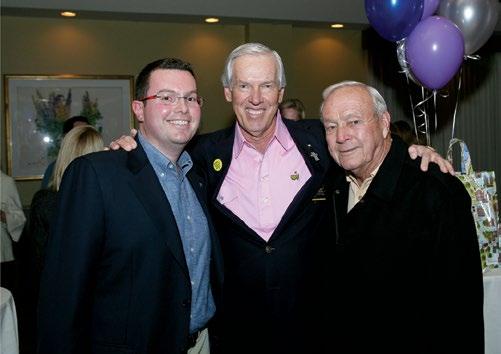
Arnold was among many Americans to love Scotland, and another was his close friend and self-professed “Arnie’s biggest fan,” Dr. Howdy Giles. Sadly, Howdy passed away on February 3, and I dedicate this issue to him.
Howdy’s friendship with Arnold started in 1962 (a year in which Arnold won both the Masters and the Open). When Arnold introduced us nearly 25 years ago, Howdy instantly became my dear friend, too. A great supporter of me and of our work on Kingdom, Howdy was a true gentleman, generous to a fault, and, like Arnie, always mindful to treat others as he wished to be treated.
Howdy had a real appetite for life and especially for golf! A member of Wilmington CC, Pine Valley, Bay Hill, Latrobe CC, and the R&A in St Andrews, Howdy was known to many people in the game and loved by every single one.
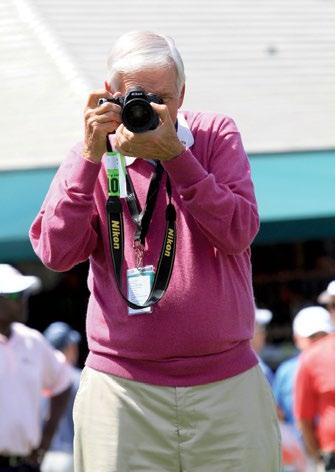
Howdy’s other passion was photography, and several of his photos have appeared in Kingdom, but more than those I will cherish the photos of us together, one of which is included here.
Howdy lost the love of his life, his wonderful Carolyn, in 2021, and leaves behind his loving daughters, Robin and Julie, and their beautiful families.
I am honored to have known Howdy. He enriched my life, and I will think of him as I watch this year’s Masters, a tournament he attended religiously, and where his son-in-law asked if he could marry Robin.
Wishing you all health and happiness, and the best for the season ahead.


THE GOLD GOLF EXPERIENCE WITH 20% SAVINGS ON ACCOMMODATIONS AND CHAMPIONSHIP ROUNDS.
At PGA National Resort, every day invites you back to the first tee. Five celebrated courses. A legacy shaped by champions. A setting where precision and pleasure share the same fairway.
Arrive ready to play. Leave with stories worth retelling.


888.976.0598


From first-time contenders to Grand Slam hopefuls, golf’s best are heading to four storied venues to compete for 2026’s ultimate crowns.
As he prepares for his first Masters, the once debt-ridden road warrior has become a model of consistency and success on the PGA Tour.
After a title drought in 2025, the LPGA Tour star is poised to reclaim her major-winning form.
84 Dominican Republic
Its newly reopened Pete Dye masterpiece is one of many things to sink your teeth into on a golf trip through the D.R.
94 British Columbia Kingdom travels from Vancouver Island to the Okanagan Valley to see why B.C. has become a mustvisit destination for golfers.
104 Swinging in Style
A new luxury train is just the ticket for an unforgettable golf trip through Italy.




















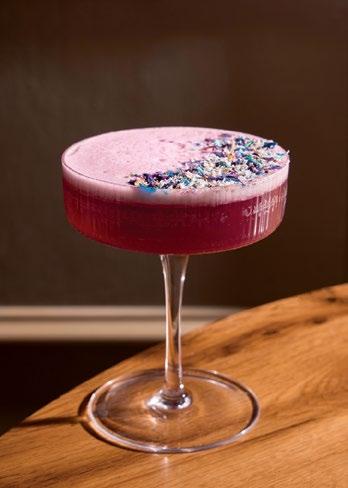

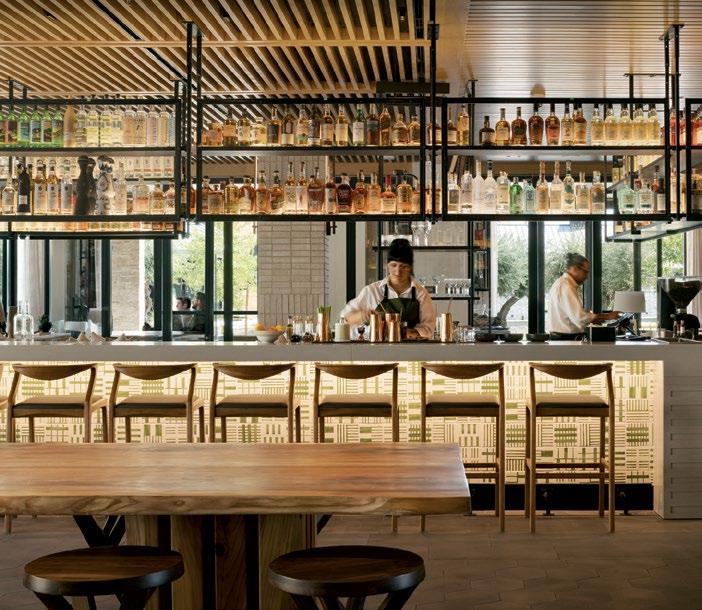
We’re toasting 250 years with these celebratory elixirs from Philadelphia’s top bars.
Boutique domaines
Chef Charlie Palmer cooks up a new wine-country hotel.
Six learn-to-sail trips, from California to Switzerland.
Why it’s a good time to take a closer look at one of Mexico’s most beautiful regions.
Bass Pro Shops founder Johnny Morris.



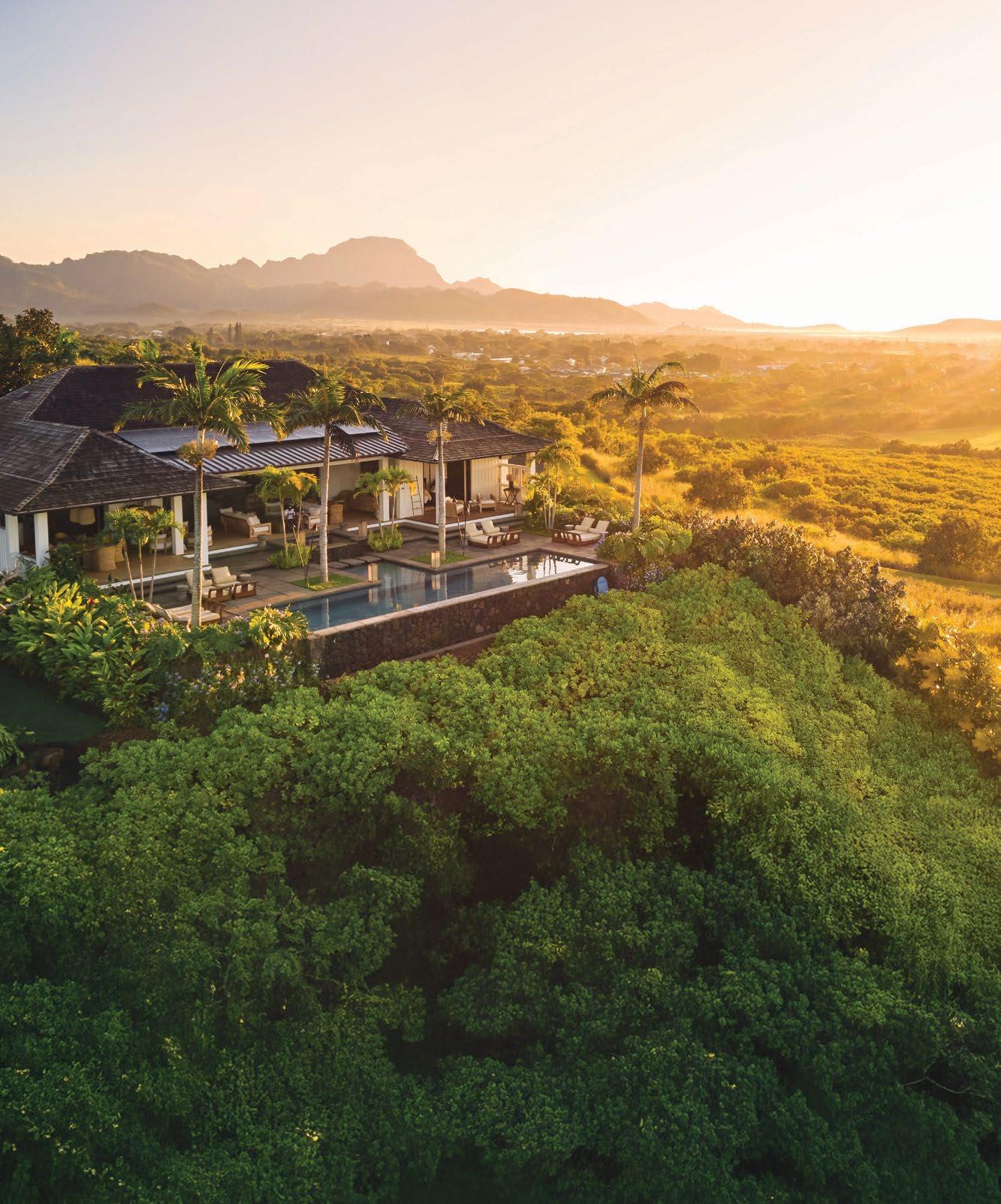
A New Opportunity to Belong.
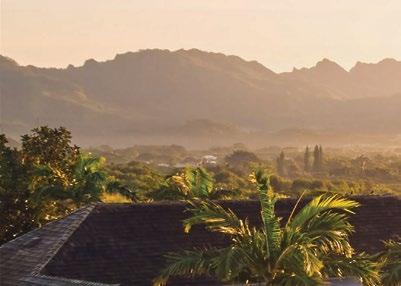
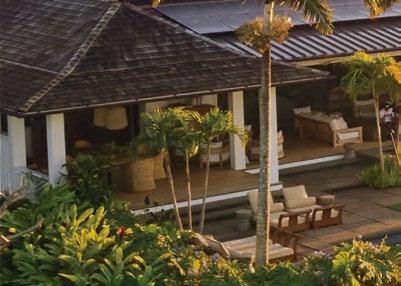
Share a South Shore legacy like no other, newly elevated to celebrate nature, culture and wellbeing with like-spirited Kukui‘ula Club ‘ohana who share a deep love of Kaua‘i. Make infinite memories, mauka to makai. And belong to a purpose-driven club that gives back to our island community. Come be part of Kukui‘ula – of the land, of the heart. Custom homesites from $1. 25M | Luxury homes from $4.45M



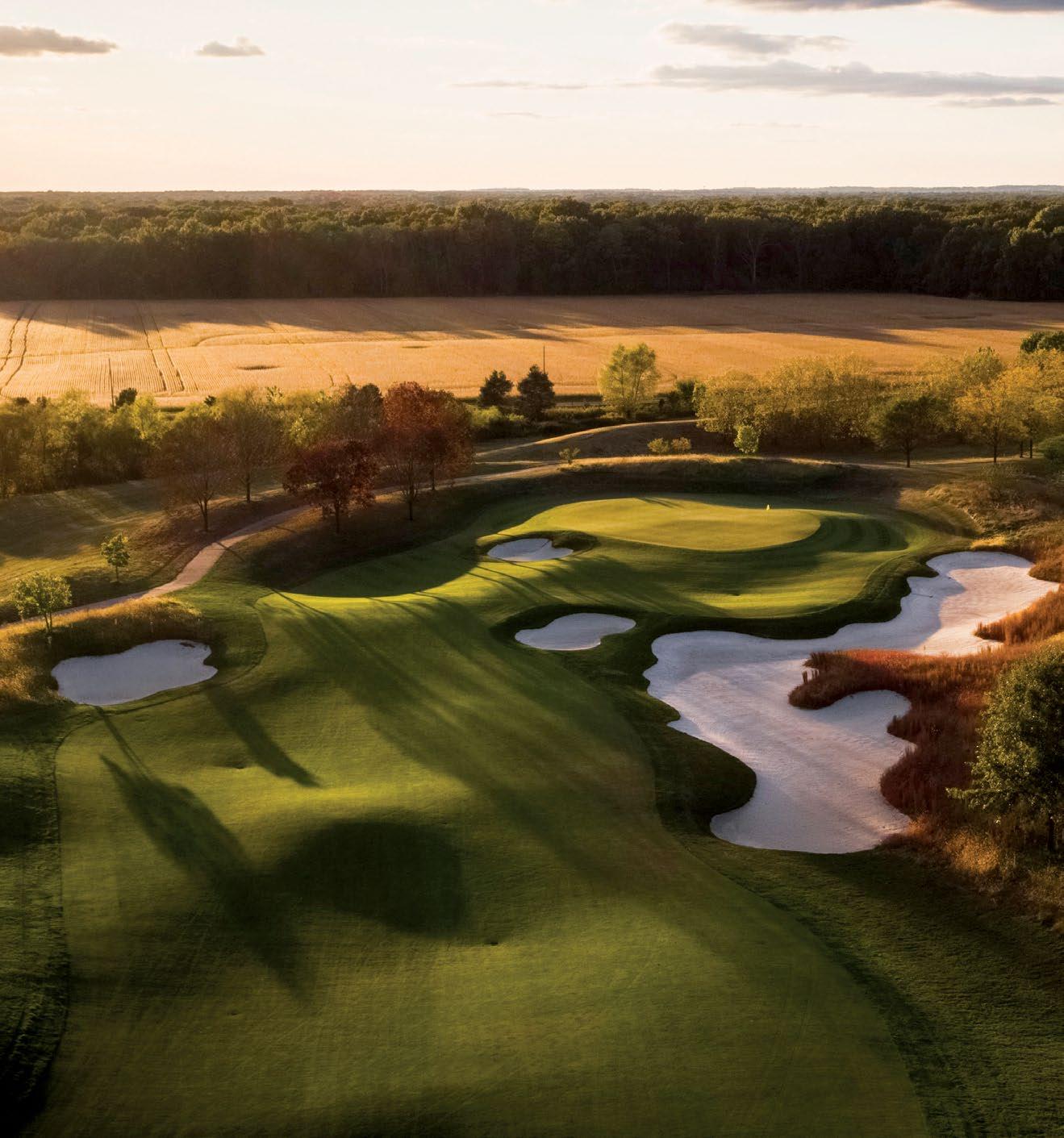
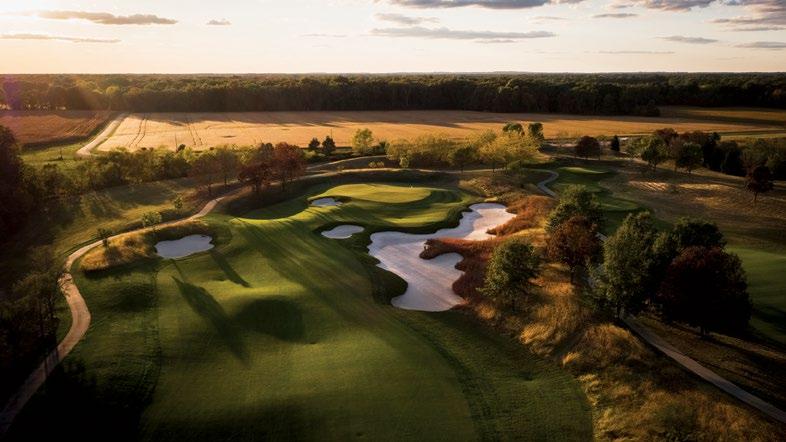
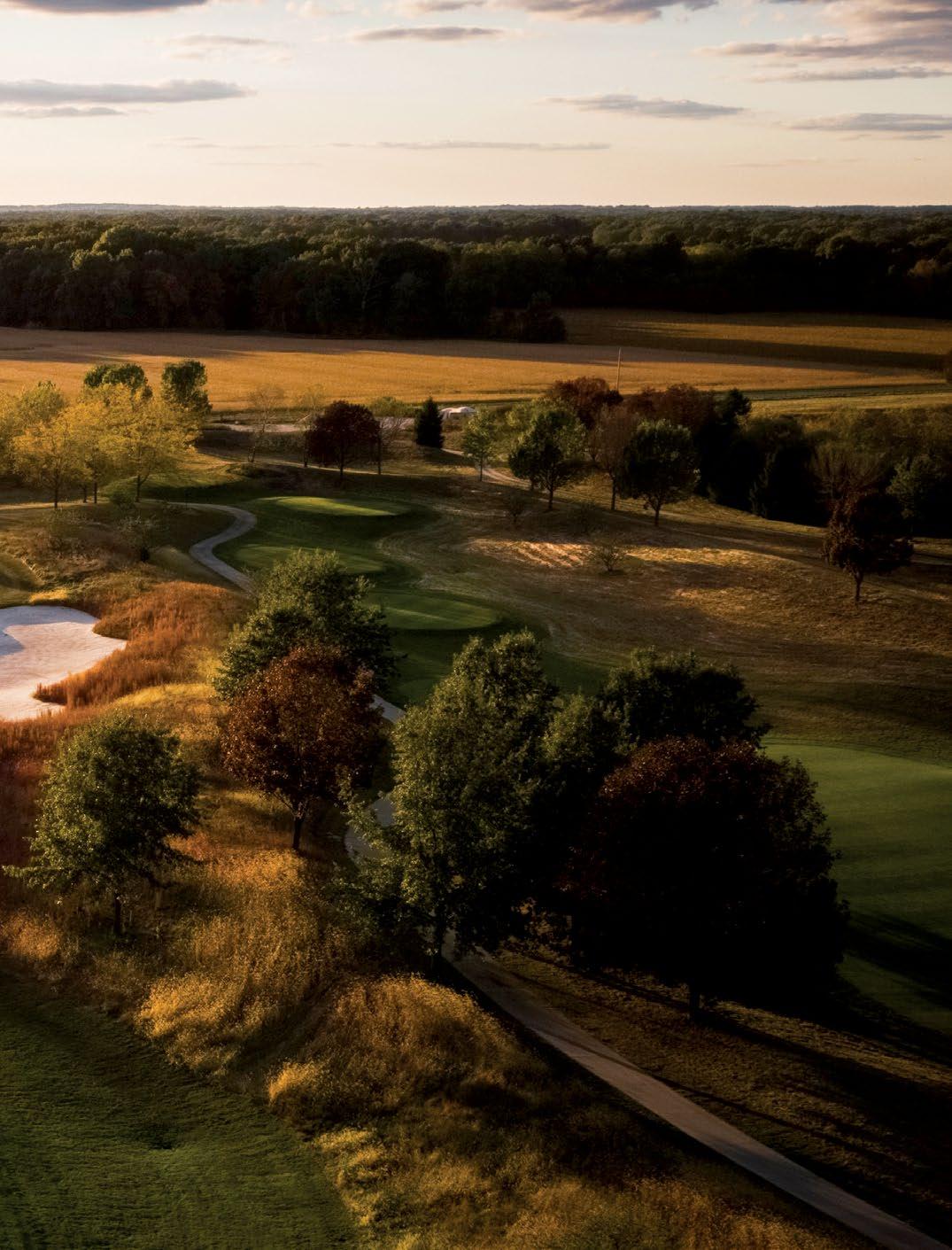
Canyata was once one of golf’s best-kept secrets. The club opened in 2004, amid the vast farming plains in east central Illinois, as the private golf course of the energy and auto racing magnate Gerald Forsythe. What began as a three-hole concept on his expansive farm eventually grew to 18 holes, once course architect Michael Benkusky convinced Forsythe that his cornfield was perfectly primed for golf and destined to be a championship course.
The beautifully sculpted course was golf’s answer to Field of Dreams, albeit one where access was restricted to Forsythe’s friends and family. If you build it, he will come—as long as his name’s on the list. Escalante Golf acquired the property last year, and now Canyata is the home course of Icon Golf, a membership program for luxury golf and travel worldwide.
Icon Golf members who play Canyata will find impressively roomy fairways and broad greens. Immaculate conditioning pairs with elaborate water features and bunkering to give the course both beauty and bite.
Player’s perspectives, Williamsburg weekends, topshelf tequilas & more
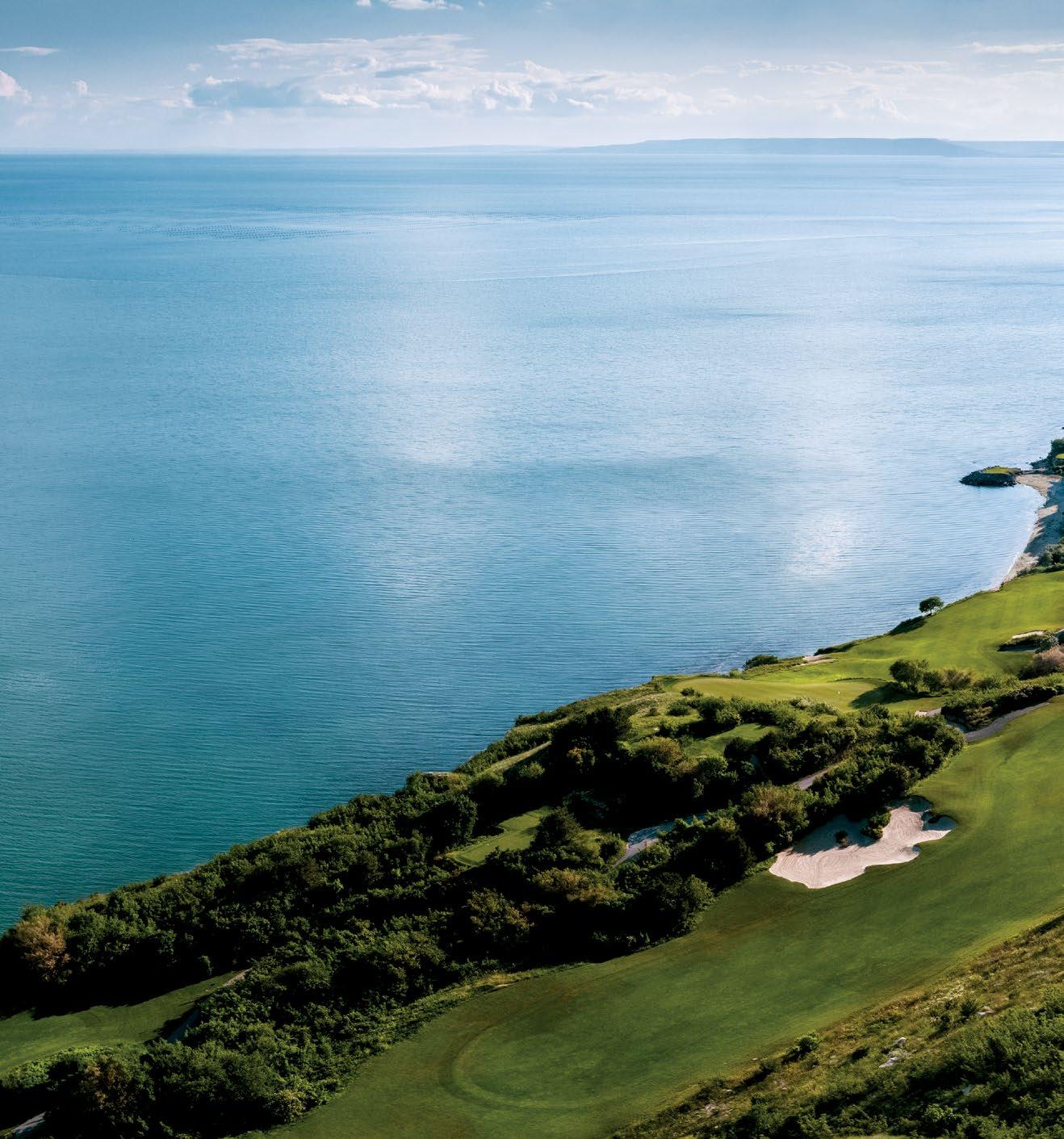
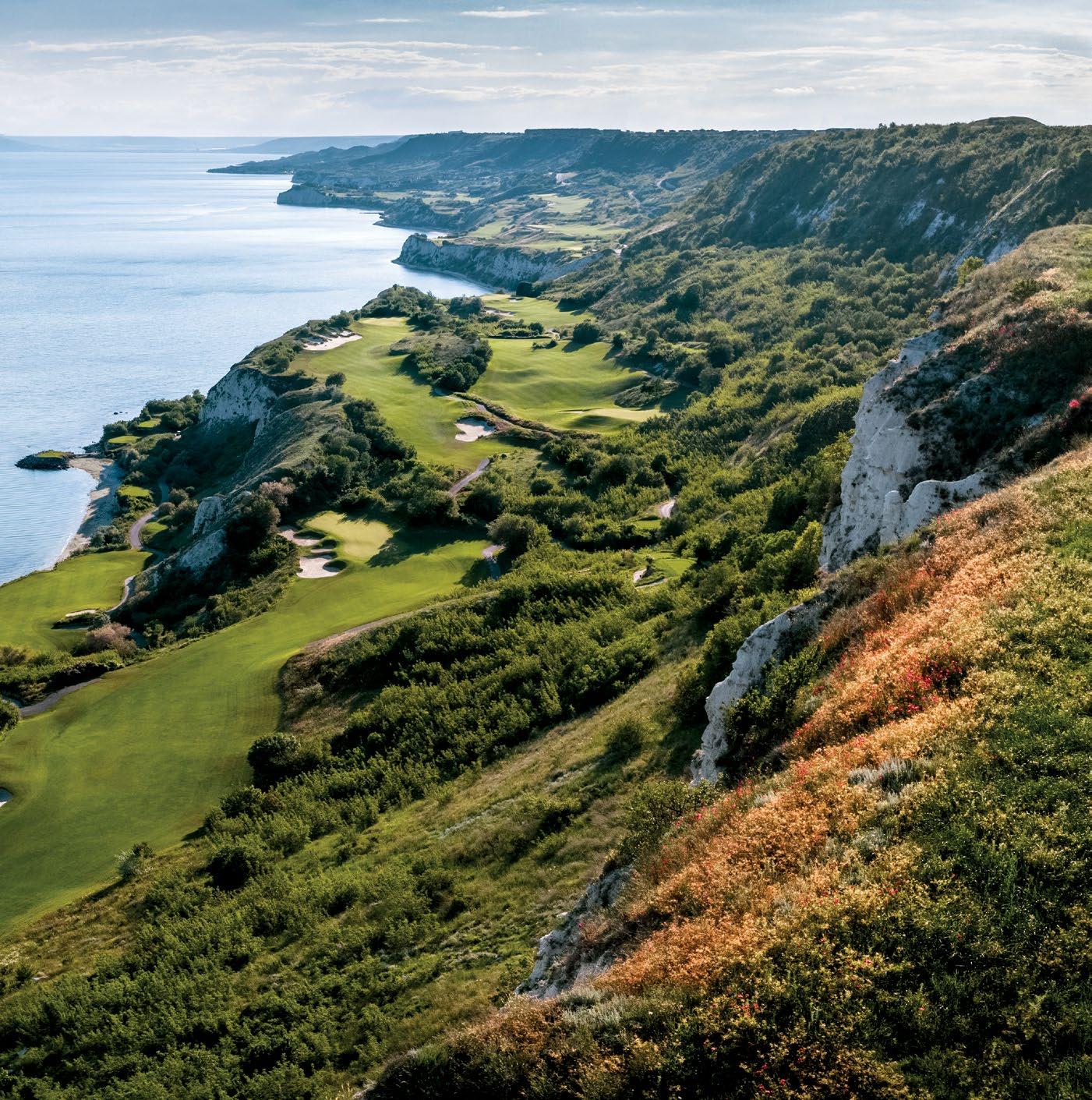
If Bulgaria has not yet figured in your European travel plans, it could be time to consider a visit to Cape Kaliakra in the Southern Dobruja region, on the Black Sea shoreline. Kaliakra is a nature reserve featuring bluffs that rise some 230 feet above the sea, and here lies the Thracian Cliffs course, a spectacular proposition designed by Gary Player.
“You can see the ocean from every hole, and it is a magnificent golf course,” Player says. Indeed, from the fairways and greens, golfers can spy cormorants diving into the sea and pods of dolphins swimming by.
“It was such a thrill to build that golf course, and to do it in Bulgaria and on the Black Sea,” adds Player, who has designed more than 130 golf courses in 38 countries. “From building that course, we have introduced new people to golf. That is what Arnold [Palmer], Jack [Nicklaus], and I did from the beginning—we weren’t just winning tournaments; we brought people to the game. We loved the game, and we wanted to promote it.”
Read more from Player in Kingdom’s exclusive interview on page 52.
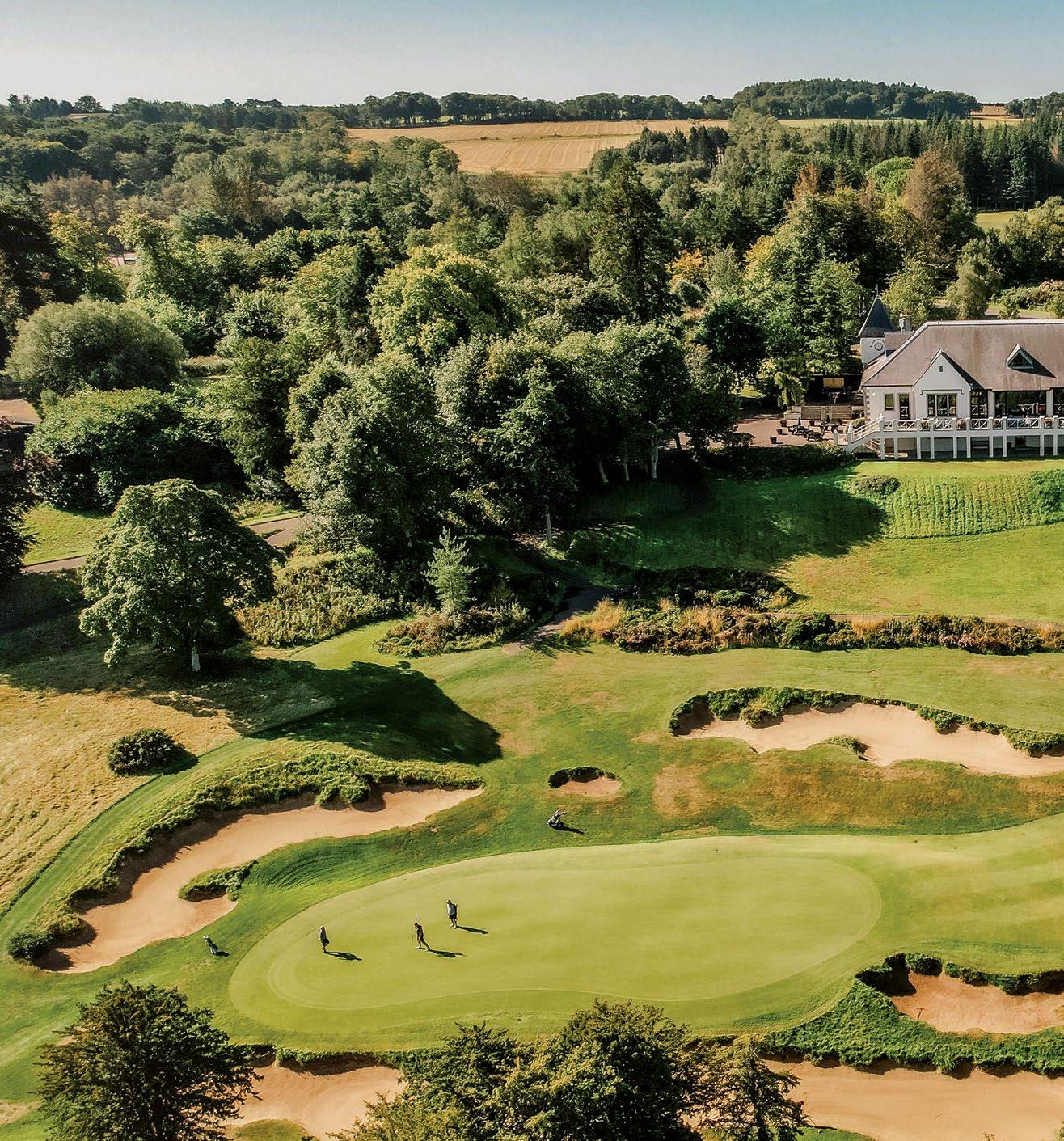
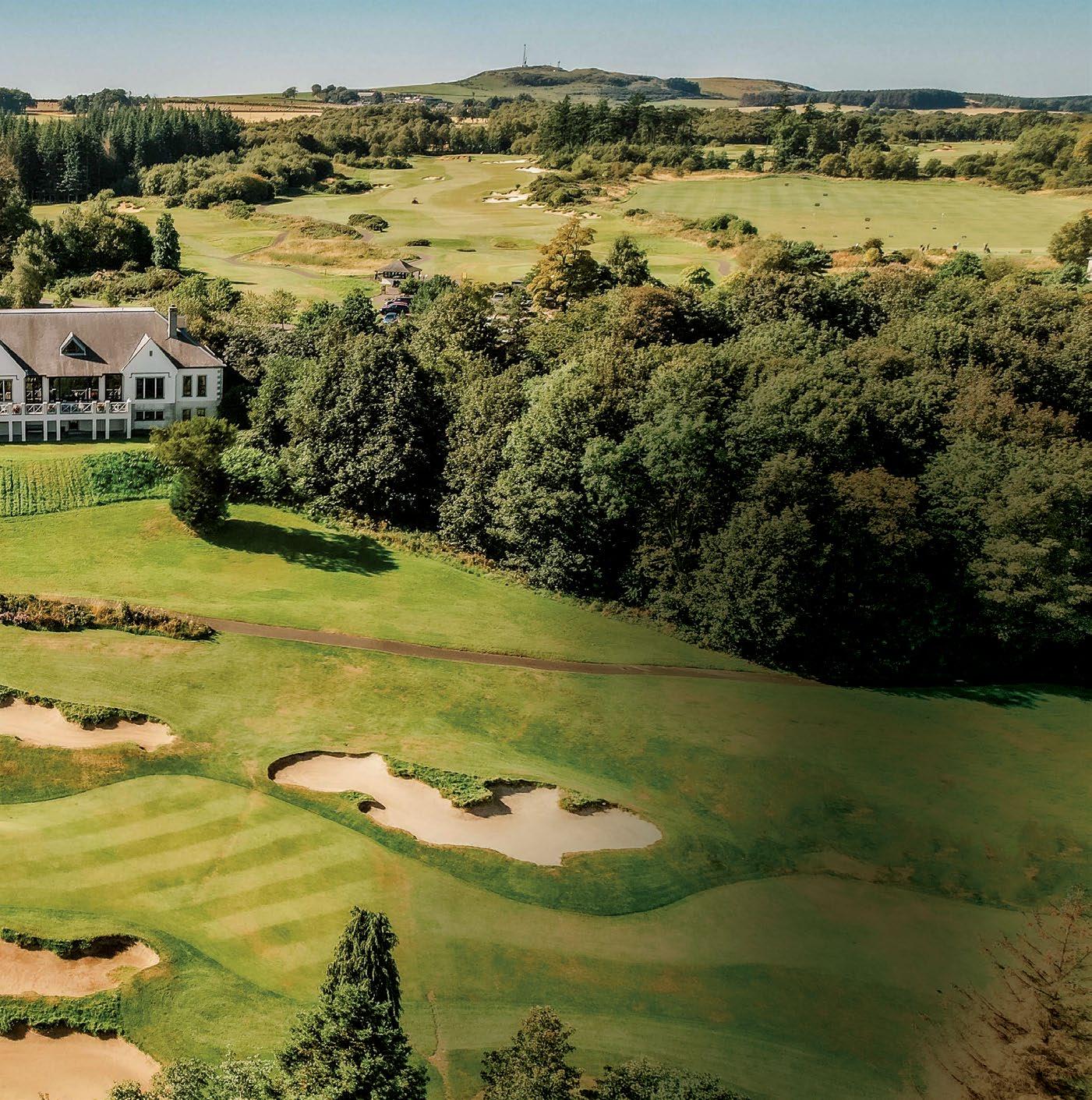
The heathland golf course overlooking St Andrews, known as the Duke’s Course until this January, has a new name: the Craigtoun Course. The golf course is now under the auspices of the St Andrews Links Trust, on a long-term lease from the Kohler Company, which also owns the town’s Old Course Hotel.
Located three miles inland from St Andrews in the Kingdom of Fife, Scotland, the lush, hilly golf course was originally designed by Australian Peter Thomson, the five-time Open champ who lived in St Andrews. The course was opened in 1995 by Andrew Mountbatten-Windsor (formerly Prince Andrew, the Duke of York) and named in his honor. The disgraced Mountbatten-Windsor—who has ties to Jeffrey Epstein—was captain of the St Andrews–based Royal and Ancient Golf Club in 2003 and 2004, to coincide with the R&A’s 250th anniversary.
The Craigtoun Course enters a new era with a new name taken from a neighboring country estate. Says Neil Coulson, the outgoing chief executive of the St Andrews Links Trust, “The agreement for the Craigtoun Course will see the first new course added to the Home of Golf’s portfolio in 18 years and presents an ideal opportunity to expand the golf experiences we offer.”
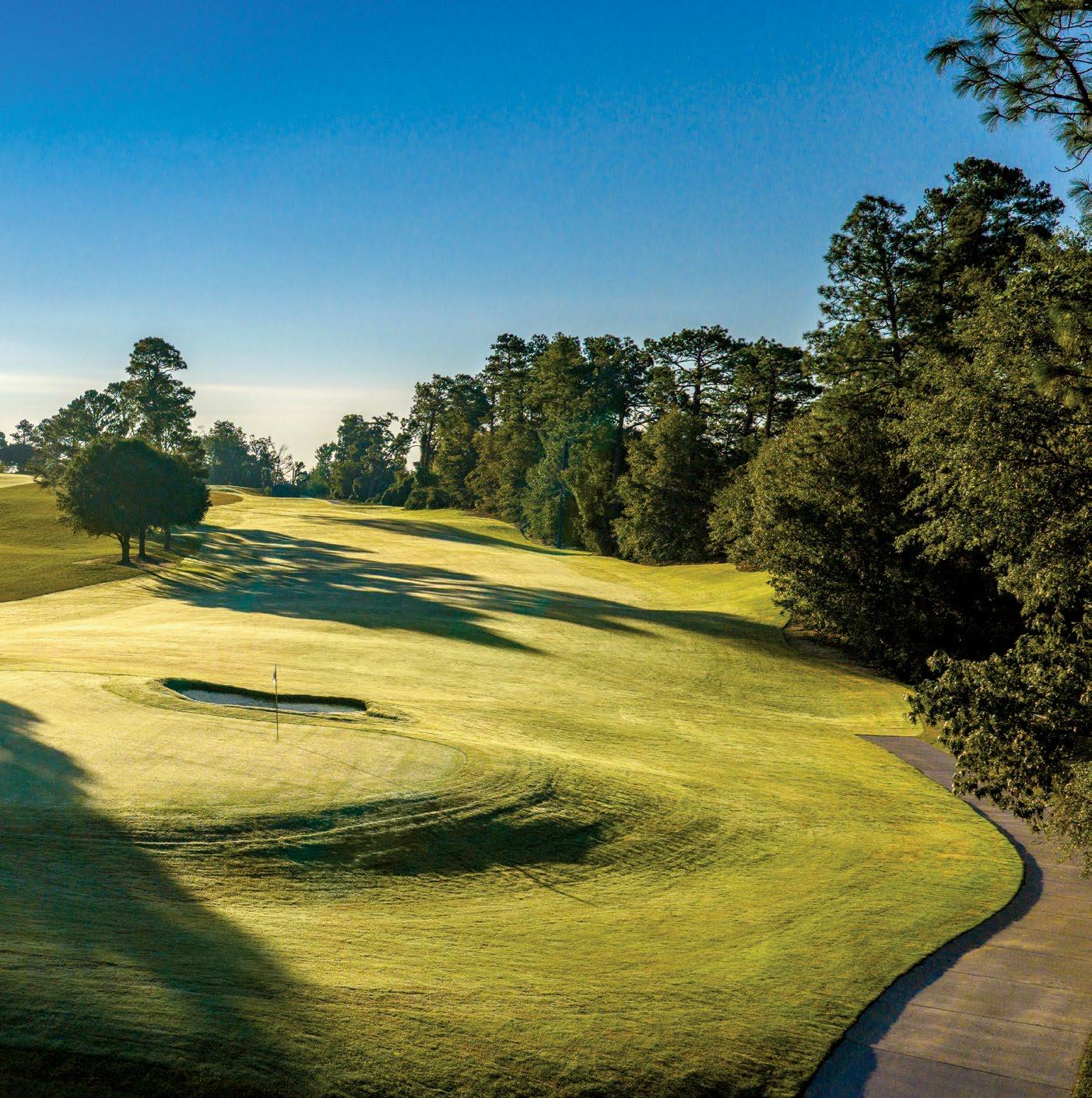
Georgia’s Augusta Municipal Golf Course— known locally as the Patch—is set to reopen on April 15 after extensive renovations, along with the addition of a new short course designed by Tiger Woods.
This is not an ordinary muni project by any measure. In a joint venture between Masters Tournament Charities, First Tee – Augusta, and Augusta Technical College, the renovation of the 18-hole course—which dates to 1928—has been led by Tom Fazio and Beau Welling. The updated course strongly evokes its near neighbor, Augusta National, which lies a couple miles north.
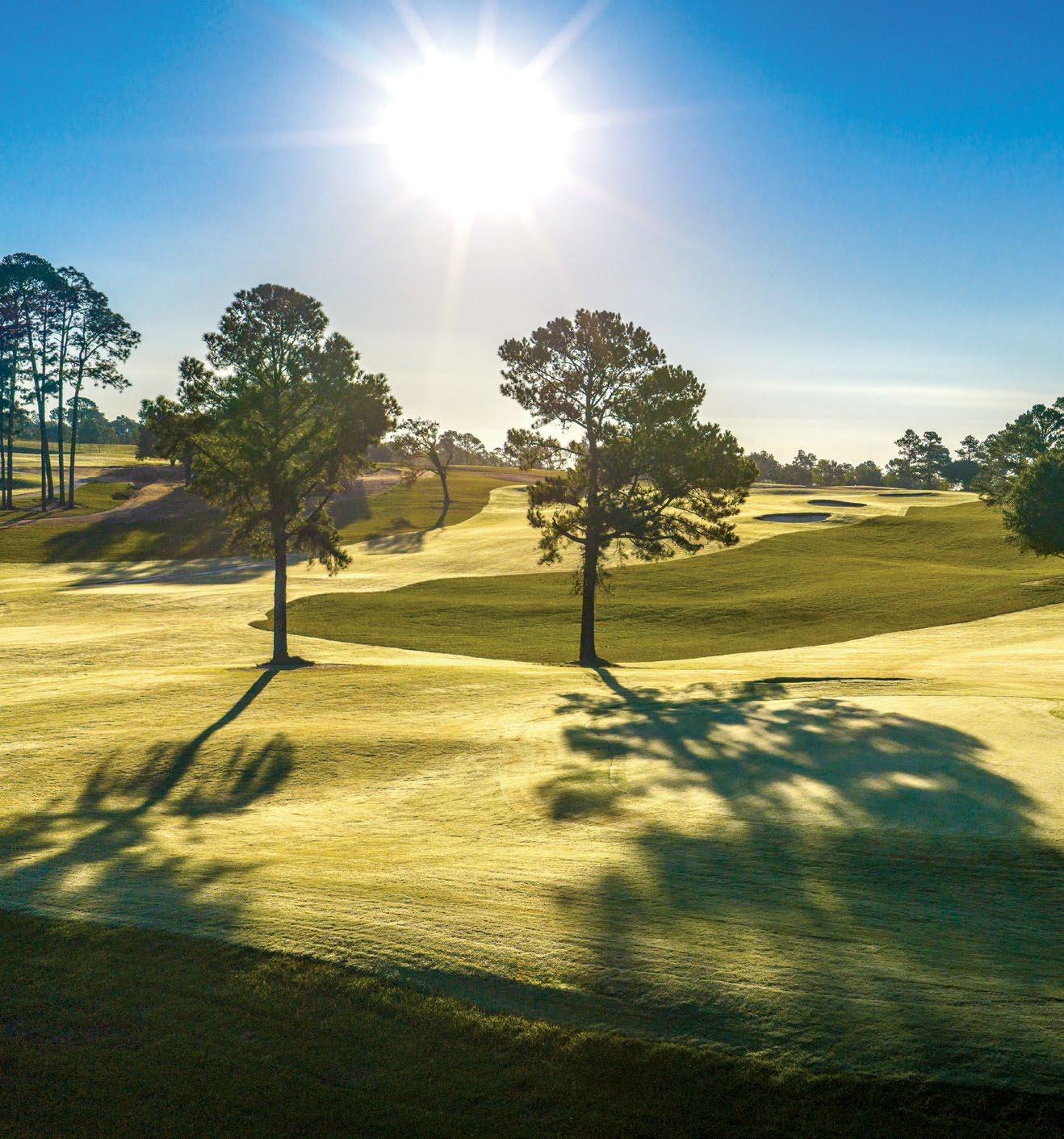
“The Patch is a model of what can be achieved with municipal golf courses and how they can be presented,” Fazio told Kingdom last year. “It’s an exciting project.”
Woods and his firm, TGR Design, have masterminded a new nine-hole short course called the Loop at the Patch. Augusta Municipal also now includes a state-of-theart driving range, complete with Trackman shot analysis and 20 covered bays, and a 12-hole putting course.
Green fees for locals on the Patch start from $25. The fee for locals to play the Loop is $15, and the putting course is free of charge.







Golf footwear continues to make positive strides. G/Fore’s G.112 (foreground) is minimalist by design and features an updated anti-slip outsole. Heathlander’s flagship golf shoe (middle) boasts a composite rubber tread pattern designed to mimic a cross-section of the heather plant. And Ecco’s Biom C5 brings a subtle mountaineering aesthetic with Gore-Tex technology and the Boa Fit System.
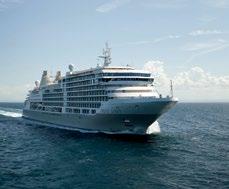
Much is happening in upscale travel on the high seas, from onboard additions to new vessels altogether. Here’s the latest from a few of our more-than-seaworthy favorites.
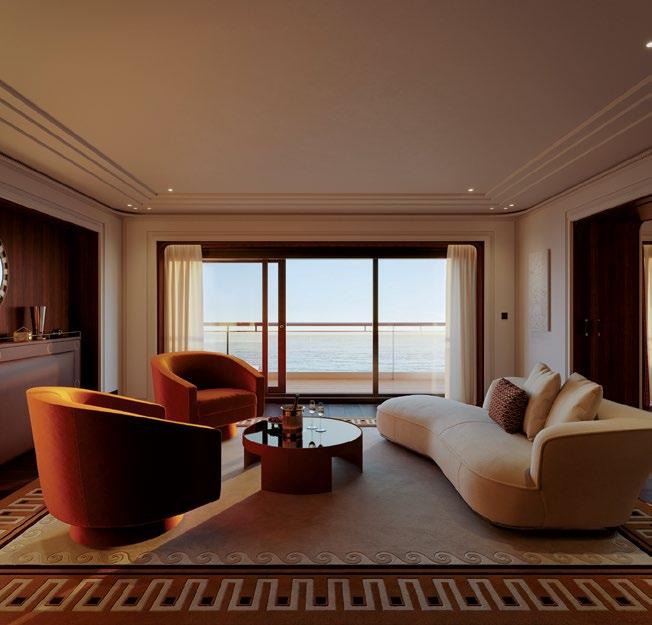
When Orient Express Corinthian sets sail on its initial voyages this summer, guests will settle into the 721-foot vessel’s 54 sea-view suites (rendering above) and, depending on their chosen itinerary, experience destinations from Porto Cervo to the Adriatic Coast. The onboard Guerlain Spa will include four treatment rooms and offer experiences designed by the Parisian maison expressly for the yacht.
Silversea’s Silver Dawn is bringing tee time to sea level (or pretty close) with a new superyacht-caliber golf simulator. Launched aboard the ship late last year, the SeaDrivePro system from Off the Deck allows guests to practice offshore on a variety of famous courses and get swing analytics in real time, plus guidance from visiting pros.
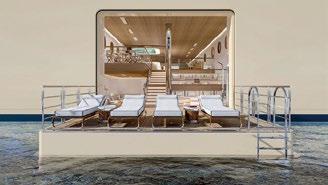
Brand-new from Four Seasons Yachts, the flagship Four Seasons I launched in March in the Mediterranean. Guests aboard the Fincantieribuilt vessel stay in any of the 95 luxurious suites with private terraces and use the ship’s pop-out, sea-level decks (rendering shown) for lounging or as access points for swimming or water sports.

If your last getaway wasn’t away enough, maybe your next trip should be to space. The new Kensington Expeditions collection of bespoke journeys from the guided-travel company Kensington includes private launches that will soon take guests into orbit, with Earth on stunning display through panoramic windows. Itineraries can be highly personalized, from flight length and spacecraft type to pre- and post-flight experiences. Booking ahead (one to two years or more depending on the level of customization) is suggested.
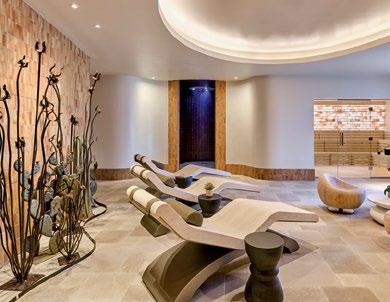
Fresh off a $25 million renovation, the Spa at Camelback Inn, in Arizona’s Paradise Valley, awaits post-round golfers seeking relaxation and recovery. The 32,000-square-foot spa—set in the Sonoran Desert at the JW Marriott Scottsdale Camelback Inn Resort—has seen a thorough redesign by EDG and includes men’s and women’s private wellness circuits (sauna, steam, cold immersion), a hydrothermal circuit, and 20 revamped treatment rooms. Desertinfluenced treatments use ingredients like sage oils and prickly pear, while the new Ora Café boats indooroutdoor seating and an all-day menu.
Zero-torque putters are all the rage, and Bettinardi Golf—best known for its collection of milled putters crafted from solid blocks of 303 stainless steel—recently added to its zero-torque lineup (known as the Antidote Series). The fang-style mallet SB3 boasts a modern shape designed to improve alignment and better focus players’ vision on the ball. The SB5, on the other hand, is a compact mallet that offers a refined silhouette with weight evenly distributed to the perimeter of the clubhead. Both new models feature Bettinardi’s signature face milling for soft and responsive feel.

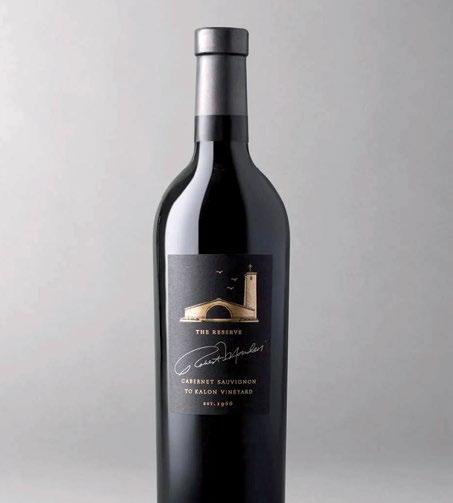
Robert Mondavi Winery’s Oakville Estate in California’s Napa Valley reopens this spring following a multiyear renovation. Visitors will have the chance to enjoy guided cellar tours and intimate tasting sessions, the most indulgent of which will celebrate To Kalon Vineyard and the collectible Cabernet Sauvignons crafted from its grapes.
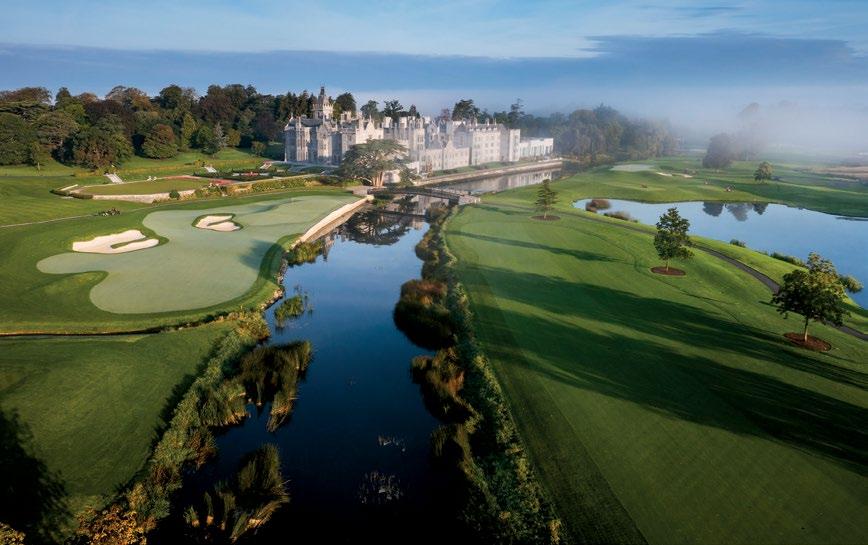
A swing through Ireland could— and probably should—include the biennial Ryder Cup. For the 2027 tournament, Premier Golf has four-, five-, and eight-night packages on offer, the last of which includes rounds of golf at Tralee, Old Head Golf Links, and Ballybunion, and round-trip transport from the host hotel to the main event at the Emerald Isle’s Adare Manor (right). A
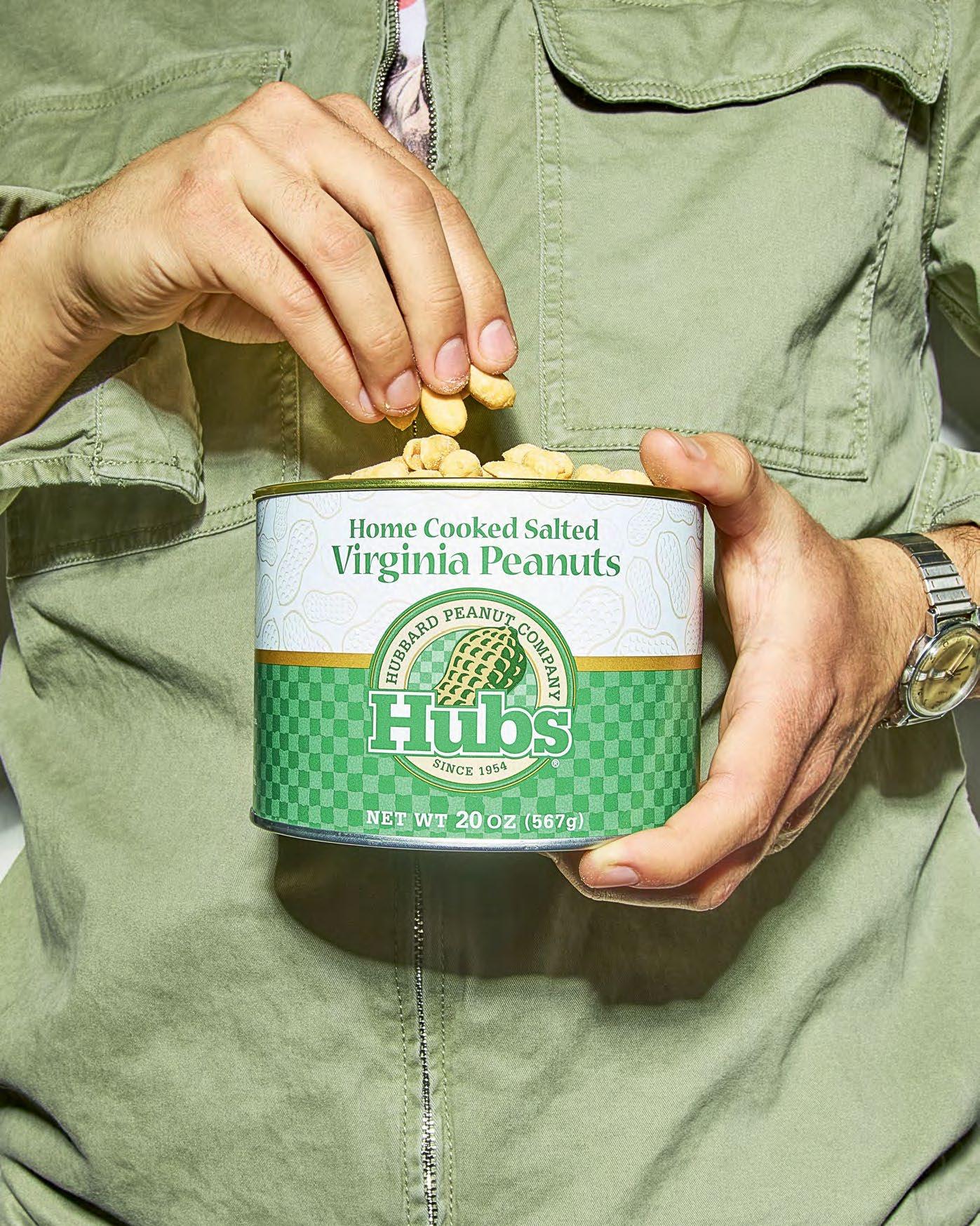
Since 1954, Hubbard Peanut Company has perfected a single idea: do one thing, exceptionally well. Our Virginia Peanuts are home cooked in small batches, hand selected for size and avor, and salted just right. No shortcuts. No excess. Just tradition in every can.
Mexico’s most popular spirit continues to evolve, with more high-quality expressions available beyond the country’s borders.
1. Cascahuín Tahona
To make this unique and noteworthy blanco tequila, revered distiller Salvador “Chava” Rosales Torres uses a large stone wheel, known as a tahona, to crush the cooked agave before fermentation. The resulting spirit has a unique richness and distinct minerality that sets it apart from other blancos (a classification for unaged tequilas). It opens on the palate with roasted agave and fresh citrus before settling into notes of wet stone and white pepper, all culminating in a long, agaveforward, savory finish.
Pour Tapatio Excelencia for any whiskey drinker who’s skeptical about tequila, and they’ll find a lot to love. This extra añejo tequila, crafted at the legendary Camarena family distillery, is aged in ex-bourbon barrels that impart flavors and aromas of butterscotch and caramel. On the palate, dried fig, toasted coconut, and dark chocolate occur alongside cooked agave, with a deep, oaky character and a long, warming finish marked by spice and vanilla.
Appreciation for the Mexican agave spirit of tequila has never been stronger. Yet, tension exists between tequila as commodity and tequila as craft.
Authentic tequila, says Sergio Mendoza, co-founder of the Don Fulano brand, should, like fine wine, express terroir and reflect expert craftsmanship. “Techniques like slow cooking, natural open-tank fermentation, copper distillation, and carefully selected barrels all point to a spirit crafted with intent, not speed,” he says. That intent begins long before distillation, with careful soil management and the harvest of each estate-grown agave plant at optimal maturity.

Fortunately, as true craft tequila gains momentum, it’s never been easier to find excellent bottles outside of Mexico, including the four featured here. —dylan ettinger

Launched almost 25 years ago, Don Fulano is rooted in five generations of family agave farming in the highlands of Jalisco. The brand’s añejo is aged in a mix of French and Hungarian oak (including ex-wine barrels), which adds oak-driven spice while accentuating the spirit’s agave character. Layers of vanilla, butterscotch, and warm baking spice emerge on the nose; the palate is silky, balanced, and appropriately sweet; and the spirit finishes long and smooth, with a soft, buttery richness.
Lágrimas del Valle’s reposado is made from Blue Weber agave grown in the state of Guanajuato, which gives the tequila an earthy and herbaceous character, balanced by just the right amount of vanilla (derived from three months of barrel maturation). On the front of the palate, the spirit offers up baked agave, green pepper, and citrus, followed by gentle oak spice, toasted almond, and a soft, honeyed warmth that lingers through the finish.




















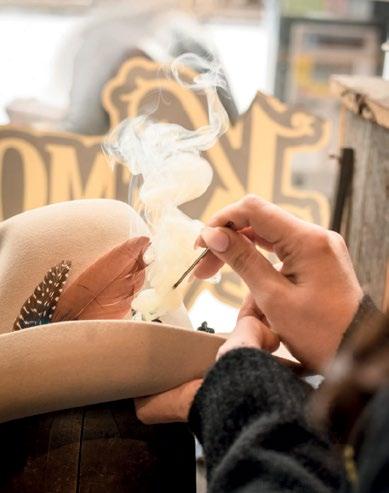
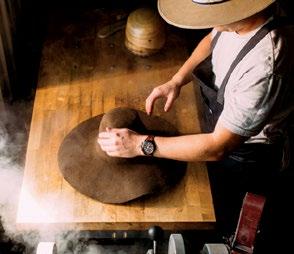
A Kemo Sabe custom cowboy hat is the Colorado mountain town’s must-have accessory.
by SHIVANI VORA
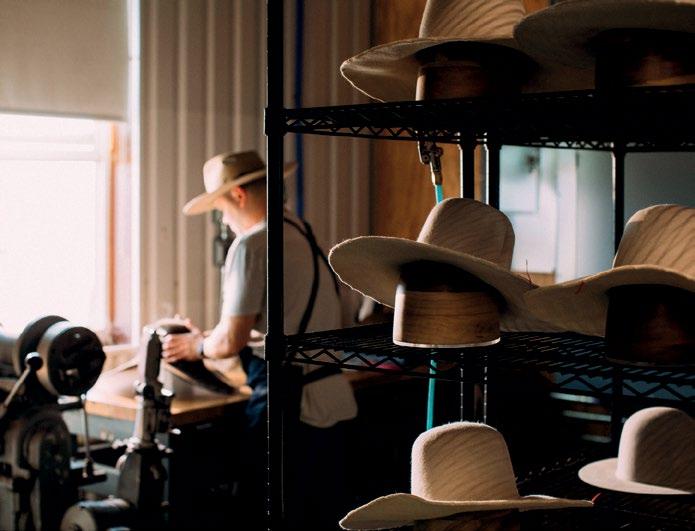
If Aspen were to be defined by an emblem of fashion, a Kemo Sabe custom cowboy hat would be it. Equal parts Western heritage and modern status symbol, the hats have become as synonymous with the posh destination as its slopes and storied après scene.
Jeff Bezos is a regular customer and fan, frequently seen around town in a rotating collection of bespoke hats. Kevin Costner, William H. Macy, Orlando Bloom, Rihanna, and many other high-profile figures have also embraced the brand—not just for its hats but also for its other custom pieces, including cowboy boots, belts, and outerwear.
Husband-and-wife Tom and Nancy Yoder founded Kemo Sabe in 1990 in a modest storefront in Snowmass Village. In 1993, the couple moved the store to downtown Aspen, opening a four-story space complete with a bar. Two
years later, the Yoders ventured into hat personalization, a move that would come to define the brand and its commitment to craftsmanship, functionality, and durability.
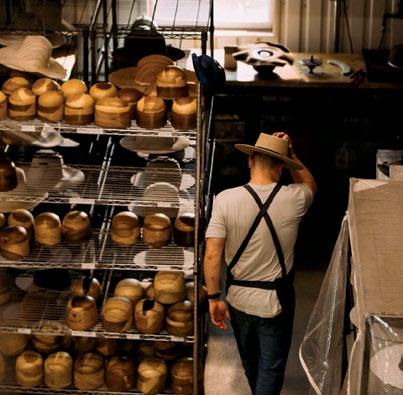
Kemo Sabe’s hat outfitters, known as wranglers, hand shape each custom cowboy hat in partnership with the client. “They watch their hat come to life firsthand and can tweak the design along the way,” says Wendy Kunkle, a former salesperson for Kemo Sabe who became president of the company after taking over the business with her brother, Bobby Kunkle, in 2020. She says the customization process at the Aspen store takes roughly 45 minutes, a period that customers can enjoy with a top-shelf tequila, whisky, or cocktail in hand.
While the wranglers’ creations have become coveted style statements, they are rooted in the cowboy hat’s history as an essential tool. “A hat offered shade, warmth, and protection in
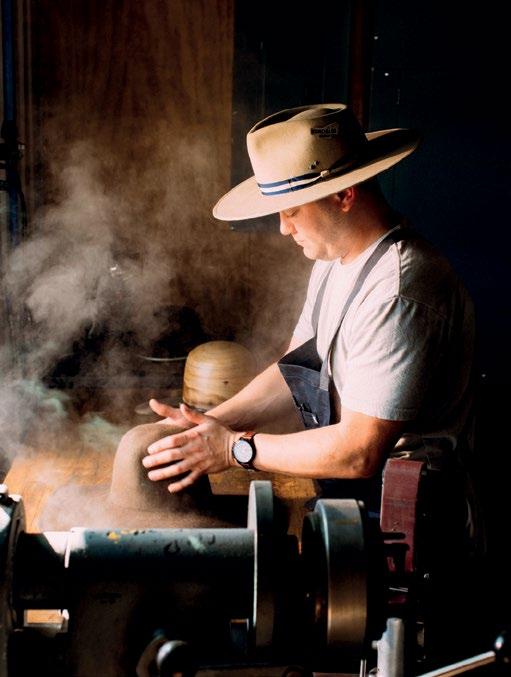
The stiffer the hat, the better the hat . . . Character only comes with time.”
unforgiving conditions,” Wendy says. “It could even be used to fan a fire, carry water, or signal another rider.”
That function is reflected in the materials. While most off-the-rack hats are made of wool, “a true cowboy hat is made of fur felt,” Wendy says. Fur fibers bind together to create a dense felt that naturally resists water and is hardy enough to withstand sun, rain, snow, and continued wear. Wool, in contrast, absorbs moisture, loses structure, and eventually degrades.
Stiffness is another key distinction. “The stiffer the hat, the better the hat,” Wendy says. Fur felt holds its form and can be reshaped repeatedly—and can improve with age. “I have hats over 20 years old that still wear beautifully,” she adds. “In fact, they’re better now than when they were new. Character only comes with time.”
Kemo Sabe’s core hat, the Kemo Sabe Grit—or “the canvas,” as Wendy describes it—is handmade at the brand’s hat ranch atelier in Gainesville, Texas. Customization begins with sizing, measured in one-eighth-inch increments. The wranglers also determine whether a client has a regular or oval head shape, which is critical for comfort.
Next up are color and style. That could mean a classic cowboy hat with a curled or flat brim, or a more fashionforward design with a tipped front and back. Color options—about 30 in all—range from neutrals to bolder hues, such as turquoise and purple. “Once fit, color, and style are dialed in, we shape, adjusting brim length, curl, crown height, and proportions,” Wendy says.
The final bit of fun comes in the hat’s embellishments. Customers have their pick of thousands of hatbands crafted from leather, beads, and even diamonds, along with hundreds of pins and feathers in varying sizes and species— turkey, pheasant, duck, and more. The finishing touch is the branding: initials or another custom symbol burned directly into the felt.
A bespoke Kemo Sabe hat starts in the four-figure range and can reach upward of $20,000, depending on materials and level of personalization. “Our goal is for you to absolutely love your hat and wear it where you live, not just in our mountain towns,” Wendy says. “Like custom golf clubs, it’s about precision, performance, and individuality. Both are tools, but deeply personal ones.”
The Kunkles intend for that personal connection to last, passed down from one generation to the next. “We restore hats worn by grandparents so the next generation can enjoy them,” Wendy says. “That’s the power of craftsmanship.”

“Words cannot express quite a lot of feelings,” said John Lydon (aka Johnny Rotten of the Sex Pistols) in a moment of reflection, “whereas a noise or tone or drone or sound, an accordion falling down a staircase, can somehow capture an emotion much better.” We’re with you, Johnny, and these four musical instruments—of a kind—have the immersive quality to convey the full range of emotions.
by ROBIN BARWICK
A vinyl record spinning on a turntable is the antidote to the screen-press streaming of today. There is no replicating the connection between listener and music that comes from vinyl: appreciating the cover artwork, handling a physical record with reverence, and experiencing the rich, textured sound that’s produced once the stylus of a quality turntable touches down. The Beosystem 3000c receives vinyl records beautifully. This limited-edition system is a revival of Bang & Olufsen’s classic Beogram 3000 from 1985, except this time it is paired with state-ofthe-art Beolab 8 stereo speakers and features wireless connectivity that was but a dream back in ’85. Only 100 numbered sets will be made, finished in artisan walnut and anodized aluminium for a timeless style befitting the system’s sound.


BOWERS & WILKINS
For an immersive experience, the Px8 S2 headphones are tough to beat. They bring comfort in Nappa leather, plus wireless connectivity. Battery life is 30 hours, and when the headphones need juice, they feature quick-charge capability. Deep, vivid sound quality is powered by custom 40 mm Carbon Cone drive units, while eight microphones afford exceptional noise cancellation. Full controls come via the Bowers & Wilkins Music app. Resistance is futile. As Cheap Trick once blasted, “Surrender! Surrender!”



The SCM100 speakers from ATC are frequently found in recording studios for good reason. Producing exceptional clarity, dynamic range, powerful bass, and precise mid-range reproduction, they deliver the accuracy, depth, and detail demanded by many of the world’s most discerning artists and engineers. As an in-home component, the speakers allow you to hear your favorite albums with the same force and precision that the artists enjoy when they play back newly finished tracks in the studio.
Ruark’s R610 assembles all the new-age streaming capability one could need and boxes it in a console with simple functionality and a full-color, high-def display. The styling sets the tone, paying homage to the home hi-fi revolution of the 1970s with cabinet and fascia options in fused walnut. Its built-in streaming compatibility is strictly 21st century, with access to digital radio, Apple AirPlay, Google Cast, Spotify, and more. The multidimensional console is controlled via Bluetooth but also equipped for hardwired connections. Bellissimo and “God Save the Queen”!
Celebrated for its preservation of early American history, this colonial-era capital also entices with modern golf resorts and mid-century championship layouts.
by SHAUN TOLSON
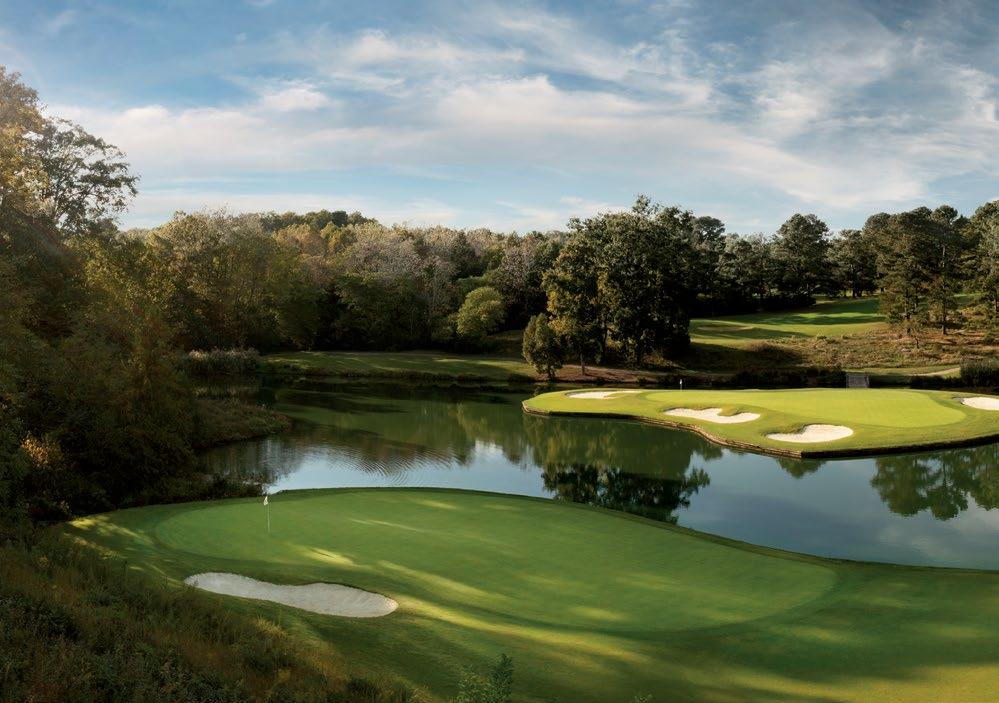
Given its roots as the second capital of the Virginia Colony, Williamsburg has long been a pilgrimage site for American history buffs. But in-tune golfers know that the independent city also serves as an ideal base for a golf trip to Virginia’s Historic Triangle.
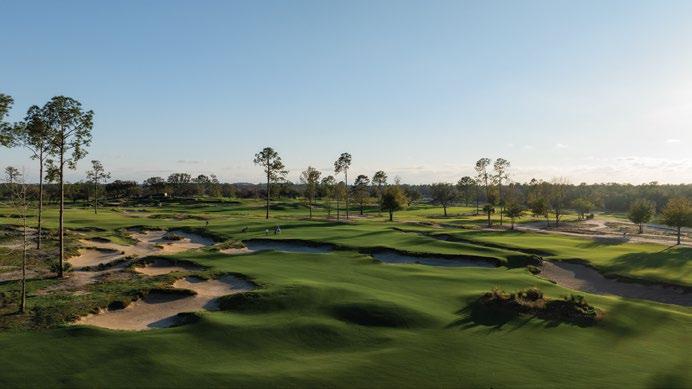
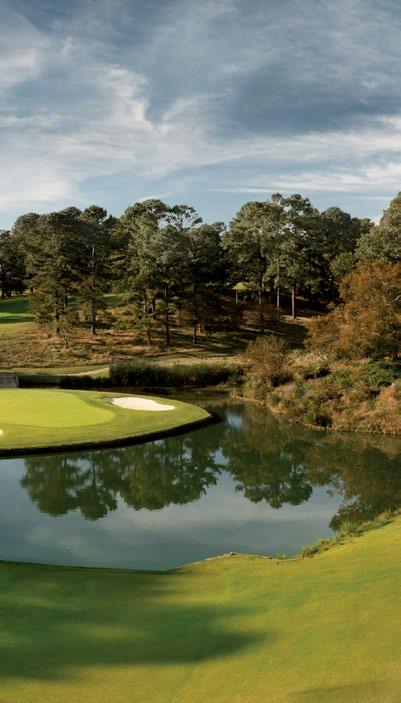
Those who stay at Williamsburg Lodge or Williamsburg Inn aren’t just positioned on the perimeter of the world’s largest living history museum, they’re also a short walk from the Golden Horseshoe Golf Club, home to two championship-caliber courses and a new short course called the Shoe. The Shoe is an appealing blend of holes in the 40- to 60-yard range that are playable with a putter and longer holes that require more precise attacks with a wedge. But it’s the golf club’s original Gold Course—with its captivating layout, well-maintained grounds, and Augusta National–like vibes—that shines brightest.
Twenty minutes to the west, the semiprivate Williamsburg National Golf Club offers two exemplary courses of its own. The property’s flagship routing, the Jamestown Course, was conceived by Nicklaus Design 30 years ago. Its younger sibling, the 7,018-yard Yorktown Course, is the handiwork of architect Tom Clark and features a memorable back nine, composed of an equal number of par 3s, par 4s, and par 5s.
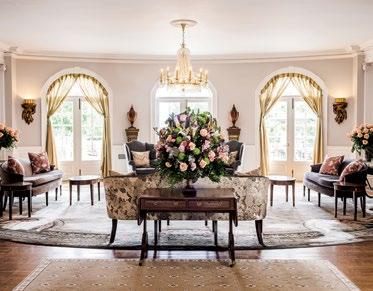
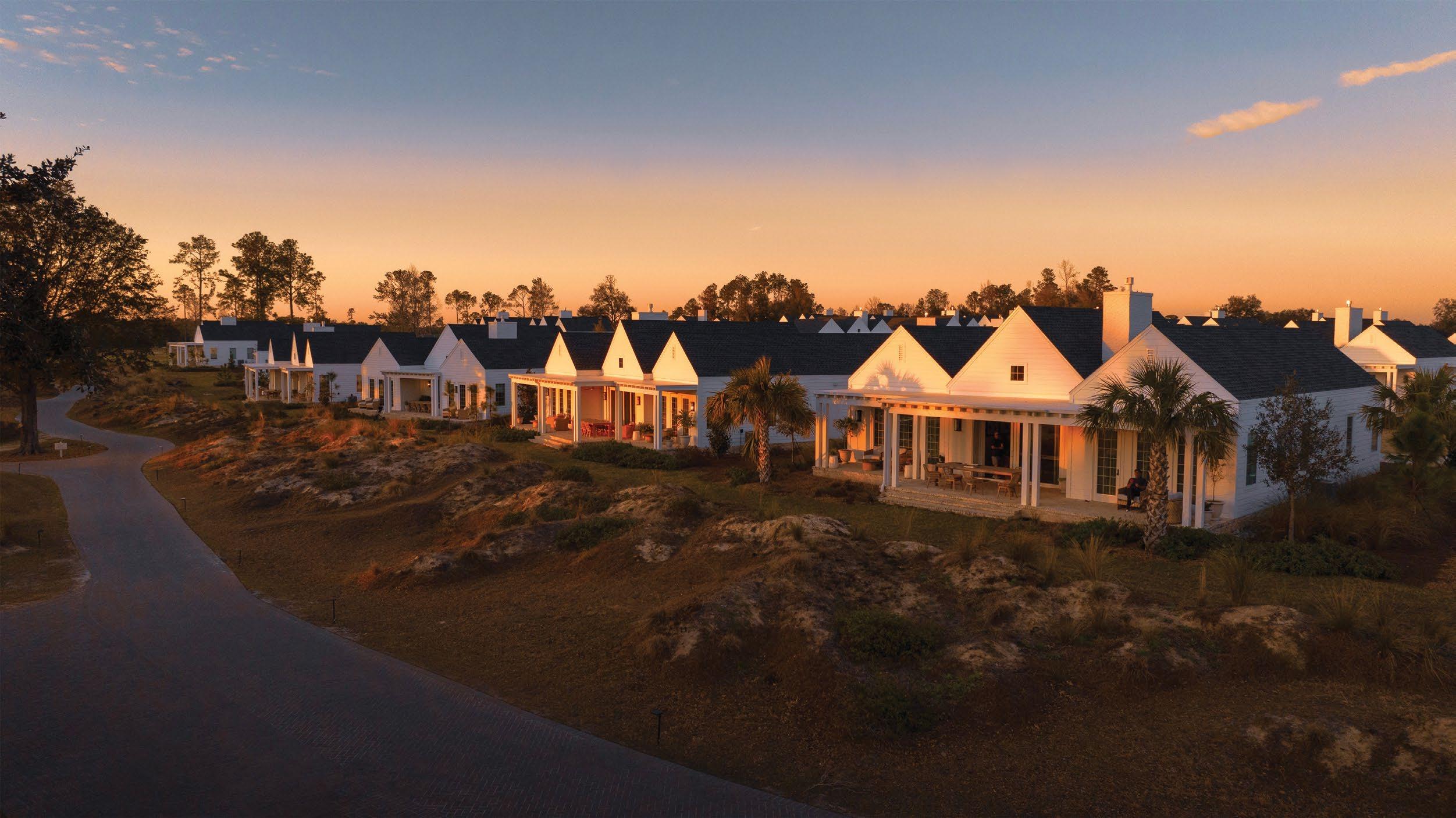
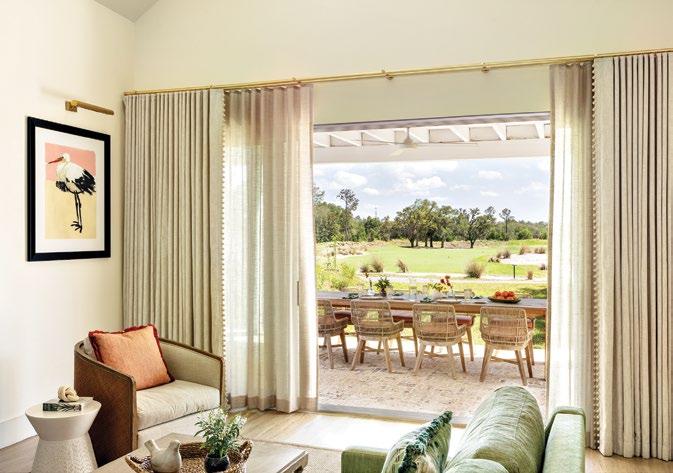
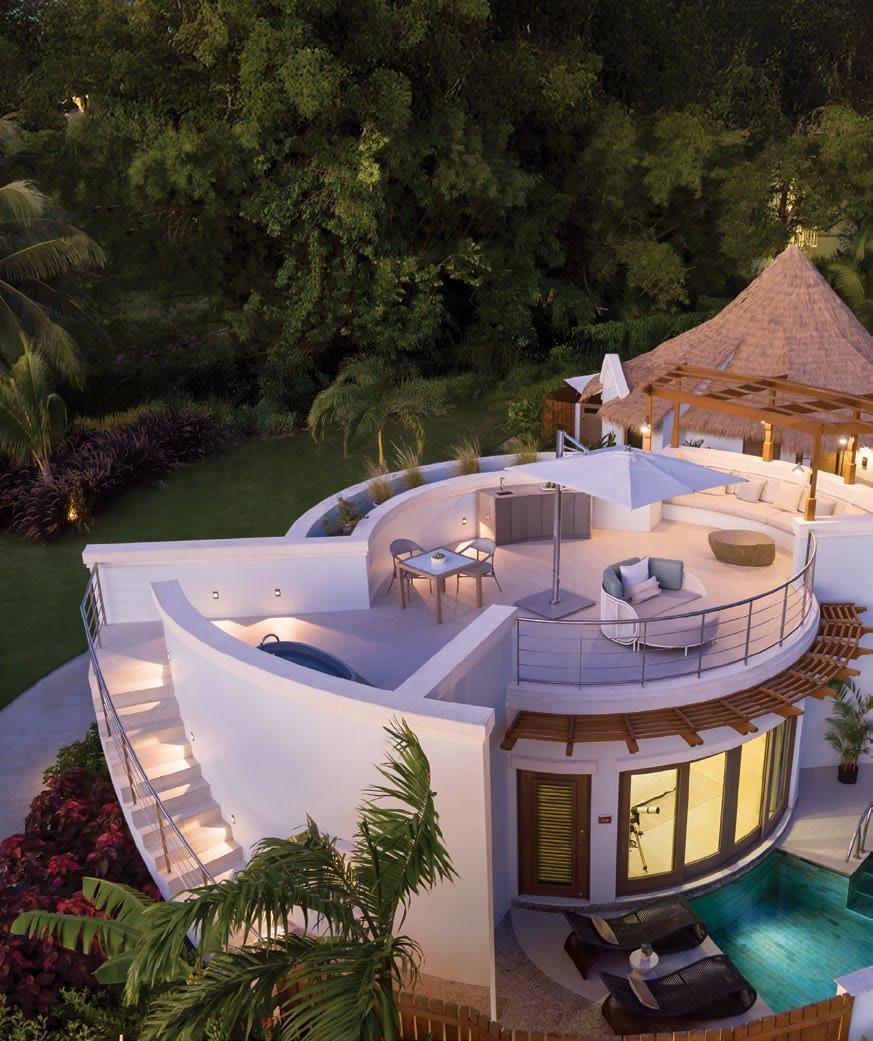
Staying at Kingsmill Resort is akin to reading a chooseyour-own-adventure book. The 2,900-acre property is home to 330 guest rooms and suites, five vacation cottages, and three private residences, the newest of which offers a private chef and other exclusive amenities. Booking a stay is also the only way to tee it up on the resort’s Plantation or River courses, the latter of which hosted a PGA Tour event for more than 20 years.
Eat
Williamsburg Inn is home to two standout restaurants.
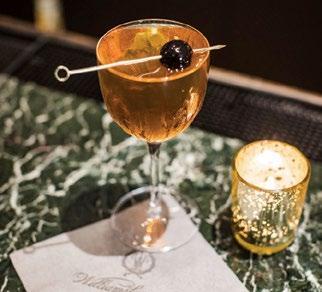
At the Terrace & Goodwin Rooms, dishes might include a honeydew gazpacho accented with crispy prosciutto, cantaloupe salsa, lime gel, and chili oil. Rockefellers, by contrast, is known for its steaks and other cuts of meat, as well as a brioche-crusted Alaskan halibut that’s a consistent crowd-pleaser.
Whiskey enthusiasts shouldn’t miss a behind-the-scenes tour at Copper Fox Distillery, one of only five distilleries in the States with a functional malting floor. That means owner and founder Rick Wasmund is crafting single malts and other whiskies the old-fashioned way—even drying his house-malted barley with a variety of fruitwood fires, whose smoke further infuses the malt with flavor.
Founded in 1632, Williamsburg showcases its history in a dedicated district that spans some 300 acres of cobblestone streets and preserved, restored, and painstakingly rebuilt colonial-era buildings. In all, Colonial Williamsburg—the world’s largest living history museum—comprises more than 300 historic structures, including 89 that are original to the 18th century.
Throughout Colonial Williamsburg, visitors will encounter historical interpreters, dressed in period clothing, who bring the city’s history to life. They range from site and orientation guides and tradespeople to recognizable figures such as Thomas Jefferson, George Washington, and Patrick Henry. Some also perform museum theater—scripted performances that share the themes, events, and lives of early America.
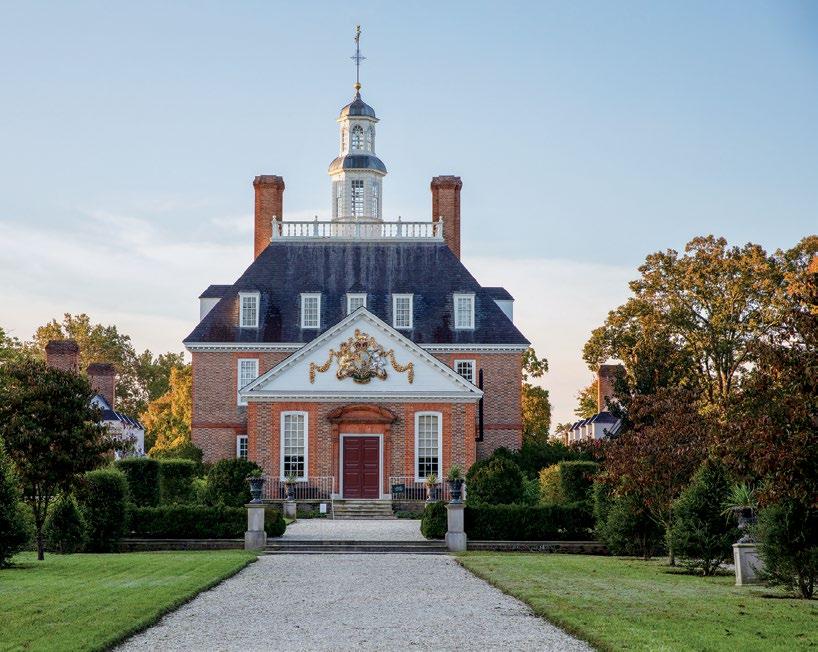
The most immersive accommodations in Williamsburg are the two dozen colonial homes for rent. Many of the homes were reconstructed during the mid-20th century and range in size from four-bedroom premium residences to single-room houses, the latter of which were originally built in the 1700s as shops or stand-alone kitchens for larger homes. Visitors can also book tavern rooms, which offer a unique glimpse into transient lodging during the Revolutionary Era.
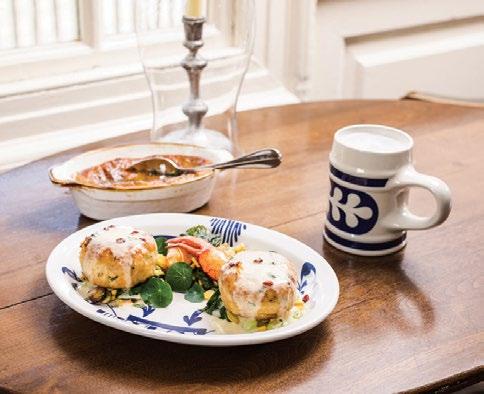
Featuring locally sourced seafood, Christiana Campbell’s Tavern serves up a smattering of dishes that celebrate la mer, all inspired by original recipes from the historic restaurant or 18th-century cookbooks. Dining here is a trip back in time; you’ll soon understand why George Washington made Campbell’s a frequent haunt. Just make sure you order the crab cakes.
There are plenty of ghost tours in town, but only one, Haunted Williamsburg, brings participants inside some of the area’s historic buildings. For one hour, you’ll traverse the historic section of the city by candlelight and listen to 18th-century ghost stories—including modern-day tales of apparition encounters.

by ALEXANDRA O’LAUGHLIN
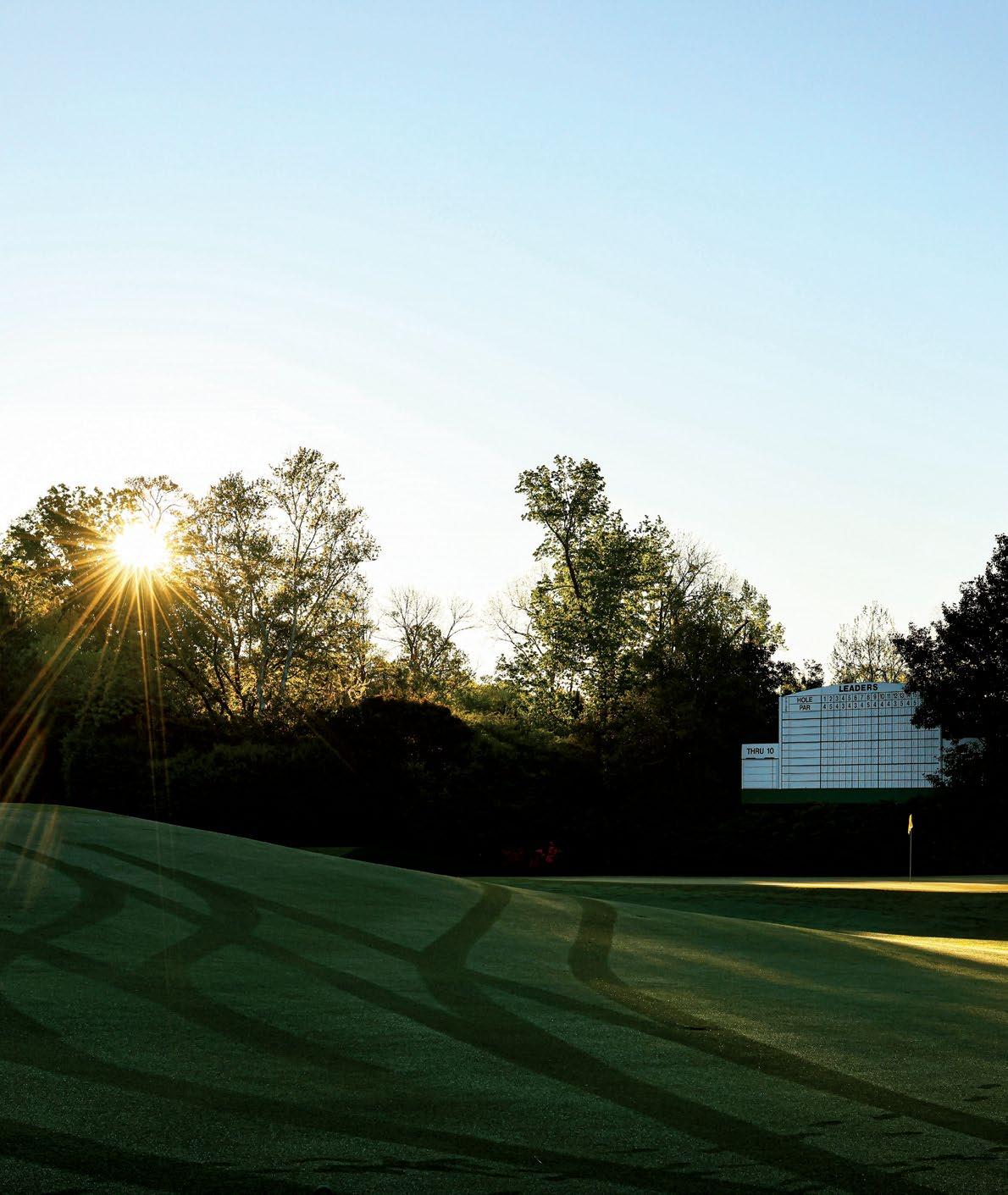
augusta national golf club exists in its own category. Almost unattainable, the club once a year allows the world into its magical, meticulously controlled grounds for the Masters.
In its infancy, in 1934, the Masters was known as the Augusta National Invitation Tournament. The name change came in 1939, a time when stories were told across black-and-white newspaper columns and crackling radio broadcasts. It wasn’t until 1956 that CBS started televising portions of the final round.
Fast forward to 2019, when I—a young journalist and extreme golf enthusiast—got a call from Golf Channel saying that I would be heading to Augusta that April. But not for the event you’re thinking of. I would be going for something new. Something revolutionary. I would be on-site to cover the inaugural Augusta National Women’s Amateur, the first women’s championship on the historic grounds. I would witness the beginning of a new chapter in golf history and watch a generation of future LPGA stars step into the spotlight amid the Georgia pines.
I think we’re going to really start something great in women’s golf.”
—JENNIFER KUPCHO

The week culminated with Jennifer Kupcho lifting the inaugural trophy at the Augusta National Women’s Amateur, a defining moment that would validate the championship’s place in the game. Her victory was historic, but to those of us who had watched her for years, it felt like a natural progression.
I grew up with Kupcho in Colorado and practiced out of the same golf course. While others talked and lingered on the range, she practiced silently off to the side. There was never much in the way of theatrics, never a need to announce what she was building. The discipline was steady. Intentional. And Augusta revealed it to the world.
The Wake Forest University star birdied or better on five of her last six holes—including the only eagle of the tournament, on hole 13—to win by four strokes at 10 under
par. Since that breakthrough, Kupcho has won four times on the LPGA Tour and is a major champion.
“I think we’re going to really start something great in women’s golf,” Kupcho said at the trophy presentation in 2019. She was right.
This year, the story circles back to a collegiate program that is synonymous with excellence. The Stanford women’s golf team will once again send its full starting lineup to the Augusta National Women’s Amateur, a rare and powerful statement. What’s more, all six Stanford golfers are returning ANWA participants.
Stanford’s Megha Ganne returns for her sixth appearance
at the Augusta National Women’s Amateur, but her history at Augusta National Golf Club stretches even further back. She first competed there at 11 years old, in the Drive, Chip and Putt National Finals, long before she could have imagined becoming one of the ANWA’s most familiar names.
Now the 18-hole record holder at the ANWA, with a 63, Ganne admits she never thought Augusta would become an annual chapter of her story. “It just kept happening,” she says. “I think hearing young girls say they dream of winning the ANWA is a testament to the impact this championship has had in its short history. When I was a kid, I pretended to have a putt to win the Masters . . . or a Women’s Open. Knowing everyone can now tune in to watch the Augusta National Women’s Amateur is so special—it’s a privilege to be a part of something so much bigger than myself.”
The ANWA remains an invitation-only tournament, with a field limited to 72 competitors. Players must be top-ranked amateurs in the world, with major amateur champions receiving automatic invitations. The field typically represents more than 20 countries, making it one of the most globally competitive stages in amateur golf.
It’s one thing to qualify as an individual. It’s another for an entire starting lineup to earn its place. For the Stanford women’s golf team, that collective qualification reinforces what the college golf world already understands. This is not just a strong program, but one of the most dominant teams in the game.
Anne Walker, the Margot and Mitch Milias Director of Women’s Golf at Stanford since 2012, has guided the team to its first three NCAA titles in program history and built a culture that consistently produces champions. A four-time conference Coach of the Year and three-time Women’s Golf Coaches Association Coach of the Year, Walker carries one of the calmest demeanors in collegiate golf. I have watched her across NCAA Championships, steady in both chaos and celebration. She is the person you want beside you when you are playing your best and, perhaps even more importantly, when you are not.
When I last caught up with Walker, she quickly redirected praise to her athletes, crediting their work ethic and genuine love of the game. “They don’t just show up this great, they have to work at it,” was a quote I had saved in my notes from one conversation with her.
Walker also spoke about the privilege of learning from an elite network of leaders in golf and beyond, people she leans on in complex moments. It’s that combination of humility, curiosity, and conviction that has shaped Stanford into a collegiate powerhouse.
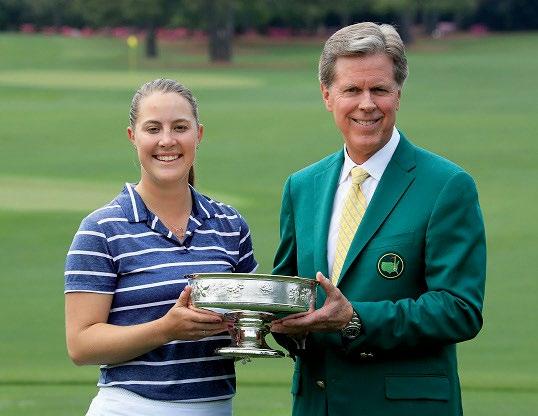


Augusta National Golf Club. The only course to host a major championship every single year. Home of the Drive, Chip and Putt National Finals. The stage for the best female amateur golfers in the world at the Augusta National Women’s Amateur.
These three events at Augusta have constructed the ultimate pathway of aspiration for young golfers. From a junior golfer on the practice green imagining a winning putt, to a collegiate star earning her place in the 72-player global field, to a major champion lifting a trophy on soil that once felt untouchable, the dream now has steps and structure.
The morning after the inaugural ANWA concluded, I checked out of my hotel and noticed stacks of Augustabranded newspapers detailing the week’s highlights. Black-and-white print chronicling history in real time. It felt like a nod to 1934, when stories from Augusta were first revealed through ink and radio waves.
And now, woven into Augusta’s traditions is the sight of young women walking over Rae’s Creek on the Hogan Bridge and standing on those same fairways, no longer imagining whether they belong there, but preparing to win.
Contributing editor Alexandra O’Laughlin is a golf correspondent and a host of Golf Channel’s The Drop

During the 1962 season, Gary Player, Arnold Palmer, and Jack Nicklaus won all four major titles between them. By the end of the year, the “Big Three” moniker had begun to take hold. Player, now 90, spoke to Robin Barwick about a formative era for tour golf.
You arrived at the 1962 Masters as defending champion and almost won it again.
I could have become the first man to win the Masters two years in a row. There was one hole that was the most devastating of my whole career. I was two shots ahead of Arnold with three holes to play. I hit my tee shot 12 feet from the hole, whereas Arnold missed to the right. Nobody gets down in two from the right-hand side of the 16th green, because the ball gathers speed down the slope. My caddie tapped my hand and said, “We’ve got it.” I replied, “Yes we have.” That was fatal. You can never presume such a thing. Arnold’s chip looked as if it was going to roll right off the green, except that it fell into the cup for a birdie. You could hit that same chip shot 1,000 times and never do it again. Arnold beat me in the playoff, and that was the toughest day of my career.
Jack Nicklaus, a 22-year-old rookie, won the U.S. Open at Oakmont. Were you surprised by how good he was so soon?
I was not surprised. Very few players in the history of the game have what I call “it.” When Nicklaus came out on tour, he oozed “it” immediately. Tom Weiskopf was a better golfer than Nicklaus, yet Weiskopf won one major and Nicklaus won 18.
At the Open Championship at Royal Troon, you missed the cut when your approach on 18 just rolled out of bounds. Me going out of bounds was a blessing. I packed my bags and went straight to Aronimink and won the PGA [Championship]. If I had made the cut at Troon, I would not have won the PGA. The wind blew quite strong at Troon, and Arnold played magnificent golf.
How did your early arrival at Aronimink help?
I played with some members and they have since made me an honorary member. I loved the course, but what is happening in America now is a tragedy: They are cutting down trees all over the place. They should be planting them. They are destroying nature. We need trees to fight pollution and to stave erosion. It is one of the great tragedies I have seen in golf. Aronimink is still magnificent, but people have advised these
clubs incorrectly. They want to get the course back to its original state, but when these old courses were designed, golfers played with a ball that went 62 yards less.
You beat Bob Goalby by a shot, and you won $13,000 that week, which must have seemed like a lot of money at the time. No, it did not seem like a lot of money. I might have even given my caddie the whole damn lot—I don’t know. This is what makes me upset when I see young tour players in a pro-am not looking after the amateurs, or if I see them not wanting to sign autographs, and I think about how lucky they are. They need to follow in Arnold’s footsteps. Arnold was the most wonderful person in terms of being kind to the public, thinking of his fellow man, and he never refused to sign an autograph. It is thanks to people like Arnold that players today are playing for so much money.
Do you remember that, for a seven-year spell, from 1960 through 1966, the Masters was won by one of the Big Three every year?
Yes—Arnold, Jack, and I fought it out every year, and we made Augusta with the publicity we made around the Masters, whether they like to admit it or not. When I go there, I feel I am walking onto a golf course in heaven, and I tread very carefully. I love Augusta so much, but I don’t like all the rules. I have been an ambassador for Augusta for all these years, yet they won’t let me have one round of golf in my life with my three grandsons, who are dying to know about their grandfather’s episodes on that golf course. All the courses that have hosted the Open, the U.S. Open, and the PGA would oblige, but they won’t do it at Augusta.
With Palmer and Nicklaus, was it hard to separate the friendship from the rivalry?
No. The three of us made it very clear that we wanted to beat the hell out of each other, but we had respect for each other, and we realized that sometimes you are going to win, and sometimes you are going to lose. Arnold and I traveled around the world together—we laughed together, and sometimes we cried together.
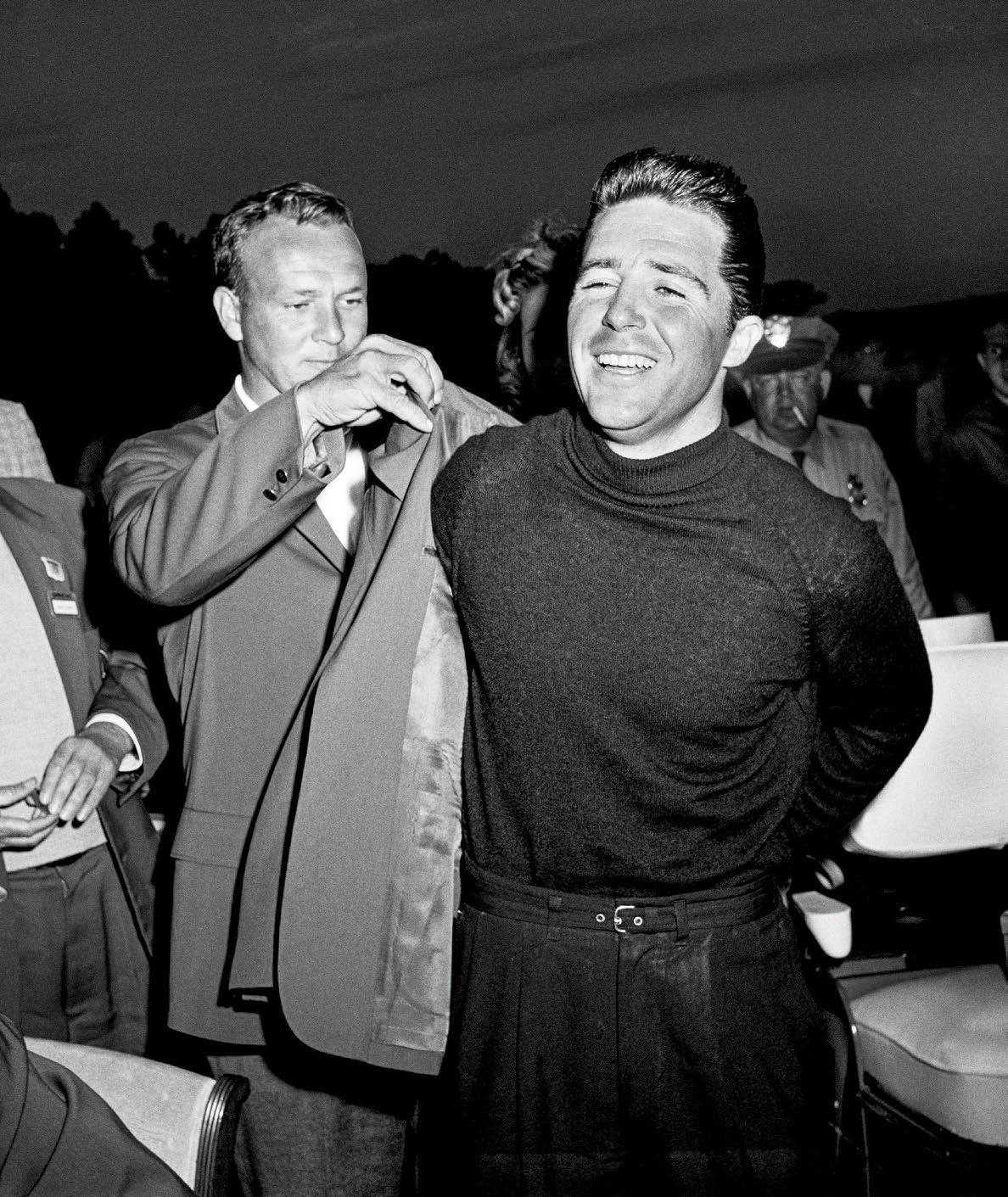
Arnold, Jack, and I fought it out every year, and we made Augusta . . . whether they like to admit it or not.”















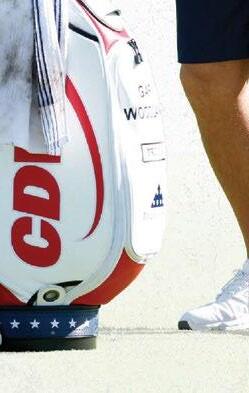











Become a Folds of Honor Wingman. Your monthly support helps provide life-changing educational scholarships to the spouses and children of America’s fallen or disabled military service members and first responders.


I’m proud to be part of the Folds of Honor mission, bringing the National Anthem to the heart of golf and uniting the golf community in support of the families of America’s fallen or disabled military service members and first responders.

- 2019 US OPEN CHAMPION AND FOLDS OF HONOR AMBASSADOR, GARY WOODLAND


Lessons learned from Kingdom co-founder Arnold Palmer
True to the “Live Like a King” title of this column, Arnold Palmer imparted a regal quality that helped make him popular with politicians.
It was 250 years ago, on March 25, 1776, that the Congressional Gold Medal was first awarded, to General George Washington, while he was commander in chief of the Continental Army during the Revolutionary War. In 2009, Arnold Palmer was honored with his own Congressional Gold Medal, awarded for “his service to the nation in promoting excellence and good sportsmanship in golf.”
Palmer was the sixth athlete to receive the honor, following Roberto Clemente, Jackie Robinson, Jesse Owens, Joe Louis, and Byron Nelson. The bill to award the medal to Palmer passed 422–1 in the House and unanimously in the Senate, and he quipped, “I’m particularly proud of anything the House and the Senate agree on.”
The beloved golfer was indeed a unique unifier of people, and U.S. presidents on both sides tapped into his magnetism. He became close friends with President Dwight D. Eisenhower, who was an Augusta National member. President Richard Nixon even invited Palmer to attend a closed-door meeting—along with Bob Hope, Henry Kissinger, Vice President Gerald Ford, and others—to discuss how to end the Vietnam War. When asked for his thoughts, Palmer said, “I wouldn’t pussyfoot around. Let’s get this thing over as quickly as possible, for everyone’s sake. Why not go for the green?” The politicians laughed, but Palmer later admitted to his friend Hope that he was not trying to make a joke.
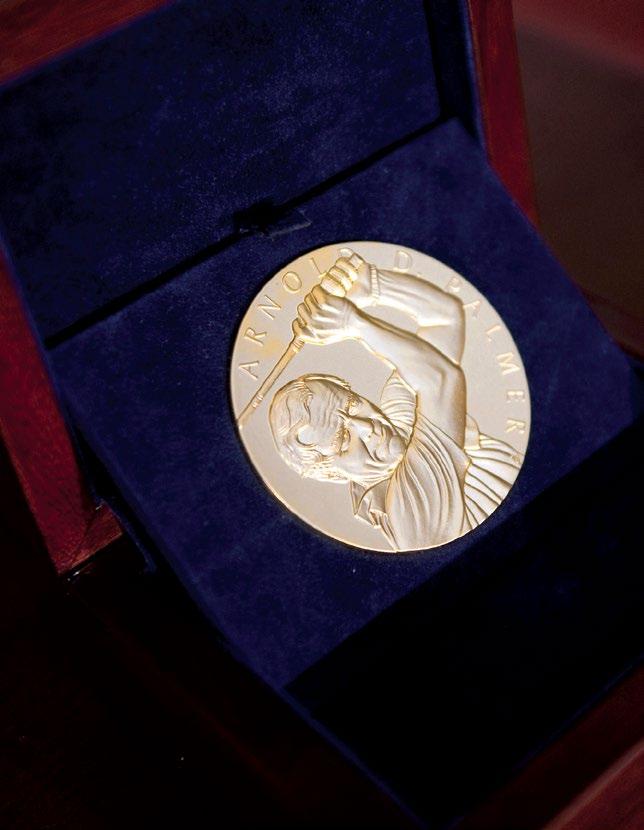

Why not go for the green?
Palmer and his wife, Winnie, were guests at White House state dinners under Presidents Nixon, Reagan, Clinton, Bush Sr., Bush Jr., and Obama. Broadcaster Jim Nantz joined him at one such dinner in 2007, in honor of Queen Elizabeth II. They were both seated at the same table as the queen, who at one point asked, “Mr. Palmer, how many people have you played golf with?”
Flummoxed, Palmer paused to ponder the question. “100,000 people?” prompted the queen. Palmer used his thumb to indicate a higher number. “500,000 people?” the queen raised. Yes, indicated Palmer with a thumbs-up and a smile.
Weeks later, Palmer asked Nantz about that conversation. Nantz told Palmer that if he had played golf with 500,000 people, he would have had to play with three different people every day of his life—and would have to be around 500 years old. —robin barwick

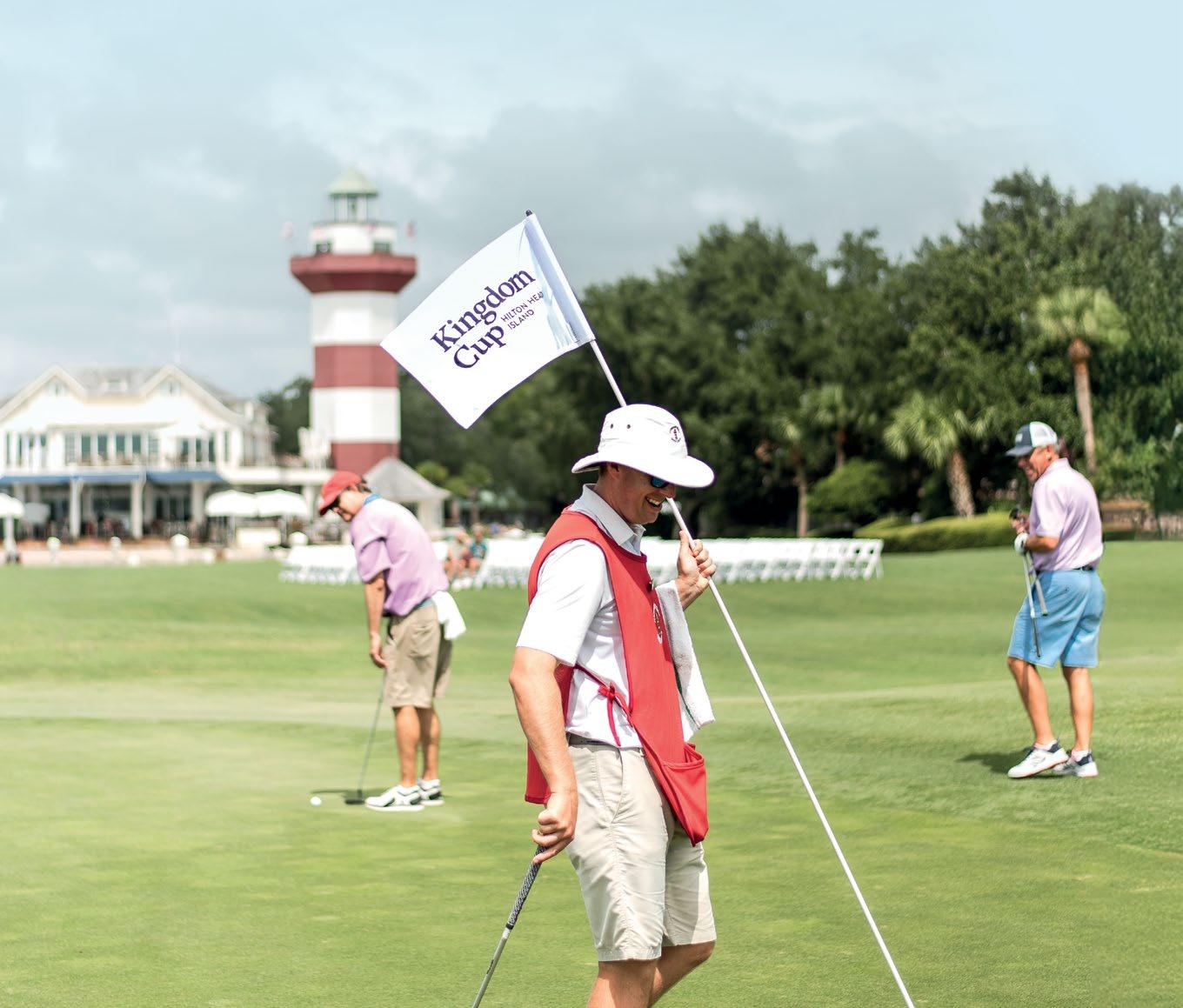
Join Hilton Head Island & Kingdom as we celebrate the fifth annual Kingdom Cup — an unforgettable weekend of golf and coastal luxury at The Sea Pines Resort, featuring Atlantic Dunes and the newly restored Harbour Town Golf Links.
SEPTEMBER 10 - 13, 2026

KINGDOM.GOLF/CUP-2026
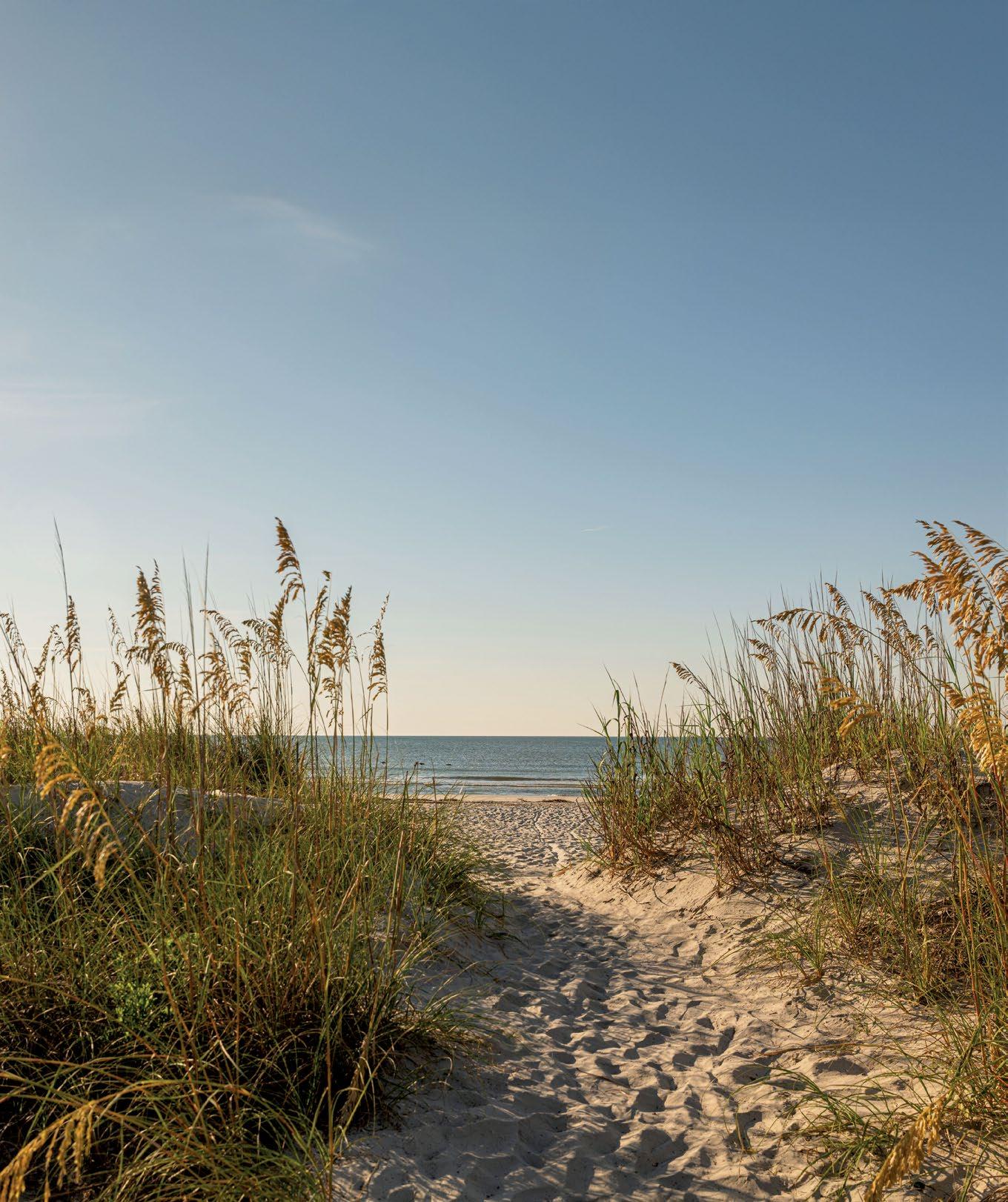
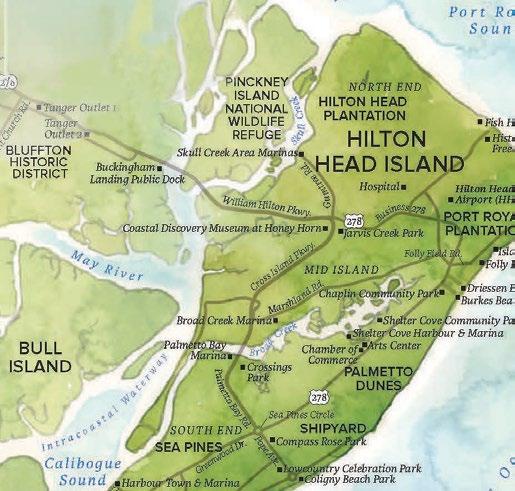
From championship greens to quiet marsh paths, Hilton Head Island offers endless ways to explore.
Sourcing locally is key to Hilton Head Island’s sustainability— and to the fresh flavors of its famed Lowcountry cuisine.
Andrew Carmines wants people to know where their food comes from. Growing up, he spent time around the shrimp boats that supplied his parents’ restaurant, Hudson Seafood House on the Docks, the oldest on Hilton Head Island. “Even way back then, I thought it was really cool that we were bringing shrimp off the boats and serving it to customers in the restaurant,” he recalls.
When Carmines took the helm of Hudson’s in 2006, things had changed. “Imports had flooded the market and driven the price of shrimp down,” he says. His first priority was reconnecting with the local shrimp boats and sourcing seafood from the surrounding waters. After that, he and his team built a seawater hold at their dock and began shedding out softshell crabs on site. “People saw the softshell crabs, and they just sort of flipped.”
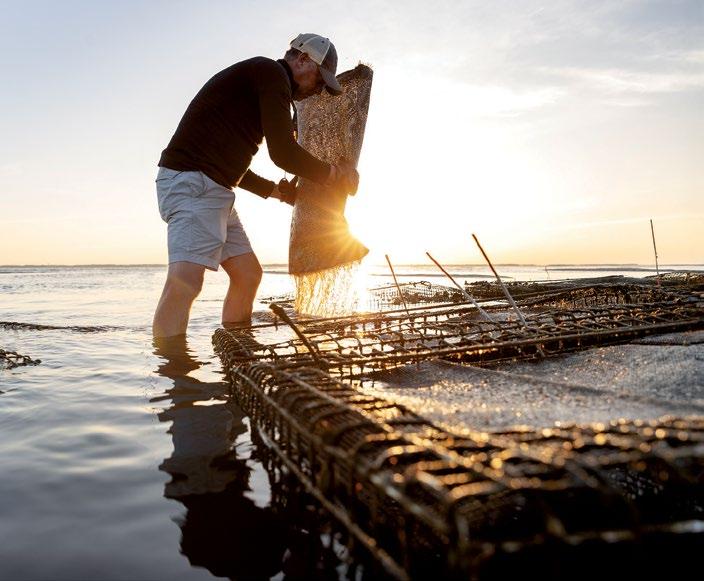
Oysters came next. Carmines learned everything he could about oyster farming and secured permits to put grow cages in nutrient-rich Port Royal Sound. Today, Shell Ring Oyster Company harvests upwards of 850,000 oysters each season, and visitors will soon be able to tour the farm themselves.
“People want a relationship with their food,” Carmines says. “If I can give them that opportunity, it’s something they’ll remember for a long time.”
“Definitely go out throwing the cast net for shrimp. My cousin has a company called May River Excursions, and he takes people out to do that. Then come to Hudson’s for the sunset.”
—Andrew Carmines
rich heritage and Gullah traditions infuse the Hilton Head Island experience.
Despite its pivotal role in American history, Hilton Head Island’s Historic Mitchelville Freedom Park remains largely unknown beyond the region. Ahmad Ward, the park’s executive director, is working to change that.
When Union forces captured the island in 1861, plantation owners fled, leaving enslaved people behind.
A year later, General Ormsby Mitchel established the first self-governing town of formerly enslaved people in the United States. Mitchelville soon grew into a thriving Gullah community, complete with homes, churches, and South Carolina’s first mandatory school system.
“Mitchelville residents went from being property to owning property,” Ward says. “It was the first time Africans in America could feel like citizens.”
Today, the landmark features building replicas and walking trails, with a visitor center in development. The island’s living culture continues through voices like Lola Campbell, a sixth-generation Gullah descendant and cultural advocate. Her story, along with many others, is captured in The Spirit We Move With, honoring Hilton Head’s Gullah heritage. Learn more at hiltonheadisland.org/gullah
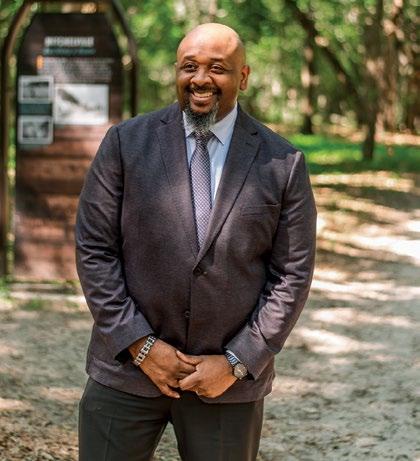
“Take a walk through Historic Mitchelville Freedom Park and then stop by my store, Binya— everyone who comes in here ends up having a conversation with me, my mom, or my sister about Gullah culture. Afterwards, have lunch at Mama Joy’s Kitchen, where you can get some good, Gullah soul food.”
—Lola Campbell
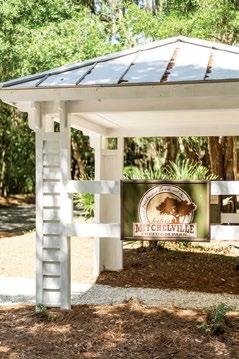
Biking, boating, beachcombing, tennis, golf—the options are endless on Hilton Head Island.
As Director of Sports Operations at The Sea Pines Resort, John Farrell knows a thing or two about staying active on Hilton Head Island. “I always say that when you get here, take the batteries out of your remote control,” Farrell says. “There’s so much to do outdoors on this island, and it’s right at your fingertips.”
Options include morning beach runs, biking along the island’s 60-plus miles of paved trails, and spirited tennis matches at The Sea Pines Racquet Club.
“If you do it right, you’re going to go home tired. But it’s a great tired, because it’s all really healthy,” Farrell says.
Hilton Head Island is perhaps best known for its 23 championship golf courses. “We have a very comprehensive golf experience here,” Farrell says. We offer play for beginners who don’t even know which end of the club to hold, and we host the RBC Heritage on the PGA Tour for the best players in the world. From families and new players to collegiate competitors, there’s a place to play for everyone.”
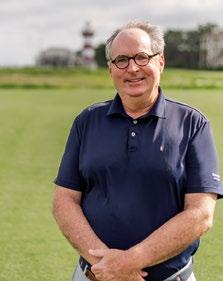
“Get some friends together and take a golf clinic before grabbing bikes and heading to one of our many waterfront restaurants for a boat-totable lunch experience.”
—John Farrell
Enter a world on the pristine South Carolina coast where nature’s beauty and resort luxuries coexist like nowhere else on earth. On Hilton Head Island, you’re invited to explore wide-open spaces, magnificent live oak trees, and breathtaking sunsets that provide the perfect backdrop for relaxation and renewal. Whether you’re wandering across world-class beaches, navigating over 60 miles of scenic leisure pathways, or teeing off on one of 23 championship golf courses designed by the game’s preeminent architects, the island offers a unique rhythm and high-energy adventure for every traveler.
Deeply rooted in rich Lowcountry culture, the island is a destination to be savored and remembered. Immerse yourself in the vibrant, centuries-old heritage of the Gullah culture, enjoy lively local festivals, or indulge in a sea-to-table culinary tour through more than 250 restaurants featuring fresh coastal cuisine. With over 200 boutique shops and an array of premier vacation rentals and hotels to suit the most discerning traveler, #LowcountryLife begins at HiltonHeadIsland.org



Kingdom looks ahead to golf’s main events, from the host courses and the histories on which the championships are built to the golfers who are poised to prosper in this year’s ultimate tests.

The golfers could not ask for major venues more alluring, demanding, majestic, and sometimes brutal than those set for 2026: Augusta National, Aronimink, Shinnecock Hills, and Royal Birkdale. New chapters in golf’s rich history are about to play out.
by ROBIN BARWICK

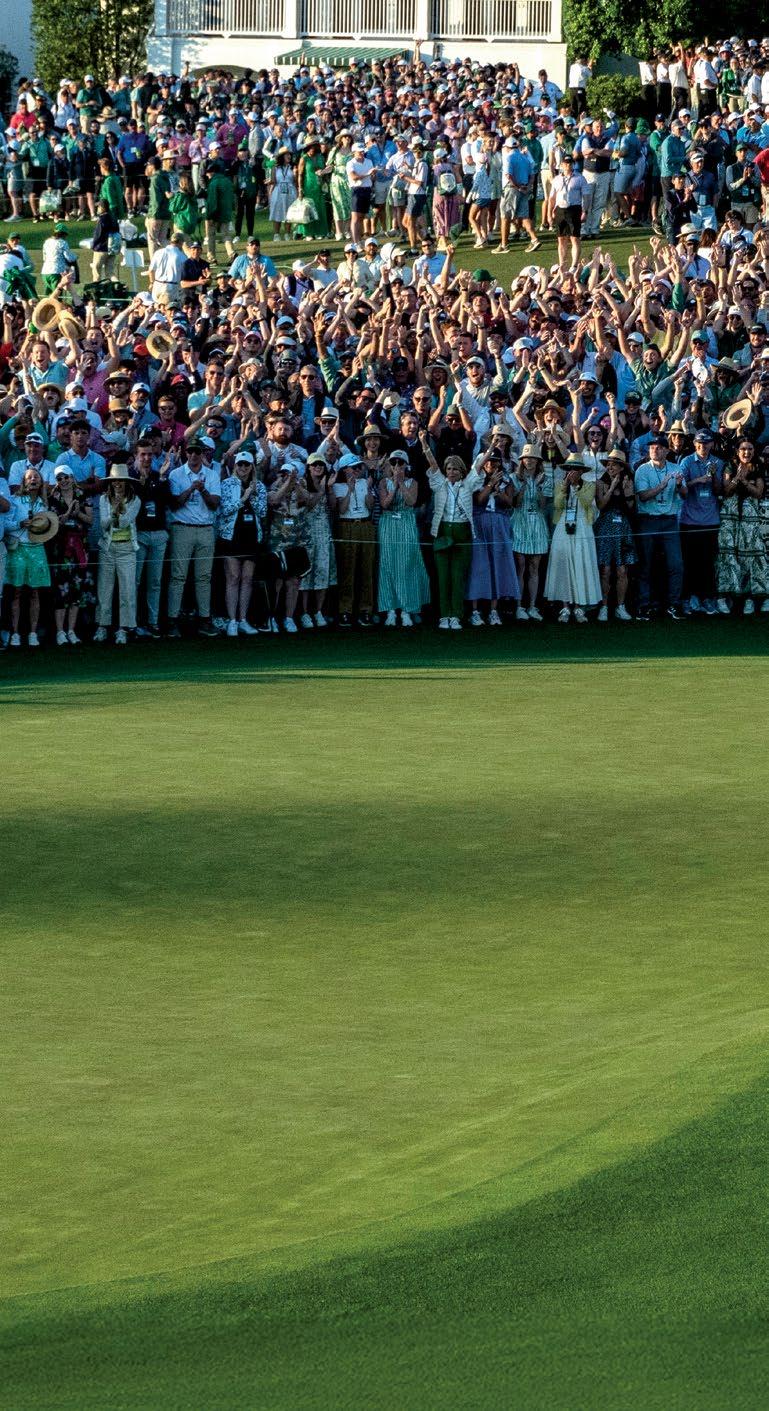
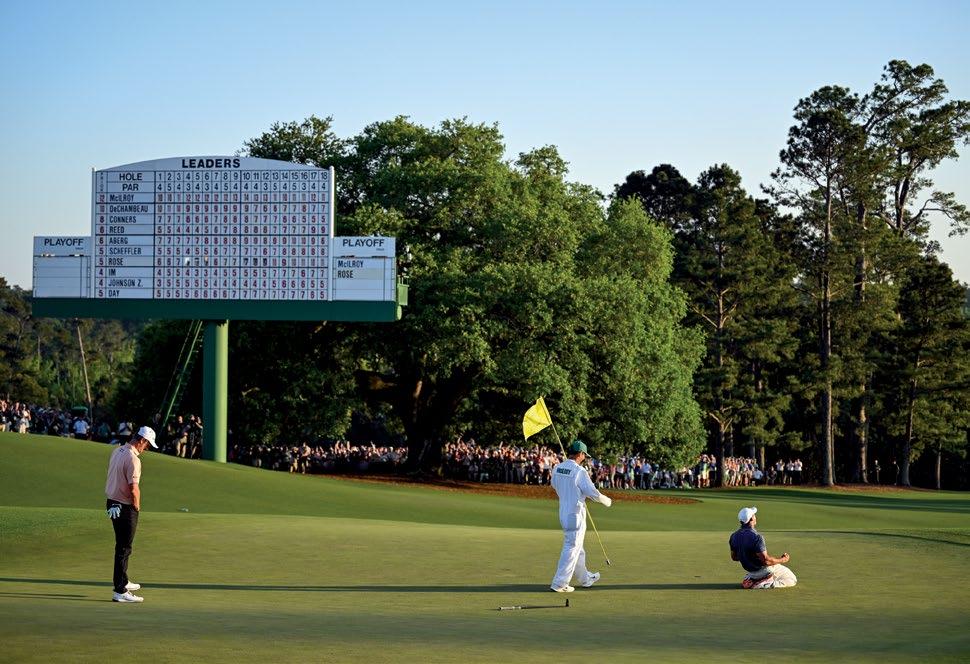
When it comes to the majors in 2026, current World No. 1 Scottie Scheffler faces the same pressure that dragged down former No. 1 Rory McIlroy for more than a decade: When you have won three out of the four majors, clinching that final trophy to complete the career Grand Slam—as McIlroy finally did at Augusta National in 2025—is devilishly difficult. (See our breakdown of how long it took the Grand Slammers to finish the job in “Scorecard” on page 138.) The outside expectations and media interrogations are repetitive, relentless, and wearisome, and if Scheffler is to complete the Slam in 2026, he needs to win the U.S. Open at Shinnecock Hills, which is about as tough as golf gets.
In addition to Scheffler and McIlroy, Collin Morikawa, twice a major champ, is primed to contend at golf’s Big 4 tournaments in 2026—assuming the back issues that forced him to withdraw from the Players Championship after one hole do not persist. Also at the top of the contender list are Justin Rose, Brooks Koepka, Tommy Fleetwood, and Cameron Young, especially after his recent breakthrough at the Players.
We contemplate these players and more over the coming pages, but it is hard to ascertain where the LIV golfers fit into major predictions. Bryson DeChambeau was the last LIV golfer to win a major, at the 2024 U.S. Open at Pinehurst No. 2. Koepka is the only other golfer to have won a major (the 2023 PGA Championship) after joining LIV, but he and 2018 Masters champ Patrick Reed have now abandoned the Saudi tour. Other past major winners who remain in LIV—Dustin Johnson, Jon Rahm, and Cameron Smith, in particular—have struggled in the majors since deserting the PGA Tour. They have become exotic birds in a gilded cage, pets fed only the most luxurious seeds and nuts through the bars by a Saudi prince. When temporarily released from their cage, they have found their hunting instincts dulled.
DeChambeau is the one LIV golfer who has kept his fire alight in the majors since defecting. Will Johnson, Rahm, or Smith finally shake off their slumps in 2026? We never know what will happen next in sports, but we have a lot of fun trying to guess.
It was 100 years ago that Bobby Jones, the greatest amateur golfer of all time, truly started to set himself apart from all others. In 1926, he claimed two major titles (although these championships were not known as “majors” at the time). Jones traveled to England in June for the British Open, where Royal Lytham & St Annes was making its championship debut, having received royal patronage from King George V just in time. In the final round, Georgia’s Jones came from two shots behind compatriot Al Watrous to win his first championship in the British Isles, by two shots.
The U.S. Open was a fortnight later, at Scioto Country Club in Ohio, also a first-time host. Jones again triumphed by overtaking the third-round leader, American Joe Turnesa. It was Jones’s second U.S. Open triumph, and he was the first golfer to win the British and American national titles in the same year. Jack Nicklaus was born 14 years later and grew up playing golf at Scioto, with the legend of Jones an inescapable influence on the budding champ.
Augusta National Golf Club April 9–12
The first major of the year could be a wide-open affair. Defending champ Rory McIlroy is battling back issues at the time of writing, while World No. 1 Scottie Scheffler has been tinkering with drivers as he works to regain his customary consistency. Filling the void early in 2026 is a resurgent Collin Morikawa, who won for the first time in more than two years, at the AT&T Pebble Beach Pro-Am in February. Twice a major champ already—at the 2020 PGA Championship and the 2021 British Open—an in-form Morikawa has the accuracy into pins that could see him thrive on the treacherous greens of Augusta National. Then there’s Justin Rose. The Englishman was runner-up to McIlroy in the Masters last year, as he was to Jordan Spieth back in 2015. Like Morikawa, Rose has won already this year, at the Farmers Insurance Open at Torrey Pines,
where he posted early scores of 62-65 to set up a dominant seven-shot victory. Rose won the 2013 U.S. Open at Merion, and he won’t back down if he gets into contention.
On the subject of veteran golfers, no one anywhere is asking if Tiger Woods still moves the needle. In February, Woods said he had not ruled out playing in the 2026 Masters, and the golf sphere went into meltdown. Woods has not played a tour event since the 2024 British Open, when he limped to 79-77 and a missed cut at Royal Troon. It is too much to expect him to contend if he plays in the Masters—his crowning moment of majors revival has already happened, when he won his fifth green jacket back in 2019— but if he can play the demanding Augusta National golf course pain-free this year, it would be great for him, great for the Masters, and great for the sport.
Bradley picked up the local revolutionary theme to repel the British old guard.
Aronimink Golf Club May 14–17
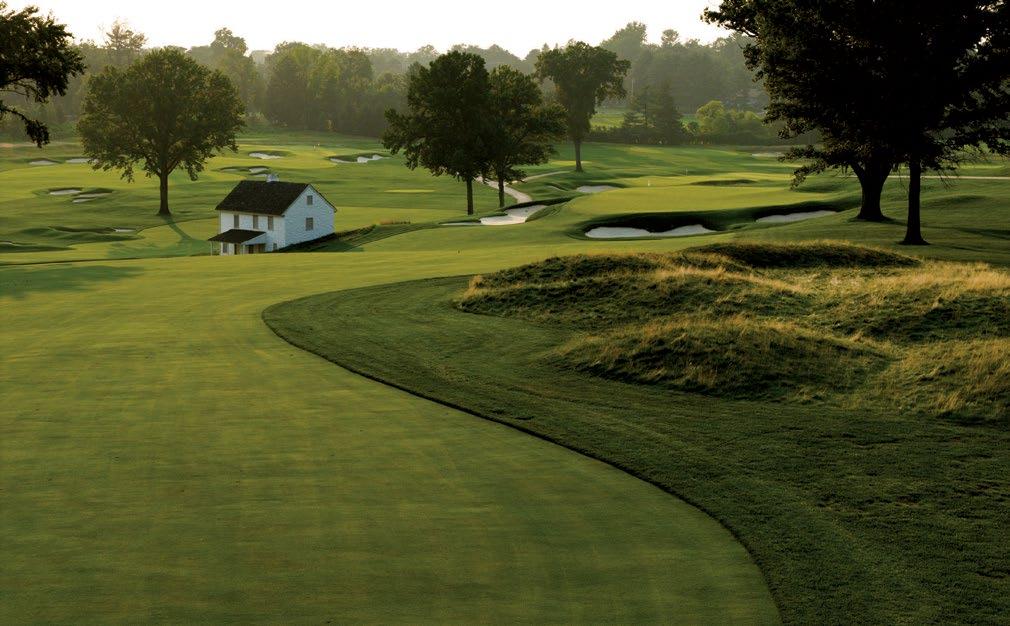
Aronimink remains a rare treasure of American golf, even if Gary Player thinks the club has cut down too many trees (see “Full Round,” page 52). Player won the only past major championship to be staged at Aronimink, the 1962 PGA Championship.
The Donald Ross–designed golf course in Newtown Square, outside Philadelphia, was originally slated to host the PGA Championship in 2027. However, when the PGA of America realized that its flagship tournament could coincide with the 2026 celebrations around the semiquincentennial of the signing of the Declaration of Independence in Philly, it moved Aronimink up to this year, much to the club’s delight.
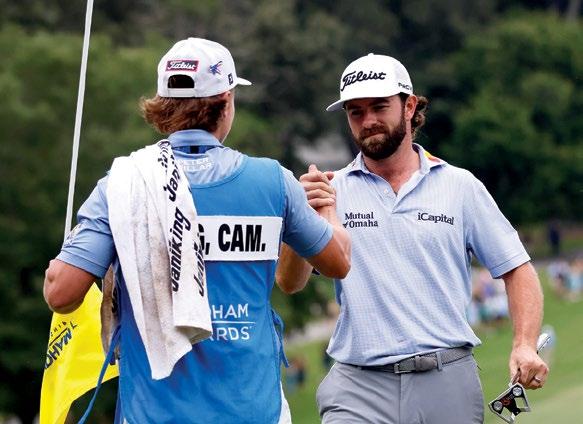
The last player to win a tour event at Aronimink is Keegan Bradley, who took the BMW Championship there in 2018. Bradley picked up the local revolutionary theme to repel the British old guard—in this dramatization played by
the aforementioned Rose—in a sudden-death playoff. It was the first win on the PGA Tour in six years for Bradley, whose lone major victory came at the 2011 PGA Championship at the Atlanta Athletic Club. Last year’s Ryder Cup skipper will relish the PGA’s return to Aronimink.
“Aronimink has got an incredible history, and it’s a great golf course, good old-school course,” said the Vermont native back in 2018. “Everybody loved it. I didn’t hear one negative thing about it [from players in the BMW Championship], and it was just a joy to play.”
Rose will also look forward to returning to the Philadelphia suburbs, as he won the AT&T National at Aronimink back in 2010, and it was just eight miles away from here, at Merion, where he won his sole major victory, in the 2013 U.S. Open.
Cameron Young could also figure at Aronimink, as he has played well on Donald Ross golf courses many times. He won the 2025 Wyndham Championship at the Ross-designed Sedgefield Country Club, and he has twice finished in the top 10 at the Detroit Golf Club on the PGA Tour.

The PGA Championship is coming to the City of Brotherly Love in 2026, 250 years after the Declaration of Independence was written and signed there. Here, we highlight a few more compelling reasons to celebrate America’s semiquincentennial in Philadelphia.
The Declaration’s Journey
Visit the Museum of the American Revolution on South Third Street to track the history and legacy of the Declaration of Independence around the globe and back again, from 1776 to the present day. This immersive, multimedia, family-oriented exhibition features more than 120 historic objects, documents, artworks, and more, and is open through January 3, 2027.
MLB All-Star Game
The standout players from the first half of the baseball season will gather at Citizens Bank Park on July 14, as the National League takes on the American League in the 96th All-Star Game. The Capital One All-Star Village fan experience will be open at the Pennsylvania Convention Center from July 11 to 14, and the T-Mobile Home Run Derby will be held at the ballpark on July 13.
Wawa Welcome America
The nation’s largest-ever Fourth of July celebration starts on June 19 and culminates on July 4. The Independence Day extravaganza will include concerts, free museum days, community programs, parades, and six nights of fireworks, and it will build up to a free concert on Benjamin Franklin Parkway on the fourth. Dress code: stars and stripes.
The largest public art program in America—which helped make Philly the “Mural Capital of the World”—has a special lineup of community projects this year to immerse the city in art. Mural Arts Philadelphia has decorated new visitor gateways into the city and created “colorway corridors,” incorporating a raft of stunning new murals.
Shinnecock Hills Golf Club June 18–21

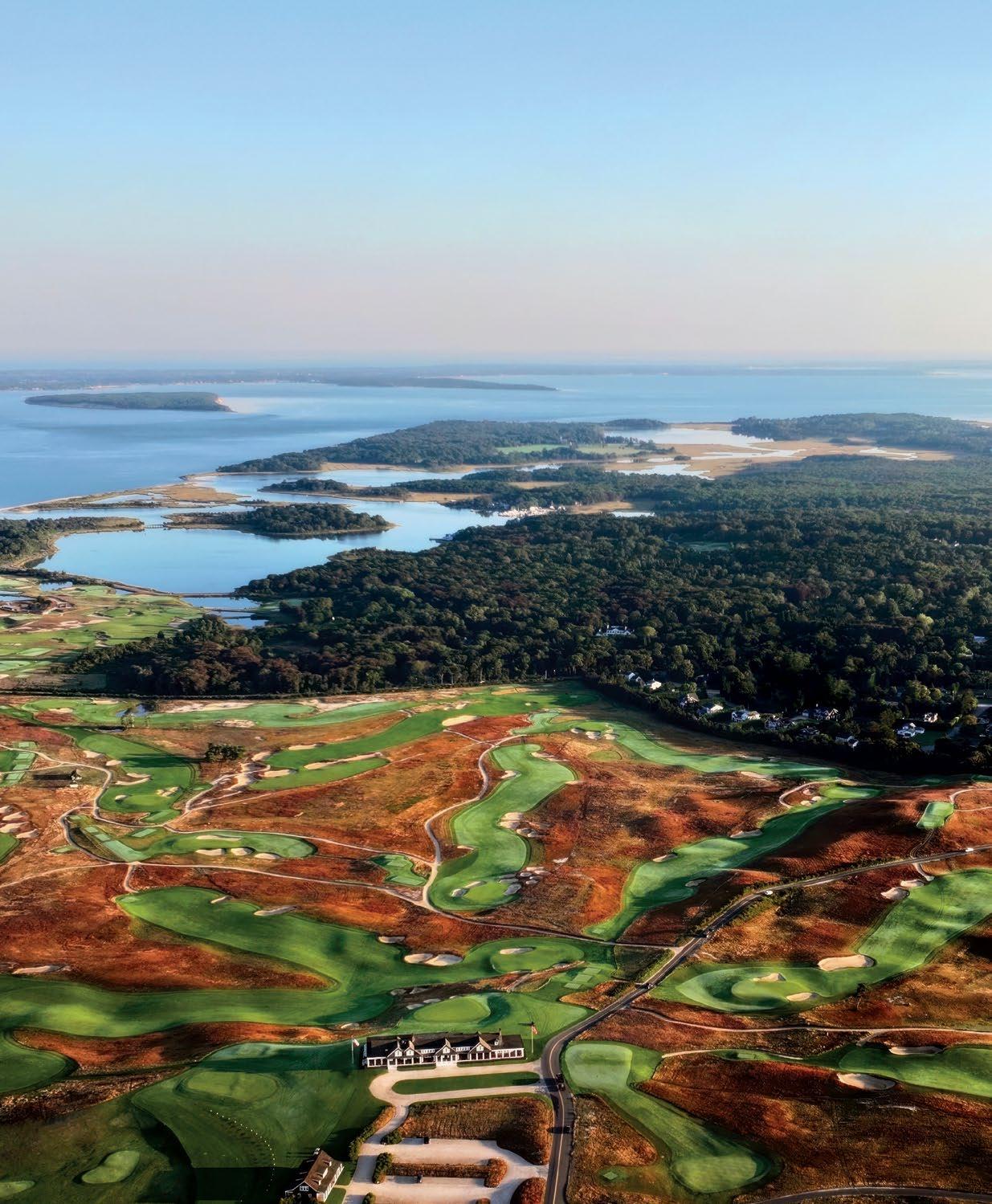
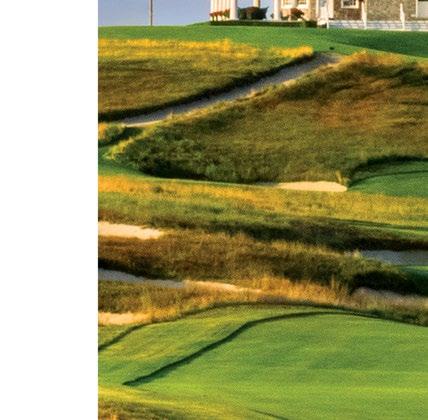
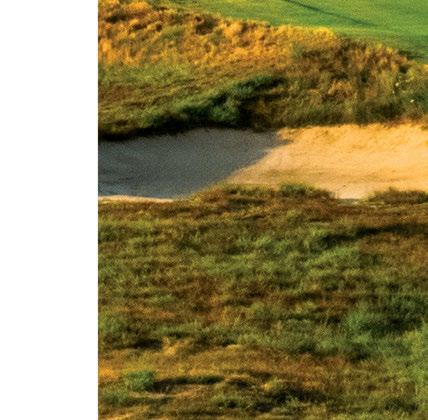
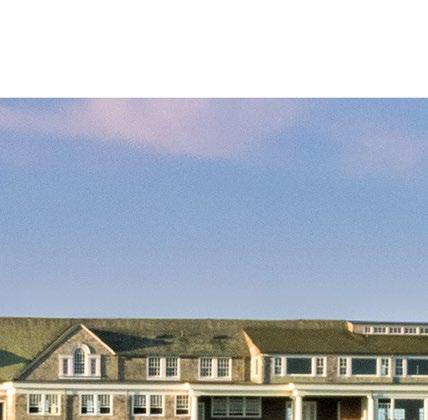
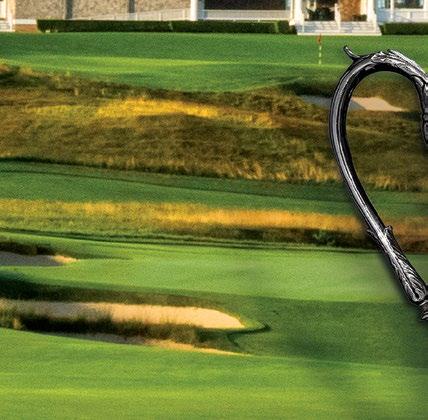
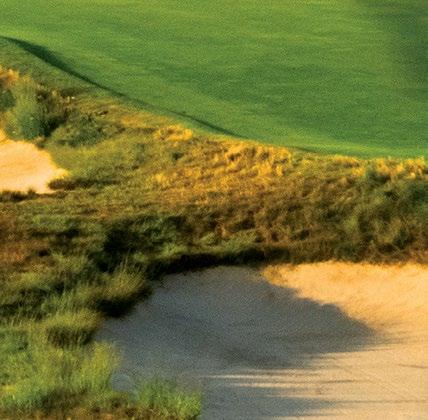
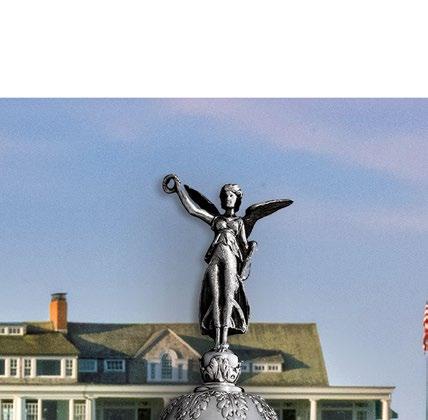
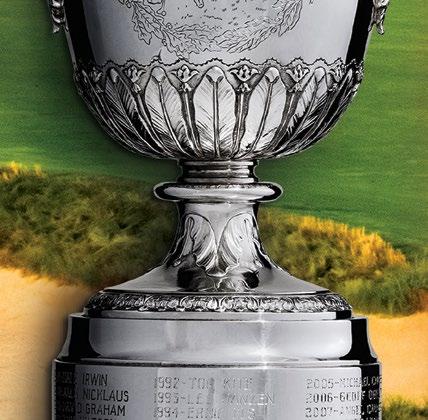
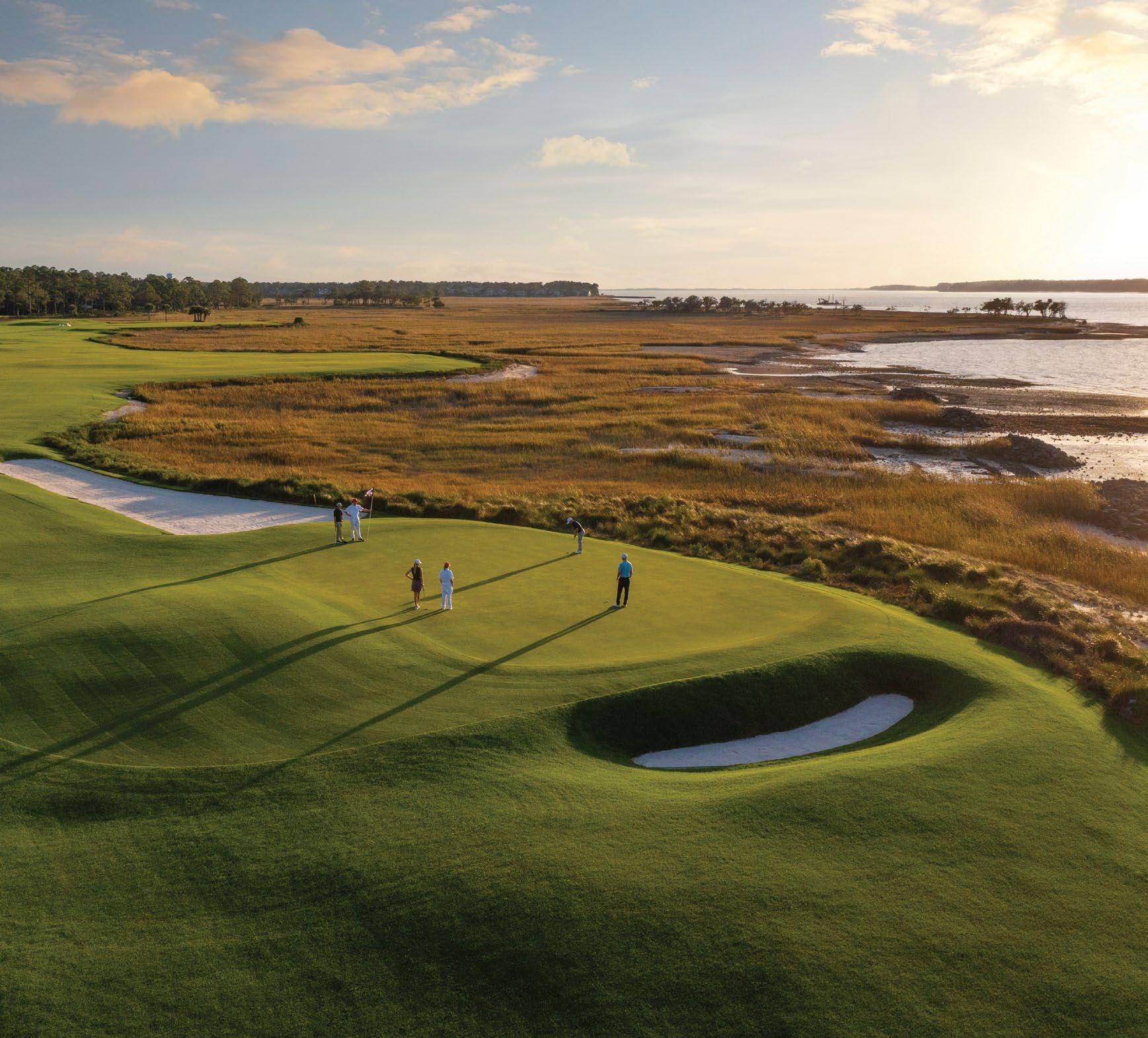
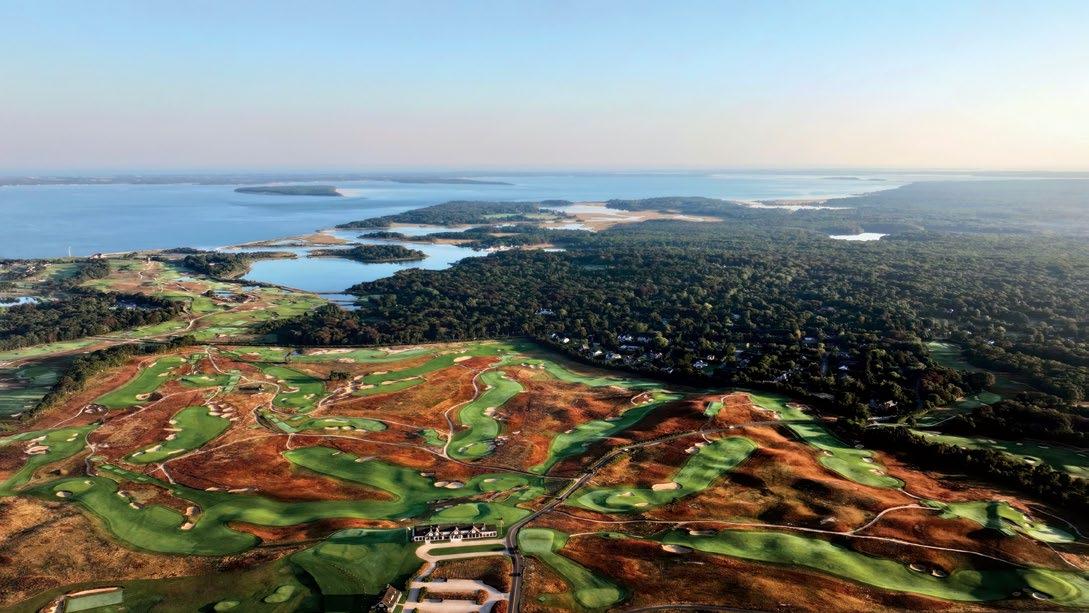
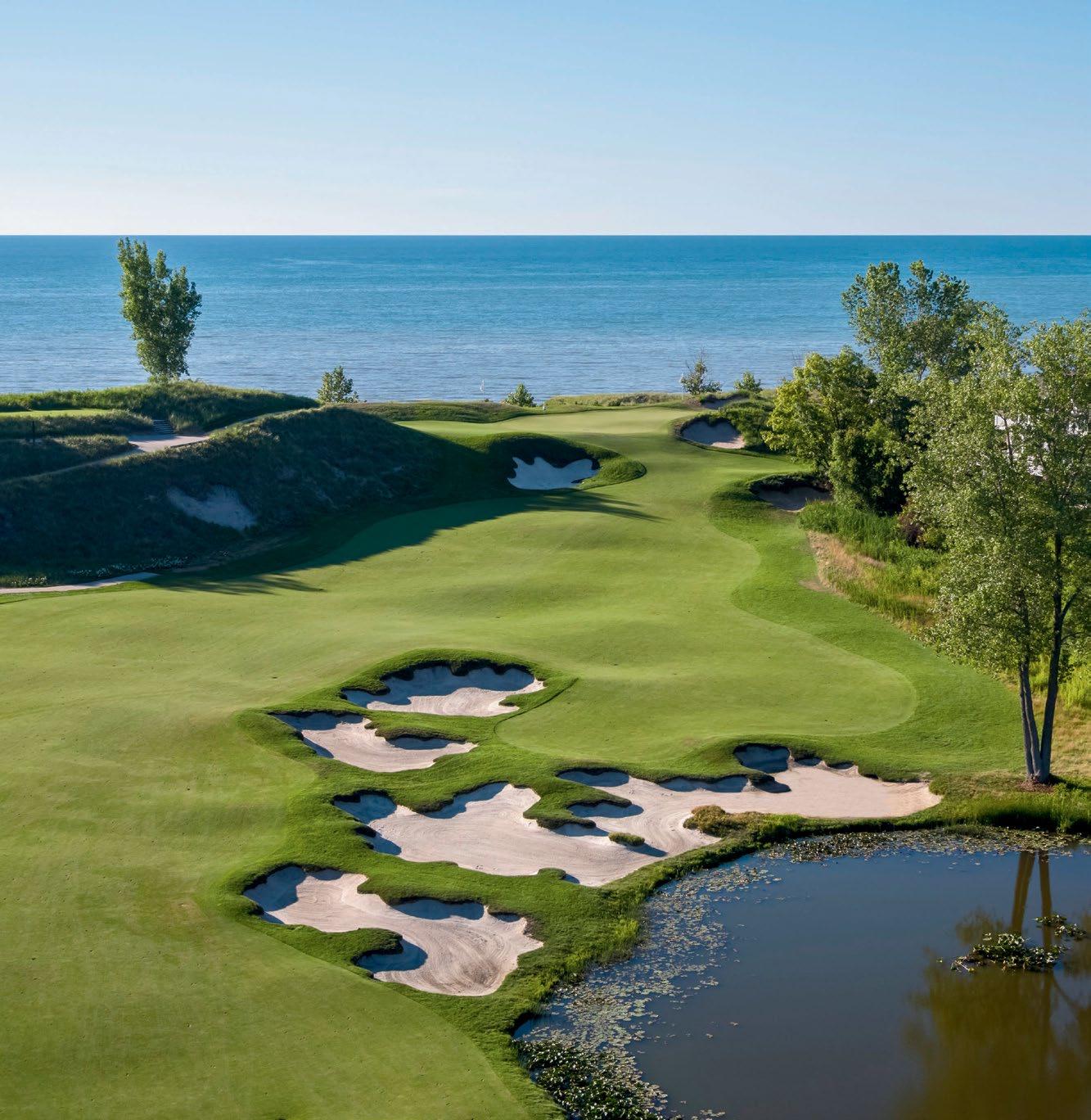
Shinnecock Hills, on Long Island, New York, owns a little piece of U.S. Open history that no other club can touch: It is the only golf club to have hosted the national championship in three different centuries. The legendary club was founded in 1891 and staged the second U.S. Open, in 1896. It would be 90 years before the U.S. Open returned, in 1986, and Shinnecock has since hosted the USGA’s flagship championship in 1995, 2004, and 2018. Added to the National Register of Historic Places in 2000, Shinnecock Hills is viewed as the prototype for the modern country club. Considering the pros of today, there is no question that Scheffler has the game and the temperament to win the 126th U.S. Open, thereby completing his career Grand Slam. Still, Koepka looms large. He won his second U.S. Open title at Shinnecock, in 2018. The five-time major champ loves this championship, and no matter his fortunes between now and the U.S. Open, he will arrive at the sandhills of Southampton expecting to win. Someone else who has looked sharp in recent months, England’s Tommy Fleetwood, was runner-up to Koepka at Shinnecock six years ago. Fleetwood won his first PGA Tour title at the Tour Championship last August, and he can manage fastrunning, wind-beaten courses like Shinnecock.
Royal Birkdale Golf Club
July 16–19
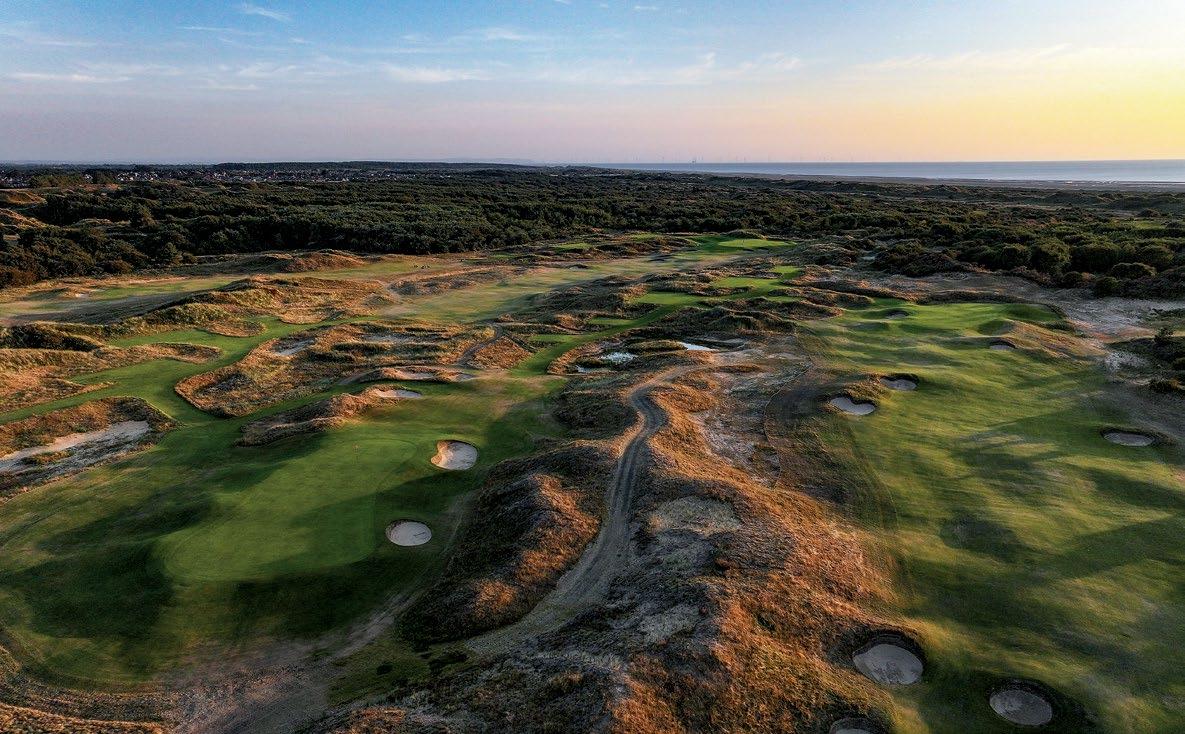
The British Open will arrive in Royal Birkdale for the 11th time in July. Located in Southport, on the Lancashire coast of northwest England, Birkdale is a classic, revered venue, featuring some of the most visually striking sand dunes on the rota of Open courses. The club’s figurehead is a bright, whitewashed, somewhat boxy clubhouse that was designed by a local architect in the early 1930s to conjure a vision of an ocean liner cruising through the waves of the adjacent Irish Sea. The geometric Art Deco clubhouse has been carefully extended over the decades, to the point where one member confided in us: “It started off as a liner sailing through the sand dunes . . . but now it looks like a container ship.”
Jordan Spieth was the last Open champion at Birkdale, in 2017, when he played a great recovery shot from the practice ground during the final round. The Texan will head to Birkdale seeking inspiration and a return to winning ways, as will Rose, who was the leading amateur in the 1998 Open at Birkdale at the age of 17. An American challenge might
come from the still-underrated Russell Henley, the World No. 6 at the time of writing, who posted top-10 finishes in the last U.S. Open and British Open.
Incidentally, Arnold Palmer won the Open at Birkdale in 1961. The weather was terrible, and tents around the course were literally blown into midair. In the final round, Palmer hit his tee shot on the 15th hole into a tangle of blackberry brambles and willow scrub. Rather than chip out, he took a 6-iron and went for the green. “I swung as hard as I could,” Palmer later recalled. Brambles, divots, and debris went flying in the flash of steel—the packed gallery audibly gasped—and the ball settled 15 feet from the hole, on a raised green 150 yards away. Palmer saved his par and won the Claret Jug by one, and today a plaque marks the spot from where that great shot was played, which is now the 16th hole.
Many years later, when Kingdom visited Birkdale, the starter on the first tee politely said, “Please remind Mr. Palmer that he still owes us a bush for the 16th.”

Ben Griffin has experienced opposite ends of life as a pro golfer, from the debt-ridden desperation of failing on developmental tours to the sudden and extreme wealth that comes with being one of the top players on the PGA Tour. He spoke to robin barwick.
Bby the time ben griffin quit professional golf in 2021, the then 24-year-old athlete had amassed significant debt from his time on tour. And yet, later that year—after a stint working as a loan officer for a mortgage company—he committed to return to the traveling circus that is tour golf.
“I was honestly $20,000 in debt by the time I returned to the Korn Ferry Tour,” says Griffin, now 29 and a three-time winner on the PGA Tour, in an exclusive interview with Kingdom. “On the mini tours, you are betting on yourself, and that is what you have to do in golf, unlike other sports. Just trying to qualify for the Korn Ferry Tour, you have to pay $5,000 or more in entry fees, travel costs are high, a lot of guys couch surf when they can, and on top
of that, you have to pay for practice rounds and cart fees, rental cars, and meals. You can get to $17,000 of debt in a month, easily.”
The Korn Ferry Tour is owned and operated by the PGA Tour, and it is one step down from the promised land. Golf fans see the millions of dollars earned by the top players at the top level, but for those lower down the chain, traveling on tour and missing cuts is financially brutal. Even making cuts frequently does not guarantee you can cover costs.
Griffin first turned professional in 2018, after setting a career scoring record—72.02 per round—at his hometown college, the University of North Carolina at Chapel Hill. He made a bright start on the PGA Tour Canada that year
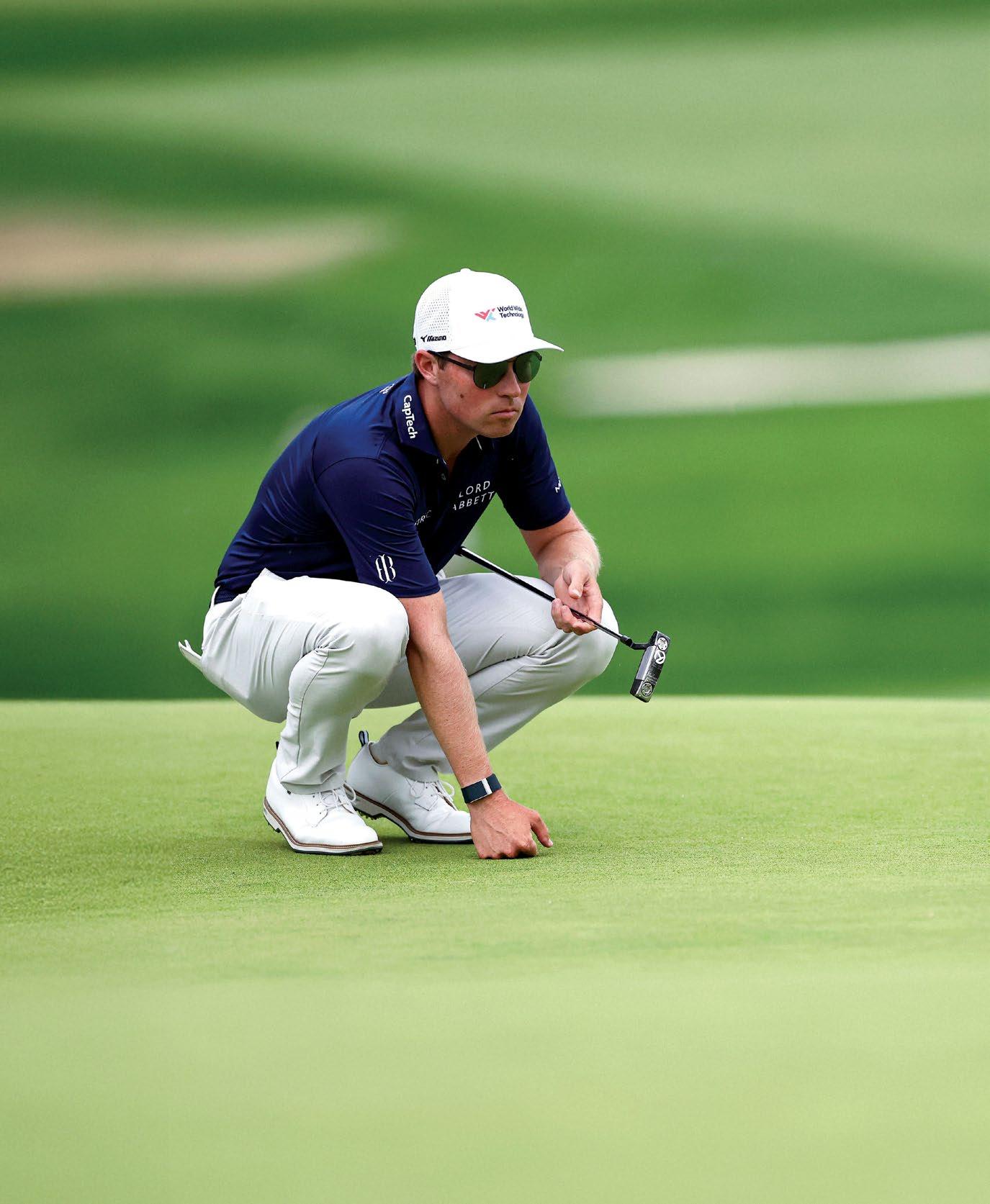
and won his seventh start, but then inconsistency began to plague him and missed cuts started to become more regular. In 2019, he made just three cuts from 12 starts across the PGA Tour Canada and Korn Ferry Tour. His prize money for the season totaled $3,808.
“In golf, things can change fast,” reflects Griffin. “You have to back yourself early on, and coming out of college, I don’t necessarily think I had the belief.”
In a chance meeting with Doug Seig at Georgia’s Sea Island Resort, Griffin found someone who believed in him. Seig is CEO and managing partner of Lord Abbett, a privately held investment management company, and having struck up a friendship with Griffin, he offered to sponsor his return to tour.
“When I decided to go back on tour, I had the support of Doug Seig and Lord Abbett financially, to get rid of that debt,” explains Griffin, who returned to the Korn Ferry Tour in the fall of 2021. “Doug is the reason I was able to get rid of those financial pressures and focus on playing, and to think about winning every time I teed it up. I play my best golf when I am freed up and loose and having fun, and most people say the same. Some people say that playing under pressure is a privilege, but how about we eliminate some of

Not many PGA Tour pros were living a life like mine last year. It was very interesting, but I appreciate journeys more than anything.”
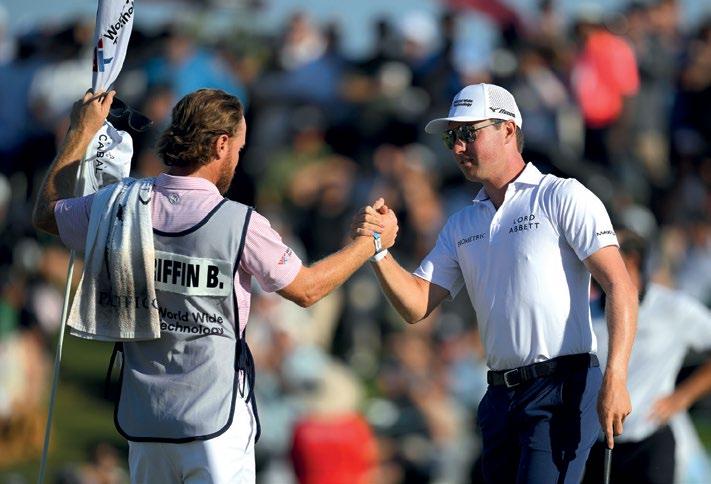
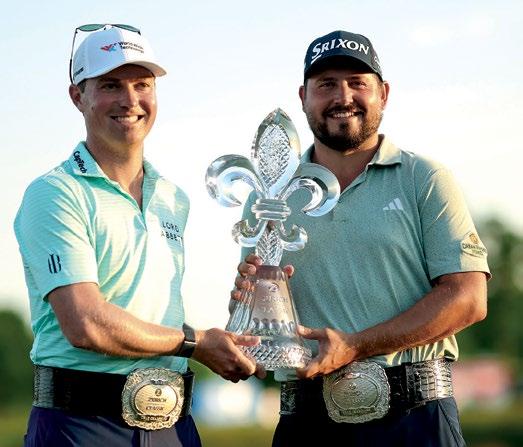
Griffin makes his British Open debut in 2023 at Royal Liverpool (above). He and caddie Alex Ritthamel celebrate victory in the 2025 World Wide Technology Championship (left). Griffin’s Ryder Cup baptism at Bethpage State Park last year (right). He claims his first PGA Tour title, with Andrew Novak, at the 2025 Zurich Classic of New Orleans (far right).
those pressures? I am going to pull off some pretty good shots if those pressures are not there and if golf feels like it did when I was a kid.
“It has been a crazy journey, and I have seen it all,” Griffin continues, “and that has allowed me to have the perspective that I do today.”
A strong six months on the Korn Ferry Tour in 2022, including a trio of runner-up finishes, earned Griffin promotion to the PGA Tour. After two years finding his feet under the bright lights, with vindicating top-10 finishes some weeks, crushing missed cuts in others, Griffin broke through spectacularly in 2025.
Last April, at the age of 28 and in his 90th start on the PGA Tour, Griffin partnered Andrew Novak to victory in the Zurich Classic of New Orleans. His second win of the season followed just a month later, this time a solo effort at the Charles Schwab Challenge. Before he knew it, this golfer who had never represented the United States in team golf as an amateur or a professional was a captain’s pick for the U.S. Ryder Cup team.
Finally, last November, Griffin closed out 2025 with near perfection, shooting 65-66-66-63 to claim the World Wide
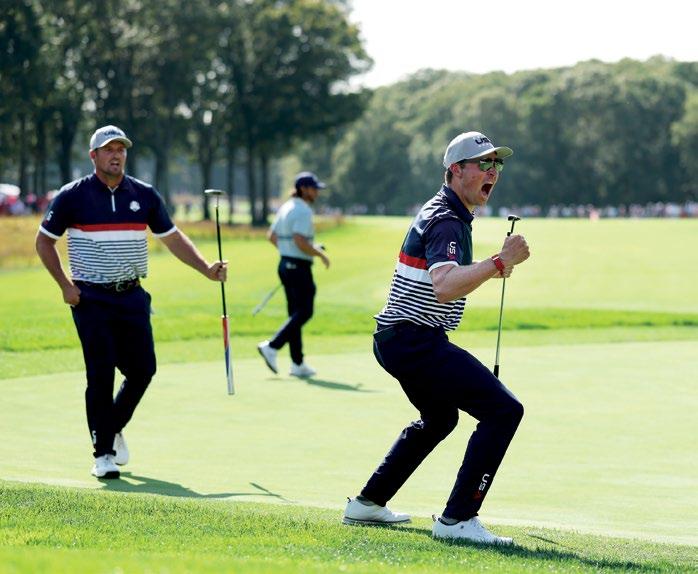
Technology Championship by two shots and setting the event’s 72-hole scoring record in the process. Only two other golfers won three times or more on the PGA Tour last year: Scottie Scheffler and Rory McIlroy.
Griffin finished 2025 ranked eighth in the world—and having earned $11,724,352 in prize money for the year. He and his wife, Dana, bought a house in golf-centric Jupiter Island, Florida, although they spent most of the year moving between hotels and a studio apartment while their new home was being renovated.
“The studio had a bed, a bathroom, an air fryer, and a fridge, and I built a stand-up closet from Ikea for all our clothes, and our suitcases had to go under a table,” shares Griffin. “We couldn’t do our own laundry for about seven months, so we would either go to [PGA Tour golfer] Ryan Gerard’s house close by or do hotel laundry on the road.
“I had my putting mat in there with about eight putters leaning on the side. When we ate, we either sat on the bed or ate standing up. It was crazy. Not many PGA Tour pros were living a life like mine last year. It was very interesting, but I appreciate journeys more than anything, so I actually enjoyed it. You’d have to ask Dana if she did, too.”

This year should bring some peace of mind—and place—for Griffin. He has the security of a permanent residence, he has financial security, and he has job security, too, with his PGA Tour exemption assured until the end of 2029. “I am trying to let things happen and want to continue to build,” he says. “It’s not like I am even sitting back and thinking about how cool it was last year. I am not thinking about it as a year, but I am looking at my career as a whole journey, and I am only just getting started.”
Another reminder of how fast Griffin has ascended golf’s rankings is that this is the first year he has been invited to play in the Masters, at Augusta National in April.
“When I was in high school, I told myself I would never go to Augusta until I had qualified for the Masters, until I had earned my spot there,” confides Griffin. “I watched the Masters on TV, and I pretty much knew every hole from TV, so it was pretty cool to go there in November.”
Griffin played Augusta National last fall with a member, as custom dictates, and he was able to take his father and a childhood friend along with him to share the thrill.
“My mind is set on a lot of PGA Tour events this year but especially the Masters,” he admits. “The course will obviously play differently in April, with faster greens and firmer fairways, but to see the contours in person was really important, because when you see it on TV it does not give the place justice. It is crazy how hard a walk it is for 18 holes.
“There is a reason that no golfer has won on their
My mind is set on a lot of PGA Tour events this year but especially the Masters.”
Masters debut since Fuzzy Zoeller in 1979, and that is because you really need to play the course a few times to understand it and to feel prepared. I am trying to get as many looks around the golf course as possible, and I plan to go back two weeks prior to the Masters and play for a couple days. I might even walk the golf course without clubs. Someone who does this on tour almost every week is Collin Morikawa. He goes around and takes notes from just looking at the course, so I might do that. I might play the course in the morning and try to shoot a score, so putt out every hole, and then just walk it in the afternoon, and take notes on everything in my yardage book, every little hump.”
Hopefully the well-grounded Griffin will enjoy his Masters debut as he plays with a mind free of worries about credit card interest, how to pay for his evening meal, or where to get his laundry done.




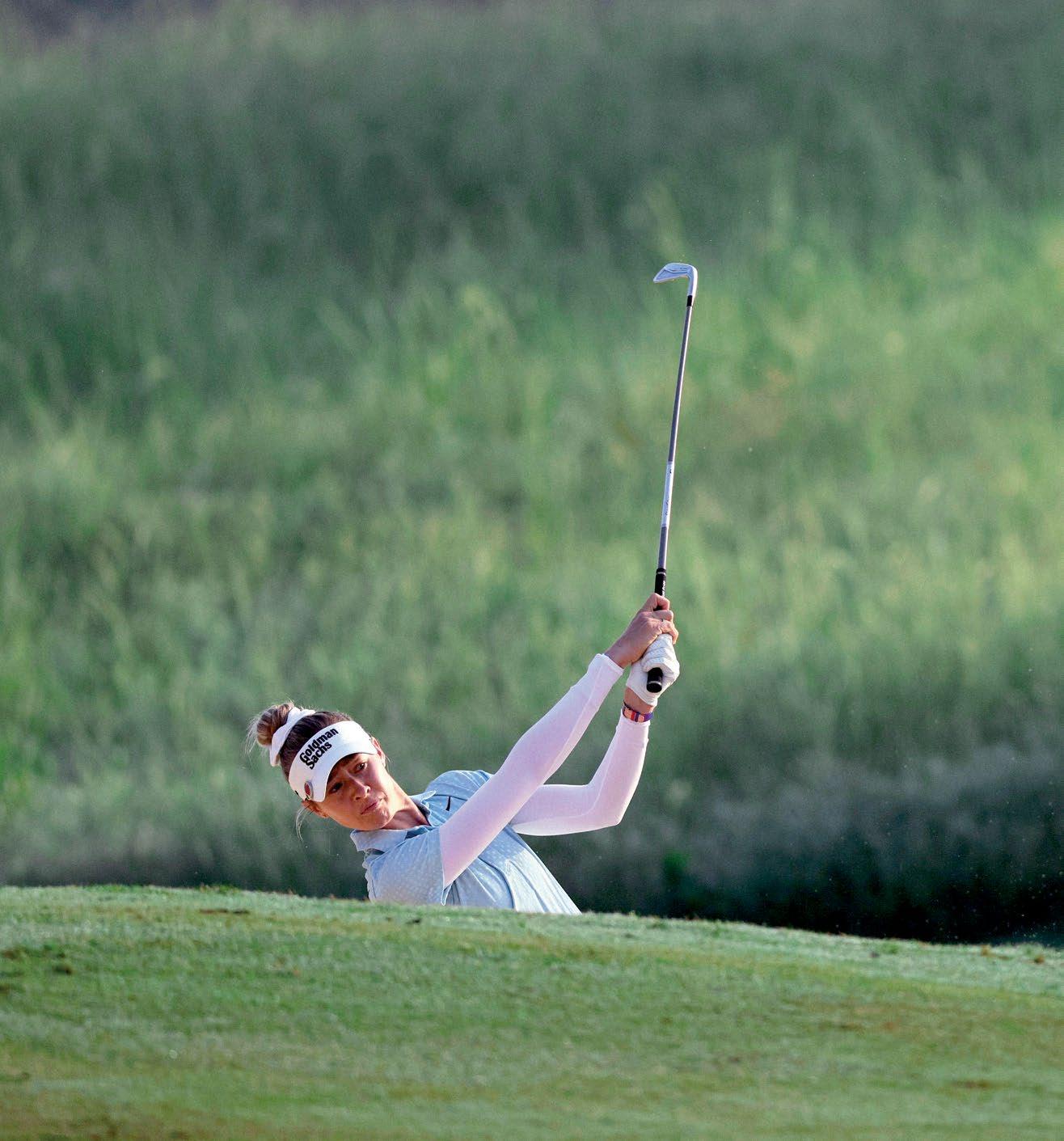
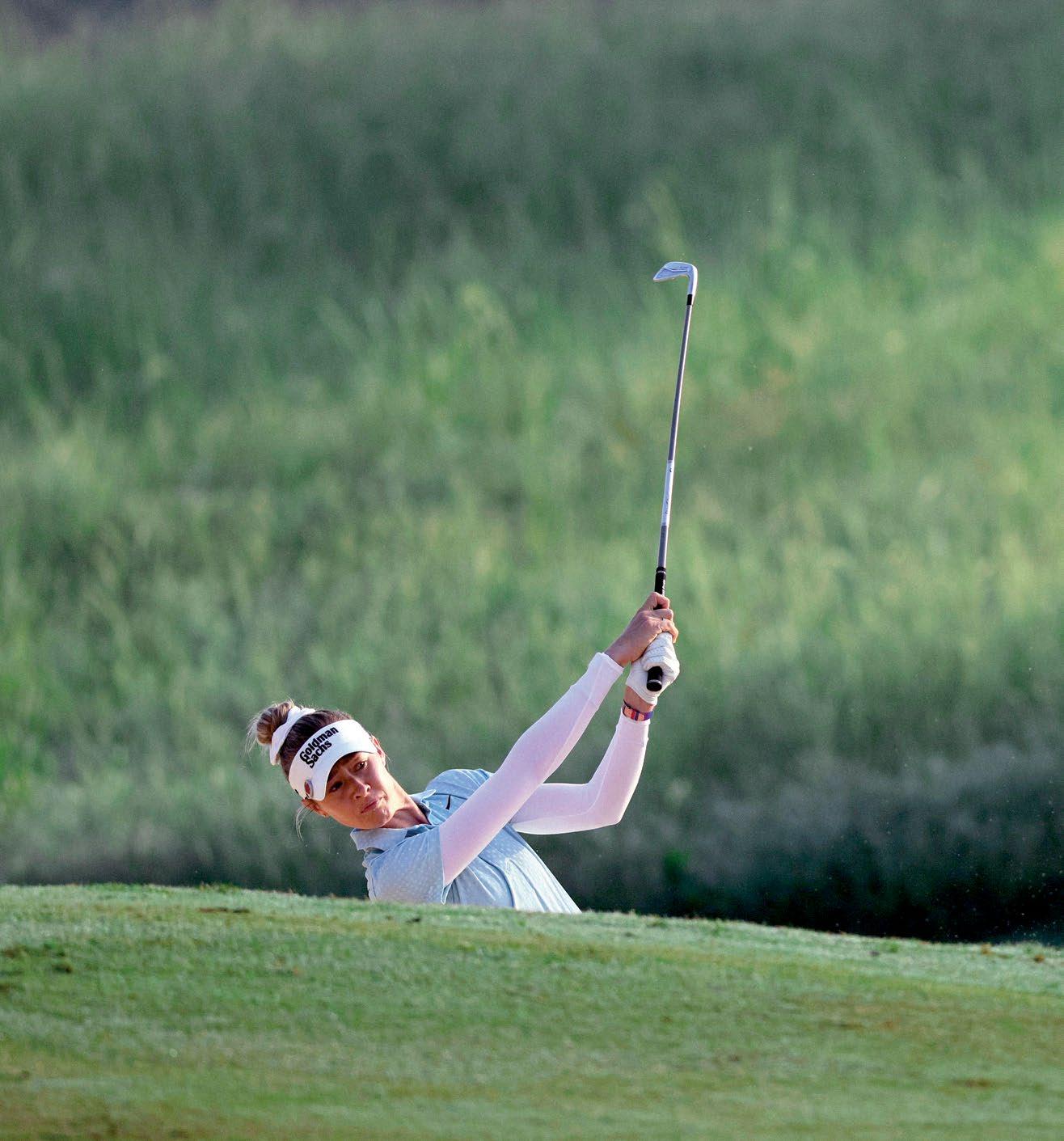
After a winless 2025, LPGA star Nelly Korda bounced back with victory to open the new year. At the start of what could be a big season, the former World No. 1 golfer reflected on friends, her athletic family, and the fire that drives her in an exclusive Kingdom interview.
by ROBIN BARWICK
Iif you are among the many golfers who struggle with an awkward swing, take heart. Nelly Korda had the same problem as a teenager, before finding a new direction and blazing a trail to become the women’s World No. 1 golfer.
In 2013, when Korda was 14 years old, her game was in pieces. “Honestly, if you had seen my golf swing . . . It was the most atrocious swing I have seen in my entire life,” Korda says with striking self-deprecation. “It was so steep, so loopy, and there was such a disconnect between my arms and body.”
Her swing troubles took a toll on the teenager. “I was really struggling, and I didn’t know if I wanted to continue playing golf,” she says. “I was playing with really heavy clubs, and I wasn’t sure what I was doing, and it was during a growth spurt, and it led to a bad back at a really young age.”
Korda’s father, Petr, is one of the greatest tennis players to have emerged from the Czech Republic—or Czechoslovakia, as it was known then—and he won the 1998 Australian Open. Her mother, Regina Rajchrtová, also played on the pro tennis tour. The couple brought up their three children in Bradenton, Florida, not far from the prestigious IMG Academy, which promises pro-level coaching and education to aspiring athletes.
All three Korda kids have grown up to become tour pros—two in golf, one in tennis. But back in 2013, Petr saw that his gifted middle child was at a crossroads. She needed either a reset with her golf or a different path altogether. So he consulted IMG’s then director of golf, David Whelan, a former tour pro from England who had built a reputation as Paula Creamer’s long-term coach.
“Nelly’s dad came into my office and said she was terrible out of bunkers,” starts Whelan, 64, who now bases his coaching at Bradenton’s Lakewood National Golf Club. “I took her out, and we worked in a bunker, and we have pretty much been together ever since.
“Nelly’s swing was not as bad as she says it was, but it wasn’t good enough to take her where she wanted to go. She didn’t really have a short game, so the main thing I did for her early on was to sort that out. Today, she is one of the best chippers on the LPGA Tour.”
Korda is also one of the longest and most consistent drivers on the LPGA Tour, and among the leaders in finding greens in regulation. When her putter warms up, she’s difficult to beat. “If Nelly putts well, she’ll finish in the top three at any event,” claims Whelan, who has also worked with three-time World No. 1 Lydia Ko.
“David completely rebuilt my swing,” says Korda, who turned professional at the age of 18, four years after that first meeting. “No matter what, David is always going to be super involved in my golf. He actually rejuvenated my love for the game, and I am where I am because of him.”
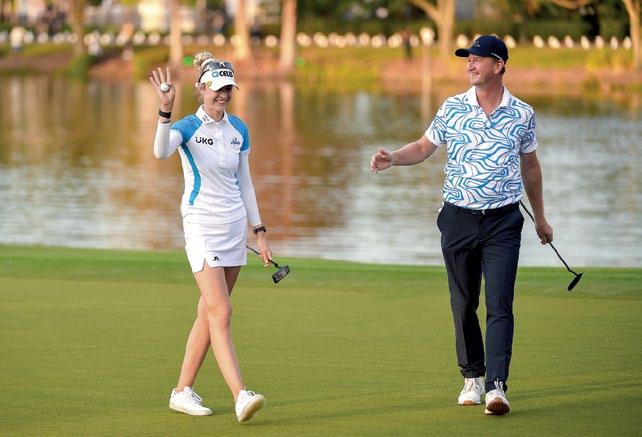
I am very grateful to go through those lows, because they make me appreciate the highs so much.”
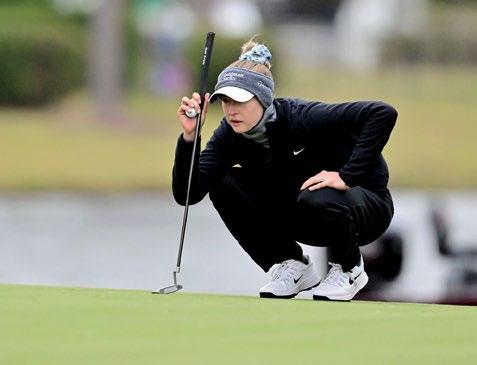
Where Korda is at the time of writing is No. 2 in the world, behind Thailand’s Jeeno Thitikul. Korda enjoyed the season of her career so far in 2024, winning seven times, including a stretch of five straight wins, which delivered her to the No. 1 ranking. Her consistency remained in 2025—19 cuts made from 19 starts—but her winning touch evaporated. Golf is a fickle game. Meanwhile, Thitikul was dominant last season, winning three times to usurp Korda as both World No. 1 and as Rolex Player of the Year on the LPGA Tour.
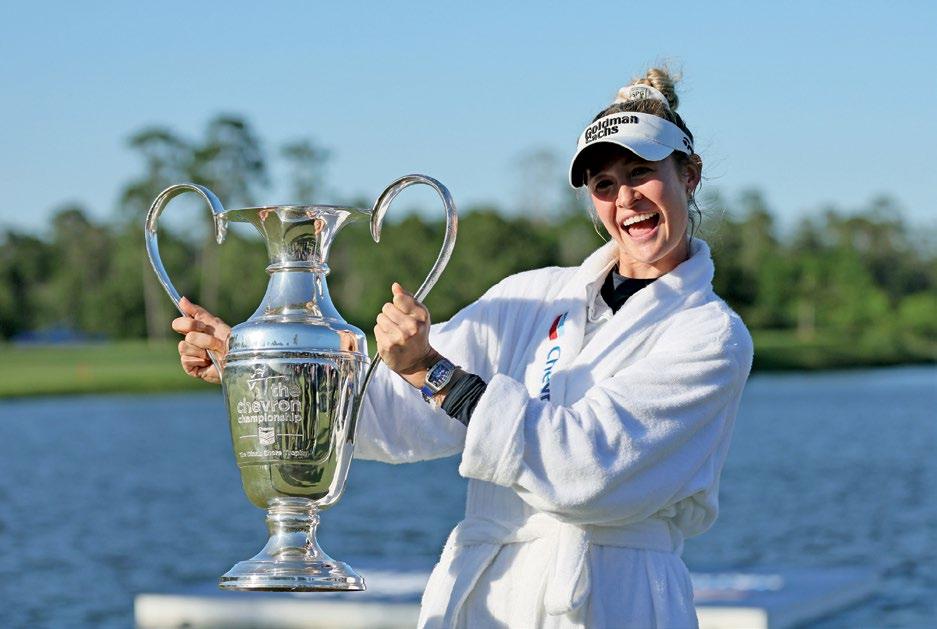
Though not as dramatically as when she was 14, Korda needed another fresh start in 2026. She earned it emphatically at the LPGA Tour opener at the Hilton Grand Vacations Tournament of Champions, at a brutally wintry Lake Nona Golf & Country Club in Orlando, from January 29 to February 1. The tournament was reduced to 54 holes, with the greens frozen solid. Korda’s outstanding third round of 64, eight under par, was the low round of the tournament and helped earn the Gulf Coast golfer a three-shot victory.
“[That] was probably one of my best rounds I’ve ever played in my career,” said Korda in her press conference after clinching the 16th LPGA Tour victory of her career. “I was so focused on being present. I told myself to do that last year, too, but maybe the outside noise did make its way in a little bit more than I wanted it to. I am very grateful to go through those lows, because they make me appreciate the highs so much.”


We were never pushed into anything, which was nice. The main thing our parents really wanted was for us to be outside.”
The athletic pedigree of the Korda family is rare. A pair of tennis pro parents had three offspring: Jessica, a six-time winner on the LPGA Tour, who is now 32 years old and returning to the tour after becoming a mother; Nelly, who is five years younger than her sister; and tennis pro Sebastian, 25, a three-time winner on the ATP Tour.
“Our parents wanted us to find what we were passionate about,” says Korda, who started swinging a golf club at the age of two, while seven-year-old Jessica was having golf lessons. “We were never pushed into anything, which was nice. The main thing our parents really wanted was for us to be outside. Even though they both played tennis, we were never pushed into that. My brother was a really good hockey player, and he did not start playing tennis until he was 13.
“We skied in the winters, and I did gymnastics and figure skating, and I played some soccer at school. We also did tae kwon do growing up, so we were always doing something. At the end of the day, we did find what we are passionate about, which was a great way to grow up.”
When the sports did start to get serious for the teenage Kordas, they had homespun guidance to lean on.
“Our parents always reiterated, ‘It’s not a sprint, it’s a marathon,’ ” Korda says. “Another [guiding principle] was, ‘Everyone has their own path.’ It is really easy to compare yourself to what others do and to what others have achieved, particularly in sports, but we all need to stay the course and find our own path. Everyone peaks at different times, and everyone has a different career.”
Sports could very well be on the path for future generations of the family. Jessica’s husband, Johnny DelPrete, is a former tour golfer; Nelly’s fiancé, Casey Gunderson, played college football at Bryant University in Rhode Island; and Sebastian is also engaged, to Ivana Nedved, a childhood friend of Nelly’s whose father, Pavel Nedved, is an all-time great of Czech soccer. The union between the houses of Korda and Nedved is going to create an extraordinary Czech American dynasty.
“The Nedveds spent their summers in Florida, while they lived in Italy for the rest of the year,” shares Korda. “Ivana and I were best friends growing up, and we were pretty inseparable during summers. The Nedved family is great, and Ivana understands the life of an athlete. I am very happy for Sebastian and Ivana. Actually, I have known they were destined to be together for a long time, from a pretty young age.”


With both Korda weddings being planned for 2027, Nelly is hoping to pop more champagne corks on the golf course in the meantime. She has skipped the LPGA Tour’s early-season Asian swing in a bid to be fresh for the U.S. West Coast swing, starting in mid-March.
“I foresee a good year ahead for Nelly,” says coach Whelan. “I really do.”
“I can’t control the bounces, and I can’t control what other people are doing, and I can’t control the weather,” says Korda, who has won major titles at the 2021 KPMG Women’s PGA Championship and the 2024 Chevron Championship. “I can just control my attitude and my work ethic and that fire inside of me. Every year of my career has had a completely different story, and that is what is amazing about sports. A new year is a new chapter in a book, and it is going to be exciting and infuriating—all of it. You feel every emotion possible, because we put so much into it, but it is also fun.”
The way Korda cracked her win drought in frozen Orlando suggests that the fire is stoked.
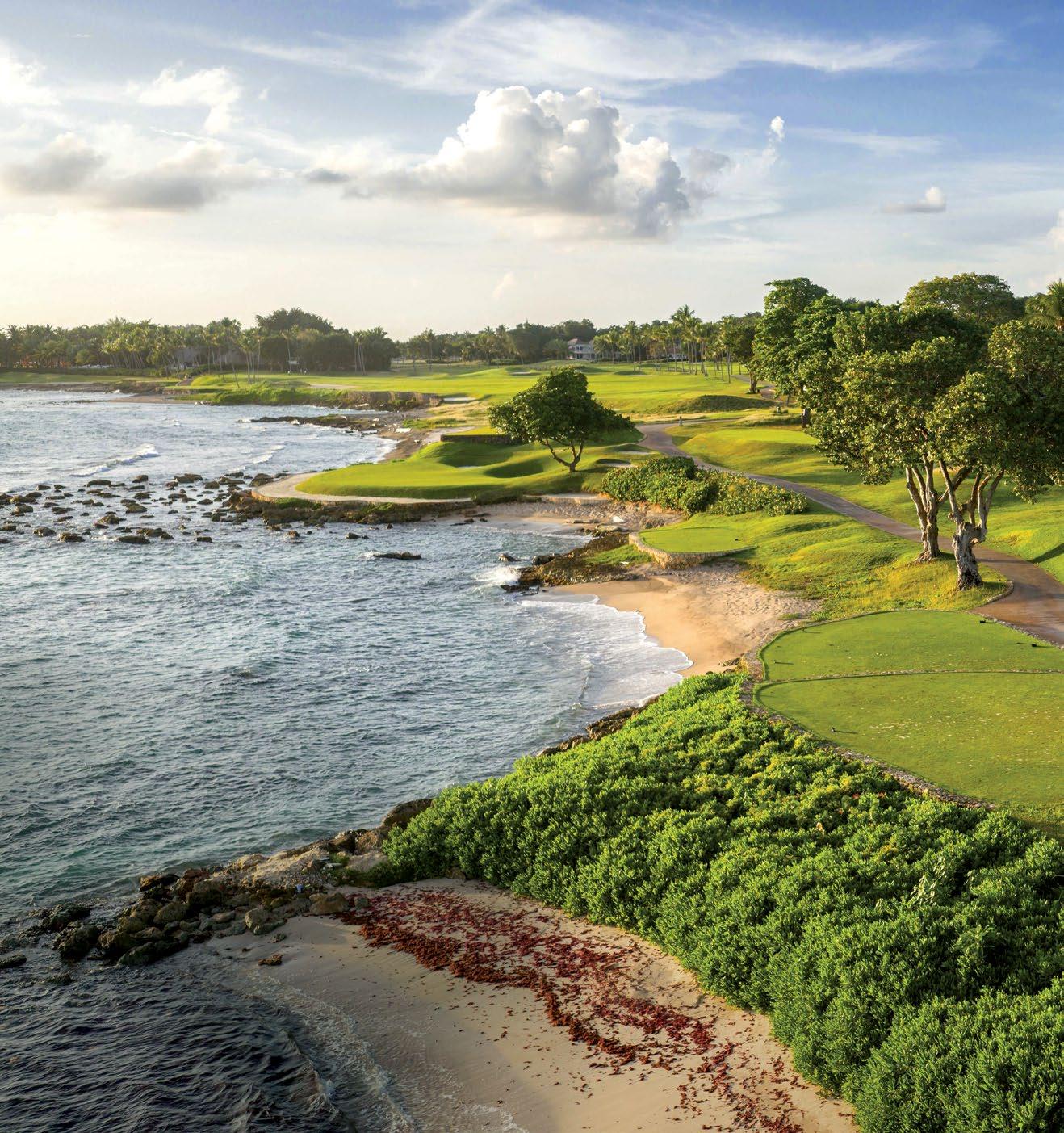
With the reopening of its most famous course, the Caribbean nation is back at the top of golfers’ wish lists. The Pete Dye masterpiece is just one of many things to sink your teeth into on a swing through the D.R.
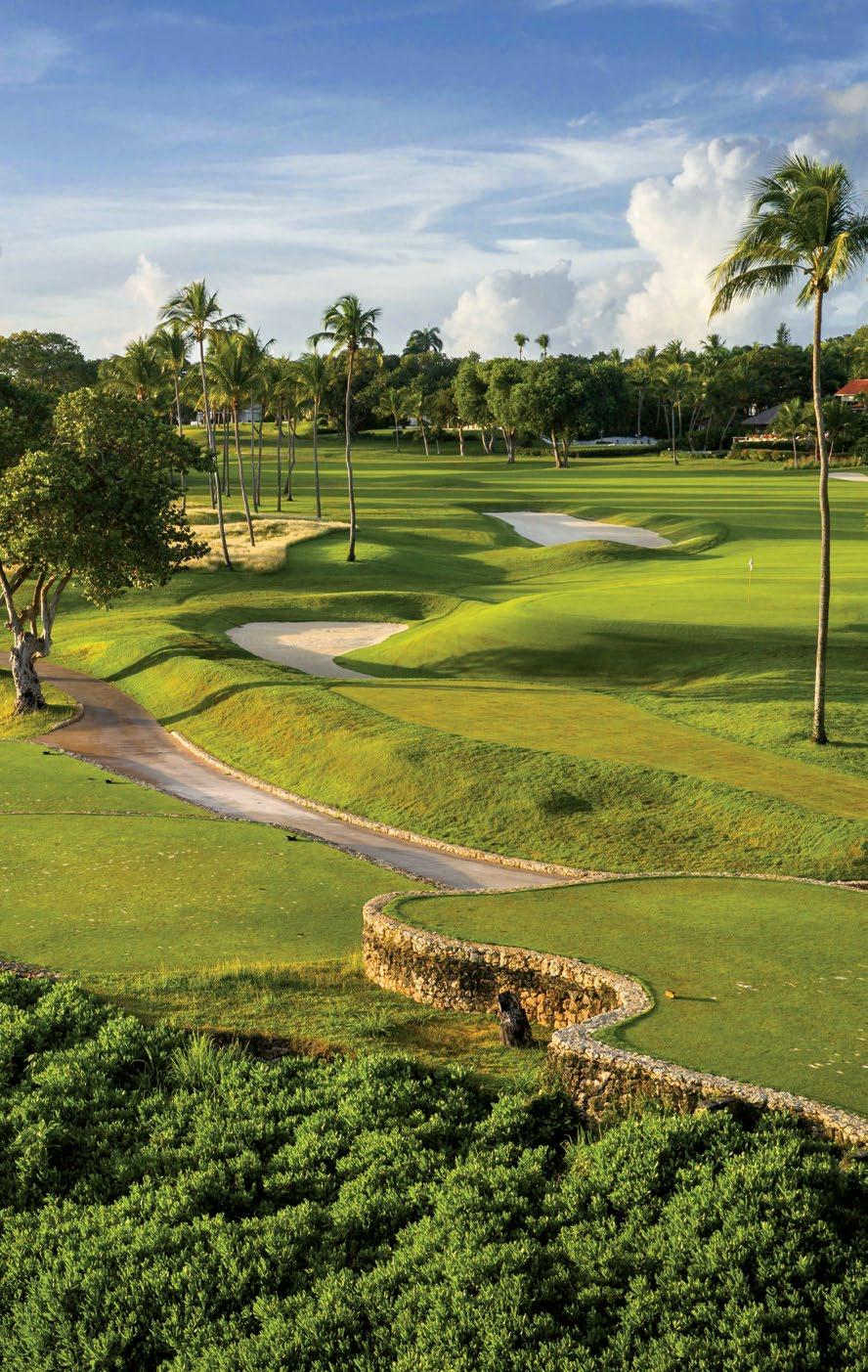
Of the many epic golf holes in the D.R., these half-dozen designs are forever ingrained in our memories.
by SHAUN TOLSON
teeth of the dog
Early in your round on Teeth of the Dog at Casa de Campo Resort & Villas, you’ll feel as though you’re getting closer to the Caribbean Sea. Though still a couple hundred yards away from the ocean, the course’s second and third holes run parallel to the shoreline. The buildup extends through the fourth hole, which culminates with a green less than 70 yards from the shore. And then . . . the big reveal—which happens to be on the course’s shortest hole.
Teeth of the Dog’s fifth proposition peaks at just 168 yards from the back tees, but the hole is huge on drama. Waves lap two tiny beaches that bookend the forward tee box, while the sea wraps its way around the front, left, and rear of the green complex. A C-shaped bunker also hugs most of the putting surface. On the right, a stout sea grape tree, deep grassy hollow, and well-concealed pot bunkers make bailing out a formidable task. Players must take aim at the center of the green—or even further left, flirting with the water, if the wind is blowing hard off the sea. It’s a beautiful hole, but one that instills plenty of anxiety, even as players hold just a wedge or short iron on the tee.
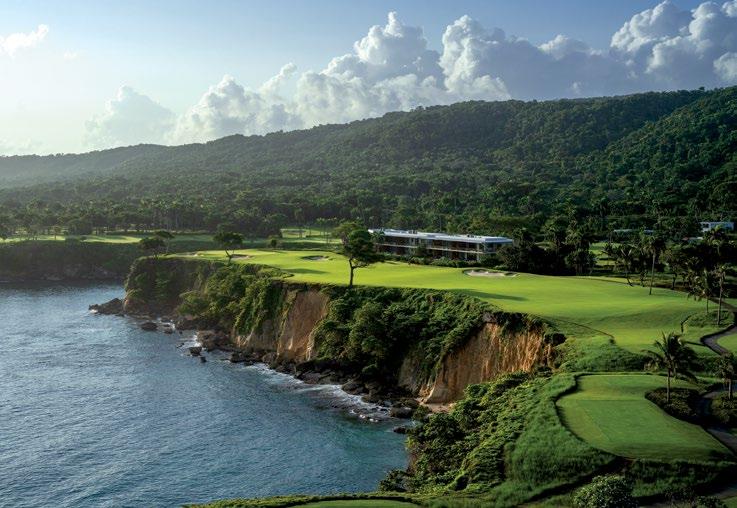
playa grande
By the time golfers reach the ninth tee on the course at Playa Grande Golf & Ocean Club, they’ve already played alongside the Atlantic Ocean four times. And yet, the closing hole of the front nine generates a new level of awe. On paper, the gentle dogleg-left par 4 is intimidating enough—almost 450 yards from the back tees—but that doesn’t factor in the prevailing wind, which typically blows directly in the player’s face. It also doesn’t account for the site’s perilous drop-off that dooms any misses to the left.
Even taking a conservative line off the back tees, golfers must hit drives that carry at least 220 yards (not accounting for the wind), and that leaves a shot of similar length down the bluff. The cliffs are also prominently in view when golfers are standing on the tee, which only intensifies the shot’s imposing nature. According to Chris Skidmore, Playa Grande’s director of golf operations, the members of the club (a private course that is also open to guests of the adjacent Amanera resort) are universally proud of this hole, even if playing it can sometimes be more frustrating than satisfying. It’s no coincidence that the comfort station that follows the ninth hole is outfitted with an axe-throwing station.
dye fore (marina)
There’s no shortage of holes on Dye Fore’s Chavón nine that meet the description of dramatic, as par 3s, par 4s, and par 5s are all set precariously near the edge of a cliff that drops 300 feet to the Chavón River. But for our money, the fifth hole on the Casa de Campo course’s Marina nine best balances spectacular scenery with intriguing shot values. The 497-yard par 4 tumbles downhill, doglegging to the left and playing to a well-bunkered green that’s set on the high point of a ridge and backed by a stunning view of the marina, some threequarters of a mile away. For the entirety of the hole, a hillside blanketed by knee-high rough falls away on the left, forcing players to favor the right side of the fairway with their drives; yet that only lengthens approach shots into a green that demands precision.
corales golf course
More like a boldly curved boomerang than a dogleg to the right, the finishing hole at Corales Golf Course in Punta Cana is a cape-style hole taken to the extreme—one that tests the nerves all the way around. Take the conservative route with your drive, and you’ll be looking at a long, slightly uphill approach to a green that falls away to a closely mown collection area on the left. In other words, hit the green or face a challenging up and down (either from that collection area or the large, multifaceted bunker guarding the right). Conversely, you can live dangerously off the tee, and should you pull off the hero’s carry over the ocean, you’ll have a mere flip of a wedge to the green. Either way, there’s impending drama here, as there should be on the final hole.
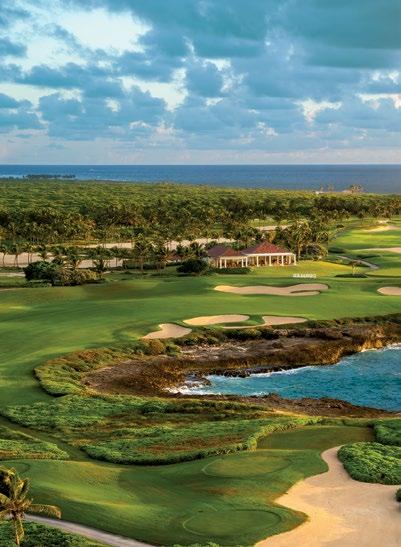
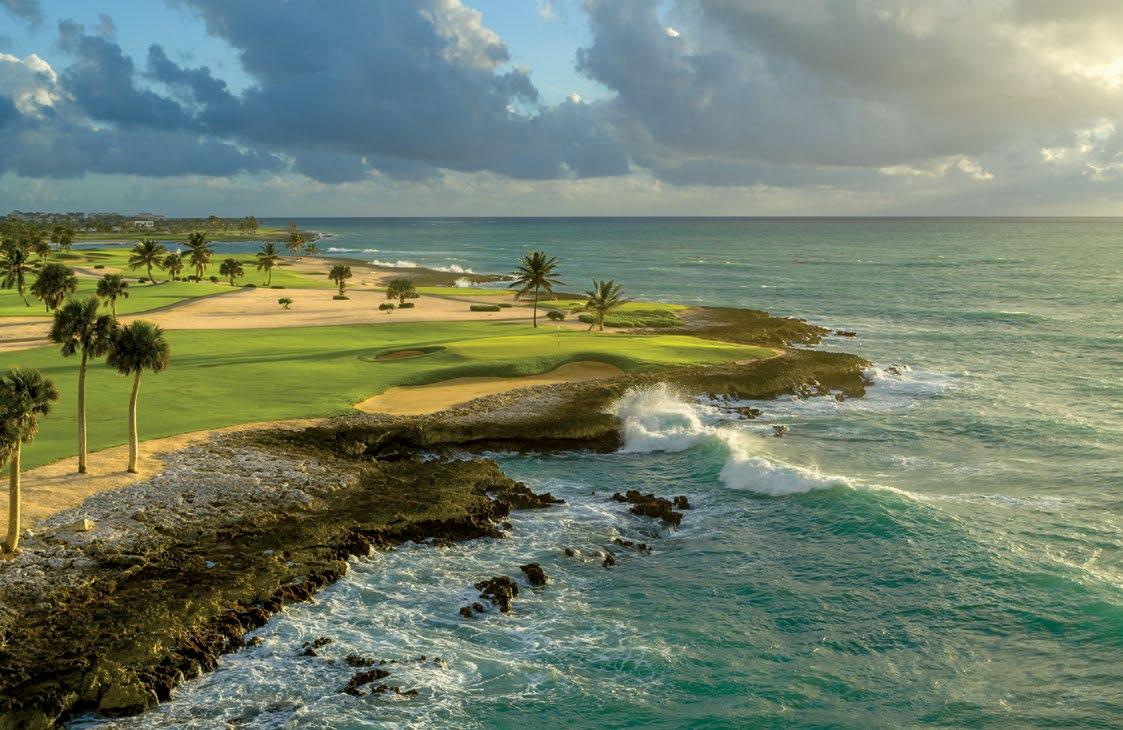
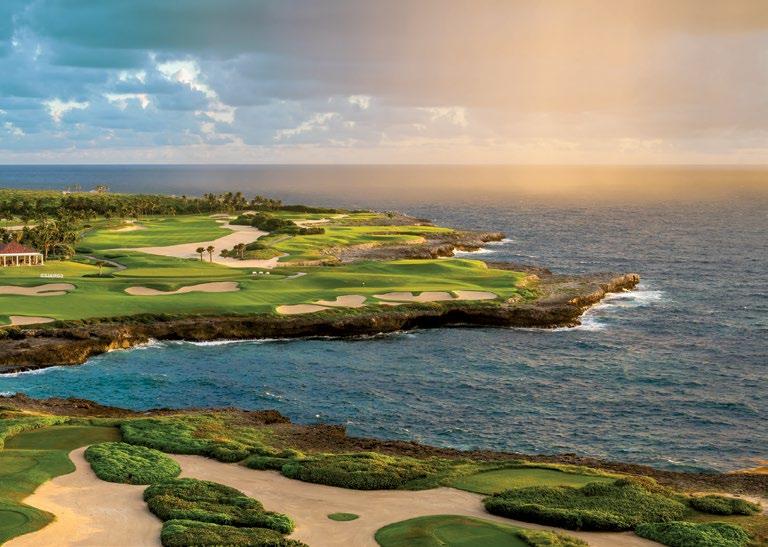
punta espada
Some forced carries are dramatic for the distance they cover, conjuring anxious moments as golfers watch with bated breath to see if their shots clear the hazard. The 17th at Cap Cana’s Punta Espada course is not one of those holes. Even from the back tees, the 358-yard par 4 requires only about 150 yards to cover the cove and find green grass. A fairway wood, hybrid, or long iron should offer more than enough security to clear the water that bisects the teeing ground and the fairway and put golfers in position for par.
The drama of the hole’s forced-carry tee shot comes from the proximity of the water—especially when the tide is in, when waves break just in front of the tee boxes. The sound is unmistakable (and unignorable), which makes the shot far more stressful than it otherwise would be.
las iguanas
For now, only the back nine of the new Las Iguanas course at Cap Cana is open for play, but that sequence of holes makes a bold promise for what’s to come. Of the playable holes, the fourth (eventually the 13th) is the most spectacular. Playing no more than 173 yards, the par 3 exists on its own isthmus of sorts, though the ocean-fed lagoon on the right was artificially created. The one-shotter features a wide green that belies the hole’s difficulty, since that putting surface is shallow and firm, making it unlikely that any ball landing on the green will hold it. The drama really ratchets up when the hole is cut on the left, behind a large greenside bunker that guards the front portion of the putting surface.
The D.R.’s O.G. luxury resort is as lavish and spectacular as it’s ever been—and so is its legendary golf course.
by SHAUN TOLSON
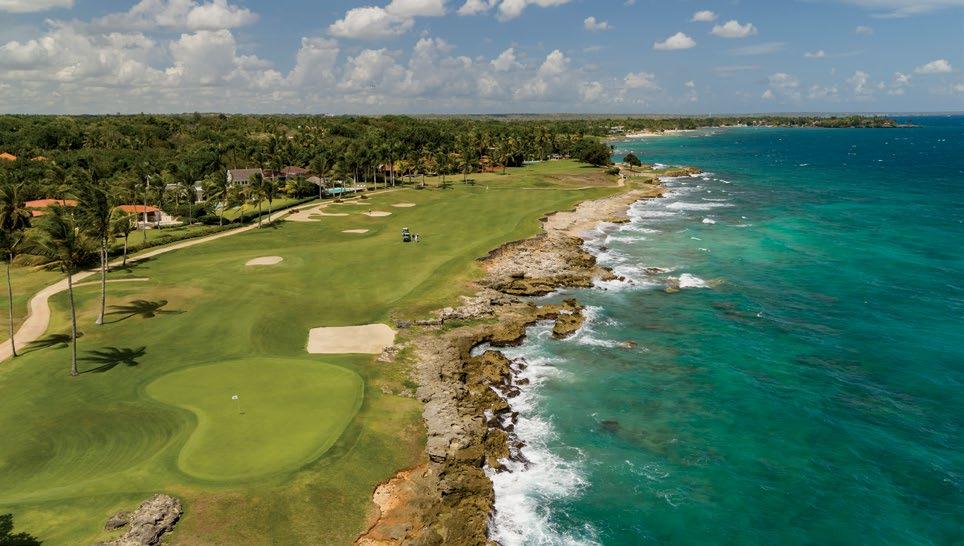
or the better part of five decades, Casa de Campo has served as a Caribbean oasis on the Dominican Republic’s southern shores. What began in 1971 as a standalone flagship golf course, Teeth of the Dog, soon morphed into a private retreat for Gulf + Western executives. Not long after that, the property became a full-fledged resort for travelers looking for a luxury beach getaway—and some of the Caribbean’s best golf.
Over subsequent decades, the 7,000-acre gated community has continued to evolve, adding new golf courses (the Links in 1974 and Dye Fore in 2003); a beach club; a marina and yacht club; and a replica of a 16th-century Mediterranean village, complete with a 5,000-seat Grecianstyle amphitheater that has hosted Frank Sinatra, Elton John, and Andrea Bocelli.
However, it’s the last few years that stand out most notably, as Casa de Campo has elevated the quality of its accommodations, its spa, and the golf course that first put the resort on the map. Here, we take a closer look at those developments, all of which make now the ideal time to at least temporarily call the D.R.’s most famous Casa tu casa
There were moments during its more than 50-year existence when Pete Dye’s pièce de résistance, Teeth of the Dog, seemed detached from the present day. By the late 1980s, some of the architect’s modifications, including championship tees pushed way back, made some holes seem absurdly long. According to Gilles Gagnon, the resort’s director of golf emeritus, Dye defended his actions with a soothsayer’s wisdom. “Before long, they’ll be hitting from here and will only have wedges into the green,” Dye told Gagnon more than 30 years ago.
Today, the course is the longest it’s ever been: 7,312 yards. A slight uptick in yardage was the by-product of a comprehensive restoration of the Caribbean classic, one that consumed almost a year and was overseen by the former PGA Tour player Jerry Pate. The course that emerged flaunts reshaped greenside bunkers with flat bases and “enhanced faces” to deliver a more dramatic look. The slightly recontoured greens were expanded back to their original sizes, which make room for hole locations that long ago disappeared. And the entire course was replanted with Pure Dynasty Paspalum, a grass that thrives in maritime climates.
Says Robert Birtel, the resort’s director of golf operations, “This restoration redefines the player experience: cleaner lines, more consistent surfaces, and a renewed interaction with the coastline that recaptures the course’s original excitement.”
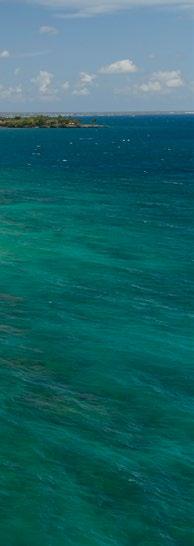
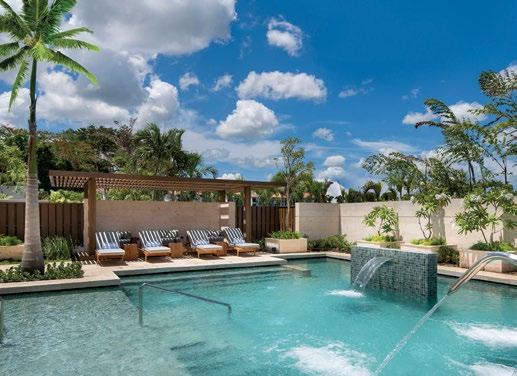
For years, Casa de Campo was a golf-focused destination with a serviceable spa. With the debut a couple years ago of its state-of-the-art, 18,000-square-foot center of rejuvenation, Casa de Campo could arguably be called a health-andwellness destination with great golf.
Featuring a dozen treatment rooms (each outfitted with a garden and alfresco shower), the spa deftly blends traditional therapies with modern approaches, such as the use of the Gharieni MLX i3Dome, an MRI-like chamber where infrared rays work in tandem with plasma and light therapies to promote metabolic support, sports recovery, stress reduction, and overall system detoxification, among other benefits.
Additionally, the spa has a seven-station hydrothermal circuit that allows guests to take a self-guided journey via traditional saunas and steam rooms; vitality, cold-plunge, and outdoor pools; thermal loungers; and a Kneipp Walk, a German therapeutic practice that incorporates walking along pebbled paths (for massage) and through water-filled basins of varying temperatures.
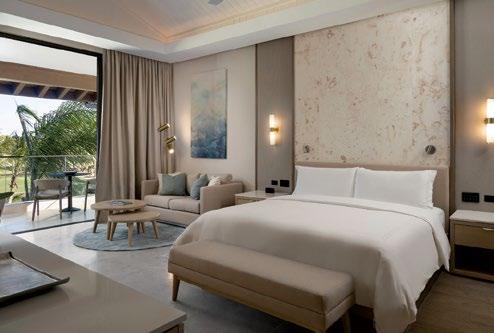
There’s never a bad time to get away to Casa de Campo, but some weeks on the calendar are better than others. Here’s a look at four times of the year when visitors can tap into all the resort has to offer—and more.
During the month of March, polo takes center stage at the resort, first with the British Polo Cup, a two-week competition organized in collaboration with the British Chamber of Commerce of the Dominican Republic. Unfolding over the following weeks is the Casa de Campo Polo Championship, an open tournament that annually draws renowned international teams and players.
For four days and three nights this summer, June 25 to 28, Casa de Campo will be dedicated to enthusiasts of rolled tobacco. Almost 20 cigar companies will be on hand for the resort’s inaugural Cigars in Paradise Festival, which for participants includes two rounds of golf, private rum distillery tours (for non-golfers), expert-led cigar seminars, trap- and skeet-shooting contests, cocktail hours, and more.
In October, the resort will once again celebrate international cuisine and wine (with some cocktails and cigars thrown in for good measure) at its annual culinary festival. The lineup of guest chefs has yet to be announced, but previous years’ events have featured Hubert Keller, Michael Mina, Scott Conant, and Akira Back, among others.
The resort becomes a Christmas wonderland for all of December. The festivities begin the first week with a treelighting ceremony in Altos de Chavón, the resort’s replica of a 16th-century Mediterranean village. Between then and Christmas, expect musical theater productions, concerts, and lots of kid-friendly programming. Altos de Chavón is even transformed into a traditional Christmas market during the week of the holiday.
Until just a few years ago, a truly luxurious stay at the resort required the rental of one of the community’s private villas, the most modest of which sleeps nine guests. At the time, Casa de Campo’s casitas, rooms, and suites had grown tired. But that changed significantly in 2023 with the debut of the Premier Club, 58 luxuriously appointed suites that provide dedicated butler service and access to an exclusive bar, lounge, and reception area. The spacious suites are situated in four standalone buildings only a pitching wedge’s distance from the Teeth of the Dog clubhouse and the destination spa.

Santo Domingo native Albert Pujols grew up with a love for baseball, his home country, and—later in life—golf. The future MLB Hall of Famer spoke with shaun tolson about some of the many ways a trip to the Dominican Republic hits it out of the park.
What makes the Dominican Republic such a great vacation destination?
Besides the beautiful beaches, you have the people—they’re such amazing people, loving and kind. And if you want to taste some really good Latin food, you’re in the right place. The food is awesome. You’ll probably pick up five to 10 pounds by the end of your trip.
Which local dishes should visitors absolutely try?
A traditional breakfast is mangu—a mashed plantain with butter and milk. It’s typically served with salami, eggs, and fried cheese. For lunch, we call it La Bandera Dominicana the flag—rice, beans, and chicken. That’s something that
everybody needs to try, and it’s because of the way we prepare the chicken. Then at night, if you want to try a really nice stew, you can order the sancocho, which has plantain, yucca, potatoes, corn, and like six or seven types of meat. That’s my favorite dish. When I’m in the D.R., I probably have it once a week.
You now live part of the year at Casa de Campo. What brought you there?
I’ve been going to Casa de Campo since 2001. That was the first time that I got invited during my rookie year. My compadre Plácido Polanco had a house down by the beach, and I fell in love right away.
What do you love most about the resort?
You feel like you’re in another country within a country. I know I’m in the Caribbean, because I have the ocean and the beautiful homes, but I don’t feel like I’m in my own country; I feel like I’m somewhere on an island in Europe, in the South of France.
What’s a typical day like for you there?
I’ll hop in my golf cart and go to the golf course. I’ll play 36 holes and be done by noon. I’ll eat lunch and then, after that, I’ll jump in the boat and go to the beach at two o’clock. That’s living—that’s life! That’s what you work for. When you’re retired, you want to have some fun like that.
On the topic of baseball, the Dominican Republic has its own professional league. What should visitors know about it?
We have the second-best league in baseball in the D.R.
There are six teams that are really loaded with great baseball players. Everybody that plays the game of baseball [in the MLB], if they get cut in the U.S., they find themselves in the Dominican Republic somehow. When you have an opportunity to go, you’re probably going to see some of your favorite players that you love to watch in the United States.
Is there a ballpark that stands out for offering the best overall spectator experience?
Estadio Cibao for the Águilas Cibaeñas in Santiago creates an experience that’s similar to the World Baseball Classic. It really has that spirit, because of the fans and how passionate they are—they’re so loud, playing music, they’ve got the tamboras. It’s just a great night when you come to watch one of these games, and you’ll have an unbelievable experience that you will never have anywhere else.

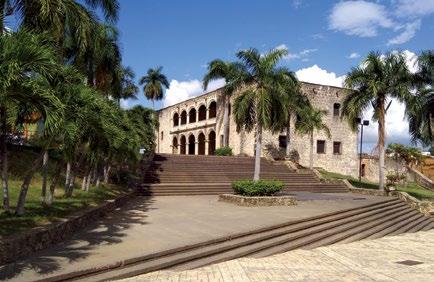
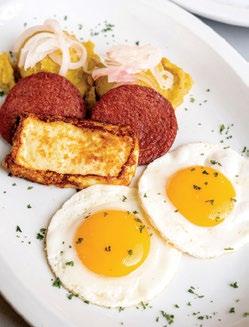
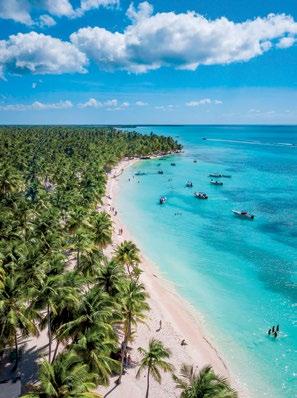
I continue to be amazed by how beautiful the country is and how beautiful the people are.”
—ALBERT PUJOLS
You also have a home in Santo Domingo. What should visitors know if they plan to visit the city?
To anybody that wants to go to the Dominican, I encourage them to learn a little bit about the history, and the history starts in the city with the three patriarchs. You can go to the Alcázar de Colón, which is the house where [the son of] Christopher Columbus used to live. And there’s a nice tourist area there where you can walk around and learn a little bit more of the culture. That’s something that we sometimes forget. We jump on a plane and go somewhere to have fun in different countries, but we need to learn more about their culture so that we can communicate and be more comfortable with the people that we’re around every day.
You started a nonprofit more than 20 years ago, and a lot of your work focuses on the Dominican Republic. What can you tell us about that?
I think we all have a responsibility with our god, our family, and our community. God has given me this platform to start the Pujols Family Foundation. [In the beginning] we focused a lot on the Down syndrome community in St. Louis, because we have a daughter with Down syndrome. Then, later on, we decided to expand, and we started taking mission trips to the Dominican Republic. To be able to use this platform to give back and to help—there’s no better satisfaction than that.
What do you love most about the Dominican Republic? Now that I’ve been retired for three years, I spend most of my time here, and I continue to be amazed by how beautiful the country is and how beautiful the people are. I think that’s the main reason I choose to spend 85 percent of my time in the Dominican Republic. I grew up in Santo Domingo, my wife is from Santo Domingo, and we love our country.
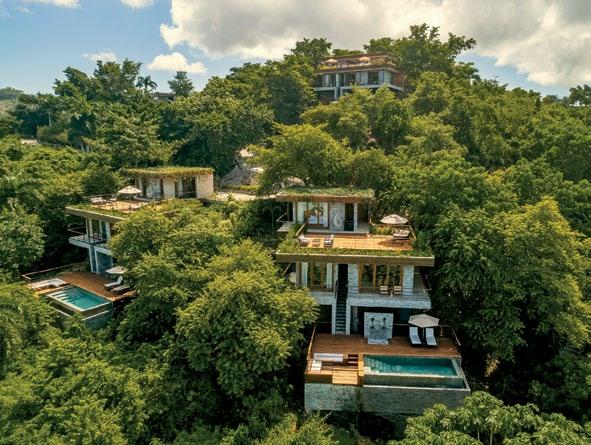
Some 125 miles northeast of Santo Domingo, on the opposite coast, the Samaná Peninsula is the flipside to the Dominican Republic’s more developed tourist destinations. The remote region of palm forests and tranquil crescent bays is a place to unwind, explore, and admire the local wildlife, which includes monkeys, turtles, and humpback whales. Tucked into a seemingly secret jungle on the peninsula, the new Ocama hotel offers an escape within this escape. The property’s eight villas—with infinity pools, terraces, and access to a private white-sand beach—invite travelers to immerse themselves in the area’s natural beauty. Ocama also organizes excursions to further embrace this less-trodden stretch of the Dominican Republic. Kayak trips through Los Haitises National Park take in mangroves, caves, and ancient Taíno petroglyphs. Birders will appreciate a trip to the forest sanctuary of El Limón Natural Reserve, where the lack of human noise ensures that every trill and warble resonates. For guests who want to learn about the Afro-Caribbean heritage that shaped the region, Ocama can organize a Samaná Cultural Walk to trace the area’s significant origins along the Caribbean trade route. —jillian dara
The Dominican Republic is one of the leading producers of fine cigars, and the Procigar Festival, held each February, is the ultimate celebration of the craft.
by SHAUN TOLSON
pilgrimages to napa valley, Burgundy, and Tuscany are rites of passage for oenophiles, just as trips to Scotland or Kentucky’s Bourbon Trail are milestones for whiskey fanatics. For many cigar enthusiasts, however, the idea of an immersion trip to a destination that specializes in handrolled puros and robustos isn’t on the radar. The Dominican Republic may be one of the world’s foremost exporters of high-quality stogies (the country’s cigar exports in 2024 surpassed $1.34 billion, according to the Dominican Tobacco Institute), but cigar tourism throughout the year isn’t really a thing. For one week in February, however, cigar smokers from around the world descend on the D.R.
Starting in La Romana and then moving to Santiago, the annual Procigar Festival is a celebration of cigars, their creators, and the communal bond that comes from enjoying them. Each day’s festivities include educational opportunities, entertainment, and access to a bevy of premium smokes. In Santiago, farm and factory tours are typically available at La Flor Dominicana, Davidoff, and General Cigar; whereas in La Romana, participants can visit Tabacalera de García—the world’s largest cigar factory, where celebrated brands such as H. Upmann, Montecristo, and Romeo y Julieta are made.
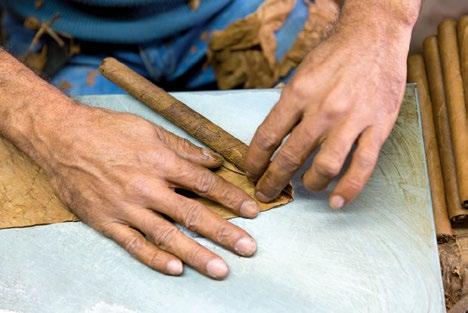
In recent years, La Aurora (in Santiago) has offered an experience called From Seed to Smoke that begins with a tour of the greenhouse and fields, then the curing barns, and finally the factory. Visitors not only learn how the cigars are created but also have the opportunity to create their own blend and take home a customized box filled with five robustos of their making.
“One of the things that you hear but don’t really understand until you take a tour is the number of hands that touch the product, the amount of labor that goes into a handcrafted cigar,” says John Gaglio, brand manager for La Aurora USA. “In a world where there are fewer and fewer truly handcrafted products, cigars are one of the last that you just can’t create with a machine.”
The newest resort at Cap Cana has upped the booming beach-and-golf destination’s game.
By DAVID DESMITH
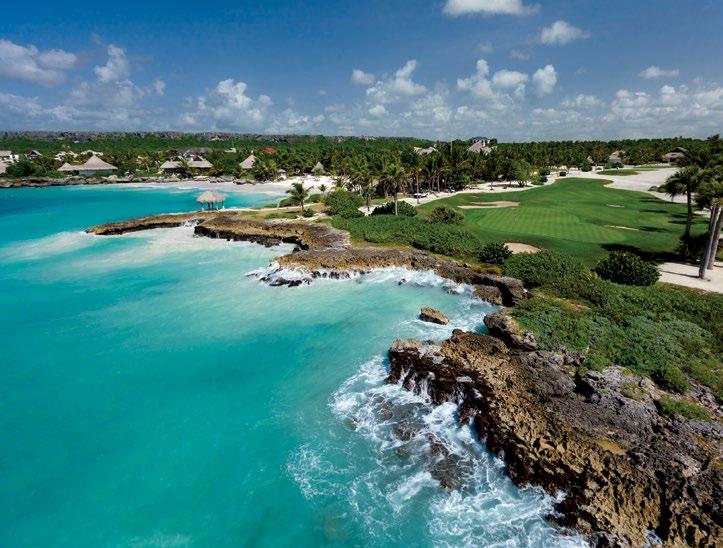
grab a seat—and a spicy Quisqueya Mary cocktail—at the St. Regis Cap Cana Resort’s rooftop pool bar, and you’ll see why Cap Cana is such a magnetic destination. The view captures the turquoise Caribbean, a powdery white-sand beach, and the resort’s lively beach bar and palm-dotted pool complex. Off to the left, the second green of the Punta Espada golf course occupies its own fun-size peninsula, between the foaming sea and an emerald, ball-hungry lagoon.
When the St. Regis opened last year, it changed the complexion of what a golf vacation to this part of the Dominican Republic could be. While the greater Punta Cana region continues to hone its image as the Caribbean’s Myrtle Beach, the private resort community of Cap Cana has become a bona fide luxury destination, with amenities and golf experiences that rival any in the D.R. and beyond.
Punta Cana has long been a hot spot, with colorful attractions and all-inclusive packages that jam its airport and hotels with fun-in-the-sun seekers from around the world. The area’s golf has always been good, too. Puntacana Resort’s Corales Course is a Tom Fazio stunner, with several holes along the sea, an engaging variety of designs, and more elevation change than you’d expect on this stretch of coastline. Twenty-seven more strong holes (14 of them with ocean views) await at the resort’s La Cana course.
But when you pass through the gates at Cap Cana, you enter a different world—one of sophistication, luxury, and opportunity. Cap Cana is like its own small city within Punta Cana, with 22 residential communities, 30 restaurants, oceanfront resorts, boutiques, and pursuits ranging from polo to bill fishing.
The St. Regis is the newest gem in Cap Cana’s crown, and its warm design aesthetic—a mix of wood, stone, and woven palm—fits perfectly with the setting. Boasting a range of luxe accommodations (including swim-out suites),
a lavish spa, and multiple dining outlets, the resort lacks for nothing. Best of all, guests have access to the private Punta Espada course, located just steps away. Nine holes at this Jack Nicklaus Signature design play along (and sometimes over) the sea, while others tack through canyons of coral or sweep around broad, sandy waste areas. It’s one of the Caribbean’s most scenic and challenging courses.
Right up the road, another Nicklaus design just debuted: Las Iguanas, which opened nine holes in February and has nine more scheduled for play by year’s end. Its up-and-down holes snake around lagoons, waste areas, and deep bunkers before culminating at greens that are generally smaller and feature more slope and undulation than their Punta Espada siblings. It’s an exciting addition to the Cap Cana visitor’s menu, and one more compelling reason for discerning golfers to chart their course to this corner of the Dominican Republic.
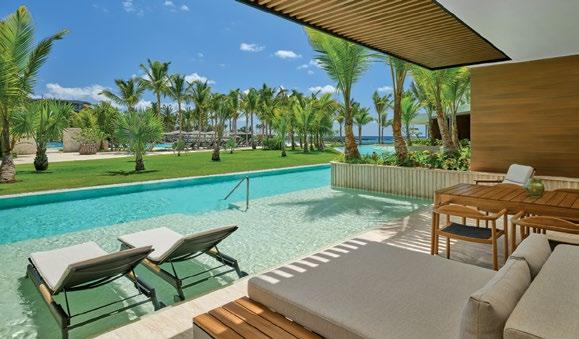
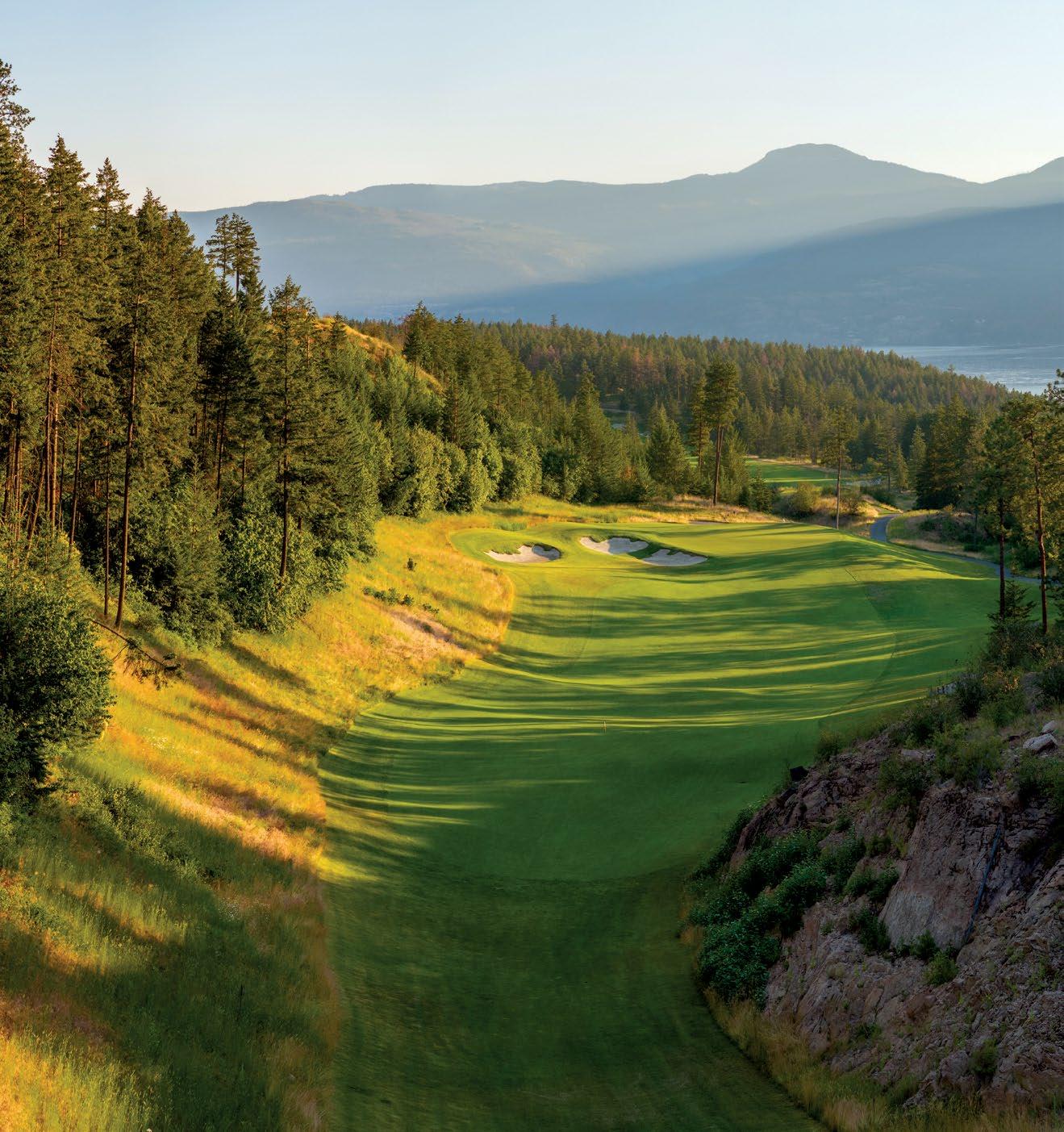
Famed for its wildlife, outdoor adventures, First Nations culture, and captivating cities, Canada’s westernmost province has also become a must-visit destination for golfers. Kingdom traveled from Vancouver Island to the Okanagan Valley to find out why.
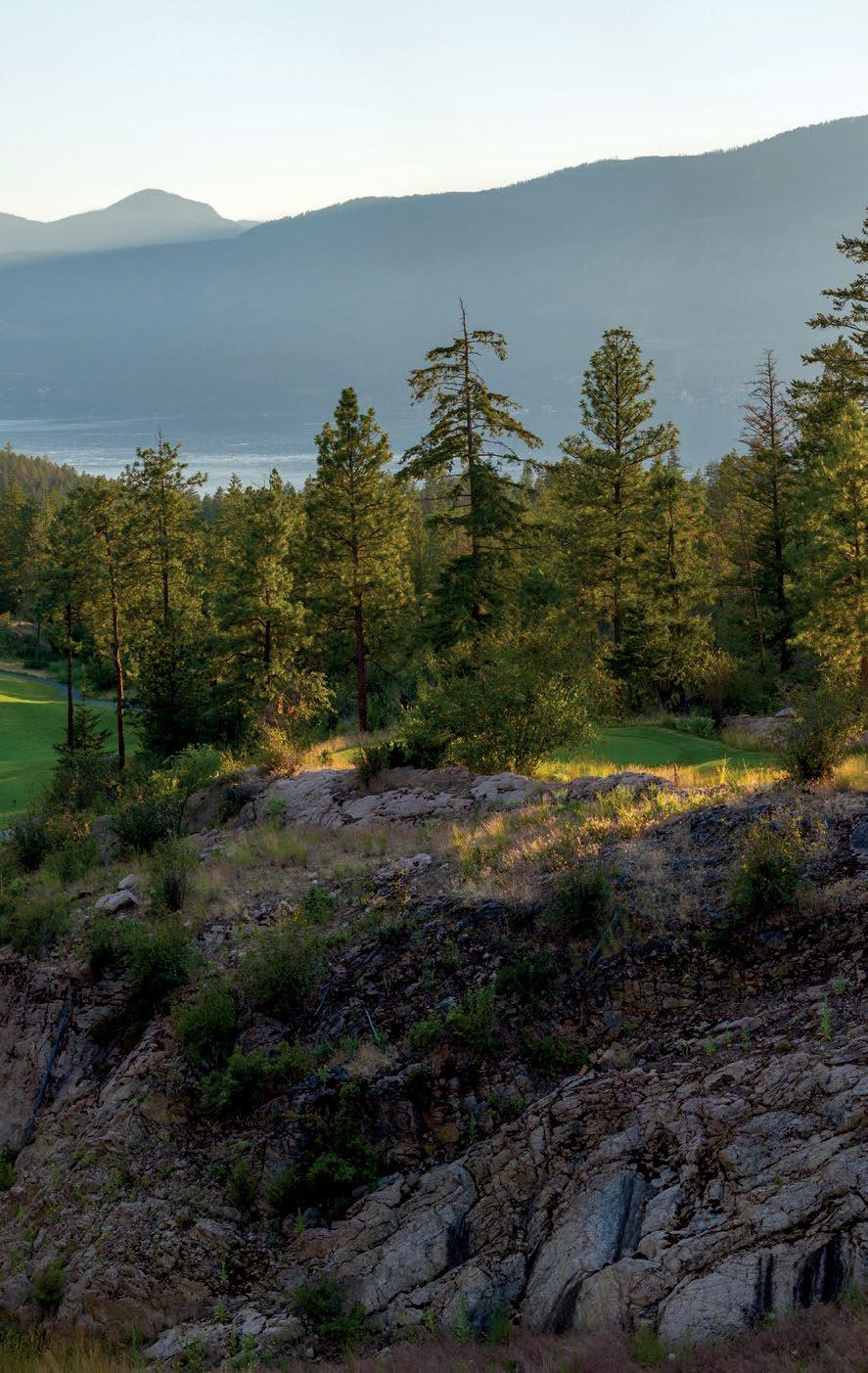
The valley in south-central B.C. has evolved from a low-key farming region to a multilayered luxury destination.
by CASANDRA KARPIAK
From the sixth tee box of the Ridge Course at Predator Ridge, the Okanagan Valley makes its case in a single glance. Some 100 feet below, a narrow fairway stretches before you, buttressed by granite outcroppings that set both the strategy and the mood of the shot. The target area widens closer to the green, opening toward Okanagan Lake and a distant mountain that holds the horizon, all in one unmistakable sweep.
The inherent drama of Predator Ridge’s surroundings has helped the resort community—and the greater Okanagan— emerge as one of the top golf destinations in Canada. A once-quiet agricultural corridor, the valley in south-central British Columbia is today a 125-mile stretch of vineyard-dotted hills, glacial lakes, and luxury resorts. Kelowna, the region’s largest city, holds the distinction of being Canada’s only UNESCO Creative City of Gastronomy.
Before the area gained renown for its golf and cuisine, the Okanagan earned its
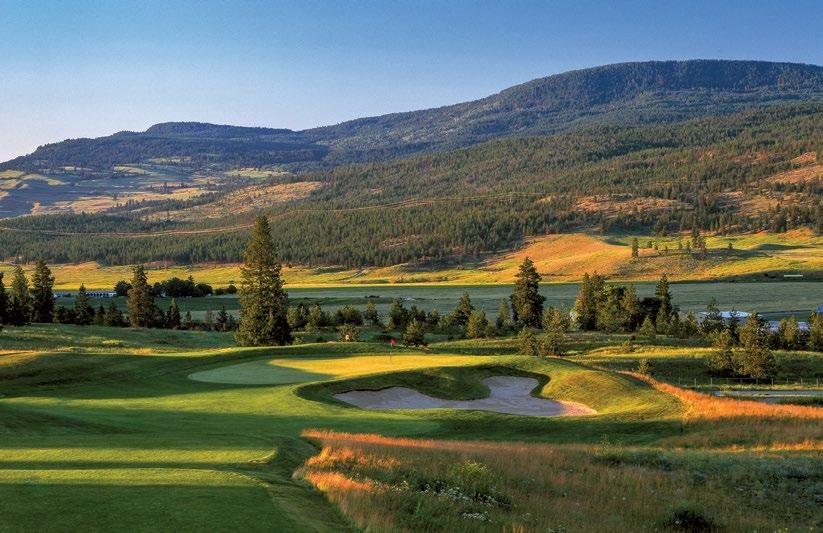
place on the world stage through wine. The local Mission Hill Family Estate’s 1992 Reserve Chardonnay captured the Avery Trophy for “Best Chardonnay in the World” at the International Wine & Spirit Competition in London in 1994. Predator Ridge, which had opened a few years earlier, was ready for the attention, poised to help anchor the valley as an international leisure destination. Golf gave structure to the landscape, and luxury followed.
In 2010, Gernot Langes-Swarovski, of the Swarovski family, added a European-style wellness retreat to the mix.
Sparkling Hill Resort sits on a granite bluff overlooking Okanagan Lake, its architecture and design threaded with more than 3.5 million Swarovski crystals that reflect the changing light throughout the day.
The Rise Golf Course, in nearby Vernon, arrived in 2008. Designed by Fred Couples, the layout is perched 1,000 feet above the lake, its elevated setting extending sightlines across vine-covered slopes toward distant peaks. Other standout courses in the area include Tower Ranch and the Bear Course at Okanagan Golf Club, both of which leverage the valley’s diverse topography for unforgettable play.
Predator Ridge, set at the northern end of the valley, is home to two of the region’s—and Canada’s—most acclaimed public courses. The Predator Course, designed by Les Furber,
Golf gave structure to the landscape, and luxury followed.
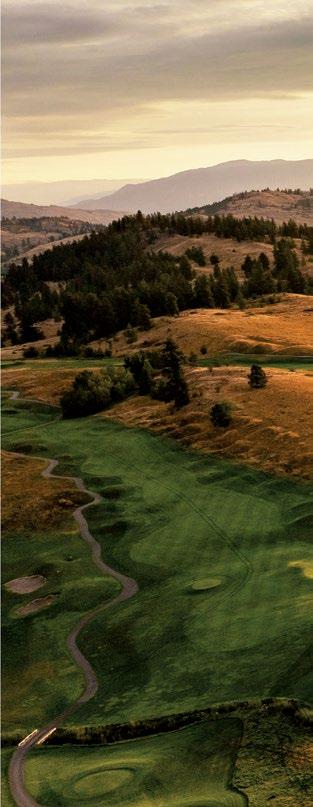
opened in 1991 and traverses rolling hills and fields of native grasses, drawing on the openness of the land to evoke a Scottish links style. The Ridge Course, which debuted almost two decades later, plays through a diverse landscape that encapsulates the natural beauty of the Okanagan.
“Predator Ridge is made up of three distinctive settings,” the course’s designer, Doug Carrick, says. “The upper rolling grasslands that surround the heart of the resort; the midsection escarpment characterized by dramatic elevation changes and rugged rock outcroppings; and the secluded lower meadow landscape defined by soft, rolling topography and pine forests.”
The Ridge Course explores all three environments, but despite its variety and drama, the layout remains accessible. “The one comment that I hear most often is how playable the course is for golfers of all skill levels,” Carrick says.
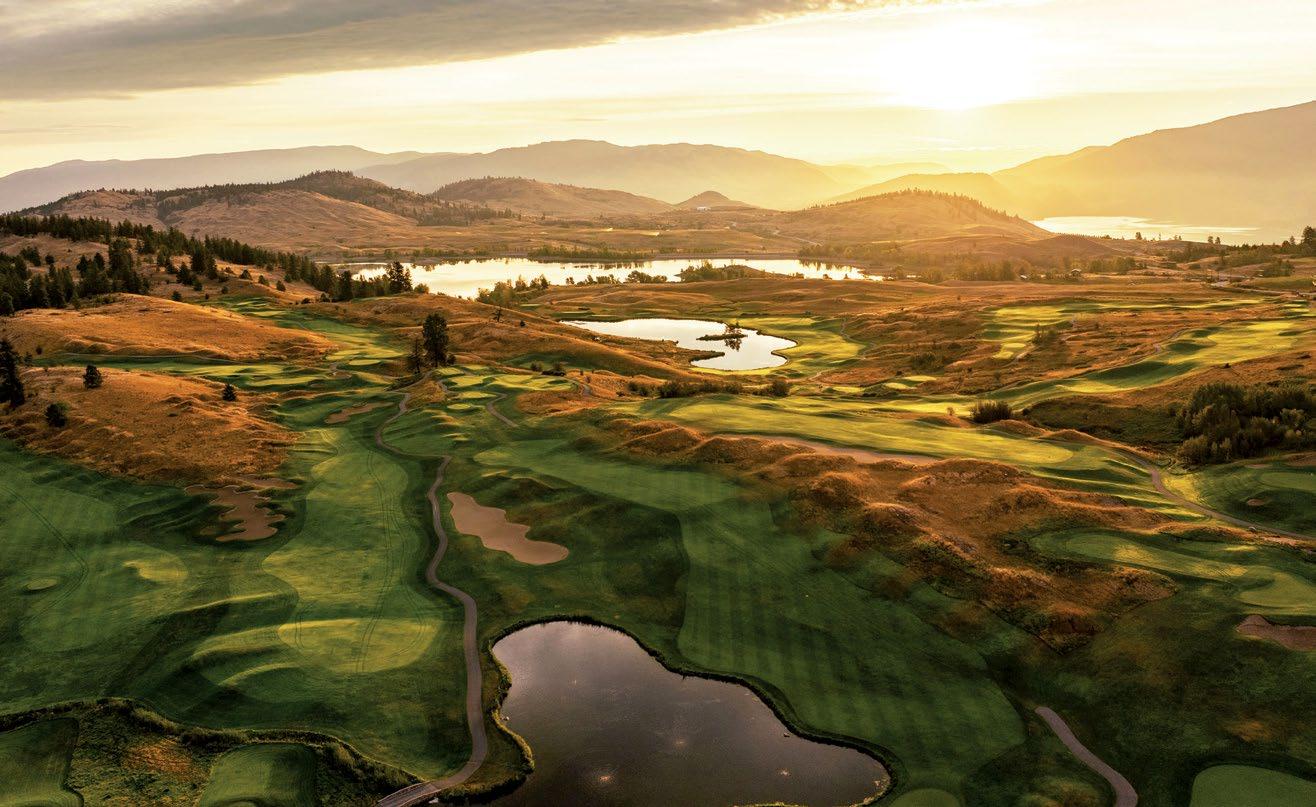
The same granite found along the fairways of the Ridge Course also contributes to the Okanagan’s viticultural success. These volcanic rocks retain heat that helps ripen fruit, while long daylight hours and cool lake air give life to vineyards that now spread across the region’s hillsides. Today, more than 200 wineries thrive in the Okanagan, including Phantom Creek Estates, a lavish $100 million project and the most significant winery investment in British Columbia.
Taylor Whelan, chief winemaker at Mission Hill Family Estate, has seen the evolution of the local industry firsthand. “The wine quality has improved as the region has matured,” he says. “The Okanagan today is much more established and self-confident than it was 10 to 20 years ago.”
That maturity translates not just to better wines, but also to elevated experiences for visitors. A private tasting on a yacht on Okanagan Lake, for instance, links Mission Hill with two other leading local wineries. The cruise is an upscale way for guests to move between estates and sip limited-production wines, all while enjoying the bounty and beauty of the Okanagan.
Head to any youth hockey game in Kelowna and you’ll likely find retired NHL players, perhaps Josh Gorges and Shea Weber, sitting on the bench coaching the next generation. Mike Smith and Byron Ritchie spend their time developing young athletes at Rink Hockey Academy, which also operates Rink Golf Academy in partnership with Predator Ridge. Carey Price and Jarome Iginla now call the Okanagan their permanent home, as does former defenseman Wade Redden, who played 14 years and more than 1,000 games in the NHL. Redden first came to the area during his playing career to teach at Okanagan Hockey Academy and later settled in Kelowna. We spoke to him about his adopted home and why it’s so popular with his fellow NHL alumni. —c.k.
THE DRAW
“The climate. You get an extra month of summer in the spring and fall, the winters are mild, and everything feels a little easier. You are around people with similar schedules
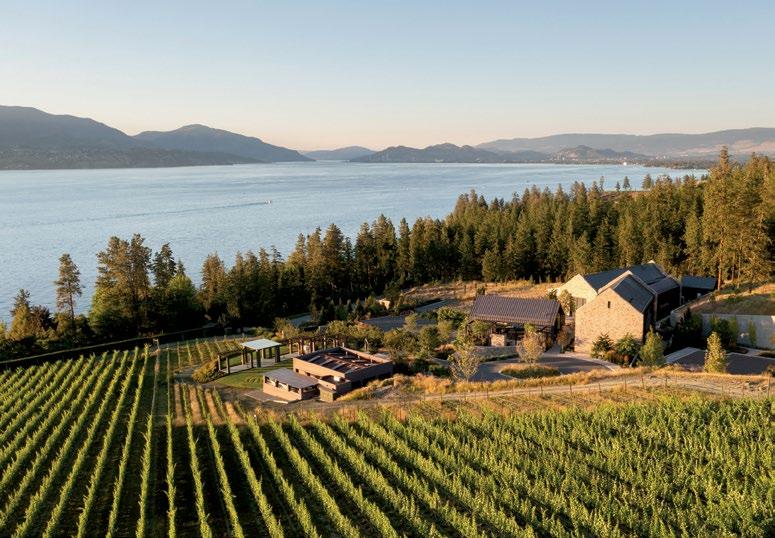
and similar lives, and it becomes a great place to raise a family. And then the golfing, too, that was a big part of it. There are some really nice courses around, so that was definitely a draw for me as well.”
“I have been out to Predator Ridge a bunch of times. I probably gravitate toward the Ridge Course because of the elevation and the views. Playing through the trees with that backdrop makes it a pretty stunning place to golf. I am a member at the Kelowna Golf and Country Club, and I probably play there more than anywhere else. Harvest is probably the closest one to home for me. I also like to get out to Gallagher’s and Tower Ranch.”
“There are quite a few guys: Shea Weber, Mike Smith, Josh Gorges, Carey Price, Rene Bourque, Todd Simpson, Cody Franson, Jordin Tootoo, and a lot of others. I’m probably leaving a bunch out—there are a lot of guys that are here, and it’s fun to get out with them, for sure.”
“BNA and Bernie’s Supper Club. A good buddy of mine owns them, and the food and atmosphere are great. We live right near Home Block at CedarCreek, and that’s a pretty awesome restaurant. It’s just down the street from us, so we like to go there in the summer, just to treat ourselves. Eldorado, that’s a classic spot, especially in the summer. Quails’ Gate has a really good restaurant, too. It’s a little farther commute for us, but that’s a beautiful spot.”
You get an extra month of summer . . . the winters are mild, and everything feels a little easier.”
—WADE REDDEN
“In the summers, getting on the water. When the kids were younger, we had a pontoon boat, but now we’ve graduated to a surf boat, so the kids are into that stuff. But just being outside—golfing, doing a little biking, and hiking, actually. That’s been another thing we’ve started doing a little more of, getting outside to hike. We’ve got a place at Big White, which we love. We’ve spent Christmas there the last number of years, so we like getting out to ski. In the summer, it’s a nice place to go up and do some hikes.”

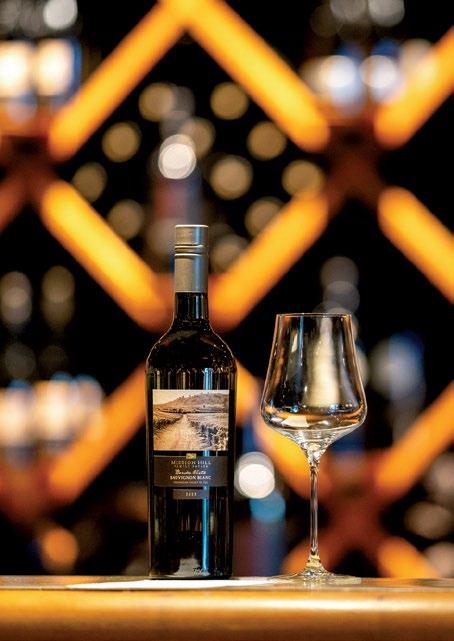
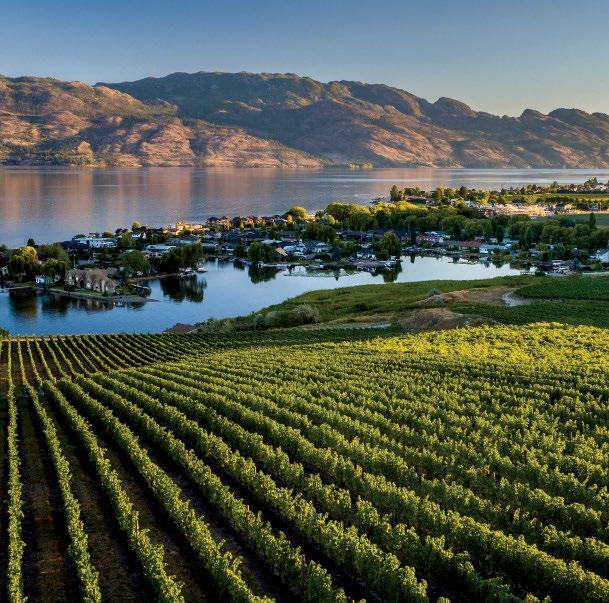
Brisk nights, sun-filled days, and diverse microclimates give the Okanagan a natural viticultural advantage, producing elegant cool-climate whites alongside increasingly confident red blends. These four wineries showcase the region’s range, delivering standout vintages and tasting experiences that match the quality of the wines.
Mission Hill is the Okanagan’s most recognizable winery. Envisioned by proprietor Anthony von Mandl, the estate was built to attract visitors to the region and establish the Okanagan Valley as a wine and wine-tourism destination able to stand beside the world’s best. A 12-story bell tower, with four bells cast in France, rises above stone arches, open courtyards, and terraces overlooking Okanagan Lake.
TRY: The Bordeaux-style Oculus, Canada’s first 100-point red wine. Merlotforward, with Cabernet Franc, Cabernet Sauvignon, and a touch of Petit Verdot, it sits comfortably among the world’s most serious, cellar-worthy wines.
Phantom Creek Estates
Phantom Creek Estates represents one of the most ambitious and high-profile winery developments in British Columbia’s history. It sits on the Black Sage Bench, a distinct subregion of the Okanagan known for its sun-soaked, semi-arid conditions and soils shaped by ancient geological forces.
TRY: Phantom Creek Vineyard Cuvée 2020, awarded a gold medal at the 2024 Decanter World Wine Awards. A blend of Cabernet Sauvignon, Petit Verdot, Malbec, Syrah, Cabernet Franc, and Merlot, it has a long, commanding finish that refuses to fade quietly.
This well-established winery is family owned and operated, with multiple generations now involved in its evolution. Vineyards spread across the Upper and Lower Boucherie Bench, set above the shores of Okanagan Lake and framed by the extinct volcanic slopes of Mount Boucherie.
TRY: 2022 Stewart Family Reserve Pinot Noir. Bright red cherry and raspberry meld with hints of forest floor and spice, finishing with supple tannins that mirror the lake-cooled slopes where the grapes were grown.
The winery’s name comes from the burrowing owl, a threatened species native to the South Okanagan grasslands. The estate has long recognized this heritage, tying its identity to conservation and land stewardship. Its 10-room Guest House and generous outdoor pool extend the experience beyond the cellar door.
TRY: 2022 Chardonnay. This full-bodied, buttery, nutty wine opens with aromas of ripe peach and pineapple, followed by rich notes of vanilla. The wine is aged primarily in French oak, with a short stint in stainless steel. —c.k.
Is the famed ski destination even better in the summer? Three golf courses from three legends of the game make a pretty compelling case for the fairer months.
by ALLAN LYNCH
Whistler is not just for downhillers. In fact, as locals are quick to point out, while the resort town is known as one of the world’s top ski destinations, it offers more to do in summer than in winter.
The sunny season kicks off in spring, during Whistler’s “multisport month” of May, when a typically two-week overlap of cool, higher-elevation temperatures and warm valley weather means visitors can golf, ski, and sail on the same day. Come summer, the community serves up the ultimate cluster of outdoor experiences, from mountain biking on previously snow-clad tracks and an extensive trail system through forests and around glacier-fed lakes to ziplining on the continent’s longest line. Bungy jumping, axe throwing, fishing, and four-wheel-driving adventures are also close at hand.
Whistler’s summer attractions extend to its small but elite collection of golf courses. The community boasts three layouts designed by three of the biggest names in golf: Arnold Palmer, Jack Nicklaus, and Robert Trent Jones Jr. A fourth track, the Robert Cupp–designed Big Sky Golf Course, is a quick side trip away in neighboring Pemberton. In all, the clubs host only about 100,000 rounds per year, so play in Whistler is savored, not rushed.
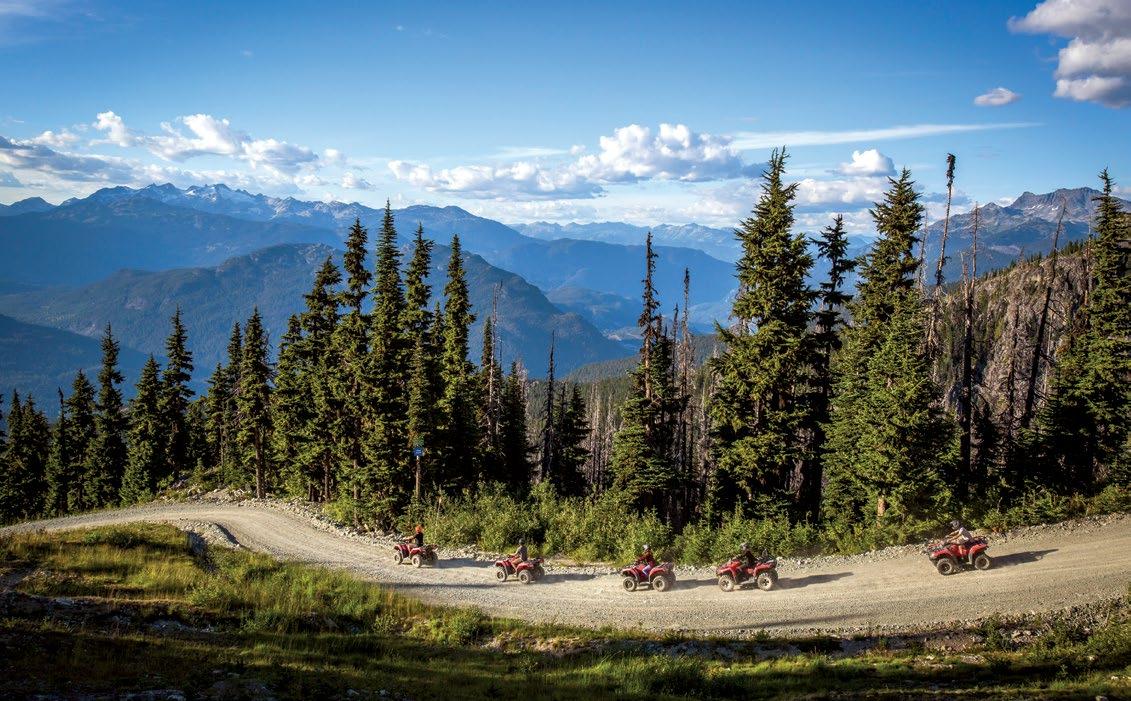
Palmer’s design, the Whistler Golf Club, was his first in Canada. Its spectacular setting, with nine lakes and towering stands of ancient cedar trees, is home to black bears, coyotes, and beavers. The course is closed this year while the former head of Palmer’s design studio, Thad Layton, oversees a $10 million refurbishment of what is now considered a classic. “While Mr. Palmer was adamant the firm didn’t have a design style, his courses had several eras over its 50-year history,” Layton says. “The first [era], which Whistler falls squarely into, saw the prevalent use of small-scale features and free-form organic shapes.”
Layton’s plans for the update, which may see a few holes ready for play by this fall, skew more toward restoration than reinvention. “Our prime goal is reestablishing Whistler as one of the best courses in the region,” he says. “Visually, we’ll turn up the contrast with high-definition bunkering, detailed feature shaping, and large expanses of native grasses. Bigger corridors and wider fairways will add strategic interest and playability.”
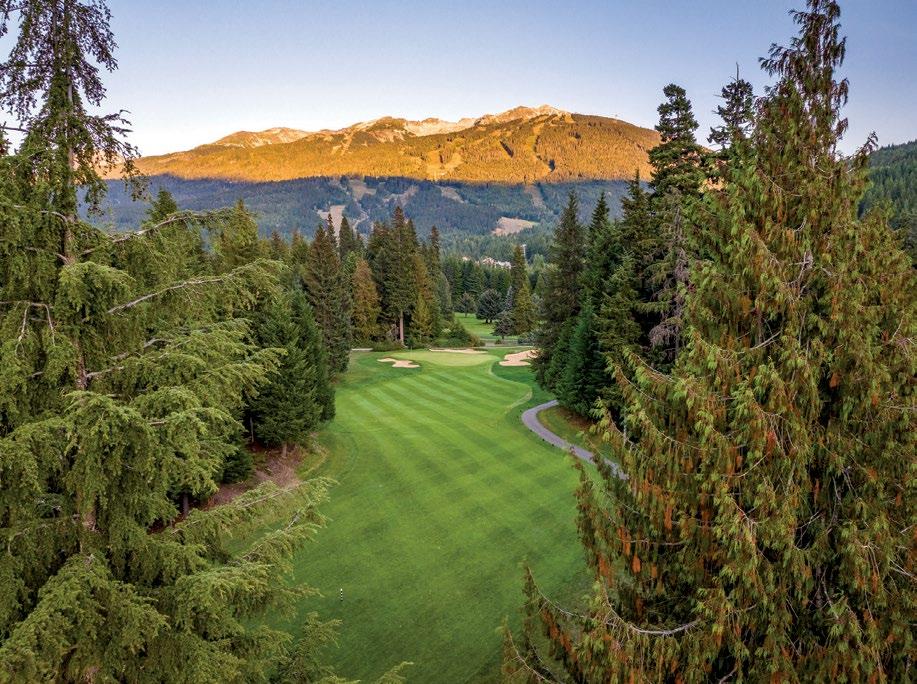
The Trent Jones Jr.–designed Fairmont Chateau Whistler Golf Course is a 6,635-yard, par-72, Auduboncertified layout cut into a forest of Douglas fir on a slope with 400-foot elevation changes. The club is home to the only Golfzon Leadbetter Academy in Canada.
One of Whistler’s toughest holes can be found at the
Nicklaus North Golf Course, a Jack Nicklaus Signature design. The risk-and-reward par-3 12th features an island green tilted toward the drink, one of several challenges to be encountered on the 6,961-yard lakeside course.
Not surprisingly, all three of Whistler’s courses share stylistic and scenic elements. And yet, each of the legendary designers left their mark in different ways, presenting distinct interpretations of mountain golf—and creating a one-ofa-kind trio of courses in a singular destination.
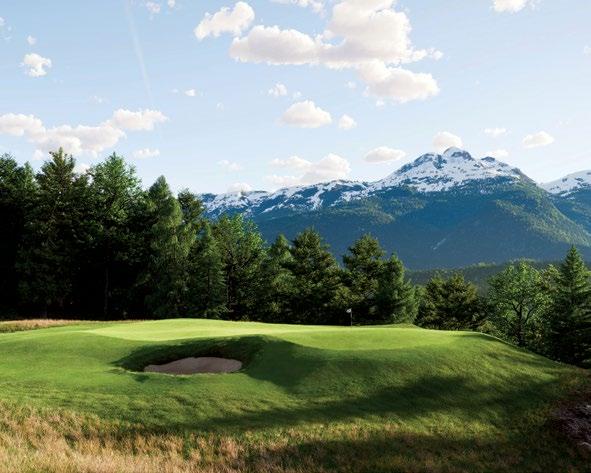
Sea to Tee Golfers heading to Whistler from Vancouver can rent a car, book a ride with VIP Whistler car service, or, better yet, fly in via a Harbour Air floatplane. The charter service’s floating Green Lake terminal sits adjacent to the Nicklaus North Golf Course.
The company behind Cabot Cape Breton, considered by many to be Canada’s top golf resort, is debuting a new property in the mountain town of Revelstoke, British Columbia. Designed by Rod Whitman, who also created Cabot Links at the Nova Scotia resort, the Cabot Pacific course will occupy a dramatic setting in an area known for outdoor pursuits.
“Revelstoke embodies the kind of destination that inspires us at Cabot. It’s authentic, adventurous, and deeply connected to its natural surroundings,” says Ben Cowan-Dewar, CEO of the Cabot Collection. The site for Cabot Pacific, which is scheduled to open for preview play later this year, offers “moments of raw drama” while carrying “a quiet, contemplative rhythm,” says Cowan-Dewar. “Our intent was to honor both—to shape a course guided by the site rather than imposed upon it.” —A.L.
The provincial capital’s charms include top-flight golf courses—and plenty of sunny days on which to play them.
by CRAI S. BOWER
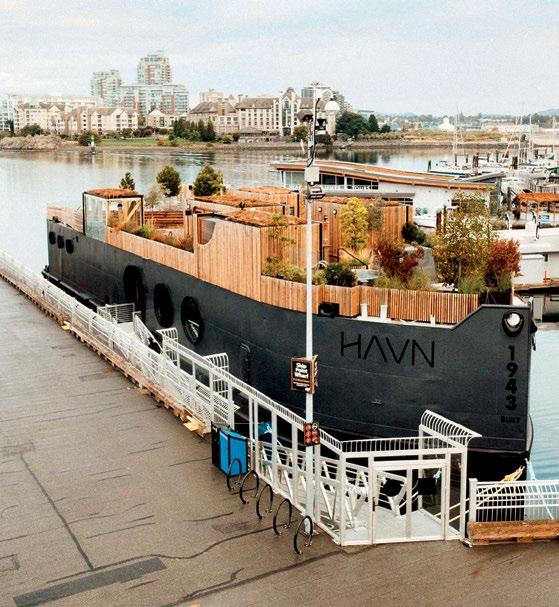
Set on the southern tip of Vancouver Island, Victoria resides squarely in the rain shadow of the Olympic Mountains. Known as the City of Gardens, the British Columbian capital flouts the Pacific Northwest’s wet reputation, with more than 300 days of sunshine in a typical year. The relatively balmy climate sets the stage for great golf, as does the local landscape of conifer forests, coastline, and granite outcroppings. The bounty of Victoria extends to everything from local cuisine to outdoor adventures, positioning the city perfectly for a multiday golf trip that’s about more than just golf.
For years, Victoria offered all things British, right down to the double-decker buses. You can still find quaint pubs like Bard & Banker, Irish knitwear shops, and plenty of tea, but the capital has grown into a cosmopolitan center filled with eclectic cuisine and hyperlocal distillers and brewers. At Cafe Malabar, two chefs from southern India’s Kerala region meld home spices and coconut into predominantly seafood dishes that defy expectations. At Ugly Duckling, the seasonal five-course prix fixe menu may include Canadian Wagyu beef short rib and chawanmushi, composed of sunchoke, trout roe, and scallion.
Victoria’s prime location on the Inner Harbour demands that you occasionally put down your golf clubs in favor of a fishing rod, paddle, bicycle, or telephoto lens. You can hook monster Chinook salmon in the Strait of Juan de Fuca, the Puget Sound–Pacific Ocean conduit that is also great for halibut and sockeye salmon. Wildlife charters on the strait offer the chance to photograph orca pods and other marine mammals. You can also pick up a paddleboard to tool around the Upper Harbour, or grab a bike to pedal the 34-mile Galloping Goose rail-to-trail path, with a pause at the Stickleback Oceanfront Cider & Taphouse
Havn, a floating Scandinavian spa on the Inner Harbour, offers a respite from the day’s adventures with its saunas, cold plunge pools, and hot soaking tubs. Less than five minutes away by foot, the Fairmont Empress hotel rises over the Inner Harbour, within easy access of the Harbour Air floatplane dock and the Victoria Clipper, a high-speed catamaran that serves Seattle daily. Golfers should also consider the Westin Bear Mountain Golf Resort & Spa, set steps from the course’s practice facility and first tees.
Bear Mountain Resort: Journeyman professional hockey player Len Barrie formed a roster of NHL all-stars with connections to Victoria to establish Bear Mountain. After various ownership changes, the capital’s premier public golf resort continues to grow.
Steve Nicklaus, with dad Jack’s supervision, led the original design efforts for the resort’s Mountain and Valley courses. The Mountain Course climbs 1,100 feet, reaching a crescendo at the short par-3 14th. The green floats above Highlander Forest, the city, and the Strait of Juan de Fuca. First dreamed up by Barrie as a wagering 19th hole, the 14th claims its rightful place among Canada’s most spectacular
setups—an ideal perch for a quick break after ascending the 523-yard, par-5 13th hole.
Former goalie and two-time Stanley Cup champion Mike Vernon, an early investor, prefers the par-3 10th hole.
“I’ve played TPC Sawgrass a few times,” says Vernon, “and I like that Bear Mountain has its own island green.”
Trick-shot specialist and golf influencer Mac Boucher is another Bear Mountain regular. “The Mountain Course offers a gorgeous backdrop for my videos,” says Boucher, who recently aced the 150-yard 14th by teeing off with a driver.
“That said, I believe the Valley Course, coursing alongside a creek through an evergreen forest, holds its place among the best layouts in Canada.”
Olympic View Golf Club: Olympic View takes players on a tour of distinctively local geographical features. A 60-foot waterfall, one of two natural cataracts, tumbles beside the 17th green; granite outcroppings pinball wayward drives into purgatory; and arbutus and Douglas fir trees shroud most fairways. Like other premier Pacific Northwest tracks, Olympic View cuts golfers off from the outside world and other players on the course, enveloping forested foursomes on almost every hole.
Victoria Golf Club: Those who enjoy reciprocity benefits should take full advantage at this private club situated along the banks of Oak Bay. Victoria Golf Club perennially resides among the top courses in Canada. Several holes lead to rocky coastal outcroppings, availing views of the Pacific Ocean, Olympic Mountains, and, with some luck, whale flukes.
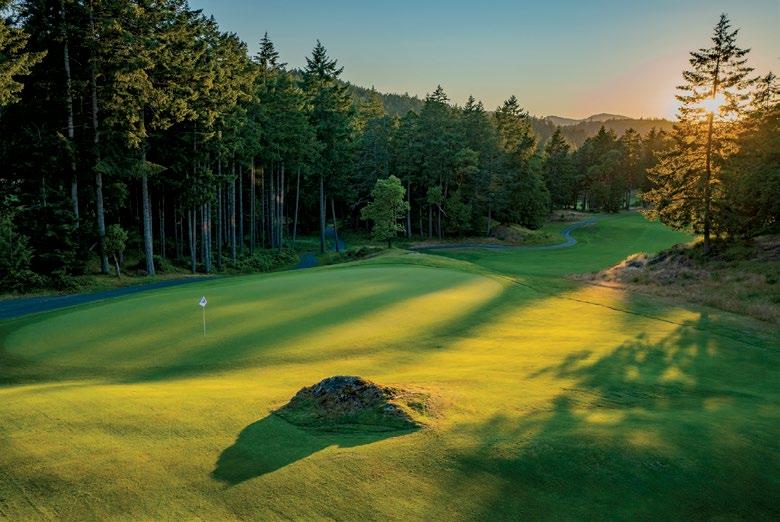
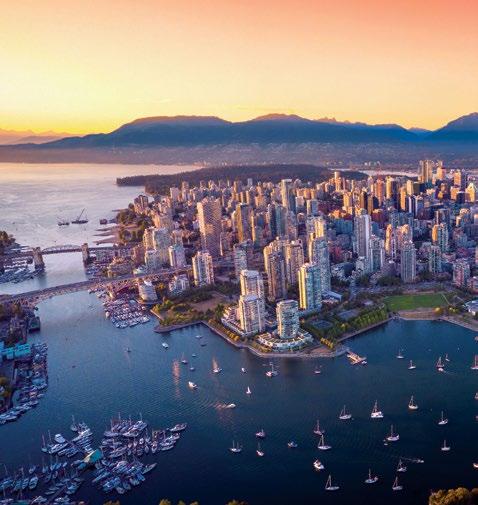
Most trips to British Columbia begin, end, or both in Vancouver. The City of Glass’s spectacular setting between the Coast Mountains and the Pacific Ocean presents gorgeous vistas wherever you look, and cultural, shopping, and culinary opportunities await in every direction.
For a quick in-and-out, the Fairmont Vancouver Airport, located directly above the main terminal, is one of the world’s finest airport hotels. In town, consider the contemporary Fairmont Pacific Rim, easily reached from the airport via the SkyTrain’s Canada Line, which takes travelers to Vancouver’s waterfront in just 25 minutes.
If possible, call in a favor to get access to the private Capilano Golf and Country Club. Located in West Vancouver, Stanley Thompson’s sylvan design is consistently listed among the world’s top courses. For public play, try University Golf Club, a well-maintained, heavily forested track.
Tackle the Grouse Grind, a 1.8-mile steep trail up Grouse Mountain, and you might encounter NHL players training in summer. The Red Skyride gondola lets the bull wheel do the work as you soar above the forest to Grouse Mountain’s alpine trails and restaurants with views of Vancouver.
Famous for Asian cuisine, Vancouver recently added Sushi Hyun and Sushi Masuda to the city’s list of 12 Michelin-starred restaurants. For a flavorful day trip, take the Aquabus to Granville Island, where a year-round public market features artisans and artists selling directly from their studios, and where more than 50 independent restaurants and food purveyors stand at the ready to quell your appetite. —c.s.b.


A new luxury train and a recently opened hotel in Rome pair up on a golf journey like no other.
by
Night had descended across the Italian countryside as La Dolce Vita Orient Express, the French travel company’s new 12-carriage, 31-cabin luxury train, sped south toward Naples. The rail liner was heading to Fasano, a small town in Puglia, where the next morning many of its passengers would disembark to play San Domenico Golf Course, a links-like routing tucked between the slopes of the Itria Valley and the Adriatic Sea.
For now, however, the train’s golf travelers had adjourned to the 36-seat dining car for a six-course meal that teased the forthcoming coastal destination with dishes like cuttlefish salad and a medley of shellfish and legumes in a spiced consommé. The dinner, curated by the three-Michelinstarred chef Heinz Beck, also reflected the journey’s Roman embarkation with a pasta course of cacio e pepe with herb foam. Later, pistachio-crusted veal gave carnivores something to sink their teeth into.
Passengers were just starting on their coffee and dessert—in this case, mandarin ice cream accented by an assemblage of ricotta in various forms—when a singer and a clarinetist entered the dining car to perform a rendition of “Die Moritat von Mackie Messer” (known more familiarly as “Mack the Knife”). The tune was a teaser for their postdinner performance in the train’s bar car, where, joined by the resident pianist, they played timeless Italian pieces and American classics made famous by the likes of Ray Charles, Etta James, Aretha Franklin, and Duke Ellington.
The evening, which was the first of three nights aboard La Dolce Vita , certainly got guests into the swing—or the Italian Swing, as Orient Express calls this new golf itinerary. The trip began more than 24 hours earlier, with dinner and an overnight stay at Orient Express’s La Minerva, a 93-key luxury hotel situated within a restored 17th-century palace near the Pantheon. Before boarding La Dolce Vita , the golfers played a morning round at Rome’s famous Marco Simone Golf & Country Club.
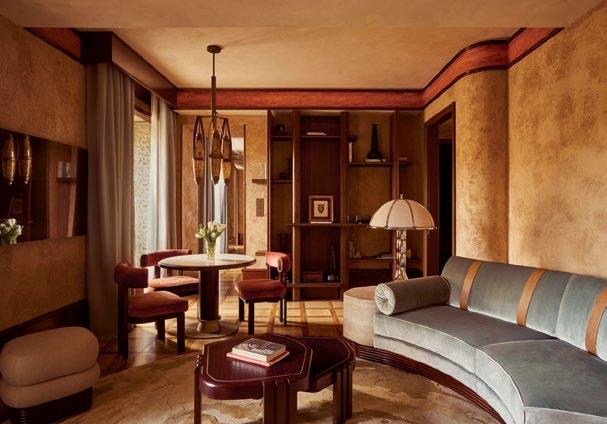
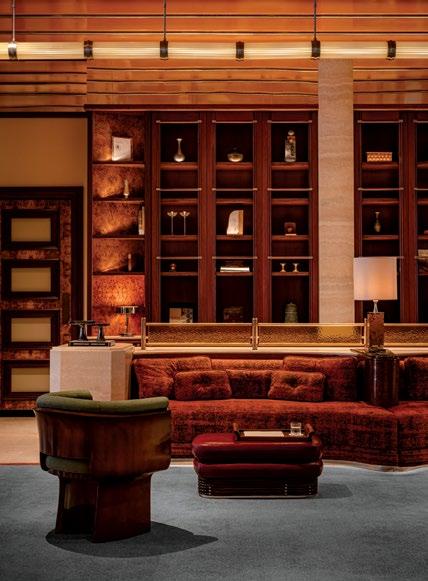
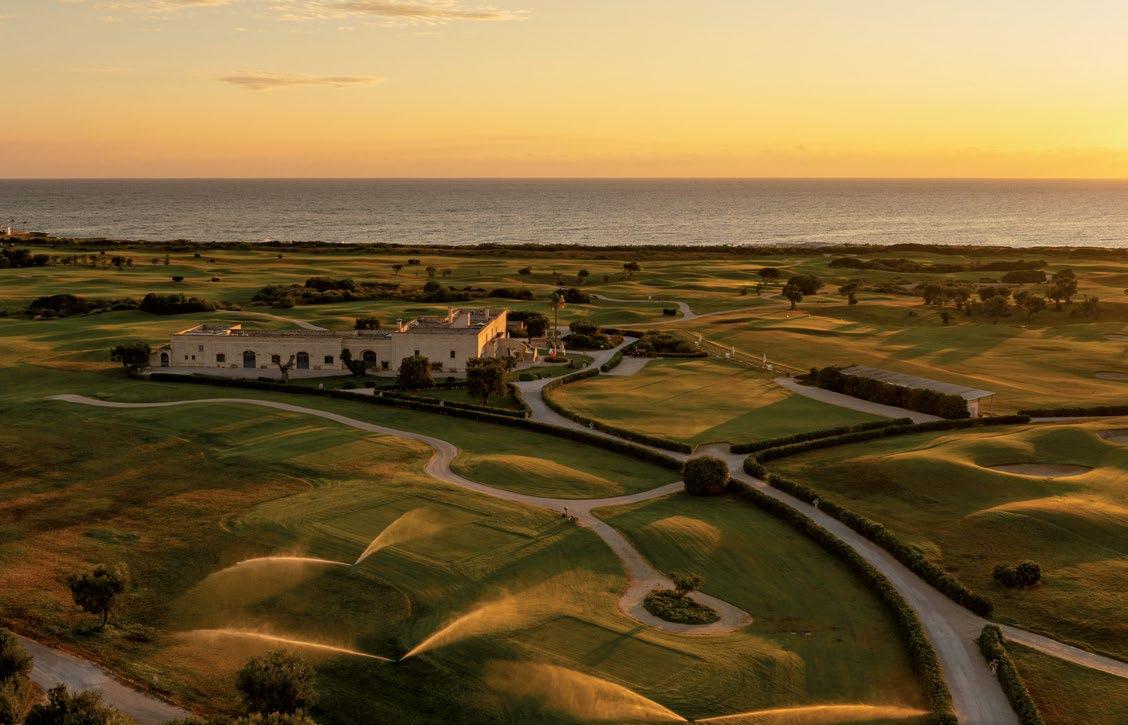
One of the great things that golf and the train do— they connect people.”
—MARCO
GIROTTO General Manager, La Dolce Vita Orient Express
“The train is not our product,” Marco Girotto, La Dolce Vita’s general manager, told me during that first night traveling the rails. “The train is a tool for our real product— our journeys, our adventures.”
Those adventures, he explained, are inspired by the Orient Express’s rich history, a past that can be traced to the first luxury round-trip train journey from Paris to Constantinople, in October 1883. The train’s interior aesthetic—the handiwork of Dimorestudio founders Emiliano Salci and Britt Moran—was inspired by a golden era of design in Italy. “It was the best age for Italian creativity and craftsmanship,” Girotto said of the 1960s and ’70s. “Everything had form and function.”
The form of Orient Express’s new golf itineraries is to bring travelers to some of Italy’s esteemed courses throughout the country—San Domenico in Puglia; Tuscany’s Argentario Golf Club and the Club at Castiglion del Bosco; Royal Park I Roveri in Piedmont; and Franciacorta Golf Club in Lombardy. (The last two courses together with Castiglion
del Bosco and Marco Simone make up Orient Express’s second golf itinerary, Northern Greens, which also originates in Rome but whisks passengers to Italy’s northern realms.)
The function of these trips is to immerse travelers in the country’s culture; and while the train is in motion, much of that occurs in the bar car. Listening to the nightly performances—which also included a lively Italian folk songs show on the journey’s final night in Pisa—guests experienced the vitality and zest for life that defines the Italian spirit. Every night in the bar car felt like an Italian wedding celebration.
Cultural immersions also come by way of memorable sips—perhaps of a Tuscan single malt or a Sicilian pot-distilled gin. The train’s collection of Italian amaro (from sufficiently bitter and well-layered Venetian examples to bright, fruity offerings from Sicily) offers the greatest
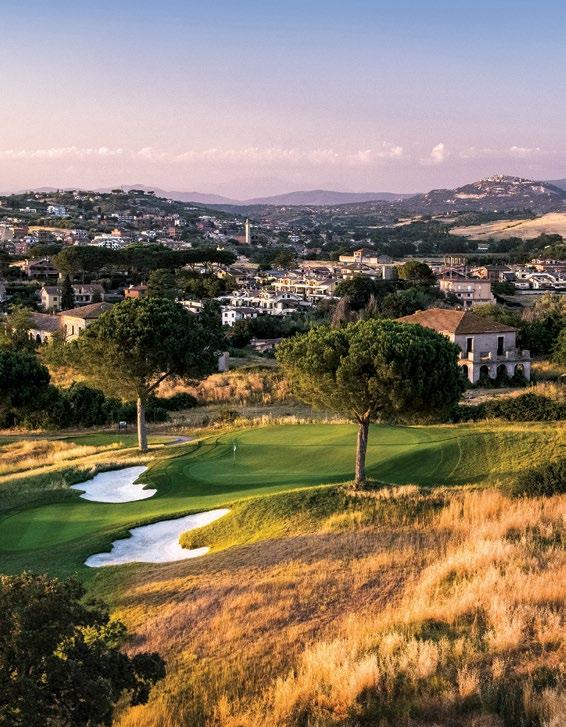
Whatever the mode of transportation— yacht, private jet, helicopter—there’s an over-the-top trip for golfers to discover.
TCS World Travel
Go big or go home. That may as well be the motto of TCS World Travel’s 20-day Golf Around the World itinerary, which includes 11 tee times spread out across seven destinations, from an Olympic venue in Japan and a Nepalese course set in the foothills of the Himalayas to an Arnold Palmer design in Kazakhstan and a pair of Robert Trent Jones Jr. creations in Denmark. Along the way, you’ll stay at five-star hotels and resorts, and you’ll fly everywhere aboard a private Airbus A321.
Kalos Golf
Six countries, 10 courses, UNESCO World Heritage Sites, and pampered stays at top luxury resorts and hotels—that’s what golfers have to look forward to on Kalos Golf’s 20-day expedition of the Caribbean and South America by private jet.
Bravo
Play golf on five iconic Scottish courses, including Machrie Golf Links; visit Islay distilleries; stay in a 13th-century castle on the edge of the Hebrides; go fly-fishing on a remote loch; and dine at a Michelinstarred restaurant in the Southern Highlands—all in one week. Bravo Whisky Golf comfortably packages these experiences and more into its seven-day Grand Golfing Tour of Scotland, thanks to helicopter transfers that save almost 30 hours of travel time.
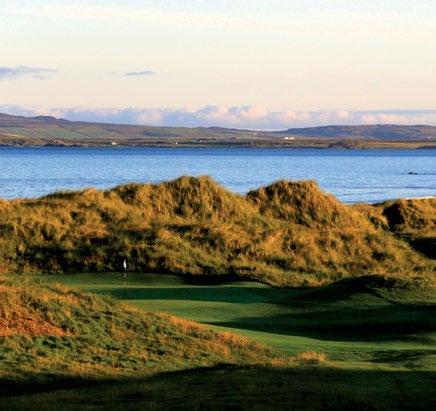
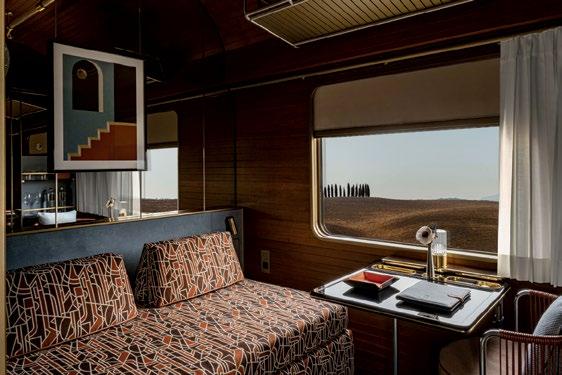
discovery potential, even for those who are well versed in the category. Then there are the bar’s signature cocktails: five libations that boast different spirit bases and include unique Italian ingredients, from Sicilian orange marmalade and porcini mushrooms to aged balsamic vinegar and extra-virgin olive oil.
Best of all, bar manager Giuseppe Carillo and his team are dedicated to the wishes and whims of the train’s passengers. So, while the formal entertainment wraps up at around midnight, the revelry in the bar car endures for as long as guests desire. Such commitment to late-night merriment often comes with a price tag, however, as wake-up calls for morning rounds are likely to come sooner than many of the train’s carousers would like.
Although Girotto insists that the journeys aren’t meant to hark back to a specific era, it’s impossible not to feel transported to a time when plush sleeper cabins, lively bar cars, and elegantly appointed dining cars represented the most luxurious means of continental travel. It’s a romantic way to tour the country, one that allows time to slow even as the world rushes by.
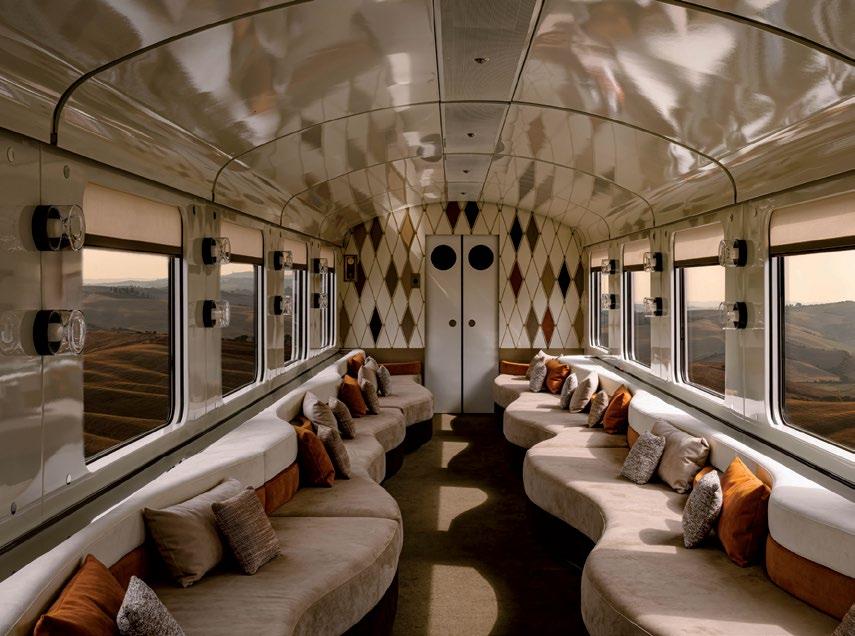
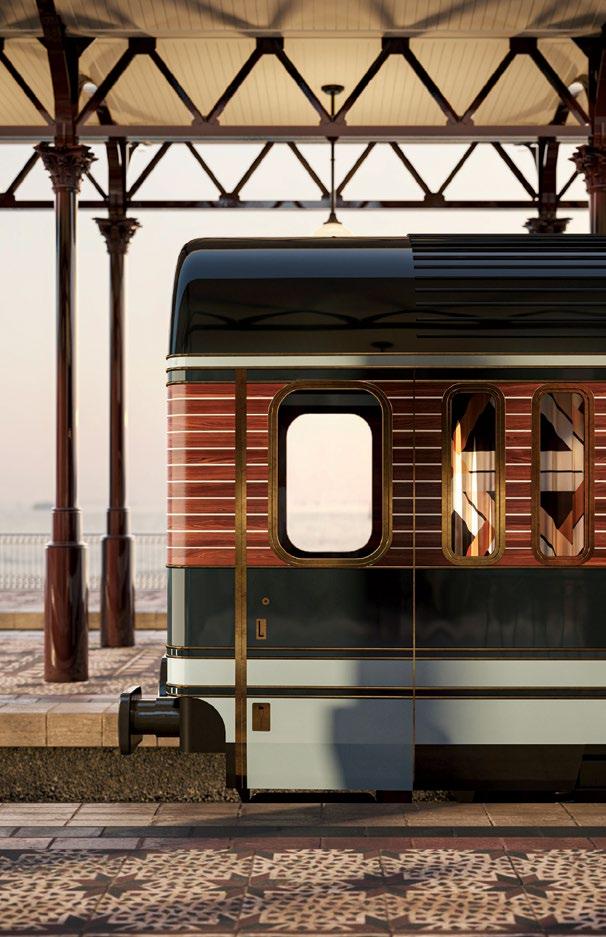
A romantic way to tour, one that allows time to slow even as the world rushes by.
For more than 70 years, Swan Hellenic has specialized in expeditions to destinations of cultural and historical interest. In September, the boutique British cruise line is adding a golf-focused package to its Atlantic Horizons itinerary, which sails from Portugal to the Canary Islands. Over those 10 days, golfers will have the opportunity to play five courses, three of which are based in Morocco, while traveling aboard a nine-deck ship that accommodates fewer than 200 guests.
Oceanic cruises aren’t for everyone, so for those who prefer a smaller vessel and a more scenic route, Amadeus River Cruises offers an eight-day Rhine River journey that embarks from Basel and culminates in Amsterdam. While staying aboard a four-deck ship with fewer than 80 cabins and suites, golf travelers have the opportunity to play five courses across France and Germany, including some that have previously hosted the DP World Tour and other professional events.
For the ultimate boat-based golf trip, charter a yacht. The 154-foot Acqua Chiara, available through Fraser Yachts, offers a Sail & Swing experience in which as many as 10 guests are whisked around the Mediterranean, from Sardinia to Saint-Tropez. Golfing guests can play three high-caliber courses and engage in several other pursuits along the way. —s.t.
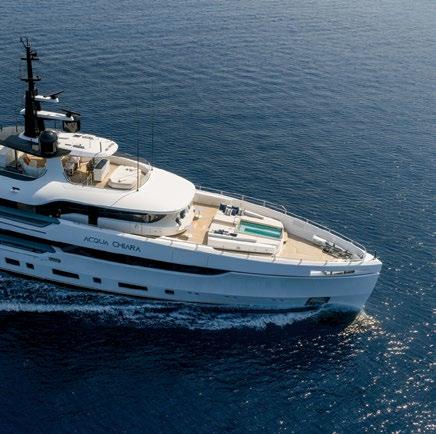
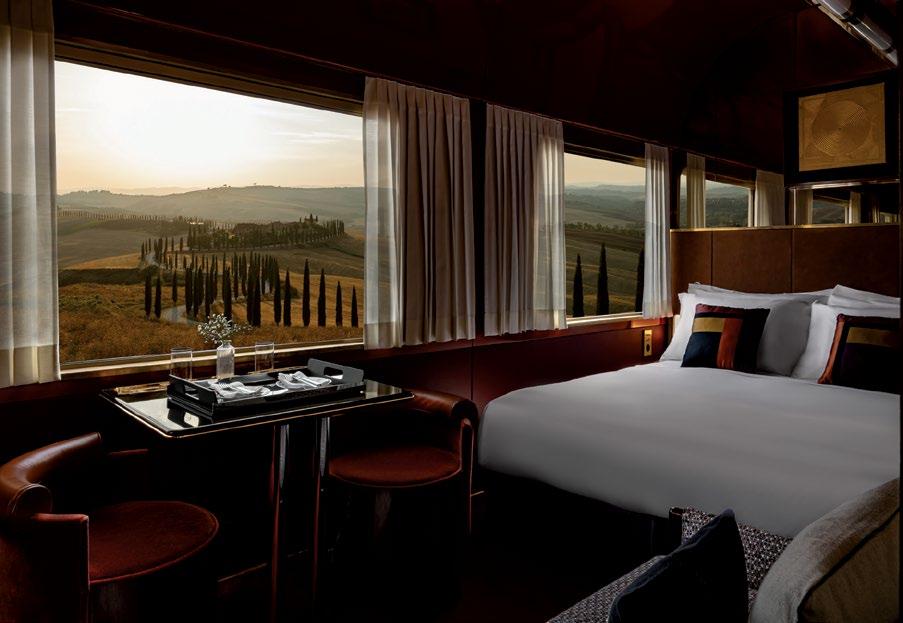
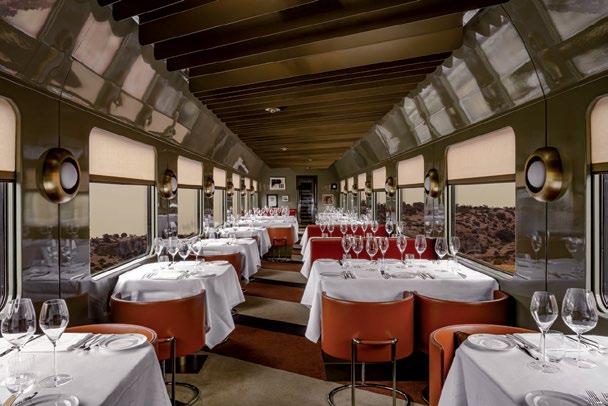
“Every time I’m on the train, it feels like I’m entering a parallel dimension,” Valentina Silvestri, a manager of events and special projects for Orient Express, told me over dinner on the journey’s maiden evening. “You see the world passing by, but you are in this microenvironment with your fellow passengers. It’s like there’s an underlying bond that is growing. You’re sharing something special with these people that you’ve never met before.”
Added Girotto, “One of the great things that golf and the train do—they connect people.”
If there’s a shortcoming to Orient Express’s new golf itineraries, it’s their duration. The train itself never bolts down the tracks at breakneck speed, but the journey’s three nights seem to fly. “When you step off the train at the end of the journey,” Silvestri observed, “it’s like you’re stepping from a dream back into reality.”
Reality came quickly when the train returned to Roma Ostiense station on the fourth evening—even though passengers were escorted to Orient Express’s exclusive lounge for a final aperitivo. Three nights aboard La Dolce Vita with golf clubs in tow is just that—the sweet life—though the journey is short and sweet, too. I had stepped off the train only moments before, and I was already daydreaming of a return to the rails. That’s the way it goes, I learned, after getting a taste of La Dolce Vita
We’re toasting 250 years with celebratory cocktails from four of Philadelphia’s best bars. by Adam Erace
The American experiment celebrates 250 years in 2026, and no place is toasting with more spirit than Philadelphia. The nation’s cradle, Philly is also a city with a reputation for enjoying a beverage or two. And while our forefathers’ taverns poured cider and ale, today you’ll find cocktails that are inventive and—key to the Philly persona—do not take themselves too seriously: a blue-corn milkshake, a frozenbottle martini washed with olive oil, a brandy sour with a Baltic accent. If you’re wondering if Philly is a great cocktail city, ask yourself this: Where else in the country can you sip a Japanese-American Midori daiquiri around the corner from where the Declaration of Independence was signed?
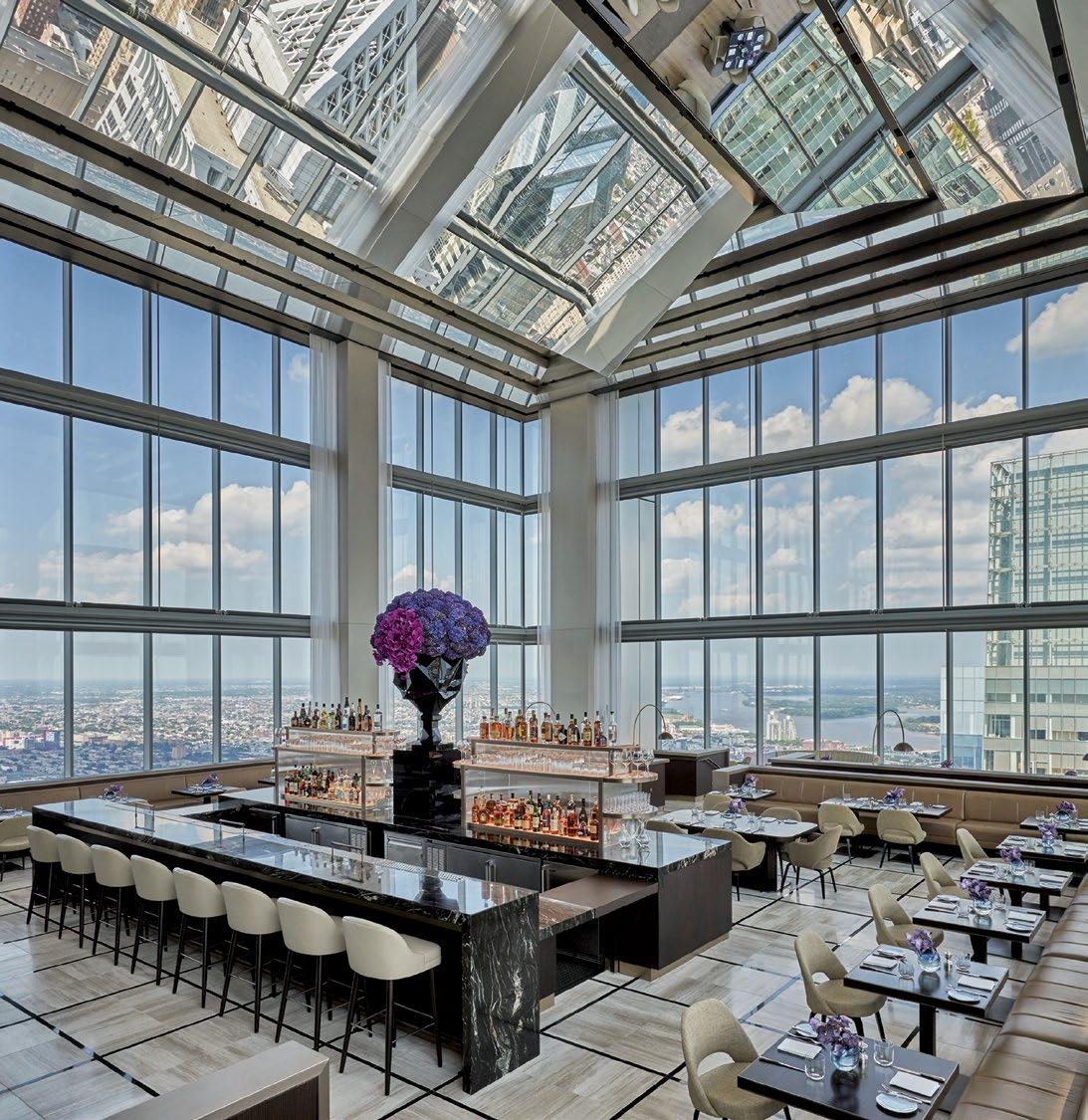
With its waterfall-lined staircase, elaborate floral arrangements, and awesome (if somewhat startling) 59th-floor views through glass walls and ceilings, Jean-Georges Vongerichten’s bar and restaurant at the impeccable Four Seasons Hotel Philadelphia at Comcast Center commands a serious drink. Beverage director Dawn Trabing has just the thing: a batched and frozen vodka martini that looks straightforward but is extraordinarily aromatic and complex, thanks to an olive-oil wash and a trio of orange, cardamom, and eucalyptus bitters. “Washing the vodka gives a luxurious texture that I love, especially when you take it to the freezer,” Trabing says. “As the martini starts to warm up at the table, a lot of these aromatics begin to poke out,” notably the refreshing, camphoraceous quality of the eucalyptus. “It evolves as you drink.”
Long before Dan Suro and his siblings opened La Jefa, the studious macchiatos-to-mezcalitas café behind their parents’ storied Tequilas restaurant, he slung frozen neon drinks at a tiki joint. Maiz, which he describes as “essentially a masa milkshake” made with the corn-based Chiapas spirit pox, brings a softer shade of lilac-blue and a tall head of structured foam in the style of a Ramos Gin Fizz. “The legend is, to make a proper Ramos, you have to shake it for 12 minutes,” Suro says. He sidesteps that via his favorite workhorse from his tiki days: a Hamilton Beach milkshake machine.
GLASS TYPE LIST of INGREDIENTS 6
MARTINI
METHOD for CRAFTING the PERFECT DRINK FOOTED HIGHBALL
Combine first five ingredients in a milkshake cup. Blend on high with about ¼ cup of crushed ice for two minutes. Pour the Topo Chico into the glass, then add the cocktail on top. Chill for two minutes. Poke a hole to the bottom of the glass with a barspoon and pour more Topo Chico down the spoon until the head sits an inch above the glass.
Rakija is a catch-all term for fruitbased brandies, which are “central to Balkan drinking culture and especially to Serbia, where my family is from,” says Aleksandar Stojnic. The Philadelphia chef’s eponymous restaurant off Rittenhouse Square honors his heritage with the Serbian Kiss. This striking magenta cocktail stars slivovitz, the aromatic plum brandy, shaken with violet liqueur and lavender-scented blueberry purée for a floral, fruity drink whose color—and finishing scatter of petals—embodies spring.
Tangy, frothy, and green as an Irish fairway, the Kasugai Sour has become the cocktail calling card at Almanac, the 21-seat space above a Japanese omakase restaurant in Old City, the town’s historic center. Under the direction of the self-styled “Philadelphia Midori Guy,” Rob Scott, the bar bridges the relentless detail of Japanese omotenashi hospitality with a downto-earth Philly attitude, resulting in tightrope-balanced but playful drinks like this sweet-and-sour daiquiri riff with a toasted-grain backbone.
GLASS TYPE LIST of INGREDIENTS 5
1½ oz. barley shōchū ½ oz. yuzu juice ¾ oz. Midori ½ oz. lime juice ¾ oz. Calpico concentrate
METHOD for CRAFTING the PERFECT DRINK
Combine ingredients in a shaker with ice and shake for 10 seconds. Strain into a chilled coupe. COUPE
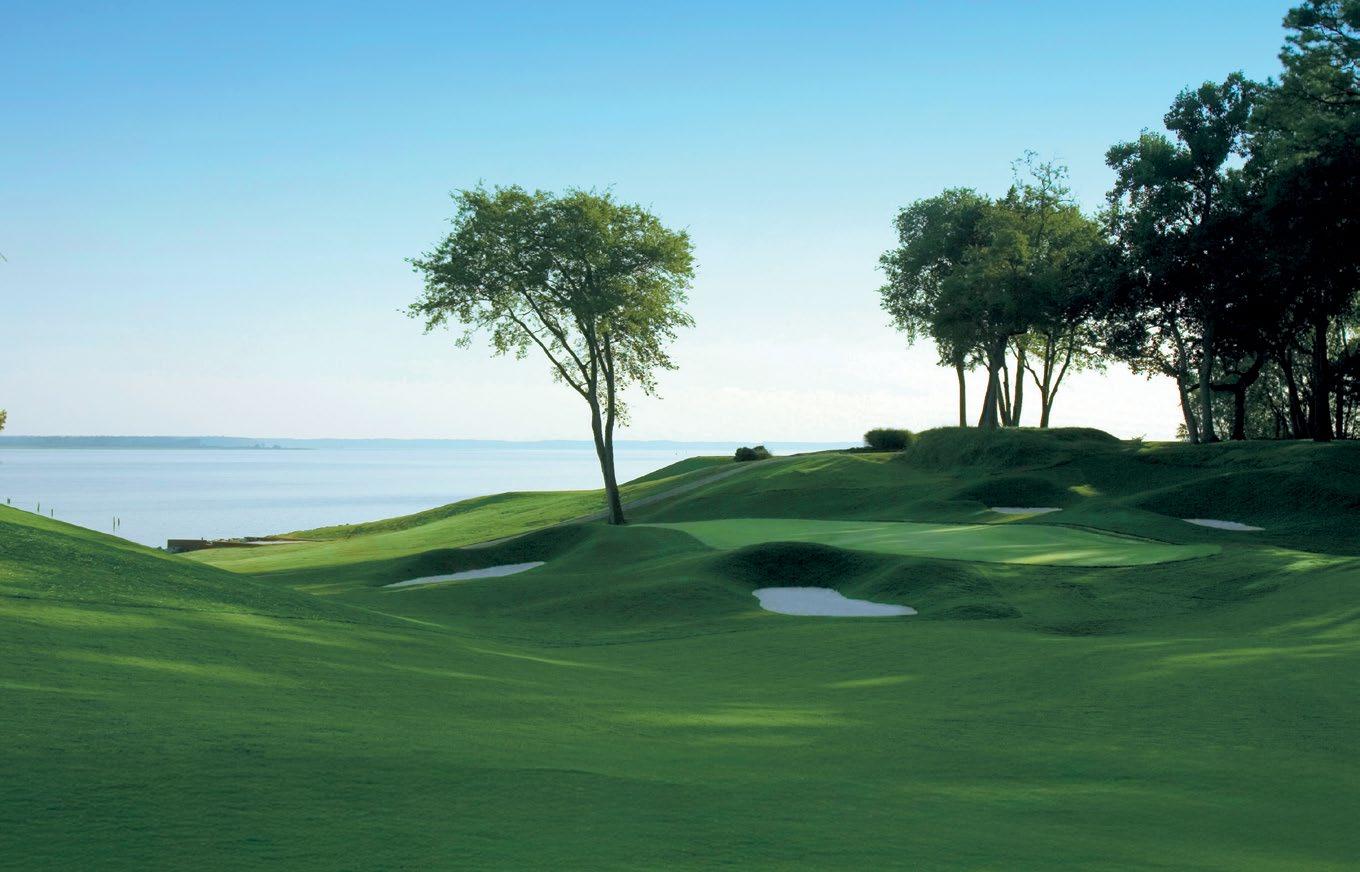
WILLIAMSBURG, VA
A weekend of world-class golf at two of Virginia’s most storied courses—The Gold Course at Golden Horseshoe and The River Course at Kingsmill—followed by memorable gatherings each evening.
JUNE 25–28, 2026
TICKETS: KINGDOM.GOLF/FOUNDERS

Boutique French wineries are moving the vinification needle in Paris half a century after two California producers shocked the world there.
by SHAUN TOLSON
On may 24, 1976, at the InterContinental Hotel in Paris’s ninth arrondissement, wine merchant Steven Spurrier hosted a blind tasting meant to introduce a few American wines to the European market. Yet, when the panel of esteemed French wine professionals ultimately selected a Chardonnay and a Cabernet Sauvignon from California as the best in their respective categories—outperforming some of the most revered grands crus and premiers crus from Burgundy and Bordeaux—the press retroactively regarded the event as a competition, and the “Judgment of Paris” moniker was born. The French wine industry was not amused.
Returning to the scene of the crime 50 years later, Americans might surmise that the local wine industry is holding onto its grudge. Finding even a single California label on a Parisian wine list can be a challenge. Ian Mendelsohn, founder of Vineyard Confidential—a company specializing in bespoke European wine journeys—says that “the Silver Oaks, the Harlans, the big Cabs out of California” can be found at some of the city’s three-Michelin-starred restaurants, but Paris is unquestionably French first when it comes to wine.
The preference for French producers (which predates any recent fallout from tariffs) is not simply a matter of national pride; it’s a reflection of the current state of winemaking in France. More than ever before, French consumers have a plethora of domestic wines to please their palates, as a growing number of boutique domaines are making exceptional wines that are rooted in, but not confined by, tradition. “I love producers who will uphold history and tradition but aren’t afraid to push boundaries
and experiment,” says Mendelsohn. “And there’s a ton of producers all over France doing exactly that.”
In the spirit of the Judgment of Paris—when two innovative Napa Valley vintners, Chateau Montelena and Stag’s Leap Wine Cellars, became known to the wine world—we present four lesser-known French wineries that are deserving of the spotlight. The wineries were selected by Mendelsohn and Adam Fox, the owner of HighNote Wines, an agency that connects French winemakers with American distributors.
1. Domaine Le Galouchey
For decades, Canadian-born Marco Pelletier, one of France’s most respected and celebrated sommeliers, has worked to craft his own wine. In 2002, he planted vines in virgin soil on a small plot less than three acres in size. Located across the river from Saint-Émilion and Pomerol, the vineyard spans nine of the grape varietals that can be legally grown in Bordeaux, all of which are farmed organically, harvested by hand, and fermented with indigenous yeasts.
Pelletier’s sole product under the Le Galouchey label is a “vin de jardin” (wine of the garden) blend of the nine varietals that has become known among sommeliers as “the Burgundian of Bordeaux.” Fewer than 4,000 bottles are produced each year. “I have been privileged to have tasted most of the extraordinary Bordeaux wines back to 1863, and this $45 wine is probably the most interesting one I have tasted in years,” Mendelsohn says.
2. Chanterêves
In Mendelsohn’s opinion, Chanterêves is Burgundy’s most compelling story right now. The domaine was founded
by Guillaume Bott and Tomoko Kuriyama—respectively Burgundian and Japanese wine professionals who met in 2005, when Bott was cellar master at Domaine Simon Bize and Kuriyama was interning there during the harvest. They launched their label in 2010, though at the time, Bott and Kuriyama were négociants-vinificateurs, meaning they purchased grapes from various growers throughout the appellation. Only in 2020 did they finally secure a 12-acre vineyard of their own, elevating Chanterêves’s status to that of a full-fledged domaine.
The winery is perhaps best known for its five Bourgogne Aligoté expressions, which Mendelsohn says have reached cult status and are difficult to locate. Should you find yourself in Paris, look for the Mainbey Aligoté, which is crafted with fruit sourced from some of the vineyard’s oldest vines. Offering aromas of green apple, white flowers, and fresh herbs, this obsessed-over white is crisp and vibrant on the palate and characterized by a “delicate minerality” that lingers on the finish.
3. Domaine Thomas et Fils
Julien Thomas, a 13th-generation winemaker, produces whites in Sancerre that are elevating his family’s 17th-century domaine. Thomas implemented biodynamic farming practices and committed to organic production more than 20 years ago. “A decision to work this way comes only from an internal drive to make great wines and be great to the land,” says Fox.
In the cellar, Thomas relies on a combination of classic, stainless-steel vinification tanks and terra-cotta amphorae, the latter of which, Fox says, “give the wine texture without masking terroir.” The domaine’s principal expression, Le Pierrier, offers up vibrant notes of ripe citrus, crisp green apple, and hints of wildflowers, with “a classic streak of crushed-stone minerality that runs through the wine,” says Fox.
4. Domaine Clusel-Roch
This family-run winery is located in a village in Côte-Rôtie, the northernmost appellation in the Rhône Valley, on an 8.5-acre granite hillside plot. The vineyard was planted in 1935 with Sérine, a low-yielding clone of Syrah. All of the winery’s subsequent plantings have followed an old-school method that utilizes clippings from the existing vines in the vineyard, which has been organically farmed since 1990.
Today, the family’s fourth-generation winemaker, Guillaume Clusel, is at the helm, and he’s ensuring that everything is still done by hand. The label produces five Côte-Rôtie expressions, all of which, in Mendelsohn’s opinion, are “pure, vibrant, and elegant, showing that Syrah in its most northern expression can have the texture and complexity of great Pinot Noir.”
A growing number of boutique domaines are making exceptional wines that are rooted in, but not confined by, tradition.
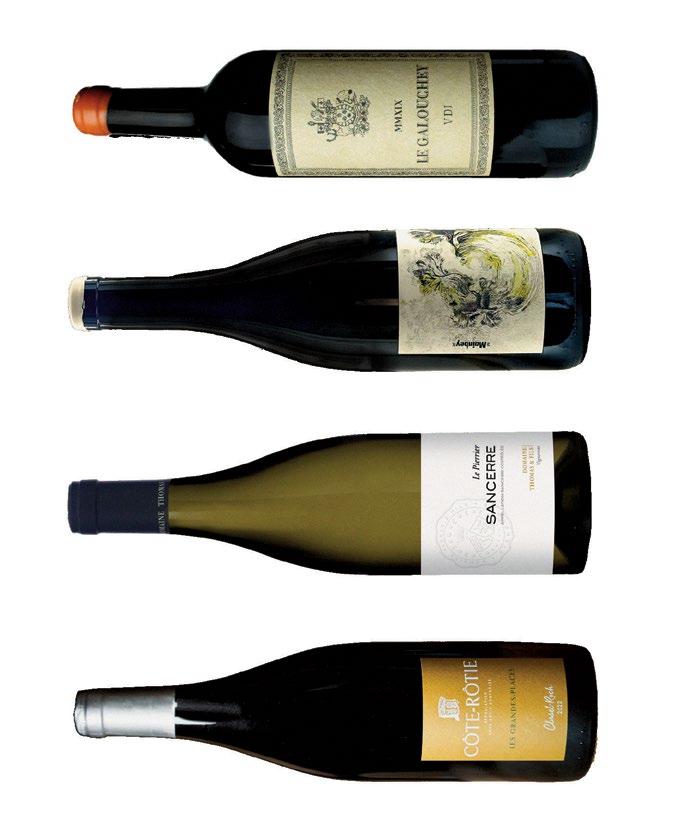
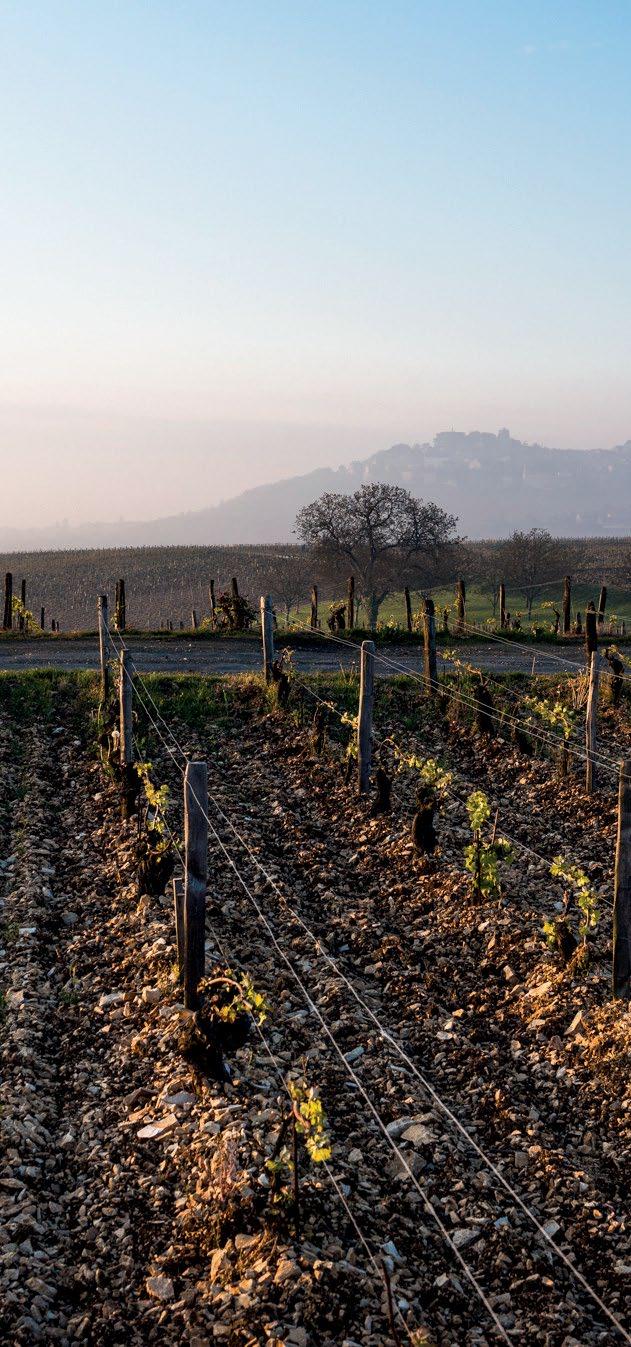
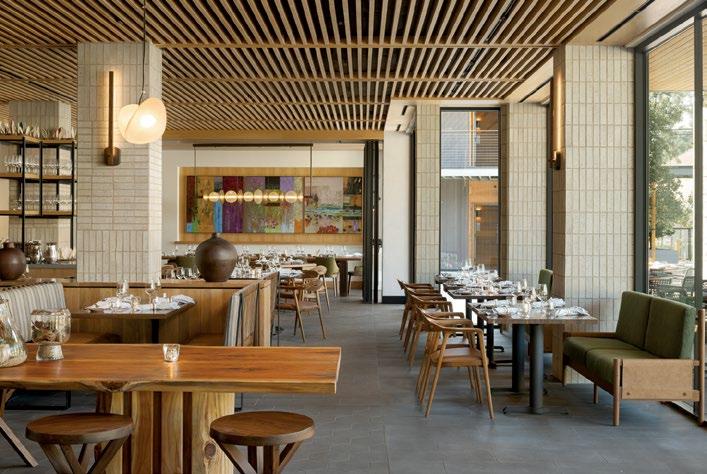
A legendary chef debuts a hotel rooted in the bounty of his California hometown.
By BRUCE WALLIN
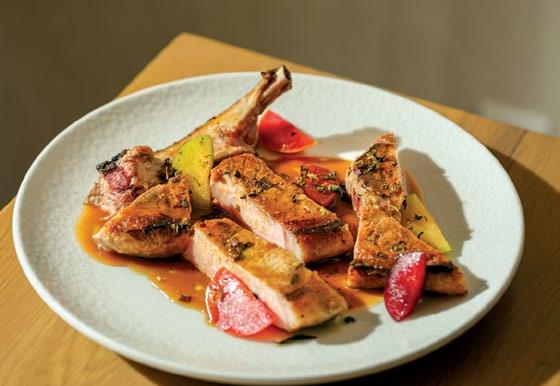
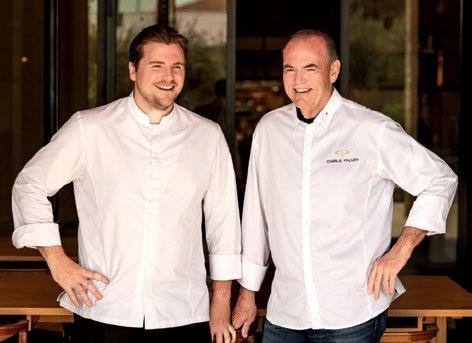
To understand Charlie Palmer’s new hotel concept, it helps to know his adopted hometown of Healdsburg.
The 67-year-old chef, considered one of the pioneers of modern American cuisine, has made the California wine-country town his base for the past quarter century, for both the ingredients and the inspiration that he finds there. “We’re 35 minutes from Bodega Bay, so the seafood is right there, and we’re surrounded by wineries and some of the greatest craftspeople who make those wines,” Palmer says. “But it’s the agriculture—and the attitude of the people—that really makes this place special. Healdsburg’s the kind of place where anything is possible.”
Raised in upstate New York, Palmer gained international acclaim at Aureole, his Manhattan restaurant that earned 13 Michelin stars during its threedecade run. In 2001, he ventured west to open Hotel Healdsburg and its Dry Creek Kitchen restaurant on the plaza of the then under-the-radar town in Sonoma County. The restaurant helped establish Healdsburg as a dining destination, a reputation burnished by more recent additions including the Michelin-three-star SingleThread and the local favorite the Matheson.
Getting to know this unquestionably abundant town—and the Russian River Valley, Dry Creek Valley, and Alexander Valley wine regions that surround it—is the central tenet of Palmer’s new Appellation Healdsburg hotel. Opened last September, the 108-room property is the first hotel created by Appellation, the
hospitality brand that Palmer co-founded with longtime Four Seasons executive and fellow Healdsburg local Christopher Hunsberger. The brand’s “culinary-first hotel” concept is custom made for the duo’s hometown. “It’s all about place,” Palmer says. “[Appellation] takes what’s very special about a place and folds it into an experience where people, no matter where they’re coming from, really get the idea of what it’s like to be in a place like Healdsburg.”
The hotel occupies an 8.5-acre site a few miles from the town plaza. Its California farmhouse–style structures share the space with two vineyard-view swimming pools and a collection of decorative and culinary gardens. A five-treatment-room spa utilizes herbs and botanicals grown in the gardens, and guest rooms are stocked with locally sourced treats (including a pour-over kit featuring Wolf coffee). More than 50 classes and workshops—from cheesemaking to painting—are offered throughout the year as part of the hotel’s Crafted at Appellation program. Further connecting guests to their surroundings, bicycles are available to take for a spin to the plaza, and a walking path at the hotel links to the adjacent Foss Creek Trail.
The attachment to place is most pronounced at Folia Bar & Kitchen, where Palmer’s son Reed is the chef de cuisine. Reed’s résumé spans continents, from Amass in Copenhagen to Blue Hill at Stone Barns in Pocantico Hills, New York. Folia marks a return to his roots. “It really came down to the idea that he grew up here, and he now understands that this is the place to perfect his craft,” Palmer says. “Coming back here, he understands why this place is so special.”
Mirroring Reed’s career journey, Folia brings the Appellation concept full circle. An open, warm, and inviting space just off the lobby, the restaurant reflects Reed’s philosophy of progressive American cuisine, anchored in live-fire cooking and fresh ingredients plucked from local farms and waters. Starters like housecured charcuterie and Hog Island oysters (farmed in Humboldt and Tomales bays) might lead to a beet salad sourced from the hotel’s gardens and a roasted duck from Bassian Farms in nearby Petaluma. Much of the menu’s beauty is in the details, including condiments like house-made “Tabasco” sauce and spicy mustard.
The focus on local quality continues at Andys Beeline Rooftop, a clubby, contemporary cocktail bar just upstairs from Folia. Overlooking the hotel gardens and adjacent
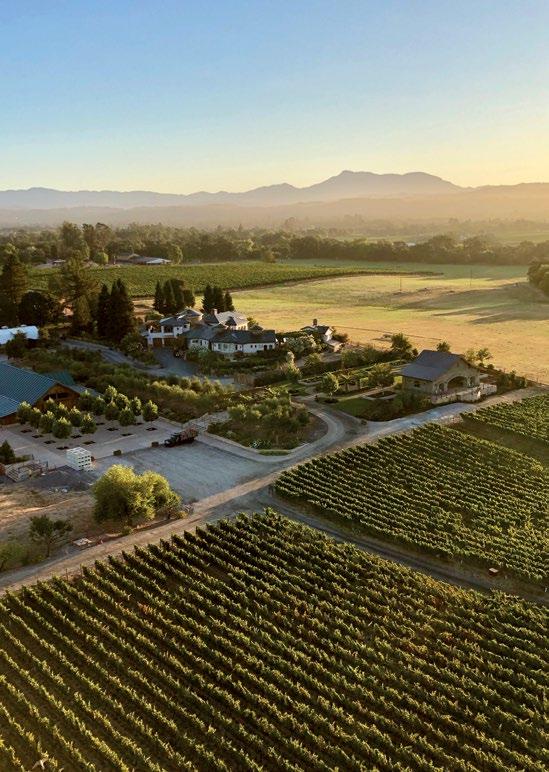
Paired to Perfection
Among the many top-flight wine tours and tastings in the Russian River Valley region, the experience at Bricoleur Vineyards is justifiably revered by foodies and oenophiles alike. The winery, which opened its tasting room in 2020, places as much emphasis on the dishes designed to pair with its wines as on the wines themselves. The 40-acre property supplies not only grapes for Bricoleur’s vintages but also ingredients—from arugula to edible flowers—for the creations of Todd Knoll, the estate’s executive chef. Its top-flight Rooted experience is a Michelin-like culinary journey in which six wines pair with six seasonal dishes, combinations that might include Bricoleur’s Rosé of Grenache with a prawn tartare, the Russian River Valley Pinot Noir with a mushroom bisque, and the Kick Ranch Cabernet Sauvignon with a New York strip and estate-grown vegetables.
vineyards, the bar pairs ceviche and other seafood-driven bites with local wines—including Silver Oak by the glass—and inventive cocktails made with rooftop-grown ingredients.
Beyond Healdsburg, Palmer has ambitious plans for Appellation, with properties already in the works in Petaluma and Morgan Hill, California, as well as Park City, Utah. Still, it had to start in his hometown. “It’s just the beginning in Healdsburg—not in a sense of growth or commercialization, but of specialization,” he says. “I truly believe that this is one of the most special places in California.”
From the California coast to the Swiss Alps, these six learn-to-sail programs pair expert instruction with spectacular experiences by sea, river, and lake.
by GINA DECAPRIO VERCESI
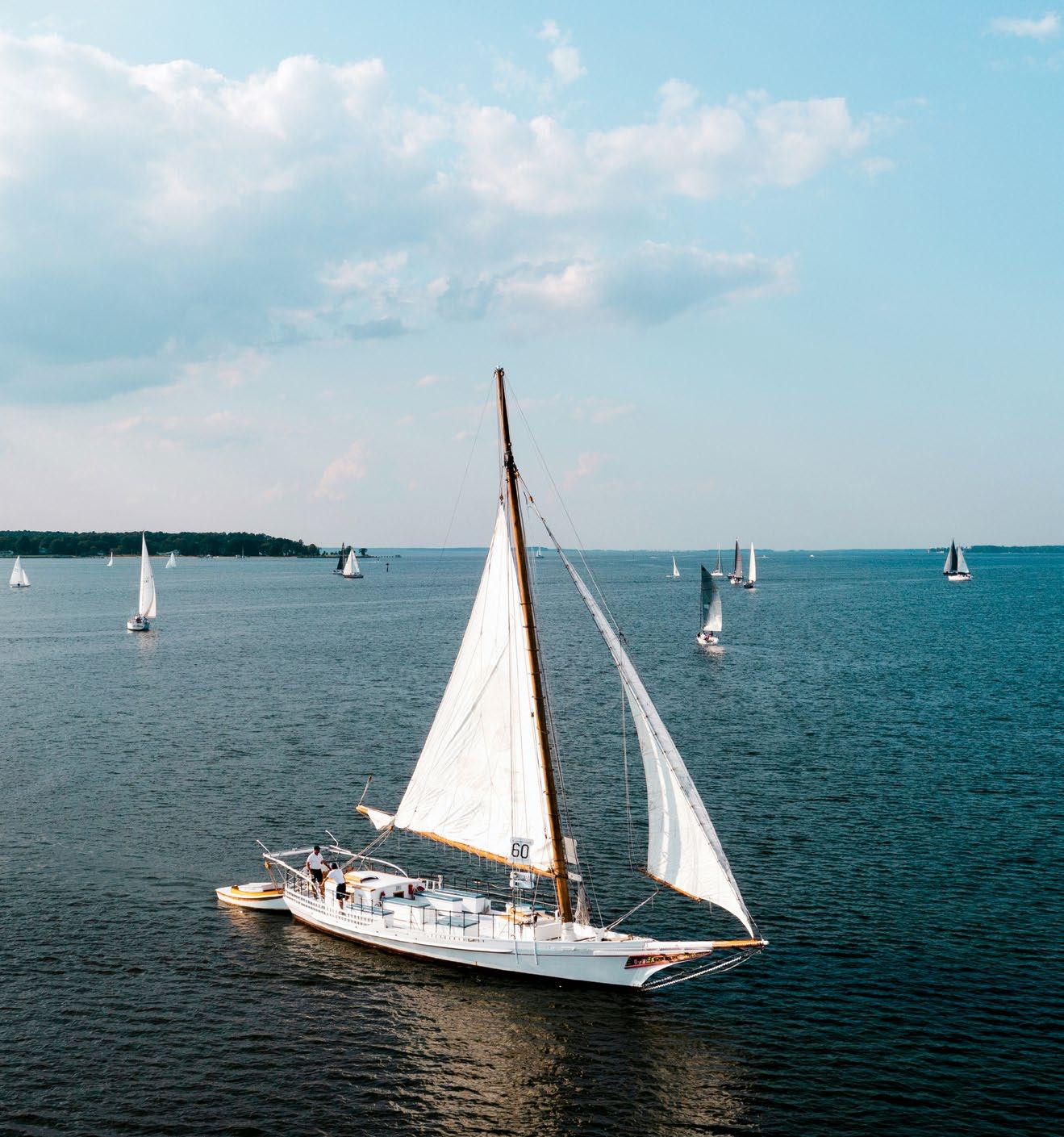
The nautical legacy of Maryland’s Eastern Shore is artfully preserved at the Inn at Perry Cabin. Set along the shores of the Miles River—a quiet tributary of Chesapeake Bay—the resort is one of the loveliest places in the country to learn to sail. Helmed by Captain Jason Pinter, Perry Cabin’s boutique sailing school offers tailored, small-group instruction in the American Sailing Association’s Basic Keelboat and Coastal Cruising courses. Morning and afternoon classroom sessions are followed by time on the water aboard one of the inn’s two elegant Alerion sloops, the 33-foot Starlight and 38-foot Starbright (pictured: the skipjack Stanley Norman). Private lessons are also available, and the inn’s exclusive Sailmate Experience is a fun adventure in teamwork for couples and small groups.
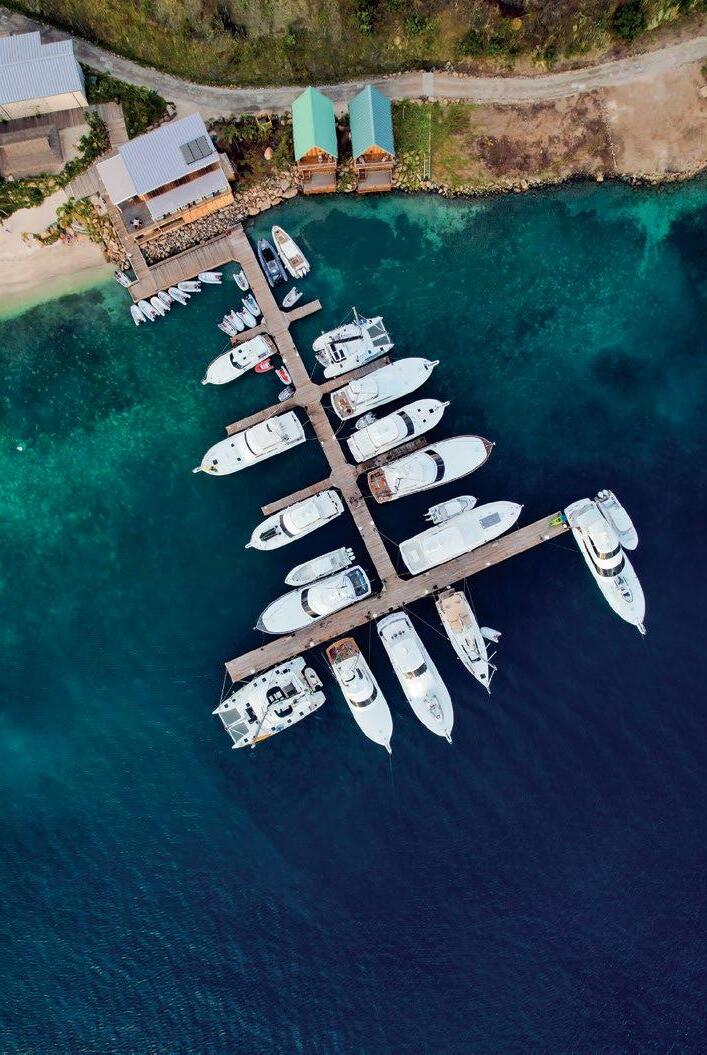
As the birthplace of the Bermuda Sloop and the host of legendary events like the Newport Bermuda Race and the SailGP series, Bermuda is a storied place to learn the ropes. Set against the turquoise waters of Castle Harbour, the water-sports center at Rosewood Bermuda is operated by the nonprofit sailing school U Sail. The school’s Royal Yachting Association–certified instructors guide everyone from firsttimers to seasoned hands in sailing, windsurfing, winging, and foiling. Sheltered on all three sides by land, the harbor offers calm, clear seas that inspire confidence and make learning a breeze. Get your feet wet with two-hour “taster” sessions designed to help you discover your interests, or dive into a two-day RYA Dinghy course, which will leave you salty, certified, and steady at the helm.
Sailors have been “messing about in boats” at the Bitter End Yacht Club since it first opened in 1969 on Virgin Gorda’s North Sound—the last protected harbor before the Caribbean meets the open ocean. It’s also the liveliest anchorage in the British Virgin Islands, a place widely regarded as one of the world’s finest sailing grounds. The Hokin family purchased the property in 1973, beginning their long stewardship of the iconic outpost. After a thoughtful post-hurricane rebuild in 2021, the resort has a better-than-ever water-sports program, with a sparkling new fleet that includes 13- and 17-foot Hobie Cats and 12-foot RS Zest sailboats good for beginners and high-performance sailors alike. One-on-one lessons in sailing, windsurfing, and wing foiling are complemented by the easygoing expertise of the water-sports team, who are always nearby to offer tips and advice.
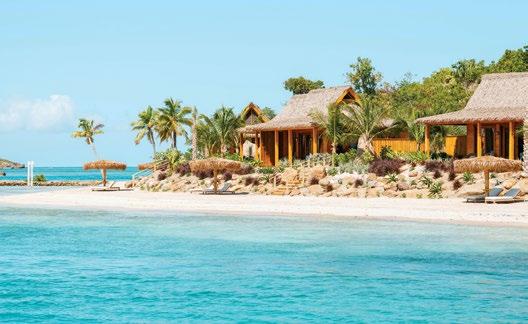
Framed by the Santa Ynez Mountains in a picture-perfect neighborhood above downtown Santa Barbara, El Encanto has long served as a retreat for the Hollywood crowd. Thanks to an exclusive new partnership with the Santa Barbara Sailing Center—one of the largest American Sailing Association–accredited schools in the country—the hotel’s guests can now learn to sail in the nearby Santa Barbara Channel. Private parent-child or one-on-one lessons aboard a 22-foot Capri keelboat are entirely hands-on, covering proper sail trim, navigation, safety maneuvers, docking, and more. Keep an eye out for dolphins, seals, and sea lions—and maybe a celebrity or two.
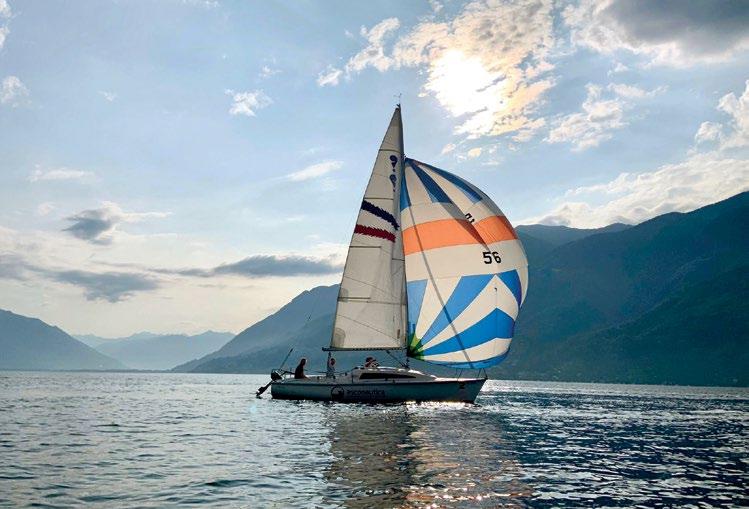
For a freshwater adventure that blends Alpine grandeur with Mediterranean flair, glittering Lake Maggiore is the answer, with Hotel Eden Roc Ascona serving as an idyllic base. Billed as Switzerland’s only true beach resort, the regal property holds a prime lakefront location in the Italian-speaking canton of Ticino. The hotel’s marina is home to Asconautica, a family-owned water-sports school that has been training budding sailors since 1974. Here, guests can learn all the basics—trimming and reefing sails, tacking and jibing, docking and mooring—aboard a 25-foot Archambault Surprise. What’s more, the region’s mild climate and reliable thermal winds—the Tramontana, which comes down from the mountains in the morning, and the Inverna, which blows in from the plains in the afternoon—deliver consistently favorable conditions.
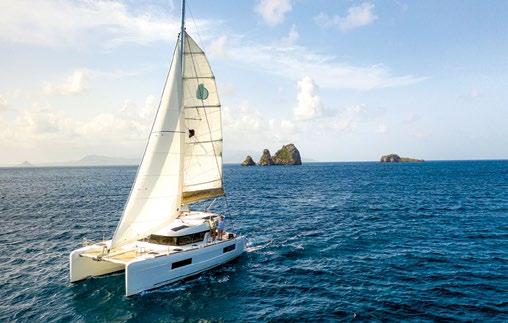
Keep an eye out for dolphins, seals, and sea lions—and maybe a celebrity or two.
Few learn-to-sail experiences can top a week spent at sea. Enter Nautilus Sailing, an American Sailing Association school that gives aspiring captains the chance to hone their skills aboard 42- to 46-foot high-performance Excess catamarans while earning four ASA certifications, from Basic Keelboat to Cruising Catamaran. With a maximum of four students per trip, instruction is highly personalized, blending theory with hands-on practice in sail trimming, coastal navigation, engine checks, anchoring and mooring, weather, and safety. Courses take place in premier destinations like Mexico’s Sea of Cortez, Tahiti, the Abacos in the Bahamas, the Balearic Islands in Spain, and Croatia’s Dalmatian Coast. Students arrive prepared thanks to Nautilus’s video class and spend their days balancing serious seamanship with snorkeling, paddleboarding, sunset swims, and rum punches. For those ready to take it to the next level, advanced flotillas let sailors cruise independently alongside a lead Nautilus vessel.
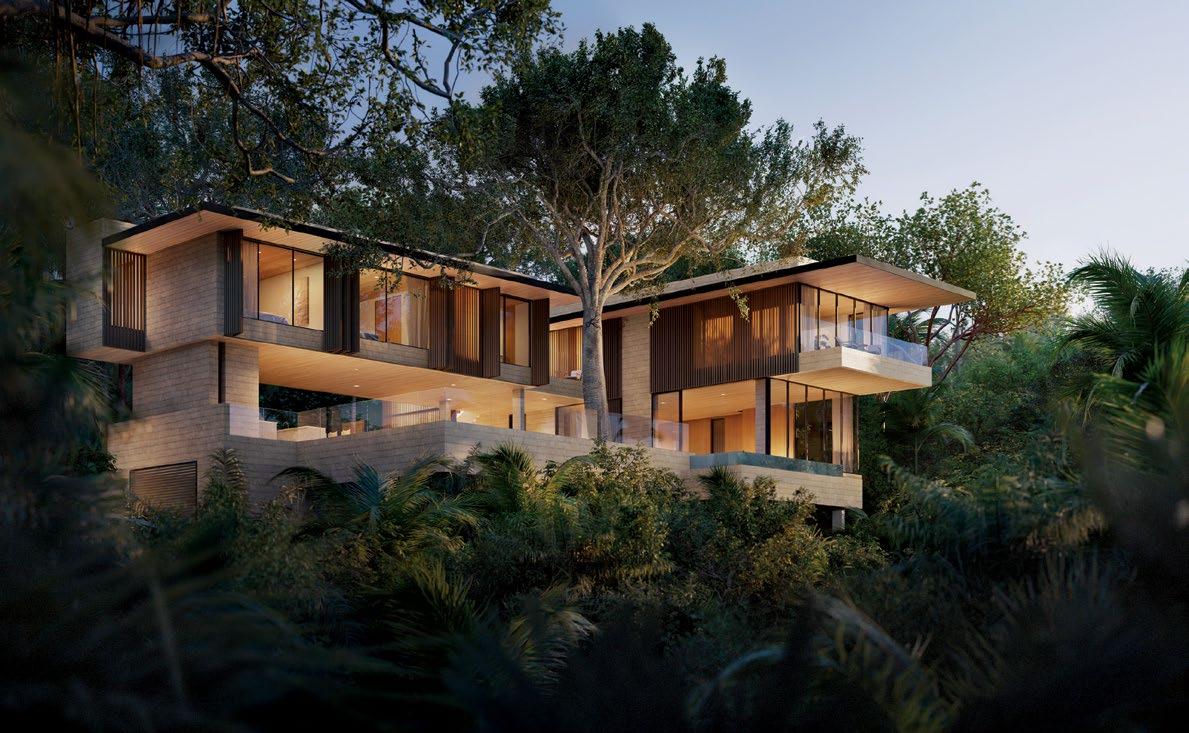
Significant infrastructure investments have made one of Mexico’s most beautiful regions more accessible—and its real estate more desirable.
by SHAUN TOLSON
The name Riviera Nayarit first entered the tourism lexicon about 20 years ago, devised to describe the Mexican state of Nayarit’s coastline between Nuevo Vallarta in the south and San Blas in the north. The area had emerged as a hot spot for luxury tourism and vacation homeownership some seven years earlier, when Four Seasons opened a resort in the nascent private community of Punta Mita.
Today, the 1,500-acre Punta Mita remains the standardbearer in Riviera Nayarit, with its Four Seasons and St. Regis resorts, two Jack Nicklaus–designed championship golf courses, beach clubs, private villas, and more. The market, however, has expanded north in recent years, a push that accelerated with the opening of a new highway completed in 2025. The roughly $275 million project shortened the
drive to Puerto Vallarta’s international airport considerably, while also connecting the region to the once domestic, now international airport in the Nayarit capital of Tepic.
“All of a sudden, you have the most beautiful beach in Mexico—one of the most beautiful beaches in the world— set at the 50-yard line between two international airports with infrastructure in place,” says Jaime Fasja, the co-founder and co-CEO of the two development companies behind Nauka, a new private resort community that is home to a Ritz-Carton Reserve hotel and Tom Fazio–designed golf courses. “Riviera Nayarit is by far the most interesting region in Mexico right now.”
With the improved accessibility and continuing investment in new resorts, the real estate options in Riviera Nayarit have never been better—especially for golfers. Here, we present three of the coveted coast’s top addresses.
Sometimes it pays to be an early adopter, and buying a membership at Nauka is one such example. The club is still in its preliminary phases of development—its stunning Fazio-designed, championship-caliber golf course is open for play (as is a Fazio-created nine-hole short course); the beach club is up and running; and a portion of the beachfront
padel and racket courts are match-ready—but there’s plenty more to come. And, according to Fasja, current members are helping to steer the club’s future. “We want to make sure that we’re tailoring the club to what our members enjoy and how our members are using it,” he says. “And we’re always making sure that we’re creating places that can foster a community and where a community can grow.”
There are several distinct neighborhoods across Nauka’s 920 acres. Arguably, the most exclusive offerings are the club’s Cliff Estates, most of which range between half an acre to one acre in size and start at $5 million. However, the site’s most impressive lot, called El Mirador (“the lookout”), covers two full acres, offers 270-degree views, and is listed for $50 million. Those looking for a turnkey offering can find it at the property’s Siari Riviera Nayarit, a Ritz-Carlton Reserve. In addition to guest rooms and suites, the resort features 34 four- and five-bedroom residences, priced from $8 million to $14 million, that come with full Nauka membership privileges.
When One&Only Mandarina opened more than five years ago, the low-density luxury resort cast a spotlight on the paradisaical stretch north of the surfing town of Sayulita, near the modest villages of San Pancho and Lo de Marcos. Spanning 80 acres, the resort features stand-alone villas and tree houses; however, these accommodations are reserved for vacationing guests. Those who wish to call the resort home will be more interested in the 10 purchasable villas (starting at $4.25 million) that remain from the resort’s original release of 55, all discreetly tucked along a lush hillside above a mile-long stretch of sandy beach.
At the time of writing, five jungle-view villas were available, each exceeding 5,000 square feet of living space and providing three bedrooms and three full bathrooms. The other five residences offer four to six bedrooms, range from 8,200 to nearly 10,000 square feet, and have spacious outdoor areas with infinity pools.
More than a quarter century after the first resort opened at Punta Mita, the peninsula continues to get swankier—and we mean that in the best way possible. Currently under development, the 63-acre Montage Punta Mita will soon offer discerning travelers 145 plush guest rooms and all the amenities you would expect from a first-rate beach resort.
There’s something in it for prospective homeowners, too, as Montage Punta Mita is set to deliver 62 condominium-style residences, starting at $4.6 million, that offer subtly distinct floor plans based on their size. Three-bedroom units will cover slightly more than 4,000 square feet of climate-controlled living space, while four- and five-bedroom residences will range between 4,618 and 6,555 square feet. All will come equipped with spacious terraces that offer picturesque views of Banderas Bay and the Marietas Islands beyond.
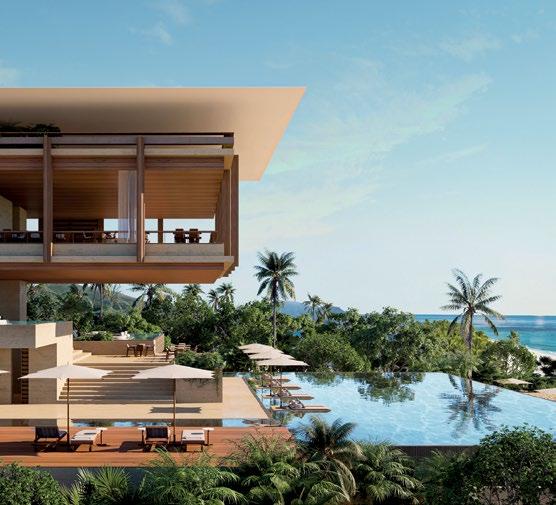
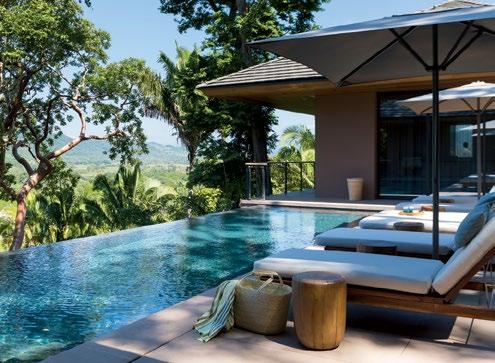
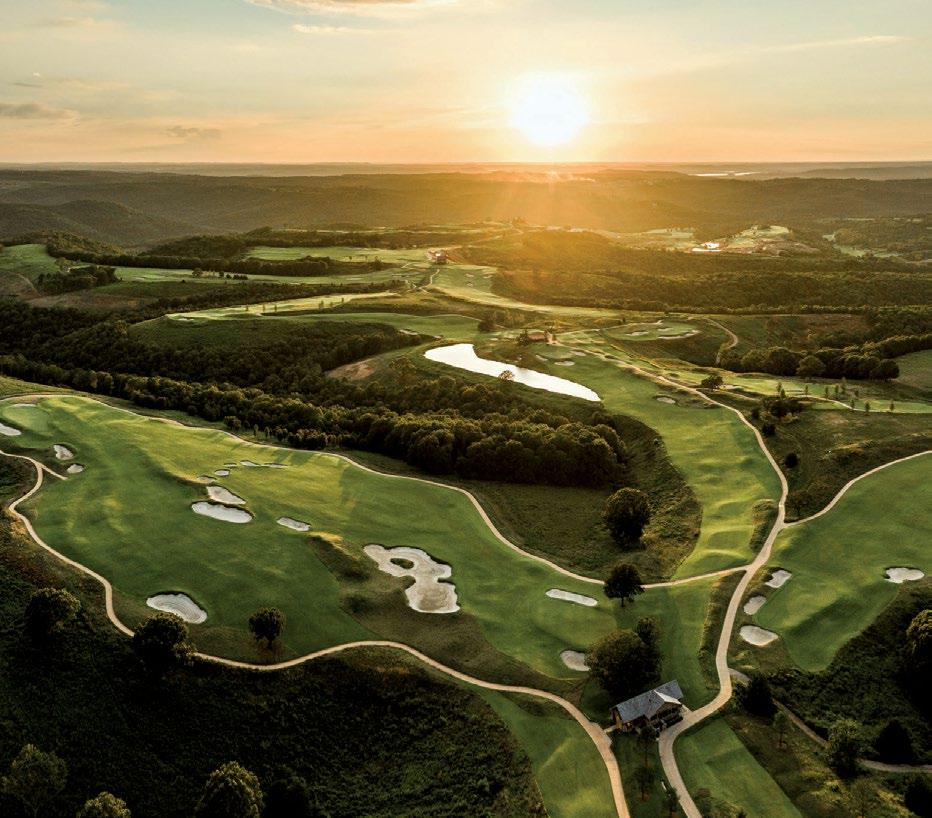
Johnny Morris, founder of Bass Pro Shops, won’t lie: fishing is his ultimate passion. But the 78-year-old is awfully fond of golf, too.
Morris created Big Cedar Lodge, an outdoorsman’s retreat in southern Missouri, in the late 1980s, and the resort has been expanding ever since. Top of the Rock, the property’s first golf course, opened for play 31 years ago. The 4,600-acre resort is now home to six courses—the most recent of which, Cliffhangers, was designed by Morris and his son, John Paul (JP), with guidance from Tim Jackson, David Kahn, and others.
Kingdom recently sat down with the avid angler to learn about his love for golf; the thrill he had designing Big Cedar’s dramatic new course; and the relationship he had with Arnold Palmer, who, Morris says, was “one of the finest, most humble, genuine, and engaging” men he ever knew.
You knew Arnold Palmer pretty well. What’s a favorite memory of the time you spent with him?
Arnie played in an exhibition match in my hometown of Springfield [Missouri] many years ago—I think I was in high school at the time. I watched him play, and he shot 61. It’s still the course record. Years later, when I went up to Latrobe [Pennsylvania] to visit him, I took a copy of that scorecard and
gave it to him as a gift. I told him about being there for that round, and he said, “Johnny, I was playing the best golf in my life. The very next day, I went out for another exhibition round and, from the back tees, I shot back-to-back 61s.”
Tell us about your own journey in golf. When did you take up the game?
I used to play golf some in high school, and I enjoyed it, but it started to interfere with fishing. And I chose fishing. So I’ve been more a fan of golf than a golfer myself. I’ve always enjoyed watching the competition and the scene and the stage where they play.
Over the years, you’ve been involved in the creation of several championship-caliber golf courses. What was that like? It has been a true joy in life to work with some of the most respected golf architects ever to create our Big Cedar courses. Bill Coore stands out as being the most hands-on. I enjoyed watching him walk the site from daybreak ’til dark. When he was building greens, he’d get on his hands and knees— literally. He would fret over everything. I am much the same way when it comes to fretting over details, because once you create a routing on a piece of land, it can be there for generations to come.
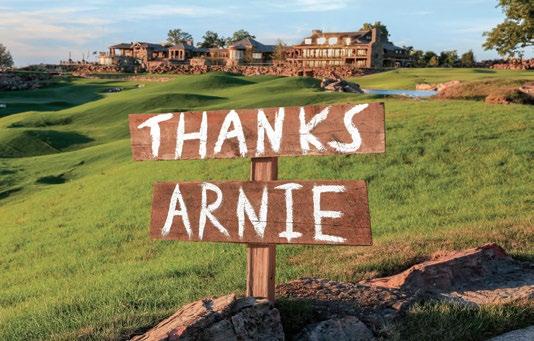

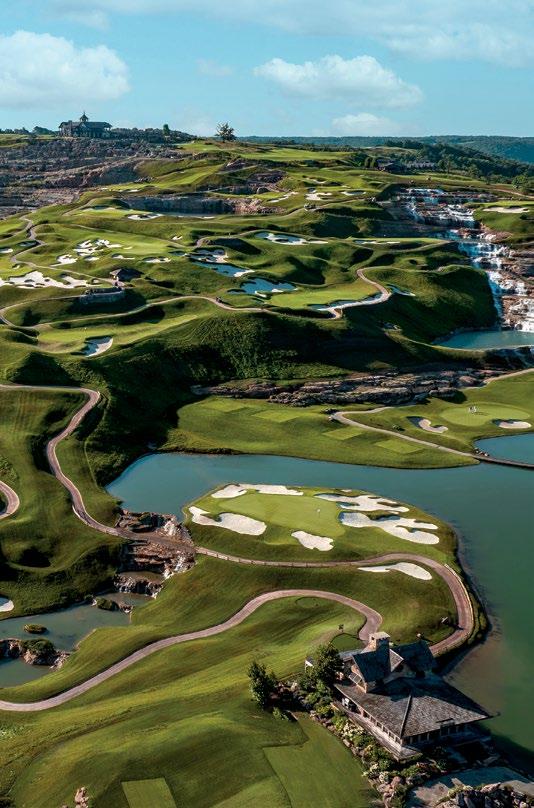
What have you added to the design process, and what did you learn along the way?
I know little, if anything, about the playability qualities that are required to create a good course. What I do enjoy is helping connect people to dramatic points in nature and awe-inspiring views. That’s what I love about golf course design and routing plans—you’re creating long-lasting connections to nature.
What was it like designing a course with your son?
Designing Cliffhangers with my son, JP, my best buddy in life, was a very happy time for both of us. Cliffhangers actually started off as a practice range, but after spending countless hours walking the land, JP and I made the decision to blow up the practice range and create 18 over-the-top par-3 golf holes.
What was your inspiration for Cliffhangers?
We were inspired by the beauty of our rugged Ozark Mountains and also the late artist Loyal H. Chapman, who painted legendary fairy-tale golf holes. We chose the name Cliffhangers because it’s very descriptive of the many holes perched on the edge of dramatic terrain.
In the last decade, you’ve added four new courses to Big Cedar’s lineup. What motivated you to invest in golf?
The golf experiences we are creating are all about the beautiful nature of the Ozarks. My biggest motivation is to get people connected to nature and the great outdoors. The country is becoming so urbanized, and I think people today are hungry to escape more than ever.
How often do you play these days?
I play probably three times a year, and I enjoy it. Being on a golf course with family or friends is like being in a fishing boat with your buddies. I get serious about fishing, and you can get serious about golf, but I think it’s about having fun. Like fishing, you could go catch the biggest fish in the world, and it’d be cool, but it’d be pretty empty unless you were sharing it with people you cared about. And golf is the same way.
Which activity is more popular at Big Cedar?
Golf has certainly brought a whole different dynamic to the resort, and we’re happy about it. But I’m happy to report that fishing is still number one.
Interviewed by shaun tolson











Arnold Palmer could have lived anywhere, but he chose to stay—and to raise his family—in his hometown of Latrobe, Pennsylvania. His father, Deacon, helped to build Latrobe Country Club, and it was here where Arnie shaped his love of golf and of people, where his character was built and where he launched a life and legacy that inspired an Army of fans around the world.







The Arnold & Winnie Palmer Foundation is mustering Arnie’s Army to preserve Latrobe’s role in inspiring dreams, building character and leading the game of golf forward. We owe it to Arnie’s legacy to share Latrobe with the world.





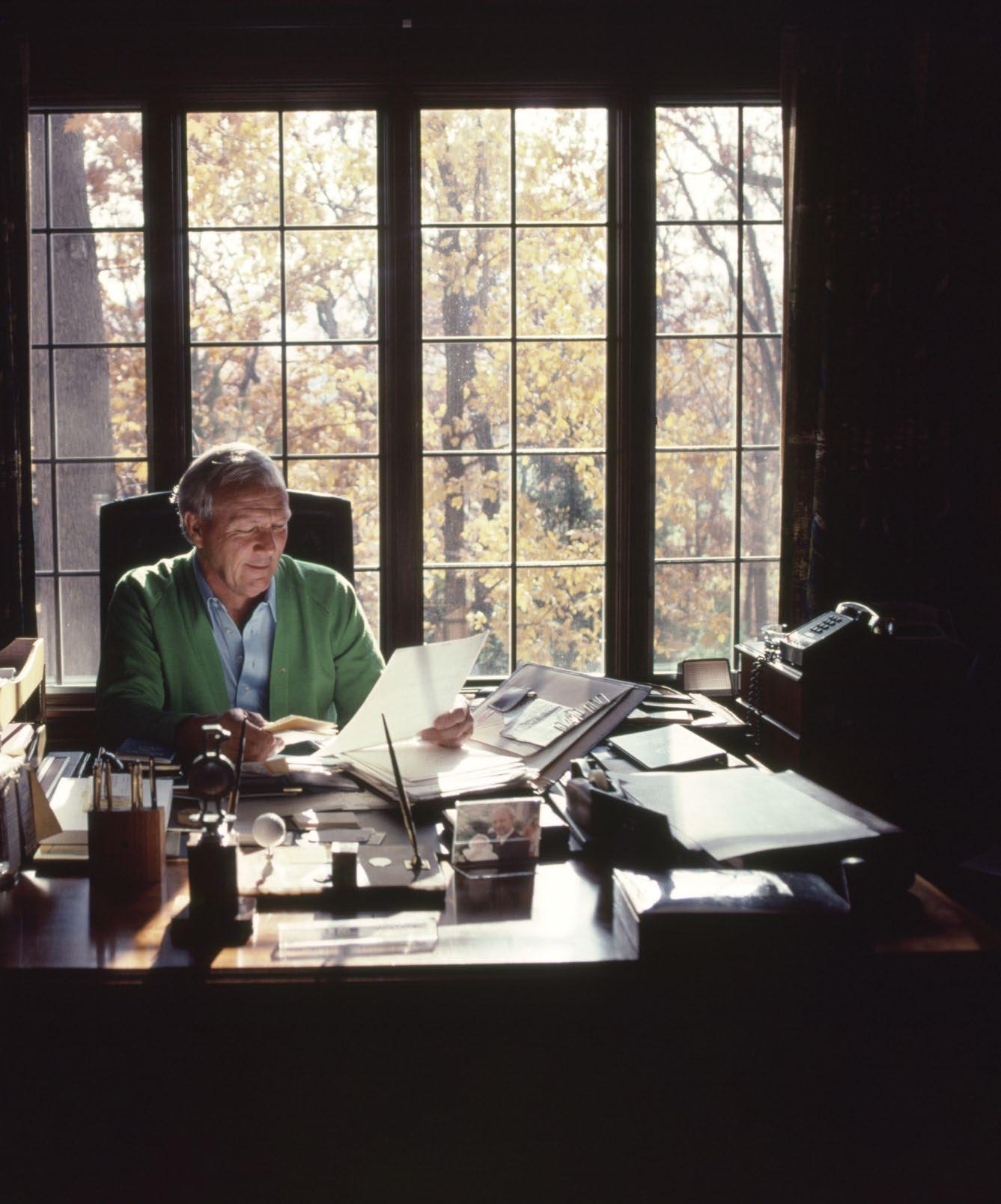
“Your hometown is not where you’re from; it’s who you are.”
— ARNOLD PALMER
Publisher’s picks and other Kingdom staff favorites for spring.
I don’t want to make anyone feel old, but as we prepare for the 2026 Masters, some readers might be shocked to realize that it has now been 25 years since Tiger Woods completed the “Tiger Slam”! Where did that quarter of a century go? I doubt many of you need reminding that the Tiger Slam was when Woods became the first golfer to win all four modern majors in a row, even if he couldn’t fit the remarkable achievement neatly into a single calendar year. The Tiger Slam started at the 2000 U.S. Open at Pebble Beach, moved on to the British Open at St Andrews, came back to the States for the PGA Championship at Valhalla, and then Woods had to bottle his irresistible form over the winter and wait until April 2001 to complete the job. Cherish the memories. It might never happen again.
—robin barwick
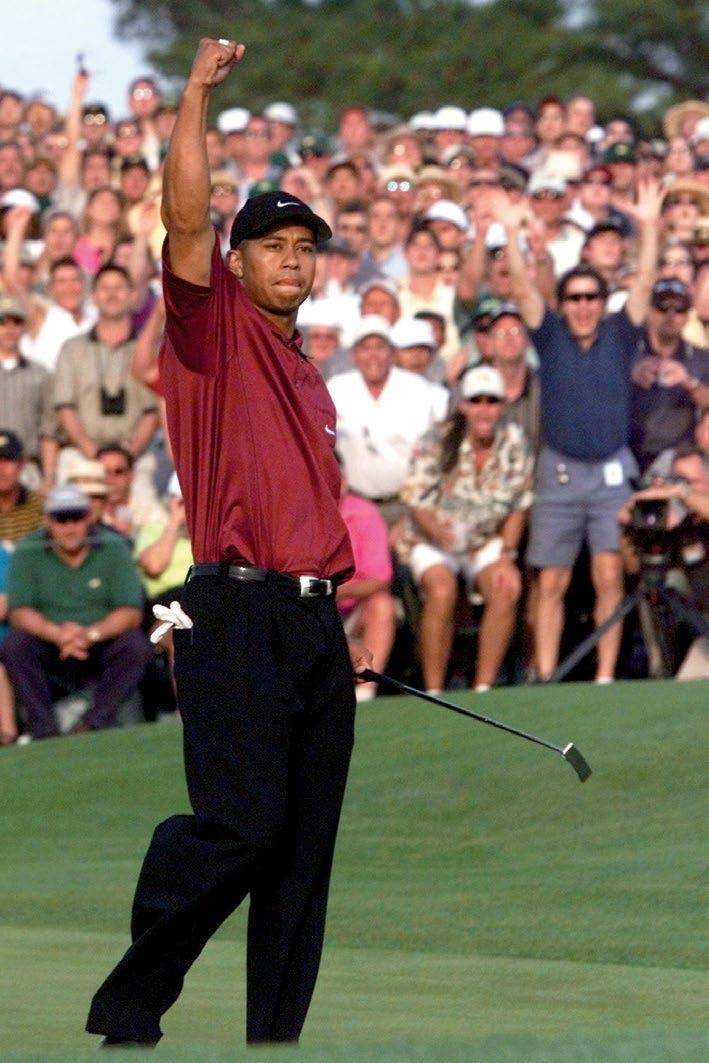
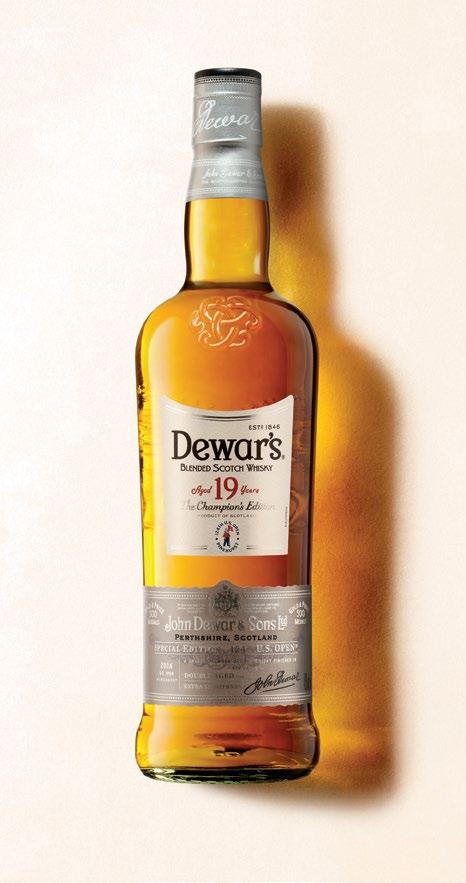
After 25 years of building footwear for the world’s biggest brands, Alma Mater has scrapped conventional golf-shoe construction entirely. The Alma Mater Beta is the result, designed for complete swing stability, elite cushioning, and refined style in a single platform. No compromises, and no question that I am walking out to the first tee in these shoes.
—jon edwards
Every year, I get excited when the U.S. Open rolls around, and not just because of the great golf I know we will witness! I also look forward to enjoying the golf with the perfect accompaniment: the new Dewar’s 19 Year Old Champions Edition. The way Dewar’s takes time each year to offer a different Edition is impressive—like the liquid in the bottle. This year is no exception. Using Scotland’s finest single malts that have been aged for at least 19 years, Dewar’s finished this blend in Cabernet Franc casks from Long Island’s Wölffer Estate (just 10 miles from this year’s U.S. Open venue, Shinnecock Hills). Now I just need to see if I can save any in the bottle until June!
matthew squire

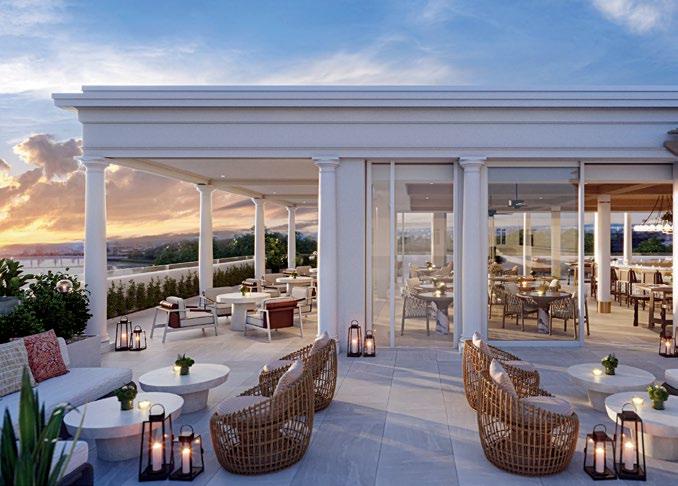
I don’t need much of an excuse to make a trip to Charleston, South Carolina, and this spring I have a great one: the opening of the Cooper hotel. Sibling property to the iconic Charleston Place, the 191-room Cooper will be the city’s first luxury waterfront hotel, set on the Cooper River just steps from the French Quarter and a short walk to the International African American Museum and South Carolina Aquarium. The hotel will have a private marina, where a 105-foot vintage yacht and other vessels will be available for guest excursions. I’m especially excited about the culinary program, which will be led by Nick Dugan of Sorelle—one of the best restaurants in town. And that’s saying something in Charleston.
—bruce wallin
Penfold’s Heritage Club Duffel blends the brand’s classic styling with modern practicality. The bag is made from British Millerain TekWax canvas, with premium leather accents, and I love its look, feel, and function.
—j.e.
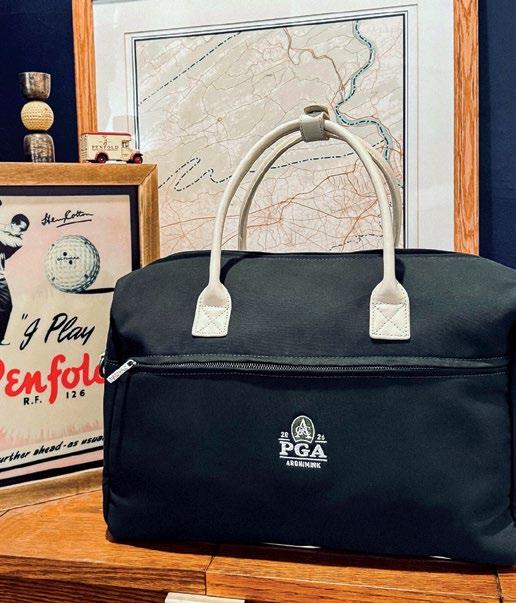
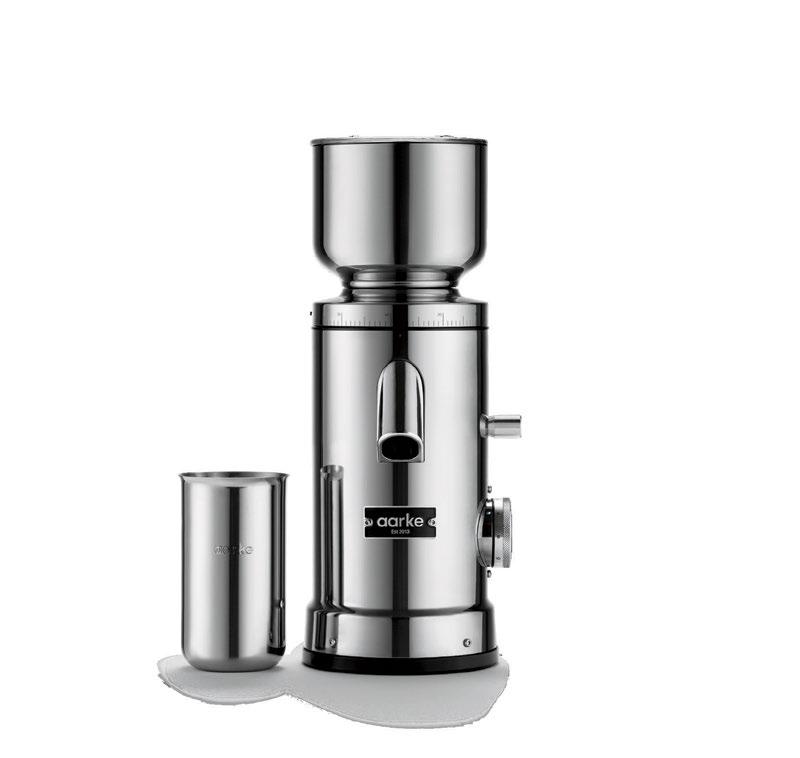
I have recently upped my coffee game with the Aarke Coffee Grinder, and now there’s no going back! Instead of chopping beans, its professional flat burrs crush them for a perfectly consistent grind. The result is a much smoother, more balanced flavor. Plus, it looks great.
matthew halnan
In anticipation of the 50th anniversary of the Judgment of Paris in May, I recently uncorked a bottle of Stag’s Leap Wine Cellars’ 2023 S.L.V. Cabernet Sauvignon—a wine born from a growing season with similar characteristics as the famed 1973 vintage that shocked the world in Paris. Layered with flavors of dark fruit and dusty cocoa powder, the wine reveals hints of graphite and subtle violet notes, all tempered by soft, supple tannins. It’s a stunner.
—shaun tolson
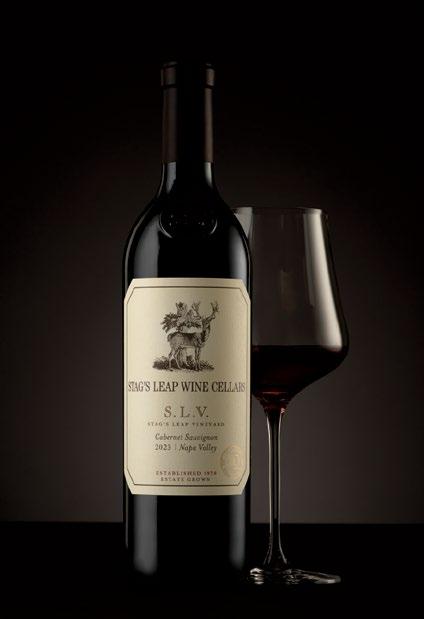
Kingdom has a longstanding, valued partnership with Rolex, as did Arnold Palmer, and so does Augusta National, where Rolex is a Tournament Partner. Embodying the continual commitment the brand has made to golf around the globe is the Rolex GMT-Master II, which is the ultimate cosmopolitan watch. This timepiece displays two time zones on the watch face, so no matter where they are in the world, the wearer can stay connected to tee times at the Masters!
—m.s.
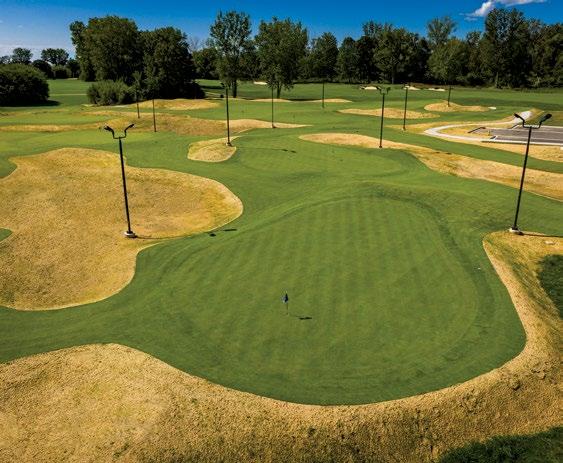
With this season’s majors firmly on my mind, I’m looking forward to an enticing doubleheader in April: Two weeks after the Masters, the first women’s major of 2026, the Chevron Championship (April 23–26), will capture global attention. The tournament will have a new home this year, arriving at a storied tour stop, Memorial Park Golf Course in Houston, Texas. Japan’s Mao Saigo (pictured) won her first LPGA Tour title at the Chevron last year, before jumping into the pond to celebrate. A new tradition for the winner will need to begin this year, as there is no pond to jump into at the Memorial Park municipal course, and so no need for the winner to don the customary winner’s dressing gown.
—r.b.
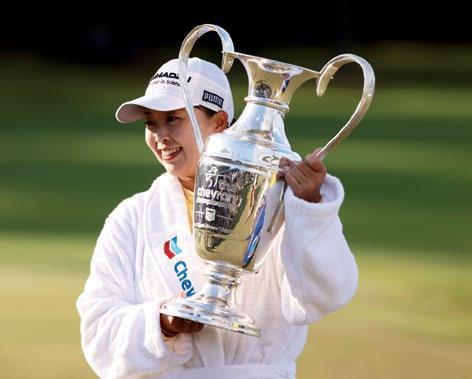
I am excited that the new pitch-and-putt course at Harbor Shores, the Wee Course, is open for its first full season in 2026. The nine-hole, floodlit course was designed by Scotsman Colin Montgomerie, and its total length ranges between 275 to 500 yards. This is a great addition to the golf offering at this famous Lake Michigan club, and children 12 and under can play the Wee Course for free when accompanied by an adult. I could not agree with Monty more when he said, “The Wee Course is a gathering place for every generation. Having seen how short courses bring people together around the world, especially in Scotland, I know this course will create the same sense of community here. With nine holes that can be played in under an hour, resort guests, families, and youth will find it a fun, affordable way to spend time outdoors, away from screens, while learning the values and etiquette that make golf so special.”
—j.e.
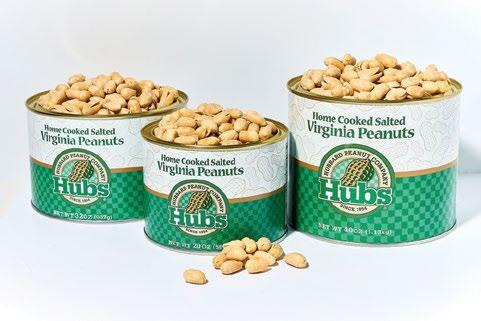
Watching the Masters just would not be the same without Hubs Virginia Peanuts on hand. These house-cooked, salted peanuts are essential.
—j.e.

I am delighted to have Cleveland’s CBZ Tour Satin wedges made from Z-Alloy in my bag as a new golf season gets underway. The new alloy is softer than previous versions to enhance feel around the greens, which is just what I need!
—j.e.

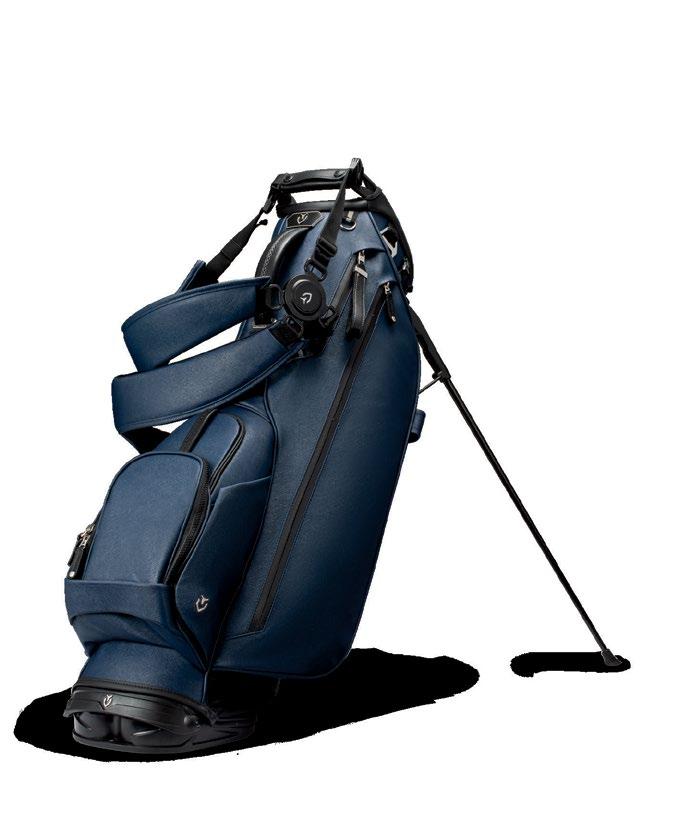
Vessel is walking tall with the introduction of the new Vessel Lux Stand. It is light to carry, cart-friendly, and luxurious with leather accents and premium trims. Functionality is also top-class, with eight external pockets.
—R.B.
There aren’t many cheat codes in golf, but Tite Eyewear performance sunglasses deliver one. The new company produces five frame models to suit a broad range of style preferences, as well as three distinctive lens tints designed for the course, all of which are treated with a dye package that enhances contrasts in the turf. After testing the core golf lenses during a recent round in Mexico, I’m a believer! I could see well-defined fairway contours from hundreds of yards away, and the subtle breaks and tricky grains of the greens were easily discernible.
—s.t.
July 1959 British Open
April 1961 Masters
July 1962 PGA Championship
June 1965 U.S. Open
5 years, 11 months
Player achieved the Slam in a relatively short time, as the first of his major wins came one apiece at each of the four events. He won nine major titles in all.
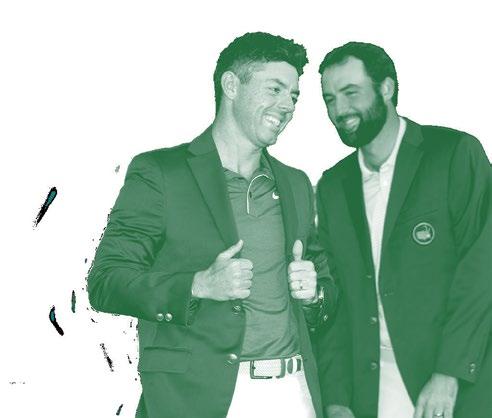

Completing the career Grand Slam is the ultimate achievement in tour golf. In the men’s game, only six players have achieved it. The last was Rory McIlroy, at the 2025 Masters, and the quest nearly drove him mad. Scottie Scheffler or Jordan Spieth could be next to complete the Grand Slam, but don’t hold your breath—it can take several years to reach the hallowed land, as these player timelines show.
June 2011 U.S. Open
August 2012 PGA Championship
July 2014 British Open
April 2025 Masters
13 years, 10 months
Rory became the snail of the career Grand Slammers, getting stuck on the Masters until last year, but he proved that good things come to those who wait.
July 1922 U.S. Open
August 1922 PGA Championship
June 1932 British Open
April 1935 Masters
12 years, 9 months
Sarazen might have completed the Grand Slam sooner had the Masters been established prior to 1934. He won in his debut at the tournament, in 1935.
August 1946 PGA Championship
June 1948 U.S. Open
April 1951 Masters
July 1953 British Open
6 years, 11 months
Hogan might also have achieved the career Grand Slam sooner had he not waited until 1953 to play the British Open. He traveled to Carnoustie that year, won the Claret Jug, and never entered the Open again.
June 1962 U.S. Open
April 1963 Masters
July 1963 PGA Championship
July 1966 British Open
4 years, 1 month
Nicklaus established a new major class all his own. He won 18 majors and by 1978 had completed the career Grand Slam three times.
April 1997 Masters
August 1999 PGA Championship
June 2000 U.S. Open
July 2000 British Open
3 years, 3 months
Woods achieved the Grand Slam the fastest and, like Nicklaus, completed it three times. He stands alone as the only golfer to have won all four modern majors consecutively: The “Tiger Slam” ran from the 2000 U.S. Open to the 2001 Masters.