


Hope everyone has been keeping sane and healthy during this unprecedented time in World history!
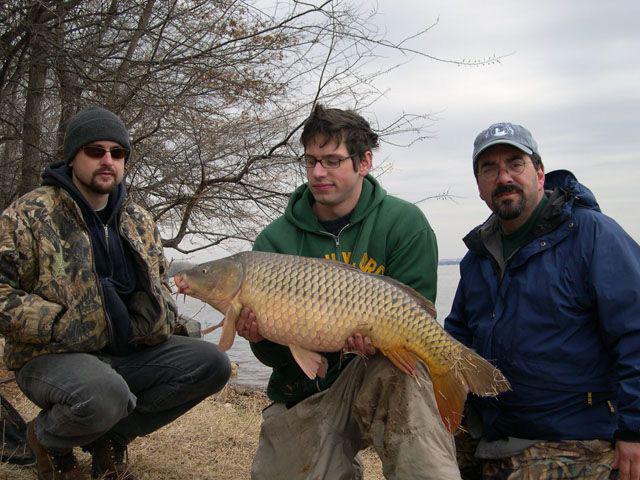
On a positive note, many states have kept fishing and outdoor activities available and I’ve definitely seen a lot more anglers on the bank this spring, and we’ve seen some outstanding catches, throughout the country.
Unfortunately, one of the side effects of COVID 19 has been the cancelations of many social events and fish-ins including the Spring Big 4 competition.
As we get back to normality, look for details on new dates and competitions on both our forum and Facebook pages.
Dean Brookes
We are currently working on the next printed edition of NACA, but in the meantime we thought that everyone would enjoy revisiting our last two printed NACA’s.
For many, it will be the first time they have been viewed as we only send out the magazine to current members. Hopefully, it will provide some reading for everyone still stick indoors.
Hope you all enjoy this edition and as always, if anyone would like to contribute; please send any communications or materials to naca@carpanglersgroup.com
Dean Brookes
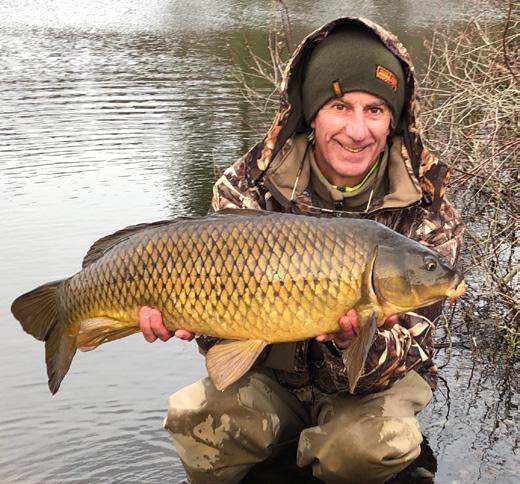
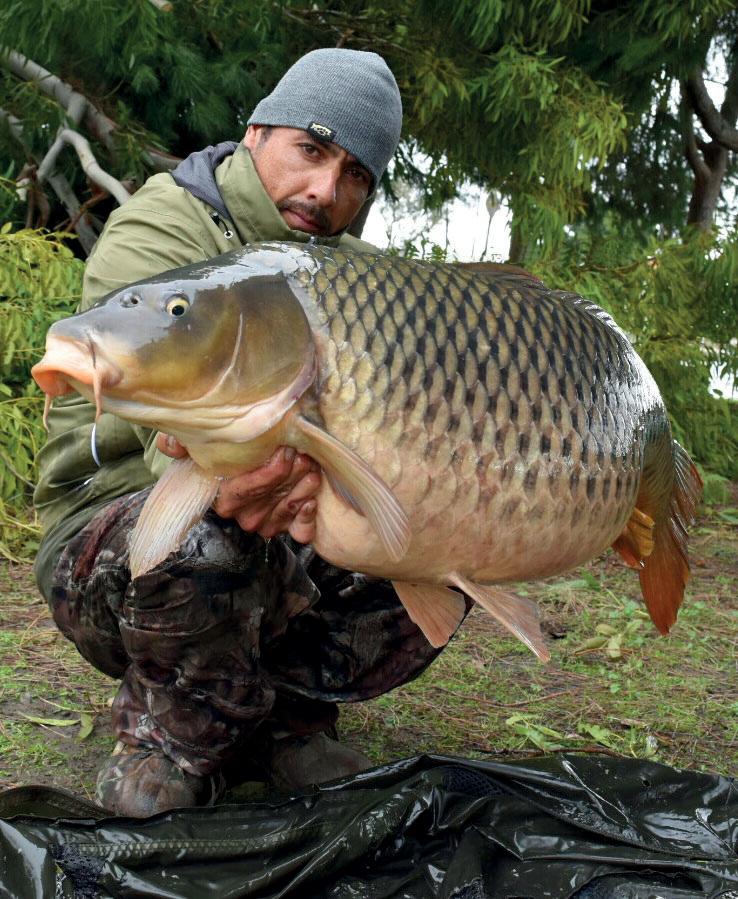
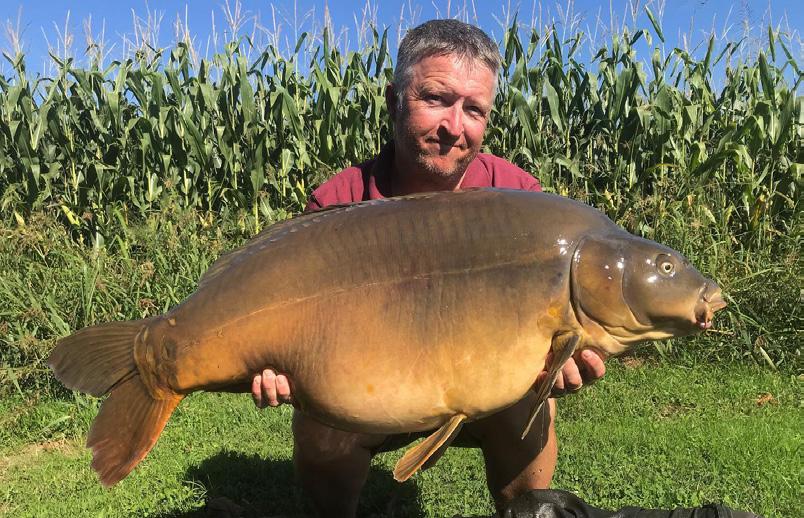
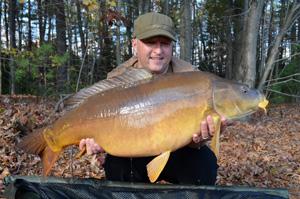
My only carp of 2020...

May 2020
I don’t think any of us could have foreseen the extraordinary events that have shaped our world in 2020.
As most states begin to open up and some semblance of normality returns we should all be conscious of the impact the COVID-19 pandemic has had on so many lives. For those who’s health has been impacted we send our best wishes for a full recovery and to those who lost loved ones we send our deepest sympathy and condolences. Our thoughts are also with the many who will have suffered as a result of economic difficulties.
In early March, it was not clear if fishing would even be allowed in many states with all but nonessential travel severely restricted. As a result we decided that there was no option but to cancel the Spring Big 4 competition. This was clearly a major disappointment but our sincere thanks go to everyone who committed to hold their entries for the Fall.
As the rest of 2020 unfolds we hope you still find plenty of opportunities to get out and fish and that all being well that we might see CAG fish-ins start up again and for the Fall Big 4 to take place. We will of course continue to monitor events and follow any local or State guidance & requirements to ensure everyone’s safety & well being.
We wish that you all the best.
Iain Sorrell CAG President

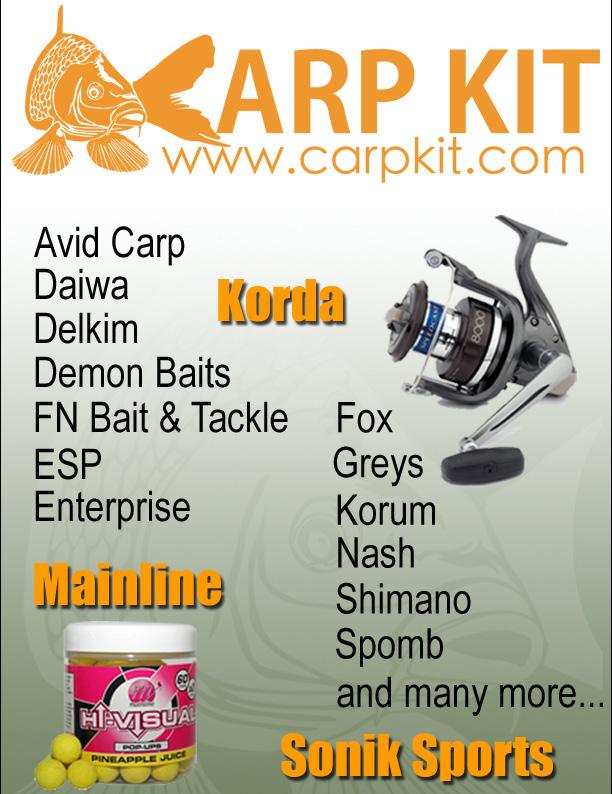
A 1/4 page advert starts from as little as $45 and includes a live link to your webpage or become a Business Supporter and get a Full Page advert in each NACA plus a web banner link on the CAG Website and Forums for only $300 / year.
For more information email us to naca@carpanglersgroup.com
By David Pickering
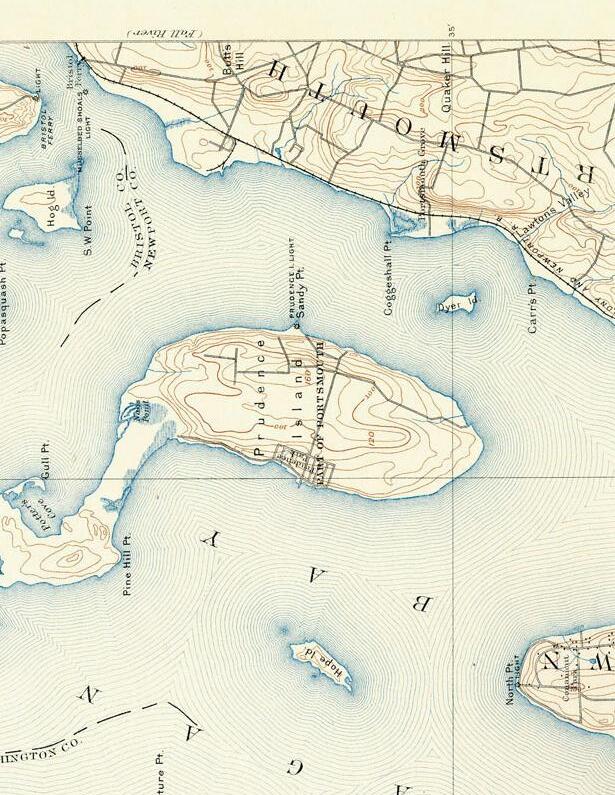
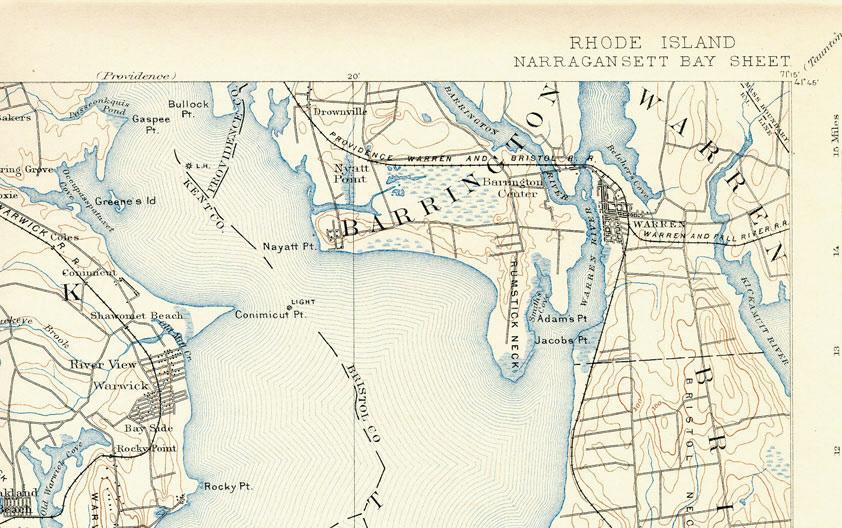
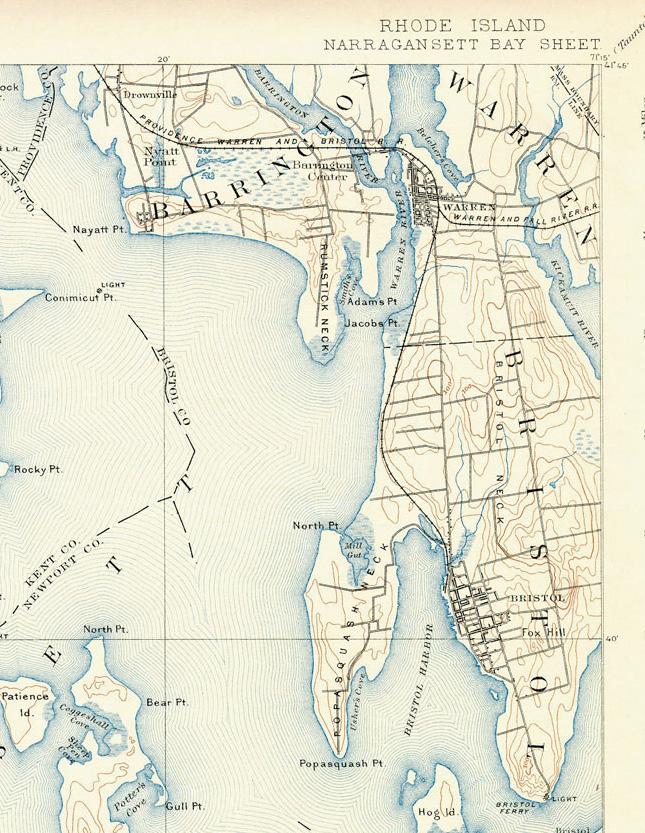
The Ten Mile River forms in southeastern Massachusetts and winds its way through the Towns of North Attleboro, Attleboro, Seekonk, Pawtucket (RI) and East Providence (RI) until it empties into Narragansett Bay. We know that carp exist at the south end of the river’s journey in Turner Reservoir. But little is known of the other nine miles of river northward. This northern part of the river is made up of small ponds held back by dams, weedy marshland and a river that looks more like a brook than a river.
Little is known about whether carp even exist in this stretch of river. There are rumors swirling that they are in the river. So, my main goal was to set out to explore the river and find out. My other general goals were to find some sort of access, catch at least one carp and hopefully find myself a new productive venue that was close to home.
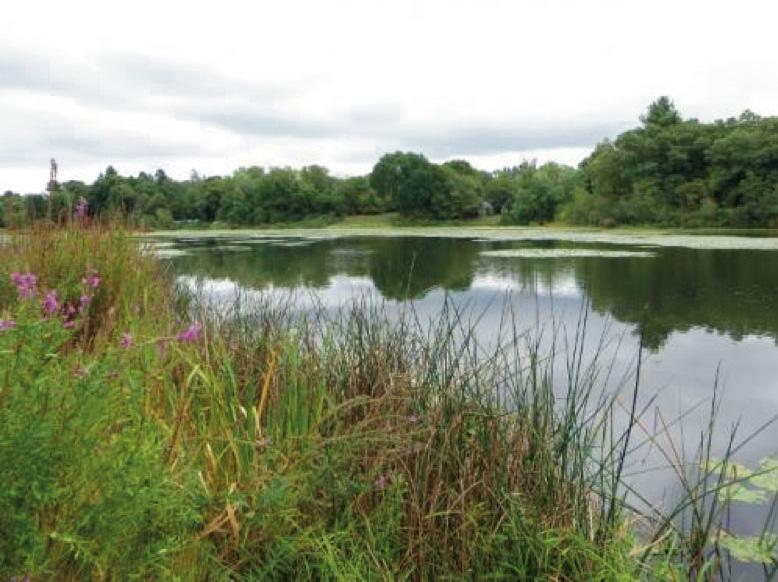
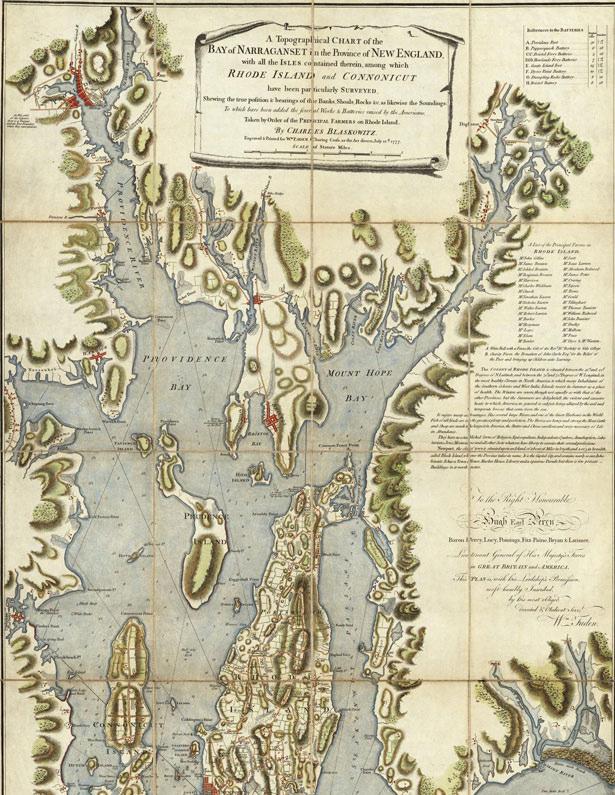
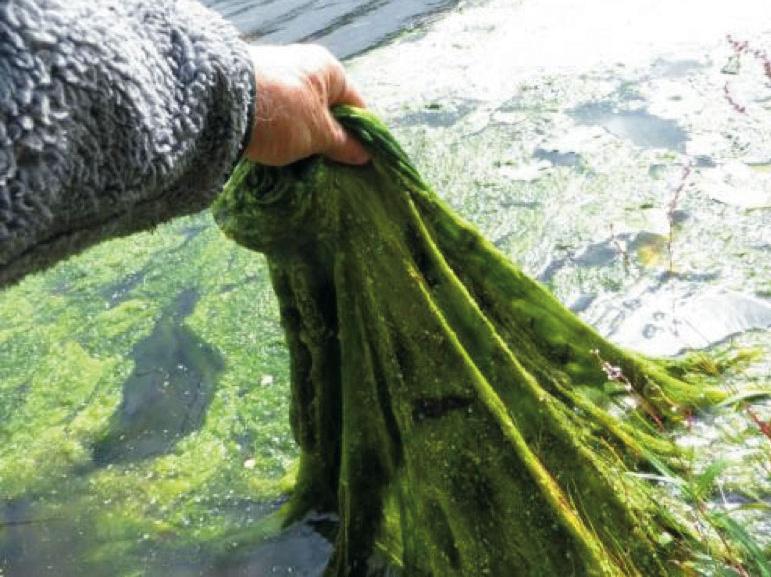
I followed it to the bank, but to be honest, I was disappointed at what I found. I found a real weedy and shallow pond.
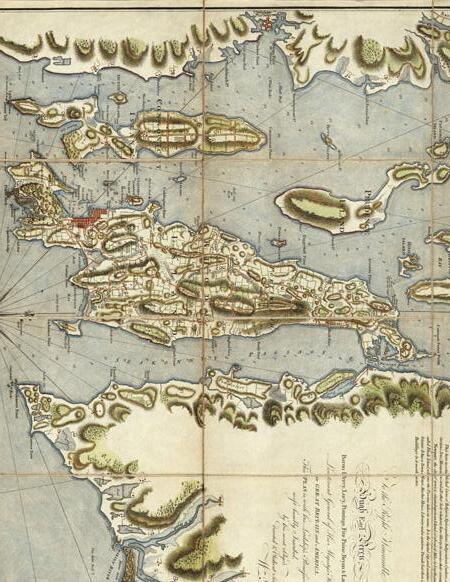
Now I know why few have ventured up into this river and why little is known about this river. Private land borders much of the river. There are numerous “No Trespassing” signs in places where access could be gained. In addition, I found few “good looking” spots, and there were no Town or State parks.
Using Mapquest and Google Earth as a guide I tried to focus on the many ponds that are formed in wide parts of the river, and I traveled along the streets bordering the river looking for access. I was just about ready to give up when I found a wooded path in one location that led to the river’s shore.
There were weed-like islands of thick lily pads all over, and the shoreline was composed of reeds and slimy weed. Swans were inhabiting parts of the pond. Still, there were big open spots in between all the weed.
As I was looking at the spot I suddenly heard a big splash to my right along one of the lily pad islands.
As I searched for the splash, a good size carp came flying out of the water like a missile. So, I discovered at least one carp. While standing there for a few minutes I spotted other jumps along the edges of the weed islands.
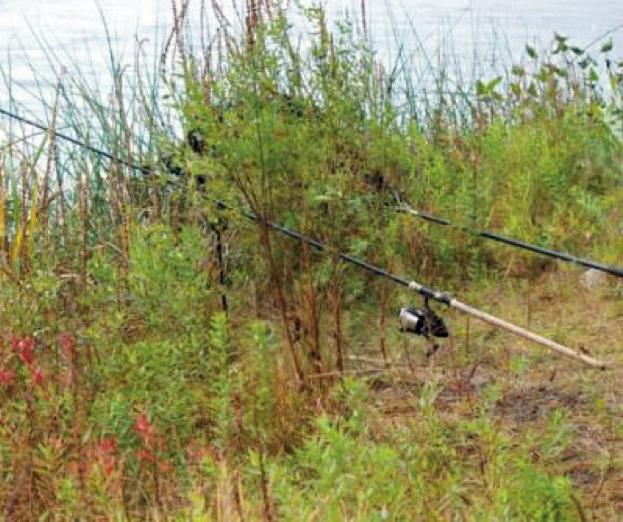
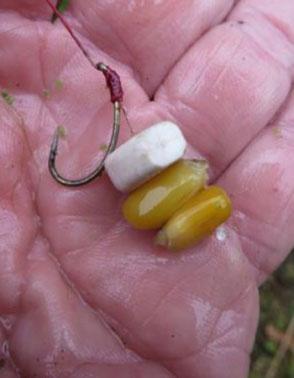
I decided to set up along here. Before casting, I baited a clear area about 30 feet from shore with maize. I was using a combo bait of maize and one ESP artificial white pop up corn. I packed a method ball around my sinker. I put two rods out and waited.
Nothing happened, although I continued to see jumps along the weed beds out far. Getting frustrated I decided to toss one of my offerings way out right along a weed island. Well, it took about ten minutes and the alarm was screaming. I grabbed the rod and noticed the fish was tearing right through one of these lily pad islands. I had a sinking feeling I would lose it and within seconds I was completely snagged up.
Yes, I did lose the fish. I got nothing more the rest of the time there and almost wrote the spot off.
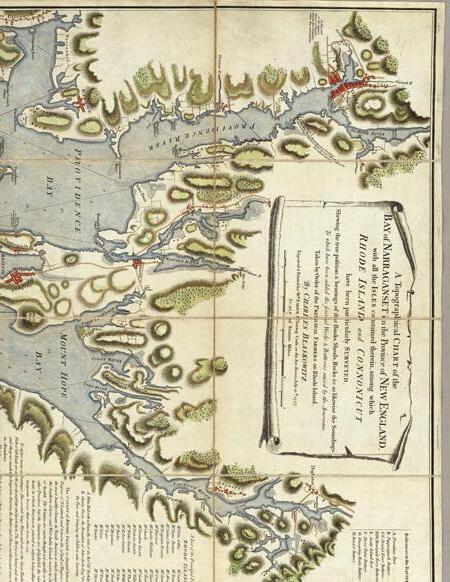
I was determined to catch a fish here and went back to the above spot for another session. I put both rods out into a clear spot about 30 feet out and sat on my chair and waited. Then I got a clue that would help me solve how to fish this spot.
Right in front of me, not more than 5 feet from shore
I saw a carp swim by. Then I saw a jump not more than a few feet from shore to my right near some reeds. Just as the fish were swimming close to the weed islands out far, they were also moving close to the shore where I was. So, I tossed a few handfuls of maize very close
to shore and put two rods out less than ten feet from the shore in the spots I baited.
Again, both outfits were baited with maize along with a kernel of white, ESP artificial corn on the hair rig. I also packed a method ball around my one ounce sinker. Within a half hour one alarm screams off and I am now fighting a good size fish. Soon, I have what I have been looking for in the net, a fat common of 16 lbs.
Even though this will be my only fish of the day, my goal of catching at least one carp here has been reached.
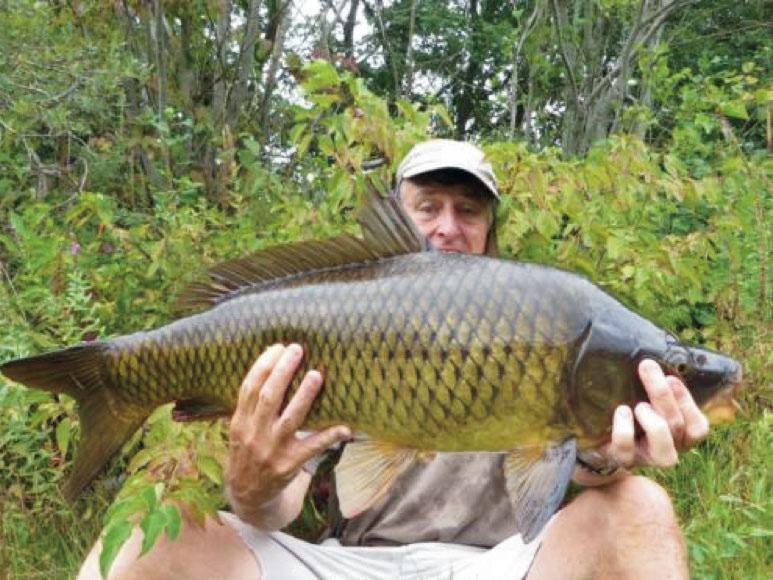
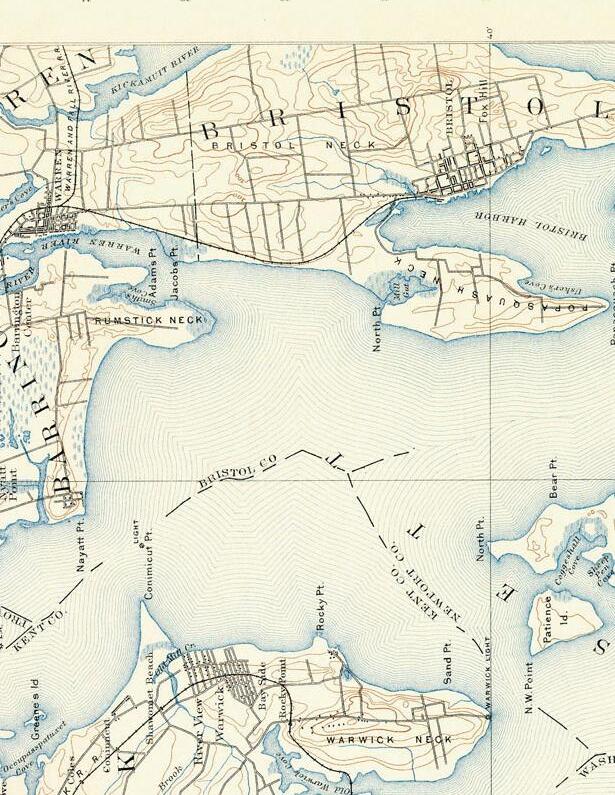
I went back to this location and did 3 more short sessions in the next week and fished the margins in close with my combo bait of maize and artificial corn. The area close to the reeds and close to shore proved to be the most productive location to fish. In these three sessions I would land a total of five commons that would range in size from 5-12 lbs.
These were all fat and very healthy fish that put up great fights. While I fished in close, I continued to see far bigger fish jumping out by the weed islands way out and I could only hope that some of these “biggies” would come close enough to shore to catch. Still, I was more than pleased with my success so far.
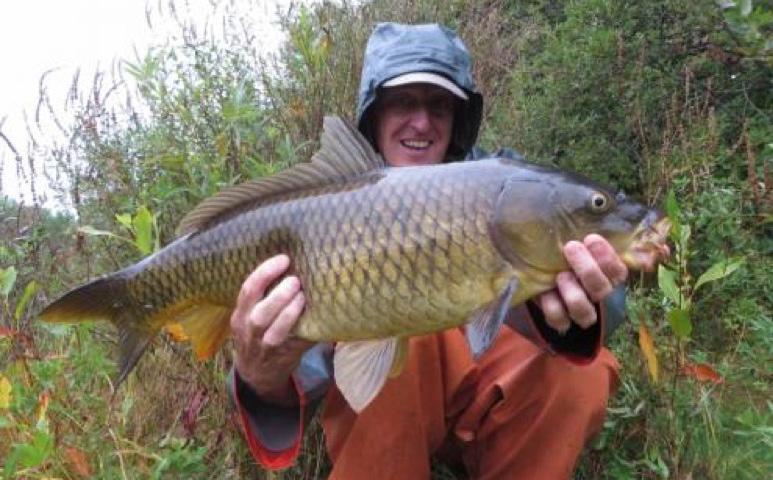
Session 6 proved to be my best outing. This was an overcast and cool day, and the fish were active as lots of fish were jumping and moving about. Upon arriving at my spot, I baited up the area in close and proceeded to put out two rods. Unlike the other days that took a long time to get a run, my first runner came fast. I picked up the rod with the screaming alarm and I was onto a real fighter that pulled a lot of drag, threw a lot of water and just refused to come to the net. I had my camera around my neck and clicked a number of shots of the fight. I finally landed the fish and it proved to be a fat 14 lb. common that got the prize as the best fighter thus far
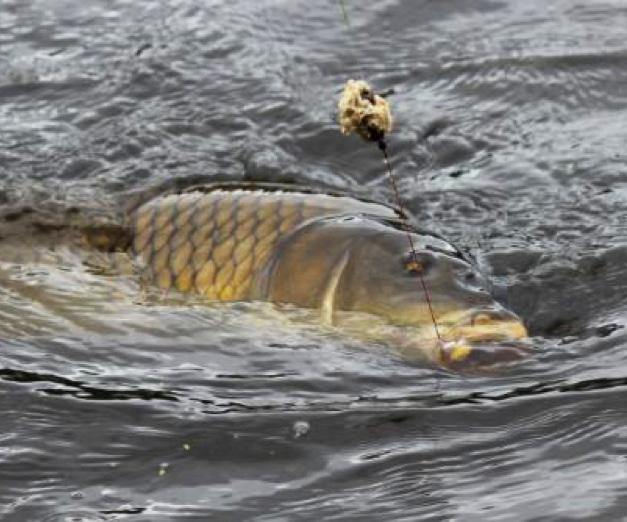
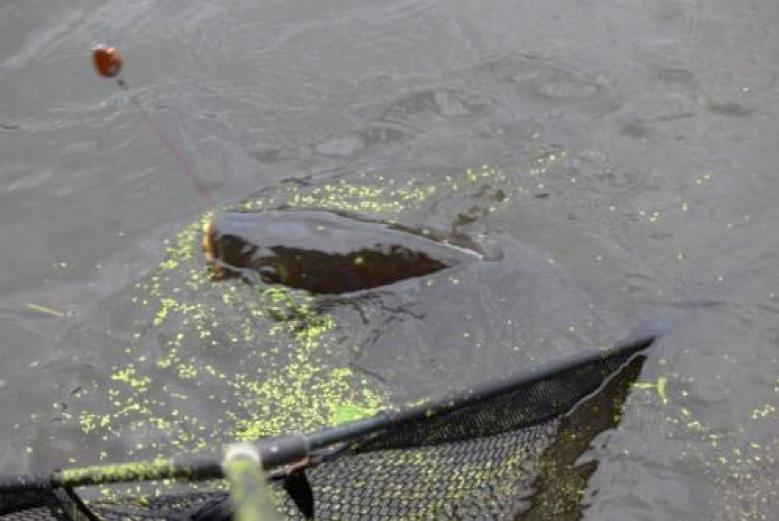
I no sooner released that fish and another alarm screamed off. This fish pulled line steadily but stayed deep, and it didn’t move fast, the characteristics of a big fish.
I finally got this one ashore and it did prove to be my biggest one in the Ten Mile River Discovery as it tipped the scales just below 20 lbs. I would go on to land three more commons of 4, 13 and 17 lbs. along with two large white suckers. I finally made the discovery I was looking for.
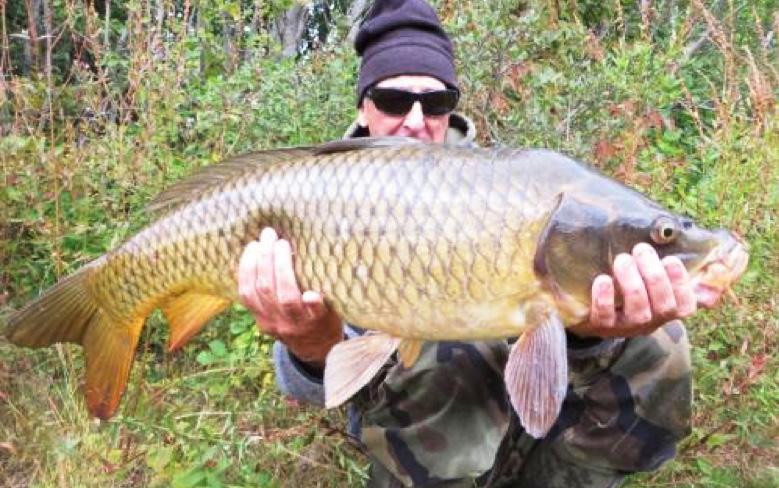
My goals of finding fishable water and access in the northern reaches of the Ten Mile River were achieved. While I would have been happy with one carp, I did land 10 of them in a total of 6 short sessions.
I discovered something here that is quite worthwhile. In the next month or two I plan to explore more of the river to further unlock its potential. My Discovery Adventure for 2016 has produced a new and exciting venue for me to fish that is close to home. I would have to rate this year’s discovery a big success.
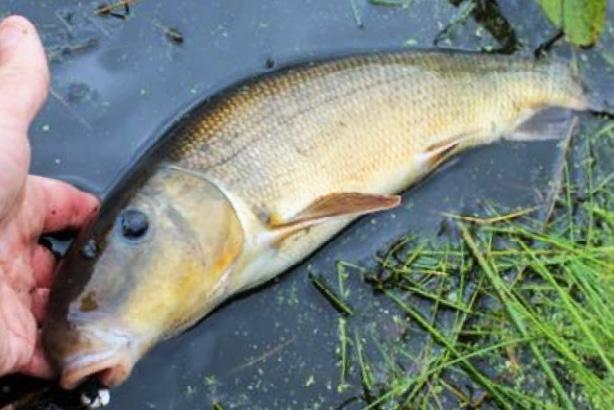
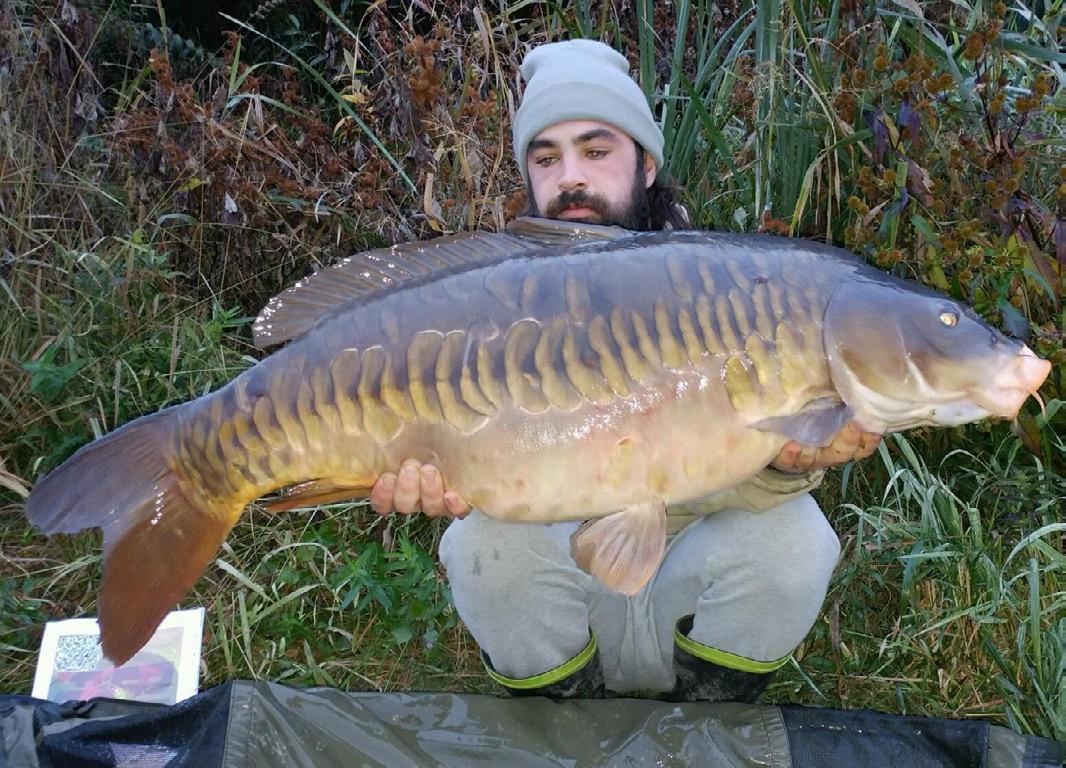
This year’s Fall Big 4 was a fun and exciting contest for those that took part with several great captures. Jacob Ayotte ran away with all of the major prize categories with a very impressive total of fish. The Fall Big 4 ran for 6 weeks from October 1st through November 15th and the categories were:
* Big 4 Champion - 1st Place to 10th place
* Big Common
* Big Mirror
Here were the final placings, with pictures and prizes listed:
134lb 14oz
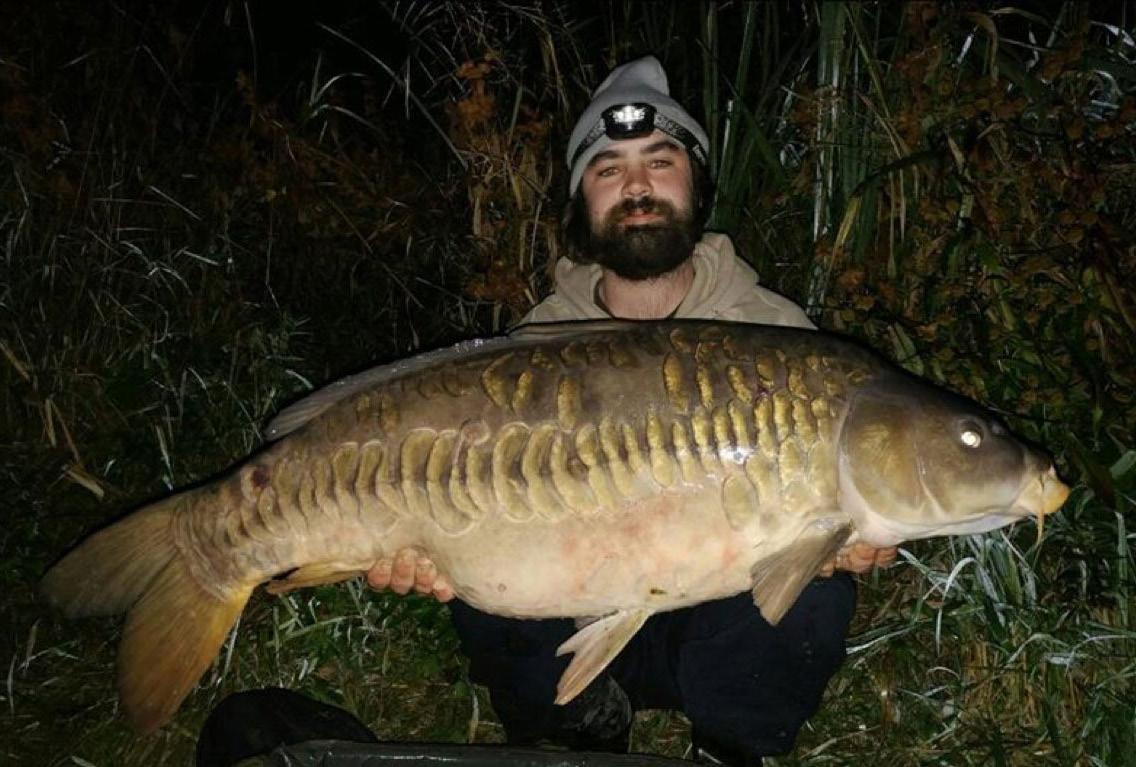

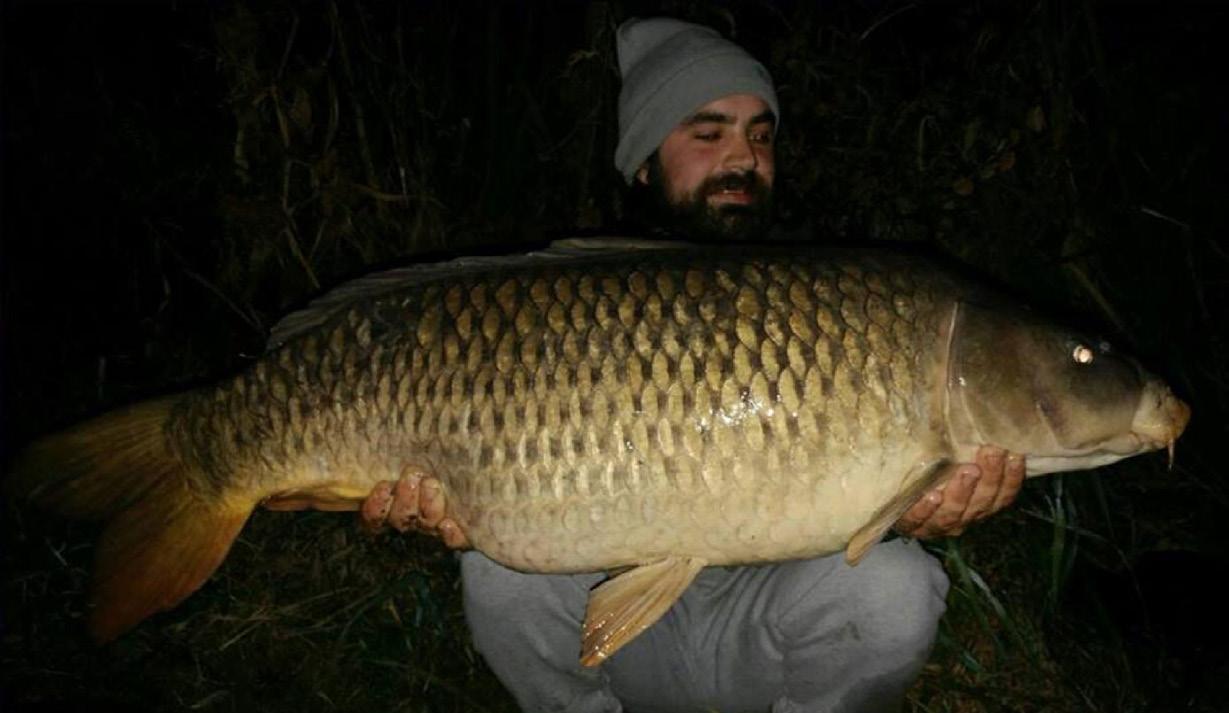
Jacob Ayotte
37lb 11oz
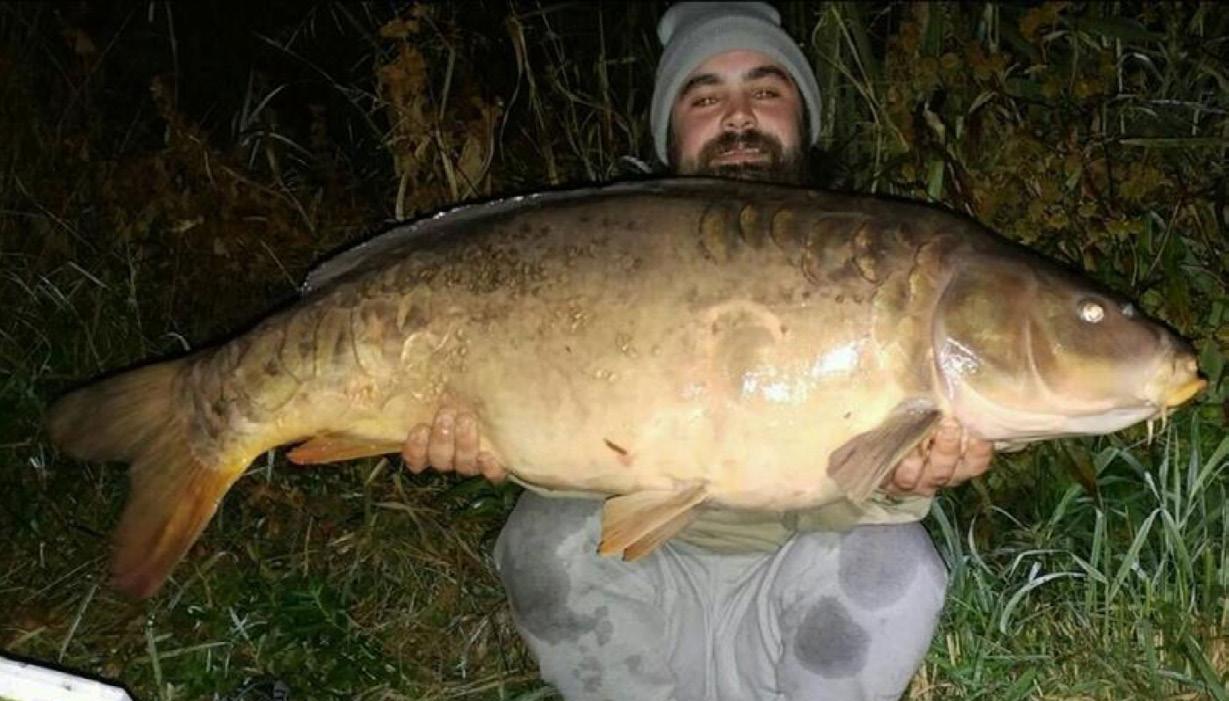

Big Common & Big Mirror Combined JacobAyotte 69lb12oz
Over $500 in prizes were distributed between all winners. As every time, Carp Anglers Group and the Big Four staff thank everyone who took part.
Roll on 2017 and the next Big 4 !
By Jacob Ayotte
In early September I made the decision to plan a three day, out of state fishing session with my girlfriend Keri. I knew we would be fishing the Connecticut River, however the location was yet to be determined. Once we were able to settle on a location with the assistance of a fellow angler, I spent the weeks leading up to the trip preparing. Tying hair rigs, stocking up on bait, and topping off on other carp fishing essentials. The evening before we embarked on our journey my girlfriend and I packed my Jeep Cherokee to the brim with gear, being sure to leave enough room for our German shepherd dog Hunter who would be joining us. We left early Tuesday morning traveling several hours to our destination on the Connecticut River.
When we arrived at the swim there was a blanket of dense fog present in the river valley. I exited my vehicle and took in the view of my temporary riverside home for the next few days. I wasted no time prepping the swim while my girlfriend began unpacking and setting up camp. I tossed out spoonful after spoonful of bait. Once I felt that the swim had been thoroughly baited, it was time to get our rods out. On one rod I fished a single 24mm boilie on an inline hair rig. The bait of choice for my second rod was a combination of artificial sweet corn and flavored maize, a trusted bait that has proven it ability to catch fish time and time again. It was a near eight in the morning by the time we had gotten our lines in the water. The alarms remained silent throughout the daylight hours, not a single beep.
As the sun was making its’ descent, we saw an uptick in fish activity. Soon there were carp rolling everywhere, I knew at any moment we would be on to some fish.
Just before eight o’clock I had a slow but steady take on the corn set up. When I lifted into the rod I could feel the carp hugging bottom, a characteristic of a big fish. The fight was slow and steady like the take and lasted roughly five minutes.
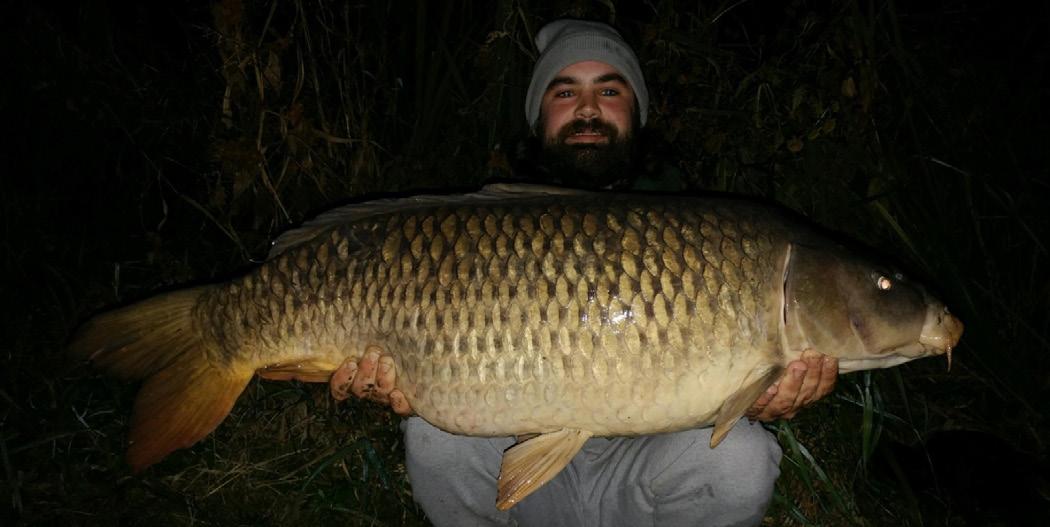
The first fish of the trip was in the net and it was a large common. Walking over to the unhooking mat Keri seemed quite confident that I had hooked into the thirty I was looking for, but I wasn’t so sure. I ran to grab my trusty Ruben Heaton scale and weigh sling so we could confirm. We loaded the fish into the sling and I hoisted it up on the scale. Thirty one pounds seven ounces was the weight displayed on the glowing screen. I had done it. I had finally captured a carp weighing thirty-plus pounds, an ultimate goal for my 2016 season. We got ready to take some pictures of the carp and it was then that the size of this fish really set in. I lifted the block shape fish in the air, snapped a couple photos and released the large common back into the depths of the Connecticut River.
Once the excitement had settled down from the capture of the first fish, I returned to the area where we had set up camp to rebait my rod. I strung the tiny pieces of maize and artificial corn onto the hair as I had done many times before.
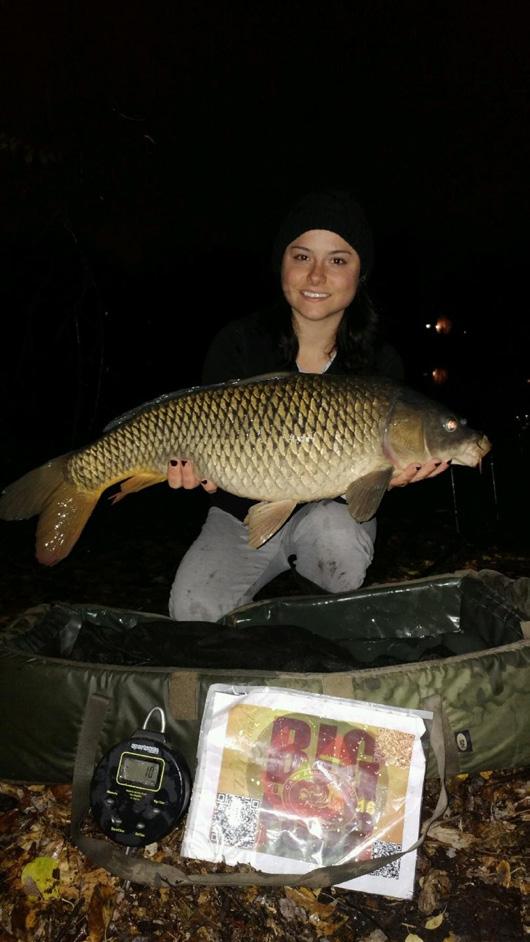
I paired the bait with a pellet based PVA mix that had served me well in waters back home, casted out my line and hoped that it would soon run again. Shortly after we had banked the first fish of the session, Keri’s rod went for a run. It was a mid-teen, near scaleless mirror.
We snapped a few photos and set the fish off back into the dark night waters.
Following the last capture we decided we would resort to the bivvy to get some rest. A little over a half hour had passed when we were awoken by the scream of the alarms. Disoriented, we clumsily rushed out of the bivvy and ran towards the bank.
I was on again. I set into the rod and immediately I knew that I had hooked into a very large fish. The carp shot off like a missile peeling drag as it took off down river. The power of the heavy fish running had my 12 foot rod bent over like a candy cane.
As the fish started to slow its’ run I began to reel. I slowly turned the handle taking in as much line as the fish would allow. This went on for about five minutes or so until the fish finally surfaced not far from the bank.
Out of nowhere, the fish shot off down river again depleting any progress I had made to get this carp to the mat. Again I waited for the run to slow before reeling the fish back to the bank only for it to take off a third time. It was a constant fight of back and forth between me and the beast at the end of my line.
The third run was much shorter than the others and I could tell the fish was growing tired. Again, the run slowed and I began to reel.
This time around the fish came in slowly along the bottom eventually making its way closer to the bank. Finally, we were presented with an opportunity to net the fish. Keri made one seamless scoop netting the fish.
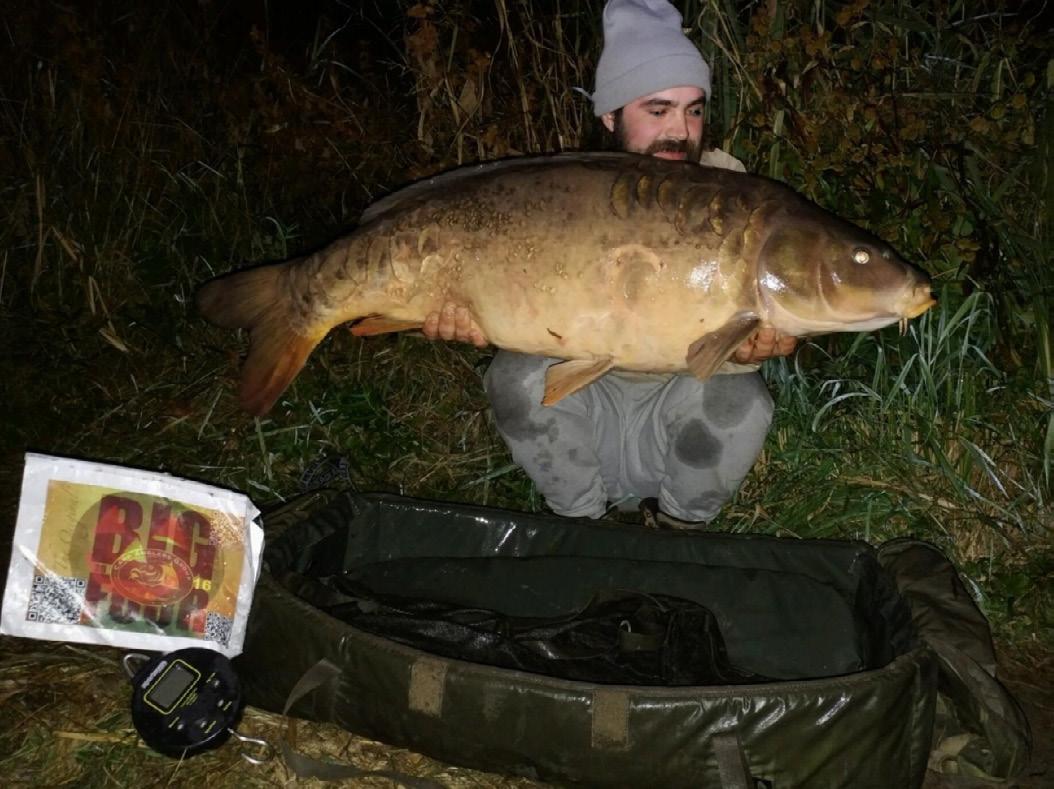
This time my capture was a mirror with a pearlized scale pattern, and was visibly much larger than my previous fish. We got the fish over to the mat to get a better look at the beast that I had spent near fifteen minutes battling with.
This behemoth of a carp was absolutely massive in every aspect. I took a few seconds to take in the monstrosity of this capture then it was time to weigh the fish.
The number staring back at me was thirtyseven pounds eleven ounces. This fish was several pounds heavier than my previous catch!
After a couple of pictures I took one last look at my new personal best carp and released the massive fish back into the river. I recasted then we returned to the bivvy for remainder for the night for the much needed rest. Who knew what the following day would bring.
The following morning as the sun was rising we were yet again awoken by the sound of the alarms. I quickly slipped into my shoes and made my way to the bank with my net girl not too far behind me. I set into the rod and the fish took off down river. I could tell I was onto another large fish.
Similar to my previous captures, this fish also held to the bottom. It wasn’t long before the fish made its’ way towards the bank, and eventually into the net. Once we got the fish to the mat I got my first glimpse at the latest capture. The fish was by far one of the most beautiful carp I have ever seen, a real gem of a fish.
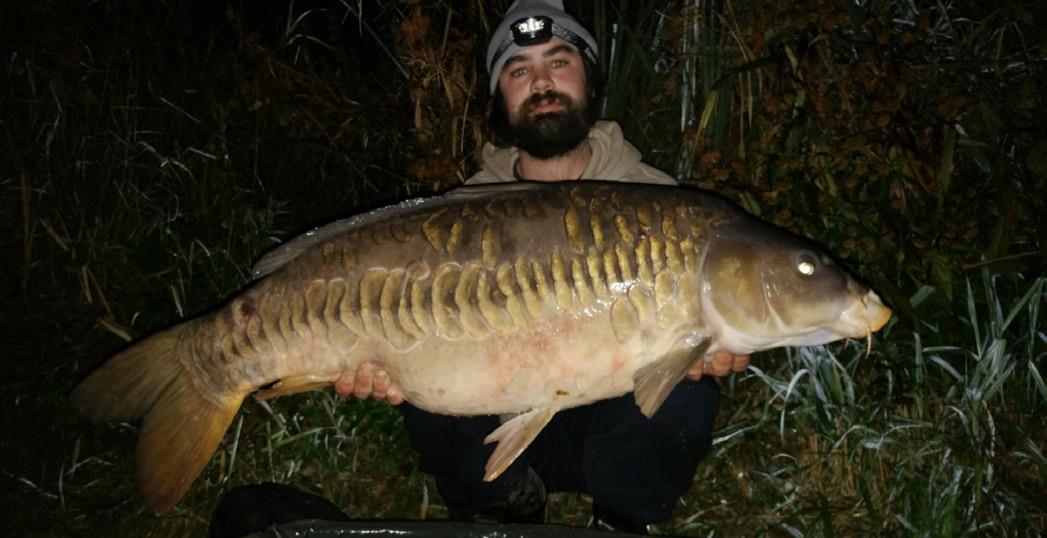
On my unhooking mat laid a pristine linear mirror carp weighing thirty-six pounds three ounces. This fish undoubtedly was the highlight of the entire trip. Following a quick photo session the fish was released. I would go on to capture two more fish topping out near thirty pounds apiece before the trip was abruptly interrupted by a cold front.
The fishing shut down entirely and we made the decision to pack up and head home. This session ended up being everything I planned for and then some.
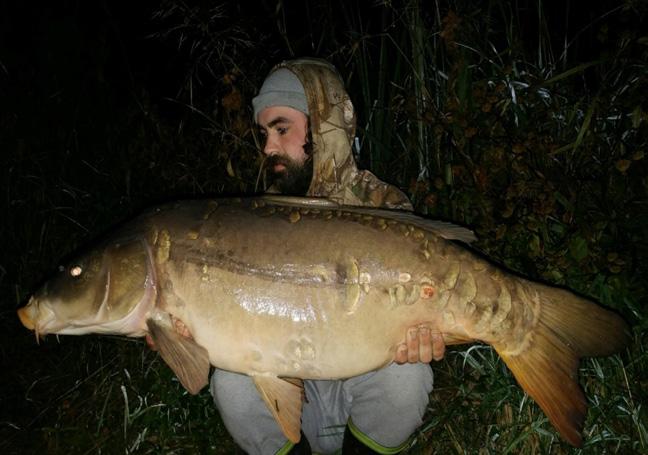
A banner way to end my 2016 season, and enough fuel to get me fired up for what’s to come in 2017.
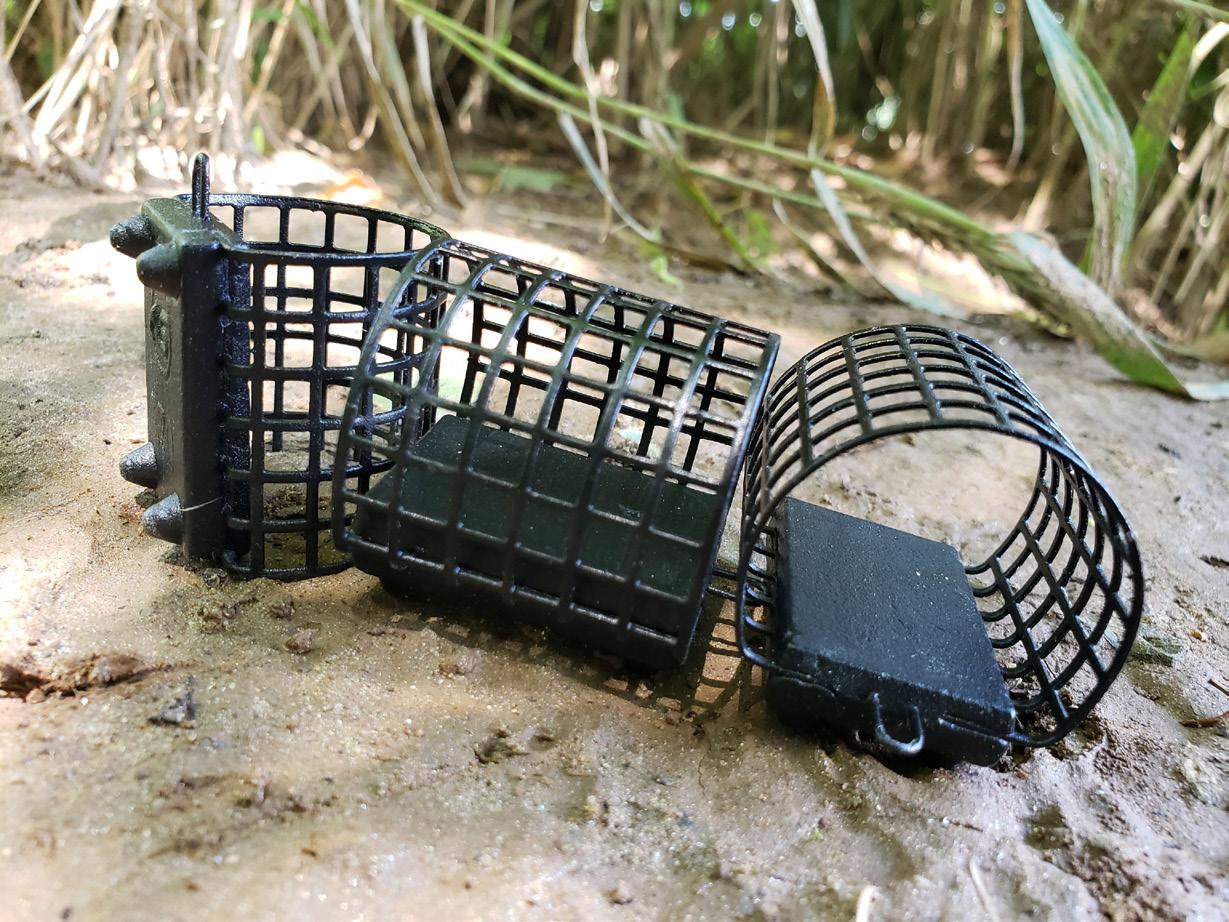
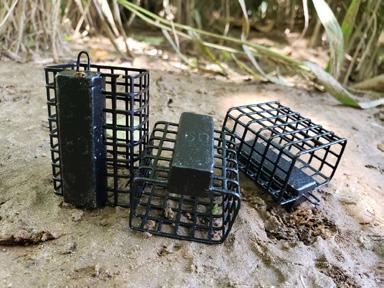
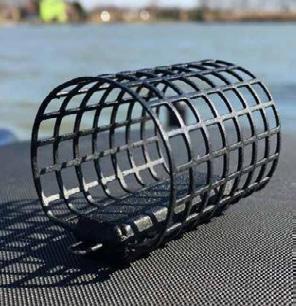
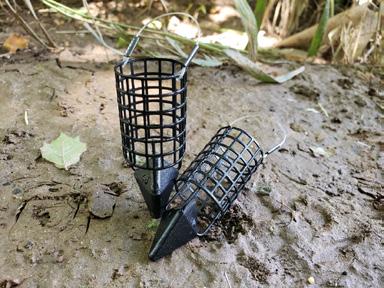
Blaze Feeders are made in Europe. They are widely used there, but now also available in US!
Blaze Feeder Round Mesh
Blaze Distance Feeder
Blaze Feeder Square
Blaze Feeder Tunnel River
Blaze Bullet Feeder ....and more!!
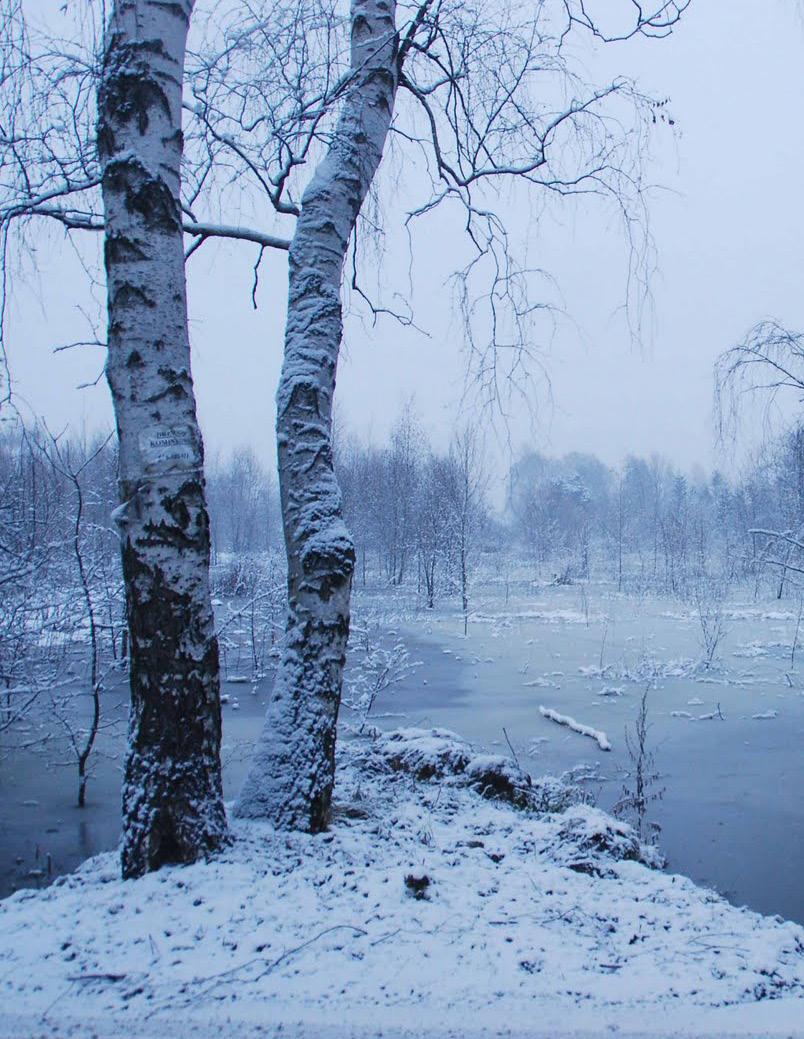
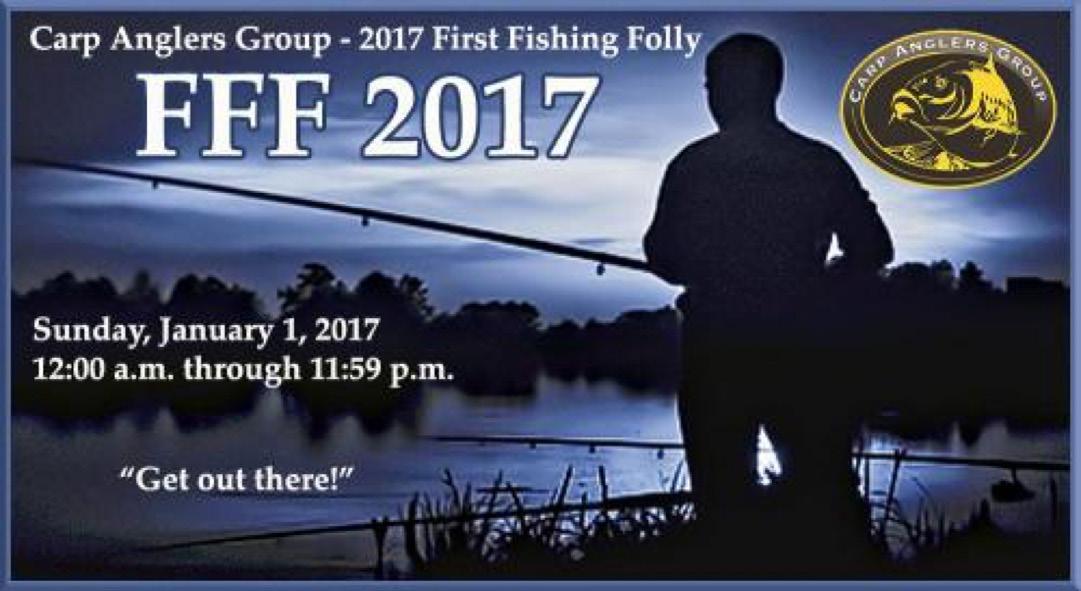
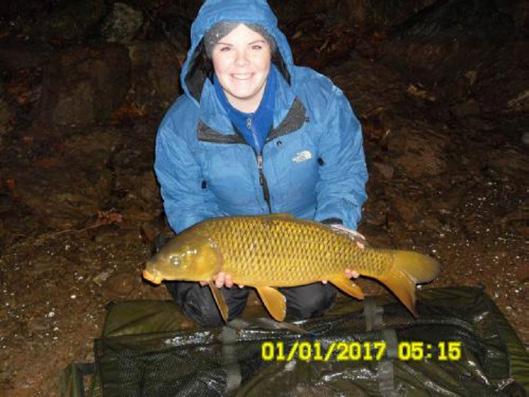
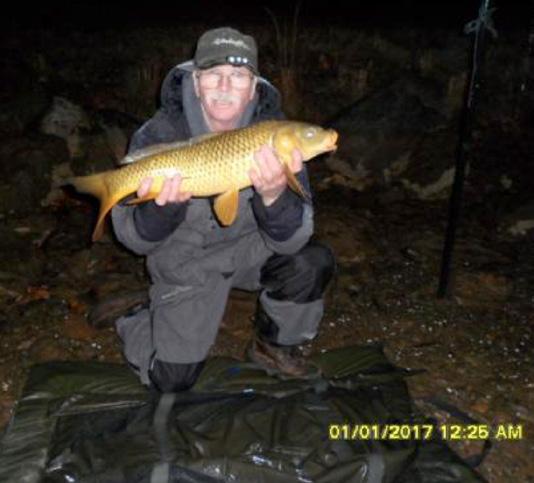
CAG’s First Fishing Folly was back for a 14th year! FFF is an enjoyable, challenging, world-wide, CAG event held on Sunday, January 1, 2017, during which registered anglers can fish anytime from 12:00 midnight to 11:59 p.m. They enter their photographed catches in any number of FFF contest categories (first carp of the year, high total weight, big fish, small fish, big mirror, etc.). Participation takes some strong will-power, a willingness to face the elements, a touch of goofiness, and maybe just a tad of craziness to go fishing for carp at all hours of the day and night on January 1, 2017!
1. No need for a fishing partner (although it is encouraged). It’s tough enough convincing our significant others to allow us to fish on New Year’s Day, and it can be even tougher finding a fishing partner to serve as a witness, especially for the wee hours of January 1. Even though partnerships and group angling are encouraged, individual anglers will be allowed to participate in FFF 2017 and submit catches and related information without a witness. The honor system will be in place relative to your submitting accurate weights and times.
Keep in mind, though, that you are still required to submit a picture of you holding your catch (your face must be showing) for every fish/entry you submit. You better be good at taking “selfies” or at using a camera with a timer. Just be safe out there if you are alone!
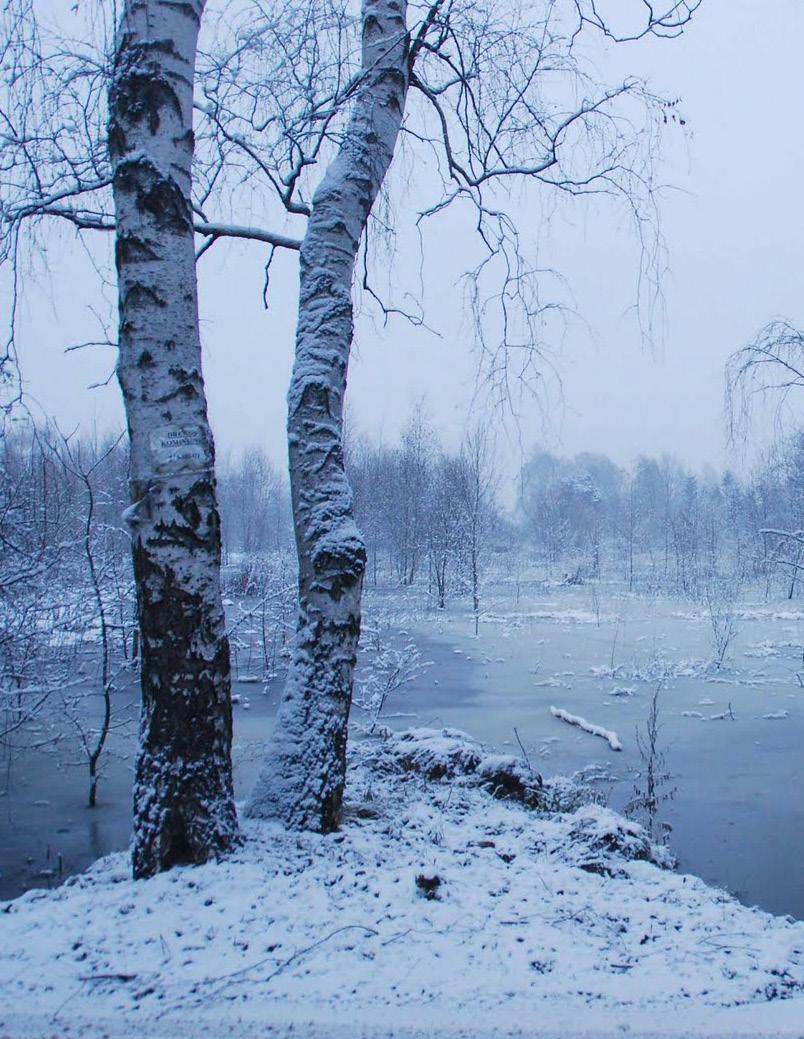
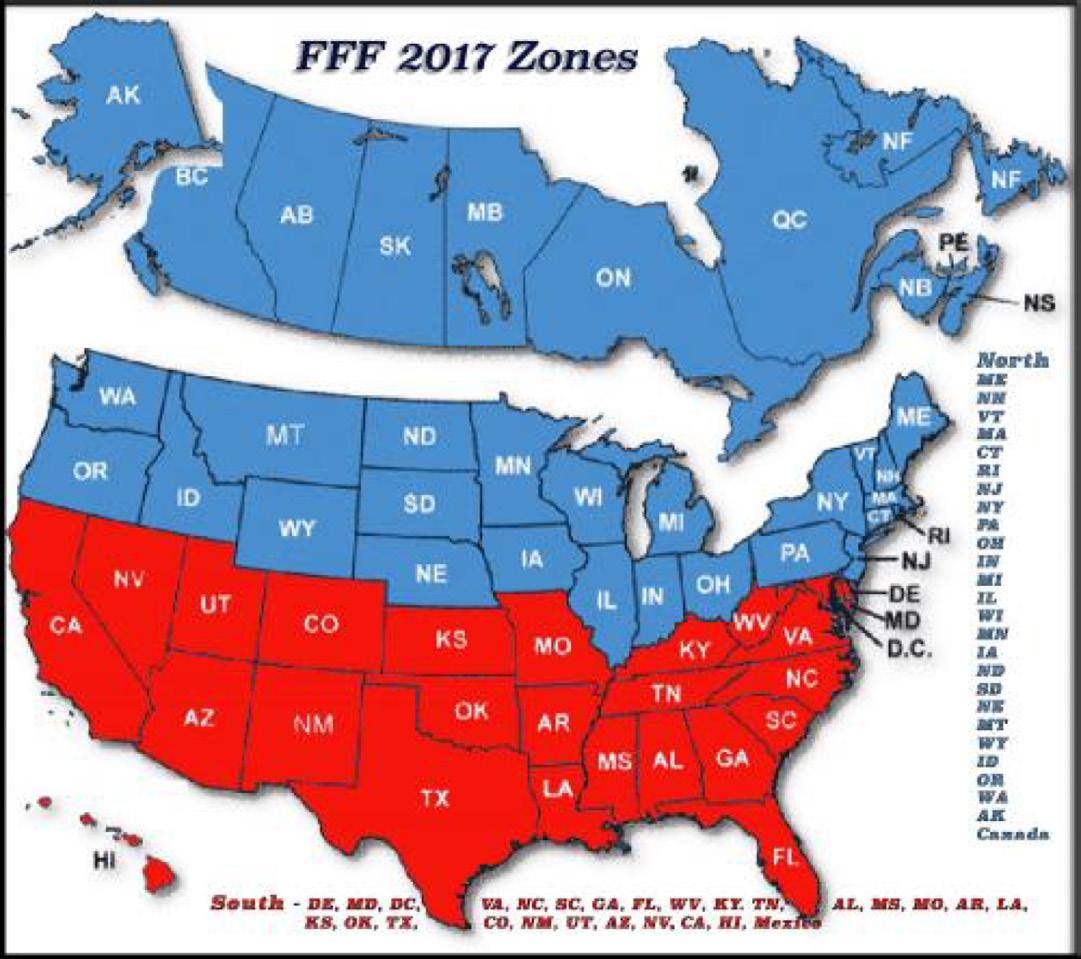
2. No need for a water thermometer. You will no longer be required to take water temperatures. North America will be split into a North Zone and a South Zone. Check the new FFF 2017 Zone Map carefully. Boundaries have changed for 2016 for a more even distribution of participating anglers.
Other than for the first fish of the year category and the Jerome Moisand adventure tale category, all other weight awards will be given both to an angler fishing in the North Zone and to an angler fishing in the South Zone (see map below (you may click on images for larger versions)).
There is no guarantee that it will be cold above the line and warm below. It’s just a line. However, it gives more anglers an opportunity at some prizes and recognition.
The FFF Monster Awards:
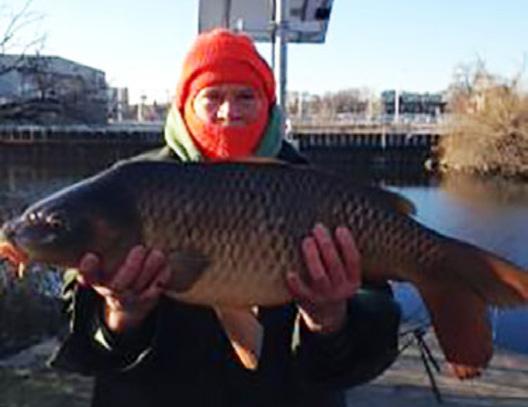
North Zone – 1st Ed Montgomery 20lb 2oz
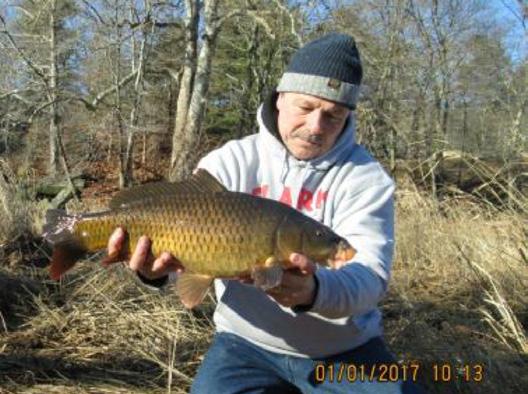
North Zone – 2nd Todd Richer 7lb 11oz
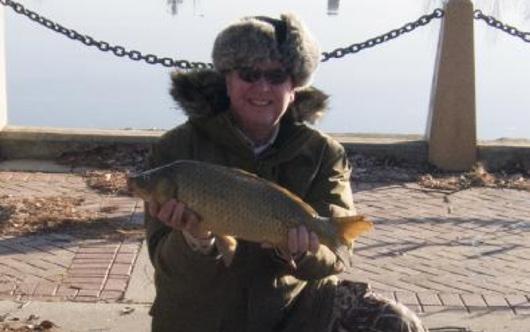
North Zone – 3rd Frank Rink 6lb 15oz
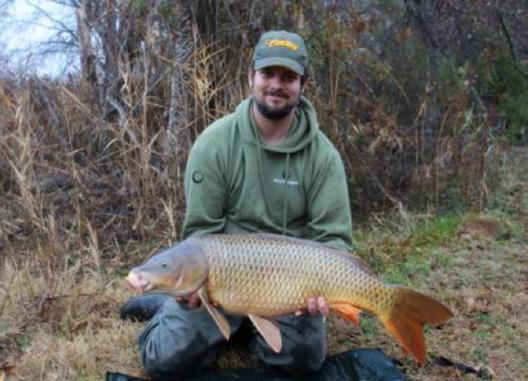
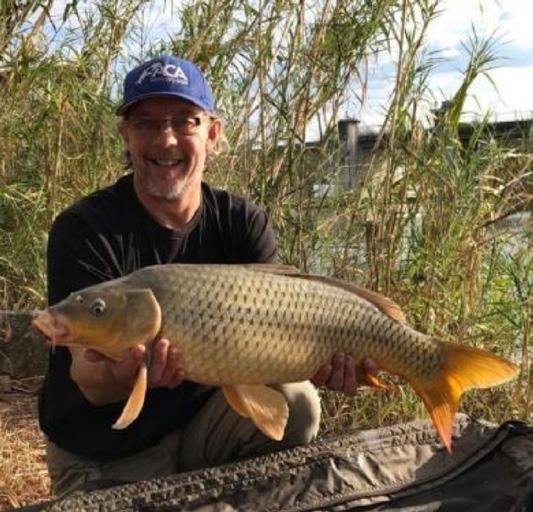
South Zone – 1st Evan Cartabiano 24lb 8oz
South Zone – 2nd Cheyenne Hooper 14lb 8oz
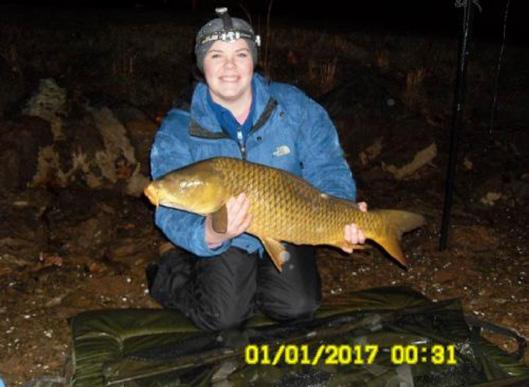
South Zone – 3rd Keith Thompson 13lb 3oz
FFF Baby Awards:
North Zone – 1st Jerome Moisand 2lb 6oz
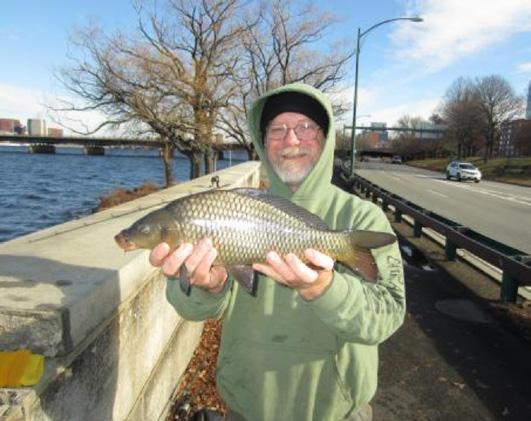
North Zone – 2nd Todd Richer 3lb 7oz

North Zone – 3rd David Pickering 4lb 1oz
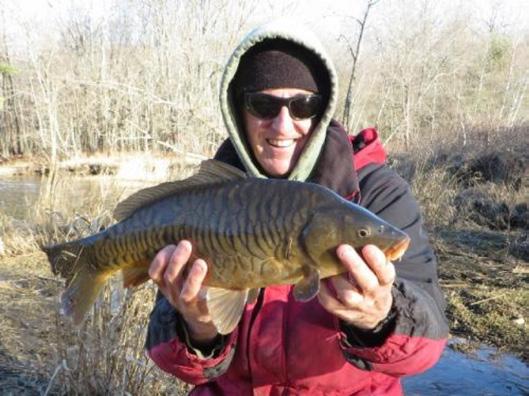
South Zone – 1st Kirk Suedmeyer 5lb 10oz
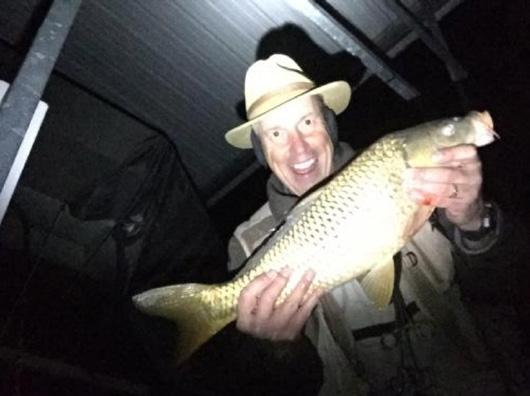
South Zone – 2nd Charles Whitted 6lb 10oz
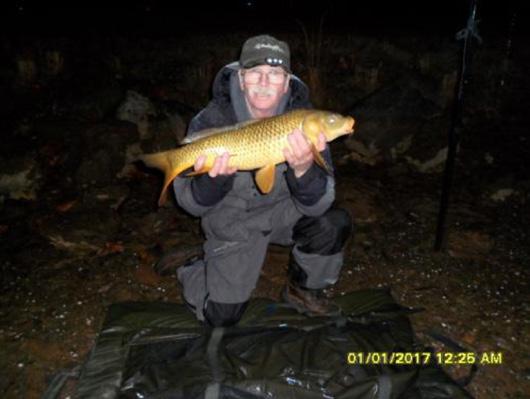
South Zone – 3rd Sky Sweetman 7lb 10oz
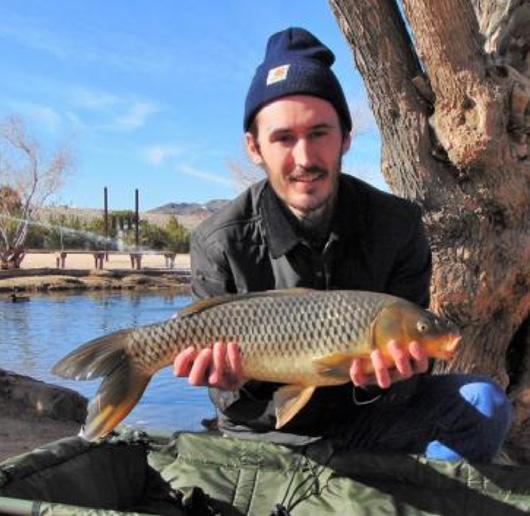
North Zone 1st Ed Montgomery 102lbs 10oz
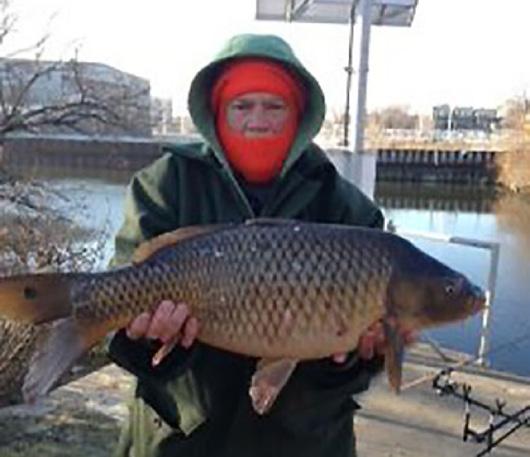
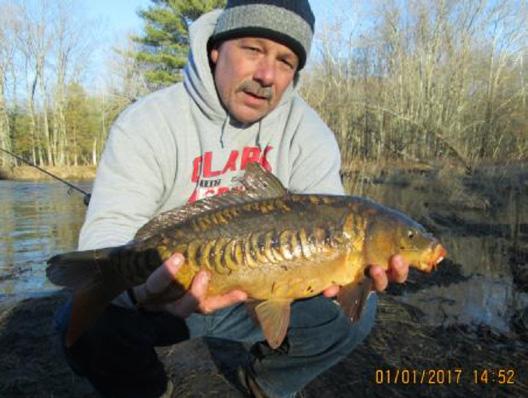
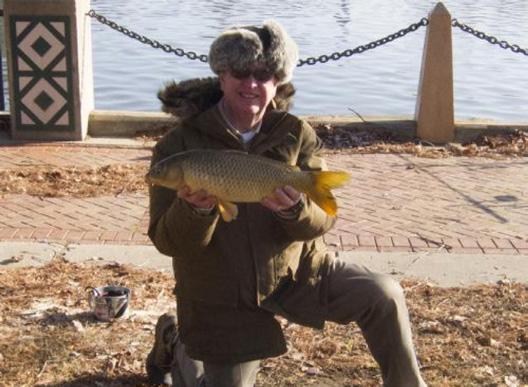
South Zone – 1st Evan Cartabiano 54lb 12oz
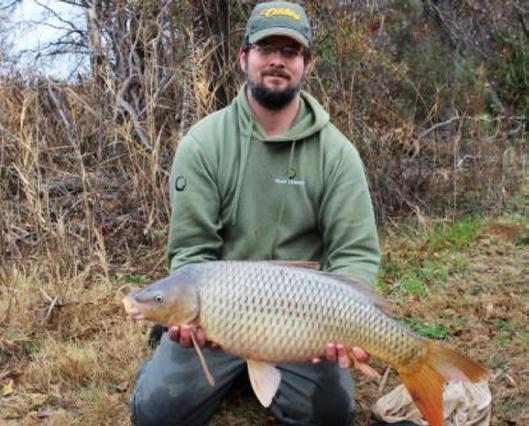
2nd
By Edwin Stackhouse
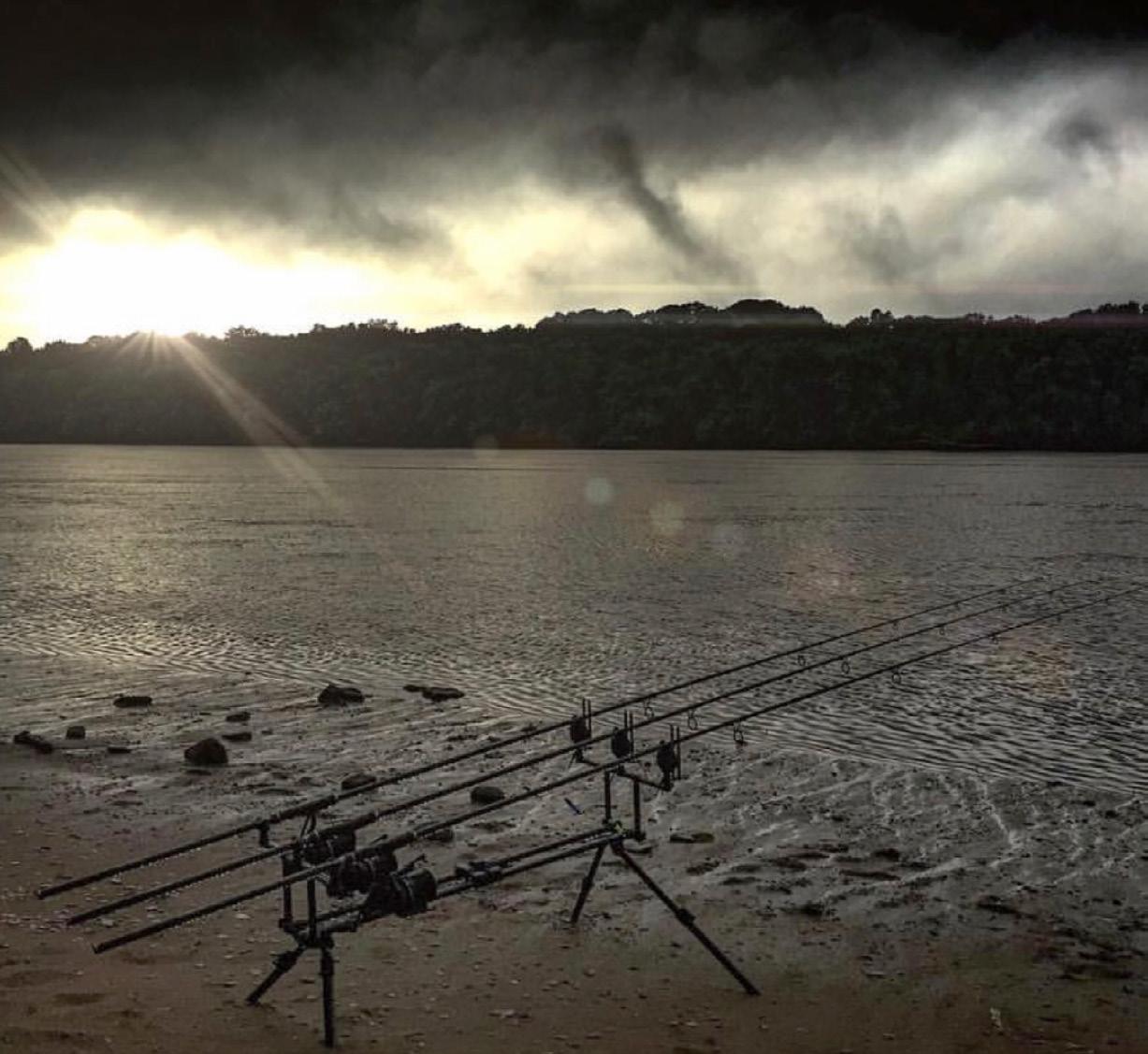
Fishing a large tidal river for wild carp is a unique and rewarding experience all in its own. There has always been an element of mystery and wonder for me when it comes to fishing such a large body of constantly changing water. Fishing a river like this may seem like a daunting task, yet if you execute your plan properly and take into account factors such as the tides, currents, moon phases, along with critically thinking through your tactics for baiting and rig presentations you will surly reap the rewards that these great rivers have to offer. The tidal section of the Connecticut River contains plenty of big commons, fantail carp, the occasional mirror carp and even koi/goldfish hybrids.
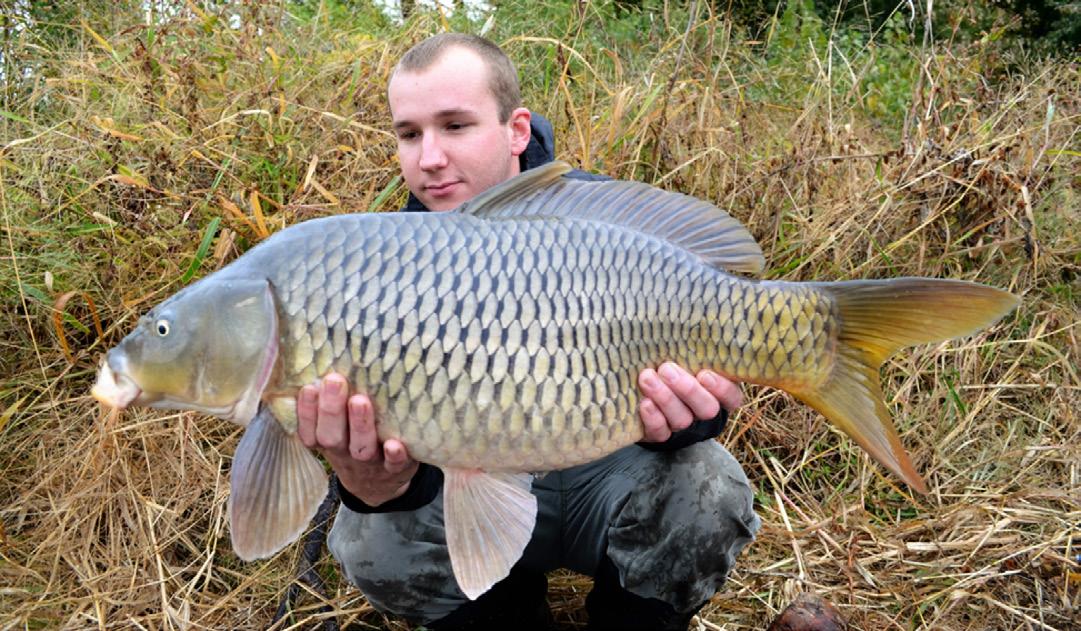
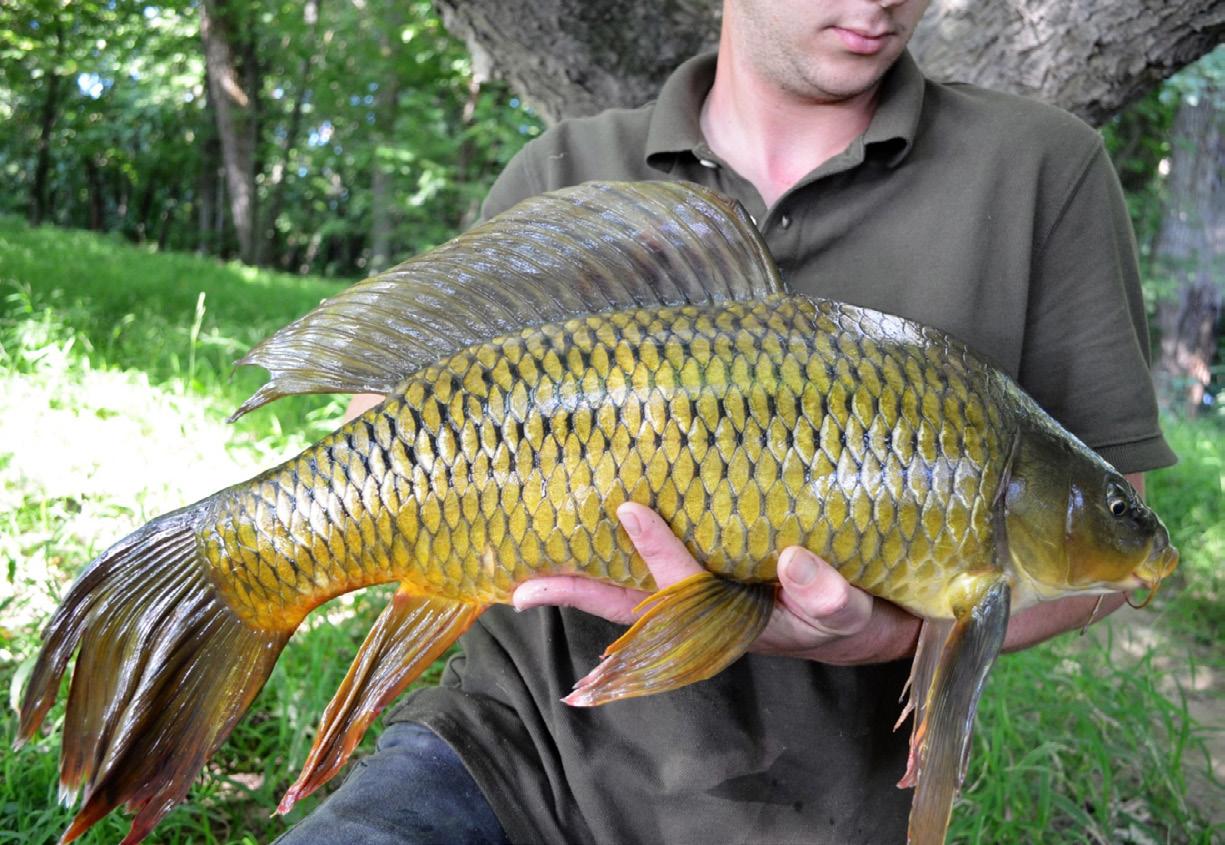
A cracking silvery common produced from a the tidal section of the Connecticut river
Slack:

Incoming:
The incoming tide is generally better for fishing. It has a much slower moving current not only allowing the carp to move around more to search for a meal, but it typically contains less debris and saves you the headache of constantly having to check your lines. Check the tide charts to discover what time the water will star to flow in and if possible line this up with dusk or dawn as the carp will be more active.
Slack tide is a short period in a body of tidal water when the water is completely unstressed, and therefore no movement in either way in the tidal system. I like the call this “the eye of the storm.” I use this time to check and reset my rigs that have been taking a beating from the moving water and debris. Using the slack tide to throw out more free offerings over your baits will help ensure the bait is actually over your presented rigs.
With carp being a naturally lethargic and “energy conserving” creature, it makes sense that the larger specimens will be more likely to poke around and feed when the water slows down for this brief period of time.
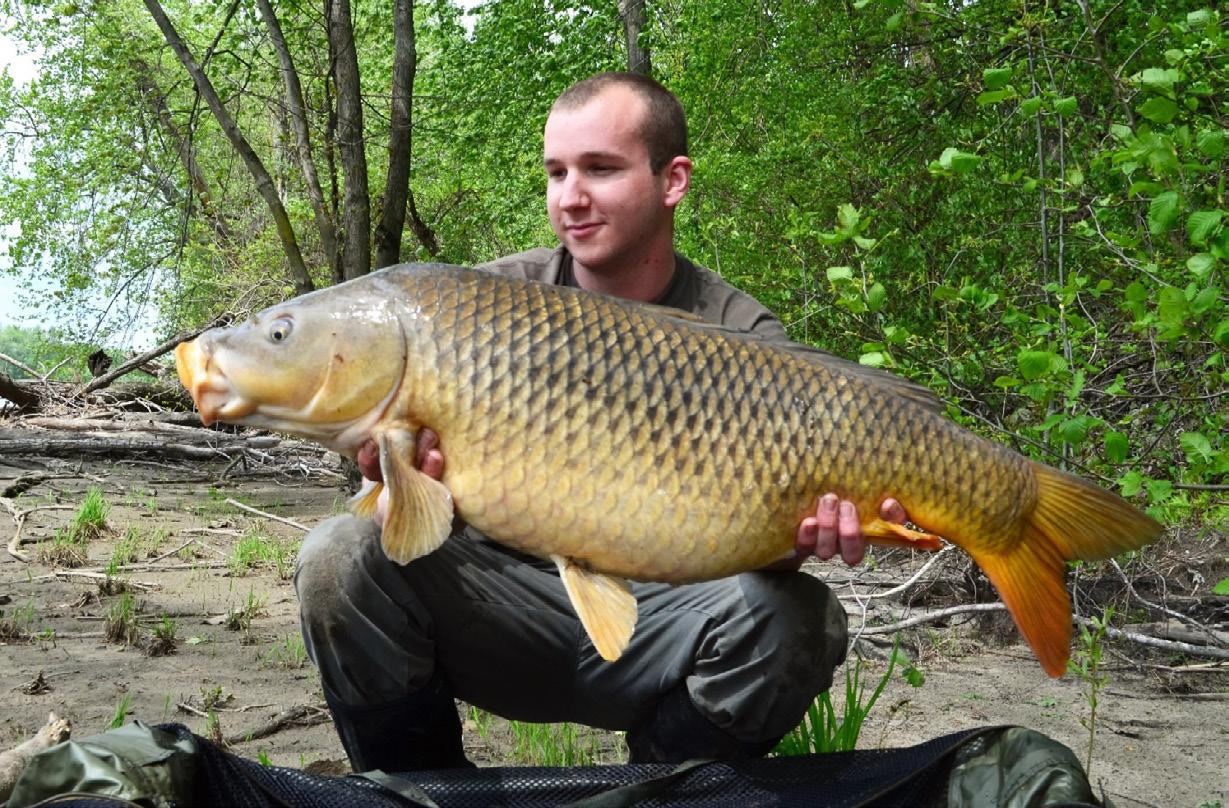
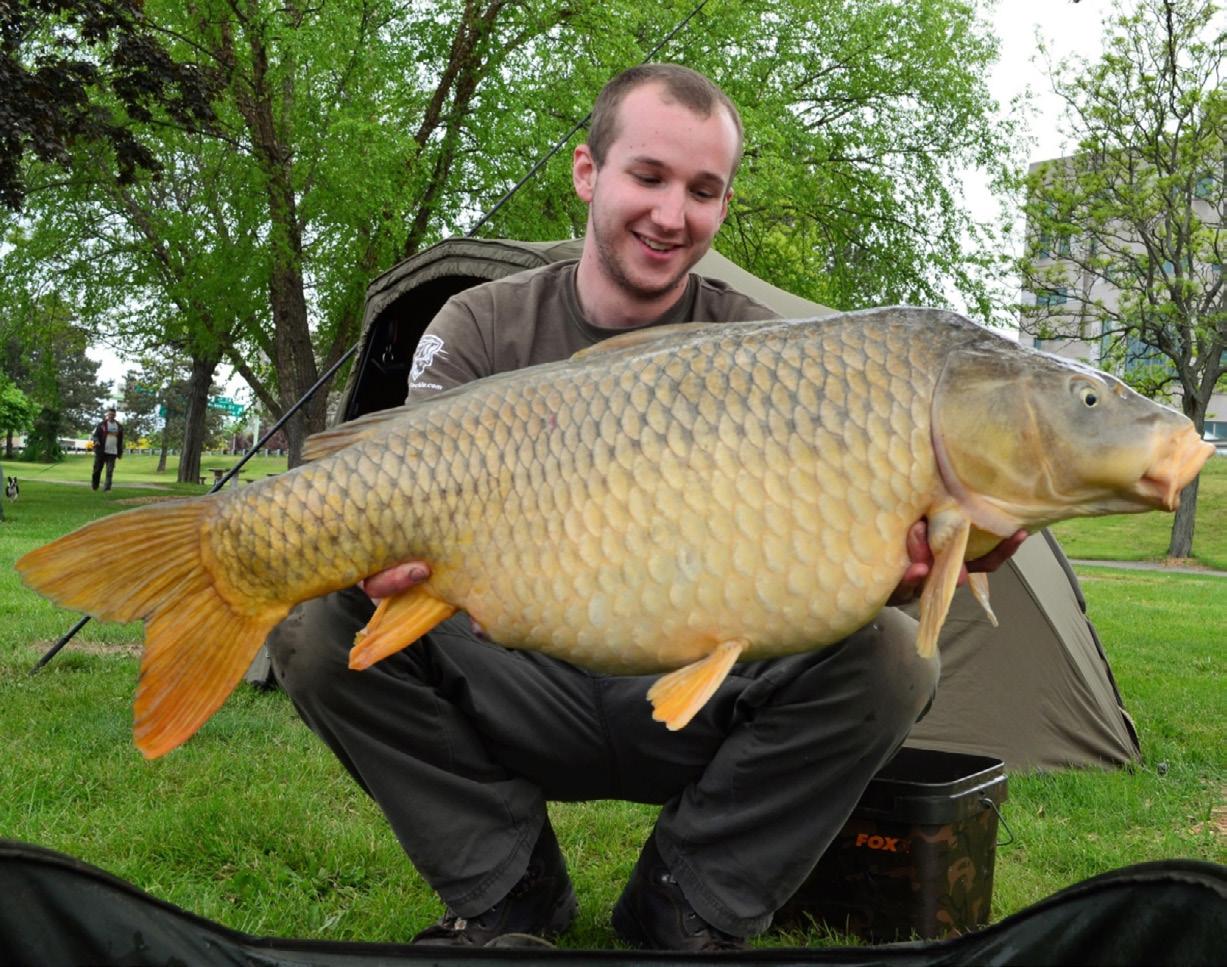
A 29.03 pound tidal section common, a result from pre-baiting with CCMoore Pacific Tuna boilies
Outgoing:
Beware! The outgoing tide has a much faster and stronger moving flow to it and the river seems to use this time to dump out large amounts of unwanted debris. In the fall especially, dying river grass can be a huge problem. To combat this I’ve found that it is best to keep your rod tips high eliminating the amount of line close to the surface. If floating debris is still a problem even with your rod tips up, back leads are a good option if you aren’t fishing with braided mainline or worried about your lines moving into snags while they hug the bottom of the river.
Bait, bait, bait! It cannot be stressed enough, baiting in large quantities at least a few days in a row prior to fishing is essential to increase your chances of having a successful session on the river. Keep in mind that the everchanging current and strong underflow is really going to affect how, when and where you deliver your free offerings. If you plan to go with a boilie approach it is a good idea to split and crush a good portion of your baits.

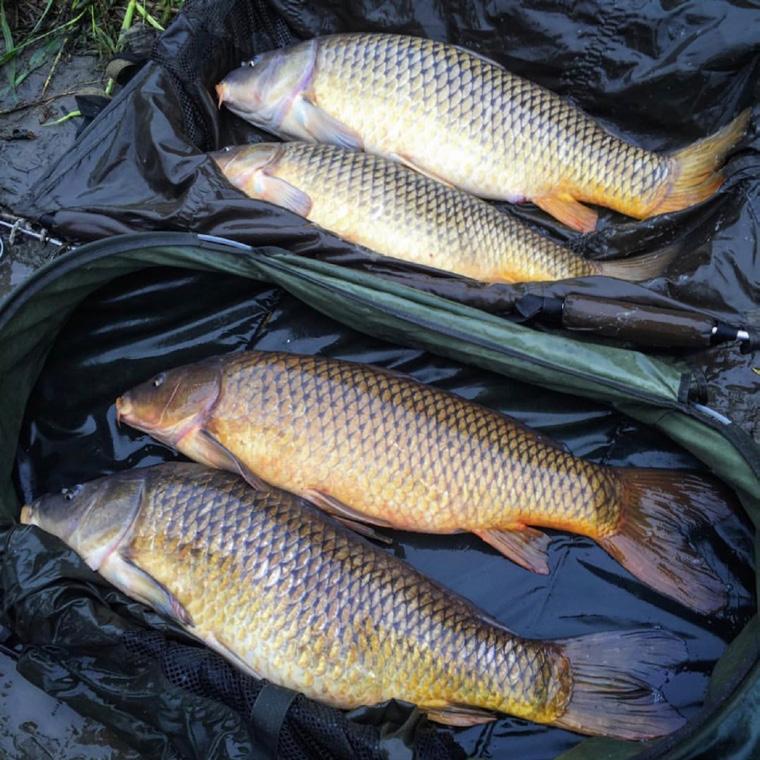
This will allow the boilies to become stuck along the contour of the riverbed and into wedged into rocks and other obstacles, whereas whole boilies will most certainly roll down river very quickly due to the current.
Here are some results produced from a heavy baiting campaign along the Connecticut River

If you aren’t into the idea of shelling out the cash for boilies for all of your free offerings, maize is a much cheaper and still very effective bait to draw in the carp and keep them busy with their heads down feeding.
If you’re baiting a large, tidal body of water do so in abundance. It’s going to take more than a few casts with the spomb rod if you really want it to be effective . Keep in mind that there are countless of other species in these rivers and they will have at your bait as well.
Baiting an area with two five gallon buckets of maize, chickpeas and other odds and ends for three consecutive days has produced many carp in my sessions and some cracking fish at that.
Remember that your free offerings are going to take some time before they sink down to the bottom of the river.
The depth in which you plan to fish and how fast the tide is ripping should be a gauge for where you want to deliver your bait.
For example, say you are fishing an outgoing tide in 8 feet of water. With the outgoing being generally stronger it makes the most sense to throw your bait 1015 yards upstream.
This will give it the time sink and travel and will ensure that it lands on top of your hookbaits. While fishing, a good tip is to use the slack tide to your advantage and as a time to launch more of your free offerings. You can be a lot more precise on making sure that your bait is exactly where you want it.
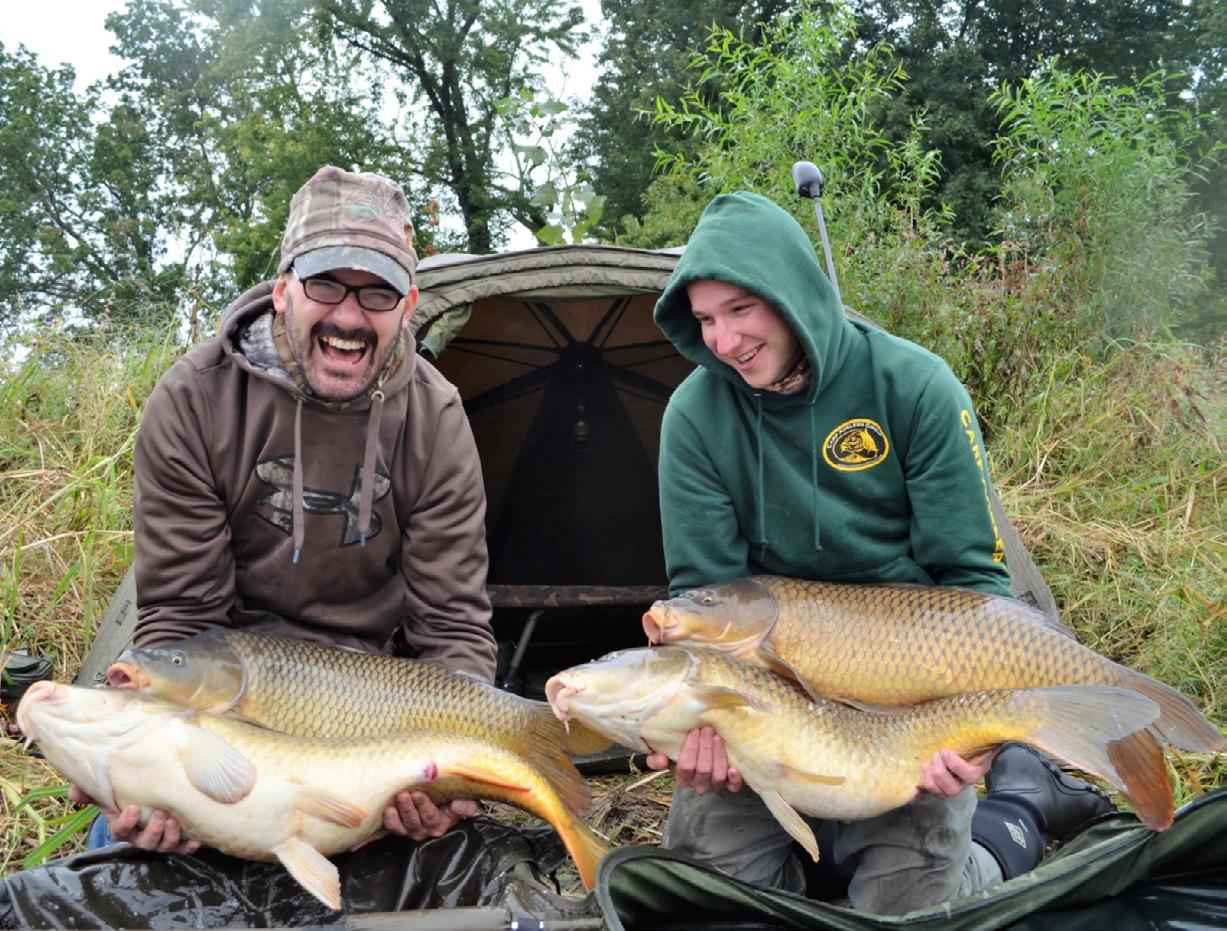
A session with my good buddy Blake Carlson that produced 14 carp in a mere few hours after heavy baiting and aligning the incoming tide with dawn
If you are familiar with big river fishing for wild carp you’ll understand that rig simplicity is key. A lot is happening beneath the surface that you cannot see. Debris is moving around, various smaller species may be picking up and dropping your hookbaits and the obstacles are constantly changing.
Scale back on complex rigs that you think will give you and extra edge in fooling a carp. They will more often than not be presented poorly in moving water. After all, these river carp are wild and less pressured and susceptible to rigs.

Ditch the fancy rig mechanics that could increase your chances of rig failure upon the cast. The biggest edge that you can give yourself is using a rig that is strong, reliable and pinned down. For fishing boilies and particles I opt for a blow-back rig with a bit of silicone tube on the shank of the hook to keep the hair trapped in place. In conjunction I will either use tungsten putty or a pop-up weight above the hook to keep the rig from washing around. For pop up fishing I often use a multi-rig that sitting no higher than two inches with two generous blobs of tungsten putty at each end of the hook link.
Above the hook link I’ll usually opt for a 5oz-6oz inline pear gripper lead. The design of these leads is great for holding bottom and will not roll in moving water. Unless I’m fishing a very weedy and snaggy swim, most of the year I prefer to set up my lead as a semifixed running rig.
This will give the carp something awkward to deal with. Initially the carp will feel the resistance of the lead, but as soon as it shakes its head the lead will eject turning into a running rig set-up, making it impossible for the carp to use the weight of the lead to throw the hook.
Tips up! Keeping your rods on a vertical angle will reduce the amount of line close the surface of the water as it will off the bottom. This will help to avoid floating debris from grabbing your line, giving you a false indication on your alarm. It also helps to keep your line from moving underneath snags on the bottom. Check the charts! See if you can line up a morning or evening session with an incoming tide when the carp are more actively feeding.

Keep ‘em feeding! Unless you are using baits that are not easily digestible for carp don’t worry if you think you’re throwing in too much.
Carp in large rivers travel together in massive shoals and there are countless other smaller species that will be picking through your free offerings. Over baiting your swim is unlikely.

By Dean Brookes
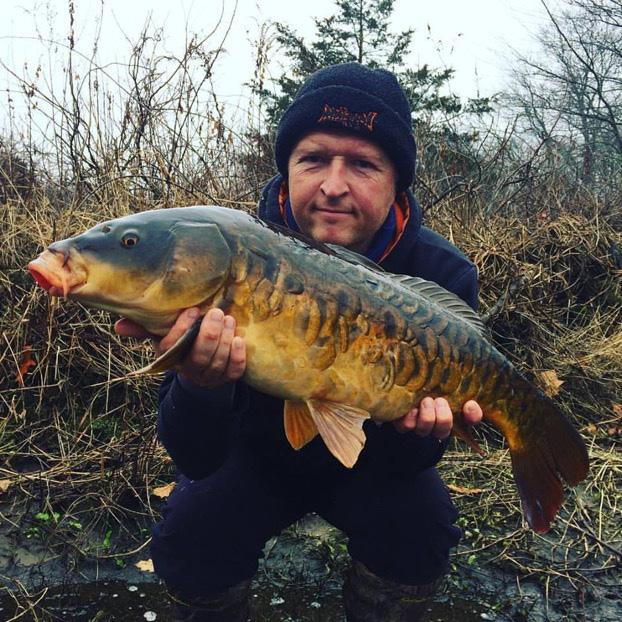
Before I ever started to target carp specifically I fished for other species both small and large. I’m sure many carp anglers started the same way; float fishing for small fish or throwing a lure around to see what would hit it.
My own fishing journey started with canal perch, then progressing onto larger species such as tench, bream, chub and barbel before finally specializing with carp.
Along the way I fished many different methods with several of these methods suitable for many different species. One method I particularly enjoyed was fishing using a lighter rod where bites were registered on the tip of the rod. Dependent on the rod you are using and the specific end tackle arrangement this can be referred to as the quiver tip (light rod with adjustable soft tips), feeder fishing (using various swim feeders), swing tip (a tip attachment that swings, rather than bends) the bomb (use of a lead) and so on. For this particular article I’ll just refer to the method as feeder fishing, but basically I am referring to the use of a lighter rod set-up where the use of the tip of the rod is the bite indication method.
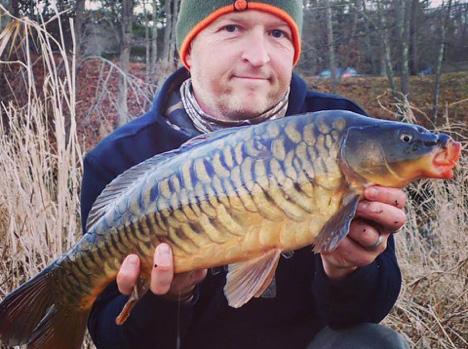
Generally I will adjust the methods I am using to target carp based on several factors including; size of venue, size of carp, depth of water, feeding habits, time of year, weather patterns etc. Most of the year you will find me fishing for large carp and as such my methods are much more Euro-centric. I will be fishing with alarms, rod rests, bolt rigs and baits such as particles and boilies. However, when it comes to my winter fishing I like to be more mobile and also not limited to a static feeding approach. This is where the feeder comes into play.
I decided to switch over the feeder rod tactics three or four winters ago. I was fishing a venue I have caught hundreds of fish from with regular carp tactics but with increased pressure I was seeing that the carp were very, very cute. They absolutely knew they were being fished for and most of the time, bite indication on a standard bolt rig was very finicky. It also coincided with a Christmas gift from one of my friends; a rod that I would usually be used to tame big chub and barbell.
This would prove the perfect tool for catching wary winter carp over the next couple of years. I was also targeting carp in the 5-20lb range, but it is also possible to purchase stronger feeder rods that are designed for big carp.

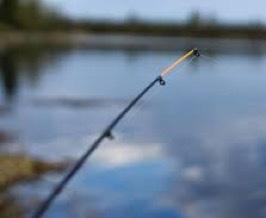
Rods – My own rod is a 12ft through action (3 piece) Specialist. While it has no test curve stated, it’s approximately 1lb to 1.25lb in test curve. It will comfortably cast a couple of ounces of lead and so far I have landed fish up to 20lb’s in weight, although I have heard of an angler using the same rod in France for carp over 30lb’s!!
Basically, you want the rod to have enough power to land decent sized carp but the tip of the rod needs to be soft enough to register the bite indication without too much resistance.
Reels – As the rods are lighter you need to drop the size of the reel so the set-up is balanced. You will be holding the rod more and will be much more active so a heavy reel will definitely be a burden. I use a couple of Abu Garcia CD 1000 reels, which I have had for several years but any small reel which holds about 100 yards of 8-10lb line will be sufficient.
One thing to bear in mind is that you also want a reel with a smooth drag as this will help when playing the fish. Spending a little bit more on a quality reel will definitely be appreciated when you are playing a double figure carp.
There are many ‘feeder’ specific rods you can purchase online, but you could also look for a 9-11 foot rod with a soft tip.
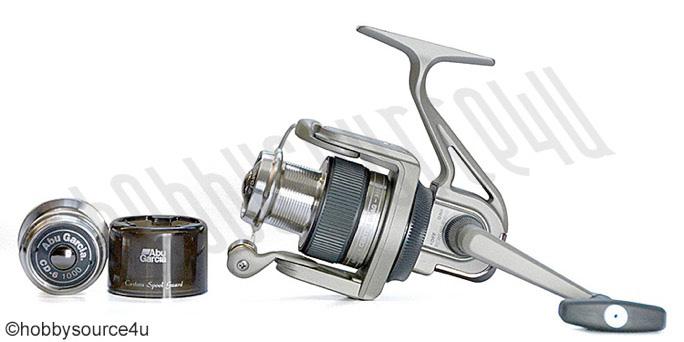
My preferred reel for feeder fishing
Line – I load my reels with 8-10lb mono, usually Berkley Big Game as it’s very tough and abrasive resistant but any decent mainline will suffice.
For the hook-links I use a fluro-carbon line, usually in the 6-8lb bracket, depending on the size of the fish I am catching and also if I am fishing near to snags.
Hooks – As I am using lighter rods, reels and lines the hook sizes are also reduced. As I am fishing for hard fighting carp that can many times be over the 15lb mark I need a hook pattern that is strong and reliable.
Most regular carp hooks do not go below a size # 10 so after some research I have settled on a fly fishing pattern, made by Mustad. These hooks are available in size # 10 all the way to # 20 and are very strong. Some essential rig elements and a home-made cage feeder
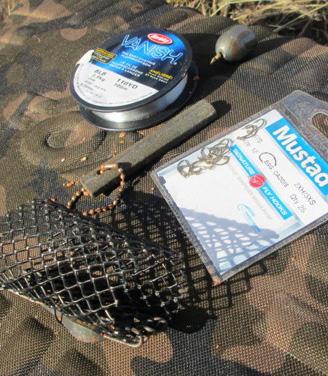
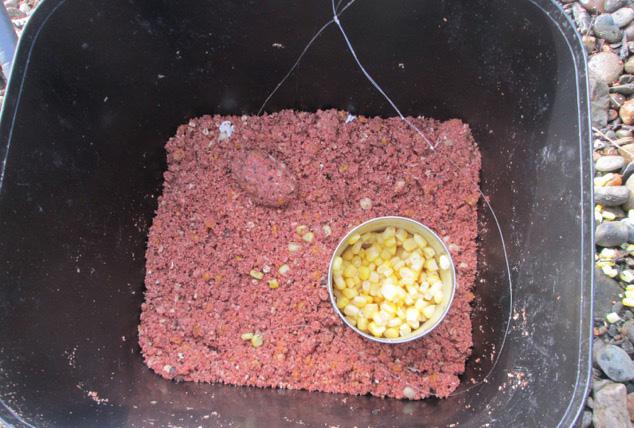
Feeders and Leads – Again, you can purchase swim feeders from Europe on many online websites and while these are purpose made, they are fairly pricey. Most of the time I am feeder fishing I am using a ground bait as well and the best feeder to use in this case is an ‘open ended cage swim feeder ’.
I can make dozens of these for only a few dollars simply by purchasing a sheet of metal gutter guard, some steel cable wire and either lead strips or cheap ½ to 1 oz flat leads. I also use basic non-lead sinkers in the ¼ to 1oz range which are easily picked up at any Walmart or sports store.
Similar to the different swim feeders available there are also multiple ways you can set-up your end tackle arrangements. I’ll highlight the two set-ups I use the most below.
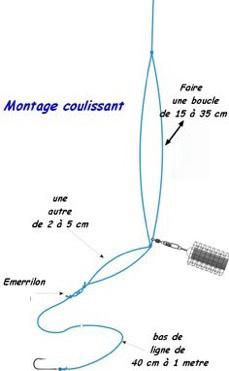
Loop Rig – Allows the feeder to move up the loop which minimizes the resistance when a fish picks up the bait.
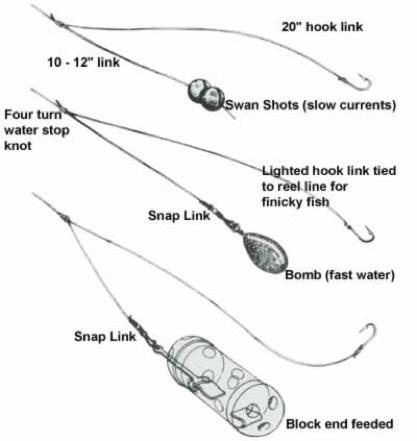
Paternoster Rig – The hook-link is longer than the lead/feeder link to avoid tangles and also to aid indication.
With the invention of the modern hair rig back in the early 1980’s carp fishing was revolutionized. No longer were anglers hovering over their rods attempting to hit ‘twitches’ and coupled with the bolt rig, carp fishing and hooking carp in general became a much easier and more consistent process.
For most of my fishing you will find me using modern approaches and as well as the hair rig I’ll
also utilize heavy leads and bigger hooks. It’s the complete opposite when I approach my feeder fishing. Yes, I could use a hair rig, but remember, I am not attempting to have the carp bolt when it picks up the bait. In fact, quite the opposite! In theory, as the carp sucks in the bait I will see the indication on the rod tip and thus strike into the carp.
With this approach I use smaller hooks, in the size 10-14 range. As importing hooks specifically for feeder fishing is not a consistent approach I have found a few decent patterns of hooks in the fly fishing world. Specifically, I look for a strong wire nymph hook, usually with a curved shank pattern. You’ll be surprised how strong a little
hook can be and I have landed many carp up to 20lbs on relatively small hooks.
Attaching the bait is a very easy affair, with one or two grains of sweetcorn nipped onto the hook. I also use other particles directly on the hook, such as chick peas, black eyed beans and maples peas but sweetcorn is truly the king of feeder baits!
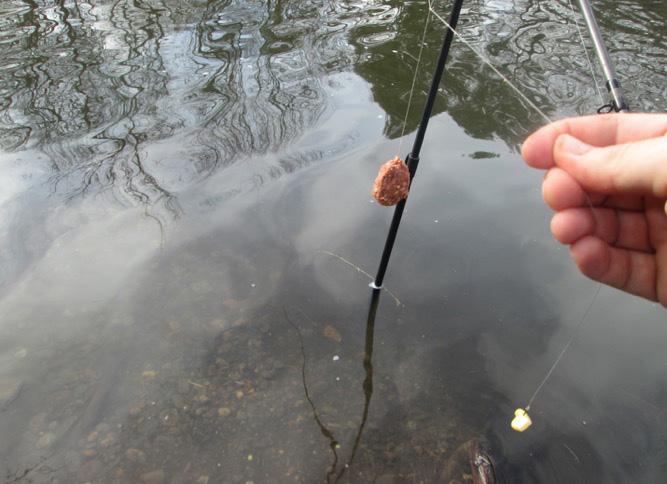
A simple set-up with a paternoster rig and two grains of corn directly on the hook
A typical session for me will range from 2-4 hours. I will arrive at the river and depending on the weather and fish activity I will put a little bait out before I start fishing.
Usually, this will be 15-20 minutes prior to me setting up which will give the carp time to find the bait and hopefully start to feed.
Once I make my first cast I will be looking not only for solid bite indication but also for any fish activity. In the winter the carp tend to be more localized and as such it may take several casts to locate the fish. Line bites and sharp hits are usually a good indication that the fish are willing to feed.
At this point I will feed with a little and often approach, catapulting in a few grains of sweetcorn and sometime sinking pellets with every
cast. If bites are coming regularly then I will keep the same approach, but if they slow down I will either increase the feeding regime or stop it all together! It really depends on how active the fish are and what indication I am receiving.
On days when the fish are not playing ball, then I may shorten or lengthen the hook-link and at times drop to an very light lead, even touch ledgering where I am in direct contact and can ‘feel’ the carp pick up the bait.
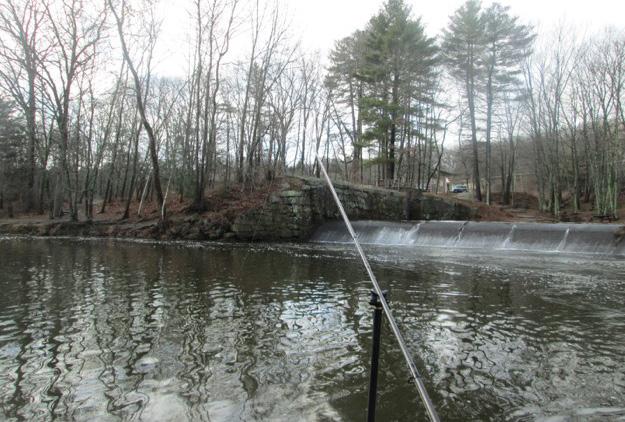
Sitting and waiting for a bite – Patience is the key
The beauty about feeder fishing is that due to the lighter set-up and lead arrangement you can recast regularly with little disturbance to the swim. You are also traveling relatively light so moving swims is also very easy. It’s not unusual for me to fish 3 or 4 different areas in only a few hours of feeder fishing.
However, the main draw for me is that playing the fish on a lighter rod is much, much more fun. It may take you longer to land the fish but I lose very few, even with light line and small hooks as the soft action rod(s) take the lunges and runs with relative ease.
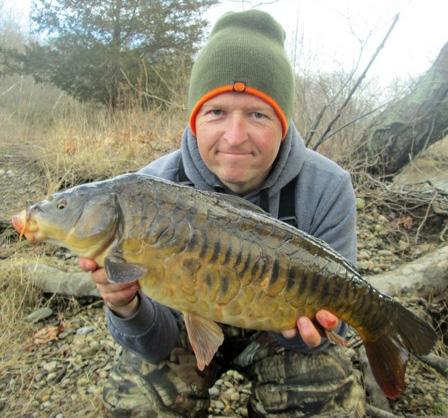
Another beautiful mirror caught using feeder tactics and a big smile from the angler
You really can’t help but smile as you are playing the fish, it really is that much fun.
By Jérôme Moisand

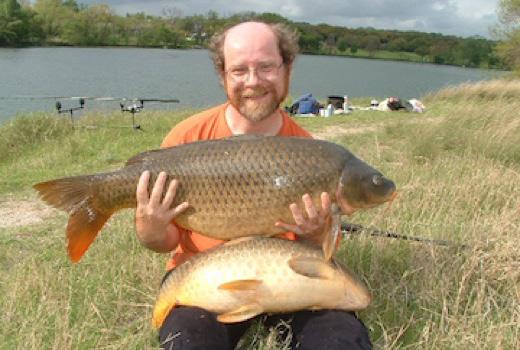
Thirteen years ago… My first ever thirty pounder.
Back in 2004, I went to the ATC for the first time. Carp fishing was still quite new to me, I only had a couple of years of experience, and my first 20+ was a fairly recent memory by then.
We flew to Austin with Scott Osmond, we didn’t do too good during the event (usual excuse, bad pegs!), and I was very eager to go fish again the following day. At dawn, I dragged a very sleepy Scott to a nice swim where folks did good the day before, and after a few hours, the seminal run happened, and I had a 31lb new Personal Best in my hands, plus a mid 20 on my knees, as I had another run while netting the biggie. The ATC delivered yet another PB to yet another angler. No need to say that I was very impressed!
Twelve years ago… A mirror and two thirty pounders
I came back to the ATC in 2005, this time partnering with Iain Murray. Those were the days where the amazing Neil Stern (and his girlfriend Jackie) went completely out of their way in their efforts to make the ATC the main event of the carping season, and succeeded with flying colors.
During the tournament, the highlight was Iain landing a very colorful 27lb mirror during an otherwise ‘dry net’ fishing day.
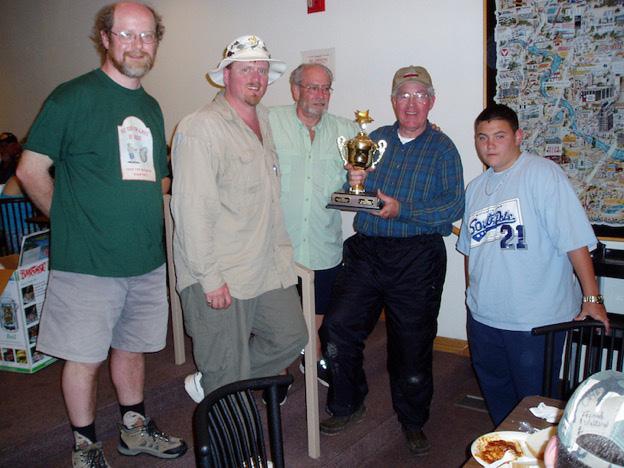
The day after, we got a fairly similar swim near the warm water discharge, and I spent the entire day weighing and recording fish for Jim Kirkman (up to a hefty 39 pounder!), learning in the process that those paylakers have some seriously impressive skills. Jim and his young partner ended up winning the tournament.
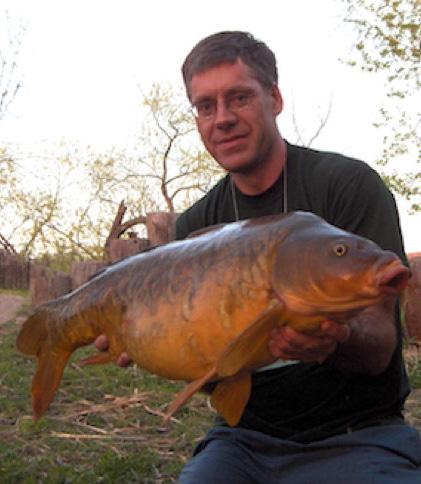
After the event, we stayed a few more days with Iain, fishing a ‘secret’ swim that Matthias Baltin shared with us. Matthias had caught an incredible brace of 40 pounders in there, making us dream of what could happen.
Things turned out somewhat slow, except for a wonderful sequence of events, which unfolded in less than 30 minutes.
First, I landed my new PB common (35-8lb), a beautiful fish, quite thick. A few minutes after releasing it, my other rod started to sing, and a good fight ensued.
The fish behaved a little strangely close to net, I was wondering what was going on, and it turned out to be a buffalo of 32lb. A brace of thirty pounders, two different species, now that made for a dream come true.
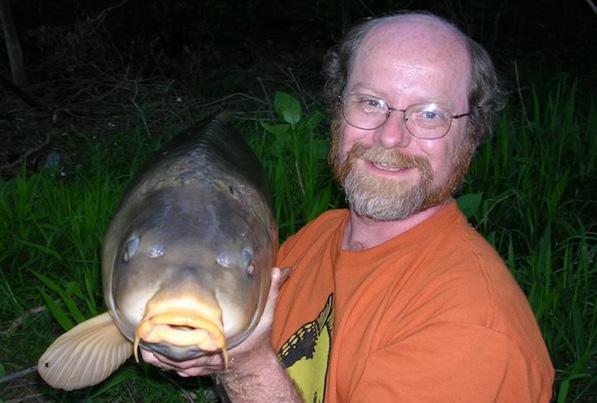
In 2006, we came back with Iain, and I believe he got a 30+ after the event while I struggled to get a fish, any fish. Town Lake (as it was known by then) can deliver big fish for sure, but this requires serious work, and lady luck can be quite capricious.
Both Iain and myself fished numerous other venues since then, but somehow never came back to fish the ATC.

In the meantime, I did beat my PB common a couple of times and caught a really big mirror, but never caught a bigger buffalo.
Last year, while reading the reports about the ATC 2016 where things went really well, I became quite eager to do a comeback. Iain was game too, and travel plans were made.
Fast forward to the first day of the competition. The peg draw was scheduled very early in the morning (urg), and we had an opportunity to choose Redbud (the dog park), which is actually close to the swim where I caught my brace of 30s in 2005.
At the parking lot, I started to unpack my things (my rods were still in the ski tube I use to travel with my fishing gear!), then opened the bucket from the corn boil and… shoot, where is the maize?
I called Kevin, rather puzzled, and he clarified that the corn boil is now just a social event, with no corn involved. Ah. Er. I like to fish with maize. I don’t like to use freaking boilies.
I ended up fishing sweet corn and method balls for the duration of our stay. With a kernel of artificial corn, so that turtles and ducks would leave a pick up close to the hook if they start chewing around.
We set up at the end of the park, a very scenic swim. I quickly proceeded to catch a grass carp on the right side of the point. Very cool, they are beautiful fish in my opinion. The current was strong on the left side of the point, but my 3rd rod delivered a couple of low 20s while fishing close to shore.
And then the dogs and their owners started to invade us. Both Iain and myself are fairly patient people, but when four yuppies set up to yap around for more than an hour, just a few yards from my rods, with their dogs running and splashing around, this became seriously annoying. Mid afternoon, it calmed down and Iain landed a nice 19 pounder.
It was also good to have a nice chat with Mukhtar Farooqi, a biologist with the Texas Parks and Wildlife Department who has been a strong local supporter over the years.
Before dusk, I got a nice run and this fish stuck to the bottom, and I just couldn’t make it budge. It didn’t feel snagged, but just didn’t want to move.
When we finally landed it, it turned out to be a nice buffalo (32lb), which tied my big buff PB from 2005. A marshal (Lee) came to witness it, went back, and… I had another run, a mid 20.
We called Lee again, and as luck would have it, I got one last run at 6:58pm (I swear!), my line ripped against rocks but held on, and a 28lber emerged to nicely add up to our big-6 total. Having a sack handy (thank you, Mark and Keith!) proved quite crucial for this crazy finish.
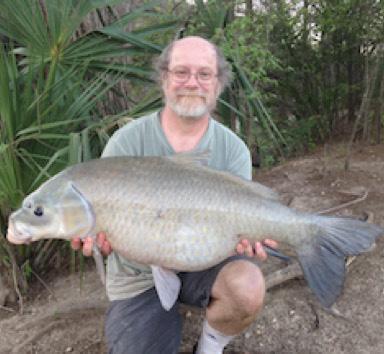
Day 2, those ATC organizers have no mercy, another very early start. Iain picked the tokens for the two possible swims to choose from, and this jolted me awake, this included the ball field swim where I got my first 30 back in 2004. Lucky draw!
We proceeded out there, and fish were happily jumping around, and so was I! I started to fish with sweet corn and method at 50 yards or so, while Iain tried to prove that his precious boilies work better (yeah, right). I landed a nice grass carp while he was fumbling in the car. A bit later, I got a run, a sizeable fish came close to shore and… my line snapped.

WTF? Aaah… the rock from last night, I totally forgot to check my line, so stupid. Late morning, I played what felt like a really big fish, and this time, the hook pulled. Er, not my day.
Early afternoon, things were slow, Iain was dozing on the shore by then (he was unfortunately quite under the weather). I decided to spod more bait, and then to do the paylaker thing of recasting every 20 minutes or so. And I started to catch, including a nice 27lber.
I finally got another big one, and this time, it went into the net. We called Eric (next swim) to witness it, and it turned out to be another thirty+, an immaculate 34lb common.
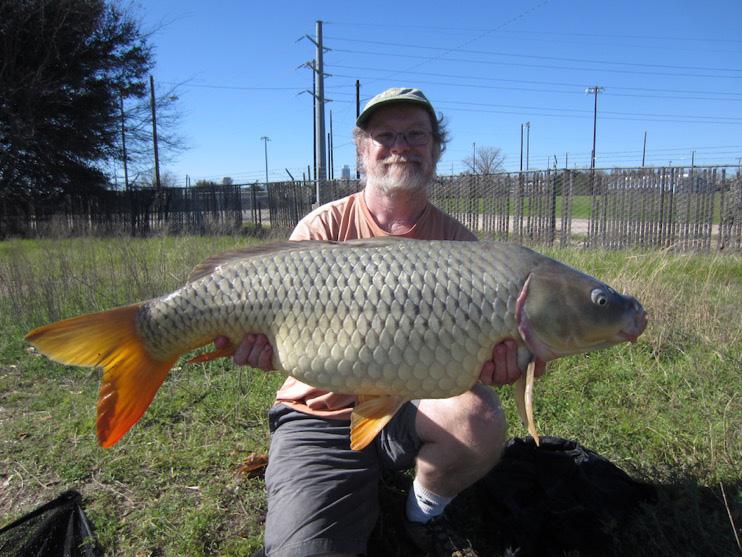
I caught a few more fish, got to six 20+ commons, and we finished 4th for the Big-6 total, just a few ounces behind the 3rd team (the ever efficient Frank Rink and his partner Tracy Jourdan). And we also ranked nicely in the big common and the big buff category. If only I had checked my lines before fishing… If only Iain had been in better shape… Oh well, we did quite good overall, much better than in past years!
Overall, the ATC ran very smoothly, every team caught fish, and I was very glad to see Chad Edwards and his partner Jake Downing win the Big-6 and the big common (39lb, no less), while Keith Thompson (our carp sack savior) bagged a monster grass carp (54lb) and Jon Eisen landed a massive buff (58lb).
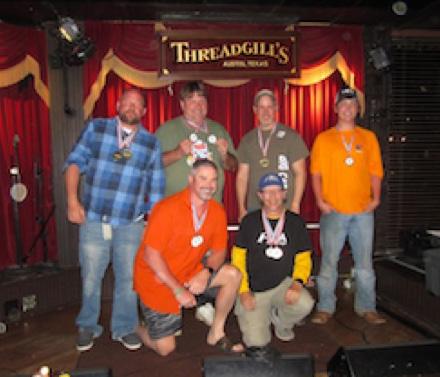
Many thanks to the hard-working organizers (Chad, Kevin, Lindsey, Willem, etc.) and to the marshals (Bubba and Lee) for perpetuating the ATC tradition. And of course, to the various sponsors. Here is a link to a superb photo album assembled by Kevin: https://kophoto.client-gallery.com/#/2017-atc.
The plan was again to stay for a few more days after the event and fish some of the best swims. Iain was very keen on coming back to the warm water discharge where he caught his big mirror and Jim did so good a decade ago, and I was happy to follow.
After a coffee at Buzzmill (a colorful coffee shop near the lake), I opened the day with a new PB grass carp (26lb), beautiful fish, while Iain got his first buff (mid 20s). We got a couple more fish, and then I got a big run and a big fight followed. After a while, a really big shape appeared, oh my.
Those are the times where you’re happy to have such a big net. I went down to lift the fish, very aware of the fact that I’d better keep my back straight. We put it on the mat, what a whale. We took some fun pictures with a group of young kids, and then I had to lift no less than 47-8 pounds of buffalo for a proper pic. Biggest freshwater fish of my life (yes, Olivier, not counting sturgeons!).
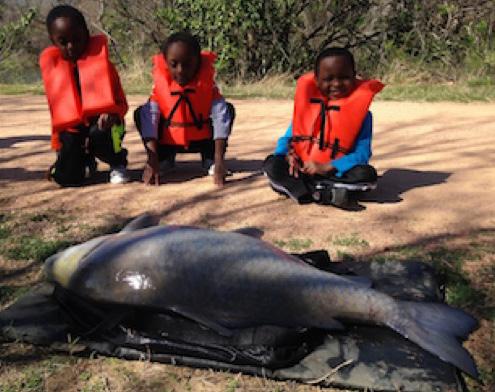
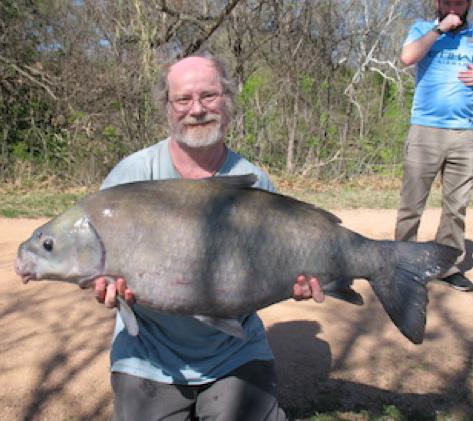
The next two days were rather uneventful, with a few more fish, but nothing special. I made friend with a nice couple (Fernando and Alexandra) during the ATC dinner, they were kind enough to bring us a picnic dinner while we were fishing late.
This was extremely nice of them, and we had a good time enjoying food and friendship with cheerful people on the shore of this wonderful venue. I couldn’t resist making some fun of Iain and showing them the picture of the species where he truly made a difference while fishing in the morning.
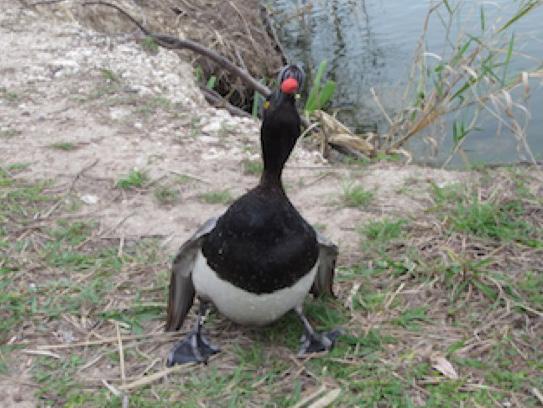
Catching his PB duck with a perfect hook-up in the soft part of its beak. Ok, I bow to the duck master and now understand (kinda) why he’s fishing with boilies…
Conclusion
First time at the ATC, I got my very first 30+ common. Second time at the ATC, I got a 30+ common and a 30+ buff, while Iain landed a wonderful mirror. We come back a decade ago, and I get a 30+ and a 40+ buffalo, a 30+ common, and a 30+ grassie!

And Iain got a stunning mirror followed by this incredible ghostie of mine. Oh, and let’s not forget the snapping turtle and the boilie lover duck.
And new friends too. You know what? We are coming back next year…
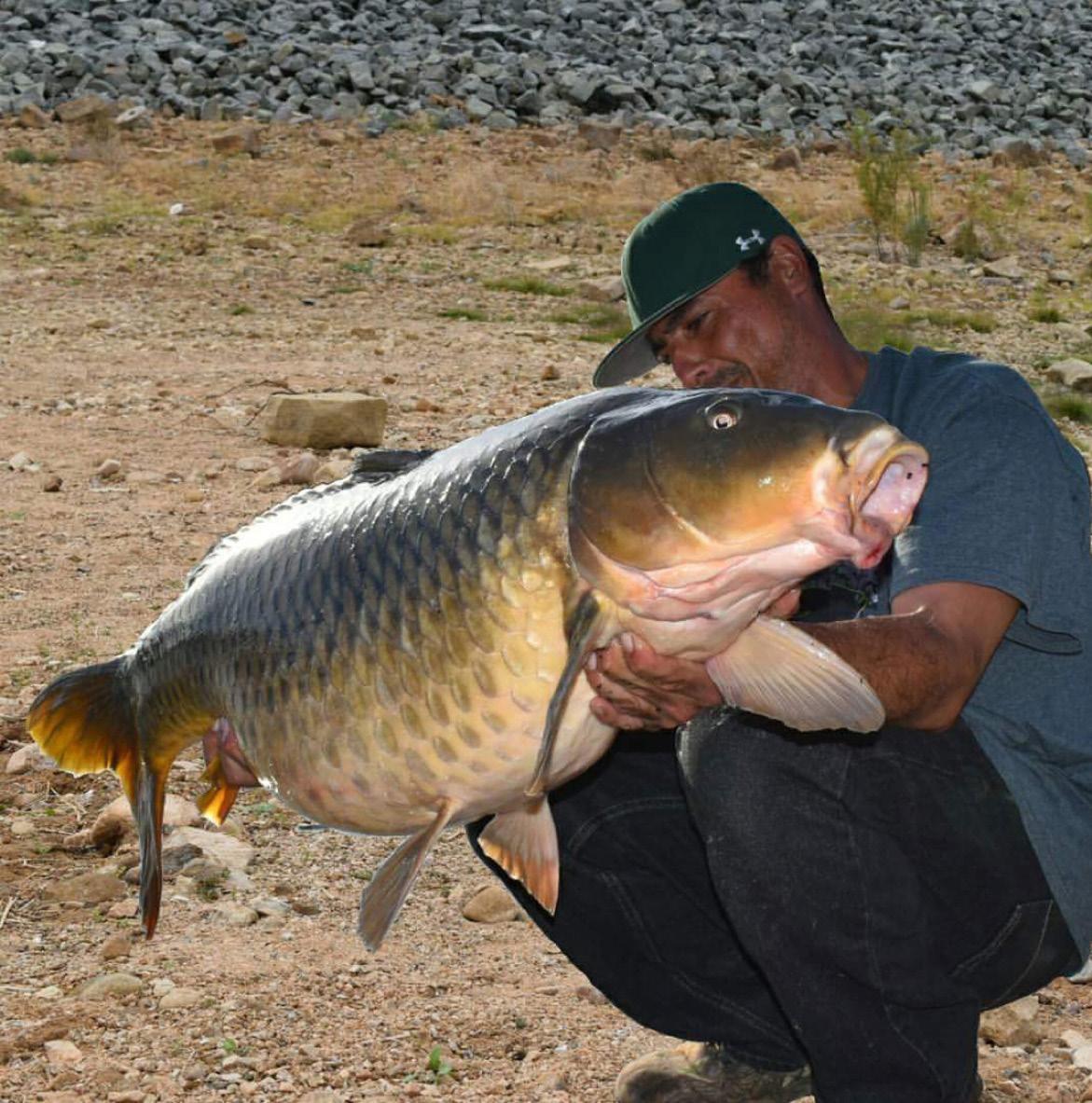
NACA: Over the last couple of years we’ve seen a string of big fish appearing on social media, coming from the Golden State. While a 40lb+ carp is a big achievement in the USA recently we have seen Luis Montes not only break this barrier but absolutely smash it.
Back in January Luis set the carp world alight with a 56lb+ common carp but only a few short weeks later he raised the bar again with a monster 62lb+ carp. As far as we can gather, this is the largest ‘Catch and Release’ carp ever tamed in America. With Luis promising even bigger prizes on the horizon we thought it would a good idea to catch up with him and find out a little bit more about these remarkable captures.
NACA: Over the last couple of years we’ve seen a string of big fish appearing on social media, coming from the Golden State. While a 40lb+ carp is a big achievement in the USA recently we have seen Luis Montes not only break this barrier but absolutely smash it.
Back in January Luis set the carp world alight with a 56lb+ common carp but only a few short

weeks later he raised the bar again with a monster 62lb+ carp. As far as we can gather, this is the largest ‘Catch and Release’ carp ever tamed in America.
With Luis promising even bigger prizes on the horizon we thought it would a good idea to catch up with him and find out a little bit more about these remarkable captures.
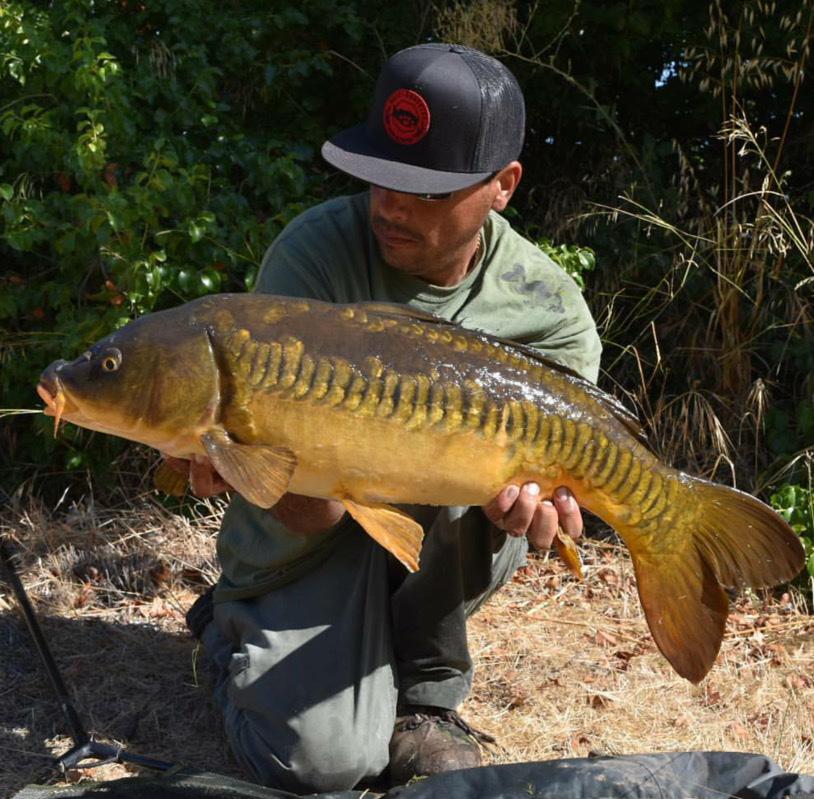
NACA: Luis, congratulations on catching the biggest catch and release carp we are aware of in the USA. Can you give us an idea of how you discovered the venue (without giving too much away) and how you approached it in order to target the bigger fish?
LUIS: My brother Fernando and I have fished a lot of different lakes in Southern California, primarily for bass and to our knowledge none of them have produced a carp over the 40lb barrier until I broke the State record on one of these new waters.
When fishing this new water I decided to change my baiting approach; baiting for 30 days without ever casting a line. Most of us are very anxious to fish as soon as we start baiting but I believe by not fishing and letting the bait do its magic the bigger residents move in and feed with confidence.
Sometimes when we fish straight away the bigger fish stay away from the disturbance. However, after such a long baiting campaign I was confident that by matching my flavors to what I had been feeding I would see these big fish on the bank.
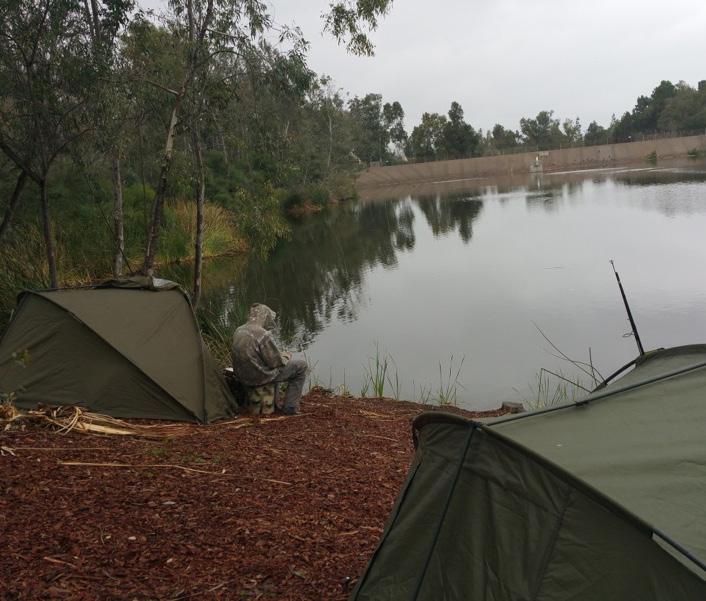
Sitting and waiting
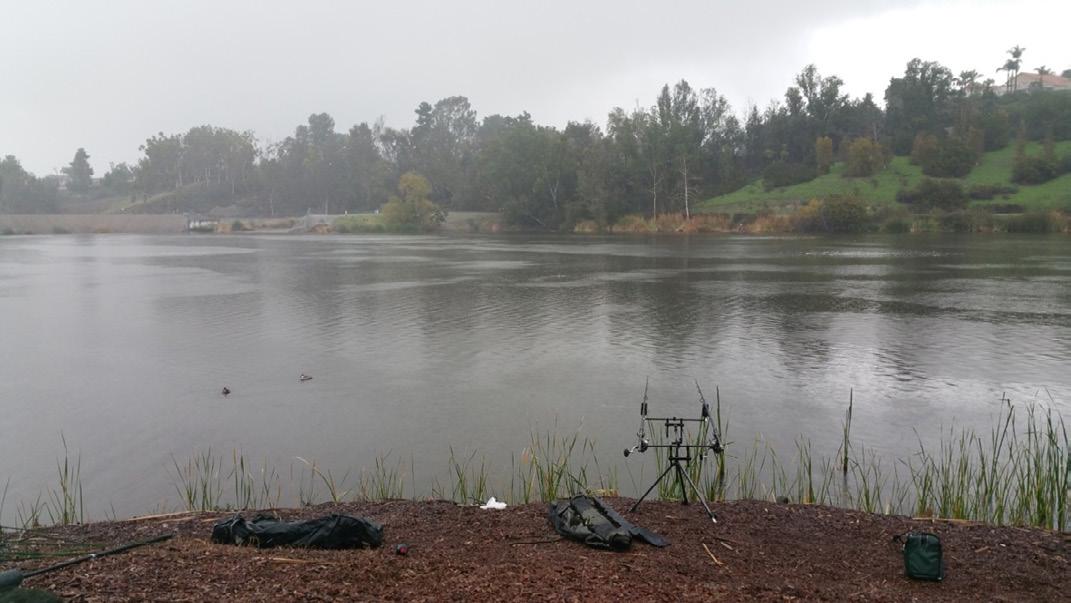
NACA: We understand you put a lot of time, effort and money into a big pre-baiting campaign. Can you give us some details of what this entailed? Did you use boilies, particles or a mixture?
LUIS: Over the 30 days of pre-baiting I did put a lot of effort into driving and getting to the lake, but the results prove that it was a worthwhile effort. The bait I used was primarily boilies and these I make myself.
These home-made boilies consist of a lot of fiberous ingredients, including dried bloodworm and chia seeds koi pellets. Chia seeds have a lot of Omega 3 in them and in my opinion the carp cannot resist the crunch they get when eating my boilies!
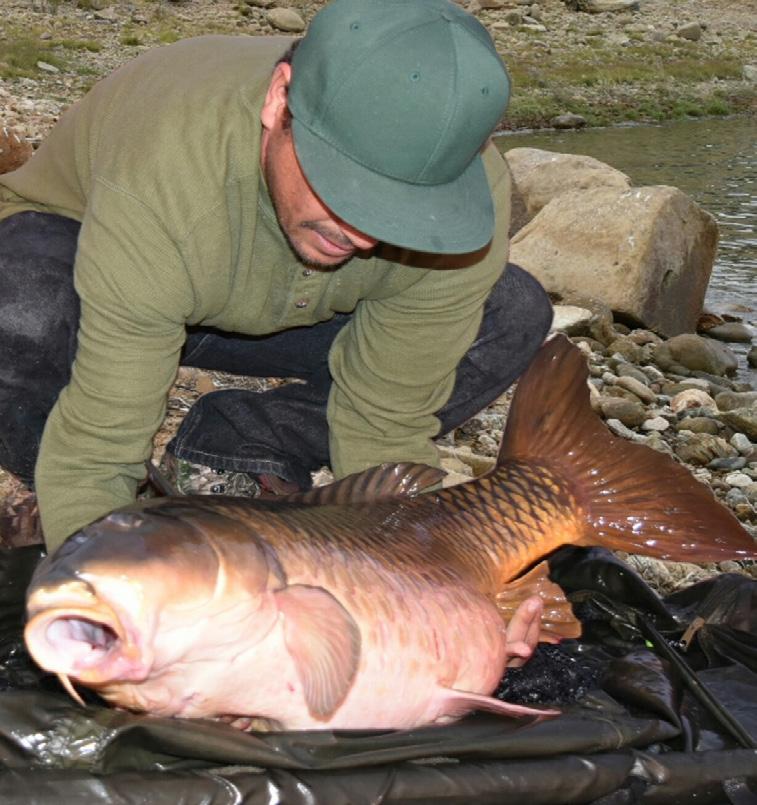
A giant reward for my pre-baiting efforts
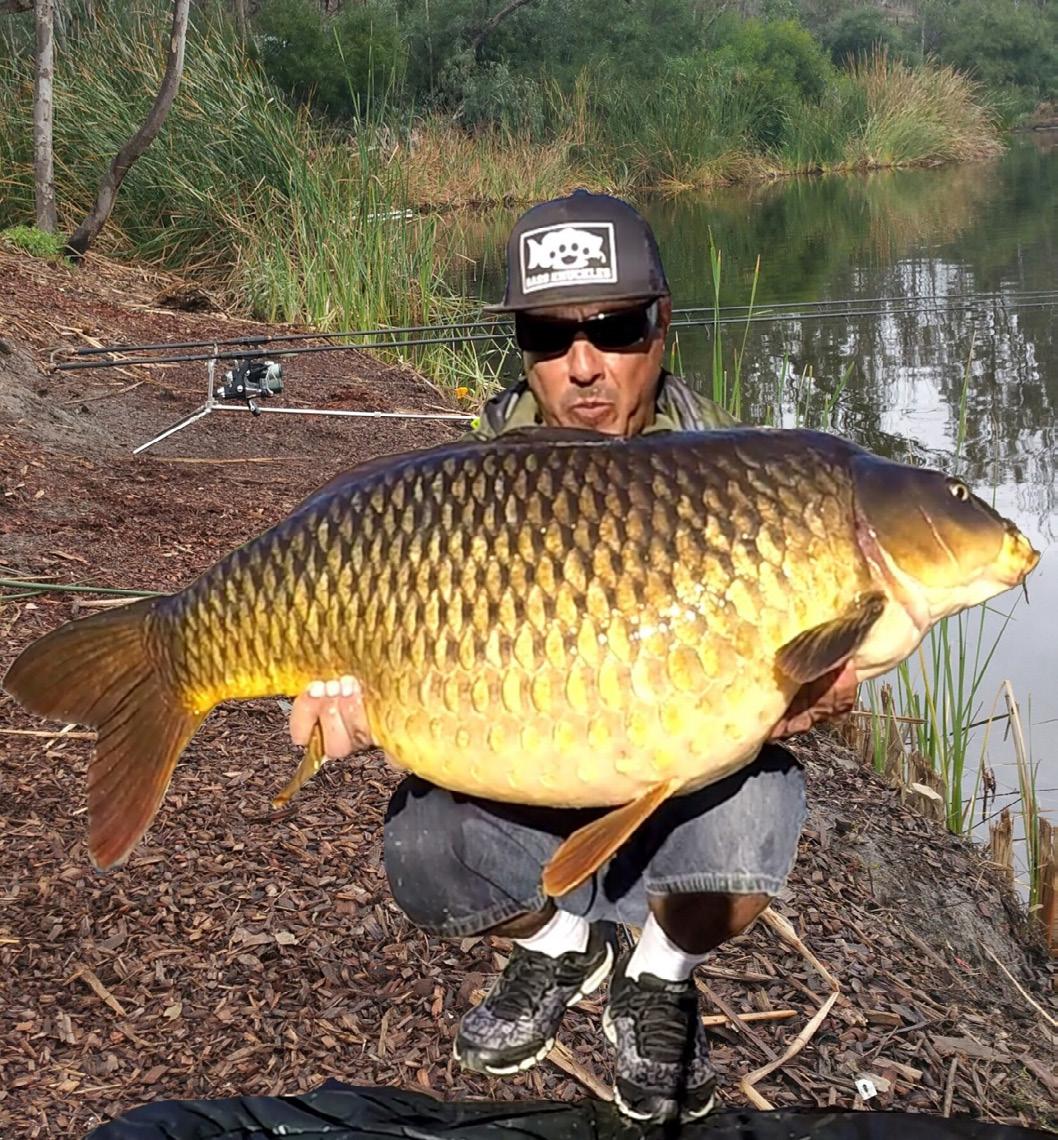
A boilie eating machine
NACA: Like a lot of carp anglers you have a full time job. Did you fish short sessions, nights or longer durations?
LUIS: Like most anglers I have a full time job that does make it hard to get out regularly to bait up. I try to use a particle mix of hemp and chia seeds that will hold the carp in the area for days if I
cannot get back when planned. I work Monday’s to Friday’s and can only fish at weekends, and generally I bait up on Tuesday’s and Thursday’s so that the fish have at least one day in between baiting and fishing.
When I fish on the weekends I only bait lightly as I want the carp to find my hook-baits as quickly as possible.
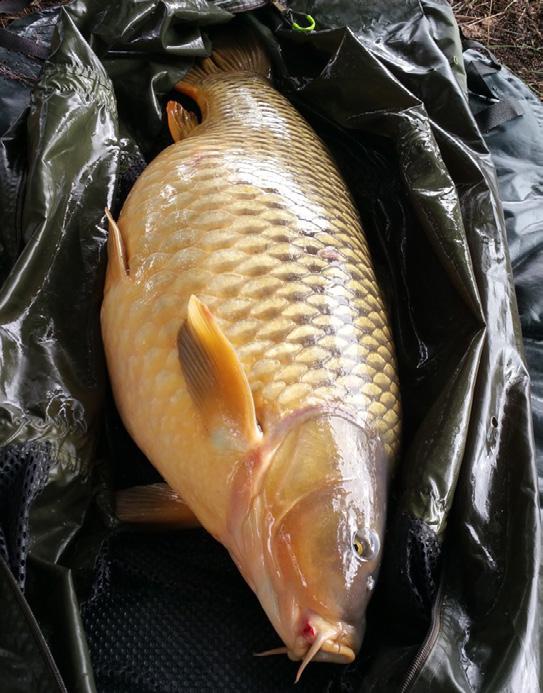
The end result of a long baiting campaign
NACA: Southern California is pretty much warm all year round. Do you think it has the potential to produce even bigger carp? 70lb+?
LUIS: I’m very luck to live in Southern California where the weather is warm all year compared to other states. However, that doesn’t mean that other states can’t produce similar sized fish. In my opinion the weather does help with the fish being more active but I do not necessarily think it makes them grow bigger.
I have a good feeling that the East Coast could produce 60lb carp and bigger, but with many lakes and rivers capable of producing 30 and 40lb fish the anglers feel less inclined to move and search out new waters. My advice would be to not get stuck in fishing the same lakes and rivers for year after year but rather search out new waters and look for fish that have never seen a hook before.
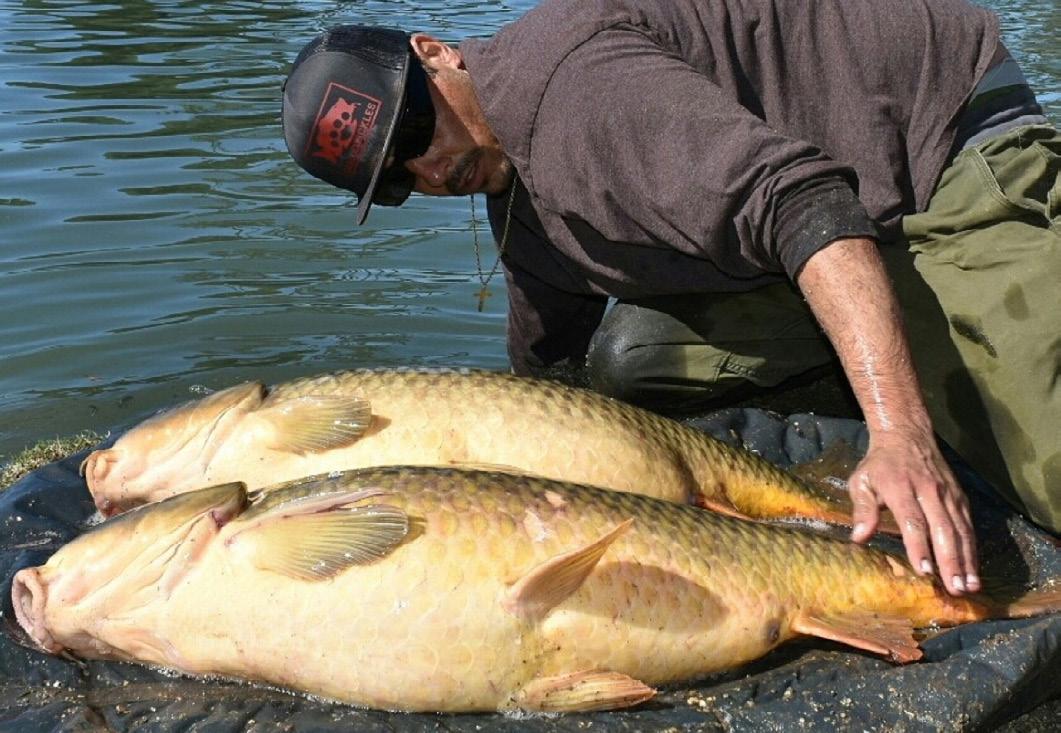
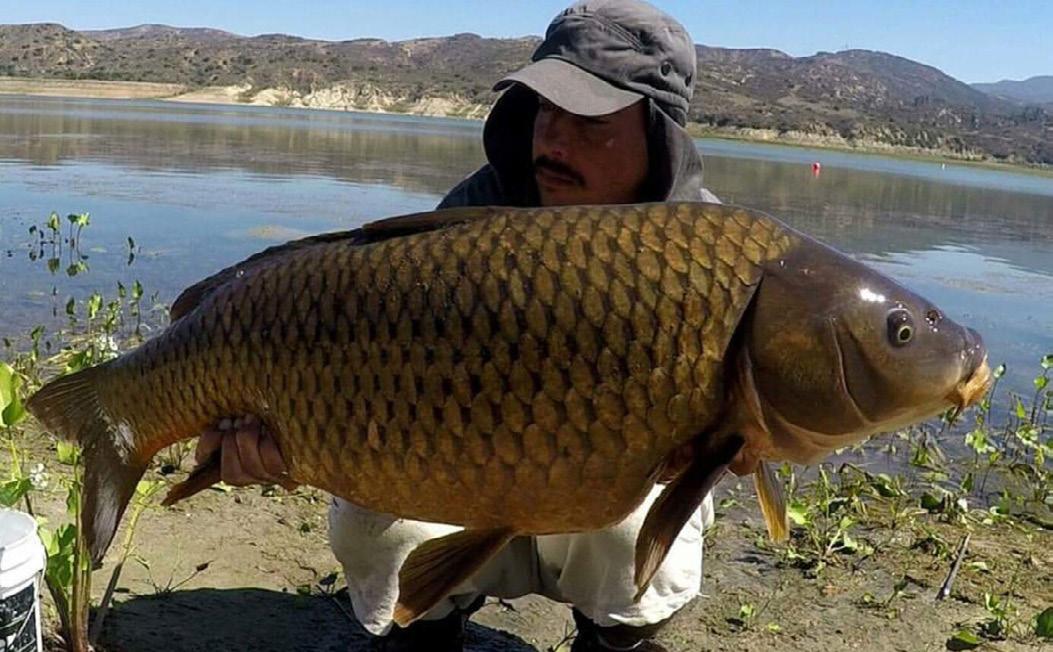
A big Californian Common carp
NACA: What’s your next target? Do you plan on still fishing the venue or moving onto a new challenge?
LUIS: Like many anglers finding a new lake with big fish is the dream. I’m going to keep on searching and dreaming and hopefully I’ll find a healthy water with a good stock of mirror carp.
A true monster at over 56lb’s
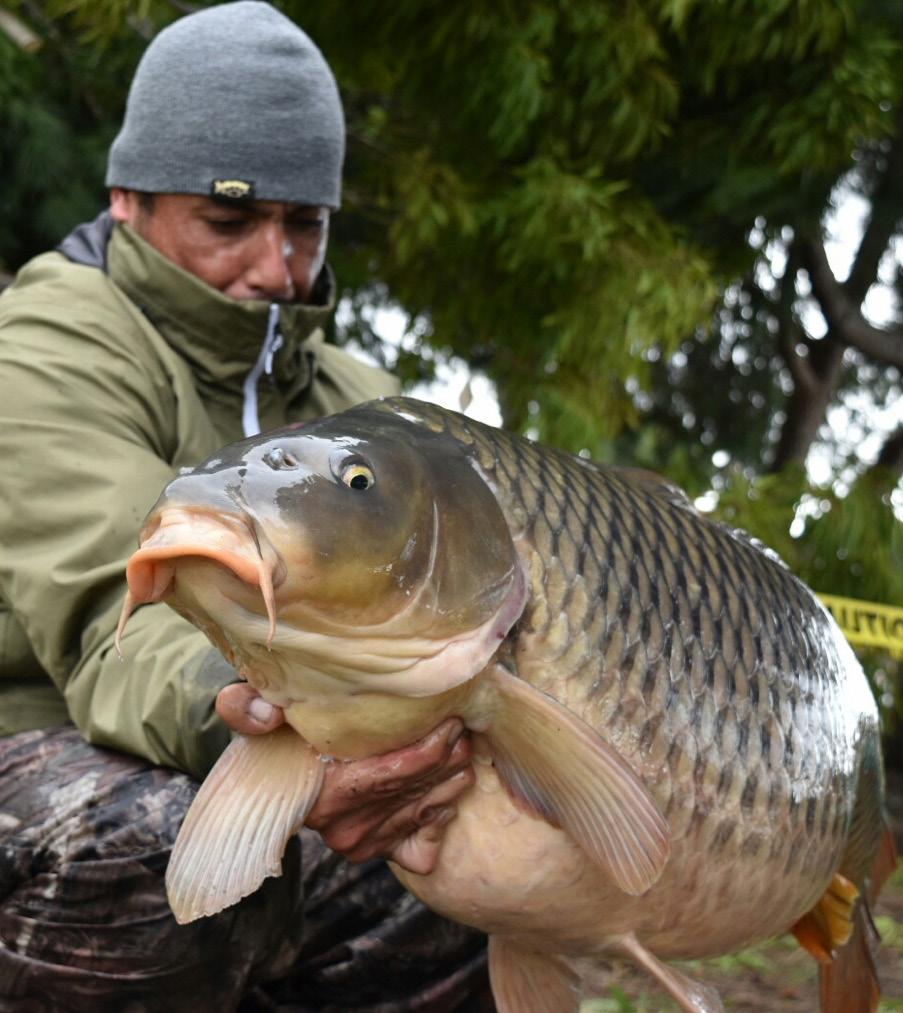
A carp of everyone’s Dreams






This Edition marks a very special moment in CAG History; our 25th Year Anniversary.
Personally, I’ve not been around long enough to have been here since the beginning but I want to thank all of the members who have been part of the CAG family over the years. CAG is run completely as a volunteer organization and its success is largely based on many people’s hard work.
In this issue we’ll take a look at when and how CAG was formed, from its early conception and first few events. We’ll then highlight the past President’s and some of their thoughts from the past, present and future. We will also shine the light on other key figures, who have helped CAG expand over the years.
As well as looking at the past, we will also look at some recent events and also what is coming up in the future.
We hope you enjoy this issue and look forward to the next 25 years of success.
Wishing you all the success for the rest of 2018
Dean Brookes
John (Bud) Yancey
Bud Yancey was the first CAG President serving from 1994 – 2001
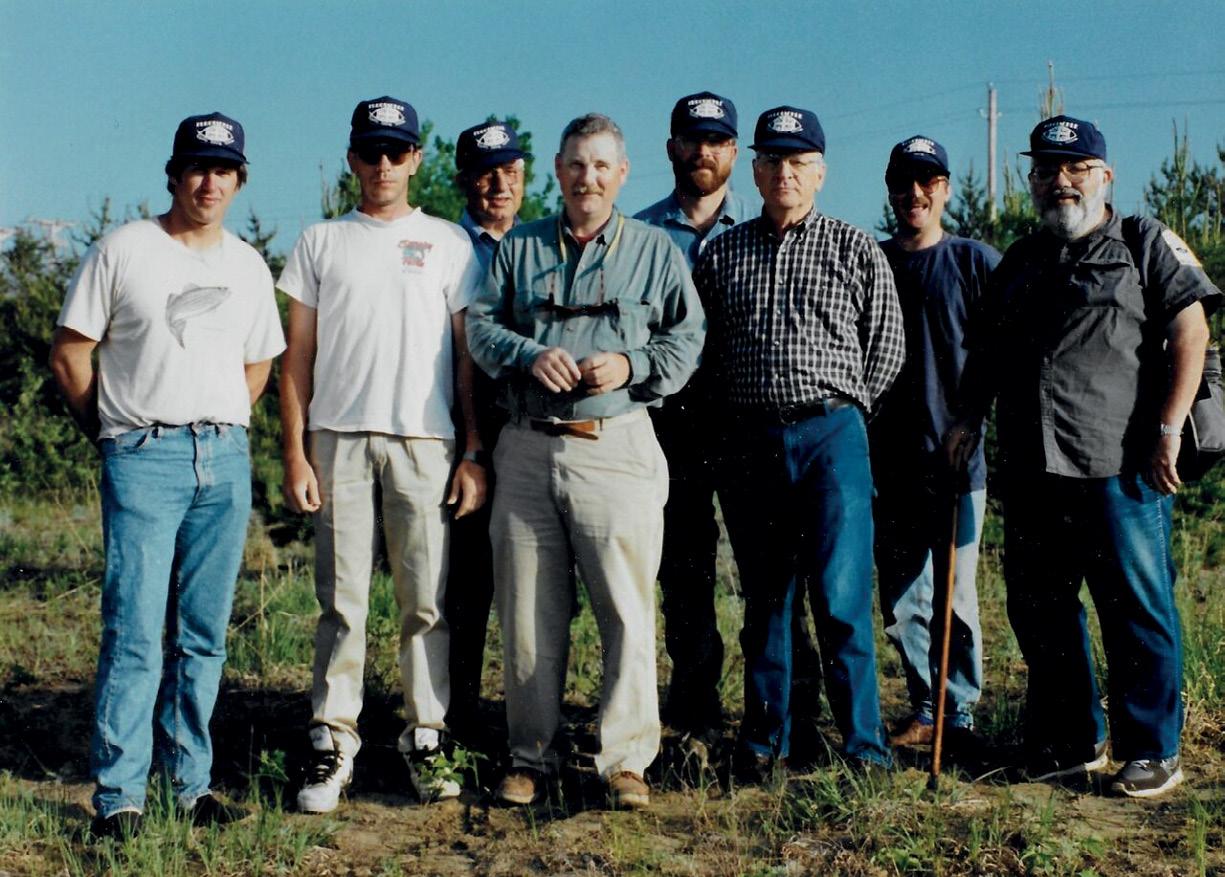
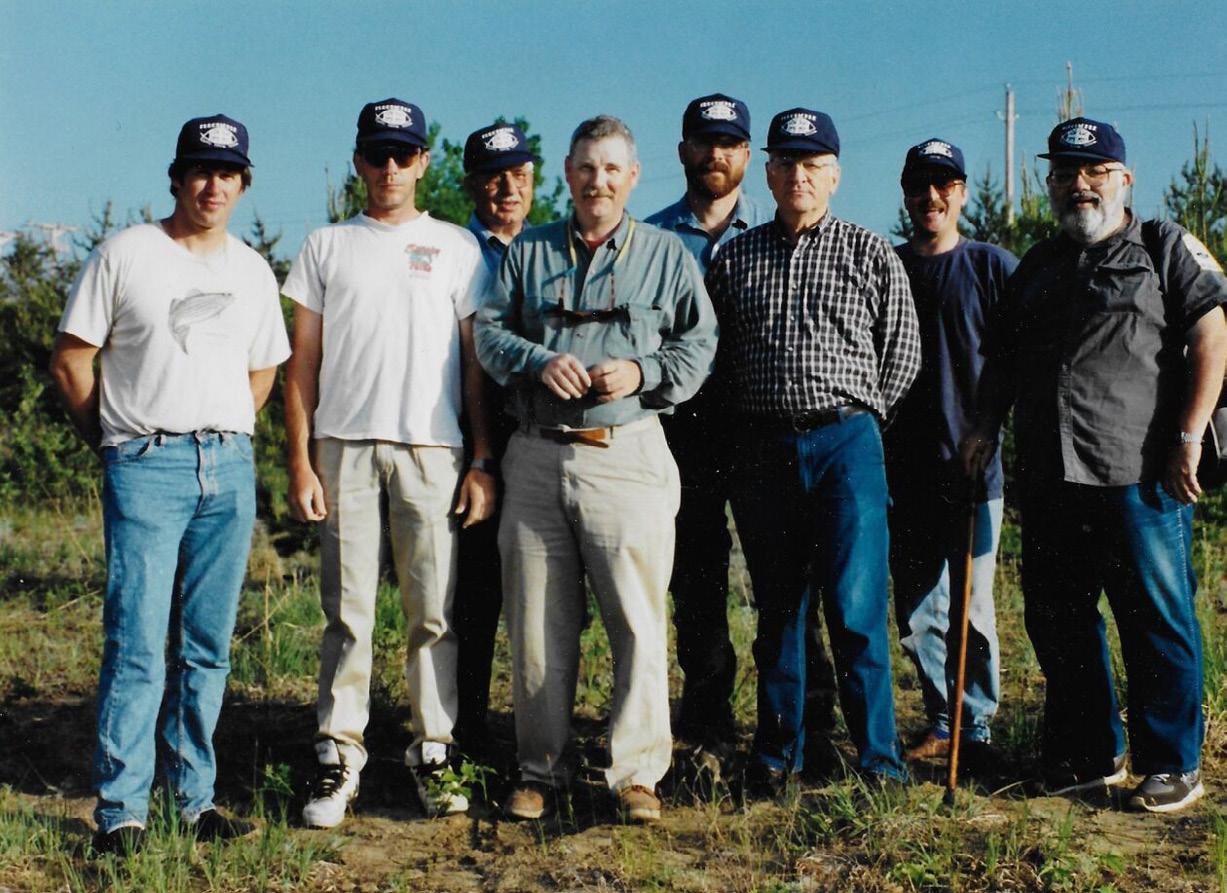
The first ‘Carp Meeting’ took place on May 30th 1994 in Lac Mille near Brainerd, MN. These first steps of formalizing the Carp Anglers Group ended with Bud Yancey being elected as President. This also coincided with an invitation from In Fisherman magazine editor, Doug Stange who was filming a segment on carp fishing with well known British angler Bob Roberts along with Peter Clapperton (of Krafty Katcher) and Randall Akin from Oklahoma.
The first “Carp Meeting” in Lac Mille.
In the early days Bud spent many hours on the phone and writing to anyone and everyone wo might share an interest in carp fishing! In November of 1994 in a letter to Vic Cranfield of the British Carp Society he mentioned the need for a structure which would lead to the creation of a non-profit organization (although this did not actually become formalized until David Moore became President) complete with a mission, by-laws and officers (directors).
By January of 1995 Bud had formed an Organizing committee comprising:
Mike Keyes, Nigel Griffin, Dan Geigerich, Lloyd Wolverton, Bernie Haines, Tony (Quid) Blankley, Tom Woolerey, Don Forbes, Steve Reynolds, Mike Wuff, Warren Bird, Ralph Grasso, Scott Rochus, Jack Rowe & Tom Feeney (in the months that followed more names were added including Gary Carmichael and also Frtiz Vatter in Canada, and Bob Roberts in the UK).
In a letter and 20 page document sent by Bud on Jan 14th he outlined that the committee’s first task was to review the result of a CAG questionnaire. This was to determine the goals and purpose of the Carp Anglers Group along with practical issues such as the location of its offices, who would be elected to serve as officers, their roles and of course the amount to paid by members as annual dues. Another section highlighted ideas for events and tournaments, possible affiliations with other organizations, design of a CAG emblem & motto, ties with England and Europe (more or less), Newsletter ideas and so on.
There was significant discussion around the
name ‘Carp Anglers Group’. In the end most members wanted to continue with the name but others had proposed the American Carp Society (to differentiate it from the British based ‘Carp Society’). American Carp Anglers was another proposal to ensure clarity of location. In the end CAG carried the most votes and helped recognize the many Canadian anglers who were starting join.
Another and perhaps more contentious discussion surrounded the following question: ‘Catch & Release – Strong Statement, No Statement, “Harvest” for Food?’. In the end members voted overwhelmingly to support a statement that said “Treat Carp with Respect. Use Humane Methods and Equipment. Encourage others to do the same”. It recognized the importance of protecting Trophy sized carp while acknowledging the abundance of carp in North America, their historical basis as a food source and the fact that many anglers harvest fish of all species for the table.
In a second letter dated Jan 23rd 1995 Bud had clearly worked quickly! He outlined the CAG Officers and District Chairman positions, their roles and responsibilities together with dues ($20 payable by June 1st).
A new CAG logo was created by Isaac Peterson and appeared in newsletters for several years to follow.
Bud’s tireless efforts included letters to fishing magazines, state officials in fact almost anyone he felt should be engaged in helping CAG promote carp fishing! In January of 1996 he wrote that he had mailed over 125 information packages in response to telephone and written inquiries.
These, Bud notes, ‘led to 45 new memberships and the pace continues’. By now CAG had grown to over 200 members.
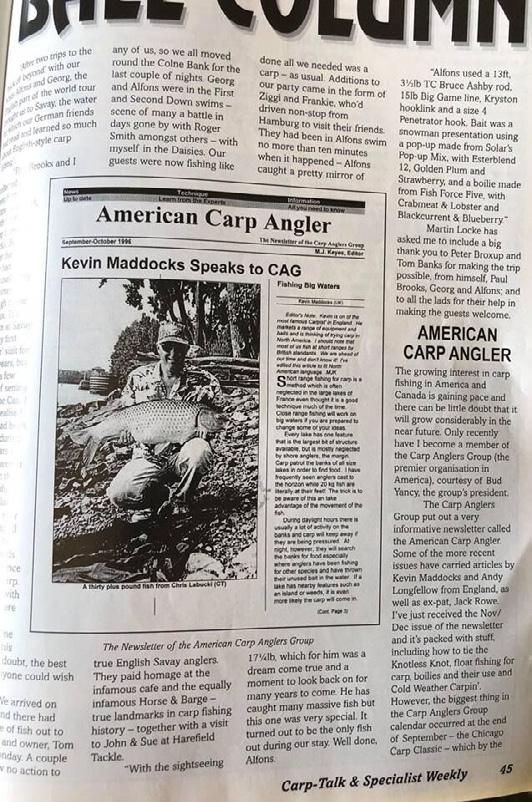
The American Carp Angler the Newsletter of the Carp Anglers Group (later to become the North American Carp Angler (NACA) magazine in early 1997 to reflect the growing numbers of carp anglers in Canada and Mexico) continued with Mike Keyes at the helm as editor. It brought the latest news of forthcoming events, catch reports, stories, advice and much more to people’s mail boxes.
Fortunately Warren Bird had kept copies of all the early American Carp Angler newsletters together with the letters written by Bud. Among this veritable treasure trove is a handwritten letter from Bud on April 12th 1996. He talks about important CAG news but the final paragraph captures his enthusiasm for an anticipated carp trip and a new rod.
Well, I leave for D.C. fish-in tomorrow and am packing now. What to take? I didn’t know boilies, black-eyed peas and chick peas weighed so much. This pm I received via UPS my new ‘Haines Specimen Hunter MK Five”. At 13 ½ feet and light as a feather it’s a real beauty. Although she came from Cono-Flex, and not the Lady of the Lake, I’ve named her Excalibur and she will help me slay a monster (catch a 30).
Bud was also using any spare time when not fishing in the winter months to give slide presentations on carp fishing to local tackle stores and at Outdoor shows or Expos.
For the next few years Bud continued to steer CAG and grow its membership.
His President Page in the NACA newsletter was invariably signed off with an enthusiastic message to “Keep Carpin’ and tell your friends about it.”
In January of 2001 Bud was honored for his Humanitarian Service by the Chicagoland Outdoor Writers and presented with an award by Illinois DNR Director Brent Manning.
At the 2001 CCC meeting Bud announced his decision to step down as President. As the first and after an extraordinary seven years of service he certainly set the ‘bar’ high for others to follow. As the pioneering spirit and shepherd for CAG in its formative years this 25th Anniversary issue of the North American Carp Angling magazine is dedicated to the memory of a true gentleman.
In 2002 Bud was honored with the “Champion of the Queen’ award in recognition of his hard work, dedication and commitment to the Carp Anglers Group.
Bud was born Sept. 22, 1933. In 1951 at age 18 Bud began a career with Caterpillar Inc. and after 44 years retired in 1995 as an engineering supervisor. He married his wife Vera (Maltby) in 1954 and they went on to have three children, 10 grandchildren (including Zach Testa who continues the carp fishing tradition and works for Big Carp Tackle) and four great-grandchildren. He was a member of Groveland Missionary Church, a Boy Scout leader for many years, an Army veteran and a member of American Legion Post 318 in Morton. Bud passed away June 30th 2010. He was, as so many of us knew him, an avid fisherman!
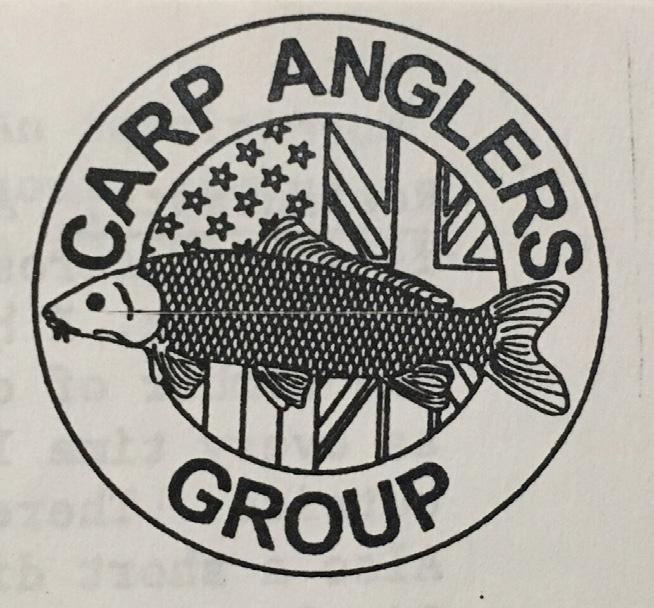
CAG’S first Logo
In 1991 Dr Mike Keyes published ‘Modern Bank Fishing’. This seminal book was the first of its kind to explore the very real opportunities from shore that had bypassed many North American anglers in their perceived need to get afloat to catch fish.
Mike recognized that while fellow ‘Americans had not advanced beyond the piscatorial stone age when it came to catching fish on the margin’ our European cousins by contrast had developed some very advanced tackle and techniques.
As someone who loved to teach, loved to fish and loved to talk fishing Mike saw an opportunity to bring those ‘fishermen who were still using cane poles and 2” bobbers kicking and screaming into the age of high tech fishing’.
In addition to his book Mike also began writing a column for Carp Anglers in the American Fishing Association (AFA) magazine. The AFA was then very much focused on match fishing with the likes of Mick Thill, the noted float maker, and was somewhat resistant to carp fishing.
Those early matches were all about catching large bags of 2-3oz fish of any species.
However Mike remembers one particular match being won by a relativly unknown angler who landed several 2-3lb carp on sweetcorn much to the chagrin of Thill and other specialist match anglers.
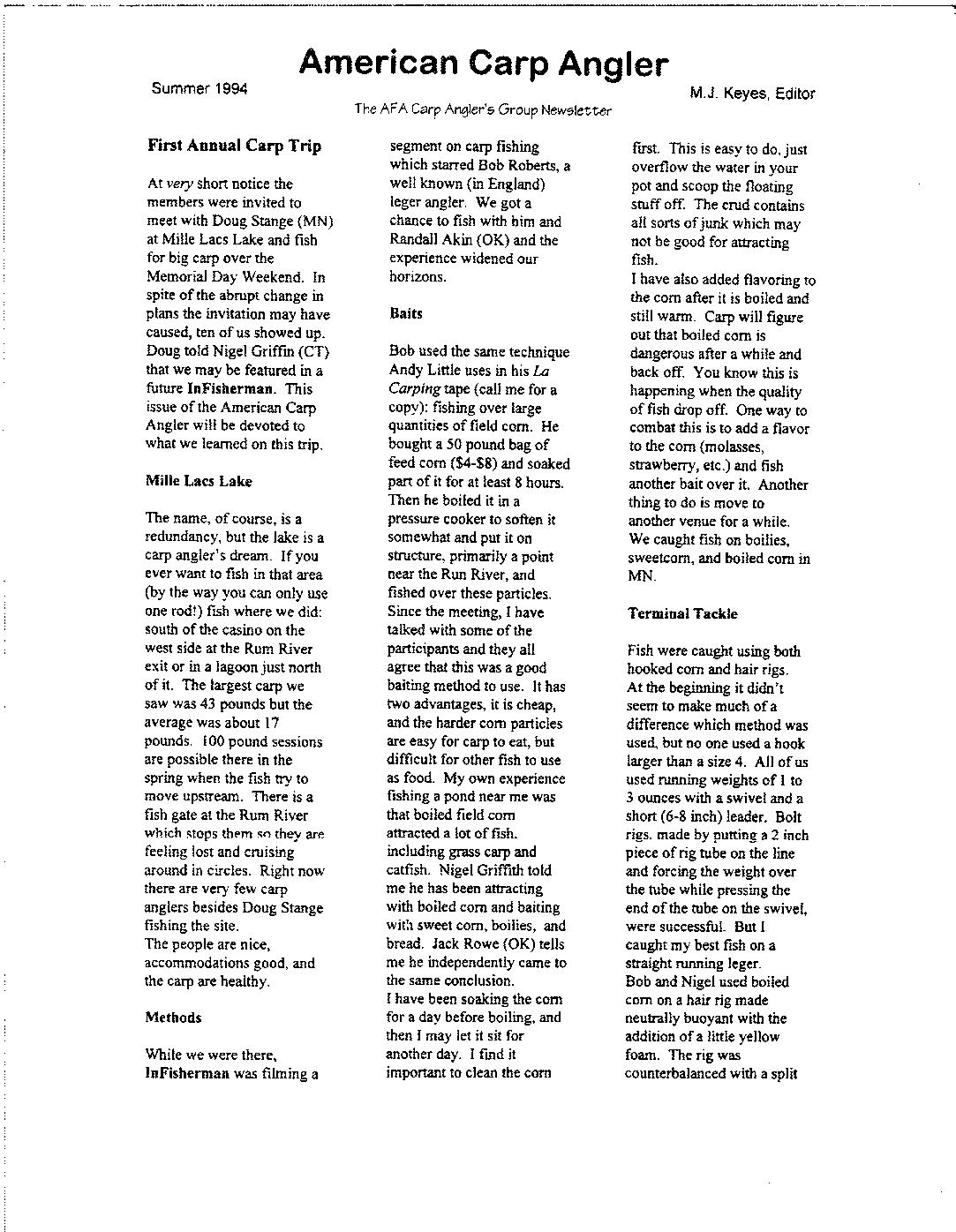
The Carp Anglers Group was formed in 1993 as the result of a letter from Mike Keyes, looking to form a carp arm for the ‘American Fishing Association’. This initial letter helped spurn a small but fanatical group of anglers who went on to form the basics of the organization.
As the interest took hold Mike’s letter to a small group of ‘Carp Fanatics’ back in May 1993 laid the foundations for the Carp Anglers Group to be created, in the first instance, as a section of the AFA.
Mike’s plan was to publish a quarterly newsletter ‘filled with tidbits’ on carp fishing from the likes of Dan ‘Carpman’ Giegerich, Nigel Griffin (owner of EuroTackle) & Mike Hayder (author of Fishing the Carp).
Mike remembers the next ‘big thing’ being a gathering in Minnesota with Doug Stange the Editor of In Fisherman Magazine.
Mike could not be there but several key anglers including Nigel Griffin joined Doug along with top UK anglers Peter Clapperton and Bob Roberts fishing the 130,000 acres Mille Lacs Lake in May of 1994.
The article titled “The World’s Greatest SportFish” was published in the February 1995 edition of In Fisherman.
Those early gatherings, Mike says, helped bring more like-minded carp anglers together.
In the Fall of 1994 and organized by the Chicago Bank Anglers the first Chicago Carp Classic took place along the river in downtown Chicago. “A lot of folk from the Chicago area really took carp fishing on board and helped move CAG Forward.”
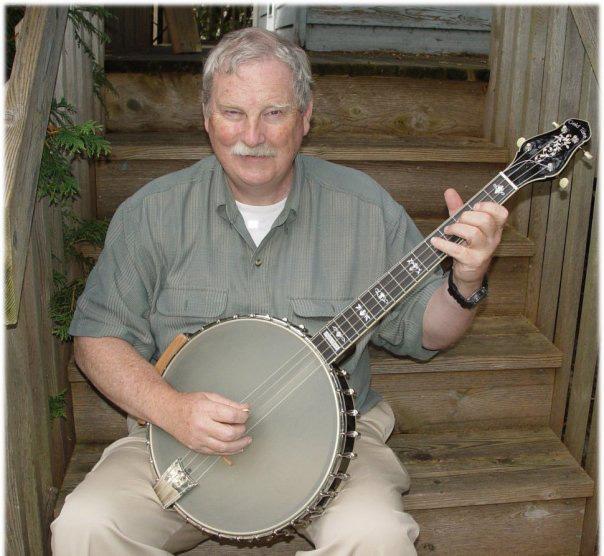
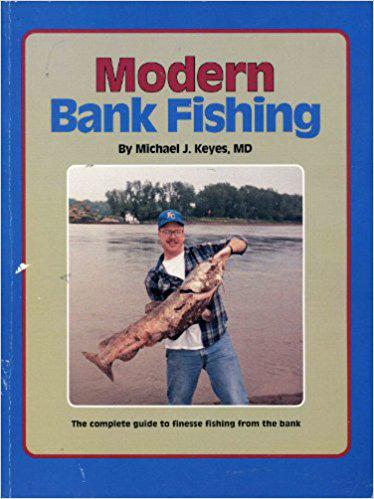
By now Bud Yancey was involved and Mike notes that it was Bud’s energy, drive and an eye for detail that really made things take off.
I asked Mike about his observations on carp fishing over the past 25 years here in the USA.
He noted the easy access to abundant carp waters compared to the most of Europe and the relative ease in catching wild fish. He also thinks the Pay Lake anglers really helped open a lot of folks eyes to what could be achieved here in the USA.
Mike was not only instrumental in CAG’s start but also continued to remain involved for many years most notably as a Vice President alongside President Bud Yancey and as the NACA Editor. In 1997 he was honored with the Champion of the Queen award in recognition of his achievements.

The initial letter, sent out to potential members




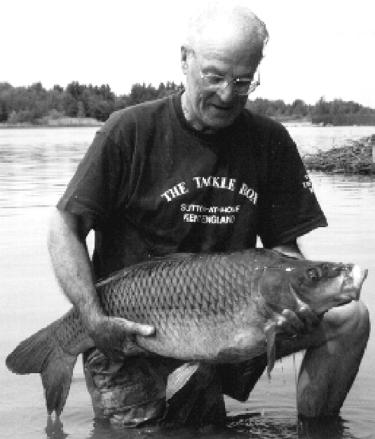
Since CAG’s inception in 1993, CAG has relied on a large number of volunteers. While we cannot highlight everyone who has help over the years, we’ll try to highlight many of them, whether in text or with a picture. The success of CAG is not just a website or forum, but it’s in the many fish-ins, tournaments and social events that take place each year. Sometimes a picture is definitely worth a thousand words and we have a large number of images in this edition that show the joy and friendships that CAG has cultivated and continues to provide.
While all of the volunteer positions are important we do rely on a Board of Director’s and a President to oversee the organization. This is a position that is voted on by the membership, every 2 years. Below, you’ll see the list of past President’s all the way up to Iain Sorrell who is currently serving his term. We would like to thank them all for their tireless efforts, whether short term or long term. Over the next several pages we’ll have a few of the past President’s give us an insight into their term
Bud Yancy (1994-2001)
Bud was CAG’s first President. He took over CAG at a crucial time in its development. He grew CAG an informal group of about 40 persons to an organization of over three hundred avid anglers, all of whom wanted a little more structure and discipline in the club.
Bud provided that and, at a great personal sacrifice of time, money, and frustration, brought it to the state it now enjoys. Without Bud, CAG would simply not exist.




Paul Pezalla - interim (August – October 2005)

Brian Nordberg (October 2005 – October 2007)
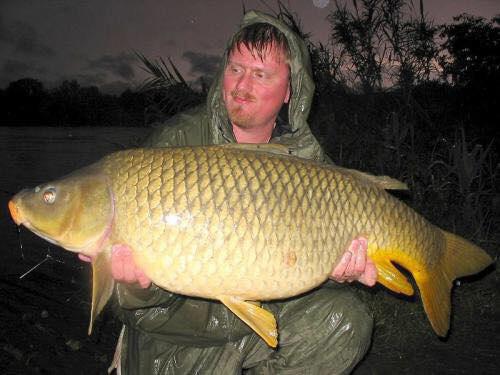
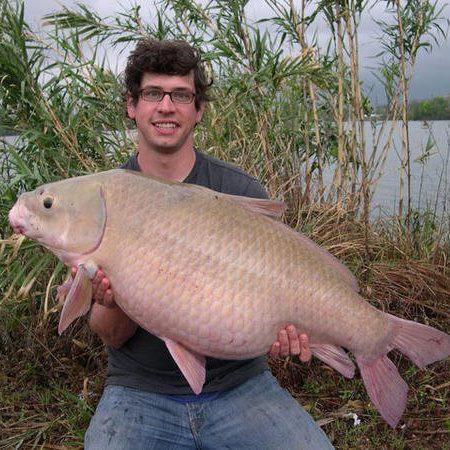
Louis Cook (November 2007 – October 2010)
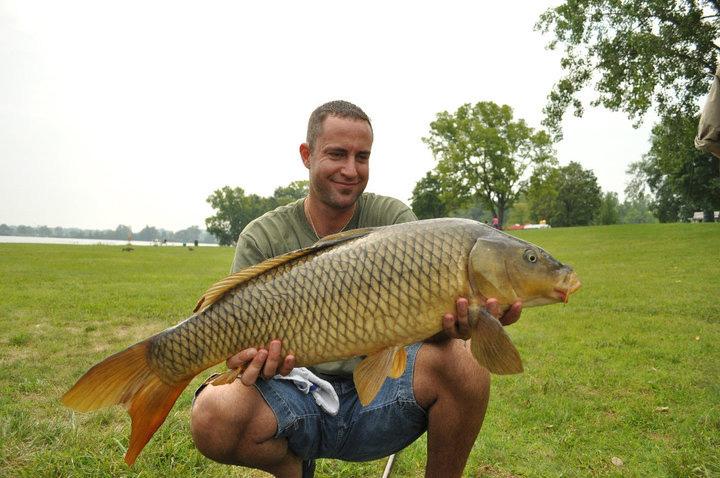
(November 2010 – October 2012)
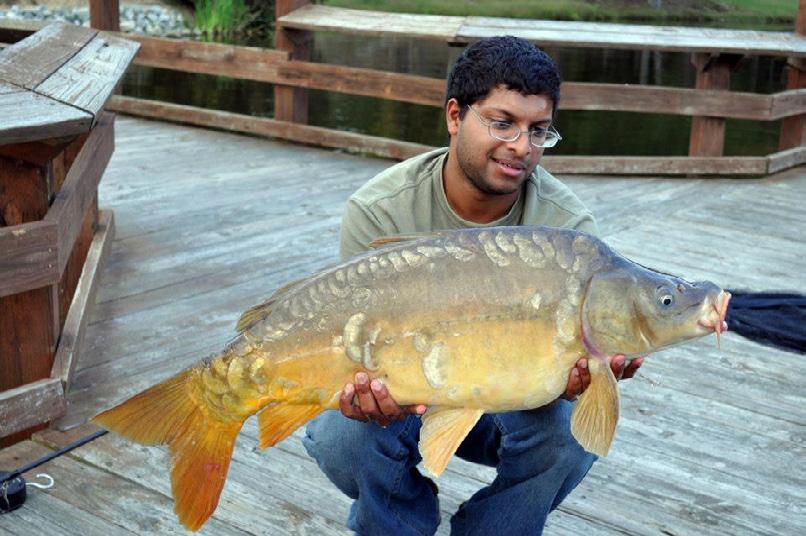
– June 2014)

October
(June 2014 – November 2017)
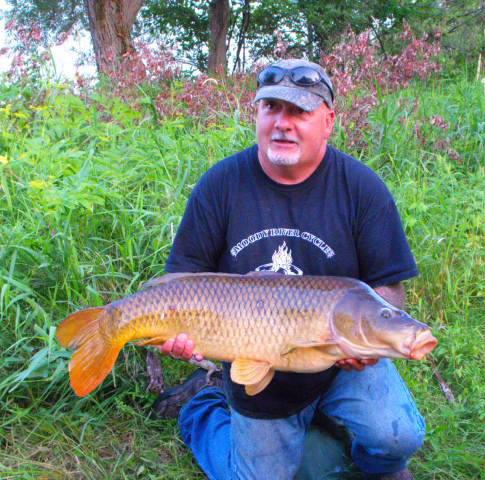

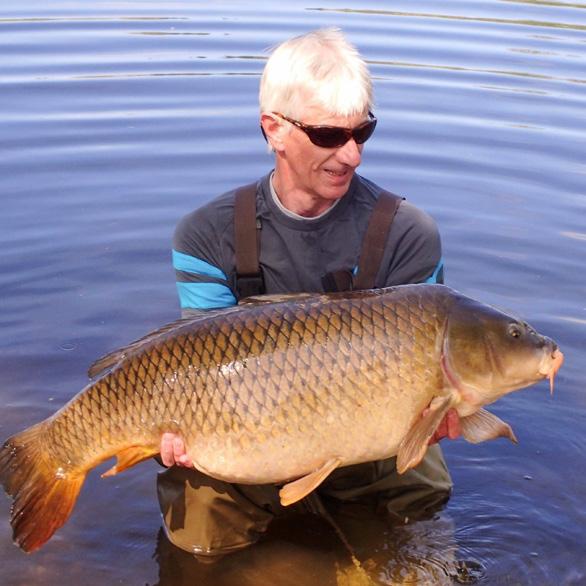
– Present)
North America’s Longest Running Carp Organisation with a Dedicated Mission:
• To gain acceptance of the carp as an exciting and challenging sport-fish.
• To become better carp anglers, assist others and encourage them to join us.
• To treat the carp with respect, promote the release of trophy-size carp & encourage others to do the same.
• Most of all: Go fishing, Share with others, and have Fun.
As a member you will also be adding your voice & support to help CAG continue its efforts to work with State & other organizations to increase the recognition for carp as a sport fish to benefit the angling community
Member Benefits Include:
• Full CAG Forum Community Access
• Quartely NACA Magazine*
• Member Benefits
• CAG Apparel & Merchandise
• Fish-Ins, Events & Competitions
• New Member Tackle Pack
*inc Printed Full Color Special Edition
Membership is only $20 / Year (+ a one time $5 joining fee) which includes you, your spouse & any children under 18 living in the same household
It’s always a valuable exercise to look at your history to discover what has come before and how we can improve things in the future. NACA reached out to several of the past President’s and asked them a series of questions. We start with Bud Yancey, the first CAG President and I want to thank Zach Testa who answered the questions and gave us some insight into his grandfather.
Next we have David Moore who took over from Bud and currently oversee’s Big Carp Tackle. Finally we have Louis Cook, who although not in the public eye anymore, continues to pursue all manner of fish species.


Answered by Zach Testa
Can you tell us a little bit about your grandfather; who he was, his passions, early memories of fishing etc?
Bud was passionate about nature. Fishing, hunting and trapping (when younger), and helping others enjoy the outdoors.
As an engineer for Caterpillar (which he retired from) he could have laser like focus and be very efficiently organized when his mind was set to achieve something. Being methodical is a trait that I received from him.
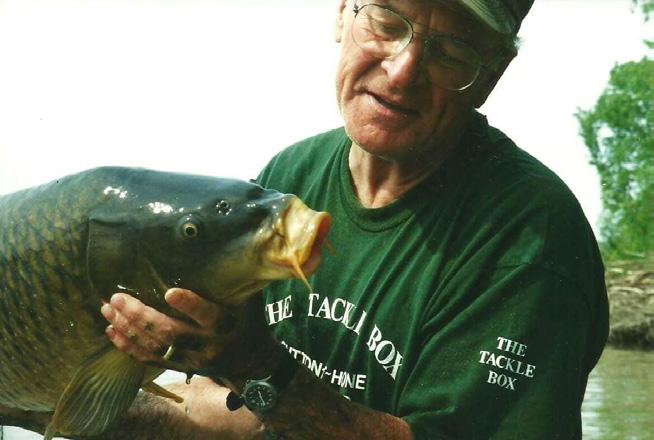
When it came to all the Grandchildren I seemed to be the one that latched onto fishing the most. One of the earliest photos (yes, an actual paper photo!) is of me at the pond down the road from my grandparents’ house when I was 18 months hold, holding a rod and reel with a bluegill on the hook. This is the same pond where I was mentored in the arts of targeting panfish and bass.
There were an untold number of hours spent around this pond together where I took in more information, not just about fishing, than I could fathom at the time.

When was the idea of CAG born? Do you know what spurred Bud to start the process of forming the group?
It is my understanding that the formation of CAG came about from several different angles and sources. This culminated with a large amount of correspondence with several key people which led to a plethora of debates about what CAG should be and stand for.
Luckily due to Bud’s methodical nature all of those letters were retained in binders which I have sent to Iain Sorrell, so he and CAG have all the information about the who, what, and when from the very first thoughts of a pro-carp group.
Were you involved in the early years of CAG?
I do remember seeing a picture of you at a CCC?
I’ve been involved since the very beginning however as I was quite young I didn’t have much say in what went on! I was vital in the process of putting the newsletters into envelopes and licking the stamps to get the old paper publications into your mailboxes.
As time went on we spent the winters travelling the Midwest running a both at many of the outdoor/ hunting/fishing expos and shows trying to get people excited about carp. This was all before social media and the internet so being face to face with people that have hated and blamed the evil carp
for generations made quite the impression on me. I’m very happy to see how far we have come even if those type of people still, and always will, exist.
I attended as many events as I could because that is what CAG is about! Fish-ins, expos, and the carp clinics (where we prepared and fed carp to the attendees) that we arranged were vital in getting people to see that carp aren’t all that bad.
The CCC was always a great time! I believe the one you’re referencing would have been the year 2000 and held on the Chicago River. There anglers from as far as the UK and South Africa. While I didn’t do very well in the event on Saturday we held a social on Lake Michigan on Sunday.
With the help of Tommy Riley who picked me up extremely early from the hotel I landed my first 30+. Bud arrived in time to witness the whole thing and was more than pleased!
What do you think your grandfathers greatest accomplishments were with CAG and carp fishing in general?
It would be hard to pinpoint what he believed

his greatest achievement would have been. CAG meant a lot to him so I believe just seeing the group grow and carp becoming a more recognized is all he ever wanted to accomplish.
Do you have any stories of fishing events with Bud?
There are large blocks of my memory that have disappeared due to several TBI’s however I retain very vivid memories of being with and fishing with my Grandfather.
I am not an effective writer so it’s hard to express all the times I can remember. Whether we were catching panfish/catfish to have a family fish fry, in the boat chasing bass and crappie or spoonplugging or sitting by the rod pods we always had a good time. For many years it didn’t matter what the species was we just enjoyed the time on the water.
Fishing with Bud is how I spent most of my youth and looking back there’s no other way I would have spent it.
Anything else you would like to share?

I would like to touch on what I feel carp angling has become. As I mentioned CAG was based on social events and getting together with other anglers.
Spreading the word that the much-maligned Carp are not the destructive force they have been made out to be. While social media and the internet have allowed carp anglers to reach thousands of others nothing will replace getting them on the bank and inviting others along.
If we want to grow CAG and move forward in the promotion and increasing the status of Carp then we all need to introduce new people to the sport. Getting the youth involved is vital to the longevity of CAG. I should know, who knows where I would be if it wasn’t for CAG when I was young.

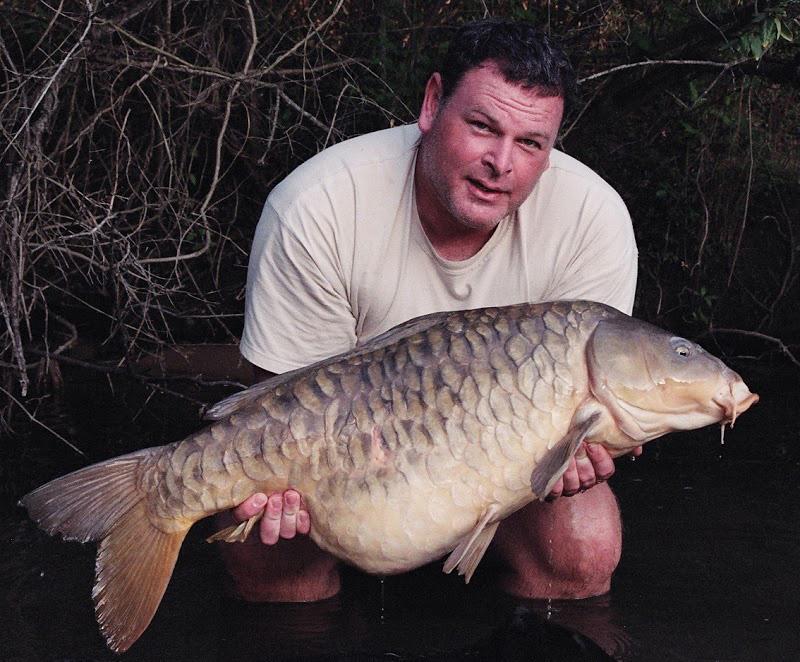
When did you first hear about CAG and what made you join as a member?
I was living in Tulsa Oklahoma and a friend mentioned he’d seen an article about CAG in an In-Fisherman discussing carp fishing. I was big into fishing mostly for bass, but other species as well. So we went below a low water dam where there were literally 1000’s of 6-8lb carp. After catching 100’s of those I then wondered what a 20+ would
be like? Once I landed a twenty a few years later I sold all my bass tackle and went all in on carp angling.
Did you fulfil any other roles before becoming president?
Bud had asked someone to help sell ads for the NACA so it could be improved. It gave me a chance to see what CAG was about and what a terrific man Bud was.
When did you serve as President? Years?
2002-2003. I made it clear up front I was only going to serve 1 term!
Once you became President, what were your main goals and aims?
Bud had wanted to get CAG set up as a true Non-For-Profit but was getting quotes for around $2500 back then.
I was a CFP at the time and had helped clients set up various business entities, but never a NFP. It was a long process and had some help from Brian Nordberg who was on the Board of Directors at that time. Paul Pezalla, Brian, Jim Suigihara(set up the forum) and Stewart McKenzie(NACA Editor). I was extremely fortunate to have them help me.
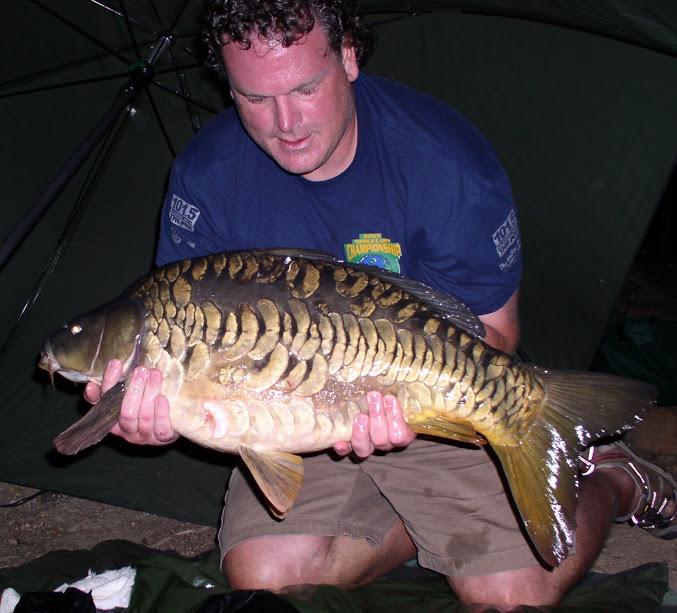
During your time with CAG what is your greatest memory and/or proudest moment?
That’s tough. Probably getting the NFP officially established and then the Austin Team Championship off the ground? In the mix would be helping to get the NY Jr Carp Tournament going as well.

That’s how I met my great friend Kathy Kelly-Ori. I’ve made so many lifetime friends through CAG which has been amazing.
Are you still involved in the carp fishing world?
That’s a loaded question! Yes I’m still involved. Big Carp Tackle just had its 13th year in business.
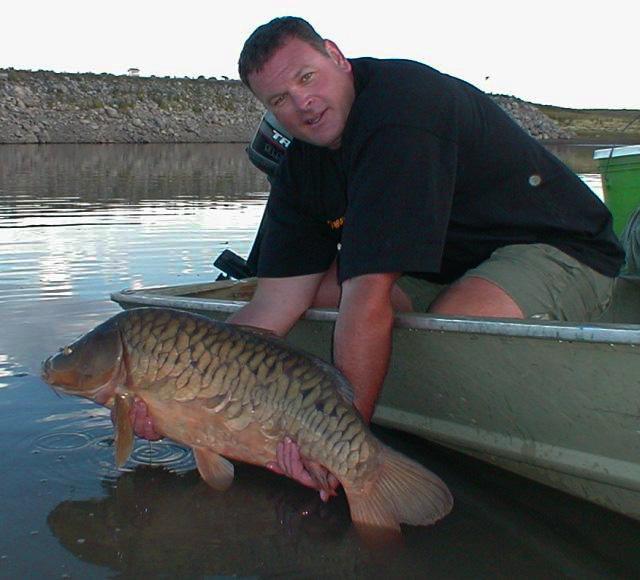

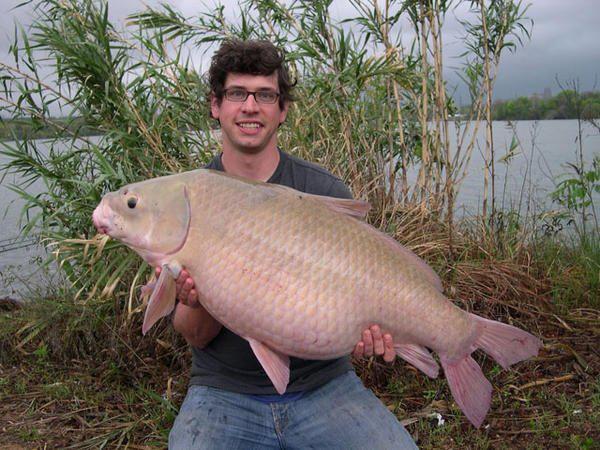
When did you first hear about CAG and what made you join as a member?
In my last years of college I lived with my friend Matt. We learned about fishing for carp online after seeing them in a local trout stream we often fished.
tHe put me on to the CAG forum and eventually got me to join so we could fish the FFF on New Year’s day together in 2003.
Did you fulfil any other roles before becoming president?
PA State Chair, Forum Moderator, maybe more I’m forgetting.
When did you serve as President? Years?
2007-2010, 3 years.
Once you became President, what were your main goals and aims?
When I was elected I had a big platform statement full of issues I thought were key to the groups struggles and growth at the time.
Once I became president I did work on those things, including making directors voting public to calm member angst over secrecy and engage them in the process. But almost immediately my “main goals and aims” moved from my own ideas to maintaining the work of the admins that came before me.
I really had no idea how difficult it was to manage a volunteer army and a shoestring budget that truly almost broke down every quarter when we printed the magazine. I didn’t want the good work of others to slide backwards, so keeping the glossy NACA going while I was in charge became an important personal goal.

We had a lot of businesses that advertised, and luckily Dynamite Baits had an interest in advertising with us as well. They bought a large portion of our advertising, which was controversial because I had a sponsorship with them.
This created a lot of headaches for me that frankly was not worth any amount of free bait, but I don’t think I’d do it any differently if I had it to do over again because that money kept the mag afloat.
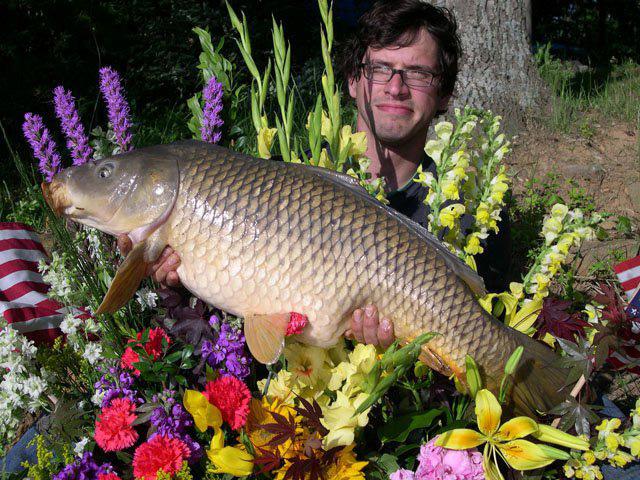
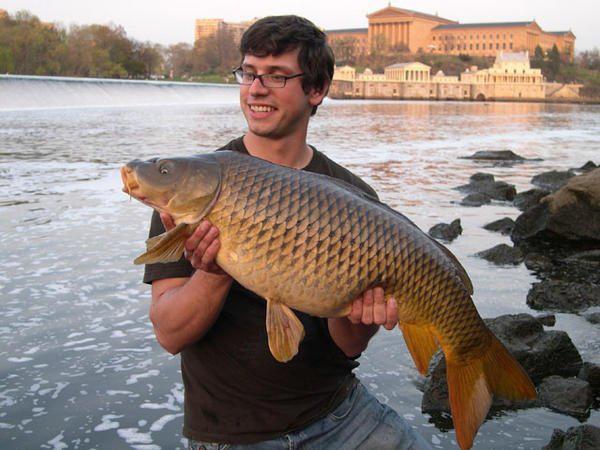
Similarly I found it hard to continue the legacy of the CCC once it was decided to take it on the road out of Chicago. I tried my best to use it as an opportunity to reach out to groups that were always on the edge of CAG, holding the CCC at a well-known Southern Paylake and in popular Fish-in location in Canada. In the end I was able to add a few things to the group that I feel good about, but my strongest achievement was maintaining the good work and ideas of the volunteers that came before me.

During your time with CAG what is your greatest memory and/or proudest moment?
The creation of the Big 4 is hands down the thing I am most personally proud of. It’s not well understood by most, but there were multiple strategies behind this event, well beyond just having an online event and making the group a profit.
After running events like the CAGI and seeing the work others put into the CCC, FFF and the ATC, I wanted to build an event system with similar levels of fun and exposure, but significantly less work for volunteers.
I wanted it to practically run itself, and since it could be nationwide, I wanted it to expose big fish from new waters everywhere without forcing the anglers to give up their secret venues.
There was a delicate balance to it, but I really think it worked. In my early days in CAG I remember loads of discussions about when a real, verified CAG 50 would be caught.
Them days are over. I sure haven’t caught a 50, and I may never. But I like to think I gave good incentive for a lot of anglers to fish their best local waters at the best time of year, and to share their catches without forcing them to give up any secrets. That incentive led to a lot more big fish being caught and shared by our members.
The very first Big 4 paid for the leaderboard application we had built and even turned a small profit. With a leaderboard backend that did most of the work, and all the graphics already made, it didn’t take a ton of effort to run the Big 4 the second year and it added some needed dough to the budget. I hope it’s still that way for the volunteers running it today.
Many of the best catches I’ve seen from CAG members in the 15 years I’ve been paying attention have come from this event. That feels really good.
Are you still involved in the carp fishing world?
I was quite happy to move my fishing life away from public scrutiny but I still fish a lot for all species, as I always did. I’ve caught a few PBs since leaving the presidency, and I blanked quite nicely this past weekend. I’m still a member and still in regular contact with many of my friends from CAG, and I doubt that will change.

Anything else you’d like to share about CAG?
I’ve had a lot of great jobs, visited all 50 states and generally been lucky enough to see and do more than I ever expected in life. Looking back, I learned more and met more great people through CAG than any other way. Thanks!!