


























Volume 25, Issue 1 Spring 2020
Native Nectar Plants for Migrating Monarchs at East Coast Sites Nebraska’s Forest Butterfies Wanted Alive in Your Garden: Question Mark Caterpillar
Heading into the garage at beginning of the spring growing season, I wander past the frewood, snowblower, and shovels to fnd my stash of fowerpots. Every year when I place the frostsensitive terra-cotta outside, I also rehang my NABA Certifed Butterfy Garden sign in its place of honor, wired to the side of the deer fencing down by the driveway.
Signage in a butterfy garden, or any garden for that matter, lets people know that something special is going on and presents an opportunity to share information about the needs of butterfies. So many dog walkers pass by my butterfy garden sign, read it, and only then look around for butterfies. You can practically see a lightbulb going off inside their heads––a garden for butterfies!
Interestingly, most of the conversations I have down in the driveway are about butterfies and not about the garden itself. A surprising number of passersby have noticed butterfies in their daily life but have never stopped to think more deeply about them. Others have never noticed or considered butterfies at all. After seeing the fowers and butterfies in my garden, I hope that their focus shifts.
This year I plan to pot up a few extra plants to leave by my sign. A note will let pedestrians know that the plants are to take home––I will not put up a large note or a lot of plants, just a small offering for the neighborhood. It is a simple way to expand my local butterfy habitat and hopefully increase the number of people who consider butterfies in their activities.
—Jane Hurwitz, Editor
Butterfy Gardener is published quarterly by the North American Butterfy Association, Inc. (NABA). © 2020 by the North American Butterfy Association, Inc. All rights reserved. Views of contributors do not necessarily refect the views of NABA.
Editor: Jane Hurwitz Associate Editor: Mary Anne Borge
We want to hear from you! Please send Butterfy Gardener correspondence and submissions to: Jane Hurwitz, Editor, NABA, 4 Delaware Road, Morristown, NJ 07960; hurwitz@naba.org
Articles, gardening tips and observations, artwork, digital high resolution photographs, poetry and comments will be considered for publication. Please send self-addressed stamped envelope for items to be returned.
Butterfy Gardener welcomes advertising. Please write us at: Butterfy Gardener, 4 Delaware Road, Morristown, NJ 07960, or telephone (973) 285-0907 or fax (973) 285-0936 for current rates and closing dates.
For questions concerning membership issues, magazines, or changes of address, please write to NABA Membership Services, 4 Delaware Road, Morristown, NJ 07960. Occasionally, members send membership dues in twice. Our policy in such cases, unless instructed otherwise, is to extend membership for an additional year.
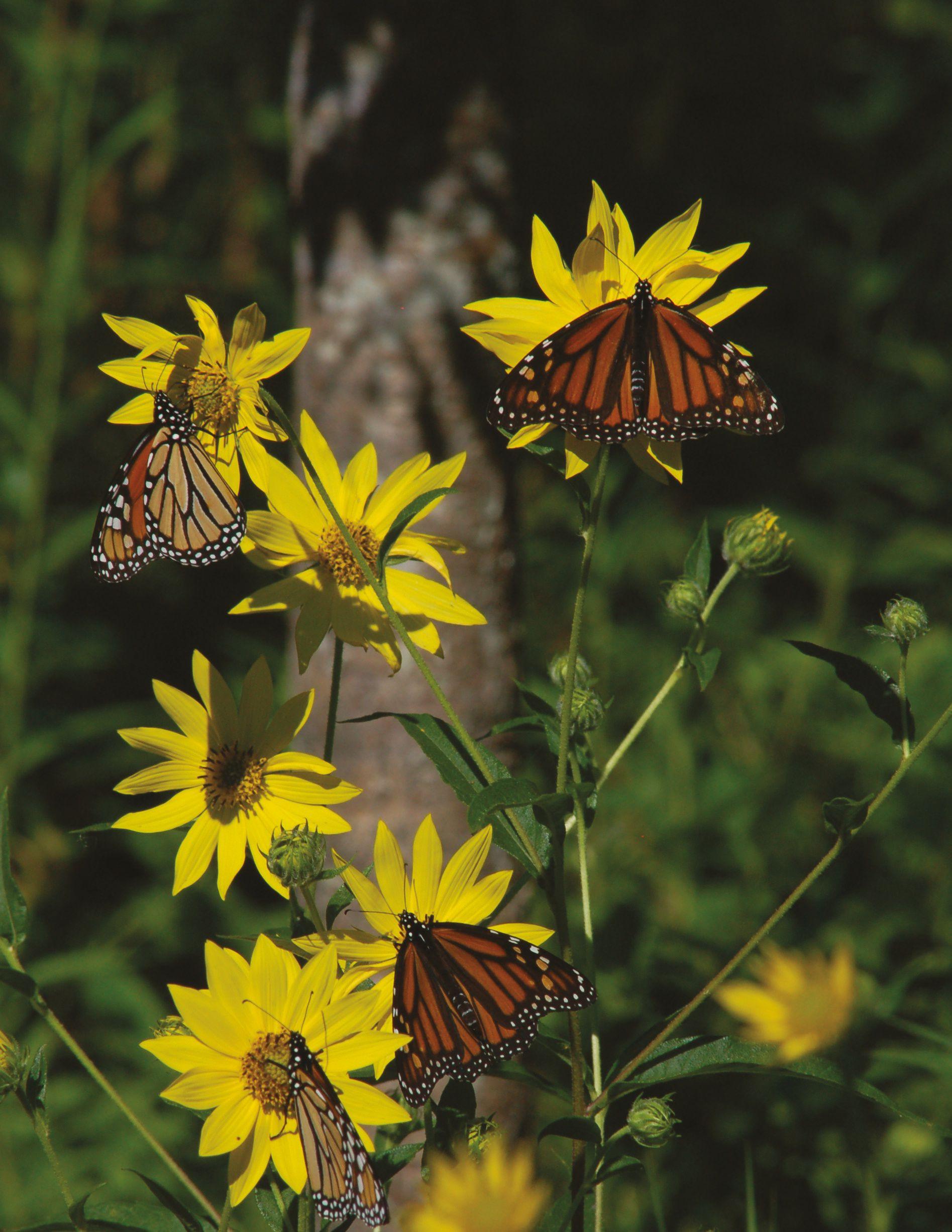
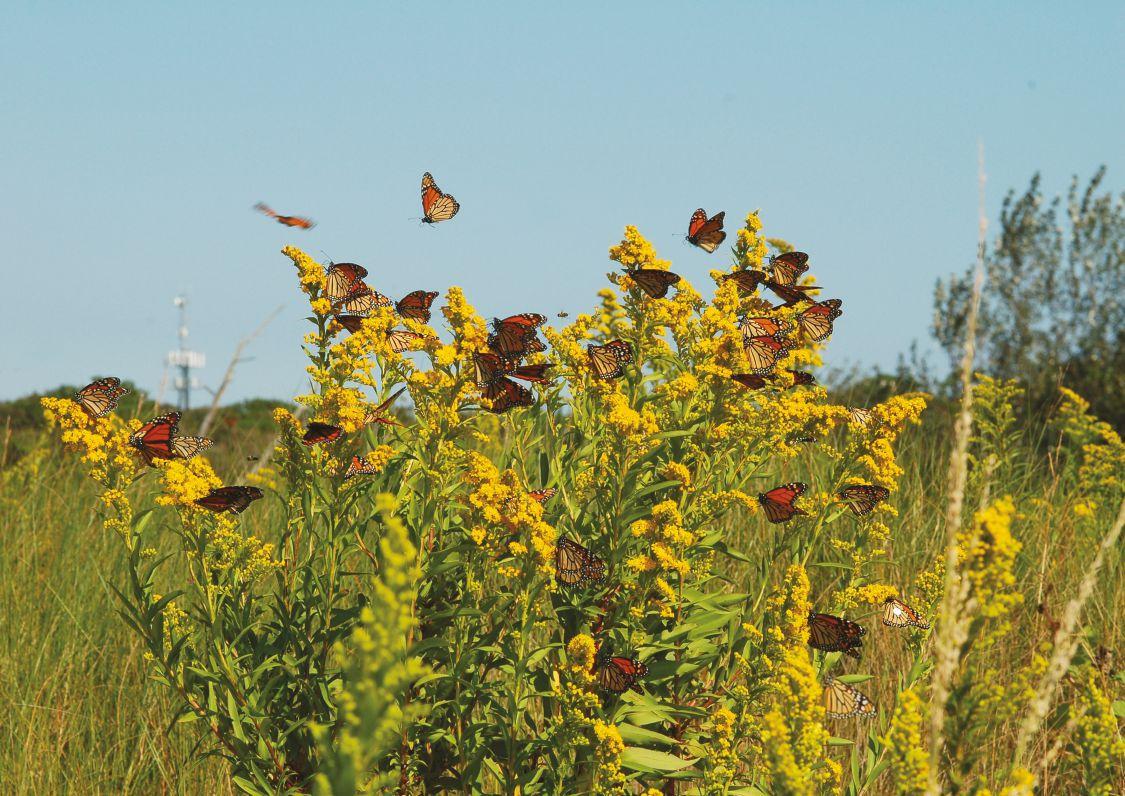
Two native nectar plants for migrating Monarchs at East Coast sites are featured on the front and back covers. Front cover photo: Monarchs on
Sunfower and back cover: Groundsel Tree Photo credits: Patricia Sutton.
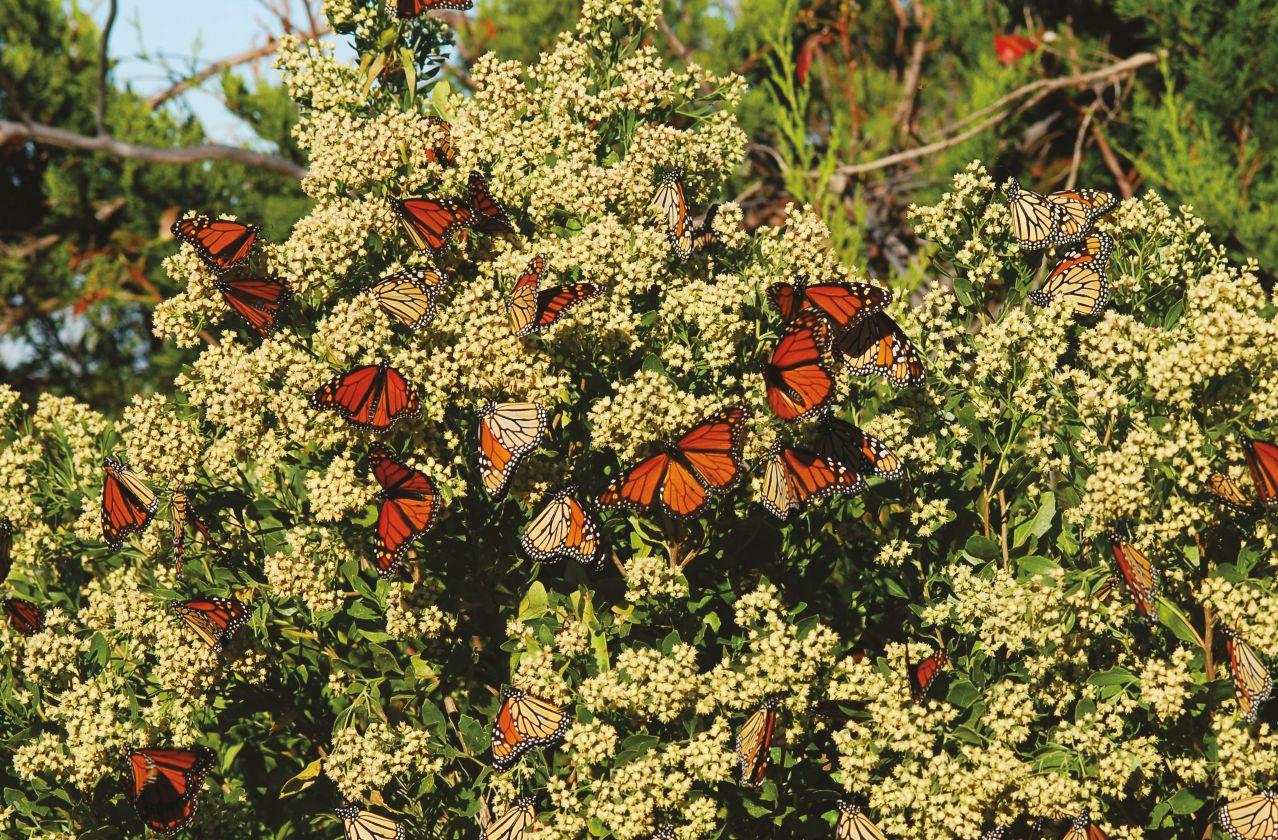
t was fun to read of Ellen ederico s efforts to bene t Monarchs on ire sland, the barrier island south of Long sland, N . Bravo for planting a variety of milkweeds and involving local children to help tend the habitat and serve as citizen scientists. Too, was heartened to learn that stands of Eastern edcedar are recognized (and hopefully protected) as crucial overnight roost sites for migrating Monarchs. ther than the milkweeds, however, the nectar plants mentioned in Ellen s article were all nonnatives. oug Tallamy s important work, Bringing Nature Home, demonstrated the importance of using native woody and herbaceous plants in the landscape to support biodiversity, including the need for native plants to provide nectar AN serve as important caterpillar plants (for butterfies and moths). To complement Ellen s excellent article and efforts, wanted to recommend some natives that are favorites with migrating Monarchs at another East Coast, sandy-soil site: Cape May Point, NJ.

Native perennials for migrating Monarchs in Fall:

Seaside Goldenrod (Solidago sempervirens)
Giant (or Tall) Sunfower (Helianthus giganteus)
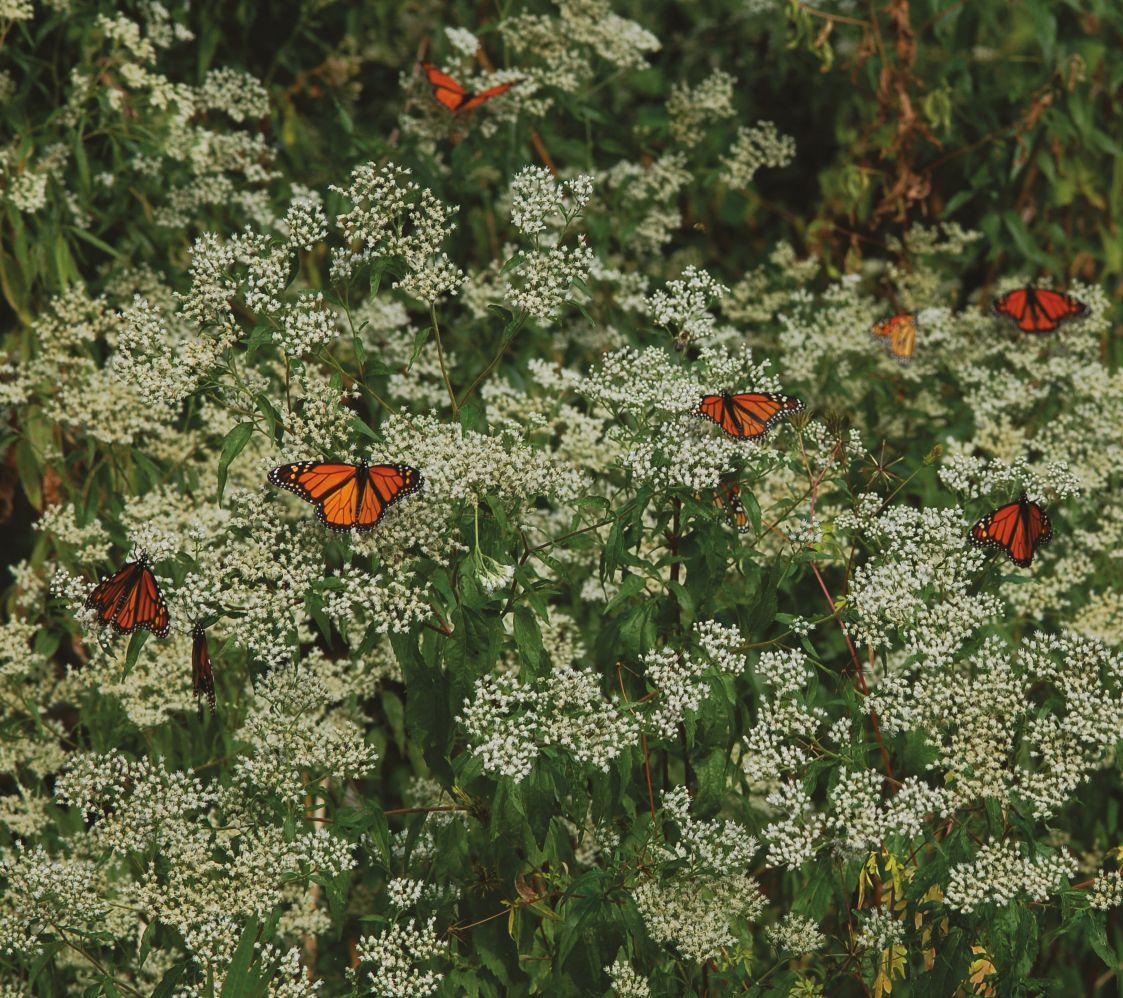
Late-fowering Thoroughwort (Eupatorium serotinum)
New England Aster (Symphyotrichum novae-angliae)
Aromatic Aster (Symphyotrichum oblongifolium)
Smooth Blue Aster (Symphyotrichum laeve)
rost Aster (Symphyotrichum pilosum)

An excellent native shrub for migrating Monarchs in all is Groundsel Tree (Baccharis halimifolia) Monarchs and Common Buckeyes nectar heavily on blooming male shrubs, plus their trunks often weep sap that attracts uestion Mark, Eastern Comma, ed Admiral, and Mourning Cloak.
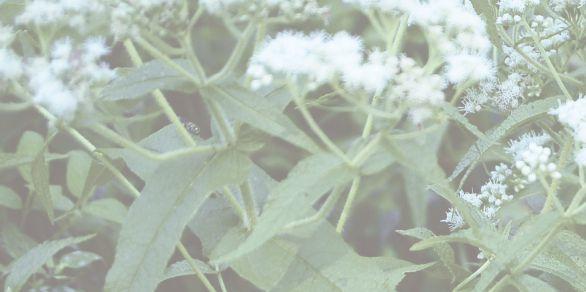
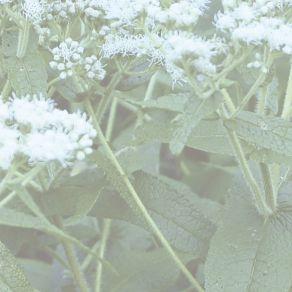
As a bonus, the asters in the above list are caterpillar host plants for Pearl Crescent.

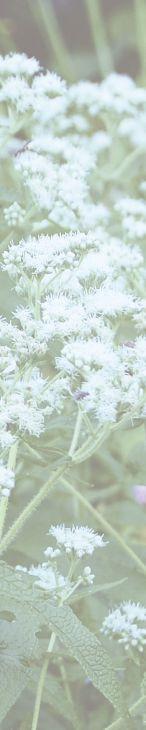




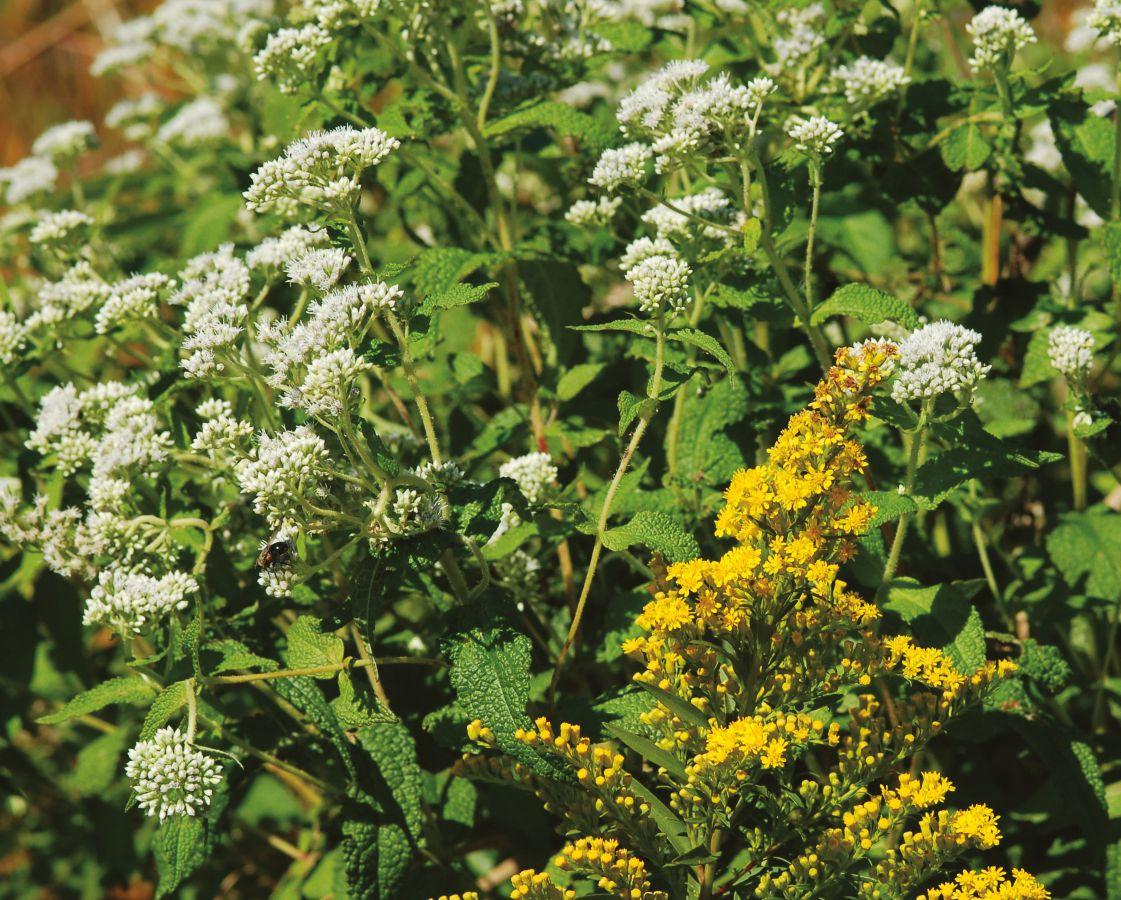




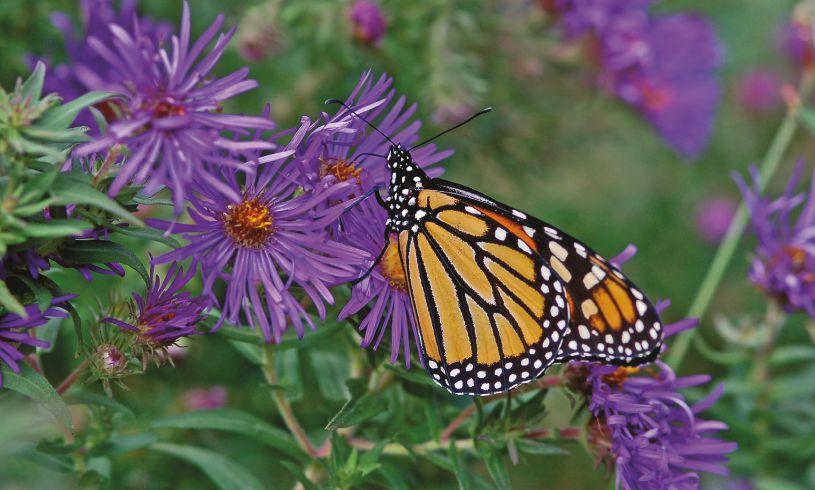


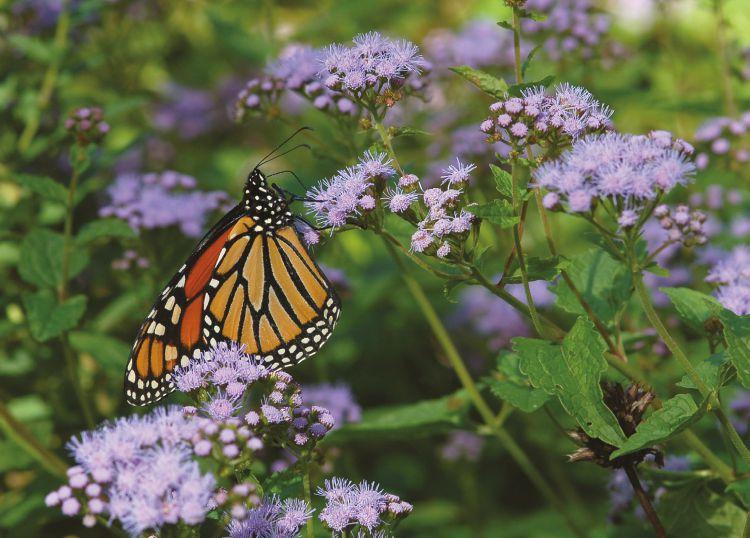
pposite page: Top - Monarch on Mistfower. Bottom - Monarchs on Seaside Goldenrod.
Below: Monarchs on Late-fowering Thoroughwort.














Patricia Sutton is a founding NABA Board Member and passionate wildlife-habitat gardener and advocate for butterfies, moths, bees (actually, for all pollinators), birds, dragonfies, frogs, toads, and other critters. She has taught about wildlife-friendly and native-plant gardening for many, many years. Her website showcases her efforts and teachings: www.patsuttonwildlifegarden.com
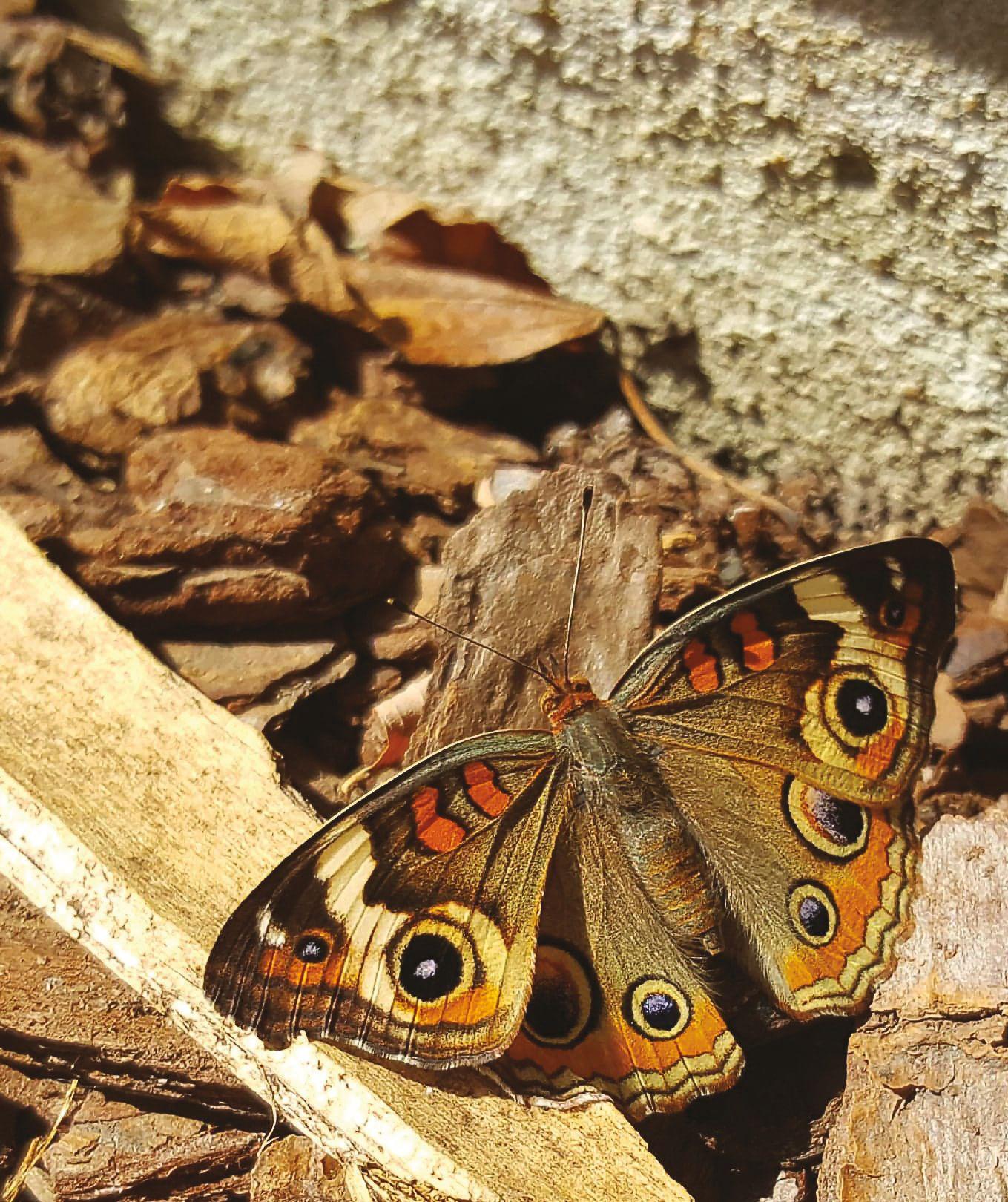
The Common Buckeye fits and plays.
Though I have spied wings multi-eyed,
From green spring through summer haze summer
I never tire, nor less desire,
The pleasure of its mesmerizing gaze.
-- by Casey Laine
Casey Laine comes from a long line of talkative women. She works as an editor and publishes an annual anthology of fction and poetry. In her spare time, she chases butterfies with her camera.
Jo Langabee
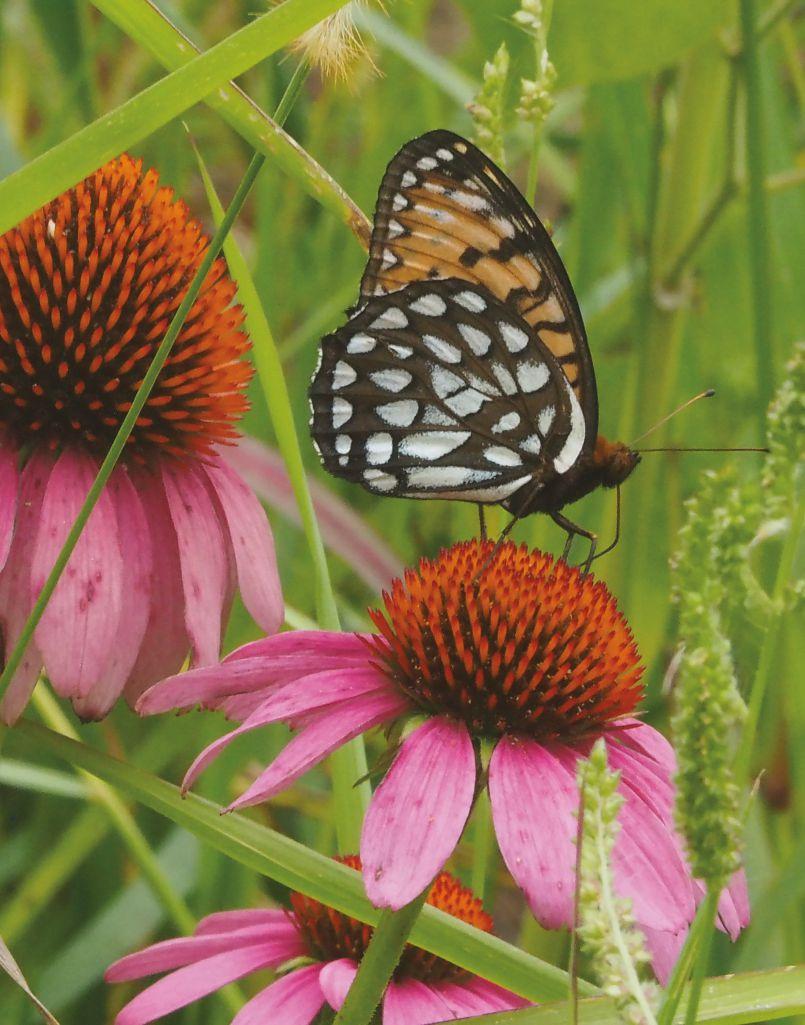
A Regal Fritillary was spotted in the prairie area of Fontenelle Forest. This species is normally found only in prairies in large, open areas, while this small prairie fragment is surrounded by forest and city. It is rarely seen in Fontenelle Forest.
Nebraska is an ecologically unique state where the range of many wildlife species overlap, as East meets West and North meets South. As a result of this convergence, one never knows what species of wildlife might be found, including butterfies. In the Omaha area I walk two locations weekly, counting butterfies. Lauritzen Gardens, located in Omaha near the Missouri River, is a botanical center that includes ten acres of naturally occurring oak woodlands in addition to more formal exhibits. Fontenelle Forest, also located along the Missouri River, in Bellevue (a suburb of Omaha), covers 1,000 acres and encompasses forest, foodplain, and a small prairie. Both forest locations are actively managed to restore and protect their oak woodlands.
Fontenelle Forest
Walking a weekly set path through the forested area of Fontenelle Forest, a group of citizen-scientists counts butterfies in order to help the staff of Fontenelle Forest to evaluate the impact of their oak-savannah restoration project on butterfies. Also, by walking the set path weekly, one is more likely to observe the strays and lesscommon butterfies in the area. Since the project started in 2018, 55 different species have been observed. For a complete list of the butterfies that have been seen along the path through the forest go to https://ffnaturesearch.org/category/insects/ butterfies/
Some of the butterfies seen by the group in 2019 were Zebra Swallowtail, Banded Hairstreak, Hickory Hairstreak, Henry’s Elfn, Regal Fritillary, American Lady, Goatweed Leafwing, Horace’s Duskywing, and Hobomok Skipper.
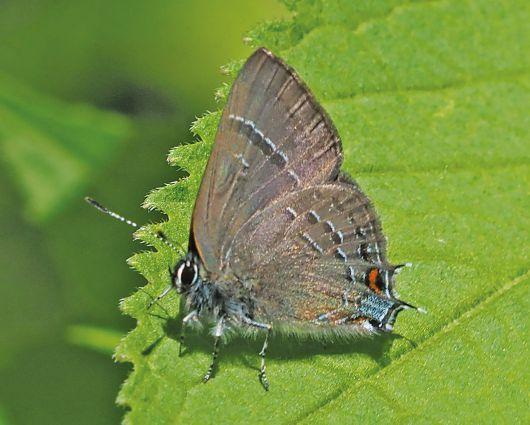
A Banded Hairstreak (above) was recorded a number of times in Fontenelle forest in 2018. This species had not been seen in recent years and is an uncommon butterfy in the forested area.
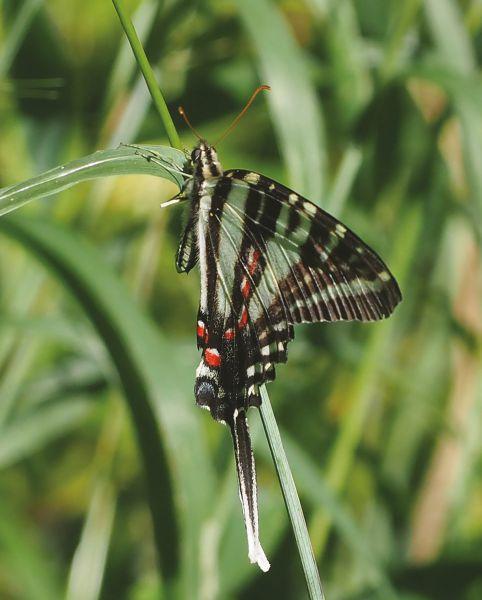
One of the biggest surprises was seeing a Zebra Swallowtail (left) a couple of times, since the closest known breeding area is a large grove of Pawpaw trees an hour and half drive from Omaha in Indian Cave State Park in Shubert, NE . The forest does have Pawpaw trees, so hopefully Zebra Swallowtails will make their way north. It is rarely seen in Fontenelle Forest
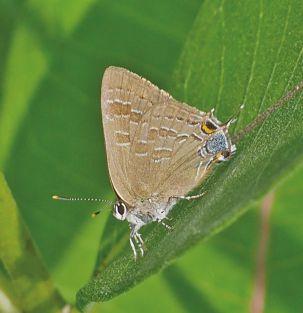
A Hickory Hairstreak (left) was spotted once in 2017 by one of the rangers and again in 2018 by the group of citizenscientists in an open area at the edge of the forest. It is rarely seen in the forest.
Since 2015, the citizen-science group has been walking Lauritzen Gardens to identify butterfies. Prior to 2015, Jim Locklear, Head of Conservation, recorded the garden’s butterfies but not on a regular basis. With regular monitoring, the citizenscience group has recorded ten new species. In 2018, after the frst snow on October 15, we observed Gorgone Checkerspot, Gray Comma, and Goatweed Leafwing. Other newly spotted butterfies are Marine Blue, Bordered Patch, Texan Crescent, Funereal and Wild Indigo duskywings, and Delaware and Hobomok skippers. A total of 57 species have been recorded at the Gardens.
For a complete list of butterfies seen at Lauritzen Gardens seehttps:// www.lauritzengardens.org/ Conservation/.
An American Lady (right) occurs in the area but not in large numbers. It had not been seen in the forested area by the group until 2018—not surprising, since this uncommon visitor prefers open areas to forested areas.
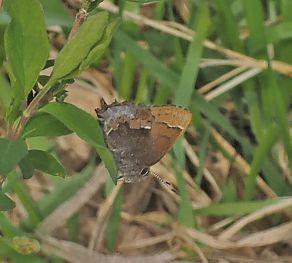
A Henry’s Elfn (left) was found in early spring in Fontenelle Forest near its host plant, Northern Redbud. It is an uncommon visitor to the garden and had not been seen for quite some time.
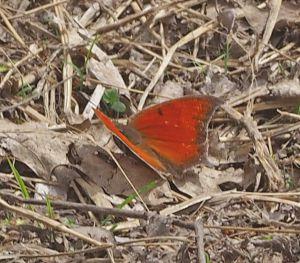
A Goatweed Leafwing (left) appeared in Lauritzen Gardens for the frst time in 30 years. It was seen twice in the early spring in an area of the forest that is undergoing extensive restoration to an oak-savannah ecosystem.
After teaching chemistry and physics for 32 years, Jo Langabee retired and became a Nebraska Master Naturalist. She is also a member of the Bellevue Tree Board. She has been doing butterfy monitoring since 2015 at Lauritzen Garden and since 2018 at Fontenelle Forest. She is married to Bob and has 2 grown sons and 7 grandchildren.















Please photocopy this membership application form and pass it along to friends and acquaintances who might be interested in NABA. www.naba.org
Yes! I want to join NABA and receive American Butterflies and Butterfly Gardener and/or contribute to the creation of the premier butterfly garden in the world, NABA’s National Butterfly Center. The Center, located on approximately 100 acres of land fronting the Rio Grande in Mission, Texas, uses native trees, shrubs and wildflowers to create a spectacular natural butterfly garden that significantly benefits butterflies, an endangered ecosystem, and the people of the Rio Grande Valley.
Name:
Address:
Email:
Telephone:
Special Interests (circle): Listing, Gardening, Observation, Photography, Conservation, Other:
For a $35 donation, one receives NABA publications as either digital or print. All higher levels of donations receive both digital and print versions. Outside the U.S., only digital is available, at any donation level.
Tax-deductible dues (donation) enclosed (circle): Regular $35 (must choose either digital or print — circle one), Family $45. Special sponsorship levels: Copper $55; Skipper $100; Admiral $250; Monarch $1000. Institution/Library subscription to all annual publications $60. Special tax-deductible contributions to NABA (please circle): $125, $200, $1000, $5000. Mail checks (in U.S. dollars) to NABA, 4 Delaware Rd., Morristown, NJ 07960.
Articles, gardening tips and observations, artwork, digital high resolution photographs, poetry and comments will be considered for publication. Contact Jane Hurwitz, Editor, hurwitz@naba.org
Advertising
Butterfly gardener welcomes advertising. Please contact us for current rates and closing dates at naba@naba.org, or telephone 973.285.0907, or fax 973.285.0936
Membership Services
If you have questions about duplicate magazines, missing magazines, membership expiration date, change of address, etc., please write to NABA Membership Services, 4 Delaware Rd., Morristown, NJ 07960. Occasionally, members send membership dues twice. Our policy in such cases, unless instructed differently, is to extend membership for an additional year. NABA sometimes exchanges or sells its membership list to like-minded organizations that supply services or products that might be of interest to members. If you would like your name deleted from membership lists we supply to others, please write and inform us at: NABA Membership Services, 4 Delaware Rd., Morristown, NJ 07960.

By Text and photos by Jane Hurwitz
Known Food Preferences: Trees in the Elm Family, including American Elm, Slippery Elm, Winged Elm and hackberries, as well as the herbaceous species Common Hop, Japanese Hop—which is invasive, Stinging Nettle, and Smallspike False Nettle.





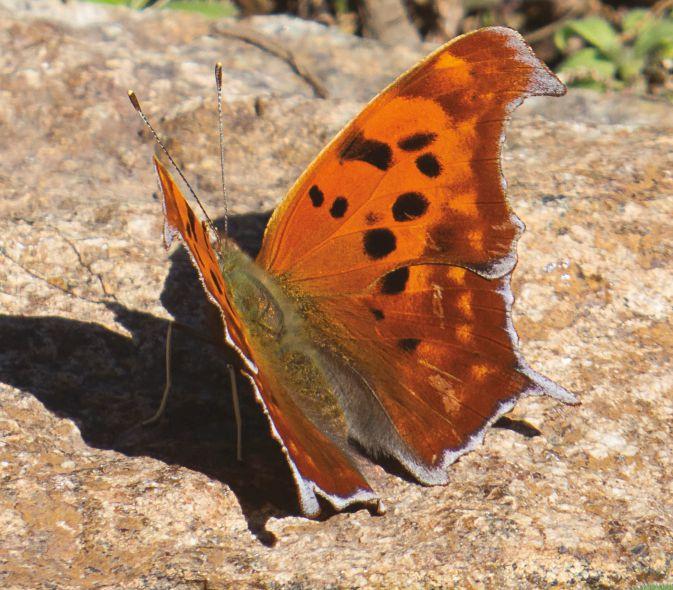
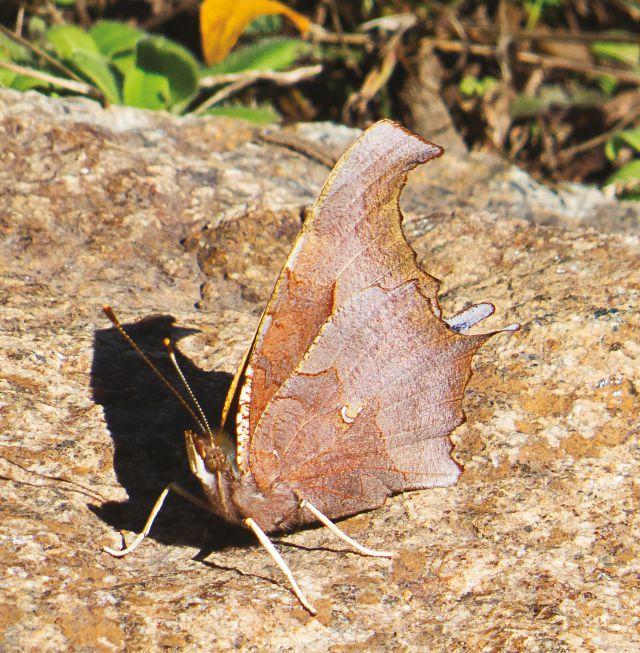
Known disguises: With wings folded, the adult butterfy resembles a dead leaf. Patterning in shades of brown, ranging from mottled or striated to almost unmarked, camoufages Question Marks against the tree bark on which they frequently land.
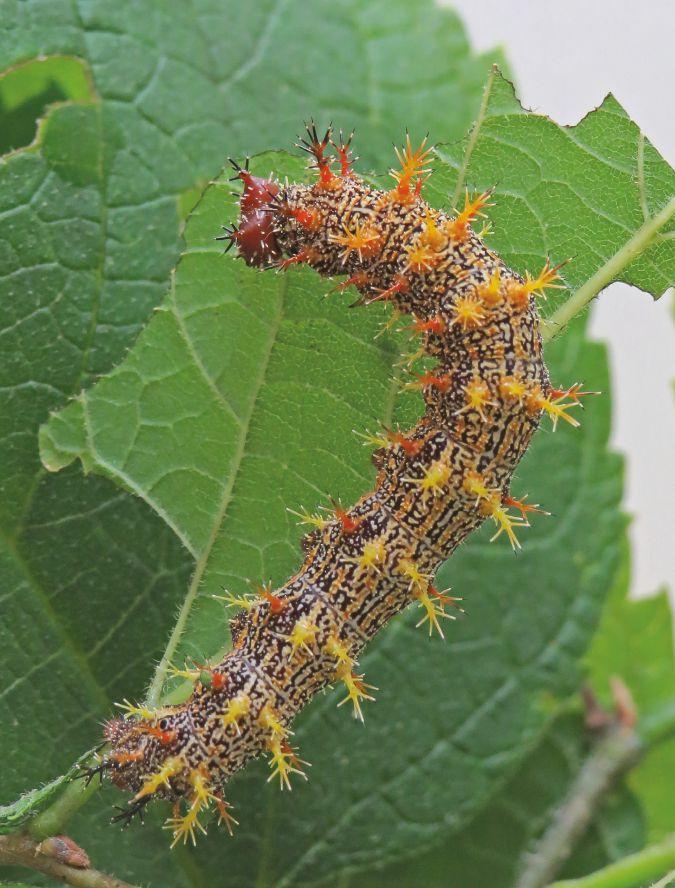
Special Weaponry: Question Mark caterpillars are boldly colored and highly visible. Early instars are black, while later instars develop dramatic and variable color combinations. The black bodies of late instars are covered with patterns of white or pale-yellow to rusty lines and dots. At all stages, Question Mark caterpillars are covered with branched spines, each of which ends with a sharp, black tip, making the caterpillar highly unpalatable— although not venemous. The color of the spines in later instars is variable and ranges from yellow to orange, red, and black.
Winter hide-out: Winter fnds some Question Marks remaining in northern areas as inactive adult butterfies that shelter in woodpiles or under loose tree bark. Other Question Marks migrate south in the fall, with a return migration in the spring
Opposite page Question Mark caterpillar on Northern Hackberry.
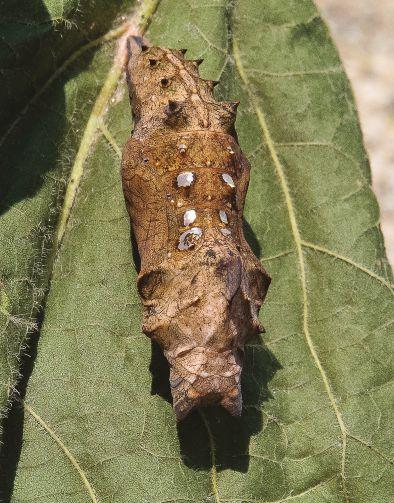
elow Question Mark chrysalis.
ight Adult butterfy in the fall.


If capture is avoided:
Question Marks lay eggs in the spring to produce a summer brood of fying adults. These lay eggs in the fall for a fall spring brood which overwinters or migrates. Their wing color varies seasonally, with the summer form displaying an almost entirely black hindwing with short tails. Fall spring form Question Marks have bright orange hindwings, longer tails, and a beautiful violet-gray wing edge. ook for Question Marks over the eastern rd of the nited States near deciduous woods that include some open space.



Jane Hurwit is editor