









































































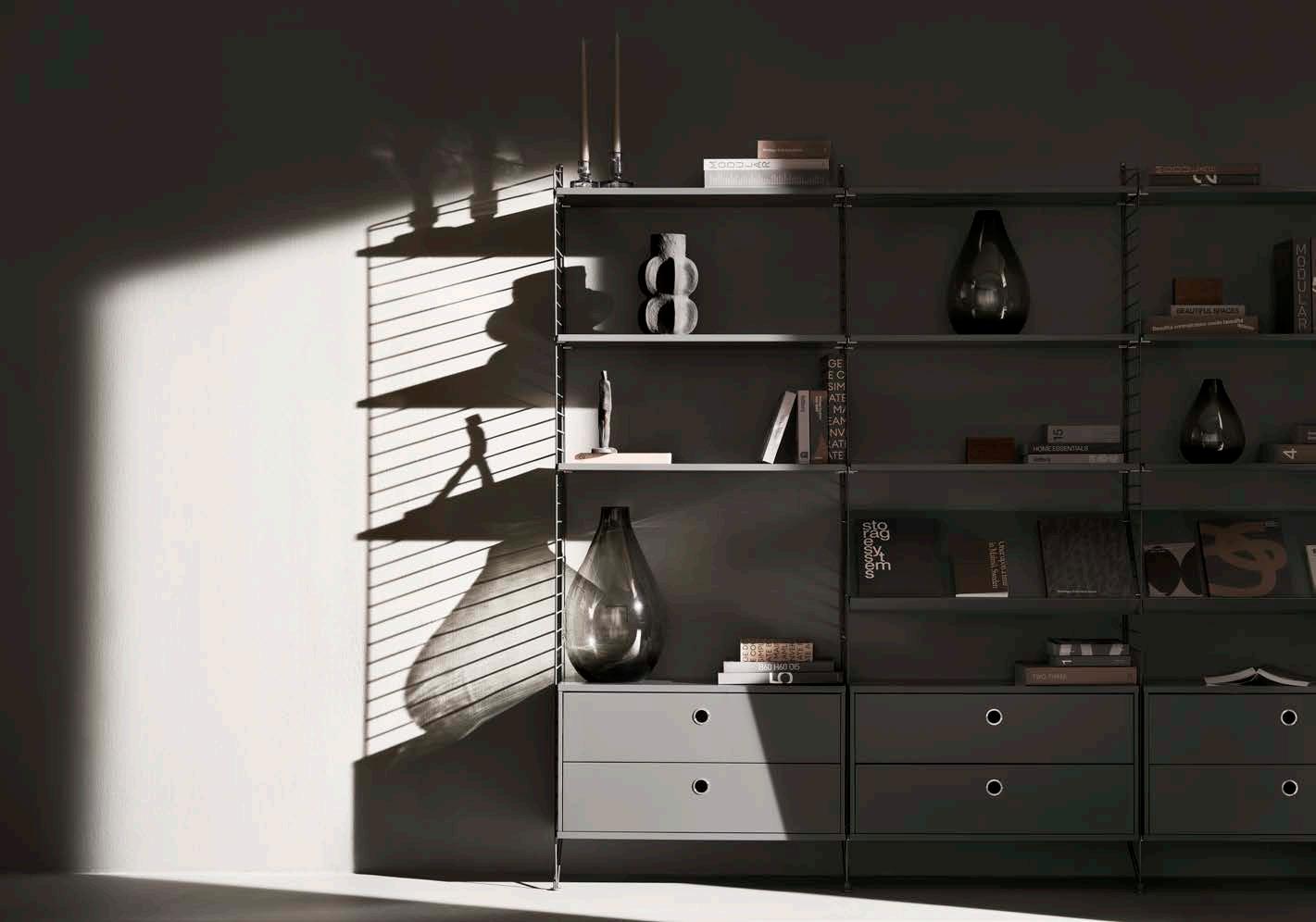
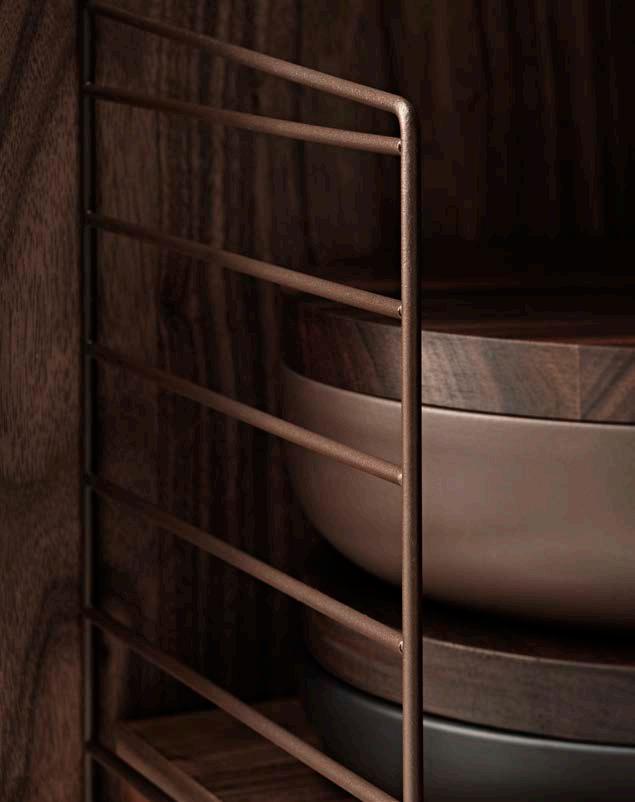
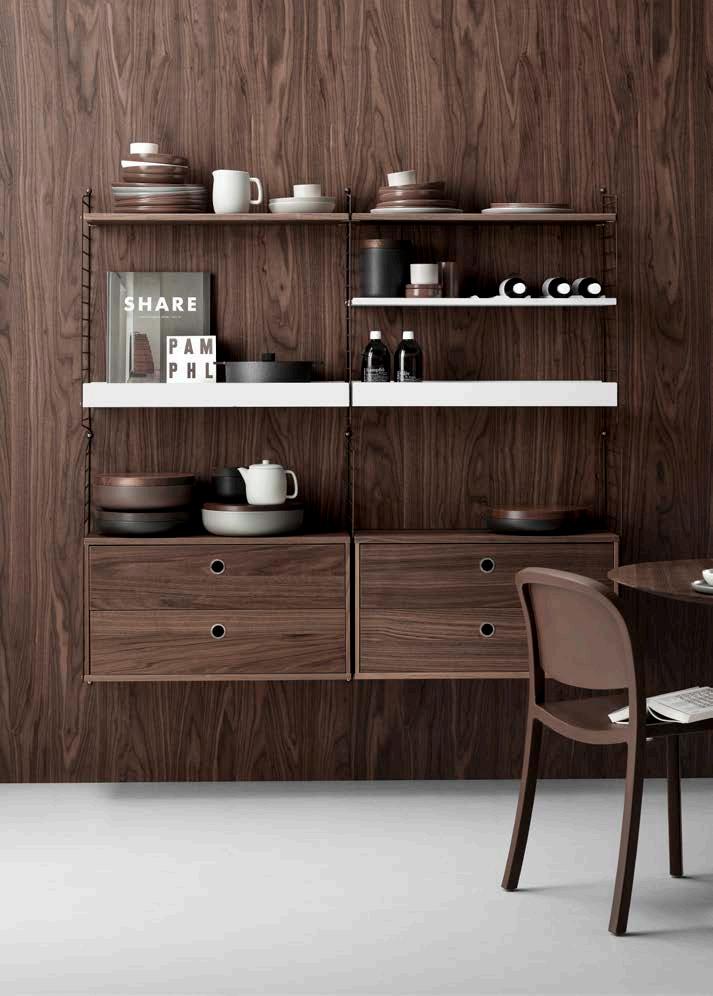
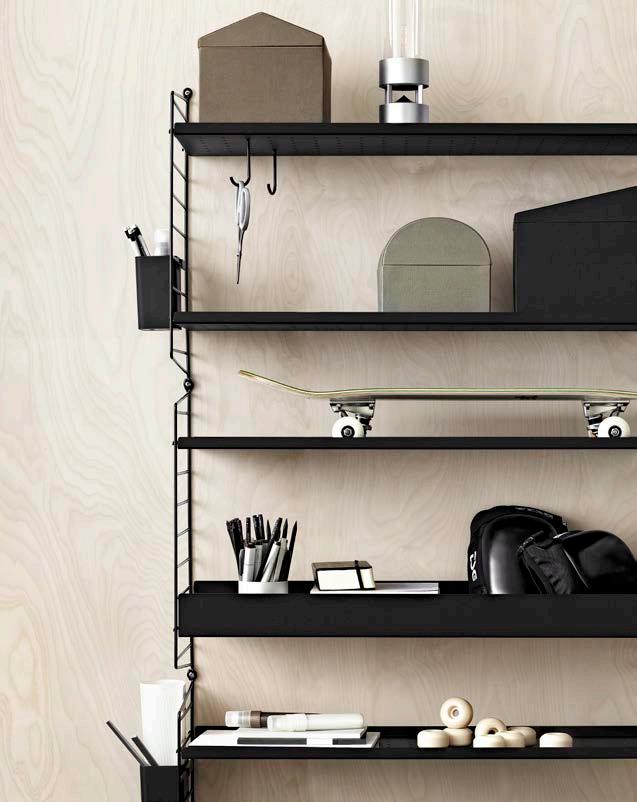
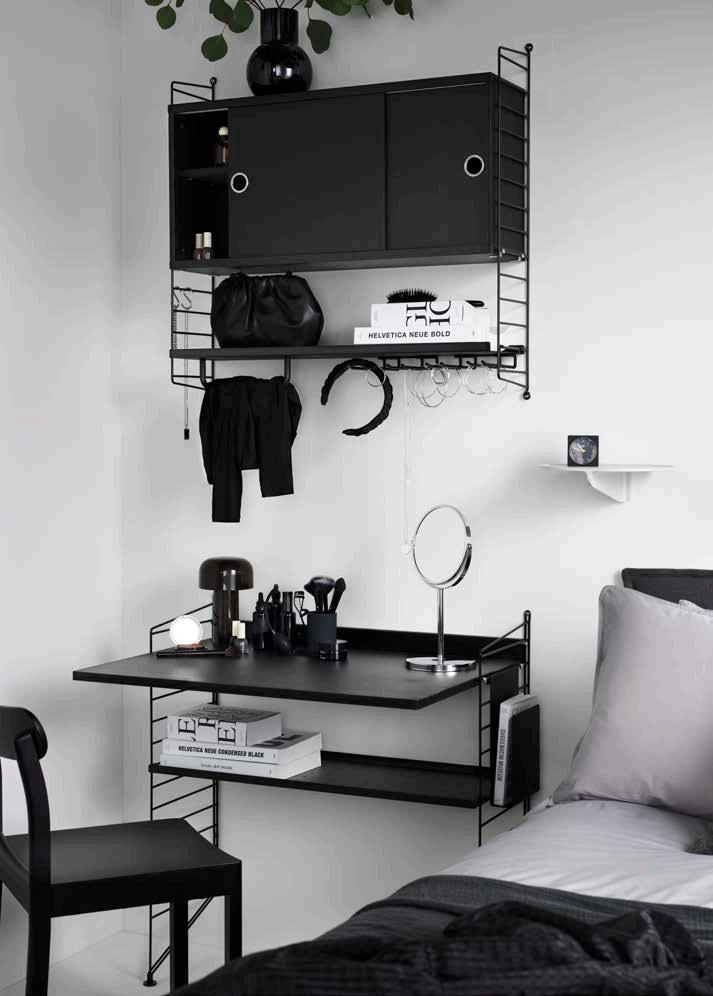
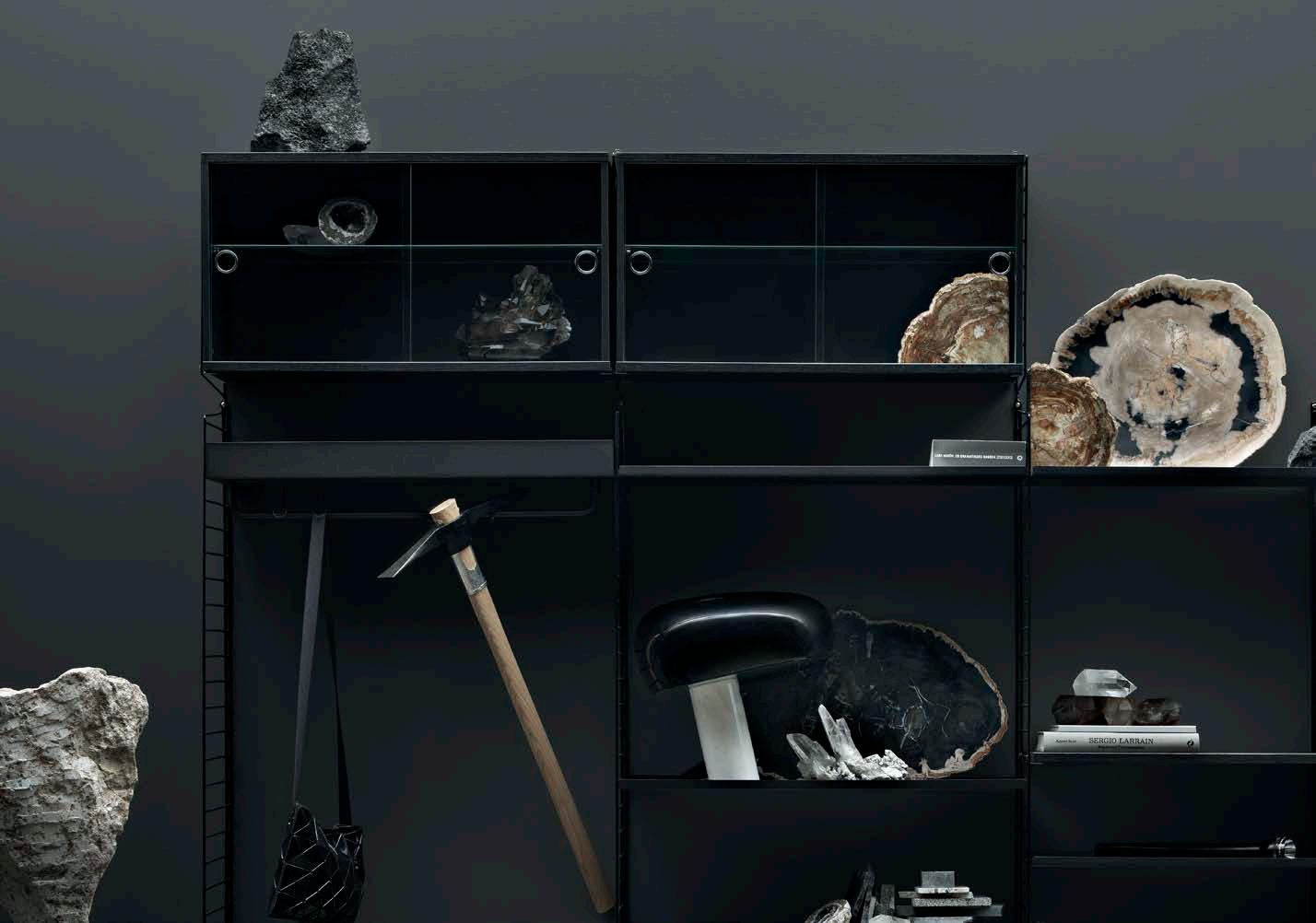
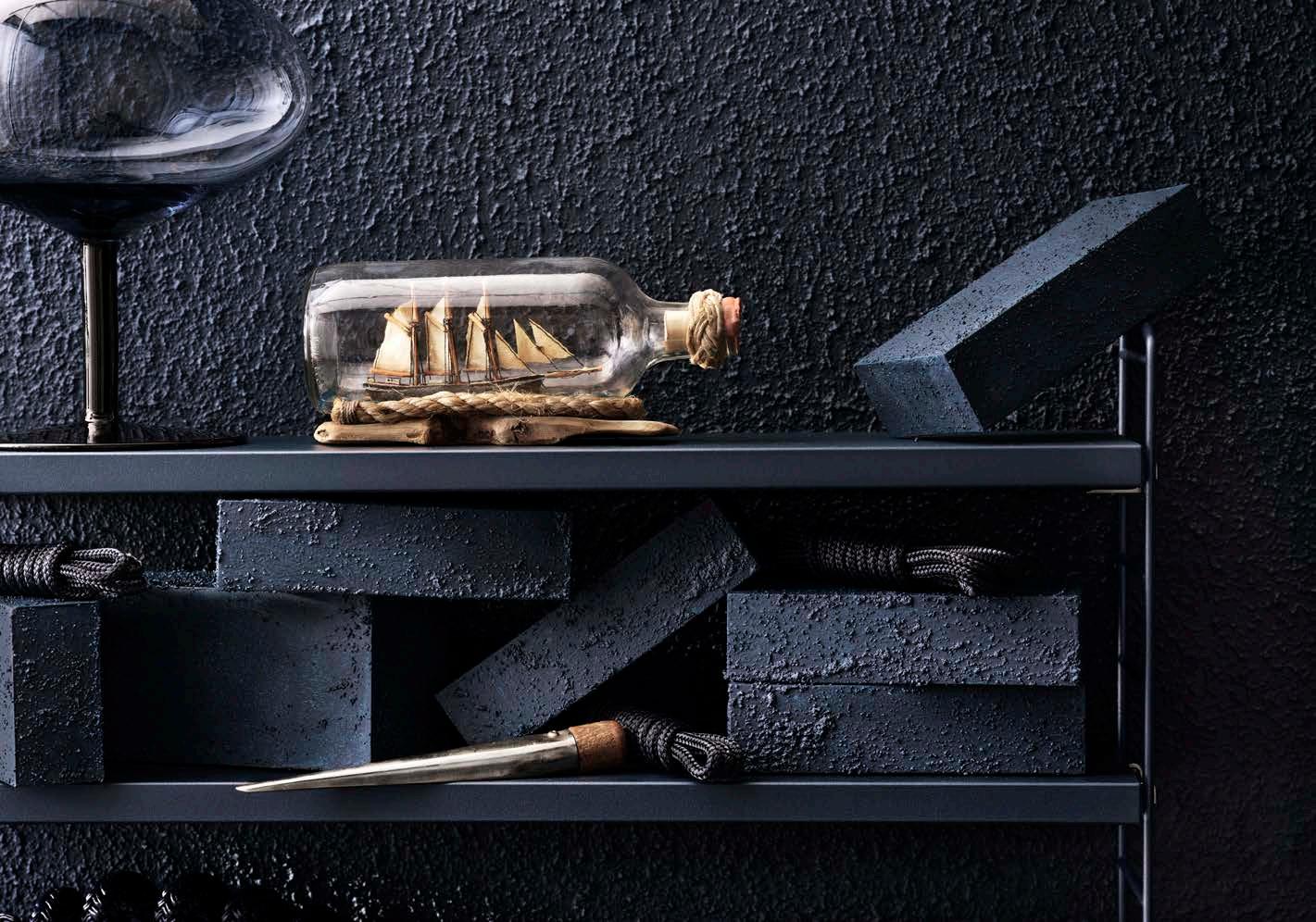
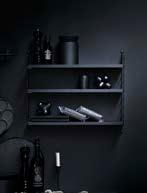
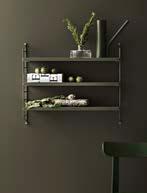
This year, we introduce a new dark grey to String System. It’s a contemporary and warm shade, that combines perfectly with every other colour and types of wood in our range. Bringing a sense of comfort to any home.
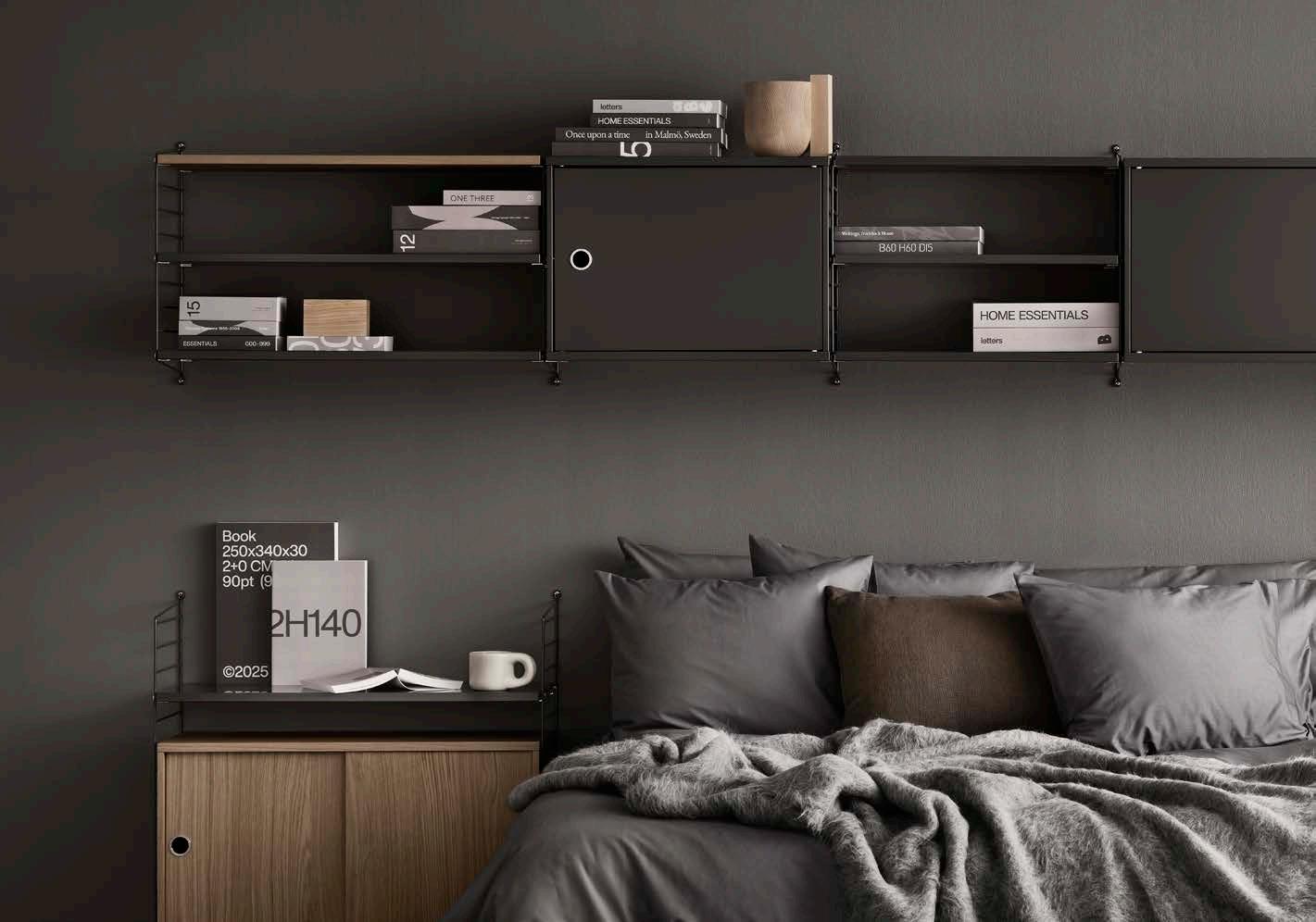
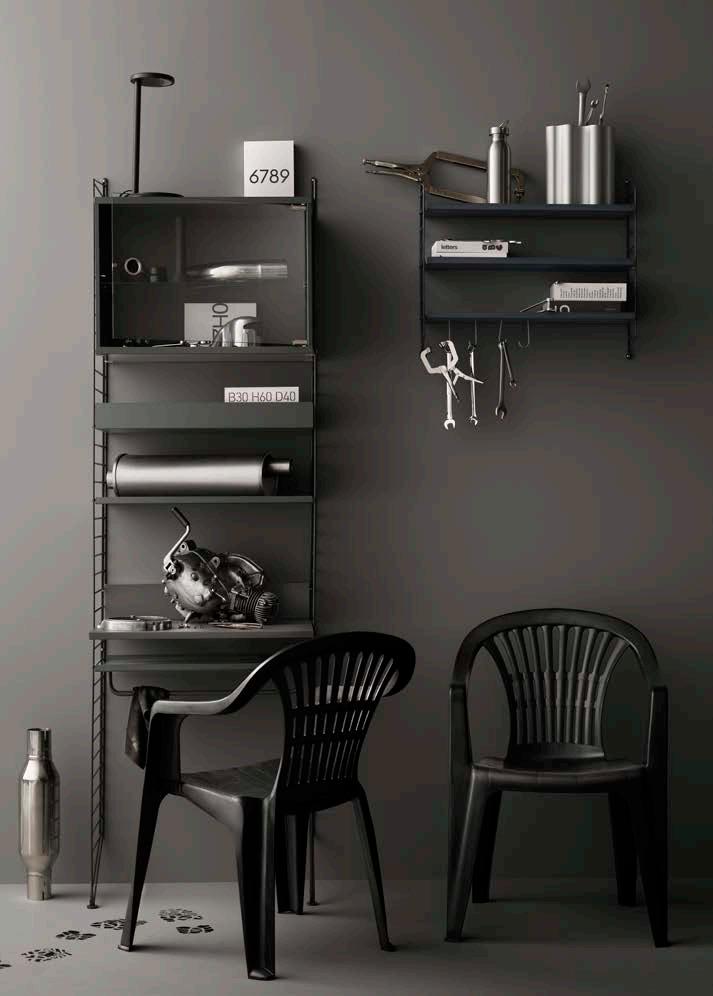

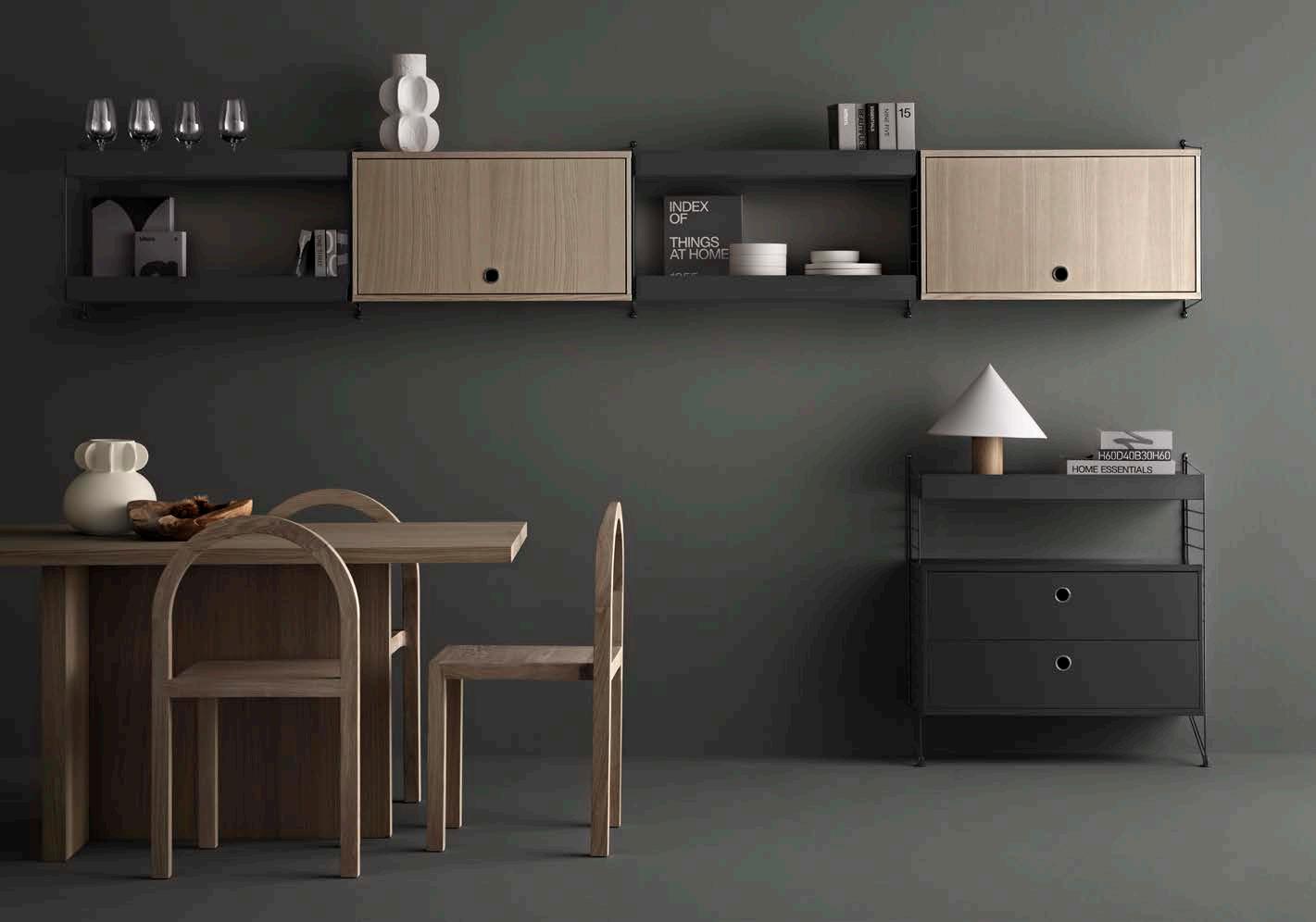
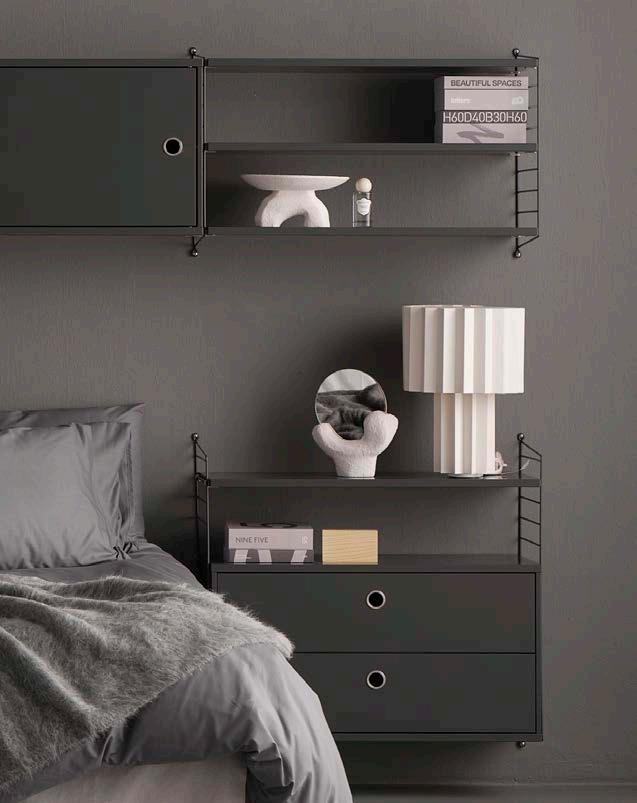
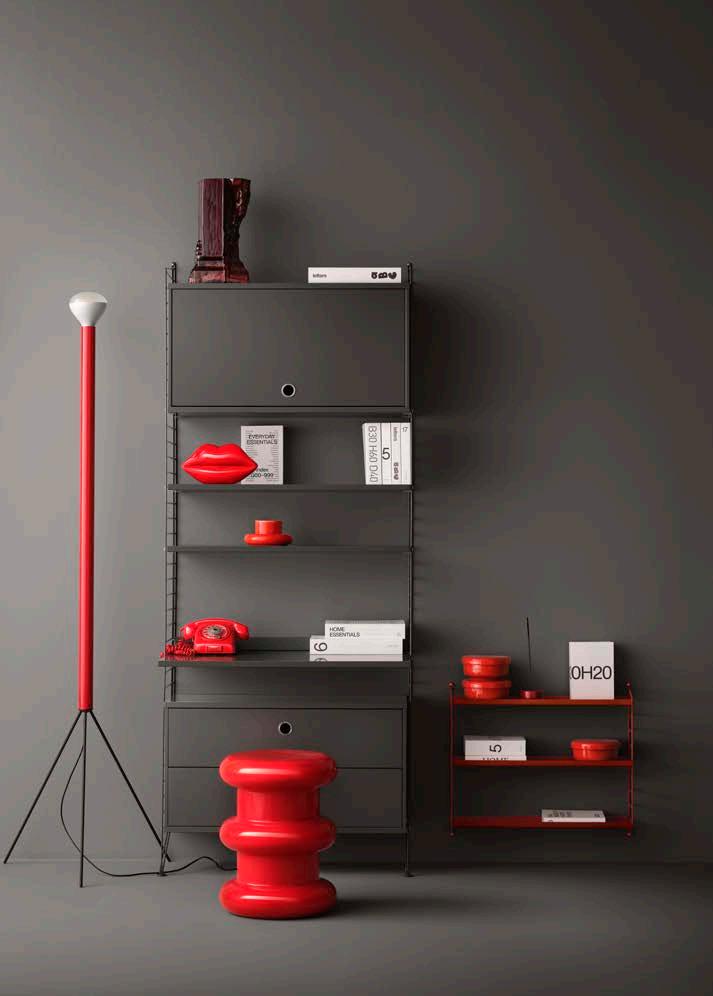
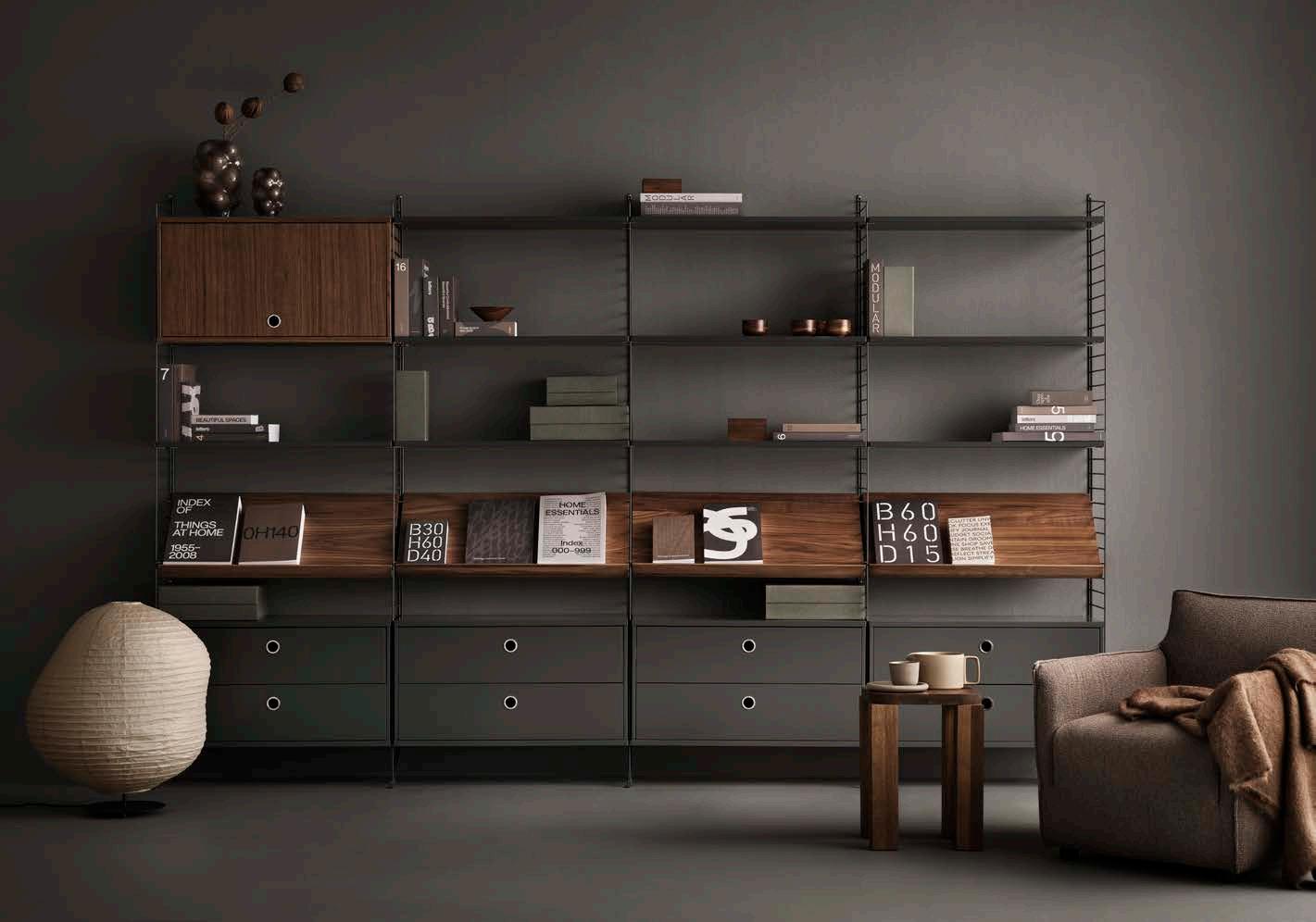
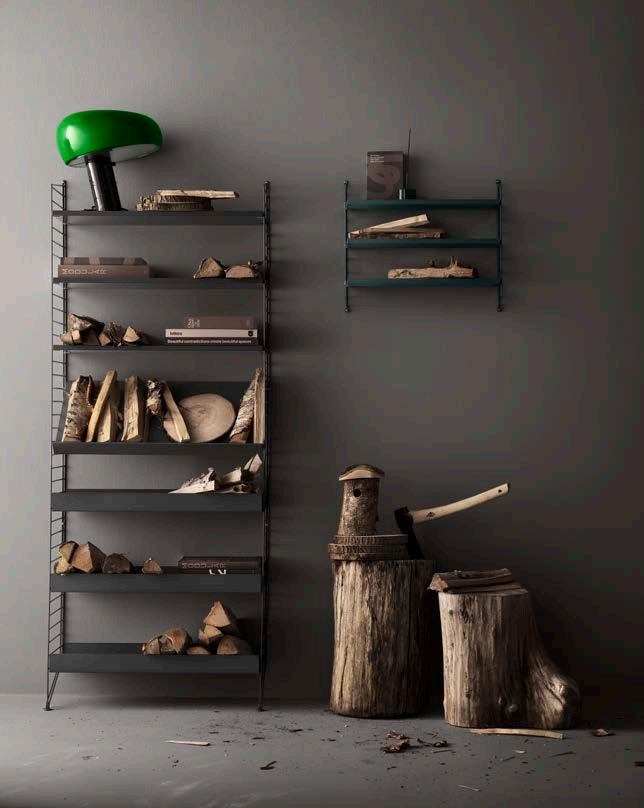
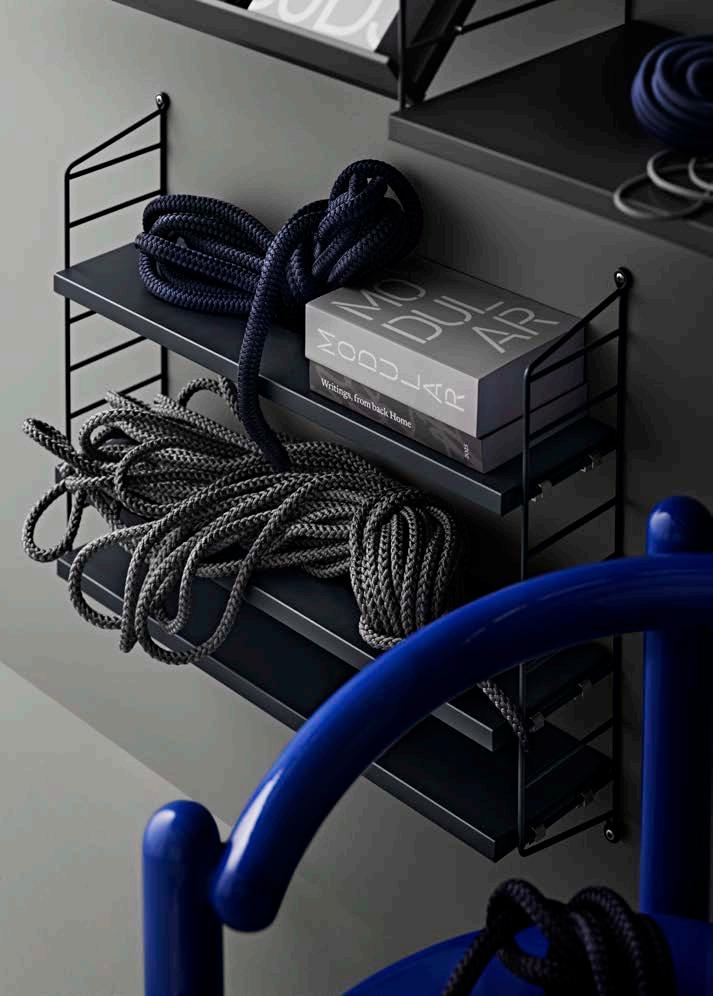
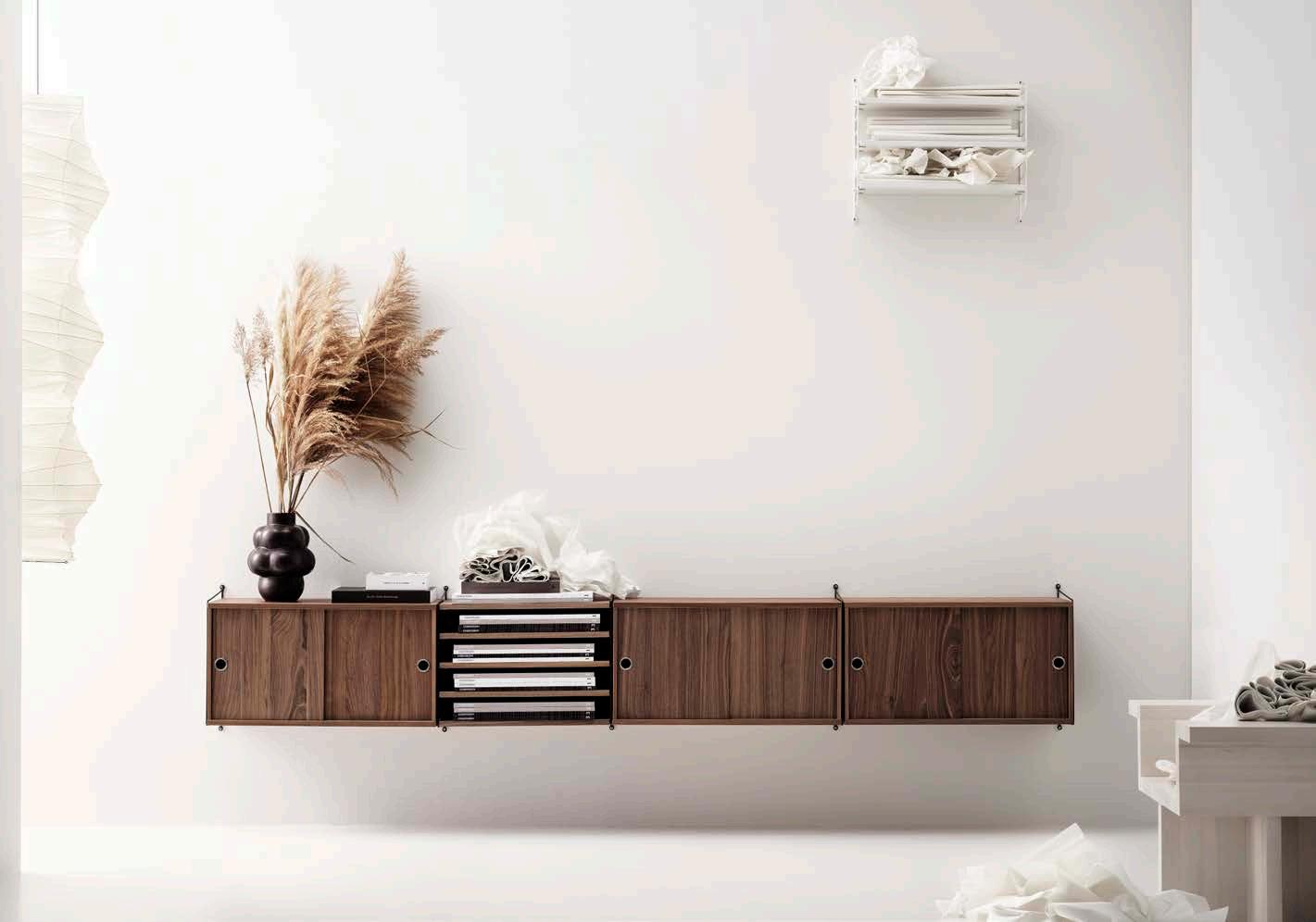
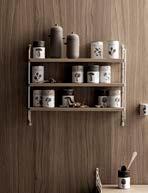
We usually think of colours as either warm or cool. But walnut can move between rich brown and strict grey, darker notes, depending on light and background. Like a colour chamaeleon.
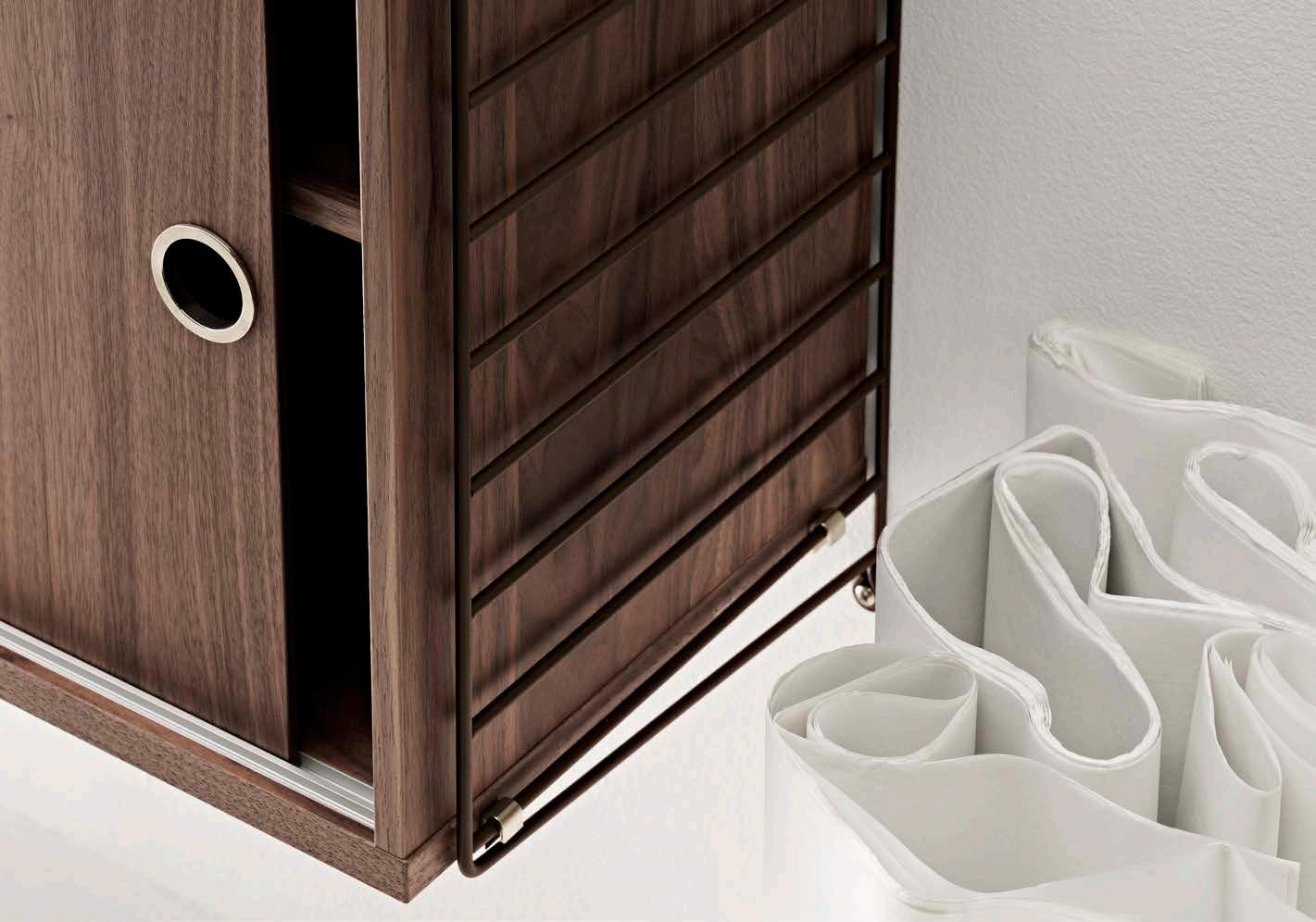
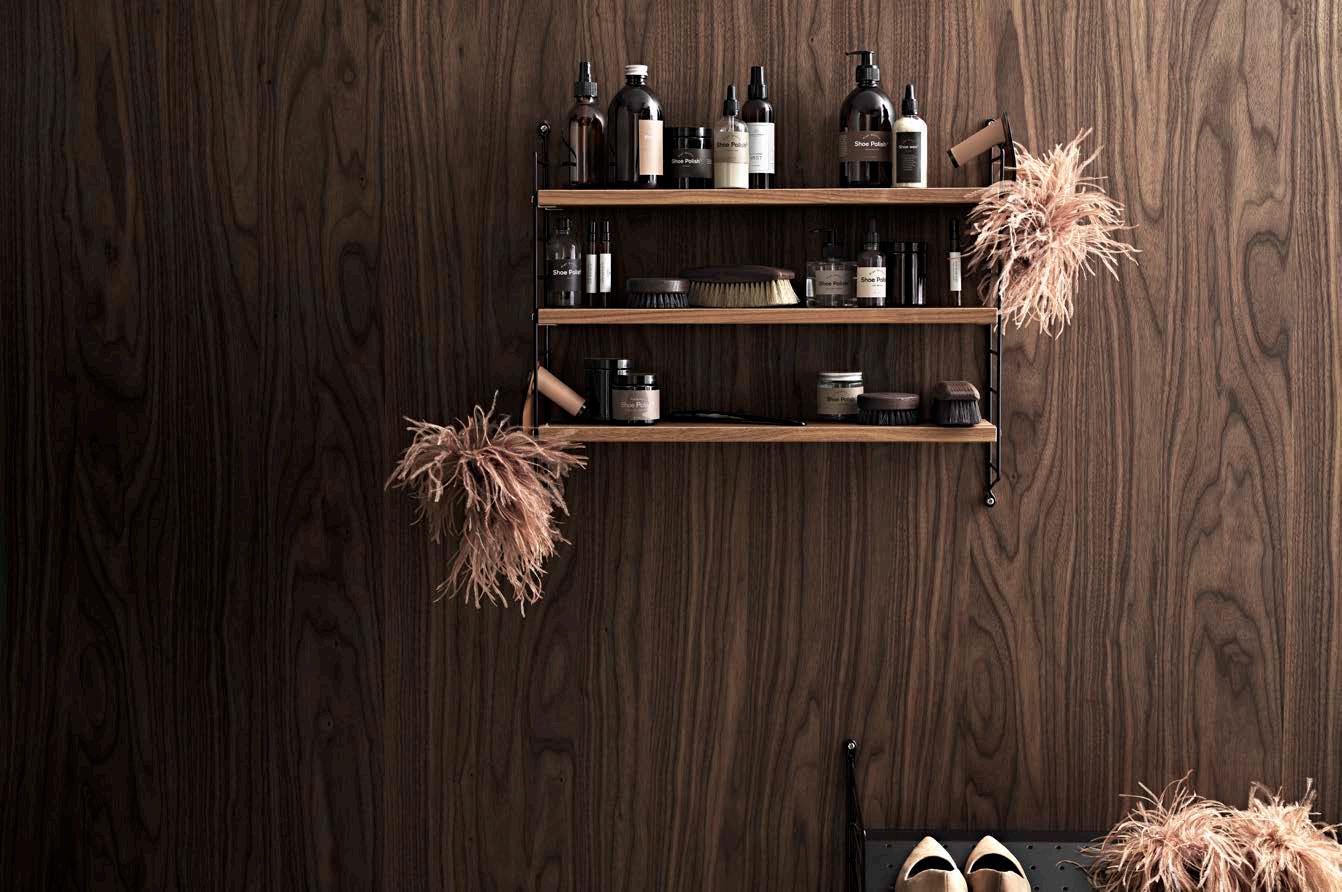
White
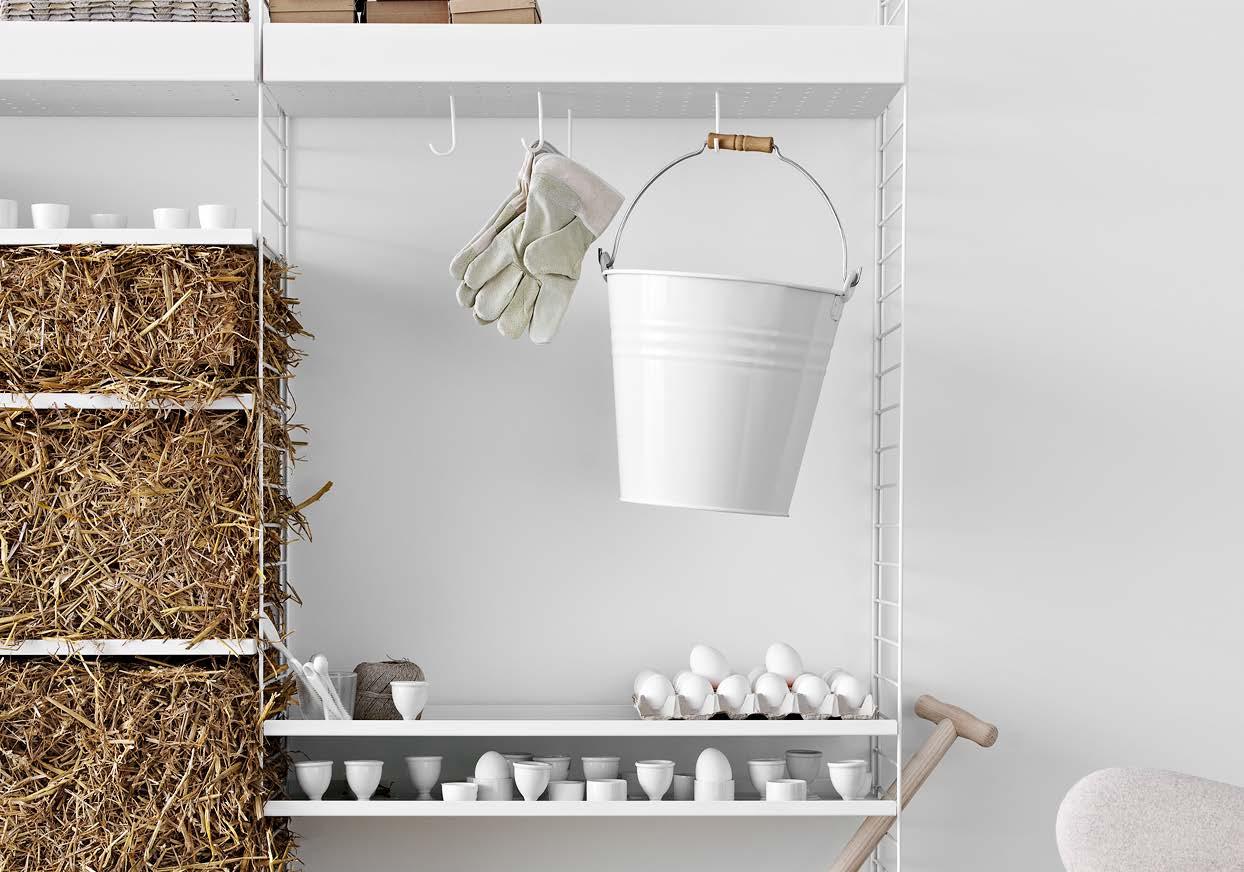
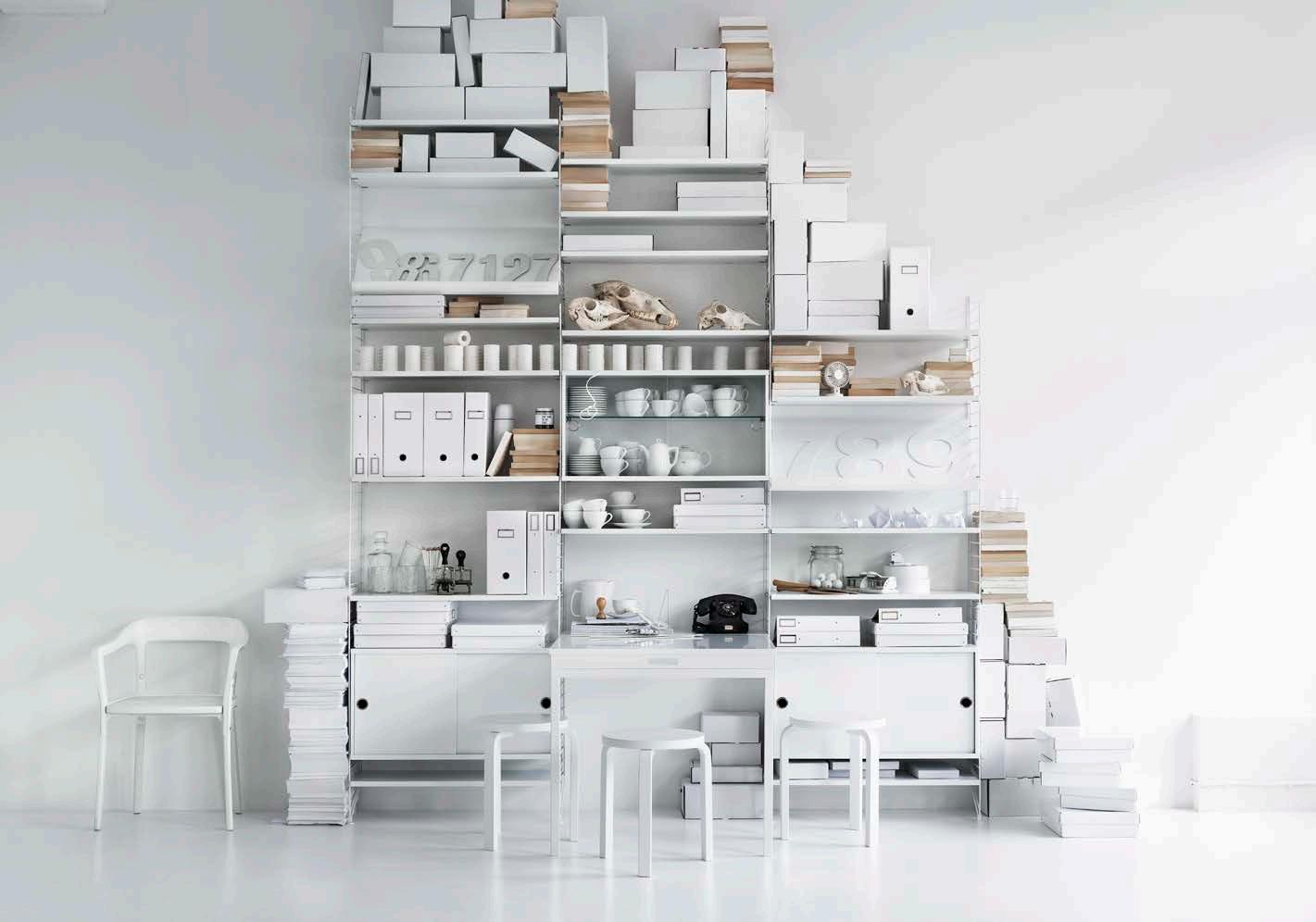
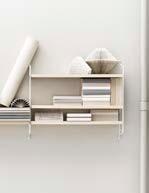
When String launched the all-white edition back in 2005 it quickly became a favourite. The design stayed the same as in 1949, as always. But the dazzling all-white surfaces and clean lines became a crisp canvas, for every room and every home.
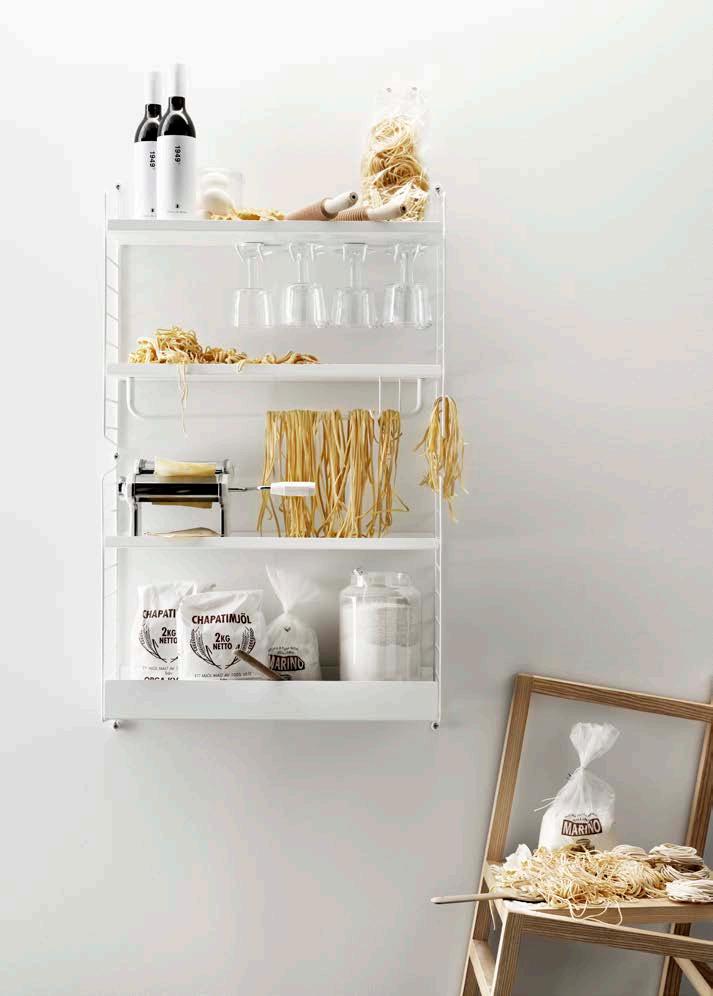
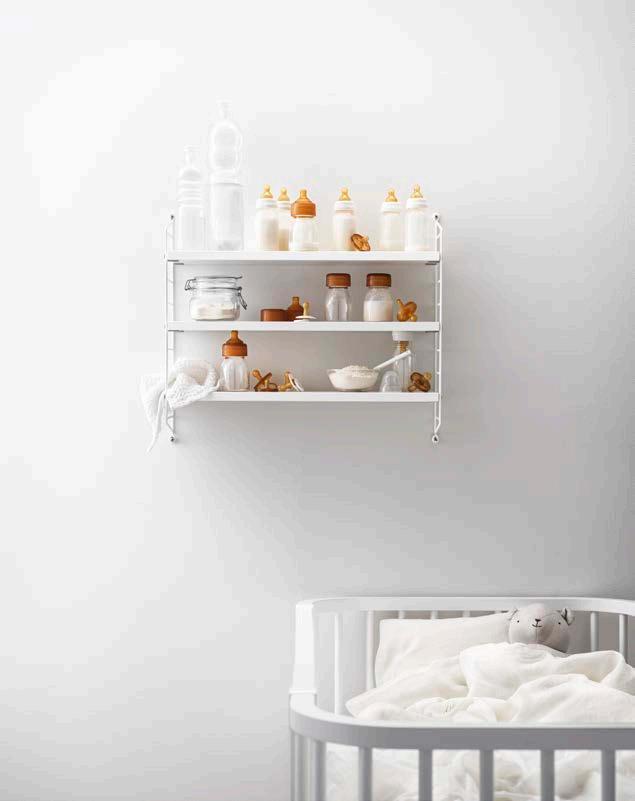
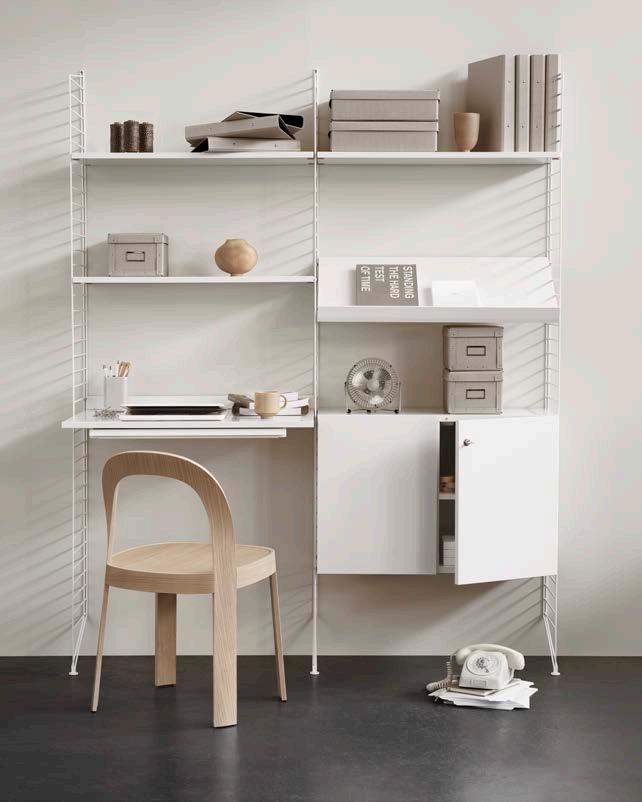
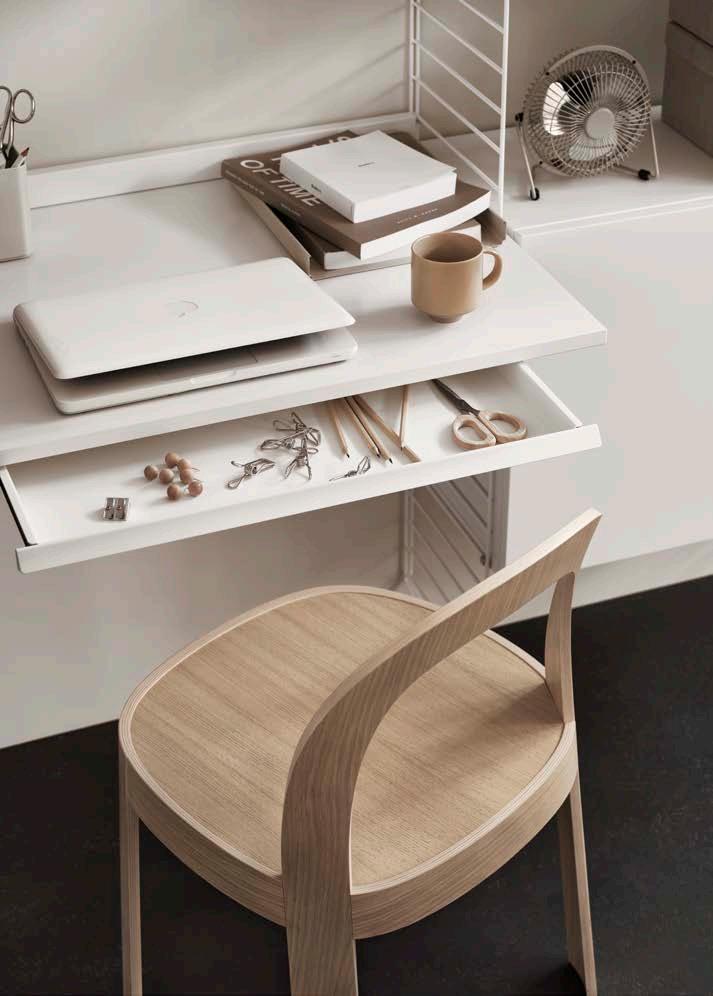
We’re not sure if blonde shelves have more fun. But there is a sense of beauty and joy in the subtle, whitish yellow, combined with the characteristic wood grains. Ash definitely adds a sense of natural poetry to the clean structure of String.
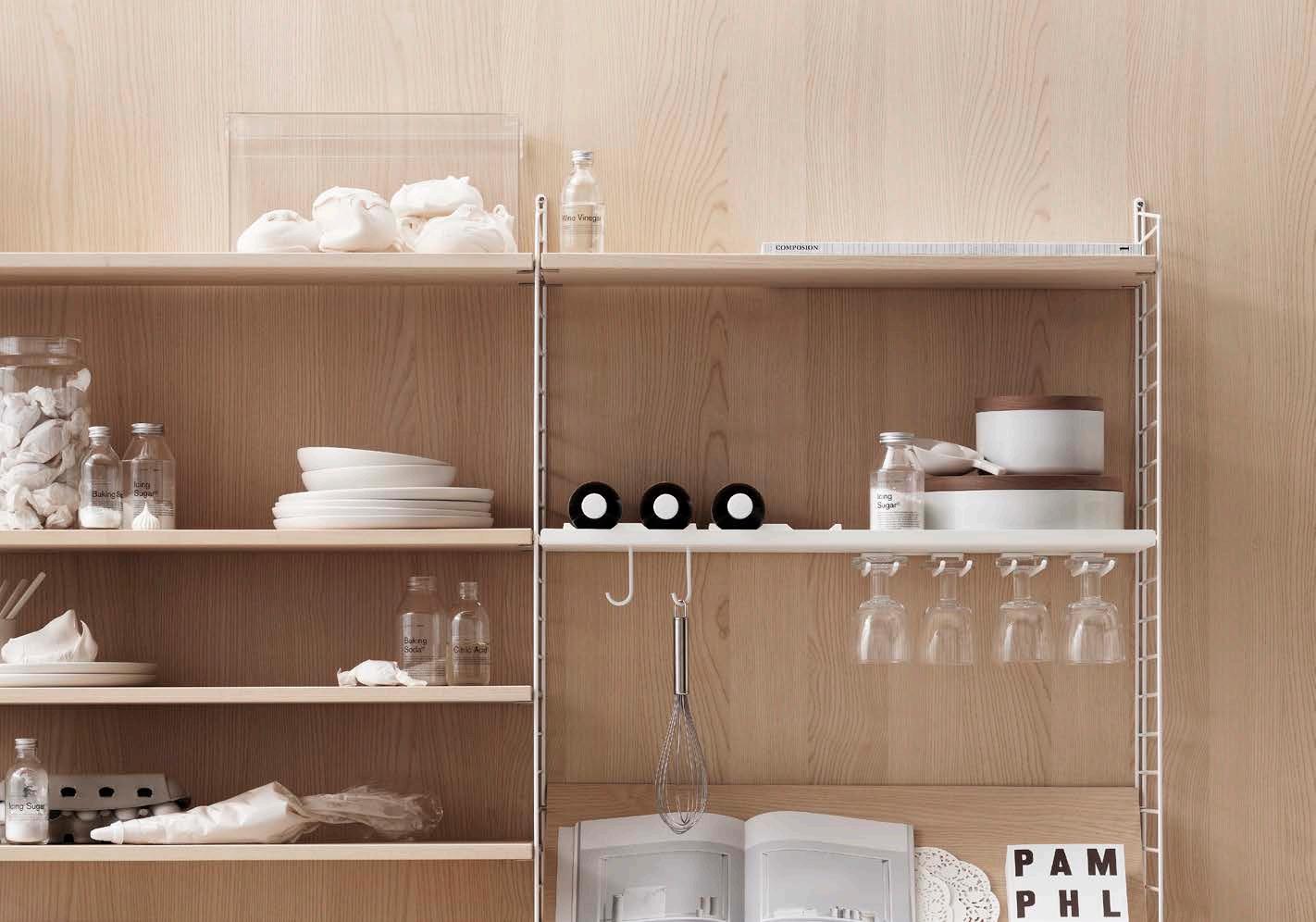
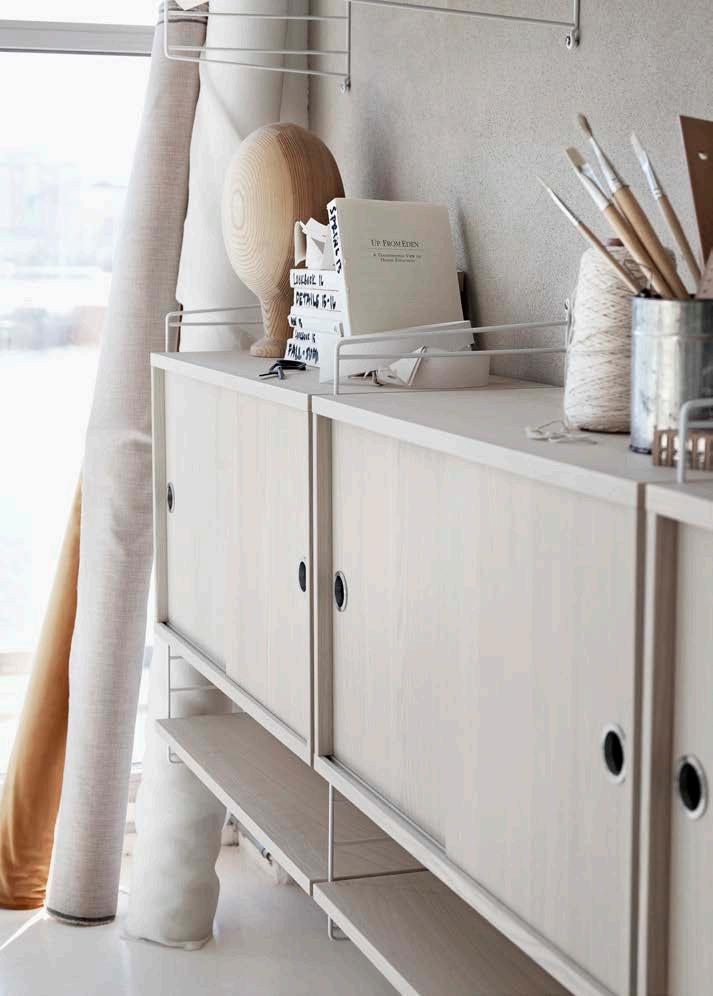
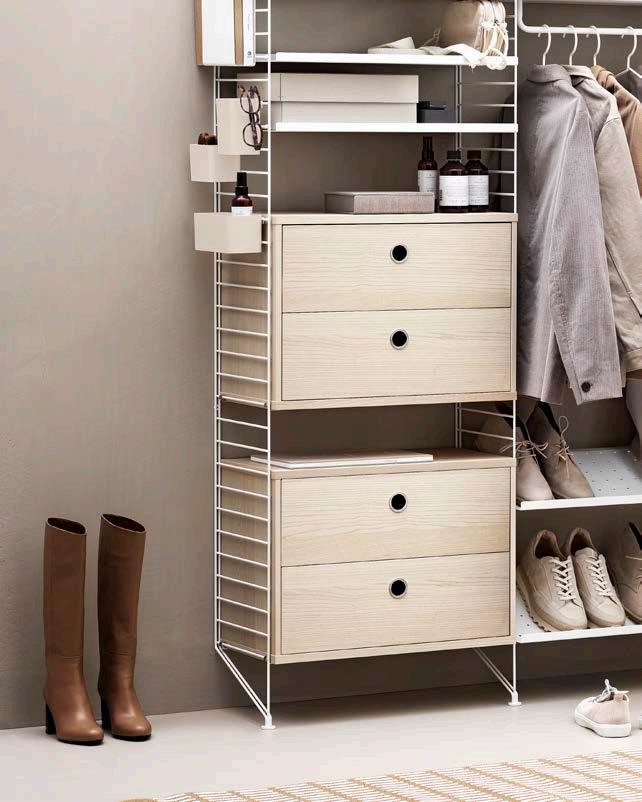
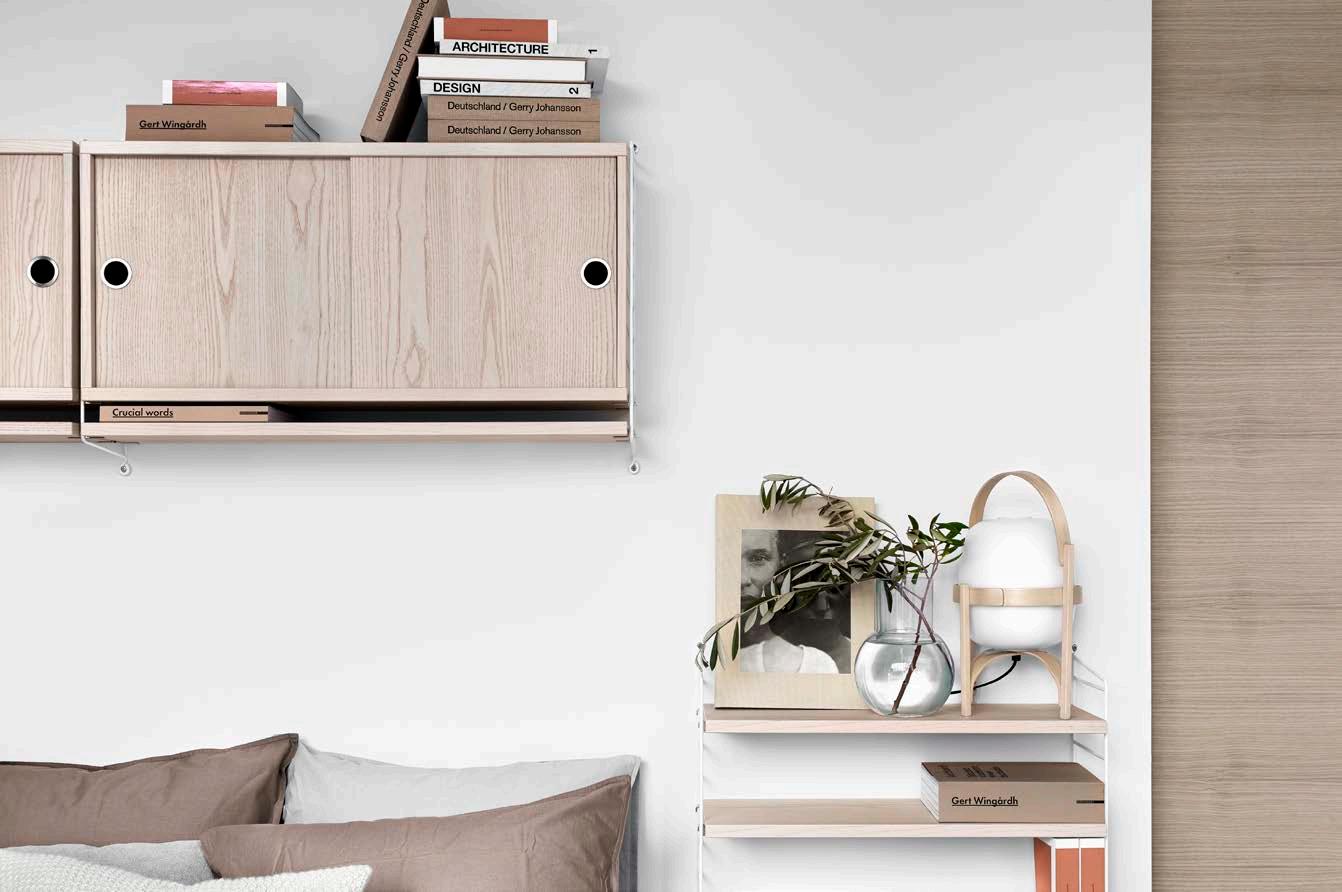
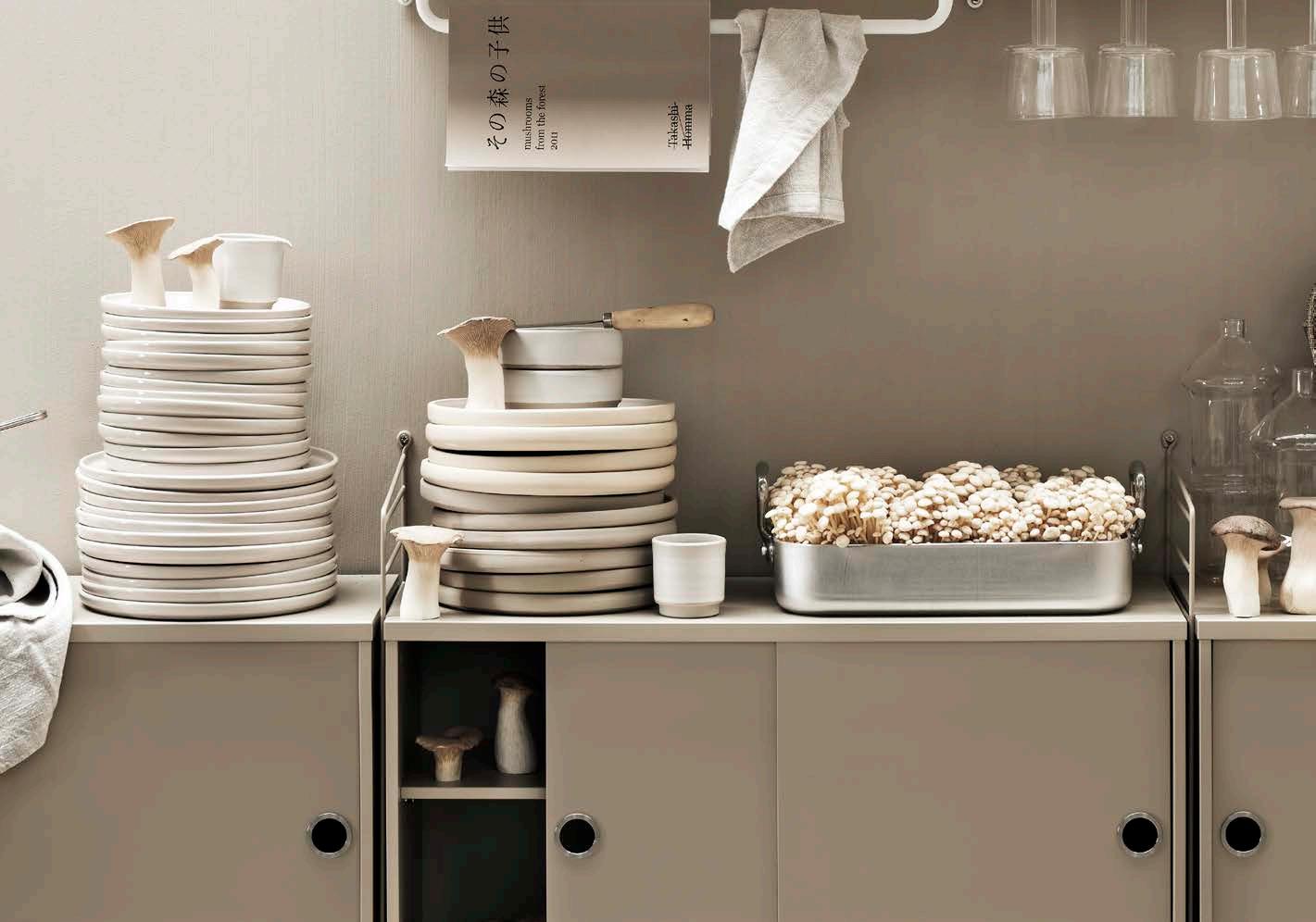
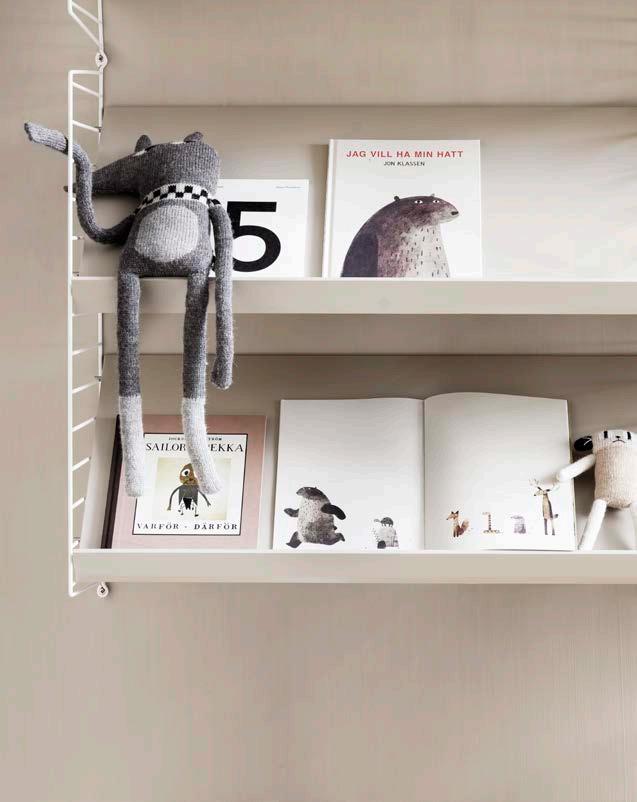
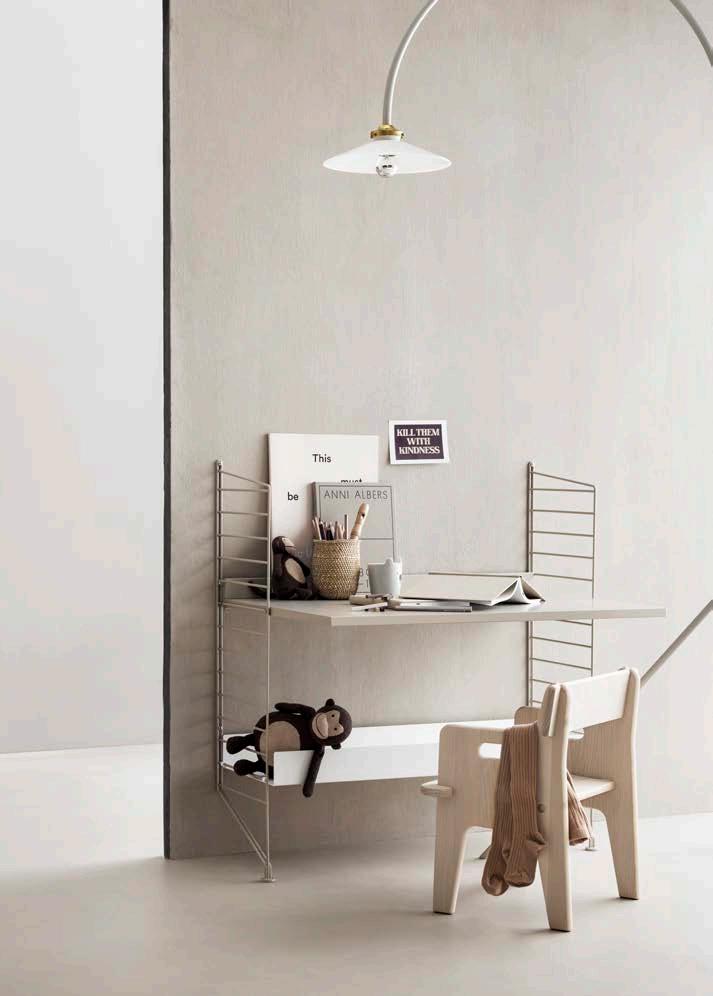
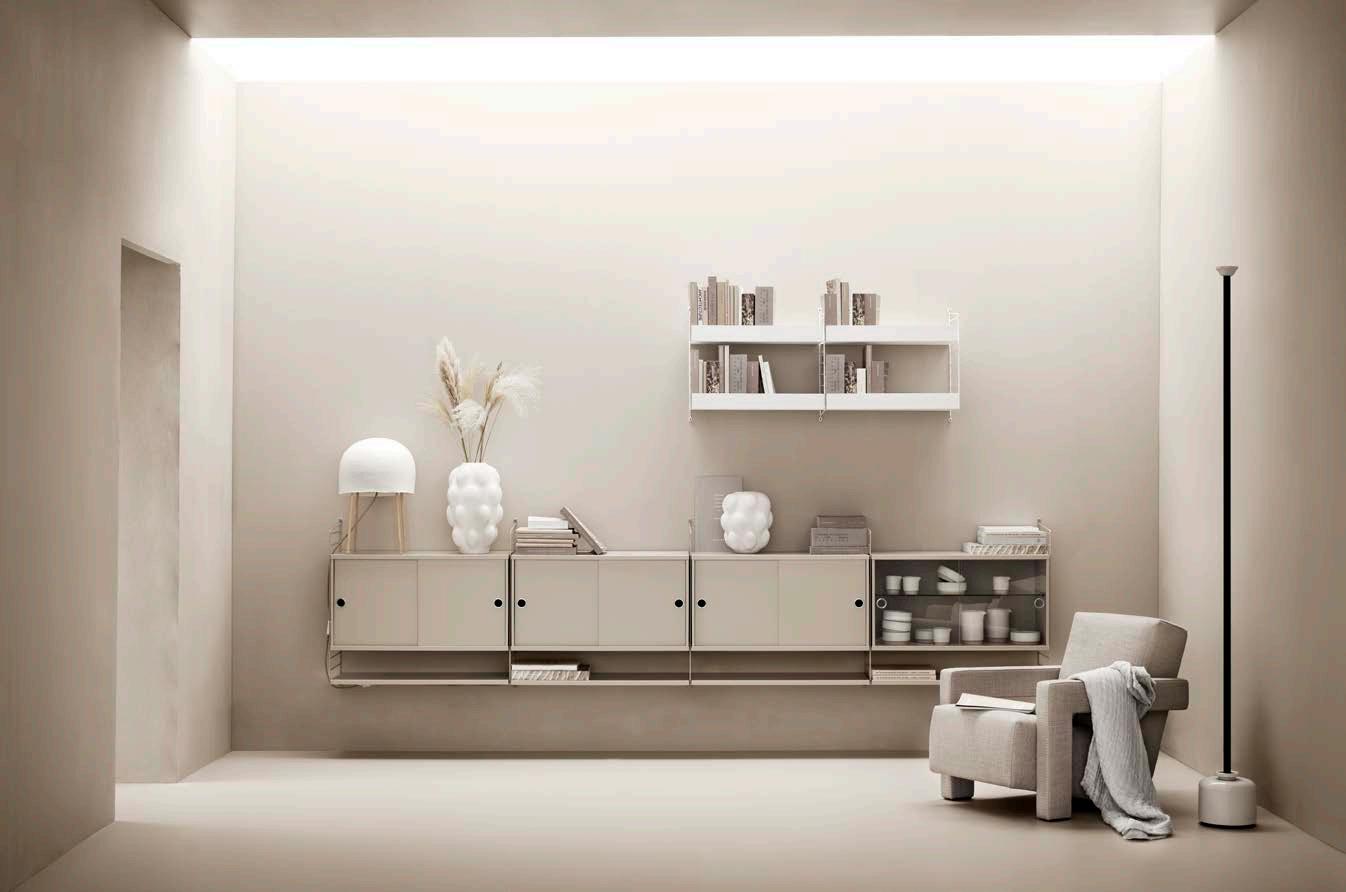
This colour is such a loveable friend. Smooth and intelligent, it mingles effortlessly with everything, in every room. Beige generously shares its sense of calm, it’s one of the most ideal colour companions for your home.
Oak
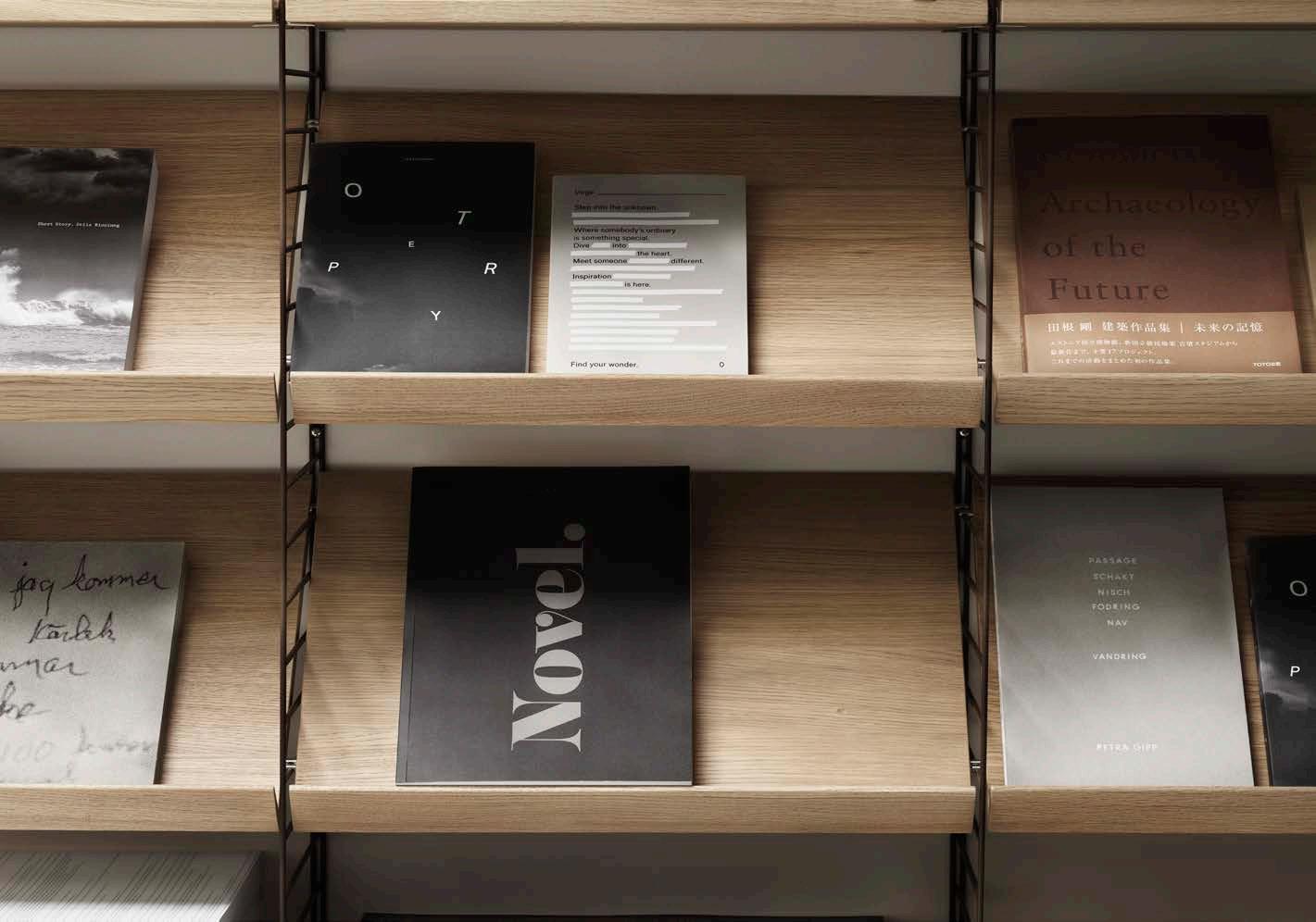
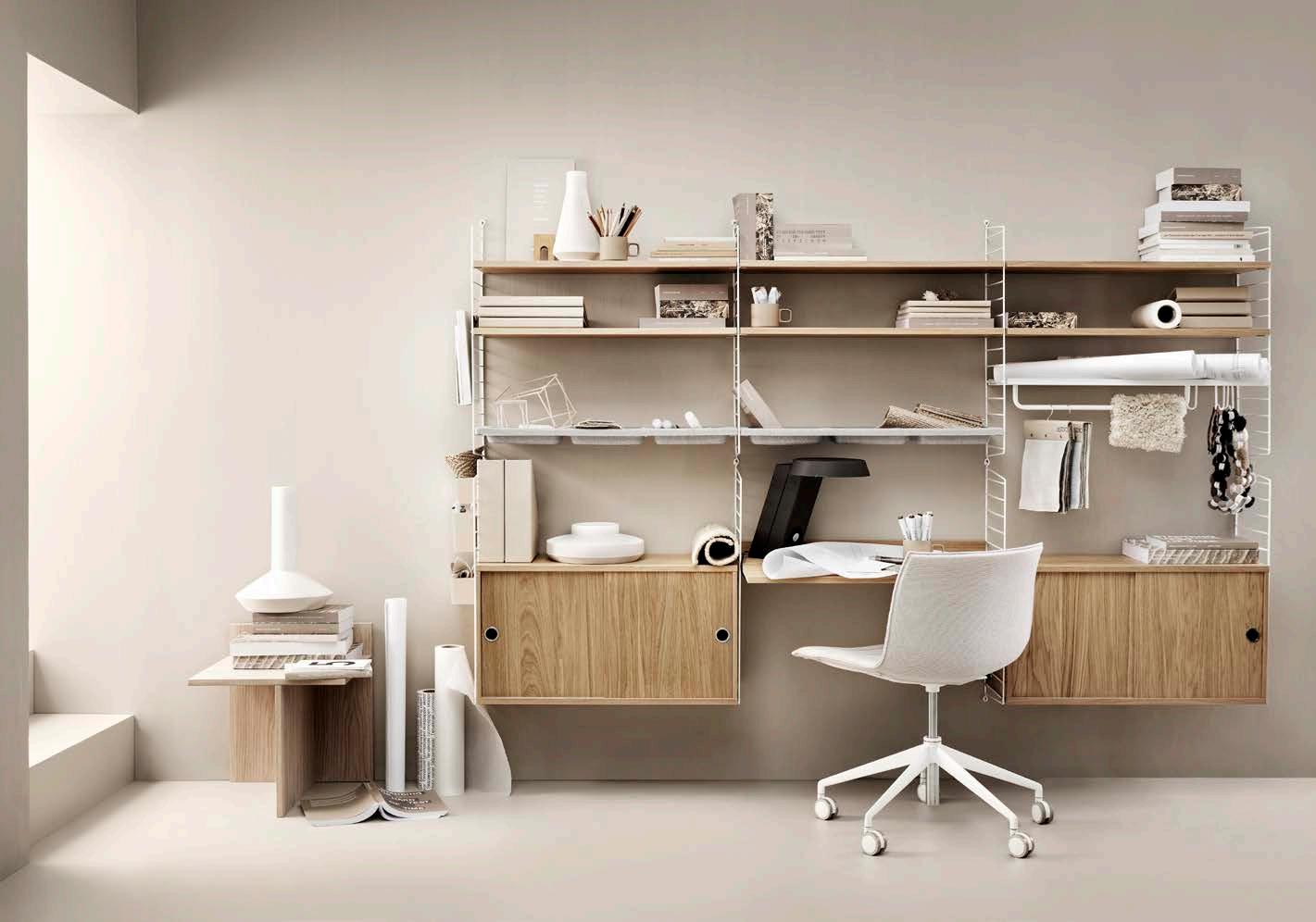
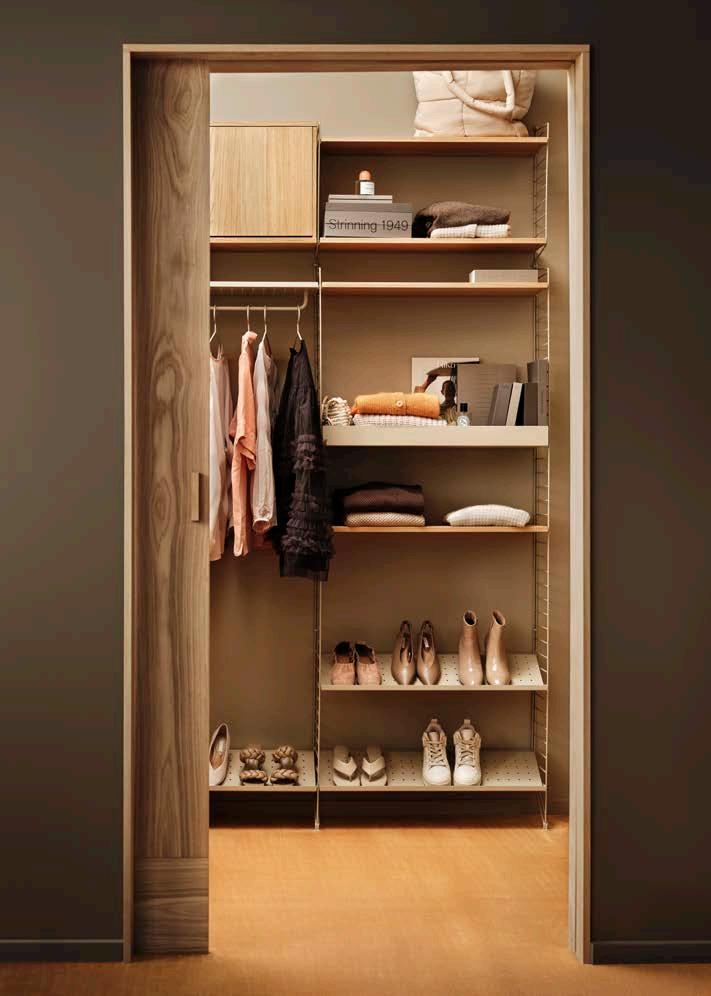
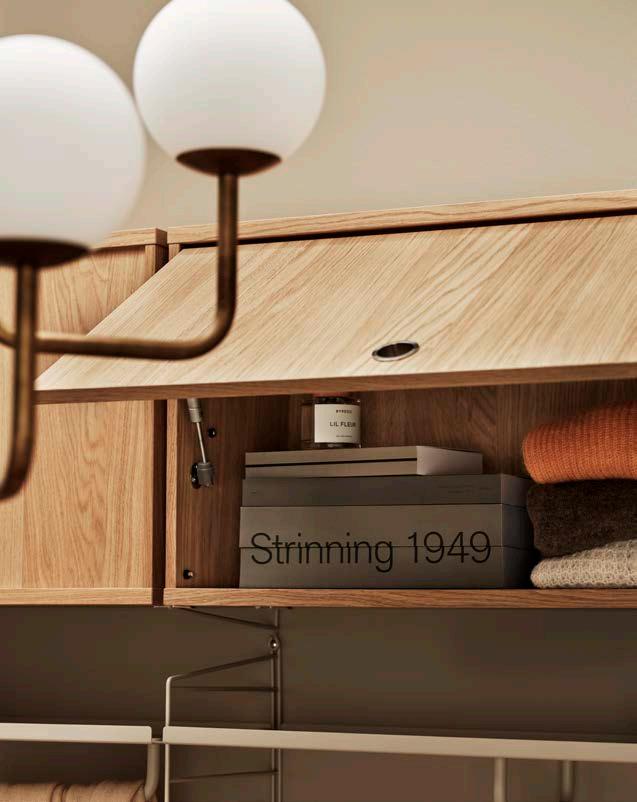
In the past, chunky oak-furniture was seen as something traditional and solid, for your children to inherit. By contrast, the String version of oak is light, elegant and streamlined. And definitely a design to be passed down through the generations.
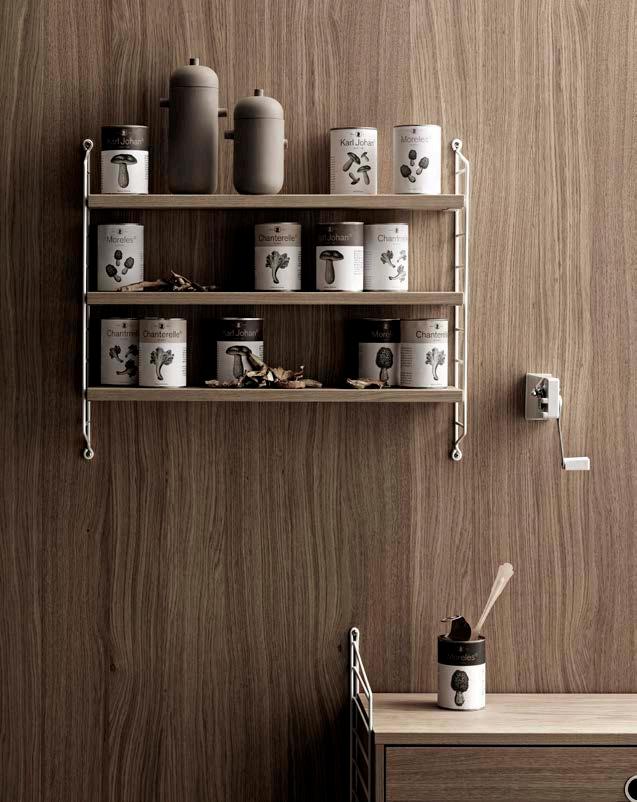
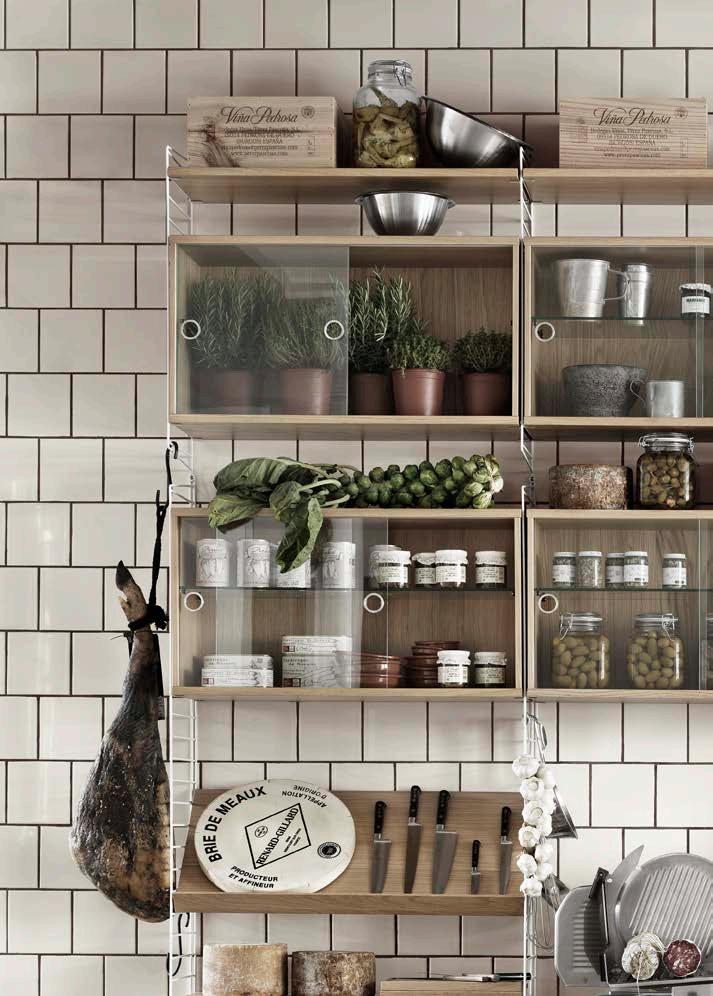
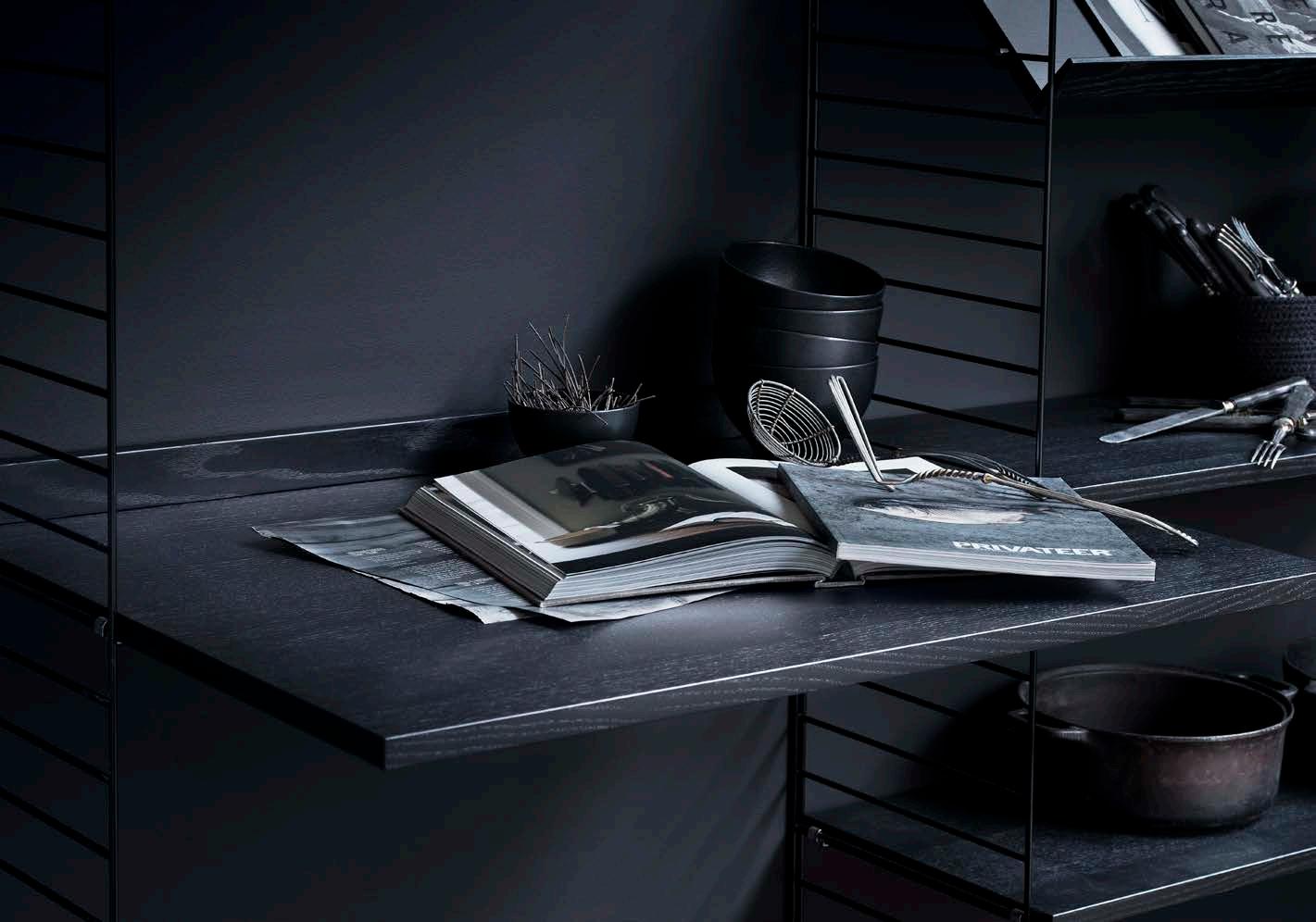
Black is probably one of the most sophisticated colours. But look closer. This is more than black. Black stained ash, that allows the grain to shine through. A perfect blend of sophisticated and natural.

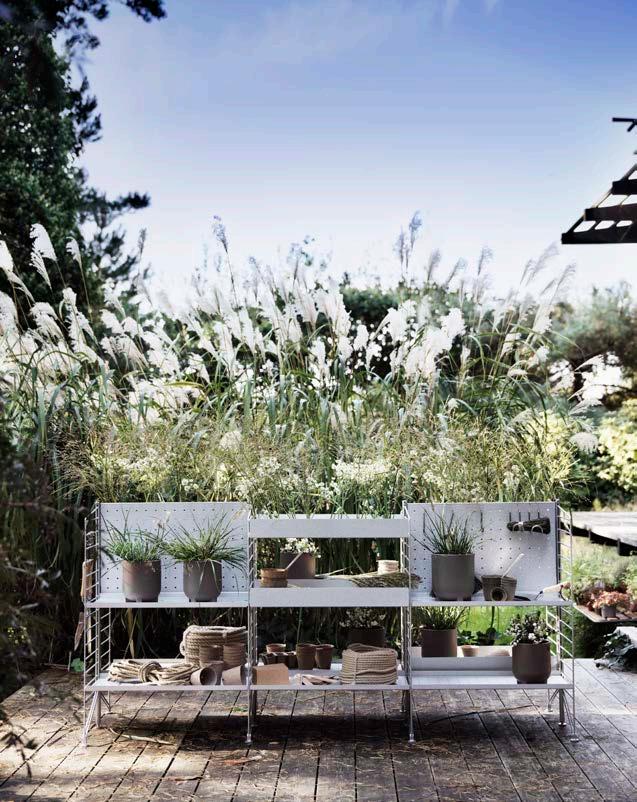
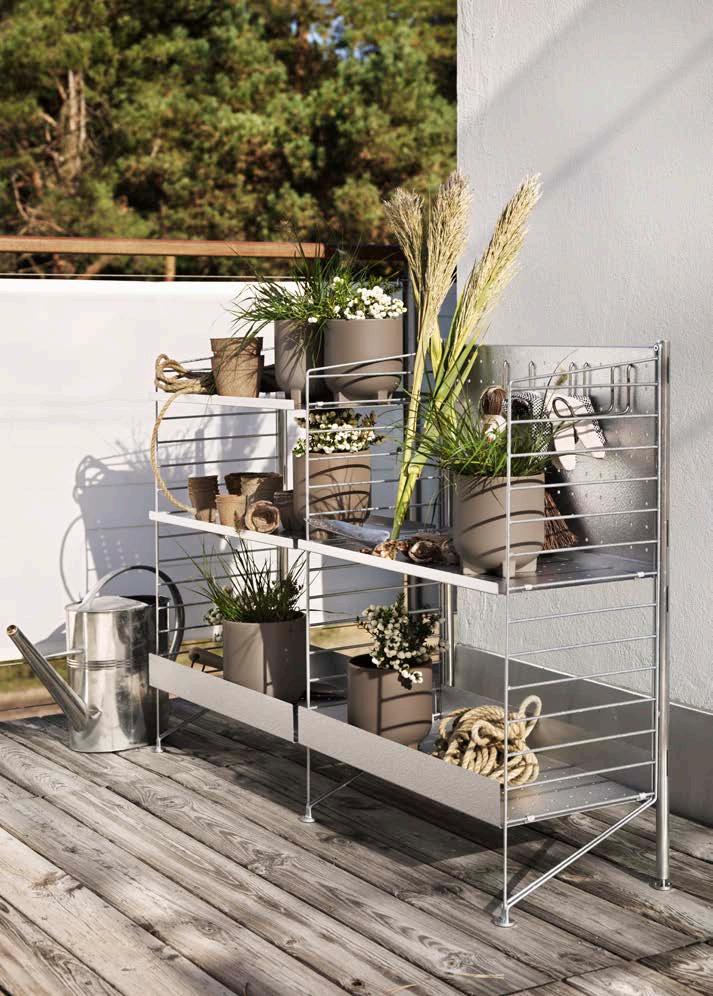
Rustic and stripped back, metal at its best. String in galvanized, protected from the elements and rust - even if you leave it outside all year around. The good looks are obviously an added bonus!


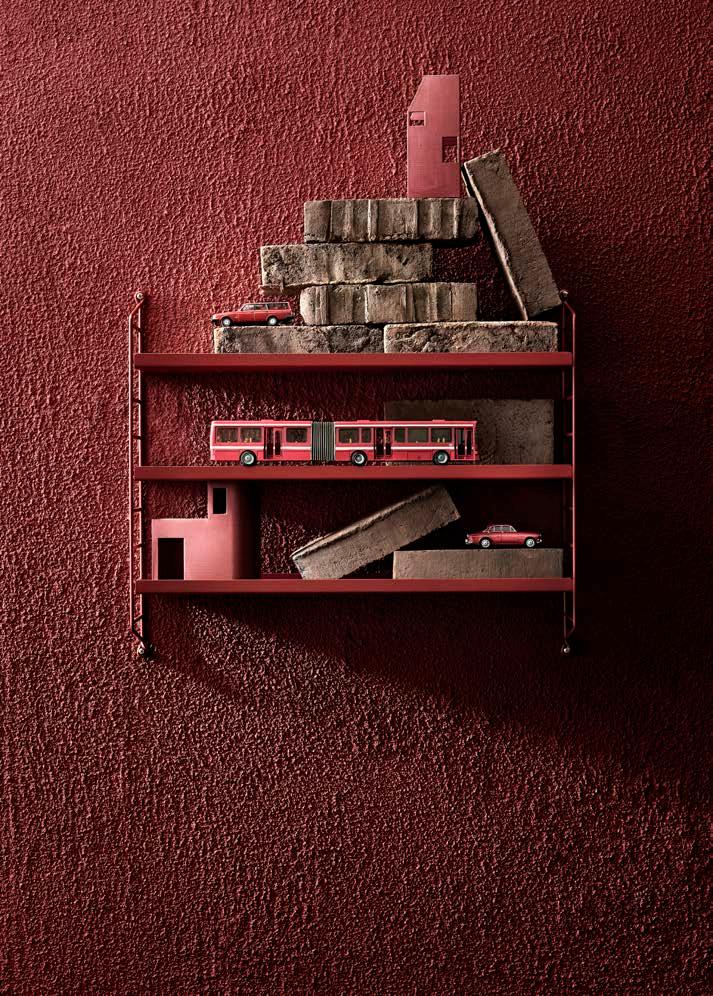
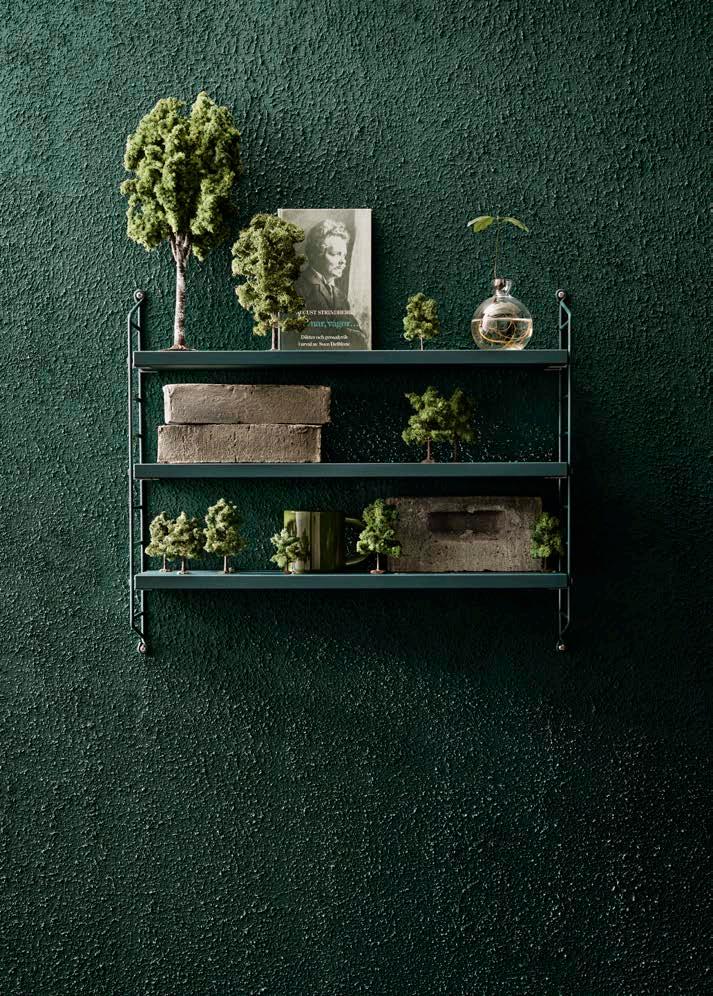
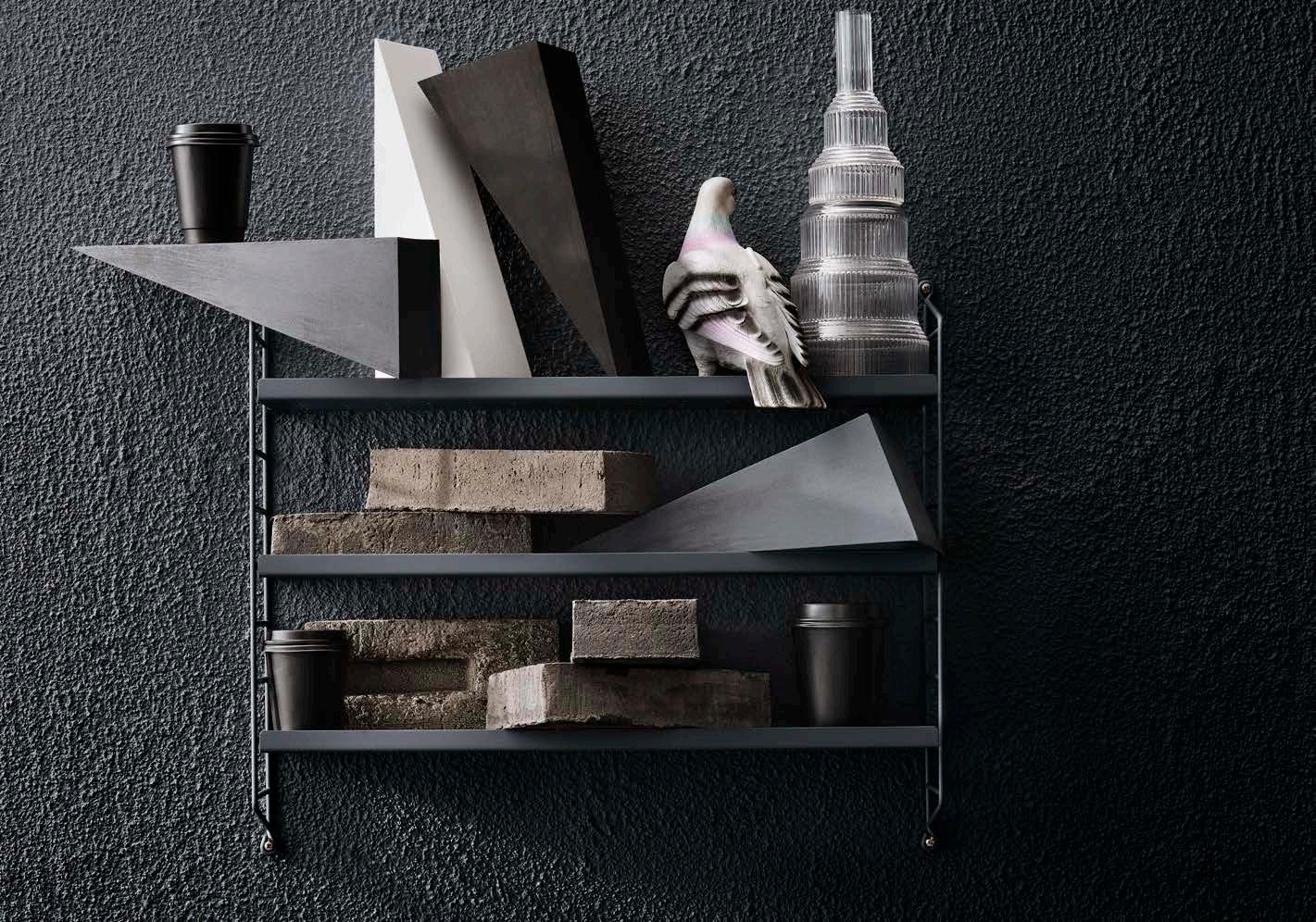
String has earned its place in design history thanks to its elegant simplicity and ingenious construction. Designed by Nisse and Kajsa Strinning, the String shelf won its first design prize in 1949. Based on three simple elements –the shelf, the wall panel and the metal fitting – it can be combined in an infinite number of configurations and is endlessly reinvented as it passes from one generation to the next.
All books and no shelves
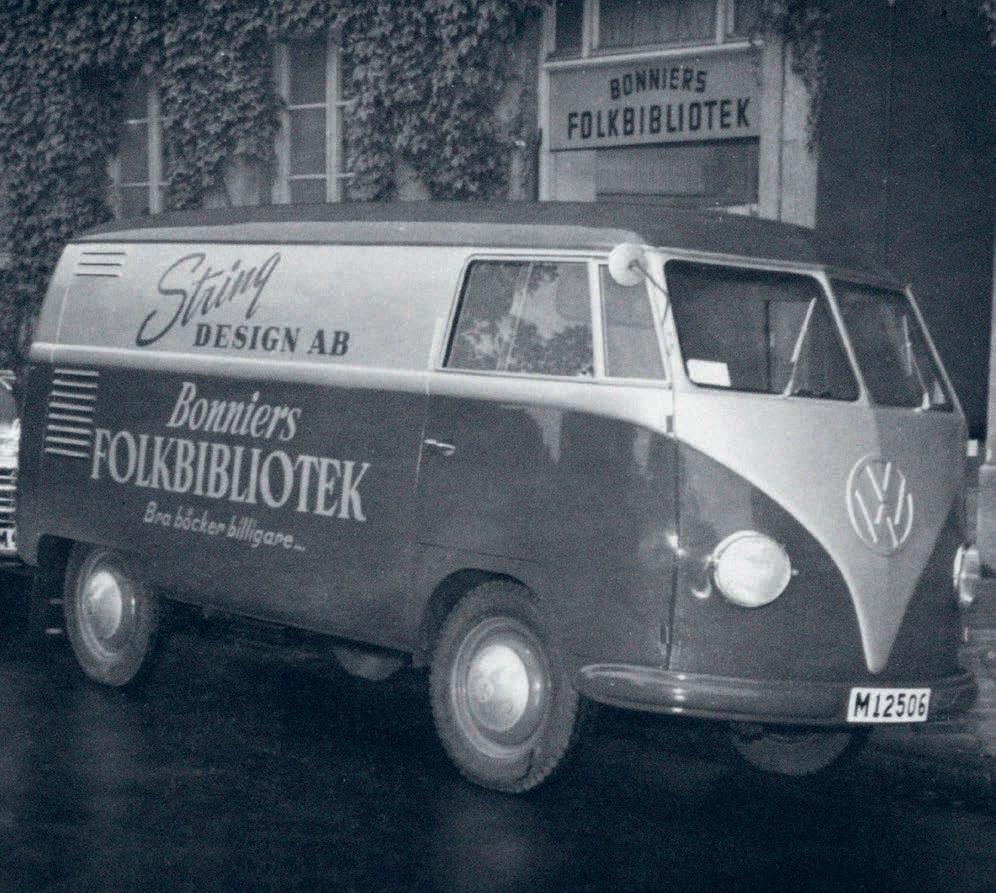
In the late 1940s, vast number of books were being sold in Sweden. Even the smallest town had its own bookshop, and salesmen often peddled their wares in the workplace. With Swedish homes overflowing with books, the question naturally arose: where should they all be kept? Bonniers Folkbibliotek, one of Sweden’s largest publishers, decided to answer this question by holding a design competition in the spring of 1949. They called for a new kind of bookcase that would be affordable, wall-mounted, expandable and hold at least two metres of books.
Nisse
Strinning
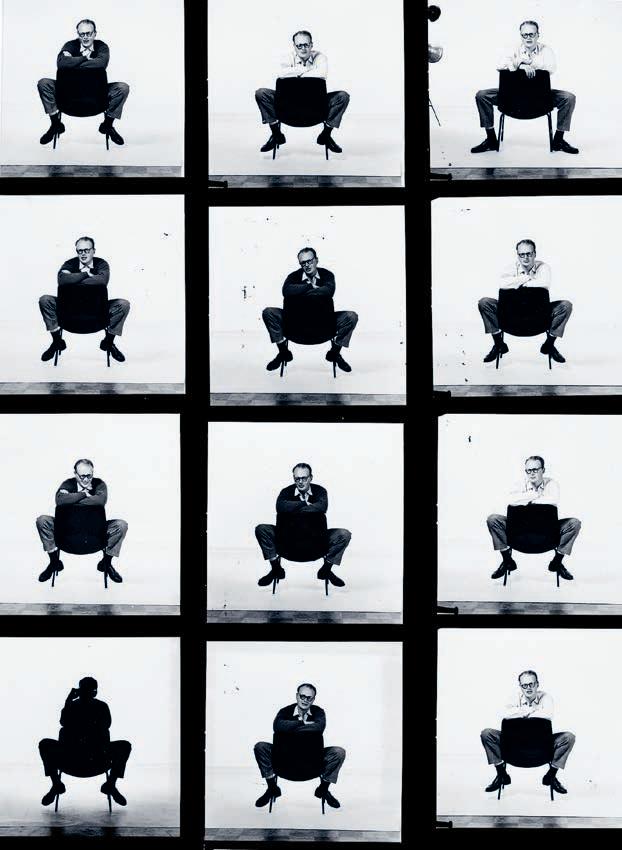
At this time, a young Stockholm architect called Nisse Strinning had just begun his career. Although a trained architect, Nisse was actually more interested in designing smaller everyday objects that could have a big impact on people’s lives.
As a child, he had designed and built his own bookcase. As an adult, he had all the theoretical knowledge and practical experience needed to recreate that bookcase… making it open, affordable, space-saving, and expandable to any size.
In fact, when Nisse heard about Bonniers’ bookcase competition, the idea of the String bookshelf was almost ready to go.
Kajsa cracks the details
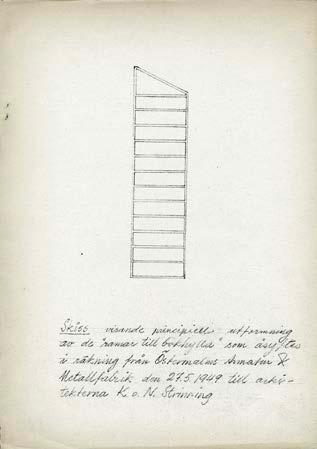
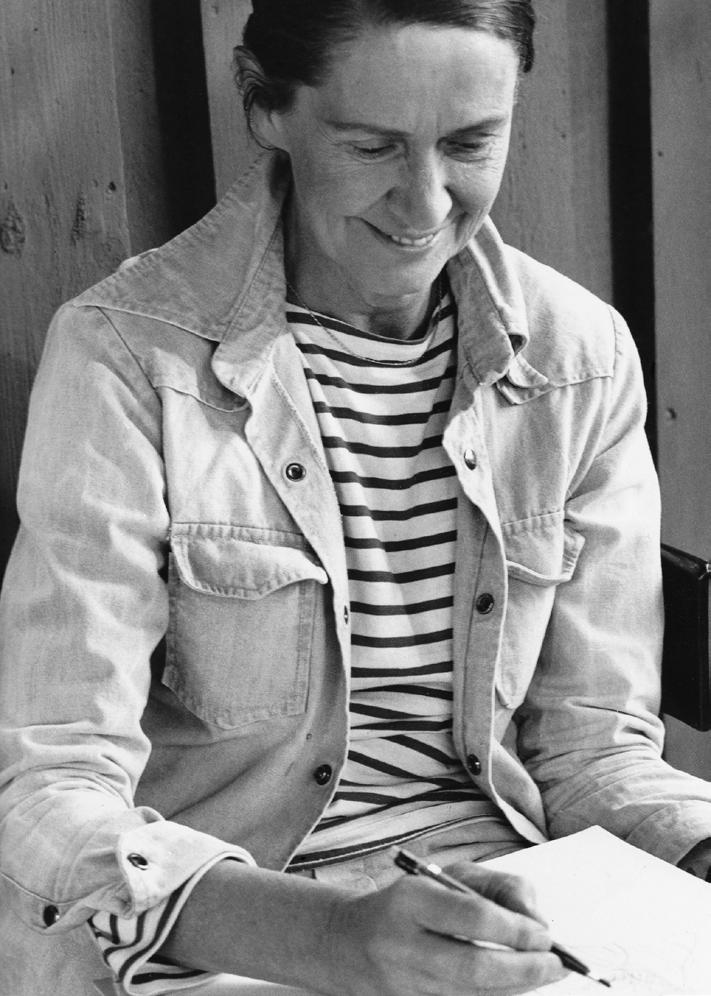
At this point, it would be remiss not to mention Strinning’s wife Kajsa – also an architect – without whom the String shelf might never have past the prototype stage. Unlike her husband, Kajsa had the artistic talent to refine Nisse’s raw industrial designs, and the patience to create
the detailed technical drawings needed to construct his bookshelf. Together, they formed a winning team.
String wins the contest
In the autumn 1949, Nisse and Kajsa’s String shelf won first place in Bonniers’ bookcase competition. Made of blue wall panels and pine shelves, their design beat 194 entries from around Europe, the US and even as far away as Australia. Commercial production began soon afterwards, with only one small modification. The dimensions were adjusted to ensure that the wall panels and shelves could be packaged and sold in the same box.
An ingenious construction turns into success
The construction of the very first shelf was based on three simple elements; the shelf, the wall panel and the metal fitting. The dimensions of the shelves and wall panels were 78 cm wide, 75 cm high and 20 cm deep – exactly the same as they are today. Meaning you can connect a String from 1949 with another from 2024. After a few short months, String became known all over Sweden, and in less than a year over 40,000 systems had been sold.
International success
In the years that followed, the String shelf began to appear in interior design magazines, at trade fairs and other important exhibitions. Its popularity spread to the rest of Europe, the United States and South America. String shelves were used in the offices of the UN Headquarters in New York, and in 1954, String was awarded a gold medal at the Milan Trienniale. In the summer of 1955, an Art Industry Exhibition known as the H55, was held in Sweden, with nine nations participating: Denmark, Finland, France, Japan, Norway, Sweden, Switzerland, United Kingdom, and West Germany. The Strinnings took the opportunity to present several additions to their range as part of the ‘Home and Interior Design of the Future’ exhibition.
The legacy lives on
Today, String comprises of an entire system and can be combined in an infinite number of configurations. New colours, materials, and accessories have been added over time. Some of them blueprint ideas from Nisse’s archives; others created by contemporary Swedish designers. Although the system is endlessly being reinvented as it passes
from one generation to the next, its basic construction – the shelf, the wall panel and the metal fittings –remain identical to the 1949 original.
String continues to grow in Europe, the US and Asia, and is currently sold in 48 countries. Manufacturing still takes place in Sweden just as in 1949; with the wall panels being made just a few kilometres away from where the shelves are produced. From here, everything is packaged and shipped worldwide.
Although Nisse passed away in 2006 and Kajsa in 2017, their designs are still very much alive and thriving.

Discover your String combination
The String System is a series of components featuring the classic wire panels that offer almost unlimited combinations. You can choose among a wide range of colours and materials to build your own, personal shelving system, based on standard widths of 60 cm and 80 cm and two depths, 20 cm and 30 cm.


String Outdoor. Wall mounted or free standing
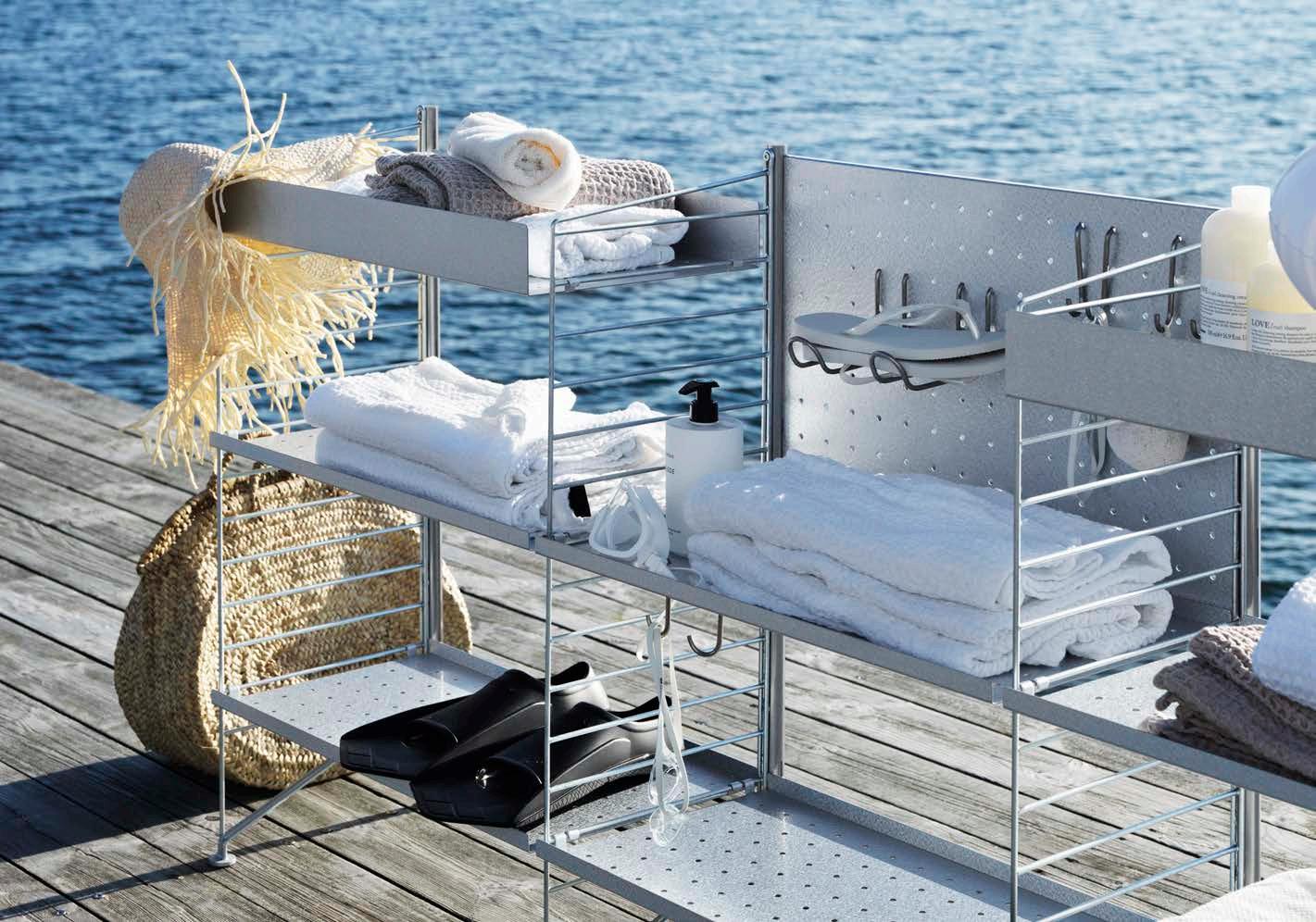
Galvanized metal makes it possible to take String outdoors. Furnish your favourite space freely, without being limited by four walls and a ceiling. The material can withstand any weather, and attains a nice rugged patina over time.

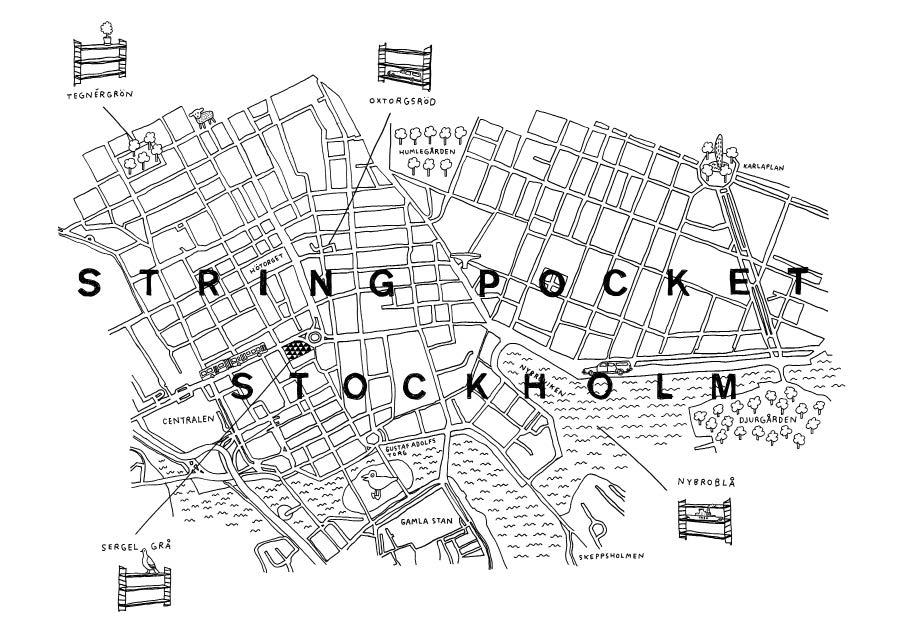
String Pocket. A beginning of something great
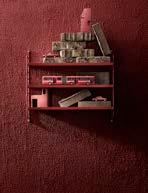
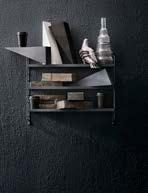
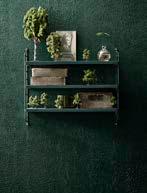
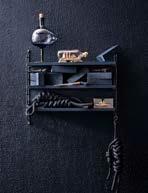
String Pocket is the small, light and handy little one. W60/d15/h50 cm. It‘s sold as a complete unit of two panels and three shelves. Combine them in a number of ways. For example, with two units you can build up to three sections with two shelves each. The metal version adds new possibilities. Its shelves are thin and strong since the edges are folded. Also, they are perforated and ideal for adding accessories like hooks, rods and more.



How to show our designers respect
All String Furniture products in this catalogue are protected by Swedish and international copyright. Copying them is forbidden by law. Our designers make a living from creating great furniture and they deserve to be fully appreciated for this, with the acknowledgement and royalties that only come with sales by String Furniture. Also, buying authorised products guarantees that they are developed and produced according to high sustainability and quality standards. Read more about this at stringfurniture.com
This catalogue, including all images and text, as well as the design of the String® System, Museum, Works, Pira G2 and Relief, are all protected by Swedish and international copyright. The rights belong to String Furniture AB. String® is classified as a work of applied art under copyright law. The design of the Works desks is protected as a registered design in the European Union and a number of other countries. The String® brand name is owned by String Furniture AB and is registered in the EU, Norway, Switzerland, USA, China and other countries around the world. The String® shelving system was created in 1949 by the Swedish architect Nisse Strinning in collaboration with Kajsa Strinning. The Works desk was designed in 2013 and Pira G2 in 2023, by Anna von Schewen and Björn Dahlström. Museum was designed in 2018 and Relief in 2024, by TAF Studio. Center Center was designed in 2024 by FUWL.